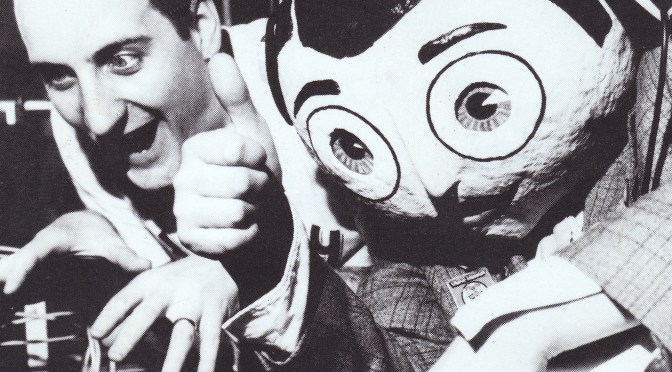
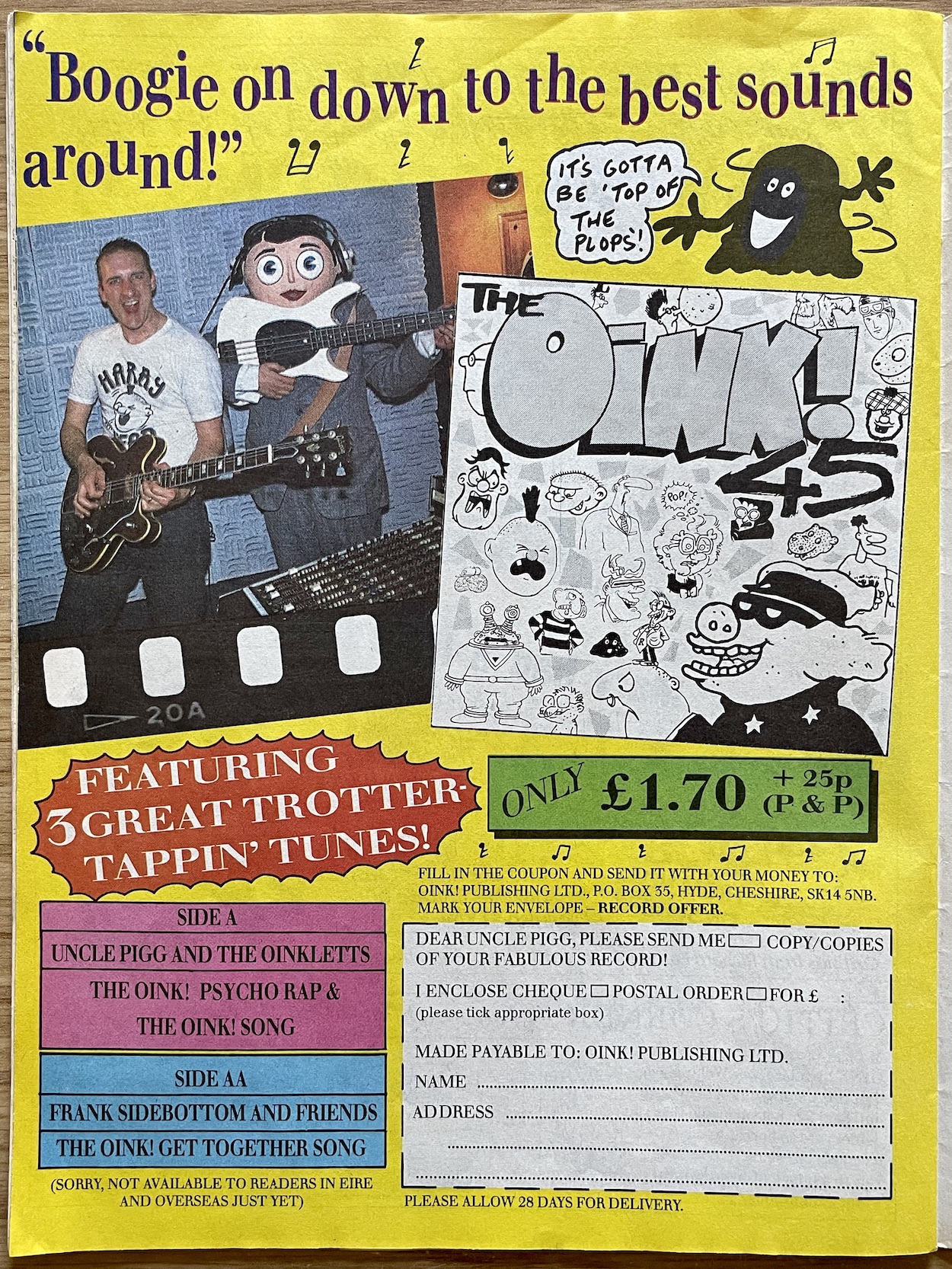
Back in 1987 a unique piece of merchandise for a comic was announced in the pages of OiNK. In issue #37 we were treated to this full page advertisement featuring Marc Riley as petty thief Snatcher Sam and Chris Sievey in his role as celebrity superstar Frank Sidebottom. They’d come together to record The OiNK 45, a single-sized vinyl record available only through mail order in the comic.
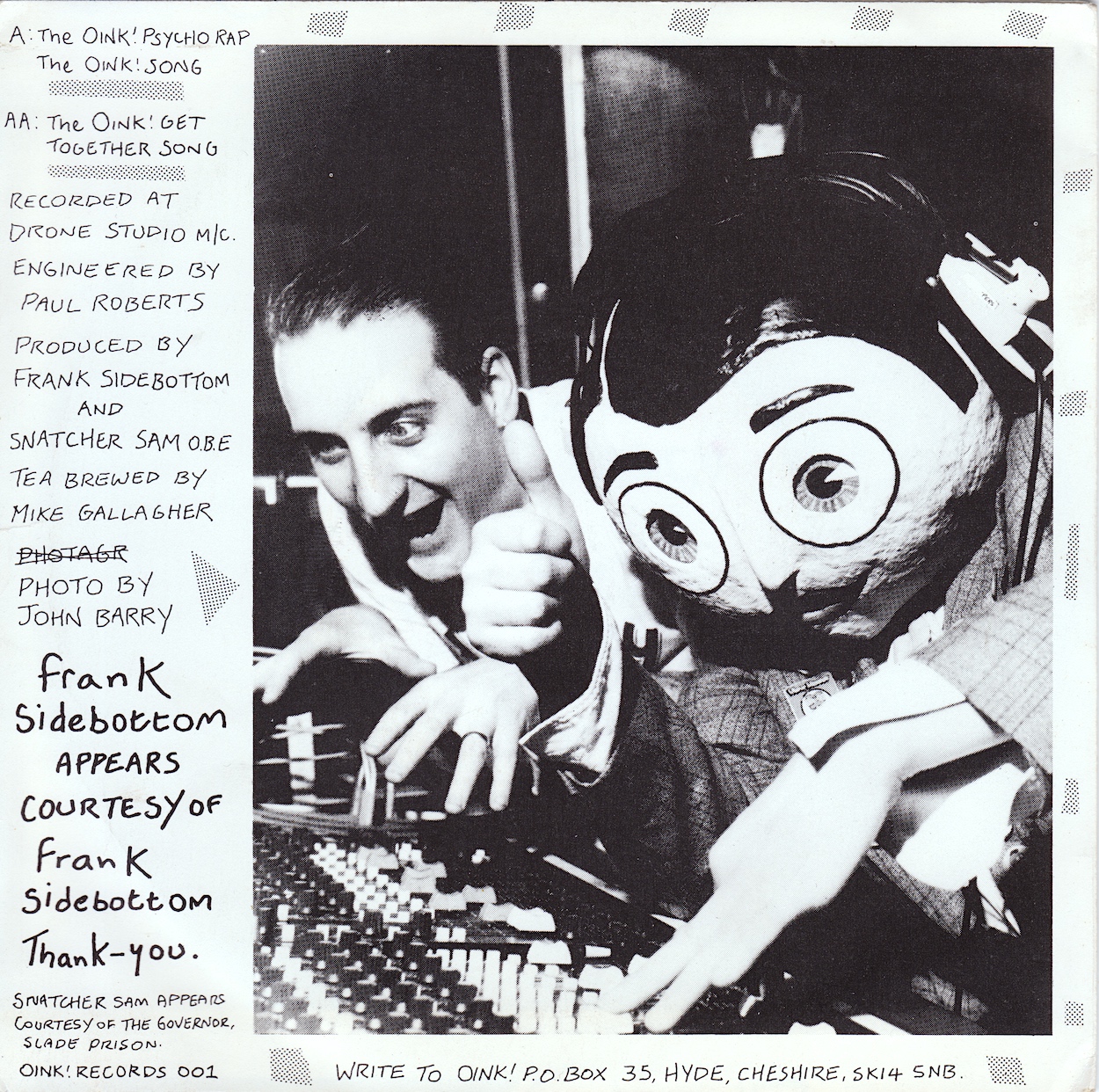
Back in the premiere issue OiNK had launched itself onto the unsuspecting public with a free flexidisc, a floppy piece of pink see-through plastic containing two songs, namely the imaginatively titled The OiNK Song and The OiNK Rap. Marc produced and performed both and they proved a hit with the kids and an annoyance to the parents of said kids, which I’m pretty sure was the idea. Now they’d been rerecorded at Drone Studios by Marc and Frank with engineer Paul Roberts, alongside a brand new song.
When I saw the advert for the first time I immediately begged my parents to write a cheque for the record. I remember the agonisingly long wait for it to arrive and then my mum and dad wished it hadn’t. I played it almost non-stop for a few days, being told several times to turn it down. Let’s just say it wasn’t to everyone’s taste. As I said, annoying readers’ parents may have been the idea behind the songs in the first place.
I’d missed out on the original flexidisc first time around so had no idea two of these were new versions of previous songs. I remember loving The OiNK Psycho Rap (as it was now called) as a kid on The OiNK 45, written by Tony Husband and Marc, and when I finally got my hands on #1 decades later for the blog with a mint condition flexidisc I’ll admit I was confused as to why I’d liked it so much! The answer is that the newer version here is completely different and a whole lotta fun. The words are almost the same but it’s more professionally put together. While I’m still not going to blast it at get togethers with friends, it may find its way on to my HomePod.
Fortunately for my parents, but heartbreakingly for me, just a few weeks after it arrived back in 1987 I ended up playing it for the very last time. I’d taken the record out of the hifi in my room and placed it on my bed without its sleeve while I listened to something else. It ended up being a sunny day so off I went outside to play with friends for the afternoon. When I came back I found out to my horror what happens when a vinyl record sits under a skylight on a day like that.
It was badly warped, looking like a disused napkin someone had tossed aside. I was crushed. My parents refused to buy me another, telling me it was a lesson to learn (in reality it had brought peace to the house once more) and, having not yet made a cassette recording so I could take the songs outside with me, that was the last I listened to it. Only now have I been able to hear these versions (and the third song) for the first time since then, 35 years later.
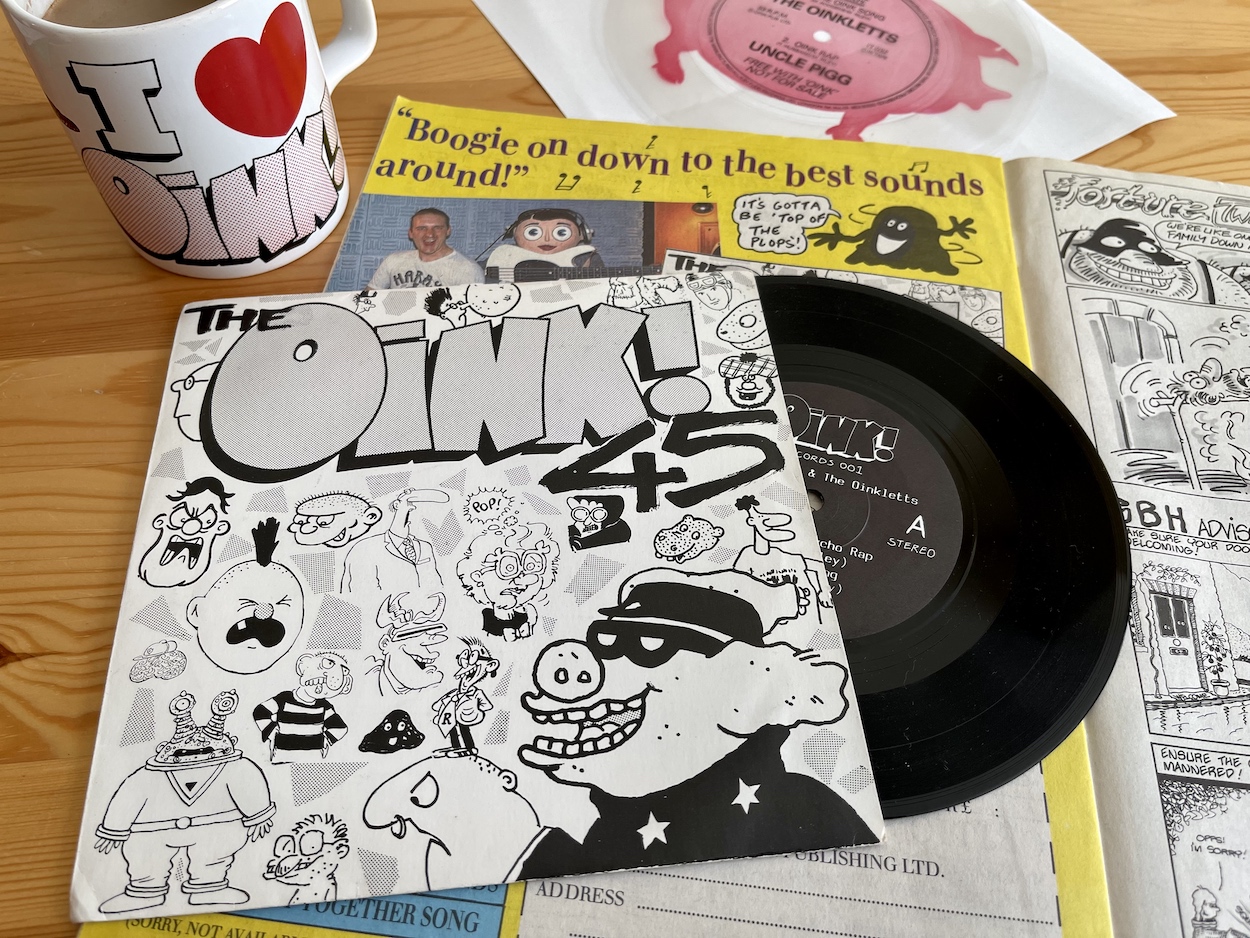
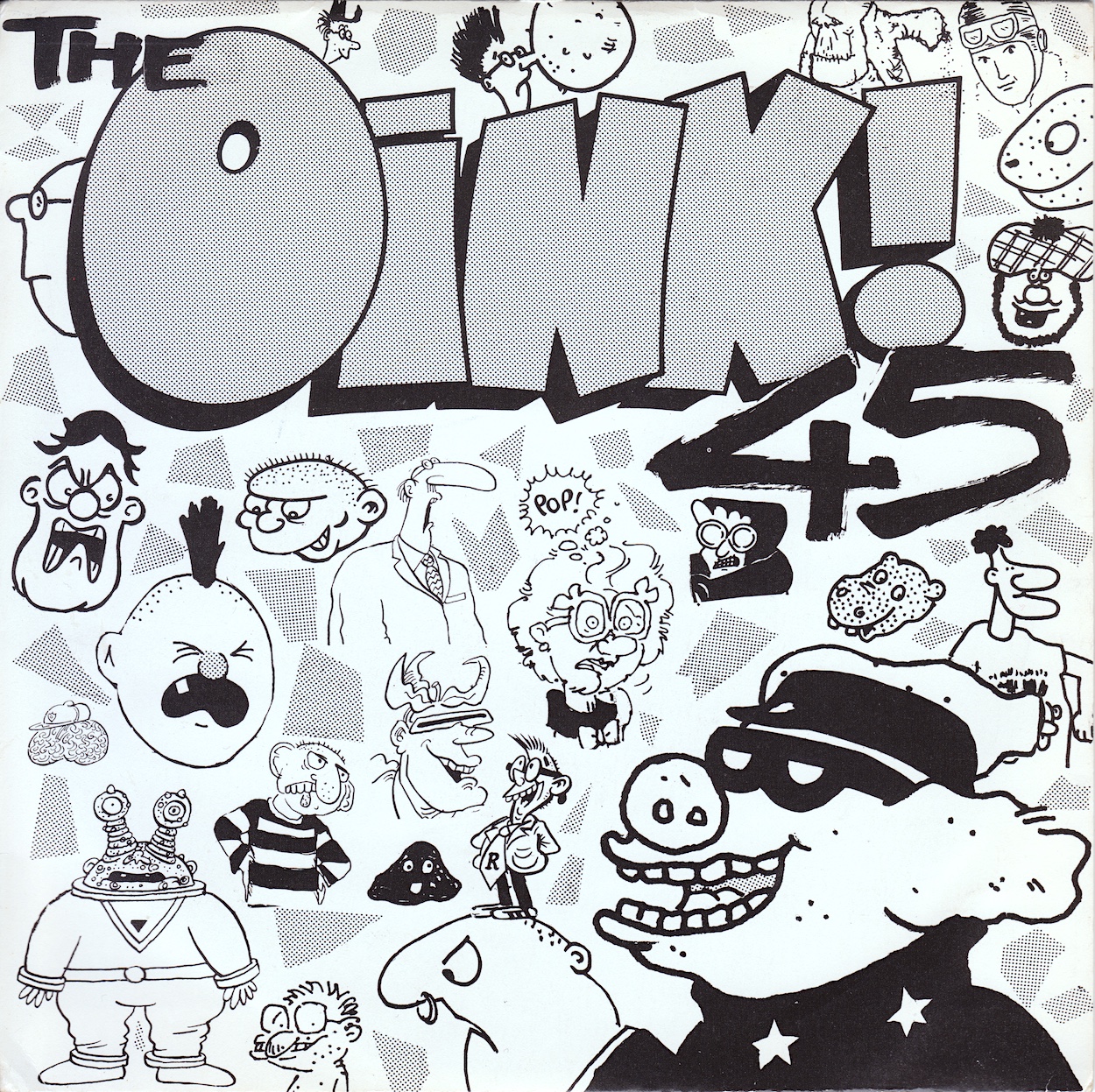
This past summer I was finally able to track down a copy of the record and I’ve waited until now to listen to it as a special festive treat for pig pals. This should be interesting with my now-adult ears! First up, the cover art was compiled by Marc Riley and the photographs on the back and on the adverts were taken by OiNK’s resident photographer John Barry under co-creator/co-editor of the comic and co-designer for the project (alongside Marc) Patrick Gallagher’s direction.
There’s a reference to Mike Gallagher brewing the tea too. This was Patrick’s brother who played sax at the studio sessions (he was also in Frank’s Oh Blimey Big Band) as well as making the refreshments, clearly. Patrick tells me altogether they recorded roughly 50 takes of all three tracks but ended up using the first of each! All that remains now is to place the vinyl carefully into my record player and crank the volume up. We’ll start with the new versions of The OiNK Psycho Rap and The OiNK Song (written by Mark Rodgers and Marc). You’ll be glad to hear the latter is still sung by high-pitched pigs.
The OiNK! Psycho Rap written by Tony Husband and Marc Riley
The OiNK! Song written by Mark Rodgers and Marc Riley
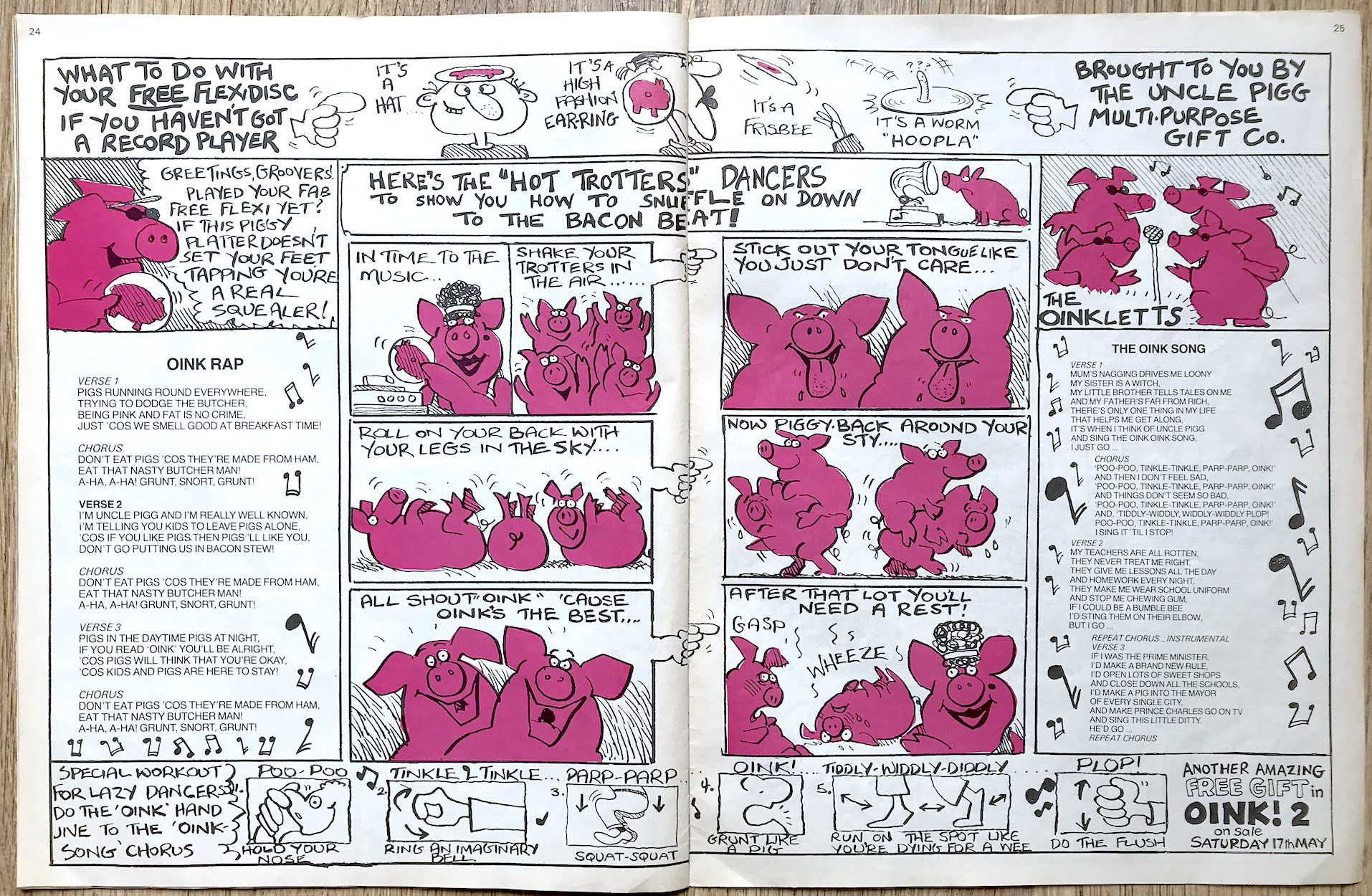
Unfortunately there were no lyrics sheets with the record so young me had a hell of a time understanding those piggies, however the lyrics were printed in the first issue. Only a few words have been changed here and there for the rap, so feel free to use that photo above to follow along.
Apologies that I have no fancy equipment to record the songs in lossless quality (or whatever it’s called), you’ll have to make do with my video recording it with an ever-tiring outstretched arm.
“What the heck you think you’re doing, you?”
Frank Sidebottom, The OiNK Get-Together Song
On the B-side is the brand new song, The OiNK Get-Together Song. Chris sings along with Marc in the previous songs and Frank even makes a small guest appearance in The OiNK Song when he realises he’s on the wrong track and asks the listener to turn the record over. This next song is twice as long and sees him in his usual place as lead singer, with Little Frank constantly asking when he’ll get to contribute. It’s billed as a song starring characters from the comic, however the reality is much different (and funnier) than you might expect.
The OiNK! Get-Together Song written by Frank Sidebottom (Chris Sievey)
In my head this song had included various impressions of characters but instead we’re introduced to them playing instruments or making lots of loud background noise. Of course it would be this! Highlights include it descending into chaos on more than one occasion, especially when Billy Bang and the Street-Hogs get involved, Frank and Little Frank’s arguments getting more and more aggressive and there are cameos from some long forgotten characters such as Billy’s Brain and ‘Ed Banger.
My own personal favourite moment is when Frank messes up and just readily admits it right there in the song!
It’s a genuinely funny record and I’d heartily recommend splashing out the few quid it costs on eBay when it pops up, but let’s just say I think I can understand where my parents were coming from when they refused to buy a replacement once they’d escaped it. Brilliant stuff and very typically ‘OiNK’. No other comic could’ve done this. If you do decide to buy it for yourself just be warned, the sax in The OiNK Get Together Song will be stuck in your head from now until the end of time, whether you want it in there or not.
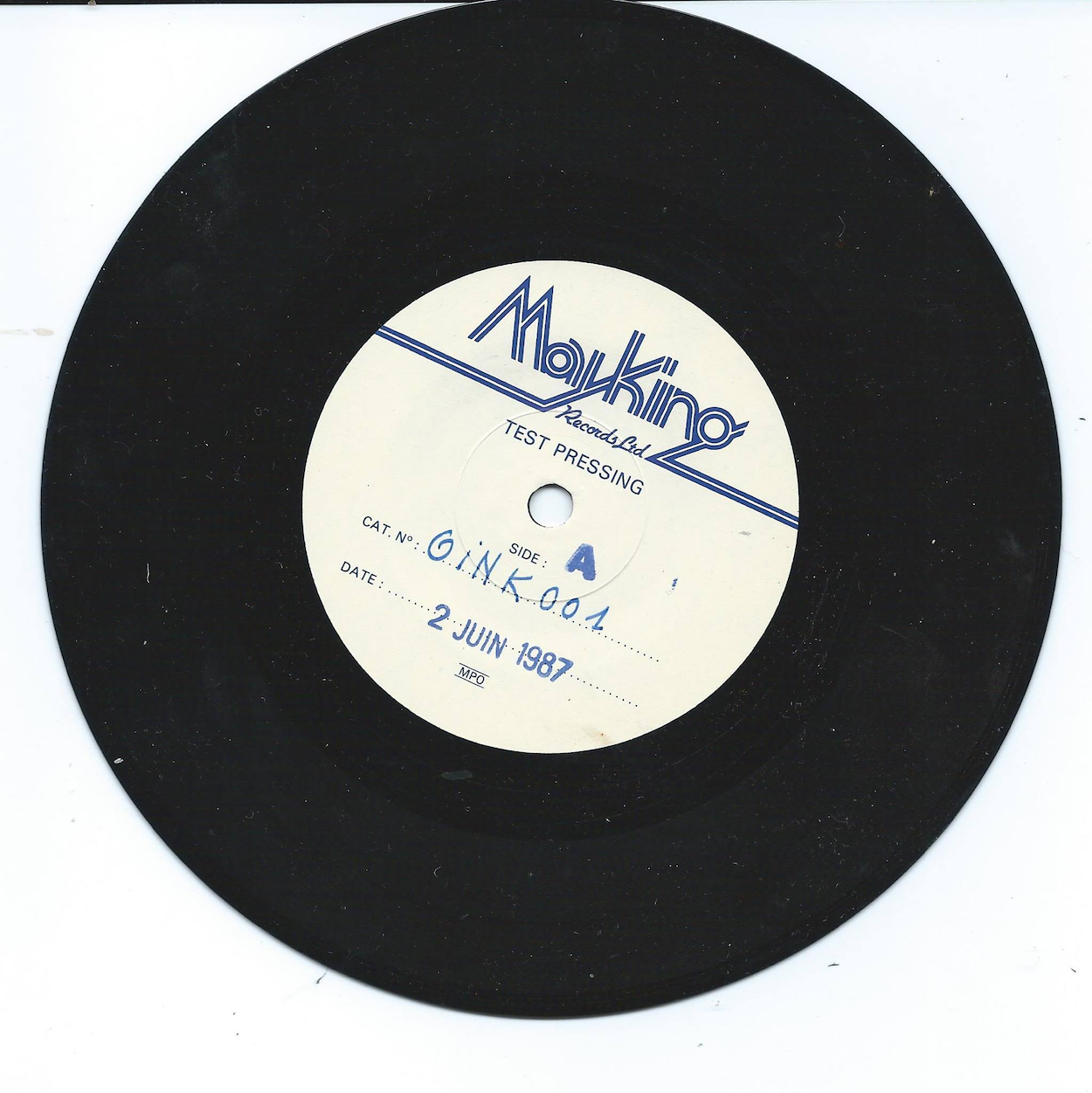
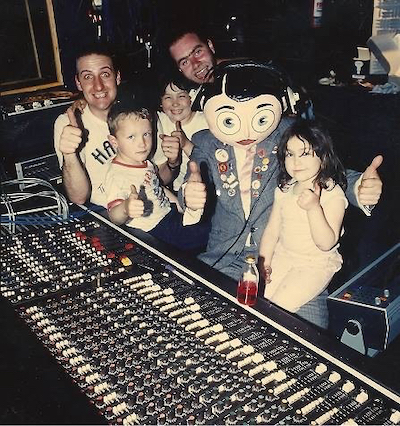
Above you’ll see Mike Gallagher as part of Frank’s band in a photo Patrick sent me, alongside an image of the original test pressing of the vinyl shared by Tony Husband on the OiNK Facebook Group. The final photo features the children of the studio owner and a very tanned/rosy/burnt Marc Riley and Patrick Gallagher, who may have just come back from holiday according to Patrick himself.
The OiNK 45 and the mug were the only pieces of merchandise I had as a kid so it’s great to own them both again. This has genuinely been a whole lot of fun to revisit. It was another contributing factor to what I refer to as the Golden Age of my very favourite comic of all time.
Firstly, I should say I do not like football. I sometimes go see our local ice hockey team here in Belfast and every four years I become obsessed with the Summer Olympics, but aside from those I’m not what anyone would call a fan of sport. (Unless it’s Nintendo’s.) It’s important to state this before writing about this book because you’ll see there are a lot of sporting references within it which might put you off if you don’t like sport. But trust me, it shouldn’t.
Lion, Tiger, Roy of the Rovers, Top Soccer, 2000AD, Battle, Speed, The New Eagle, Scream, Mask, Super Naturals, Wildcat, Hot-Shot, Ring Raiders, Teenage Mutant Hero Turtles Adventures, Toxic Crusaders, The Big Daddy Annuals, The Geoff Boycott Annual, The Suzie Dando Annual, Johnny Cougar’s Wrestling Monthly, Scorer, one-off specials, magazines, World Cup poster magazines, sports quiz books, greetings cards, Ladybird books… this is a career which could take up several volumes.
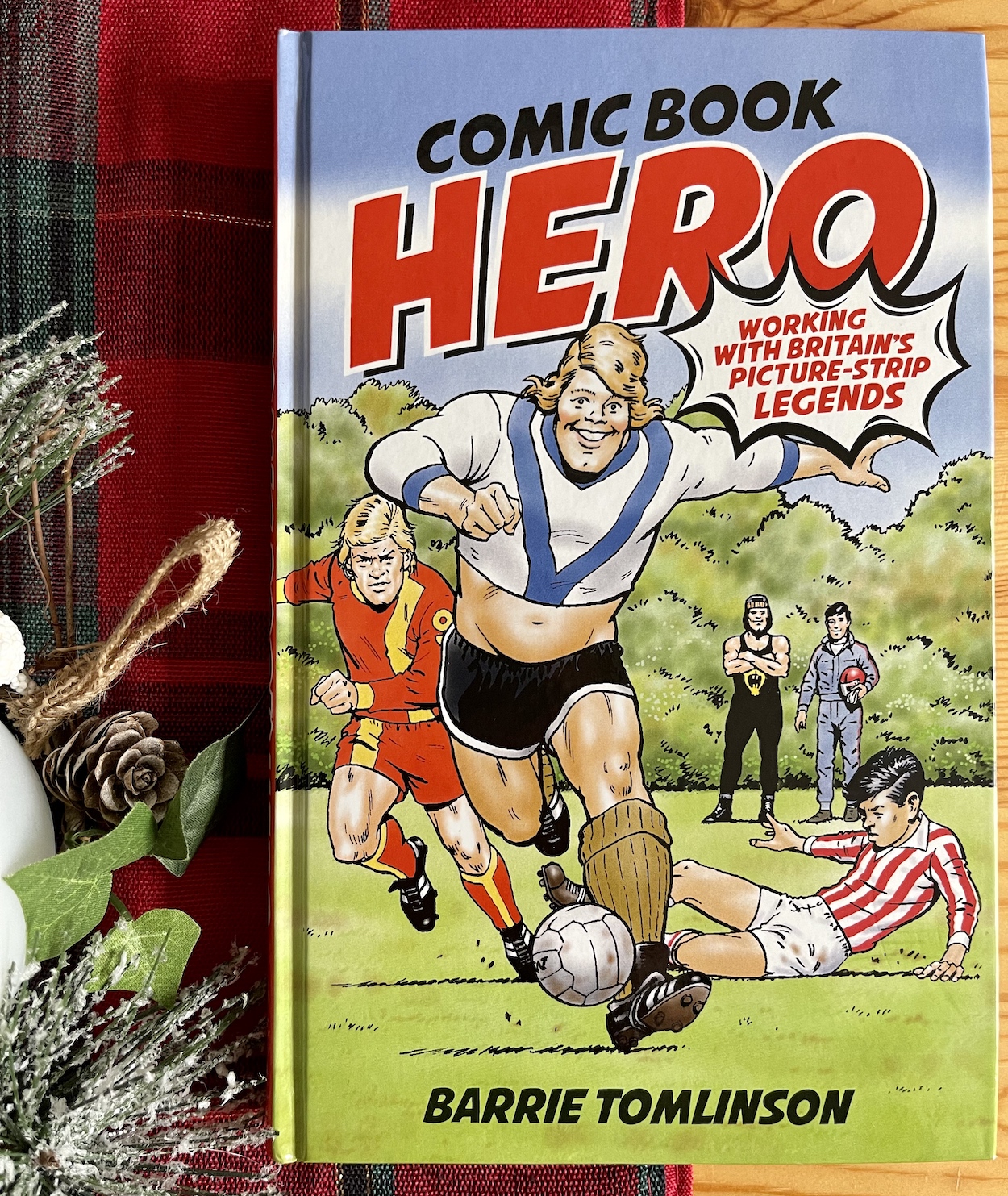
Barrie Tomlinson is a giant in the world of British comics. Readers of the blog will be familiar with the name already due to coverage of three of his titles, namely Ring Raiders, Wildcat and Super Naturals. I remember some friends being obsessed with his Mask comic and later we all collected the Turtles together. These were only the tip of the iceberg of comics Barrie created and edited, and this hardback book sees him take us on a very personal trip down memory lane.
For any UK comics fan Comic Book Hero is an essential read
Reading Comic Book Hero is like having Barrie sitting next to you, having a casual chat, reminiscing about his creations, his colleagues and friends, the personalities he met and all the fun he had along the way. The structure of the book adds to this cosiness, with no chapters as such, just the occasional comic name as a title here and there, which lends a personal diary feel to the proceedings. It’s a unique way of writing a book and it’s the perfect choice for Barrie’s particular style of storytelling.
And what a story he has to tell.
Barrie’s work with Fleetway Publications began in 1961 and this book covers everything he worked on right up to 2011 and his retirement. A large portion of the book is taken up with Tiger, the sports focussed action comic, but not before we’ve had some fascinating insights into how the comics of the day were edited thanks to Barrie learning from the likes of Bernard Smith. Even in times of high work volumes and obvious stress, Barrie is completely respectful and understanding of those he worked for and it’s refreshing to read a book which doesn’t relish in sordid tales or bitching in order to sell.
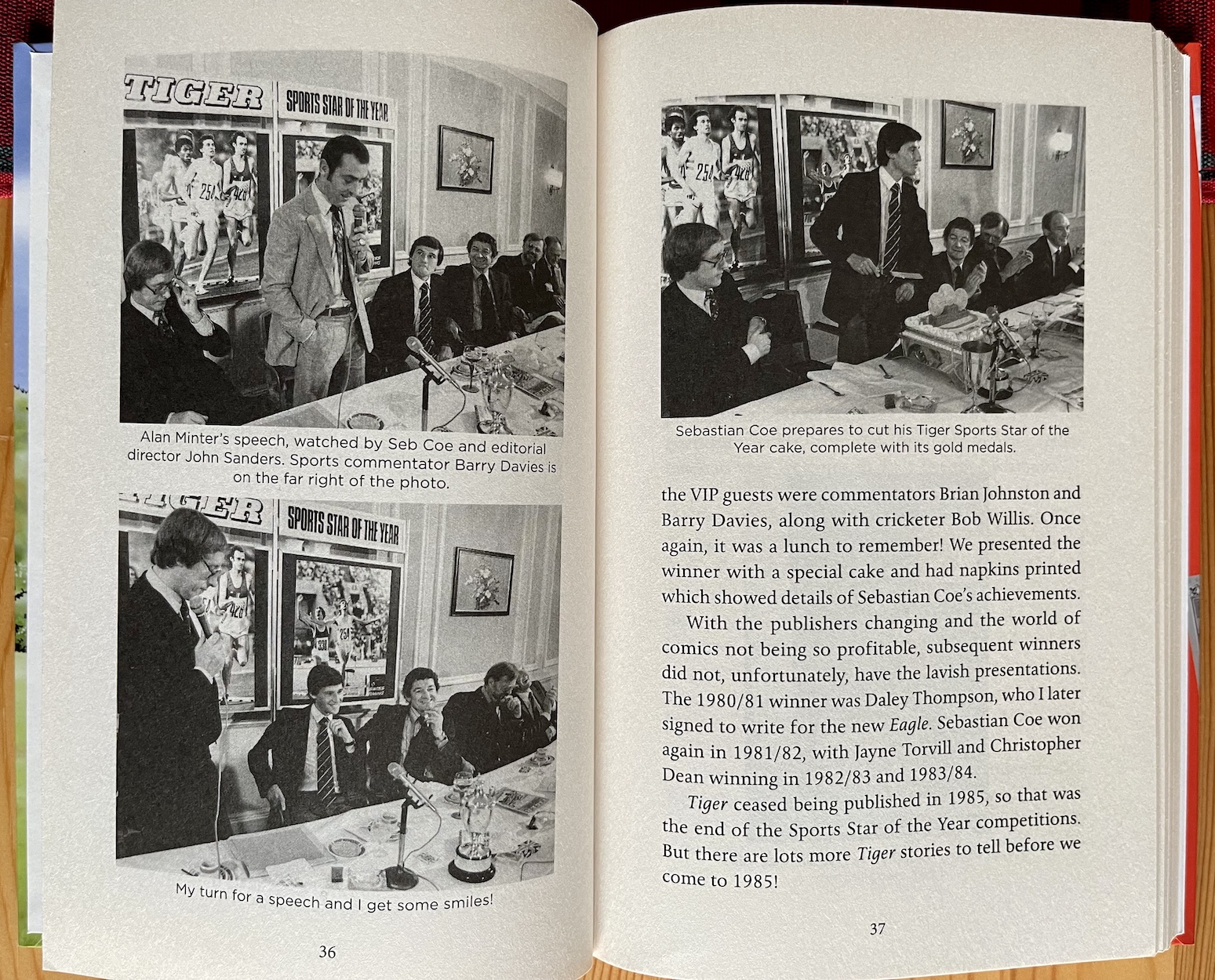
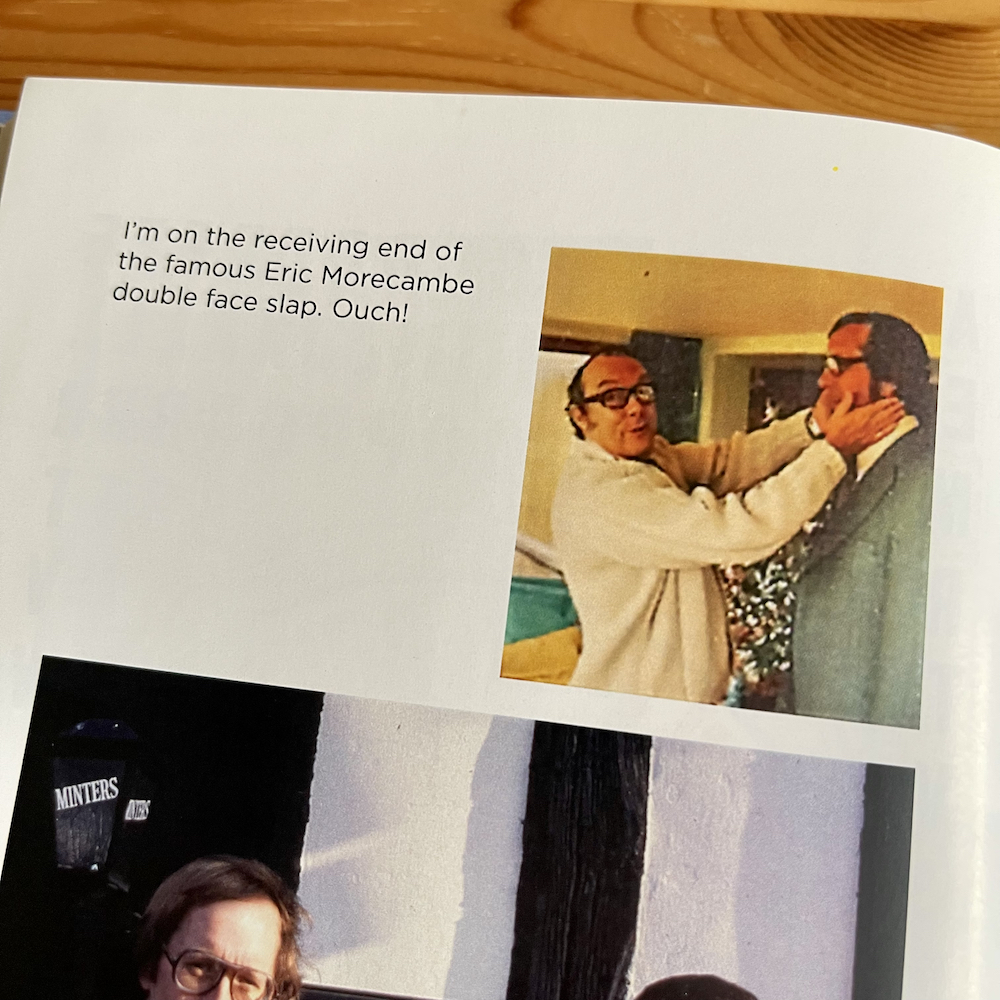
I found it fascinating to read how loved and respected Tiger was in the world of sport, with big stars contributing to Barrie’s comics as regular writers, in exclusive photos, meeting competition winners and appearing at the Tiger Awards events. The photos of these gatherings in particular are fantastic and it’s amazing to think of how all these celebrities, including personal favourites Morecambe and Wise came together in such a way for a children’s comic.
It’s sad to read how some of his contemporaries accused Barrie of only wanting to further himself by involving big stars, but as he explains it was all for the comics. It worked a treat too! Comics like Tiger and Roy of the Rovers enjoyed long lives and huge circulation figures and the exposure these guest stars brought certainly wasn’t to be sniffed at. But the book isn’t all about the glitz and the glamour (although a story about a naked radio interview has to be read to be believed), there’s plenty of insider comics information.
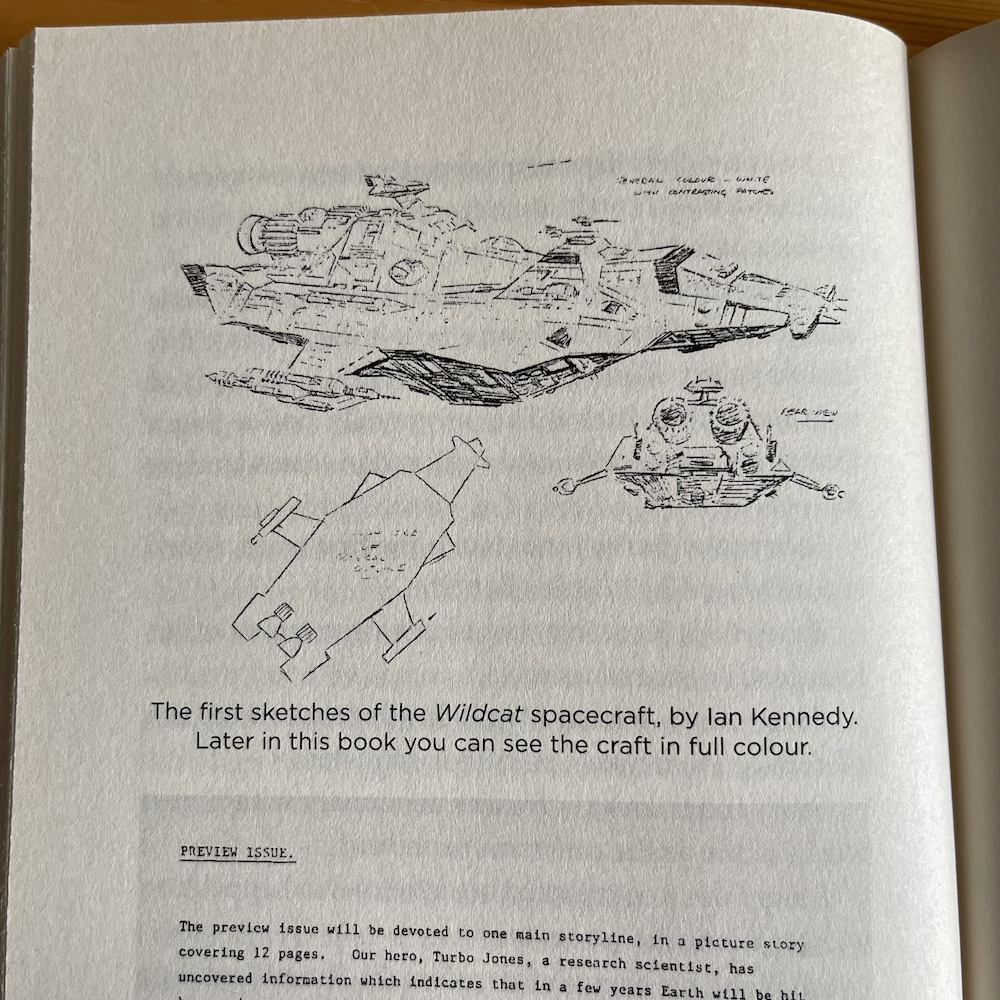
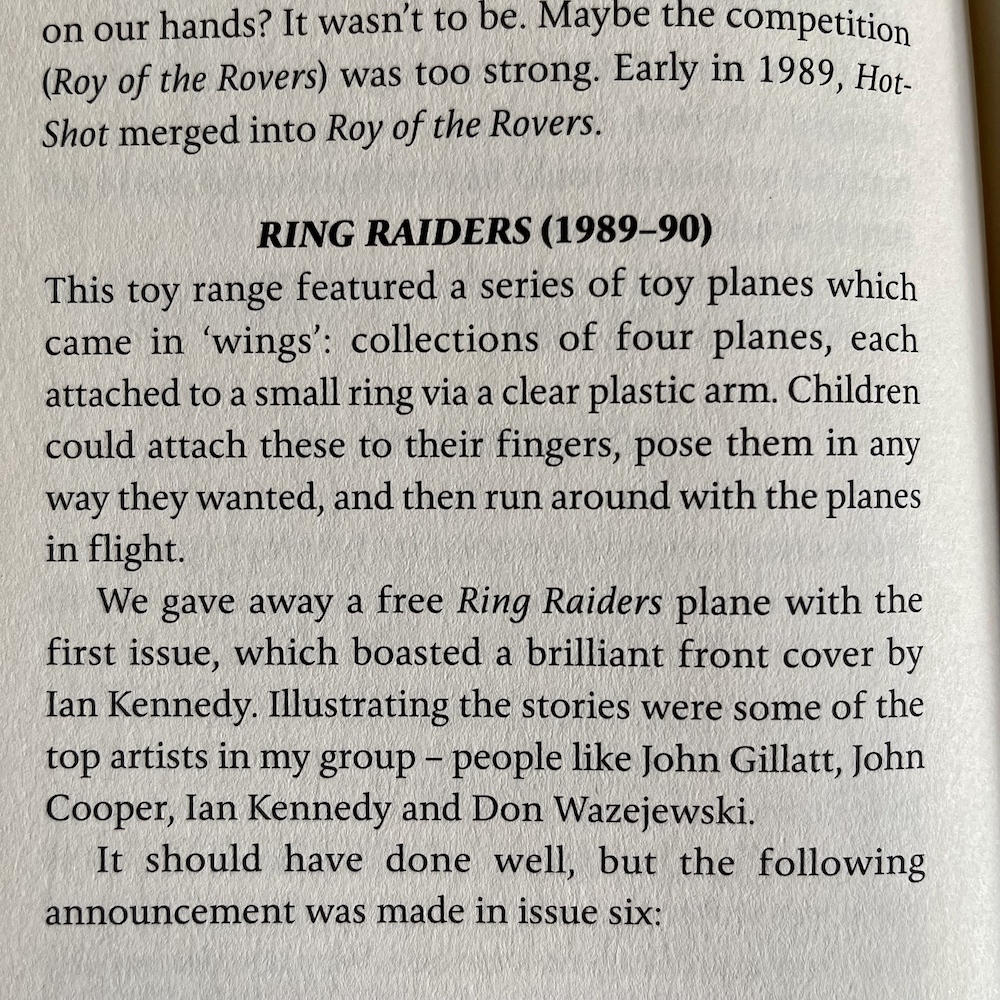
Of particular interest to me were Barrie’s personal thoughts about Ring Raiders‘ short lifespan, taking the helm of the Turtles juggernaut in the UK and some wonderful insider knowledge on the creation of Wildcat. This takes the form of some Ian Kennedy sketches and the original synopsis for the script of the preview comic. What really surprised me was how much the creation of the sports comics interested me and I found it particularly fascinating to learn about Storm Force.
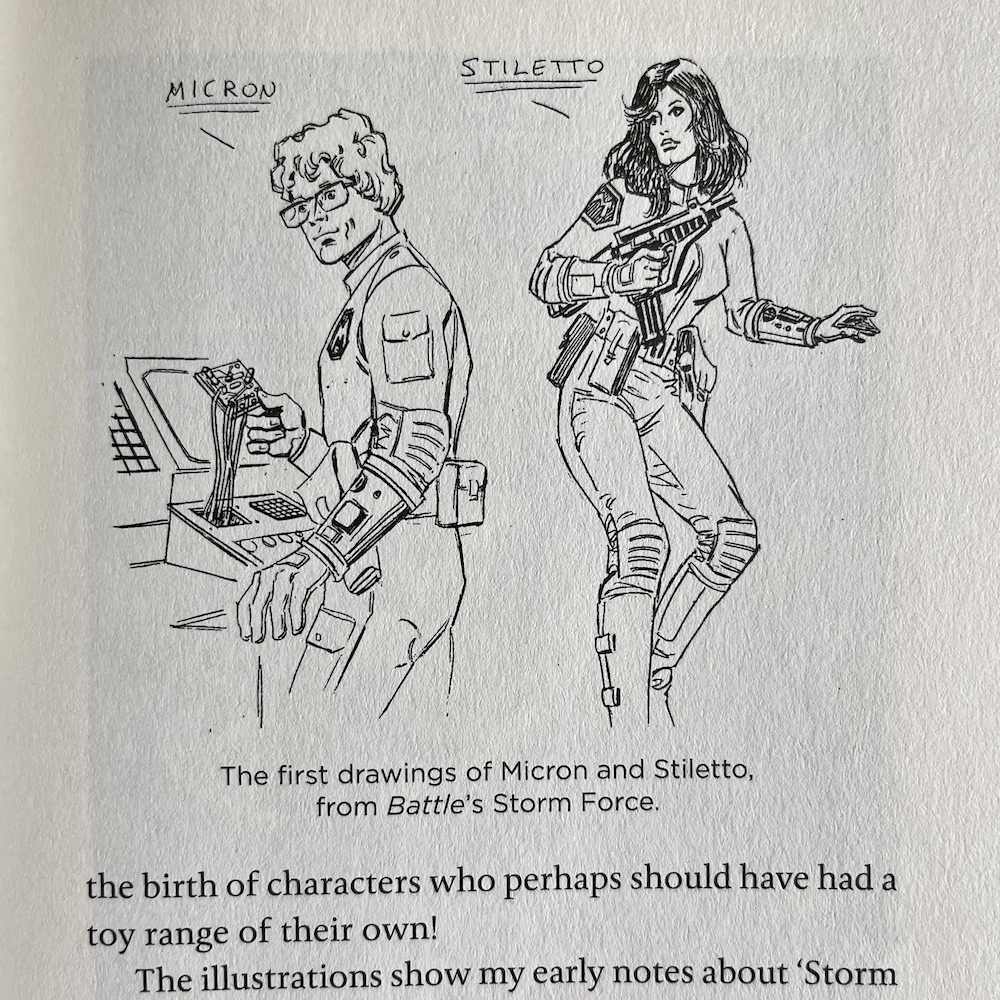
I’d seen adverts for the strip’s Battle comic debut in the pages of other Fleetway publications such as the piggy pink one this blog was named after. I knew it was a big deal to the publishers at the time but didn’t know why until reading this book. The contract to create Action Force comics had come to an end, with Hasbro taking over the toy line to relaunch it as the British version of G.I. Joe, the comics licence also moving to Marvel. In response, Storm Force was created to fill that void. In Comic Book Hero we see some lovely design sketches and get plenty of insights into how it came about. I also agree with Barrie when he states the characters would’ve made for good toys themselves.
This book covers a lot of comics from the 70s and early 80s, before the likes of OiNK came along, but even if you’re of the same vintage as me I can promise you’ll find this an interesting and hugely entertaining read. I didn’t discover the joy of reading comics for myself until #14 of OiNK towards the end of 1986 so I want to categorically state that if you collected any comics from IPC or Fleetway in your youth you’ll love this. For one, I can almost guarantee you Barrie had a hand in what you read and even if you didn’t collect many of his titles you’ll love the insights into one of the biggest UK comics publishers, including the creation of the new Eagle and Scream!
It doesn’t stop there. Comic Book Hero covers the formation of Creative Editorial Services when Barrie and his team worked freelance at home creating comics for Fleetway. To know favourites of mine such as Ring Raiders were created in the comfort of his own home makes me insanely jealous of Barrie’s job at that time! Also in here are the later publications Barrie created when he moved on from weekly and fortnightly comics, right up to the final episode of Scorer in the Daily Mirror in 2011 after it ran for an incredible 22 years. That in itself is a huge achievement. Indeed, the last section of the book is simply called ‘What A Life!’ and I couldn’t agree more.
From chatting with Barrie about the comics he worked on I can honestly say he’s an absolute gent. He’s always really open about his work and puts the fans first even to this day. This attitude and his friendly demeanour and devotion to the craft comes across on every page of this wonderful, personal book. For any UK comics fan Comic Book Hero is an essential read and since you’re reading this blog I’m going to assume it’s a safe bet you’ll love it too.
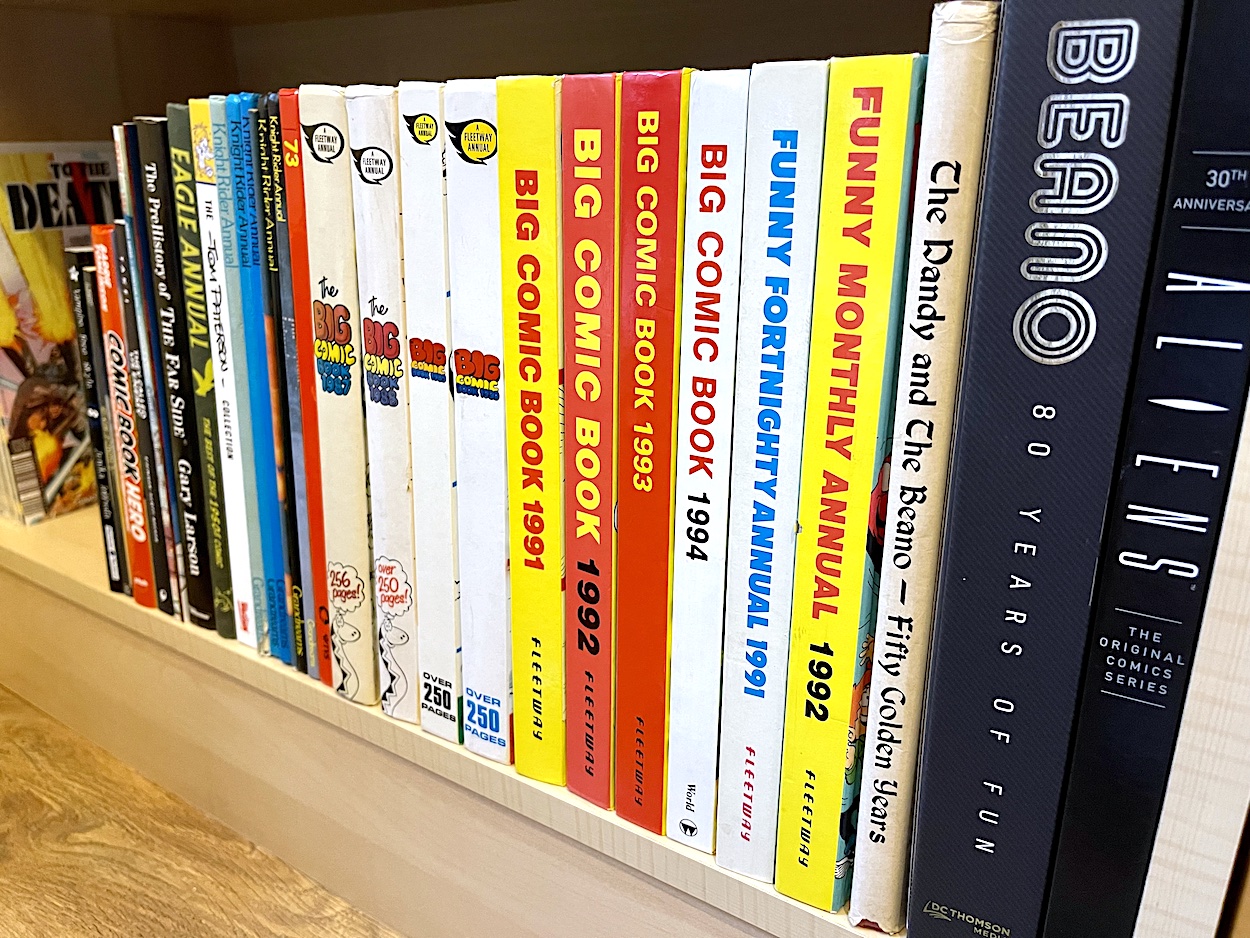
As a child one of my regular orders at the newsagents was for Fleetway’s Big Comic Fortnightly, which I collected from #1 for a couple of years after receiving a giant book the previous Christmas (the 1988 volume). Only when deciding to collect the books for the blog did I discover there’d actually been another the year before; when it had hit the shelves originally I hadn’t even discovered OiNK (my first comic) yet. Now I’ve been able to complete the collection of eight huge tomes that make up the Big Comic Book series, released between 1986 and 1993.
While they’d have been available since the end of the summer, it was Christmas Day when most of us would’ve received these so I’m going to cover one each festive season. (At least you know the blog will be about for a bit now.) While OiNK was more in tune with my sense of humour than more traditional humour comics, that doesn’t mean there aren’t plenty of smiles and a few chortles to be had here. With 256 pages it’s a cliché to say it but there’s something for everyone. Here are a few of my own highlights.
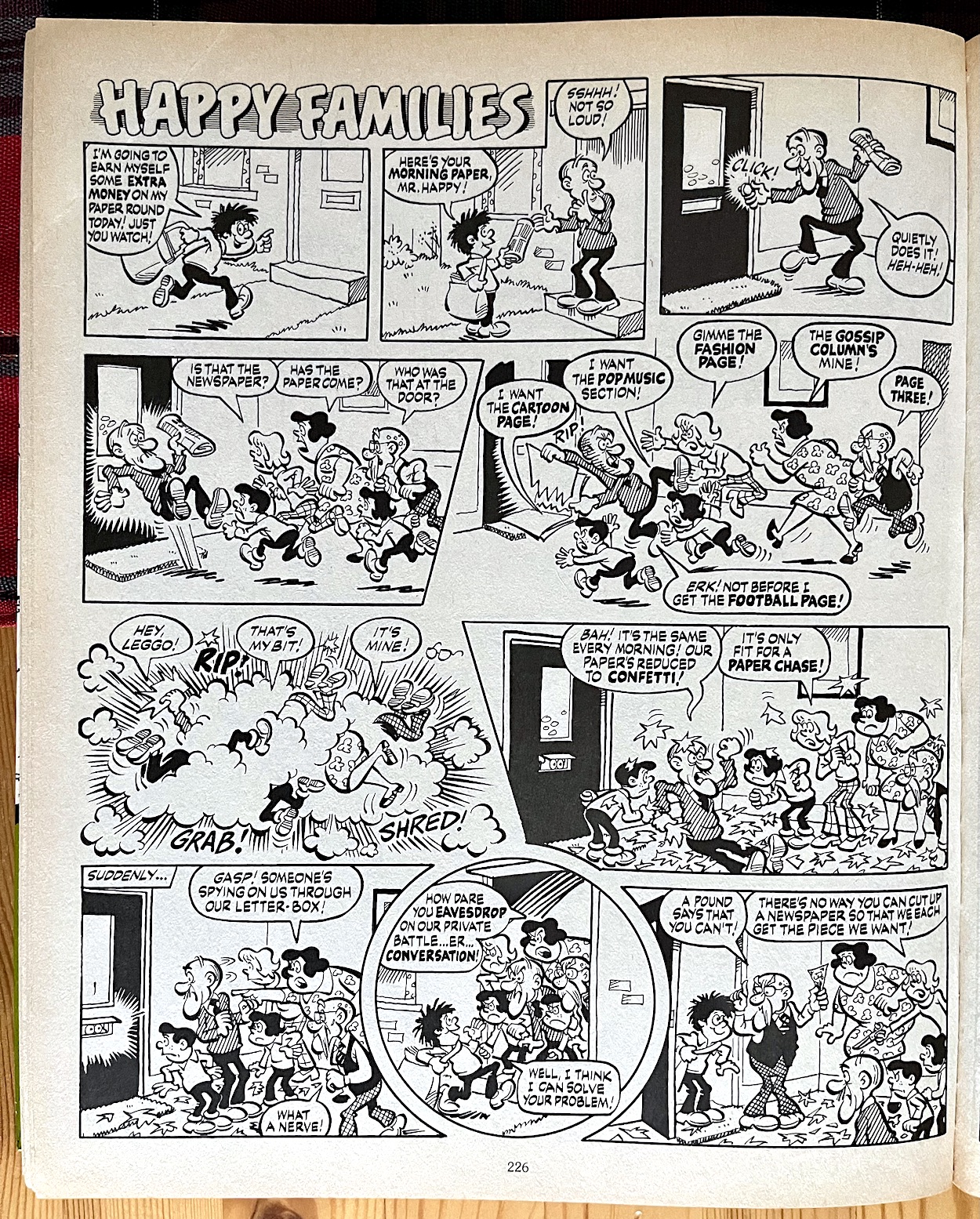
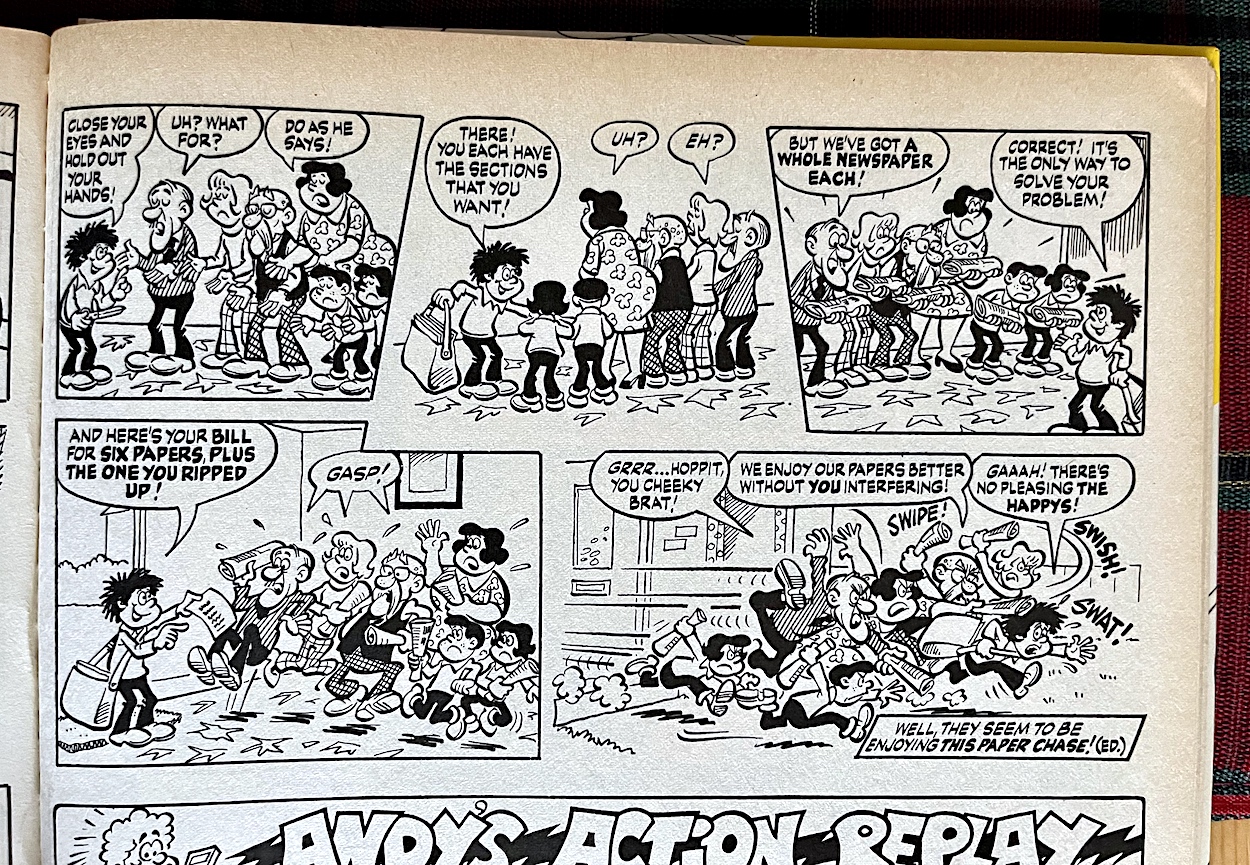
I can’t remember these first characters from the fortnightly or books as a kid, but that’s probably more a lack of memory on my part. Happy Families is drawn here by Dick Millington and I’m sure it can resonate with many of us around this time of year. The Happies are made up of Mum, Dad, Grandad, Sharon and the twins Vicki and Dicky and the scenario is much like the rest of the book’s comic strips, a simple but effective one; a small disagreement over something very unimportant would escalate until the whole family was at war with each other.
As with much of the contents in the book this is only one of several Happy Families strips, although most of the others end up so rowdy the police get involved. The stories can vary from them all being at each others’ throats by the end, all of them being punished in some way, or one or two of them getting sweet revenge on the rest of the family. Yet at the start of each new strip they’re back to loving one another again. Families, eh? These strips may even have been somewhat cathartic for some readers’ parents or older siblings on Christmas Day.
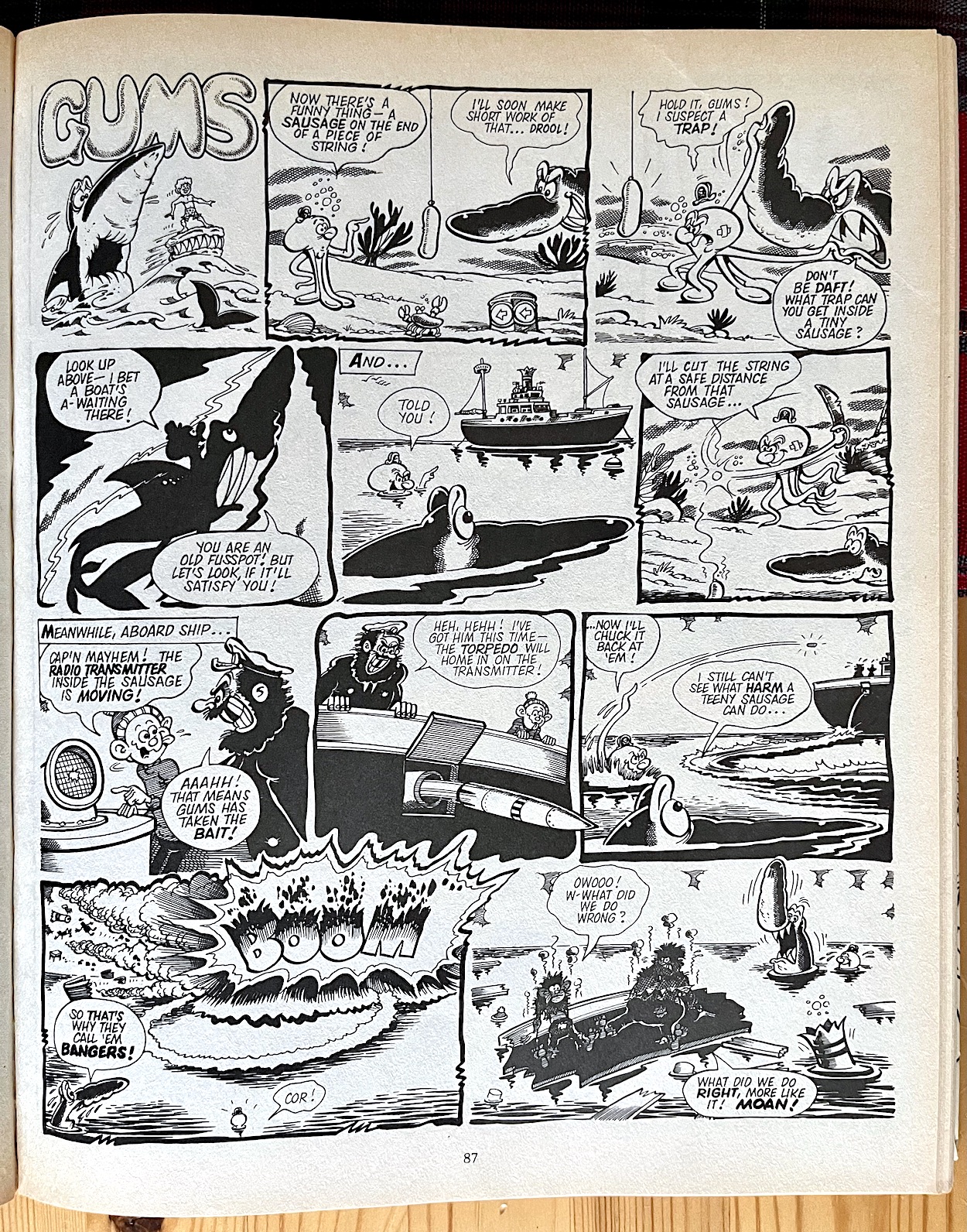
Regular blog readers will know I’m a sucker for a comical shark in the pages of OiNK due to my obsession with the creatures. This stems from my favourite movie of all time, Jaws, which inspired teenage me to read up on the real fish and decades later I’m still fascinated. In fact, my favourite ever page of OiNK was a parody of Jaws in #4 but even the top comic of all time has to take a bow to the following star of Monster Fun.
When I started collecting Big Comic it would still be a couple of years before I’d see the best film ever made but I always loved Gums. I was reading this funny strip very obviously inspired by that movie before I saw it. After I did eventually watch Jaws I just enjoyed this toothless version even more so as a result. Gums was originally created by writer Roy Davis and artist Robert Nixon. The above strip is taken from Buster after Monster Fun folded and is drawn by John Geering (who also contributed to a handful of OiNKs).
To me he was always a Geering character. John gives such fantastic, expressive gestures to Gums who thought he was a terrifying monster of the deep, but the cast of recurring characters who lived with him weren’t exactly quaking in the depths. The best thing was that Gums would sometimes triumph in his schemes which kept things fresh. With quite a few strips in this one book, it’s clear he was a fan favourite. Our next character also originated in Monster Fun.
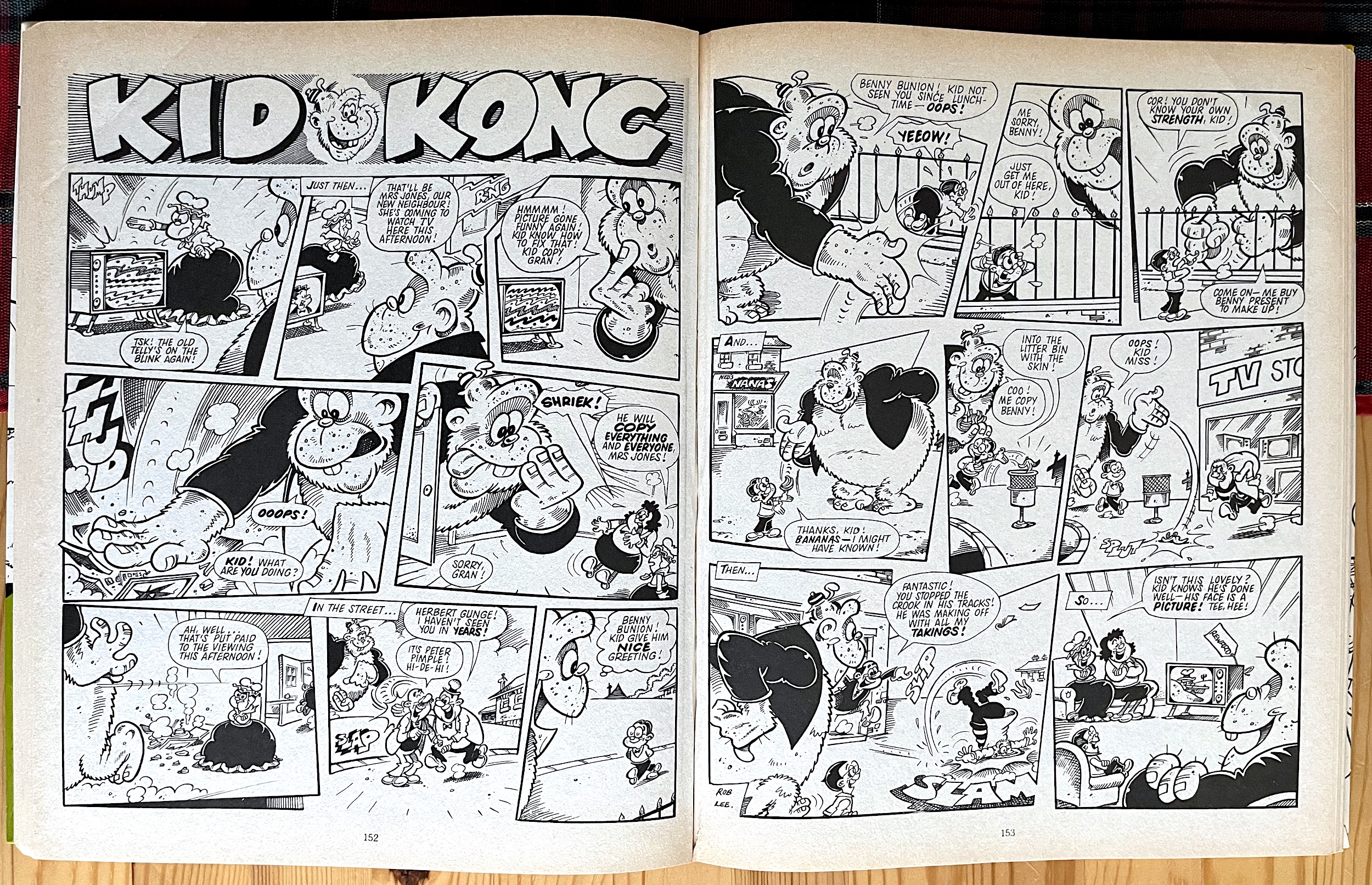
Kid Kong’s original artist was also Robert Nixon, although this Buster strip is drawn by Rob Lee and alongside Gums he lives on today in Rebellion’s new Monster Fun in new stories by new artists. Originally an escapee from a zoo and much larger, he was shrunk down to make it easier to write stories in a family home setting, although still having to stoop down to fit inside Granny Smith’s house. Granny was chronically short-sighted and hard of hearing, mistaking Kong as her own.
As enjoyable as these have been so far, not all of the contents hit the spot as much as these examples. Some haven’t aged well, in fact some hadn’t even aged well by the late 80s. But whether it was the latest book or the fortnightly comic there was enough content to ensure plenty of enjoyment and the odd chortle from a favourite character. The sheer size of Big Comic meant every reader would have some favourites and get a lot from each volume. Just don’t be expecting OiNK levels of guffaws. Unless you’re reading Gums, of course.
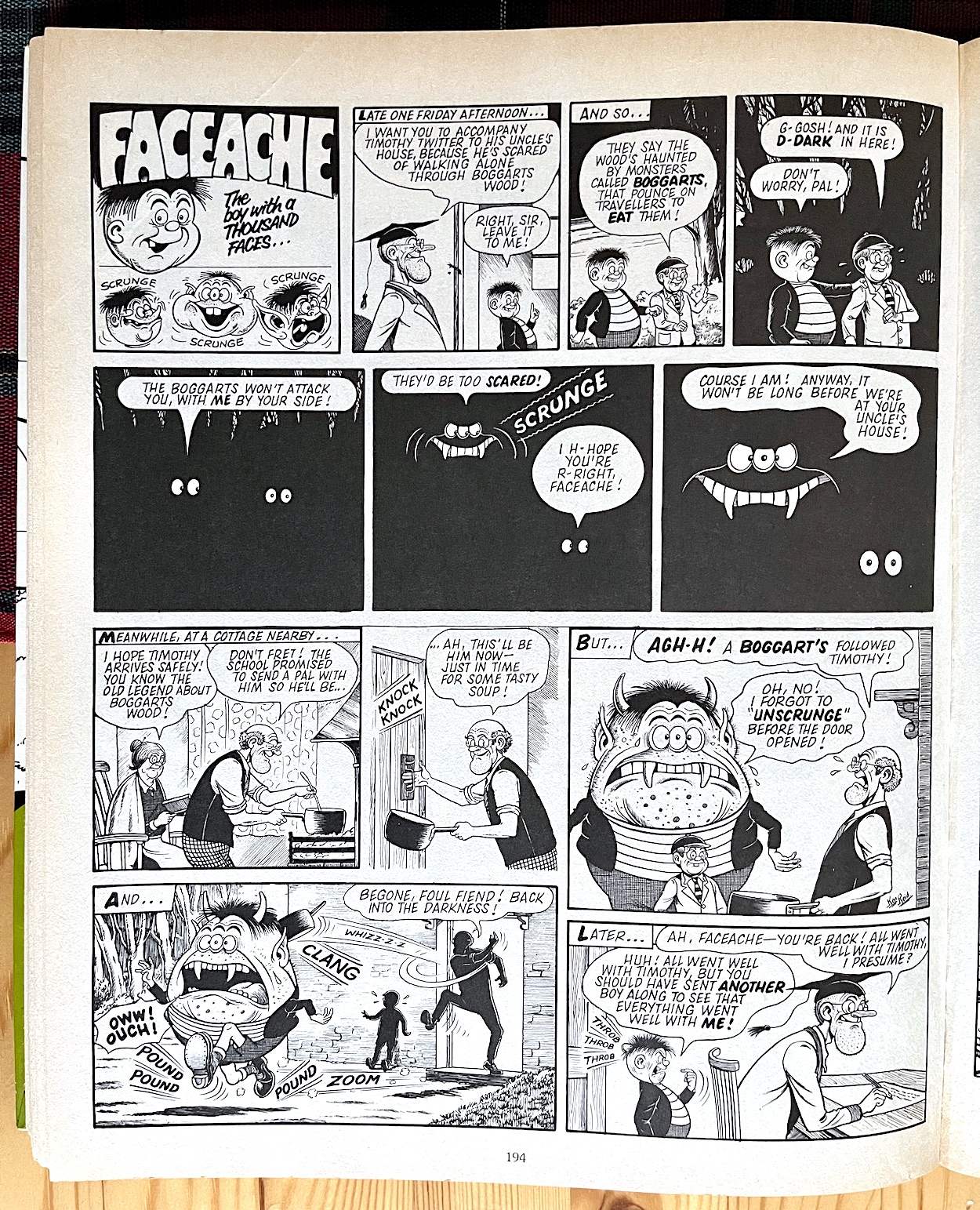
In recent years Ken Reid’s Faceache has had something of a resurgence, from a gorgeous hardback collection to new strips alongside the two stars above. Created for Jet comic but (yet again) a later star of Buster, Ken’s style is instantly recognisable and upon first glance may seem very traditional, very DC Thomson-esque to the uninitiated. But you soon realise these are very different to pretty much everything else in this book.
Ken’s work really pops, really stands out, which is no small feat in such a huge book
The humour has a different feel to it, not least thanks to the creative ‘scrunges’ Faceache pulls off. This juxtaposition works, the strips feel fresh even today with a unique art style. Ken’s work really pops, really stands out, which is no small feat in such a huge book where everything is black and white on cheap paper stock. However, if you’re scanning through a Big Comic Book these really do stop you in your tracks.
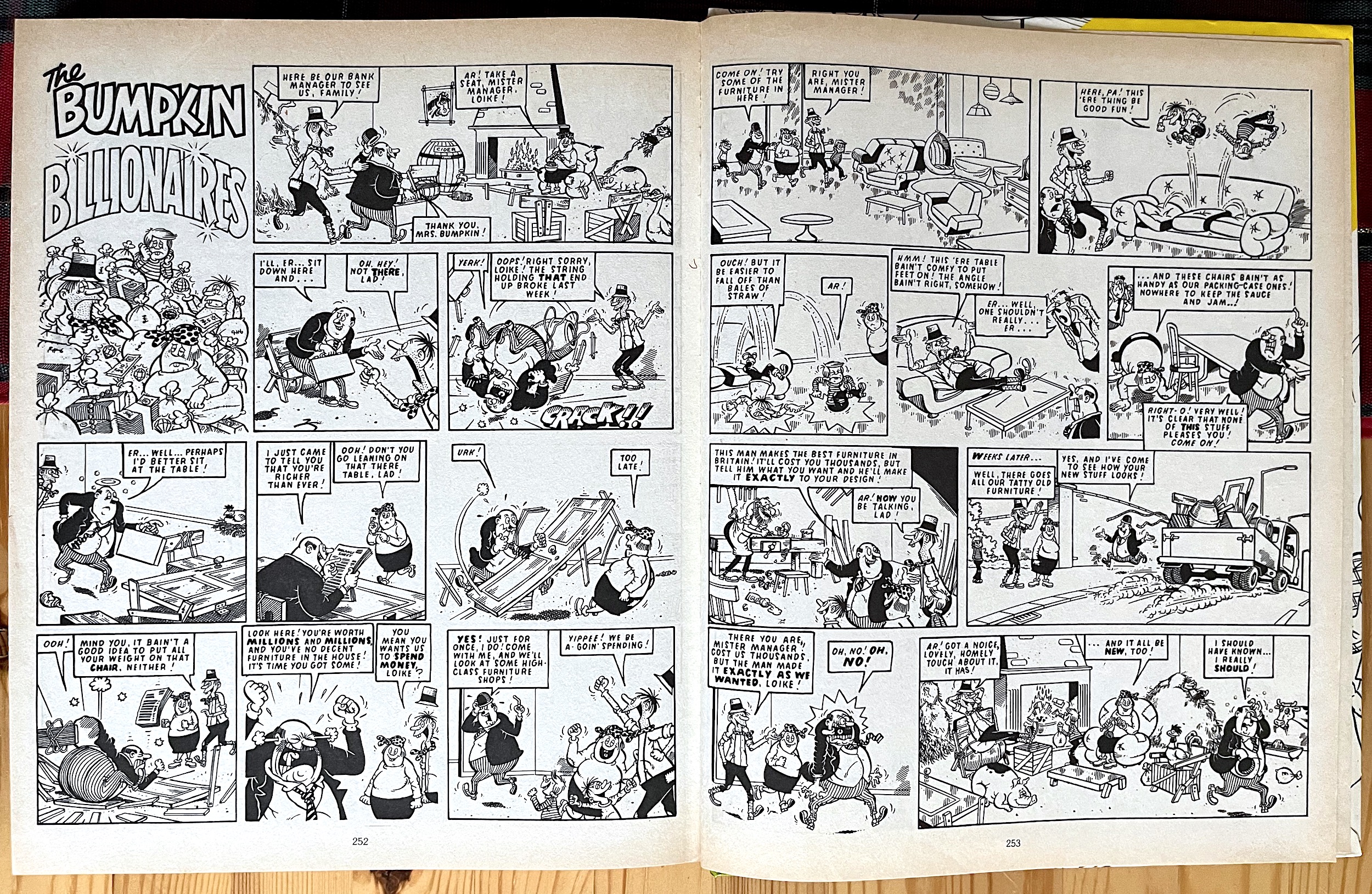
I’ve happy memories of the following family from my time with the fortnightly comic and they’d often be the first strip I’d read, the endings almost always guaranteed to raise a laugh. The Bumpkin Billionaires originated in Whoopee and told the tale of a family of Beverly Hillbilly types who had won billions of pounds on the pools (the family-friendly weekly sports betting which predated the lottery, kids – Phil) but who hated the lifestyle changes the money brought. Every story would show us another hare-brained scheme of Ma, Pa, Billy and Daisy‘s to get rid of all their cash, much to the disgruntlement of their bank manager.
Mike Lacey brought these loveable rogues to life and the physical comedy of the main characters was always funny. Most of the time the family’s plan would fall apart in the final frame or two and they’d somehow end up with even more money than they started with. I’ve included the one above because it was one of those rare occasions when things actually worked out in their favour. Well, I’m assuming these were rare occasions, I certainly can’t remember this happening regularly and I’ve fond memories of trying to work out what was about to go wrong for them.
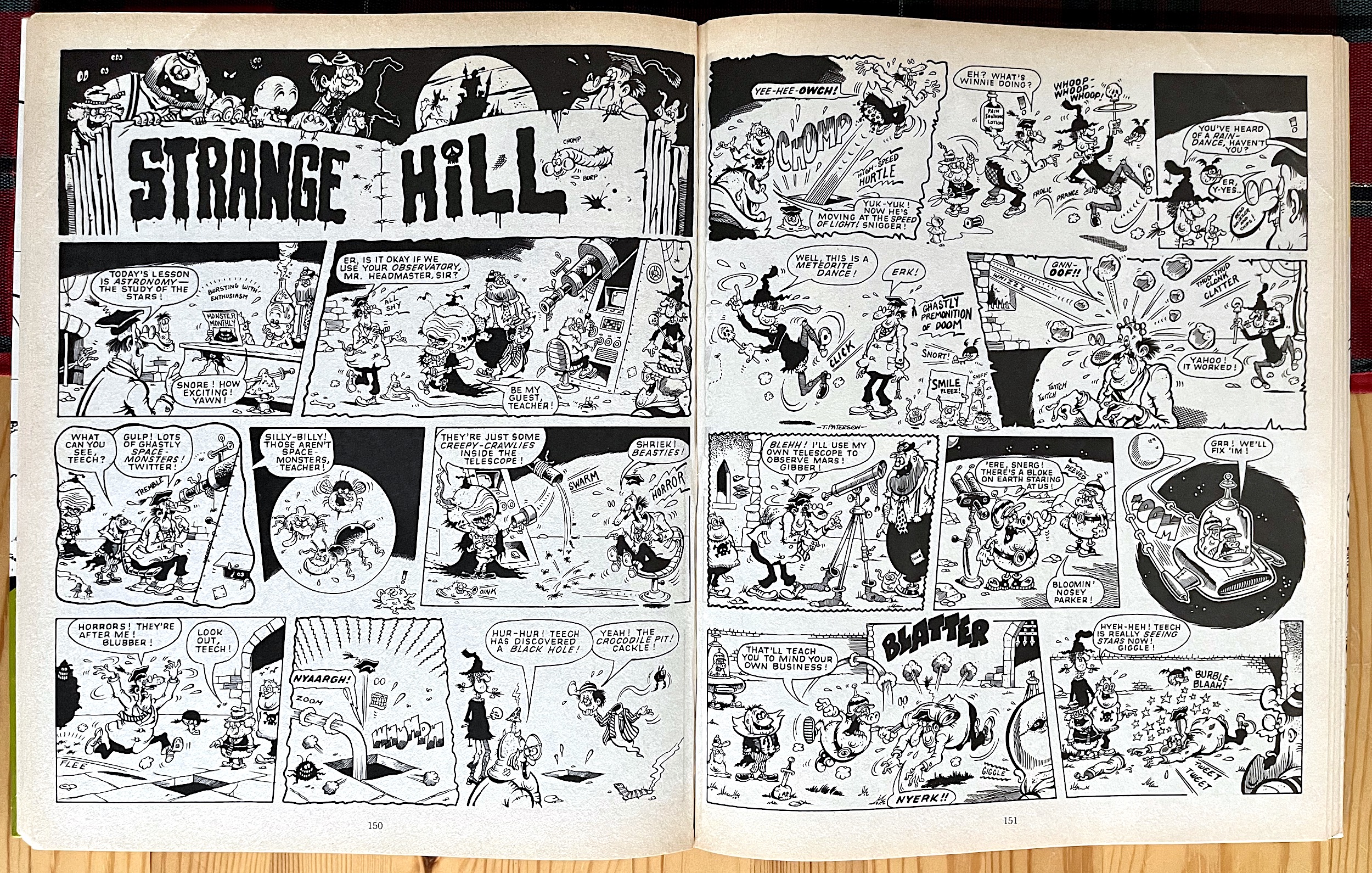
Do you remember CBBC programme Grange Hill? My siblings watched it but I never did, although the theme tune is still seared into my mind. Whizzer & Chips came along with its own interpretation, Strange Hill, which as a name I absolutely love. Teech was the poor sap trying to educate the wee monsters who in this case actually were little monsters; a class full of spooks, ghouls and tiny versions of famous Hollywood creatures. I thought this particular example would be a good one to include on this blog, can you tell why?
Tom Paterson, who brought us a few ingenious early OiNK strips is the perfect choice for these manic pages with such a varied ensemble cast and his trademark smelly socks, little squigly creatures and descriptive word bombs are all evident by the bucketload. These little extras always made his strips classics for me and his were the only ones I read in my brother’s Beanos. I’ve always said it’s unfortunate he was too busy to contribute more to OiNK where surely his work was a perfect fit.
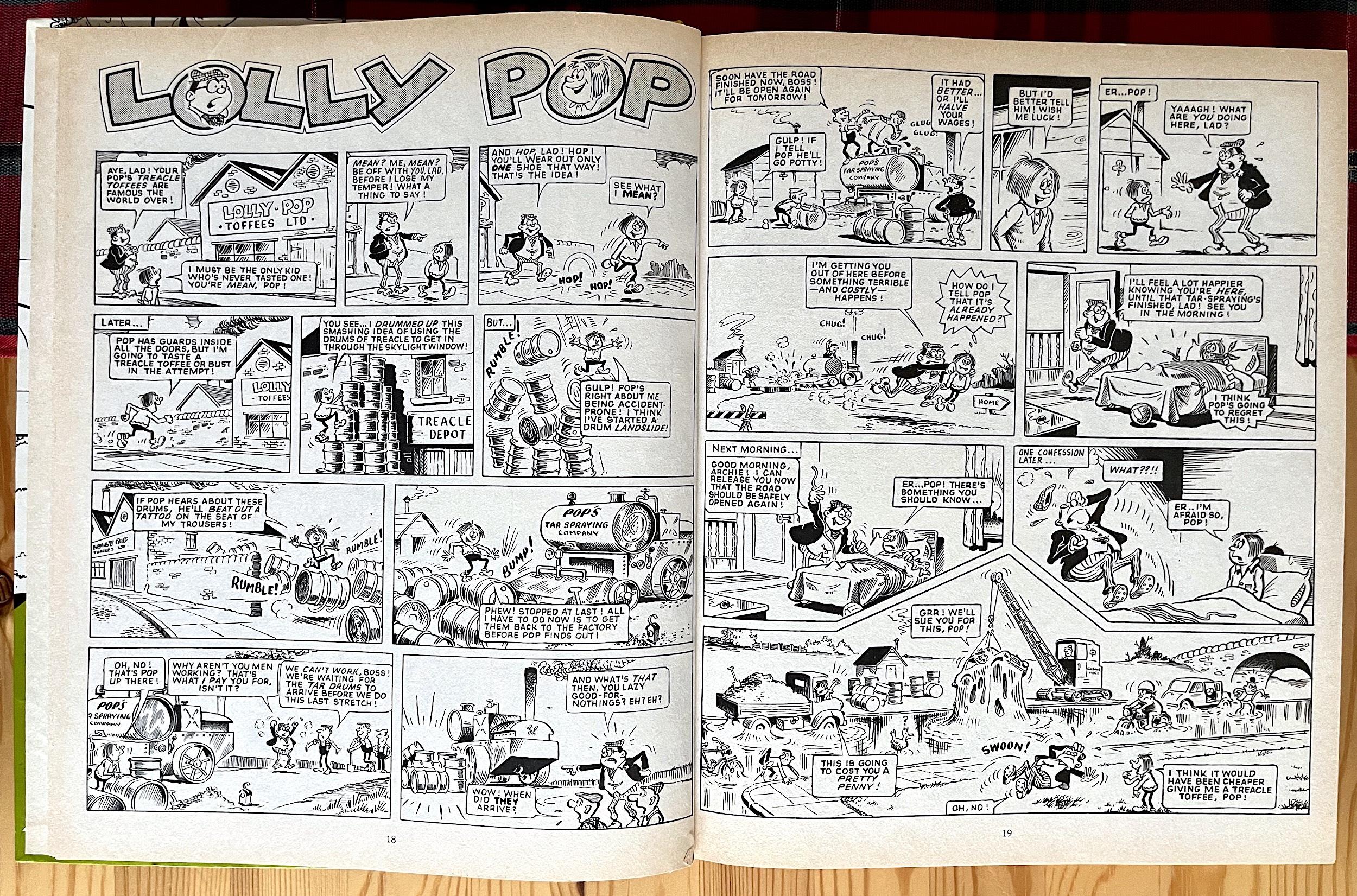
Drawn by Sid Burgon, Lolly Pop was an entrepreneur with an endless range of businesses and an equally endless supply of money. However, while his businesses thrived the same couldn’t be said of his relationship with his son Archie, who was a regular kid after a regular life, who just wanted to play and spend time with his dad. With his dad being so preoccupied with his factories, Archie’s unsupervised attempts of leading a normal life and wanting to win his father’s attention would inevitably lead to a variety of disasters.
It also didn’t help that despite being an obvious millionaire Lolly Pop was rather miserly to say the least, preoccupied with saving his wealth, leading to Archie being somewhat neglected. Although to be fair it was only attention that Archie felt starved of. Originally in Whoopee, Lolly Pop is one of the stronger series in this book and there are stories involving Lolly Pop Toffees Ltd, Lolly Pop Movie Studios, Lolly Pop’s Garage, Pop’s Tyres, Lolly Pop Wood Products and Lolly Pop’s Record Company over five 2-page strips.
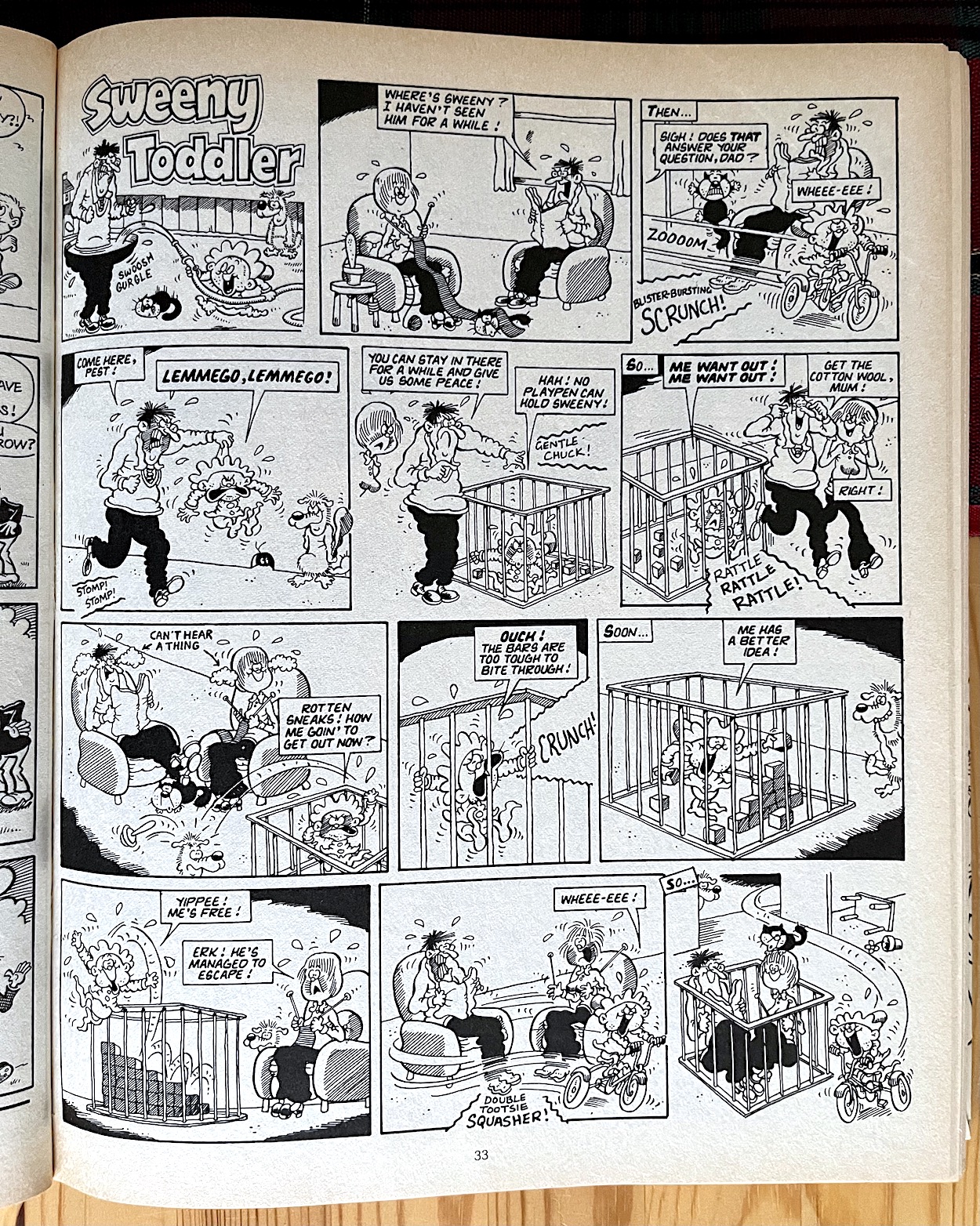
“Ha! No playpen can hold Sweeny!”
Sweeny Toddler
To finish the review there’s one perennial favourite surely everyone loves no matter which generation they’re from. Another character appearing in new strips today, even illustrated by one of his original artists, Sweeny Toddler was the tearaway baby who would cause havoc in not only his own home but all across town, with his ever faithful canine friend Henry by his side. Sweeney was originally created for Shiver and Shake comic and drawn by Leo Baxendale, then through mergers he’d go on to star in Whoopee, Whizzer and Chips and (of course) Buster.
There’s a reason Sweeney lasted as long as he did. Quite early on the brilliant Tom Paterson took over drawing duties and OiNK’s very own Graham Exton became Sweeney’s writer in the early 80s. They made the perfect team and during that time the strip rose to ever greater heights. The strip below is drawn by Tom but is before Graham’s time with the character. When Graham joined Tom’s style had developed to include all those lovely little sight gags he became synonymous with, like those in Strange Hill.
Overall, the first Big Comic Book is a success. Financially it was a huge success! It (and its fortnightly spin-off) cost next to nothing to produce since Fleetway owned the rights to all of the contents (we would never have seen any OiNK material as a result since most of it was creator-owned) and used cheaper paper stock, enabling the books to be much thicker with a retail price similar to a regular annual.
While some of the strips haven’t stood the test of time as well as others, there’s not really any that won’t at least raise a smile, making it a very pleasant reading experience. Needless to say, if you see this on eBay or in a second-hand charity store snap it up. With this amount of silly comics stuffed inside you should find plenty to keep you amused no matter your tastes.
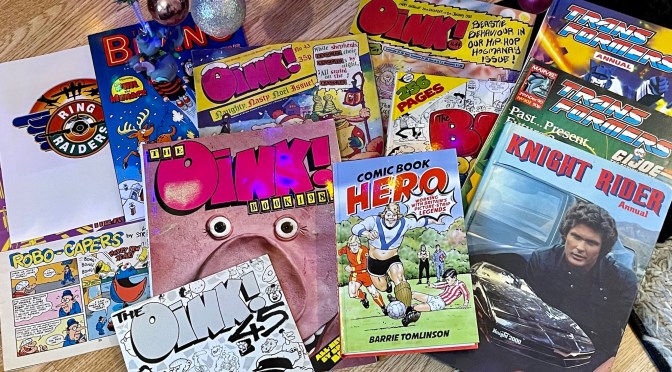
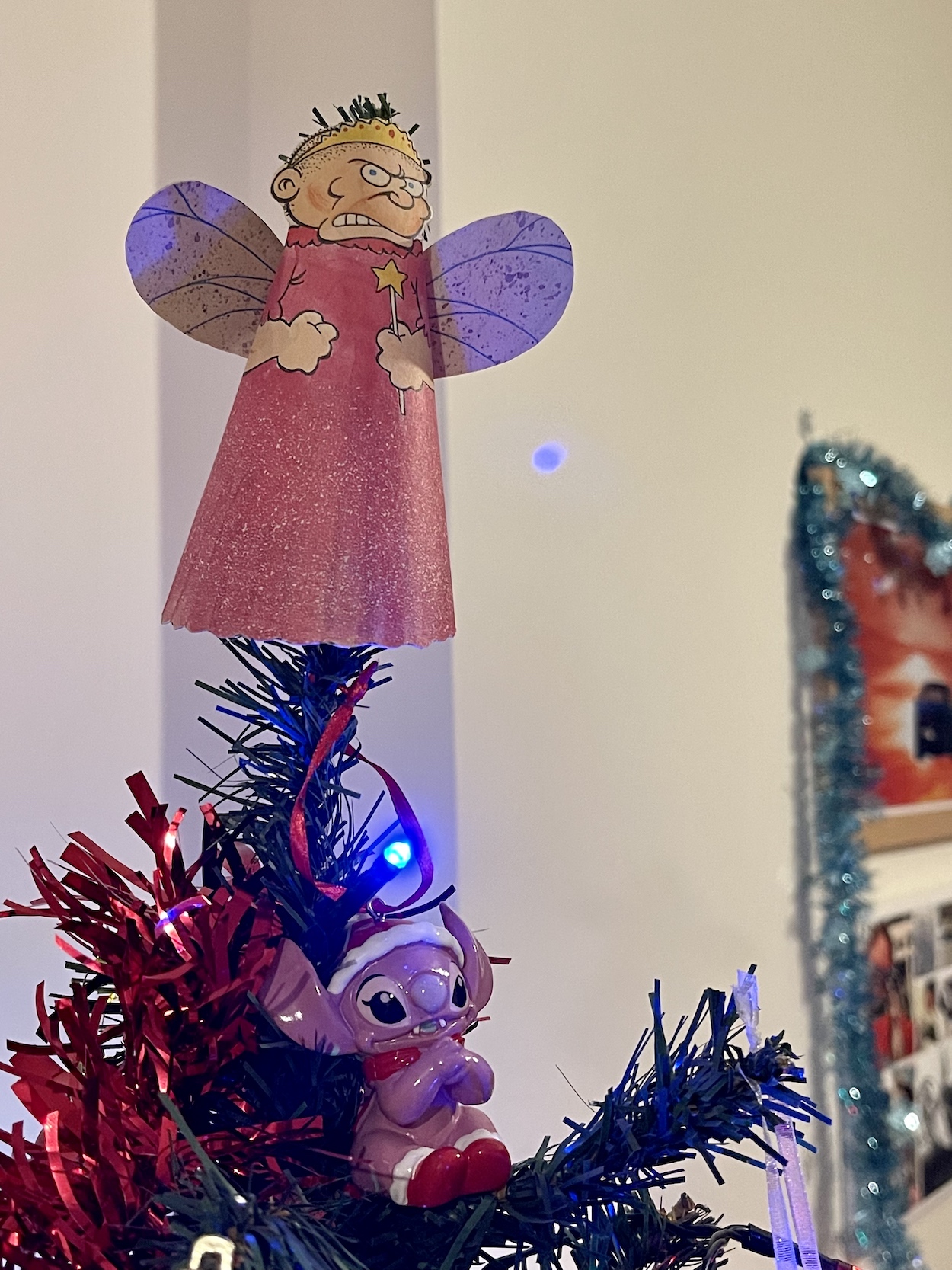
Have a close look at this photograph. Spot anyone familiar?
Links to all of this year’s festive posts are in piggy pink below
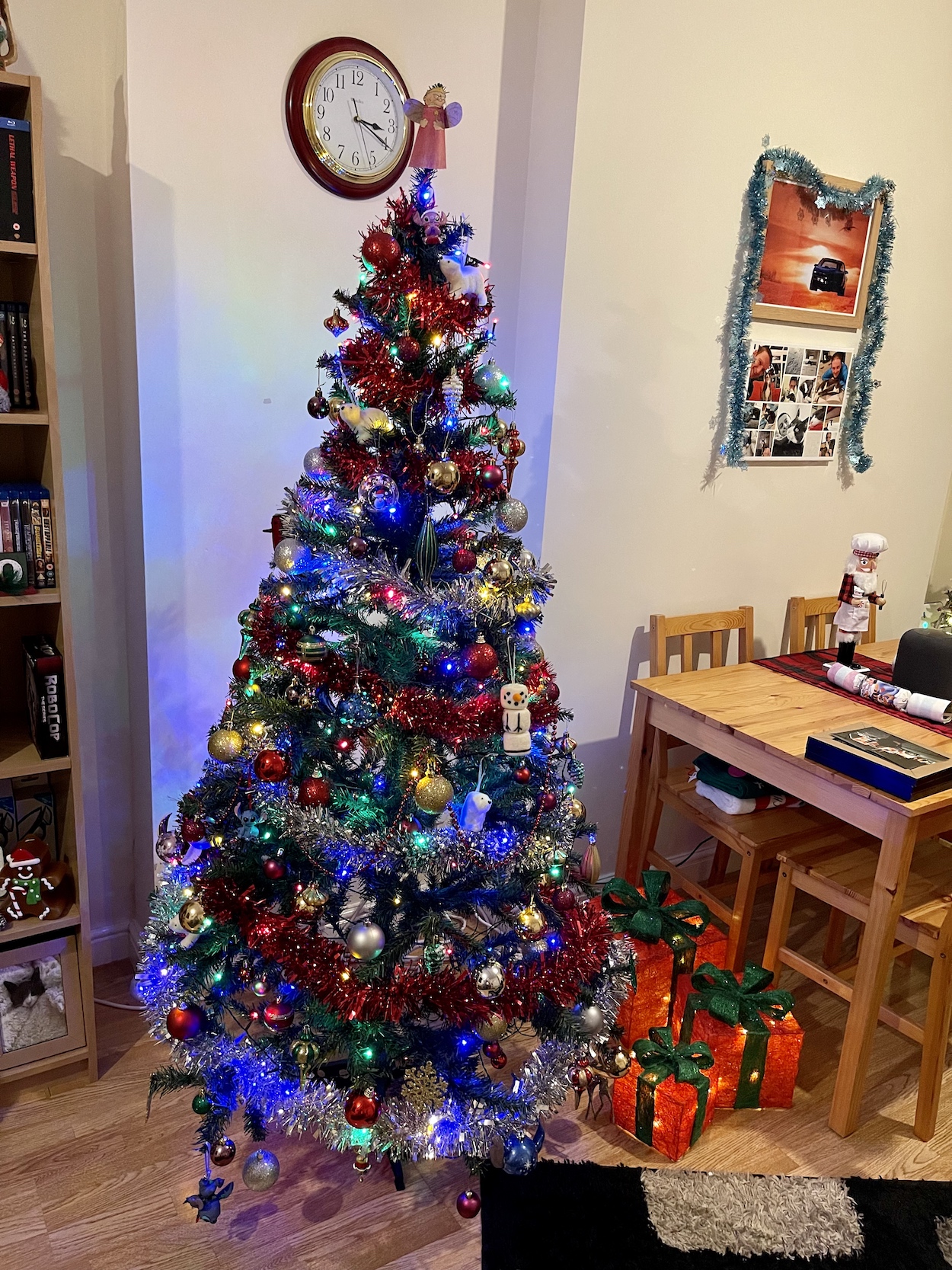
I love Christmas. To be honest that’s a bit of an understatement. It really is the most wonderful time of the year. Christmas is all about feasting, friends and fun, lighting up the darkest days of the year, warming us during the freezing winter. To me it’s for thanking all my loved ones for the year just gone, and this year I’d also like to thank all of you fantastic blog readers for your support. Since this OiNK Blog was launched in the Spring of 2021 you’ve been amazing with your feedback and I hope this Christmas I can thank you with the best month yet!
So, did you spot who was on top of my tree?
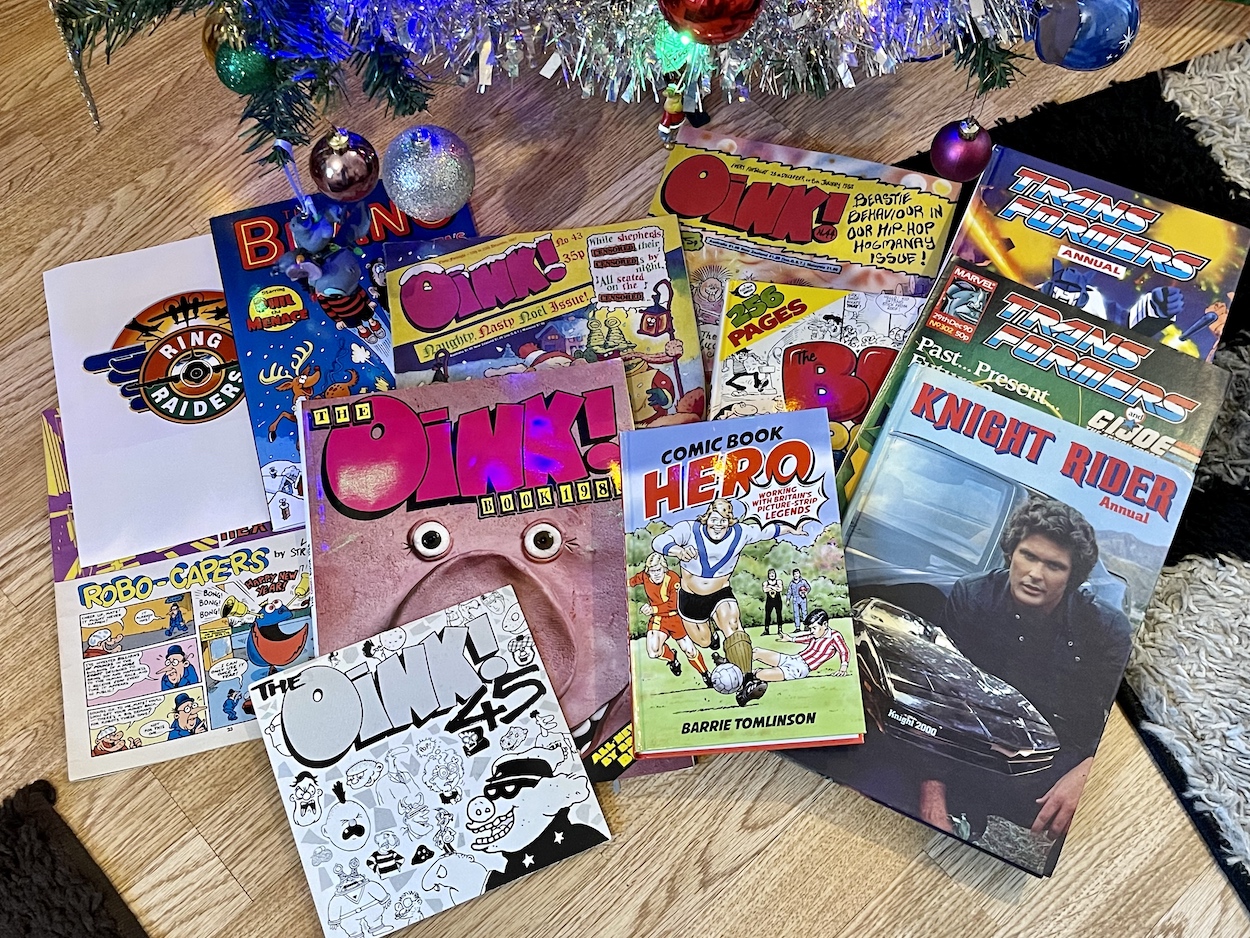
The biggest blog highlight for me will be OiNK reaching its second Christmas Day, the day most of us pig pals got our trotters on The OiNK Book 1988, my favourite OiNK of all and my favourite childhood book to this day. It’s backed up with the best regular issue which just happens to be this year’s festive edition, and there’s the Hogmanay issue as well. There’s the start of two new, albeit very slow real time read throughs with the first in both the Big Comic Book and Knight Rider Annual series.
The former of those two I went on to collect the fortnightly comic spin-off as a kid and the latter I’m particularly looking forward to because the show it’s based on is (with no exaggeration) my favourite thing in the whole universe. I had this first Knight Rider Annual when it was first released, but what I never realised until recently was that the interior art was by David ‘V for Vendetta’ Lloyd! This will be a real treat for comics (and talking car) fans.
Not only that, David agreed to have a chat with me about his time on the books so watch out for that exclusive interview over Christmas, and an interview with a retro toy enthusiast who gives us an insight into collecting blog stars the Ring Raiders from Matchbox. There’s a review of Ring Raiders comic editor Barrie Tomlinson’s book Comic Book Hero just in time for you to throw a Christmas gift hint to someone, and a look at a fantastic gift I received a few Christmases ago when I took a trip to Beanotown in a personalised Beano comic!
I think it’s about time we started to cover the unique range of OiNK merchandise on the blog too, don’t you? The OiNK 45 record was about as unique as you could get and I’ve permission from OiNK’s editors to publish all three songs here on the blog. That’s a nice Christmas bonus! We’re not done though. Finally, over on the blog’s Instagram our Robots in Disguise reach the seventh holiday season in their read through! So watch out for the Christmas issue and the latest annual over on social media (plus #300!). Also, how about a Transformers/OiNK crossover you probably never knew happened?
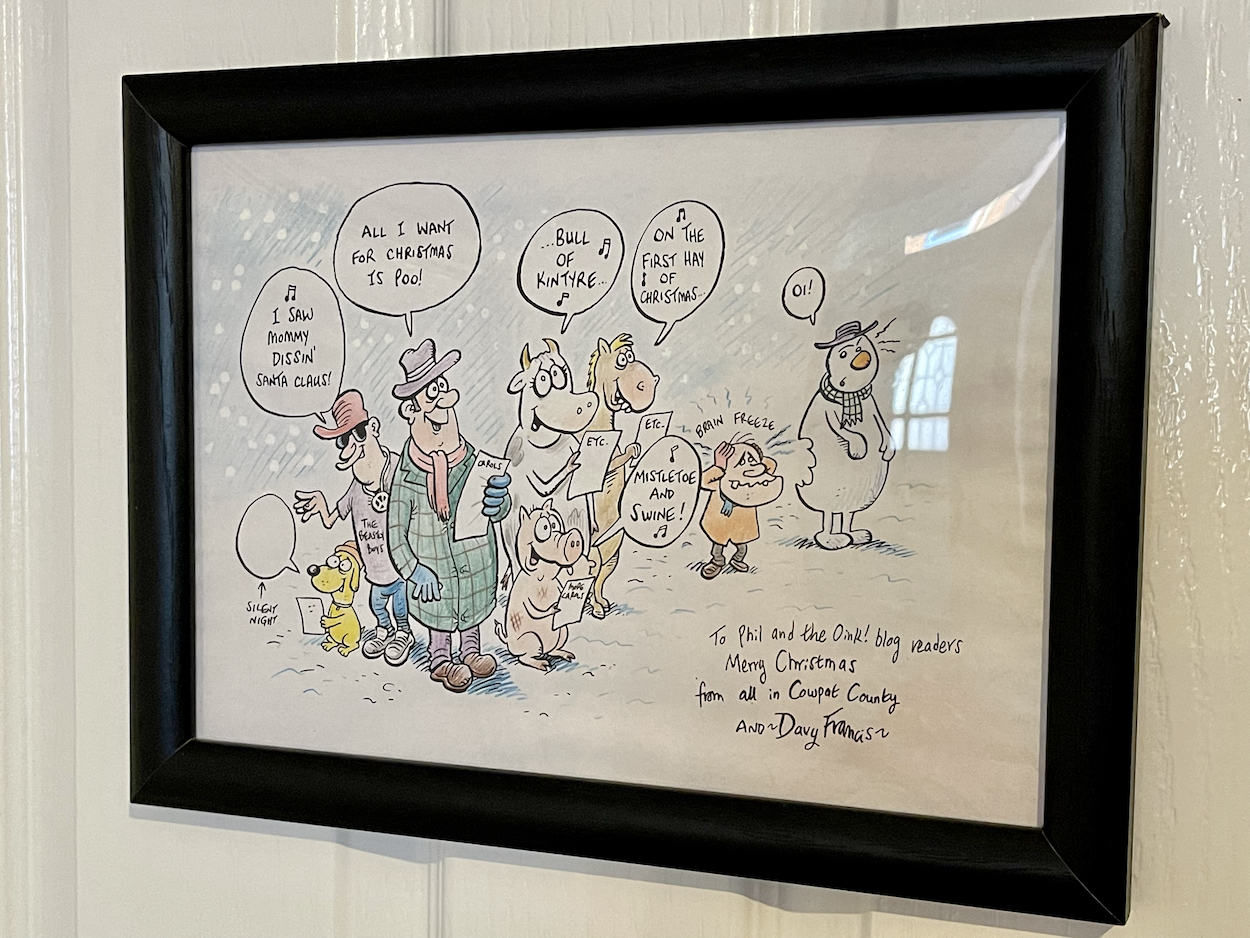
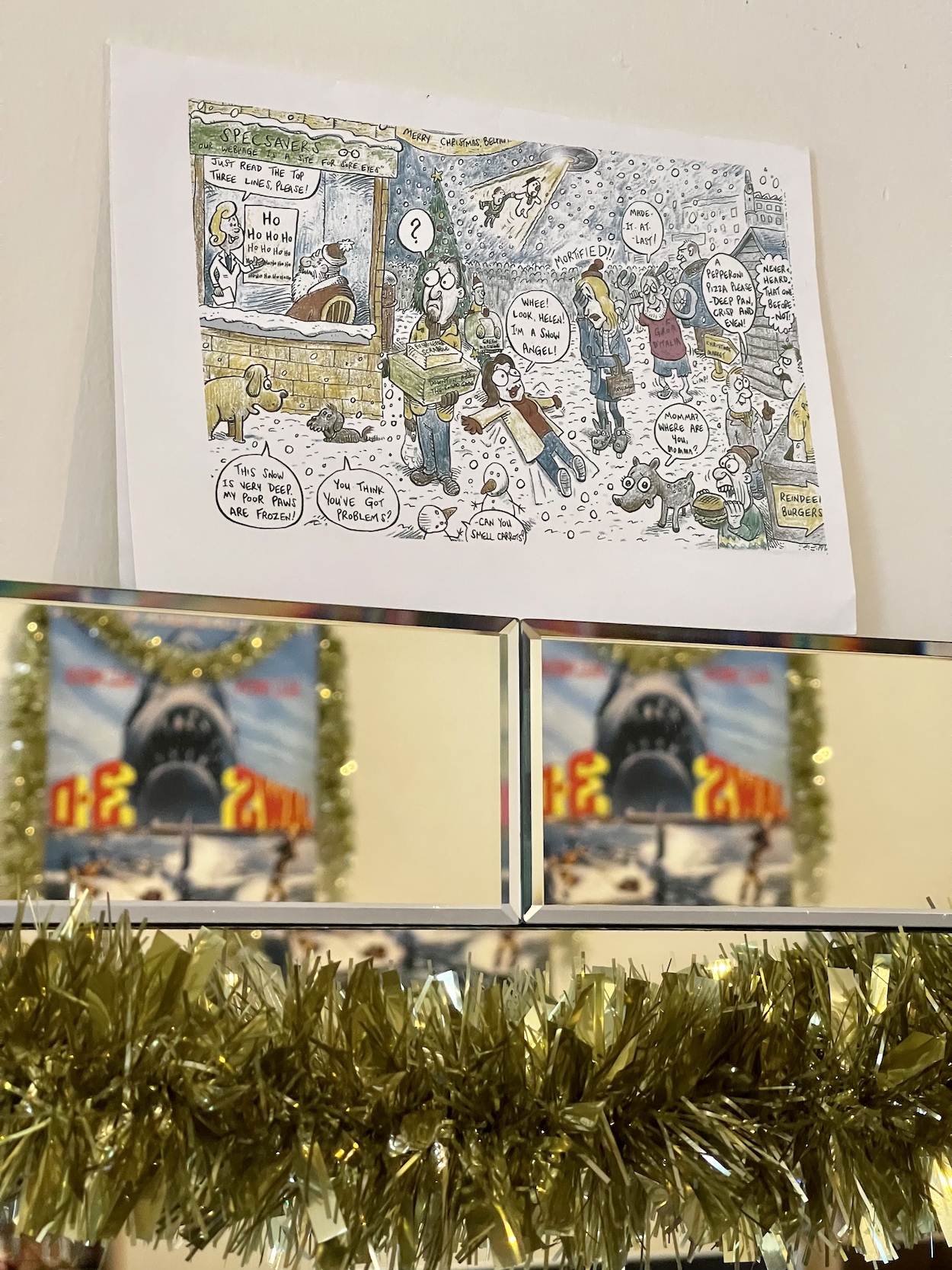
I’m really looking forward to sharing all of these with you and remember you can leave any comments you wish under each and every post, or on the blog’s social media on Instagram and Facebook. Things are shaping up for a good Christmas on the blog, beginning of course with the OiNK decorations! Not only is Tom up on my tree as is tradition in my house, check out these Christmas cards above from Davy Francis I’ve received over the years.
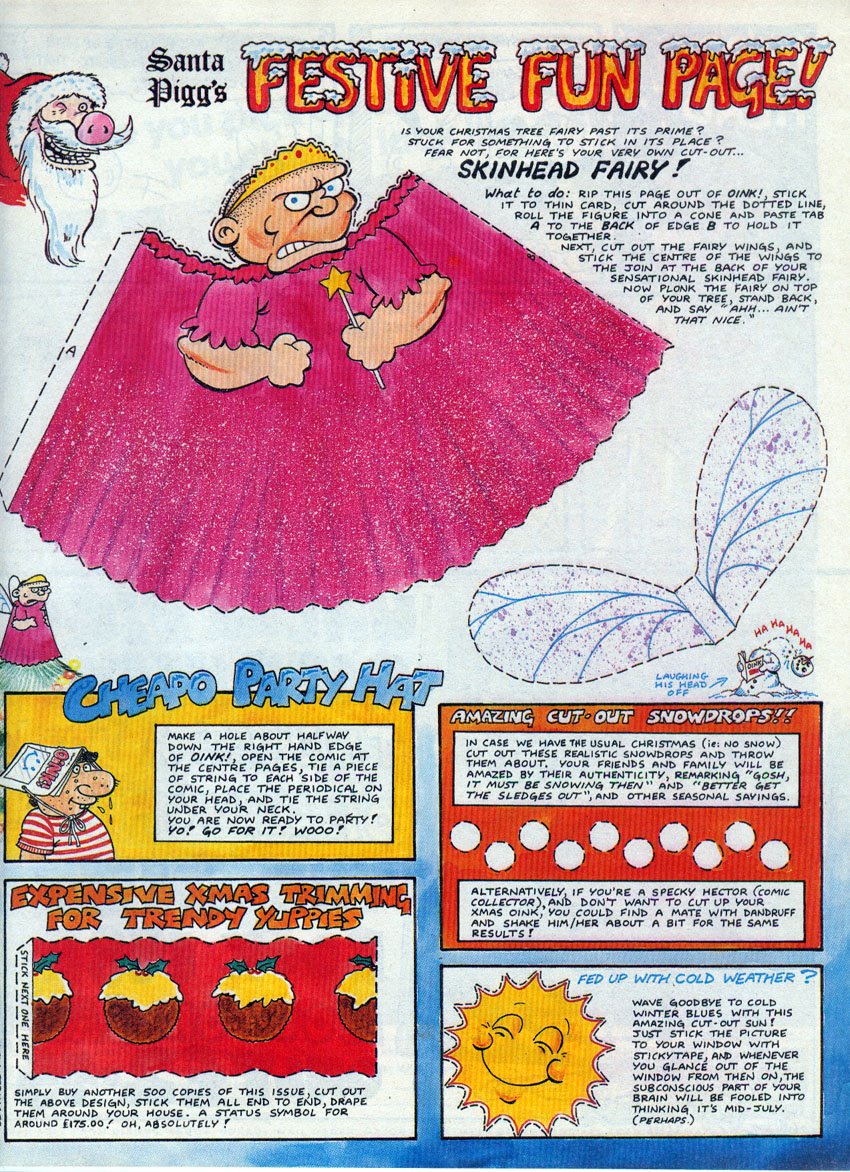
No need to look on enviously though, below is Tom Thug’s page from #43 of OiNK by Lew Stringer. Just print it out, stick it to some thin card (I used a mince pie box appropriately enough), cut him out and soon he can be scowling at you from atop your tree too. Thanks to Lew for allowing me to grab this from his own blog since the page doesn’t actually exist in my issue anymore!
It all kicks off tomorrow with TheBig Comic Book 1987 review (and of course the suitably icy new logo at the top of the blog if you’re reading this at the time) so get the mince pies warmed, the rum and raisin ice cream scooped, the Schloer poured and the Tayto Turkey and Stuffing flavour crisps in a bowl (that’s just for the Ireland readers that one) and settle down for the OiNK Blog at Christmas.
Merry Christmas to all for the next month-and-a-bit and watch out for extra bits of OiNK content on both Christmas Eve and New Year’s Eve!
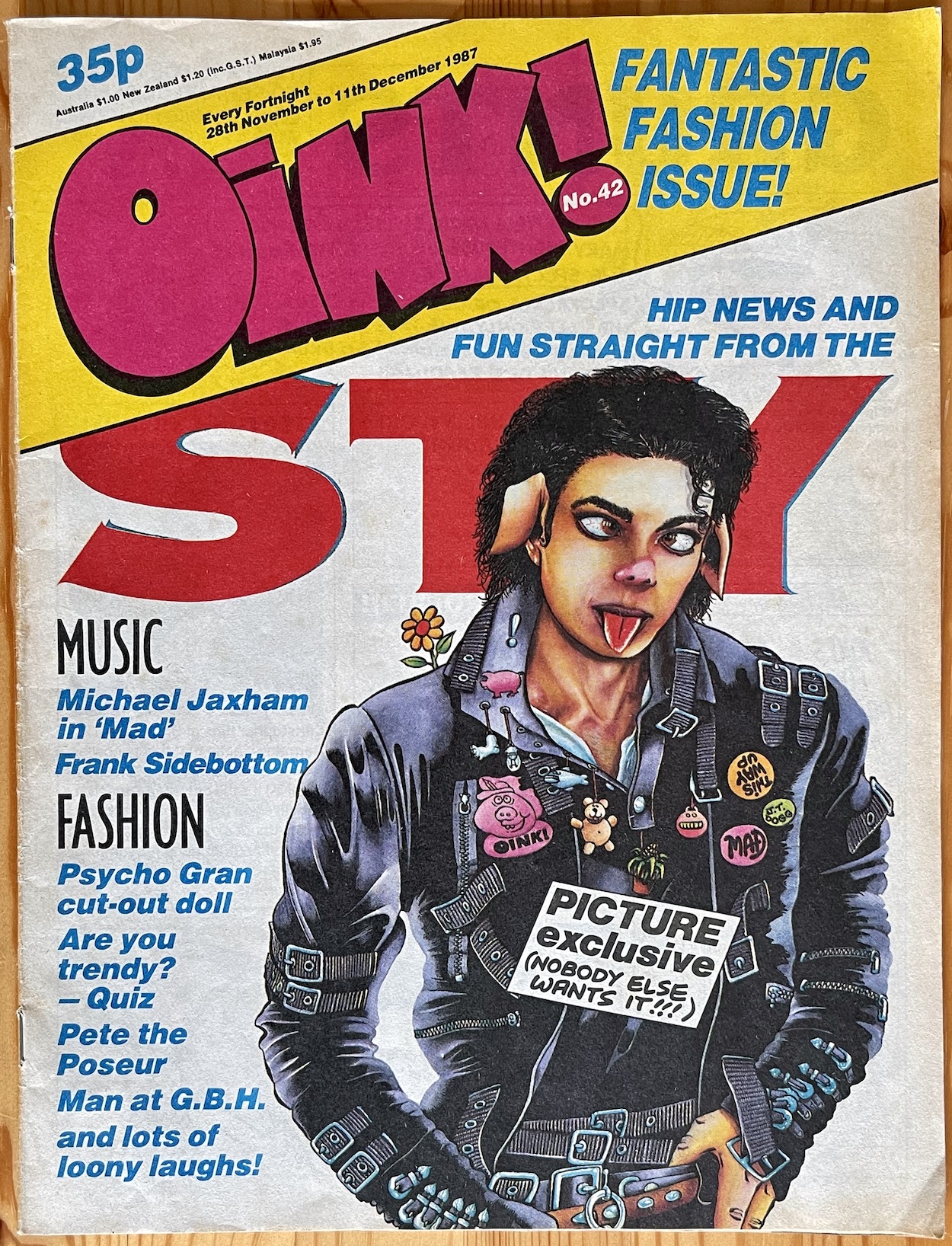
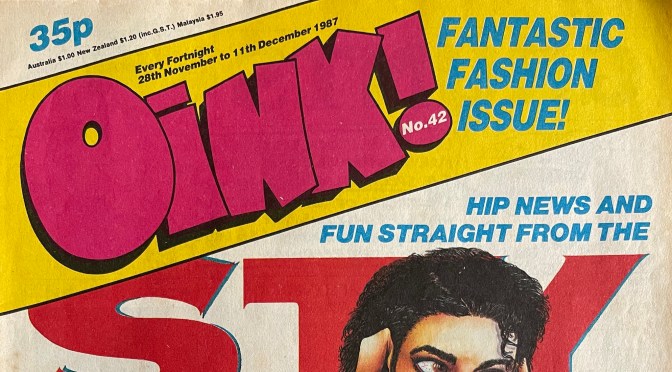
The always brilliant J.T. Dogg kicks off the latest issue of OiNK, the Fantastic Fashion Issue. This was one of the most memorable covers for me as a kid. While I wasn’t overly enthusiastic about Michael Jackson my siblings were, but I did love Weird Al Jankovic’s parody and OiNK’s tribute was right up there in my opinion, as you’ll see below. Just a couple of quick notes about the issue first though.
OiNK seems to have settled into a set title banner, making it more visible on the newsagent shelves and inside on page three there’s a slight mistake in the copyright banner, the bit where it says OiNK was devised by OiNK! Publishing Ltd and published by Fleetway, can’t be sold for more than the cover price etc., that sort of thing. Instead of the usual “Published every fortnight” it says “every Friday” which I remember spotting as a kid and getting so excited for the new year and the promise of twice as much OiNK!
Let’s get straight to the headline act and Mark Rodgers’ rewording of one of Michael Jackson’s earliest hits, Bad. Change Jackson to Jaxham and ‘Bad’ to ‘Mad’ and you’ve got a sure-fire hit on your trotters. To enjoy this fully is to read it to the original tune, so make sure you have that firmly in your head before you start. The lyrics are just as mad as the titular character and to go alongside them is his new hit music video, also drawn by J.T. Dogg.
As you read, the daftest parts of the song are hilariously brought to life by Malcolm’s beautiful, colourful art and I remember showing this off to lots of my friends at school at the time, due to many being huge fans of the real singer. As a child I thought it was brilliant that OiNK was taking on a real worldwide megastar and he wouldn’t be the last. A perfectly judged piece of parody.
Never underestimate OiNK’s ability to pull the rug out from under the reader
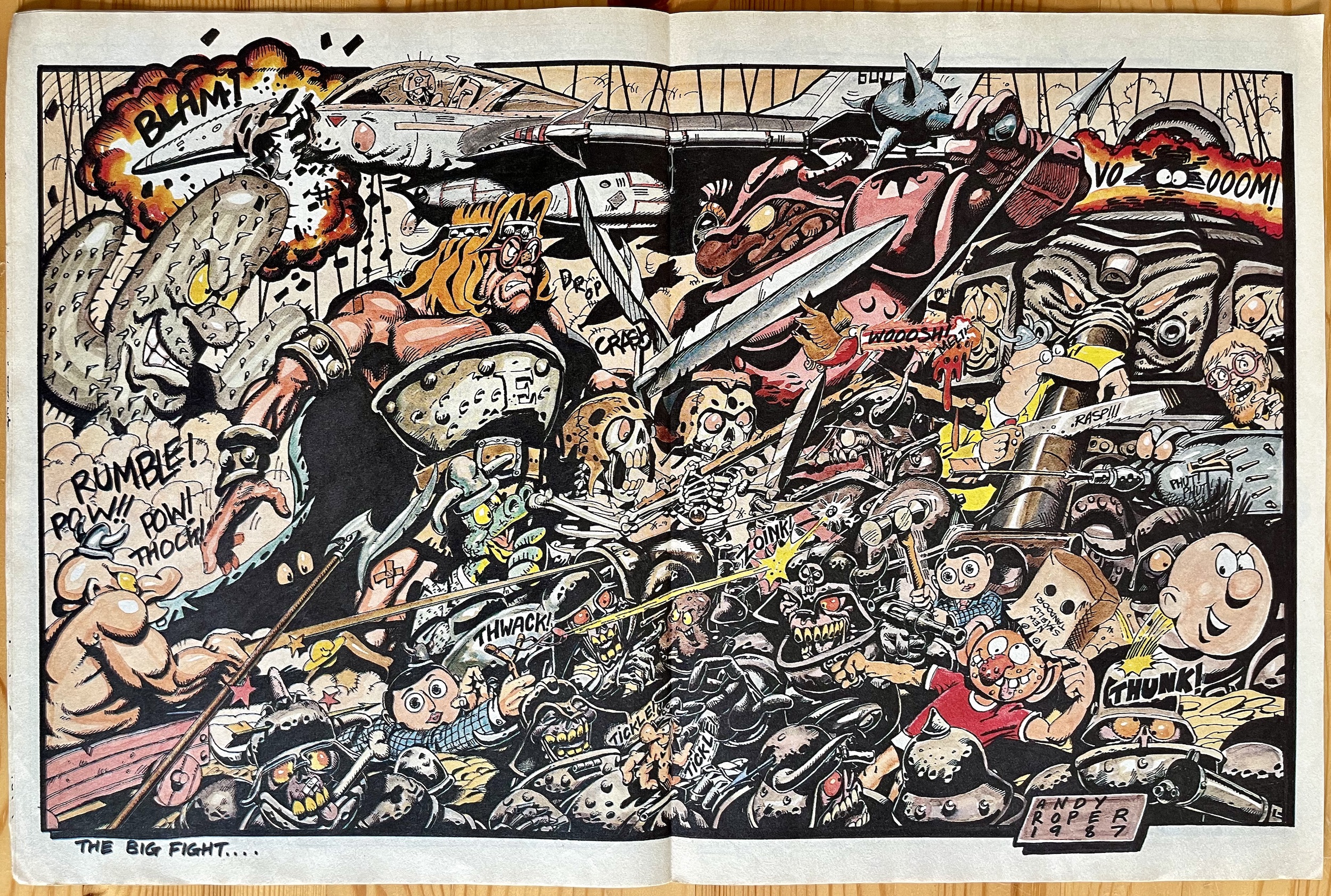
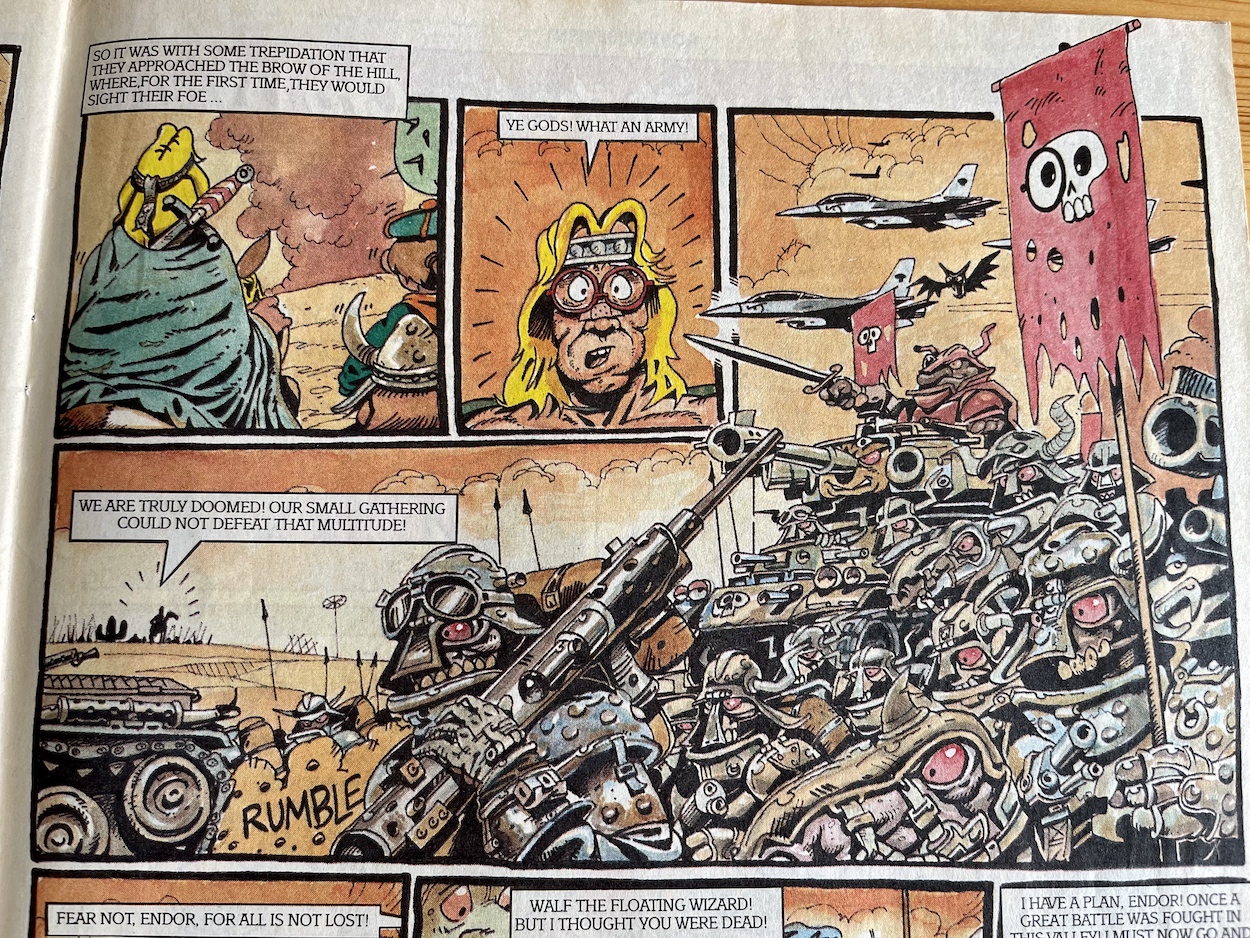
Despite being the cover star, Michael Jaxham isn’t the biggest thing to appear in this issue, not by a long shot actually. That honour goes to the spectacular five-page(!) conclusion to The Spectacles of Doom vs The Monocle of Mayhem, Tony Husband’s take on all those hugely enjoyable but completely ridiculous 80s fantasy films, drawn in exquisite detail by Andy Roper. After two pages of black and white strip we’re treated to this simply stunning (and of course very funny) spread of the battle we’ve been promised for weeks.
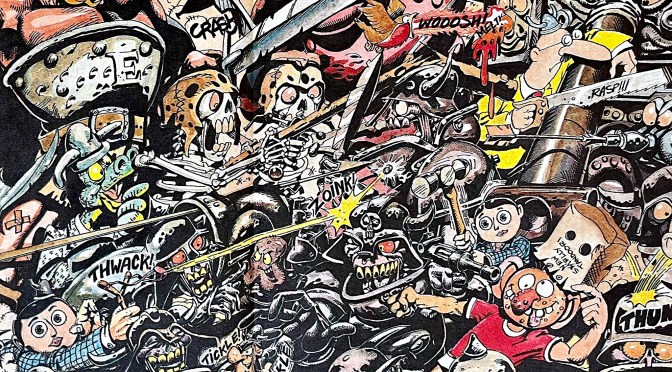
There’s so much going on here it benefits from taking your time to really look at the small details. The tiny, sweet looking bird with the flame breath, the tickly hand creature, the jet being stopped by a giant cactus and in turn its flame engines taking out one of its own. There’s even a plop in the midst of it all. I love the way Endor seems to have called upon his friends from other pages of the issue too, including Mr Big Nose and the two Franks, little and large.
According to co-editor Patrick Gallagher the person on the right with the glasses is most likely one of Andy’s colleagues from Cosgrove Hall called Clint Priest (also an animator on the OiNK team’s Round the Bend series). Clint is just gingerly waving hello to the reader and not getting directly involved. Smart move. The strip carries on for another colour page but how could they top that to finish? With something you’d never have seen coming (much like our hero doesn’t). Never underestimate OiNK’s ability to pull the rug out from under the reader.
Despite the ending Endor would be back once more in The OiNK! Book 1989 in an even more impressive spectacle (no pun intended, honest). How do they bring him back after this? Some elaborate, hilarious resurrection? Nope, they just ignore this ever happened and carry on with another adventure! Beginning in January the weekly OiNKs are quite partial to ongoing serials so watch out for a selection of them too.
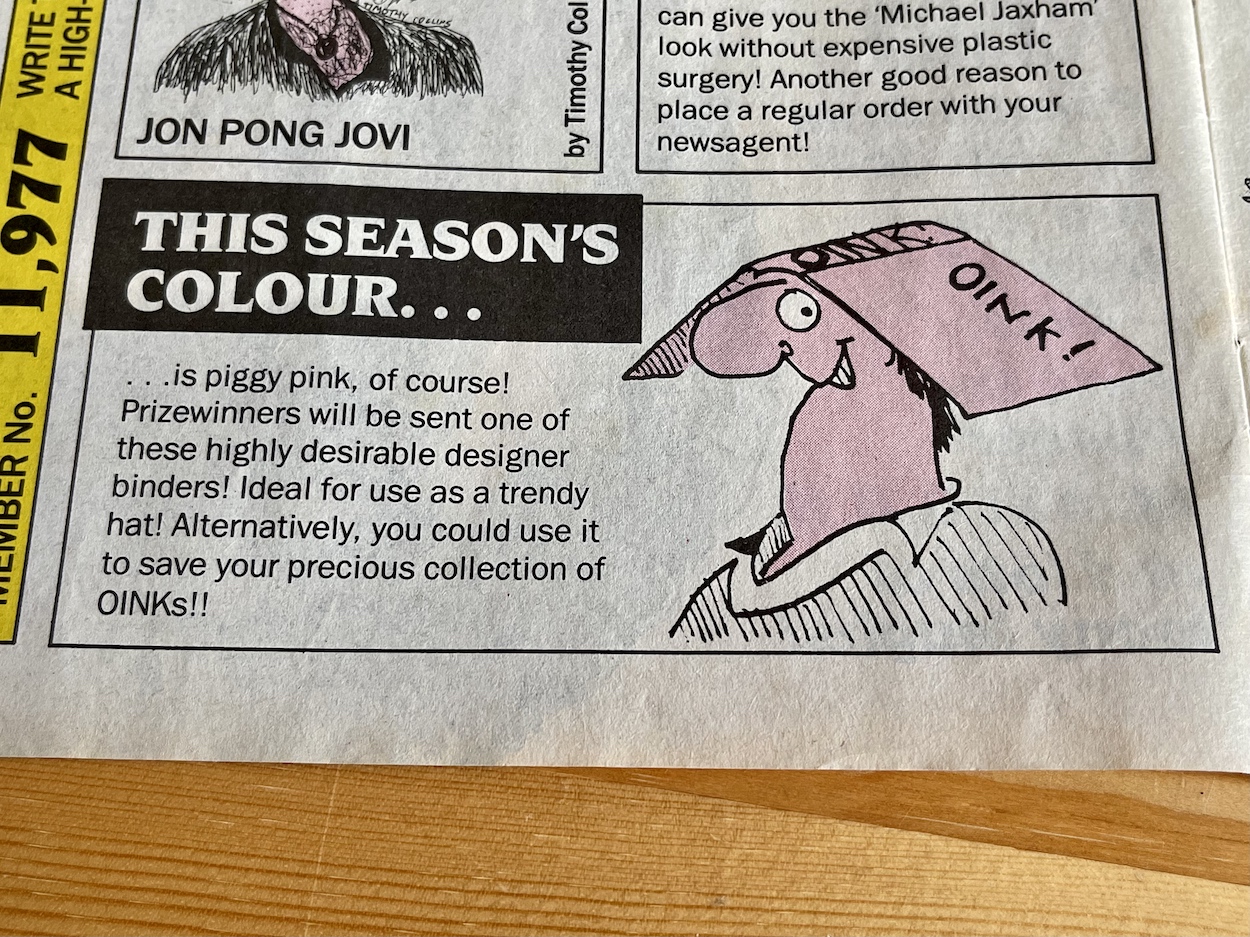
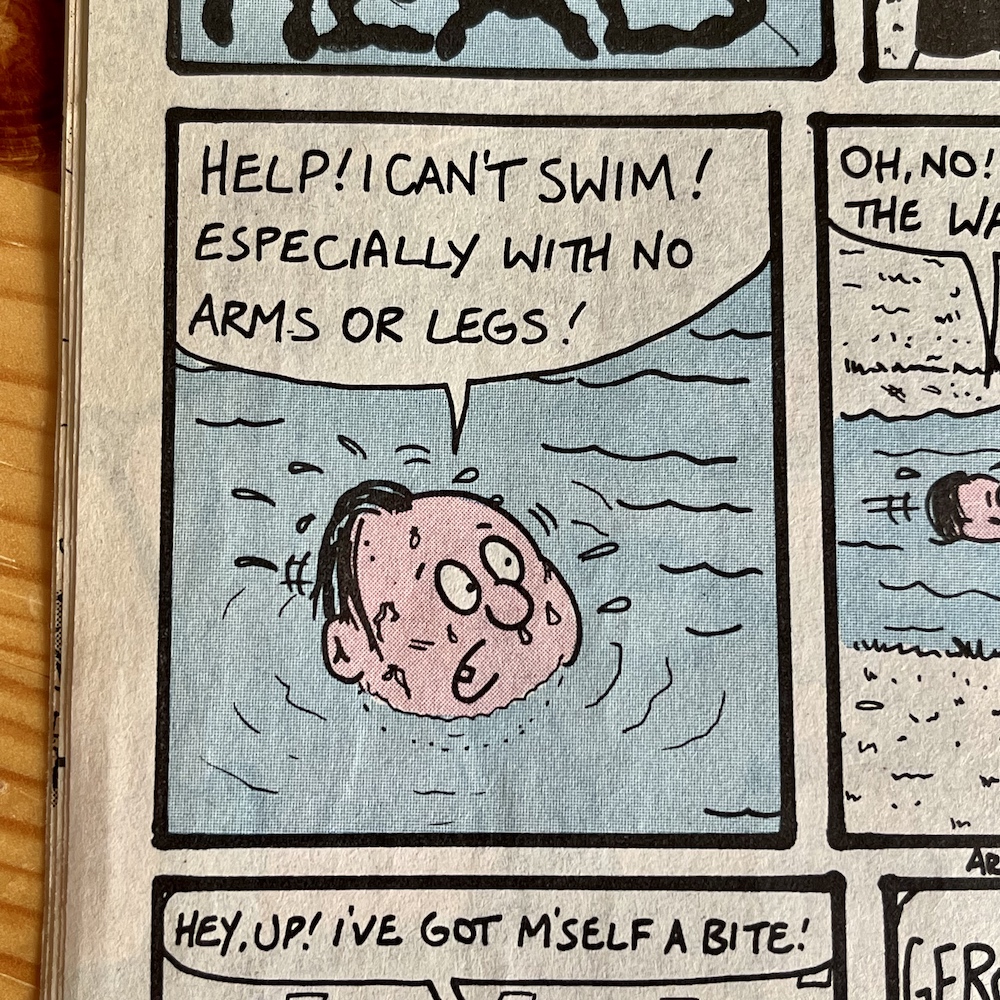
Both of the above highlights are in the first handful of pages of this issue. Talk about a strong start. But how can the rest hope to follow? Well, how about the promise of a new prize for Grunts page contributions in the shape of a piggy pink OiNK binder for your precious comics, Horace (Ugly Face) Watkins making the goal that would win over reluctant footy fans, Harry the Head realising he’s not cut out for going for a dip and Roger Rental he’s Completely Mental giving himself a ‘pat on the head in the fashion stakes.
Grunts compiled by Patrick Gallagher Horace Watkins by Tony Husband Harry the Head by Marc Riley Roger Rental written by Davy Francis, drawn by Ian Knox
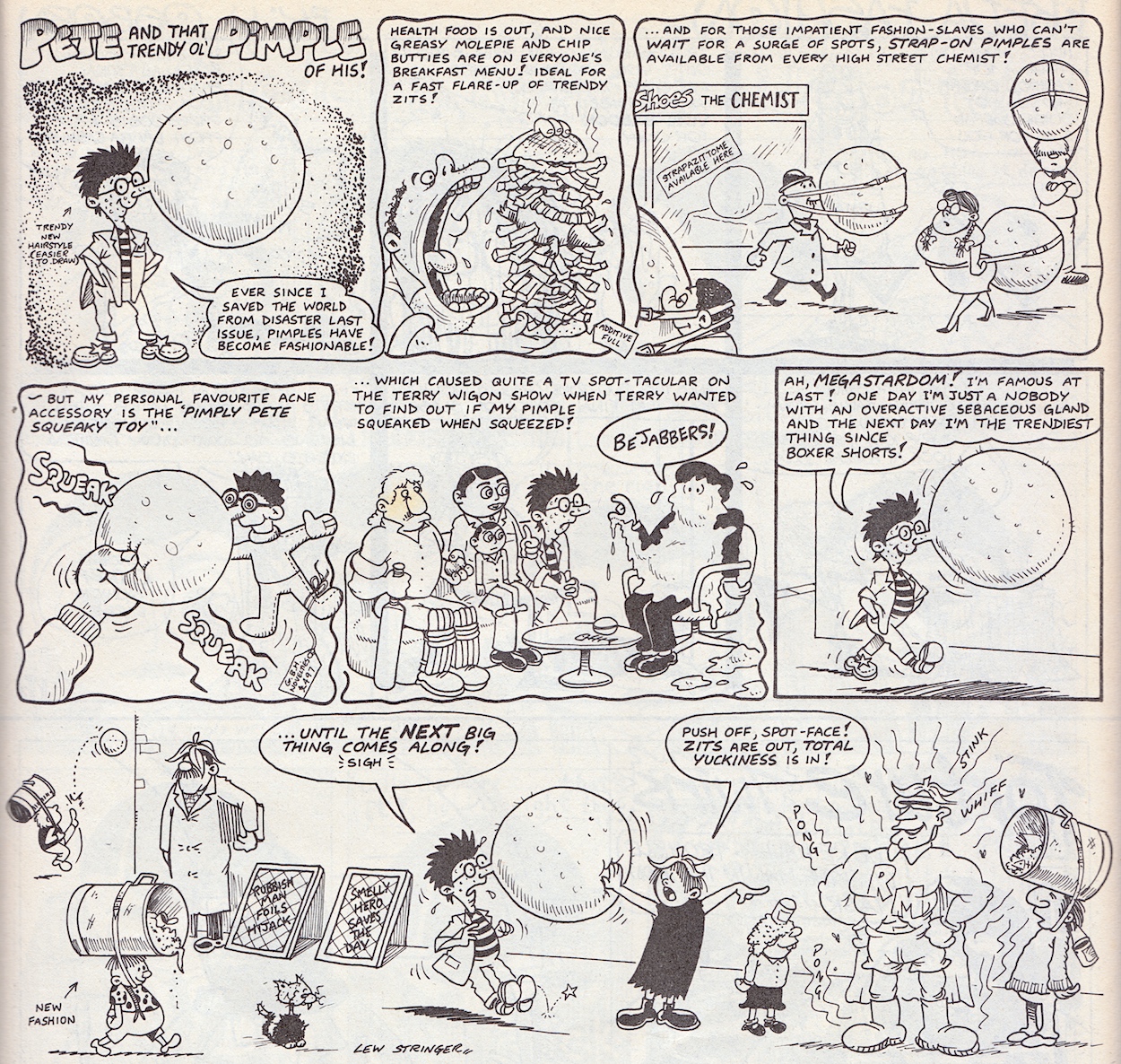
As you can see this issue of OiNK is chock full of what we’ve all come to expect by now and it continues with one of the most popular characters, Pete Throb whose strip gets renamed this issue to Pete and That Trendy ol’ Pimple of His. Lew Stringer takes aim at the ridiculousness of ever-changing fashions and, let’s face it, the 80s kind of deserved it. From the very first panel I was laughing at the shoulder pads, the dress sense and the “easier to draw” new hairdo.
This is the perfect example of this issue’s subject. Really, do kids care about fashion? So Lew swipes at the way people can jump on bandwagons so easily and yet be so fickle as to jump to the next shiny thing that comes along, no matter how dedicated they had been to what had come before. It reminds me not only of my own older siblings at the time but also of an episode of Knight Rider when K.I.T.T. got rather confused at the idea of new fashion seasons. (“Did last year’s clothes not perform their function?”)
It’s this that I found particularly funny as a kid because Lew, and the issue as a whole, was a way for us readers to have a good laugh at the older kids, as well as our own brothers and sisters and the way they’d act and dress. Of course, later in all our teen years we’d end up just as guilty. Also, it’s always fun to see an example of an OiNK cartoonist drawing another’s character for their own strips. Little cameos like Frank’s and Rubbish Man’s here always felt a bit special, no matter how fleeting.
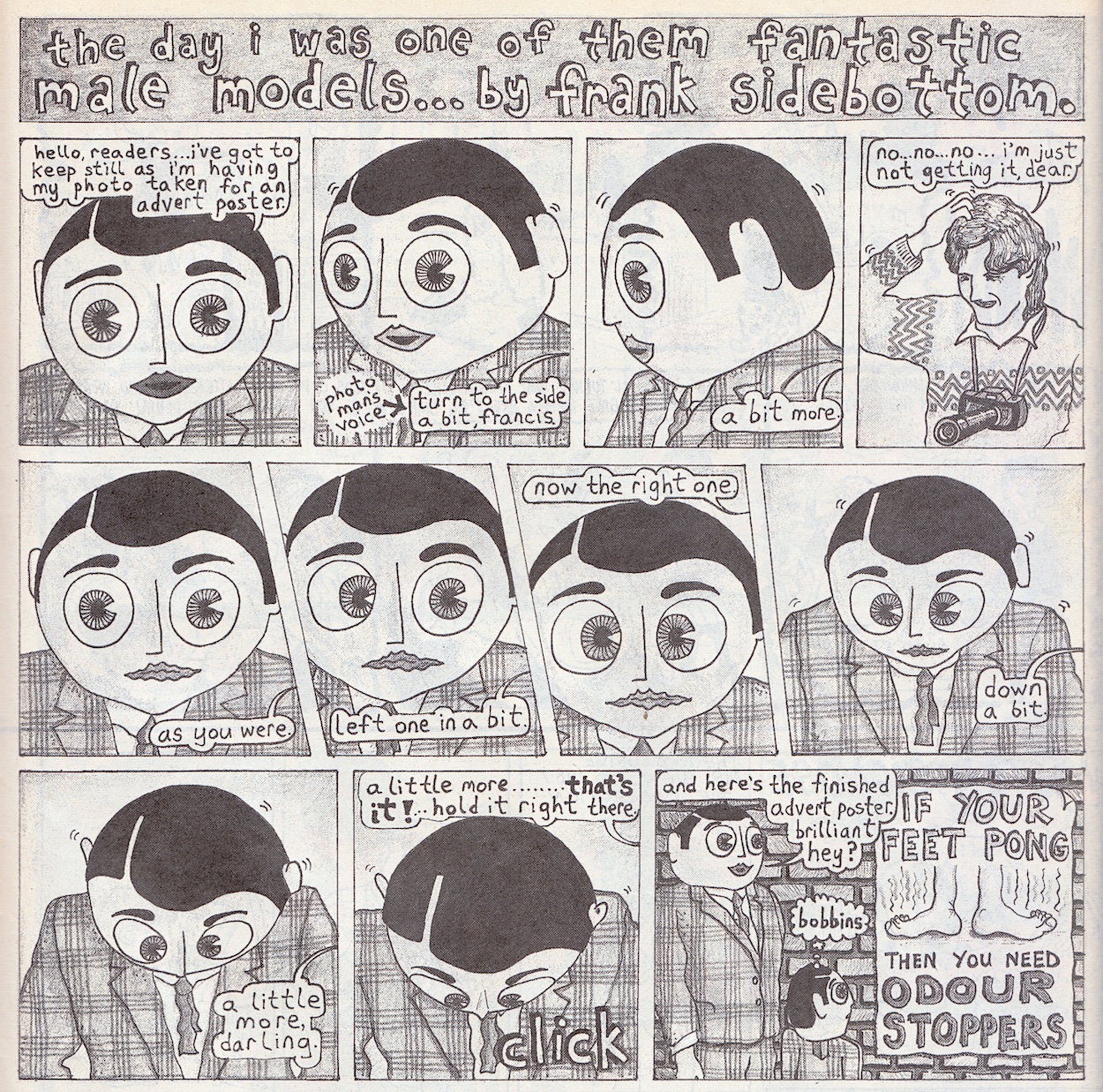
Surely no one screams stardom, sets trends or could be accused of being a fashionista quite like Frank Sidebottom. A hip and happening photographer couldn’t ask for a better model (is this Chris Sievey’s depiction of his own official photographer John Barry?), although it appears Frank’s most defining features aren’t the reason he was hired. Even in black and white Chris’s work is lovely, the pencil work on the fabric of his shirt textured just right.
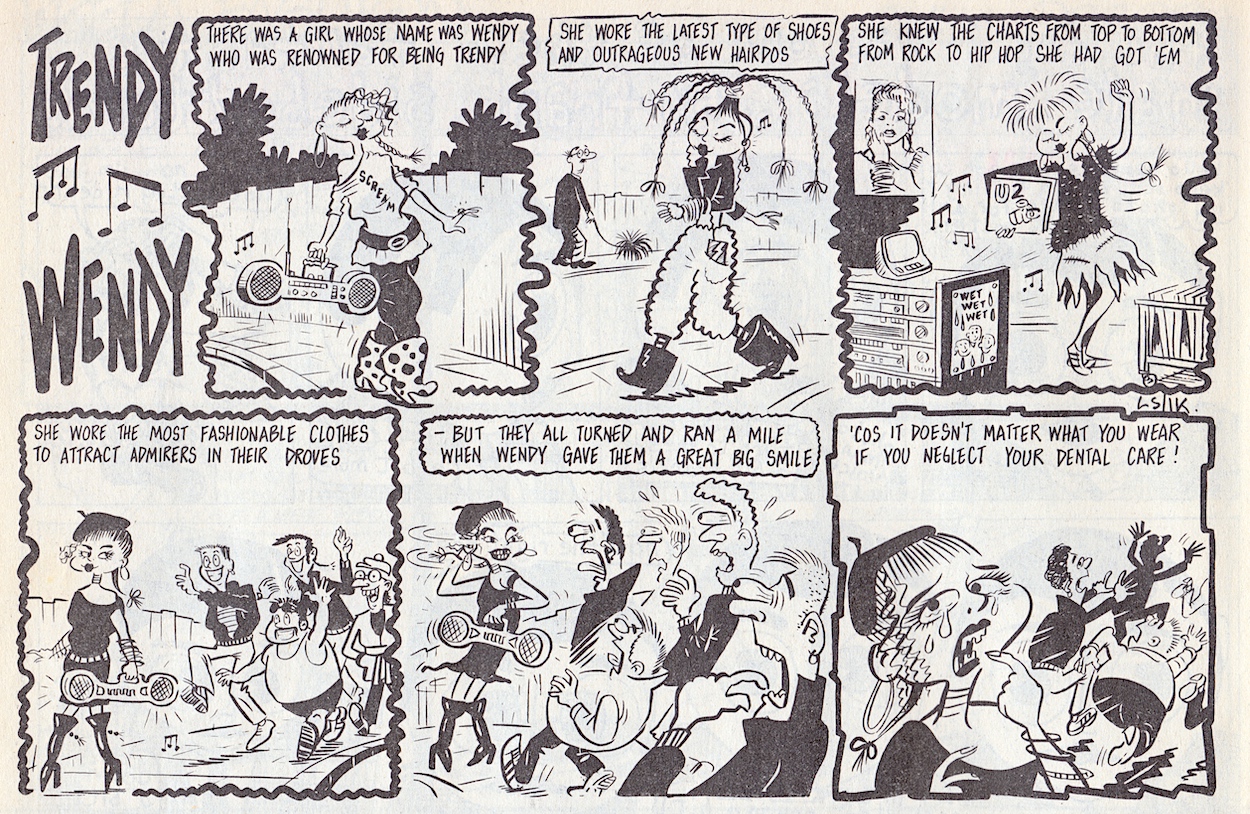
When I was young there were certain things I didn’t like to do, just like any other child and the more I was told to do them properly the more I wanted to skip around them somehow. Brushing my teeth was one of those things. I don’t know why, I think it may have bored me, but it was just something I hated doing back then. In the mornings before school I had no choice, but I always did them as quickly as possible and never brushed them before bed if I could get away with it. (This is obviously not something any young readers of this blog should copy!)
That all changed with this issue of OiNK and this next strip, Trendy Wendy. Written by the master of comic lyrics, Lew Stringer and drawn by fellow Northern Ireland resident Ian Knox I can remember clear as a bell reading this in my Aunt May’s house (who I’ve mentioned before). I was casually enjoying it, giggling away to myself as I had done for the previous 21 pages until the final panel.
This might sound silly to you, that a daft strip like this could hit me quite hard but it certainly did. Getting a point across with comedy is a tried and tested formula in many things I’ve read and watched as an adult, but it was a surprise a month before my tenth birthday. I can’t remember the exact thought process that went through my head but from that moment on I brushed my teeth at least twice a day, every day.
OiNK taught its young readers a thing or two along the way, things we actually listened to thanks to the method of its messages
What I do distinctly remember is once in my early 20s coming home from a night out, a little worse for wear and just wanting to collapse into bed and hope the room didn’t start to spin. But Wendy popped up in my head and I found myself trying (and possibly failing) to drunkenly brush my teeth before retiring, even though it had been years since I’d read any of these comics! I’ve said before how OiNK helped form my sense of humour but it also taught its young readers a thing or two along the way, things we actually listened to thanks to the method of its messages.
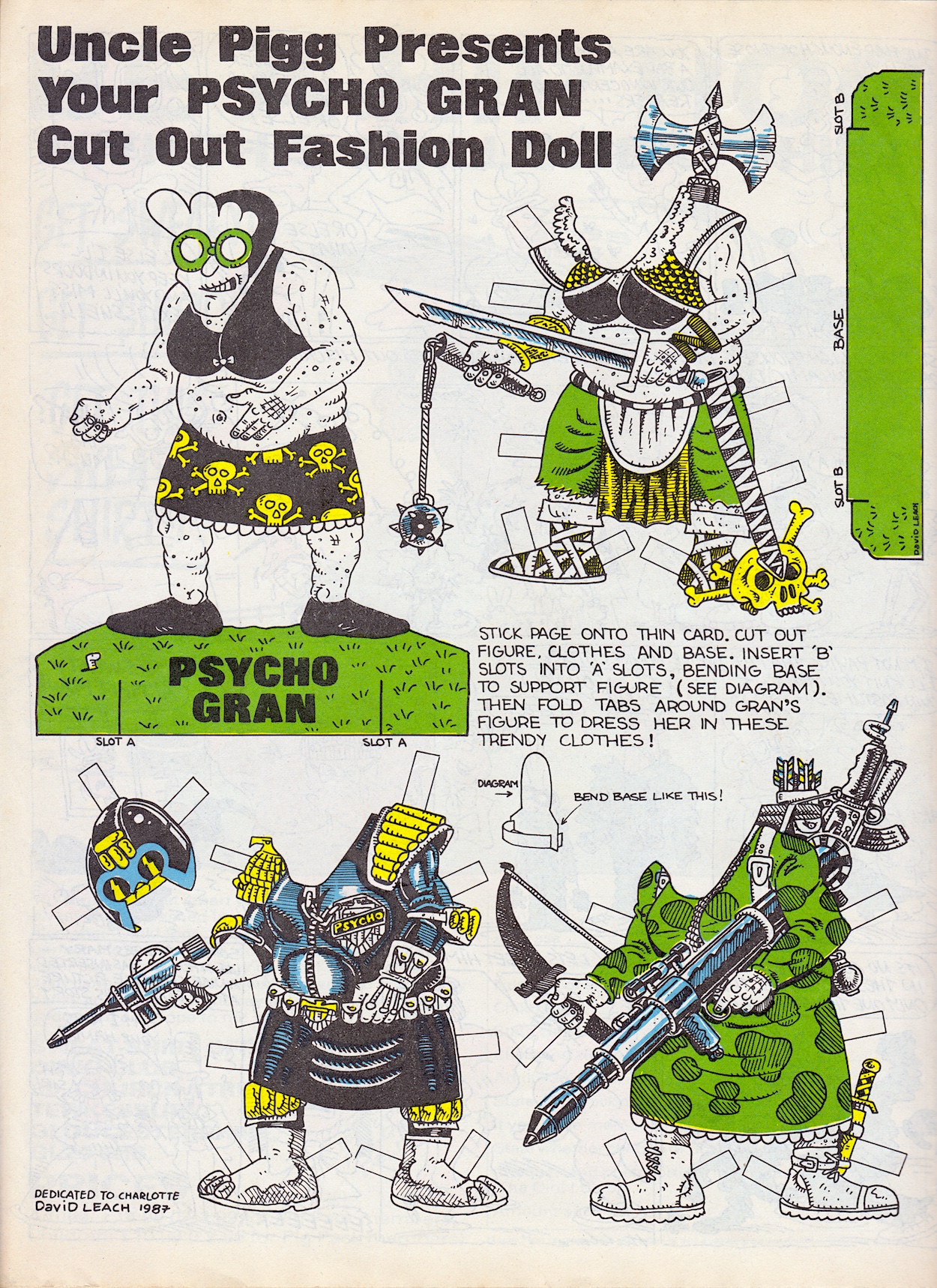
Before we move on you’ll want to warm up your printer. We’ve had some cut out figures before in OiNK but this is by far the best of the bunch. David Leach’s Psycho Gran appearance in the fashion issue had a little bit of crafting for the young readers to attempt. Of course, these are very intricate drawings for youngsters to cut around so I wonder if anyone actually did? I particularly like the Judge Dredd option which seems to suit her perfectly given the form of justice she could dish out.
In 2018 David would reprint this page in his Psycho Gran Versus #2 comic. The whole issue was dedicated to Charlotte just as this page above was. Charlotte was David’s sister, Charlotte Claire Gurtler(Leach) who sadly passed away in 2018. Preferring to go by the name Dot, David said she would’ve made a great Psycho Gran herself. Maybe there’s a little of Charlotte in Psycho’s new comics today.
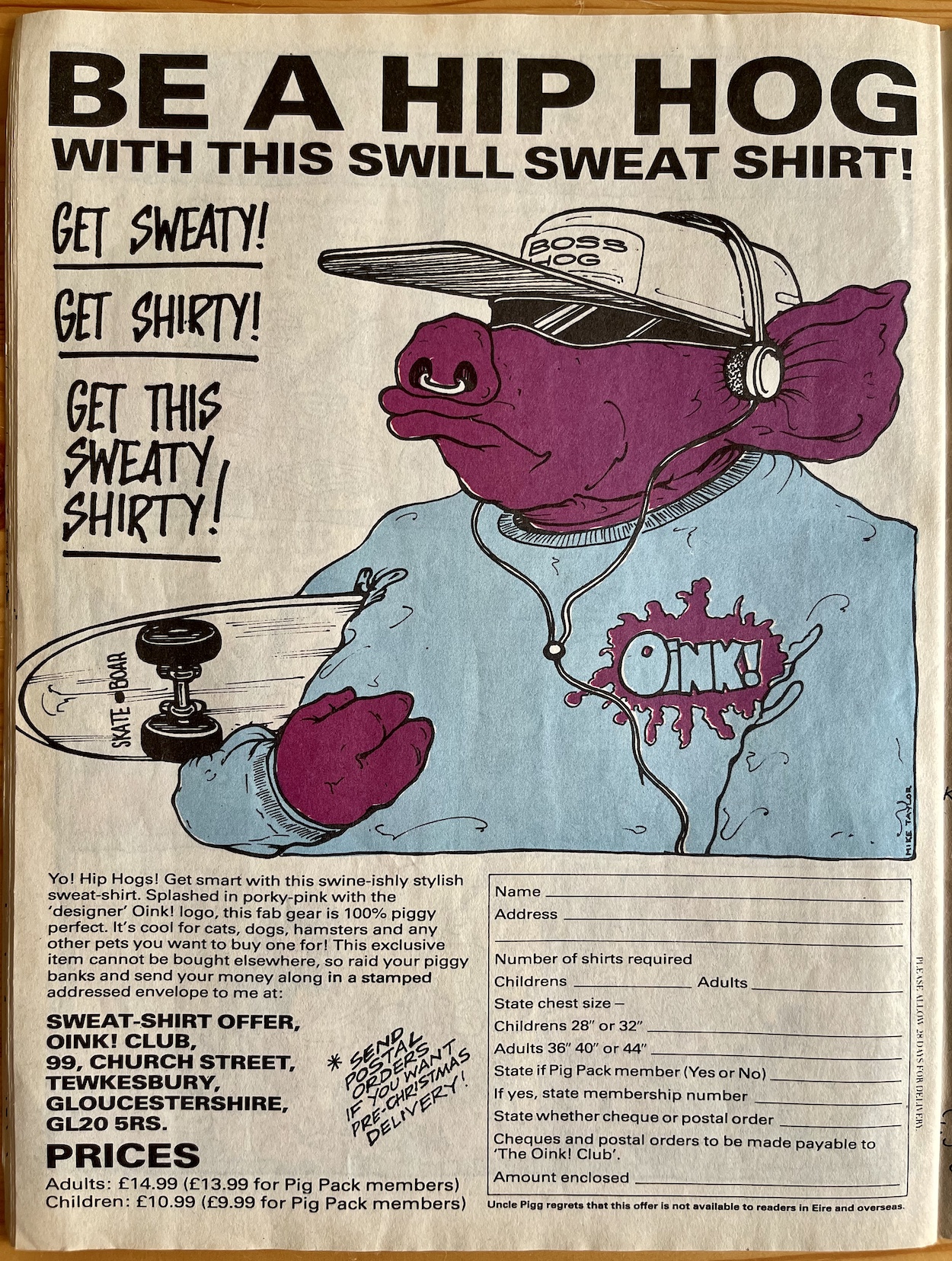
Just before we finish off, this issue saw the introduction of what has possibly gone on to be the most sought after piece of OiNK merchandise today. It’s rather fitting it would be announced in the fashion issue, given how it was a super trendy sweatshirt with the OiNK logo emblazoned on the front. The slogan down the left side of the hip hog (drawn by Mike Taylor) is just as well remembered as the sweatshirt itself.
Unfortunately I never ordered it and to this day all I’ve seen of it is one photo from a pig pal. After finally being able to get hold of my beloved OiNK mug and a mint condition OiNK 45 record (the only two pieces of merch I owned originally) this is surely the one I have to get next! However, the chances of finding one are next to none, never mind one in wearable condition. But a pig pal can dream. Are you listening, Santa?
Speaking of the jolly red-suited man with a bag, the next issue of OiNK is our second (and final – boo!) Christmas issue. It has a lot to live up to because from memory this is my very favourite (definitely my most memorable) regular issue of OiNK. From its classic Ian Jackson cover to its Tom Thug Christmas Angel it’s a festive treat not to be missed. Speaking of Tom, watch out for a special Christmas blog preview post in a couple of days.
The jolliest issue of the funniest comic ever will be up for review right here on Monday 12th December 2022.
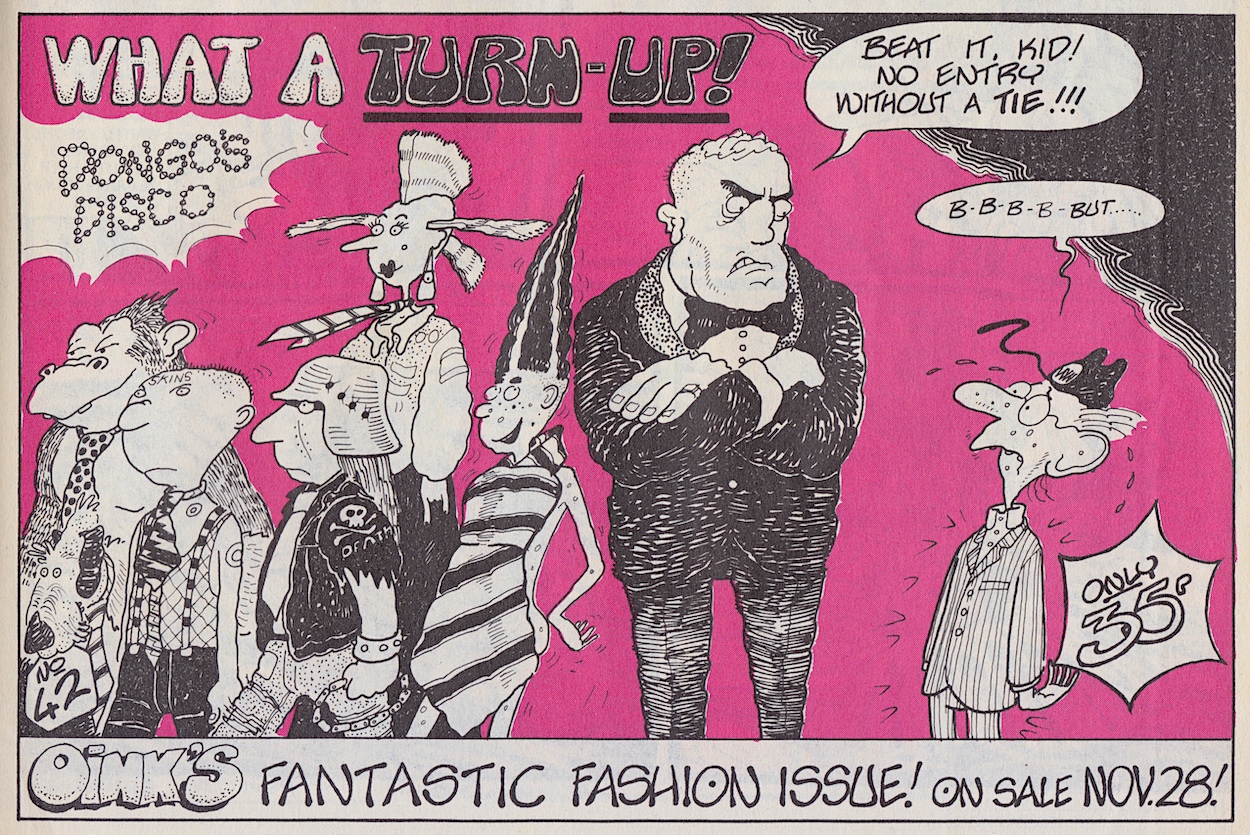
I was at school in the 80s so wasn’t exactly clued in on the world of fashion. I did have four older siblings however, so was a witness to sports jackets, rainbow leggings, jumpsuits and enormous hair. Amongst the geometric shapes and bright-as-the-sun colours was a sense of humour about it all. Fashion wasn’t taken as seriously as it had been previously, or since, and OiNK was right there in the thick of things.
Promo drawn by Mike Green
On the cover of #42 is a memorable image of a certain late pop sensation and inside a hilarious rewording of one of his earliest hits, a cut-out doll for you to dress up a certain old lady as Judge Dredd, a greasy new fashion trend ‘pops’ up everywhere and a strip about dental care had a profound impact on me as a kid. Plus, OiNK went all sty-lish itself with a new piece of merchandise that’s probably the most sought after (and rarest) to this day. The next review will be all dressed up and ready for you on Monday 28th November 2022.
I was only one of countless people who grew up on the amazing comics of editor Barrie Tomlinson. Whether you were a football fan and followed Roy of the Rovers, engrossed in science fiction and fantasy and had a regular order for Eagle, or were caught up in all the early 90s hype and rushed to the newsagents every fortnight for the next Teenage Mutant Hero Turtles Adventures. These were just three of a huge catalogue of comics Barrie brought to life.
Personally, it was three of Barrie’s shorter-lived titles that hooked me and you can read all about Ring Raiders, Super Naturals and Wildcat on the blog, their respective real time read throughs already complete. I’ve previously asked Barrie questions about Ring Raiders and now he’s kindly agreed to chat with me about the latter of those three terrific comics, the post-apocalyptic Wildcat, the whole premise of which Barrie created.
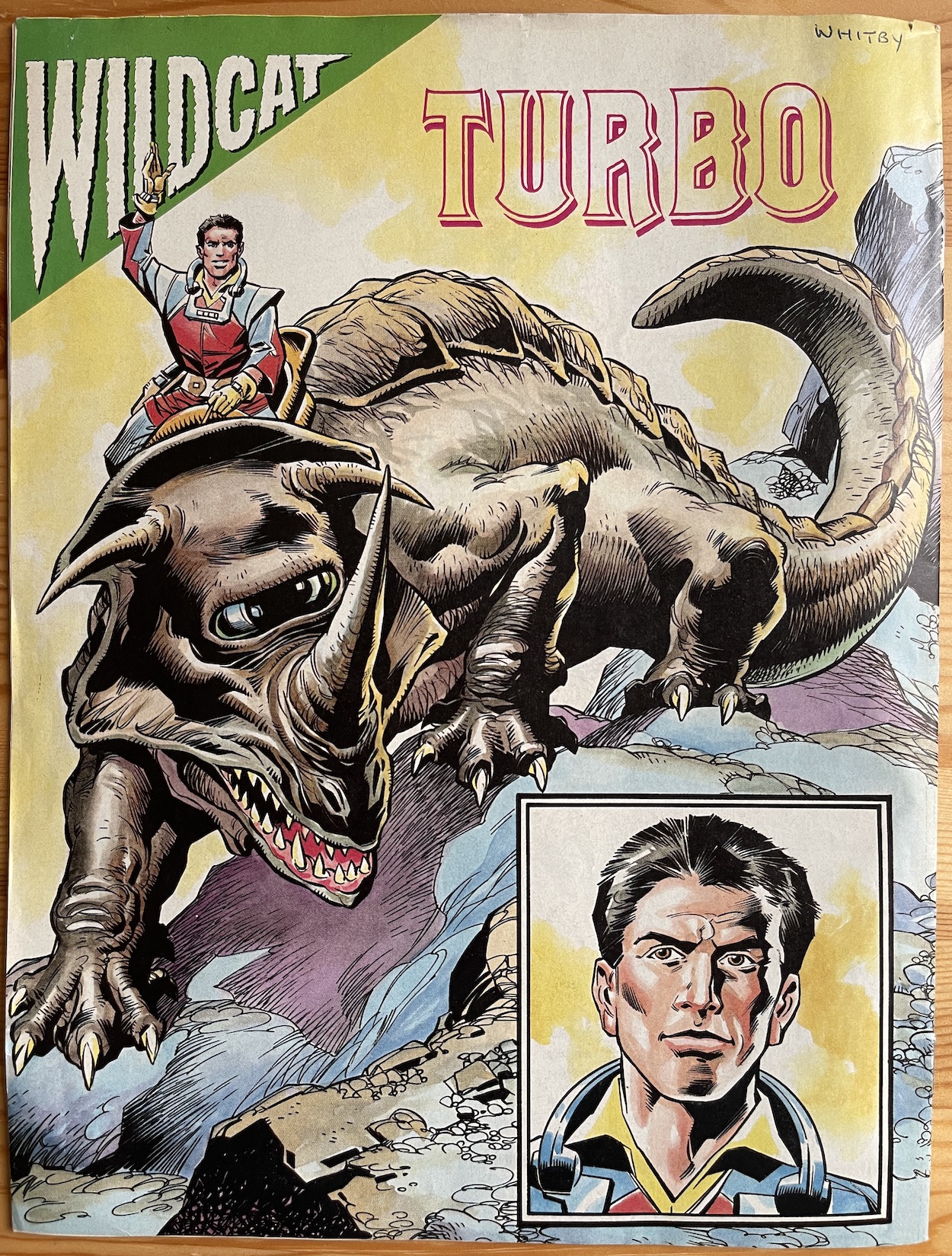
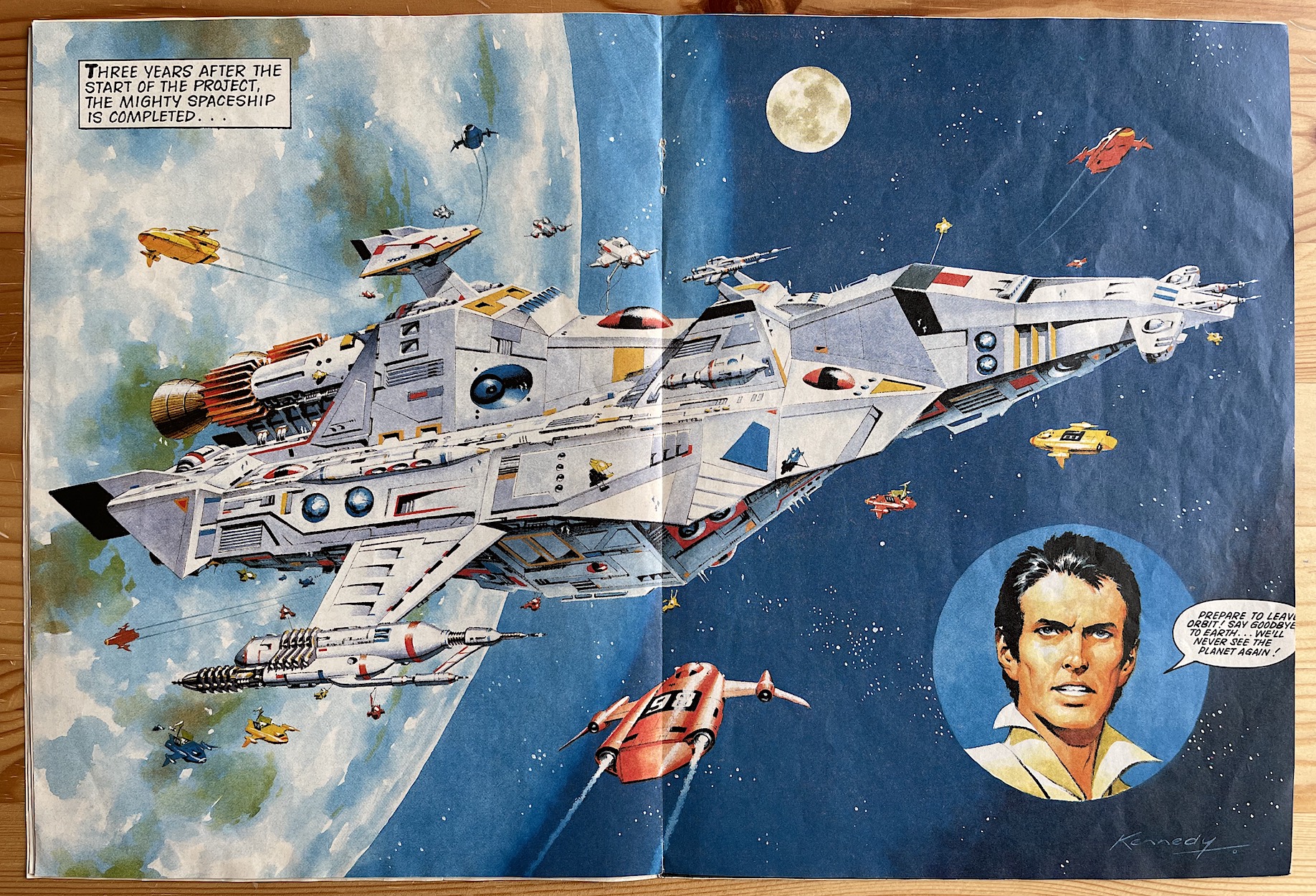
The very last issue of OiNK contained the free preview issue of Wildcat, like a passing of the baton for me and I was hooked right away. It’s the year 2492 and Earth has been destroyed. Thankfully, the foresight of Turbo Jones meant several hundred humans were able to escape in search of a new home aboard the massive Wildcat spacecraft. After a long search a planet capable of supporting human life (and the comic’s stories) was found and we followed different teams as they explored the surface, as well as keeping up to date on the happenings back on the surprisingly dangerous living quarters of the ship.
The comic still feels fresh and original today. Barrie’s story is set up to allow five completely different stories every issue while also progressing an overall story arc. I was gutted when it all came to a premature end with #12 and merged into the pages of Barrie’s Eagle. It certainly wasn’t due to a lack of editorial quality, it just never found its audience. But I’ve really enjoyed reliving it and to celebrate finally reading the Winter Special for the first time let’s welcome Barrie back to the blog.
OiNK Blog: Hi Barrie, how did Wildcat first come about? It was marketed as a “younger person’s 2000AD” but was this the intention? What were the reasons behind the creation of this very different comic?
Barrie Tomlinson: The management asked me to produce a science fiction comic for a younger group than 2000AD. I went away and thought about it and decided to have one storyline running through the whole comic. I thought it would make it a bit different.
OB: Can you tell us anything about the character choices? Wildcat showed true diversity which wasn’t as regular a sight back then as it should’ve been. Were they permanent characters or interchangeable as time went on?
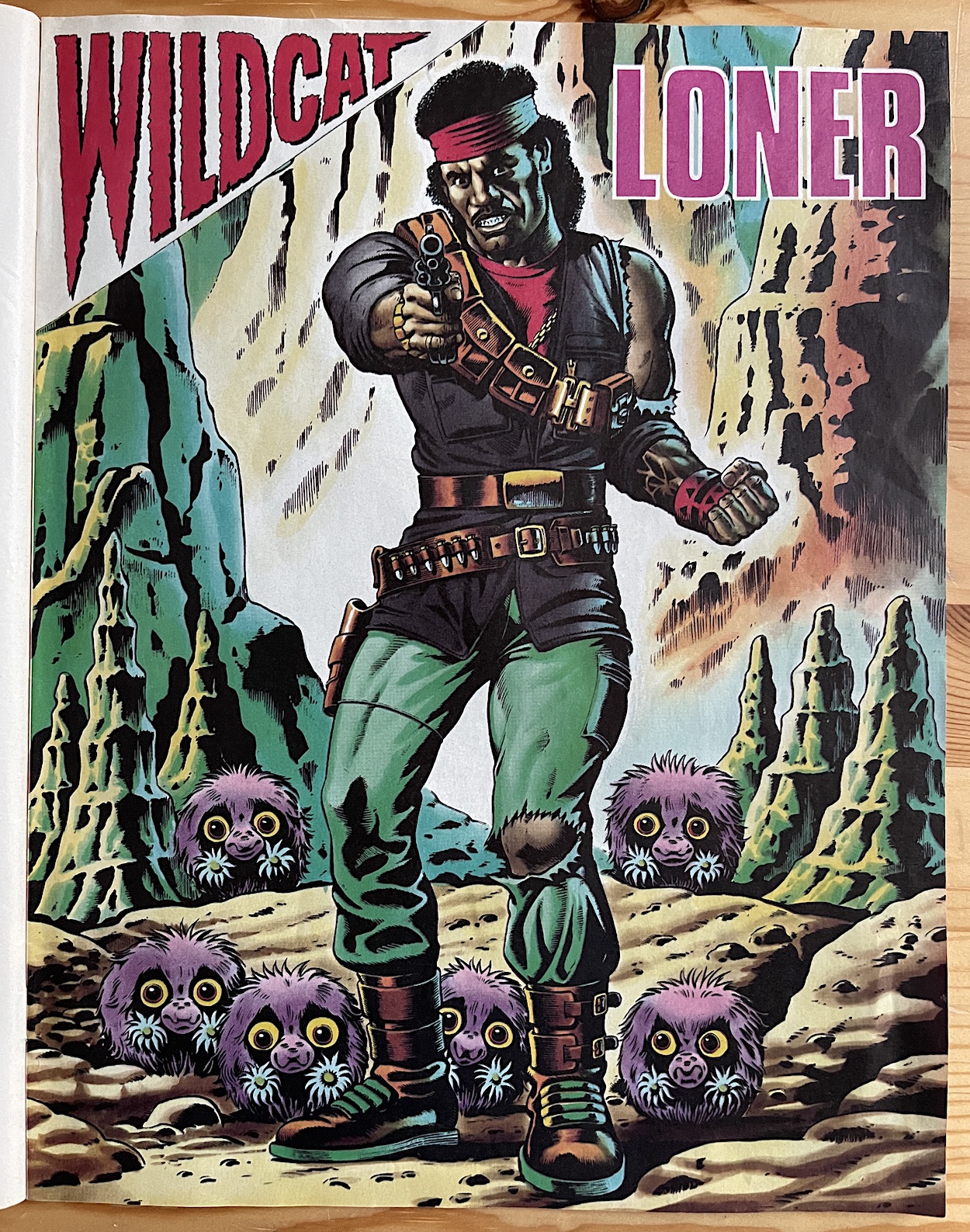
BT: I thought up the characters and wanted to reflect what was happening at the time, which is why I created a black hero and a female warrior. Girls had not been featured very much in boys’ comics so I decided it was time that they were! The characters were intended to be permanent ones.
OB: Is it true Loner was created specifically with David Pugh in mind as the artist? Also, is it true he’s said Loner was his favourite character he’s ever worked on? I hope that’s true!
Barrie: I really wanted David Pugh to be one of the artists and the Loner strip seemed just right for his talents. I hope Loner was his favourite character. He did fabulous artwork on that story and on Dan Dare in Eagle. (David has confirmed Loner is his favourite character and spoke about drawing the strip in the introduction to the Wildcat: Loner graphic novel from Rebellion – Phil)
OB: Did you have an idea of how the story would pan out in the long term? Were they to settle on that planet, keep finding new places to explore on it, or even fly off to discover a new planet every-so-often?
BT: The plan was they would fly off to other planets and there would be a long search for the right one.
OB: Can you give us any insight into who was in the writing team behind the comic and if you wrote any of the strips yourself?
BT: I wrote the script for the preview issue, to set up the storyline and the characters. For the regular comic my son James (under the name James Nicholas) wrote Kitten Magee. I wrote Loner. Joe Alien was by a new writer, David Robinson (Eagle, The Unbeatable Squirrel Girl, Army of Darkness/Xena) who later changed his name and has done a lot of writing since then. I’ve been searching but I can’t find anything [about the name change]. If I do I will let you know.
OB: Do you have any specific memories of your time on the comics covered on the blog you’d like to share with readers today? Anything at all you could tell us to give fans a little personal insight into what it was like to work on them?
BT: It was great fun working on both those titles (Wildcat and Ring Raiders). Wildcat particularly so, as it was all my idea, they were my characters and my storylines. It was very rewarding when the whole thing came together in a good first issue. I particularly enjoyed designing the free gift, which was a giant poster of The Alien Zoo of Targon-5. Each fortnight, readers could collect stickers which they would stick on the poster. The artwork was by the brilliant Ian Kennedy and featured not only the zoo but also the main characters Turbo Jones, Loner, Kitten Magee and Joe Alien.
It was an absolute delight to be able to ask these questions of Barrie. As always, he was a complete gentleman and very enthusiastic about his comics, which I found wonderful. I’d originally wondered if he would want to talk at all about two comics which ended only a few months after they began, but Barrie was completely open about how proud he was (and still is) of both Wildcat and Ring Raiders, the chat regarding the latter you can also read here.
With this review we tie up the Wildcat real time read through. Yes, there are two recent graphic novel collections and the merge with Eagle to round up, but for the original comic this marks the end and I can’t help but feel a bit sad about that. The WildcatWinter Special has a lot to live up to then, it’s been a long time coming after all. The comic finished in March and we’ve had nothing since the Holiday Special in May. So did it satiate the cravings for fans?
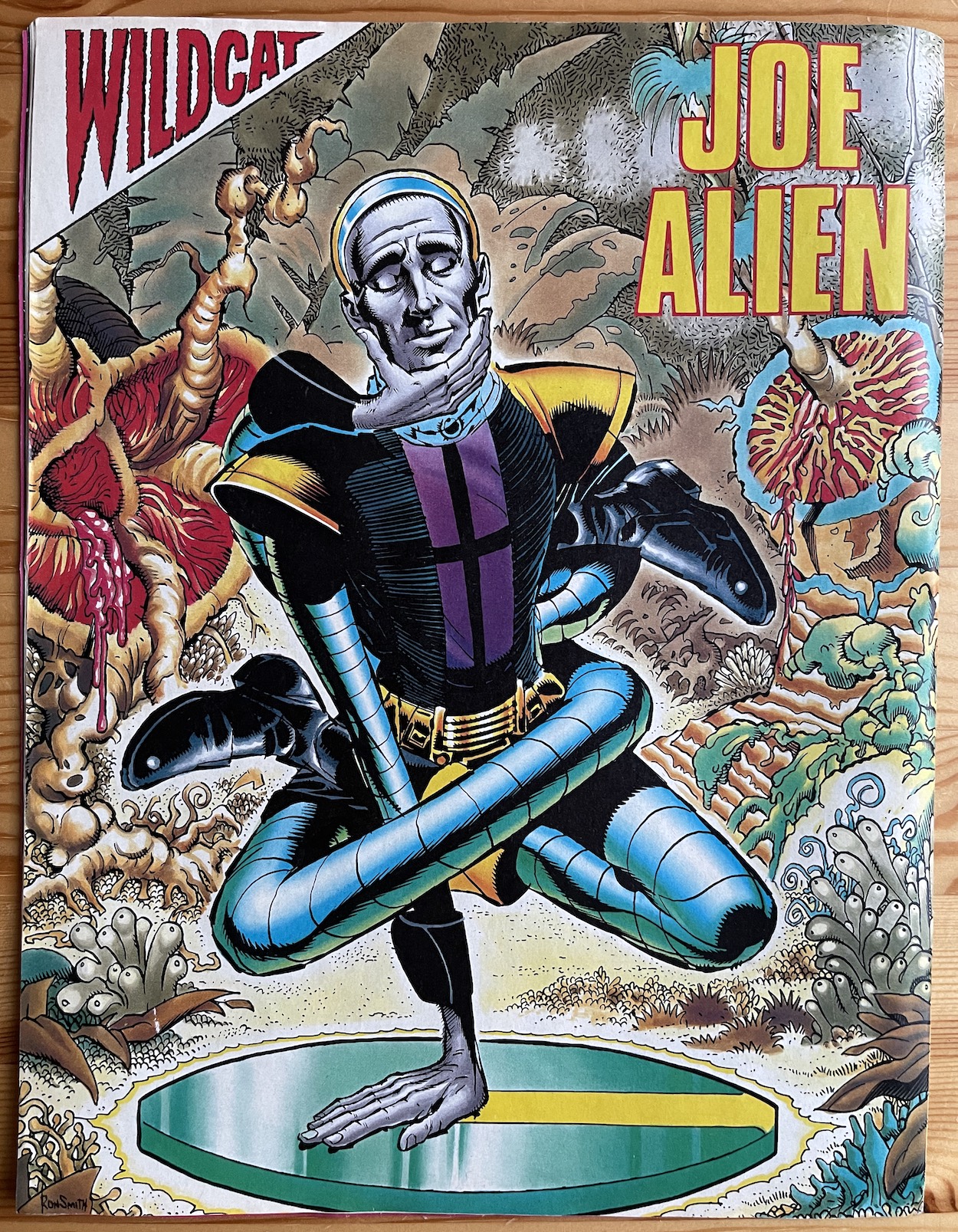
Earlier in the year Eagle announced there would be a Wildcat Holiday Special and an annual. While the latter never materialised I think it’s clear the content for it ended up in the Winter Special instead. (Just like the OiNK Winter Special in that regard.) Things kick off inside with a reprint of the preview issue’s cover and strip, a black and white reprint of a former gorgeously coloured Joe Alien pin up by Ron Smith (which results in his eyes looking hauntingly dead) and then two whole pages are taken up with a ‘Spot the Difference’, which boils down to a page from Eagle (I presume, I’ve never seen it before) reprinted twice.
In fact we don’t get anything new until page 16! Not a reassuring start for a special which cost a little less than the thicker, hardback annuals but it does come on lovely glossy paper throughout and a nice, thick (even shinier) cover, hence the price. I suppose we could call it a premium special of sorts (like the Super Naturals Adventure Book from the previous year) and various titles in Fleetway’s range would get one of these over the next few years. It’s strange reading the preview strip again, before the character of Turbo Jones softened and developed in the fortnightly. Here he comes across as a bit of a nonce.
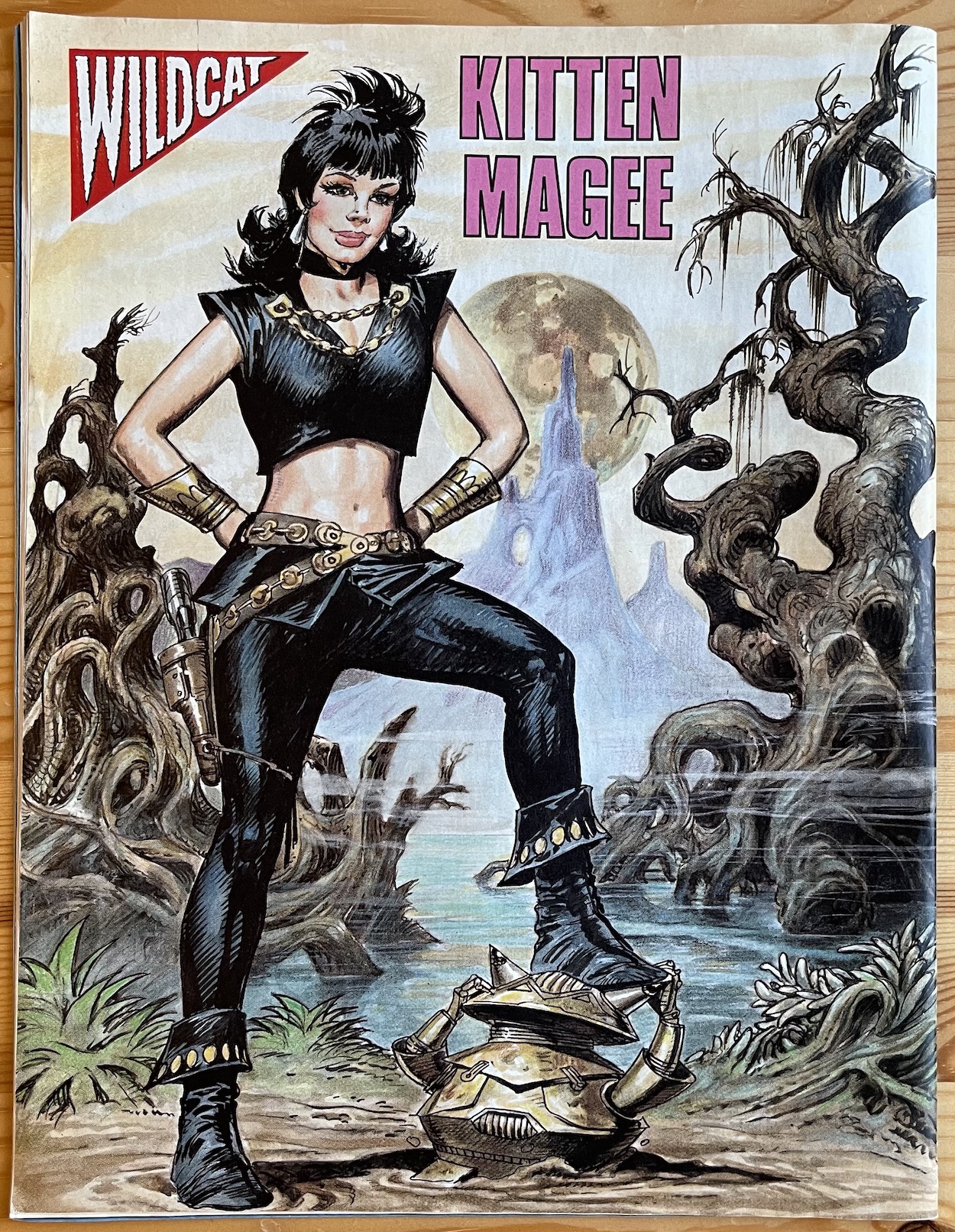
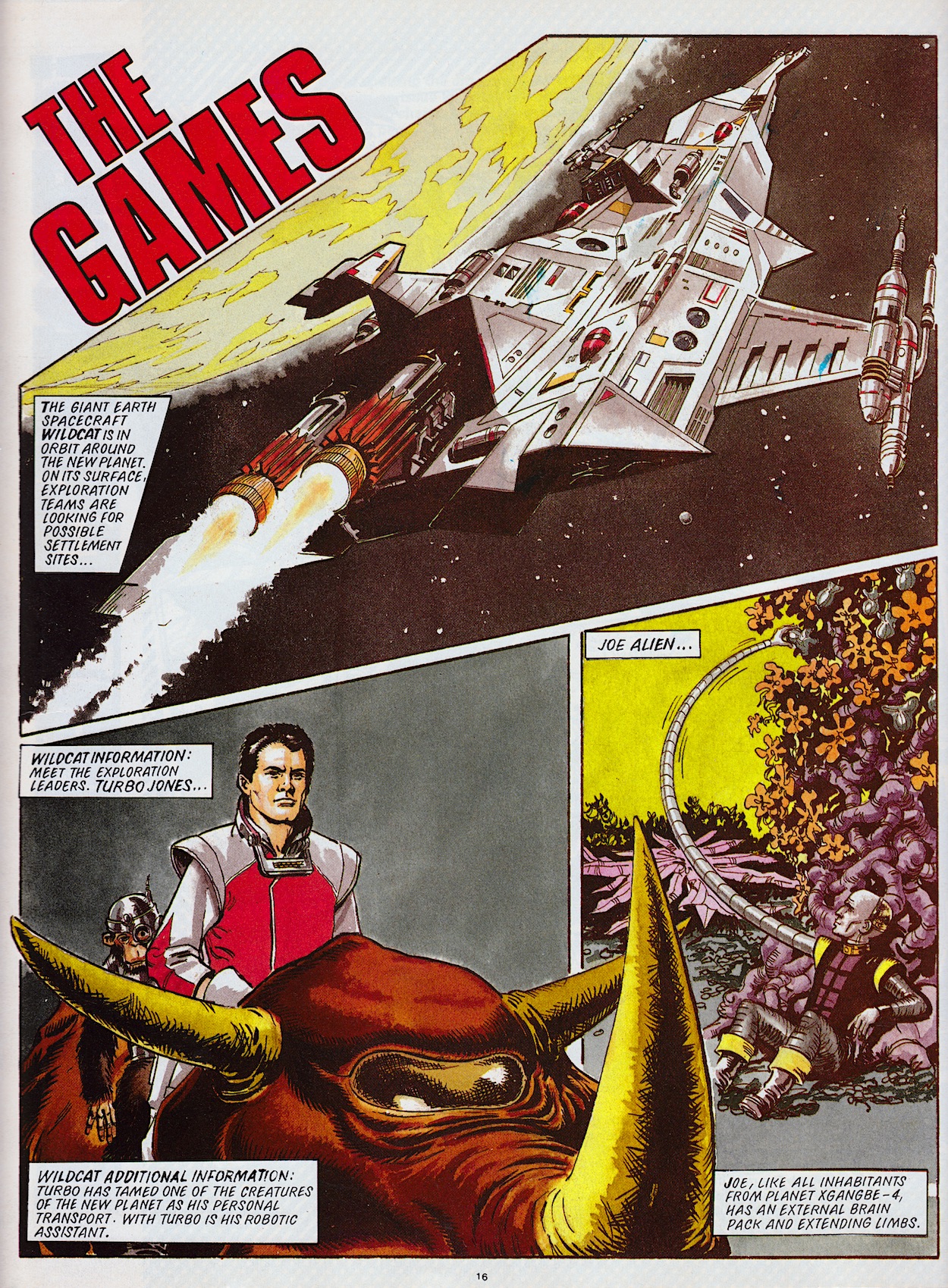
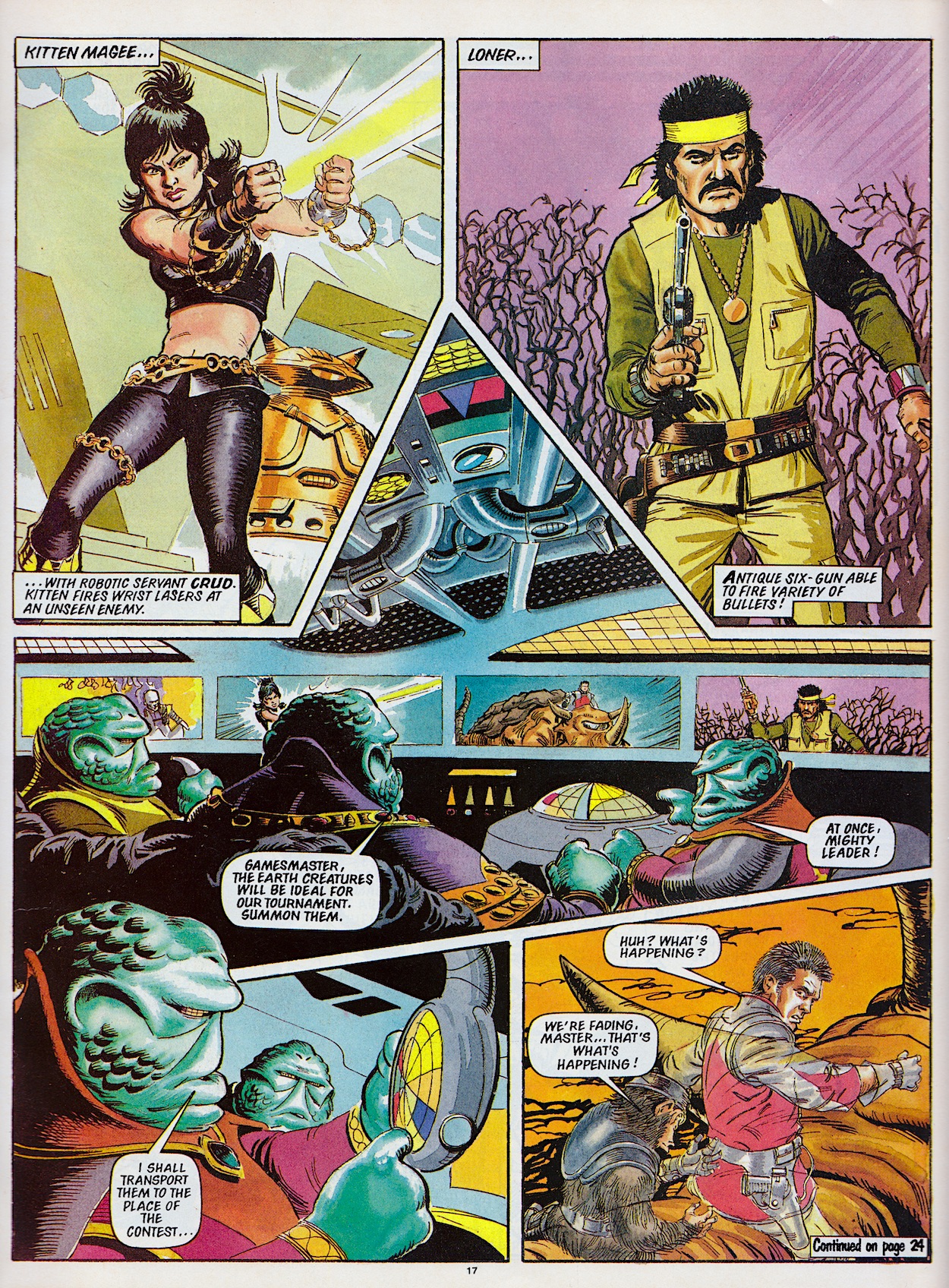
The gorgeous new Ian Kennedy cover portrays the first original strip inside which stars all of our team leaders, the first time this has happened since the preview issue in fact. The Games, drawn by John Gillatt (Jet-Ace Logan, Billy’s Boots, Ring Raiders), is a six pager that is annoyingly split into two-page chunks throughout the first half of the issue. It quite clearly wasn’t written to be read this way, meaning it keeps stopping mid flow. Still, it’s nice to see the whole team together and the first couple of pages do get the blood pumping.
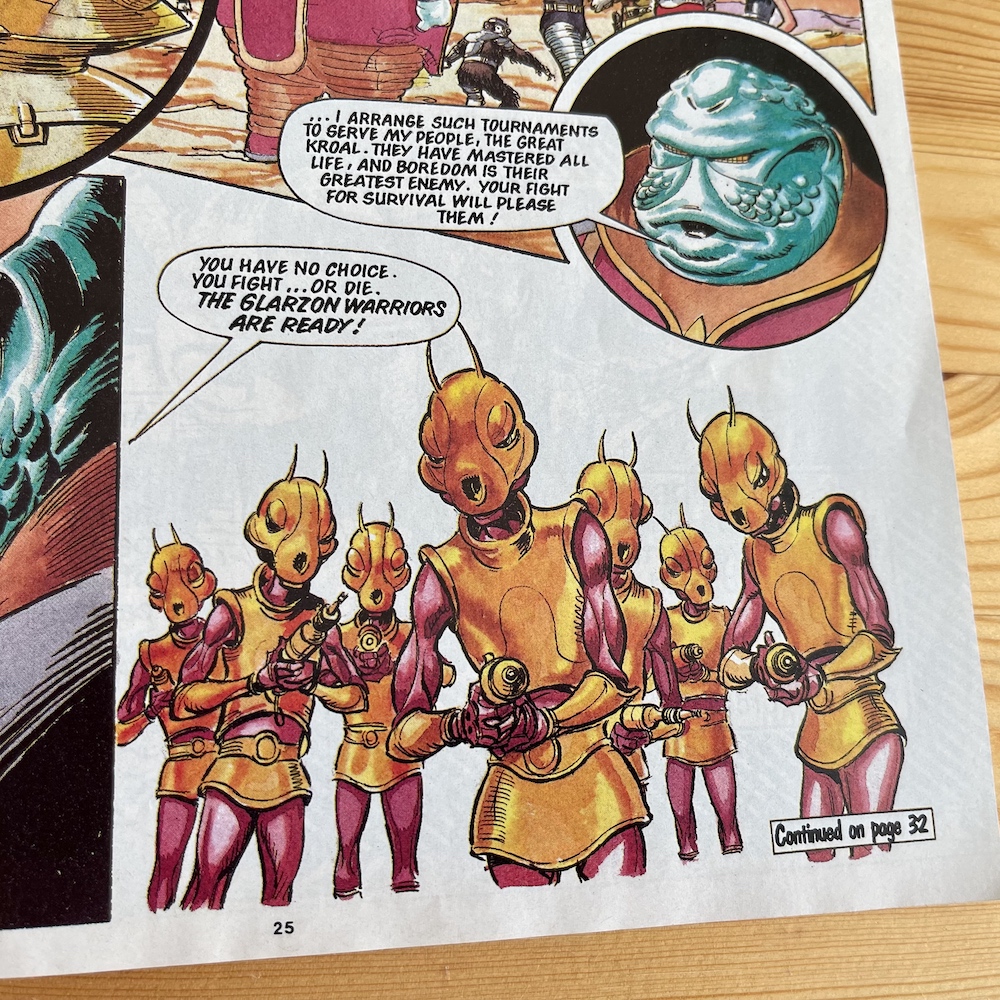
Unfortunately it never really develops beyond this initial excitement. The idea of aliens forcing the humans into a death match against their will isn’t original even for Wildcat. In the Holiday Special Loner was already put through something similar in a quite brilliant prose story and later in this edition the same thing happens to him again(!), so the fact he’s caught up in a similar plot for the third time is damned bad luck on his part.
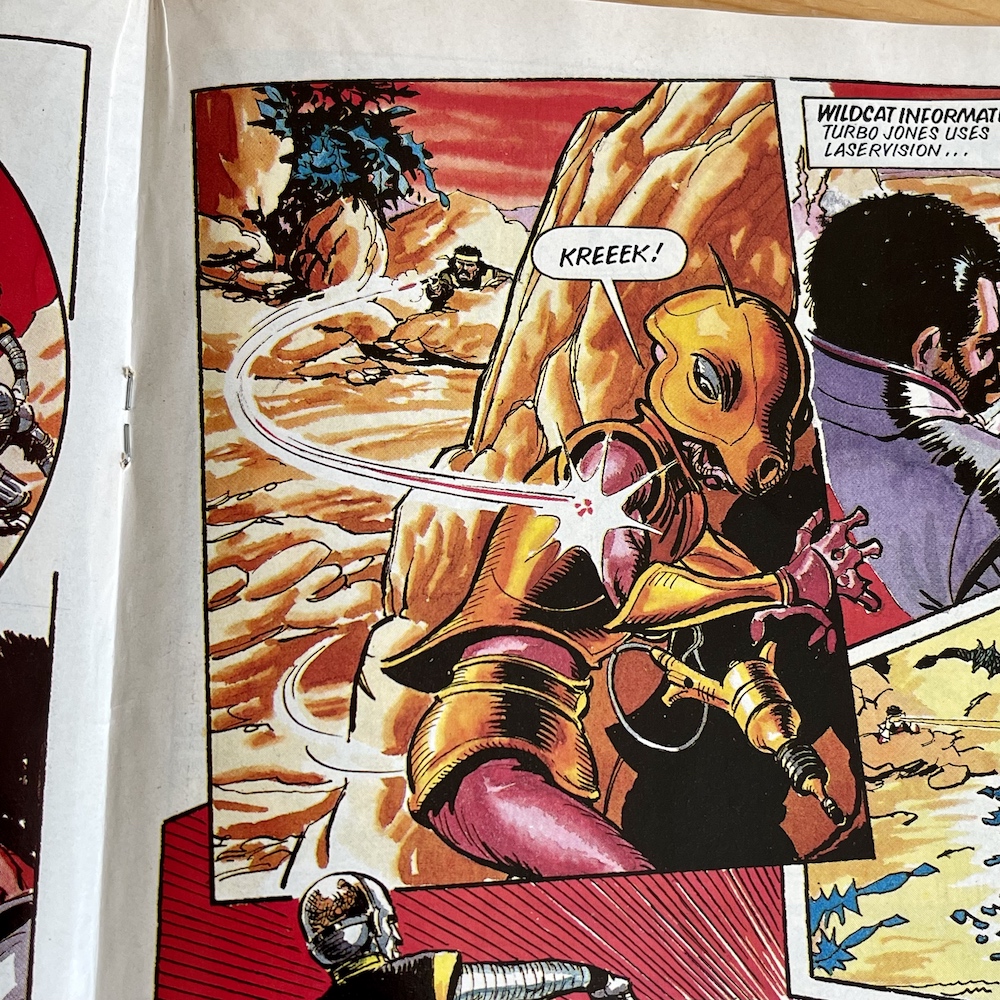
Pitted against some suitably retro-attired warriors, each member of the Wildcat crew takes it in turn to see off their individual opponents by using the weapons or skills we’ve seen in the regular comic. This and the reprint of the origin story seem to be introducing new readers to Wildcat, which is grand if this were indeed a big, fat annual for an ongoing comic. But by this stage only Loner’s story still continued in the pages of Eagle so it feels strange a lot of this special so far isn’t really aimed at established fans.
At least those fans do get to see more of Loner’s various bullets at last. We knew his modified antique six-shooter Babe had a variety of different futuristic bullets so it’s fun to see the boomerang one here. Of course, we could’ve seen more of these in the pages of Eagle but I haven’t read those stories yet. I’ll explain more about that at the end of the review. In between the tiny chunks of this story are other complete tales.
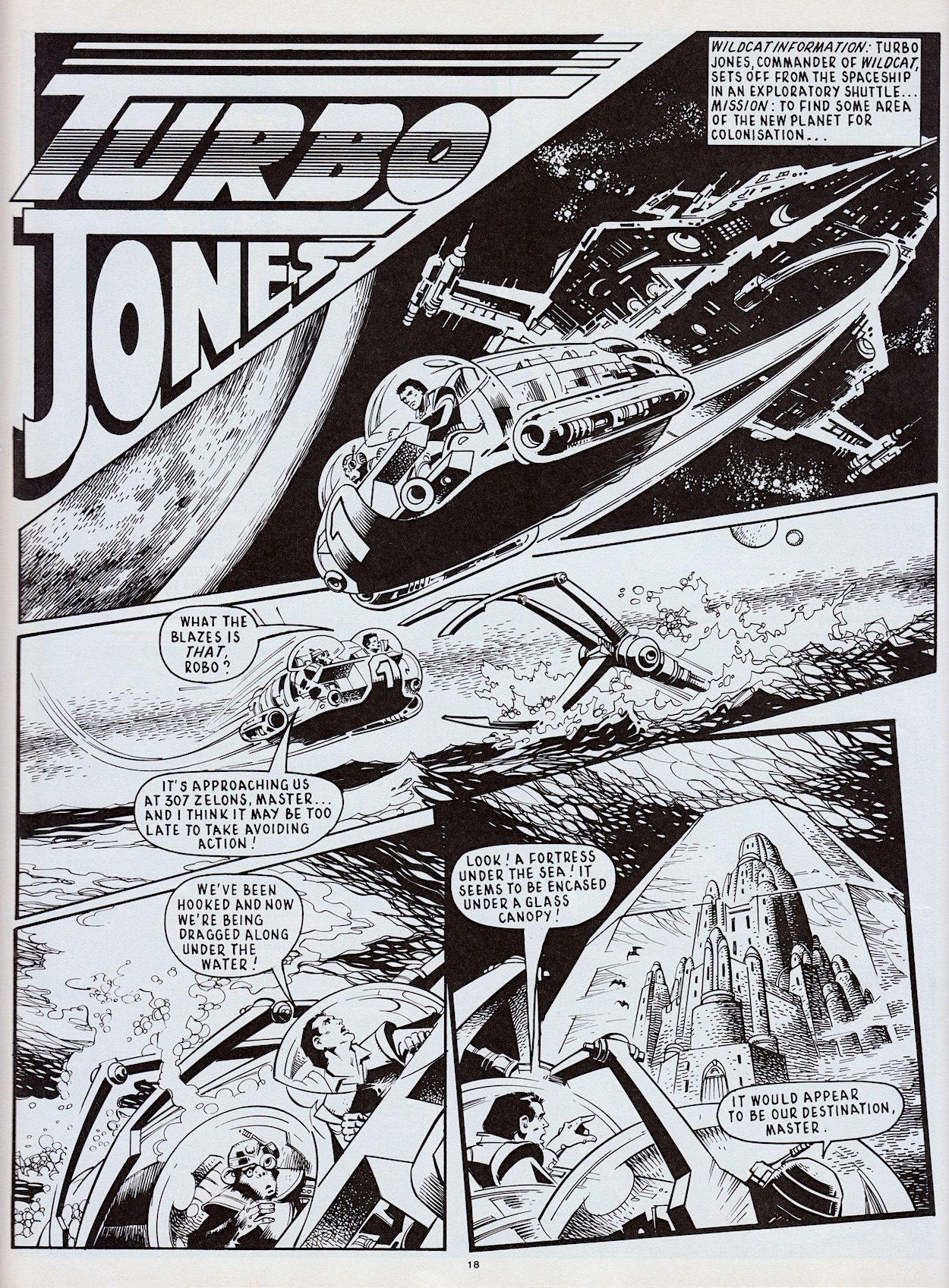
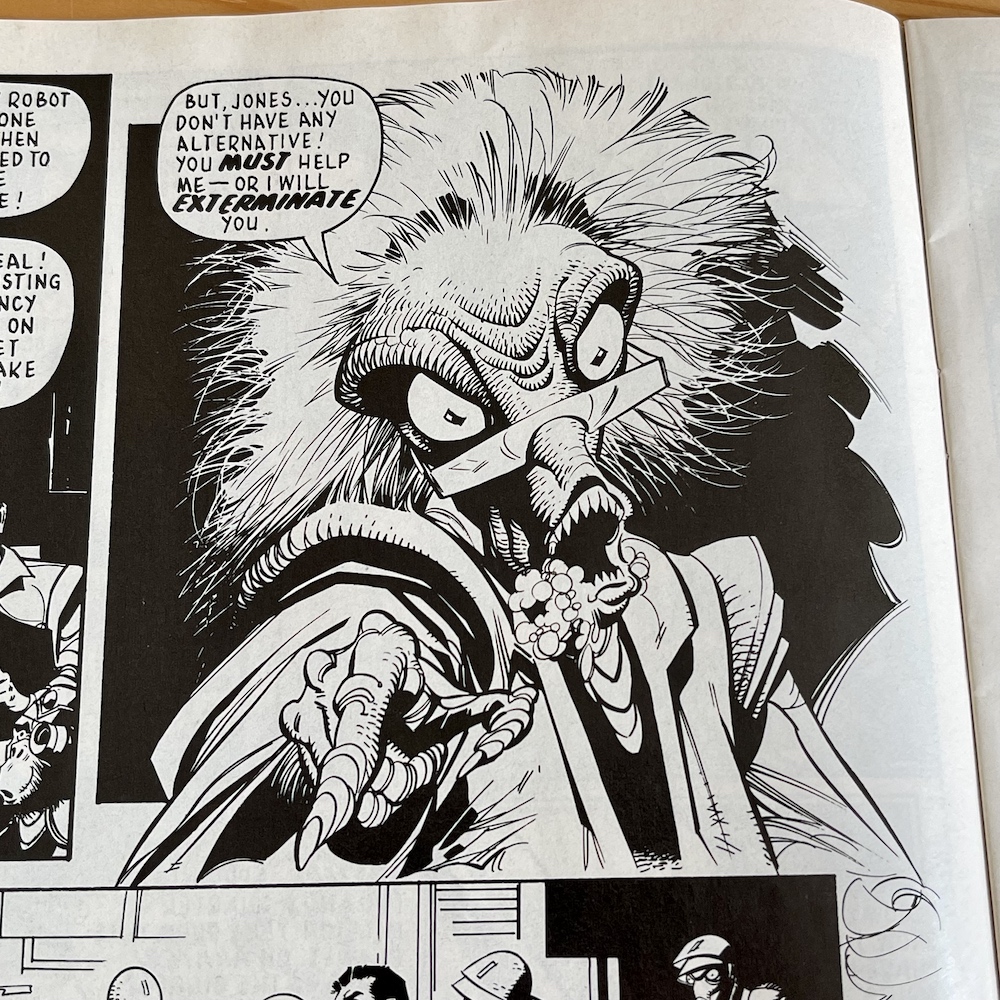
First up is Turbo Jones who by this point feels like a completely different character to that in the preview’s reprint, such was his character development. Off on another mission illustrated by Vanyo, set some time after his first adventure, he and Robo are plucked from the air and dragged underwater by a mad alien who forces them to help him. One thing that immediately stands out here is the amount of story crammed into the six pages it takes up. It’s like the exact opposite of The Games.
In fact, I’d go as far as to say every couple of pages here could’ve been made into a full chapter in the original comic without feeling too padded out. It does feel a bit rushed as a result but that’s probably only because I was so used to the slow build and ever increasing drama of the fortnightly serials. That’s not an problem unique to Wildcat. I remember when I used to buy 2000AD how I’d sometimes feel a bit underwhelmed by some of the strips in the annuals or specials because I was so used to epic storytelling.
So Turbo and Robo have been captured to help this crazed alien with his insane plan to destroy the off-world mine where the materials to make the planet’s currency come from. Initially I was confused. The comic told us way back in the second issue how a planet-wide lung condition stopped anyone from being able to live above ground level, so how could their currency be mined off world? Well, this is actually only one source of this material.
Anyway, the nefarious plot is right out of Goldfinger, which is not a complaint at all by the way. If the material, and thus the currency, is contaminated the economy tanks and the value of anyone’s own personal stash skyrockets. It’s an insane strip! It suits Wildcat perfectly and I’d have loved seeing this mystery play out over a serial. It’s fun and shows the potential of Wildcat to really tell any story it wanted to. This comic had no limits to its imagination.
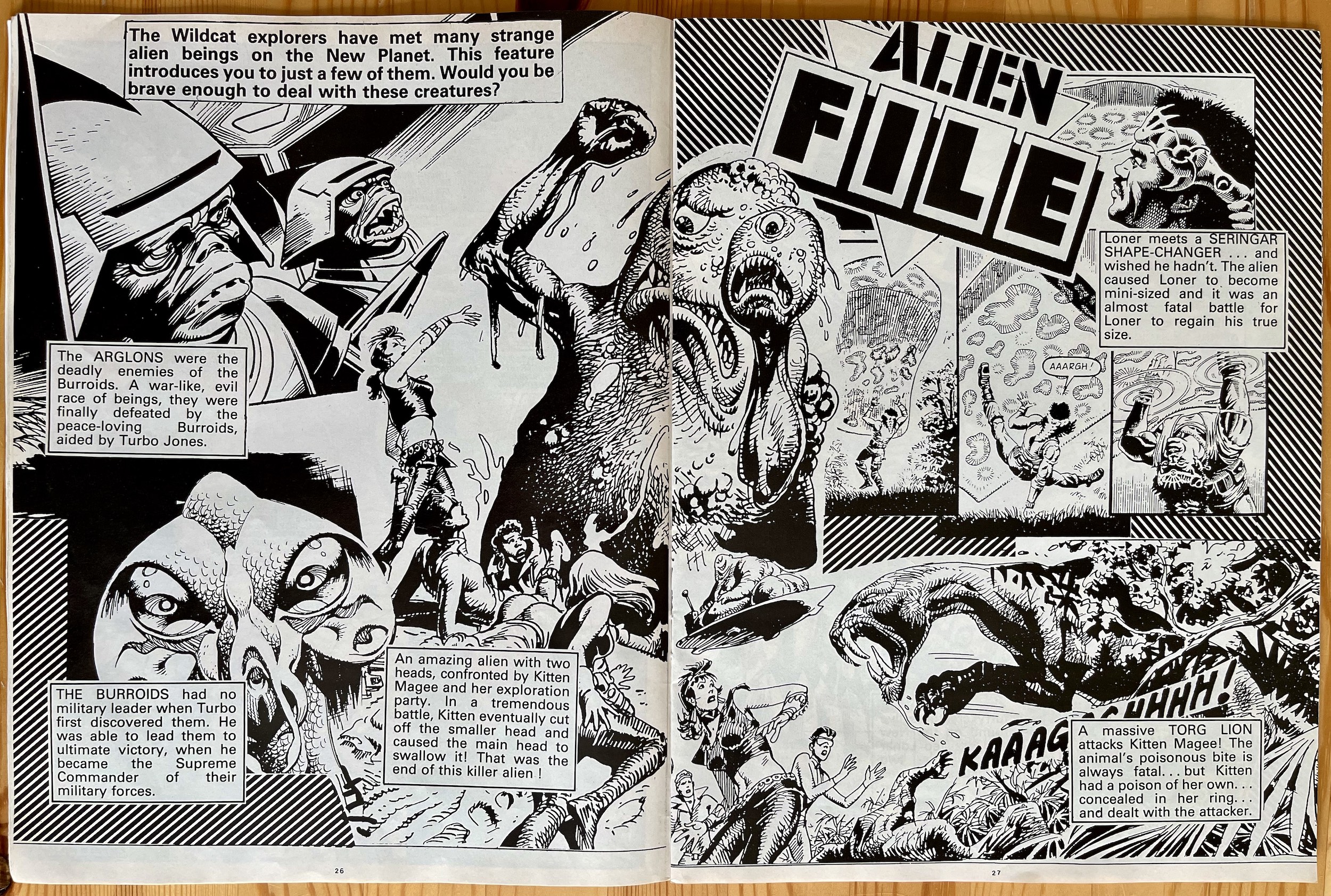
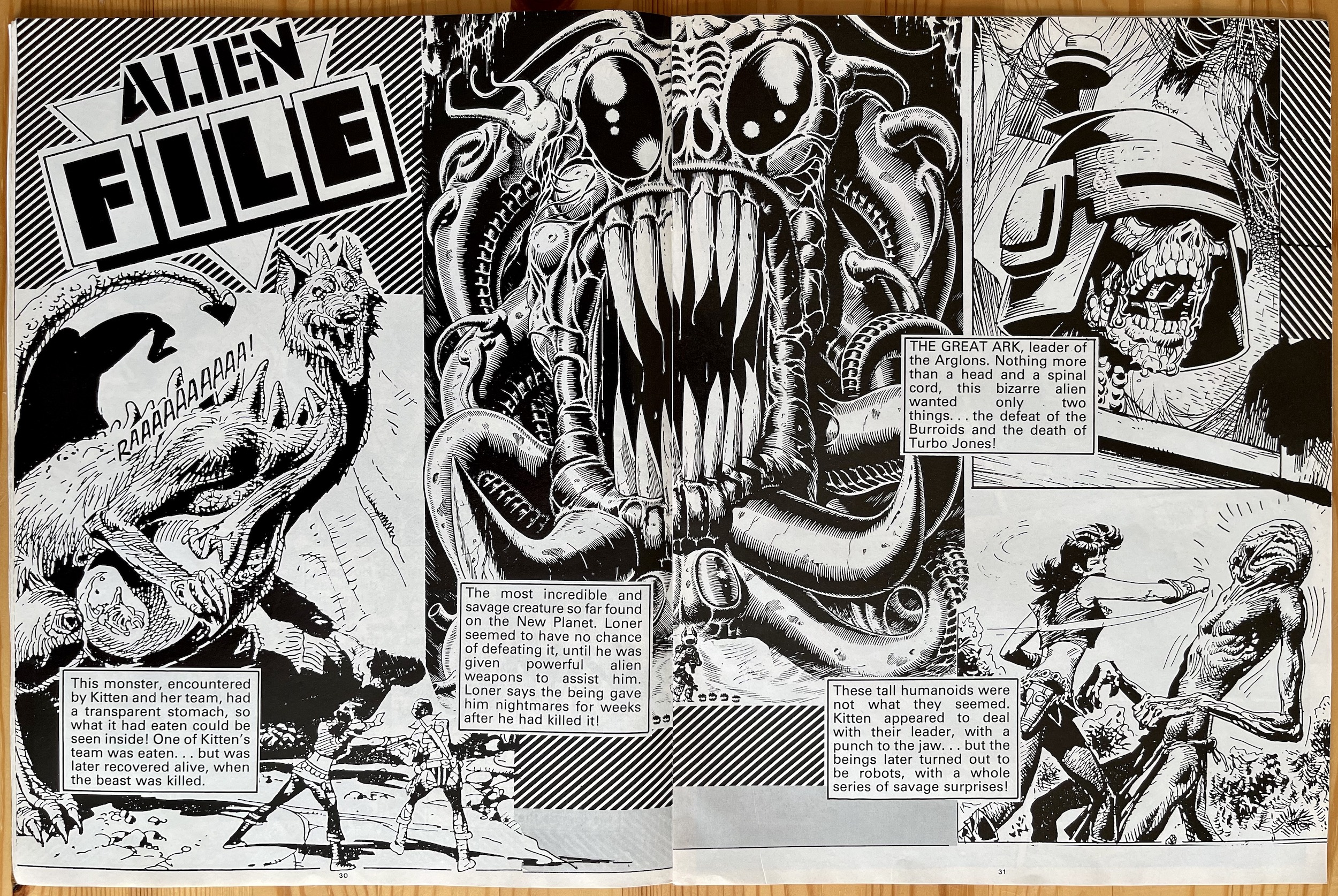
In the Holiday Special there was something called a Robot File, a four-page feature of images from several different Wildcat stories all featuring the various futuristic companions humans are living alongside in their search for a new home, with small panels detailing each one. A fun recap for fans and a way for new readers to see some of the interesting storylines they’d missed out on so far. We get something similar here with the wide variety of friendly and not-so-friendly aliens the crew have met along the way.
It may be reusing panels from Wildcat and Eagle but it doesn’t feel like filler. In fact for me there’s some new material here from after the merge, like the end of the war and the fact The Brain had a body. This really would’ve been perfect in an annual too. I have to say that’s a fantastic selection of allies, friends, creatures and monsters, isn’t it? I’m going to miss this comic.
But let’s cheer up, we’ve got more goodies here and The Wildcat Complete (this time not given its own name) was always something to look forward to. This one even refers back to the stories in #6 and #8. In the second of those tales loveable Gliz sacrificed himself after piloting a shuttle to the far side of the first moon and getting hijacked by pirates. In the first we found out multiple crews had disappeared on the near side when they’d eaten poisonous fruit which mutated them, making them look like threatening aliens and thus killed by rescue teams, who in turn would eat the fruit and continue the cycle.
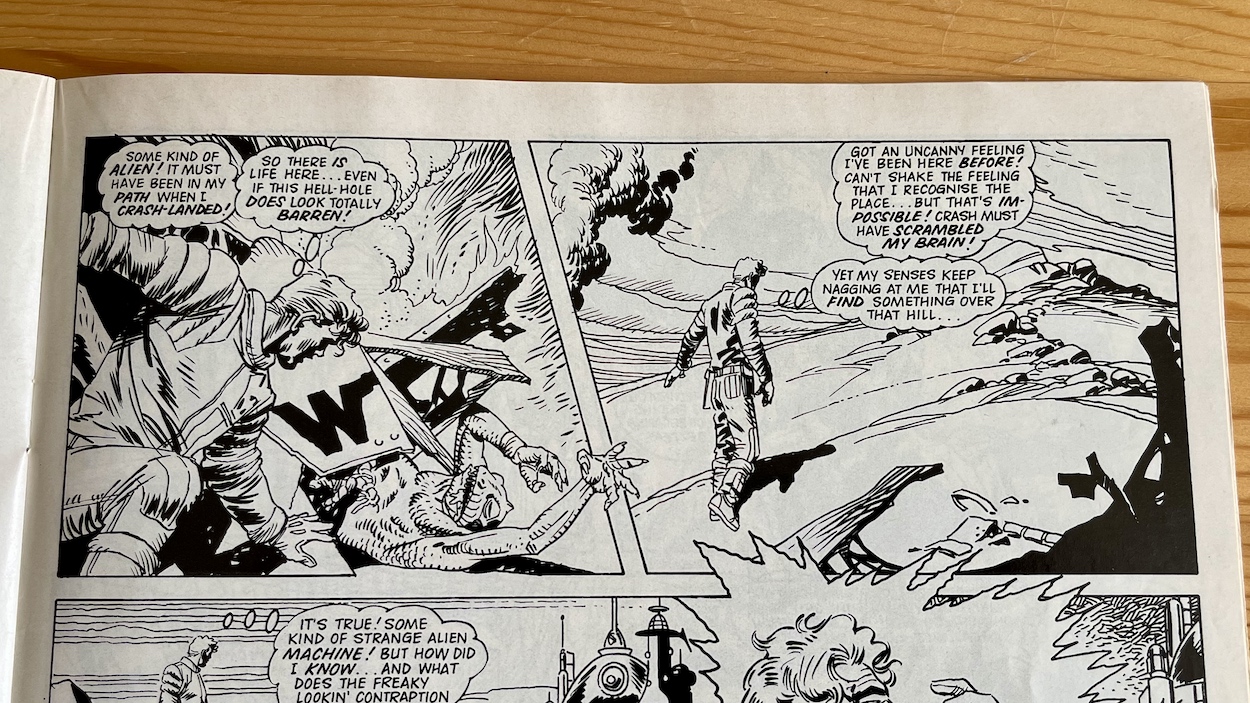
Due to the horrendous weather pilot Tovey crashes on the surface just like Kurby did in #6. He notices he’s accidentally killed a lizard-type alien and then finds himself inextricably drawn to a distant hill. Everything seems very familiar but he can’t place his finger on it. Captured by aliens who plant a device on his head to speak, it’s soon clear they don’t exactly see him or the Wildcat as friends.
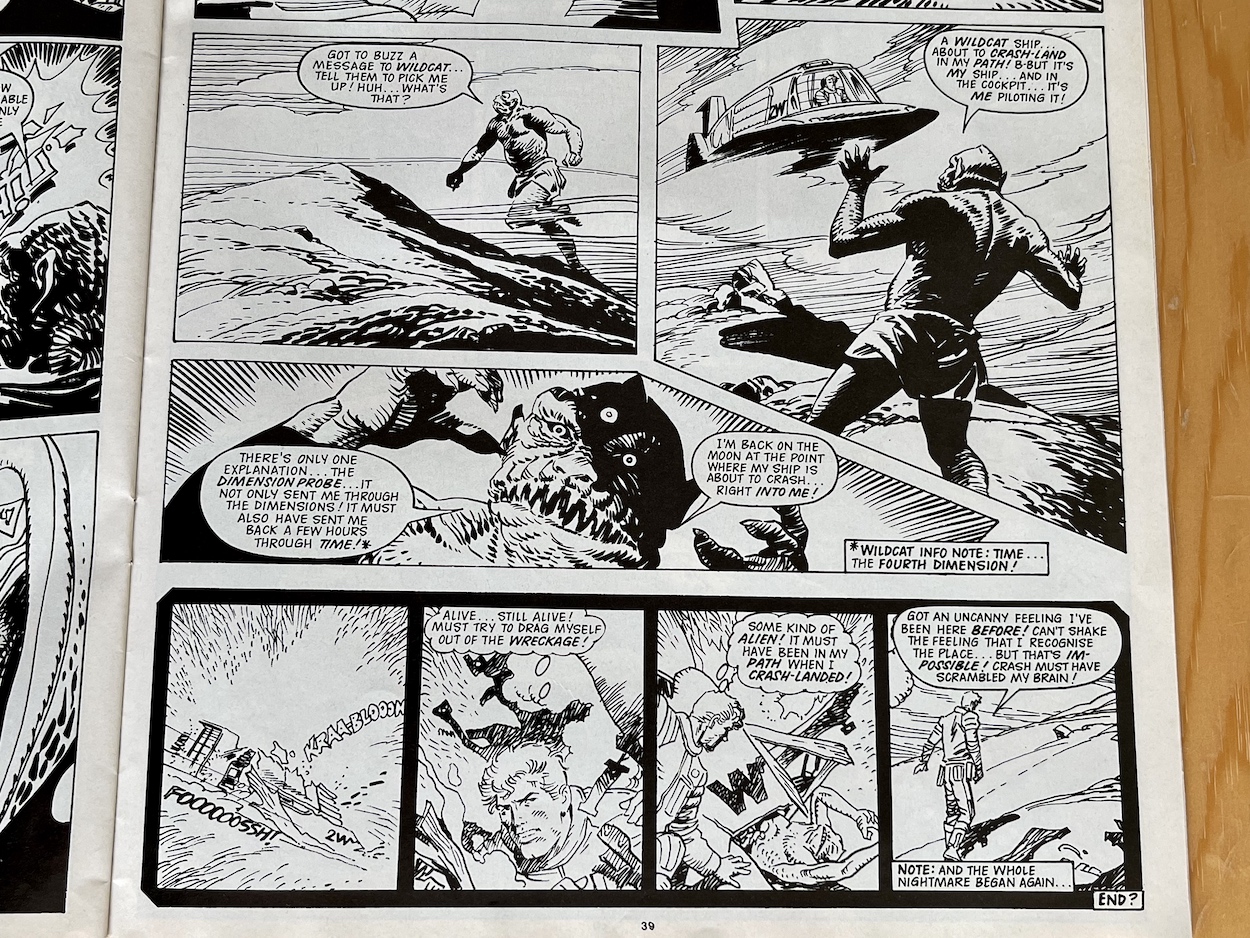
More horrifying is the side effect the translation device has on him. Breaking free, out of desperation Tovey discovers a dimensional portal generator the aliens happen to have nearby and throws himself through it to escape his captors. Flicking between different realities he finally seems to choose the right one to get back to where he belongs. He’s back on the moon and sees a craft approaching. He’s saved! The Wildcat must’ve sent another rescue team. But as it approaches it’s clear it’s also been caught up in the weather conditions, and this isn’t the only bit of de ja vu for Tovey.
He sees it’s his shuttle craft, with him at the controls. The caption points out time is the fourth dimension, and it was on his fourth attempt that he ended up here. Again, the cycle will be never ending as he crash lands, killing himself and then ending up right back in his own path again. It’s similar in some ways to that earlier Wildcat Complete, although it wasn’t time that repeated but rather the actions of the humans. It’s also very similar to the final Scary Cat Challenge in Super Naturals#9 (also from editor Barrie Tomlinson) when a greedy boy wishing on a genie’s lamp ends up in a repeated cycle of time.
It’s a well worn story trope, I know, but to see it in two of my comics so close to each other, and when this was a sequel to a tale with a similar ending, it feels a bit underwhelming, with the twist not really a twist anymore. Such a shame, because I’ve loved Joan Boix’s artwork on all of the Complete tales they’ve illustrated over Wildcat’s short life. Don’t get me wrong, it’s not a bad story, it just feels a bit recycled.
The same plot being used for two of Loner’s stories in a row (and also two strips in this issue) is a real disappointment
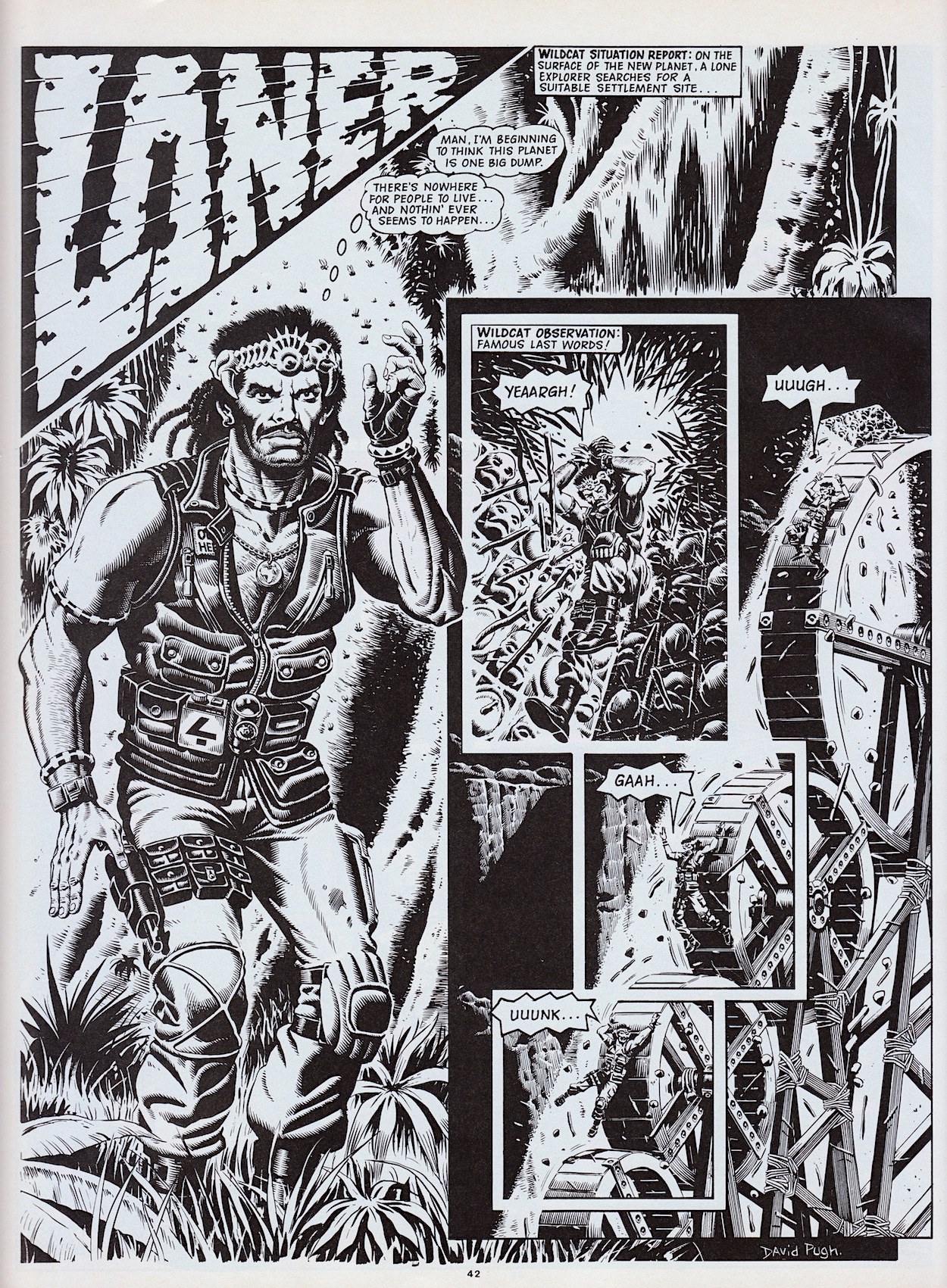
What’s much more exciting is seeing a brand new Loner strip written by editor Barrie Tomlinson and drawn again by David Pugh! Barrie’s prose story in the Holiday Special was excellent but I missed having new art from David (the illustrations were lifted from previous issues) and by this stage in Eagle he’d moved on to drawing Dan Dare, an opportunity he just couldn’t pass up but which meant Loner, who had been created with David in mind, had to be passed on to another artist.
Ah yes, that does look lovely, doesn’t it? Welcome back Loner! Regular blog readers will know he was my favourite character in Wildcat and his first adventure was absolutely riveting. Unfortunately his second was less so, but here we’ve got a brand new one-off tale of him exploring the planet’s surface and once again he’s fallen into some trouble. I do like the way the sequence of him falling down that wheel mechanism is shown through clever use of a main panel and some smaller ones overlaid on top.
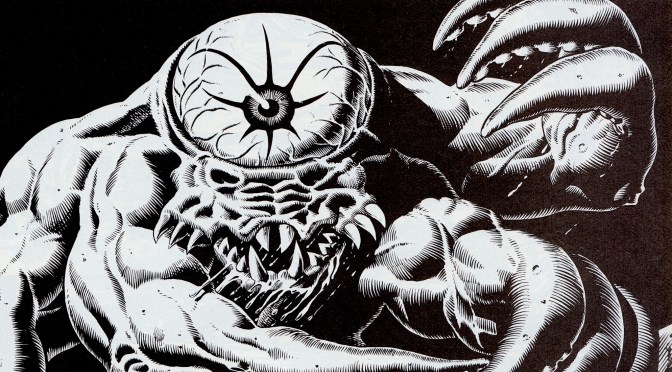
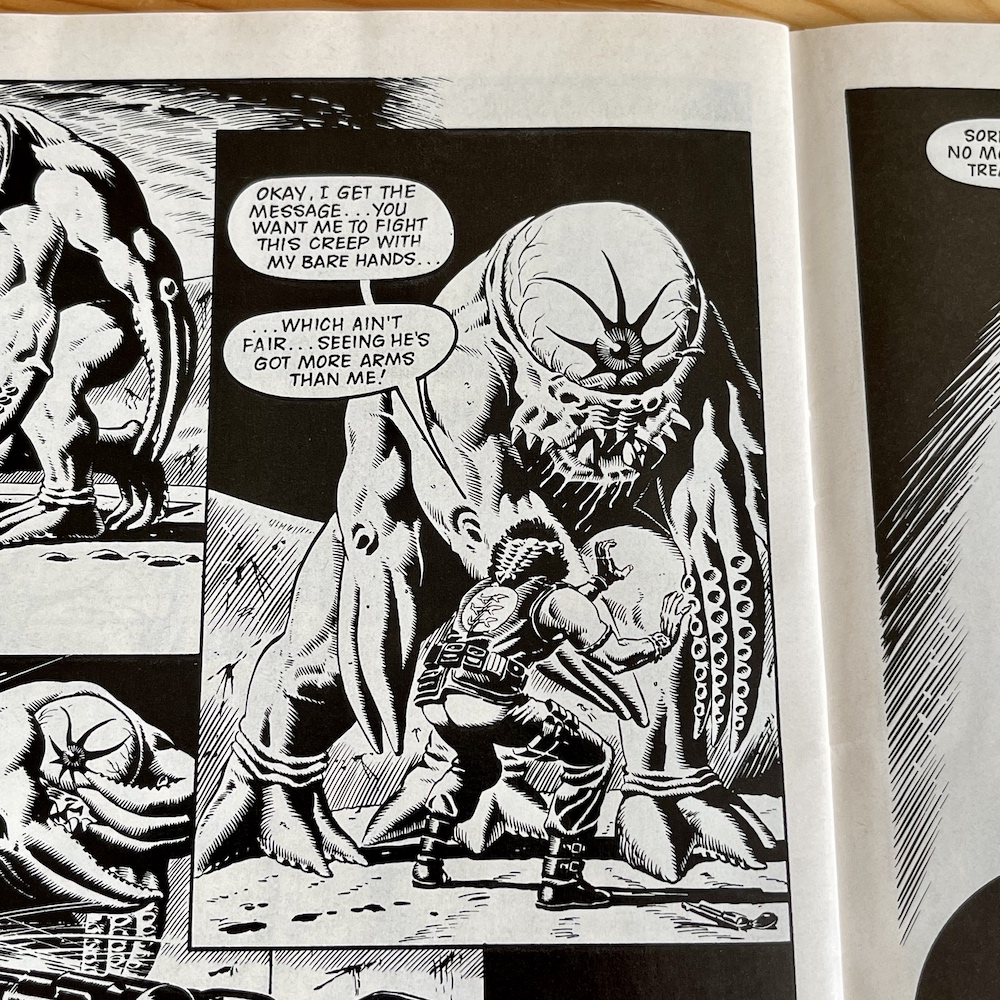
In the Holiday Special he’d found himself the prisoner of an underground group of aliens who captured creatures to force them into a kind of gladiatorial combat. (Similar to The Games, above.) So what brand new adventure do we have here for our former mercenary? The hole he’s fallen into leads him to a group of aliens who sit on a kind of observation gallery, then behind him a trap door opens up and a huge, tentacled beast appears who they want Loner to fight in a kind of gladiatorial combat. Um…
Oh come on now, this is getting a bit ridiculous. While it’s wonderful to see David’s art again and there are some genuinely funny moments, such as Loner cursing the fact his first reaction to new alien beings often lands him in trouble and the quip above about arm to arm combat, the fact the same plot has been used for two of his stories in a row (and now two strips in this special) is a real disappointment. It takes the edge off seeing him back in strip form. But that art is wonderful, especially when the big bad looks this good.
I just can’t quite wrap my head around the decision to basically rerun the same story twice over. As a kid I never had the two specials so I can’t say for certain if I’d have been as disappointment, or even have noticed, what with them being months apart. But as an adult fan the Winter Special isn’t measuring up to the incredibly high bar of the regular comic, not with reprint material and reused plot lines. Damn.
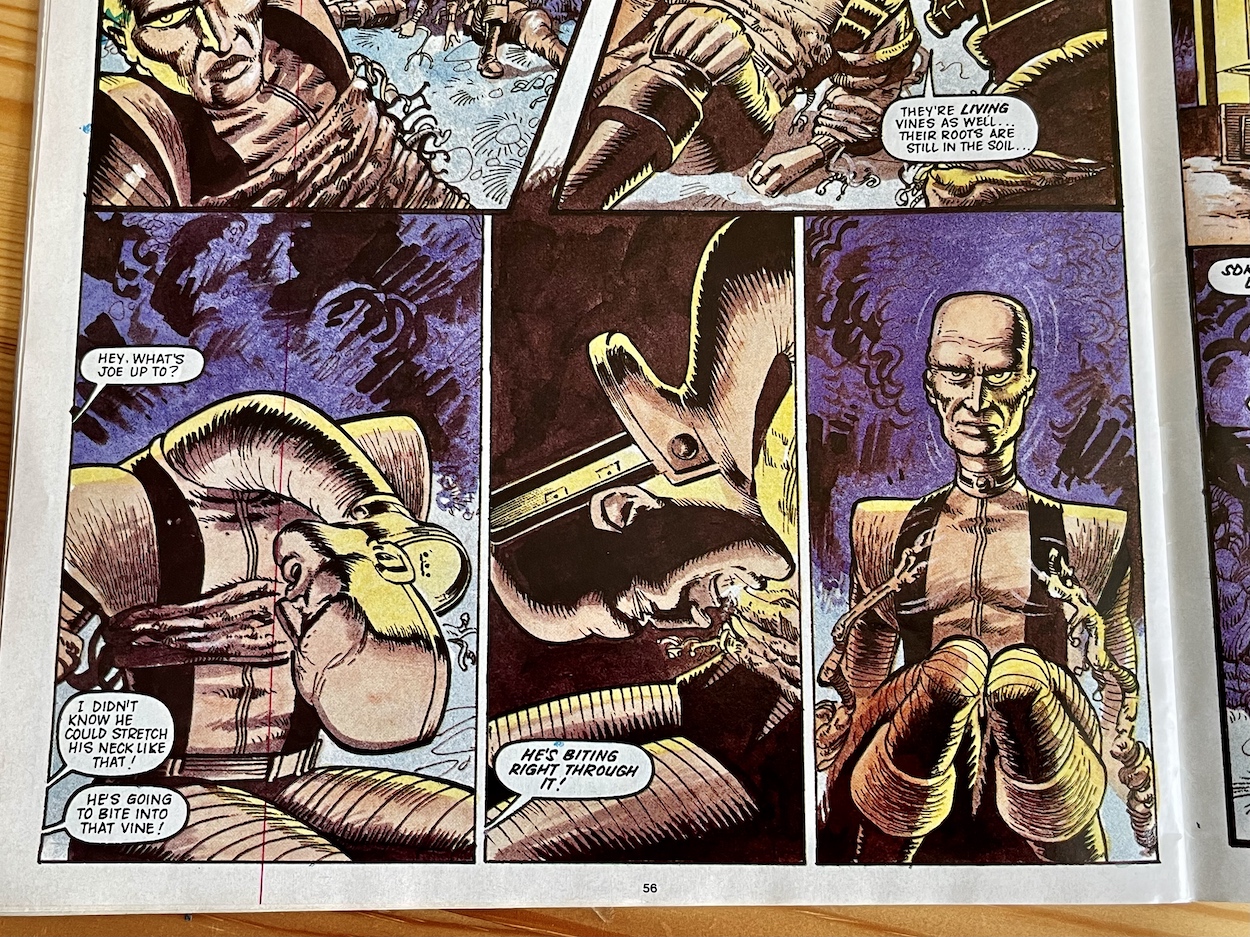
The second half of the issue has a full colour Joe Alien story split up into little two-page pieces just like The Games. While David Robinson‘s story isn’t technically a reused one, it does set itself neatly into the serial from the fortnightly, seeing as how Joe and his team were captured by the alien plant life on more than one occasion. Basically, they get captured again, Joe’s brain becomes disconnected again, then they escape again. But I find it strangely enjoyable.
I think I enjoy it more because it’s honest about the fact it’s not a new story, that it’s an additional chapter to Joe’s main strip. This approach is much preferred over the other strips so far. It also shows a lighter side to the character. He quips and shows proper affection towards the men he’s been fighting alongside. We also see how he eats through the vines when he’s lost his brain pack, making us wonder if there’s still some form of intelligence in there, only for us to realise he was just hungry in his crazed state!
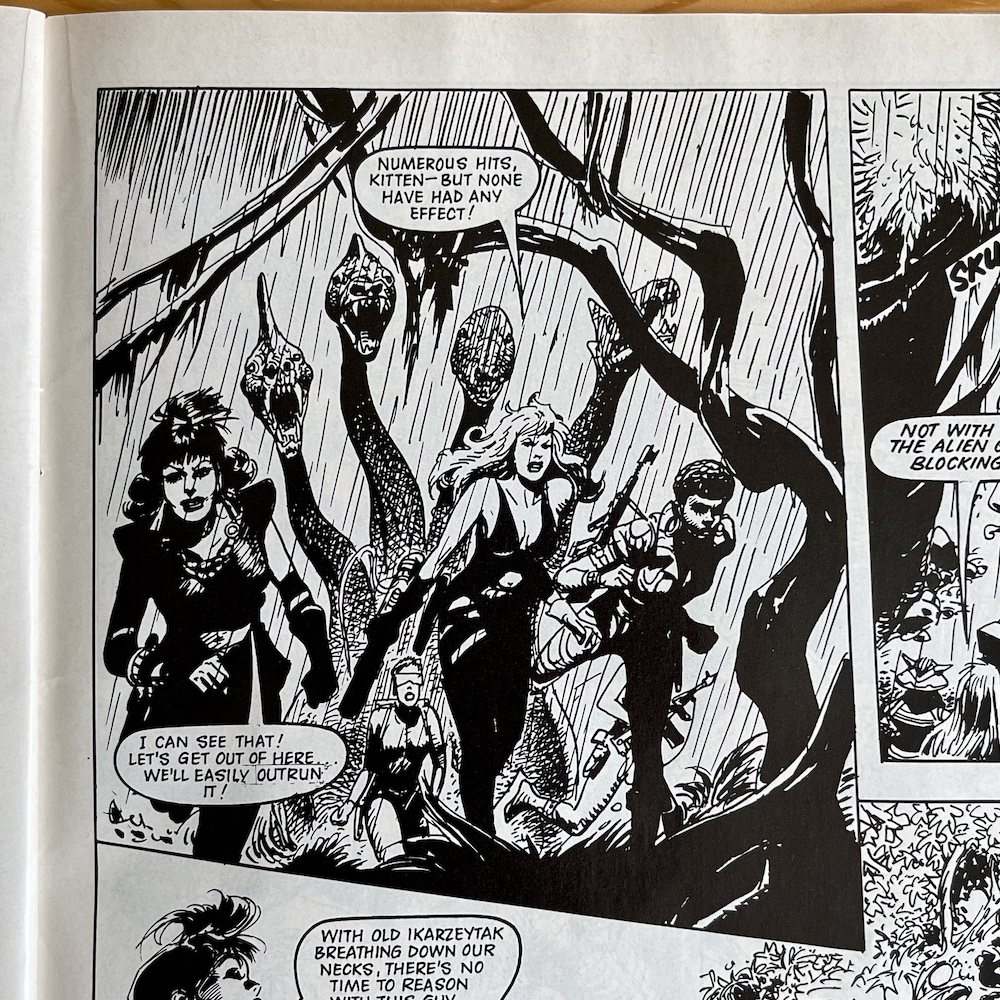
Instead of regular Joe artist Ron Smith we have instead Keith Page and, while I do like his very alien main character, I miss Ron’s sharp lines and exaggerated action. José Ortiz returns for Kitten Magee though, his scratchy visuals once again the perfect fit for the jungle-based action written by James Tomlinson. This time our heroic female team are entering an area apparently guarded by the terrifying Ikarzeytak. But searching for a new home for the human race is more important than local legends, especially when it’s apparently already long dead.
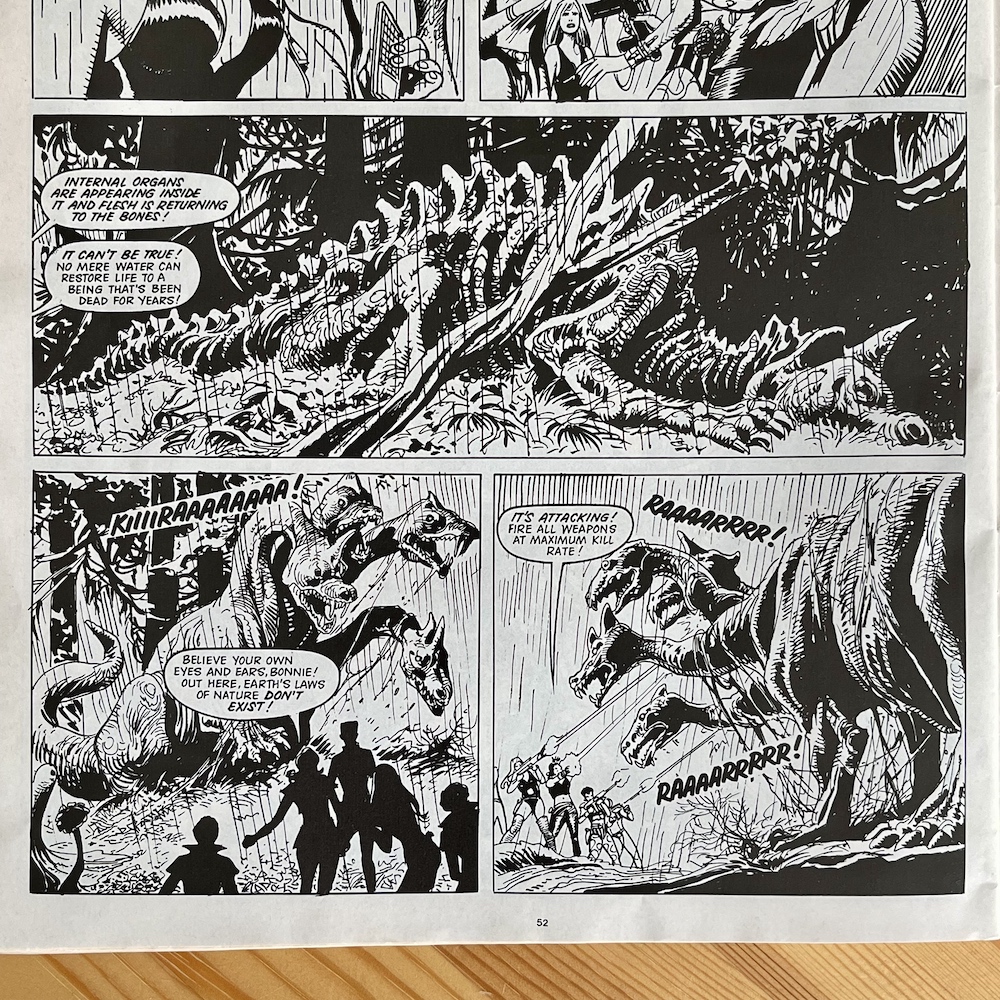
In Kitten’s regular story she and her teammates would come up against a never ending array of imaginative alien creatures, each one displaying some kind of innovative ability that they’d have to outthink on the fly in order to survive. From monsters with heads for hands, to gigantic leviathans with multi-headed pet dogs and beasts with see-through stomachs. The Kitten Magee strip also had strong ongoing stories and mysterious character arcs, however a big part of the fun was seeing what kind of monster would be thought up next.
I never expected a one-off strip in the special to advance any of the ongoing arcs but the Kitten Magee story certainly doesn’t disappoint with its always enjoyable characters and the next in its long line of original beasties to fight. In this case that skeleton was indeed the Ikarzeytak, which can regenerate from nothing but rainwater much to the surprise, and then horror, of the team. It’s ludicrous. But it’s ludicrous fun! That’s what Wildcat was all about and so the Winter Special ends on a high.
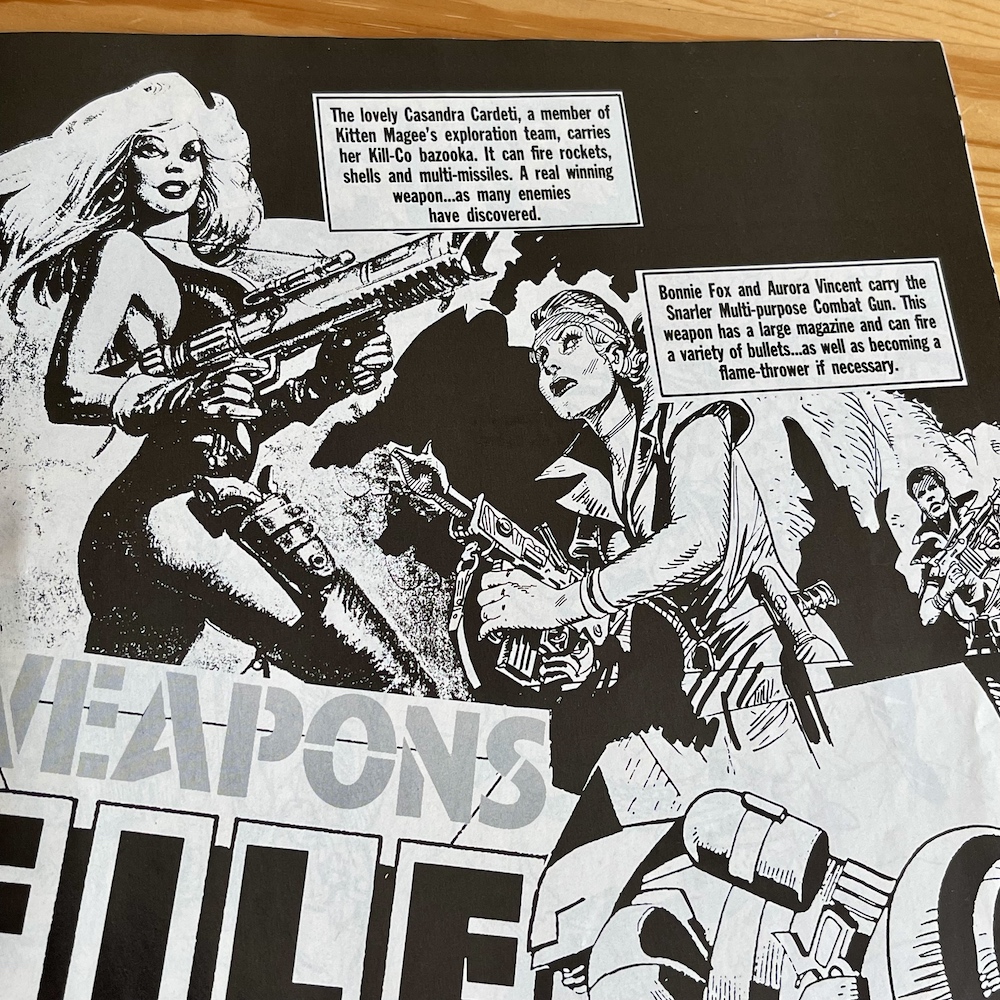
Kitten’s friends Cassandra, Bonnie and Aurora also star in the four-page Weapons File which follows the same formula as the alien and robot ones and then that’s it, Wildcat’s real time read through comes to an end. As I’ve previously said I never followed the characters into the pages of Eagle and, with over 50 issues of it to collect before I can read the end of all the stories, I wanted to complete the read through of the main comic first. It felt right to do so.
The Winter Special feels very much like a publication of two halves. Perhaps I’d overhyped it for myself in the intervening months, but there’s a disappointing amount of reprint material or reused story ideas, however even in those the art is superb and the remaining stories are all as excellent as we’ve come to expect. It feels like a premium comic in my hands and I think giving Wildcat this glossy treatment for its final edition was a great idea; the fortnightly was a lot bigger and brighter than its contemporaries after all.
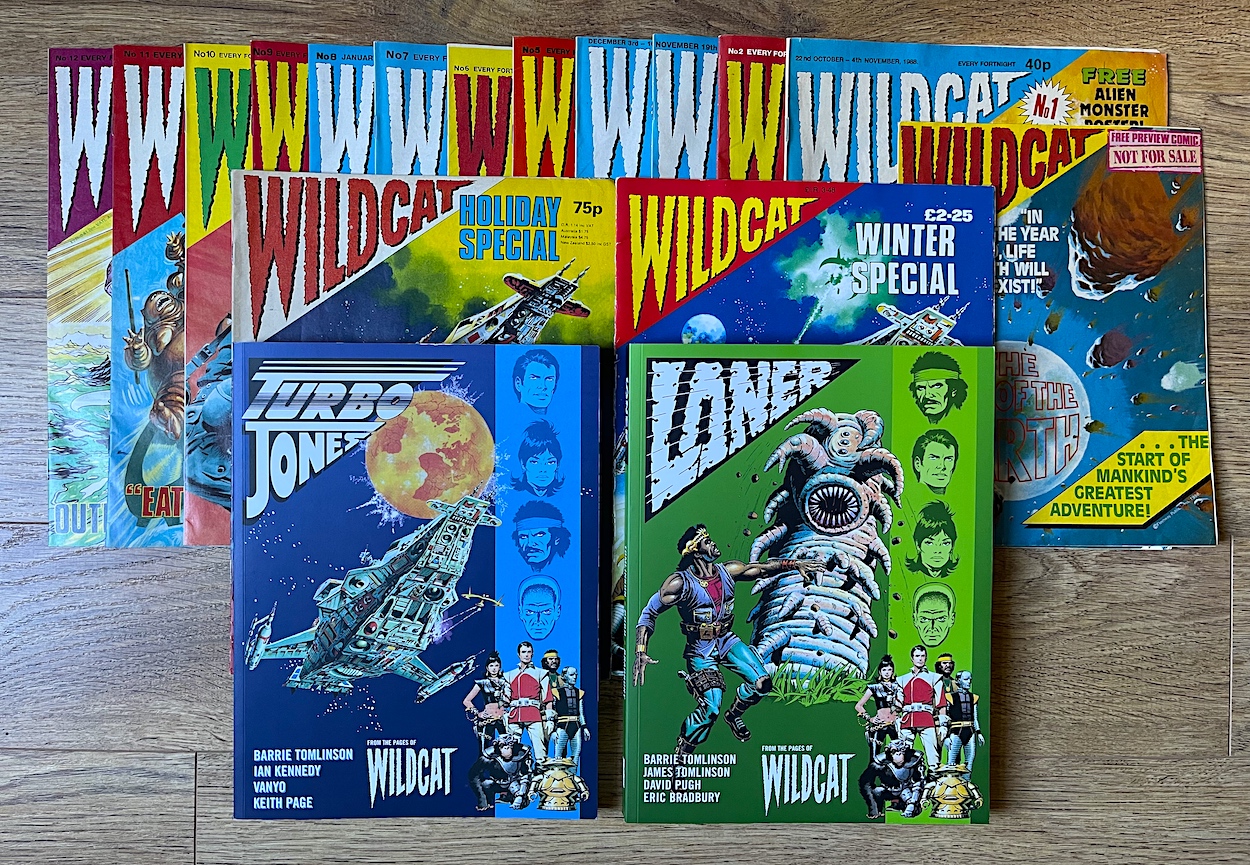
At a future point on the blog I’ll finally be able to see what happened next for Turbo, Loner, Kitten, Joe and the Wildcat, beginning with the Turbo Jones and Loner graphic novel collections, before I focus on those Eagle issues with the remaining Kitten Magee, Joe Alien and Wildcat Complete stories. Plenty to come then. However, it’s still a sad moment to close the final issue that’s 100% Wildcat from cover to cover. A childhood favourite originally aimed at younger readers it holds up incredibly well and I’d highly recommend any adult comics or sci-fi fan to jump on board and take the ride.
It’s been a long time since we’ve had the pleasure of a Jeremy Banx cover, the last one was for #19 at the beginning of last year. His covers hold a special place in my piggy heart since his was the first one I ever saw in #14. For this issue’s front page Burp the Smelly Alien is giving himself an all-over body workout, quite literally. But despite Burp’s starring role, the biggest headline is given to Pete Throb of Pete and his Pimple.
Inside this issue is an eight-page pull-out comic all about one of OiNK’s most popular characters,one Lew Stringer’s creations who had really captured the imaginations of the young readers. He certainly had when I was in the target audience, quickly becoming one of my favourites so I was excited by this issue. We’ll come back to him in a bit, first up Burp earns his front page stardom with another unique double-page spread.
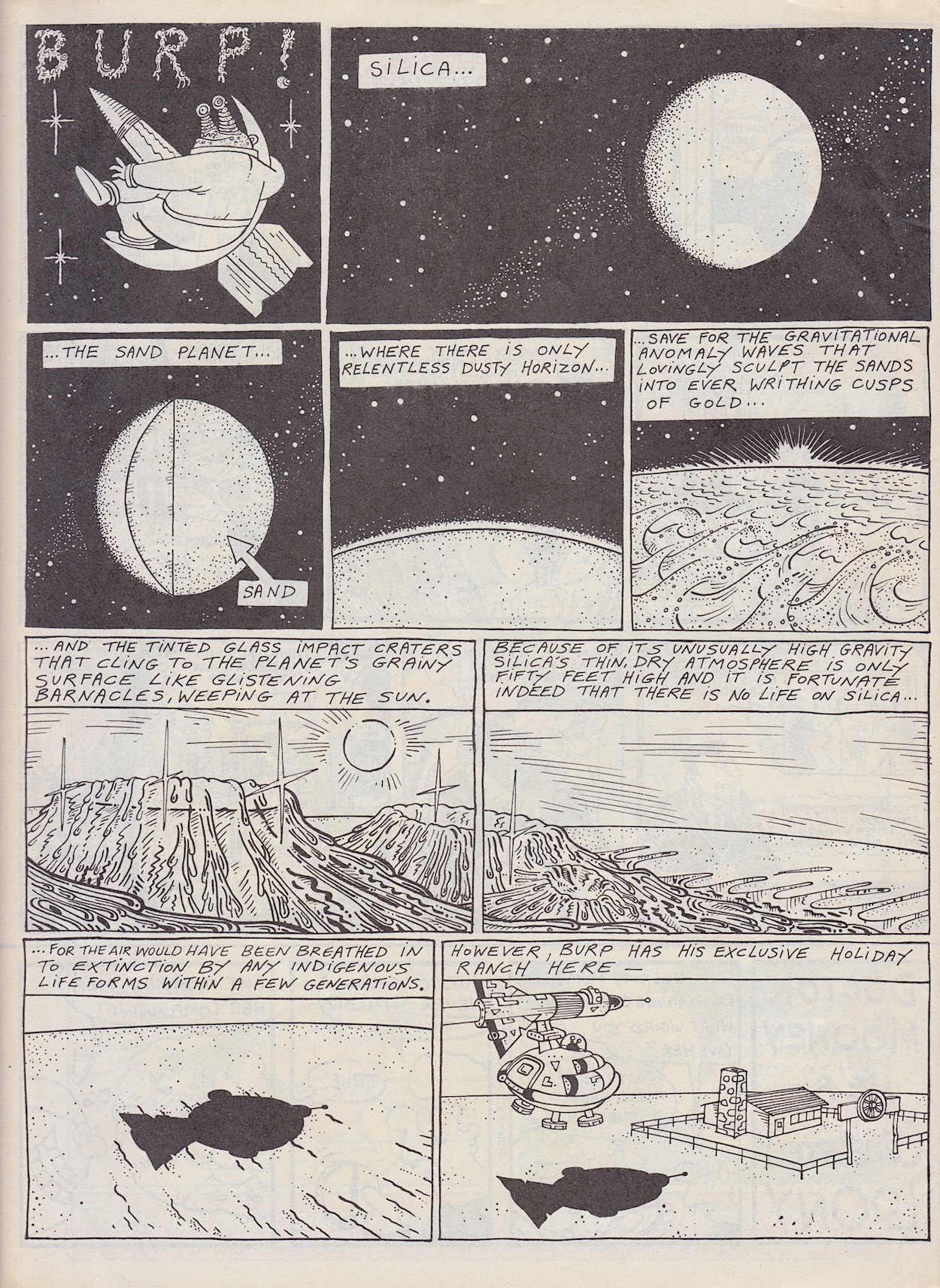
It’s a delightfully written tale of our smelly friend simply enjoying himself while on holiday. It just so happens that holiday is on a distant, desolate planet made entirely of sand. The first page alone would’ve made for a great strip, with its atmospheric captions and imaginative representations of this wonder of the universe, only for it to house Burp’s holiday ranch! Naturally. But we also have him enjoying his unique vacation before, as always, he inadvertently causes a bit of chaos.
Just try to explain this one and why it’s so funny to anyone who has never read OiNK!
If there was an ongoing theme to Burp’s strips it would be how his good natured intentions always produce the opposite results. Whether it’s his never-ending quest to ingratiate himself with us humans or annoying the large god-like beings of the universe while doing a deep space tour. Here, even on a lifeless planet he still somehow ruin things, even if only for himself this time. This is one of my favourite Burps. It’s just such a unique strip, but then again most of Jeremy’s are; just try to explain this one without it to hand and why it’s so funny to anyone who has never read OiNK!
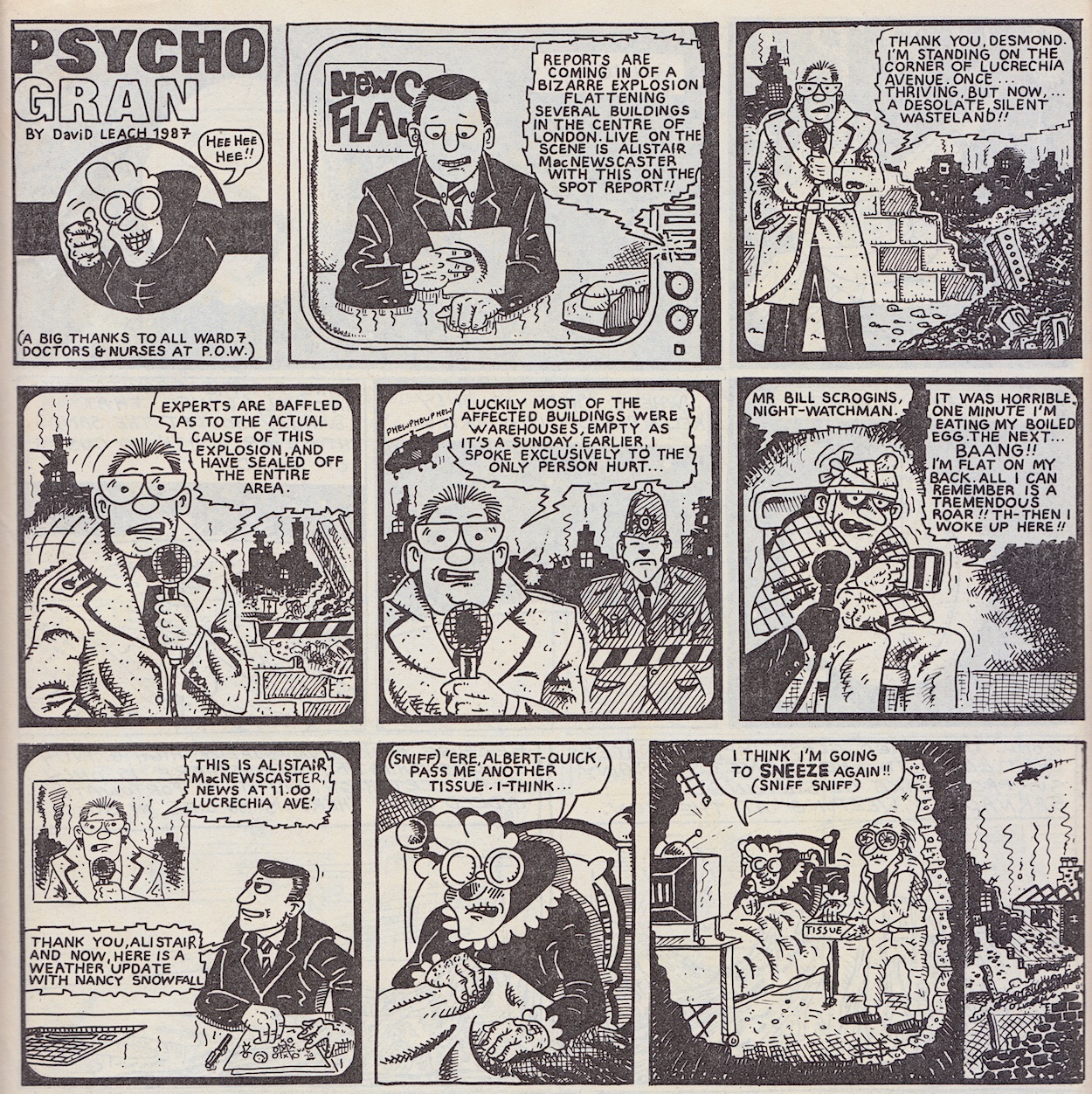
At the beginning of the latest Psycho Gran it appears David Leach has decided not to follow the issue’s theme of health and fitness, unless you go down the route of saying an explosion affects people’s wellbeing. But if we’ve learned anything since her debut in #15 it’s that we should never try to predict or assume with Psycho.
Nice to see another little cameo from Albert, the long-suffering life partner of our little old dear. Also, did you pick up on the gag of what’s really on those papers held by newsreaders? In case you’re wondering what the shout out in the title panel is all about, no David hadn’t just been let go from a prisoner of war camp. David tells me he’d had an emergency appendix operation in the Prince of Wales hospital in Bridgend in Wales and had ended up in for a week, so wanted to give a big thanks to everyone there.
Regular readers might recall the Scare Boars from #13, the first Hallowe’en issue. They were GBH’s take on the Care Bears, one of the 80s’ biggest toy and cartoon franchises. Ingeniously created, co-creator/co-editor Patrick Gallagher still owns one of them to this day and posted a video of them together last year, which you can see in the review. A year later and GBH are back with more cuddly monstrosities, this time with the Crummi Boars: Spotti, Snotti, Potti and Scratchi.
This time it was a riff on Disney’s Gummi Bears, another toy and cartoon hit, which themselves were clearly inspired by the success of the Care Bears although officially they were based on the chewy sweets. Of course, once something became a hit with the UK kids of the 80s OiNK was ready to pounce. With a lot of the original names ending with an ‘i’ and each one having a very specific, narrow characteristic it was the perfect franchise to rip into. Again, as with many of the props used in OiNK’s madverts recently the little details are superb.
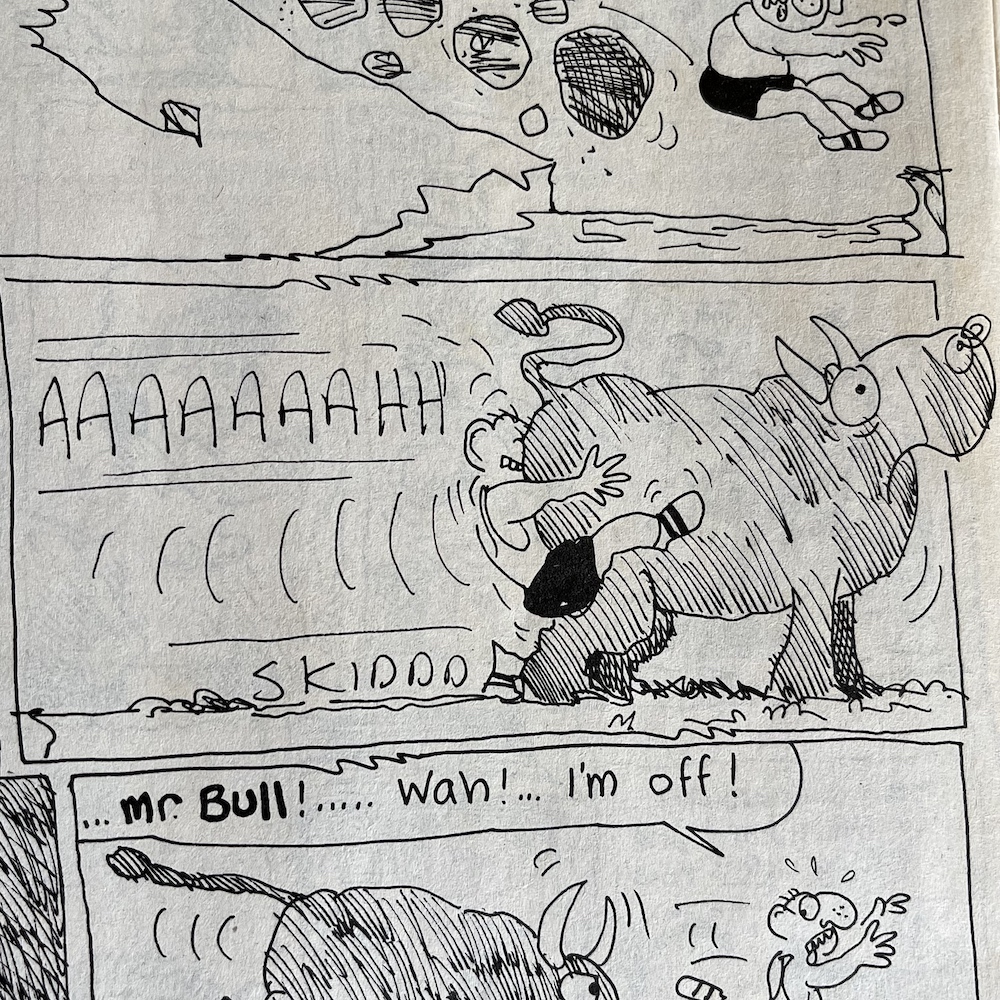
“See Janice and John ignore a warning sign.”
Janice and John and the thermonuclear reactor
The Crummi Boars may have been a spiritual sequel to a previous madvertisement, but in this issue we get an actual sequel to a much earlier strip. In fact, this issue’s story starring Janice and John was mentioned way back in #7. Why did it take 34 issues to arrive? Well, if you’ve been following along over this past year-and-a-bit you’ll know all about their original story leading two people (only two) to complain about OiNK to The Press Council, which the comic then responded to in #28!
While the complaint was rejected these things can take a while to work through, hence why there was a 21 issue gap before the response was printed. The editorial team would’ve been just right not to print another strip until the outcome of the complaint was known. By now more than enough time had passed sine the first story and OiNK’s cheeky rasp to the complainers. So finally, here’s the long-promised second part of Uncle Pigg’s Reading Course, Janice and John and the thermonuclear reactor written by Mark Rodgers.
Unfortunately they wouldn’t return to face the demons from hell but the two strips we got were great fun. The first is my favourite, possibly because it was the first and made a bigger impression, or possibly because of the furore it created at the time (which has since been wrongly attributed to OiNK’s much later cancellation). Either way it’s a shame we won’t see any more of Trevor Johnson’s great way of spoofing classic children’s picture panel stories. In fact, we won’t see any more of Trevor at all until the second OiNK Book, which most of us didn’t read until after OiNK’s final issue.
But this isn’t the last you’ll hear of his work (specifically Janice and John) on the blog. There’s a very special post planned for the future which will take a behind-the-scenes look into the complaint made against OiNK and the process between OiNK Publishing and IPC Magazines thanks to insider information and documents provided to me by co-creator/co-editor Mark Rodgers’ wife Helen Jones! For now though, let’s take a peak at some other highlights from this issue before our main event.
Horace Watkins by Tony Husband Grunts compiled by Patrick Gallagher The Slugs written by Tony Husband, drawn by Lezz Spectacles of Doom written by Tony Husband, drawn by Andy Roper
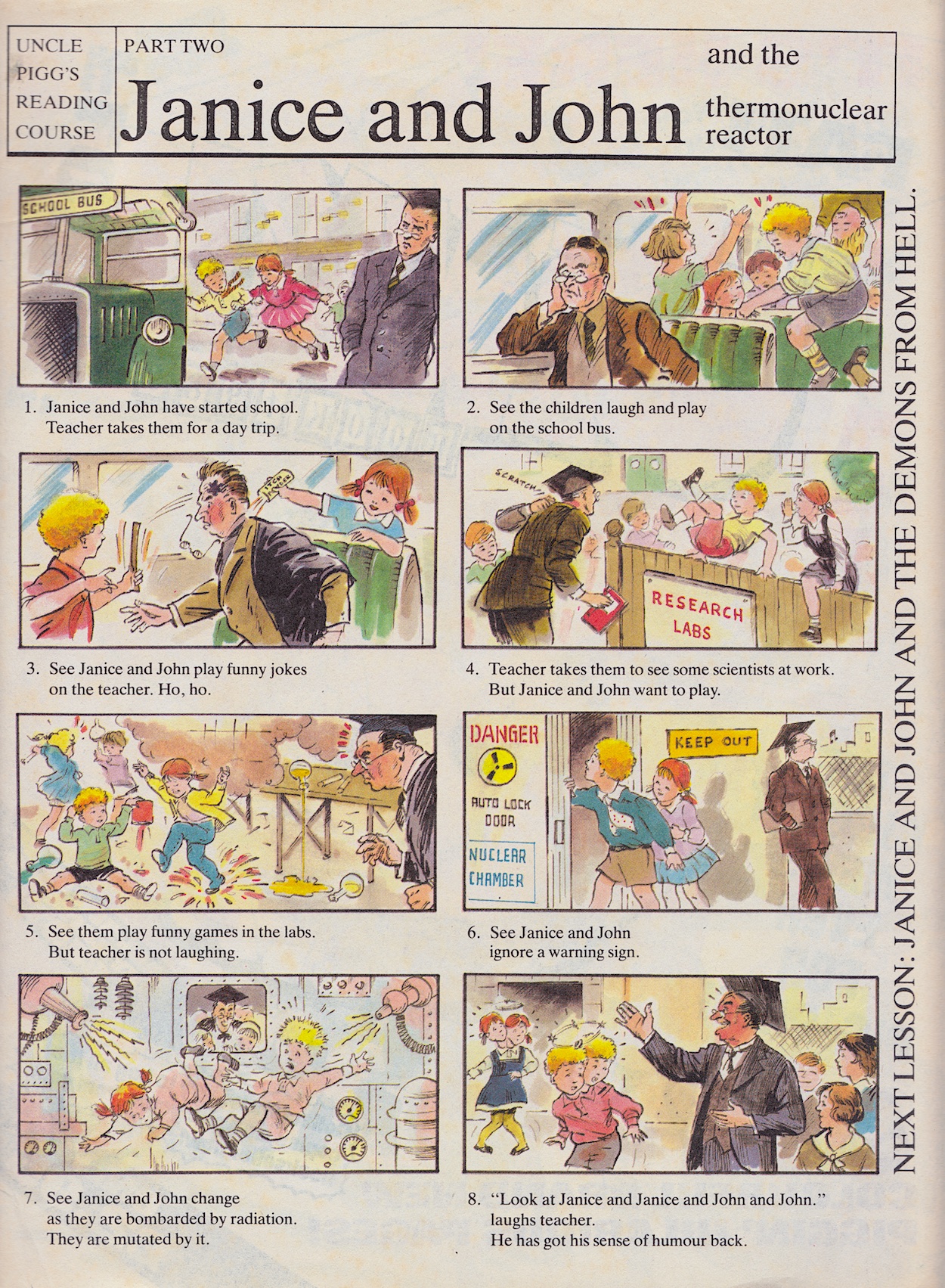
Horace (Ugly Face) Watkins’ cross-country training for his new football career takes a turn for the worse and sliding on a cowpat isn’t the worst thing to happen, Ireland represents on the Grunts page, we take a closer look at the lead singer of The Slugs (although I wouldn’t recommend getting too close) and in the penultimate chapter of The Spectacles of Doom versus The Monocle of MayhemAndy Roper’s detailed art (right down to the monocle on the skull flags) is once again the star as the nasties assemble for battle.
With all of these highs, it’d be quite the feat to outshine them all. It might even require a character to have their very own pull-out comic to stand out. What luck! That’s exactly what Pete Throb of Pete and his Pimple fame has in this very issue, an eight-page mini-comic. According to Lew Stringer, the idea was Mark Rodgers’ who wanted to do an occasional series of such pull-outs spotlighting (no pun intended) different characters.
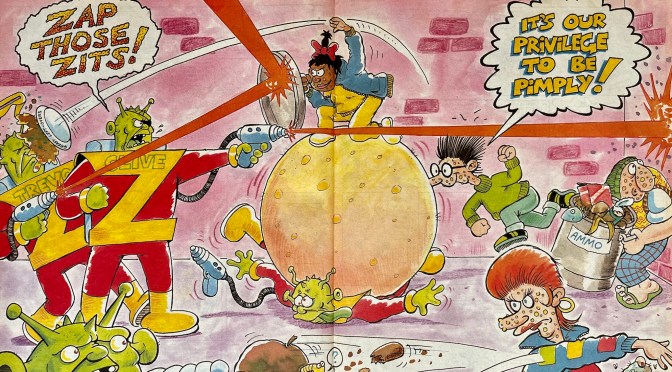
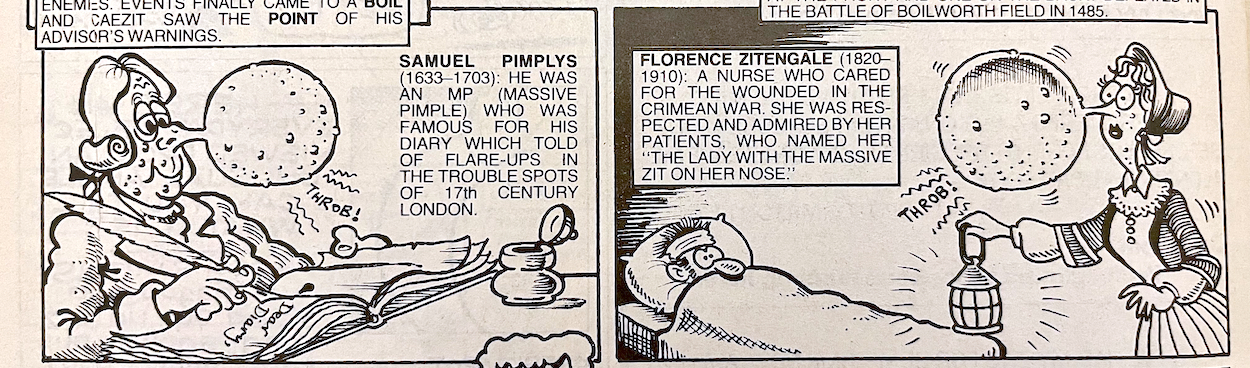
I never pulled the comic out, I didn’t want to destroy one of my beloved OiNKs although I was tempted to colour in the cover. (I never did.) Inside was a five-page Pete story by Lew, made up of three strip pages and a centre-spread poster of him and his pals, including object of Tom Thug’s desire Zeta (Pete’s sister), fighting the alien Zitbusters! This was followed by Zeta’s pimply problem column, Acne Activity Time with art by Ed McHenry and a look at Pete’s Acne Ancestors written by Lew and drawn by friend Mike Higgs.
Pete was always one of my childhood favourites, although I wouldn’t be such a fan of pimples a few years later. I wasn’t alone, with Pete frequently climbing to the top spots (again, no pun intended I swear) of reader polls, so he was a natural choice for the first of these little specials. Unfortunately there’d never be a second mini-comic, which could be because of the changes that would come to OiNK when it went weekly (less pages) and then monthly (some main contributors left and some strips were given multi-page stories anyway).
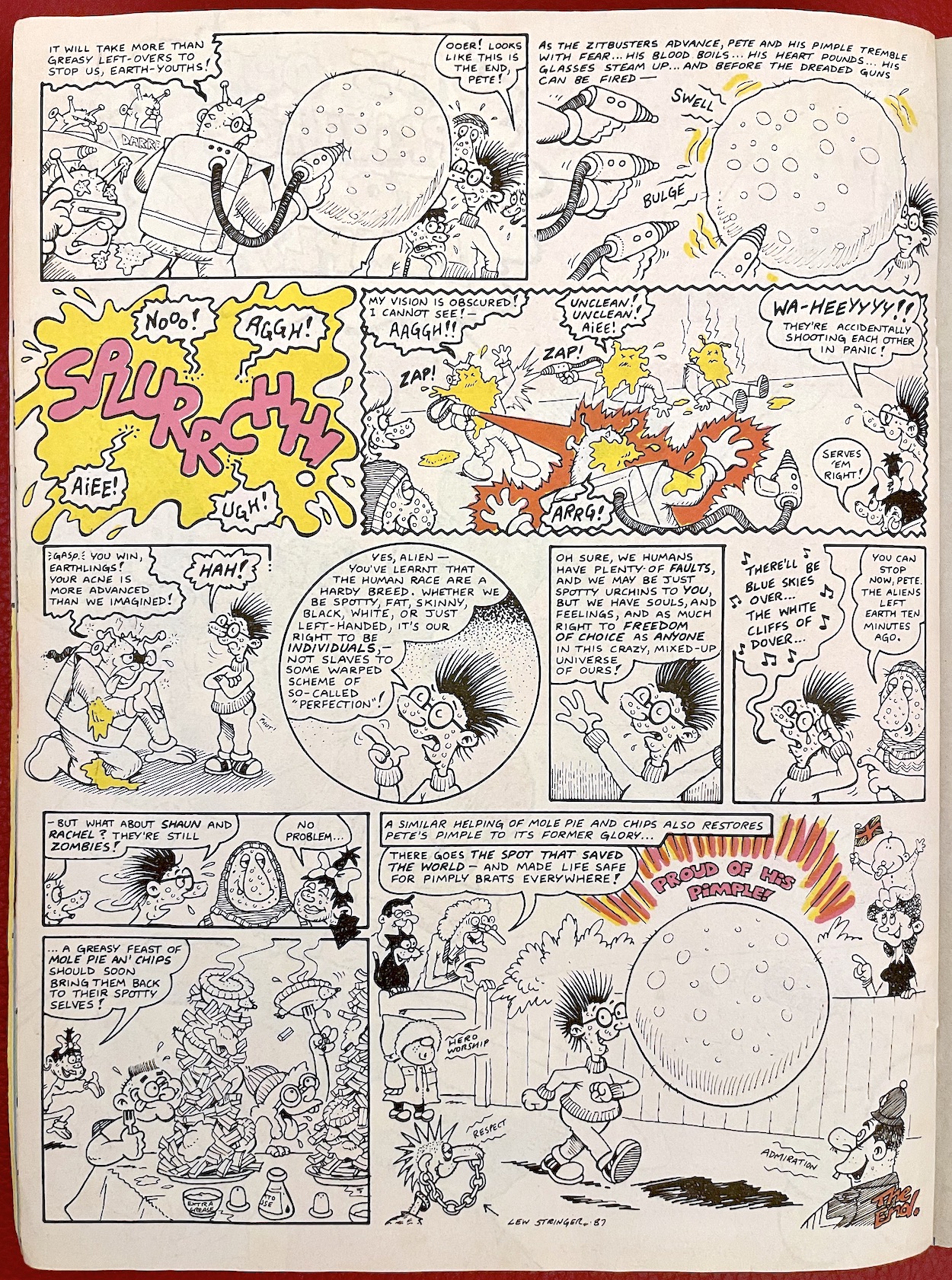
Just as well our only one is quite brilliant then! Below is the Pete strip and the poster which made up the main battle. A battle in a Pete and his Pimple story? Not only that, he was battling scary aliens called Clive, Trevor, Darren and Sharon on their never-ending quest to enslave all those who dare have pimply complexions throughout the cosmos. It also gives us a little look into Pete’s everyday life including his local greasy hang out and his equally spotty pals.
If you’re going to create a special comic inside an OiNK you may as well go bigger and zanier than ever with the main story, right? Lew certainly did. As always, it pays to read it slowly and pick up on all the little sight gags, such as Shaun’s t-shirt slogan, the Greasy Spoon’s menu and of course the slap up feeds at the end. My personal favourite moment is Pete’s heroic speech, a moment where for once he can be the saviour instead of the nuisance, cut short by the fact the aliens had already left. (They’d return in #64.)
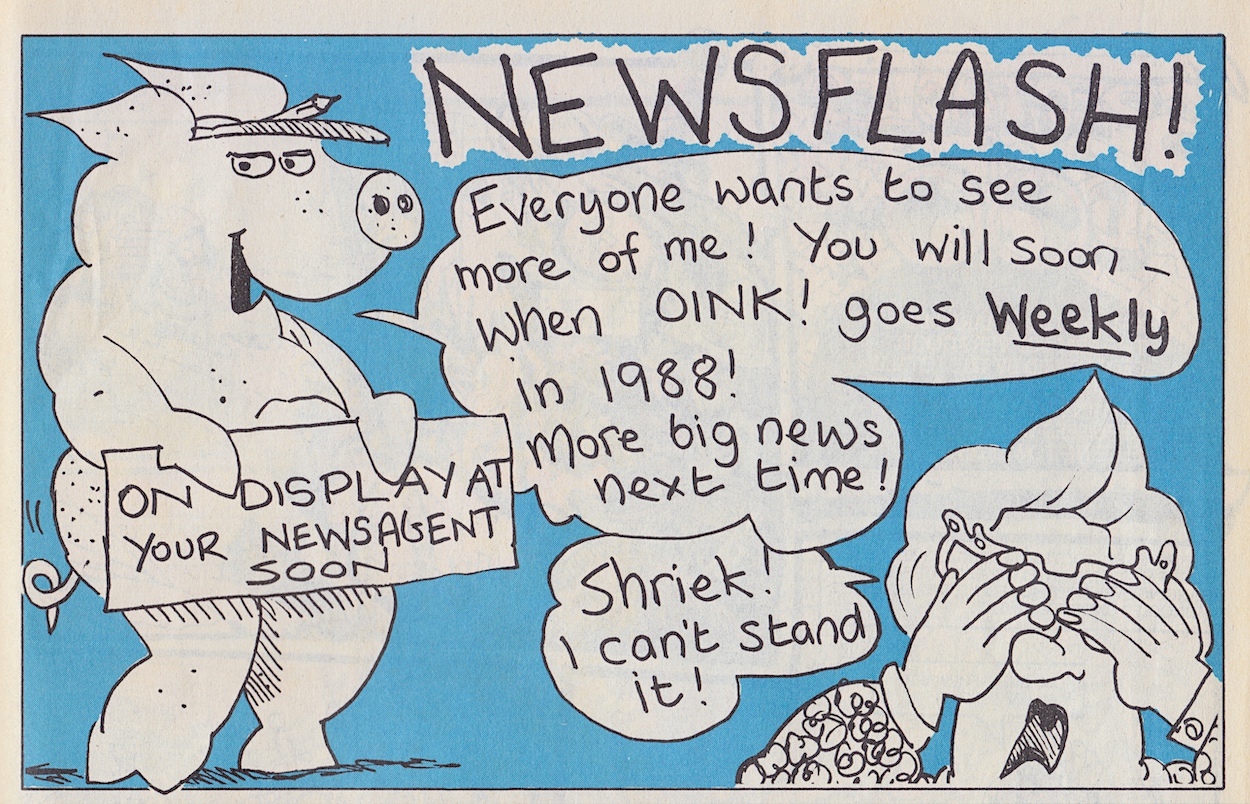
Of course, all of that glowing praise in the final panel would be short lived and we’d be back to normal next time. I think this issue shows more than any other why OiNK should’ve stayed in this format as a fortnightly 32-page comic with subjects to tailor the contents around. As a child, the news presented by Patrick Gallagher below was exciting (and I can remember my mum giving off that she’d have to pay for it twice as much) but little were we to know the news would lead to some not-so-welcome changes too.
Still, there are another three fortnightly issues to come, one of which could take the crown as the best regular issue of all going by my memory of reading it as a child. Plus next month contains the greatest OiNK of all! Ooh, I’m all excited again. Next up though is the Fantastic Fashion Issue with a quite ‘Mad’ cover to match. It’ll be up for review on Monday 28th November 2022.
On this day back in 1989 the latest issue of Eagle, edited by blog favourite Barrie Tomlinson, hit shelves across the UK with a Dan Dare cover by David Pugh appropriately enough. Actually, it was the 400th issue since Barrie had decided to resurrect the classic comic in March of 1982. Not that any fanfare was made of this. In fact it’s not mentioned at all, but then again it didn’t have issue numbers on its covers, each issue identified instead by its cover date (the Saturday following release). It had celebrated its 300th but for whatever reason it was no longer keeping track.
So why am I mentioning this issue? Well, as regular readers will know the fantastic Wildcat comic merged into Eagle in April 1989 (#368) and (similarly to when three of OiNK’s characters moved to Buster when it finished) there wasn’t enough of Wildcat in each issue for me personally to justify collecting it. As I mentioned in the review of Wildcat #12 I’ll be covering the remaining adventures of those characters at some point. I wanted to finish Wildcat’s real time read through first, which I’ll be doing six days from now.
The Wildcat Holiday Special had been released a month after the merge (see below), but the name ‘Eagle and Wildcat’ only stayed on the cover of the weekly for three months. However, Loner’s and Joe Alien’s stories continued, with Loner present all the way through until April the following year. (Loner’s original artist had been our Eagle cover artist David Pugh, by the way. In fact, he’d been created specifically for David.) Anyone who had moved over to Eagle (or who had collected both comics) would have loved this promo, even if “a reminder of how the whole adventure began” sounds suspiciously like reprint material.
I’ve been looking forward to finally getting a new issue of one of my most fondly remembered comics to read again and after months of waiting it’s less than a week away. So if like me you’ve been missing Turbo Jones, Kitten Magee, Loner, Joe Alien and the spooky goings on amongst the passengers of humanity’s last hope of survival, join me here on Thursday 17th November 2022 for an in-depth look at the very final Wildcat.
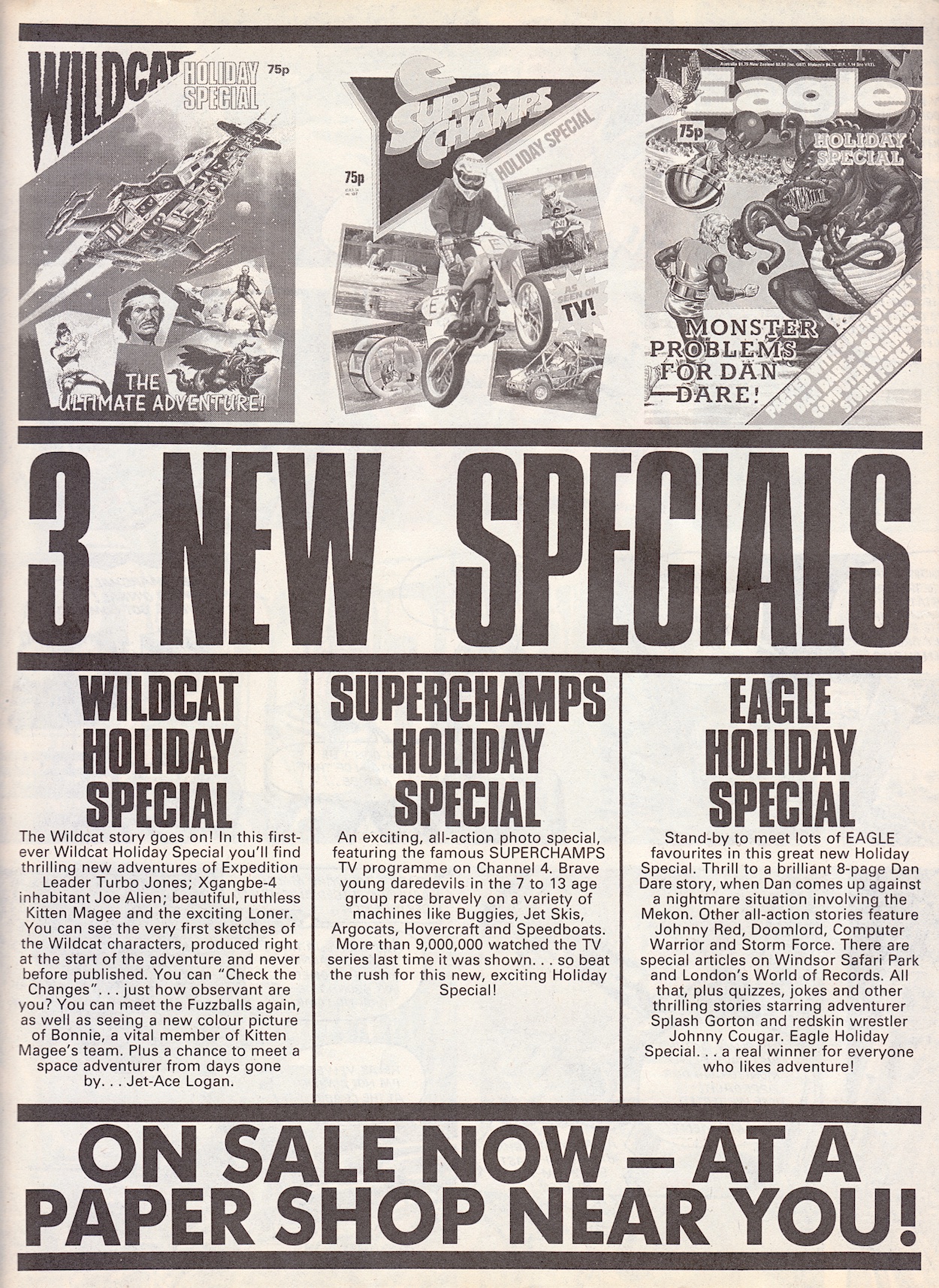
Before you go, as I continue to track down the merged issues I’ve discovered another promo, for the aforementioned Wildcat Holiday Special which was already reviewed on the blog back in April. Here it is in a full-page advert alongside Eagle‘s special and one for the Superchamps TV series.