ZZAP!64 #28: PiG PLAY REViEW

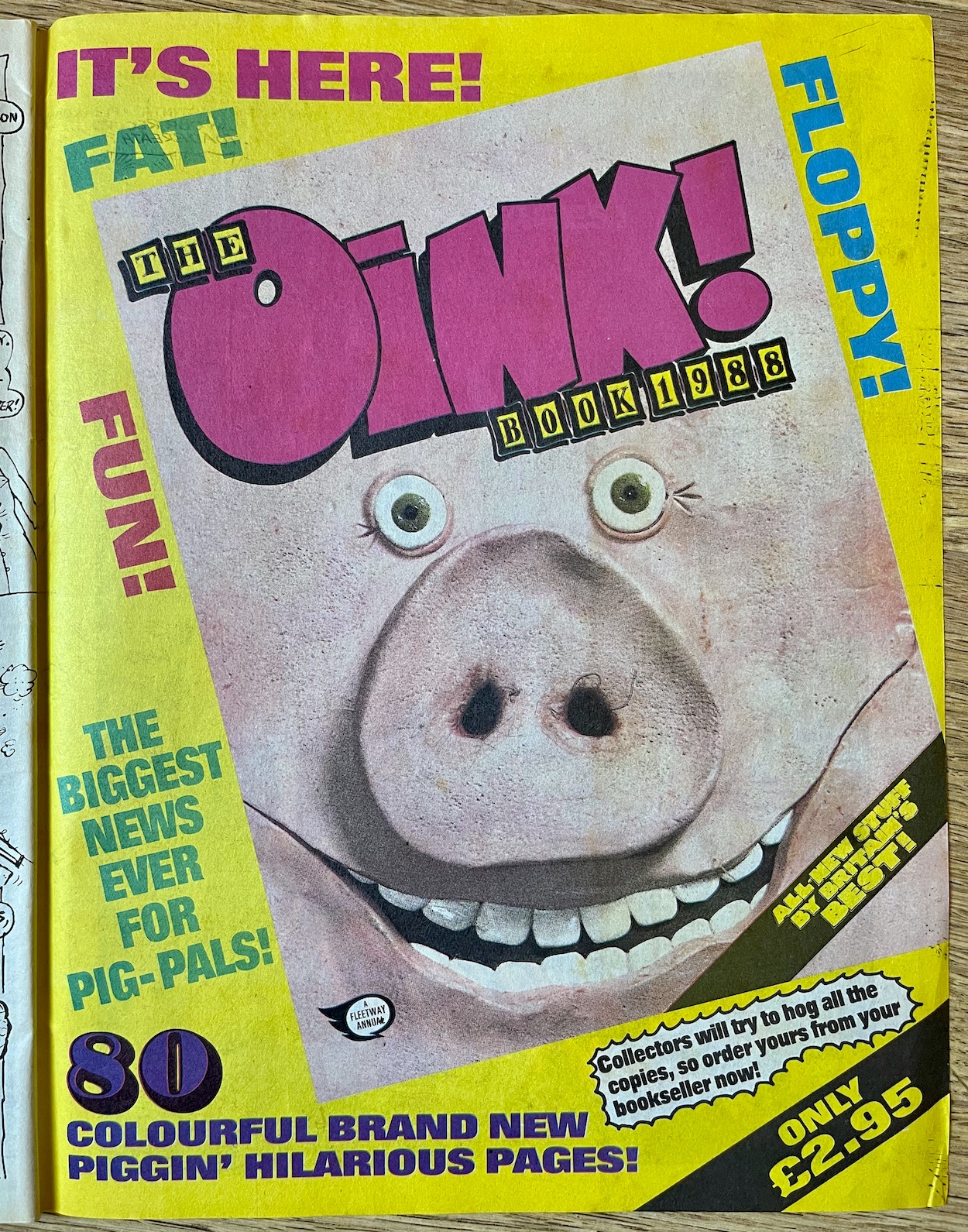
Recently on the blog we’ve seen the preview of the OiNK computer game in Zzap!64 #26, then the special feature in Crash magazine #42 and its free OiNK comic. We’ve also had the Retro Gamer article which contained an interview with the programmer of the game. It was an exciting time for pig pals who owned one of the 8-bit computers back in 1987, that’s for sure. But what of the finished product? Was the game worth the hype?

On sale this day 35 years ago Zzap!64 #28 contained the answer. Just a quick note about this issue first of all and a brilliant little detail on the cover. Staff writer Julian Rignall recently shared on Twitter that a previous competition winner’s prize was to appear on a cover of the magazine, immortalised by artist Oliver Frey. That’s reader Karen Wild just in front of the “4” on the logo! Another detail is the mention of Bond movie The Living Daylights further down the page, although inside it’s just the article already published in Crash last month. Rather cheeky of publisher Newsfield, that!


“This is another poor licensing effort, however when viewed in its own right, OiNK has a lot to boast about.”

Steve Jarratt

Anyway, moving on and the OiNK review itself takes up just over a full page and in keeping with their normal format there’s a descriptive guide to the game breaking down the individual elements, with the opinions of whether those elements were any good or not kept separate, divided up between the three members of the team who played it. There’s also one screenshot of each of the mini-games (but unfortunately none of the Uncle Pigg screens) and a summary box which breaks everything down into individual percentages.

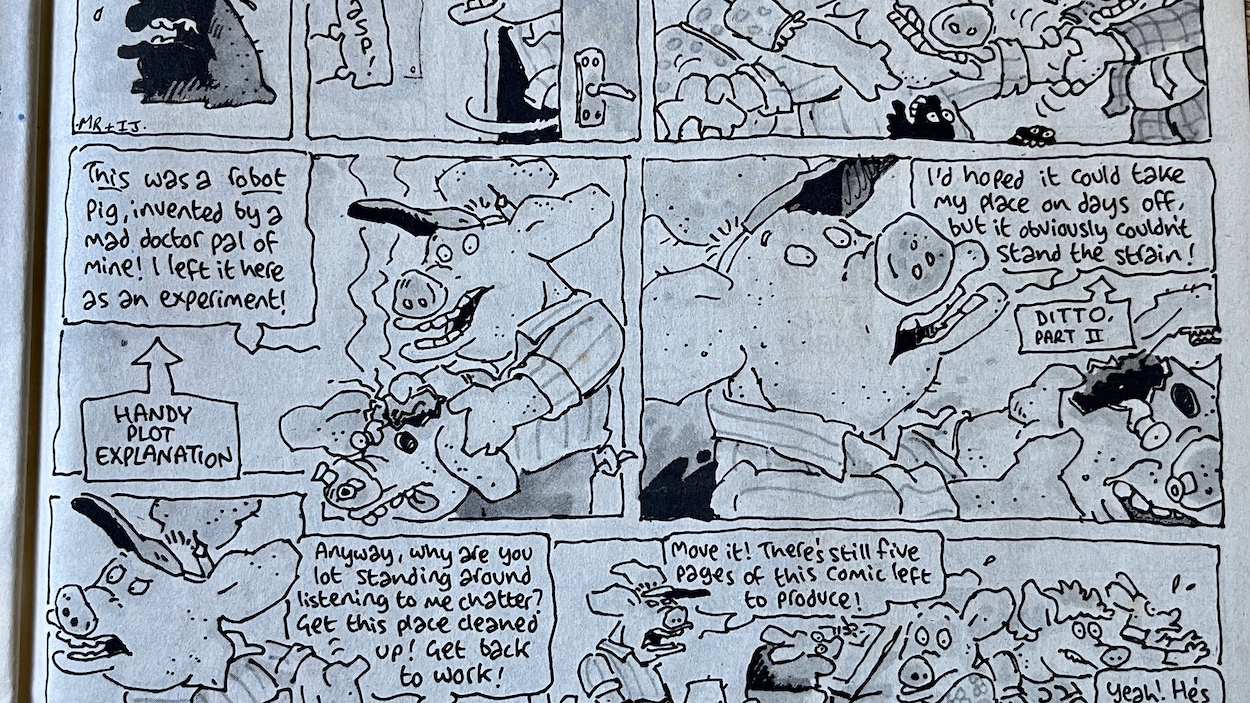
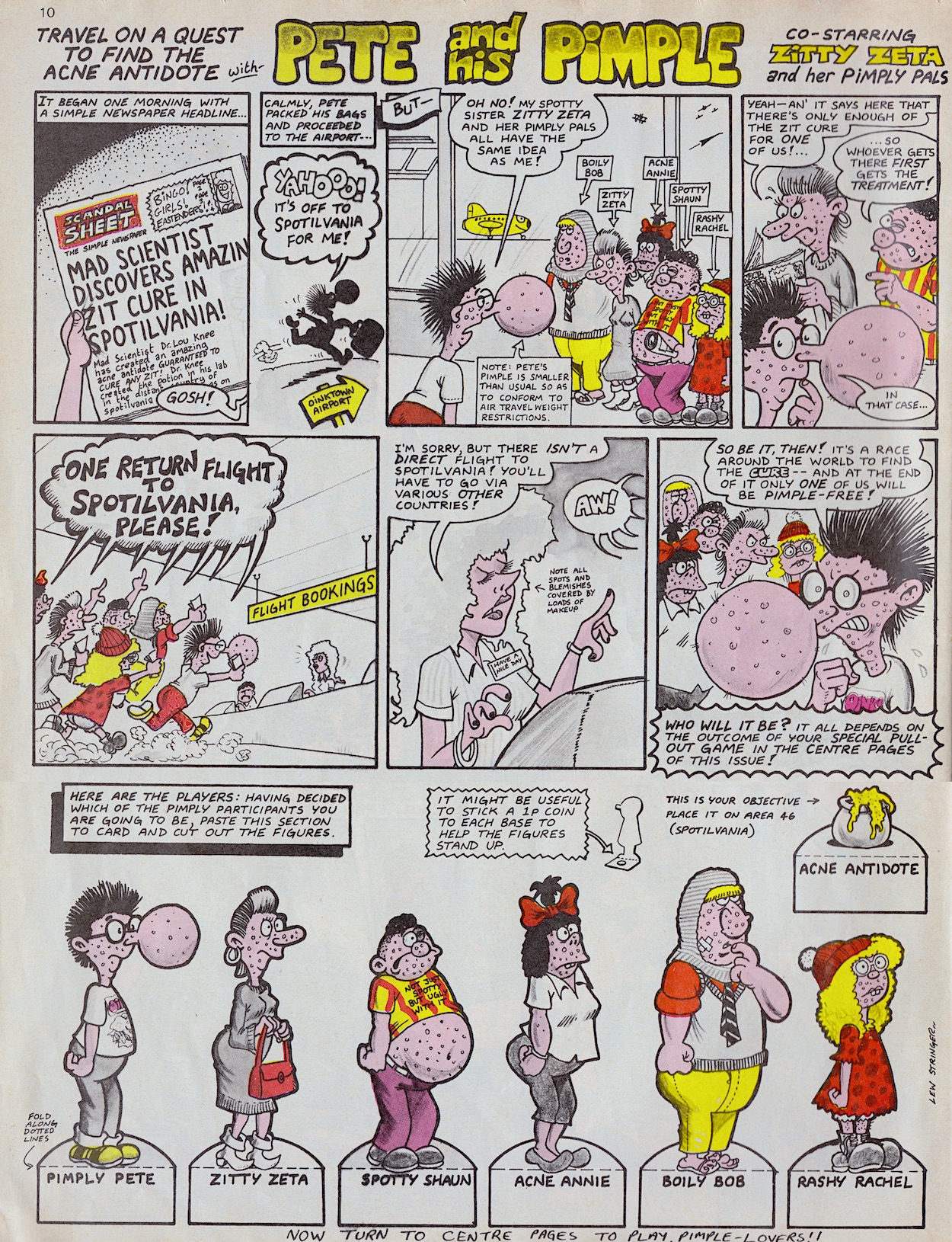
The review does a good job of explaining each of the mini-games and as you can see they really don’t have anything to do with the comic at all, save for maybe Rubbish Man’s sprite. I can’t help question why the Pete’s Pimple game didn’t have a pimple-coloured ball and why was it battling against aliens? Why not pimple cream or bullies like in the accompanying strip in the free comic? Why does Rubbish Man fire lasers and not cold custard or rotten mash potato? Why in later levels is he being attacked by rubbish? The Tom Thug game makes no sense whatsoever! Two of the reviewers at least share these thoughts, but as a game in its own right their opinion is somewhat more positive. Here’s the review.

Identified by initials on their illustrations, reviewers Ciarán Brennan and Steve Jarratt (who would go on to launch rival mag Commodore Format, my C64 read at the time which you’ll see some OiNK content from later in the year) both reported that the game plays very well and is excellent value for money for the price, it’s just not really an OiNK game. I think it’s clear third reviewer Paul Sumner hadn’t read OiNK though, and is coming from the perspective of a general game about creating a magazine or comic.

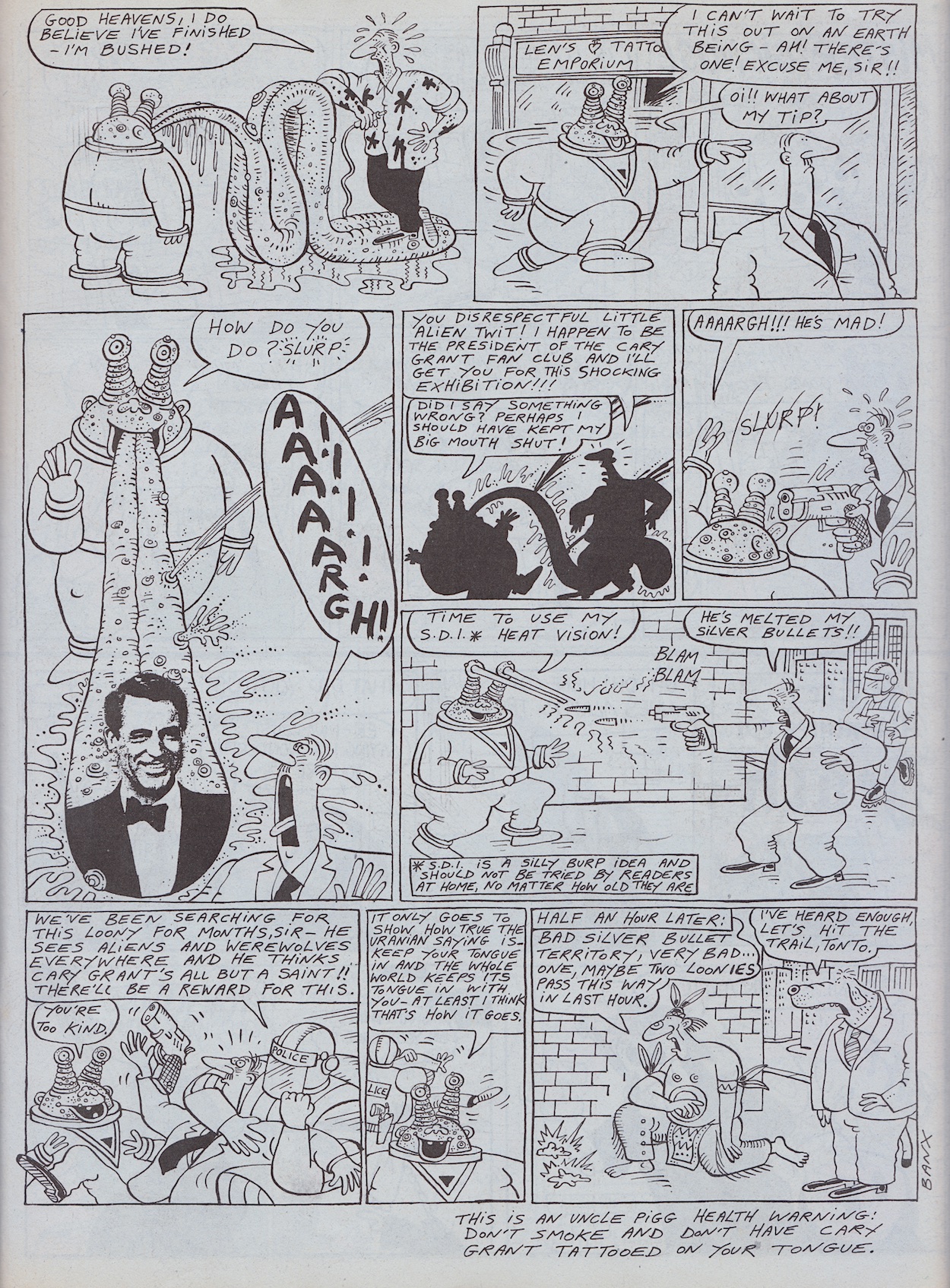
Although an attempt is made to include some of its humour in the panels of the electronic comic the player completes by playing the games, it’s clear from the comments here it didn’t really worked. The initial idea was to include panels from the actual comic and some were written by OiNK’s three editors Tony Husband, Mark Rodgers and to a lesser extent Patrick Gallagher. However, these were cut back to text only and then trimmed down even further by programmer Jon Williams so the jokes were lost in translation.

We could’ve had a barmy platform game, fighting off Mary Lighthouse and her protesters on our way to the newsagent

For me, the big takeaway here is that the game’s bad reputation isn’t justified. Among pig pal circles it’s usually ridiculed as being an appalling game, unplayable and basically a complete disaster. Yes, for pig pals it was a disappointment; we could’ve had a barmy platform game, taking control of various characters each with a unique ability linked to the comic as they ran around OiNKtown fighting off Mary Lighthouse and her protesters on our way to the newsagent, just off the top of my head. Instead, as confirmed in the interview in Retro Gamer, the programmer wanted to make specific mini-games and saw this as an opportunity to do so, rather than developing a game from the licence. Unfortunately, with only a handful of exceptions, this was par for the course with licences back then.

But the game itself, taken on its own merits, is very good. Check out another set of review scores, this time from C&VG (Computer & Video Games) magazine, printed in OiNK #34.

I completely concur with the reviews here. I played it a couple of decades after its release (I didn’t have my own Commodore 64 until Christmas 1991) when I began collecting the C64 as a retro system around 2010. I found the game on an old Commodore Format covertape. It was great to see the OiNK logo and Uncle Pigg on the screen when it loaded. Yes, I had that initial disappointment as someone looking for an actual OiNK game, but when I got into it I had much fun. It was very addictive, each mini-game was very playable and Rubbish Man’s in particular had that just-one-more-go appeal.

It may not be an actual OiNK game per se, but that’s the only reason I played it in the first place and I discovered a wee gem as a result.

I never finished it to see if there was a proper ending involving the characters (I doubt it) but I’d definitely like to set the record straight. It was a great little game and good value for money, three good games for the price of one in fact. Unfortunately OiNK fans didn’t buy it because of its lack of OiNK content, and those who didn’t read OiNK didn’t buy it for obvious reasons. But if you have a C64 (or a ZX Spectrum or Amstrad CPC) and enjoy a spot of retro gaming, you could do a lot worse than tracking down this oddity of OiNK merchandise, it’s quite common to see it for a few quid on eBay. Trust me, gameplay-wise you won’t regret it, and isn’t that the point of a game?

THE OiNK! COMPUTER GAME MENU

OiNK MERCHANDiSE MENU

MAiN OiNK MENU

COMiNG UP: OiNK! #32

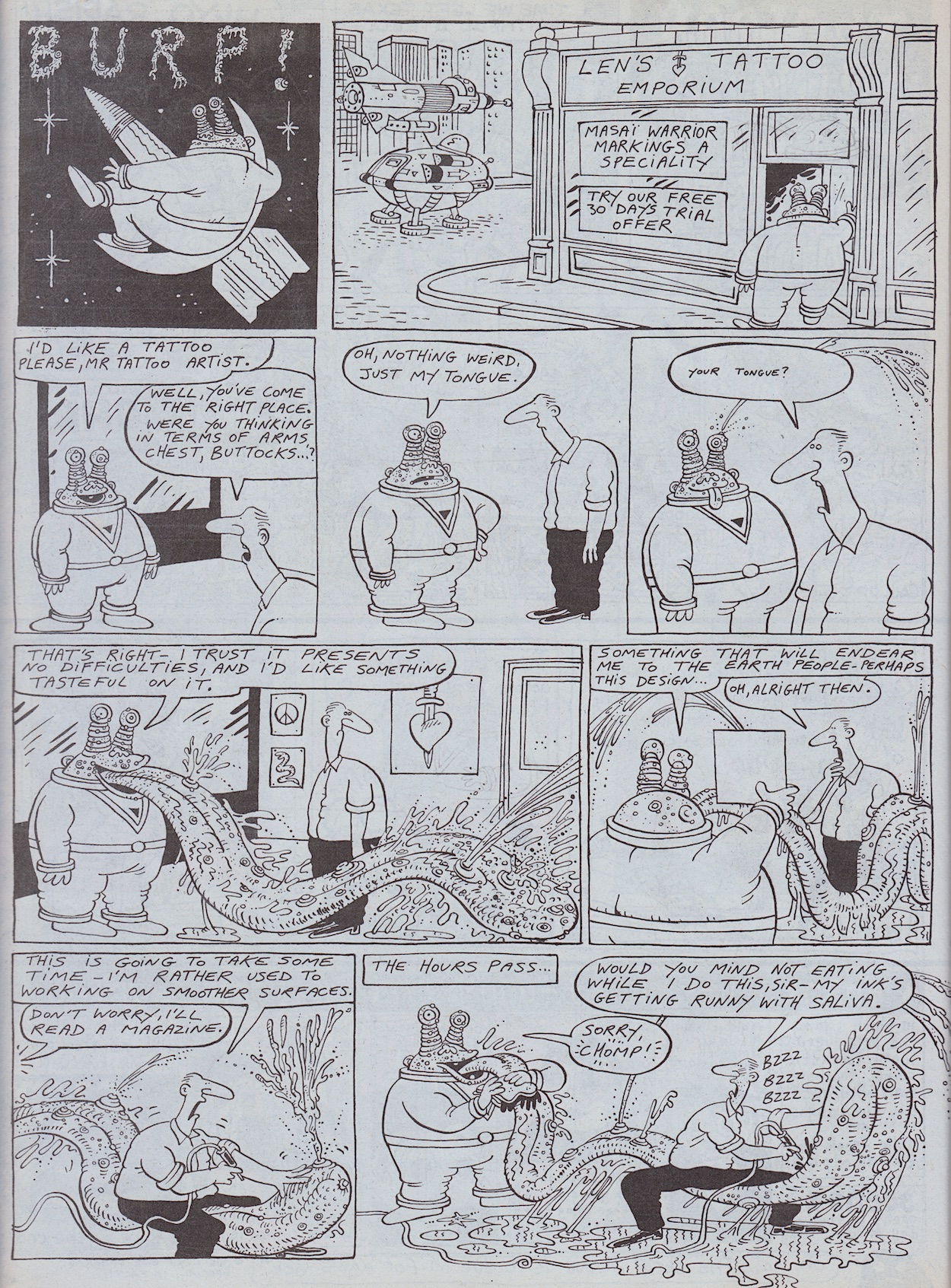
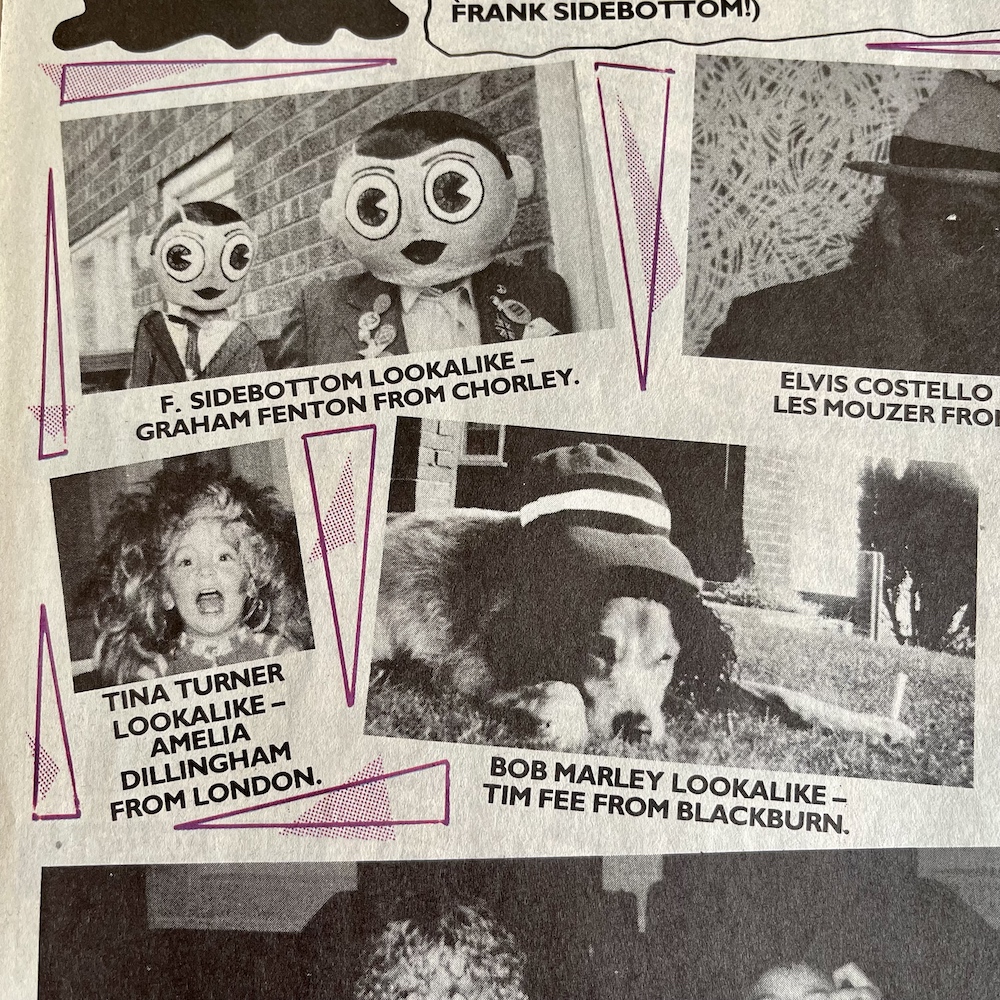
The next issue of OiNK is all about the world of sports, as illustrated by Dead Fred in the promo from #31, drawn by Wilkie (Eric Wilkinson). Some highlights will include a rather grisly episode of Burp, the return of a favourite of mine in the shape of Tom’s Toe (or rather, any shape he wants), Frank Sidebottom continues to do an insane amount of work to produce a fantastic page for the kids and there’s an it-can’t-be-that-easy-can-it competition.

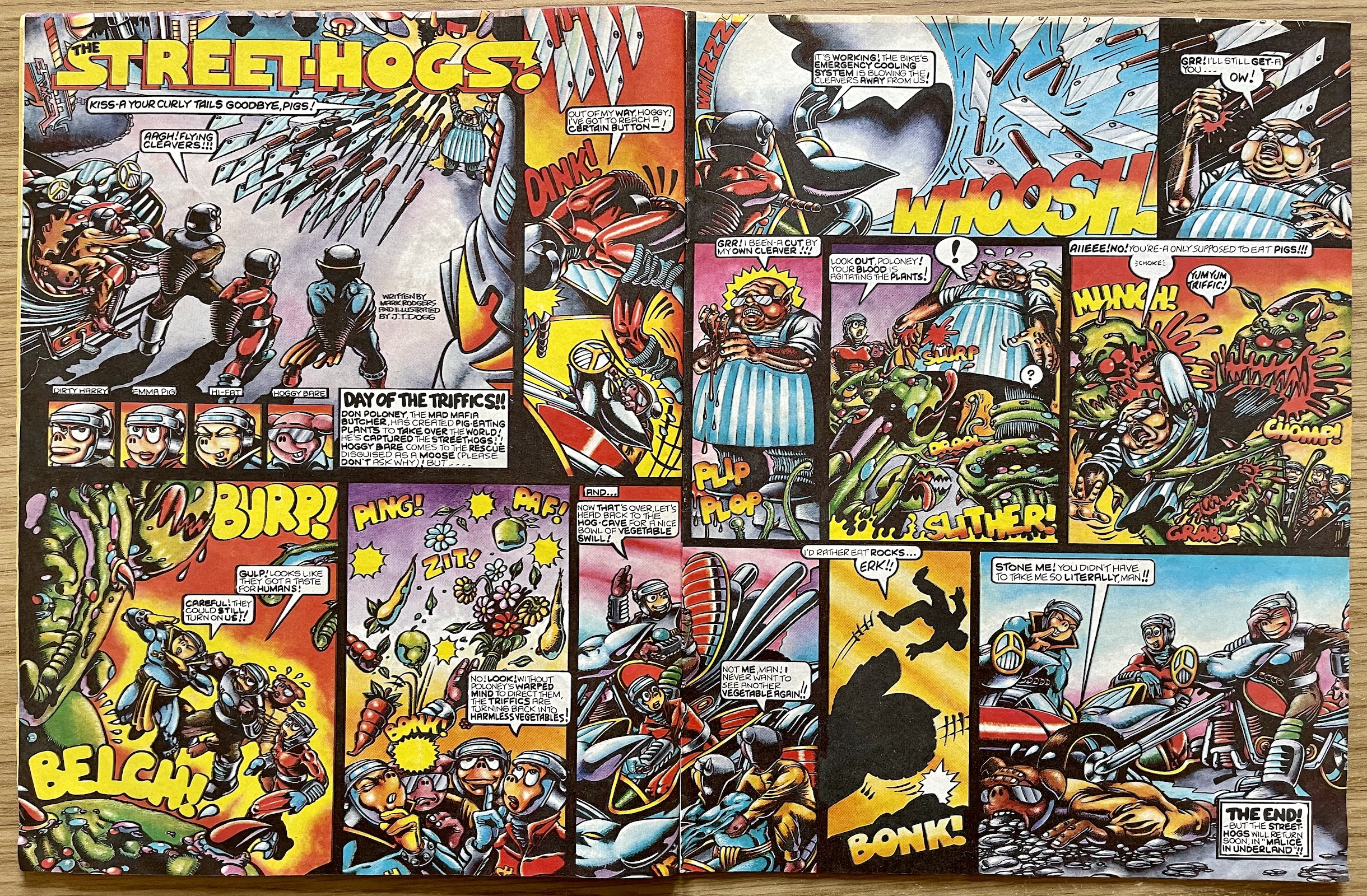
On top of all this physical exertion there’s the return of The Street-Hogs in the first part of Day of the Triffics (the reason behind that name is hilarious) and the first appearance of a particular fan favourite duo you won’t want to miss. To do so would be Torture. The next real time OiNK review will be up on the blog from Monday 11th July 2022.
GO TO iSSUE 32

OiNK iSSUE PROMOS MENU

‘MORE OiNK’ MENU

MAiN OiNK MENU

JURASSiC PARK #12: WHAT A RUSH!

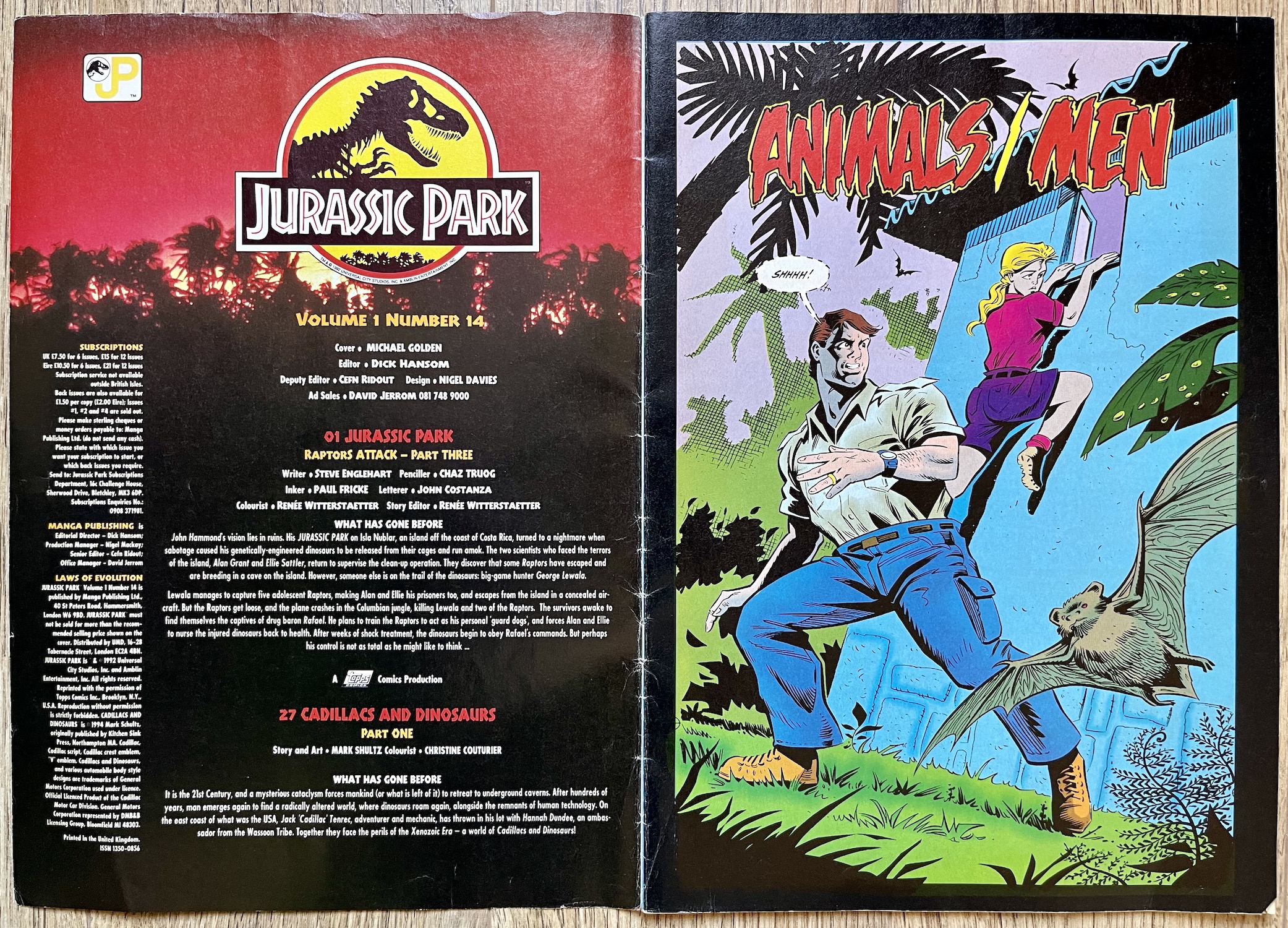
Another issue of Dark Horse International’s UK version of Jurassic Park hit shelves 28 years ago today with a slight redesign to the cover, an even split inside once again and a few extra pages, although not quite the number it had before. Michael Golden’s cover is framed this time and the text is reduced, resulting in us being able to see more of his excellent art. Such a shame the best cover art of the series wasn’t given this treatment last month, eh?

The monthly comic had always totalled 36 pages but last month this plummeted to 28. There are 32 here so it’s slowly returning to its previous size and it’s made up of 16 outer pages made of a higher quality grade of paper, with the inner 16 the usual matt. Just like last month the Jurassic Park strip and the Age of Reptiles back up are given the same amount of room to breath, so with the increase in pages that’s 14 a pop. A nice chunky read this month and it’s a corker.

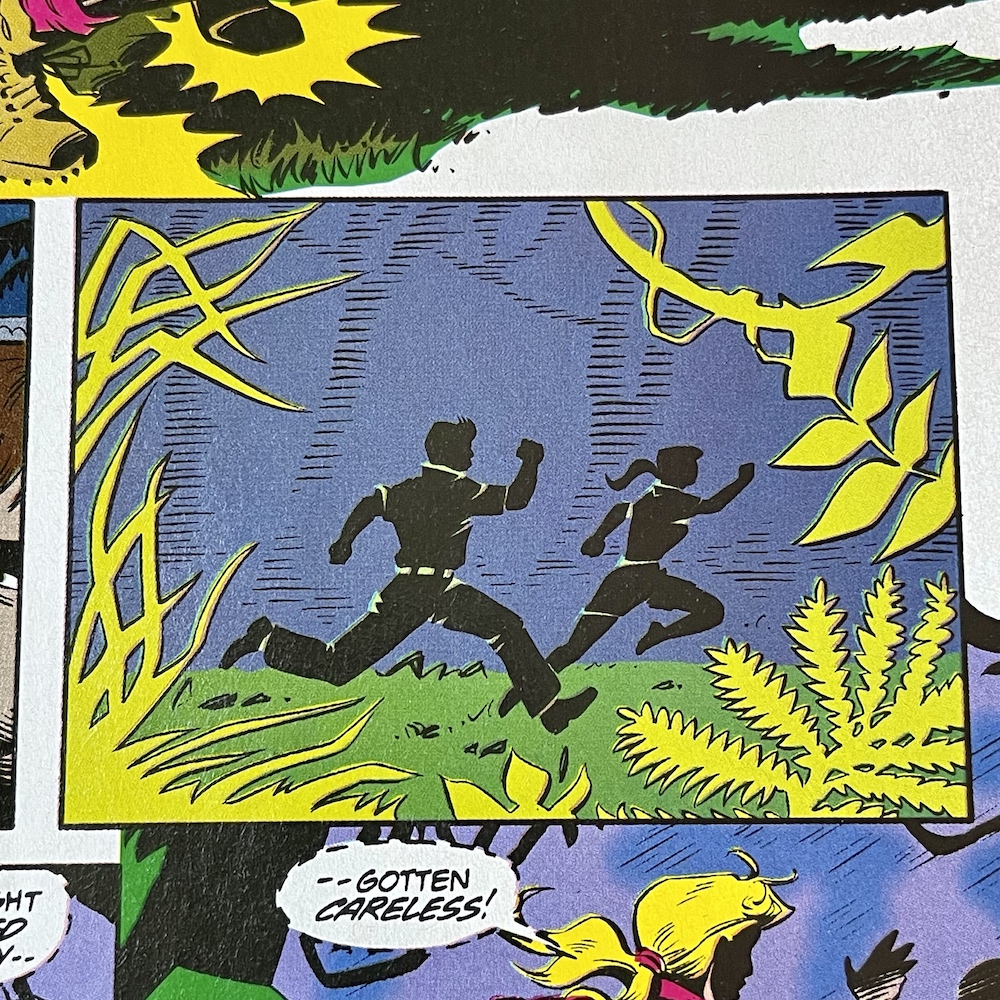
Steve Englehart’s official sequel to the first movie continues with the first part of Rush!, however on the contents page it’s listed as ‘Raptors Attack: Part One’, the name of the four-issue mini-series in the US, the first story of which was Rush. A strange decision by editor Dick Hansom, particularly when it’s not explained and at the time, without the aid of the internet to look such things up, I assumed the comic was making up a name on the contents page and I didn’t know why.

But that’s not important. What is, is that this sees the first steps in a story which may seem somewhat familiar to fans of later instalments in the movie series decades later. Doctors Ellie Satler and Alan Grant wake up after supposedly having blacked out when their plane crashed (we’re told the jungle was so thick it slowed their fall just enough) and find themselves guests of a man named Raphael in the middle of Colombia. But it’s not just our human characters he has taken in.

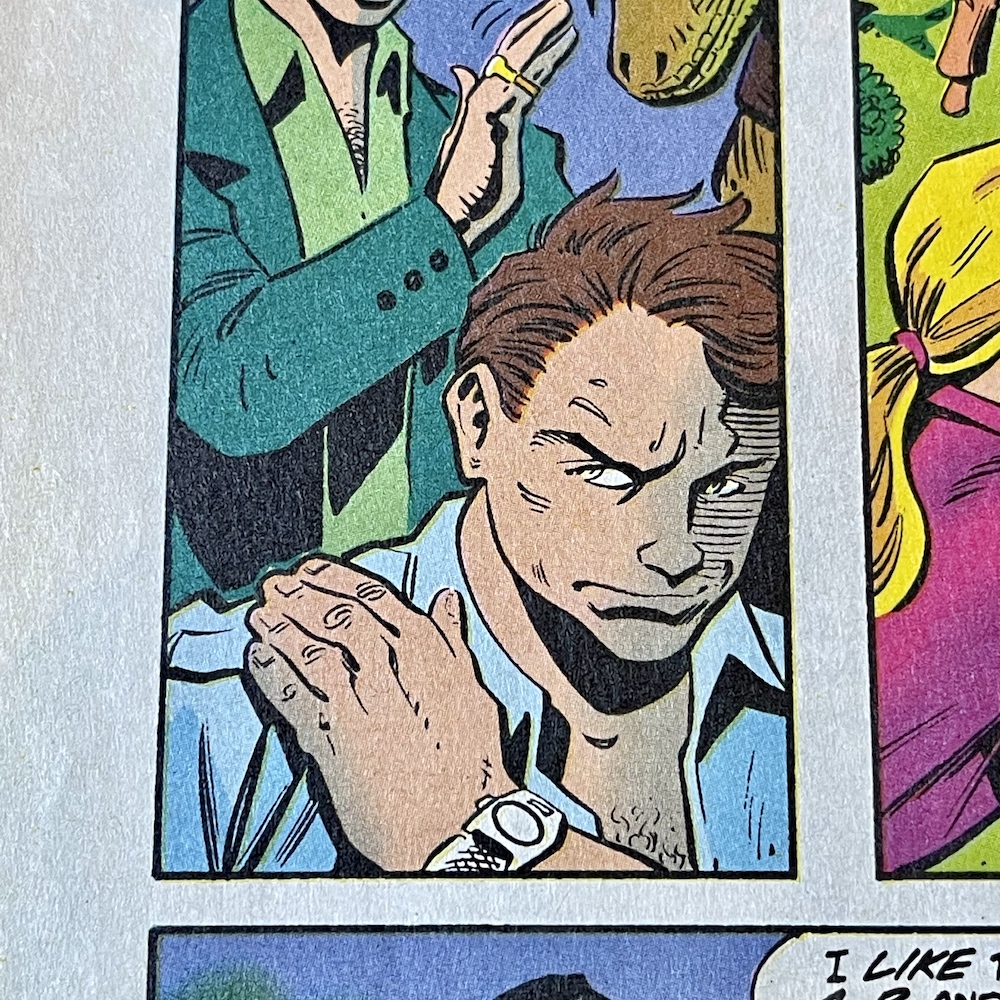
We find out Raphael is known as the “Columbian Criminal” by US politicians, although he says he’s innocent because the drug trade would continue whether or not he was in charge, he just profits. He comes across as a charming individual, but his isolation in the middle of the jungle, hiding from authorities while maintaining his empire, has made him somewhat paranoid. He believes the crash has delivered the perfect solution. Knowing all about Hammond’s island thanks to his links in the corrupt government, he’s going to train the Velociraptors to be his guard dogs to protect those profits.

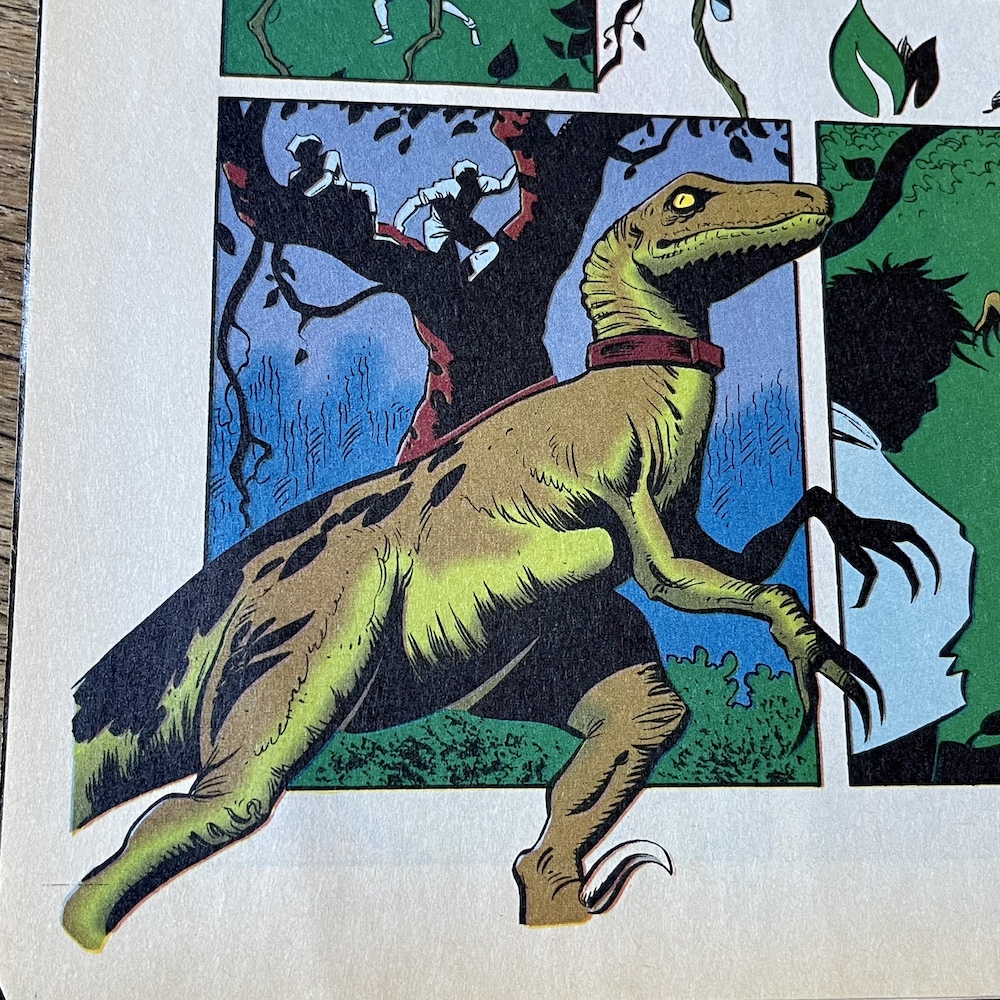
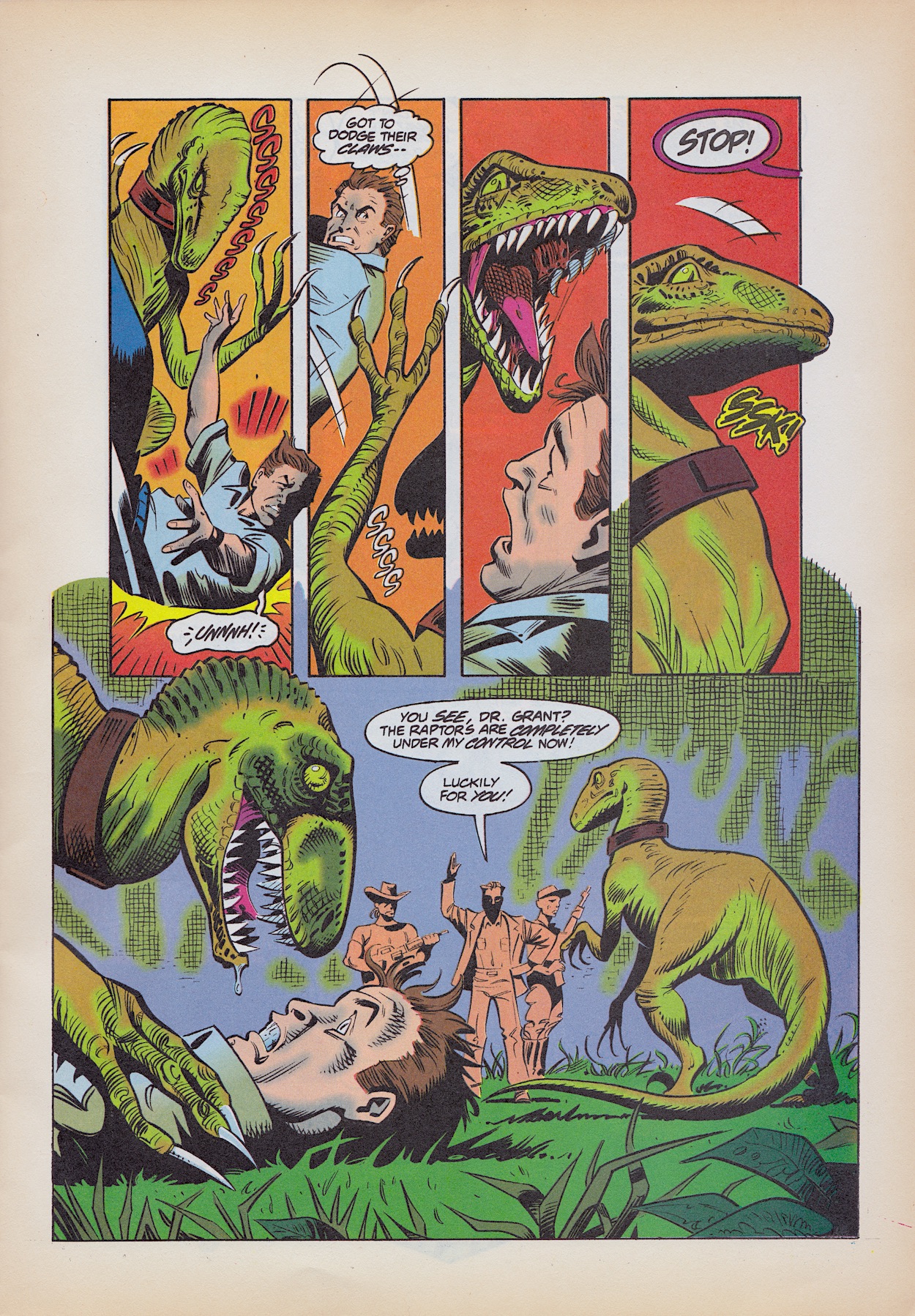
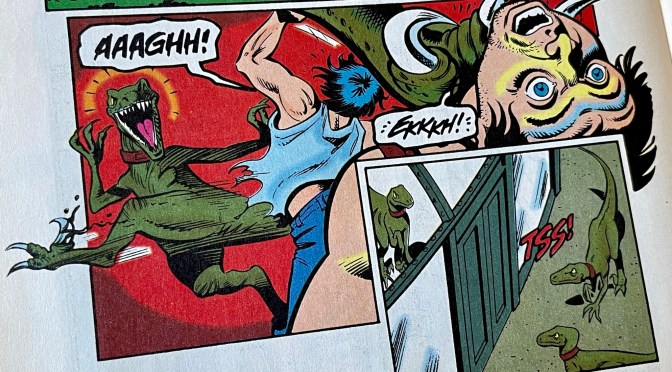
As you can see above the dinosaurs aren’t happy about this at all. Caged up with electronic collars, the ferocity of the animals trying to get at our heroes through the toughened glass is perfectly captured by penciller Armando Gill, inker Fred Carillo and colourist Renée Witterstaetter (who, as always, is also Story Editor), with John Costanza’s letters working a treat at conveying the sound of their fury. Only two ‘raptors are being trained so far though, the third is being kept separate and still recovering from their injuries, only alive thanks to Ellie’s intervention last issue.

While the American government continues to track their plane, the doctors try to convince Raphael what he’s attempting is impossible, but he uses humankind’s taming of wolves as an example to prove them wrong. Raphael even tells Ellie, while she tends to the wounds of the injured ‘raptor, that if it is indeed impossible he’ll have no more need of her and Alan. They’ve no choice but to help. Above you can see his first attempt at control while Alan and Ellie watch on helplessly.

This continues for a few pages and the reader begins to feel sorry for the ‘raptors as they continue to disobey, trying to escape, their anger at Raphael clear in their eyes and getting electrically shocked again and again. Alan and Ellie beg him to stop but it falls on deaf ears. He’s completely crazed and doesn’t understand why they’d wish to protect animals who would tear them apart given half the chance. Eventually they tire, looking beaten, completely defeated. But they’re faking it to stop the pain, regaining their strength for one final attempt at attack.

The artwork has definitely gone up a notch

Things conclude for now when our heroes’ protests become too much for Raphael and, combined with his annoyance at the dinosaurs’ disobedience, he orders them to go and tend to his new pets. A ‘raptor in a cage weakened from a shotgun wound is one thing, but being thrown into another with these two is something else! This is the cliffhanger for now and I can’t remember what happens next, so the dread is likely reminiscent of that I felt back in 1994 when I also had to wait a month for the answer.

While it’s the same creative team behind Rush! as we had for Dark Cargo, the artwork has definitely gone up a notch. The dinosaurs in particular look how they’re supposed to again and the story was incredibly exciting as a teenager. Remember, this was a few years before The Lost World: Jurassic Park so we hadn’t seen anything like this yet, we’d only seen these creatures on the island, nowhere else.

If you were to read this issue and the following chapters (from what I remember of them) for the first time now the impact may be somewhat diluted after the five movies that have followed, but I’m still just as thrilled as I was back then because that’s how I instantly feel when I open each issue, like it’s 1994 all over again. This was the only sequel and it was developing the original movie’s plot in ways I’d never imagined.

It feels epic yet it’s ultimately a small tale of two dinosaur packs so we’ve got to know the individuals involved

Moving on to the second half of the issue and it’s hard to believe we’ve only had seven parts to the simply brilliant Age of Reptiles, superbly written and intricately illustrated by Ricardo Delgado with the bright and vibrant colouring of James Sinclair. The connection I feel I have with these silent comic stars makes it feel like I’ve been enjoying the strip for a lot longer. It just feels so epic yet it’s ultimately a small tale of two packs of dinosaurs so we’ve got to know the individuals involved, each one standing out with their body language or distinct markings.

We begin with the Deinonychuses walking alongside a huge Ultrasaurus. Initially we think they’re maybe just heading in the same direction, or using the huge beast as cover, but then she begins to tire and eventually collapses, dead from a series of smaller wounds inflicted on her by the pack. But in a moment above that shows the brilliance and the humour of Delgado, they realise they’re not alone for this potential feast.

Regular readers of the blog may recognise some of the characters below, although I must say I’m a little disappointed they’re only in this for a page or two and that’s it. Being named in #9’s ‘Cast of Characters’ I was looking forward to their introduction, especially Hades, our red Carnotaurus friend here but they’re no sooner introduced when the story moves on. But their presence is important. As a result, all but one of the Deinonychuses want to make a run for it, as you can see in the funny series of panels below. This is what I meant by how Ricardo is so good at character through body language.

Surprisingly, while we’re led to believe Hades and his team’s arrival would lead to a fight over the food, instead a battle takes place between Dark Eye, the current Deinonychus leader who listens to the worry of the pack members and leads them away to fight another day (in the photo above see the bottom panel, dino on the right), and Quetzal who wishes to stay and claim their prize (the angry looking one).

There’s a bit of back and forth, then the rest desert Quetzal to fight for the food alone, but she leaps on top of Dark Eye and next thing we’re underneath a huge skeleton in the barren landscape for a leadership battle.

This continues for another page or two and at one point they rush each other, claws bared as they pass and we see blood fill the frame. But whose was it? In the end, in a shock twist, Dark Eye is the one to fall, leaving Quetzal to assume control.

I loved the suspense here (played out over more space than I can show you) and was genuinely surprised when, panel by panel, I saw it was Dark Eye who had lost. I was even more surprised to see the amount of blood and to know they’d actually been killed.

Age of Reptiles isn’t a strip for those who like to rush through their comics, this is for people like myself who really take their time, savouring every little detail in each panel before moving on to the next. Especially since this strip contains absolutely no words at all, establishing characters, changing scenes, times of day and handling transitions all through visual queues. There are so many little details that come together to tell this story, you’ll spend just as long with it as you would with a wordy strip from any modern comic.

So what could this turn of events mean for the pack in their war against the Tyrannosaurus rex families? With their new, dangerous leader at the front the final page of this penultimate chapter sets a moody scene as they return to their nest where one of the rex females had previously killed so many of them. On the one hand it’s disappointing to know there’s only one more part of this wonderful story to go, but on the other it’s the moment it’s all been building to. I’m so glad my memory has failed me and I can’t remember how it ends because I’m as excited as I ever was. I can’t wait to see the conclusion.

A consistently great title, Jurassic Park has evolved and changed over the past year. My favourite format was definitely when we had three strips consisting of the film sequel, the strip set in the age of the dinosaurs and the sci-fi futuristic strip with added dinosaurs. But from memory the rest of the comic’s run would be two strips, with just the one back up, like this and last month’s issues. That’s not to say there are no more changes afoot, however. For now though, there’s another month’s wait ahead until I find out how these cliffhangers revolve themselves. Issue 13’s review will be up from Thursday 4th August 2022.

iSSUE 11 < > iSSUE 13

JURASSiC PARK MENU

HAVOC #1: EXPLOSiVE START

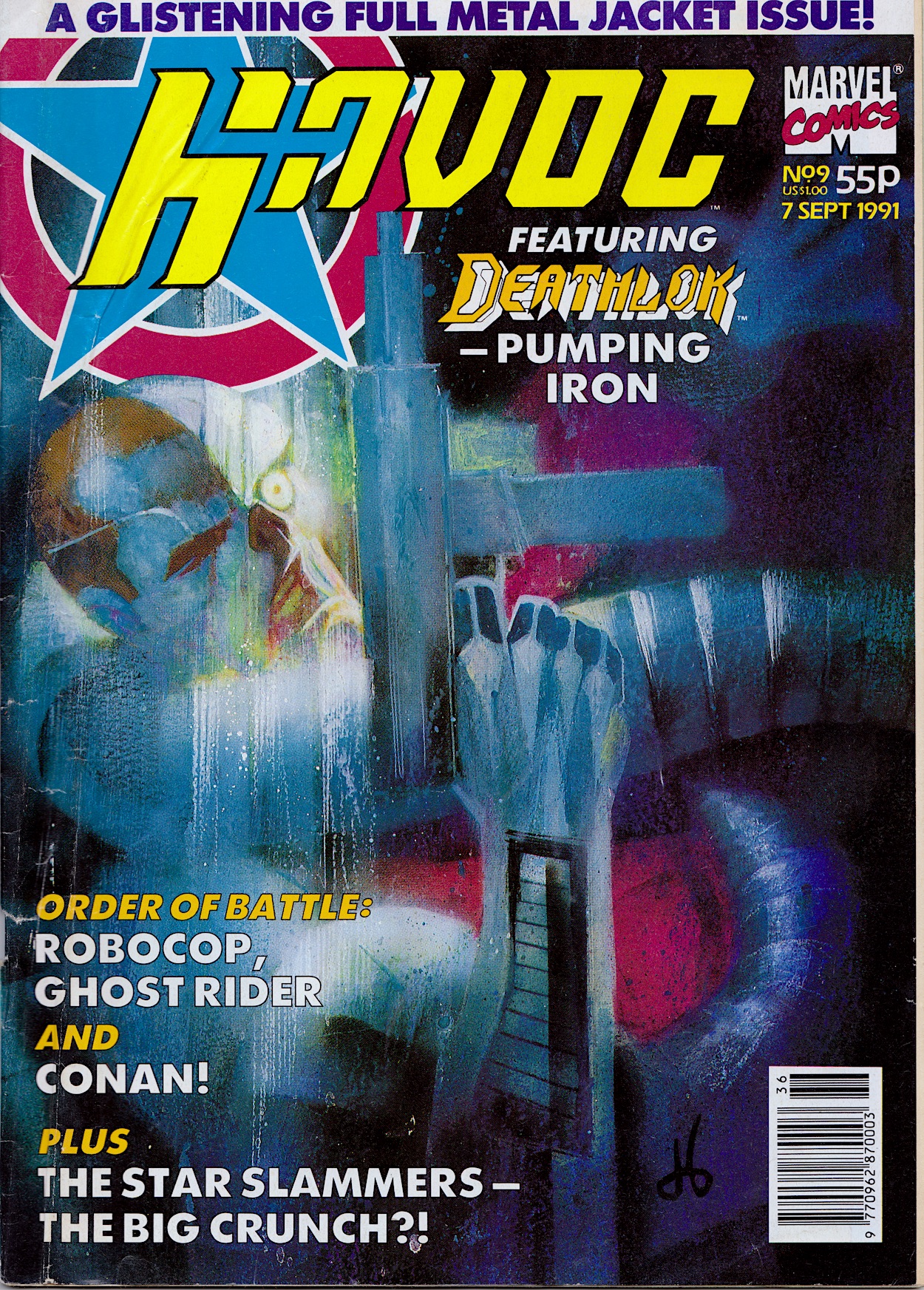
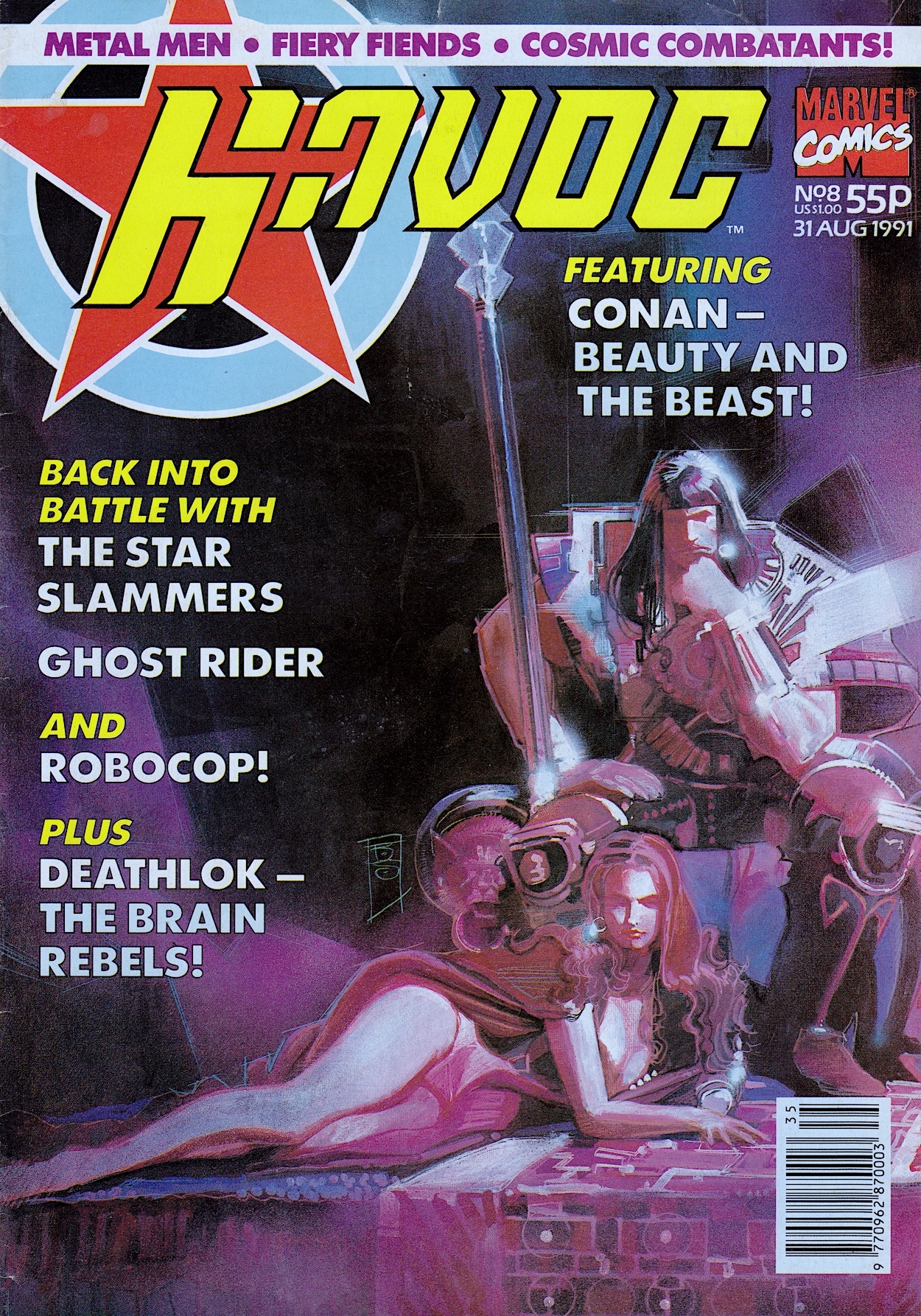
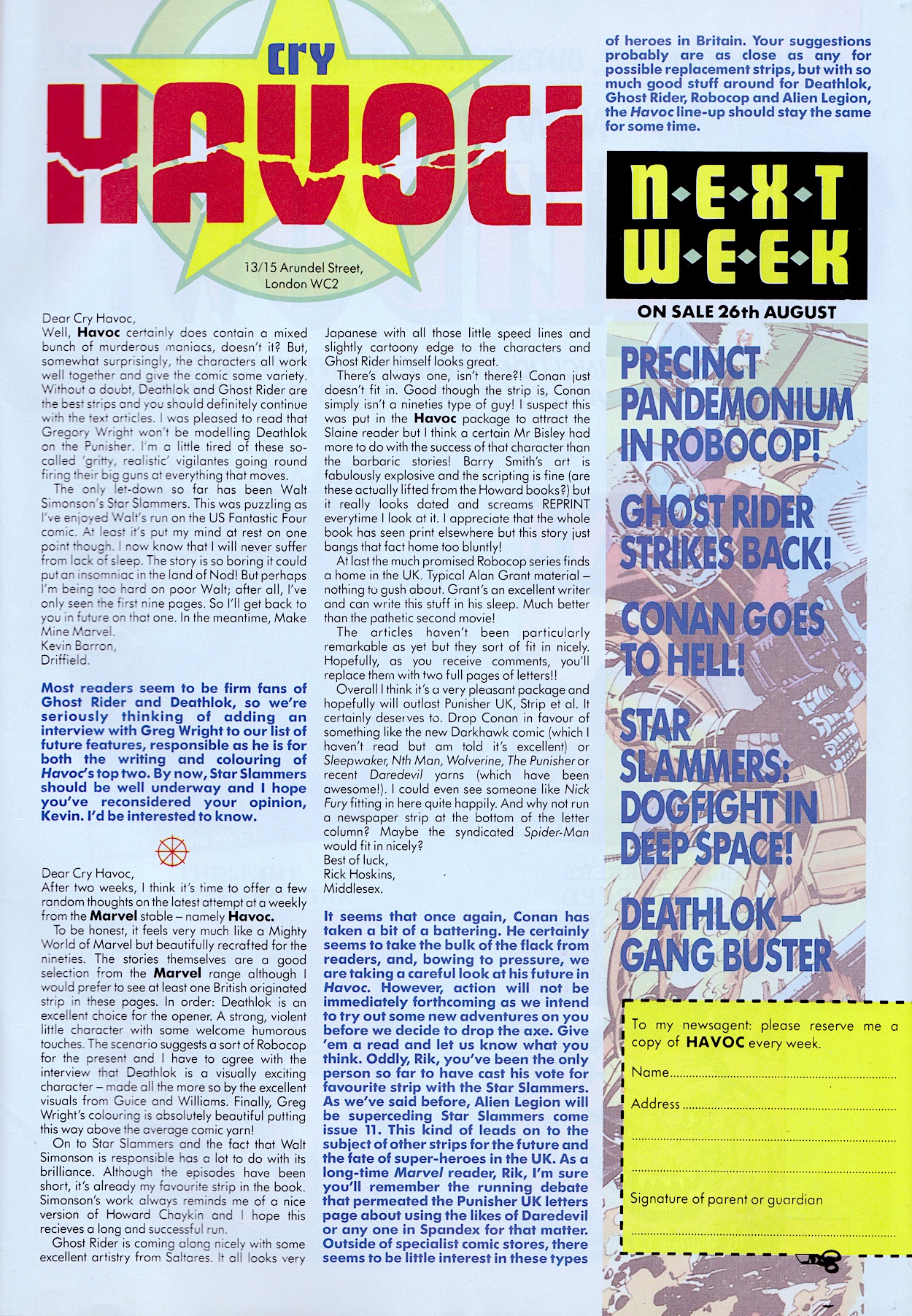
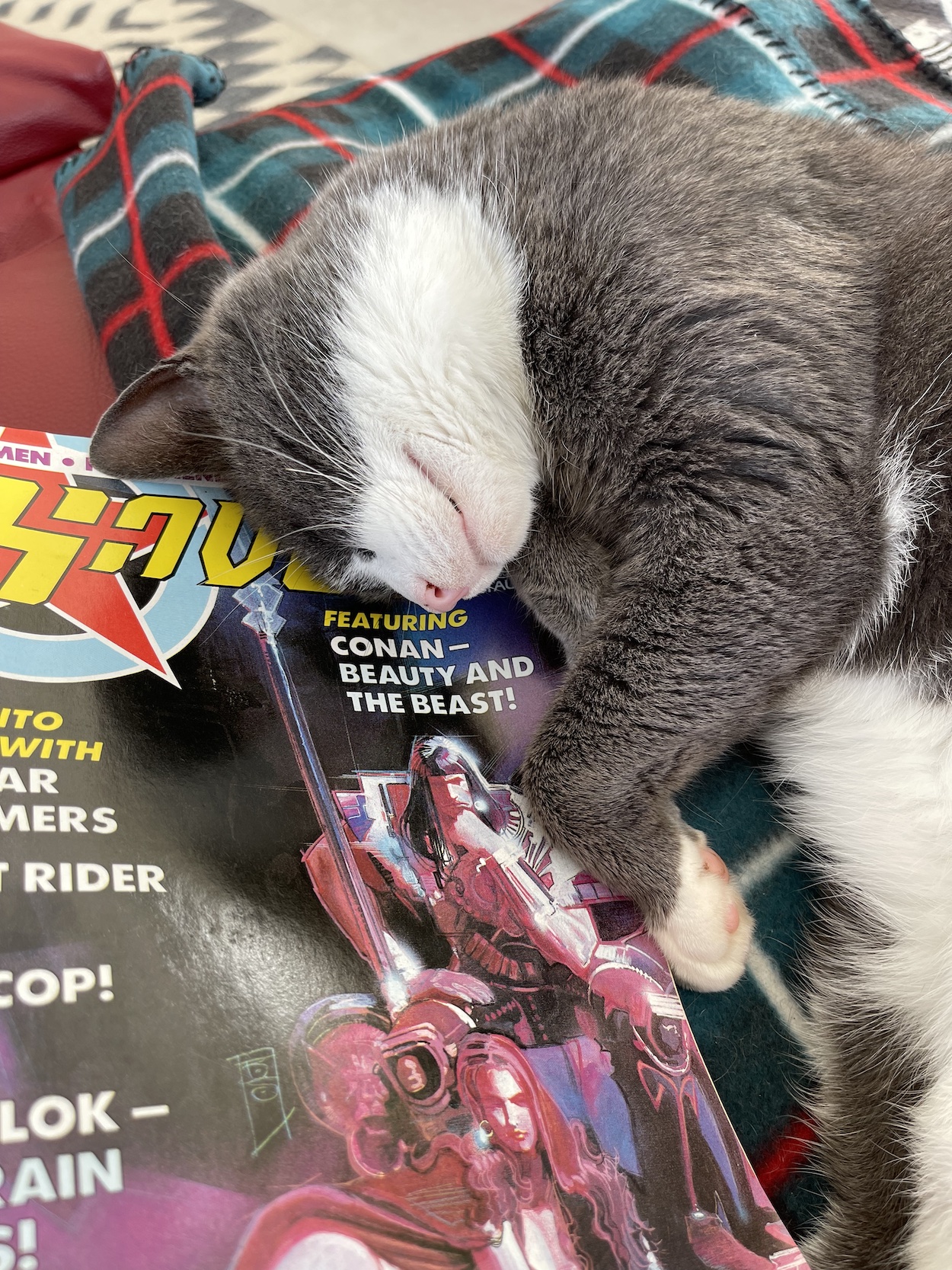
While I’d been allowed up to four comics on order at the local newsagent, by the summer of 1991 this number had been whittled down to just two, The Real Ghostbusters and Transformers. Most comics I’d tried had ended up cancelled very quickly, so I’d become a bit disillusioned. Then, after months of not bothering, I decided to have a look at the comics shelves one Saturday morning and was met with this.

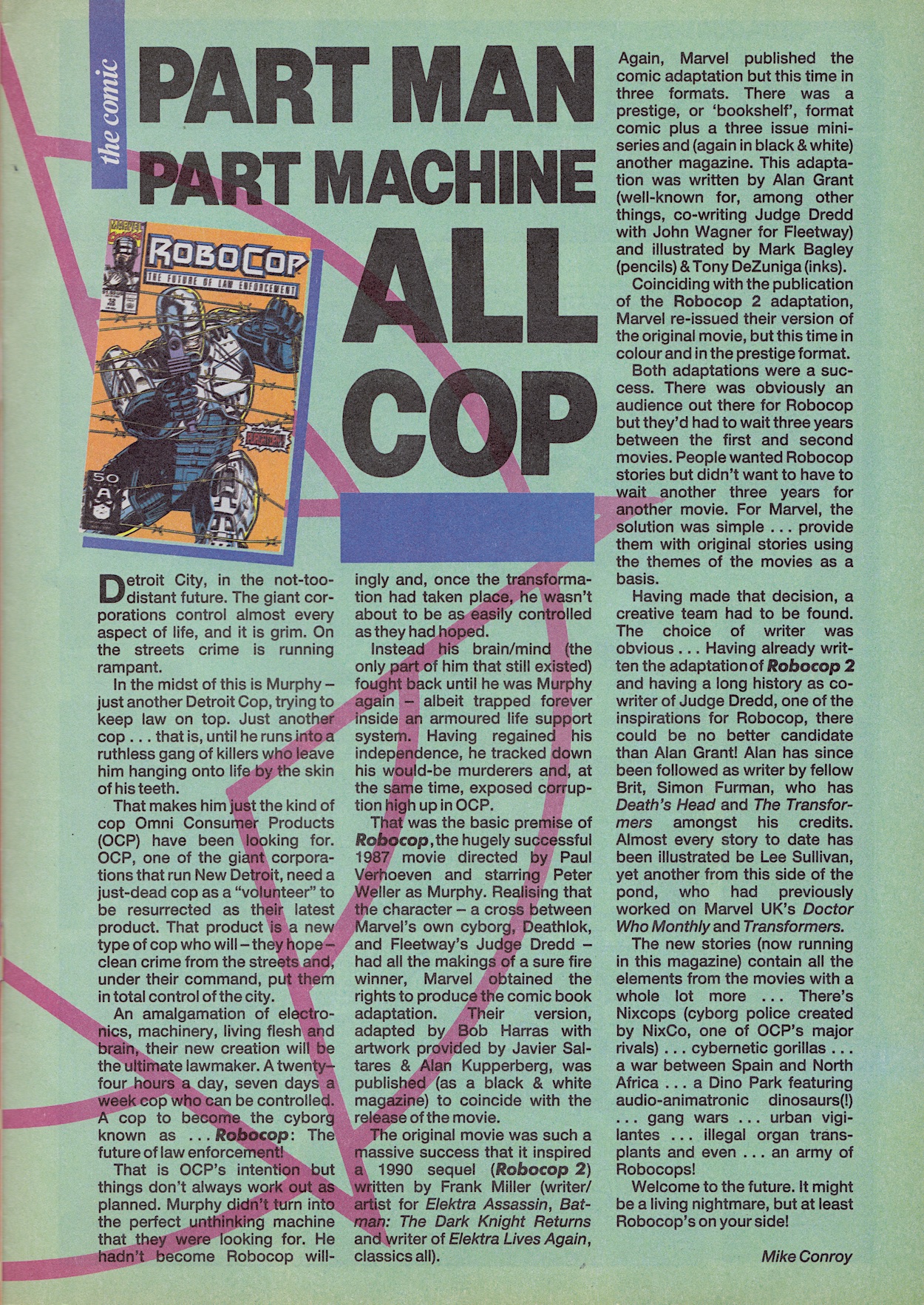
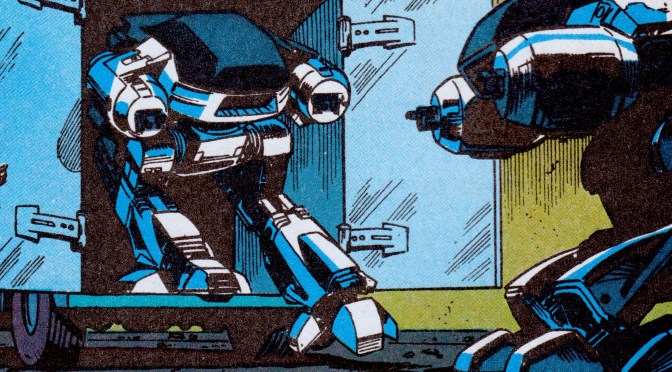
While I’d spotted RoboCop on the cover it was the bigger character called Deathlok that really grabbed my attention, especially when I pulled aside the free introductory booklet (images from which can be seen in the introductory post). How the booklet blacked out everything apart from Deathlok just looked really cool and having a quick flick through I also saw Conan who I’d heard of from friends, and a fiery skeleton on a motorbike. I had to try this out! At only 55p for 36 pages Havoc was a bargain, the same price as Transformers which was two-thirds the size and on smaller paper.

There was also that 16-page booklet which introduced us to each of the five main protagonists: Deathlok, RoboCop, Ghost Rider, Conan the Barbarian and the Star Slammers. It was a meaty read (edited at lauch by John Freeman and Harry Papadopoulos) and I enjoyed it so much I cancelled my order for The Real Ghostbusters after 150+ issues to reserve Havoc instead. Little was I to know only nine issues would ever see print. But for now let’s relive this excellent title, which coincidentally lasted for the exact amount of time I was off school for the summer holidays (in Northern Ireland kids get all of July and August off).

Upon returning to school some of my 2000AD-reading friends were raving about Havoc and the comparisons are clear. Havoc was also an anthology title and while the stories were imports from America the sci-fi settings and hard action had grabbed their attention in the same way as Tharg’s comic. I’d only read a few issues of 2000AD at that time and found Havoc to be much better; it was in full colour for a start, it had RoboCop and the action and characterisations seemed (to my teenage self) to be more mature. This was a huge step away for my usual comics.

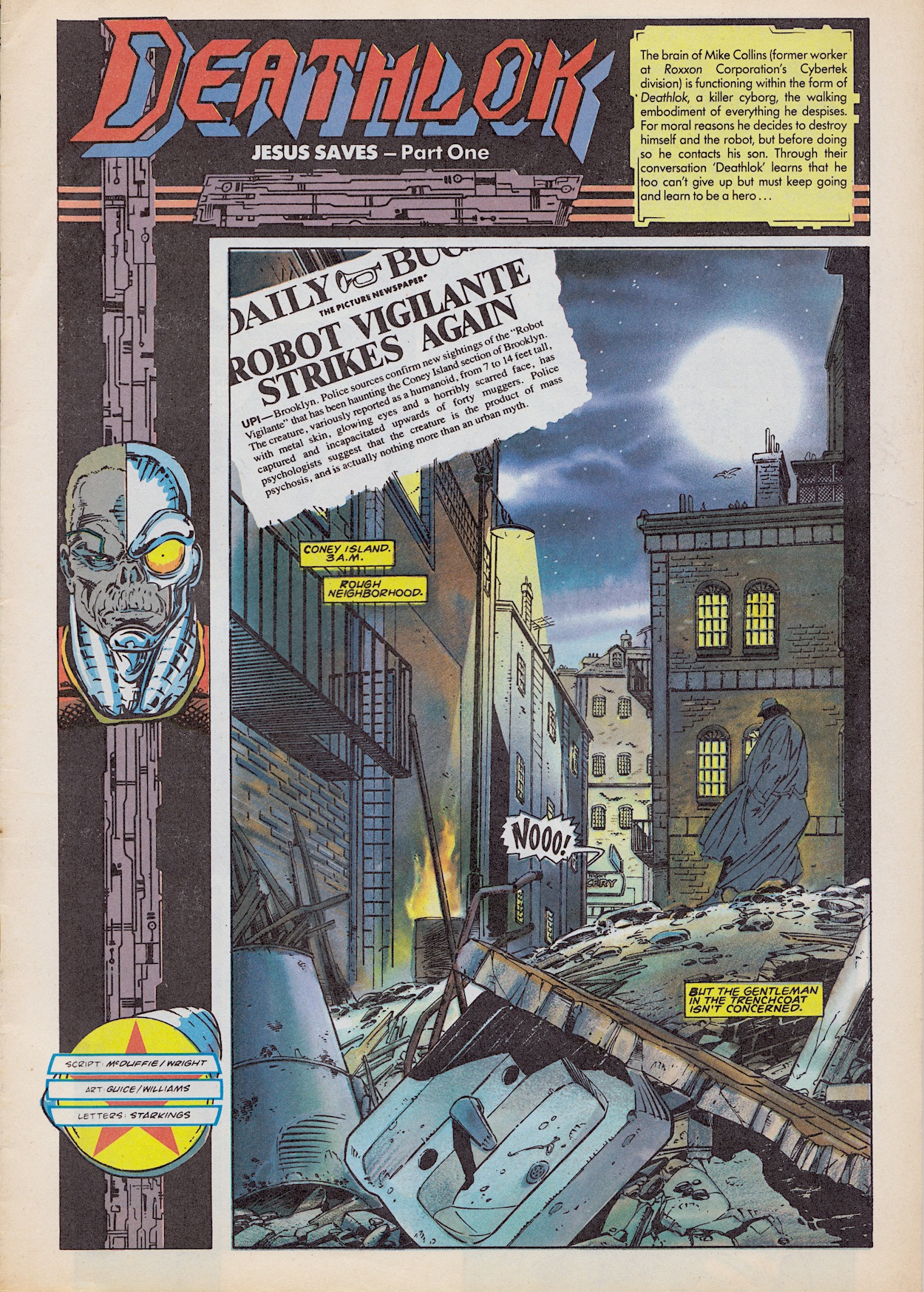
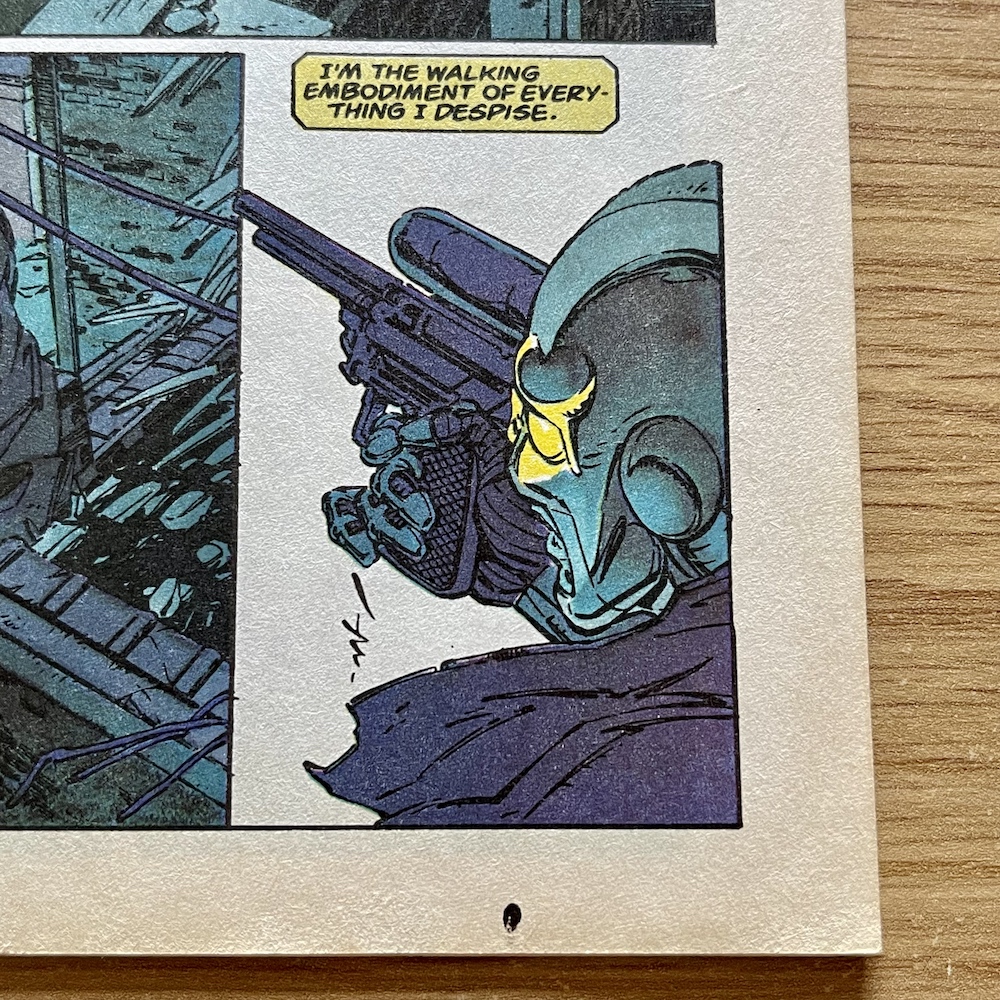
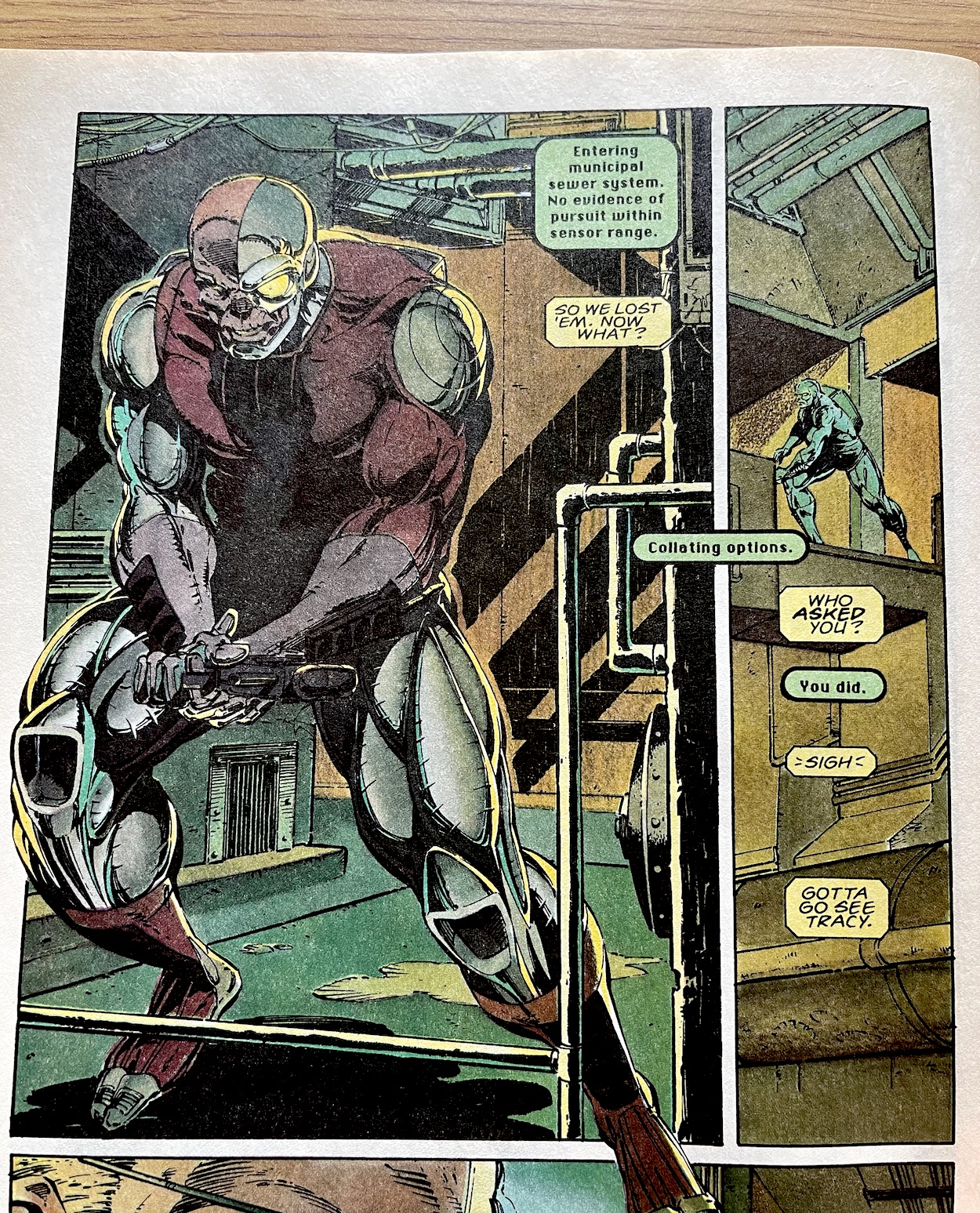
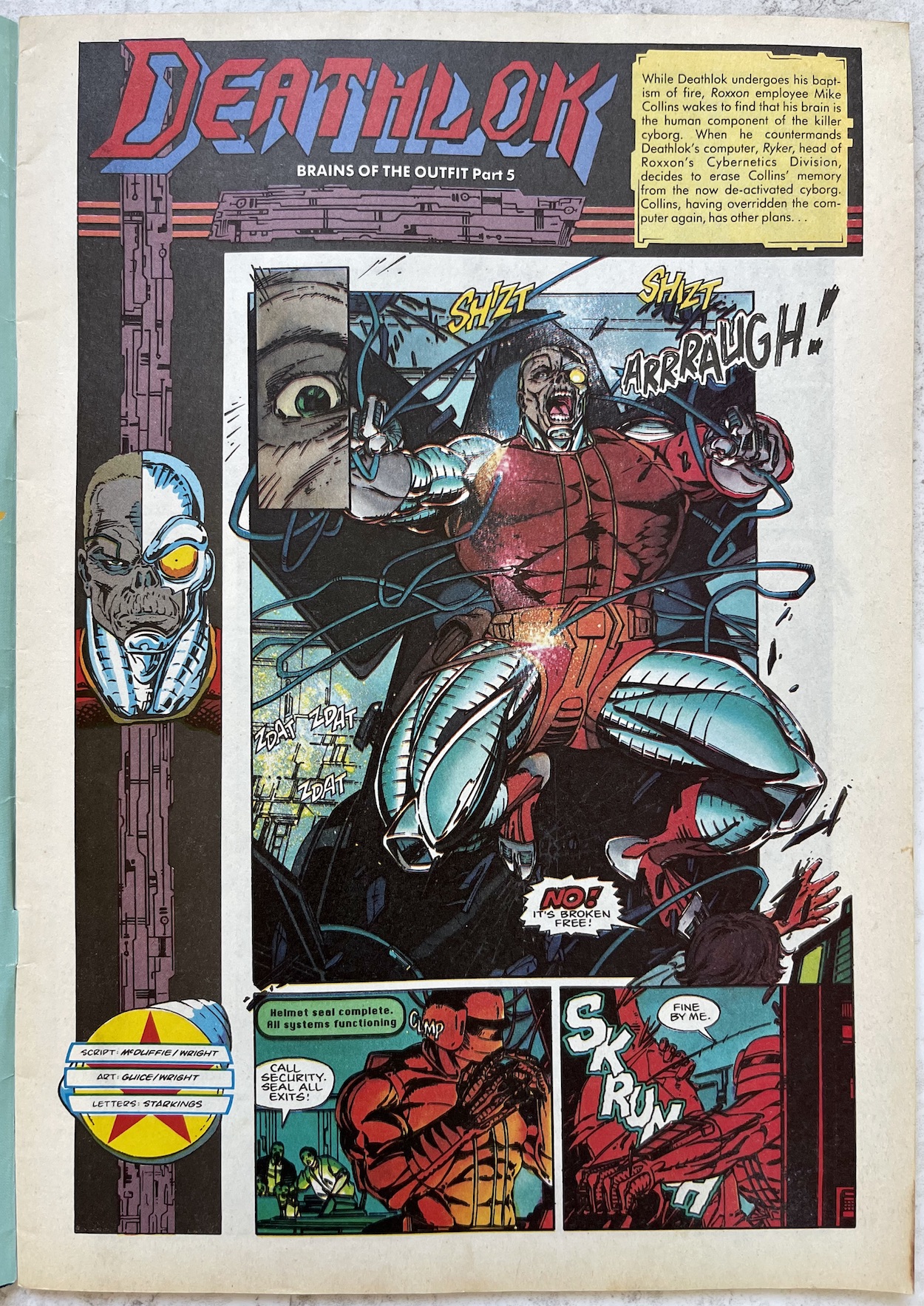
So first up is Deathlok, a character I’d never heard of and who Marvel US had resurrected a year earlier. Originally created by Rich Buckler in 1974 in Astonishing Stories, there’d eventually be various characters with the same name, all deceased humans brought back as cyborgs. Dwayne McDuffie (Batman, Back to the Future, Damage Control) and Gregory Wright (The Punisher, Daredevil, Nick Fury) brought the idea back with a new human character in a mini-series and then an ongoing comic between 1991 and 1994, the first time Deathlok had had his own title. It was this run we were to be treated to, drawn by Wright and Jackson “Butch” Guice (Supergirl, Black Panther, Winter Soldier) with letters by Richard Starkings (Elephantmen, Zoids, Transformers).

Between the end of the mini-series and the start of the ongoing an eight-page prelude tale was published in Marvel Comics Presents and it’s this that Marvel UK decided to use first. (From #2 they’d go back and print the mini-series.) This gives us a proper action-packed introduction to the technology and the idea behind the strip. No, it wasn’t hugely original by the time 1991 rolled around, with Terminator movies and RoboCop himself on the scene, but something would set Deathlok apart and that was the interaction between the human brain and the computer. That’s something for a future review though.

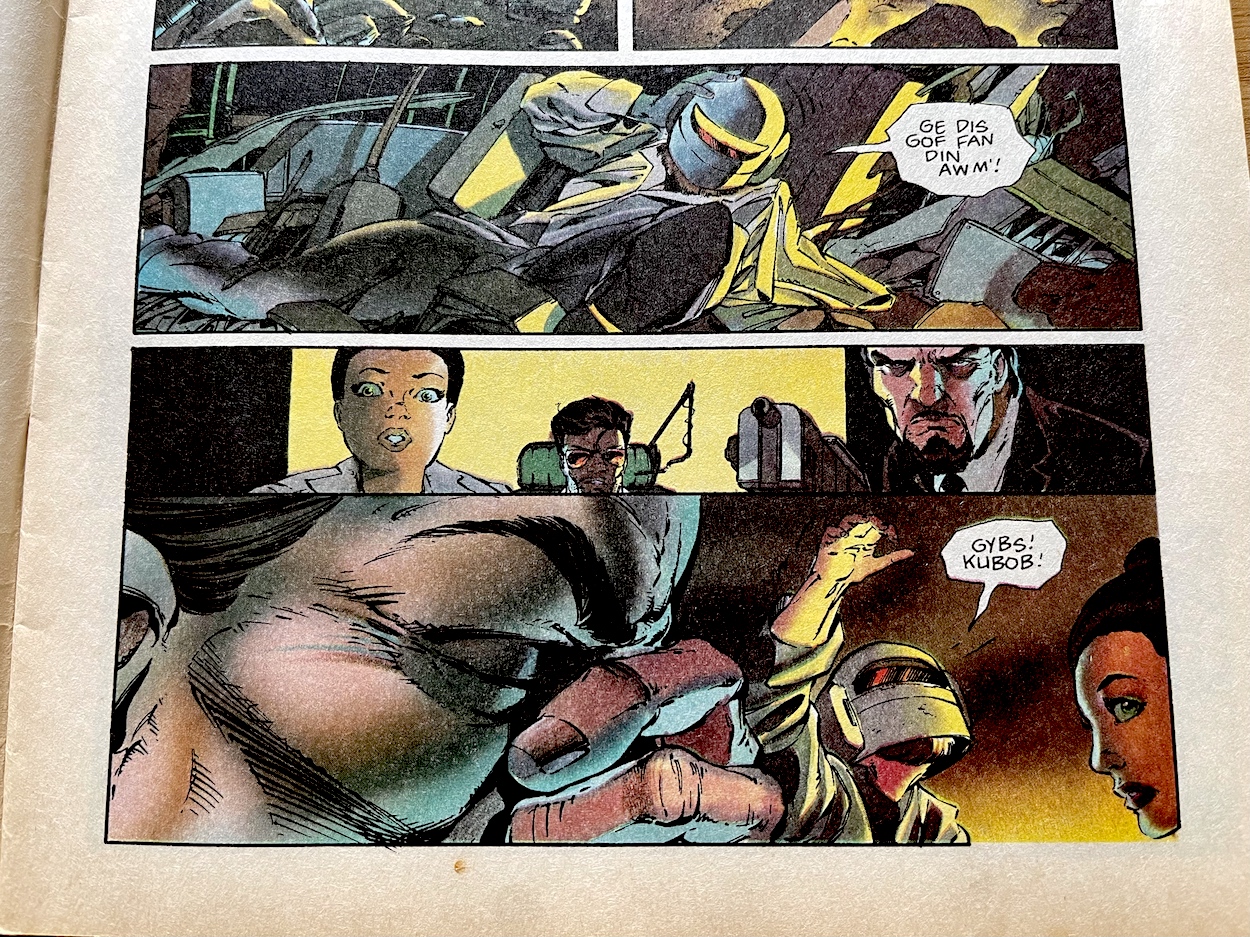
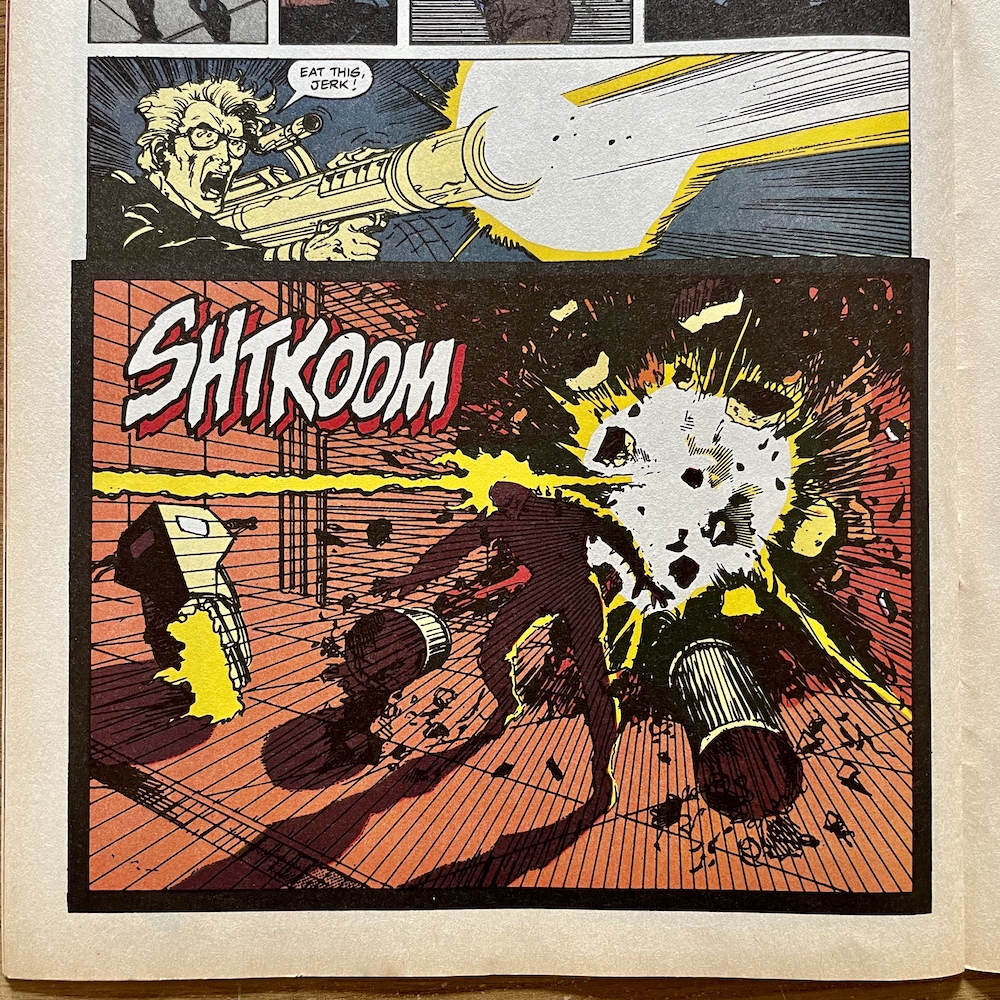
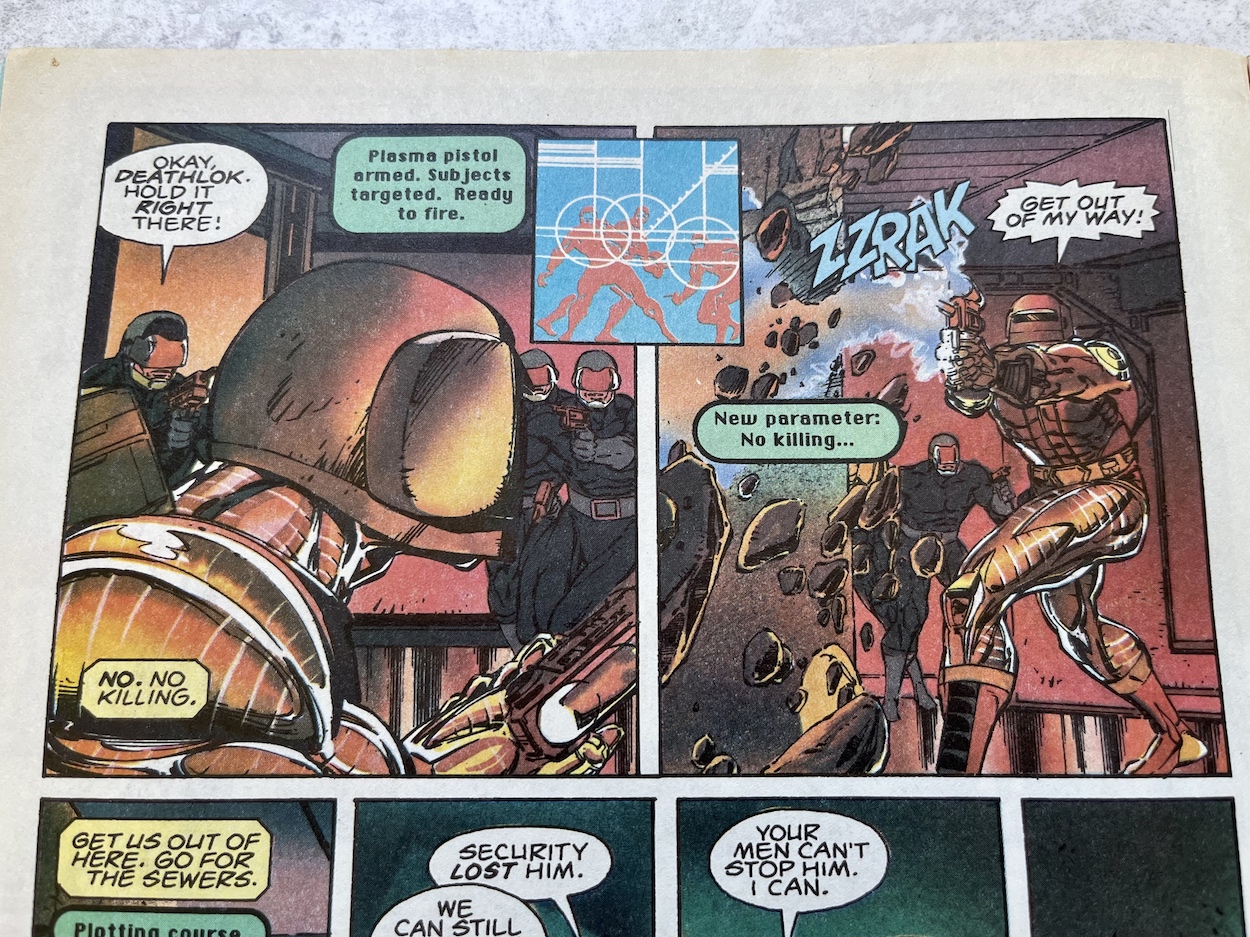
It’s smart to begin the premiere issue with a complete story and it perfectly sums up the set up and the kind of action we can expect. Former army colonel John Kelly volunteered to have his brain transplanted into Cybertek‘s Deathlok and become the ultimate tactical weapon. Sent on a Test Run, he’s armed with paint pellets while 12 mercenaries try to take him down with live ammo. The communications between human brain and computer are relaxed, even jovial, but when Kelly decides on a little grandstanding things take a shocking turn.

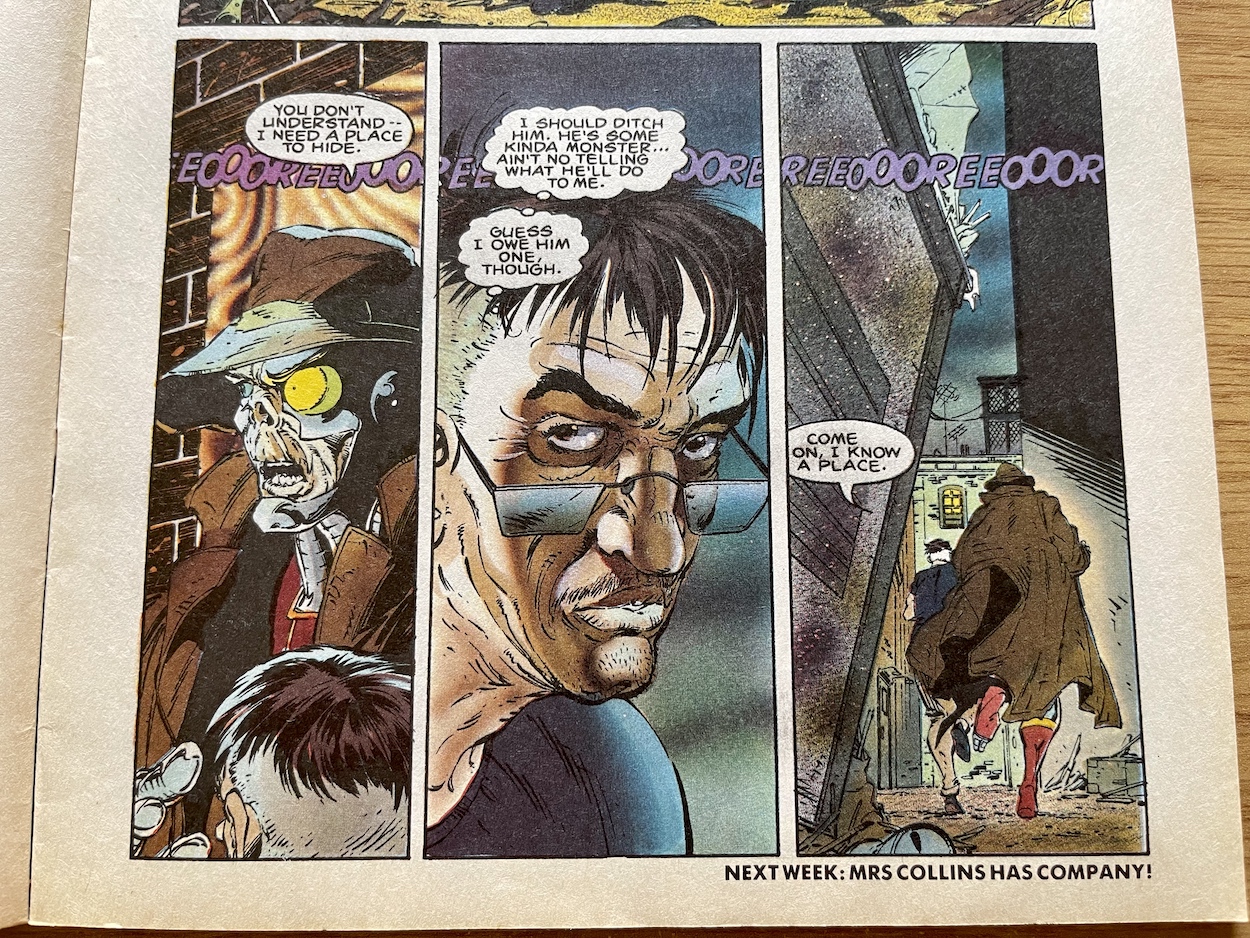
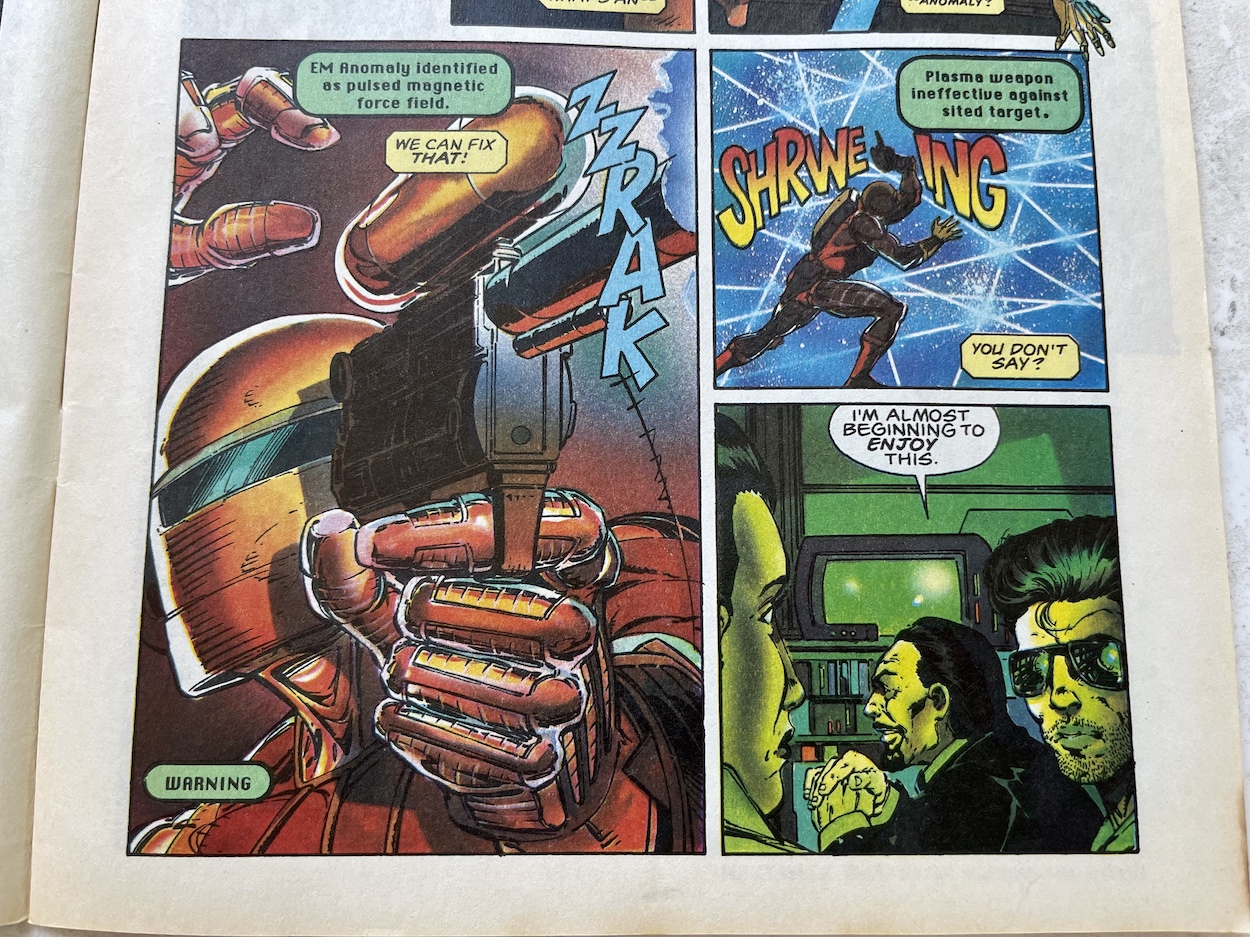
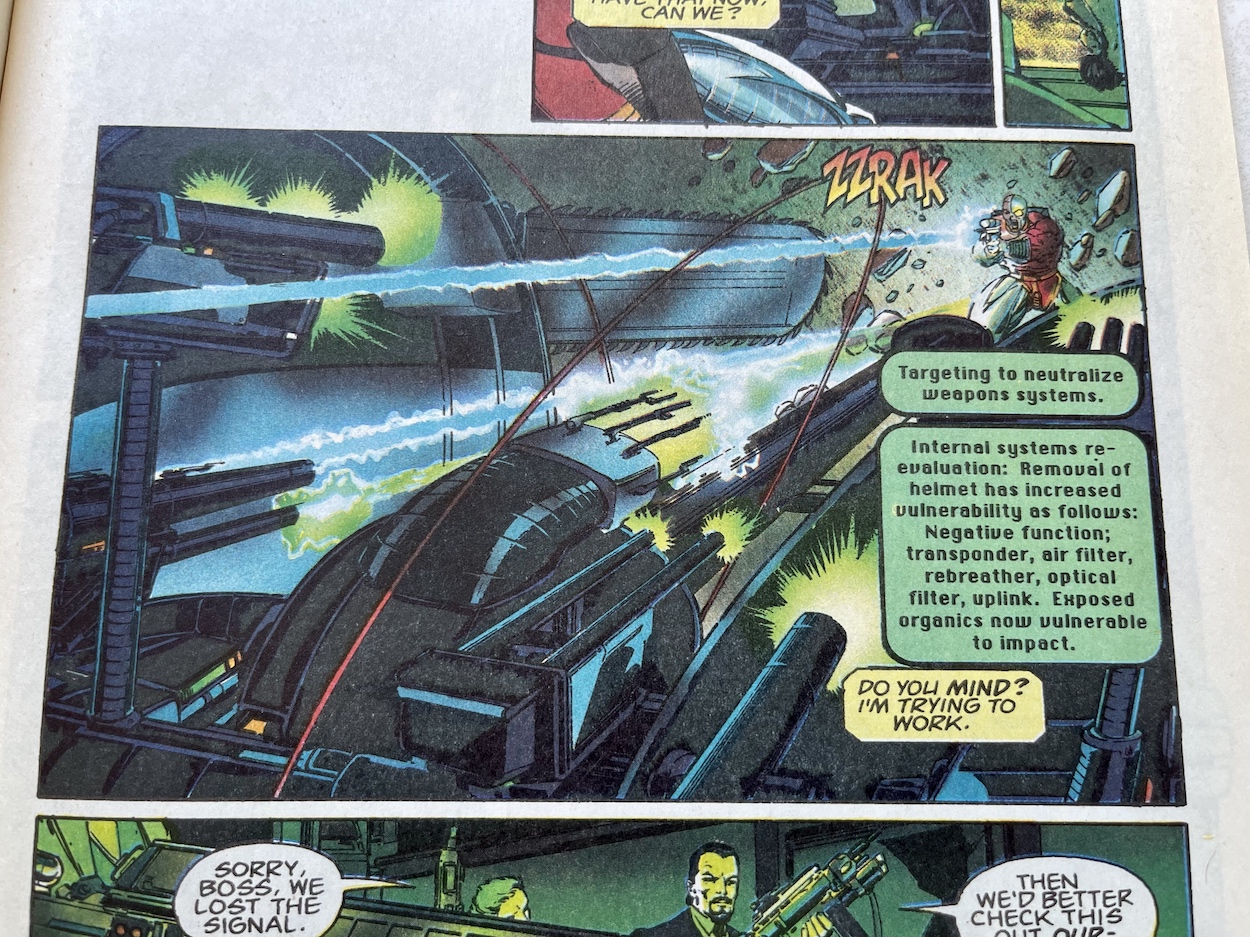
The computer has calculated that Kelly’s thoughts are an input error, sending an electrical charge to eliminate the problem and killing him instantly. Its system now “de-bugged” the programming for a live scenario takes over and immediately replaces the paint gun with a live plasma pistol. But Mr Ryker of Cybertek doesn’t stop the test, even as he watches the mercenaries die one-by-one. There’s just too much money at stake. The story ends with the company casually discarding what happened because they have a deadline and Mr Ryker’s final foreboding words show us the direction it’s about to go.

In the introductory booklet a little bit of information popped out at me as a fan of Transformers. It appears Cybertek Systems Inc. is a division of the multinational oil company, Roxxon. This company name appeared a couple of times in Transformers as a competitor to Blackrock. It was just in passing, but it tied the characters in to the larger Marvel universe around the same time as Spider-Man helped out the Autobots.

Test Run is a great introduction to not only Deathlok but to the whole remit of Havoc. I particularly liked Richard Starking‘s (launch editor for Marvel UK’s The Real Ghostbusters) lettering during the interactions between Kelly and the computer. I remember the intrigue as a teenager and how I lapped up the action, thinking that if the rest of the issue was anything to go by I’d discovered a winner.

John Workman’s trademark style adds bold, in-your-face lettering to Star Slammers, perfectly suiting the narrative

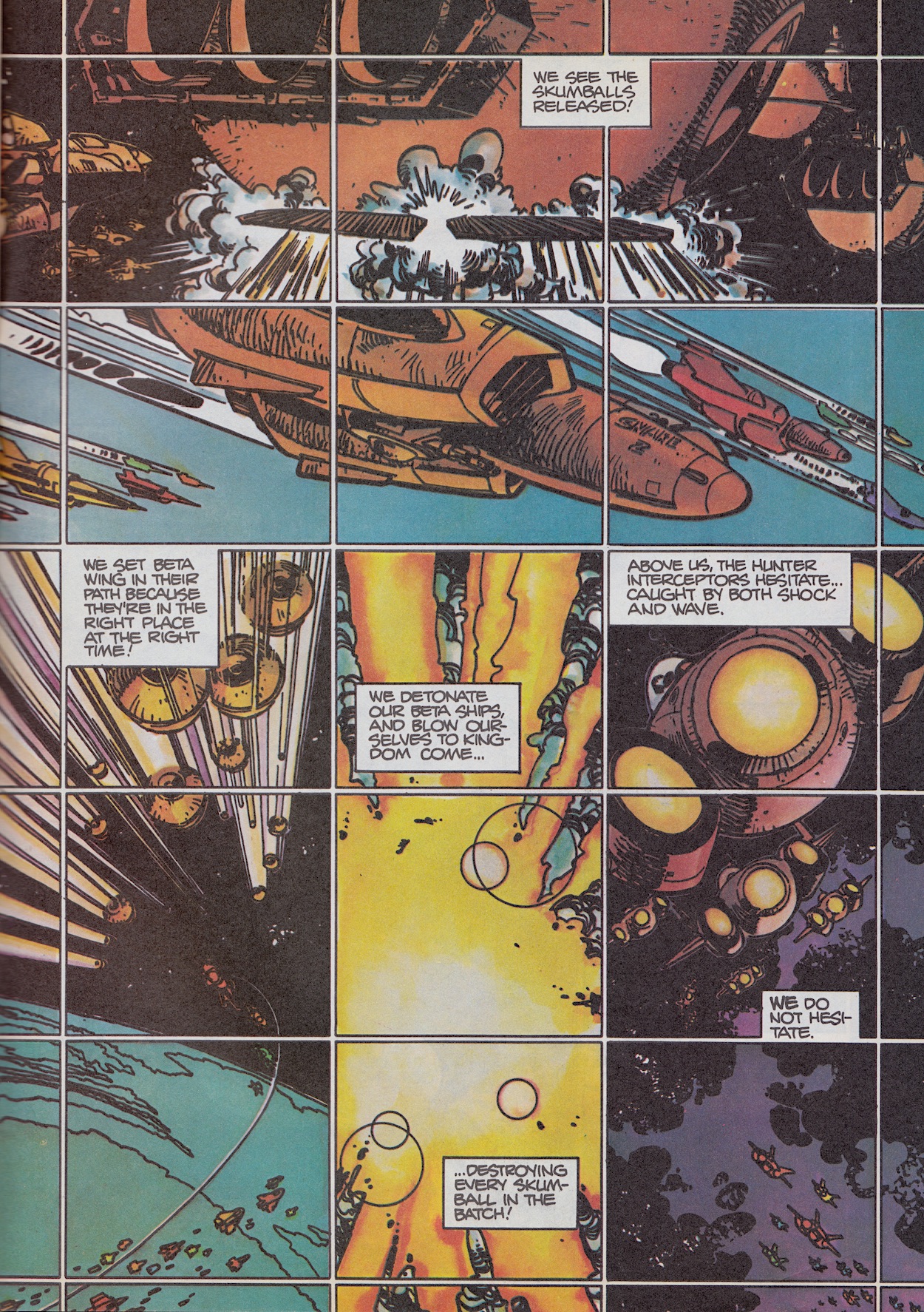
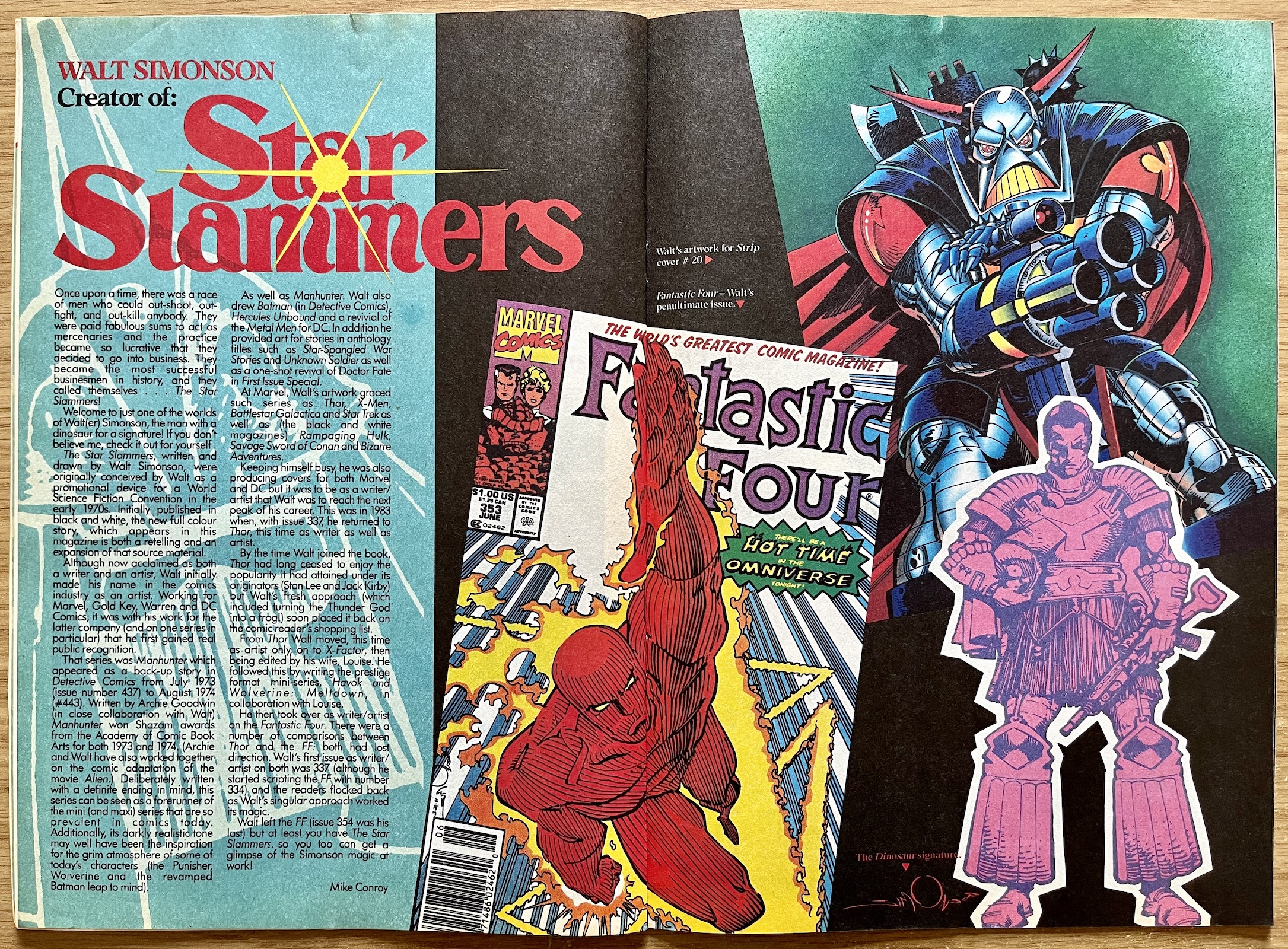
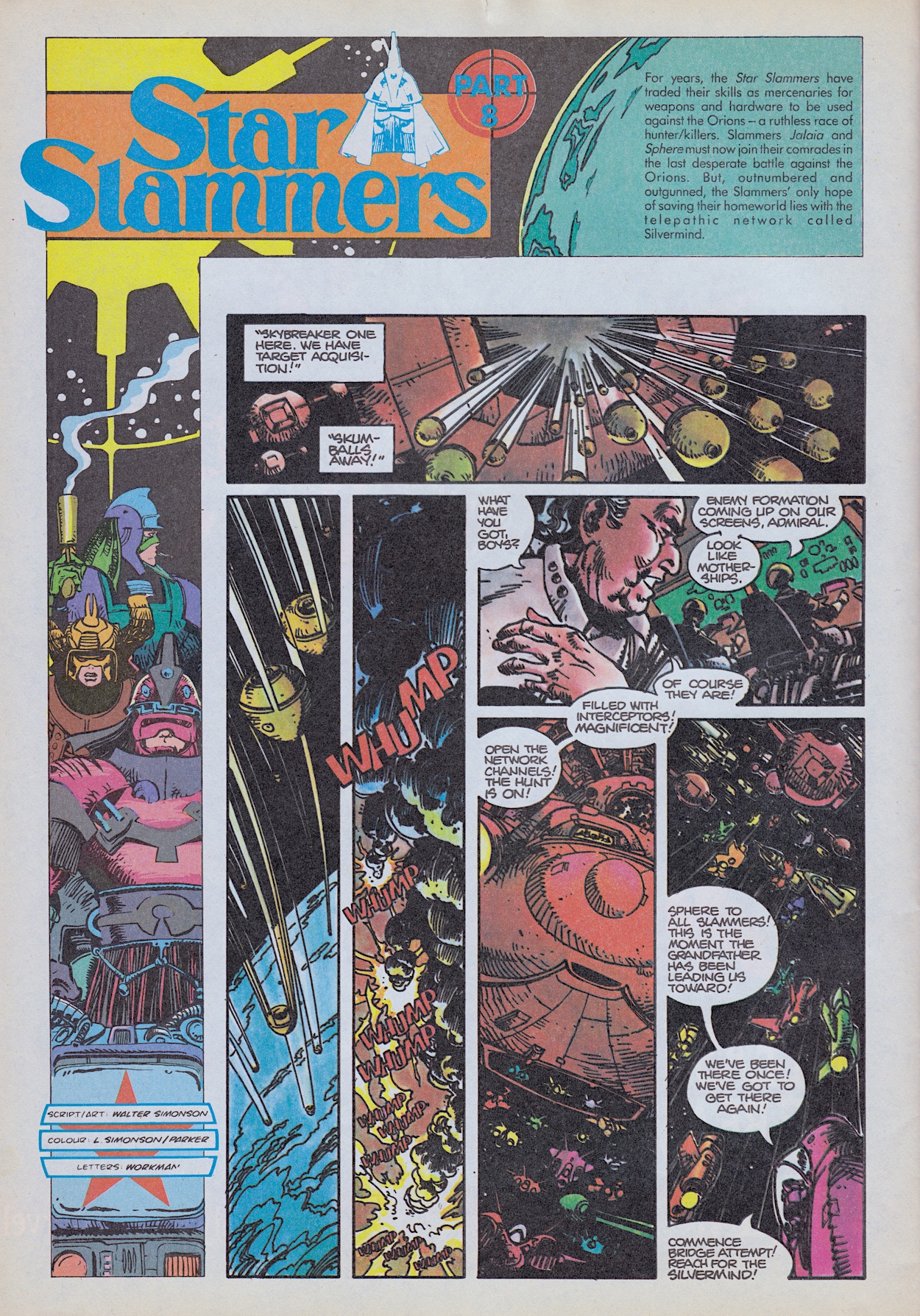
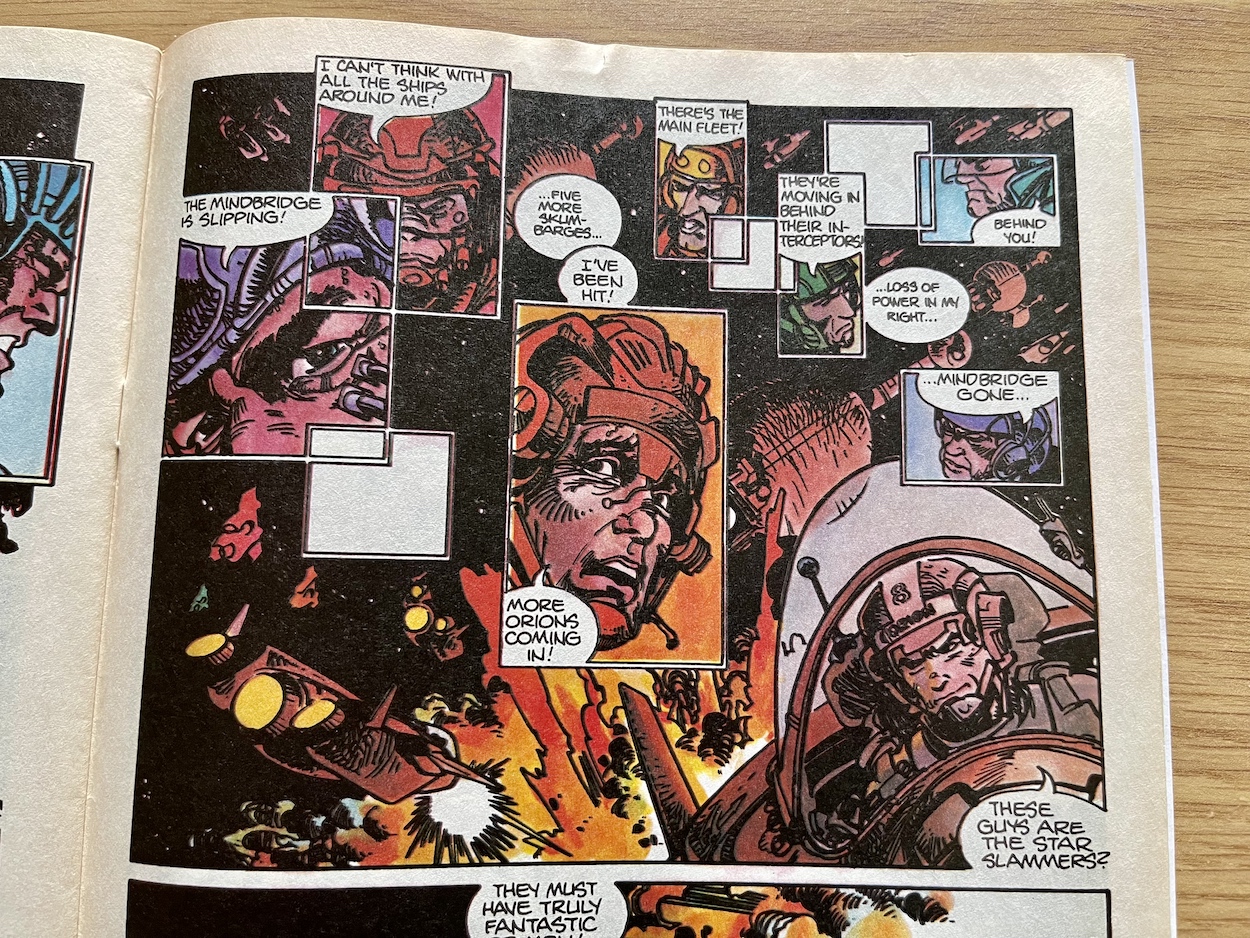
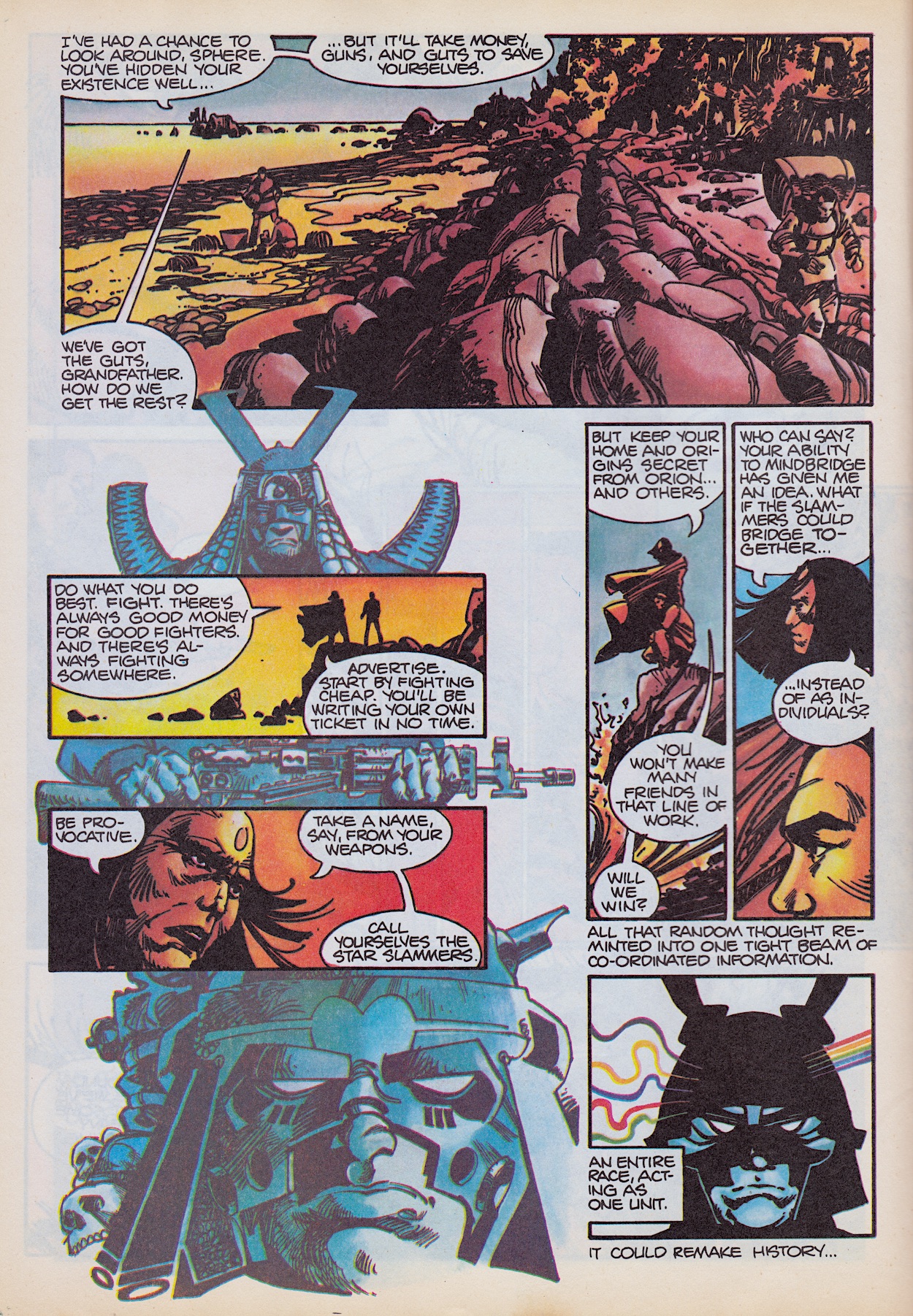
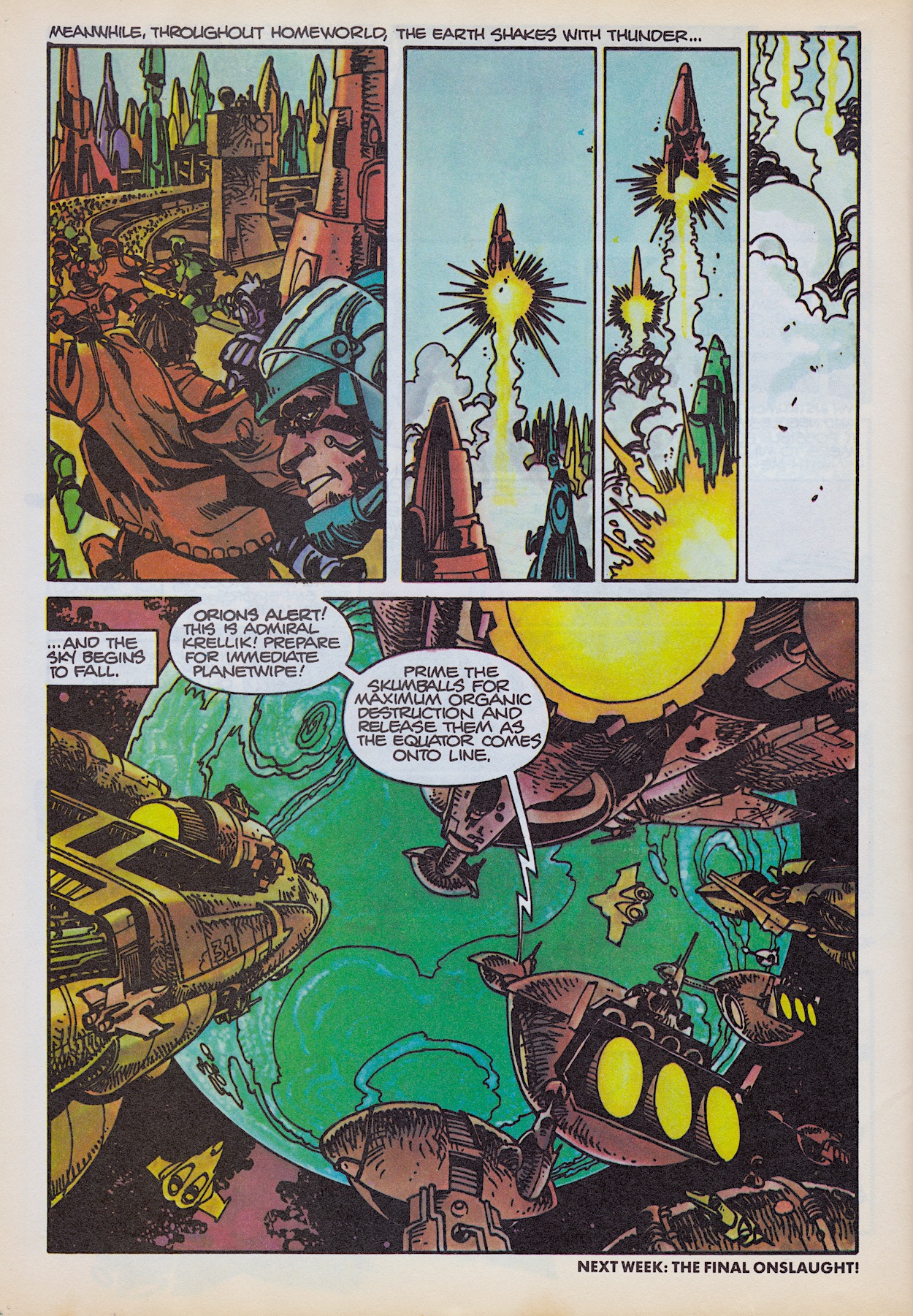
Havoc may have been a meaty 36-page read for us but to fit in five ongoing strips originally written as much larger chapters (while giving each one a satisfying chuck and a cliffhanger every week) couldn’t have been an easy task. But the team pulled it off. The next strip is Star Slammers which originally saw print in #6 of Marvel Graphic Novel in the States back in 1983. Given just the four pages in this premiere issue, it acts as a nice tease for the characters created, written and drawn by Walter Simonson (Jurassic Park, Hawkgirl, Detective Comics), coloured by his partner Louise Simonson (writer on New Mutants, Warlock, Action Comics) and Deborah Pedler (Alien, Marvel Graphic Novel, Conan) although Deborah is mistakenly listed as “Parker”.

John Workman is the letterer here and among his many credits (for example Michael Moorcock’s Multiverse, Orion, Spider-Girl) he worked alongside Walter on the movie adaptation of Jurassic Park, which was published in the UK by Dark Horse International, split over the first five issues. His trademark style of breaking the panel lines which I enjoyed so much in those early Jurassic comics adds a bold, in-your-face style of lettering to Star Slammers, perfectly suiting the narrative.

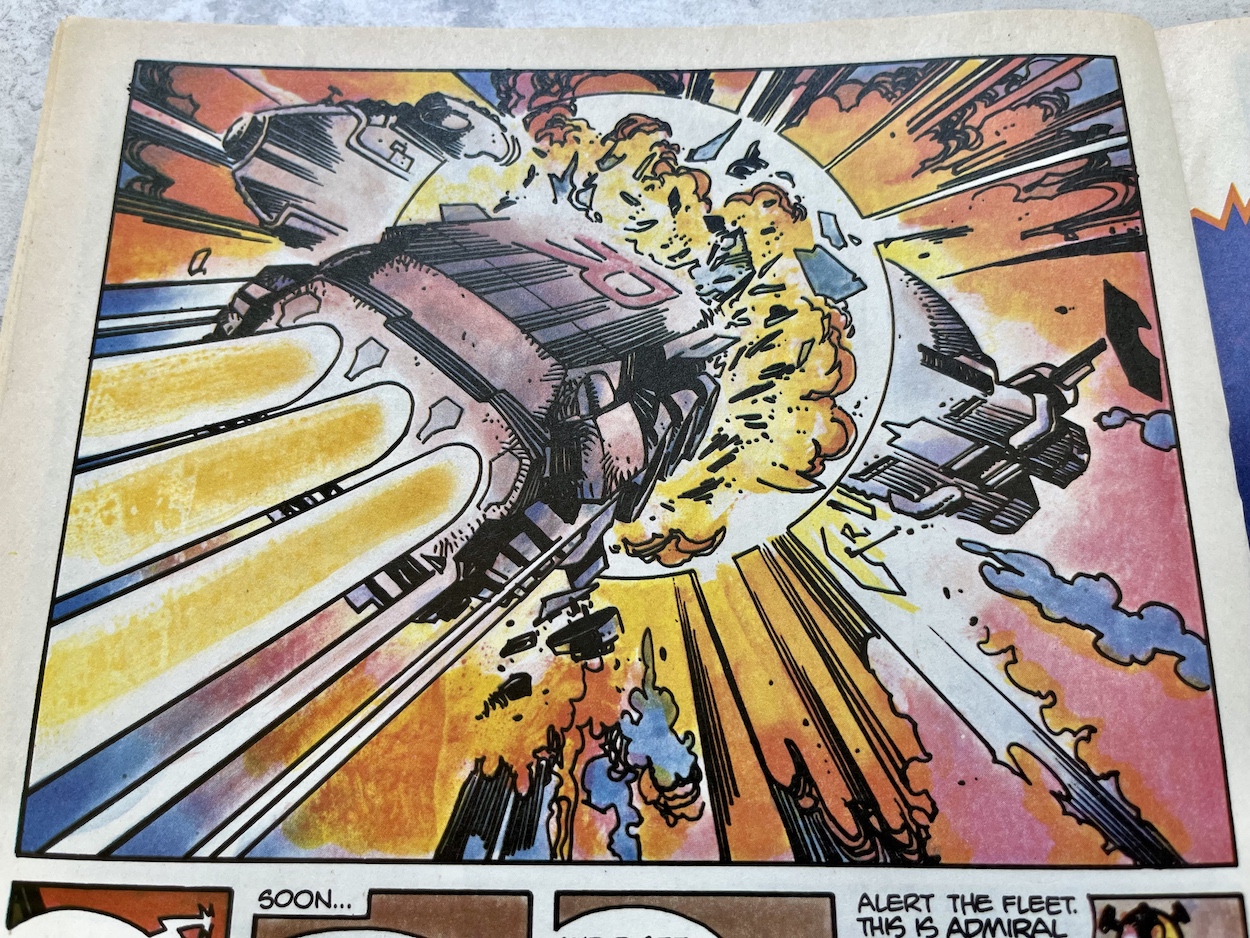
Spence and Slinger are two tired soldiers looking out from the citadel they’re protecting, surrounded on all sides by campfires belonging to their enemy, the Skriks. They’ve called for help from the Star Slammers and hope more than a hundred turn up at least, although Spence thinks it’ll be less than fifty and that he and his comrades are doomed. Suddenly all hell breaks loose, there are explosions and gunfire everywhere and within minutes the enemy has been wiped out as far as the eye can see. Spence’s monologue returns just to confirm he was right, there were definitely less than fifty of them.

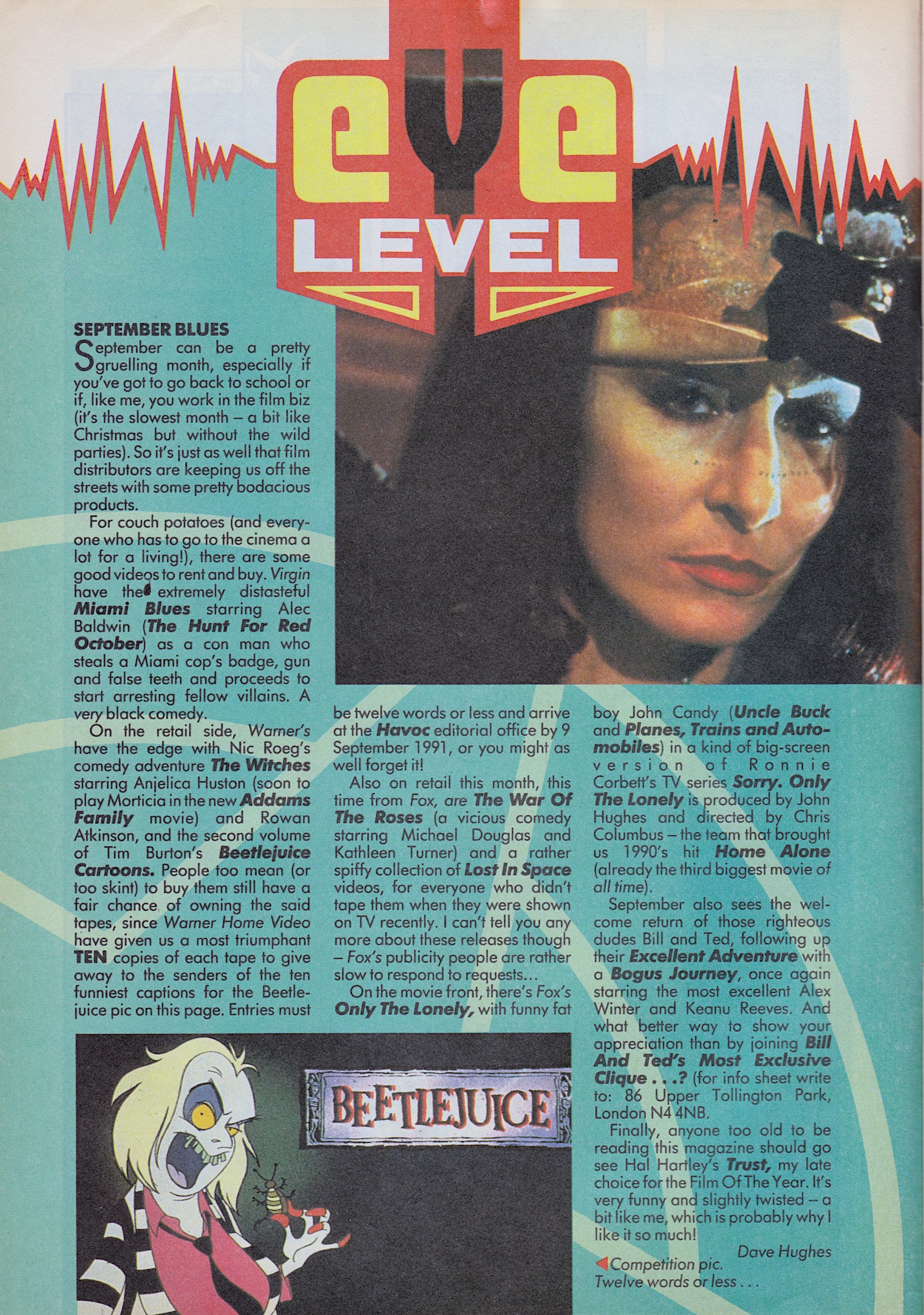
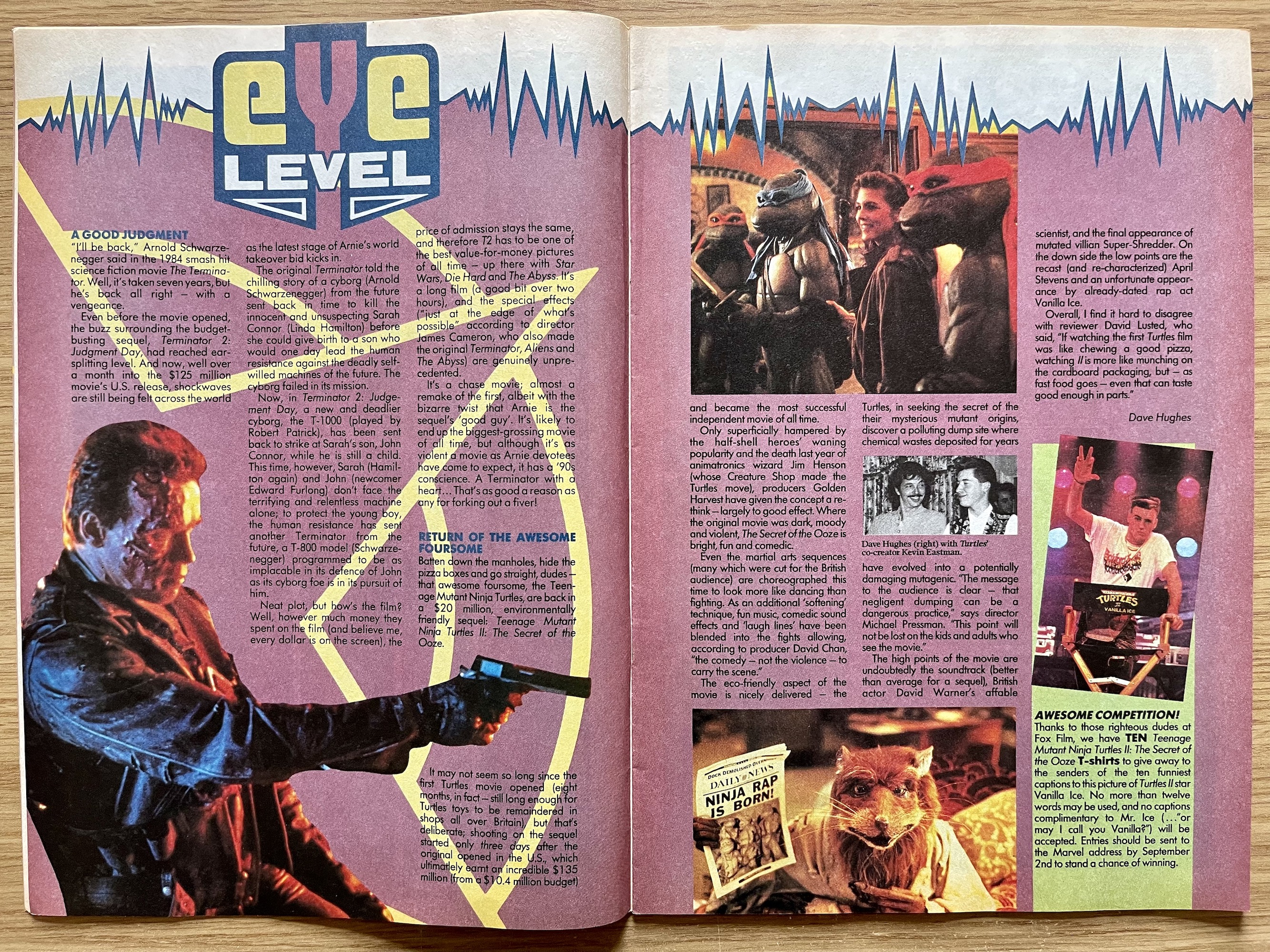
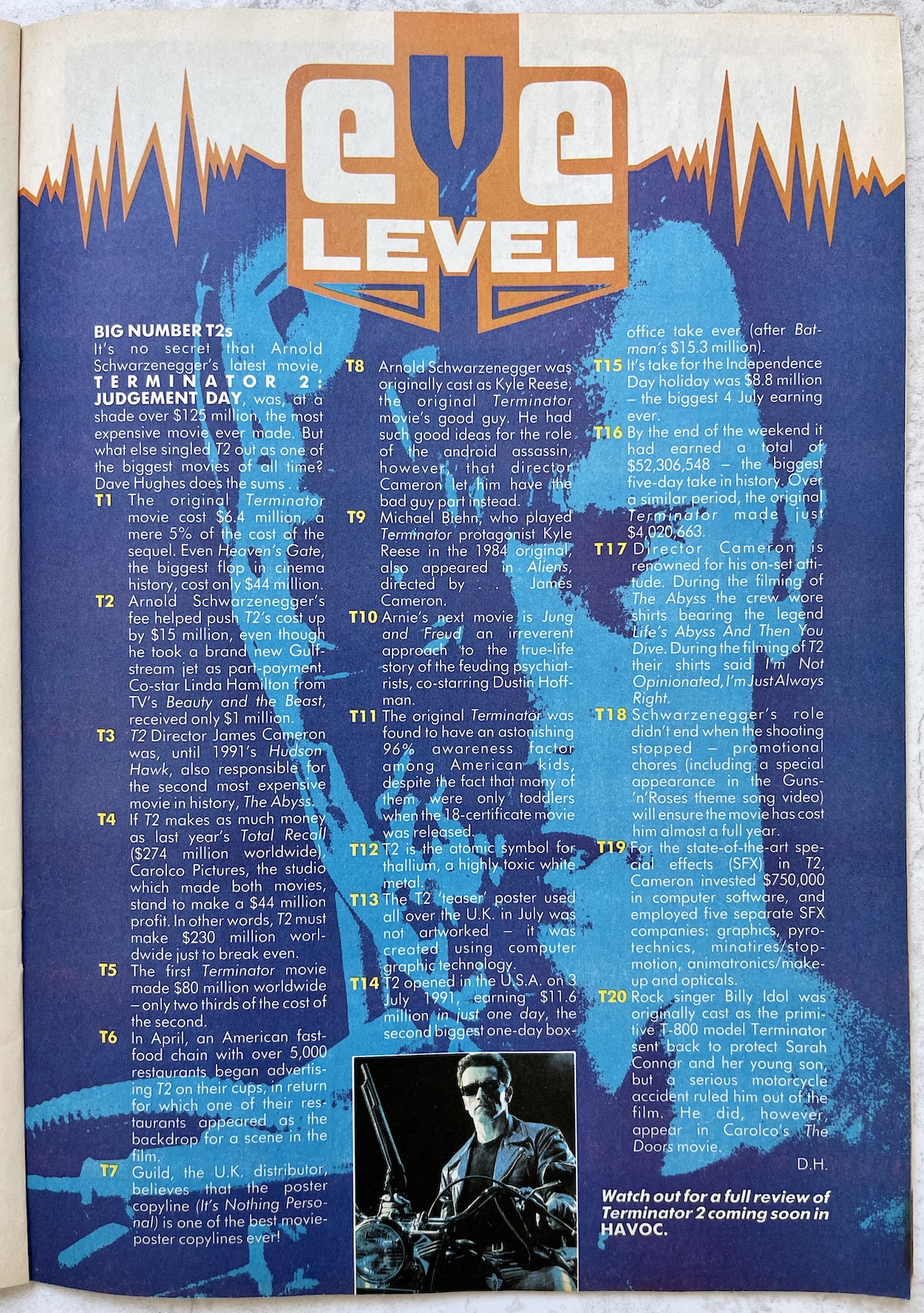
That’s it for part one. In the booklet their introduction is written as a warning from “the glorious planet Orion” but as yet there are no more details about characters or overall plot. As a kid I remember being underwhelmed but my attitude changed as the story continued and now as an adult I’m intrigued. On the next page comes something my adult self has been really looking forward to. I’m including it just for some fun and context about when the comic was released. It’s the first Eye Level.

This was the weekly news column with all the latest information from the world of television, movies, comics and videogames. This was around the time we had that TV show Movies, Games + Videos so this has taken me right back. Most notable for me here is the hype machine for Robin Hood: Prince of Thieves because I enjoyed it at the time but the years have not been kind to the ridiculous movie. I remember all the buzz about how expensive Terminator 2: Judgement Day was for the time and it’s nice to see a film I’ve just recently rediscovered getting a quick mention, namely the excellent Rocketeer.

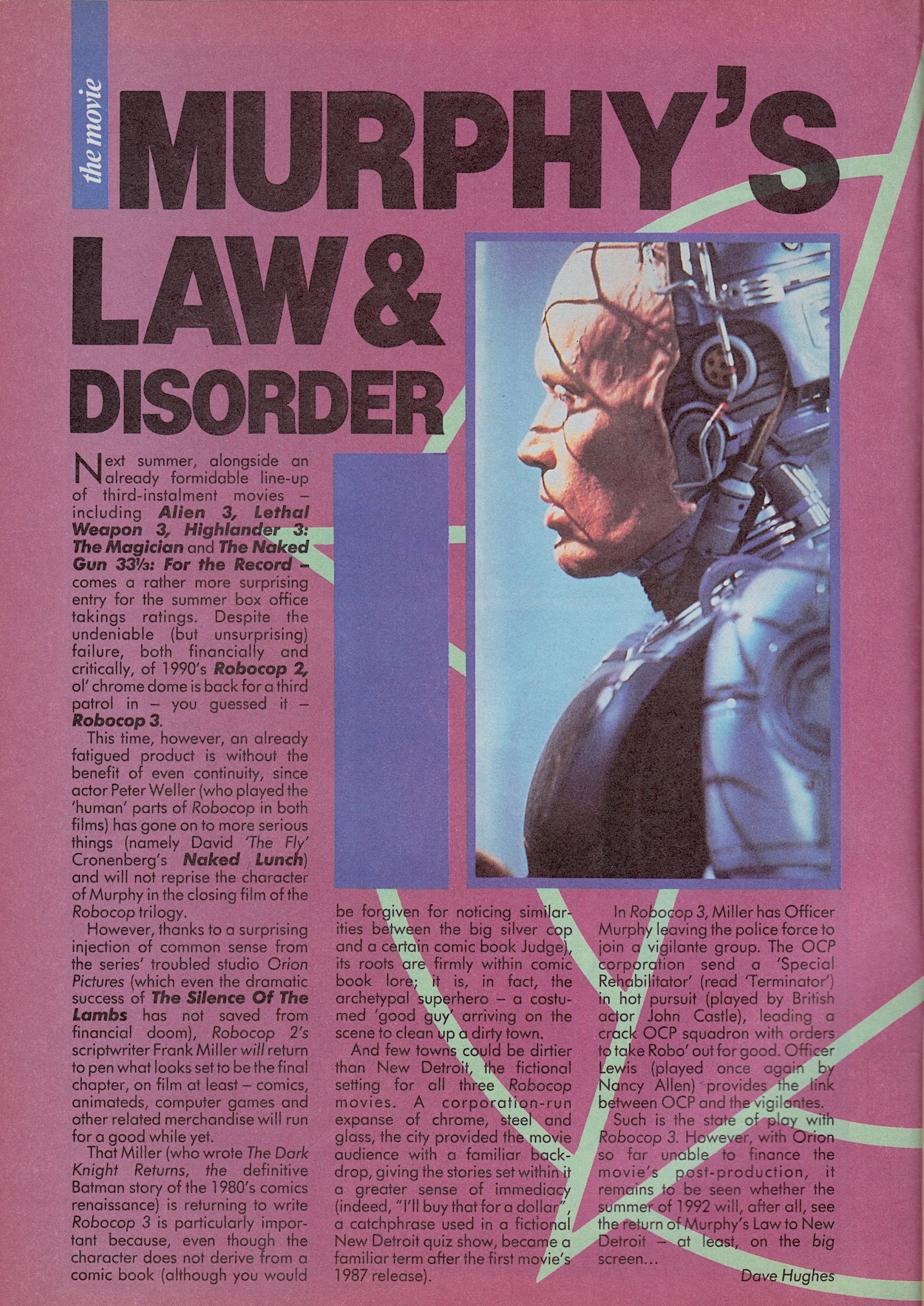
As well as the news above, the booklet had extra pages for RoboCop, so sure was everyone that this was a franchise to run and run. The second and third movies put an end to that. Personally, I much preferred the TV series. The original writers were creative consultants and it was more in line with what they’d written for the film (which ended up being known more for its over-the-top violence). Yes, TV series in the 90s couldn’t have the violence of today’s shows so Murphy captured criminals instead of killing them, but all the social commentary, politicking and character development was there and I loved it. It was big budget and a great character piece at its heart. (And that episode with his dad! Oh my, I’m welling up just thinking about that scene… anyway… ahem…)

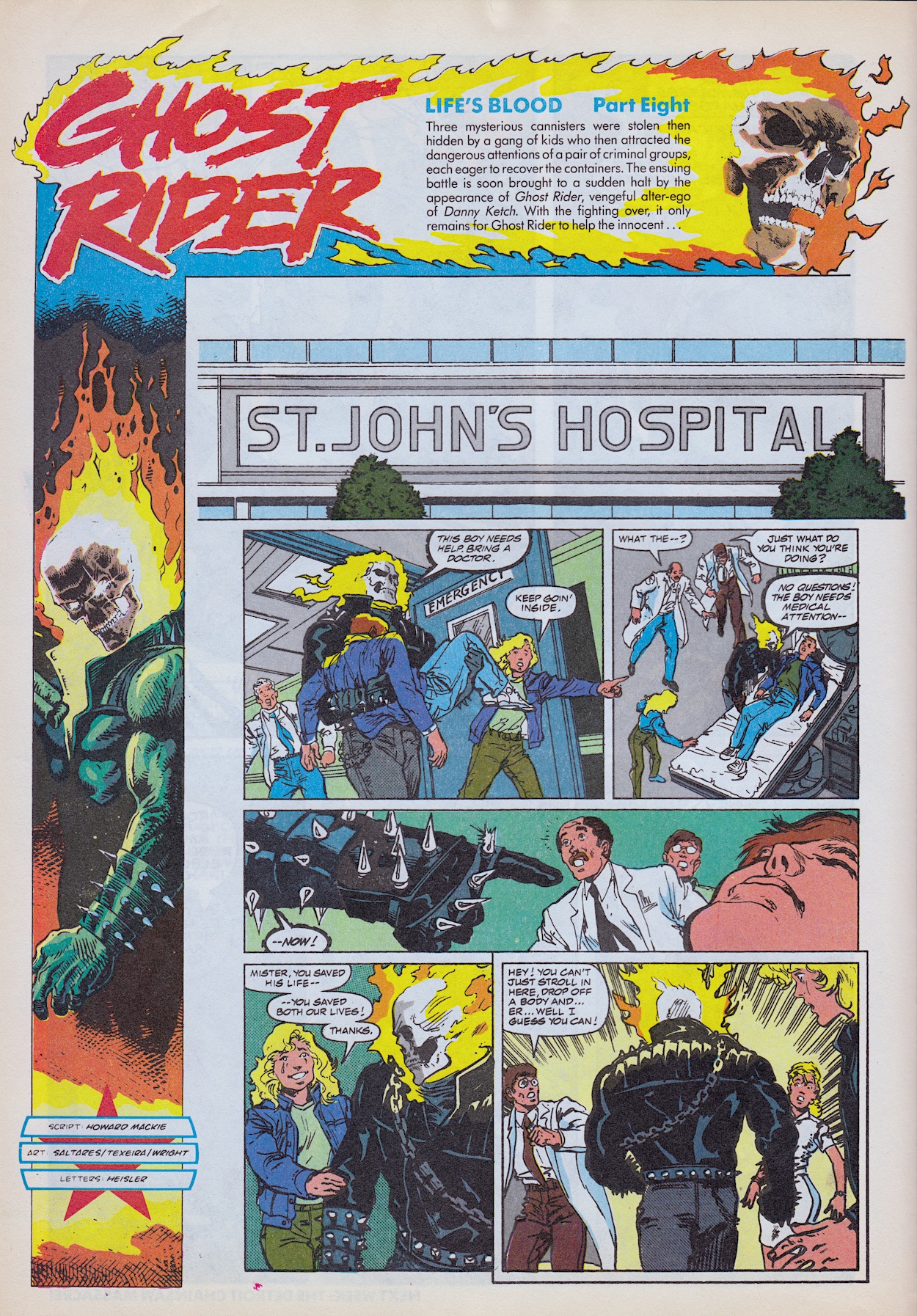
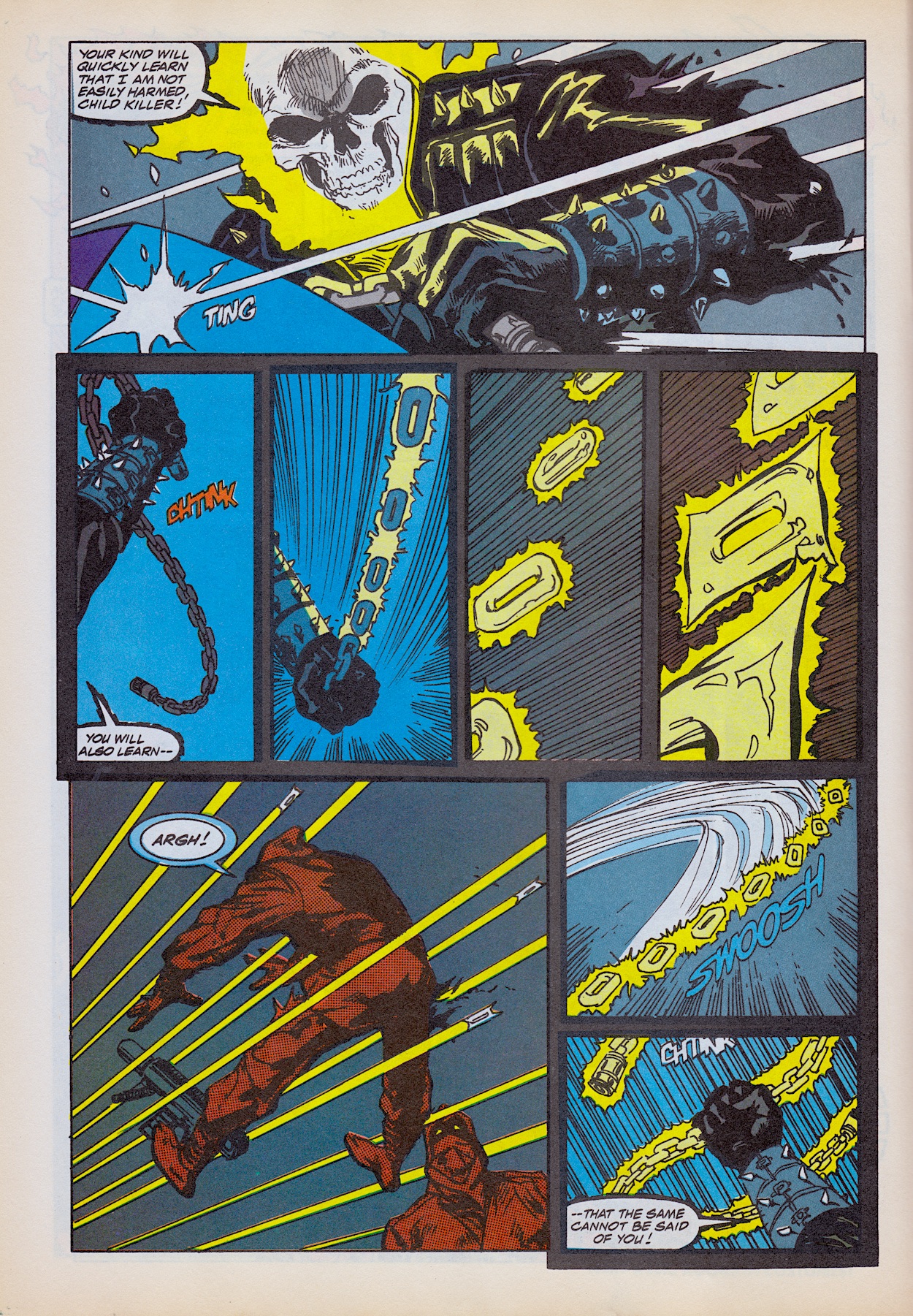
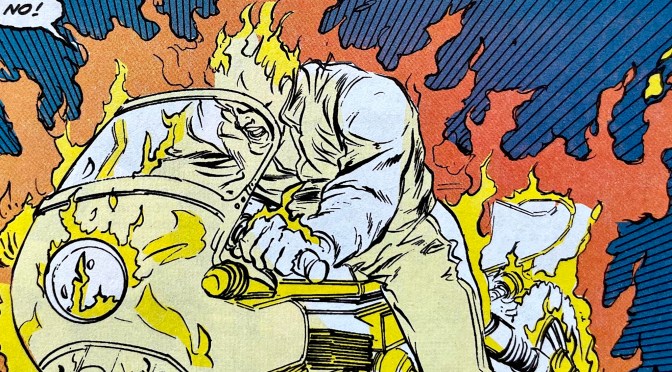
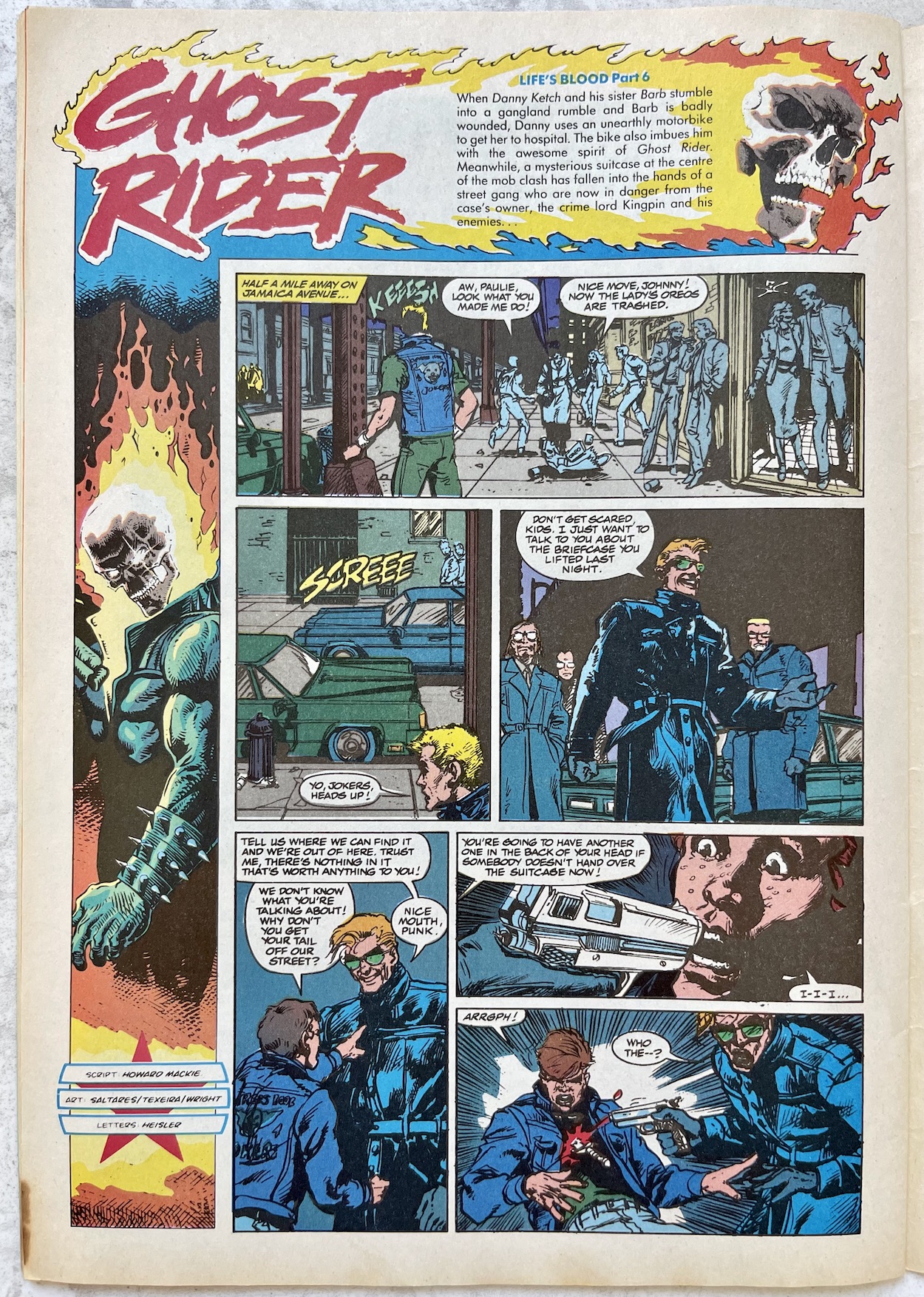
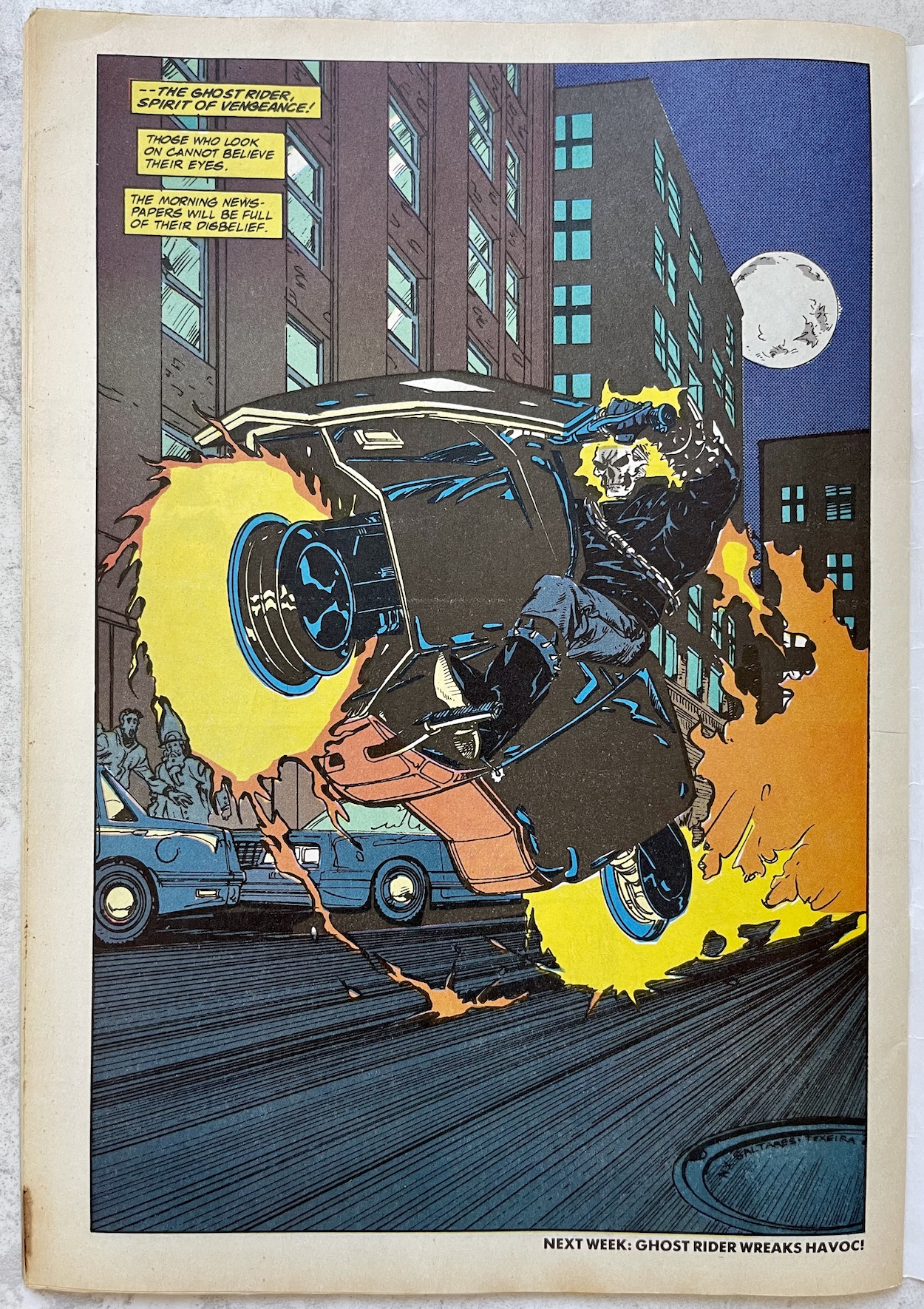
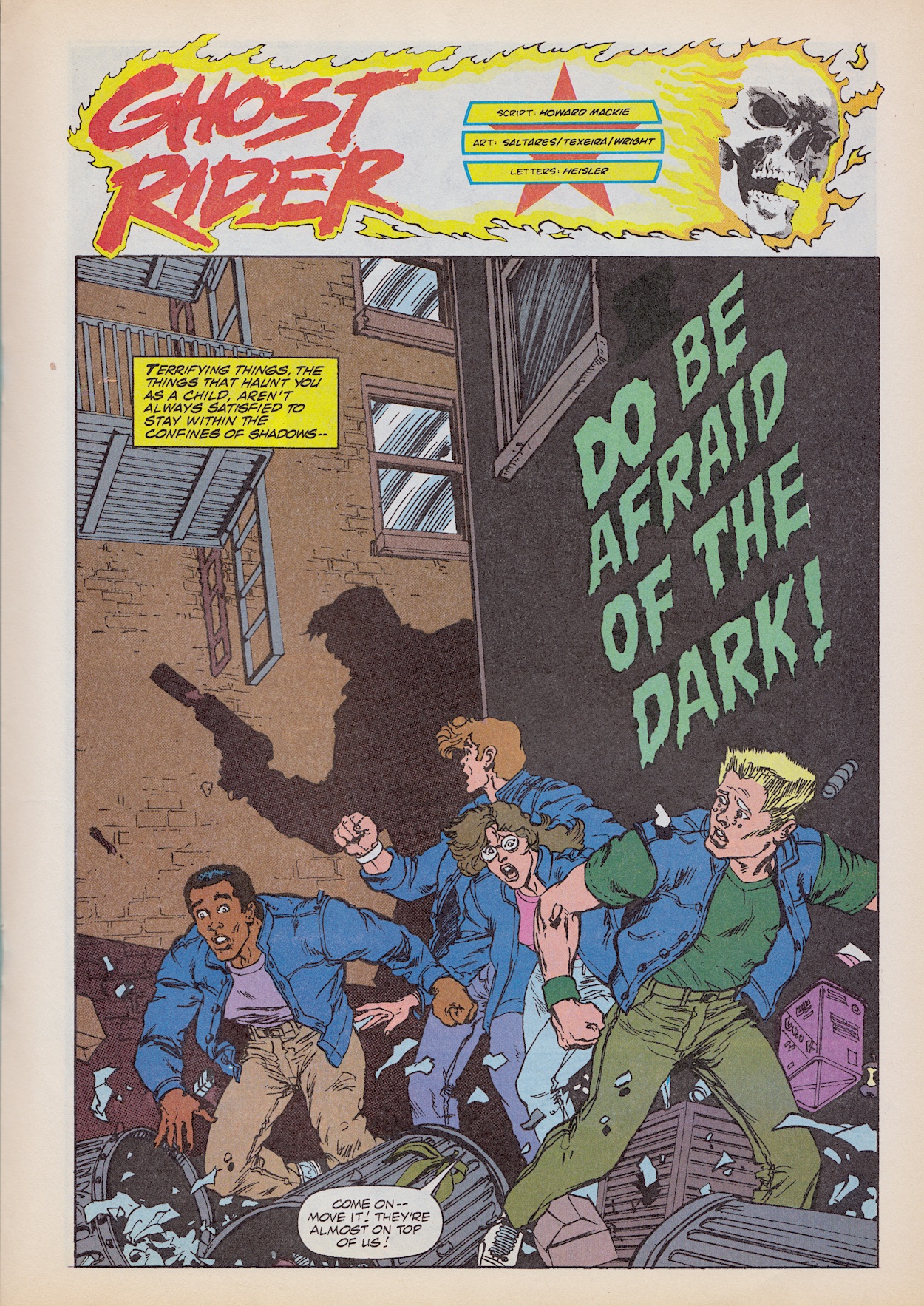
The booklet is set up like a series of Wanted posters (except for RoboCop obviously) and our next antihero is described as “a so-called do-gooder” who they suspect is really just “a deep rooted psycho”. Originally created as a Western character before being renamed Phantom Rider, the first supernatural Ghost Rider was Johnny Blaze who you’ll know from the movies if not the comics. Havoc’s strip is the sequel to that run and stars new character Danny Ketch. It was written by Howard Mackie (Moon Knight, Mutant X, X-Factor), pencilled by Javier Saltares (X, Wolverine, The Prowler), inked by Mark Texeira (Hercules, Psi-Force, Megalith) and coloured by Deathlok’s Gregory Wright, although they’re all just listed next to “art”, such is the limited space in the credits. Completing the team is Michael Heisler (Arkham Asylum, writer on DV8, Union) on lettering.

Apart from this ghostly illustration as part of the title there’s no inkling about what’s going to happen or how Danny becomes who he is destined to become, but I didn’t mind that at all. In fact, back in 1991, knowing I’d only have to wait seven days for the next part I liked the slow development and the suspense it brought. Of course, the original story wasn’t written in this way, it’s only because it’s being chopped up but we’re still getting a full story every month, just a little bit at a time, Transformers-style.

So Dan and his sister Barb are in the middle of a cemetery at Hallowe’en, visiting Houdini’s grave because Barb wants to take pictures of the rituals that take place there every year. They’re spooked by a group of prankster kids who are soon chased off by Barb, while Dan cowers from the initial fright. I like this, setting up the character who will become this flaming skull as a rather timid individual.

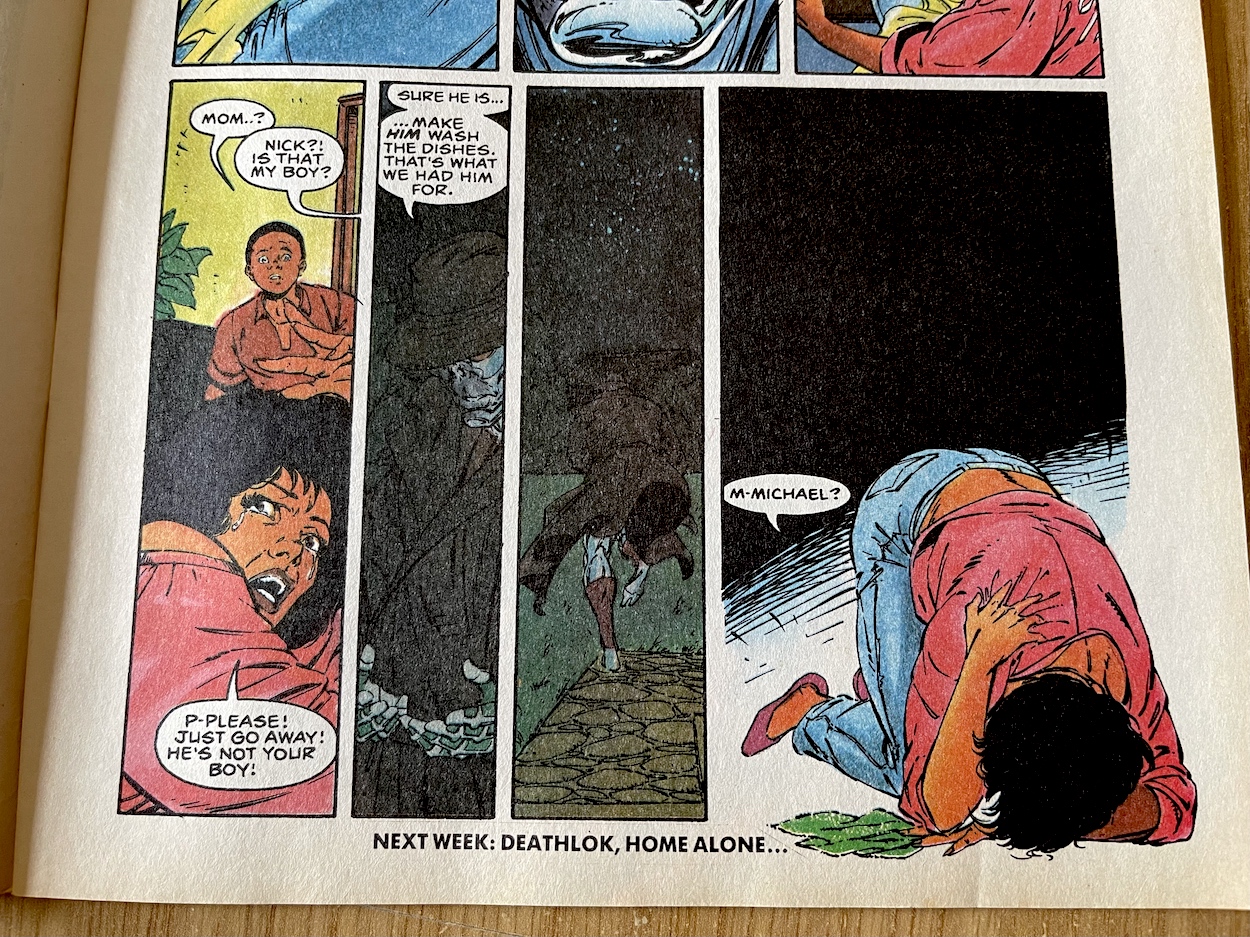
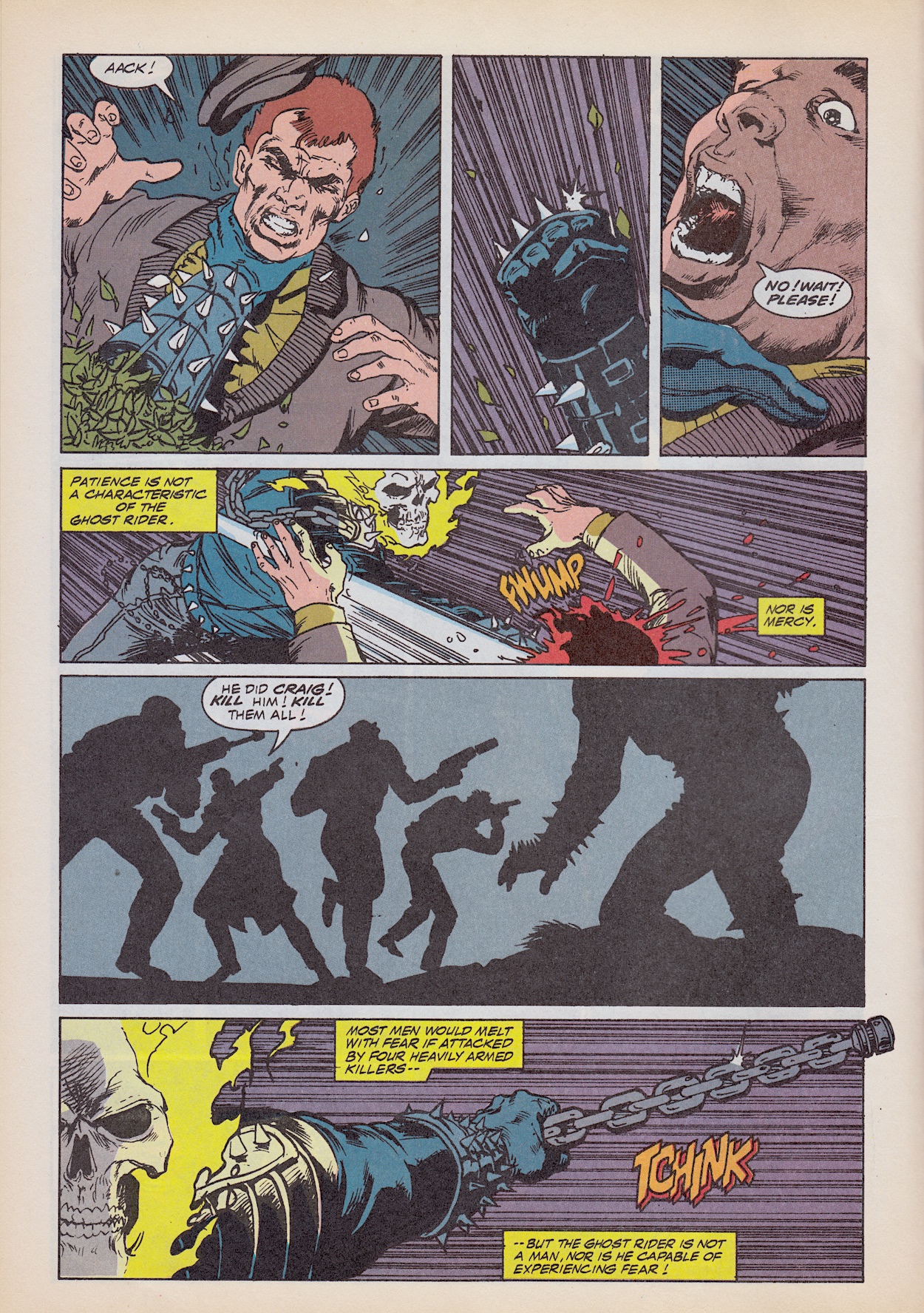
Hearing a gunshot Barb wants to investigate and they find new character Deathwatch facing off against some goons sent by classic Marvel character Kingpin. Deathwatch has shot one of their couriers and appears to be outnumbered when some shadowy figures shoot Kingpin’s men in the back with crossbows. Removing his mask, our new villain strangles the remaining gangster but the loud crack of his neck breaking is too much for Barb and she involuntarily lets out a scream, alerting the men to their location.

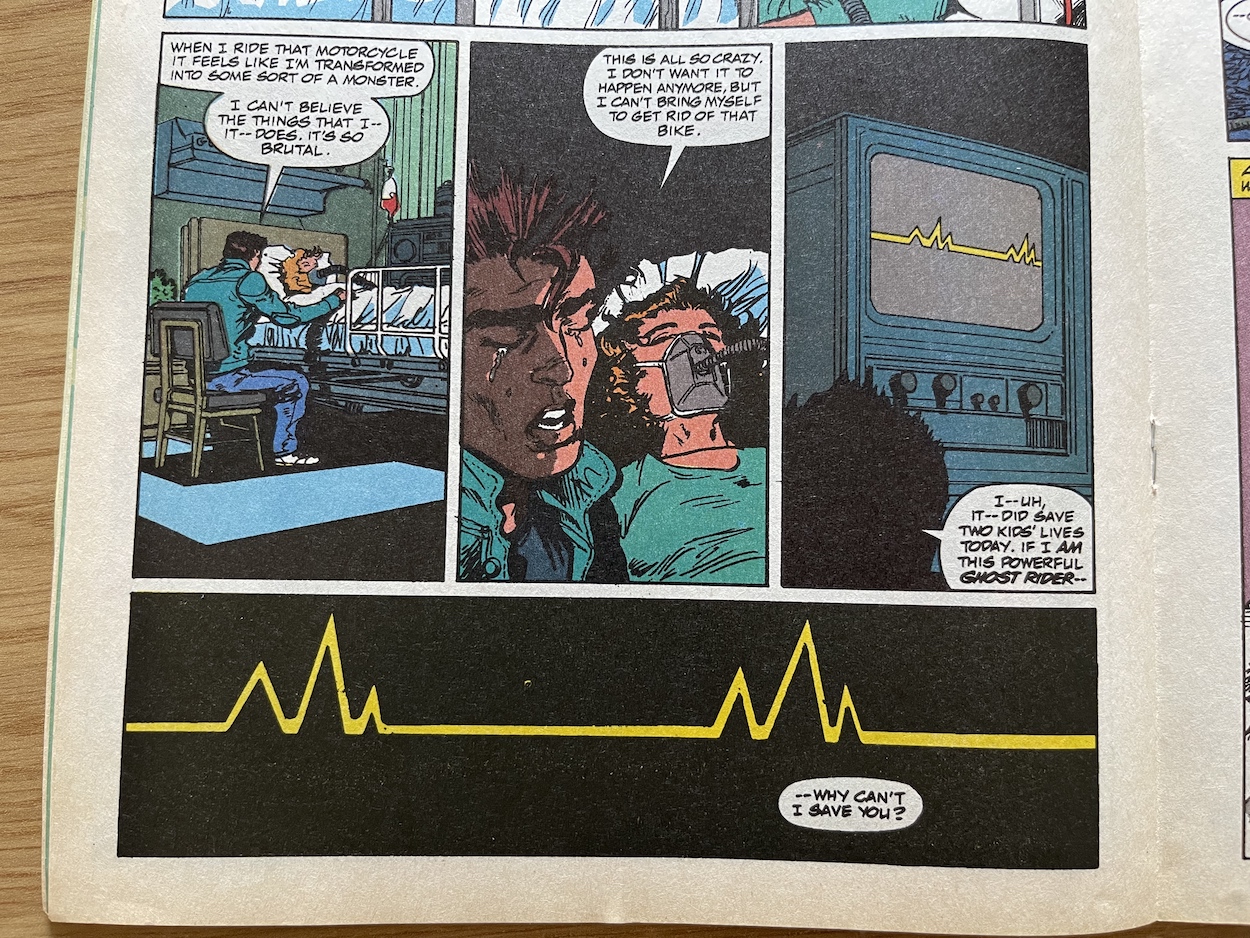
It was all very serious and violent for teenage me. It was like catnip! The tone was perfect, I already liked and cared for Dan and the ending was a shock. The Next Week caption at the bottom had me hyped and the strip was instantly a favourite. One piece of the puzzle at a time was being put into place and I couldn’t wait for more. I find that feeling returning now. After Havoc’s cancellation we just couldn’t get hold of the US comics at the time where I lived, and now 31 years later this is already making we want to check out the modern Ghost Rider comics. Havoc has got into my mind again.


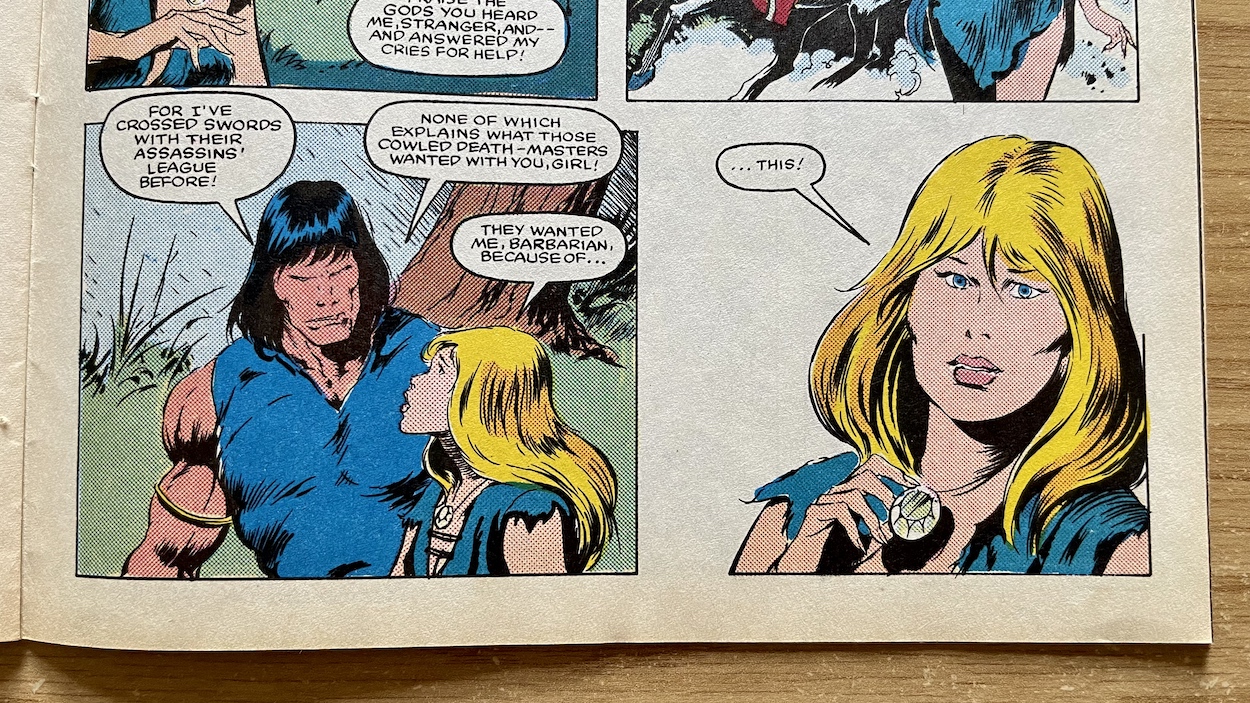
“They stand face to face. Both are tall men — and built like tigers. But one of them is — Conan the Barbarian”

The Frost Giant’s Daughter, Robert E. Howard/Roy Thomas

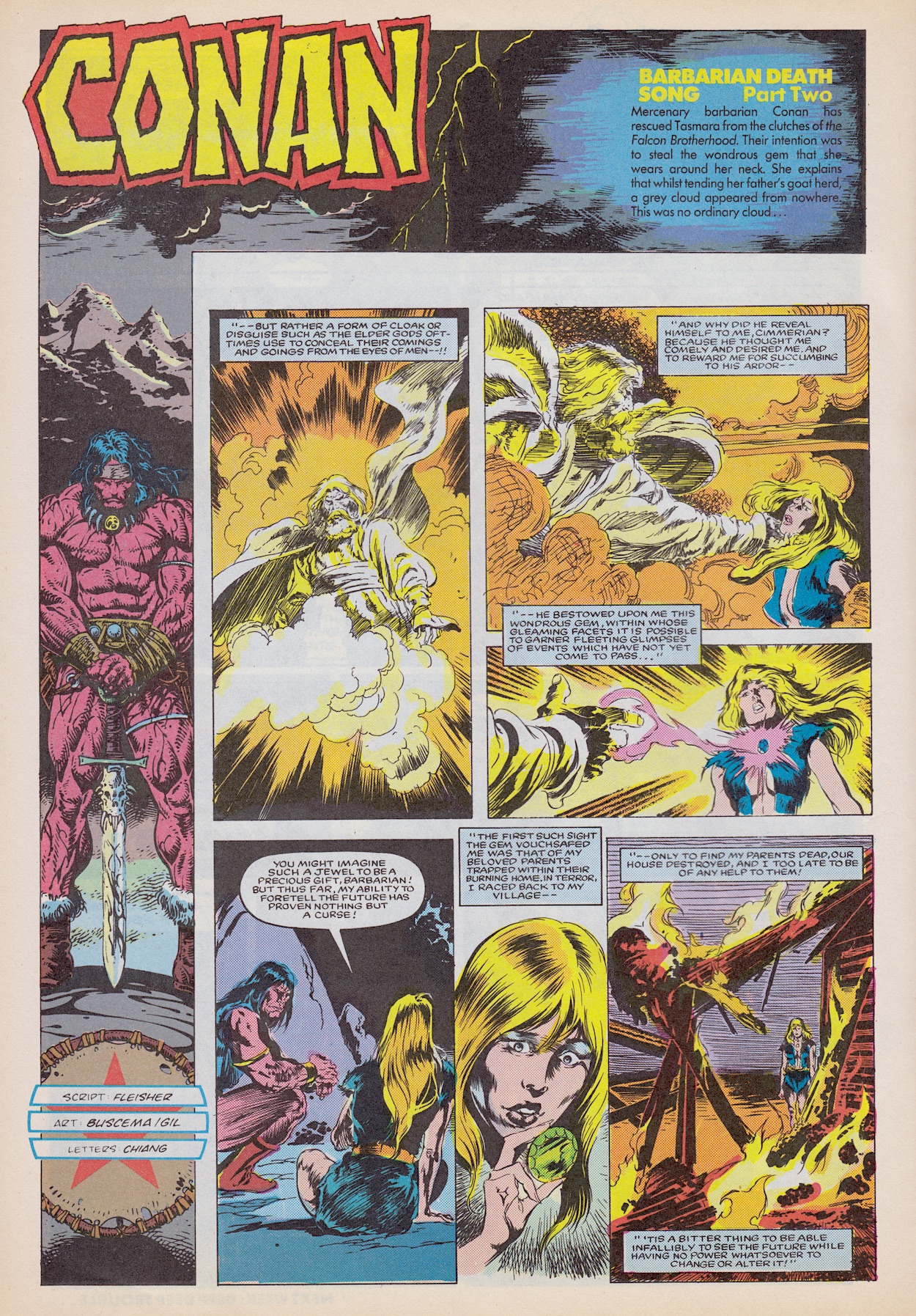
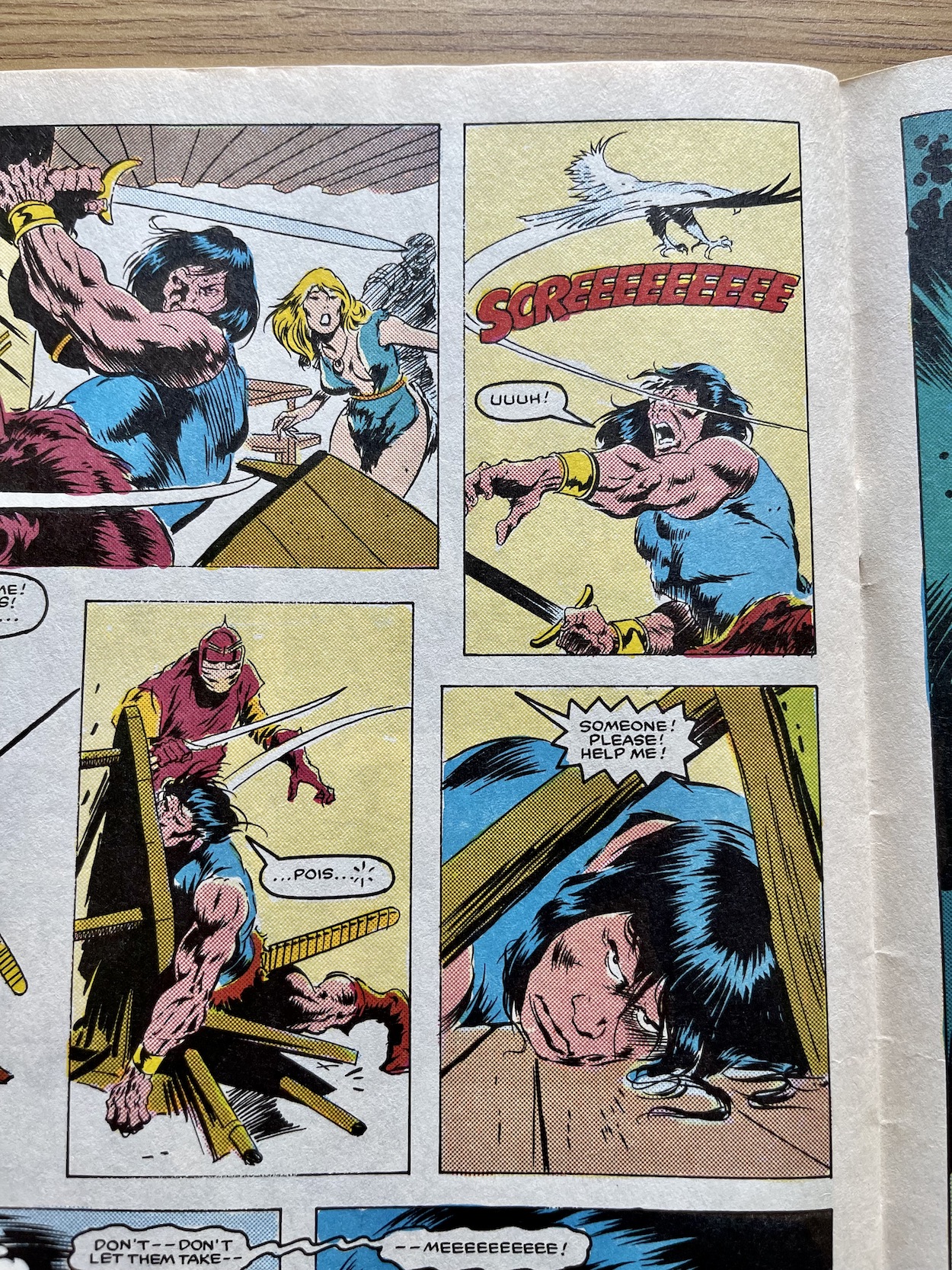
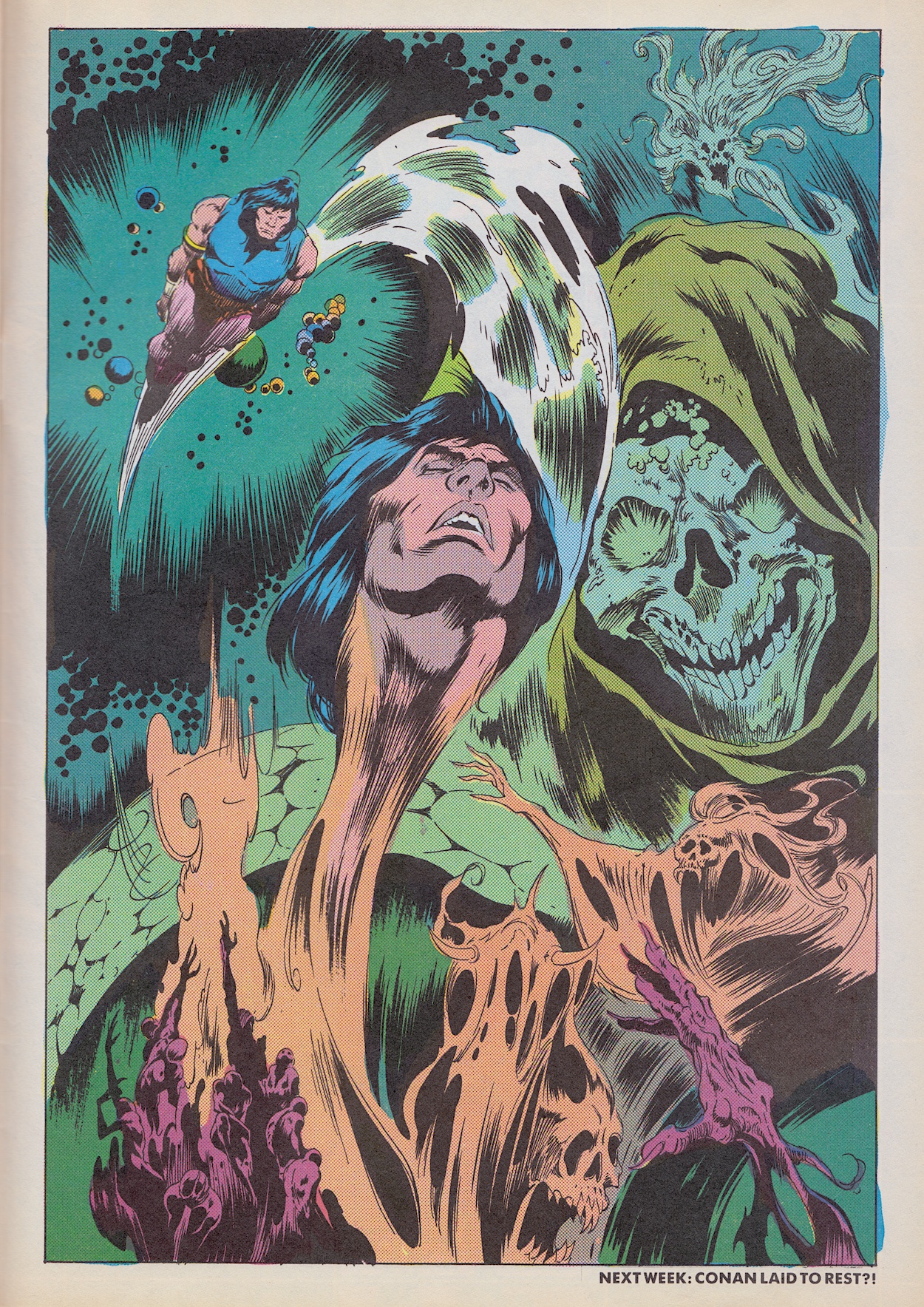
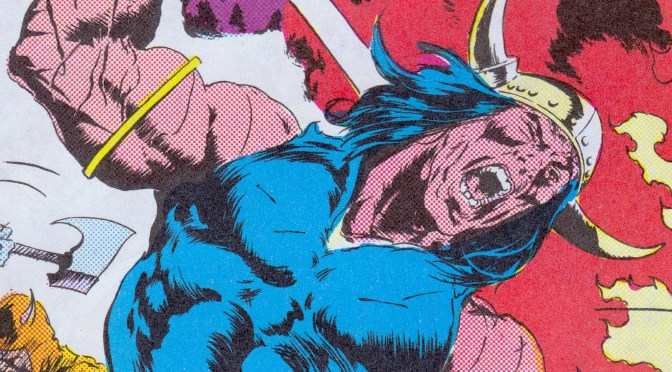
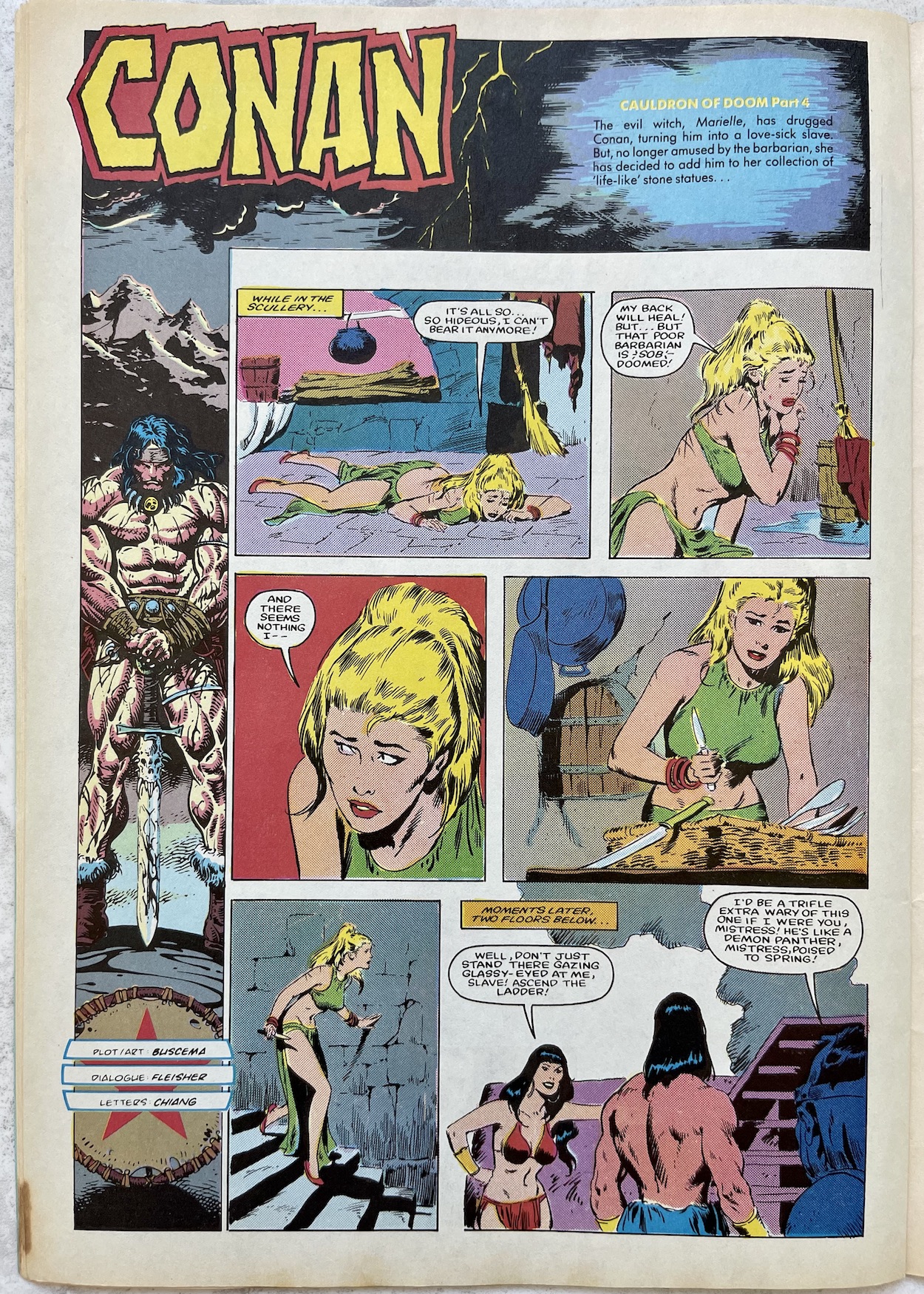
Next up is Conan the Barbarian, only known to me at the time from the Arnold Schwarzenegger movies of the 80s which never really appealed to me. This turned out to be the most surprising strip in Havoc because I wasn’t expected much at all but really enjoyed it, so now it’s time to find out if I still do three decades later. The story is interesting but the real world background of it is fascinating. The original Frost Giant’s Daughter was written by Conan’s creator Robert E Howard in 1934 but was originally rejected by the magazine he submitted it to and so the character and settings were changed. It only eventually saw print as a Conan tale long after Howard’s death.

In comics, this adaptation is by far the oldest strip among those in Havoc. Published in Savage Tales in 1971, a censored version (mainly for nudity) was printed in Conan’s own comic the following year with a new opening. It’s that version we got in Havoc. Adapted by Roy Thomas (Arak Son of Thunder, Shazam!, The Dragonlance Saga) with art by Barry Windsor-Smith (Machine Man, Iron Man, Avengers) and lettered by Artie Simek (Fantastic Four, Showcase, Kid Colt), this gripped me instantly as a teenager with its action, setting, the blood and guts and the sexual undertones. It was like nothing I’d read before. I was captivated.

I had no idea this strip was older than the others and it doesn’t read as such either, the writing capturing the timeless rhythms of Howard’s originals. After a huge and bloody battle a young Conan collapses in the snow but as death creeps in he sees a beautiful woman, becoming instantly enamoured with her. Confused as to how she could be so scantily dressed out in the cold he assumes she must come from a village he didn’t know about, somewhere he could rest before his next battle. But there’s nowhere nearby, her identity is a mystery and her see-through clothing (censored here) entices Conan into the chase.

Her existence doesn’t make sense here in the snow covered mountains, so Conan’s pursuit changes from one of lust to a search for answers, fearing it’s some sort of vision or trick. I can’t remember the exact reason and I don’t want anyone to tell me if you know, I’ll find out in real time as always. At the end the fact it’s a trap is made very clear, but no other answers are forthcoming yet. I find myself remembering the sense of childhood wonder I had in reading this and I’m intrigued now to find out more about Conan himself, as well as the mystery at hand. A strong start.

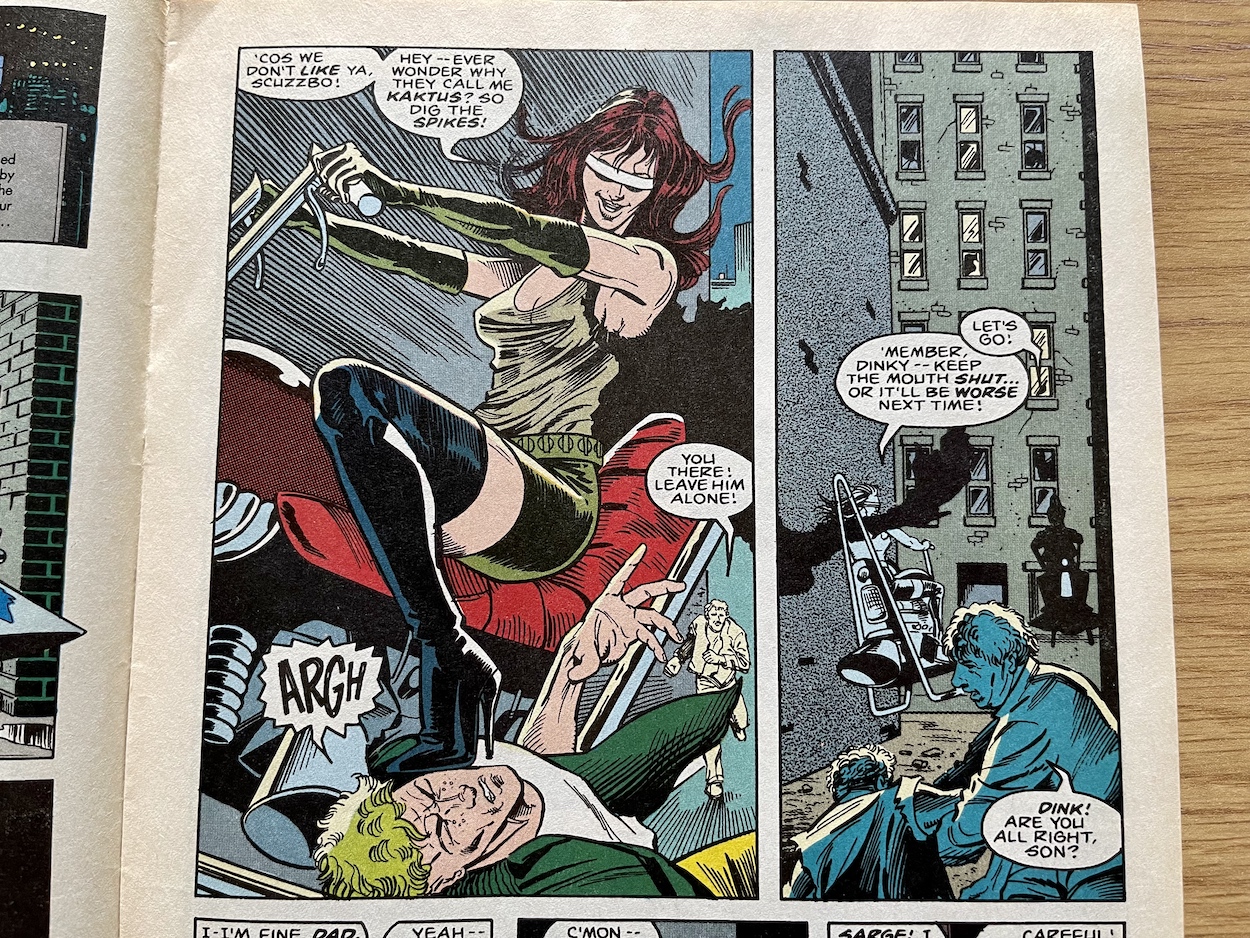
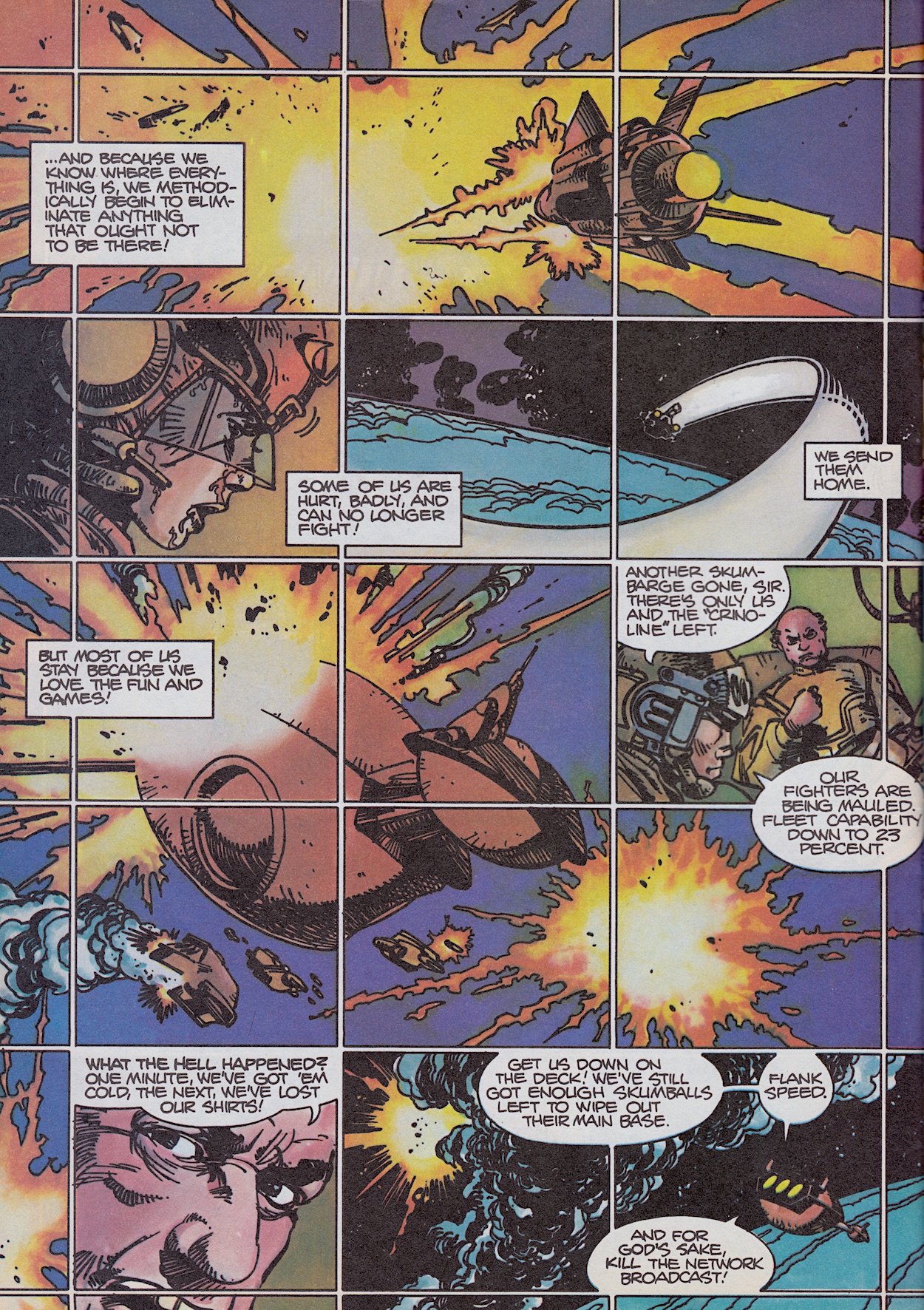
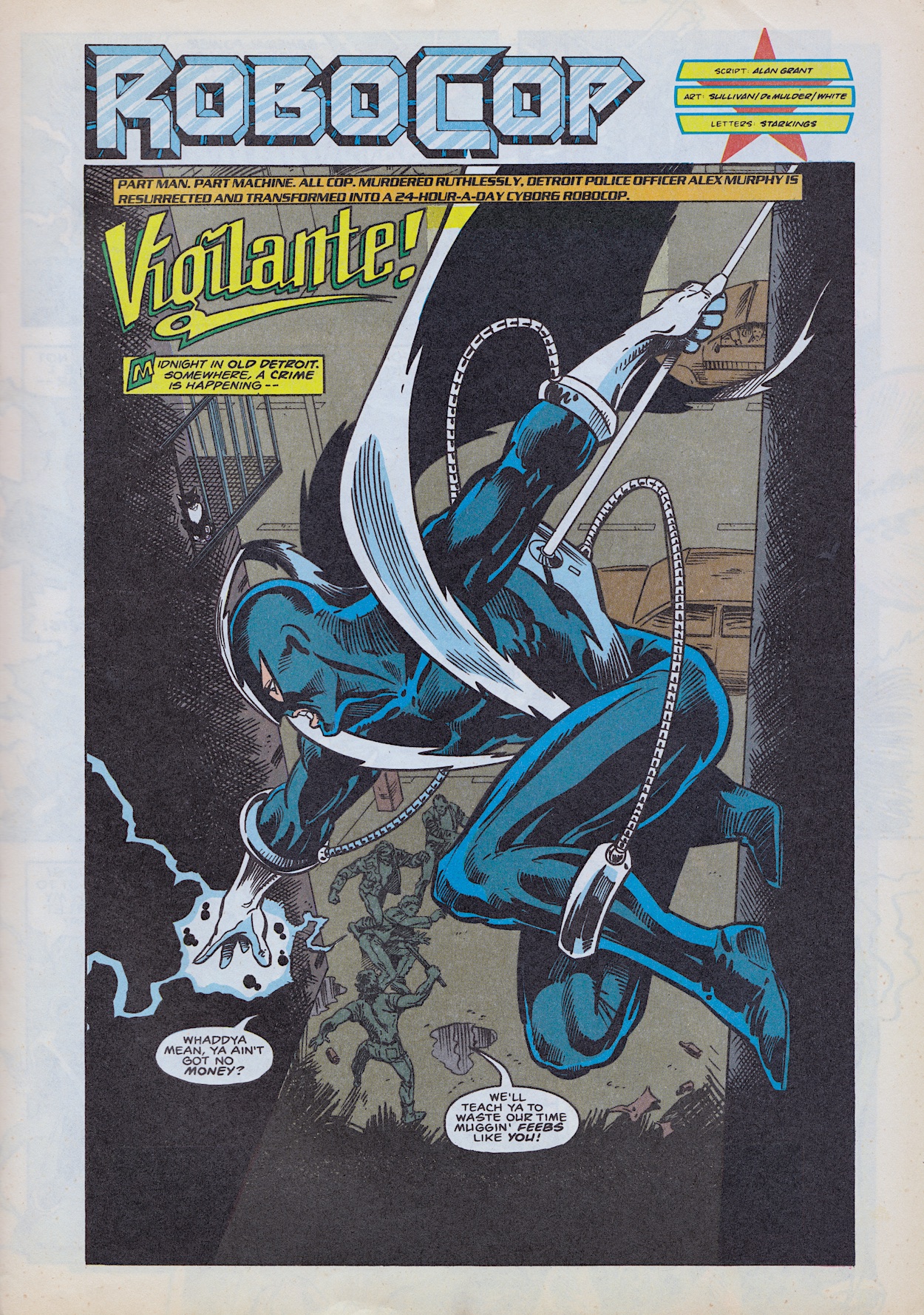
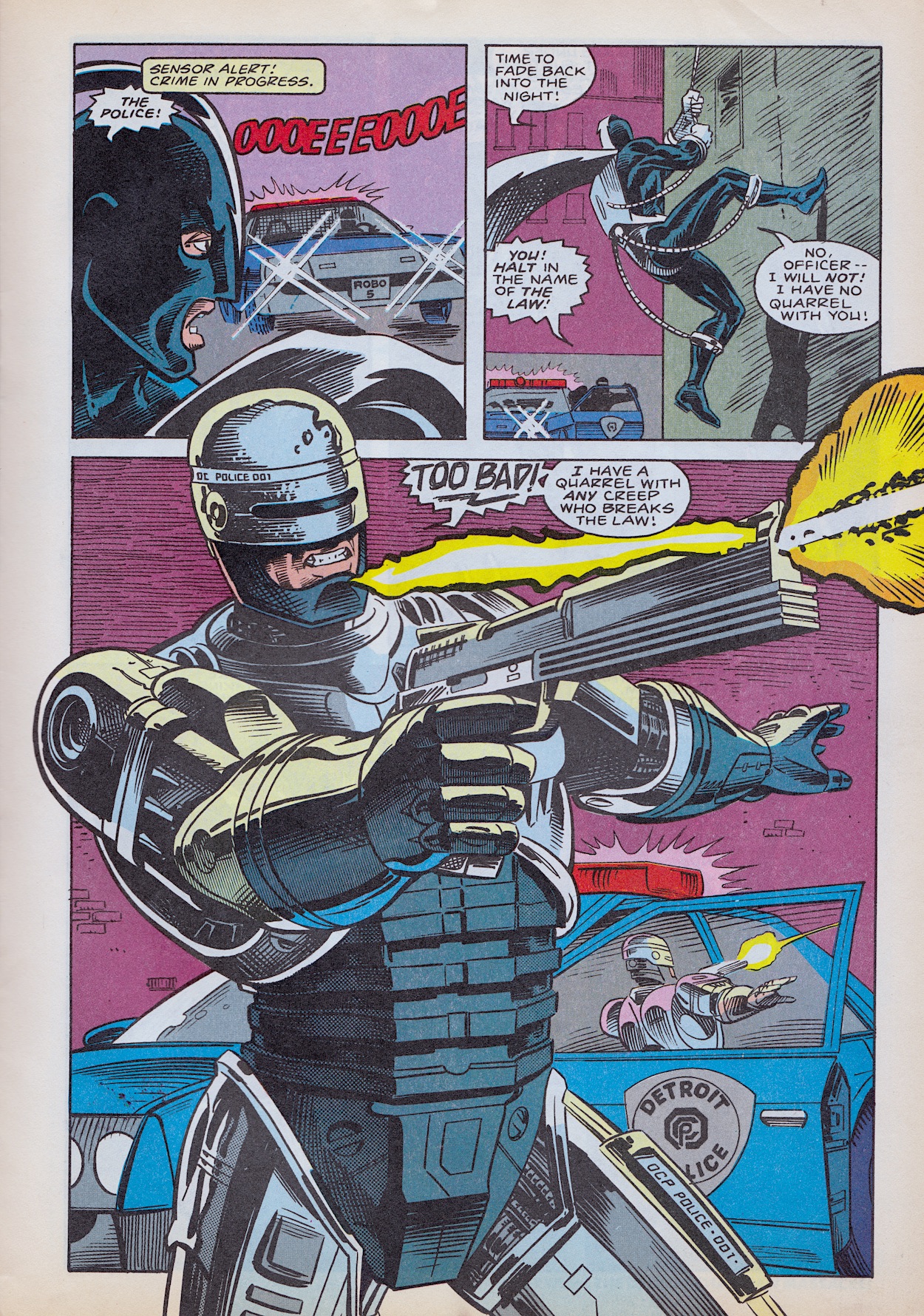
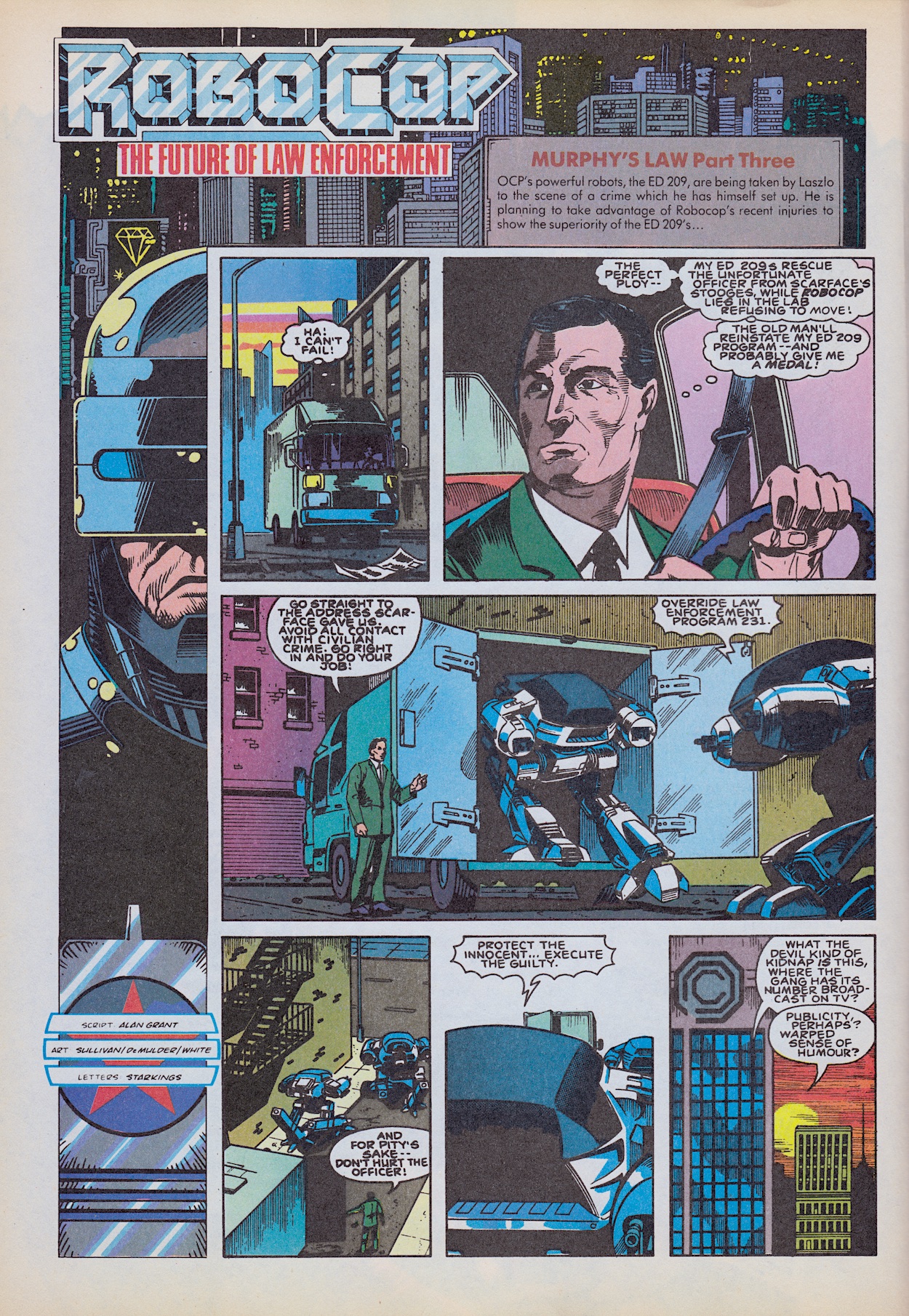
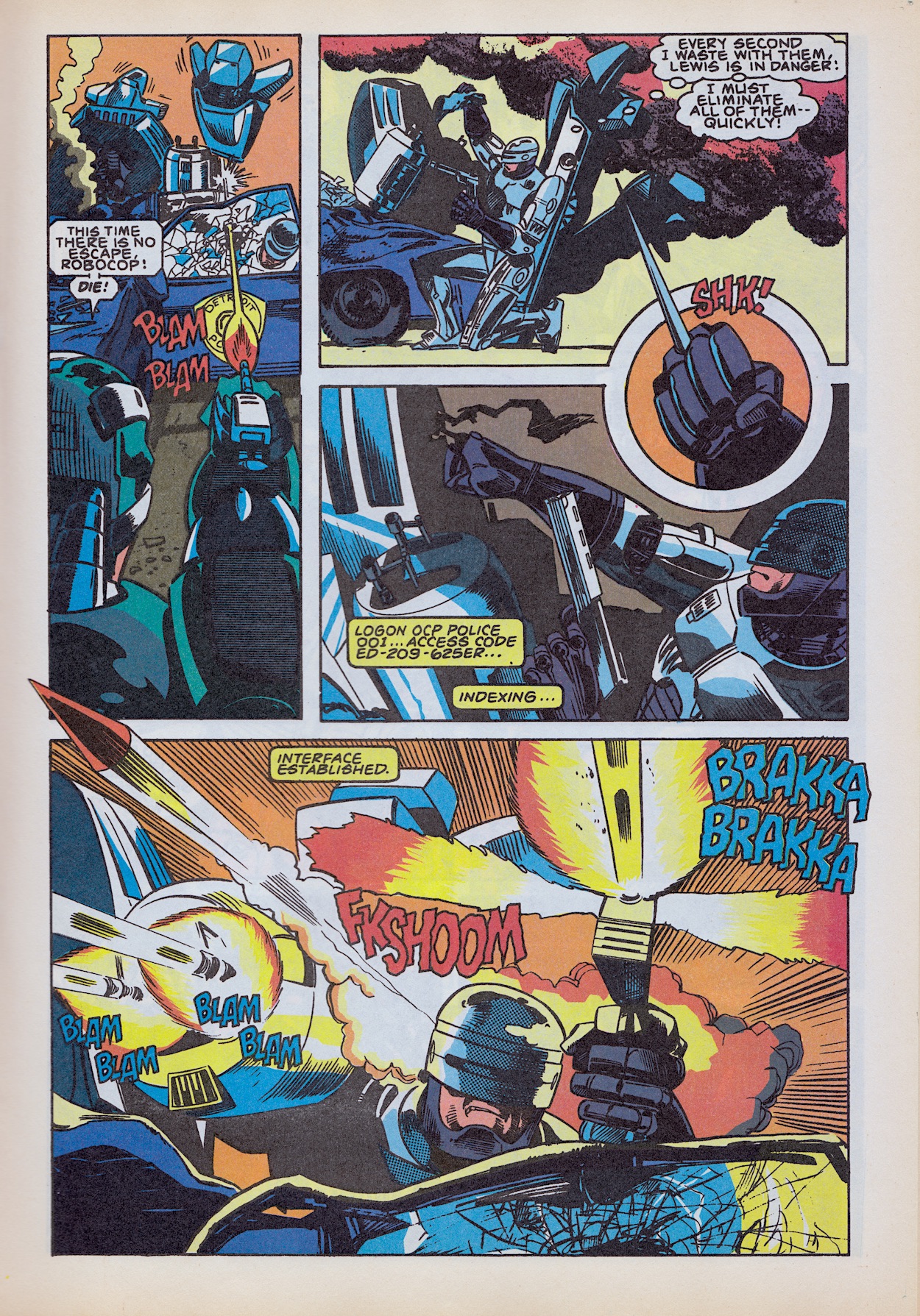
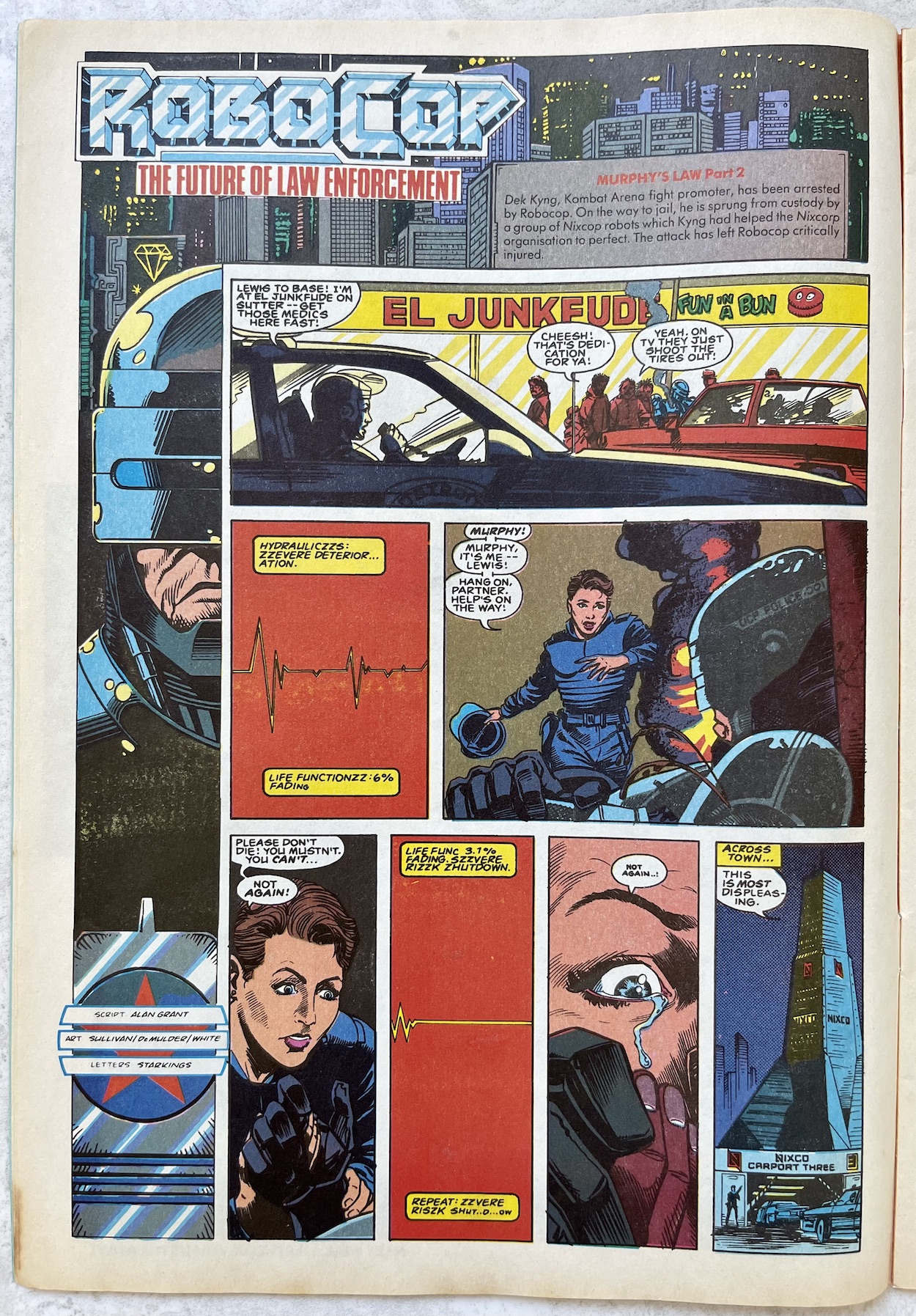
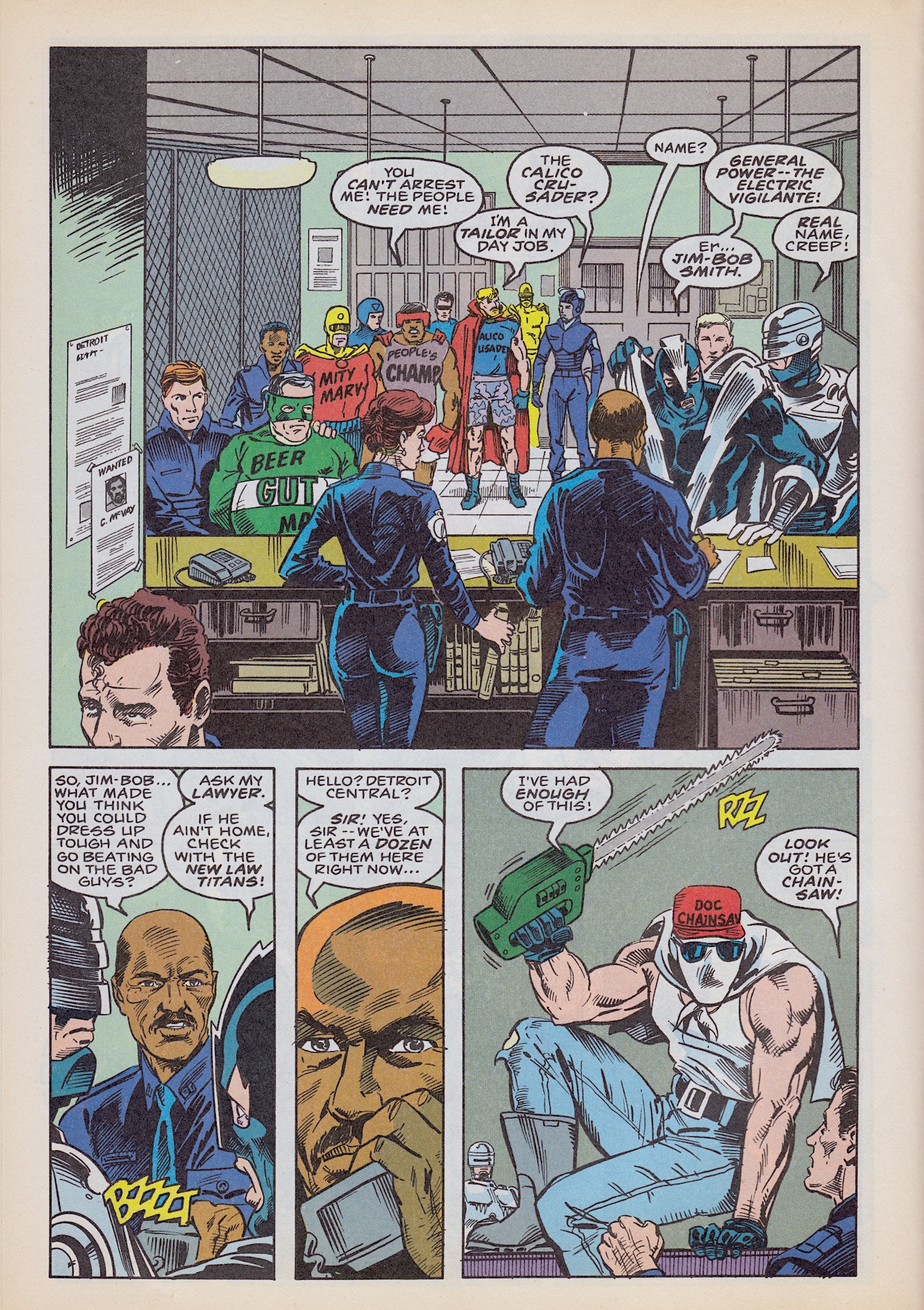
The final strip was the one I was most looking forward to when I initially saw the lineup as a teen. Deathlok looked awesome but I already knew Alex Murphy aka RoboCop and it felt exciting to see him in comic form. What a shame then that this first chunk of Kombat Zone is probably the weakest of this first issue. I put this down to the fact I’ve seen so much more of RoboCop since then and in particular the characterisation in the TV series. Here he comes across as rather two-dimensional and his speech patterns read very strangely, rather clichéd compared to the first film or the show.

But hey, it’s only the first five pages! I’m not going to get ahead of myself. I’ll see how it develops. Robo intercepts a hover-bike gang as they seemingly take down an innocent stroller in Old Detroit. But in the background someone is filming the confrontation with RoboCop and when the victim makes a plea to pay off his assailants one of the bikers makes a passing comment about already being paid. There’s more to this random attack than meets the eye.

Murphy may not have heard this or seen the man with the camcorder but the way the bikers attacked is enough for the detective to have his doubts. But our mysterious stranger throws in a “smart-gun” (which was rather forward thinking for an early 90s comic) which kills the ‘victim’ Alex had saved and the last of the bikers before he can give anything away. It’s all over very quickly and after some of the more substantial reads it’s a bit of a disappointment when this is the big licenced strip.

Of course, none of the ongoing stories in this issue were ever designed to be broken down like this, so overall the comic has done a wonderful job of selecting the right characters, stories and ending points to give us a flavour of Havoc’s future. So I can forgive the feeling of two of the strips being all too brief this time out, we’ve been spoiled by the package as a whole.

What a shame the great team assembled for RoboCop aren’t given any credit because the Deathlok ones are mistakenly reprinted instead. RoboCop: Kombat Zone reads like a who’s who of comic legends in my eyes. It’s written by none other than Alan Grant (Judge Dredd and Batman, including the Judgement on Gotham crossover, Toxic!), pencilled by Lee Sullivan (Transformers, Doctor Who, Tekworld), inked by Kim DeMulder (Batman, Transformers, G.I.Joe), coloured by Steve White (Dragon’s Claws, Xenozoic Tales for Jurassic Park, Transformers)and lettered by Richard Starkings. What talent! After finding this out I’m all the more excited now for the rest of the story.

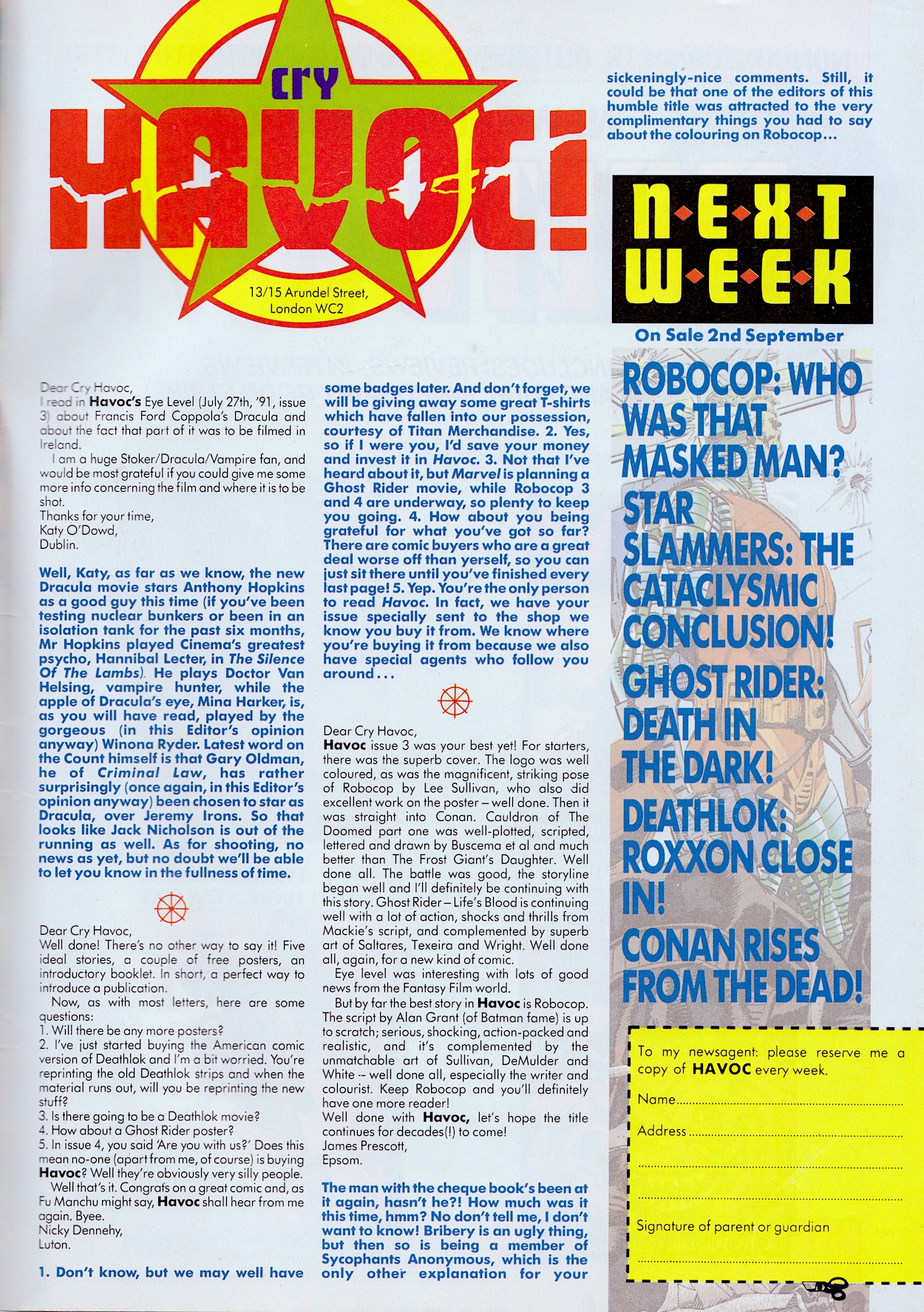
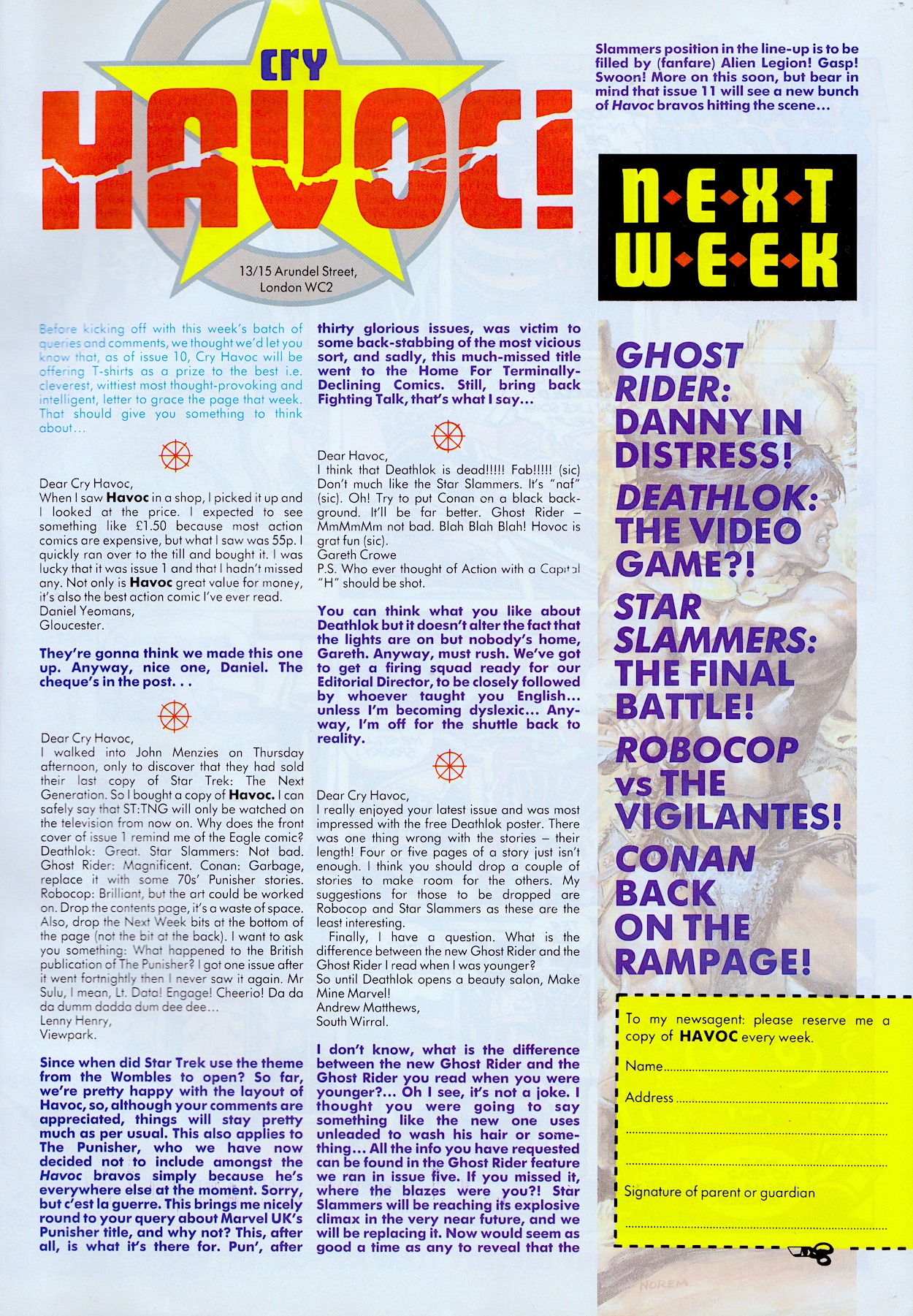
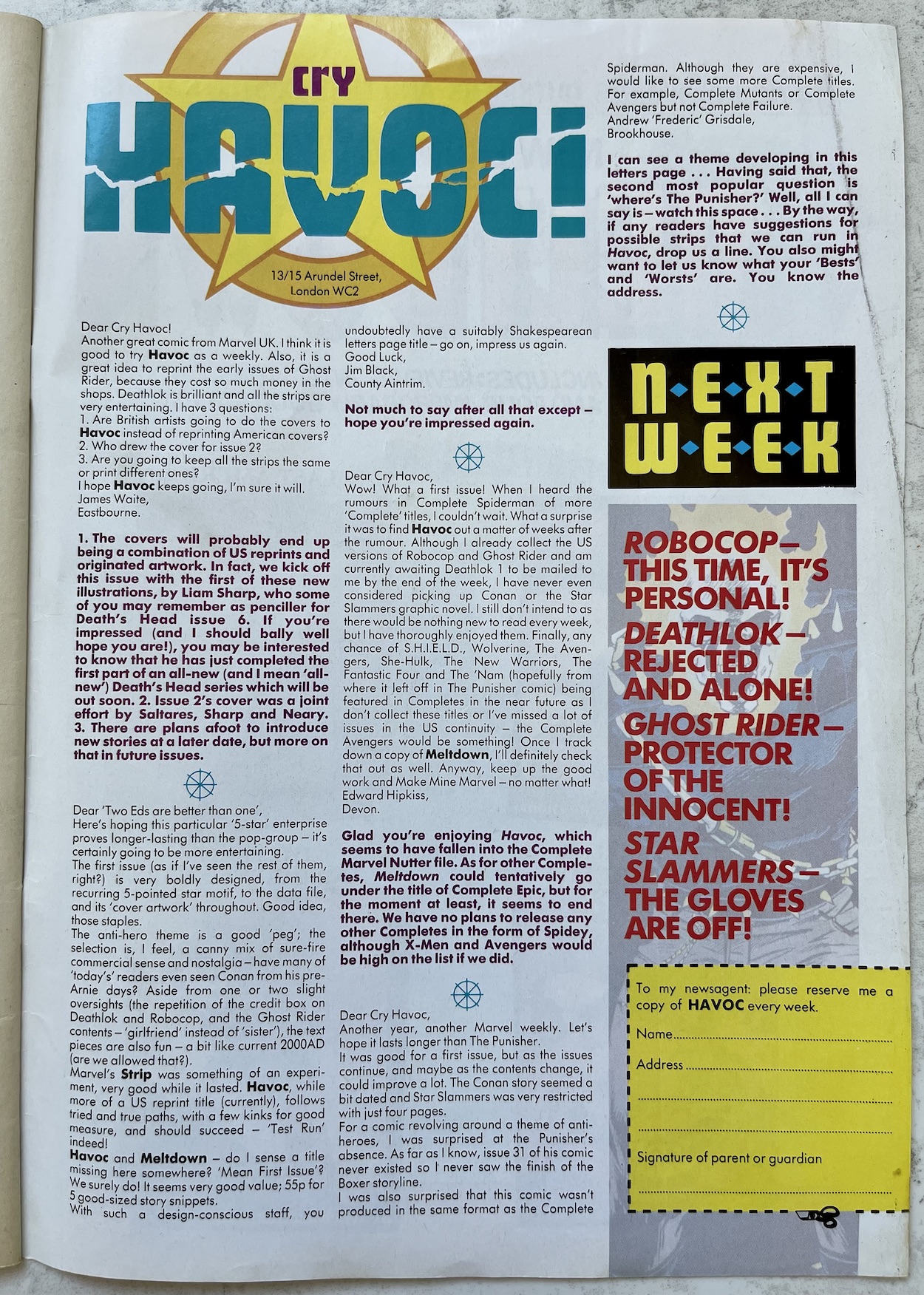
I’m just going to finish off now with a quick look at the other non-strip pages in this premiere issue, notably the Next Issue page and the retro adverts. You may notice the date for #2 is given as Monday 15th July 1991. Havoc was advertised as being on sale every Monday and a lot of other comics said so too but were released on the Saturday beforehand. The date on the cover of weekly/fortnightly Marvel UK comics was always the date the next issue would go on sale, kind of like an expiry date for each issue, the date the newsagent would remove it from the shelves.

Havoc has the date of the following Saturday on its cover but on the Next Issue page it’s two days later, the following Monday. I have very clear memories of picking this up every Saturday morning throughout the summer of 1991 and in later years when I worked in various newsagents in my teens and early 20s comics were never released on a Monday. (The only publications beyond newspapers that would ever arrive on a Monday were women’s weeklies.) So I’m not sure why the wrong date is given here, but it gets even more out of sync later in the run as you’ll see.

Elsewhere there’s an advertisement for Havoc’s sister title Meltdown both in the comic itself and on the back of the free booklet, there’s one for Thorpe Park dressed up as a competition and on the back cover of this mean, action-packed, mature read are the Fiendish Feet! Oh I loved those yoghurts as a kid.

This has been a rather long post, I know. But it was necessary to introduce Havoc, its strips, their main characters and all of their creative teams. It’s been a blast revisiting this issue and I’m so glad I haven’t got long to wait until I do it again for #2, albeit maybe with a slightly shorter blog post. The next issue of what should’ve been a very long-running comic will be here on the OiNK Blog from Wednesday 13th July 2022.

GO TO iSSUE TWO

HAVOC MENU

OiNK! FREE CRASH EDiTiON

This is a somewhat unique addition to OiNK’s run and one I missed out on at the time, despite it being briefly advertised in #32. I can only blame my young self’s lack of attention span for that one. Given away free with #48 of ZX Spectrum computing magazine Crash, this 16-page freebie (the pages are smaller than usual, made to slide inside the A4 Crash) contained all new material from a variety of OiNK contributors. As a tie-in with the new computer game it was an original idea and a smart move, potentially a great way of bringing new readers over to the comic.

I’ve already covered the magazine’s OiNK article which contained an interview with co-editor Tony Husband and a special Frank Sidebottom page, so let’s take a look inside the comic that came with it. We’ve a superb Ian Jackson cover to begin, with Uncle Pigg playing the game on a Spectrum computer which leads to a strip inside featuring him and Mary Lighthouse (critic) in a take on Max Headroom. But it’s across the page from this that things take a turn for the weird.

Lew and Mark decided the strips would work best if they reflected the gameplay

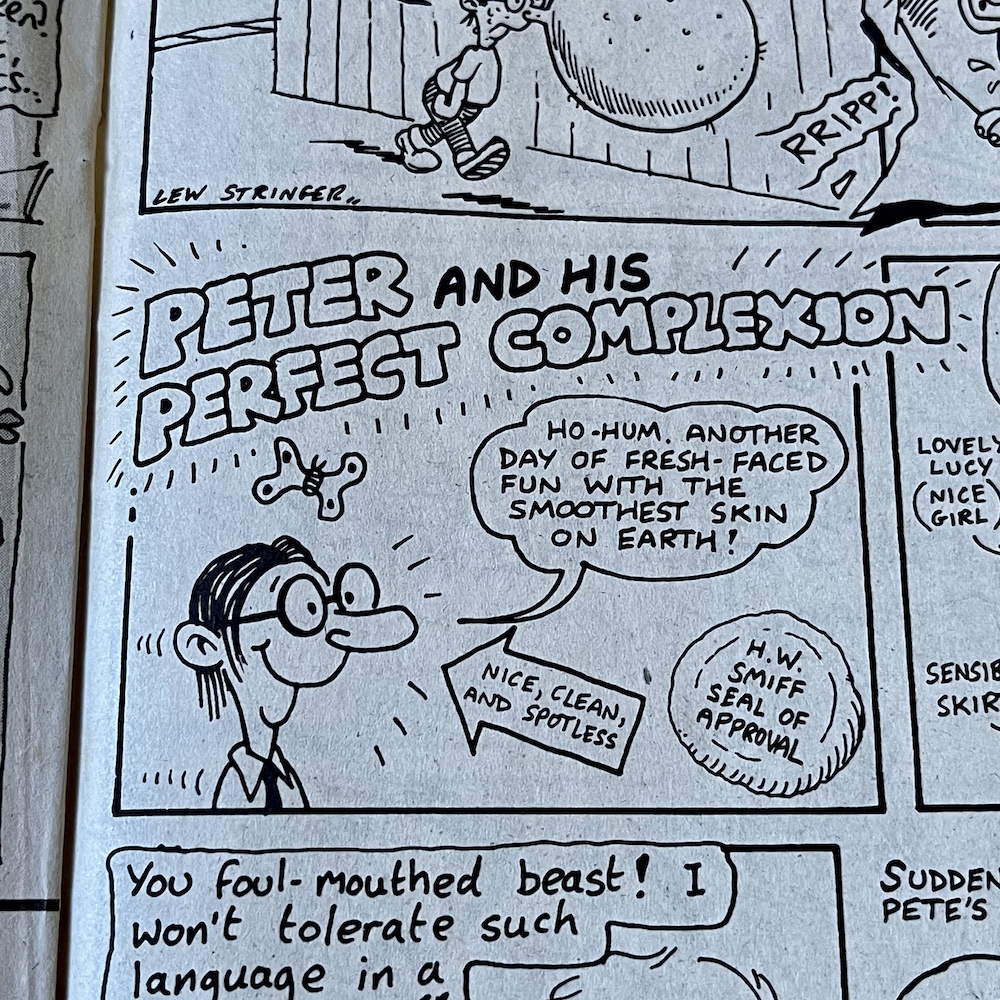
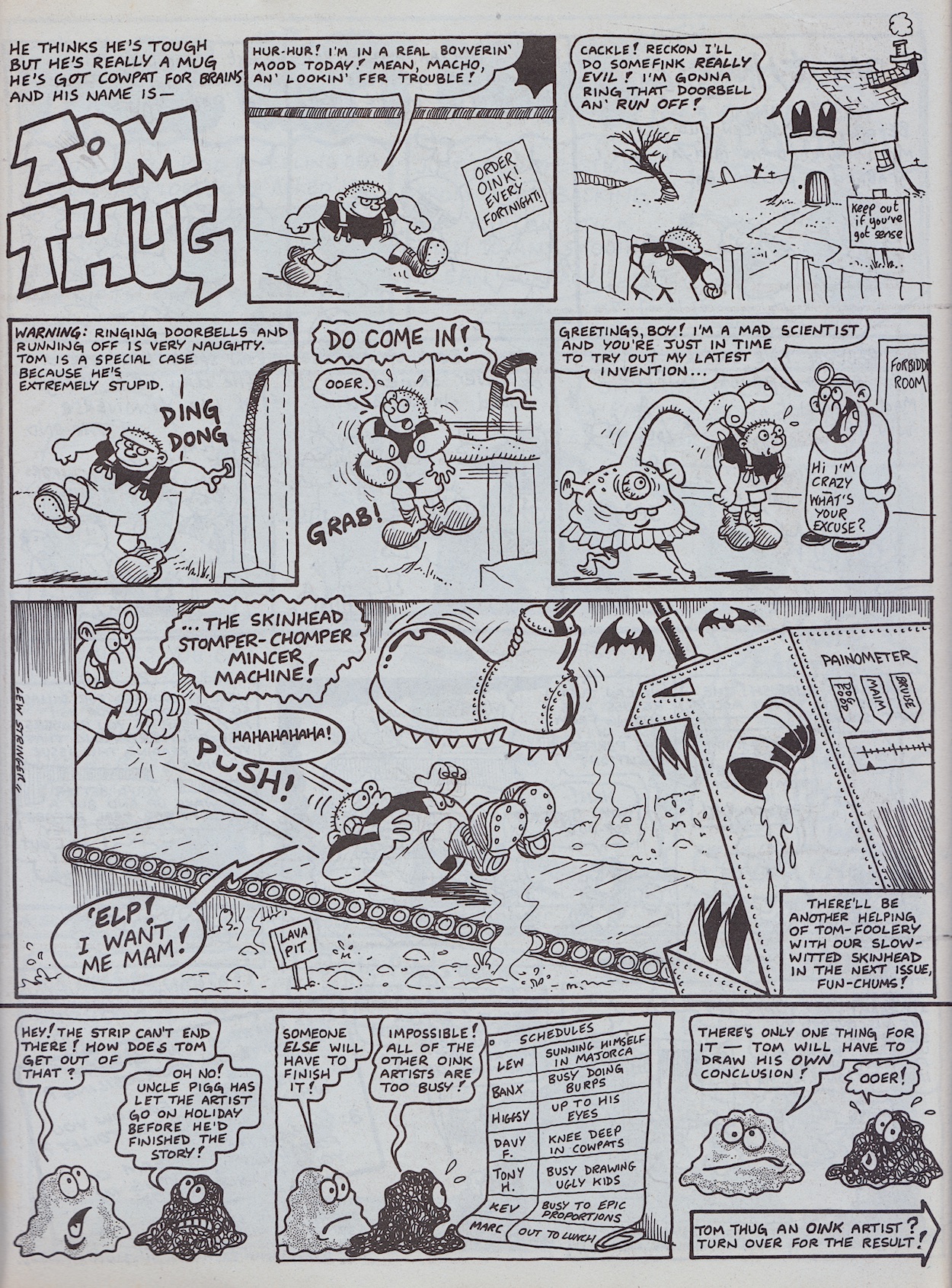
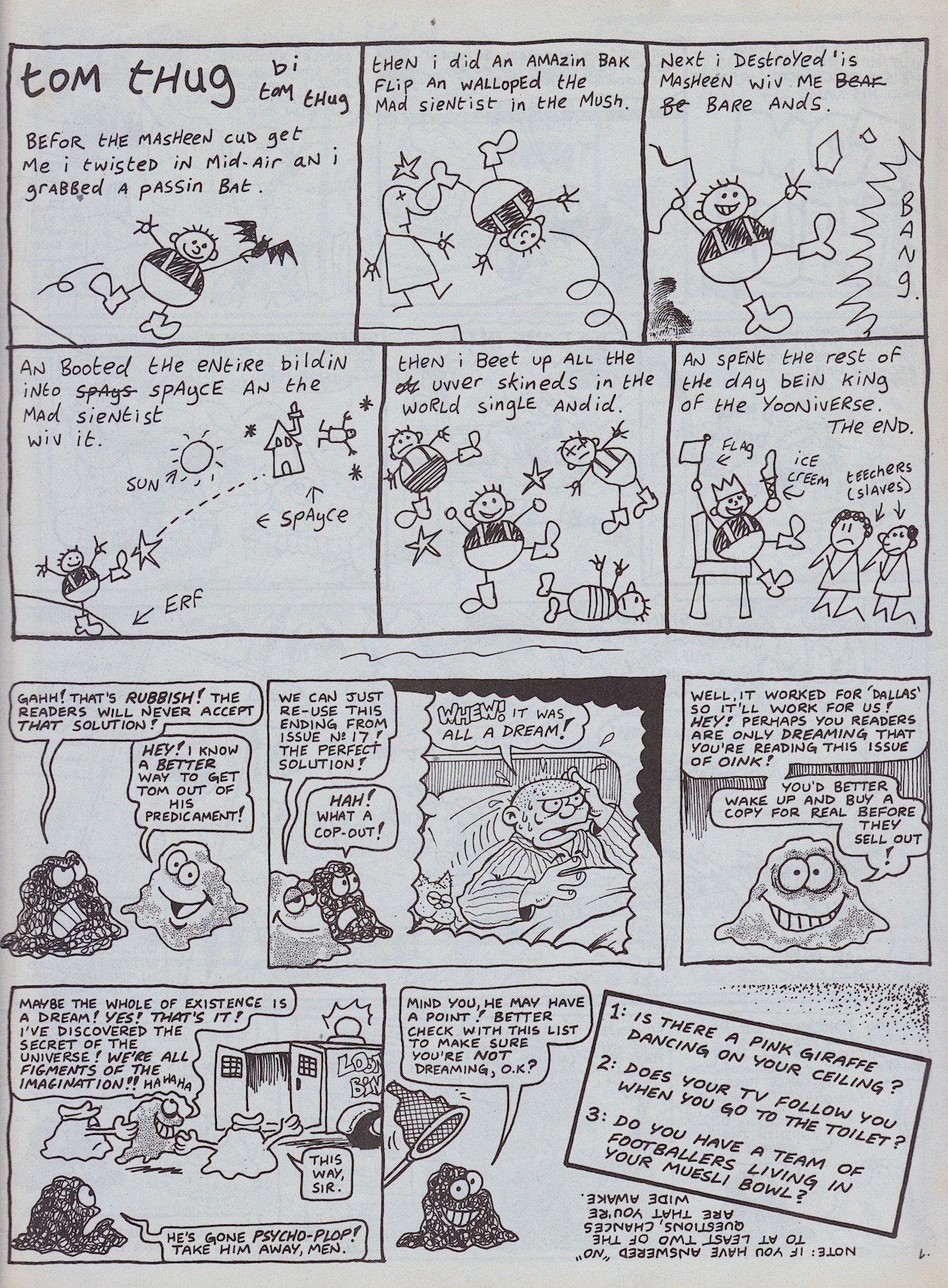
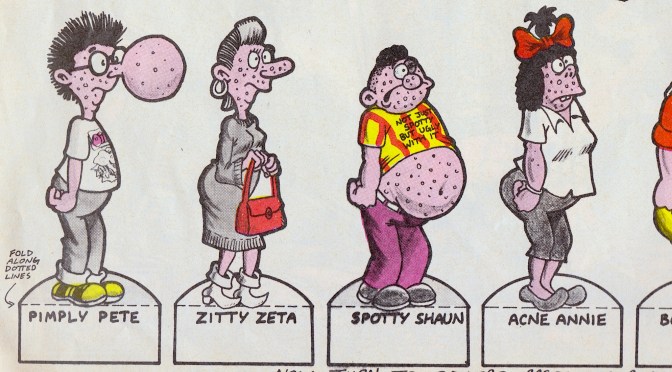
Lew Stringer’s Pete and his Pimple and Tom Thug strips feel a little off and originally I couldn’t quite put my finger on why. Pete’s strip has a different name and basically his pimple goes on a bouncing spree (complete with dog-like yelping noises), flattening some bullies in the process. It’s a bit tame compared to normal, and in Tom’s strip he’s driving about in a ‘Thugmobile’ shooting bovver boots out of a cannon at invading zombies! It’s a dream of course. He awakes to say he’s doesn’t know why he’d dream that but his bedroom is full of zombie posters and toys, something never mentioned before in OiNK. How bizarre.

Don’t get me wrong, both are enjoyable strips, however there’s a reason they feel very different than normal. Lew and co-editor Mark Rodgers decided they’d work best if they reflected the gameplay in the OiNK game. But since that didn’t really reflect the comic (and instead was made up of mini-games with the characters shoehorned in) their strips in turn don’t really reflect their usual hilarious outings. Pete’s game was a Breakout clone, bouncing a ball (his pimple) to break bricks, for example. I’m also not quite sure why Pete’s pus is suddenly green, although Patrick Gallagher did confirm they did the colour separations and not Crash.

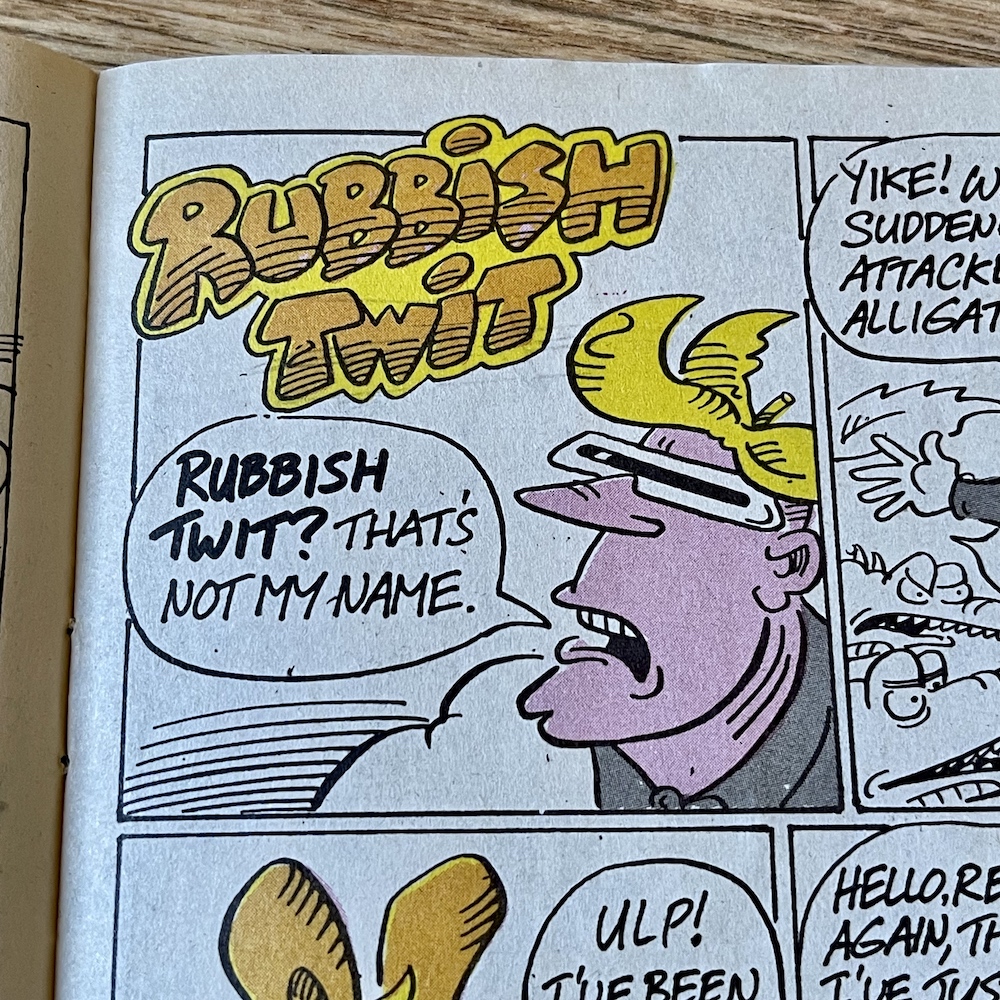
There are some funny moments here, like the sound effects used in Pete’s strip being classic comic titles such as ‘Pow!’ and ‘Wham!’ and of course the word ‘Crash’ is used as much as possible! David Haldane’s Rubbish Man is the third and final strip of a character featured in the game and unfortunately it’s pretty poor, with Boy Blunder playing the game while our hero dispatches some random vegetable villains in the background. None of his smelly powers (or even his smell) feature at all, so as a pig pal it just feels rather bland.


“He defeated the dreaded Three-headed Politician of Gassbagg!!”

Mutant Space Barbarian Magic Warriors of Doom

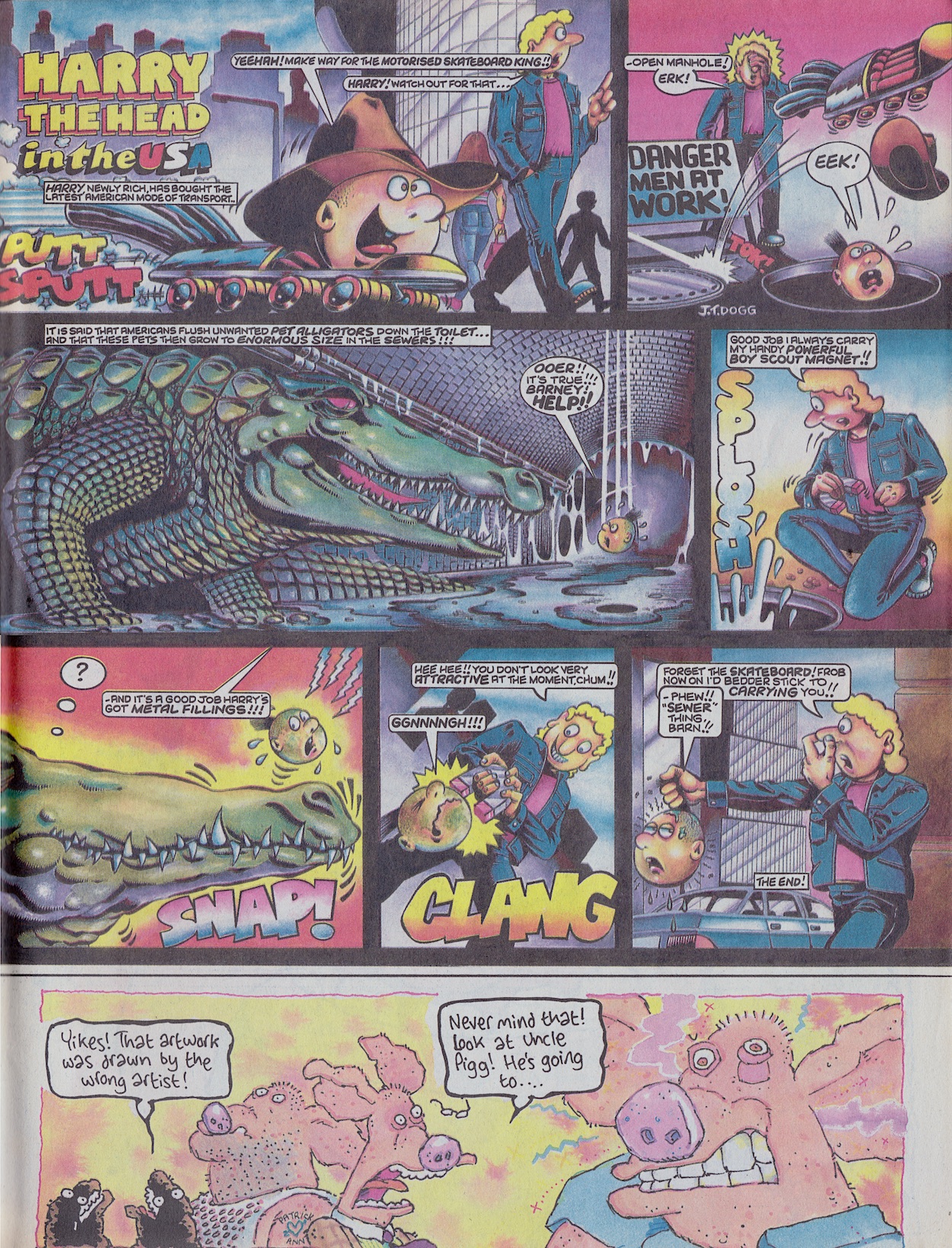
Much better is the double-page spread in the middle of the comic drawn by J.T. Dogg. Written by Mark Rodgers the title Mutant Space Barbarian Magic Warriors of Doom sums up some of the ludicrous names we were subjected to for some of the less-than-great gaming titles back in the 80s. It centres on an arcade machine with somewhat magical powers. Perhaps inspired by Tron, it’s a much more colourful affair with Dogg’s excellent artwork.

With its fast-paced humour, daft ending and some 80s satire it’s the best introduction to OiNK possible for Crash readers. That ending in particular had me laughing. With all of that build up, the heroic deeds and all of Mike’s victories, for it all to be torn down in a couple of sentences and the whole world to fall into despair as a punchline is great stuff. Classic Mark, really. Billed as “An Interactive Comic Strip” for the computer mag, in reality it boils down to a competition for the readers to send in suggestions of what poor Mike saw that turned him into a pile of Angel Delight.

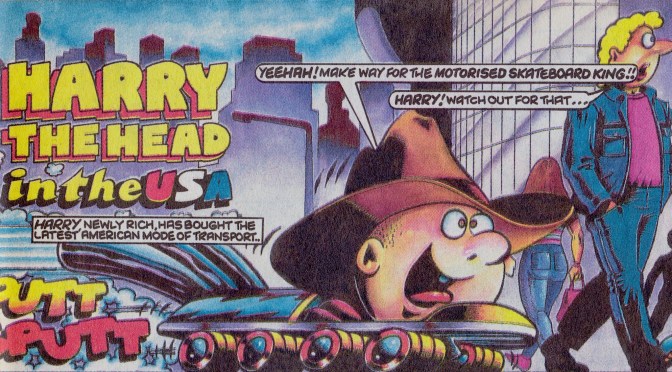
The address for this competition is OiNK’s, meaning the winning entrants would be published in the comic instead of the magazine. We’re almost at a simply superb contribution from Frank, but first here’s a quick look at some of the other highlights. Mary Lighthouse (critic) isn’t too happy with Uncle Pigg’s simulation of her in that Max Headroom-inspired strip, you can see part of Tom Thug’s strange dream based on the game, Harry the Head scares a show off on the school computers and this issue was the perfect place for a reader’s Groovy Graphics.

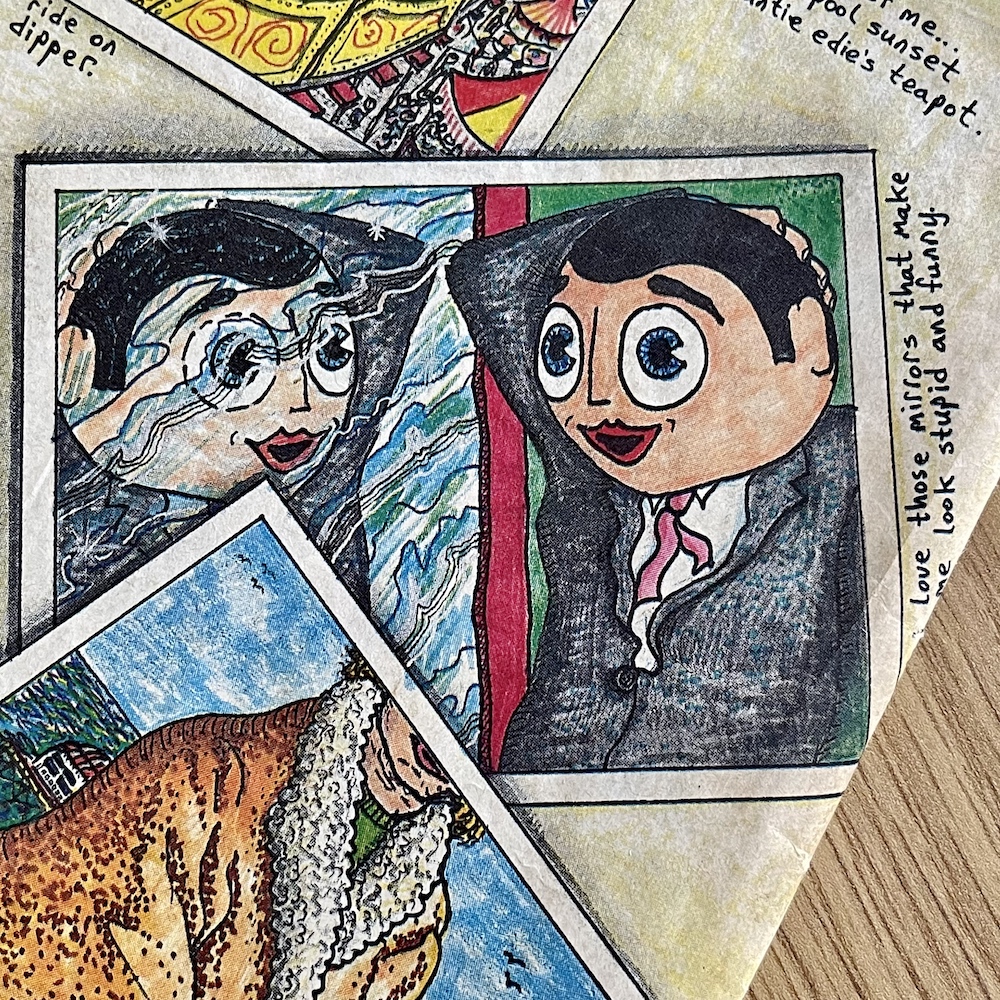
Up next Frank Sidebottom has a text-heavy (which suits the magazine) double-page spread and it contains an extraordinary amount of work on the part of his alter ego, Chris Sievey. From the introduction that pokes some fun at the Sinclair ZX81 (accurate though, so he’s done his research) to his piece about the “fiddly bits inside computers” and his funny facts about the machines (and neighbours) that includes praise for Clive Sinclair’s infamous C5 personal cycle, it’s a delight to read.

It also contains some actual working type-in programs for ZX Spectrum users. These little gems are not only working programs, they’re funny in their own right. Complete with cut-out cassette covers which hilariously had nothing to do with what was on the screen (but none for Little Frank‘s game, naturally), one ‘game’ would basically select a random point on the screen and you had to use your cursor to find it in a trial-and-error fashion. The other was a linear romantic story where all you’d do is hit a key to read the next line and it’d give you a couple of choices to get slightly different compliments about what a nice young woman you are.

Oh and Little Frank’s program prints “l.f. is better than f.s.” at random points on the screen. Silly and pointless, but that in itself was the whole point.

To round things off for potential new OiNK readers what else could be on the back page but a GBH madvertisement? The 80s was a very exciting time for what would become a multi-billion pound industry worth more than the movie and television markets! Everything was brand new and younger people in particular jumped at the chance to become part of it, creating their own games from home, just like a lot of the mainstream games were back then. GBH clearly saw an opening in the market for ripping people off.

The pictures for this were taken by OiNK’s resident photographer John Barry and that lady at the computer (that contraption is so funny in itself!) is John’s wife at the time, Ike Walton. Thanks to co-editor Patrick Gallagher for the info. Unfortunately the names of the children and that wonderful old man have been lost to the mists of time.

If you’re interested in tracking down this unique little issue of OiNK it also includes Billy Bang, Horace (Ugly Face) Watkins, Mr Big Nose, Burp and Hugo the Hungry Hippo. While I do believe some strips would’ve been a much better introduction for their characters and the comic if they hadn’t tried to tie themselves into the game, I completely understand why they chose to do so. It’s still a funny wee comic and a unique edition that no OiNK collection is complete without.

Quite a few posts make up the blog’s coverage of the OiNK game, beginning with the preview in Zzap!64, an in-depth look at the Crash magazine this comic was bundled with and a Retro Gamer article from 2021 containing an interview with the game’s creator. Still to come on is the Zzap!64 review of the game itself and later in the year a couple of issues of Commodore Format in which they gave the game away free but under a different name, then detailed how to beat it.

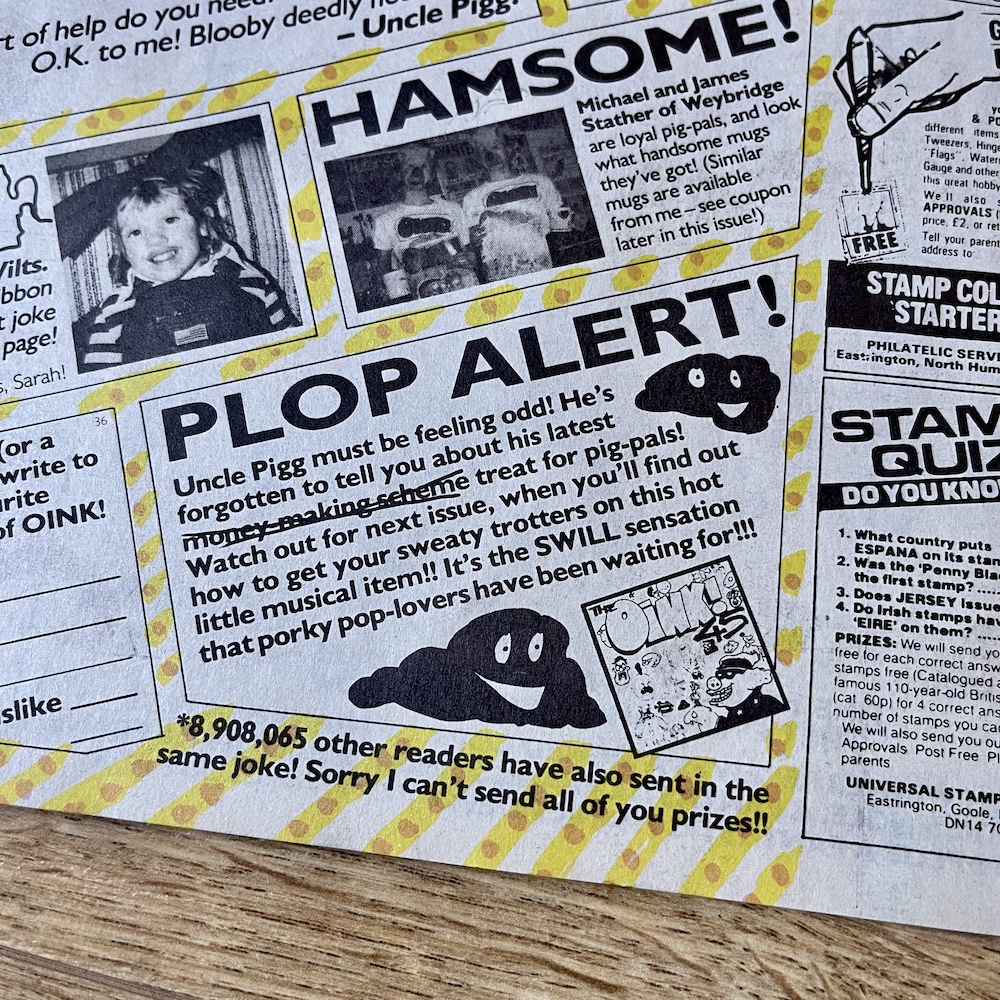
But probably most excitedly for established pig pals who picked this issue up were the first images of two things coming later in 1987, in a promo by Patrick. Stick with the blog, folks.

iSSUE 30 < > iSSUE 31

OiNK READ THROUGH MENU

OiNK SPECiALS & BOOKS MENU

THE OiNK COMPUTER GAME MENU

OiNK MERCHANDiSE MENU

MAiN OiNK MENU

COMiNG UP: FREE CRASH EDiTiON

Coming up in a couple of days is a very unique little edition of our favourite comic, the free OiNK Crazy Computer Comic! Only available free in an issue of ZX Spectrum computing magazine Crash, it was a 16-page sampler with all brand new strips and features, released to tie in with the new computer game (which was a tie-in with the comic). I’ve already covered the excellent OiNK feature inside the magazine so up next is the main event. Below is a scan of the only time it was promoted in OiNK.

As a kid this passed me by so it’s a shame it wasn’t given a proper advert at the time, more of us may have picked it up. But I’ve now corrected this oversight and some highlights I’ll be showing are a rather different Pete and his Pimple, another gorgeous J.T. Dogg strip, a GBH Hardware catalogue and a simply jam-packed spread by Frank Sidebottom! You can see these and more in the full review.

GO TO FREE CRASH EDiTiON

OiNK iSSUE PROMOS MENU

MAiN OiNK MENU

HAVOC: iN REAL TiME

It’s time to add another comic to the blog, to relive another cherished childhood title in real time and it’s from Marvel UK. Previously from the same publisher the blog has covered the short-lived Visionaries, over on OiNK Blog’s Instagram I’m still reading Transformers and approaching the sixth anniversary of that particular read through at the time of writing this, and there’s a one-off post celebrating #1 of The Real Ghostbusters. Back in July 1991 the latter two were the only comics I had a regular order for when a new weekly called Havoc caught my eye.

The first issue of a brand new comic was always an exciting prospect and this front cover was enough for me to know I just had to try it out. The free booklet which introduced us to all five strips inside blended into the cover image of Deathlok and when I pulled it back to see what was underneath I had a hunch straight way this would be a regular purchase. (You’ll see the image contrast in the first review.) Recognising Robocop and Conan and seeing a fiery skeleton riding a motorcycle convinced me this was going to be new, exciting and unlike anything I’d read before. I wasn’t wrong.

Launched and initially co-edited by John Freeman (he of Down the Tubes) and Harry Papadopoulos, the writing of both I’d previously enjoyed in The Real Ghostbusters, although I didn’t realise that at the time. Most likely forgotten by many because it only lasted a couple of months, Havoc was a weekly 36-page anthology comic featuring five action-packed strips from the US which hadn’t seen print over here. To me, it felt like a really meaty read, a meaner, grittier, more mature version of my school friends’ 2000AD (I’d only read a handful of Tharg’s organs). Indeed, some of those zarjaz friends loved Havoc just as much as I did.

I decided to be nice to my parents and cancelled The Real Ghostbusters after 150 issues so I could order Havoc

I was only 13 when I read Havoc, lured in by that cover and the promise of RoboCop comic strips. It was heavy on character as well as action, the choice of strips was original and it worked. It was the perfect package. After reading only the first issue a reservation at the newsagent was in order so, even though I’d been allowed up to four regular comics previously and was currently only getting two, I still decided to be nice to my parents and cancelled Ghostbusters after more than 150 issues so that I could order something brand new.

At Marvel UK new Editorial Director Paul Neary had a remit to expand the company’s originated content, especially in exporting it Stateside. The ‘Marvel Genesis’ project would kick off with Death’s Head II and Overkill the following year, the idea being to have a range of US-format comics alongside the latter’s UK-size anthology featuring all new, original material. However, this new project was going to take a while to get off the ground.

The company still had a large range of titles at the time, from nursery to teen, but lost a bunch when former Managing Director Robert Sutherland was able to take some of the licences with him to Regan Publishing. Paul had to be seen to be creating new titles, they couldn’t just wait a year or more for the new comics and so Havoc and its sister title Meltdown (basically a larger monthly along the same lines) appeared. They were essentially stop gaps while everything else was slotted into place, but also designed to compliment the new Genesis titles when they rolled in. Unfortunately neither comic’s sales were good enough to last that long.

Meltdown lasted six issues, Havoc for nine. The first issue coincided with the beginning of my school summer holidays, the final one released the Saturday before we started again for the next term, so it was the perfect summer comic for me that year. I loved every single strip, surprisingly enjoying the characters I’d never heard of more than the ones that had grabbed my attention in the first place. As I said, it was a more mature read and so at that age I felt it really spoke to me, like the editors knew exactly what I wanted to read next, even before I did.

It also contained a weekly news column and I’m really looking forward to reading those for its contemporary look at the entertainment of the day. Later issues would include a letters page full of very keen readers. It really felt like it was here to stay. Then, after #9 left us with another weekly dose of cliffhangers the next issue… just didn’t appear. I remember thinking it must be late, so I was popping into the shop every day over the next week asking for it. When it and the following week’s issue didn’t arrive I got the hint and I was crushed. Again! Too many of the comics I’d started collecting from #1 had been cancelled.

While the sales just weren’t there it apparently proved the concept enough for Marvel UK to move ahead with their project. But as regular blog readers will know, just because a comic wasn’t popular enough at the time doesn’t necessarily mean it wasn’t great for those that did read it. I’ve only recently been able to complete my collection so I’m now ready to read them for the first time in 31 years. Even though I know the stories will just suddenly end, I can’t wait to relive the excitement these characters brought to me every Saturday morning (albeit on Wednesdays in 2022).

Deathlok, RoboCop, Conan, Ghost Rider and the Star Slammers, it’s going to be fun getting reacquainted with you all. The first review (which I’m really looking forward to) will be here from Wednesday 6th July 2022.
GO TO iSSUE ONE

HAVOC MENU

OiNK! #31: BiG! BOLD! BRASH! AMERiCA!

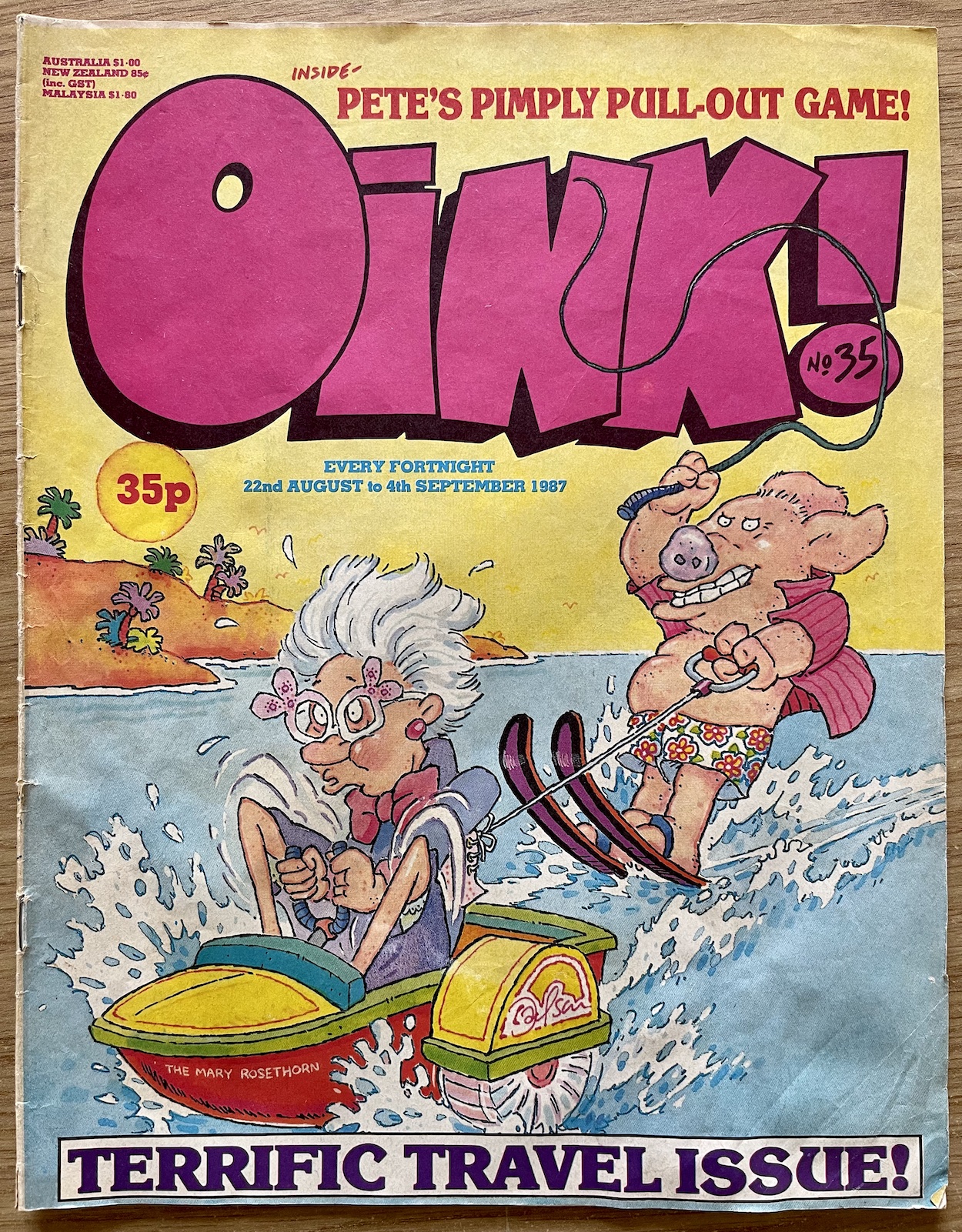
This issue of OiNK sits on my shelves as a loose collection of pages, although you wouldn’t know it until you picked it up. But if I’m not careful all its pages will fall out and become strewn all over the floor. Why have I taken one of my precious comics apart like this? There’s a very good reason and we’ll get to that later in the review, but for now you’ll just have to trust me when I say I had no choice. Hopefully that’s got you suitably intrigued to stick around for the remainder of this post about the Star-Spangled USA Issue, as if you couldn’t tell from that logo.

Andy Roper’s cover art makes just as big an impression, his King Pong strip the star of the inner pages. The recreation of the famous New York finale makes the perfect cover and the strip itself is written by Mark Rodgers. Rather than ape (sorry) a human character by putting a pig snout on them, Mark has taken another animal and pig-ified them, creating the “giant ape-like pig”, which is a bit of a stretch. But ridiculous scenarios are par for the course with OiNK and the more ludicrous the better, so we’re off to a swinging (sorry again) start.

Cutting the plot of the epic film down to a couple of pages we do without the love story, instead when King Pong’s smell gets too much for the city his captor turns into that favourite villain of OiNK’s, a butcher. Taking him captive in return it’s up the Empire State Building we go and just when you think it can’t get any more silly the sad ending is swapped out for a really, really stupid heroic getaway. Wrap it all up in one of the comic’s trademark pun-riddled morals and it’s another classic.

The amount of tiny details Andy squeezes in over the two pages is remarkable, with plenty to keep the eyes occupied and the reader chortling along. From one iconic American character to another, new OiNK writer Vaughan Brunt makes his debut with The American Super-Hero, drawn by Mike Green. I remember telling my friends in school about this one. I took every chance I could to highlight OiNK’s jokes, especially when it was parodying something they enjoyed. I was always trying to make pig pals out of them.

Vaughan would contribute to 17 issues of OiNK altogether before moving on. While he was solely a writer (a very funny writer) on the comic, away from the sty he’s an accomplished artist. While he doesn’t have his own online presence, a fan site for classic television series The Prisoner includes an art gallery of his paintings of Portmeirion, Wales where the show was set. You can check out his work here. Remembering those OiNK spoofs (such as Ann Martin‘s Watery Down and Simon Thorp’s movie posters) it’s such a shame Vaughan didn’t draw for the comic in his gorgeous painted style too.

Hadrian Vile’s strip returns to its diary format with some big news for him and his family. Writer Mark Rodgers and artist Ian Jackson’s creation is about to have a baby sibling. As I’ve pointed out before Hadrian’s age increased in OiNK’s birthday issue and now we’d see his mum’s pregnancy for a number of months almost in real time, from the moment Hadrian notices her belly and her rather strange appetite (to say the least). What we have here is a typically funny Hadrian strip with a surprisingly sweet ending.

Hadrian would continue to make his mark on his mum’s pregnancy and in the end we’d see the big day arrive in a family-orientated issue with a special three-page strip. That’ll be in the latter part of this year. I do remember the strip didn’t go down the well-trodden route of the rebellious boy not having any interest with a cutesy baby in his life or disliking his younger sibling. Instead, Hadrian was instantly besotted and took her under his wing as his potential protégé! The regular strip was already a favourite, but with things like this it became an even more unique and original OiNK highlight.

OiNK had an eclectic style, drawing in established artists from the world of children’s comics, adult newspapers and magazines, as well as a range of younger contributors whose careers were only beginning. While other comics may have given the established cartoonists the larger pieces of work and the newcomers the smaller strips, in OiNK they were all treated as equals. For example, alongside those new to the world of kids’ comics were the likes of Mike Higgs, this issue contributing a simple half-page strip about the Statue of Liberty taking a hygiene break.

A couple of highlights from Steve Gibson’s contributions are next. At this point in the run Steve’s style was being used mainly to illustrate quizzes and fact sheet pages, such as the Coast-to-Coast Quiz where we see his version of Snatcher Sam aka Marc Riley, and then Hogathan King brings us Entertainments USA and a recently released cinema flop was squarely in Steve’s sights.

The next highlight was an easy choice to include. Jeremy Banx’s Mr Big Nose has done many things, such as playing Rambo in Little Bo Beep, having Christmas dinner with a turkey and hoovering with a dolphin (named Keith), but here in just half a page he succinctly sums up the US of A like no one else could. A publication like Private Eye could run this strip today and it’d be met with just as many laughs.

If any part of this issue could summarise the attitude OiNK had towards America it was that.

So why is my copy of #31 of my favourite comic of all time falling apart at the seams? Because it doesn’t have its staples anymore. But it’s not my fault they had to be removed. In the centre of this issue is a superb J.T. Dogg Street-Hogs poster showing Dirty Harry trailing a reluctant Hoggy Bare into action. But this is only one half of a double-sized gift from our ever-so-generous Uncle Pigg.

My personal favourite is the Sinclaire C500 Electrodustbin

The top half featuring Emma Pig and Hi-Fat can be found on the inside front and back covers, so to put the whole thing together kids were instructed to carefully undo the staples (don’t just pull!) and remove the middle poster, then pull the staples out from the rest of the comic, put the cover pages to the side and then somehow push the staples back in through the remaining 24 pages. Unless you have one of those really long office staplers that is impossible, it certainly was for me at this ripe old age never mind back then (I never pulled it apart as a child).

But in order to show you this as intended I couldn’t just pick up the middle of the comic and try to get a photo of the inside covers, so just for you lot my copy shall forever fall apart. See what I do for this site? Anyway, it really is a thing of beauty, just like all J.T. Dogg art. I also love the names of the bikes which I don’t think have been mentioned before; the Hogley-Davison Porkchopper 222, the Yakawaki Trikey-Wikey 5000 and my personal favourite the Sinclaire C500 Electrodustbin, a little dig at the Sinclair C5 personal electric cycle from the 80s.

The ‘Hogs will be back in the next issue with the start of their brand new adventure The Day of the Triffics, which was first name checked way back in #11. This, along with the back page of #27 acted as a way of hyping up the readership for their long-awaited return, although it was kind of lost on me because I hadn’t read their earlier strip, what with my first issue being #14. The artwork looked wonderful though and very funny, but nothing could prepare me for how much I’d fall in love with the characters just two weeks after these posters.

This issue has a “fantastic” back page too. When you flip the comic over you might think there’s been a printing error because it’s upside down but in reality it’s just another clever gag on the part of Chris Sievey aka Frank Sidebottom. Frank’s showbiz career and (probably more importantly) lifestyle was his main running gag, with strips featuring him mingling with celebrities who in reality were cut-out photos glued to the page. With this issue of OiNK and you’ll see he’s taken it to the next level as a cover star of Time magazine.

Having this printed upside down means the comic opens on the correct side of this faux cover, which in itself is a little bit of genius. As ever, his attempts to convince us of his worldwide fame are hilariously portrayed. For example, one very quick glance at the background of the supposed Yellowstone National Park photograph will give the game away. Chris’ creations, showing his character’s poor attempts at creating a fictional reality around Frank’s ego were always a highlight and actually, as fun as the strips were, I think I preferred it when he did stuff like this.

I’ve (carefully) placed the comic back on to the shelf now as we’ve come to the end of yet another review. The next issue of OiNK is themed around sport which is not my favourite topic (Olympics aside) so it’ll be interesting to see how it tickles my funny bone. Remember, just the day before this review was published there was an in-depth look at Crash magazine #42 which featured an interview with OiNK’s three human editors and a lot more besides. The special free issue of OiNK given away with that magazine also has its own review. If you need to, catch up on those and then #32 of the regular comic will be here from Monday 11th July. Phew! See you soon I hope.

CRASH EDiTiON < > iSSUE 32

OiNK READ THROUGH MENU

MAiN OiNK MENU

CRASH #42: A SPECTRUM OF PiGGY PiNK

In 1987 “The Mag That Saves Your Bacon”, Sinclair ZX Spectrum computing magazine Crash (which ran for 98 issues between 1984 and 1992) approached IPC Magazines about interviewing the OiNK editors regarding the comic for a special preview of the forthcoming computer game. During these conversations the idea of producing a special edition of the comic to give away inside Crash came up. Co-creator/co-editor Patrick Gallagher told me the magazine’s publishers Newsfield were receptive to the idea, very open-minded about what it could contain and paid the OiNK team to produce it. That issue of Crash went on sale today 35 years ago.

So, with a special feature and an extra edition of my favourite comic of all time I just had to track this down on eBay. This is the only issue of Crash I’ve ever read. I found myself reading more than just the OiNK related pages too and have included some highlights I found particularly interesting below. First up though is the interview and a special page from Frank Sidebottom. The comic itself I’ll keep for a review post of its own, which you’ll be able to read in a few days. So what exactly would an issue of Crash involve? Here’s the contents page, with a little guest appearance from a certain explosive personality.

What it means by “it’s not really page 59″ is the fact the free comic was in the centre of the issue so if you opened at page 59 it would plop out. The title of the interview is another reference to George Orwell‘s Animal Farm, which OiNK parodied in #30, on sale at the same time coincidentally enough. In the editorial Roger Kean kicks things off by pointing out the free comic and the article, noting this is the first time they’ve ever teamed up with another publication.

Graeme Kidd‘s article is longer and more in-depth than the one featured in Zzap!64 the month before. While the Zzap preview had told the origin story of OiNK, Crash spoke with Tony Husband directly and there’s some wonderful pieces of information for pig pals. Zzap mentioned the initial idea had been for a fanzine, here Tony is able to elaborate on the reasons behind that. The initial chance meeting in a local library between Patrick and Mark Rodgers (both working on Whizzer and Chips without knowing each other) is also mentioned, a tale I’ve heard before briefly but again there’s more detail here.


“It’s a success story the comic’s creators hardly dreamed of.”

Graeme Kidd, Four Legs Good

There are some little factoids for fans such as OiNK’s sales, the dummy issue being met with a divided opinion at IPC Magazines but ultimately championed by the people who would make the call (Youth Group Managing Director John Sanders and ‘John Painter’ is an error, that should be Bob Paynter Group Editor of Humour Comics), the original strategy in its creation and how the idea of putting together a small, weekly comic was changed to a larger, fortnightly one. Of course, that weekly format is the one OiNK would eventually turn into (much to the annoyance of some).

There’s a funny moment when we find out a certain comics publisher wasn’t too happy with OiNK spoofs of their characters (one example mentioned can be seen in #18‘s review) and a horrific episode for a young reader whose mum showed just how hypocritical those who think they’re morally superior to others can really be (like certain scaremongering tabloids). At the end there’s a very quick preview of the game which, after painting a fascinating picture of the comic, shows us probably the most uninspired screenshot possible.

To see the original Janice & John strip Tony mentions check out #7‘s review and for OiNK’s response to the complaint make sure to read #28‘s!

Over the page from this piggy pink spread we get a little something extra from Frank Sidebottom in the shape of a guide to computers, which is really a competition page with rather wonderful prizes. If I’d known Crash had a free issue of OiNK and the chance to win original artwork, t-shirts, mugs etc. I’d have been all over this as a child, even if I wouldn’t own my own computer for another four years.

I must add a little caveat here. This doesn’t look like Frank’s usual handwriting and it’s been signed “Topbottom”. I initially thought he’d been in a rush to complete it for Crash’s deadline and that was the reason for the change in style slightly, but some fans believed it wasn’t his work when I initially shared this post on social media. I checked with Patrick who can’t remember if that was the case, but he’s certain Chris (Sievey, the man behind the mask) wouldn’t have knowingly let anyone else do it, especially if it meant copying his OiNK work. So I’m going to say it was him.

Just wait and see Frank’s contribution to the OiNK pullout comic, it’s proof indeed of just how much he’d put into his work for kids.

So that’s OiNK’s contribution to the magazine itself and strangely enough I can’t find evidence of the all-important game review in any following issue. Does this not bode well for the quality of the finished product? No, even if the game had been absolute trash the magazines of the time would’ve reviewed it and given it an appropriate score. But from my extensive research into the rest of that year’s issues (and those from 1988 as well) it just wasn’t reviewed by Crash. However, Zzap!64 did so watch out for that soon.

The debut of the brand new 007,
Timothy Dalton!

Back to Crash and as I said the free comic will be getting its own review post (as well it should) but I wanted to highlight two particular features in the magazine that stood out for me personally in this delightfully retro read. I’m a big fan of both James Bond and Nintendo, so first up was news of not only the next Bond computer game but also the brand new movie it was based on, The Living Daylights and the debut of a brand new 007 which is always an exciting occasion.

That actor of course was Timothy Dalton, who is still my favourite in the role to this day. His second movie, Licence To Kill is not only the best Bond film in my opinion it’s also my second favourite movie of all time (behind only Jaws, in case you were wondering). Unfortunately, with MGM going bankrupt a year or so later the movies paused until the mid-90s and by that stage Dalton wanted to move on. But The Living Daylights is a superb film and here Curtis Hutchinson took a look at its stunt work. Special mention must also go to that gorgeous Oliver Frey cover above! That would’ve made for an excellent poster but alas it was only ever to be found in A4 size and covered with text.

There’s also an advertisement for the game, which like a lot of our gaming adverts back then didn’t include a single screenshot. The Spy Vs Spy game was also a favourite later on when I got my Commodore 64, based upon characters from Mad Magazine, itself one of the influences behind OiNK’s sense of humour and satirical edge.

I do love a good contemporary retro article about new releases in the things I’m interested in. It’s always fascinating to look back at how they were written about at the time. The next thing I want to show you is another such example. As a kid I remember friends getting so incredibly hyped over new Nintendo consoles but I only became a fan later down the road with the Game Boy and GameCube machines. These days I’m fanatical about my Nintendo Switch and so this was a very enjoyable read about “Mattel’s Nintendo”. Mattel helped Nintendo with distribution in the UK but it was wrongly labelled as their machine and simply called “a Nintendo” by many at the time.

What’s lovely and quaint here is how the ZX Spectrum range of computers are compared very favourably to the flashy new Japanese console by Crash’s whole team. Of course this is a Spectrum magazine and so it was always going to be that way. I remember later issues of Commodore Format in the mid-90s comparing the ageing machine (which I still adored and used even then) favourably against the latest gaming tech. Bless. This article in particular is like a snapshot of the industry at the time. Oh, and for those Nintendo fans reading, the news pages carried information on a price cut to the system already but it must’ve been too late to edit the article. The two bundles had been chopped down to £99.99 and £155.00, which was fierce competition for the home computers of the day!

This has been a surprisingly magical trip down memory lane, one I’ve enjoyed immensely. Don’t forget about that Zzap!64 preview of the game and a Retro Gamer article from 2021 has also featured on the blog, containing an interview with the man behind the game. But we’ve not quite finished with this edition of Crash, as the free comic is still here waiting to be seen by blog readers. I’d assume for many it’ll probably be the first time you’ll have seen it too. It’s blog review will be here in a few days. After that the Zzap!64 review of the OiNK computer game itself will reveal how good/bad it turned out, which you’ll be able to read from Saturday 9th July. Later in the year I’ll have some articles from my own teenage favourite, Commodore Format to share later with you too. Plenty to het stuck into then. Bye for now.

THE OiNK! COMPUTER GAME MENU

OiNK MERCHANDiSE MENU

MAiN OiNK MENU

COMiNG UP: OiNK! #31

Coming up in a few days on the blog is the all-American issue of OiNK, complete with a snazzy new colouring of the famous piggy pink logo. There’s a special feature film spoof starring a giant ape-pig (no, really), some big news for Hadrian Vile‘s future, a new writer appears in OiNK for the first time and in just half a page Mr Big Nose sums up the very soul of the US of A.

My #31 is without its staples so has to be read very carefully for fear of it falling apart, but that’s not because of wear and tear from me as an overly eager youngster. No, there’s a very specific reason we were asked to take our issues apart (carefully) and it involves the return of none other than the Street-Hogs! To find out what I’m wittering on about you can check out the review of #31 from Monday 17th June 2022.
GO TO iSSUE 31

OiNK iSSUE PROMOS MENU

‘MORE OiNK’ MENU

MAiN OiNK MENU

Classic Comics in Real Time