
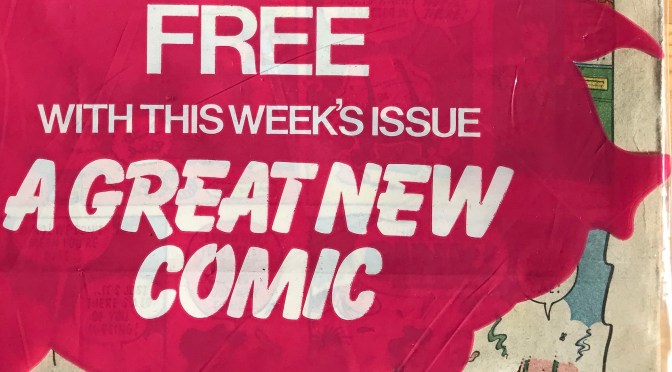
It’s been 35 years to the day of writing this since readers of IPC‘s Whizzer and Chips, Eagle and Tiger and Buster received their comics inside a plastic bag with a piggy pink pig emblazoned on the front. Inside, tucked in behind their newsprint comic was a big, bold, brash and glossy new comic called OiNK!
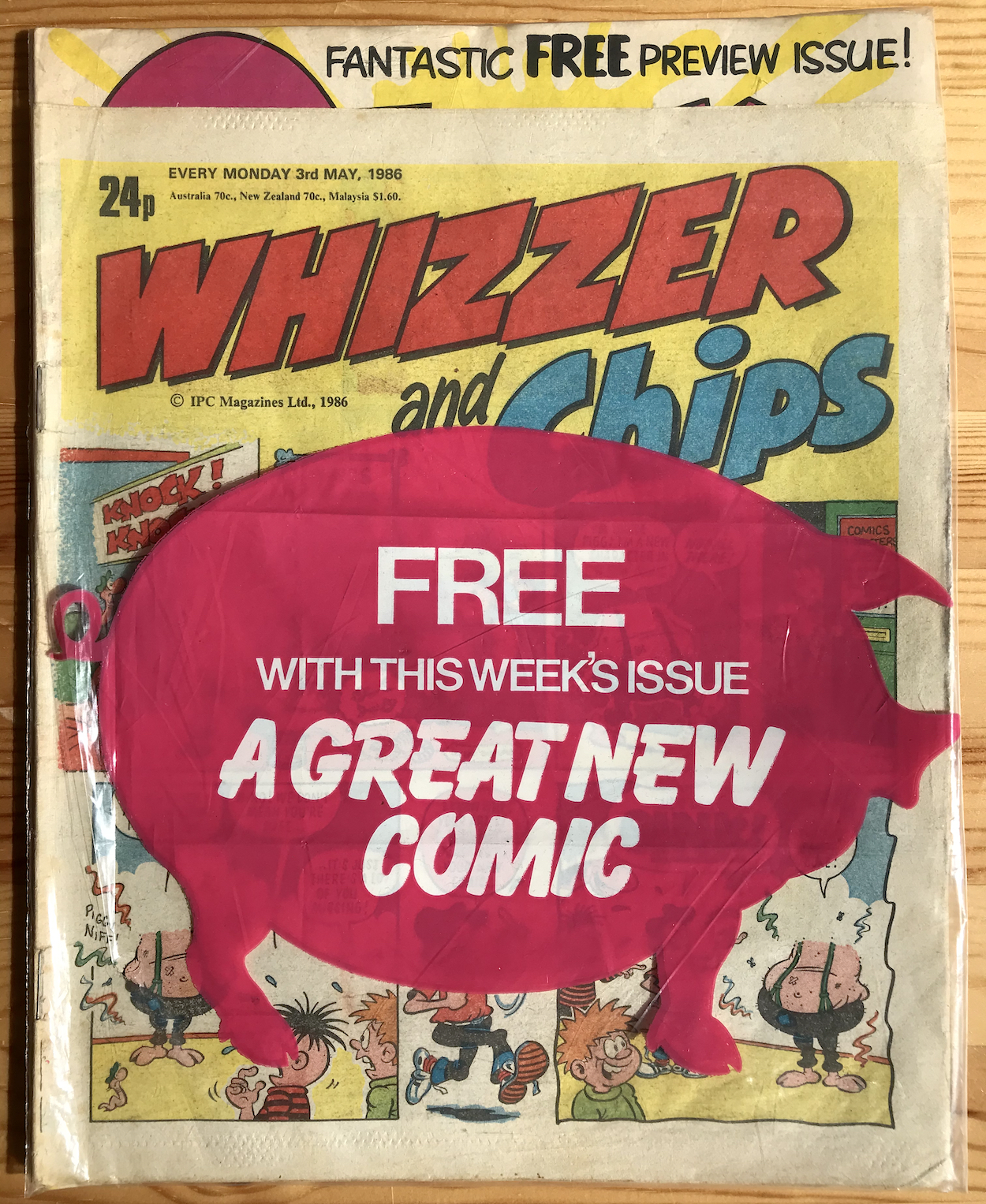
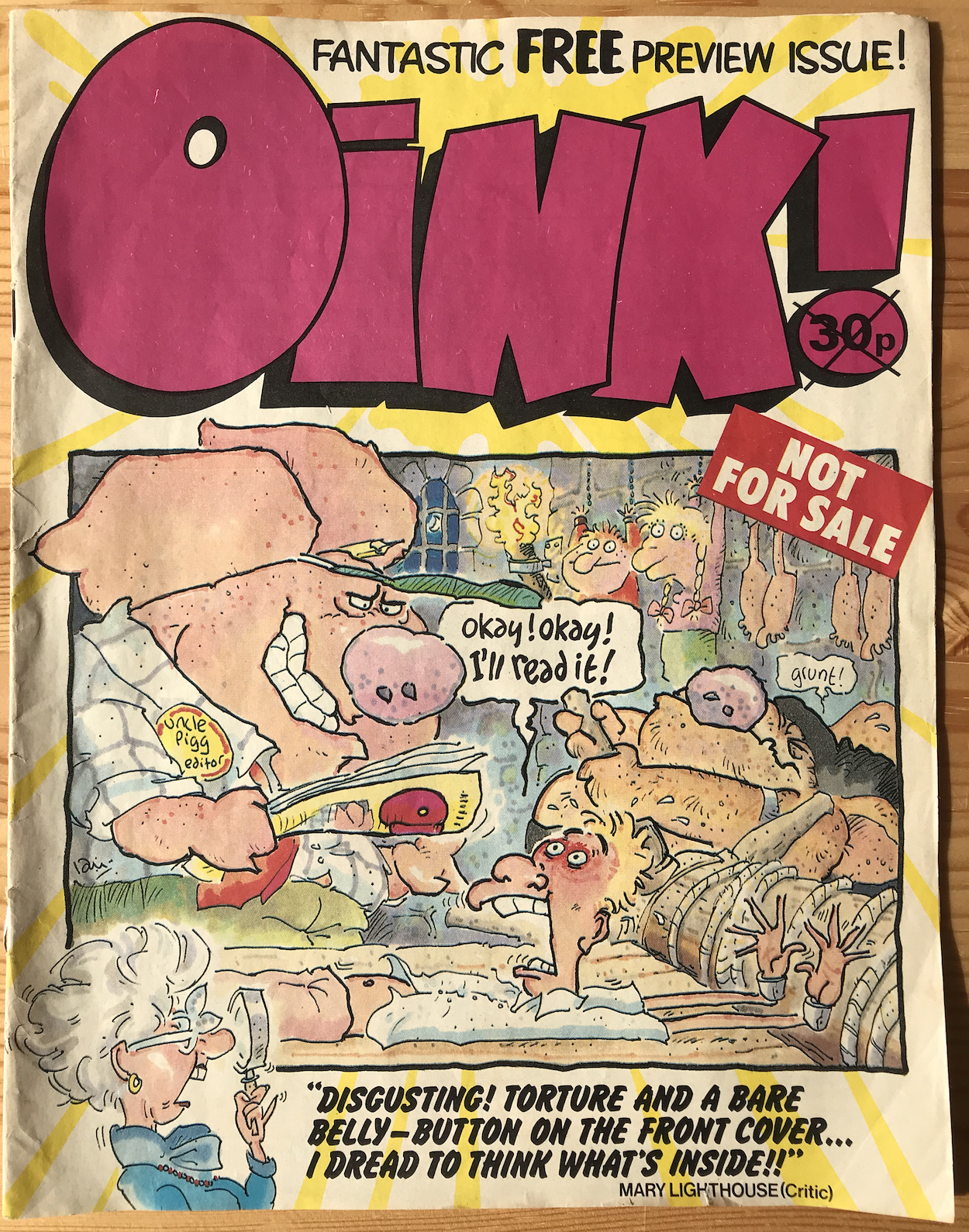
This was the preview issue of OiNK and, unlike preview issues in the years to come, this was a full-sized 32-page comic. It must’ve been quite the revelation for readers to hold these large, bright pages in their hands, especially with that Ian Jackson cover. This was the first time young readers would’ve been introduced to his unique style; the jagged lines of editor Uncle Pigg and the gag of a medieval torture rack setting the stage for something truly original and anarchic.
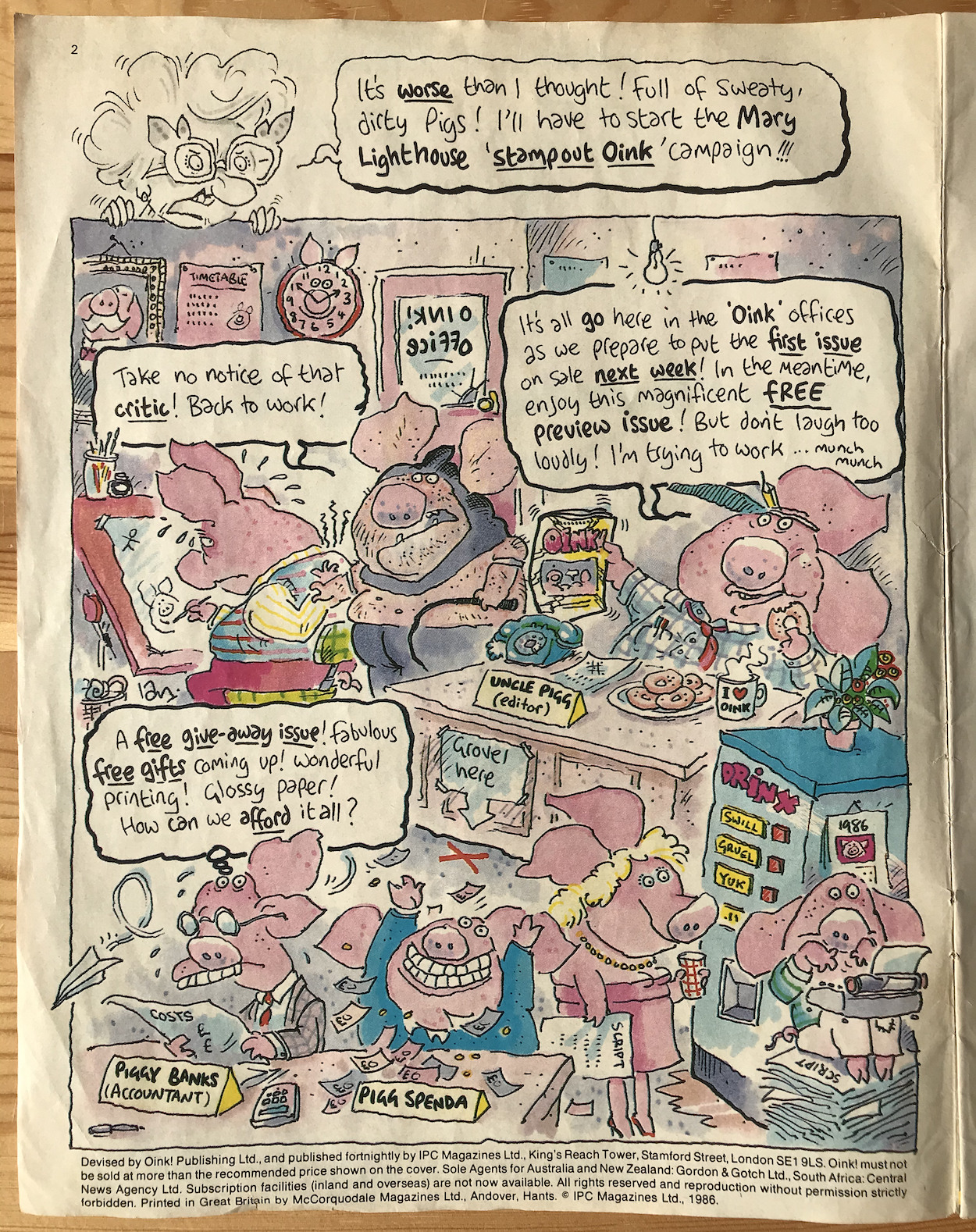
One of the three co-creators/co-editors Patrick Gallagher created the bright pink logo which immediately stood out. The impact of that first page was carried on to page two with Ian showing us the inner workings of our editor’s office. This is complete with staff, OiNK’s take on infamous campaigner Mary Whitehouse and even an embattled accountant who can’t quite fathom how they’re going to pull off such a high quality comic, the first issue of which would go on sale just seven days later.
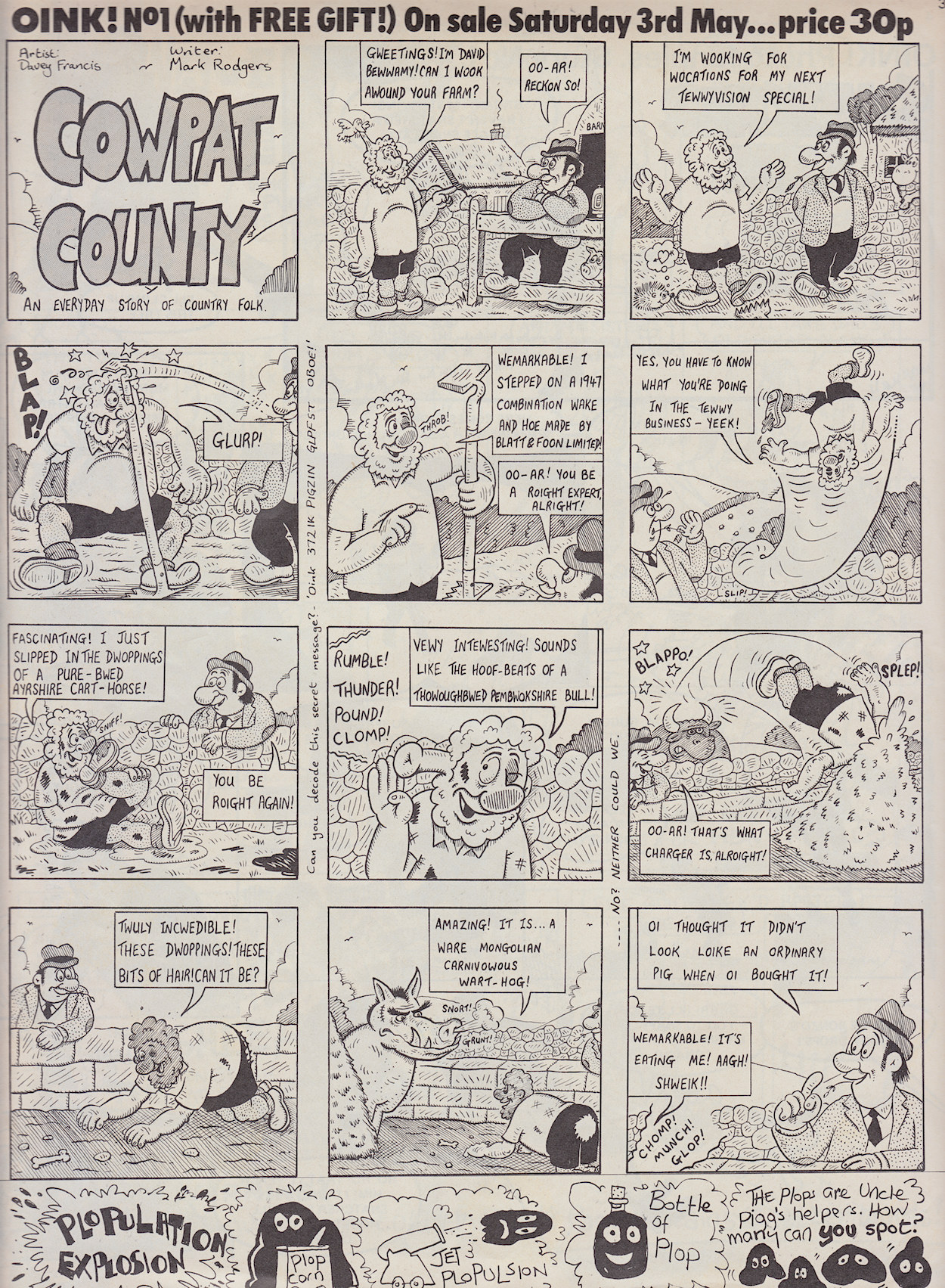
Next to this is our very first OiNK strip, Cowpat County from fellow Northern Ireland local Davy Francis, written by famed comics writer and another OiNK co-creator/co-editor Mark Rodgers. This first appearance sees 80s environmentalist and television presenter David Bellamy pop up, only to come a cropper in Farmer Giles‘ (whose name we wouldn’t know until #14) world. If all this could happen to him when placed into the real, unfettered countryside, what about those used only to city life? We’d get plenty of chances to find out, and all very accurate of course.
The preview issue throws everything at the reader
The preview was mainly made up of strips from a dummy issue previously put together to sell the concept to IPC. As such, some of our favourite characters may look a little different here because they’re earlier versions of the ones we’d become used to; we’ll see them evolve and change as we make our way through the regular comics. Below is the very first Burp the Smelly Alien From Outer Space from Jeremy Bank for example, his first strip for a children’s comic.
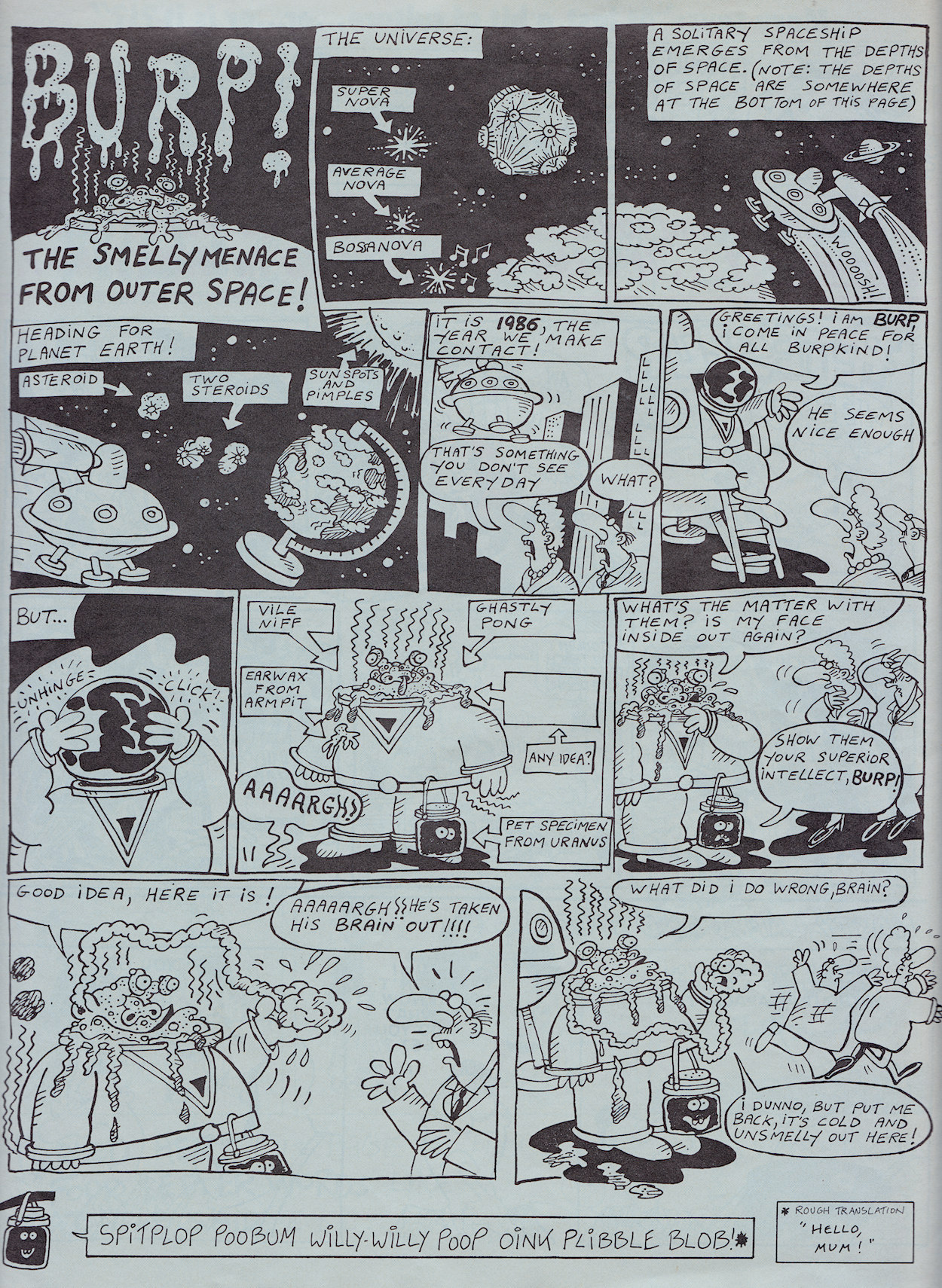
What a great introduction. Burp would be present in almost every issue of OiNK and we’d start with a near-constant series of attempts to ingratiate himself to the human race, all failing in spectacular fashion. In later issues we’d see vacations in space, a surreal and rather dark humour develop and we’d even become acquainted with the lives of his internal organs. These would culminate in an epic story that originally came at just the right point in my life to teach me about puberty! No, really. You’ll have to wait until Christmas 2023 for that review though.
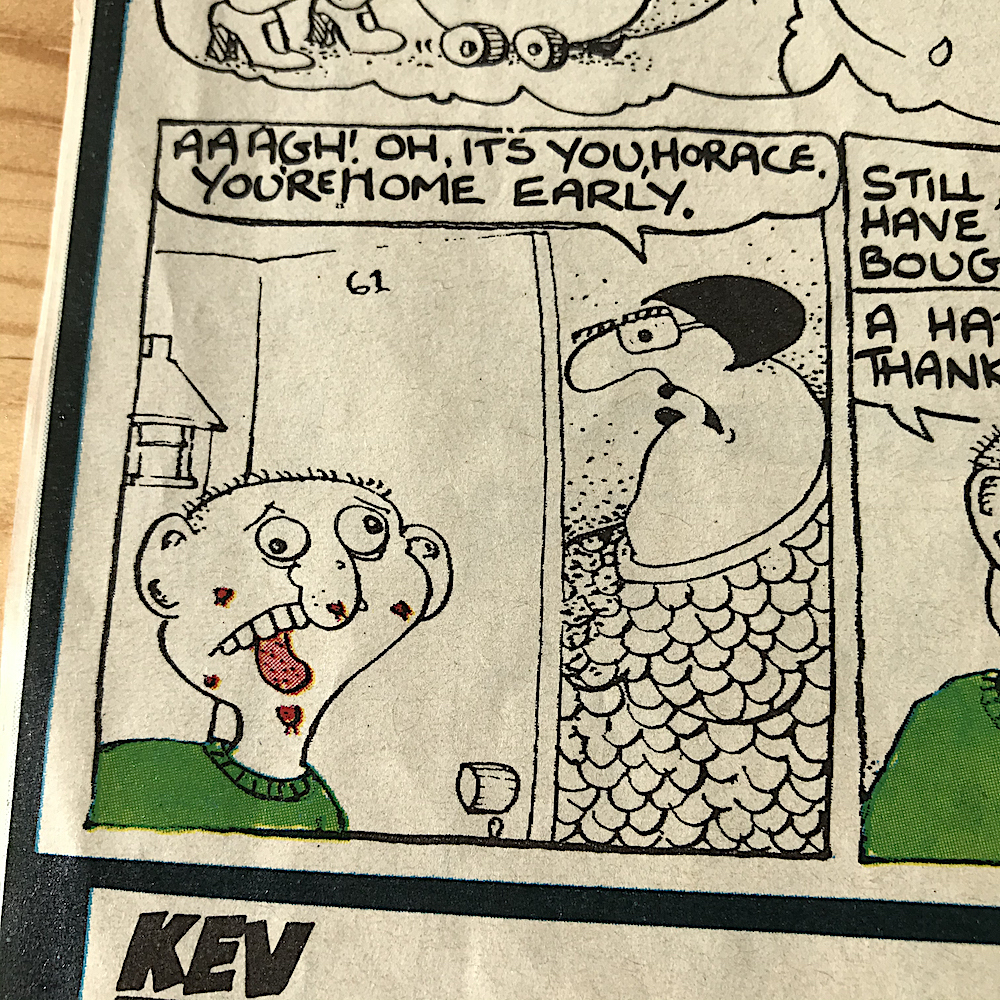
Even simple things like Ian’s and Jeremy’s unruled, freehand panels would’ve set the comic apart. Strips are of varying lengths, some even tucked in beneath (or down the side of) others and in a huge variety of styles. The fresh appeal is very apparent, especially after reading the issues of the established comics it was packaged with. Here’s a quick glance at a selection of what the young readers were suddenly being exposed to, starting with Patrick and Mark’s co-creator/co-editing partner-in-laughs Tony Husband‘s iconic hero, Horace (Ugly Face) Watkins.
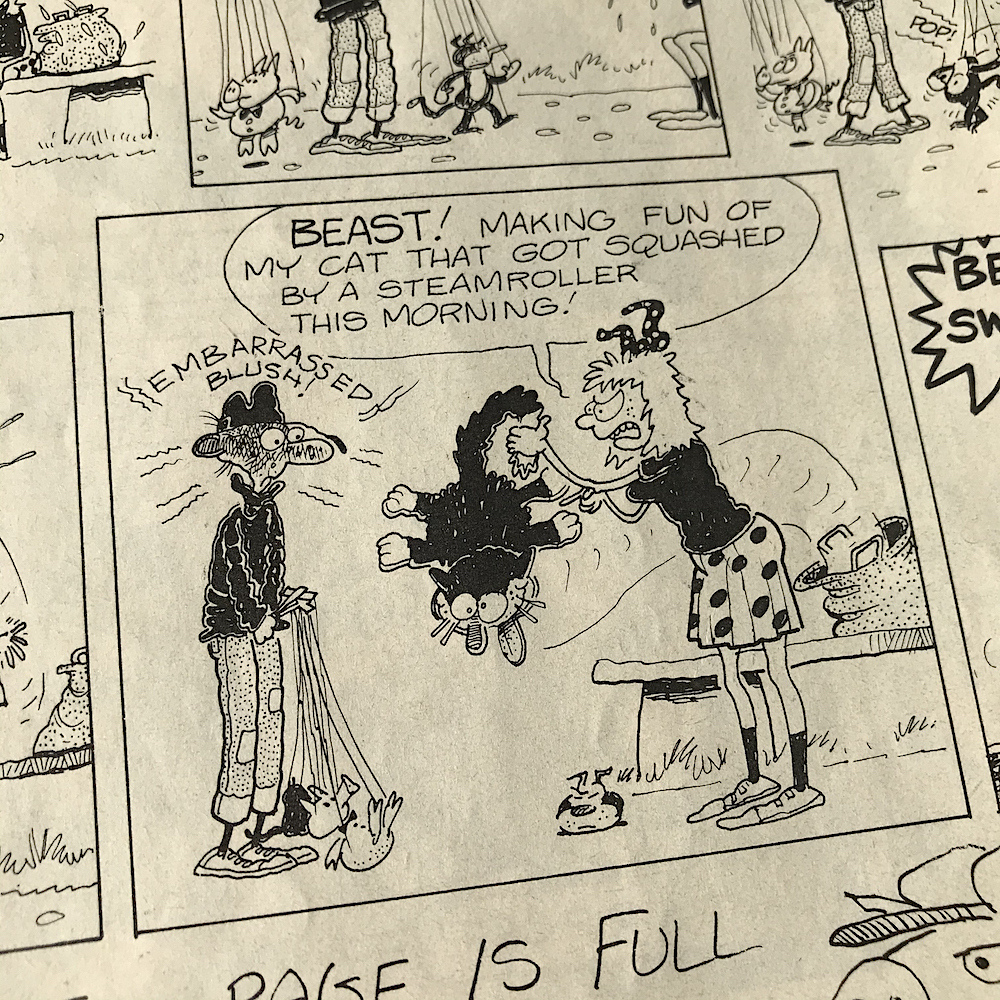
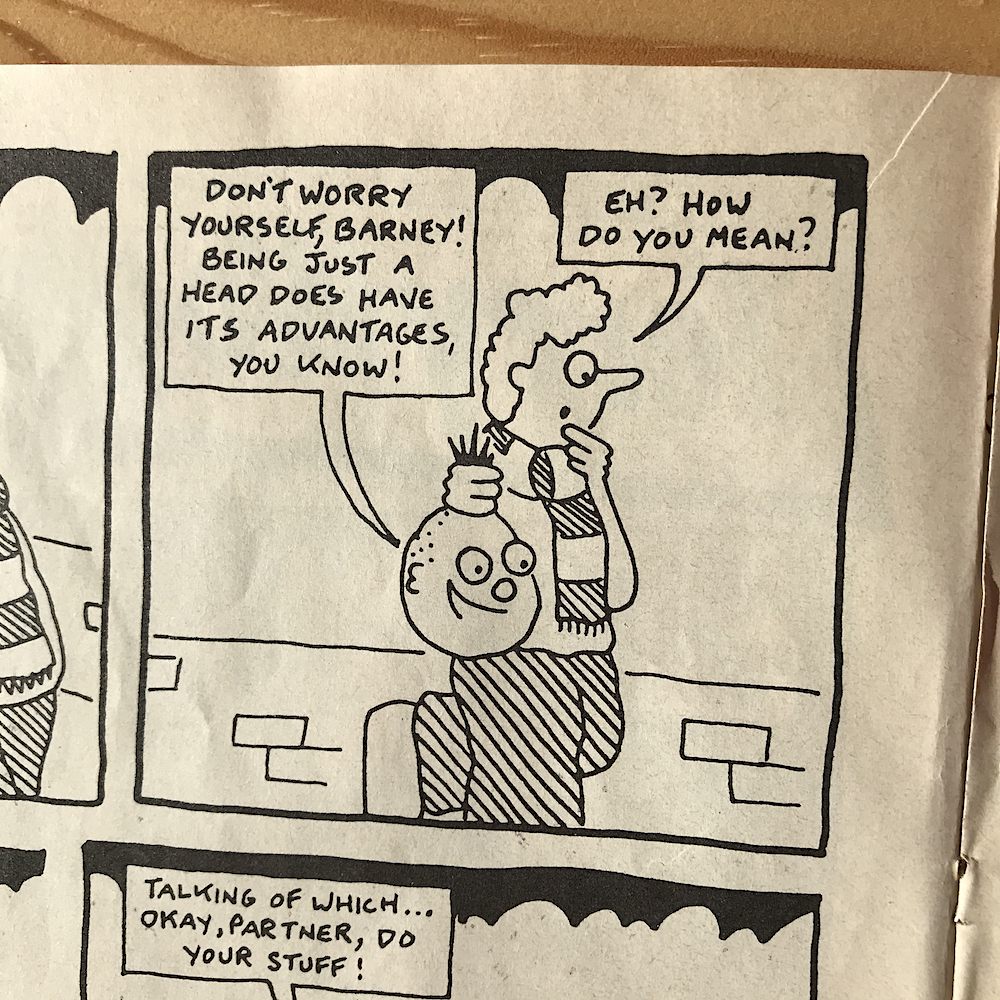
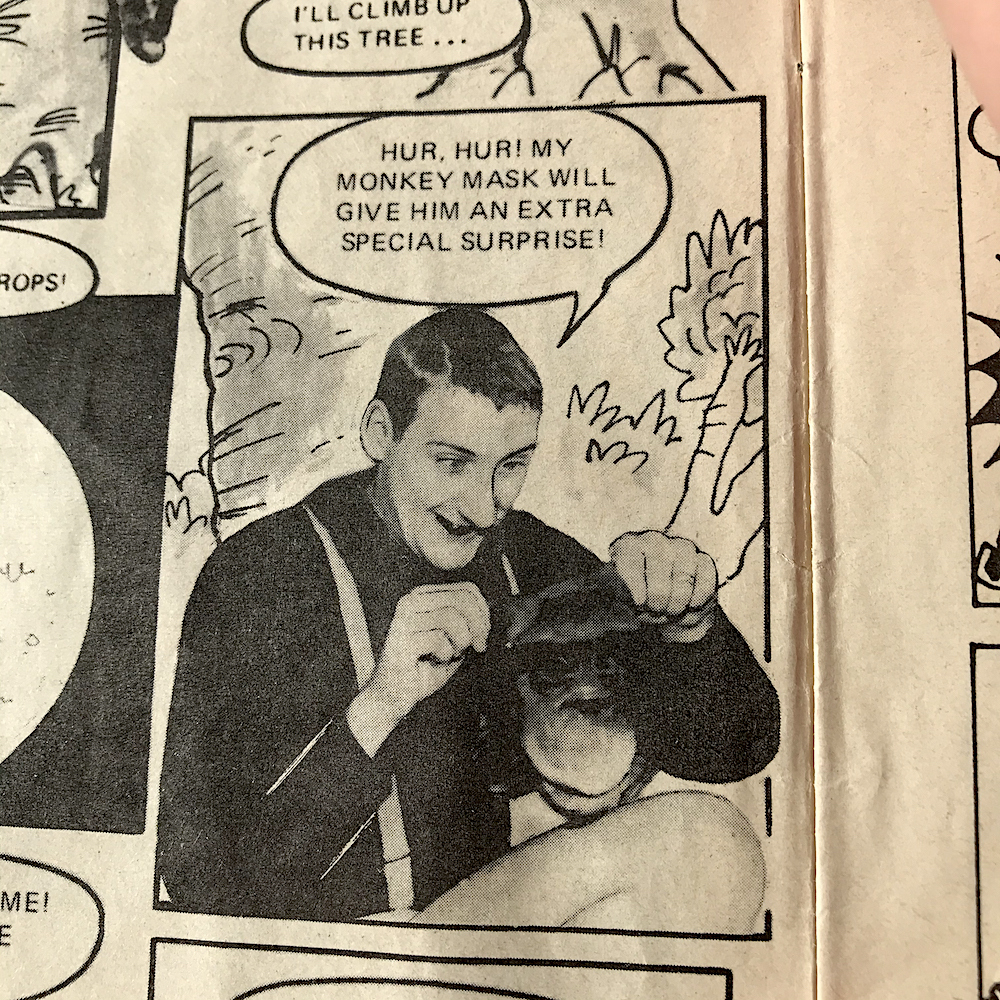
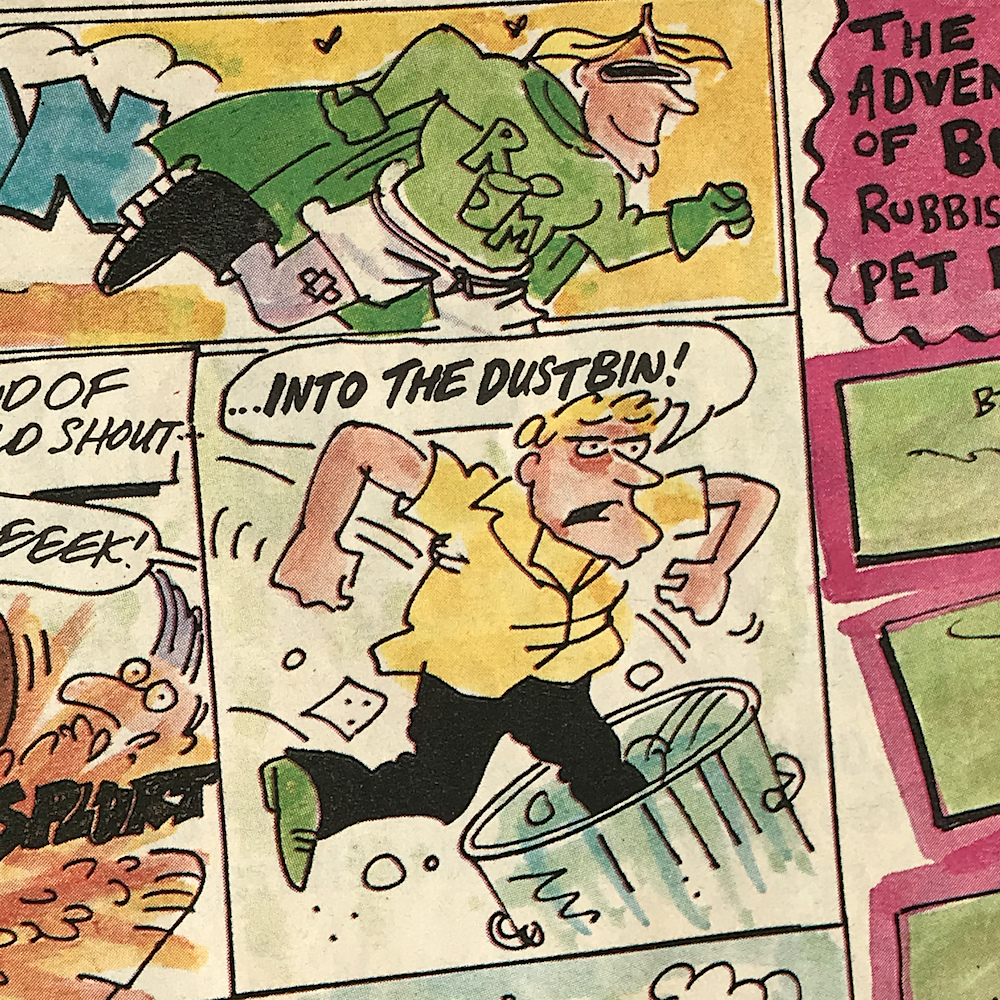
Weedy Willy written by Graham Exton, drawn by Mike Green
Harry the Head by Marc Riley who also stars as Snatcher Sam
Rubbish Man by David Haldane
OiNK definitely couldn’t be accused of having any kind of ‘house style’, unlike other comics which expected cartoonists to draw within certain parameters. It’s also chock full of content and the format of cramming as much into each page as possible provides a satisfyingly meaty read. An animal-free meaty ready, obviously.
Showing how the aim was to rip up the rule book, throw out tradition and create a comic that was genuinely very funny, the preview issue throws everything at the reader and a surprisingly high amount sticks. One such idea was the pig-ifying of popular culture. Nothing was safe. From celebrities, television shows and musical artists, to movies, cartoons and literature, if a pig-themed pun could be made of a name you could bet OiNK would take advantage.
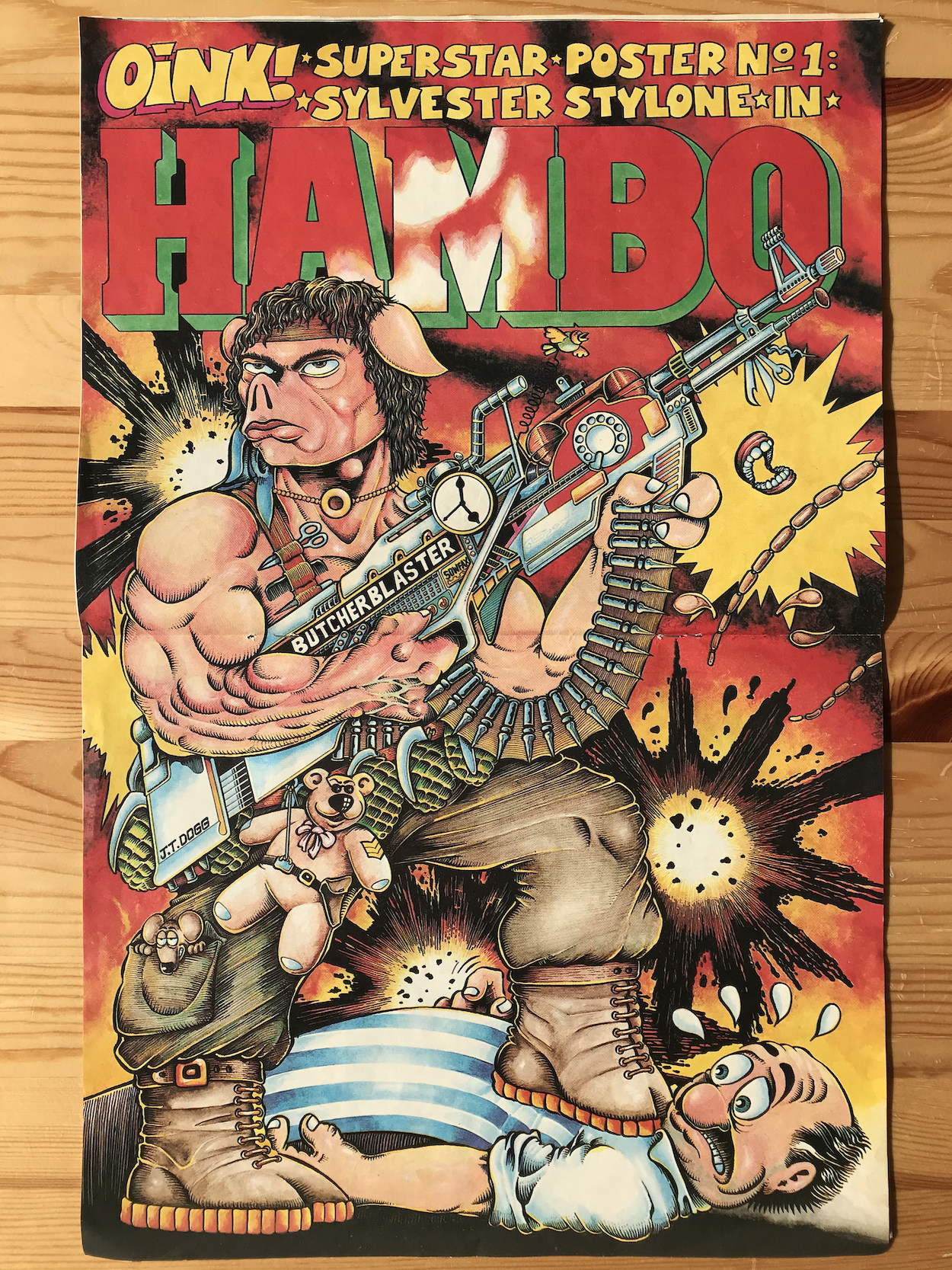
This Hambo poster from J.T. Dogg (real name Malcolm Douglas) wasn’t even the first such piggy pun. By the time readers got to this stunning centre-page spread they’d have already been treated to the delights of WillyHAM ShakesPIG and Terry WogHAM, along with mentions of Ian BotHAM, Lester PIGgott and PIG Country. But let’s take a moment to appreciate that poster.
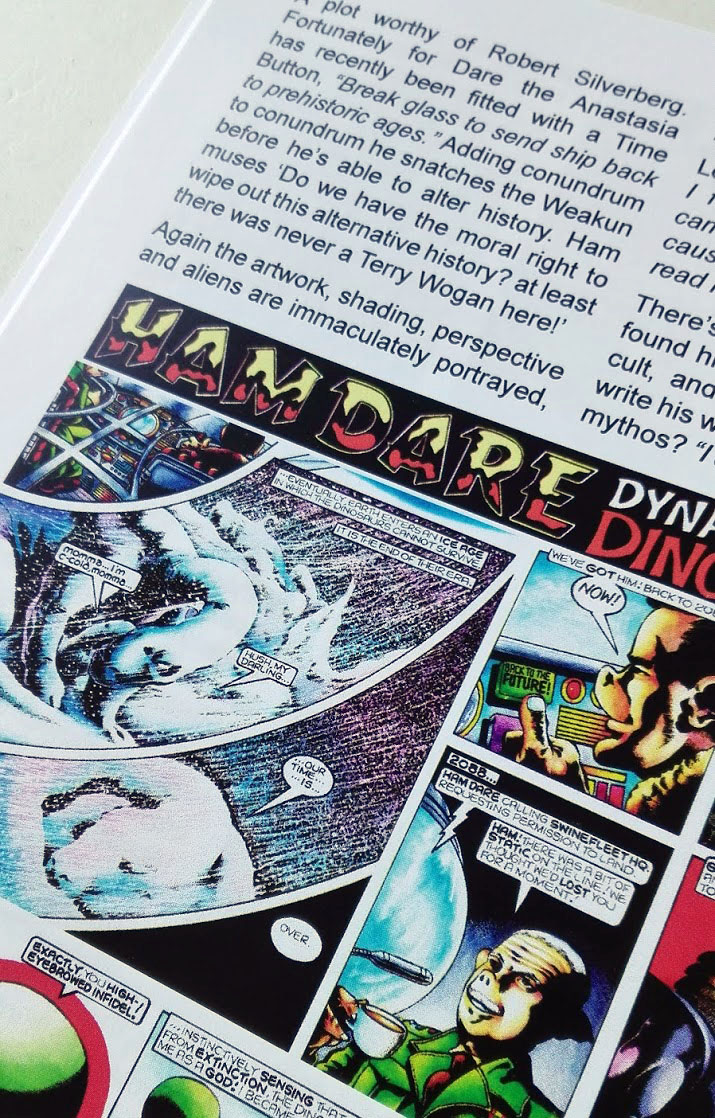
J.T. Dogg’s work is simply stunning. As well as this series of OiNK Superstar Posters he’d provide the artwork for The Street-Hogs and Ham Dare: Pig of the Future amongst others. What’s even more incredible is how he worked. At the time cartoonists would draw their strips at twice the size of the published comic, the finished page reduced at the printing stage. But not Malcolm. He’d complete all of his work at 1:1 scale! Sadly no longer with us, you can check out some more of his extraordinary work in his obituary.
Now it’s time for a commercial break.
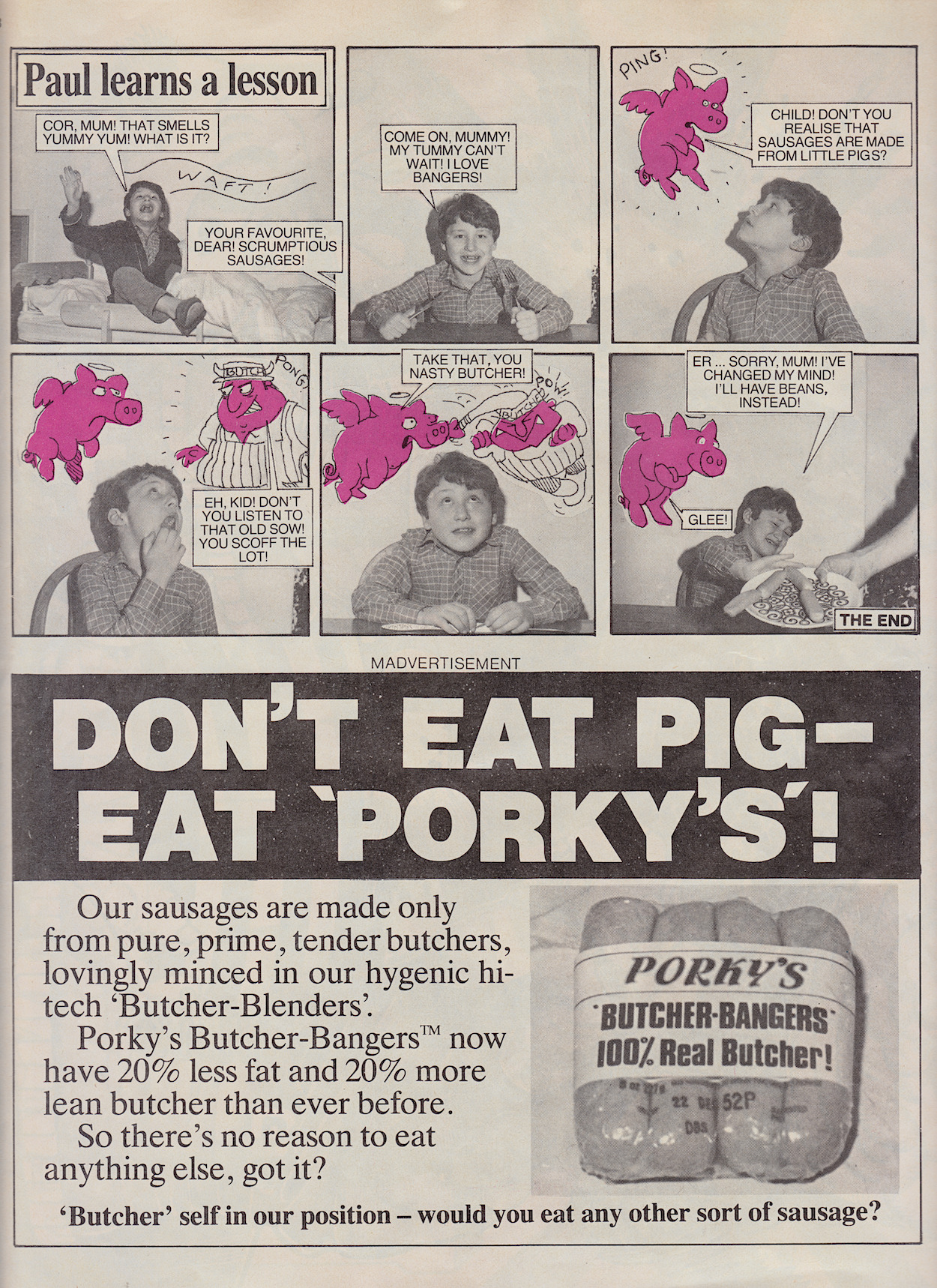
The first of many Madvertisements to come, they went big to begin with, didn’t they? I mean, sausages made of minced up butchers isn’t exactly subtle. This is the perfect example of how they could push the boundaries of good taste and we kids loved it. It was just good, cheeky fun. On the top half of the page you can see Tony’s son, Paul Husband who would go on to appear in the occasional photo story. Nowadays Paul is an amazing professional photographer whose work you can check out on his website and Instagram.
“Rock’n’roll madness!”
Tony Husband describes working on OiNK
On more than one occasion working on OiNK has been likened to being in a punk band, especially by Tony. He describes those OiNK Manchester offices as “rock’n’roll madness”. Located in the same office building as the Happy Mondays‘ manager, next door to Haçienda nightclub DJ Dave Haslam and, while the city was at the height of its MADchester music and culture scene, the comic’s team even included former The Fall band member (and future BBC Radio 6 Music presenter) Marc Riley.
The rock’n’roll madness led to some hilarious scenarios, such as when Tony and Patrick were invited to London to appear on a breakfast TV show. They were given the impression they were appearing to discuss their new comic appealing to a new audience of young readers. However, the true intent was soon clear when the first question referred specifically to the following Madvert.
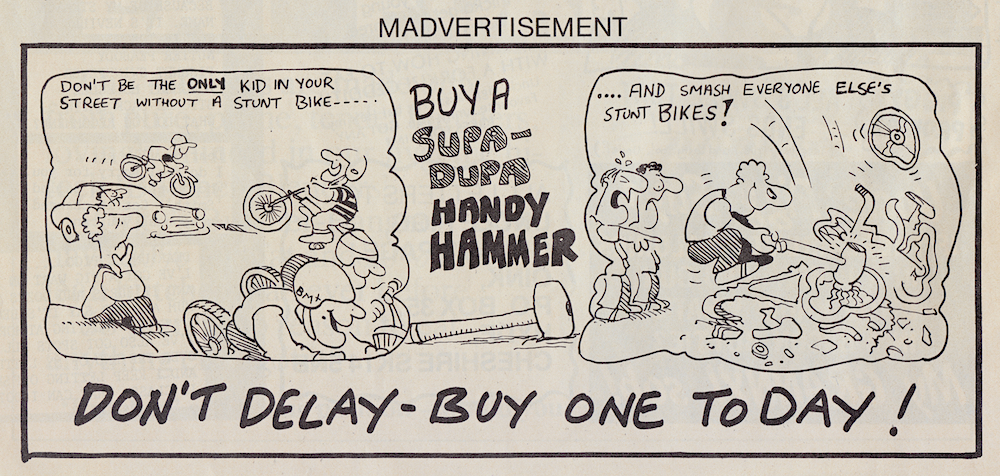
Asked if they felt joking about smashing up friends’ bicycles was the “right message to send”, the presenters spectacularly missed the point of OiNK. But according to Tony it was worth it in the end because his and Patrick’s expenses were all paid for, including travel and a night in a 5-star hotel. Then on the return train journey Tony brought out a few of the small bottles of booze he’d sneaked out from his hotel room, thinking they’d have a tipple on the way home, only for Patrick to empty out a plastic bag full of every single bottle from his room. By the time they hit Manchester they could hardly walk off the train.
In among the wealth of talent who had never contributed to children’s comics before were some more familiar names. However, they were now given free rein to produce strips they simply couldn’t elsewhere and let’s face it, if you could give such freedom to anyone, it would been Tom Paterson.
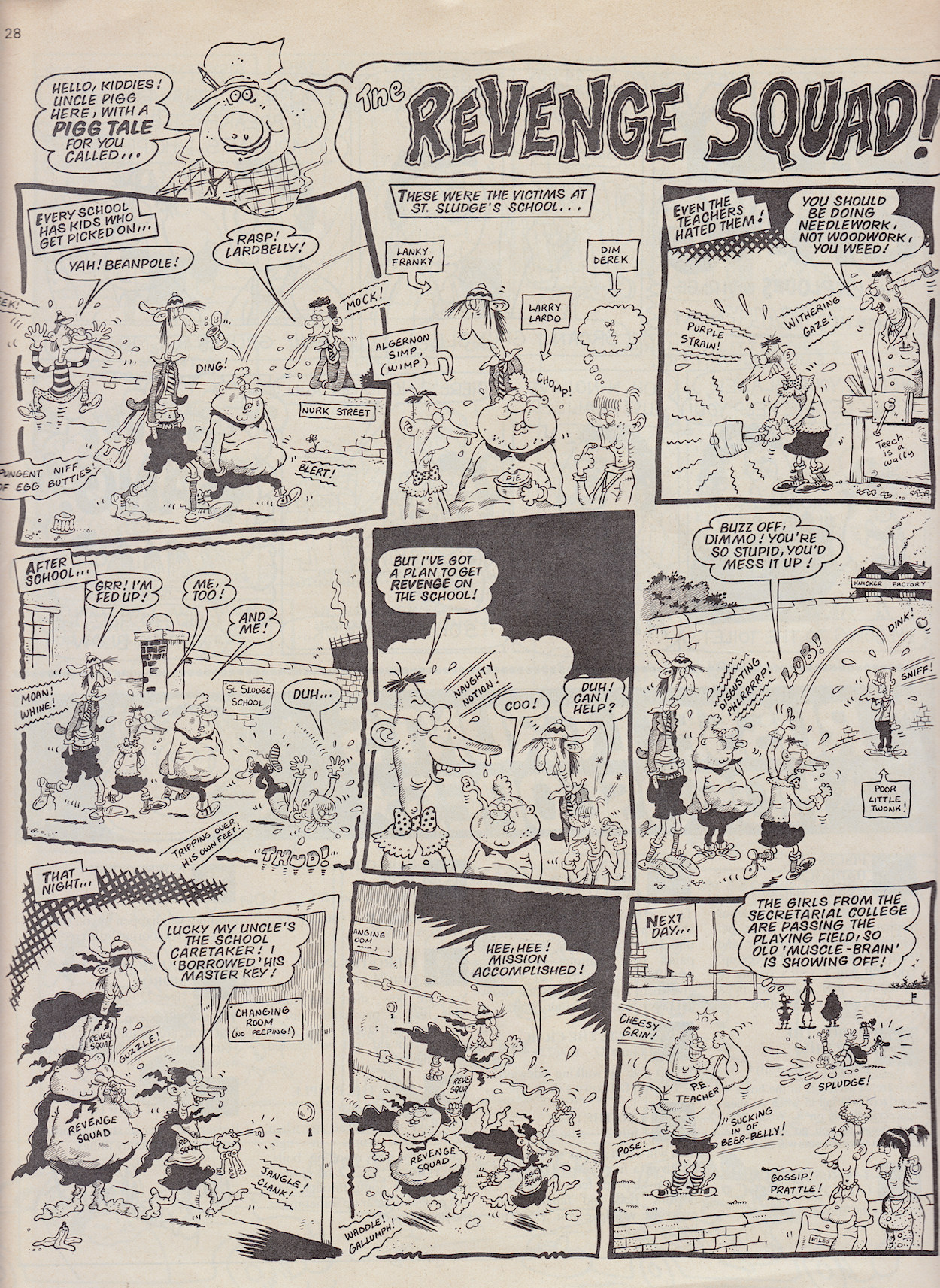
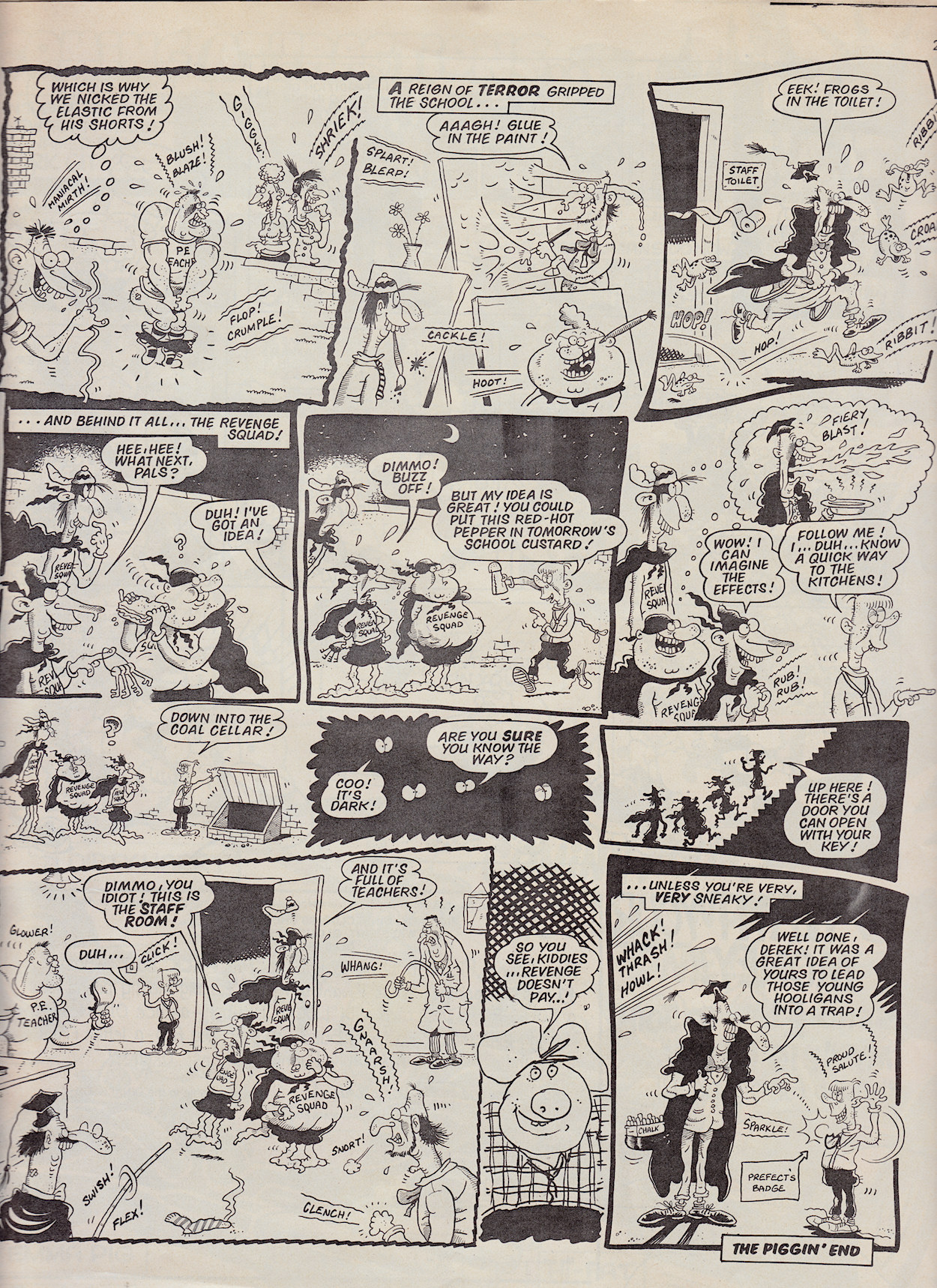
Pigg Tales would be the general name used on and off for some of the bigger one-off stories, written and drawn by a variety of people. The Revenge Squad showed what Tom could bring to OiNK but unfortunately he’d only show up in five editions of the comic throughout the course of its whole run. According to OiNK writer Graham Exton they really wanted him on board but he was just too busy to be able to contribute more. Such a shame because he was a perfect fit.
Finally, right at the back of the comic a certain character is introduced for the very first time. He’d go on to appear in all but one regular issue and then carry on for many more years in Buster after OiNK folded. A school bully may sound like a strange creation for a strip, even for such a wacky new venture, but by the end of his first story it’s clear that while he may be the star, he’s certainly never going to be the hero.
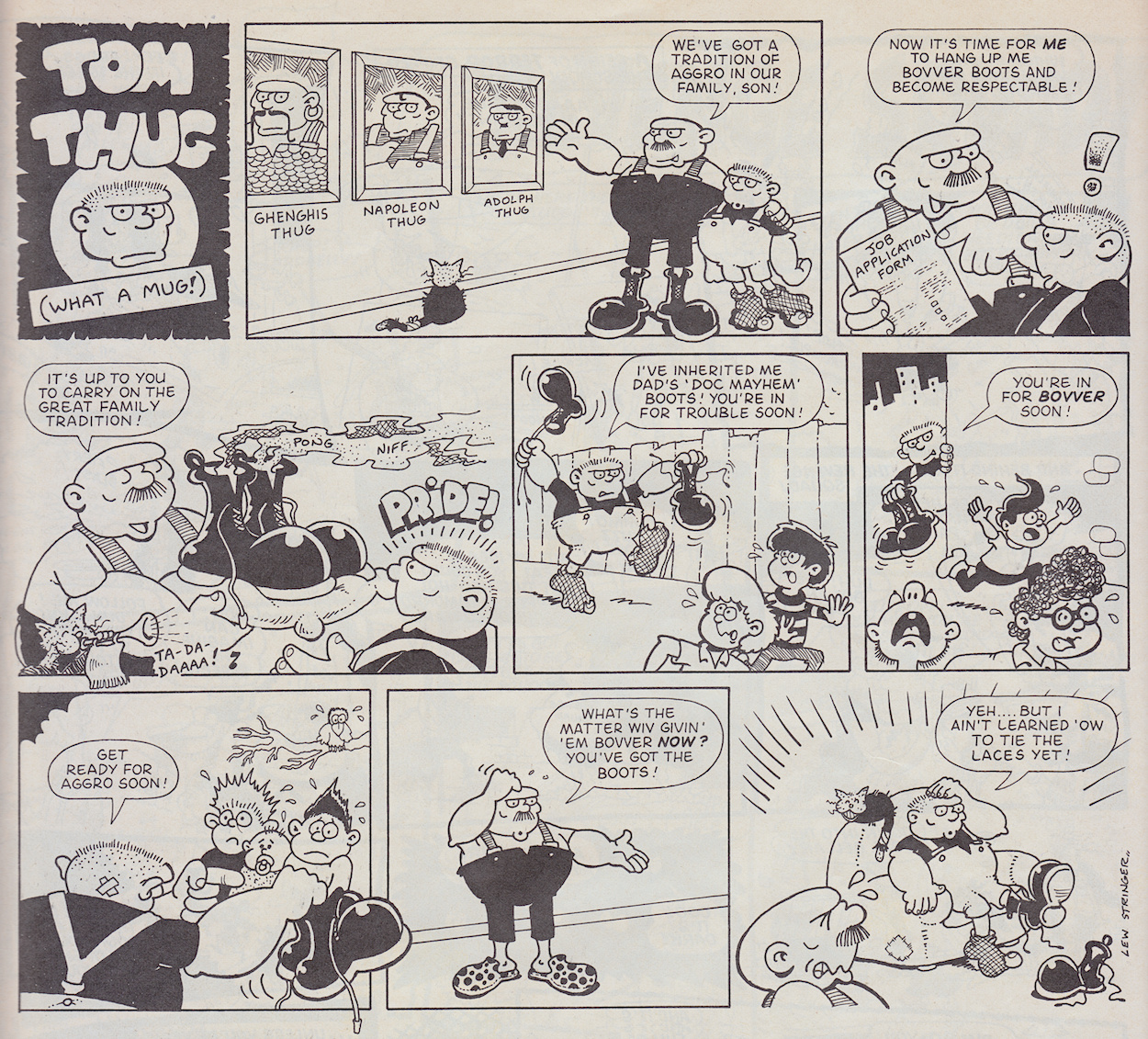
Lew Stringer‘s Tom Thug remains one of my very favourite comic creations of all time and I’m really looking forward to reliving his misadventures all over again. It’d take a while before he’d be able to tie those laces, he’d cross over with other characters like Lew’s own Pete and his Pimple and Mike Green‘s Weedy Willy, even leave school and sign on for unemployment which was definitely a first in comics history. The original designs for Tom and the first draft of this very strip can also be seen in a special blog post.
So there you have it, a little look into how potential new pig pals (as regular readers were referred to by Uncle Pigg) were first introduced to the world of pigs, plops, puns and parody. Then, as if the promise of more of this insanity wasn’t enough there was news of a free flexidisc record with #1, surely a free gift as unique as the comic it would be attached to. I hope you’ve enjoyed this look at the preview issue. There are also other posts on the site detailing the countdown to the release of the comic to keep you busy until Monday 3rd May and the review of the first issue of OiNK. So off you trot on your trotters and I’ll see you then.

 OiNK Blog