All posts by Phil Boyce

PiG TALES PART ONE: COMMODORE FORMAT #2

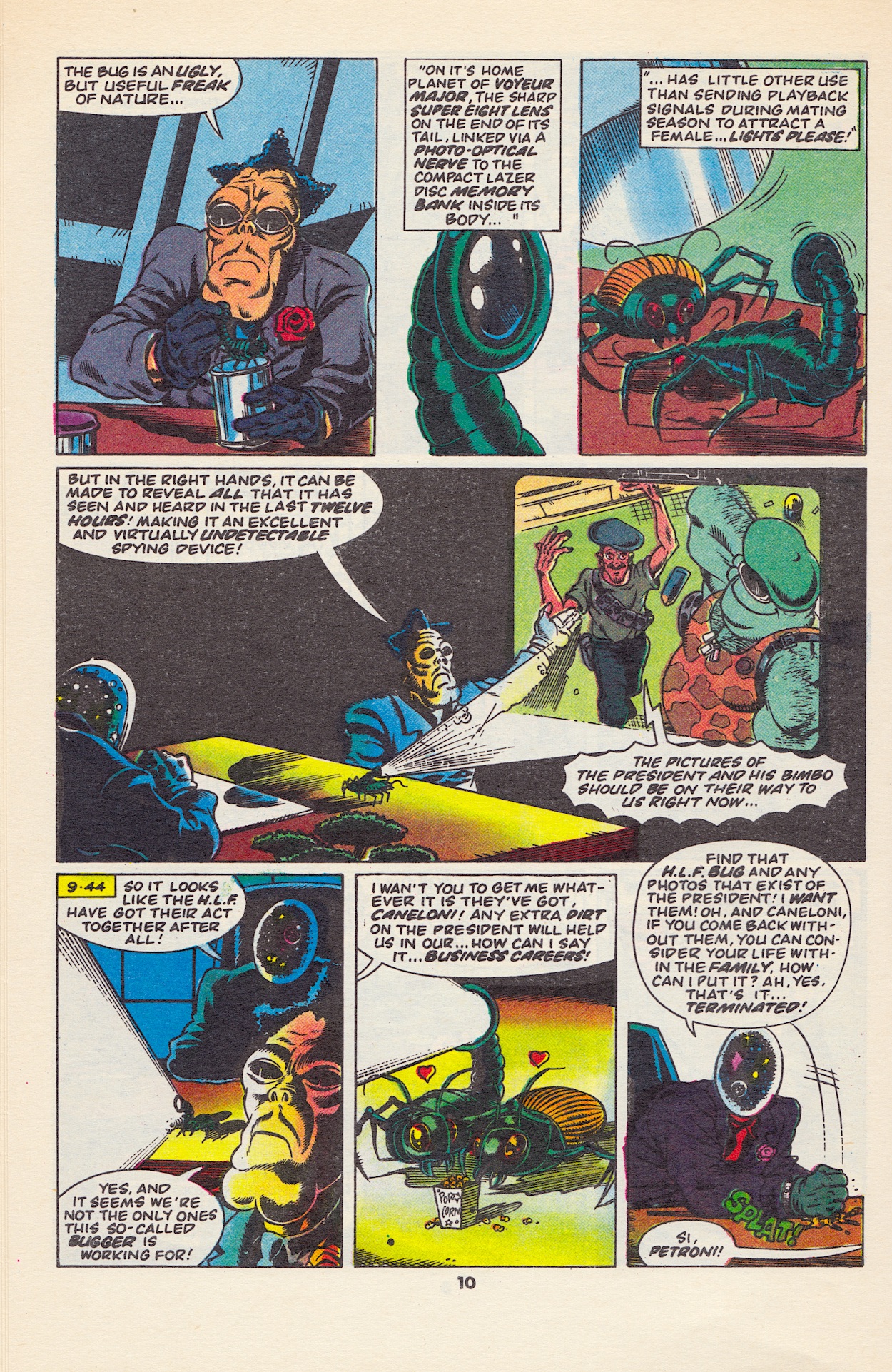
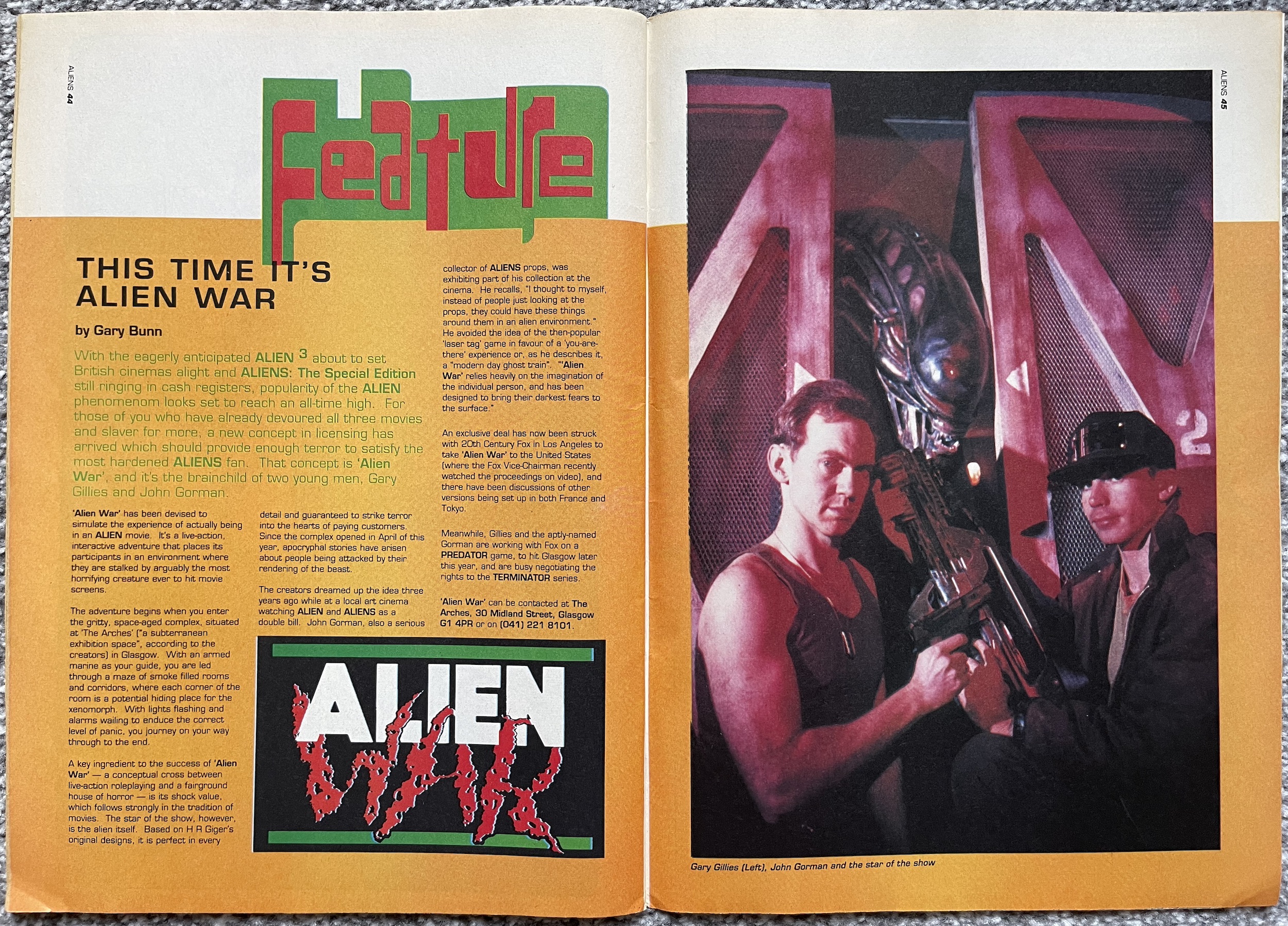
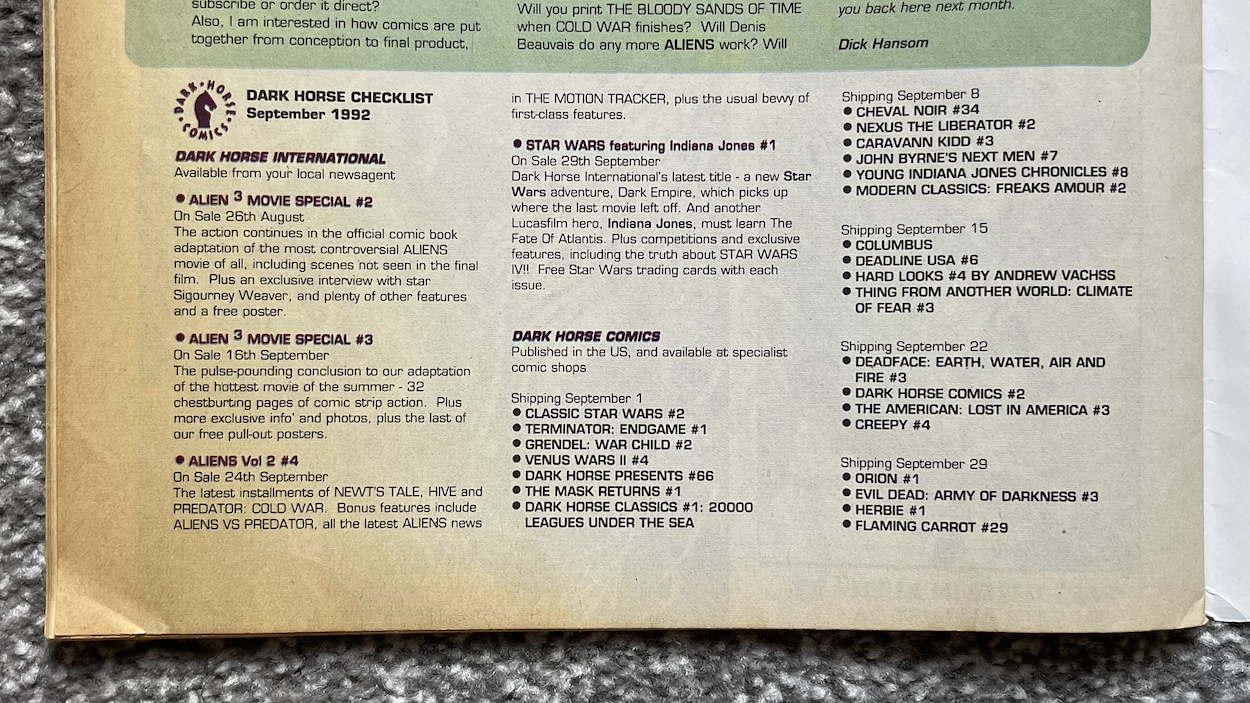
Commodore Format was a very special publication for me, although it wasn’t until #14 that I discovered it. I’m writing a few posts for the OiNK Blog about it because in one of its earliest issues there was a certain porcine program on the covertape, the cassette packaged every month with full games and demos of upcoming releases for readers’ Commodore 64 computers. On sale 32 years ago this month I’ve something special to show pig pals.
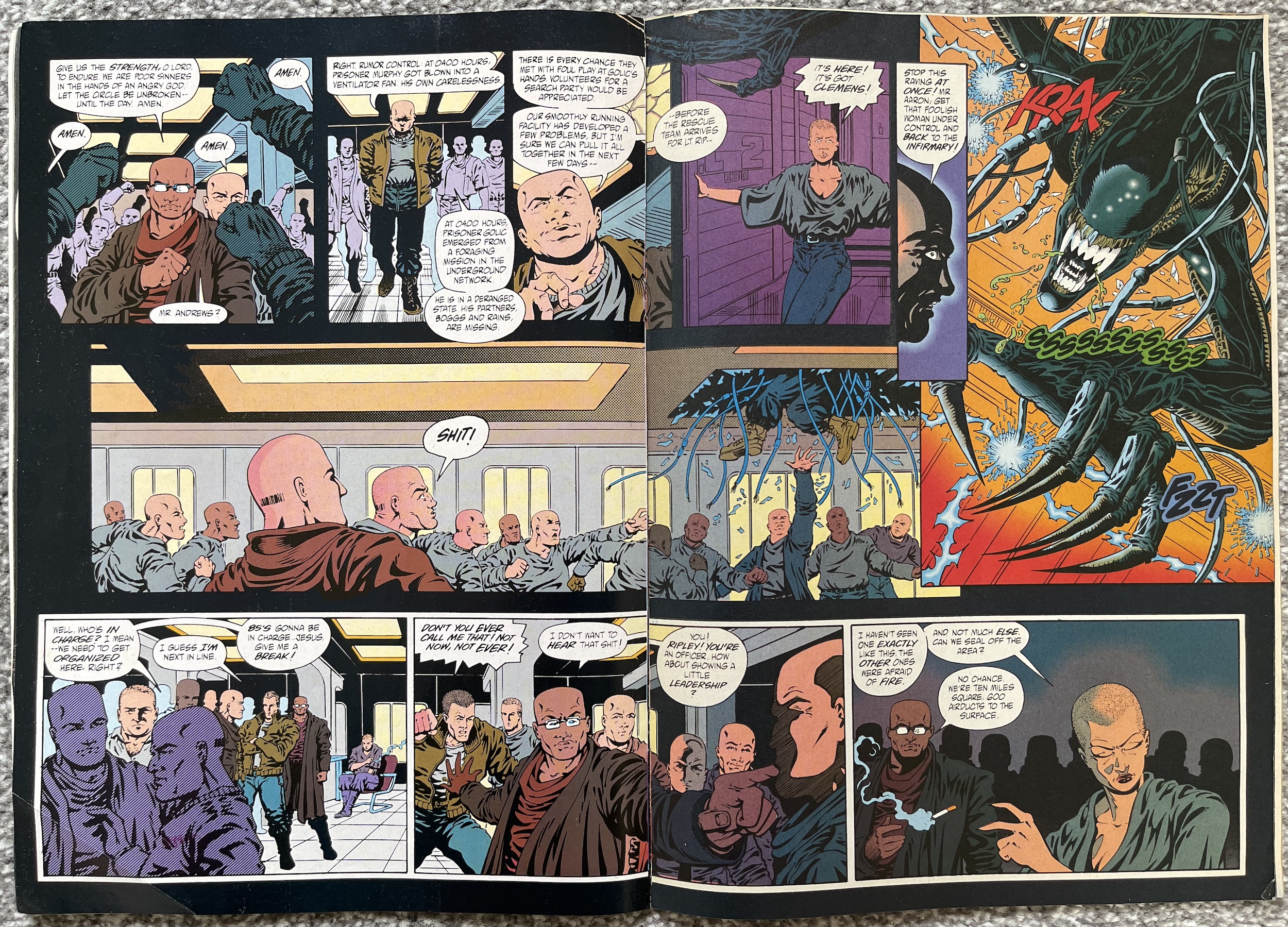
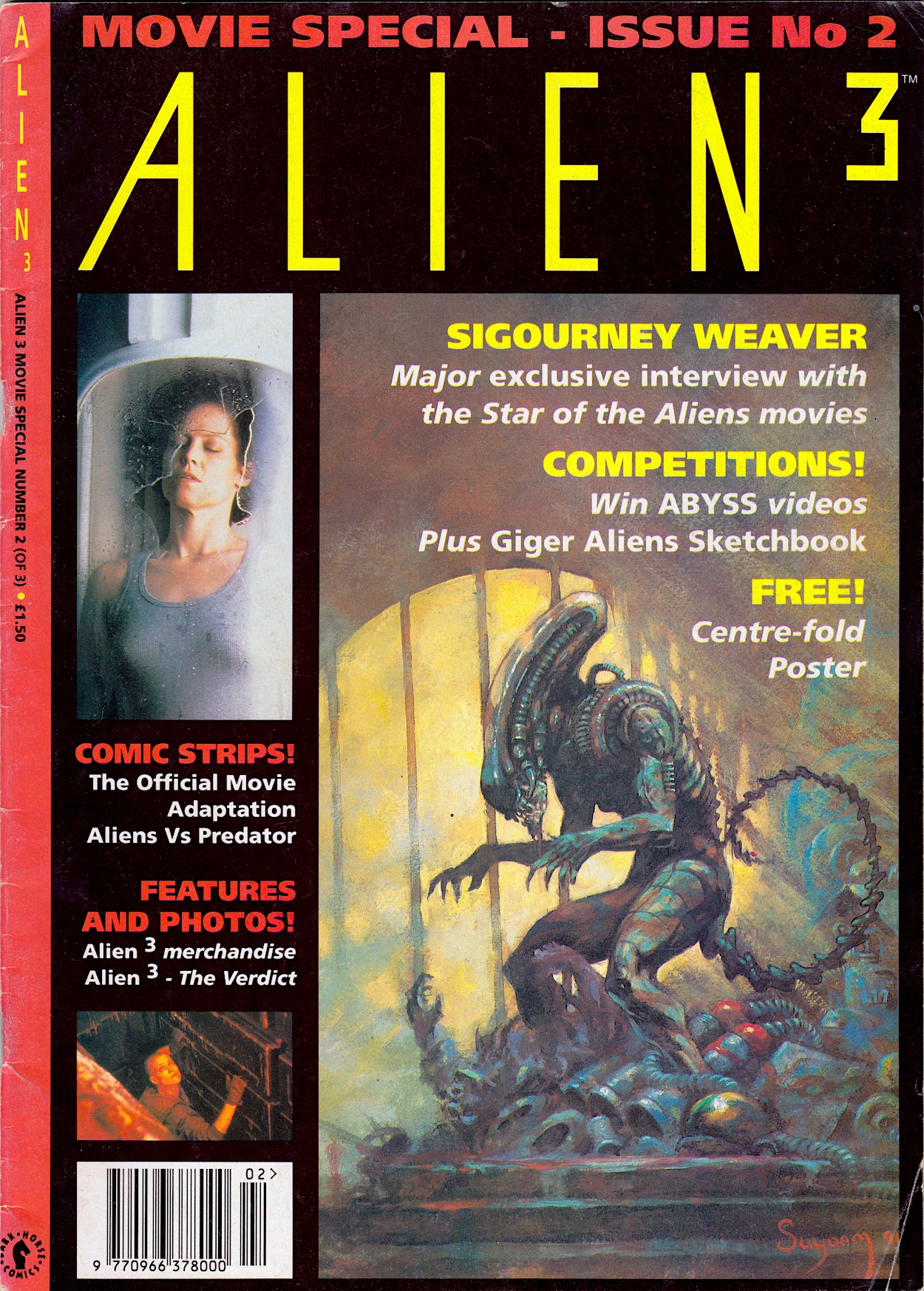
Attached to the cover of the second issue of CF (as we fans called it) from October 1990 was a cassette tape inside a little cardboard sleeve that included a highly playable Pac-Man clone called The Blob, a demo of forthcoming RPG Lords of Chaos, an intricate and complex space trading game called Empire and a game that according to the instructions pages went by the name ‘Pig Tales’. Described as “an everyday tale of small pink pigs attempting to put a magazine together”, the premise might sound familiar. As well it should.

I missed this back in 1990 when the magazine was originally launched but around 2010 I decided to purchase a C64 to relive those days and I began collecting Commodore Format all over again. As I started to read each issue I’d load up the cassette to see which games worked and which ones needed replacements. I did so before reading any of the instructions (that would come later once I knew which games I could actually play and which had succumbed to the ravages of time). Imagine my shock when Pig Tales stopped loading and a shoddily drawn OiNK logo appeared.

This was over a year before I even began the old blog site. I hadn’t read any OiNKs in many years, the final few remaining issues from my youth securely packed away in a box somewhere, so this was a very pleasant surprise that immediately took me down that particular memory lane for the very first time. I knew a little about the game via the Lemon 64 site (above), basically that it had very little to do with the comic and because of this had a bad reputation, although users were of the general impression it was still a good game in its own right. I gave it a go and was pleasantly surprised. It’s a great little game with a lot of playability packed in, with just a sprinkling of not-very-good OiNK-related images.

Previously on the blog I’ve included the Zzap!64 review of the game from 1987 which was generally positive and I backed this up with my own thoughts on the game, which you can read here. Unfortunately, with so many other amazing games and childhood favourites to play through I only loaded the OiNK game a few times so I’m in no position to write a detailed review. (The C64 was sold off again a few years later.) But it was fun and rather addictive, and you can’t really ask for any more from a free game.

It was surreal to see Uncle Pigg in digitised form suddenly pop up on the small portable CRT TV I’d acquired for the Commodore. Yes, the game itself was still called ‘OiNK’ when played, it was only inside the magazine (and the tape cover) that it was referred to as ‘Pig Tales’. A fan site has stated this was because Future Publishing had the rights to the game but not the name, which seems like a very strange set of circumstances given how they can’t be separated. It’s still called ‘OiNK’ on the screen and the character names are used in the magazine. (At the time of writing I’ve yet to confirm this rights issue.)

Within the instructions the game is likened to the creation of Commodore Format and the press puppets from Spitting Image, which were a series of pigs dressed in trench coats and trilbies but at no time is the comic itself mentioned. How quickly they forget, eh? This issue was published only six months after the final ever issue of OiNK, the Summer Collection.

In the next issue Commodore Format would include a guide to the OiNK game including maps and tips

Three years might seem like a quick turnaround for the game to go from full price, to budget rerelease, to being included on a covertape. While we know it didn’t sell that well, this speedy transition wasn’t uncommon and I remember amassing quite the collection of excellent games through the magazine, including ones which were top rated and had sold very well. OiNK could sit right alongside them as a fun, quirky little retro game.

Commodore Format wasn’t finished with OiNK though. In the next issue they’d include a guide to the game including maps and tips to help readers finish Uncle Pigg’s “magazine”. I’ll show you them next month but I want to finish off this post with a few select images from this issue to place it in the context of the year it was released, beginning with an advertisement for a new game which readers of my Havoc reviews will know quite well.

While the movie didn’t deserve the hype, the game certainly did (although clearly no one proof read their advert). RoboCop 2 was released on cartridge on the C64, meaning it loaded instantly and had more memory available for better gameplay, graphics and sound. It was a brilliant game and much more enjoyable than the lacklustre film it was based on. Elsewhere in the issue, modern day videogame players might be interested to see this next double-page spread when CF’s editor Steve Jarratt headed off to the Consumer Electronics Show to see what the world of interactive entertainment had in store for us over the coming year.

Finally, there’s an interesting three-page feature about the history of the Commodore 64 computer. Commodore Format was released at a time when more powerful machines were gaining traction but Future, which was already publishing Amiga Format and ST Format, saw an opening in the market. The C64 was still seen as the perfect starter computer (it certainly was for me in 1991 the following year) and there were also those younger siblings who were getting C64s handed down to them. All potential readers.

The only competition was Zzap!64 which focussed mainly on games. Commodore Format took less than a year to surpass that giant in sales, quickly becoming the world’s best-selling C64 mag. CF spread its net wider and included retrospective gaming features to get new owners up to speed, interviews, technology articles, as well as programming and graphics tutorials. It was a meaty read and an instant hit.
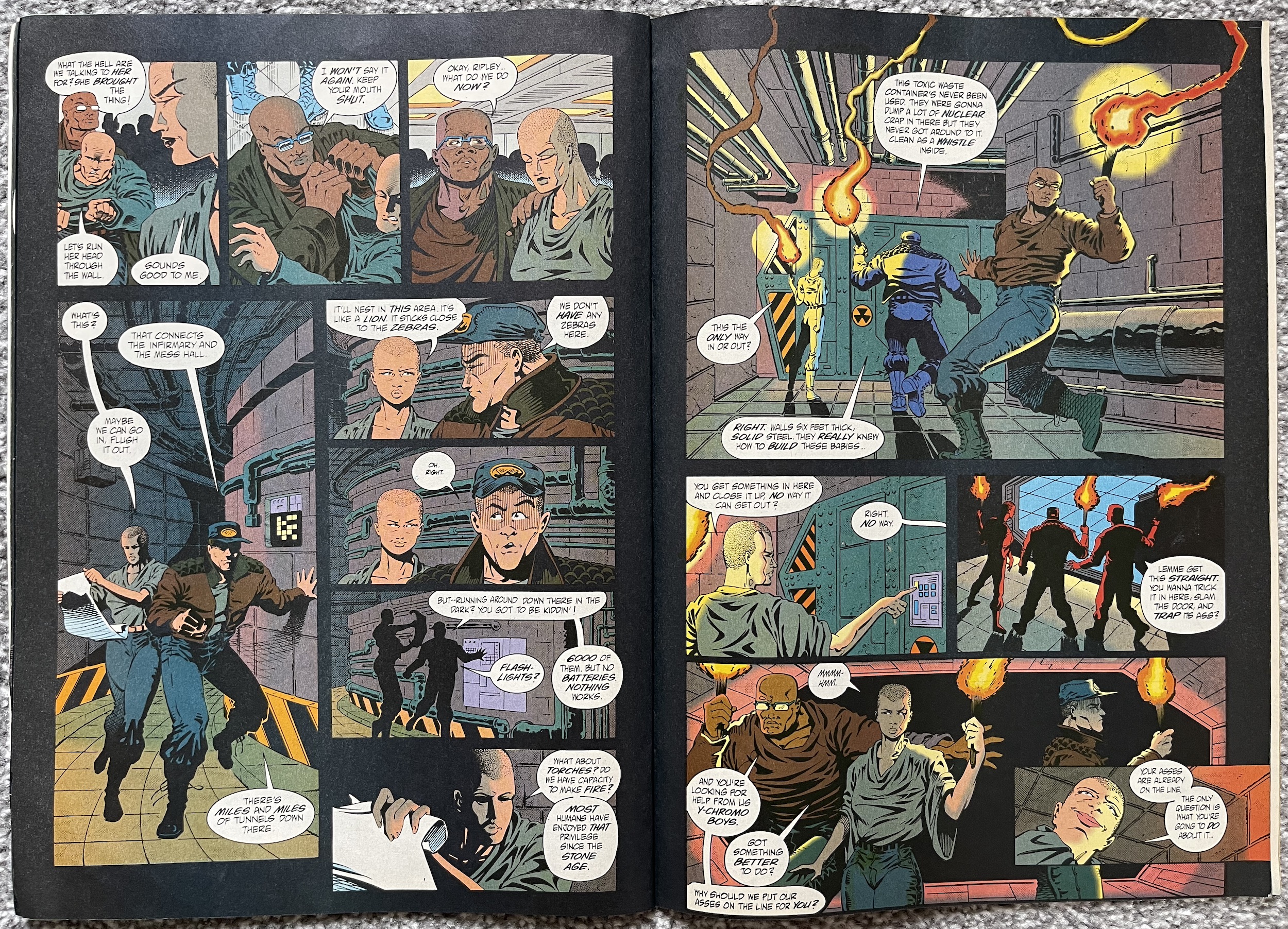
The C64 Story detailed the life of the 8-bit up to this point, including its predecessor, its development, spin-offs and its success story. Elsewhere in these early issues were several series of articles rounding up the very best games in different genres, but in this particular feature they decided to warn readers away from wasting their money on certain titles with ‘The All-Time Top Ten Naff C64 Games’. Oh I do miss the fun of Commodore Format!

I may have sold off my C64 collection but my Commodore Formats remain. I just can’t bring myself to get rid of them (not least because I’m in later editions, but more on that in a future post). They have such great memories attached to them and they’re still a brilliant read. If you’re into your retro gaming I’d highly recommend hunting any of them down on eBay. For now, that’s your look at OiNK in this issue, I’ll be back with the game guide in #3 of CF on Thursday 10th November 2022.

GO TO COMMODORE FORMAT #3

THE OiNK COMPUTER GAME MENU

OiNK MERCHANDiSE MENU

MAiN OiNK MENU

JURASSiC PARK #15: ANiMAL iNSTiNTS

Another exciting cover from Michael Golden, right? Shame it has absolutely nothing to do with what’s inside. In fact, Drs Ellie Satler and Alan Grant don’t even see the Velociraptors, none of our regular human characters do, so this is a somewhat misleading choice by editor Dick Hansom to pull readers in. That’s not to say the strip isn’t entertaining, it’s just not Ellie-holding-on-for-dear-life entertaining.

After last issue’s ‘Animals/Men’ story comes Animals/Gods!, as ever written by official sequel scribe Steve Englehart with the same art team as last time I’m very happy to say. Chaz Truog is on pencils, Paul Fricke is inking, letters are by John Costanza with Renée Witterstaetter bringing it all to colourful life as well as being story editor.

We have two completely separate stories happening here, our people becoming reunited while the ‘raptors enjoy life as wild animals. Things kick off with the dinosaurs hunting down a cheetah. Naturally the big, powerful cat comes off the worst against these new-old predators but it’s still a thrilling chase. We get four pages of Alf, Betty and Celia living free, ending with them relaxing as they finish off their meal, having a roll about in the sun and simply enjoying time together as a family unit without us humans ruining everything.

They really are the stars this issue, but then Alf starts to become ill, sneezes and collapses. During the human half of the story we find out there’s been a severe flu virus going around and both Alan and Robert Muldoon have come down with it. As Ian Malcom suggests, the Velociraptors aren’t predictable, they aren’t simple free animals (despite the animals thinking this themselves). Interacting with humans, something dinosaurs were never meant to do, will change them.
Ian’s scenes are the most interesting in the other half of the story. I still take issue with Muldoon having survived and his explanation just doesn’t make any sense, completely contradicting what we saw with our own eyes in the film. It’s also rather insulting for the reader to see him up and about perfectly fine, yet have Ian tells us he was laid up in hospital for months on end with his injuries, and he didn’t have a raptor’s jaw squeeze his skull! Anyway, we have to live with this for now and we find out Muldoon knew big game hunter George Lawala, the man whose work started this whole mess back in #7.

What I do enjoy though is any chance Ian Malcolm gets to talk Chaos Theory. If you haven’t read Michael Crichton’s original novel I highly recommend it for the pages and pages of monologues we get from Ian describing the intricacies of Chaos and his predictions for the park. It’s fascinating stuff. The movie did a great job of distilling these into short little scenes to get the essence across and here we get something of a cross between the two extremes. It’s clear Steve has gone back to the original source material when writing this.

That’s basically the entirety of the human story this time, to give some context to the story of the ‘raptors who take up a whopping 19 of the 27 pages of Jurassic Park strip. As I said, they really are the stars this time. We catch up with them as a local indigenous tribe watches these unknown animals succumb to their illness from a safe distance, believing them to be their gods taken animal form. Celia realises they’re being watched and attacks but despite the anger in her eyes she’s too weak to take them all on, reminding us that she may have shown a kindness towards Ellie last time but she’s still very much the same animal.

She finds a dead, sacrificed animal and tries to drag it to her siblings but struggles to do so and collapses. We get a few pages of the tribe gathering around their gods, feeding them elixirs, bringing idols of worship, generally looking after them and taking part in religious chants to impart strength. A long time passes and slowly they return to full strength. The tribe gather tentatively but it doesn’t quite go as they’d thought.

Everyone is slaughtered, but not eaten. These human creatures are now the enemy after all they’ve done to them. It’s as simple as that. The chapter concludes with the Velociraptors disappearing off into the jungle once more, one simple caption underneath: ‘It’s good to be free and wild again…’

While I do enjoy seeing the ‘raptors portrayed in this way I have to say this is probably the weakest of the strips so far because not enough happens. The main bulk of the story could’ve been told in a fraction of the pages without losing any of its impact and the human half is simply a (albeit good) speech by Ian and that’s about it. It feels like a stop-gap, like the comic was taking a beat while it puts the pieces into place for the next story. Transformers would sometimes do this for example and you’d know what it was up to. But with the gift of hindsight there’s one key difference here: the next issue is the last.

At the end of the strip is the line, ‘Next: The Thrilling Climax!’. As a teen I just thought it meant the end of this particular story before the next one kicked off, so this issue’s breather felt like it was gearing up for an awesome finale with the Veliciraptors before leading on to further adventures with the human characters. I now know this meant the end of the comic. Only for UK readers though, which I’ll get into next time.

It’s sad to think this real time read through is almost over

While not designed as the penultimate story it was for us and in this regard it’s lacking. Previous back up strip Age of Reptiles told a better story in a fraction of the pages in any one issue, which is a hard thing for me to say because I’ve been such a fan of the main strip up until the moment they brought back Muldoon, and now it feels like it’s padding itself out, treading water. Maybe it’ll make sense next month and read better as a result, but as it stands this was a fun strip but not worth the 26 pages it took to tell it and would’ve worked much better as a shorter, additional back up.

Moving on and after an advert for the soon-to-be-relaunched Manga Mania (now that the new publisher had gotten their hands into it properly) we move on to Cadillacs and Dinosaurs, or Xenozoic Tales by another name. History Lesson is one of those rare things, a quite lengthy story by creator Mark Shultz (coloured by Christine Courtier), lengthy enough for it to be split into two parts over these final two issues. Taken from #4 of Mark’s original comic it takes place before some of the strips featured already in Jurassic Park.

In fact this picks up directly from the story in #7 and didn’t make a lot of sense to me at the time. It made it seem like they’d had all these other adventures before realising Gorgostamos was missing. I now know better but in the days before having the internet to research it just felt off. Obviously it wasn’t Mark’s fault. What is also not his fault is the fact nothing much of consequence happens here either. Perhaps when both halves are read altogether the story will be much more interesting, but it’s cut off before it gets going.

After finding Gorgostamos’ remains Tenrec and Hannah debate whether the Grith killed him in order to save them, and Hannah once again wants to know more (remember, this happened long before last month’s story). Tenrec tells her of catacombs underneath the city where a library has been found, guarded by keepers of knowledge who don’t want outsiders let in. They fear that with knowledge of how to rebuild humans will just cause another cataclysm. Hannah insists on seeing it and these ten pages are about Tenrec meeting with allies to get them inside. Then, just as they do get in the story frustratingly stops for now.

The only really exciting part is the caption beneath the final panel! As a teen I looked forward to finding out the mystery once and for all but now, knowing the previous strips were actually later chapters in the story and the mystery wasn’t solved in them, I don’t think we’re going to get as many answers as this suggests, which actually makes me all the more intrigued as to what the caption means. If it gives at least a hint of what happened (or maybe the answer without the characters knowing) then at least that would explain why it was used as the final story for this comic.

I may have been none the wiser but it’s clear the new Manga Publishing knew the end was nigh, even if they were still offering subscriptions on the contents page. It’s sad to think this real time read through is almost over. This is the first issue I’ve been disappointed with as a whole, but after 15 of them that’s not a bad track record. It feels like no time since I was reviewing the very first issue and thinking back the comic has changed a lot in a relatively short amount of time. Let’s hope for a spectacular send off. Well, a send off for the time being anyway. I’ll elaborate in #16’s review on Thursday 3rd November 2022.

iSSUE 14 < > iSSUE 16

JURASSiC PARK MENU

OiNK! #38: A FEAST OF FUNNiES

A cover that would surely stand out on the shelves, a full-page photograph of Frank Sidebottom (aka Chris Sievey) and Marc Riley as his alter ego Snatcher Sam getting into what appears to be a food fight, with a promise of a full story inside. Frank never seemed to be off our television screens at the time so having him in OiNK was always a major coup for the comic, having him on the cover even more so. Well, it would be if his face wasn’t covered with those wonderful stickers, of course.

Our third and final set includes the same ‘Stick with OiNK’ on the back as previous issues and an array of stars with Burp, Horace (Ugly Face) Watkins, Harry the Head and Frank himself on the good quality, bright yellow stickers. The butcher one in particular I remember, I think it ended up on our fridge back in 1987 but not for very long. We wouldn’t get any more free gifts until the final issue, a gift that would lead me directly to my next comic obsession.

Where did that sticker go? Find out here.

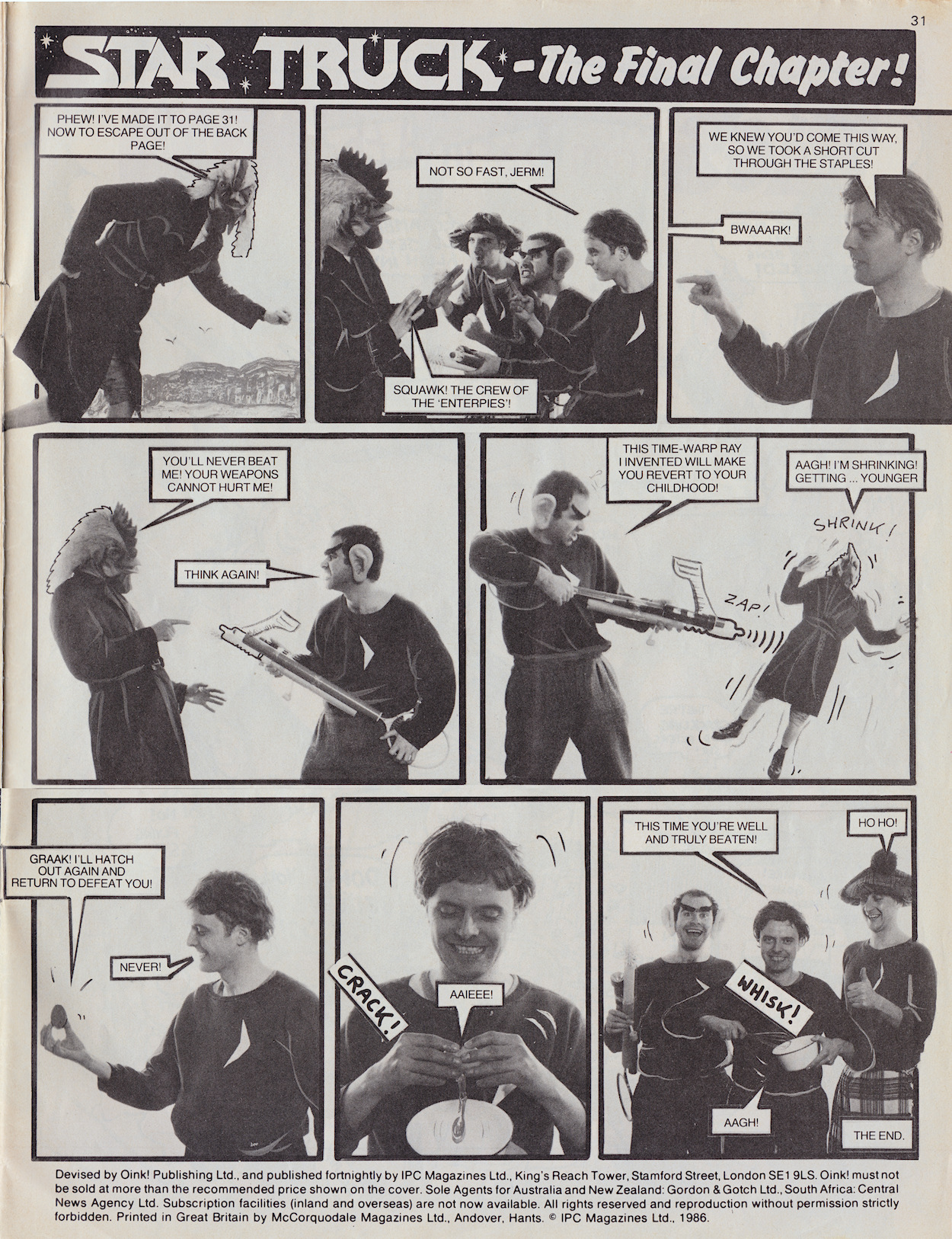
The Story Behind the Cover strip was the first time we’d seen Frank and Sam in a photo story since #26 and here it’s split up into three small chunks, the conclusion on page 31. However, the first two parts are also split up over the opening pages, the bottom half on page two and continuing at the top of page three. Why? Comic timing (pun intended).

Have you ever turned over a page of a comic and something towards the end of the strip catches your eye? Or have you ever been reading a page and your eye happens to wonder just for a split second to something further down, revealing the big gag too early? (Just me?) I love how this stops the strip at the point where Frank’s turn of phrase suggests something very different to what actually happens, then the gag lands when we start on the next page.

That pie thrown in the final image would be seen throughout the comic thanks to co-creator/co-editor Patrick Gallagher as it wings its way to the inner back page. The pie isn’t the only addition to some pages, there are little plops here and there with suitable puns, much like we had in the very earliest issues, in particular the preview. These were added to the previous two OiNKs too, adding to that feeling of newness (reminding me of those first issues) I described during #36’s review.

We’ll get back to that at the end of the review, as intended. As I mentioned in the OiNK’s Golden Age post this was my very favourite time in OiNK’s run, mainly because all of my very favourite characters, writers and cartoonists were present in almost every issue. One character who I’d always thought was always present from the moment she first appeared was Psycho Gran by the insanely talented (and all round decent feller) David Leach.

Old Lady Psycho appeared seemingly randomly from #15 up to this point, partly because David didn’t know she was to be a regular character originally. Her Maniacal Majesty was at her most prolific in these latter fortnightlies, in fact apart from the next issue she’ll be in every one until OiNK turns weekly when she unfortunately disappears, only popping up in three of the regular issues after that. So she’s another reason to enjoy the rest of this year’s issues.

A loveable character who was often the subject of body shaming, his cheery demeanour would see him get one over on the bullies

Also introduced in #15 and advertised as a regular was Fatty Farmer, normally written by Mark Rodgers and drawn by Mike Green. Farmer appeared in five issues, then this is only his third appearance since and he’d only have three more to go. He was a loveable character who was often the subject of body shaming, although he’d never let it get to him and his cheery demeanour would see him get one over on the bullies every time.

Here however, he’s eaten a load of cream cheese just before bedtime and, playing on the old tale of cheese giving you nightmares if you eat it late at night, he drifts into a disturbed sleep in Fatty Farmer’s Nightmare! A Blubbery Bonus. This time the script has been written by new OiNK scribe Vaughan Brunt, with Mike as ever providing the art. Written as a rhyme it starts off silly and just gets sillier.

I’m a sucker for a comical shark and Mike doesn’t disappoint here. For a start trying to strangle a shark is funny enough, never mind the giant, crazy eyes, lack of pectoral fins making it look like a long, silly sausage and the little “Dunslop” sign on the front of its rubber body! This was the only time Fatty Farmer got a full page to himself and I think it’s Mike’s art that really makes it. It could’ve been written for any character let’s face it but Mike makes it feel like the perfect fit.

Other highlights of this issue include Burp doing political satire three decades early, Death’s hilarious reaction to an unwelcome visitor, our dense-but-buffed Endor and his magical spectacles being woken from their apparently cuddly sleep when the Monocle of Mayhem is stolen by a ghost and Pete giving us a hint as to why he may have that pimple in the first place.

A quick note on those last two panels. This was the first appearance for new serial Jimmy Flynn, a boy who was “bathed in a weird light from a flying saucer” and ever since could make his skeleton jump out of his skin to go and investigate spooky goings-on. Each strip would hype a ‘Special Guest Star’ in the title too, only for that special guest to appear inconsequentially in one panel, as Larry Hogman (Larry Hagman, Dallas) does here.

This issue saw the very first contribution from none other than Kev F Sutherland. A prolific cartoonist in OiNK’s weekly and monthly issues (his work would make up nearly a sixth of the final issue!) this was the only time his art would be seen in the fortnightlies. It’s great to see him join the fray at last. A small, quarter-page three-panel Madvertisement riffing off the McDonald’s TV adverts of the day, not only is this Kev’s first OiNK strip, it’s his very first published work.

So a little bit of comics history right there. Kev went on to be a cartoonist in titles as diverse as Beano, Toxic, Doctor Who Adventures and Red Dwarf Magazine. Today he also visits schools to teach comics creation, performs with socks puppets as The Scottish Falsetto Sock Puppet Theatre and you can check out his 17-part podcast series Comic Cuts – The Panel Show on Apple Podcasts or wherever you listen to your podcasts.

When you’re a heavy, building-sized robotic pig there’s no way you can’t make an impact

I’ve been looking forward to Kev’s time in the comic and forgot all about this little strip. Having proven himself we had to wait until #49 to see him again but it’ll be worth the wait. Some of the very best strips to come are from Kev; The March of the Killer Breakfasts and a simply brilliant strip about three scientists discovering time travel are stand outs. Kev also had a series called simply Meanwhile… which would have a completely different scenario every time, all linked together by nothing more than his unique art style and even more unique sense of humour. You’ll see some of those next year.

One character didn’t appear too often, showing up for just five regular issues and both annuals, but made a huge impact with readers and remains a fan favourite to this day: Pigswilla. Then again, when you’re a heavy, building-sized robotic pig there’s no way you can’t make an impact. He returns this issue in Beware the Bread-Beast from Beyond. As you can see Lew Stringer’s gorgeous colour work has returned, as has his rhyming storytelling.

It’s all very funny, that exclamation by the Bread-Beast at the top of the second page along with his facial expression made me genuinely roar! You know you’re in for a treat when you turn a page and find Pigswilla is in the issue and we were never let down. The strip ends with cut-out finger puppets and by the initials it appears Mark Rodgers had a hand (boom! boom!) in those. Lew would do something similar to brilliant effect with his Combat Colin strip in Marvel UK’s Transformers a few years later.

The next strip takes up two pages, although it’s not a double-page spread, instead we turn over for the second half. This instance isn’t for comic timing, instead it’s so that it can be presented as the front and back covers of a spoof comic. I was surprised to see this because the first annual has a superb, multi-page spoof of Beano and The Dandy and it would’ve been on sale at this time (although most of us didn’t get it until Christmas, of course). Nevertheless, here’s the first time OiNK took a direct swipe at DC Thomson’s best-seller with The Deano.

This was all a well-meaning jest, a parody of the long established comics. As OiNK writer Graham Exton once told me parody is when you poke fun at something you admire, satire is something different, and these were always intended as parodies. For example, this was written by co-creator/co-editor Mark Rodgers who (according to Graham I should add) would always have a Beano Book next to the loo for guests in his house to read while they did their business.


“There’s a new butcher in town, gang! Let’s splat him!”

Scramble

Brought to life by Les ‘Lezz’ Barton, the volume and issue numbers emphasise the running gag that the comics were tired and had been going on too long with the same humour, and it all goes rather dark on the second page. I’m not referring to the lights being turned off either. Let’s be clear, Dennis has just minced and eaten his pet dog! Then again, we are reading a comic which advertised burgers made of butchers in its preview issue, so the precedent was set.

Percy Piglet turning the light out will actually get mentioned in our final highlight from this issue but before that here’s the winner of Granada TV’s Scramble competition as promised. I actually prefer runner up Ian Marshall’s Professor Foible but I wasn’t judging and when the winning strip features a gang of punk pigs it’s clear this was always going to be the winner. After all, co-editor Tony Husband was (and still is) a huge fan of punk music and always saw OiNK as the comic equivalent.

I’m sure Michael Spencer of Poynton was thrilled to see his work in the comic, introduced by Uncle Pigg and the plops on the previous page. You can’t fault the imagination on show and it reminds me of the comics my friend Roger and I made for each other in school, which were usually riffs on Marvel UK comics such as Transformers and The Real Ghostbusters. From memory, Roger created The Battleoids and School Busters, while mine were called War-Bots and The Real Smokebusters. (Hmm, definitely not as original as Michael’s strip.)

Time to round off this issue’s review with the conclusion of our photo story starring Marc Riley as Snatcher Sam and Chris Sievey as Frank Sidebottom. The custard pie has made its way through the comic to end up splattered all over Sam so the OiNK photographer finally gets their shot. In response the reluctant cover stars plot revenge and this is where the reference from earlier comes back to funny effect.

The lucky young star who got to meet some of the OiNK team was Scott Steward, neighbour of Patrick Gallagher‘s. Thanks again to Patrick for the info and as always he’s sent along a recent photograph to show us Scott as he is now. Hello Scott!

That’s our feast of an issue at an end and it’s been a belter from start to finish. It should come as no shock that I think the same of the next one, at least from memory anyway. After that will be the Hallowe’en issue which (along with the Christmas edition later on this year) I seem to recall was one of my very favourite OiNKs of them all. So good times ahead then. Before then, the review of the Games and Puzzles Issue will be here on Monday 17th October 2022.

iSSUE 37 < > iSSUE 39

OiNK READ THROUGH MENU

OiNK FREE GiFTS MENU

MAiN OiNK MENU

COMiNG UP: OiNK! #38

Coming up in a couple of days is a feast of fun, a gala of gags, a picnic of puns, it’s the next OiNK in the real time read through, the Food & Drink Special. With a photo cover featuring Chris Sievey and Marc Riley as their alter egos and the final set of free stickers things are looking good from the moment the issue is picked up.

Does the inside match up though? Well, the cover leads to a photo strip starring Frank Sidebottom and Snatcher Sam, a hilarious pairing before they even open their mouths! Pigswilla makes a very welcome return to face off against a bread monster (as you do), we get a kind of mini spoof comic in the shape of The Deano and Fatty Farmer gets his first (and only) full page outing in a bizarre nightmare world. The review will be here on the blog from Monday 3rd October 2022.

GO TO iSSUE 38

OiNK iSSUE PROMOS MENU

‘MORE OiNK’ MENU

MAiN OiNK MENU

RiNG RAiDERS SPECiAL: SPECiAL iNDEED!

When editor Barrie Tomlinson gave us the bad news that #6 of Fleetway‘s Ring Raiders was to be the last, he told us they hoped to produce a special the following year to finish off all the stories frustratingly left on cliffhangers. Given how comic specials usually appeared in April or May, and the fact I didn’t know if it’d even be published, you can imagine my surprise when my parents came back from the shops with this some time in February of 1990. With its gorgeous Ian Kennedy cover and a hefty weight to it, I immediately ran to my room where all my planes and bases could be found.

Also in my room were my comics and after giving the special a quick flick through and seeing glimpses of exciting aerial action I decided to spend the whole day with these characters and read through all of the previous issues, every single story (including the ones that had already finished) before settling down for this mammoth 64-page feast of an issue. The regular comic was 24 pages so this felt like a real treat! Especially when we got not one, but two covers from Ian.

Was #7 meant to be the start of the comic recolouring the logo each issue? Or was it just for this special? Who knows? But clearly Ian had finished the next two covers and I think this inner page (likely #8’s cover) is just beautiful, evocative of the Commando covers he was so well known for but with a modern (for the time) splash of colour on the Corsair. Wonderful. You’ll have to excuse the state of the pages though. This is my original comic and it was read so many times back then, devoured over and over. The creases and tears tell a story though, of a much loved comic I couldn’t get enough of as a kid.

I really enjoyed reading through the fortnightly and was meant to cover this several months ago but had forgotten I’d let a friend borrow it (and the Super Naturals Adventure Book) and she’s not someone I see too often. But here we are at last. I’ve been looking forward to this. As you can see we kick things off with Operation Chill as colourfully brought to life by Carlos Pino, which only began in the final issue. When a cruise ship carrying a talented bunch of school kids crashed at its destination port with no one on board Wing Commander Max Miles and his Freedom Wing were dispatched to track them down.

His wing ended up over chilly Arctic waters and fired upon from an unknown source, with only giant icebergs beneath them. On the first page of this issue’s strip you can see gun ports in one of them and it’s on this that our ejected pilot Frank Turner finds himself. Another character named by the comic, Frank is soon set upon by Skull Squadron goons but he’s not as unarmed as it would seem, using another of the miniature gadgets the comic invented for the rings.

The iceberg was also on the move! At this point as a kid I had an idea of what was really underneath the ice and the next part of the story confirmed my suspicions. This particular segment would’ve been in #8 with a release date of 23rd December, the Christmas issue. If all had gone according to plan eager kids awaiting Santa would’ve read this just a few days in advance, and no toy in the series was more sought after than the Skull Action Assault Base!

While readers had seen the base in the Trackdown strip we have to remember these are time travel stories and so, much like with Doctor Who for example, timelines can be presented out of order. Even though this takes place a few years after Trackdown in order of actual date, for the time travelling characters it occurred before it. This is when the Ring Raiders themselves first encountered Skull Squadron‘s new mobile HQ. Over time it would’ve been fun to piece together these events into a timeline.

The villain is of course Chiller, the most used in the comic and simply the most sinister, not to mention the most fun for the reader. The plan is to re-educate the kids as mind slaves but, even after Chiller takes to the skies with his new ice weapon and takes out two of the Raider planes, Commander Miles doesn’t give in, making the most audacious of moves by landing on the base. Staying inside the cockpit and using the plane’s weaponry to disable the base he soon overpowers the enemy and commandeers it.

This final panel has Miles posing as he does on the toy packaging. Hmm, he’s called Max Miles and his plane is the Knight Fighter… and in Knight Rider we had Devon Miles… oh I’m just overthinking that, right? Anyway, with the funny image of Frank using the Skull base’s facilities Barrie’s story comes to an end with four parts here, making five altogether so originally it was due to conclude in #10. Who knows if the next story would’ve seen Skull Squadron coming for their base, but it would’ve made for an excellent battle if they had.

This would’ve sealed the deal for Ring Raiders as one of the very best action adventure comics in the UK

On to what was the main strip in the comic for me, the epic Trackdown written by Angus Allan and drawn by famous British artist John Cooper. It always felt epic in its scope, story, use of character and pace, and as it turned out it truly was as epic. With five four-page episodes in the special, altogether it was 11 parts and 48 pages in length. Beginning in #1 on 16th September 1989 it wouldn’t have come to its explosive finale until #11 on 3rd February 1990. Getting the final 20 pages here feels like a bit of a cheat, but these are the best pages in this special, and indeed the series.

In fact, the very first part here (which we’d have enjoyed in #7) would’ve sealed the deal for Ring Raiders as one of the very best action adventure comics in the UK. The Doomsday Device is on its way back to Skull Squadron in Blackjack’s auto-piloted Harrier while he’s taken a young boy hostage in a biplane, threatening to throw him out. Wing Commander Joe Thundercloud of Rescue Wing can only chase one, but which one? Much to Blackjack’s surprise he takes off after the Harrier, or so it seems.

This sequence is thrilling today, so imagine reading this at 12-years-of-age surrounded by all the toy planes, including the one featured here! Scorch orders Blackjack to toss the boy out of the plane to his death, but Blackjack hesitates, just long enough for Joe to swing his plane round and come at the biplane at a 90 degree angle and slice it in half, giving the Air Carrier Justice the order with split second timing to beam up based on his location. The boy (and half the plane) materialise on the Ring Raiders’ flying base while the rest plummets to the ground.

Where could this story go from here? Clearly anything is possible and next Angus has the Wing Commander catch up with the Harrier. With Blackjack out of the picture, Joe disables its engines and then picks it up with his own F-16, using the power of the ring to convert his own body’s energy into extra power to try to get the pilotless plane to the Justice.

But as a caption reminds us, “Use of the rings means terrible physical exhaustion” and, tapped into his mind as well as his body, Joe’s wish to protect those he holds dear and the panic over the screaming engines accidentally sees him activate the time jump engines with his thoughts, ending up back in prehistoric times, now flying above dinosaurs! As you can see the Harrier is no longer balanced atop his plane. The strain was too much for his body to bare and he lost control, the Harrier tumbling into the lake below.

How amazing was this scenario for young comics fans? Ring Raiders deserved a much larger audience than it got in the end because this was top comic action with or without the licence. But as a fan of the toys this was the most amazing thing I’d ever read in my young life as far as I was concerned. (We love hyperbole as kids.) It was a story I’d replay with my Matchbox planes over and over. I think I even created a tiny biplane out of Lego so it could be cut in half, that’s how much I loved this.

Contacting the Justice over millions of years via more use of the ring (and nearly passing out as a result) the rest of the force arrives, giving Joe time to get his energy back and load up the F-16 with Super Sidewinder missiles which he uses to destroy the side of the lake (it overlooks a cliff), draining its water and exposing the Harrier with the Doomsday Device in its cockpit. But the sky suddenly fills with more explosions. Blackjack in his replacement aircraft and his Havoc Wing were tracking his original plane all along.

It may be black and white but that last panel of part nine (third episode here) exudes atmosphere. The sun feels hot, the Harrier ominously coming out of silhouette as Joe looks desperately for his arch enemy. My memory had this as a cliffhanger in the fortnightly, such was the impact it had on me but nope, it’s right here with the next part on the very next page. Simply gorgeous imagery by John Cooper there.

Using the ring has consequences and must be used sparingly, unlike in the cartoon version

The characters having replacement back up planes may initially seem to ruin the drama and tension somewhat but it’s not uncommon. Later in Castle of Doom Yasuo needs his reserve machine in a hurry but the landing crew try to dissuade him as you’ll see. Clearly each character has their main craft and a reserve, which makes sense militarily and they’re never presented as a cheap way of continuing the action. It adds another layer of authenticity to something so fantastical.

The story comes to its conclusion as Blackjack steals the device back while Skull Squadron keep anyone from launching from the Justice with an all-out assault. But, with the device dangling from a claw under Blackjack’s cockpit Joe blasts it, opens his own cockpit and uses the power of his ring like a form of tractor beam to pull it aboard. Thing is, the ring was never meant to be used that way and with too much toll on his body already he loses control. Scenes like this establish that the ring isn’t a get-out-of-jail-free-card, it has consequences and must be used sparingly, unlike in the cartoon version.

The story constantly flips back and forth between which side is winning, every time success is within grasp of someone it flips again. It makes for genuinely tense, exciting reading, even as an adult. It’s also nice to see other characters milling about in the background or helping out here and there, giving more of an ensemble feeling to the cast than normal. Joe just about touches down without crashing and taking the future of the planet with him. Then our inside cover star Salty Salton launches against orders, his slow but manoeuvrable F-4U Corsair making it to the ground just in time to punch a hole in Blackjack’s cockpit, making him scarper.

Salty uses the ring to reenergise Joe’s and in turn Joe himself, the story wrapping up with doomsday averted and the device launched into deep space. What a ride. Ever since those early episodes with Rescue Wing’s Freddie Riley and the professor it’s been non-stop, the tension always building, with high-flying, high-octane stuff fans of the toys longed to see with one-on-one dogfights, crash landings, huge battles and at the centre of it all two characters driving the story forward. The story was never forgotten for a single page, never sacrificed to show off the action. These final Touchdown chapters were a worthy climax to the comic as a whole, even though that was never the intention.

Castle of Doom began in #6 and was instantly a favourite because it starred my two favourite characters, Wing Commander Yasuo Yakamura and Skull Leader Wraither, their planes being the first I ever purchased, so naturally I had a soft spot for them. Following on from the cliffhanger last time, how does a jet pilot rescue a man hanging by a branch on a cliff face? With this rather ingenious Rescue Pod above, that’s how. I love that.

This story has six parts here which would’ve taken it up to #11 with seven parts in total, so as you can see there was no standard length to a Ring Raiders story. This would’ve made for a wonderfully unpredictable reading experience if the comic had continued. Castle of Doom’s plot was all about using time travel to the past in order to affect future events, something which had always intrigued writer James Tomlinson (who went by James Nicholas at the time), and it’s clear he had great fun crafting this tale as it jumps about time zones within the isolated castle setting, layering the plot slowly over the first few episodes.

Basically, in 1989 (two hundred years hence) this castle would be seen as the ideal secure location for various governments of the world to gather and discuss the  growing threat of Skull Squadron, a meeting which would be key to the formation of the Ring Raiders. So Wraither and Vulture Wing have ventured back centuries to hypnotise (using a nose mounted ray of some sort) the family living there, planting a seed that wouldn’t be activated until hundreds of years later in the minds of their descendants.

This manifests itself as a mass shooting in 1989, the owners of the castle suddenly falling into a trance and opening fire with automatic assault weapons on all of the representatives present! Yakamura wins the day by using a low-yield missile to knock out a wall of the castle and take out half of the assassins, but the head of the family escapes and throws a grenade into an ammunition store. In the end the survivors evacuate just in time. The rest of the assassins are captured (I’d assume to come round later and be exonerated) and Wraither’s P-51 Mustang Galloping Ghoul is shot out of the sky, the mysterious pilot left abandoned in that time zone until Skull Squadron come to rescue him.

That’s it pretty much summed up but there are two main reasons I love this strip so much: the fact it’s full of great action between my two favourite pilots and planes and how it was delving into some of the backstory, taking tentative steps at setting up some mythology. It reads as an important early chapter in what I’d hoped would be a long-running comic. Wraither and Yakamura were likely chosen because they formed a special two-plane Matchbox Starter Pack (my Starter Pack in fact) and because of this it seemed they were destined to duke it out forever.

To the uninitiated it might seem daft to have two such vastly different planes engage in battle but it’s actually believable. Yasuo’s jet has speed on his side but is unable to make the kinds of quick manoeuvres over short distances Wraither can, and the latter’s ability to fly so close to the ground and mountains and use cloud cover to disappear and reappear at will evens the odds somewhat. In fact, the Grumman X-29 is almost trashed at one stage and Yasuo has to time jump back to the Justice for his reserve machine.

Untested and with unfinished computer systems which were such an integral part of his plane (Yasuo usually relied heavily upon the computer), it made for a tense showdown with Yasuo outnumbered four-to-one against Vulture Wing, the castle under attack by assassins, his inability to land to help and the castle poised to explode, wiping out the Ring Raiders before they’re even formed. The last three chapters were clearly not finished by the time the comic was cancelled as they are combined into one, 12-page finale.

Artist Don Wazejewski again brought James’ script to life and there are some lovely atmospheric visuals here (my favourite being the panel of Yasuo “almost hearing” Wraither’s laughter) and aerial battles that feel genuinely fast and exciting. I also like his chunky depictions of humans, especially on board the gigantic, high-tech Air Carrier Justice; there’s a certain Thunderbirds-esque feel to these particular scenes. Over 24 pages it’s a real thrill ride and it’s such a shame this would be the last meaty read of the special and the last time I’d see these characters.

It hasn’t lost any of its ability to excite for this 44-year-old. But then again, all those happy childhood memories of favourite characters and those little toy planes all bubble to the surface when I read any issue of this comic.

In such a serious storyline, with the tension ratcheting up page after page, there’s a genuine laugh-out-loud moment during the fast-paced climax as Yasuo delivers his missile. The story had made a lot out of the supposed mystery of who, or even what, was behind the mask of Wraither and his sinister character is perfectly portrayed, making this moment towards the end of the story even funnier for the fan in me.

After that momentous blockbuster we’ve only got two individual chapters to go. Next up is the seventh and final part of Freedom Flight. Tom Tully’s story involved Skull Squadron using a band of rebels for their own ends, assisting them in their attempts to overthrow a democratically elected government in South America. The story ended on a cliffhanger in #6 which had Skull Leader Mako’s ‘Sea Hunter’ MiG-29 about to be blown out of the sky by Raider Yuri Kirkov’s missile, fired from his ‘Comet’ F-4 Phantom.

As the young readers could be fans of either side of the never-ending war we would sometimes see the cliffhangers sway towards Skull Squadron, although this was used sparingly in the issues published. Still, it made for a refreshing change. Speaking of which, after 40 pages of beautiful black and white art, turning the page to see Sandy James’ full colour pages is a shock to the system.In the best possible way of course.

This being just the one chapter it’s basically the end of the battle that was raging months ago in the comic, so alongside the juicier stories in the special it unfortunately feels rather slight. However, in actual fact, if read with the previous half dozen instalments it’s the perfect, exciting ending with Kirkov finally fighting his way to victory after the hardships of other issues. His missile closes in on Mako and he even sees off the wingmen who attempt to come to the rescue.

Usually this would mean the end of the plane and most certainly the character, what with him not bailing out before impact, but as we readers know and as Kirkov suspects, Mako’s craft can operate underwater so the Ring Raiders must content themselves with the fact he’s escaped. Without the futuristic back up the rebels are soon defeated and our heroes travel back to the Justice to await their next mission, their work in the air complete.

Just one page later Kirkov returns in the one-off character story we would’ve read in #7 and it’s quite possibly the best one of the series, or at the very least right up there with Chiller’s in #3. As usual it kicks off with an air battle against the Skulls. Wraither again actually. As he expertly uses clouds to vanish into thin air during battle, Kirkov is reminded of the mist covered skies of Vietnam through which he flew in his Douglas A-1 Skyraider after defecting from Russia to fight for the United States.

Those of us who grew up in the 1980s will remember most of our heroes in primetime television had fought in the war, each one suffering some degree of personal trauma (Thomas Magnum, Magnum PI), physical damage (Michael Knight, Knight Rider) or psychological issues (Stringfellow Hawke, Airwolf). So as a young teenager this lent a credibility to Ring Raiders, seeing a character caught up in a real world war, one that we were all too aware of at the time and of the devastation it caused.

I think it could’ve reached beyond those obsessed with the toys if given the chance

The story was a real treat and as the last strip the comic would ever publish it made an impact; its gritty, rain-and-mist-shrouded panels evoking the same atmosphere we were used to in flashbacks in those aforementioned television shows (and later in the 90s when Bravo showed Tour of Duty which I became completely hooked by). Reading it now, Scott Goodall’s well-paced script and John Gillat’s superb artwork take me right back to those times. In fact, it feels all the more mature reading it now through adult eyes when compared to the other strips in this issue.

The story is a bit well worn by now, with a mysterious character helping our hero in their desperate time of need, only for us to find out that person had actually died and it must have been an illusion of some sort (although implied to have been their spirit continuing to help people as they had done in life). It’s the fact this story is in Ring Raiders and is illustrated in the way that it is that makes it so very special.

The perfect way to wrap up Ring Raiders, not just this special but the comic as a whole. Not only is it a superb strip, it shows the real potential this comic had in the range of its storytelling and how I think it could’ve reached beyond those obsessed with the toys if given the chance. It’s heartbreaking to finish the final story but I think it just proves the point I’ve been making since the beginning. Rounding off the issue is the second Photo File by James, this time one of his favourites and cover star the F-104 Starfighter,.

Well, that’s it.

James and Barrie were able to tell me the names of some further adventures that we never got to see. Hill Kill was written by Scott Goodall so possibly another character piece, Viking Job was by Tom Tully and Sandy James (their follow up to Freedom Flight and most likely set in the distant past), Surprise Attack, Skull Surprise was by Barrie Tomlinson himself so most likely was to be drawn by Carlos Pino and there was an unnamed Christmas story by James Tomlinson and Don Wazejewski, plus another story by the same team called Blow Bubbles, whatever that was about. A Christmas issue of this comic would’ve been nothing short of awesome for me! Oh well.

Proof that licenced toy comics could be taken seriously and produce excellent results

Ring Raiders could effortlessly flip between the futuristic and the historical, the fantastical and the realistic, keeping its feet grounded with believable, likeable characters, exciting action, superb art and interesting stories. If it had continued goodness knows how much better it would’ve got as it developed. It’s anthology style worked a treat and for those few short months I didn’t just run, I sprinted to the newsagents every other week to get my next fix.

OiNK aside, the fact this comic remains my number one from childhood with only seven issues to show for itself should tell you something.

Ring Raiders was a superb comic and is well worth picking up, although be aware issues can go for a pretty penny on eBay and you’ll be very lucky indeed to find this special. (There were also two annuals but they were by Grandreams, had nothing to do with the comic and are really poor, with no strips, just bad text stories and basic art.) Ring Raiders was proof that licenced toy comics could be taken seriously and produce excellent results. Kudos to Barrie and the whole team, thank you for a superb comic and for some really enjoyable memories.

BACK TO iSSUE SiX

RiNG RAiDERS MENU

WRiTiNG RiNG RAiDERS: JAMES TOMLiNSON iNTERViEW

With its huge ensemble cast, near limitless storytelling possibilities and its ability to turn small plastic airplanes on rings into thrilling war machines piloted by dynamic, three-dimensional characters Ring Raiders was (and still is) my favourite non-OiNK childhood comic. Editor Barrie Tomlinson had assembled the very best talent to bring my latest obsession to life in 1989 and this included his son James, who went by the pen name James Nicholas at the time.

James was an acclaimed writer for Eagle, Battle and Scream! and would be the person responsible for one of my favourite stories in Ring Raiders. According to Barrie, James has always been an “aviation nut”, so surely this would seem like the perfect comic for James to write for.

“With the aviation connection, Ring Raiders really did stand out for me amongst so many ‘here today, gone tomorrow’ titles,” James told me. “This does bring back some great memories of marvellous times long ago. So good to hear that Ring Raiders was, and still is, appreciated so much by those that read, and continue to read, the title. It makes us writers (and artists I am sure) so nostalgic and proud. It was indeed so sad (I’d use the word tragedy, but that may be a bit too far!) Ring Raiders lasted only a handful of issues, it deserved a longer print run for sure. Many others clearly think the same!”

James very graciously (not to mention rather excitedly) agreed to answer some questions about this brilliant comic which unfortunately launched at a time when comic sales across the board were in decline, when it seemed no matter which one I started to collect it didn’t last long. The fact Ring Raiders remains a favourite all these years later is testament to its quality. So with an ace publication based on a childhood obsession and a fan of all things aviation at the helm of some of its top stories, I was really looking forward to this interview. James was not to disappoint.

OiNK Blog: It was great to hear you’re still an aviation nut and have fond memories of your time working on Ring Raiders. Were there any particular aspects of the idea that stood out for you?

James Tomlinson: Yes indeed, I’m still very much an aviation nut after all these years! Rather than just one story, I think it was the whole concept that really stood out for me. Pilots and aircraft from different eras locked in mortal combat in contrasting time zones all over the globe. It really had the makings of a long-running and thrilling sky-based adventure which seemed to be just what the kids back then would have loved. Well, that’s what I think anyway!

OB: What was the process like when a new licence came through, to get up to speed on everything you’d need to know about something like Ring Raiders? I imagine it wouldn’t have been a very long timeframe before you’d start producing stories?

JT: With these sorts of stories, based on toy products, there’s really no definite answer to this one. It varied so much. Sometimes we were given a lot of information about the characters and storylines, other times there was much less for us to go on. Of course, in the latter scenario, this could be a good thing as it allowed writers to use their own imagination more and pad out things with their own ideas. Again, the amount of time we got to read up and prepare for something new like Ring Raiders varied hugely. Often there had to be a very quick turnaround with the stories, on other occasions we had months to get things just right.

OB: You very kindly sent me a folder from the licence holders you used (look out for this at a later date) and it was very scant on details for each character, basically consisting of the information on the toy packaging and focusing more on the decals of the planes. Did you get anything more to go on, or was it up to you as a writer to embellish them as you saw fit?

JT: From what I recall there was indeed not a great deal to go on with the characters from Ring Raiders, so it was a case of each individual writer embellishing the characters. Obviously, if the licence holders didn’t like what the writer had done with the characters they could object and ask for changes, which did happen on a fairly regular basis (although not so much, thankfully, with Ring Raiders).

OB: It was like an anthology comic in many ways. Who came up with the story ideas and chose the characters you’d focus on? Your first story was set during World War II at a time linked to the origin story of the ‘Raider featured, Cub Jones. It’s also chock full of B-17 Fortress Bombers fighting modern day jets and classic prop planes. How very you.

JT: I think most of the basic story ideas came from the writers themselves, apart from those that, say, focussed on the early life stories of the individual heroes and villains. Those were probably more down to editorial decisions. Bomber Blues was very much my sort of story, with all my kind of ingredients. I’d always been a fan of stories about the Flying Fortress of WW2. This big plane with a big crew and a ton of guns really caught my imagination. Searching my dusty old memory banks, I seem to recall there was a serial story in Battle about an American Flying Fortress squadron flying out of wartime England which I always enjoyed. To have a Flying Fortress going up against jet fighters from the future was just perfect in my eyes. I’m sure I had a lot of input into this story choice! 

OB: Both of your published stories were beautifully illustrated by Don Wazejewski, how did that come about? Did you write your stories and they were assigned to Don or did you work together more closely to produce the final product?

JT: It was just luck that a great artist like Don Wazejewski was chosen to illustrate Bomber Blues. Certainly, in my time writing I never worked closely with the artist who would eventually illustrate my work. We always worked very much apart. Many lucky artists lived abroad in the sun anyway and it wasn’t so easy to keep in touch as it is today; no internet, emails or social media back then! I always thought the many different artists who converted my (sometimes difficult!) ideas to a finished visual work did a superb job. I wish I could have produced work half as good as they did. Unfortunately I’ve never had any drawing talent at all (always a bit of a drawback if you want to become an artist). Artists like Joe Colquhoun, John Cooper and Sandy James were at the top of their game. (The latter two also produced some stunning work for Ring Raiders – Phil) I take my hat off to their much missed talents!

OB: Your second story ‘Castle of Doom’ involved more time travel into the past and a plot by Skull Squadron to undermine the formation of their arch enemies. It seemed to be setting up a larger scale story in the background. Was this the idea, something you could return to at a later date? Or am I reading too much into it?

JT: Once again, Castle of Doom was just my cup of tea when it comes to a story. Travelling back in time to change what will happen in the future has always intrigued and interested me. Maybe because I watched a lot of Doctor Who and The Time Tunnel when I was a youngster! I really don’t recall if there was any plan to make this story part of a long-running adventure (like my story Operation Deep Cover which I wrote for Battle Action Force) but it’s an interesting idea. Perhaps you should have been on the editorial team and suggested it, Phil!

OB: Oh if only! Once the ‘Raiders perfect time travel I’ll see you back then!

OB: In that story the main characters are the Ring Raiders’ Yakamura (X-29 fighter) and Skull Squadron’s Wraither (P-51 Mustang). These two characters’ craft were in a two-plane ‘Starter Pack’ which was how I started collecting the toys. Was this deliberate?

JT: I’m almost certain that the Yakamura X-29/Wraither P-51 Mustang were deliberately chosen to go up against each other in this story given they could be bought together in a Starter Pack. The idea was probably to encourage youngsters (such as yourself!) to go and buy the X-29/P-51 combo (then available in all good toy shops) and re-enact the dogfights from Castle of Doom. Whether this decision was down to Those Characters From Cleveland/Matchbox/someone in editorial or even the humble writer is lost long ago somewhere in the clouds!

OB: My inner fan just grinned from ear-to-ear! For UK fans your comic was responsible for developing the characters beyond the toys. Did the licence holders ever request alterations that affected your work? Barrie has told me they were more understanding than most.

JT: I’m glad the then young UK fans appreciated our efforts to flesh out the characters from what was perhaps a not-so-detailed starting point. Licence holders could often be very fussy about things and ask/demand/insist that changes were made. Usually this was at the script stage, although when deadlines were tight sometimes the artwork had already been completed. I’m thinking of Teenage Mutant Hero Turtles Adventures here rather than Ring Raiders. Last minute changes to the actual artwork were usually impossible, given that many artists lived on distant shores and there was just no scope to alter things late in the day. We’d usually say we’d take on board their comments and make sure we did things properly next time!

OB: You were responsible for the Photo File series, which we only got two parts of in #6 and the Special, unfortunately. The comic seemed to get a new found confidence with that sixth issue so I was gutted it was the last one. Can you remember any plans you or the team had for stories or the comic as a whole beyond these early issues?

JT: Yes, I was behind the Photo File series, I’d produced similar types of aircraft fact files for other titles in the past. Again, this was right up my street as I obviously had more than a little(!) interest in the subject matter. I was disappointed only a couple of these were completed, the P-51 Mustang and the F-104 Starfighter, the latter for the Special. The Starfighter was another of my all-time faves, a really special plane which had the nickname ‘The Rocket With A Man In It’! I do agree that Ring Raiders was getting better all the time and the sudden end of the title was a real shock to us all. What the long-term future held for the title is difficult to say with any certainty. I would have hoped it would have gone from strength to strength as we got more used to the characters and expected storylines. There was just so much scope with all that dogfighting action through the centuries!

OB: Finally, Barrie gave me some details of unpublished stories which were being worked on when the comic was cancelled. There was apparently a Christmas story and another called ‘Blow Bubbles’, both written by yourself. Can you remember anything about them?

JT: There were at least three of my stories for planned future issues which were sadly unpublished. Apart from Blow Bubbles and the untitled Christmas story, there was also a story called Hijacked. Unfortunately, I don’t recall anything about any of them! I’m not even sure what stage the stories had reached, whether I’d finished or even started writing one, two or all three. I’m afraid the three tales have disappeared into ‘The Bermuda Triangle’ of unpublished writing!

Thanks so much to James for this brilliant interview and his detailed, enthusiastic answers. It’s been great to bring this comic back to life through the blog and to give it the appreciation it so clearly deserves. If it had continued I’ve every faith it would’ve evolved into an epic title to rival any licenced fare in the UK, including even Marvel‘s Transformers. Sadly, it was not to be.

But we’re here to celebrate this comic, not mourn it and I’ll leave the last word for James:

“It’s been a pleasure spending time revisiting the history of Ring Raiders. Those were great days!”

Just last week I published an interview with Ring Raiders‘ editor Barrie Tomlinson and before the month is out the long-awaited review of the Ring Raiders Special, so stay tuned!

RiNG RAiDERS MENU

OiNK! #37: NEW ADDiTiONS

Our second new look OiNK sees the logo enlarged a little, sitting proud in its new position and, as promised by co-creator/co-editor Patrick Gallagher it lets us see more of the superb cover image by Mike Higgs. There’s a confidence about this issue and it’s new format that takes me right back to those days of running to the newsagent for my latest issue every fortnight, knowing I was going to get another 32 pages of perfect pork.

Another set of free stickers are wrapped around the cover, that Tom Thug ‘Book of Grammar’ one being my particular favourite. I think I used the Hadrian Vile sticker on a school book of some description back in 1987 (I would’ve been in primary six at the time of this issue) and the missing one on the back was the same as the one in that position last issue, which ended up on my fridge. This issue’s has been added to the comics shelves in my new home office.

The ‘Hilarious Happy Families Issue’ lives up to its name from the very first page with that brilliant cover complete with a couple of strategically placed OiNKs, portraying an elderly relative dying from the shock of reading an issue. The Christmas Club, the note on the bottom of the casket and a couple of plops for good measure, I can remember visiting my mum’s friend’s house with this issue and sitting absorbed by it while they gossiped.

In fact, I remember they were talking about Santa Claus and wondering if I knew the truth (that he most definitely existed, obviously) and I caught part of the conversation between strips. I can recall May asking the question and my mum saying at my age my friends would’ve been talking about it, so she assumed I knew. I kept quiet, I still wanted all my toys (and my OiNK Book!). That’s something which always comes back to me whenever I see this cover. May (or Aunty May as we called her, even though she wasn’t related) is no longer with us so it’s a happy memory that I’ll never forget thanks to OiNK.

This is quite simply the perfect comic script

Inside, one of the first strips is an old favourite, Davy FrancisCowpat County. Davy has two trademarks when it comes to his funniest strips, background gags and brilliant puns. This next page is easily my favourite featuring Farmer Giles. It is quite simply the perfect comic script. It all leads up to the final joke, expertly laying in the little bits of information along the way that’ll make it work, the reader unaware this is happening until the end.

Davy is a real comedic genius and it ran in the family. His father Stanley Francis was a comedian, performing in the old club circuits in Northern Ireland with Frank “it’s a cracker” Carson. Stanley also played piano and once accompanied Little Richard at Belfast’s Boom Boom Rooms! He’d often tell jokes at home to try them out (which Davy now uses on his bus tours) and the joke at the centre of this Cowpat County was one of Stanley’s. Also, check out that middle panel and you’ll see Davy’s caricatures of fellow OiNK cartoonists Ed McHenry and Lew Stringer! (Thanks for pointing them out, Davy!)


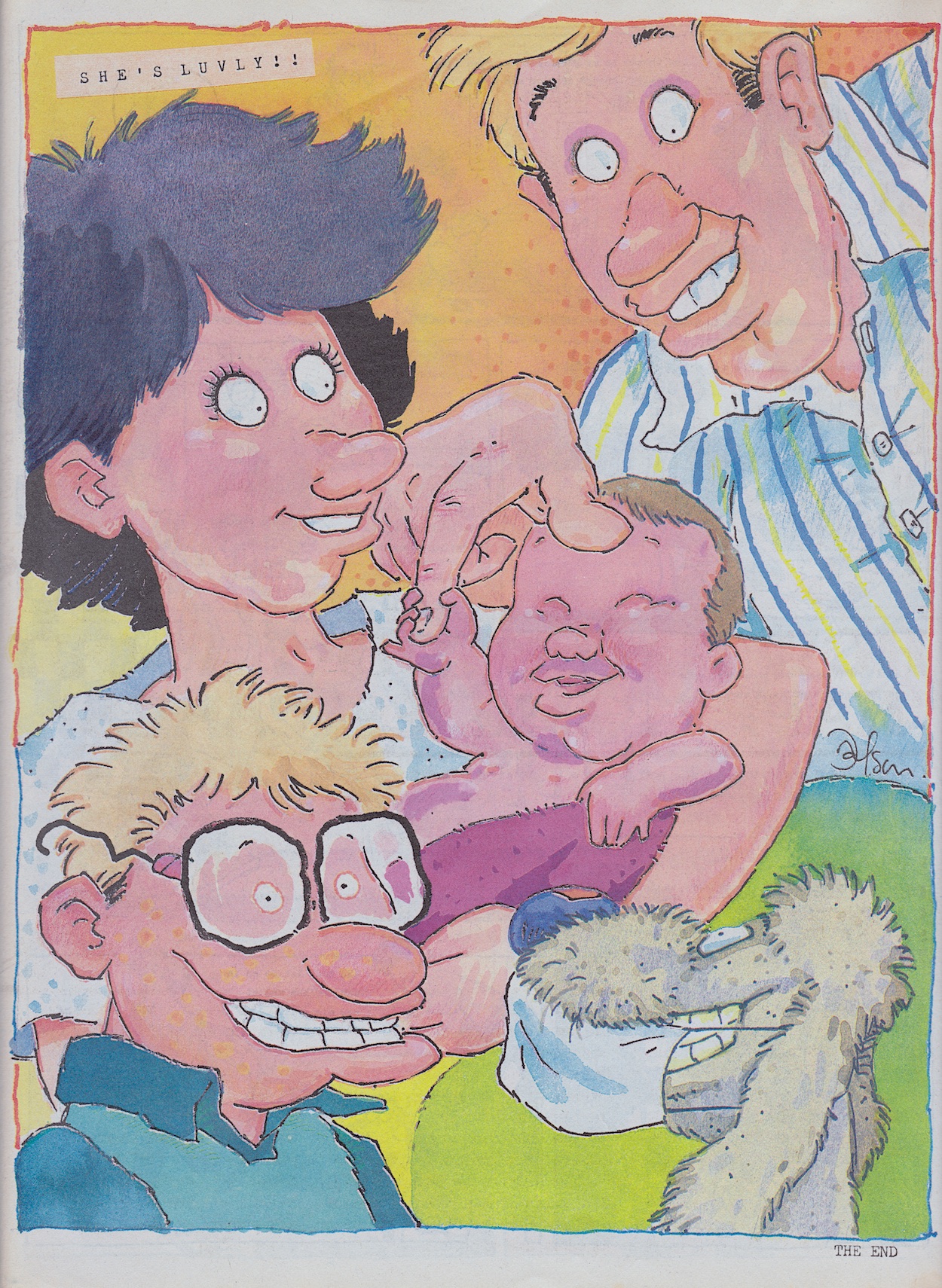
“She’s luvly!!”

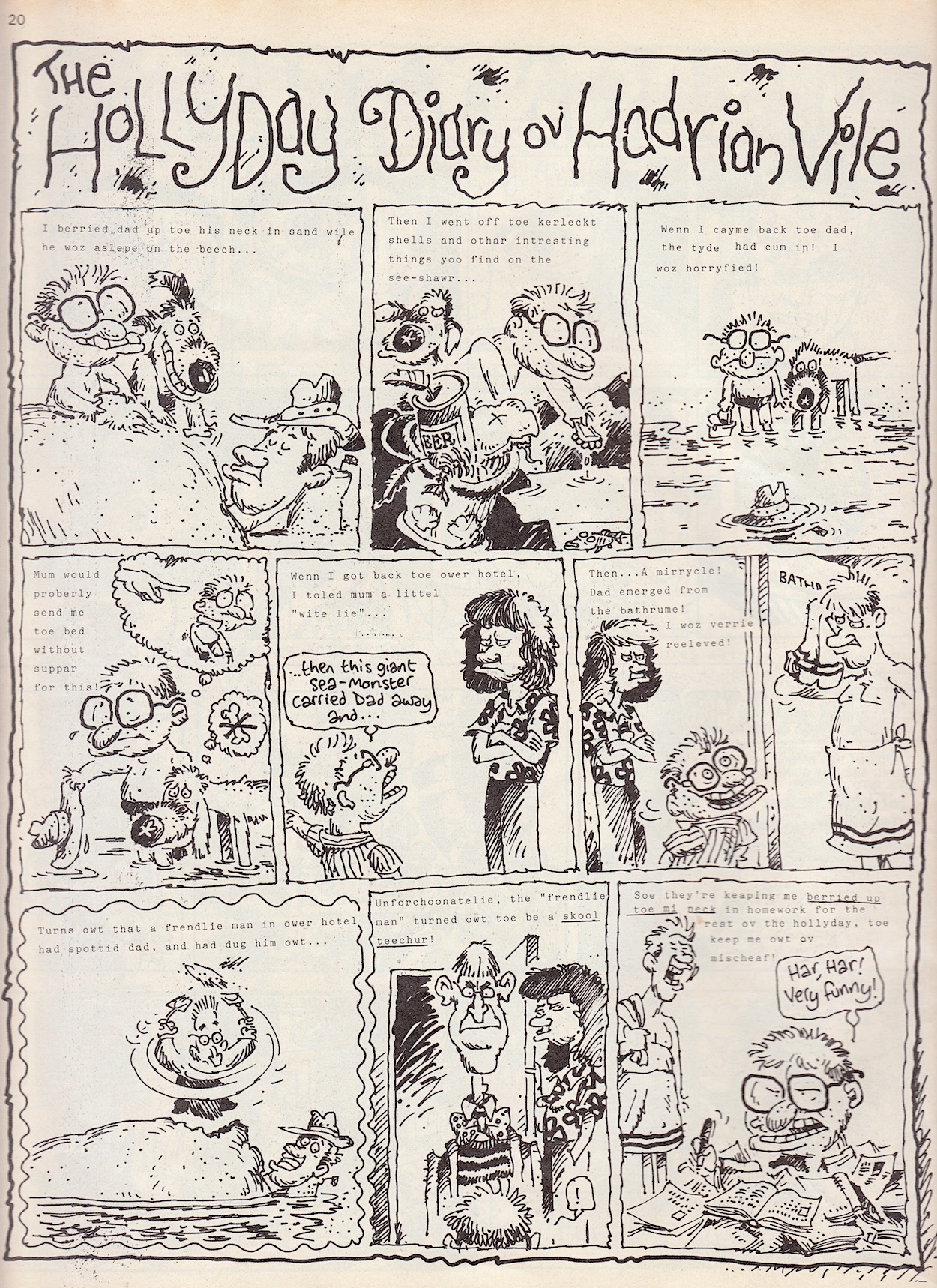
Hadrian Vile

Just one final note about this strip. I have the original artwork, one of a few pieces of Davy’s I own. I’m going to hold that back for a future post and show them all off at once. It also couldn’t have escaped your notice that something is going on with Snatcher Sam and Frank Sidebottom. Anyone who grew up on OiNK should instantly know what this refers to. Yes, it was finally available. Exciting! I’ll get back to that later in the review.

Next up is what I’d easily describe as the main event of this family themed issue. In fact it’s probably the main event in the whole life of Hadrian Vile thus far, something I’ve alluded to ever since the character first appeared on the blog back in #4’s review. To mark the occasion he gets three pages written by Mark Rodgers in glorious Ian Jackson full colour. This story more than any other plays to Ian’s strength of perfectly capturing a character’s thoughts in their face and body language. For example, his exasperated dad when they’re pulled over and in the next panel when he’s trying to explain things to the police officer.

We saw Hadrian’s age increase in the birthday issue and his reaction when his parents explained he was going to be a big brother. Now, after months of him torturing his poor pregnant mum the big moment has arrived and while the laughs are still plentiful, what we have here is a surprisingly sweet strip. After all those previous issues full of Hadrian getting into trouble thanks to his ridiculous schemes, he actually comes up with a helpful idea when the situation calls for it. It’s still daft and funny of course, especially his dad trying to run along holding that pillow. 

After wearing down the carpet in the waiting room the family are called in to see their newest addition and even Bowser gets a mask so he can join them. We turn over to see the following full-page image with a simple, sweet (yet still incorrectly spelt) diary entry. This was certainly a memorable moment in humour comics. When did a character live their life in an almost real time manner like this? When was something like this properly built up to instead of just being a sudden change? OiNK was always unique and this is all the proof you need.

Don’t be thinking Hadrian is going to go all slushy on us though. Instead, he sees his new baby sister as a potential protégé, someone to teach the ways of the world to, someone to train to be just like him and we’d get to see these in various ways over the following months. She also makes an appearance in the card game in this very issue.

This takes up the middle pages and the back cover, with another half page for the instructions, which are the same for the regular Happy Families game.

So as per the typical rules each family is made up of four individuals, with Hadrian’s not including Bowser as would’ve been expected up to this point, instead his baby sister gets a little cameo of sorts. Altogether there are 36 cards for the reader to stick on to cardboard and cut out, split into nine families. Parents and siblings could also easily take part because each group has a simple numbering system so non-OiNK fans (yes, they exist!) wouldn’t get lost amongst the silly names.

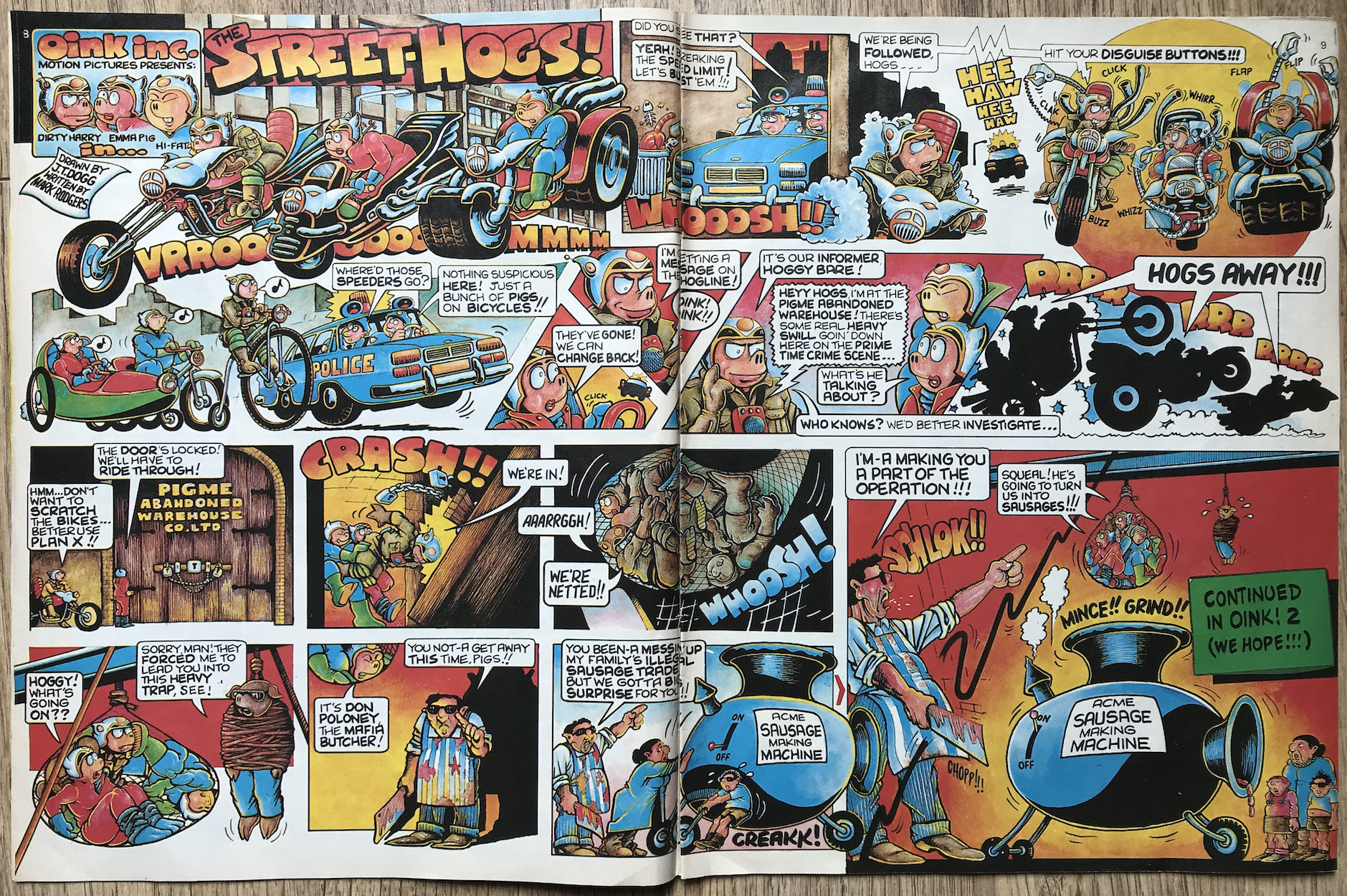
I always liked seeing favourite characters drawn by different artists. Ed McHenry is the person responsible here and his depictions of Ian Jackson’s Hadrian and his family, David Haldane’s Rubbish Man, J.T. Dogg’s Street-Hogs heroes and villains, and Jeremy Banx’s alien innards are my particular favourites. Did any blog readers cut out and play this game when they were but a piglet? I never cut up any of my OiNKs back at the time. (I did begin to colour in something in the first annual but that was about it.) However, these days the angel on top of my Christmas tree is from a page of the comic and for the blog I’ve already constructed an old-fashioned Frank Sidebottom toy.

There’s a certain phrase I remember my dad using whenever my siblings or I did anything that our mum would’ve found particularly bad and one of the little quarter-page strips in this issue takes that exact phrase and ridicules it, albeit swapping the parents’ roles over in the process. From that moment on I could never take it seriously when it was used. I still can’t. Mad Dad is written by Vaughan Brunt and drawn by Ian Knox. This is followed up by Grate Expectations, a memorable little one-off from the insane mind of Simon Thorp who, I’m very happy to say, was turning up more regularly by this point.

There were so many highlights in this issue I really struggled deciding which ones to include. This could be a regular problem over these next few months, but it’s a nice problem to have, isn’t it? The Grunts page features press clippings about OiNK itself, although I’ll save them for their own post at a future date. Just mentioned recently on the blog’s socials by a fellow pig pal was Burp’s tractor beam and it pops up here, so I just had to include that in this little selection of panels.

There was also a unique competition in which readers could win a trip to Timperley, the home of megastar Frank Sidebottom and meet their hero, and to get readers excited to enter he tells us all about his post office having two letterboxes! Woo. I’ll keep an eye out for the results. There’s a full-page Uncle Pigg strip describing the special versions of OiNK he publishes around the world and it’s nice to see he and Santa have made up since #17

For the first time we see Horace (Ugly Face) Watkins playing football, something which would lead to a huge multi-issue story for the character in future issues, a little plop drawn by Patrick Gallagher invaded a handful of pages throughout the issue such as Rubbish Man’s, and in the latest Butcher Watch a pig by the name of Stig the Pig thinks he’s finally won the battle with Jimmy ‘The Cleaver’ Smith, with wonderfully Banx’y captions.

Of course, Jimmy has to live to see another day and terrorise the world in which the characters of OiNK reside. As it turns out that shadowy figure wasn’t Jimmy at all but rather a selection of pork sausages tied up and dressed to resemble him. We see this reveal just before Jimmy strangles Stig to death with another string of sausages. This might sound a bit brutal for a kid’s humour comic but it was so ludicrous and over-the-top we’d just laugh at the absurdity of the pretend horror.

So, Frank has just set a new competition and this issue announces the runner-up of one we hadn’t seen in the comic. In much the same way that OiNK ran a competition in conjunction with Radio Manchester (the results were in #26), they teamed up with Granada TV’s Scramble programme. Ian Marshall from Bramhall has not one, but two small strips in this issue starring his own creation, Professor Foible.

If this is the level of quality the runner-up produced I can honestly say I’m eagerly looking forward to seeing what the young winner came up with! We’ll have to wait to find out though because that’s being held back until #38.

So for the uninitiated, what were Frank Sidebottom aka Chris Sievey and Snatcher Sam aka Marc Riley up to earlier in the issue? Why, they were recording a new song for the OiNK 45 of course! Way back in the mists of time the premiere issue of our favourite comic gave away a fun flexidisc record with two songs created specifically to annoy adults as much as for the kids to enjoy. The OiNK Song and The OiNK Rap are often quoted by fans to this day and on this new proper record they were getting another outing alongside a new song.

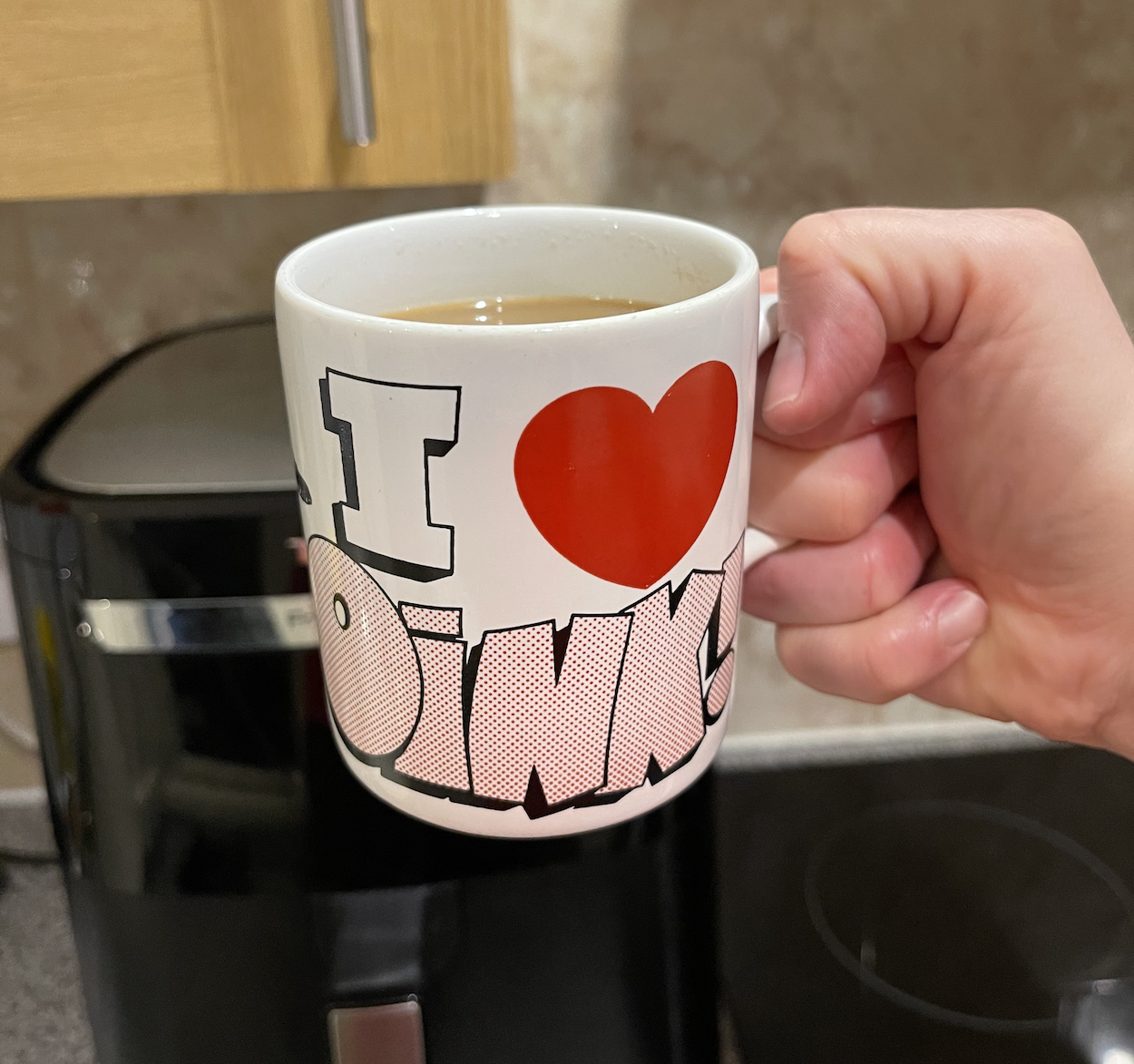
When the original songs were produced by Marc, Chris had yet to join the comic (#16) so the new track, called The OiNK Get Together Song was a chance for the pop music sensation to get in on the action and team up with the former member of The Fall. Along with the other two songs (the rap now renamed The OiNK Psycho Rap) this was a proper, solid record the size of a single, in its own sleeve for just £1.70 and I for one jumped at the chance to own it, especially since all three songs were new to me (having missed the flexidisc first time around). In fact, this and the mug were the only pieces of OiNK merchandise I originally owned.

I recall the song contained impressions of various characters and it irritated my family just as much as the other two. My record met with an early demise when it warped under the hot sun from a skylight window only a couple of weeks after it had arrived in the post. I hadn’t even had a chance to tape it yet for my Walkman. Now if only I could listen to it again after all these decades to see how my adult brain would react to those songs.

Well would you look at that. Yep, in a moment of perfect timing this appeared on eBay and the record is in mint condition. I could not be happier. But then again, I haven’t listened to it yet! Nope, I haven’t stuck it on the ol’ record player yet, I’ll do that when it comes to writing the accompanying blog post. So look out for that just after 17th October. Why am I making you wait so long? Well, we had to wait 28 days for delivery after all and this is all in real time.

That brings us to the end of another fantastic issue. As a child I’d loved the changes and was so happy they weren’t a one-off (the previous issue‘s theme seemingly explaining them away for that one edition), the book was in the shops and I was eagerly anticipating it for Christmas, plus I’d just ordered an exciting new piece of merchandise, my first piece of OiNK merchandise in fact. I’d been a fan of OiNK since I’d first discovered it, but by now I was completely obsessed. The next issue is the Food and Drink Special with yet another memorable cover, a full-page photograph of (who else) Frank and Sam. The next review will be here on Monday 3rd October 2022.

Is it really October already?! OiNK really had helped this year fly by,

iSSUE 36 < > iSSUE 38

OiNK READ THROUGH MENU

OiNK FREE GiFTS MENU

MAiN OiNK MENU

COMiNG UP: OiNK! #37

As OiNK continues through my favourite issues each one brings with it more happy memories of reading these all those years ago (35 years ago to be precise). The next issue brings back specific memories for me, not least of which was how much I enjoyed it. Will it live up to those memories all this time later? Given how much I’ve been enjoying the blog’s main real time read through I think the odds are pretty much stacked in its favour.

In the Happy Families Issue you’ll see a surprisingly touching moment for the young trouble maker Hadrian Vile when his diary chronicles a major life moment, Cowpat County delivers one of the greatest gags in all of OiNK history, there’s a cut out (or rather, save image and print and cut out for you lot) card game and a major announcement of some new OiNK merchandise! The next review will be here on Monday 19th September 2022.

GO TO iSSUE 37

OiNK iSSUE PROMOS MENU

‘MORE OiNK’ MENU

MAiN OiNK MENU

EDiTiNG RiNG RAiDERS: BARRiE TOMLiNSON iNTERViEW

My very favourite non-OiNK comic from my youth may have only lasted six fantastic issues and one brilliant special in 1989/90, but that didn’t stop me from being hyped to read Ring Raiders again as an adult for the blog. They may have been based on obscure toys that weren’t the success they were expected to be, but the comics hold up incredibly well today, full of character, fun stories and high octane action.

In the then-near-future of the late 90s Skull Squadron were a terrorist organisation on the brink of world domination. Capable of time travel and made up of the most sinister of pilots plucked out of various eras they planned to use this ability to destabilise the world order, with them in control. In response, the governments of the world formed the Ring Raiders, an elite airforce formed in a similar way, each equipped with a special communication and energy ring.

The gotta-collect-’em-all toys came with small comic books featuring basic dogfights, but it was no small feat to transform those little plastic Matchbox planes into compelling strips with fully formed characters. While the toys may seem to limit what a comic could do, the opposite was true of that background storyline which was almost endless in scope. Fleetway Publications were going to need a top editor to craft their new fortnightly comic, so they naturally turned to Barrie Tomlinson (Eagle, Tiger, Wildcat).

Barrie formed a team of the very best in British talent; Ian Kennedy, Carlos Pino, Angus Allan, John Cooper, Scott Goodall, John Gillatt, James Nicholas (Tomlinson), Don Wazejewski, Tom Tully, Sandy James and Geoff Campion. I must’ve read each issue dozens of times and was gutted when it (and the toys) ended so prematurely.

The Ring Raiders comic genuinely surprised me with just how brilliantly it read for the blog reviews. It was exciting and had masses of potential to explore an epic storyline. Within its short lifespan it covered World War II, Vietnam, the threat of nuclear annihilation, futuristic sci-fi battles, murderous back stories, civil wars and even an homage to a certain 80s 3D movie I’m a big fan of. I loved the range and I think as an adult I appreciated the character development at the centre of such fanciful tales even more.

I was so excited when Barrie agreed to answer some questions for me and I came away from our chat delighted at how proud he was of this licenced comic fave.

OiNK Blog: Hi Barrie, can you remember what made Fleetway choose the Ring Raiders licence? Looking back they were just tiny Matchbox planes with only minimal character drawings on the packaging.

Barrie Tomlinson: Fleetway Publications was a massive organisation. The first I would hear of a new licence would be from the Editorial Director. It would have been negotiated by a non-editorial department and presented to us. I just had to grab all the info I could find about the storyline and characters and make myself an instant expert on the subject.

OB: There’s a similarity between Ring Raiders and Wildcat. Both have an anthology feel while wrapped up in an overall theme. Was this a conscious decision or was it just befitting the licence?

BT: It wasn’t a conscious decision. I would have just wanted to use the characters I had been presented with and turn the comic into something which was liked by British readers.

OB: Were you personally responsible for selecting the writers responsible for fleshing out these characters?

BT: Yes, I would have been responsible for selecting the writers. It’s really unfortunate that the detail books for Ring Raiders were not kept. They would provide a wealth of information. My son James, who wrote under the name ‘James Nicholas‘ was one of the writers. He was a natural, as he is an aviation fanatic! I’ll have to guess at the others. Probably Tom Tully was one. I can’t remember writing any of those scripts myself… but I probably did! (He did indeed as we later found out during the read through, as well as the names of the others – Phil)

OB: There were some mature themes in there, such as Vietnam. This strip in particular wouldn’t have looked out of place in a classic IPC war comic. The setup allowed stories set in the past, present or future, time travelling, fantasy of historic tales. It sounds like a writer’s dream title! Did you feel you had that freedom in a licenced comic?

BT: Everything we did had to be approved by agents of the copyright holder. Each script and piece of artwork had to be submitted and approved so we always had to stick closely to the original material we had been sent.

OB: There’s a feeling of a larger scale story developing in the background too. Was anything worked out in advance or were you winging it (pun not intended) and seeing how they developed over time? Can you remember any plans you had if the comic had continued?

BT: There were not any massive plans. It was always a rush producing titles like this as everything had to be approved. Once we had taken on board all the story/character details it was just a question of talking to writers, recruiting artists and getting on with it. I was pleased with the high quality artwork we achieved on this title, using artists who were greatly experienced in working for my department.

OB: A cartoon series was also in development which was very different to the comic in basically every way, going down a more sci-fi route with clichéd characters. I preferred the flawed characters in your comic by far.

BT: We didn’t have any contact with the cartoon series. We could develop the characters to a certain extent but everything would have to be approved.

(Below, Castle of Doom was written by Barrie’s son James and featured plenty of time travel and the beginnings of a larger overall story arc.)

OB: Speaking of those approvals, were there any requested changes or outright rejections? There was very little established in the toy line so for me the comic was really creating these characters.

BT: Occasionally, they would ask for alterations. Nothing too much. Some of the other toy comics were much more hands-on. I had to train people doing the approving that it was a comic. At first, they were looking at each individual frame as if it was a one-off poster. Eventually they got to realise these were small frames and the slick comic artwork was very different to that used in a giant poster or on a toy product. As I recall, we didn’t have that problem with Ring Raiders.

OB: It seemed at one stage almost every comic I began collecting got cancelled very quickly. Having read back over some of those titles it certainly wasn’t because of a lack of quality! Why do you think so many excellent comics were cancelled so early in the late 80s and 90s?

BT: I think it was just that the comic era was coming to an end. Television and computers were taking up children’s time. Once upon a time, the delivery of the weekly comic was a big event in a child’s life. It was delivered with the morning paper. Dad read it as well. Then children became more sophisticated and they wanted something more than a comic. They were growing up faster.

OB: Finally, the late Ian Kennedy always said his favourite subject to draw was airplanes, especially fighter planes. Ring Raiders seemed like a perfect fit for him. Was he contracted to work on covers for Fleetway or was he selected by you personally? Can you remember any comments from him on his time working on Ring Raiders?

BT: Yes, I would have selected Ian to work on the title, he wasn’t contracted for covers. I think I remember him being disappointed when Ring Raiders came to an early conclusion.

I was delighted that Ian worked on Ring Raiders and other titles in my group. His recent passing was a sad occasion for the world of comics. Greatly missed but his art will live on!

OB: Thanks so much for your time and insight Barrie, it’s been a pleasure to read this comic again, thank you for producing such a quality read for fans at that age.

BT: It’s great to know that the title is so well remembered. It’s a great tribute to the writers, artists and editorial staff who worked on Ring Raiders. It may not have lasted long but I think it looked good as a comic in its own right.

If you’d like to find out more about Ring Raiders and read the real time reviews just click here.

At the time of writing the final edition, the whopping 64-page special will be reviewed later this month and next week watch out for a wonderful, lengthy interview with Barrie’s son and Ring Raiders writer, James Tomlinson (or James Nicholas as he was known at the time).

RiNG RAiDERS MENU

DESiGNING HAVOC: A CHAT WITH PAUL CHAMBERLAiN

Havoc may not have lasted very long but it left a lasting impression, introducing me to characters I’d never previously heard of as well as giving me the chance to see the comic strip adventures of a favourite TV star. At the time of writing I’ve just finished a real time read through of the comic’s nine issues, during which I was able to have a chat with the person responsible for that terrific logo, Paul Chamberlain.

Paul is currently Creative Director at Pre-Flight Visual Communication Ltd, a company that seems to have designed pretty much every logo and front cover of every magazine I’ve purchased over the last decade! While chatting to Paul I discovered his inspiration behind Havoc’s logo, the other duties he took on and the string of Marvel UK and Fleetway Publications titles he contributed to.

OiNK Blog: So Paul, you created the logo for Havoc. Is there anything about the process you could share with OiNK Blog readers? For example, how did you get the gig?

Paul: It was spring 1991 and I had just returned from backpacking in India and Thailand. Before I went on my trip I had been working with Bernie Jay, the then partner of Paul Neary, at Headway Home & Law developing an idea for a monthly consciousness raising magazine. Headway Home & Law at the time was also the home of Fleetway who were publishing 2000AD and Bernie managed to secure me a couple of freelance jobs with them.

Upon returning from my travels, Bernie got in touch to ask if I would be interested in a bit of freelance work with Paul for Marvel UK. The first of these jobs was to design a logo for Havoc. I was working from home at the time and this was before the days of DTP (computerised Desktop Publishing – Phil) in comics so everything was produced by hand on a table in the corner of my bedroom. 

OB: The Havoc logo is made up of a five-pointed star and there are five strips in the comic. Was this part of the design process or just a happy coincidence?

PC: Sorry to say it wasn’t quite as deep as that and just a happy coincidence. It’s difficult to remember my thought process at the time but I do remember having a thing for circles and stars. When I submitted the design to Paul Neary I do remember him saying that he liked it because it reminded him of a gun. I have to say that had not occurred to me during the design process.

I wanted the logo to have a slightly dynamic feel, hence the slightly italicised type. The original type design was very squared-off and blocky which didn’t sit very well with me so I decided to round off the corners slightly and add subtle serifs. A lot about the design was lead by the resources available to me at the time – Rotring pens, a ruler, set of compasses and a drawing board. As we used to do all our colour separations by hand everything had to have a strong black keyline so that this process would work properly. 

The next job I did for him was to design the logo for Death’s Head II which was created in-house and I had the pleasure of sharing a studio with Liam Sharp as he developed the character visuals.

After that I was offered a full time designer post at Marvel UK where I stayed for an amazing three years before heading off back to India for more travels.

OB: After Death’s Head II what other titles did you work on for Marvel UK and what work besides logos did you do for them? Were there any Fleetway comics you worked on too? I was a big fan of both publishers at the time.

PC: So after Death’s Head I developed the first logo for Overkill and was Art Editor on that for some time. Along with another designer, Ed Lawrence, we became the design team for all the new superhero titles that came out of Marvel UK between 1991 and 1994 – Motormouth, Warheads, Hells Angel (which became Dark Angel), Super Soldiers etc. For Fleetway I produced the designs for The Judge Dredd Mega Collection with another designer, Colin Fox. Upon returning from my second stint in India I secured the post of Deputy Art Director at Titan Books where, amongst other responsibilities, I was the Art Editor for the official Lucasfilm Star Wars Magazine.

(Below, Paul’s favourite Overkill cover with art by Steve Sampson.)

OB: Wow, tthat’s a wonderful selection of titles, it must’ve been such an amazing time! I’ve always been curious, for an ongoing reprint comic what does the role of an Art Editor entail, after all the initial titles and pages have been designed?

PC: You are right. It was odd coming from a consumer magazine background. It was mainly covers and house ads. With the reprint stuff there was some resizing of artwork and new title pages if it was a longer story being broken down. For the graphic novels and collections there were also end pages, chapter dividers and the likes.

OB: Ah right, of course, all those American strips being chopped up into parts in the UK comics. I also noticed new opening panels for some of the Havoc strips so would those have been you, creating them and resizing the original art around them, yes?

PC: As designers we wouldn’t be creating new art but definitely resizing and re-laying out. That would be the kind of thing, but I think Gary Gilbert was responsible for the ongoing design duties for Havoc (like the contents, letters and Eye Level news pages).

OB: Thanks so much for the chat Paul and the insight into one of my most fondly remembered comics.

PC: No problem Philip, anytime.

Above is the complete Havoc collection with its many variously coloured logos. To read all about this wonderful comic and begin the real time read through just click here.

HAVOC MENU