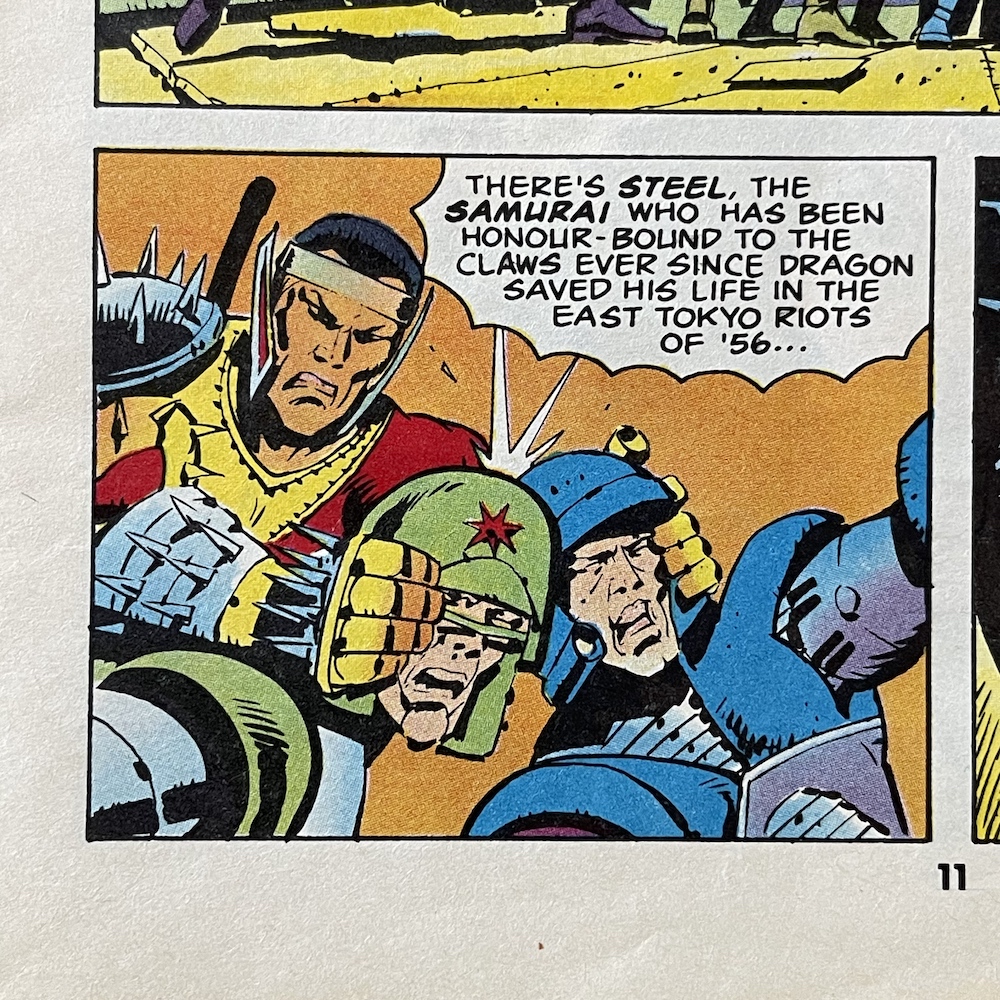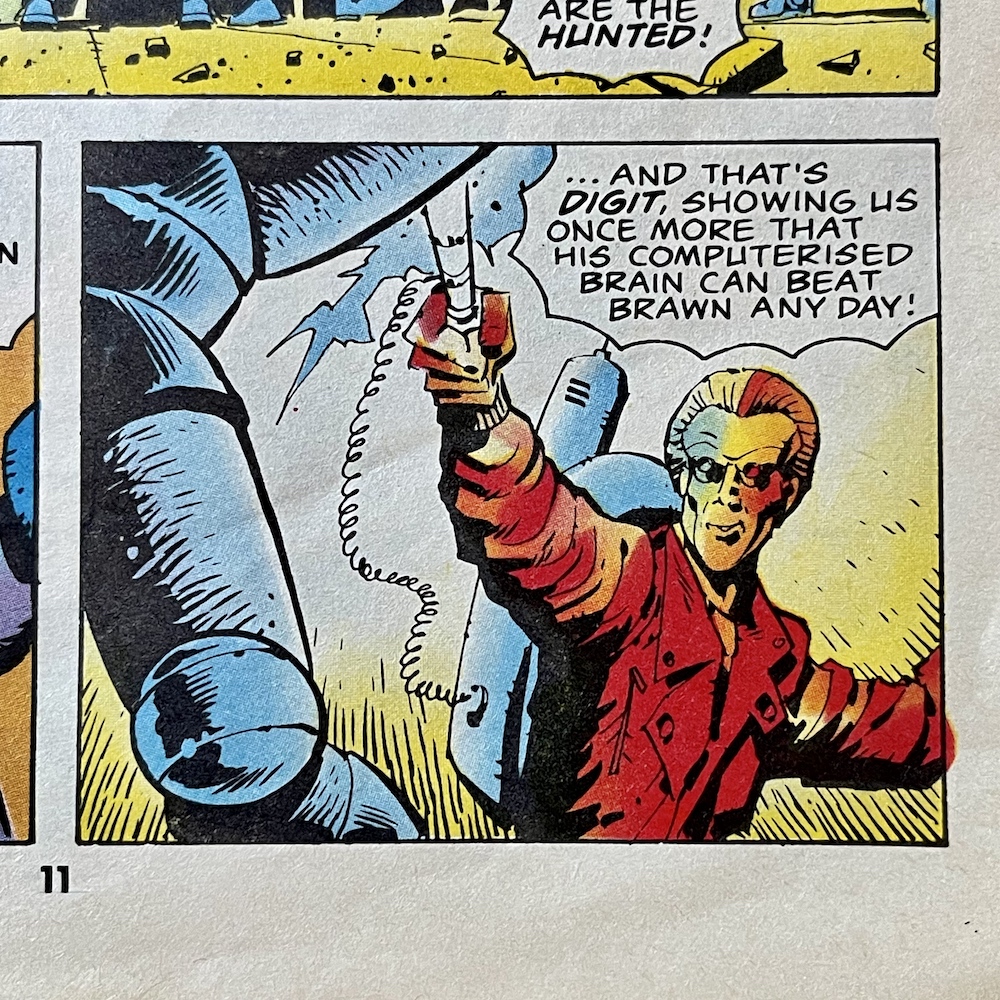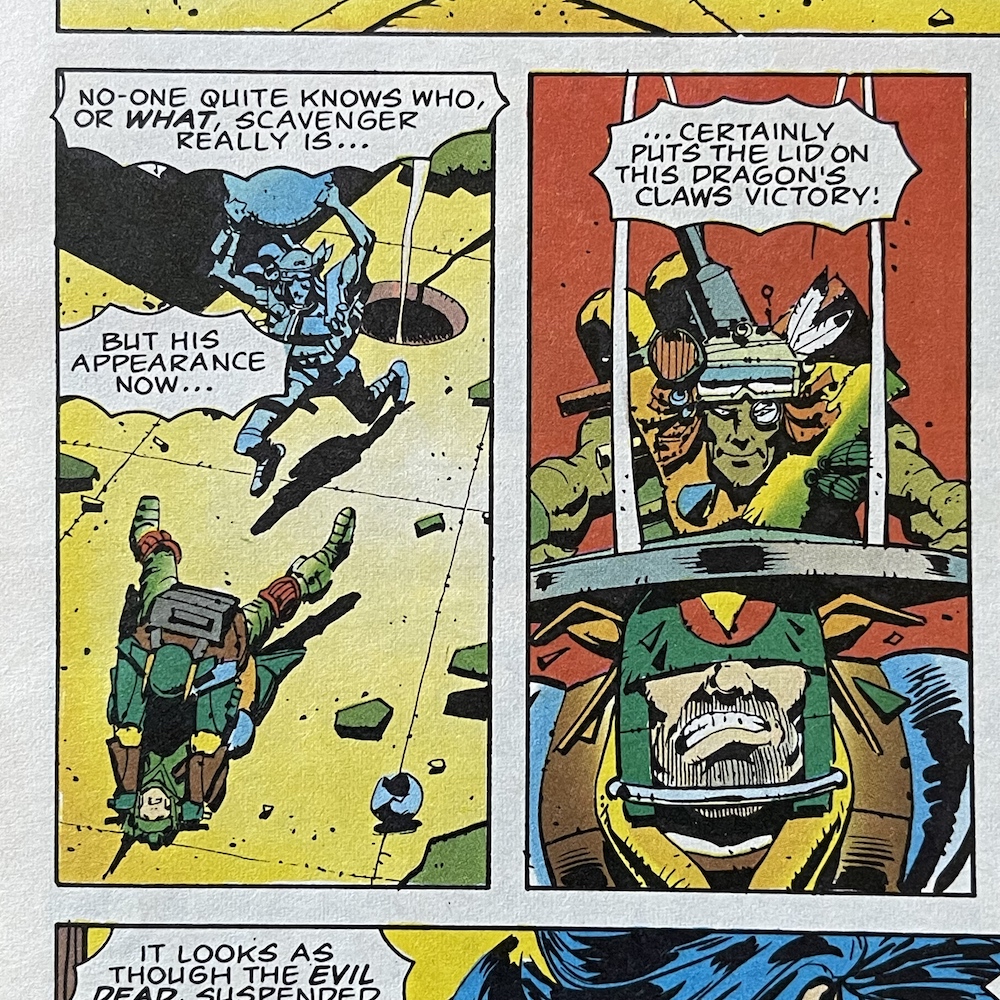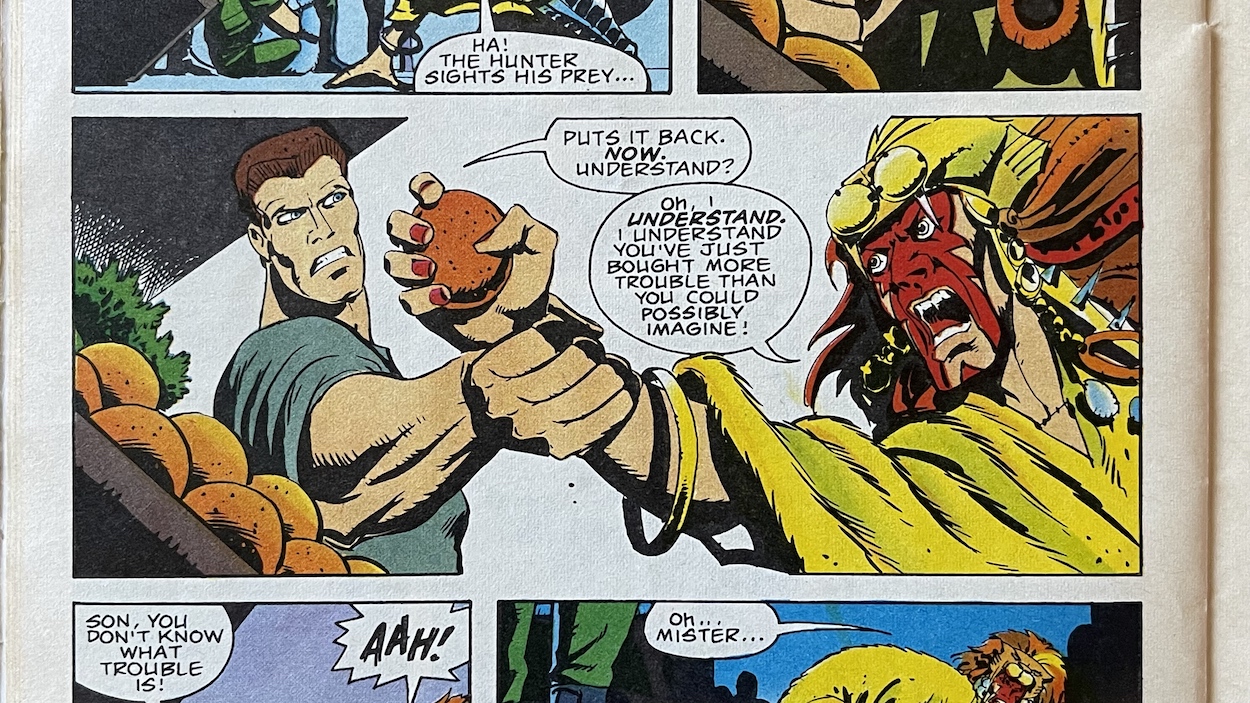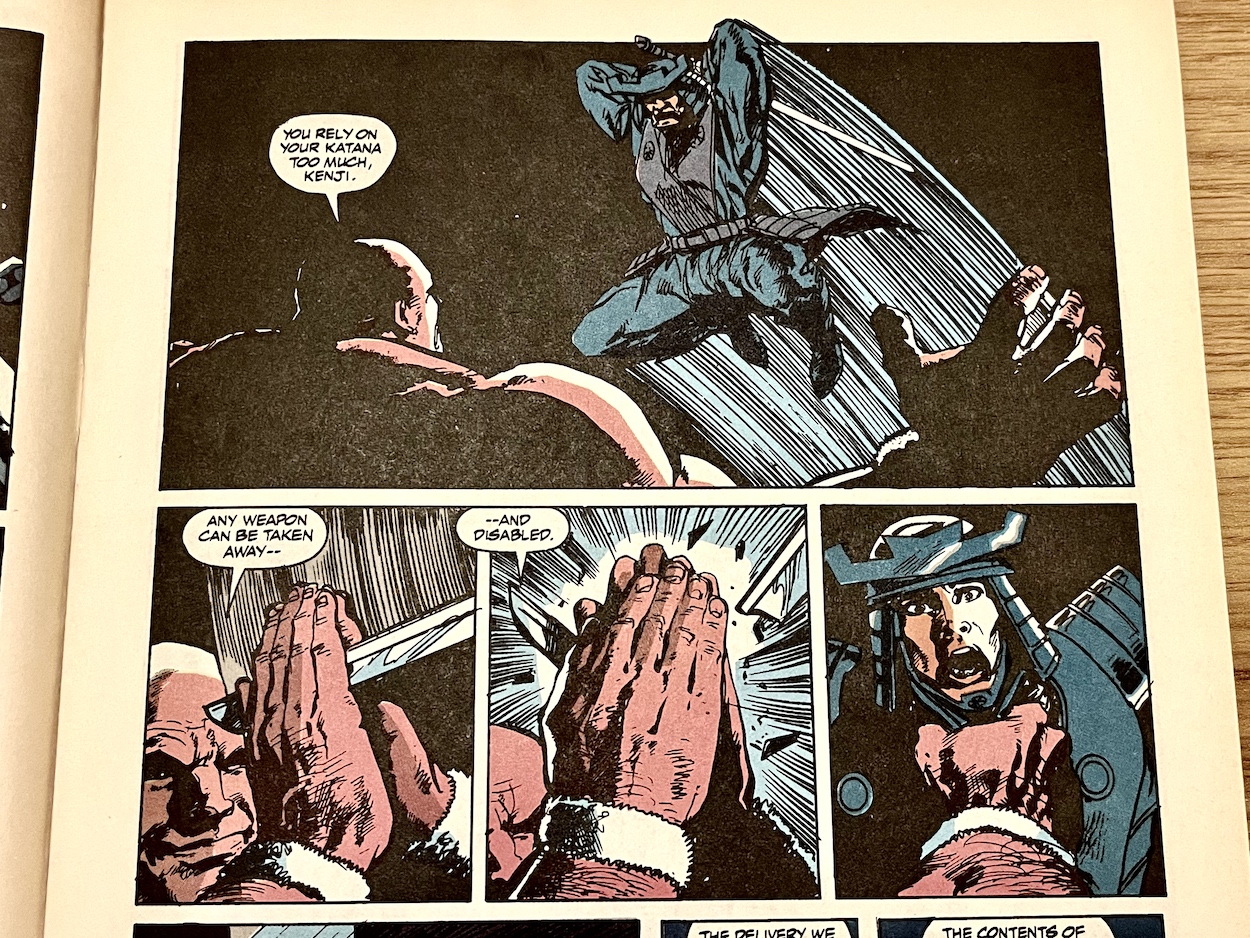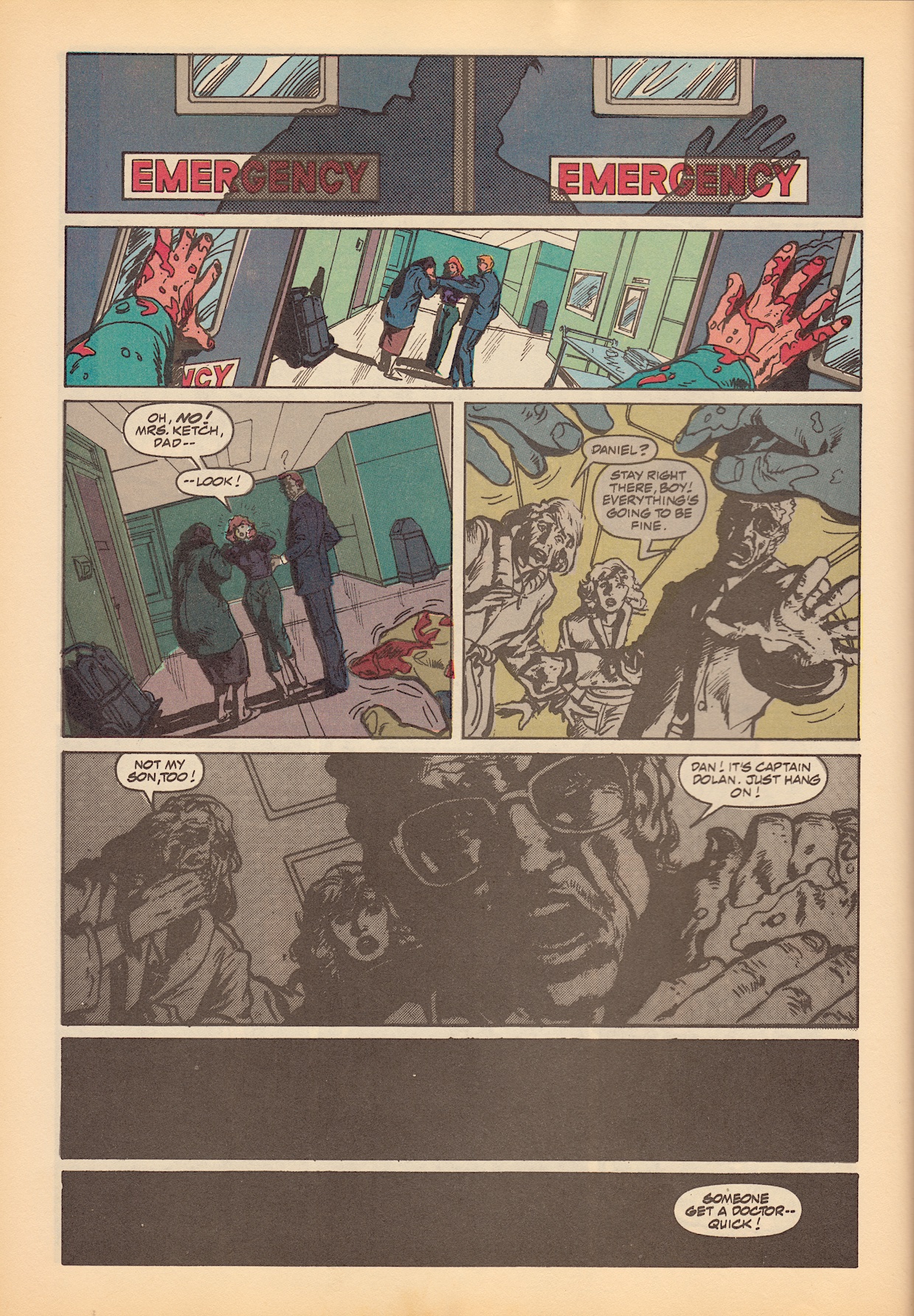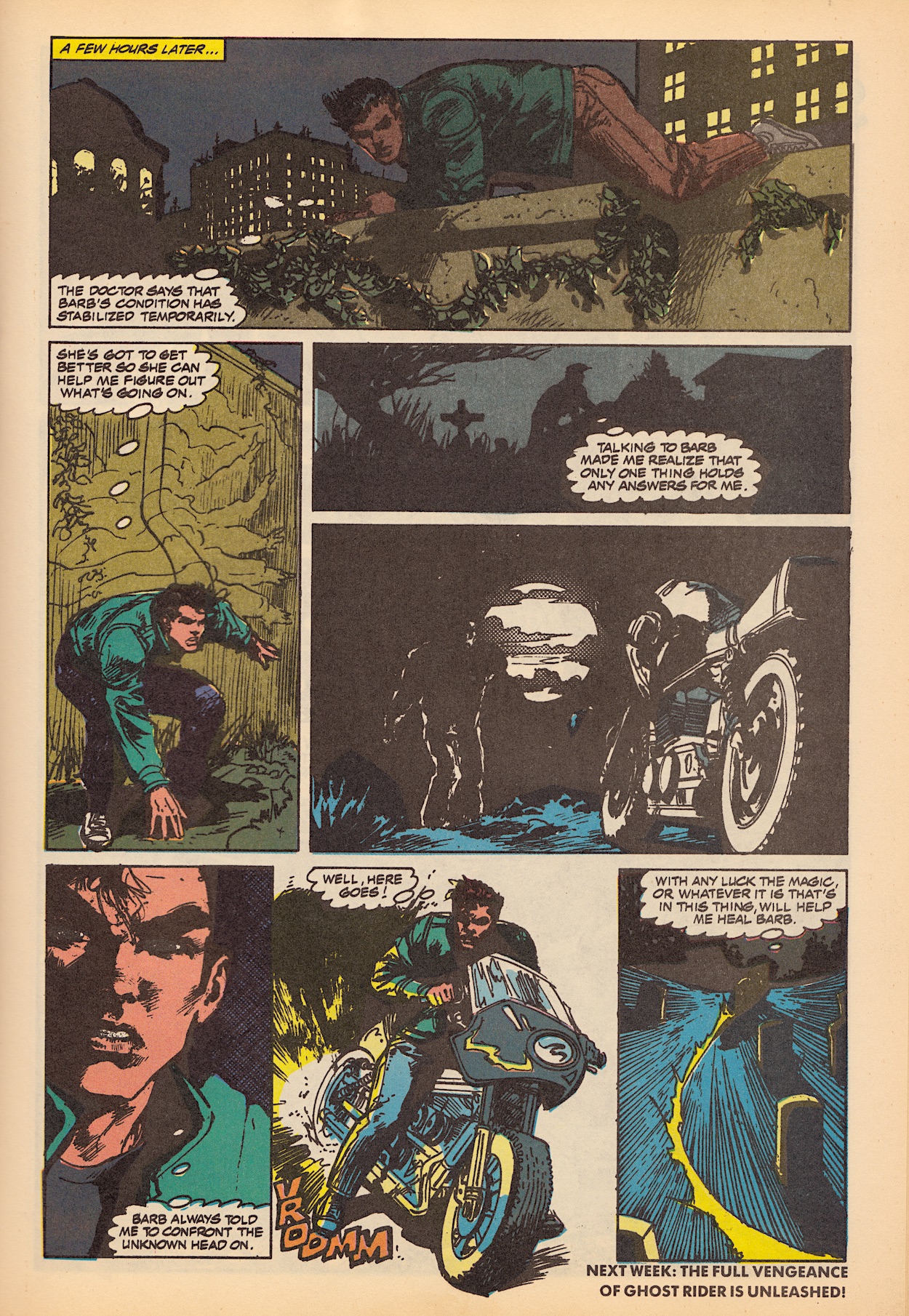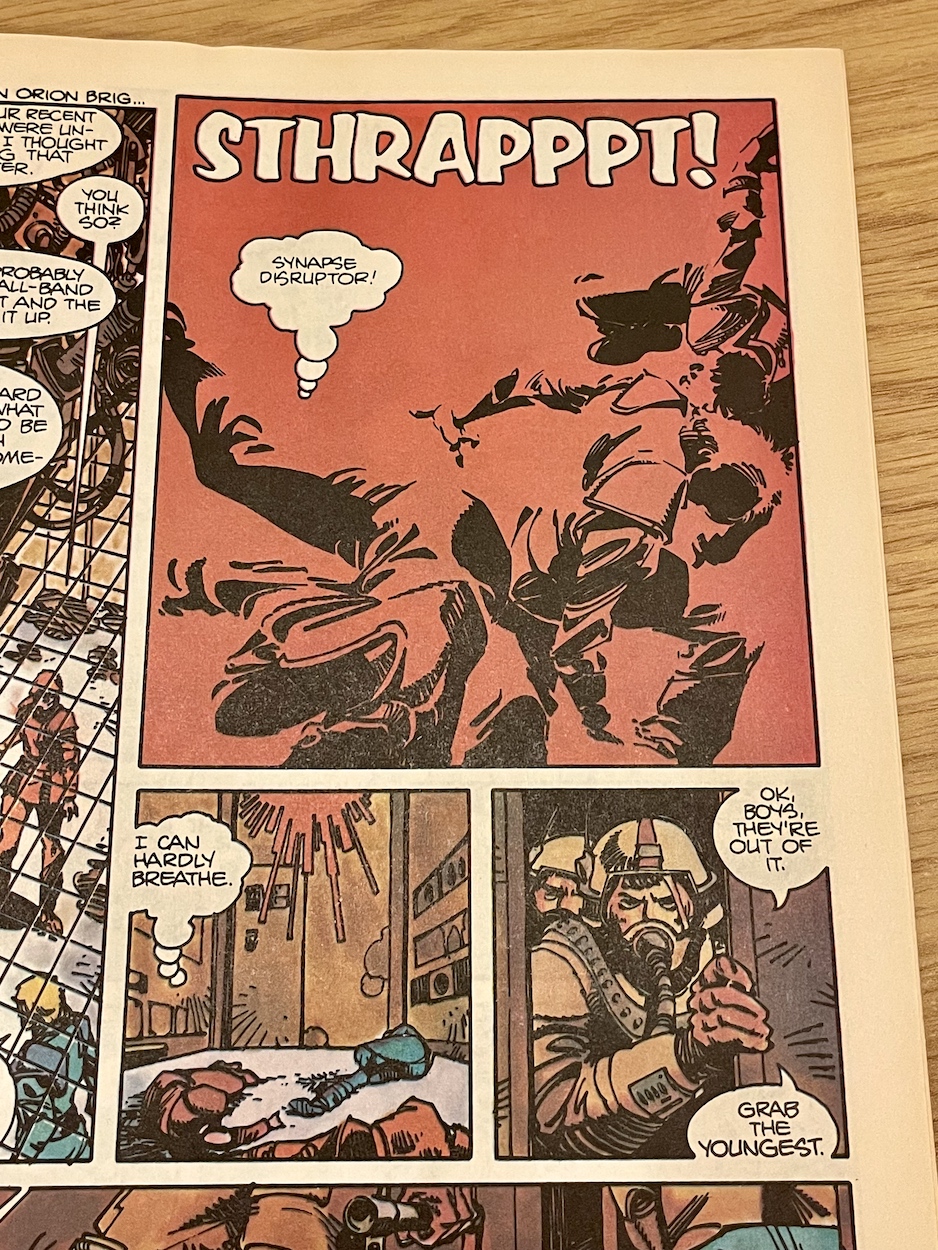
Tag Archives: Steve White

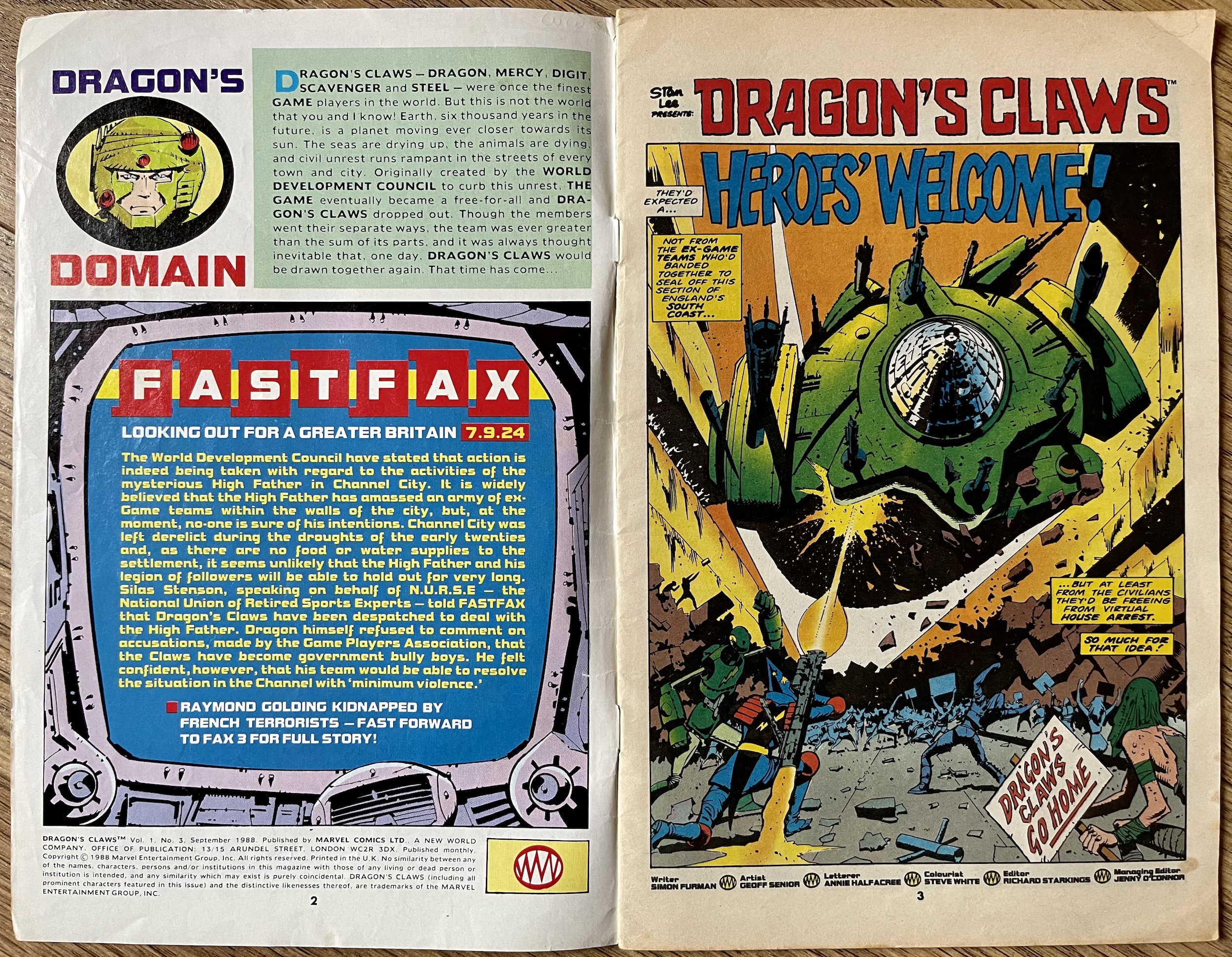
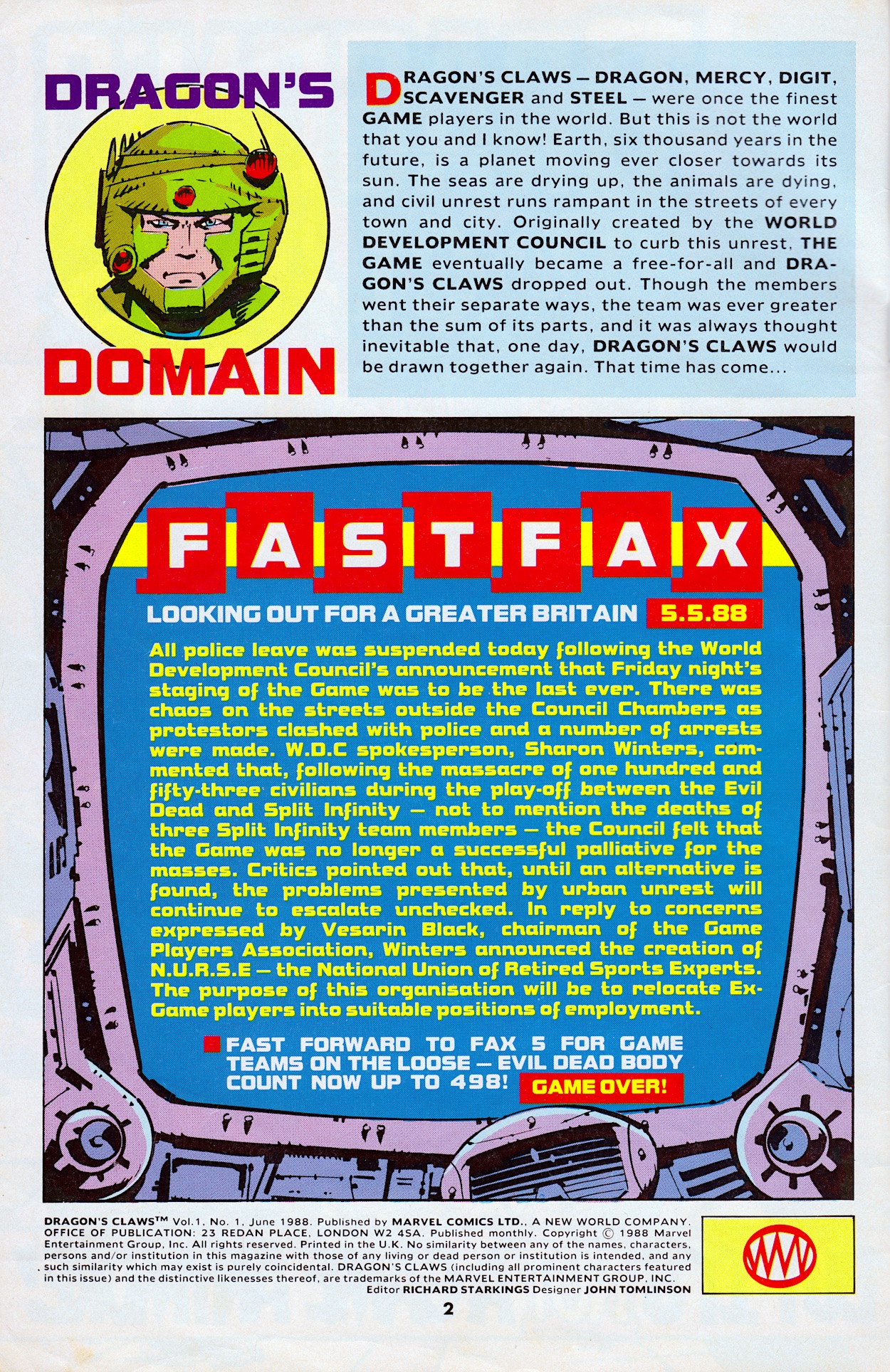
DRAGON’S CLAWS #3: SNiFFiNG OUT THE ENEMY

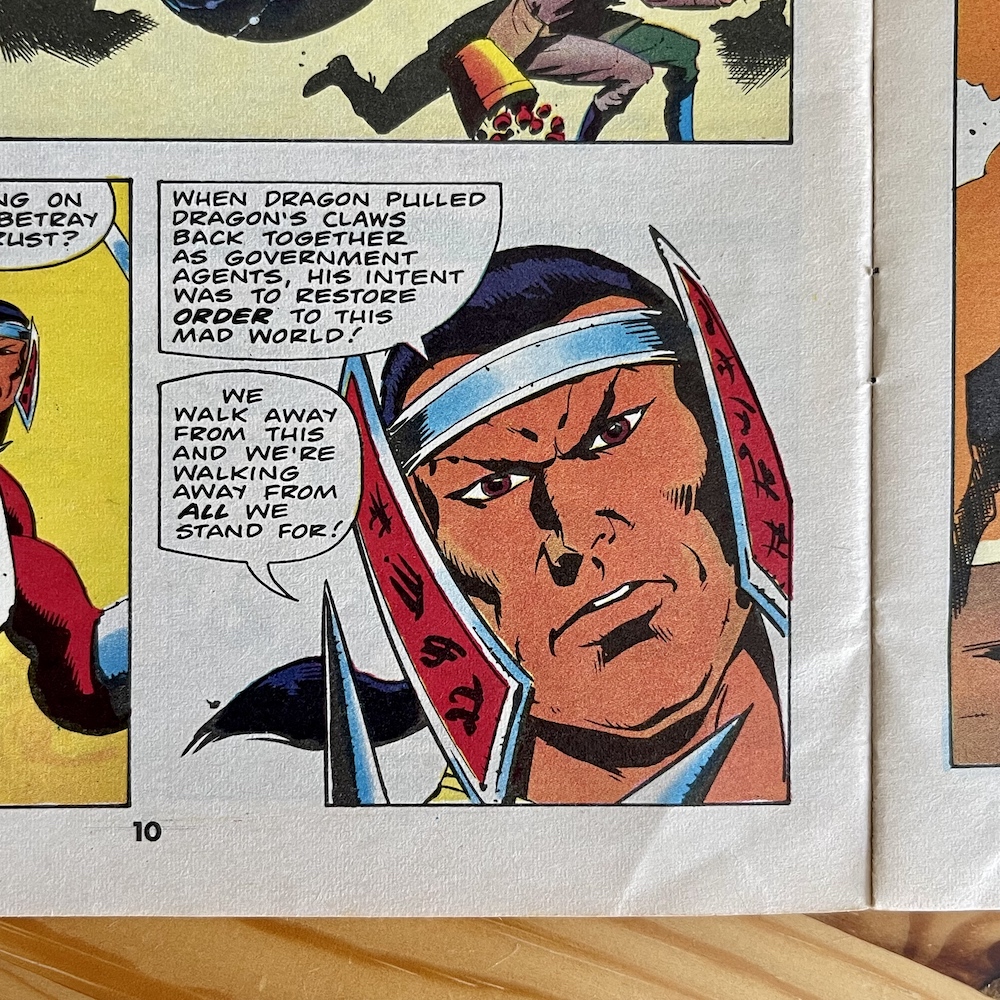
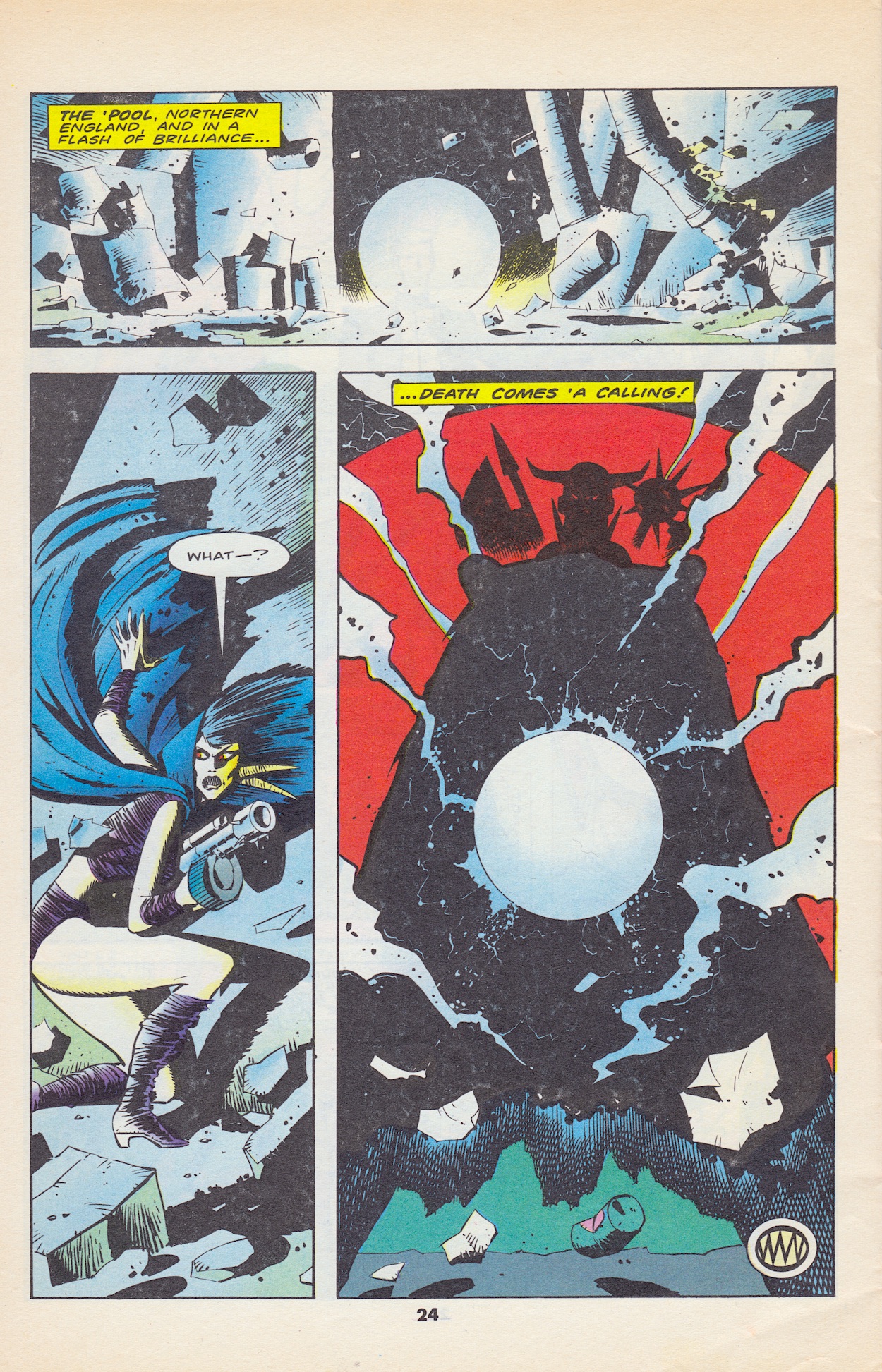
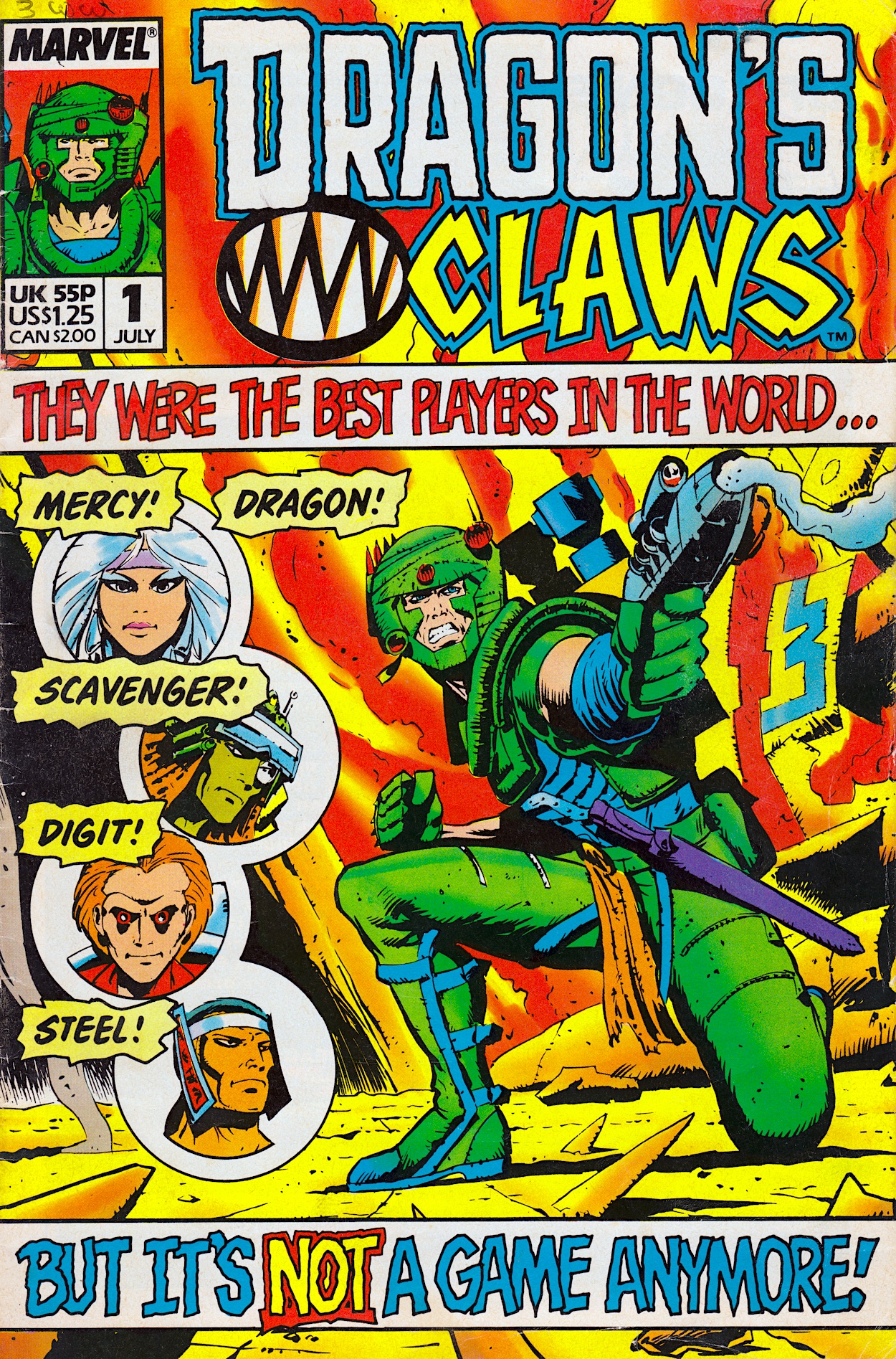
Another sharp, exciting cover from Dragon’s Claws co-creator Geoff Senior welcomes us to #3 of Marvel UK’s comic which, judging by these first three issues at least, really deserved to find a bigger audience and last a lot longer than it did. The premiere issue basically dealt with Dragon himself in an 80s action flick-style story that set up the world we find ourselves in, the Greater Britain of the year 8162. Then last month we properly met the rest of the team and their nemeses The Evil Dead in what felt like part two of that movie.

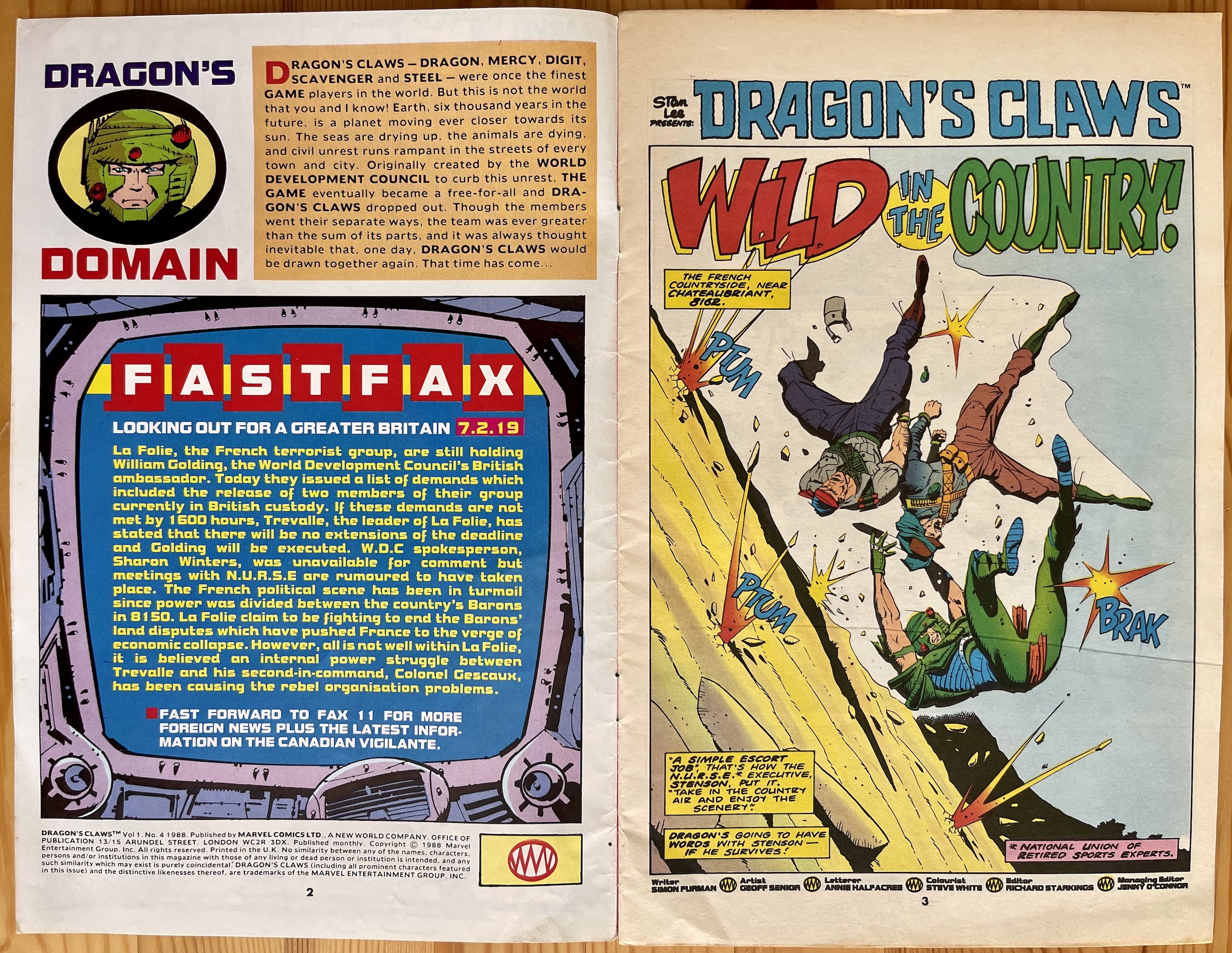
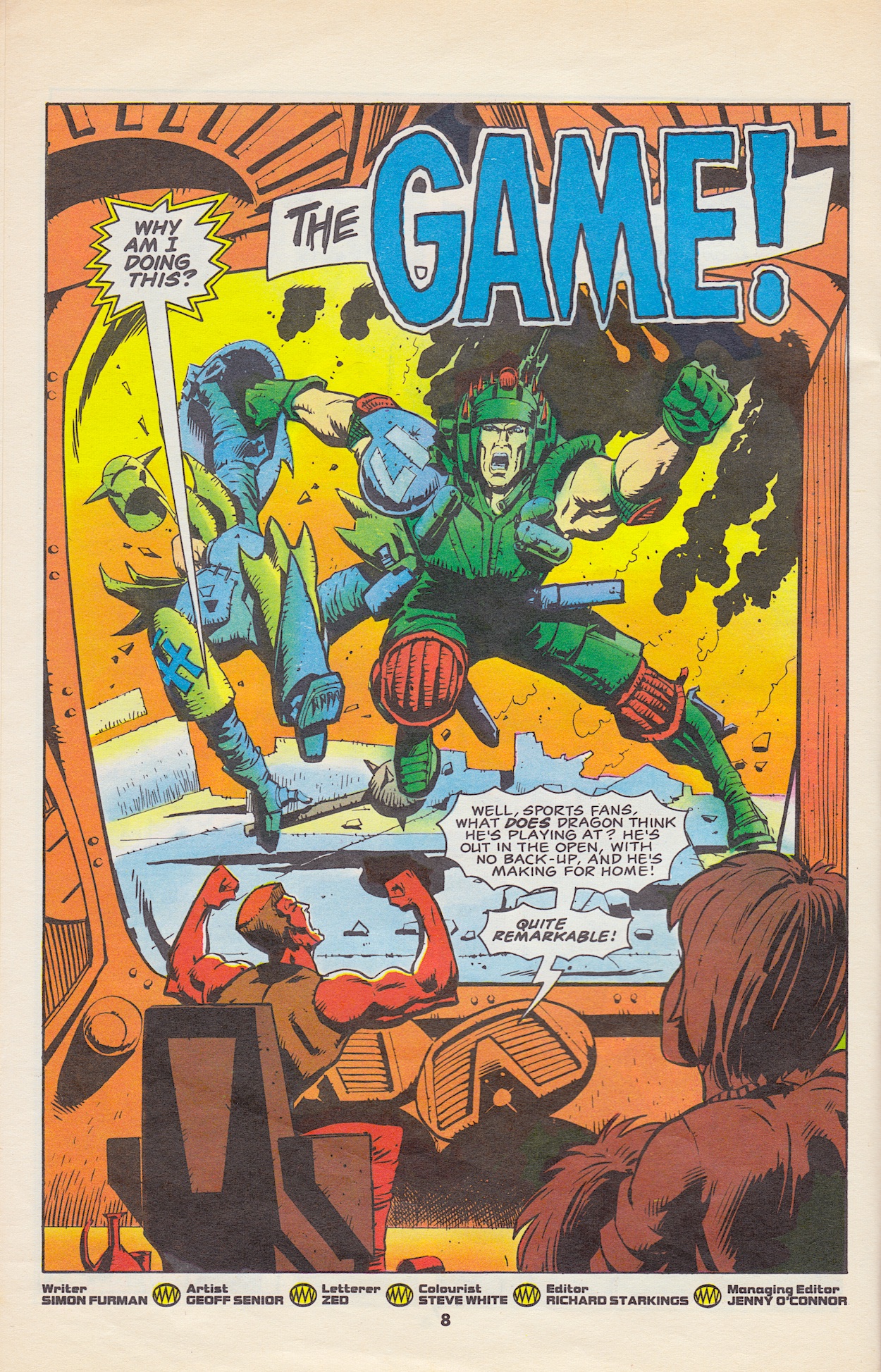
So with the introductions out of the way it’s time to get into the meat of the next story and I’m glad to see Simon Furman‘s script isn’t going to be as episodic as I assumed a monthly from Marvel UK would be. This reads great in its own right while setting lots of things up for future issues, expanding the background plot the previous issues have hinted at and ending on not one, but two cliffhangers. The splash pages so far have been just as good as the covers, with colours by Steve White and letters by Annie Halfacree. I really do like the way editor Richard Starkings uses the Fastfax to introduce the stories within the setting itself rather than using a typical editorial style.

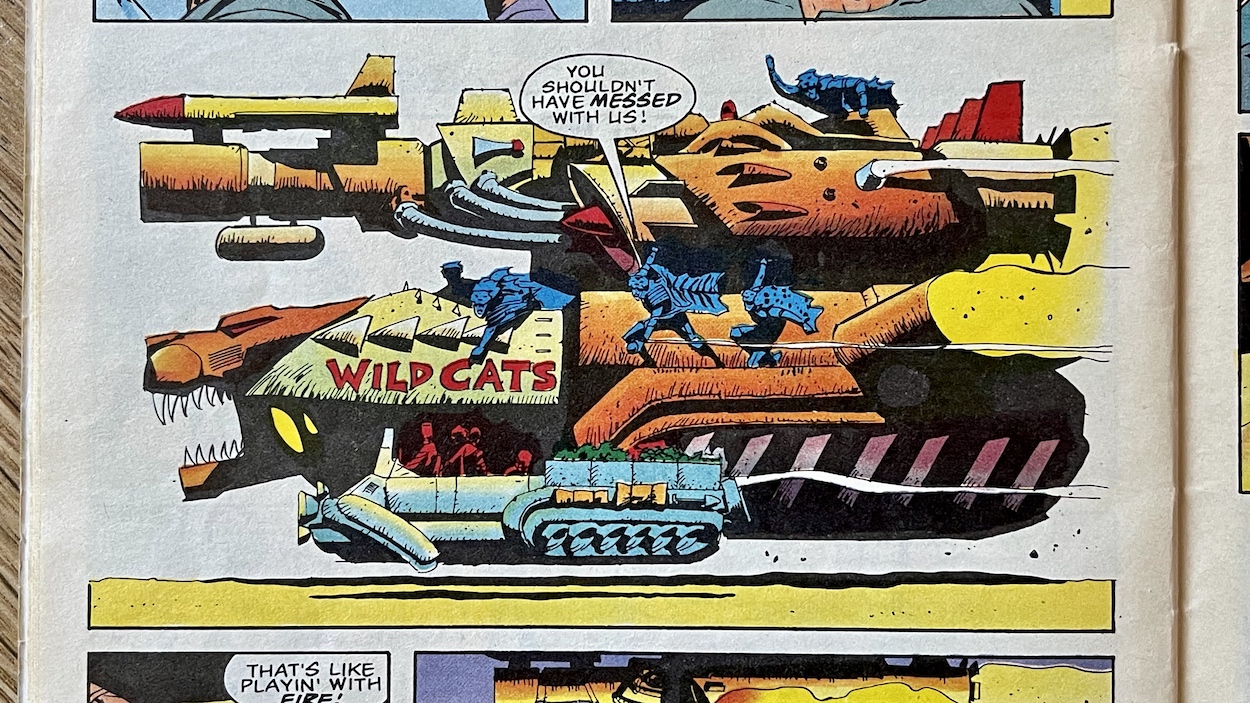
That’s The Pig, Dragon’s Claws’ ship, which feels rather suitable for this blog, doesn’t it? Even though they’ve only just been hired by N.U.R.S.E. (National Union of Retired Sports Experts) to bring in The Game teams still at large across the country who are abusing their positions of power, it seems some of the public are already turning on our heroes and viewing them as nothing more than government lackeys.

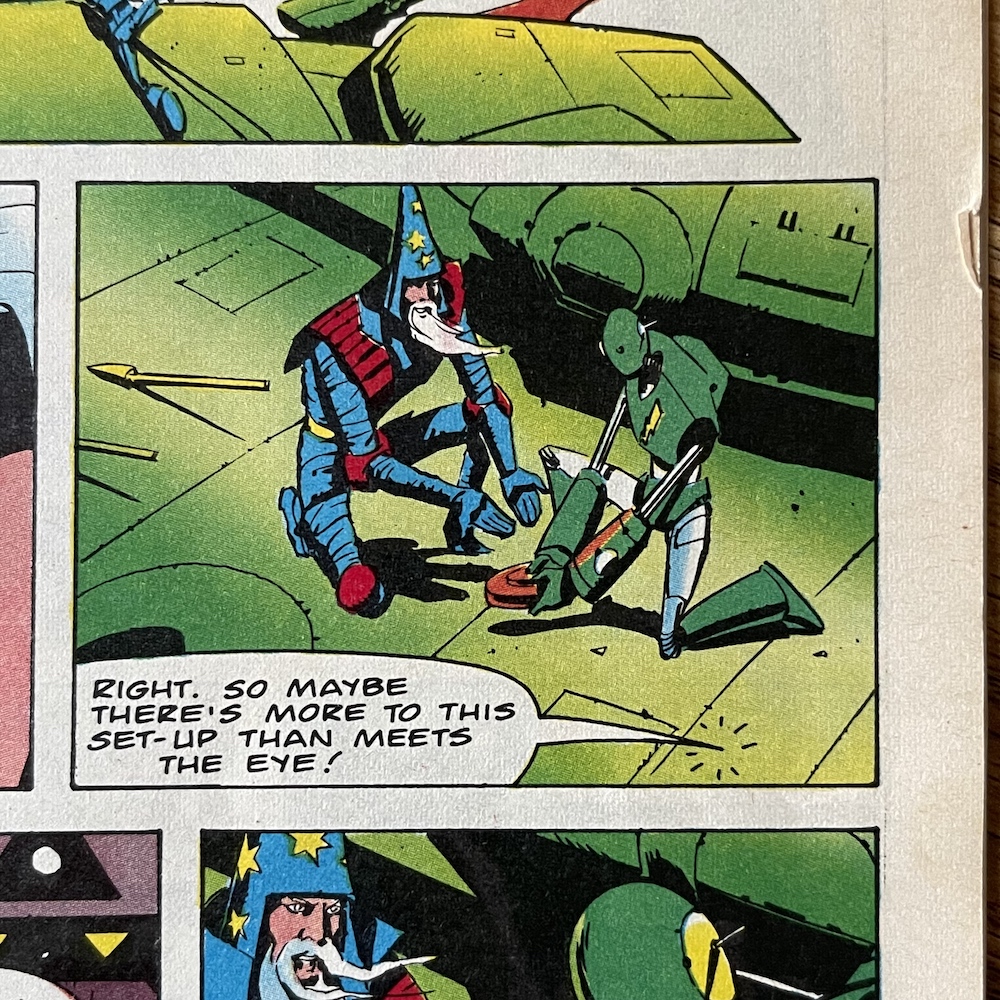
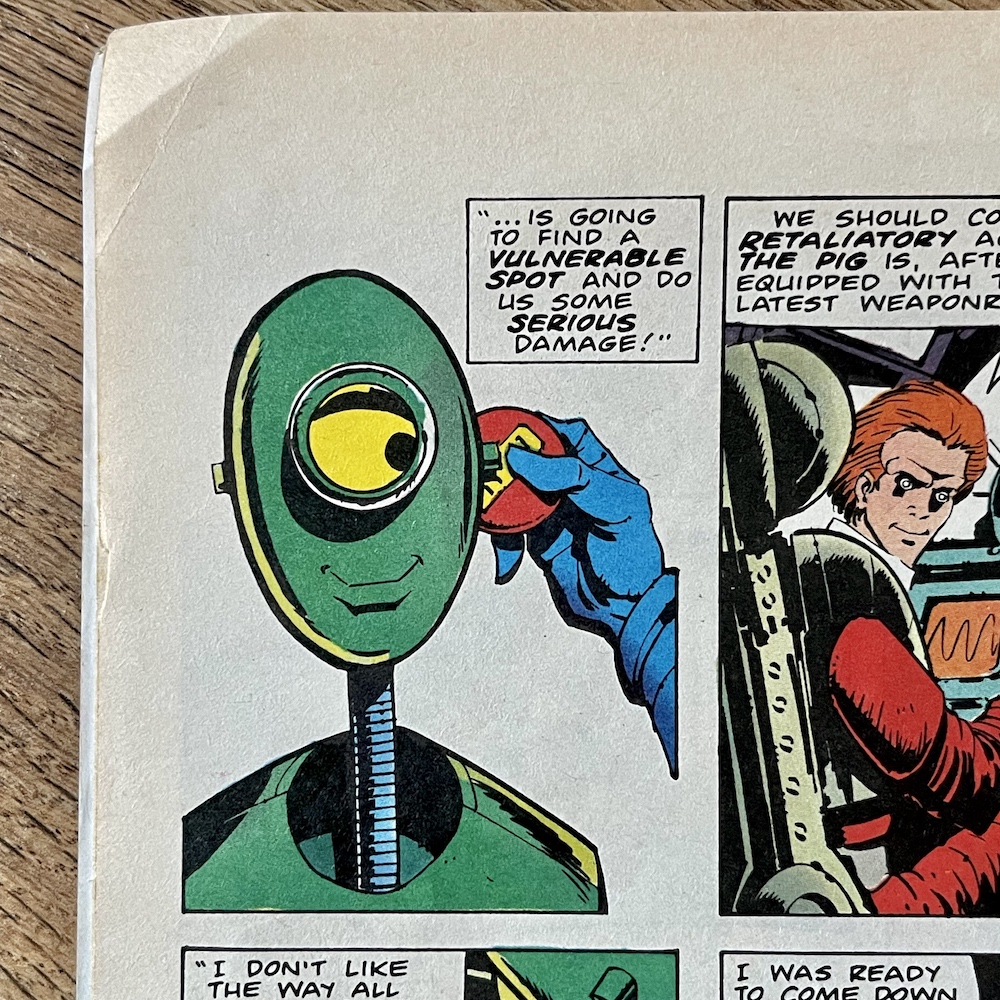
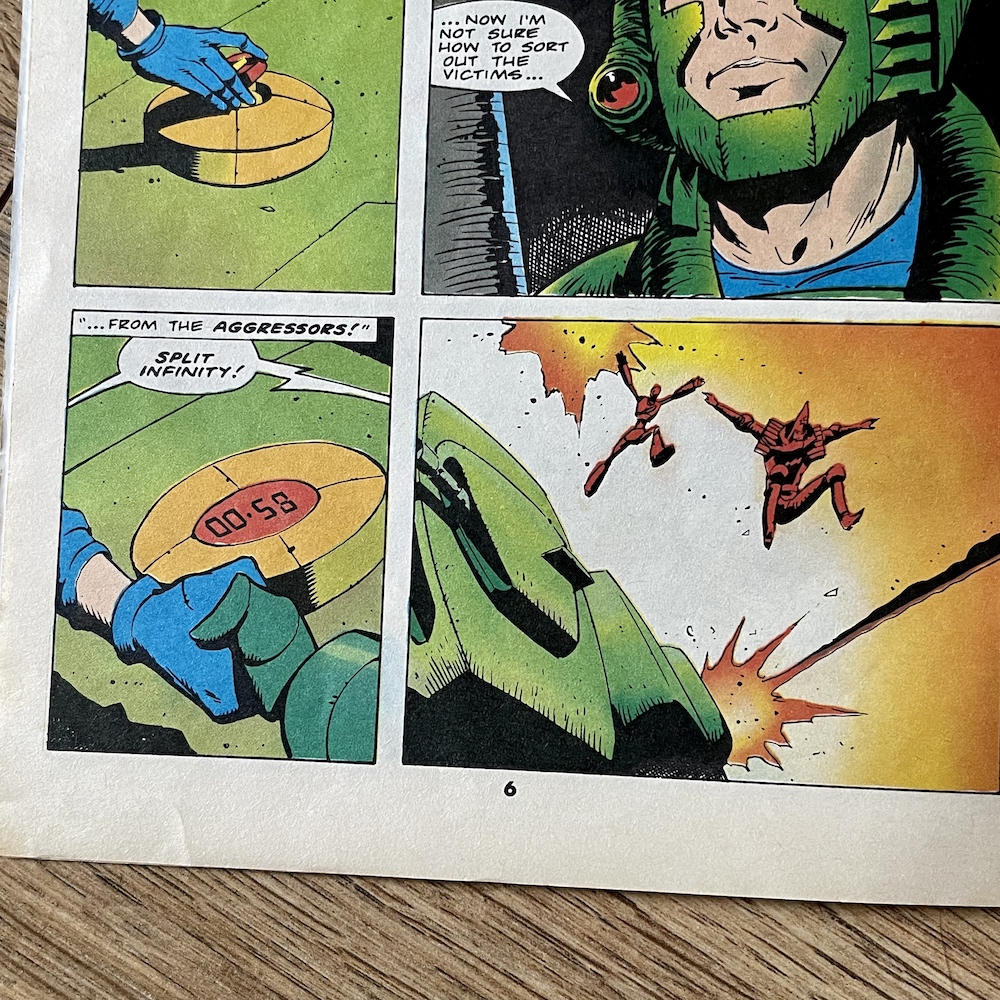
Their particular mission here is to head to Channel City, a huge metropolis that was built out over the English Channel to help with the overcrowding on the mainland, although it now overlooks nothing but a dried up seabed. No less than 20 teams have formed an army to protect someone called The High Father, an individual who the Claws were told had imprisoned hundreds of people in their own home. But now as they approach they’re under attack by those very civilians. Why? As the Claws discuss this and how they’re going to accomplish their mission without harming any innocents, unbeknownst to them a funny little moment plays out on the hull.

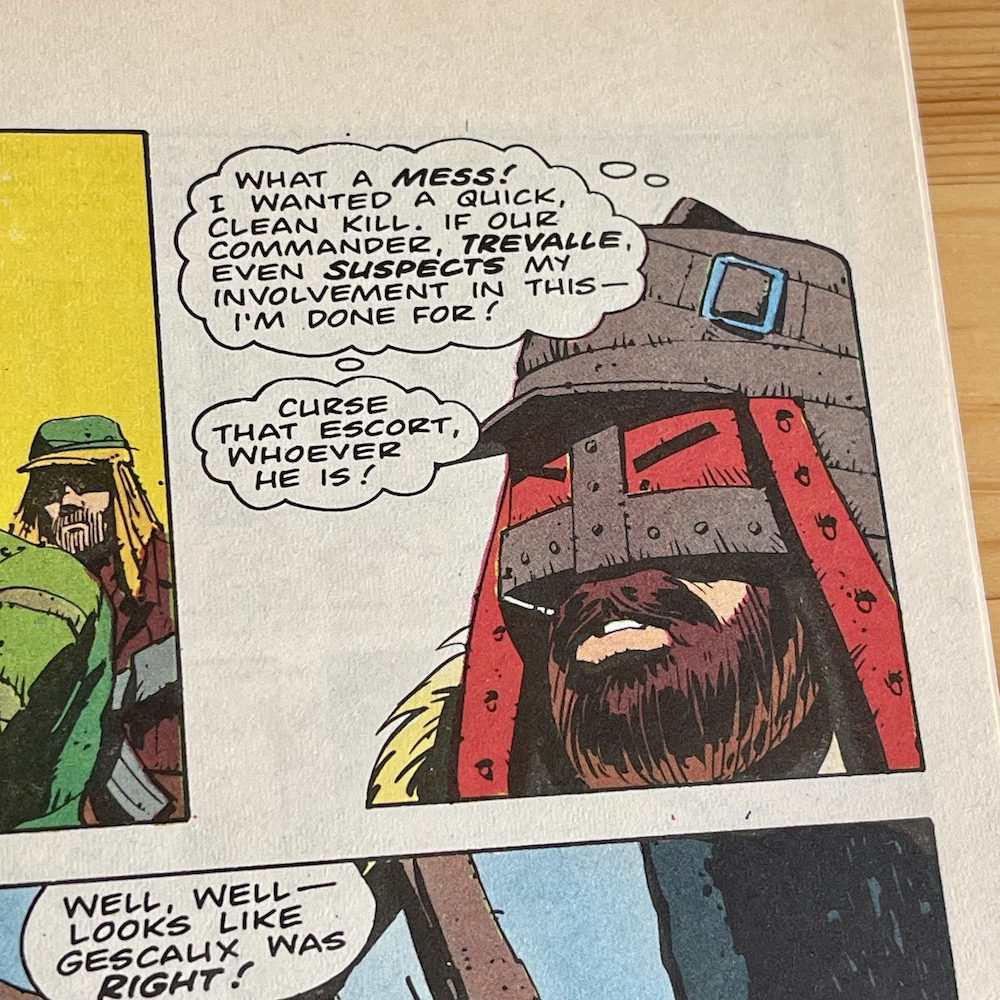
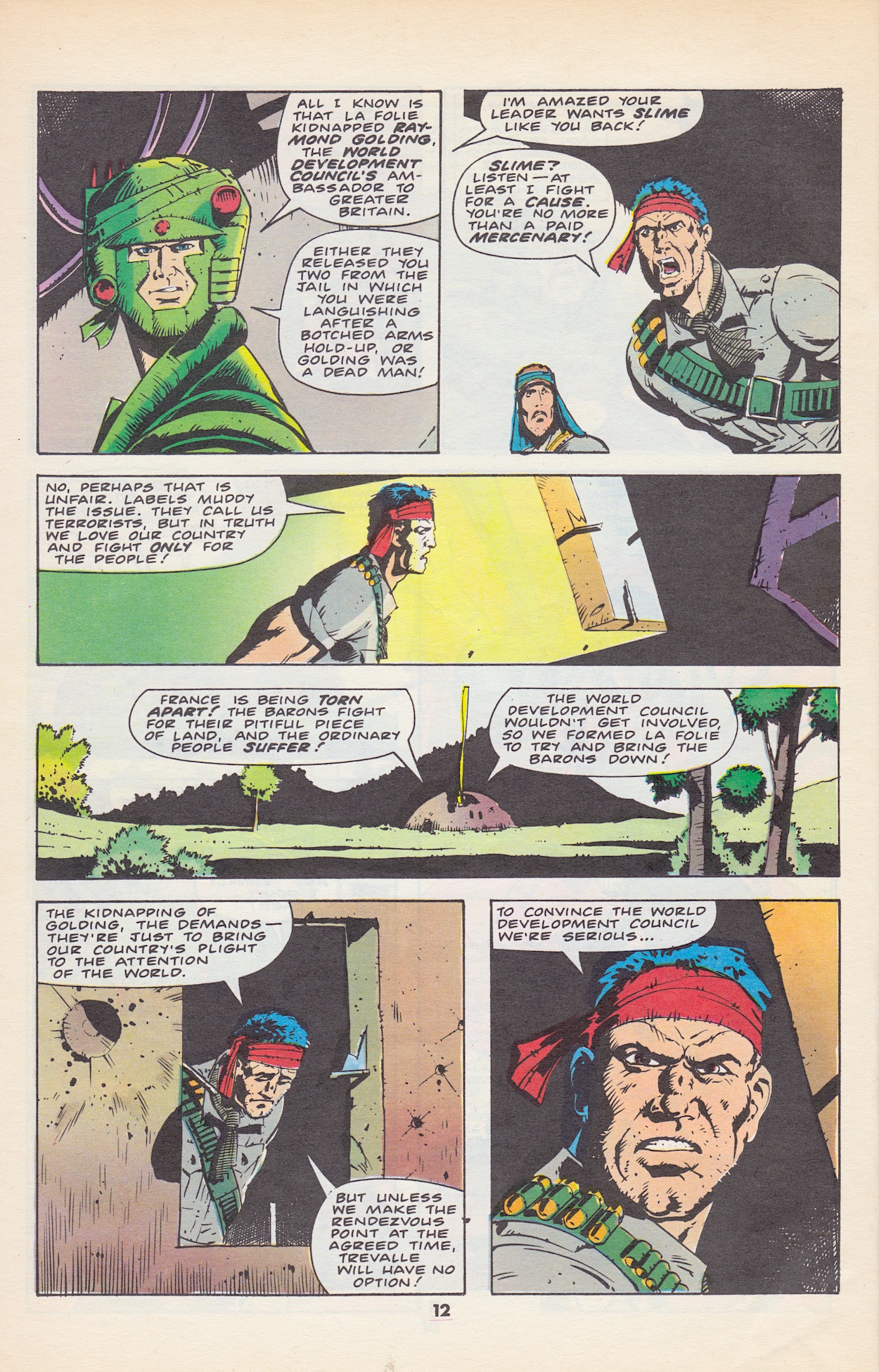
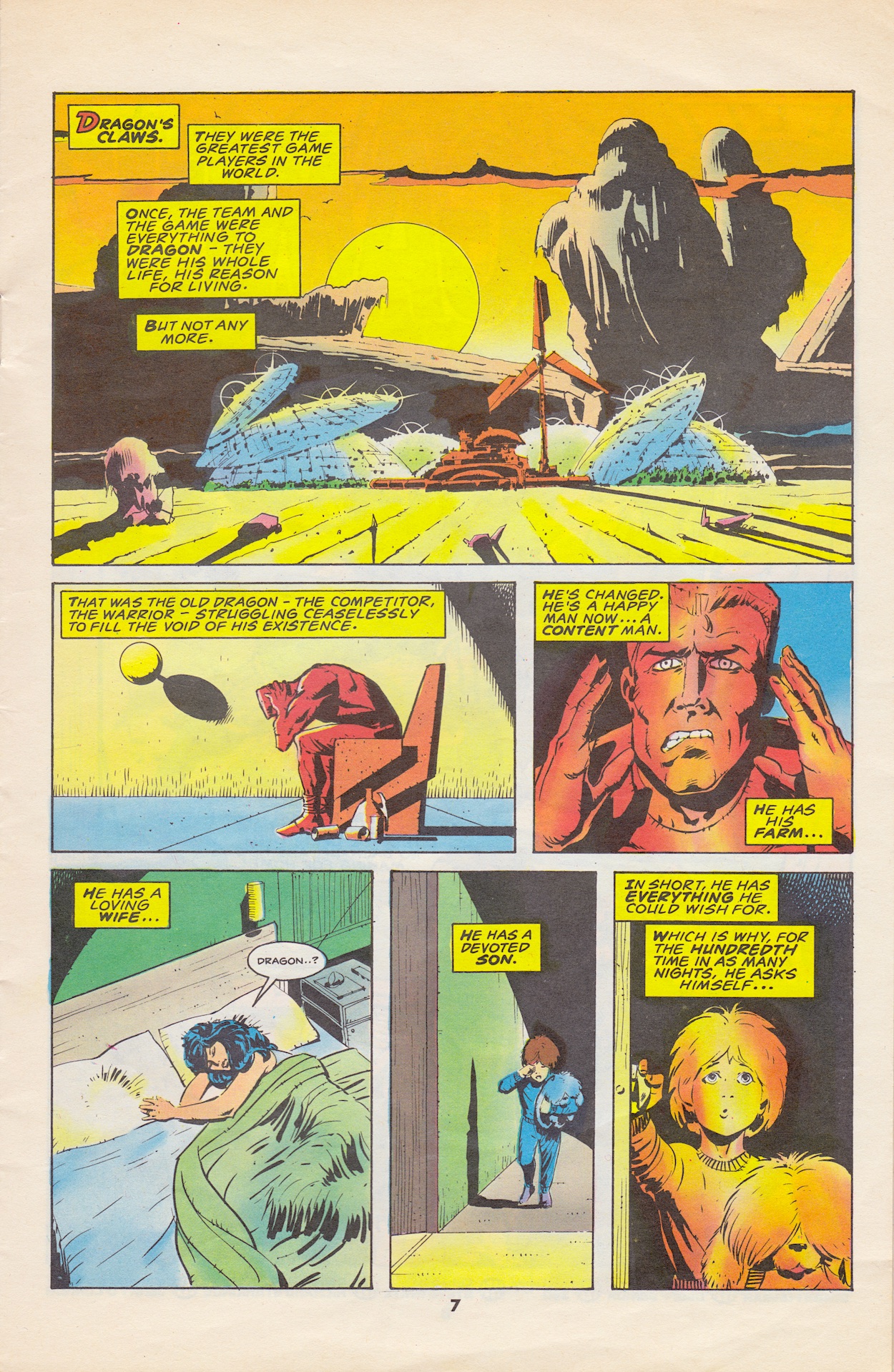
So why do these people not want rescued from this army and their apparent martial law? The strip does get to that by the end of the issue but first there are a few subplots thrown in for good measure. Kurran, brother of one of the Wildcats killed by Dragon as he protected his family, is out for revenge it would seem, at least in the interlude in the middle of the strip (more below). We also catch up with Tanya as she continues to try shielding their son Michael from Dragon’s violent TV coverage, but Michael wants his dad and it looks like she has no choice but to confront the situation and talk to his father.

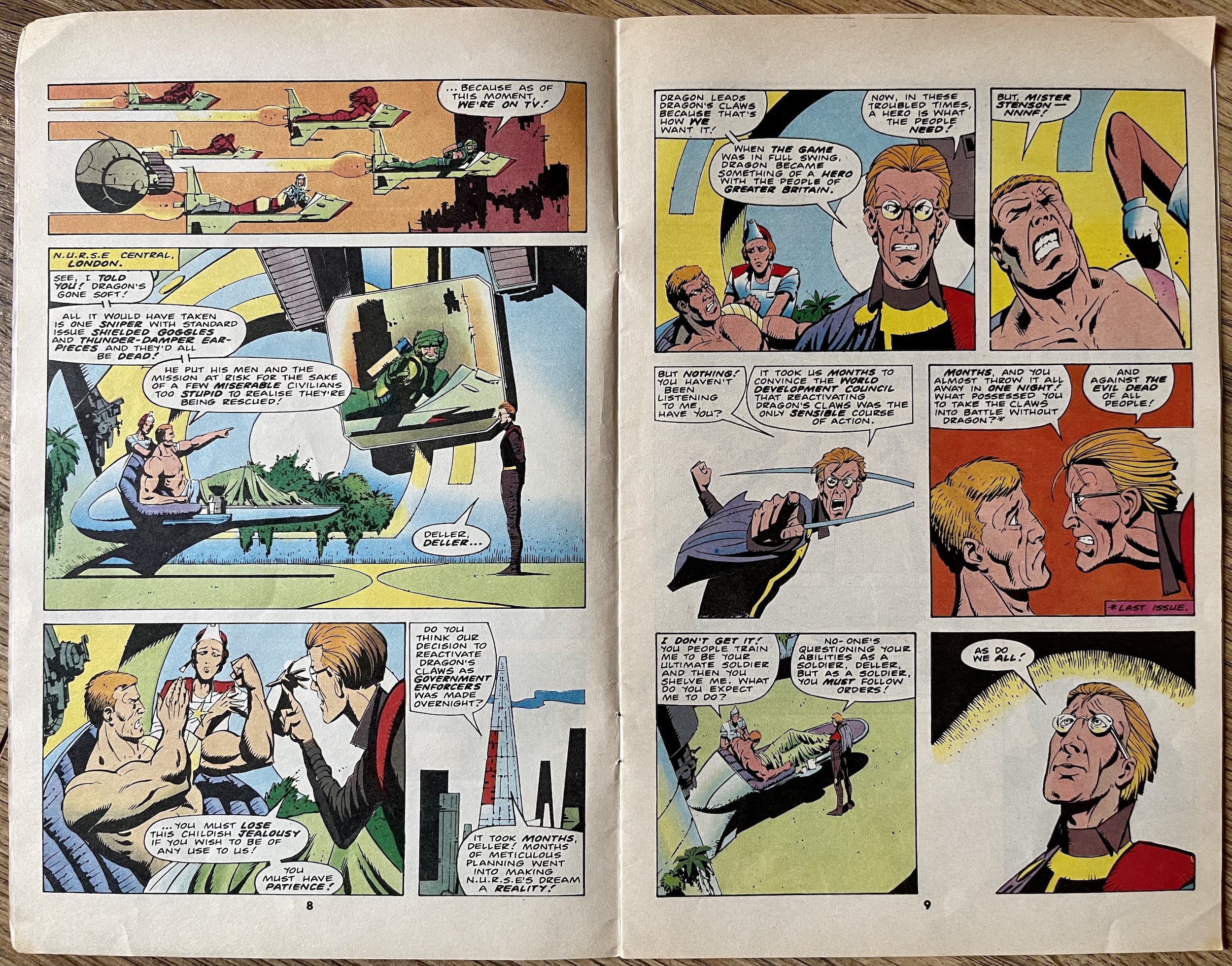
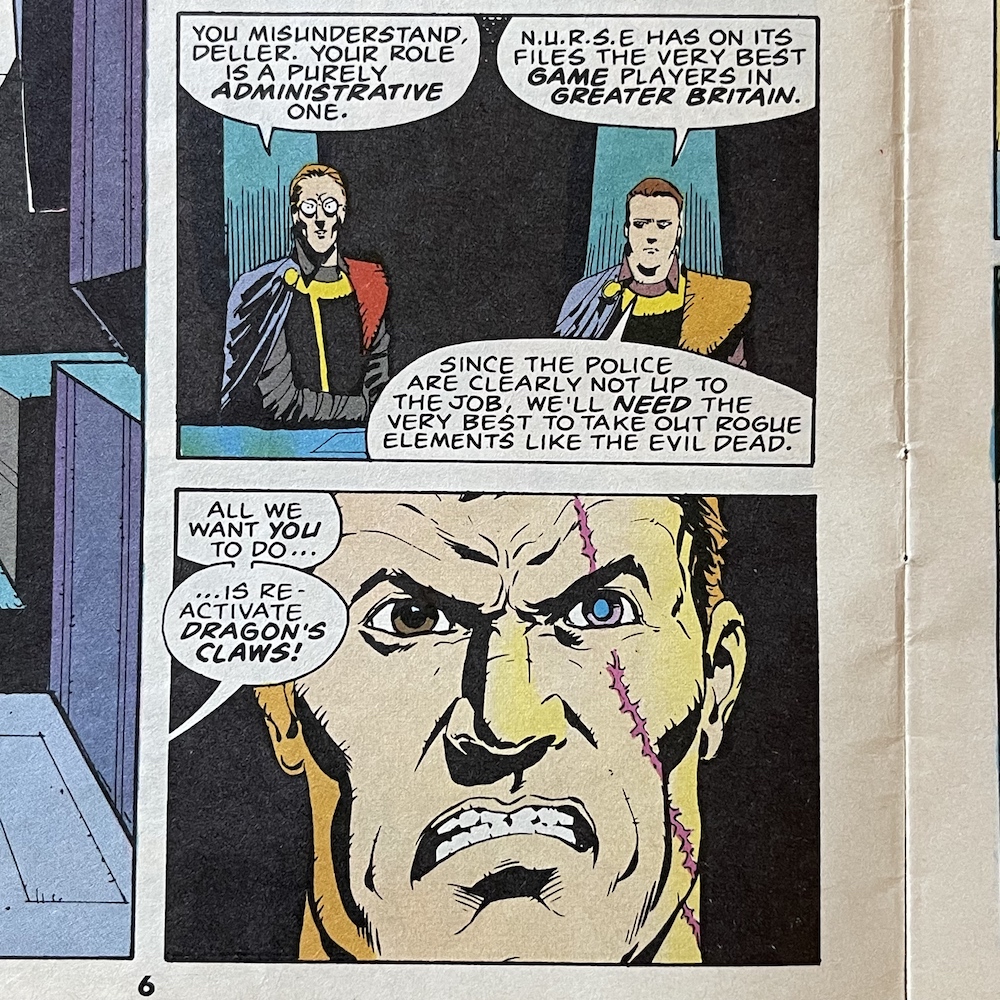
I like these very human moments, although the most intriguing of the subplots this issue comes courtesy of N.U.R.S.E.’s Mister Stenson and Deller, the ex-Game player whose jealousy over Dragon leading the Claws almost ended with his death last month. It looks like they specifically need Dragon more than they’re letting on to him; having him as their poster child will mask their real intentions behind a cloak of heroism. But it’s the final couple of panels that interest me the most. Just who is giving these orders?

Any fan of Marvel UK’s Transformers comic will recognise the classic Geoff Senior pose there in panel three of page nine. So the main background plots thicken and I hope there’s enough time to give us a satisfying amount of development for these before the comic’s cancellation with #10. I’m particularly looking forward to seeing where the Kurran/Wildcats arc goes because on the final page of this issue he’s no longer concerned about Dragon. He’s smart enough to know that Dragon could easily have taken out the entire Wildcat team on his own (which he did do) so now he’s pursuing the reason behind the confrontation.

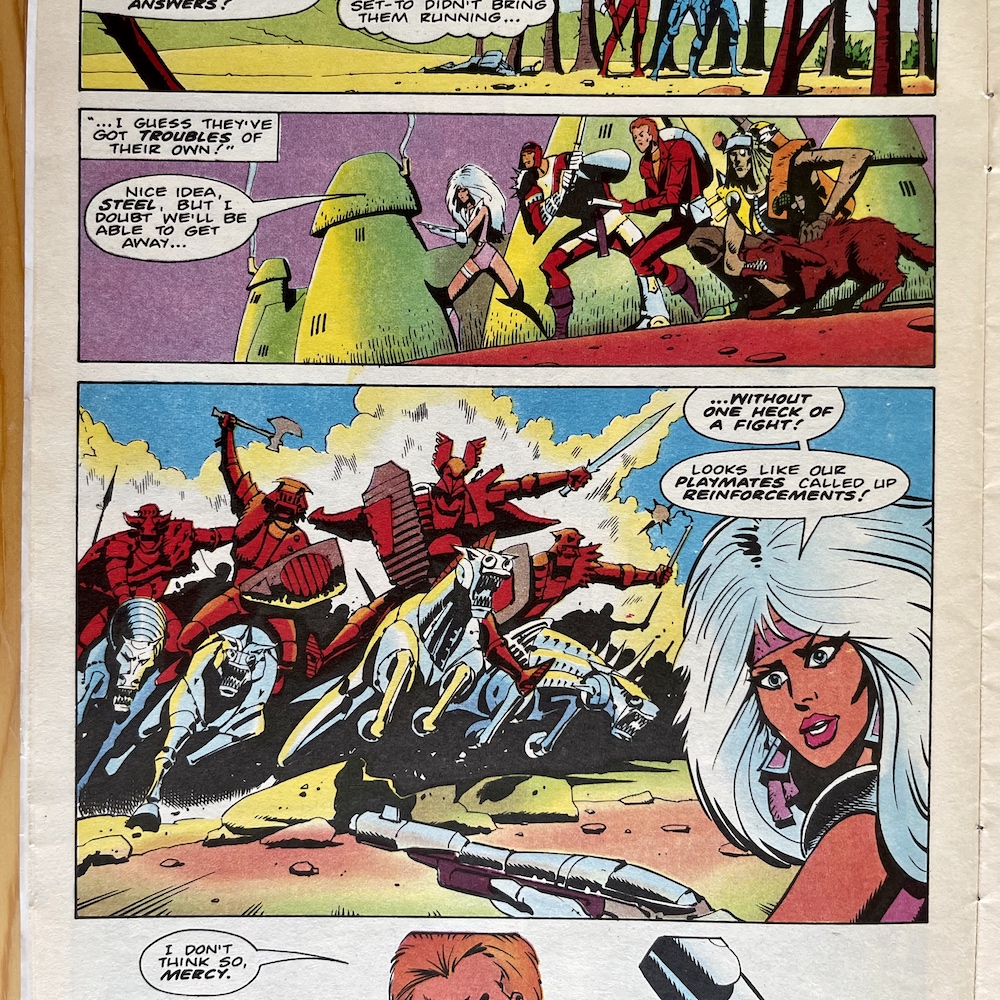
He knows his brother was stupid, but he wouldn’t have been stupid enough to go up against Dragon just because he hurt their pride. He beats up a woman at their hideout, wanting to know who paid them to do it and finds out it was Deller. Now that’s a cliffhanger. Even moreso than the main story’s, which we’ll lead up to now. With The Pig out of commission the Claws take to hover pads to make their way to Channel City and come up against a Game team hinted at in the pre-release marketing, The Vanishing Ladies.

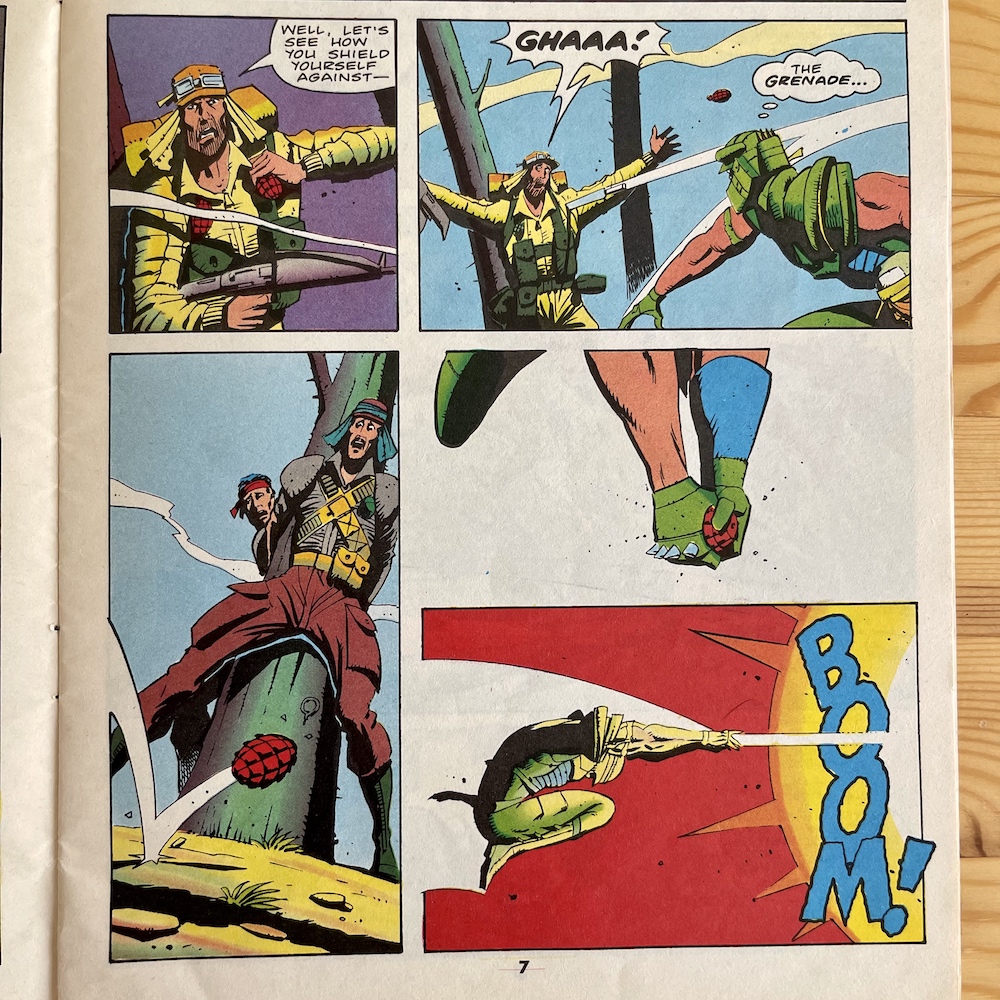
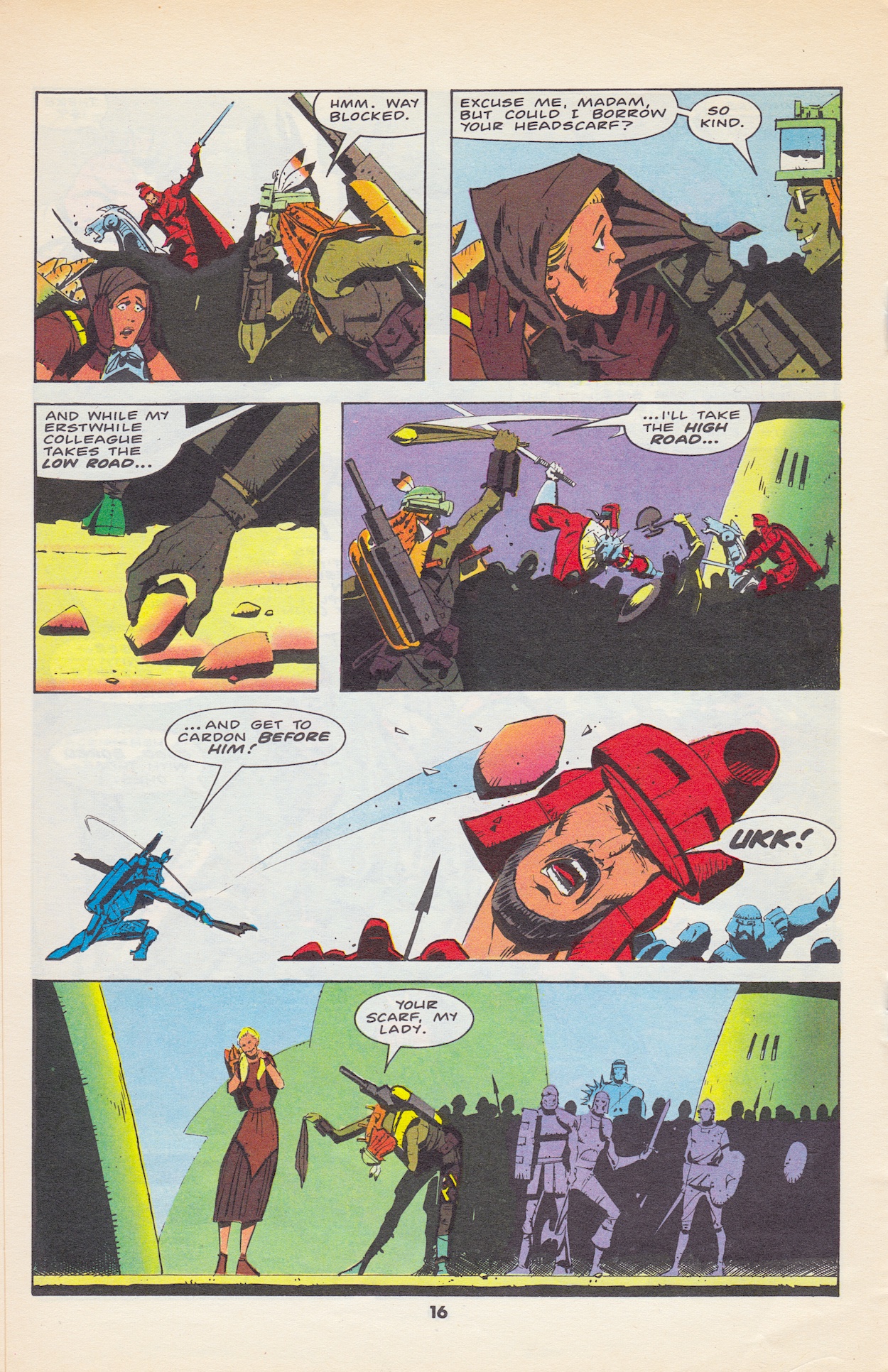
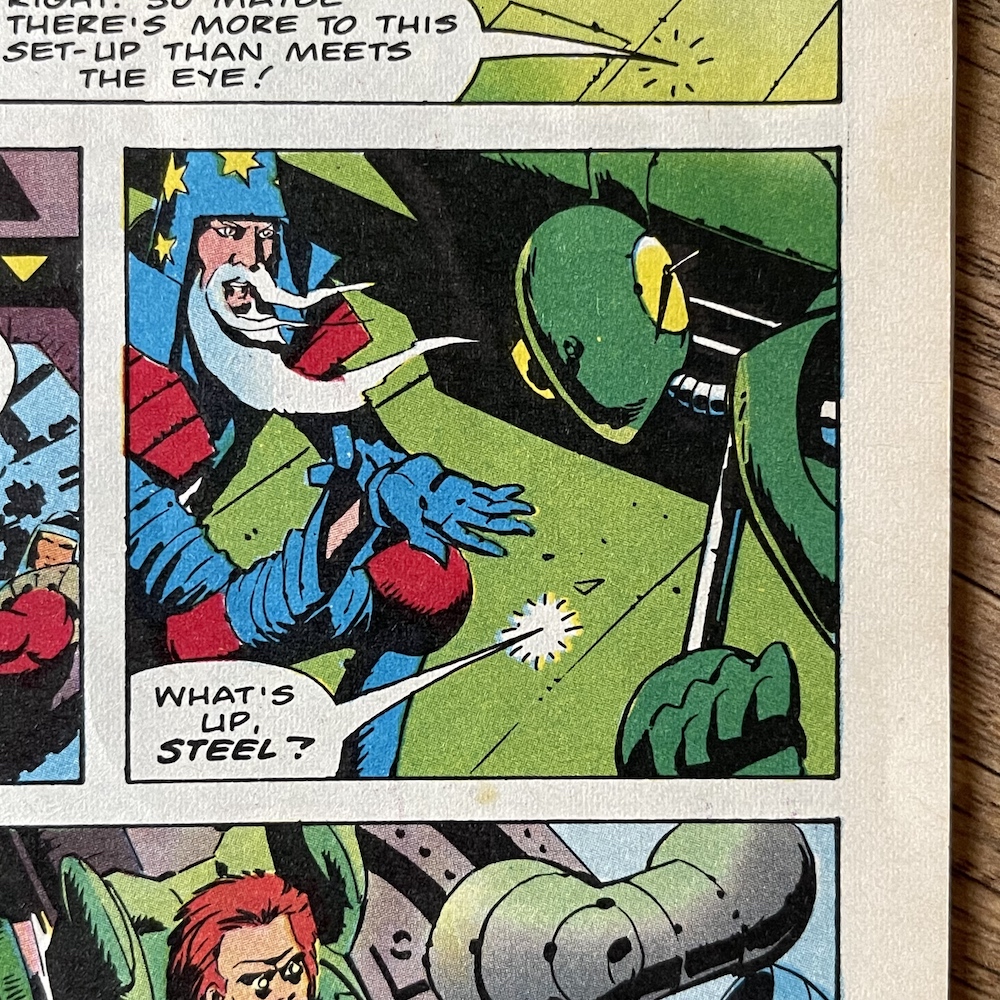
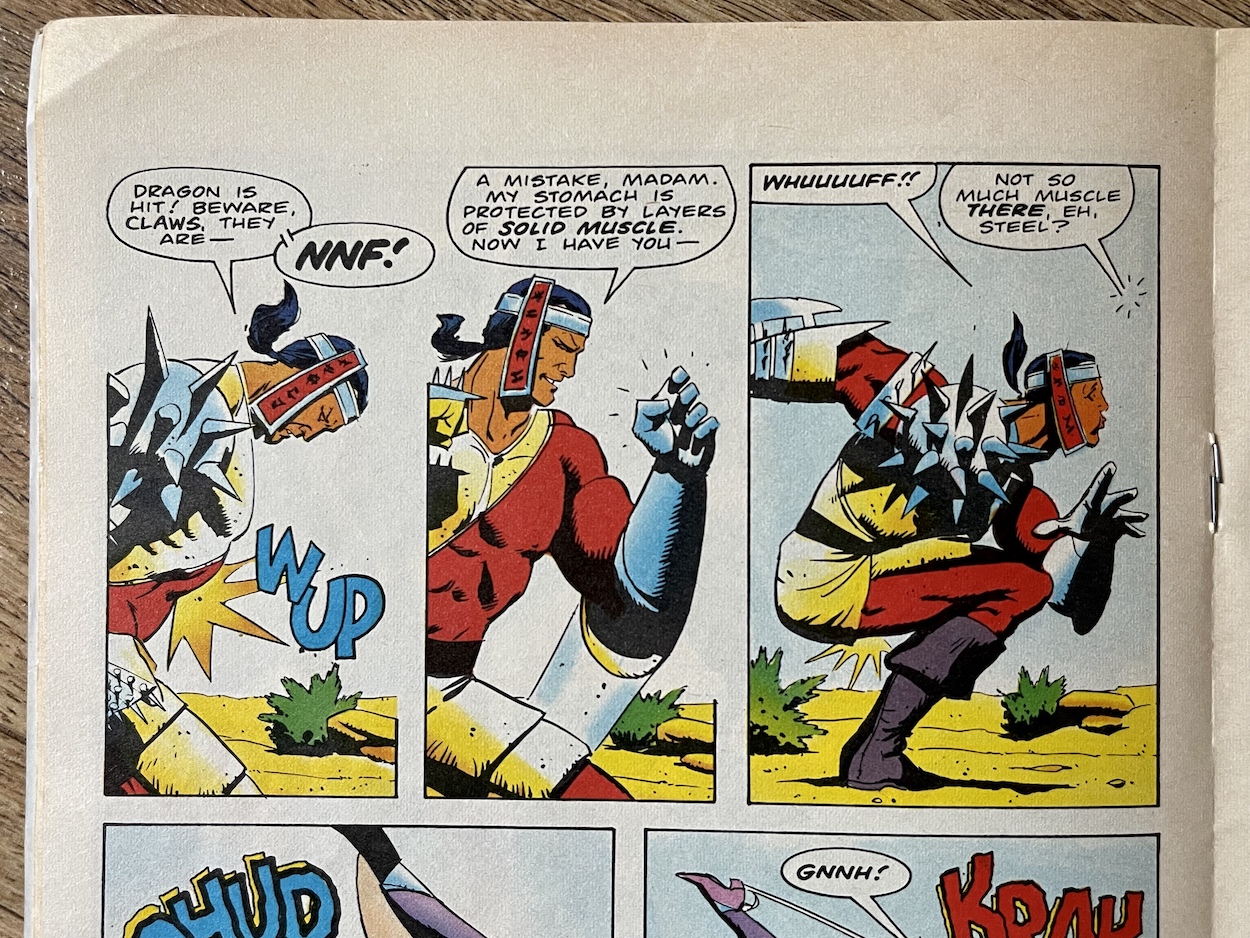
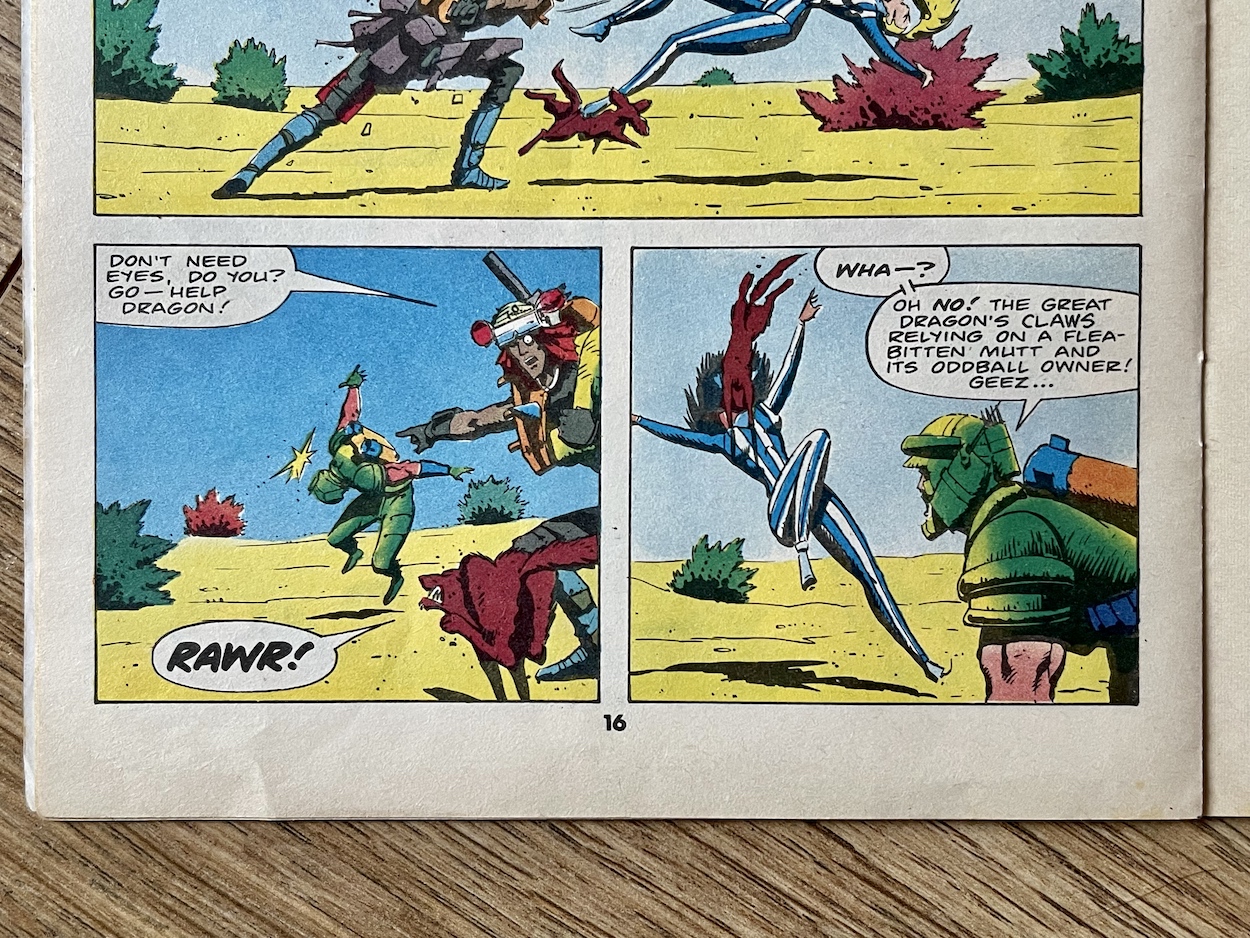
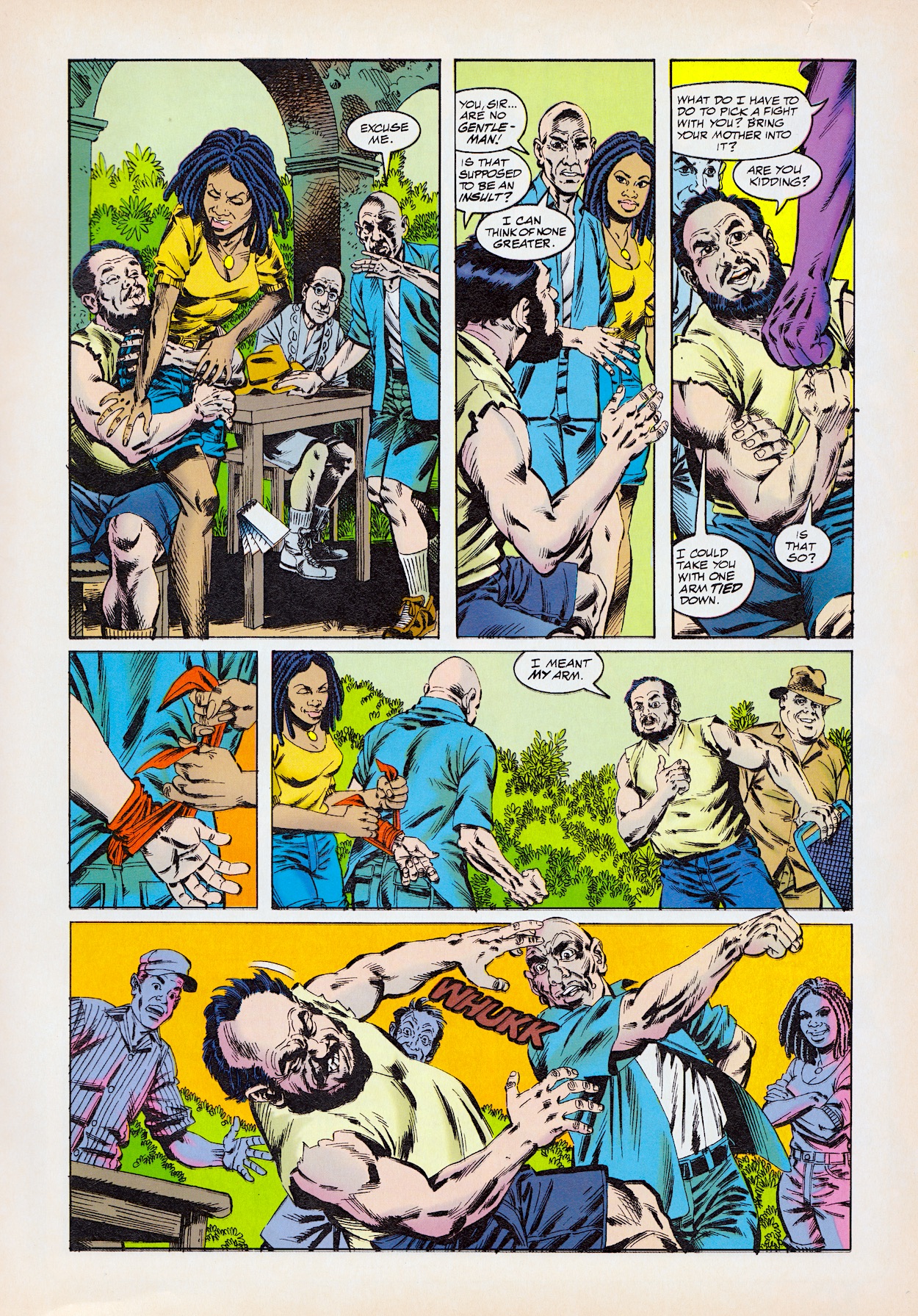
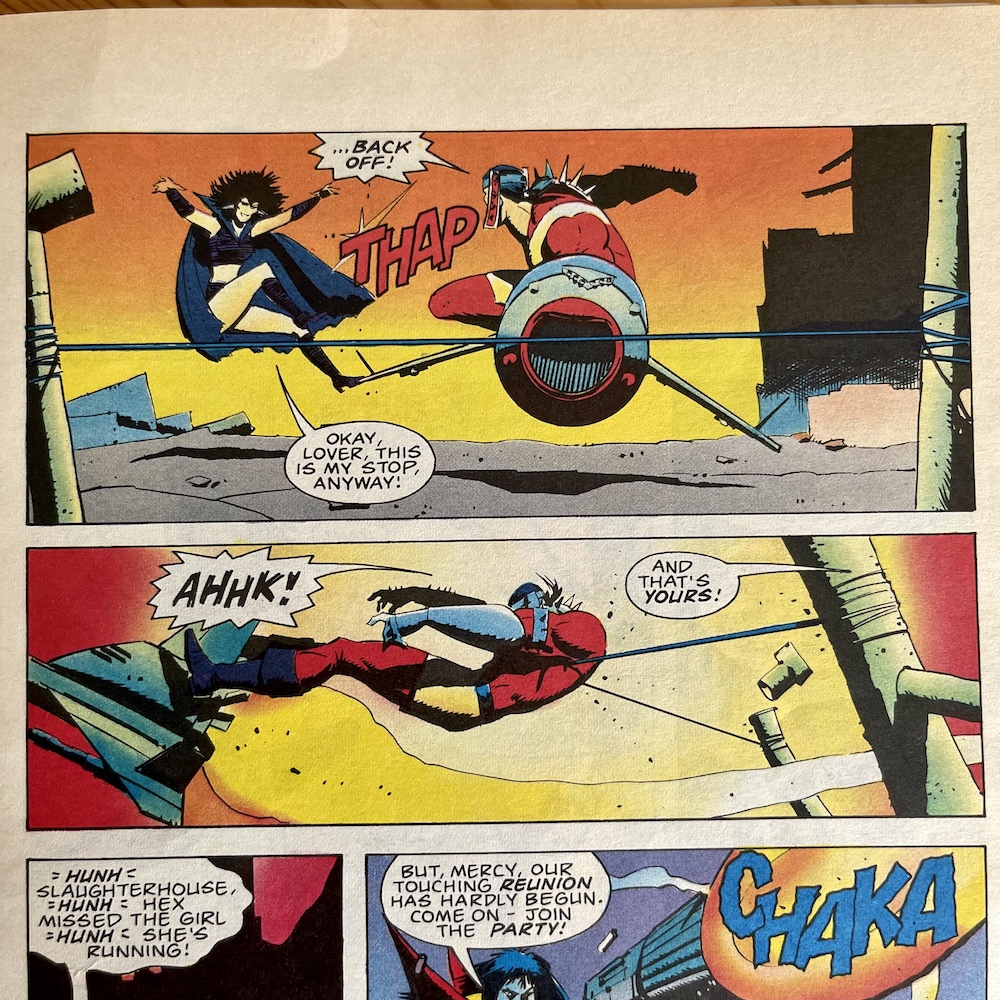
There’s a particularly gigglesome moment when the strong and ever so macho Steel gets taken down a peg in the simplest of ways

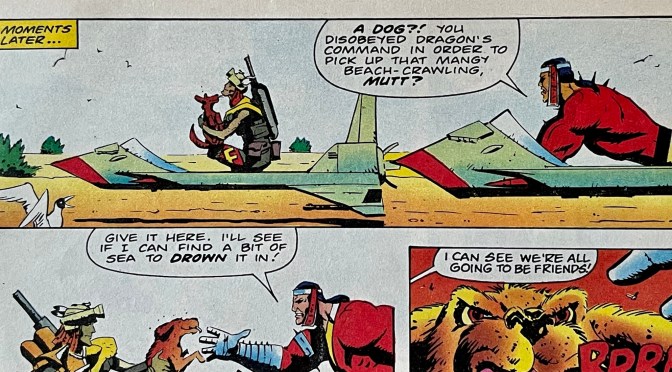
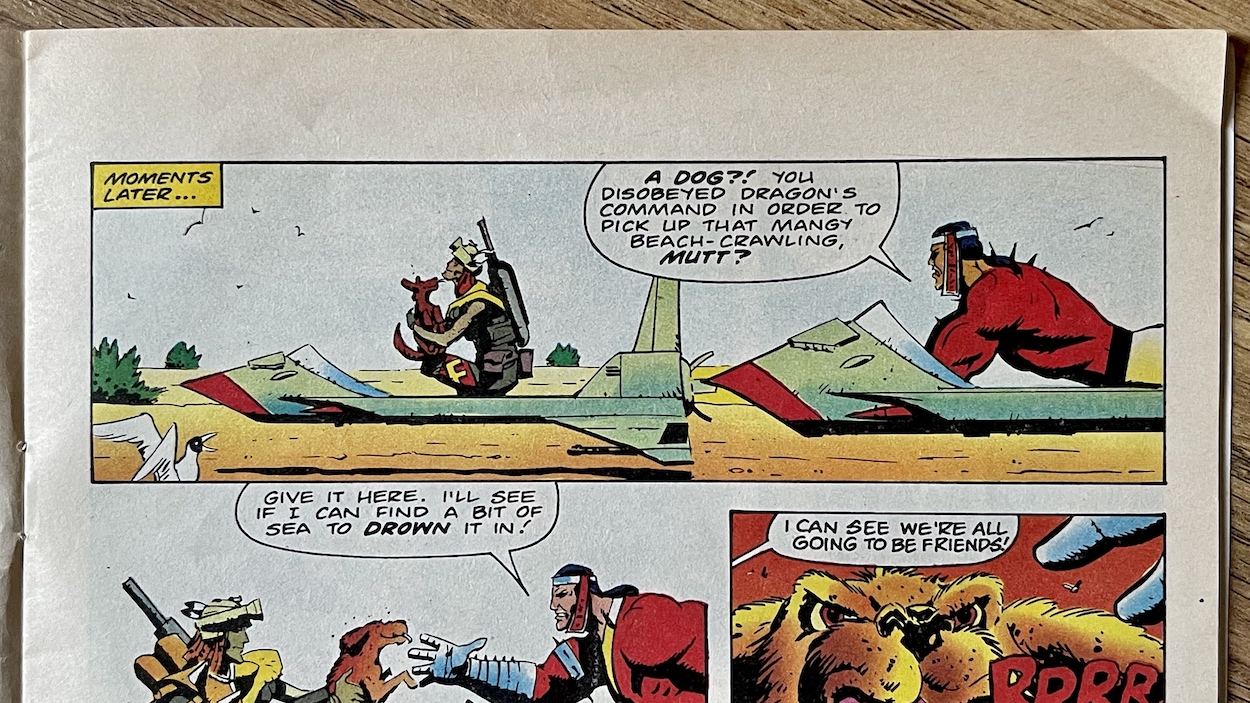
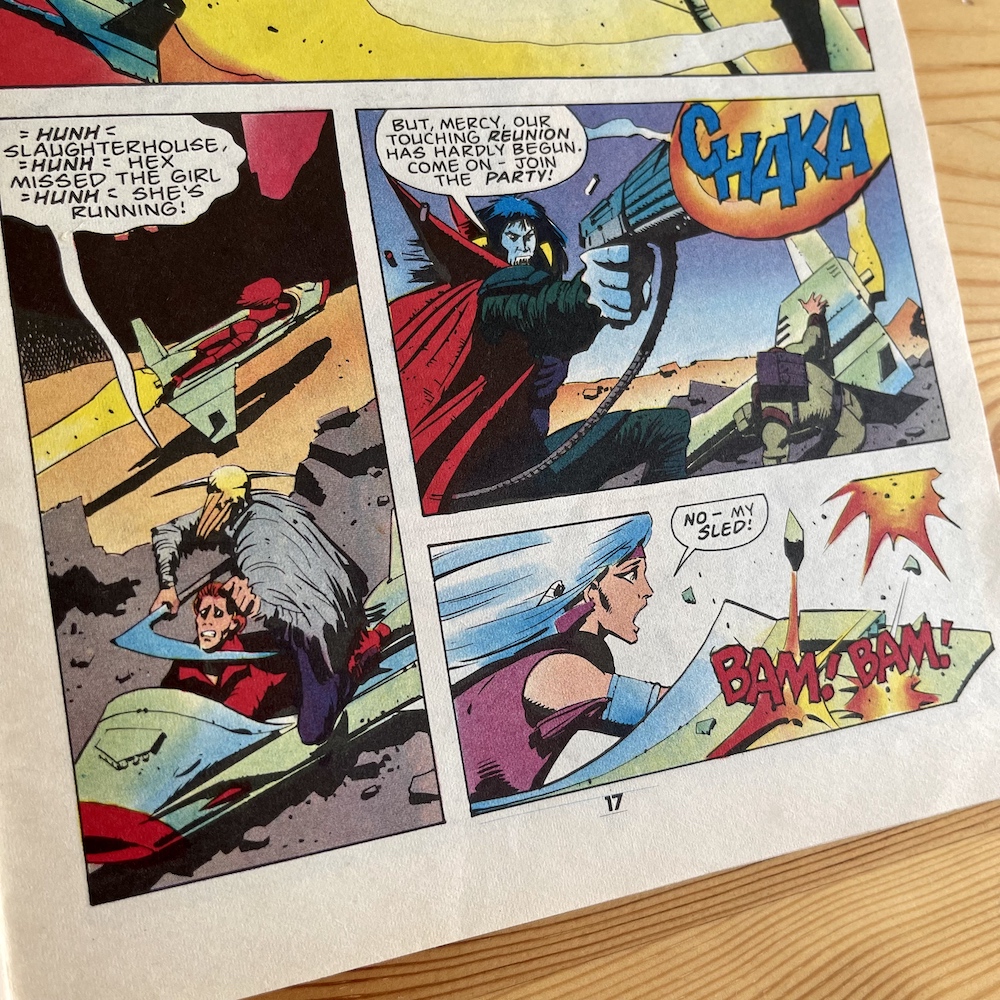
First though, the mysterious Scavenger (already my favourite) breaks formation and takes off across the desolate landscape, disobeying Dragon’s direct orders. It’s such a sudden and dangerous move the reader instantly thinks something terrible is about to happen, that Scavenger has blasted away to stop it and save his teammates from whatever it is. The camaraderie between the members of this team is so tight it has to be something huge, right?

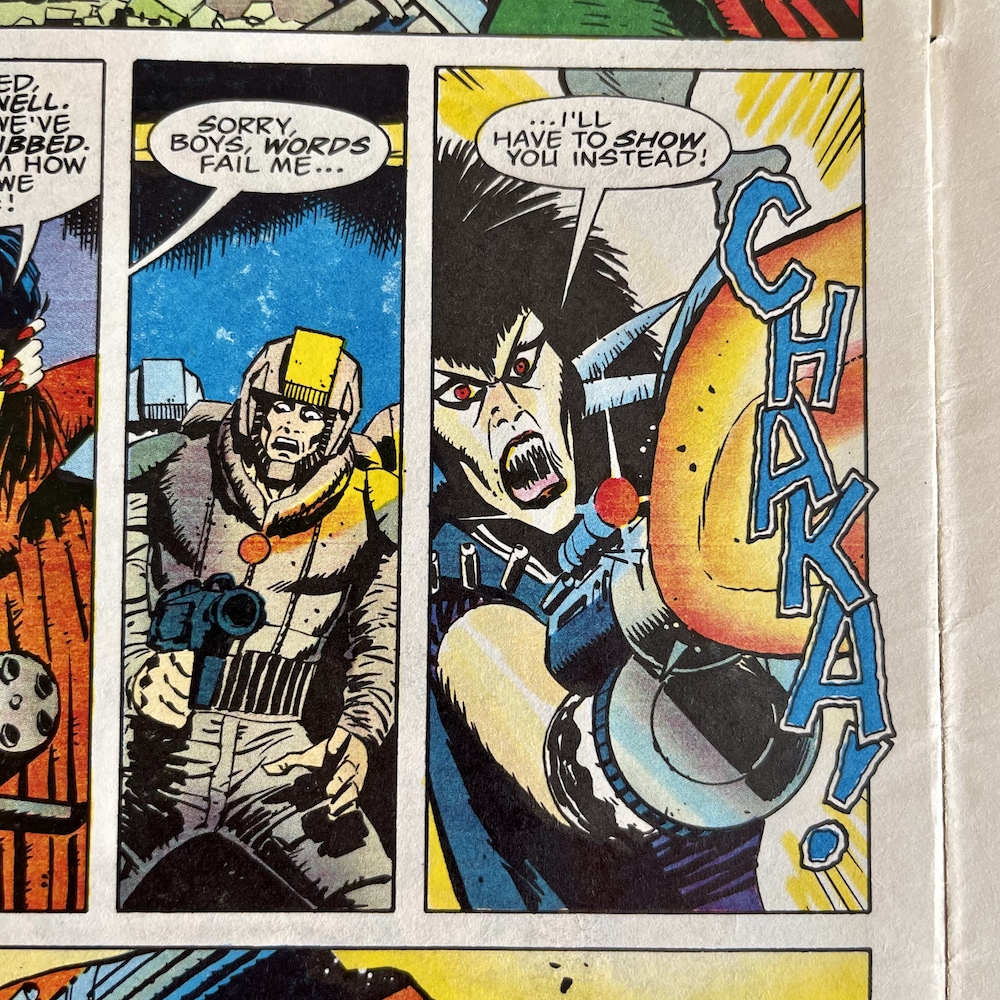
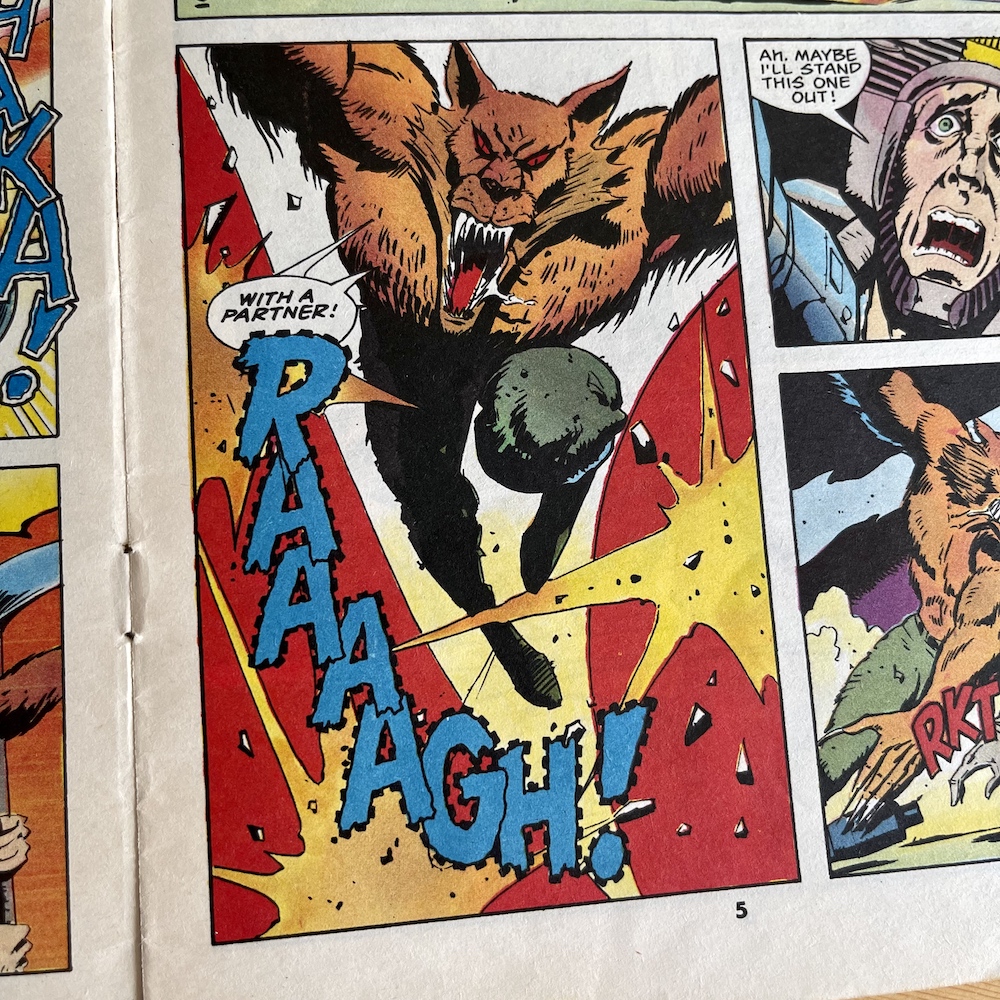
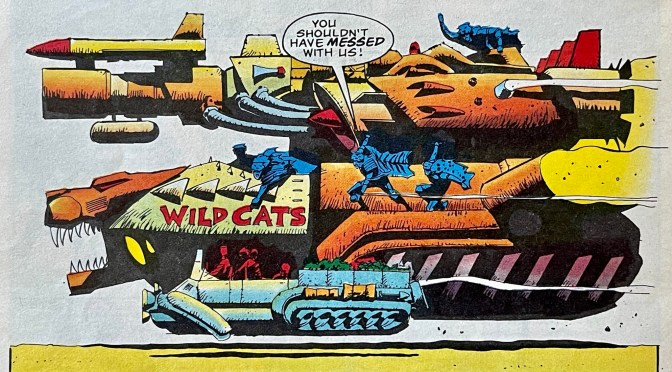
Well yes, as a matter of fact. I mean, an abandoned, starving animal is a big deal to this reader. It’s still funny of course. We now have our final member of the team. After all, this mutt was in those adverts for the comic too. He also gets named Lady Killer after what happens next. The Vanishing Ladies have special clothing that can bend beams of light (that old chestnut), essentially making them invisible. Cue lots of pictures of our team getting beaten up and using ingenuity to try to fight back.

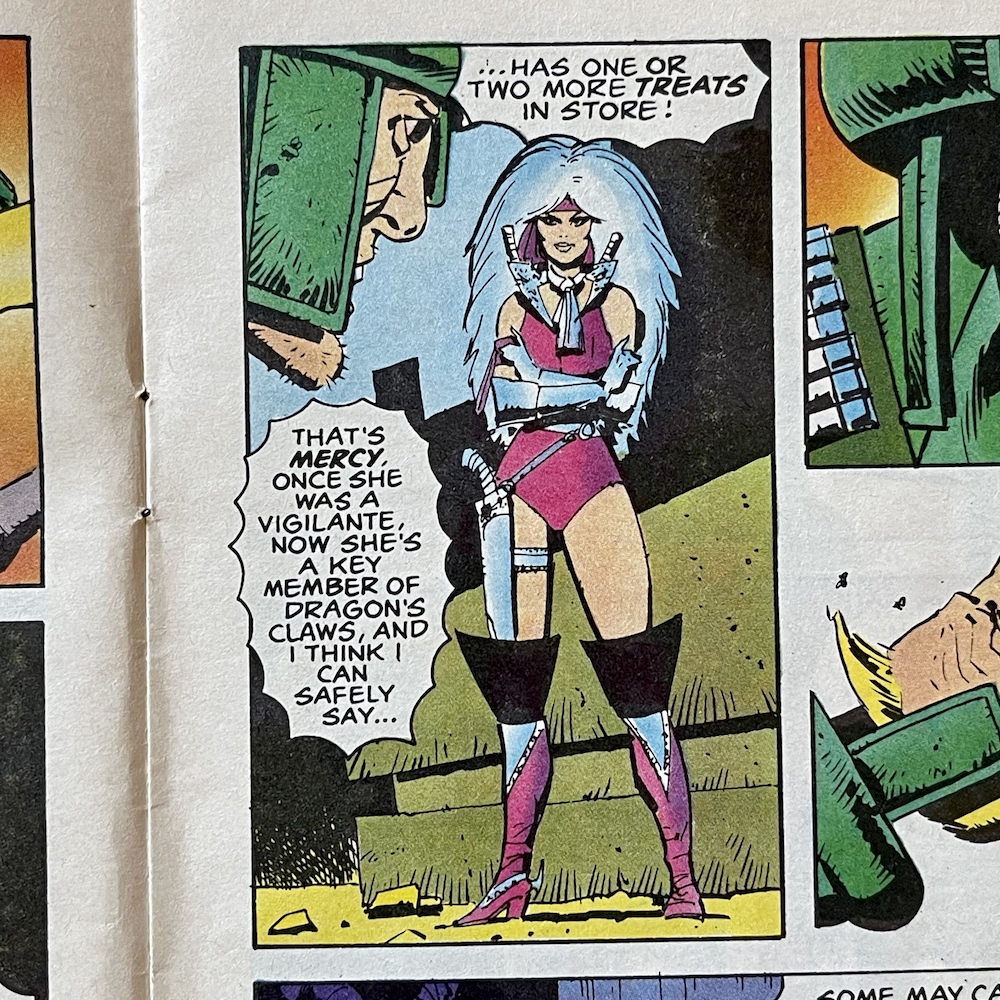
There’s a particularly gigglesome moment when the strong and ever so macho Steel gets taken down a peg in the simplest of ways. Mercy isn’t so easily incapacitated and as she gets punched she deliberately rolls with the hit and is able to backflip and kick her attacker in the face without clapping eyes on her. Digit uses his computerised brain to accurately calculate probabilities for blocking attacks to find out where his attacker is. Dragon and Scavenger don’t have it quite so easy though.

Scavenger is getting strangled by one of the invisible foes and the only thing that stops him from being killed is his new dog who’s able to sense her and bite her on the leg, making her visible again. The newly named Lady Killer then helps Dragon and his reaction is another funny moment. I’m really looking forward to seeing this dynamic play out further in future episodes. The mightiest Game team ever now has a pet, one who is just as much a part of the team as the rest, whether they like it or not!

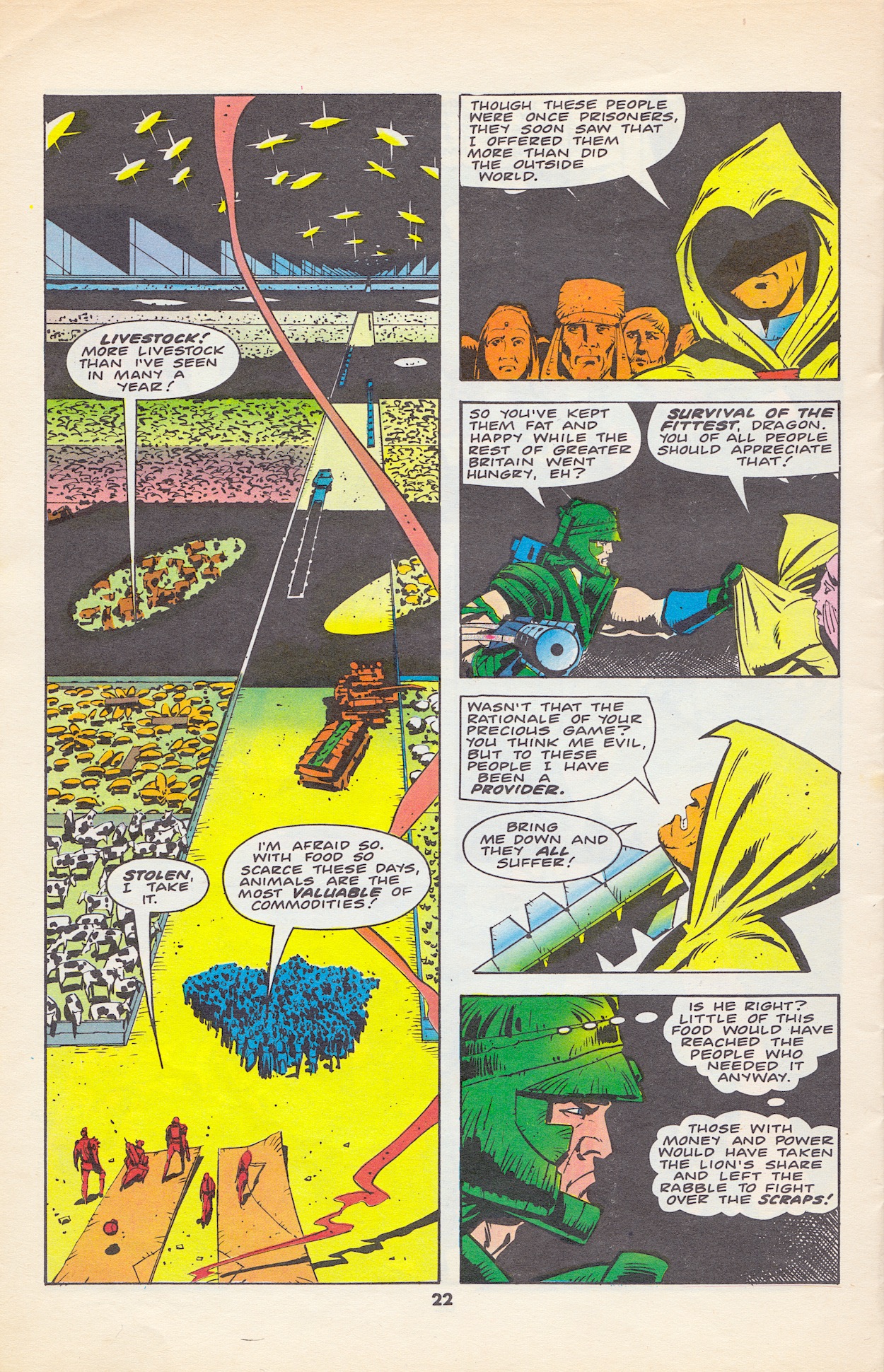
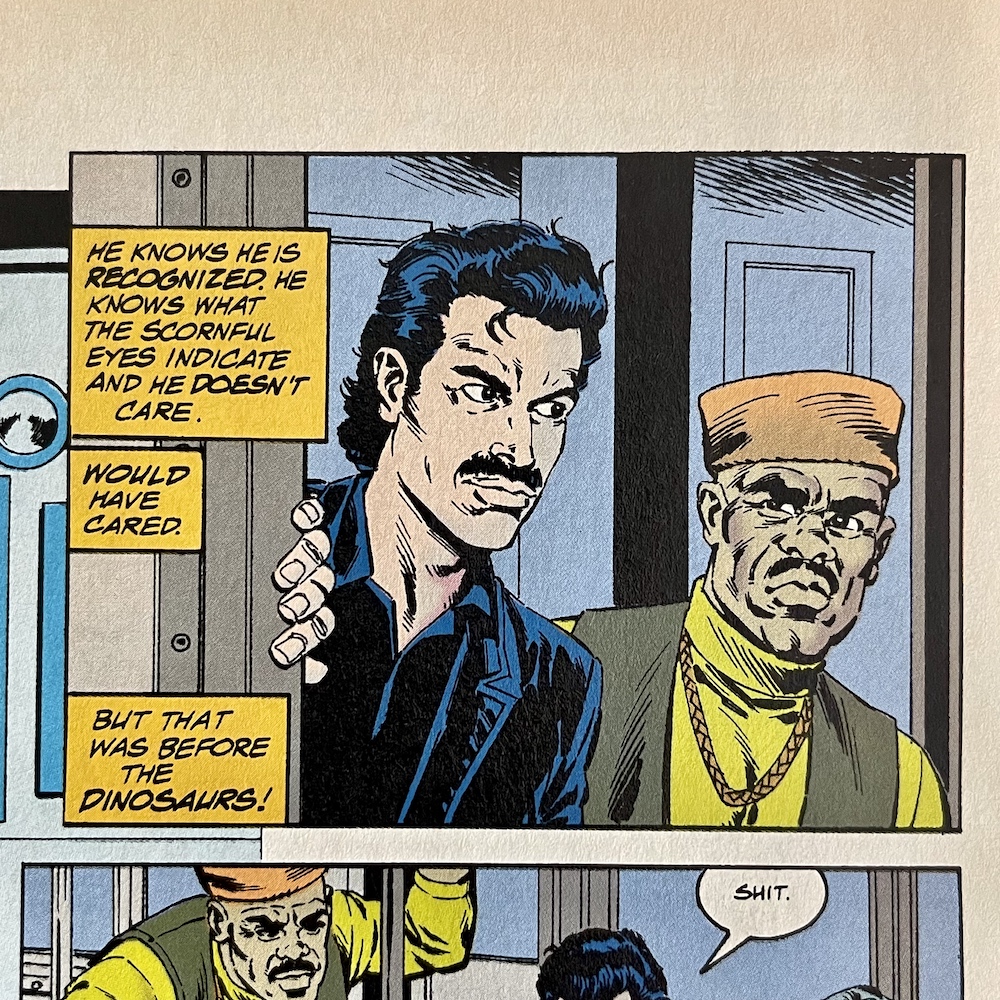
All of this is being televised across Greater Britain just as The Game was, N.U.R.S.E. adamant the people need to see Dragon’s Claws doing the government’s work in order to change public perceptions as they see fit. Then, as the team fight The High Father’s minions his voice panics Stenson. He recognises him, but he should be dead! He runs off to warn his superiors and stop the broadcast, and as Dragon’s Claws blast their way through into the area being protected by his army they come across a surprising scene, one of land cultivation and farmed animals!

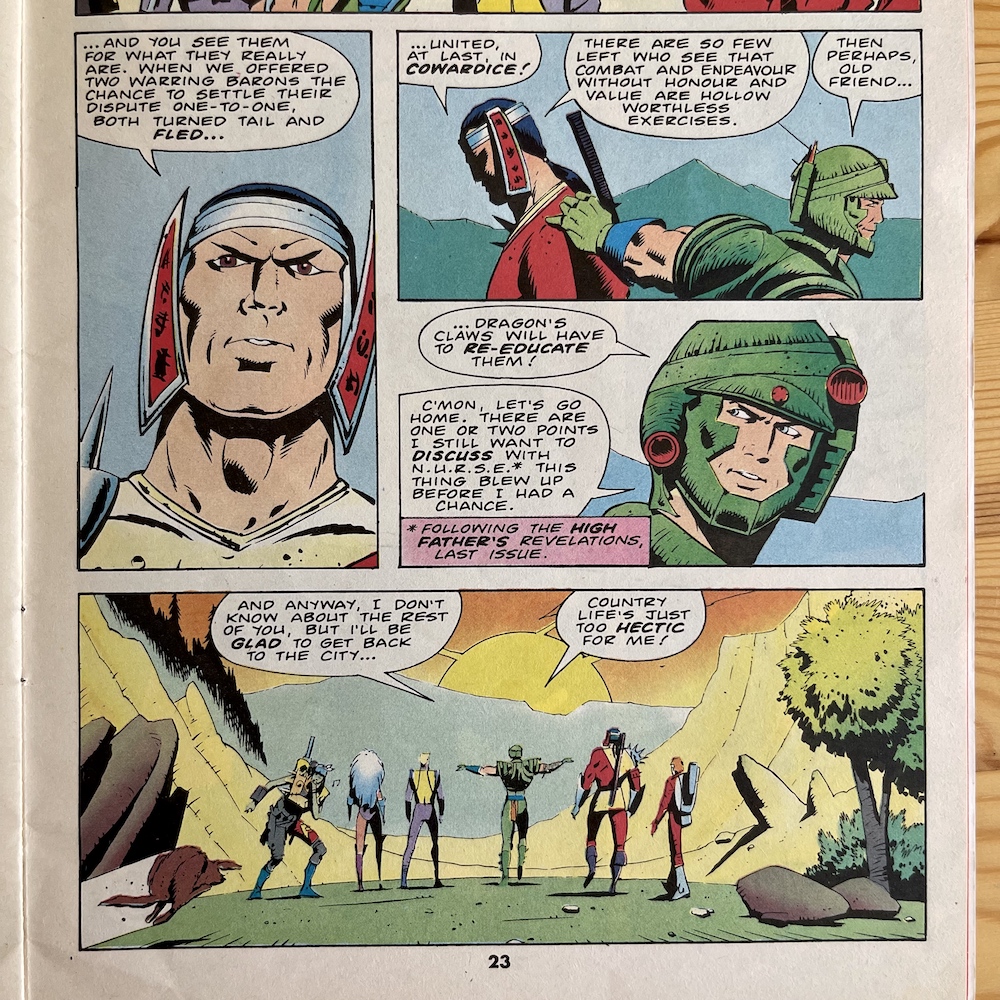
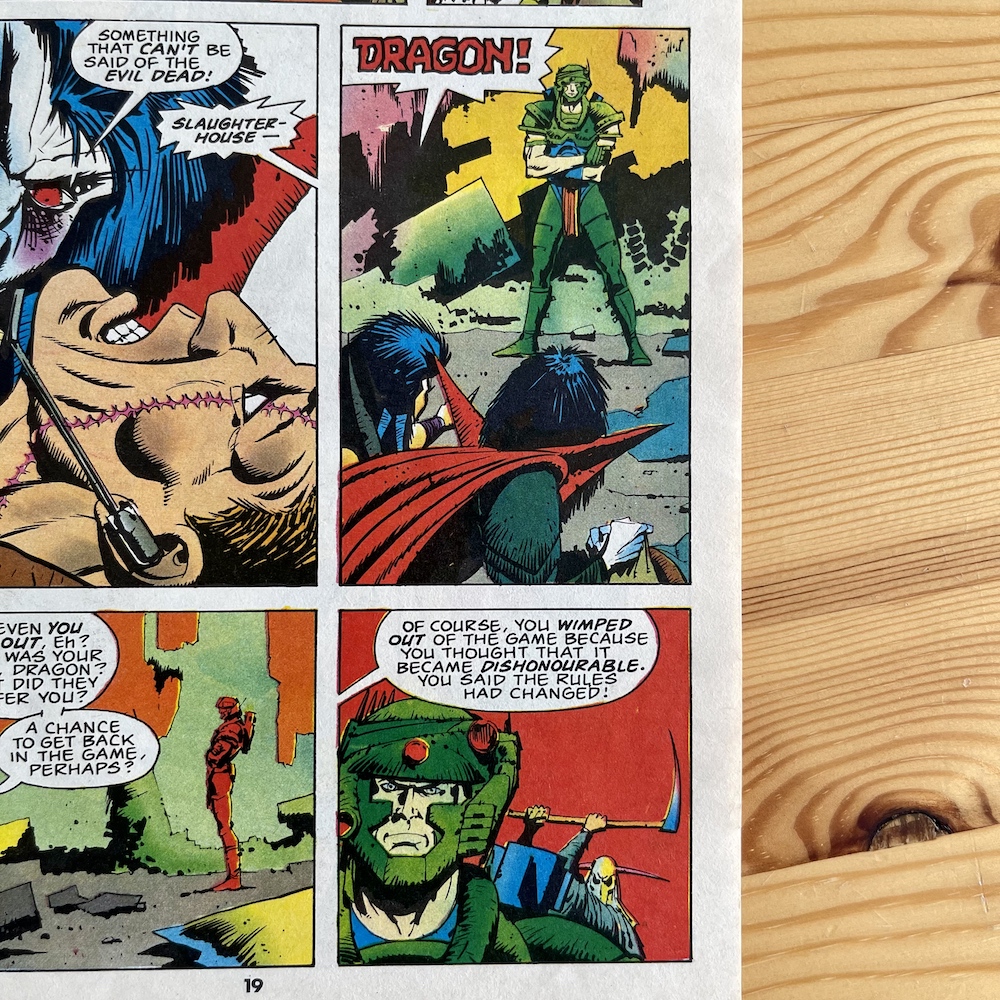
As you can see there’s a moment when Dragon accuses The High Father of being just as bad as the government, that he’s creating his own privileged class. However, there’s a part of Dragon that doubts he’s really the bad guy in all of this. It’s when The High Father, unmasked as someone called Starick (to Stenson’s horror) explains further that we get our main cliffhanger. He says his former employers were good teachers, but they want him terminated now because they’ve found out how he’s actually looking after his people. The employers’ name is revealed when he tells Dragon he understands his surprise, “After all, you haven’t worked for N.U.R.S.E. for as long as I have!”

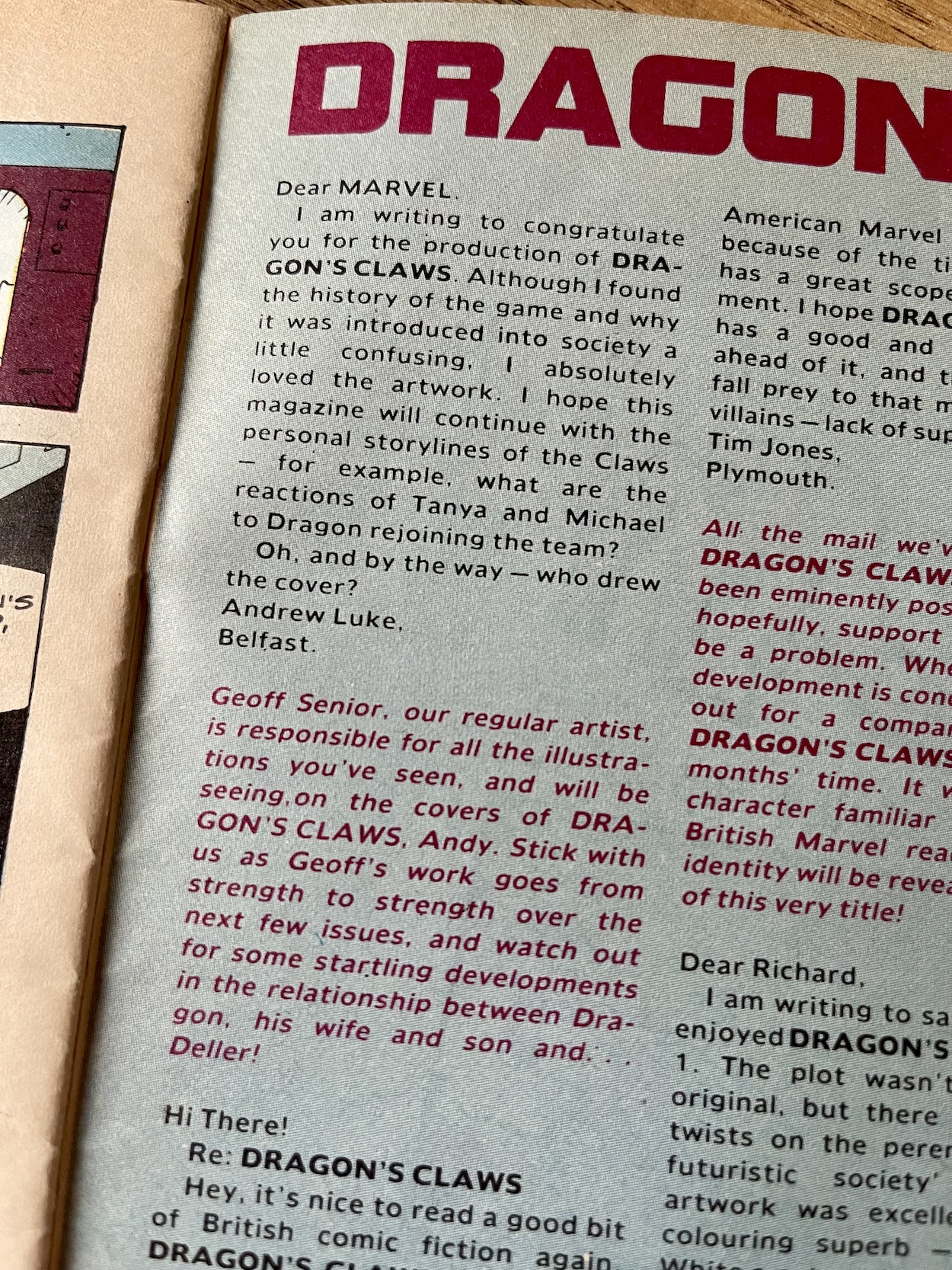
I love all this double-crossing, playing politics and subterfuge amongst the action. Add in the more human moments too and what we have here is a surprisingly deep action comic that manages to fit an awful lot into its 22-page strip without it ever feeling cramped or rushed. It’s quite ingenious really. Maybe a little too ingenious for the first letter writer on the new Dragon’s Nest page? Surprisingly, this first letter came from friend of the blog Andy Luke, whose podcast I previously appeared on to discuss OiNK for its 35th anniversary!

The first two chapters for Dragon’s Claws were highly entertaining and gave hints as to what the regular stories could be like. I could not have guessed the very next issue would’ve been so completely satisfying, that the comic would find its feet so quickly. I have a good feeling about the next seven months. The next one can’t come soon enough, but wait I shall for Sunday 10th September 2023. Join me then, won’t you?

iSSUE TWO < > iSSUE FOUR

DRAGON’S CLAWS MENU

THE LOST WORLD JURASSiC PARK #2: SUPERiOR SEQUEL

I’ll admit my eyes rolled a little when I saw this cover to the second issue of Titan Magazine’s The Lost World Jurassic Park comic for a couple of reasons. Not the photo of the glorious animatronic Tyrannosaurus rex of course, they’re always incredible to look at. No, the top-right and bottom-left made me sigh a little and to be honest it’s just me being pedantic, so apologies to all you blog readers for having to put up with me when you’re just trying to find out about some classic comics.

The Jurassic Park novels and films made a huge deal out of the fact that they were helping dispel the myth of dinosaurs being large, lumbering reptiles and who can forget the scene when Dr Alan Grant told people dinosaurs are more closely related to modern day birds. Hence why we saw fast, fluid movement from the animals in the films and yet here we’re asked “will the reptiles strike back”? Plus, it’s not a “free” poster when it’s part of the page count of the comic. To be fair many comics did this, OiNK included, but it niggles me. Or maybe it’s because I’m writing this at a very early hour and really should’ve got more sleep.

Anyway, eye rolling done, let’s move on to what is a much improved issue and one I enjoyed very much once inside!

I’ll give the Jurassic Park movie adaptations something, they certainly know how to write some atmospheric narrative captions. Walter Simonson did a superb job of this throughout his comic version of the first movie and here Don McGregor is certainly following suit. Of course, these could be taken from the script he was working with or indeed the novel, but we’ll give him credit where it’s due in pulling us in to specific moments like this on the opening page of part two. The art team are once again penciller Jeff Butler, inker Armando Gil, letterer Ken Lopez and those are editor Renée Witterstaetter’s gorgeous colours.

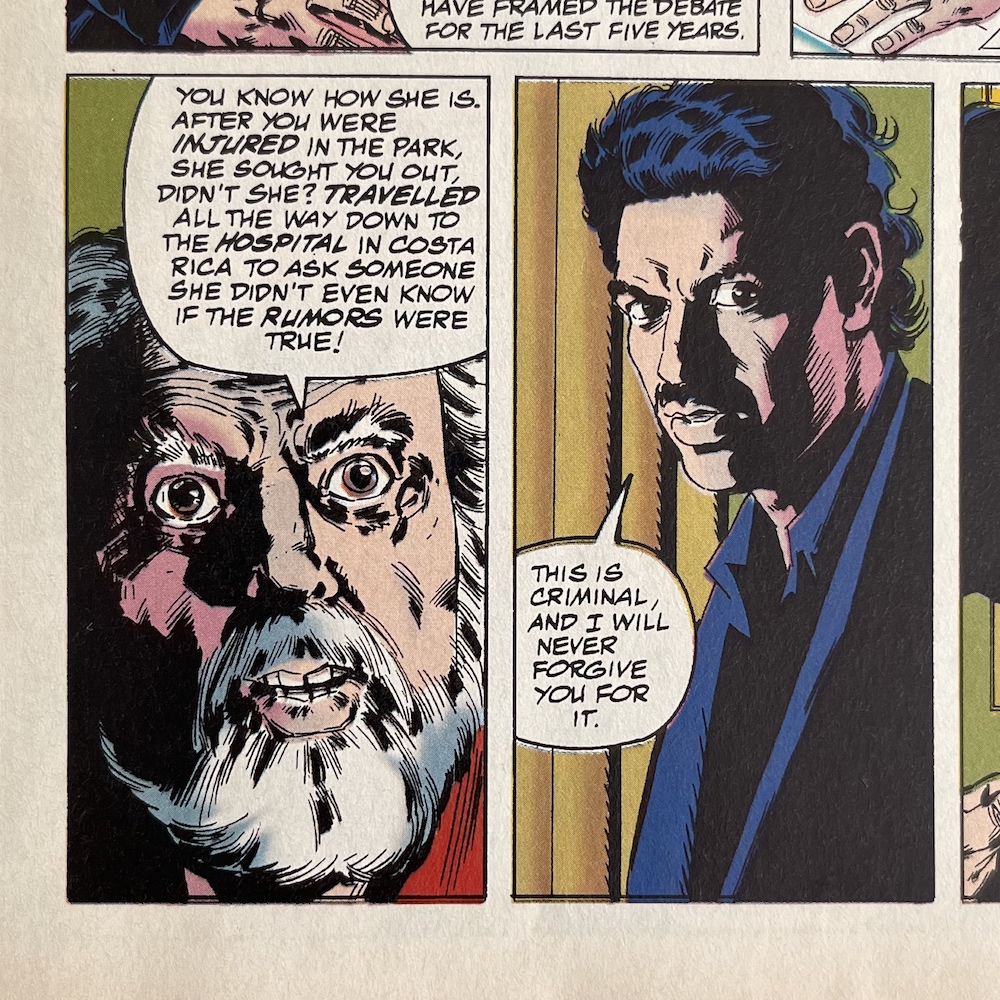
It’s just a shame these moments are rushed through for much of the comic strip. Don’t get me wrong, this is a much improved chapter over last issue’s. There are more character moments from the film left intact and even one or two which must’ve been part of that earlier draft of the script. We get the scenes of Dr Sarah Harding excitedly explaining her discoveries and Dr Ian Malcolm turning them around into accurately predictive doomsaying. But we also get a few moments here that weren’t in the film, such as this exchange between the two.

I’m not sure if this would’ve been in the script, I just can’t imagine Ian using the word “chick”. Then again, with so little room (88 pages in total) to convert the script to a comic I can’t see Don adding in extra dialogue either. When Roland Tempo’s team and the slimy Peter Ludlow turn up in their helicopters there are more examples of how the narrative captions can be used to eek out some characterisation that the brisk pace of the adaptation would normally struggle with. Nick Van Owen, as played by Vince Vaughn, was a good character and criminally unused in the climax of the film so I’m glad to see him getting some more exploration here.

With the hunters now on the ground we get to that heartbreaking part of the film where they’re capturing as many dinosaurs as possible, caring not for the fact these are living, breathing animals, never mind a miracle of science. Roland made his debut in the film at this point but of course we’ve had the bonus of the entertaining deleted scene last issue so we feel like we already know him by this point. Here you can see the viciousness with which his second-in-command Dieter takes down the Parasaurolophus, or ‘Elvis’ as Roland called it.

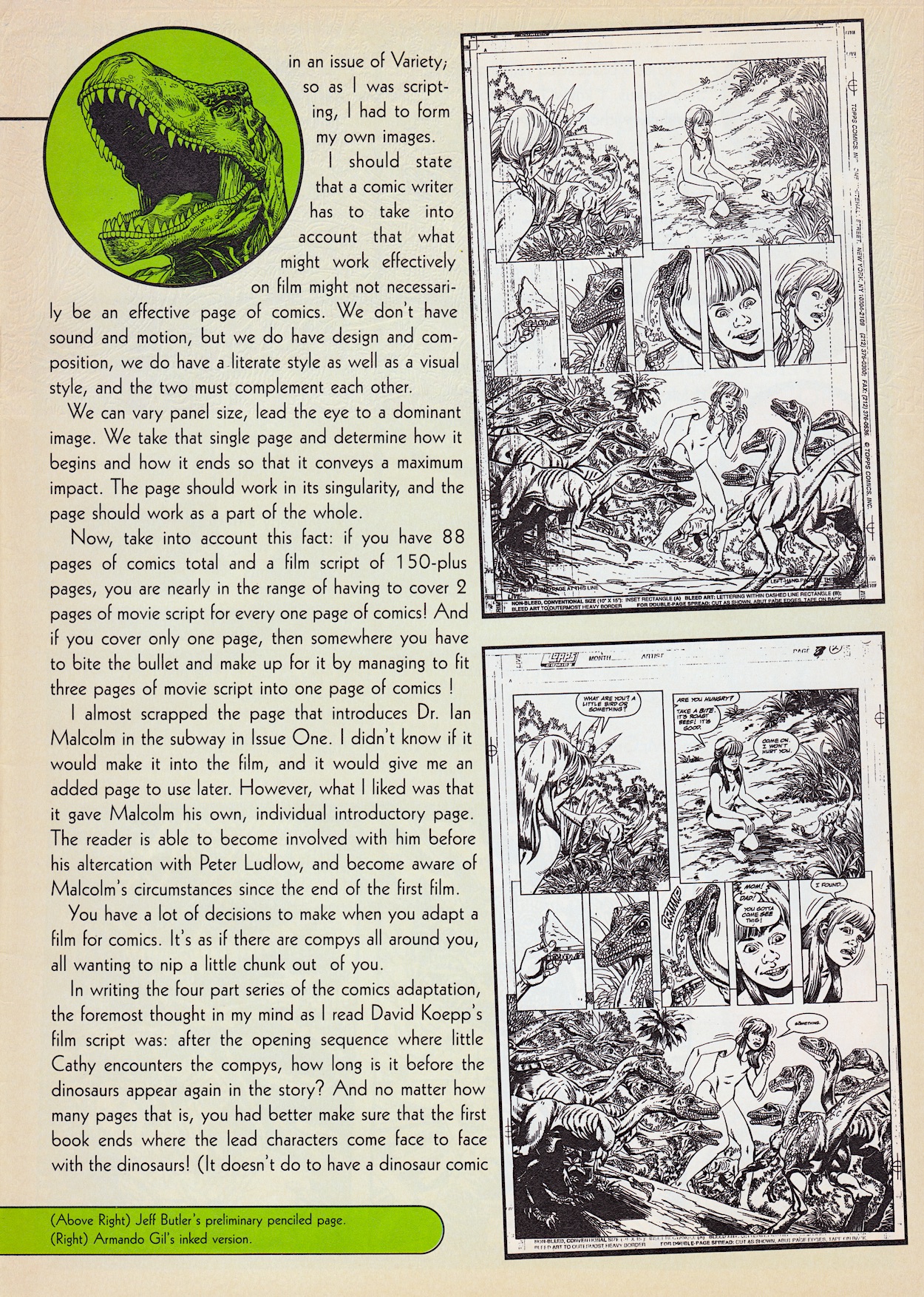
It’s all over very quickly and it’s here that the unevenness of the adaptation comes to the fore. I’m finding it hard to figure out what Don’s rationale was for what he keeps in and what he jettisons. Later on in the issue there’s a fascinating article written by the man himself about the challenges of adapting a long movie script into a tight four-issue mini-series. He mentions keeping characterisation is very important and I can see that in some of the scenes he’s included but elsewhere that’s simply not the case.

I can’t help feeling I’d have preferred a more balanced approach

While the examples above are nice to see (Sarah and Ian’s exchange lasted for a few pages, for example), ones featuring Ian’s daughter are inexplicably missing or cut down to a few lines and other scene-setting moments have been taken out completely while some of the big dinosaur moments are rushed through, eliminating any spectacle or menace, which seems a strange choice in a Jurassic Park comic. Obviously I’m not a comic writer and Don lays out his reasoning in the article but as a reader I can’t help feeling I’d have preferred a more balanced approach.

We’ll come back to that in a moment but first the story takes a four-page break with some adverts, another dinosaur fact-file page and a double-page spread. This is on pages 18 and 19 of the comic, it’s not a separate entity and so it’s not a free gift (can you tell that’s still niggling me?). It’s a shame these weren’t large separate glossy posters but at least editor John Freeman made sure there were no strip pages on the back of them.

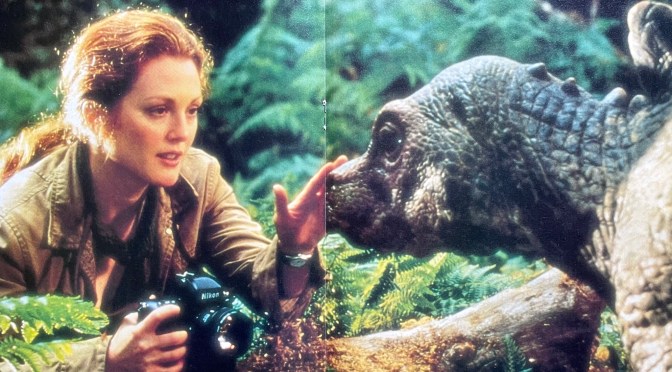
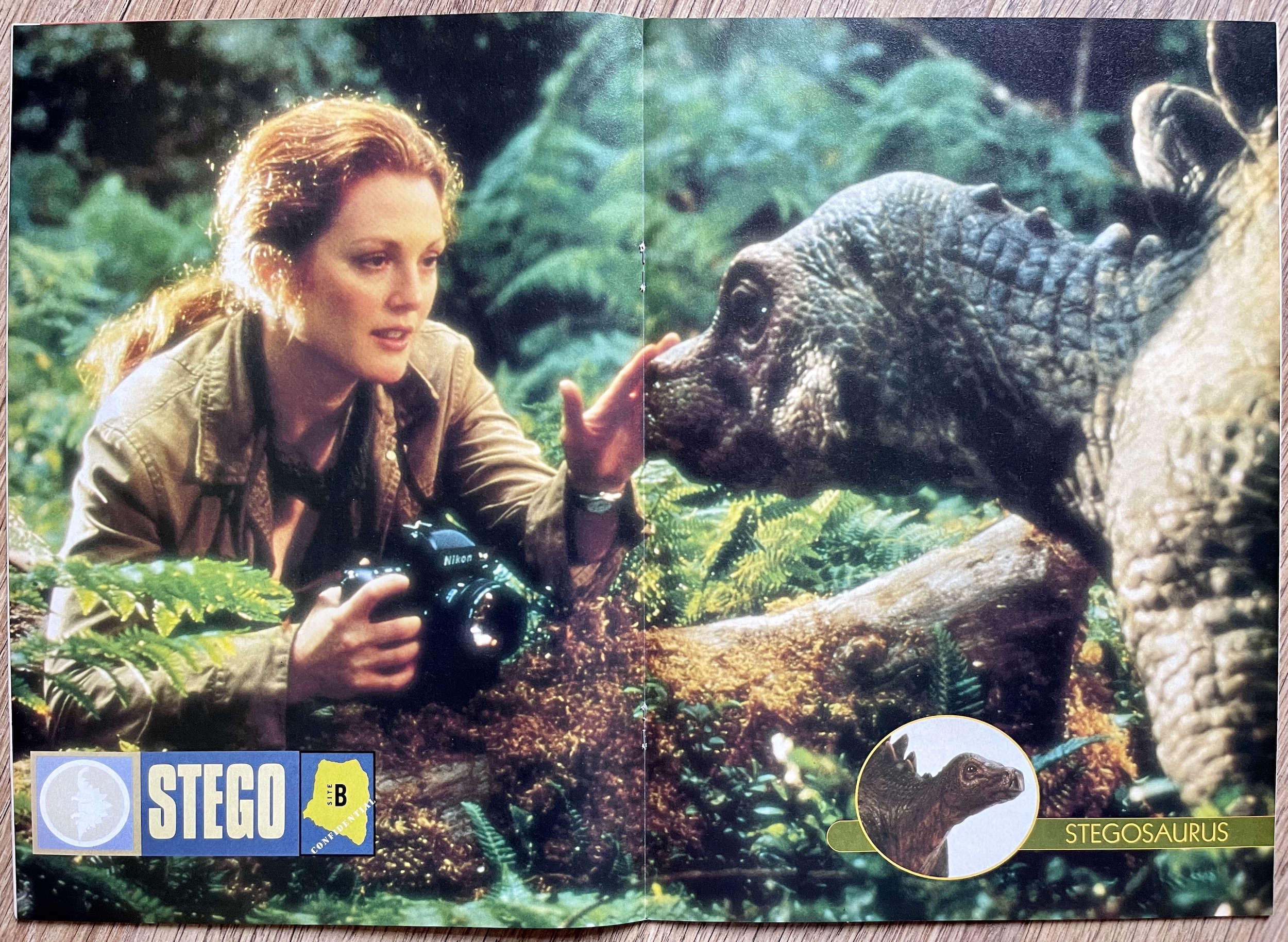
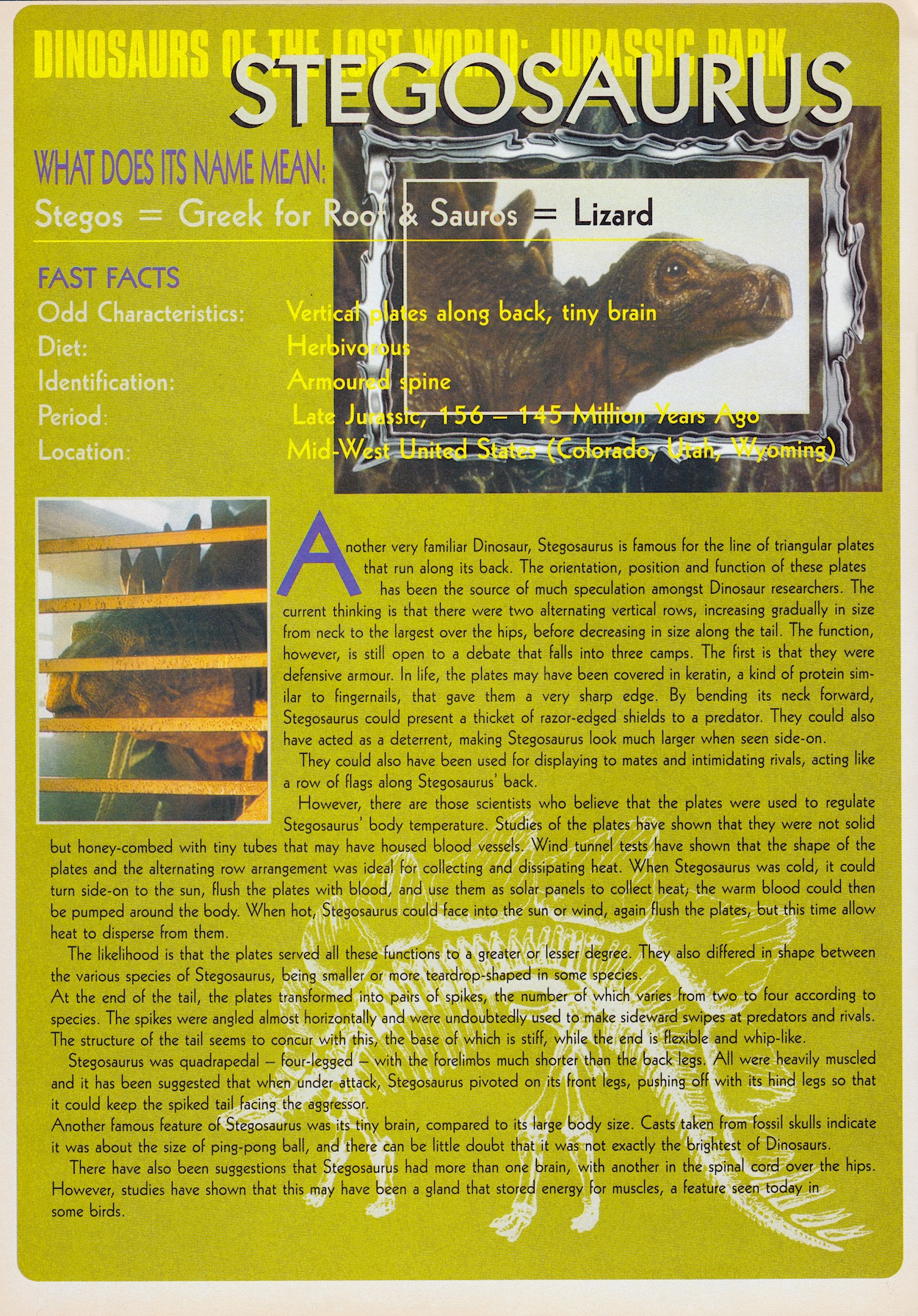
Julianne Moore as Sarah Harding reaches out and touches the snout of the baby Stegosaurus in a moment that was excised from the story last issue. Over the page is another fact-file dedicated to one species from the film and the Stegosaurus gets top billing this time. However, remember how I thought the design of the page wasn’t finished last time? It appears that is indeed the finished design. It looks awful and does no justice to the great piece written by Steve White.
An ardent dinosaur aficionado, Steve has clearly done his research (or knew the subject matter extensively already) and this would’ve been a fascinating read to young fans of the films, adding depth to the scenes in the movie featuring these animals. It’s still fascinating for this much older fan too. We then head back into the story and the last eight pages of this 22-page chapter, beginning with two new scenes I hadn’t been aware of until now.

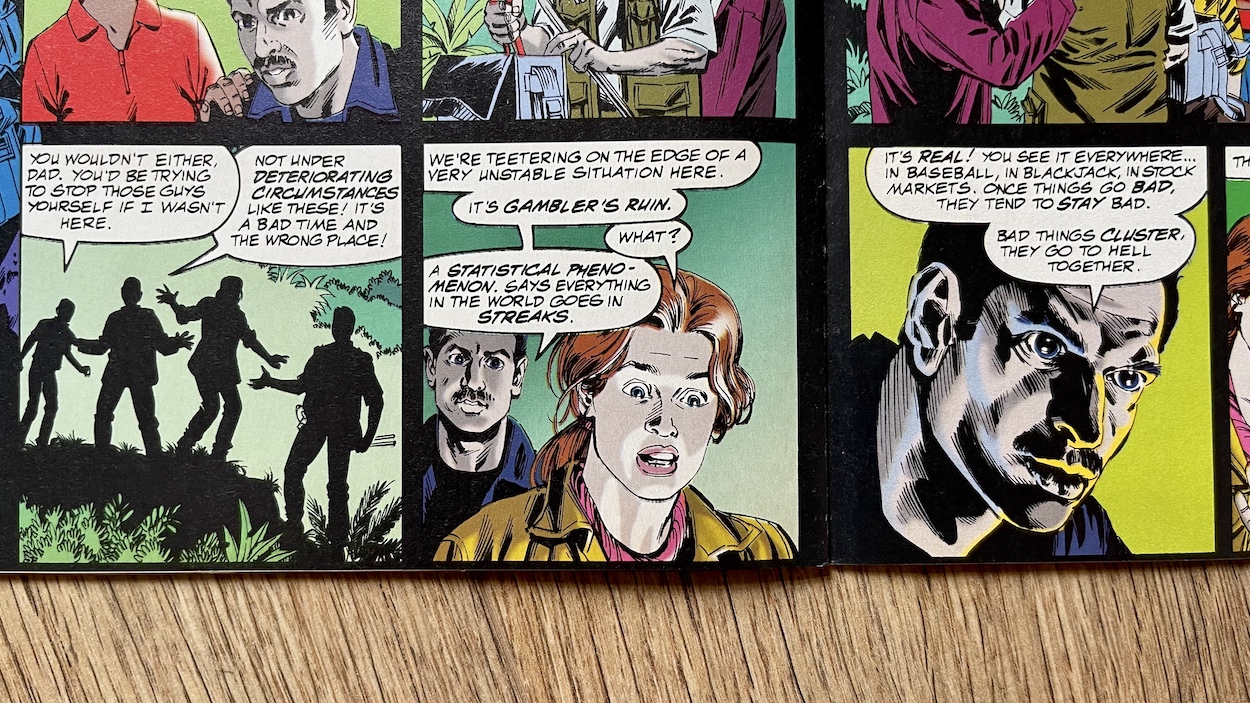
While overlooking the hunters’ camp it sinks into our team that the creatures are being taken off the island alive and exported to the mainland. After what happened in the park this is obviously a terrifying realisation and this is the part where we find out Nick was actually sent as back up by Hammond and he sets off with Sarah to free the dinosaurs. It’s during this we get the new element, one of Ian’s little speeches that we liked so much in the first film, this time about something called Gambler’s Ruin.

While it’s only for a couple of panels it’s something that’s referred to later in the strip and by Don in his article. Don states things like this are deemed important and must be kept in, which is ironic since it didn’t make it into the film. I reminds me of those little moments in the first movie that expertly summed up the pages and pages of fascinating monologue from Ian in the novel. It’s a shame it didn’t make it into the finished film, whereas I’m glad the next page didn’t.

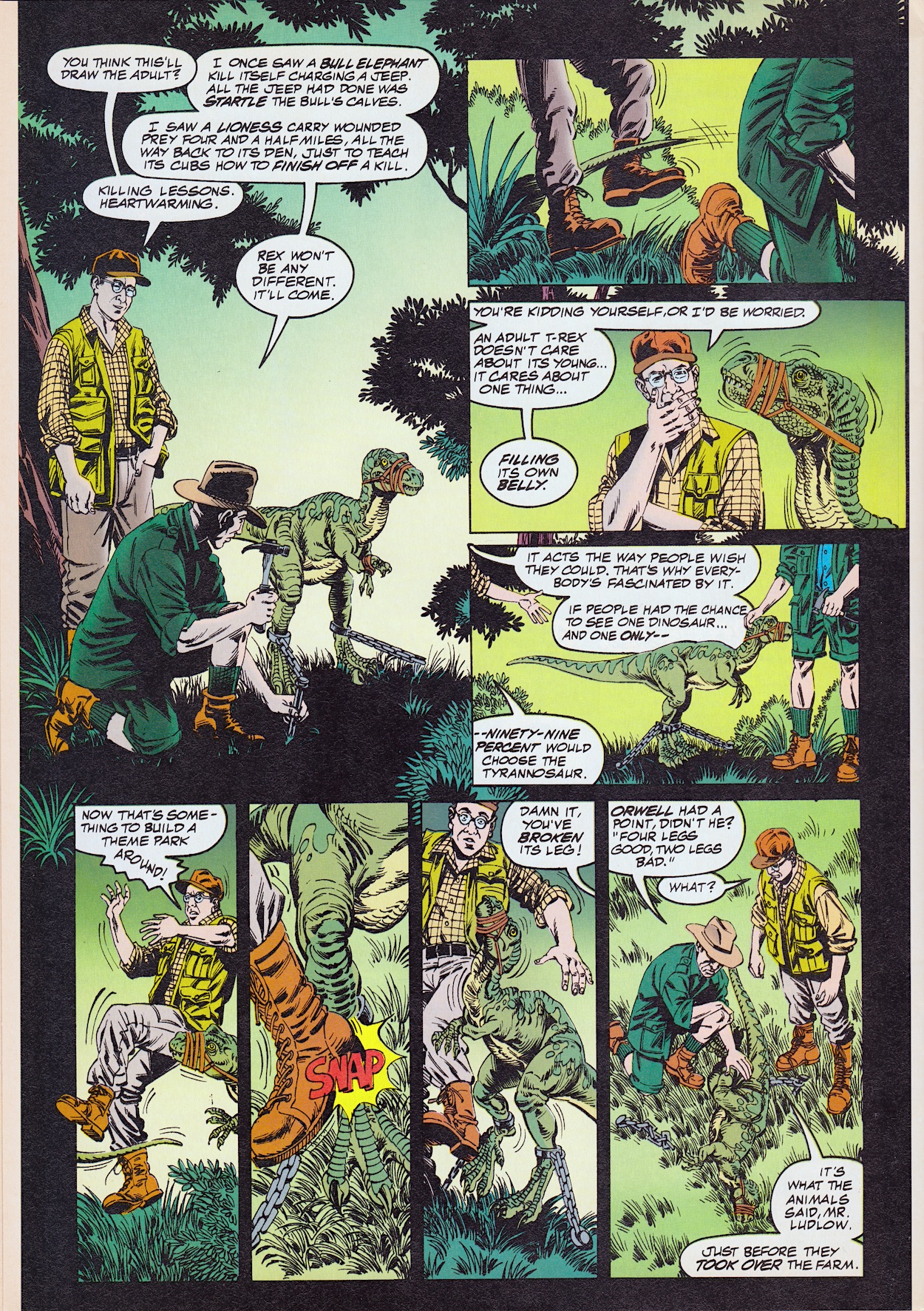
This scene isn’t a deleted scene in the movie’s extras so I can only assume Steven Spielberg chose not to film it. On the screen we see Roland and Ajay watching the baby T-rex and coming up with a plan to use him to lure the male adult back to the nest. A few moments later the baby is seen tied up with one of its legs covered in blood. Later we find out it has a fracture and Sarah and Nick try to set it for him (or else he’ll become food for a predator). The implication of how it happened is clear but here the real reason is meant to be a pratfall.

I really don’t like this and it’s not Don’s fault of course, it was in the script he worked from but I can’t blame Spielberg for not including it. Roland is meant to be a seasoned hunter, the very top of their game in the whole world, so bored with it now that only the promise of killing a T-rex buck could lure him back into picking up his gun again. When I watch the film I like the way the reason behind the baby’s leg injury is kept ambiguous.

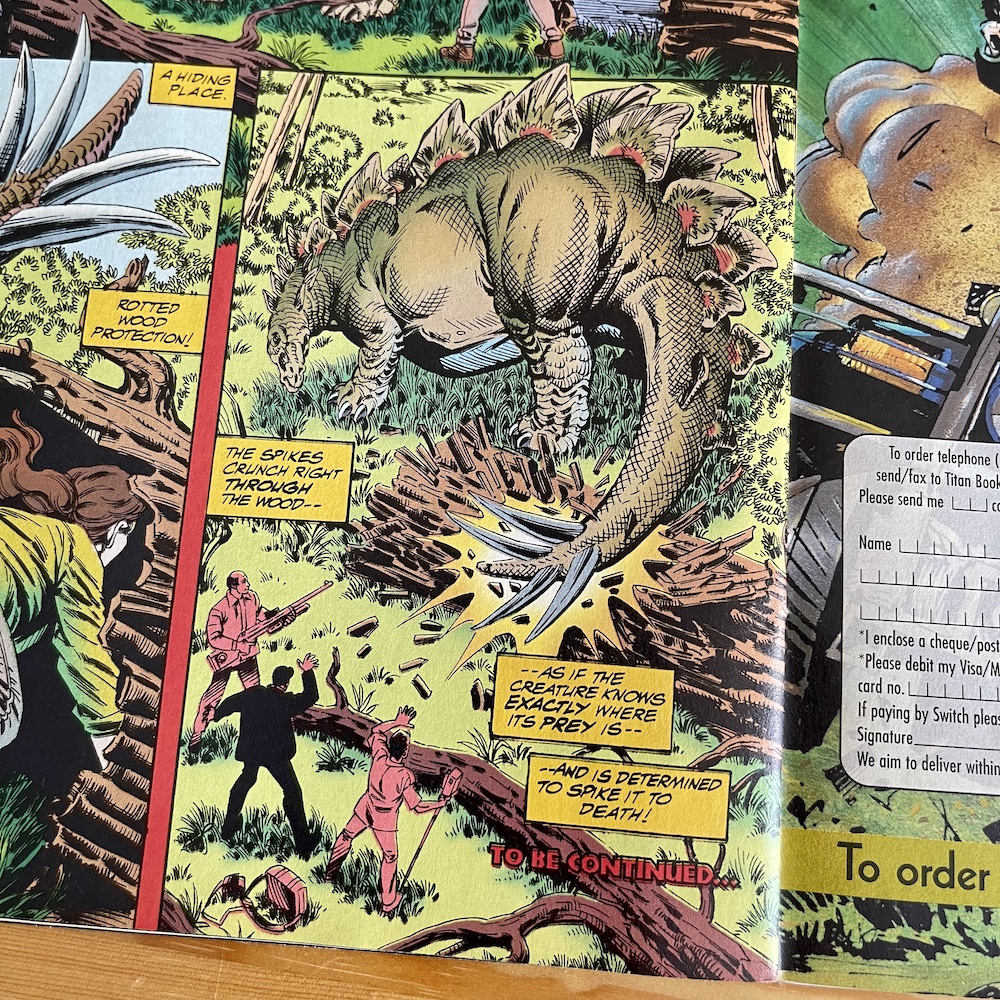
Spielberg left it up to the viewer to assume either the baby struggled and did this to itself as the two men struggled to tie it up or, more viciously, they deliberately broke it so the baby would cry out in pain for his parents and the scent of blood would bring the adult male quicker. But to have it as a result of Ludlow clumsily tripping just feels wrong. I prefer the film without this scene and clearly the director agreed. After this the chapter rounds itself off with the moment a Triceratops breaks out of the camp after being freed by Nick and that’s us for another fortnight.

If you’re thinking I’m being overly critical it’s only because the previous Jurassic Park comic showed how much potential there is in bringing this franchise to the medium. The last chapter of the first film’s adaptation may have rushed things too much but the first three instalments were fantastic and showed me it could be done. Then the vast majority of the sequel strips were great fun, full of action without sacrificing the characterisations. It even gave depth to a group of Velociraptors!

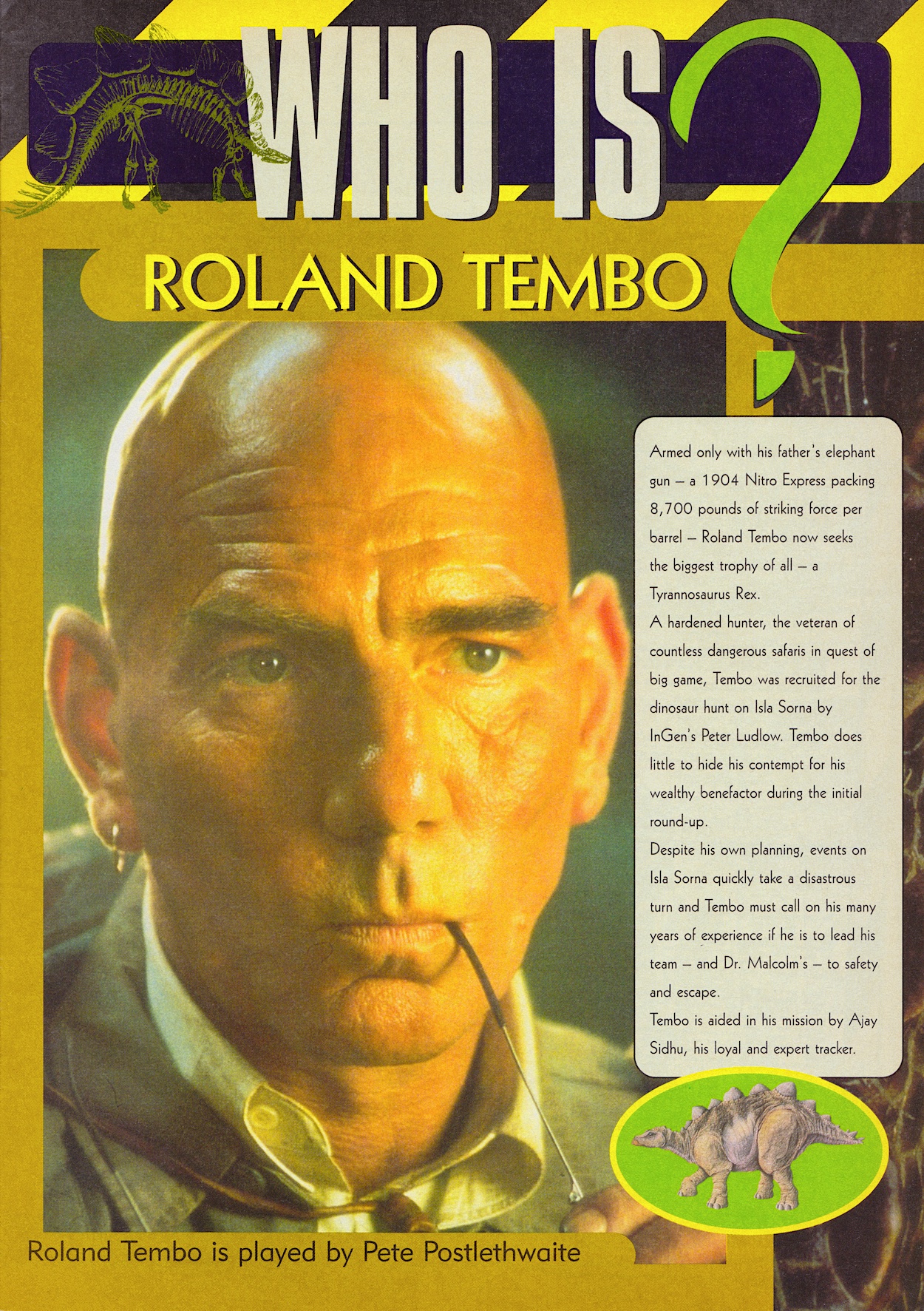
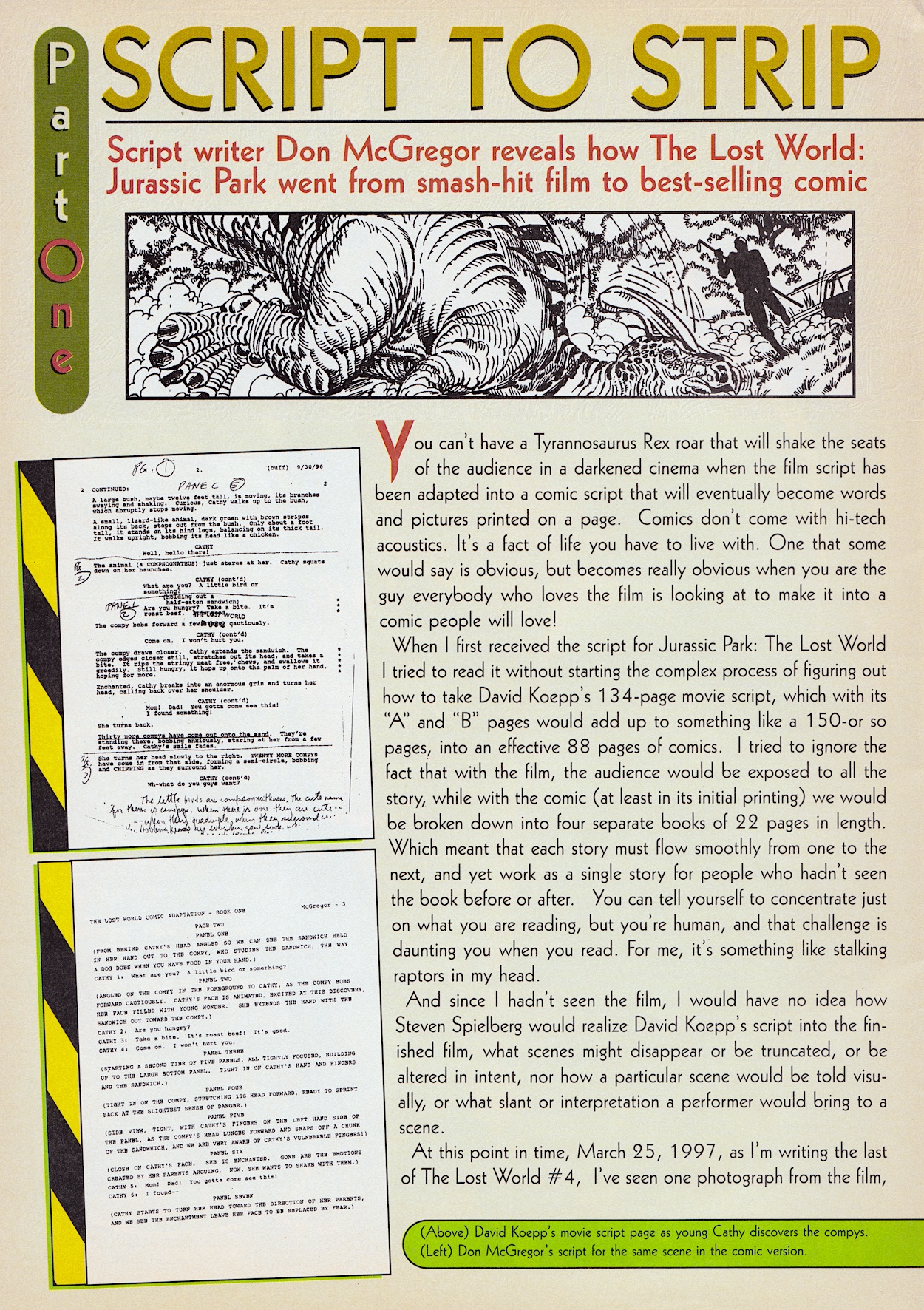
A pin-up of Pete Postlethwaite in character as Roland brings us to Don’s article, Script to Strip. I really do find this interesting. I like how he describes the difference in the comics medium, things we may not have considered as fans of the film. I found it shocking everything was written before he’d seen anything of the movie at all! Yes, the comic would be published to coincide with its release so deadlines would’ve been very early, but I expected him to have access to photos from set, pre-production art, maybe early footage but nope, he only had the written words to adapt into his own written words.

Part two really is a big improvement and after reading Don’s own words I can’t help but cheer him on

He makes several good points about the maths of adapting a film to a comic, namely the page count difference and when he lays this out for the reader you get a sense of the enormity of his task. I’m not sure I agree that each part of this mini-series should be able to work as a story in its own right though. Maybe if he was writing his own original comic but in adapting a movie it’s never going to come across like that to a reader, these are very much individual chapters of one story.

He makes good points about the risk of having no dinosaurs for too long, something a movie that’s building tension can do but a comic can’t. This was why Walter Simonson reworked the order of some scenes and added actual Velociraptors to Dr Alan Grant’s famous scene with the “That doesn’t look very scary” kid in his adaptation. I’ve mentioned Don’s characterisations and choice of scenes to include throughout the review, so without further ado here’s a fascinating look into how this insurmountable task was achieved.

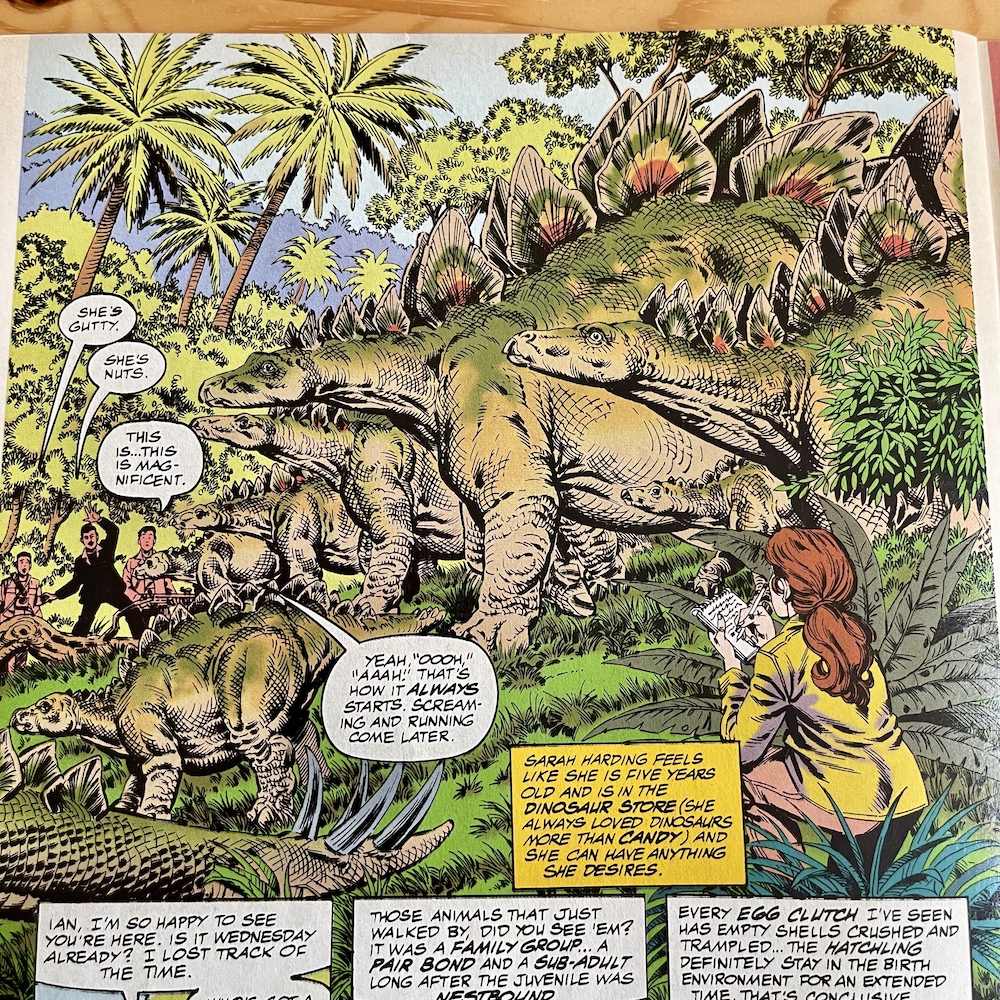
While I agree with his sentiments and he clearly had good intentions I feel the adaptation hasn’t quite got the balance right. For example, instead of including every single word of some scenes and none from others would it not have been better to trim all of them down so that the essence of them all is still intact? Jenny (Ian’s daughter) in particular is badly served. The same with the dinosaur scenes; there are some great spreads (we got two pages of the Stegosaurus family walking away from Sarah at the beginning) at the expense of scenes that would’ve been the most memorable to readers waiting to watch it again on home video.

Part two really is a big improvement and after reading Don’s own words I can’t help but cheer him on for the second half of the comic’s limited run. I hope he’s successful, especially when there’s potential in his style and the art is so enjoyable. We’ll find out over the next month. The third of these four issues will be reviewed on Monday 7th August 2023 and if you’re just discovering the blog via this comic there’s a whole bunch of Jurassic Park comics already reviewed over the past couple of years that you can check out, including the first official sequel long before The Lost World Jurassic Park.

iSSUE ONE < > iSSUE THREE

JURASSiC PARK MENU

THE LOST WORLD JURASSiC PARK #1: LiP SERViCE

Well isn’t this a pleasant surprise? We thought we’d seen everything the UK comics scene had to offer for Jurassic Park fans back when Dark Horse International’s excellent comic came to an end with #16 in November 1994. While it was a suitably open-ended finish to the first official sequel it had actually been cancelled with several more chapters of the American comic to go. Not that we knew this.

Three years later in the summer of 1997 Steven Spielberg’s The Lost World Jurassic Park appeared in cinemas and I have very fond memories of going to see it, at one point jumping out of my skin so much (when one of the Velociraptors poked its head beneath a door, if you’ve seen it you’ll know the moment I’m referring to) that I made my friend beside me jump, which in turn made me jump again! Cue nervous laughter while our hearts came back down to a normal rate. I loved that film. I didn’t know there was a comic to match though, something I’m making up for now. Here is #1, edited by Down the TubesJohn Freeman, no less.

Despite this being from a completely different UK publisher (Titan Magazines) the US strip is once again from Topps Comics. Their continuation had come to an end and now their adaptation of this movie would contradict everything they’d previously created. Obviously this couldn’t be avoided, Michael Crichton’s second novel and the sequel movie were never going to follow what the comics had done. That ‘What Has Gone Before’ is lifted straight from those Dark Horse issues which is a nice touch.

However, the opening editorial seemingly makes some early errors straight out of the gate. Already established is how John Hammond spent many, many years with his dinosaurs before inviting Dr. Alan Grant and Dr. Ellie Satler to the island, it wasn’t something he threw together in a few years. More glaring for us with hindsight is the suggestion the dinosaurs were destroyed. We know they weren’t but only from later films and to be fair the sequel novel also said they were all destroyed, so that’s lifted from the book rather than the film.


“All along we have held significant product assets that we have attempted to hide, when we could have safely harvested them for enormous profit!”

Peter Ludlow

I should mention I haven’t read Michael Crichton’s second Jurassic Park book, in fact I was surprised to find out recently Dr. Ian Malcolm was the main character in it after he died at the end of the first book. (That’s properly explained, apparently.) Of course in the movie he didn’t die so we don’t need to worry about that here. The opening scene is from The Lost World movie but was actually based upon a story point from the first novel that didn’t make it into the original film. The differences between the second book and movie is something this issue will touch upon later. For now, let’s see how that story translates to comic form.

After the opening comes the first of two deleted scenes which were filmed but never made it into the final cut, although they can be viewed as extras on DVD, Blu Ray and digital. It involves the loathsome, slimy character of Peter Ludlow, nephew to John Hammond, perfectly portrayed by Arliss Howard in the movie. Cut by Spielberg because he felt it slowed the pace of the film, I initially thought it should’ve been included. While it’s particularly pertinent today when certain politicians seem more determined than ever to rape the natural world (as Ian Malcolm put it) for profit, now I agree it was right to cut it, although for different reasons.

It mentions the destruction of all the animals and the park after the first film and buying media and political silence, as well as paying out millions of dollars in wrongful death settlements to the families of the characters who perished. Just as a side note, for the first time John Arnold’s death is mentioned in comic form after he just disappeared in the first adaptation. As such, this scene’s inclusion means the editorial was actually correct for this version, but it’s good it was deleted from the movie so that the animals survived.

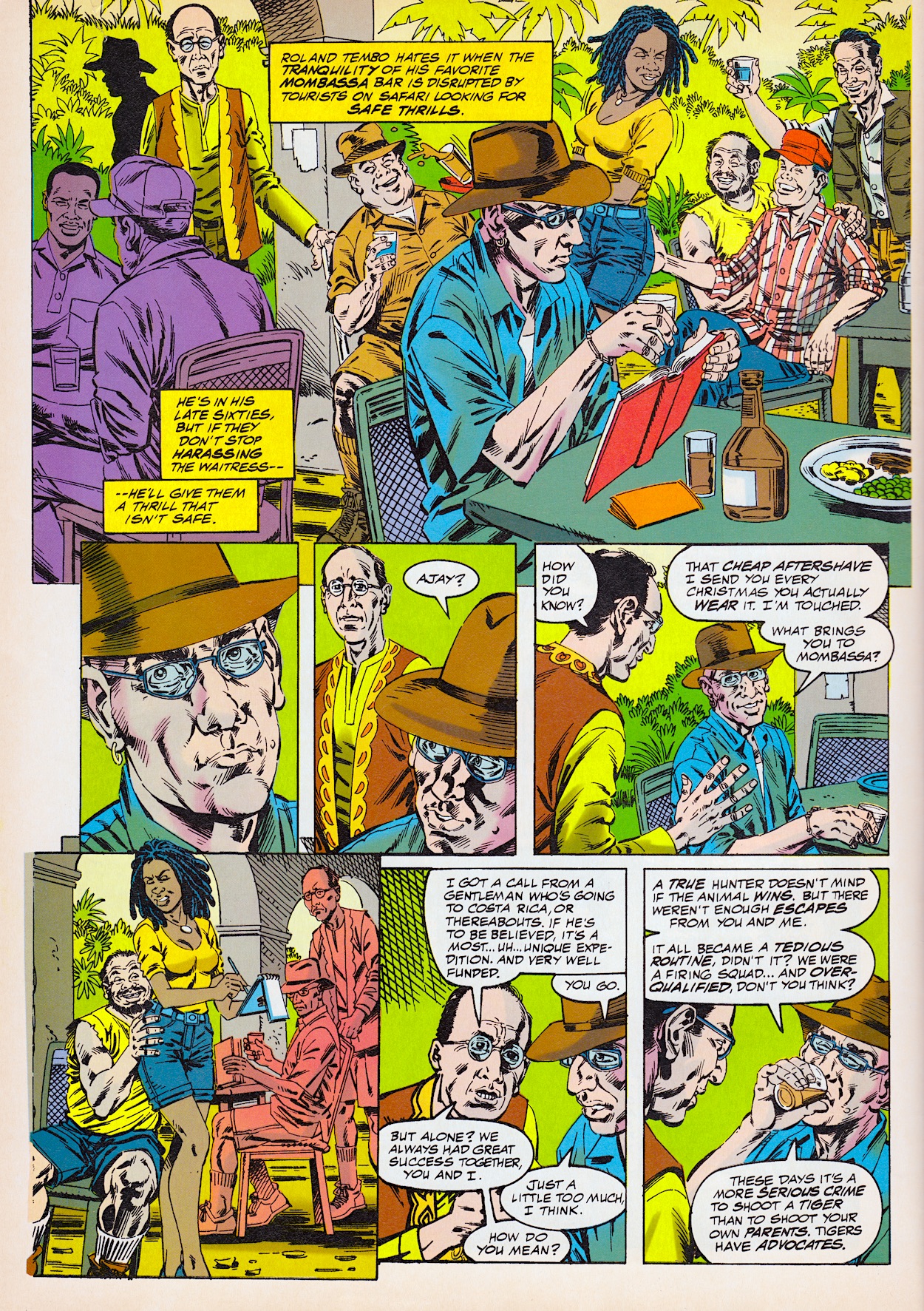
The other deleted scene involves Pete Postlethwaite’s animal hunter Roland Tempo. I’m still sad about this being cut from the film because it adds some more depth to his character. While a person who hunts animals for sport and money is always going to be loathsome, at the end of the film after he’s helped capture the Tyrannosaurus rex alive for InGen he’s mournful for what he’s done. Through his experience in the story he changes and realises the devastating consequences his actions have had.

A perfect balancing job of having a clear likeness without sacrificing what makes a good comic book character

This scene sees him standing up for the honour of a lady some American tourists are hassling and he does it in a rather funny way, playing on the fact he knows they’ll assume he’s a fragile old man. He has no interest in further game hunting until his friend and assistant Ajay tells him what it is InGen want him to hunt! Again cut for pace, when viewed the scenery and setting do feel a bit too similar to the scene setting up the character of Denis Nedry in the original, even though it plays out very differently.

This is about as in-depth as I’ll go into the story of The Lost World during these reviews, after all it’s the movie’s story so I don’t really need to. Just as I did with the first five issues of the original Jurassic Park I’ll be assuming you know it already and I’ll be concentrating on the adaptation itself. The next big difference I notice is one I’m not sure I can come to terms with. Maybe it’ll grow on me as I read the series, but it’s an addition I just feel isn’t needed. I mean, just look at Jeff Goldblum’s moustache!

Maybe Dr. Ian Malcolm has one in the novel. Apart from that I am taken with the likenesses here. A lot of times in comics based on TV shows or movies the characters either look nothing like the actors or the artists concentrate so much on making them look identical that they lose all ability to emote. Here penciller Jeff Butler (Godzilla, The Green Hornet and TSR’s Dungeons & Dragons games) and inker Armando Gil (who brought a scratchy realism to the previous sequel strip) do a perfect balancing job of having a clear likeness without sacrificing what makes a good comic book character.

For most of this opening chapter it feels very much like your typical comics adaptation, writer Don McGregor (James Bond 007, Black Panther, Killraven) taking the main beats of the script and moving between them with as little fuss as possible, cutting and trimming a lot as he goes. Funny moments are pretty much eliminated too which is a shame because the movie was full of them. A particularly memorable scene when Ian, Eddie Carr (Richard Schiff) and Nick Van Owen (Vince Vaughn) are calling out for Sarah Harding (Julianne Moore) when they land on Isla Sorna is conspicuous by its absence.

The scenes with Ian’s daughter Kelly (Vanessa Lee Chester) are there but again have been chopped down to their bare minimum which is a real shame as they felt really genuine on the screen. The chapter ends with the Stegosaurus scene although the grandeur of their entrance is lost when our characters are just miling about among them. Also the baby, key to what happened next, isn’t involved and it all feels rather rushed to get to some form of cliffhanger. But what is quite wonderful is the depiction of the Stegosauruses. It’s certainly more detailed than the previous adaptation and a lot more so than Armando’s sequel art.

Ken Lopez is our letterer for this story and returning story editor Renée Witterstaetter’s colours are a particular highlight, especially on these final pages in the jungle. In fact I’d say in the three short years between the comics there’s been a marked improvement across the board in terms of looks, even with a team made up of some very familiar names. Speaking of familiar names, that cover (taken from #3 of the American comic) is by original adaptation writer Walter Simonson and Richard Ory (Cloak and Dagger, Marvel Fanfare, Doctor Fate).

Regular blog readers will know I’m not usually a fan of movie adaptations but that the original Jurassic Park one had me thinking differently. At least for the first three chapters anyway, with their added information from an earlier script draft, passages from the book and interesting ways in which it shook up and changed key parts of the movie in order to make it work in a new medium. I enjoyed that. But the final two chapters became what I abhor about all other adaptations I’ve read.

Instead of being a considered reworking for the comic, the finale just jumped from one key scene to the next as quickly as it could to get to the end of the story, excising whole chunks of it in the process (including just suddenly forgetting about the only black character mid-story), eliminating anything that wasn’t basic plot, combined with what felt like rushed artwork to meet the deadline of the movie’s release. While the art is a big step up in my books, The Lost World Jurassic Park seems to be more along the lines of those final chapters, unfortunately. But it has time to improve and it’d be a shame if it didn’t, what with that lovely art.

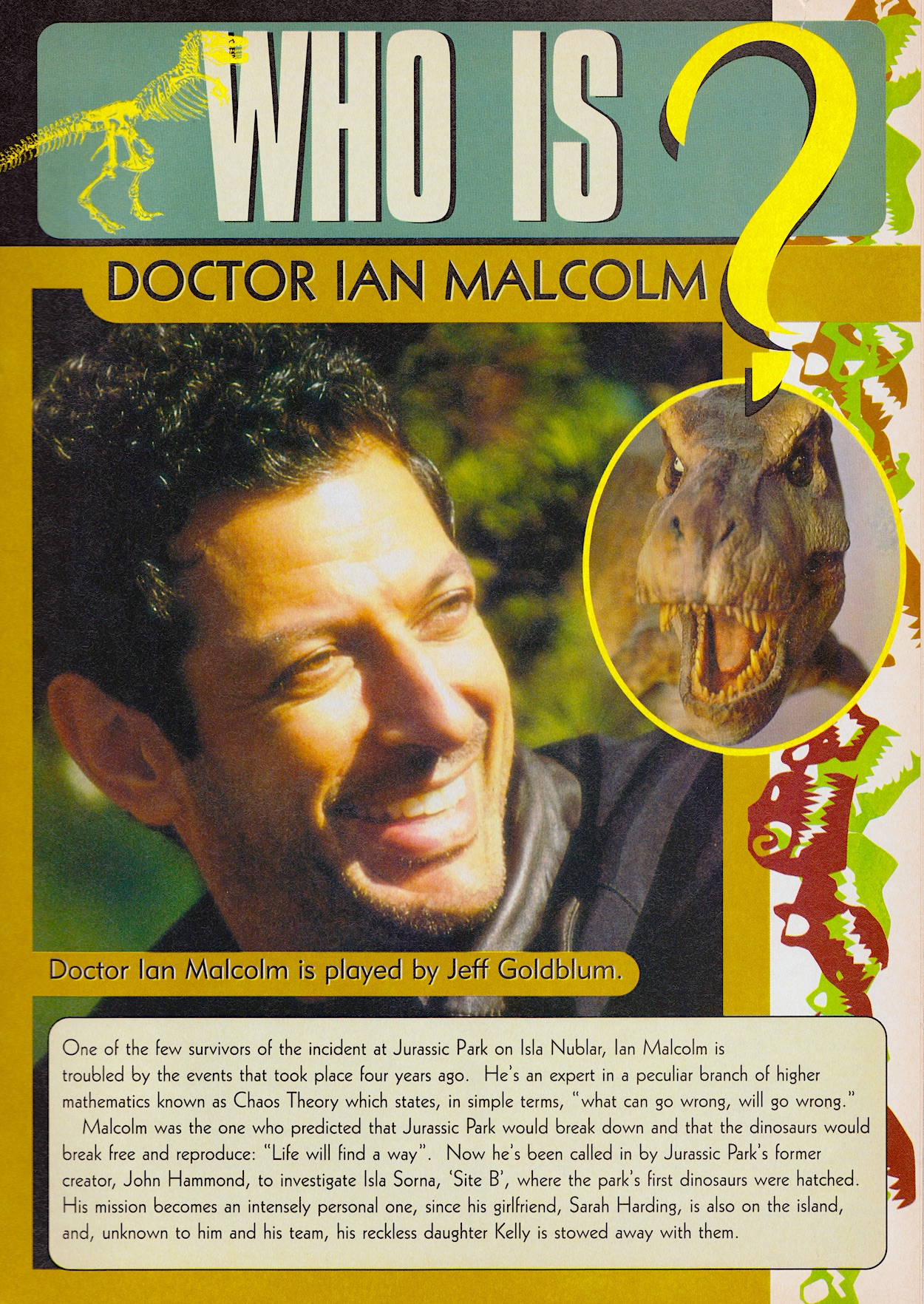
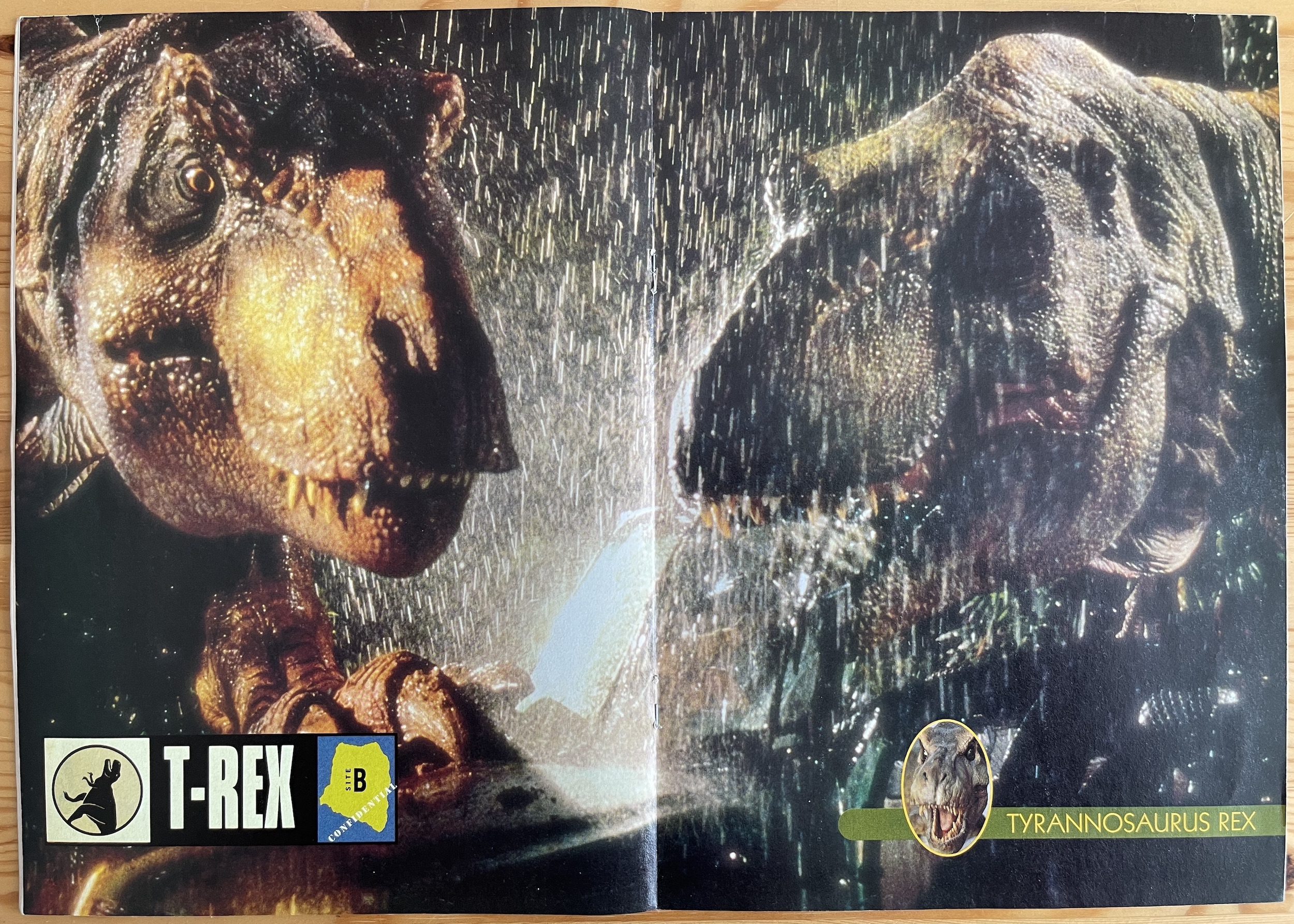
This being a UK comic there are of course extras. The four middle pages are made up of a poster of one of the film’s best scenes, a profile of the more rugged (but still sans moustache) Ian and a page about the T-rex written by Steve White. There’s a lot of information here but for some reason it doesn’t mention their visual acuity, the whole “it can’t see us if we don’t move” thing which was so important in these first two movies. The page actually looks messy and unfinished, with what seems to be a placeholder rectangle, a clip art frame and an image sitting waiting to be edited together, with text over the top that’s difficult to read as a result . Strange.

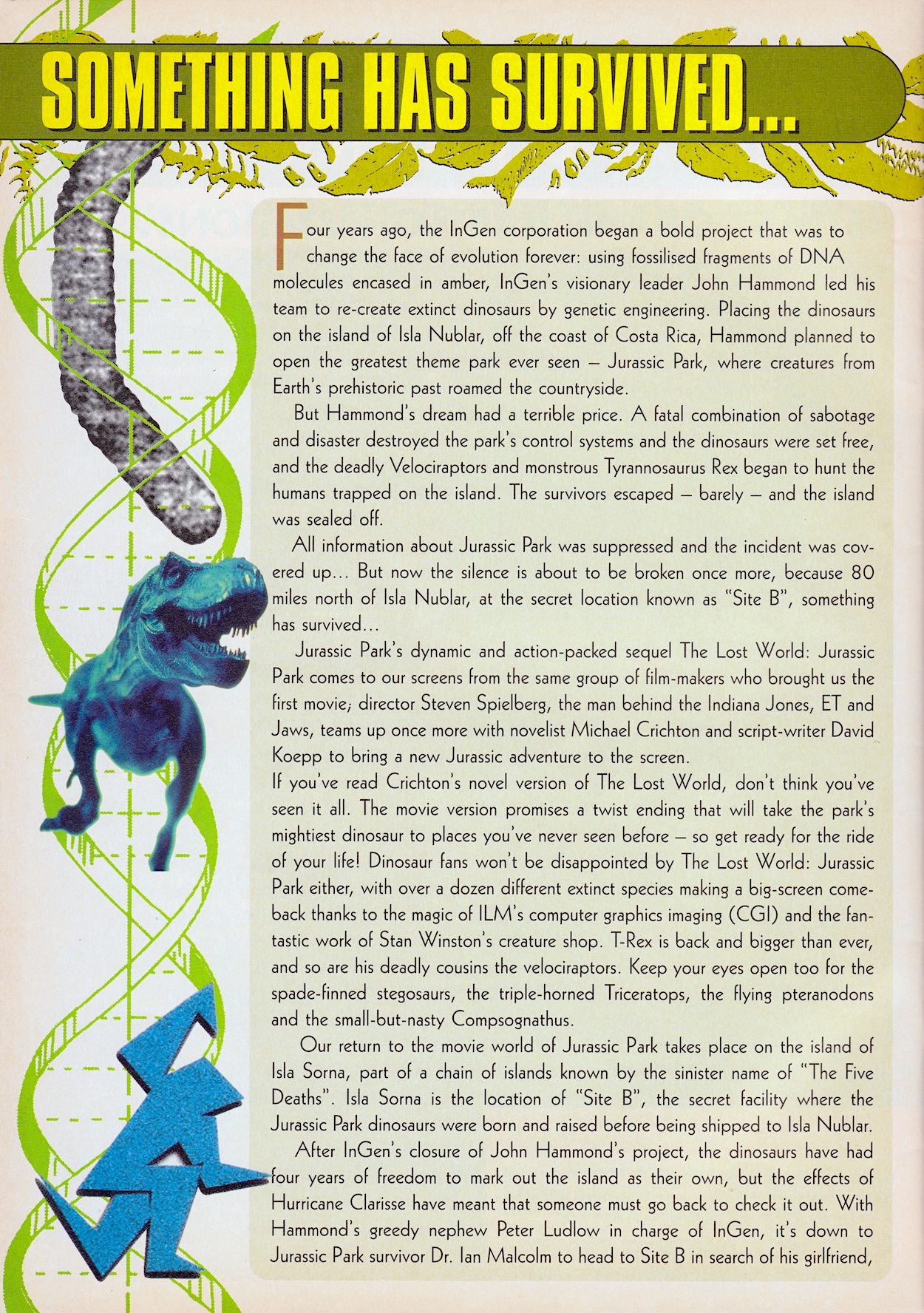
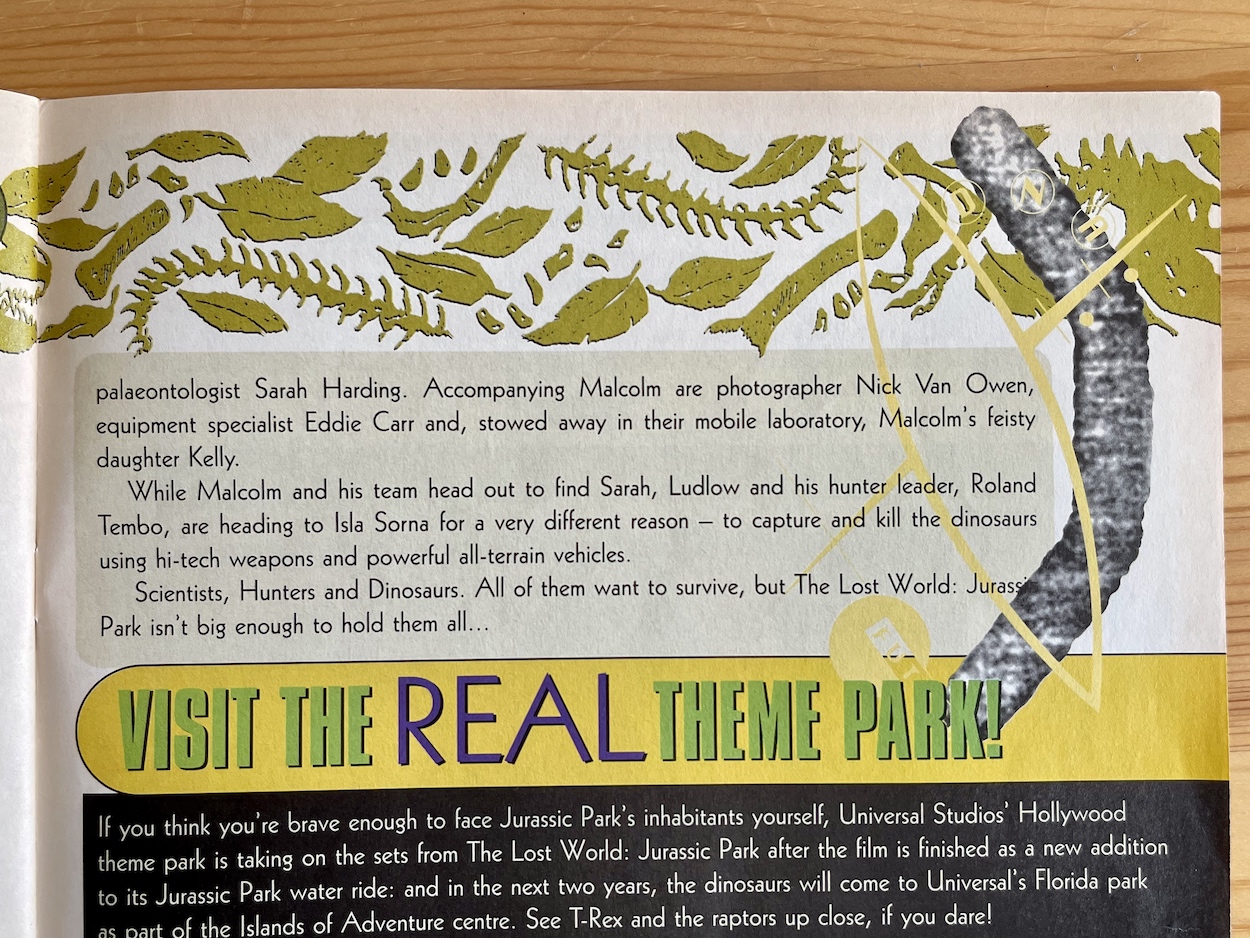
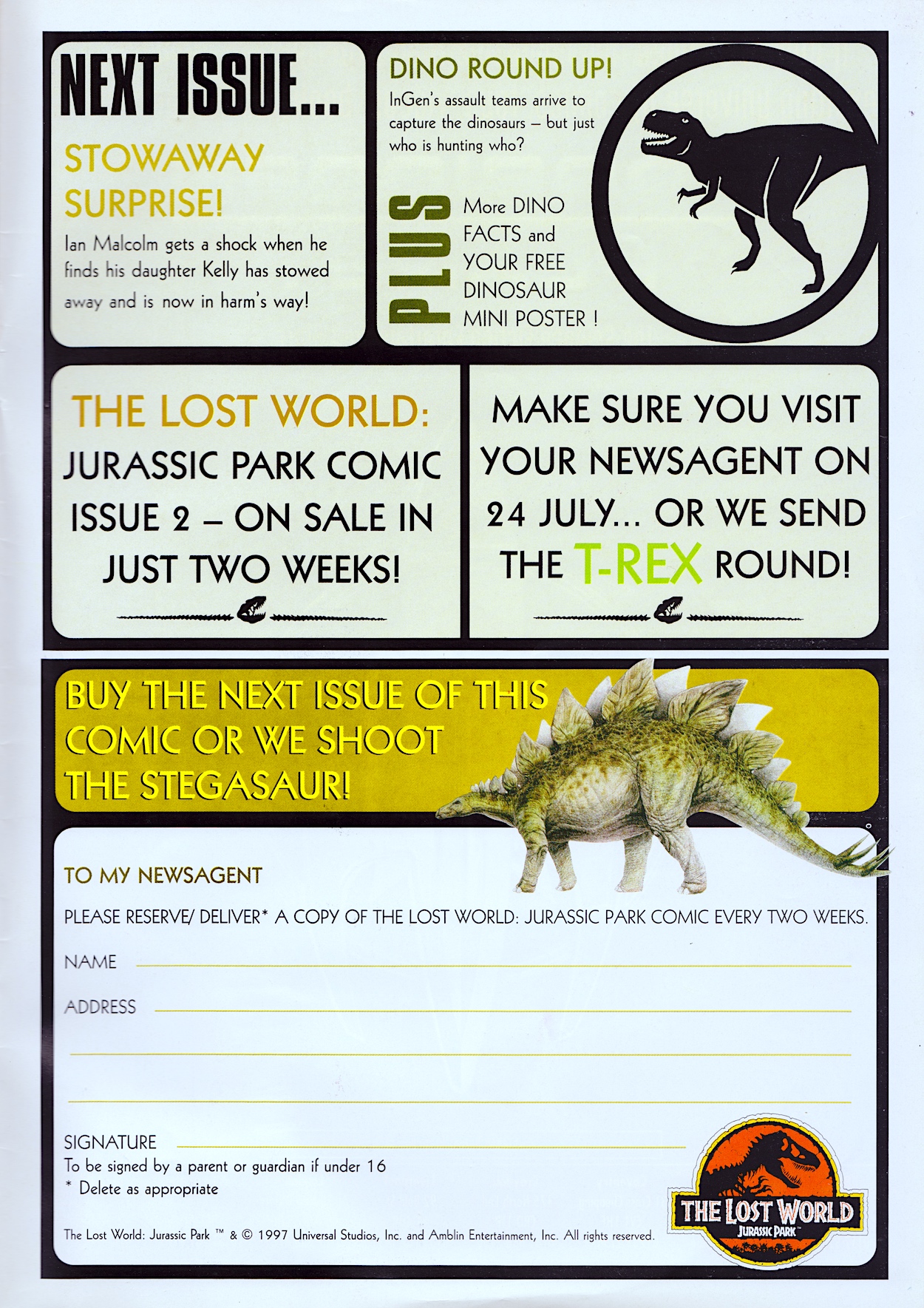
Towards the back is Something Has Survived by Jim Swallow (who’d go on to write Marc Dane, Sundowners and Warhammer 40,000 novels), a text article which basically reiterates what we know already from the strip, although it does give an interesting nugget of information about the film’s ending. There’s also an advert for the graphic novel of the comic which is a bit weird to include when you want people to buy it in individual chapters instead (although the original comic did run a competition for its graphic novel after it had printed the whole story already) and the Next Issue page is rather basic with two different versions of “buy it or else”, the second of which just feels wrong!

The most exciting extra for me is actually an advertisement for a completely different magazine.

I loved Babylon 5 from the moment I decided to tune in to the first episode broadcast on Channel Four. I was completely hooked and I remember the magazine fondly, placing a regular order before the first issue appeared if memory serves me right, so I must’ve seen an advert for it somewhere else. I remember being particularly fond of show creator J. Michael Straczynski’s column and his brutal honesty when discussing working in the television industry and how hard it is to make a living as a writer. I’d no idea John Freeman edited it until just recently. I’m beginning to think he and Steve White (colourist and editor at Marvel UK and who did exceptional colouring work for Xenozoic Tales in the original Jurassic Park comic) are a bit like Lew Stringer in that there seem to be very few publications from my youth they weren’t involved in!

Unlike most comics at the time The Lost World Jurassic Park was fortnightly rather than monthly. With no further strips coming from the States there was never any intention of continuing it beyond the adaptation so, just like over there, it was a mini-series of four. The artwork has saved this opening chapter, will the writing catch up? You can find out in two weeks on Monday 24th July 2023.

GO TO iSSUE TWO

JURASSiC PARK MENU

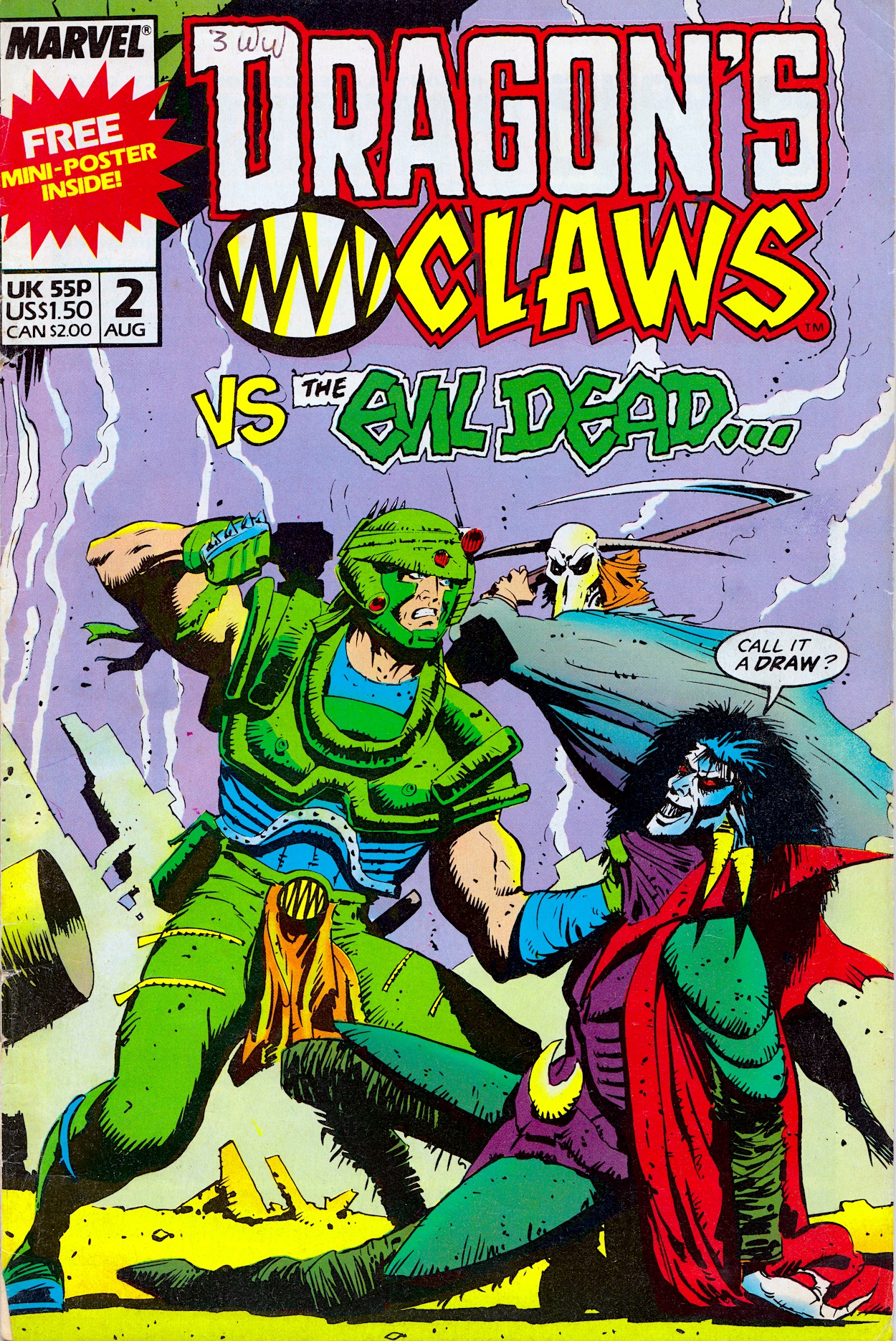
DRAGON’S CLAWS #2: COLOUR ME iMPRESSED

It’s been a long time coming but Dragon’s Claws’ sophomore issue is finally here. After spending the first couple of years on the blog covering fortnightly and weekly comics (the one exception being the short-lived Visionaries right at the beginning of the blog) it’s strange to find myself in a position where, at the time of writing this, both Dragon’s Claws and even the site’s namesake comic OiNK are monthly. I’ve gotten so used to what came before that the four-week wait between issues feels so long!

Could this have been an attributing factor to Marvel UK’s new range of US-sized comics not being the success they may have deserved to be? British comics were often more frequent, and if any did become monthly you always knew that meant they wouldn’t be lasting much longer. Things would change a lot in the 90s of course when most comics became monthly but sales figures also declined drastically across the board at that time. A month was a very long time to wait for us back then, especially when computer and videogames were now grabbing our attention.

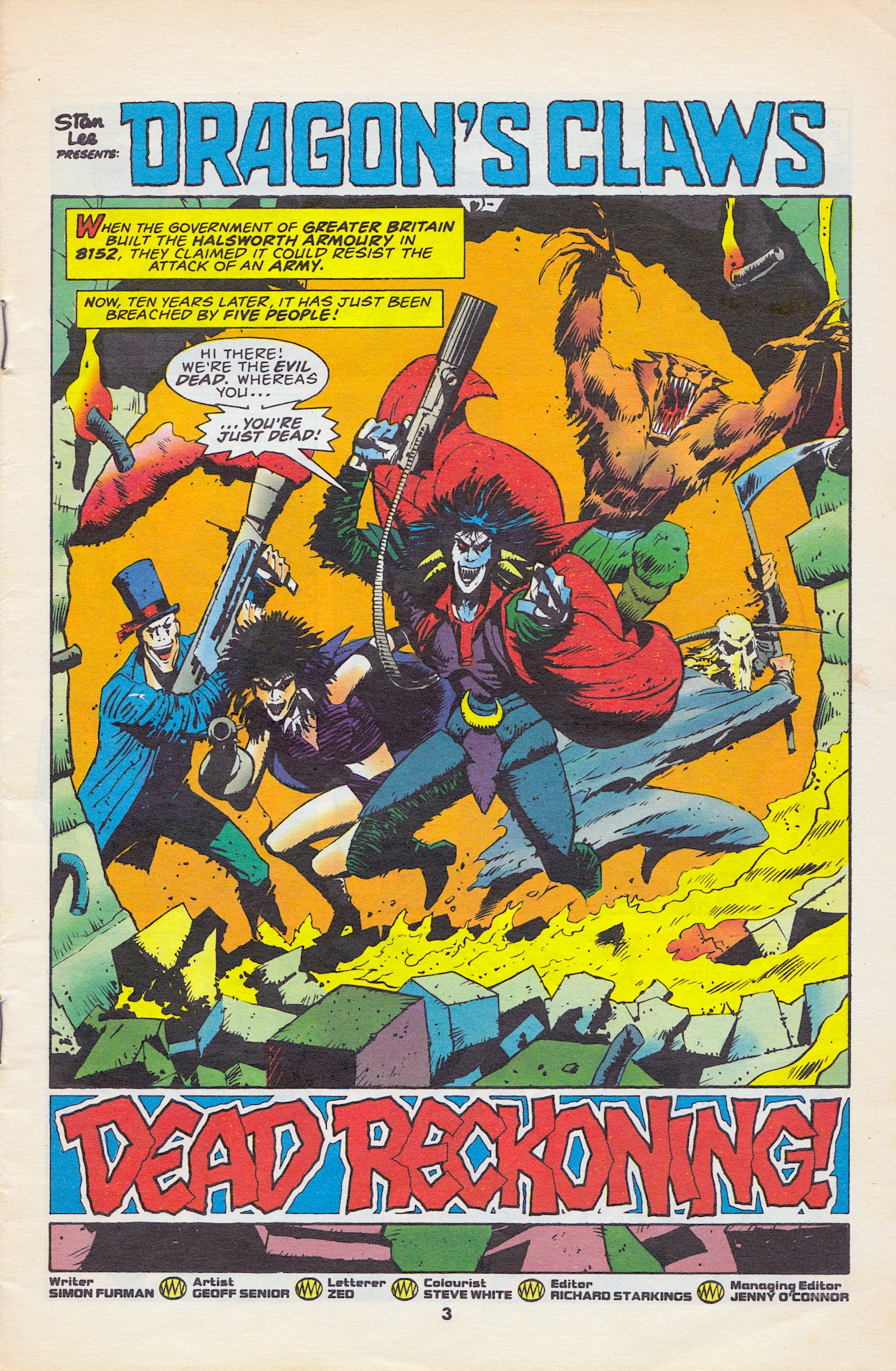
If last month’s debut felt like a typical yet very enjoyable 80s action flick, this feels like it could actually be the second half of that movie. The threat of The Evil Dead teased in the premiere issue’s opening pages comes full force this time around. The opening pages once again see that Game team take on a trained group of fighters, this time at a weapon’s depository that was apparently built to withstand an entire army. Over the course of these first seven pages they decimate the defence and make off with the weapons.

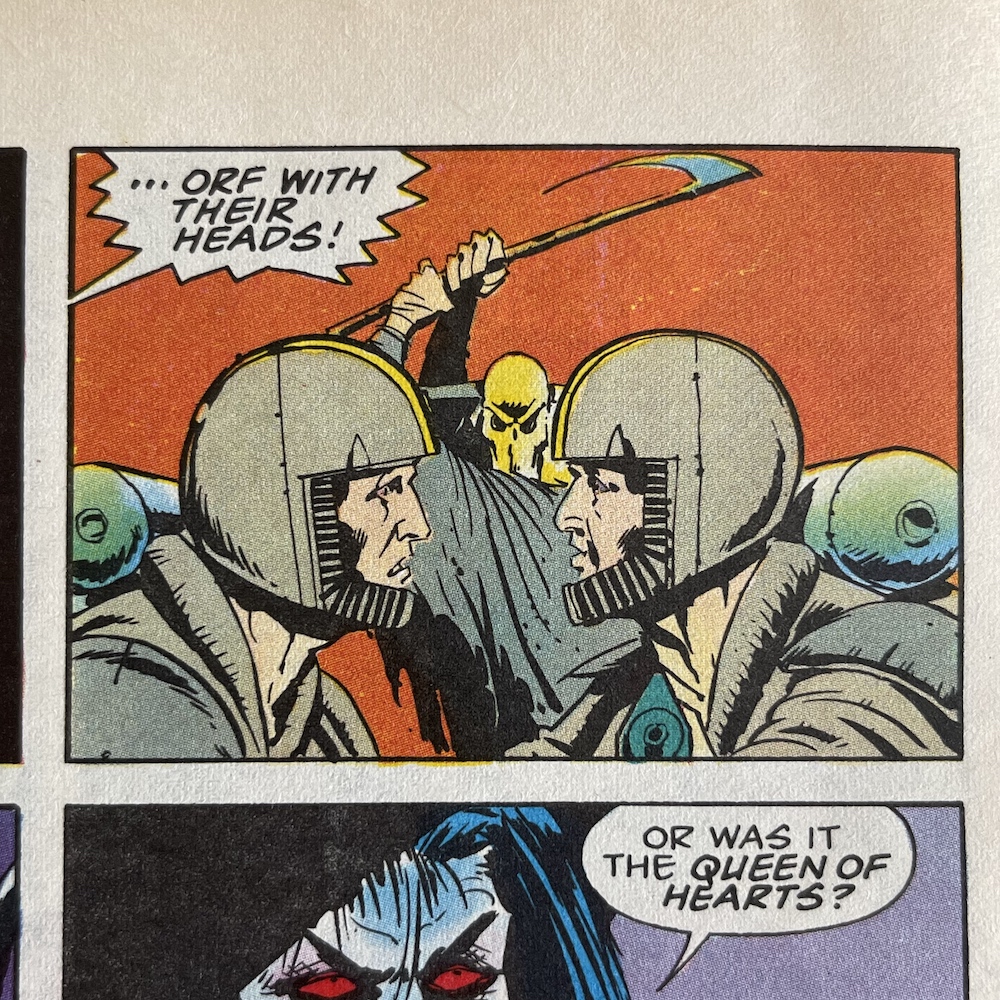
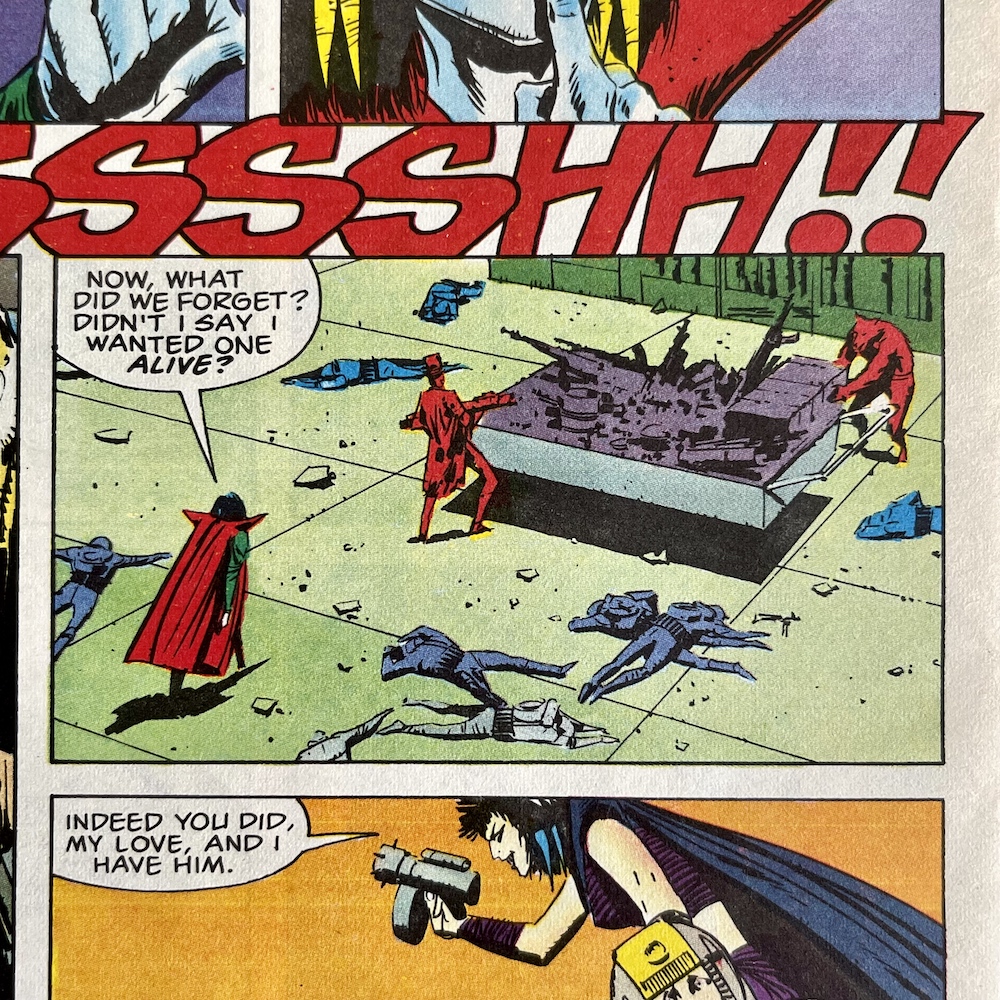
What I particularly like here is just how very ‘English’ The Evil Dead are, especially their leader Slaughterhouse. Shouting “Orf with their heads” before two soldiers get brutally decapitated, tutting when others put up a fight, using drawn out proper grammar and such words as “splendid” while all around is death and destruction. Believe it or not, there’s even a funny moment used to lighten the dark opening when they win their battle and dead bodies are strewn everywhere.

There’s something of note right off the bat with this issue’s story. The government is referred to as that of ‘Greater Britain’. Now for any readers of an international flavour who may not be aware, ‘Great Britain’ as we know it today is made up of England, Scotland and Wales. I live in Northern Ireland and that’s part of ‘The United Kingdom (UK) of Great Britain and Northern Ireland’. Northern Ireland is separate from ‘Great Britain’, a mistake many make. The fact the Dragon’s Claws comic refers to the government of Britain rather than the UK makes me think we’ve scarpered and rejoined Ireland away from the dystopia of the land within which The Game is set. Thank goodness! But anyway, I digress.

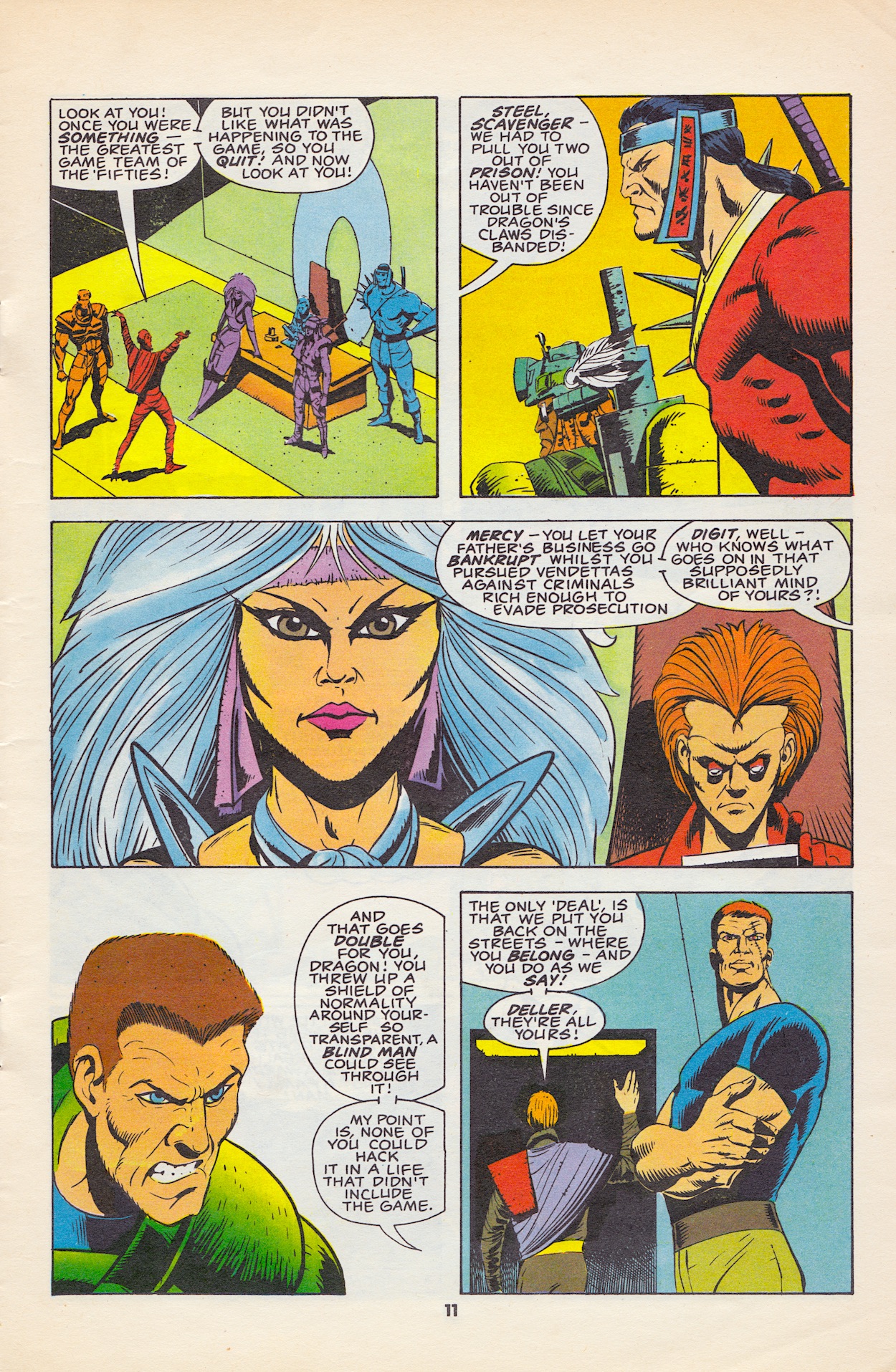
The one surviving soldier is taken to N.U.R.S.E. where Dragon, his team and the already irritating Deller (he’s meant to be irritating) are assigned their first mission by Stenson to kill The Evil Dead, as if they were nothing more than an irritant rather than murderers. The order is given in such a blasé way it’s clear N.U.R.S.E. care not for those they’ve hired. They give the orders and the foot soldiers must obey. This results in Dragon losing his temper because as far as his was concerned his team were independents, going out into Britain to clear up the mess of the government’s Game on their own. But Stenson has them over a barrel, he knows their lives felt meaningless without The Game and they back down.


“Mercy – you let your father’s business go bankrupt while you chased vendettas”

Stenson

We find out a little more about the various members of Dragon’s Claws here after last issue concentrated almost solely on Dragon. The most interesting one for me is Mercy, the sole woman of the team. Since they withdrew from The Game she’s used all the money from her father’s business to chase after those lawbreakers who had enough money to stop any potential repercussions from occurring. In the current climate we find ourselves in I do hope we find out more about her time doing that, it’s quite topical after all. (There’s also something very ‘Knight Rider‘ about that, a show where the hero chased after “criminals who operate above the law”.)

Dragon takes off and over the next couple of pages we see him back at his farm, now a desolate, abandoned wreck after the battle with the Wildcats last time. It’s these little quieter moments that have made these first two issues for me. It would’ve been very easy to have action from cover to cover but in such a fantastical set up these scenes ground our characters, the result being we believe in them, and care for them and the outcome of the story more. His family haven’t returned and then Scavenger turns up to warn him Deller has pulled rank and taken the team out in search of The Evil Dead.

Dragons Claws were opponents worthy of his skills, now he sees them as mere government lackeys

Deller is desperate to be the hero, the leader responsible for bringing them in or killing them, obsessed with personal glory. Of course, we can immediately see where this kind of character will end up leading the team, and that’s into immediate danger. The team’s protestations and attempts to quell his blood lust and self-importance fall on deaf ears. Seeing the lion-like Feral feasting on a dead body out in the open Deller immediately gives chase into an enclosed area, the Claws trying to stop him but it’s too late. Of course it’s a trap.

Another little moment here is the area this is taking place in is referred to as ‘The ‘Pool’. Clearly meaning Liverpool, it’s an area Steel stays away from because it’s known as The Evil Dead’s home, somewhere they know like the backs of their hands and would obviously have the advantage. One-by-one this advantage see the Claws fall. Captured, Slaughterhouse is more disappointed than angry. Dragons Claws were opponents worthy of his skills, now he sees them as mere government lackeys.

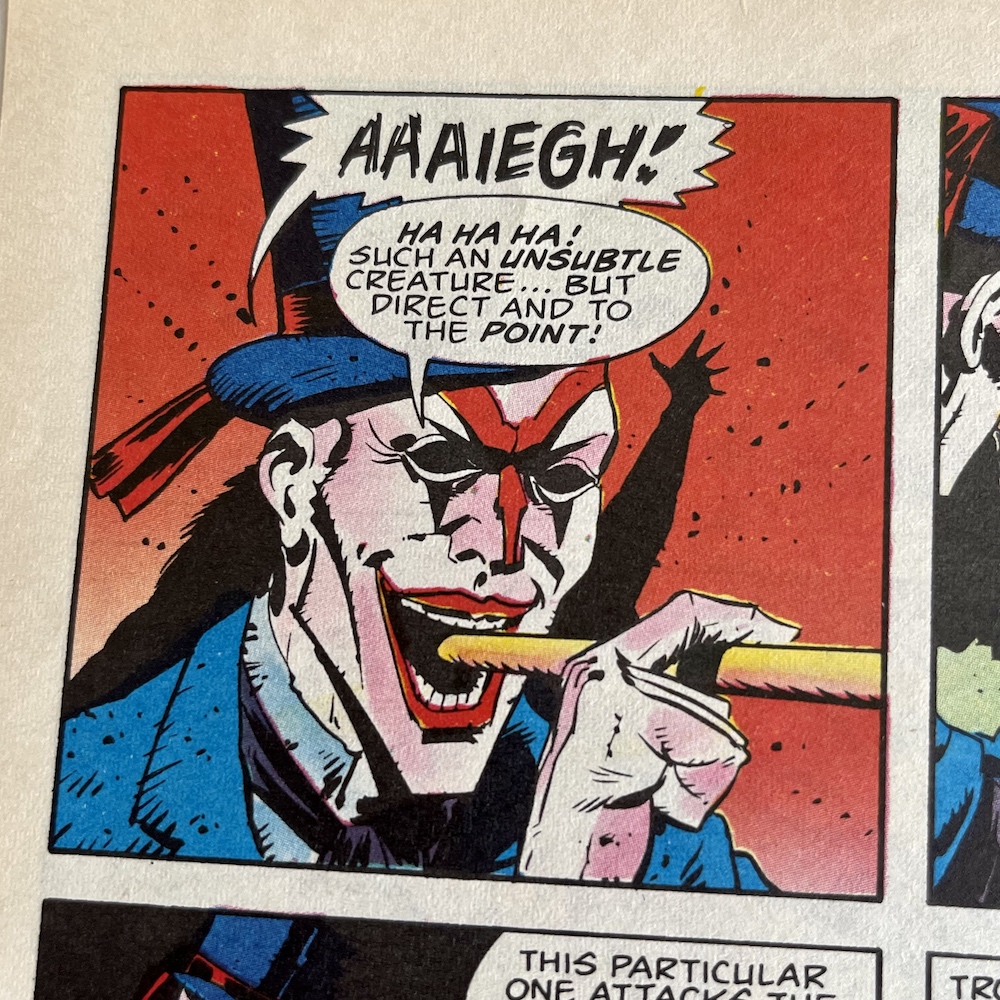
As you can see Dragon appears at the last moment, saving Deller’s life. He’s no stranger to having an advantage himself and as the Grim Reaper-esque Kronos sneaks up behind him Feral notices Dragon has no scent. He’s a hologram and there’s a pressure pad just behind it, which Kronos steps on, instantly exploding. The other members of The Evil Dead are Hex, a circus showman with poisonous darts and hypnotising eyes and Death Nell, Slaughterhouse’s other half who appears to have had some kind of romantic history with Steel!

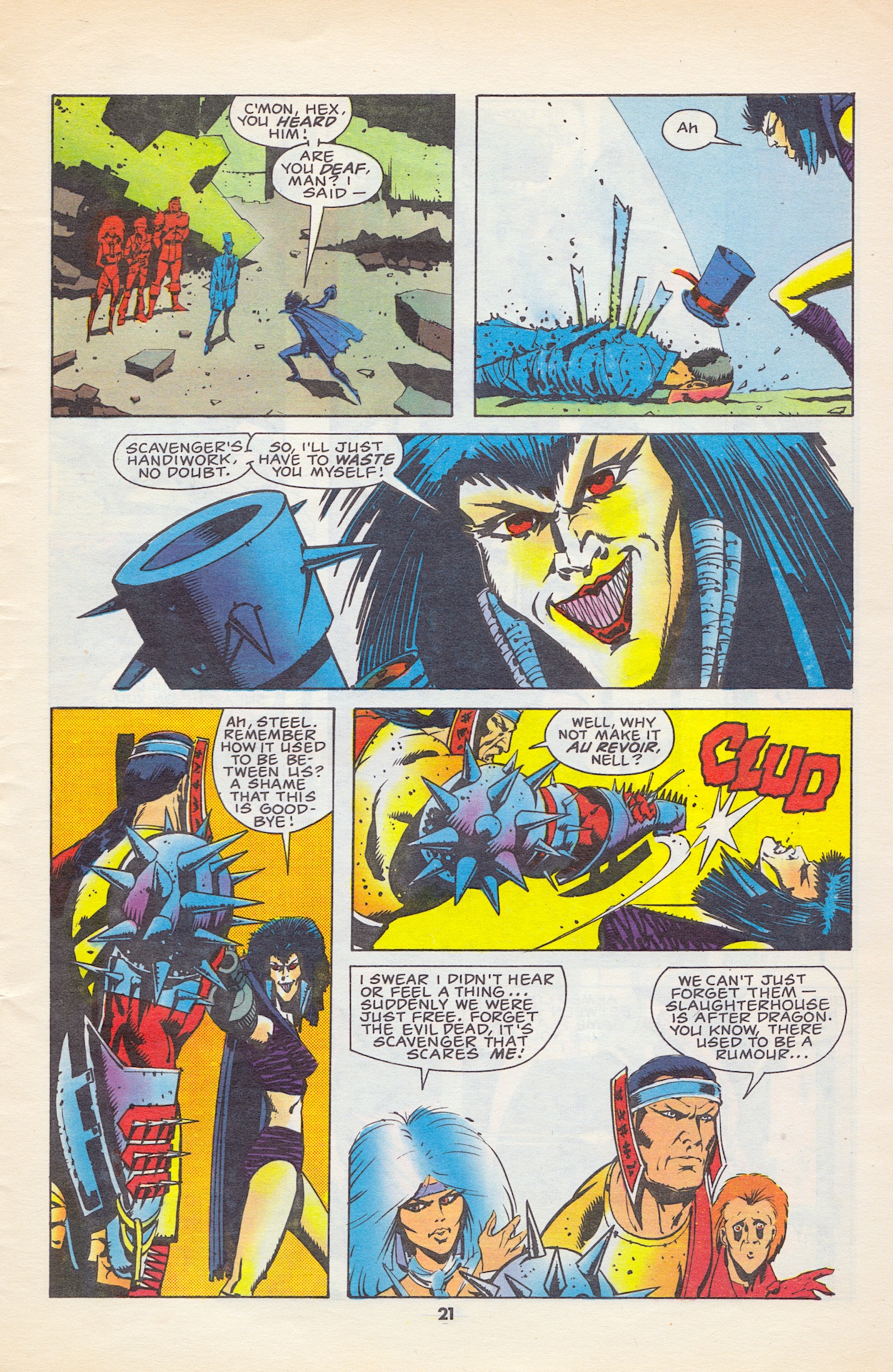
Anyway, the battle we’ve been building up to is rather short and sweet but no less entertaining and ultimately satisfying. On one page Slaughterhouse’s order to kill the Claws falls on deaf ears, or rather dead ears. Scavenger, a master of stealth if last issue’s cameo and the fact he was able to sneak up on Dragon on his farm are anything to go by, has quietly severed his team mates’ bindings (without even them knowing how), meaning Steel can surprise Nell in a moment that initially confused me. Initially, I questioned why he didn’t just hit her earlier? It hadn’t been clear from previous panels they’d had their hands tied behind their backs until Mercy’s explanation made me go back and check.

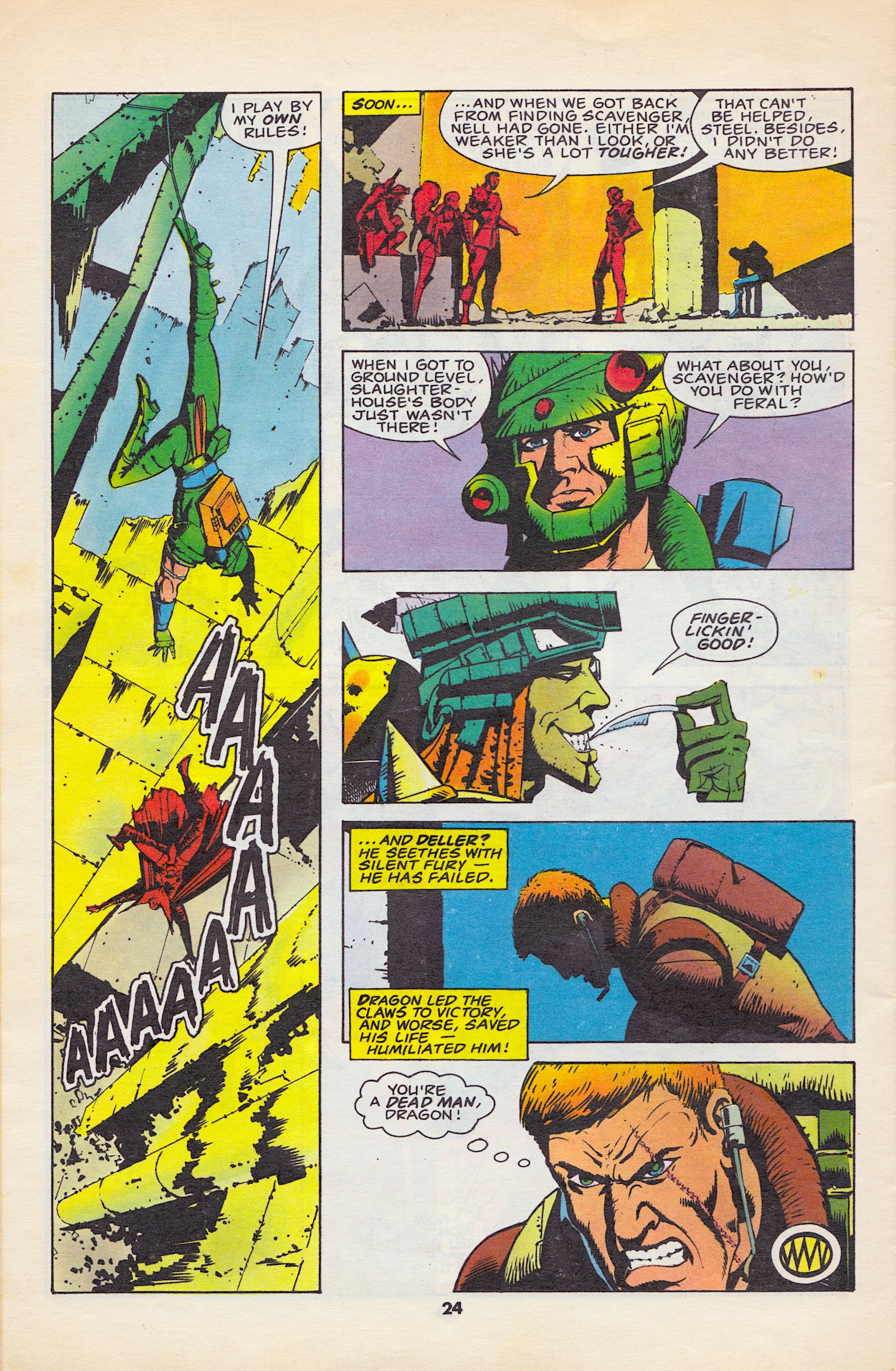
Dragon is sniping from scaffolding on top of a very tall building nearby and as Slaughterhouse lunges at him he’s apparently taken by surprise, getting scraped by huge nails and kicked in the head in the process. But like the hologram there’s a bit of clever misdirection here on Dragon’s part. Riling Slaughterhouse up until his anger takes over and he leaps through the air, Dragon doesn’t dodge out of the way or put up a fight, instead grabbing Slaughterhouse and letting his momentum push them both over the edge.

Special mention must be made of Steve White’s colouring. It’s glorious!

Then, as we turn to the final page we can see he’d actually tied his ankle to the building, stopping him as Slaughterhouse falls to his apparent doom.  Of course with a team made up of such characters as The Evil Dead, and with hints in the story that they may actually be dead already, there’s no sign of his body. As for Feral, it looks like Scavenger made a meal out of dealing with him! Their leader and his girlfriend may be the only ones to have survived now that Dragon’s Claws have been sanctioned to kill.

Written by Simon Furman and enthusiastically brought to the page by Geoff Senior, with editor Richard Starkings on lettering (under the pseudonym ‘Zed’), special mention must be made of Steve White‘s colouring. It’s glorious! His work on Transformers was always exemplary but this surpasses even that. His backgrounds are atmospheric, shading can be subtle in places like faces and in-your-face in others. It’s big, brash and bold in the very best possible way. (Check out his colour work for Xenozoic Tales in an issue of Jurassic Park too!) This is a collection of creative people that could give Dragon’s Claws a run for their money in the teamwork stakes.

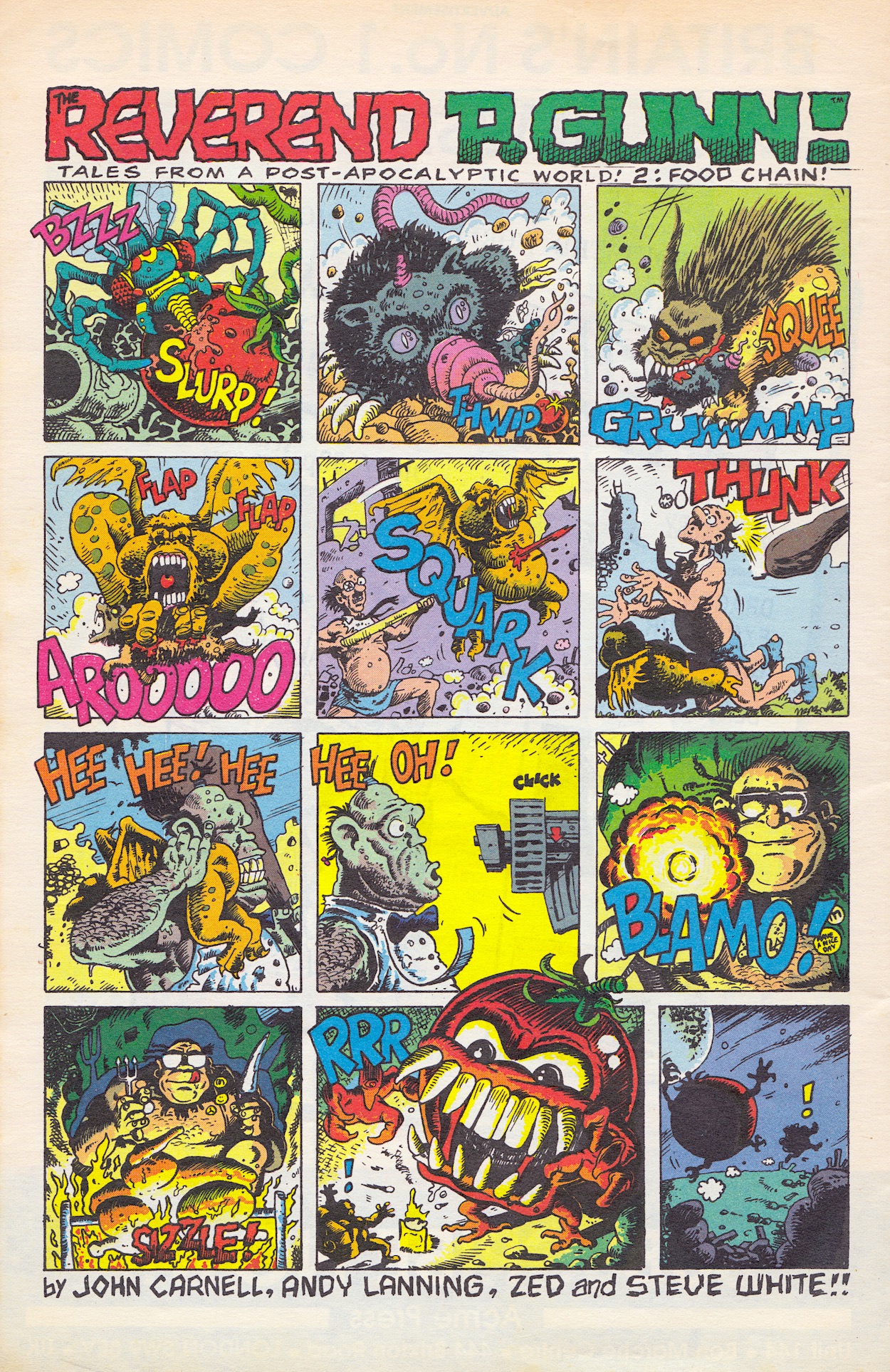
Strangely one of the Marvel UK adverts in this issue is for the comic the reader was actually holding. Weird. There’s also a humour strip, a constant in most of the publisher’s action titles. The Reverend P. Gunn’s debut last issue wasn’t great but this one is funny and the art is great fun. Along with Richard and Steve, writer John Carnell and artist Andy Lanning were well known to me at the time from The Real Ghostbusters and this is a perfect outlet for their bizarre sense of humour that I loved so much in the licenced comic. Would further strips have been funny or more like last month’s? Who knows? This was also Gunn’s final appearance!

So yes, Dragon’s Claws has produced another dynamite issue. It feels very much like the second part of last issue’s introduction and I am perfectly fine with that. I want to find out so much more about these characters already and I know there’s the real potential here for that to happen while not skimping on the action, thanks to Simon’s writing. If I’d known about the comic at the time these first two issues would’ve had me hooked and placing a regular order at my newsagent. Today I’m hooked and you can look forward to regular coverage, the next bit of which will be the review for #3 on Sunday 13th August 2023.
iSSUE ONE < > iSSUE THREE

DRAGON’S CLAWS MENU

DRAGON’S CLAWS #1: SiNK YOUR TEETH iN

The start of a new real time read through is always an event on the blog, this one particularly so because I’ve never read a single issue of Dragon’s Claws before. So why is it here when all previous read throughs have been based on comics I collected (or tried to) as a kid? I may not have started buying Marvel UK’s Transformers in time to see the Dragon’s Claws hype, but I was aware of its final few issues and was always intrigued by these smaller, US-style comics by the publisher.
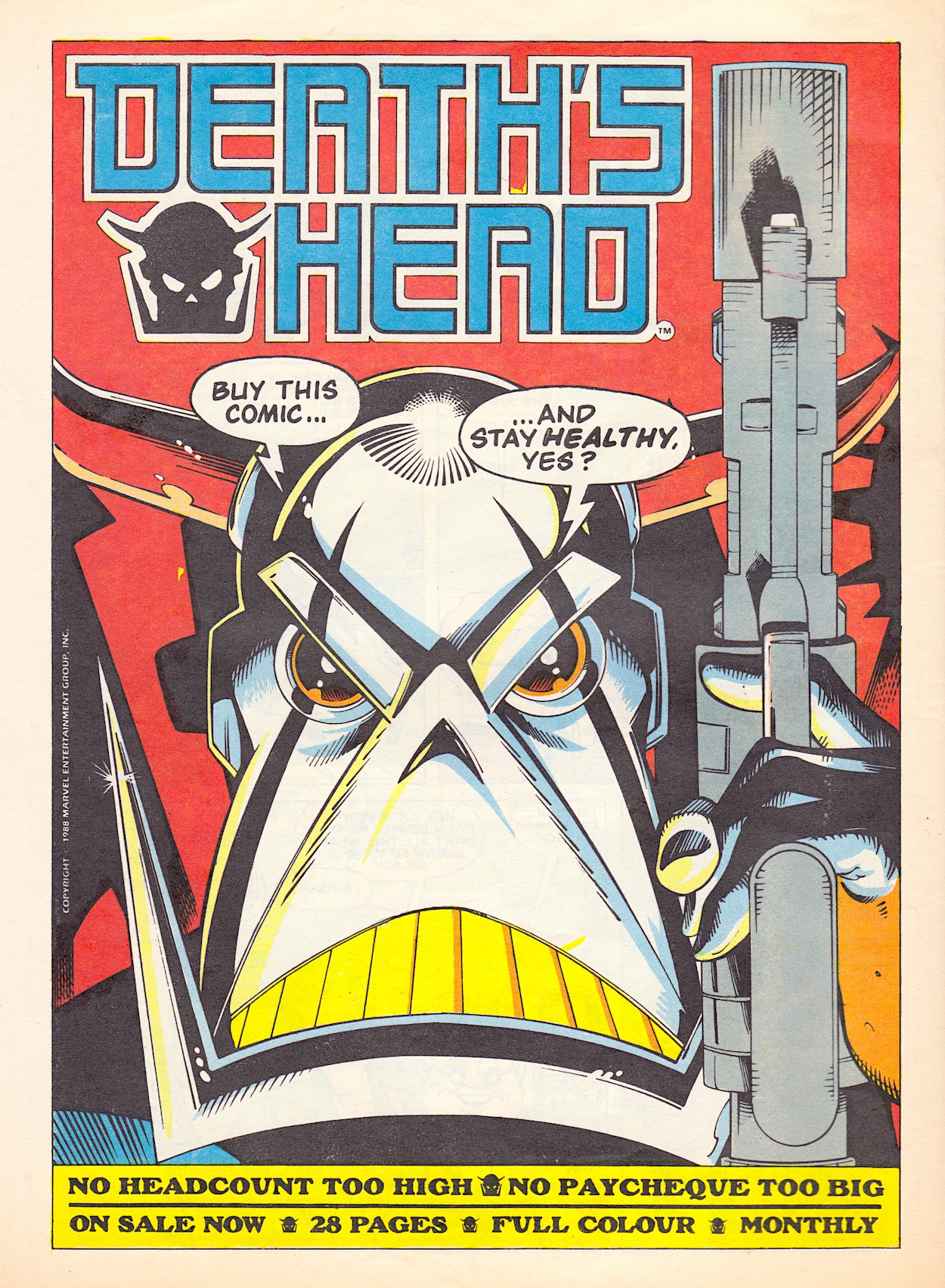
However, with a maximum on the number of comics I could reserve, and only 50p pocket money for any more beyond that, I only ever bought the first issue of Death’s Head out of the whole range. Despite wanting to read them that pocket money got spent on more familiar comics every time. I feel like I missed out, so this is the start of me catching up on what appeared at the time to be excellent comics. It’s off to a good start with that Geoff Senior cover.

The Dragon’s Domain editorial page introduces us to the concept. (To be honest, I’m surprised the human race lasted another 6000 years!) So in the year 8162 Earth is dying. The governments of the world could work to do something to help people but instead they just distract the populace (surprise, surprise). This distraction is The Game. A violent event in which teams basically kill each other while it’s all broadcast live, The Game kept the civilians in line with something to enjoy as the world crumbled around them and off the government’s back.

Created by writer Simon Furman and artist Geoff Senior, legends with the Robots in Disguise, their new creation starts off hard

When it descended into chaos it was cancelled and sure enough the public, with no outlet for their fears and anger, turned to rioting and civil unrest. The Fastfax (with a date that was meant to coincide with #1’s launch before it was delayed) gives us an update on the state of the country and it’s a shock to see how many civilians died during a sanctioned game. How many innocent casualties did The Game have? I’m guessing the government nor the viewing public actually cared, this is meant to be an 80s dystopian future after all.

Richard Starkings was the editor of Dragon’s Claws. He was also the launch editor of a comic I was collecting at the time, namely The Real Ghostbusters. Also going by the name ‘Zed’ when lettering there were very few Marvel UK comics I bought as a kid that he didn’t have a hand in. Also listed is designer John Tomlinson, writer for Rogue Trooper: Remembrance Day in #2000 of 2000AD, Armoured Gideon and one of those other oft-advertised-in-Transformers US-size comics, Knights of Pendragon. Dragon’s Claws itself was created by writer Simon Furman and artist Geoff Senior, legends with the Robots in Disguise and their new creation starts off hard.

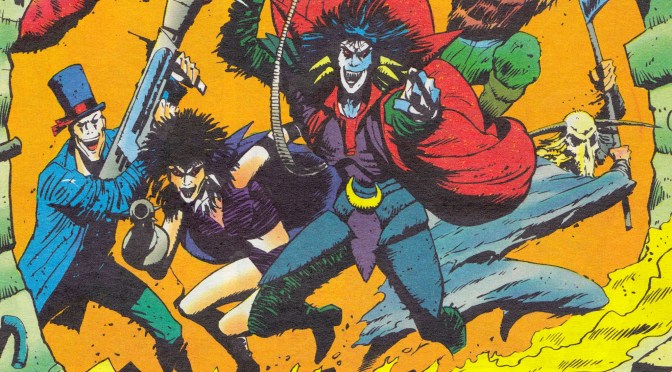
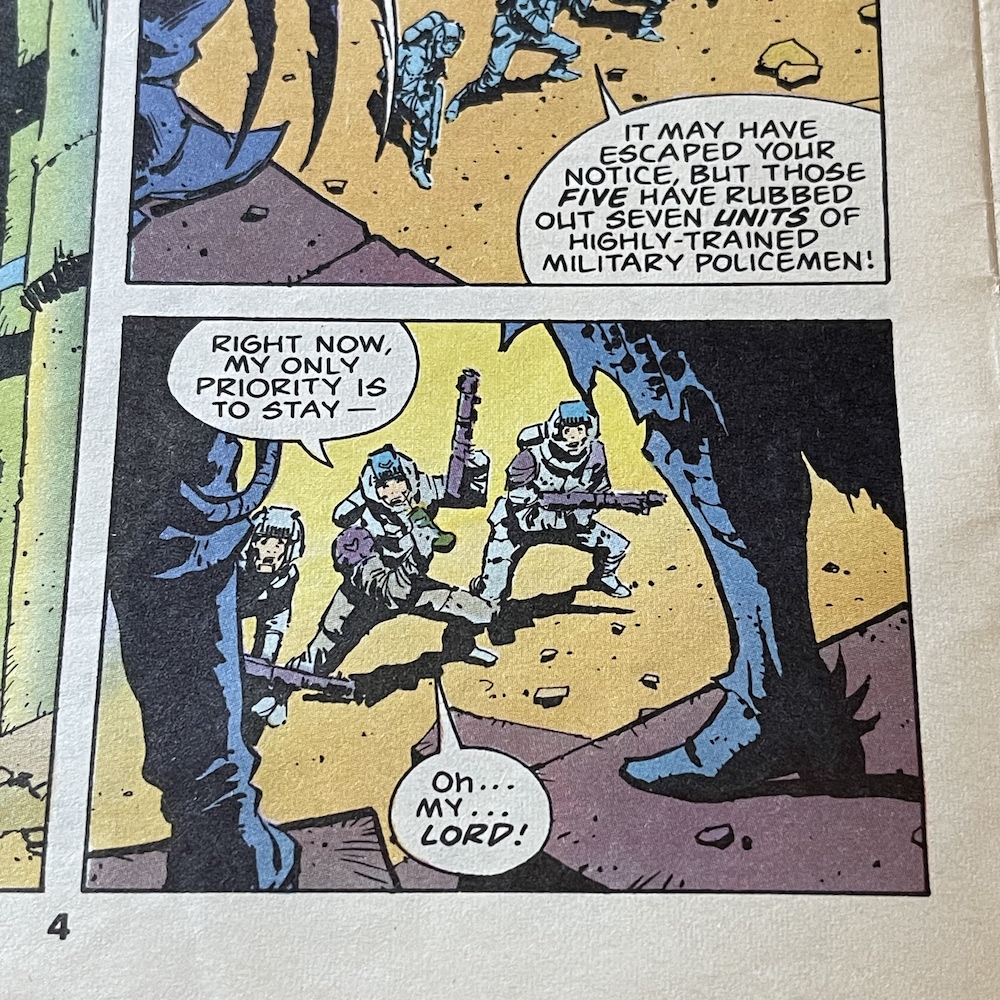
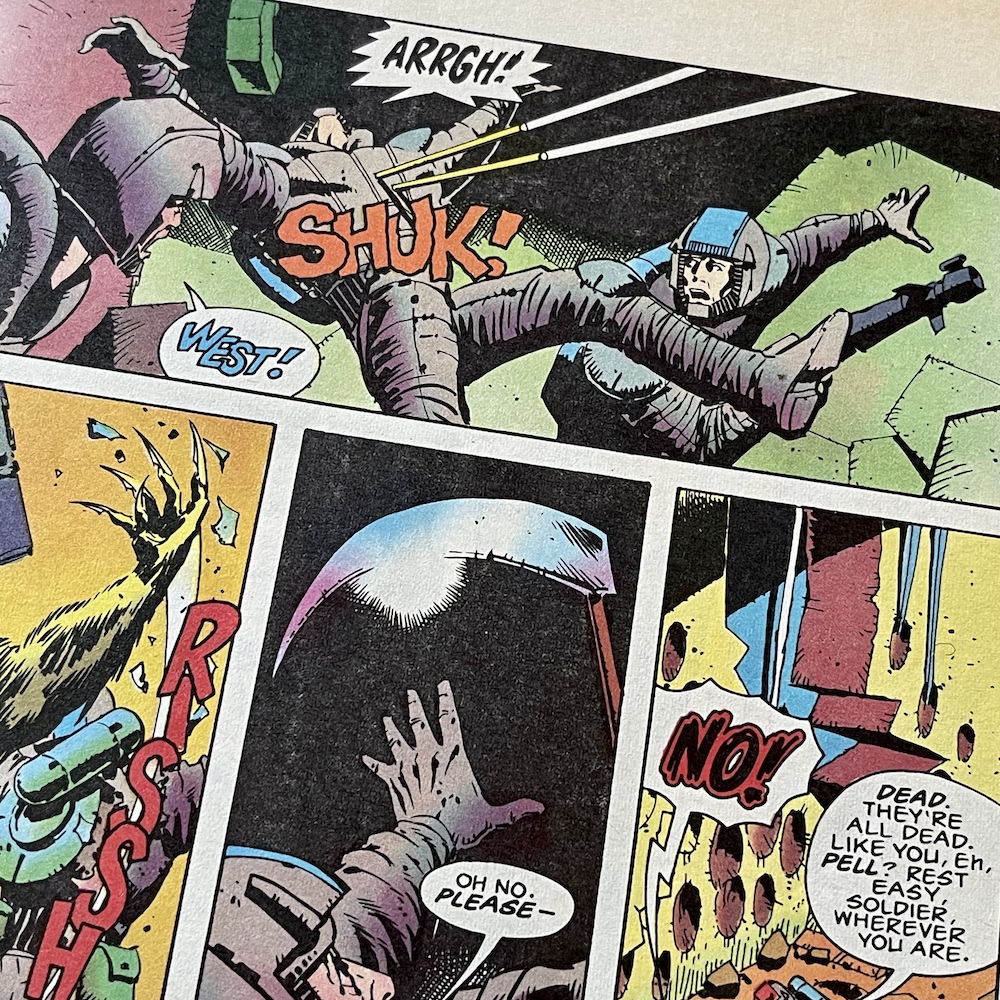
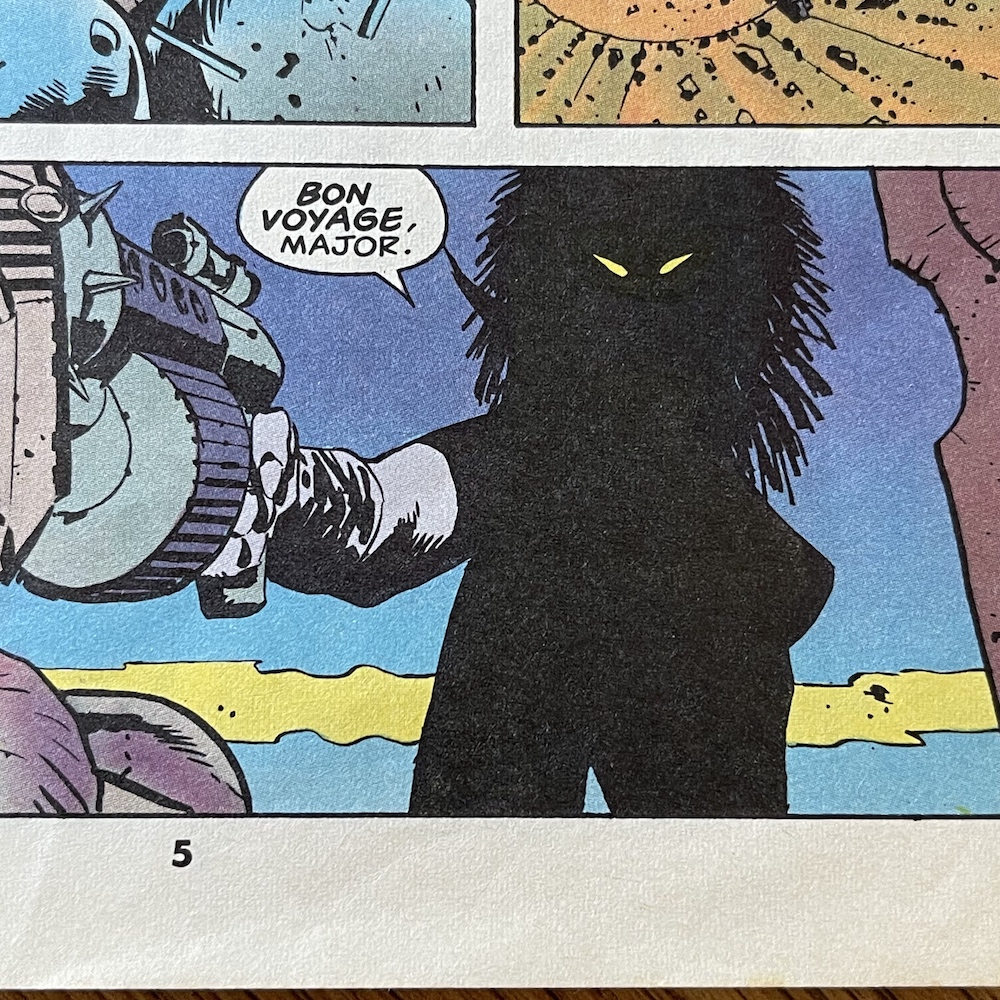
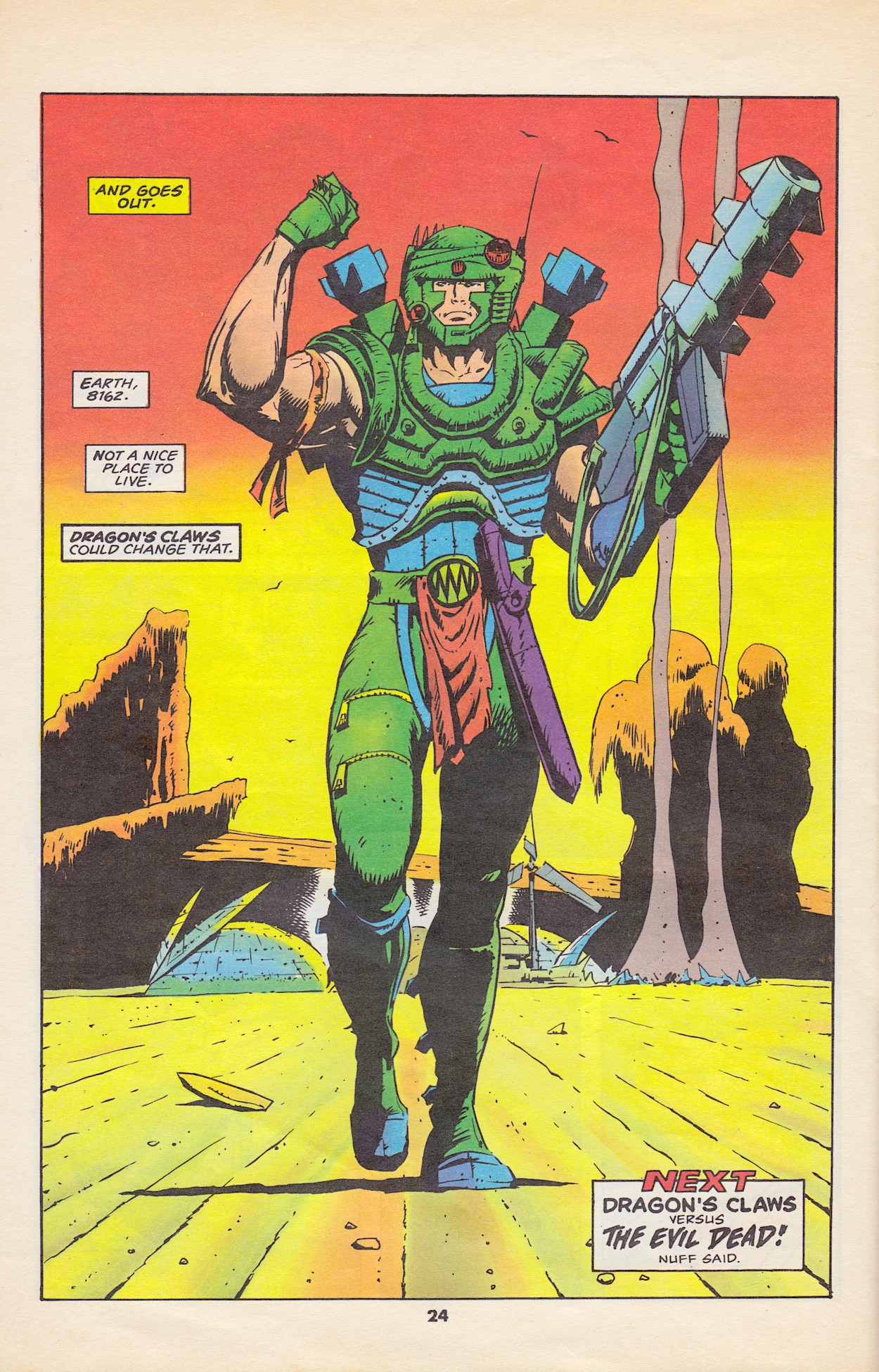
“Earth 8162. Not a nice place to live… But a good place… to die!” Thus starts a three-page teaser as a military group are pinned down and under fire. Obviously highly trained, they’re no match for the five individuals hunting them. We see glimpses of large guns, huge claws and even bigger hair as the team are all picked off one-by-one, like a scene from Aliens. This is the Evil Dead mentioned in the Fastfax, the group who appear to be the main cause for The Game’s cancellation.

Their visual identity is kept secret for now but it’s confirmed it’s them when we pay a brief visit to the headquarters of the National Union of Retired Sports Experts (N.U.R.S.E). Officially created to help former game players into post-career employment, it reeks of a shady government department with an ulterior motive. They hire former player Deller to track down and reactivate the Dragon’s Claws team to stop the Evil Dead. He isn’t happy. He wanted that job for himself.

This is when we meet Dragon. The top team of The Game have all gone their separate ways and their leader has been living a happy life on his farm with his wife Tanya and their son Michael. A very happy life actually. What with real fruit and vegetables being so rare they’ve got quite the happy life together growing their produce and selling it at the ginormous Marketplace. Michael is seven-years-old, which gives you some indication of how long after The Game this is for them.

But as we’re introduced to Dragon it’s clear something is very wrong. He’s not sleeping, he’s tense, stressed, quick to lose his temper and he’s become obsessed with viewing old recordings of The Game in which the Claws were undefeatable. He doesn’t know why he’s doing this (as he subtly hints at above) and no answer is given yet, so already we’ve got an interesting character plot point to build upon. Not knowing Michael has sneaked out of bed and is watching from behind, Dragon replays the team’s final victorious game.

This is the only time we see any of his teammates Mercy, Steel, Digit and Scavenger in the issue despite their appearance on the cover. As such, I think the strip advert for the comic actually did a better job of introducing them (and included their dog). What this does very successfully is show how well they worked together as a team. With Dragon seemingly making an unwise solo run for the finish all the other teams ganged up to kill him. Not that any of them could’ve won the trophy with The Evil Dead in such a close second place, they just wanted to stop the Claws from winning yet again.

But it was all part of the plan and as each team member makes an appearance the tide of battle turns, just as they planned. But Tanya isn’t happy. Angry that Michael is being exposed to such violence and frustrated at Dragon’s recent behaviour a huge argument is interrupted by the arrival of Deller, who calls Dragon “old man”, emphasising again the passage of time since the action we’ve just seen. He’s already visited the others to recruit them and every one of them has said they’ll only join if Dragon does. But Dragon turns Deller away, explaining that when he retired he meant it, and returns to his family.

It’s clear you’d need to be of a certain mindset to want to take part in The Game

We started the story with an action teaser to show the dire situation and set up the hero’s replacement who doesn’t want the hero back, but has no choice but to work with him. We saw the hero now a shadow of his former self, surely unable to be that hero again and he turns down the opportunity. So far, so typical of many classic action movies. What would happen next in those films is the former hero would find himself in a situation where he has no choice but to fight, which he discovers he’s missed, leading him to change his mind and return to being the hero once more, albeit reluctantly. Well, it just so happens the next day at the Marketplace things don’t go too well, coincidentally enough.

The Wildcats are also a former Game team who’d let the power go to their heads. Terrorising the market one of them tries to steal from the wrong stall. Easily beating him up and scaring the rest of them off for now, Dragon is chastised by Tanya for resorting to violence so easily and they pack up and leave, along with Michael and their farm hand Saul. But on the way home the Wildcats catch up and try several times to kill them. Trying to save his family Dragon drives too fast, losing control and crashing into their home.

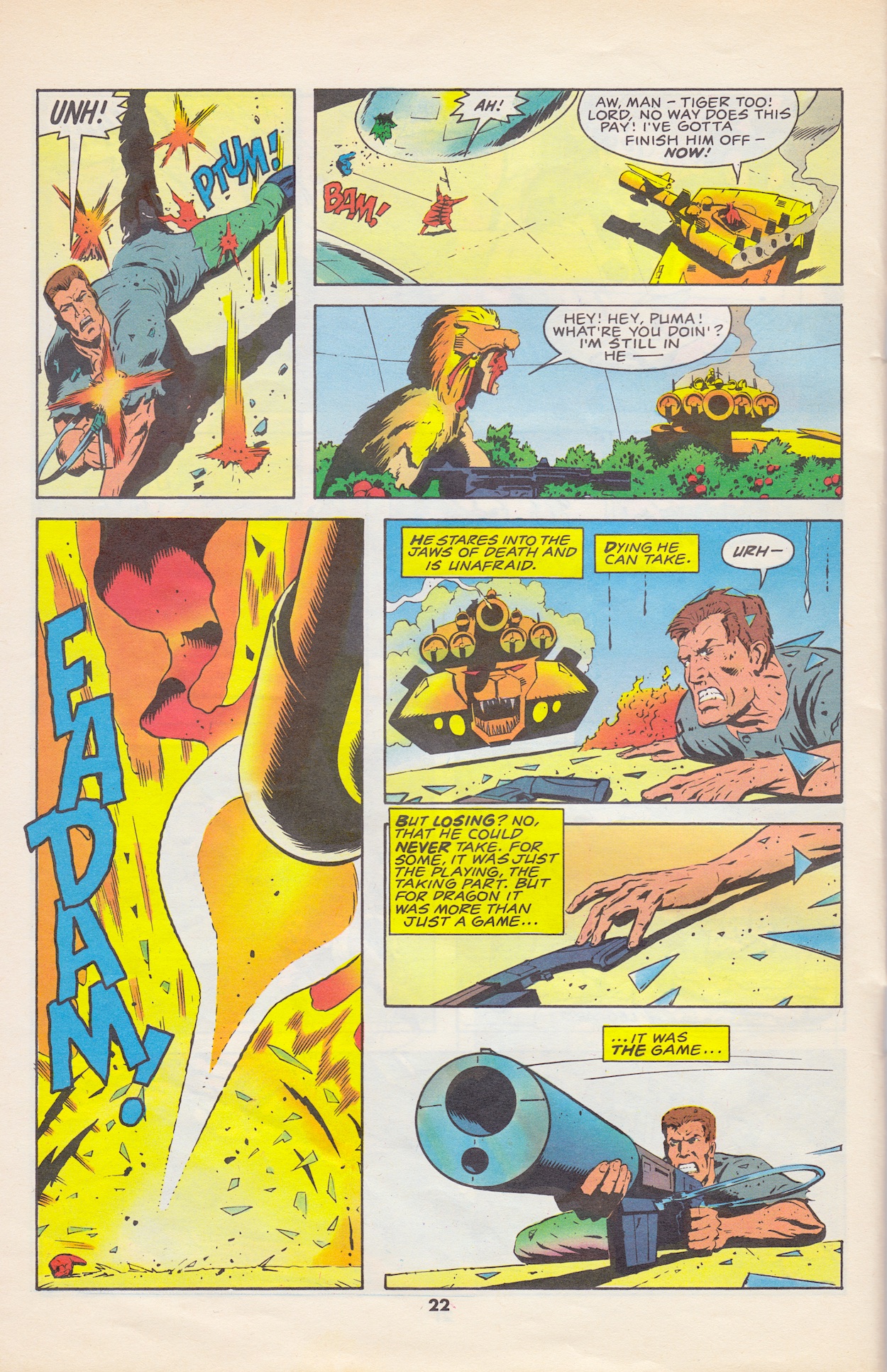
Tanya is convinced this is all part of some wider plot to lure Dragon back to The Game. She just wants them all to flee together and find somewhere peaceful to live. But Dragon can’t. He struggles with the decision but ultimately feels he can’t back down, he has to fight back, so he orders Saul to take his family and run. One by one he picks off the Wildcats until one of them panics and turns the huge turret on the whole home, including one of their own in a darkly funny moment here.

It’s clear there’s some psychological issue at play with Dragon. His teammates all seem like very unique individuals to say the least, and the other teams we’ve seen so far are way out there. Given what The Game is, it’s clear you’d need to be of a certain mindset to want to take part. Dragon had been genuinely happy for a long time, so maybe something triggered this mental issue he’s been suffering recently, or maybe it was just inevitable. I hope we get to see plenty of character development in future issues to explore this and the reasons he (and the rest of his team) think like this.

I’m not doubting Simon’s ability to develop character, after all he took small plastic robots and turned them into incredible three-dimensional individuals for years. But with hindsight we know Dragon’s Claws only lasted for ten issues, so it’s whether or not Simon had the time to delve into his characters. This initial chapter certainly sets things up in a way that shows there’s plenty of scope for such development, not just with the people he’s created but with the wider world including the suspicious N.U.R.S.E. It’ll be interesting to see how the next nine months play out.

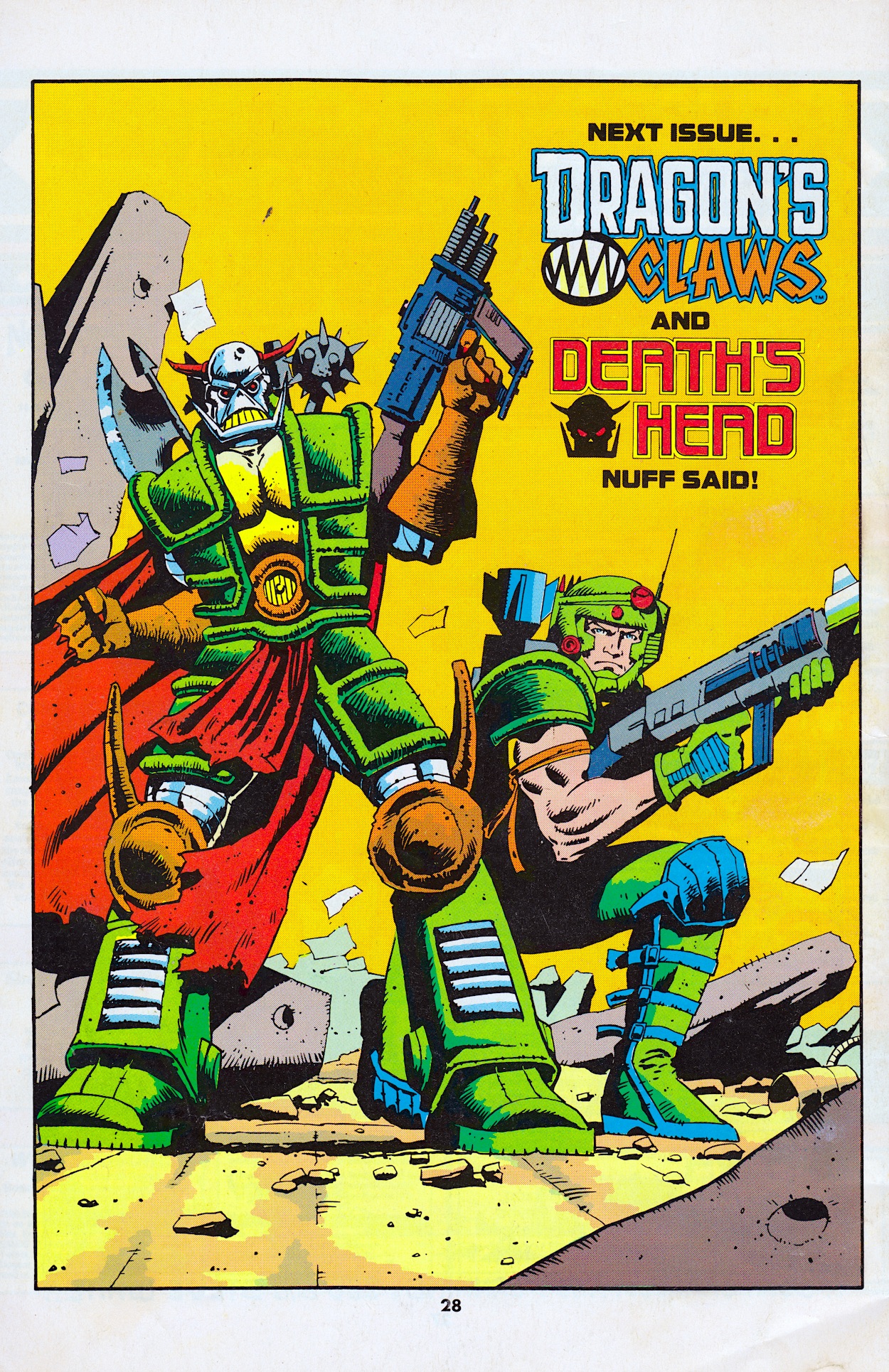
That “Nuff Said” phrase was really overused by Marvel UK at the time! Anyway, the beats of the story may not be that original but the fact it feels like a bit of a clichéd 80s action flick just makes me love it more, and remember this is only chapter one. I can’t wait to see how Simon develops this initial idea. Geoff’s art is sublime throughout too. (Even if a story is rubbish I think Geoff would have the ability to make it enjoyable.) His clean lines, hard edges and ability to not only produce highly animated action scenes on the static page, but also emotive characters so effectively adds the kind of depth those 80s movies could only have dreamed of.

Alongside Steve White’s colours this was a winning team on Transformers and so far that’s translating perfectly to this original property. No wonder it was so hyped in the pages of Transformers (even if they didn’t mention the creative team to begin with), this was right up the readers’ alley. There are enough little details to establish a complete world too, such as a ‘Game Tax’ where every citizen must pay towards the games whether they want to or not (and you thought the Licence Fee was bad?). I’m left with the overriding feeling of a solid foundation that’s ready to explore some really interesting possibilities.

I have every faith that what lies ahead will just get better and better

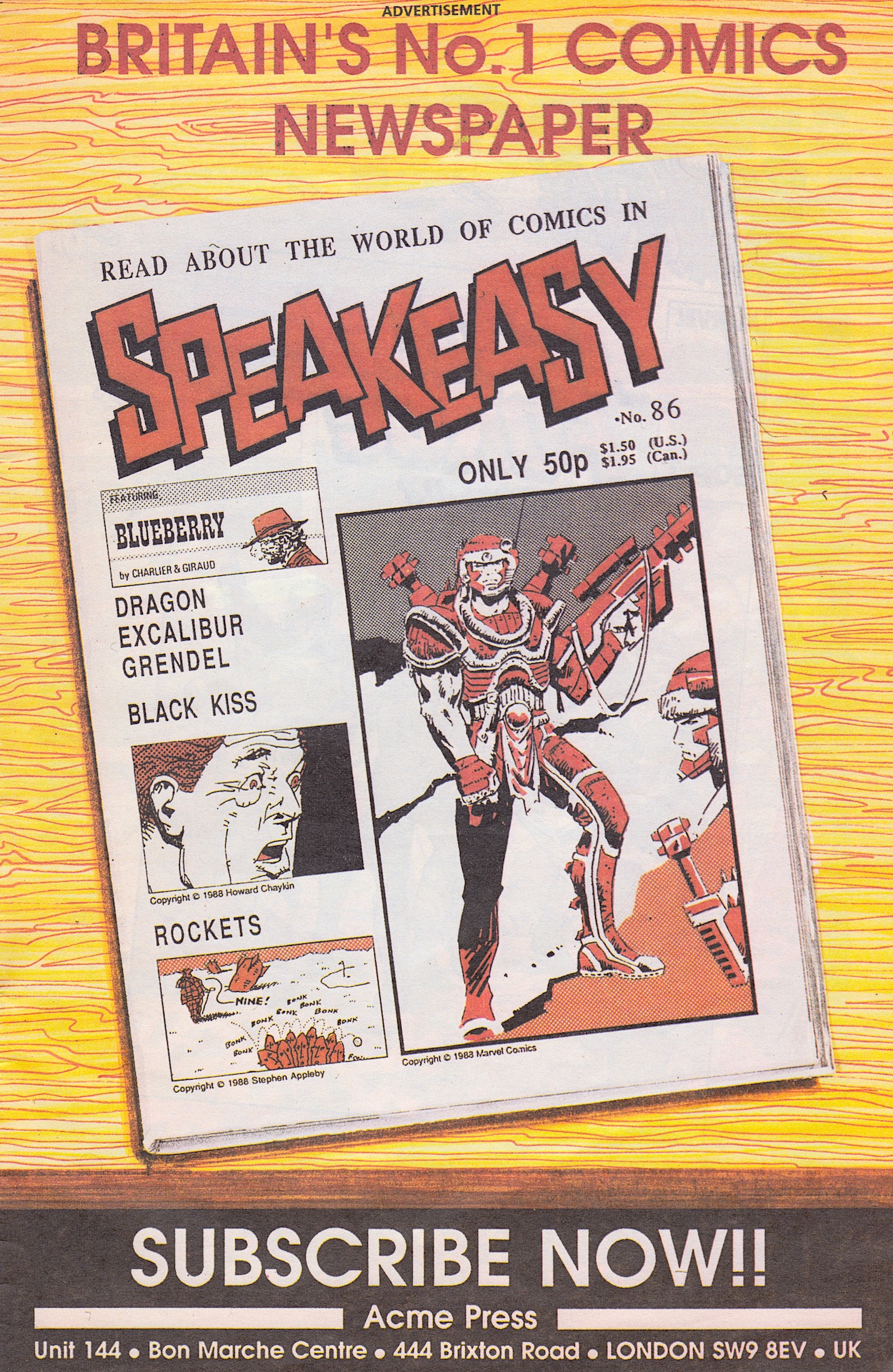
The strip takes up 22 pages of this 28-page comic, the remainder including a humour strip called Reverend P. Gunn and a few adverts for other Marvel UK publications. First up is Speakeasy, the ‘Comics Newspaper’. I actually have #76 of this because it contains an article about OiNK. I like how it’s sold at the same size as a regular comic or magazine only to fold out to actual newspaper size. Anyway, that’ll be added to the blog at some point so watch out for it.

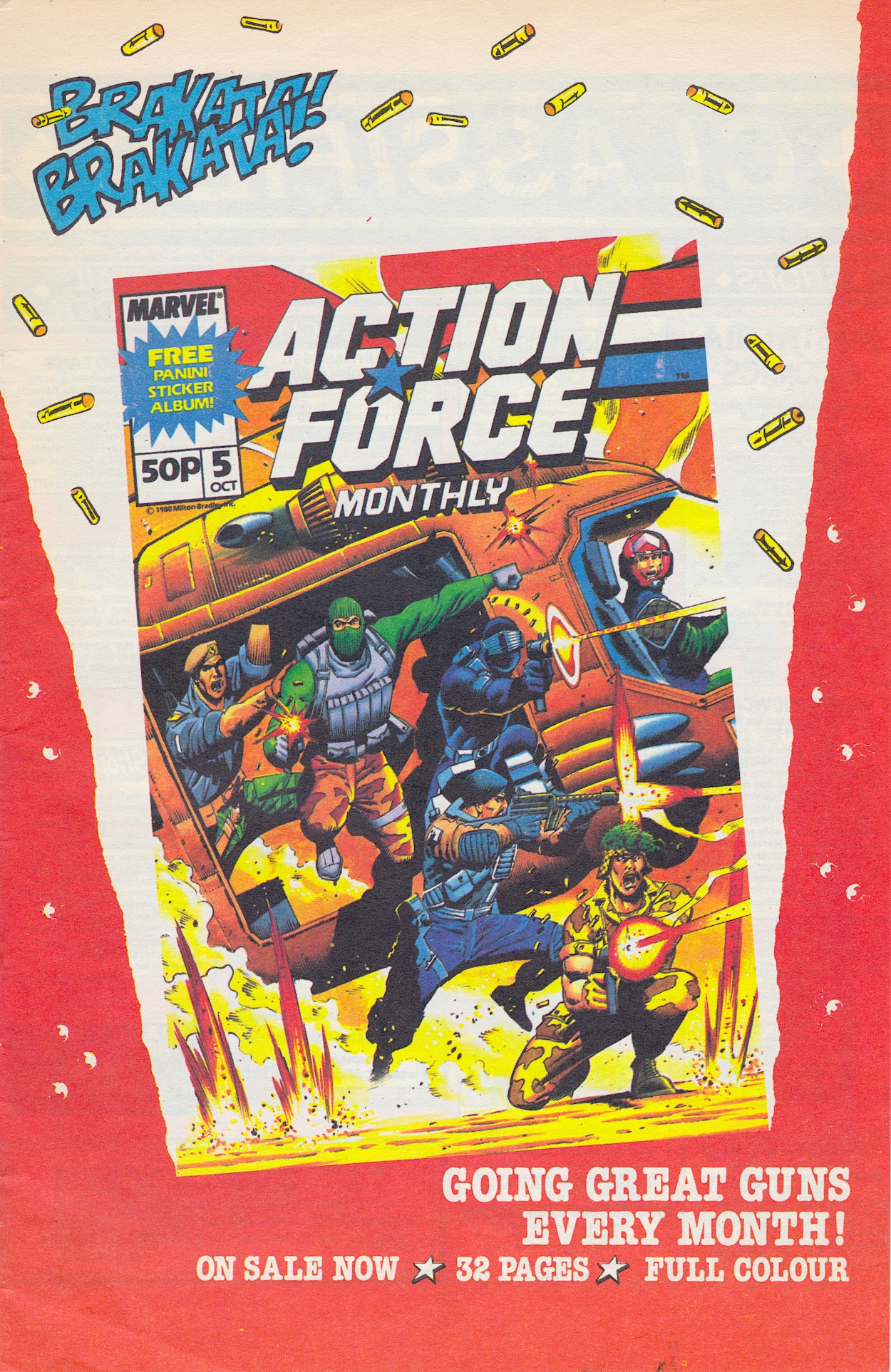
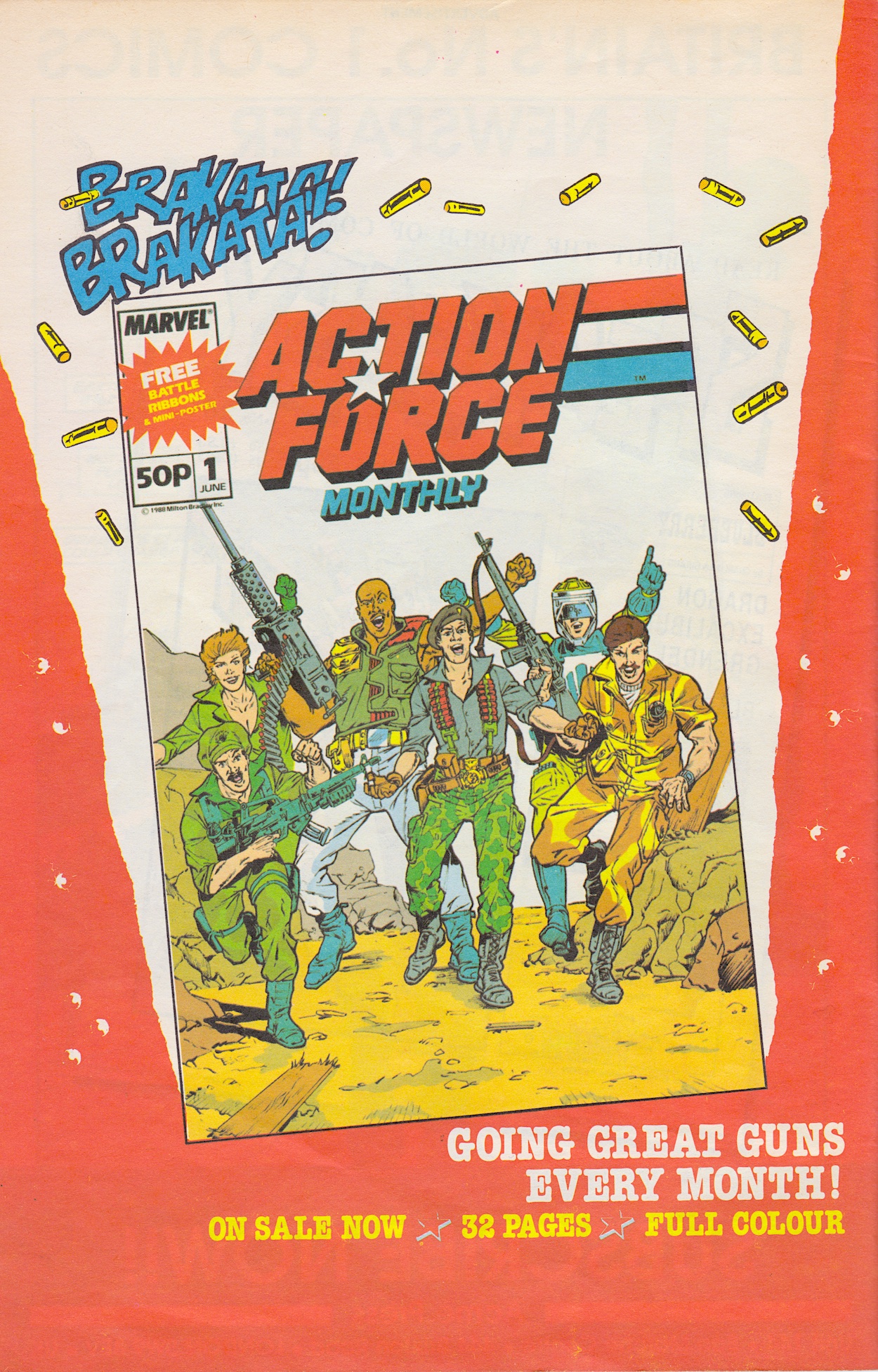
The first issue of the new Action Force Monthly (another of the US-size comics launched) doesn’t exactly have the most inspiring cover for new readers. For fans like me who had been following along with the back up strip in Transformers, before it was unceremoniously yanked mid-story, it’s great to see certain characters together again. But for potential new readers it doesn’t exactly get across the action-packed storylines, does it? Action Force Monthly would last for 16 issues and get repackaged for the states as G.I. Joe The European Missions.

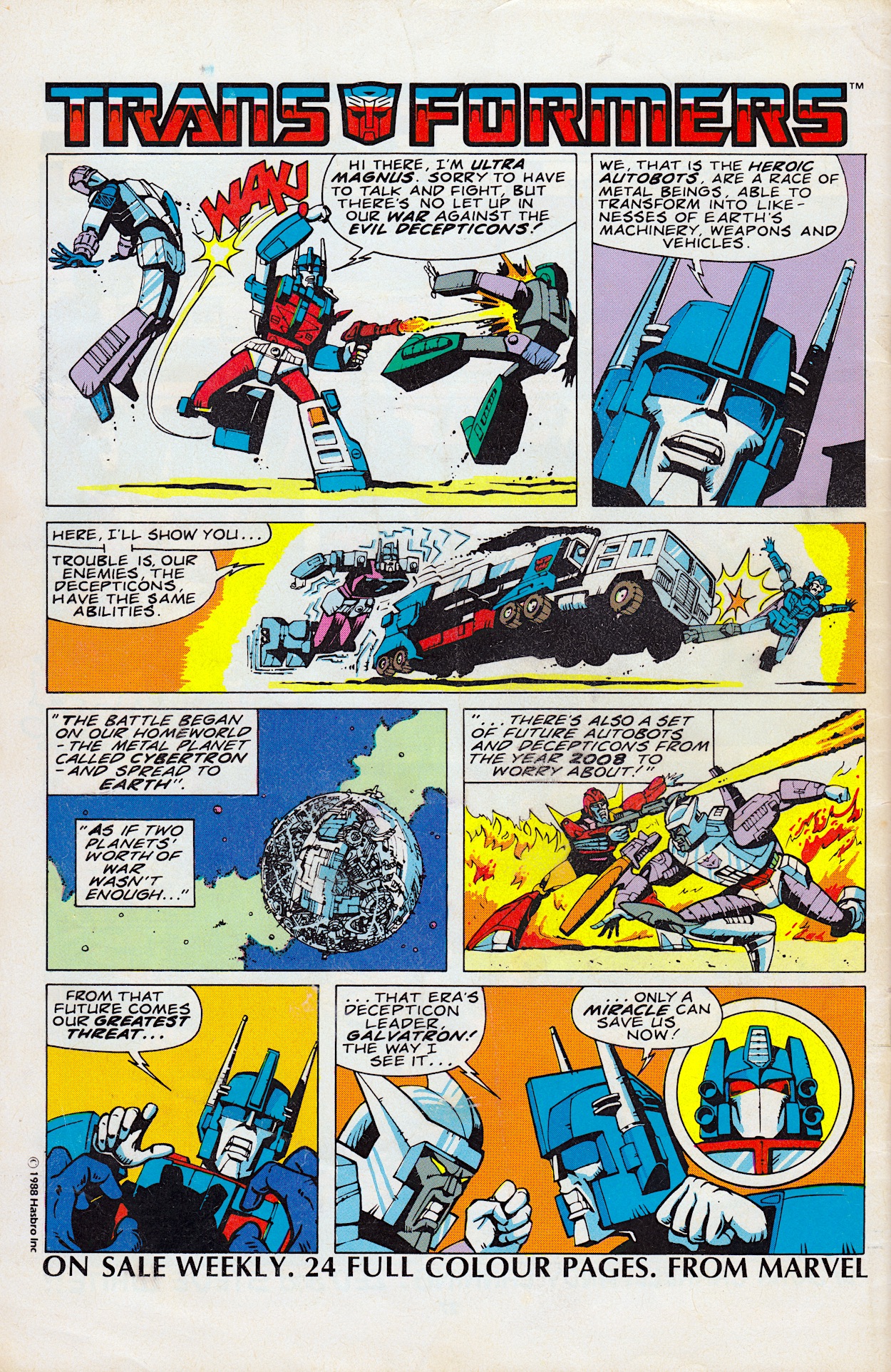
Much better is the advert for the publisher’s ongoing top-seller and a real favourite of mine, Transformers. I mentioned in the introductory post for Dragon’s Claws how Richard Starkings had requested one-page stories from a range of their comics, each in the style of the strips they’d normally create as a way of promoting what they contained. I’ve already shown you the ones produced for both Dragon’s Claws and Death’s Head and this next one takes pride of place on the back page of this issue.

Written by Simon with art by Lee Sullivan, letters by Glib (Action Force, Doctor Who, Digitek) and colours by Steve I think this perfectly sums up where the comic was at this point, with the hype machine really making its mark in that final panel. Very exciting times! Speaking of summing up its time I did so for #1 of Dragon’s Claws which has had a very strong start.

Ten issues doesn’t feel like enough time to fully explore the amount of possibilities this one issue has shown us, but I have every faith that what lies ahead will at the very least just get better and better. From the feedback and site views already received I can tell this is one read through many others are looking forward to as well. You (and I) can look forward to the review of #2 on Sunday 9th July 2023.

GO TO iSSUE TWO

DRAGON’S CLAWS MENU

DEATH’S HEAD: iN REAL TiME, YES?

In the latter months of 1988 I began reading Marvel UK’s Transformers weekly and my second issue contained a very funny comic strip advert for a new monthly about a certain Freelance Peace-Keeping Agent (not a bounty hunter, never a bounty hunter). It also popped up in The Real Ghostbusters and so I found myself dipping my toes into the first issue of Death’s Head, not fully knowing what to expect and with no knowledge of his already extensive adventures with the Transformers (and even Doctor Who, which I’d just started watching that year too).

Over the next couple of years reprints in Transformers and my friend giving me his back issues meant I was able to read those stories. But I never did buy more than Death’s Head first issue, despite having very fond memories of reading it wrapped up in bed while ill one day and really enjoying the action and comedy. But I was only allowed a certain amount of comics on order at any one time and, while I did buy more with pocket money most weeks, a month was a long time for my attention span back then. Now I can finally make up for this, so let’s take a look at how this very famous Marvel UK character was introduced to the public.

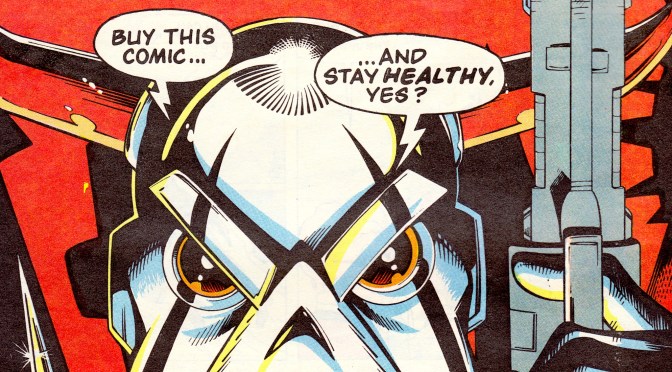
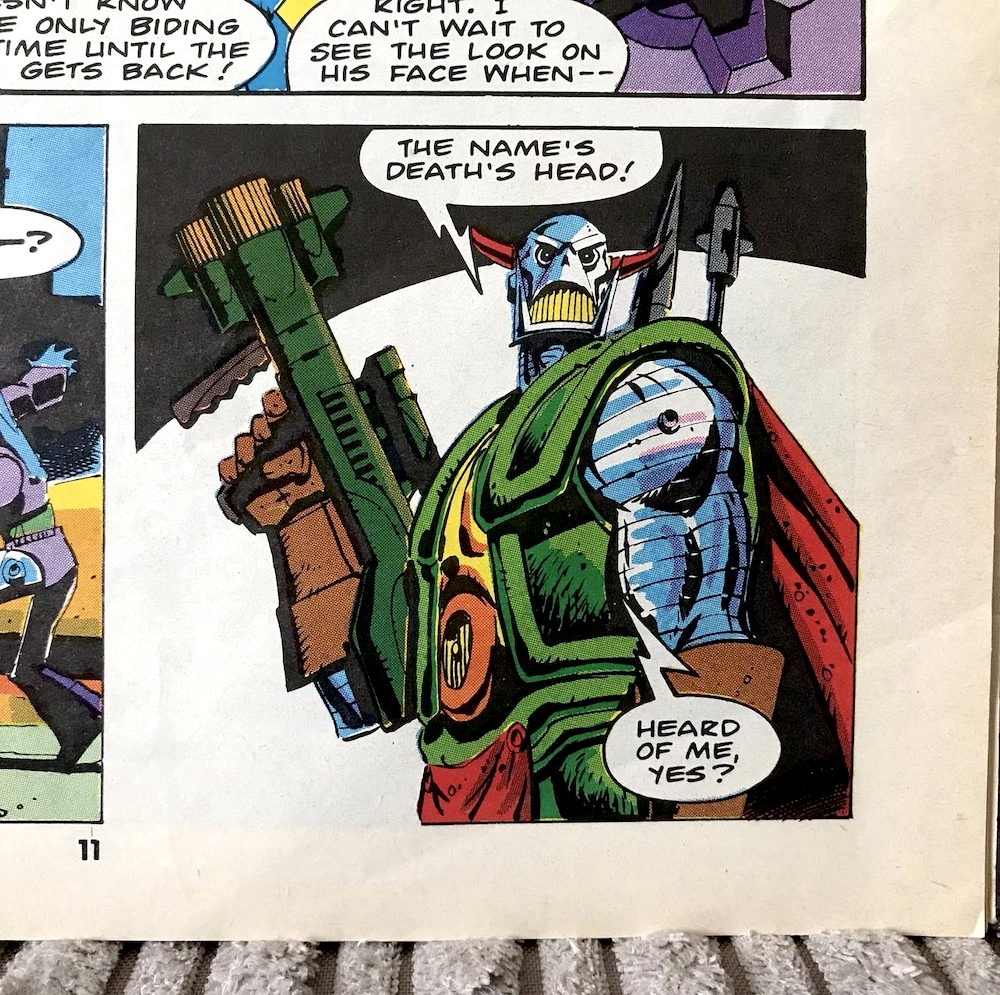
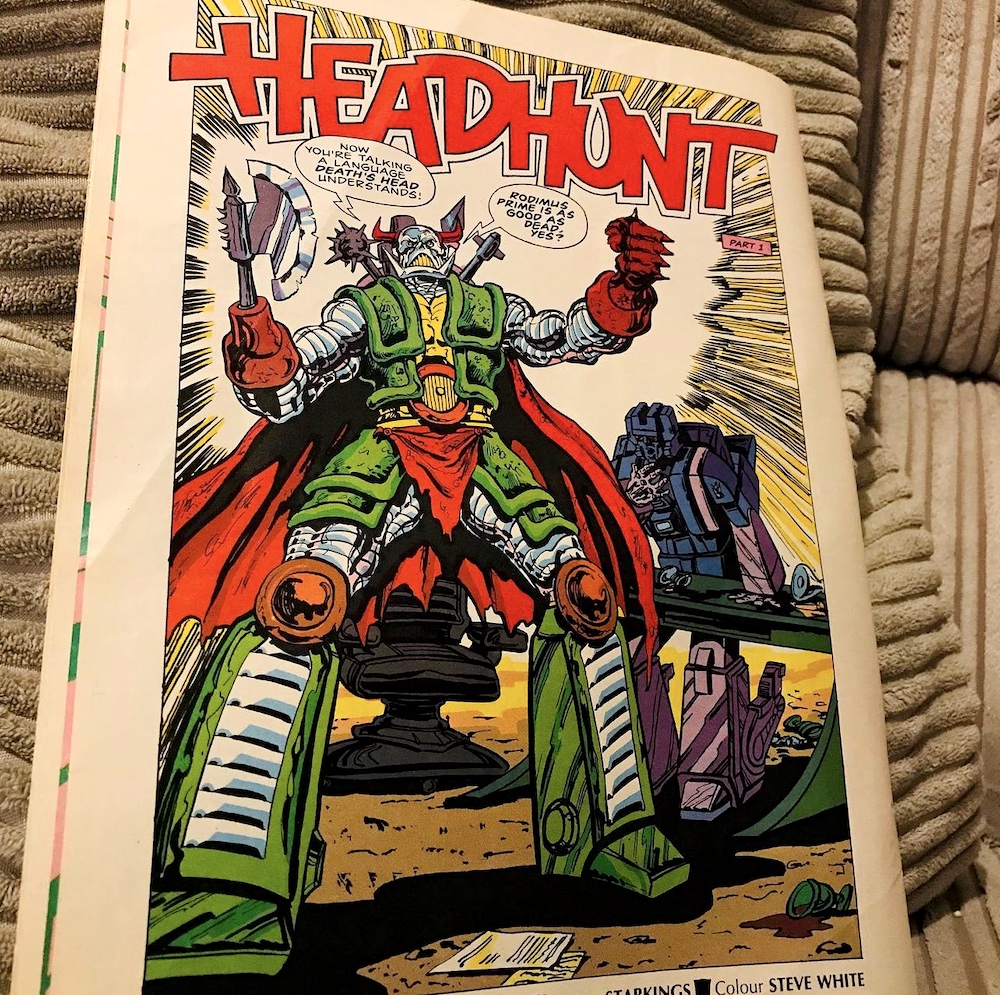
Writer Simon Furman originally created Death’s Head as a one-off character for a Transformers story (not knowing the name had also been that of a Nazi tank division). However, upon seeing legendary artist Geoff Senior’s interpretation Simon knew they had a recurring character on their hands, even rewriting his lines to better suit the image Geoff had created, inspiring the hilarious speech patterns and quirks we came to love, yes? He proved very popular with the readers and altogether appeared in 17 issues and three serials, including two highly regarded epics.


“I loved messing with legal”

Richard Starkings, Death’s Head editor

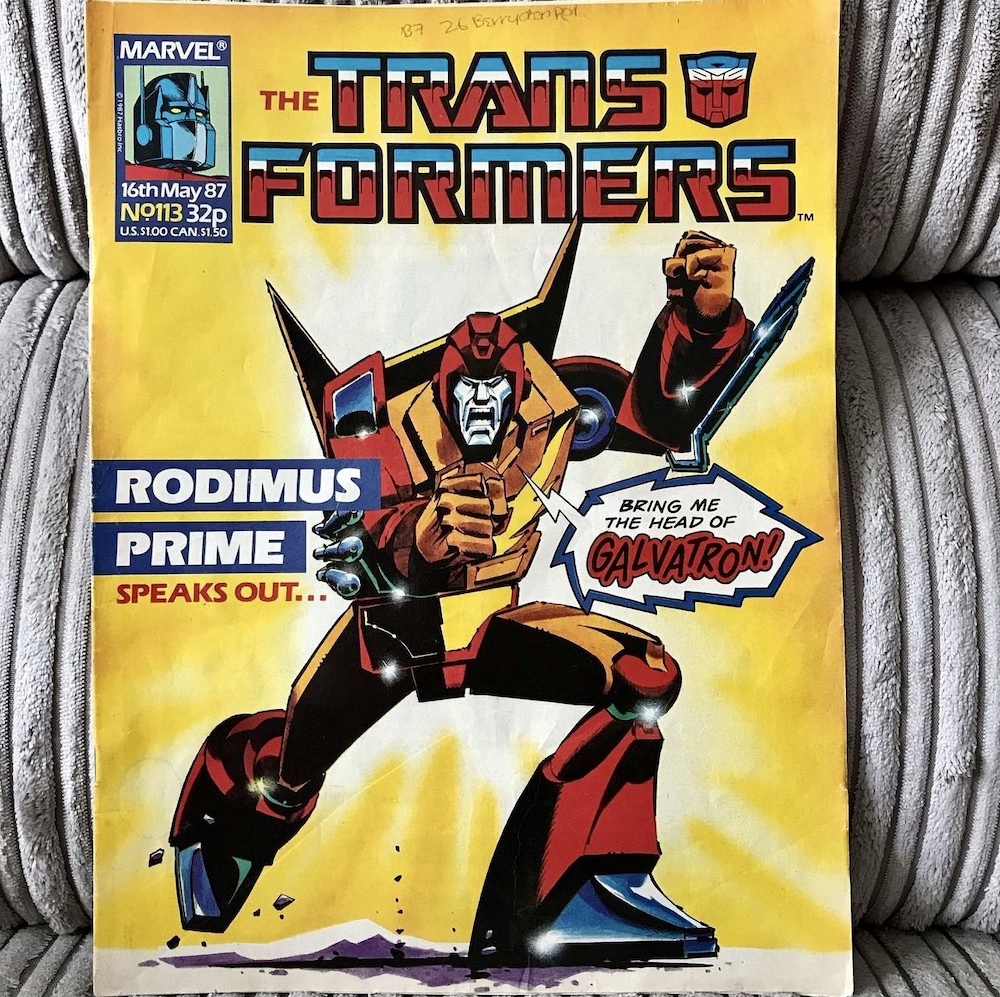
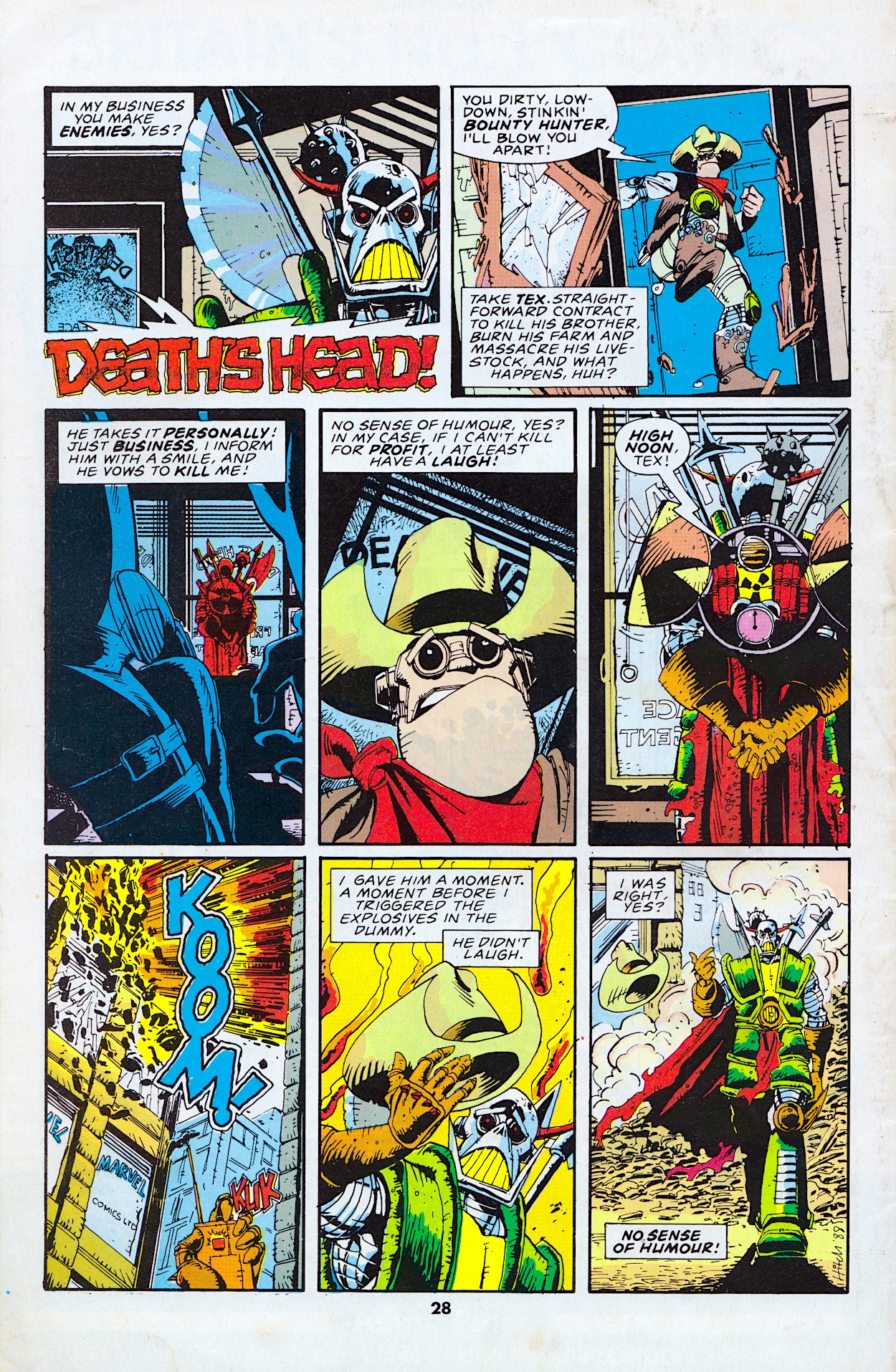
Despite online information to the contrary, Death’s Head did indeed first appear in Transformers #113 on 9th May 1987. There’s a one-page strip called High Noon Tex (further below) which Former Marvel UK editor Richard Starkings (The Real Ghostbusters, Doctor Who Magazine, Elephantmen) tells me was created to run in other titles first so the company could retain ownership of the character, otherwise Hasbro (owners of The Transformers) could claim the copyright. However it didn’t appear until a year after his first Transformers appearance.

“I dare say,” Richard told me, “that between commissioning the strip (it’s one page, so you know it was my idea) and legal establishing the trademark … his appearance in Transformers notwithstanding, we weren’t able to run High Noon Tex beforehand. There was also a Doctor Who crossover (I loved messing with legal) so the BBC couldn’t own him either!”

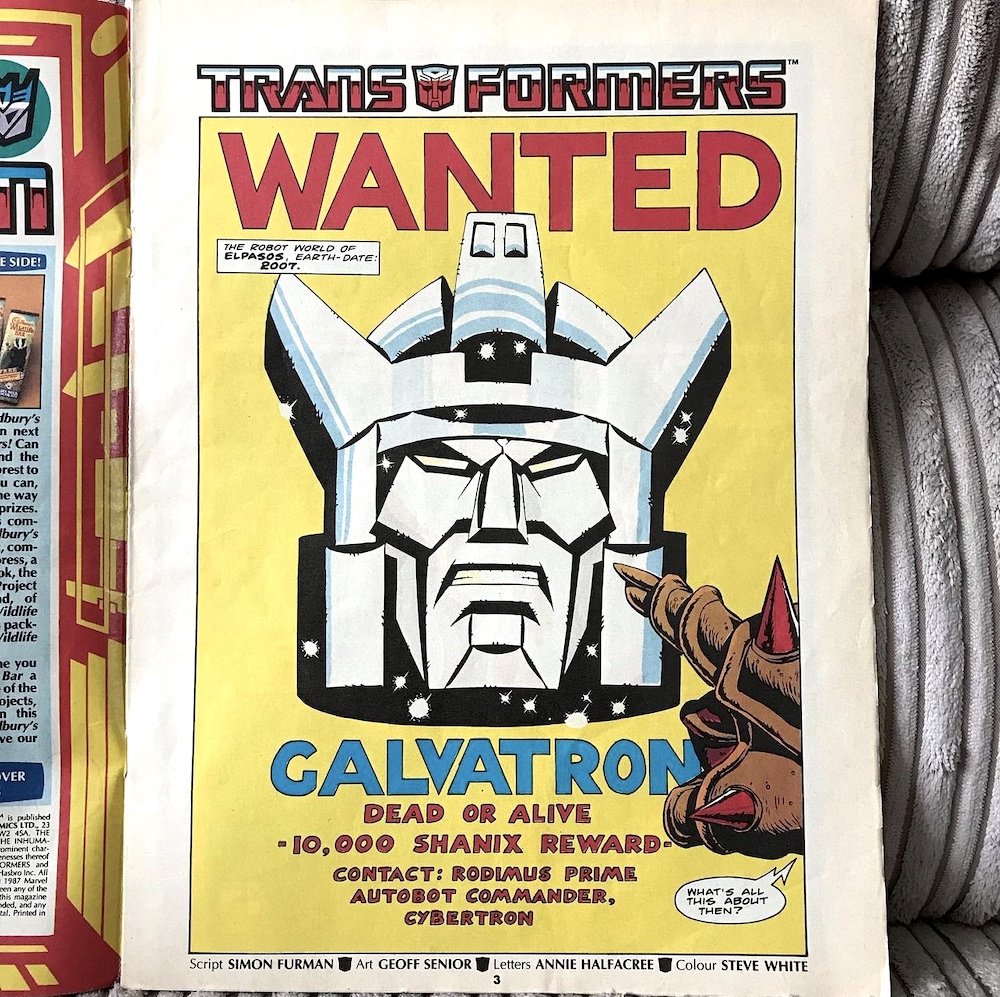
Wanted: Galvatron Dead or Alive was one of the early future-set (the then future of 2006) stories Marvel UK produced. With the release of Transformers: The Movie the UK team could focus on stories set after it, creating a new timeline of events and making it easier to write original stories not linked to the US strips. On the first page we see what would become a familiar detachable hand pointing at the wanted poster of the title. A bounty set by Autobot leader Rodimus Prime for Galvatron (the immensely powerful resurrected form of Megatron) after he disappeared at the end of the movie is too good for Death’s Head to pass up.

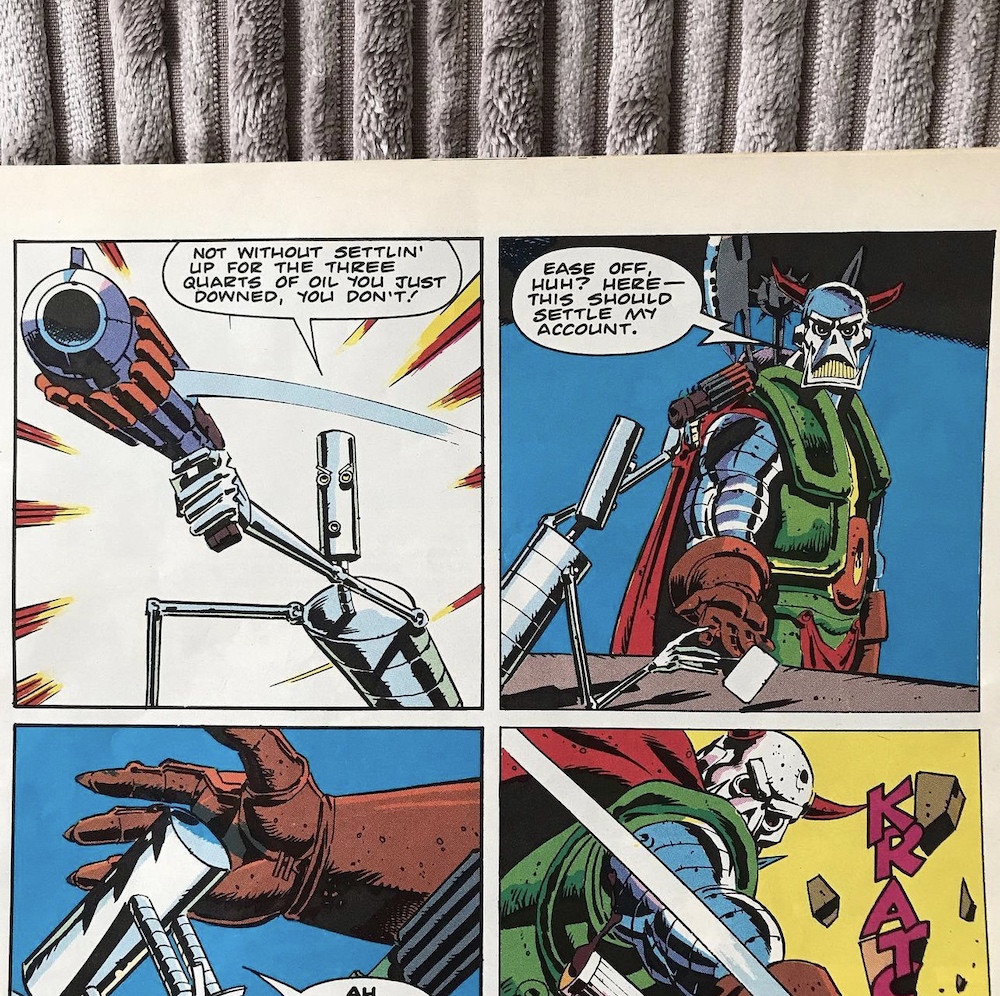
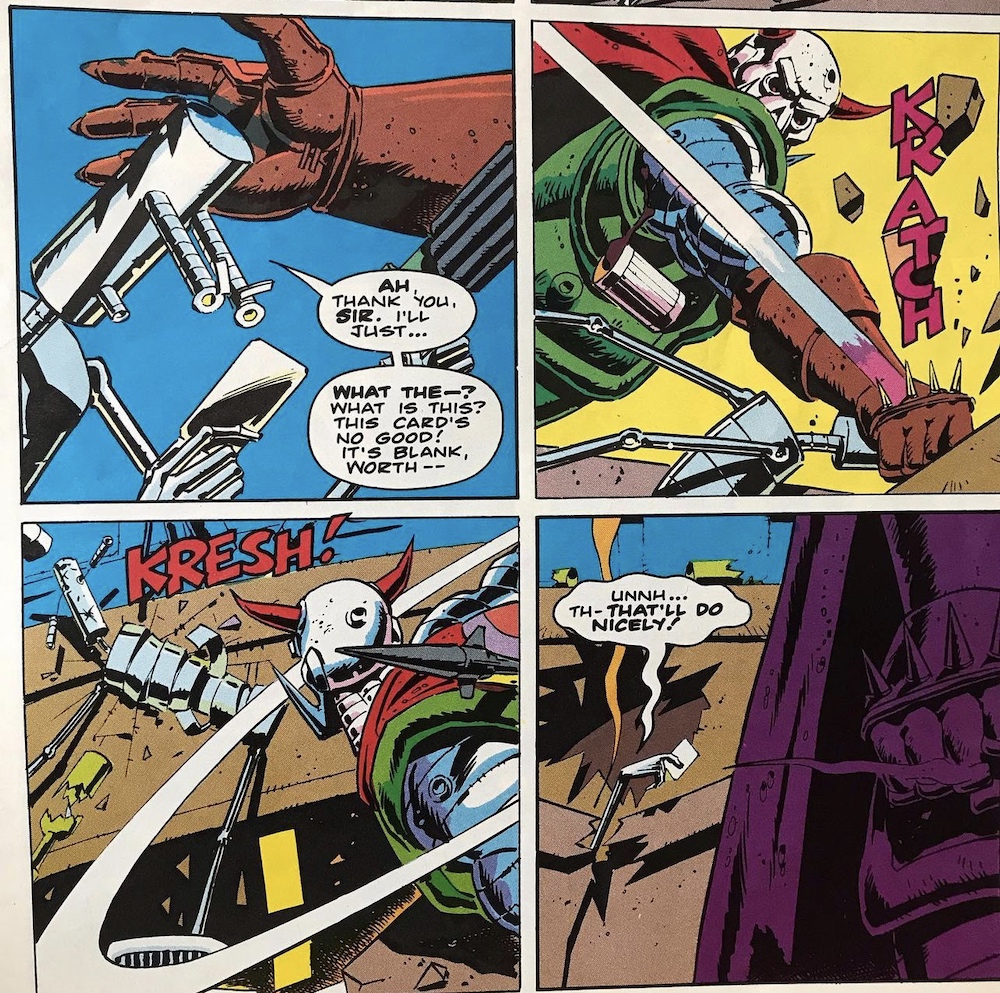
The story saw the beginning of the comic’s use of time travel and the building of a huge universe populated with both organic and mechanical races, for example the slight-looking barkeep in the tavern where our anti-hero finds himself between contracts. Intending to pay, Death’s Head soon changes his mind when the owner pulls a gun on him, wrongly suspecting his customer of leaving without clearing his tab. What happens next is the perfect introduction for this character.

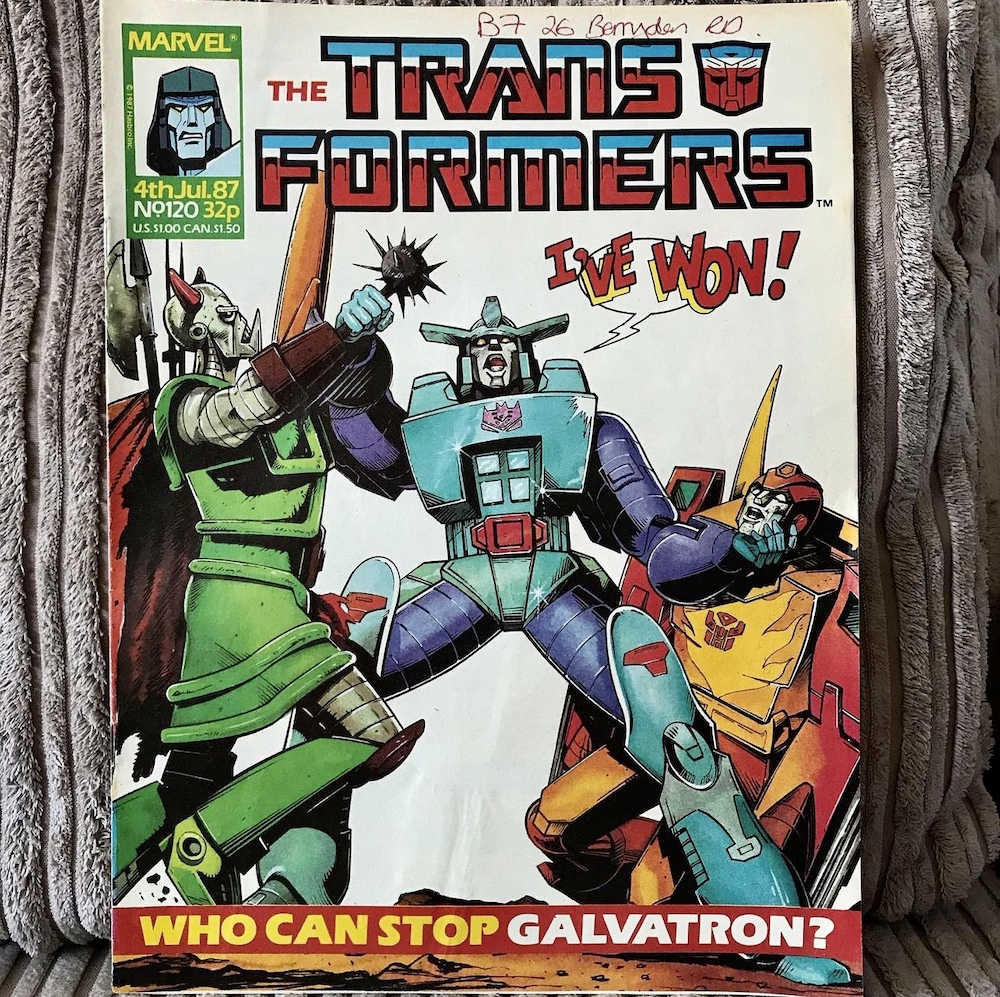
Over the course of a year Death’s Head even made the cover of Transformers no less than six times. He’d become a big selling point for the comic, such was his popularity with the young readers and the fun Furman had in writing him. My favourite of these is the classic ‘The Good… the Mad… and the Ugly!’ cover by Geoff for #117. His return was always hyped in advance in Next Issue panels and editorial promotions. Really, it was inevitable he’d get his own comic eventually.

One of my favourite aspects of the character was his loyalty to the contract. Once he’d taken on a job he’d see it through to a successful conclusion no matter what he’d have to put himself through in the process. Yes it was all for money but it was clear he enjoyed what he did and he had a brilliantly dark sense of humour as a result. But even if someone else (usually his bounty) offered him twice the amount he was being paid he’d turn it down, his reputation was more important.

This was a compelling chapter in the character’s life, as he found himself going above and beyond to do the right thing as well as complete his contract

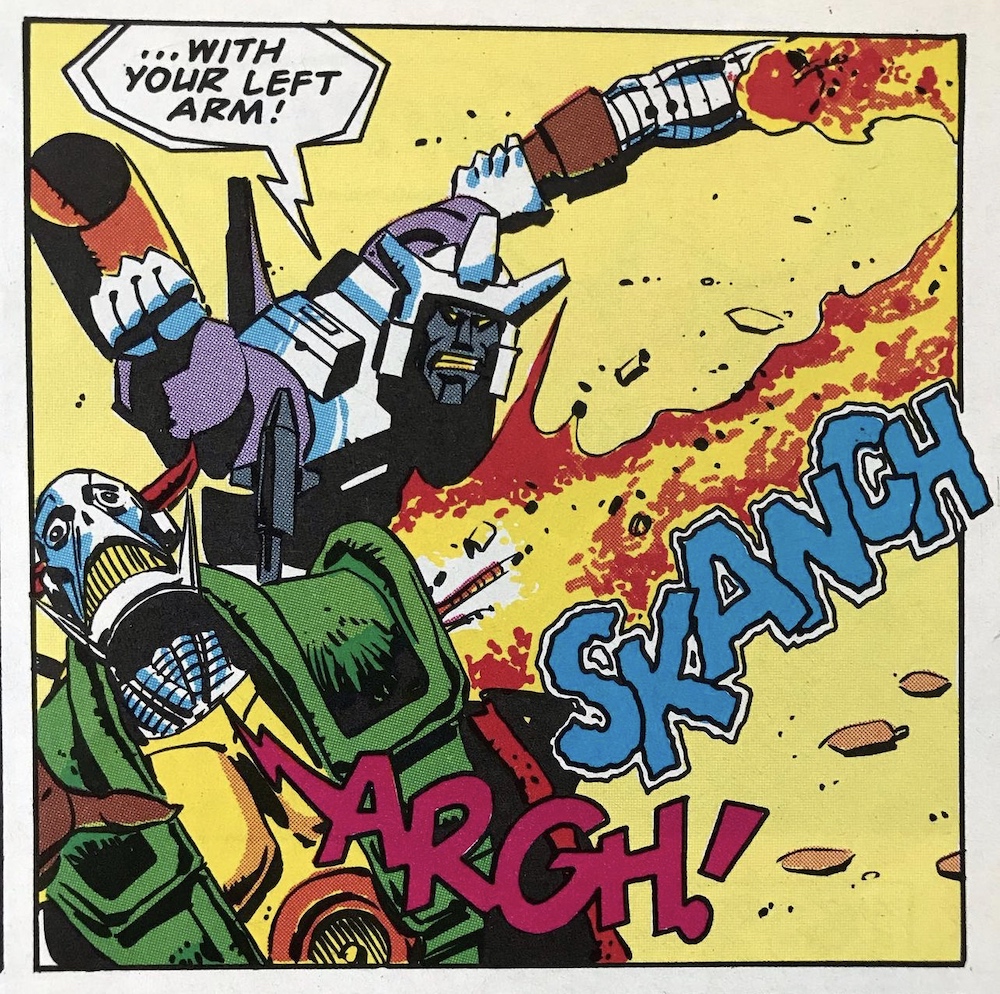
Death’s Head certainly left an impression, not only on the young readers but on the Transformers’ universe as a whole. Travelling back to 80s Earth he went head-to-head against Galvatron, aiding the Autobots and Decepticons in their battle to stop him from becoming an all-conquering god. In this story he also ends up killing beloved Autobot Bumblebee (in the US comic G.I.Joe mistakenly did this) who Hasbro was relaunching as Goldbug (thus this led to his resurrection).

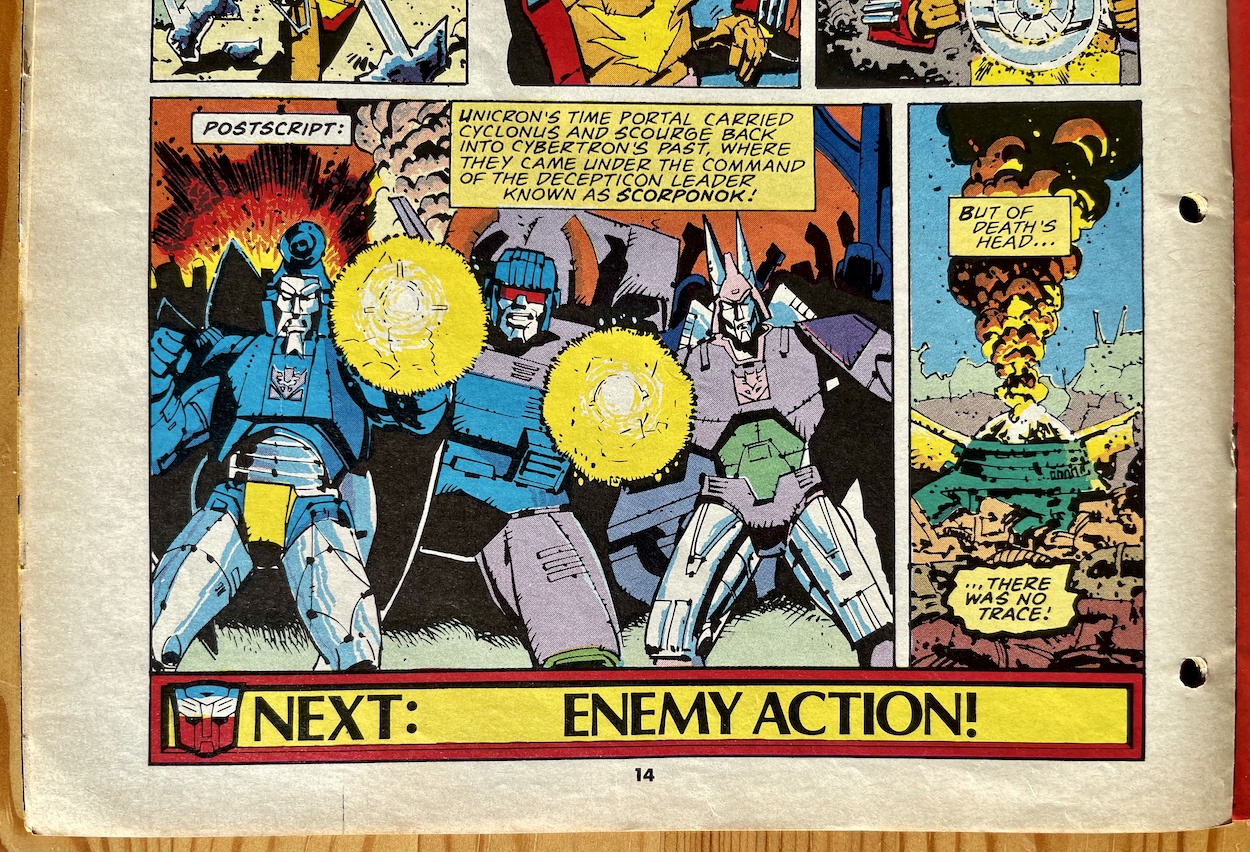
When Death’s Head returned next time he took a contract from Decepticon leader Shockwave to track down and capture or kill Cyclonus and Scourge who had travelled back in time too, and who Shockwave had discovered would kill him in the year 2006. It was great stuff! This made what Death’s Head did in The Legacy of Unicron all the more interesting and dramatic for me. He was actually instrumental in stopping Unicron’s return, aiding Rodimus Prime by linking with the giant god’s mind on the psychic plane, distracting him so that the Autobots and Junkions could get on with their plan free of being psychically tracked.

This was a compelling chapter in the characters’ life, as he found himself going above and beyond to do the right thing as well as complete his contract with Shockwave. The Legacy of Unicron was an important story in the history of Transformers, spread over several issues including the landmark 150th in which the origins of their race was told for the first time ever. This was created by Furman for the UK comic, the cartoon series would go on to create its own far less interesting version.

The tale, one as old as time itself, of myths and gods, of the birth of the universe and the eternal fight battle light and dark, was told by Unicron, the transforming planet eater from the movie reinterpreted by Furman as an all-conquering god of chaos. It’s still incredible to read today, especially when you remember this was a toy licence comic! Transformers really did break the mould. Even better, we the readers found all of this out as Unicron relayed his tale to none other than Death’s Head while the two were locked in their mental battle.

The Legacy of Unicron ends with Death’s Head shoving Cyclonus and Scourge through a time portal as the Junkion planet explodes beneath them. The Decepticons reappear on Earth in the present day but of him there was no trace. He wasn’t to be seen in the world of the Transformers again. Instead, as he flew through the corridors of time and space he bumped into a familiar blue police telephone box in another of Marvel UK’s titles. That’ll be the first chapter in Death’s Head’s real time read through in just a few days.

Apart from the last photo above, all of the preceding images were taken from the OiNK Blog’s Instagram feed from the last few years. Over there I’ve been reading Transformers in real time, week-in, week-out for about six years now, taking up to ten photographs of each issue and summing them up in mini reviews of sorts. You can check out all of the issues featuring Death’s Head via these links below.

WANTED GALVATRON: DEAD OR ALIVE

Transformers #113, #114, #115, #116, #117, #118, #119 and #120

HEADHUNT

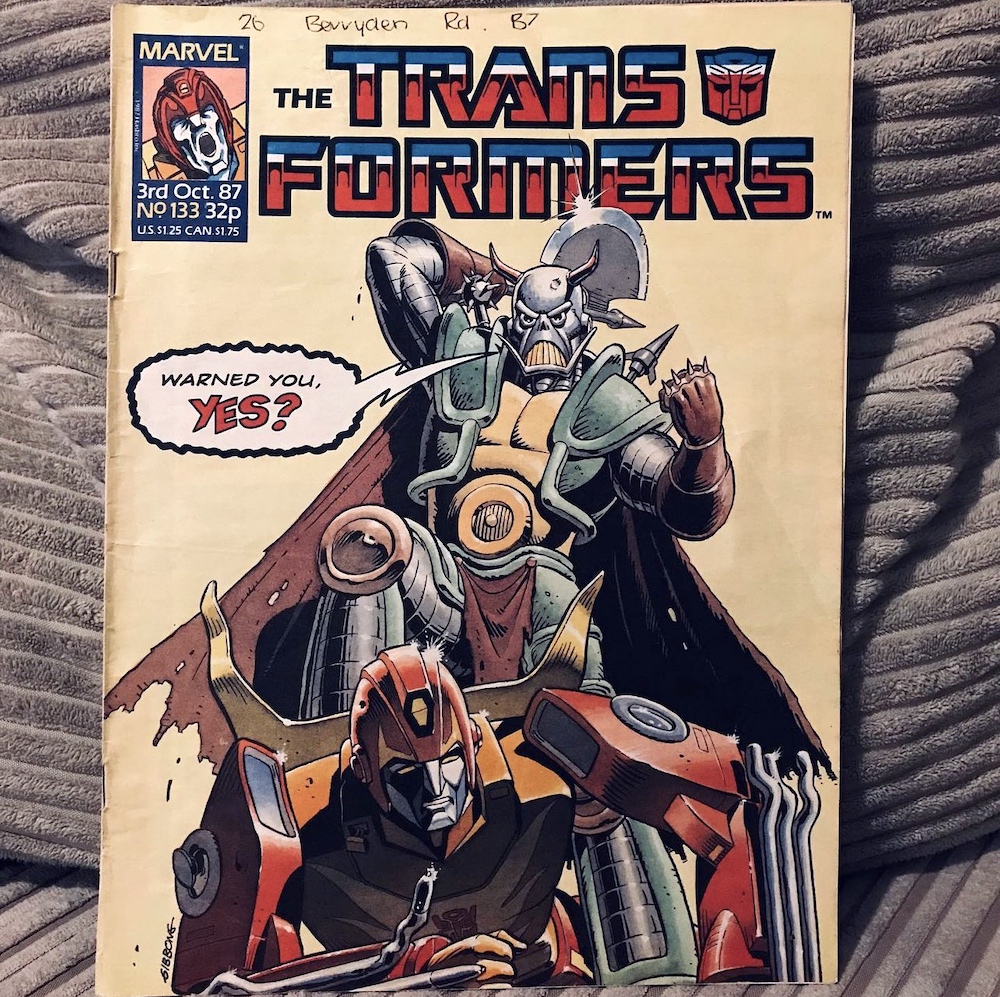
Transformers #133 and #134

THE LEGACY OF UNICRON

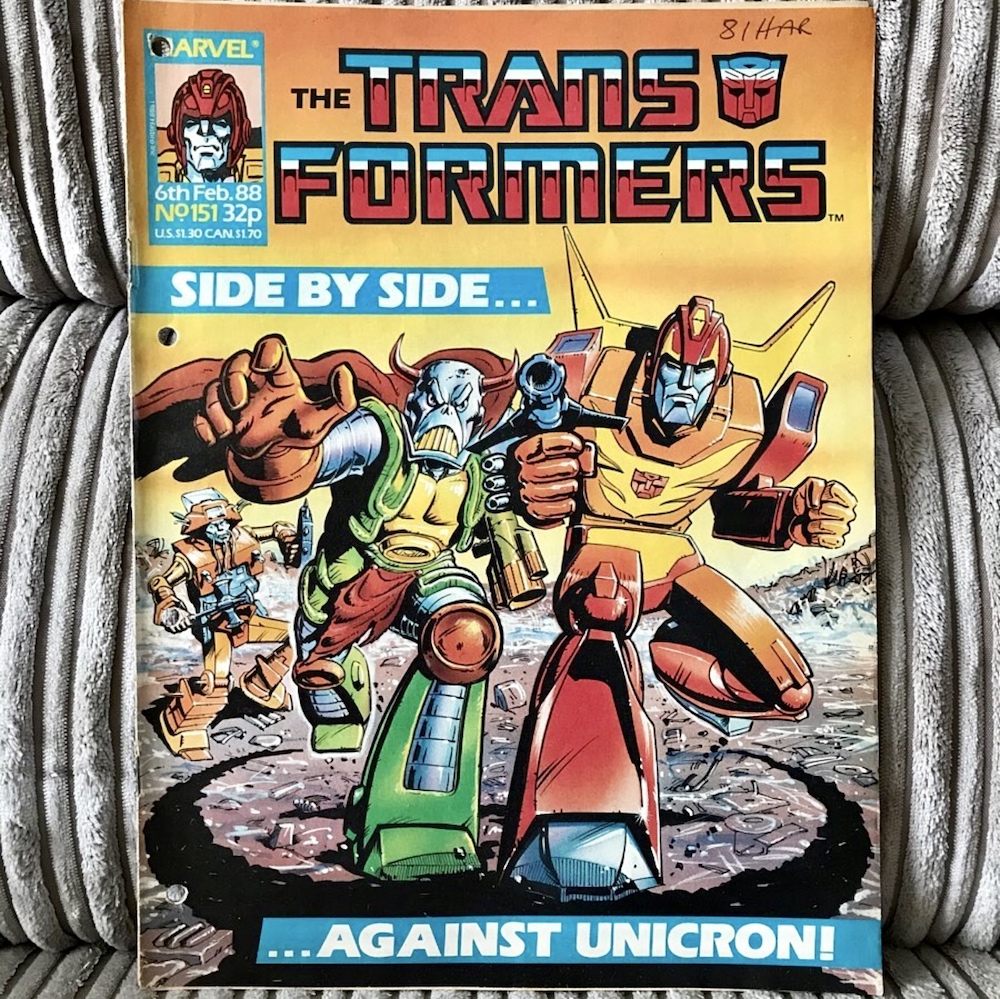
Transformers #146, #147, #148, #149, #150 and #151

By 1988 plans were afoot. Commissioned by Richard (who also commissioned the one-page strips below, as well as Dragon’s Claws and The Sleeze Brothers comics) at last Death’s Head was going to get his own ongoing comic, but first of all a change had to happen to the character himself. As you’ll know from reading the comics or watching the movies, the Transformers are somewhat larger than us humans. Seeing as how Death’s Head would now be interacting with plenty of humans he had to be taken down a peg or two first.

This was achieved with a one-off strip in the pages of Doctor Who Magazine in which another alien time traveller, albeit of much smaller stature showed he was more than a match for the other. After this the stage was set for the new comic, the first issue of which was released in November of that year. To promote it he also popped up in an issue of Dragon’s Claws, another Furman/Senior original creation just before his own premiere issue.

During 1988 High Noon Tex finally appeared across Marvel UK’s range, promoted as a one-off strip for the character. For those who hadn’t been reading Transformers this must’ve felt like a very random addition to their comic, but a highly enjoyable surprise nonetheless, showcasing the action, his brutal personality and most of all his sense of humour. The example above is taken from the back page of an issue of Dragon’s Claws. It was written by Furman and drawn by Bryan Hitch (who would draw half of the monthly issues, co-creator Geoff Senior surprisingly only drawing one of the strips).

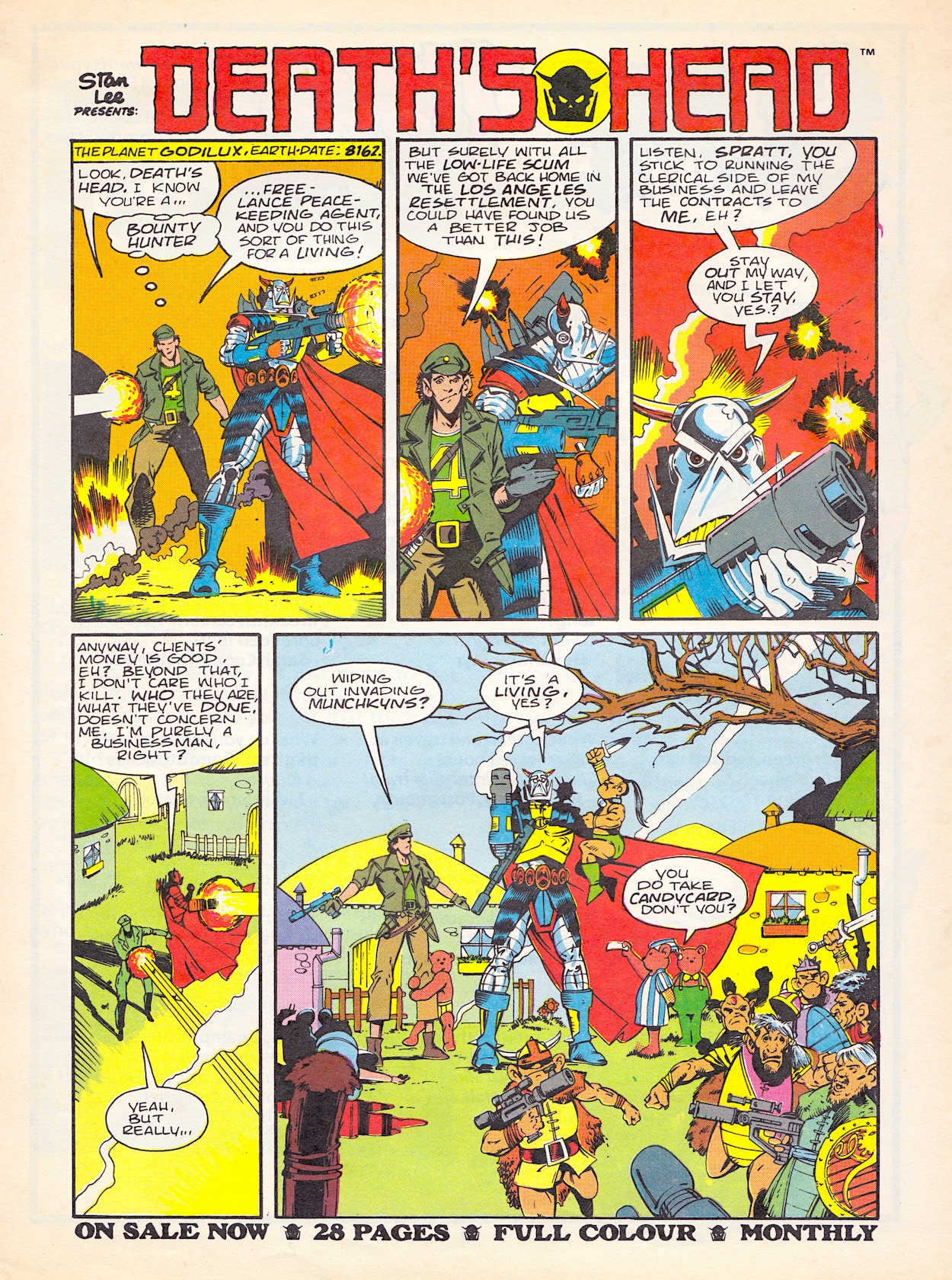
As the comic launched another one-page story appeared, this time as an actual advertisement for the monthly. I first saw it in Transformers #193. How could I not rush out to buy it after that? The scan above was taken from #29 of my Real Ghostbusters collection, which went on sale 17th December 1988 while #2 of Death’s Head was on sale. Richard was the launch editor of that comic and told me, “I’d edited The Real Ghostbusters for a year and I knew you could tell a story in one page.” (The Real Ghostbusters could have up to four stories in one issue, including the occasional 1-page strip.) You can read more about the creation of this series of adverts in the introductory post to Dragon’s Claws.

A much simpler yet no less eye-catching full-page advert was also found in the pages of my comics, using the cover image of the first issue. The issue of The Real Ghostbusters this first appeared in went on sale the same week as #1 of Death’s Head and he also popped up for the first time in the Mighty Marvel Checklist, which a lot of their comics ran at the time. As you can see it was the one not to miss that week and I obliged. At least for one month anyway.

Death’s Head’s comic lasted ten issues. It was printed on smaller than normal paper, the same size as US comics rather than the larger UK paper we were used to. Some fans say this contributed to less than stellar sales because it ended up hidden amongst all the larger comics. Richard tells me this just isn’t true; it was selling 60,000+ a month which would be a massive hit today. “The profit to the company versus cost of origination was too high for those days”, Richard says. “The Incomplete Death’s Head (collecting the whole series and his guest appearances in Doctor Who and others – Phil) #1 sold 400,000. So they got their money back.”

After his comic was cancelled he appeared in Strip in a multi-part adventure, collected in a graphic novel after Strip finished. He was relaunched as ‘Death’s Head II’ and ‘3.0’ later but I never bought into those versions. Furman wasn’t involved in the first and it lacked the humour, a key factor for me, and Simon has also said he doesn’t see either as Death’s Head so this put me off. They definitely have their fans though so I’m happy there’s a version for everyone. In the new century he’s popped up in cameos or guest roles in some more Marvel comics in his original form too, which I’ll detail at the end of the read through. You can’t keep a good Freelance Peace-Keeping Agent down.

So here’s my complete Death’s Head collection containing 30 comics altogether.

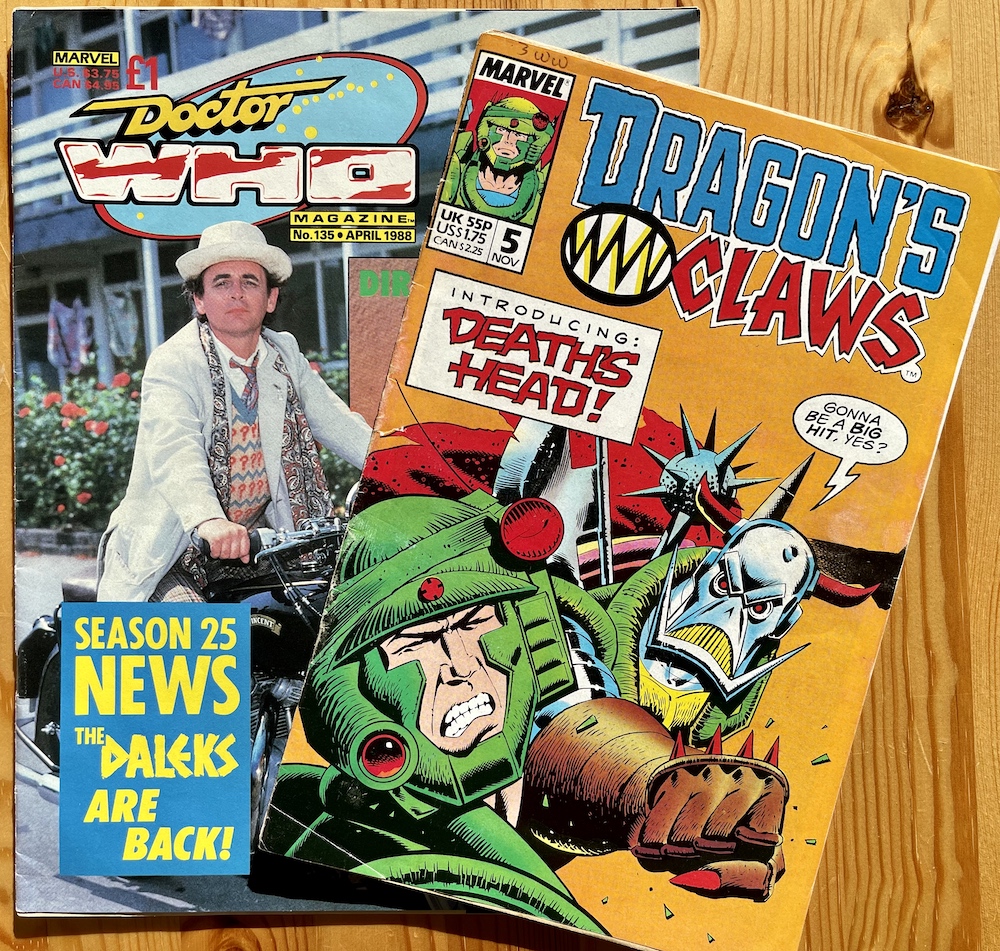
You can check out all of those Transformers issues at the links above and as you can see I’ve opted for the graphic novel version of the Strip story, The Body in Question. The premiere issue won’t be reviewed until 5th November later this year (this is in real time, remember) but in just three days on Friday 10th March 2023 you’ll be able to read the first Death’s Head review in a special post about his clash with the Seventh Doctor (Sylvester McCoy) in Doctor Who Magazine #135.

See you then, yes?

(Special thanks to Richard Starkings, Steve White, Lee Sullivan, Lew Stringer and John Freeman for all their help in putting this post together.)

GO TO DOCTOR WHO MAGAZiNE 135

DEATH’S HEAD MENU

HAVOC #7: MAN DOWN (CYBORGS UP)

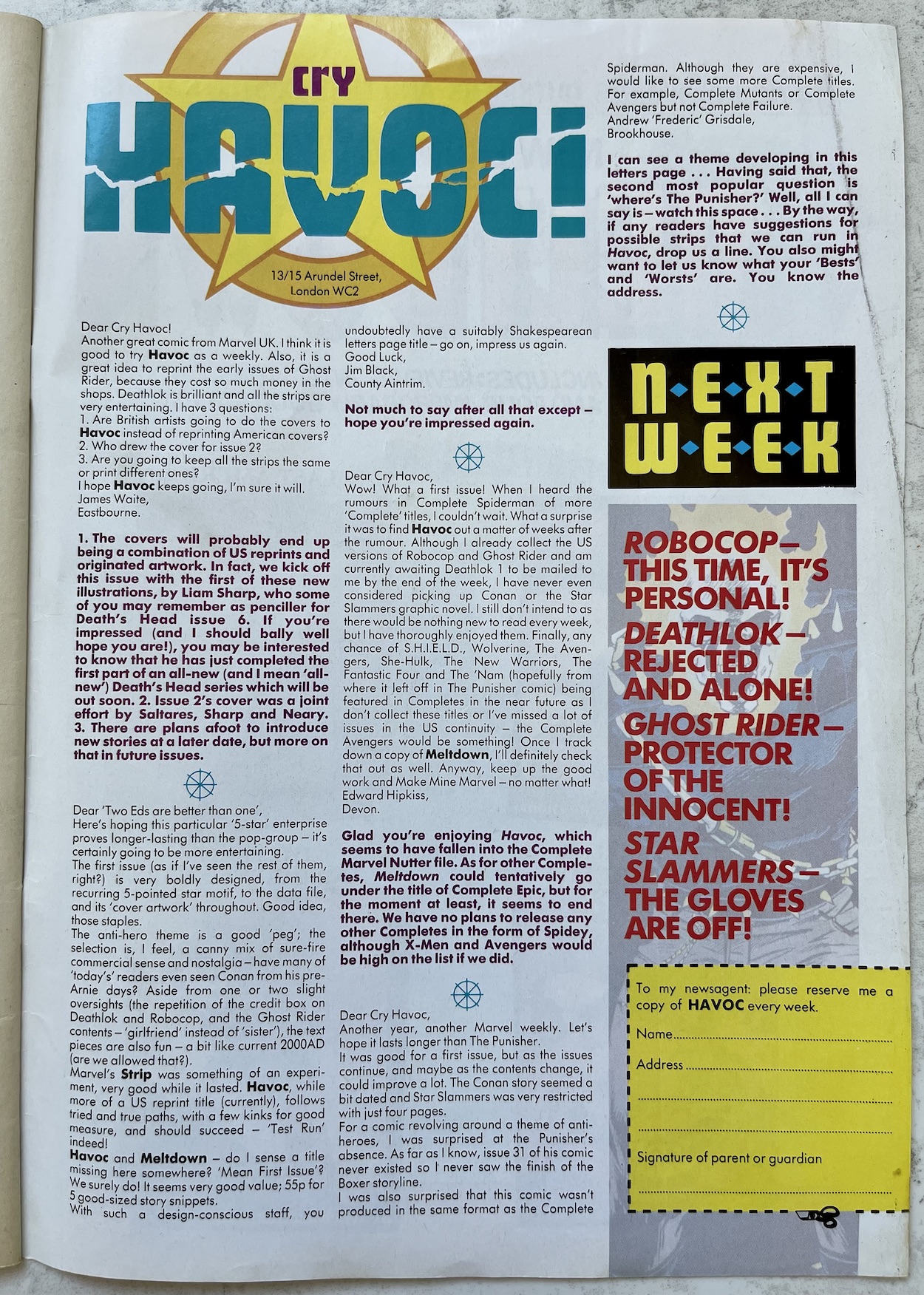
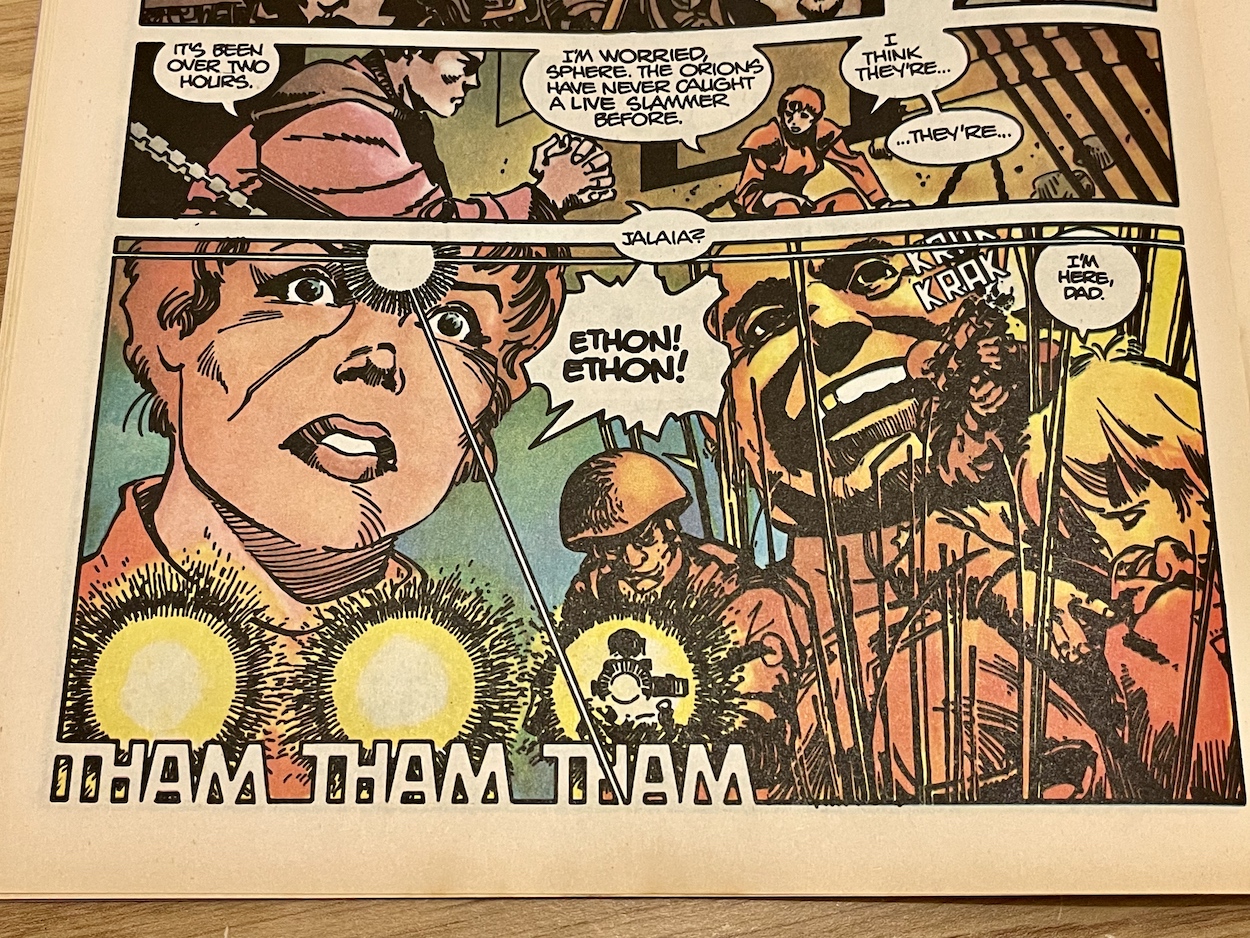
Alex Murphy returns to the cover once more as Havoc #7 hit newsagent shelves back in 1991. There’s something missing from this wonderful looking cover though and that’s any mention of Conan the Barbarian. As stated in the previous issue the Cimmerian would be taking a break for one week and on the contents page under his banner are simply the words “Back next week”. So why has he been forced out of the issue?

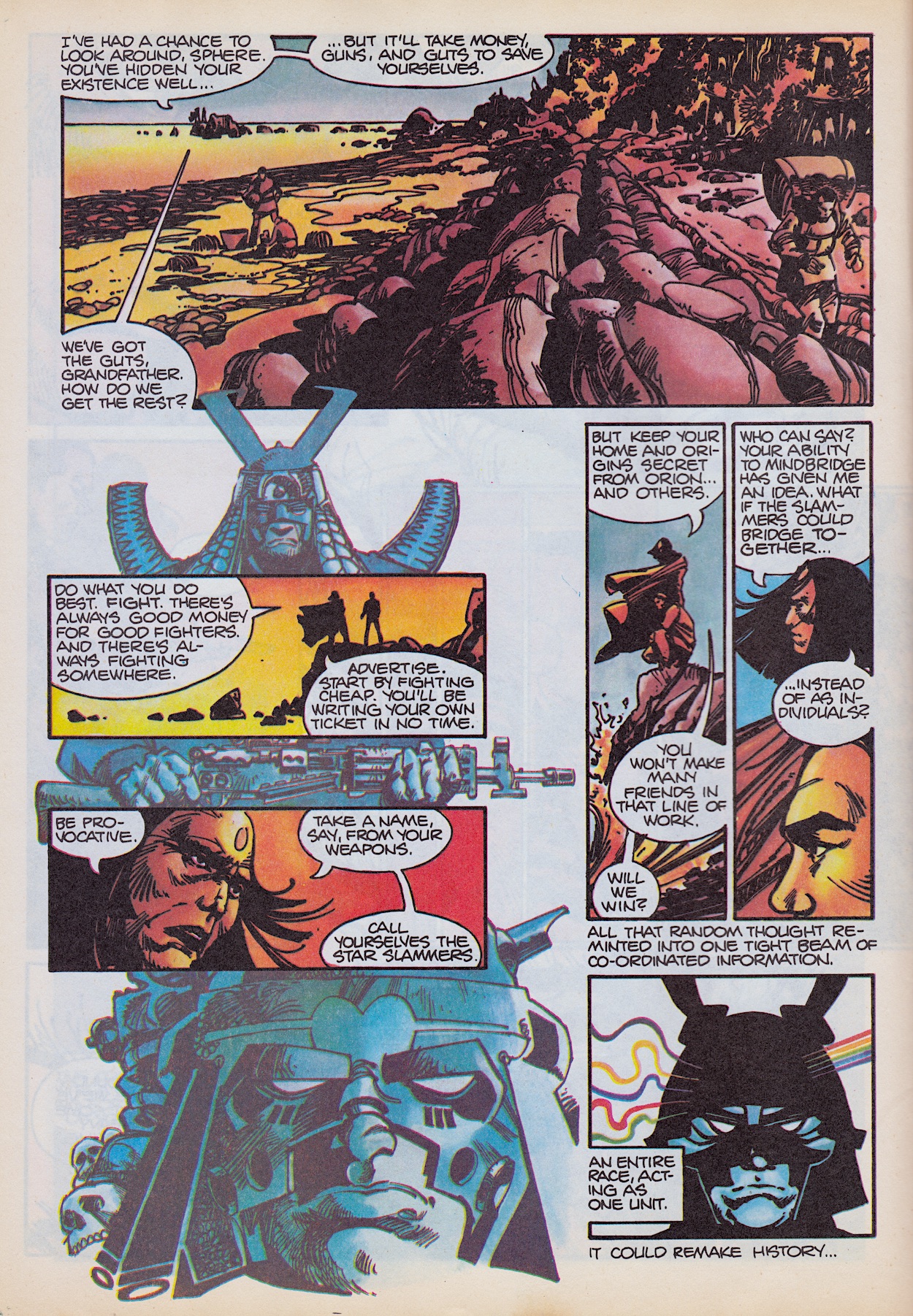
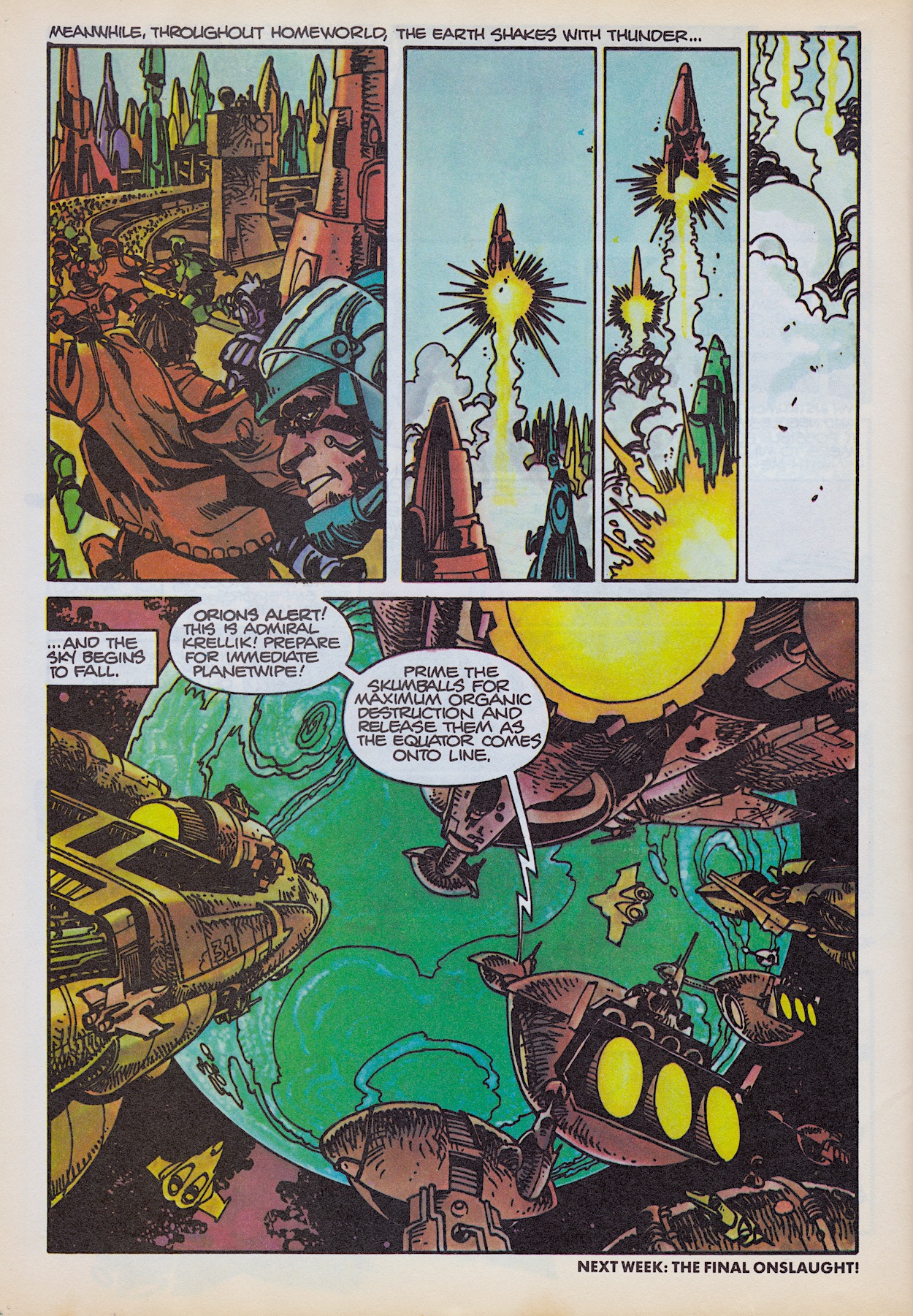
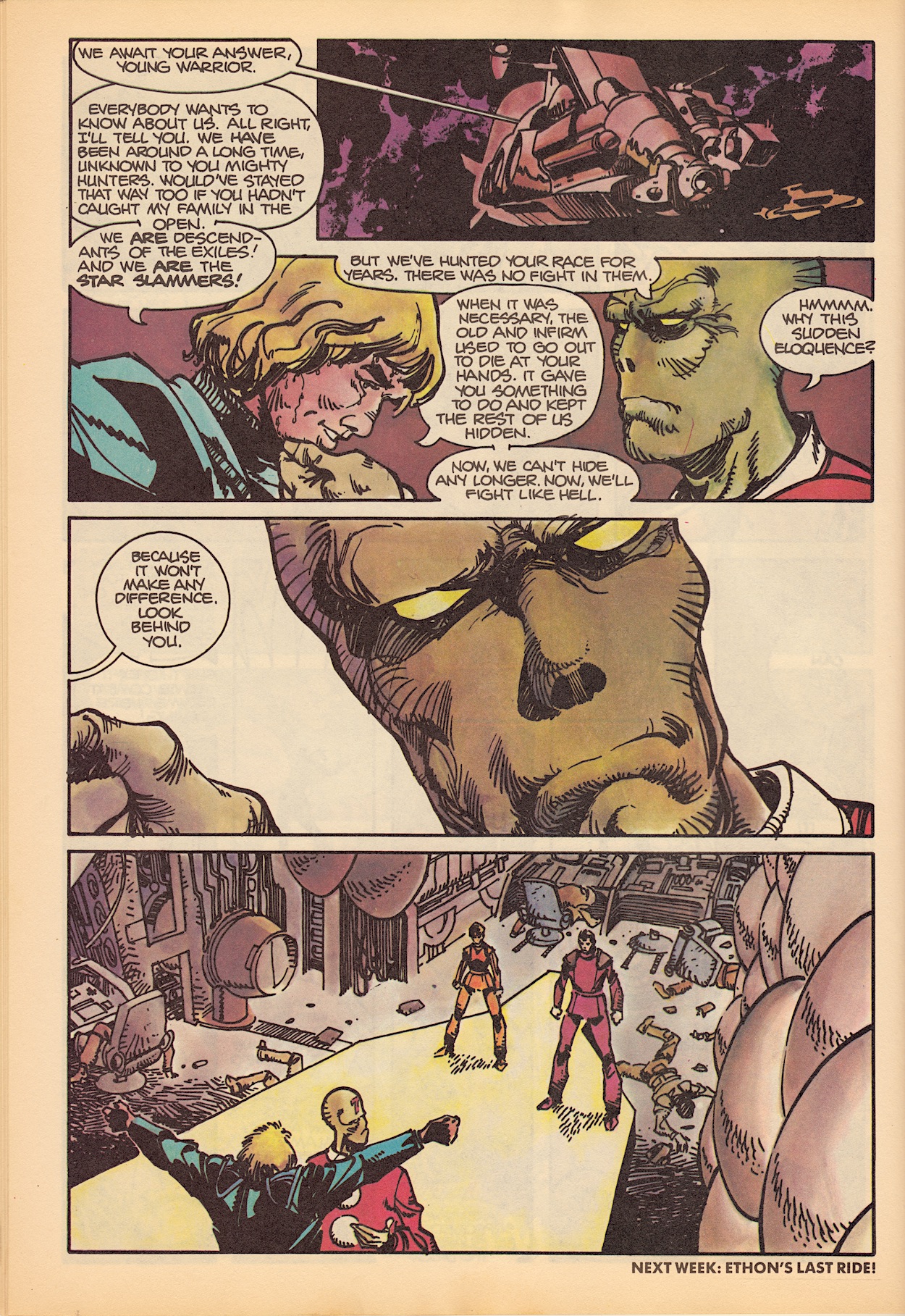
Two of the strips here, namely our title star RoboCop and Star Slammers get more pages apiece, particularly Robo who ends up with more than any strip has been given in any issue so far and this brings his current story to an end after three issues instead of the usual four. Each character would get a different number of pages every issue depending on what was happening in their individual stories, while also taking into account the following chapters, cliffhangers, endings etc. 

For example, on the letters page this week the replacement for Star Slammers in #11 is mentioned. Swapping out finished strips, working out suitable lengths for each chunk of story and planning for each issue to have as much content as possible would require some flexibility, especially as they were dealing with strips not written for this anthology format. To get the best out of each strip, including Conan, they may have to drop one for an issue to ensure things run smoothly in the long run.

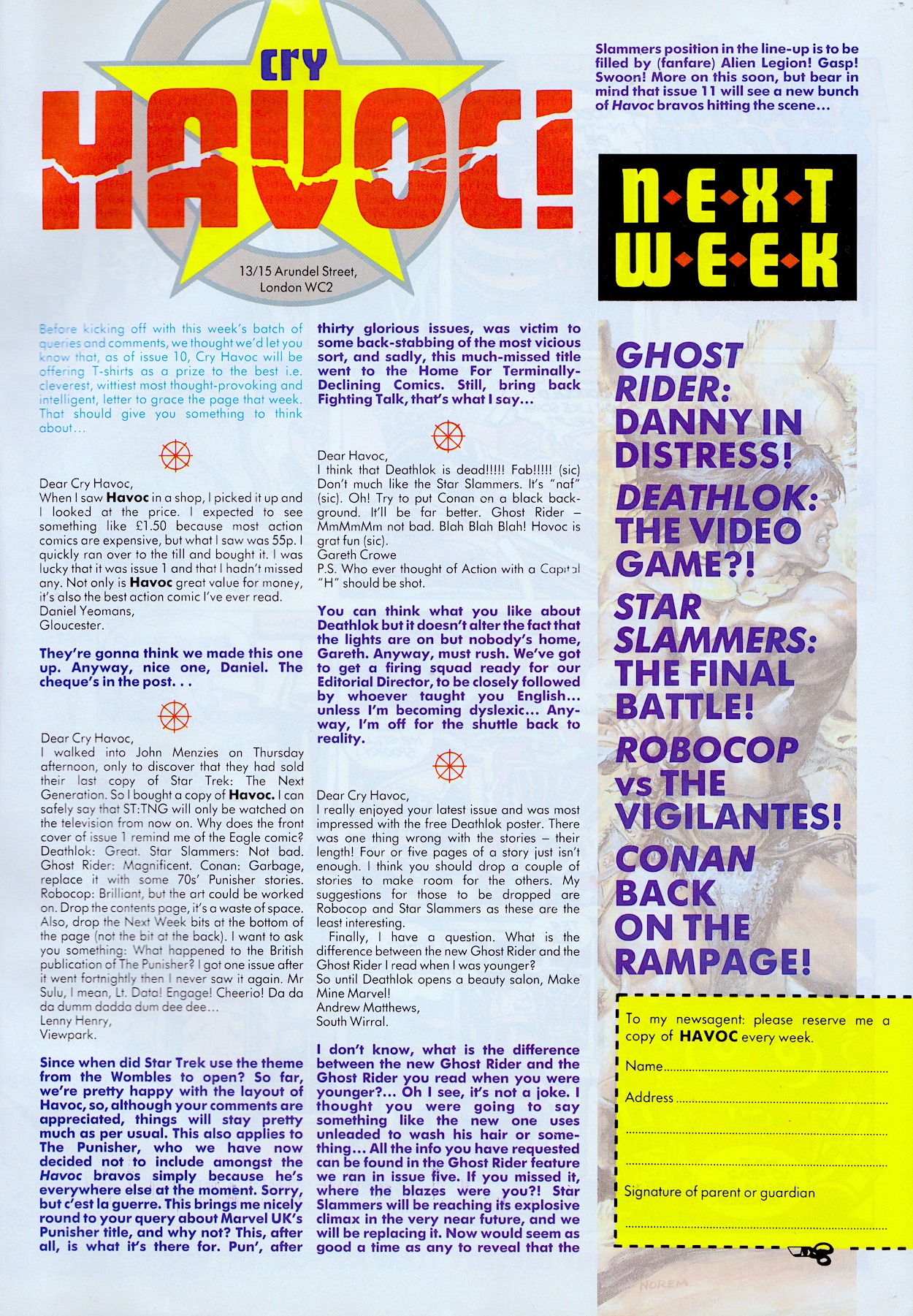
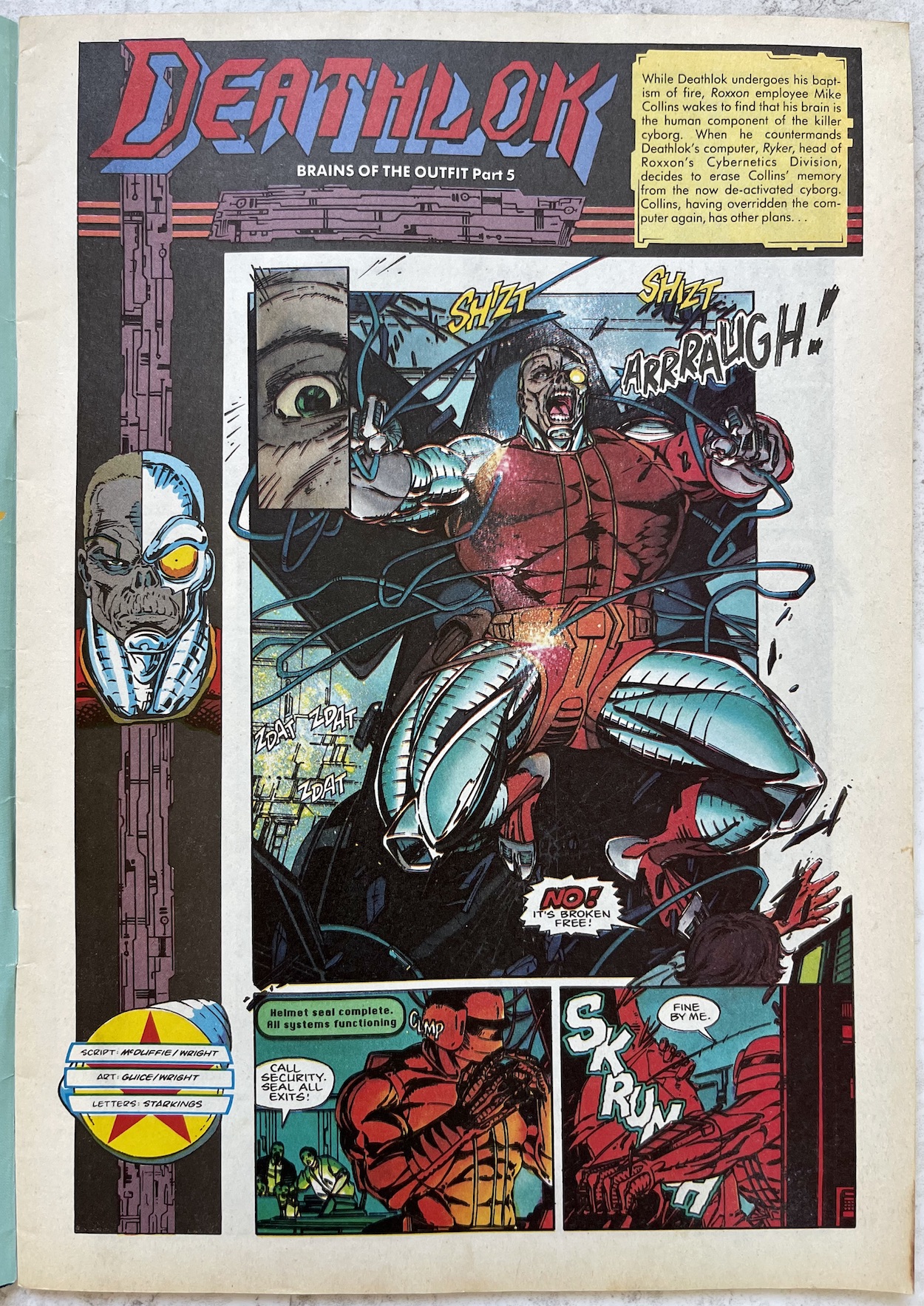
Speaking of the editorial team, there’s been a bit of a shake up. Launch editors John Freeman and Harry Papadopooulos have jumped ship already, leaving the tiller in the capable hands of Jacqui Papp (editor for titles such as Motormouth, Die Cut and Battle Tide, all comics from the Marvel UK Genesis Project) and Steve White (colourist for Transformers, Jurassic Park’s Xenzoic Tales and editor on Visionaries). Their first issue is a doozy, so let’s get started with Deathlok: Brains of the Outfit written by Dwayne McDuffie and Gregory Wright, drawn by Gregory and Jackson Guise and lettered by Richard Starkings.

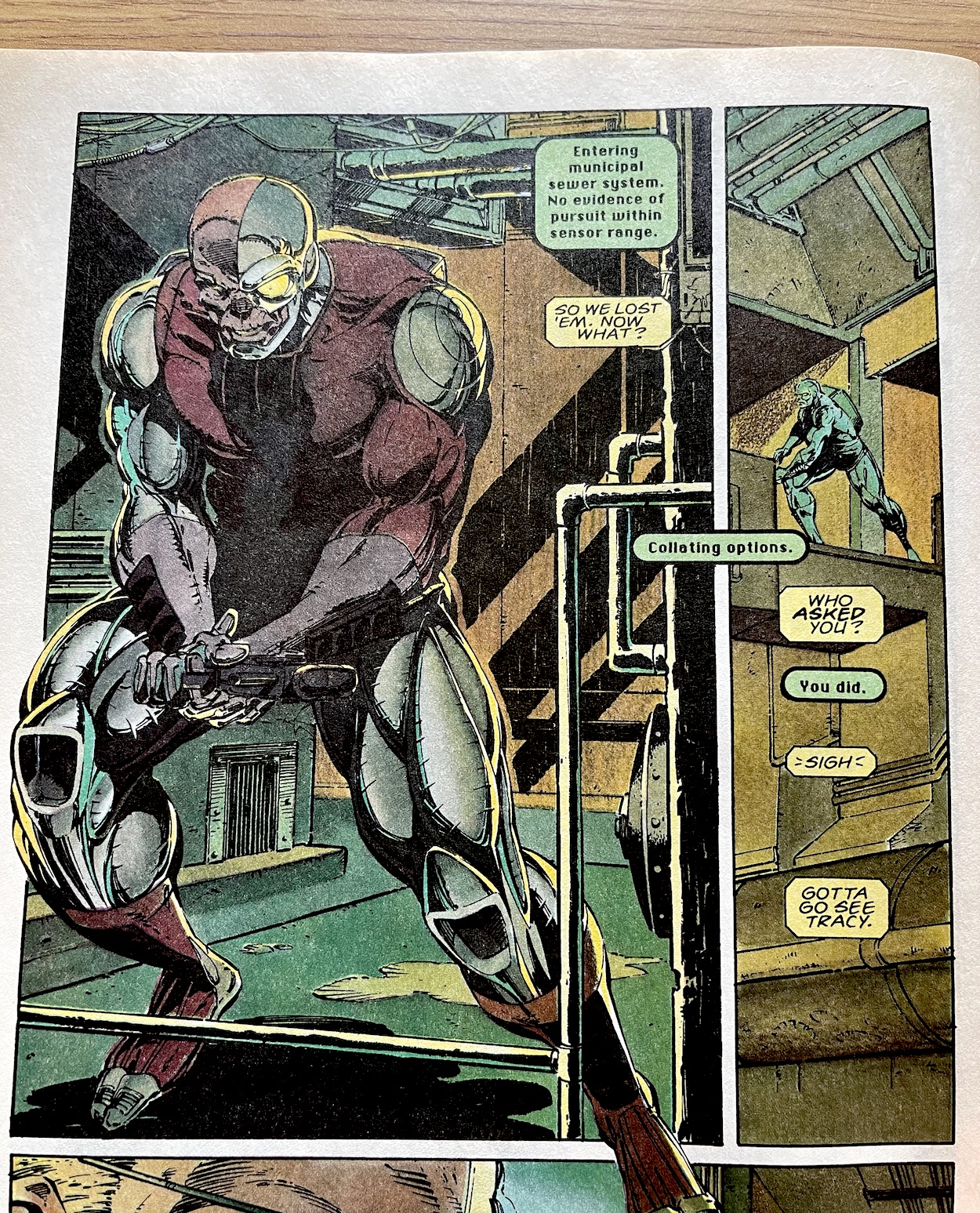
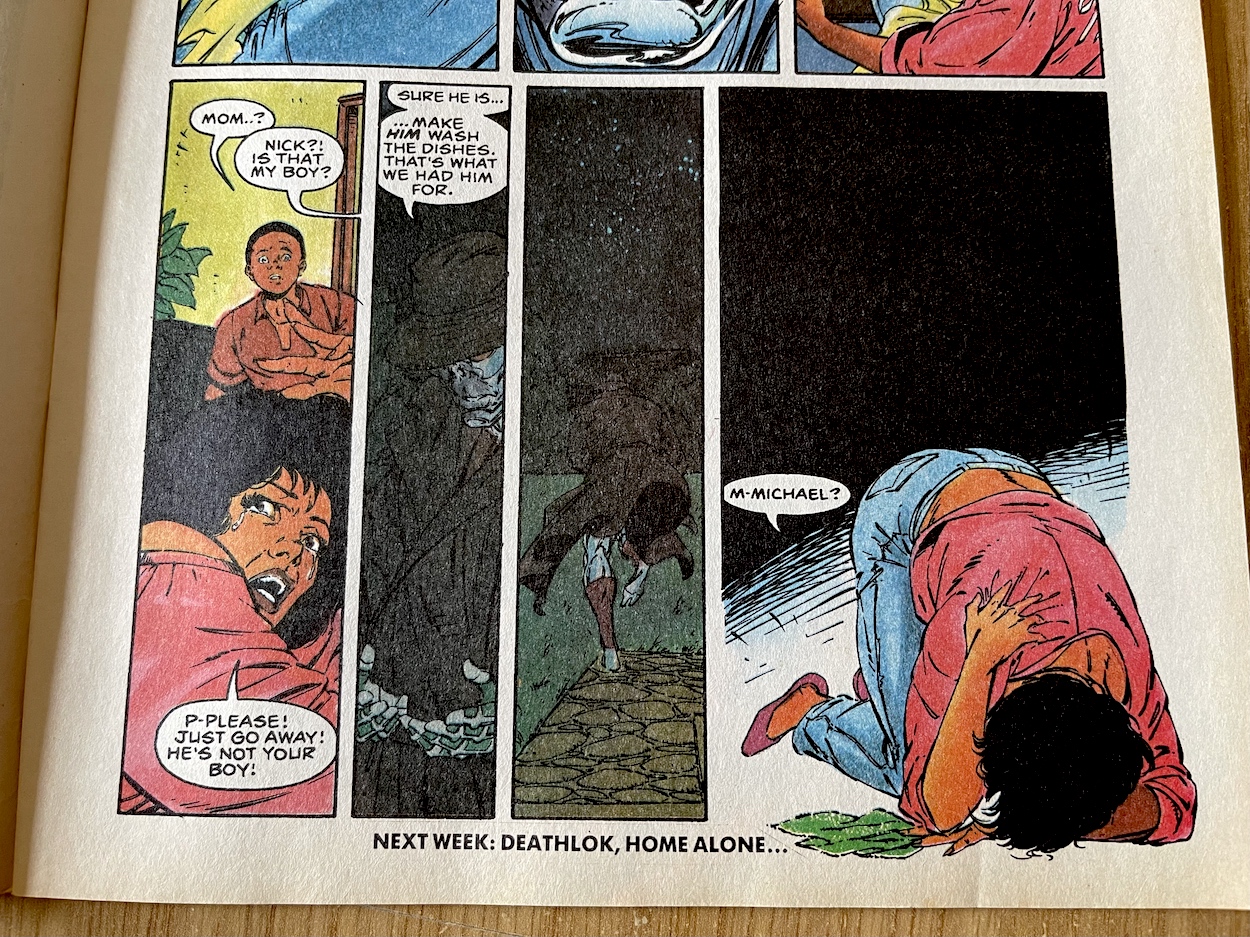
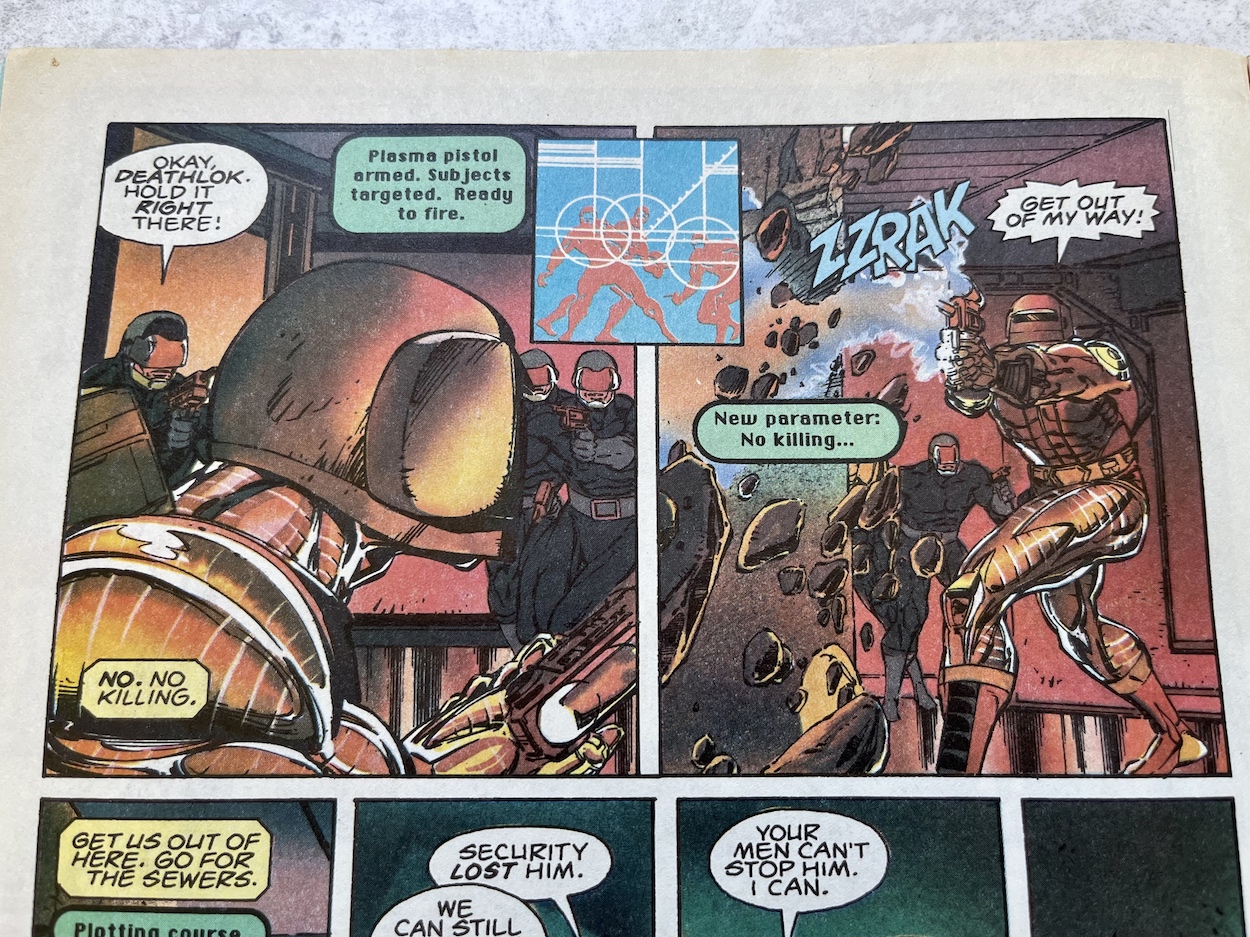
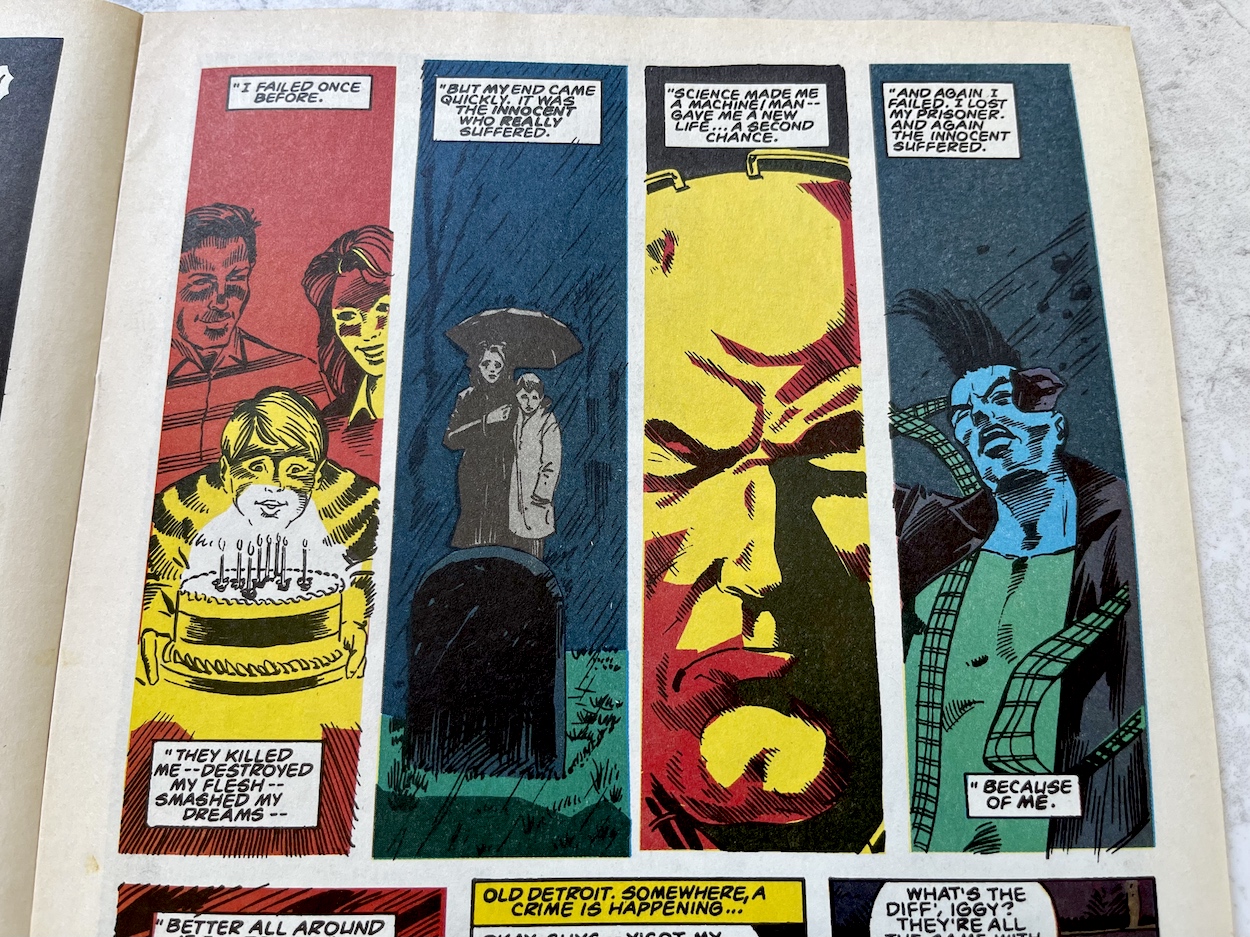
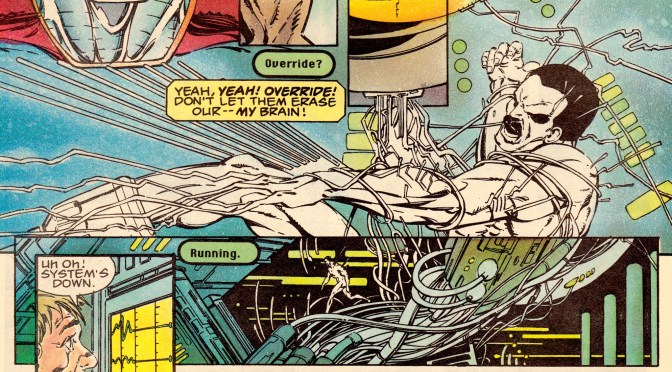
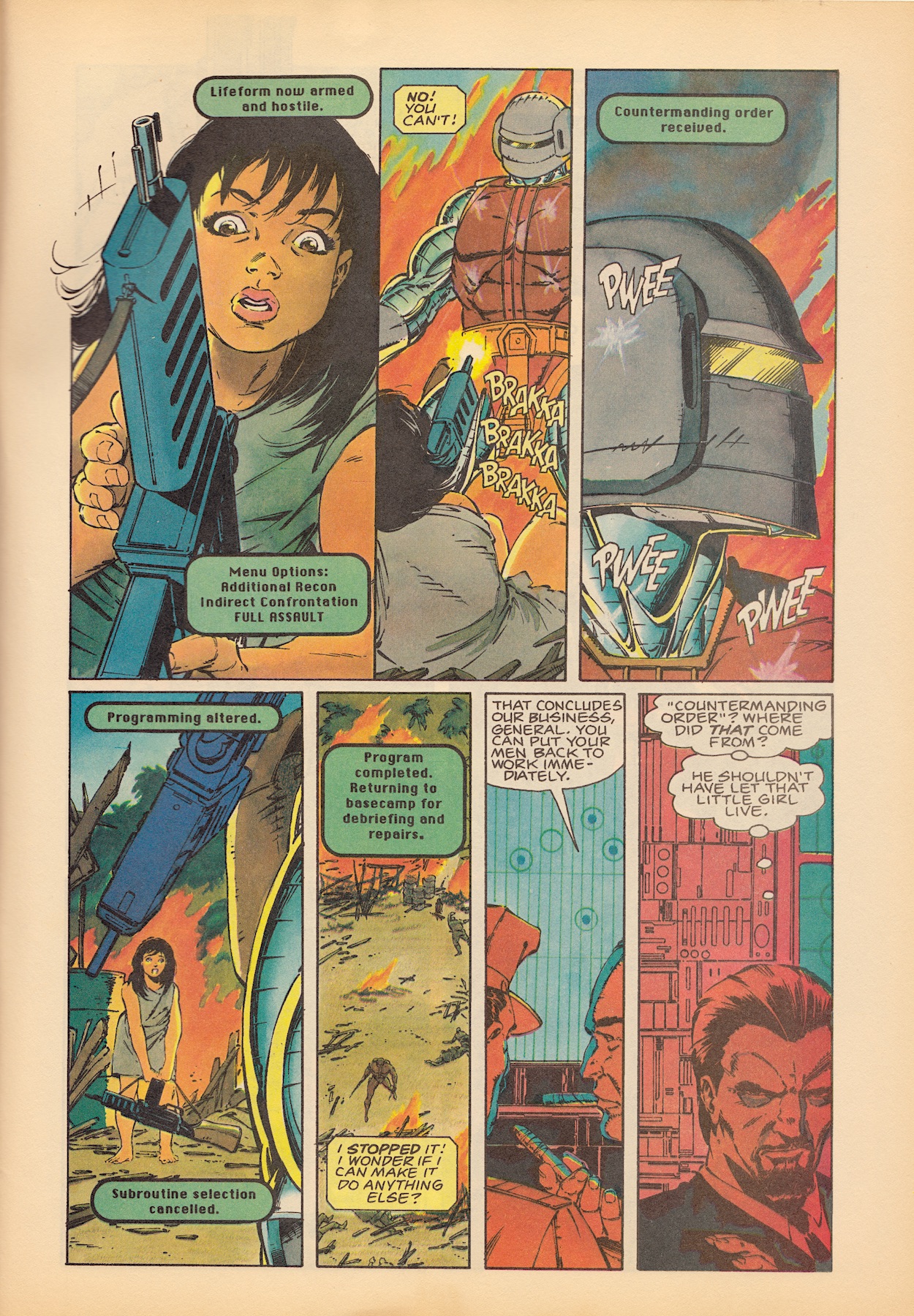
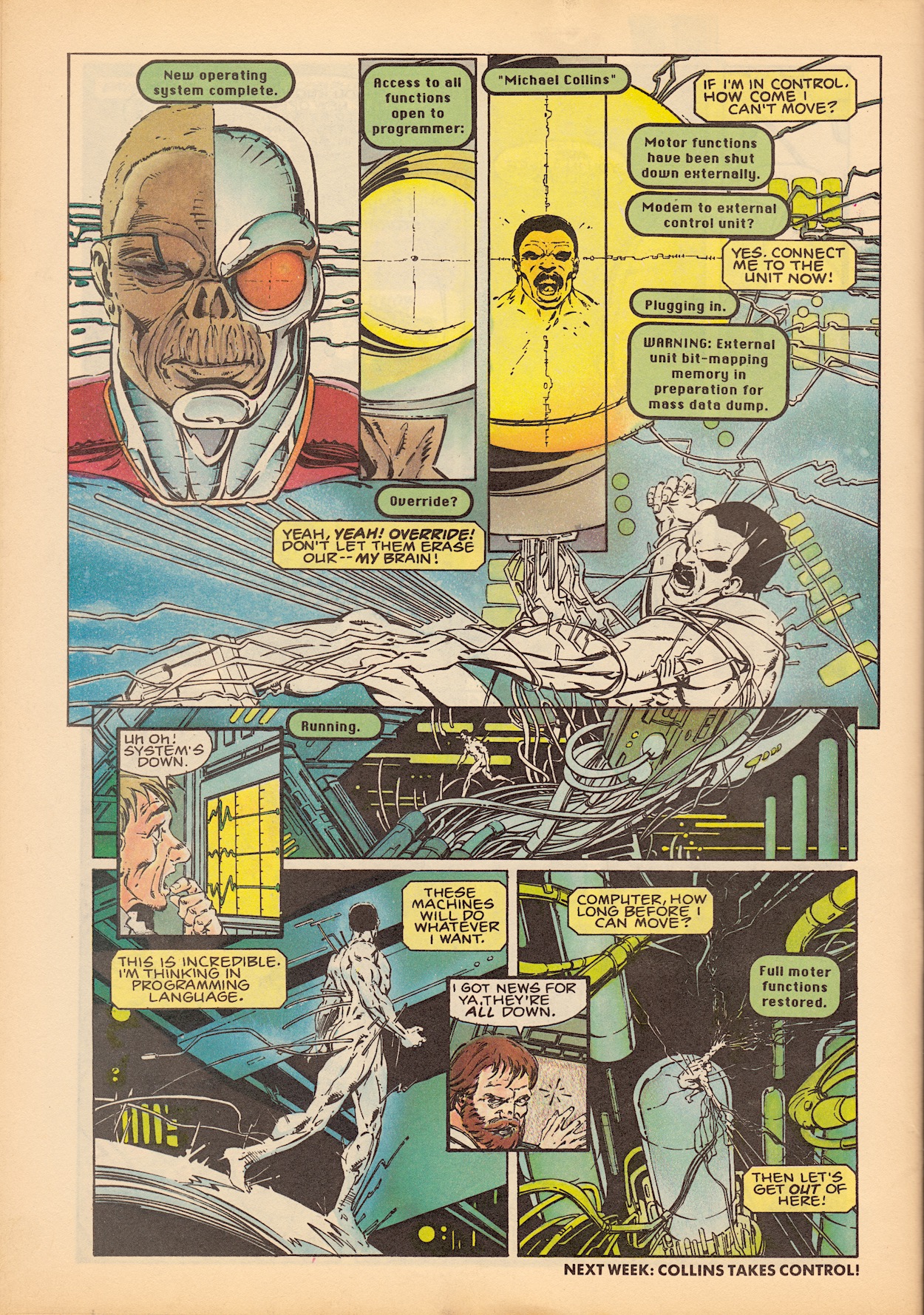
Up to this point Deathlok has been full of action, strong character development and some rather terrifying moments when Michael Collins awoke. I’ve previously mentioned how I remembered there being a lot of humour too, particularly between Michael and the monotone computer operating the Deathlok cyborg. We get to see quite a bit of this in part six of Brains of the Outfit, such as the computer’s recalculating moment and when they finally destroy the massive tank and it looks like the killer cyborg is about to see off its driver Ben, a former colleague of Michael’s, only for his head to be squished inside Deathlok’s helmet instead.


“Who asked you?”
“You did.”
*sigh*

Exchange between Michael Collins and the Deathlok computer

It shows how Michael has successfully reprogrammed the machine and the humiliation of Ryker is probably all the worse for the head of Cybertek; not only is he spectacularly defeated, but his cyborg war machine has avoided murdering someone again and it’s had a laugh at his expense in the process. Brilliant stuff! In the sewers we get more of this sort of thing as Michael forgets his thoughts are now part of the machine.

However, as you can see the strip can flip in an instant, from genuinely funny moments to those of heartache. Michael arrives home and obviously Tracy isn’t going to believe him when he tries to tell her who he is. Already devastated by the news of his death, this is almost too much to bare. That final moment when he repeats his funny comment about their son from #3 before running off is a much more perfect cliffhanger than any action scene could be. For all its bravado, Dwayne and Gregory’s story has a human heart running through it that’s just as compelling.

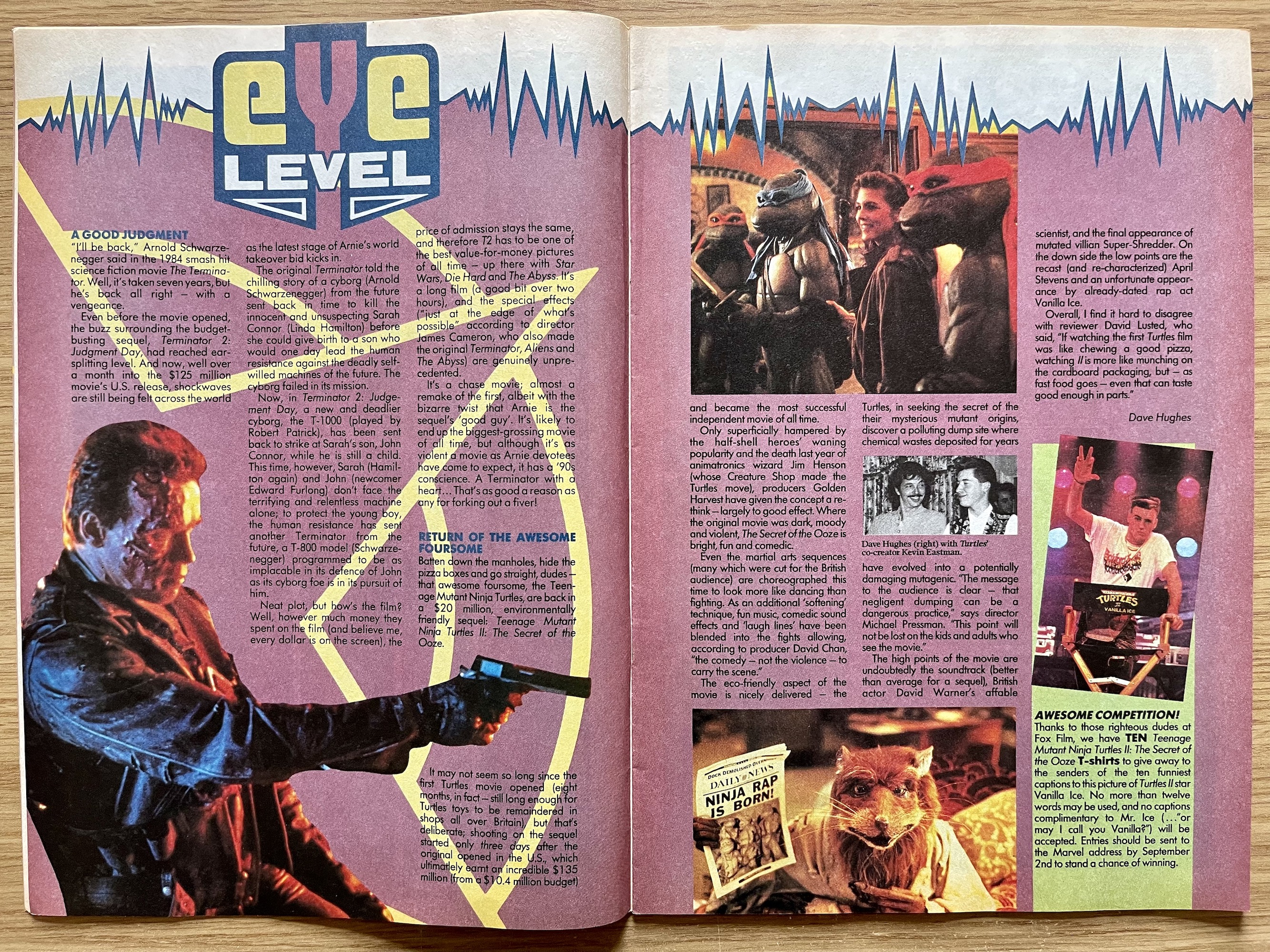
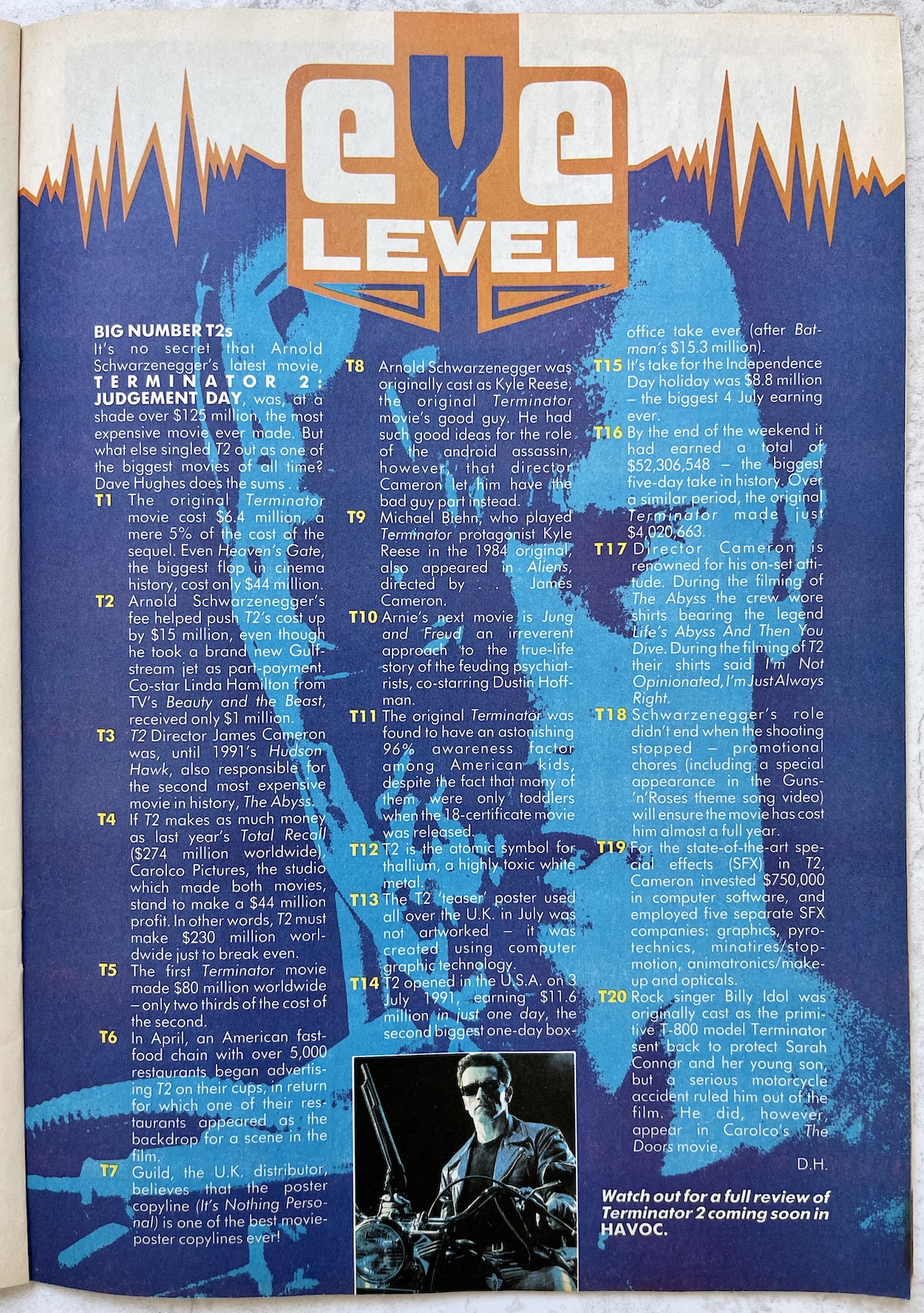
For only being seven pages, this really had it all. What a superb story and he’s definitely a Marvel character that deserves much more exposure today. It’s a crying shame he hasn’t had his own movie or TV show by now. Speaking of movies, Eye Level doubles in size this issue thanks to two of the most hotly anticipated movie sequels of the 90s. One would go down as an absolute classic, the other not so much.

On first reading I don’t think the writer was too enamoured with Terminator 2: Judgement Day, although they were right in that the film did end up as one of the most successful of all time. Personally I loved it and remember watching it on VHS in school on the last day of term after it came out in the home market. Not the best way to watch it first time around but it still made an impact and I enjoy it to this day. All of the things about Teenage Mutant Ninja Turtles II: The Secret of the Ooze meant to improve upon the original are the reasons why my friends and I never liked it, so these were massive misjudgements on the part of the director and studio.

That competition at the end though: “No captions complimentary to Mr. Ice will be accepted.” How very Havoc.

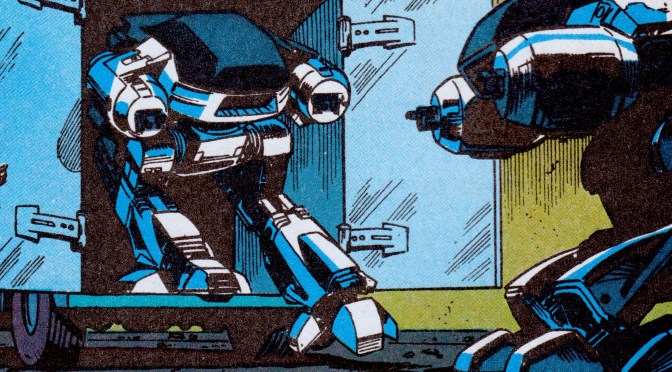
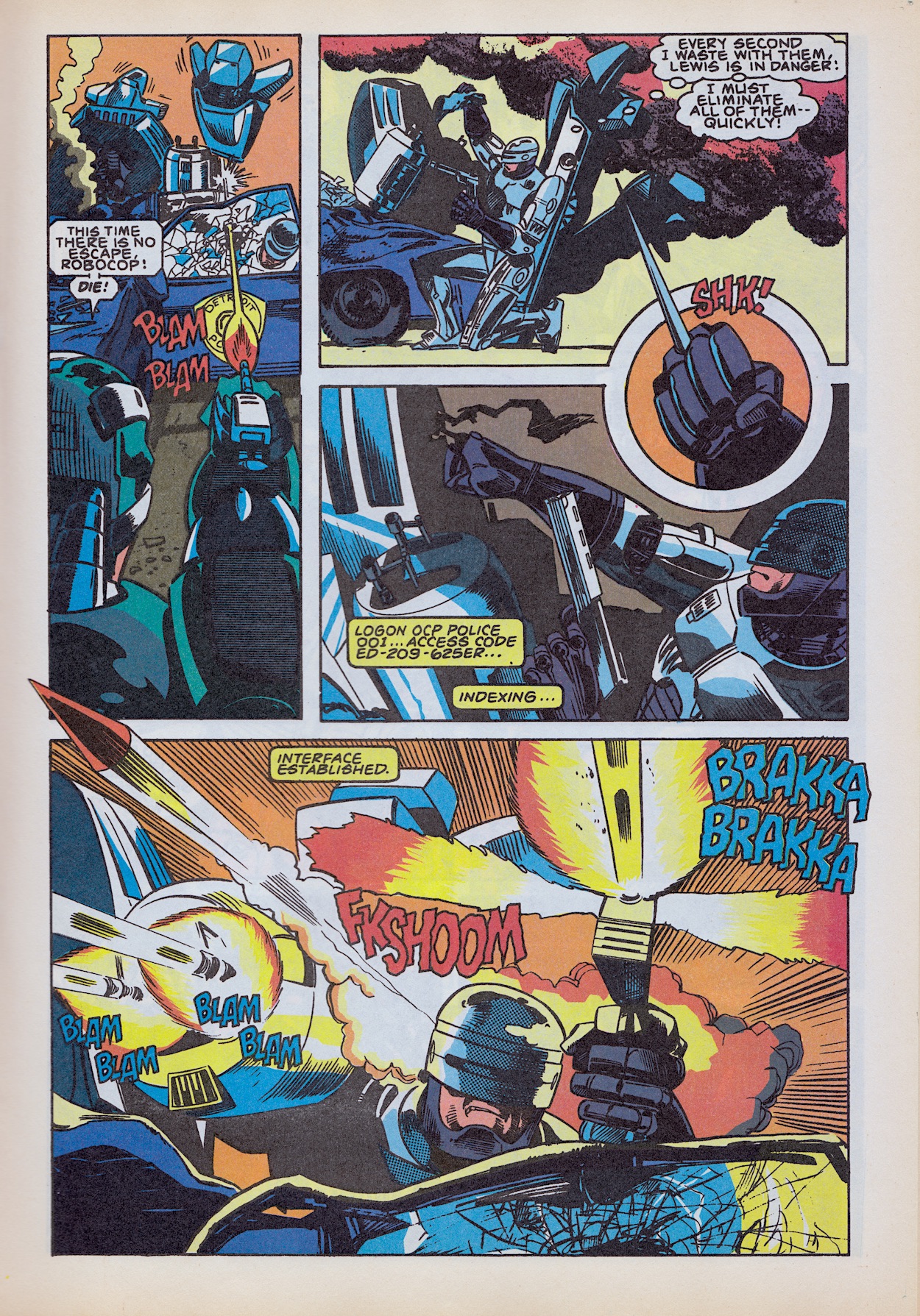
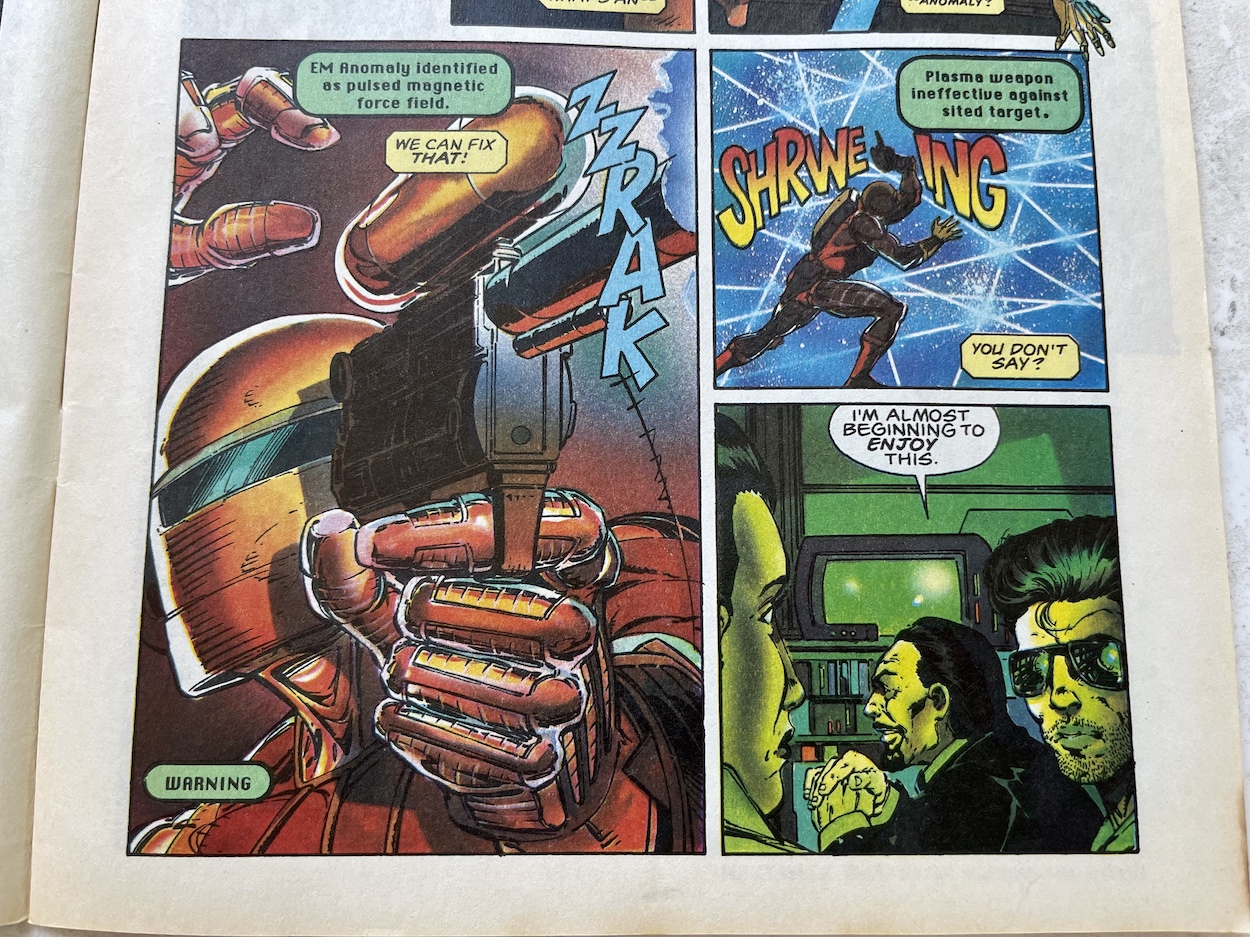
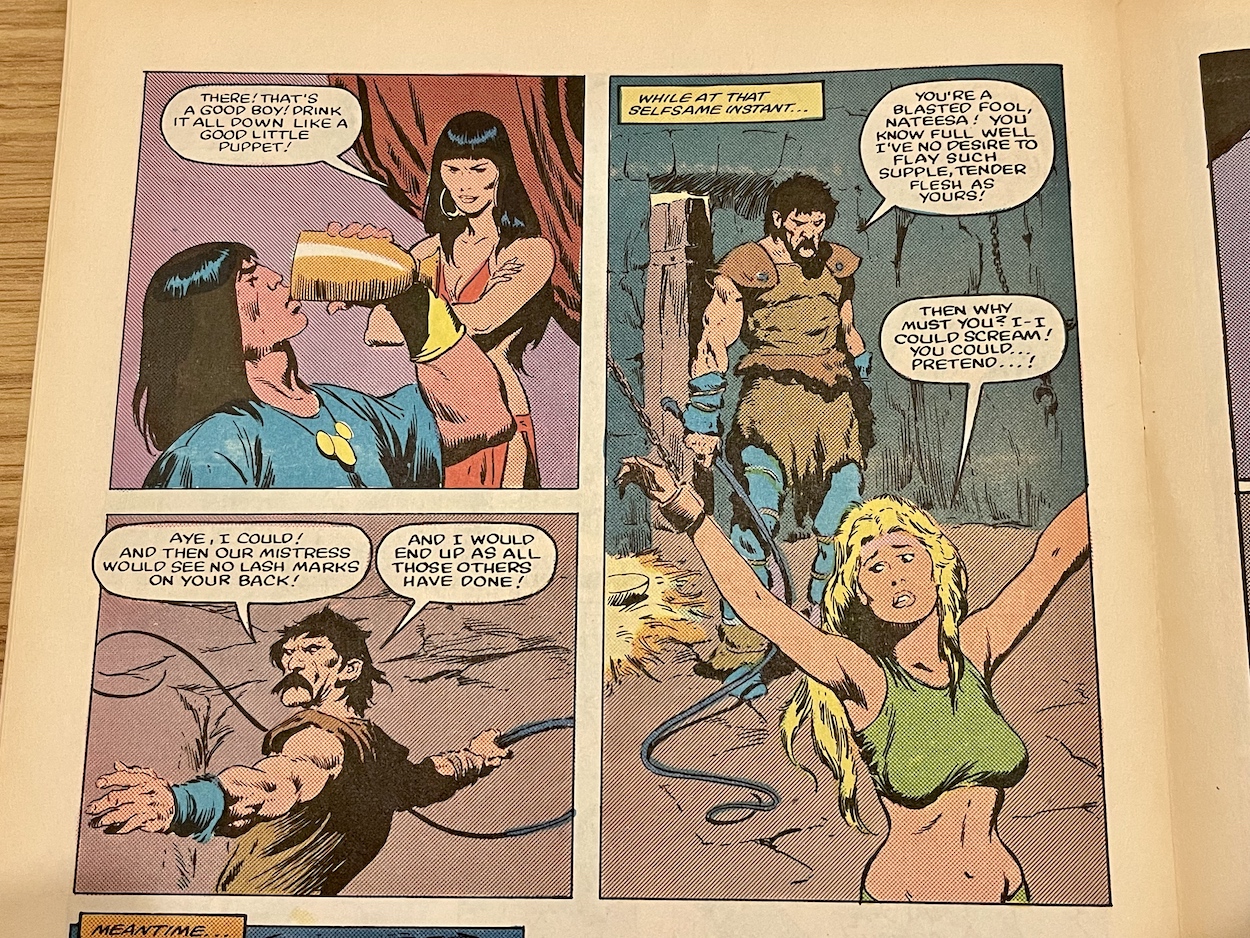
RoboCop uses his hand spike to take control of the ED-209’s weaponry

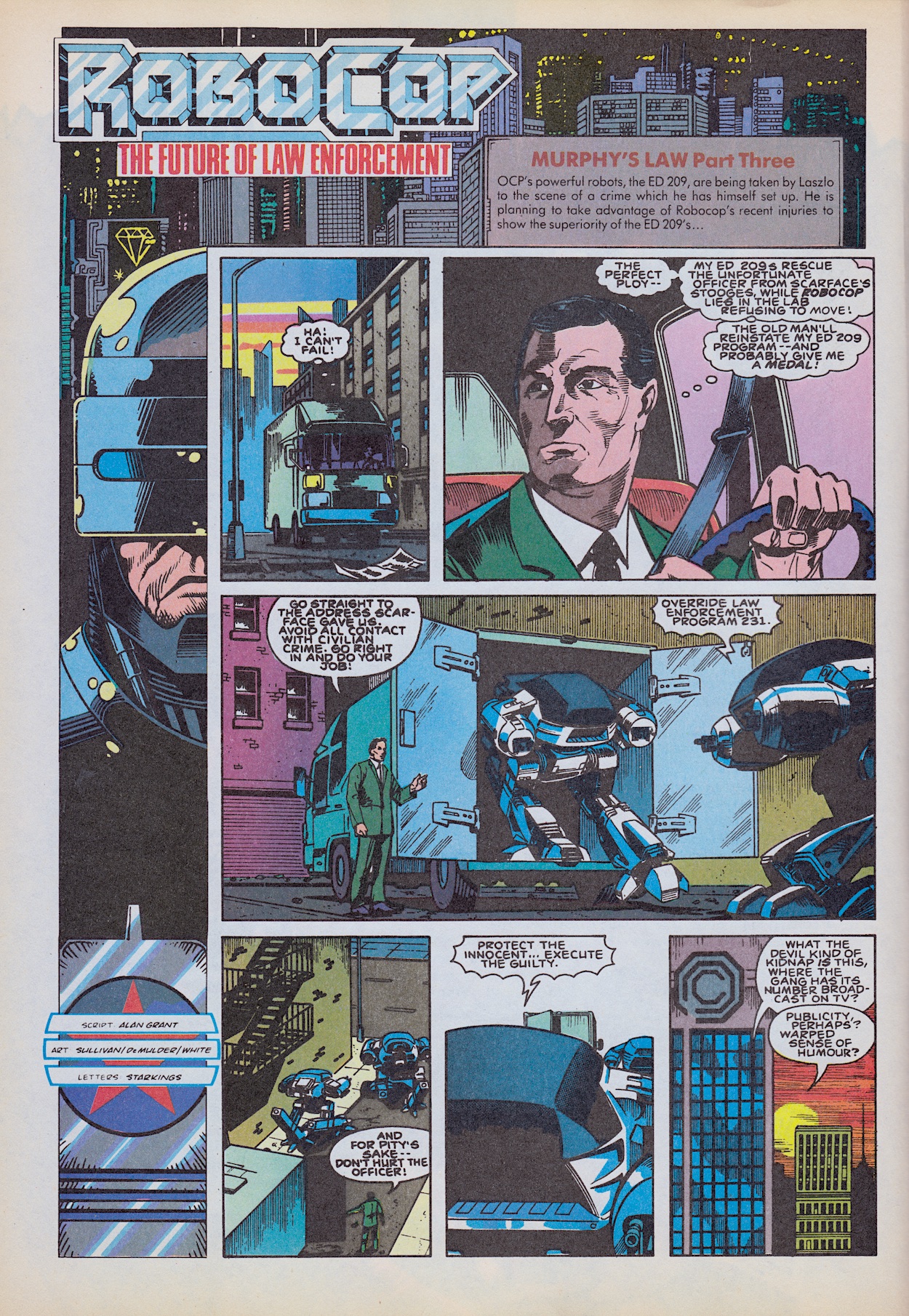
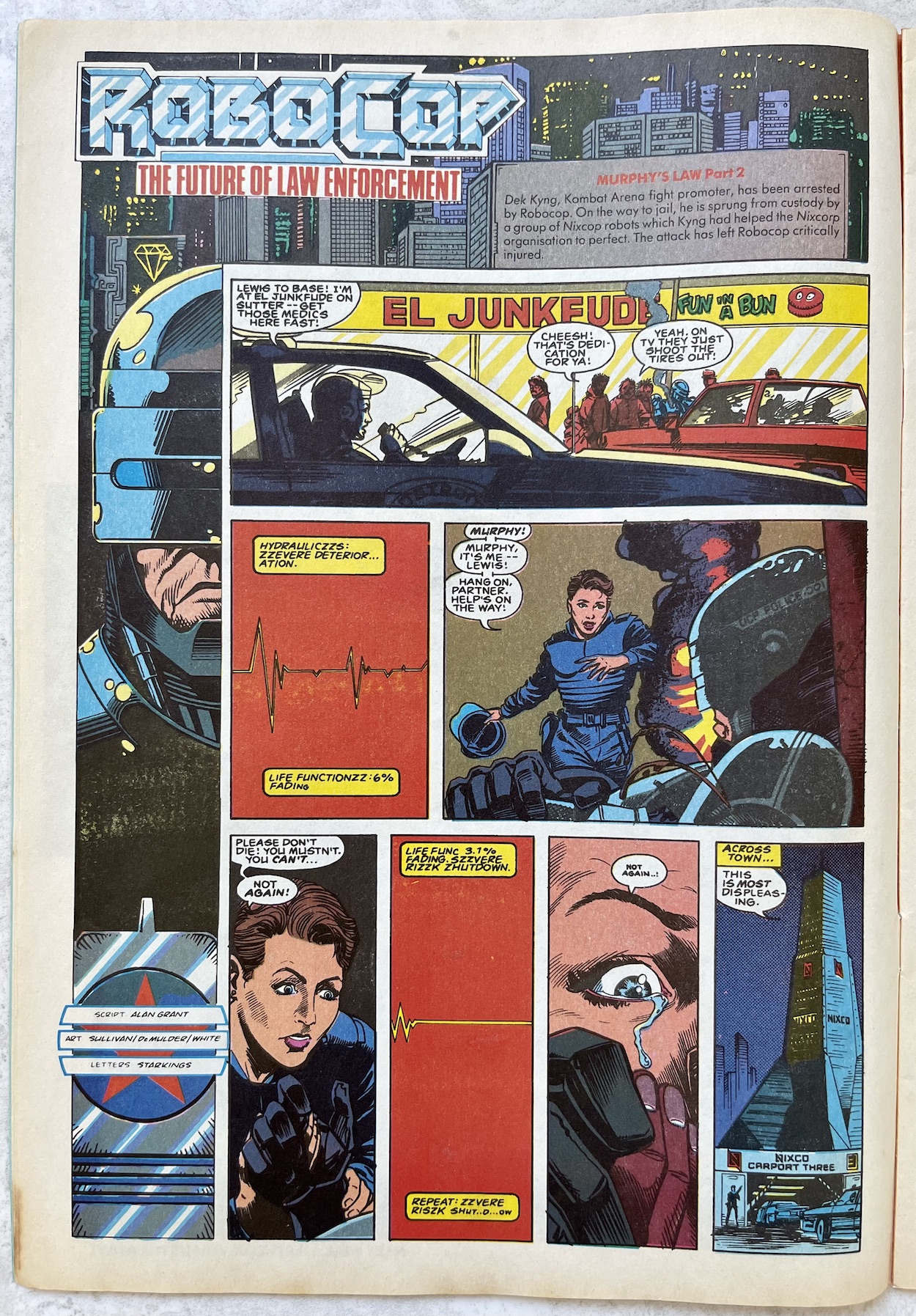
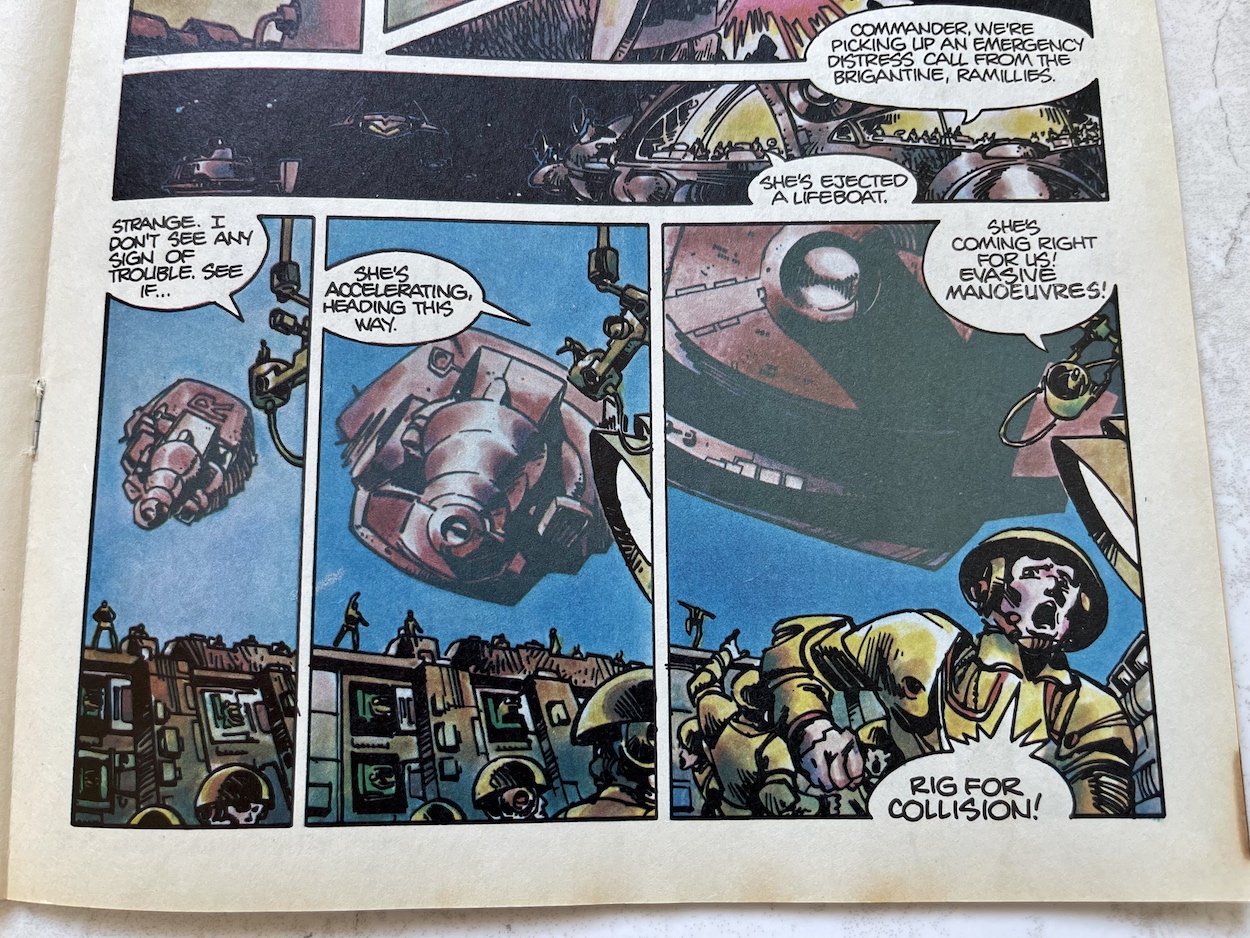
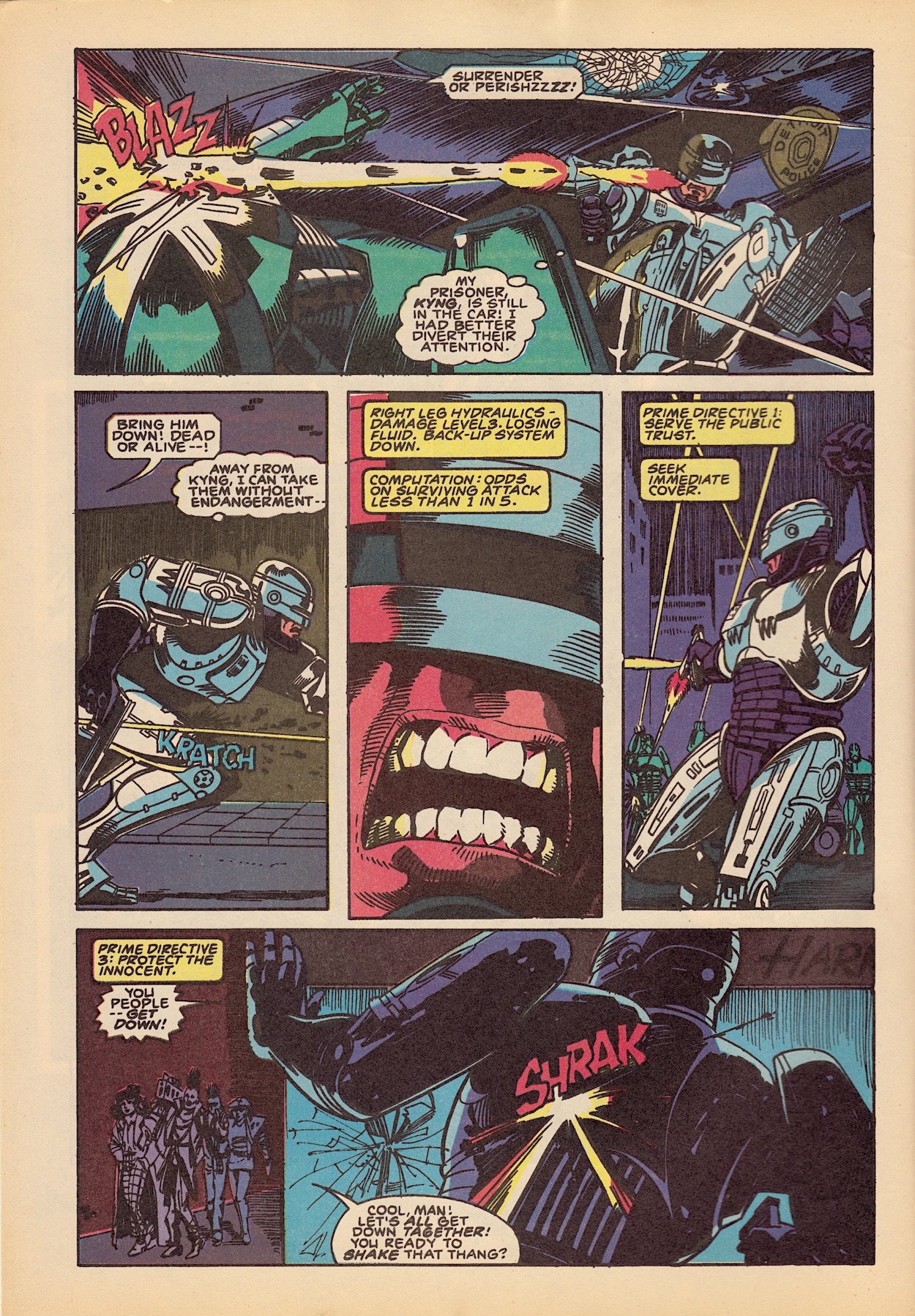
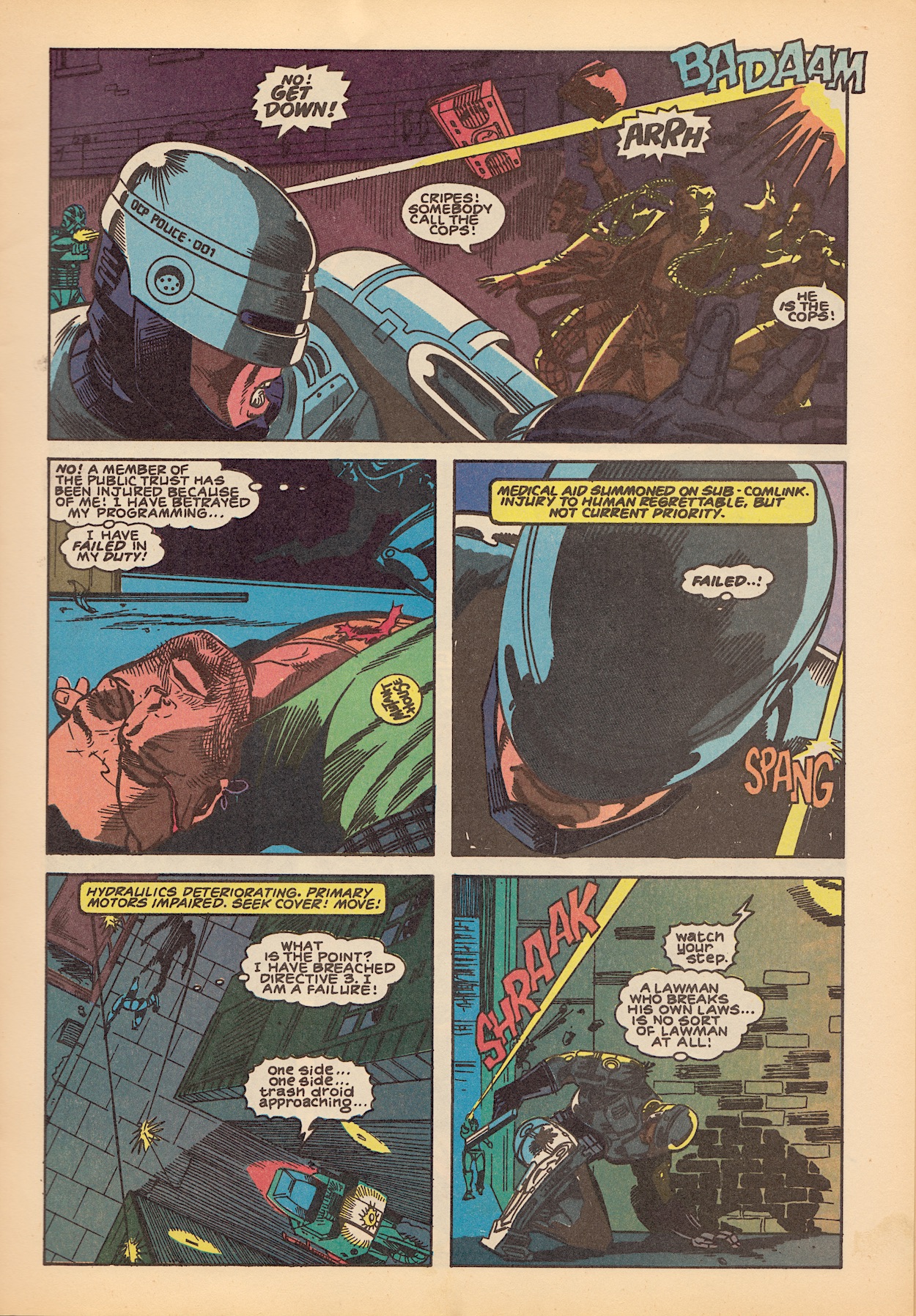
RoboCop: Murphy’s Law Part Three (written by Alan Grant, pencilled by Lee Sullivan, inked by Kim DeMulder, coloured by Steve White, lettered by Richard) takes up the centre of the comic with a large nine page chapter this issue, ending the story earlier than expected. OCP’s Laszlo has ordered his criminal contacts to kidnap a police officer so that his reprogrammed ED-209s can rescue them and prove their superiority over RoboCop while Murphy’s brain (distraught from losing a civilian) has shut his systems down. But Nixco have also sent their new Nixcops to do the same. RoboCop awakens when he learns that his partner Lewis is the officer in question, snapping him back to life. It’s all set for an explosive climax.

But first, either the ED-209s have shrunk since the movie or that’s one hell of a big van. I’m nitpicking, so I’ll just ignore this and get on with the main bulk of the story. The two sets of rogue robots start to take each other out, both believing they have the proper authority to rescue Lewis and that the other is breaking the law. An ED-209 even attempts to kill Alex because it deduces he’s trying to stop it rescuing her.

Pinned down on all sides, his car trashed and time running out for Lewis, Robo’s solution is one that I wish we could’ve seen in a movie or the show. Using his spike (a way of interfacing with other computer system ports) he accesses the ED-209 that tried to shoot him and takes command of its weaponry, eliminating all of the Nixcops in a few seconds flat.

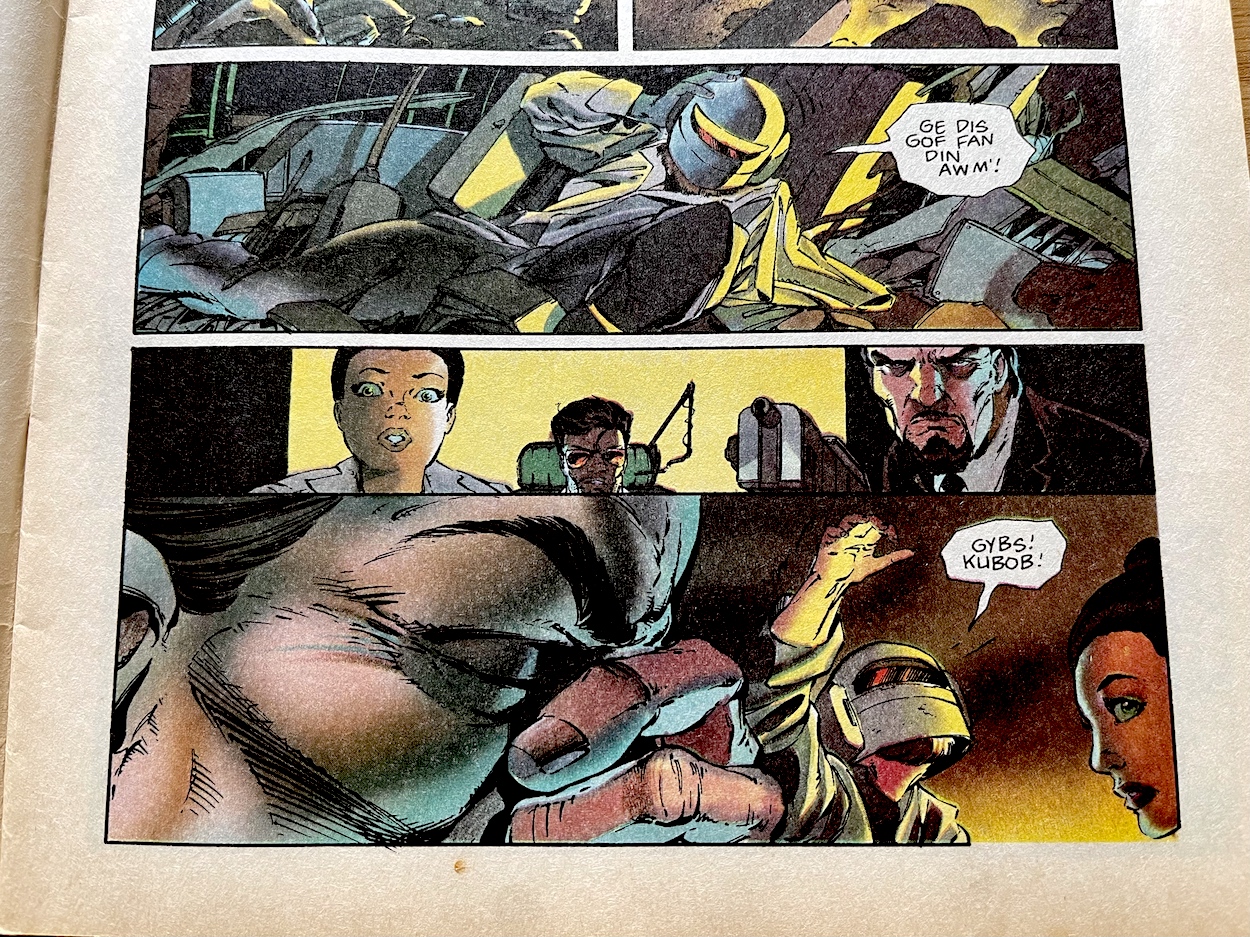
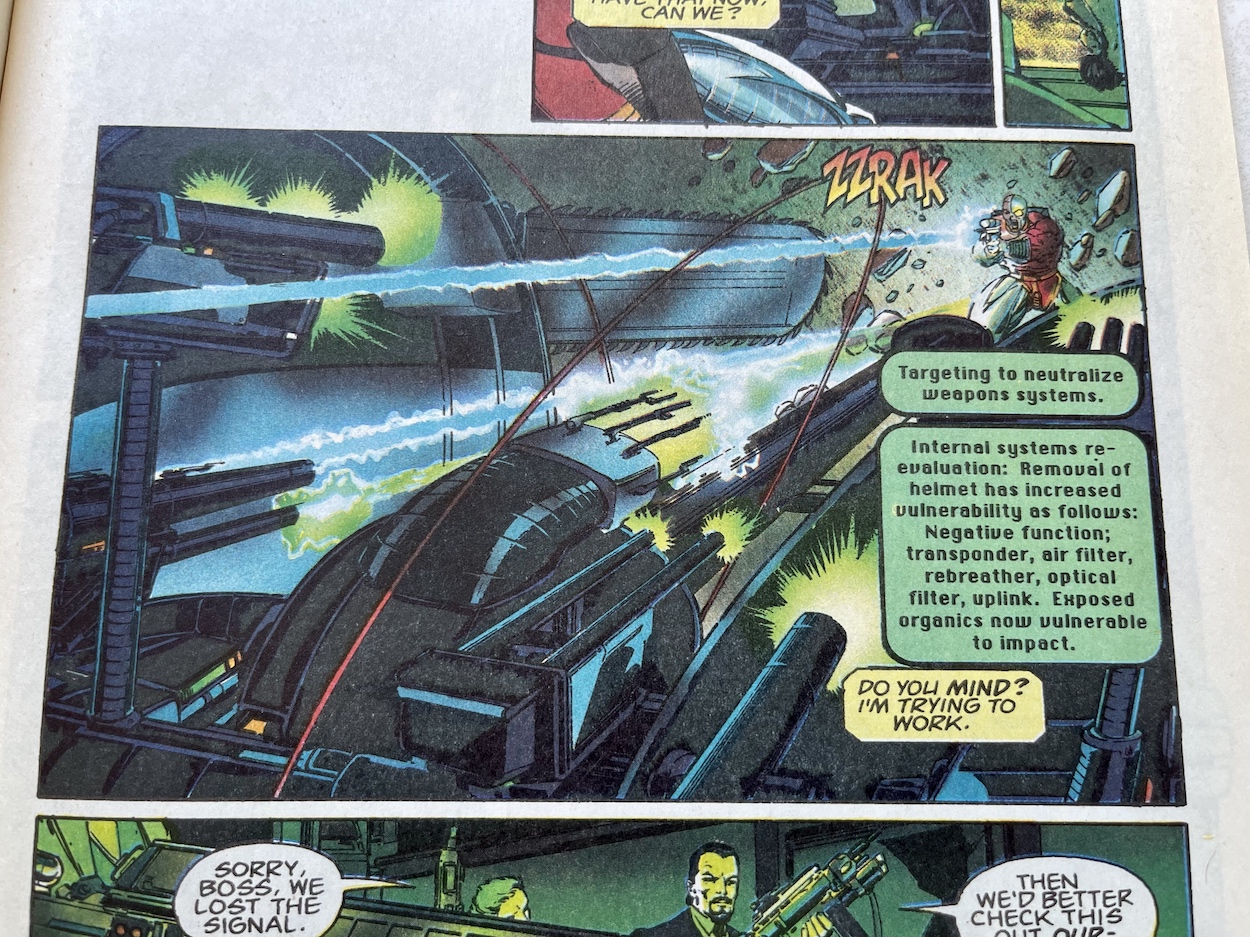
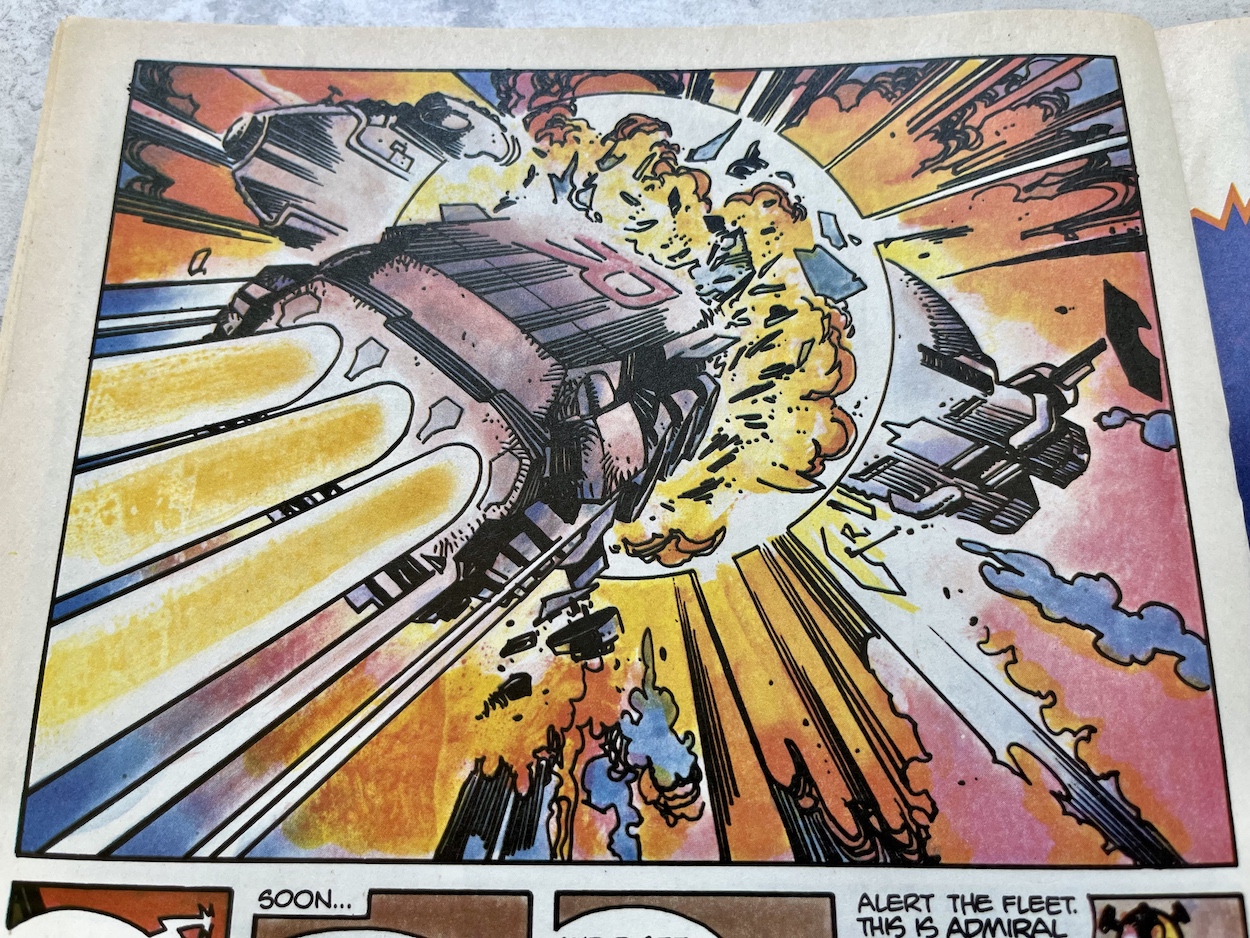
Lewis may be tied at the wrists but she isn’t a damsel in distress. The commotion outside distracts her kidnappers enough for them to be lined up at the first storey window, so she rushes them and pushes two of them out to their death. But the final one slaps her to the ground and takes aim at her head just as Alex enters the building downstairs. Knowing he won’t reach her in time he scans up through the ceiling and I just wanted to let you see how another of his well known abilities is represented in comic form, thanks to (new editor) Steve’s colour work in particular.

You can see what’s going to happen here and after the kidnapper crashes through the floor, landing at his feet, RoboCop appears to be back to normal again. It’s been a more action-packed story than that from the first four issues, but taken together they work really well to bring us both sides of the character: the logical and the human. You’d think having both this and Deathlok together in one comic would feel repetitive but they work really well together as two completely different takes on the same basic idea. I’m looking forward to seeing what’s next for Murphy.

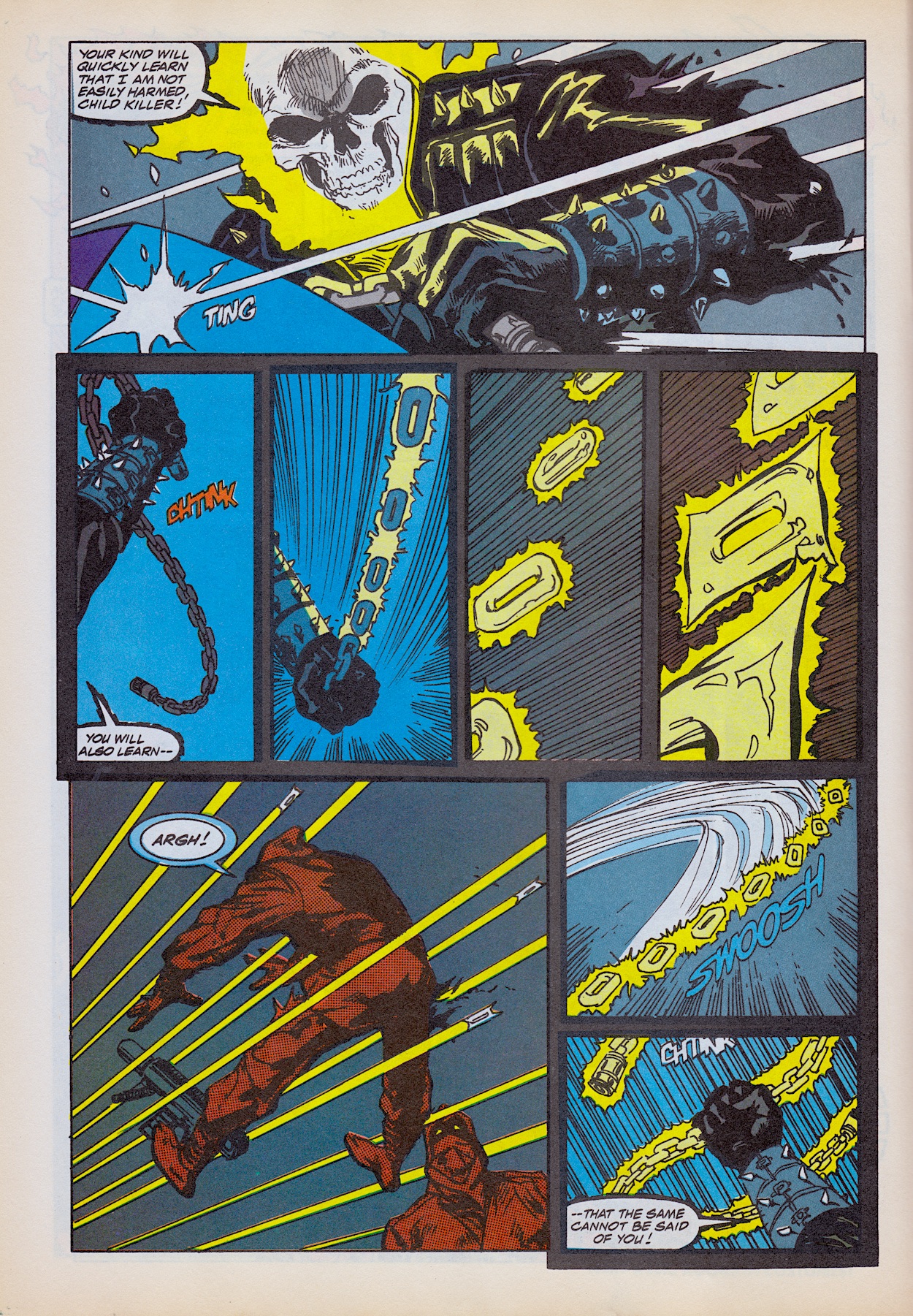
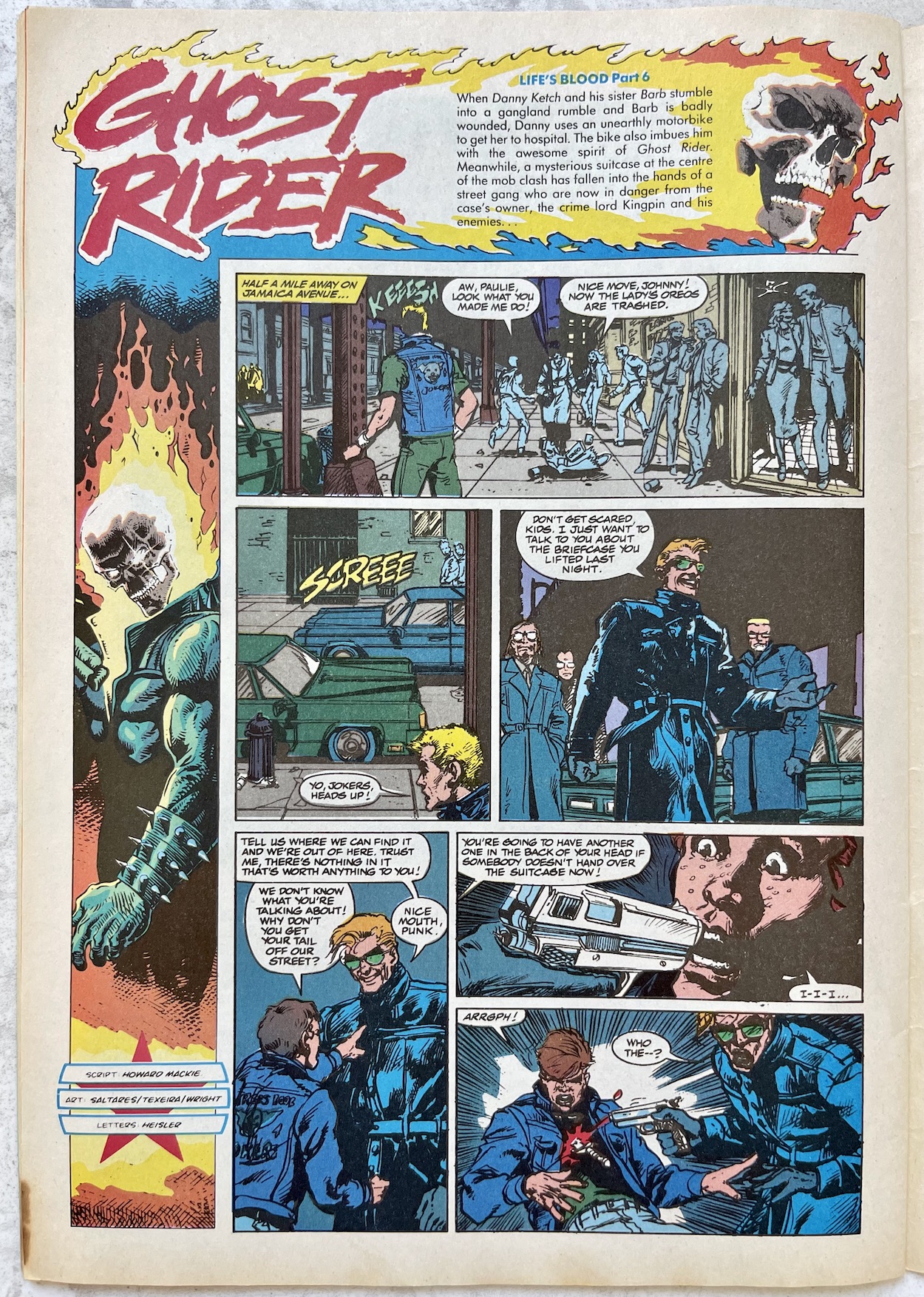
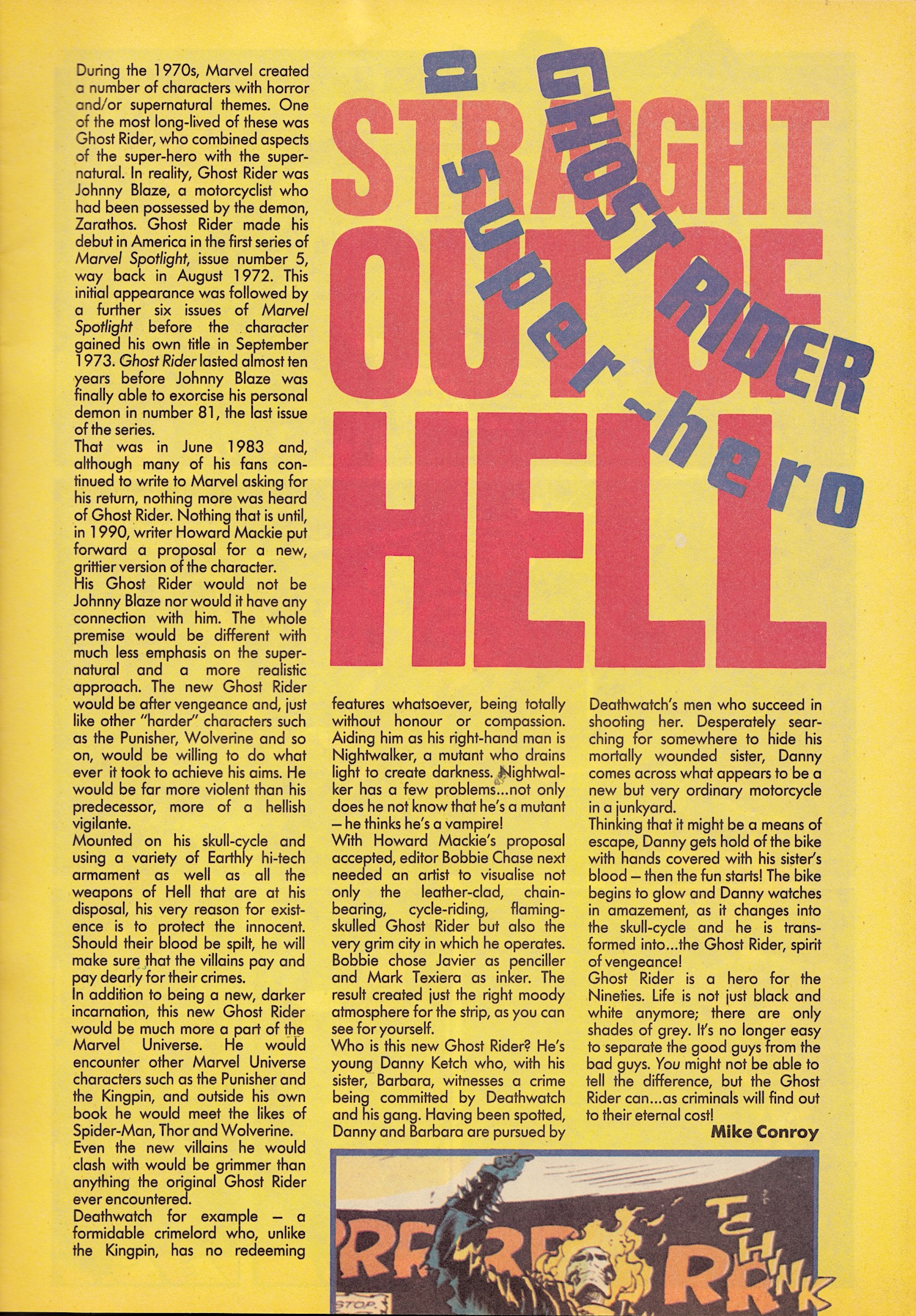
Part seven of Ghost Rider: Life’s Blood (written by Howard Mackie, pencilled by Javier Saltares, inked by Mark Texeira, coloured by Gregory Wright, lettered by Michael Heisler) is up next as the lengthy origin story continues and it feels like it’s wrapping up the action quotient of the tale here, so I can only guess that perhaps next week’s part will feel like an epilogue and deal with the aftermath for the characters involved. If I’m right I’m all for that, the variety in these little weekly chunks heightening the tight scripting by Howard Mackie.

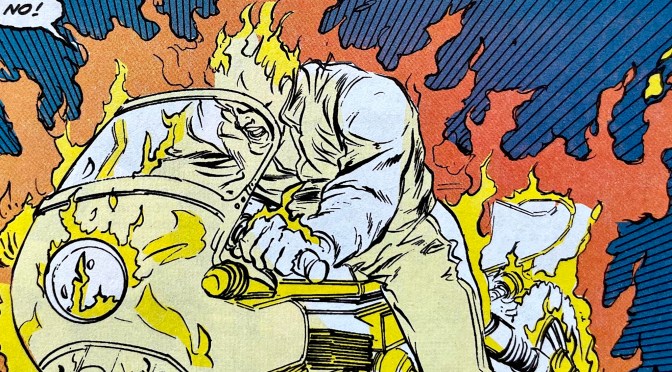
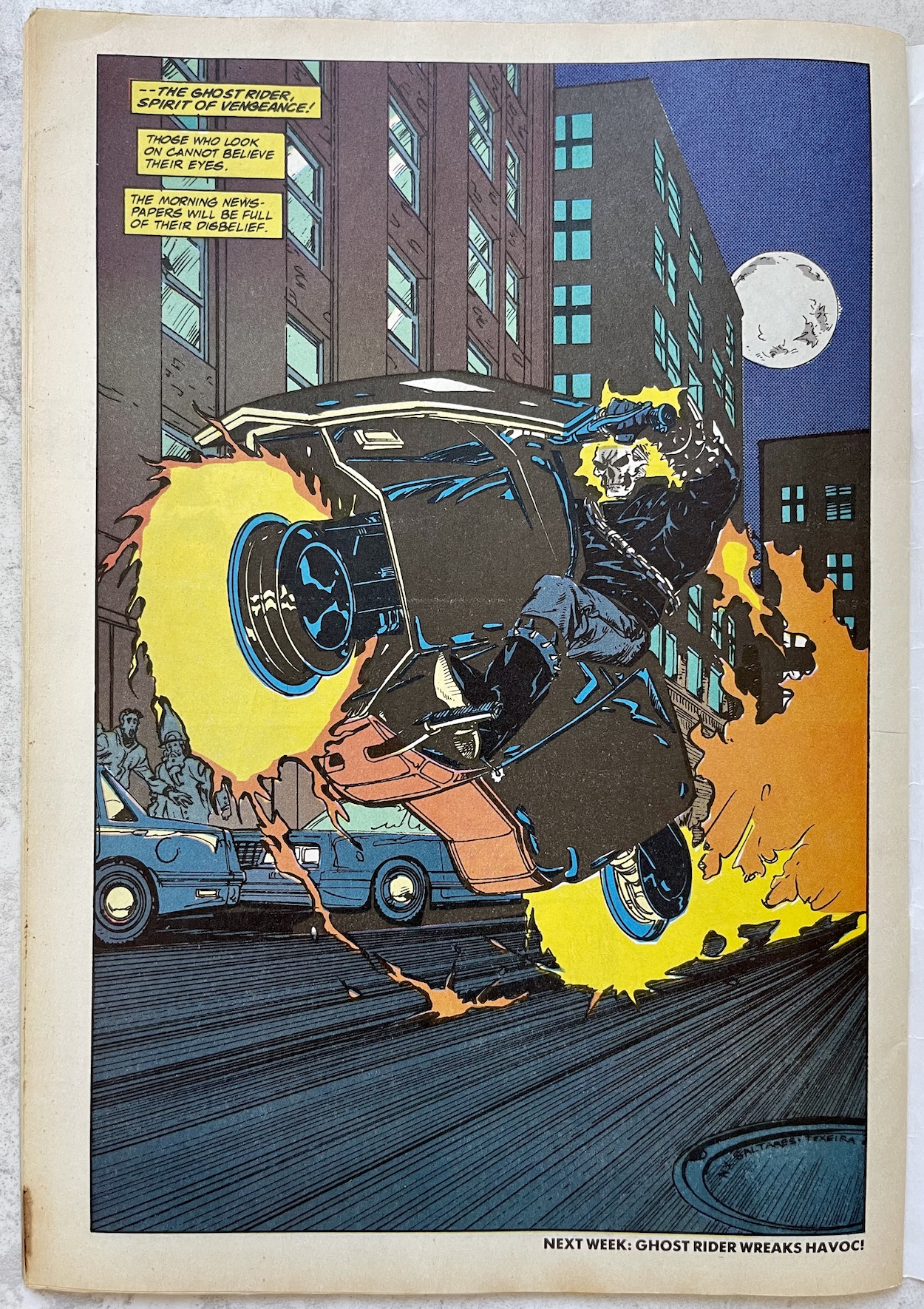
The gangs fighting over the suitcase are destroying whole city blocks in their war for the canisters, with the kids who stole it in the first place caught in the middle. No longer the cocky street gang of earlier issues, now they’re cowering for their lives after seeing one of their own killed. But one roar of a motorbike engine later and things take a decidedly different turn. Danny Ketch has transformed again into the Spirit of Vengeance and I love this particular page above, introducing another skill of the flamed rider’s.

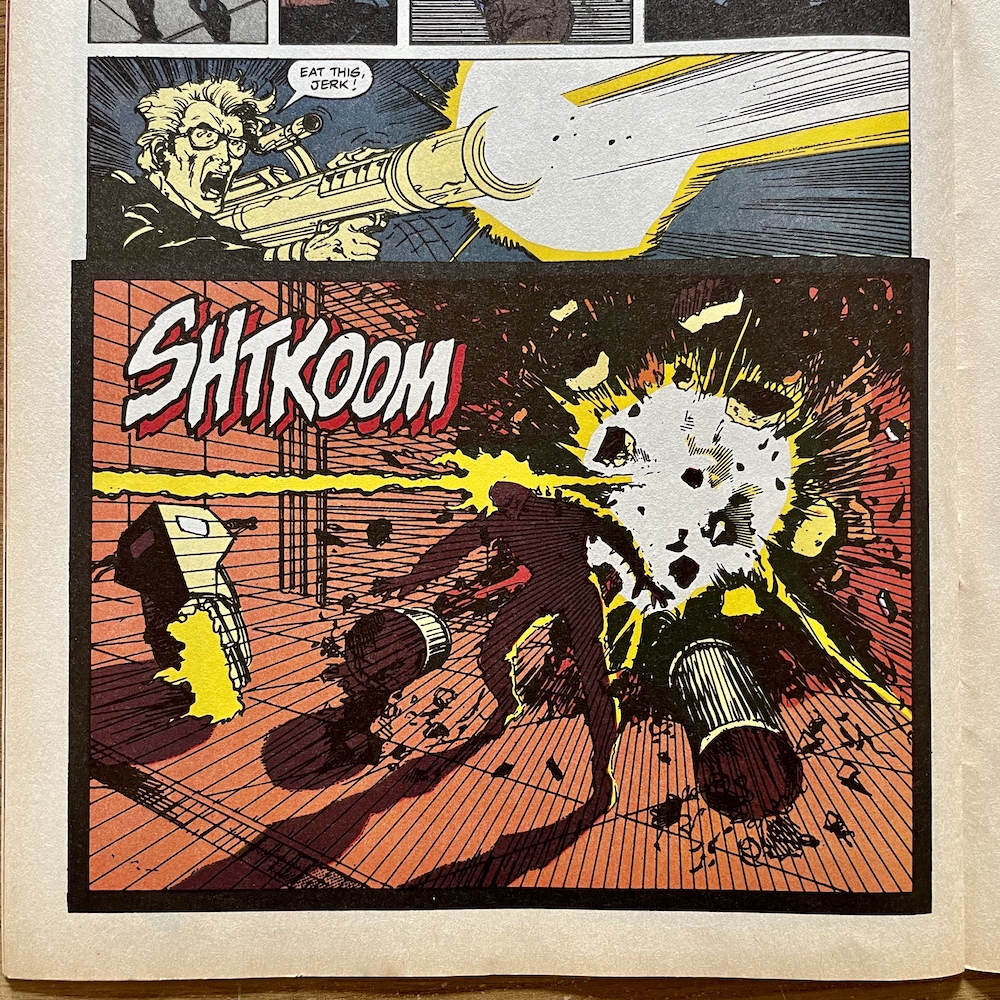
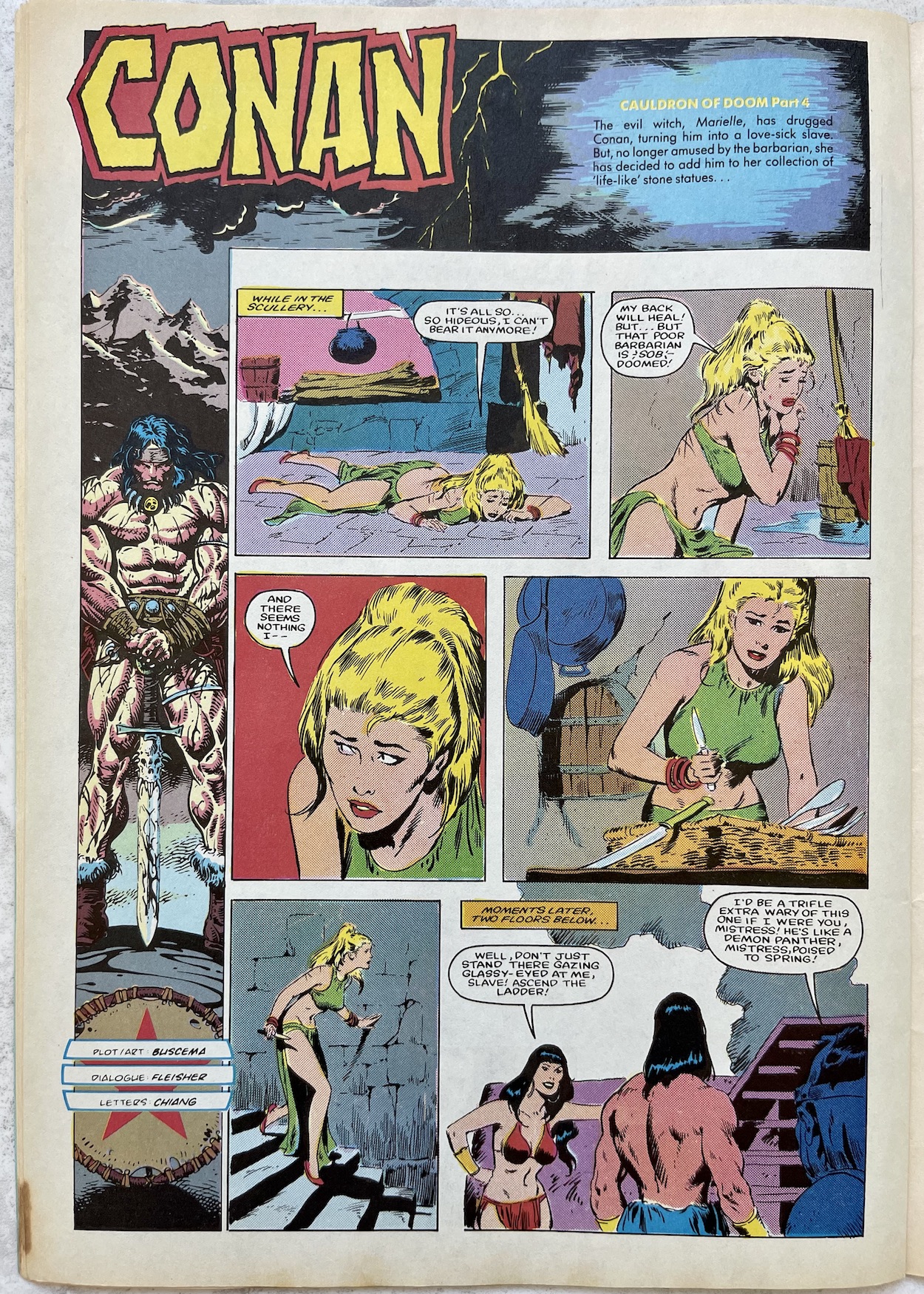
This is just the kind of thing teenage me would’ve lapped up. Oh, who am I kidding? I’m lapping it up right now at the ripe old age of 44. Ghost Rider approaches the kids, the same gang that terrified Danny in the first issue and reaches out his hand, telling them he means them no harm. I was surprised at this because I just didn’t expect it from the character and it’s a nice touch. However, he’s soon involved in the fight again and one of Kingpin’s men has had enough, pulling out what looks like a rocket launcher from the boot of his car!

With the demon rider (the gangs may have named him this but they still believe he’s just a person wearing a flaming helmet) the gangs are down to their last two survivors. Joining together to force a confession out of the girl who took the suitcase, while ready to double-cross each other at the same, the tension builds until a sudden chain flick from behind knocks them both out and in their place stands that flaming skull, with his hand outstretched once again to help her to her feet.

Again, this proves what I said earlier about the cliffhangers Havoc’s editors would choose, not always relying on the shocking action scenes. For example, it would’ve been easy to end Ghost Rider with the rocket scene above but instead we get a further couple of pages and this ending of the terrifying demon reaching out his hand to help the innocent. It’s just as much of a surprise as the explosion and it works so much better in my opinion as a moment to end on. I want to see more of this character, much more.

If you’re only coming to these reviews now let me explain that this was my introduction to the character back in the early 90s and in the intervening years I haven’t read any Ghost Rider comics or even seen the movies. This is pretty much introducing me to him all over again, so it’s basically all new. As with some of the other Havoc stars there’s a lot more beneath the surface to discover and I for one find him a fascinating creation so far. I’m eager to learn more, so little moments like this are huge to me.

Less fascinating are the Star Slammers (written and drawn by Walt Simonson, coloured by Louise Simonson and Deborah Pedler, lettered by John Workman). Also getting a good portion of the comic we see how Grandfather and Sphere first met, the former as a senator bringing a warning of a future planet wipeout, the other the leader of the people on the planet used for sport. As the Slammers prepare for the war at last they reminisce about that first meeting, how the elder had to prove himself and how he engineered the Mindbridge.

Able to communicate psychically already, his equipment and injections were to lead them to a point when they could all communicate as one, the whole race combined as one unstoppable force. Only then could they face their hunters, the Orions. The name ‘Star Slammers’ is taken from one of their weapons and name they use as they fight for others to make money and collect the weapons and ships they need. There’s also a hint about the exiled humans being closer to their ancestors than the ones consumed by hatred (the ones who hunt them for sport because they’re different).

It’s here the main problem with pacing rears its ugly head. At some points in previous issues nothing much has happened at all, in others we’ve been treated to some nice action or background details. But more often than not it’s felt a bit muddled, as if it was just buying time until the next issue. As we all know by now, Star Slammers wasn’t written as a monthly comic, instead it was a complete story in #6 of Marvel Graphic Novel. I’ve said previously how it maybe wouldn’t have these problems if read in one go as originally intended. I’m not so sure anymore.

Even here, with the flashback to those early meetings it just reads like forced exposition, a far cry from similar scenes in #4 when we got the background to the animosity between Grandfather and Kryllik. Now it seems any interesting story sections are being rushed through, like space is running out and writer Walt Simonson has to suddenly squeeze everything in. This is the same feeling I got when reading the final chapter of the Jurassic Park movie adaptation, also written by Walt.

What could’ve been a fascinating origin story isn’t helped with pretty bad dialogue either, combining to give an impression of everything being forced just to get the story to the actual battle it’s been predicting since the beginning. Could Simonson’s galaxy-spanning tale full of relevant social commentary simply have been too ambitious for the page count in Marvel Graphic Novel? Perhaps. But at least we get an inkling some excitement could finally be on the cards next issue.

With the war about to begin we close off all of our strips for this week with Cry Havoc and the second instalment of readers’ letters. Kicking things off with the promise of t-shirt prizes for star letters, ironically the start issue given for this would actually be the first to never appear. Then it seems the issue after that was to be the first with a new strip since #1. Intriguing little hints about a future that was not to be.

That’s us at the end of another issue and, despite it being one character short and extra pages given to my least favourite strip, it was another goodie. I look forward to a full deck of anti-heroes next week though. Speaking of which, that’ll be the penultimate one already! Where has this summer gone? Join me again soon. Havoc #8’s review will be here from Wednesday 24th August 2022.

iSSUE SiX < > iSSUE EiGHT

HAVOC MENU

HAVOC #6: CRYiNG HAVOC AT LAST!

This is a wonderful original Marvel UK cover by Liam Sharp (a first for the title) showing Deathlok breaking free just as he finally does inside, with Michael Collins’ mind now fully aware and communicating with the military computer inside the cyborg. It really kicks off this issue. That headline about the Star Slammers is obviously meant to shock, but given my love-hate relationship with that particular story and its characters I’m really not feeling bothered either way. But that doesn’t detract from how excited I am to read another issue of Havoc!

I can’t believe I’m already at the sixth issue and I really, honestly do look forward to this day every week, but of course the more we fly through this on a weekly basis the closer we get to its premature end. Still, it’s clear from this issue the intention was originally to have this as a long running title, what with the inclusion of the first letters page and some of the answers given. We’ll get to that in due course. First up is the cover star and as you can see the strip now has a traditional Marvel UK border to the first page to bring us up to date. In fact, every strip has one now and I’ll show you each one.

You’ll see on these first pages that every one has the credits star inside something unique to that strip. For example, you’ll see it inside Robocop’s gun barrel, a monitor on the Star Slammers’ ship or an animal skin drum for Conan. Dwayne McDuffie and Gregory Wright’s (re)creation of Deathlok really does show off this time what the whole remit is about with an all-action entry in his origin story, with art by Gregory and Jackson Guise and letters by Richard Starkings.

This issue’s chunk of story really highlights how Collins and the computer will interact and work together. Now recognised as its new programmer, he’s able to give the cyborg new instructions on the fly. The first thing is to tell it that killing enemies is off the table. After trying and failing to stop it previously in the jungle (apart from just about stopping it from killing a small child), now recognised as the authorised input a simple command changes all of that. The computer must now be smarter and work around this new parameter, which it does with aplomb as the story continues.

Ryker watches on and tries to stop them with every security measure possible and the straight-laced, logical computer and the flying-by-the-seat-of-his-pants Michael make a great team. Even though the computer is just a machine, it almost comes across as banter between the two thanks to Michael’s very human reactions to its very logical statements, and vice versa. Ryker is having way too much fun though in trying to kill his former friend and colleague!

Remember that huge tank thing a few of issues ago? I knew it wasn’t for nothing and as Deathlok crashes through another wall to get around the force shield they come across the tank and suddenly it whirrs into life. They scan it and find another former workmate at the wheel. Questioning how he could possibly have gotten there so quickly when no one would’ve known which route they were taking, the computer informs Michael of the trackers in the helmet. There’s only one option, to remove it and take on the tank with Deathlok vulnerable for the first time.

This is the penultimate panel of the strip and is a great summary of the action we’ve been treated to in these wonderful five pages. This is just our main character trying to escape the compound of Cybertek, never mind the adventures that could come next. This lone cyborg going up against impossible odds, the computer’s monotone (in my head anyway) voice and Collins’ interactions could make for great fun. What’s interesting is how Collins isn’t in control of the cyborg’s body. Instead, it’s moving autonomously with instruction from Michael. An interesting dynamic I’m looking forward to the writers exploring more of.

Our second strip this time is part two of RoboCop’s Murphy’s Law, written by Alan Grant with pencils by Lee Sullivan, inks by Kim DeMulder, colours by Steve White and letters by Richard. At the end of last week’s episode, in the midst of his own mental breakdown, RoboCop let go of the hovering garbage droid to land on top of a car being stolen by a gang of thieves. Causing the car to crash with Murphy between it and a lamppost, it’s almost too much for his systems which were already under stress from the Nixcops attack and then watching a member of the public die because he couldn’t protect them, breaking one of his Prime Directives.

At Nixco, Dek Kyng is now in their hands so they immediately set to work making sure he won’t be causing any more problems, setting an automated surgical system on him to hack into his brain and turning him into another one of their robots. Meanwhile, Alex lays dormant on a table in his police district. A tough job lies ahead for the engineers but they see this as an opportunity to install some amendments and they’re given the go ahead to proceed, much to the chagrin of a new character called Laszlo.

Laszlo’s plan involves having a police officer kidnapped who the ED-209s will rescue

You see, Laszlo was in charge of the ED-209 programme which RoboCop fans will know looked cool but were pretty awful at law enforcement. Believing the problems to have been fixed (yet the EDs are still the big, lumbering robots of the movie) Laszlo sets about making sure OCP have no choice but to terminate RoboCop and choose his path instead. His plan involves contacting a street gang and arranging to have a police officer kidnapped, who the ED-209s will rescue.

First up though it’s time for a commercial and some news updates from Media Break. I loved these in the first film and in particular in every episode of the TV series. I’d completely forgotten Delta City didn’t actually exist yet in the movie, I’m so used to seeing it complete (or at least in a more advanced state) in the series complete with its self-aware central intelligence, that reading this feels like a prequel to the RoboCop I grew up with.

Eventually his engineers realise it’s the human part of RoboCop that’s not operating correctly (for want of a better phrase) but they can only speculate on what’s going on inside his mind. They put out a call for his partner Lewis to return to HQ and help, and in the meantime we get one of those trademark RoboCop memory scenes. While all of this is going on the various strands of the story come together before we leave things for another week.

Lewis is currently in the middle of an arrest which in reality is a set up by Scarface’s men, the gang Laszlo contacted to kidnap a random officer. When news of her disappearance reaches Media Break the bosses at Nixco see an opportunity to send in their own Nixcops to rescue her and prove their cyborgs are the future of law enforcement. What a mess this could be! Great stuff. Writer Alan Grant feels much more comfortable with this second story and is really getting stuck into the lore and the action, one never at the expense of the other. Perfect.

Next up is Star Slammers, created, written and drawn by Walt Simonson, with colours by his wife Louise Simonson and Deborah Pedler, with John Workman‘s trademark lettering. So, with Ethon being tortured in last week’s strip it’s no surprise to find out he’s the one who bites the dust. There’s a quick bit of mourning from Jailaia and Sphere before they decide to use the body of their fallen comrade to help them escape. Wow, that’s pretty cold. They don their gear and before boarding their own ship moored outside they tie Ethon into the pilot’s chair of the prison ship and set the controls.

I have to say this next part is really rather good. The main ship of the fleet is watching on and receives a distress call from the prison ship after someone on board discovers what’s happened. The huge vessel getting silently and ominously closer and closer is a truly terrifying sight for those watching and I think Walt has done a superb job with this particular sequence, which culminates on the next page.

Of course the escape is immediately covered up (as an unwarranted attack) by Krellik, who is no longer a senator but an all-powerful Admiral. Declaring the hunt on and how much the television networks will love it, he alerts the entire fleet to set out after the escaped Slammers. It feels like we’re finally getting somewhere, so adding this to the fascinating (and very relevant today) background politics from #4 we could be in for a treat in coming issues.

One film that stood out above all others in the summer of 1991 was Terminator 2: Judgement Day

I’m still not sure if it’s really working being split up into chunks though. Maybe the coming issues will prove me wrong, but at the moment it may have worked better in its original form.  Two out of the these first six chapters held real promise, so if the remaining parts of the story build on those and we get a nice mix of story and action in the limited space afforded here, it may prove to have been worth the wait to get to this point.

This issue’s Eye Level is a particularly interesting one. During the summer of 1991 cinema goers were treated to a vast array of blockbusters with everything from City Slickers and The Naked Gun 2 1/2: The Smell of Fear, to The Rocketeer and Robin Hood: Prince of Thieves. But one film that stood out above all others was Terminator 2: Judgement Day and it’s the impending release of this movie that takes up the whole page, with 20 facts about the film and its star.

While I can’t find any evidence that the so-called ‘Jung and Freud’ film was ever made, there are other tidbits here which I never knew about, such as the fact Arnold Schwarzenegger was originally intended to be Kyle Reese in the first film, and before Robert Patrick was cast as the new T-1000 Billy Idol was hired for the role. I’m a fan of the series (the first four films anyway) so it’s interesting to see the contemporary coverage the best one received at the time, and it’s a clear indication this was a Marvel UK comic aimed at the older teen audience.

Conan the Barbarian’s Cauldron of Doom (plot and art by John Buscema, dialogue by Michael Fleischer, letters by Janice Chiang) comes to its conclusion this issue and as feared it basically boils down to Conan coming out of his hypnotised state and punching a few people. How this happens is rather good though, with slave girl Nateesa coming to his rescue. Terrified of her mistress Marielle, Nateesa can’t get close to Conan so she resorts to desperate measures and throws a stolen knife at him. She’s a very good shot from so far away!

Once returned to his senses Conan easily disposes of the two men guarding the cauldron filled with whatever liquid would’ve killed him and seized his body into a solid statue for Marielle’s collection. (The opening dialogue box refers to her as a witch for the first time.) As for the villainess herself, she chases after Nateesa who punches her out cold and… that’s it. It’s all neatly tied up in a big bow as Conan and Nateesa ride off into the sunset together. After the intriguing build up, the interesting Marielle in the first chapters and the very funny moments in previous weeks, it’s such a shame it has such a clichéd ending.

Robert E. Howard died only four years after creating Conan so he never got to see his meteoric rise

At the end a caption states Conan won’t return until #8. No idea why he won’t be in #7 yet. Is one of the other strips due to get extra room for some reason? Are special features planned? Who knows, we’ll find out in seven days.

As if to soften the blow of the longer than normal wait for the next Conan story we get a two-page feature about the history of the character written by comics historian Mike Conroy. Coming from a position of knowing nothing about Conan this was all brand new information to me. Most surprising was how young Robert E. Howard was when he died, and only four years after creating the character so he never got to see his meteoric rise. That’s such a shame. 

Other surprises for me are that the original Red Sonja was much different than the one in the movies, that she wasn’t part of Conan’s stories and the Conan movie was written by Roy Thomas (who adapted Havoc’s first story from Howard’s books) and Gerry Conway who blog readers may remember was the head writer on Marvel’s fantastic Visionaries comic. The feature does raise a couple of questions though, namely if the US comic was still in print why was Havoc using such early stories rather than the latest ones, which surely would’ve been a better fit? Also, what on Earth is Captain Carrot and his Amazing Zoo?!

The final strip this week is Ghost Rider (written by Howard Mackie, pencilled by Javier Saltares, inked by Mark Taxeira, coloured by Gregory Wright, lettered by Michael Heisler) and it’s all about that mysterious suitcase and the young gang of kids who stole it. Kingpin’s men have tracked them down and sent in that well worn stereotype, the bad guy who is so overly polite you just know he means the exact opposite of what’s coming out of his mouth. We must remember these stories are nearly 30 years old. His hints soon turn to actual threats until one of the kids is stabbed by a flying knife.

New Marvel bad guy Deathwatch has sent his ninja-like minions for the same purpose, to retrieve the briefcase that kicked all of this off in #1 and all hell breaks out in the streets of the city. It’s clear this version of Ghost Rider is going to make for a very violent strip, much like the rest of Havoc really, and despite the central character being of supernatural origin it all comes across gritty and serious. I like this juxtaposition.

Our reluctant hero Danny Ketch is driving about on his apparently completely normal motorbike and beginning to wonder if he imagined the whole thing from the night before. He’s trying to determine whether he wants to coax out whatever it was he turned into, thinking it might have some knowledge to help his hospitalised sister Barb. However he’s terrified of doing so, but once he hears the gunfire and commotion the petrol cap on the bike starts to glow. He doesn’t want to touch it, but feels compelled to. He instantly regrets it.

I love this transformation scene, Danny’s skin engulfed in fumes and then lit up, you can feel the heat radiating off the page in that close up of his face, followed by the exciting panel of him and the bike becoming one. Depending on how each individual story in Havoc is chopped up into various lengths, each issue we could get a lot of plot or a more character-focussed bit of the tale, and sometimes we get a quick shot of excitement which keeps us hanging on for more the following week.

This week’s Ghost Rider definitely falls into the latter category and I’m not complaining one bit, especially when the next page ends this week’s strip with this image.

The gang war over the briefcase has escalated to murderous levels, endangering innocent lives and the Spirit of Vengeance is having none of it. There’s a lot of mystery still around the main flaming character and Danny is only slowly beginning to realise this could be his life now. It’s building momentum, it’s pace is quickening but it’s also taking time to establish its characters. As a result this feels like the most bedded in strip in Havoc. Plus, that’s just a really cool image to end the issue on.

We come to the end of another brilliant edition but instead of the usual full-page Next Issue promo we’ve got our first letters page in the shape of Cry Havoc. At last! I’d forgotten all about the fact we even had one. I don’t recall ever writing in, but given the short life of the comic I probably never got around to it. The letters here are all very positive and that’s the feeling I come away with; if this was the summer of ’91 I’d be thinking this appears to be a very successful new comic, such is the reception on display here.

There are definitely a couple of recurring themes on this page, for example a few mentions of The Punisher (and more received according to an answer) and his cancelled comic, which leads on to the other theme of hoping Havoc isn’t another short-lived Marvel weekly. Sadly at the time it did seem like every decent new comic didn’t last long. Unbeknownst to us Havoc was to be yet another casualty. But I’m enjoying it while it’s here.

One final note, Jim Black’s letter mentions the five-pointed star motif and I asked Paul Chamberlain (who designed it) if this was related to the fact there were five strips. It was actually just a happy coincidence. Watch out for a chat with Paul here on the blog soon! There are more Havoc comics to review first though, so join me again in one week. The review of #7 will be here on the OiNK Blog from Wednesday 17th August 2022.

iSSUE FiVE < > iSSUE SEVEN

HAVOC MENU

HAVOC #5: DAMAGED PSYCHES

With this, only the fifth edition of the superb Havoc weekly we’re already halfway through its run. Not that we knew this as readers of course. So let’s concentrate on the issue at hand and Ghost Rider makes his second appearance on the cover after #2, leaving the Star Slammers as the only characters not to grace the front page. That’s because these covers are reprints of Marvel US ones and the ‘Slammers never had their own title, appearing in an anthology series instead.

So Danny Ketch and the flaming skull are the main draw for new readers and as you can see the title logo not only changes colour each issue but the headline strip does as well. This issue Danny’s hellfire alter ego also has a special one-page feature, replacing Eye Level for one week. But let’s kick things off with the first story and it’s Alex Murphy inside RoboCop in the first part of his second story, which takes pole position just as Conan did when he began a new tale in #3. It’s still written by Alan Grant with pencils by Lee Sullivan, inks by Kim DeMulder, colours by Steve White and letters by Richard Starkings.

Murphy’s Law (nice) begins with Robo battling a group of new Nixcops. Programmed as his replacements they believe our hero is now impersonating an officer and must be destroyed, and his prisoner taken into custody. In reality his prisoner, Dek Kyng, could expose the corruption at Nixco and so the bosses are using their new cops to put an end to Robo’s investigation. His internal thoughts alongside the readouts of his systems are very similar to Deathlok’s but this isn’t a complaint. Alex is much more in control of his systems, they are him, so it’s different to the other cyborg strip.

It’s nice to see his Prime Directives come into play here when he ends up putting himself in even more danger to protect innocent passersby. But the Nixcops have no such qualms and one of the citizens is killed. As Alex makes a run for it his head is filled with doubt. He keeps playing the word “failed” over and over, his computerised half seeking cover while his human half thinks there’s no point anymore, he should just give up, he’s failed his third directive and broken his own laws. This shows how how binary his thoughts can still be despite his human side.

In the original film and TV show his outward speech wasn’t as free-flowing and natural as it reads here, which of course was very deliberate. It made his internal thoughts, memories and the times he’d act with surprising humanity all the more important to the character because they were so jarring with the machine cop he was presented as. It’s what made him unique. I’m glad to say, while the strip has him speaking more like a regular human, these moments filled with doubt are superb and somehow still maintain that jarring feel.

The weight of breaking one of his Prime Directives is almost too much for him. These are core to his very existence and because of this it’s almost too much to bear for his human brain. Most action heroes would shrug it off until later when they’d manage to get revenge for the killing, but RoboCop struggles straight away. He’s just about able to commandeer a flying garbage droid and make his escape but I’m really interested in seeing where this goes next week.

The whole Spirit of Vengeance thing was brand new at the time

Next up is that Ghost Rider feature. It’s rather strangely designed with a huge title and just a teeny tiny picture of the character almost cropped off the bottom of the page, but it reads very well. I’d always assumed the original version of the character had the same modus operandi as this 90s reboot but it appears I was wrong, the whole Spirit of Vengeance thing was brand new at the time. My knowledge of the character is very limited, but with the movie sequel having this title while being based on the original character I had just assumed.

I’m sure reading this feature excited me as a teenager, with how it hypes the strip as a new Ghost Rider for the 90s. It certainly reads like the kind of page that would’ve pumped me up even further for the character and the future of the comic. I was so sure this was just the beginning of a long and happy journey with Danny Ketch and his spirit.

On to the story itself and reading this now I’m reminded of just how much I preferred reading the American strips on these larger Marvel UK pages (not just Marvel but also things like DC’s Batman in their larger UK editions) and I have to say I’m loving it.

Ghost Rider: Life’s Blood is written by Howard Mackie with pencils by Javier Saltares, inks by Mark Texeira, colours by Gregory Wright and letters by Michael Heisler. We begin this issue by catching up with Marvel villain Wilson Fisk, aka Kingpin as he trains, his large size certainly not slowing him down.

The mysterious briefcase apparently contains something which poses a great danger to Kingpin’s organisation but we’re not told what it is, not even when we see the gang of kids open it in their cemetery hideaway, just that it contains little canisters. The main thing to happen here though is Danny finally arriving at the hospital to check in on his sister, Barb. Greeted by his mum, a friend and her dad, Captain Dolan, the events of the night finally prove too much.

The story picks up later and after Danny tells the police captain he can’t remember much of the monstrous man who the police think was responsible (we can see how they’re being positioned for future conflict with each other) we get a tender scene of Danny watching over his unconscious sister, the bleeping of the machines the only response he gets as he opens up about what had really happened.

Previously having discarded the bike in fear of his life, on the last page Danny actually makes his way back to where he left it, it sitting in its regular motorbike form. He needs answers, so following previous advice from his far more adventurous sister (we saw this dynamic back in #1) he sets off in the desperate hope that he’ll be able to help her recover, thinking the bike has some magical powers to it. Little does he know!

Ghost Rider gets the star treatment this issue with the most pages of any of our stories and even though none of the eight pages actually feature the Spirit of Vengeance itself it certainly isn’t any less compelling. In fact, quite a lot of ground is covered here between Kingpin, the gang, the briefcase and the introduction of important new characters. Most of all though it’s about Danny. He’s not an infallible hero, he’s just a regular guy caught up in something beyond his understanding. This is the kind of hero I enjoy.

Passing out, lying to police, crying by his sister’s bedside and then finally using some of her strength to go back to the bike in some belief that, despite how terrifying the experience was for him, somehow it might help Barb. The Spirit of Vengeance residing within the bike is silent for now but I wonder what they make of Danny at this point. I’m finding the story really interesting and that’s been the biggest surprise for me. I just hope we can get far enough along in the set up of everything before Havoc comes to its early close.

Star Slammers is written and drawn by Walt Simonson, coloured by Louise Simonson and Deborah Pedler and lettered by John Workman, and our main characters leave hyperspace to find themselves immediately surrounded by enemy craft and captured. They’re soon knocked out and Ethon is taken off to be questioned, seemingly an easy target as he’s the youngest. The mind link they share shocks Sphere and Jalaia as it suddenly hits them that Ethon is being tortured. Not by humans like the senator from previous issues though, instead by an alien creature we haven’t seen before, although the people working for him are humans.

This alien could be an inquisitor for hire, or the true leader of Orion, we just don’t know and this is a bit frustrating if I’m honest. Because the strip was created as a lengthy one-off it continues to stutter and jerk about from week-to-week. Last time we got a nice, decent chunk of background and the story was beginning to gel, but now we’re back where we were with what feels like hastily written dialogue and bad pacing. For example, the guards say out loud they’re meant to be watching the prisoners but want to watch the torture instead, and in the next panel Sphere mentions the guards have gone and that he and Jalaia should “Shift to extreme combat regime”, whatever that means. It’s not exactly subtle.

It leads on to this final page and it seems Sphere and Jalaia have easily escaped off-page. It just seems too handy, that the plot is being forced along rather than any attention being paid to how these things happen or any thought given to the characters. At least we get a bit of context at last, adding a bit more information to last week’s info dump, but overall it comes across as rather amateur, like a fan strip, which is shocking when you remember this was written by Walt Simonson. Last week’s chunk still gives me hope for future instalments, let’s hope it reads better as a whole when it’s all over.

Moving on to Conan: Cauldron of the Doomed which is plotted and drawn by John Buscema, with dialogue by Michael Fleischer and letters by Janice Chiang. Last week’s Conan the Barbarian ended with the caption, ‘Next Week: Conan is made ready for the cauldron!” Well, it’s only in the final panels here that the sinister Marielle tells her servants to prepare Conan for said cauldron, so the editor seems to have gotten ahead of themselves again. The story begins after the entranced Conan and Marielle return home and as he attempts to fawn over her she snaps and scolds him, suddenly deciding she’s had enough.

Conan begins to weep and after Nateesa is ordered to bring them food and wine we huffs and begins to rebel. He may still be under her influence but he’s not meant to talk back. Suspecting he needs further drugging, Mariella orders Nateesa to give him more wine filled with the toxin but quickly realises Nateesa has been giving him regular wine, trying to help bring him out of this state naturally.

Marielle orders another servant, a vile man by the name of Zogran to take Nateesa away and punish her. Conan doesn’t flinch at her pleading as she’s dragged away and soon Marielle is feeding him more of the laced drink. We see Nateesa trying to convince Zogran not to harm her and it appears he’s well aware Marielle is evil. But he’s still a creep and soon he’s whipping her for his own pleasure, the screams echoing throughout the mansion.

Things end for now as Conan is led towards a giant cauldron. Marielle has finished with him. (Her male servants tending to the pot are shocked he lasted almost a week!) With the spoiler in the summary box last week it’s clear whatever is in this cauldron turns men into stone for Marielle’s collection of lifelike statues. (So in a way I guess she did create them after all.) I think we’re set for the conclusion next time and it’s been a fun ride with some surprising dialogue so far. I hope it keeps the surprises coming and doesn’t just end with a clichéd fight.

Our final strip for this issue has been my most eagerly anticipated, what with Michael Collins just beginning to wake inside the Deathlok cyborg. Tearing its way through the settlement from last time, killing any and all forms of resistance, Michael can do nothing but look on in horror at what his brain is helping achieve (it’s confirmed here in a scene in Ryker’s control room that the live human brain is only meant to be used for storage). He tries to mentally battle with the computer and it appears to be working when the termination program (see #1) fails.

Michael’s brain proves to be a formidable foe for the computer and later we find out its new operating system won’t allow the computer to destroy the brain after what happened to Colonel Kelly. Deathlok asks headquarters if it should proceed and Ryker obviously instructs it to do so. Michael screams at Ryker but no one can hear him except the computer. Then Deathlok comes across a young girl who picks up a large gun in desperation, with no idea of how to use it. The Deathlok computer selects ‘Full Assault’ but Michael’s reaction actually stops it. This is where things get really interesting!

Michael now knows he can interact with the program running the machine and Ryker’s response to it letting the child live is truly shocking. Clearly there’s nothing this man won’t instruct Deathlok to do for his client’s money. Days later the techs are going over Deathlok with a fine-toothed comb and Ryker has his suspicions about Collins being “in there”. With the cyborg in its recharge cradle, unable to move, Michael asks the computer to open up the operating system and thus begins what I loved the most about this strip.

Deathlok: Brains of the Outfit is written by Dwayne McDuffie and Gregory Wright, with art by Gregory Wright and Jackson Guise and letters by Richard Starkings. So, Michael’s countermanding order was enough for the computer to accept him as its new programmer and finally we get to see the two of them interact. These interactions between Michael’s Everyman language and the computer’s monotone voice would lead to some great moments from what I remember, including some well placed humour, very much reminding me of the earliest episodes of Knight Rider when K.I.T.T. hadn’t yet loosened up from interacting with that show’s own Michael.

I’d completely forgotten about this visual representation of Collins as he hacks into the computer systems Ryker’s team were about to use in order to wipe his brain clean, to effectively kill him all over again. That last panel with Deathlok confirming they’re now able to physically move has me super excited for #6. Hoo boy, I can not wait! Between Ghost Rider and Deathlok it’s impossible for me to pick the strip I’m most looking forward to over the coming weeks, I keep switching back and forth between them. That’s not a bad problem to have in writing these reviews!

As always, ignore the date on the Next Issue page above, the next review will be here from Wednesday 10th August 2022. There may only be four issues left before the comic was unceremoniously pulled by Marvel UK but I’ve a feeling it’s going to be a great month! See you in seven.

iSSUE FOUR < > iSSUE SiX

HAVOC MENU

HAVOC #4: DEVELOPiNG NiCELY

Another week, another issue of Marvel UK’s fantastic anthology comic, Havoc. With it having started just as we finished school here for the two summer months there was nothing to get in the way between Saturdays and each instalment of my new favourite strips. It was the perfect set of circumstances, making Havoc even more special for this young reader in 1991. There may be no more free posters but that didn’t make this issue any less special, in fact this is probably my favourite so far.

It feels like the strips are all settling in and finding their rhythm. This is understandable when you think about how these were American imports chopped up into smaller chunks; RoboCop finishes the first chapter in his story, Ghost Rider is in full swing and in Deathlok we’re seeing the start of what will make the character so unique and fun. The Star Slammers, being a graphic novel is finally giving us some depth at last and Conan’s second adventure is proving to be a vast improvement over his first, with some unexpected comedy! So let’s get started.

We’ll skip by the ill-advised “Fear the holocaust of Havoc!” on the contents page (really!) and straight into Deathlok. The Federative Republic of Estrella is a natural beauty, vast swathes of country untouched by human hand. So naturally the Americans want to tear it down and take its natural resources. They fire what appears to be a dud missile into the country and out crashes Deathlok to battle with local soldiers protecting the land.

Ryker is hateful here, which is great because that’s what he’s meant to be. A construction company representative has paid a lot of money for Cybertek to eliminate the local resistance to the building of a new dam, which would destroy the lush forests in return for making the Americans wealthy. Clearly the resistance is no match for the Deathlok machine as it tears through their small village killing all who oppose it. It’s a brutally violent sequence, which is the point, then on the last page the brain powering the computer begins to wake.

Only on this final page do we get a hint of what’s to come. Michael Collins, our likeable father and dedicated Cybertek programmer who was duped into developing software for the Deathlok project and shot last issue, was actually shot with a tranquilliser and only now, his brain removed from his body and implanted into the cyborg, is he beginning to come to (which obviously was not meant to happen). It’s quite a horrific scenario when you really think about it, similar to when Alex Murphy’s consciousness awoke inside RoboCop, but this feels more brutal.

It’s certainly an exciting place to leave things for the next seven days. I can remember loving the character once everything was in place and it even had some elements of humour. But right now we must go through the terrifying transition and writers Dwayne McDuffie and Gregory Wright are building the tension nicely, Gregory and Jackson Guise’s artwork captures the action perfectly, with Richard Starkings’ lettering showing how we’ll differentiate between the two elements inside the cyborg from now on. Exciting stuff.

This was a delight to see! I remember seeing The Rocketeer on video back in the 90s and really enjoying it. Earlier this year I decided to watch it for the first time since on Disney+ and I was pleasantly surprised at just how brilliant it was, becoming a fan all over again. I’m even reading the new comic from IDW. The original film was released the same summer as Havoc and has been mentioned in #1 and #2’s Eye Levels and now it gets a well deserved page all to itself.

Although, I can’t find information confirming Eye Level’s statement The Rocketeer was Disney’s most expensive film at the time. Either way, it failed to live up to expectations at the box office, but its success in the home market since resulted in a cartoon a couple of years ago and rumours of a new live-action sequel. I didn’t know this was Bill Campbell’s first film role (though he was a TV series/movie actor) which makes his performance all the more remarkable. The mention of Timothy Dalton as “the current James Bond” brought a feeling of sadness because ultimately my favourite 007 wouldn’t return to the role, although this wasn’t known at the time.

From being a strip I wasn’t too bothered about to being probably the most fascinating of the issue

The Star Slammers, who have been somewhat short-changed in the page count department in previous issues get a whopping eight all to themselves this time, which is needed to tell quite a brutal part of their history. Young Ethon is remembering being on their home planet when Orion hunters came down to kill him and his entire family. Things kick off with a new opening panel to name our three main characters and give us a quick recap.

It appears “undesirables” were captured by the Orions and exiled on a planet with no resources to live off, placed there for the rich to hunt in a sick sport. I think we can take this to mean anyone but the privileged were captured and dumped there. Ethon saw his parents slaughtered, although his father did put up a fight using a handmade catapult (which we saw Ethon use as an adult in a previous issue) to kill one of his pursuers. This led to hunting party member Senator Krellik using this to further his fascist agenda.

Labelling the entire planet’s population as “savages” because one dared to stand up and fight back, he preys on his public’s fears, manipulating them into voting for extermination. It’s really not that far-fetched a tale given our real world in recent years and suddenly I find myself enthralled with this strip. If it had been written today it would be rather on the nose, so maybe writer Walter Simonson saw what was coming. His art and in particular Louise Simonson and Deborah Pedler’s colours during the flashback scenes are gorgeous (and we always love John Workman’s lettering and panel use, no matter what). This continues with the washed out feel to the senate scenes which Ethon can remember through shared memories with The Grandfather, Galarius.

As well as explaining the origins of Galarius, the supposedly traitorous Orion senator, we see how the government have lied to keep control of the population, even with a lack of food and resources (sound familiar?) the hunts and the resulting footage keep people in step and applauding their overlords. The previously mentioned Silvermind is also explained here. The Star Slammers race can share thoughts and memories, and Galarius believes that in taking this to the ultimate end game of uniting them all psychically they can seek victory and justice for the oppressed.

If written today the Silvermind could be seen as social media, or at least the internet as a whole; a way of uniting people together in a common goal to overcome the oppressors and stand up for what’s right. But just like the internet, is this something evil can use too? From a strip I wasn’t too bothered about to being probably the most fascinating of the issue is quite a shift in my opinion of Star Slammers. A breather is needed before our next character, so here’s a quick Marvel UK advertisement.

At £1.75 this was quite the bargain, the equivalent of four comics in one. Today I collect DC’s Batman via Panini Comics’ monthly UK title Batman Guardian of the Knight. It may be almost two years behind but with two full comics’ worth of strips for £2.99, it’s even cheaper than just one of those American comics. I’m guessing The Complete Spider-Man would’ve appealed for the same reason even with the strips being about a year old across the Atlantic. It ran for 24 issues before being replaced with The Exploits of Spider-Man.

Ghost Rider is up next and again we get a new opening panel to bring us up to speed. The first couple of pages see him battle the police in his pursuit of justice for the innocent. As a new reader to the world of Ghost Rider I’m loving this supernatural level of determination to seek vengeance for the wronged. When I say he battles the police he makes sure not to injure them. In pure A-Team fashion we see the cops all safe and sound after he tears through their roadblock.

In the end he gets away by driving vertically up a building’s outer wall before disappearing across the rooftops. There’s definitely plenty of action, that’s for sure and after the perfectly paced opening issues the action has some heft thanks to us getting to know the character trapped inside this entity first.

Ghost Rider: Life’s Blood is expertly written by Howard Mackie, pencilled by Javier Saltares, inked by Mark Texeira, coloured by Gregory Wright and lettered by Michael Heisler. The story then flips back to Danny Ketch when Ghost Rider stops in a secluded alleyway and, while reciting his duty over and over, we see his hands slowly transform back into human form.

Clearly terrified (and who could blame him) by what’s just happened, he runs off to find his sister Barb who was so seriously injured a couple of issues ago, while the motorbike morphs back into a regular, normal shape. Meanwhile, somewhere on Wall Street the boss of a large financial company is revealed to be Deathwatch and upon hearing news of the disappearance of the suitcase (that his and Kingpin’s men were fighting over in #1) and the unbelievable tale of the flaming skull motorbike rider, he grabs one of his men’s head and psychically sees the truth.

Even though it’s revealed as the truth he still blames his man for the failure, who reaches for a gun but he’s no match for Deathwatch. This darkly comic scene perfectly sets him up as a force to be reckoned with as he sends his remaining forces off to recover the briefcase from the gang of kids who stole it before “that fat, petty thug has a chance to recover it”. The ‘Next Week’ caption states, “The Suitcase Is Opened!” so I’m interested to see what this is all about, what Danny and Barb have accidentally stumbled into.

So far in Ghost Rider we’ve had some enjoyable main characters introduced, a well-paced set up, a strip which is an origin story while also having an interesting plot in its own right, a brief action-packed introduction to the main character and a brand new Marvel villain. Ghost Rider has consistently been one of my favourites every week and it’s clear to see why; this strip has everything Havoc promised us and as a teenager it had everything I wanted from a new comic reading experience. I may be turning into quite the fan again at this rate.

If there’s one Marvel UK title that doesn’t need any introduction surely it’s Doctor Who Magazine, which continues to this day, albeit now published by the aforementioned Panini. As of the time of writing this review DWM is currently on #580(!) and shows no signs of slowing down. This advert heralded the arrival of the first yearbook, a tradition that continues to this day.

A strip that may not have been as consistent as Ghost Rider, but which is certainly improving week-on-week, is Conan the Barbarian. What a shame then that the opening dialogue box, used to catch us up on what had previously transpired, ruins some of the story yet to come, just like RoboCop’s did in earlier issues. Could they not have checked where we were in the story more closely? We’re told here in the supposed recap that Mariella has only tricked Conan into thinking the statues from last time were carved by her. As I read these pages of the story it becomes clear this is a huge spoiler!

The cool and calm woman that tried to seduce Conan last time is clearly not all she appears to be. To be fair, Conan did see through her charade but took her home anyway, however even he is surprised by her lashing out at one of her servants. Trying her best at pretending to be truly sorry, she dismisses Nateesa and the wine she brought, replacing it with what she says is a much more expensive blend. But as Natessa leaves the look of worry on her face is clear. Does she know what’s about to happen?

As Conan takes a long drink, devouring everything in the glass, he slips into a trance, completely unable to move.

Claiming he is now her mindless plaything, her slave, it’s obvious to me now that all of those incredibly lifelike statues she was meant to have meticulously carved by her own fair hands are most likely real men, all drugged into motionless, mindless beings until called upon. Of course, I don’t think we were meant to have put this together yet if it weren’t for that opening dialogue box.

But I won’t dwell on that spoiler because the last page here (the strip is down to only four pages this week) is just so funny I don’t care anymore. Funny? A Conan strip? Indeed. Given the clear vicious nature of this femme fatale and this apparent lifelong fate for our hero, having the strip turn out a bit of comedy might be the last thing you’d expect. It certainly was for me. But it’s delivered perfectly and I found myself roaring. Given who Conan is (his build, his fearsome battles and the epic quests he’s endured), what he’s put through here is written completely for laughs, the idea for which was dreamed up by John Buscema and brought to life with Michael Fleischer’s dialogue and John’s art, with Janice Chiang on letters.

Taking a character and placing them into a situation where they act completely against type isn’t a new idea of course, but it’s written brilliantly here, right down to his worry about there being no guardsmen around to protect them both from ruffians that I couldn’t help but laugh at. The only downside is that it ends far too quickly, such is the nature of Havoc when each strip needs as suitable a cutoff point as possible within the page limit, so individual lengths vary from issue to issue. Oh well, it just means there’s more to look forward to next time.

We’re already on to our final strip and we get to the end of Kombat Zone, the first full chapter for RoboCop, whose monthly US stories were chopped up into the usual four parts à la all those back up strips in Transformers. (I can only assume Ghost Rider – as the only other US monthly here that has continued the same story since #1 – had a bumper first chapter.) Robo is inside the venue of the Kombat final looking for Dek Kyng, all the while dealing with crimes with every step he takes.

I love this, it really feels like the RoboCop I enjoyed as a teenager in the TV series. Finding Dek beside the ring, one look at the police officer that’s investigating him is enough to make him run for it. He attempts to do so through the ring, thinking the contestants can take care of the interference. Warning them that obstruction is against the law they obviously don’t listen and Murphy simply tosses them out of the ring as if they were cardboard cut outs.

He’s chasing down Dek to question him about malfunctioning suits of armour in these games and who he thinks could’ve killed Powky, who was one of Dek’s men. RoboCop doesn’t actually know Dek is involved at this stage, nor that he secretly filmed Robo’s suit with an x-ray camera for Nixco, a rival to OCP who are building their own law enforcement robots. Ironically, if Dek had just answered the questions he’d have been fine, but his guilt makes him run and “fine” is not how he and the remaining contestants end up.

It’s all quite light action for RoboCop but this is only the ending of the first story, ending with a cliffhanger. It’s also an especially bittersweet read, with writer Alan Grant having passed away just this past week. A huge talent who’ll be greatly missed, I’ll admit I haven’t read much of his work but his influence is well known. I’m certainly enjoying his take on a favourite character of mine. (The credits are completed with Lee Sullivan’s pencils, Kim DeMulder’s inks, Steve White’s colours and Richard Starkings’ letters.)

With Kyng arrested, Nixco executives are getting nervous about their illegal behaviour in raising the funds for (and how) they developed the Nixco police robots. The tests are still incomplete but they’re sent out into the field anyway to intercept Alex and his prisoner. The thing is, these robots have already been programmed to think they’re the law, so when they catch up with him they block him off and surround him.

There’s a missed opportunity here, surely RoboCop’s famous phrase should’ve been used instead of a stern wagging finger. Instead of “Surrender — while you still can”, I was hoping for, “Surrender, or there will be… trouble!” Maybe next time. Speaking of next time, the strip ends with the original comic’s ‘Next Issue’ banner, meaning we’ve reached the conclusion of the character’s first issue from the States. I’ve enjoyed the emphasis on detective work within the futuristic sci-fi setting, which is what the character was all about for me. Well, that and his painful past of course.

A good start anyway. For now we just need to wrap things up with the promo for the next issue. As per usual the actual on-sale date is different than the one here, so the next Havoc review will be available to read from Wednesday 3rd August 2022. What this page below means by “Conan boiled?” is anyone’s guess, but I am intrigued by “Ghost Rider weeps” and can’t wait to see the next chunk of Deathlok now Michael is awake. I’ll find out all about it next week. As shall you.

iSSUE THREE < > iSSUE FiVE

HAVOC MENU