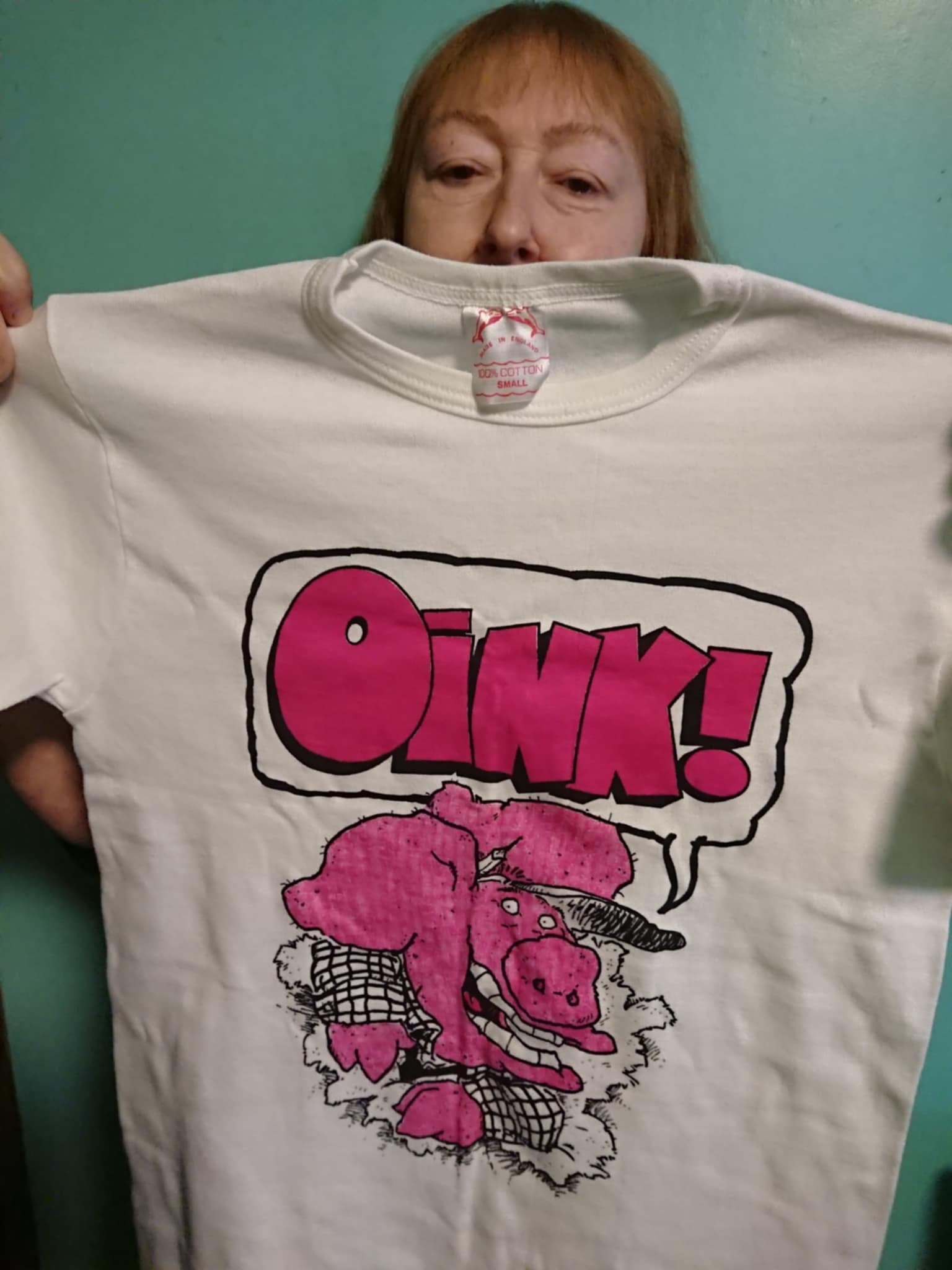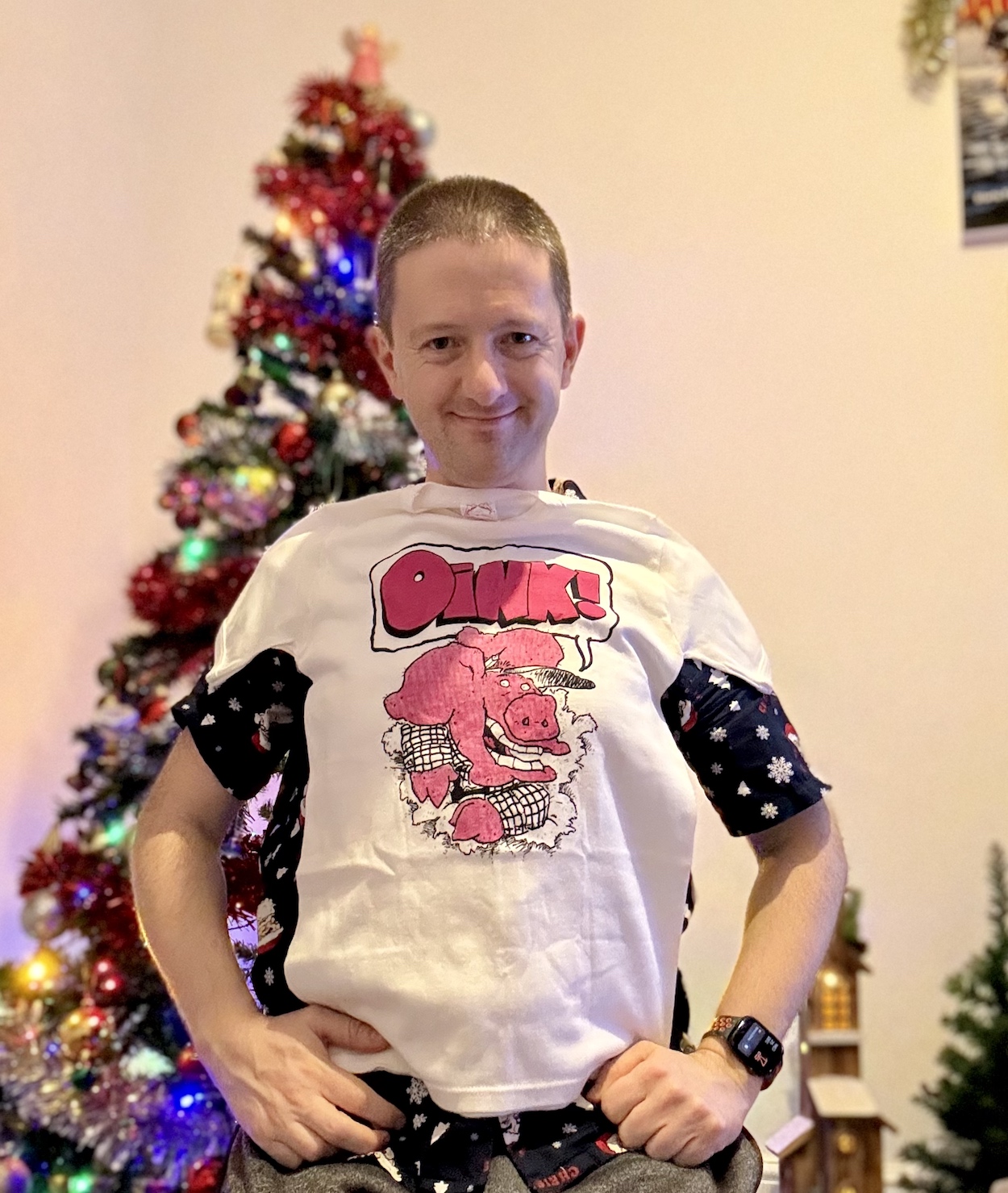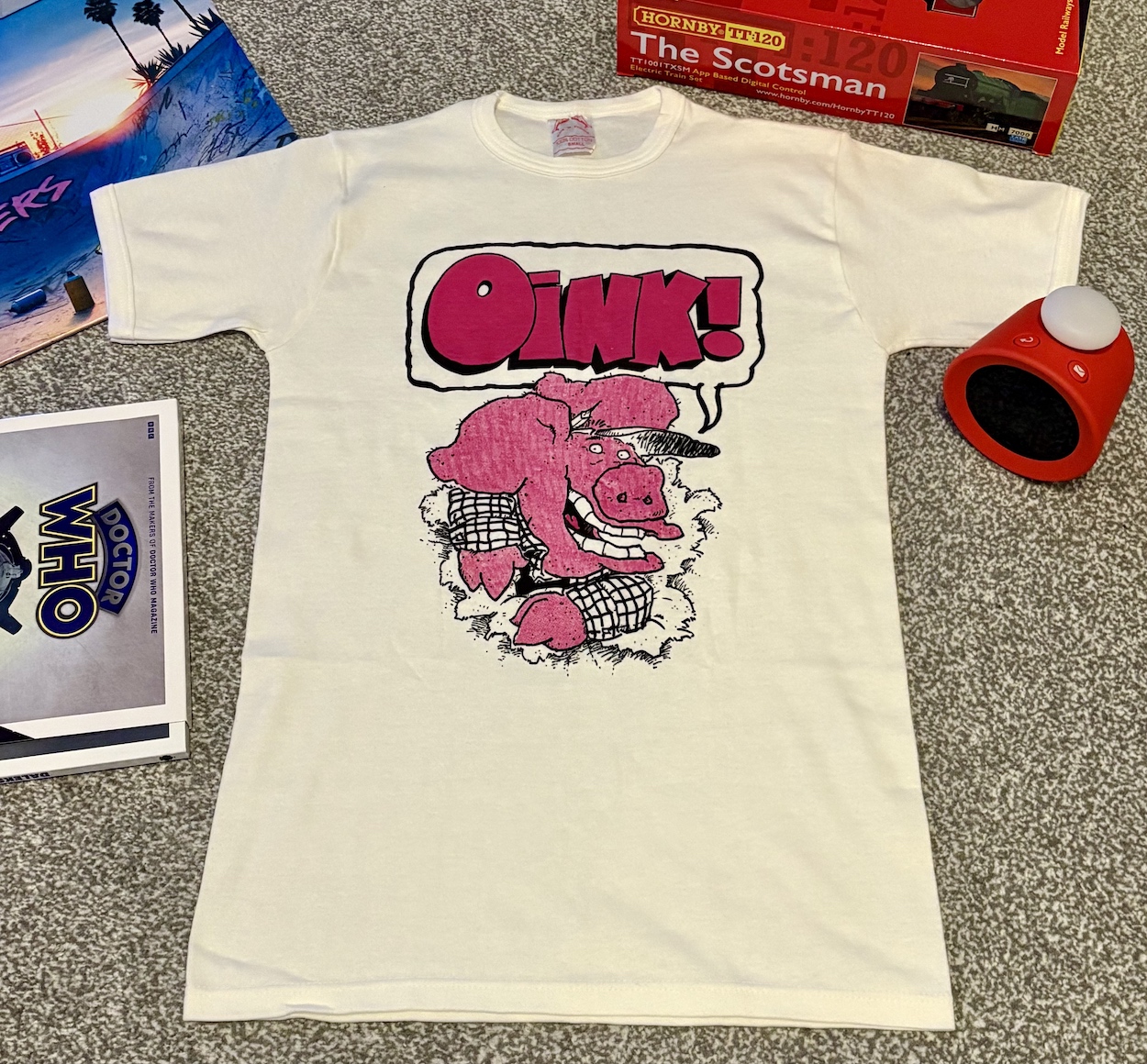
BUSTER BOOK 1990: COMiC BOOK OR BOOK COMiC?

This is the first Buster Book I’ve ever read and it’s surprised me straight away, but not in the way you may think. The Buster Book series has been added to the blog because of OiNK star Tom Thug. He continued in the pages of Buster weekly all the way to its end over a decade after OiNK’s cancellation. I thought buying the remaining annuals in the series from the moment Tom appeared would be a fun addition to the blog every Christmas. New Tom Thug is always a treat after all!

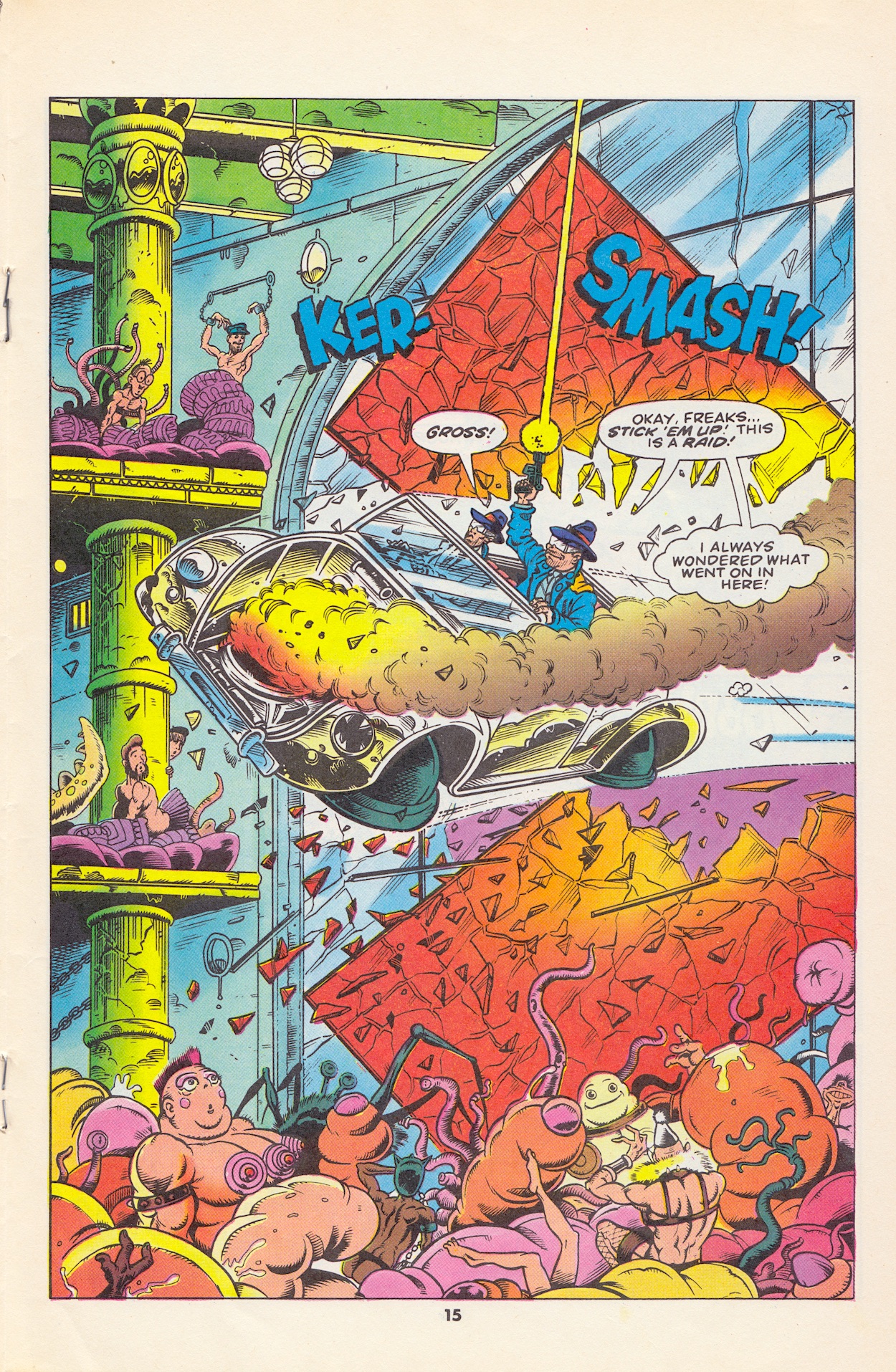
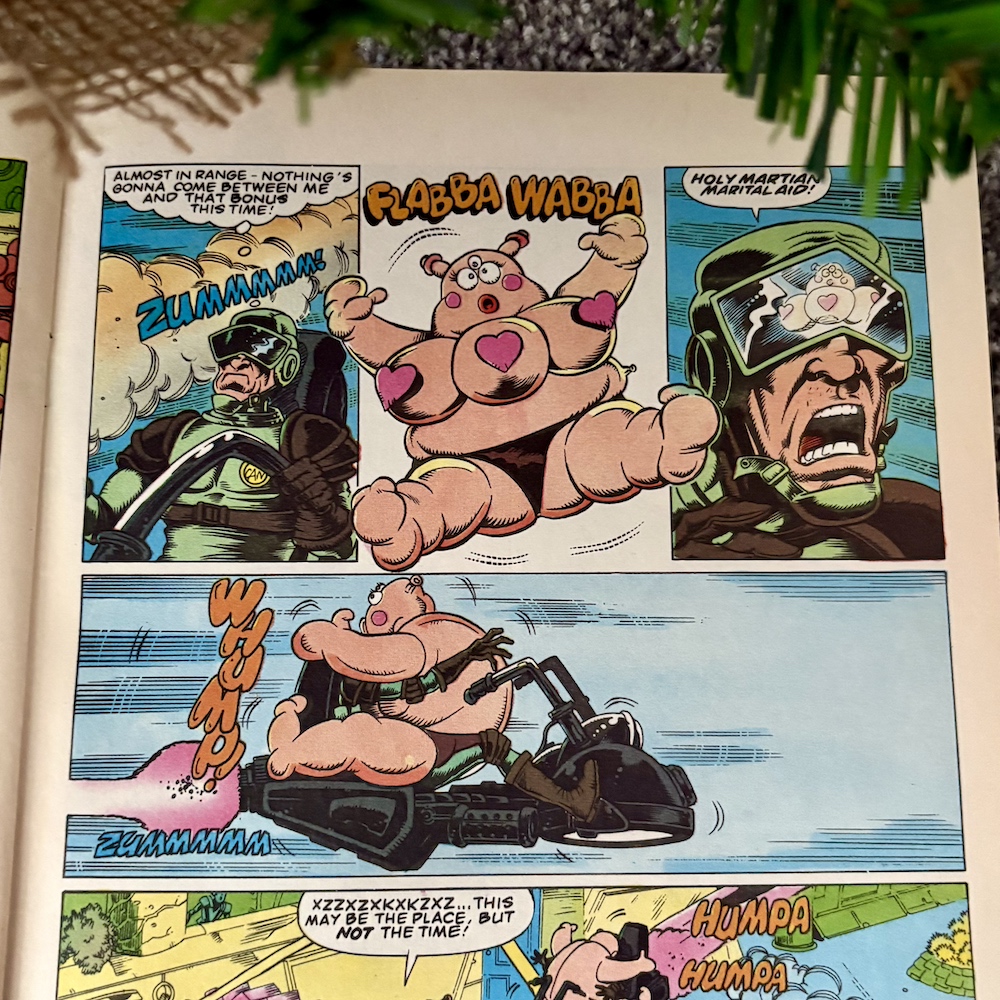
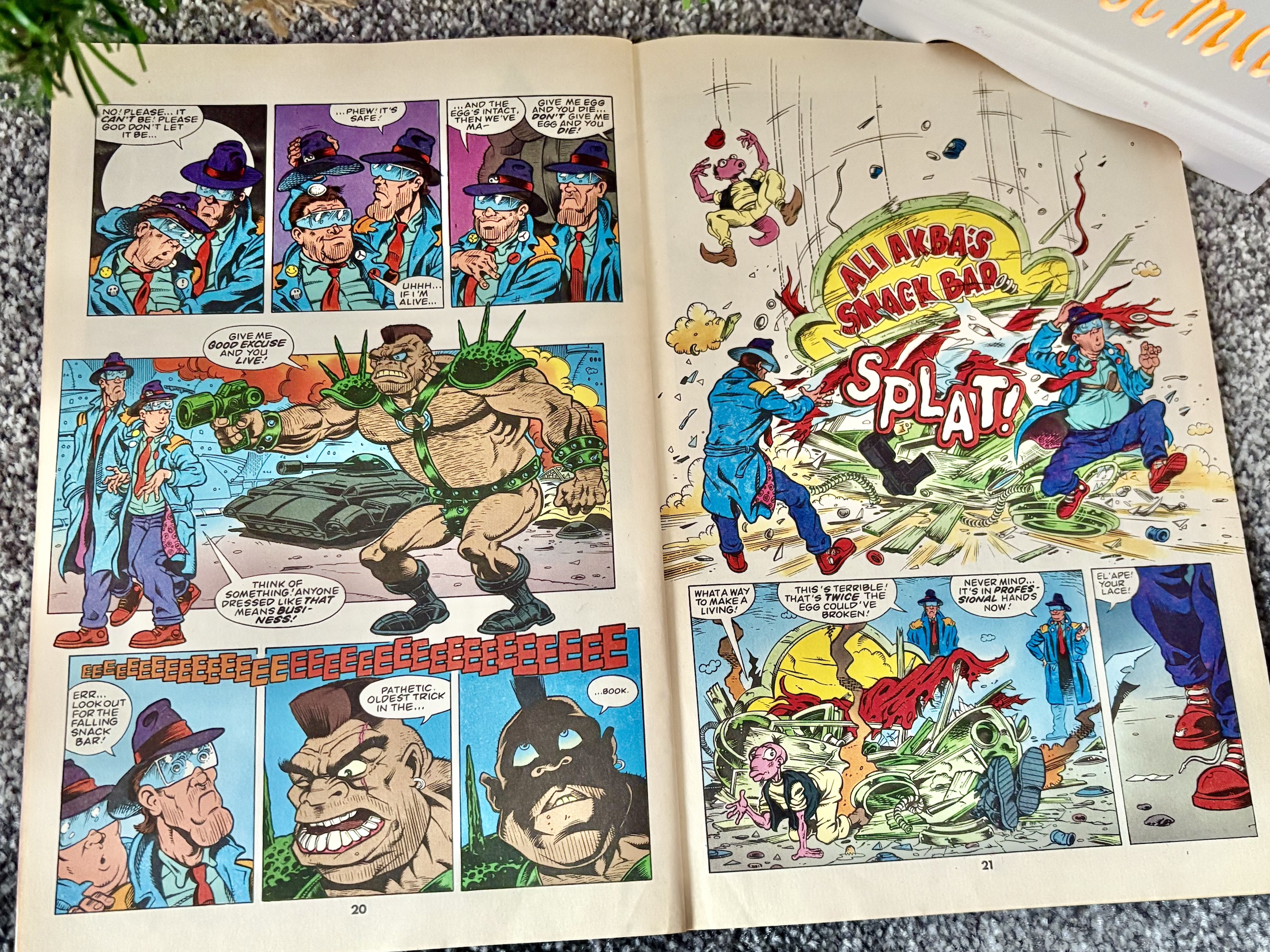
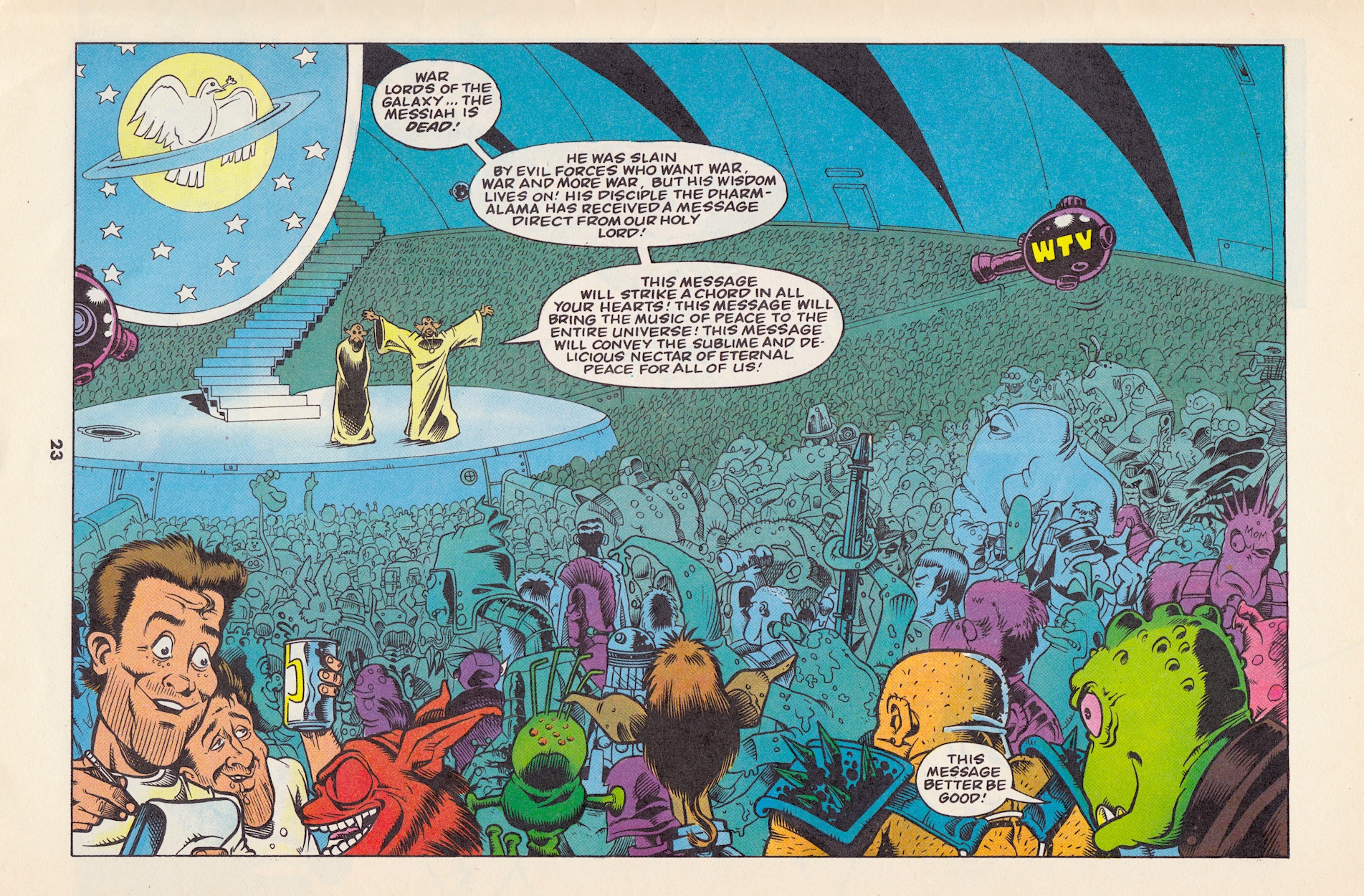
Knowing Weedy Willy and Pete and his Pimple were also in this edition I was looking forward to large multi-page strips or special stories of some sort, the likes of which we’d have seen in the OiNK books or the Beano and Dandy annuals every year. Surprisingly however, apart from a few exceptions this book feels more like several editions of the weekly wrapped in a cardboard cover.

The first and last 14 pages are of a lovely and smooth, higher quality paper stock, with some of the strips in full colour, but the rest of the 112 pages in total are the same matt paper as the Big Comic Books, mostly in black and white with the occasional two-colour strip. Also, apart from 2-page Buster, Ricky Rainbow and Chalky stories in those outer pages, and a 4-page BeastEnders inside, all the strips are the same length as they would be in the weekly comic.

Once you hit those inner matt pages it just doesn’t feel as special anymore. So yes, I was surprised when I compared it to its contemporaries but the main reason we’re here is for the OiNK strips (and perhaps a couple of other little treats too). The first of our piggy publication’s characters we bump into is Weedy Willy, as ever written by Mark Rodgers and drawn by Mike Green.

This wouldn’t feel out of place in OiNK itself. The simplest of tasks were always an epic struggle for Willy and going to see a slushy movie was no different, complete with the obligatory snow for the Christmas annual, albeit five snowflakes. It still counts. Surprisingly, it’s Pete and his Pimple who gets the full colour treatment on the deluxe paper rather than our next star.

The yearly annuals are written and drawn so far in advance of publication (and publication is a few months before Christmas, although they were always Christmas presents), Lew Stringer’s strips for this particular book – released in 1989 – would’ve been created soon after OiNK’s cancellation in 1988. While both characters were fan favourites, Pete was probably the more popular of the two in OiNK and Buster’s editor may have thought that would be the same in Buster.

You see? More snow and ice. Of course these books were for Christmas! I’d loved to have seen the impact into that tree, though. Maybe we would have in his original comic, but it’s still a fun strip. As the months rolled on Tom’s popularity soared in Buster while Willy was quickly dropped and poor Pete went the same way a few months later. In the years that followed Tom became one of the comic’s standout stars, getting full colour pages to himself and he even appeared on the cover. But for now, a single black and white page must suffice.

Pete, on the other hand, is in glorious full colour (coloured by John Michael Burns – thanks to Lew for the info). Alas, this doesn’t mean readers could be made even more squeamish with some technicolour pimple bursting. As I’ve mentioned before when the comics merged, given the younger audience it was decided the pus had to remain put. But that doesn’t mean the fun is kept bottled up. Here, that old OiNK classic of dressing up the pimple is taken to a hilariously Christmassy conclusion.

Unlike a lot of the Buster regulars, these three only get one strip each this time around and I did hunt down their pages within the book first for obvious reasons. It’s going to be an agonising wait for next Christmas before I can read any more from them (most likely just Tom), so I made the most of my purchase on eBay and read through the rest of the book for more highlights to show you.

The first comes courtesy of Ricky Rainbow and he’s on the final two pages of the book. When Pete crossed over into an issue of Buster to promote the then-weekly OiNK back in March 1988, it hadn’t been too long since Nipper comic had merged into it, bringing Ricky along. I’d particularly liked that strip, even though he only turned see-through in it. Usually he could change colour on a whim or based on his mood and I said at the time I’d like to see more of him. It had the potential to be really funny.

Drawn by James Hansen, here we see him unwittingly change colour because of his temperature for the most part, and it’s really enjoyable. It’s also made something of a theme out of very funny letterbox moments this Christmas on the blog. (See Kids’ Court in the Big Comic Book 1989 review.) It’s madcap fun, bouncing between different predicaments for Ricky with Bruiser always on his tail. I know Nipper was a comic aimed at a younger audience than Buster but Ricky Rainbow fits in perfectly here. He’s one of the best parts in this whole book.

OiNK boasted of Pete Dredge winning the Provincial Cartoonist of the Year award from the Cartoonists’ Club of Great Britain

Finally, another OiNK artist pops up with his Young Arfur strip, namely Pete Dredge. Pete contributed to a handful of OiNKs randomly throughout its run including strips like spoof movie anthology The Golden Trough Awards, Master T and Dimbo, his take on Sly Stallone’s 80s action hero. OiNK also boasted of Pete winning the Provincial Cartoonist of the Year award from the Cartoonists’ Club of Great Britain in #49.

Young Arfur started out in School Fun comic before making the transition to Buster in 1984. (School Fun was actually conceived by OiNK writer Graham Exton.) Arfur is basically a young version of Arthur Daley from the hit TV show Minder, a minor con man who used the gift of the gab to earn money through various dodgy schemes. Young Arfur has that same gift but instead uses it to get him and his pals out of doing anything they don’t want to do.

As you can see his reputation precedes him. Not that this knowledge helped the teacher any. You could see him as a more charming (albeit that’s part of the con) and chatty, streetwise version of the Roger the Dodger strips in Beano at the time. He’s a fun character and must’ve been enjoyed by Buster readers as he was part of the comic until 1987, five times longer than School Fun’s whole run.

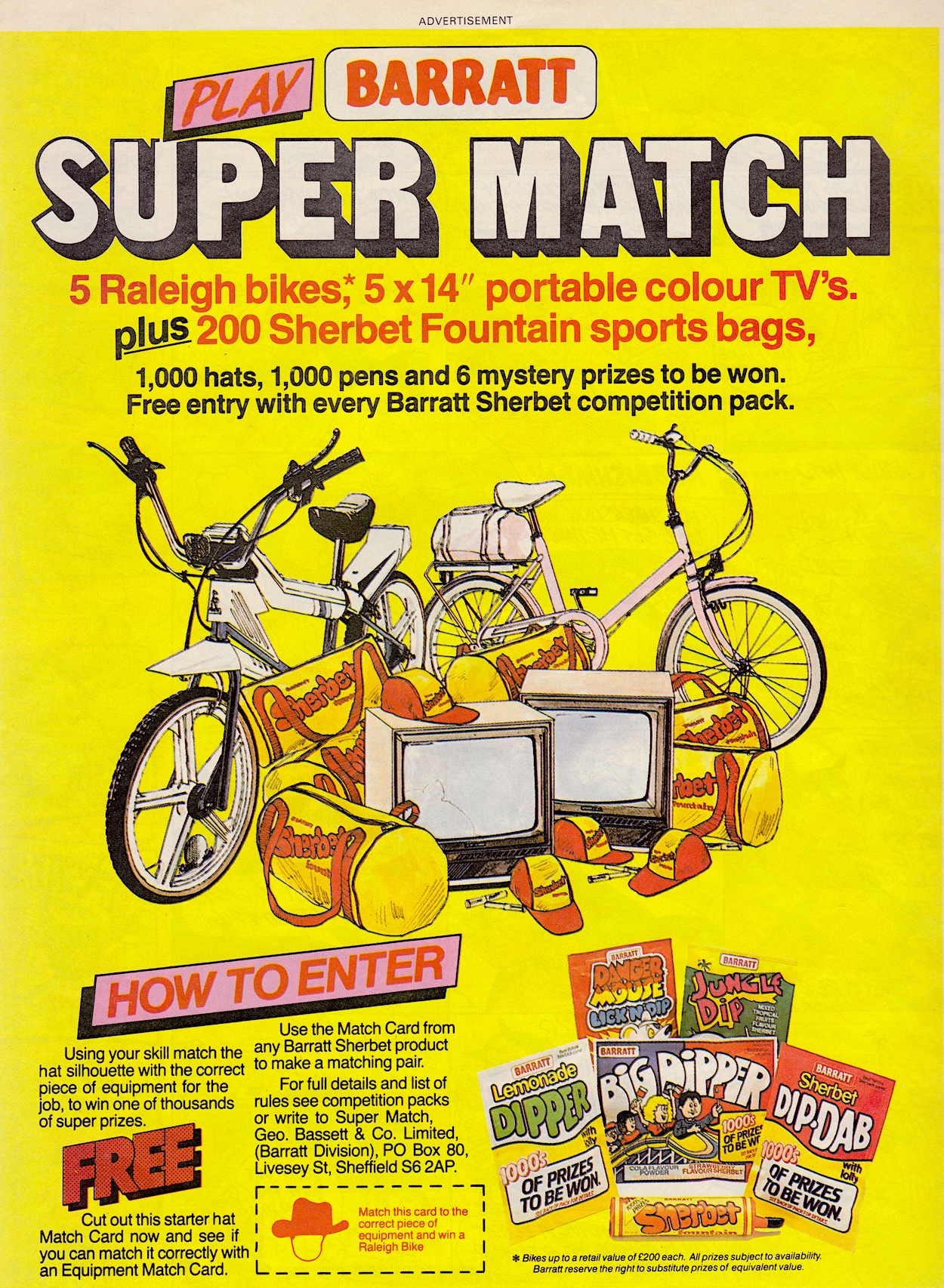
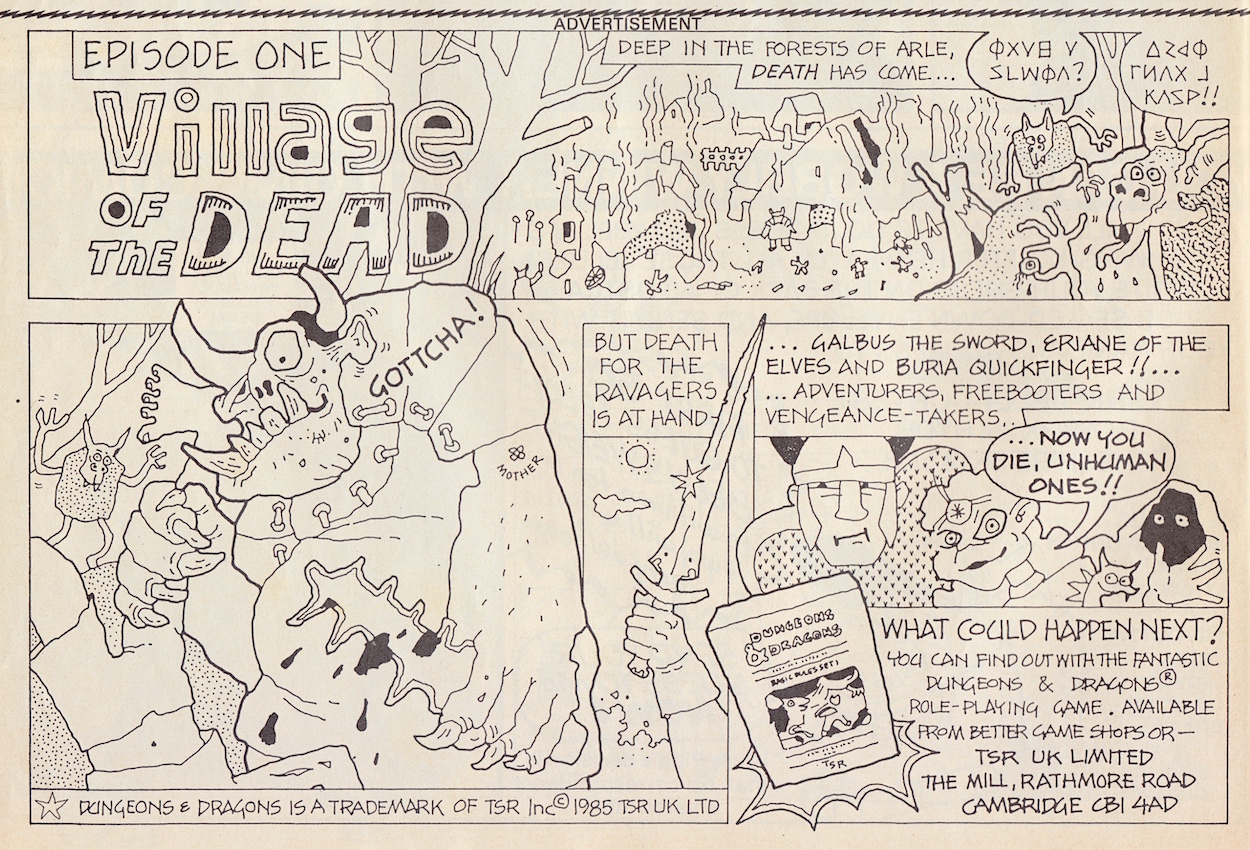
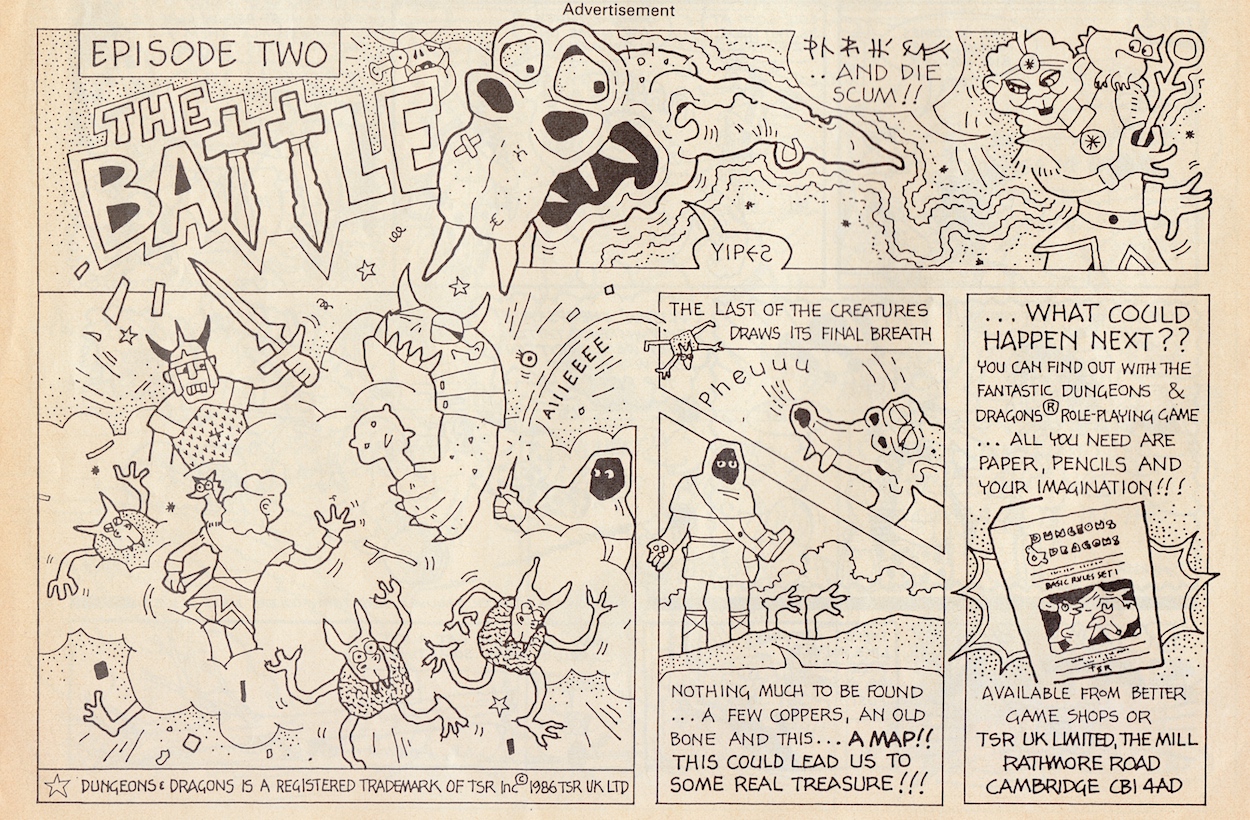
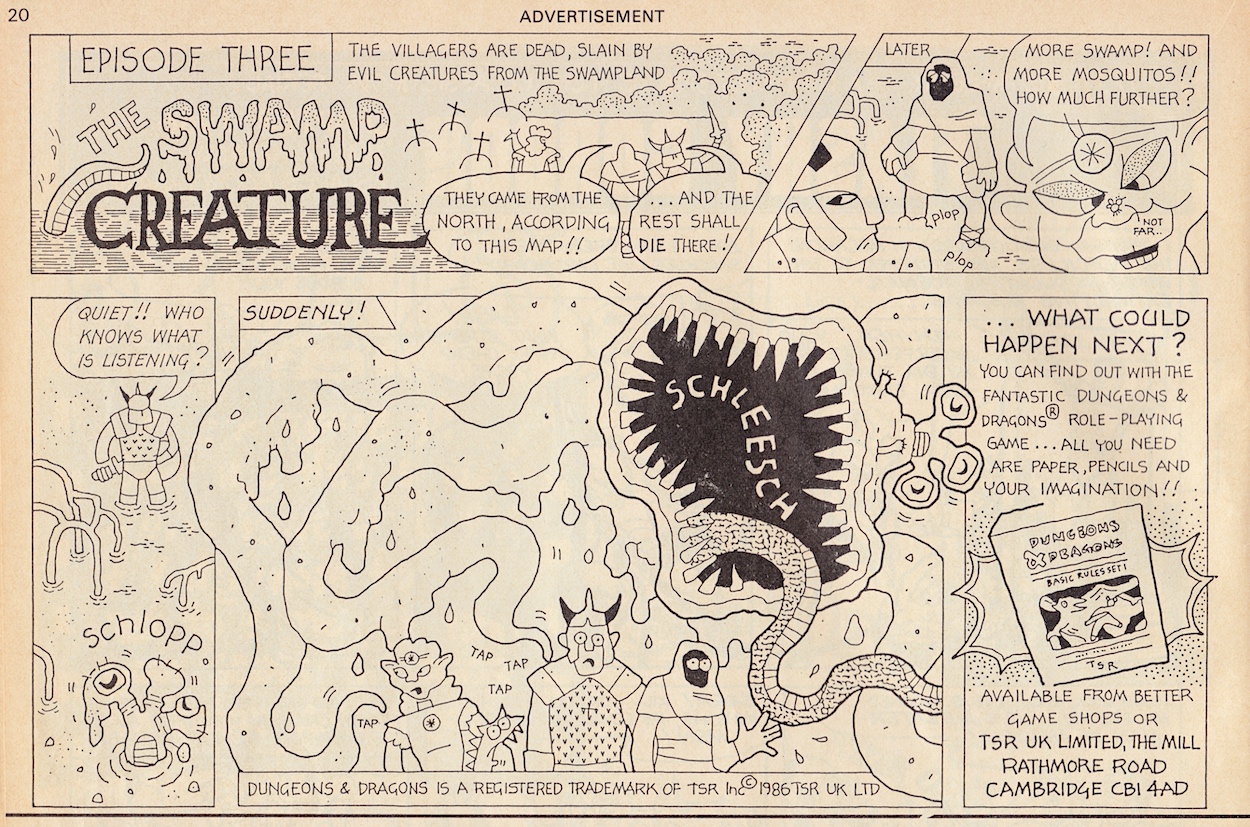
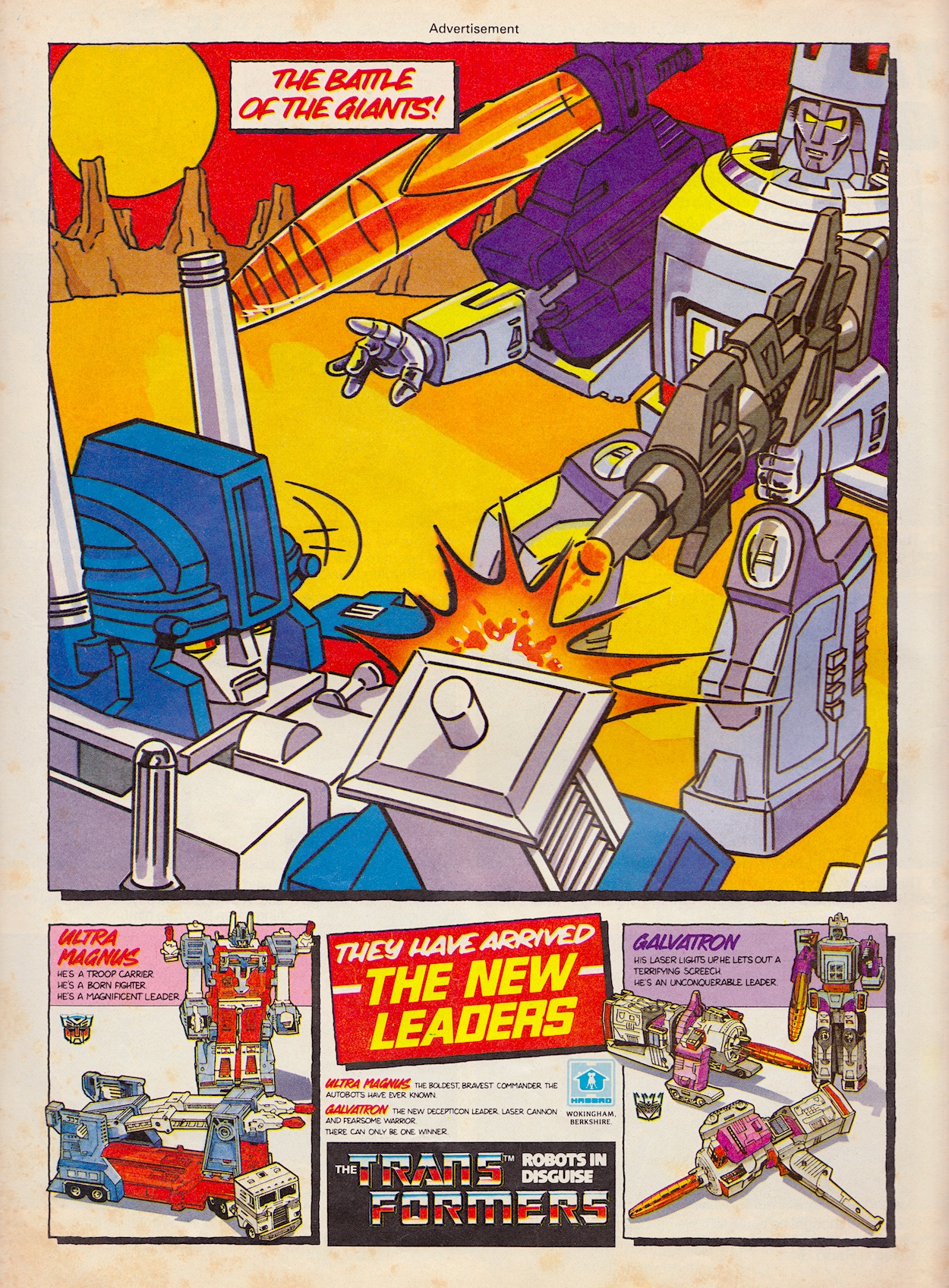
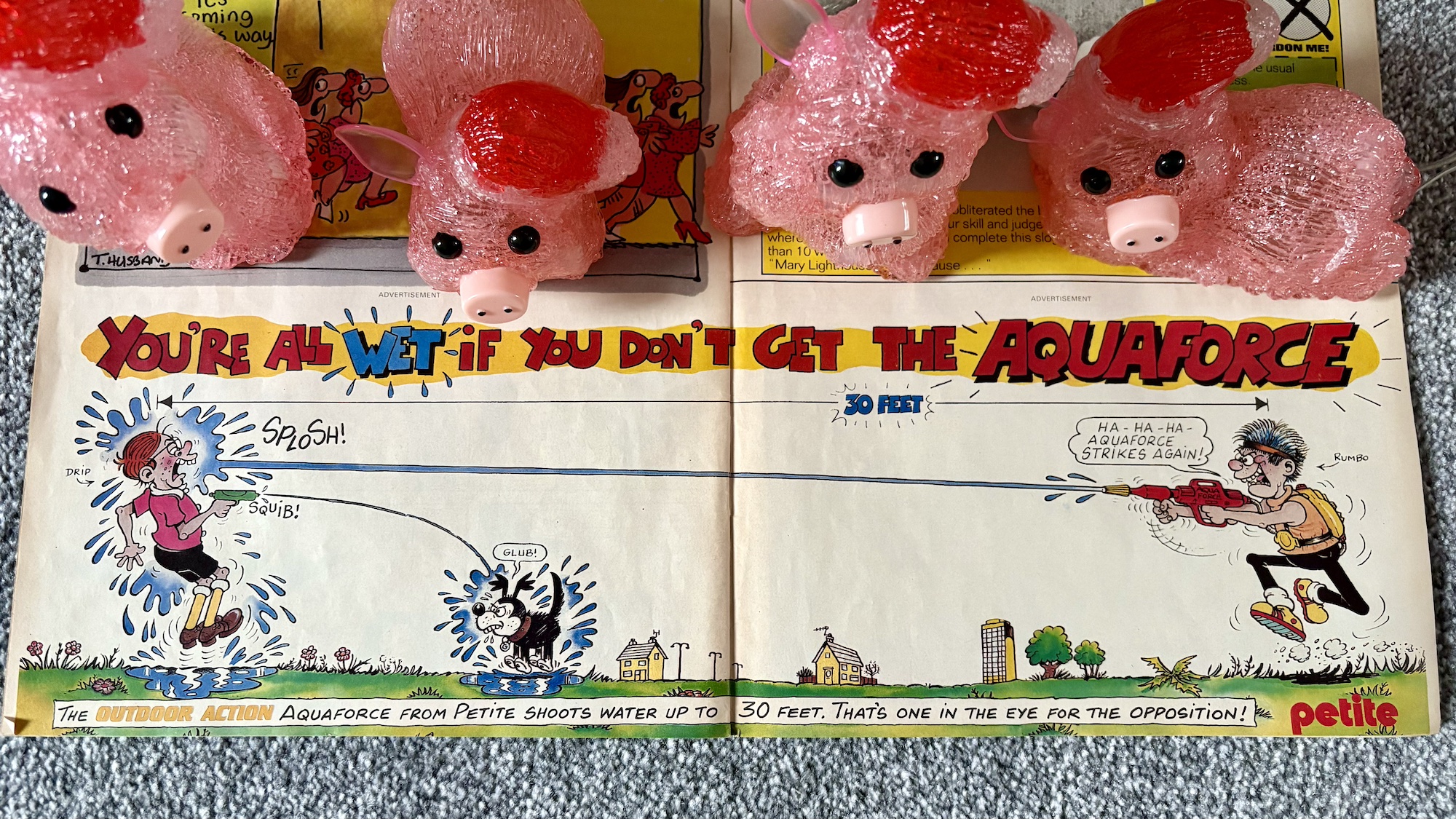
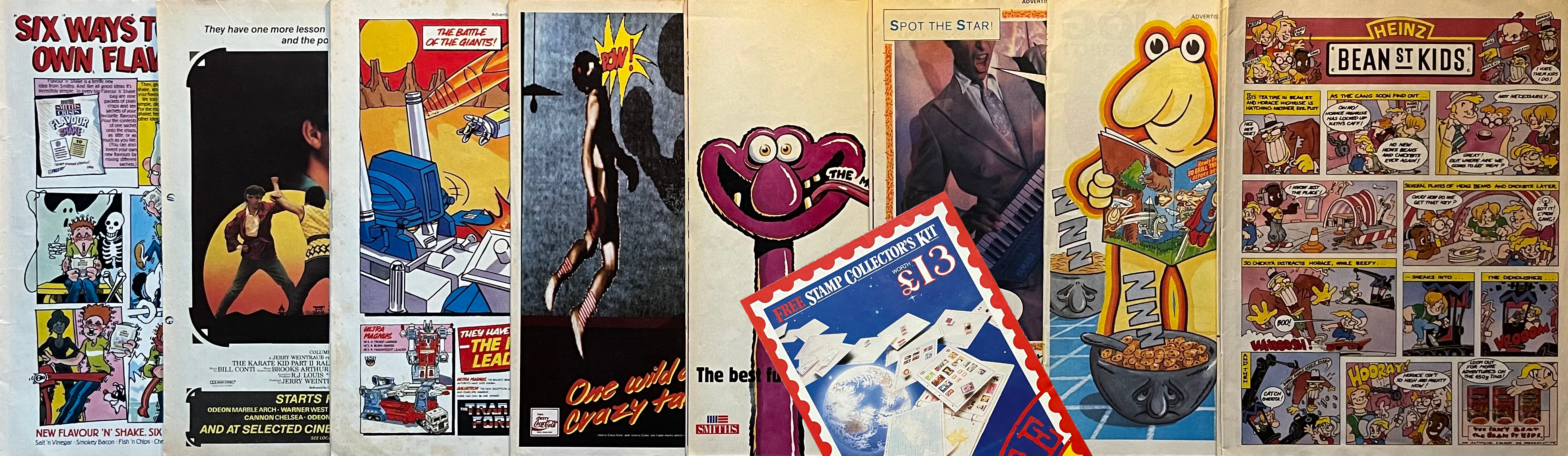
With that, we round off our look at the first Buster Book to co-star some of our old OiNK pals. I don’t need any will power to not look at the next volume because I haven’t bought it yet, but if you have these yourself (or can remember them) don’t tell me what’s to come, I look forward to finding out for myself each Christmas. One final surprise is on the back cover. Instead of a repeat of the front cover image by Tom Paterson, or a funny reverse cover like OiNK’s books, it’s an advert. But it’s one I’m sure anyone around my age will remember (fondly or otherwise) from a lot of our comics back then.

It’s strange to see an advert in an annual but the Big Comic Book also had it this year, as did the OiNK Winter Special released in November 1989. Anyway, that’s enough waffle from me. Pete may have been given top billing out of our three pig pals here, but it’s Tom Thug who has a few more Christmassy mishaps to come, so I look forward to our next festive feast of new OiNK-type material in twelve months!

GO TO 1991 BOOK

BACK TO ANNUALS MENU

CHRiSTMAS 2024

KNiGHT RiDER ANNUAL #3: NEW ART, OLD LOOK

As I sit down to write this review it strikes me I’ve only watched one Knight Rider this year, and that was my mum’s favourite episode (‘Ring of Fire‘) as a tribute to her memory during the spring. There’ll be one more time with Michael Knight and K.I.T.T. in my yearly viewing of the show’s one Christmas episode (‘Silent Knight’) but first it’s time to get reacquainted with the duo on paper in the third Knight Rider Annual, published in 1985.

There’s a famous (and funny) episode of Babylon 5 in which Security Chief Michael Garibaldi spends a small sub-plot looking for someone to share his “Favourite Thing In The Universe” with, which ends up being an old Daffy Duck ‘Duck Dodgers’ cartoon. Every December I get to do the same and share a book all about my own Favourite Thing In The Universe with you lot. So now that this publication knows the pressure it’s under to deliver, does it?

The first thing I notice is that the legendary David Lloyd is no longer the artist. If this is the first Knight Rider Annual review you’re reading you need to check out the first two books (and the exclusive blog interview) to see his incredible painted work in those. The new artist for this year’s volume is Jim Eldridge (Roy of the Rovers, Bunty, TV Comic) who brings a more traditional comic style. His version of K.I.T.T.’s front end may be a lot more angular than the smooth, customised Trans-Am on the show but all the other little details are correct.

Speaking of which, the dashboard gives away just how far in advance these books were created. In America season four had started in the Autumn, just a month after this book would’ve went on sale over here, while on our UK TV screens season three was still being broadcast. However, the dashboard here is clearly that from seasons one and two, before K.I.T.T. had his big makeover. Clearly, Jim’s reference material wasn’t up-to-date.

The first story is called Crash Dive and while on a stakeout Michael and K.I.T.T. end up forced off a seaside cliff by the baddies, from where they catch sight of an underwater entry point to a secret compound and the answer to how a band of thieves’ were going undetected by police. It’s a distracting piece of fun, an excuse to get our heroes underwater and taking down a small submarine instead of yet another car. Not sure why K.I.T.T.’s scanner looks like monstrous teeth though. Maybe he was dressed as Christine for Halloween.

As ever, the prose stories have a bit more depth to their characterisations and a lot more humour between our two leads. Not too far removed from the previous book’s stories, Fire-Bug is another case of industrial espionage by an unknown arsonist. Well, I say unknown but the mystery isn’t very mysterious. But then again, the show dealt with industrial espionage via a company ‘insider’ on a few occasions too. At least here after the unsurprising reveal is made there’s one more piece of misdirection just when you think it’s all over.

The other text story is Rustlers, in which a cattle ranch owner is facing intimidation tactics from a wealthy landowner who wants her out. Again, if you’re a fan this might sound a lot like season one’s brilliant ‘Not A Drop To Drink‘ or season three’s iffy ‘The Rotten Apples‘, and you wouldn’t be wrong. I’d say inspiration has definitely been taken from the former. However, the story does go off on a tangent somewhat (dead cattle mysteriously found on the sides of mountains) and involves lots of stealthy teamwork from Michael and K.I.T.T..

It also ends with a climax I’d loved to have seen on the TV. On the show K.I.T.T. could often be found using his Microwave Jammer to stall a helicopter’s engines, forcing it to land. In Rustlers, he instead uses his grappling hook and the car’s sheer strength to physically pull one out of the sky. At ten pages this is the longest story in the book and with all of these good points it’s a shame the bad guy’s M.O. is essentially the same as the one in Fire-Bug.

While the banter between Michael and K.I.T.T. is funny, especially on the long stakeout where their personalities rub off on each other, their partnership doesn’t feel as developed as last year. Elsewhere in the book Michael and “Deven”’s (Devon’s name is still spelt incorrectly) relationship is quite confrontational, like it was at the beginning of season one when these two very different people were still getting to know each other.

Through certain stories these clashes softened and by the end of the season they were firm friends. This book’s writer seems to be working from earlier series notes compared to last year, leading me to believe it’s no longer Steve Moore from the first two books. Why would he take his characters backwards after all? K.I.T.T.’s abilities in the stories are also restricted to those from the earliest episodes. There are no credits in these annuals (other than Jim’s signature) so I can’t confirm anything but it must’ve been a complete change in editorial team and they haven’t considered these points. I probably wouldn’t cared as a child to be fair, I’d have been too excited about the book in the first place.

“Beneath the ramp is an air compressor. As I hit the ramp at speed, the air pushes the car upwards and provides much more lift than I’d normally be able to achieve.”

Jack Gill, Stunt Co-ordinator

The features this year include a few more interviews, this time with Stunt Coordinator Jack Gill, producer Gino Grimaldi and Patricia McPherson who had returned to her role as Bonnie Barstow in season three (which makes it all the more frustrating the stories don’t acknowledge the show was in its third year). Jack not only met his wife on Knight Rider, he also walked away with multiple injuries from making K.I.T.T. look so incredible on the screen.

Jack talks at one stage about lying on the floor with a hole in front of him so he could see where he was driving at high speeds. However, this was used only sparingly a few times (in one episode we clearly see him lying on the floor). For the vast majority of the high-speed stunts a hollowed out driver’s seat and a special stunt steering wheel were hidden from view. Famously, David Hasselhoff has talked about scenes where he’d have to jump into the self-driving K.I.T.T. and take over, he and “K.I.T.T.” often jokingly wrestling for control as they sped off!

Interestingly, Jack talks about how they made K.I.T.T. swim. In the show it’s a pretty (re: very) poor model but they actually did spend a lot of money on getting the real Trans Am on a floating platform and dragging it through the water. As you watch, when the camera is inside the car with David you can clearly see he’s actually on the water and there’s spray coming in through the open window. Apparently it never looked right, so they switched to models for the exteriors and wrote in April Curtis removing the ability from K.I.T.T. at the end of the episode.

Jack and his team were instrumental to the show’s success and in any interview I’ve read with him over the years he always comes across as a very likeable and modest chap. According to interviews with others that’s exactly the kind of person he was, despite the high stresses and dangers of his job. The interview with Gino is interesting too, covering everything from the writing and rewriting of scripts to how they scored the show and selected the perfect 80s pop songs for each scene.

Unfortunately the interview with Patricia is a very brief chat rather than the full interview Rebecca Holden had last year. In fact, it’s a bit of a fluff piece, which is a shame as it could’ve been a fantastic exclusive, not just given her role on the show and her much celebrated return, but also because of her activism and environmentalism in real life, something that wasn’t as prevalent in the 80s as it is now.

What would an 80s annual be without some pin ups to fill out the contents? I never knew of anyone who went to the bother of actually pinning up pages from any of our annuals, but publishers persisted. Other space fillers here aren’t as good as in previous books, in fact some of the puzzles seem to have been knocked together in minutes. For example, a simple maze page doesn’t even have any pictures of the characters, just a few lines of text asking the reader to help K.I.T.T. escape.
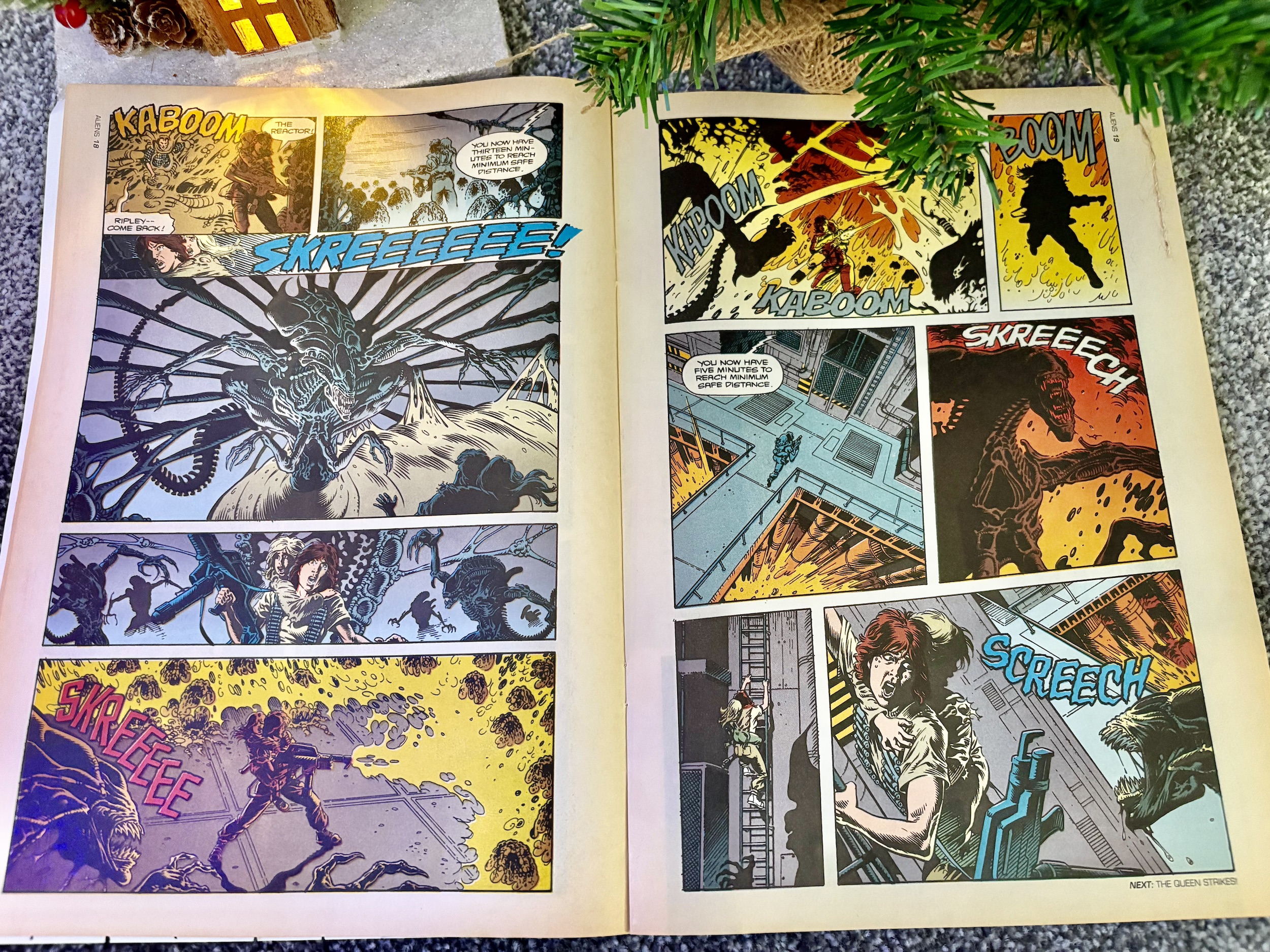
The book does have a second strip that’s fun though. Wise Guys sees Michael and K.I.T.T. stumble upon two bank-robbing rednecks in a souped-up car making light work of a police chase. There’s nothing original here, it could’ve been written straight after the pilot movie, but it’s light-hearted fun with K.I.T.T. at the centre of things saving the day. For the kids who could only see such things when the show was broadcast this would’ve been great fun and that’s who these book were for, after all.
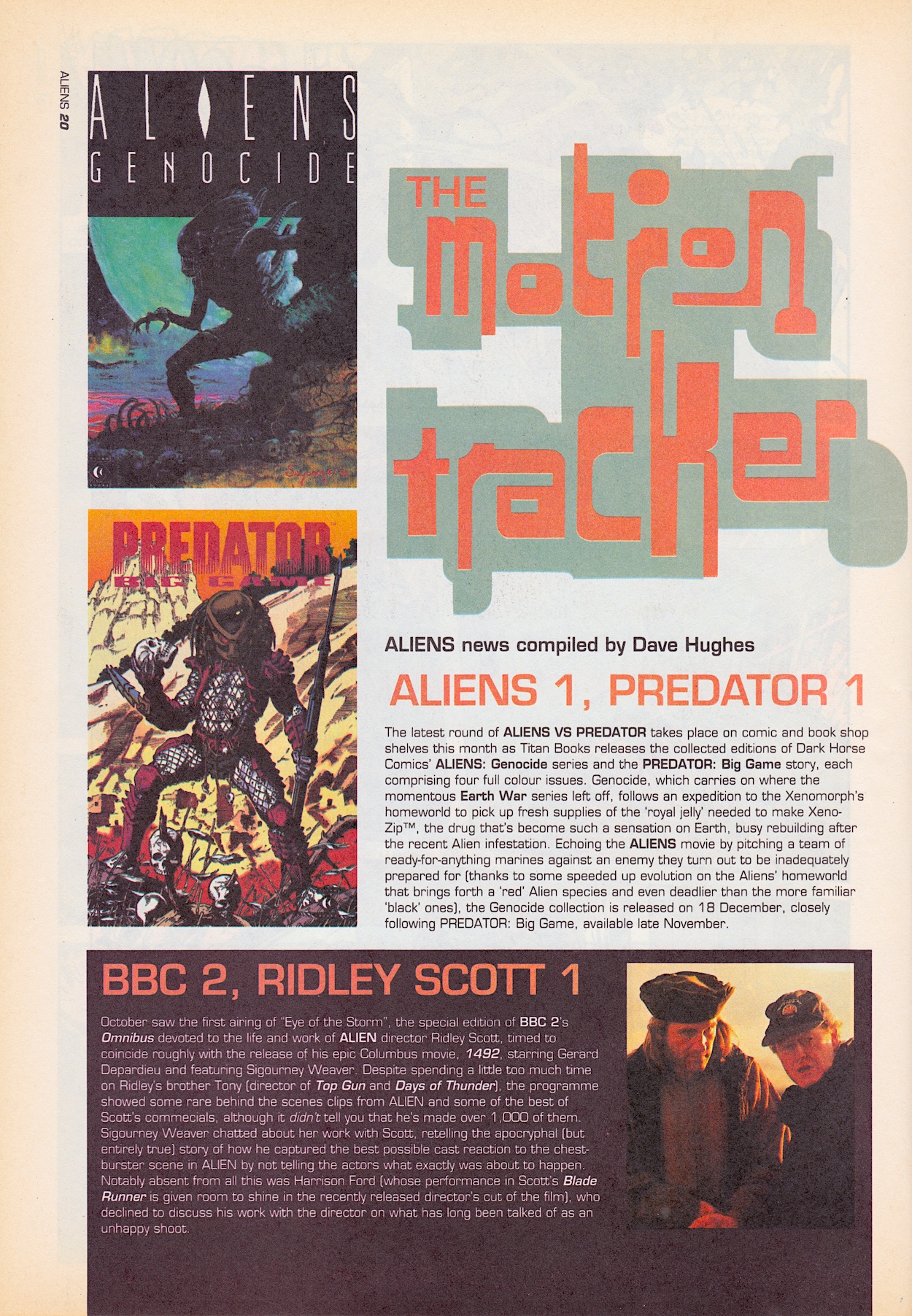
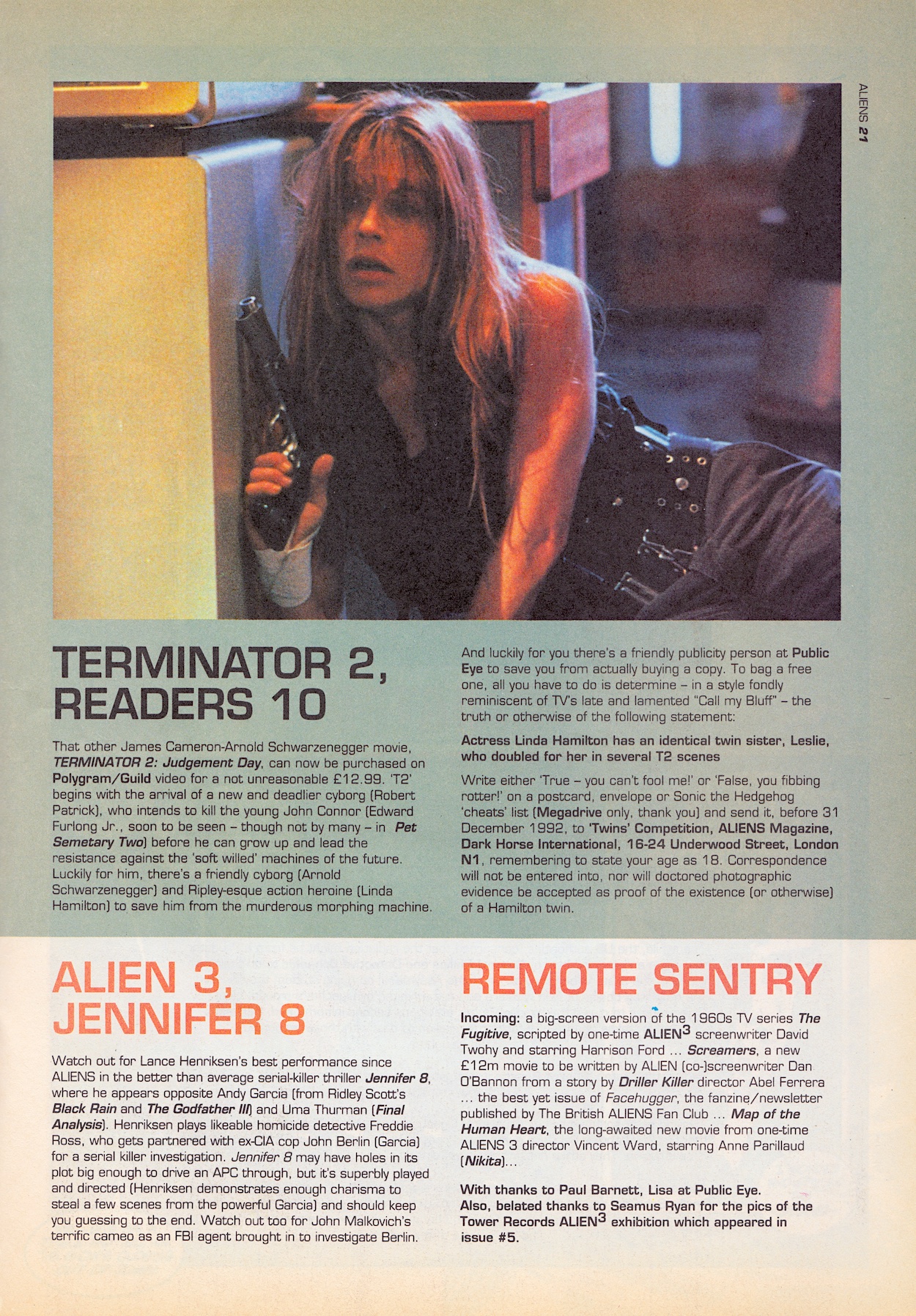
Michael catches up with the bad guys in his car and one use of the oil slick later the men have careened off the road, their car damaged beyond repair. But they take a woman hostage in a nearby house and demand a clean getaway. Of course, they want the Pontiac Trans-Am that can outrun the police, and the rest writes itself. It’s the only colour strip and despite K.I.T.T.’s boxy configuration there’s a lovely retro Christmas Annual feel about the whole thing.

The following year, Marvel UK would release a special Transformers softcover book for Christmas which reprinted stories and features from the previous year’s annual and it appears Grandreams had the same idea. The year after this annual they’d strip it of the pin ups and the awful filler material and rerelease it as the Knight Rider Special, a 52-page softback with a glossy card cover (minus the annoying ‘Knight 2000’ branding superimposed on K.I.T.T.). Keeping all the best parts and getting rid of the rest it reads better than the annual itself, although it doesn’t have that hardback, childhood Christmassy feel to it.

Back to the book and with some tweaks this could’ve been the perfect third Knight Rider Annual. As it stands the stories are great fun, there’s some interesting behind-the-scenes nuggets and at a time when we couldn’t search the internet the photography from the show was always keenly perused over and over. It’s still a great nostalgia trip and, speaking of which, here’s an old photo I found last month from around the same time with a present from Santa that was my pride and joy!

Michael and K.I.T.T. (and me) will be back next year.

(Special thanks to my friend Vicki who gave me the Super Pursuit Mode K.I.T.T. featured in the book photos in my Christmas stocking last year!)

ANNUAL 2 < > ANNUAL 4

ANNUALS MENU

CHRiSTMAS 2024

TRANSFORMERS AT CHRiSTMAS: #7

It doesn’t really jump off the cover that this is the first of Marvel UK’s Christmas issues of Transformers. Then again, the cover image isn’t even a cover image. It’s just a panel from the strip inside blown up to full size, something the comic did a few times in its first year. This is a shame because there are a small handful of gorgeous original covers among those first 26 issues.

Originally a 32-page fortnightly made up of colour and black-and-white pages with its contents spread sporadically through each issue, it’s a far cry from the weekly format it would become known for later. Launch editor Shiela Cranna adds a couple of captions to the cover and a Christmas message in the two-page editorial, which contained a mixture of Transformers news and random items they thought would appeal to readers.

I’m not sure about Shiela having “quite the fight to get the Christmas decorations up” with designer Theresa George, seeing as how it’s a random selection of clip art-like bits and bobs thrown together. As someone who originally came to the comic much later in the run and loved snowy logos, Christmas strips and festive features, it was a bit of a shock just how little of this children’s comic seemed to celebrate the season in 1984.

That’s not to say this isn’t a good issue. Let’s face it, bad issues of this comic could be counted on one hand. In this series I’ll be taking a yearly look at the Christmas editions of Transformers between 1984 and 1990 on their individual 40th anniversaries. I’ve read the whole series in real time on the blog’s Instagram (you can check it all out in a special blog post) but here I’ll have the chance to take a deeper dive into these particular issues. So after an editorial which includes a reader poem that won’t be worrying Stan Bush anytime soon, and a cringey reference to “boys’ toys” (the gift of hindsight), what strip action was to be had?

This is the big event of the issue, the introduction of the Dinobots

The main strip was still telling the origin story of the Transformers’ arrival on Earth, concluding in the next issue. The Last Stand: Part One was written by Jim Salicrup (editor on Spider-Man, Uncanny X-Men, Bram Stoker’s Dracula), pencilled by Frank Springer (Savage She-Hulk, Green Arrow, G.I. Joe), inked by Ian Akin and Brian Garvey (partnered on ROM, Iron Man, Firestorm) and lettered by John Workman (Jurassic Park, Incredible Hulk, Star Slammers), his work always recognisable with open balloons and captions along panel edges.

As you can see it’s in black and white, with only 5 of the 12 pages in the original colour provided by Nel Yomtov (every issue of the US Transformers, Amazing Spider-Man, Punisher Armory), with Bob Budiansky (Sleepwalker, Ghost Rider, Avengers) editing the story. Bob created many names of the characters and their abilities for Hasbro and would go on to write the comic for a few years.

In this chapter the Autobots find out Spike Witwicky has converted Earth fuel for the Decepticons and even the fact he was under duress doesn’t stop them from threatening him! They’re new to our planet and don’t trust us yet. Fear causes Spike to have a heart attack and during a Vietnam flashback we come to realise he’s poisoned the fuel he gave Megatron, which convinces the Autobots we’re on their side.

However, this is the big event of the issue, the introduction of the Dinobots! It’s a strange page to choose for colour given how it’s a flashback and in muted tones, but it was no less exciting for the young readers. Millions of years previous The Ark had detected more Transformer life and it relays how its surveillance drone had discovered Shockwave and created what it believed to be a disguise for five of the most powerful Autobots on board.

It’s a much better origin tale than the cartoon came up with and it’s even set in the Savage Land, a hidden prehistoric place in the Antarctic that featured prominently in X-Men comics and more recently in the Doctor Strange in the Multiverse of Madness movie. After Spider-Man had guest starred in the previous issue the comic’s ties to the wider Marvel Universe were a surprise for me. They’re a fun addition.

Speaking of other Marvel comics, here’s an advert for the monthly Captain Britain and below that the big Christmas movie was… Caravan of Courage? I’ll be honest, I’ve never heard of this Star Wars spin-off. This page interrupts the strip mid-flow. Much like the US comics these early editions break the strips up into several pieces with adverts and features seemingly randomly throw in here and there.

While in the American comic the adverts are more easily ignored (but no less irritating), having features to read in the middle of the stories results in the comic having a rather bitty feel. But one of those interruptions is the only real Christmas bonus so we’ll forgive it. While the readers’ drawings aren’t festive, Shiela decided to gather 14 of those sent in altogether as a special Christmas treat for those featured.

No ages are given but I think it’s safe to say the comic already had a wide audience, from the very young to at least the teen market if the high quality on display here is anything to go by. The ideas for original Transformers would even give some of the comic’s later attempts a run for their money.

From robotic aliens to a robotic man created here on Earth. Aaron Stack was the last in a line of futuristic robots, the difference being he was raised by his creator as if he was his own son. After his creator was killed in an accident Aaron went out into the world, both as a human and as a new kind of superhero, Machine Man. Unlike Superman with his glasses, Aaron was much more convincing as he disguised himself with a fake face, hands etc.

The character was originally created by Jack Kirby and this is the first page of the second chunk of Xanadu, written by Marv Wolfman (Tomb of Dracula, Spider-Woman, Batman) with art by Steve Ditko (Blue Beetle, Amazing Spider-Man, Secret City Saga) and is lettered by Ira Watanabe (Cyclops, Incredible Hulk, Sub-Mariner).

I really enjoyed Machine Man, even with Marvel UK’s cherry-picking of stories which meant we didn’t get to see his full character arc before the strip disappeared from the comic, replaced by the more contemporary Machine Man of 2020. Aaron was a great character. He felt fully formed, his wish to live a human life was endearing and he had a cracking sense of humour which often shone in the middle of spectacular fight scenes.

Thrown in midway through the strip, Robot Round-Up was the best extra feature from the first year of the comic. An always interesting look at where our technology was at the time and how they perceived it would develop, it’s fun to contrast the future according to the 80s with how things have turned out. Such a shame how writer Johnny Black comes across in that last story though. Unfortunately, sometimes these things happen when we read old 80s publications. Oh well, it’s a reminder of how much better and more enlightened we are today.

Also standing in stark contrast to today were Hasbro’s Transformers toy adverts. While later in the run they’d include actual photographs, originally fans only had illustrations to go on (albeit intricately drawn). Even in the 90s I remember Commodore 64 games being advertised in Commodore Format with nothing more than the box art to tempt us to buy them. So strange to look back on that now.

Thus ends our first Christmas with Transformers. As you can see it was a very different beast to what most people will remember. Next year’s will feel more familiar to you and not only that, there’ll also be the first of seven Transformers Annuals as well! It’s a long time to wait, I know, so don’t forget you can check out the entire Instagram real time read through of the series that took me over seven years to complete. You don’t need an account and there’s a guide on the blog so you can check out all 375(!) posts in whatever order you like.

THiS iSSUE’S PROMO < > YEAR TWO PROMO

TRANSFORMERS AT CHRiSTMAS MENU

MAiN TRANSFORMERS MENU

CHRiSTMAS 2024

OiNK iNTERViEW SERiES: PART THREE

I hope you’ve all been enjoying this fascinating look into the creation of OiNK from some of its incredible creative team. In case you’re stumbling upon this series for the first time, I sent four questions to some of OiNK’s greatest talent and every Saturday during the build up to Christmas I’m publishing all of their responses, one set at a time.

The third question is the most personal. Working on a funny comic isn’t easy. We were laughing with the turn of every page but it must’ve been exhausting to come up with all of that comedy gold week after week. We’ve established they all loved their time on OiNK and each other’s work, but is there anything of their own that they’re particularly proud of?

QUESTION THREE

What’s your personal favourite piece
you contributed to OiNK?


DAVEY JONES
Henry the Wonder Dog, Pop-Up Toaster of Doom,
Kingdom of Trump

“I suppose it’d be a half page strip called Henry the Wonder Dog, because that was the first one I’d got accepted, and my first bit of paid cartooning work. When I finished my A-Levels in the summer of 1986 I started bombarding OiNK with ideas, and at the beginning of August got a note from Mark saying “Success at last, can you draw this one up and send it to Patrick.” I was chuffed to bits, and remember that evening going down The Barrels (still my favourite pub in Hereford) to show off.”


STEVE GIBSON
artist Judge Pigg, countless GBH Madvertisements,
Ponsonby Claret

“Personal fave: Judge Pigg. I wanted to do more 2000AD parodies (Strontium Pigg, Rogue Porker, ABC Piglets) but alas we were too busy and the guys at 2000AD don’t like us mere cartoonists taking the pee-eye-double-ess out of their serious characters.”


IAN JACKSON
artist Mary Lighthouse, Horace (Ugly Face) Watkins,
OiNK Book 1988 covers

“Various covers plus a black and white two-page school story.”


PATRICK GALLAGHER
co-creator and co-editor of the whole shebang,
designer of the OiNK logos

“Chaotic issue eight cover with the skeleton staff member.”


DAVID LEACH
Psycho Gran, Dudley DJ

“It’s either my fully painted poster of Psycho Gran in the annual, The Good, The Bad and The Very Old. Or it’s the one pager where PG is waiting for a bus.”


DAVY FRANCIS
Cowpat County, Greedy Gorb,
Doctor Mad-Starkraving

“My favourite piece of work is the Cowpat County page with Cyril the Sheep. A lot of my workmates at the time were put into the strip (including Cyril). We had a real laugh when it was printed. It was one of those strips that nearly writes and draws itself.”


GRAHAM EXTON
writer Fish Theatre, Herbert Bowes,
Murder in the Orient Express Dining Car

The All- Vegetable Theatre Company, which became Tatertown on Facebook. Herbert Bowes is a close second.”


ED McHENRY
Wally of the West, umpteen OiNK puzzle pages,
Igor and the Doctor

“I was very pleased with the two double-page spreads I did, one for the 50th birthday party and the other for the anniversary portrait, both these featured all of OiNK’s regular cast of characters.”


LEW STRINGER
Tom Thug, Pete and his Pimple, Pigswilla,
writer of Ham Dare

“Another question that’s hard to answer but I was very pleased with the Pete and His Pimple pull-out comic I put together. It was nice to do a longer story. Another favourite was the one-off half pager Thick As Thieves about the bungling crooks. I was inspired by the old time British comedy movies for that one.”


JEREMY BANX
Burp, Mr. Big Nose, Jimmy ‘The Cleaver’ Smith

“That might be the Burp one when he had to fight for those round squishy ball things;  thus ensuring his puberty and subsequent transition to manhood. I think it was in a special?  A reader messaged me a few years back to tell me it had helped get him through the whole painful process when he was a boy. The mind boggles.”

Ahem… I then admitted to Jeremy that reader had been me! To which he replied, “Oh excellent. I seem to remember you saying it had some sort of beneficial effect. I hope you weren’t just being polite.” Not at all , Jeremy! To any of you out there who may be a bit confused by this, check out the review for The OiNK Book 1989!


KEV F SUTHERLAND
Meanwhile…, The Three Scientists,
March of the Killer Breakfasts

“I did a couple of short stories I was really proud of. That one with the Three Scientists who travel back in time, then compare watches, but because they’ve all travelled the same amount their watches don’t show any difference. I still don’t think I’ve seen that gag being done (cue a dozen people telling me they’ve seen it in everything from Futurama to Rick & Morty. Well I haven’t seen it, and dammit I did it first!) I was also proud to have coined the phrase, “Would you Adam and believe it?” in one of my strips, which went on to be used a lot by Marc and Lard.”


The pages mentioned here really are the crème de la crème of what OiNK had to offer, and where possible I’ve included links to those specific issues so you can relive some personal giggles this Christmas. Just one more question to go, so don’t miss out on the answer to this on Saturday, 21st December 2024:

Finally, if pig pals could take one thing away
from your work on OiNK, what would that be?

QUESTiON TWO < > QUESTiON FOUR

OiNK iNTERViEW SERiES

CREATiNG OiNK MENU

MAiN OiNK MENU

CHRiSTMAS 2024

SPEAKEASY #81: A CHAT WiTH MARK RODGERS

Just five short months after the previous issue of Speakeasy that featured on the blog came their Christmas issue, complete with snow and holly on the title (as it should be) and our piggy publication got a headline mention too. That’s because inside there was a massive double-page spread all about our favourite comic.

OiNK featured in the earlier issue in a much smaller way. Here, an unknown writer (no credit is given so it could be anyone out of Cefn Ridout, Dick Hansom, Bambos Georgiou and Nigel Curson) chats to OiNK co-creator/co-editor Mark Rodgers and the big news was that OiNK was finally going weekly with #45!

I remember the first time this was announced in the comic and I was absolutely thrilled. The loss of some key characters to a semi-regular basis and a reduction in pages was a bit of a shock though. If I’d been reading Speakeasy I’d have had a heads up and Mark’s explanation about some characters being on a regular rotation makes perfect sense. If only the comic itself had told us this at the time, maybe more readers would’ve stayed around.

There are a handful of previews for the new weekly strips here, showcasing Lew Stringer’s main characters who would now always have full pages to themselves. David Haldane’s are shown in their entirety and Billy Brown’s Black Hole was a one-off but even on such a smaller scale Simon Thorp’s detailed artwork still looks the part. Two-thirds of it are shown here even though we wouldn’t see it in OiNK until #68, the final issue!

“The pigs started taking over. We eventually decided to call it OiNK.”

Mark Rodgers

The piece begins with the well-known tale of how OiNK’s three creators (Mark, Tony Husband and Patrick Gallagher) met and, once we get to the point in the story where OiNK received its name, the writer takes every opportunity to insert a surprisingly well-crafted pig pun. The article focusses on OiNK’s independence and what set it apart from its contemporaries. Most interestingly, Mark likens OiNK to its stablemates when they were younger comics, when they pushed the envelope with their own rebellious senses of humour.

But by the 80s what was once rebellious had become stagnant. OiNK was their attempt at rekindling that same feeling for the modern audience. I’ve no doubt those that complained about OiNK failed to see the similarity to the comics from their own youth. Other interesting tidbits here include Mark admitting the humour was going to be gently changed to appeal to the middle-ground of their readers’ ages, Burp is misspelled throughout for some reason, and the DallasEnders photo strip mentioned wouldn’t actually see the light of day until #63, the first monthly.

“It’s going back to the basics of children’s humour comics really.”

Mark Rodgers

Lew Stringer also pops up towards the end when he’s asked about his involvement with the weekly relaunch. To help with the quicker turnover of issues Lew was asked to design half a dozen of the covers, three of which he would draw himself and the rest would be handed over to others. Lew discusses the idea behind them and it’s interesting that he came up with a theme for them in response to the fact the issues themselves would no longer be themed. Clever.

There’s one point here that’s particularly relevant. Mark talks about some of the more popular characters and how readers could identify with them. They were highly exaggerated versions of us and our likes, dislikes and behaviours of course, but it meant we could laugh at ourselves alongside the celebrity spoofs and random characters inside the comic. In a world where certain corners of the internet bemoan comics (and other mediums) wanting to create identifiable characters for modern audiences, it’s clear they don’t know their own comics history. It’s always been a thing, whether in superhero comics or silly ones about pigs and plops.

It’s time for a quick look at some other little bits that caught my eye as I read this edition of Speakeasy. Some things never change, as some got into a tizzy over new Bible-based comics. They were reported on as “obscene” and “degrading”, created by “perverts who should be prosecuted”. Reported as such in a tabloid that had topless women every day and another that constantly runs bikini photographs of celebrities the second they are of legal age.

A paragraph about the atrocious ratings of a Marvel TV series ends with the first news of one of my favourite shows of all time, the 80’s War of the Worlds. Well, the first season was ace and ahead of its time, a superb sequel to the 1953 movie and which had a clear multi-year arc long before Babylon 5. But then the studio began interfering. When they didn’t get their way they fired show runner Greg Strangis, relaunching it with a completely different season two which was lame, contradicted everything that had come before and killed off any non-white characters (but I’m sure that was just a coincidence, right?). Am I still bitter all these years later? You betcha.

Marvel UK’s licenced comics get an update (the update for Fleetway would have you believe they only published 2000AD), however there’s no word on those Action Force issues being the last. Then there’s a rather familiar name associated with an anti-smoking campaign and I for one would be happy to be incorrectly identified as that person. Finally, Pat Mills and Hunt Emerson brought us a role-playing game book that just might have a point behind it. It’s subtle.

That brings us to the end of another look at Speakeasy, a time capsule for the comics scene of the 80s. I know it was publisher Fleetway’s idea to turn OiNK into a weekly but Mark seems genuinely enthusiastic for its potential. It’s always enjoyable to read about his love of the comic, it’s so infectious. Christmas 1987 was such an exciting time for pig pals, with the very best issues of OiNK the team produced, the first OiNK Book and news of the weeklies to come.

Very happy memories indeed and you can relive them (or discover them for the first time) in the OiNK Real-Time Read Through. Enjoy!

GO TO SPEAKEASY 76

OiNK MEDiA COVERAGE

MAiN OiNK MENU

CHRiSTMAS 2024

Classic Comics in Real Time