Category Archives: Comic Reviews

SUPER NATURALS: PREViEW iSSUE

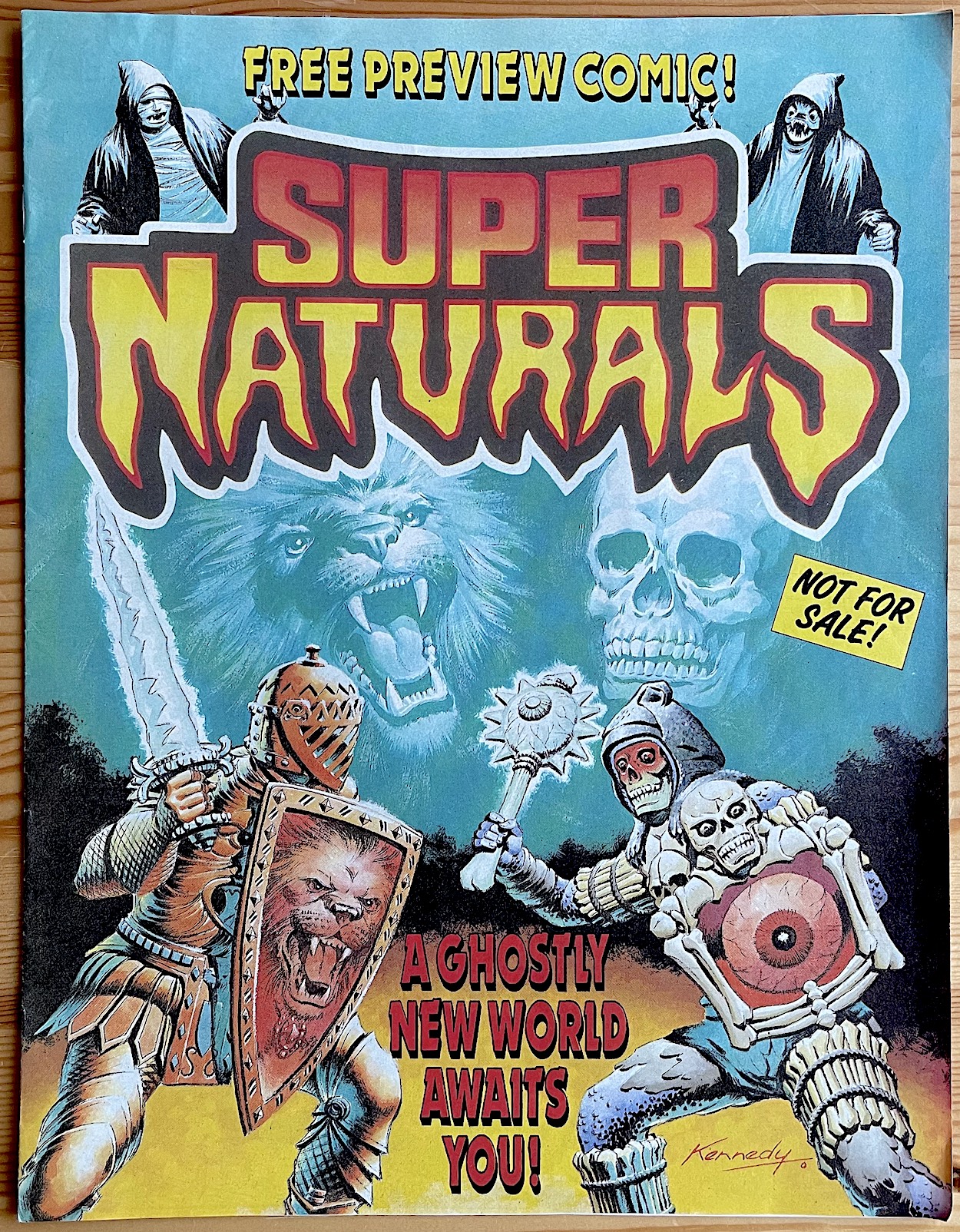
Given away free with a handful of other Fleetway comics a week before the launch of the new Super Naturals fortnightly was this full-sized 16-page preview edition. Inside it contained a five-page introductory strip, a shorter humorous back-up and a few full-page photographs of the Tonka toys in all of their holographic glory, as well as a competition and full details of the contents of #1. But it wasn’t the only thing falling out of comics that week.

Also included was this glossy comic-sized card with that great logo on one side and a fact-file about the characters on the other with images drawn by Sandy James. The toys were just launching in the UK around this time so the preview comic was also like a preview/advert for the toys. Well, it’s a licenced comic after all and that’s kind of the whole point. This card highlighted the good and evil characters we’d be following each issue and introduced their illustrated look for the comic.
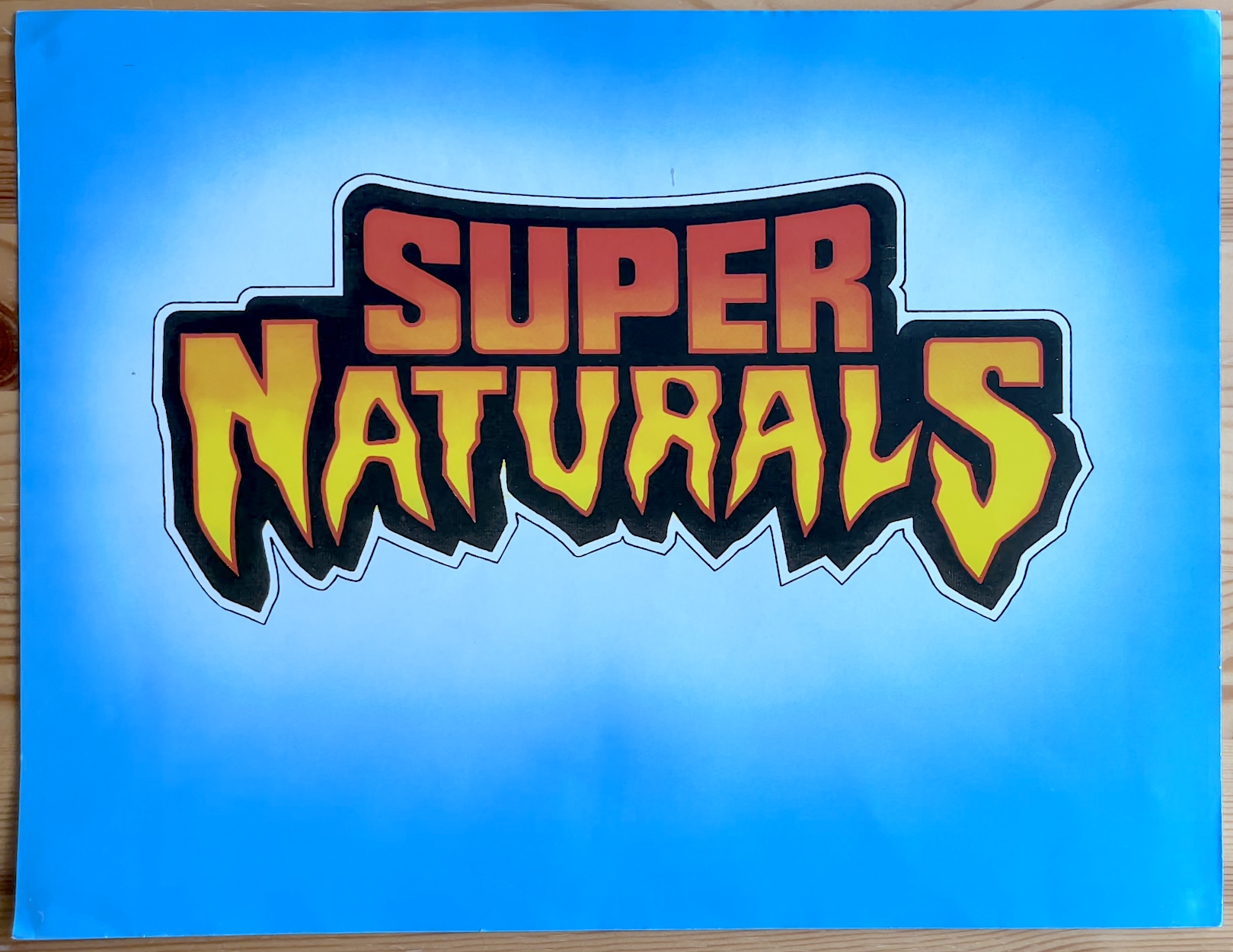
At the time I wasn’t aware of either gift, only stumbling across both a few years ago on eBay. I came across the premiere issue on Hallowe’en itself, which I’ll whitter on about in the next review. But having this card bundled in with the preview, and the fact a Super Naturals Blockbuster Advert like the kind OiNK had was also produced (which you’ll see soon), gives the impression there was a big push for this comic. The toy adverts seemed to be on TV constantly and the comic launch was next with a few issues before Christmas to help build the hype.

Ian Kennedy‘s gorgeous painted cover kicked things off in a suitably creepy fashion with skulls, ghosts and powerful animal images. He was even able to perfectly encapsulate the feeling of three-dimensional holograms, particularly in evil leader Skull‘s shield. Surely intriguing to those who received it, inside the background story is equally atmospheric. Drawn by John Gillatt (Scorcher, Eagle, Ring Raiders) he does an incredible job invoking the themes of mystery, darkness and the supernatural in this opening spread.

Throughout history humans from various points in time have discovered the Tomb of Doom, an ancient doorway to another realm called Ghostworld, overseen by the unknown entity Specter. These people would be attracted to its power for good or evil purposes, becoming trapped inside. Killed by Specter and transformed into the Super Naturals, they would be imbued with special powers best reflecting their individual personalities.

Specter did not care whether these people wanted the power to protect or to rule, only that their heart was dedicated to their desires. Who or what was Specter? Why were they doing this? To what end? Was it all a game to them? We didn’t know. Enter two brothers who end up leaders of the opposing forces in our main story The Legend of the Super Naturals, part one of the main ongoing strip. While their backgrounds are a mystery, Lionheart and Skull are descended from royalty of some description and it’s interesting to find out after all these years they were so closely related when they were human.


“It’s a judgement on us all!”

Eyewitness to the arrival

The story rockets along. Yes, it has to in order to set up the comic’s premise, but it’s full of possible story points which could’ve been explored further down the line; the origin of Ghostworld, were there other Super Naturals in there, the living history of every character, the list goes on. Unfortunately none of this would be explored because the comic’s life was cut short, but it’s intriguing to think of the potential storylines because these characters and this setting are crying out for development and for depth of storytelling on an epic scale.
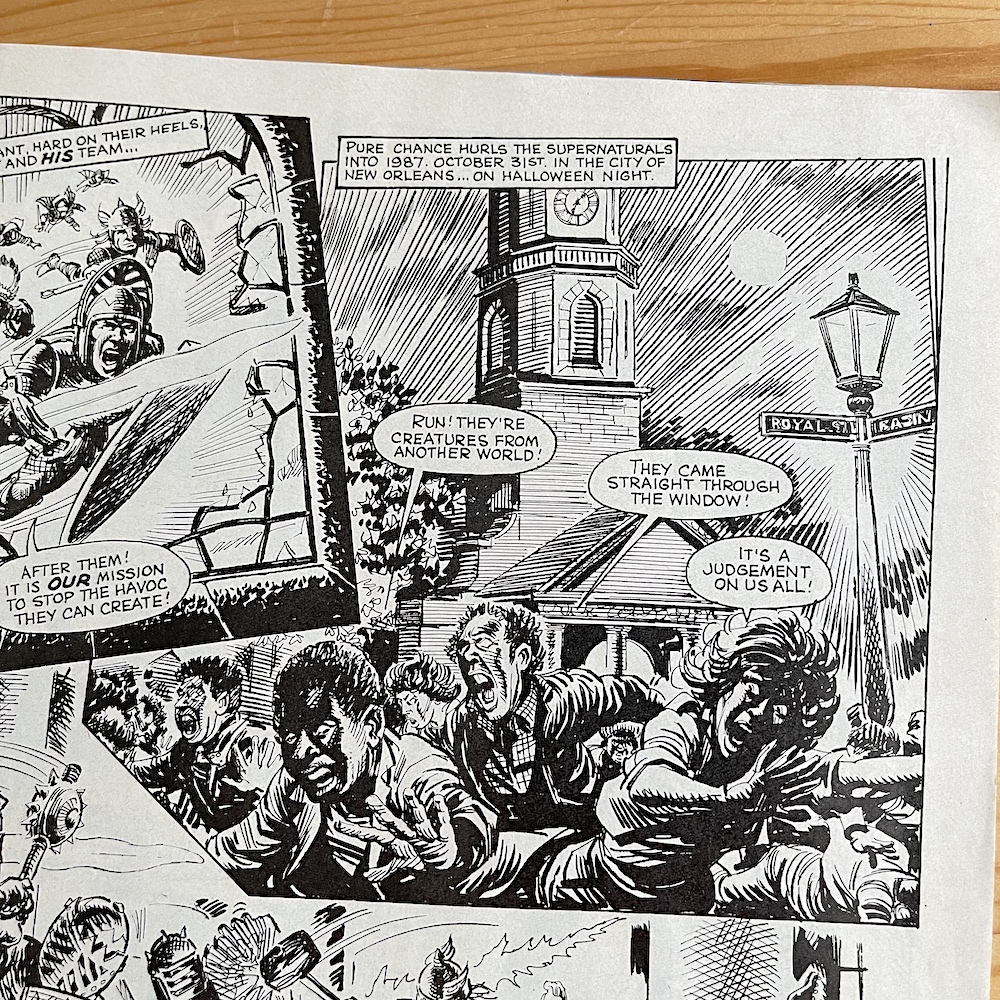
All of those swirling doors and windows within the Tomb are entryways to the real world, the only place they can use their powers to do battle because it is forbidden inside Ghostworld. The end result is truly terrifying if the faces of the church goers in the above panel are anything to go by.

Their first breach flings them into their far future but to the reader it was the present day, Hallowe’en 1987, the date the first issue of the comic would be released. At this point in the story they’re unaware of where they could end up, the places and timezones seemingly random. As the comic gets underway we’ll see Skull and his cronies plot and plan like all good evildoers, choosing where and when to crash through to spread as much fear as possible; their ultimate goal was to turn reality into a dark underworld with them ruling all. The usual stuff.

I love the fact they’ve smashed through a church window here, showing straight away there’s no safe place in our world. For me, it also shows the comic wasn’t afraid of exploring certain horror themes, because I can imagine some parents wouldn’t have been too happy about a child’s comic showing evil demons battling in such a religious setting. It’s great stuff and reads like a classic 80s horror movie, the atmosphere perfectly captured by John.

The comic was edited by Barrie Tomlinson (see also Ring Raiders and Wildcat on the blog) but unfortunately it seems very little is remembered about the creation of this particular comic. John had worked with Barrie before on titles such as Tiger and drew Billy’s Boots for a long time, as well as working on both of the comics mentioned above. This was released earlier than either of them and John really does seem to relish drawing the darker material here after all the sports strips he was known for at the time. Skull looks appropriately manic as he breaks through and the nighttime scene of their arrival wouldn’t look out of place in something like Scream. This won’t be the last time I mention that comic.

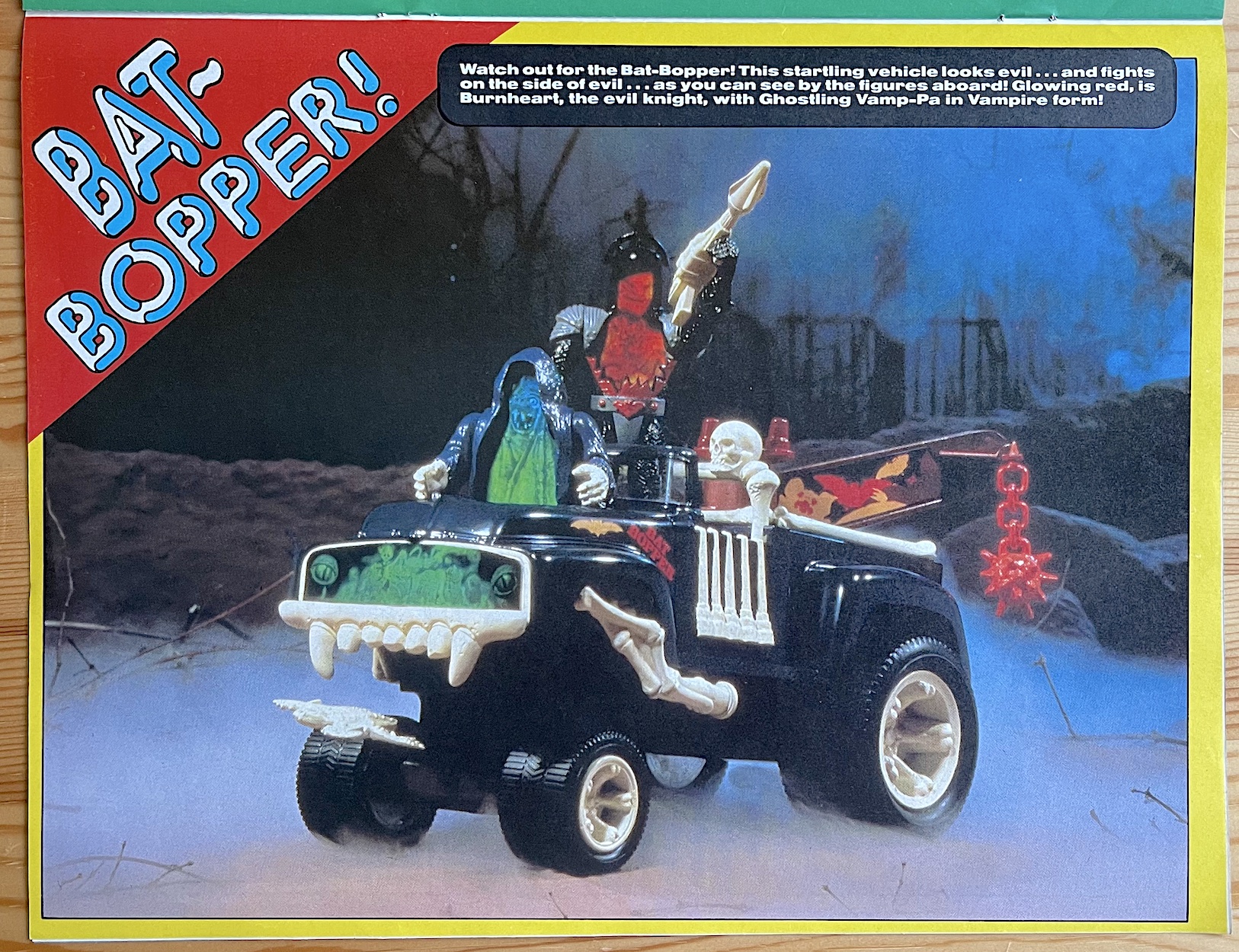
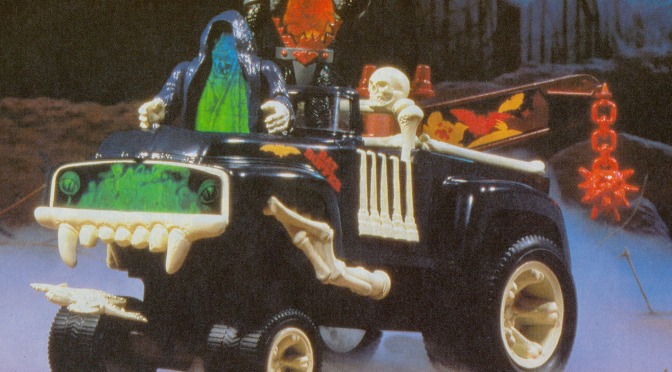
This preview also acted as advertising for the toy line and I don’t just mean because it had a licenced comic strip. There are also pin-ups of the various figures and vehicles produced by Tonka, who were always known for their high quality toy trucks so naturally the Super Naturals wouldn’t drive about in any old cars, they had to be large Tonka trucks!

The images were supplied for the comic by the toy manufacturer and are expertly lit to show off the intricate and highly detailed holograms. I only owned one of the toys but from seeing these images and others online they were in a class of their own and superior to Hasbro‘s Visionaries. (I went into more detail about the toys in the introductory post to Super Naturals.) I can just imagine how I would’ve poured over these images in anticipation of Christmas if I had owned this at the time, but unfortunately the preview comic wasn’t given away with OiNK for some reason.

To lighten the mood after the main strip is Ghostlings, a shorter story based on the smaller ghosts; long-time inhabitants of Ghostworld who acted as helpers to the main characters. Again, each has a background of their own, in fact we’re told exactly who they were before they were killed, albeit without their original names. Among them, a former stage magician, a court jester, a witch and even a teen wannabe rock star. They’re certainly a diverse group. Their stories would bring a bit of humour to the main fortnightly comic.

Little did we know the lasting effect that story would have on us!

Below is the line-up for that first issue. I do think it’s strange the preview printed the story already planned for issue one rather than its own introduction, but beyond that is another Super Naturals strip which really did look epic and really showsedoff the kind of stories the set up would be capable of telling. The Ghostlings would return, there was the promise of complete horror stories (which do live up to the hype) and innocently listed there is The Doll. Little did we know the lasting effect that story would have on us!

It’s interesting to see even before the first issue the two non-franchise stories taking second and third place in the line-up. You’ll see these in the review of #1, but already it’s clear this is going to be more than your standard licenced comic. In some ways it felt like a reimagining of the horror classic, Scream! I’m incredibly excited to get reading these. As per usual I’ll be doing so fortnightly in real time and it all begins on Hallowe’en itself, one week from now.

To finish off this whirlwind introduction to these very different characters the back page has a special competition to win a Tomb of Doom and action figures to place inside it. The slogan from the TV adverts adorns the top left of the page and should be read in a suitably creepy voice. The competition had been put together by Tonka themselves as an advertisement just for the comic and would become a regular back page addition with various prizes along the way.

There really is no other comic more suitable for review at this time of the year, so join me (if you dare) on Sunday 31st October 2021 for the first issue of a forgotten classic.
GO TO iSSUE ONE

SUPER NATURALS MENU

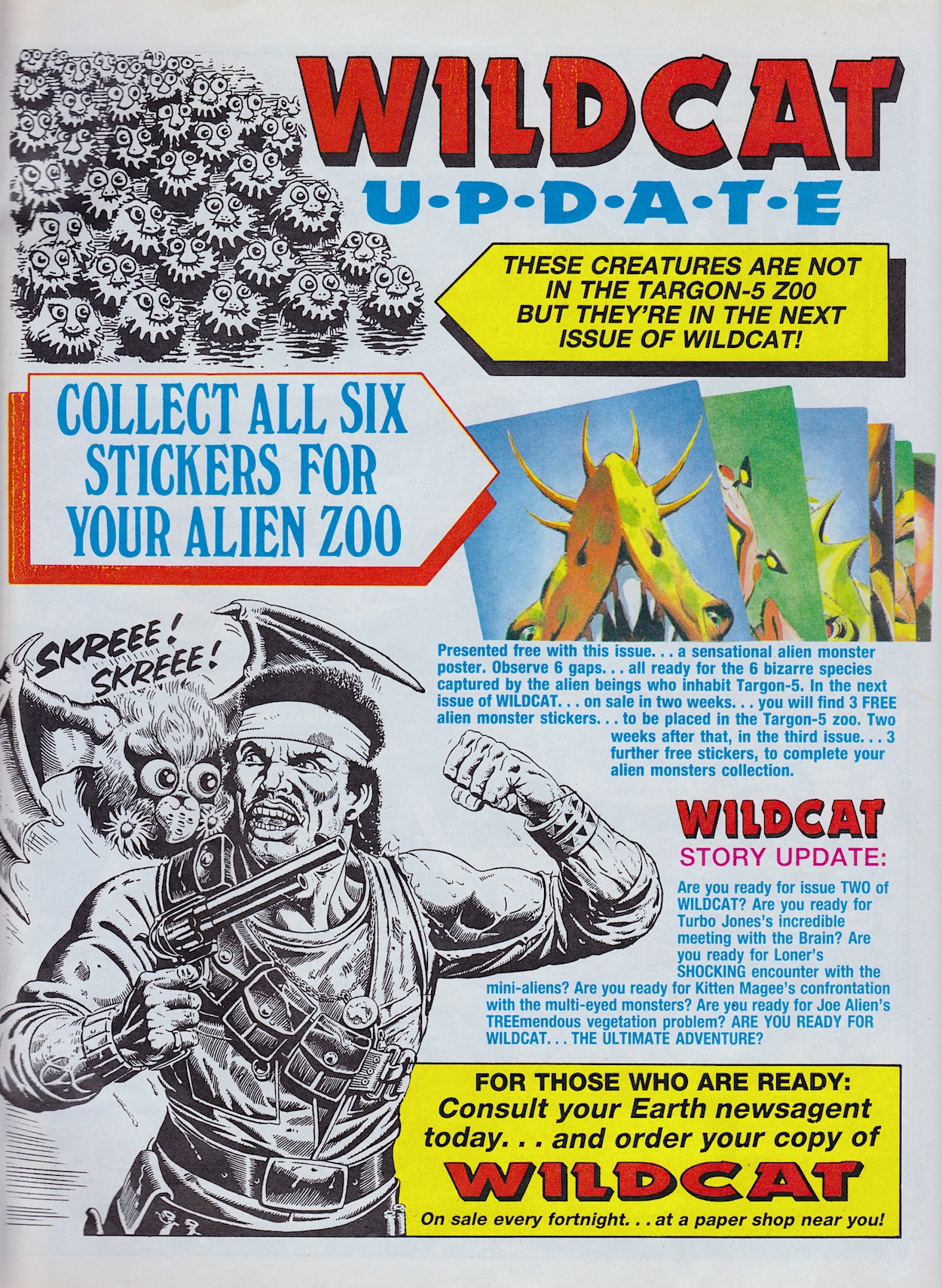
WiLDCAT #1: NEW ARRiVALS

So it begins! I can remember the excitement of buying this after the hype of the preview issue’s end of the world storyline. This may have been the same size of paper as OiNK but there was something about Wildcat that just made it feel bigger in my hands. It was such a complete package (the stories, the art, the characters, the scenario) the excitement kind of overwhelmed me, to be at the start of such an epic comic! Of course, with hindsight I know it only lasts 12 issues, but I didn’t at the time. I’m sure as hell going to enjoy the ride again.

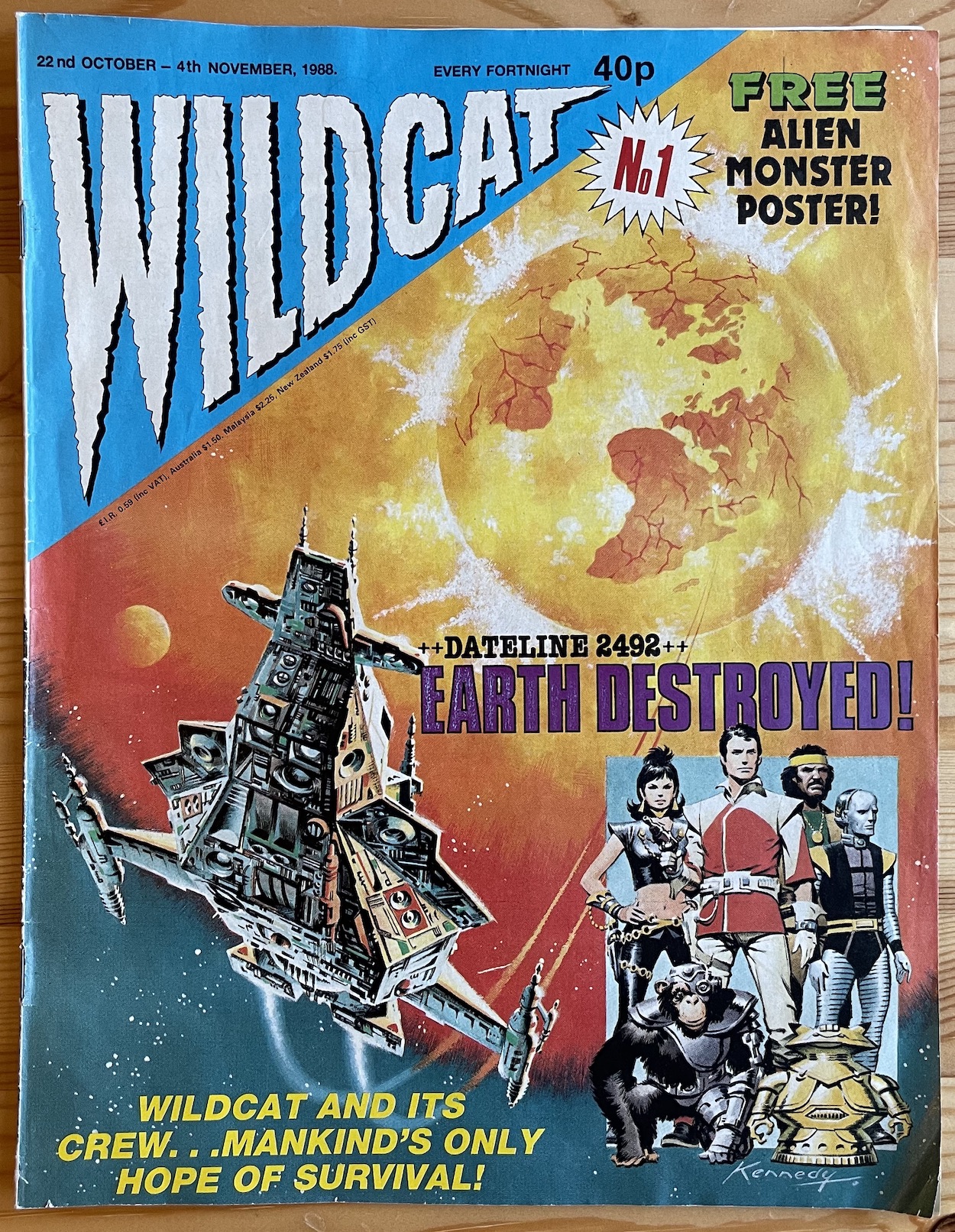
Ian Kennedy draws the attention grabbing front cover. Ian was a mainstay of many of creator and editor Barrie Tomlinson‘s comics and you’ll see plenty of his work this winter in blog reviews for Ring Raiders and Super Naturals, my other favourite creations of Barrie’s. As for that brilliant logo, Barrie recalls it was created by him and group art editor Doug Church and its design would be carried throughout every strip. So a mere week after my first ever comic (OiNK, keep up!) was cancelled I was collecting the first issue of its replacement. Hey, we moved on quick at that age.

Editor Barrie said it was hugely important to have both a female lead and a black lead

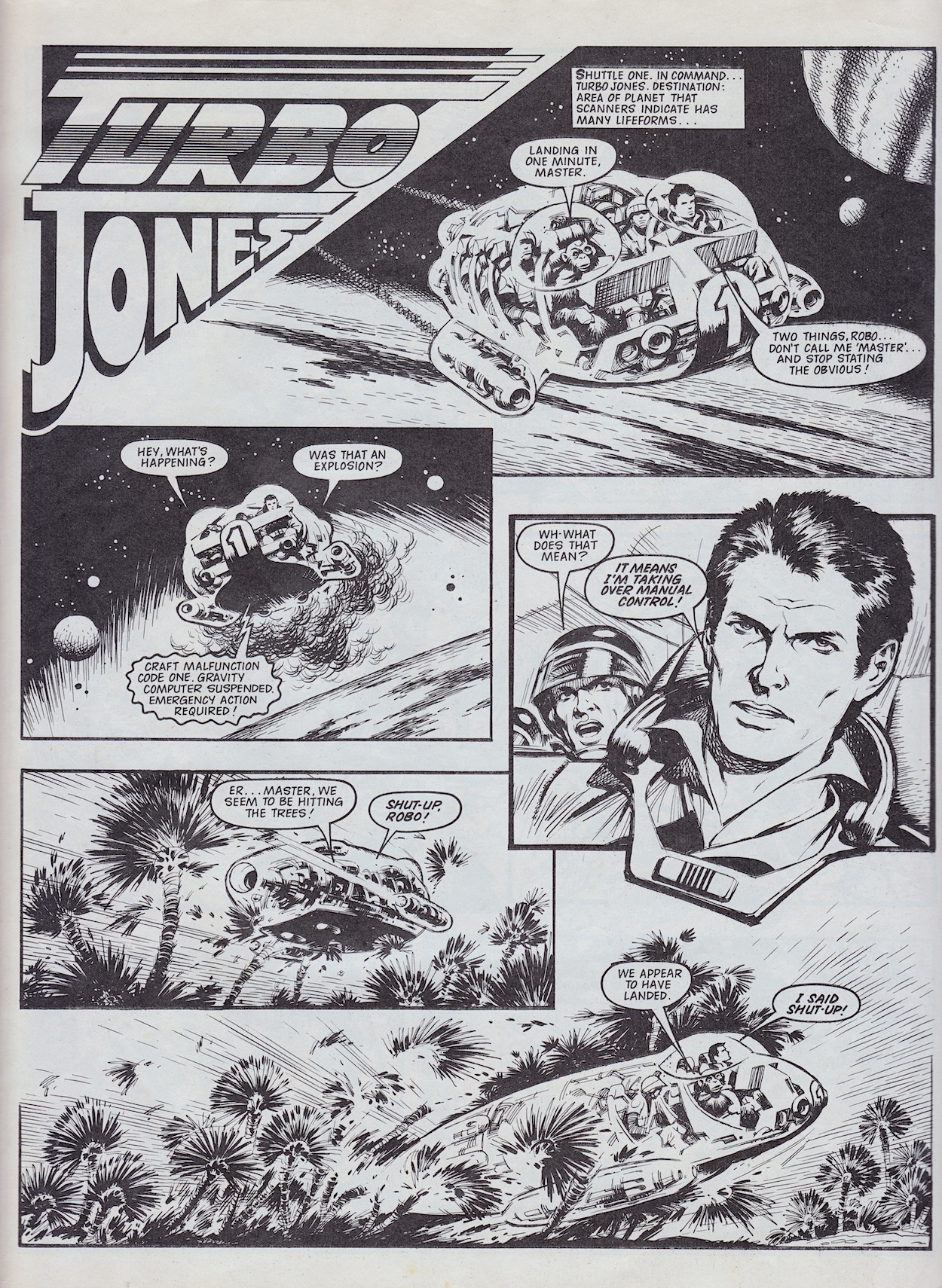
We kick off with a brief, one-page recap of the preview and then we’re straight into the action. Wildcat is broken down into four five-page strips following the leaders’ expeditions and a six-page complete tale set aboard the spacecraft itself. Our first strip is Turbo Jones, the man who predicted the destruction of Earth (although it did explode instead of being hit by meteors, and a few years early) and as with all the main strips this issue we begin with his landing on the surface of our potential new home.

Barrie takes lead as writer (it’s his baby after all) and Ian stays around to bring the inaugural strip to life and Turbo down to solid ground. With a bump. The first thing I notice is how, after he mellowed when surrounded by his fellow crew towards the end of the preview, he’s reverted to being more hard edged again, particularly towards his poor android sidekick, Robo. In the preview he would snap at Robo when he called him “master”, but only because he believed friends shouldn’t do that, but here their strange relationship reminds me of that between early Judge Dredd and his home help, Walter the Robot.

If memory serves me correct (which is quite the ask these days) Turbo loosens up as the strip goes along, particularly thanks to Robo’s friendship. I have a recollection of warming to him and rooting for him with each cliffhanger. But when you think about it, it’s natural for him to be tense, he’s leading the first landing on an alien world with the survival of his species at stake after all and it isn’t exactly going well.

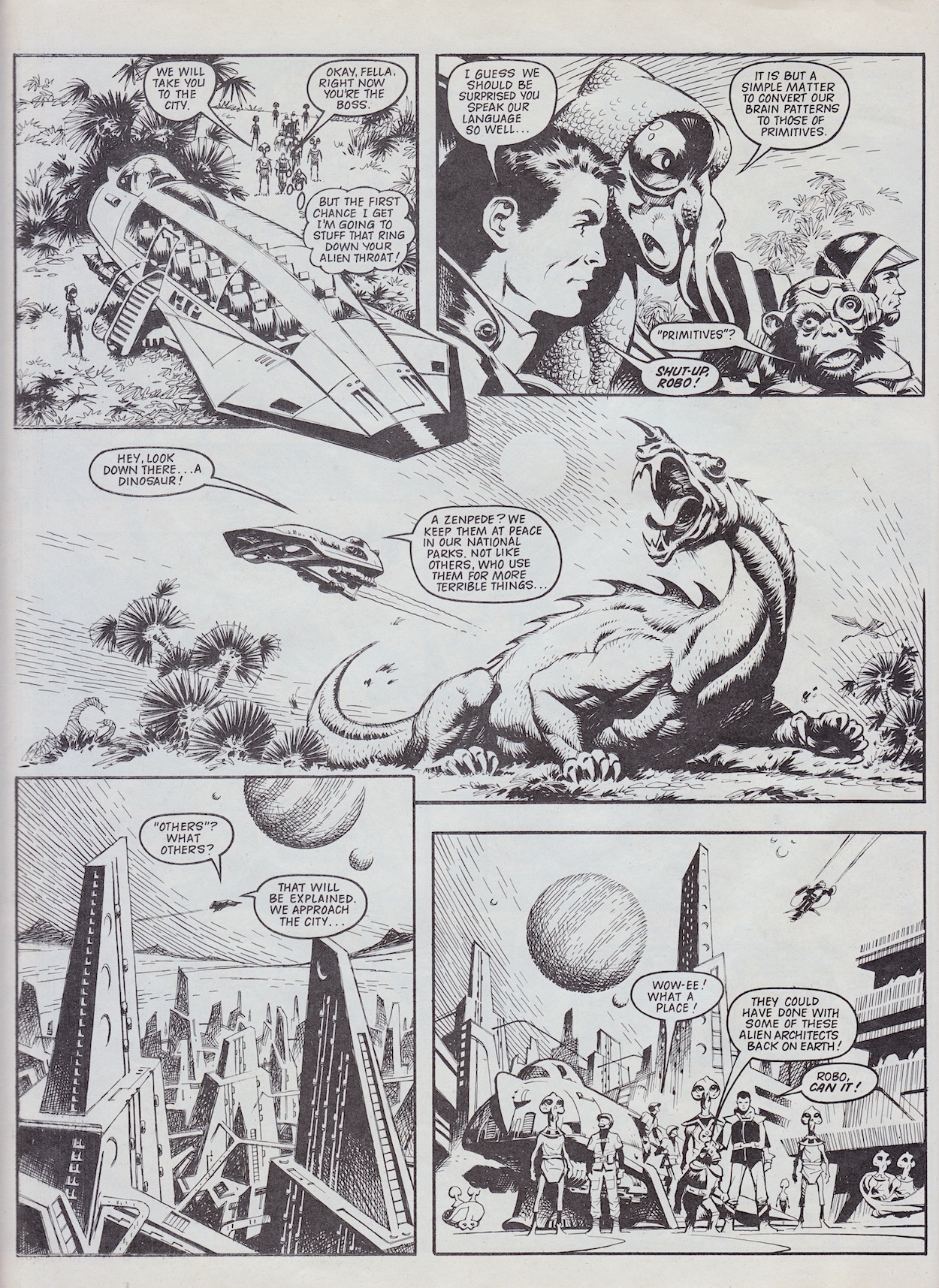
Upon arrival his team is instantly captured by a race of beings who call this region of the planet home and who are naturally suspicious of these strange alien creatures called humans. Turbo doesn’t take kindly to this and his inner thoughts are full of plans for fighting his way out. But there are a couple of little hints that there’s more than meets the eye here, a key theme in Wildcat throughout all of its stories. Our initial reaction as kids is meant to be of shock, to think the same as Turbo, that these wonderfully designed aliens are frightening monsters.

However, the comic would teach the characters (and thus us readers) the important lesson of not judging a book by its cover. For example, as they fly over what looks like a dinosaur one of the aliens laments how others treat these “magnificent beasts”. These lessons would play out over several issues, varying from one strip to the next. This was long-form storytelling and, while there was plenty of action and building to cliffhangers, nothing ever felt rushed. Twists and turns kept us guessing and we soon understood things weren’t always as they seemed. More on this below.

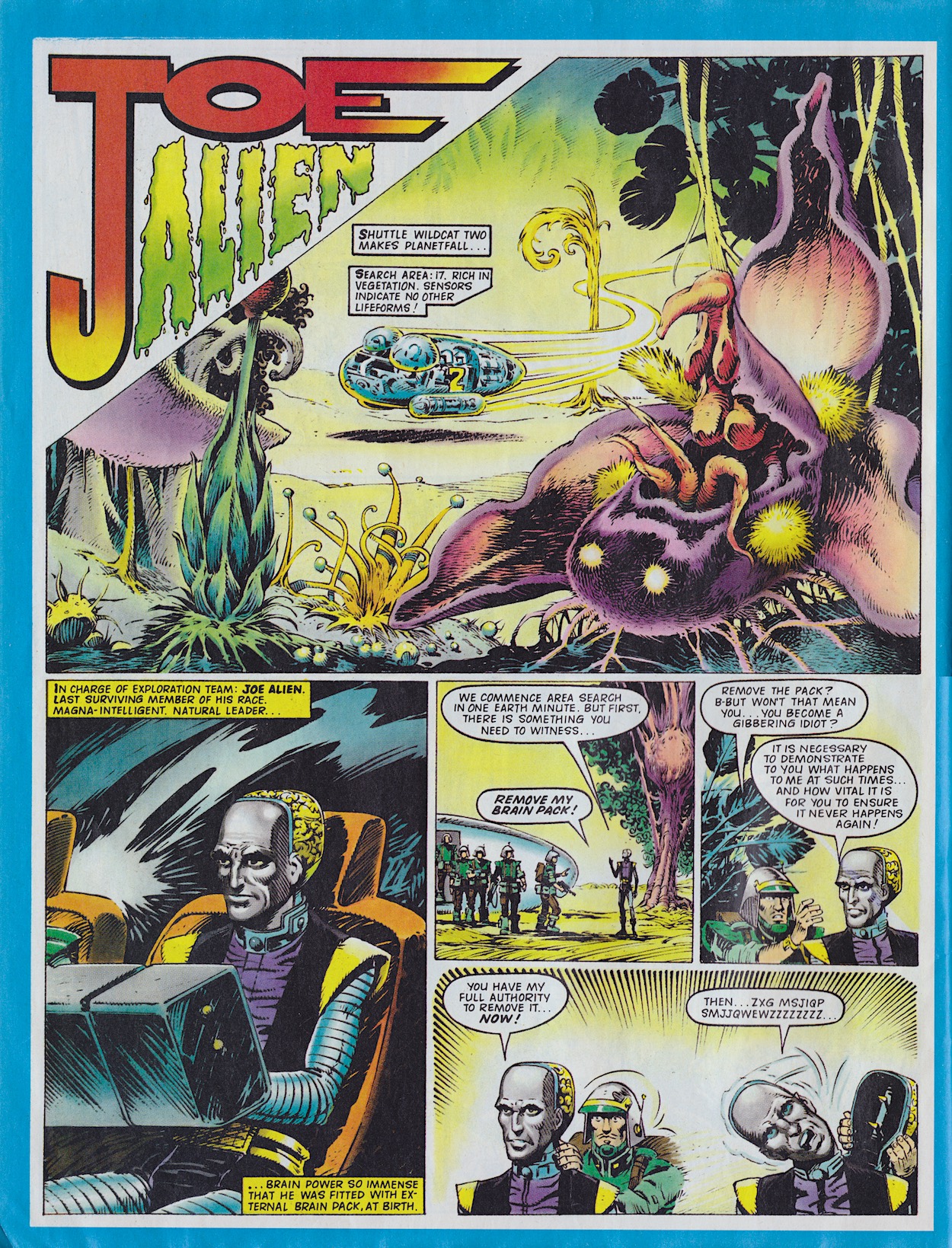
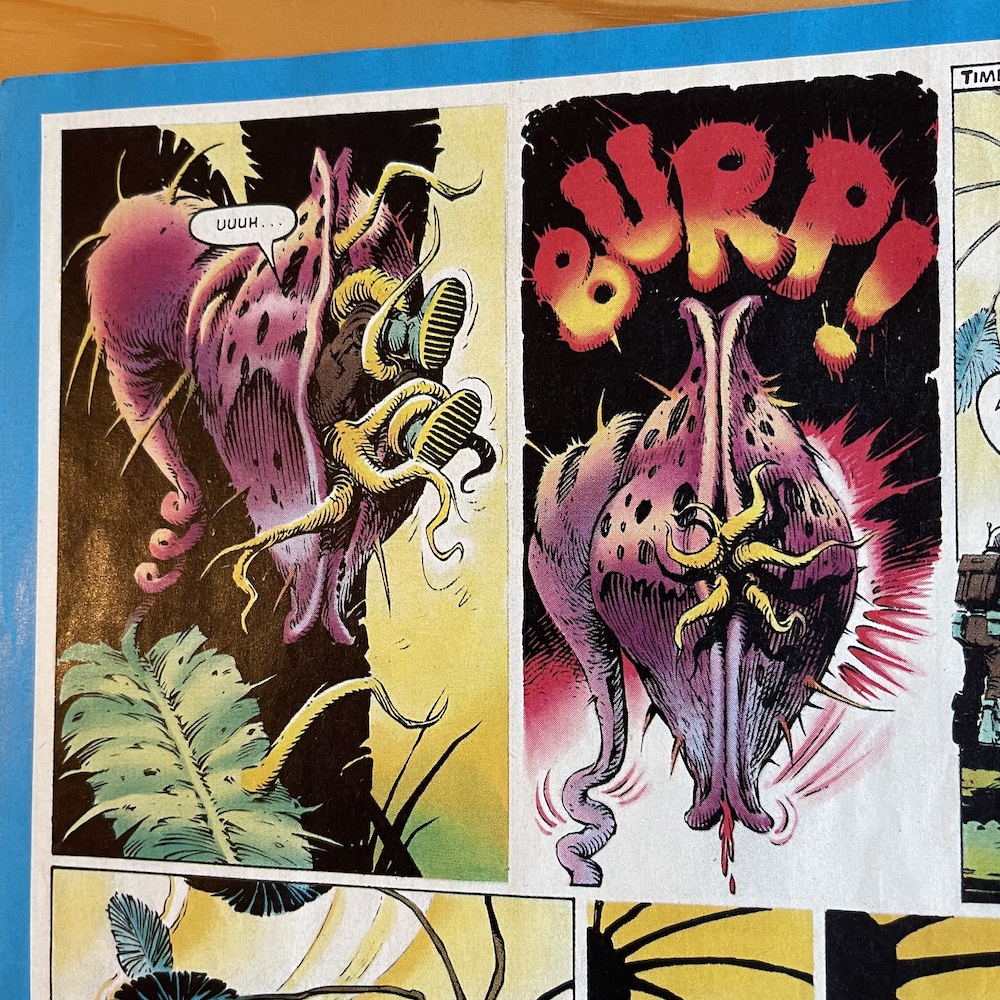
The next strip leaps off the page. Joe Alien, written by new comics writer David Robinson (Eagle, The Unbeatable Squirrel Girl, Army of Darkness/Xena) and drawn by Massimo Belardinelli (Ace Trucking Co., Sláine and a simply stunning Super Naturals strip) is the only colour strip and suits his style just perfectly. It’s also the right choice for the colour strip, being full of wonderfully grotesque plant life and that intriguing main character himself. Joe is the last of his race, who were all fitted with external brain packs at birth to absorb as much knowledge as possible throughout life to share with other species. Oh, and they had telescopic limbs.

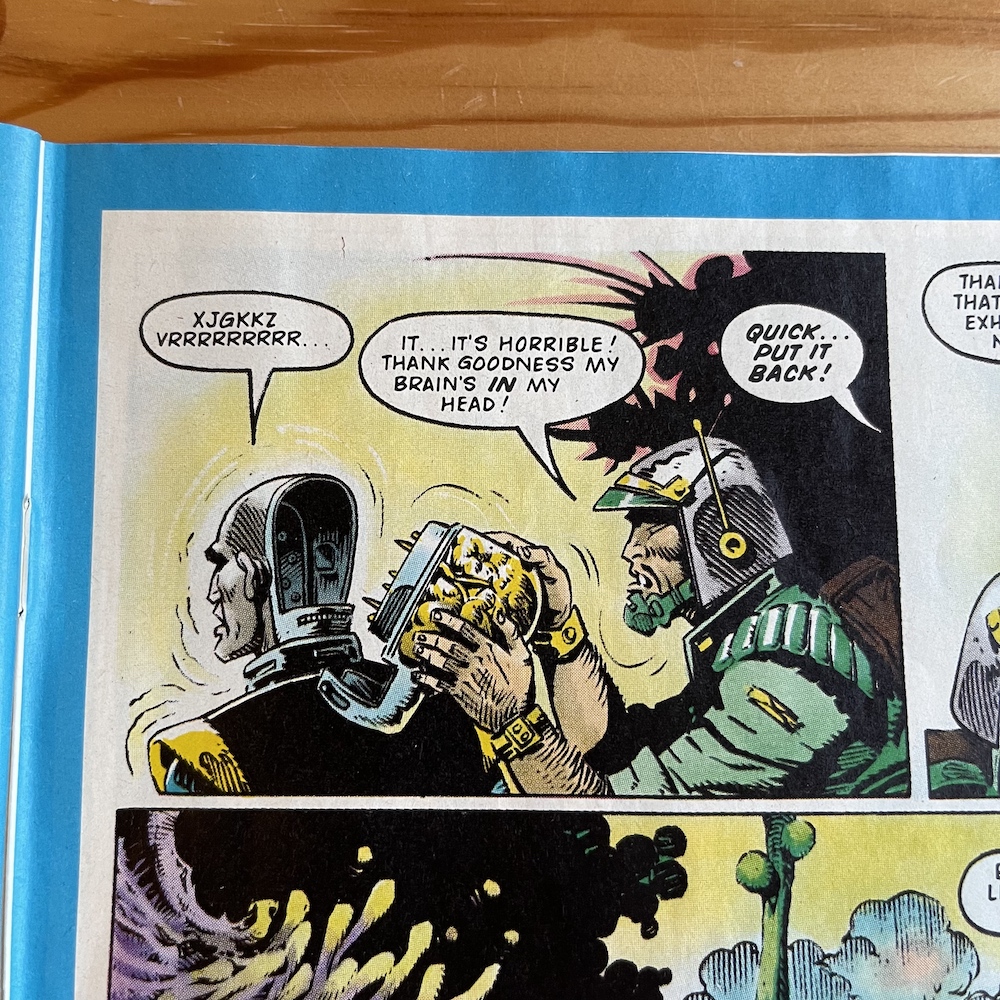
In this first chapter Joe and his team get acquainted (Joe showing them what happens if his brain becomes disconnected) and notice the landing craft’s scanners indicate the area is rich in vegetation but no other lifeforms at all, so it’s safe to explore. Have they never seen a horror movie in the distant future? It’s not long before a trooper goes missing after encountering a hallucination plant, giving him a vision of his favourite night club, making him want to walk inside without realising the imaginary doors are actually its big, slobbering mouth.

The “burp” just makes this scene. This is a sort of mini-cliffhanger as the strip is split between a three-page chunk and another two pages in the centre of the comic. This was my first exposure to Massimo’s work as a kid and I loved it. The plants feel really textured and the humans themselves have unique chunky proportions to them, bringing a real cartoony feel to proceedings and giving us a false sense of security before the horrors begin.
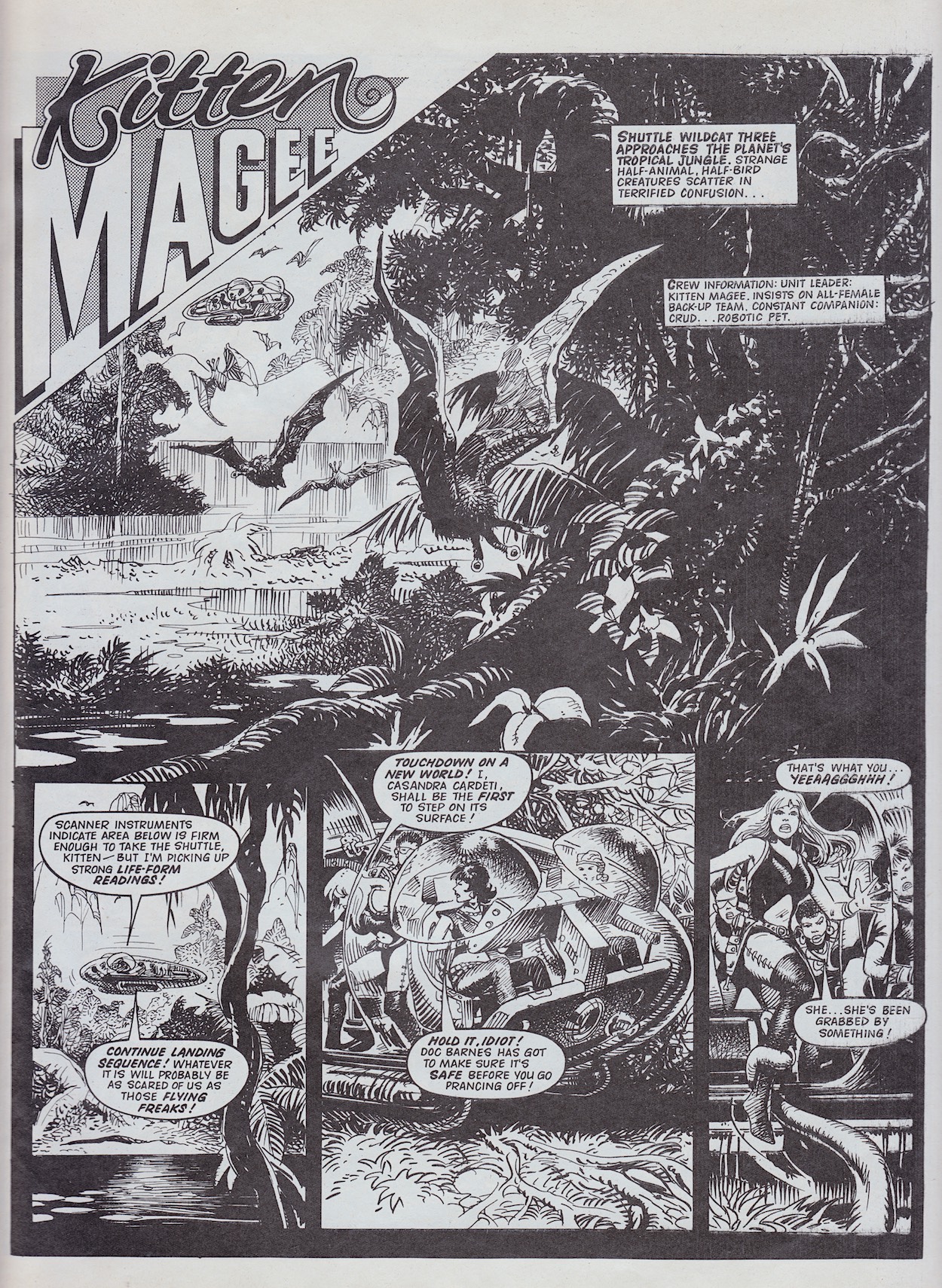
Our next character is our female lead and by far the most intriguing going into this issue, Kitten Magee. Between mysteriously avoiding discussion about her father’s death whose money she inherited and telling her robotic pet Crud to make sure her “life dust” supply is packed, the preview certainly piqued my interest in this character more than any other. Refusing to have any men on her team, she and her colleagues land on the planet in a remote jungle swamp area ready for action.

Kitten’s team are the only ones named and given unique character traits rather than being unnamed troopers. We’re introduced to Casandra Cardeti and Doc Barnes in this first chapter, and to see the beginnings of a proper working team and their interactions as fleshed out characters set this strip apart from the others. It may be all-action from beginning to end, but it also manages to cram in enough drama and character to make for compelling reading.

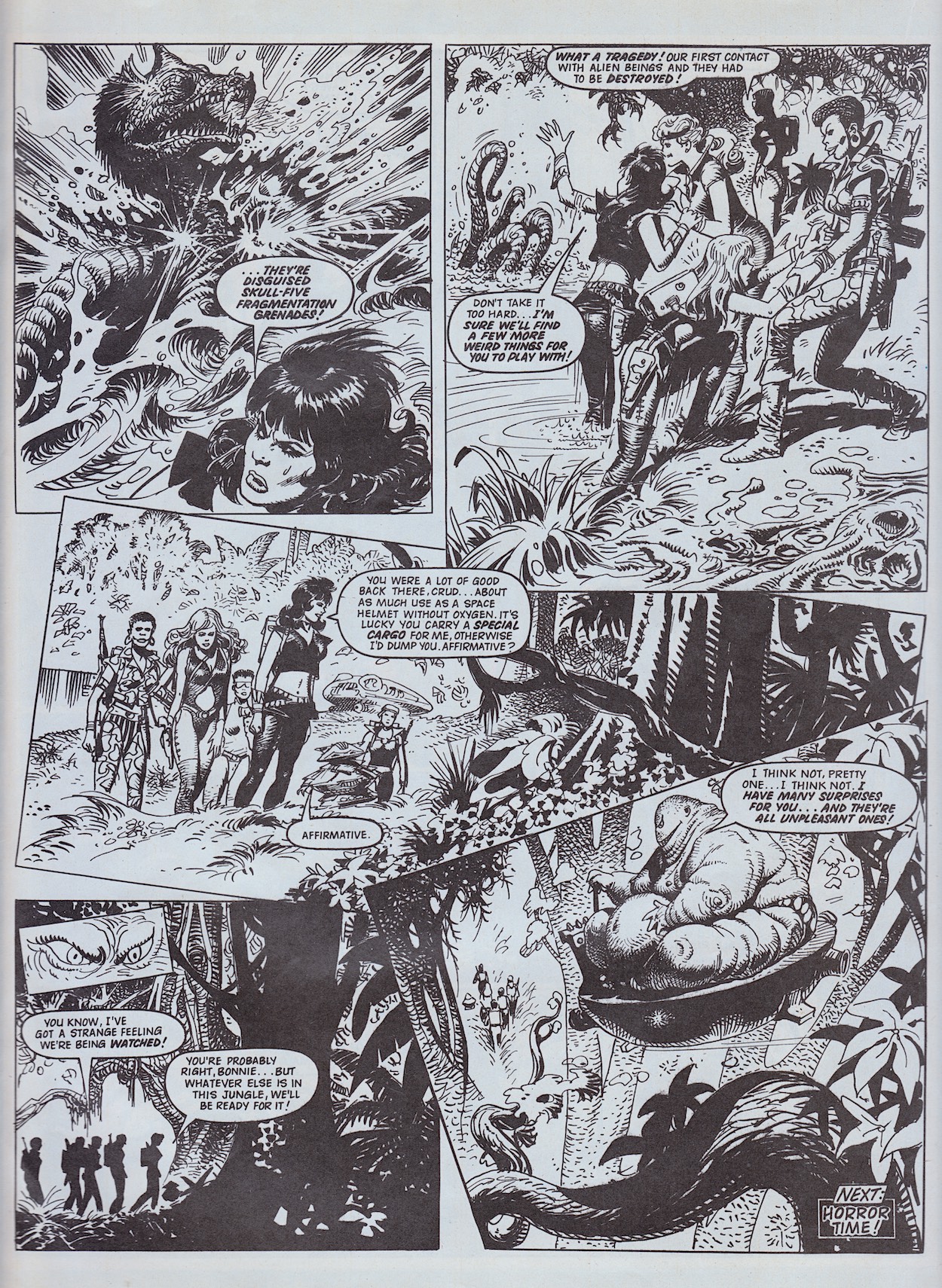
Encountering a slug-type creature and a giant water-based monster that work together to catch prey, Kitten uses her cunning, physicality and some unique jewellery to cut, slice and burn her way out of trouble just in time. Written by James Tomlinson writing as ‘James Nicholas’ (Eagle, Ring Raiders, Scream), the fantastic, almost scratchy artwork of the late, great José Ortiz (The House of Daemon, The Thirteenth Floor, Rogue Trooper) adds a great deal of atmosphere to the jungle and an immediacy to the action. It’s thrilling to look at.

As a child I was wondering if we humans were always going to assume anything different was to be feared but then Doc Barnes laments the creatures’ demise. This was another hint for me that this comic was really teaching us something. It was original and it was laying down the basics here before developing really rather quickly.

In the end Kitten and her team walk off, unaware of the fat male presence floating menacingly above them, hidden in the trees. I can remember the look of this guy and his race but nothing else, so I’m eager to get stuck into further chapters of this strip and see where it goes.


“I was delighted to be offered Loner as my character.”

David Pugh

After Kitten there’s a double-page spread of apparent reader contributions but how is that possible for a first issue? According to Barrie he has memories of visiting neighbouring families of his, knowing where children of the right age bracket were living and asking them to contribute to it after showing them a dummy issue. I know of only one other comic which did something similar and that was #1 of The Transformers which took a dummy issue to a local school to gather feedback on the comic for letters.

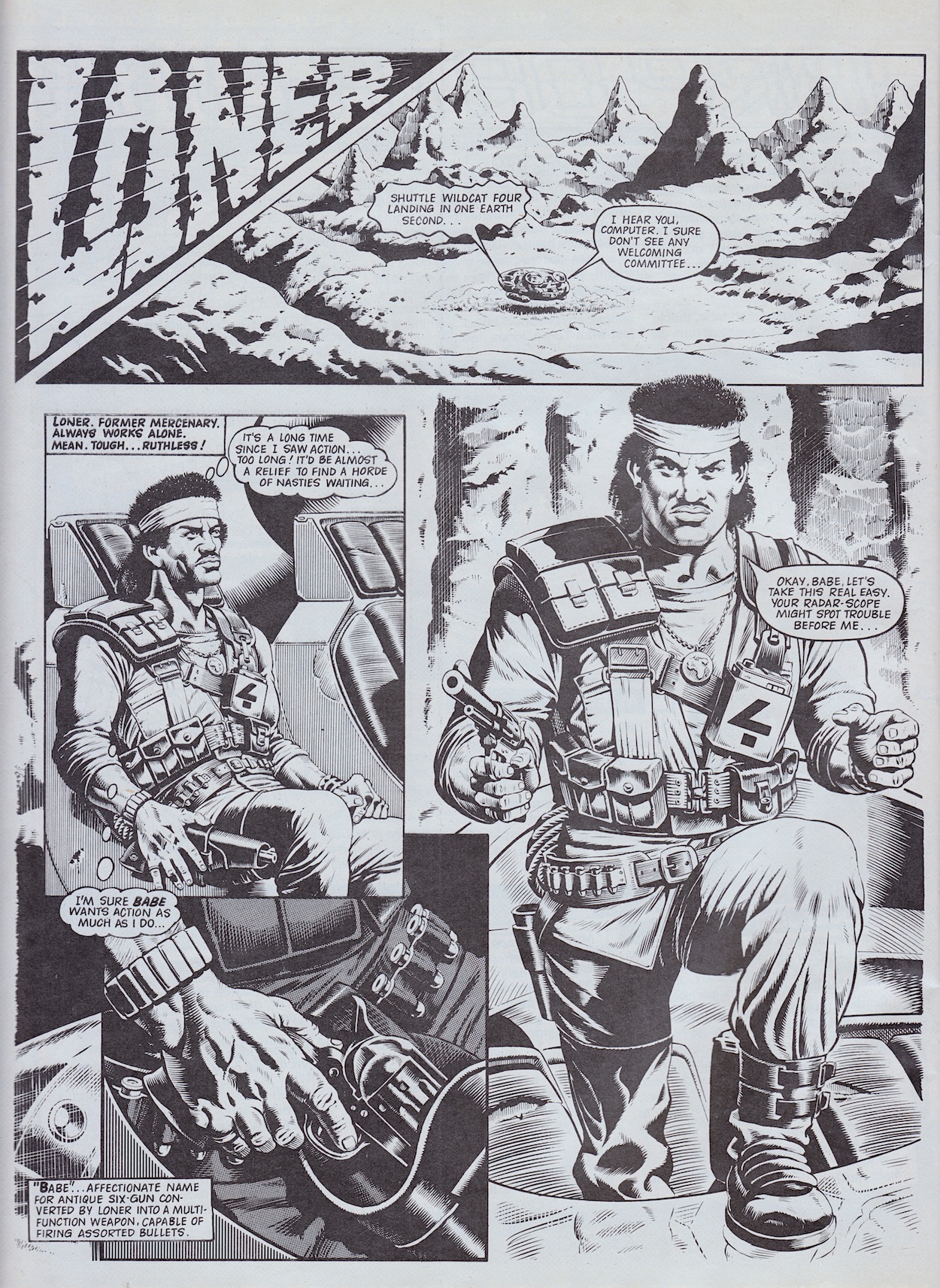
Back to the strip action and the moment I’ve been waiting for has arrived. A former mercenary who always worked on his own, with only his specially modified classic six-shooter ‘Babe‘ for company, a rare black hero in British children’s comics of the time takes centre stage at last. Meet my favourite Wildcat character, Loner.

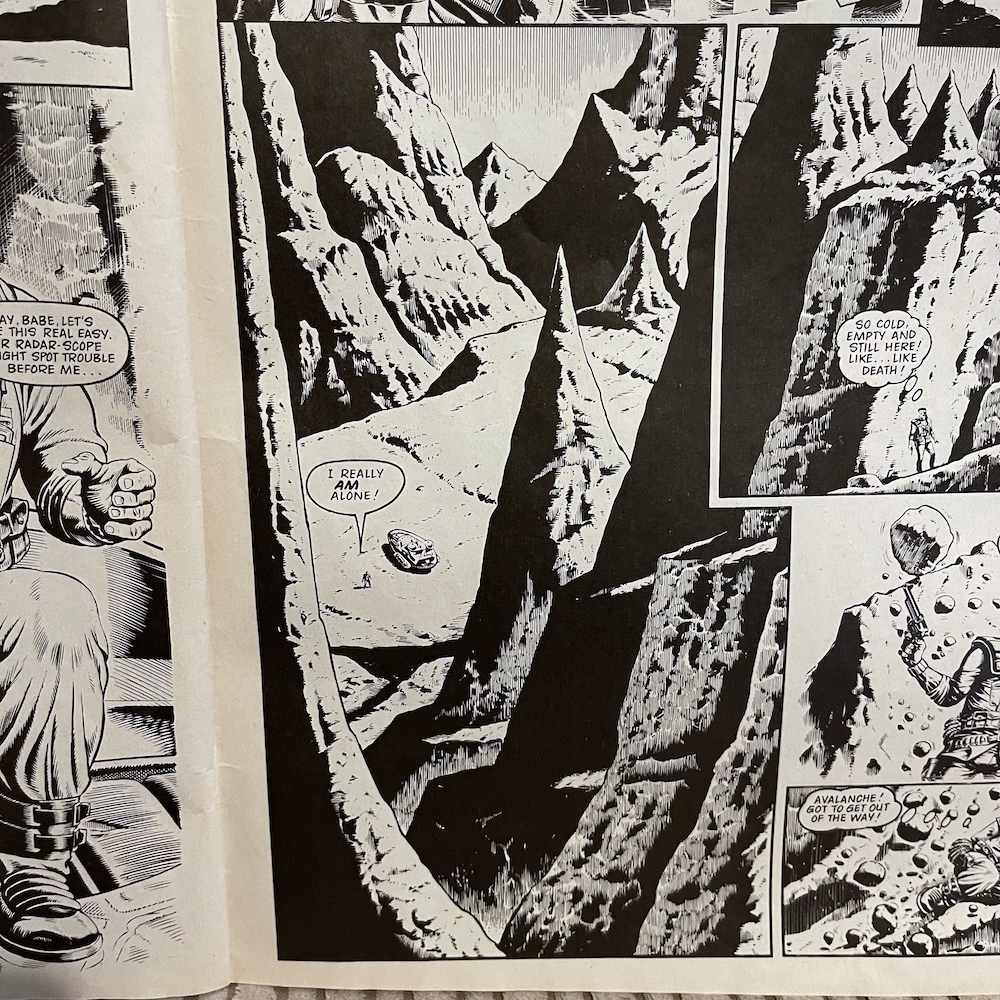
Still arriving down in a multi-person pod, highlighting the sense of isolation with the very first panel, Loner finds himself in a desolate part of the planet and he isn’t happy about it. Seeking some action he finds a previous radiation storm causes him to lose contact with Wildcat so he takes to exploring the rocky desert landscape.

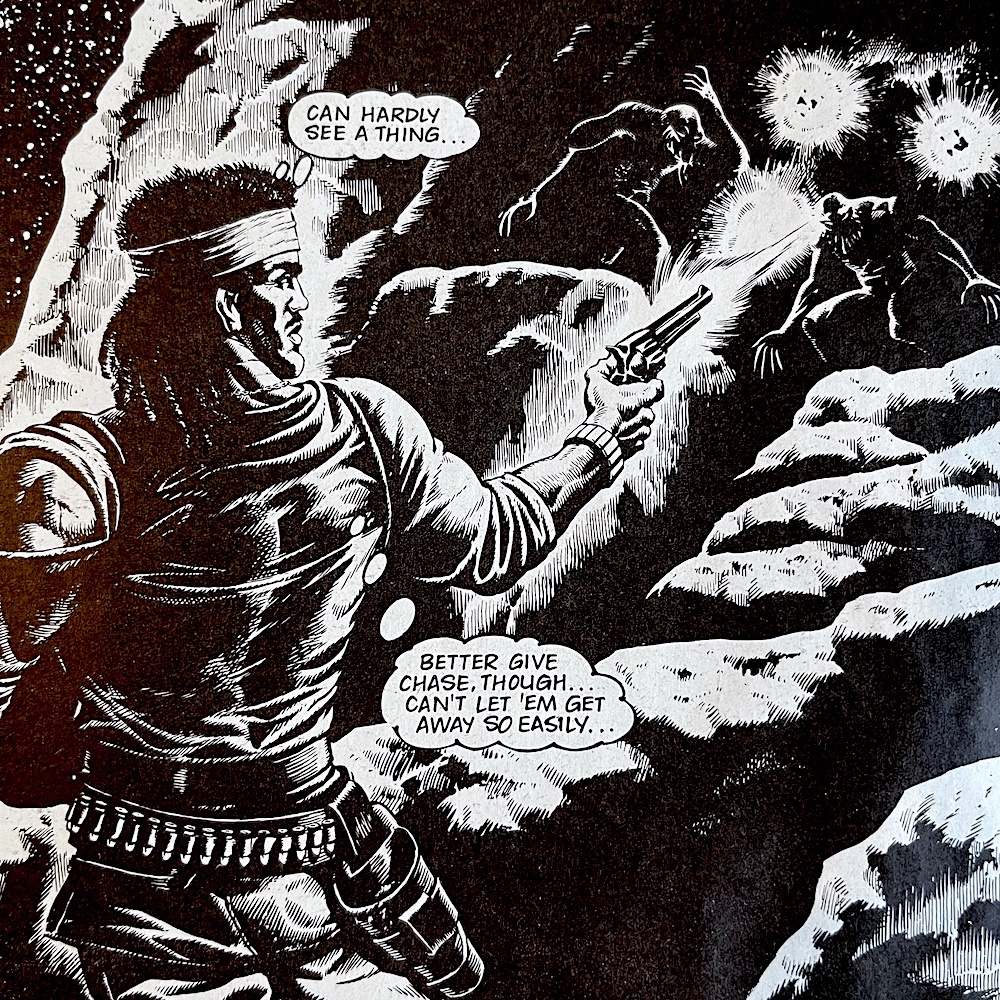
Below, a wide image really brings home the feeling of him being all alone. At least for now anyway. A falling rock is no accident and he spots some indistinct alien figures in the shadows. It surprised me to read this for this review and spot sort-of-humanoid beings were responsible because I can only remember the little fur balls and the giant, crazy lizard monster to come. More on him in a later review and believe me, if you think the art here is great it’s incredible in coming issues!

Loner was created and written by Barrie specifically with artist David Pugh in mind. To quote David from 2019’s Loner graphic novel, “I was delighted to be offered Loner as my character. I had perfected a black and white style which I felt had enough texture to not need colour. I enjoyed the challenge of creating a handsome, cool and tough black guy. I was listening to a lot of West African music so my Loner became a cross between Jimi Hendrix and Senegalese singer Baba Maal.” I can see it! Indeed, Barrie told me it was hugely important for him to have both a female lead and a black lead because they were woefully underrepresented in UK children’s comics.

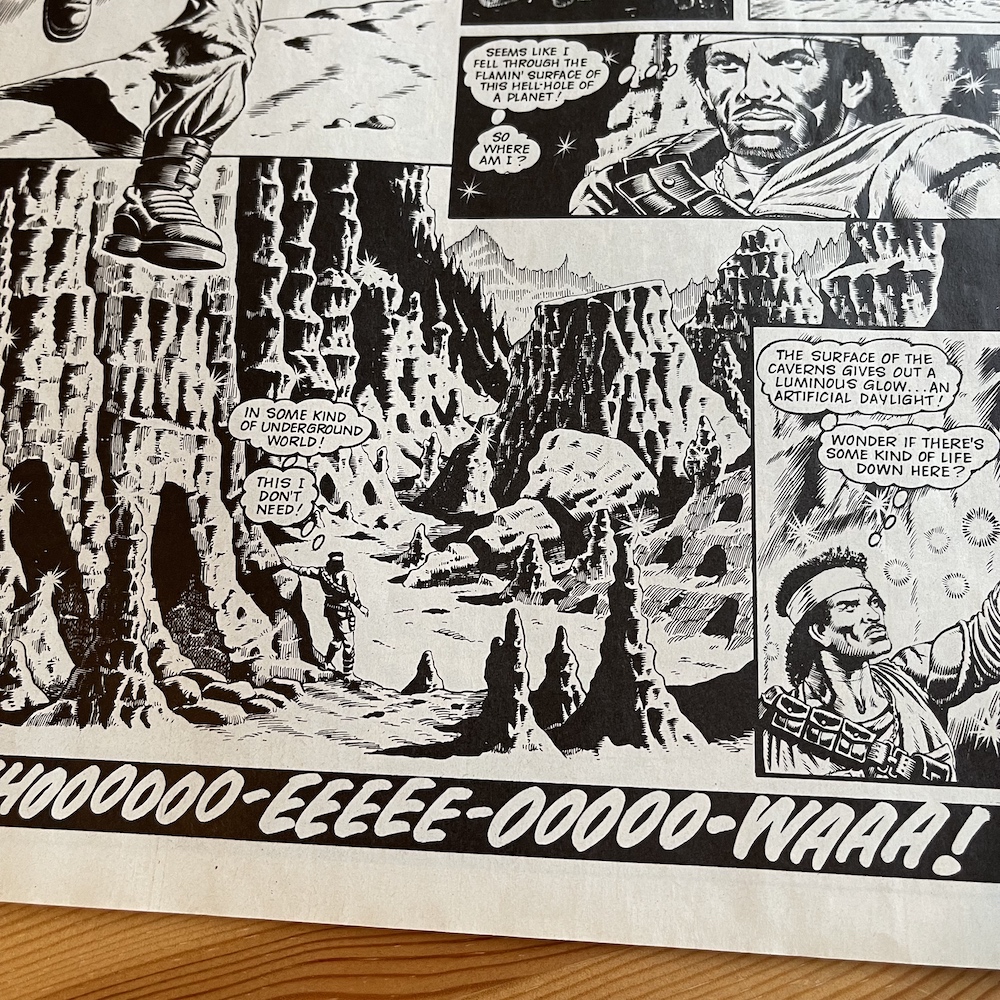
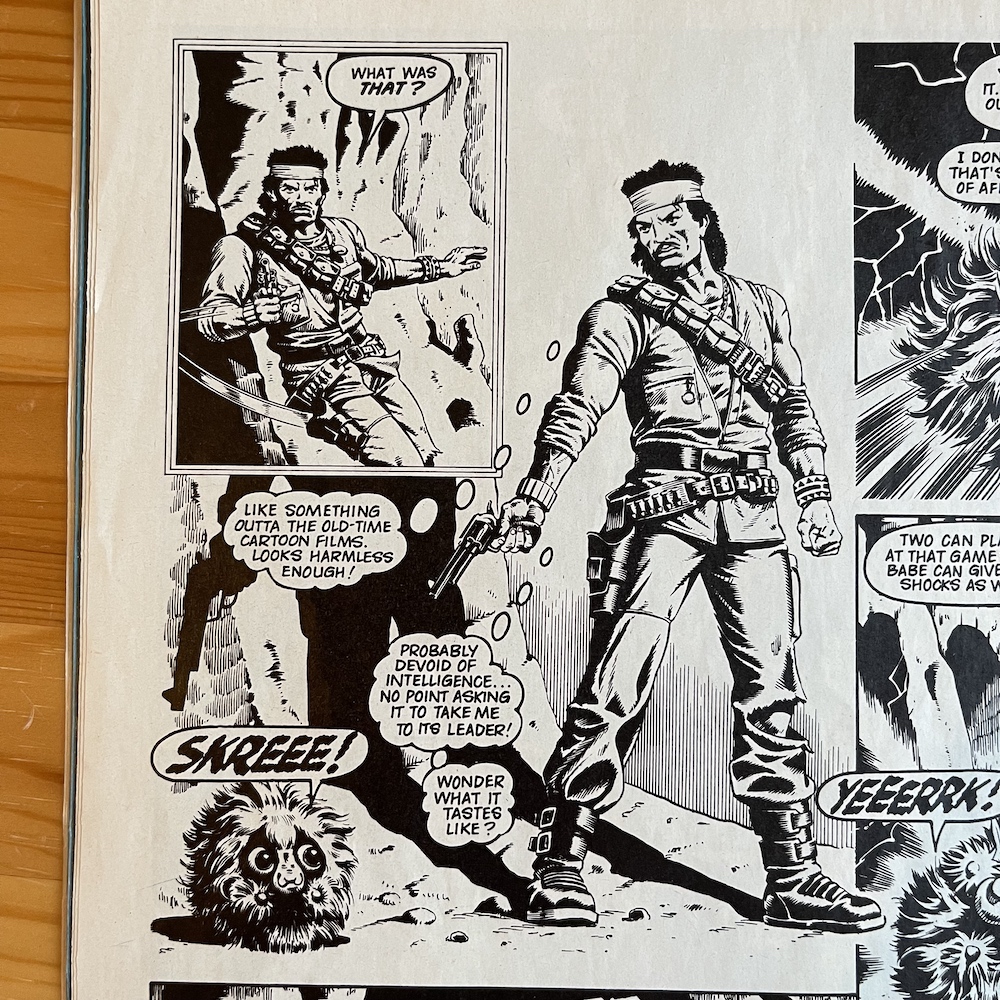
Falling through the ground and discovering a whole hidden world lit by luminescent rocks he finds little furry creatures he thinks could be a source of food. But when one suddenly attacks him, electrifying him, he shoots it dead. Next thing a deafening chorus of chirps erupt from dozens of the creatures surrounding him. One shock may have been a slight annoyance, but this many could kill him. Remembering how these creatures would become his friends later, it’s so interesting to go back to their first encounter.

David says working on Loner was the happiest year in his comics career and you’ll see as we go along how this comes across on the page. For now he’s the main attraction (alongside the free gift) for the second issue in a fortnight’s time. Interesting to see the planet get named here first instead of in one of the strips. Loner was not only my favourite Wildcat character, he was one of my very favourite comics creations from all the titles I collected at the time. I’m looking forward to seeing if he matches up to the memories.

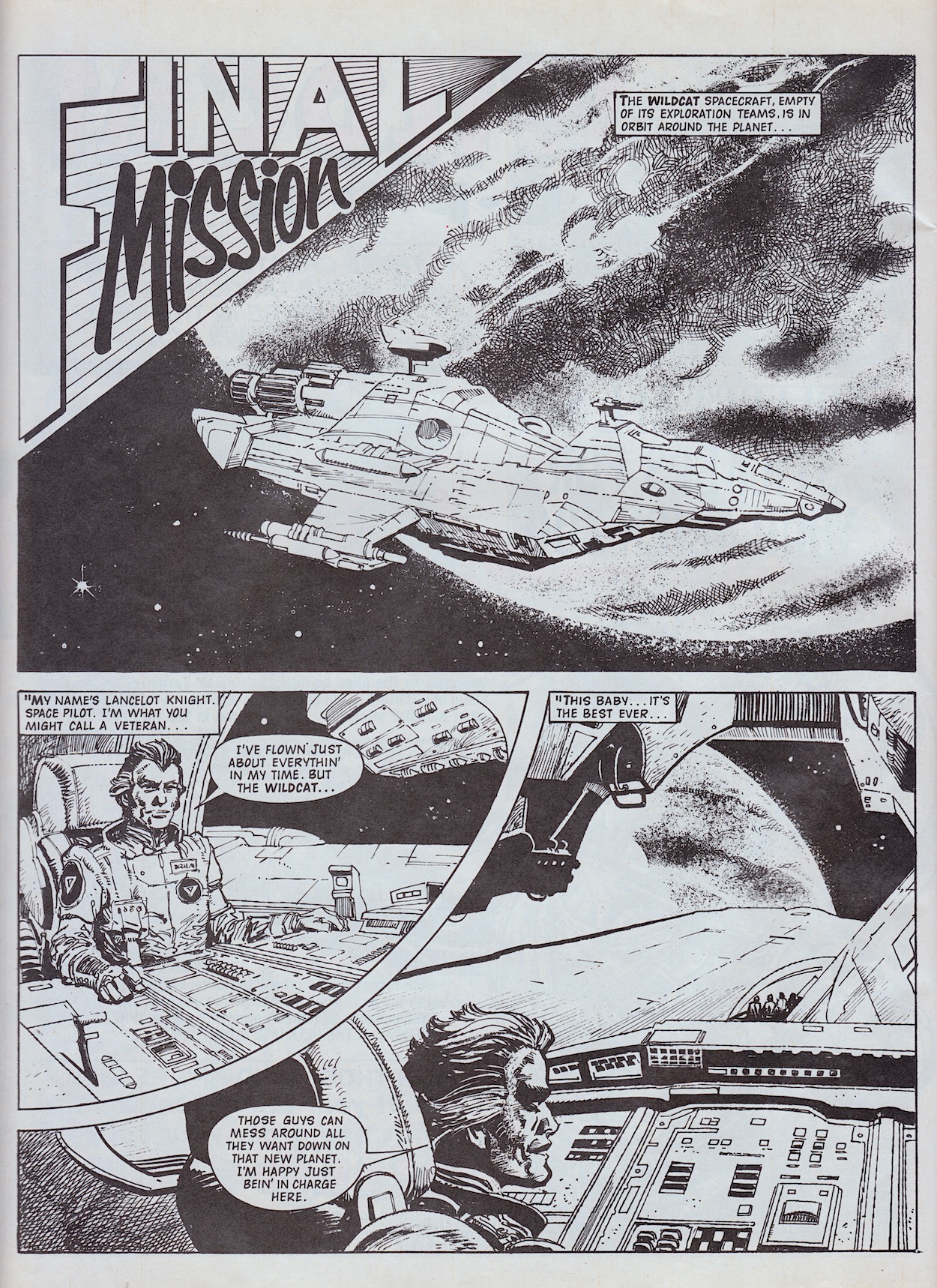
The final strip is The Wildcat Complete: Final Mission. Each issue would end with a slightly longer story set aboard the Wildcat itself. Just right, since the comic is named after it. This anthology series would often be of the horror genre with a Twilight Zone feel to the stories. For this first instalment the artist is Enrique Alcatena (Batman, Conan, Aliens) and his art brings a suitable spookiness to the Wildcat pilot Lancelot Knight‘s (subtle heroic name) discovery of a strange object outside.

It’s nice to see the inner workings of the Wildcat and get a chance to meet some of the crew. I’m also very happy to see a perfectly 80s sci-fi bridge to kick things off in. What he spots looks remarkably like one of NASA’s Explorer craft, which the young readers would’ve known about at the time. While they were current designs to us, they’re an ancient space craft here.

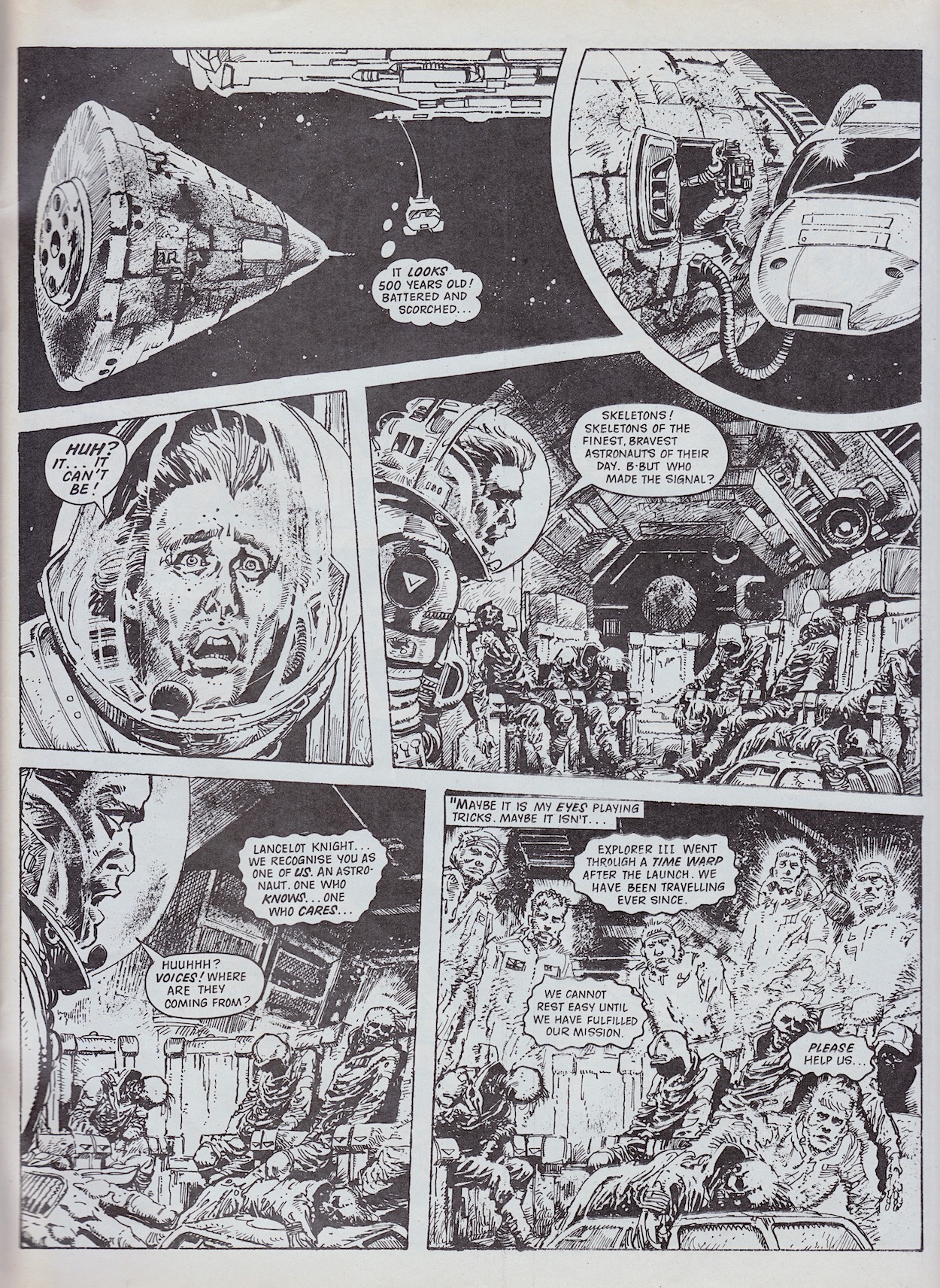
We find out the one now cruising past the Wildcat famously went missing in 1999, still 11 years in the future to readers but soon enough to make this fantastical tale feel closer to home. With a diverse crew from all over the world this Explorer was sent into space to explode our planet’s last nuclear weapon. We were so optimistic in the late 80s, weren’t we? It has now suddenly reappeared right next to the last remaining human beings in the universe. Naturally Lancelot has to go and explore.

I’ve distinct memories of seeing these ghostly figures and their rotten corpses and the impact it had on me. I knew right there and then this comic was going to continuously surprise me. The Wildcat Complete tales in particular, being an anthology, could be absolutely anything! What a rush that was.

After his own shuttle accidentally disconnects from the Explorer, Lancelot is trapped on board with the souls of the brave crew, who can’t rest until their mission is complete. His shuttle drifts away, as does any hope of ever returning to the Wildcat but Lancelot surprisingly makes peace with his predicament, seeing it as an honour to be able to help these personal heroes of his. It ends with the now deceased crew, content at last, with their new eternal companion.

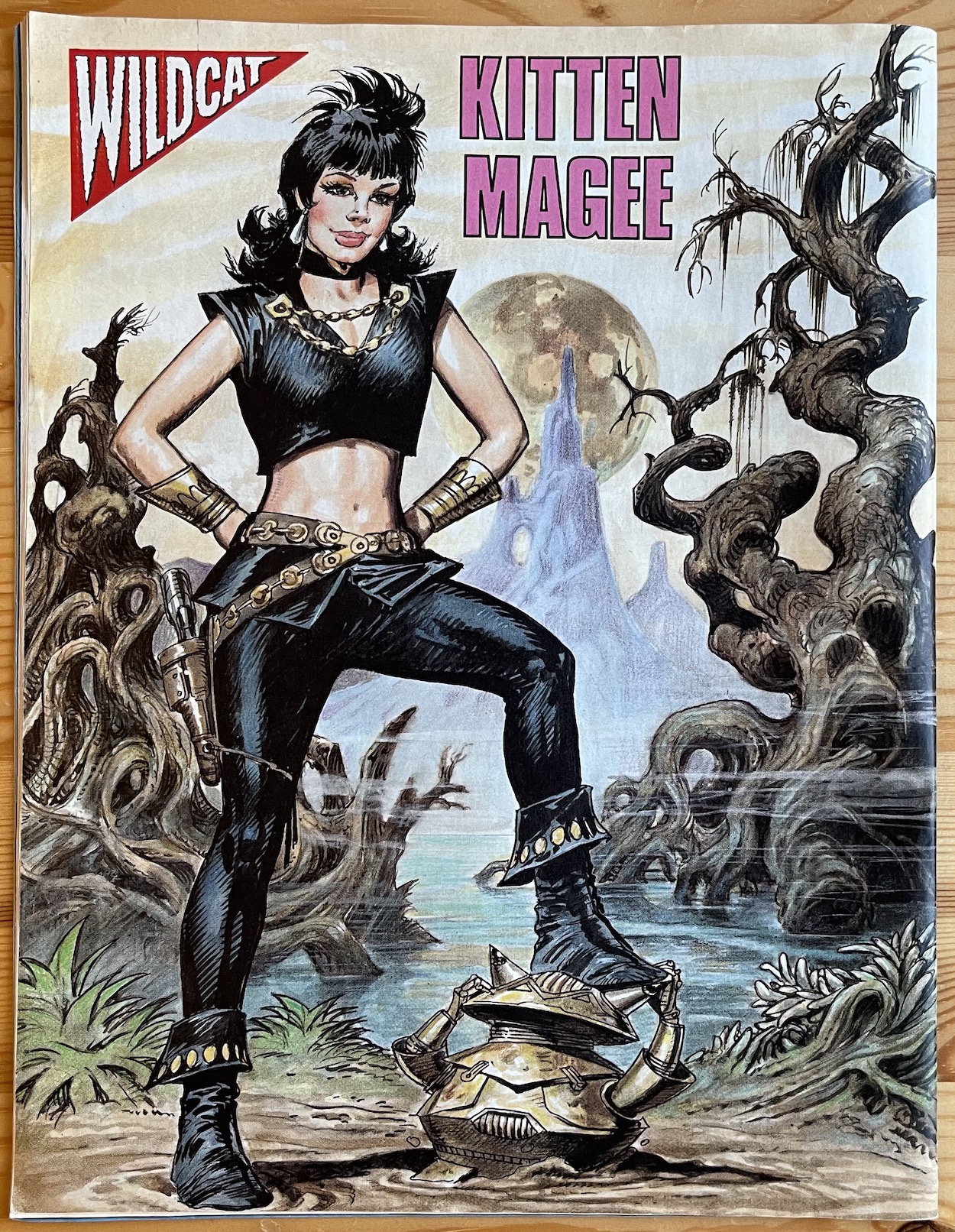
Each issue would have a colour pin-up of one of the main characters or alien creatures and they kick off with Kitten Magee and Crud on the back cover, bringing to an end a very original premiere issue. A fortnight sounds like a long time to wait for the next instalments of all these great stories but I know it’ll be worth the wait.

I remember thinking the comic somehow kept outdoing itself each issue. Let’s hope it lives up to those expectations now. Remember, remember, Wildcat returns to the blog on Friday 5th November.

PREViEW iSSUE < > iSSUE TWO

WiLDCAT MENU

WiLDCAT: PREViEW iSSUE

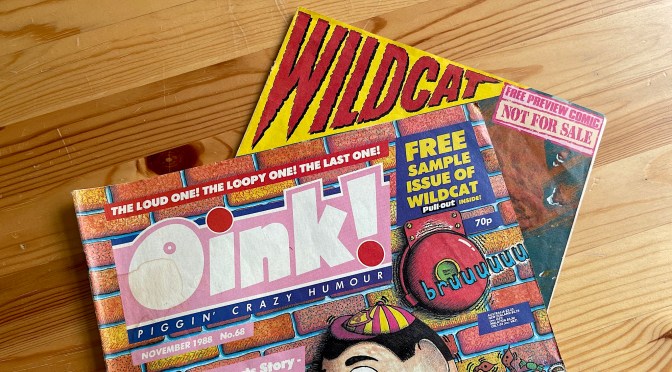
It originally took me the best part of a week before I read this free preview of brand new sci-fi comic, Wildcat. It wasn’t from lack of interest but rather the fact it was inside the last issue of OiNK. After realising this I wasn’t in the mood to read my favourite comic, never mind the free gift inside. But when I got around to it I found an original, exciting and yet oh so bleak story awaiting me. A day or two later I was in the shop buying the first issue proper and placing a regular order.

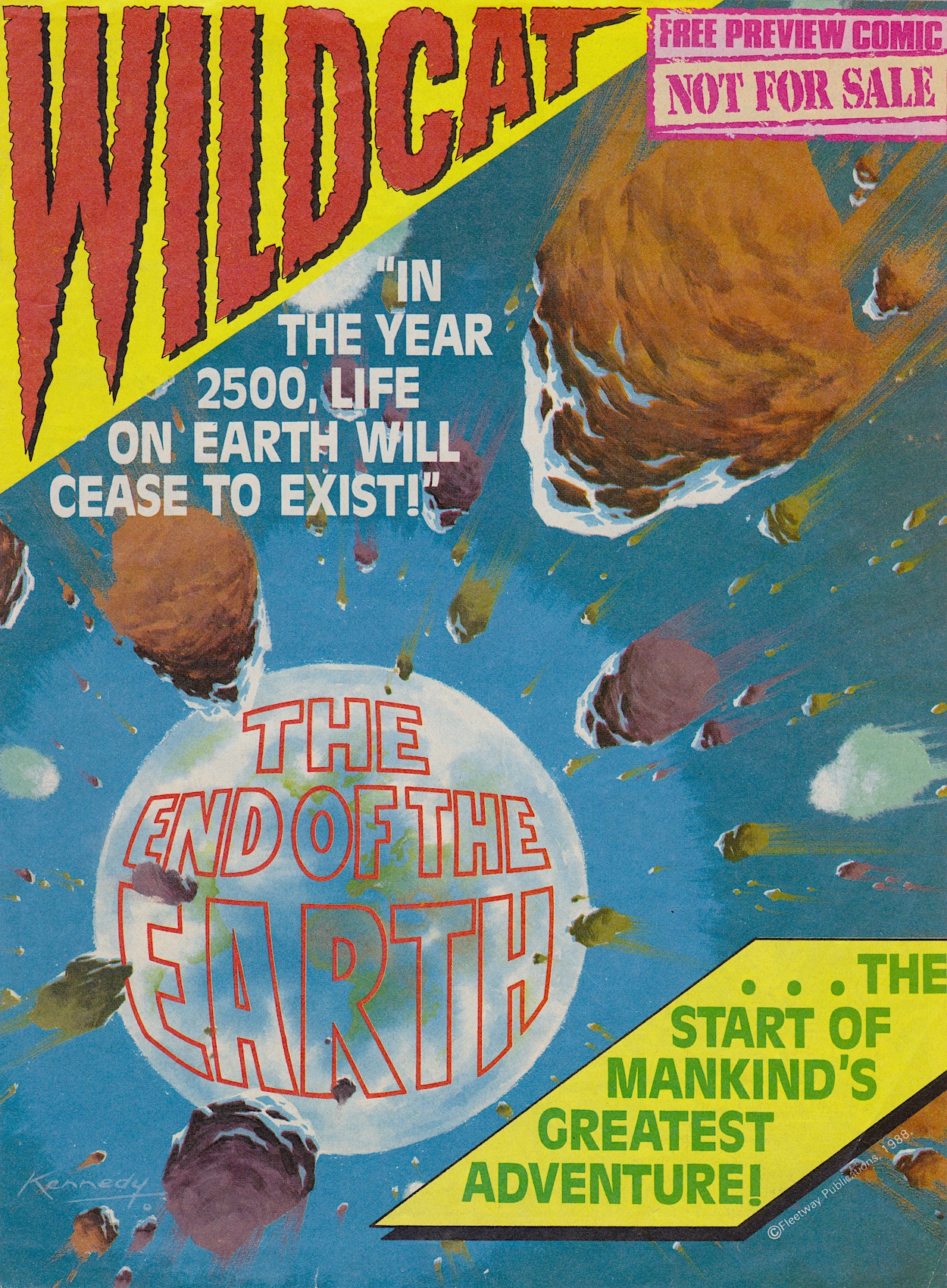
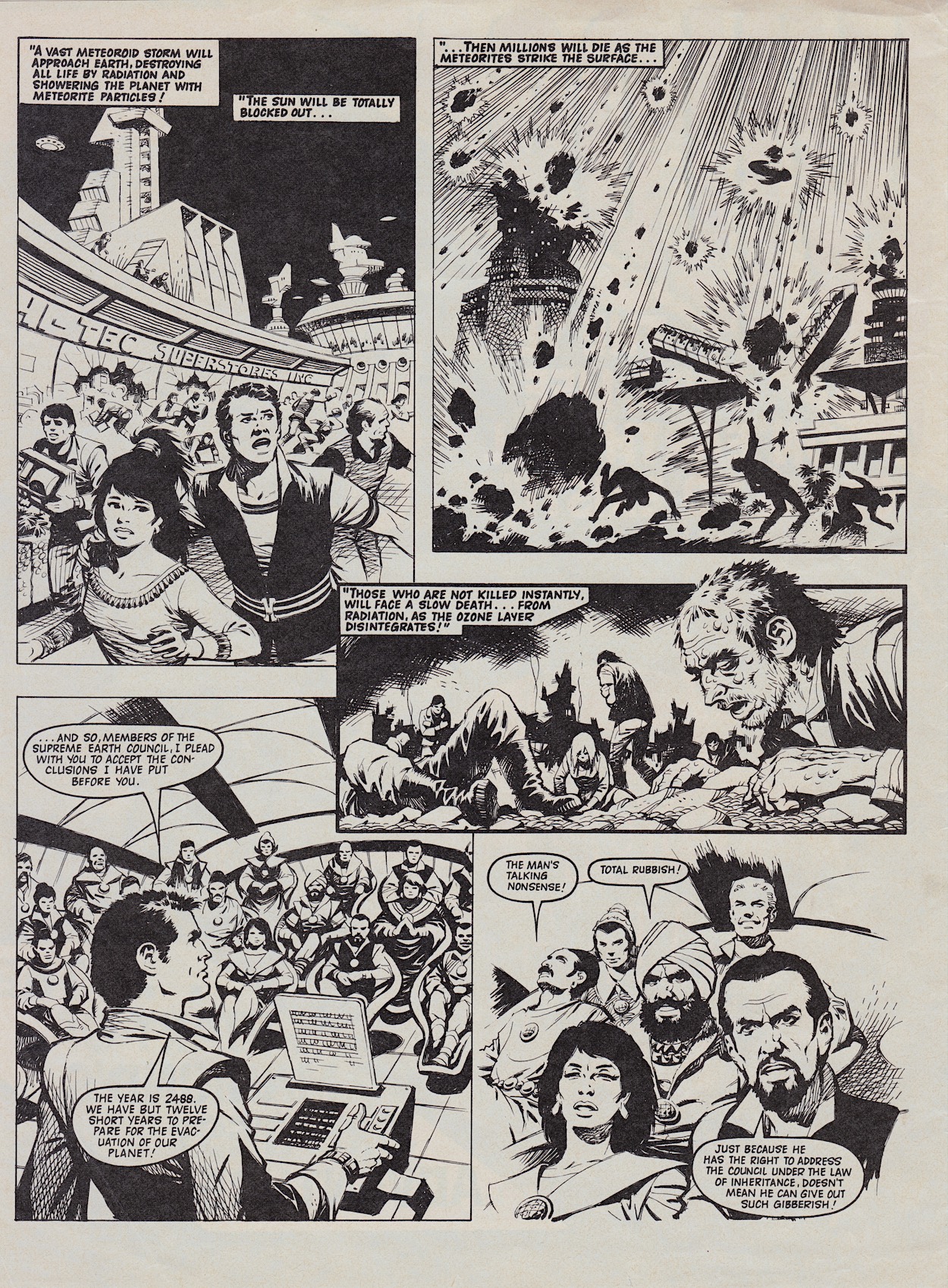
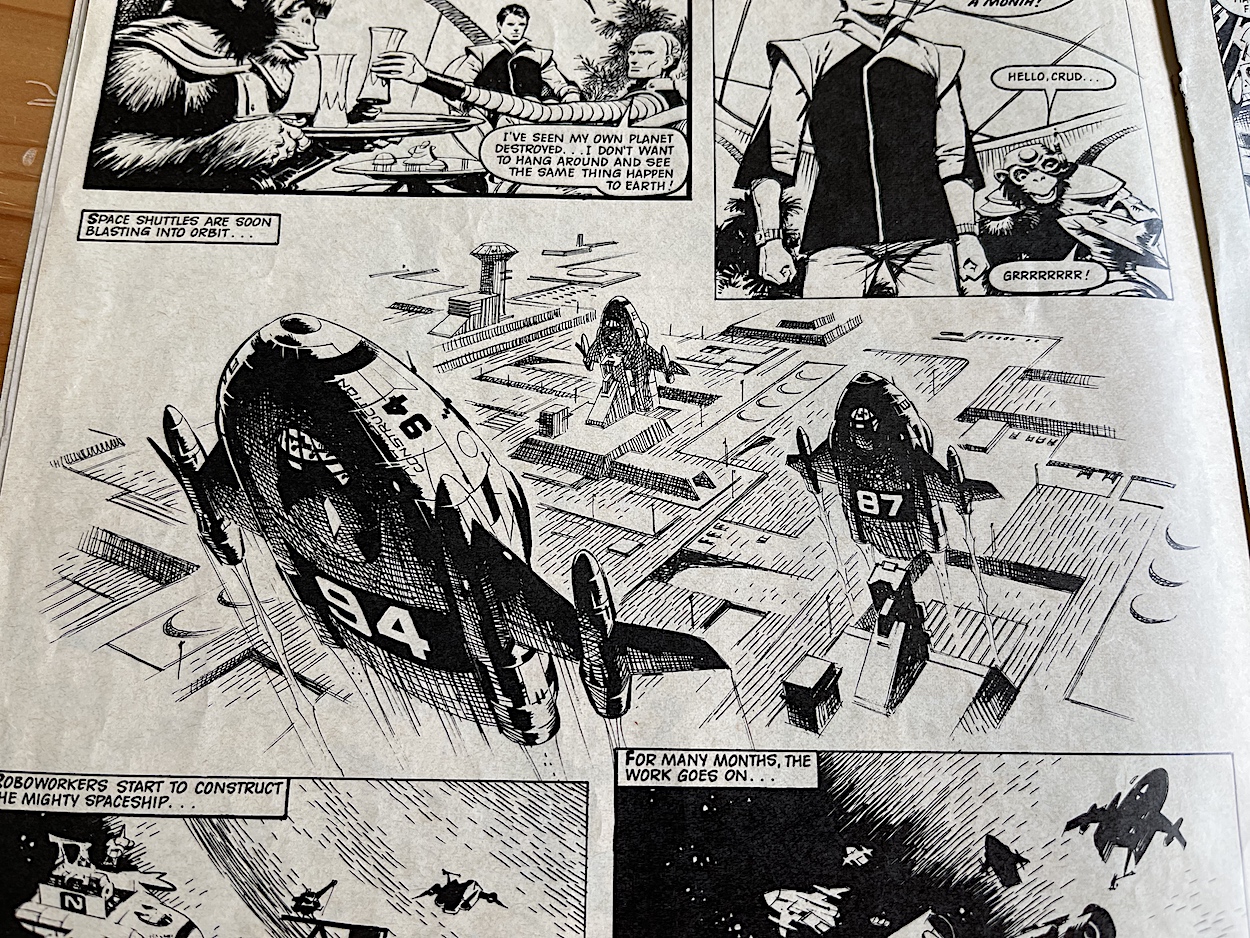
Created by editor Barrie Tomlinson it was very much his baby. It would be a comic with one story told over various strips but it had to kick off with a big, dramatic event, something so huge it would justify having all the strips tied in together. So how about the end of the world? The cover may have Earth at the mercy of meteors but it’s the first page inside, where these have turned into meteorites striking the surface that really hit home to me. This was a seriously attention grabbing start.

The first page makes no bones about what the predictions for Earth are and I can remember being shocked as a kid. I didn’t think comics could do that and so I was instantly hooked into the scenario. It has all the markings of a disaster movie, right down to the government ignoring the expert and as I continued to read I was surprised this awesome Wildcat spacecraft, humanity’s last chance of survival, was only going to hold several hundred of us.

Quite brutal for kids to read. That’s why I loved it so much back then!

This preview story is all about introducing life on board and the regular characters. Written by Barrie and drawn by Ian Kennedy the eleven pages of strip action cover a lot of ground, move at a blistering pace and conclude with a cliffhanger to get the young readers excited for the premiere issue. Also given away inside Fleetway’s 2000AD, Eagle, Buster, Whizzer and Chips, Roy of the Rovers and Mask it certainly had a large pool of potential readers to pull from.

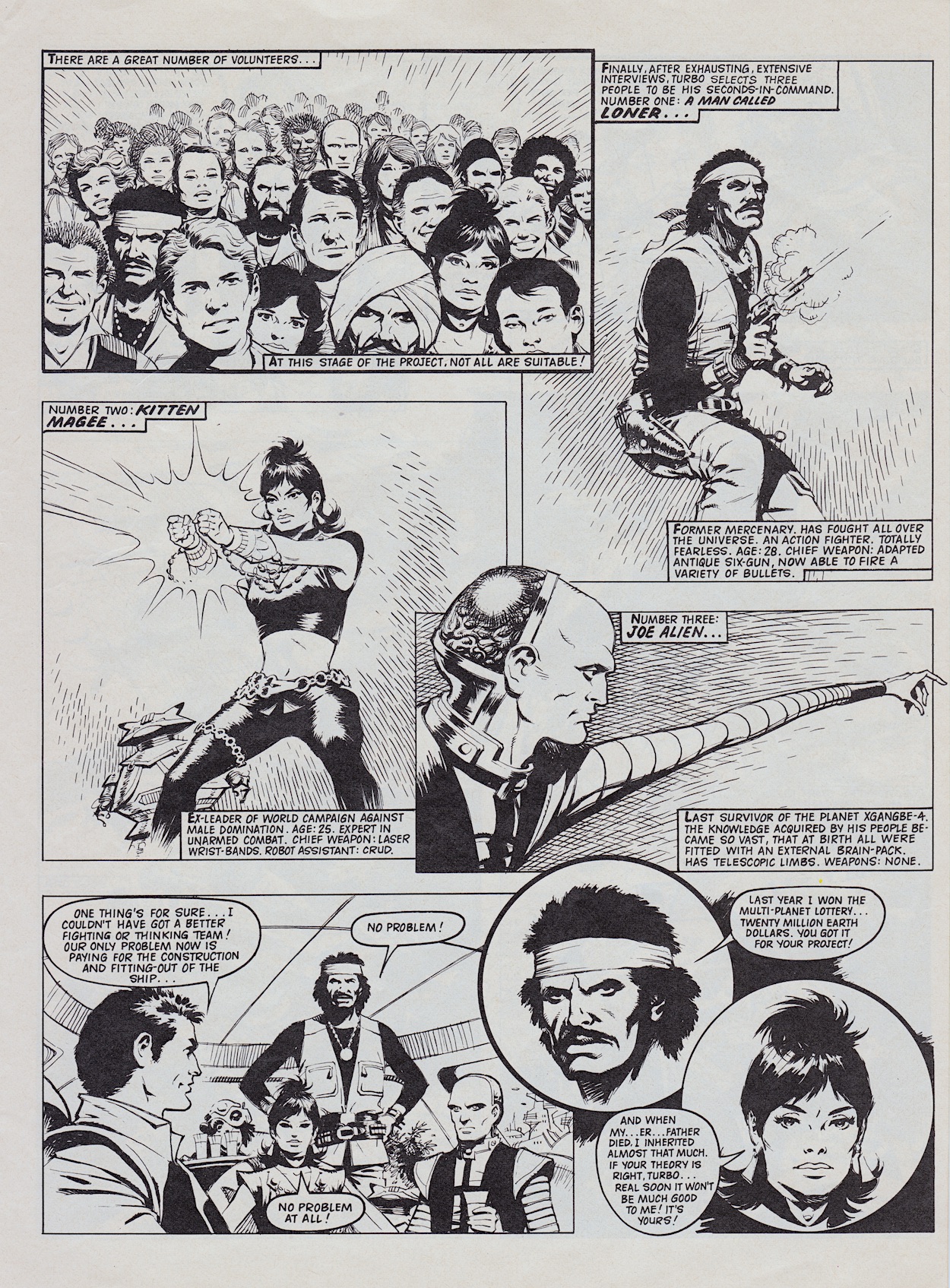
Predicting the end of everything is our main character, research scientist Turbo Jones. An apparent billionaire through some form of inheritance (being rich allows him to address the governments of the world, so some things don’t change) he buys worldwide advertising space, asking for volunteers to take humans into the stars, but he only has room for several hundred. He mentions picking suitable colonists but not what makes someone suitable, and the whole project is handily funded by more inheritances and lottery wins. While this reads as convenient nowadays, as a young reader these sorts of things wouldn’t have interested us anyway so they only needed glossed over in the first place.

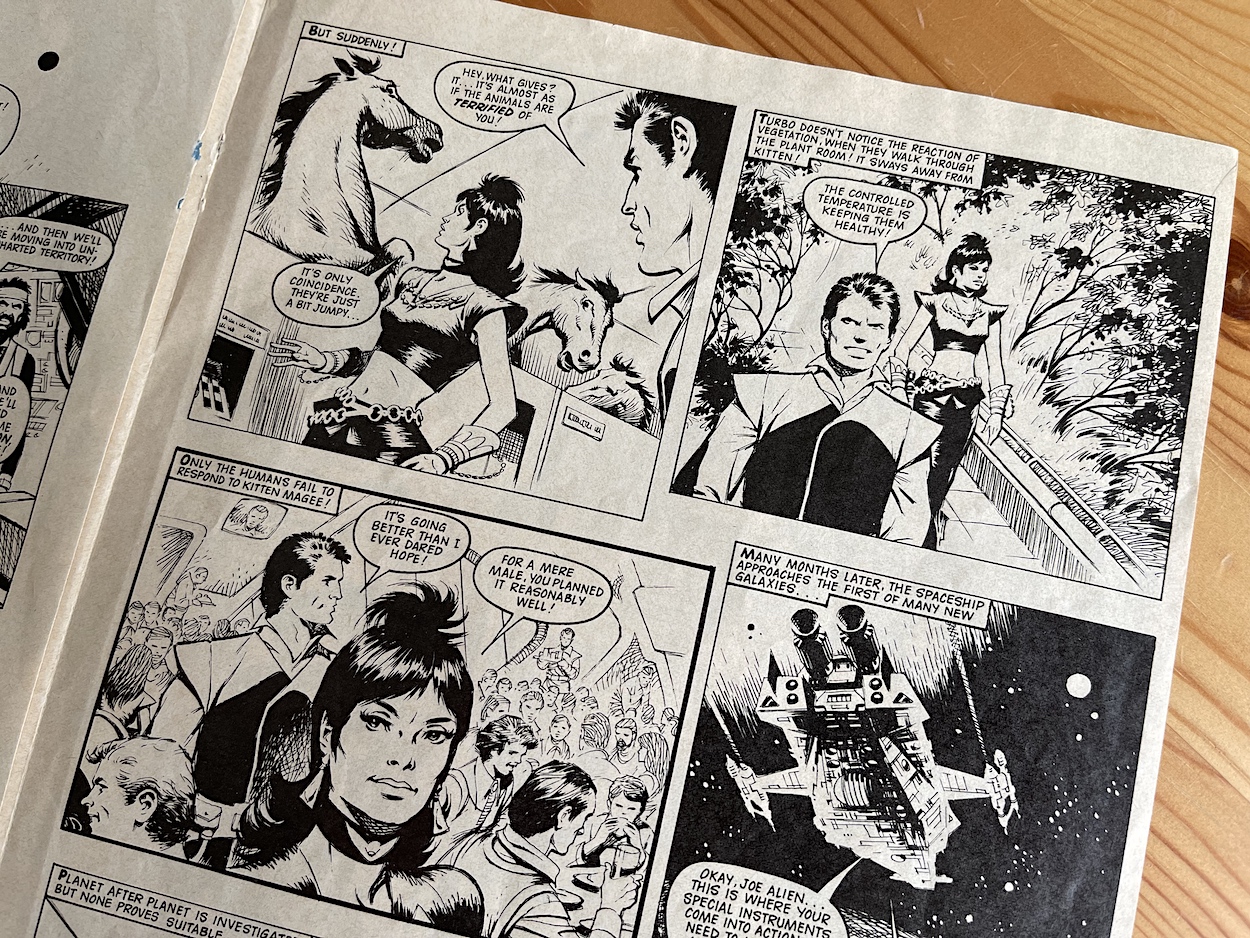
Saying that, Kitten Magee‘s finances seem to have a shady history and later she asks her robotic assistant, Crud (whose voice I always end up reading as K-9‘s from Doctor Who) to ensure her entire supply of something called ‘Lifedust’ is stored safely aboard. Along with animals reacting badly to her presence and even plants pulling away from her, there’s definitely a lot more to this particular character than her colleagues realise.

Given the welcome changes happening in our modern world now, I also like the fact she was once part of the World Campaign Against Male Domination and how she’ll lead an all-female team. Forward thinking for the day, it actually reads as quite topical now.

This is in contrast to all the lovely 80s futuristic spaceships and cityscapes. Think of the best sci-fi movies from that time and the kind of visuals they’d portray for future worlds. We’ve got shuttles that wouldn’t look out of place in Thunderbirds, self-flying taxis, futuristic “vid screens” which are clearly chunky CRT TVs with extra bits added on, as well as references to “massage slippers” (no, really), hi-tech shops, light-reactor engines and more. All this while at the same time Robo tells Turbo he’s successfully videoed the latest episode of EastEnders. It’s all great fun and has a lovely retro feel to it.

While the purpose of the preview is to set up the main story and make people aware of the new comic, with Kitten it feels like those early episodes of Babylon 5 when hints, questions and mysteries abounded, setting up larger stories for the unwitting audience. Loner and Joe Alien are introduced although their development is kept for the regular comic. Turbo himself comes across as rather self-important to begin with, but given the circumstances this is understandable. He does seem to relax a little when around his new seconds-in-command though.
He has a robotic aid called Robo who appears to be a hybrid between robot and chimp and Turbo can be rather snappy with him, but only because Robo insists on calling him ‘Master’ which irks Turbo. He tells Robo his friends call him Turbo, but his companion has his programming and keeps on using the term. It’s clear this back and forth has been going on for quite a while, which explains Turbo’s responses. It makes for a unique partnership and one I’m looking forward to more of.

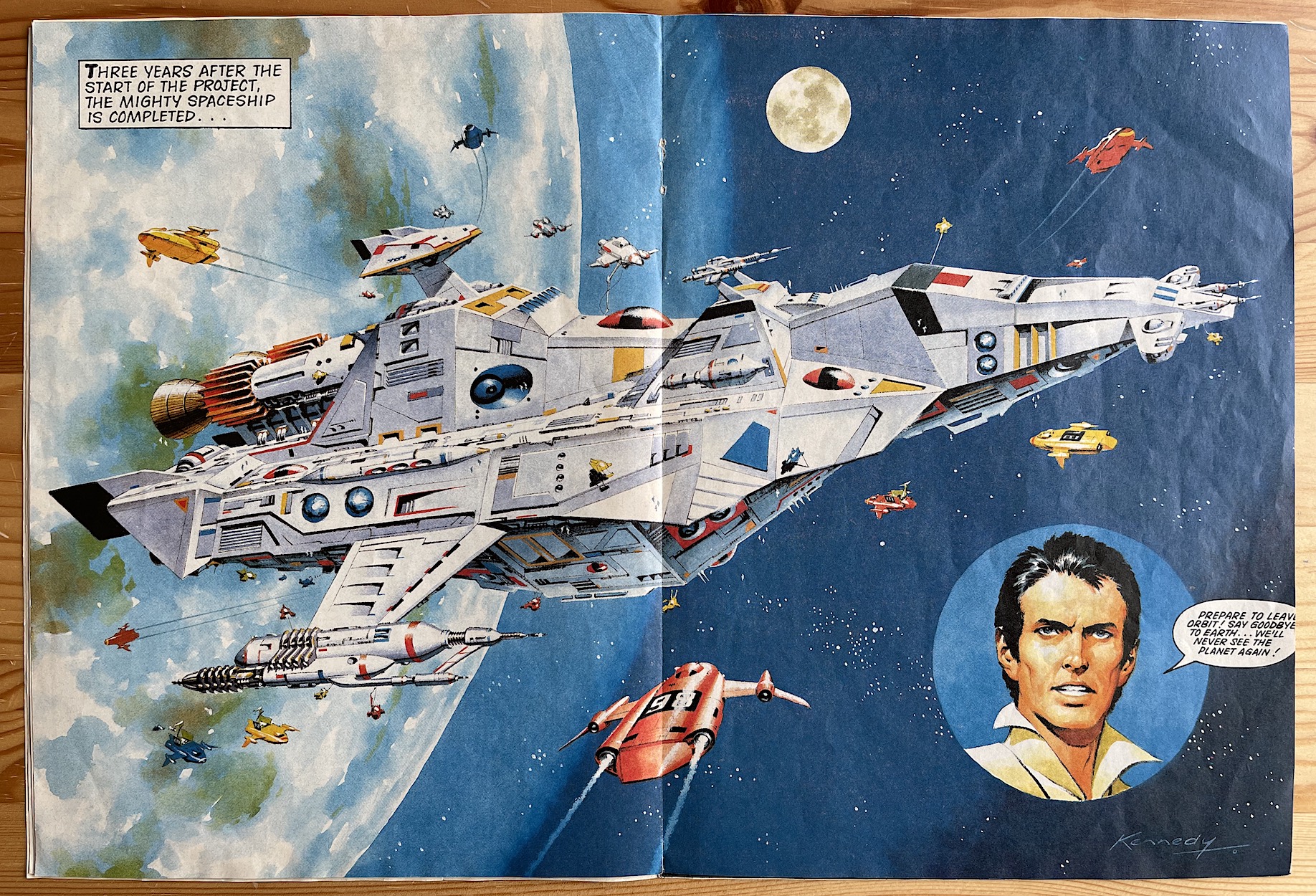
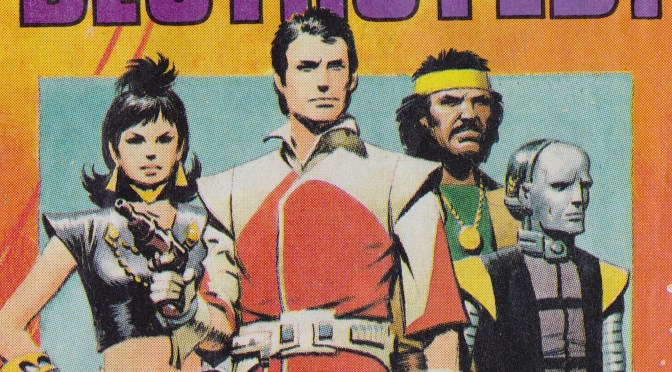
The main characters and the Wildcat itself were all originally designed by Ian Kennedy although various artists would take them on for the fortnightly. (In the Wildcat Holiday Special you’ll be able to see some of those original designs.) Above is a small poster which makes up the middle pages and shows just how colourful the spacecraft responsible for the survival or extinction of the human race actually was.

An interesting little coincidence I spotted was how Turbo’s calculations proved the extinction level event he predicted happens to Earth every 67 million years. At one point he says, “It’s happened before… and it’s about to happen again” which coincidentally is similar to a popular phrase in the newer Battlestar Galactica produced years later. In the previous post I’ve already covered the similarities between Wildcat and the original version of that series, and Barrie’s assurances it had no influence over his idea. It’s a nice coincidence though and, given how Earth is to be destroyed by collision with natural forces that orbit our galaxy, it makes sense in this story.

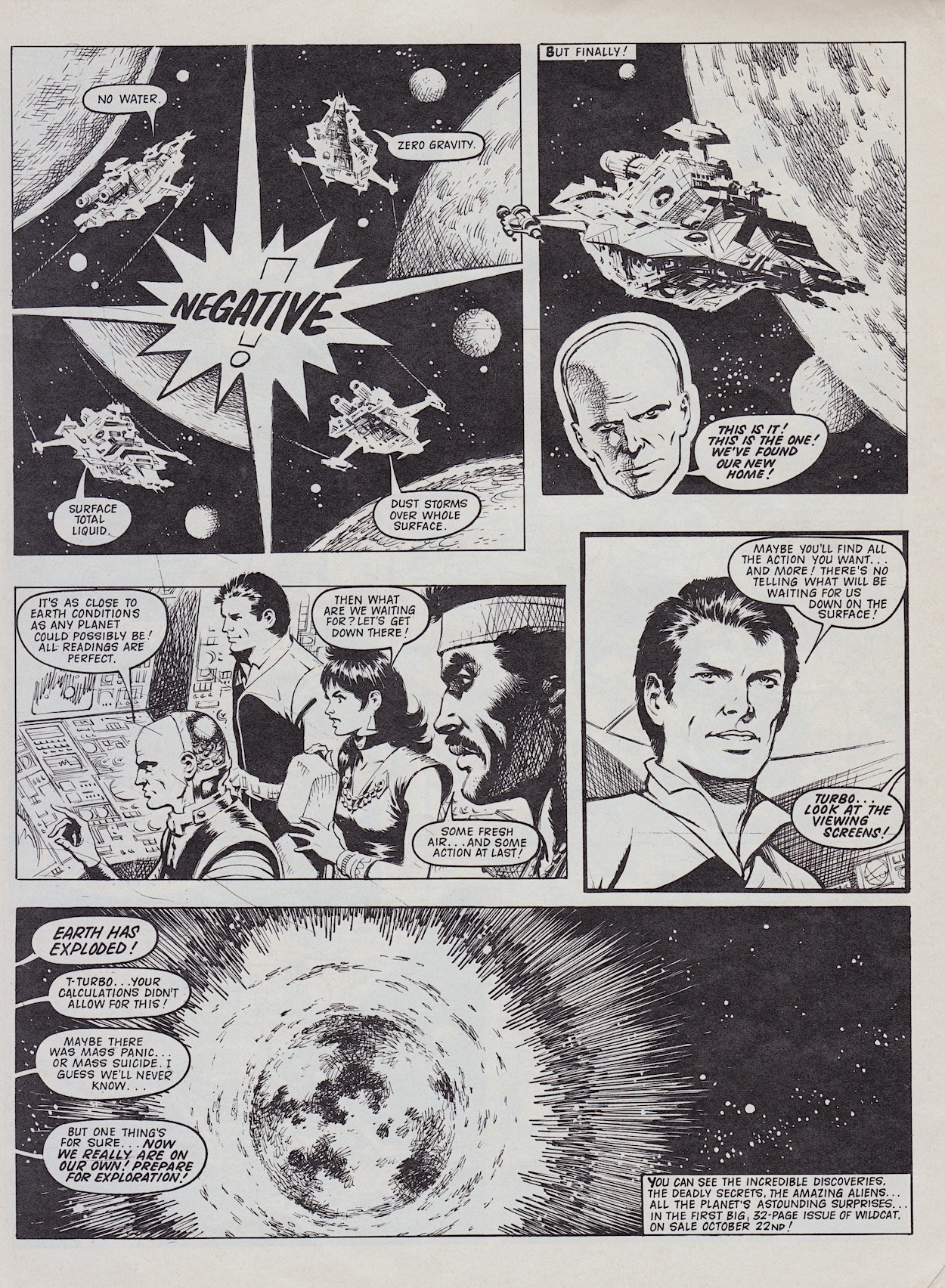
Or at least that’s true as far Turbo’s prediction goes anyway. But on the last page at all suddenly changes. Just after the crew finally (after what must have been months of searching) find a planet which could in theory support human life, and a few years before the predicted event, planet Earth just blows up! No meteors, no long-term destruction, no slow deaths by radiation. Just like that the entire planet and the billions left behind are gone.


“I was piling on the pressure, indicating that anything could happen in this story!”

Barrie Tomlinson (Editor)

I asked Barrie about this sudden change in the final panels. “It was creating a mystery which perhaps would never be solved,” says Barrie. “Turbo had predicted something different but it happened quicker than he had anticipated. It had a shock element for characters and for readers. I was piling on the pressure, indicating that anything could happen in this story!”

Whether we’d ever have found out what really happened will itself remain a mystery but for now it ends a chapter which was quite brutal for kids to read. That’s why I loved it so much back then! As as adult I can see how it had to rush through so much in such a short period of time, because the comic was going to kick off its regular strips with all of the teams landing to explore this potential new planet.

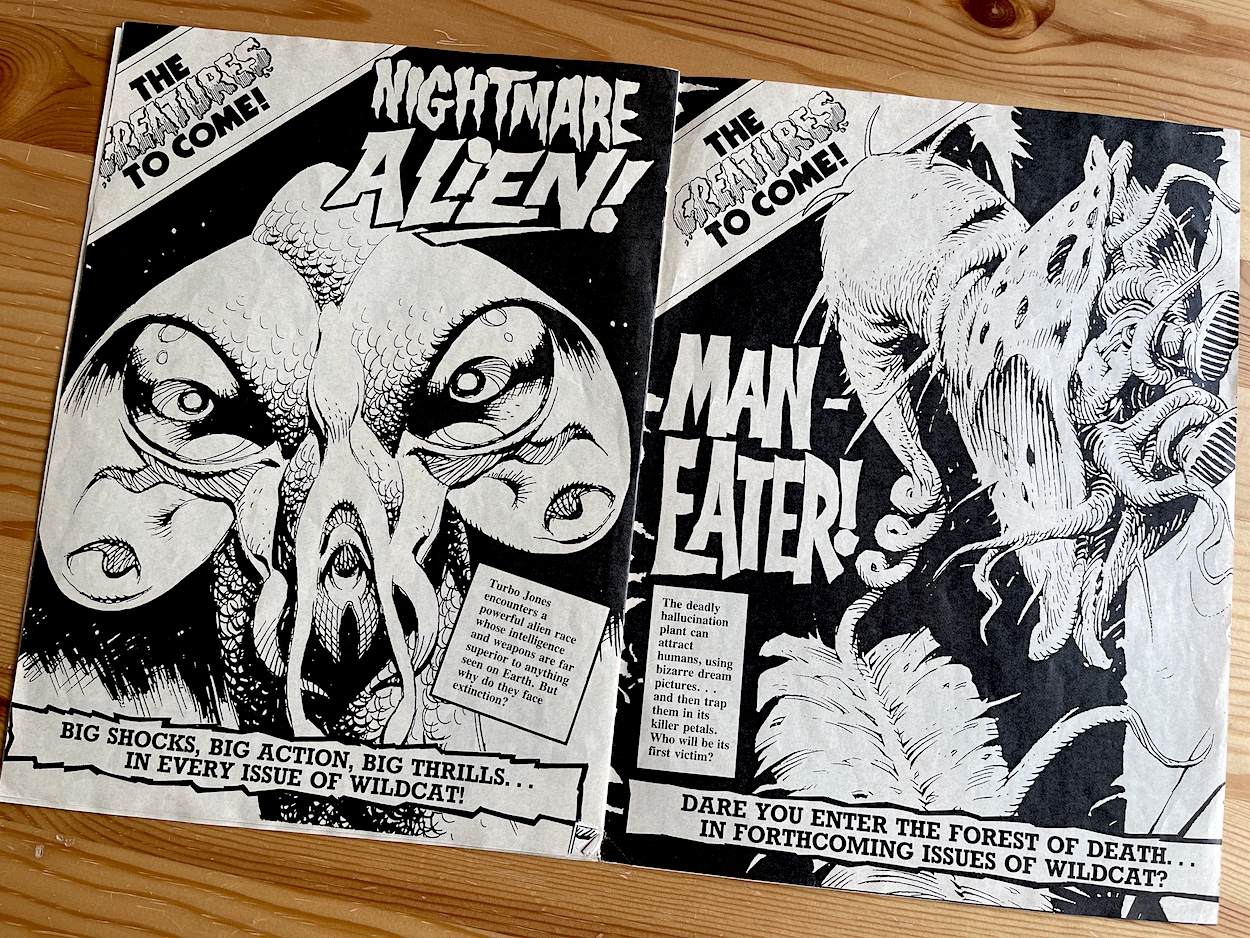
I was engrossed as a ten-year-old and now as adult I’ve enjoyed the rollercoaster and am in awe of how much Barrie and Ian were able to squeeze in here. The exhilarating ride of the strip has me hyped for next week and as such the pages of “The Creatures to Come!” aren’t even needed, but I can understand why they’re here. Again, you have to remember the target audience.

I do recall the so-called “Nightmare Alien!” is actually one of Turbo’s allies but this is just one piece of the misdirection the comic would be great as, which you’ll see as its stories develop.

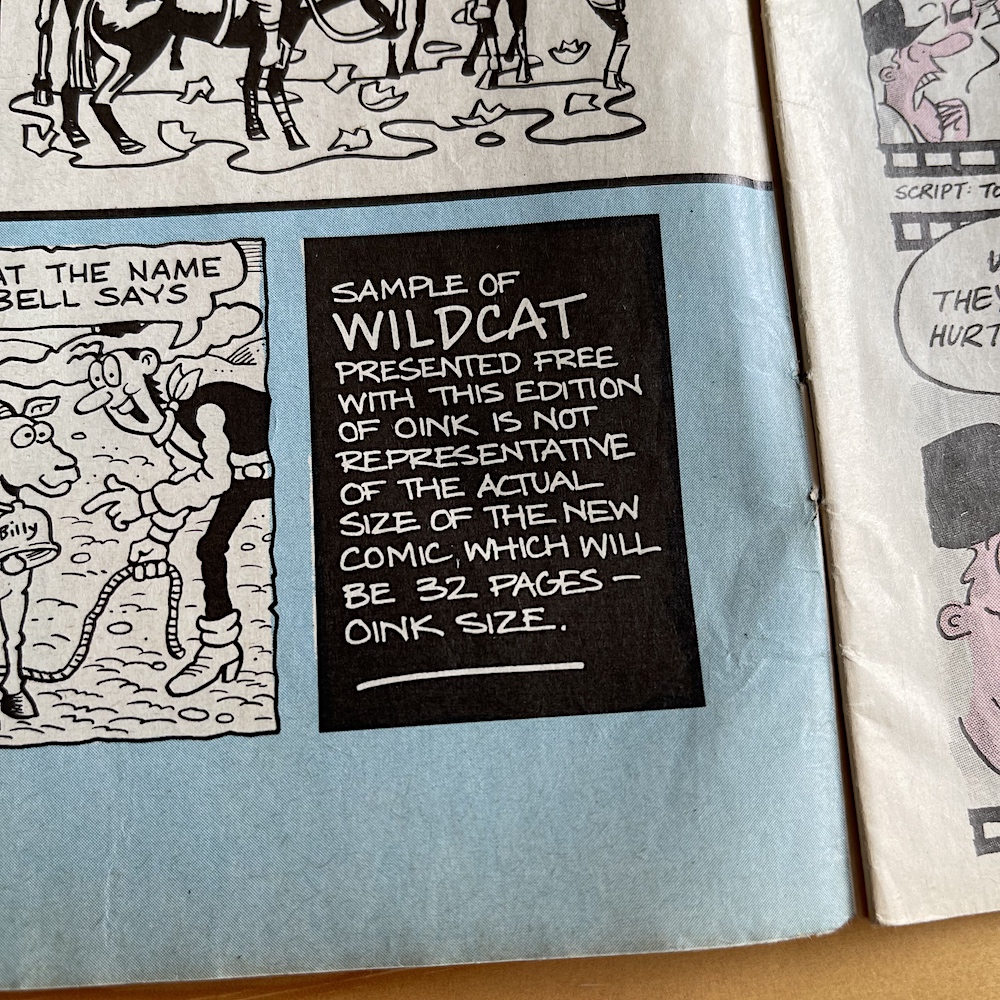
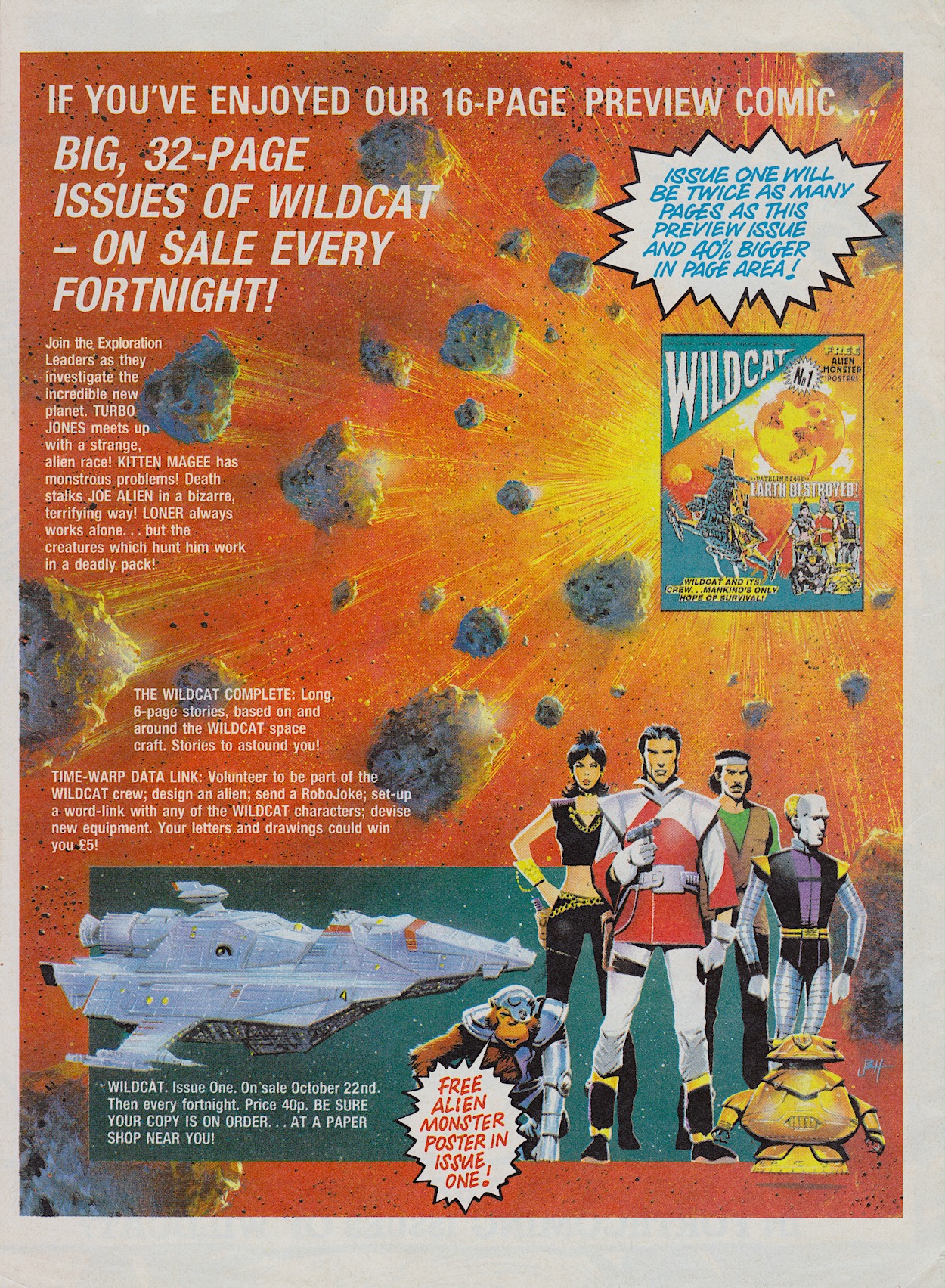
The preview issue was smaller than the comic it was slipped into. It’s about the height of an American comic while being a little wider but the fortnightly was going to be the same size as the monthly OiNK. A small panel on page two of the piggy publication pointed this out, as did the promo on the back of the preview itself.

There was plenty to look forward to including free gifts, lots of serials and an anthology, all on big, glossy pages that I remember made the action feel epic in scale. That premiere issue of Wildcat will be reviewed on the OiNK Blog in just seven days on Friday 22nd October 2021.

Wildcat had landed.  Figuratively speaking. For now, anyway.

GO TO iSSUE ONE

WiLDCAT MENU

RiNG RAiDERS #3: CHiLL OUT & ENJOY

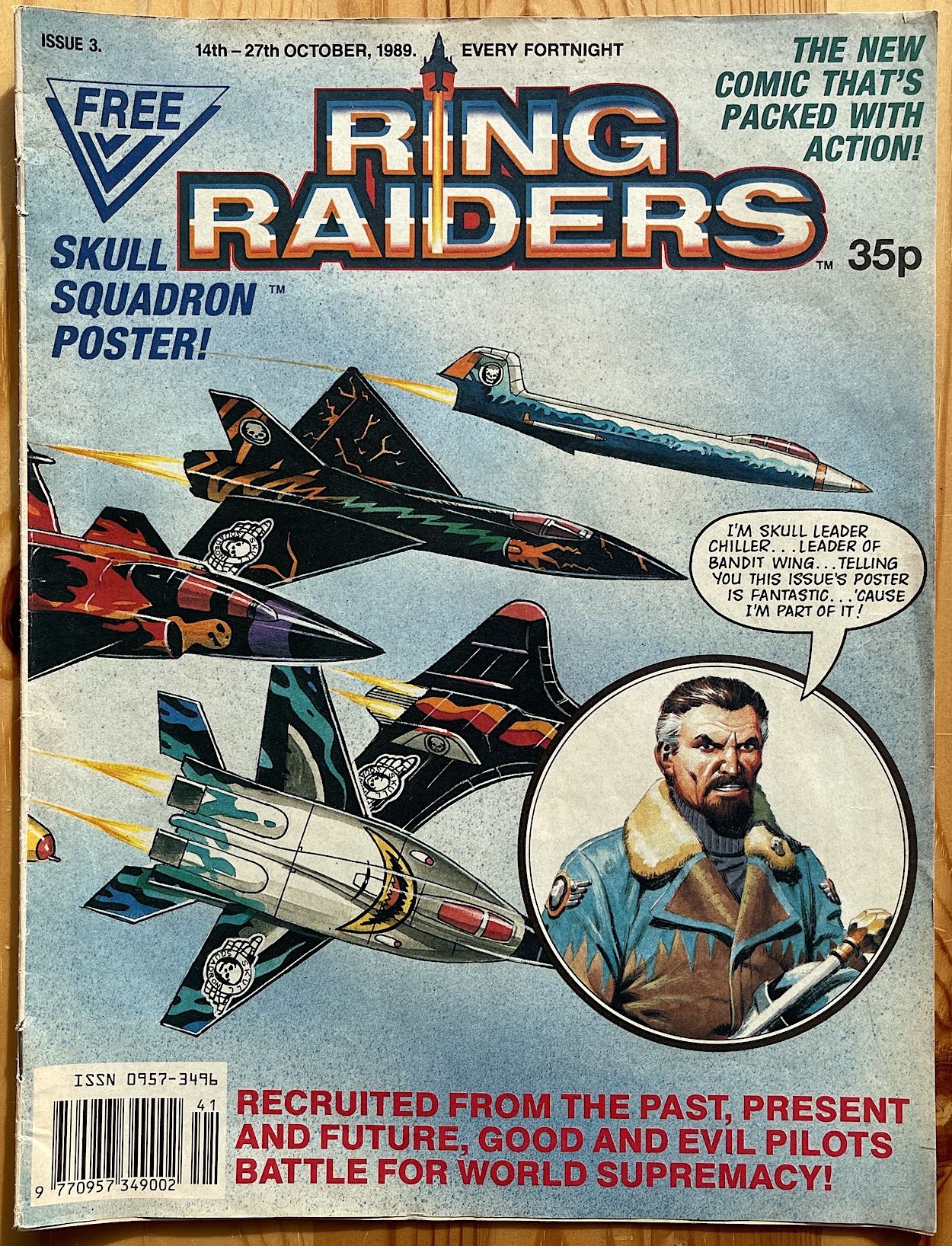
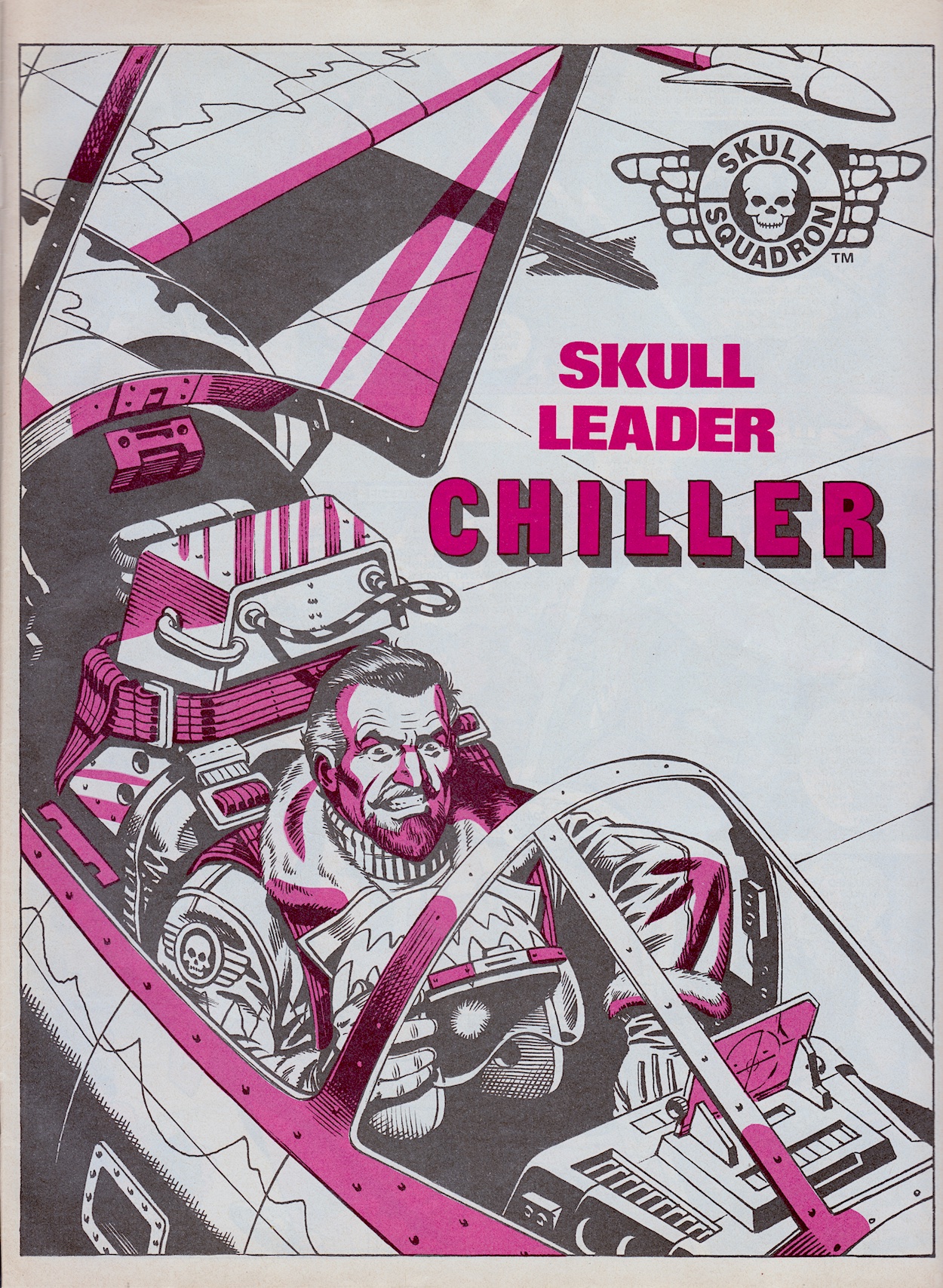
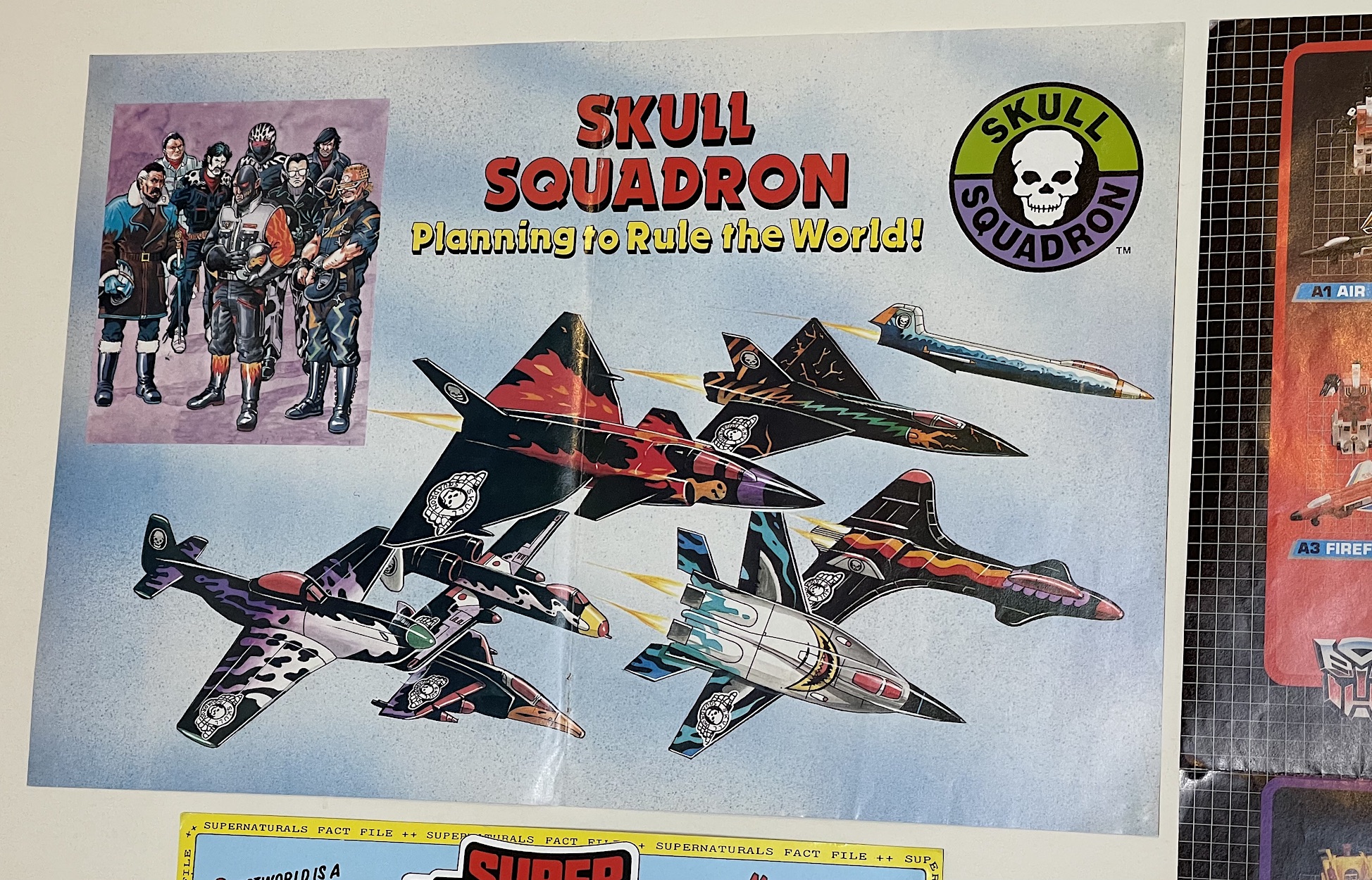
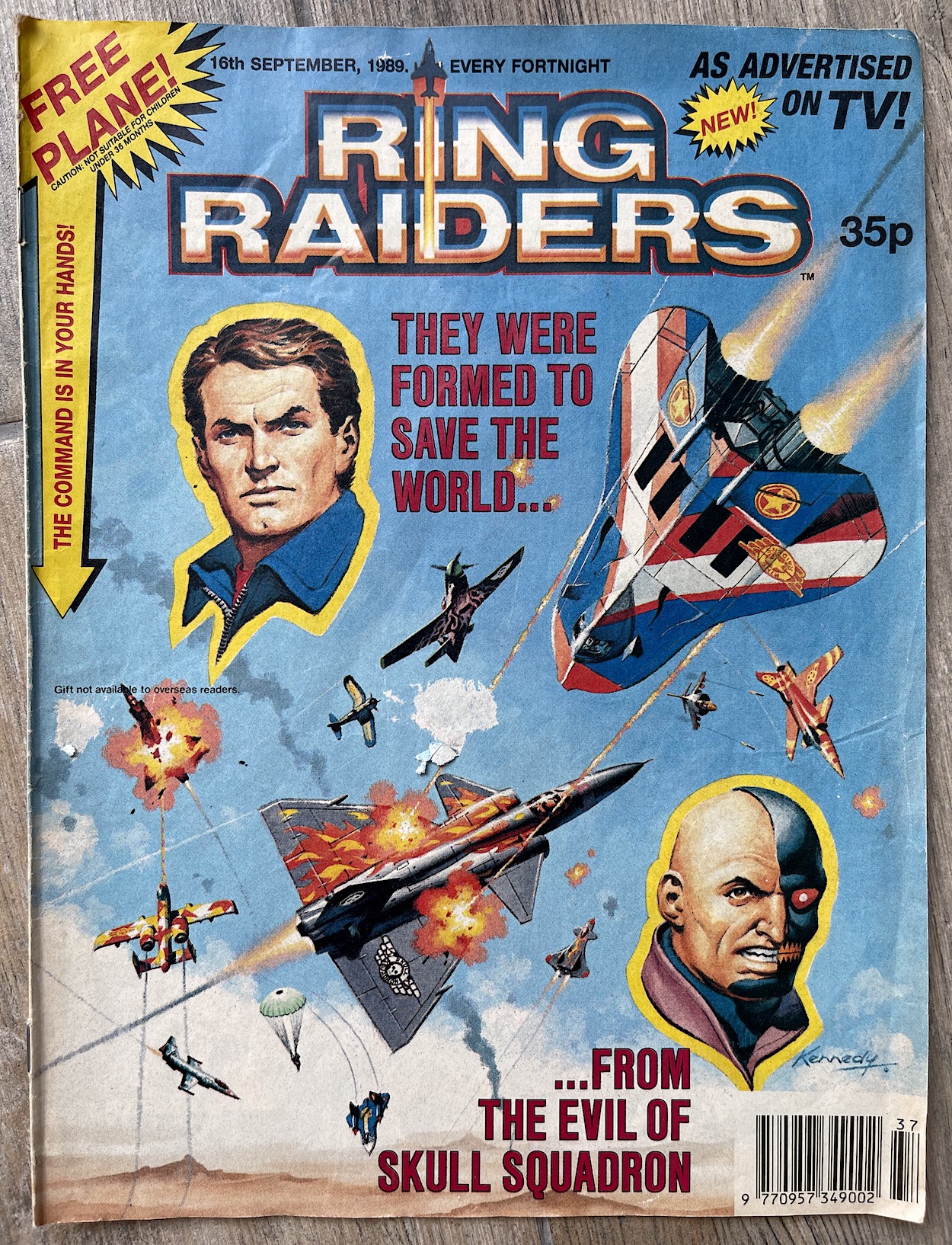
Skull Commander Chiller pops up on the cover to the latest Ring Raiders introducing the free Skull Squadron poster, which I’ll show you later in the review. He’s easily the star inside too; a main character of two strips and he’s also the star of the pin up. Chiller was a fan favourite, so much so that his Wing was hard to come by. By the end of my obsession over a year later I still hadn’t been able to add him to my collection.

With a sleek plane equipped with a freeze ray and an equally slick haircut equipped with a cool white stripe he was the epitome of 80s villainy, probably more so than their leader Scorch at this early stage. Although to be fair the comic is slowly moving its way through the large ensemble cast, taking its time with certain individuals. In the final issue we’ll start to see the second batch of stories begin and the focus moving slightly, so over time all of the characters would’ve received fair development.

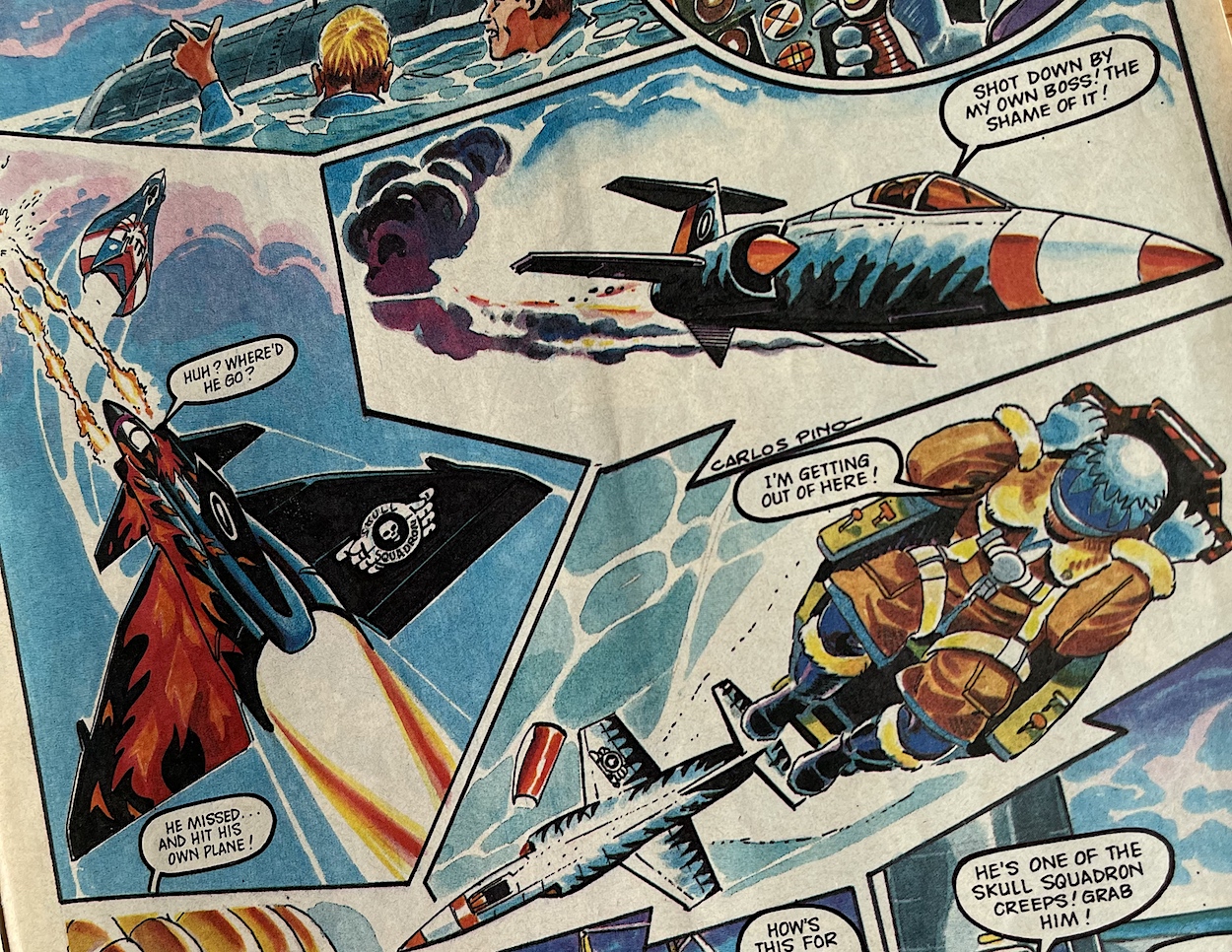
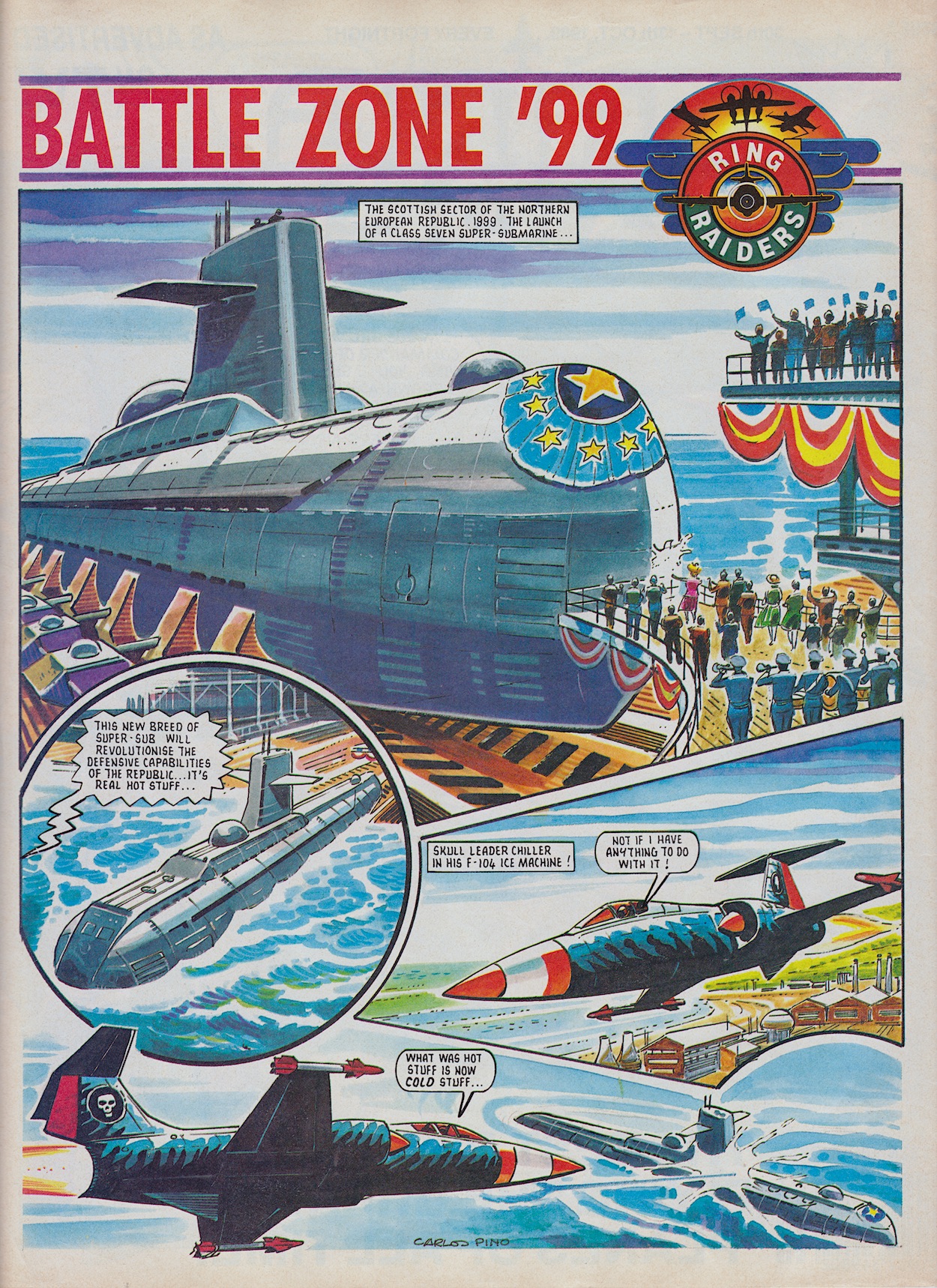
In part two of Barrie Tomlinson‘s Battle Zone ’99 the remaining gravity-powered submarine is still under attack, as part of Skull’s aim to destabilise the governments of the world. This is a vital part of their overall goal of assuming control through a mix of all-out warfare and covert operations. Here, dozens are already dead but while trying to fire upon the sub Skull Leader Scorch accidentally damages Chiller’s F-104 ‘Ice Machine’ when Ring Commander Vector expertly dodges an attack, forcing his comrade to eject and abandon his craft to the waters below.

Adding insult to injury, Chiller is almost killed when his leader fires upon the sub again, not knowing he’s been pulled onboard and is assuming control. The episode is left with us unsure if Chiller is going to complete his mission or take revenge on Scorch. There’s a certain air of Starscream about this character. What I love the most is Carlos Pino‘s energetic, colourful art. In particular that panel of the F-104 being shot down. For my younger eyes his work was an action-packed start to each issue.

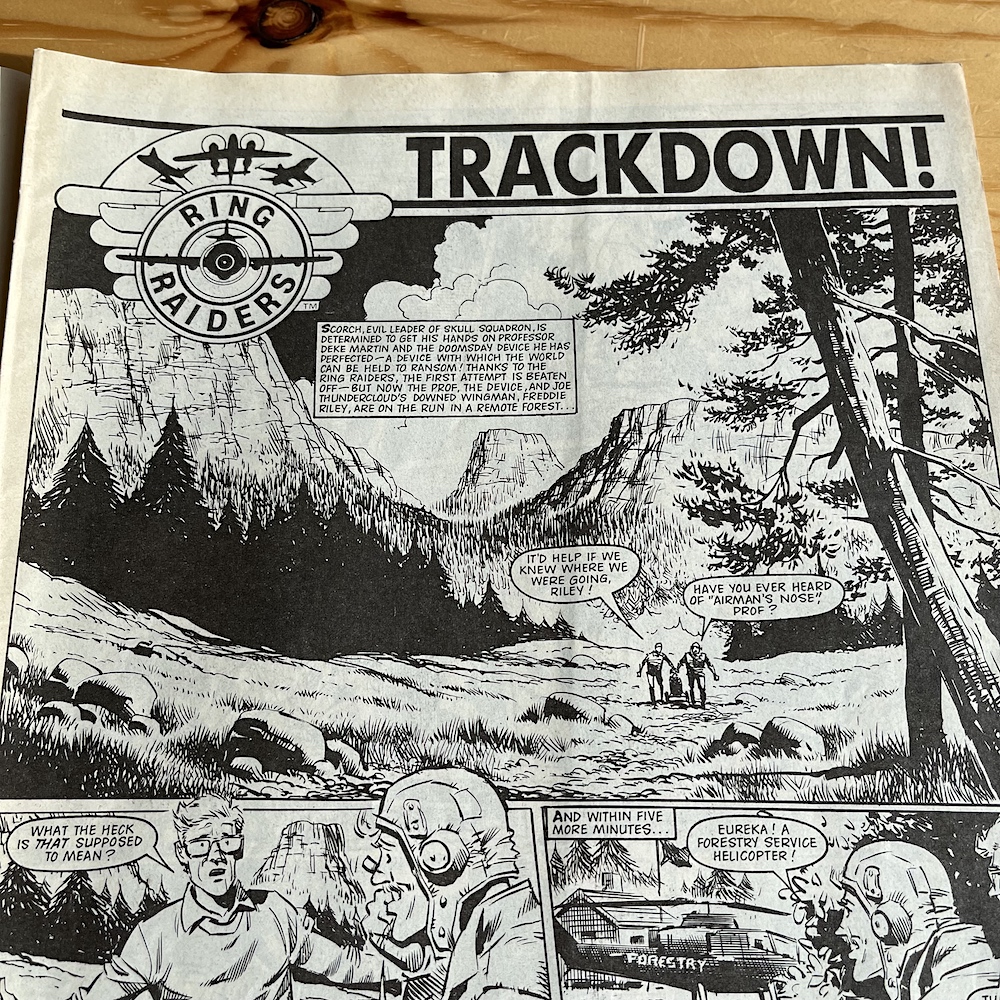
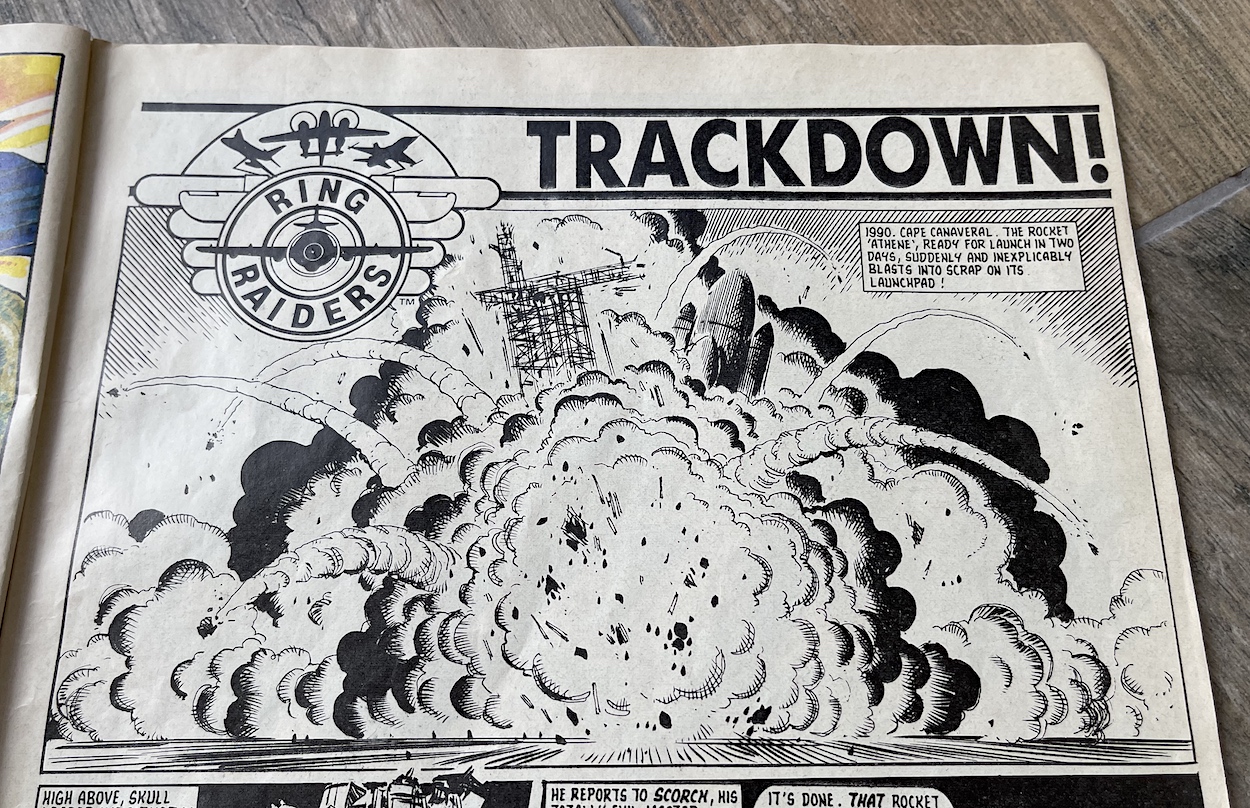
Apart from Thundercloud‘s Rescue Wing launching there are none of the toy range’s planes in the third part of Angus Allan‘s Trackdown. Instead the action takes part either on the ground or aboard (and hanging off of) a forestry service helicopter. A rather bold move for a tie-in based on those toys but it just goes to show the team wouldn’t confine their characters and stories to the cockpit.

The scale of these stories compared to what we might’ve expected was incredible to our young minds

It was exciting to see our Matchbox planes in action but look at that opening panel by John Cooper; the scale of these stories compared to what we might’ve expected (given the toy line) was incredible to our young minds. There’s a real feeling of confidence here, of being unrestricted and free to tell the story the writer wanted to. Trackdown is the best example of how they weren’t being expected to shoehorn the planes into the stories. Character, action and story came first, and the planes became an organic part of the stories.

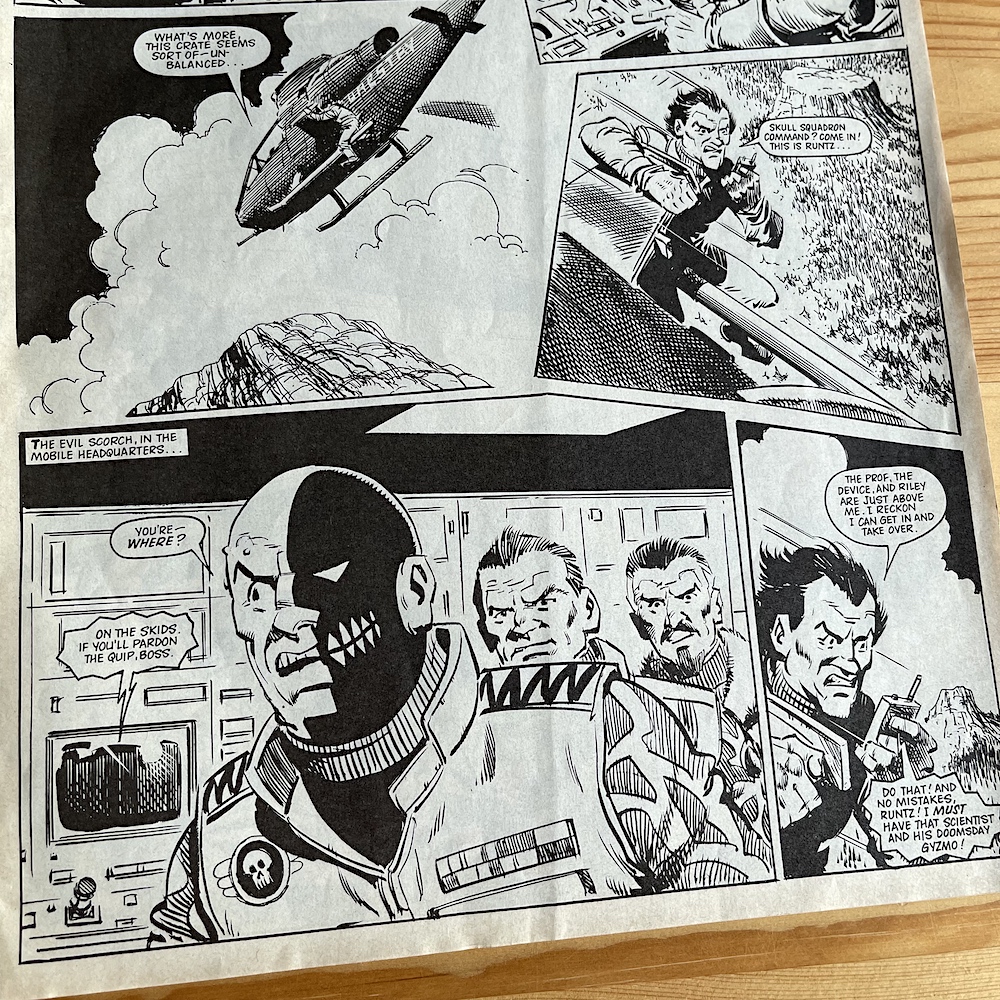
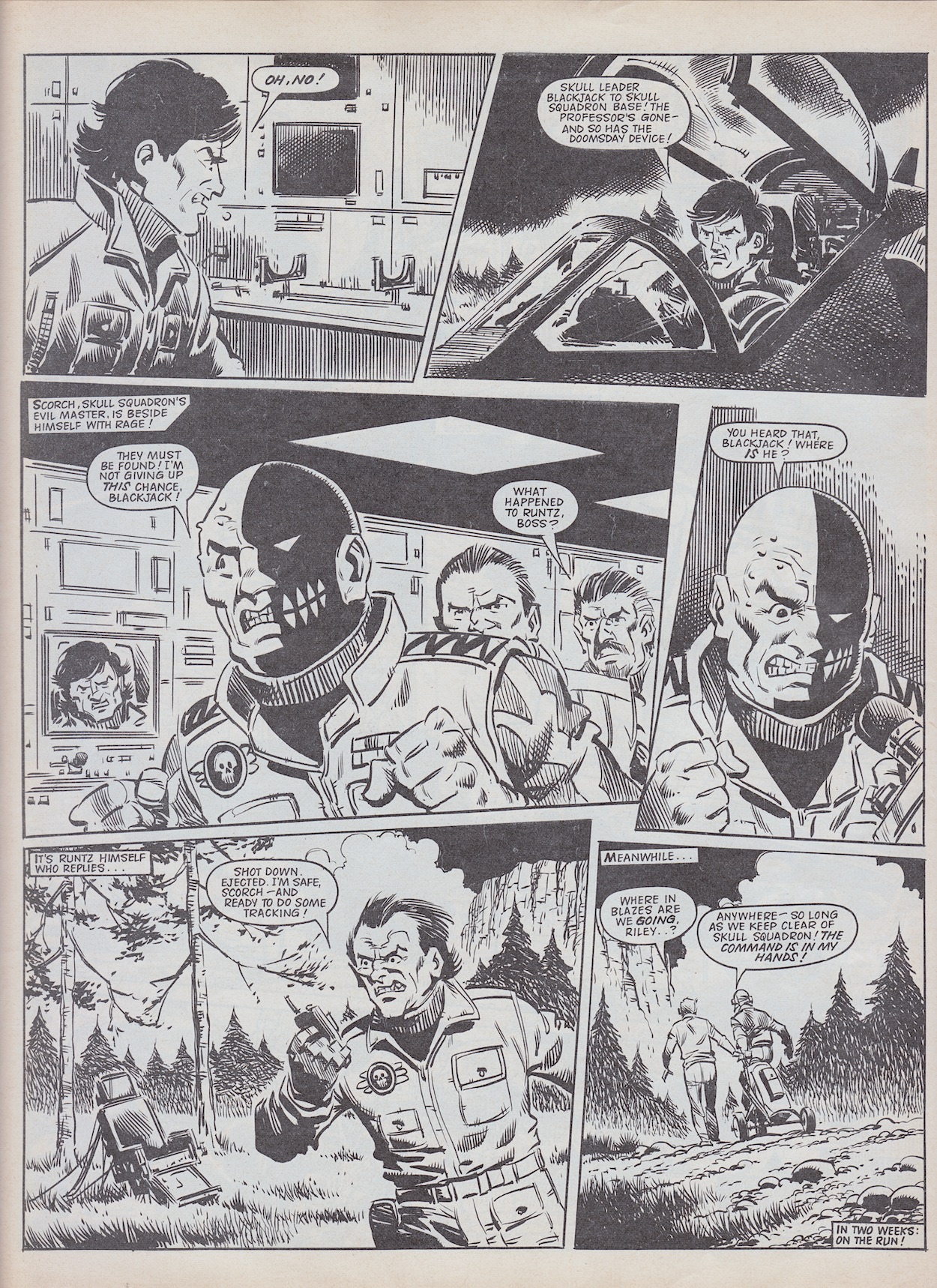
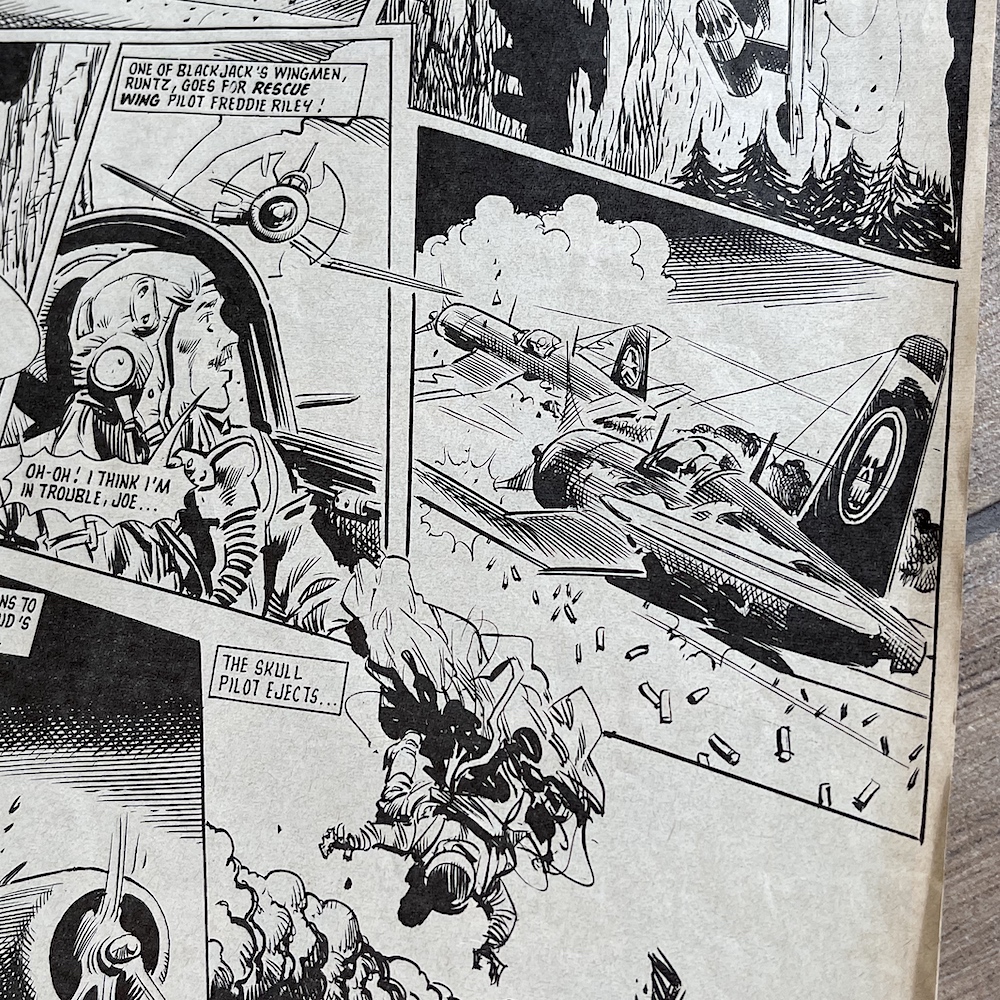
Our two original characters are still the stars, with Ring Raider Freddie Riley and the professor commandeering a helicopter to get above the mountains and radio for help. Runtz, however, clings to the side and the chapter ends with him bursting in and holding the professor by the throat! There’s a great little bit of humour above too from the Skull when he contacts Scorch. It’s an exciting read and, even though at this point we had no idea how long Trackdown would last, something in the way it was being told made it stand out as the main strip.

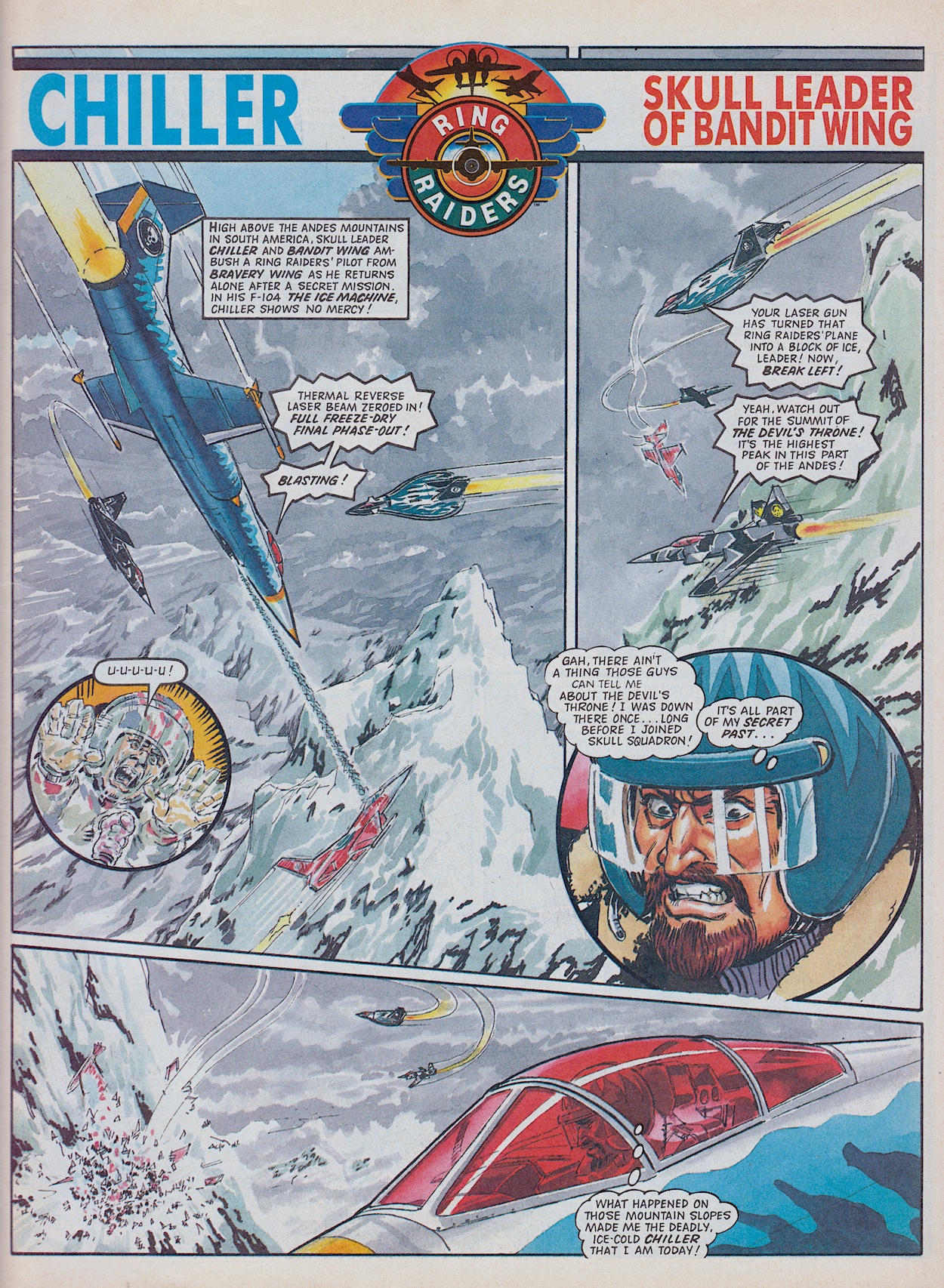
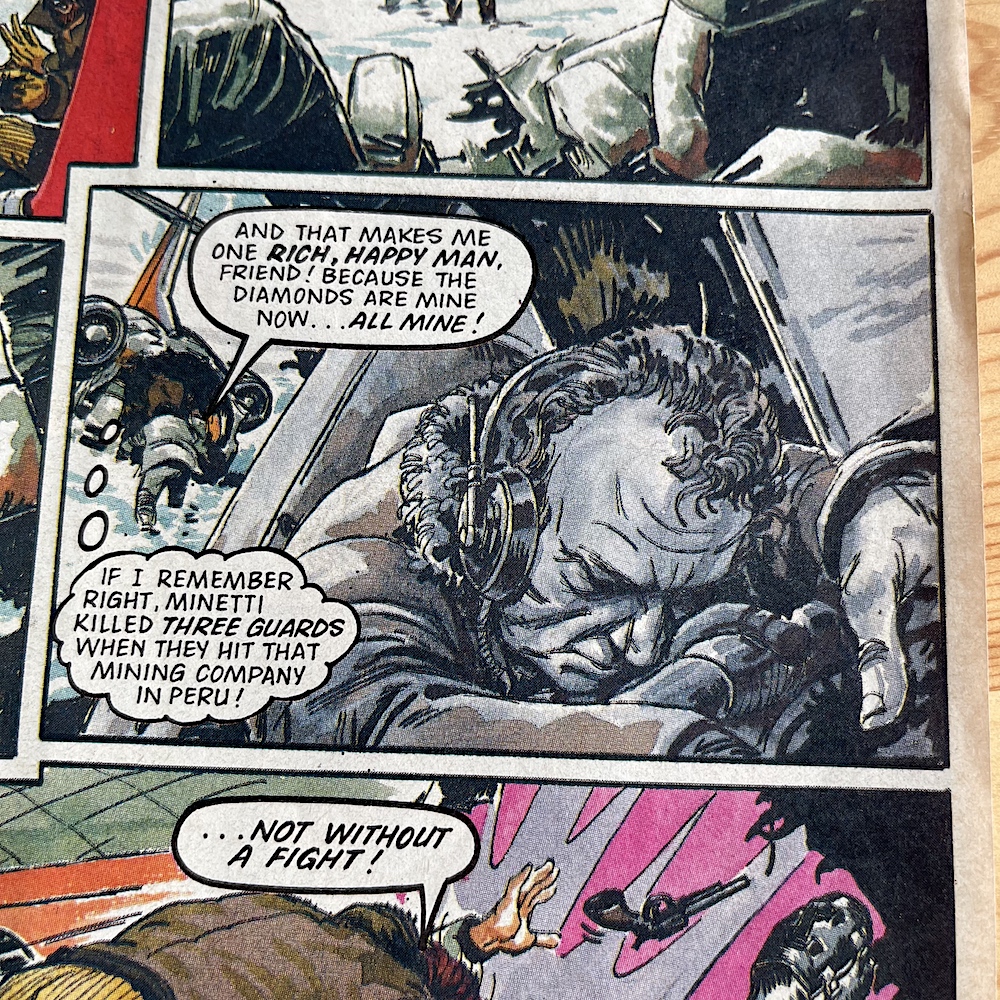
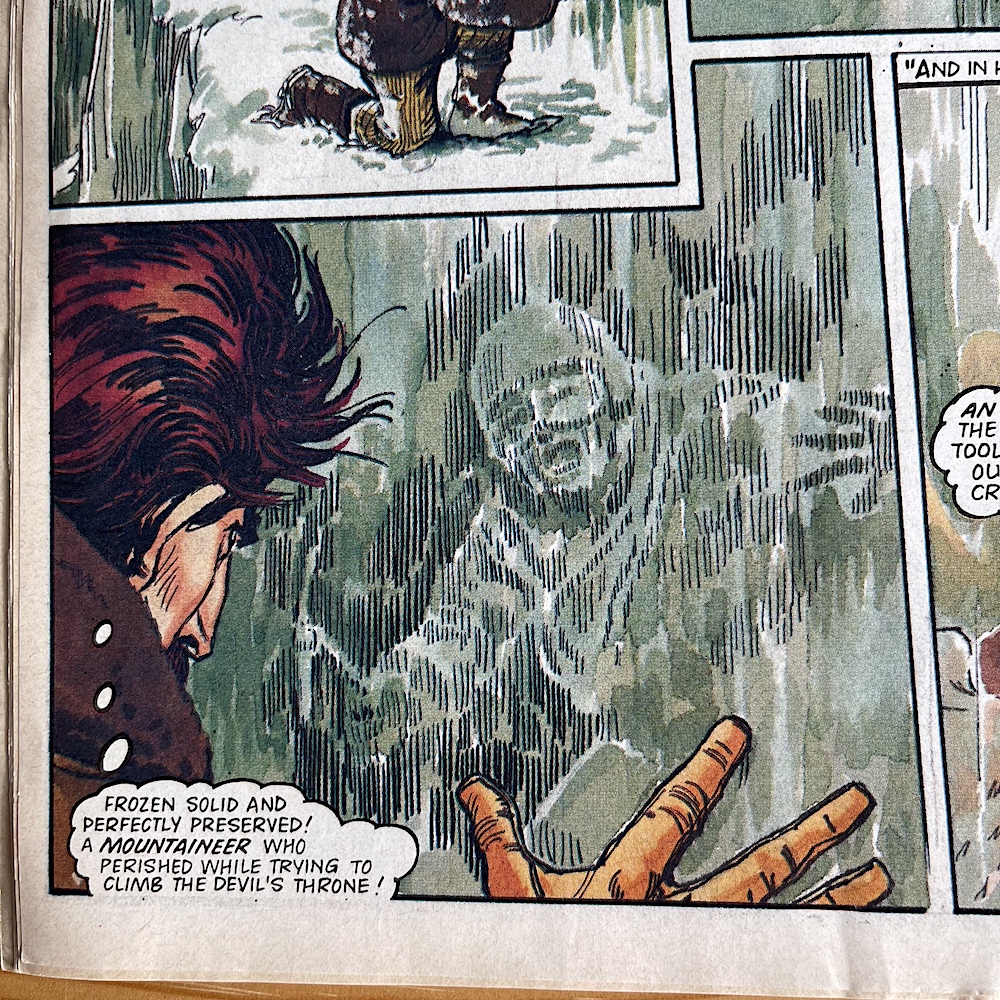
Trackdown might be the most fondly remembered tale in the whole run but this is the best strip in this issue. The complete character story is all about the leader of Bandit Wing, Chiller and it’s his turn to reminisce about an important part of his past to his wingmen. But first can I just point out he’s killed a Ring Raider! Max Miles has only appeared briefly and his Bravery Wing haven’t made the pages yet, but he’s definitely a man down, one of his pilots frozen into place in his cockpit, no parachute visible and the plane shattered on the mountainside. It’s dealt with in a throwaway manner but again backs up how the comic depicted the Skull Squadron, as I mentioned last time.


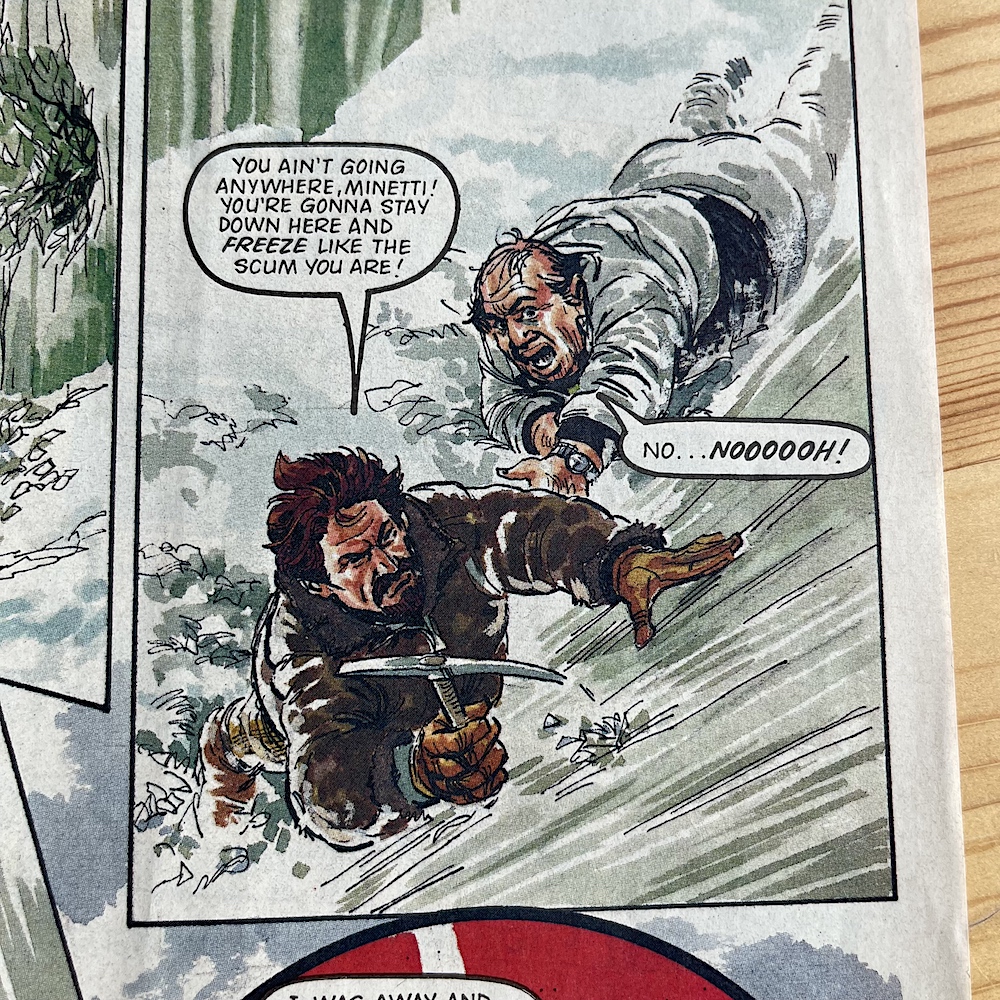
“You’re gonna stay down here and freeze like the scum you are!”

Skull Commander Chiller

The story continues with its bleak theme and the bodies really do pile up. I know you’ll think I’m cracking a joke when I say it’s a chilling tale but there’s no other way to describe what is the best of these anthology stories. Writer Scott Goodall depicts Chiller as an average guy with a job as a freelance mail service pilot flying between the mountains and the sea. Bitter and angry it’s clear he has an issue with the wider world and (as well as beginning his obsession with the killing potential of cold and ice) this moment appears to push him over the edge and become the kind of person Skull Squadron would appeal to.

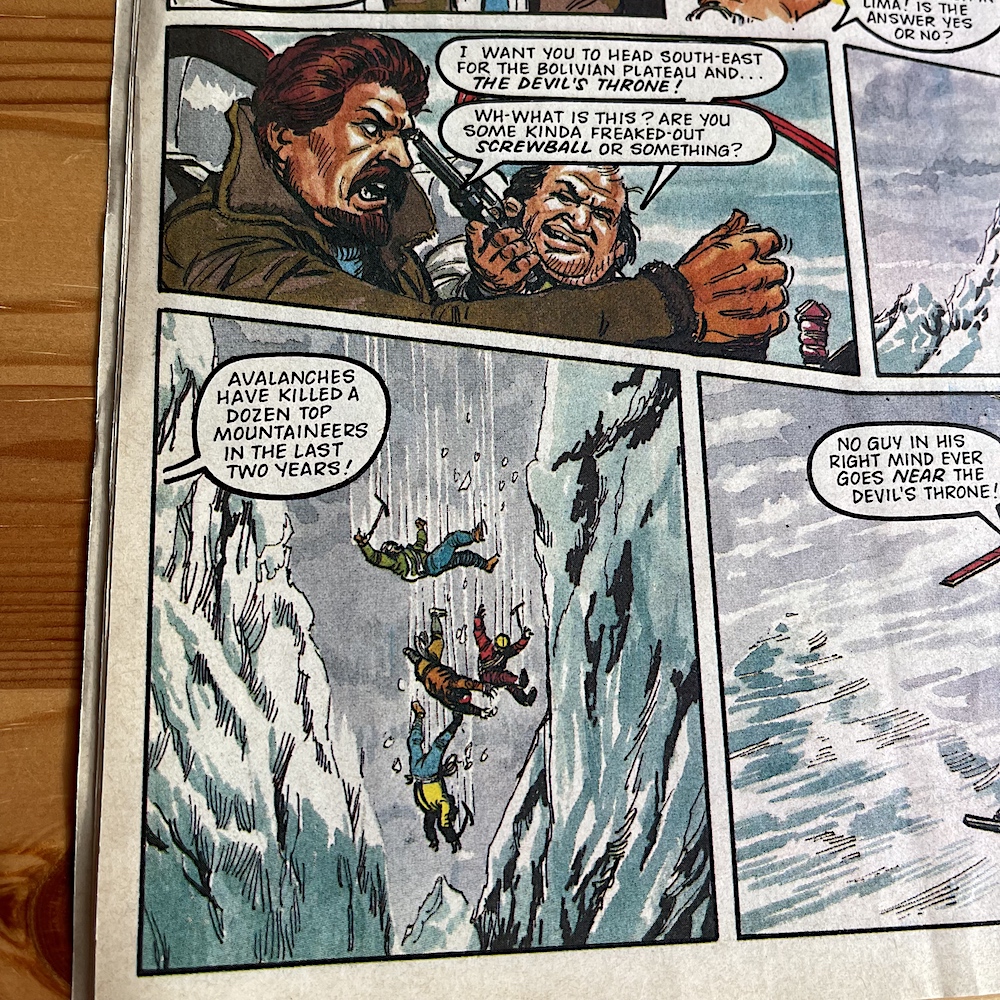
Remember that “twisted by war’s cruelties” line from last issue’s brief look at the history of the Squadron? That rings true here. We’re not told (yet) what made him into the character we see here but perhaps if the comic had continued we’d have had a look further into his past. The person hiring him ends up forcing him at gunpoint to land on the Devil’s Throne mountain where his diamond smuggling partner crashed his plane, within which he still sits.

John Gillat‘s art certainly sent a shiver down my spine when I first read this back in 1989. It was the most adult tale the comic would produce in its short life and cemented Chiller as the best villain and the most defined. It looks like the Devil’s Throne is going to encase him and the criminal who hired him until he sees a mountain climber, dead and perfectly preserved in the ice. Chipping away with his knife for a long time he lets the smuggler (whose leg broke in their fall into a newly opened crevasse) tell him what he needs to do to lift him out.


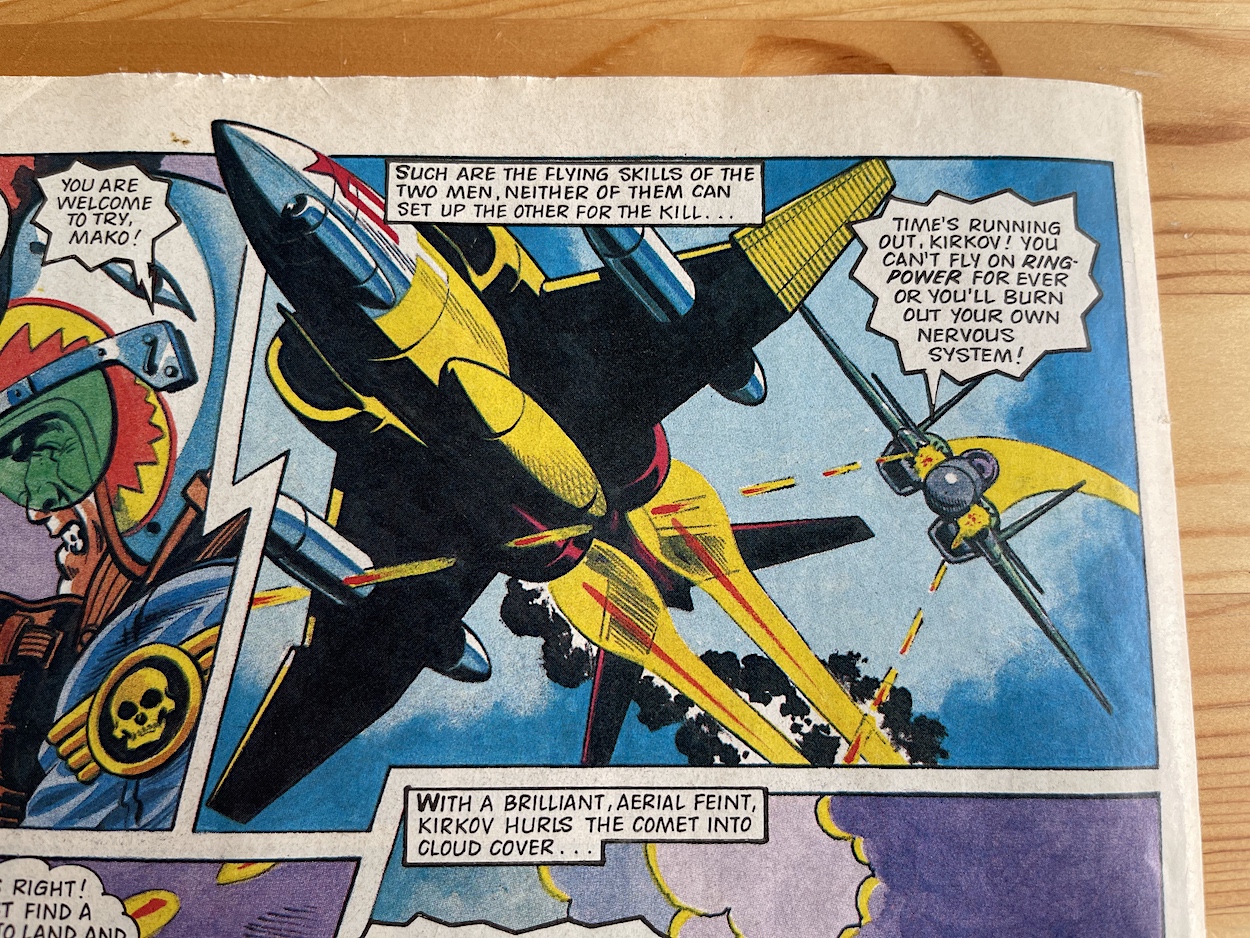
“Time’s running out, Kirkov! You can’t fly on Ring-Power forever or you’ll burn out your nervous system!”

Skull Commander Mako

Letting the man think he’s listening, he gets a sudden awakening as he watches Chiller climb out, leaving him to freeze to death. The takeaway from all this is how hardened it’s made a man who previously had a chip on his shoulder, but who wouldn’t necessarily have considered leaving someone to die. This was his tipping point and it’s expertly brought to the page as a tense little thriller.

Leaving with the diamonds, when he was approached to join Skull Squadron he helped fund their efforts and I’m sure they welcomed him, given how his appearances seem to be amassing the biggest death toll in the whole comic. In addition, though it isn’t confirmed, the way he berates the American makes me think he’s actually British. Given his dress sense I think this could very well be the case and I hear a British accent every time I read his stories. A brilliant character.
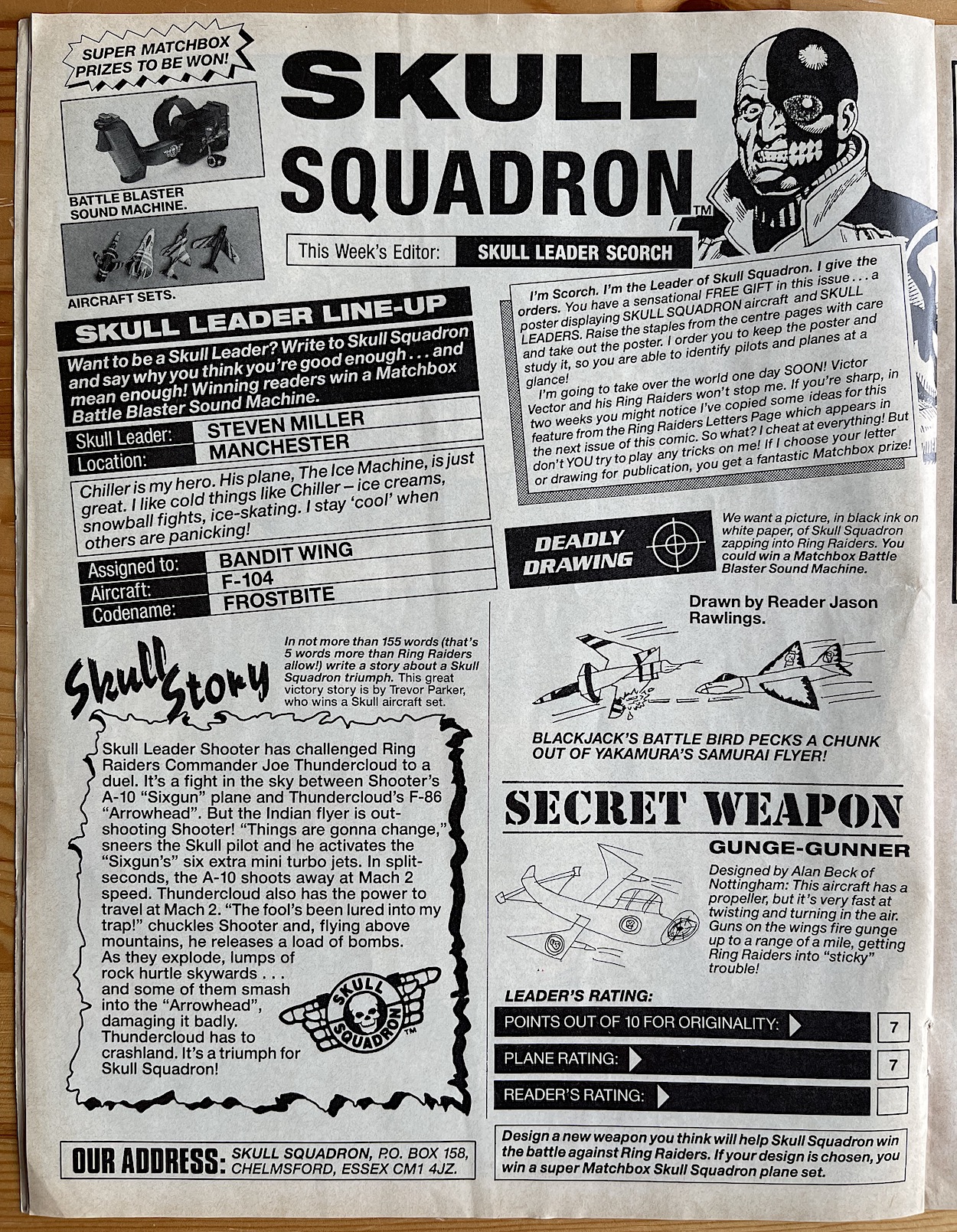
With this third issue some input from the readers has made its way in and it’s been decided the Skull Squadron will get first crack at choosing who gets to appear. The opposing sides would take it in turns each fortnight, with the prizes also changing between those featuring the good guys or the baddies. The toy package images have also been replaced by a Sandy James illustration of the guest editor and icing things off is the big bad himself, Scorch.

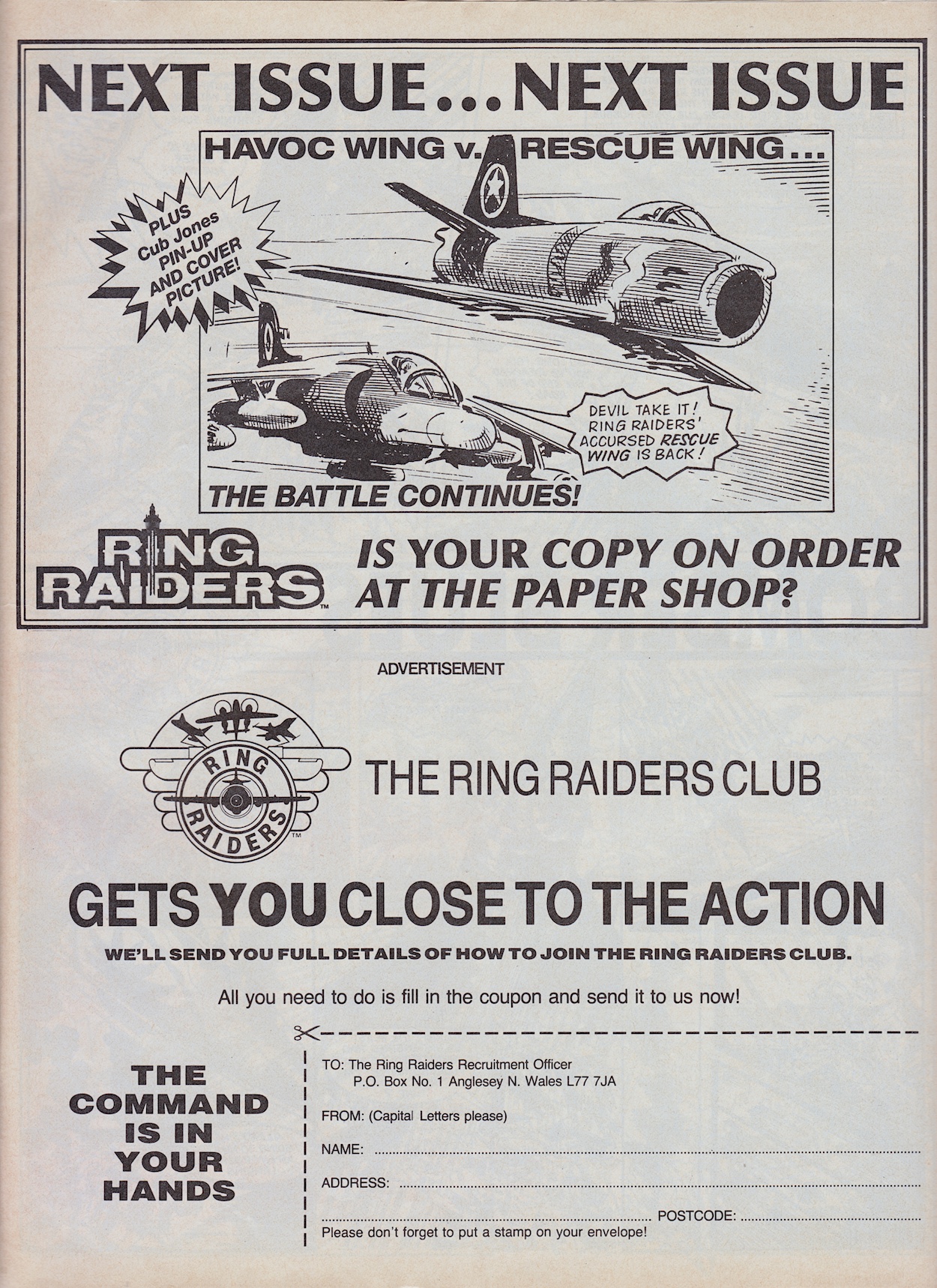
Just across from this is the first proper Next Issue promo and it looks like the plane stars will be back in full force in Trackdown. Just to answer the question posed here, yes my copy was on order at the paper shop, in fact it had been ever since I bought issue one, before I even took it home.

Just below this is a coupon for The Ring Raiders Club. This was just a preliminary coupon to show interest, a bit like when we sign up for updates on new websites or Kickstarters today. When the final issue of the comic arrived I was desperate for more Ring Raiders action and sent off my own coupon but I never heard anything back. With a different address to the comic this wasn’t a Fleetway club and in fact I’m unsure who was actually planning it, but unfortunately it looks like it never took off (ba-doom-tish).

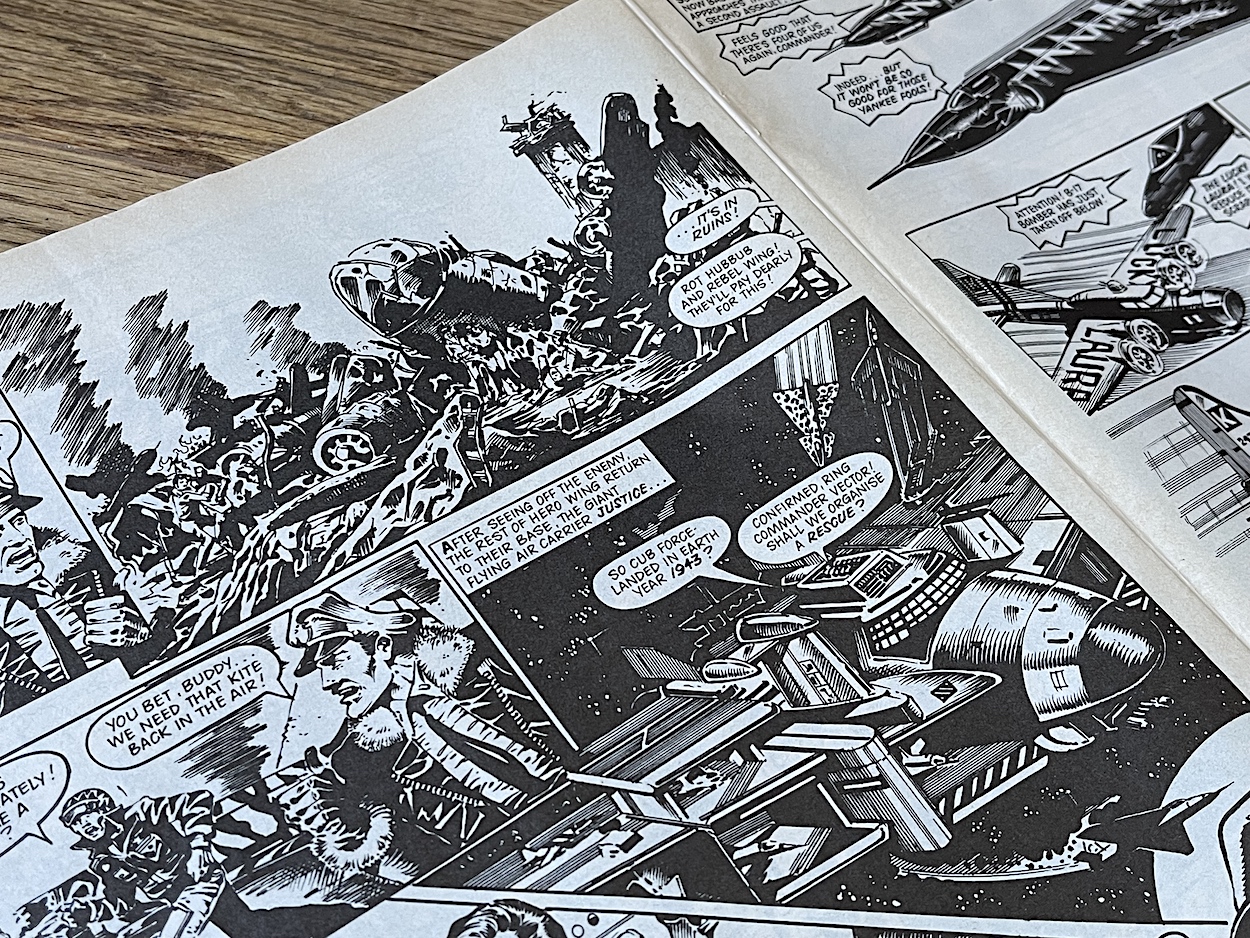
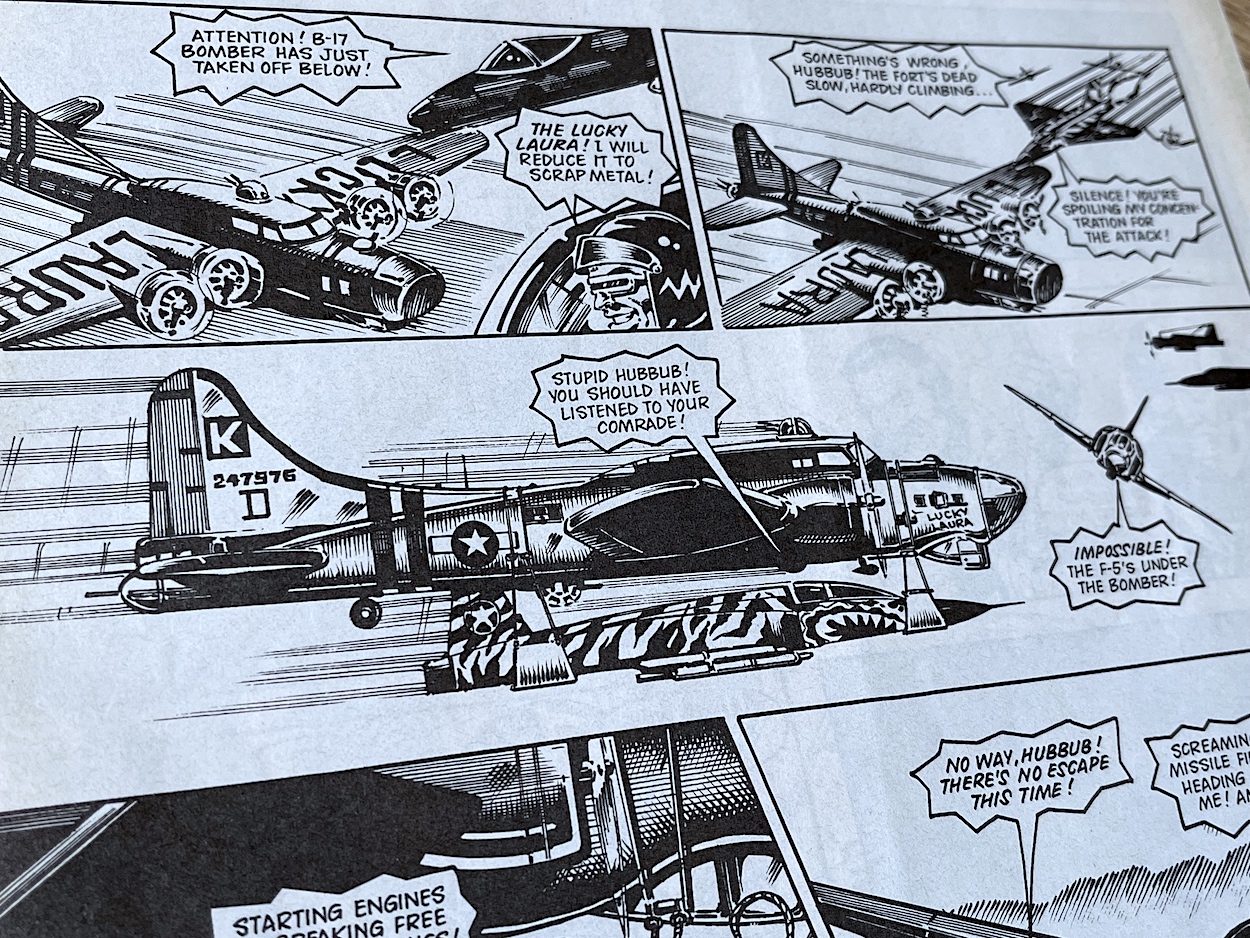
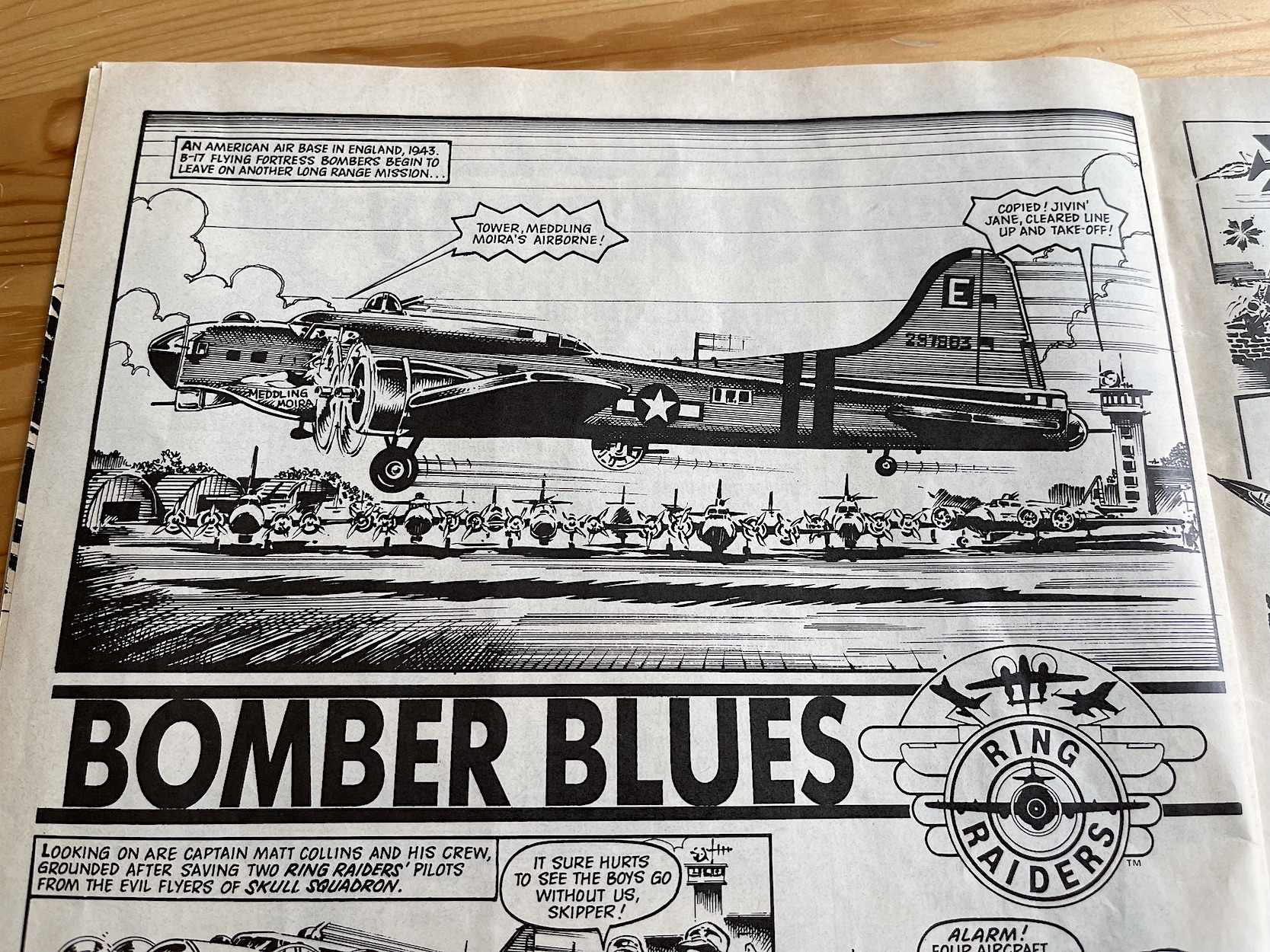
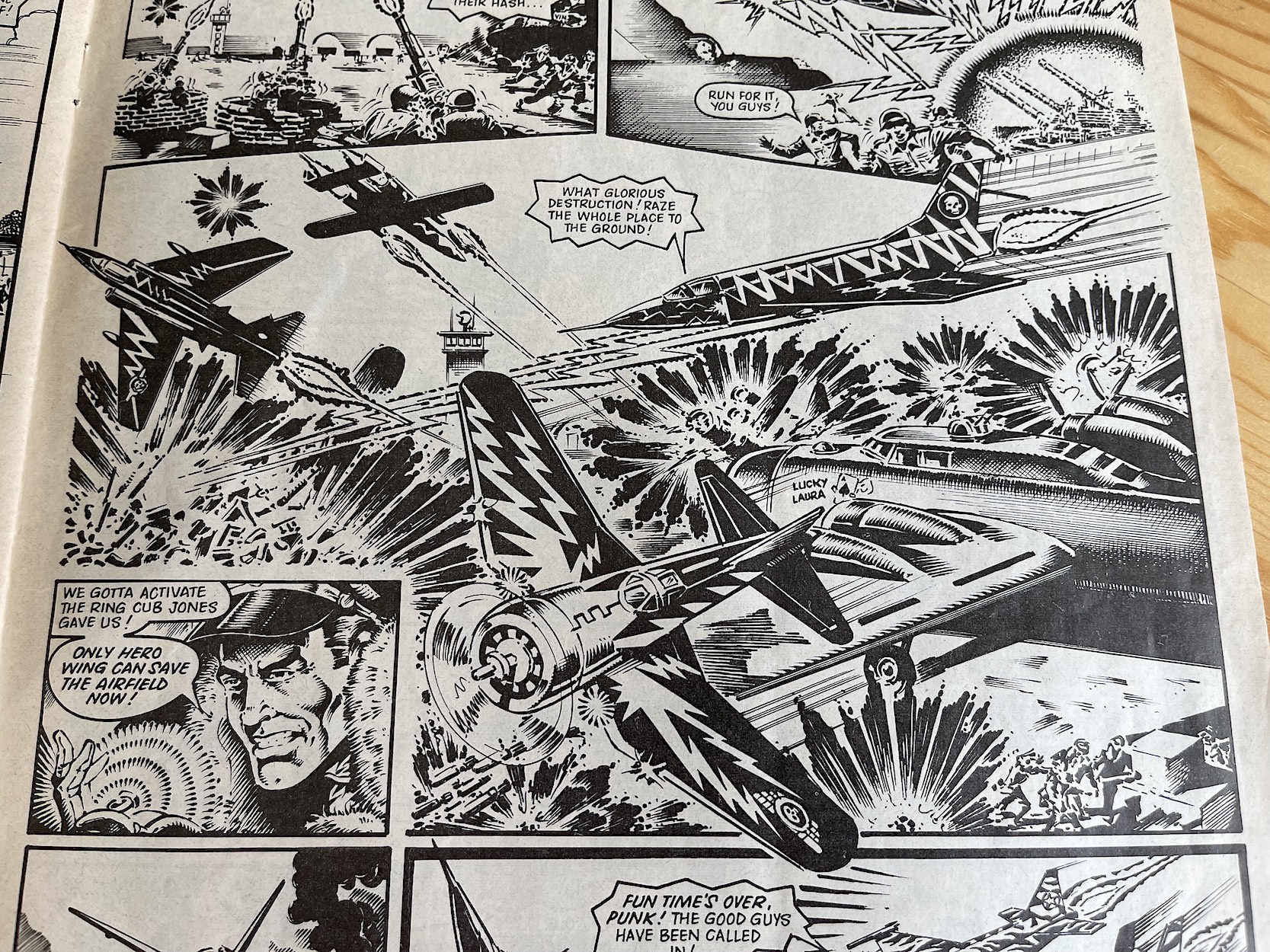
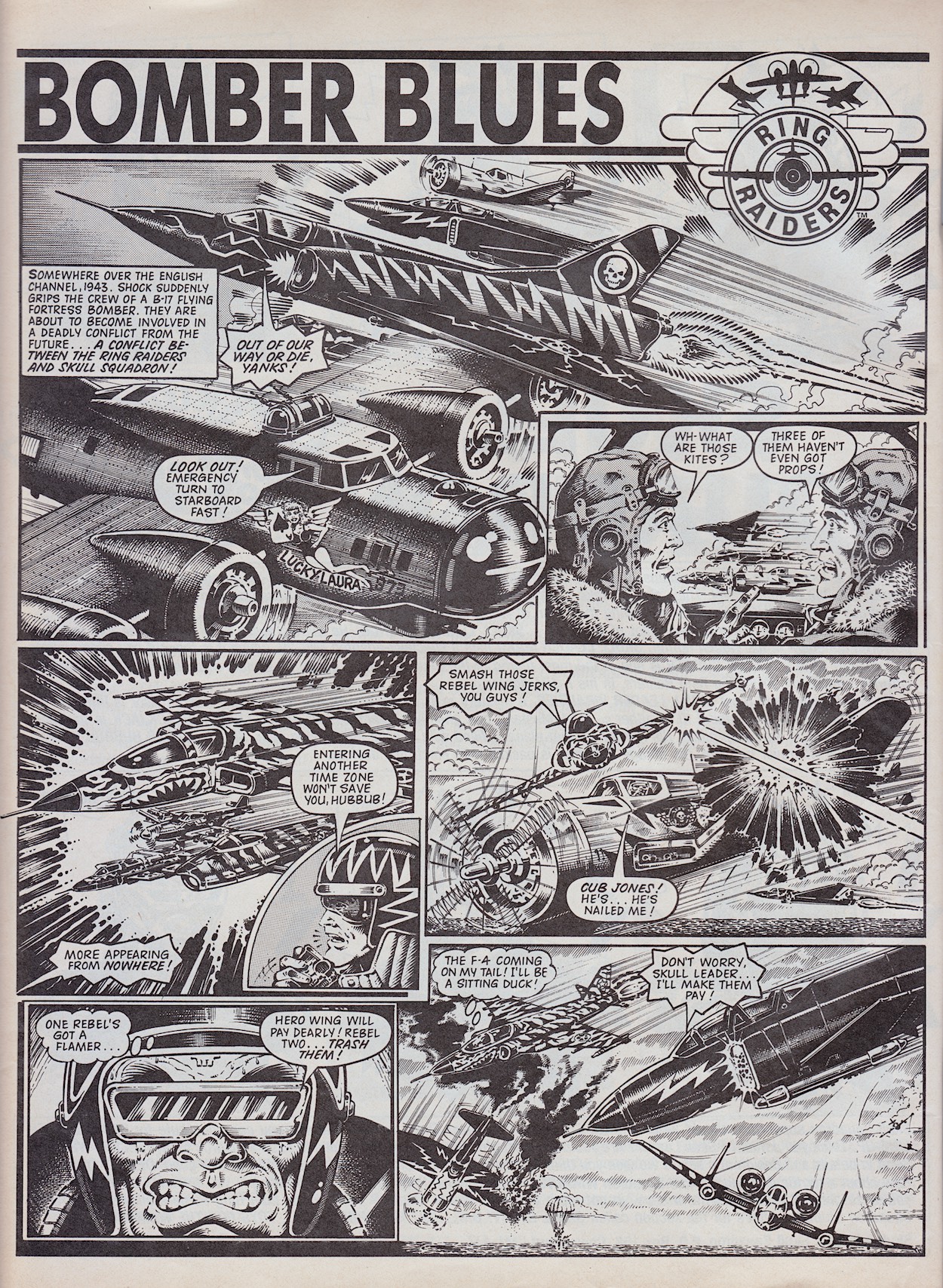
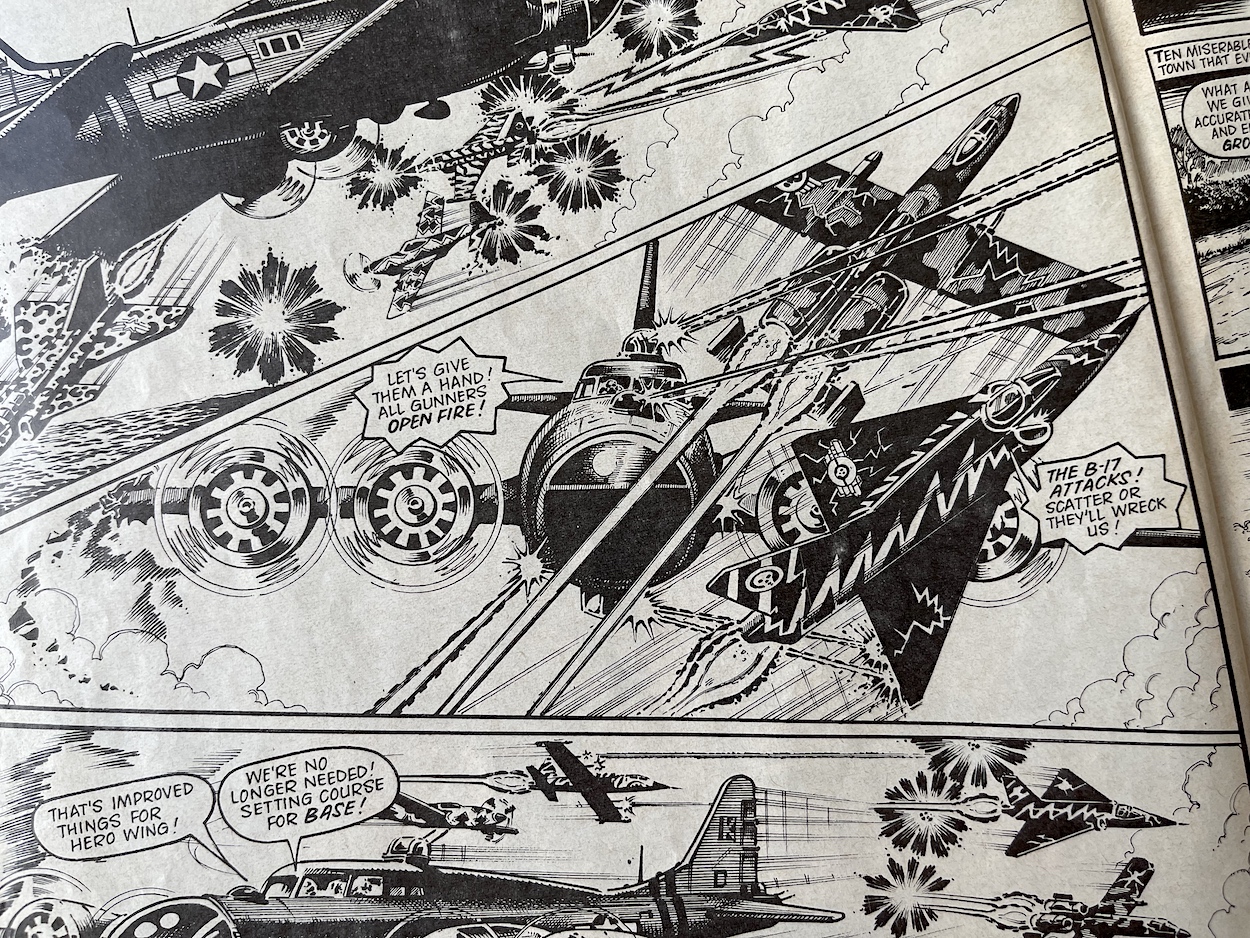
Moving on to writer James Tomlinson and artist Don Wazejewski‘s Bomber Blues and after a last minute pull out of a crash dive, ‘Cub’ Jones crashes through the air traffic control tower and pancakes his F-5 ‘Sky Tiger’, destroying its undercarriage and rendering it unusable. The World War II airfield has been destroyed, the leader of Hero Wing is down and Hubbub‘s Rebel Wing are returning with replacement planes to attack at full strength and enact his revenge on the American pilots. He and his men could easily wipe them all out.

Don’s artwork is gorgeous here and oozes atmosphere, whether that’s on the eerie, flattened airfield or just a couple of panels later with the Air Carrier Justice cruising the night skies. Vector stops any rescue attempt, telling the other Raiders this is a personal mission for the new pilot Jones and it’s something he has to figure out for himself. Well, figure it out he does with a rather surprising moment you can see above.

It’s a fun solution to the problem although my adult mind can’t help but think how that possibly worked? The bomber wouldn’t have been able to hover over the F-5 while they attached it, so are they meant to have scooped it up on a flypast? Oh, who cares?! Given the set up for the whole comic I’m not going to get hung up on this! Plus, as a kid I loved it, it was genuinely surprising, I laughed and I do believe I reenacted it when the larger bomber toys were launched the next year. It’s fun! That’s the point and it certainly ticks all the boxes in that regard.

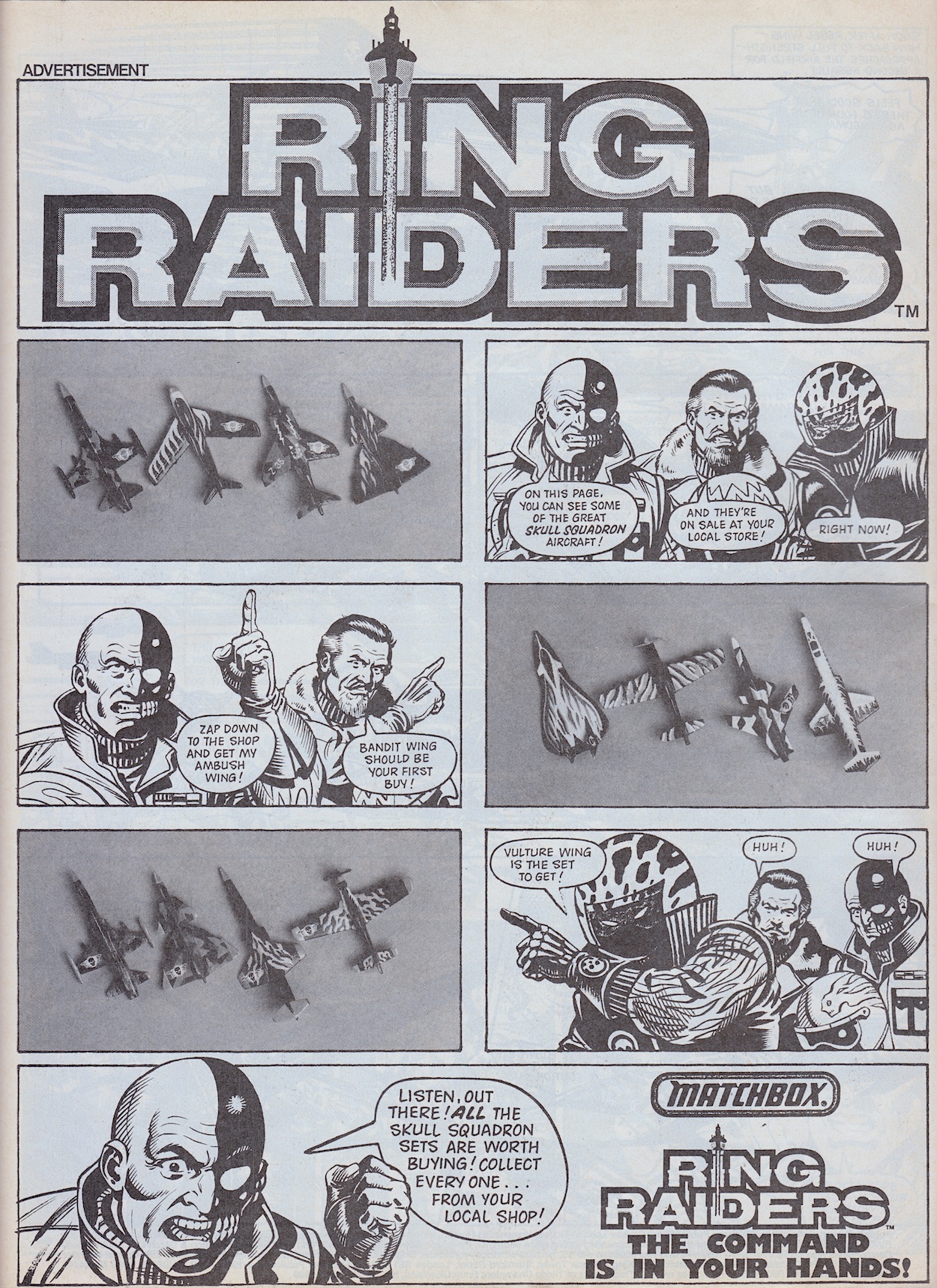
The Skull Squadron weren’t just the stars of the letters page, they also had a full page advert all to themselves. With illustrations by Sandy James and some rather lacklustre toy photographs, it was still enough to elicit excitement for the upcoming Christmas season in this young reader. With my birthday four days before Christmas Day it was a bumper Matchbox festive season so these adverts were all hype to me, tying these tiny planes into the characters from my new favourite comic.
I do wonder if the comic and toys had carried on for longer (as they both deserved to) would we have seen this relationship develop further and where would it have led? Would we have seen Sandy’s artwork on the toy packaging? Would Barrie and his team have taken responsibility for the little comics we got with our planes? Just wondering aloud as someone who really saw their potential and continues to do so to this day.
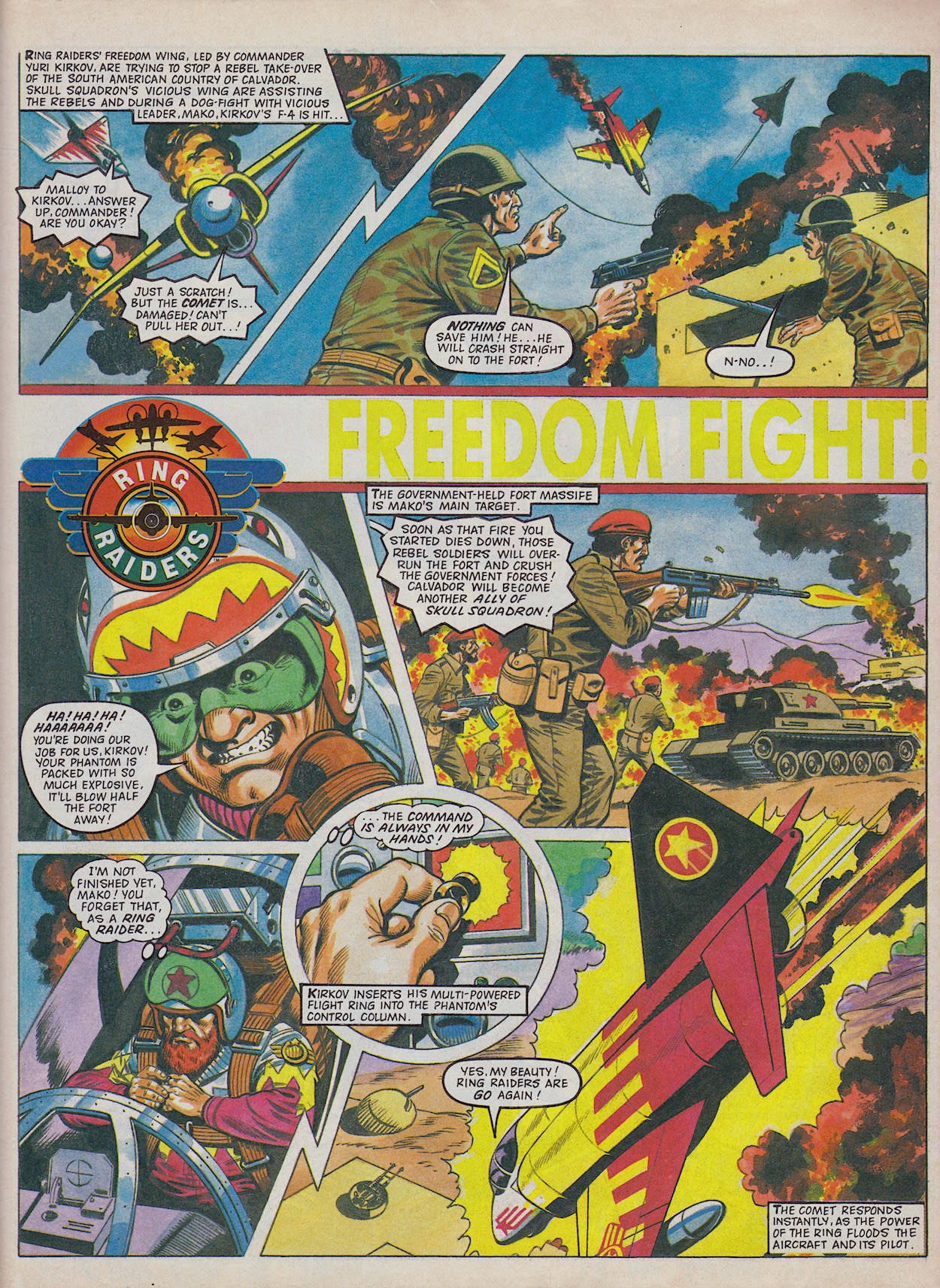
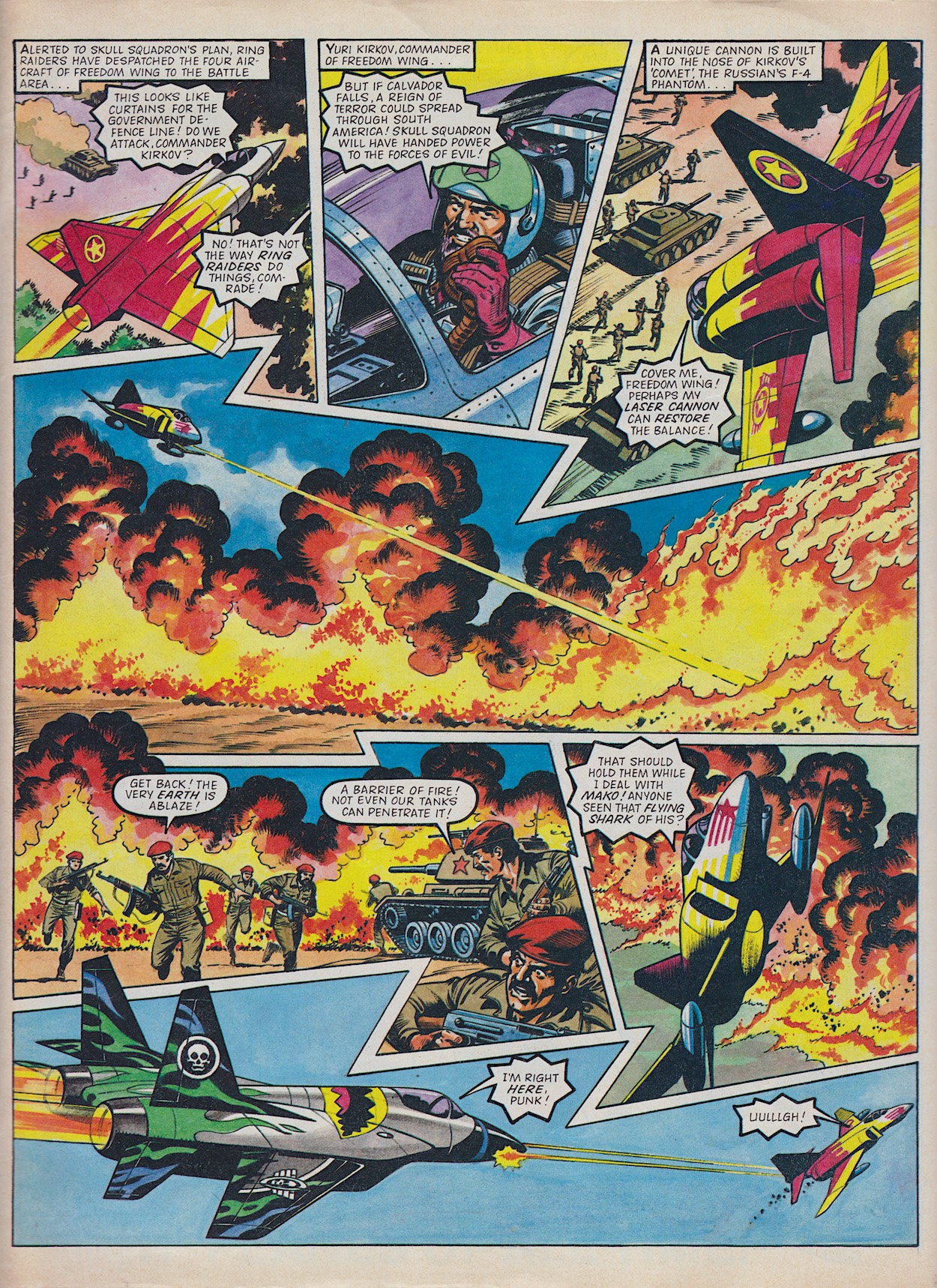
Chiller continues his comic takeover with this issue’s pin-up, also drawn by Sandy. In fact, the last several pages pretty much belong to Sandy as this leads on to the final strip, part three of Freedom Flight and his glorious, full-colour artwork bringing Tom Tully‘s script to life. It was a particularly exciting one for readers because this was the first time we saw a ring being used to connect pilot and plane.

As well as communicators or time-traversing warning signals the rings could be used to “receive improved flying skills in times of crisis”, to quote last month’s issue. By being inserted into a special part of the cockpit they flood the plane and its pilot with raw energy. At the end of last issue’s episode Commander Kirkov was plummeting towards the fort in his F-4 Phantom ‘Comet’, his death (and the destructive changing of history) seemingly imminent. Here’s how it’s picked up.

With the energy of the ring the plane gets a burst of power. However, in order to control it so does Kirkov. While the ring is inserted it’s obviously affecting his body too. (Each ring was programmed specifically for each pilot and their own aircraft.) The fact it could be incredibly damaging to the human behind it means this use is only brought into play in absolute emergencies, as a last resort and can’t be used for long for fear of the pilot passing out.

Mako makes reference to this while he tries to gun down Kirkov, but the two men are such incredible pilots they can’t get a lock on each other. But this doesn’t matter to Mako, he knows all he has to do is keep Kirkov in the air long enough for him to either disengage the ring and lose control of the failing aircraft, or pass out and crash anyway.

In desperation Kirkov banks into the smoke-filled sky above the battle and loses his pursuer. But he’s still in a predicament and upon spotting a landing strip behind friendly lines he lands so quickly he doesn’t spot it’s about to be overrun by the rebels. It’s an exhilarating ride and even all these years later a real thrill to see the ring power finally used in this way, bringing back many happy memories. There are so many fantastical elements to introduce in the world of the Ring Raiders it makes sense to do them a little at a time and this was well worth the wait.

On a side note, in the cartoon the ring power was used to kind of ‘supercharge’ the planes and a previously unseen silver armour would slide out from hidden panels and cover the entire aircraft, even the cockpit. How did they see out? I much prefer the comic’s version. Why would you want to cover these wonderfully designed decals?

There’s the free poster, up on the wall of my current home office. I’ve various free posters and the like plastered all over these walls, making it the perfect spot to write the blog. Now if only I could track down the Ring Raiders one to go with it! It’s been lost over the years but one day I will reunite them.

So that’s it. The third issue of Ring Raiders comes to an end and it’s been a rollicking good read. I can’t wait for the rest of the series simply because I know it just keeps getting better. You’ll see what I mean in a fortnight when #4 lands on the OiNK Blog on Thursday 28th October 2021.

iSSUE TWO < > iSSUE FOUR

RiNG RAiDERS MENU

TRANSFORMERS & ViSiONARiES: PART ONE: WEEKLY MAGiC

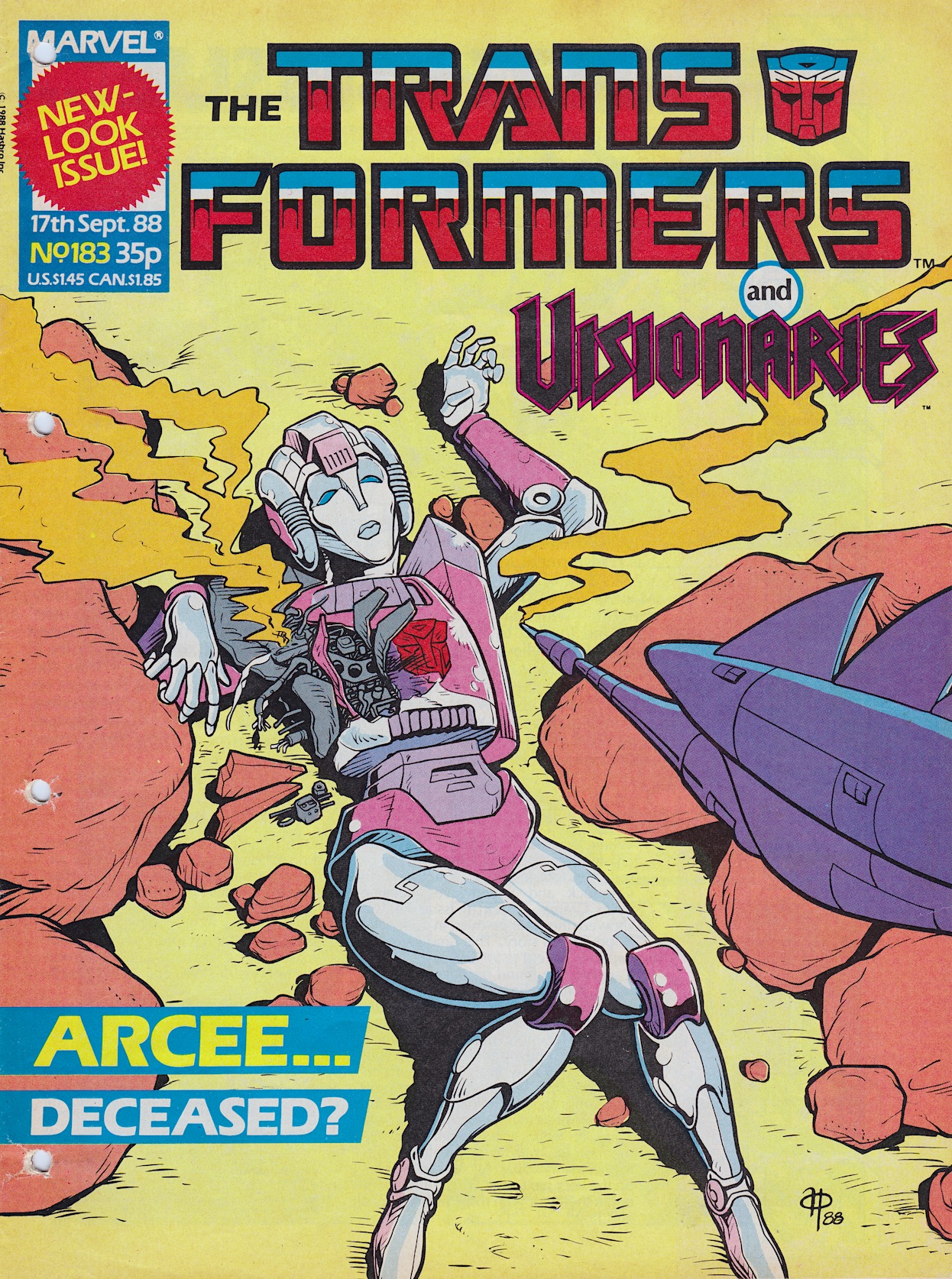
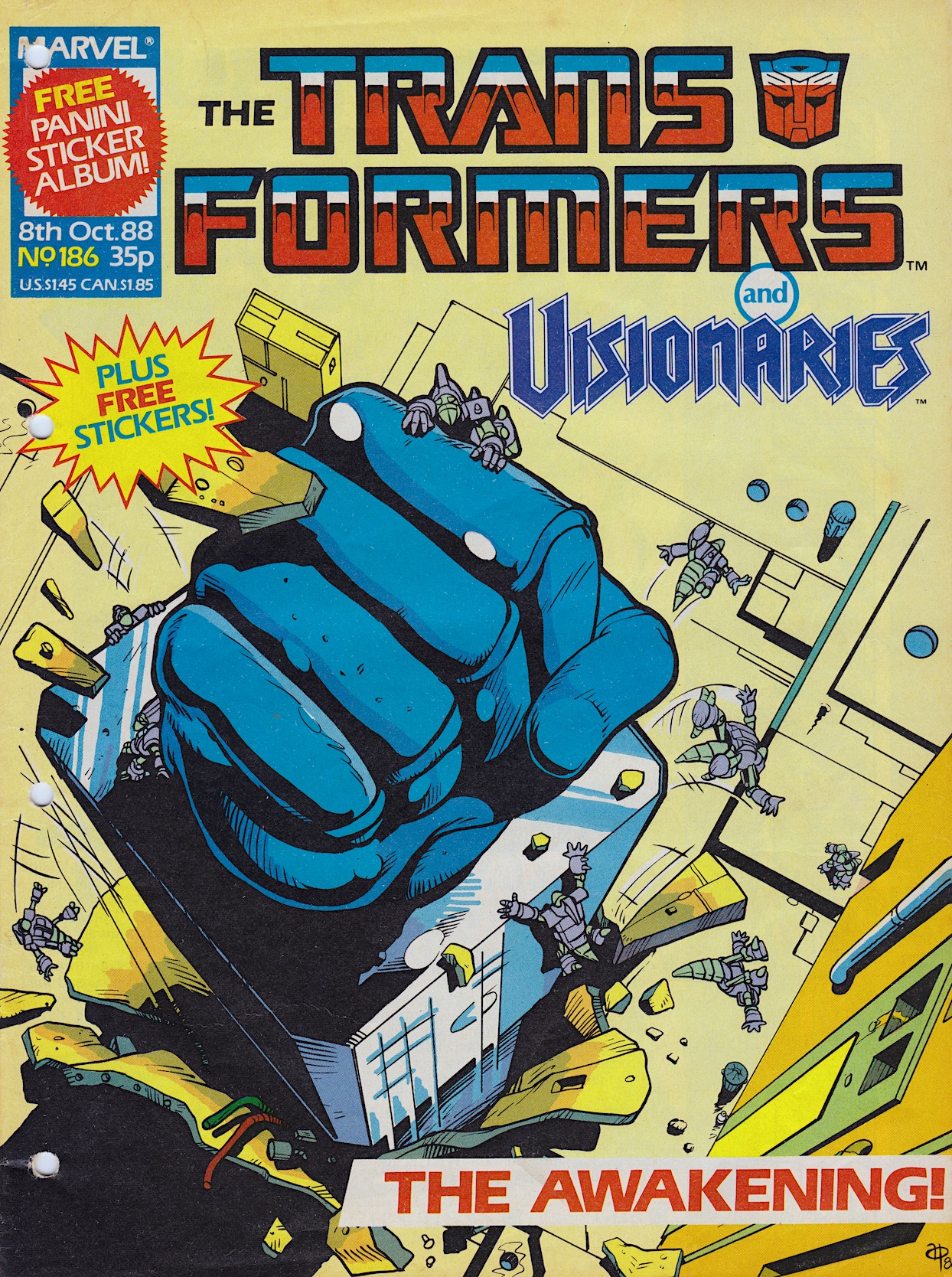
Four covers? What happened to covering these in real time? Well, I still am. Let me explain. As mentioned in the review of the final issue of Visionaries monthly, the Knights of the Magical Light’s final two strips appeared as back ups in the pages of Marvel UK‘s The Transformers in September and October of 1988. With only five or six pages available to them in each issue they’d be split over four issues apiece.

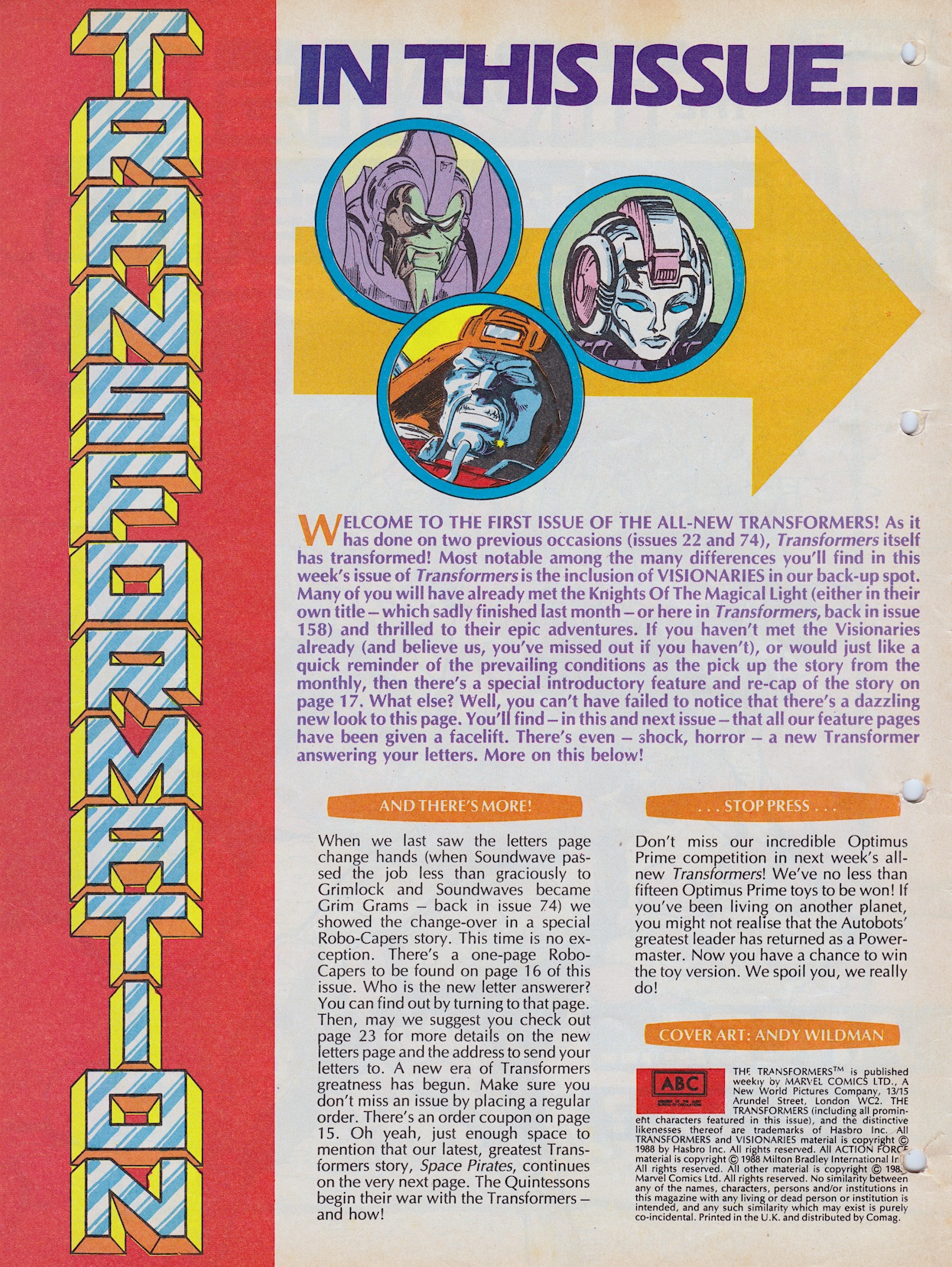
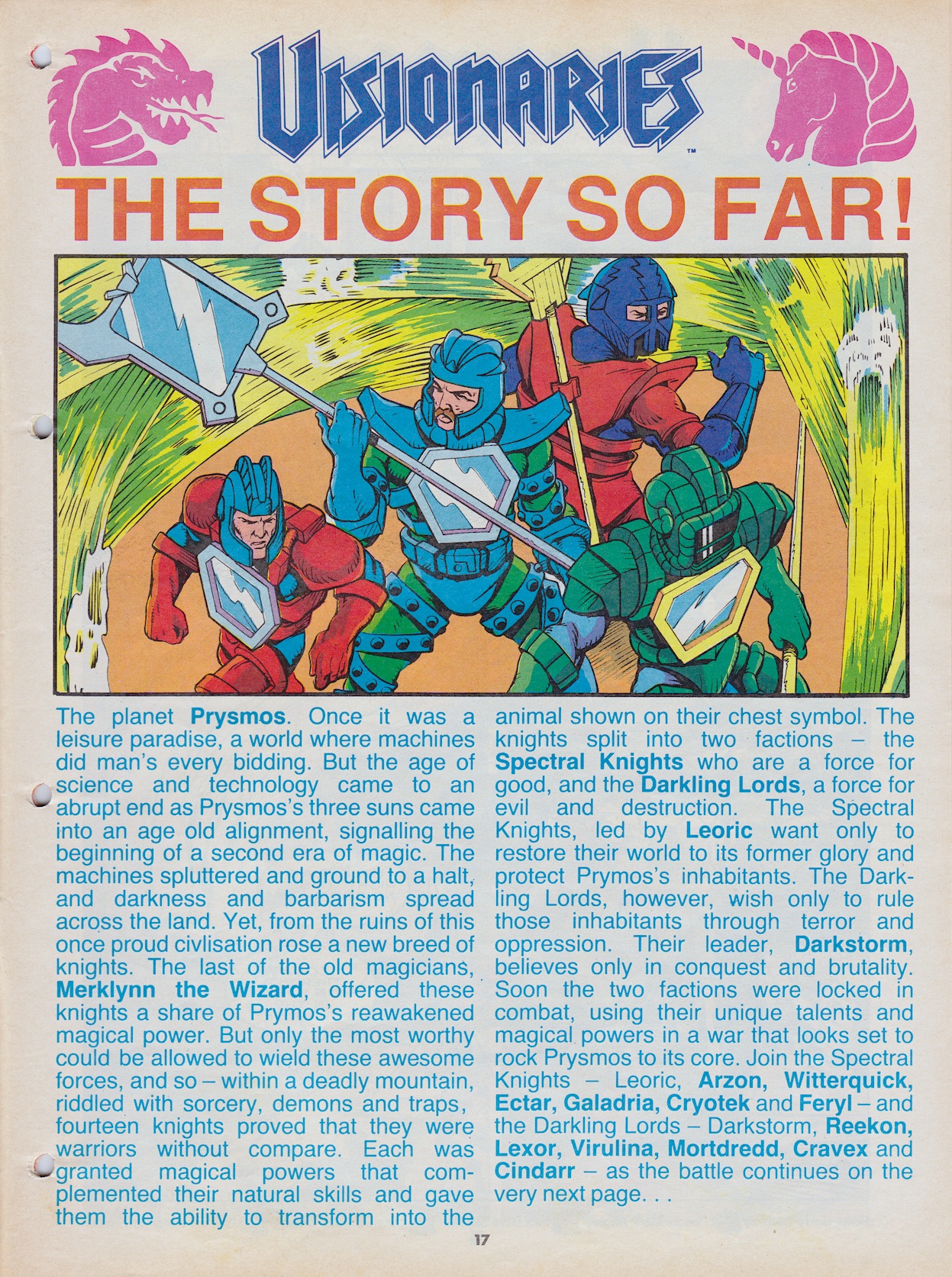
With #183 of The Transformers a new look came to the comic and new stars temporarily replaced Action Force (G.I. Joe). That’s a bit of a strange colour to their logo on the first issue but it matches the image I suppose. Inside, the Visionaries are mentioned in the editorial and there’s a chance for readers to catch up on the story so far, or at least a very simplified version of it.

I’ve been pleasantly surprised with the depth of character and the evolving story on the planet Prysmos and the questions it was raising. I especially enjoyed how Leoric and Darkstorm both wanted the best for their planet but just had very different views on how to achieve that. Leoric’s was by collaboration and helping each other, Darkstorm’s was to enforce law and order to rebuild his planet’s strength, as #4 showed perfectly.

But none of this is included in this catch up, with unfamiliar readers left thinking the Darkling Lords are evil just for the sake of being evil, kind of like the Decepticons were at the beginning. This isn’t the first time our heroes and villains have appeared in the pages of this comic though, and you can read all about the hype and the free mini-comic in a previous post.

Will we get any answers in these final chapters?

On to our story and I thought I’d wait until the date the final part was printed and do one review for it like I had with the monthly, rather than four tinier ones. Right up to the last issue of their own comic it was suggested there was more to Merklynn than anyone knew, and more to their magical totems (the animals they could transform into) than he had let on. Will we get any answers in these final chapters?

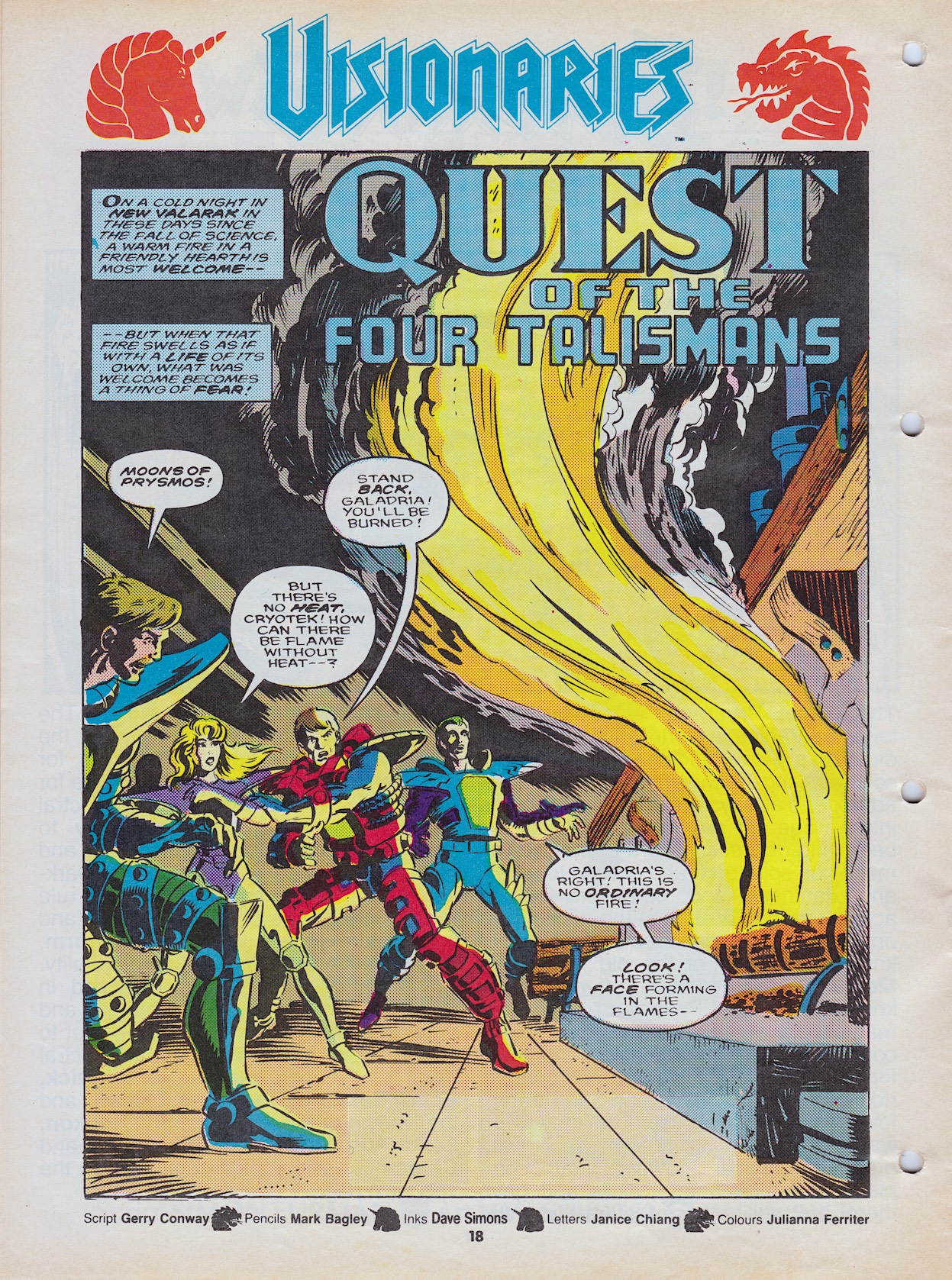
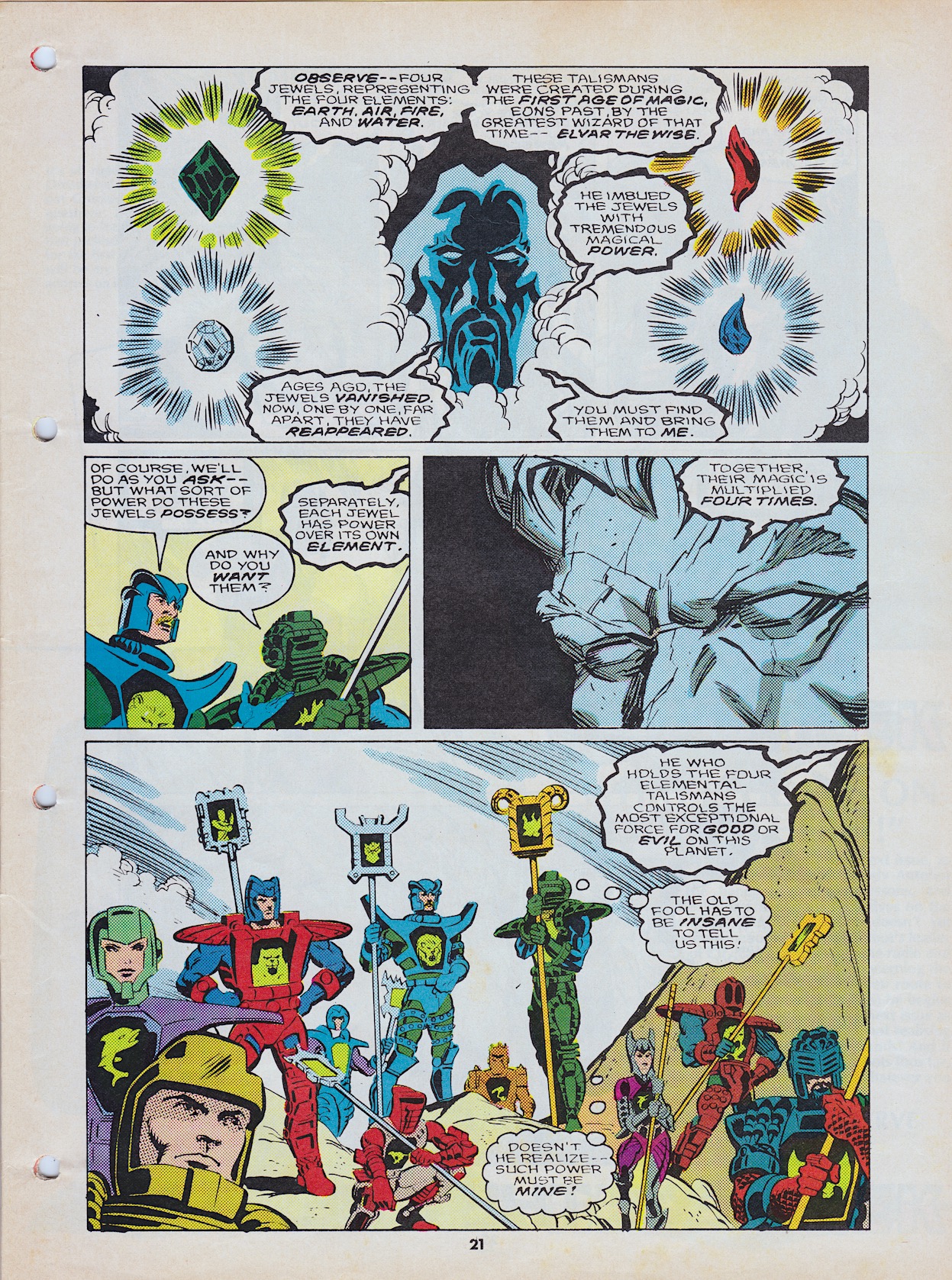
Beginning in Leoric‘s castle with an atmospheric opening around a roaring fire, Merklynn appears in cold flames to summon the knights to Iron Mountain. In response to Leoric’s anger at being treated like his chess pieces, only there to do his bidding, Merklynn responds by telling him, ‘In this life, only gods and fools are truly free to choose”. What an evocative start. Oh, how I’ve missed the writing in these stories!

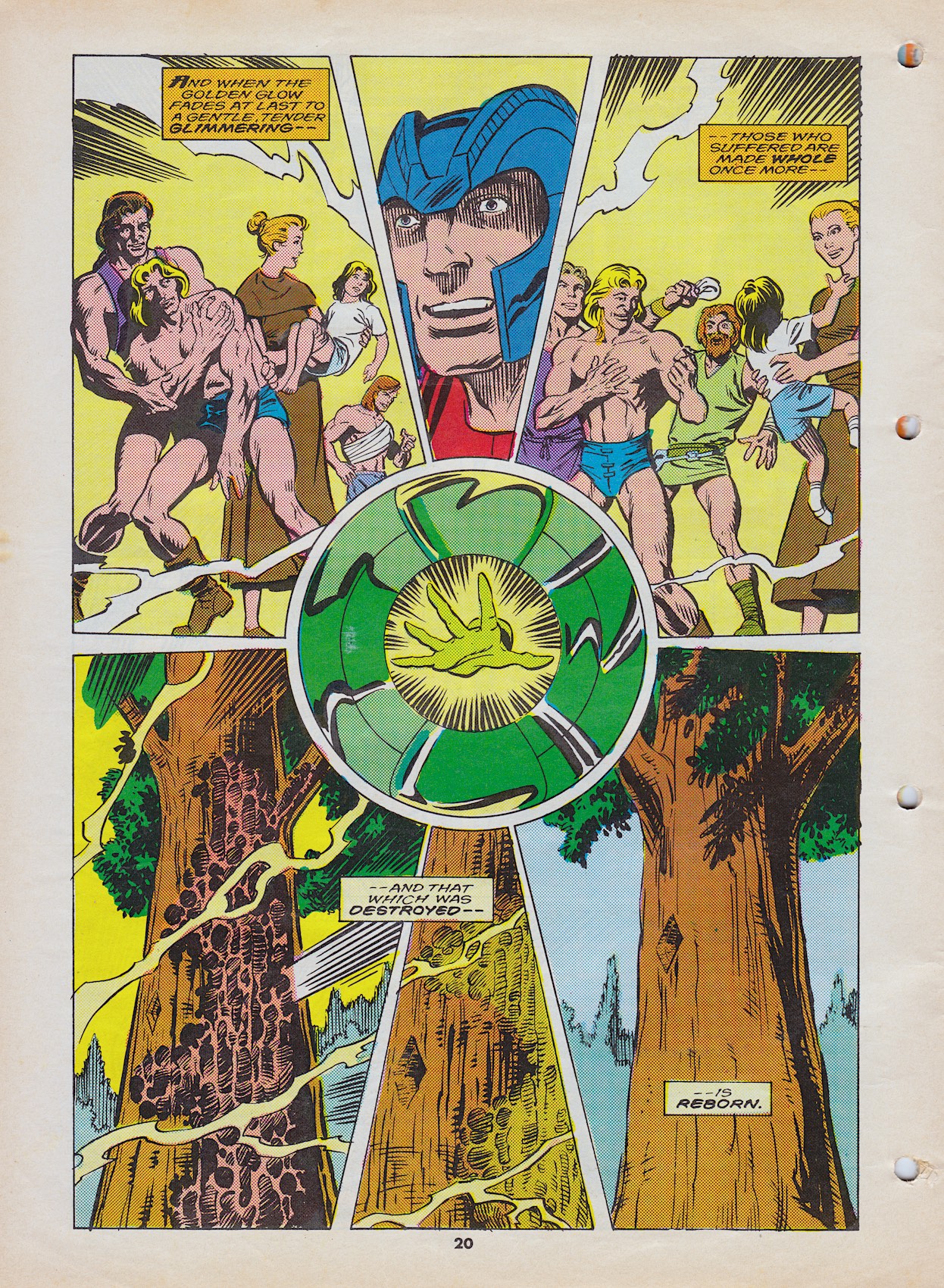
So begins The Quest for the Four Talismans. Gerry Conway is on top form throughout with the dialogue here, Mark Bagley returns to pencil the action-packed mix of the medieval and sci-fi alongside regulars Janice Chiang on letters and Julianna Ferriter on colours. They’re joined by a new inker, Dave Simons who is best known for Ghost Rider and has also worked on everything from Thor to Savage Sword of Conan, all of which perfectly suit this comic and its heady mix of genres.

Basically, four jewels representing the four elements are lost and must be recovered. In these first pages all we know is they contain incredible magical energy and it seems foolhardy to tell this to Darkstorm, who suddenly feels like all his Christmases have come at once. The different questions posed by the two leaders perfectly sum up their characters and why they’d consider risking their lives for this quest, reminding me of the “Who are you?” and “What do you want?” questions posed by the Vorlons and Shadows in Babylon 5.

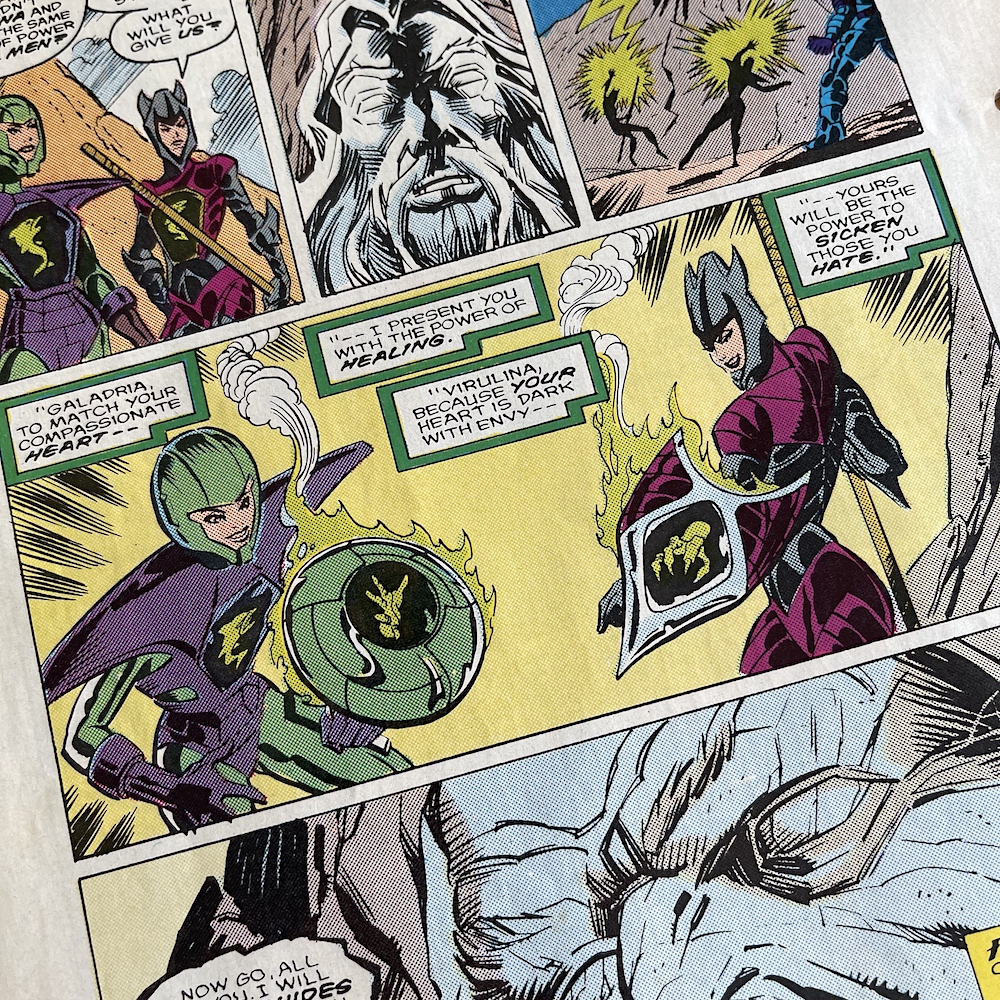
A little hint is given when Feryl wonders if the usual booming voice from the rock face sounds a little weaker than normal. Before setting off there’s something to take care of first, namely giving the final two characters without staffs or vehicles their magical powers. Galadria and Virulina weren’t in the toy range but were very much canon, also appearing in the cartoon. Given shields instead of staffs I personally feel like the only two female characters got the better deal because the shields look really cool. Such a shame Hasbro never got a chance to make them into action figures. With a typical portent of doom from Merklynn this is where things were left for a week.

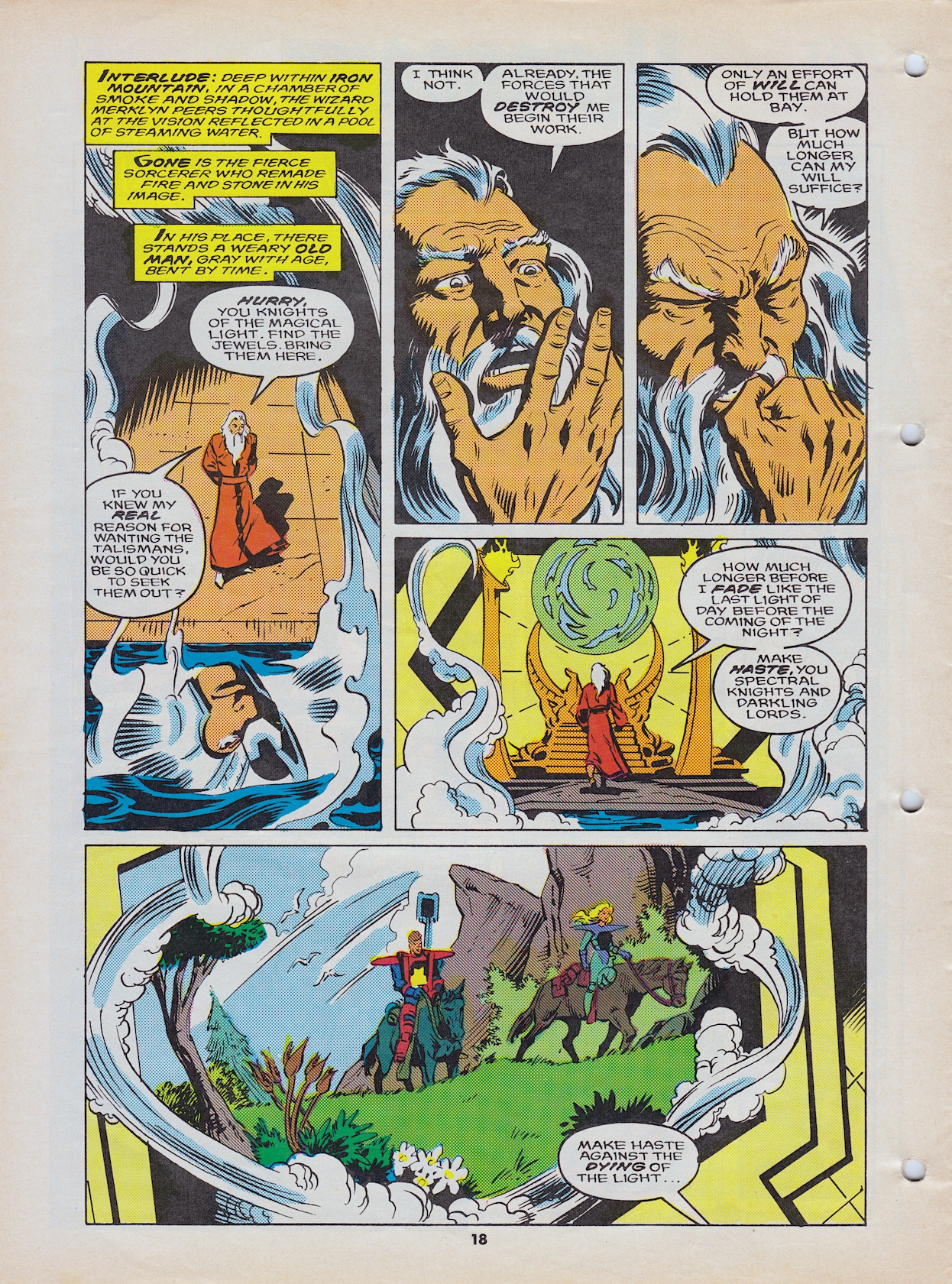
The second part moves up a gear. Merklynn is desperately clinging to life, his powers fading rapidly. This raises so many questions. Why is this happening to him? How are the talismans involved? Why were they scattered and lost? Most importantly, why didn’t he simply tell his warriors? Surely they would’ve helped after all he’s done for them? For now the story will keep the readers guessing, which I really like.


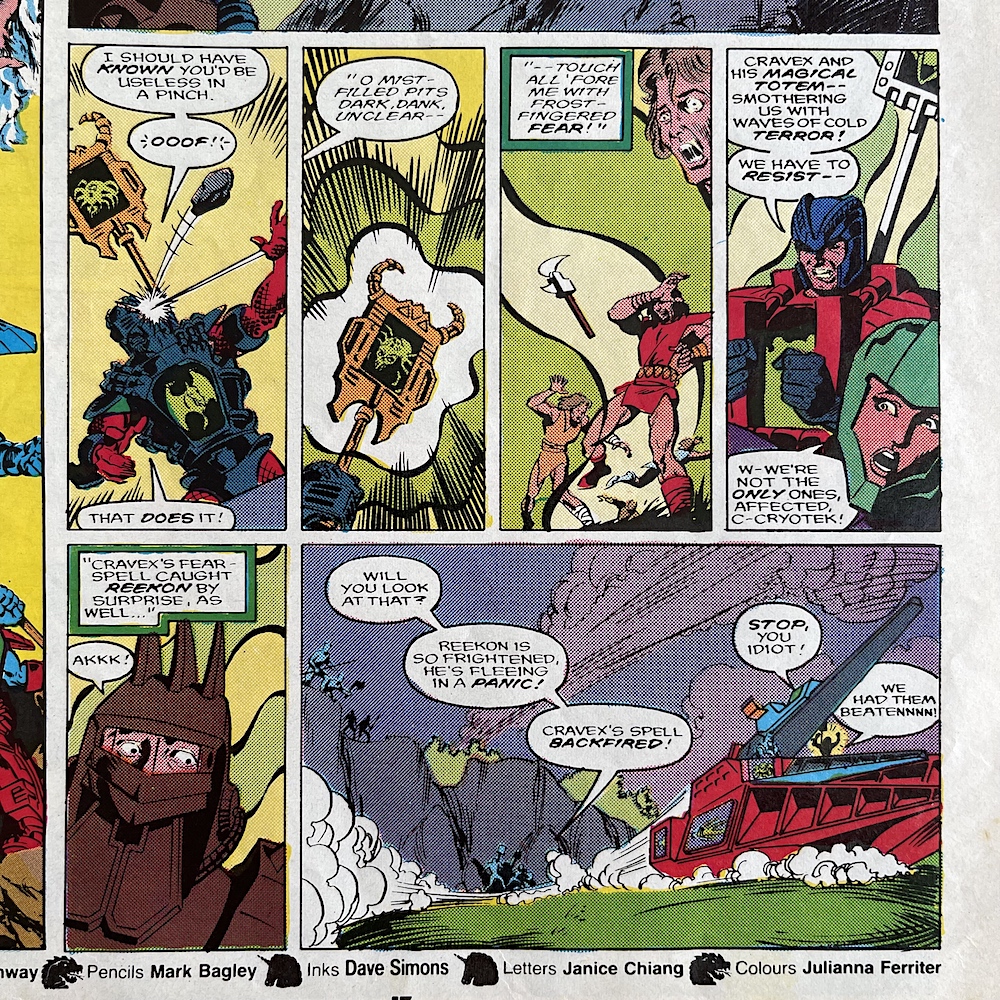
“Stop, you idiot! We had them beatennnn!”

Cravex to Reekon

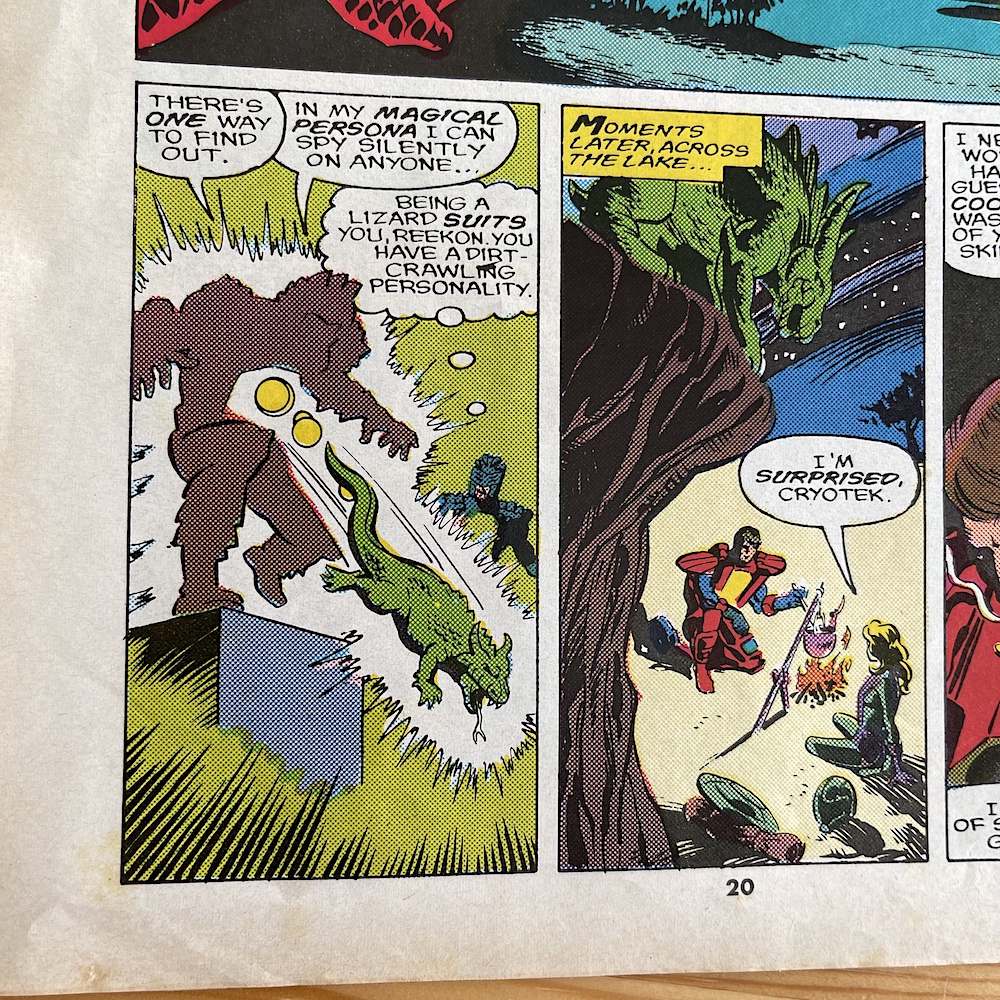
The first teams we’re following are Cryotek and Galadria for the Spectral Knights and Reekon and Cravex for the Darkling Lords. Throughout there’s the beginning of a mutual fondness between the former pair developing. It’s not forced and it was clearly written to be played out over several months. It’s handled maturely and adds a nice dimension to the usually brutish Cryotek. On the other side the camaraderie between Reekon and Cravex can be hilarious. They know they work incredibly well together, but this fact really annoys them and they bicker constantly as a result.

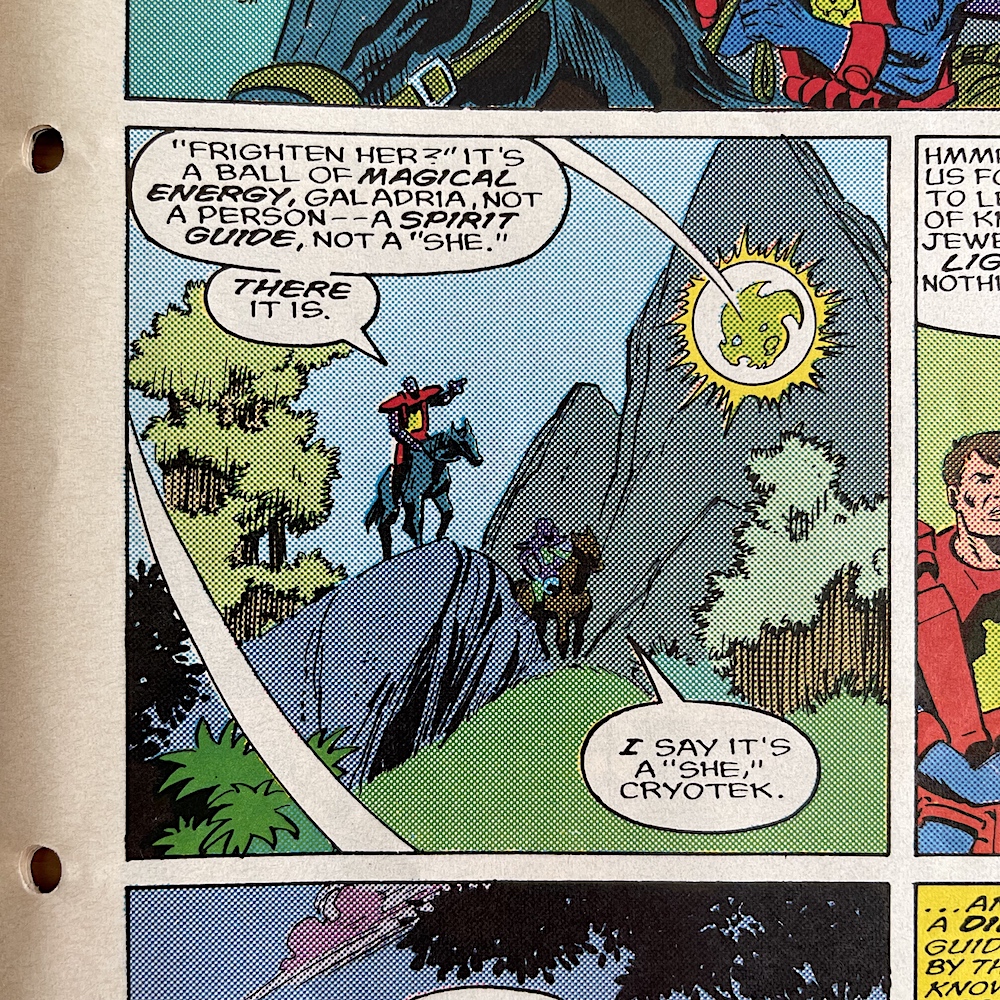
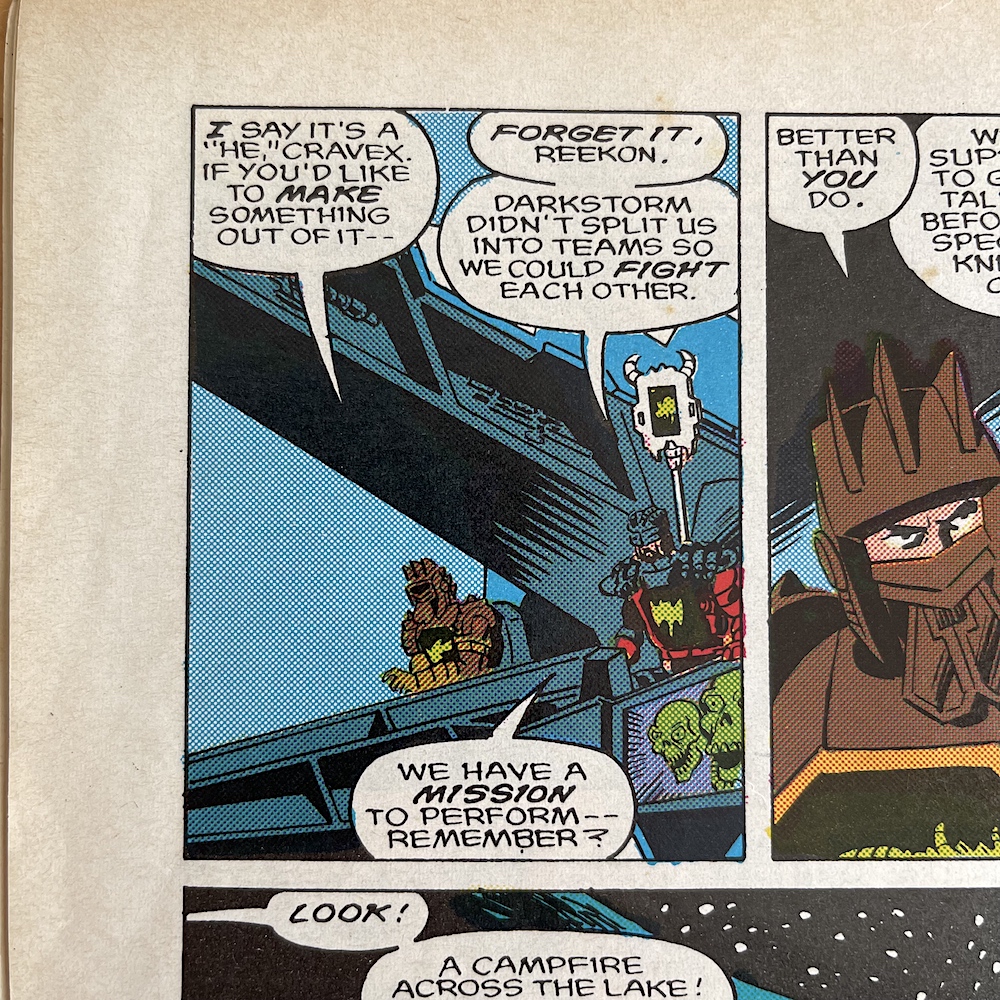
So we have an innocent burgeoning of romantic feelings on the one side, and in contrast a kind of clichéd comedic old married couple between the males of the other team. This contrast works brilliantly. Of course, each side is oblivious to these comparisons and that’s very funny. The perfect example is below, where we see the teams starting their search, following their respective magical guides and a topical (for today) pronoun conversation is mirrored between them.

This part ends with our heroes under attack from the fearsome Dagger Assault vehicle after Reekon spied on their location in his lizard form. But before we’re left hanging for seven days an anonymous yell from off camera and a stone to the head of Cravex signals the locals aren’t too happy and could be coming to the rescue.

Under attack from local villagers and unable to use their vehicle at close range, Cravex recites his fear spell but Reekon is unprepared and becomes affected too, driving them both away in fright in a humorous start to part three. Trakk, the leader of a nearby village introduces his people to Cryotek and Galadria before showing them the ‘God-Tree’. He claims it spoke to him in a dream and asked him to care for it. In return his people would be looked after for all time. Ever since, their crops have been in abundance and they’ve wanted for nothing.

But there’s a problem.

Clearly it’s no god, it’s the Earth Talisman feeding the ground with its magical energies, producing everything needed to feed the previously starving (after the cataclysm) villagers. But they aren’t for sharing. Galadria tries to explain but they won’t listen, not even when she says they have the ability to feed other villages and still have enough to spare. Sneaking about in plain site is Reekon in lizard form again, listening to the paranoia of the villagers who believe they’ve been chosen by god.

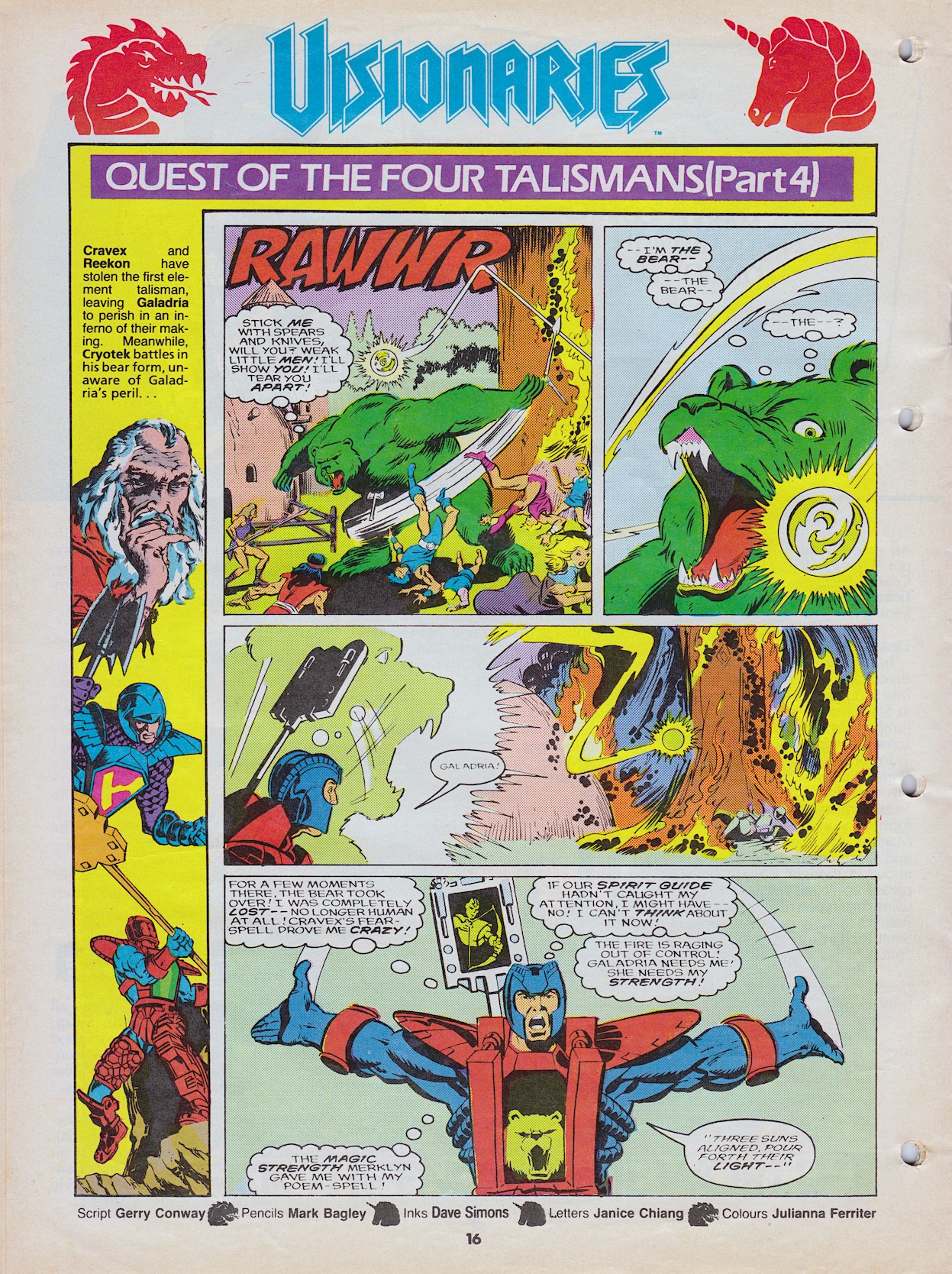
He uses this while the Spectral Knights rest to manipulate the villagers. It soon becomes apparent they won’t trust either side now so Cravex uses his fear spell once more. If they can’t get them on their side then the Darkling Lords’ backup plan is simply to create enough of a distraction to steal it. By waiting until Galadria and Cryotek are in the middle of the highly paranoid crowd the fear spell is devastating! The villagers begin attacking and Cryotek (in abject fear from the spell) feels his bear persona rise up from within and he transforms, flinging innocent people left and right, causing a fire in the process.

Being special is a curse if it sets you apart from others and puts them at a disadvantage due to your own privilege

Galadria, noticing her fear is starting to subside, knows this must mean the spell isn’t being cast because their enemies are making a break for it for the jewel. Knocked out by Cravex, this issue’s makeshift cliffhanger is brilliant with Galadria unconscious, surrounded by fire and Cryotek out of control.

This is how The Transformers presented each subsequent part of the story and you can see Cryotek finally regain control as we race towards the climax. Only able to return to human form thanks to the intervention of the magical guide, how far would he have gone otherwise? This question, first properly posed in Gerry’s premiere story in #4 is getting more prominence and I get the feeling it’s something that would’ve made the basis for a large story after this multi-parter.

One negative I have here is how Cryotek puts out the fires. He recites his spell poem which as fans will remember ends with, “Fill the archer’s bow with might”. But unlike the cartoon no archer appears from his staff and instead he just kind of glows and is able to summon increased strength. Unbelievably he claps really hard and the power blows out all the flames. It’s right there in the poem, there’s meant to be an archer. It just doesn’t make sense in the comic but that’s the only criticism I have.

In the end the fear spell has seen the Darkling Lords scurry off with the jewel and win the day, leaving the village in ruins and the people battered and bruised. Still weak, Galadria decides to use her new shield and its spell poem to restore everyone and everything around her. Cryotek is concerned. The spells use energy from those who cast them, she might not be strong enough but she knows they brought this destruction here, it’s their fault so she must try to make amends.

Her spell and its effects take up two full pages and I just love them. They’re beautifully drawn and give a real importance to her character and abilities, which I’m glad of after female characters were completely ignored by Hasbro (something a lot of our toy ranges were guilty of, unfortunately).

She ends up collapsing but it was just enough. Any more and it could’ve possibly killed her, but it’s clear that wouldn’t have stopped her from trying. Now forced to work with other villages, Trakk mourns how they’re no longer chosen by god, they’re “no longer special”. The last word on this fittingly goes to Galadria who explains being special is a curse if it sets you apart from others and puts them at a disadvantage due to your own privilege. I liked this. A lot.

Before I finish here’s a little bonus for you:
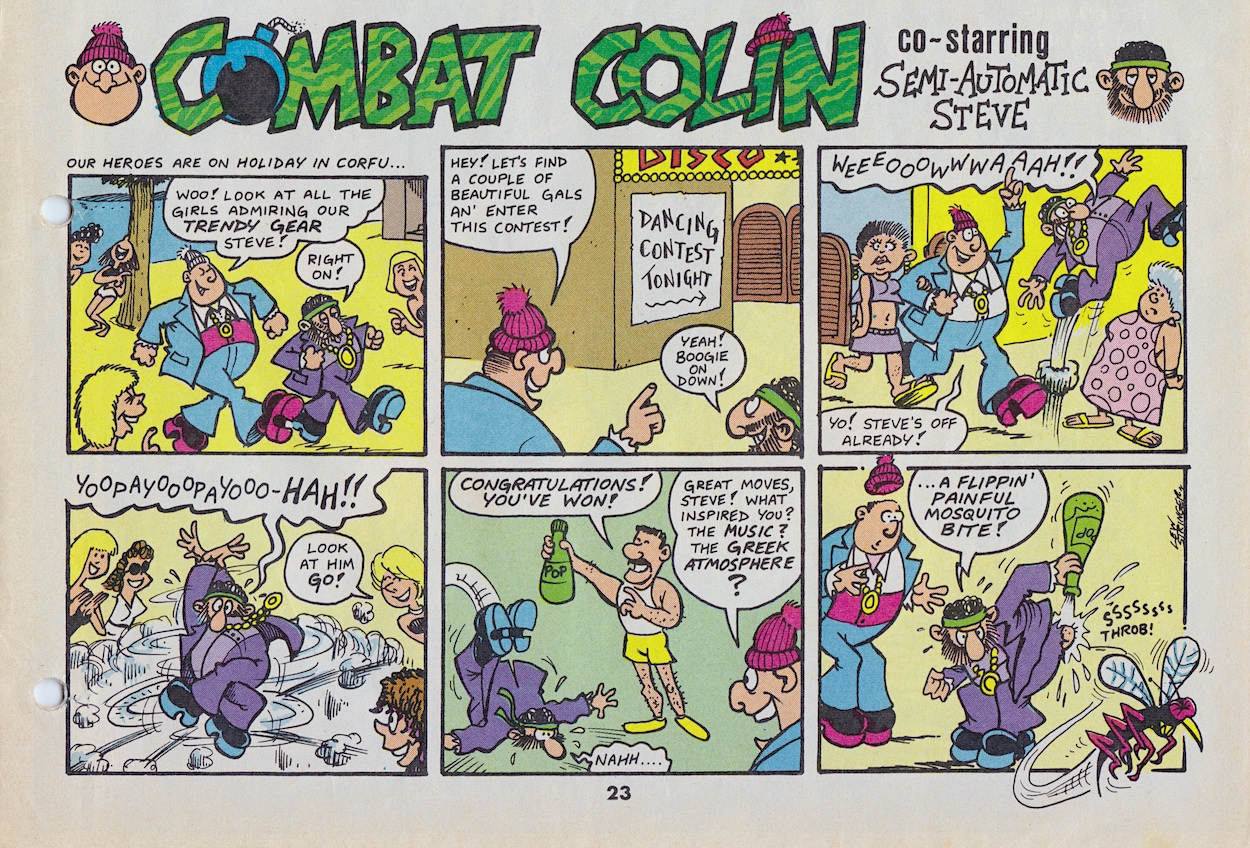
Combat Colin (co-starring Semi-Automatic Steve)

Action, humour and heart. A superb story. It may have been more basic than the previous two (due in part to its having to introduce the quest in the first place which took up a quarter of the page count) but next time we’ll be able to focus on the quest and a few characters from beginning to end. I can’t wait. The Quest for the Four Talismans was meant to be the first multi-part epic for the American comic but was tragically cut short two parts in. I’ll discuss that more next time.

Before I finish here’s a little bonus for you. Every issue of The Transformers and Visionaries had a humour strip by OiNK star Lew Stringer. Combat Colin (co-starring Semi-Automatic Steve) had come over from the pages of Action Force months previous and was the perfect way to sign off these issues. Below is the strip from #184 of the newly merged comic. Enjoy!

I’ve really enjoyed reading a little bit of Visionaries on a weekly basis and if you’re interested you can join my journey through all seven-plus years of Transformers on the blog’s Instagram. I’m reading an issue every Thursday and posting a handful of photos of the physical comic along with a few paragraphs of information and opinion. It’ll be a venture that’ll come to the blog eventually but for now you can follow along there. (UPDATE: This has now concluded, click here for more information.)

The next (and final) new strip adventure for the Visionaries will be reviewed on the blog on 29th October 2021. It won’t quite be the end though, as you’ll find out next time.

iSSUE FiVE < > TRANSFORMERS Pt.2

ViSiONARiES MENU

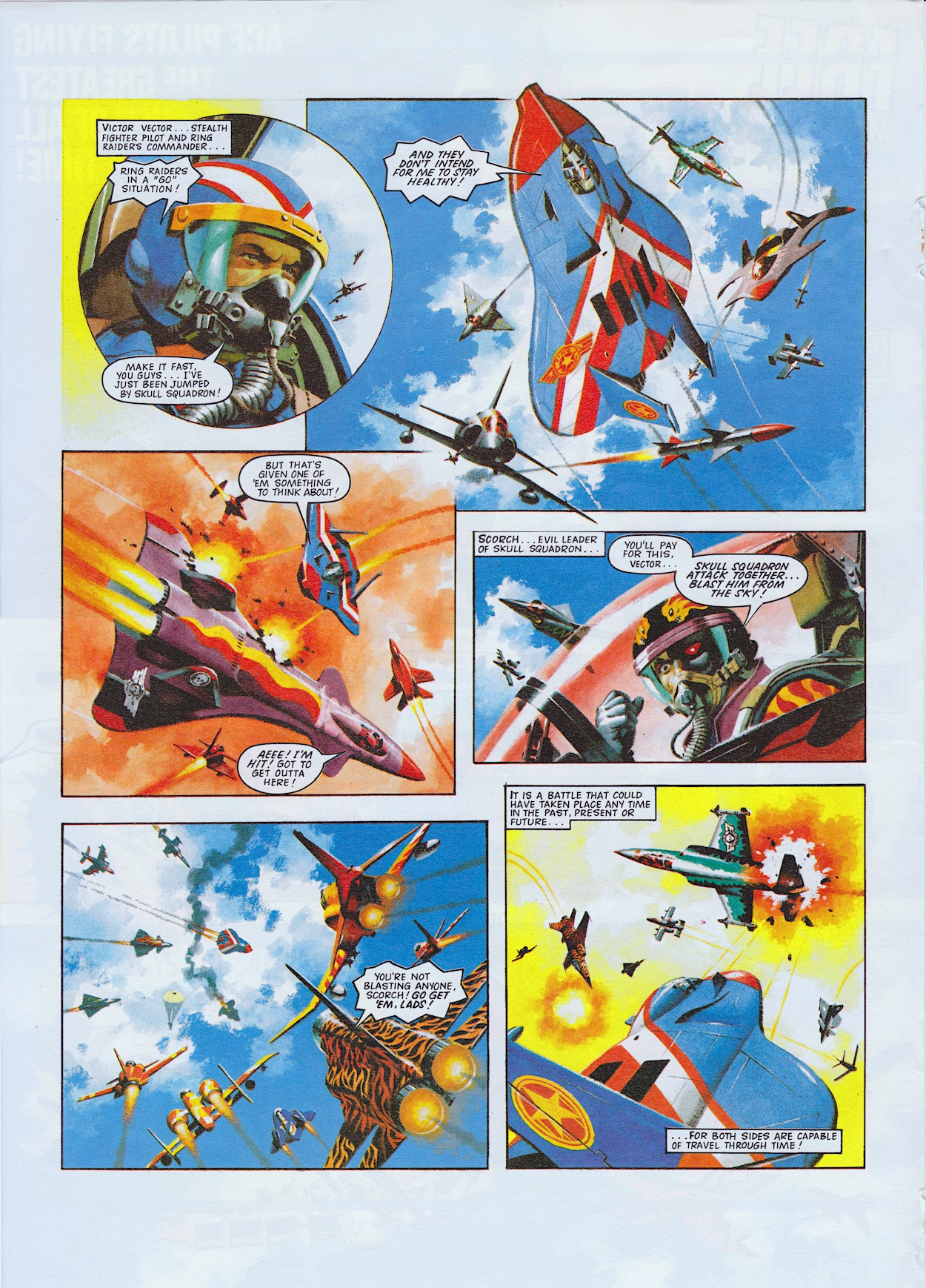
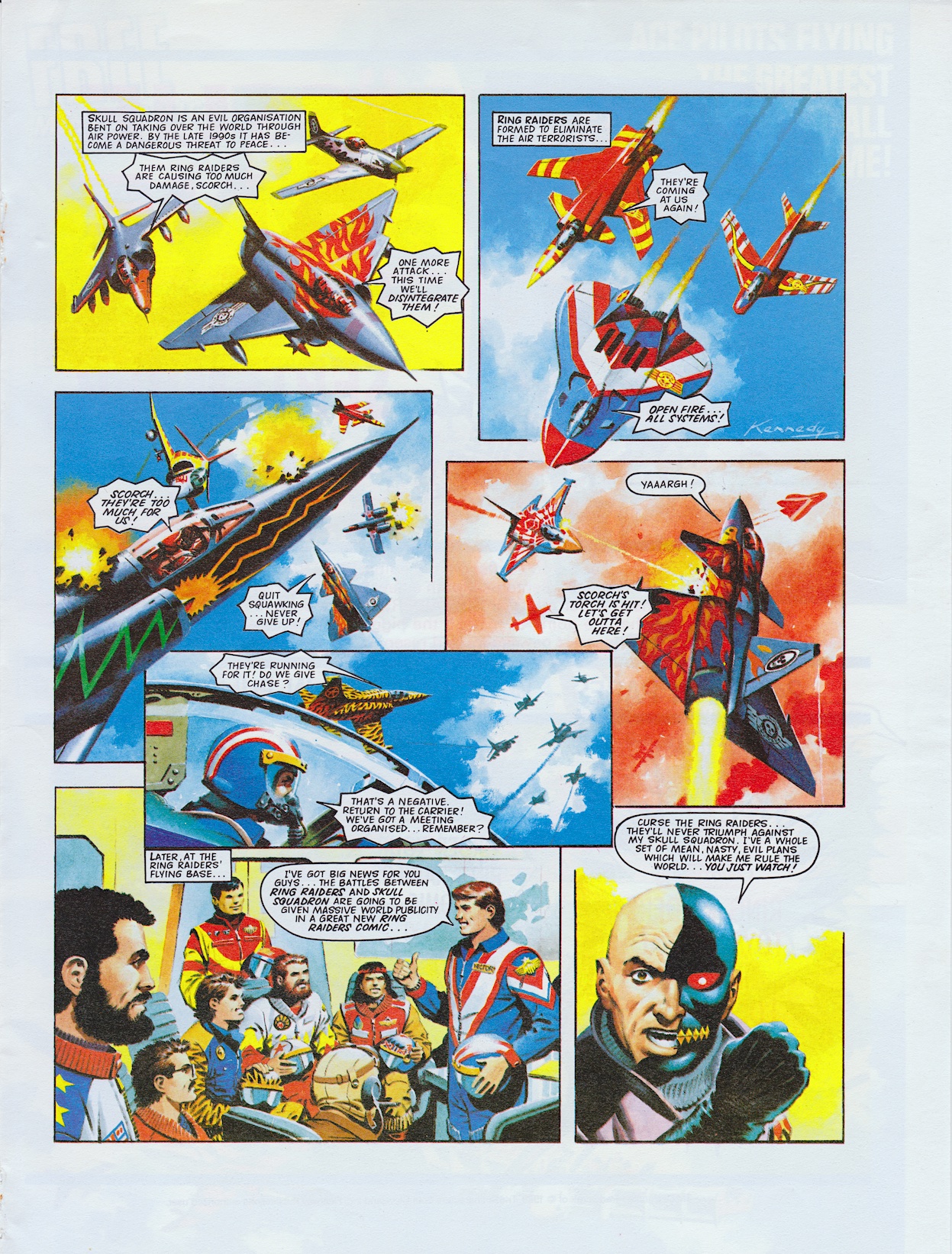
RiNG RAiDERS #2: iN THE BATTLE ZONE

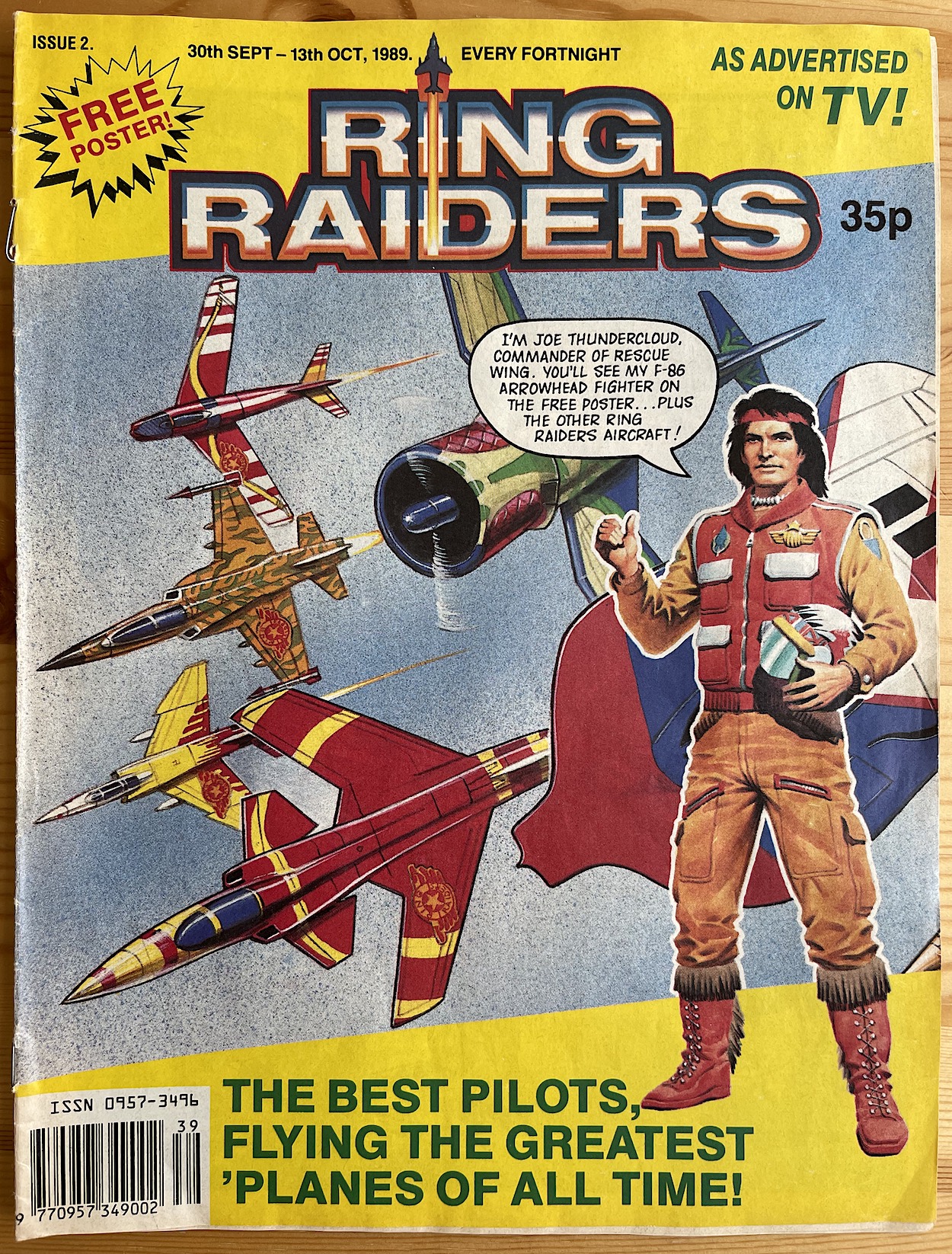
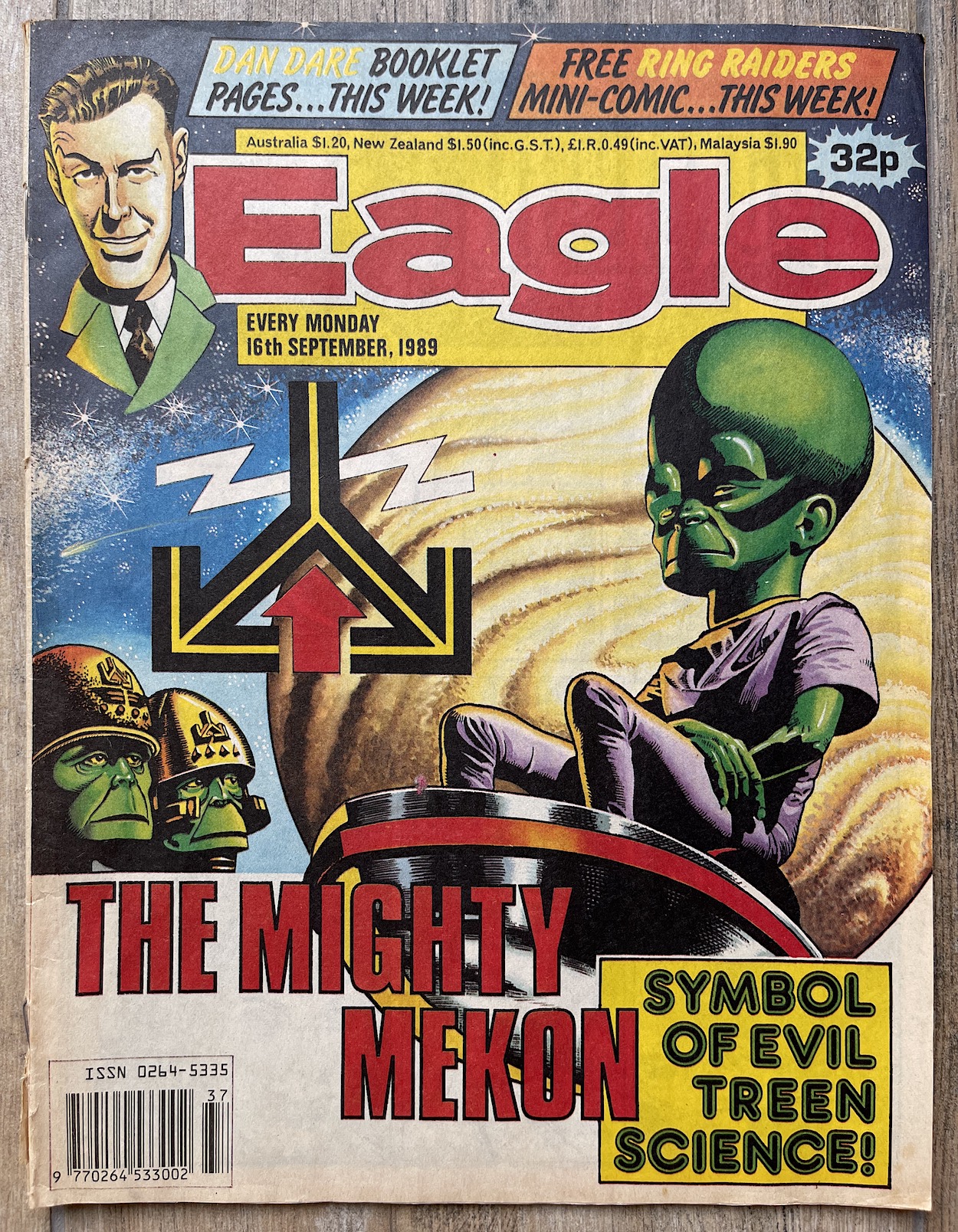
I’ve a distinct memory of reading this issue of Ring Raiders on the school bus and hearing one of the older kids behind us proudly proclaiming, “I’m Joe Thundercloud!” at the top of his voice. Ian Kennedy contributes that sole figure with the free poster taking centre stage. (You’ll see #3’s poster next time.) They were proper gift posters, separate from the comic and I had mine up instantly. My collection of planes was growing, I knew certain large boxes in my parents’ bedroom were bases for Christmas and this was my first reserved issue of the comic. These things had me hooked.

Inside, things kick off with a new multipart tale written by editor Barrie Tomlinson and drawn by Carlos Pino, Battle Zone ’99. The Skull Squadron pilot causing havoc here is Skull Commander Chiller and with this story he immediately became my favourite baddie. I’m sure I wasn’t alone. What kid wouldn’t love a jet with a sci-fi freeze ray? Chiller would love experimenting with various killing methods involving cold and ice and it would appear he fired up the imagination for the writers too, as he would star in more stories than anyone else.

Launching an attack on a futuristic gravity-powered submarine by freezing it, making it brittle, then destroying it with a well-placed missile, he kills the entire crew. This toy comic wasn’t afraid to show its baddies actually being bad and killing innocents to meet their foul goals. In the year 2057 aboard the Air Carrier Justice the Ring Raiders get a warning that a moment in history is being changed by the Skulls and they set off to rescue the second submarine.

There was going to be a Northern European Republic and Scotland was very much a part of it. It feels somewhat prescient

Interestingly, it appears they can’t just set their time travelling planes to appear at any moment they want for fear of altering history further. Instead, once the alert is received via their rings that particular moment in time continues to play out as our heroes scramble. Fans of Doctor Who will know all about how she can’t simply rewind moments in time once they’re in motion and it’s interesting to see this was also part of the rules here.

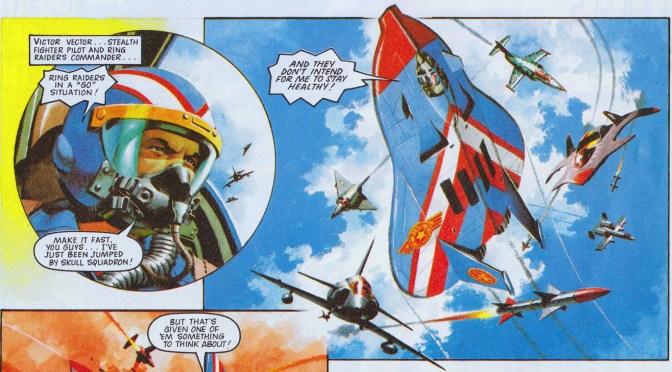
In this version of our world there was going to be a Northern European Republic and Scotland was very much a part of it in 1999. The Victor Vector strip later in this issue is set just one year prior and there’s an appearance by the British RAF. So I can only assume Scotland had become independent and joined the European Republic, with England (at least) outside of this union. It feels somewhat prescient, doesn’t it?


“Some people believe that Sea Hunter is capable of operating underwater… and I’m one of them!”

Ring Commander Victor Vector

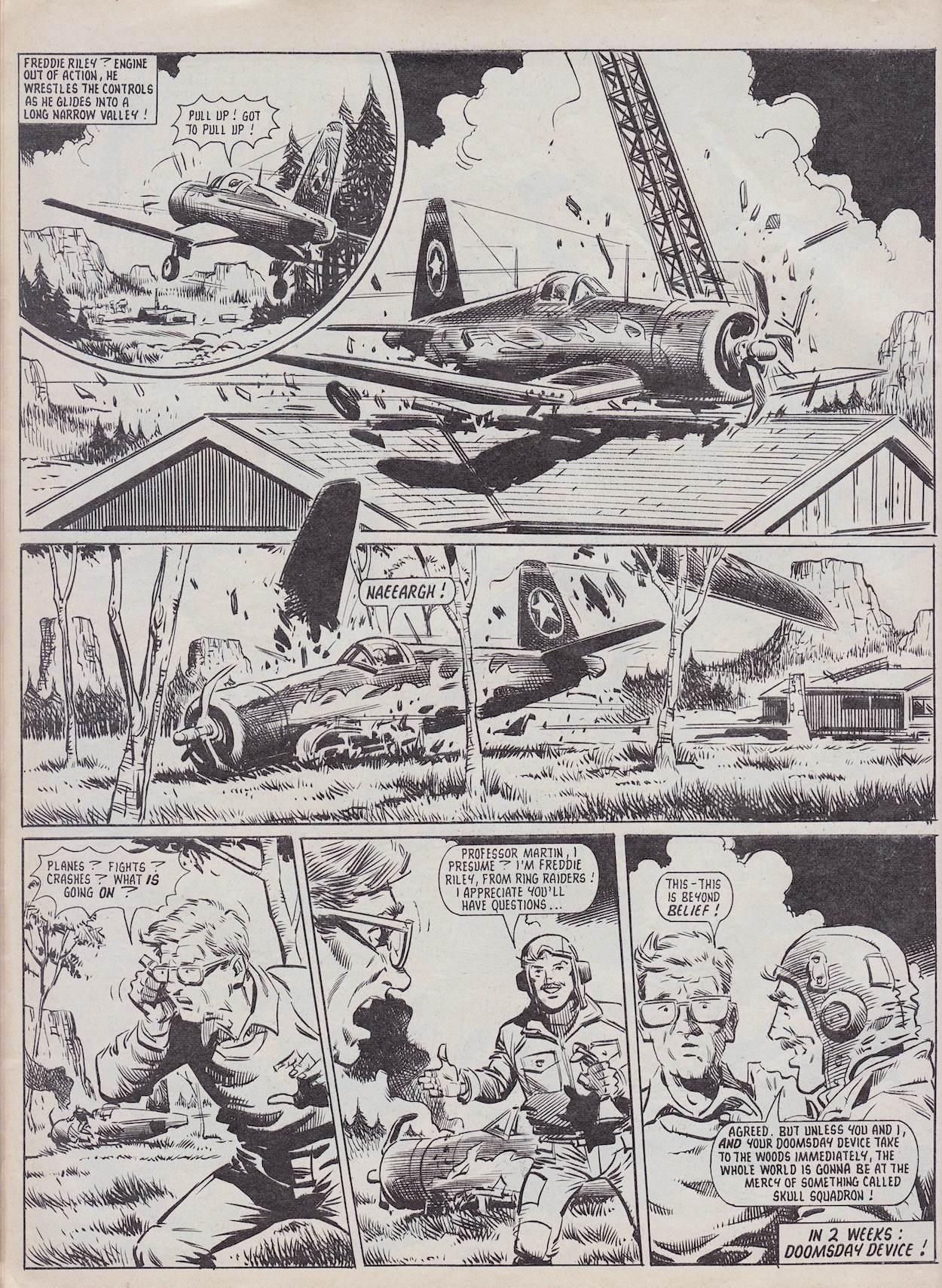
Moving on to the second strip and it’s the ace Trackdown written by Angus Allan and drawn by John Cooper. Professor Deke Martin‘s Doomsday Device is thankfully mobile and the unnamed toy pilot Freddie Riley is taking it and the professor deep into the woods to buy time while his wing, led by Thundercloud, tries to dispatch Havoc Wing. By the end of the story two planes have been destroyed and another original comic character is out to track down the device. It was always a thrill when the comic created these characters for our other toys.

What stands out the most is the amount of ground action that occurs and the level of characterisation being slipped in, in just four pages. The military characters interact realistically, grounding the fantastical set up and giving the aerial action a real feeling of danger. Especially when we’ve seen so many shot down already. We also see Wing Commander Thundercloud break off and order his men to return to base and all we’re told is that his instincts have come into play. So for now his apparent abandonment of Freddie is a mystery. Colour me intrigued by this layered storytelling.

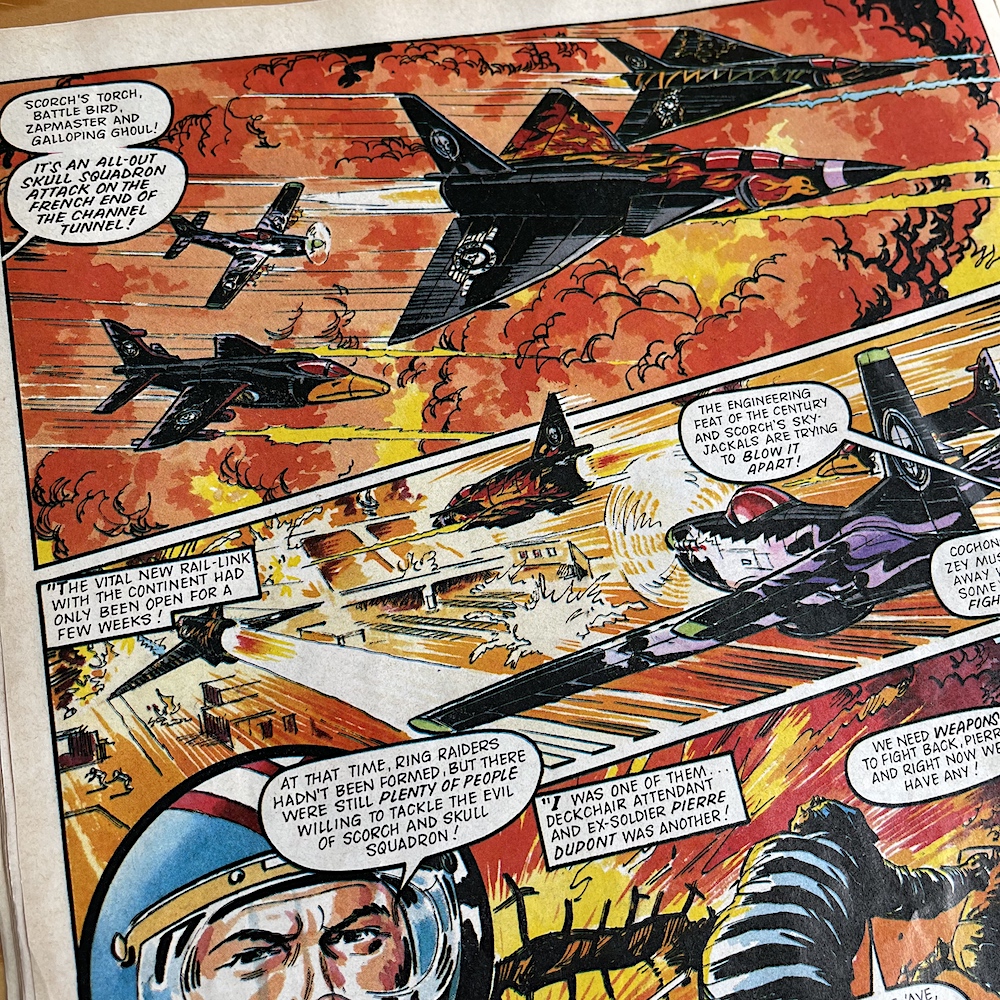
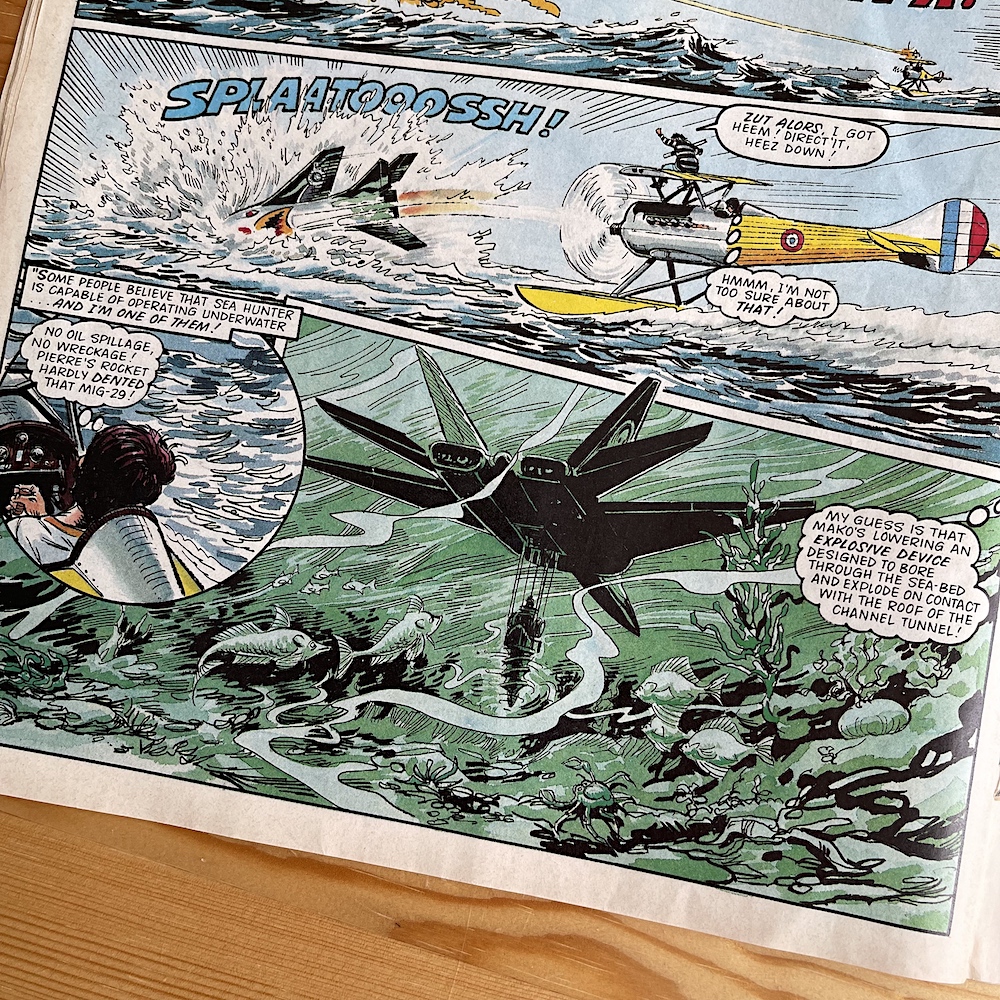
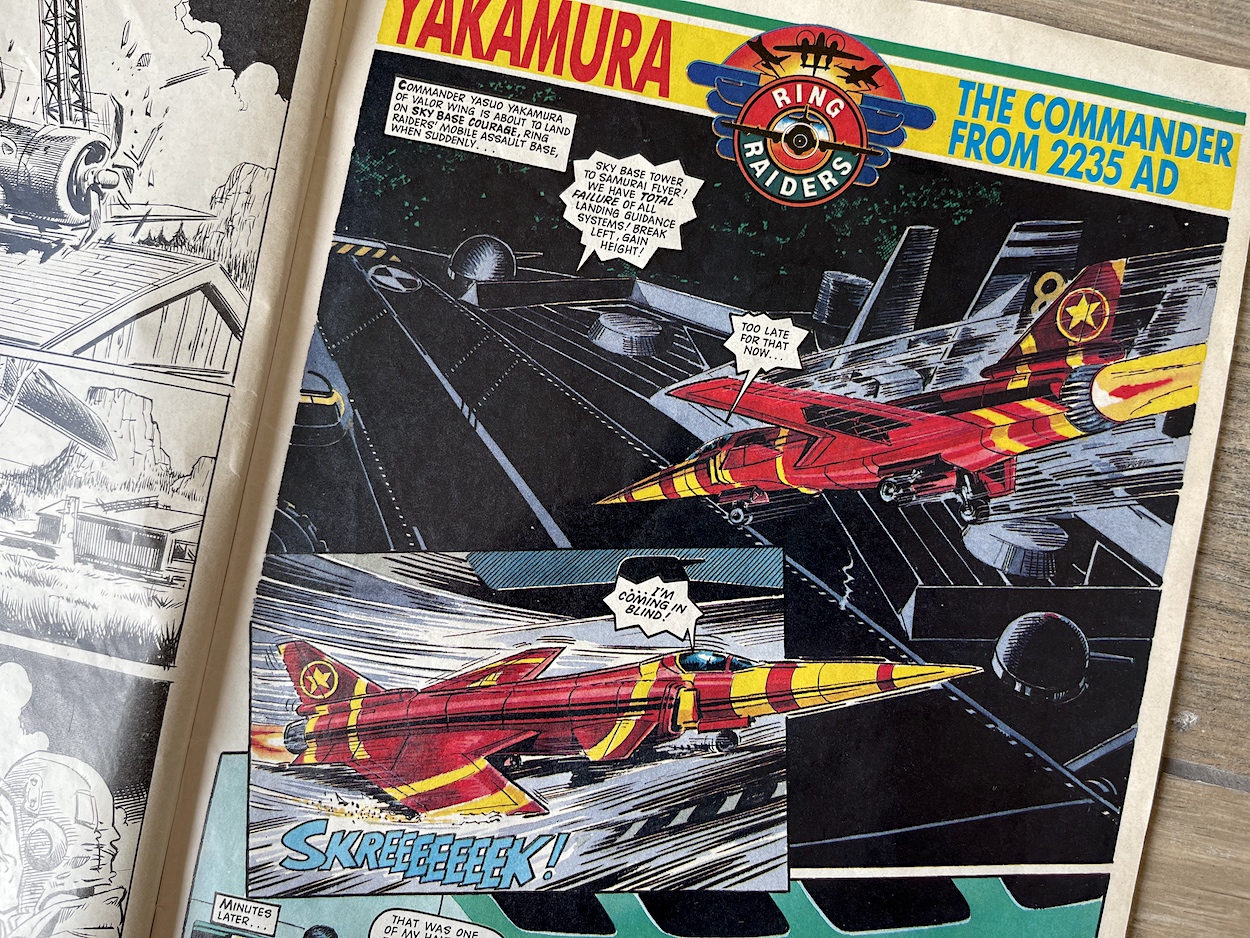
Back then, leader characters in our toy ranges and cartoons were somewhat clichéd, a caricature of what either side stood for. Compare the 80s cartoon Optimus Prime to the nuanced, troubled version from the movies and you’ll see the difference. Ring Raiders is off to a good start in this regard. Moving in to this issue’s complete story which focusses on a moment from Ring Commander Victor Vector‘s past, showcasing his strategising and leadership qualities in a unique way. He’s on holiday from the British Royal Air Force (in the comic he’s British it would seem) before his Raiders days, and Skull Squadron attack the French side of the recently completed Channel Tunnel in the year 1998.

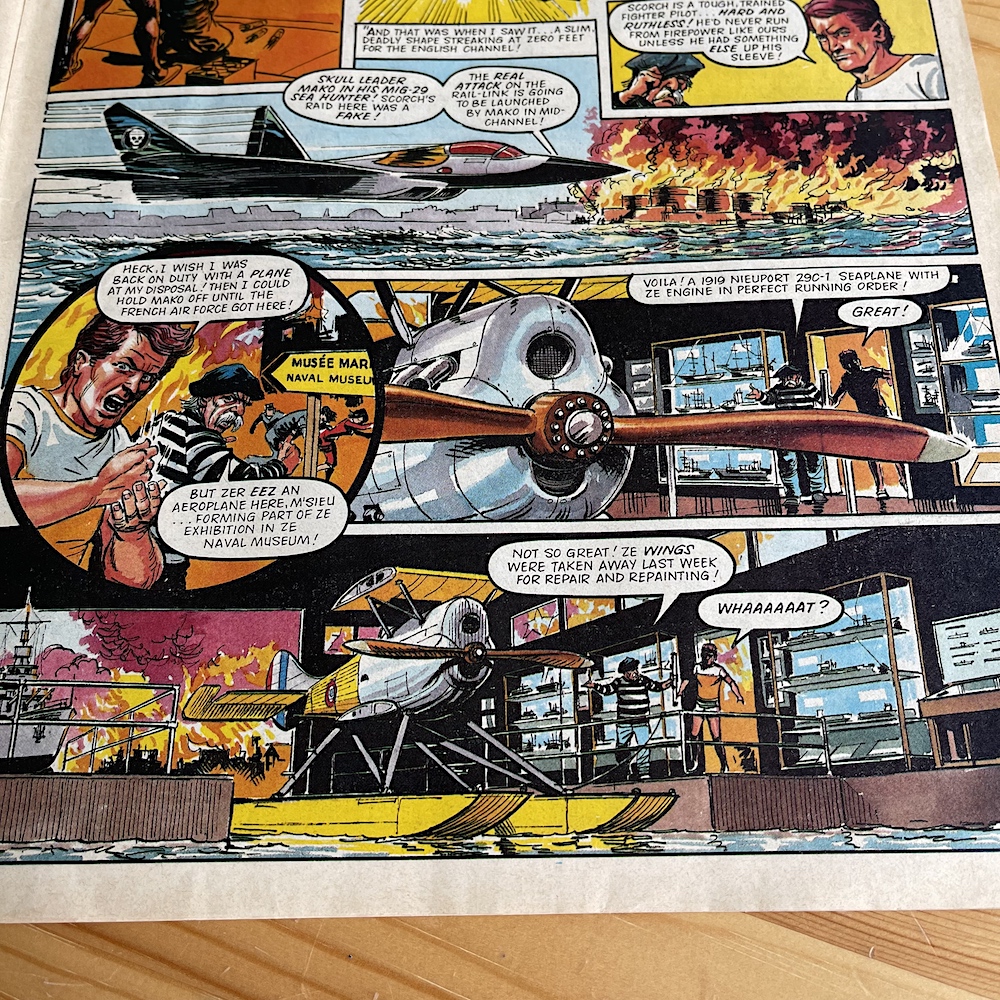
In the real world the tunnel was completed in 1994 so it wasn’t a bad prediction and I remember the regular British tabloid attacks on its construction being headline news around the time of this comic. With no plane at hand Vector befriends a local deckchair salesman who leads him to one. Sort of. I laughed at this I’ll admit.. The comic isn’t short of well written humour.

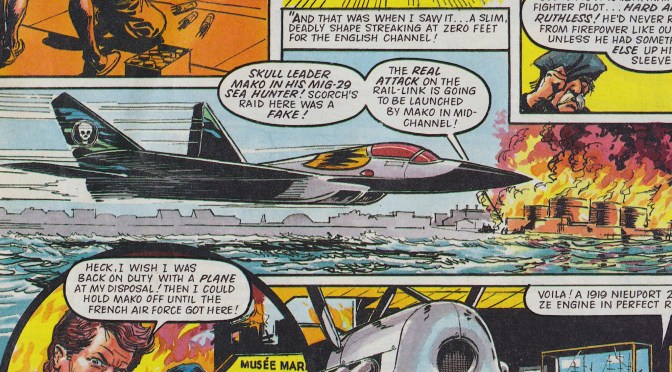
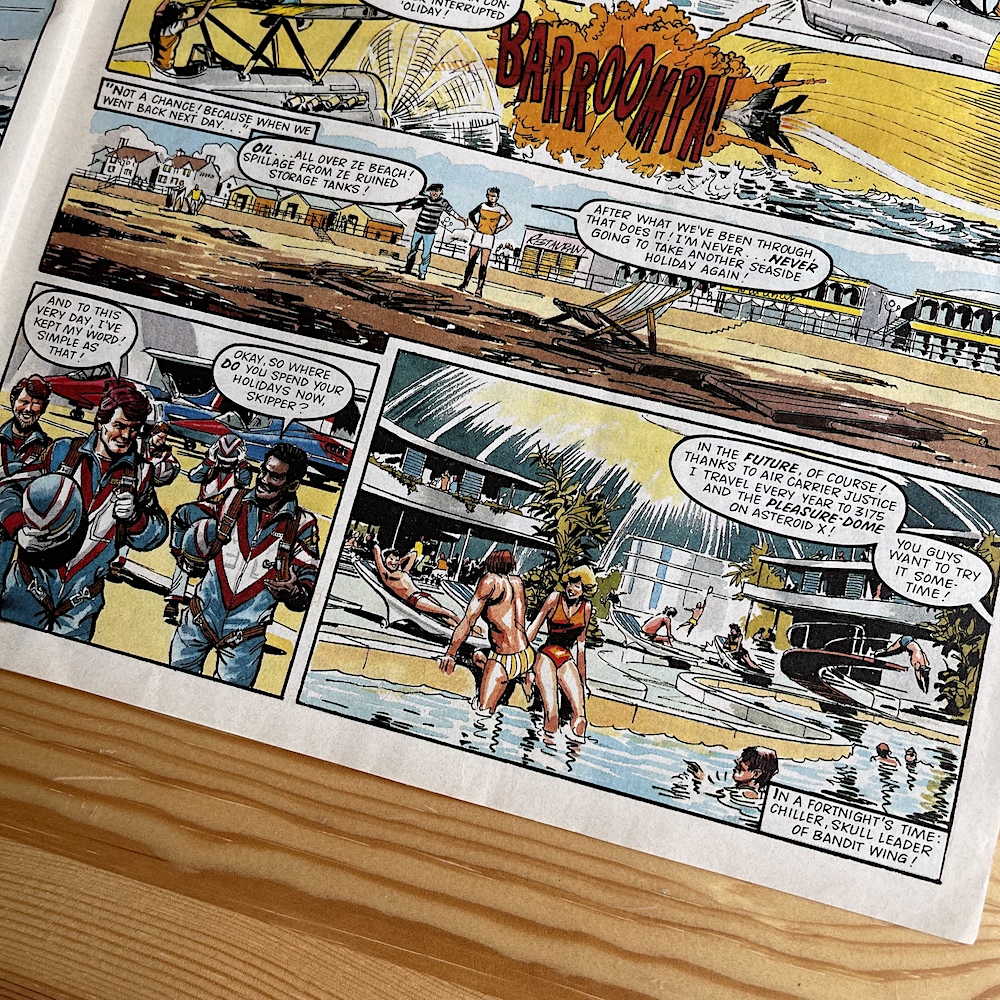
This is great fun and involves Mako‘s Mig-29 ‘Flying Shark’ which (as I touched upon previously) was one of my top toys in the range because of its shark motif and the apparent ‘rumour’ it could be flown underwater. As you can see here it’s no rumour as he begins to drill down to flood the tunnel. Vector also believes it’s true after apparently shooting Mako down with a handheld rocket launcher, however it’s a fact the readers would be in on but the Raiders could never verify.

It’s written by Scott Goodall and expertly drawn by John Gillatt. It has a Flight of the Pheonix feel to it, with added sci-fi elements thrown in, that ghostly underwater sequence, great action, a topical subject for the time and a little bit of comic relief. I also love the ending when we find out the entire flying aircraft carrier makes a trip far into the future just to drop Vector off for his hols! It’s a shame we don’t get the chance for more development for him (or indeed, more development for everyone) due to the short lifespan of the comic and the ensemble nature of the cast, but I have enjoyed this softening of his character.

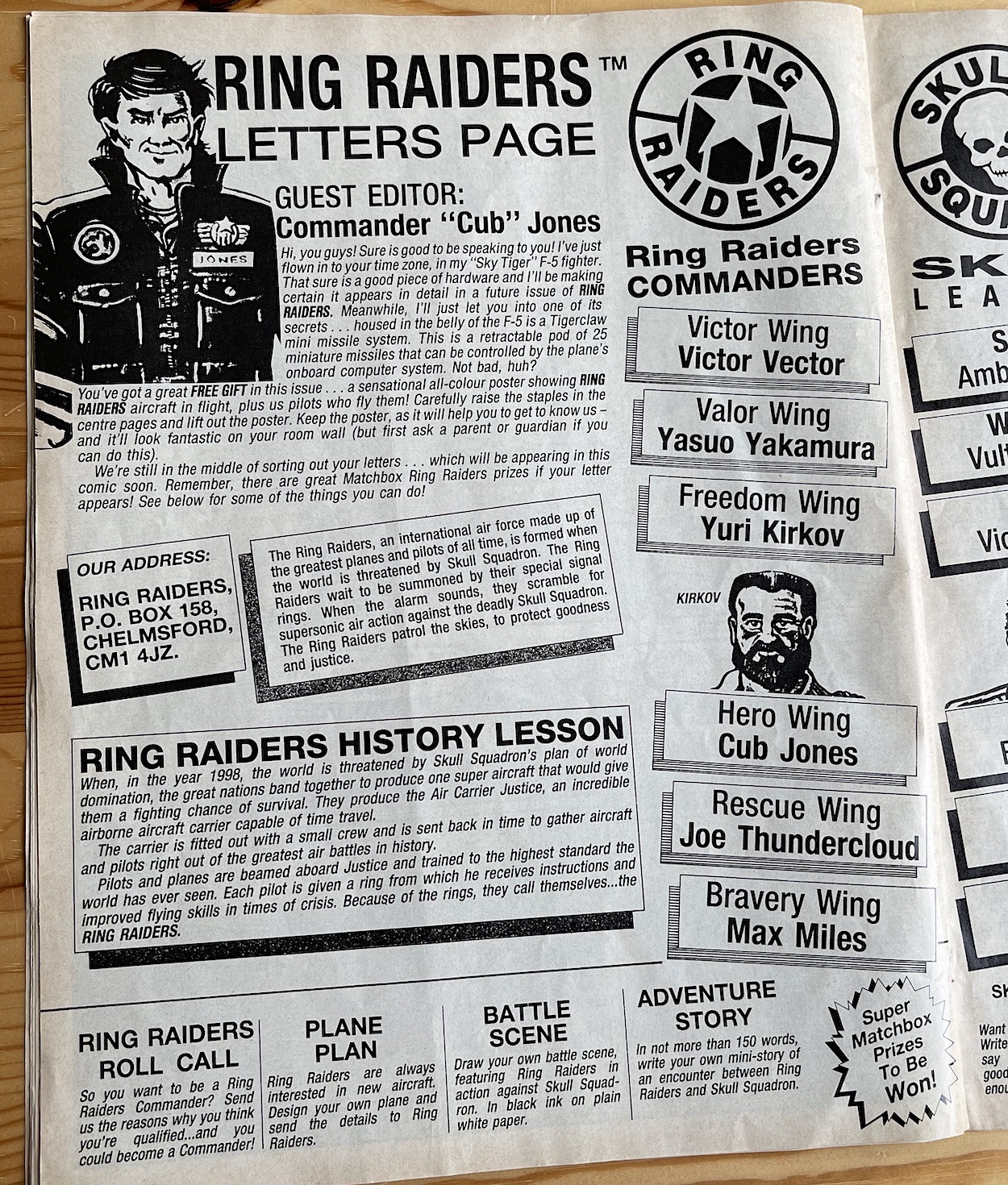
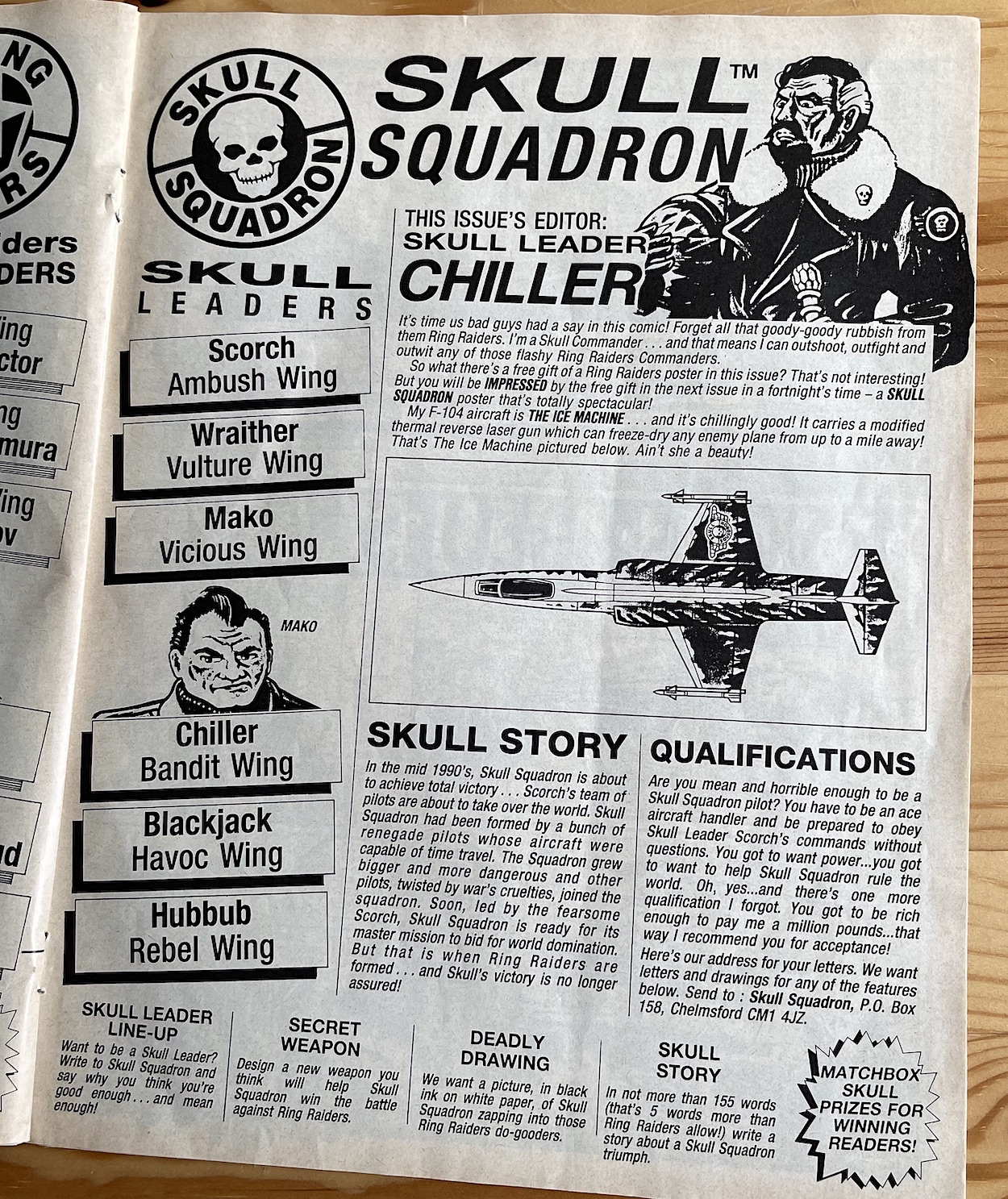
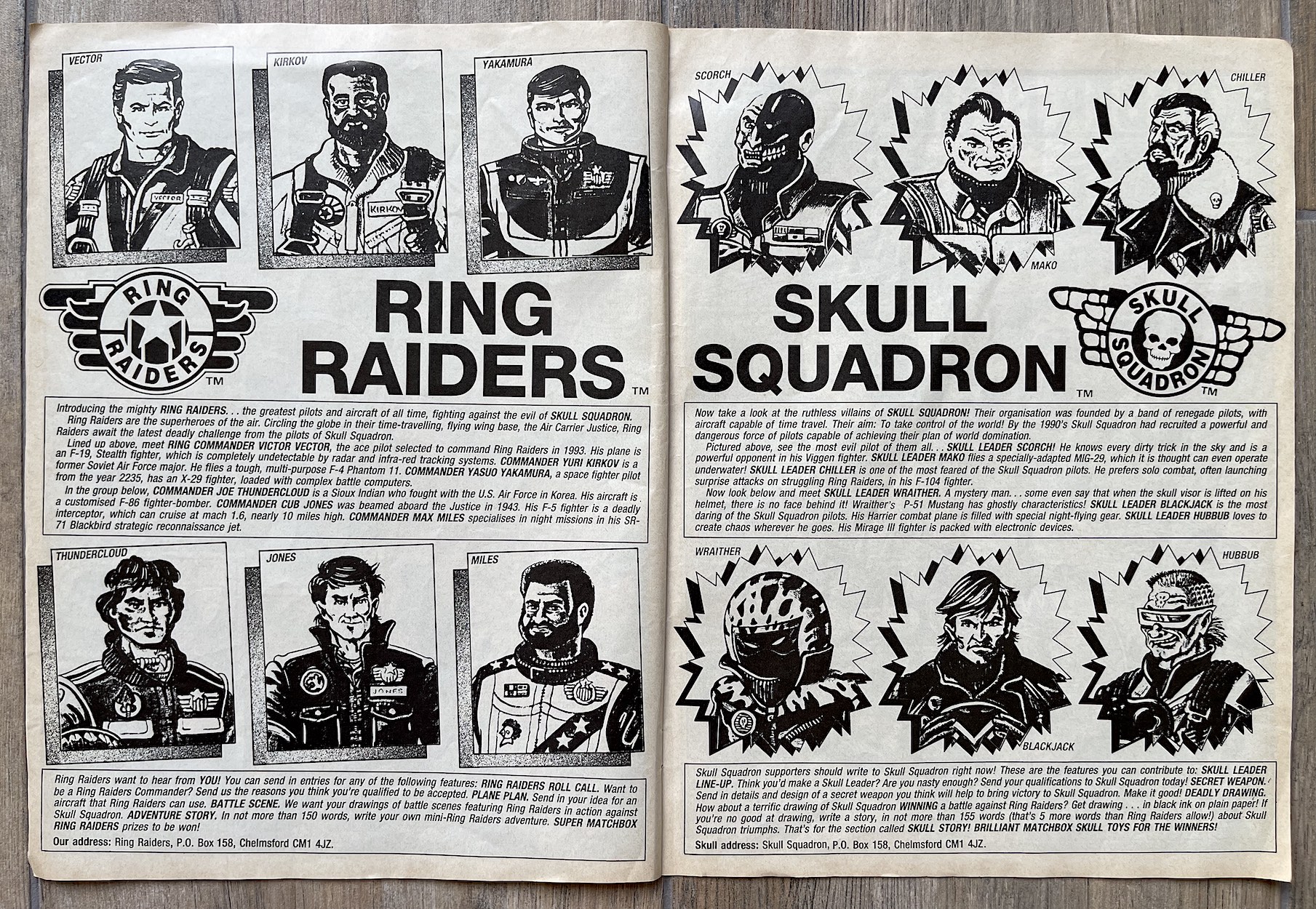
Obviously there’s still no content for the letters page because of deadlines in getting this issue to print, so instead stars of two of the issue’s strips introduce one page apiece. They outline the history of both sides of the conflict and request input from readers in all its various forms, for editor Barrie and editorial assistant Terry Magee to sort through.

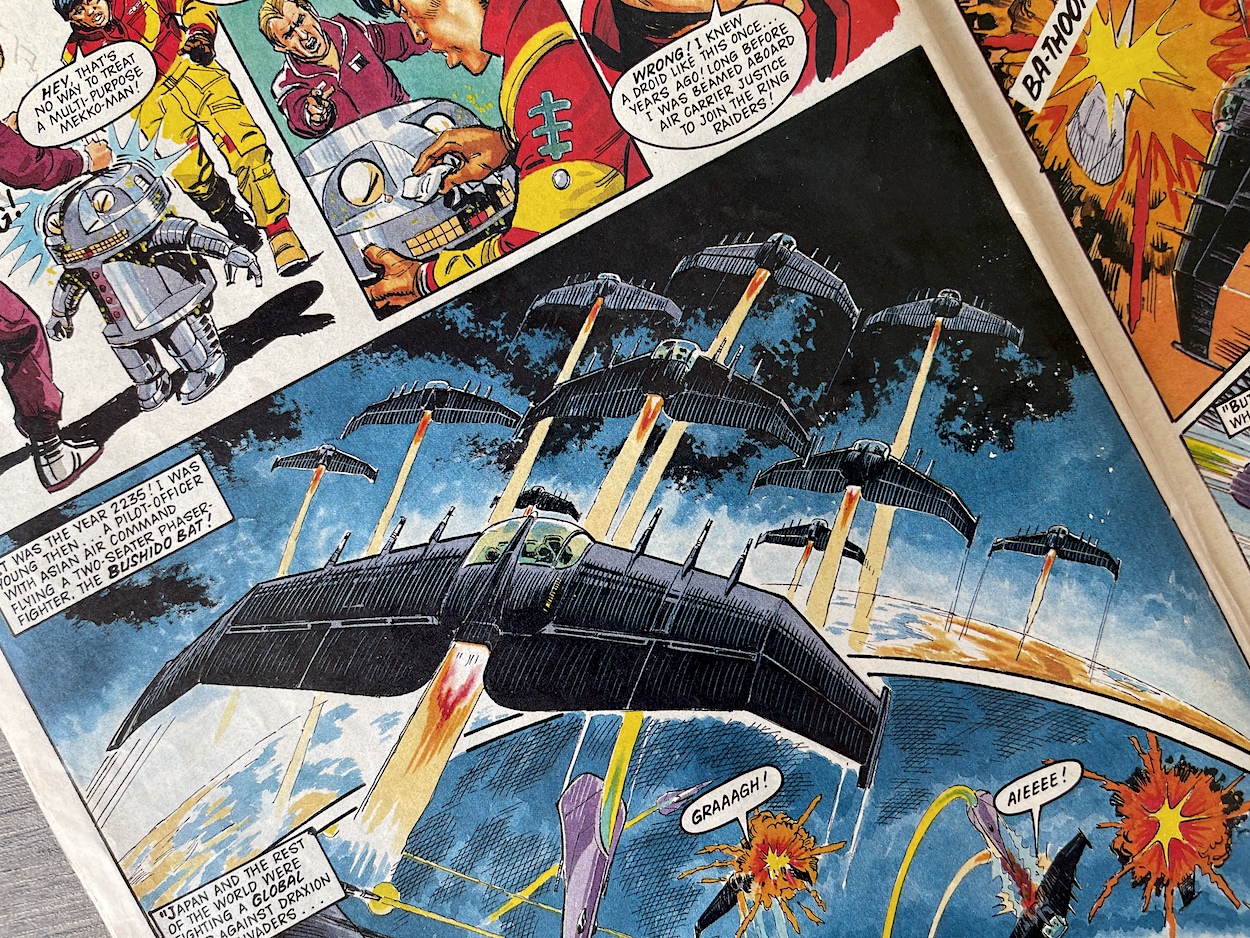
It appears the Ring Raiders were plucked right out of raging battles (which fits in perfectly with ‘Cub’ Jones’ affection for the bomber crews in the next story) and there’s a little hint for readers of some of the additional abilities of their rings, something toy collectors were already aware of but it’s nice to see a certain one mentioned given how this issue ends. The little throwaway line of how Skull Squadron recruits had been “twisted by war’s cruelties” hints at possible future character plots too.

Cub is back in the war he was plucked from in Bomber Blues which makes a surprise return as an ongoing story after last issue’s apparent one-off. Following what was now clearly a prelude, Skull Leader Hubbub‘s Rebel Wing return to take their revenge on the crew who rescued Hero Wing, unaware they were grounded after their fantastical tales to their superiors. Nor is he aware they’re also in possession of a signal ring to summon Cub and his team.

I’m so happy to see this story continue. The premise is just too good to leave at one issue. Writer James Tomlinson‘s fondness for the subject matter and Don Wazejewski‘s art style are just perfect and there’s a true vintage war comic vibe going on here, even with the mixture of aircraft and electronic weaponry.

In the toy packs there could be a mix of prop planes and jets and I often thought how on earth did they fly in formation together? Well they don’t, instead each is used for a particular purpose. For example the prop craft often being brought in for low-flying raids on slow moving targets or navigating close to difficult terrain. This is what happens when someone who knows their stuff writes for kids. I mean, just look at this glorious action panel!

The comic certainly wasn’t shy in destroying the planes we were playing with either. Throughout this issue about half a dozen altogether are outright destroyed, giving an air of jeopardy to the stories. Instead of vast battles where no one actually gets shot down or injured as we’d see in our cartoons, here anything seemed to go.

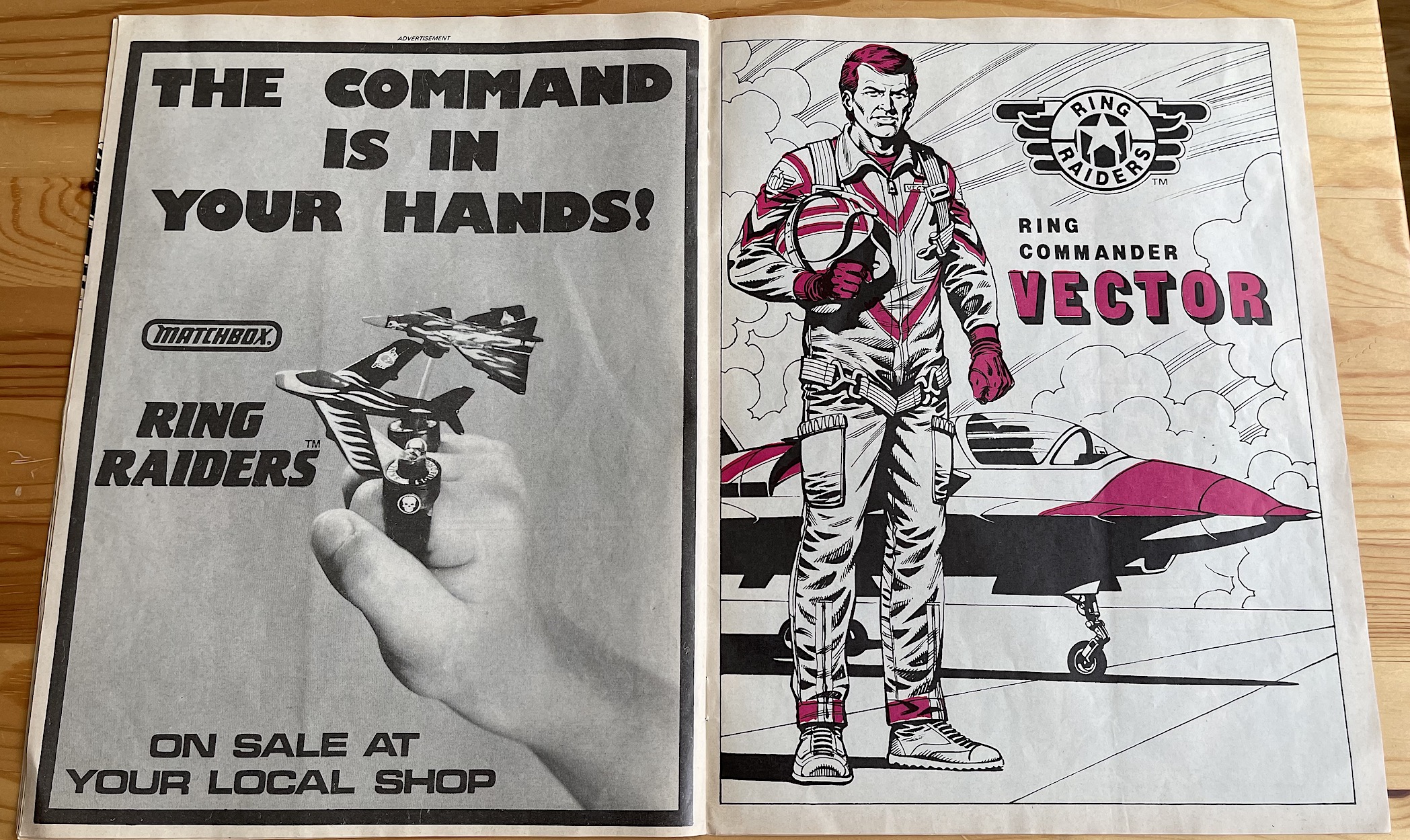
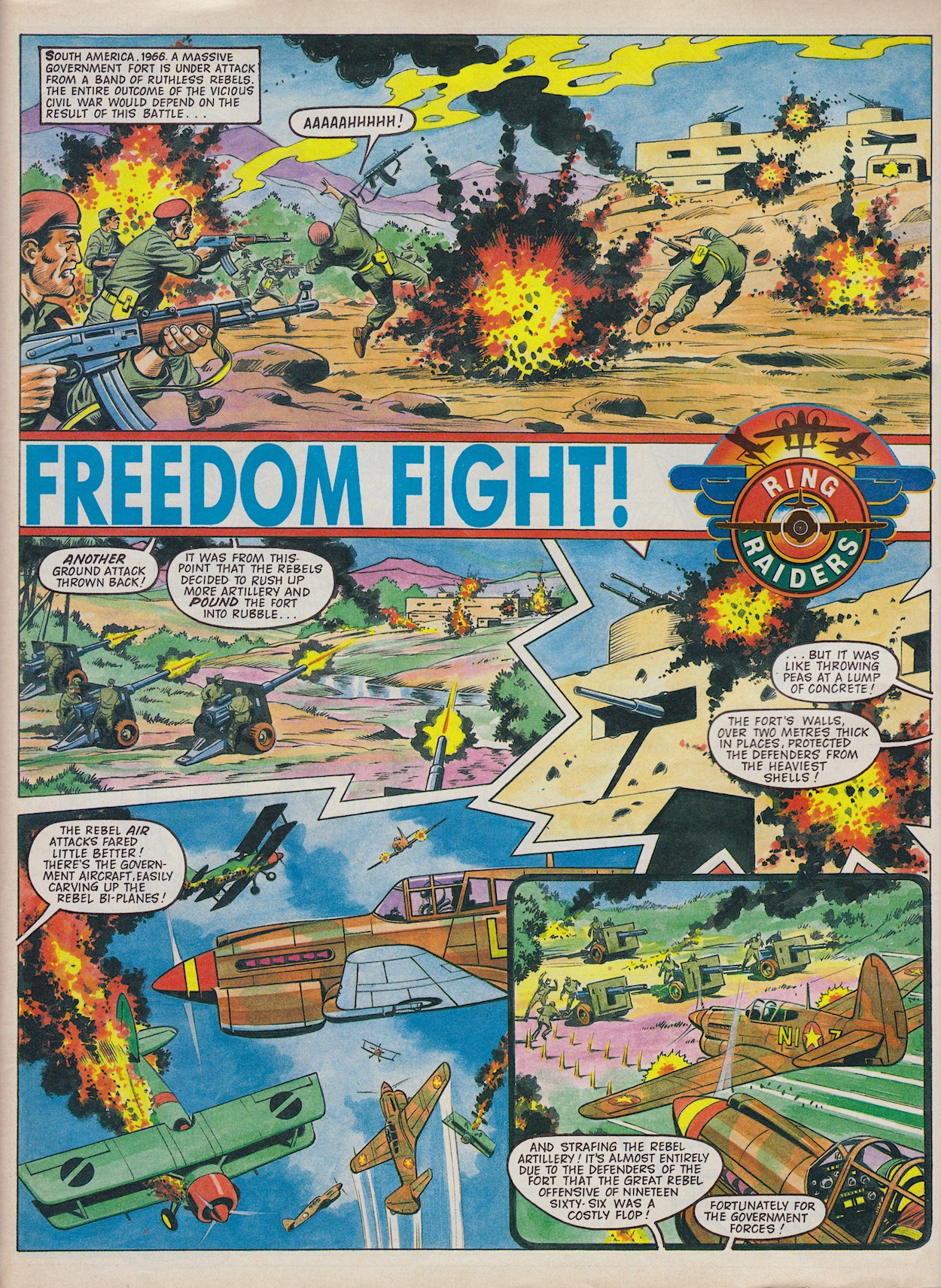
Before the final strip we’ve an advert for the toys and a pin-up of Vector. The advert is very basic and appears to have been put together by the comic itself rather than Matchbox, but they’d get more creative in future issues, even incorporating new artwork by Sandy James. Speaking of Sandy that’s his work on the pin-up before the full-colour second chapter of his story, Freedom Fight.

As part two commences the fort’s soldiers are frozen in fear at the futuristic aircraft and the rebels, though just as confused, see their chance and charge the fort. What’s compelling here is finding out another rule to the overall story, and that’s how the Ring Raiders must never fire upon or harm anyone caught up in Skull Squadron’s plots, even if those people are firing upon them.

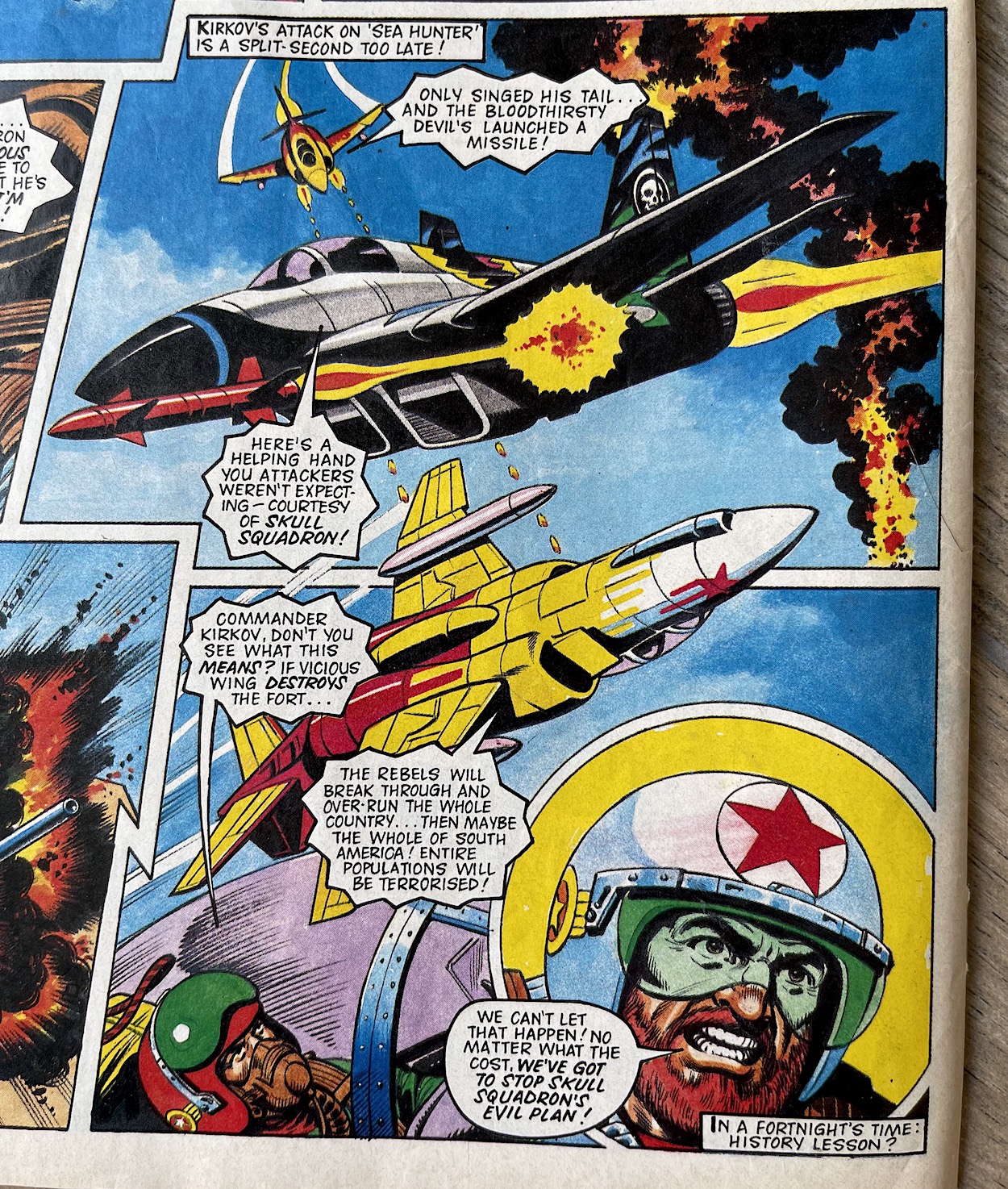
This leaves Commander Kirkov in a predicament. How can he push back the rebels without opening fire on them? He can’t take sides, he’s just trying to preserve history as it was originally written. Writer Tom Tully uses the unique features of the plane mentioned on the toy packet to great affect here and has Kirkov blast the ground with his laser cannon, setting it on fire and stopping the advance. It reminds me of some classic set pieces from Airwolf, which is perfectly fine by me. Sandy’s bold colouring is spot on here.

Once again the comic ends on a riveting few pages, finishing with Kirkov’s ‘Comet’ F-4 Phantom on fire and plummeting towards the very fort he’s trying to save. The final caption simply reads, ‘In A Fortnight’s Time: Flying on ring-power!’ Look back at that letters page preview and you should know why I was so excited to get my hands on the next issue back in October 1989. In fact, I can’t wait for it now!

I think I can say with confidence Ring Raiders had a very firm foundation to its universe, characters and stories even at this very early stage. Building on the basics from the premiere issue, Barrie and his team were wasting no time in exploring different characters, scenarios and the various kinds of aerial action they could depict. It honestly feels like its writers and artists were having a whale of a time with the subject matter. I know I am.

Don’t be late for #3’s departure, right here on the OiNK Blog on Thursday 14th October 2021.

iSSUE ONE < > iSSUE THREE

RiNG RAiDERS MENU

JURASSiC PARK #4: BACK UP SYSTEMS

With issue four the UK version of Jurassic Park was evolving. As mentioned last time the US comic was no longer going to finish after the adaptation, with further mini-series now being produced. In the UK, Dark Horse International decided to turn their four-issue, three-weekly mini-series into an ongoing monthly, not that any fanfare is made of this because the reader wouldn’t have been any the wiser it had originally been due to end this issue (and a few weeks ago). Indeed, the comics checklist last issue erroneously said #4 was the end.

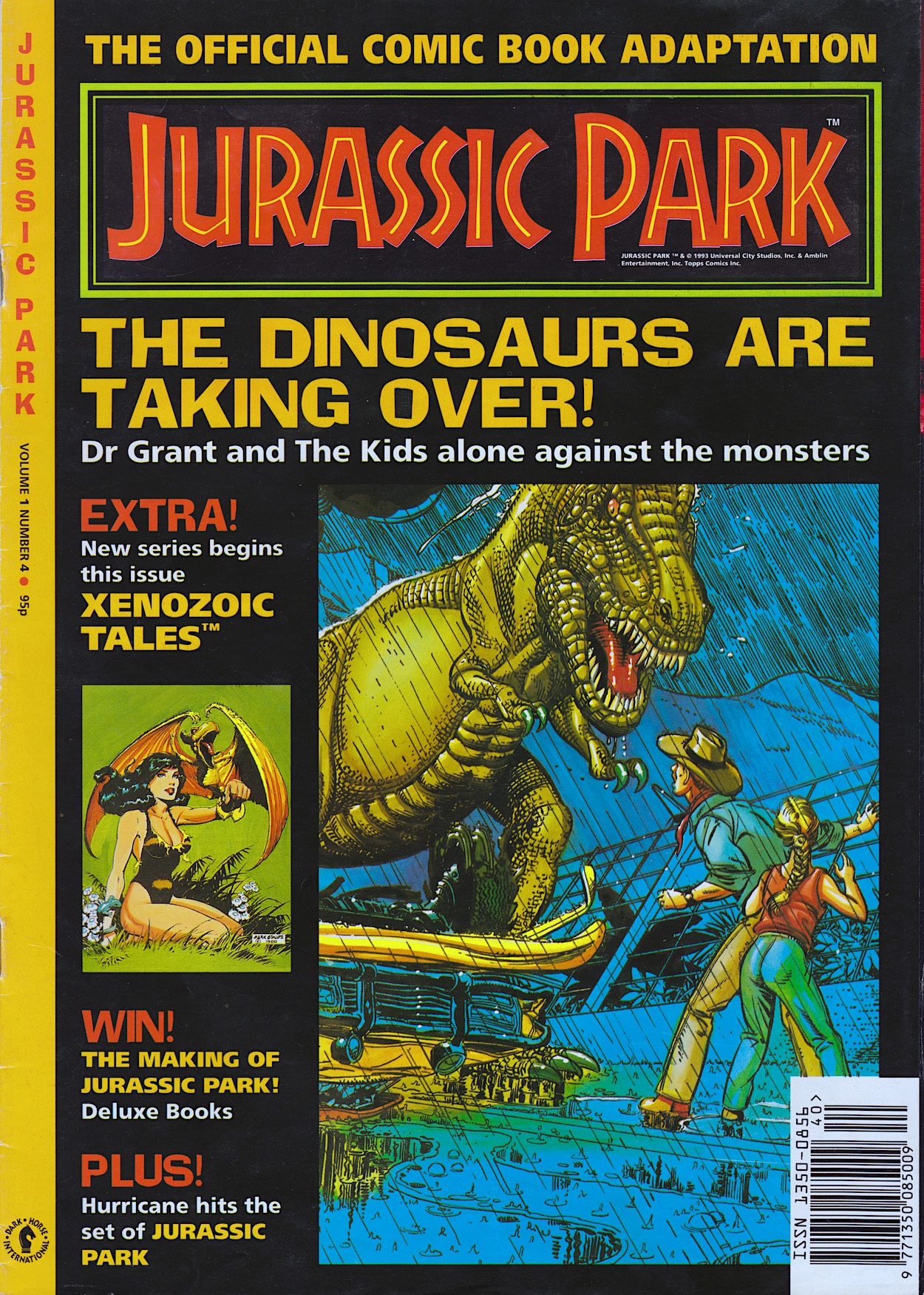
This change produced the delay in the release of this issue as plans were made for the new format of the comic and acquiring more content for each issue. This begins with the first back up strip here, bringing Jurassic Park more in line with the company’s other comics such as Aliens. The front page recolours a panel from the strip inside (and I love the font they’ve used) instead of having a proper cover image. This final chapter of the adaptation is being split in two, so the original cover was being kept in reserve for the following month.

The sequence in the tree with Tim trapped in the Explorer has been completely excised!

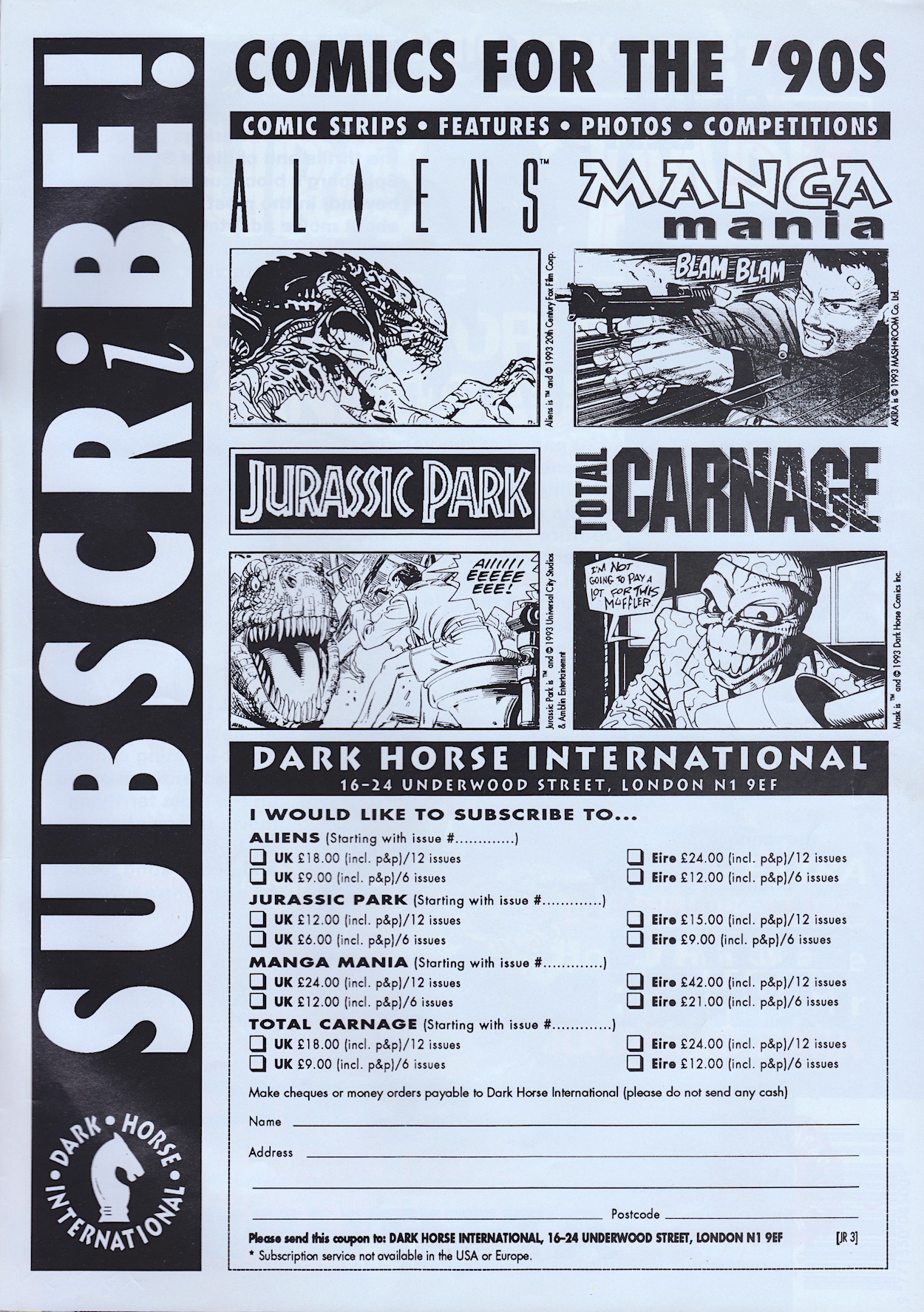
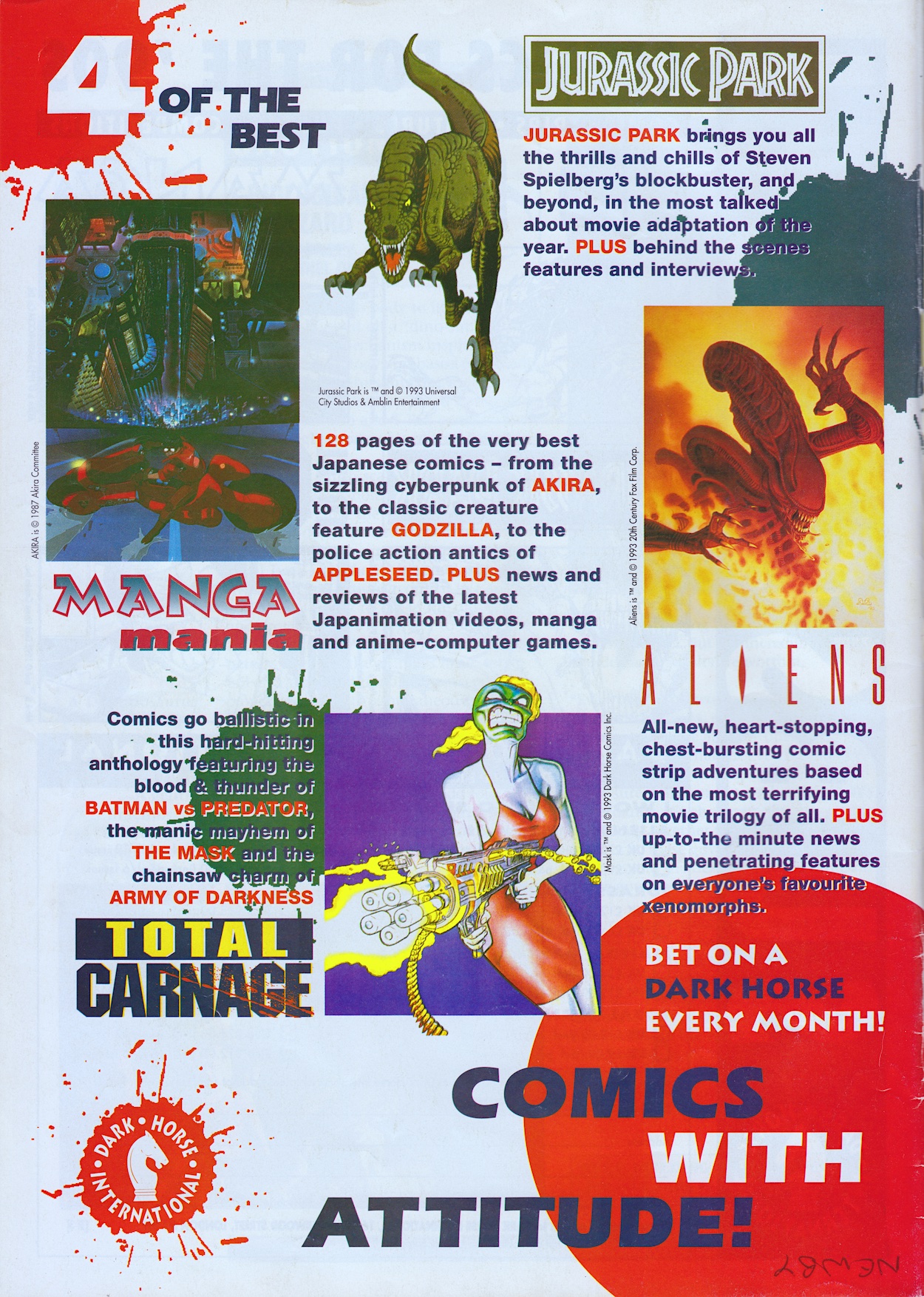
Check out this month’s comics checklist and you might get an idea of the make up of the company’s titles. The issue at hand begins with a competition for the excellent The Making of Jurassic Park. I actually bought this book at the time and it was a heavy tome, full of details on the making of the film and stands up today as one of the very best of its kind for any movie. You’ll also see an advert for Manga Mania, which fed off the new craze to hit these shores. Ultimately it’d also be a very important title for Jurassic Park fans. But that’s a story for another time.

Our freshly chopped final chapter is still a lengthy 16 pages so regular readers wouldn’t have felt short changed, at least with the page count. Unfortunately, the actual strip itself is another thing. Yes, this is the first time in the comic’s young life when I’ve been left disappointed.

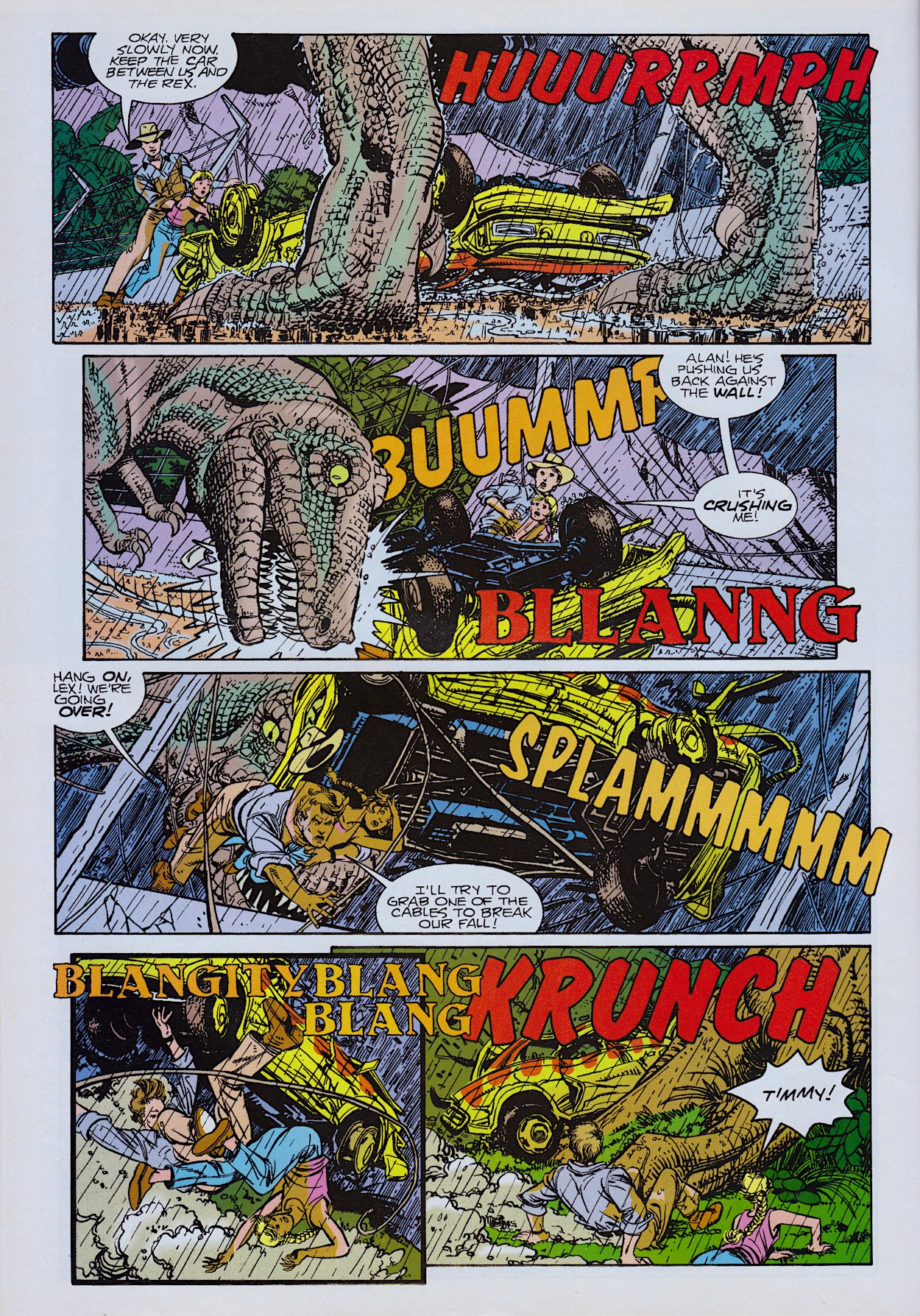
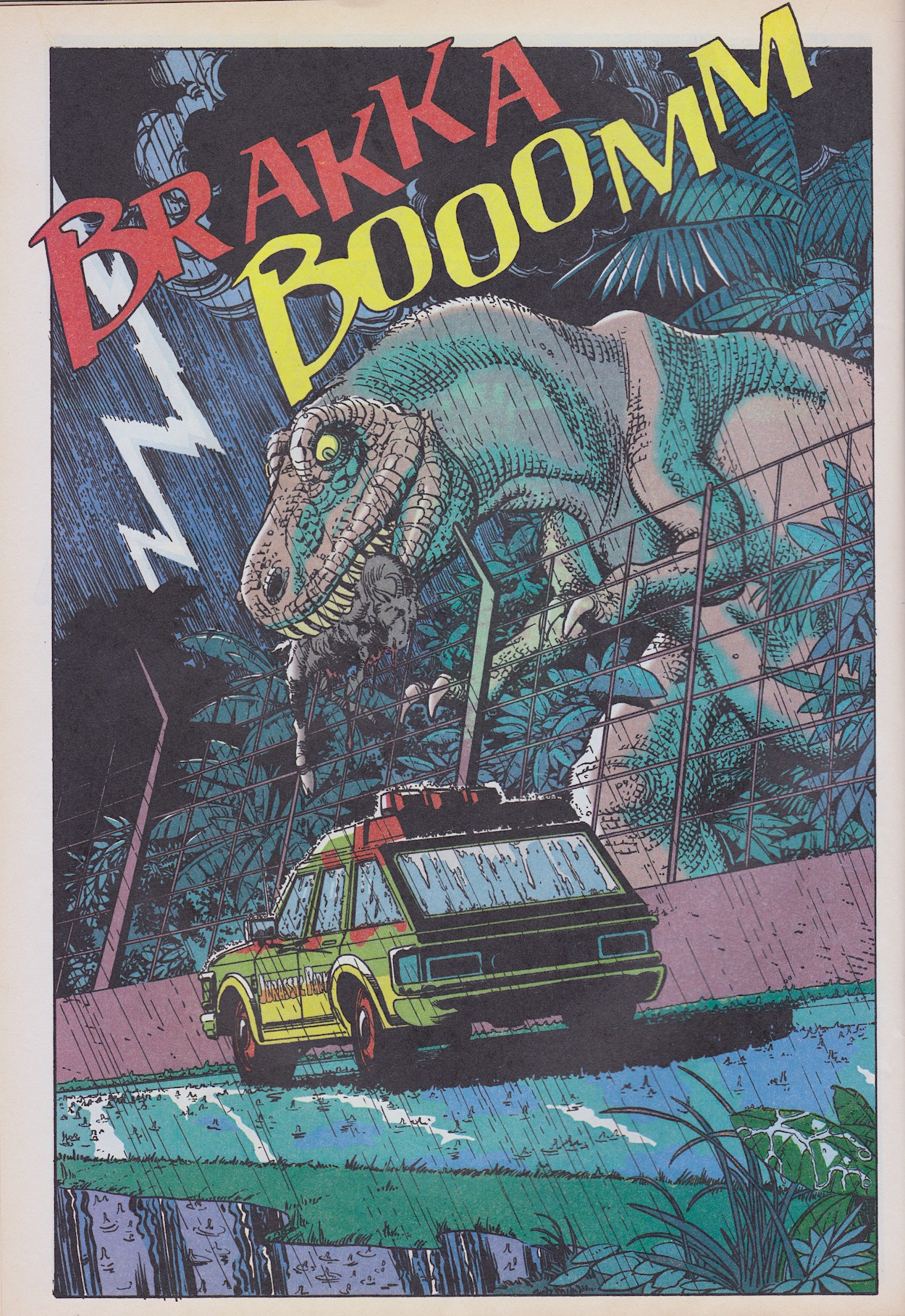
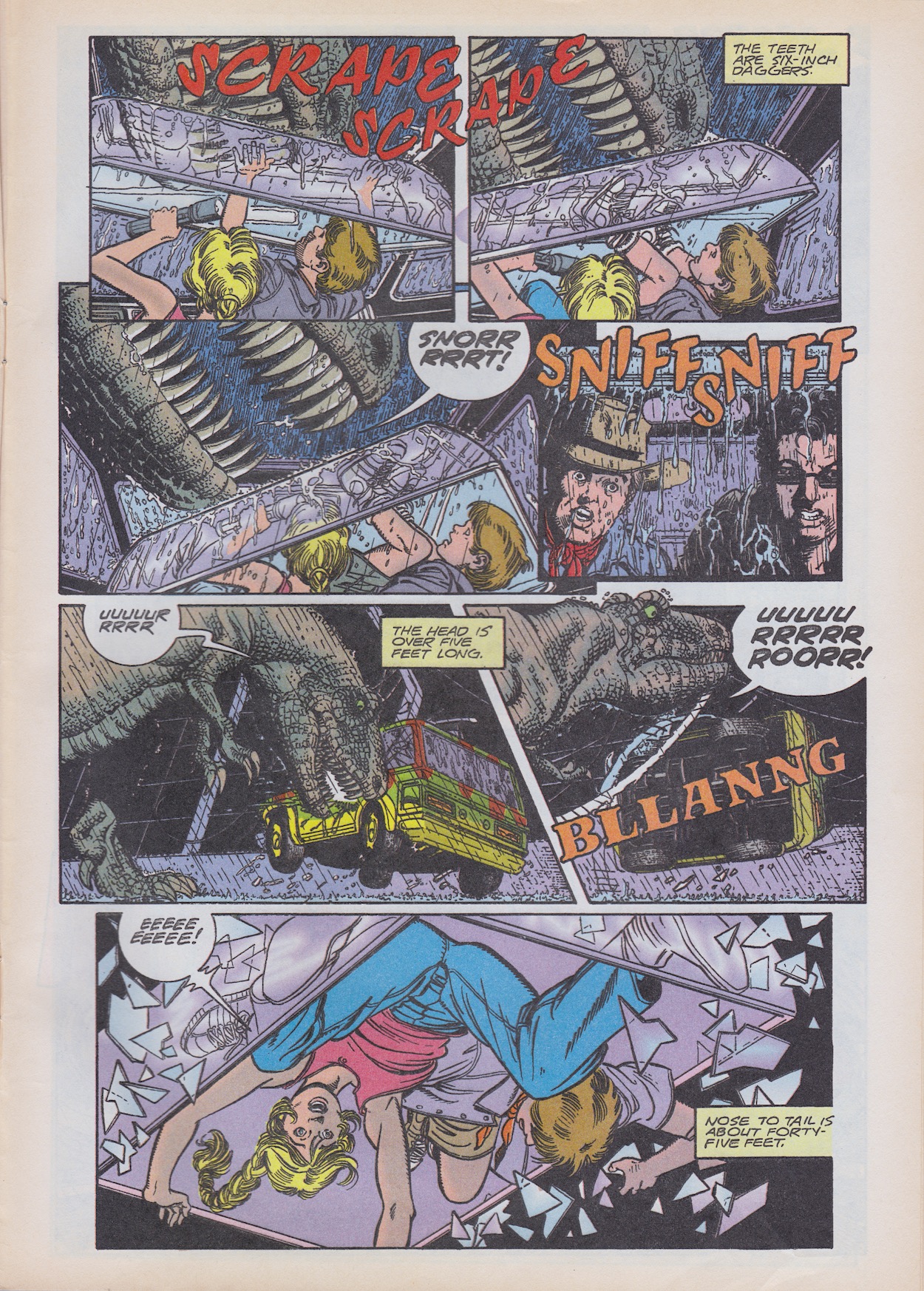
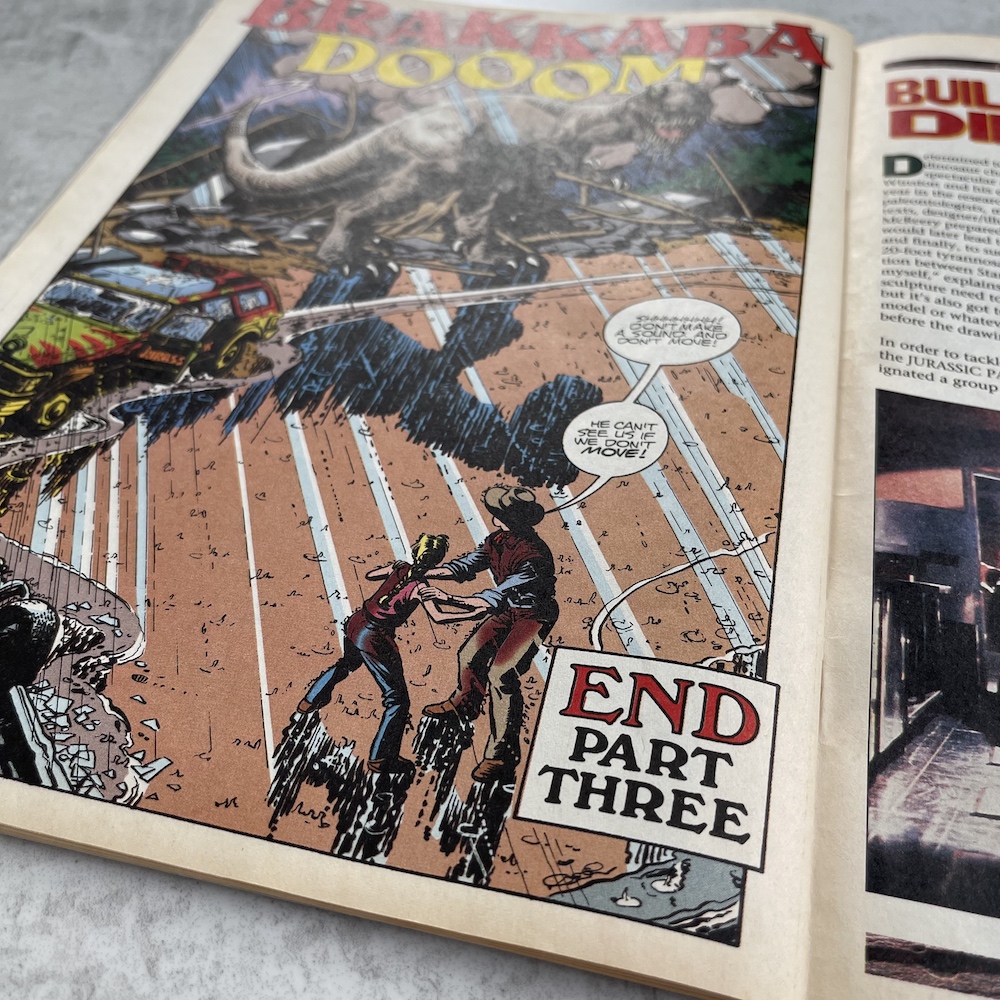
Last month the Tyrannosaurus rex attack was brilliantly handled with plenty of building tension and atmosphere so I was looking forward to seeing how the final act would begin. The opening is great, with Mrs Rex towering above Dr. Alan Grant and Lex, both trying to keep completely still.

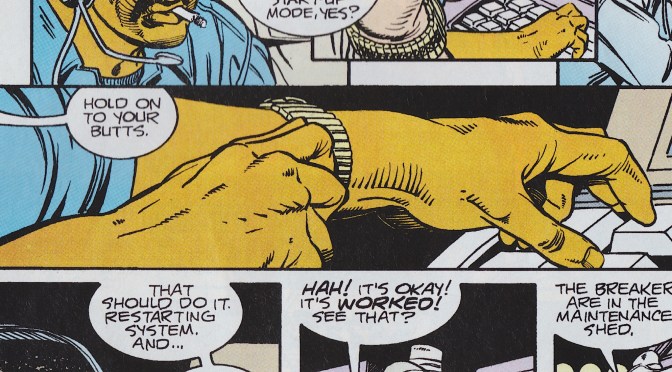
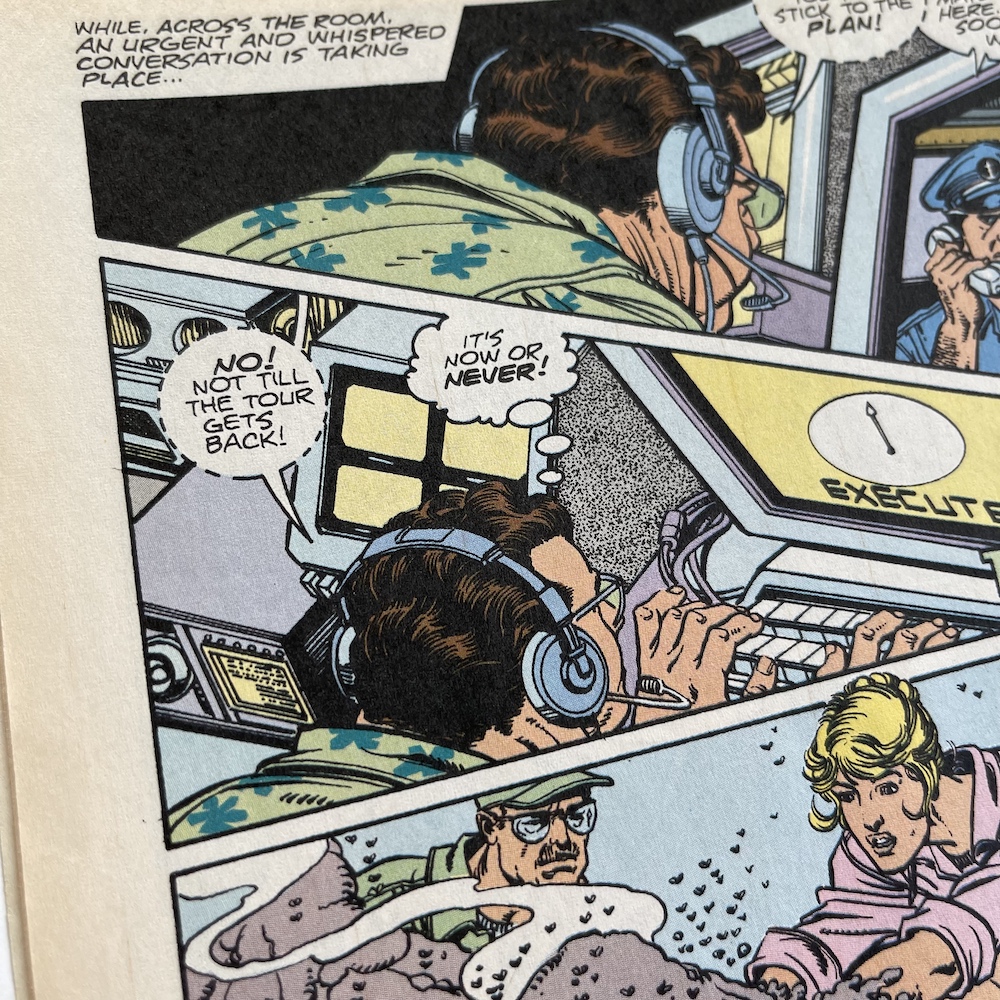
It’s all going so well until those final couple of panels. The sequence in the tree with Tim trapped in the Explorer has been completely excised! So it plummets to the ground instead and then he’s just unbelievably pulled out and off they go. Alan even has a map at hand to make their trip back to the Visitor’s Centre quicker, which is a rather cheeky shortcut. In previous issues scenes had been moved about, moments edited, others added to, all in order to properly adapt the film to the comic page and I’ve been really positive about it. But all throughout this issue huge swathes of story are just missing or reduced to a shadow of their former selves.

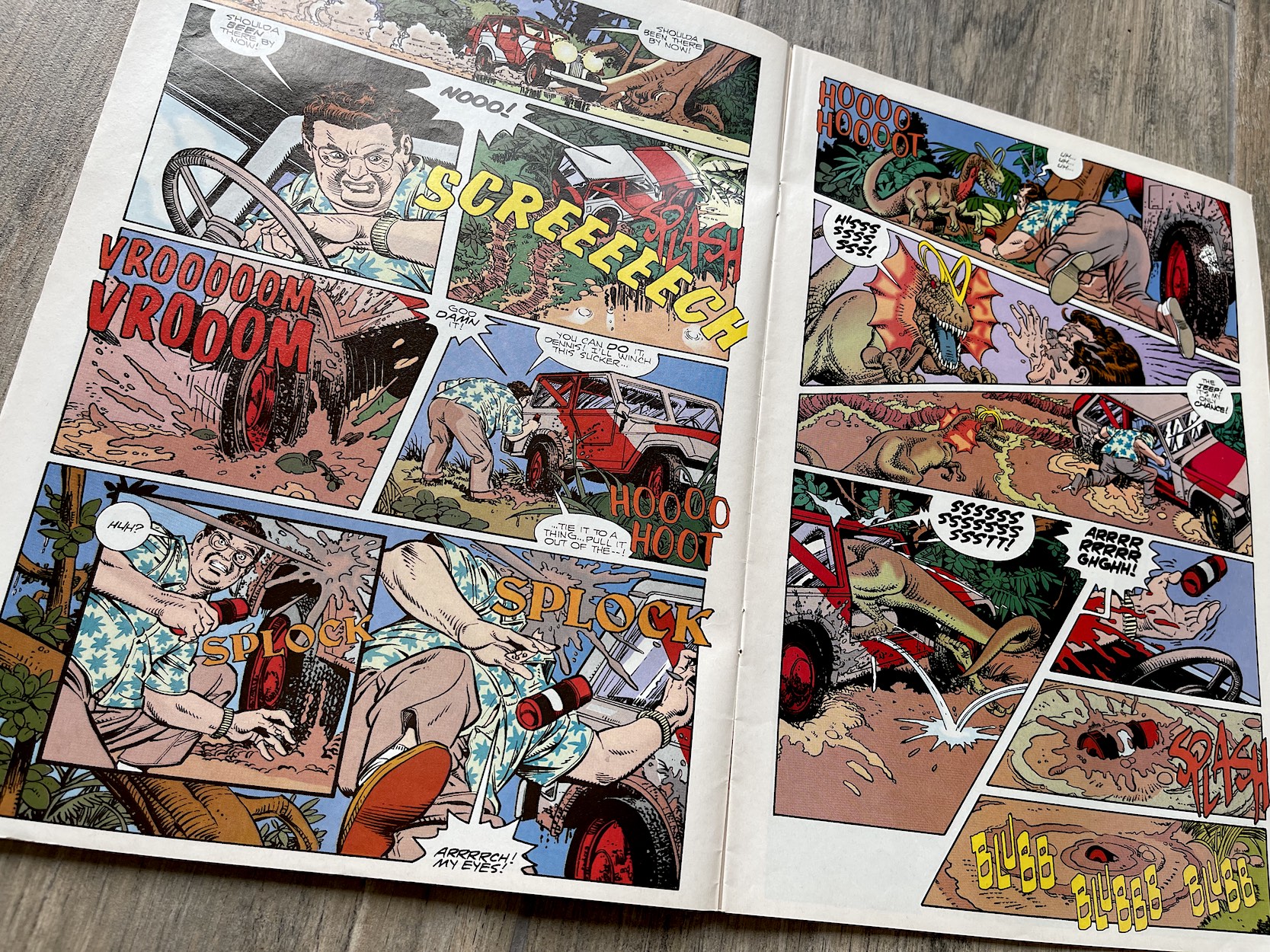
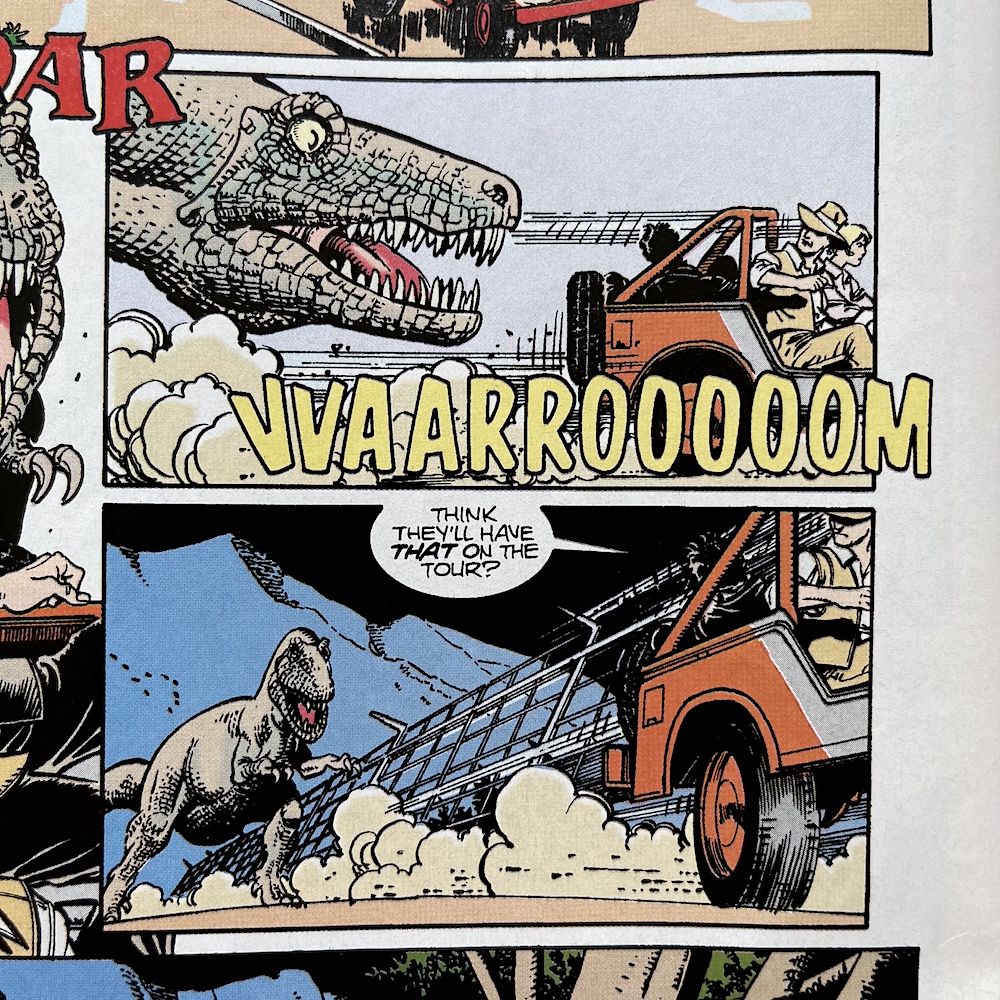
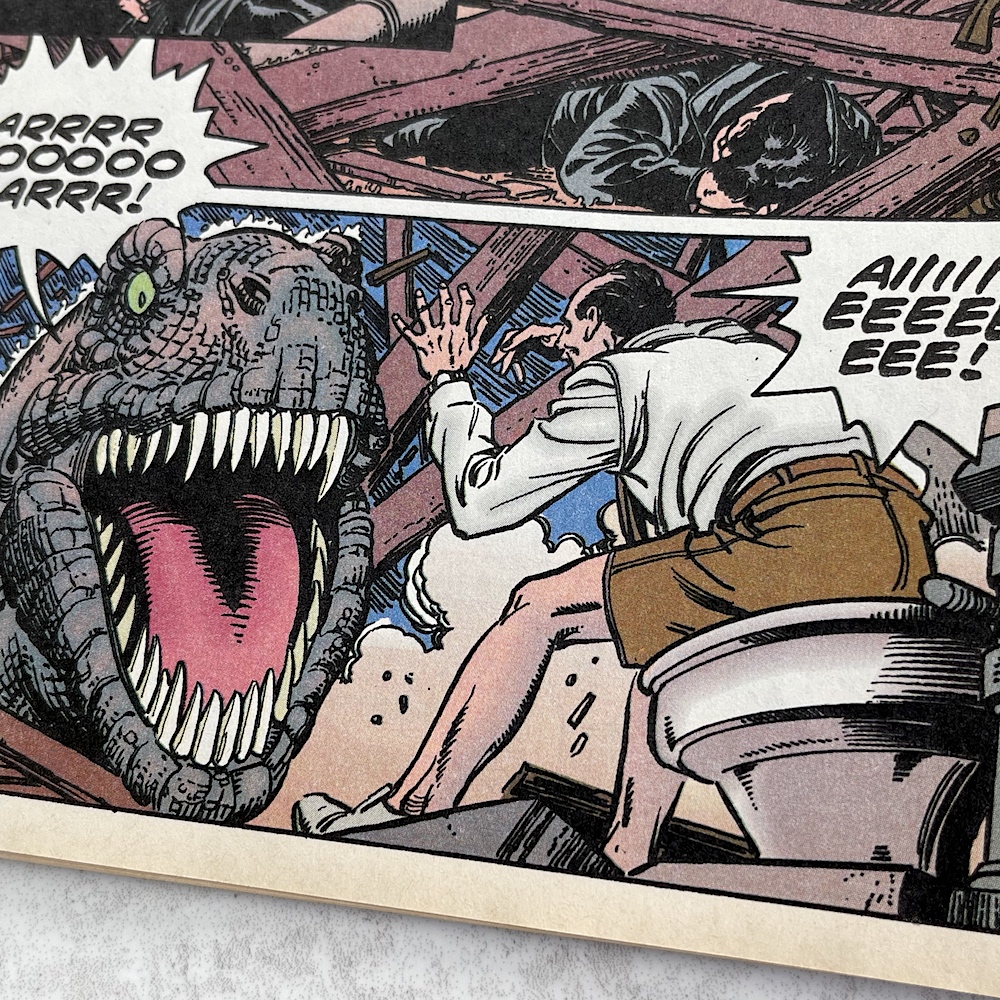
Case in point is the fatal encounter between Denis Nedry and the Dilophosaurus. The movie scene included plenty of misdirection and humour, putting the audience at ease before the shock, and that wouldn’t have been easy to translate here but they could have tried. Instead this very famous scene only gets two pages. It’s a very basic sequence now; the dinosaur may as well be a lion. Denis gets attacked as soon as he steps out of the vehicle, he jumps back in and we actually see the Dilophosaurus jump in after him (ruining the final moments of the original) and… well, that’s it.

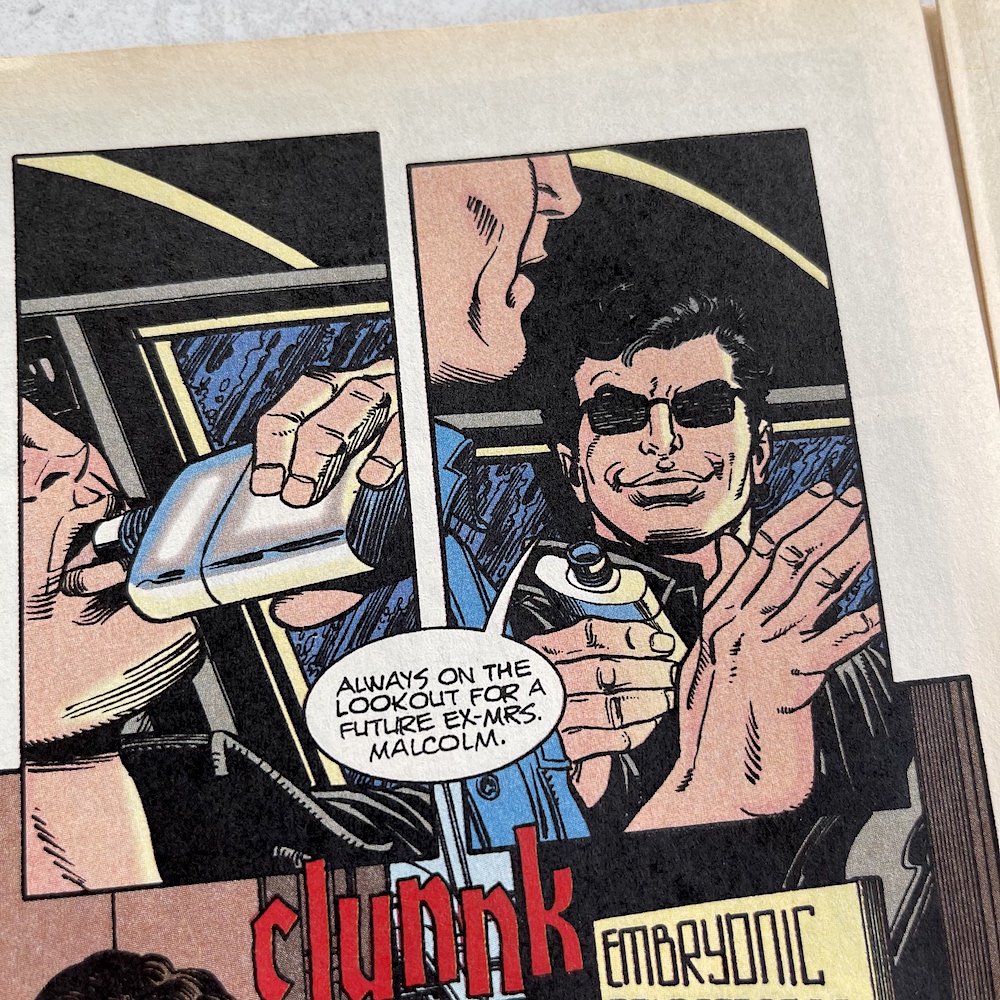
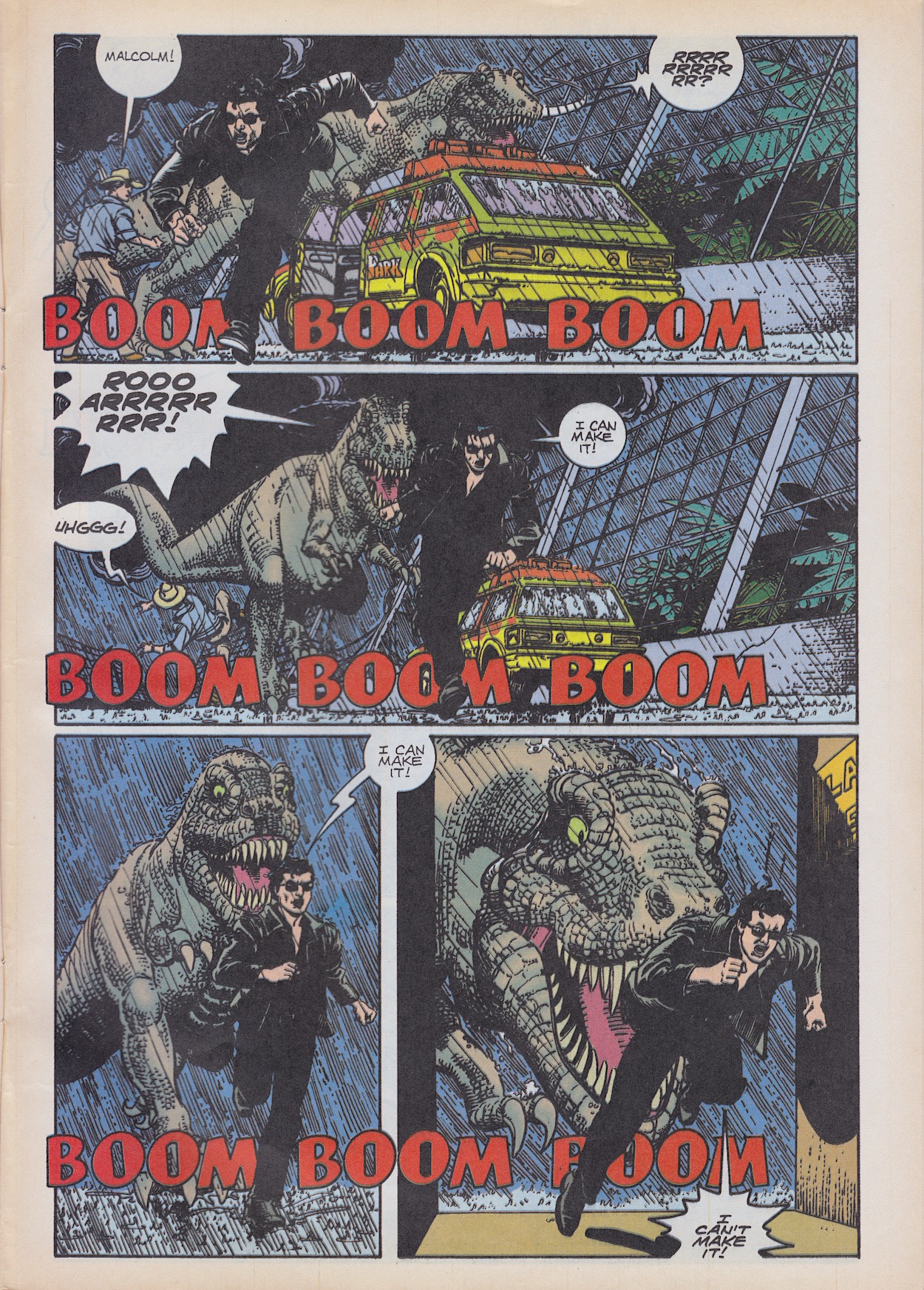
This truncating happens to basically every major moment, whether it’s the nighttime meeting with the Brachiosaurs, rescuing Dr. Ian Malcolm after the T-rex attack, even the electric fence scene (as you’ll see below) and Robert Muldoon‘s stalking of a Velociraptor. Each are reduced to fit on a page or two and basically follow a set pattern of only showing the first and last moments of the scene and erasing everything else, including almost all the humour.


“Think they’ll have that on the tour?”

Dr. Ian Malcolm

Right back at the beginning of this adaptation I stated how I didn’t usually like comic versions of films and this was the reason why. But up to this point Jurassic Park had been the exception to the rule, with a proper restructuring of the film to suit the format and it was working a treat as a comic in its own right. Maybe if they’d had five chapters instead of four (in the original US comic) it would’ve worked out differently, but then again maybe the pacing could’ve been plotted out better by writer Walter Simonson and story editor Jim Salicrup. Yes, having all the dino action in the final chapter would, in theory, make for a big climax but there’s just too much of it to fit in.

The result is a clichéd comics adaptation where it feels more like a way for people to reminisce about the movie they saw in the cinema months previous, rather than working as a good comic book. If I sound overly critical it’s only because the team had been doing such an amazing job so far, even adding in extra dialogue from either the original novel or earlier drafts of the script. So it’s more disappointment than simple negativity.

Don’t get me wrong, there are still things to enjoy here. It’s all on a lovely high quality gloss paper stock this month, some of the best lines from the film are still intact and the art in the first eight or so pages is top notch. However, in the second half even legendary artists Gil Kane‘s pencils and George Perez‘s inks start to feel a little rushed and Tom Smith‘s colours feel unfinished and flat, leading me to believe they were working very close to the deadline of getting the original US series out in time for the movie.

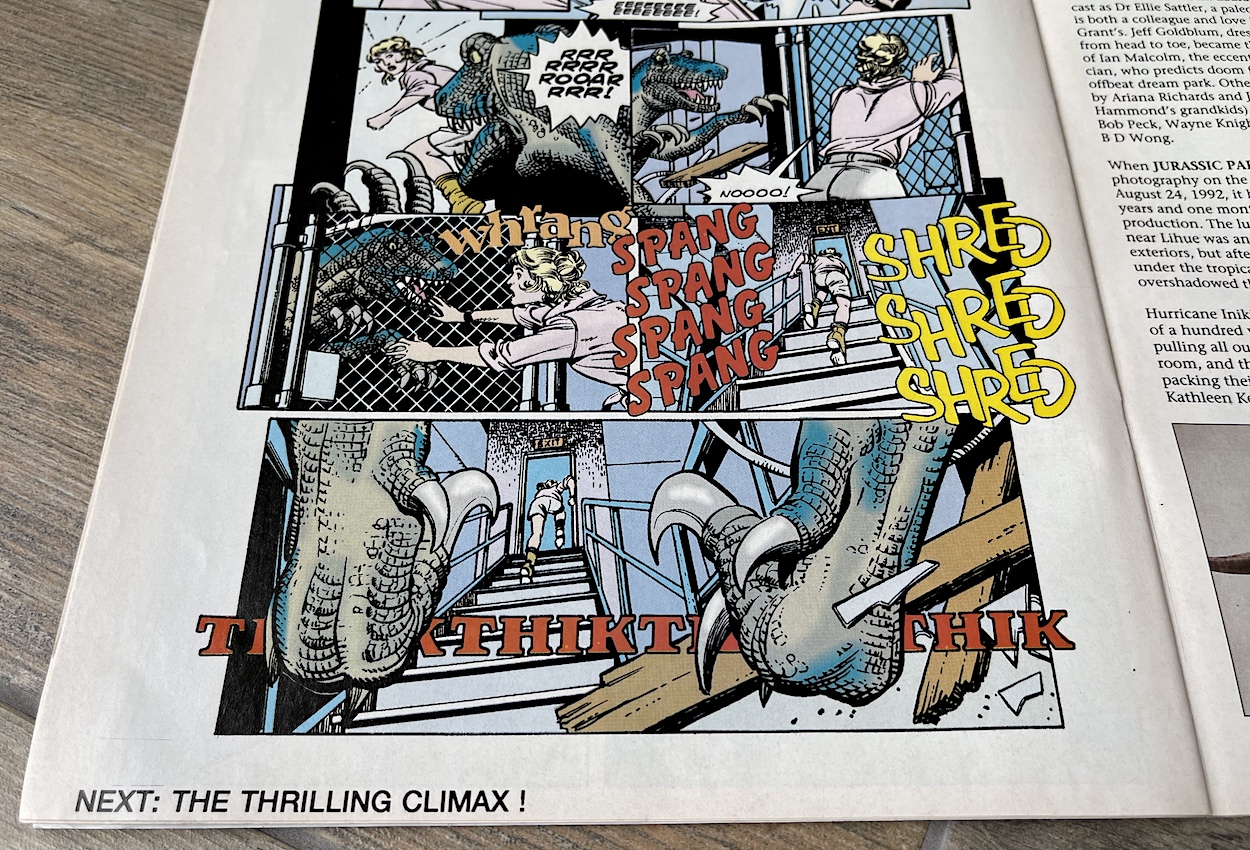
The chapter is cut off with a superb cliffhanger though. The view of a Velociraptor‘s feet as it chases Dr. Ellie Sattler is just as unnerving as it was in the film. It’s a shame then the terrifying Velociraptors, when viewed in full, are reduced to looking like miniature T-rexes. Below is this final scene with its positives and negatives, alongside that fence scene with the dramatic resuscitation of Tim also taken out.

I also noticed Ray didn’t volunteer to go to the maintenance shed as he did in the original story, where he met his grisly end. Instead Muldoon and Ellie head off while Ray looks on silently. This means he’s still alive, a big departure from the film. It’ll be interesting to see how that effects the rest of the story next month.

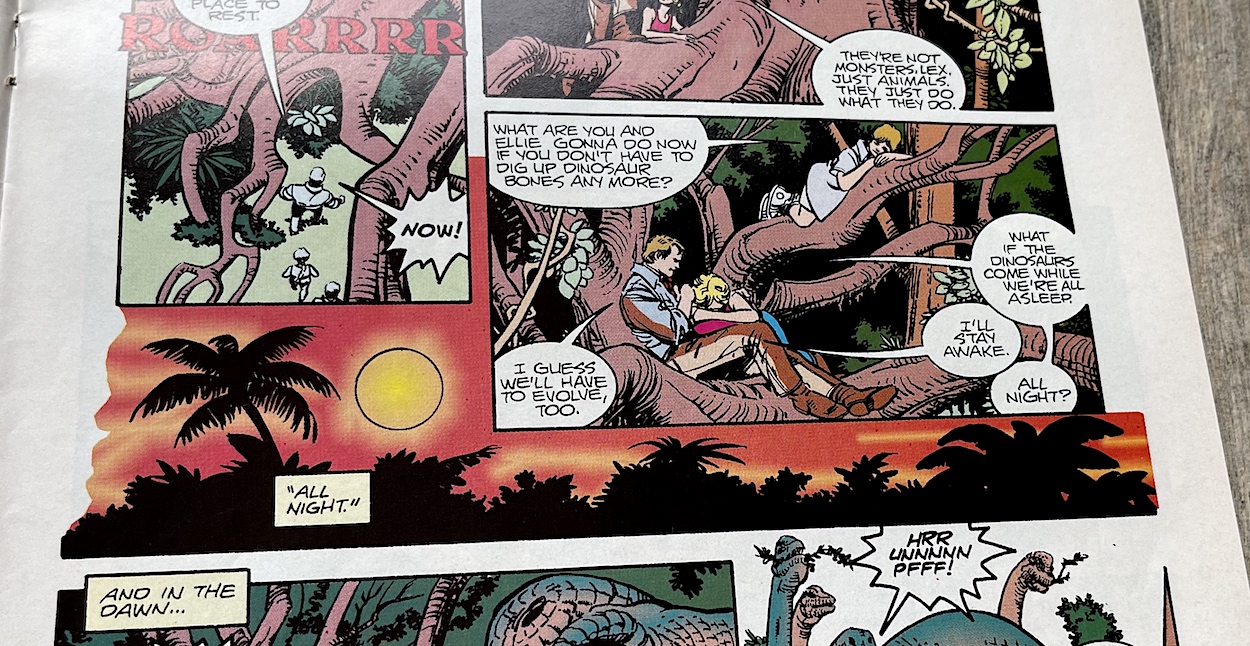
For now, the sun sets on the adaptation as we move on to something else entirely

With 16 pages to the main strip I assume there’ll be roughly 12 or 13 next month unless the final chapter was given a few more pages in the original American Topps Comics publication. Either way there’s a lot of the film left to cover in half a chapter. The kids and Alan are still out in the park which means their return, the kitchen scenes, the chaos of the Velociraptors in the Visitor’s Centre and the climax are all to come.

I’ll still hold out hope things can be turned around because so far it feels like spending 90 minutes being completely engrossed in a film only for its ending to let you down. Which of course is not what happened with Jurassic Park! For now, the sun sets on the adaptation as we move on to something else entirely.

In the early days of Marvel UK‘s Transformers its back up strips were in some way related to the robotic theme, such as Machine Man or Iron Man. It wasn’t long before it instead became a way of bringing some of Marvel’s other US characters to these shores for the first time, but Jurassic Park kept its strips dinosaur-themed, much to the delight of teenage me. The second back up would appear in my first issue (#6) but here readers were introduced to Mark Shultz‘s Xenozoic Tales.

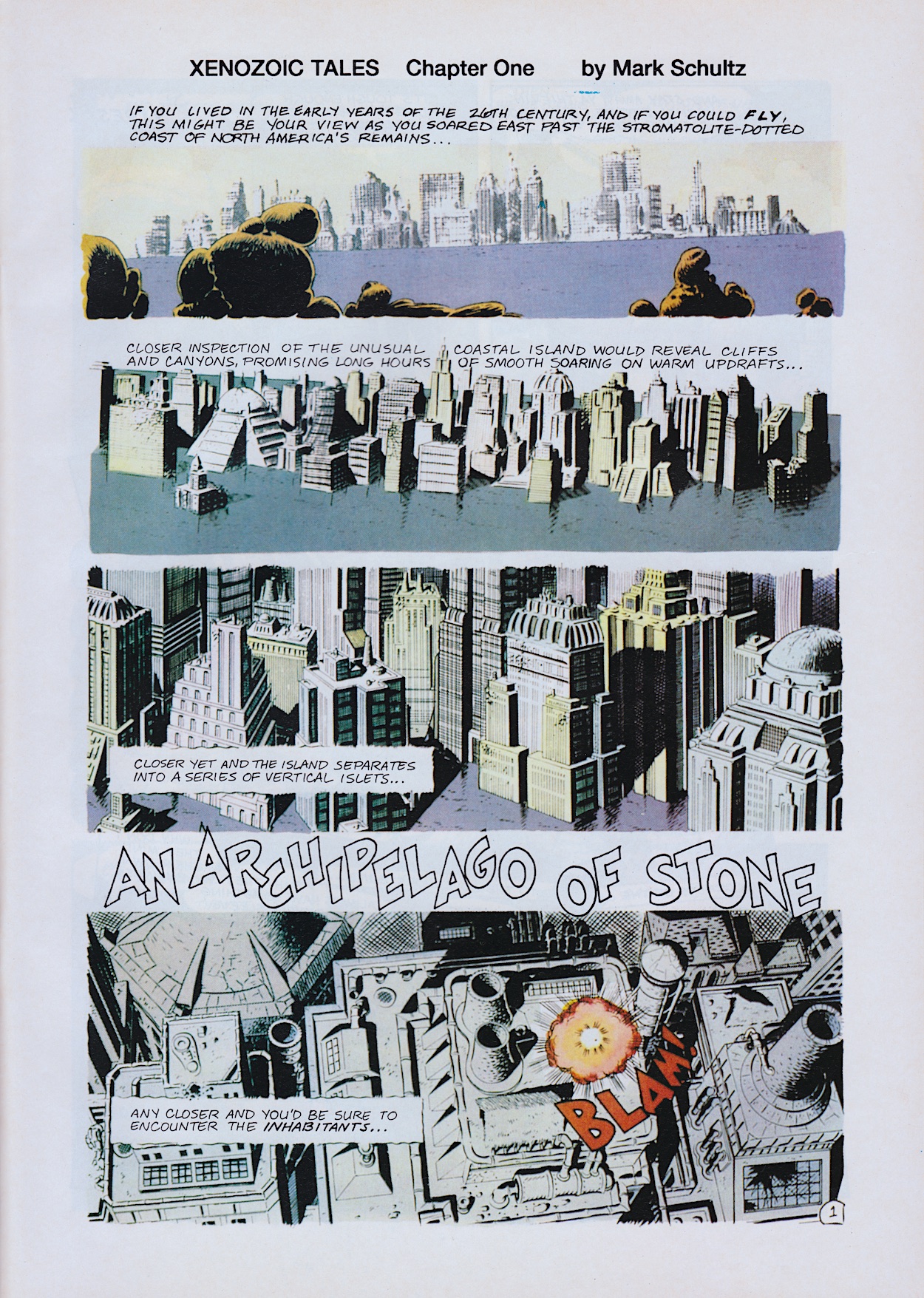
Later adapted into a cartoon TV series called ‘Cadillacs & Dinosaurs‘ it was an independent, alternative title Mark wrote and drew himself, running for 14 issues irregularly released between 1987 and 1996. Most of the strips were printed in black and white but Jurassic Park brought in artists to colour them exclusively for UK readers, this first one coloured by Ray Fehrenbach. This complete story was the first one written by Mark and what an introduction to something brand new this first page was.

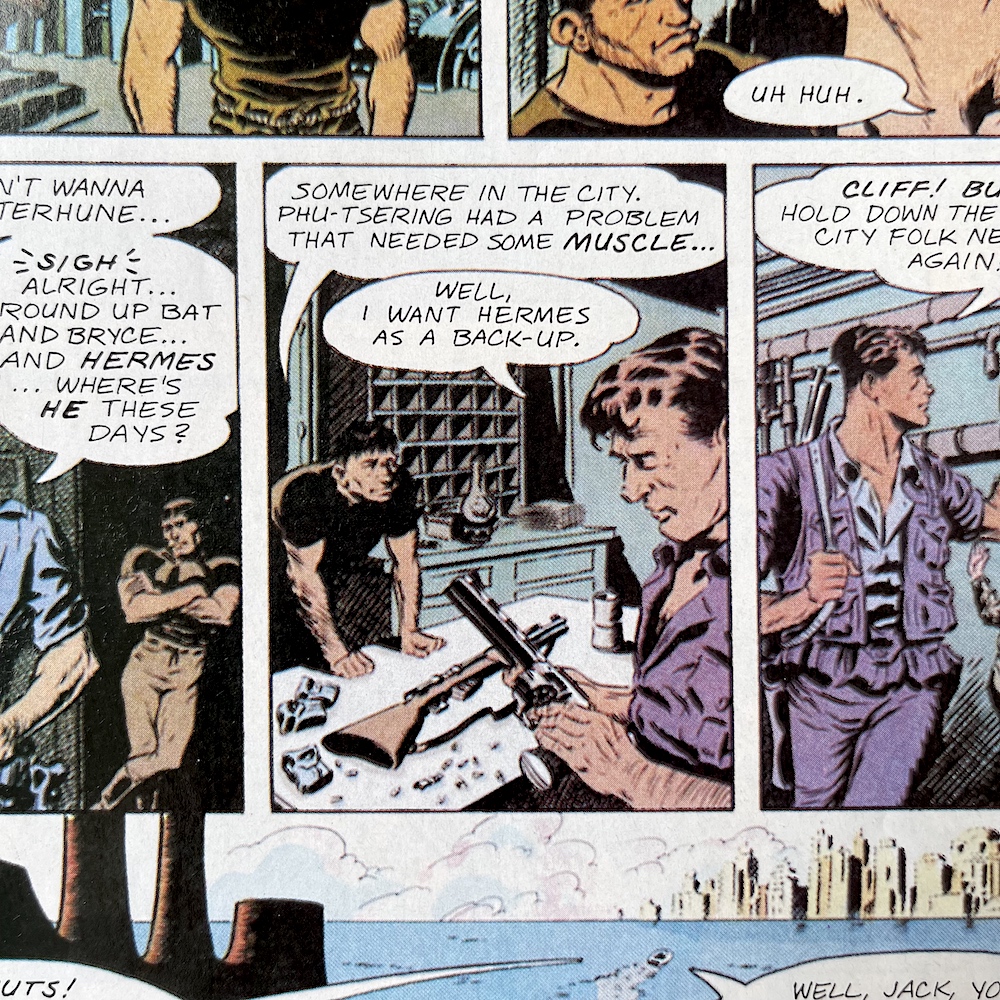
Set in the 26th century, global warming has resulted in sea levels across the globe forcing humans to initially build underground. After 600 years they’ve reemerged to find their cities flooded, technology virtually non-existent and strangest of all the world is populated by dinosaurs once more. Anyone capable of mechanical work is seen as invaluable and this is where Jack Tenrec comes in, a car mechanic with a penchant for Cadillacs. Thanks to these skills he acts as an unofficial head of security and advisor to his tribe’s leaders and lives on an outcrop (formerly high hills) not far across the water from An Archipelago of Stone, the home of the tribe and in reality the remains of New York City.

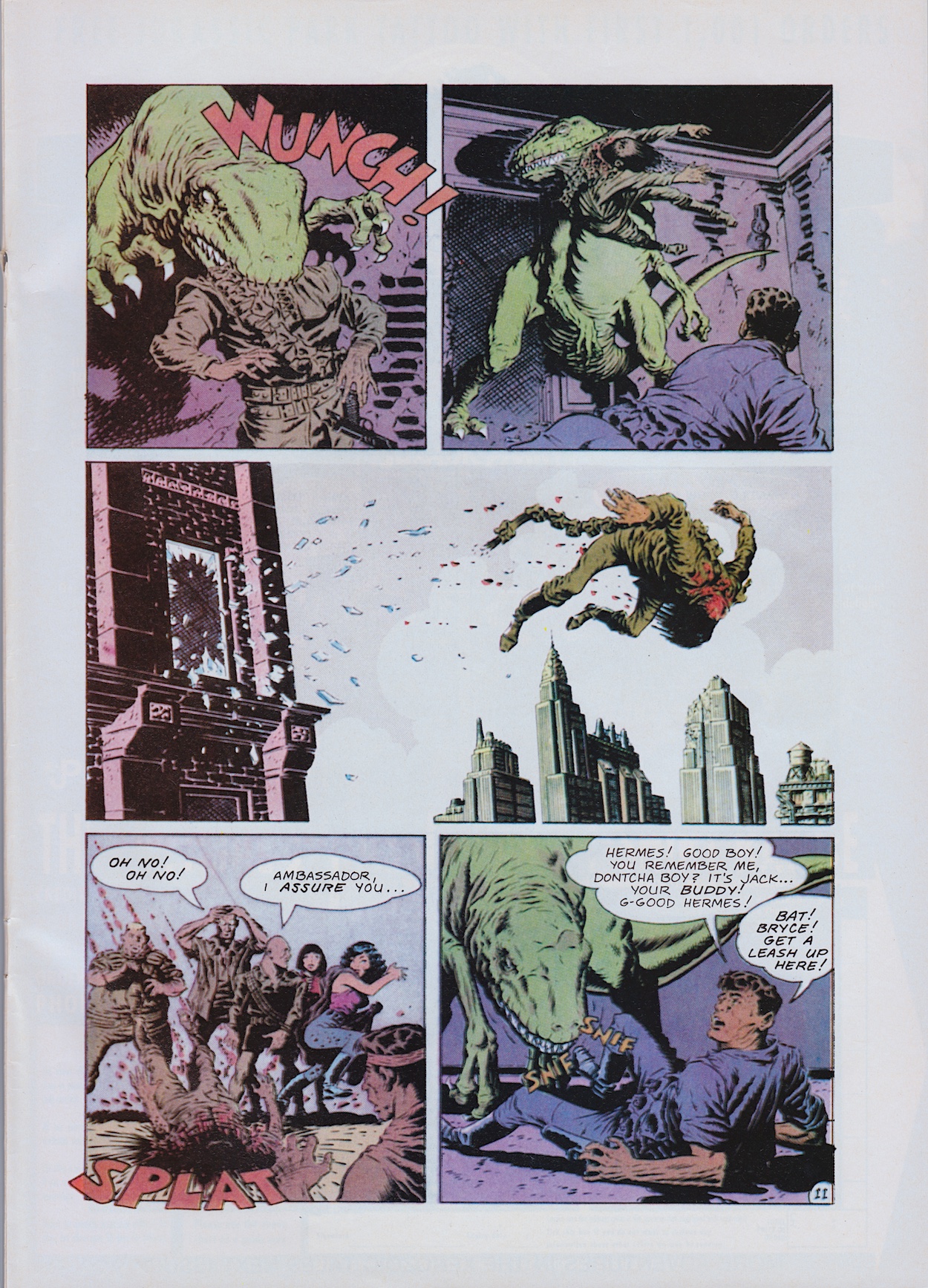
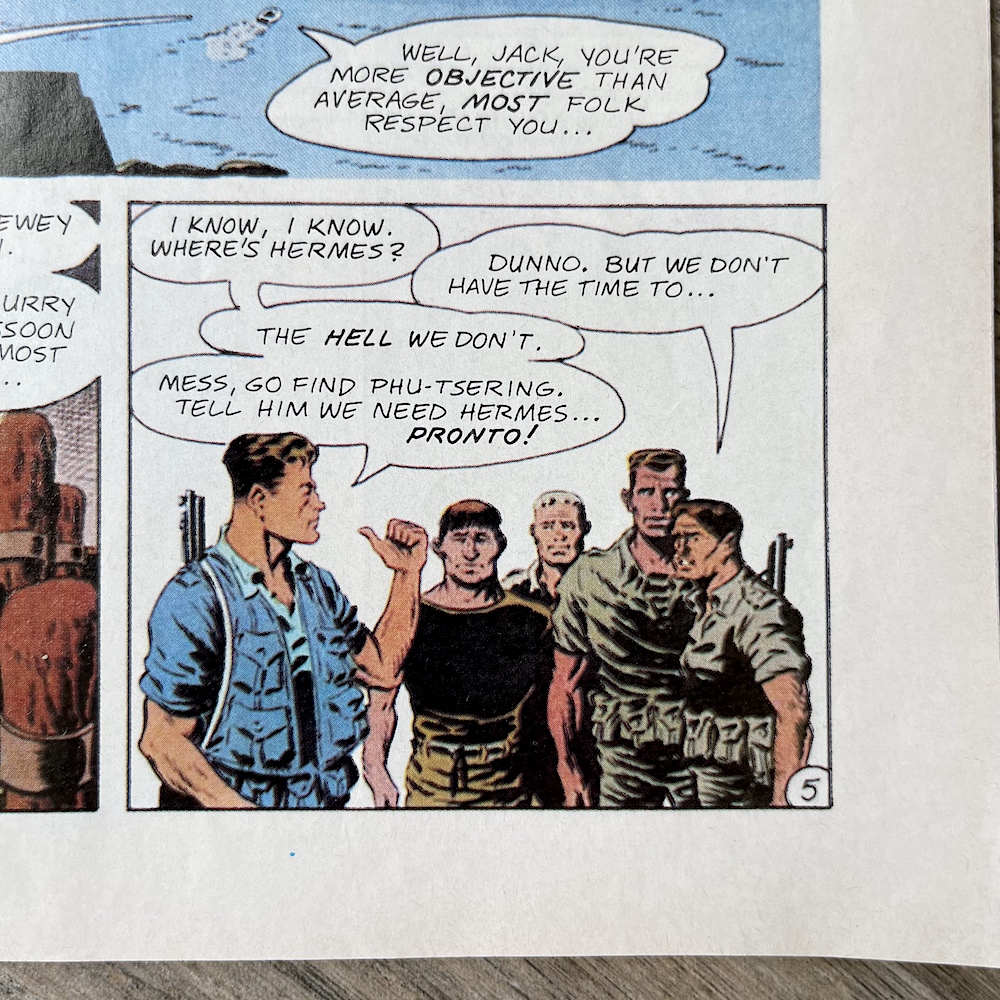
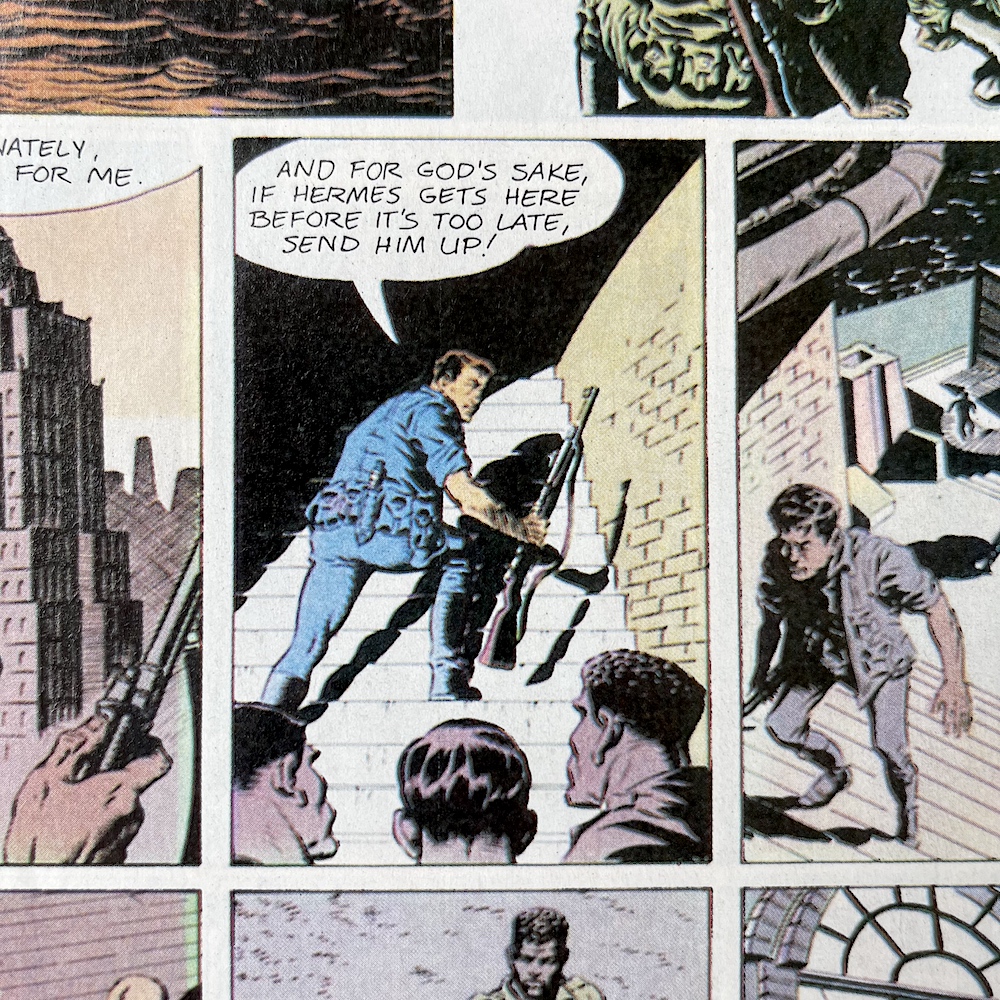
I love that first page, cleverly written from the point of view of a Pterodactyl. In the story a neighbouring tribe’s ambassador, Hannah Dundee arrives at the City in the Sea and a team of poachers who had previously stolen from her Wassoon Tribe want her dead before they’re found out. It’s up to Jack and his men to stop them. All the way through this strip, knowing he’s about to get in way over his head, Tenrec keeps telling his men to send someone called Hermes to help. Then, just as it seems he’s doomed a surprise arrival bursts in. That’s Hermes!

Well I certainly didn’t expect that. Hermes the Allosaurus disposes of the villain, munching on his head and throwing him out the window, before Tenrec thanks him, revealing who this is. That doesn’t mean he’s a pet of course and the usually cool and collected Jack knows it.

It’s brilliant stuff. Original, fun and surprising, introducing the main protagonists, the unique setting and the cast of regular and semi-regular guest characters, all in 12 pages while maintaining an interesting story and racking up tension is rather a phenomenal feat. No wonder Xenozoic Tales is so highly regarded even to this day. It may at first seem like a strange choice for Jurassic Park’s back up but it works perfectly and as a teen I remember being engrossed with the slowly developing back story that would become more apparent in later issues. (Sadly, Hermes never reappeared.)

In between the two strips is this month’s look into the making of the movie, covering the famous disaster that hit Hawaii and the relief efforts the producers helped coordinate, plus the building of sets and the end of principal photography. At the very end of the feature is the teeny tiny box with the date of the next issue including a little tease that things were afoot for the future of the comic.

Thankfully they didn’t say “great news for all readers” or we’d have got the wrong idea. With these couple of pages, a long main strip and a back up it really does feel more like the kinds of UK comics we were accustomed to at the time. I may have enjoyed the extras more than the adaptation this month but I know from memory that what’s to come from Jurassic Park made this one of my very favourite comics growing up. So stay tuned for some terrific stuff from Isla Nublar, as well as from the far future and soon the distant past too!

The fifth issue and the conclusion of the movie storyline will be stomping its way on to the blog in one month on Tuesday 26th October 2021.

iSSUE THREE < > iSSUE FiVE

JURASSiC PARK MENU

RiNG RAiDERS #1: TiME FOR TAKE OFF!

When I launched the blog I was nervous about doing my favourite comic (OiNK) justice. The same applies to this one. Ring Raiders remains my other very favourite comic from childhood, fondly remembered and frequently reread. Some might look at it and only see a short-lived comic based on a short-lived toy line and dismiss it, but over the next few months I hope to show you it deserves to be remembered.

It began for me with this gorgeous cover by Ian Kennedy (Dan Dare, Eagle, Commando). I have very clear memories of discovering it in the newsagents, in awe of how my toy planes had been depicted. I went into this in more detail in the introductory post to this series, where you can also see which plane I got free (it’s the orange one that takes a starring role in the TV advert). I can remember spending a while sitting on the shop floor with all the issues in front of me, deciding which one I’d buy based on the planes. Happy memories.

At 24 pages it was a little thinner than other Fleetway comics but it was all gloss instead of the usual matt paper and contained a lot more colour. I remember the pages felt huge in my hands too. Each issue contained five strips; two colour three-page serials, two black and white four-page serials and a complete five-page colour strip in the middle, then a letters page, pin-ups and adverts for the toys and Next Issue promo. It felt jam-packed. So let’s take a look at each of the stories in turn.

Shock Attack is a quick one-off introduction to the comic written by editor Barrie Tomlinson and drawn by Carlos Pino (Johnny Red, War Picture Library, TV Century 21) and that first panel in the first story of the first issue is really rather good. The story is a quick fix of action which followed on from the preview comic and had the Wing Commanders battling each other again rather than with their designated teams.

Set in the then future of 1998 the Skull Squadron leaders are attacking a Euroforce base but the Ring Raiders swoop in to save the day and the Skulls retreat through time to the age of the dinosaurs. Followed by the Raiders and terrified of having to bail out in this time zone after two of them are hit, they flee.

If the comic had continued this could’ve set up a brilliant way of killing off (kind of) older characters while also keeping things open for a possible return. As you’ll see over these real time reviews plenty of characterisation is given to these pilots away from their planes, so having one trying to fend for themselves out of their time could’ve made for an interesting story on its own later on.

It’s truly epic in scale. I distinctly remember its scope really exciting us

Throughout all this, back in ’98 TV camera crews fill in their viewers (and the readers) on a brief history of the opposing sides. Skull Squadron were formed in the mid 90s and see themselves as a potential new world power, which they try to achieve by manipulating history to their advantage. The governments of the world formed the Ring Raiders and, upon learning of the enemy’s ability to time travel built the Air Carrier Justice, a massive flying base which also traveled in time and recruited the very best pilots from the past, present and future.

This was the main selling point of Ring Raiders, the whole point of this set up and it’s truly epic in scale. It was a nice story idea for the toys and acted as a way to inspire collection of every type of plane. For a comic, I distinctly remember its scope really exciting us.

The second strip is the first serial and would be the longest in the whole series at eleven episodes and 44 pages in length. Professor Martin has accidentally created a chain reaction capsule, a Doomsday Device which is being launched into the safety of space when Skull Squadron blow up Cape Canaveral in 1990. With the device now grounded permanently at the prof’s cabin Blackjack‘s Havoc Wing is dispatch to steal it. Aboard the Justice, Ring Commander Victor Vector (that’s him on the cover with Skull Leader Scorch) sends Joe Thundercloud‘s Rescue Wing in pursuit.

Apart from the tiny little fold out comics that came with the toys, up to this point all we really saw of the pilots behind the planes was the one pose each Wing’s leader had on their packaging. When I read part one of Trackdown for the first time it was such a thrill to see these guys come to life. More than that though, the comic starts to create its own characters for the unnamed pilots who flew the other three planes in each four-plane toy pack.

In fact by the time this chapter ends the main characters are both original comic creations by the name of Freddy Riley of the Raiders and Runtz, one of Blackjack’s wingmen. I certainly didn’t expect one of the hero planes to be shot down in the first issue. It’s a spectacular crash and a really exciting opening chapter for the comic as a whole.

Trackdown is written by Angus Allan (TV-21, Look-In) and brought to life by John Cooper (Battle, Scream, Judge Dredd). As a child it felt like the battle and the crash of Riley’s plane had real world weight to them. This was in stark contrast to the cartoon. I’m reminded of how the G.I. Joe comics of the 80s would feature bullets and characters would often end up injured or worse, but in the cartoon every gun (no matter which model) fired lasers and no one was ever hit. The Ring Raiders cartoon was the same, so to see the toys being treated more seriously here made me an instant fan of this over the animated series.

Across the page from that cliffhanger is the first of the complete tales and when seen side-by-side the good guys seem to be having an off day, this story beginning with another rough landing. Yasuo Yakamura was the first character to get a background story and I couldn’t have been happier because, as I’ve detailed previously, his X-29 came in the Starter Pack that began my collection and would remain my favourite, his Wing also being the first that I bought.

I was surprised the leaders weren’t the first to get this treatment but perhaps Yakamura was a fan favourite, or perhaps the fact his past would actually be set in our future, allowing them to have a full blown sci-fi strip for the premiere issue helped with their decision (complete with lovely retro 80s futurism). Over the course of the comic’s life these complete tales would switch from sci-fi to war drama to horror and everything in between.

Yasuo was known for embracing computers, his aircraft kitted out with the latest tech only he could control. Written by Scott Goodall (The Phantom, Commando, Scream) and drawn by John Gillatt (Tiger, Eagle, Wildcat) the story focusses on why he defended the robotic landing system even though it nearly cost him his life. Initially distrustful of automated technology, during a war with an alien race called the Draxion in their Bushido Bats he was forced to take a small robotic co-pilot after losing his partner.

Yasuo seeks revenge but the robot chastises him for putting that above the mission and Yasuo loses his temper, resulting in loss of concentration and they’re shot down. Left for dead by his human comrades he watches as the robot builds him a glider, only to stay behind and fend off the enemy alone, inevitably being blown apart. The story touches on how this set Yakamura on a path to studying robotics and computers and how he became the logical and cool headed pilot Vector would eventually recruit and bring back to our present day.

The serials would develop the characters further over time but these complete stories were the perfect way to delve into a particular aspect of their personality, helping to build layers across the various stories and issues.

No comic of the 80s would’ve been complete without a letters page answered by a fictional character who could be as cheeky or irreverent to the readers as they dared. Barrie’s titles never disappointed. In his book Comic Book Hero he explains how he loved creating various ways for readers to interact with his comics. For this comic he chose to have a different character in charge every issue, switching between the Raiders and the Skulls every fortnight. Instead of letters, issue one had this introductory spread with images taken from the toy packaging.

Barrie was editing freelance from home under the name Creative Editorial Services and had brought in Terry Magee (Commando, Battle, Cor!!) to assist with editorials. Together they thought up some ingenious ways for readers to have their say. There were chances to apply to be a member of either side, or to design a new plane for the good guys or a super weapon for the bad, or they could draw a battle scene with their choice of victor or even write a short story. A very short story. There was a 150 word limit, or 155 words for the Skull Squadron who boasted, “That’s five more words than Ring Raiders allow!”

After a two-colour pin-up and the obligatory Next Issue/newsagent coupon page (boasting of the free posters to come in #2 and #3) we move on to the next two stories.

Barrie’s son James Tomlinson (Eagle, Super Naturals, Scream) went by the name ‘James Nicholas’ at the time and is an aviation enthusiast to this day. This is clear in the strip he wrote, Bomber Blues. We’re not sure what began the fight between Wing Commander Cub Jones and Skull Leader Hubbub but it doesn’t matter. Appearing in the skies above the English Channel during World War II, this was just about as perfect an introduction to the whole concept as you could wish for.

In contrast to the other strips this one takes place entirely in the air and sees a B-17 Flying Fortress Bomber become accidentally caught up in the battle between the futuristic craft. Really, what is there not to love about this? We even see one of the Rebel Wing pilots parachute out, becoming lost in the past just as I theorised above. The action is intense and culminates in one of Cub’s wingmen colliding with the bomber. Damaged but now with a clear sense of sides, the bomber crew come to the rescue of the Ring Raiders. All of this great, original action is brought to detailed life by Don Wazejewski (Battle, Mask). Beautiful stuff.

Fans of the toys who had purchased Cub Jones’ Hero Wing or anyone who had closely read the introductory spread above will have worked out this was set in the same year that Cub was originally beamed aboard the Justice. There’s no direct reference made to this in the story but it’s no coincidence and Cub’s affection for the bomber crew is made abundantly clear in the final panels when he gives them a ring through which they can summon him.

The only slight disappointment is the way the leaders call their wingmen by their identification numbers instead of actual names, which feels a little off after Trackdown went to the trouble of creating new characters. But it’s only a minor quibble.


“Let’s give them a hand! All gunners open fire!”

World War II F-17 Bomber crew rescuing the Ring Raiders

Apart from characters holding their ringed hand aloft as they head to battle this is the first time we see a ring properly mentioned. One of the many uses they had was as a communicator that could cross the globe and periods of time. When the comic was released I knew from the toys some of the other things the rings could do in the story but I like the fact the comic introduces these slowly one at a time. The same goes with the various characters and Wings.

As a result, nothing feels forced, nothing feels like it’s exposition and in that regard the series has a surprisingly mature way of layering in all the information needed to introduce this new world. As you’ll see across these six issues (which would’ve all been regarded as early issues if it had lasted, so kudos to Barrie and his team for hitting the ground running) the layers are added upon slowly, each new issue bringing new character, story and background developments. It’s a far cry from something like the early issues of Transformers five years prior which bombarded readers with everything they needed to know all at once, which felt very forced.

The final story is Freedom Flight, written by another long-time collaborator of Barrie’s, Tom Tully (Johnny Red, Bad Company, Dan Dare). Sandy James‘ art style will also be familiar to anyone raised on IPC or Fleetway licenced comics such as Teenage Mutant Hero Turtles Adventures or Mask. His colouring in particular is just magnificently bold.

The intervention of Skull Squadron is starting to change history, potentially destabilising the future of the country

Here the main characters are Commander Yuri Kirkov and his Freedom Wing, who go up against Skull Leader Mako‘s Vicious Wing. The former was an instant favourite among fans given how the final years of the Cold War were still playing out and Kirkov was a Soviet Air Force major who had defected to America before Vietnam. Mako’s MIG-29 was a personal favourite toy with its shark motif and the fact the info on his toy packet stated there were “rumours” it could operate underwater.

History books tell of a South American government fort which easily defeated ruthless rebels in 1966, however the intervention of Skull Squadron is starting to change history, potentially destabilising the future of the country. Kirkov discovers the tide of battle is about to change forever when Mako’s missile hits the fort. The situation is dire. While it’s only three pages a lot happens, with these gloriously dynamic final panels providing not only a superb cliffhanger but the perfect end to the entire issue.

These panels take up about a third of the back cover and it’s a gorgeous display to end the issue on. The action, the distant fire, the detailed face of Kirkov compared to the basic toy design, as well as the interesting plane angles all beg for more.

Barrie explains in his book how he found the fortnightly schedule of Wildcat interesting and wanted longer stories in its 32 pages to hold readers’ attentions for the two weeks, compared to the three-page tales of Eagle. As a result each of its stories were five or six pages in length. Ring Raiders was also fortnightly but had 24 pages to fit in just as many stories. But there was so much packed into each one that we never felt short-changed by any of them.

I was also collecting the weekly Transformers which contained three stories of roughly five pages each. Ring Raiders felt like a much meatier read and after this first issue I was an instant fan. I had already known I would be though and the regular order had been placed when I purchased the issue. I hope you’ll join me on a regular basis too and return on Thursday 30th September for #2 of a bloody brilliant comic.

MiNi-COMiC < > iSSUE TWO

RiNG RAiDERS MENU

RiNG RAiDERS: PREViEW MiNi-COMiC

That logo brings back so many happy memories. For a while back in the late 80s and early 90s I was obsessed with the Ring Raiders toys by Matchbox and I even cut out that name from the box of one of the bases and stuck it to the outside of my bedroom door. Some kids had their names on their door, but not me. Like I said, I was obsessed. You can find out more about the Ring Raiders toys (and merchandise) in my introductory post.

The real time read through of the short-lived but truly brilliant comic series begins today with the issue of Eagle dated 16th September 1989 (on sale 9th September). A banner along the top of the cover alerted readers to the free gift inside, one that would signal the release of the brand new licenced title from Fleetway.

Inside the matt paper of Eagle was a free Ring Raiders mini-comic, printed on higher quality stock that really made it stand out. The bright paper also makes the gorgeous Ian Kennedy artwork really pop! While Ian would contribute to every single cover for the fortnightly this would be the only time he’d produce a strip and it’s certainly an eye-catching piece. I wasn’t aware of this preview’s existence until a few years ago, but if I’d been reading Eagle at the time and saw this upon opening the comic, I think I may have found it hard to breathe with the excitement.

Okay that’s an exaggeration, but probably not as much as you think.

Four pages isn’t a lot, let’s face it. But this was par for the course by this stage in the UK comics market. OiNK was the first for the 80s to establish using a preview comic for marketing a new release and they did so with a full-size, 32-page publication given away free in a handful of IPC titles (who would later sell all their comics to Fleetway). That was in 1986.

In 1987 another of Barrie’s creations, Super Naturals began with a 16-page preview issue with full-sized pages, then in 1988 his original Wildcat comic’s preview was also 16 pages but at a reduced size. In that same year Marvel UK launched its Visionaries monthly with a small four-page mini-comic, made up of an edited down version of the story to be published in the first two issues. So you can see how things had developed over the decade.

It was an exciting read every fortnight and really holds up today as a top quality read

Space was at a premium here to grab the attention of the readers sufficiently enough to get them to buy a new comic, but Ian’s gorgeous hand-painted artwork is certainly bold enough. A basic plot written by Eagle and Ring Raiders’ editor Barrie Tomlinson is just to set up a big mid-air battle between the Raiders and their enemies, the Skull Squadron, in order to show off the kind of action we could expect.

Aboard their time-travelling Flying Fortress the Air Carrier Justice they’re alerted to a mayday from their leader Ring Commander Vector. The person receiving the alert via their ring is actually one of my two favourite characters and pilot of the futuristic Grumman X-29. I talked about this being my first purchase in the previous post. What follows is a double page spread of gorgeous aerial action featuring all kinds of various aircraft from across time, which as an aviation enthusiast must’ve been really enjoyable for Ian to draw.

In the toy line, and indeed in the comic proper, the pilots shown here would each command their own wing of four planes and pilots. But for the benefit of this preview and introducing the readers to the concept it’s best to show as much variety in aircraft type and aesthetic design as possible, so the Wing Commanders of many different wings are used instead. It works a treat and certainly comes across as confident in the concept’s ability to produce dynamic comic action.

The back page shows Ian’s cover for issue one, the first I saw as a child and mentions the brilliant free gift (an actual Matchbox Ring Raiders plane) and the fact the pages will be bigger, with half in full colour, which is much more than the comic this preview was given away with. If only it had become as big a seller as the hype states here! But that’s something we’ll deal with at the end of the real time read through.

As I’ve said before this remains my second favourite childhood comic, with only OiNK beating it to the top spot. It was an exciting read every fortnight and really holds up today as top quality stuff. There’s some real depth to the characters (which is no small feat given the toys and the outlandish setup), hints of big epic stories to come, loads of action, a sense of humour and exciting artwork.

So for the next few months I’ll be reviewing each issue on the date of its original release, going in-depth into stories, characters and art and giving my honest opinion on reading the comic now as an adult, as well as reminiscing about what it was like at the time, obviously.

212 pages in total, the next 24 of which will be winging (I really do have to stop the plane puns) their way to you on Thursday 16th September 2021. I hope you’ll join me then. The Command Is In Your Hands!

GO TO iSSUE ONE

RiNG RAiDERS MENU

JURASSiC PARK #3: CUDDLY CARNiVORE

Don’t let the rather playful, pet-like Tyrannosaurus rex on the cover put you off, this is not a sanitised version of Spielberg’s monster movie. Things really do kick off for Dark Horse International‘s UK version of Jurassic Park comic this issue, as Dennis Nedry puts his plan into action just as the unfortunate coincidence of a tropical storm hits the remote island of Isla Nublar.

But before we get to that let’s take a look at some of the other bits and bobs included. The full comics checklist returns, featuring all five of the publisher’s UK titles and an extensive list of imports. You’ll notice the next issue of Jurassic Park has no specific date and I’ll get to that at the end of the review. There’s also an advertisement for possibly the worst idea in clothing ever to grace anybody’s chest. It’s difficult to make out but those of us who are old enough will remember these ridiculous t-shirts with a horrible rubber dinosaur sticking out, Alien-style. I remember there being Yoda ones in the shops too and they were just as garish.

The issue opens up with the biggest competition yet on page two and oh, how this takes me back. My friend had a Sega Mega Drive back then and, while we never played this game, I’m reminded of the weekly trips to the local video store to rent the latest games. The writer certainly seems just as enthused. (It’s definitely a step up from glow-in-the-dark stickers.) If only this kind of hype were evident on the editorial page every issue instead of the straight contents list we got instead. It’s not like there wasn’t a lot of Jurassic Park news to get hyped about after all.

The constant presence of rain in the background and the subdued colours envelop the reader in the cold, wet nighttime scene.

Clearly there was an excited human team behind the comic. Readers who had seen the movie in cinemas would definitely have been looking forward to this issue too. Things kick off with the sick Triceratops scene now playing out like the movie after last issue’s cliffhanger. As it turns out, the supposedly terrifying creature (which wouldn’t have harmed them anyway) just collapses when the story begins, which makes that cliffhanger a bit of a cheat.

The scene uses more dialogue from the book that didn’t make it into the final cut of the movie, specifically the resolution of what made her sick in the first place which really showcased Dr. Ellie Satler, so it’s nice to have these details back in the comic.

While Nedry’s ultimate fate isn’t played out yet we do at least get some extra characterisation for the man whose greed would ultimately lead to the park’s destruction. He’s actually worried about turning off the park’s security before the tour gets back. He doesn’t want to hurt anyone, he actually cares and his intention is to sneak off to the boat, hand over the embryos and get back before anything bad transpires from the temporary deactivation of the electronic gates.


“Always on the lookout for a future ex-Mrs. Malcolm.”

Dr. Ian Malcolm

Of course, the storm would put a rush on things and we all know the outcome for everyone involved. Despite his worry he’s still an annoying hacker at heart and his “hacker crap” still keeps Ray out of the system long enough for his plan to be put into action.

The build up to the main event is superbly handled. The constant presence of rain in the background and Tom Smith‘s subdued colours envelop the reader in the cold, wet nighttime scene. Iconic moments such as Dr. Alan Grant and Dr. Ian Malcolm‘s chat and that famous moment the giant T-rex stares in at them, looking for a moving meal, are brilliantly captured.

Gil Kane‘s and George Perez‘s (our cover penciller/inker respectively) version of Ian continues to exude a darker presence, his humorous lines reading a little more cutting than Jeff Goldblum‘s perfect delivery. It’s such a shame then, how Walt decides to change a key moment in a way which has a detrimental effect on the character, which we’ll get to that in a minute. For now, let’s back up a little to the first appearance of the issue’s big selling point.

Three issues in the comic team finally get to have the big reveal and their first bit of proper dinosaur action, something they’ve only been able to hint at thus far. This was a key scene to get right and just as the tension rose to its crescendo in the movie, here we’ve got pages of rain, booming sound effects and progressively more frightened characters until we turn a page and are confronted with this next image.

Timing is everything and editor Dick Hansom made sure to add an additional advertisement page after the editorial so that later in the comic this would work as intended. Of course, on closer inspection you could critique this image and say the size of the T-rex means she could easily chomp down on cars even with the fence electrified (and also, that’s one huge goat), but then we’d be missing the whole point of this glorious splash page.

Sure there’s some artistic licence at play here but you can’t deny its impact. Those proportions are corrected for the rest of the attack scene and to be honest it was only upon the second reading that this reader picked up on it, such was the impact of this atmospheric rendering.


“It is a beautifully-designed killing machine!”

Panel caption (Walter Simonson)

What follows are an intense few pages which I believe would work just as well on their own merit even without the memory of the movie. In the film the juxtaposition of the giant predator and the kids Lex and Tim made for a genuinely terrifying moment in cinema history. Conveying that to comics panels was never going to be easy but the simple addition of descriptive captions ends up being the perfect solution.

With the attack in full swing, every few panels we get a direct, to-the-point fact about the T-rex‘s size and strength. The attack spans four pages and each of these little captions brings another level of tension until they culminate in “It is a beautifully-designed killing machine” as it stands on the upturned car, its weight squashing the metal down into the mud, Tim still trapped inside. It’s a genius move.

What comes immediately after these superb pages is the first big disappointment in this adaptation.

As you’ll remember, in the film Ian lights a flare to get the T-rex‘s attention away from the kids and only starts running once he knows he’s being chased. This gives Alan the chance to rescue the children. But here he just runs away, leaving everyone else to their fate. There’s no indication he’s doing it as the foolhardy yet heroic gesture of the movie. It’s completely out of character and if this had happened in the movie it probably would’ve turned the audience against him for the rest of the story.

A very odd choice and one I definitely do not like.

The end result is the same however, with Malcolm being tossed through the walls of the public toilet where lawyer Donald Genaro ran earlier to hide when he abandoned Lex and Tim. The ending to his particular story happens out of frame with only a scream in a speech balloon pointing off the page (in letterer John Workman‘s unique style). This seems like another rather odd choice seeing as how the vast majority of readers will have witnessed the scene play out in the film. Why censor it?

A couple of dubious choices by Walt and story editor Jim Salicrup aside the story rockets towards its cliffhanger. In America this would’ve been the penultimate chapter in a four-issue mini-series but here in the UK we actually still had two parts to come. How so? You’ll find out next month. (I have to try to get you back here somehow!) In the meantime this final page brings things to an end but the issue has more to give before we place it back on the shelf.

Last issue the behind-the-scenes feature introduced us to the various special effects departments and their roles in bringing Michael Crichton’s creation to the screen. This time the focus is fully on the mechanical dinosaurs themselves, created by Stan Winston and his team, in Building a Better Dinosaur.

We all know how the film led the way in its use of computer graphics, but what can’t be forgotten are the wonderfully lifelike creations that the cast actually got to interact with. As a huge fan of Jaws (which gets a humorous mention here), Jurassic Park always felt like a descendant of that original mechanical predator movie and this brief write-up is an interesting look at how they were created and operated. It’s just a shame it doesn’t contain any accompanying design or set photos of the details covered in the text.

The back cover is a double whammy of information on Dark Horse’s range, beginning with a subscriptions page and then a colour advertisement on the back. The company was making real inroads into the UK comics market, bringing international comics to our shores on bigger, better quality paper, chock full of strips and features. It’s unfortunate that the whole market was shrinking rapidly and ultimately there wasn’t much time left for the imprint and its titles. But we’ve got plenty of issues of this comic to go so we’ll not get bogged down with endings just yet.

For now, we’ve got a bit of a wait until the next issue because the comic’s schedule was changing. With Topps Comics in the US now committed to further mini-series and the UK comic selling well enough it was decided it would continue past what was originally going to be a four-issue adaptation. Jurassic Park was now going to be a monthly ongoing comic, the date of the next issue unknown at the time of going to press. (Something similar happened with Bram Stoker’s Dracula.) The strip in the next issue was split in two so as to give the American comic enough time to get ahead before the new, original strips could be printed here.

Rejigging it into an ongoing comic would take a little planning and working out what to fill the pages with. So in the end Alan and Lex would have to stay completely still all the way until 28th September 2021 for Jurassic Park #4! So will you. Will it be worth the wait?

iSSUE TWO < > iSSUE FOUR

JURASSiC PARK MENU