HAVOC #9: LAST RiTES

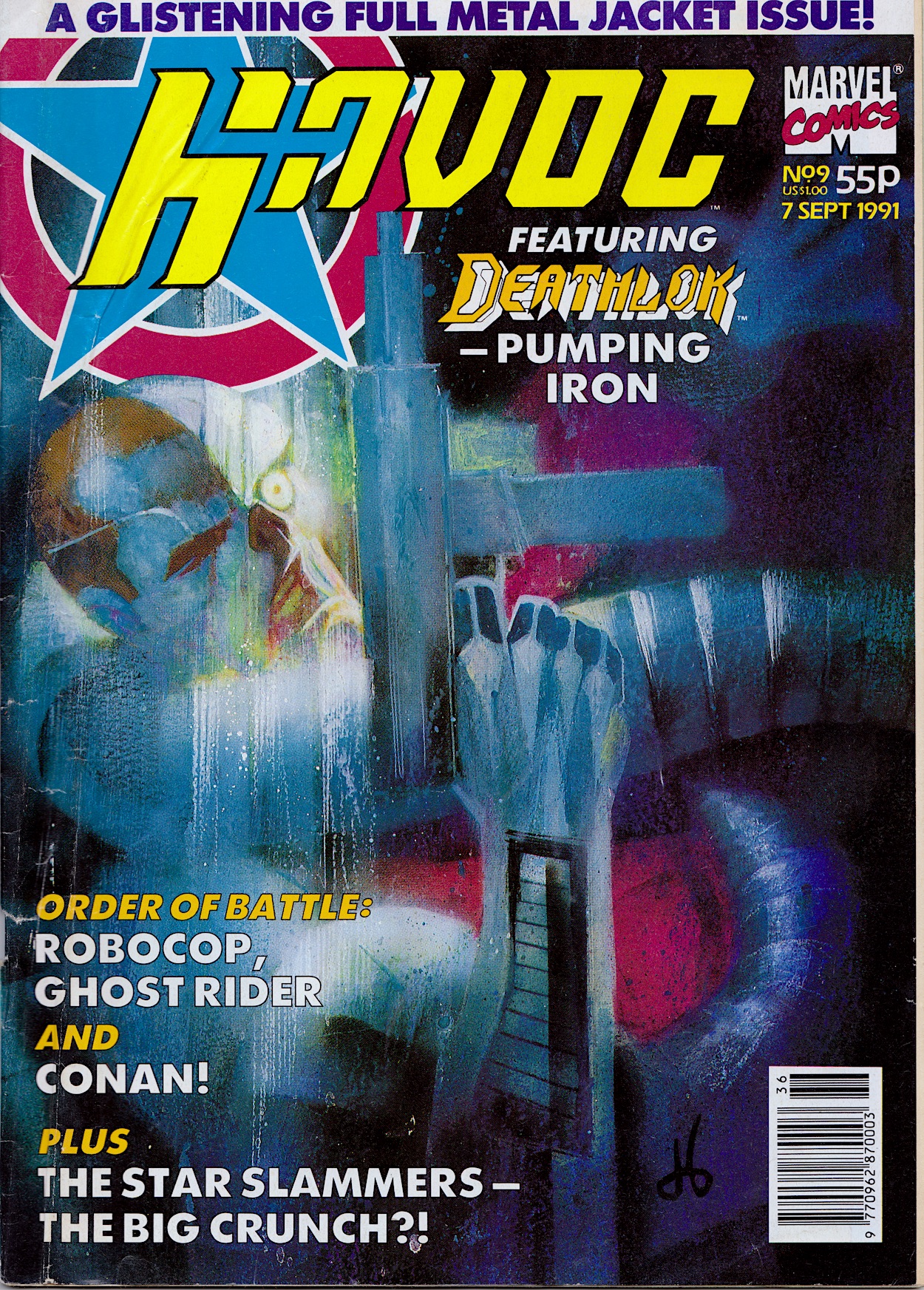
This just isn’t fair. That’s how I felt during September 1991 when #10 of Havoc failed to appear, the comic unceremoniously cancelled without so much as a note to the readers. This issue continues on as normal with cliffhangers and ‘Next Issue’ promos as well as hints of what was yet to come. Clearly pulled after it went to print, Havoc was the latest in what felt like a long line of comics I’d committed to which ended up the same way. Now having enjoyed the series 31 years later in real time I’m left with that same feeling of unfairness as I finish off #9.

If you look at the cover date you’ll see the next issue was due 7th September 1991. With #1 arriving as soon as the school summer holidays had begun, #10 would’ve been the first after the next school year began, Havoc’s brief run perfectly wrapped up in the holidays. When I returned to school I found out several of my friends had also been excitedly collecting it and we ended up sharing our disappointment in its disappearance.

Goodbye Havoc, it’s been a blast and you deserved better

None of the included strips saw a conclusion and two new stories actually begin here, such as the first for Deathlok after Michael Collins’ origin story. Even though it’s the beginning of a new tale we still got a catch up banner to bring new readers up to speed, something no other ‘Part One’ received. Jesus Saves adds new talent with Scott Williams (New Mutants, Superman Unchained, Batman: Hush) joining as inker with Gregory Wright now only writing, and Paul Mounts (Fantastic Four, Friendly Neighborhood Spider-Man, Ultimates) as colourist, although he goes uncredited here. Joining Gregory on writing duties is co-creator Dwayne McDuffie, pencils are by Jackson Guise and lettering by Richard Starkings.
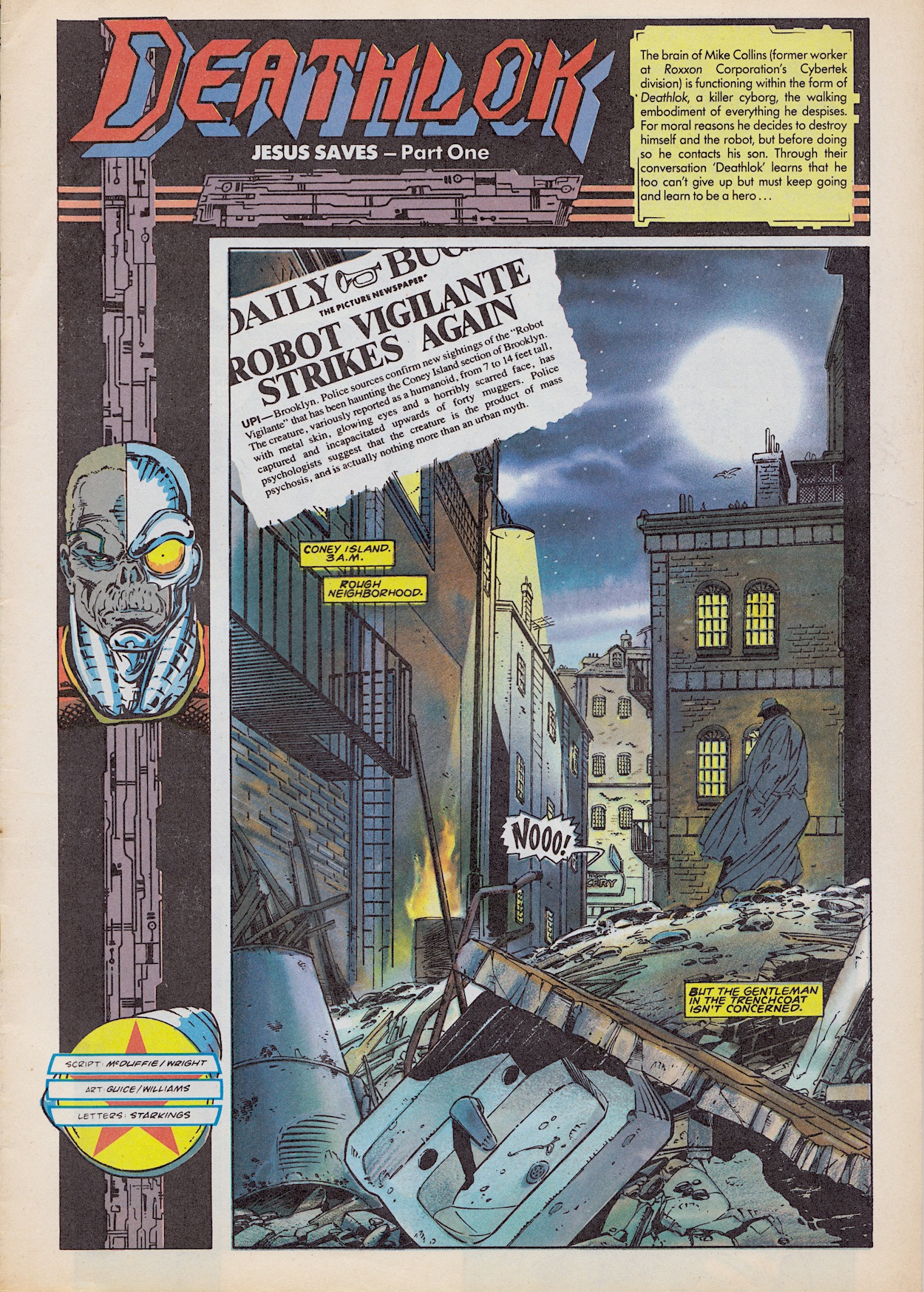
Nice use of the Daily Bugle there, as ever doing what any tabloid does and using exaggerations and shock journalism to strike fears into its readers, with the almost mythical rumours of Deathlok reported as fact on the front page, something Spider-Man fans will be all too familiar with. I’d never read a Spider-Man comic at this point in my life so was completely unaware of the Bugle being a part of the Marvel universe. Through this the strip also establishes our setting as Coney Island.

The Jesus the title refers to is Jesus Badalmente, a homeless man who would end up becoming a roommate and companion to Michael as he battled against Cybertek and tried to find a way back to his body, which he would find out was being kept alive. These are points I only found out in researching who this person was because the way he’s presented here I had a hunch he was being introduced as a regular. Jesus makes robots and is a bit of a cybernetics whiz, which I’m sure will come in handy at some point.
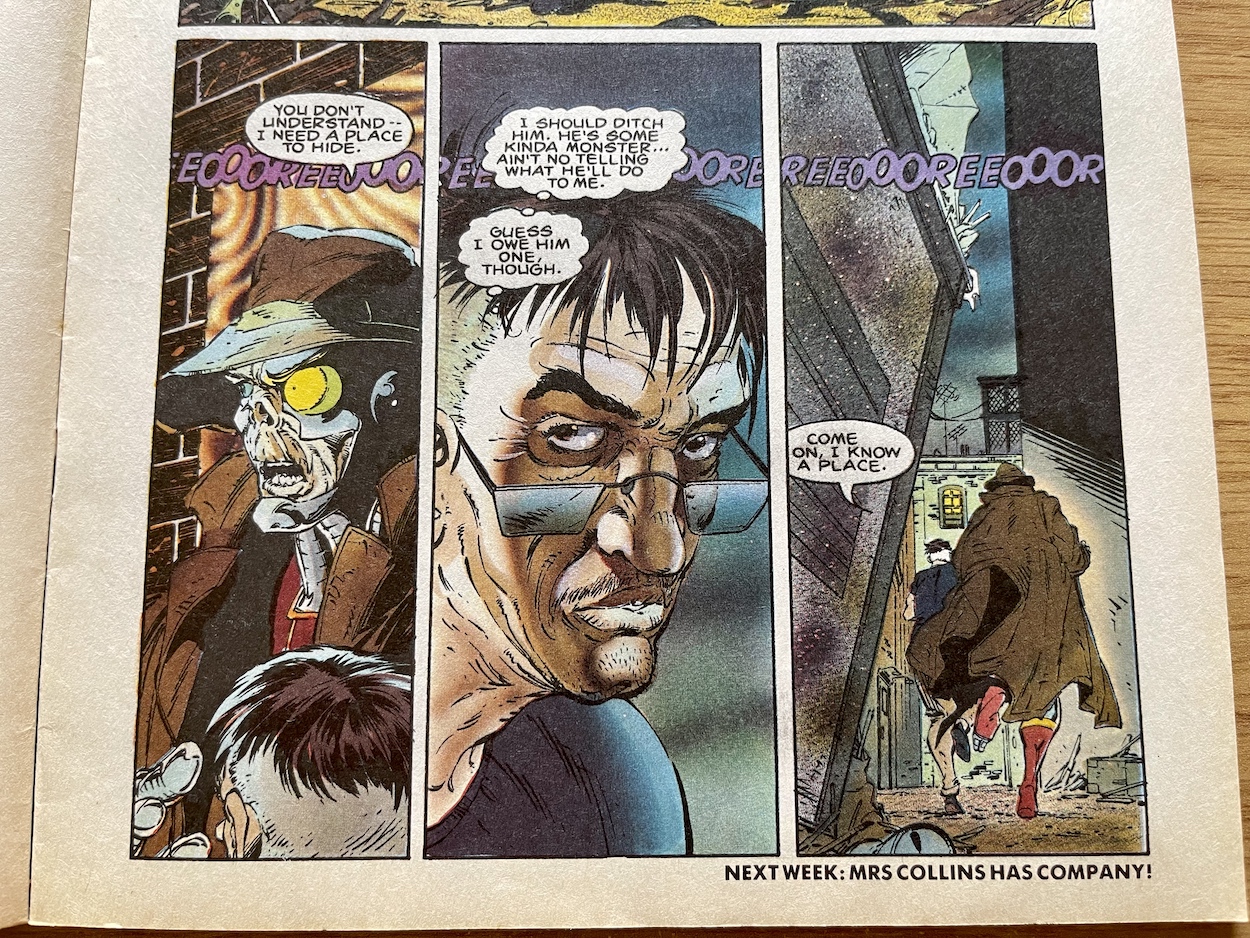
These first five pages of the story basically see Deathlok rescue Jesus from a mugging and in return he’s taken somewhere safe as the police arrive. Jesus’ first reaction is one of fear and revulsion, as will probably become the default as Michael encounters people. But just as he thinks Deathlok has only seen off the muggers so he can kill him, he is then saved by the cyborg from one of the muggers trying to run them down in a car. That’s enough for him to take a chance on this strange individual.

I’ve really enjoyed Deathlok. He was my favourite as a teen and it’s been brilliant to catch up with him again. The origin story was full of character and Dwayne McDuffie and Gregory Wright strike me as writers who’d make sure character development was key to the strip’s success. The action has been great, the interactions between Michael and the computer genuinely funny and I find myself really caring about what happens to them. One to track down for sure.
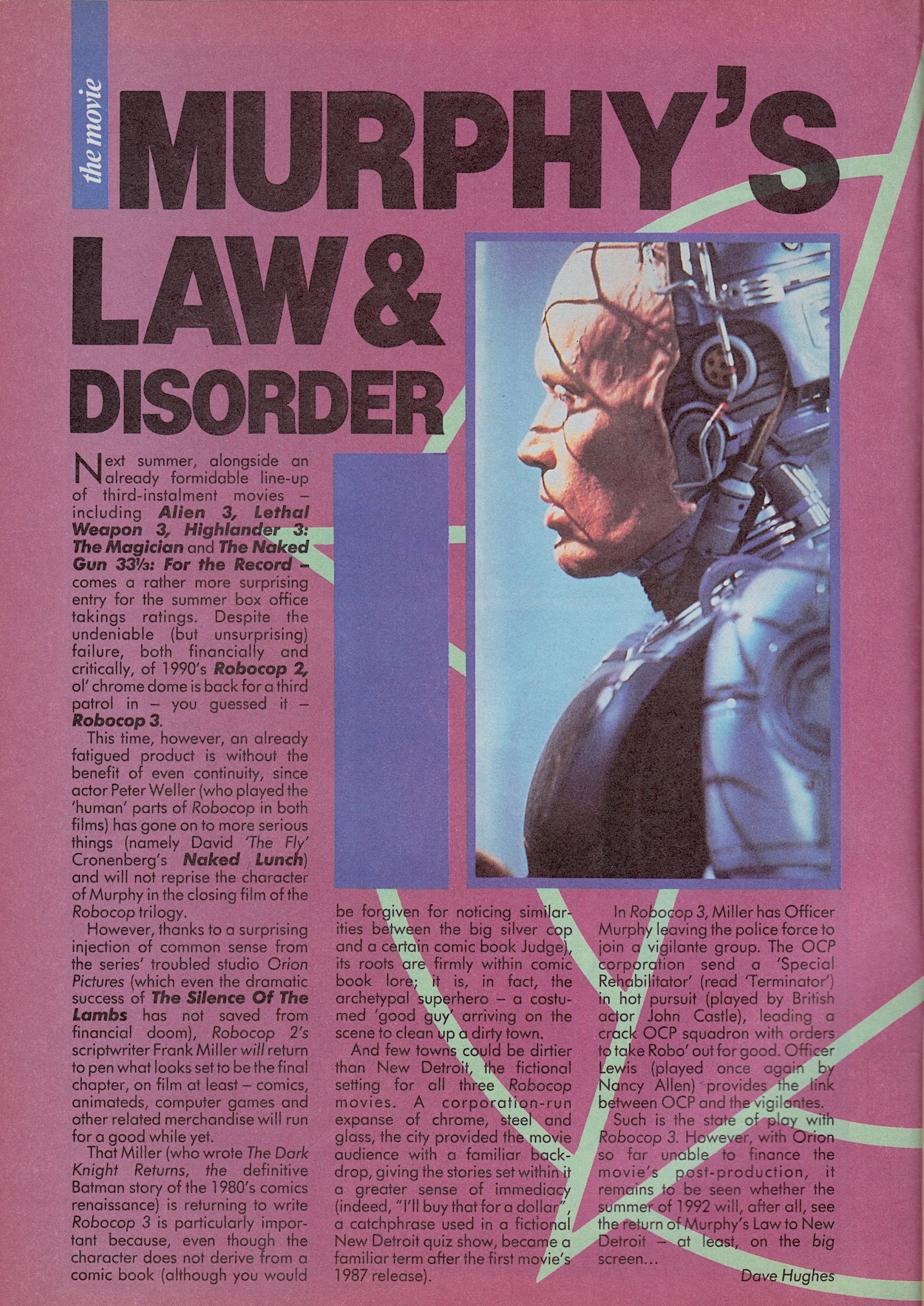
Before Murphy’s strip are two RoboCop features, with a third later in the comic. The first one concentrates on the franchise itself, in particular the in-progress RoboCop 3. The second movie had been released the year before and while it had proved to be a moderate financial success it was generally panned for not living up to the original. I remember being disappointed by it because Robo himself felt flat and boring.

What’s strange here is that Dave Hughes‘s feature describes the franchise as a “fatigued product” in a comic printing strips based on that product! How did that make it past the editor? He also criticises Robocop 2 but praises the fact that its head writer Frank Miller would be returning for the third film. Yes, I’m aware Miller’s screenplay went through various rewrites by other writers but it’s still a strange thing to be thankful for after not enjoying his first RoboCop sequel.
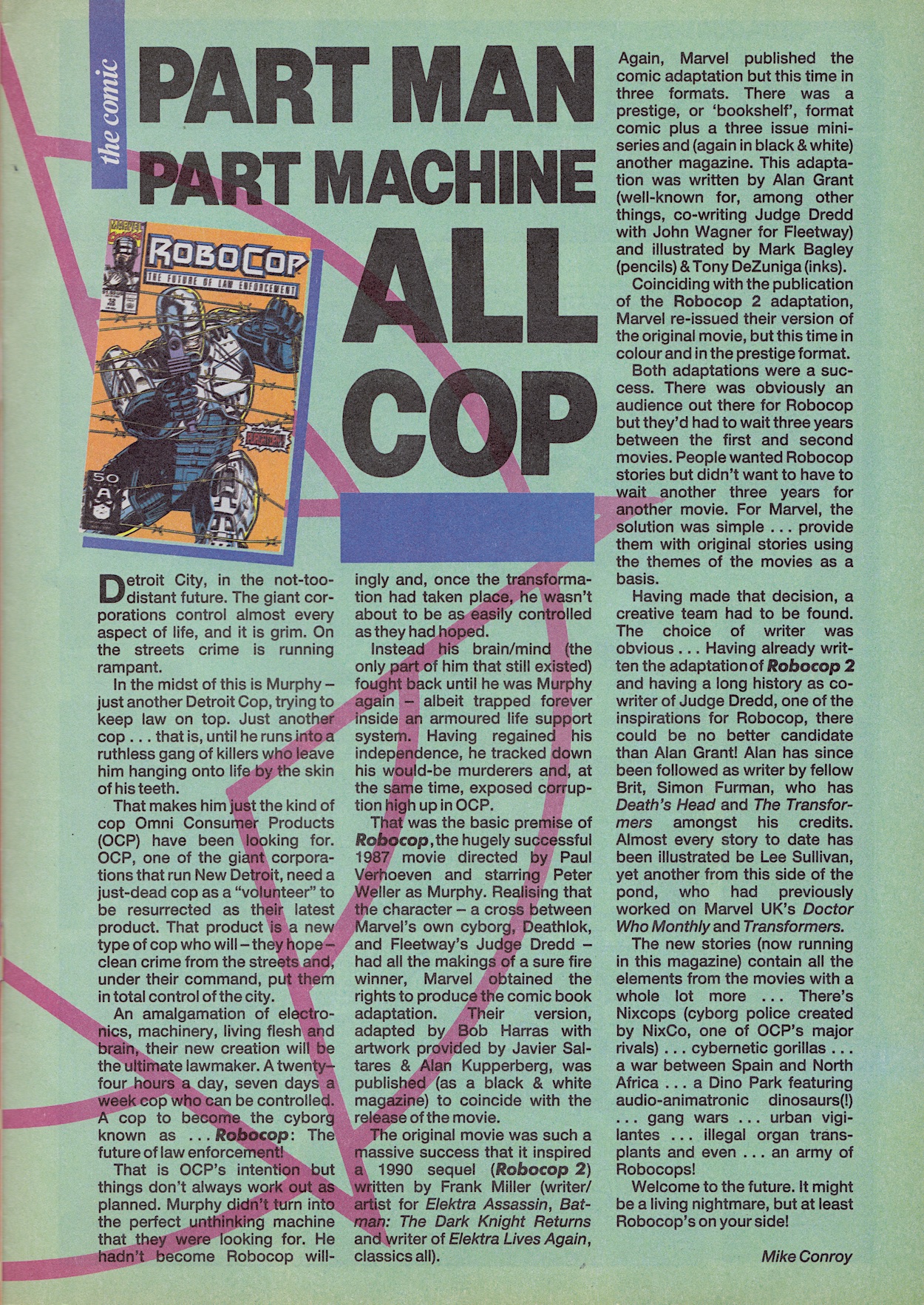
This second feature is meant to be all about the comic strip, a major selling point of Havoc’s anthology. Unfortunately, Mike Conroy really does take his sweet time getting to the stage of discussing them. It’s not really until the third column that he gets into the meat of it all and then it’s over. There really wasn’t a need to reiterate so much of the lore and background to RoboCop for people who would already have been up to speed on all of that.

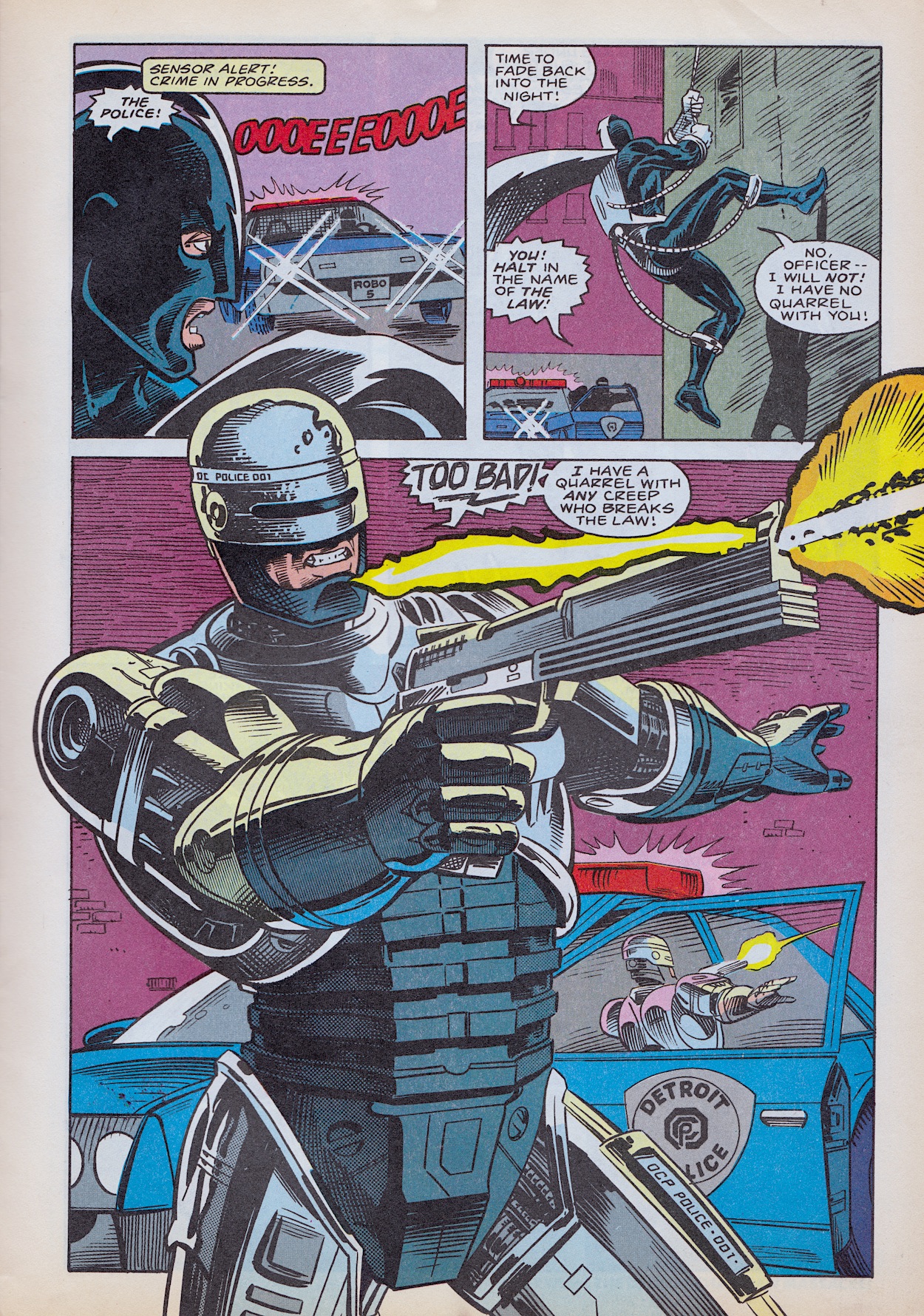
Let’s move on to the strip itself, part two of Vigilante by Alan Grant (with pencils by Lee Sullivan, inks by Kim DeMulder, colours by Steve White, letters by Richard Starkings) and it kicks off with muggers on hover bikes, showing how the comic would go all-in on the future setting, taking the strip more into the sci-fi fantastical than the original movie, which was more grounded. But this is a different medium and it works well to get across the setting and how dangerous Old Detroit really is. After this, the father of the victim complains about how the police are locking up people like General Power from last issue when the city needs them more than ever.
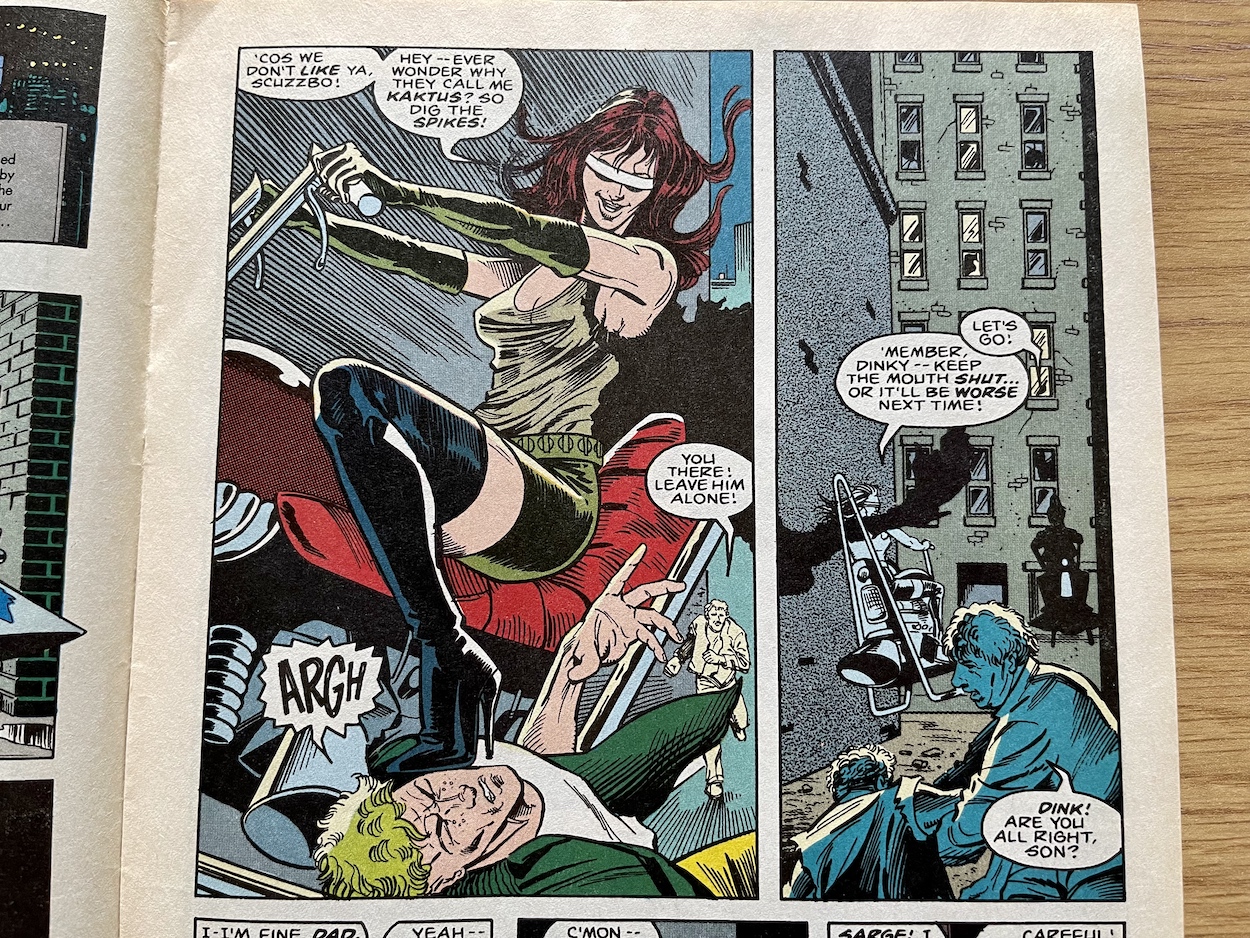
These masked vigilantes’ reputation is a lot better than the reality of the people behind the costumes. Take General Power for example. After frazzling the man he was trying to save last issue he’s brought to the desk of Metro West by Murphy and told to give his name. After declaring himself as ‘General Power’ he’s ordered to give his real name which he hilariously admits is Jim-Bob Smith.

With a precinct full of wannabe superheroes, one of them has had enough and what comes next is a bit of a shock when read today.
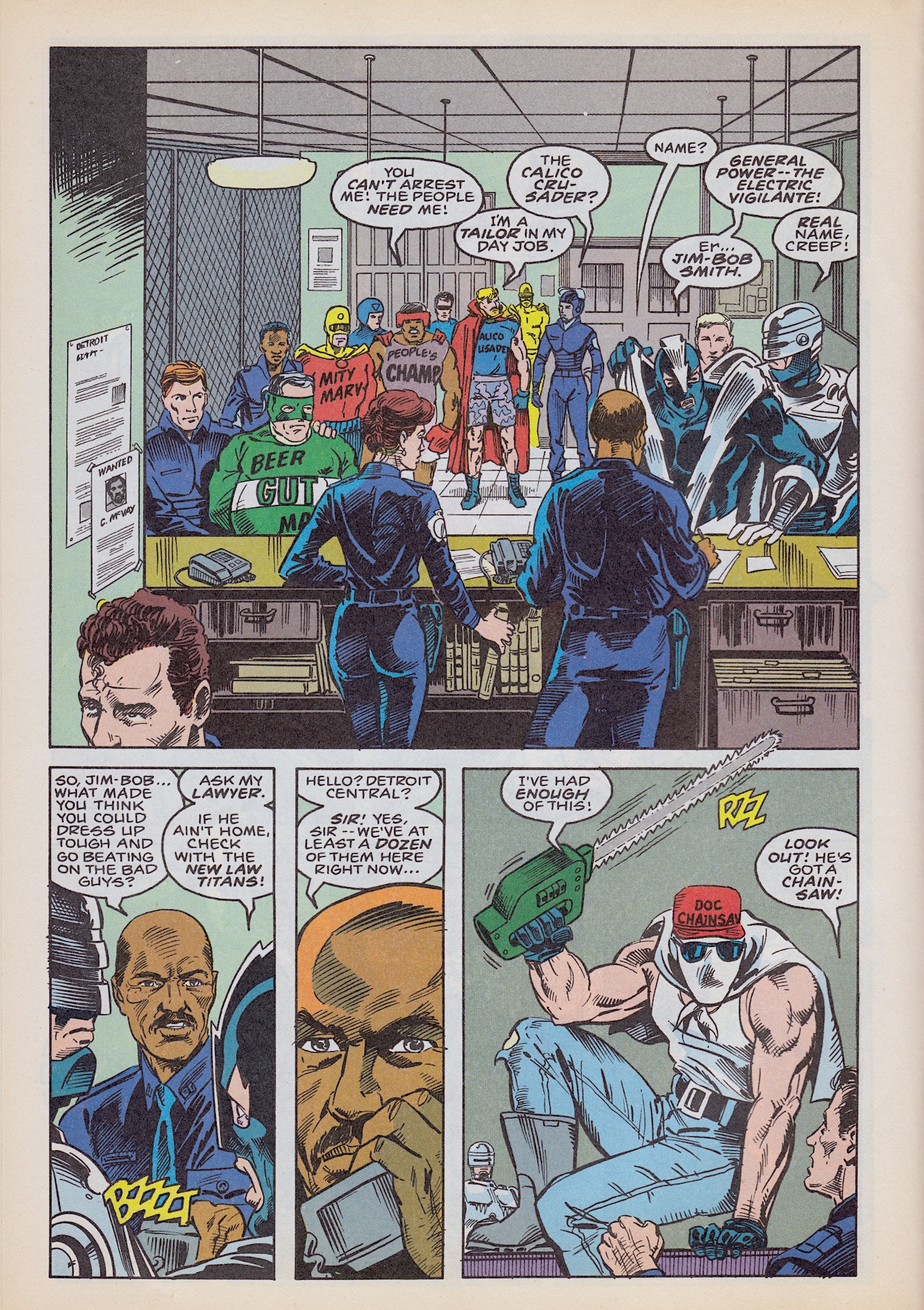
RoboCop was set in the not-too-distant future and the first movie and the TV show were, in hindsight, really rather prescient. So much so its surprising at times watching the series to see how well they predicted our world thirty years in the then-future, providing a scary insight into where we could be going. Bear this in mind when you see this next panel of that wannabe you saw in the final panel above, going by the name ‘Doc Chainsaw’.

He says it’s not against the law to “put on a suit an’ prowl the night” (which itself sounds more creepy than I think he intended) right in front of RoboCop. As if his red hat wasn’t enough, his general attire and his choice of words when confronted by Alex would be a bit on the nose if written today!

I don’t think I need to make any more comment on that one. Soon the sarge barks an order; all the vigilantes are to be charged with misdemeanours and set free. This happens much to the chagrin of the officers but has come down from the “very top” and thus the main mystery of the new story begins. Robo leaves to see if there’s something he can do (but we’re not given any more hints as to what this could be) and then we see former mugging victim Dink and his dad settling down to watch the city’s latest reality show, ‘The Detroit Vigilante‘ and that’s where it ends.

Deathlok and RoboCop have similar set ups but they’re handled in such unique ways you wouldn’t think they were unless you stopped to break down what’s at the core of their main protagonists. I was never a fan of the movie sequels to RoboCop so initially had some trepidation about these strips since they were also direct sequels, released before the TV show. But I’ve been pleasantly surprised to find a nice halfway point between the original film and the show, with Alan Grant grasping the character much better than the movie studio did around the same time.


“Pain is inflicted quickly and harshly upon those who would harm innocent children.”

Ghost Rider

It’s hard to judge a comic strip series based on only the first couple of stories but I’ve been impressed with this version of Murphy so far. The first story brought the action, the second concentrated more on the characters and this one feels like it’s settled in more to the episodic nature of the storytelling, this first part setting things up nicely. Normally I’d be eager to see the next chunk but it’s just not forthcoming right now. Sadly, it’s goodbye to another favourite for the time being.

To soften the blow (although this wasn’t the original intention) we get a third feature for our part man, part machine, all cop hero, billed on the contents page as an interview with Marvel UK artist Lee Sullivan who did superb work on RoboCop for the American arm of the publisher. Calling it this is a bit of a stretch though. It reads as if two quotes by Lee were pulled from a general career interview, with one answer about RoboCop and the other about Doctor Who, filled out with information about the artist.


“…and because we know where everything is, we methodically begin to eliminate anything that ought not to be there!”

Star Slammers

Don’t get me wrong, it’s interesting information and a good article but I was looking forward to an actual interview about Lee’s work on this particular strip. That’s two of the three features about this character that feel like they included an awful lot of padding to make up the page count. Such a shame because I do enjoy Havoc’s extras but I’d have preferred those two to have been combined into one and another Eye Level included instead.

There’s mention here of Marvel no longer having the RoboCop licence which again is a strange thing to include when you’re trying to entice readers back for more. About a year before this, Marvel UK’s Transformers announced the forthcoming release of a new RoboCop fortnightly comic. It was never released, with Robo appearing the next summer in Havoc instead.
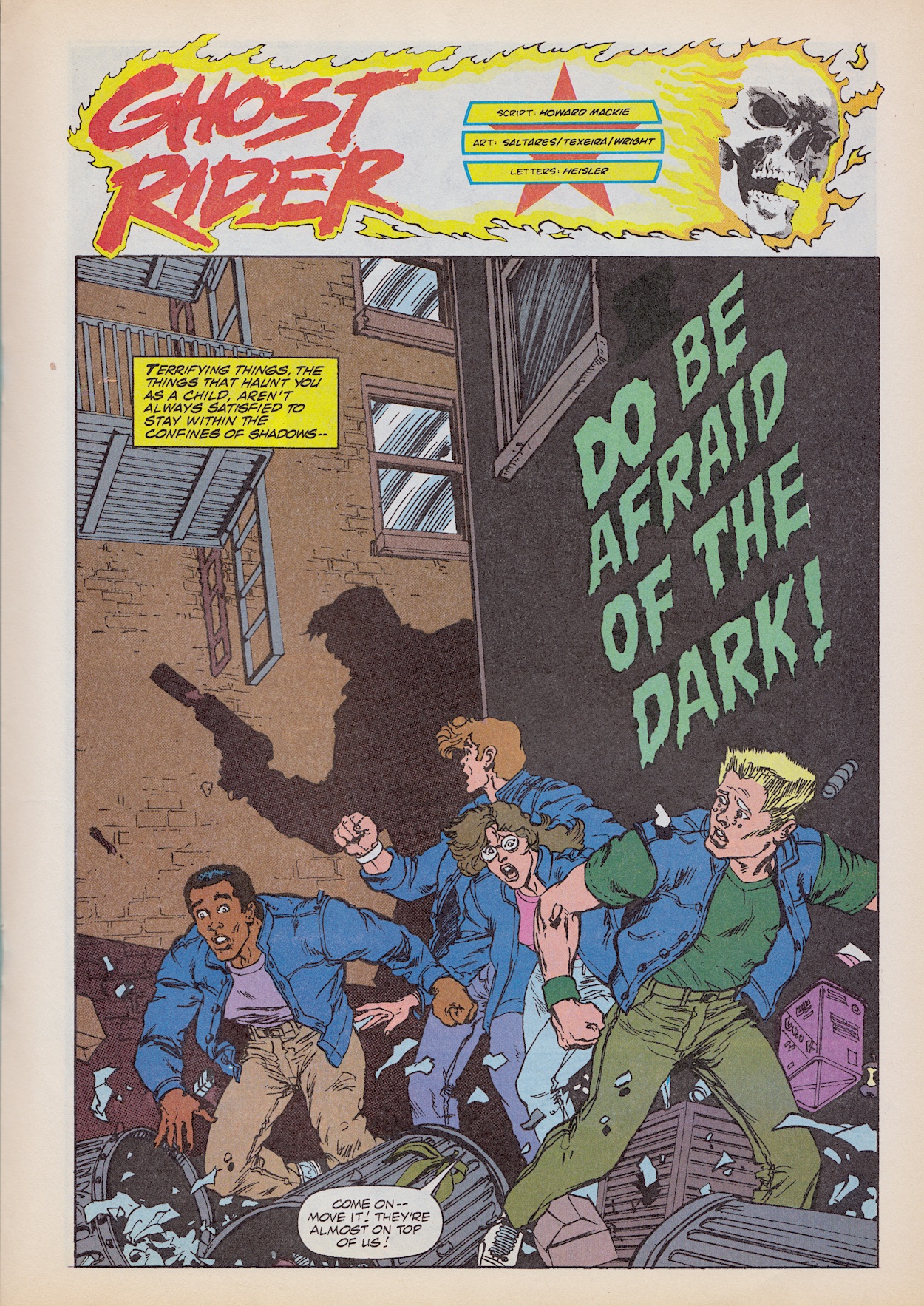
Danny Ketch and his Spirit of Vengeance get the bulk of pages this issue with part one of Do Be Afraid of the Dark (written by Howard Mackie, pencils by Javier Saltares, inks by Mark Taxeira, colours by Gregory Wright, letters by Michael Heisler) which begins with the gang of kids from previous issues, now referred to as the Cypress Pool Jokers, hunted down by who we assume are Deathwatch’s minions. Demanding to know where the canisters are, they’re threatening the lives of the kids at gunpoint when a bright light and roar of a motorbike from a nearby hedge halt proceedings.

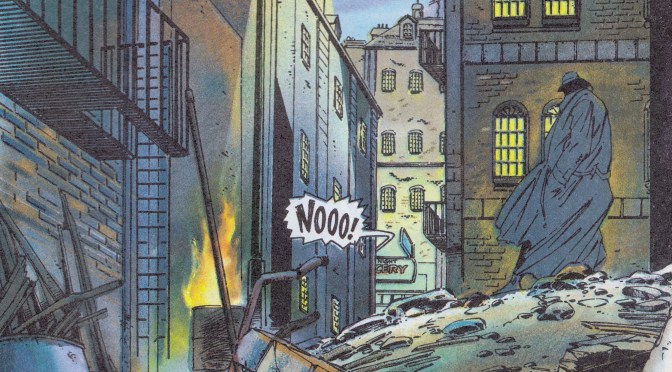
Out zooms the Ghost Rider, glowing against the night sky, only to be met by a hail of bullets. What’s interesting is that everyone knows his name already, his presence in the city plastered all over the newspapers and of course the criminal underworld would be all too aware of him after he took some of them out. Falling off the bike and back into the hedge, the night goes dark again, the Ghost Rider’s flame apparently extinguished. Until the next page that is.
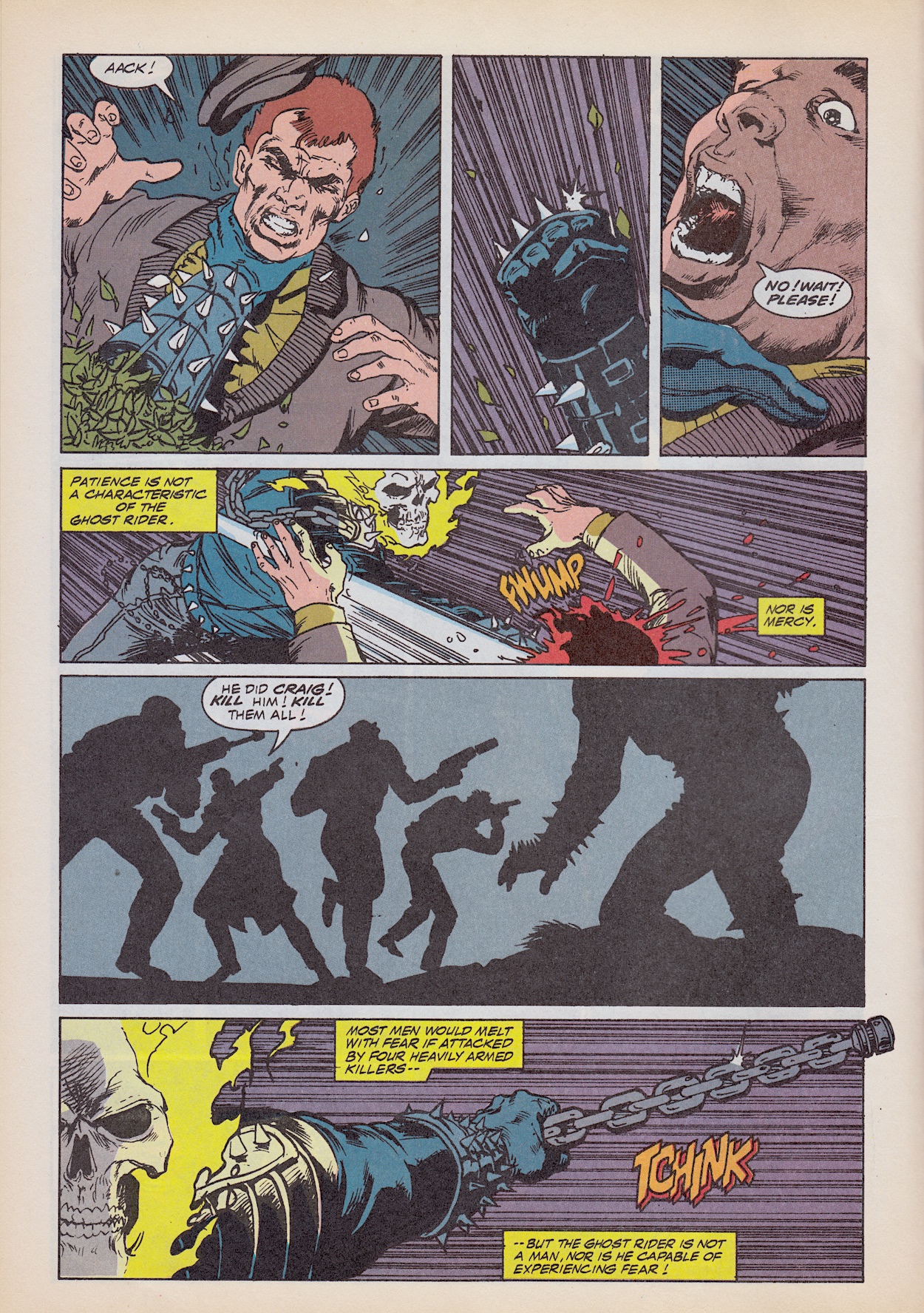
Scenes involving the Ghost Rider when apparently surrounded and outnumbered are always great fun but I can only imagine how awesome these would’ve seemed to a teenage me. (I’m sure they were but my memory has let me down.) I can confidentially say this was unlike anything I’d ever seen before. Brutal but thrilling in equal measure, this first part of the new story really hits the ground running. Essentially a direct follow up to the origin story, it’s unfortunately not clear in these first seven pages whether any other main plot would be introduced.

On the next page it’s stated how Ghost Rider would normally take his time, ensuring to inflict the most pain possible on these men, equal to the pain of each individual’s past offences. But this night he needs answers and so he lashes his magical chain around one of them and drags them away off the back of his bike, the criminal’s body bouncing up and down on the road over the ghostly flames.

Hung over the side of a very tall building Eldon finally admits he’s not part of either criminal enterprise. Instead, he’d heard about Kingpin looking for the mysterious canisters and so he thought he’d take his gang out to find them, present them to the criminal mastermind and get in his good books. Ghost Rider gets no answers but that image of him, followed by the fate of Eldon have me gagging for more.

The kids see him drive off, recognising him now as one of the good guys. “Man, he’s hot!”, exclaims one as he disappears from their sight, and from mine. This appears to be the most serialised of Havoc’s strips rather than individual stories, at least for the time being and I’m gutted this is my cut off point again. As my introduction to Ghost Rider he’s been a brilliant character in a very well written strip illustrated in a scratchy, mature fashion that perfectly suits him. Defintley my favourite part of Havoc and the one I’ll miss the most.
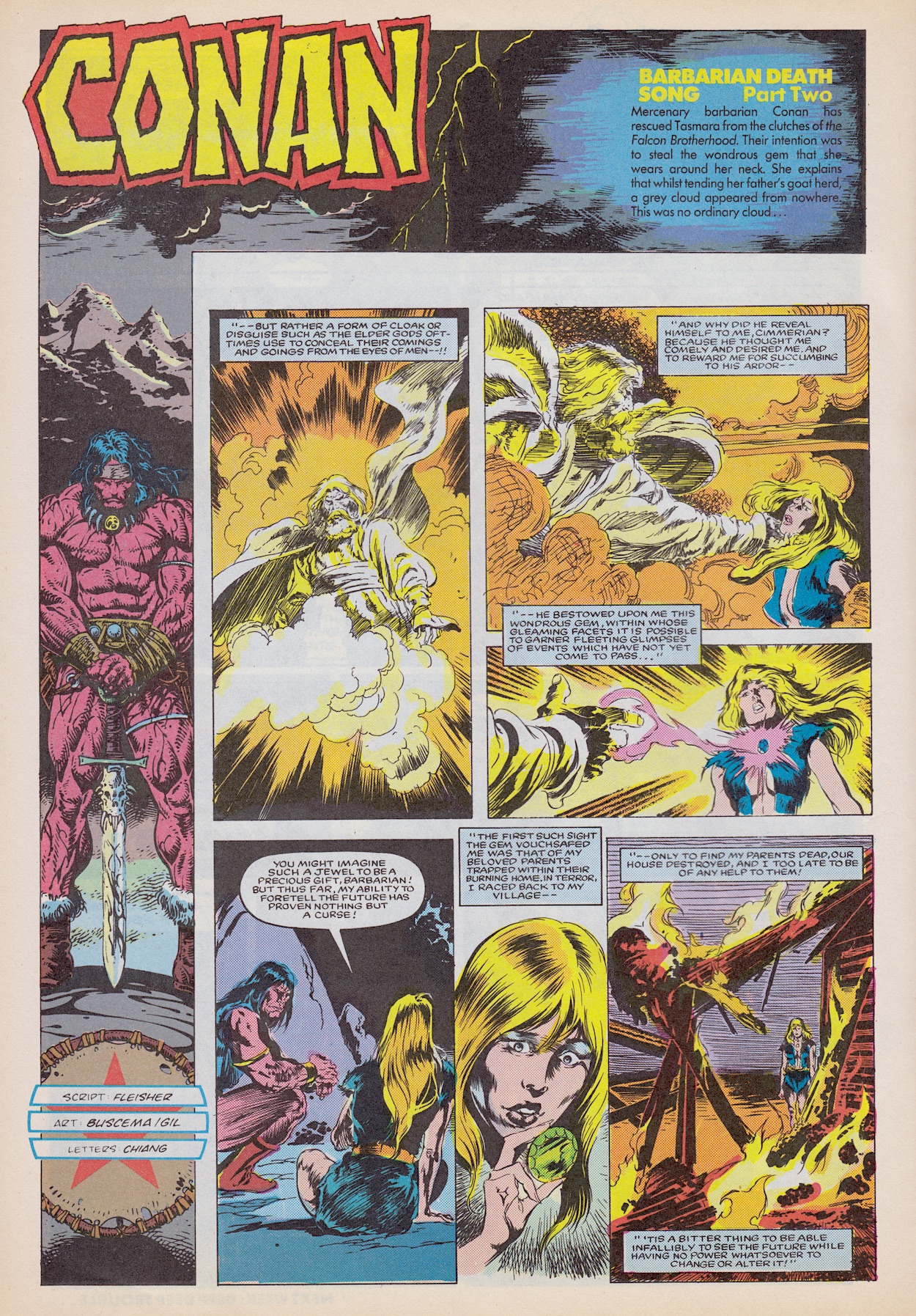
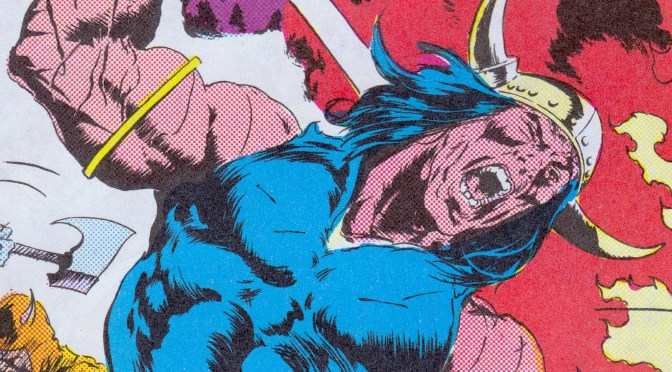
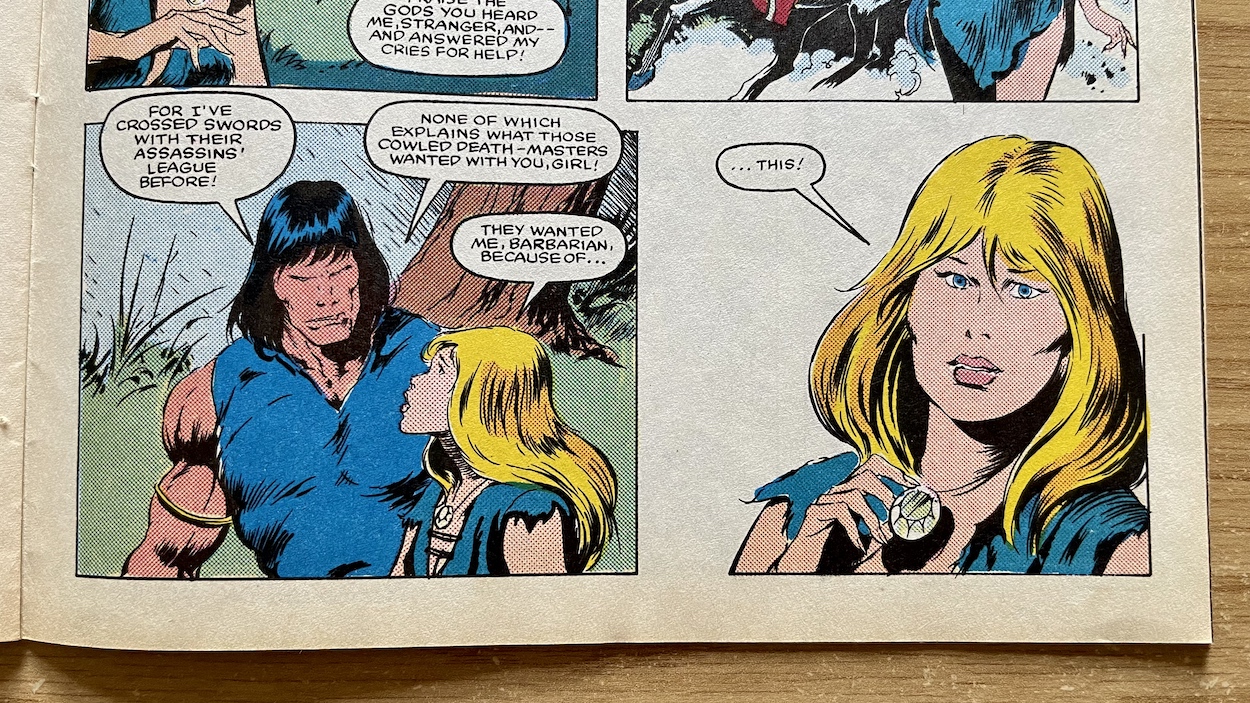
Part two of Conan’s Barbarian Death Song (written by Michael Fleischer, pencils bJohn Buscema, inks by Armando Gil, letters by Janice Chiang) sees our female guest character finally named (Tasmara) and she explains the cloud from last time was actually some random god who bestowed the jewel upon her neck because he was so enraptured by her beauty. She’s now being chased down by Baron Gerdeg and his Falcon Brotherhood because it gives her the ability to see the future, something she realised through tragedy as you can see above.

This gives this fantastical element a sense of foreboding right from the start; it’s a curse rather than the gift it was intended as. As they chat she sees something else shocking, Conan’s death! Her vision includes his funeral procession, accompanied on either side of his coffin by both allies and foes he’s previously fought alongside and against, taken directly from the poem this story uses as inspiration. For more on that check out last week’s review which explains Conan’s last ever story.
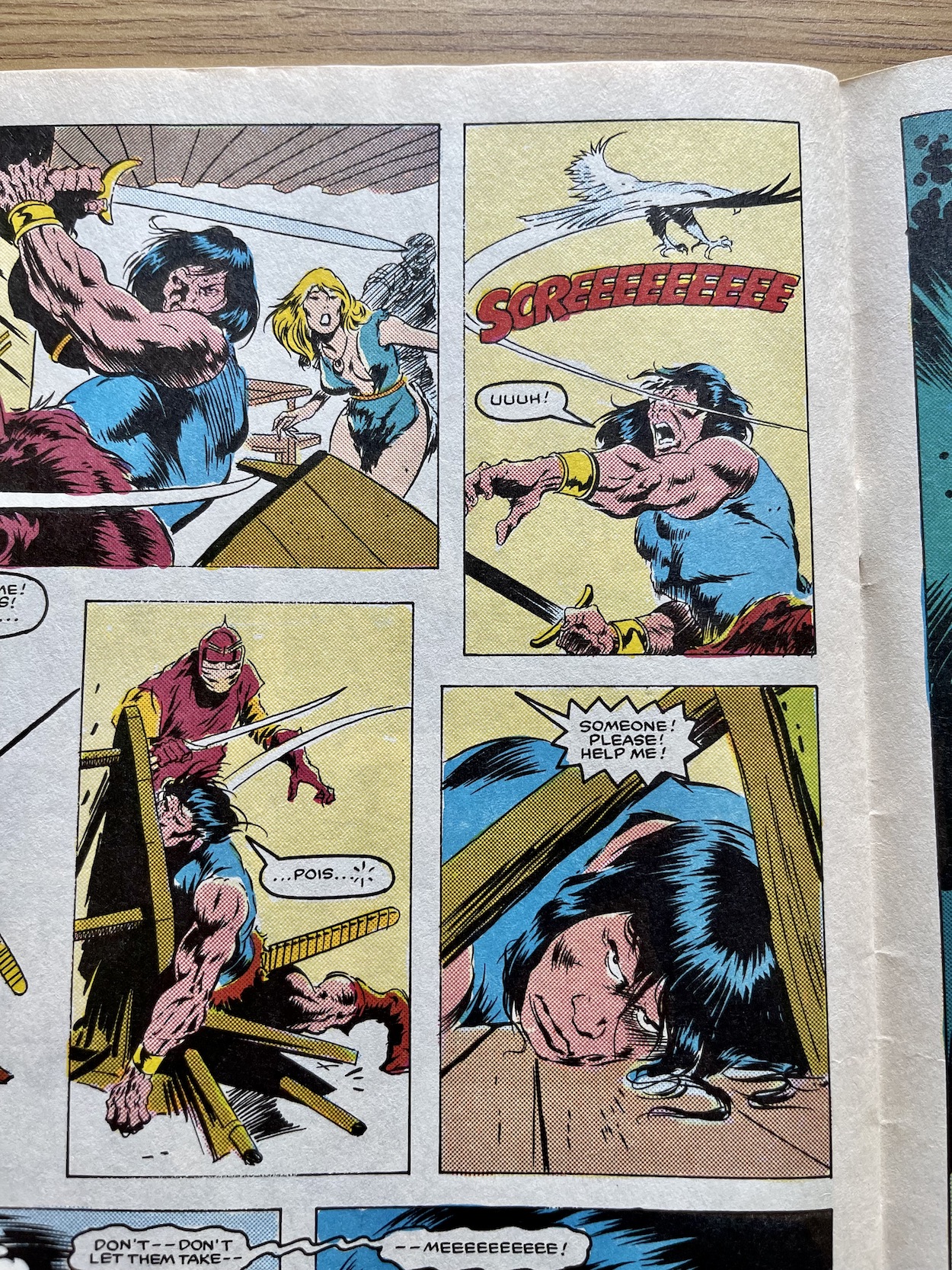
Conan and Tasmara head into the local town to eat and drink before making their way elsewhere, hoping to beat death by getting far away from danger. But the Brotherhood, who also have history of being defeated by Conan, have bribed a dancer in the tavern to dance for Conan using birds they supply her with, their talons tipped with a deadly poison.

Conan collapses and his last view before he blacks out is of Tasmara being taken. We then see his consciousness slip into another realm, a realm of death and decay by the looks of it. You can see the Next Issue caption at the bottom of this next page. Yes, this is how Conan ends! 
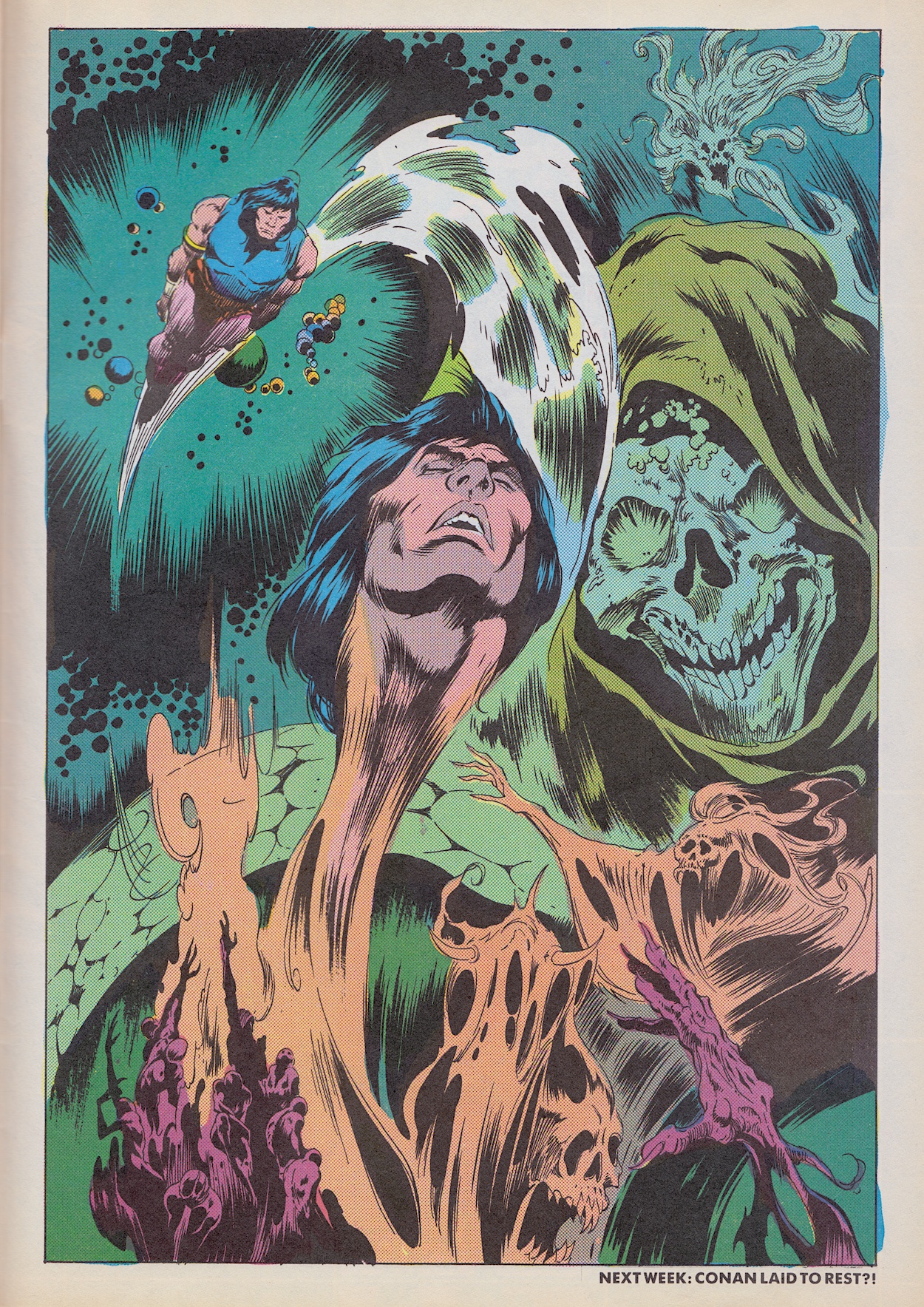
It would have been a great cliffhanger normally, but this was where we were left hanging as we desperately waited for #10 to appear. Now knowing it never would makes this all the more frustrating of course. Conan’s first story may have been somewhat outdated and out of place in Havoc, but the second story made up for that somewhat with its humour despite its underwhelming ending. This story seemed to have more going for it and, knowing the poem it was based on, I was eager to see how it turned out. Alas, for now I can’t.

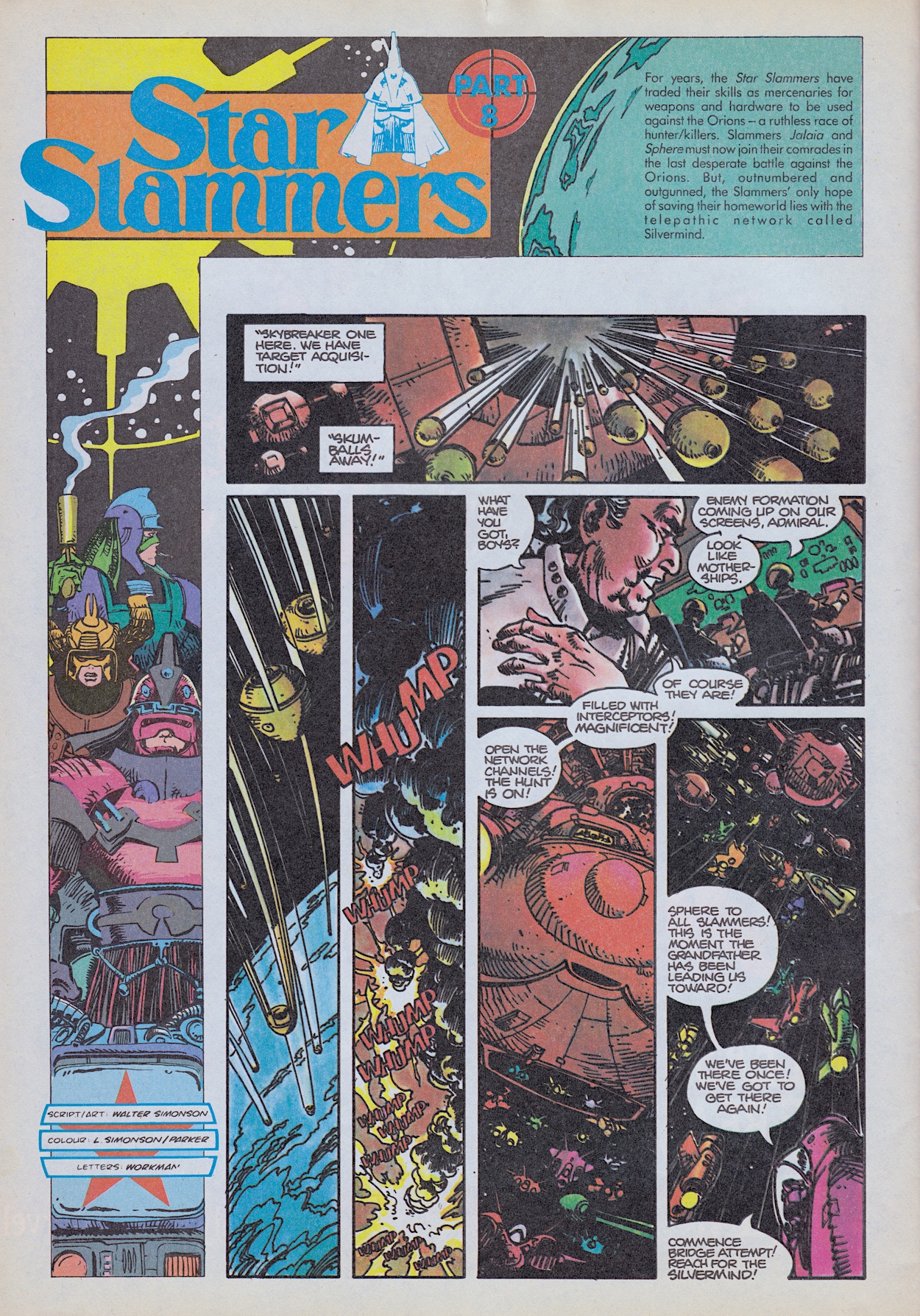
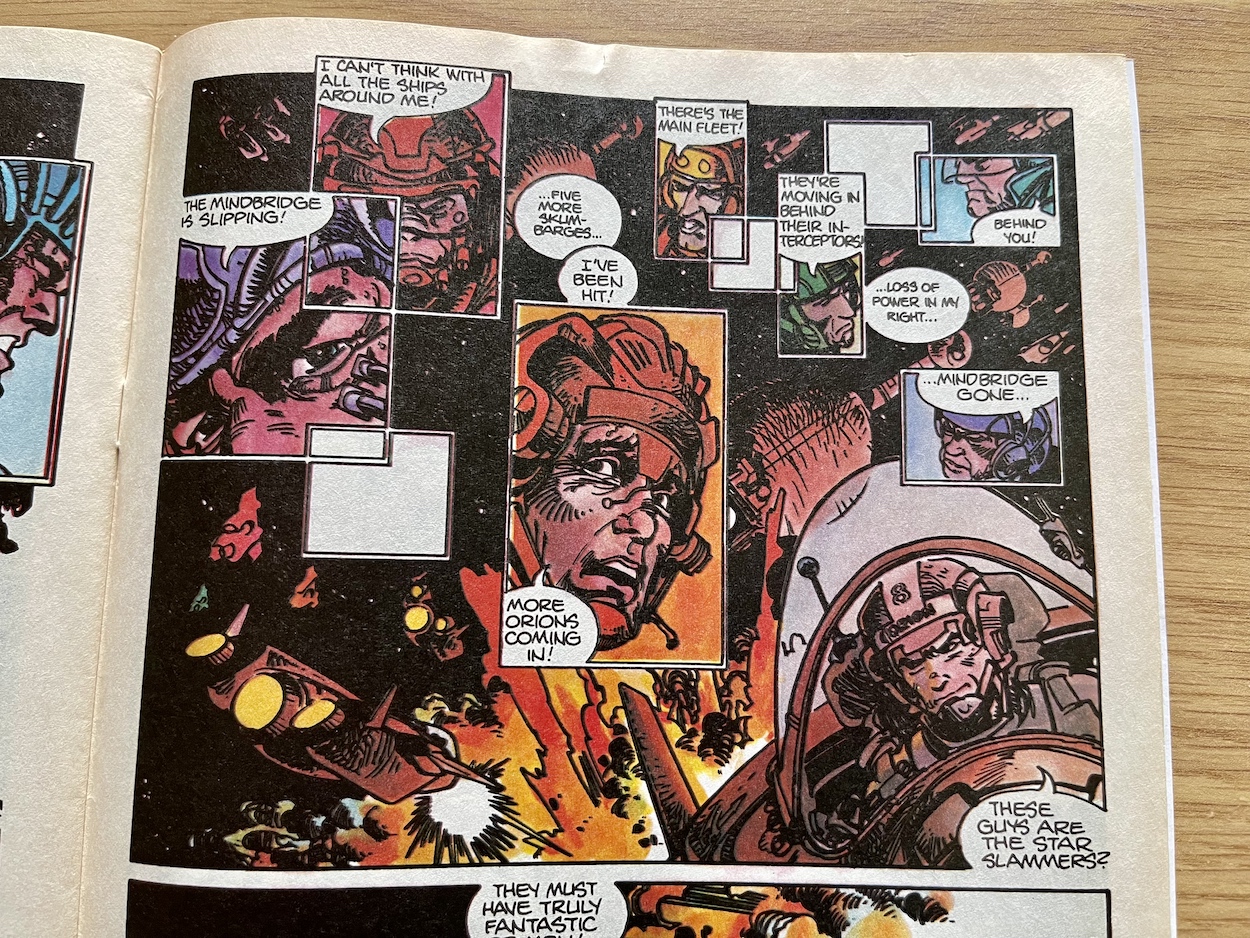
I’ll admit this issue’s Star Slammers (written and drawn by Walt Simonson, colours by Louise Simonson and Deborah Pedler, letters by John Workman) is eye catching, I’ll give it that. Each of its five pages are split up into these smaller panels, carrying on the theme of the Silvermind from last time. In fact, this penultimate part of the story kicks off with Jalaia finally reaching that near death point and activating the hive mind of the Slammers. Suddenly every single one of them can see, sense and hear everyone else, turning the tide of the battle against the Orions. So naturally Admiral Krellik cuts the televised feed to his home world in an attempt to control the narrative.
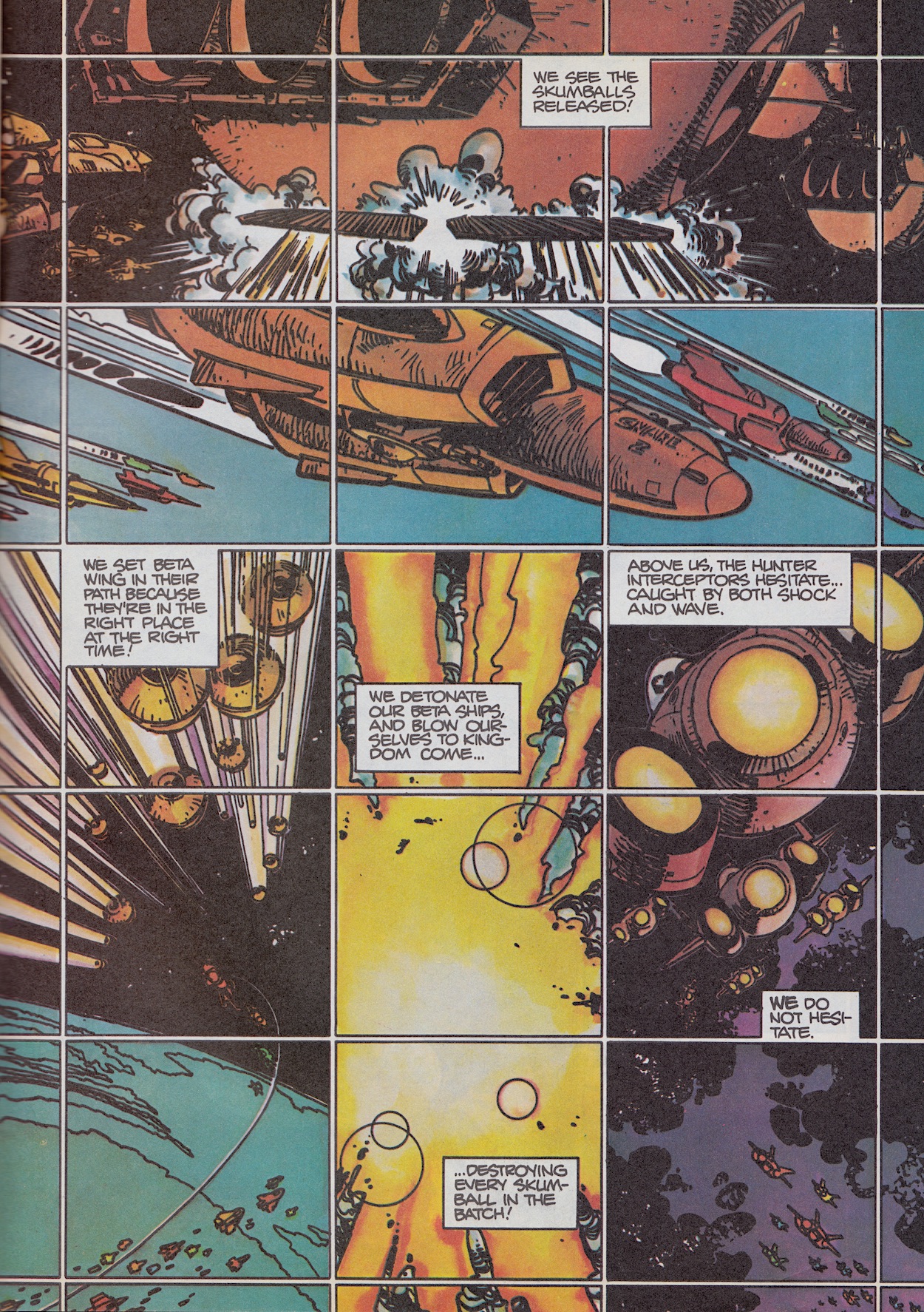
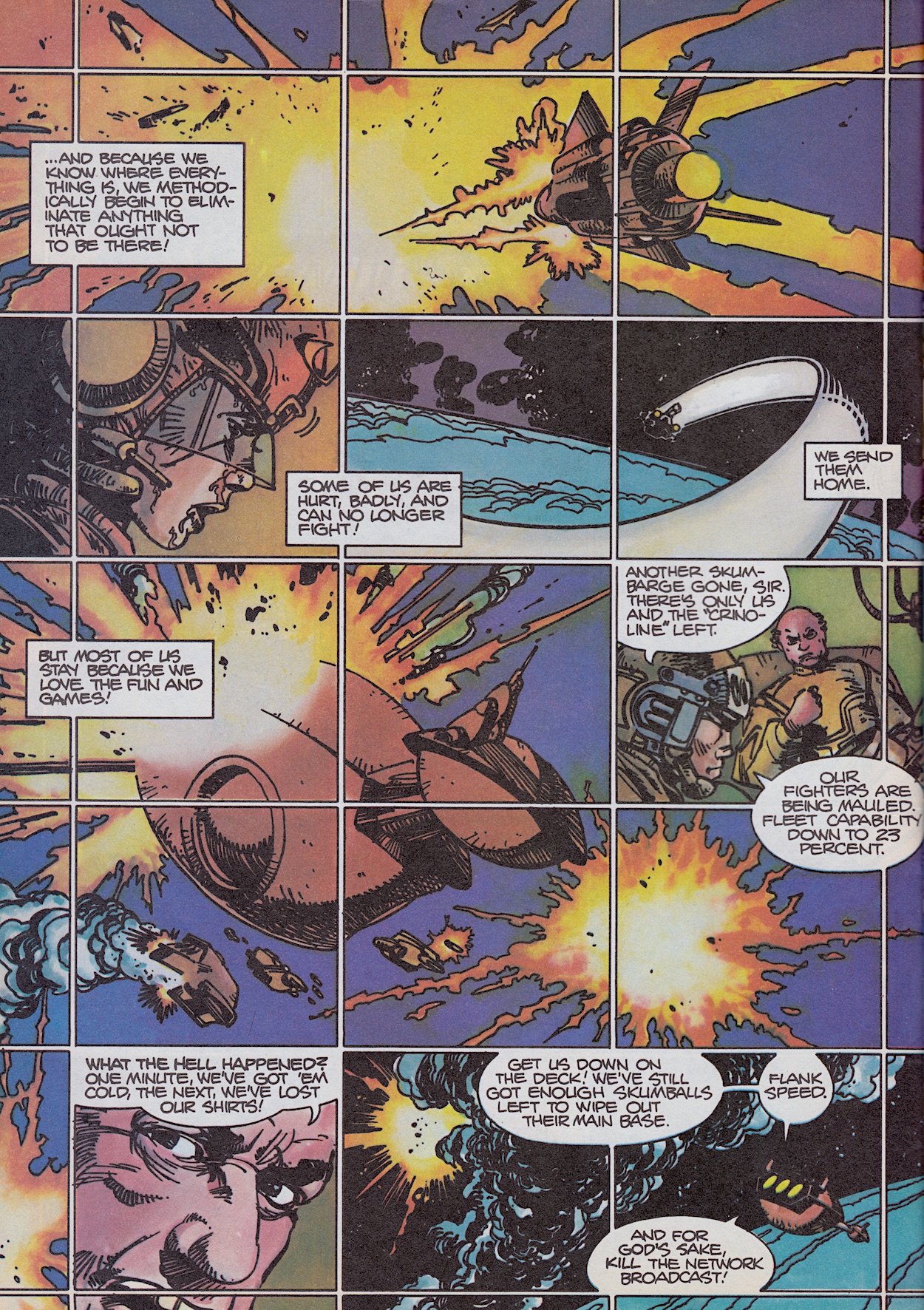
The way this is depicted, how they’re able to instantly react to the enemy from anywhere in the battle, how it turns on a dime from a slaughter to potential victory much to the shock of the enemy, is really very good. Alien Legion was due to replace Star Slammers in #11, so one week before its conclusion this strip finally became something of interest. It’s a cool few pages but with the lack of characterisation or storytelling in many previous parts it’s just too late to save it.

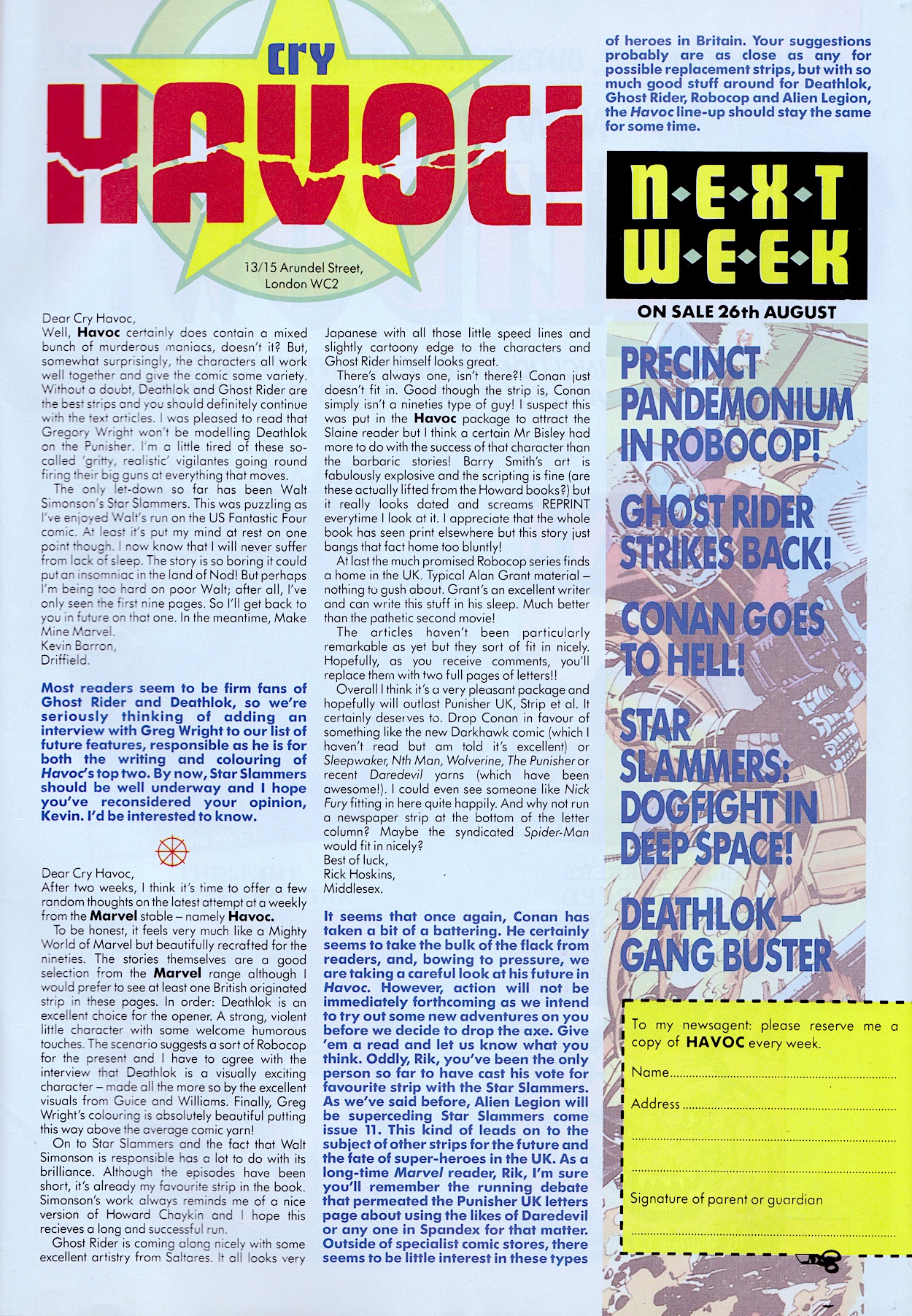
Our last Cry Havoc finishes things off and once more it’s got that exciting fan club feel to it which just makes it all the more heart wrenching that this is the end. But before we go there’s just time for a few more letters and typical Marvel UK-style replies which I loved so much as a kid. Highlights include some dismay at Gary Oldman’s casting in Dracula (oh, how he’d prove the naysayers wrong) and word of an upcoming Ghost Rider movie which wouldn’t actually become a reality for another 16 years.
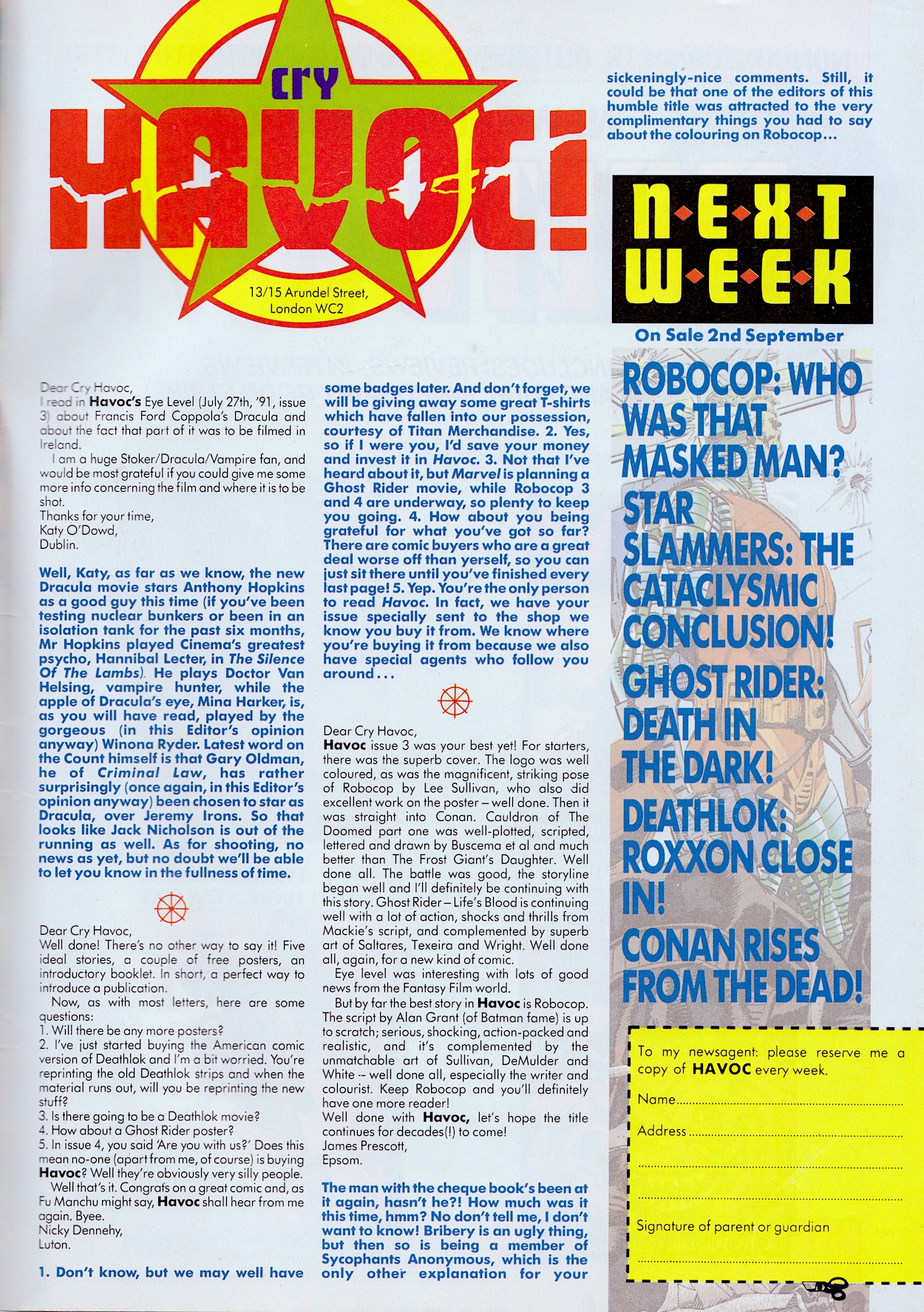
There are some cheeky answers here too (“How about you being grateful for what you’ve got so far?”) which is very Marvel UK indeed, instructions to invest in the future of Havoc for new Deathlok (oh deary me, you’ll start me off again) and a funny final answer which refers to the fact RoboCop was coincidentally coloured by Havoc’s editor. Then just to rub salt in the wound is the Next Issue box and a reservation coupon. This is not the end this comic deserved.

It took a couple of weeks to realise Havoc wasn’t just running late. With this I became so fed up of fantastic comics with a potentially very bright future being cancelled early that I swore off trying new ones after Havoc, solely collecting Transformers which I’d begun buying years before. I’ll admit this changed when Thunderbirds The Comic appeared in October 1991 but I stuck with it for only about a year before Commodore Format enticed me to the way of magazines. Even Transformers was cancelled just five months after Havoc!

It feels like no time since I took this photo for Havoc’s introductory post and given the potential here it really was no time at all. Havoc deserved to run and run. My school friends who had collected 2000AD for a few years already loved it even more than Tharg’s mighty organ. From the first issue I loved three of the strips and over the course of these nine short weeks I’ve come to enjoy a fourth. The final one was to be replaced soon so I could have been a fan of everything in the end.

As it stands it’s still a remarkable little collection of top quality characters. I think that sums it up best for me. It’s not just a random selection of strips, the stories I’ve enjoyed have all been about remarkable characters. Characters I want to read more of. Look out for a special blog post soon when I chat with freelance designer Paul Chamberlain who worked on several Marvel UK comics and created Havoc’s logo. Until then, it’s goodbye Havoc, it’s been a blast and you deserved better.
BACK TO iSSUE EiGHT

HAVOC MENU

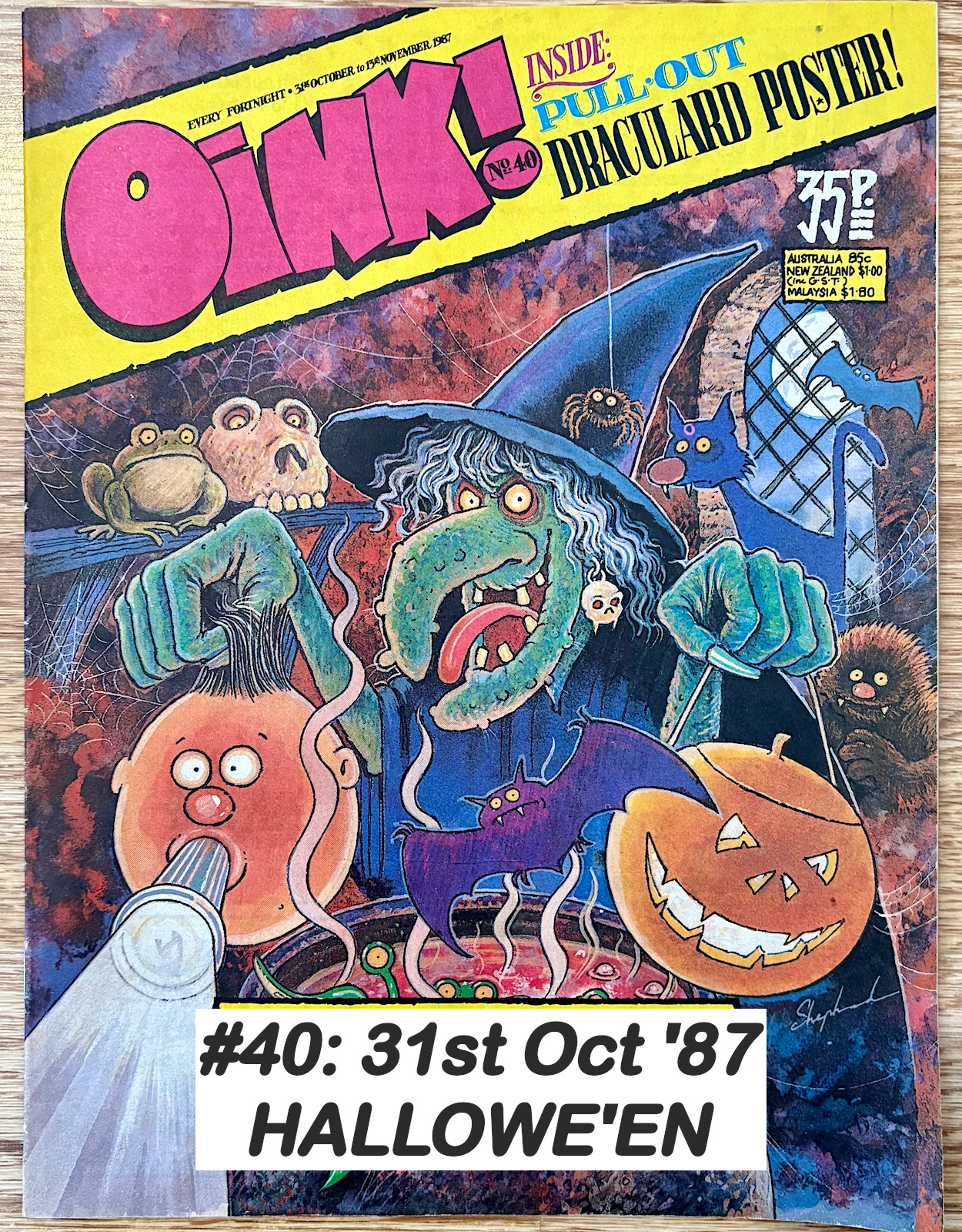
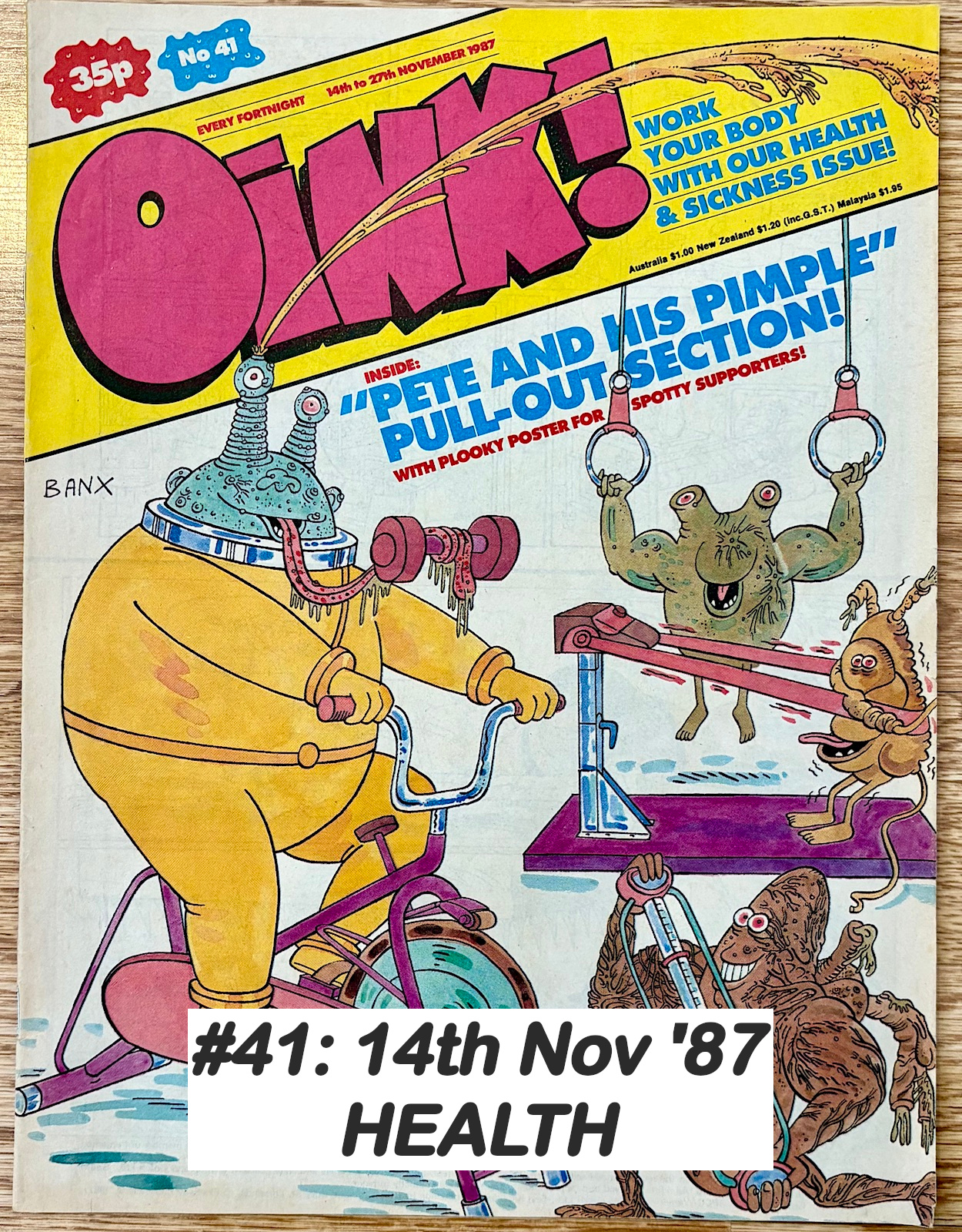
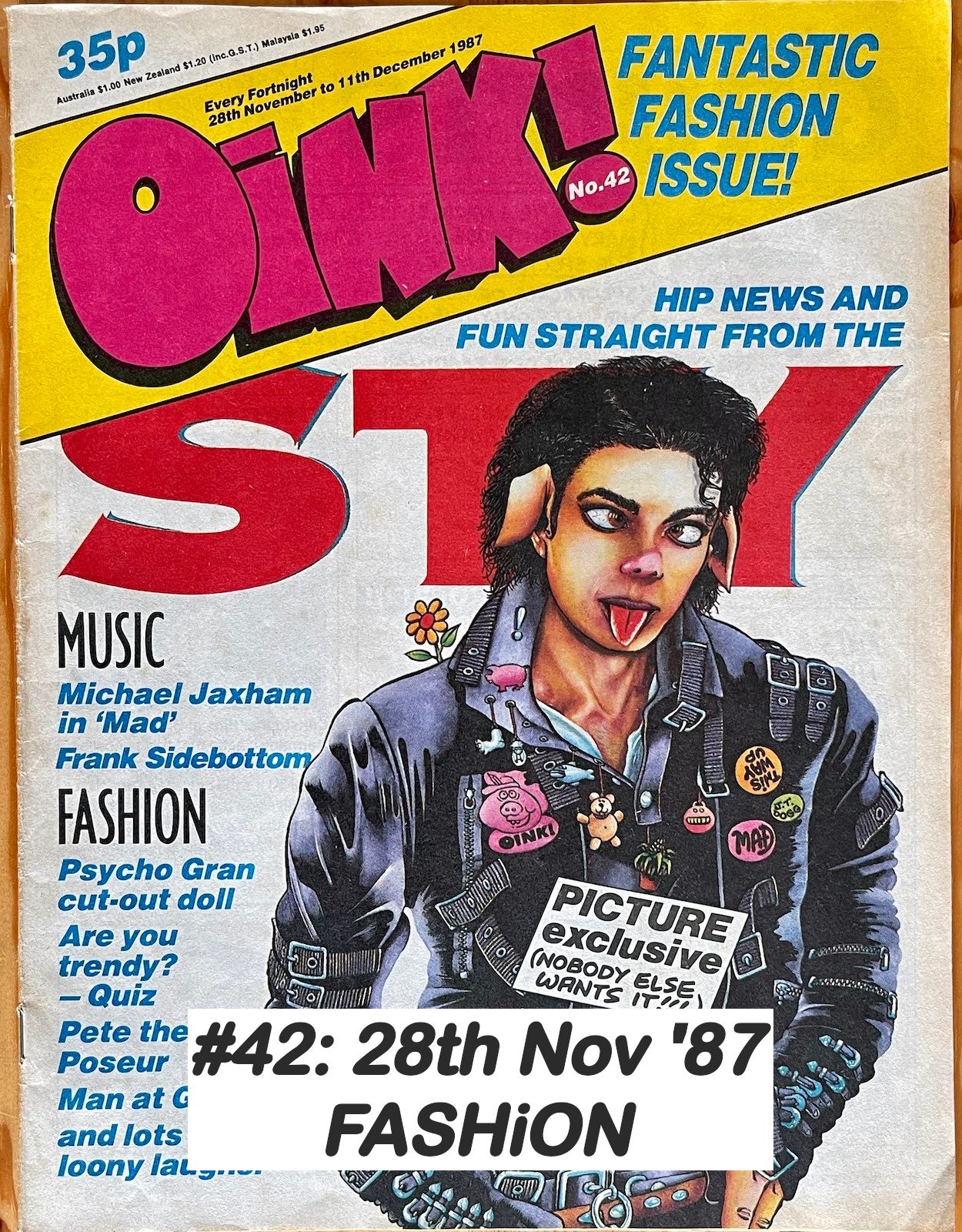
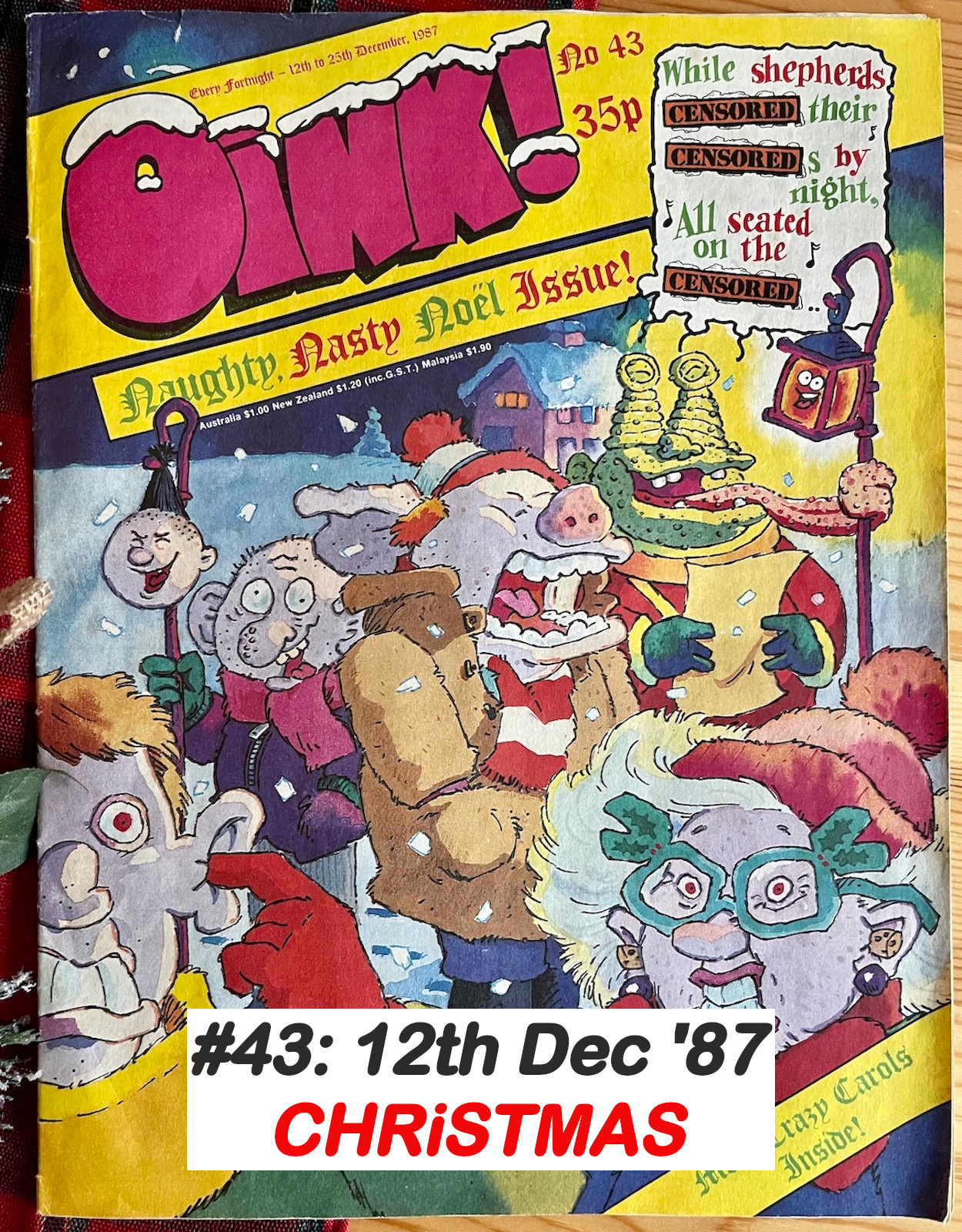
OiNK’S GOLDEN AGE

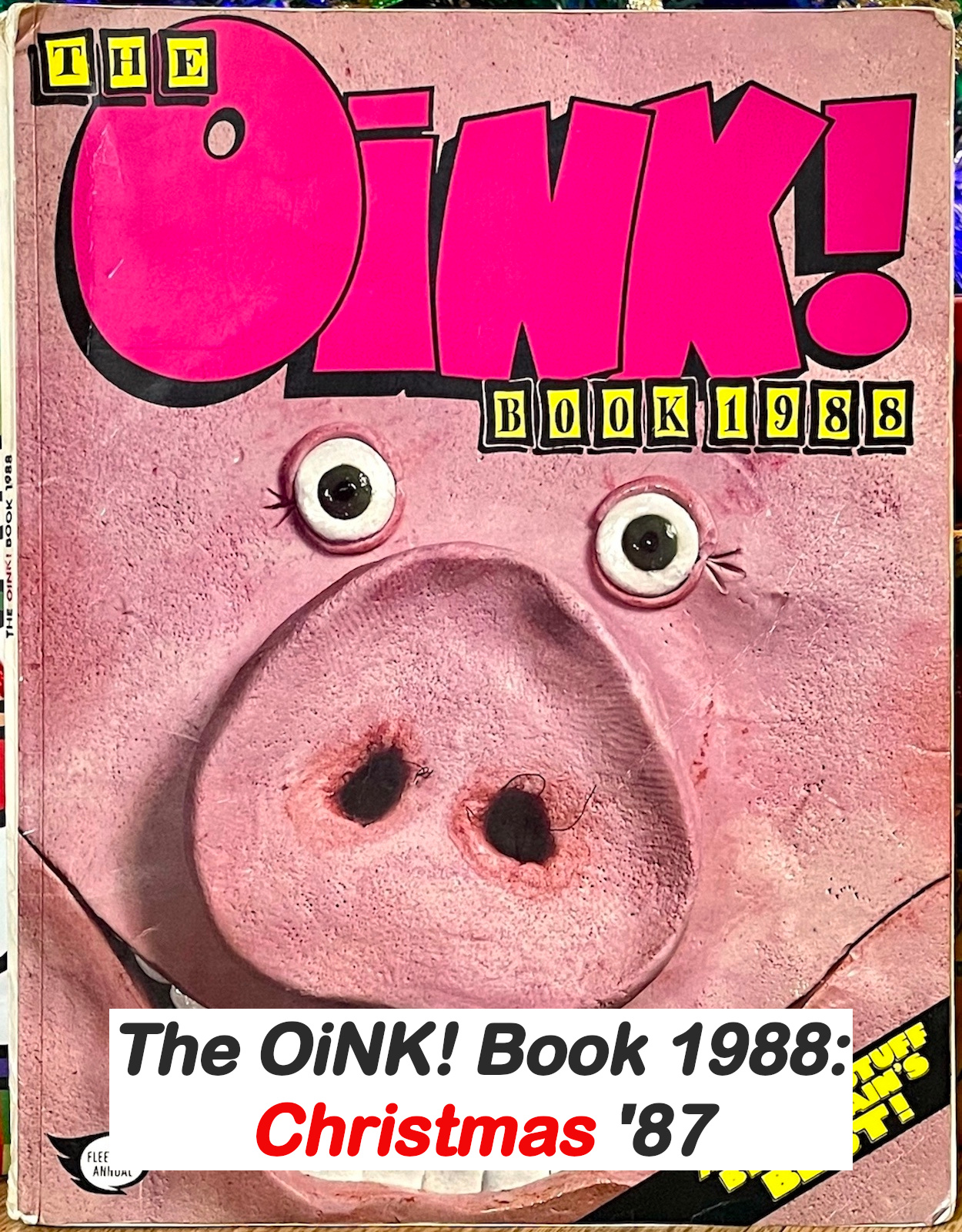
I’m hugely excited about the rest of this year on the blog, especially in respect to OiNK itself. When this all began in the spring of last year I knew I was going to enjoy this, I knew I couldn’t wait to read my favourite comic, the funniest ever created in my opinion, in real time for two-and-a-half-years. There have been a few defining moments so far, such as #6 where it all came together and the comic settled into its run, #15 introduced fan favourite characters and recently with its first Holiday Special and the Crash special edition it was expanding further and celebrating its success.

OiNK is my very favourite comic and these are my very favourite issues

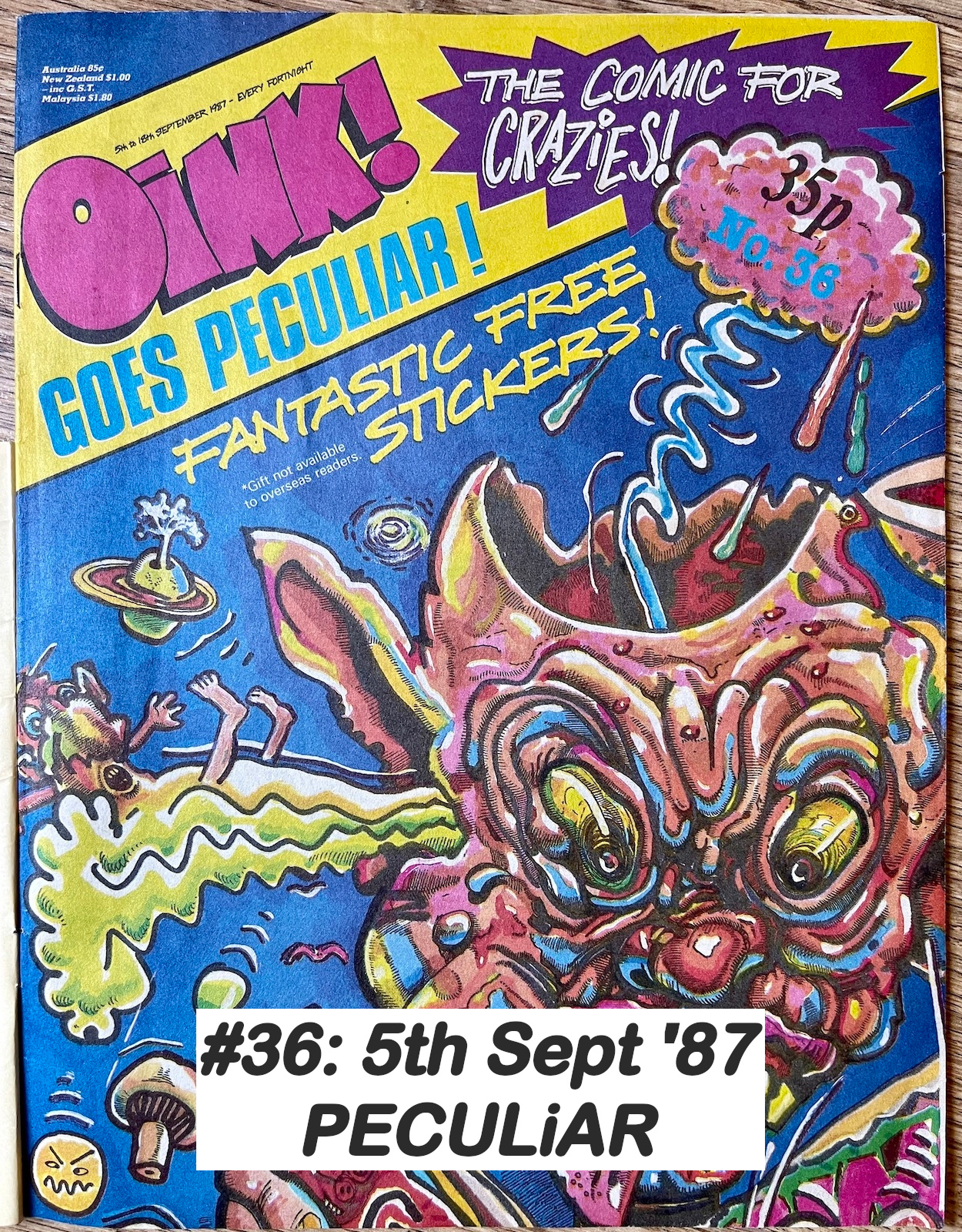
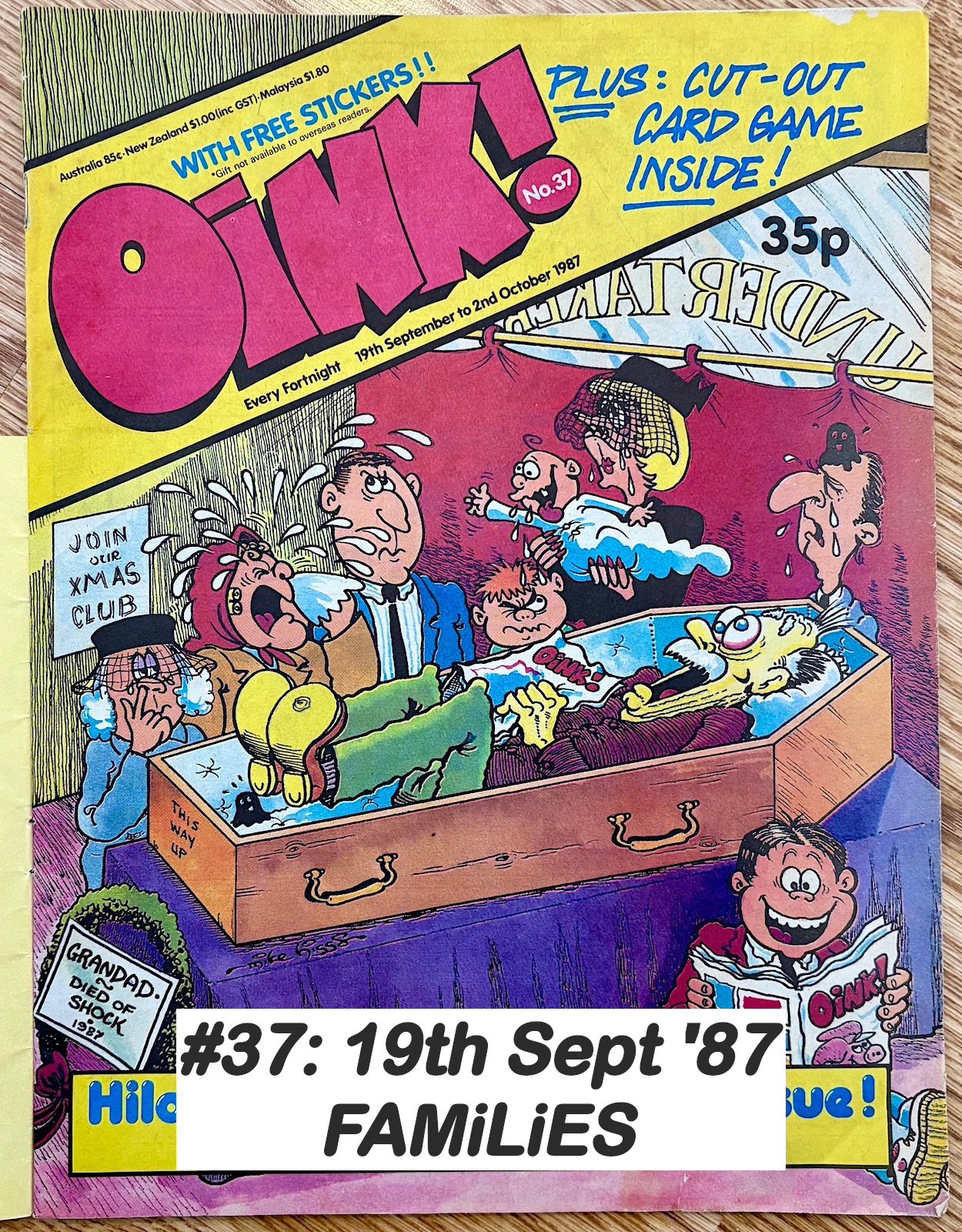
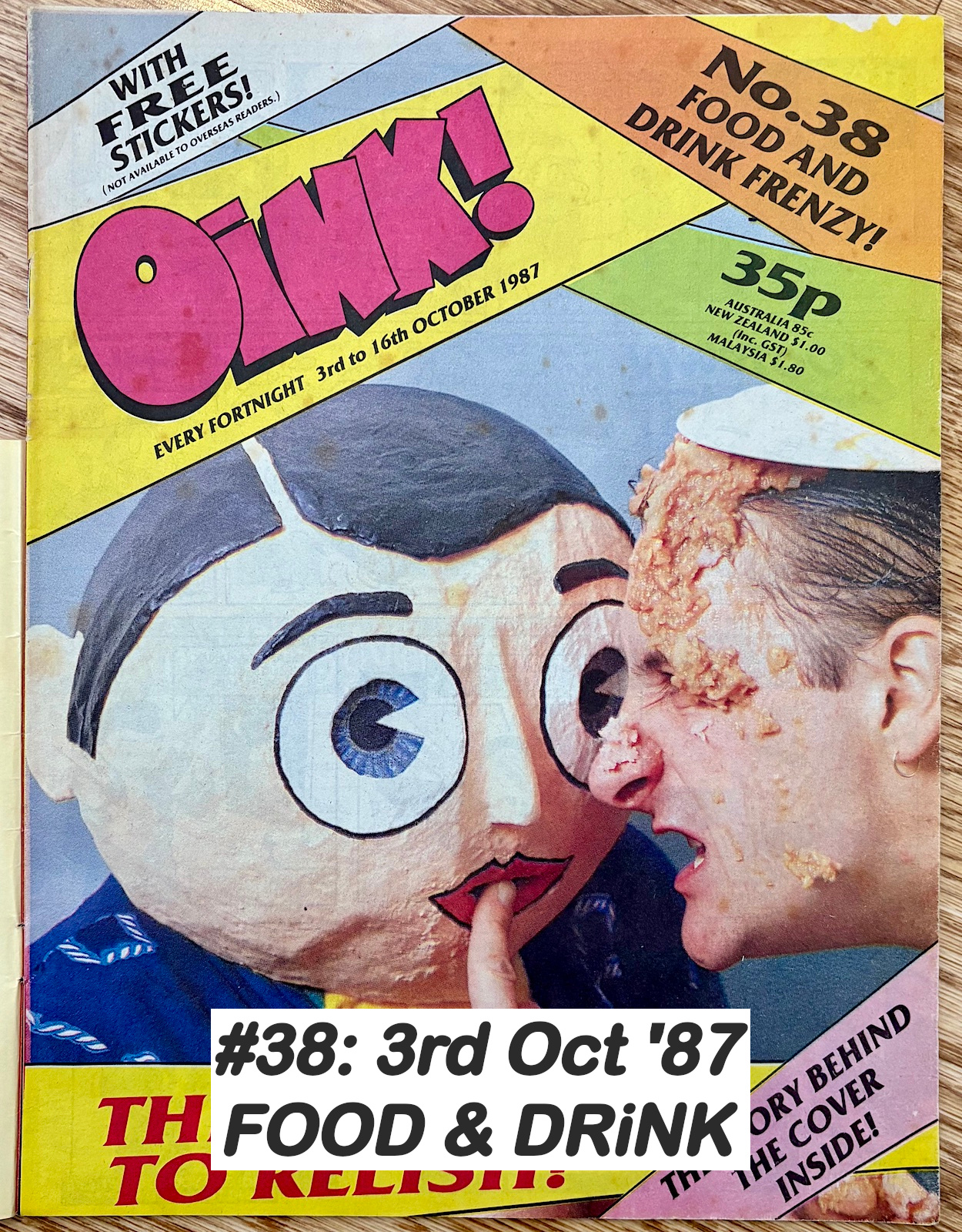
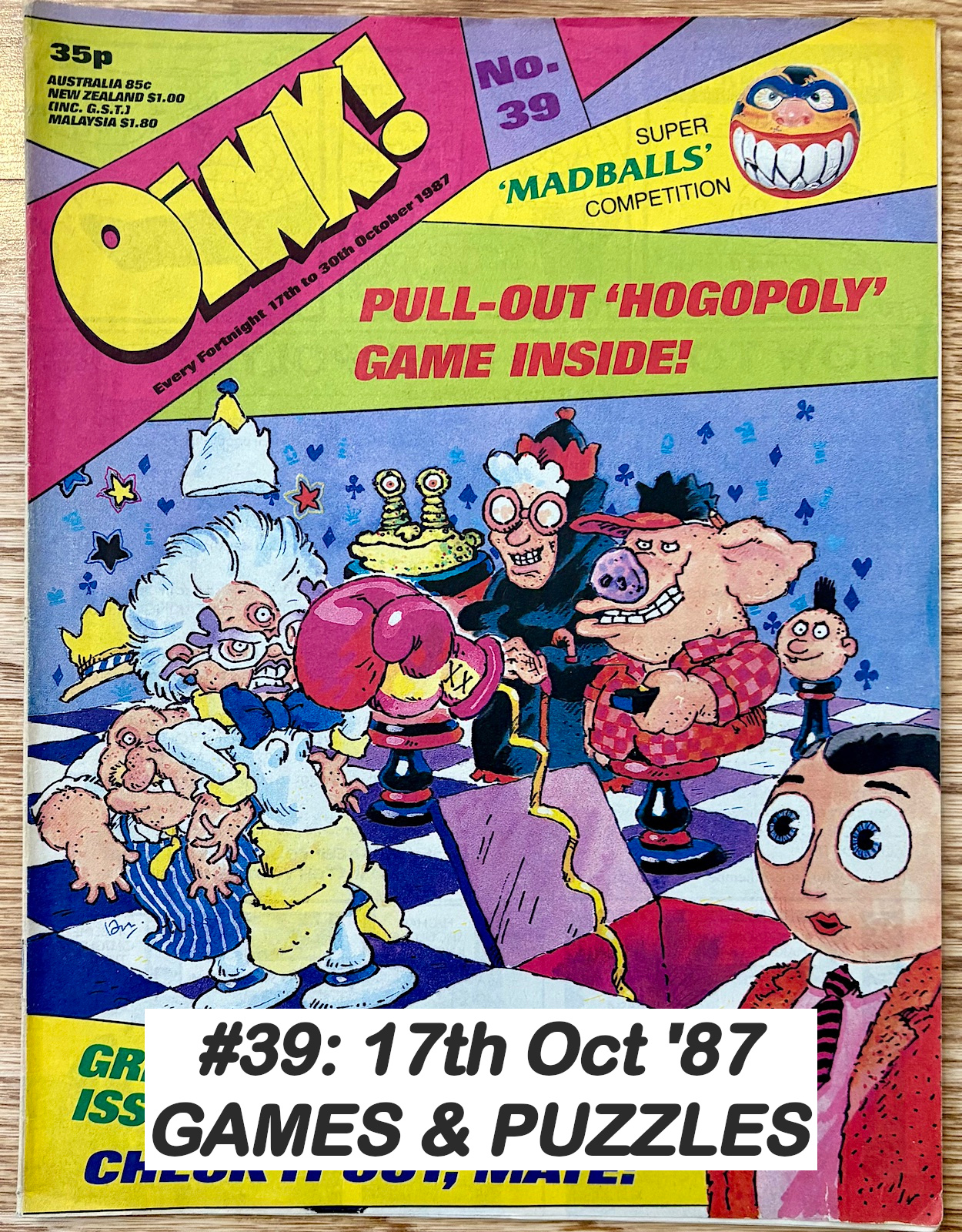
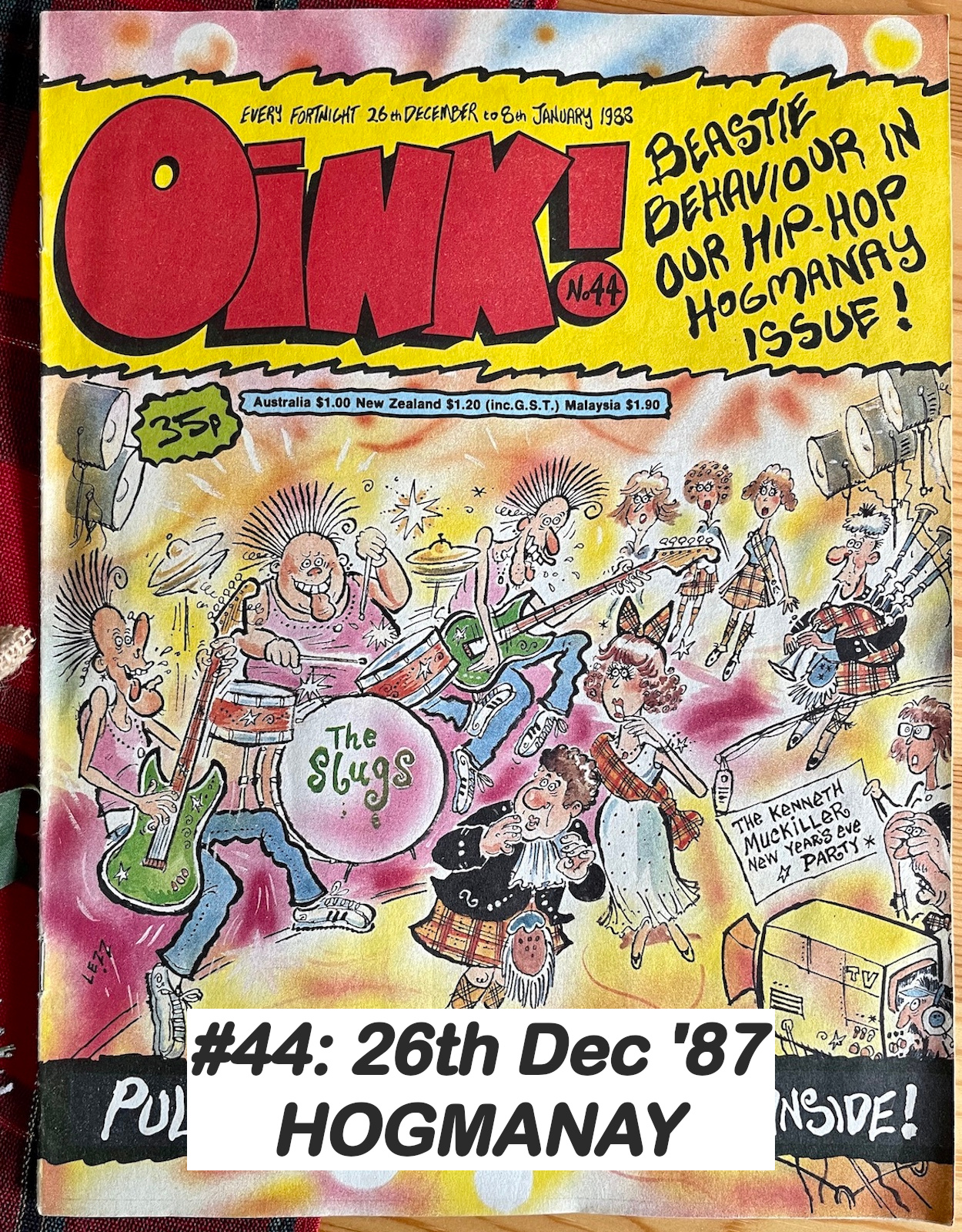
Now we’re about to hit another such moment in the life of OiNK, at least for me. While it’ll be highlighted with a different paper stock and a redesign to the front covers, these next few months are a special moment for me personally. Yes, it had changed publishers (as highlighted in #35’s review) and there are the cosmetic changes but issues #36 to #44 are the ones which I remember reading the most as a kid and there’s a reason for that.

I’d forgotten just how much I’d enjoyed these issues originally until I covered them for the old blog about seven or so years ago. Not having read them since I’m eager to get stuck in all over again. All my favourite characters and cartoonists were present and correct, the subjects were perfectly chosen, there were fun extras, the best Christmas comic I ever owned and of course amongst these was the superb first annual, which remains my favourite childhood book to this day. It still makes me laugh out loud!

Everything felt tight, from the scripting to the art to the editing. With so much crammed into every issue these OiNKs showed what was possible to every other humour comic of the day. Every single one of these issues is a classic and each one brings with it personal memories.  If only the comic had stayed in this format instead of changing things up again in the new year, but we’ll get to that when the time comes.

For now, I’m super excited for what’s ahead. OiNK is my very favourite comic of all time and these ten editions are my very favourite of its whole run. I like to call this OiNK’s Golden Age.

SELECT AN iSSUE BELOW

‘MORE OiNK’ MENU

MAiN OiNK MENU

HAVOC #8: ENDiNGS & (LATE) BEGiNNiNGS

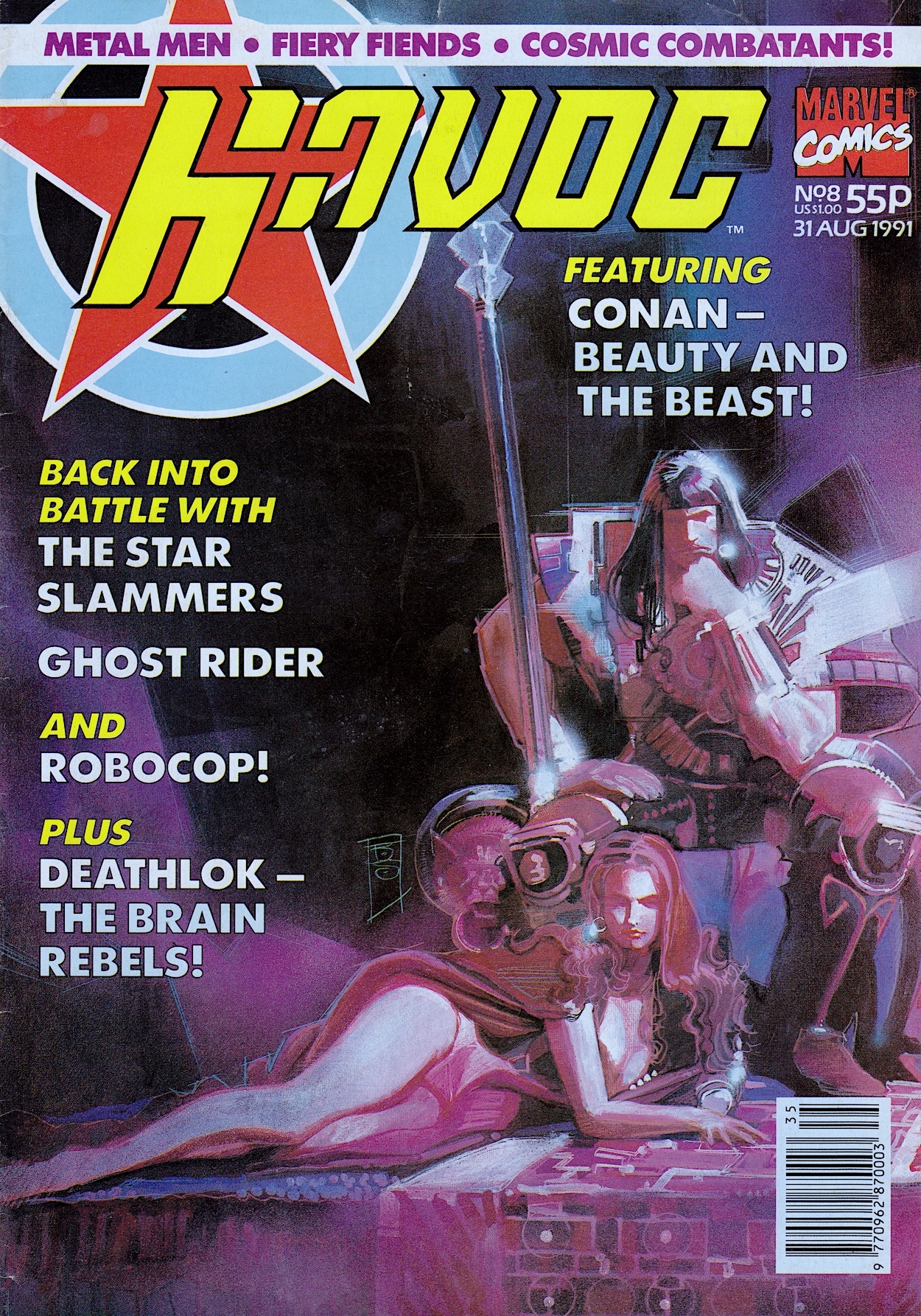
Conan the Barbarian was back in style. After taking a one issue break not only did a new story begin for the Cimmerian inside Havoc #8, he also got this glorious piece of cover art to announce his return. Although, ‘Beauty and the Beast’ could be the tagline for any of the Conan stories featured so far to be honest. It’s a nice cover nonetheless and it may only have been a week but I’ve missed having all five strips included.

Beginning again with Deathlok (written by Dwayne McDuffie and Gregory Wright, art by Gregory and Jackson Guise, letters by Richard Starkings) we finally get to the end of his origin story after seven hugely entertaining weeks, with the finale to Brains of the Outfit. It’s all wrapped up brilliantly well. After last issue I wouldn’t have been able to guess how they’d conclude Michael Collins’ first outing after that action packed strip. Now that I’ve read these final seven pages there was simply no other way they could’ve done it. It’s great.

That panel above is the beginning of an incredibly dark moment as Michael/Deathlok takes to a roof above the city and contemplates ending it, even placing his high powered gun into his mouth. But he knows the Deathlok machine would just be found, he’d be stripped out and some other poor soul would be forced inside instead. Nothing would be stopped, nothing solved. He hooks himself up to electrical wires on the building to overload and explode instead, but decides he needs to call his son first to say goodbye and uses the phone lines instead.

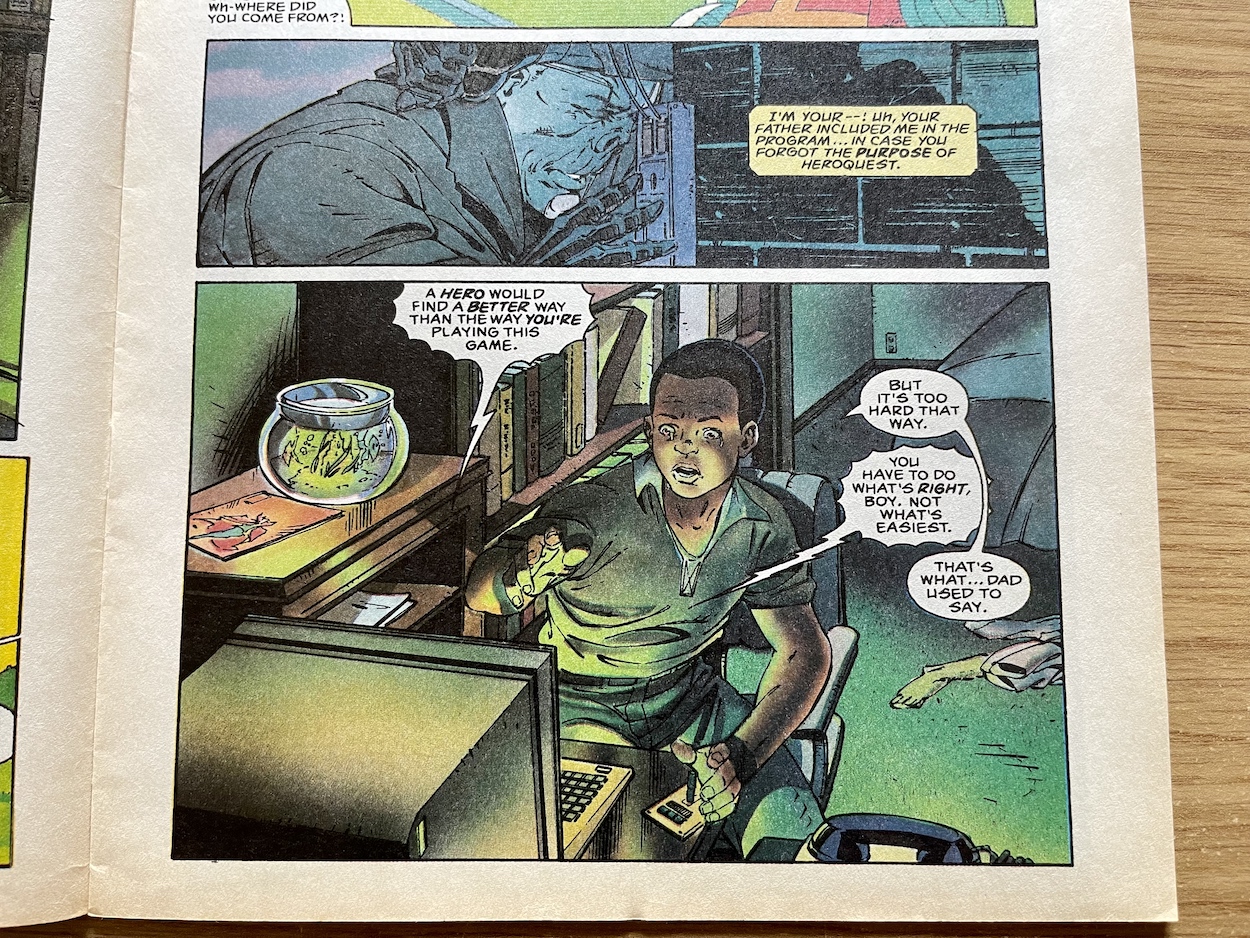
The Deathlok computer detects a ‘HeroQuest’ program running at the number given to it (how topical for 1991) and it creates an avatar for itself to interact with the player, young Nick, who knows his dad has died. This is the game we saw him play previously, when Michael tried to explain to him how bigger and better weapons don’t make the hero, it’s about being brave against the odds and, telling him that he’s a friend of his dad’s he reminds him of this in a touching scene.

In fact this scene takes up the main bulk of this final part and I think it’s just perfect. Nick tells the character on the screen that his dad isn’t there anymore and in response he’s told this doesn’t matter, it doesn’t make it any less true: “You want to win at this game, you’ve gotta learn how to be a hero.” With a few tears running down his face, Nick promises he will and turns the computer off, unaware of who he made that promise to.

Disconnected from the call, the Deathlok computer asks if it should continue with the self-destruct and as you’ll see below Michael looks to the sky as a new day dawns and thinks about the advice he’s just given his son. This feels like the perfect ending to such a character driven story, one that I’ve been really invested in for the whole summer. I love this final page, especially that last panel with the hint of a smile on our true hero’s face.

What a brilliant origin and I’m already a fan of the character. I could see his family being involved in future stories very much in the same way Alex Murphy’s were in some episodes of the RoboCop TV series, although the difference here is that Michael has already tried to tell his wife who Deathlok really is. That could lead to some great moments. To say I’m eager to read more is an understatement so, although the next issue is the last I’ll look forward to its small chunk of storyline to get an idea of what the future could’ve held.
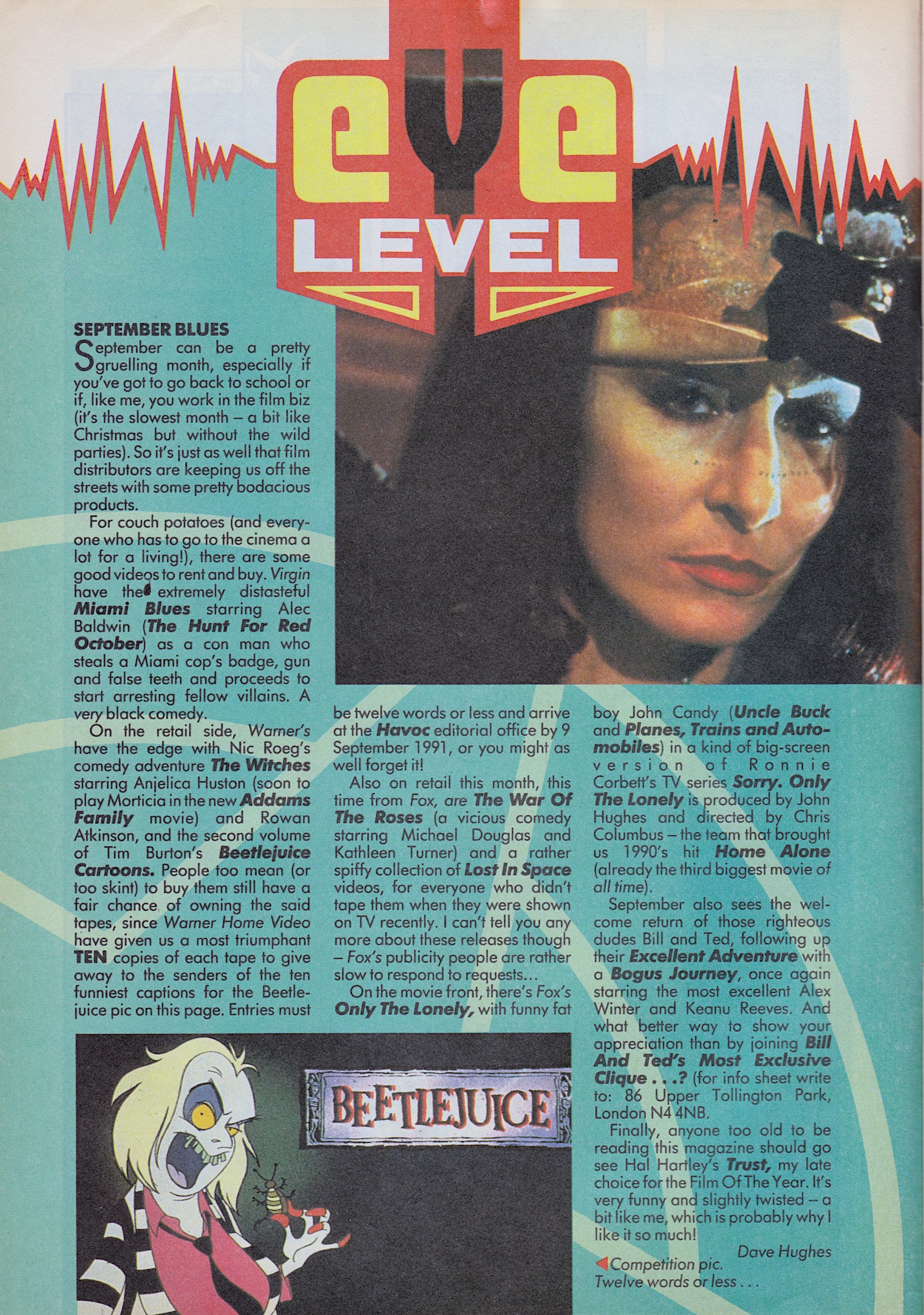
Next up we take a break from the strips for Eye Level, the news page compiled by Dave Hughes this issue. It may be back to one page after the larger spread it had a week ago for the cinema releases of Terminator 2: Judgement Day and Teenage Mutant Ninja Turtles II: The Secret of the Ooze, but a quick glance down the article at all those movies and TV shows in bold and it was quite the busy release schedule wasn’t it?

There are a few I’d never heard of (Miami Blues, Only the Lonely and Trust), a couple of childhood favourites (Bill and Ted’s Bogus Journey and The Witches) and a cartoon series that completely passed me by because I never saw the film it was based on until much later in life. Even the references to the films recently released remind me of why I loved the 80s so much! Speaking of 80s movies, the official RoboCop continuation is up next and venturing into the world of superheroes.

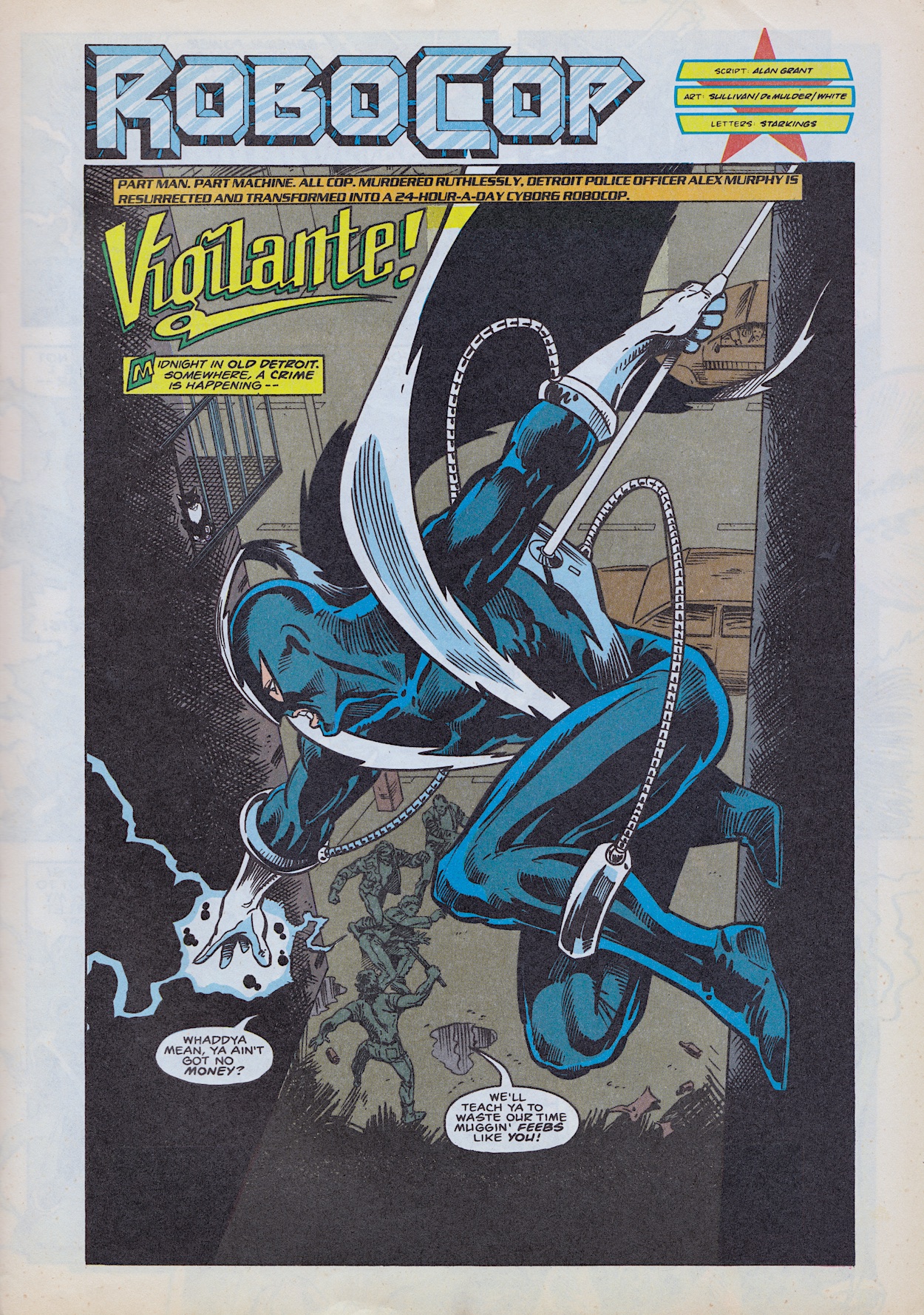
Well, wannabe superheroes anyway. As you can see from this opening splash page it certainly looks like Old Detroit has a new warrior in the fight against a seemingly insurmountable level of crime and violence in the forgotten city. I like how the story starts off with that famous RoboCop quote about a crime happening somewhere and how we’re led to believe it’s in reference to the mugging happening on the ground. A clever piece of misdirection by writer Alan Grant.

The next page plays out like an old-fashioned, clichéd superhero comic with ‘General Power’ using his ‘Electro Gauntlets’ to incapacitate the muggers, complete with corny one-liners such as, “General Power: The shock that crime needs!” It’s an exaggerated, almost spoof-like homage and it’s all going swimmingly for the masked crime fighter until he tries to help the victim to his feet but forgets to turn off his gauntlets, frying the person he was trying to save!

Cue sirens and a police car pulls up. Our panicked wannabe begins to scale the wall in a bid to fade back into the night like any good vigilante but he hadn’t bet on two things, his own incompetence and the officer being Alex Murphy aka RoboCop, who makes his entrance into the story in this glorious drawing by penciller Lee Sullivan and inker Kim DeMulder (colours by Steve White, letters by Richard Starkings). A great page, this.

A quick shot through the wire General Power was using sees him fall to the ground but the victim, all charred from the accidental electrocution, pleads with Alex to let the man go. They try to convince him that he’s on the same side as the police but Robo stands firm, no one can take the law into their own hands and when Power tries to use his gauntlets on the metal cop it backfires big time. The story ends with Murphy radioing into HQ that he’s picked up “another vigilante”.

This third RoboCop story shows the creative team have well and truly settled into the character

“Another”? Intriguing. Has there been a rash of such people trying to fight crime recently? I’m going to guess it can’t be a coincidence, that there must be some nefarious reason behind it all, so I’m interested to see how much of the mystery is revealed in our final issue next week. There’s definitely a confidence in this third RoboCop story that shows the creative team have well and truly settled into the character, especially in the art. Lots of potential here for future stories. I’m going to miss them.

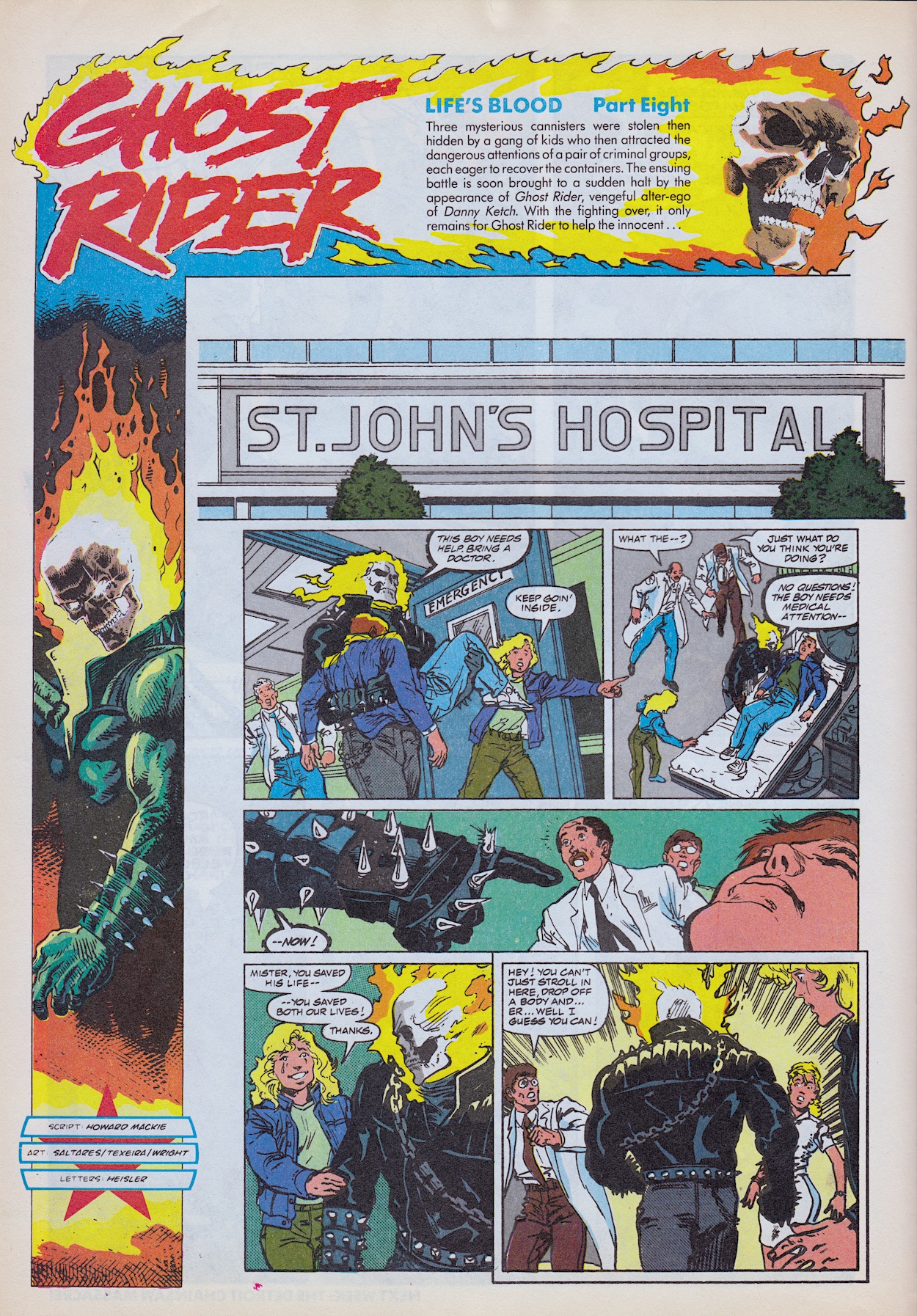
Alongside Deathlok, Ghost Rider’s origin story also ends this issue, with part eight of Life’s Blood ((written by Howard Mackie, pencilled by Javier Saltares, inked by Mark Texeira, coloured by Gregory Wright, lettered by Michael Heisler)) which acts as a kind of epilogue. In his demonic form Danny Ketch bursts into the local hospital to deliver the young gang member who initially scared him back in #1, injured in the battle between Kingpin’s and Deathwatch’s cronies over the mysterious suitcase and its canisters. After this first page he reverts back to human form for the rest of the story.

But as I’ve said before the strip has always been about more than just the Ghost Rider himself, I’ve enjoyed the character of Danny and the building blocks being put in place for future stories. For example, we get the obligatory conflict character, someone in Danny’s life who thinks his alter ego is a menace to society and this comes in the shape of Captain Dolan, the father of a friend of his and his sister Barb. The Ghost Rider is all over the press and Dolan has made his mind up.

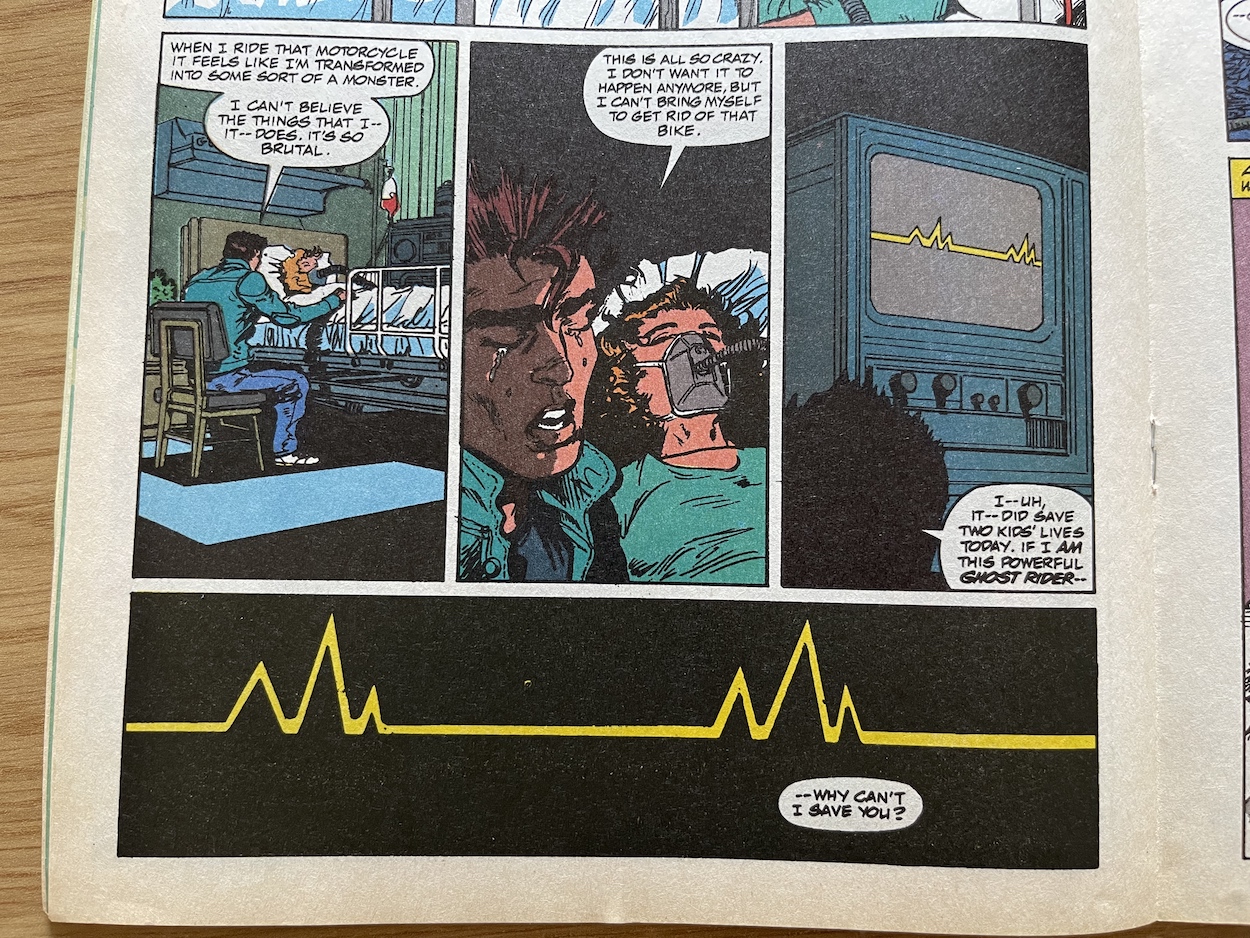
Danny tries to reason with him but we know already this won’t help, this is a character who’ll go up against the Spirit of Vengeance in future issues without knowing who it really is. It’s a bit of a cliché but Danny is such a sympathetic character and the Ghost Rider such a fascinating idea that I’d love to see where this relationship goes. For now though, Danny concentrates on his sister who remains in her comatose state as the story ends. 

After this scene we get two large panels showing Kingpin shouting at his men that his entire operation is in jeopardy if those canisters aren’t found, and one in which new villain Deathwatch has killed one of his men for losing the suitcase and declares all witnesses are to be eliminated. But this scene in the hospital is the more dramatic ending for me, with Danny struggling to understand what’s happened to him, scared for his sister’s life.

It leaves me thinking is there something his Ghost Rider form can do for Barb? Having this scary, demonic, vengeance-fuelled being caring for his host’s sister could make for interesting storylines in the future. This may be the first series I want to try to collect in graphic novel form after Havoc finishes in just seven days. Watch this space. On the next page we’ve got a special feature about the Star Slammers, or at least that’s how it was described on the contents page.

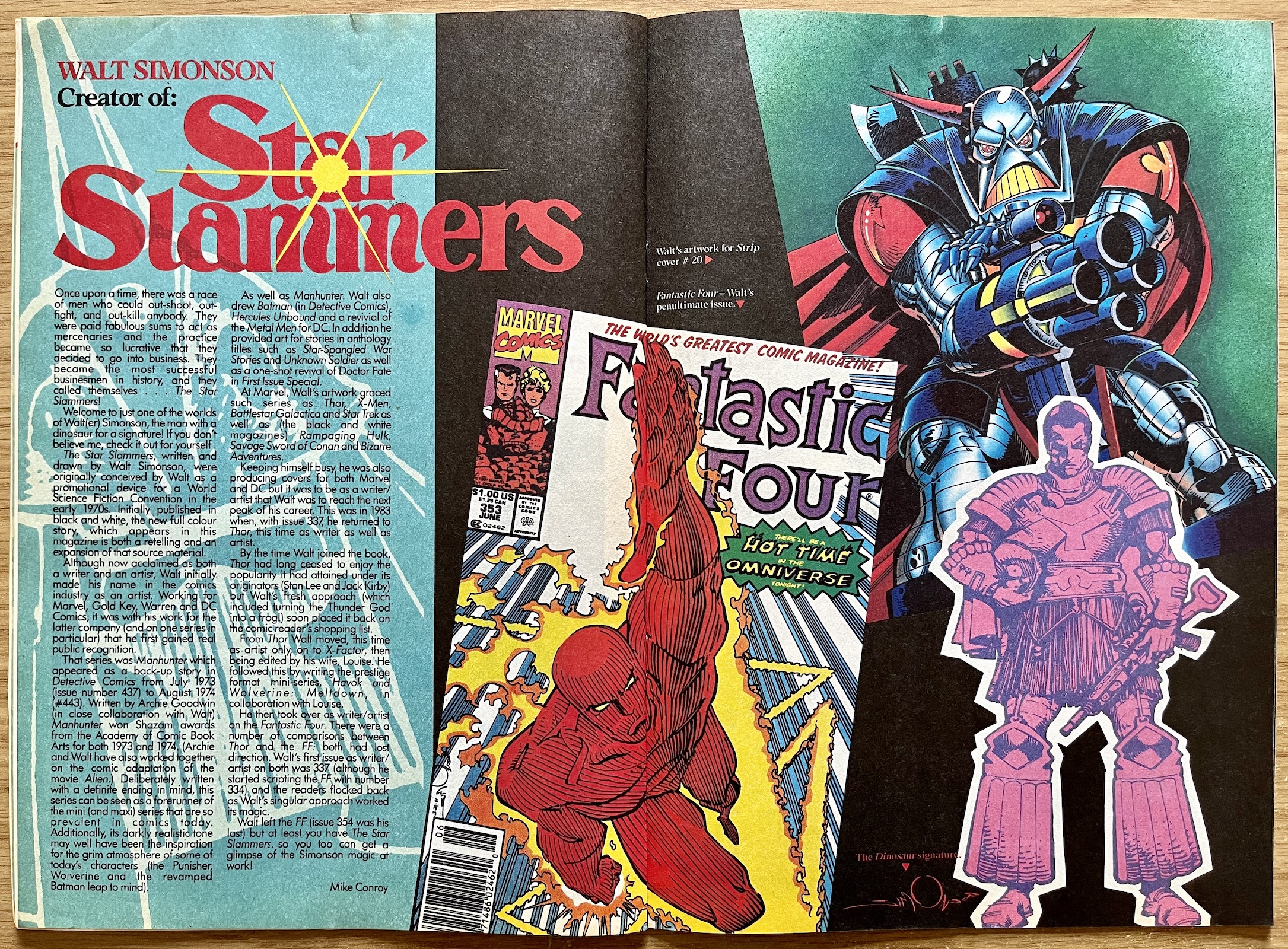
It’s actually an article about the creator of the Star Slammers, Walter Simonson and his illustrious career. I’ll admit as I read it I was a bit miffed it didn’t mention Walt’s adaptation of Jurassic Park, which featured in the first five issues of the UK’s comic based on that original movie and covered on the blog. Then I had a bit of a moment when I realised Havoc was published two years before the movie was even released. Whoops.
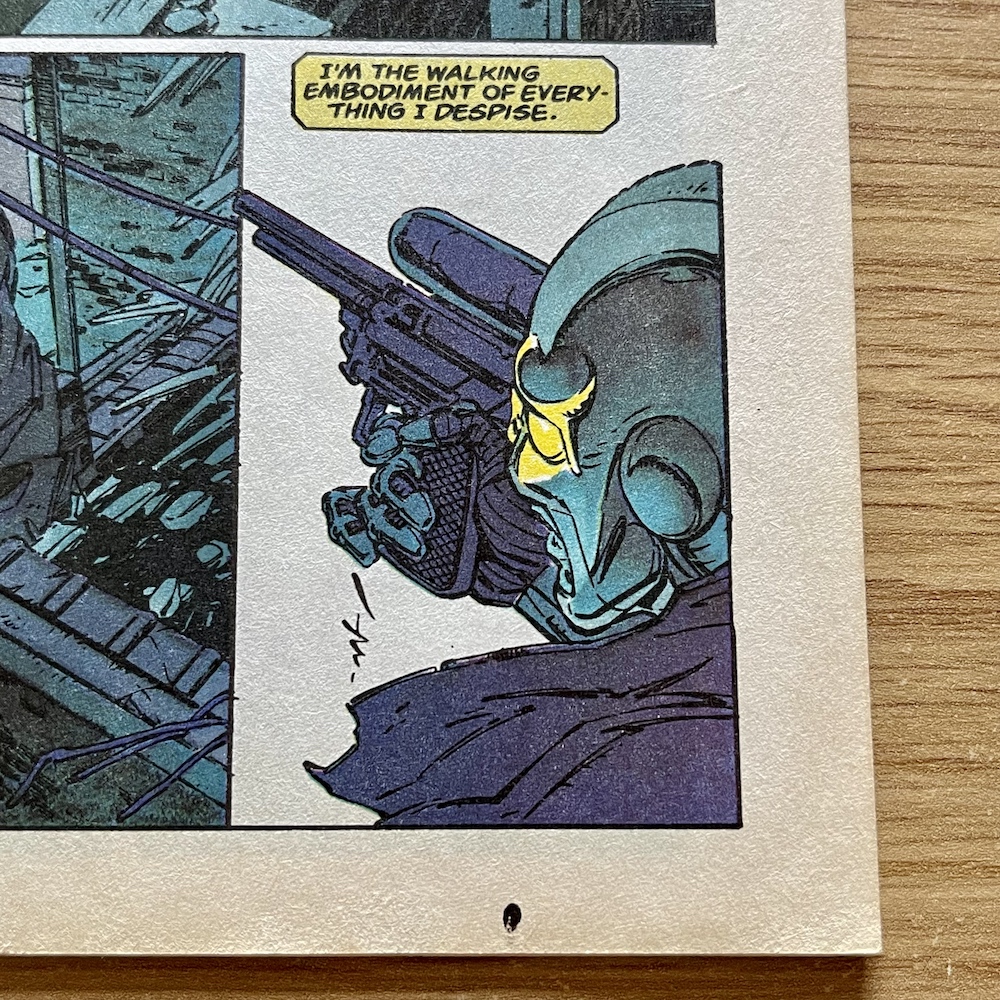
I certainly didn’t think I’d see Death’s Head in Havoc though, there’s always that.

Before we move on to Walt’s strip we have the return of Conan the Barbarian after his one-week hiatus and his next story is entitled Barbarian Death Song. The credits box has been accidentally left blank. Michael Fleisher, who provided the dialogue to the previous story has written this one, with pencils by John Buscema, inks by Armando Gil (Jurassic Park, What If…?, Ka-Zar the Savage), colours by George Roussos (G.I. Joe, Fantastic Four, The Avengers) and letters by Janice Chiang.

In 1972 writer Lin Carter wrote a poem called Death-Song of Conan the Barbarian which is the last story for the character, chronologically speaking. Written for a Robert E. Howard (Conan’s original creator) fanzine and later reprinted in Marvel’s Savage Sword of Conan, in it Conan reflects on his life, those he’s met, those he’s fought and the people he’s killed. Themes include the inevitability of death and living a fulfilling life and crossing over to the other side, which he does travelling alongside those he knew in life.

Is this going to be reflected in this comic strip with a similar name? So far the answer is no but remember this would’ve been cut into at least four smaller parts for Havoc. Originally published by Marvel US in 1985 the story begins with Conan turning down the offer of the Nemedian King to take up a ranking position in his army. He then stumbles upon an assassins league called The Falcon Brotherhood (who he has dealt with before) and rescues a damsel in distress who I initially thought was Nateesa from the previous story.

Nope, this is meant to be a completely different character even though she is identical to the damsel from last time, giving me the impression female characters are somewhat interchangeable in these stories (which isn’t a good impression to have). Her name isn’t given yet and she has just about enough time to start telling us her story before she’s unceremoniously cut off for seven days. The jewel around her neck is what the Brotherhood sought and she tells Conan that while tending to her father’s goats a few days previous a cloud “which was not a cloud” appeared before her.
The best bit is the opening page with its fierce battle but it’s immediately forgotten

That’s it, we’ll have to wait until next week to see what that’s all about. A strange place to stop the tale but sometimes it’s inevitable that sometimes the forced cliffhangers won’t quite hit. However, as a result there’s not much to say about these first five pages. The best bit is the opening page with its fierce battle but even it is immediately forgotten as the story jumps forward to a few days later. Hopefully the story begun here will be elaborated upon lots more next week.
Between Conan and the final strip is an advert for a Marvel UK comic I never bought as a kid. This is actually the first time I’ve even seen a colour advertisement for it as it always appeared in black and white in Transformers. I’ve heard nothing but good things about The Knights of Pendragon so it could be something for me to look into at a later date when I’ve covered all the comics I did buy back then.

So, we finish our penultimate issue with the Star Slammers (written and drawn by Walt Simonson, colours by Louise Simonson and Deborah Pedler, letters by John Workman) and if I thought Conan’s strip didn’t have much going on then this one has absolutely nothing. At first glance it all looks very exciting, with a unique layout to the battle scenes and it entices the reader in, only to find not much there upon closer inspection.

We begin seeing their home world which the Orions use as their hunting grounds being devastated from above, the cowardly hunters staying out of harm’s way for now.  The pages have that aforementioned uniqueness about them. They’re made up of lots of small squares in apparently random fashion, meant to represent the Silvermind, the ability of their race to share all their thoughts as one. Knowing everything that everyone else is doing all at once could turn the tide of the battle.

But Jalaia realises Ethon was only able to heighten his own telepathic powers to the Silvermind when he knew he was about to die.

In that moment Ethon let all his defences down, even the ones he didn’t know his mind had put up. Jalaia decides to put herself in harm’s way so she can be the trigger. I do like how over a few pages the many squares holding faces of Slammers start to go blank one by one, as more lose their psychic connection with their comrades. But it’s not enough. Even with Jalaia making what could be the ultimate sacrifice, I still found myself struggling to care for any of the characters.

There really hasn’t been the character development necessary for something trying to be so epic. I should be on the edge of my seat with this story but I just haven’t been able to connect with anyone involved, despite the earlier issues having some interesting world building. That’s it in a nutshell really; the story has concerned itself with the big scale events at the expense of the small scale moments and characters. As it stands, I find myself rushing though it to get to the letters page!

I always liked how Marvel’s comics wouldn’t hold back on printing criticism received, with the first letter really not holding back on their opinion of my least favourite strip. That being said, these letters were sent in by readers after #2, so opinions expressed are still limited to those first two issues. I laughed when Deathlok was described as “a RoboCop for the present”. Robo was only released upon the public in 1987! The same letter even praises the Slammers. There’s just no accounting for taste I suppose.

Interestingly the reply states Conan is the strip receiving the most negative feedback. Given how these letters were written after only his first adventure I can understand that though. It also appears that back in 1991 the UK didn’t have the same appetite for spandex as it does now. How times have changed. The next time we read Cry Havoc will be the last so none of the proposed changes would get the chance to take effect. But I’m still looking forward to it. Each issue was growing in confidence and with the origin stories out of the way the future looked brighter than ever.

The suddenly cancelled Havoc’s swansong review will be right here from Wednesday 31st August 2022.

iSSUE SEVEN < > iSSUE NiNE

HAVOC MENU

OiNK! #35: TRAVELLiNG HALFWAY

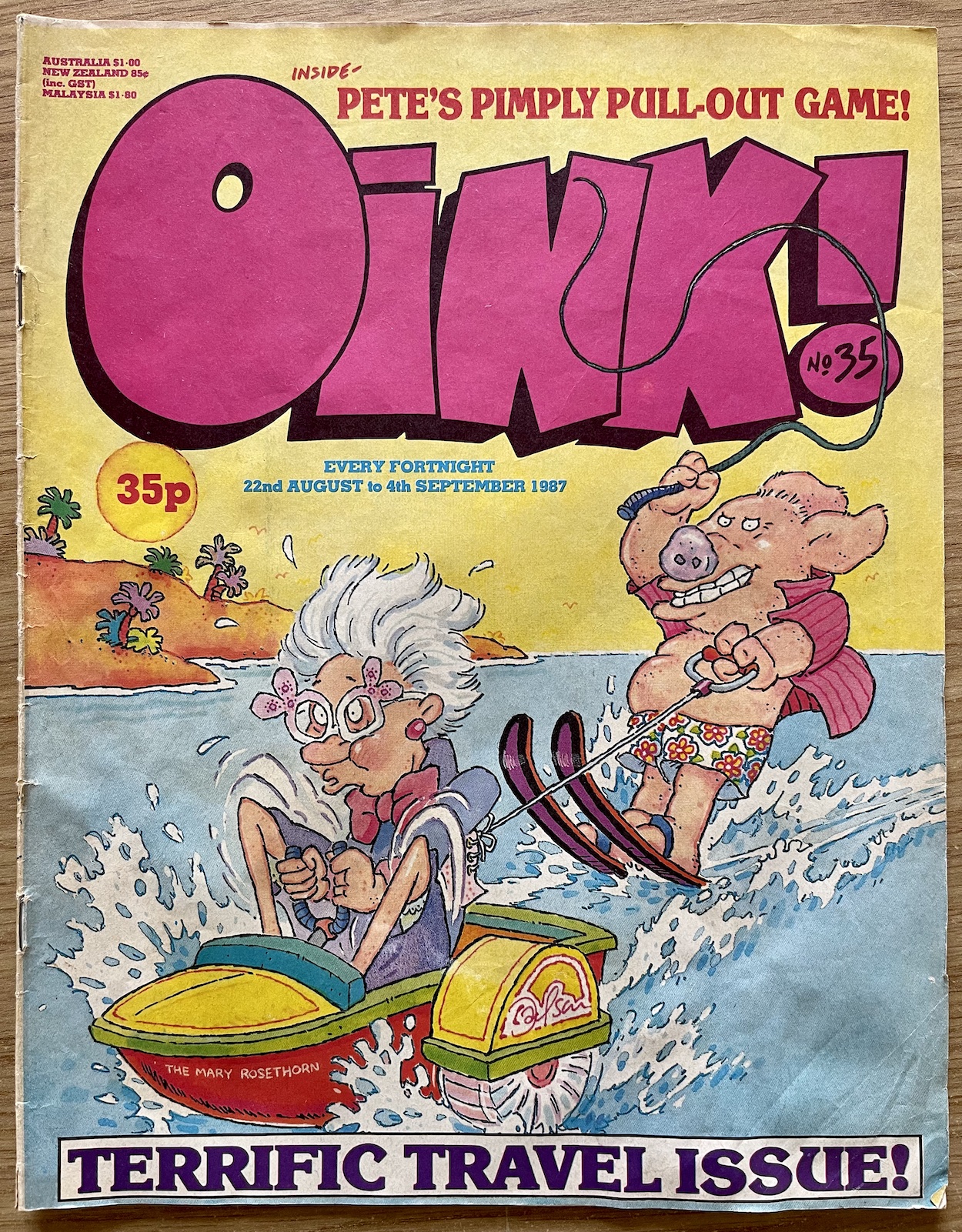
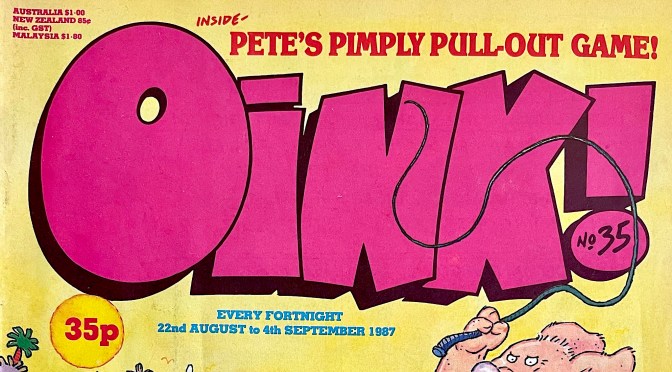
With Ian Jackson back on cover duties off we go with the second half of OiNK’s run. Of course, we didn’t know this was the case at the time. As far as the (much) younger version of me was concerned the comic was going to run and run just like Beano or The Dandy (with OiNK being my first comic I had yet to experience a cancellation). There’s so much great stuff to come over the remainder of this year in particular (1987 in old money) but first I want to touch upon something, a change which seemed so small and insignificant but which would ultimately decide OiNK’s fate.

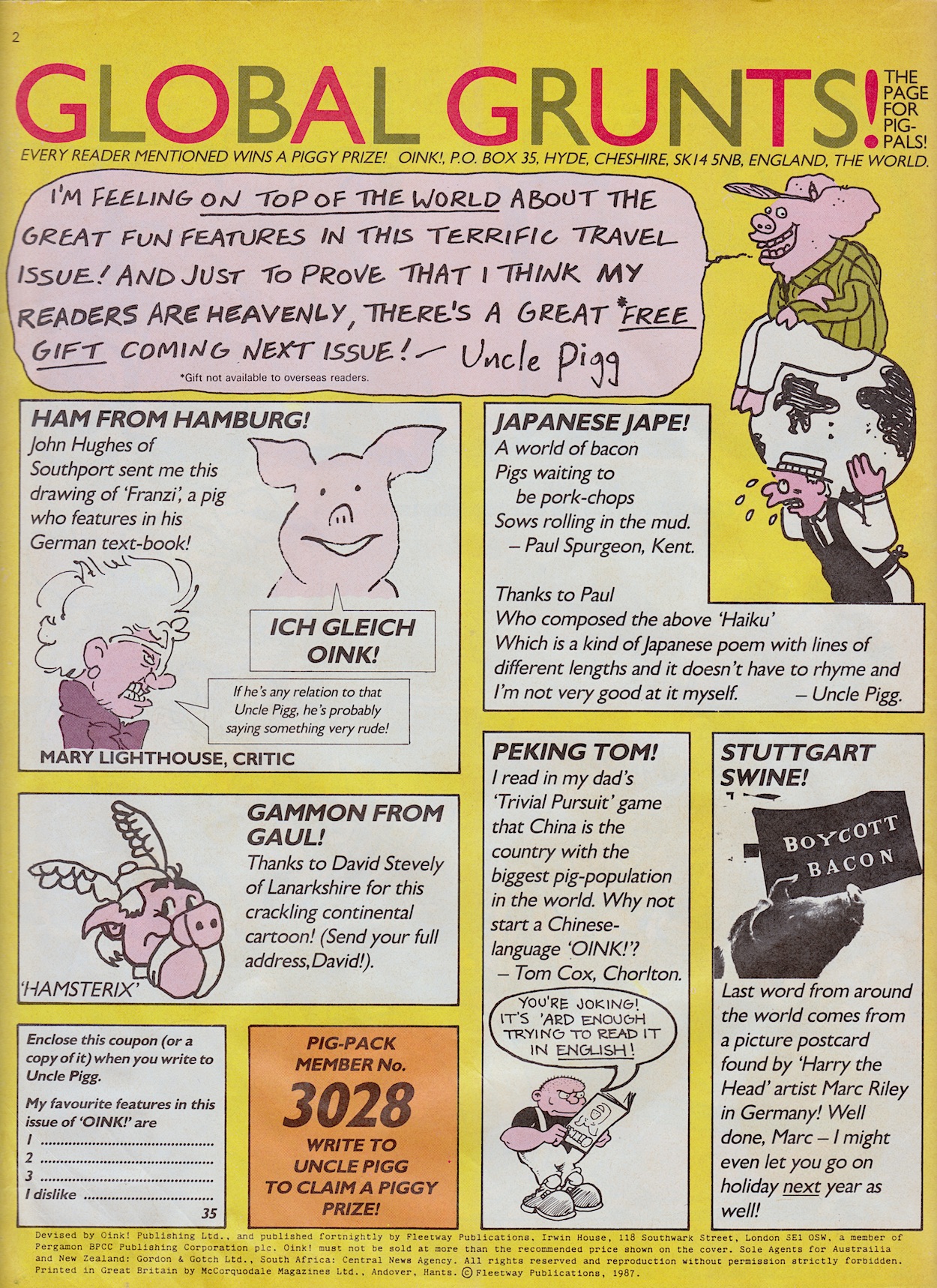
By coincidence Fleetway Publications took over from IPC Magazines at the exact halfway point in the comic’s eventual 68-issue run and it’s only with hindsight that I can say it was an incredibly important moment. Looking at #35 you’d not notice it unless you read the copyright blurb at the bottom of the Grunts letters page so you may be wondering why I’m giving it such prominence right at the beginning of this review.

A wonderful selection of input from the readers which co-editor Patrick Gallagher tailored to the theme of the issue, that of travel. You could almost see this issue as a mini holiday special or as a follow up to last year’s summery #7. You’ll see the change in the blurb at the bottom of the page too.

With average sales of around 100,000 per issue OiNK was a hit for IPC Magazines

Fleetway was originally created by newspaper group chairman Cecil Harmsworth King and when he later purchased Odhams and Newnes the IPC holding company was formed to oversee them all. Eventually it was all rebranded, OiNK falling under IPC Magazines alongside all the other comics. However, in 1987 IPC sold off its comics by placing them into a separate ‘Fleetway Publications‘ company and selling the whole caboodle to Robert Maxwell‘s Pergamon Holdings Ltd. Maxwell’s company now owned the independently crafted OiNK.

With average sales of around 100,000 per issue OiNK was a hit for IPC Magazines and they certainly treated it as such. They were also very happy with the buzz one of their titles was generating in the press and the celebrity endorsements it attracted. This didn’t stop it being victim to some fiddling under the new company though, but we’ll get to that in a future post and I’ll touch upon the importance of the next issue (and the immediate physical changes to the comic in particular) in its review. But for now let’s get back to the comedy with my favourite Greedy Gorb strip.

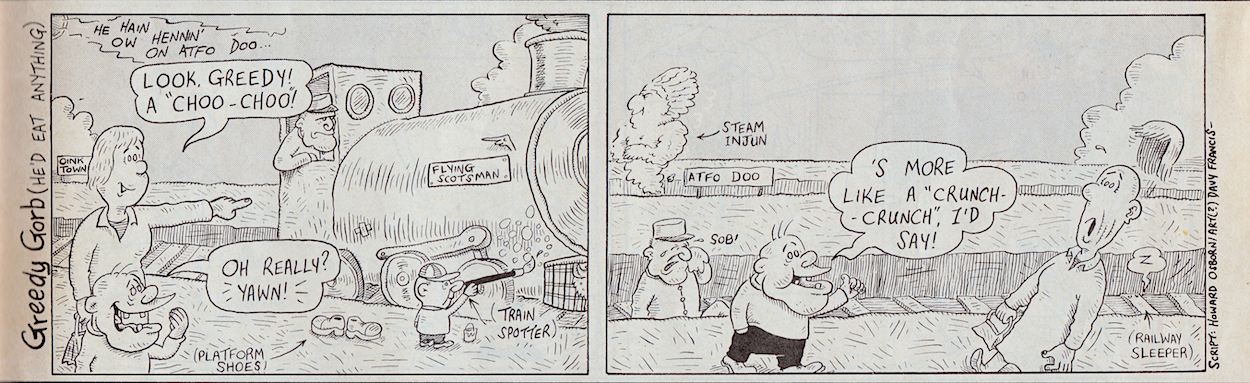
Greedy was usually written by his creator and artist Davy Francis and I dare say most (if not all) of the background jokes here were also added by Davy. The main set up and joke were written by Howard Osborn this time though, who actually has no less than five strips to his name in this one issue alone. Howard worked in law in some administrative capacity according to co-editor Patrick Gallagher. He would write his OiNK material after work whilst having a pint in the pub.

There can’t have been many pig pals who wouldn’t have had Pete Throb as one of their favourite characters

In any other comic Gorb could’ve become very repetitive but in OiNK that was never a concern and his mini strips were always a highlight, especially when there were so many gags squeezed into such a small space. The main pun would’ve been enough anywhere else but Davy always liked to give us plenty of value. My personal favourite here (although it’s hard to choose) would be the teeny tiny wings on the Flying Scotsman.

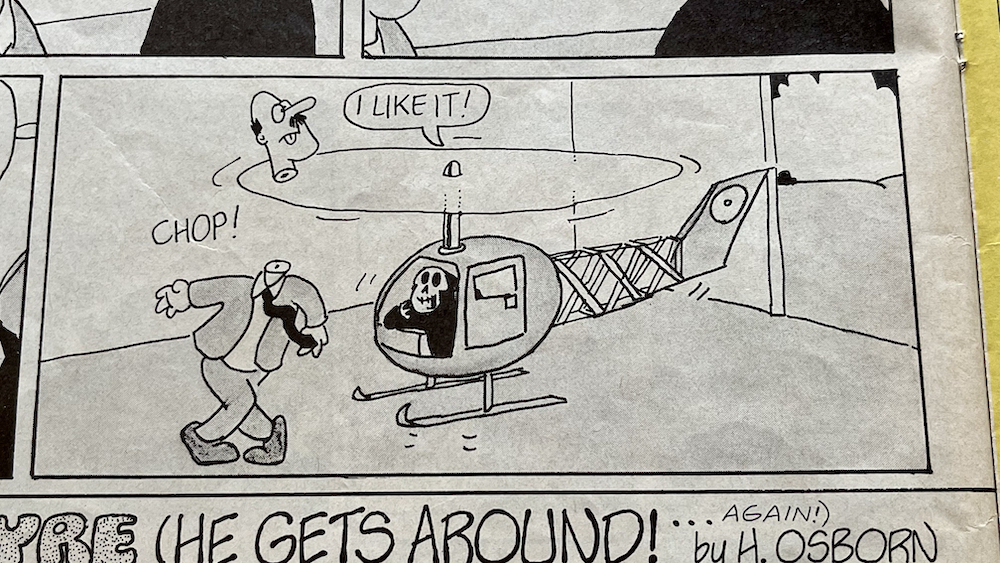
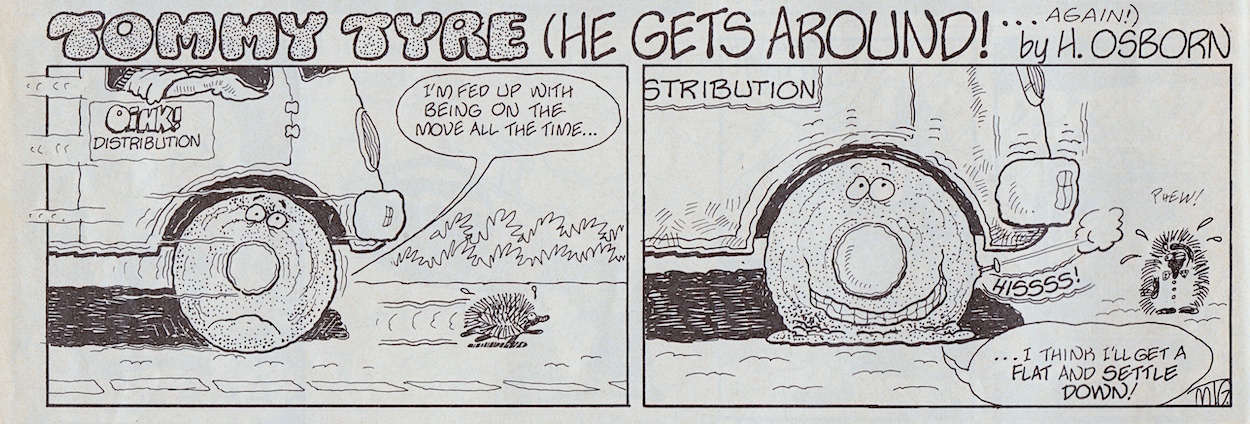
Elsewhere, a one-off character appears in two separate strips, both written by Howard. This is the best of the two and it appears Howard is trying to give pun masters Davy and Graham Exton a run for their money with Tommy Tyre (He Gets Around), drawn by Mike Green.

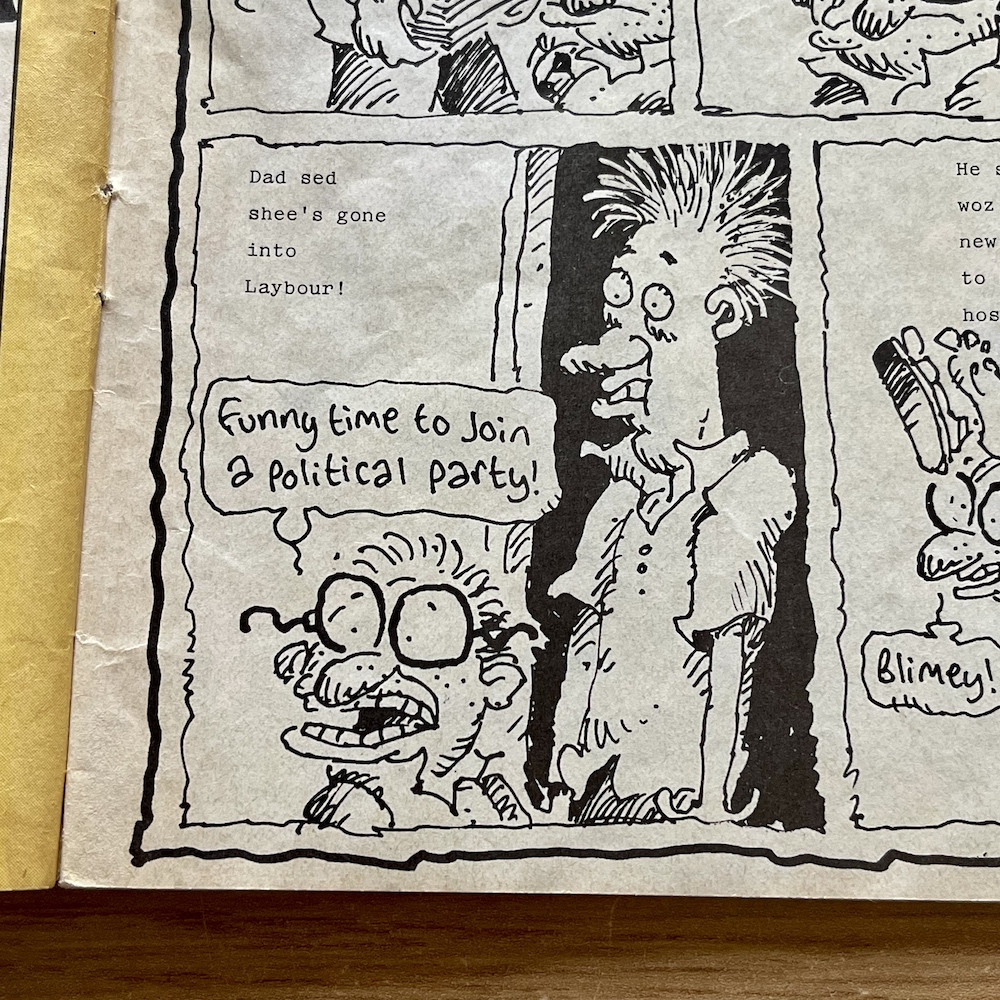
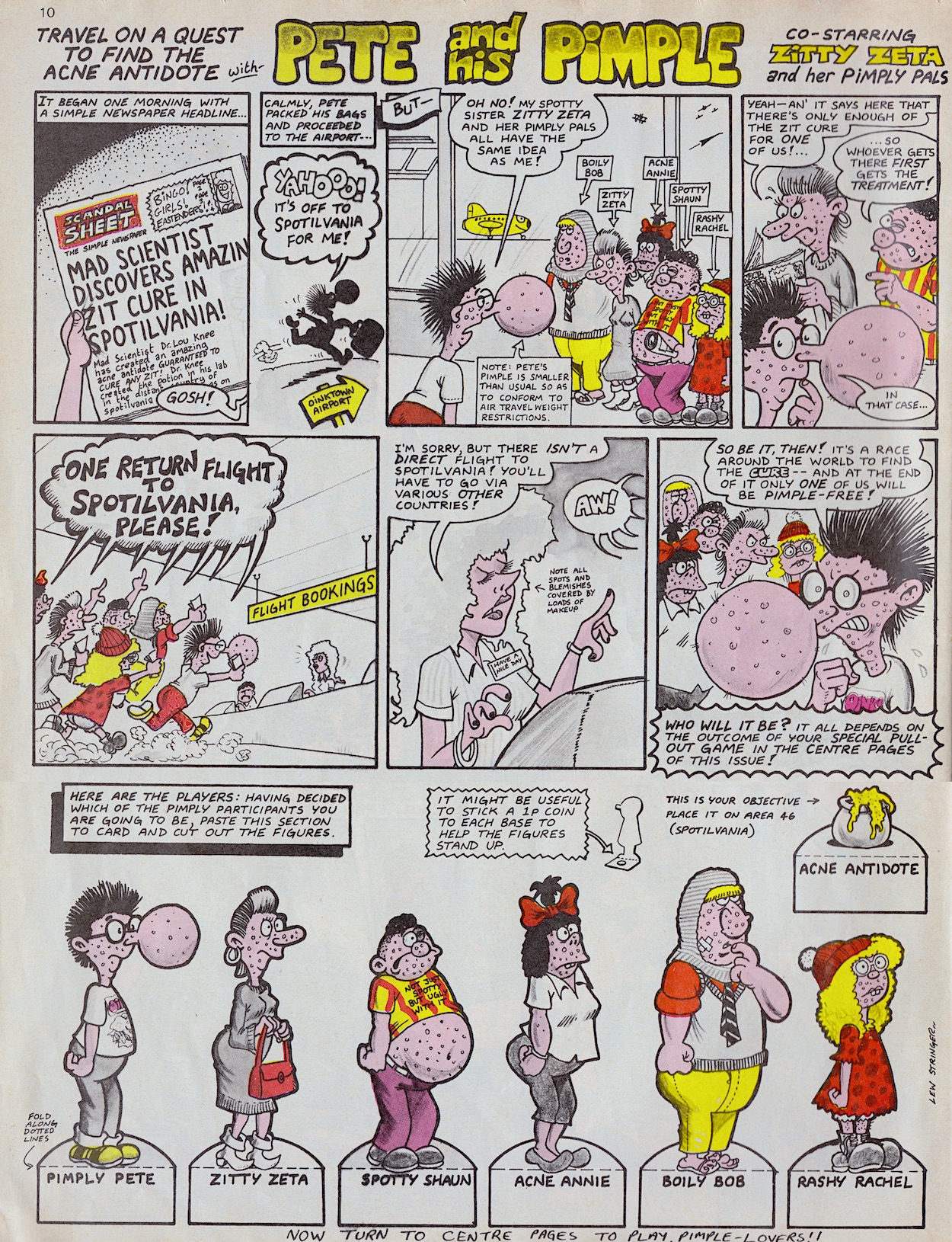
There can’t have been many pig pals who wouldn’t have had Pete Throb as one of their favourites. Lew Stringer’s Pete and his Pimple was one of the most popular strips and featured in crossovers with Lew’s other creations Tom Thug and Pigswilla. Later in the run the strip would include a weekly competition asking readers to send in their outlandish pimple cures, he’d make the cover in an image that required the OiNK logo to be altered for the issue and he’d even get his own pull-out comic! Phew.

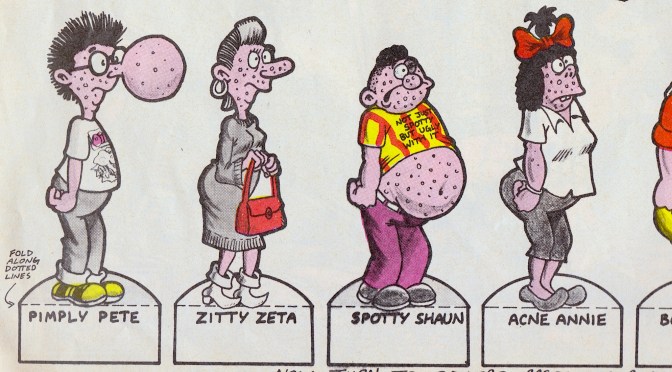
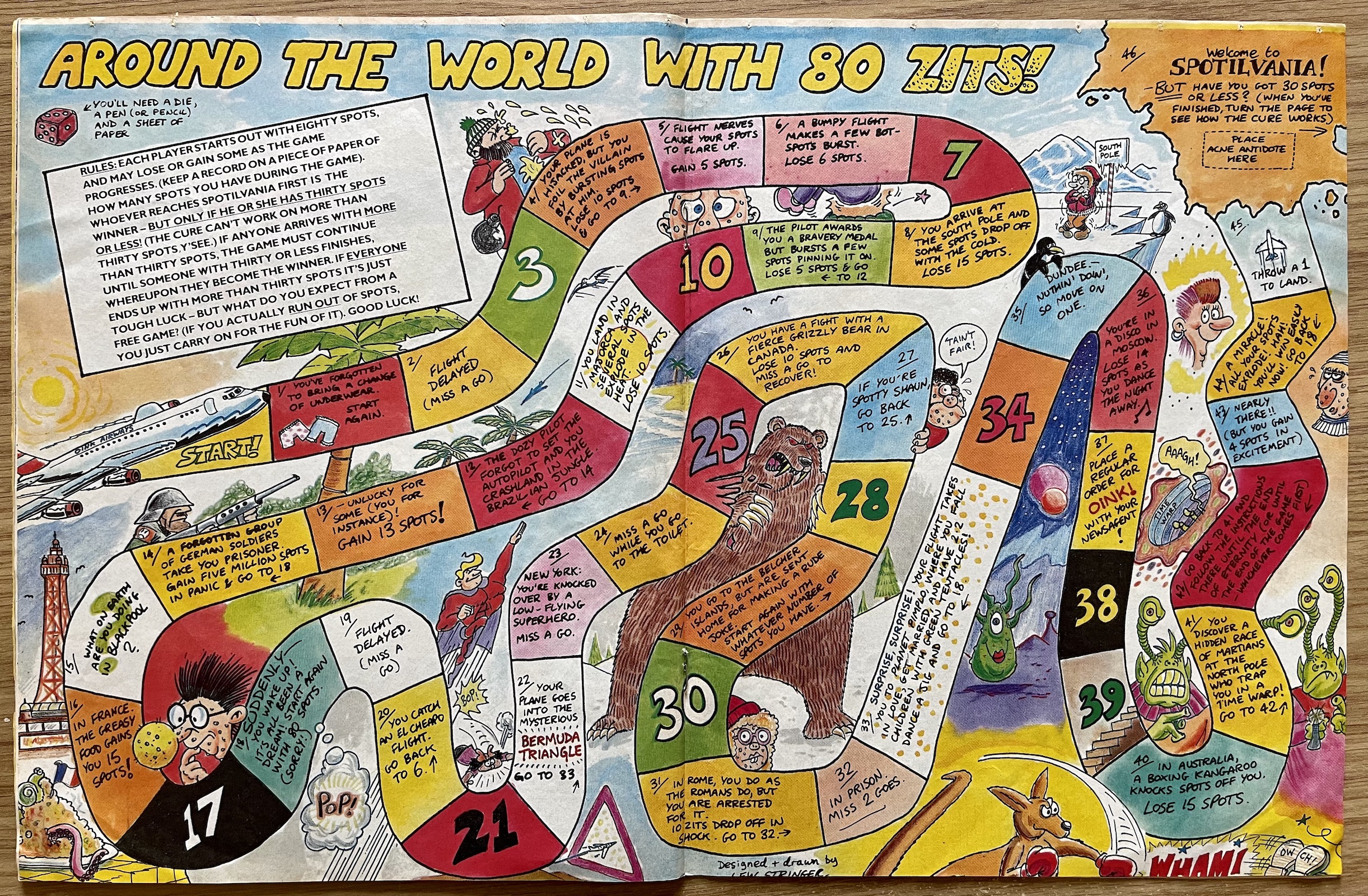
Following on from his collaboration (of sorts) with Tom just a fortnight ago, this issue brings us a full board game titled Around the World With 80 Zits. As well as this taking up the middle pages there’s a strip introducing the game’s scenario complete with cut out figures to use as player pieces, a bit like Frank Sidebottom’s in the first Holiday Special. This certainly wouldn’t be the last time we’d get a cut out game either.

So the set up is simple and the race for the miracle cure is on. The game is a wonderful, full-colour spread complete with so many ways to force the players around the board you could get dizzy playing! Just look at square number eight and follow its instructions to see what I mean. (The only thing more cruel than that one is square 44.) I never did play it as a kid because I didn’t like to cut up my OiNKs but I can imagine the laughs to be had for those that did.

To be fair the instructions contain the first clue that this isn’t going to be your normal board game, not when they include the words “tough luck”. I love all the little details around the route, containing everything from palm trees to the South Pole, a kangaroo to a yeti. There’s even a drawing of Blackpool Tower, a trademark holiday destination for many of Lew’s comics characters over the years. That’s understandable when you find out it’s a favourite place for Lew himself to visit.

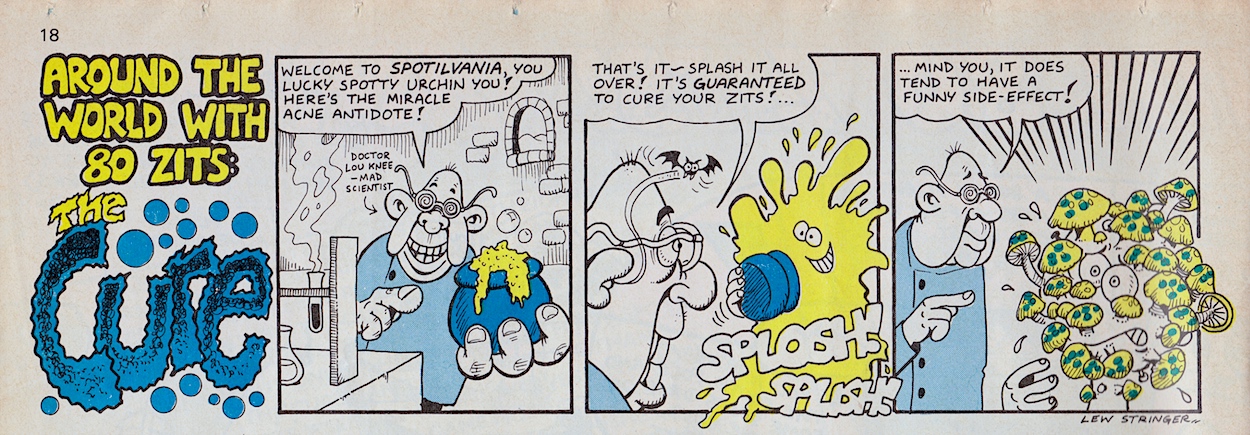
After the game we get a bonus mini-strip as a conclusion to the race, with the winning character’s face conveniently obscured so no matter who wins they can pretend it’s their fate being portrayed.

Of course it had to have a twist ending, have you not been paying attention to these comic reviews? Definitely the best game the comic has produced so far, although it would have stiff competition in just a couple of issues from now. Still, with taking in so many random locations it’s the perfect main event to this travel special. Other characters were out and about too, as you’ll see in this selection of highlights from elsewhere in the issue.

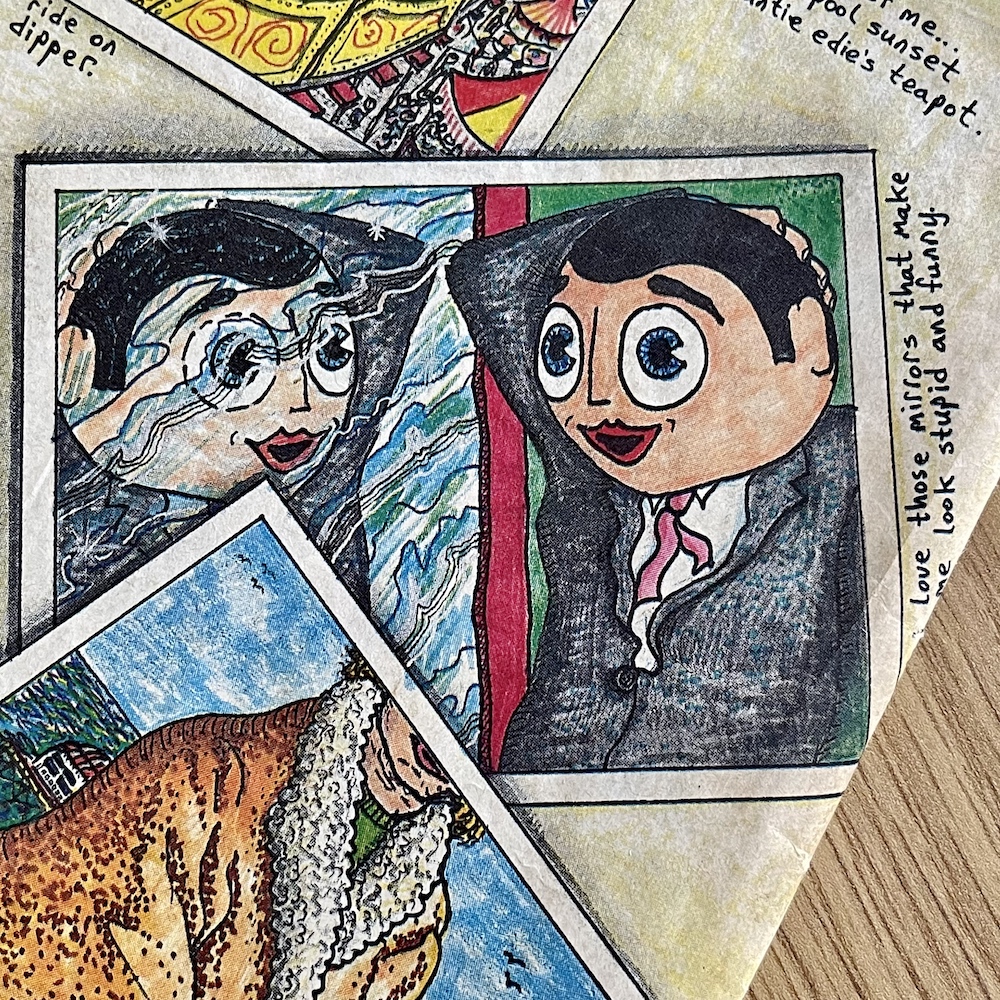
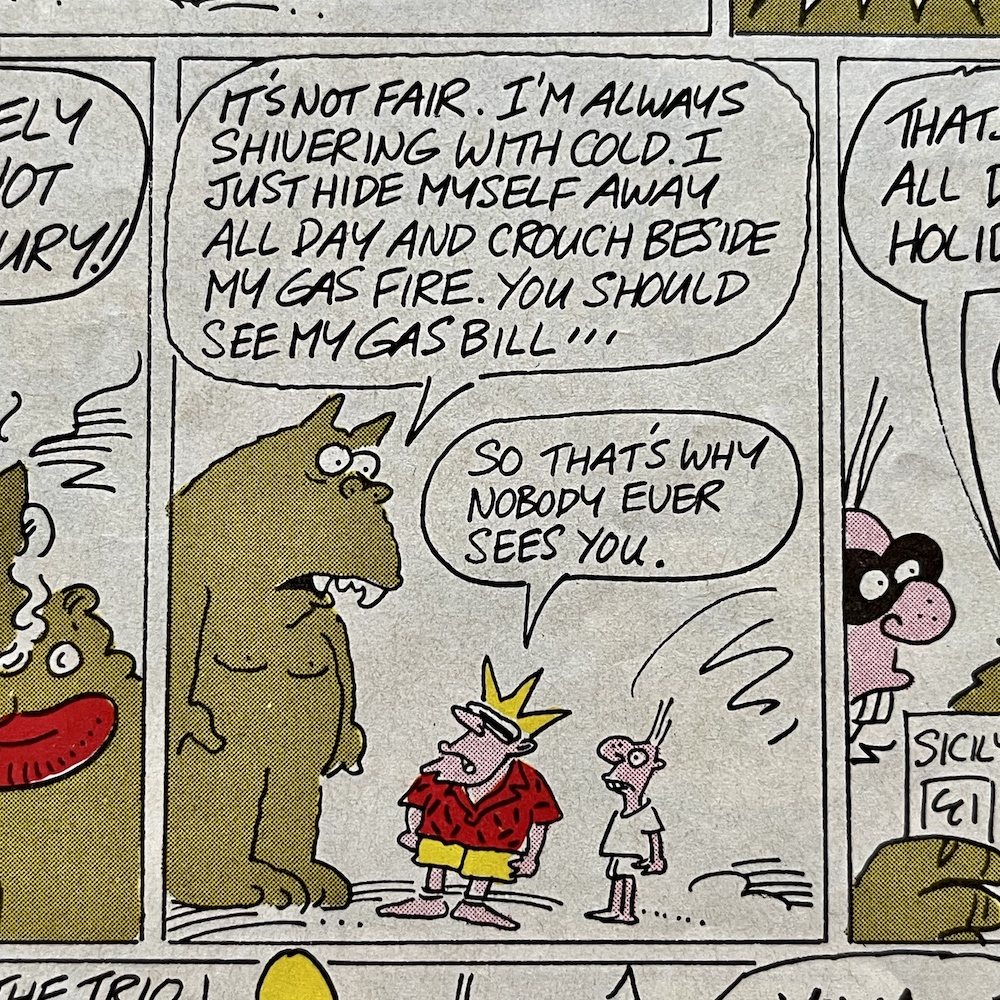
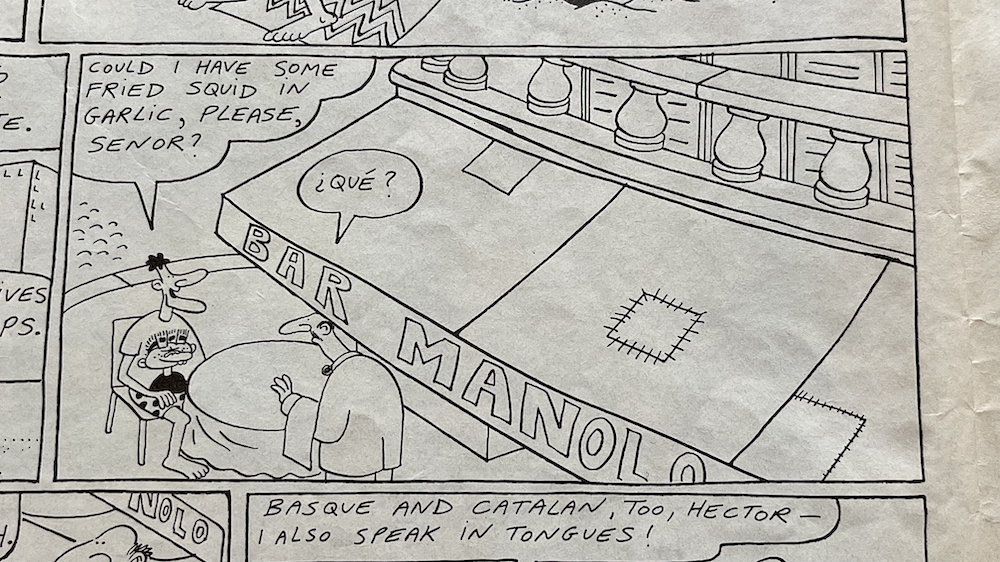
On the back cover Frank Sidebottom had left his holiday snaps on the train so was forced to draw them from memory, Rubbish Man and Boy Blunder discovered the truth on their terrifying ‘Hunt the Yeti’ trip, Hector Vector and his Talking T-shirt visited a brilliantly named drinking establishment, the Grim Reaper made his first appearance in The Adventures of Death while buying a helicopter for his “reclaiming work” and Hadrian Vile’s life was about to change forever, a situation which he handled in his usual inimitable style.

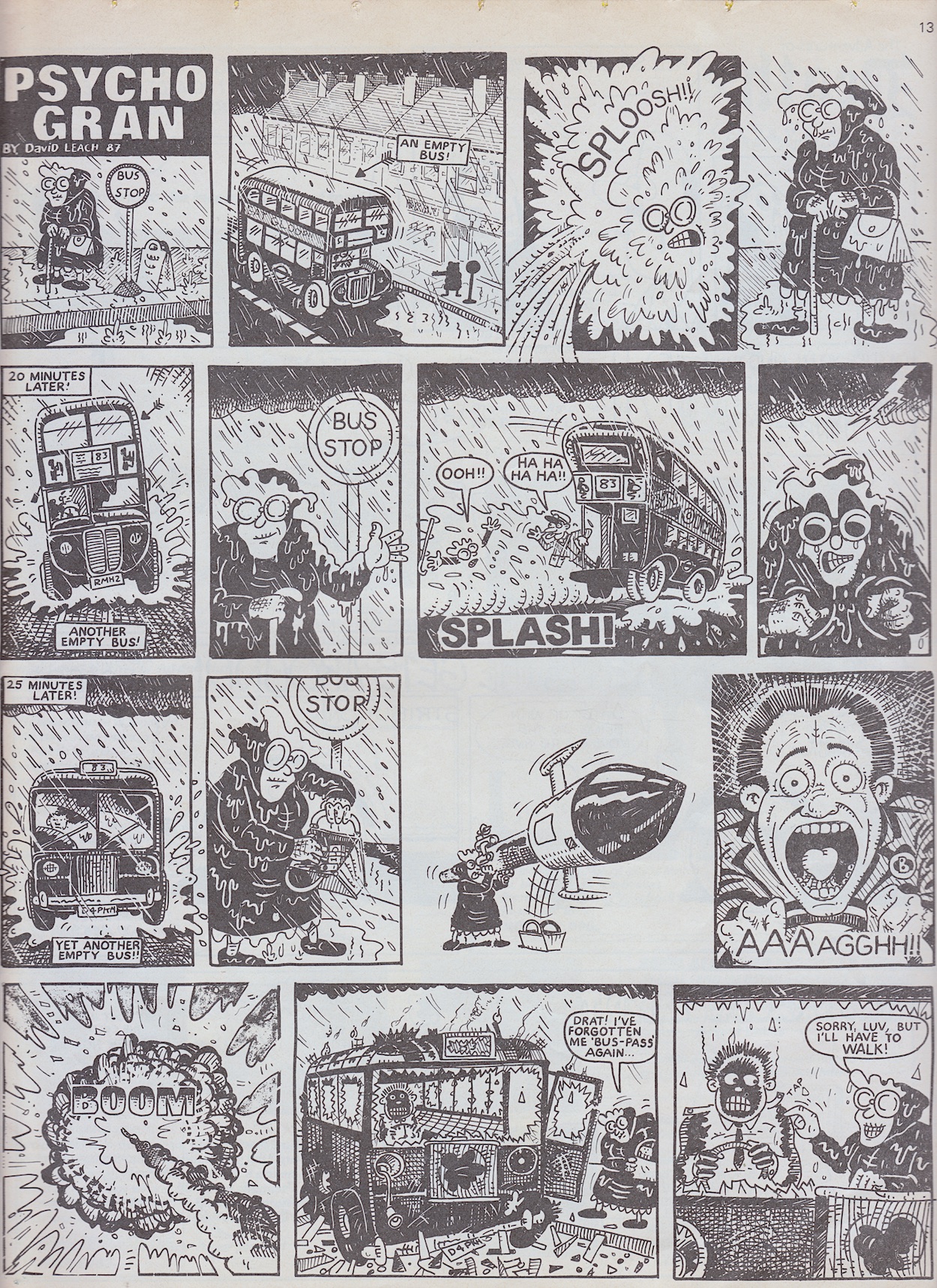
After a break for a few issues David Leach’s Psycho Gran is back. She’s making up for lost time with a full page of her own and it’s almost a silent comedy. Usually taking up no more than half a page, it’s great to have a larger strip and it really is chock full of fun. David squeezes in as many panels as he can, each one intricately detailed as the little old dear goes through a situation many of us may find familiar.

Okay, so her solution isn’t exactly conventional, but I do love the panel where she lifts the weapon out of her tiny bag after searching through it in the previous one. The lack of background, the angel of its composition and her tongue sticking out as she concentrates are all brilliant, all of these little things combining to make this moment stand out as genuinely funny.

I remembered her taking up the back page of a Christmas issue of OiNK with a funny image of her waiting for Santa Claus (reminiscent of David’s Psycho Gran Versus series in recent years) and a large section of the second annual was devoted to her too, so it was a nice surprise to find her given a full page strip in the regular comic. Here’s hoping for more.

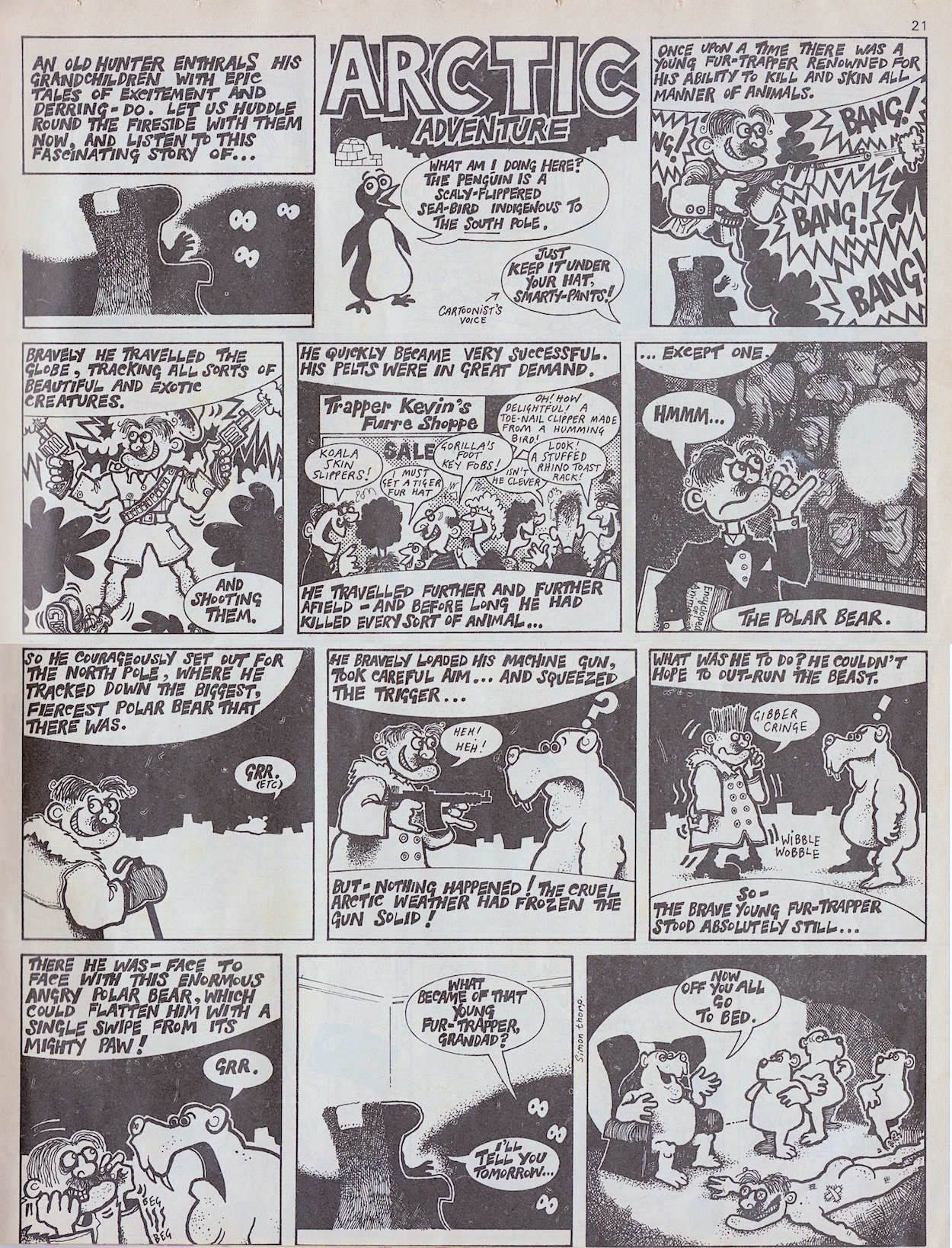
After the wonderful Sownd of Music spoof movie poster in #29, Simon Thorp returns to bring us a strip this time called Arctic Adventure, in which a narrator tells a captive audience the fantastical tale of the world’s greatest fur hunter. Now, if this sounds a bit off to you and if you’re asking why OiNK would tell such a tale in a comic which lampooned butchers, hyped piggies up as heroes and was genuinely animal-friendly, you wouldn’t be alone. Obviously there’s more to it and reading Simon’s story I was just waiting for the twist, which was hugely satisfying.

Two particular moments (asides from the obvious one) stand out for me here. The first is panel four, where the caption tells us of how he’d track so many beautiful and exotic creatures down… and shoot them. The other is when he “bravely” loads his machine gun, a weapon the polar bear would have no chance against, and then his terror when it won’t fire. I think this strip perfectly sums up how cowardly sports hunters are.

In recent years I’ve seen countless images going viral on social media of big game hunters with smug grins next to the carcasses of beautiful animals who they’ve slaughtered with their high-powered weaponry, posing like they were so brave to shoot a defenceless creature, like it took so much effort beyond simply twisting their cowardly finger around a trigger. I think Simon’s Arctic Adventure perfectly sums up these sorts of people.

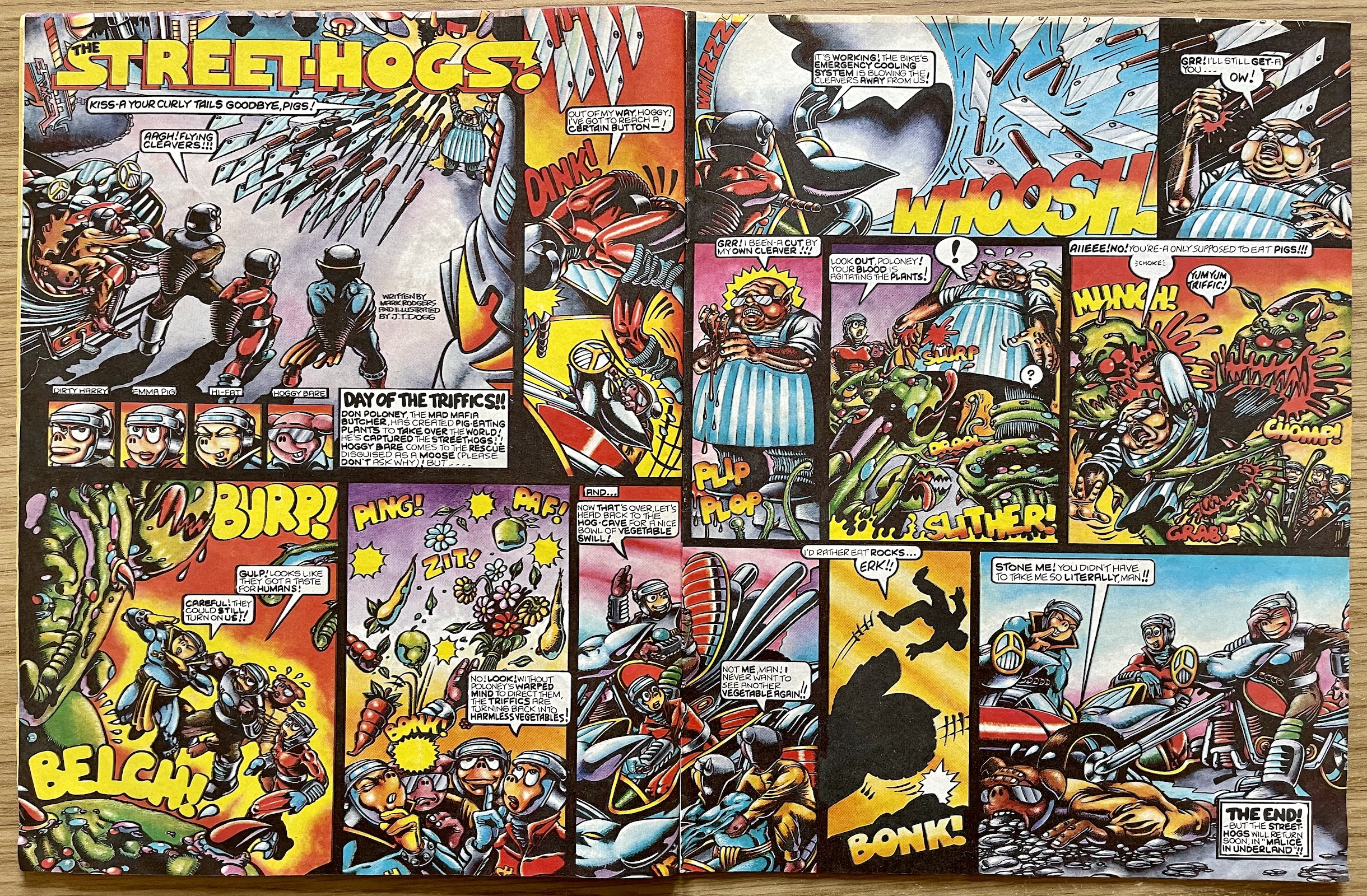
It’s fitting that the technicolour Street-Hogs: Day of the Triffics gets to have its finale in this issue

Finally, as we say goodbye to the glossy paper for now (more on that next time) it’s fitting that the technicolour Street-Hogs: Day of the Triffics gets to have its finale first. As stated before this was my first exposure to the ‘Hogs as a kid, their previous adventure having already ended by the time I discovered OiNK, so to me this had felt epic. However, readers of the original 12-part story may have felt somewhat disappointed things were coming to an end already, the story lasting only a third of the time.

With what had looked like Jimmy ‘The Cleaver’ Smith‘s entire toolbox flying through the air towards them at the end of last issue’s strip, I wondered how on Earth they were going to get out of that one with less than a second to spare (apparently). I don’t know why I keep trying to guess. Mark Rodgers’ script would always come up with something so ridiculous and J.T. Dogg’s artwork would portray it so perfectly, the randomness of their insane escapes was the main reason I loved them so much!

It all ends with a ‘Coming Soon’ caption, however their next serial wouldn’t be seen until the last days of the comic, their multipart tale all packed into one of the big, fat monthlies. From memory it’ll be a very different beast of a tale but worth the wait. Speaking of waiting, that’s what we’ll have to do for now as we’ve reached the end of another review. The next issue will surprise you but some of the changes weren’t liked by everyone. Personally, these issues to come are my very favourites so I can not wait! Watch out for a special personal post about them over the next two weeks and then #36’s review will be here from Monday 5th September 2022.

iSSUE 34 < > iSSUE 36

OiNK READ THROUGH MENU

MAiN OiNK MENU

COMiNG UP: OiNK! #35

With the next issue of OiNK we officially begin the second half of its run and it’s the first to be published by Fleetway Publications instead of IPC Magazines. Not that you’d know without looking at the tiny copyright notices but big changes were definitely coming. This would be the first and last issue from Fleetway to keep OiNK in its glossy format (for now) but it’s certainly not the last time we’d get plenty of big laughs. The main feature in this Travel Issue is a board game by Lew Stringer, which is as good a start for the new publishers as anyone could want!

Alongside the game, Psycho Gran finally returns and a young chap by the name of Charlie Brooker becomes a regular from this issue onwards with a couple of strips, not least of all The Adventures of Death! The art in the finale of The Street-Hogs will also surely see off the fancy paper in style. Full review coming up on Monday 22nd August 2022.

GO TO iSSUE 35

OiNK iSSUE PROMOS MENU

‘MORE OiNK’ MENU

MAiN OiNK MENU