JURASSiC PARK #2: BUiLDiNG THE PARK

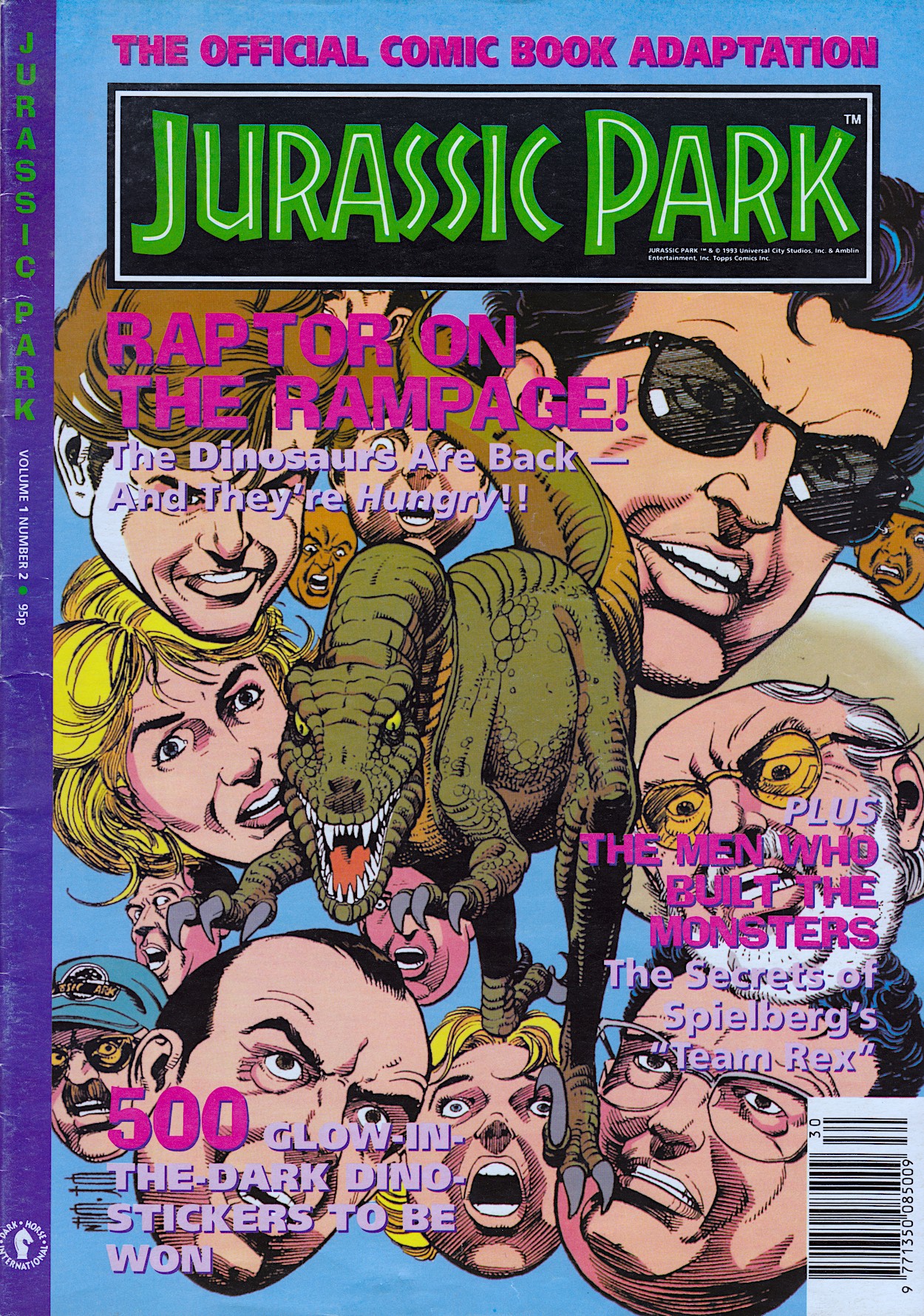
Welcome back to “Isla Nubar” (misspelled like this on the contents page) and Dark Horse International‘s UK version of Jurassic Park from 1993, edited by Dick Hansom. A rather strange cover by Gil Kane and George Perez, given how no dinosaurs have escaped yet. It’s a mishmash of named characters and extras, including a rather red-faced man in the middle. Maybe the raptor is holding his nose.

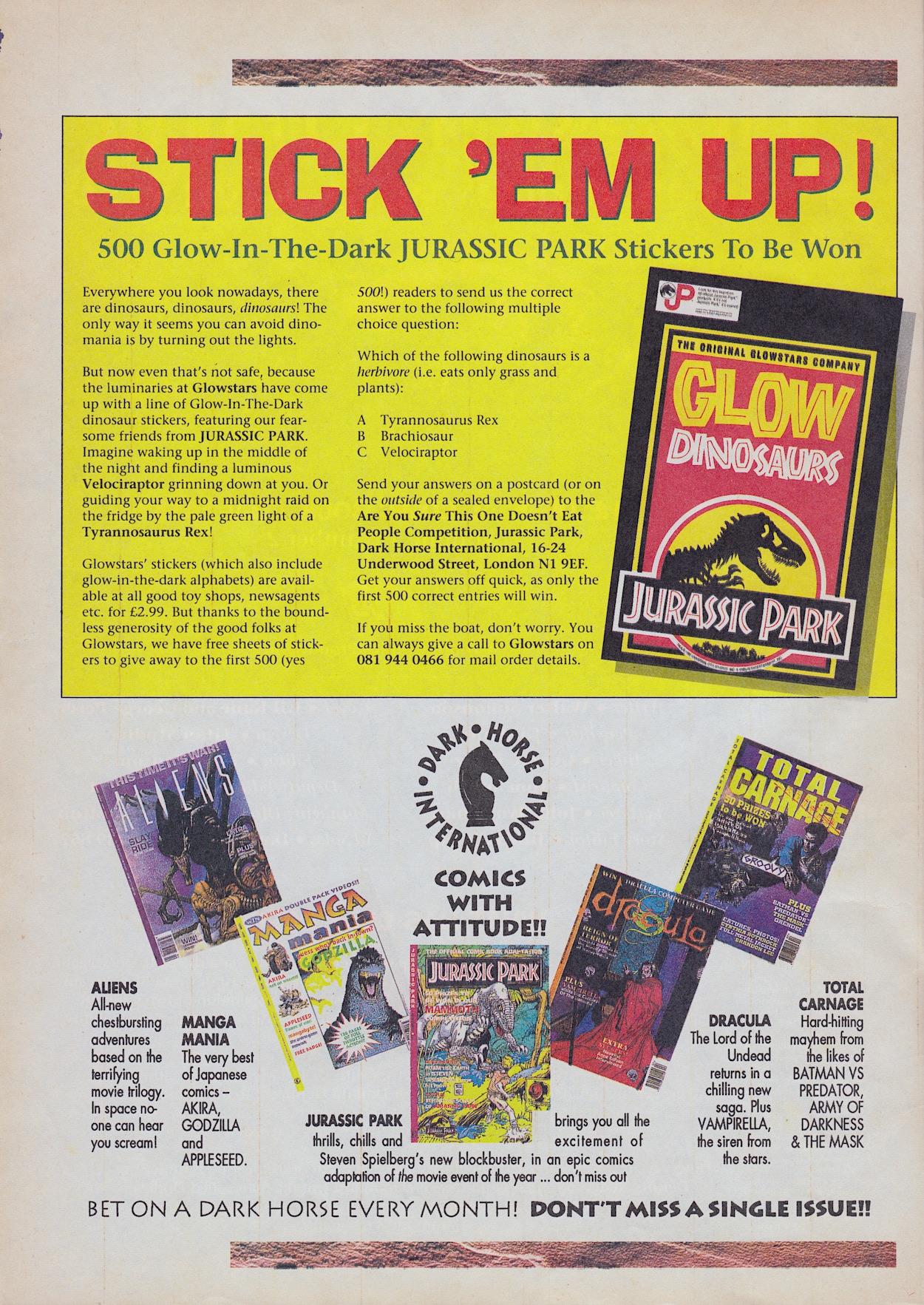
Inside is the second 28-page chapter of Topps Comics‘ adaptation and a few extras, something we were accustomed to this side of the pond. First up is an advertisement for John Williams‘ soundtrack album. I owned the CD at the time and have been listening to it on Apple Music while reading these. There’s a competition for glow-in-the-dark stickers, a somewhat unimpressive prize compared to later ones I remember. No comics checklist this issue, instead a glance at the other titles currently in publication.

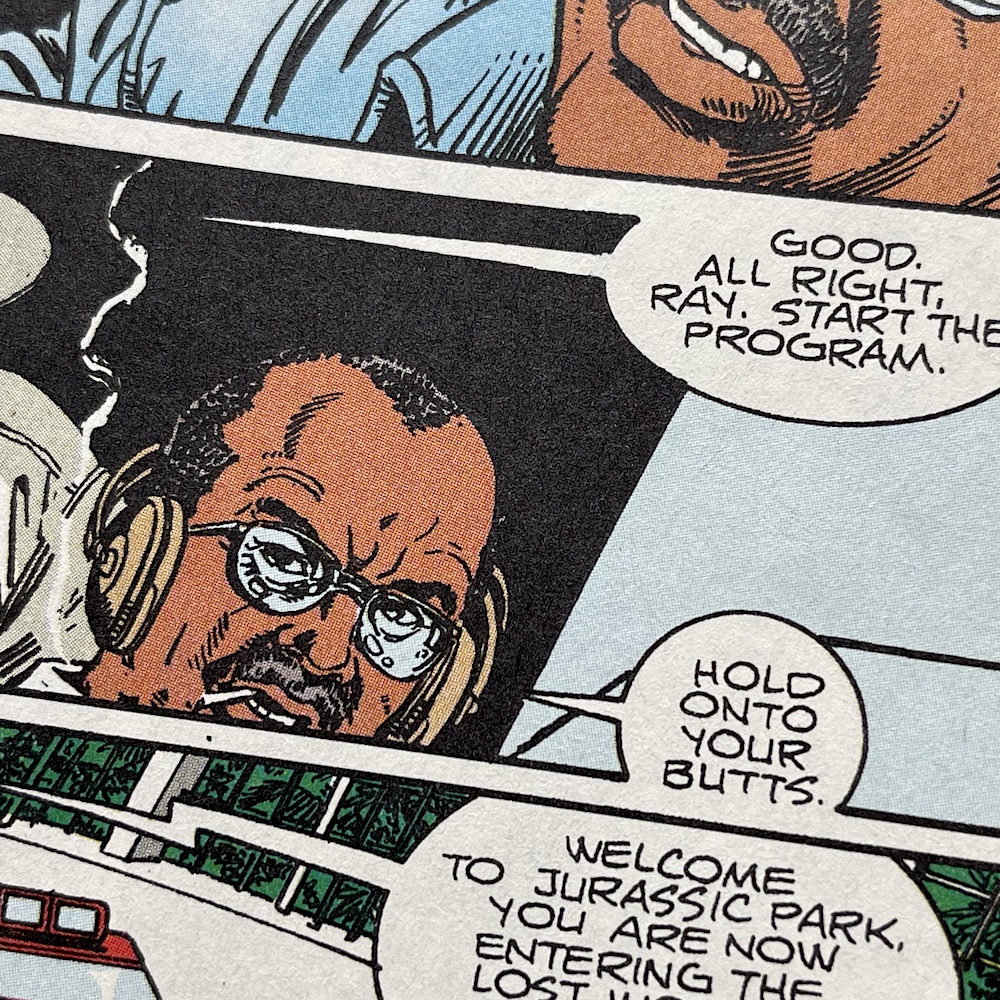
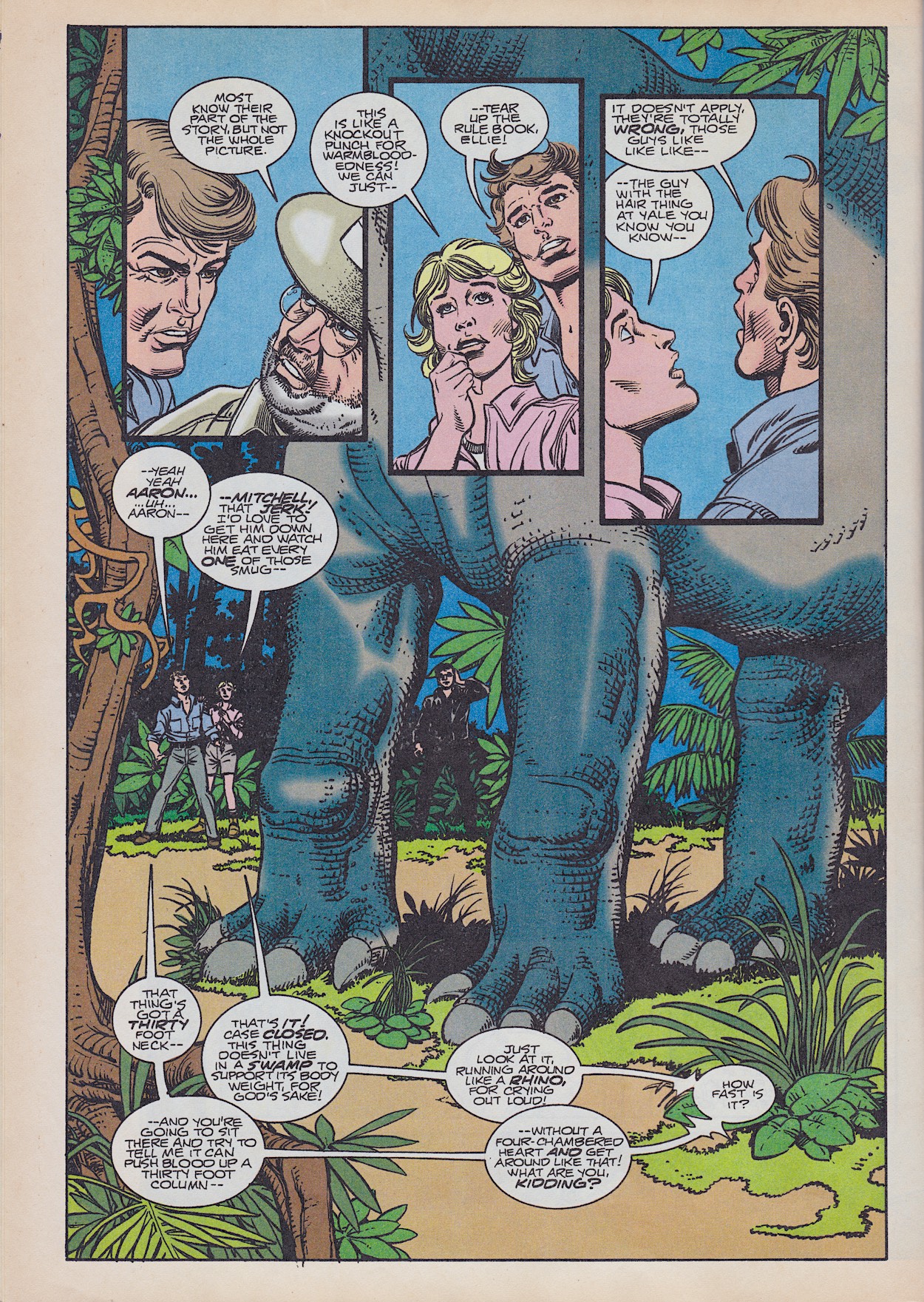
The strip continues adding to existing scenes while moving others about in order to adapt the film to the medium, something I discussed in more depth last time. This chapter begins where we left off in the midst of that iconic brachiosaur scene and there’s quite a lot of additional dialogue from Michael Crichton’s novel, such as Dr Alan Grant‘s and Dr Ellie Satler‘s further observations.

One part lifted directly from the book involves a little bit of background on the park itself. To achieve something of this magnitude would require more people than just those on the island, so John Hammond explains others were involved across the globe, knowing only their specific part of the puzzle. To maintain secrecy they were never let in on the bigger picture. The novel goes into things like this in a lot more detail to ground the fantastical story in the real world and if you haven’t already you really should read it yourself (or get the audiobook which is expertly brought to life by Scott Brick).
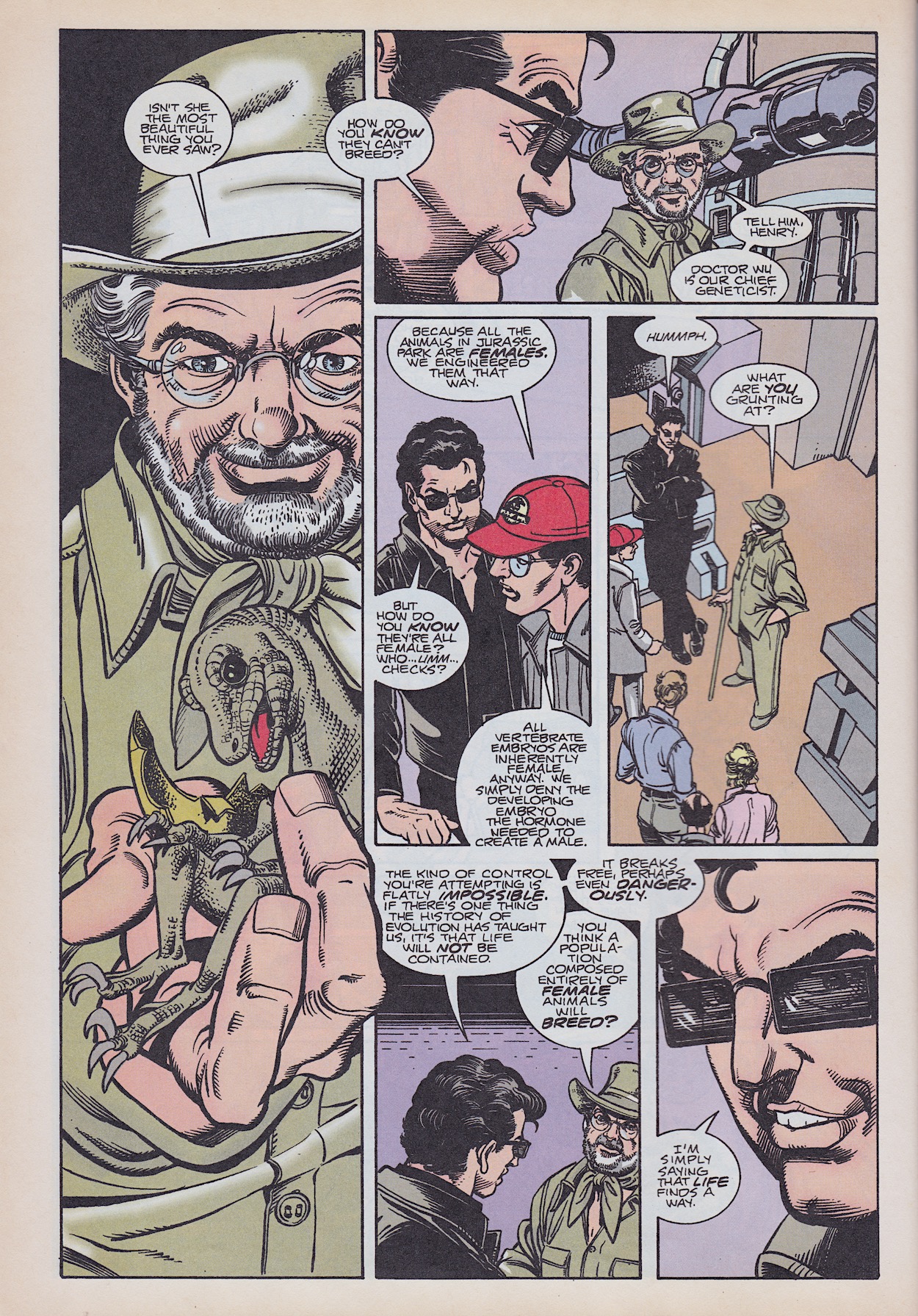
From here we make our way to the Visitor’s Centre, our characters excitedly discussing what they’ve seen, trying to take it all in. After the Mr. DNA sequence we find ourselves in the lab where we meet Dr. Henry Wu, who was played by BD Wong. In the novel Wu was a central character and certainly not the affable person we saw in the movie.

Crichton’s Wu was ruthlessly ambitious, believed the success of Jurassic Park was solely down to him and never saw the dinosaurs as real; they were engineered adaptations of the originals. He argued with Hammond about the ability to create any dinosaur they wanted, even new breeds, tailoring them to exact requirements to bring in the most money from paying tourists. All of this would of course form the main plot of the fourth movie, Jurassic World. However, in the comic his role is reduced even further than in the first film, appearing in only three panels with most of his dialogue given to Hammond.


“I’m simply saying that life finds a way.”

Dr. Ian Malcolm

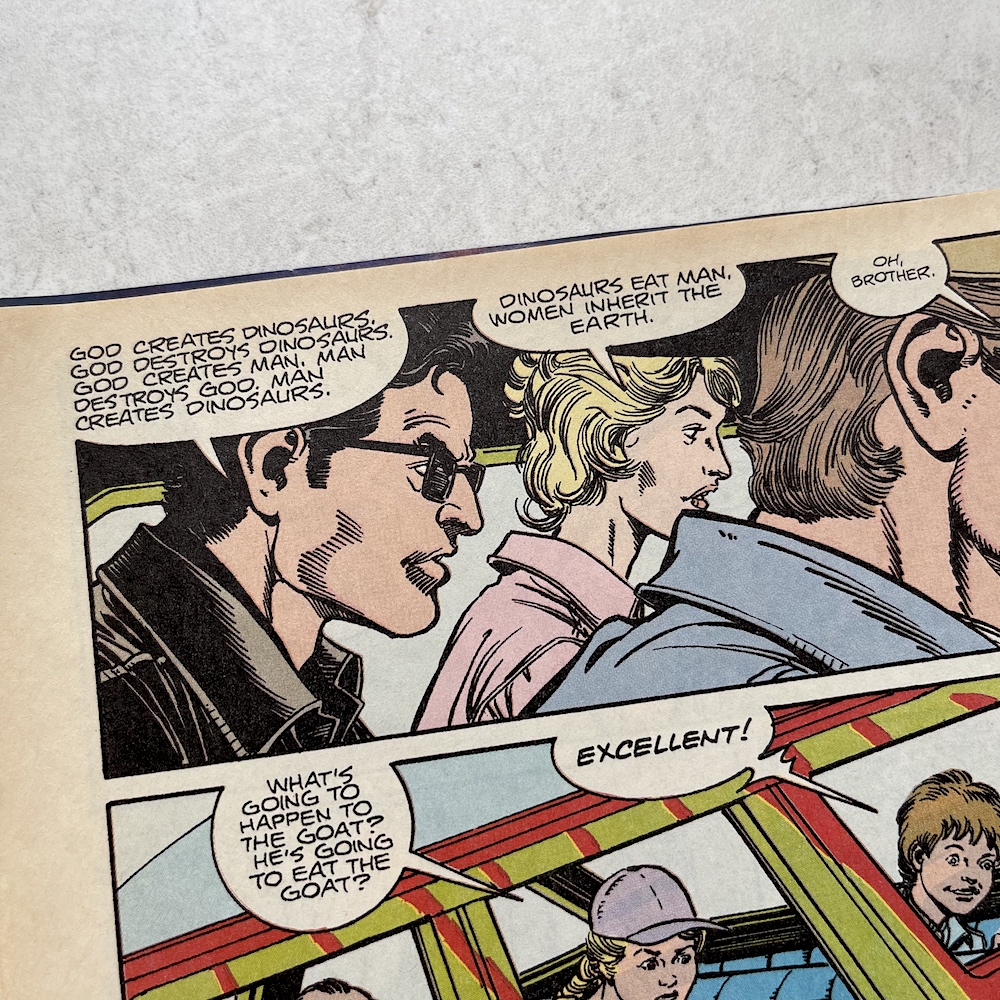
One character who definitely doesn’t suffer this indignity is Dr. Ian Malcolm, so memorably encapsulated by Jeff Goldblum that you can’t help but hear his voice when reading one of his many quotable lines. In the novel Malcom’s fascinating monologues ran to several pages and for the film their essence was broken down and brought to life by Goldblum’s very natural delivery, becoming the backbone of the story.

This continues in the comic although his characterisation is a little different thanks to Gil and George. Overall he’s still the cool mathematician but his facial expressions make the character a little darker in tone, lending his predictions a more sinister feel. This actually suits the comic. Scenes here don’t have the luxury of playing out over several pages to build tension, so this little tweak in tone works a treat instead. Below is one example as he delivers his most famous line, used as marketing for later movies in the series.
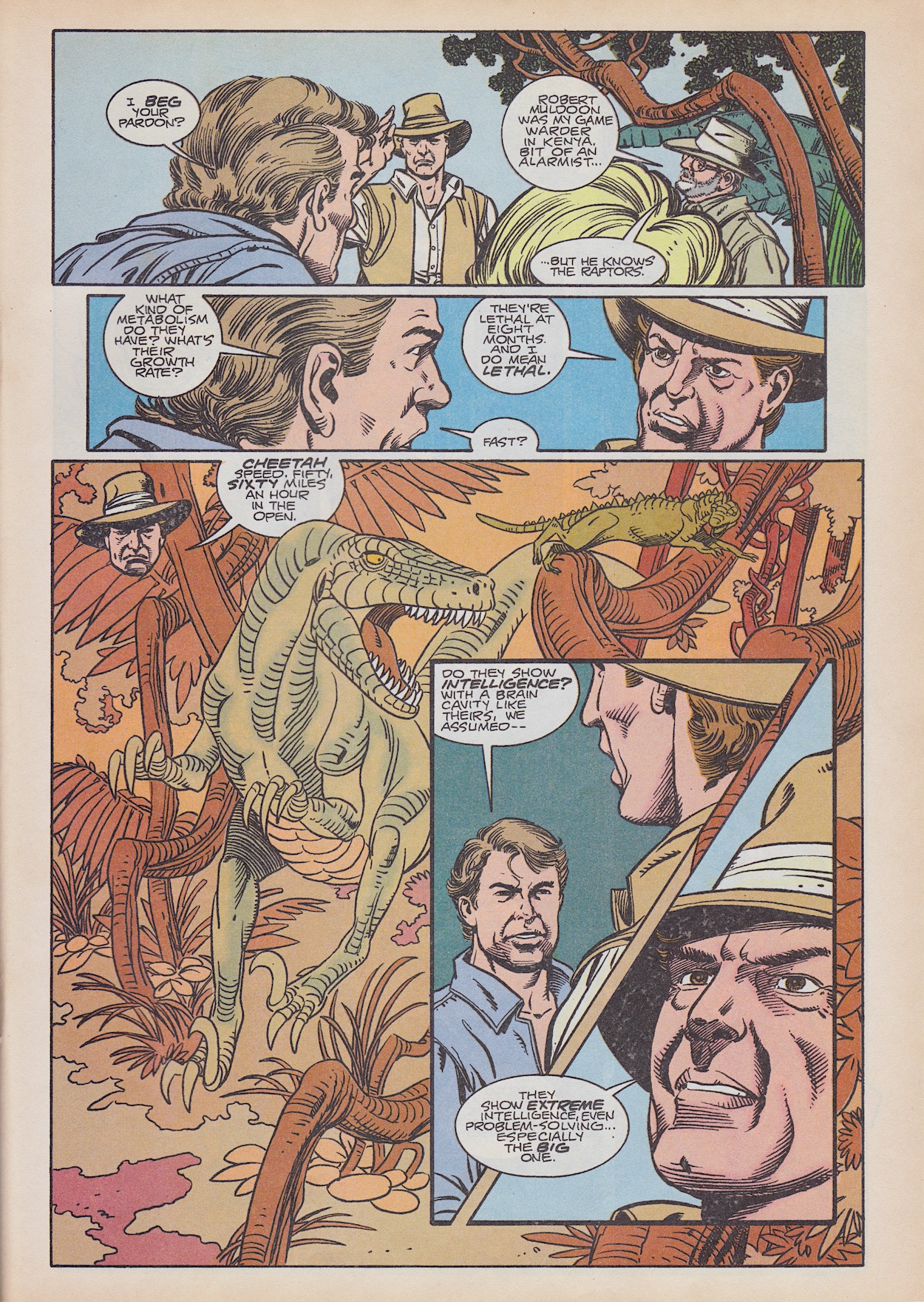
While the Tyrannosaurus rex was the biggest dinosaur and the most publicised, the stars were the Velociraptors. Apart from a baby their existence is merely hinted at and talked about for much of the film in an expertly crafted script that built tension for their final reveal and dominance in the latter acts. But young comic readers wouldn’t want to wait three issues to see them on the page.

Jurassic Park is a very quotable movie, with a surprising amount of dialogue taken directly from the novel

So, once again we’re treated to prehistoric flashbacks of these great hunters in their natural environment (highlighted by Tom Smith‘s change in colours) when game warden Robert Muldoon (Bob Peck) introduces them during that memorable dinnertime cow scene. With a graphic novel it’d be easier to follow the movie more closely, but writer Walter Simonson and story editor Jim Salicrup had to give readers a monthly dose (monthly in the States) of the ‘raptors and I think these scenes are a great solution and a natural fit.

Ian Malcolm‘s quotes aren’t the only ones to survive the transition to comic form. Jurassic Park is a very quotable movie, with a surprising amount of dialogue taken directly from the novel. Some would have to be excised for this shorter form of storytelling but here are a small selection of those to be found in this second issue.
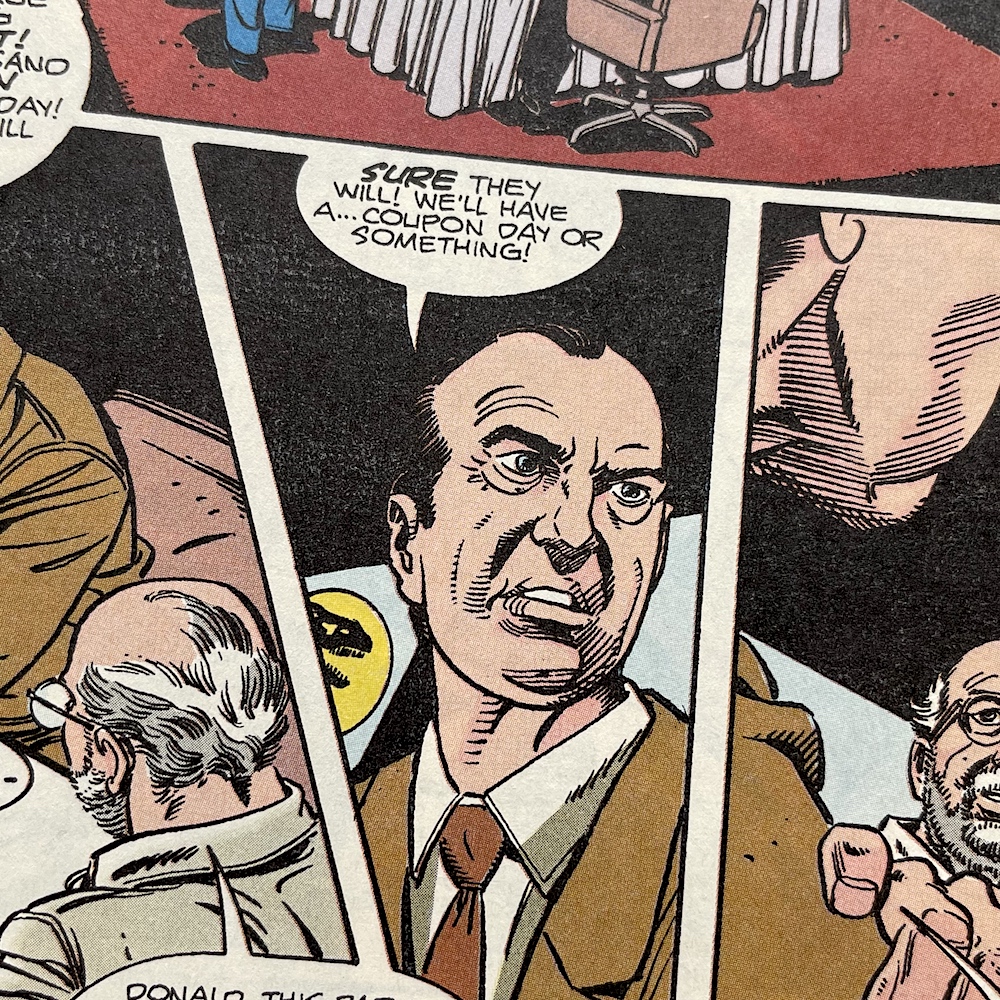
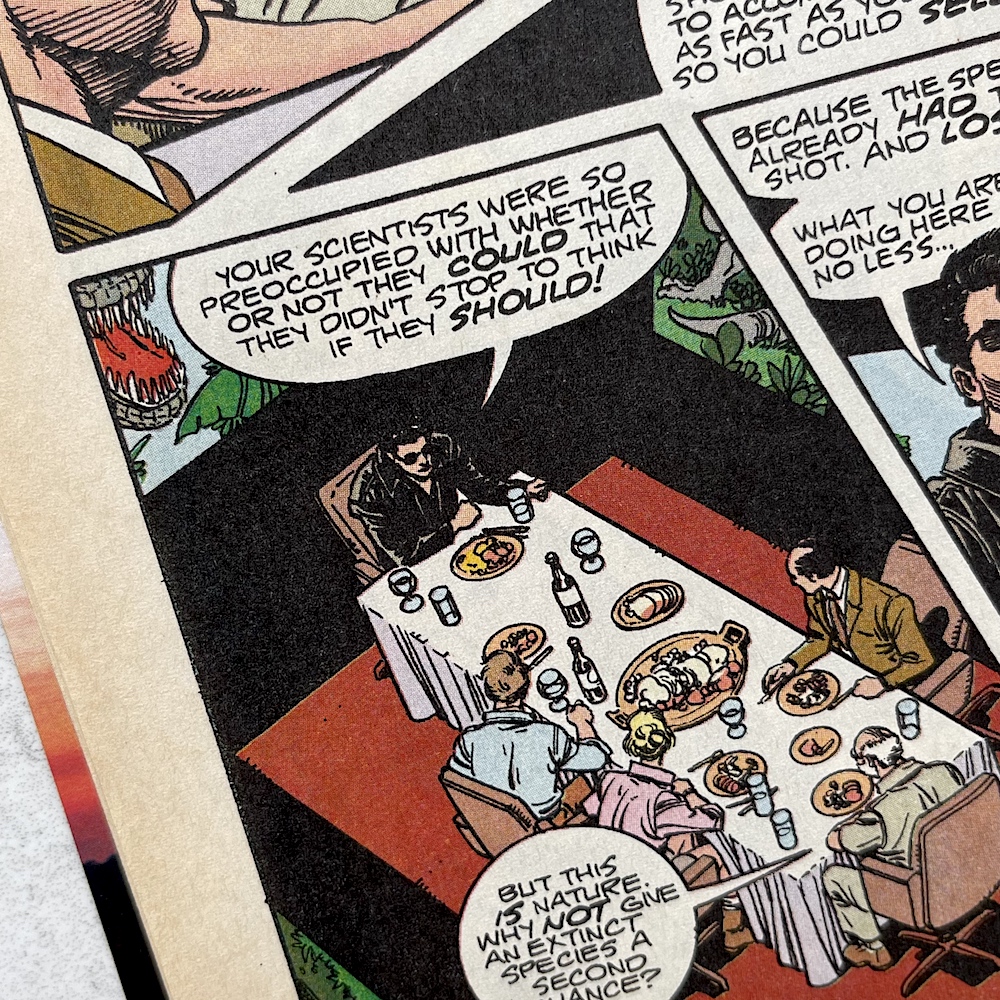
For some reason the comic changes the recorded in-car voice to James Earl-Jones from the film’s Richard Kiley. Maybe Earl-Jones was better known to the comic audience? On a side note, Crichton chose Kiley’s voice in the book so I thought it was brilliant how Spielberg actually got Kiley to play the part!

The story rolls along until we find ourselves at the T. rex paddock complete with a very worried goat and an almost gloating Malcolm. He knows the park can’t work, knows the natural systems in play are too complex to control and as far as he’s concerned chaos theory proves it. Unfortunately we lose the lovely butterfly effect scene between him and Ellie, but then again without Jeff’s delivery it would probably fall flat.

Maybe this is just a way of speeding the story along, because we’d never have bought Alan [Grant] doing this in the movie

However, after the others jump out of the vehicle we still get to laugh at him talking to himself about talking to himself, John Workman‘s speech bubbles pointing away from the action, highlighting the fact he’s chittering away on his own. It’s a very funny way to present this moment, I actually laughed when I read it despite seeing the film countless times already.

At this point we see more evidence of changes to the comic’s pacing in order to fit it all in. In the film Alan jumps out of the moving car when he sees and hears something in a field beside them. Here, he’s out of the car before it’s even started moving away from the T. rex paddock, climbing through a gap in the fence simply because he’s fed up of not seeing any dinosaurs.
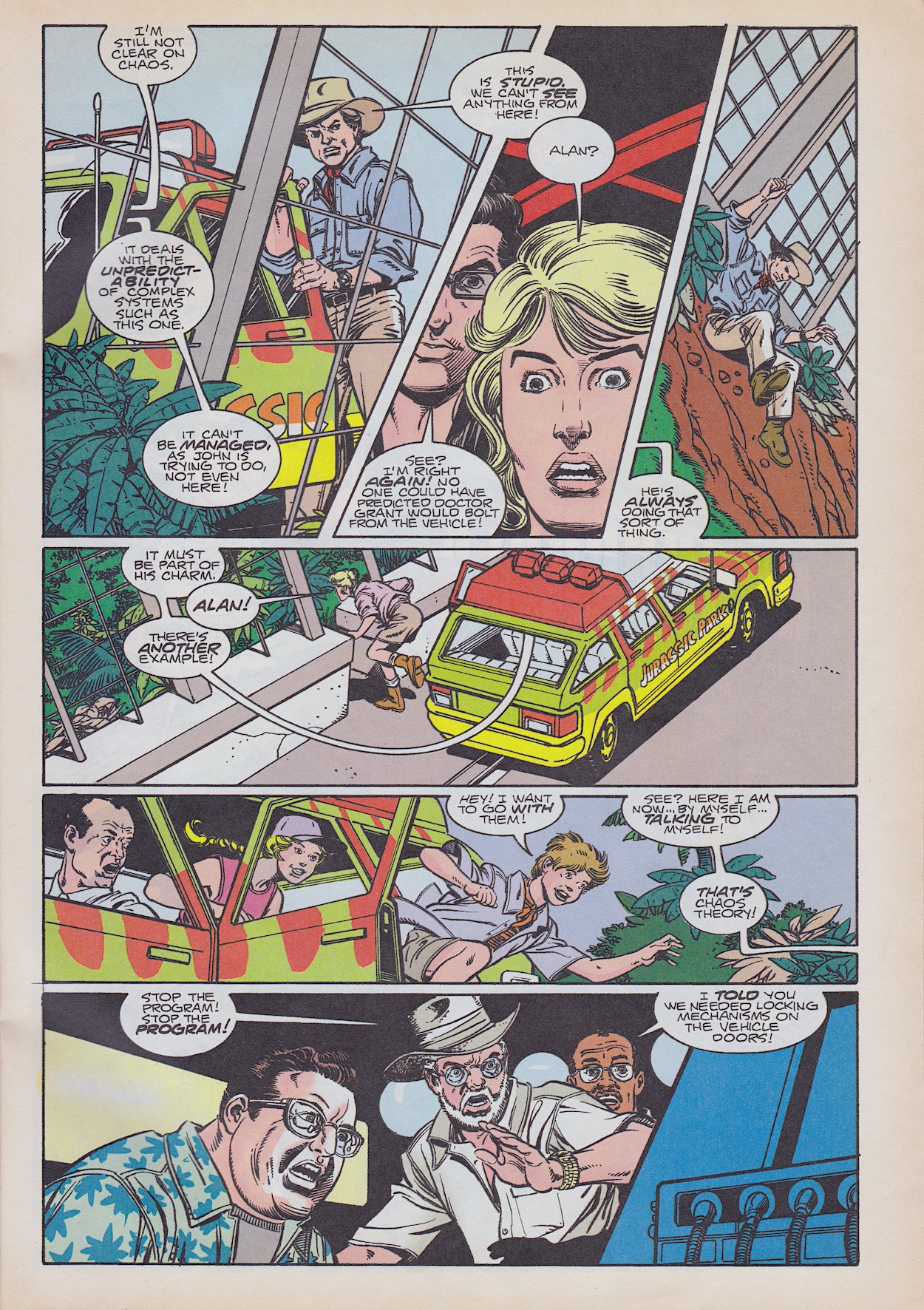
It’s not exactly the safest of places to go for a dander! So maybe this is just a way of speeding the story along because we’d never have bought Alan doing this in the movie. It’s the first time I’ve questioned a change made by the comic’s team. Yes, the very next page is the last but come on, they could’ve simply added a caption to indicate they’d moved away from the T. rex first!

This isn’t a case of going back to the book either because in that they see a vet with a sick Stegosaurus and walk over in a safe environment, whereas here you can see they get surprised by an apparently healthy Triceratops. Same species as the film but this isn’t how the encounter played out. Could there be a major change of plot here? Or just a quick cheat for a cliffhanger? We’ll find out next time.
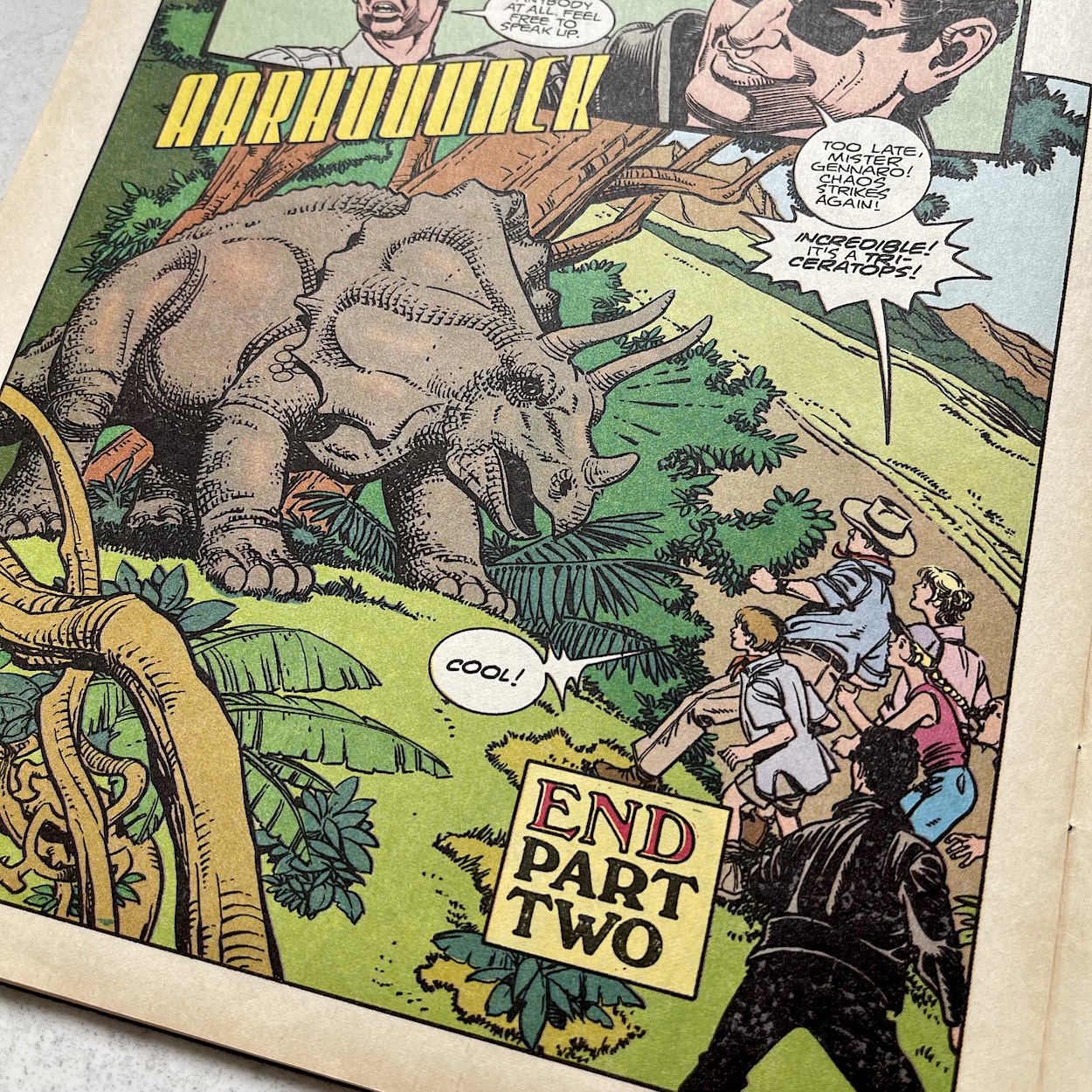
If chapter one was the introduction to the story, the setting and the characters, this issue’s chapter has been the build up. We all know the next instalment will include the elements all coming together to create the disaster that befalls the park so I’m interested to see how that will be adapted for the comic and how successful it will be.

Straight after the strip is the second of the behind-the-scenes features, explaining the differences between the four special effects teams and what each of their roles were. Miniature photography for animatics and choreography, the full-motion live-action creations, the mechanics for those beasts and of course the CGI. It’s easy to forget these days just how far ahead of anything else Jurassic Park was in 1993. The fact it looks just as spectacular 28 years later is testament to the hugely talented individuals who worked so hard to create Spielberg’s vision.
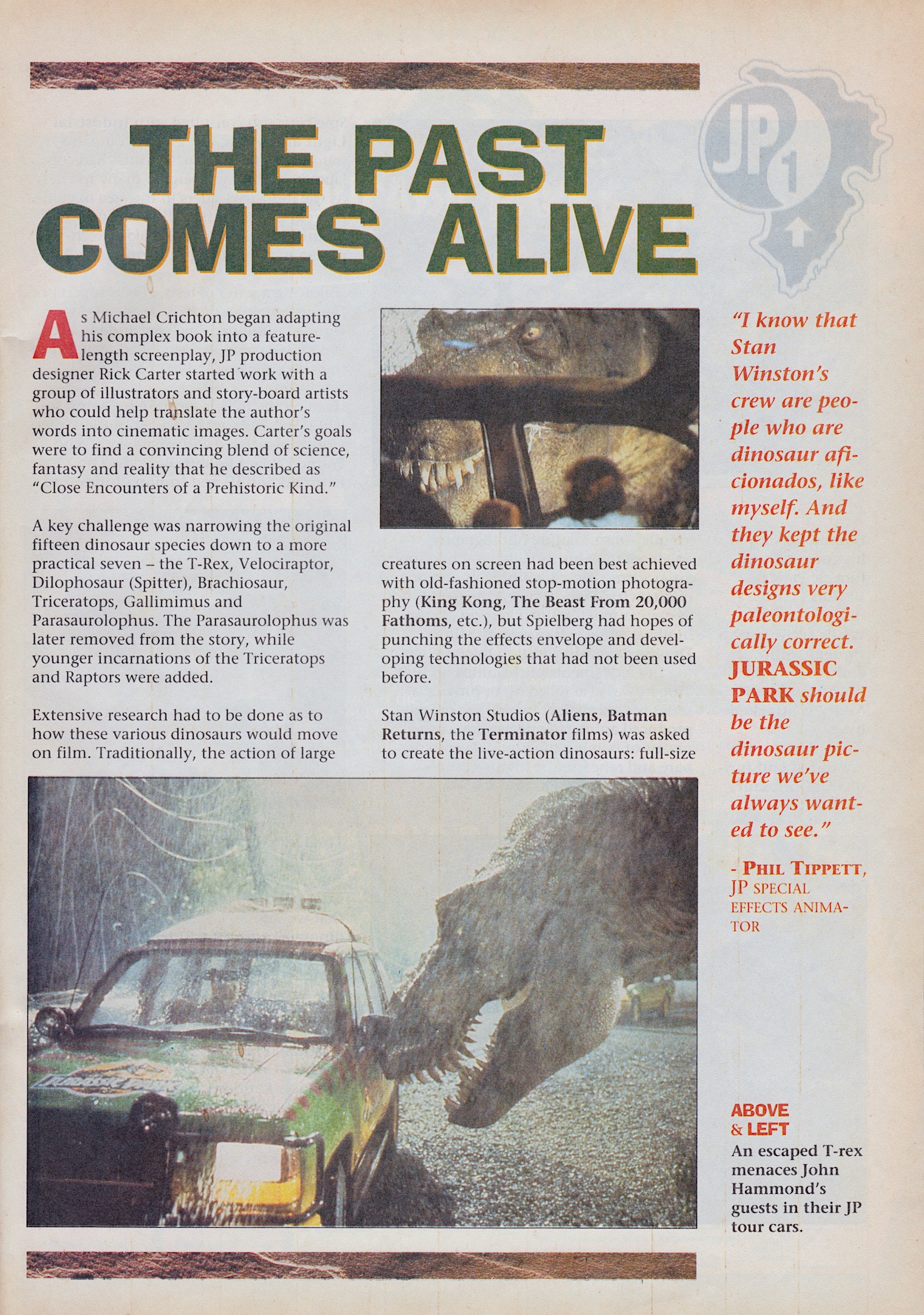
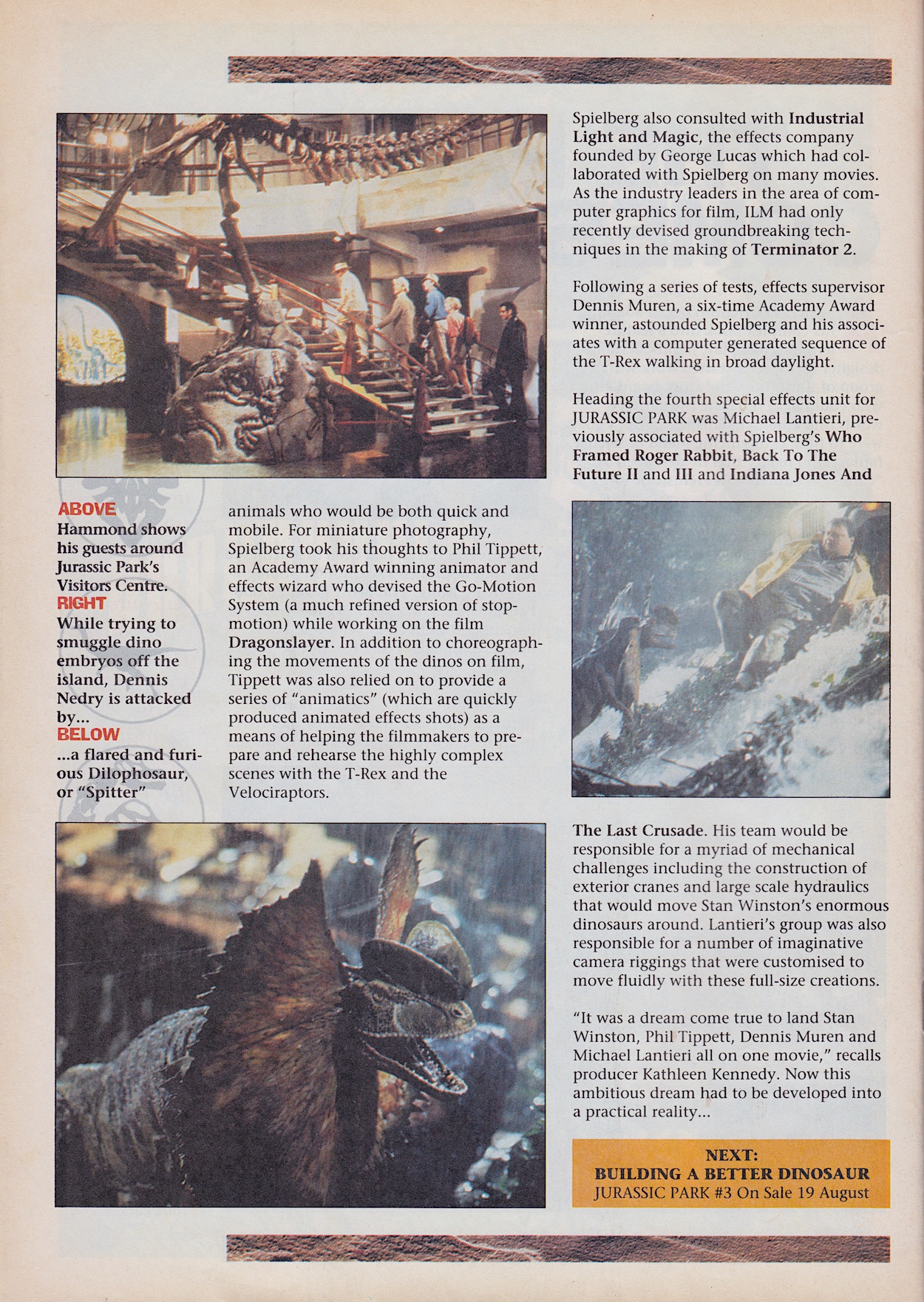
I saw the film in a Glasgow cinema with my dad and then devoured the novel that summer, after which I bought a fantastic book called The Making of Jurassic Park by Don Shay and Jody Duncan. There had been such books for movies before but the level of detail in this one was second-to-none. Fascinating stuff but lost when I moved out of home years later. These features have me eager to read it again.

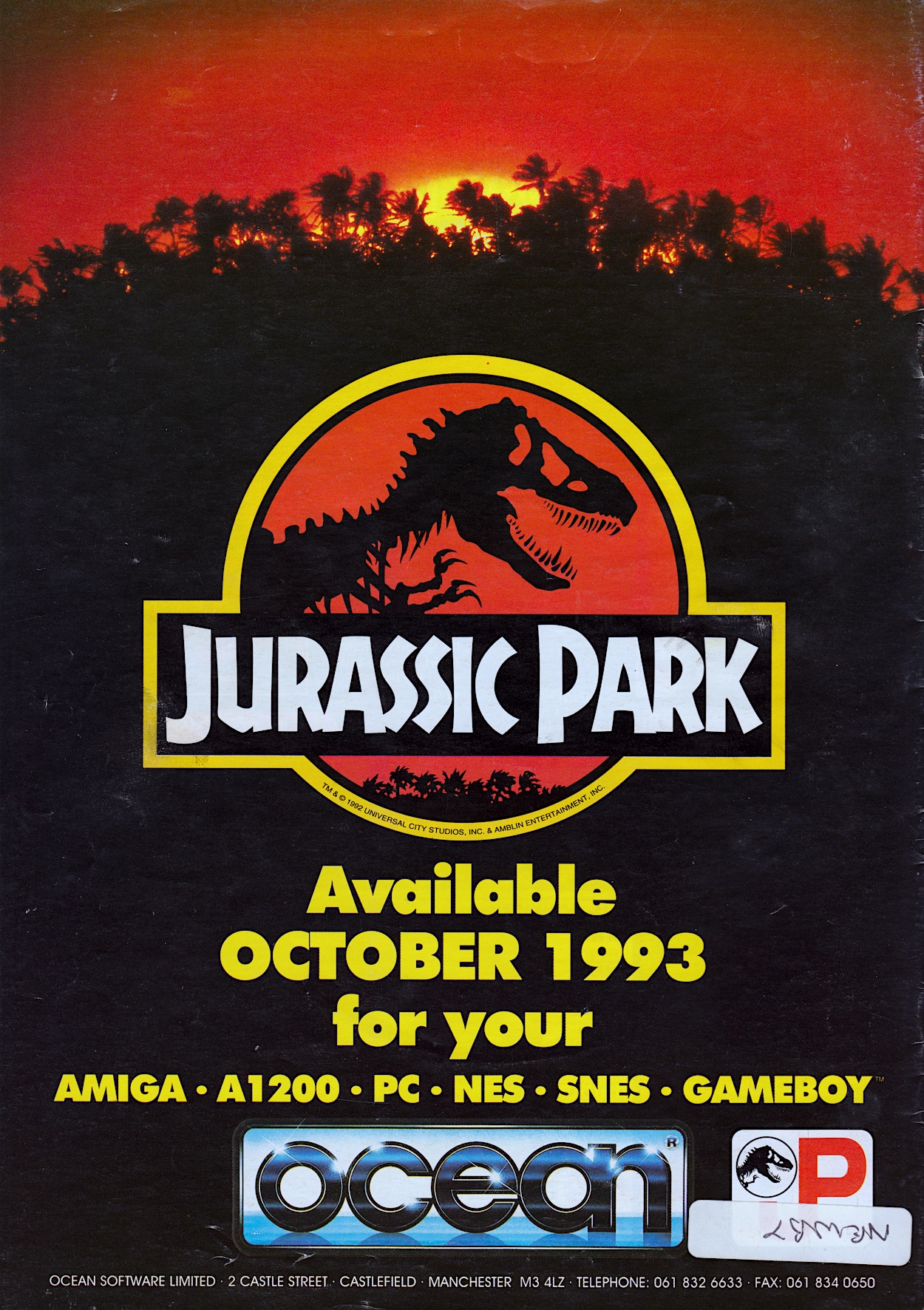
On the back cover was another advert with that timeless logo and the island sunset. More a tease, it announced the inevitable videogame coming to multiple formats in three months’ time. More memories are flooding back because I owned the Nintendo Game Boy game and spent many a late night in bed before school playing it under the covers with that massive, heavy light attachment on top of the little monochrome screen. Happy memories indeed.
These first few issues of Jurassic Park were released every three weeks, a schedule I never saw in any of my comics as a kid. Many years later I do remember taking out a gift subscription to Titan Magazine‘s Spongebob Squarepants comic for a girlfriend who loved everything to do with Bikini Bottom, and that felt strange coming as it did every three weeks too, so used was I to weekly, fortnightly and monthly comics.

But the main thing is that #3 is here in another 21 days’ time on Thursday 19th August 2021. Until then, don’t move. It can’t see you if you don’t move.

iSSUE ONE < > iSSUE THREE
JURASSiC PARK MENU

OiNK! #7: SUMMER COOL

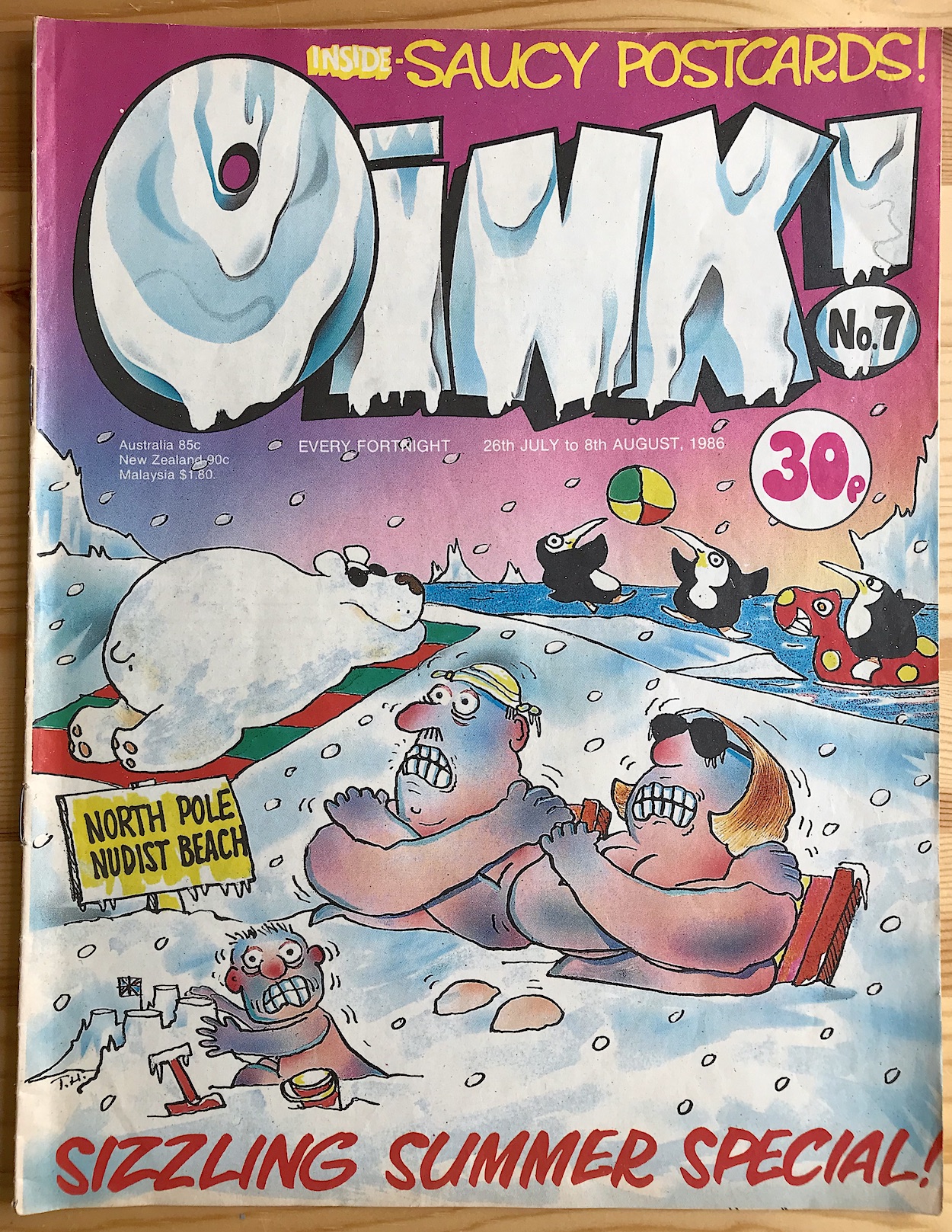
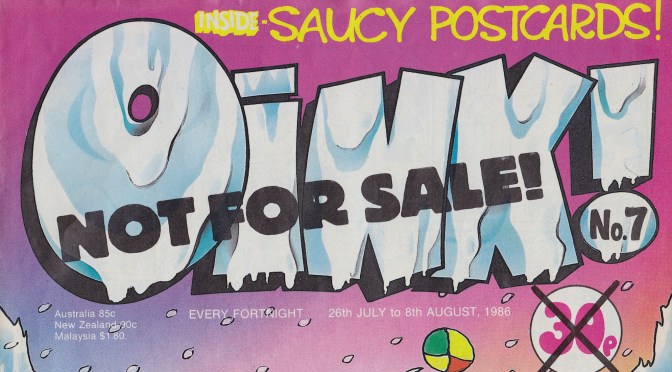
Be forewarned, if you’re reading this in the heatwave we’re experiencing at the time of writing you may be a tad jealous of the people on Tony Husband‘s cover (airbrush coloured by John Moorhouse), who we’re actually meant to be laughing at.

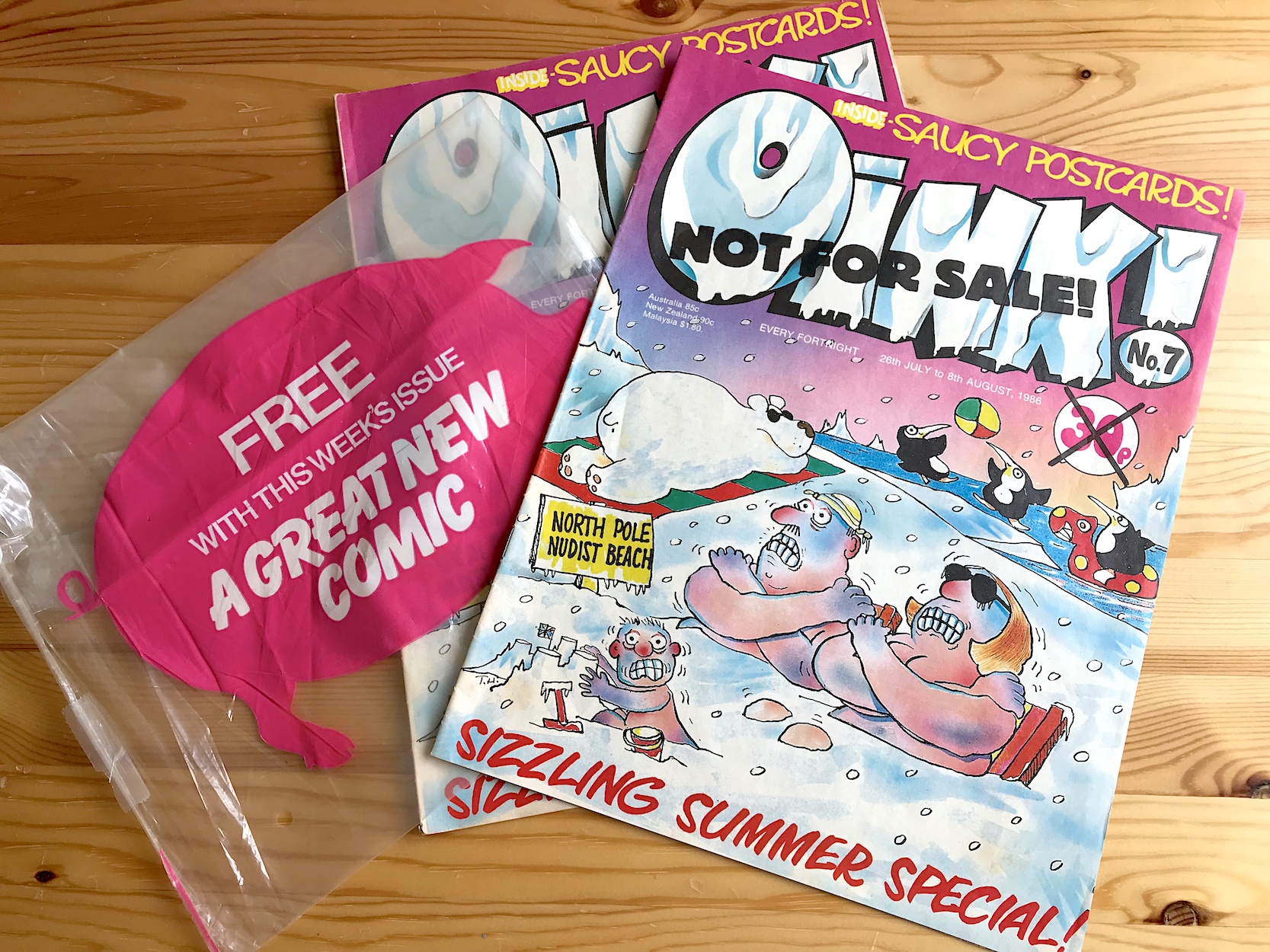
While comics would normally have a separate Summer Special OiNK had only just begun so we’d have to wait for ours. But something else made it extra special, at least for readers of other IPC Magazine comics such as 2000AD. As with the preview they received this issue for free as part of a promotional push, hence the subtle “NOT FOR SALE!” over one of the covers above.

By coincidence the issue receiving extra visibility also contained the strip that would be famously investigated by the Press Council. But just like the ‘Viz’ myth surrounding OiNK, this chapter in the comic’s life has become distorted in the intervening years. Two (yes, only two) complaints were received and no it did not contribute to the comic’s eventual cancellation. After all, that was over two years and 61 issues later. So what’s the truth?

The Press Council ruled it was meant to be a tasteless spoof and was not improper in any way, rejecting the complaint

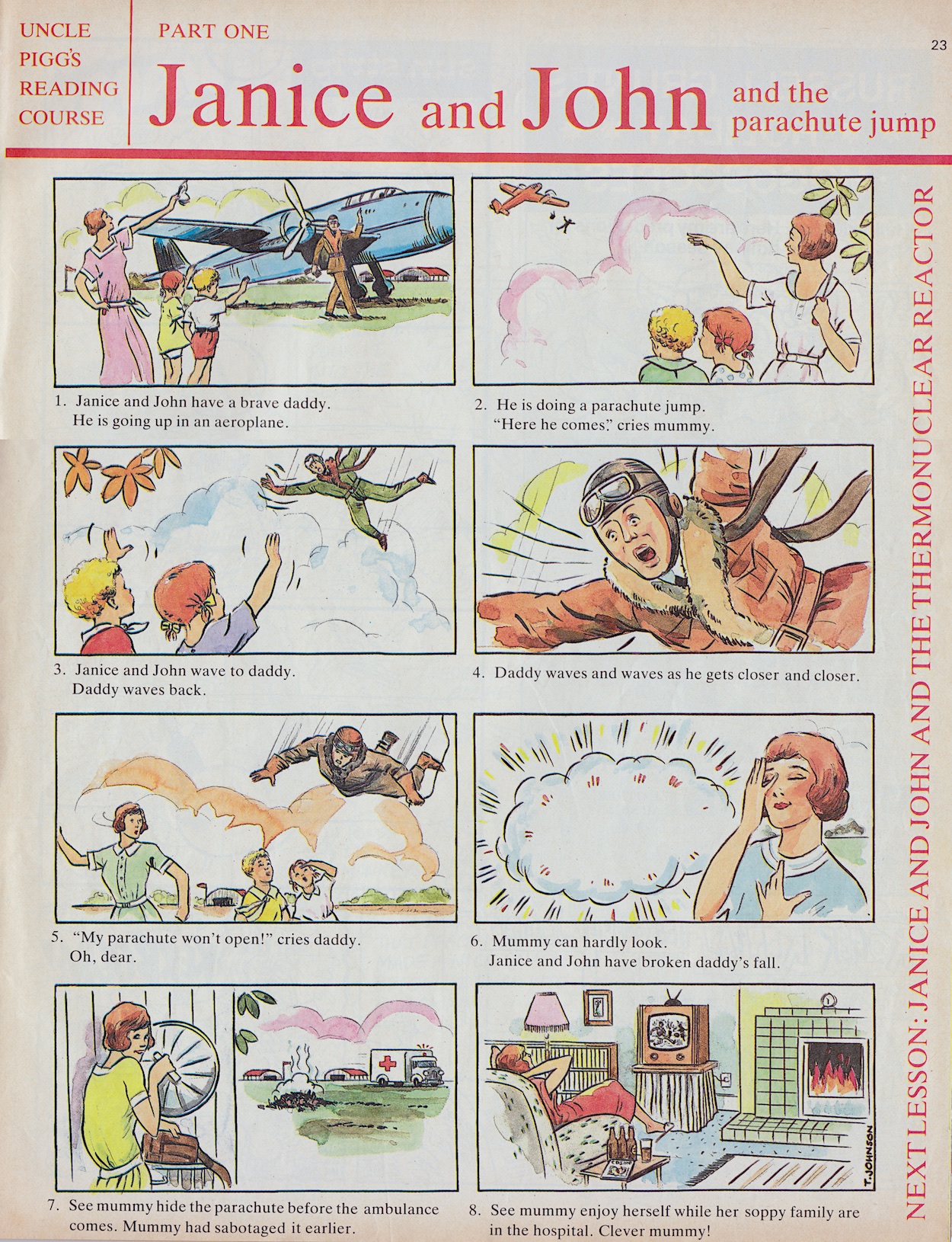
Well first, here’s the story itself which co-editor Patrick Gallagher believes was written by Mark Rodgers. Every pig pal remembers Janice and John and the Parachute Jump, which was illustrated by Trevor Johnson, a friend of Patrick’s and a renowned Manchester graphic designer who did a lot of work for Factory Records and the famous The Hacienda.

The complaint accused the story of disregarding mother-family relationships, but the Press Council rightly saw it as the deliberate parody of the traditional stories found in old fashioned children’s publications that it was. They ruled it was meant to be a tasteless spoof and was not improper in any way, rejecting the complaint. Brilliantly, OiNK would publish this in a future issue.

IPC loved the attention things like this brought

OiNK was aimed at children, not their parents, and the kids found it hilarious. However, while only two people complained, W.H. Smith still placed OiNK on their top shelves as a result. A ridiculous situation. But a year later in an interview co-editors Mark, Patrick and Tony Husband would be all too happy to confirm sales of 100,000 per issue so never underestimate pig power. Tony also recently told me IPC loved the attention things like this brought.

Janice and John would indeed return in the sequel Janice and John and the Thermonuclear Reactor, although it didn’t appear until much later in the run, possibly held back until the outcome of the complaint was known. I’ll definitely include that and OiNK’s response to the complaint when we get to those issues. But now, for our next highlight let’s enjoy a different form of crazy.

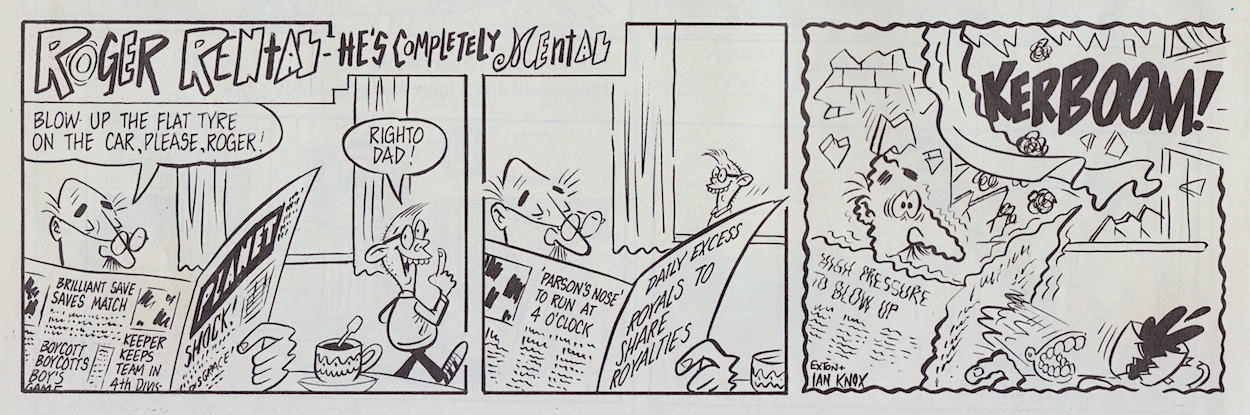
What else can be said about this strip? Nothing really. Simple, straight to the point and laugh out loud funny, that’s Roger Rental, He’s Completely Mental, written by Graham Exton and drawn by his regular artist Ian Knox. To this day I can remember reading certain entries in his series of tiny, one-joke strips as a kid and just losing it with the sheer, unintended anarchy of it all.

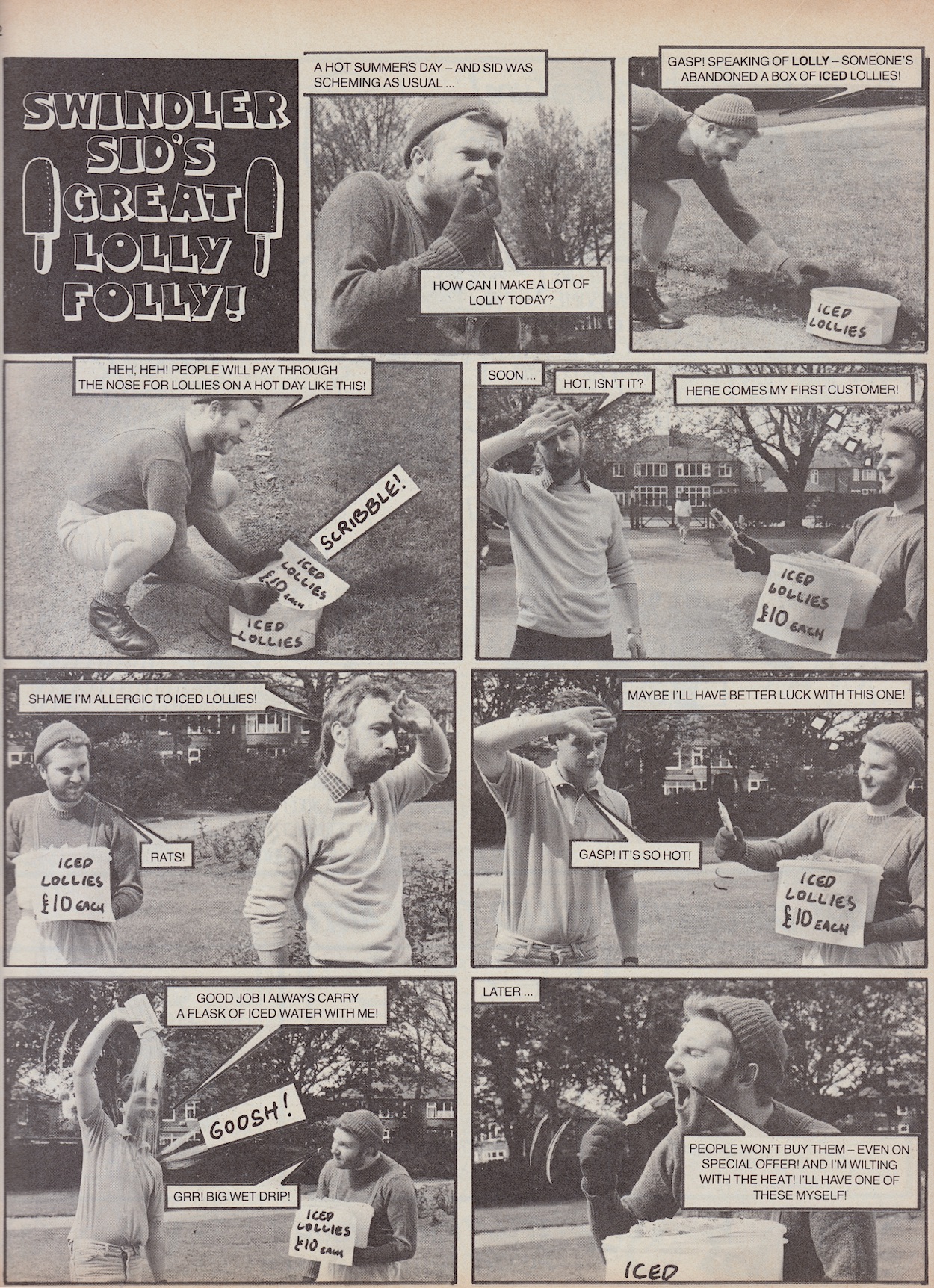
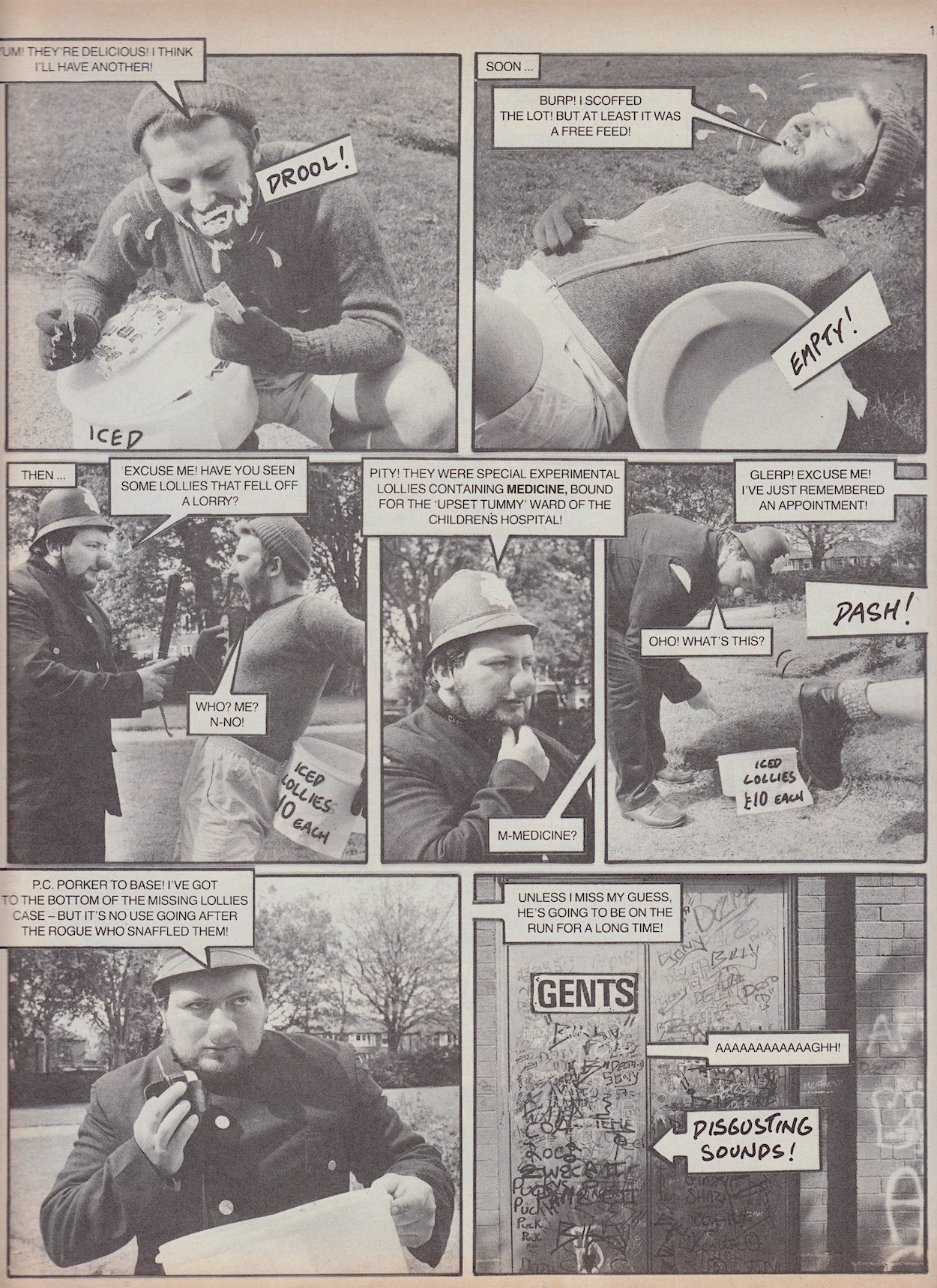
At the beginning of OiNK’s run there was a competitor to Snatcher Sam‘s crown as the most idiotic thief to appear in a photo story. His name was Swindler Sid. Played by a good friend of Patrick’s called Nick Bell, the strips were photographed by Patrick’s brother James who we saw as a Typical OiNK Reader back in #5. Despite the consequences of Sid’s actions here I think we’d all risk it at the moment given the weather outside.

Patrick and James would rope in other friends to play the roles of whoever the scripts called for. In this case the first customer is Billy Gregg (a welder in real life), the second is Paul McGarty (a labourer) and P.C. Porker is Pat Healy (a bricklayer) who would appear more than once as the same character.

Sid has now reformed himself and given up his swindling career, “Though he still dabbles in ‘finance’ occasionally” says Patrick. Nick has had an amazing and varied career, working in the NHS for more than 30 years in positions such as Lead Auditor and Benchmarking Analysis, as well as a Business Analyst at Central Manchester University Hospitals Foundation Trust. Sid’s certainly come a long way from swiping ice lollies.

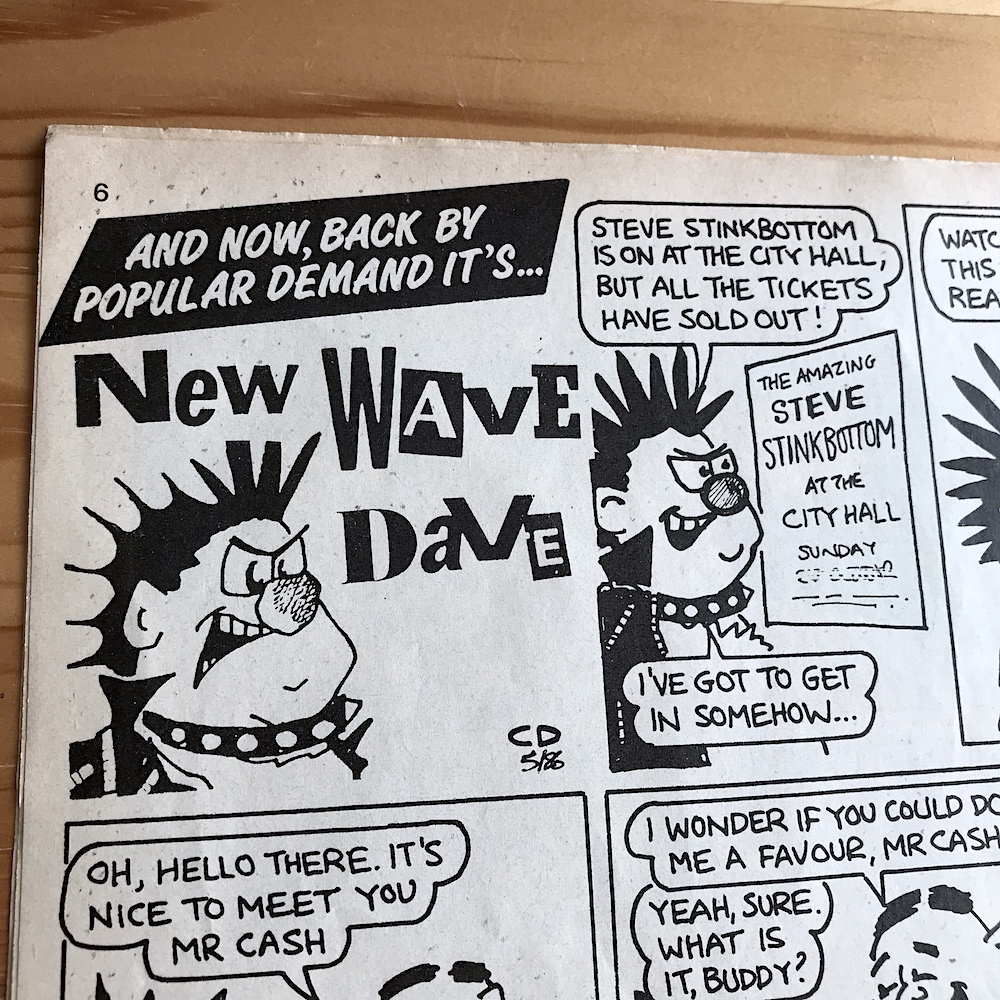
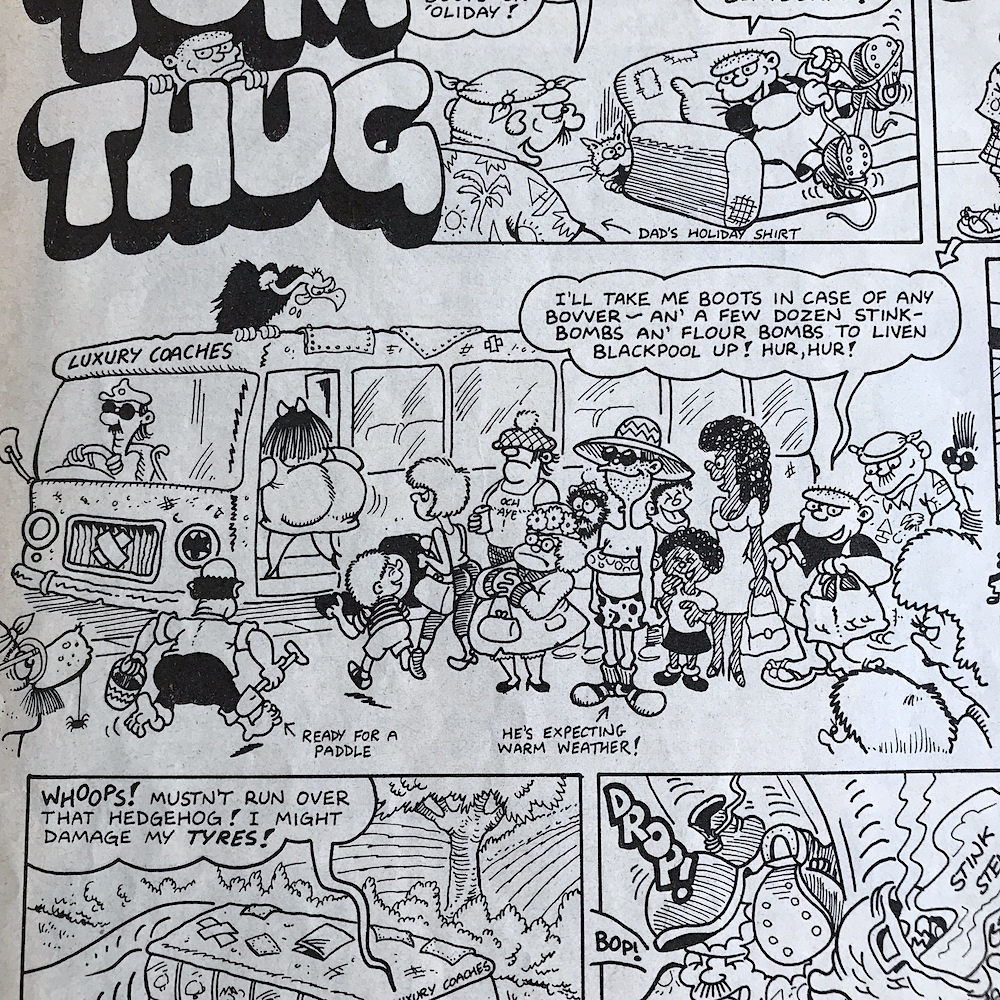
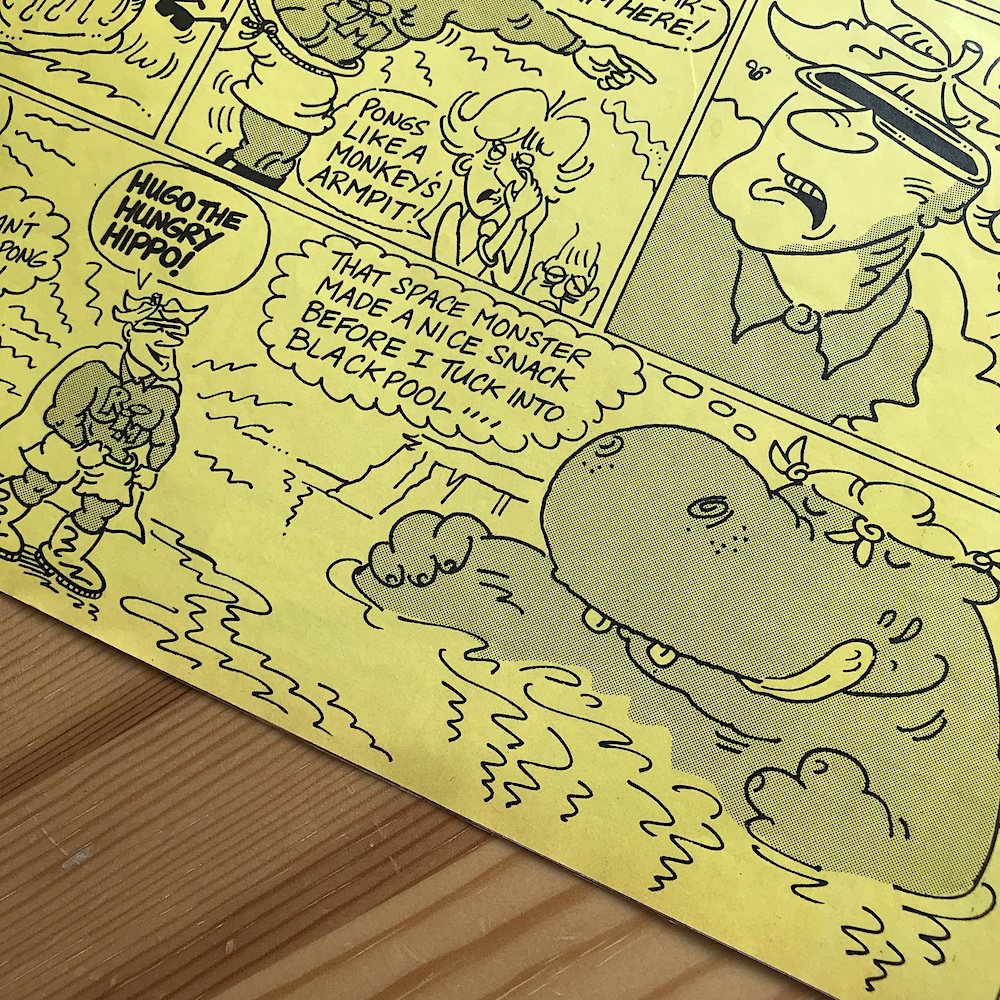
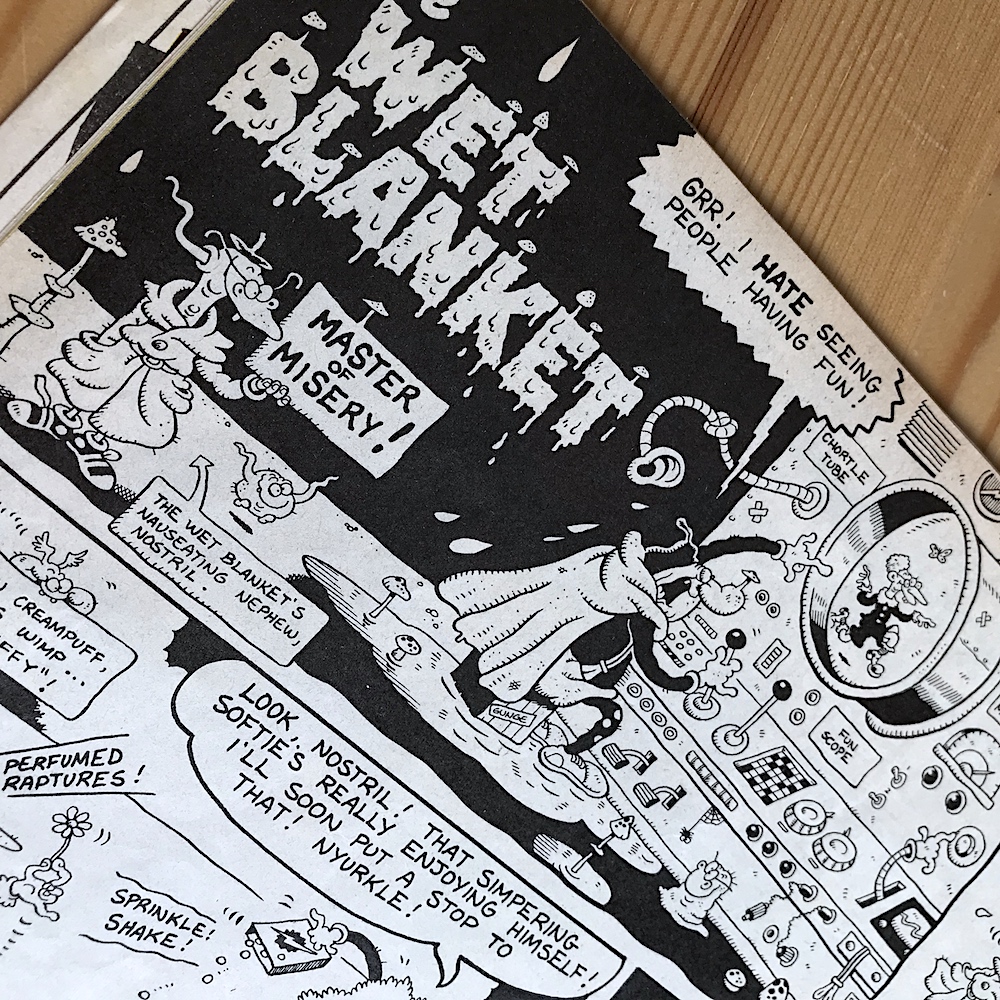
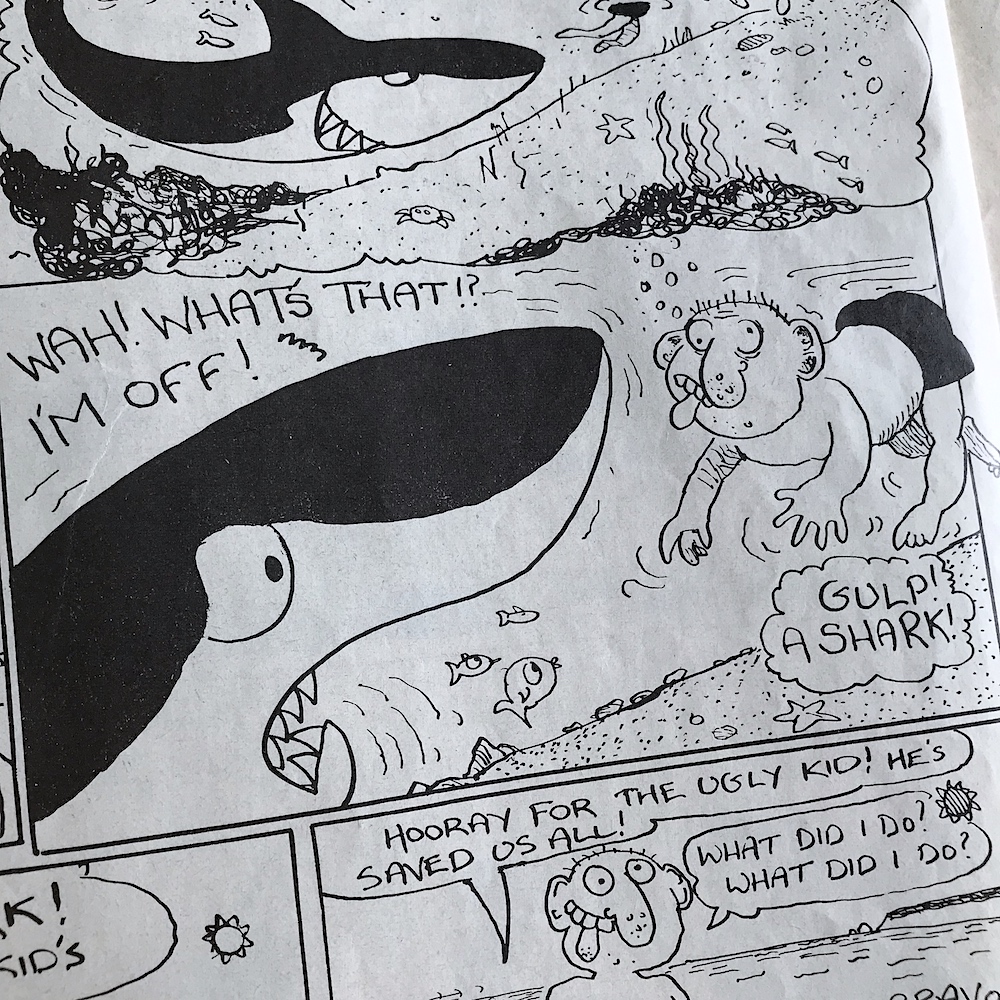
Let’s have a quick look at some other highlights from this summery edition, starting with an early character called New Wave Dave who was a bit too keen to be part of that 80s scene. Dave was drawn by Viz founder Chris Donald. Tom Thug went on an ‘oliday to Blackpool with a regular selection of British folk (we’ll see how he gets on next time). There was a comics crossover of gigantic hippopotamus proportions when Hugo the Hungry Hippo popped up to save the day in Rubbish Man, Tom Paterson‘s hilarious Wet Blanket will see publication again later this year and roles were reversed in Horace (Ugly Face) Watkins.

I’m a sucker for comical sharks, as evidenced already with my favourite OiNK page of all in #4, so if any more pop up you can be sure I’ll show them off.

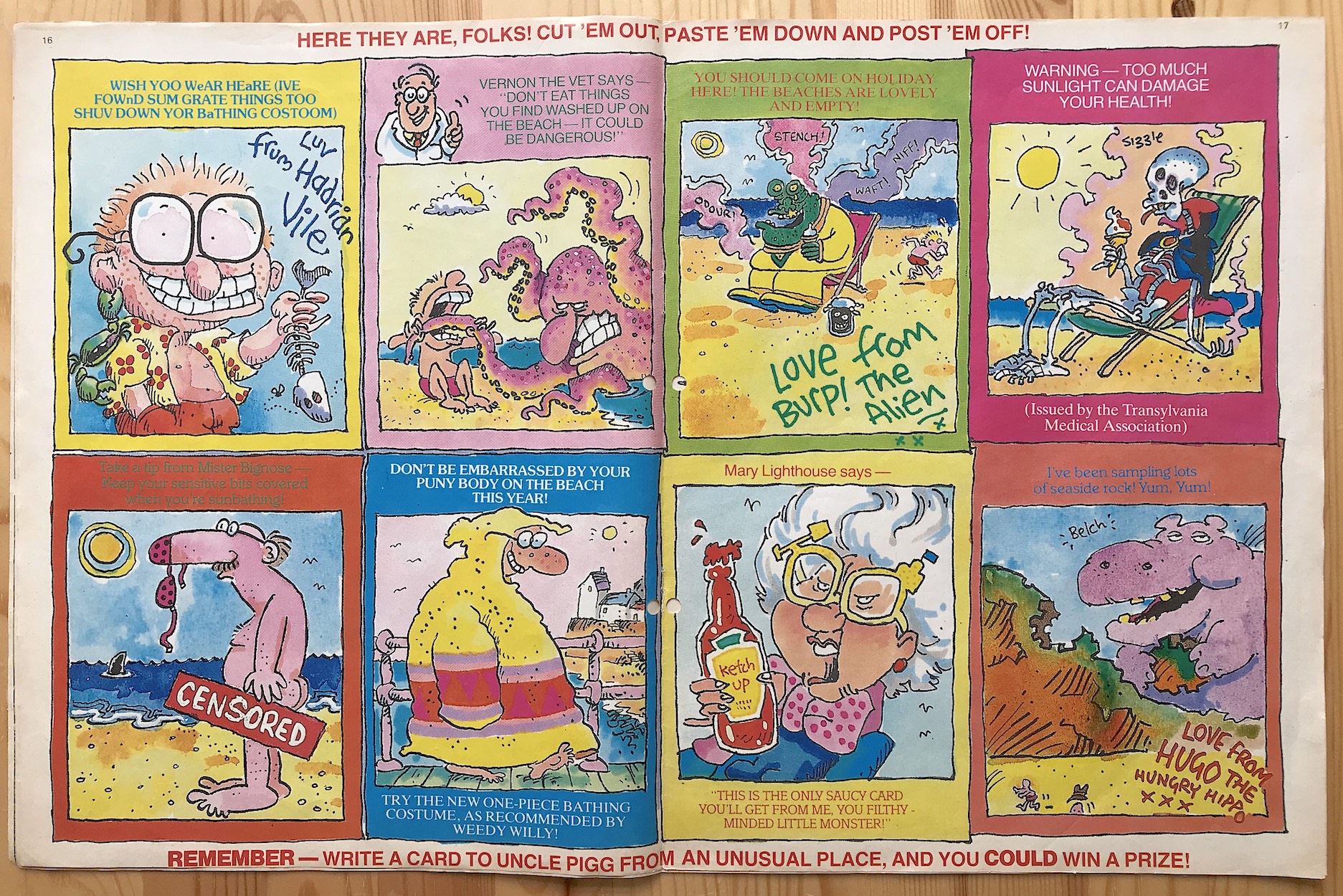
On the middle pages we’re treated to eight lovely, rough-around-the-edges postcards to cut out and take on holiday from the pen of Ian Jackson. I wonder if anyone actually used them? There’s a small competition along the bottom to encourage readers to cut up their comic (a winner would be chosen in #12). The best thing about this is Ian interpreting other artists’ characters. Some of the postcards themselves are just priceless too.

Some time next year you’ll see the actual postcards the comic gave away with a few issues. I’ve a foggy memory of wanting to take them on holiday but not sure if I ever did, and they were separate from the comic. So I doubt I would’ve cut up my OiNK to use any of these if I’d been collecting the comic at this point. Why would you want to send away these pieces of art?

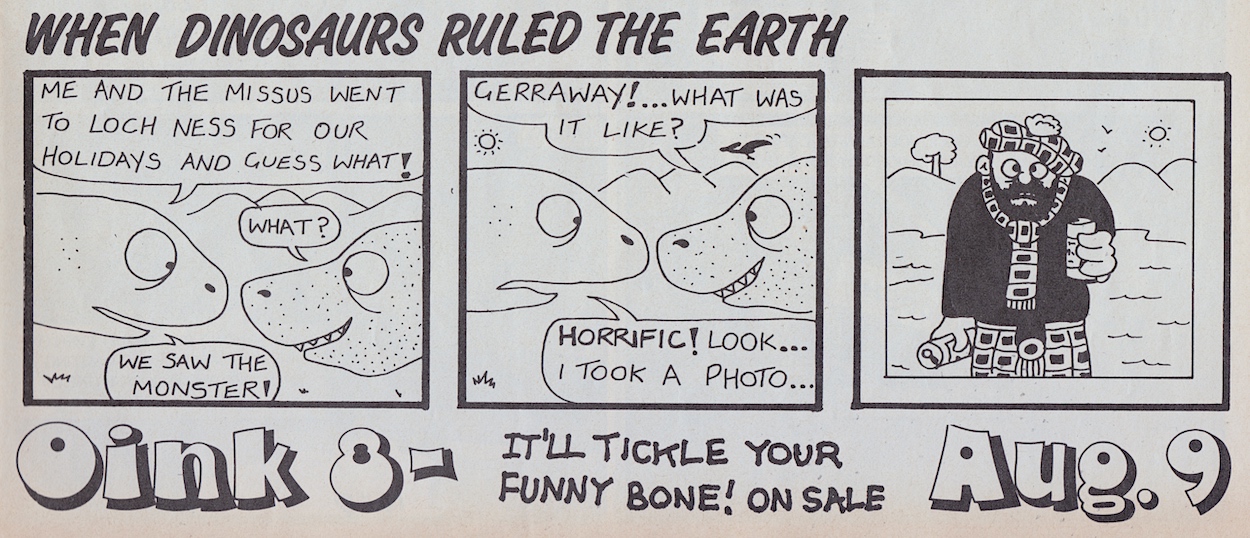
Snatcher Sam might be missing in action at the moment but his alter ego Marc Riley is still busy, as his strip creations continue to bring the laughs. Alongside Harry the Head sat a little quarter-page strip which took us back to the Jurassic, at least in theory. When Dinosaurs Ruled the Earth may have had ancient creatures as the stars but the settings and stories were very 1980s.

Popping up in 25 issues altogether they, like Roger Rental, disappeared during the weekly issues as a casualty of the reduced page count. We’d see situations ranging from package holidays to skateboarding, basically everything except anything to do with the correct time period, and we loved them for that.

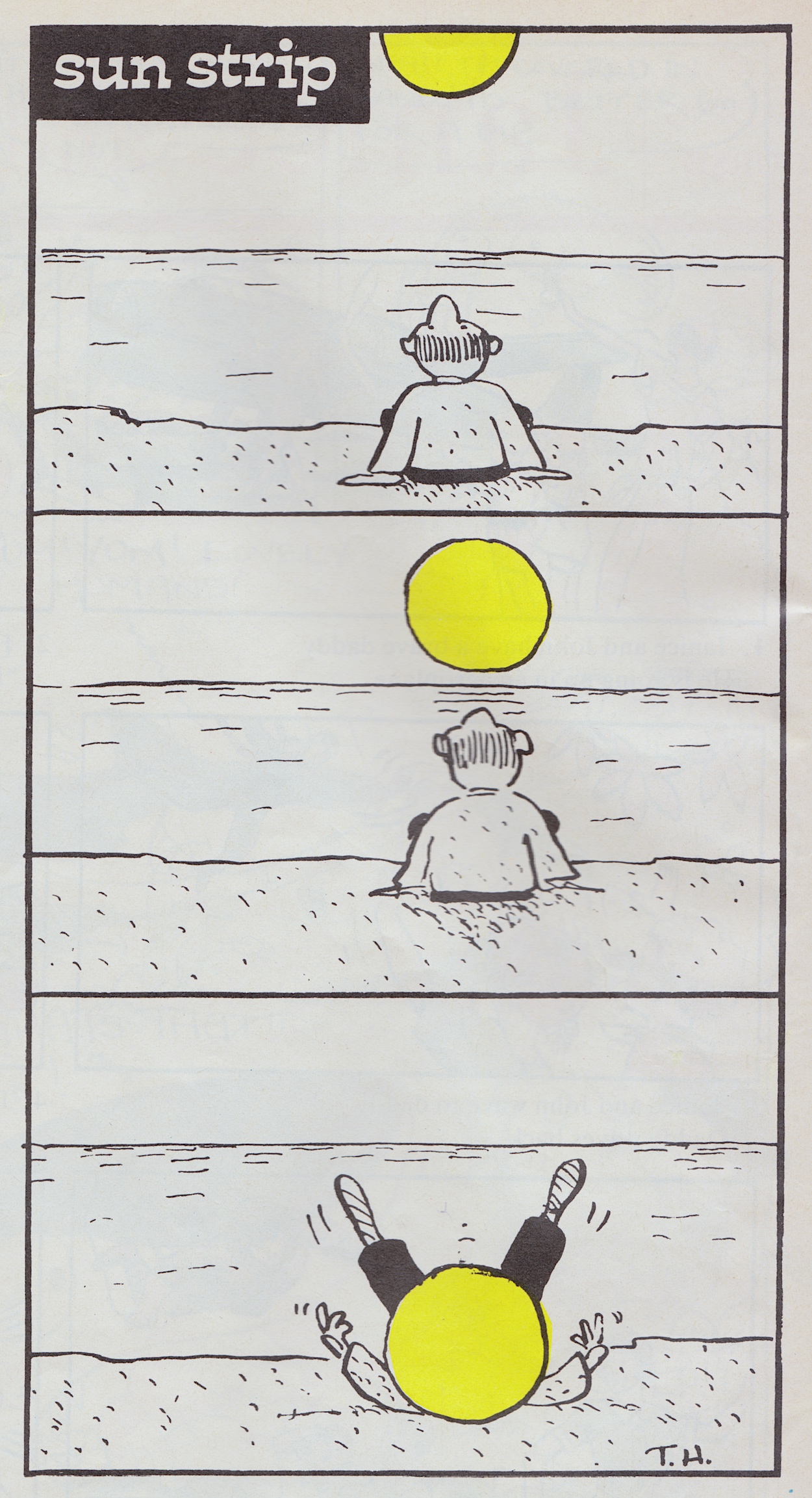
But for now the sun is setting on another issue of the world’s greatest comic.

One final sight gag from Tony Husband there to round things off. The comic itself would end with Uncle Pigg and his staff heading off on a bus to go on a well deserved vacation of their own, but not before promising to leave the comic in the hands of his “dedicated skeleton staff”. Prophetic words indeed as you’ll find out next time. (There’s a hint under one of the strips above.)

Join me in two weeks for an issue that’s even more unique than those we’ve seen already. That’ll be on Monday 9th August 2021.

iSSUE SiX < > iSSUE EiGHT
OiNK READ THROUGH MENU

MAiN OiNK MENU

COMiNG UP: OiNK! #7

I think in the middle of this current heatwave (at the time of writing) it’s quite apt the next issue of OiNK, up for review this coming Monday 26th July 2021, is the summer edition. In these days of social media influencers and celebrity endorsements, here’ a very 80s superstar to give you her opinion on what’s to come.

So “special” was the next issue it had two promotions inside #6, from which both of these clippings have been taken, both created by Patrick Gallagher.

The next issue was also one which would end up reaching more readers through a special giveaway, and the one where some exaggerated controversy came from. The next OiNK contains a strip which is the source of another oft-told myth about the comic and I’ll be setting the record straight on Monday. So come back then for one cool comic.

GO TO iSSUE SEVEN

OiNK iSSUE PROMOS MENU

‘MORE OiNK’ MENU

MAiN OiNK MENU

ViSiONARiES #5: SiRENA SONG

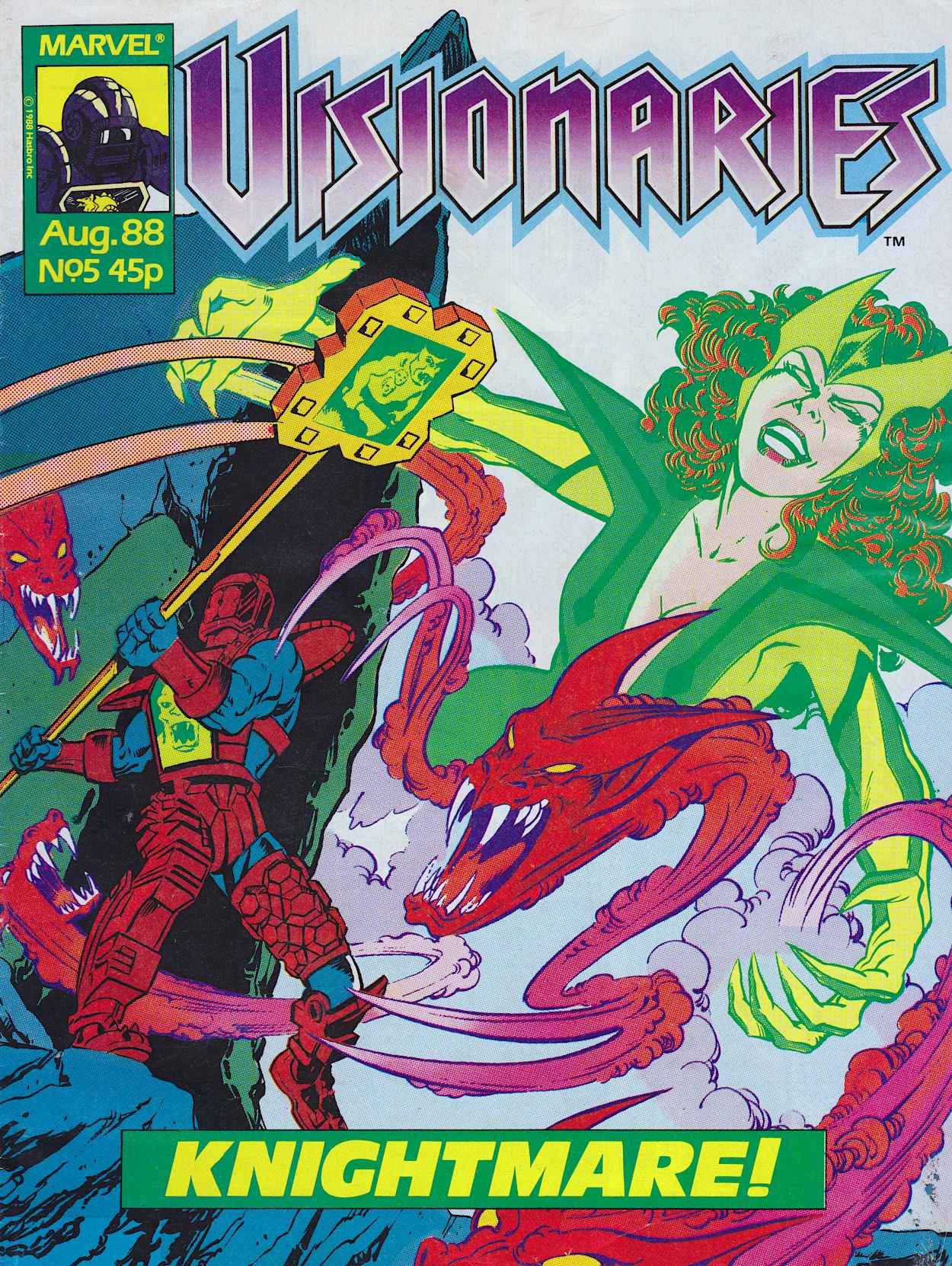
If you were to take a quick glance through this latest issue of Marvel UK‘s Visionaries from 1988 you’d think it was business as usual, with another lengthy strip featuring the Knights of the Magical Light and their quest to rebuild their crumbling planet. After last month’s superb story by new writer Gerry Conway anticipation is also high. But look beyond the brilliant cover by Mark Bagley and we discover some bad news on the editorial page.

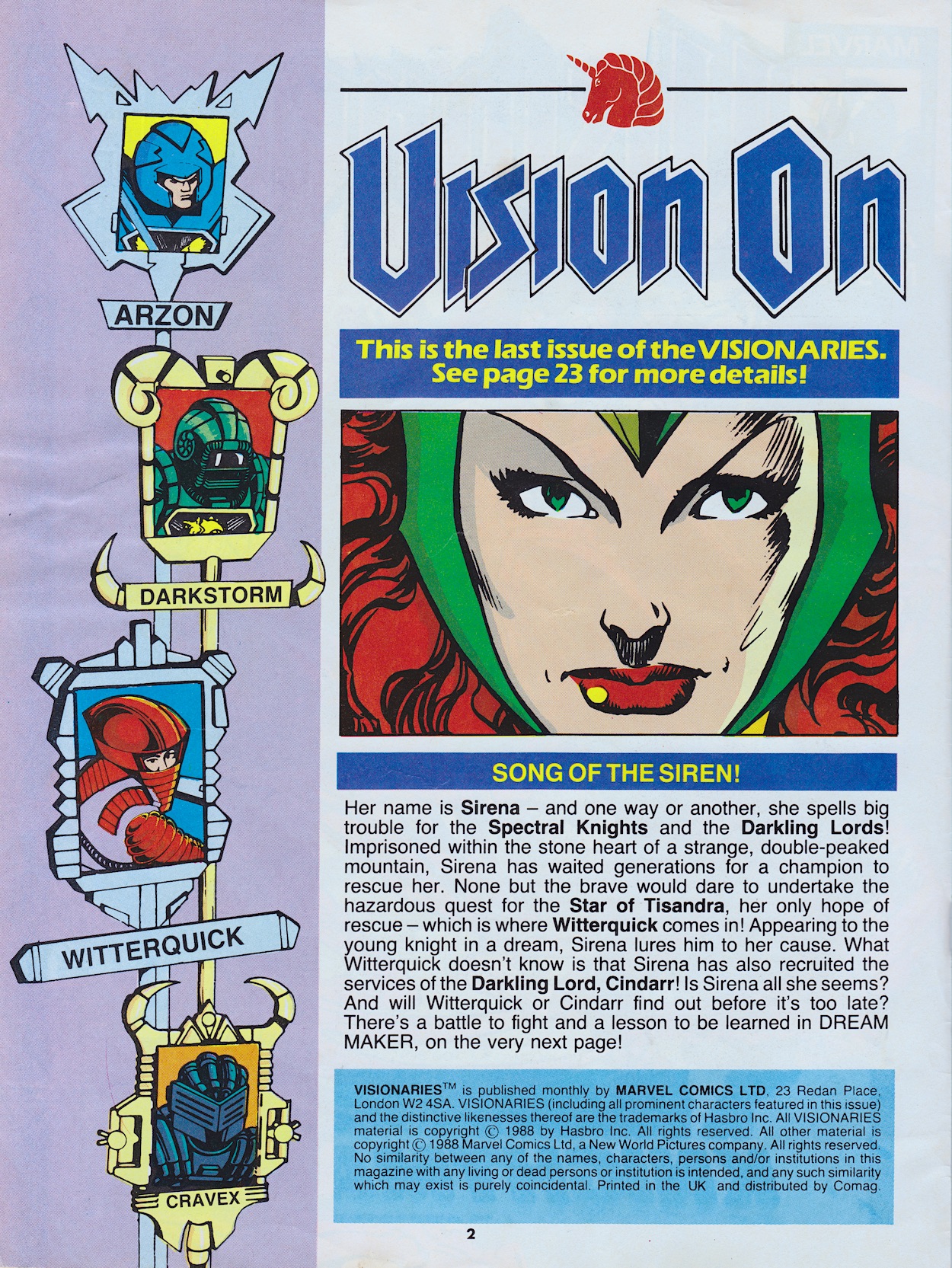
There we find a tiny message from editor Steve White announcing the horrible news that this, only the fifth issue, will be the last. He says there are more details to come so we’ll concentrate on the strip first and see what those details are later. As with the previous issues, it’s written by Gerry Conway, pencils are by Mark Bagley, inks by Romeo Tanghai, letters by Janice Chiang and colours by Julianna Ferriter.

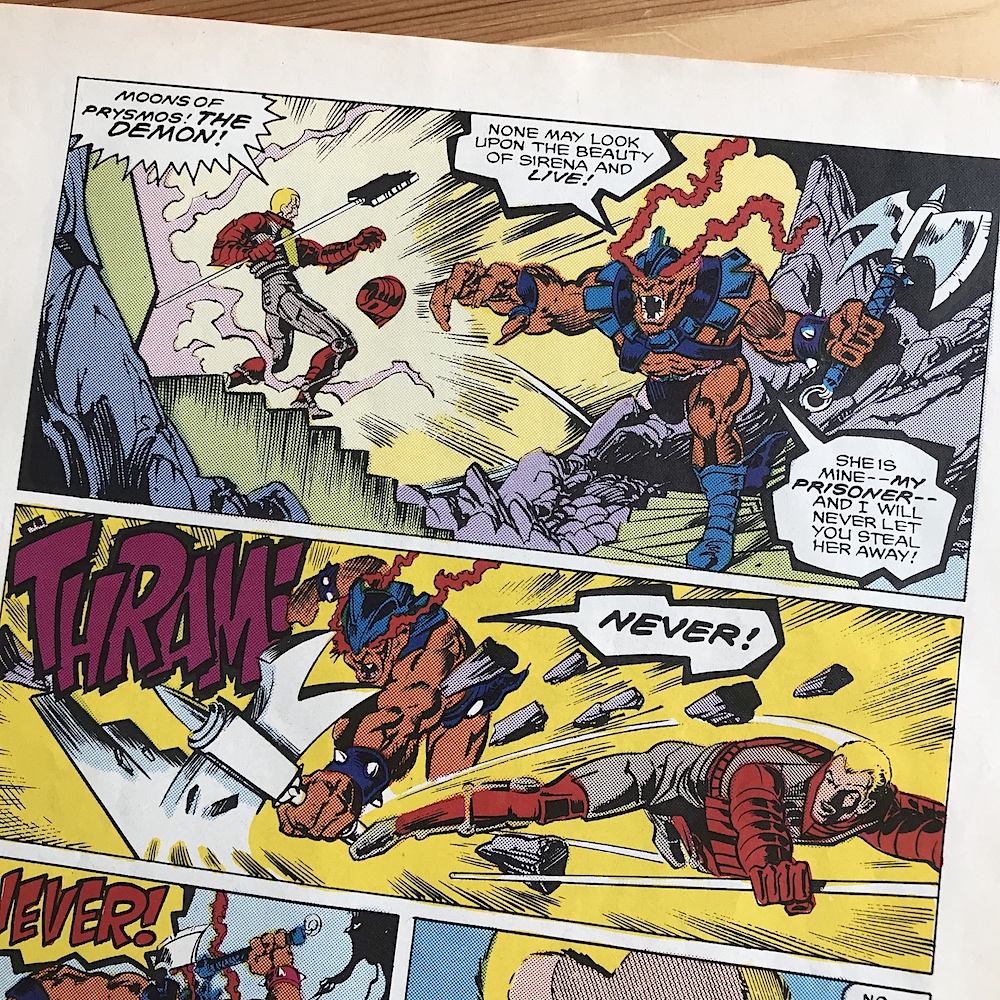
This issue’s story is called Dream Maker and begins with my favourite Visionary from the cartoon, the lightning fast Witterquick atop a cloud covered mountain answering the cries of a beautiful but entombed woman called Sirena. As he attempts a rescue a demon appears, apparently threatening to kill our hero for looking upon the woman’s beauty. It might appear this demon is jealous and has trapped his great love to be wit them forever, but as we find out later it’s just a bit of clever writing.

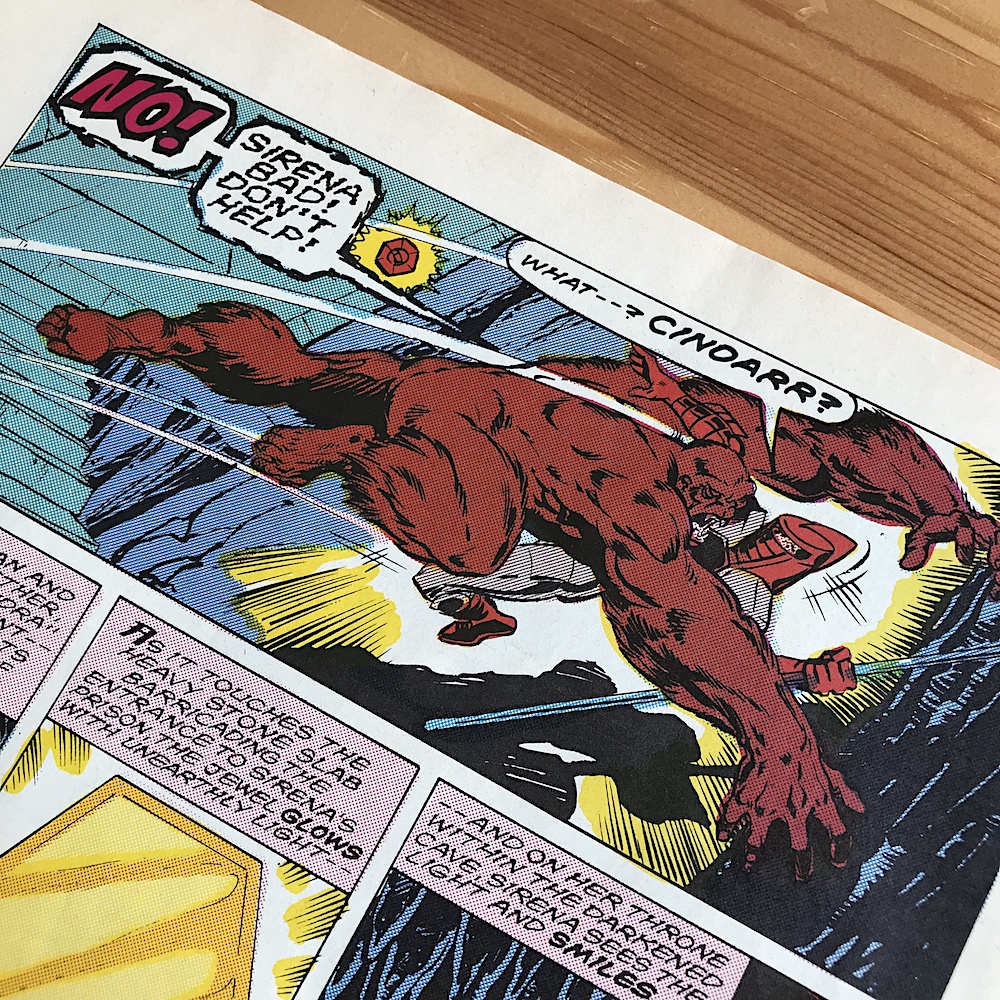
I say clever writing, but with a name like Sirena and a front cover showing her in control of monstrous forces the game has kind of been given away. If there was any doubt left the comic’s editorial made sure to erase all mystery beforehand. It’s still a compelling read though. I get the distinct impression Gerry, co-creator of The Punisher, really enjoyed developing these toys into three-dimensional characters. This issue concentrates almost exclusively on Witterquick and the Darkling Lord Cindarr, who we also see awaken from the same dream, with him in place of the Spectral Knight.

Sirena tells both men she’s a former Queen who has reached out telepathically to the only man able to recover the magical stone that can open her prison. Not convinced the dream is real, Leoric knows there’s no stopping Witterquick’s impetuousness so he wishes him well but offers no help or resources. On the other hand Cindarr has to fight off Reekon and Mortdredd who accuse him of abandoning his post at Darkstorm‘s castle. While you might wonder why a Darkling Lord would care about an imprisoned woman, it’s the first sign of there being more to Cindarr than we initially thought.

Witterquick’s impulse to save the poor villagers is soon overpowered by his desire for Sirena

The scene shifts to a crumbling mountain road where the giant ‘Bronze Warrior’ statue looks down upon a ramshackle village led by a despot warlord. The statue is a rusting metal ruin of unknown origin from the previous Age of Magic, now a tourist attraction with a gleaming jewel eye. Witterquick’s initial impulse to save the poor villagers from their maniacal leader is soon overpowered by his desire for Sirena, such is her power over him.

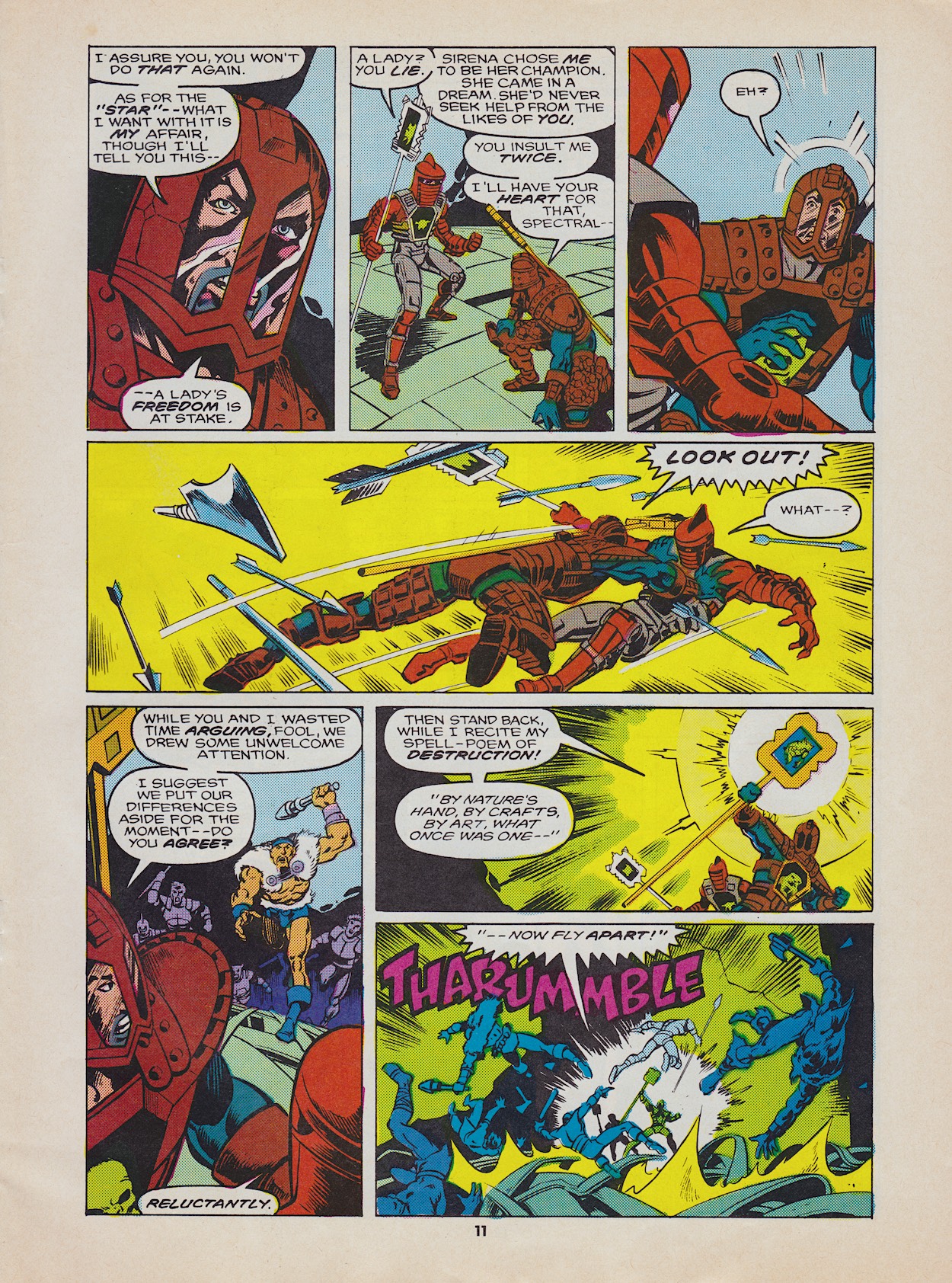
Soon he and Cindarr are in a race to claim the key, the jewel. Both use their magical poems, Cindarr unleashing ground-shattering destruction, Witterquick giving himself incredible speed which he uses to grab the key first. Despite this, Cindarr still saves Witterquick’s life when they’re suddenly attacked by the villager’s warriors.

It’s a gut reaction by Cindarr and a big surprise for the reader. He’s the highlight of this story and showcases the potential for complex character arcs to come between the warring factions. How heartbreaking that this is showcased in the final issue. Offering up a temporary alliance he uses his incantation to shake the very ground upon which the statue stands, scattering the warriors and allowing both of them to escape, the statue left wobbling in the wind.

Both characters seem to be fighting against where they’ve been placed in this new world, seeking to find their true selves

We also see Witterquick open up about who he really is, flaws and all, through thoughts and the well written (as always) narrative captions. In the comic his magical speed also seems to apply to his heart. He’s quick to fall in love, quick to jump to conclusions, quick to leap into danger, all of which can get him into trouble, all easily avoidable if he just took a step back and thought things through first.

Struggling with his thoughts, Witterquick dreams once more. Today I wouldn’t bat an eyelid at the image below, but in a toy comic of the time I think it shows Visionaries was aimed at a slightly older audience than Transformers, albeit an audience that still played with action figures. We’d have seen the likes of this in Conan comics so I thought it was interesting in the middle of a Hasbro toy licence.

Nudity in dreams is said to represent vulnerability, perfectly summing up Witterquick’s thoughts at this juncture in the story. The bewitching hold Sirena has over him, believing it’s true love, makes him shake off the doubts and carry on. From here on we see both Knights frequently cross paths with each other, more as competitors than enemies, creating an interesting dynamic and lots of fun moments.

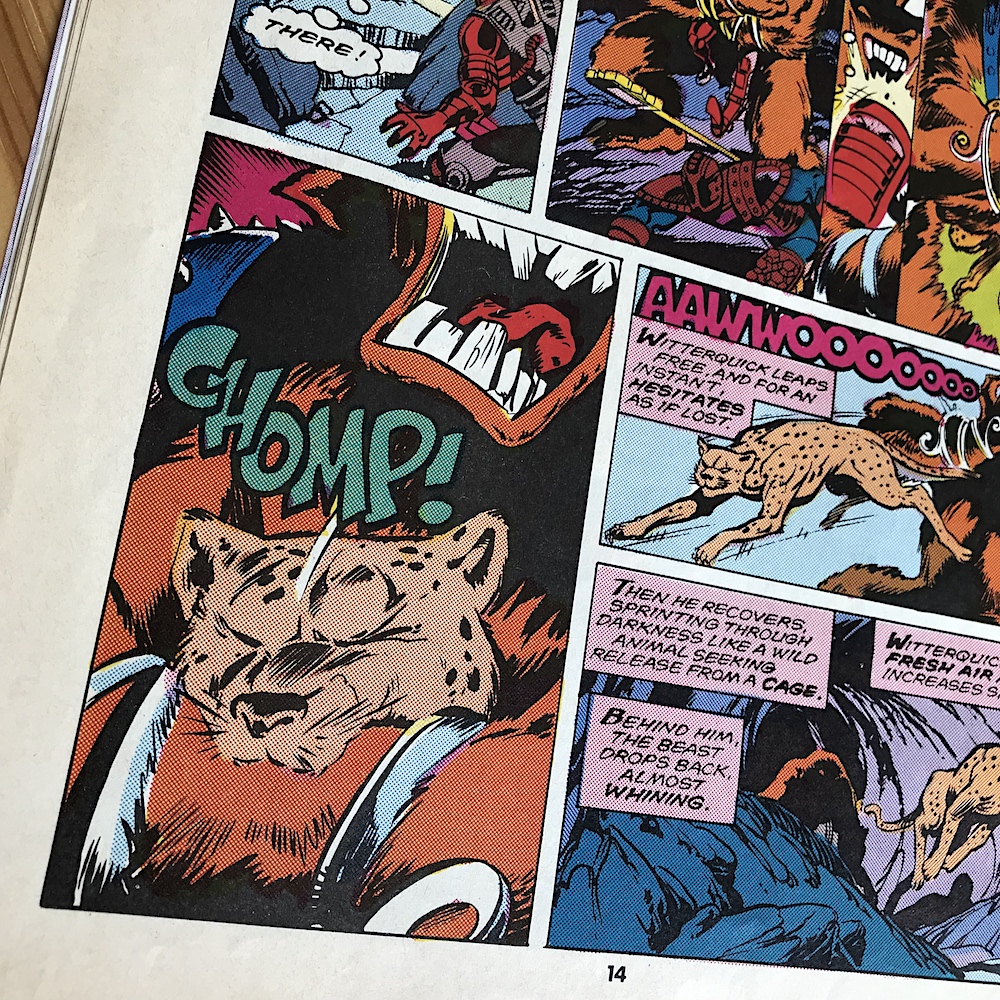
They come up against a monstrous beast guarding the caverns underneath the toppled statue, providing us with an example of their back and forth race. Cindarr scoots past in the background (above right) as Witterquick struggles with the beast before transforming into his cheetah totem, biting the beast and escaping, the captions hinting at themes covered in last month’s review.


“But in the end, we fought as allies. Imagine if our leaders could find a way to do the same.”

Witterquick to Cindarr

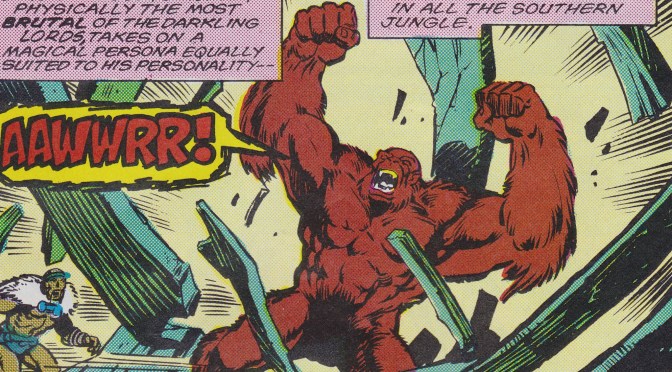
These caves take our Knights back underneath the statue where Witterquick uses his speed spell once again to grab the jewel before it collapses. The Darkling Lord is buried under tons of metal but not before changing to his gorilla form for protection. After bursting out, in a moment of revenge he shames and embarrasses the warlord in front of all of his followers, freeing the people from his rule.

It’s another surprising Cindarr moment I didn’t see coming for a character so simplistically depicted in the cartoon, and it would appear it surprised him too. Both characters seem to be fighting against where they’ve been placed in this new world, seeking to find their true selves inside all of the magical armour that now defines them.

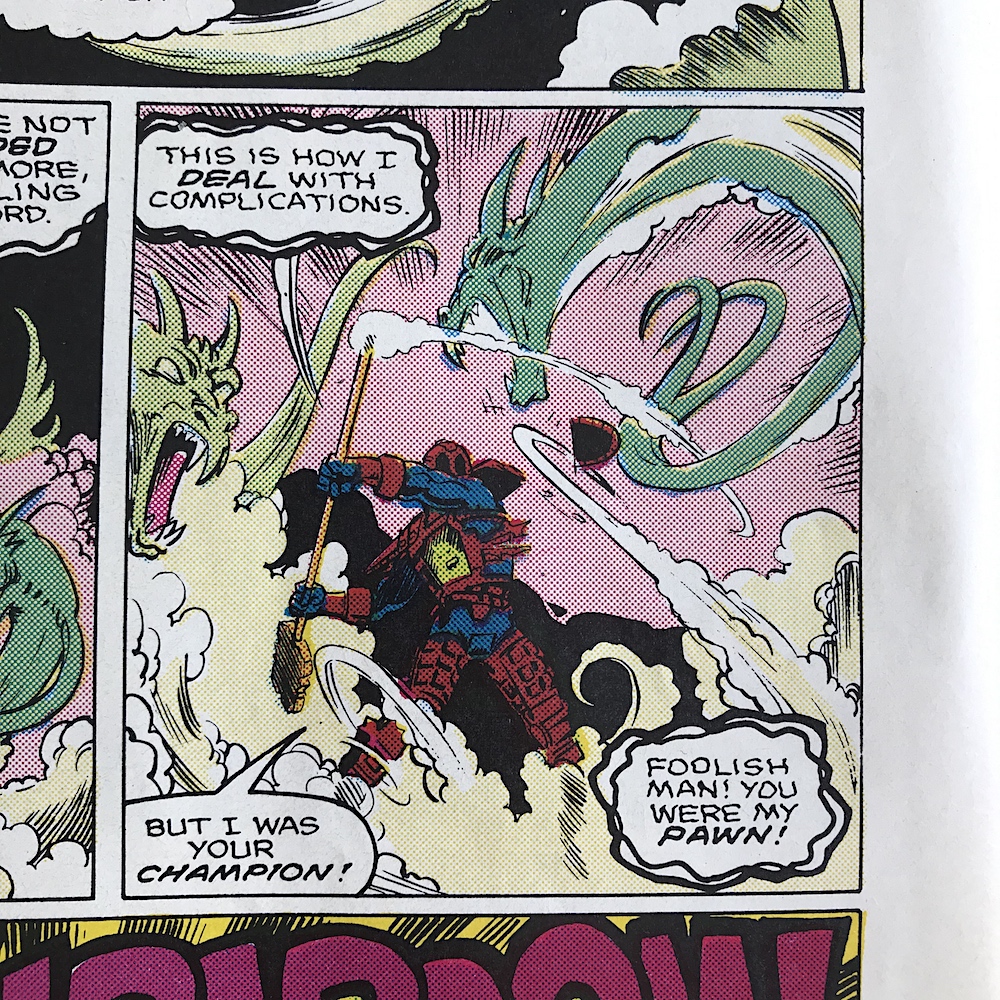
Attacked and ashamed by Sirena’s demons, the truth is laid bare and Cindarr’s heart is broken. About to be set free, she no longer needs him, he is but a complication. I actually felt for Cindarr here; the spell had him genuinely believing he was in love and doing the right thing, something he shouldn’t care about doing.

Now in the area foreshadowed earlier we see the demon attacking Witterquick but it’s holding back, not wishing to kill our hero, claiming he’s there to stop evil from being released. It’s at this point we realise those panels at the top of this review now read very differently.

Witterquick is unable to listen to reason and only the intervention of a vast gorilla (complete with Grimlock-like speech in this form) stops him from unleashing Sirena. Cindarr could have simply walked away; more evil being unleashed into the world and one less Spectral Knight should be a good thing, should it not? But he’s become an unlikely hero, trying to keep the witch imprisoned and saving a warrior he’s come to respect.

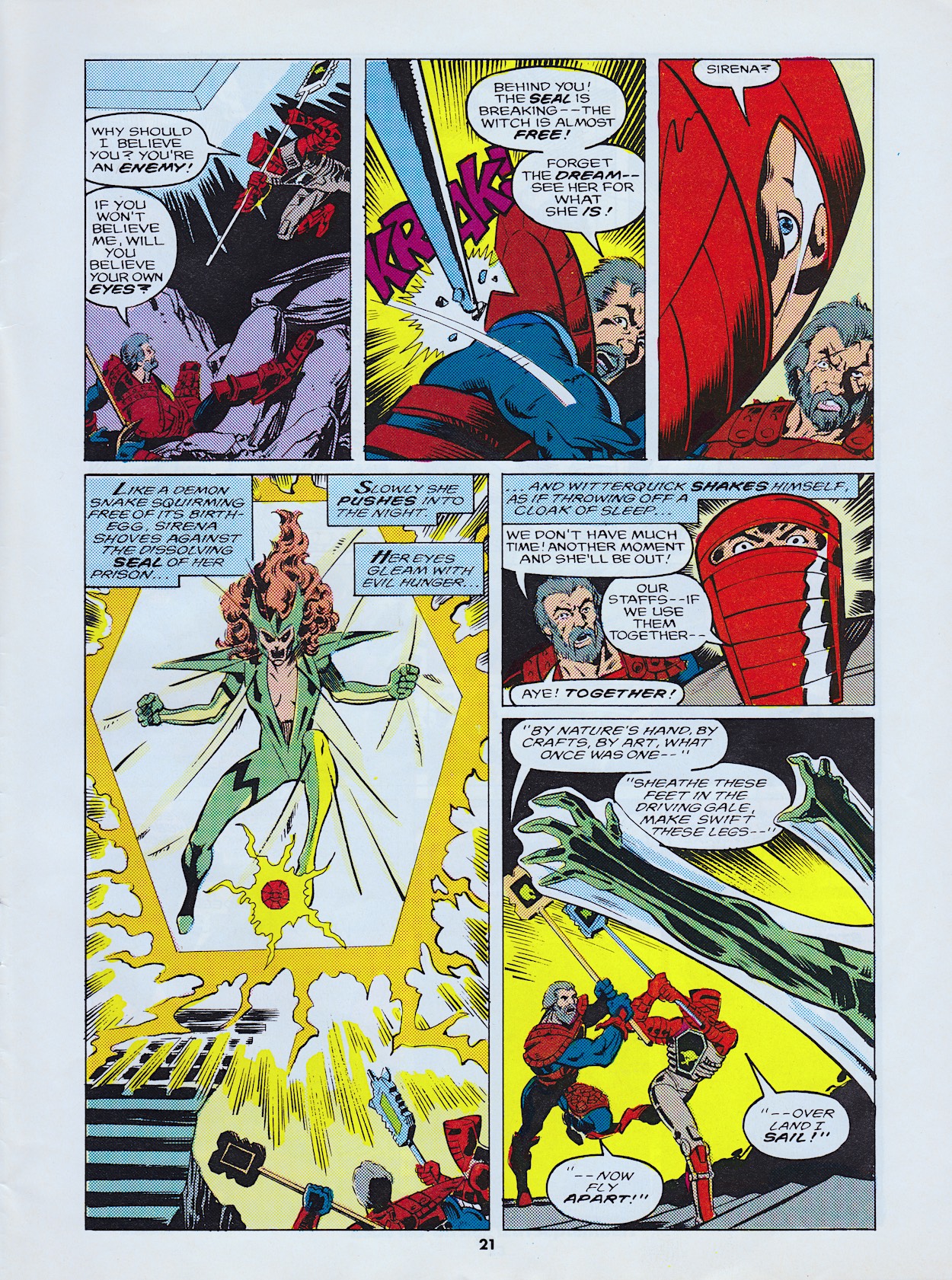
But unwittingly they’ve gotten too close and the jewel floats on a magical current right into the lock of Sirena’s tomb. Here her true appearance is revealed as she pushes against the dissolving seal in a scene reminiscent of scenes from popular mini-series V just a few years previous.

His mind set free at last, Witterquick’s horror is clear. Working together, this leads to a final desperate bid to not only save their planet but also their dignity, as they use both staff powers together, combining speed and destruction into an unstoppable force and unleashing it directly upon the dissolving force field.

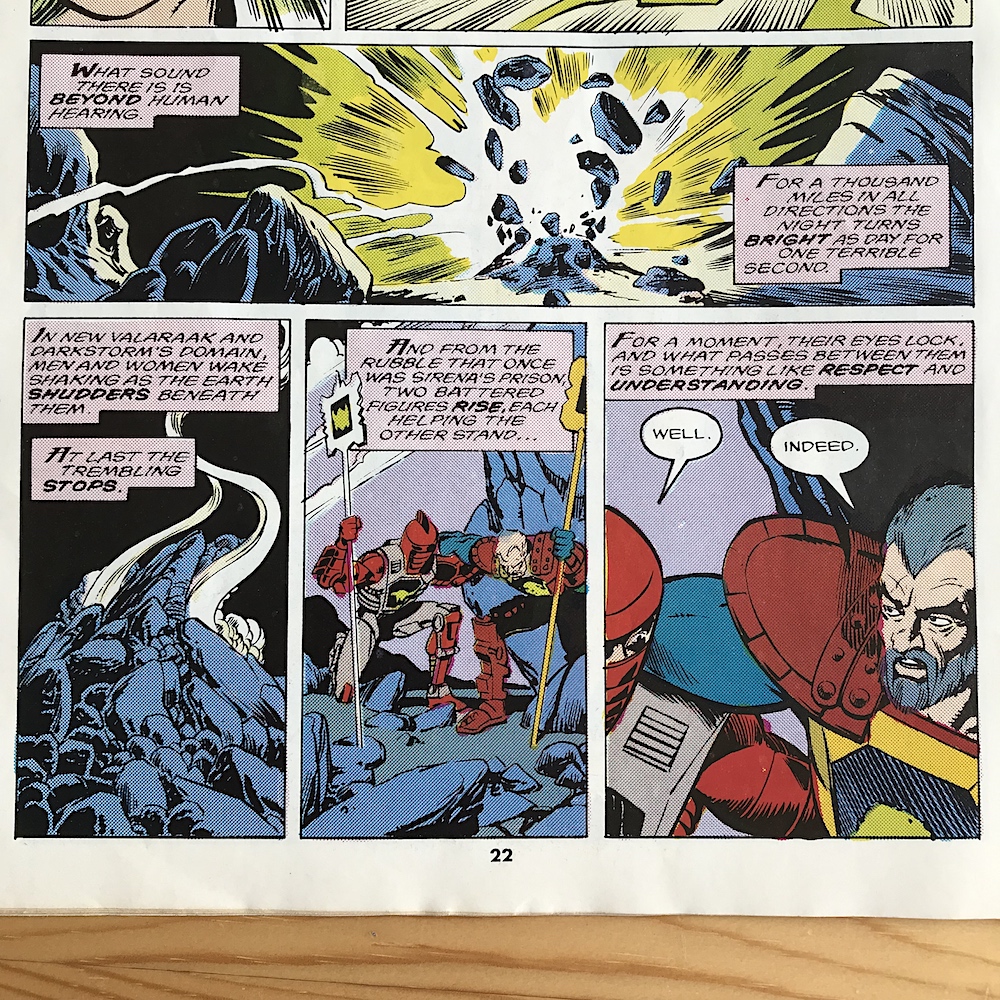
The prison explodes, taking Sirena with it. My favourite part is not this appropriately action-packed finale itself, but rather the immediate aftermath when the two enemies help each other out of the rubble and share this moment.

I laughed when I read this. Gerry’s scripts are just so beautifully written in these quieter character moments. After being at loggerheads through the long quest and intense action these two simple words sum everything up for the men. The next page also reveals a little about their views of the ongoing battle for the planet. I’d have been disappointed if the story hadn’t included this conversation after all they’ve been through.

It’s a nice final page, the second panel summing up a lot of conflicts in our real world. The respect and understanding between Cindarr and Witterquick is clear and it’s left very open ended. There can be no other outcome, for now at least. No, they’re not friends but can they truly be enemies again? At least they get to end their adventure with a shared laugh and as far as the comics go I’ve got a new favourite character in Cindarr.

This dynamic is just crying out for further exploration but for now Visionaries bows out. At least it does so in style with another superb story, nicely developed characters and plenty of surprises. As you can see the promised “details” don’t amount to much, just the date on which their remaining stories will be serialised in the weekly Transformers comic.

It’s quite the wait but a new look was coming up in Transformers so a new back up strip (temporarily replacing Action Force/G.I. Joe) would help launch it and bring in Visionaries readers eager for more. There are still a couple of dedicated publications to come for our intrepid magical heroes in the form of the Visionaries Annual at Christmas time and a Spring Special next year. That annual may have been released in August but let’s face it we all got them as Christmas presents. So that’s when it’ll be covered here, following the real time nature of reading these as originally intended.

Speaking of further publications, on the back cover is another gorgeous contemporary advert. Dragon’s Claws was created by the ace Transformers team of Simon Furman and Geoff Senior. Set in the distant future of Britain it was a comic I’d seen advertised as a kid and had always wanted to try but never got around to. This is going to be corrected in 2023. The complete collection is sitting on my comics shelves waiting patiently for their own real time read through on the blog. Watch out for that.

In the meantime you can expect reviews of the final two Visionaries stories on the dates of their respective conclusions in the pages of Transformers. Each story was split into four parts as was custom for the back ups, so the first story’s review will be on the OiNK Blog from Friday 1st October 2021.

iSSUE FOUR < > TRANSFORMERS PART ONE

ViSiONARiES MENU

OiNK! #6: ANiMAL CRACKERS

As with any comic review I’m limited to showing you a few select highlights of each issue of OiNK. Rebellion own the rights and I’m always hopeful they’ll publish reprint volumes at some point through their Treasury of British Comics label. Also, I just don’t agree with putting whole comics online, regardless of their age. All of this adds up to a difficult review to write this time.

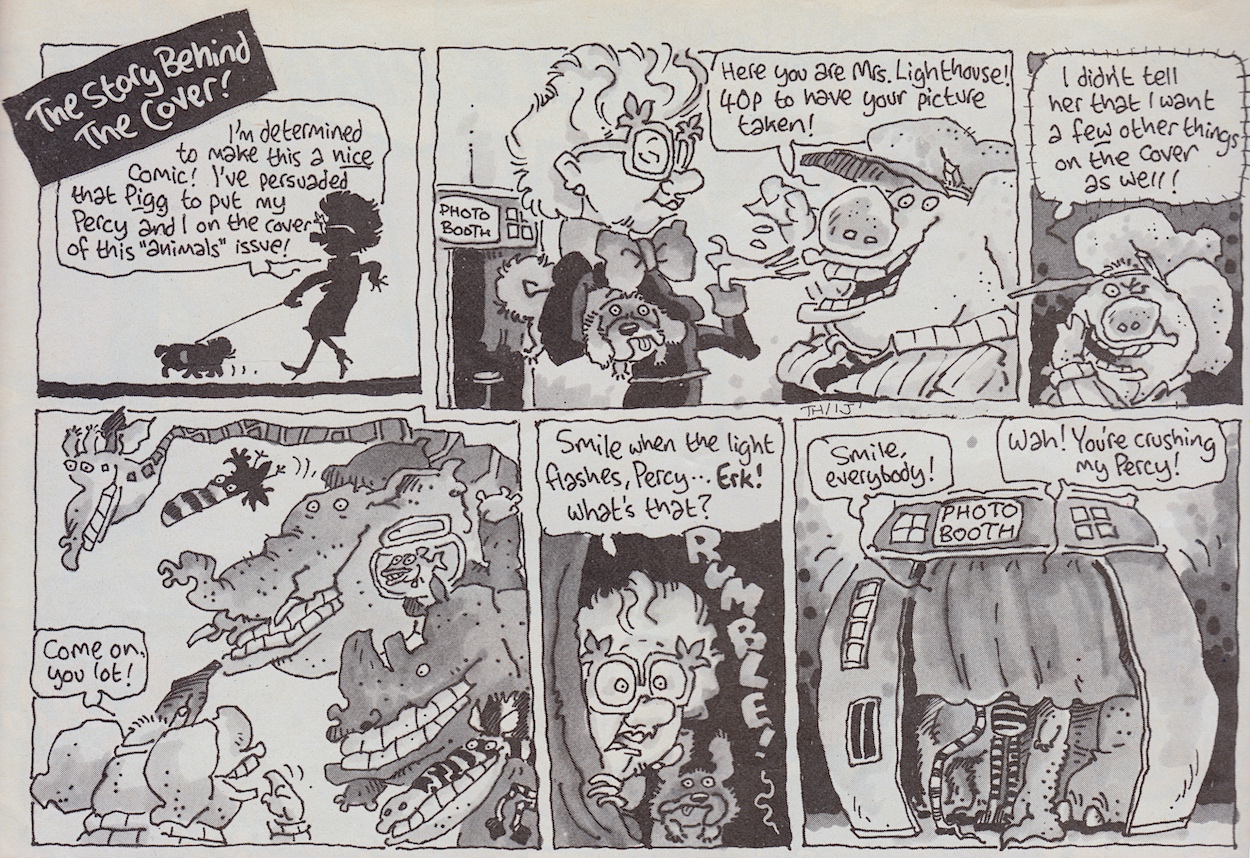
That’s because this issue is superb. Every strip hits. Every joke lands. Don’t get me wrong, I’ve been enjoying the issues so far but everything just seems to come together here with complete confidence. As such, it’s been less about which strips to choose as highlights and more about which ones to leave out! Thankfully the cover is a necessity and must be included and it’s one of my very favourites. An Ian Jackson classic, the best so far and one of the best of the whole run, it perfectly encapsulates the anarchic feel of OiNK. We’re off to a great start then.

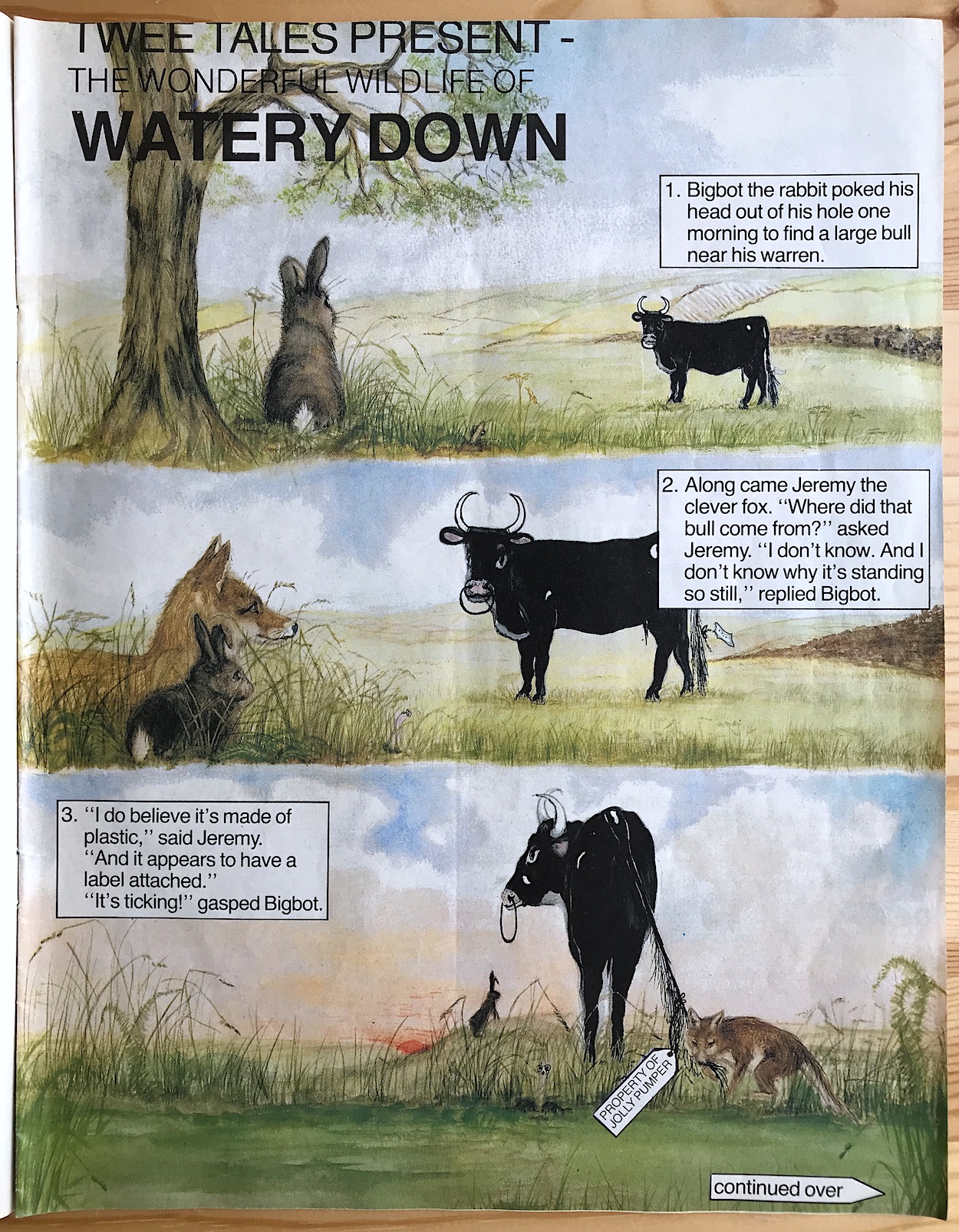
Ian’s interpretation of each animal is genuinely funny, but put them all together and it’s a cover that commands attention and time spent pouring over all the details. It even gets its own backstory, again drawn by Ian and written by Tony Husband. The theme this fortnight is perfect fodder for the team behind the comic, already used to pork-ifying anything and everything in sight. However, there’s not a pig in sight in the biggest highlight of these 32 pages, Twee Tales present The Wonderful Wildlife of Watery Down.

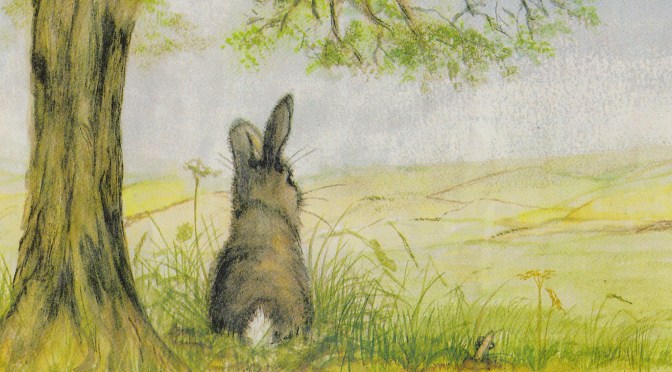
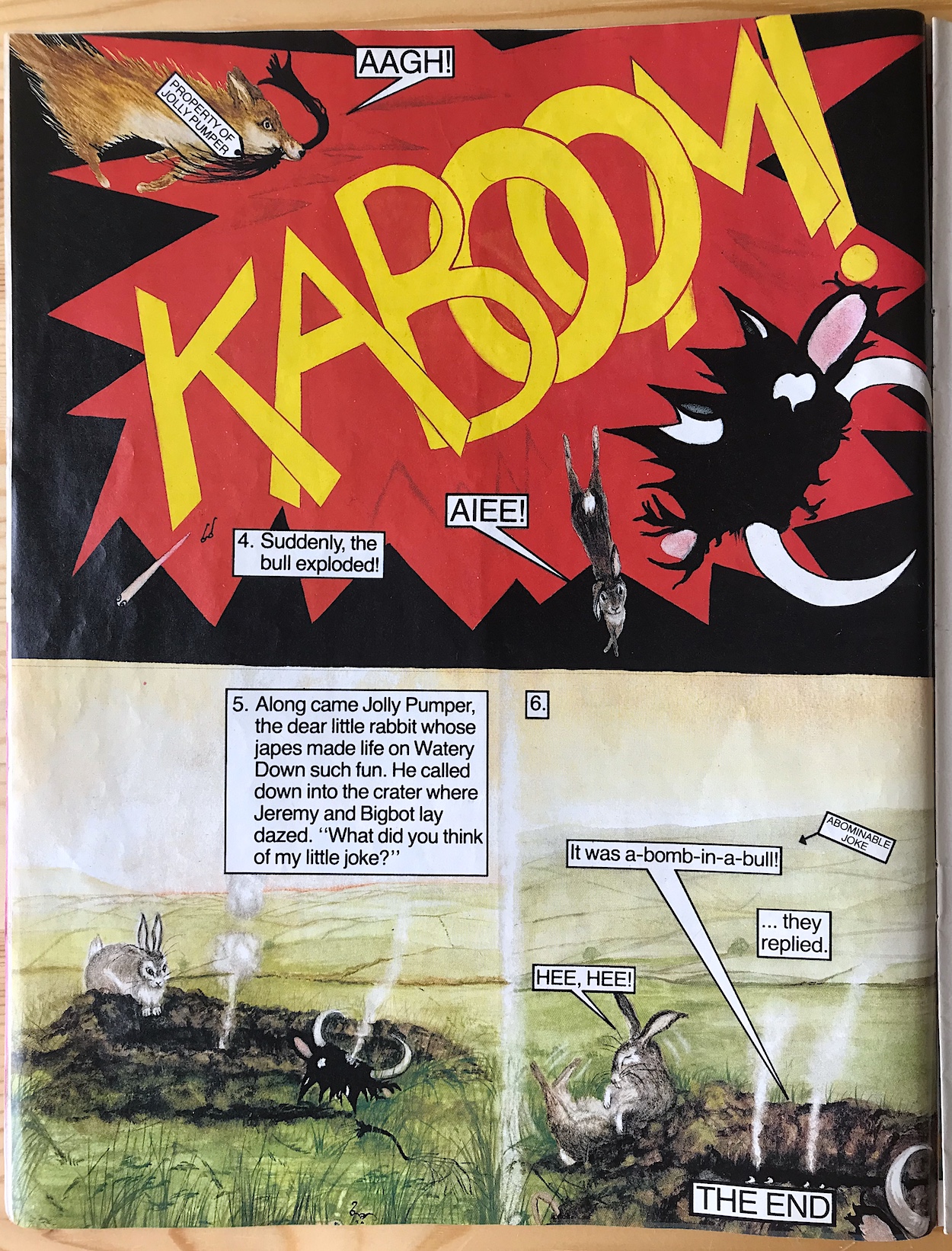
Co-editor Patrick Gallagher‘s neighbour, Ann Martin brought her gorgeous artwork to a spoof of Richard Adam‘s classic novel Watership Down. The script is one big set up for a good old pun so marrying it with such beautiful illustrations, which wouldn’t look out of place in a children’s book, is a wonderful move. The first page puts the reader at ease with its gentle fields and cute critters before we turn over to the second half.

Ann would only contribute to three issues in total (returning for #30’s Hamadonna and #60‘s Pigasus) but the terrible puns would return with a vengeance in the final strip of this very issue, which we’ll get to below. Watery Down was definitely seen as a highlight of the series, evidenced by the fact it was one of only a handful of stories to be reprinted in the final editions of OiNK.

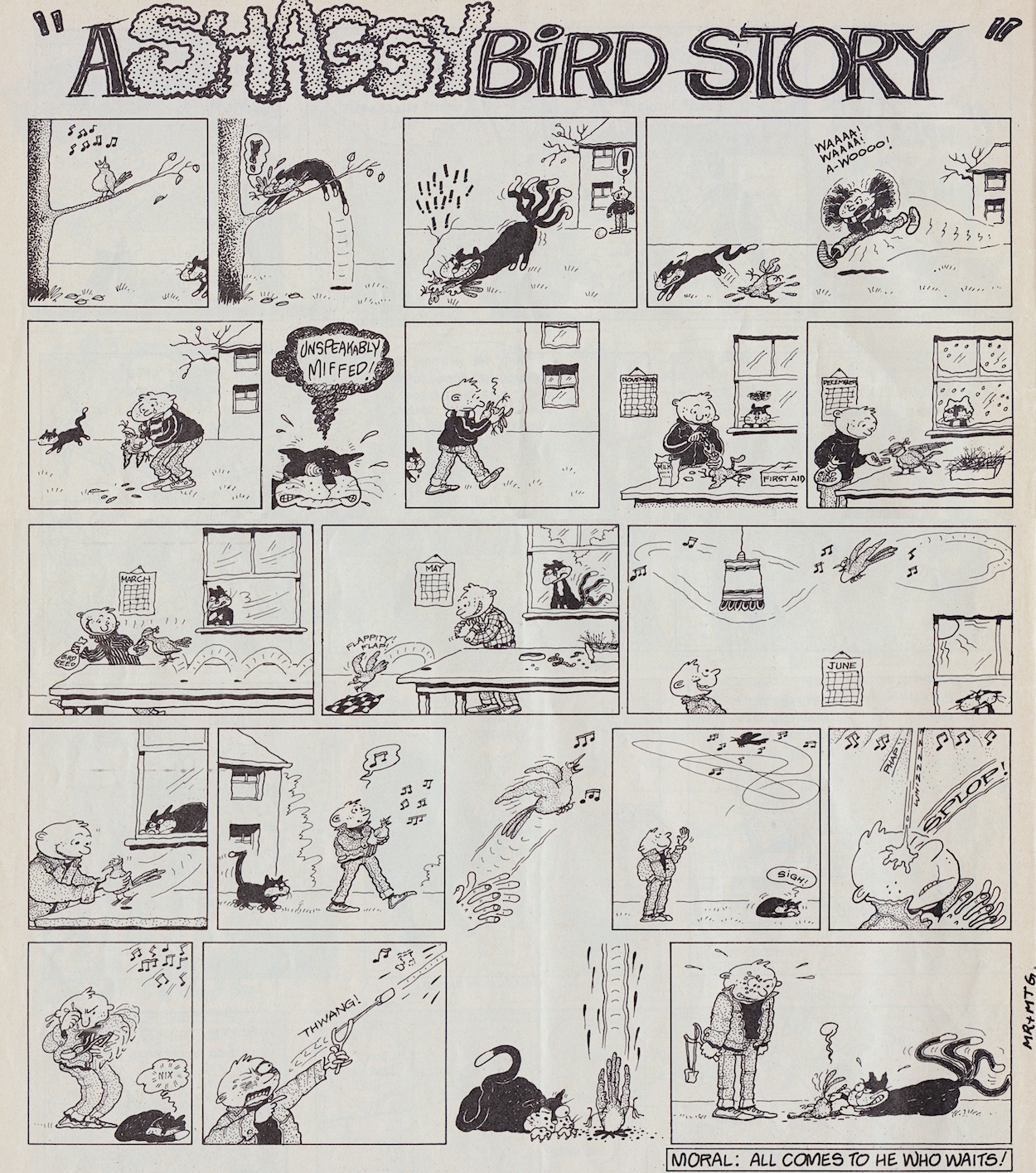
Another one-off I wanted to include is written by Mark Rodgers and drawn by Weedy Willy‘s artist, Mike Green. A Shaggy Bird Story is the sweet tale of an injured animal being taken in and looked after by a young boy, who nurses it back to health before releasing it back into the wild. It all starts off innocently enough with the boy’s “unspeakably miffed” pet cat setting things in motion.

Every time I see that cat sitting on the windowsill in December it makes me laugh. I think this may have been one of the back issues my cousin gave me because I distinctly remember this strip despite the fact I hadn’t discovered OiNK yet. It’s testimony to the comic that its one-off strips are as well remembered as the regular characters and this is one which has stood the test of time and the old grey memory cells.

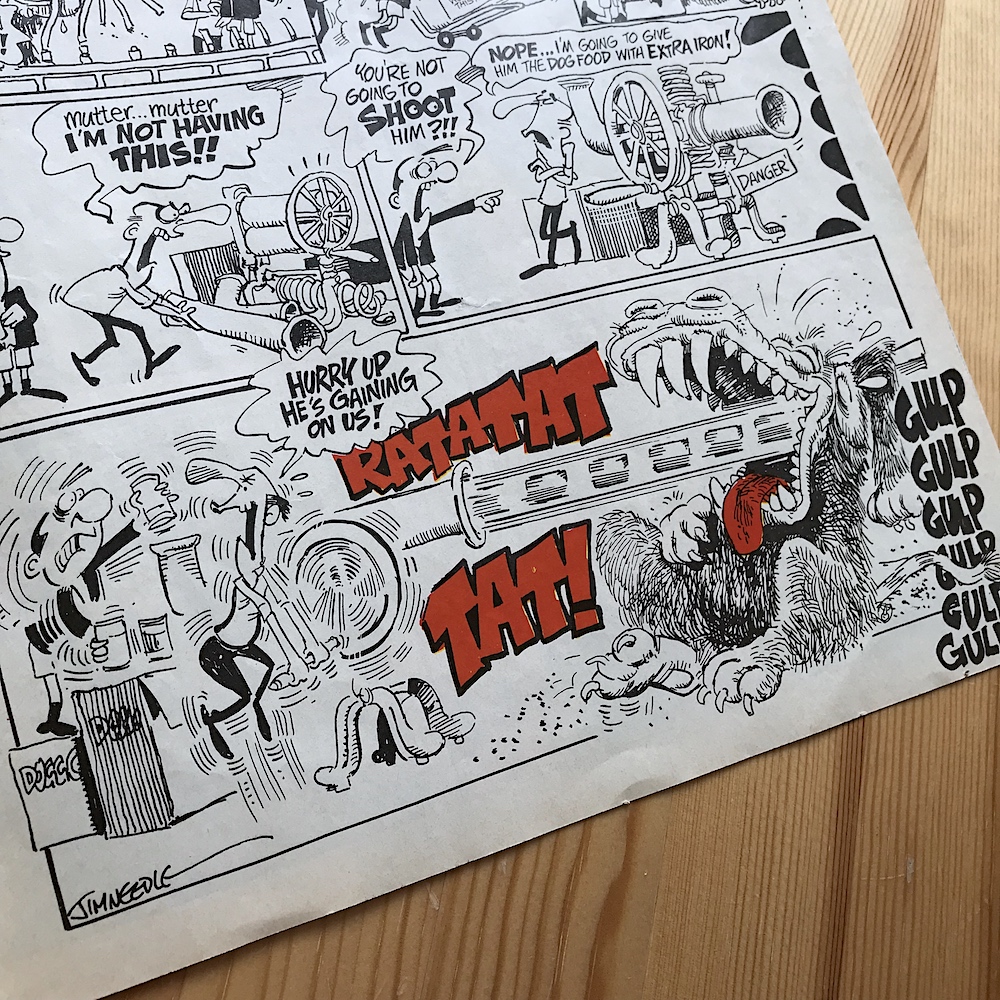
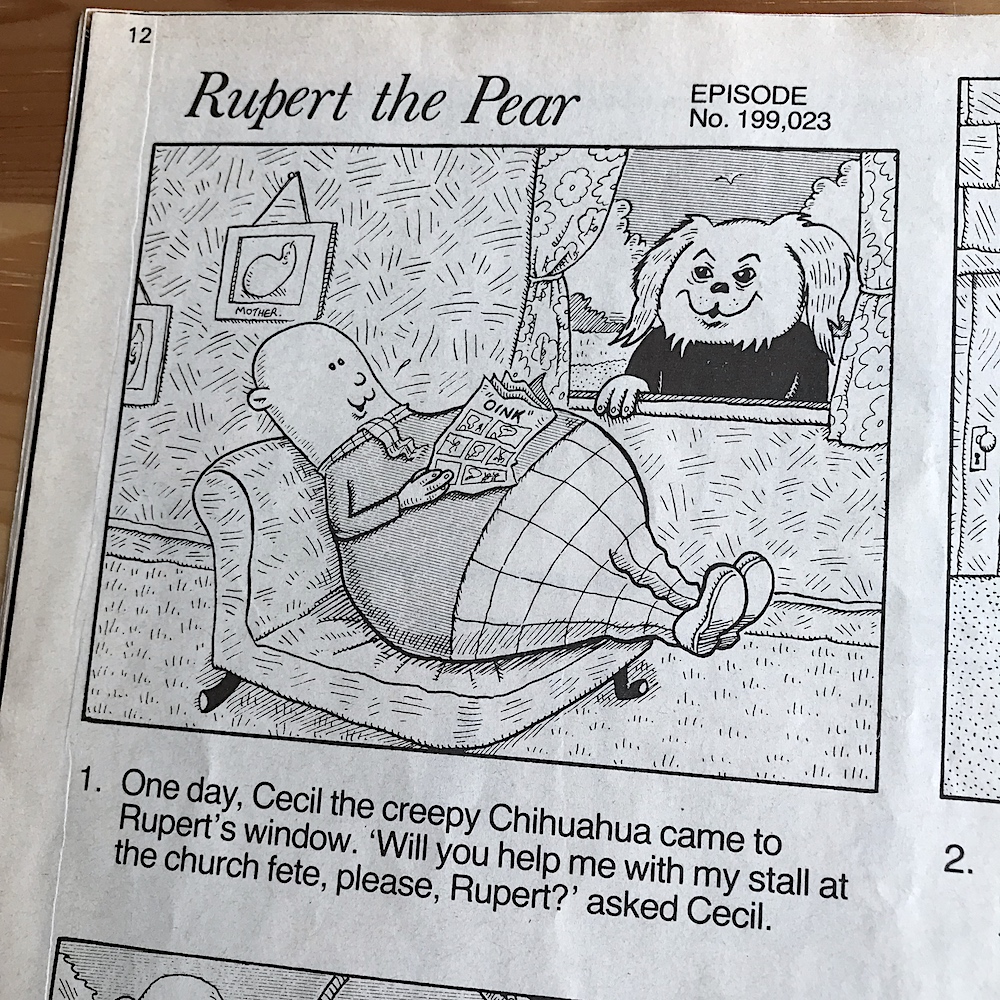
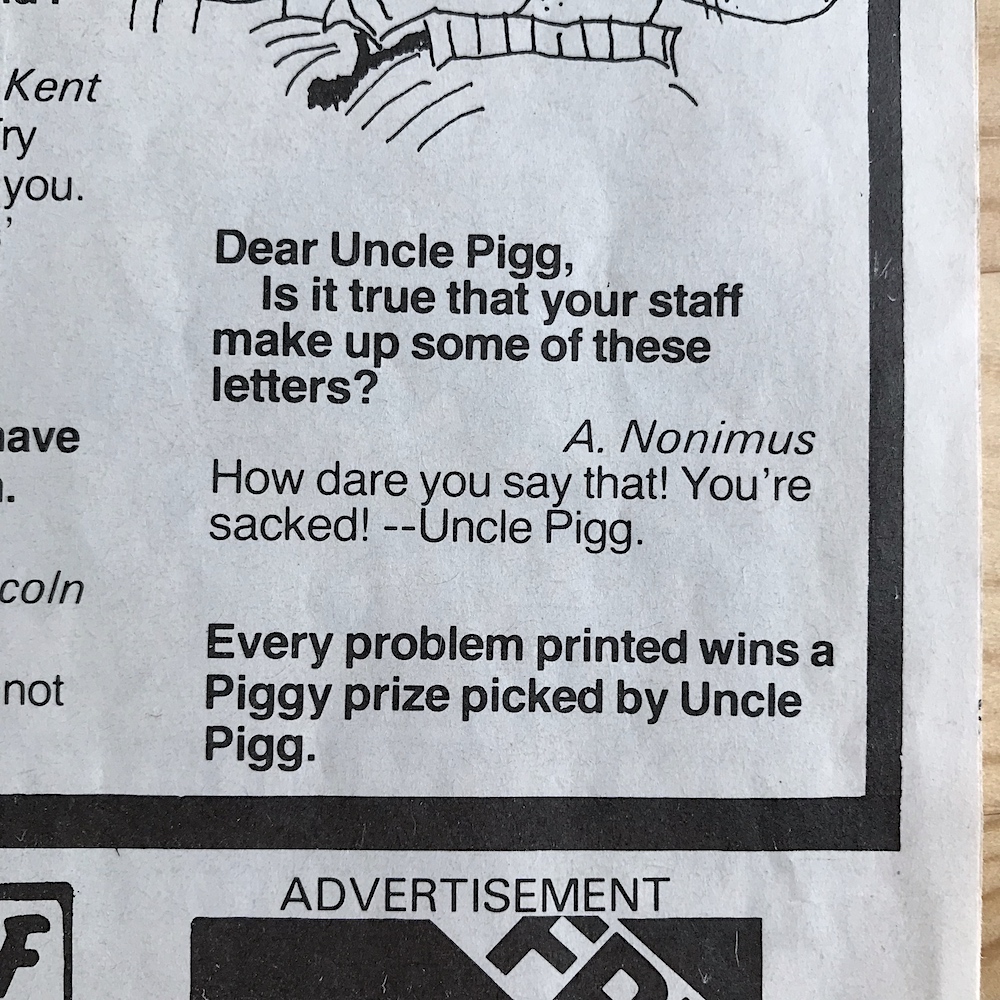
If you track this issue down on eBay (and you really should) you’ll find Jim Needle‘s Pete’s Pup continuing to terrorise his family with his monstrous appetite, there’s another spoof of a children’s favourite in the shape of Rupert the Pear, the Grunts page admits it had to get creative in the early issues and Uncle Pigg’s Amazing Facts About Animals showed OiNK could be an educational read.

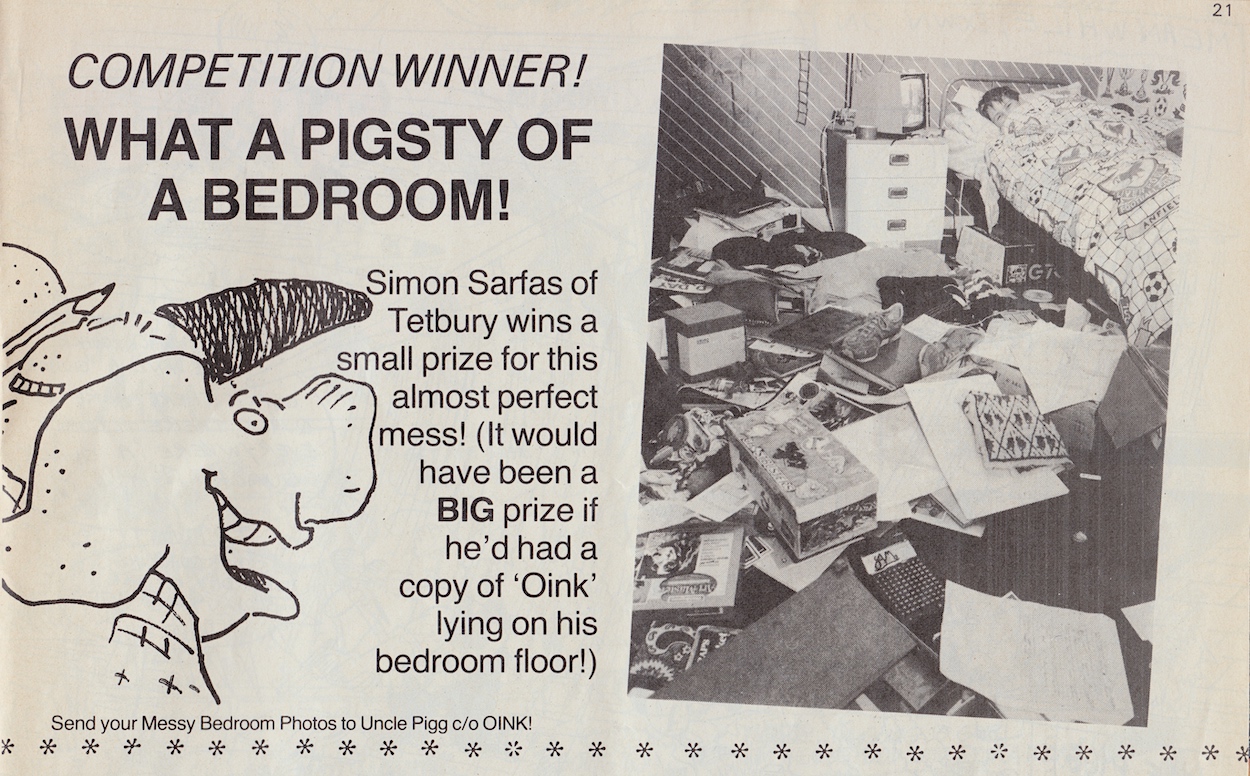
In the early days of the comic our esteemed editor ran a regular competition in which he’d judge readers’ messy bedrooms. It was a case of the messier the better and those chosen to feature would win a piggy prize. This time around pig pal Simon Sarfas showed us how it was done and the result was probably not a million miles away from my own childhood bedroom, although these days it makes me cringe thinking about a mess like this! I’m just showing my age now.

I always thought these were a mainstay, at least in the first year of the comic so it surprised me to find out they only appeared four times, including the original promotion in the preview issue. It did receive criticism from some parental groups who saw it as encouraging children to be even more messy than they already were but we were kids, that was our job.

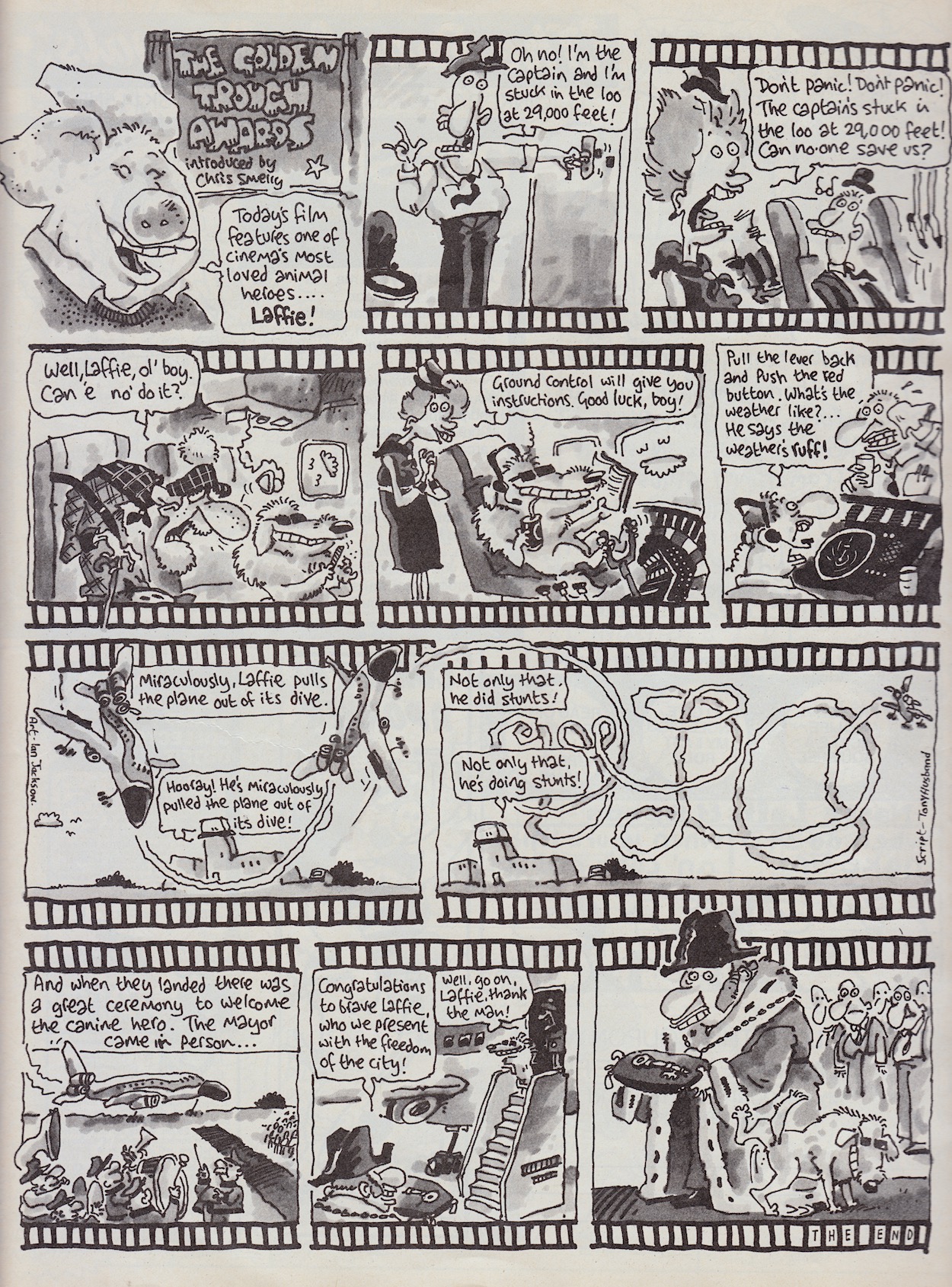
At least Simon has his television close by so he can somehow make it across his room without damaging his feet in time for the afternoon film, Laffie. The next instalment in the Golden Trough Awards series is my favourite. Taking the ‘Wonder Dog’ concept of Lassie and really running with it, it puts the canine hero aboard a plane when the captain finds himself stuck in the toilet tens of thousands of feet in the air. So a typical Lassie-type plot then.

One look at that dog in the pilot’s seat and how could this not be one of the selected highlights?

Brought to you by the same partnership as the first strip in this issue, Tony Husband has written a hilarious script full of daring dos and funny eyewitnesses, all brought to the page with Ian Jackson‘s unique style. What we end up with is a frantic, madcap yarn that starts at full speed and doesn’t let up.

One look at that dog in the pilot’s seat and how could this not be one of the selected highlights?

I remember I could spend so long just looking at Jackson’s artwork and roaring with excited laughter as a kid. That feeling hasn’t dissipated as an adult. The feeling of excitement returns later too with a tiny two-panel strip hidden away underneath Tom Thug‘s. If you’re new to OiNK you’ll probably be wondering why this unassuming little section of the page could be anything more than a funny space filler. But for pig pals everywhere this is just the first appearance of a comic icon.

Of course at the time readers couldn’t have known how big a part in the future of OiNK Pete and his Pimple were going to play. Lew Stringer‘s creation would eventually return in #15, becoming one of the main strips in each and every issue, even continuing into the pages of Buster for a period after OiNK came to an end.

Over the course of his OiNK career Pete would be the only character to get his own pull-out comic, and he’d also be the star of free gifts, a board game, appear in crossovers with Tom and with a gigantic robotic pig, and eventually Lew ran a weekly competition in which Pete tried out various pimple busting solutions sent in by readers.

Lew would actually end up having to tone down Pete’s strip in order for them to appear in Buster. What was there about the character above that would need toned down? Just you wait and see! We’ll get to the reason behind that when he reappears again later this year.

Every single panel contains at least one pun, with well over a dozen altogether in just the one strip

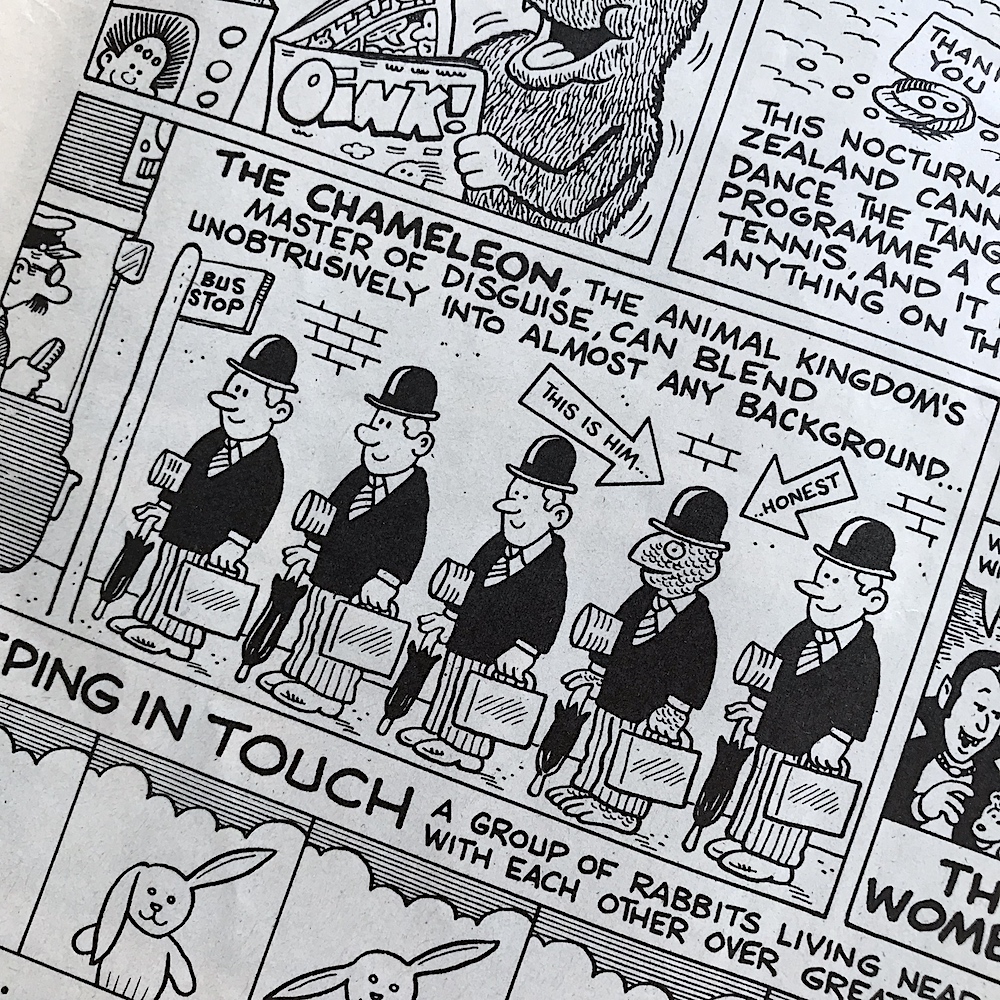
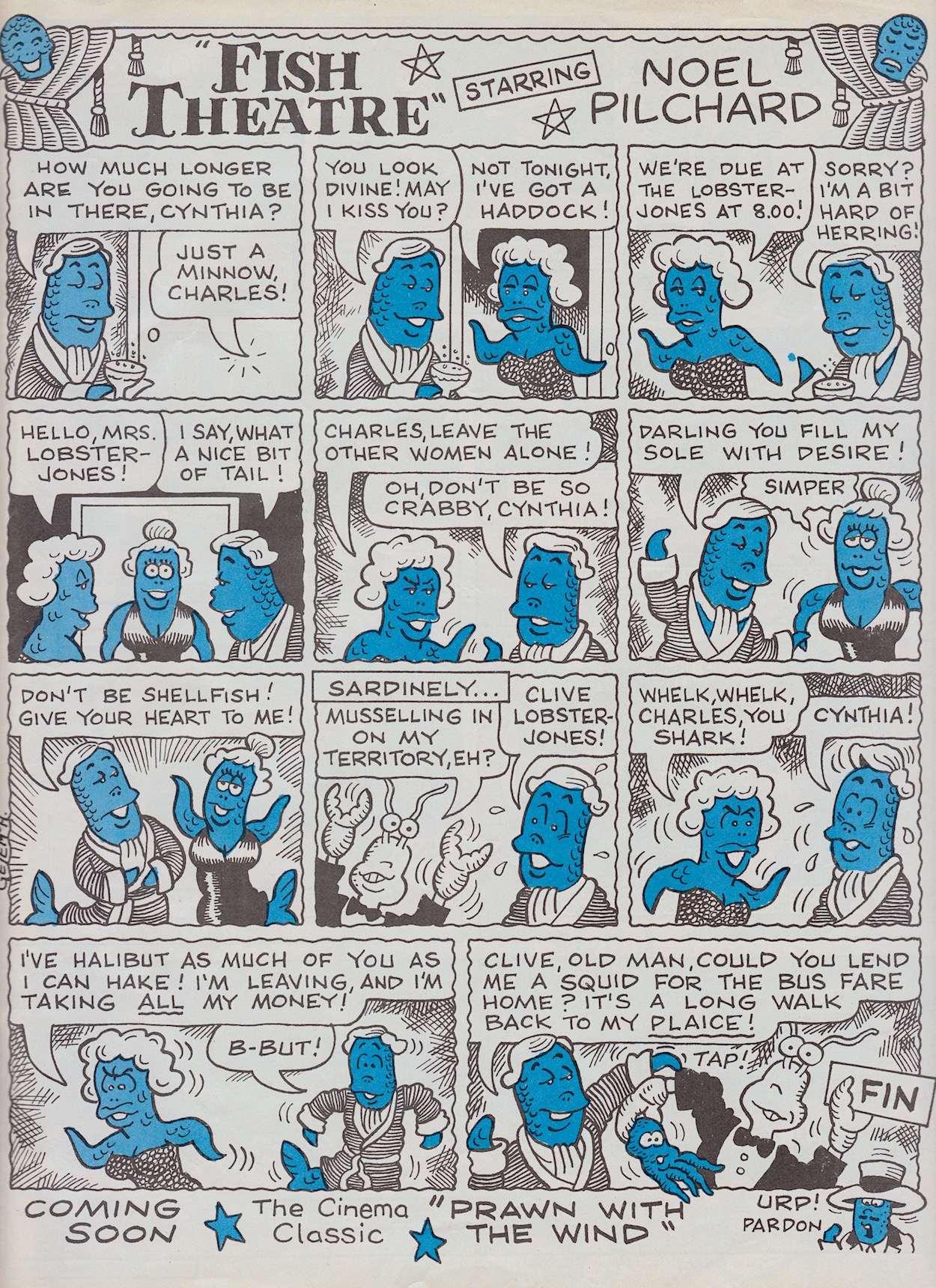
You should prepare yourself for this final highlight, especially if you groaned at the conclusion to Watery Down. While that had two pages to build up to one gag, Fish Theatre starring Noel Pilchard does the opposite and squeezes in an absurd amount of puns into its one page. Written by Graham Exton and drawn by Ed McHenry, Graham told me how he’d often use up several scripts worth of puns all at once, robbing himself of the chance to use his vast array of jokes over many stories.

In the end he just ended up giving himself more work, having to think up new puns each time, but the end result is so funny I think it was worth all that extra effort. Every single panel below contains at least one pun (sometimes more), with well over a dozen altogether in just the one strip. Don’t think it’s possible? You have been warned.

I really didn’t want this issue to end but what an ending it gave us. It’s been a blast revisiting this particular OiNK and to have such a faultless issue this early in its life proves the strength of its concept and of the team assembled to bring it to life. It just keeps on getting better and better and with over 60 issues plus specials and books to come, there’s a lot of laughing yet to do.

With the comic still fresh out of the gates it wouldn’t have a dedicated Holiday Special until the following year, but #7 makes up for that with its summery theme and ice cold cover. Confused? The next issue’s review will be here from Monday 26th July 2021 and all will be revealed.

iSSUE FiVE < > iSSUE SEVEN

OiNK READ THROUGH MENU

MAiN OiNK MENU