Tag Archives: Steve White

ViSiONARiES #4: KiCKiNG OFF TOO LATE

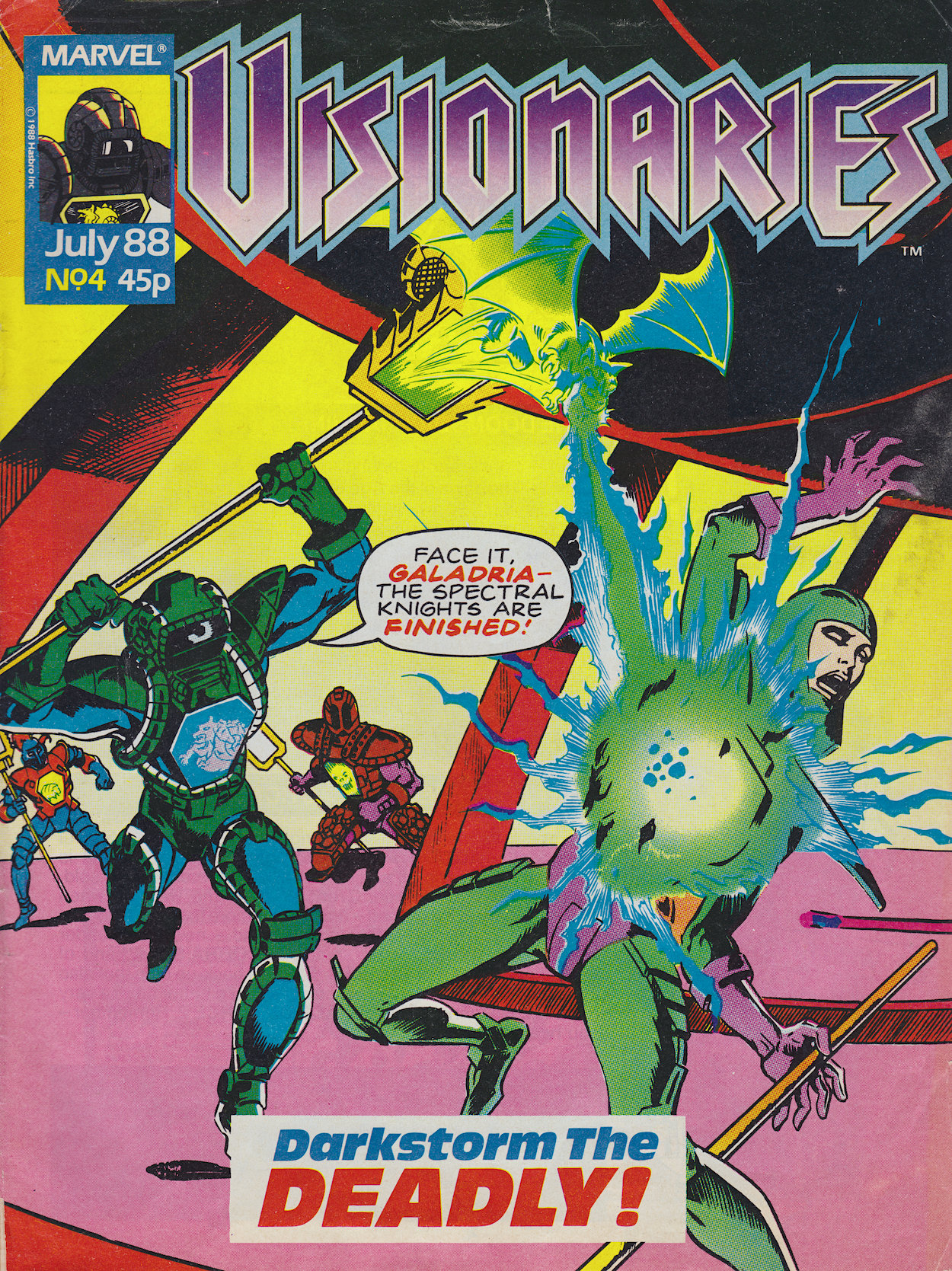
With hindsight I know the next issue of Marvel UK‘s Visionaries will regrettably be the last, but for readers at the time there would’ve been a real feeling of the comic taking off this month, ironically enough. With the introductions now out of the way this feels like the first proper story about these characters and their new abilities upon the ravaged planet Prysmos. Unfortunately, the writing may have already been on the wall at Marvel UK, evidenced by a downgrade in the physical comic.

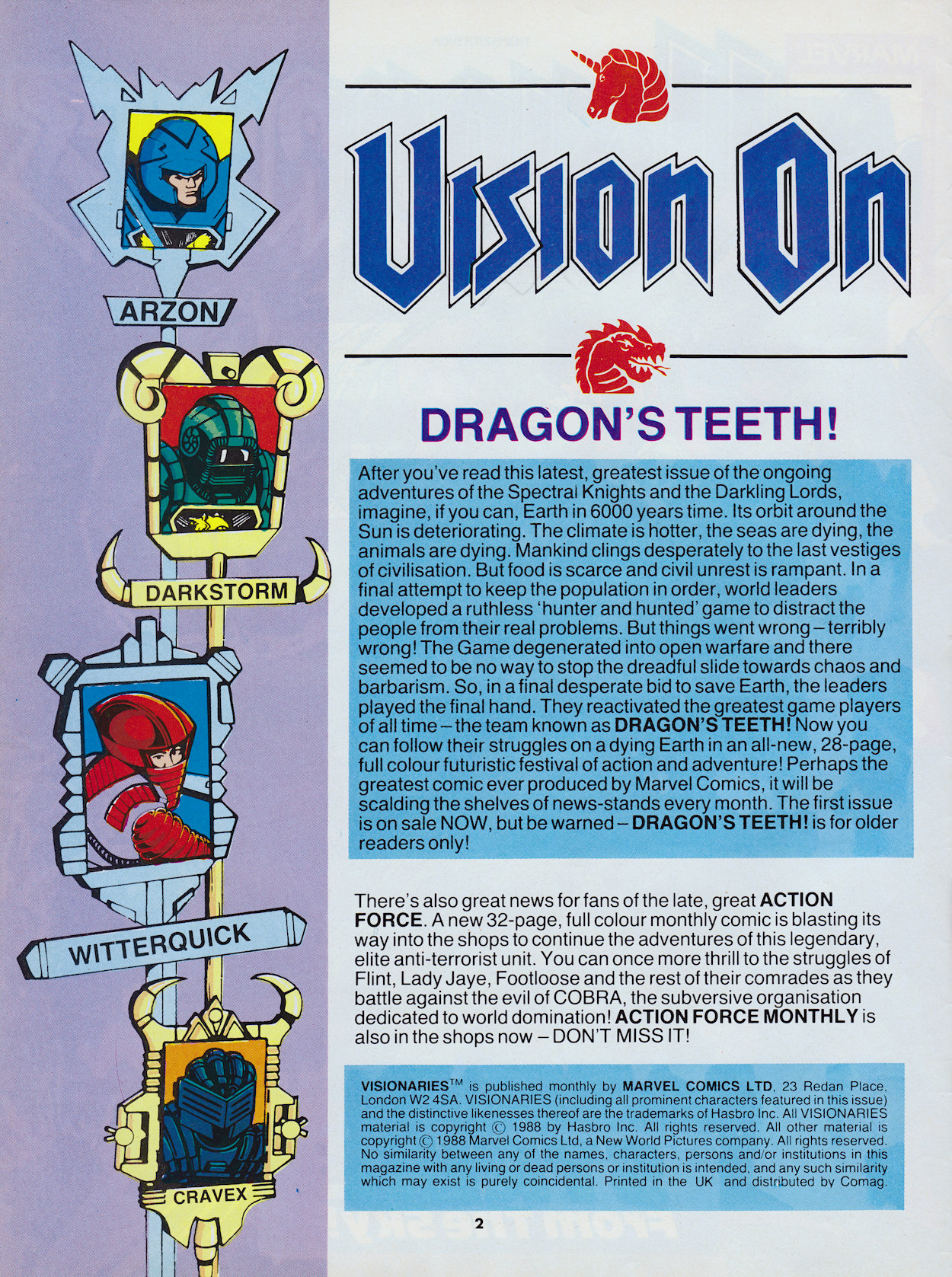
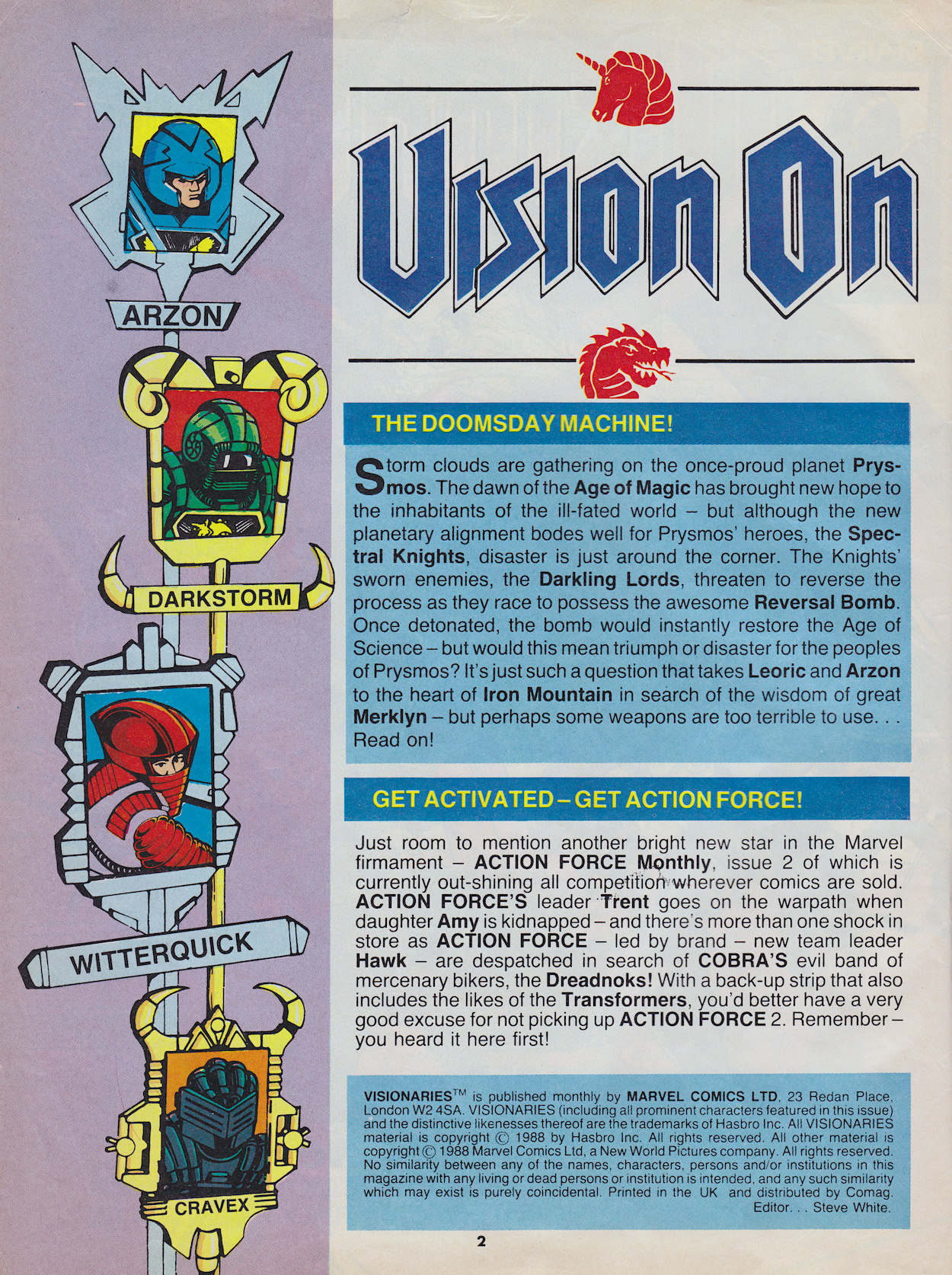
The outer eight pages are no longer of a thicker, glossier stock and instead the whole issue is made up of the same paper as the weekly Transformers. At least editor Steve White is introducing the story in the editorial rather than solely plugging other titles. Action Force Monthly still gets a mention though, they must really have wanted to push it, but the main thing is we finally get a proper editorial for the Visionaries.
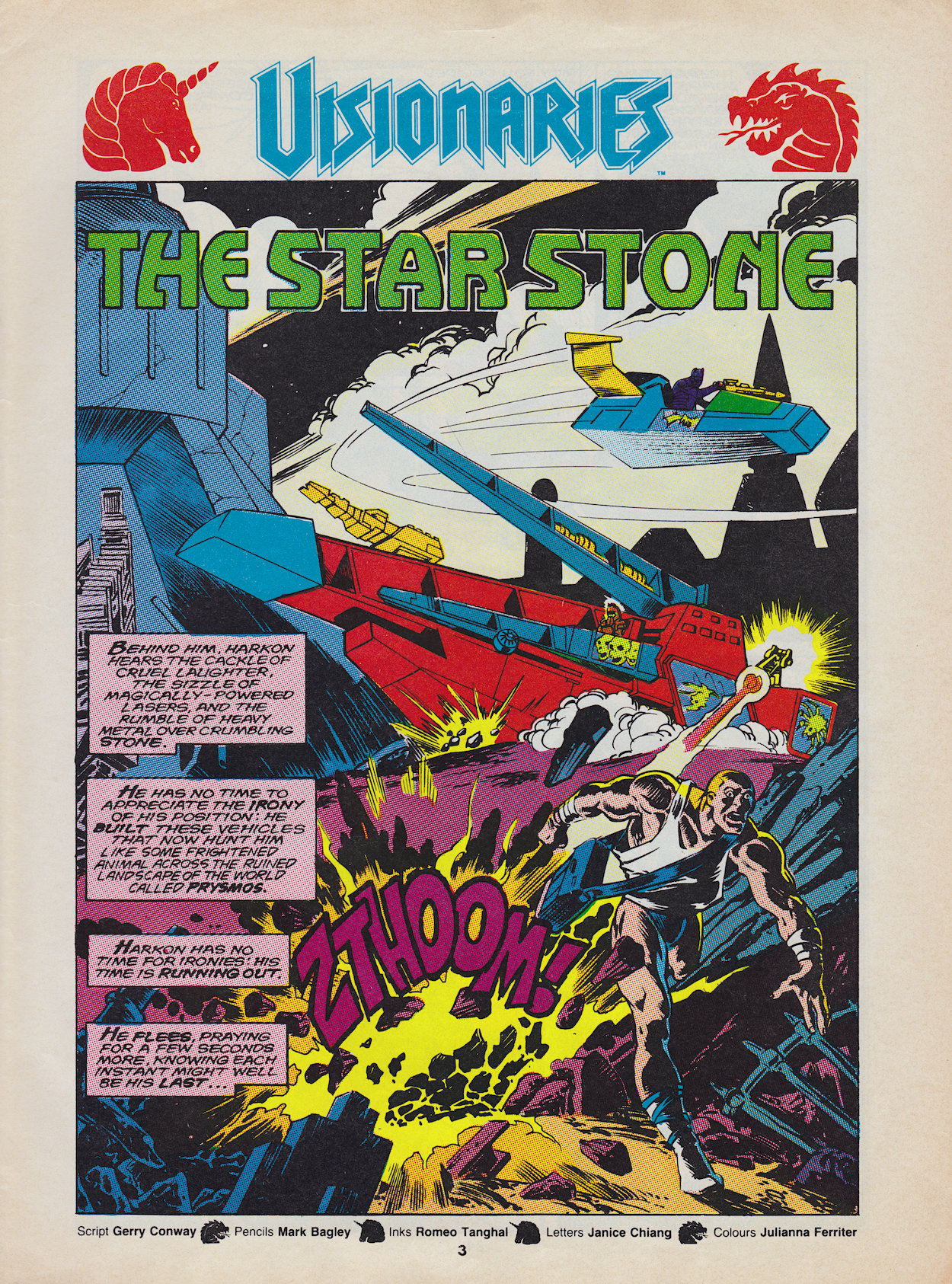
With characters beginning to develop beyond the information on the back of the toy packaging and some larger scale world building taking place, The Star Stone is a brilliant story which asks big questions about the choices we make and why, as well as clearly setting things up for as-yet-unknown events further down the line. Gerry Conway was now in charge of developing the storyline and it’s clear he understood the subject matter and its potential.

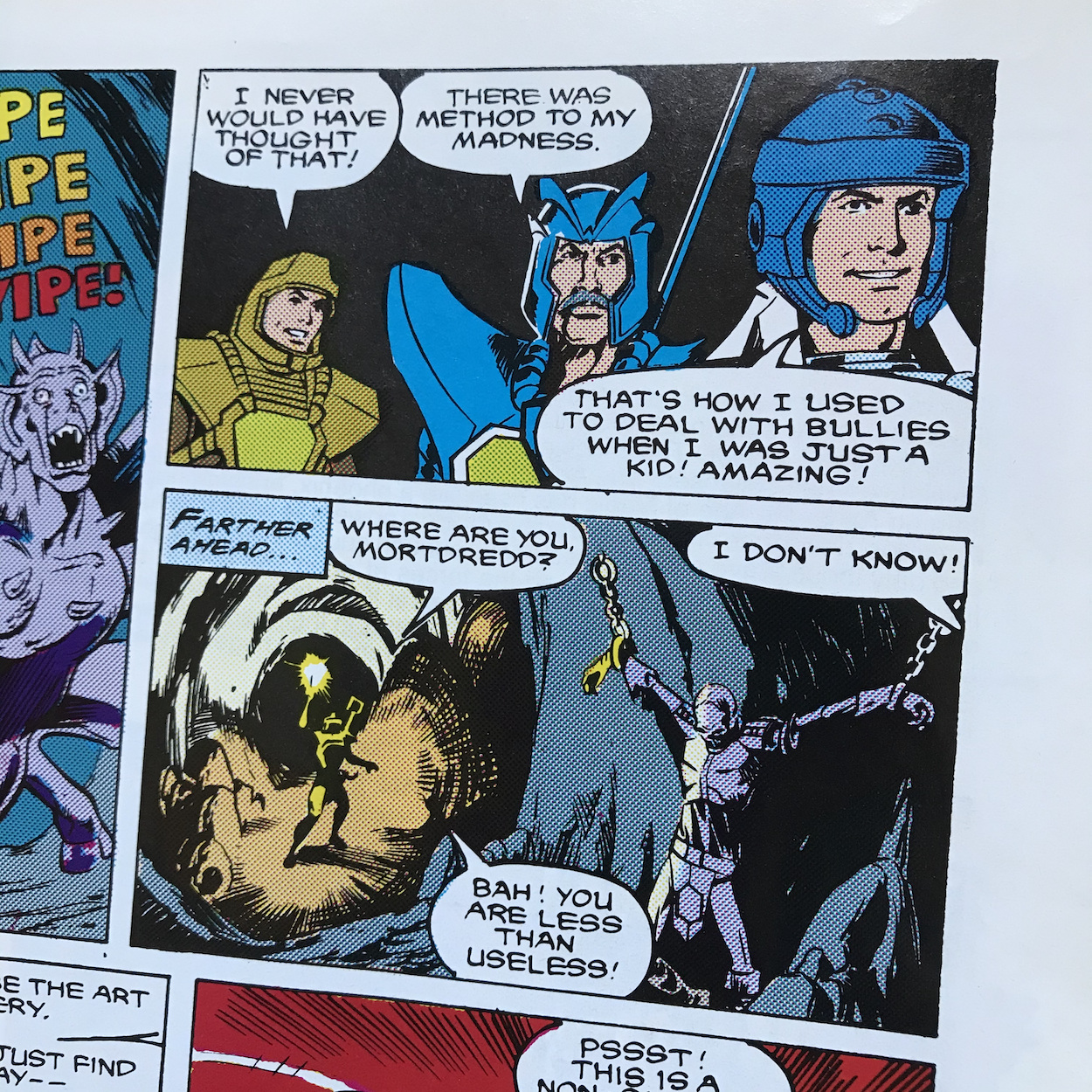
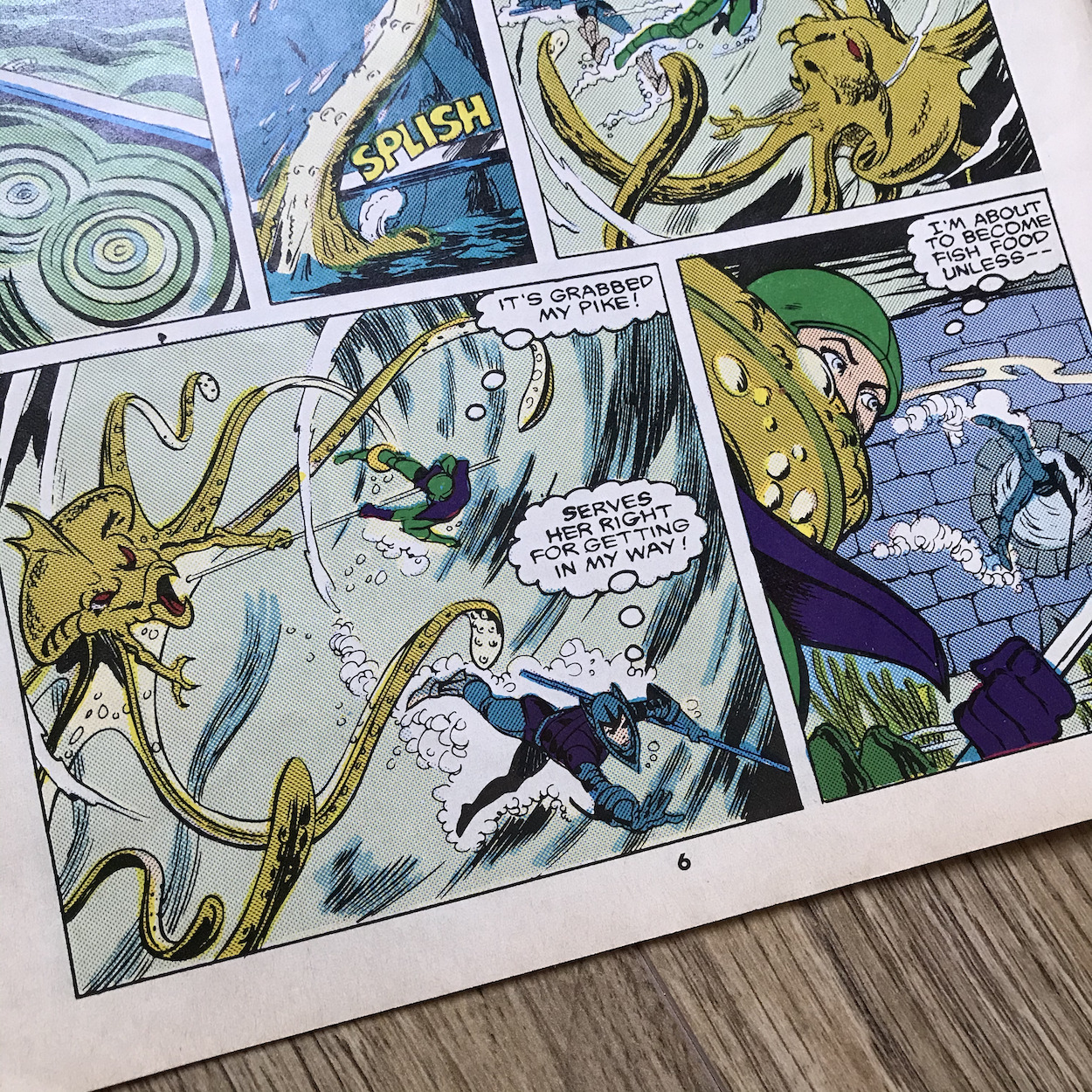
It kicks off with plenty of action as Reekon‘s new Dagger Assault, the biggest and best of all the toys in the range, tries to eliminate the Darkling Lords‘ contractor Harkon to stop him supplying any magical vehicles to the Spectral Knights. Reekon also goes up against the Sky Claw which is still in the hands of their enemy, but its owner Mortdredd recaptures it this issue, sneaking into Leoric’s castle in beetle form to steal it back. This act also introduces one of the changes from the cartoon that I actually prefer.
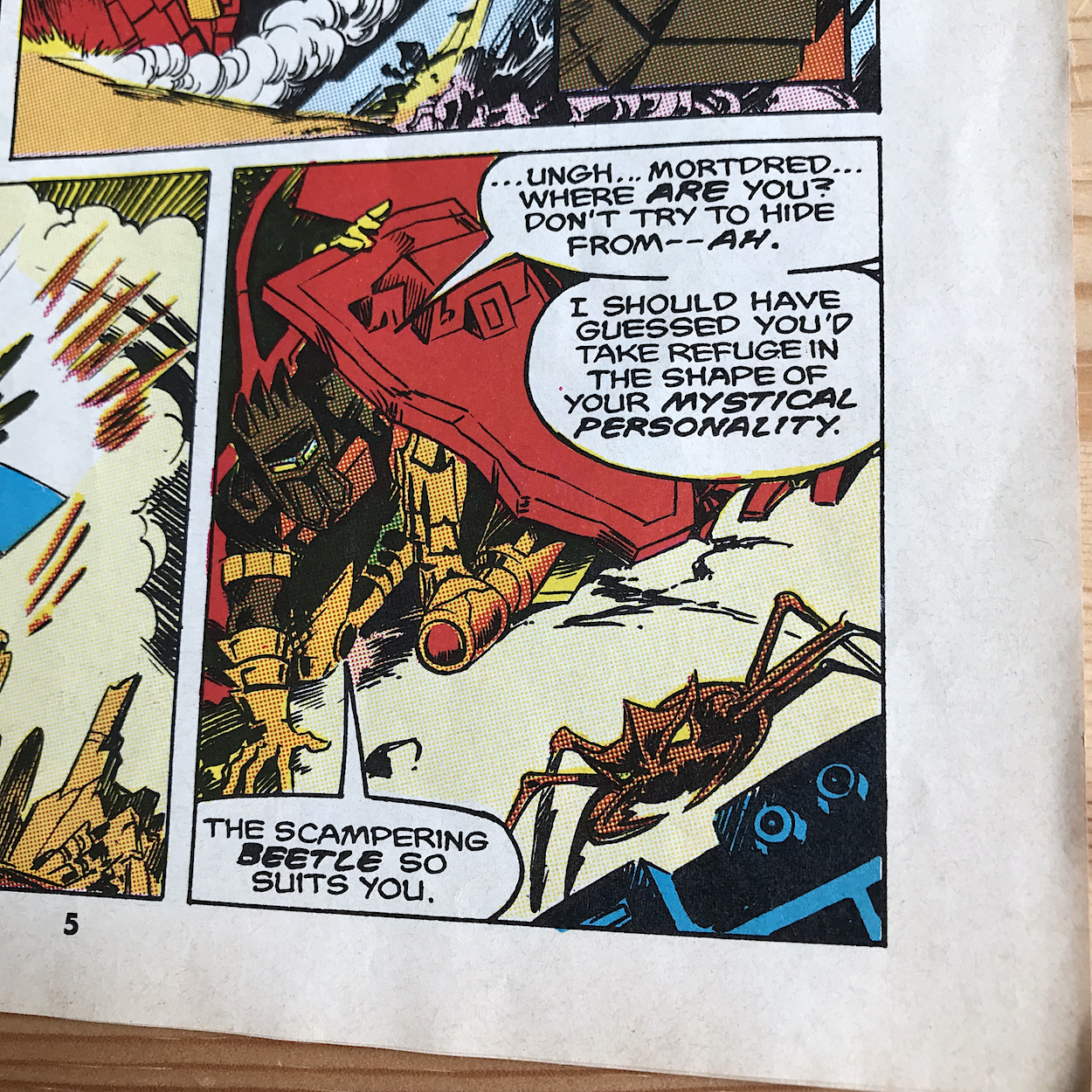
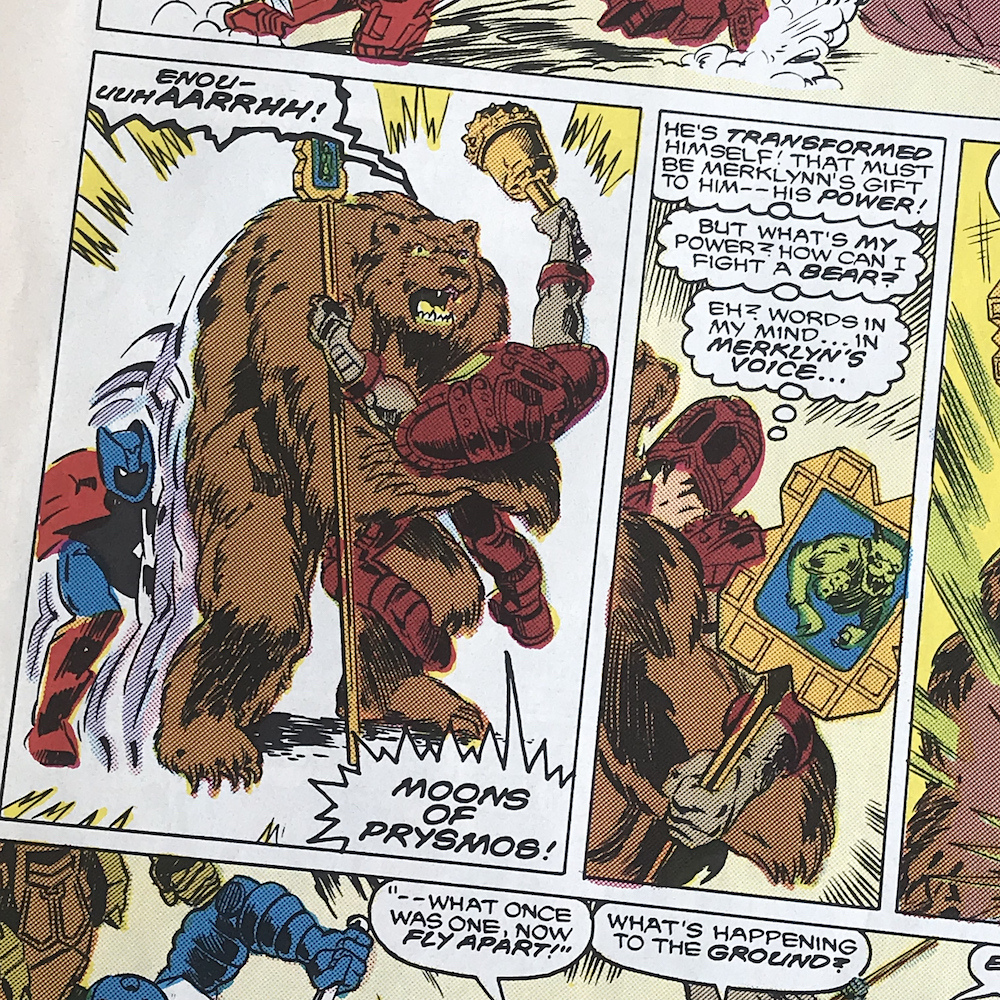
The characters’ magical totems would emerge from their chest plates and become fully formed as the human behind them faded away. The totems in the cartoon looked like glowing holograms to match the toys and in the context of a cartoon it did look brilliant. But comics are a different medium and in this more serious take on the story their animal selves maintain the colour of their real world counterparts, meaning they are a proper disguise. This is used to great affect several times this issue.

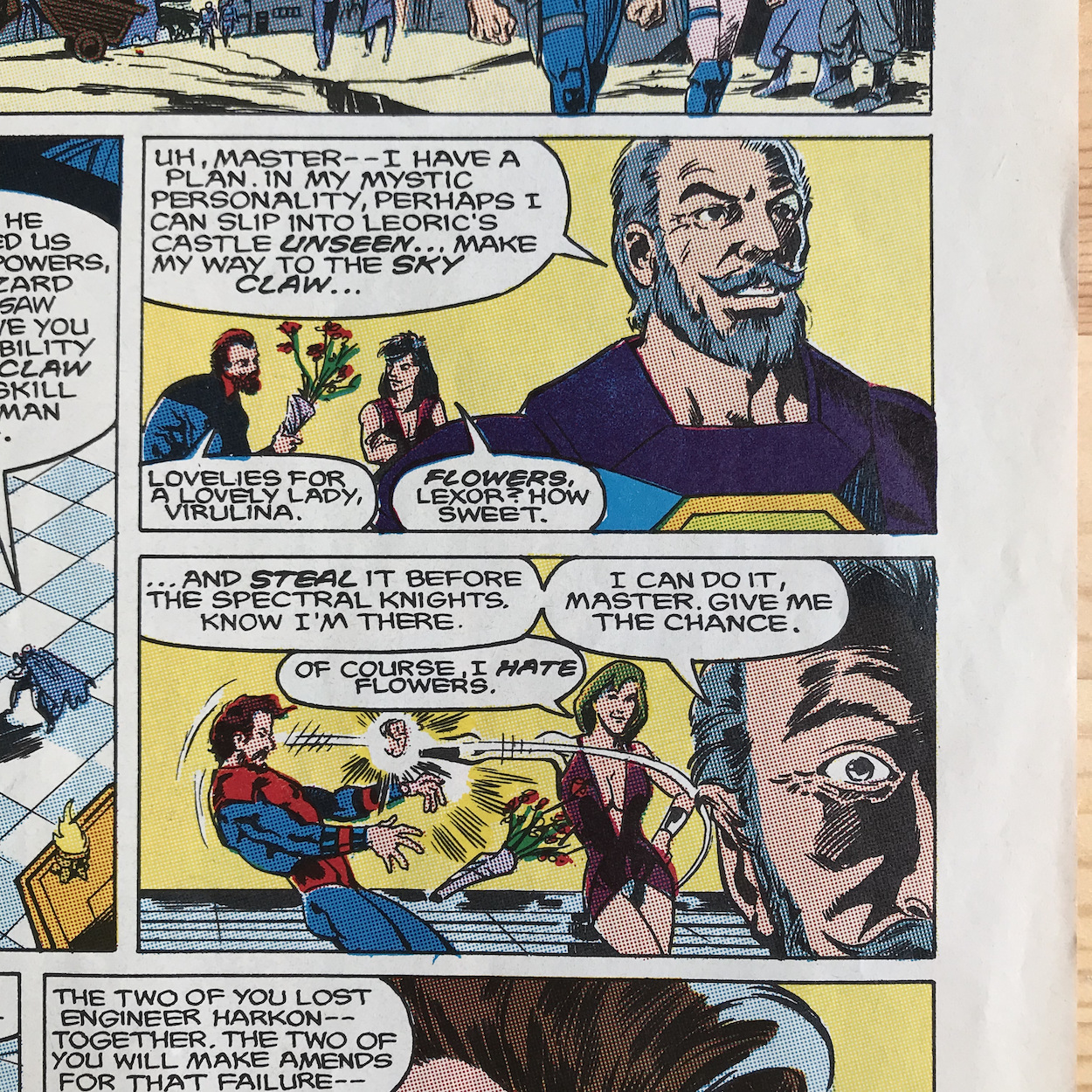
More humour slips in too, for example that background exchange between Lexor and Virulina happening behind a major plot point. The main story itself, once the characters are all in place, sees the discovery of an ancient scroll which tells of a hidden device, forgotten about for millennia that could end the Age of Magic and return the world to the Age of Science. This is revealed after a startling discovery by Arzon.
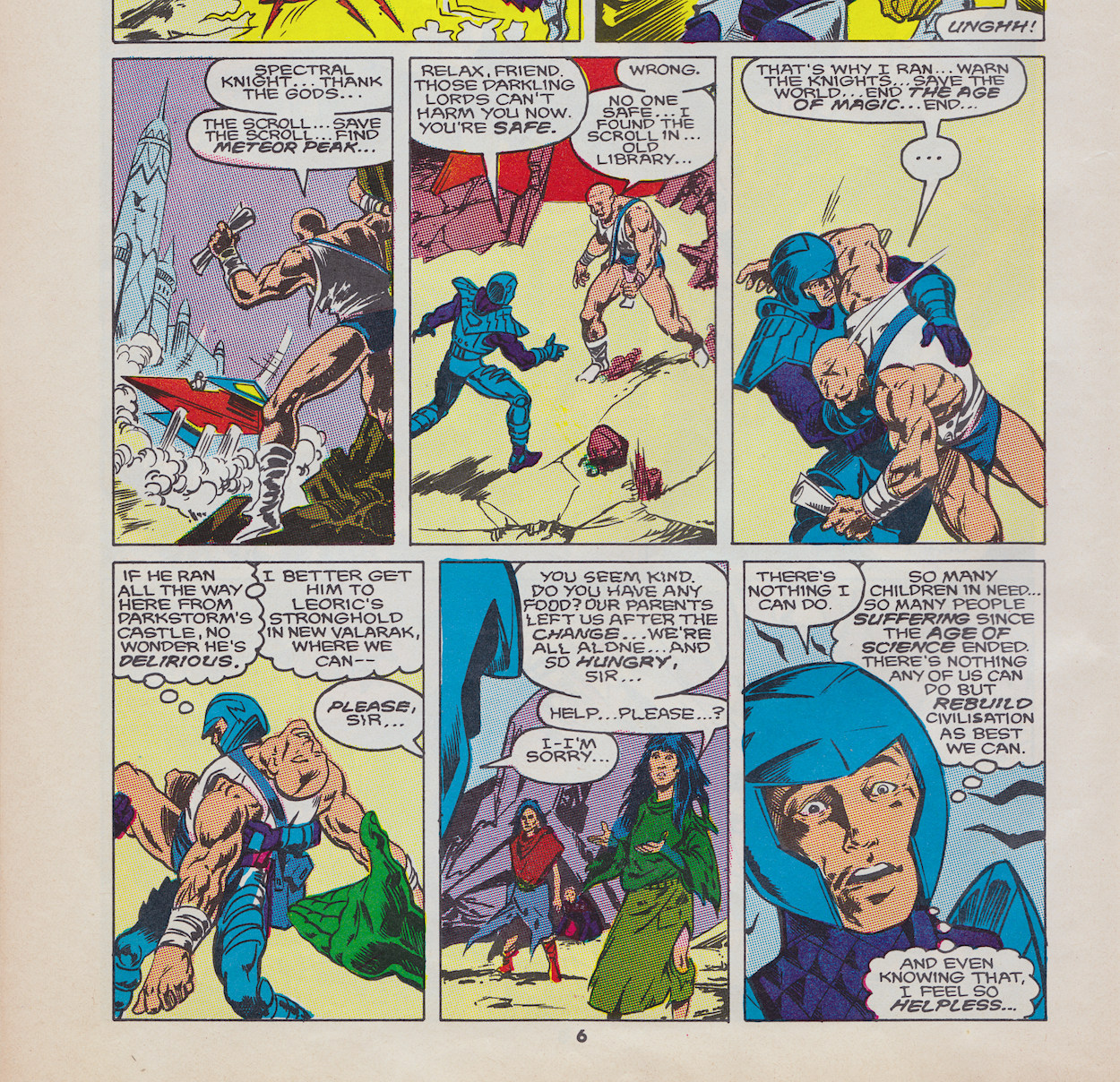
After the initial battle Arzon finds himself approached by child beggars, homeless and desperate for food after being abandoned by their parents following “the change”, which is how the cataclysmic events of the origin story are referred to. This is where Gerry’s world building comes in. The toys and the cartoon hype this fancy new age, the wonderful powers that came with it and all the action and adventure kids could hope for. But Gerry’s Prysmos is a grittier, medieval place where Arson finds himself suddenly faced with the harsh truth.

The origin story placed a lot of emphasis on how reliant humans were on their technology. At the end only a few Knights were deemed worthy of Merklynn’s magic, the future of their world placed on their shoulders. You could view it as an allegory of the dangers of relying too much on technology (technological advancements were happening at a breakneck pace in the 80s), or a reference to the class system and how those in a position of power, whether earned or not, have a responsibility to those less fortunate. The Spectral Knights and the Darkling Lords just have differing views on what their responsibility is.

While all the magical action is there, seeing them have philosophical debates, questioning their powers and being properly affected by the world around them has been a very pleasant surprise

The coming of the Age of Magic has left many suffering and having these starving children approach Arzon, who is unable to help, is a particularly dark moment for a toy licence. It makes for a surprisingly mature thread throughout, one of many planted by the comic’s new writer.

Arzon thinks returning to the previous age is a way to end this suffering. His leader Leoric isn’t so sure. Suffering still occurred before and humans had lost their way, lost their compassion and their true worth. The Age of Magic is a chance to rebuild together, to fix all that was wrong before. But at what cost in the short term? The scene in which this is discussed is a lovely, quieter moment between them and shows how they’re now being treated as three-dimensional characters who just happen to have magical powers.
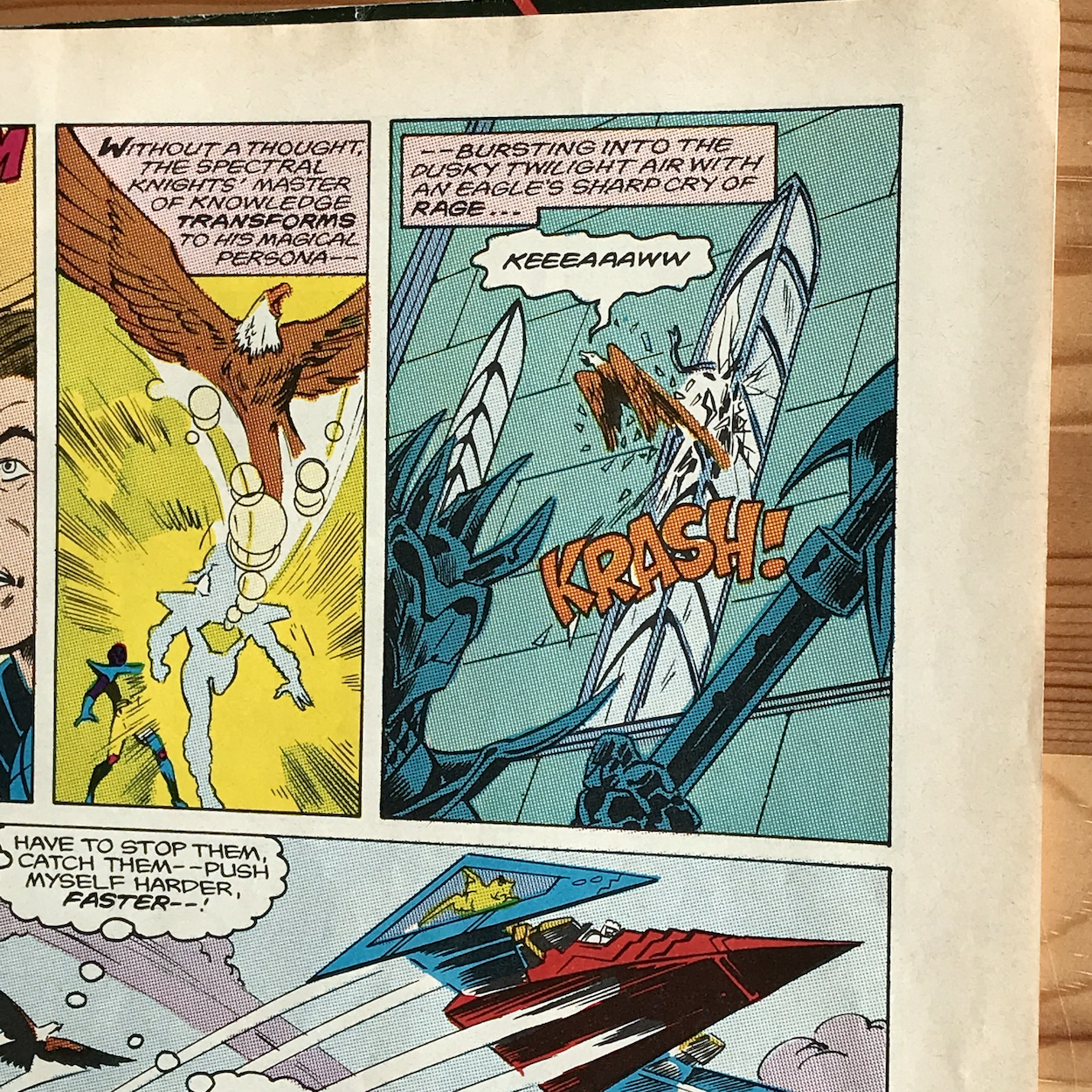
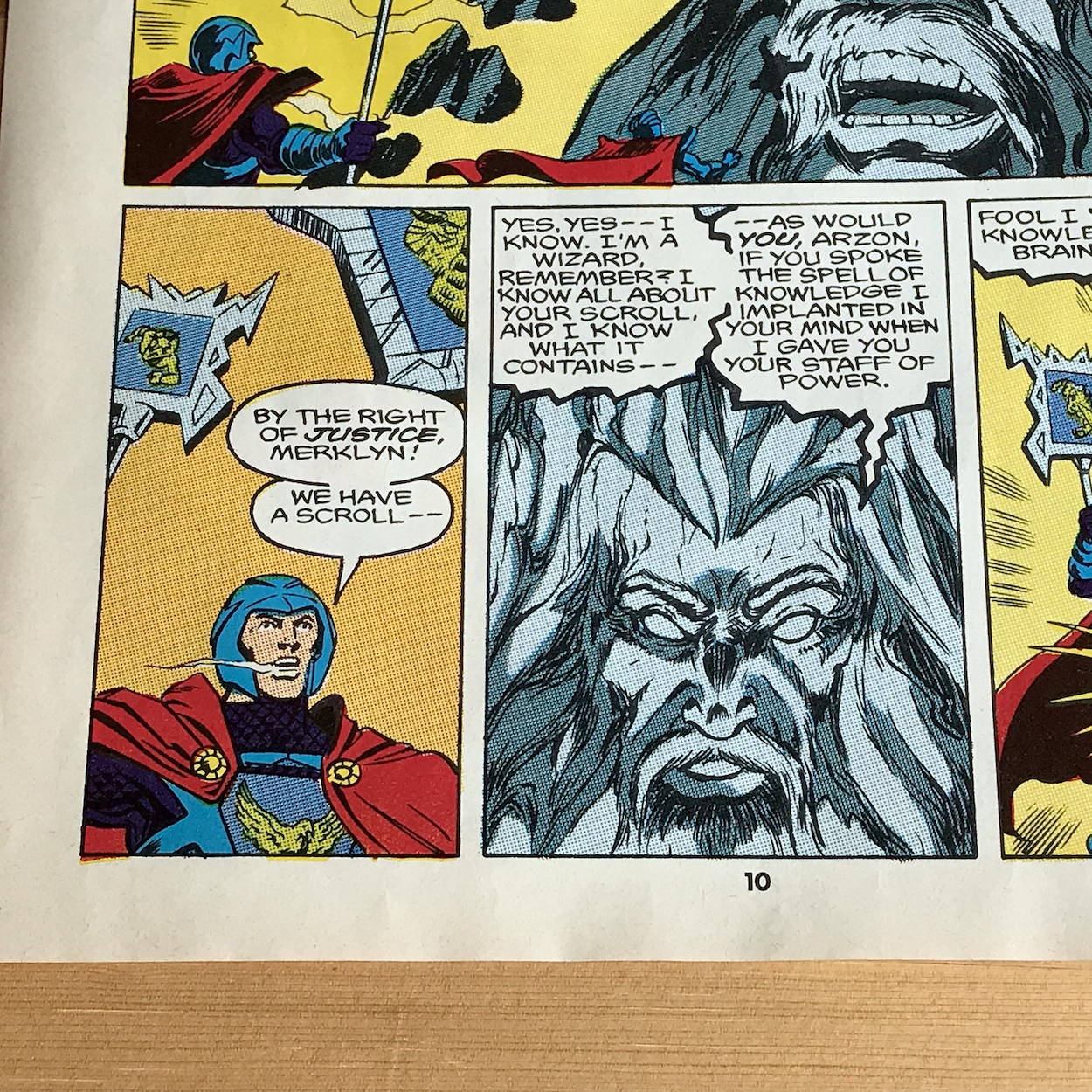
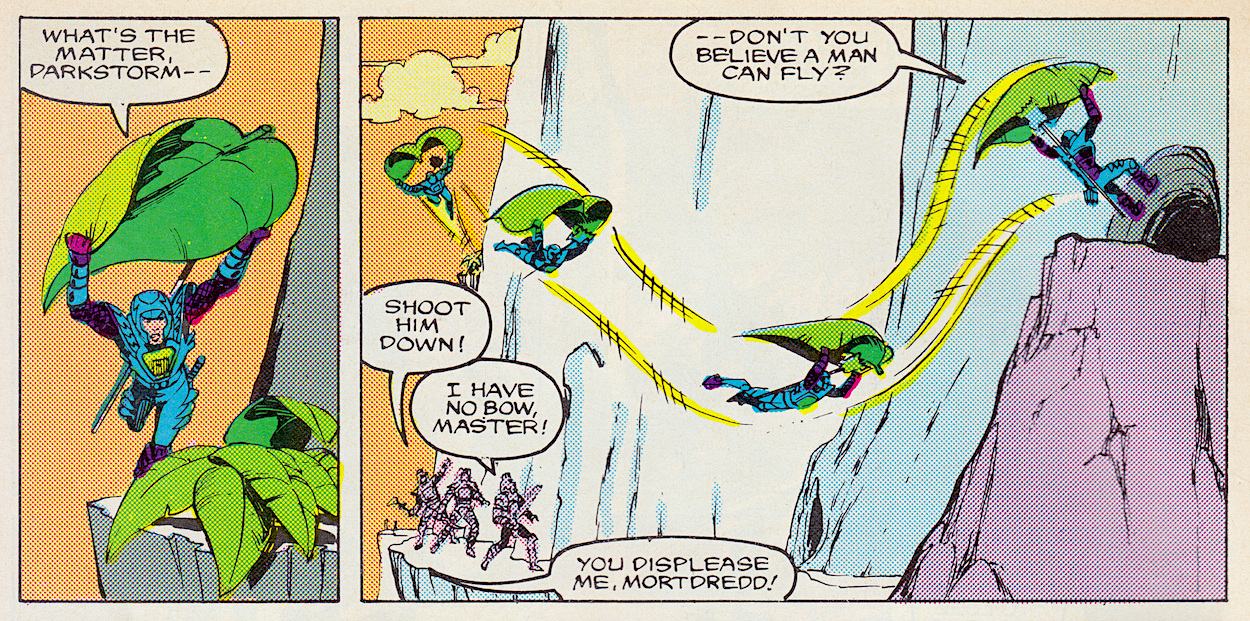
But when Mortredd steals the Sky Claw it’s clear he could be taking the information from the scroll back to Darkstorm, so Leoric has no choice but to track down the device. We see Arzon in his eagle form, a true animal and not a holographic projection, alongside more lovely atmospheric captions. He’s unable to catch the Sky Claw, so he and Leoric leave to seek knowledge from Merklynn about the scroll, which results in a rather funny exchange from the usually serious wizard.

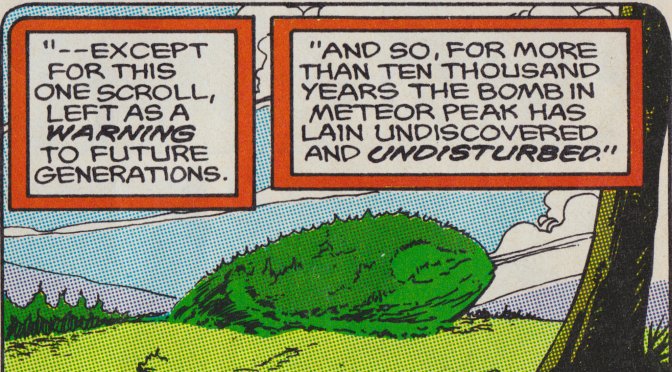
We now get a few pages told through Arzon after he casts his Power of Knowledge poem, telling us of a time ten thousand years ago during the earliest days of the Age of Science when a meteor fell to the ground. Upon its discovery the military’s head scientist, Tech-Colonel Ragni Fiesel found none of his equipment worked within its vicinity.
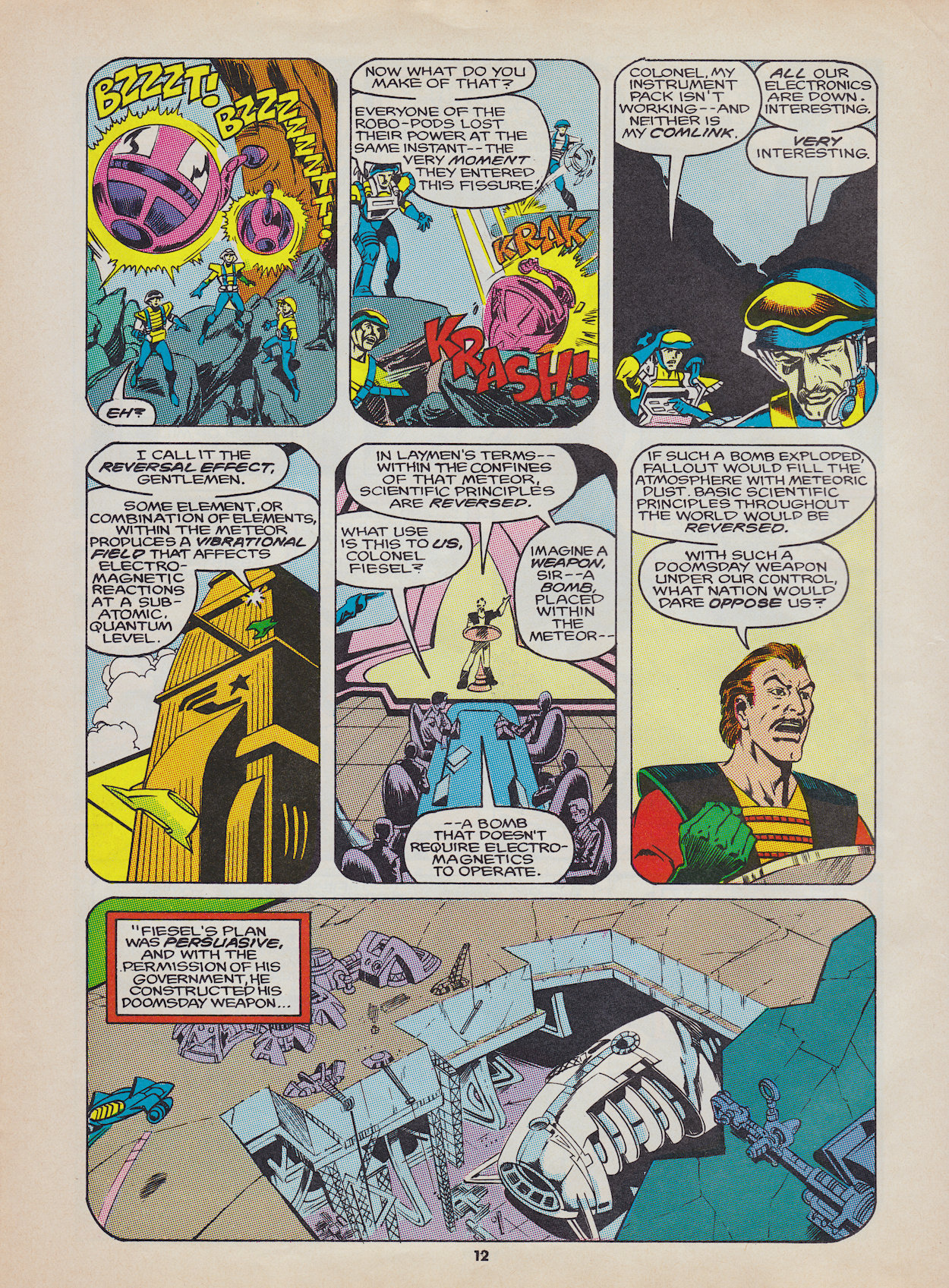
Identified as a ‘Reversal Field’, Fiesel ordered the building of a bomb containing the meteor as a way of deterring any other region from invading. It was promoted by the government as a way of keeping the peace. But Prysmos had been at peace for millennia, there was no need for such a threat against other nations. Some things never change and it would appear the mythical world of Prysmos was in reality no better than our own.

It was clearly a ploy by a corrupt government, one which was soon overthrown in a coup. But not before the bomb had been built and secreted in a mound of earth, over time becoming overgrown and part of the landscape, indistinguishable from its surroundings. All records of the bomb vanished, apart from the one scroll discovered by Harkon, who as an engineer longed for the return of that age.


“Can a man become a beast, for however short a time, and still remain a man?

Leoric

During their quest to find the bomb Leroic gets to muse to himself about the magical totems they now possess. After witnessing Feryl find a path through twisting thorns as a fox (this is an error, Ectar is the fox and Feryl is a wolf), Leoric notices his friend’s voice sounds less human every time he transforms. It surprised me they can speak in their animal forms at all! But that’s not the point I want to make. Leoric’s foreboding thoughts set up possible future storylines about just how much these powers change those who use them.

I’m loving all of this extra depth because I just didn’t expect it. While all the magical action is there, seeing them have philosophical debates, questioning their powers and being properly affected by the world around them has been a very pleasant surprise. It’s bittersweet of course and I can’t help thinking how this could’ve developed if it hadn’t been cancelled so early.
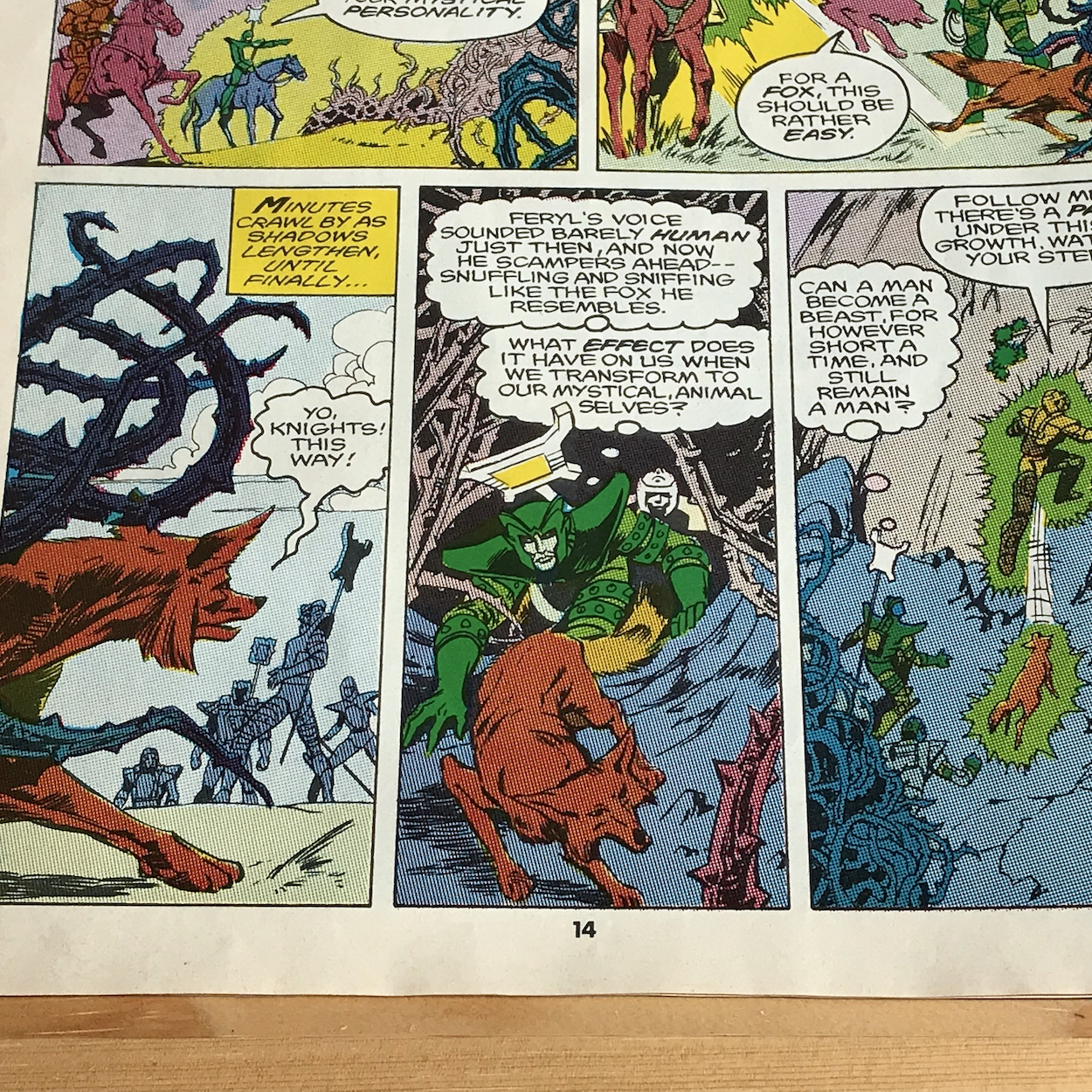
Gerry clearly had plans for the future and he was carefully planting seeds here. But the main thread this issue concerns how little they know about their planet’s current situation, enough to throw doubts on whether they should attempt to change their future yet again. With all these unknown factors they could make things even worse.

Fortunately for the Spectral Knights, and for Hasbro, inside the meteor’s casing their ancestors saw fit to place vehicles which could work near the Reversal Field by drawing energy from a magical source instead of a scientific one. Fiesel knew that if his government really did have to throw the switch, they’d need some kind of advantage.

Say hello to the Capture Chariot (the one vehicle I didn’t possess) and the Lancer Cycle, completing the comic’s take on the toy line.
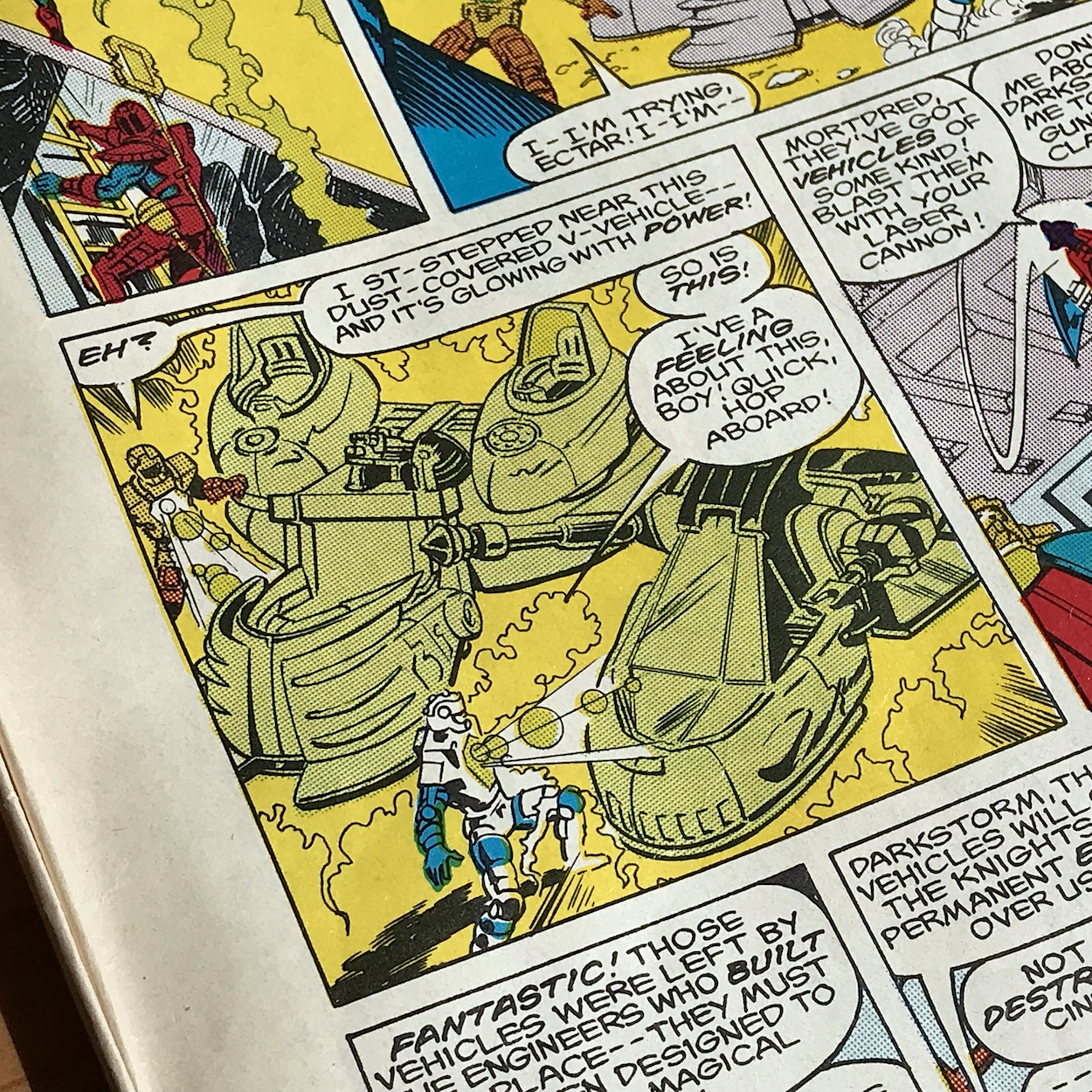
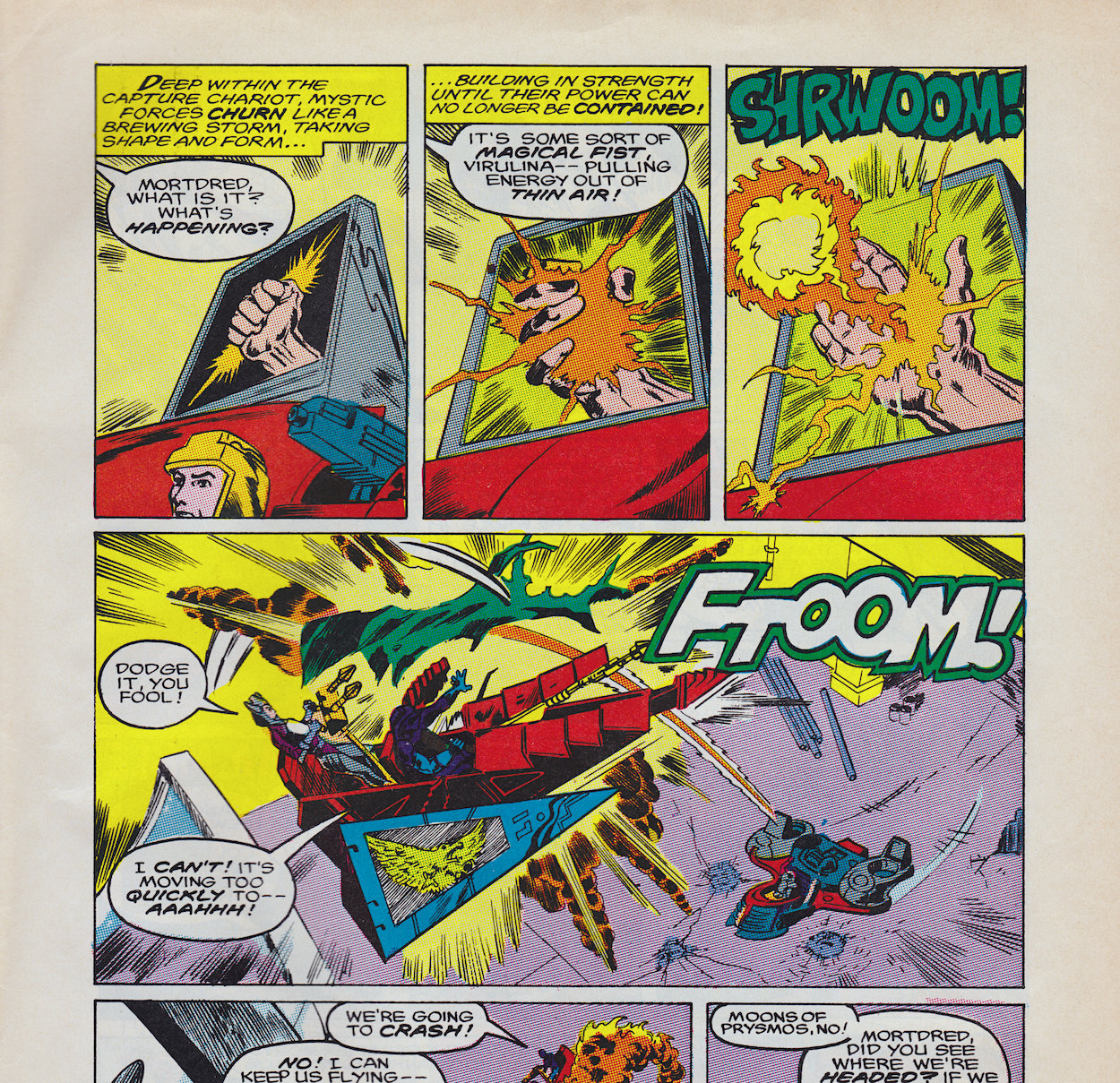
The large scale battle at the end of this issue is brilliantly brought to life (with no more mistakes I should add) by penciller Mark Bagley, inker Romeo Tanghai, colourist Julianna Ferriter and letterer Janice Chiang. We even get to see the Capture Chariot‘s power and I was thrilled to see it resemble that of the cartoon’s. There really was no other way to show it and, even if it’s not in the ghostly green colour I was used to as a kid, it’s still pretty neat to this old fan.

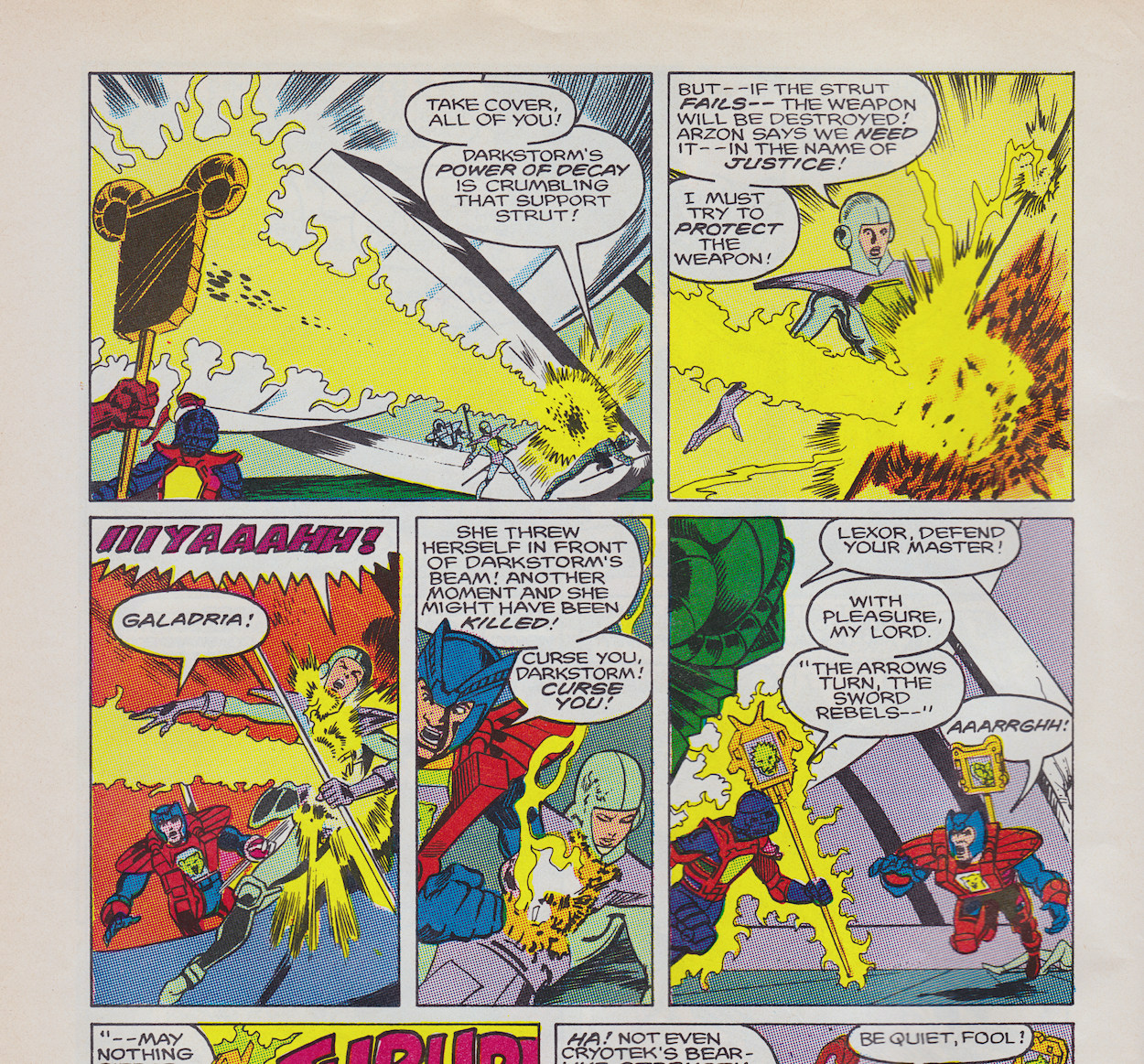
In a moment of desperation against ever decreasing odds Darkstorm uses his staff’s Power of Decay to try to destroy all of the Spectral Knights in one swift move and it’s Galadria who saves the day, throwing herself into its path. She may not have her own powers yet, but here she shows her willingness to sacrifice herself to save others. This sets her up to receive her Power of Healing from Merklynn. See also how cowardly Lexor now throws himself into battle, but only because his Spell of Invulnerability can stop anything in its tracks.
In a clever moment Leoric’s Power of Wisdom and Arzon’s Power of Knowledge are shown to be two very different things indeed. The Spectral Knight leader isn’t sure the reversal bomb should be set off and Arzon questions this, “Think of all the pain we’ll save the world!” Leoric’s response isn’t the kind of thing you’d expect from a toy licence comic.

“But pain is a part of life, Arzon. When a mother gives birth, she knows pain. Would we deny the newborn child to save the mother pain?”

As Arzon then notes, knowledge and wisdom must be used together.

In the end Darkstorm accuses Leoric of being weak and reference is made to their opposing plans to rebuild their world. Leoric sees a better world, Darkstorm a stronger one. Most of the time the villains in our cartoons and comics in the 80s were evil simply because they were. Darkstorm genuinely believes only by ruling with an iron fist can his beloved Prysmos regain its strength and position in the heavens. Leoric believes in compassion and fairness instead, even if rebuilding takes longer to achieve. It’s an interesting dynamic.
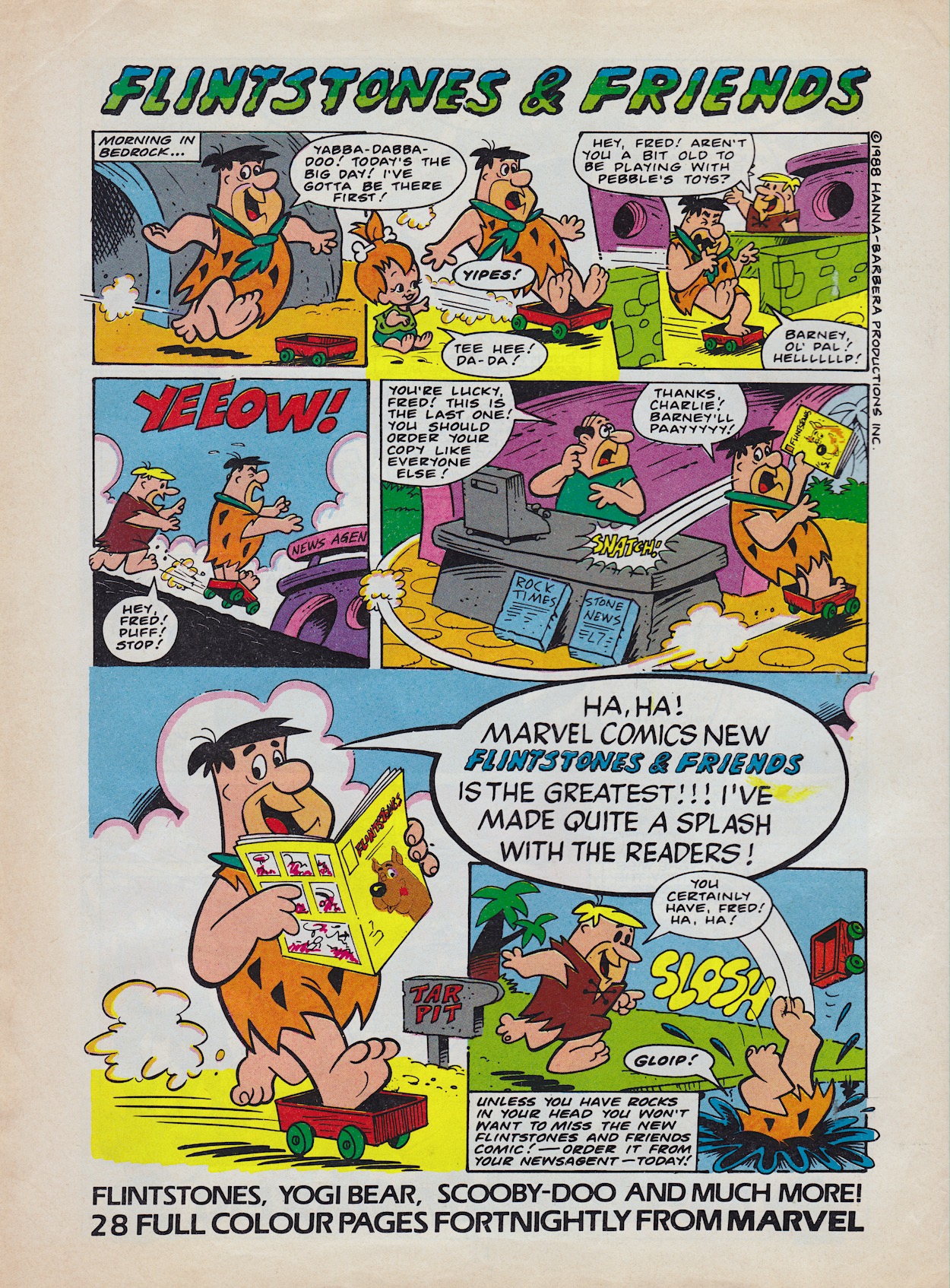
As discussed before Visionaries has no extra features, in fact this issue even has only one advertisement and it’s a bit of an abrupt change of pace! It isn’t even for the toys the comic is based on which seems a strange choice. Instead it’s a promotion for the new Flintstones & Friends title. It feels rather out of place here; surely it had a different target audience? The fact it’s out twice as often as Visionaries yet has more pages is a bit of a blow for fans too. The Flintstones comic would last for just under a year, managing 24 issues before being cancelled and rebranded as Cartoon Time.

It’s sad to think of this as the penultimate issue of Visionaries already when it seems to have so much promise. However, there is at least some more to come even after the final issue next month. I’ll let you in on what that is in the next fateful review, it’ll be here on Wednesday 21st July 2021.
iSSUE THREE < > iSSUE FiVE

ViSiONARiES MENU

ViSiONARiES #3: CLAWiNG AT THE SKY

Starting with this third edition of Marvel UK‘s monthly Visionaries are stories I’d never read before collecting them for the blog. The origin story I felt I knew almost verbatim, but now the comic was diverging away from the cartoon and forging its own path. Having missed the regular comic as a kid, I’ve looked forward to finally getting to read these stories.

Being original creations and something fans of the cartoon may have been eager to read, it’s confounding to see once again the editorial page not mentioning the story at all. Even though it’s called Vision On it’s basically an advertisement for other titles again, this time the new Action Force Monthly and Dragon’s Claws (called by its original name here which was changed just before its release), both of which were of the smaller American format and designed to try to sell UK material back into the US market.

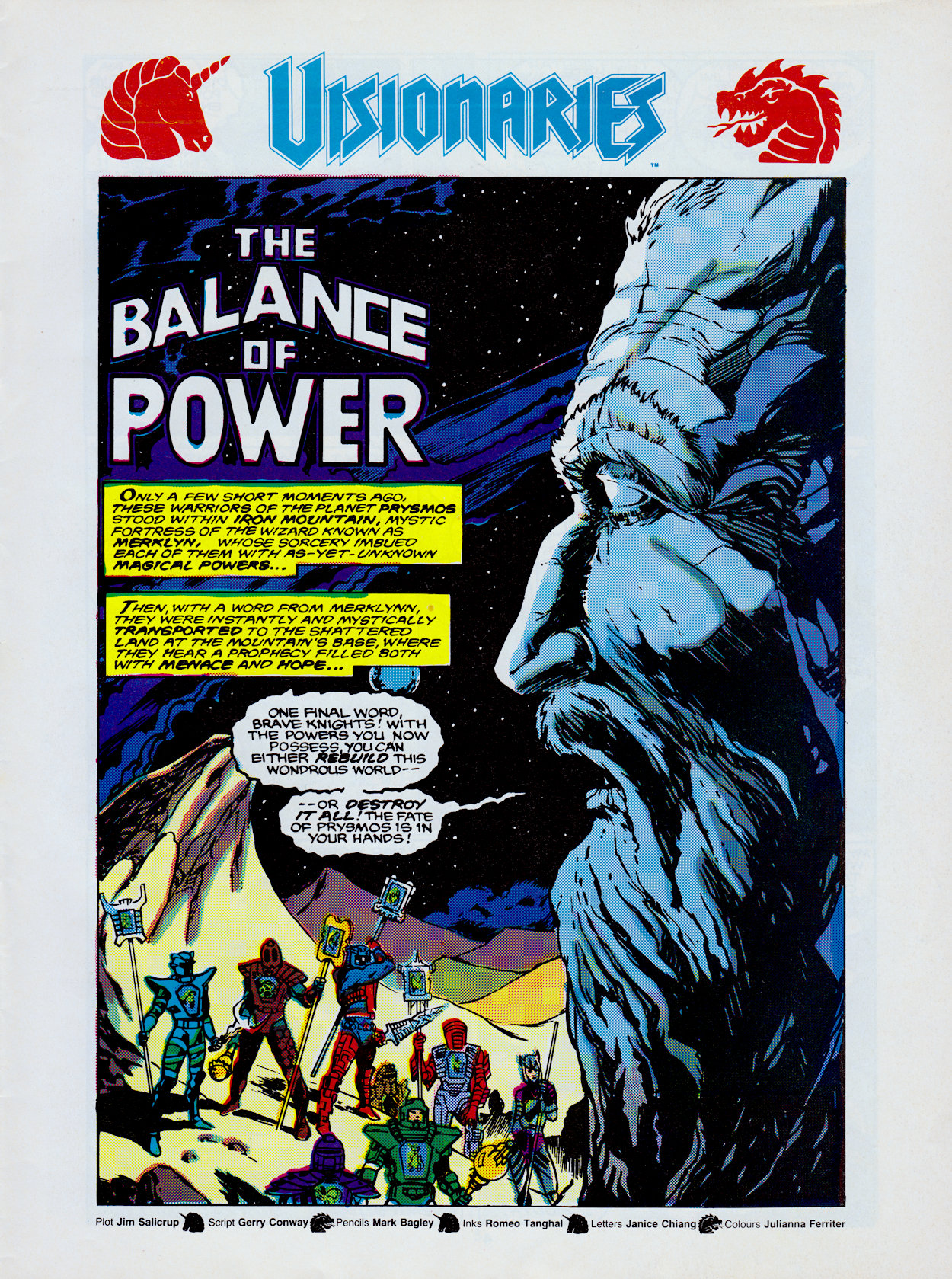
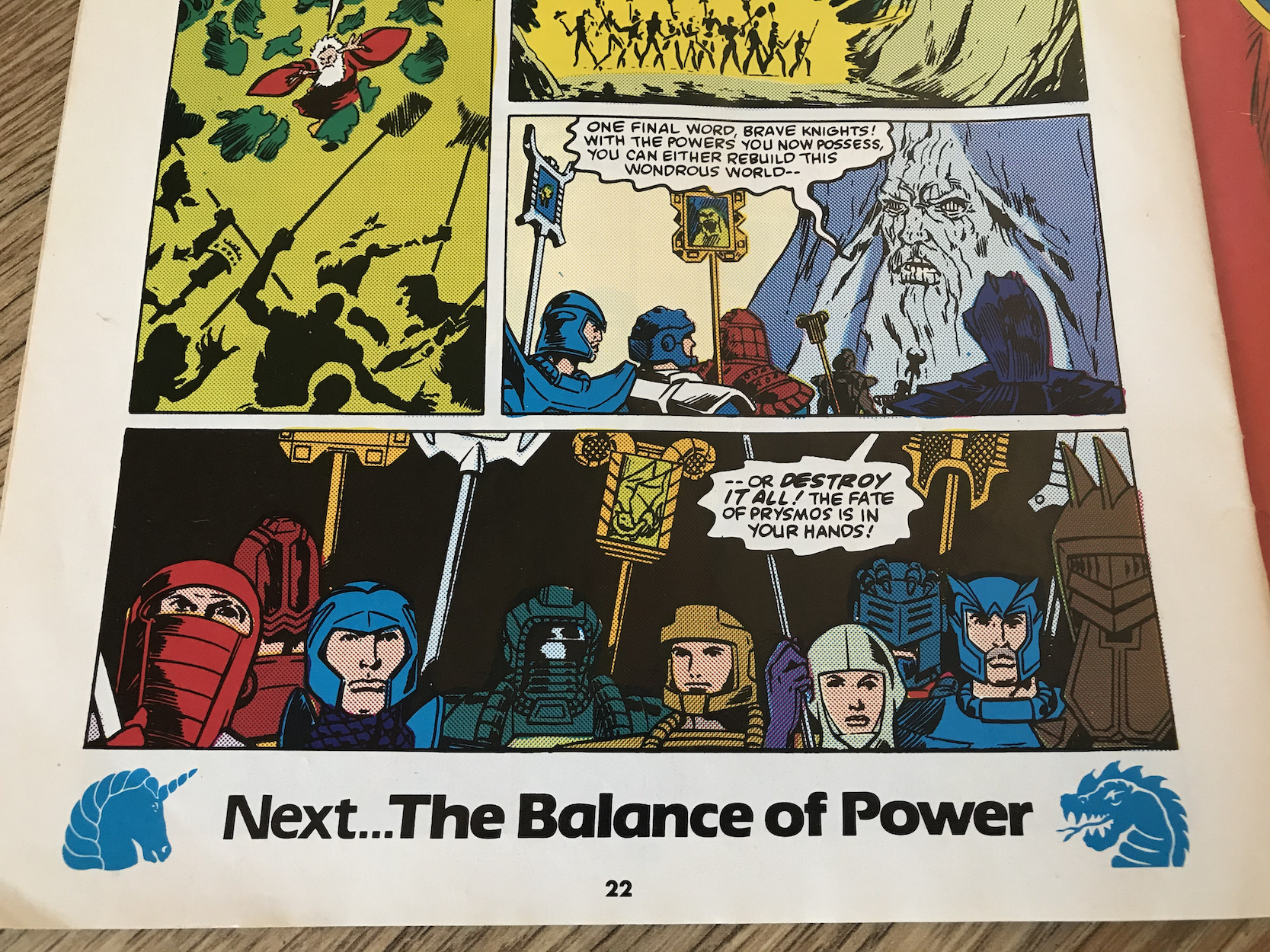
Next to the editorial the first page of Balance of Power is a bold image. On it, Merklynn‘s stone face stares down at the assembled Knights and reiterates the words from the end of last month’s story. Jim Salicrup, who adapted Frank Dille‘s teleplay origin story has created the plot this time around but full scripting duties fall to Gerry Conway (The Punisher, Spider-Man, Transformers and G.I. Joe cartoons, Diagnosis Murder) who would take over as the comic’s sole writer from the next issue.

The art team are the same as the previous story, with pencils by Mark Bagley, inks by Romeo Tanghai, letters by Janice Chiang and colours by Julianna Ferriter. Unfortunately, it’s in this final category that the issue is let down a little bit. There are quite a few colouring errors, which is something you don’t want when you’re still introducing characters and the colour of their armour is key to seeing who is doing what and to whom in battle. It’s a shame because at times it can really ooze atmosphere, such as with that splash page above.

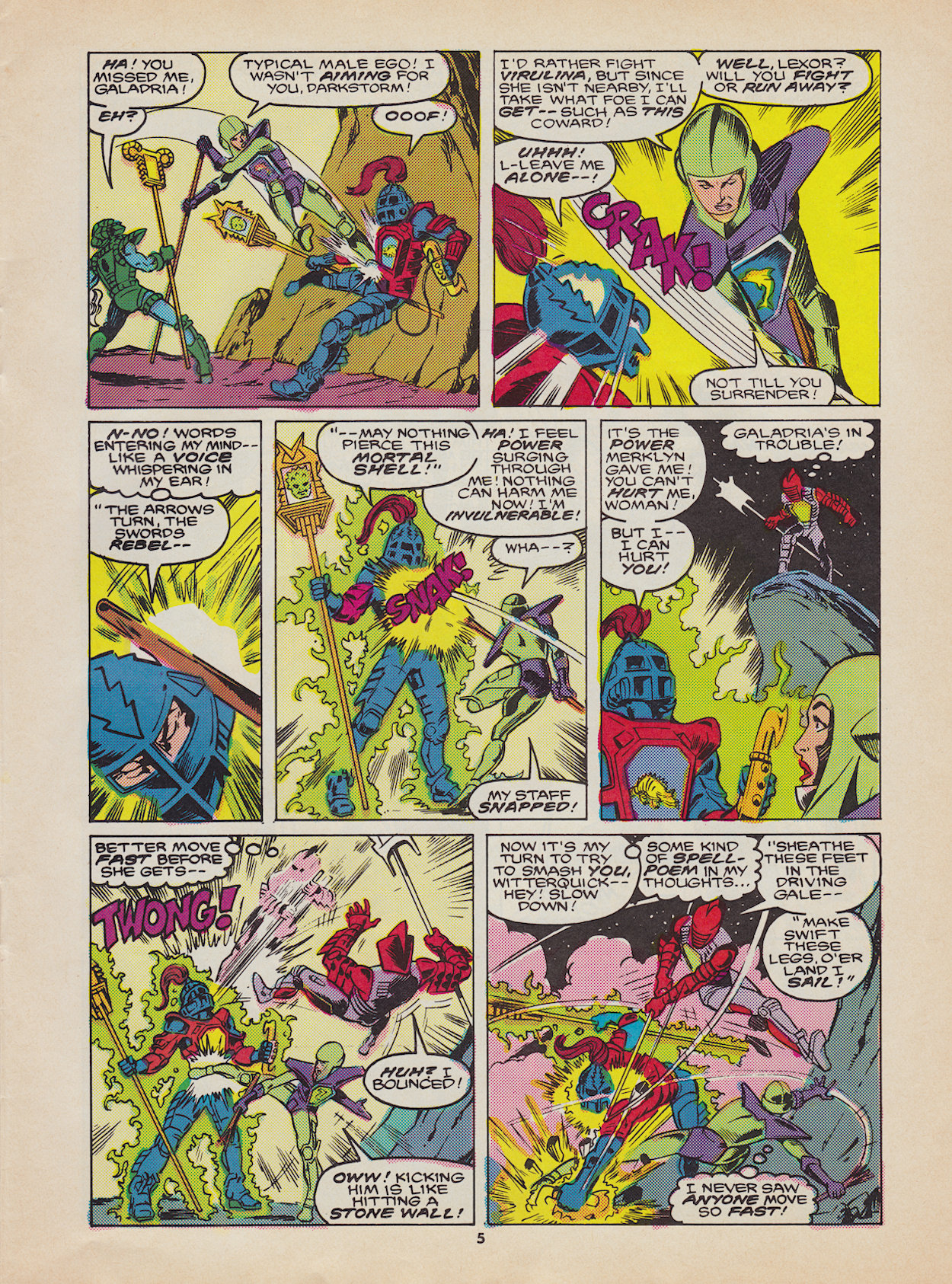
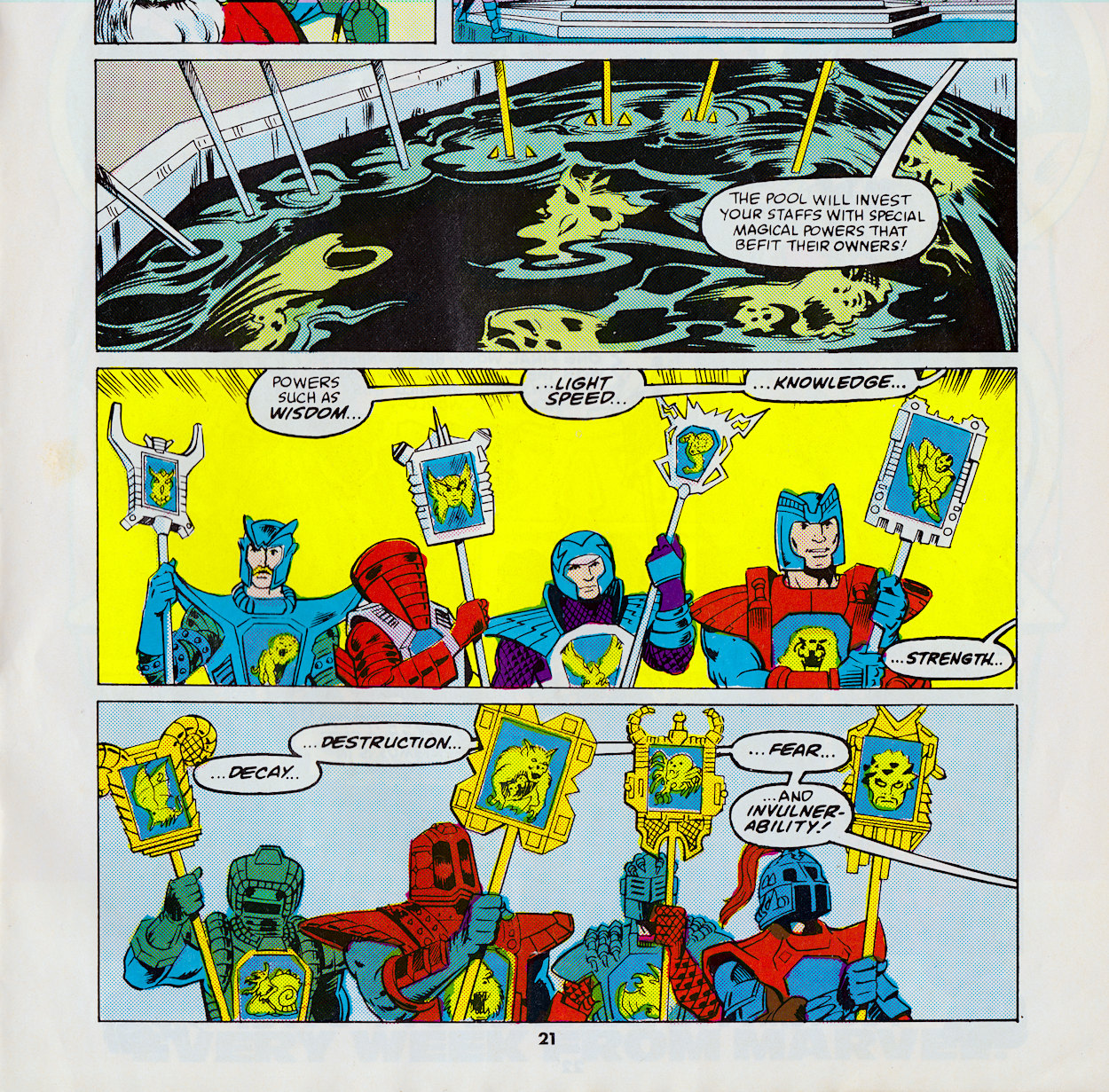
Something else this issue has in plentiful supply is action. As soon as Merklynn finishes his prophetic speech the Knights turn on each other, wishing to finish off the battles started inside Iron Mountain. Galadria gets the best line, then some of the characters start hearing a voice inside their head, telling them of incantations to summon the power of their magical staffs. Reading these again brings back memories of learning them off-by-heart from the toy packaging.

This is where some fundamental changes between the comic’s universe and that of the cartoon become apparent. Here, the staffs just sort of produce the desired effects, like making Lexor invulnerable, Witterquick superhuman fast and Cindarr‘s unleashes a mini-earthquake. But in the cartoon the holographic image on the staff materialised in the real world, for example a cyclone around Witterquick’s body or a giant monster wielding a club for Cindarr. Even the cover of this issue shows Cryotek’s archer, but none of these would appear in the strip. They’re missed and without them it’s not particularly clear what’s happening at times.


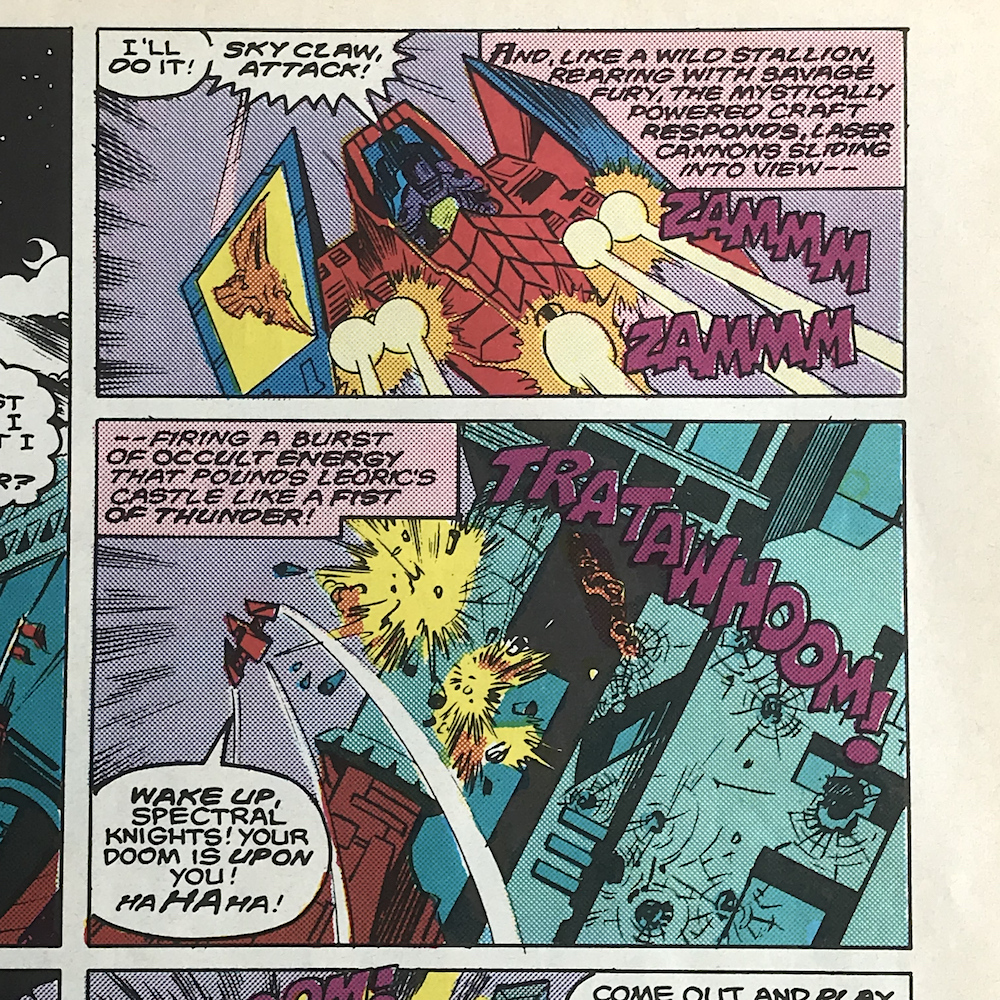
“And, like a wild stallion, rearing with savage fury, the mystically powered craft responds.”

Description of the Sky Claw

It also doesn’t help that when some of the characters transform into their magical animal totems these are mistakenly referred to as “magical powers”, when that’s actually what the staffs contain. Instead, the totems are an embodiment of their individual personalities, which they can change into, physically becoming said animal and harnessing its abilities (the actual animal rather than a magical representation like the cartoon). However, their magical powers are that of speed, strength, healing, decay, knowledge etc. Fans of the cartoon or toys would be able to follow along and it’s clear these are the intended audiences, but it must’ve been very confusing for anyone reading without prior knowledge.

The plot is rather basic this time around. Even though both sides have yet to even experiment with their new powers and totems, Darkstorm insists he and Leoric’s Knights are now too evenly matched. How would he know this? Surely they should train with their new magical abilities before coming to that conclusion. He wants an advantage and, annoyed with some of his people complaining about their lack of staffs, he sends stealth master Reekon and the grovelling Mortdredd to find a new weapon to given them that edge.

It all feels rather convulted. Given the cover we know what they’re going to find, but the pacing is all wrong. If this had come later in the run, or even if we’d jumped forward a few months and they were having difficulties managing their powers and wanted something more conventional, it would have made more sense. The saving grace here is the world building in the background. Wanting to rebuild his world no matter the cost to anyone else, Darkstorm’s castle overlooks slums where the poor and hungry struggle to survive, through which Reekon and Mortredd trot along, uncaring of the devastation around them.

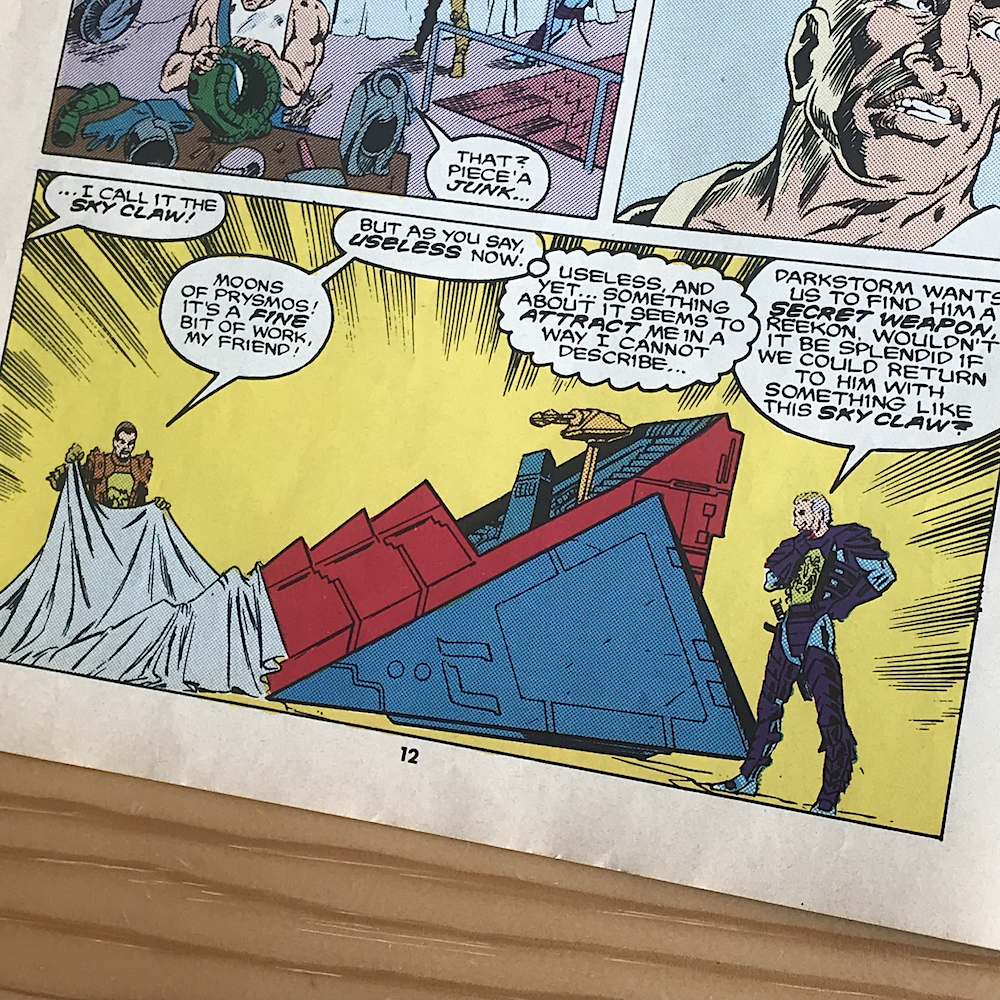
They make their way to a contact of Mortdredd’s at Harkon’s Blacksmith Shop. An engineer by trade, Harkon found himself without work in the new Age of Magic and retrained as a blacksmith, where he won the contract to repair and replace armour for the Darkling Lords. Underneath tarps scattered about his workspace are high-tech vehicles which are now nothing more than useless relics of the past.

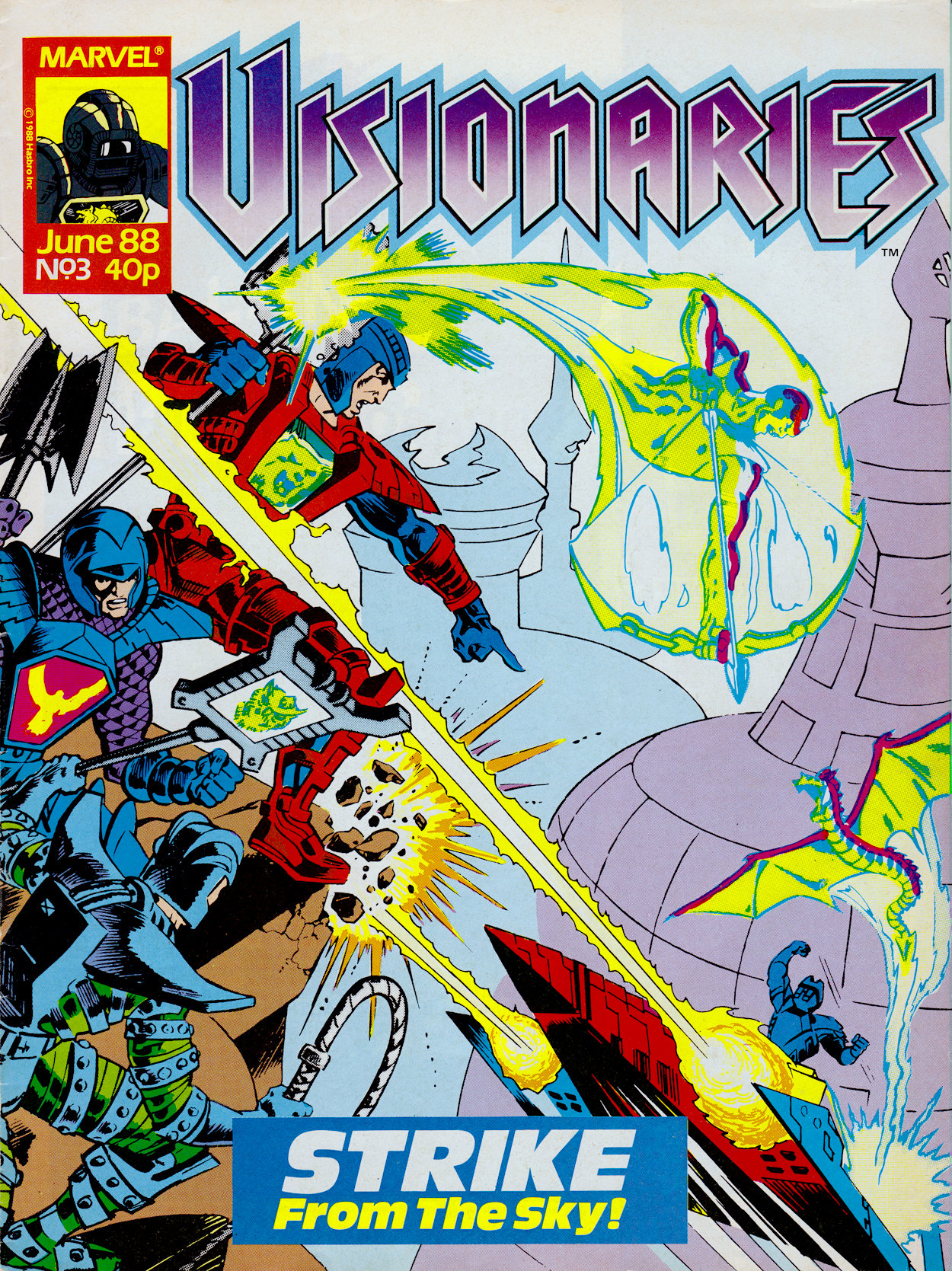
I recognised the one above as soon as its covering was pulled back. It’s the Sky Claw. It was one of the large vehicles from the toy range and one of three that I personally owned. Covered with large holograms and movable levers and wings concealing a variety of awesome weaponry, it was a favourite childhood toy. It’s the whole raison d’être for this story so my excitement levels have been turned up a bit now.

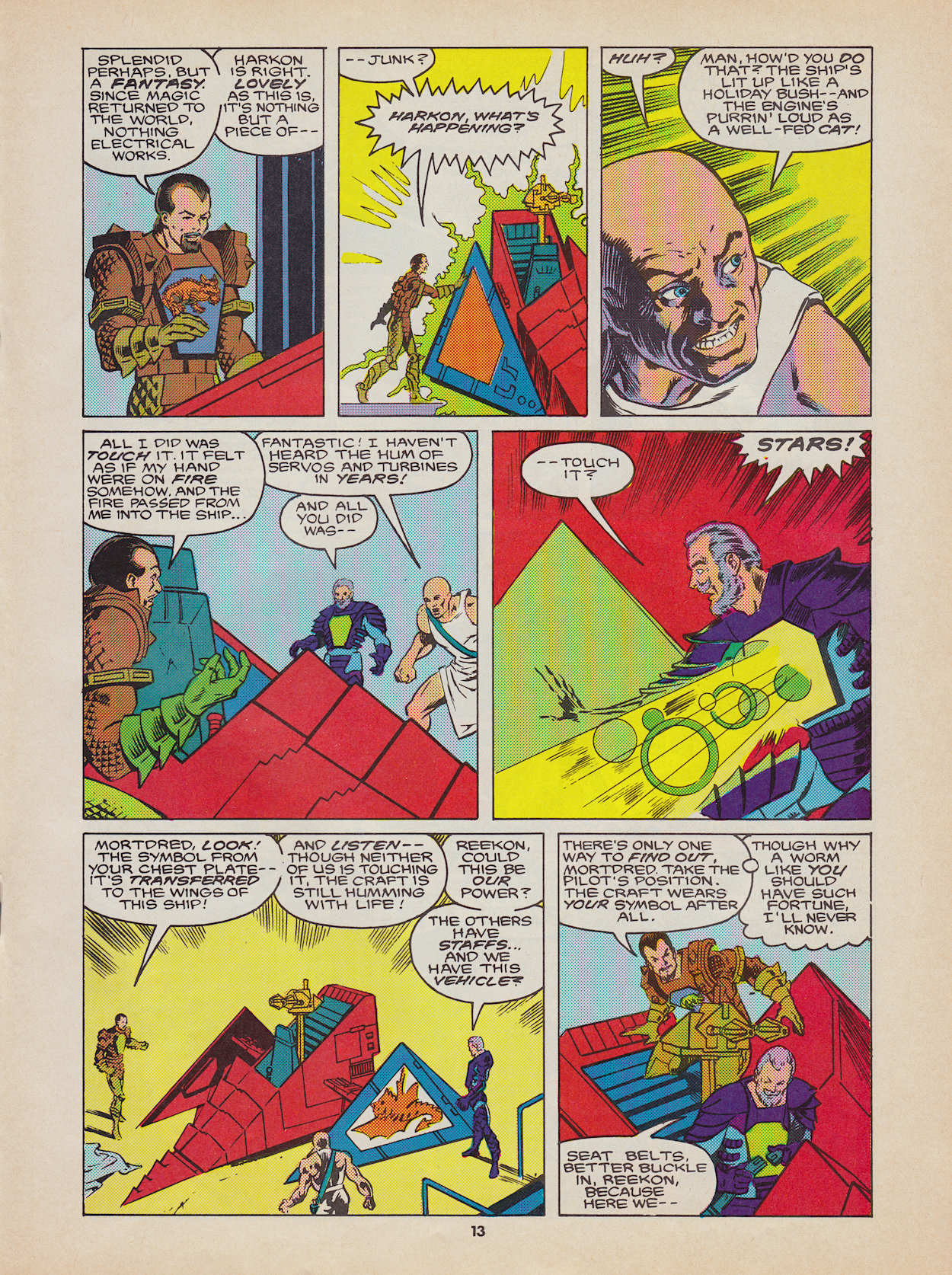
The machine responds to the energy of Reekon’s magical touch, but it’s Mortdredd’s proximity that really brings it to life. While the statement that the symbol from his chest plate transferred to the craft is completely wrong, it’s still a fun way of introducing it. I particularly like how magical powers erupt from Mortredd’s chest, while his hand almost disappears into the holographic panel, becoming nearly skeletal-like. Although, why does Harkon say he hasn’t heard the sounds of an engine in years when this follows on directly from the previous origin story?

Able to control it with but a thought, Mortdredd is eager to prove himself to his Lord and Master. Darkstorm wants to wait, plan, gather information before a strike (again, no mention of learning their new skills) and this leads to other Knights calling him a coward. Defending his leader’s honour, Mortdredd attacks the others but find it’s he who ends up pushed out. Seizing the moment, he takes the Sky Claw and launches a devastating attack on Leoric’s castle, hoping to show he’s worthy of his position within the Darkling Lords. None of the vehicle’s magical powers are used though, just the weaponry which is a shame because I was looking forward to seeing those holograms come to life again.

The descriptive panels here are excellent. In fact, throughout the comic they’re a unique mix of science fiction and what feels like medieval storytelling. The latter in particular sets it apart, the comic playing up to this aspect of the characters and setting particularly well. This attention to detail is great.

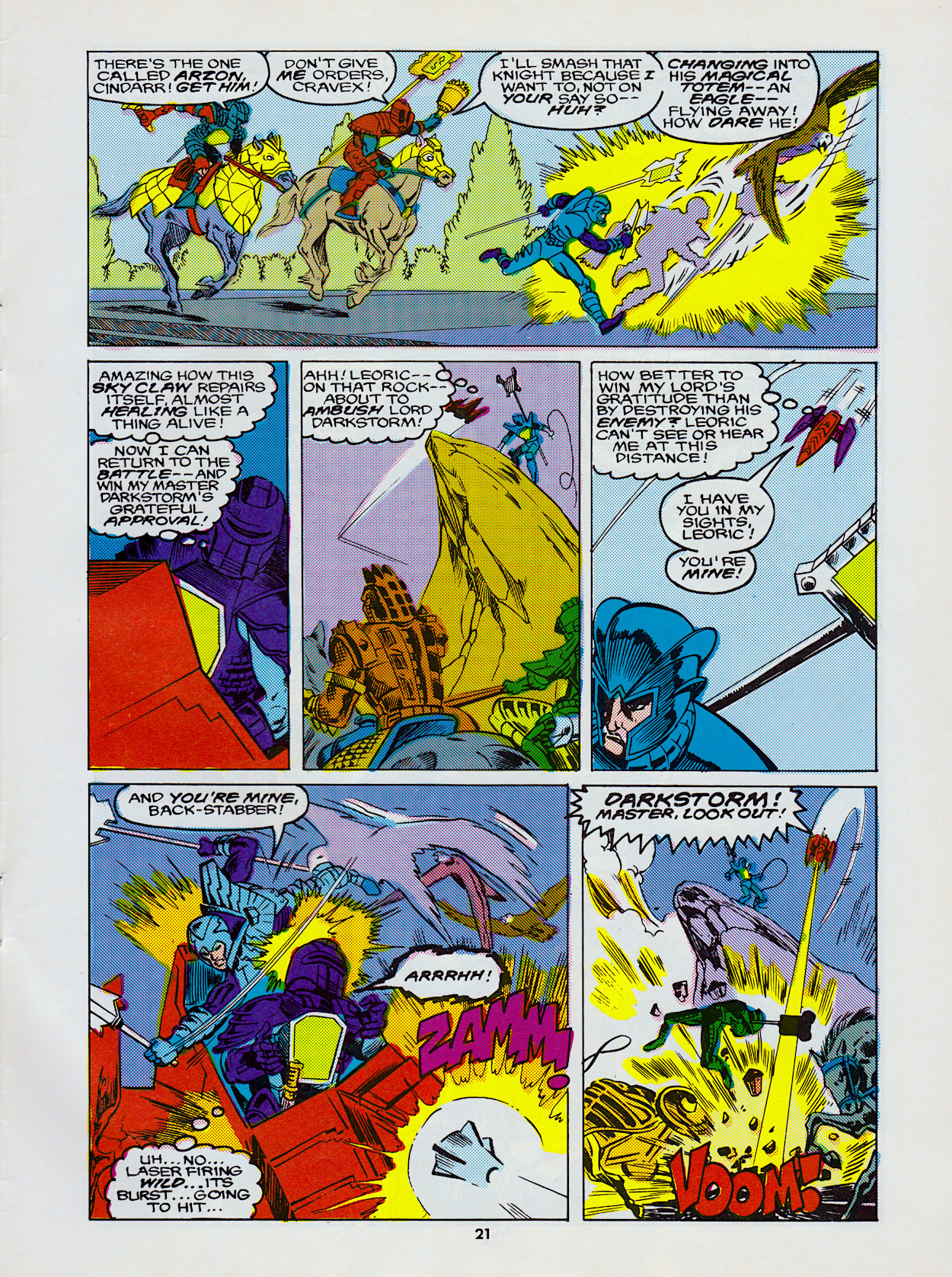
One of the more interesting magical powers makes an entrance here and that’s Arzon‘s power of knowledge, even though he’s incorrectly drawn as Ectar but we’ll skip that detail for now. He recites his incantation to find out what the Sky Claw is, because there has been no flying vehicle since the Age of Science and it takes them by complete surprise. However, he not only discovers the information he seeks, suddenly everything he’s ever known in his whole life temporarily returns to his mind.

Everyone having completely different powers […] could make for some epic battles

This could’ve set up some brilliant stories for the future. I could see something like that opening up old wounds, thoughts he’s tried to suppress or even things that he doesn’t wish to know. Unfortunately I can’t see this being explored in the short run the comic ultimately had.

On the surface a power like this could seem to give an individual an unfair advantage in any fight, but with everyone having such completely different powers, all with some form of vulnerability built in if not used correctly, it could make for some epic battles.

It all comes to a head when Arzon transforms into his eagle form and attacks the cowardly Mortredd from above. From there it all falls apart for the Darkling Lords, who had shown up to finish what the Sky Claw had started. Disobeying orders and nearly killing his leader sees Mortdredd locked up in the dungeon of Darkstorm’s castle at the end of the story, but not before he’s made reference to the Sky Claw feeling alive when it repairs itself during a moment away from the battle. It’s a passing comment for now, but if memory serves me right this could tie in to some revelations yet to come about all of the Visionaries’ magical powers.

The Balance of Power feels very much like an extension of the previous two issues and the cynical might say it’s nothing more than a couple of extended action scenes. There’s little in the way of characterisation but the main point here is to see more of this world and the characters inhabiting it, to see their magical powers and how they could turn the tide of battle. Hence the name of the story.

With Jim having set things up and established the potential for future stories, the authorship is handed over to Gerry for him to develop the comic as its full-time writer. So let’s wait and see what he brings to the table and if all that potential is realised. The next chapter’s review will be here from Wednesday 23rd June 2021.

iSSUE TWO < > iSSUE FOUR

ViSiONARiES MENU

ViSiONARiES #2: THE BEGiNNiNG

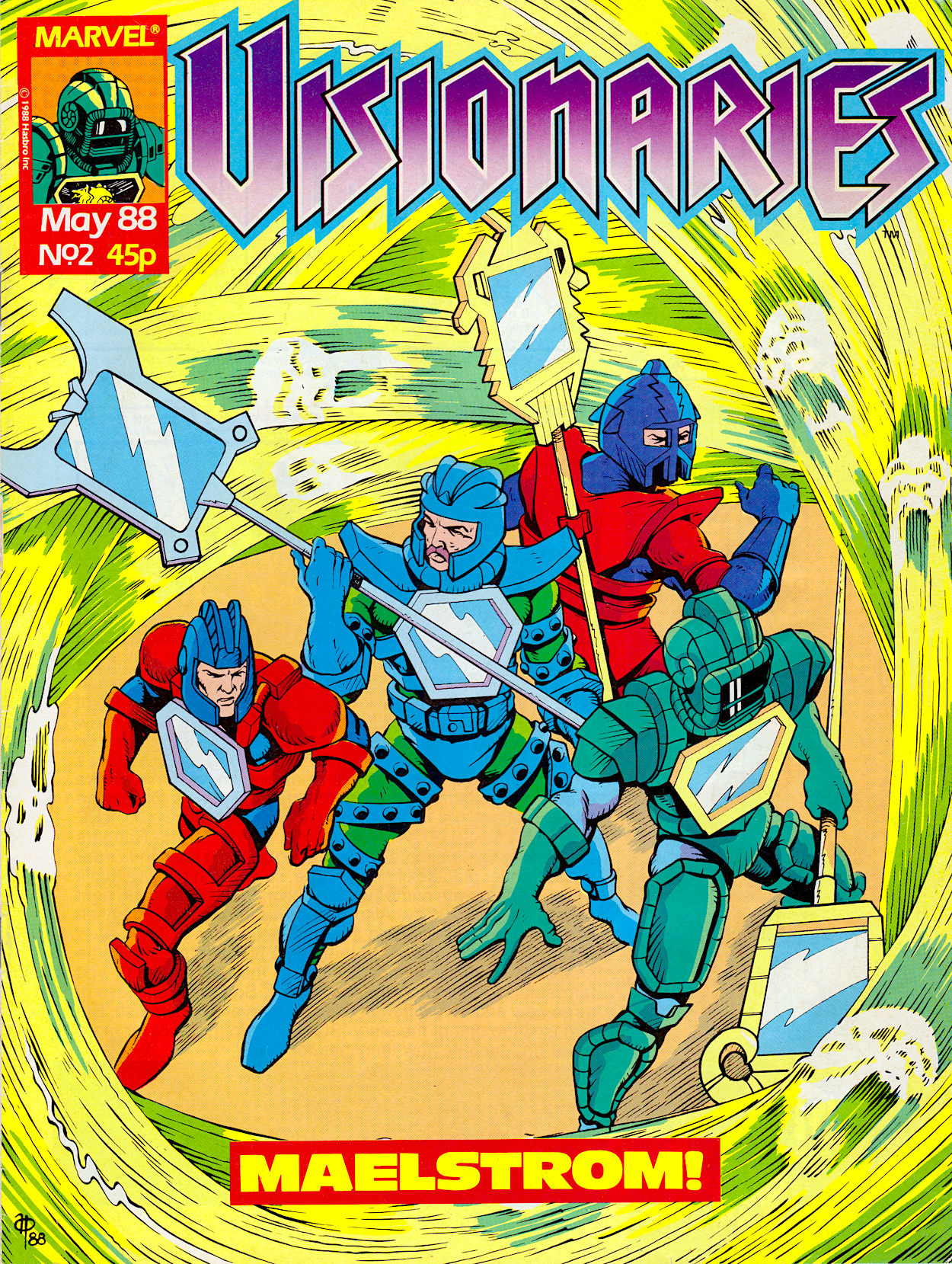
This gorgeous Andrew Wildman cover (Transformers, G.I. Joe, Venom: Carnage Unleashed) opens the second issue of Marvel UK‘s new Visionaries monthly, released on this day back in 1988, showing some of our heroes and villains surrounded by the magical totems that’ll become part of their very being. We’ll get to that further down the review, but is that a price increase already? It’s only 5p but back then that was quite the hike, especially for a second issue.

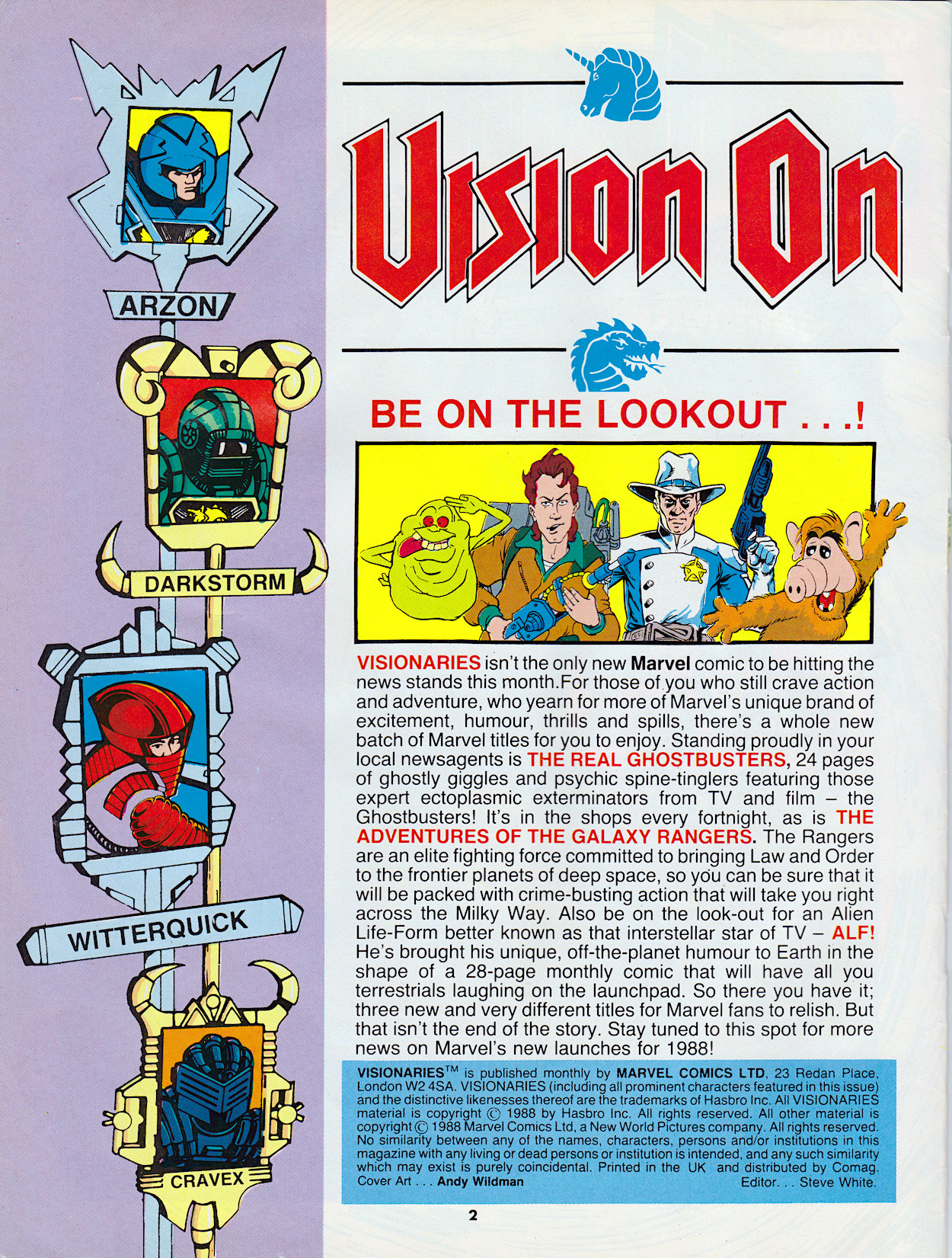
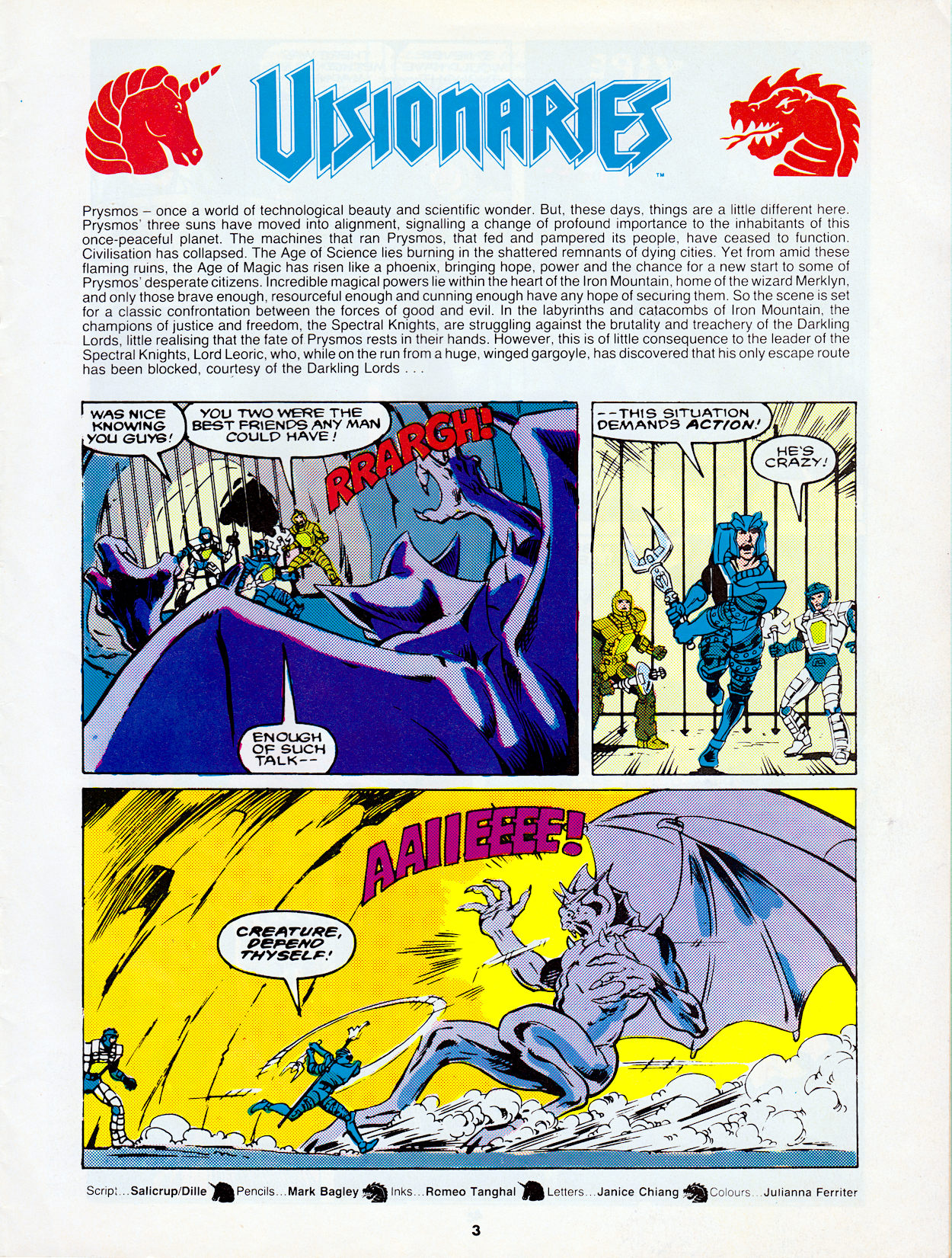
Not only is the price increase a bit strange, so is the Vision On editorial which doesn’t mention anything about the issue’s story, instead focussing solely on other Marvel releases. The recap of the previous chapter is then pasted on top of the next page, excising the top third of the strip! It is atmospherically written though.

Last time, Reekon pulled on a lever as a large stone gargoyle rushed towards Leoric, Ectar and Feryl but what the lever did could easily have been missed because of where the story stopped. The metal gates that trapped them with seemingly no hope of survival would have come down at the top of this page. So not only could it have been missed last issue, this time it’s been deleted by editor Steve White.

An even higher grade of paper really does justice to Andy’s cover and the opening pages of the strip

Thankfully the strip itself more than makes up for any shortcomings in repackaging it for UK readers plus the outer eight pages are made of an even higher grade of paper than last time. A shame the rest is of the usual stock because these glossy pages are lovely and really do justice to Andy‘s cover, as well as the opening pages of the strip from penciller Mark Bagley, inker Romeo Tanghai, letterer Janice Chiang and colourist Julianna Ferriter.

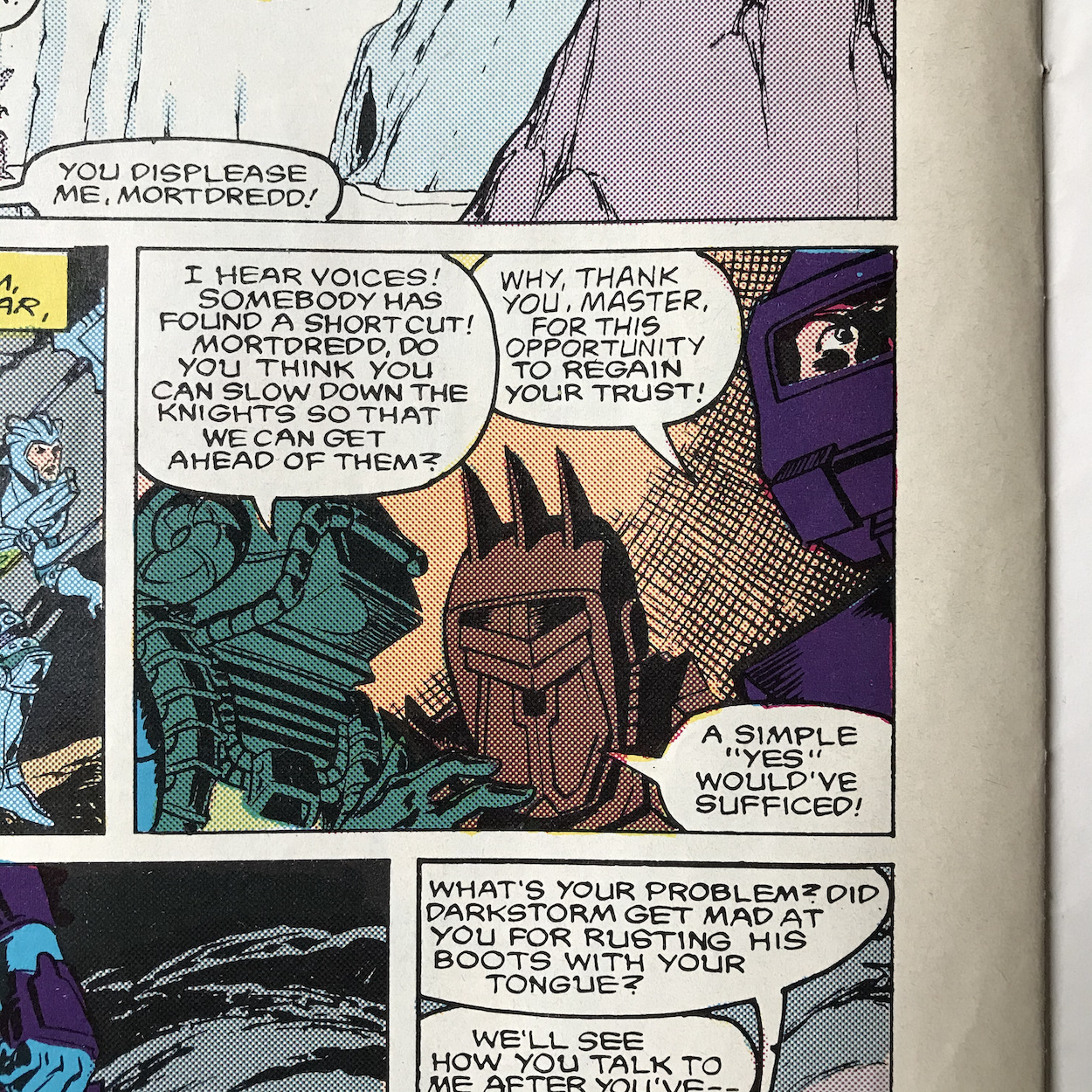
Adapted by Jim Salicrup from Flint Dille‘s animated teleplay it’s all action this time around, with the knights from across planet Prysmos now inside Iron Mountain facing the trials of Merklynn the ancient wizard. But that doesn’t mean there isn’t time for humour, as we see when the startled gargoyle runs off like a yelping dog, and then there’s this panel featuring Darkling Lord leader Darkstorm and (the voice of) Mortdredd, his snivelling follower.

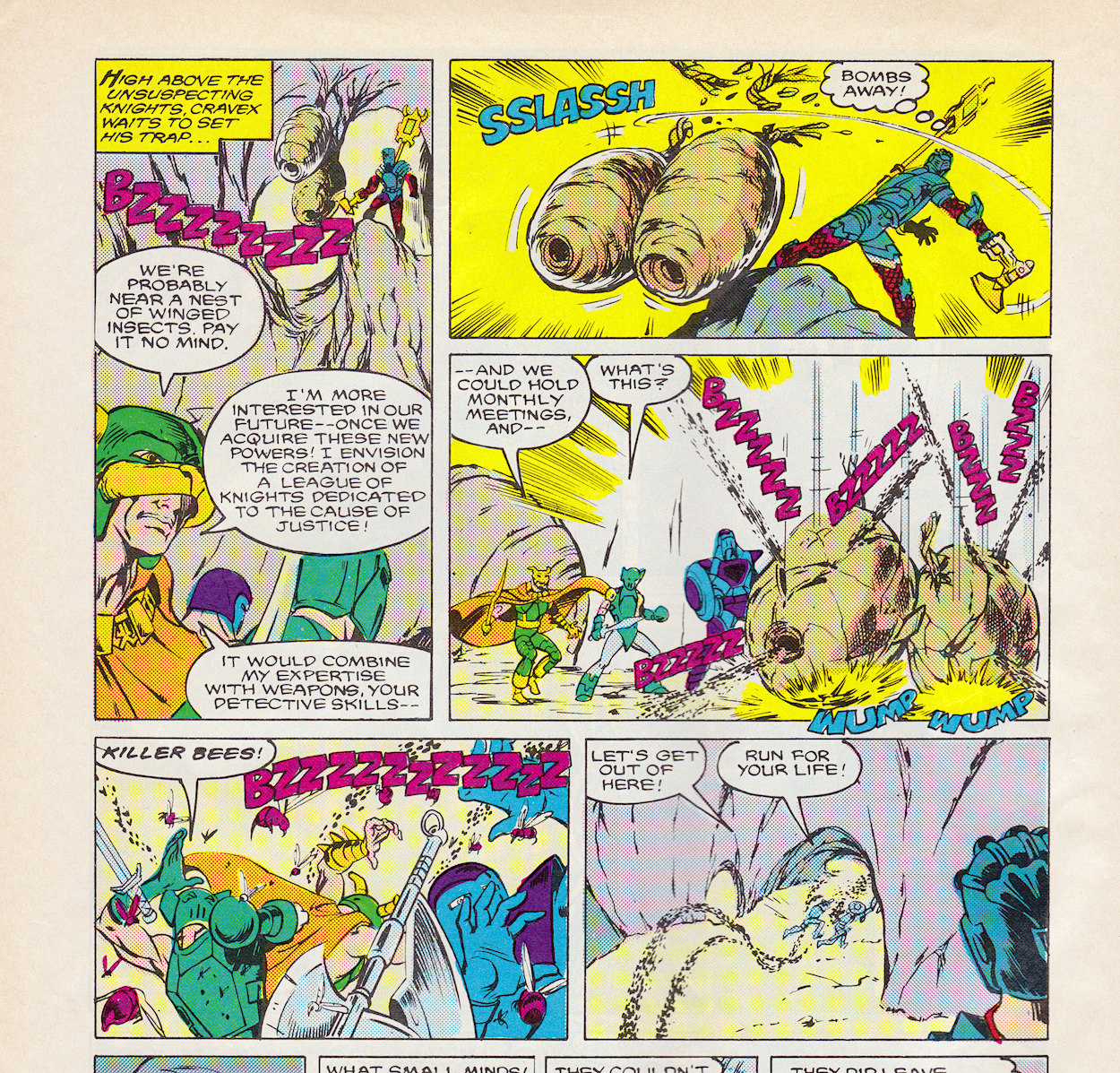
In fact the first several pages contain some comedy gold. Below, Cravex hears some apparently noble knights talking of forming what sounds very similar to Leoric’s vision of the Spectral Knights. It’s all talk though, humorously told with mention of their skills and expertise but their actual plans amounting to nothing more than monthly meetings. It reminds me of some office managers I’ve had to work with in the past.

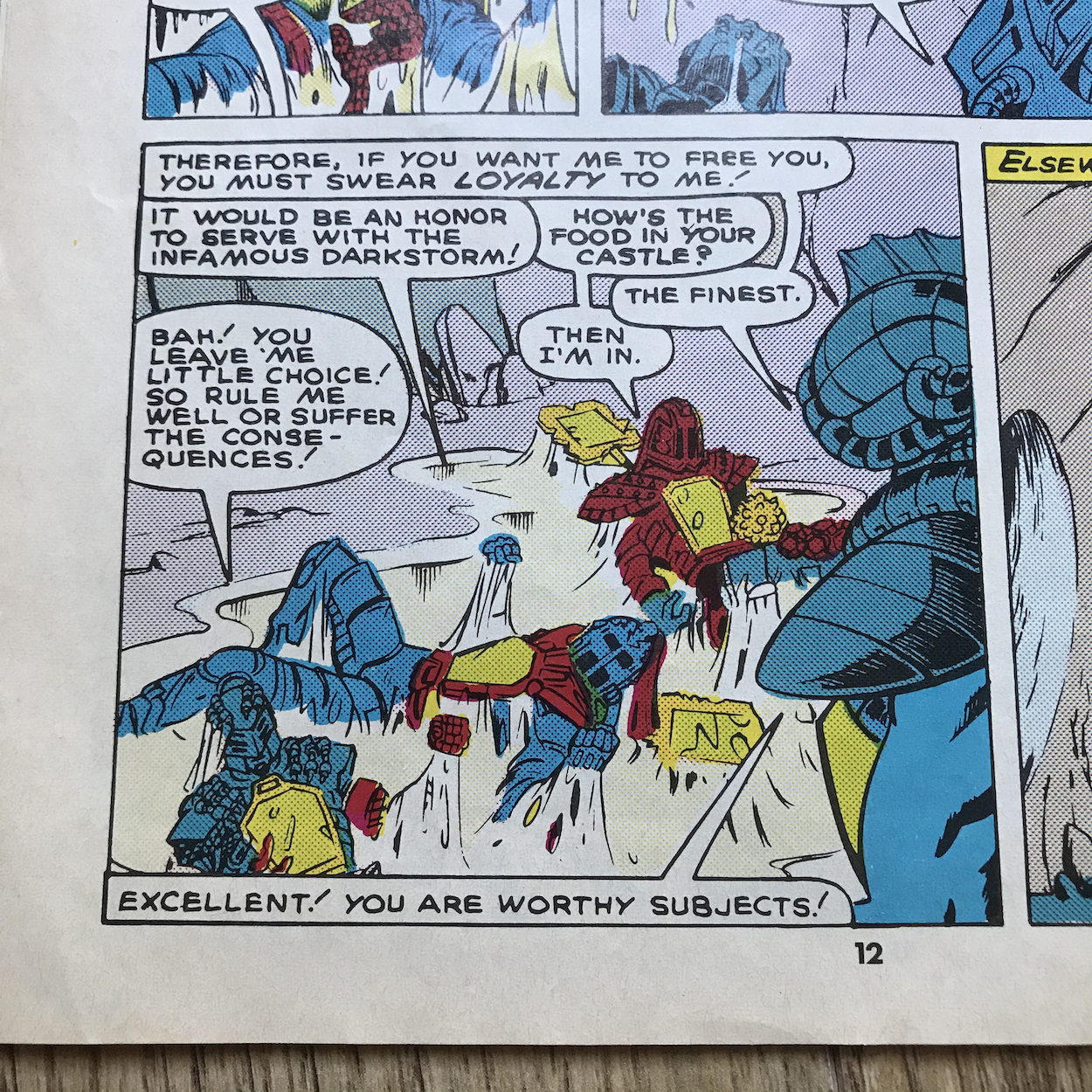
Then, after being surprised by an animated skeleton pushing him over a crevasse, Darkstorm’s superior climbing skills and cool head save him and he finds himself beside a vat of milk from a giant spider, which ominously looks on overhead. Realising that in order to fulfill his ambitions he’ll need underlings he traps three knights in the sticky goo and forces them to pledge their allegiance. Cindarr‘s sole requirement had me roaring.

Hmm, a League of Knights dedicated to Justice? One with a bird-like mask? Could this be a little joke at the expense of the DC Universe? (Thanks to blog reader David Teller for this snippet of information.)

We see some personal rivalries begin here too. The Cryotek-versus-Cindarr fight is interesting as it’s actually the Spectral Knight who loses his temper. Showing a fearsome, darker side and swearing to kill his enemy, his magical totem in the final pages is revealed to be the grizzly bear for his incredible strength and endurance, so I’m interested to see how these two aspects of his personality develop in tandem in future issues. But I want to concentrate on one particular grudge match here.

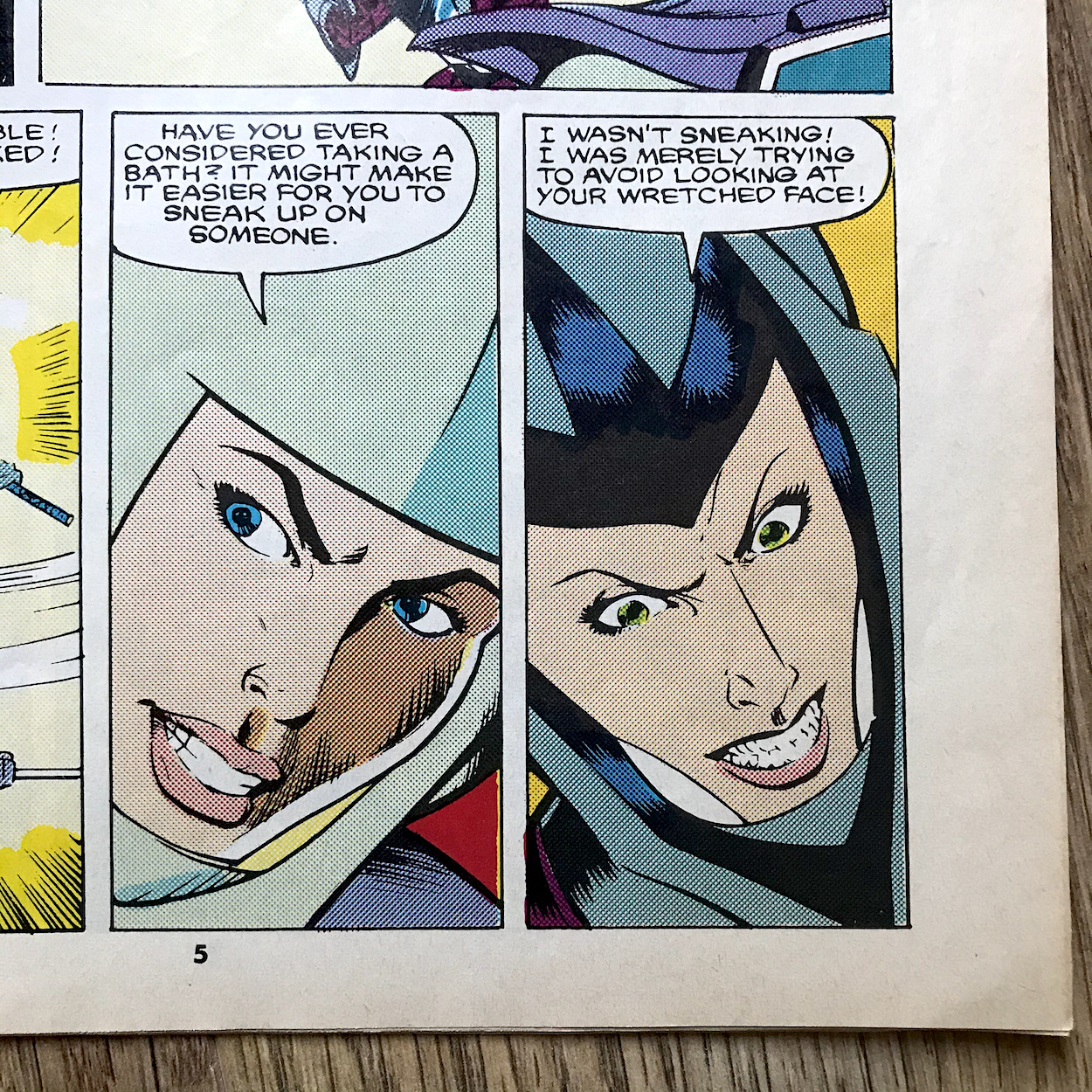
At the time, having only one or two female warriors was deemed enough in everything from He-Man and the Masters of the Universe to The Transformers. The former at least had a female-centric spin-off but the latter had only one female robot in a cast of hundreds. This has been remedied in the intervening years but we can see now just how woefully inadequate it was at the time. Galadria and Virulina, shown here in a thrilling underwater fight scene, weren’t even toys and were instead creations of Flint’s. I hope they’ll get as much coverage as their male counterparts in future issues.

While the comic’s origin was based on the cartoon’s, there were already key differences. Something that irked me about the same story in the cartoon was the fact only the characters who’d receive the magical powers in the end had the hologram-shaped chest panel. It kind of gave the game away, but in the comic they’ve shown several background characters with the same design. It’s not overly done, we’re always aware of who’s going to make it and who isn’t, but it’s a welcome change.

It may be over three decades later and it may be based on a toy line, but this is still a thrilling read.

Something else a comic can do is expose the inner thoughts of the characters and it’s used here in abundance, and not in that annoying way of just describing what we can plainly see is happening to them. Instead, it’s used to add depth to reactions and portray their inner doubts and fears.

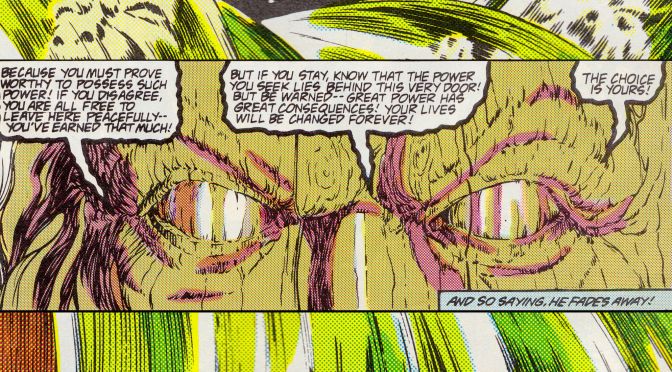
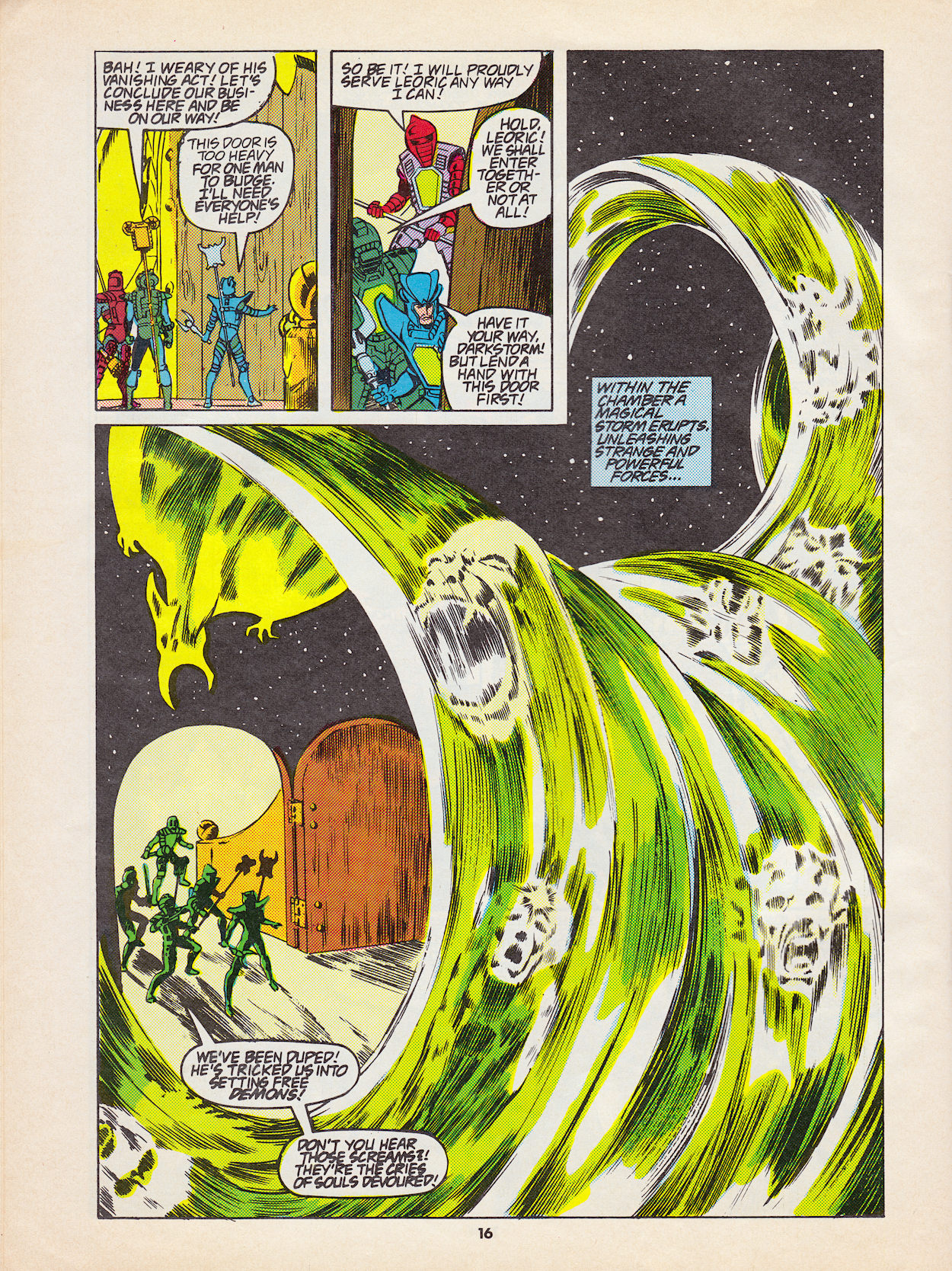
As we approach the final pages a huge climactic battle between the knights is interrupted by a booming voice as a huge wooden door nearby contorts into the shape of Merklynn‘s face. Daring them forward, they’re faced with horrors on the other side.

It’s actually Darkstorm who feels a certain level of familiarity with the screaming souls in front of them. They march on and Merklynn explains this was their final test, the spirits really being mystical reflections of their deepest, darkest fears and in conquering them they’ve conquered their inner demons. It’s quite startling to turn the page over and see this image. It may be over three decades later and it may be based on a toy line, but this is still a thrilling read.

It’s at this point we finally get some more background into the previous Age of Magic. It’s played out over a page previously shown in the preview mini-comic but essentially Prysmos was a planet with a strong-willed race of humans, able to achieve anything they set their minds to for the good of their neighbours. The strongest were the Knights of Prysmos and from these arose the Mages of Prysmos. Only a few were able to predict the cataclysm when the Age of Science came, of which Merklynn was one. By secreting his power inside the mountain upon which his castle once stood he was able to ride out time until the suns aligned again and the ages were reversed.


“Be not afraid, Knights of Prysmos! Accept these totems as your just reward! Only you had the vision it took to succeed in finding this chamber! Truly thou art Visionaries!”

Merklynn the Great Mage

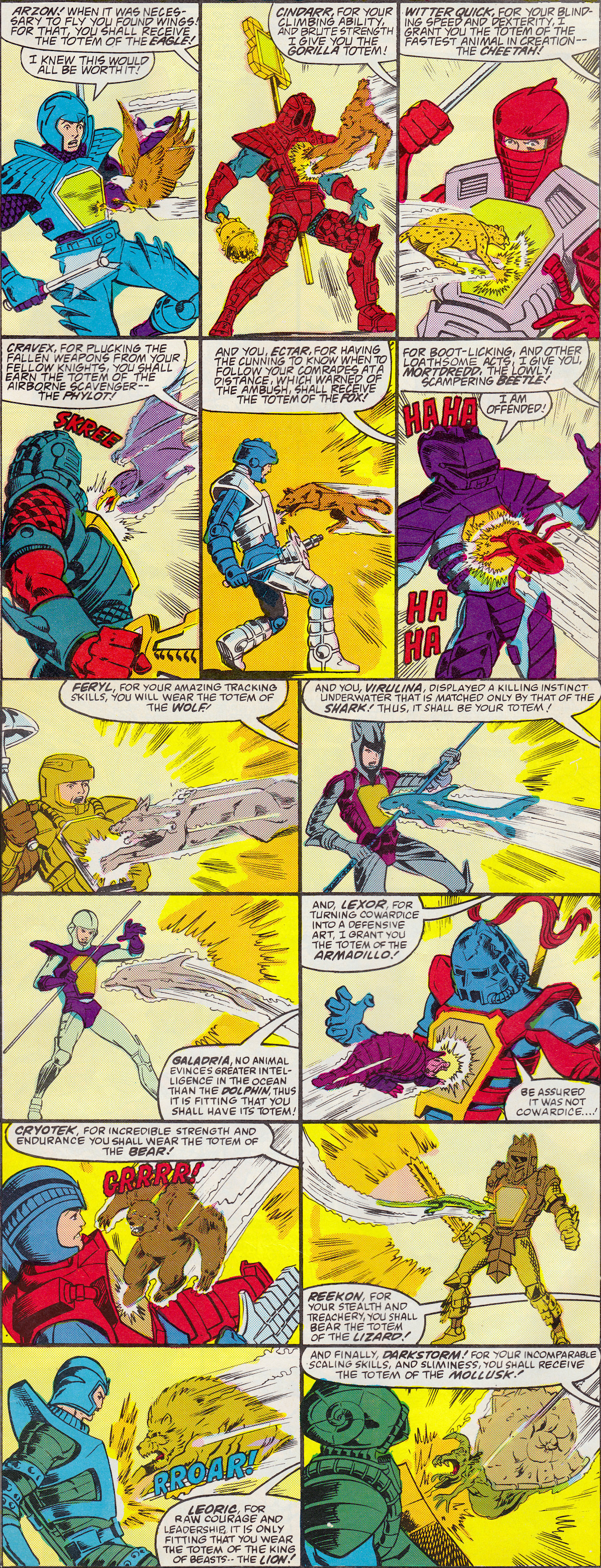
Then it’s on to the finale and the part I, as a fan of the toys and cartoon, had been waiting for. It was time for the new Knights of Prysmos to receive their totems, their magical emblems that would encapsulate each individual character, granting them unique special powers, regardless of their intentions beyond the mountain.

Looking over these particular images sparks happy memories. I had so many of these toys it’s like being reunited with old friends. It’s been a great start and we haven’t even seen any of their powers being used yet. But given what we’ve seen them all achieve as people grasping for the power to rule or rebuild, it’s already a compelling story and I think this is mainly thanks to the way the characters have interacted with one another. They feel real, which is no small feat given they’re based on action figures.

Judging by these beginnings, if Visionaries had proven more popular and had had the chance to develop over the course of a few years, I would say these human characters could’ve risen through the ranks of comics to sit proudly alongside the likes of Larry Hama‘s superlative G.I. Joe creations. I’m well aware I’m saying this after only one story, but I’ve a feeling the remaining issues are going to back that up.

For now The End… The Beginning finishes with everyone safely transported back to the entrance of Iron Mountain, where a rock formation in the shape of its soul occupant’s face (he does like doing stuff like that) ends the proceedings with some ominous words for all those assembled.

After this initial story the comic would diverge completely from the cartoon and I’m looking forward to seeing what direction it goes in, what with the animated series being one of the best of its time. I really do get the feeling all is set for a story unlike any other. The comic team should be proud of their adaptation (I usually can’t stand comic adaptations of films and shows) and now we’ll have to wait a whole month to see what they bring to the world of the Visionaries.

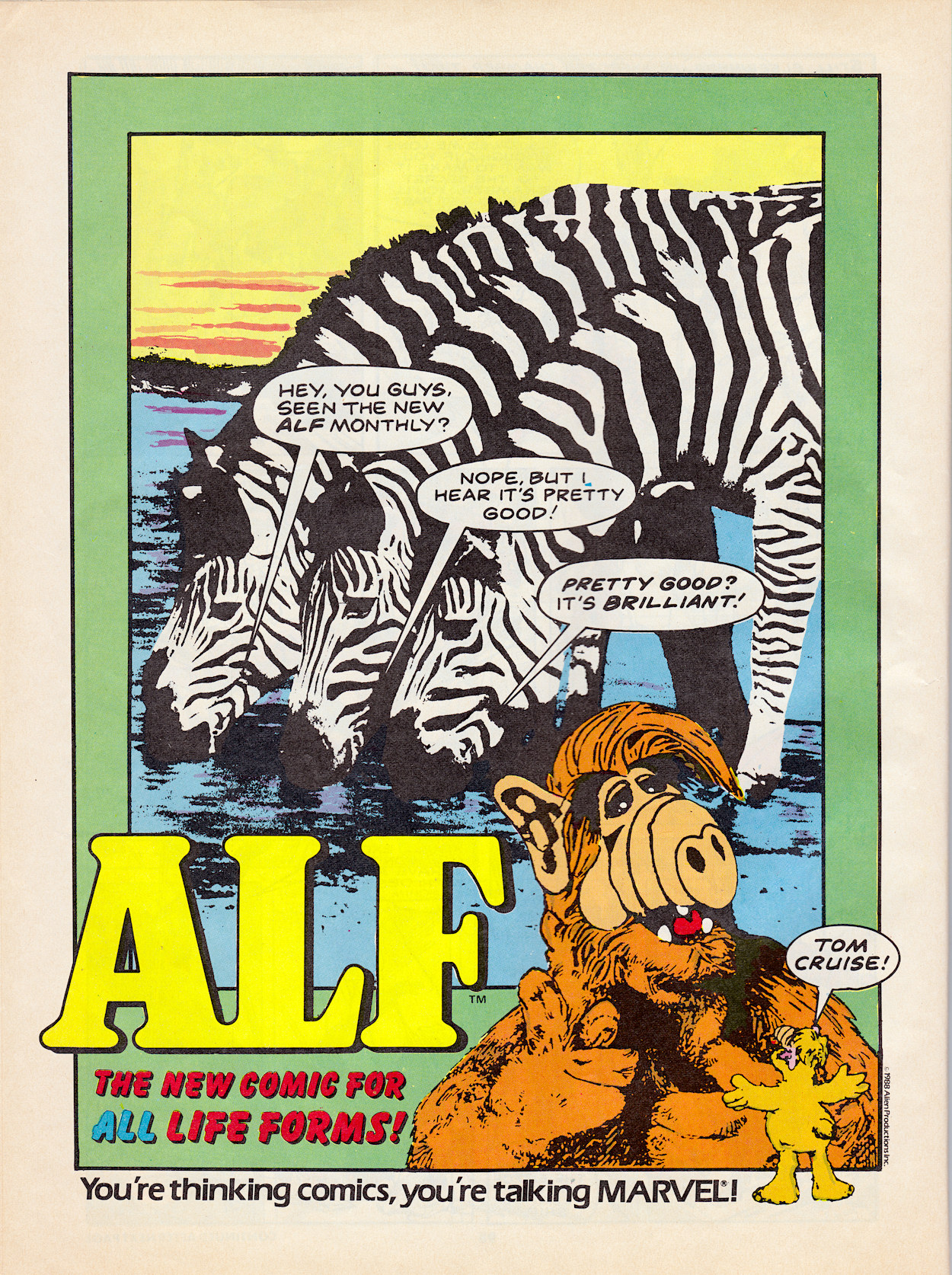
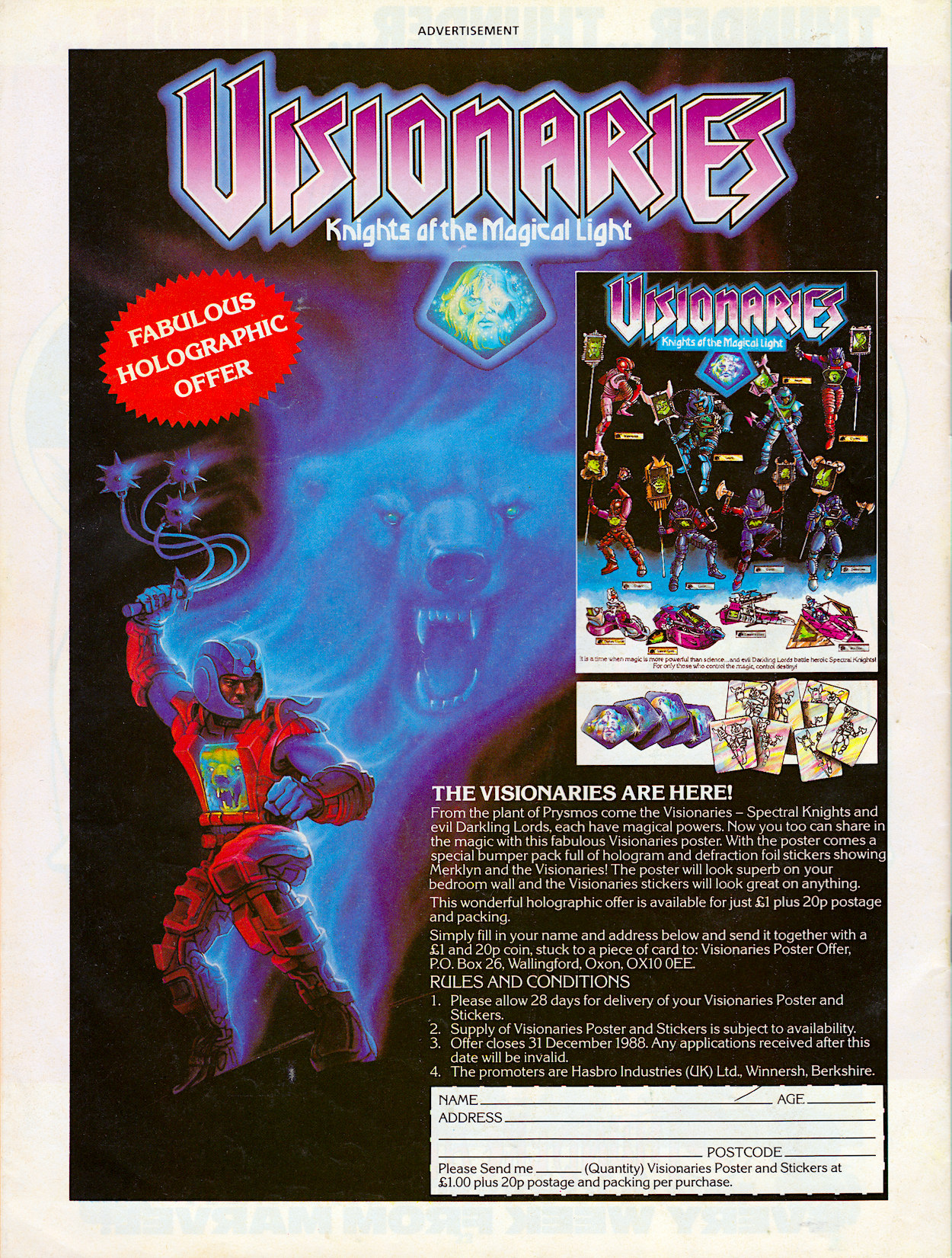
To round off here’s a quick look at the only two non-strip pages in the comic after the editorial. I know how much people love these retro advertisements. This month there’s another Marvel UK monthly looking for attention, then that small promotion in the preview comic for what I’m sure was a superlative poster gets the full back page treatment.

I can remember the whole family sitting down and watching ALF together on the TV every week. We’d giggle along with the canned laughter as we watched the adventures of the Alien Life Form, real name Gordon Shumway from the planet Melmac, taking shelter in the home of the Tanner family after his planet was destroyed when everyone turned their hairdryers on at the same time. I think I can remember buying an issue of the Marvel comic, which was a basic repackaging of the American title along the same lines as Visionaries.

It’s been great fun revisiting this story on the planet of Prysmos so far. I’m eagerly awaiting the next edition and I hope you’ll join me too, #3 of Marvel UK‘s Visionaries‘s review shall be here from Wednesday 19th May 2021.
iSSUE ONE < > iSSUE THREE

ViSiONARiES MENU

ViSiONARiES #1: THE END

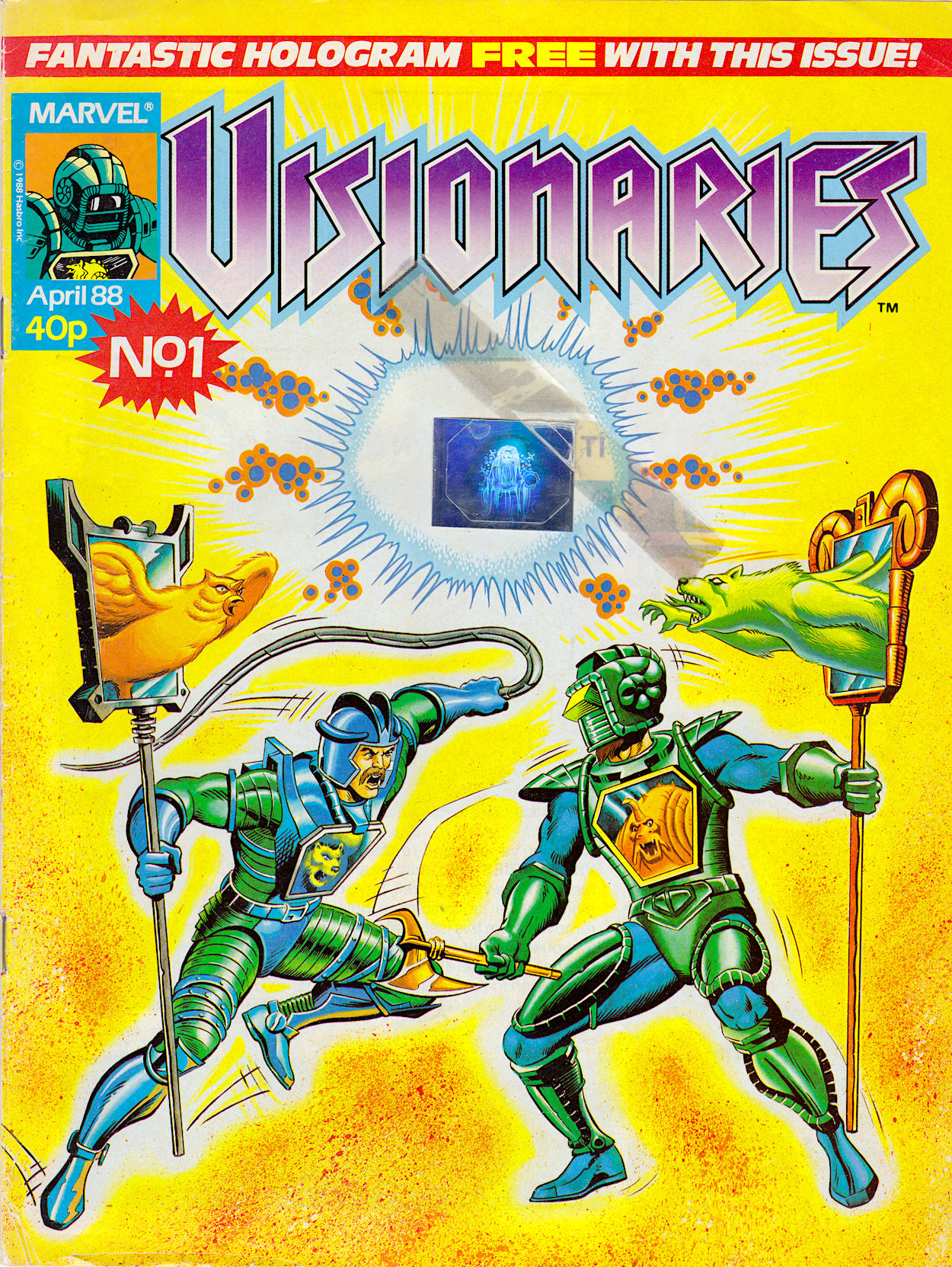
They were the latest toy line from Hasbro, the latest cartoon from Sunbow and now the latest comic from Marvel, kicking off with this superb Martin Griffiths (Thundercats, The Real Ghostbusters, Knights of Pendragon) and John Burns (Transformers, Judge Dredd, Nikolai Dante) cover. With Transformers and Action Force (G.I. Joe) still riding high what could possibly go wrong? Unfortunately this sure thing wasn’t to last, but while it did the Visionaries brought with them one of the greatest 80s cartoons, some of my favourite childhood toys and what could’ve been one of the greatest comic book epics.

But we’re not here to dwell on what could’ve been, this site is all about celebrating these classic comics by reading them in real time and on this day back in 1988 #1 of a brand new Marvel UK title appeared in the shops. While it does have a lovely glossy cover it only contains 24 pages, the same as the weekly Transformers which seemed strange for a monthly. Inside it was cover-to-cover strip action too; no extra features, no fact-files, letters page, back up story and no sign of a Lew Stringer humour strip. (What kind of comic was this without the latter?)

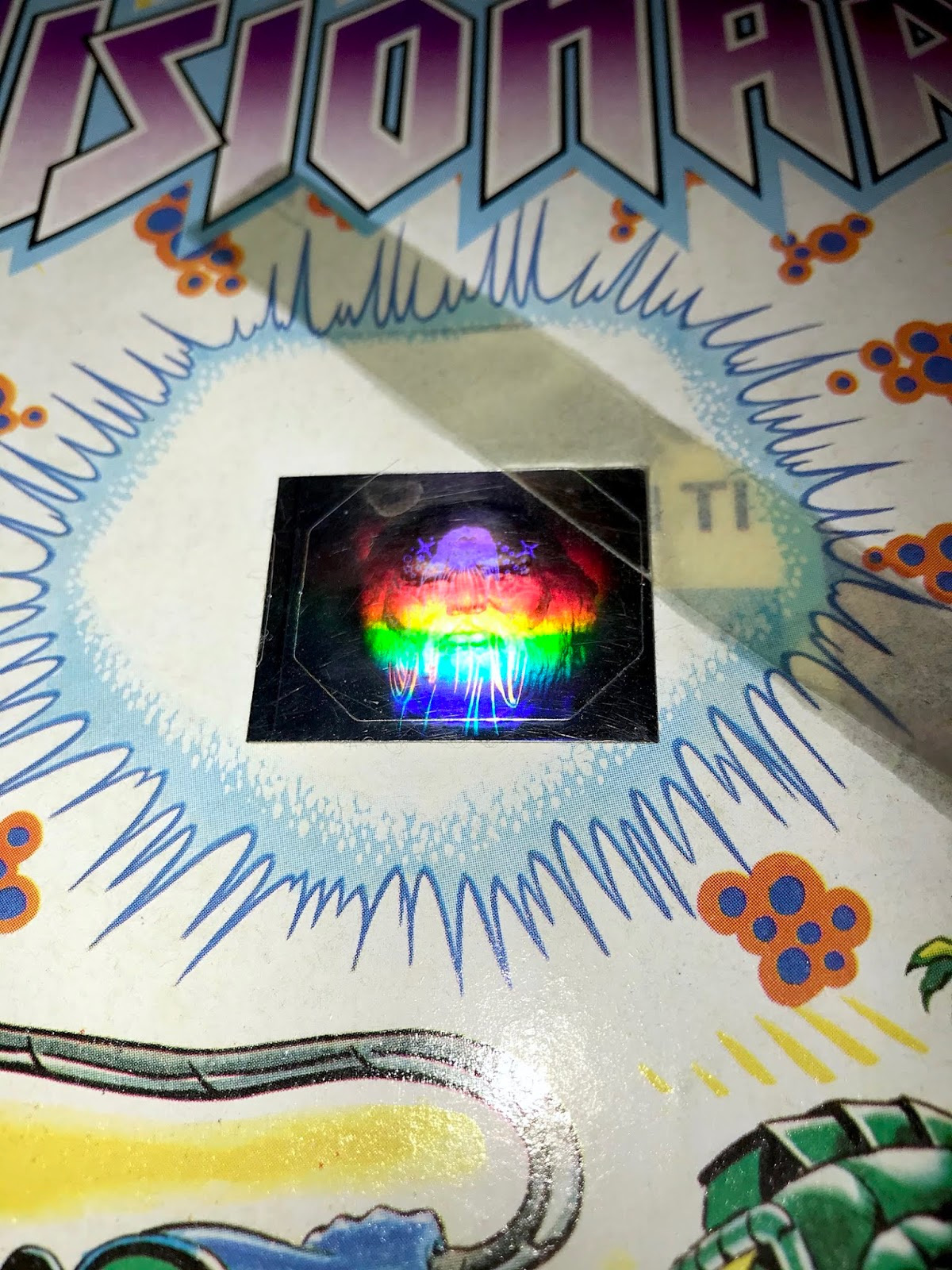
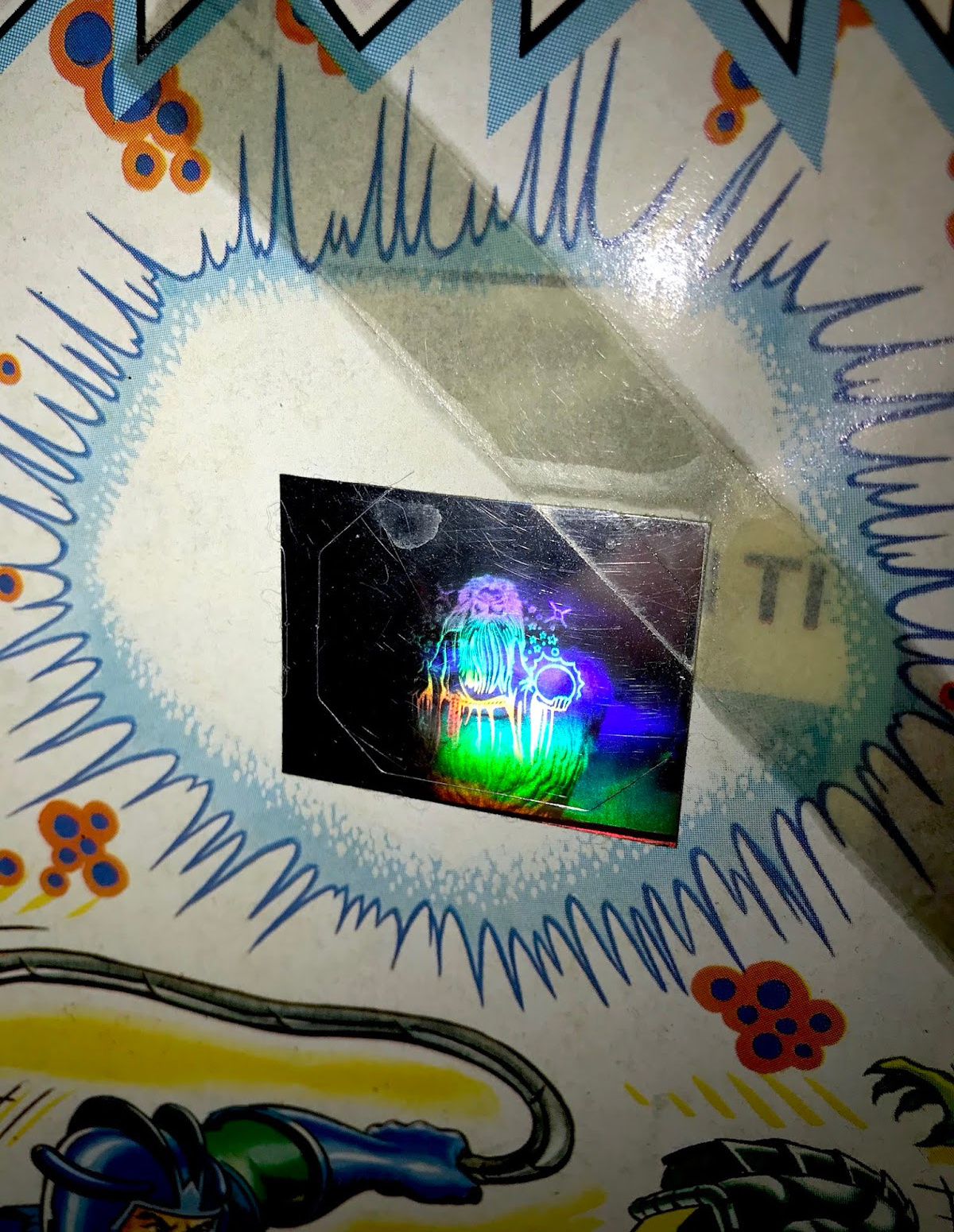
What it did have for kids in the 80s was a free holographic sticker. Featuring two images of Merklynn the wizard, one a 2D outline and the other a 3D image of his face, I can’t begin to describe how bloody difficult this was to photograph.

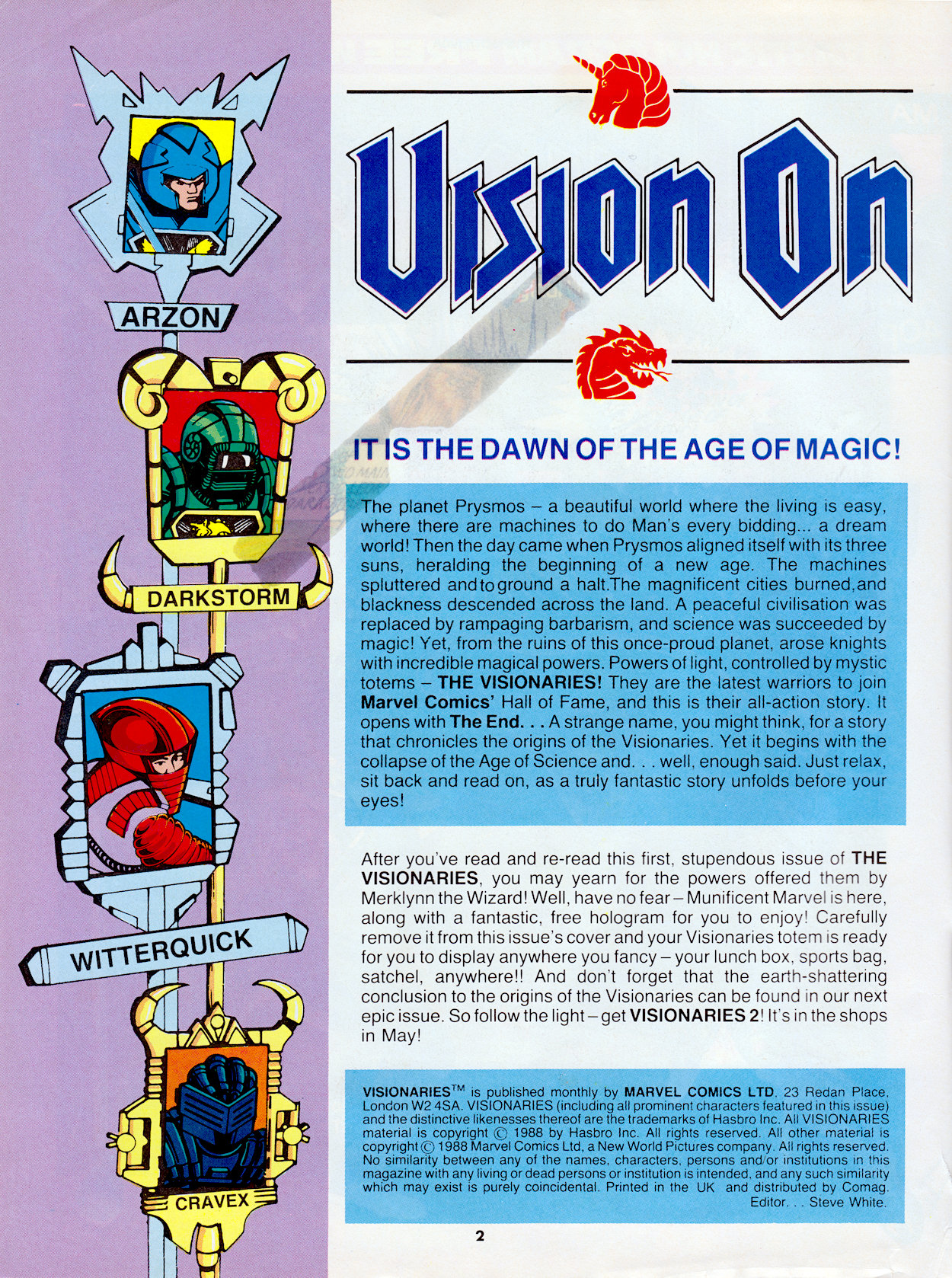
Inside, Transformers colourist Steve White is the editor and welcomes us to the premiere issue with Vision On, an editorial page which looks a lot like the one from The Real Ghostbusters. Other than that, the comic is made up of 19 pages of strip, two Marvel UK adverts, another for the toys and that’s yer lot. It’s still an excitable introduction though and hypes the strip very well. As a young teen I read this story later in the annual so seeing these opening pages transports me right back to Christmas 1988.

The End… The Beginning is adapted by Jim Salicrup (Jurassic Park, Transformers, Spider-Man) from Flint Dille‘s (Transformers: The Movie and G.I. Joe: A Real American Hero cartoons) screenplay of the cartoon’s first episode. In the States, Marvel’s Star Comics released Visionaries bi-monthly (much like their parent company had with Transformers originally). The premiere issue had been a double-length edition, but here in the UK the origin story was split into two and spread over the first two months. This means none of our characters actually become ‘Visionaries’ this issue.

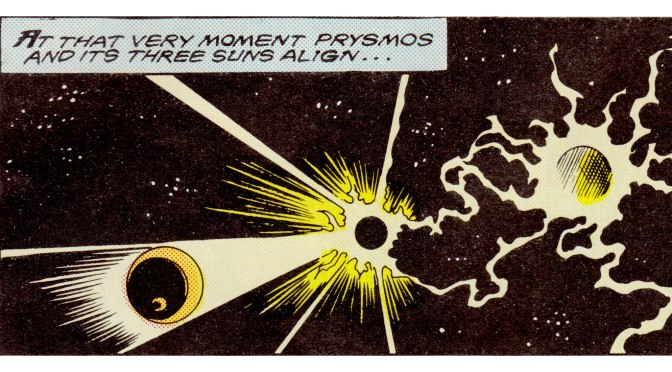
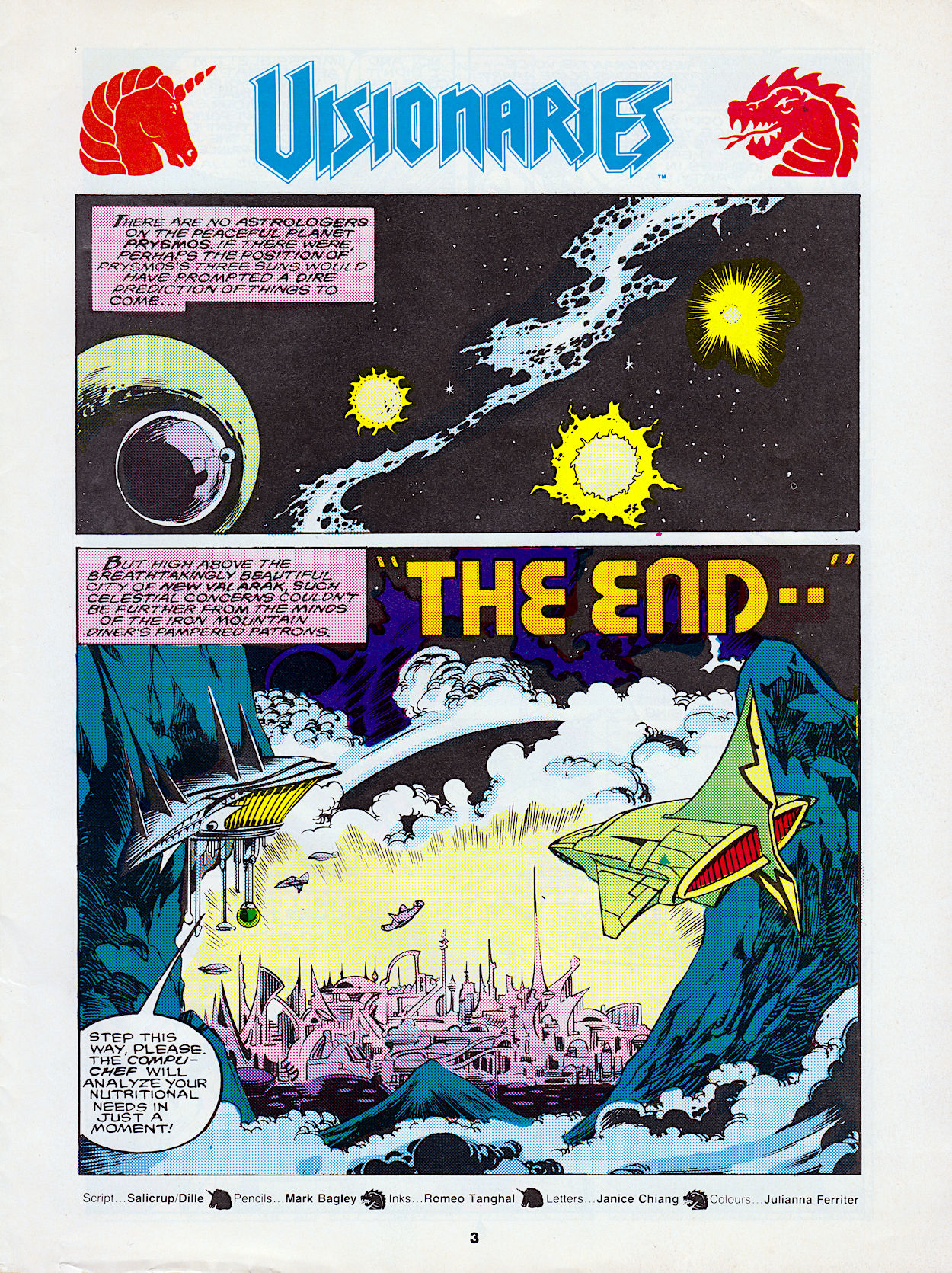
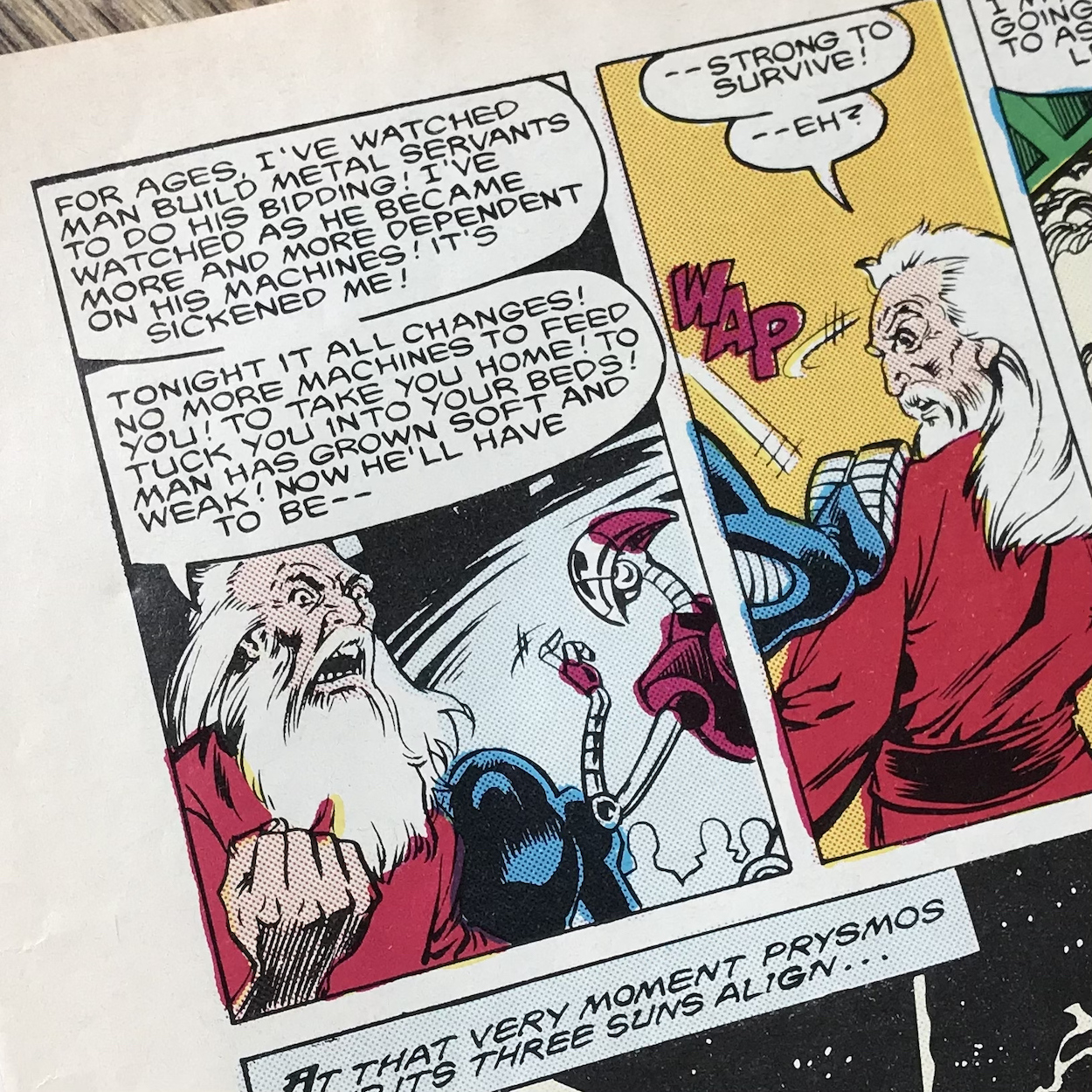
Set on the planet Prysmos, Merklynn the wisened old wizard brings portents of doom as the three suns begin to align, signalling the end of the Age of Science and the beginning of a new Age of Magic. Angered at their reliance on technology, Merklyn states he’s watched humans grow weaker for eons, so he’s obviously a lot older than we think.

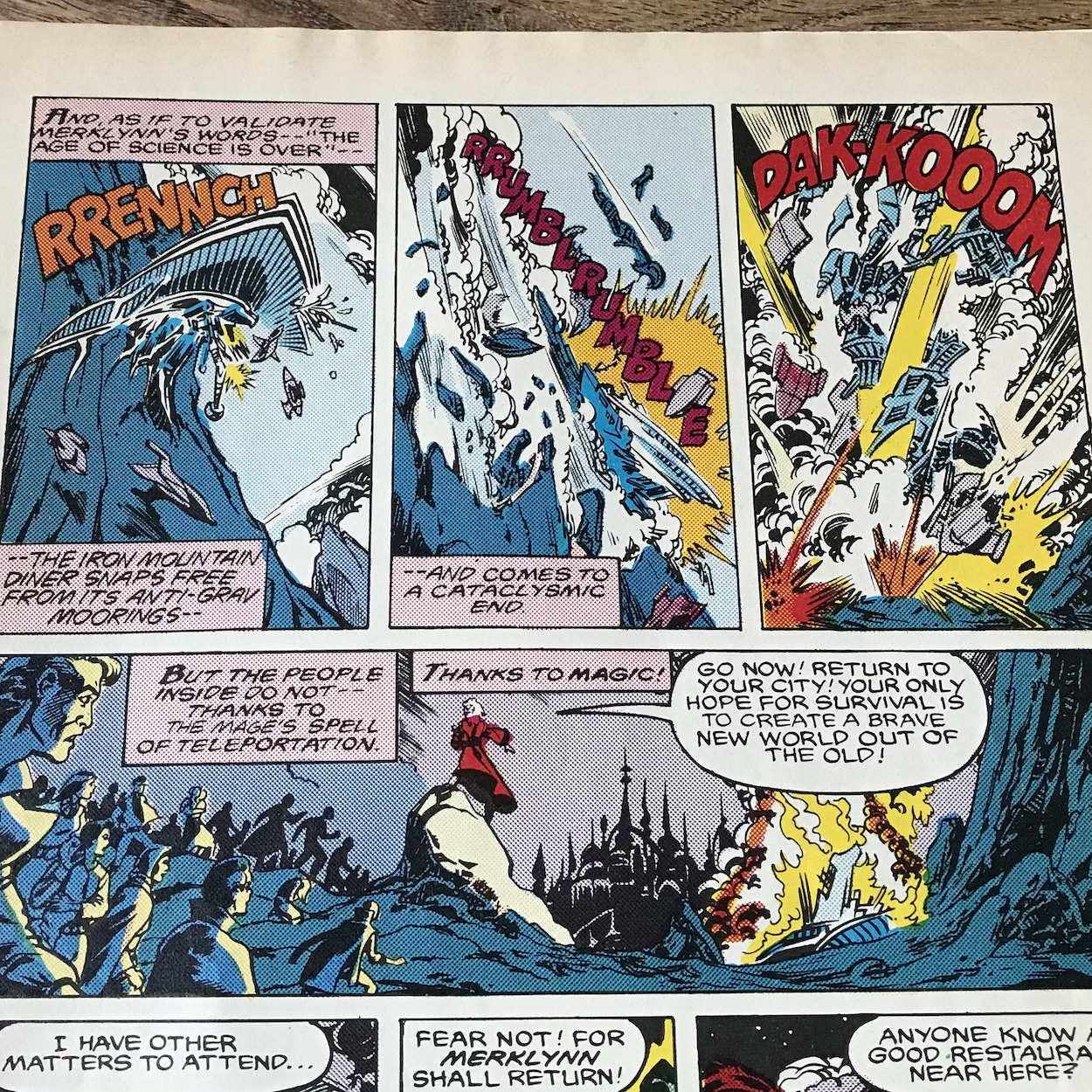
He has a point. It would appear that from birth to death technology is on hand to answer to these humans’ every whim. Even in this restaurant, sitting on the side of Iron Mountain, we see people being fed their food by robots, after the robot chefs have cooked it and the robot waiters have served it. They don’t even have to bother their brains with the task of choosing what they want to eat, instead their dietary requirements are scanned by the maître d’.

Then the suns align.

In an instant the world is plunged into darkness. The restaurant crumbles and falls, no longer held in place by the advanced machinery, destroyed completely as it hits the ground far below. To prove to the people around him this is truly the new Age of Magic, Merklynn teleports the diners to safety. All around them their world has changed forever in the blink of an eye.

A brief moment of humour before the horrors on the next page

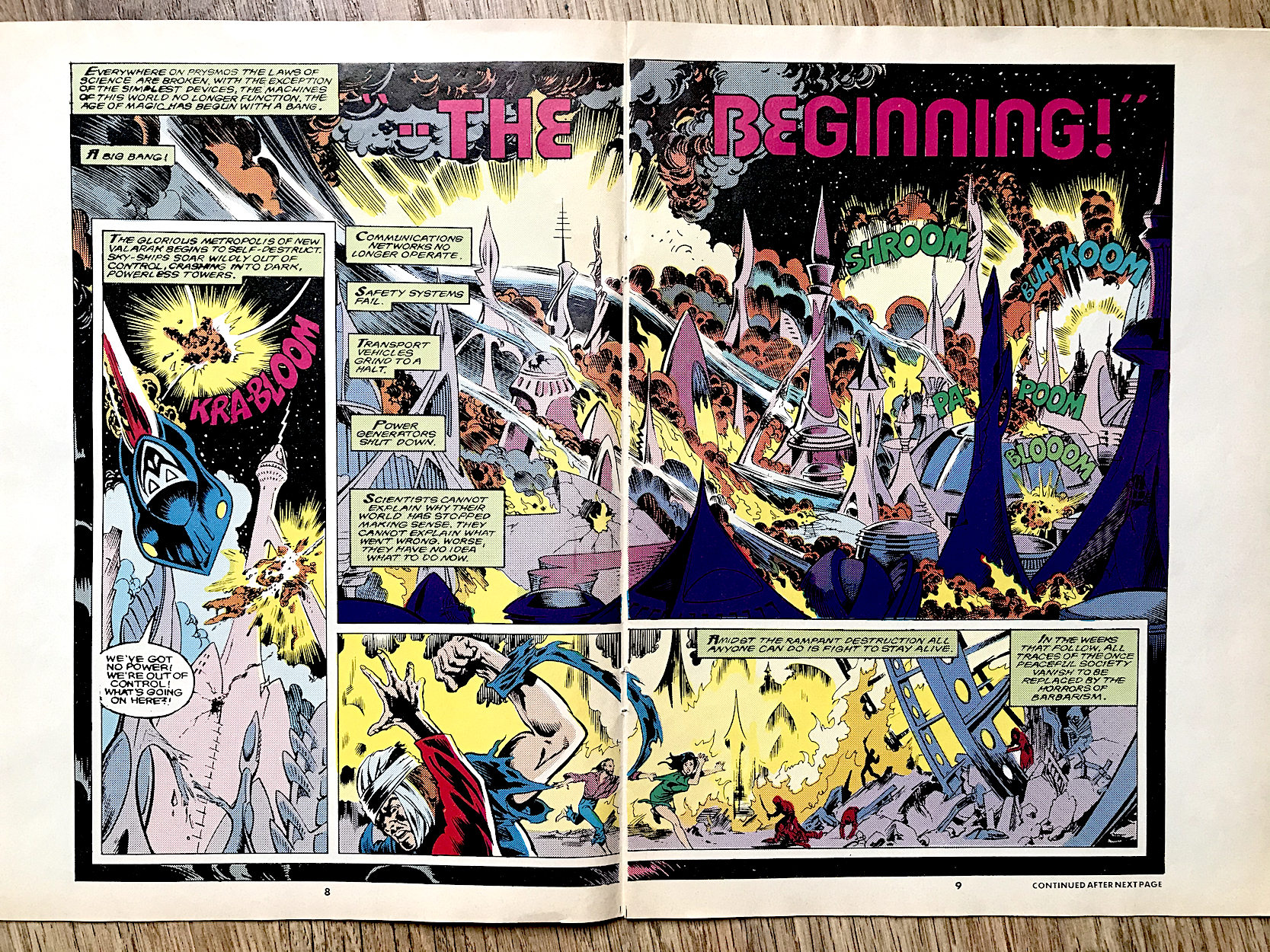
Completely out of their depth, unused to thinking for themselves, the first words anyone utters as the world ends around them is, “Anyone know a good restaurant near here?”. A brief moment of humour before the horrors on the next page. It doesn’t take long before the human race is fighting for survival in this powerful double-page spread.

The Age of Science has ended and the beginning of the Age of Magic is a terrifying and violent place. The once peaceful people of Prysmos, who didn’t want for anything, soon descend into barbarism. But as society crumbles a new order slowly rises up “cobbled together from bits and pieces of the old”.


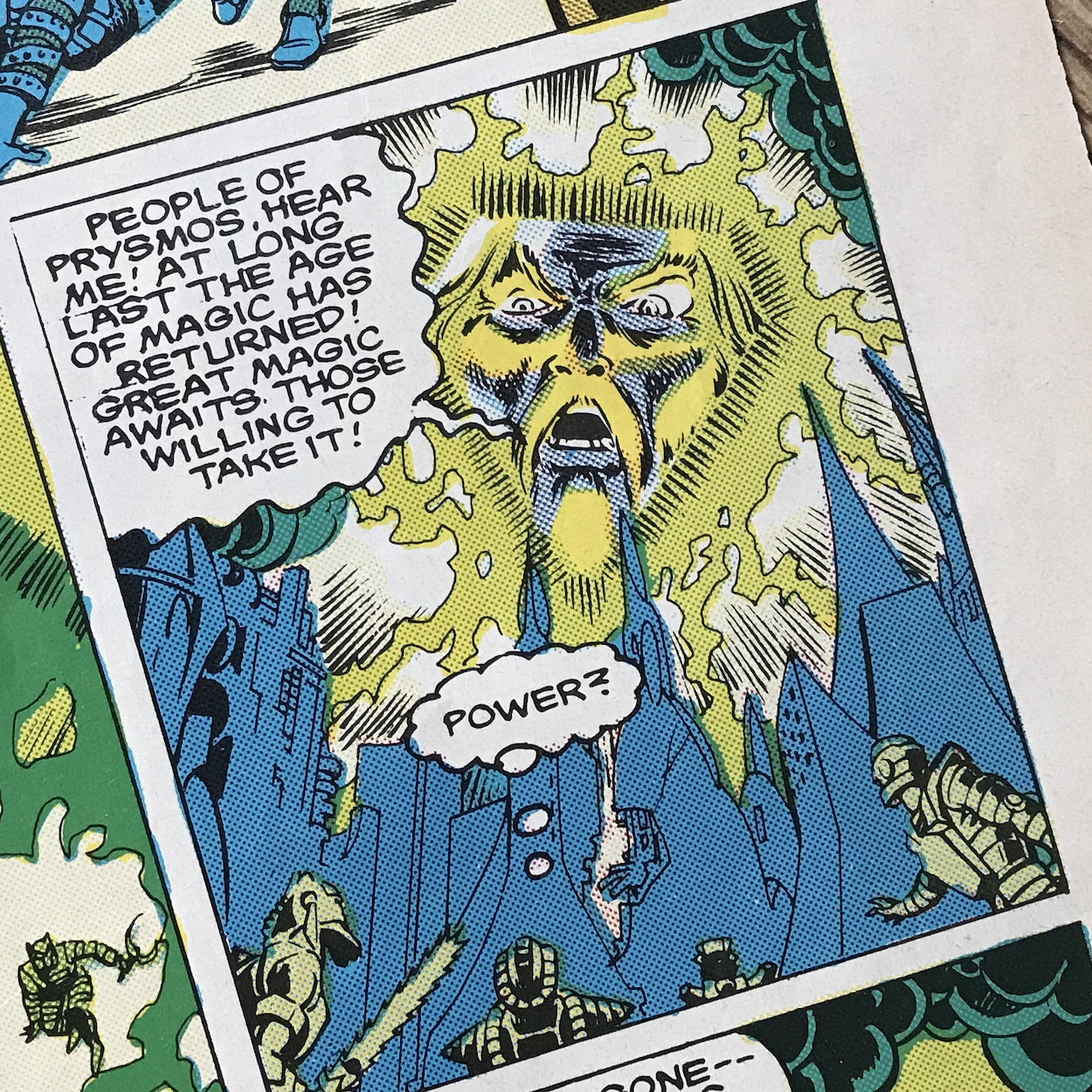
“Great magic awaits those willing to take it!”

Merklynn

The useless technology all around them is melted down and used as protective armour and weapons, a necessity in these new times. From the villages emerge knights, some ruling with iron fists and led by Darkstorm, others aligning themselves with Leoric, the former mayor of New Valarak who witnessed first-hand the scene in the restaurant.

There’s some great imagery throughout this issue, with pencils by Mark Bagley, inks by Romeo Tanghai, colours by Julianna Ferriter and lettering by Janice Chiang. In particular the fight scenes are exciting and during one particularly brutal confrontation the skies light up with a familiar face (inside a familiar free-hologram-like shape) and a booming voice.

Merklynn tells the knights of his Iron Mountain, where the destruction began. Inside, great power resides, power enough to rebuild the world and take command of this new age, to rise up and become strong again. It’s obviously too much of an opportunity for someone like Darkstorm to pass up so he and his men (the grovelling but loyal Mortdredd and the brutal mercenary-for-hire Reekon) take off to claim the power for themselves.

They believe these times call for a tough leader, someone unafraid to make unpopular choices in order for their planet to survive, no matter the cost to the people. On the other end of the spectrum Leoric, Ectar and Feryl believe only by working together can the populace regrow their communities and flourish. In the background we also meet characters like Cravex who wishes to use the political climate to his advantage (he had the voice of Starscream in the cartoon, appropriately enough) and during the final pages we’re also introduced to Galadria, Arzon and my favourite, Witterquick.


“Anyone know a good restaurant near here?”

The first words uttered after the apocalypse

With the world building complete we move on to the main part of the origin story and the quest for their magical powers. Iron Mountain’s labyrinthine interior is home to tests of intelligence, fitness, strength, wisdom etc. Just as the toys had set out each figure’s specific ability, these tests are our chance to be introduced to them in a more natural way than resorting to the kind of long winded exposition we got in the earliest issues of Transformers.

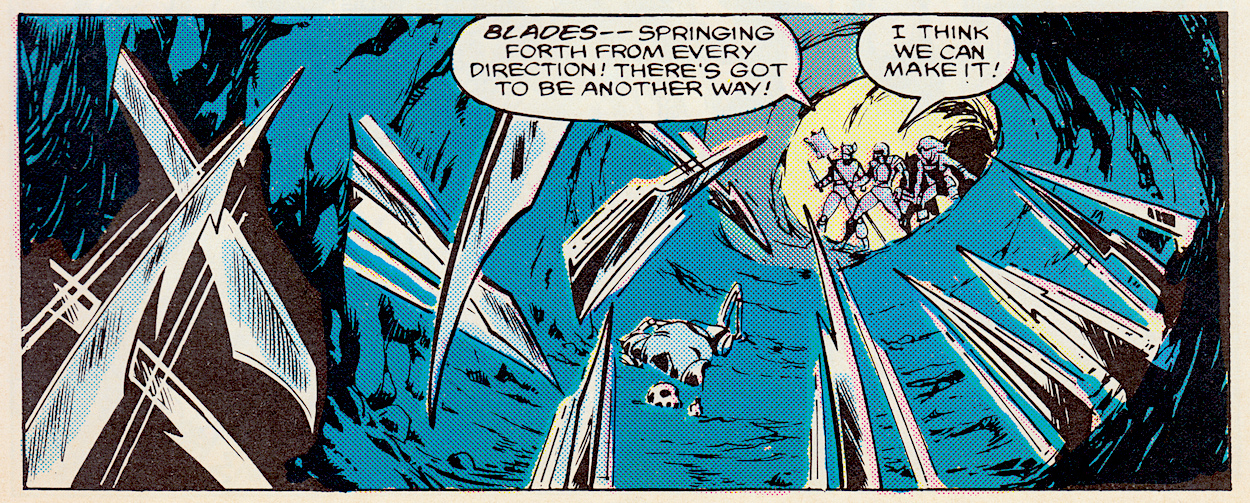
For example, Galadria uses her keen senses to stop herself falling for a trap like the men ahead of her, Witterquick uses his speed to avoid deadly fast moving spikes and Arzon’s love of flight sees him gliding away to escape danger. But not before we’ve had a cheeky wink towards their Hasbro stablemates; as a ladder transforms into dozens of intertwined snakes Arzon exclaims, “There’s more than meets the eye here.” Brilliant.

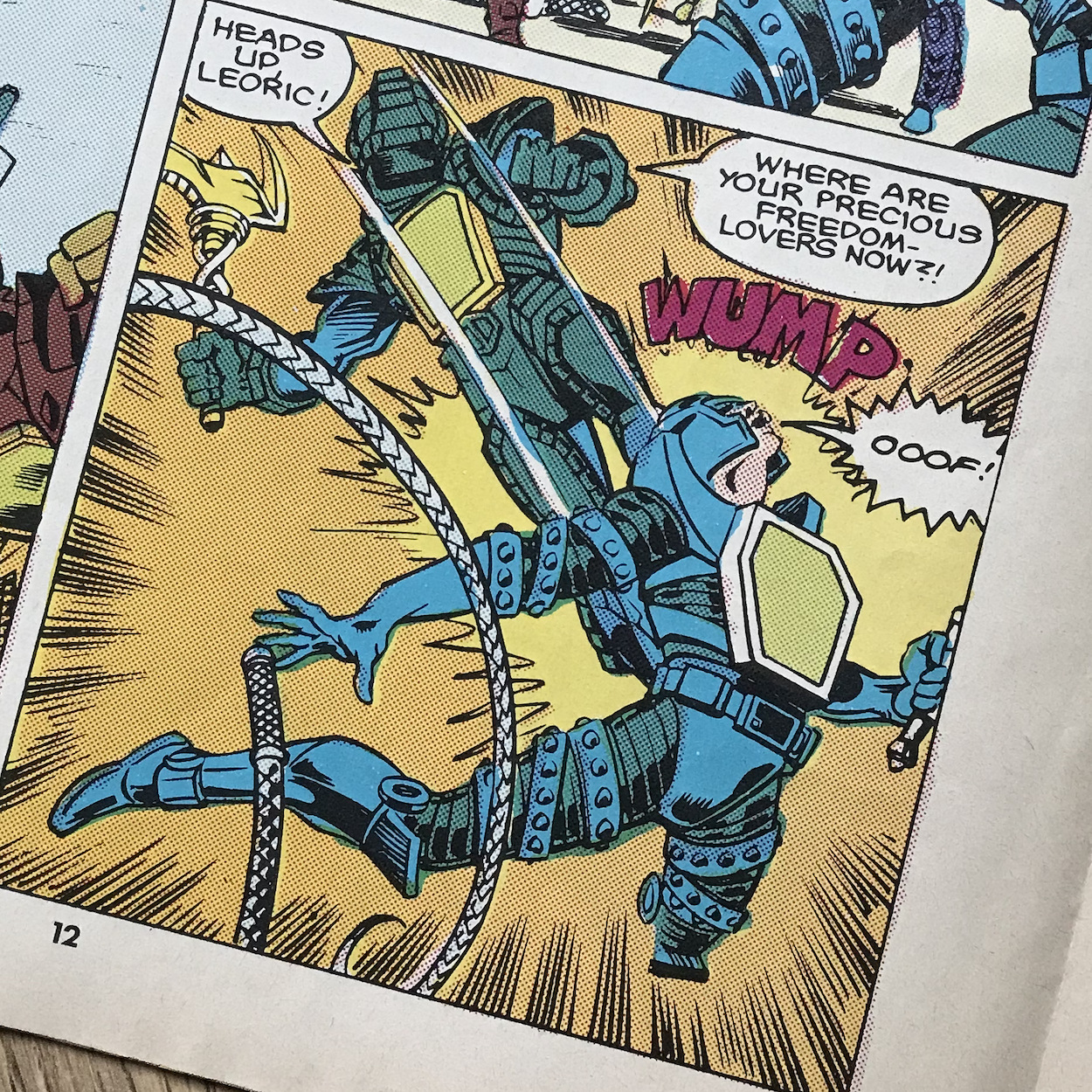
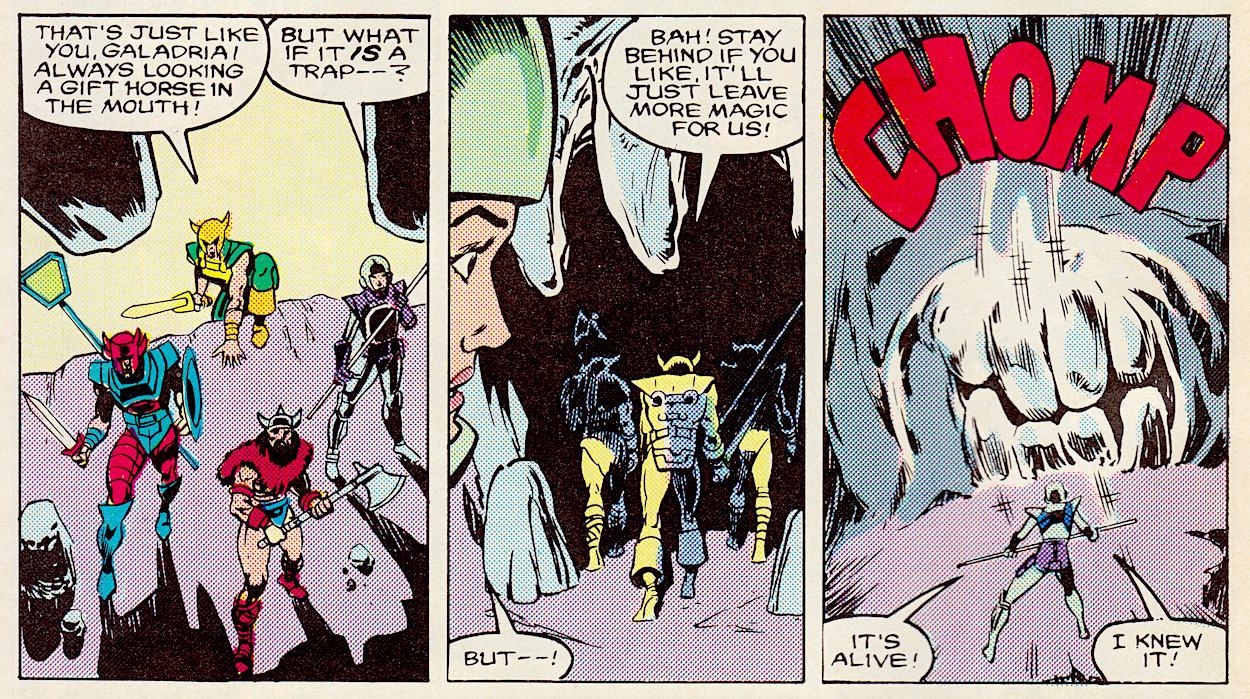
Our original six characters from earlier in the story round things off for this issue when they discover a giant stone gargoyle, curled up in a corner and snoring loudly. It’s alive! But at least it’s asleep. Sneaking past it, Mortdredd puts on a weakened voice and tricks Leoric’s team into coming to the aid of an apparently fallen comrade.

There’s actually a nice bit of humour here too. Mortdredd’s character sucks up to Darkstorm constantly, eager to please him by carrying out any sinister task no matter how horrible, keen to have his protection. Darkstorm is constantly exhausted of the grovelling but recognises Mortdredd’s diabolical talents are crucial to his plans.

It’s at this point the story, which has been building momentum nicely from its atmospheric beginning, gets unceremoniously cut in half.

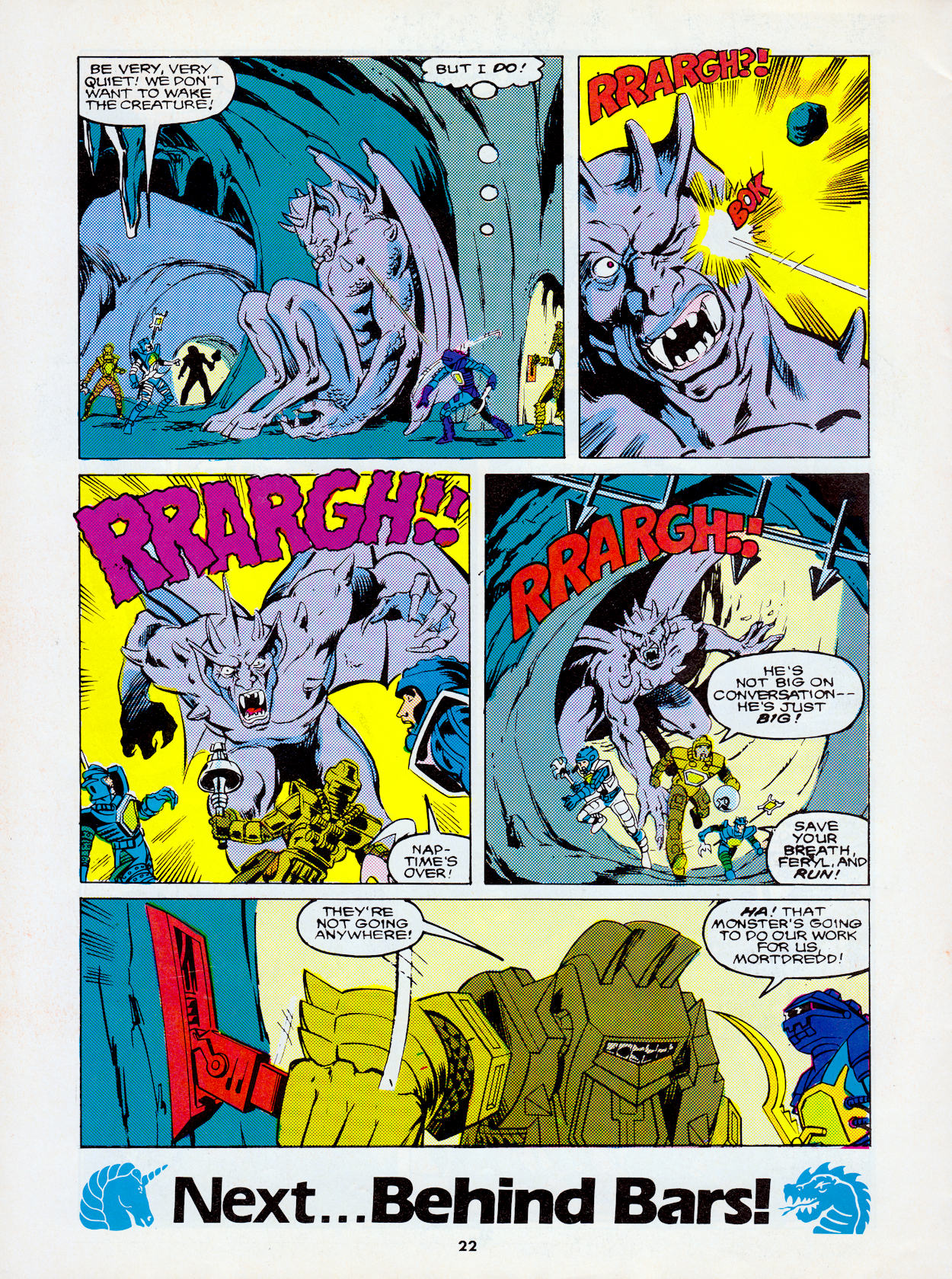
Below is the final strip page. If you look closely at the penultimate panel you’ll see a metal portcullis and this is what Reekon is controlling with that lever. This could be easily missed so its effectiveness as a cliffhanger is debatable. From memory of the annual, showing the next panel or two at the top of the next page would’ve been much better, with maybe a ‘Next Issue’ box filling out the rest of the page.

The overriding feeling I get from this issue is how these are already well developed characters, grounded in a magical kind of reality, their reactions and relationships with each other feeling very real. All-in-all a well thought out world full of possibilities for future storytelling and all before we’ve even concluded the origin tale. It’s great fun reading something so full of far-fetched magical elements, action and adventure, yet with such believable characters at its centre.

This gives real meat to the bones of the story and something to care about and draw you in. By the end the lack of anything other than the strip itself isn’t an issue anymore, the story having been very satisfying in its own right. It certainly wouldn’t be the last Marvel UK comic to go this route either. Slimer, Alf, Inspector Gadget and others simply repackaged their American comics on larger paper with a new editorial and maybe a letters page.

Speaking of other Marvel comics.

Apart from the cover and editorial, the only non-strip pages are a toy advert (which you can see in this previous post) and two promotional pages for other comics which I’ve included above, because why not? The Real Ghostbusters had just launched this same month and Thundercats was celebrating its first birthday by this stage. The ‘Cats had also been launched as a bi-monthly in the States by Star Comics, proving popular enough to warrant going monthly from #8 onwards that side of the pond.

Despite knowing in advance a series won’t last long when I’m covering it for the blog, I won’t let that take anything away of the enjoyment of reading them in real time. I’ve certainly loved reading this one. A whole month feels like an agonisingly long time right now though. But I shall follow my own rules and wait.

Issue two shall be read and reviewed on Wednesday 21st April 2021. Join me then, won’t you?
MiNi-COMiC < > iSSUE TWO

ViSiONARiES MENU

THE REAL GHOSTBUSTERS: PREMiERE iSSUE ANNiVERSARY

I admit that back in 1988 when I finally got to open my copy of The Real Ghostbusters‘ premiere issue I was a little confused. I’d been looking forward to something more along the lines of Marvel UK‘s Transformers comic, with a lengthy multi-part story and certainly no text stories which I associated with comics aimed at much younger kids. However, any confusion, or indeed initial disappointment, evaporated as soon as I started to read.
By the end of its 24 pages I was hooked and didn’t regret placing the order with my newsagent before even reading it. In fact, I stayed with the comic for the majority of its run. Now, 33 years later I’ve just finished reading issue one for the first time in decades. So how does it hold up to reading today?

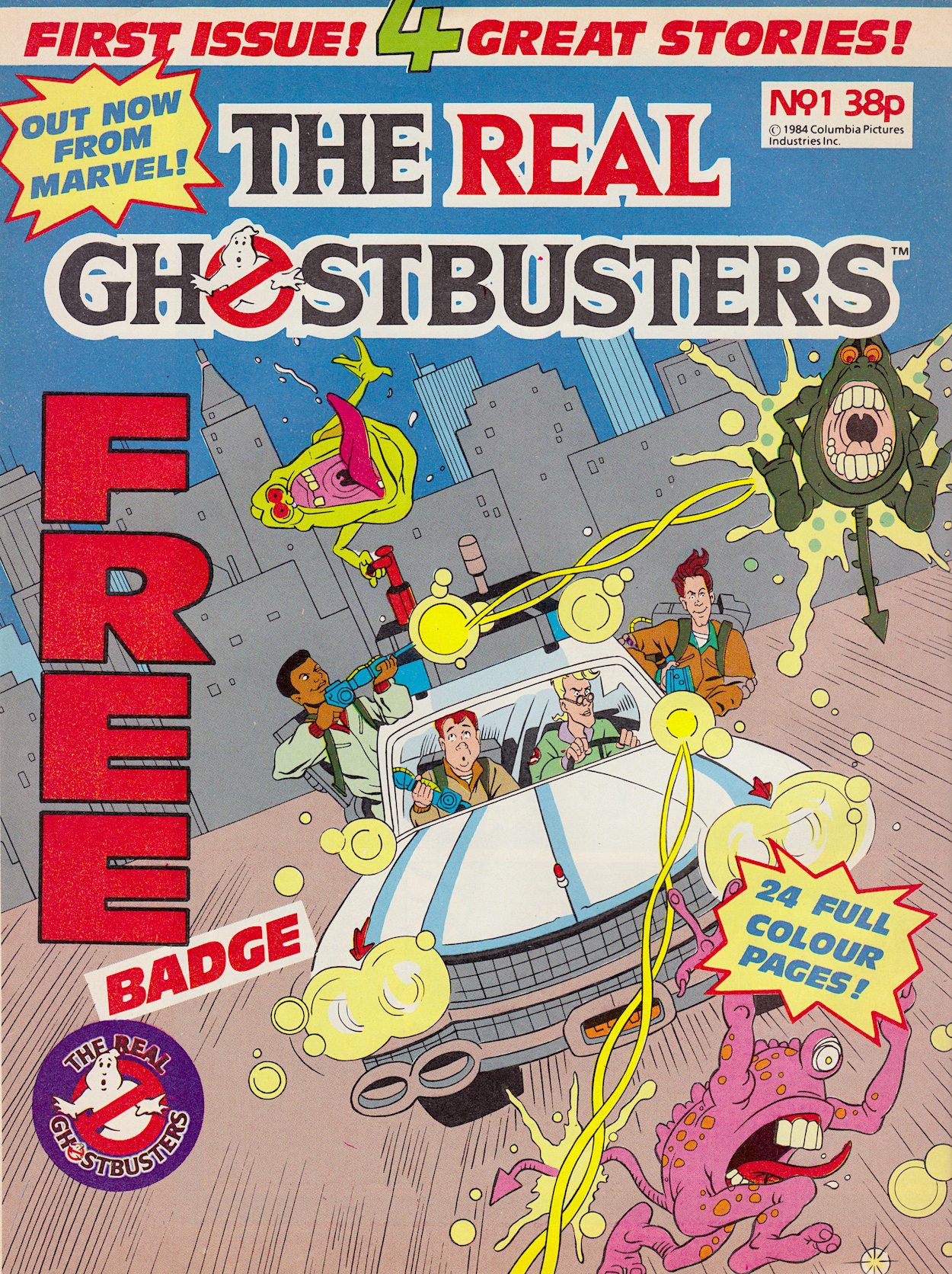
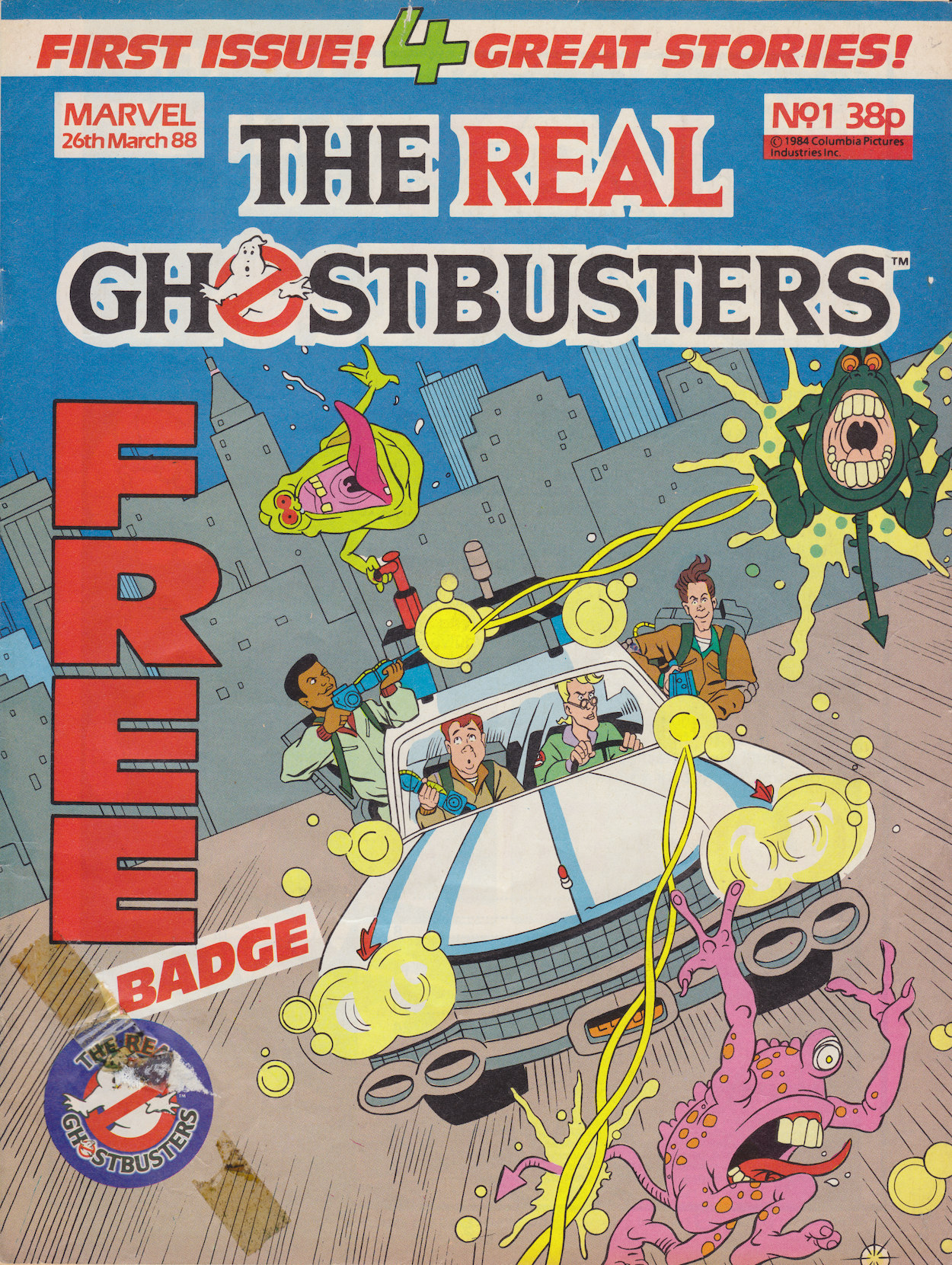
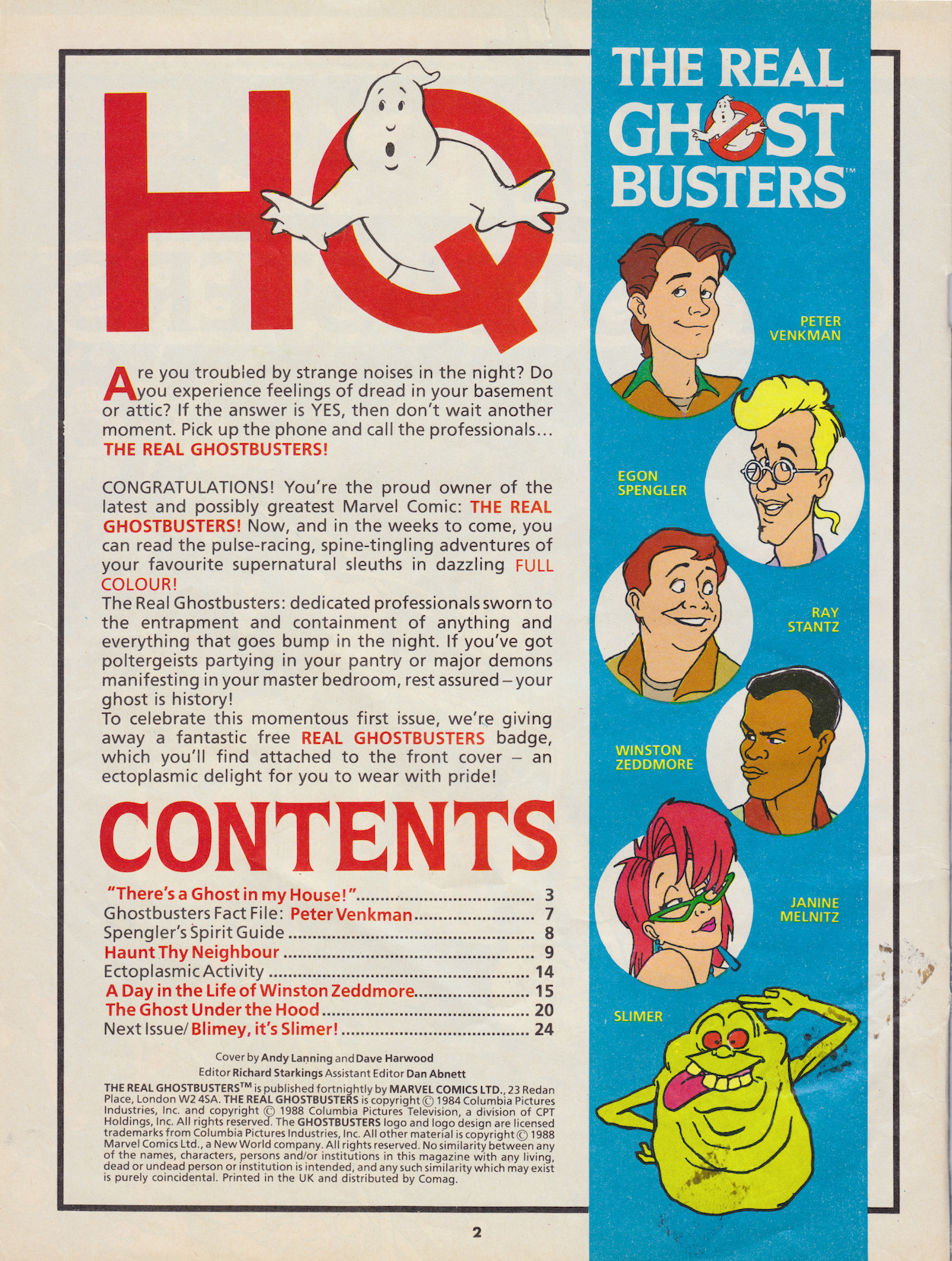
That front cover is nothing short of iconic, often copied by my young self back in the day on several school exercise books. Andy Lanning (The Sleeze Brothers, Superman, Majestic) and Dave Harwood‘s (Action Force, Swift Sure, Conqueror) introduction to this new title perfectly captures the light-hearted tone of the comic. Unlike the aforementioned Transformers I’d enjoyed reading at my friend’s house, The Real Ghostbusters would focus on smaller, complete tales aimed at getting a chuckle out of its readers. A unique approach, brave even, but they pulled it off and created a comic like no other.

The first issue has no less than three strips and a text story, fact-file, activity page, ghost guide, request for readers’ letters and of course a Lew Stringer strip. (What Marvel comic was complete without Lew?) It’s all introduced on the HQ page which starts off the whole shebang by reciting the movie, setting the tone perfectly for this comedy comic (a term I’ll clarify later). The overall design wouldn’t change, there’d be no ‘new look’ every 50 or so issues, instead the cover and feature pages remained the same almost until the very end.

There’s certainly a confidence about it from the very start.

All of the strips here are written by John Freeman (of Down the Tubes). Editor of Doctor Who Magazine at the time, he was asked by the comic’s launch editor Richard Starkings to supply stories for the first issue. John told me this was literally his first regular writing gig, which is incredible since this was the launch of a brand new comic based on such a hot property. Needless to say, John knocks it out of the park.

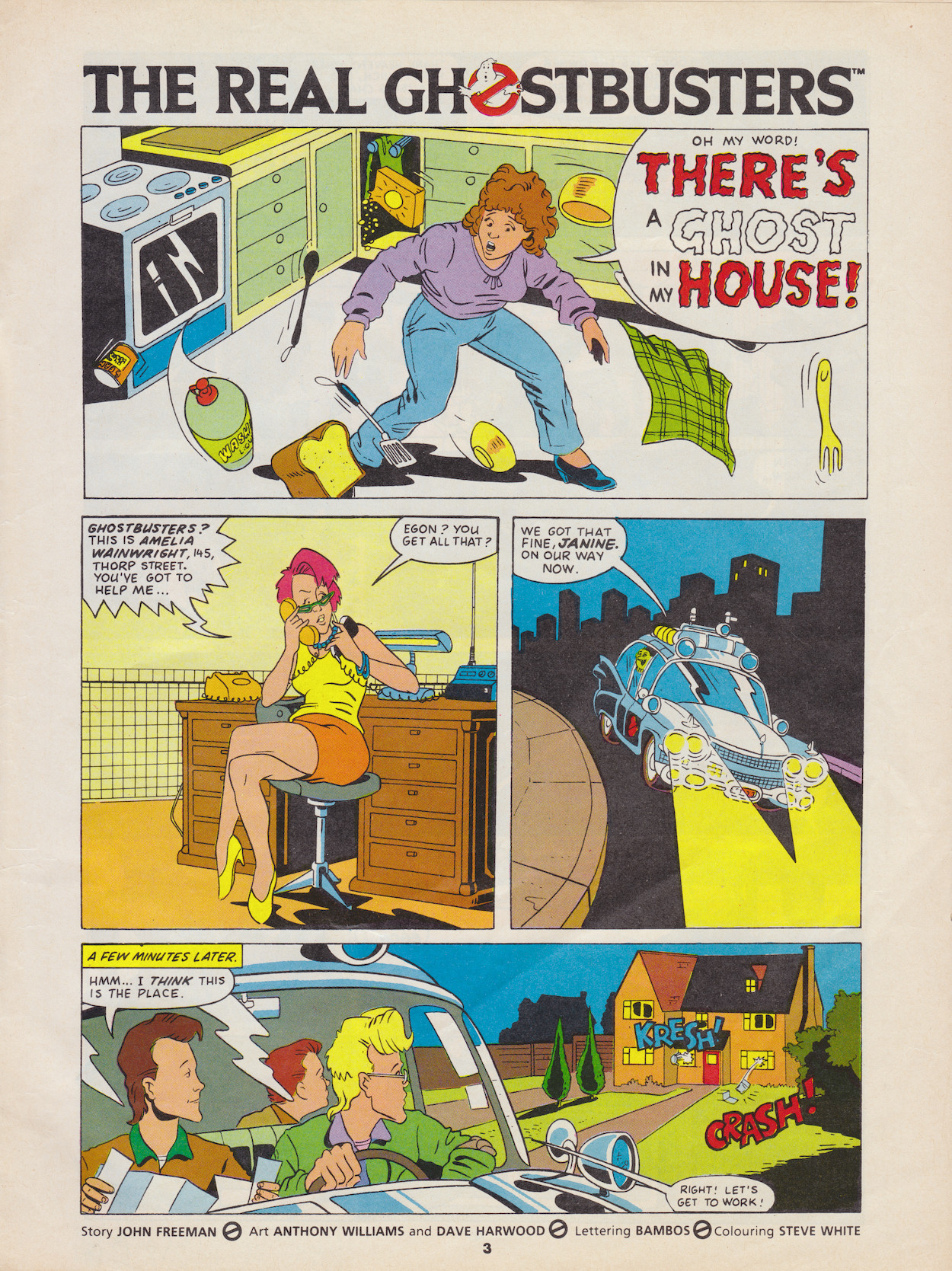
As with the other stories, “There’s a Ghost in my House!” takes place with the team already on the job and gives us an idea of the pacing we can expect, as well as acting as an introduction to the Ghostbusters’ equipment, interactions and most importantly their humour. That’s all it really needs to do, but there’s still a twist. The ghost itself is a buggane, a house ghost and harmless if treated right. The homeowner ends up feeling sorry for it and in the end keeps it as a pet!

Dave’s inking added ample shadow work to gloomy, haunted scenes in the annuals

The strip is drawn by Anthony Williams (Judge Dredd, Fate, Sinister Dexter) with Dave Harwood on inking, lettering by future Slimer! artist Bambos Georgiou (Knights of Pendragon, Spectacular Spider-Man, James Bond Jr.) and coloured by Steve White (Transformers, Xenozoic Tales in Jurassic Park, editor of Visionaries). One of the other stories, The Ghost Under the Hood is also drawn by Williams but with Dave Hine (Detective Comics, X-Men, Night of the Living Dead) inking and there’s quite the difference. For the previous blog site I’d read a couple of the annuals and Dave’s inking added ample shadow work to gloomy, haunted scenes and made for some atmospheric illustrations. Finally, this strip is coloured by Paul Jacques (Adventures of the Galaxy Rangers).

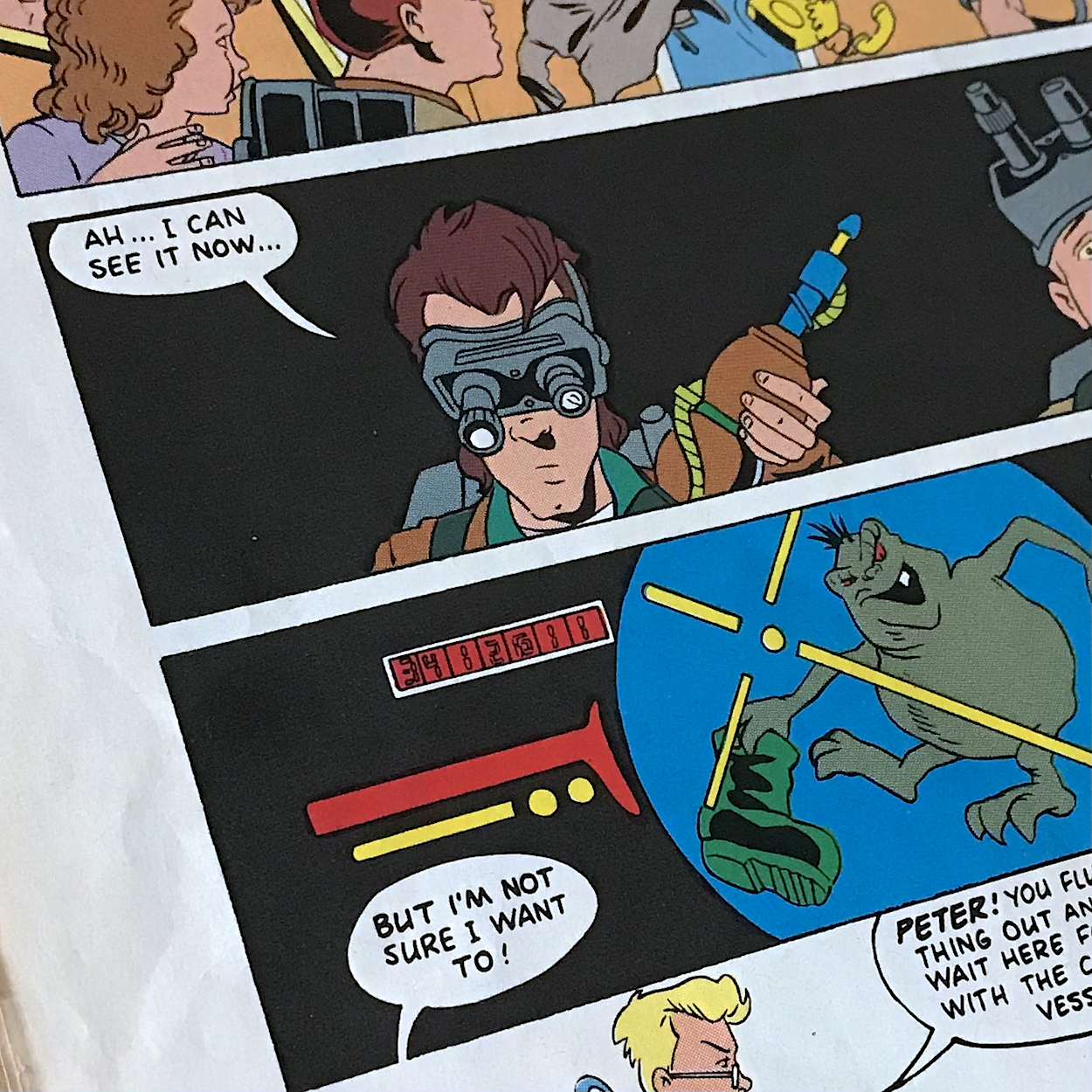
Again, it’s full of action and humour and plays out like one scene has been plucked from an episode of the cartoon. This was Richard’s intention, he wanted each story to take place right in the midst of the action whenever possible. Here, Ecto-1 is out of control, Egon unable to steer or brake. You can see from the page above the plan isn’t to Peter‘s liking and in the end the car suddenly stops, sending him flying. Now parked outside a Chinese takeaway, their perpetually hungry pet ghost Slimer appears from under the hood.

To establish a scene and scenario, pack in some action, wit, character and a funny conclusion in just three pages is quite the achievement. Indeed, by the time I finished reading the comic I was a little breathless (metaphorically speaking) with the fast-paced nature of the stories and gags.

The humour in their interactions was always well developed and genuinely very funny

The covers were mainly used to illustrate the text stories, doubling up as their title pages. So yes, basically we’d be getting two identical pages in our comic but we didn’t care, some of the front covers would have us frantically flicking straight to that story. This was especially true later in the run with some simply stunning artwork on the covers.

I’ll admit it took me a handful of issues before I read one of the prose stories as a kid because of a false perception they were aimed at younger children than me. But I remember discovering just how good they were and reading all the ones I’d glossed over one very enjoyable afternoon. From then on they often became the first thing I would read.

Space constraints might have been a factor here, but they would often focus on just a couple of members of the team per story. This would give each individual character time to shine, and in doing so the humour in their interactions was always well developed and genuinely very funny.

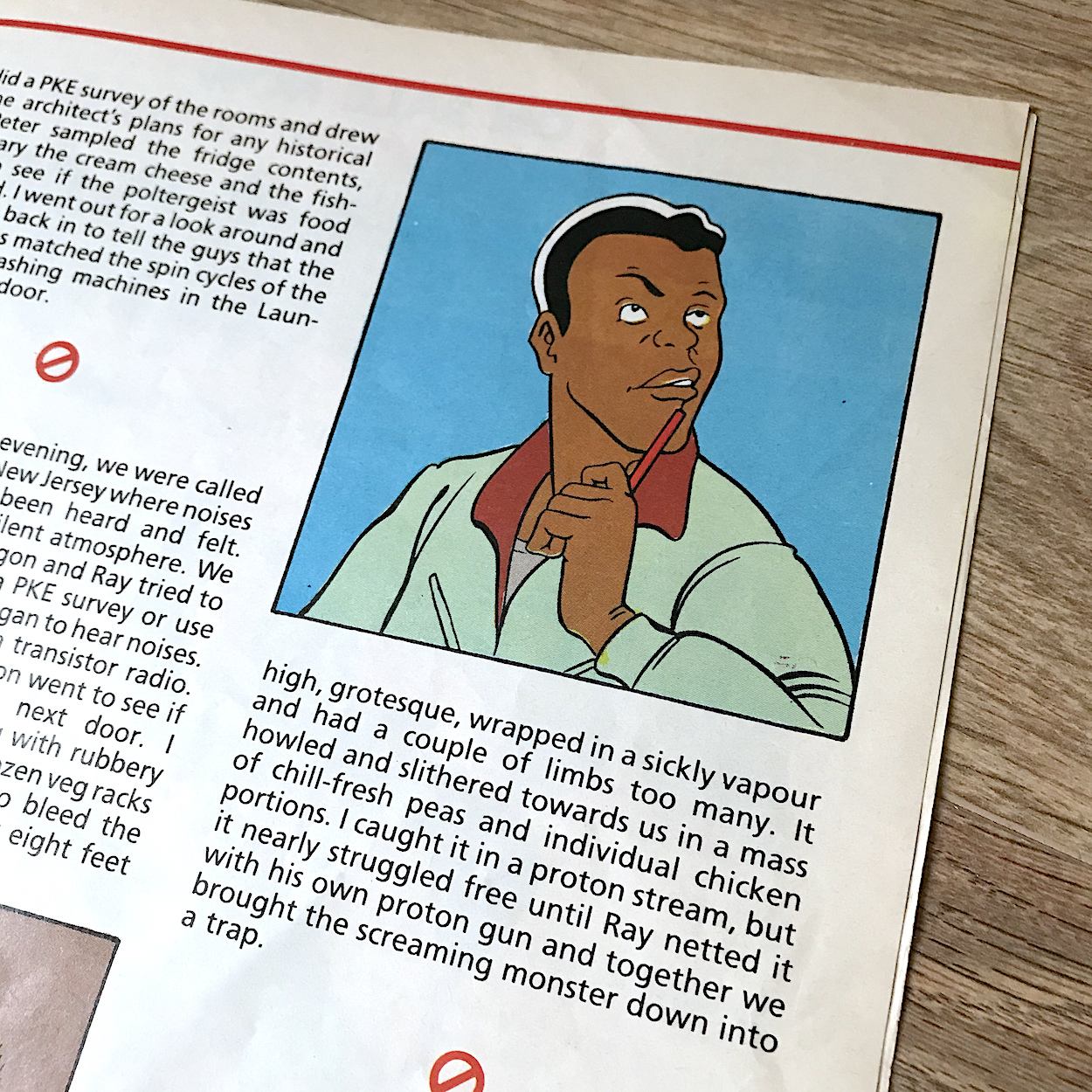
None were funnier than the Winston’s Diary series which ran in alternate issues, with Brian Williamson‘s (Doctor Who, Totally Primeval, Batman) panels repeated each time. In this issue, my favourite character takes us through a typical day in the life of the team. In this issue’s story, over the course of a few busts Winston’s cool head provides a hilarious contrast to the others. Here’s just one example, where a rock star is hearing strange noises in his apartment:


“The apartment was newly decorated and equipped. Egon took PKE readings in all the rooms. Ray spectra-scoped the walls and balcony. Peter explained that he must carefully examine the rock star’s expensive Hi-Fi and video in case the ghost was lurking there. We all heard weird noises, groans and whines. I bled the air bubbles from the newly-installed radiators and the noises stopped.”

Winston Zeddmore (Dan Abnett)

This repeats throughout the day, Egon and Ray going to ever more extreme methods of ghost hunting, Peter finding something to distract himself and Winston solving the problem with common sense. It’s deadpan humour at its best.

Another text feature would also be a highlight every issue.

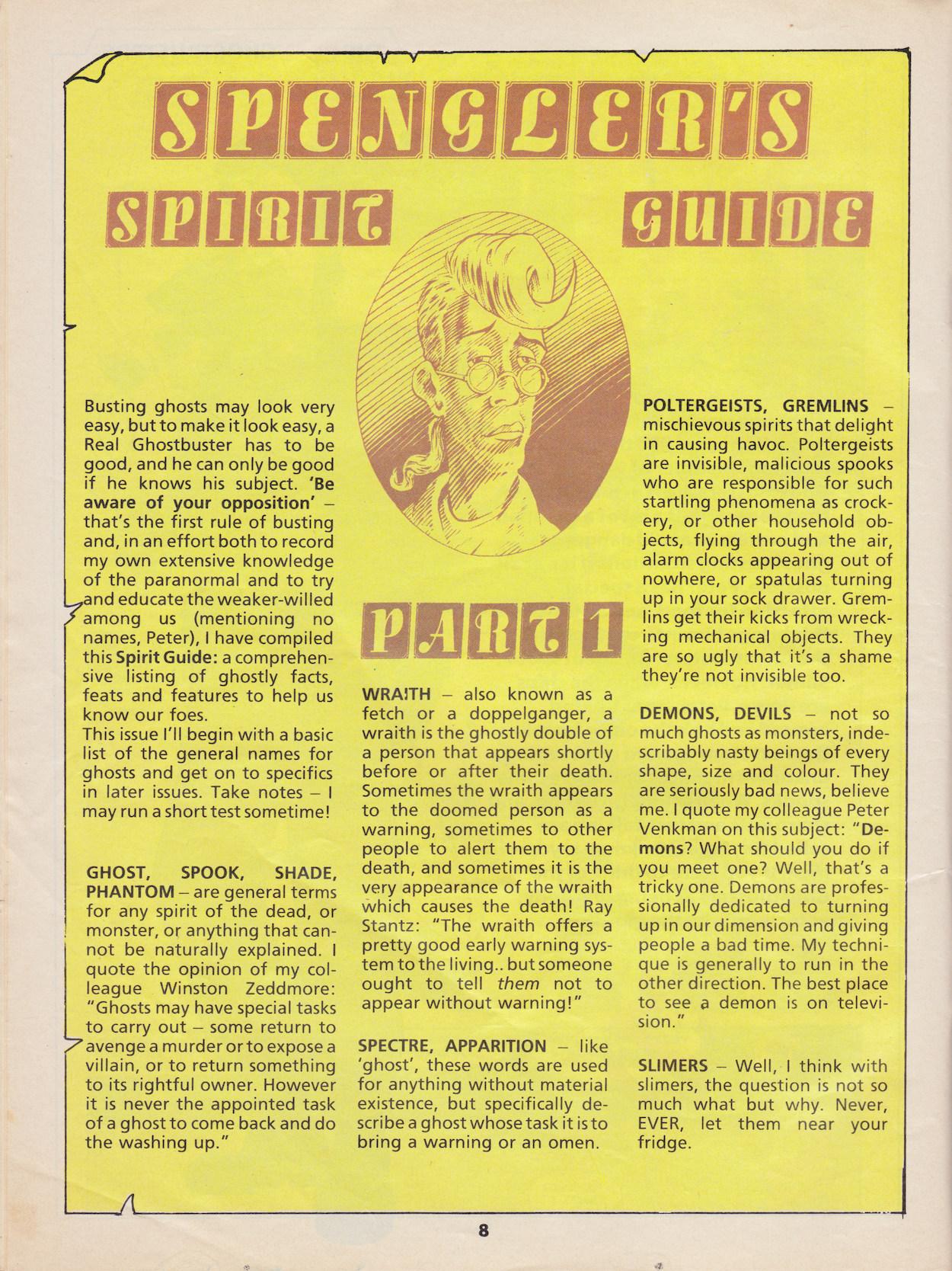
Spengler’s Spirit Guide appeared in every issue until just before the end. In the film and cartoon Egon would make reference to ‘Tobin’s Spirit Guide’ and this ongoing series was his own version of said tome. These were all written by Dan Abnett (Knights of Pendragon, Death’s Head II, Sinister Dexter), which is no small feat when you think about how the comic went weekly from issue 14 onwards and he created well over 150+ altogether! In an issue which featured The Four Horsemen of the Apocalypse the Guide detailed the other half dozen or so Horsemen that don’t get talked about. I can remember laughing hard at that one in particular.

I’ve found out recently that little illustration of Egon was drawn by none other than future Marvel US, DC Comics and 2000AD artist Cam Smith (Supergirl, The Incredible Hulk, Gen13). This means Cam’s work appeared in more issues than anyone else’s of course, technically speaking.

With Lew Stringer at the helm Slimer made his way to Britain for a slap up feed

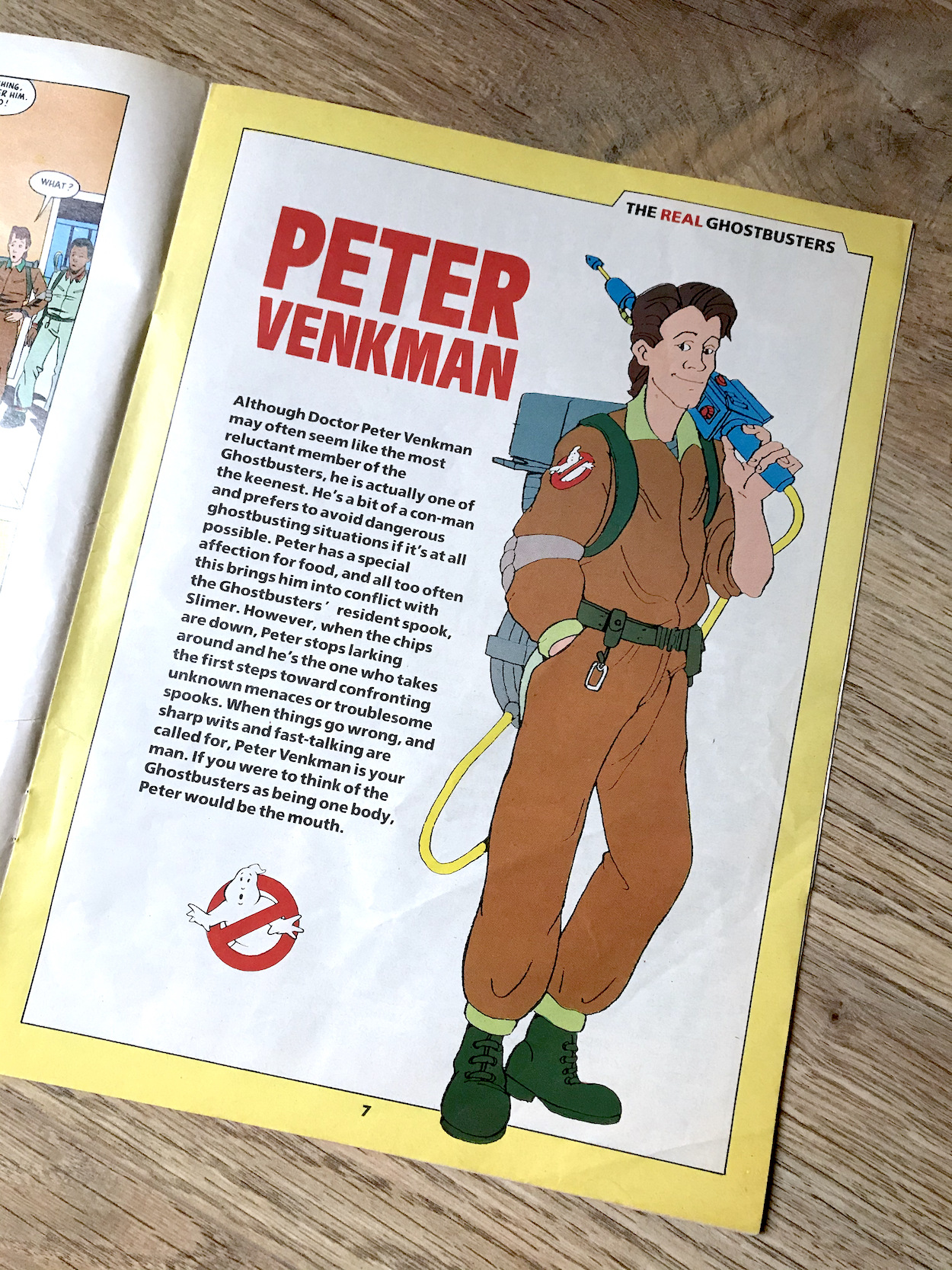
This issue also contains the first fact-file. As a child I drew a combined figure of the Ghostbusters based on that final sentence. From what I remember Egon was the brain, Winston the heart, Slimer the stomach (obviously) etc. It was a real Frankenstein’s monster which I decided not to send in to the letters page because, well, some things just aren’t meant to be seen.

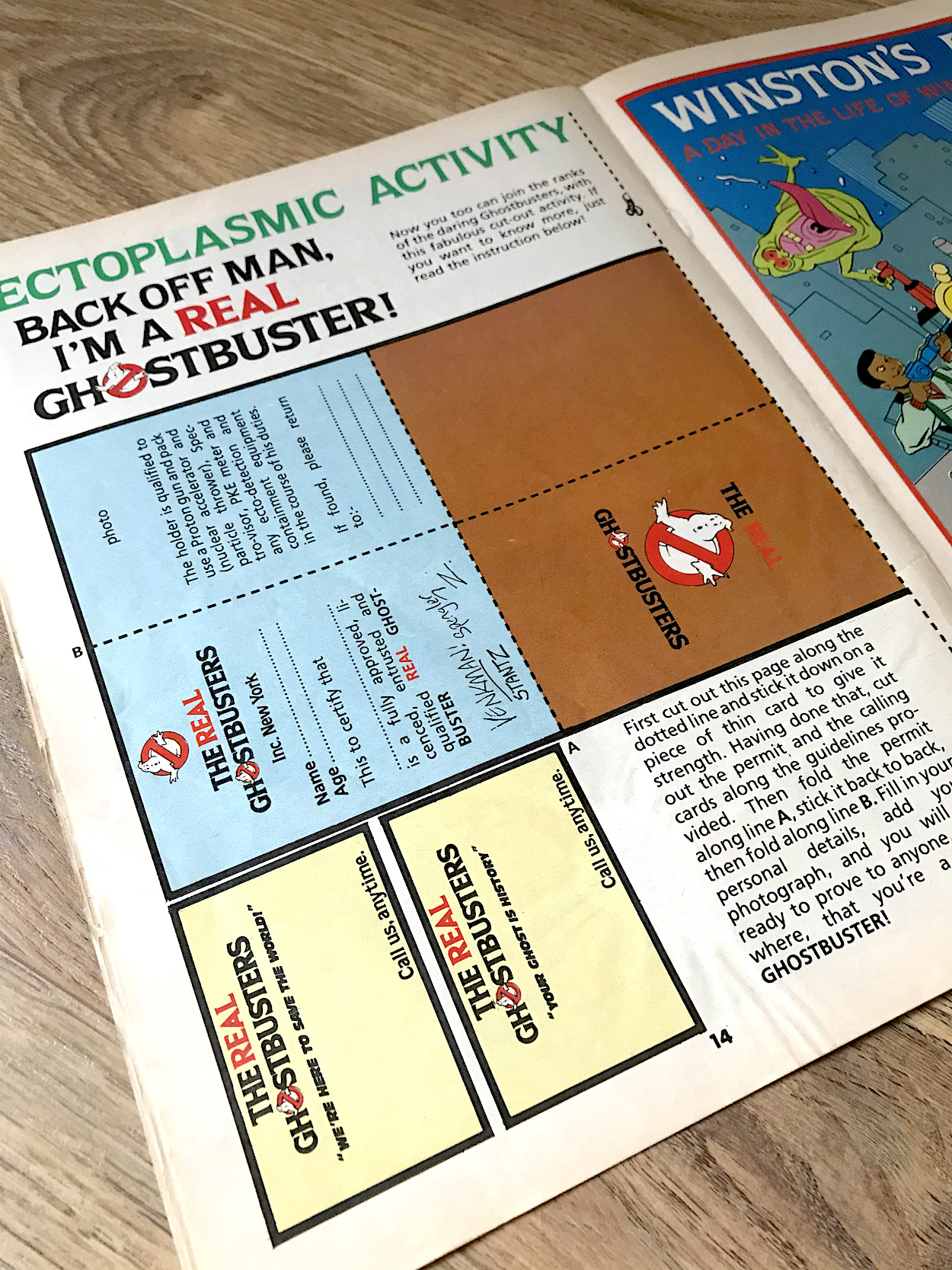
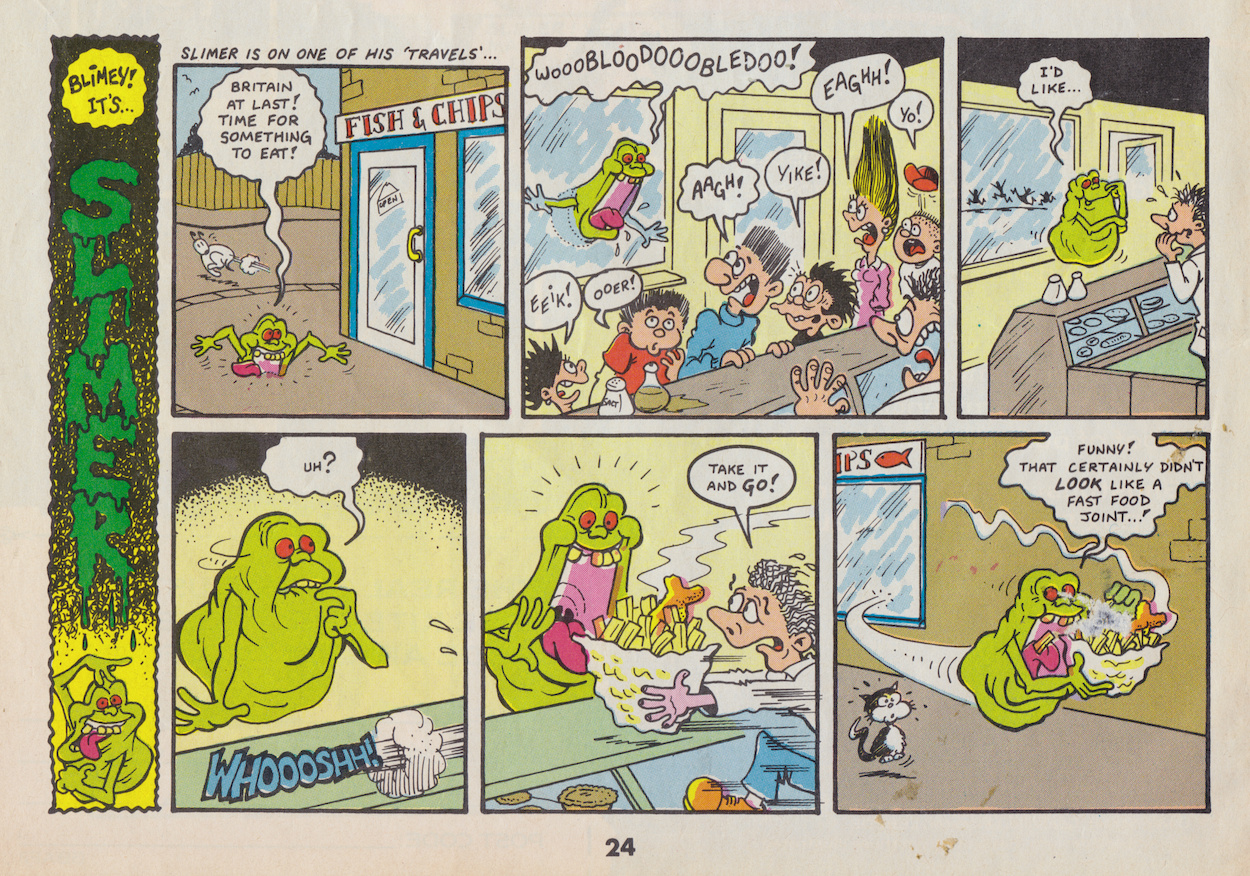
Once in a while the comic would include what it called Ectoplasmic Activity, such as this membership card and masks in a couple of future issues but it didn’t appear much, unlike Blimey! It’s Slimer. While it wouldn’t be too long until Bambos (letterer on our first strip) took over, at the beginning the little green blob was in the hands of OiNK‘s very own Lew Stringer. Of course, with Lew at the helm Slimer is going to make his way to Britain for a slap up feed.

Lew has written a blog post about his time on the comic, which you can read here.

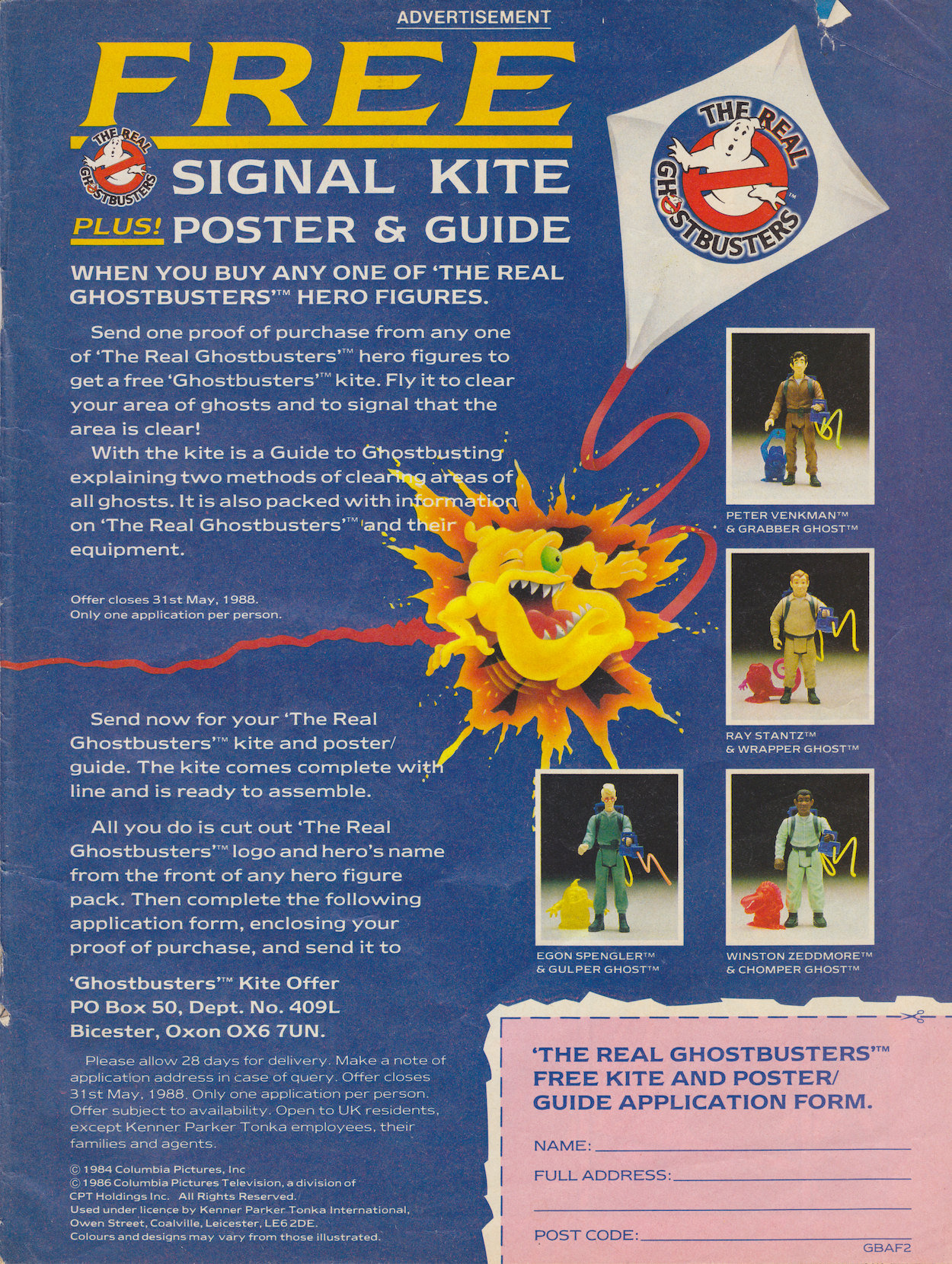
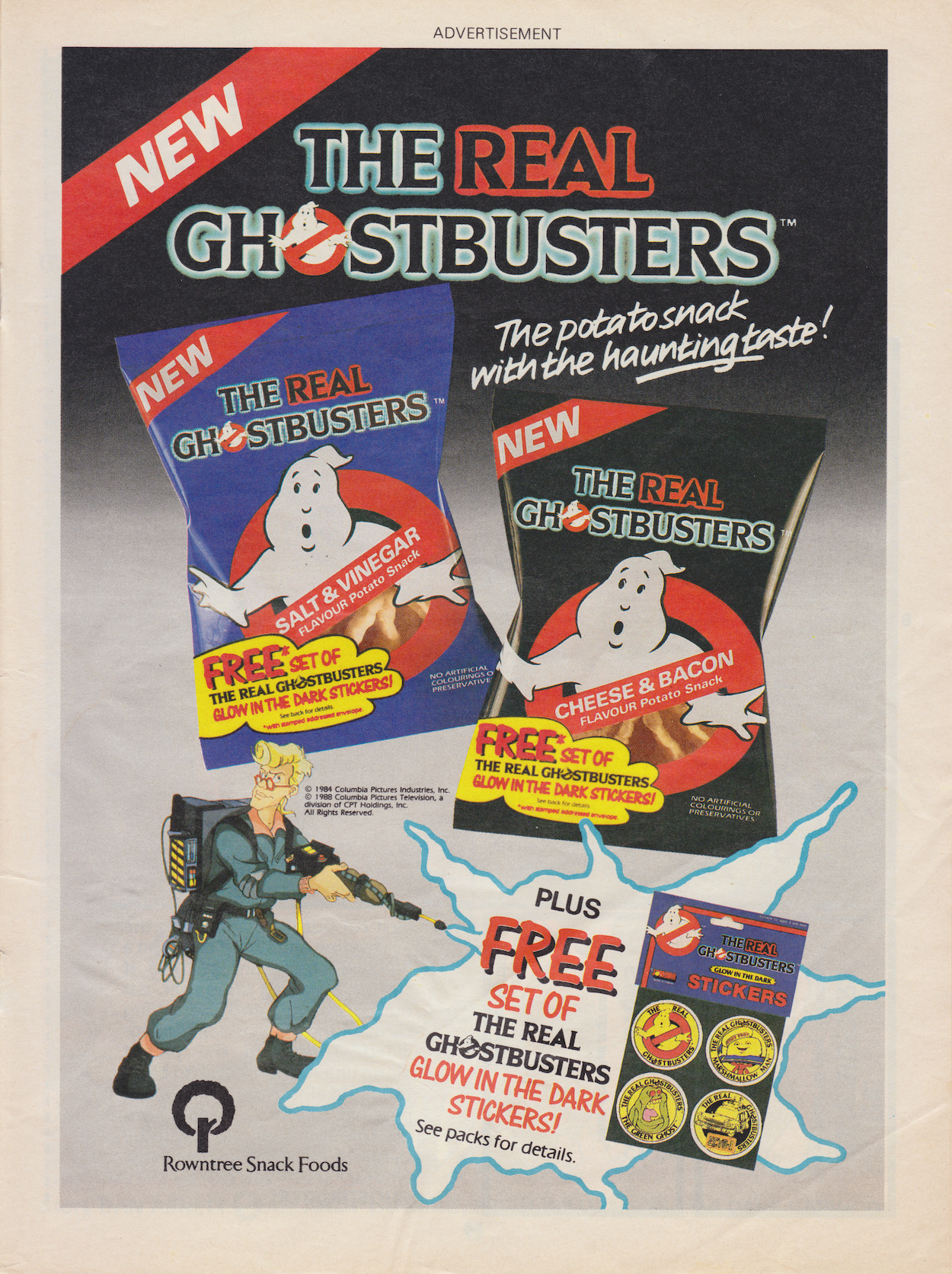
A look at a classic comic wouldn’t be complete without a look at the advertisements within, especially when they’re connected to the subject matter. I welcomed these action figures into my toy collection during Christmas 1988, along with Ecto-1, Slimer, the Stay Puft Marshmallow Man and a few other ghoulish monstrosities, and I recall I ate far too many packets of these crisps that summer too. They were surprisingly nice for a tie-in.

So how did this 33-year-old comic hold up for this 43-year-old? One word: brilliantly. I was surprised at how many times I chuckled while reading it, even though I’m not exactly the original target audience anymore.

I called it a “comedy comic” earlier, a term I’ve never used before. The definition of “funny comics” conjures up images of OiNK, Beano, Buster etc. But while this is indeed a comic which sets out to be as funny as it can be (something it succeeds at very well) it’s more the sitcom to OiNK’s sketch show. I also think calling it some combination action/adventure/funny comic would sell it short. The Real Ghostbusters was a unique comic and remains so to this day.

WHEN YOU GONNA CALL?

Just as it happened 33 years ago today I have an urge to collect this comic all over again. This issue has been immense fun and it just kept getting better and better. In fact, as brilliantly as it began my favourite time with the comic wouldn’t be until around issue 80 onwards.

It’s just such a fun comic there’s only one thing for it.

Now of course this will take a while, it was Marvel UK’s most popular comic at one stage and lasted a whopping 193 issues, alongside four annuals, specials, poster magazines and more, even a puzzle spin-off. It’s going to be quite the task so don’t expect any more real time reviews for quite some time. The daunting thought of covering a series of its size on a weekly basis has put me off in the past, but after reading this issue again perhaps I could use my own model of how I covered the publisher’s Transformers.

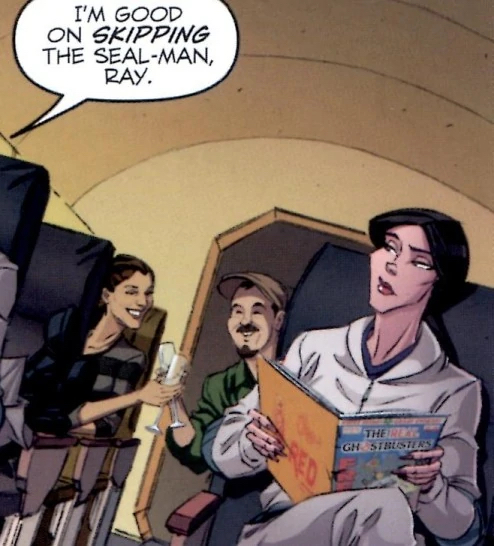
Finally, just look at this little Easter egg I found while doing some research, from the pages of IDW‘s Ghostbusters Crossing Over comic from 2006!

THE REAL GHOSTBUSTERS RETROSPECTiVE

THE REAL GHOSTBUSTERS ANNUAL 1

RETROSPECTiVES MENU