Tag Archives: James Tomlinson

WiLDCAT #7: A COMiC WITH TEETH!

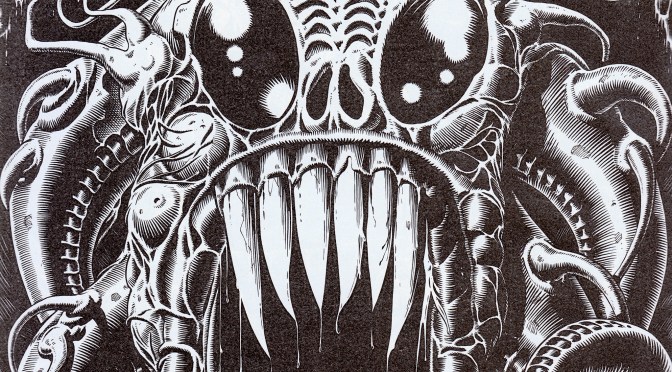
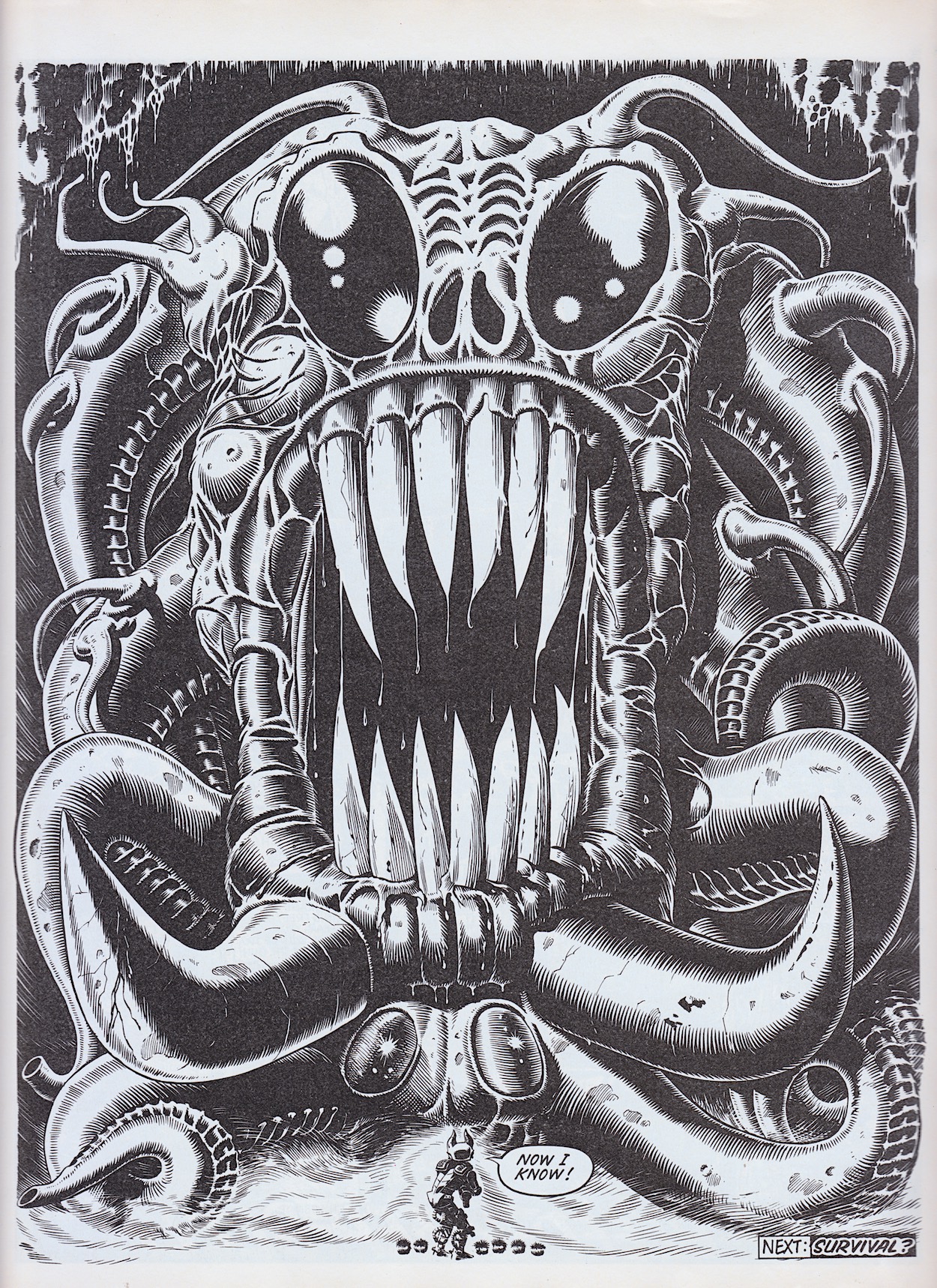
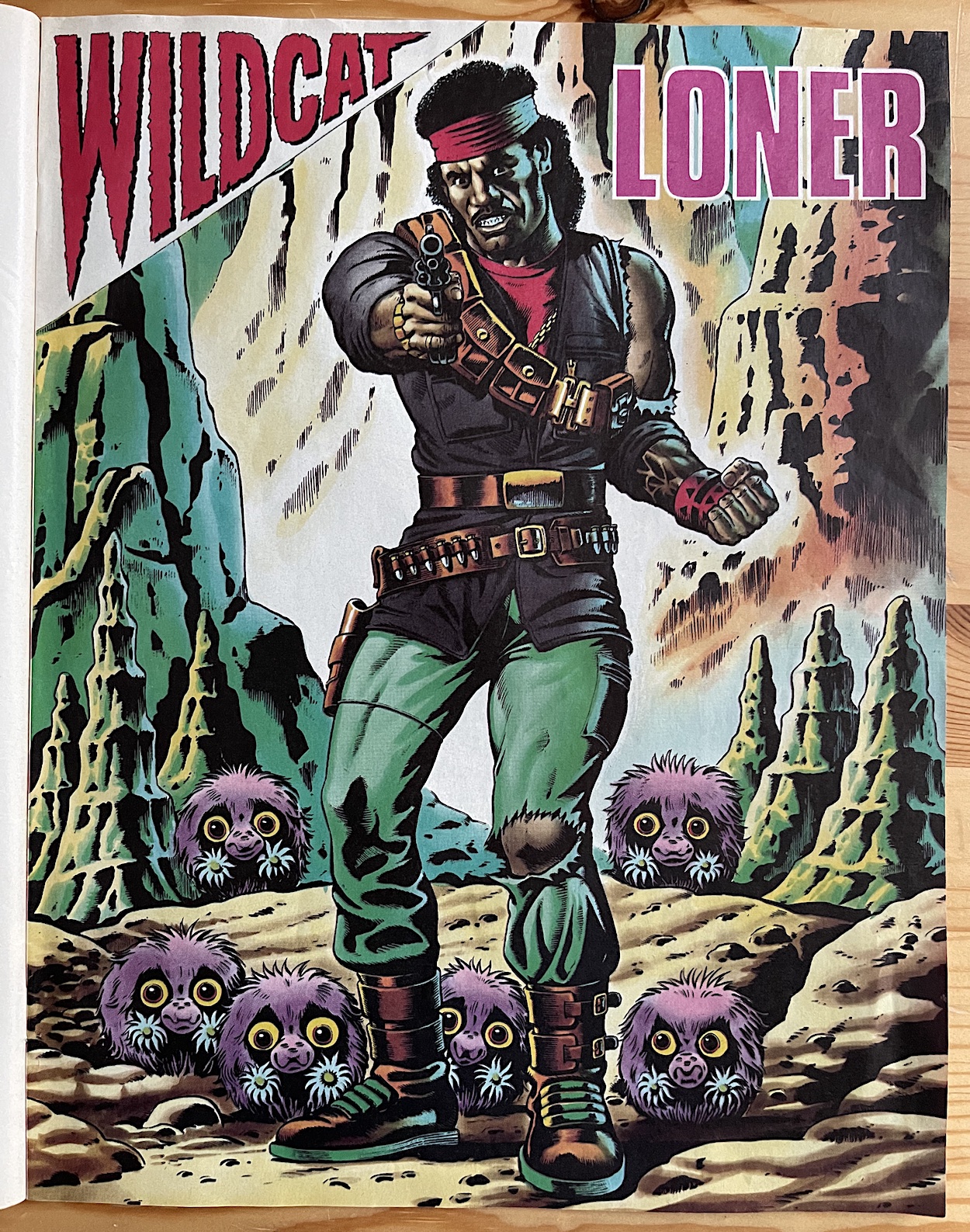
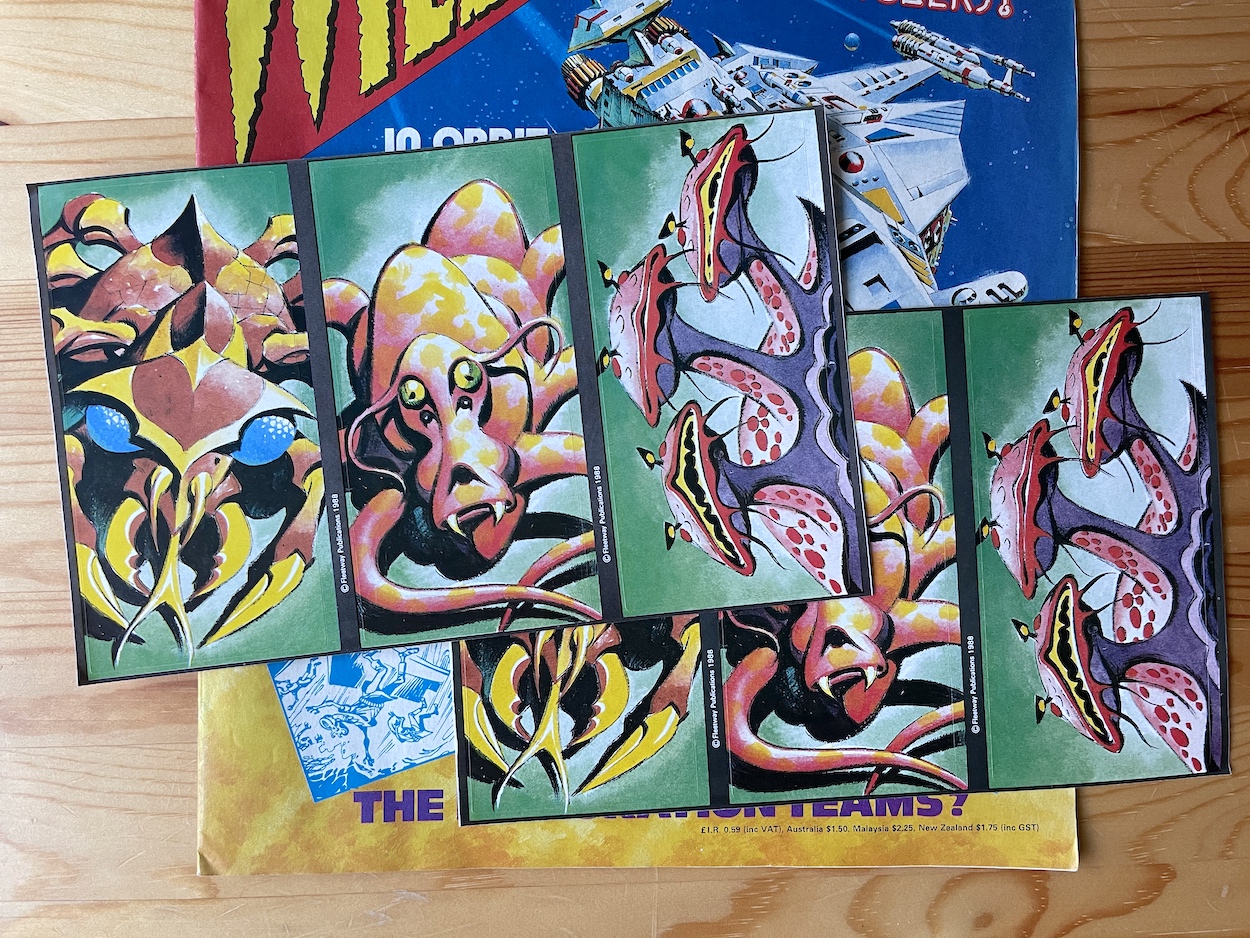
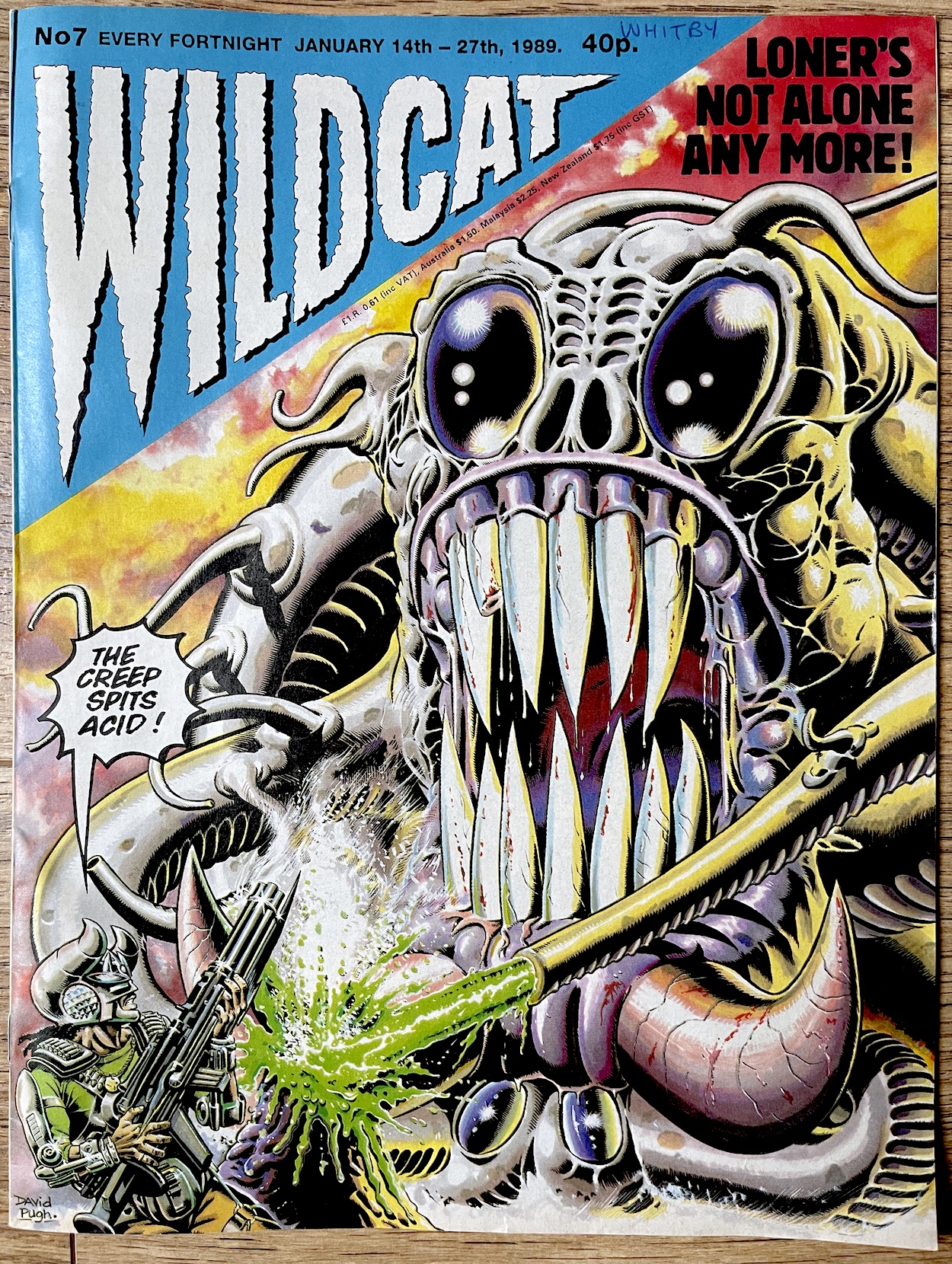
Just. Look. At. That. Cover. I mean, just look at it. David Pugh brings Loner to the cover of Wildcat for the first time in a suitably over-the-top way. The huge Beast he’s currently battling in his strip was a major highlight of the comic’s run; its terrifyingly giant mouth and dead eyes have proven unforgettable. It’s also just as exciting to have one of my most fondly remembered characters from any comic finally make the front page.

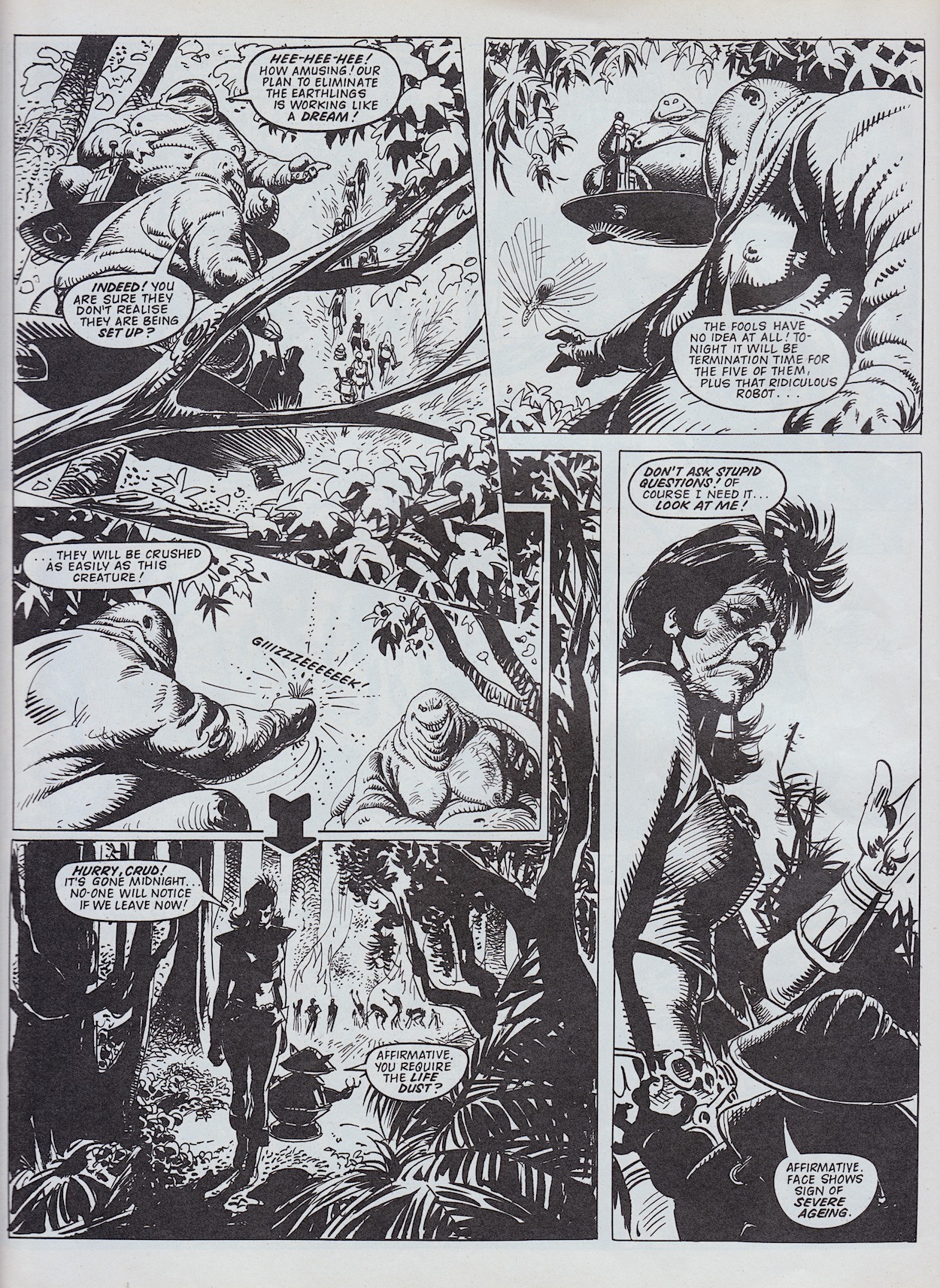
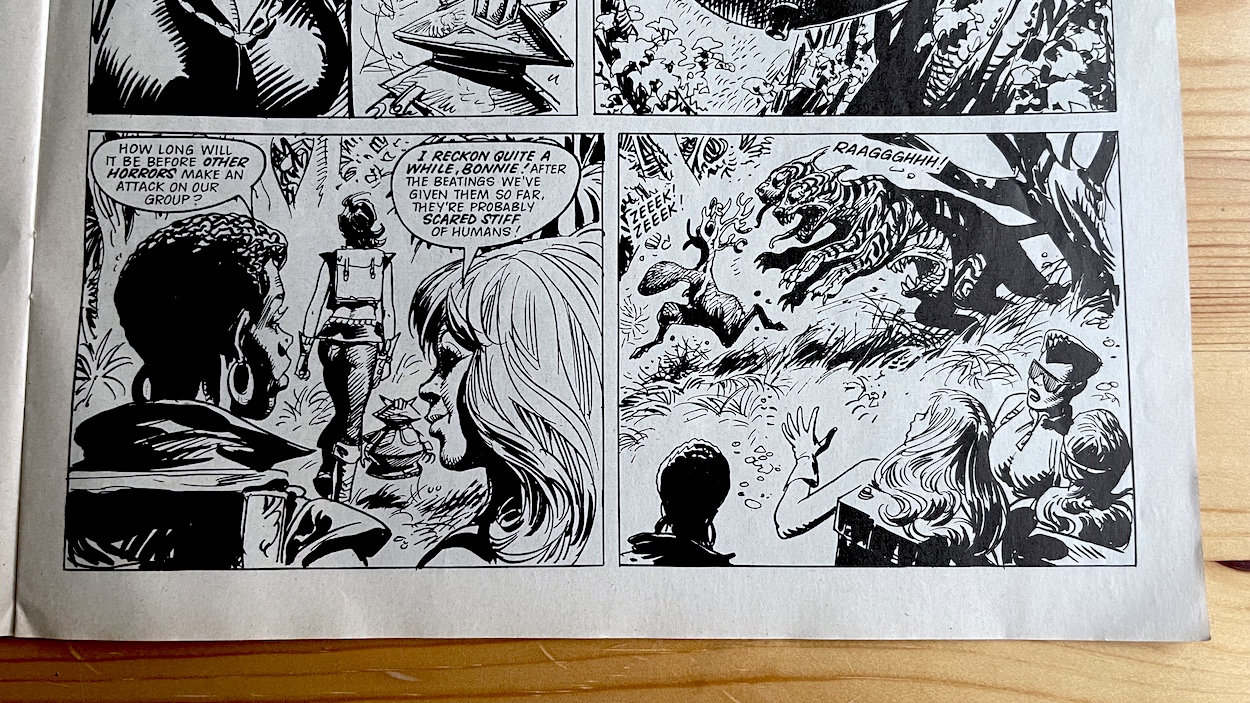
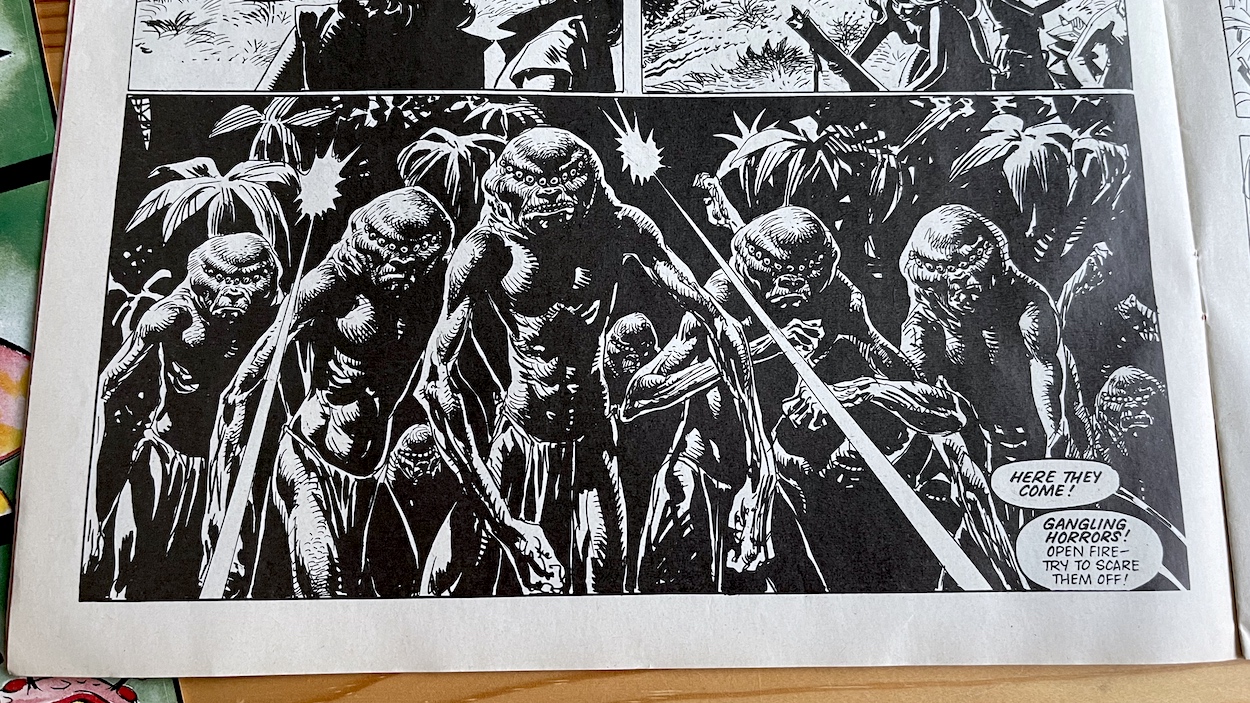
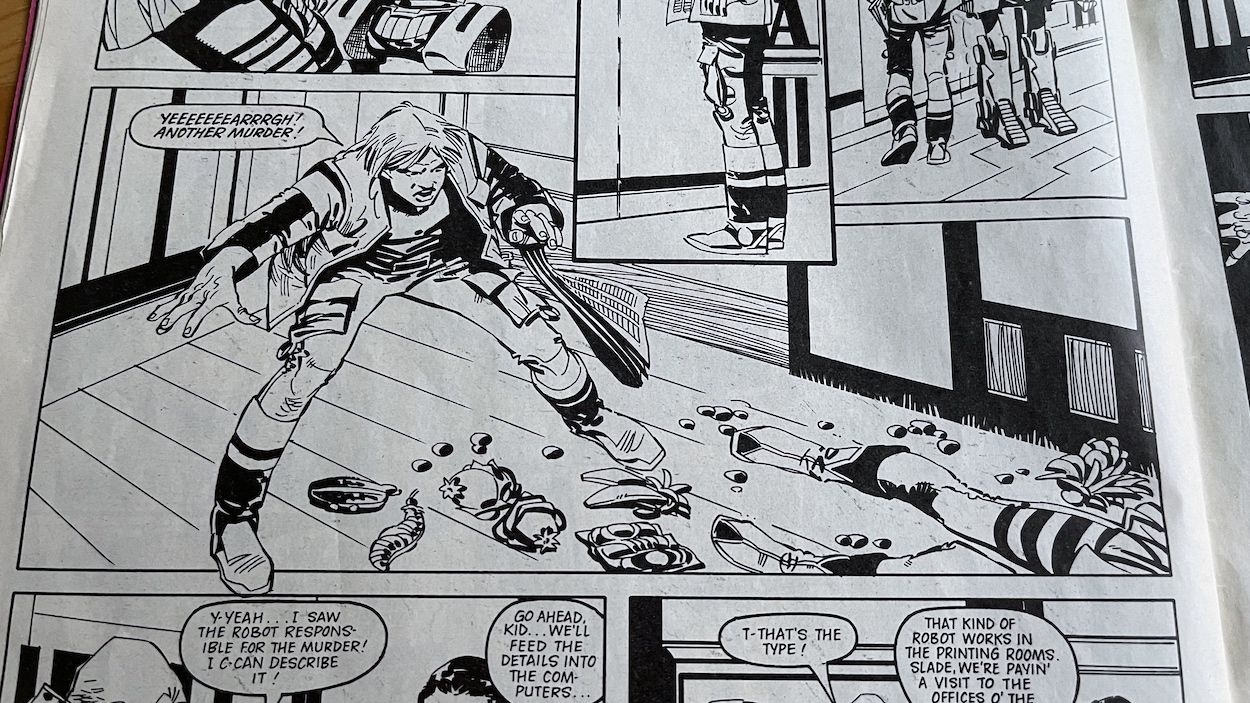
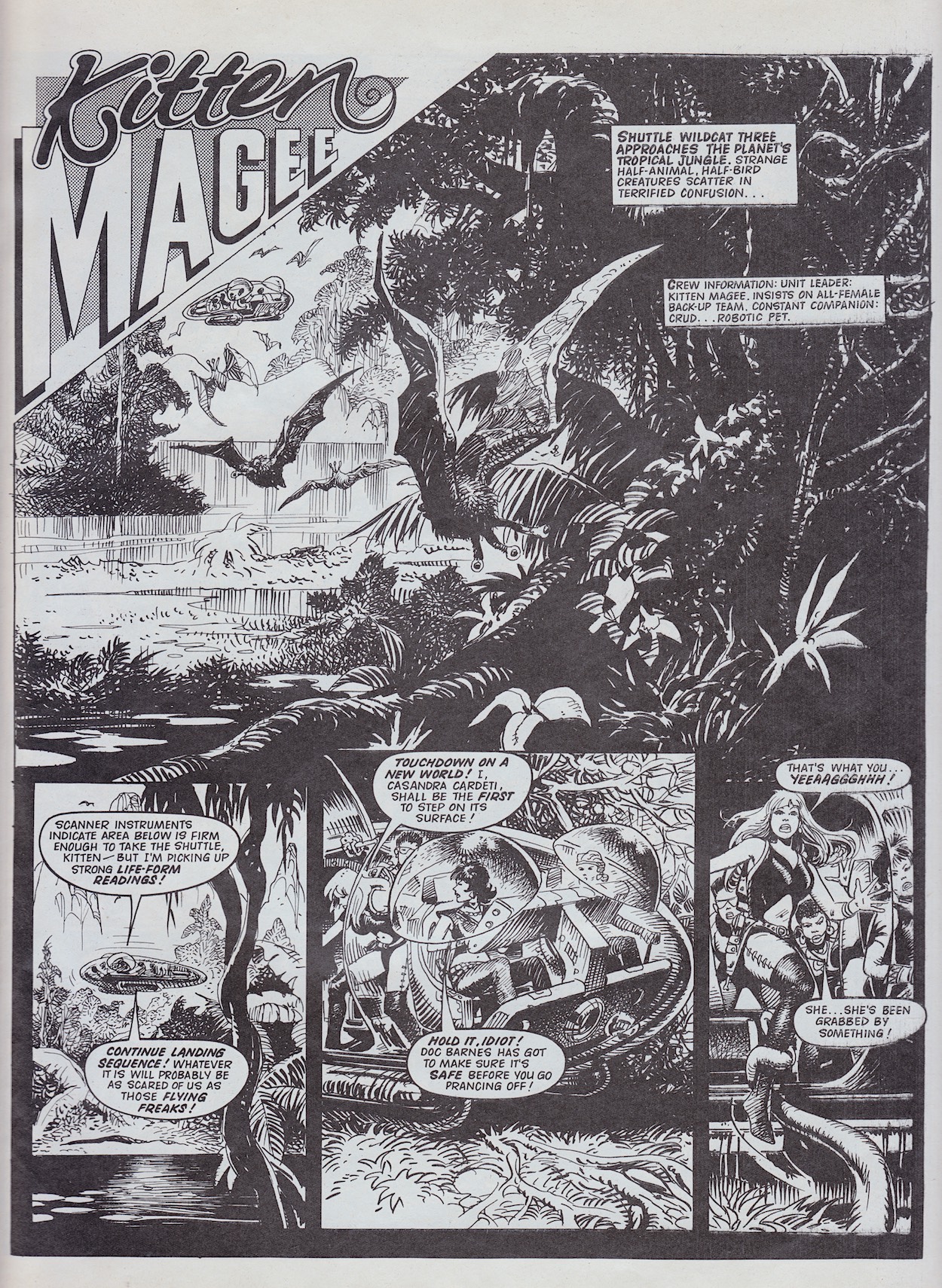
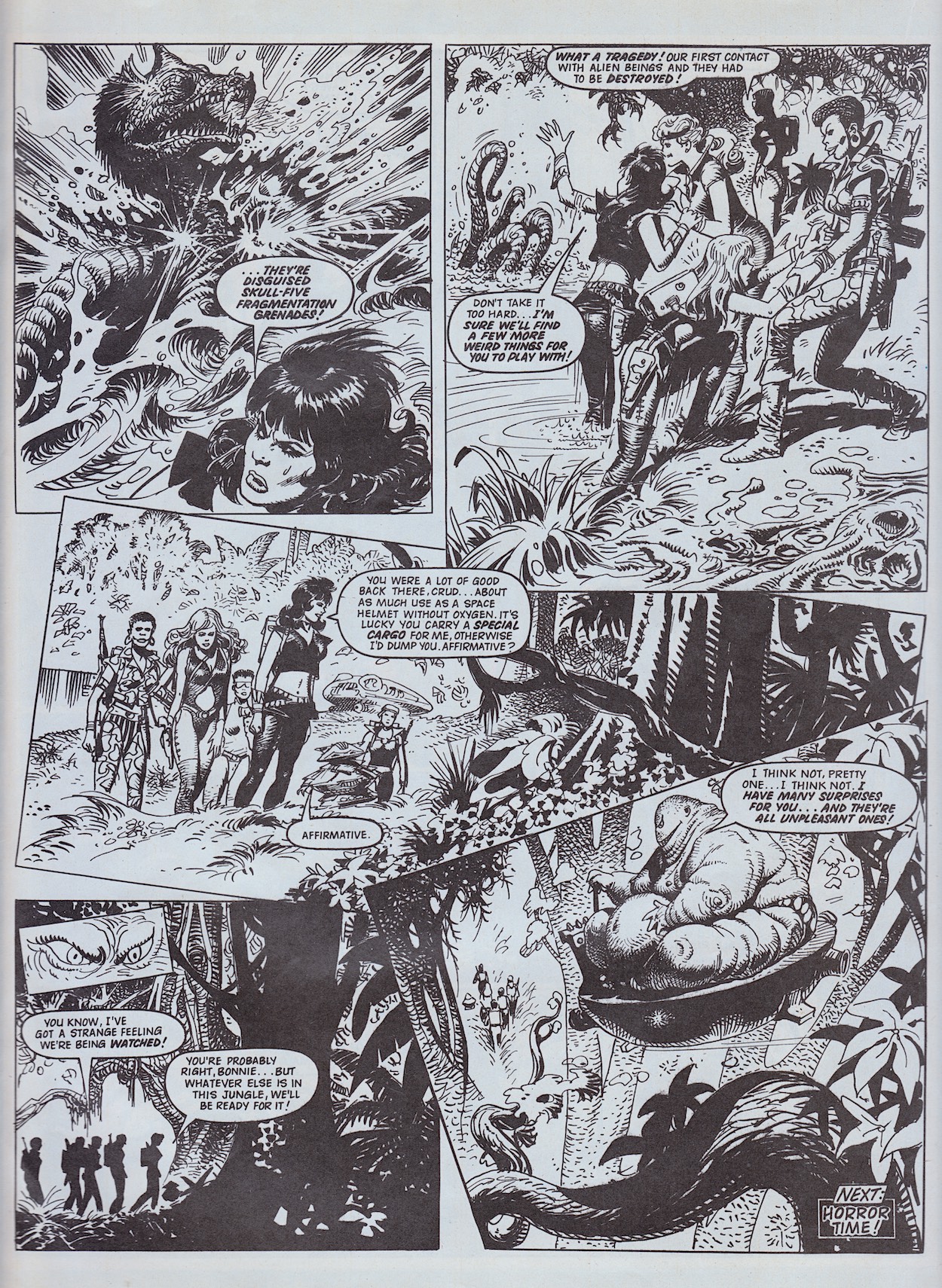
Inside, just as he did with #6 of Ring Raiders and #6 of Super Naturals, Wildcat’s creator and editor Barrie Tomlinson has decided it’s time to shake the running order up a bit, with the all-female crew and their leader Kitten Magee now the first all-action strip we encounter, written by Barrie’s son James. Still following Hobos, who is pretending to be their ally while leading them into all sorts of danger in an attempt to kill them, they finally make their way out of the jungle to an apparently safe swamp area. But when have you ever known a swamp to be a safe haven?
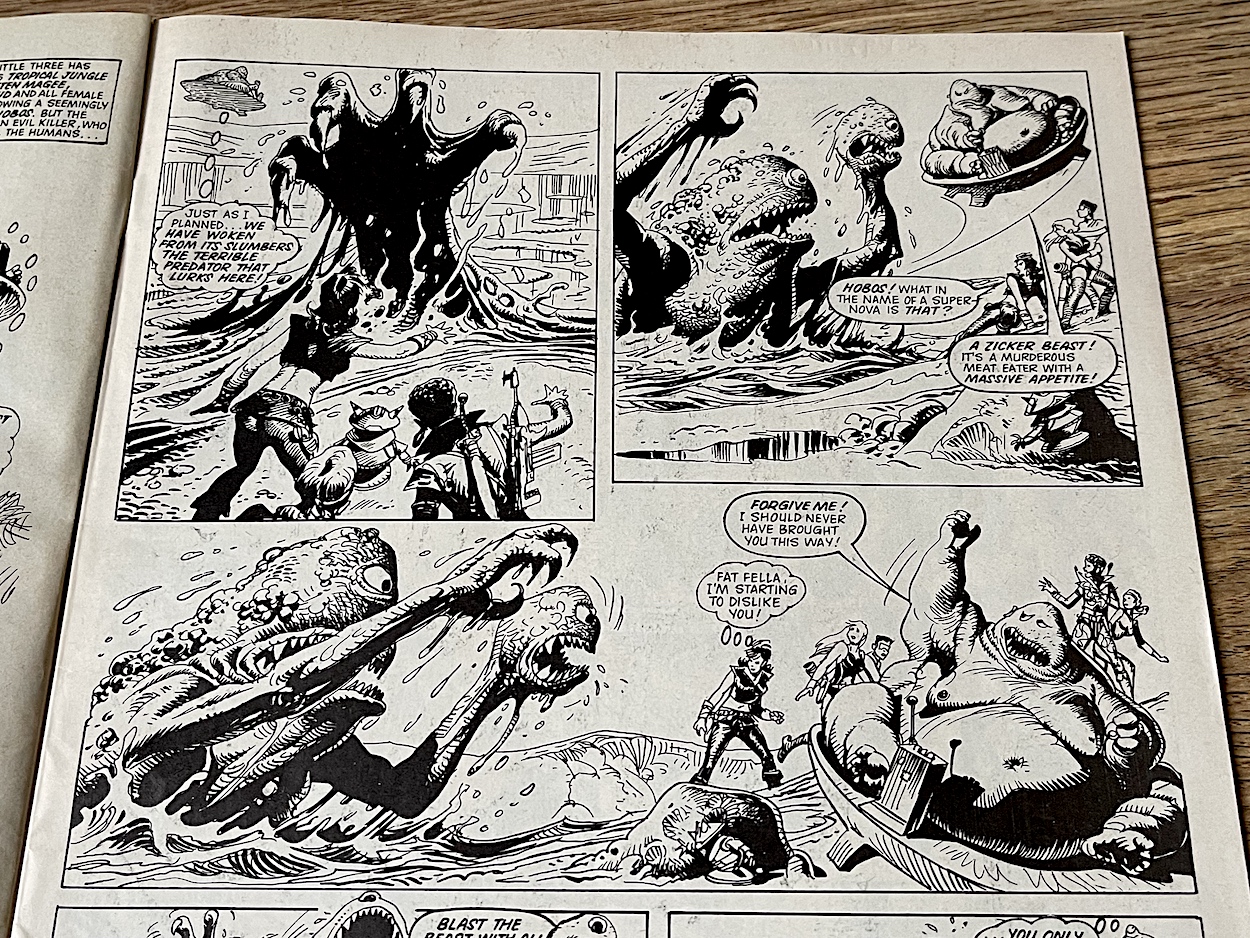
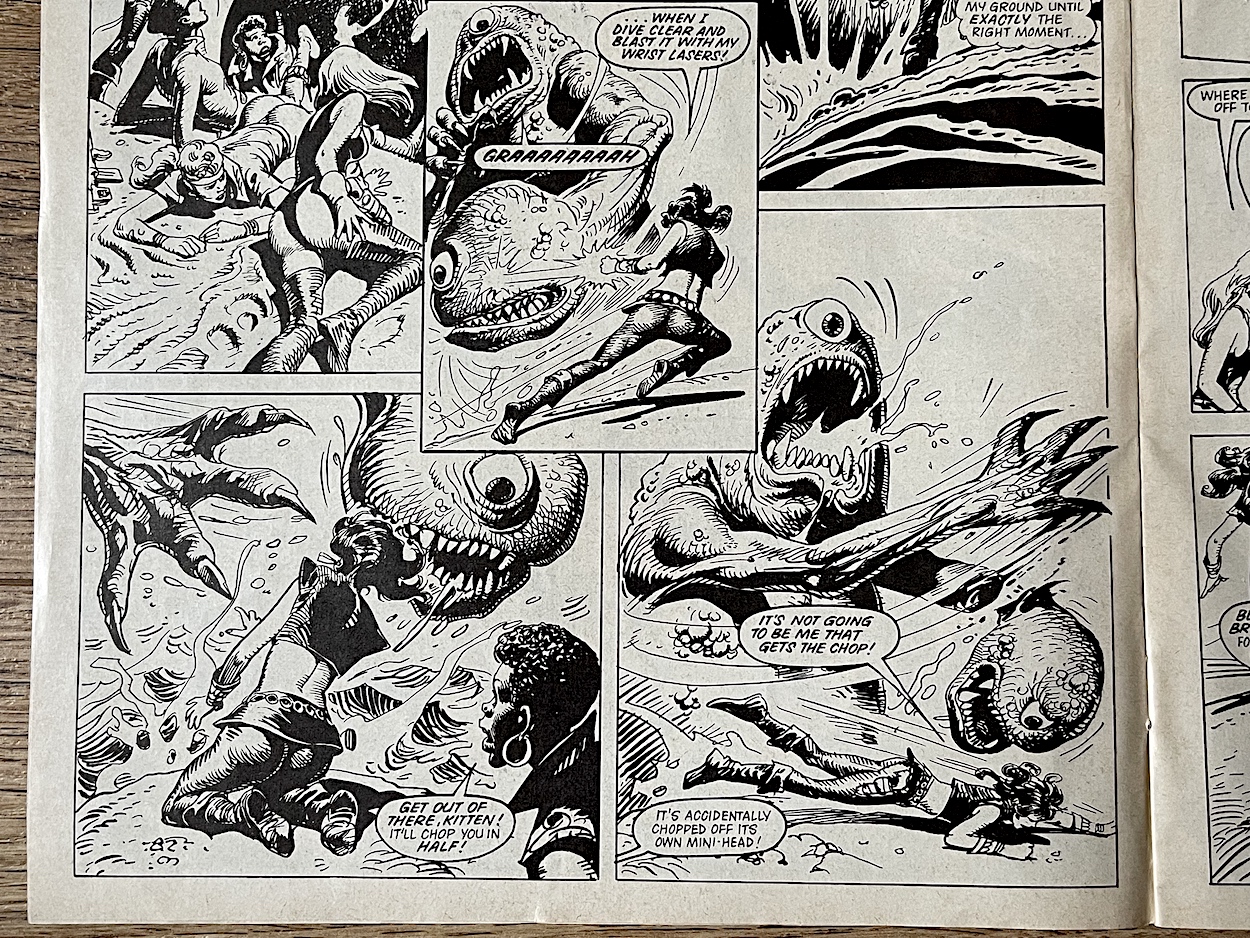
This horror goes by the name of a Zicker Beast and with Hobos floating high in the air out of harm’s way is Kitten starting to see through their apparent friend? To be fair, she’s been the only one in the team to distrust him so far. In an attempt to save her teammates, Kitten blasts at the monster and as it swipes at her with its giant claw she puts herself in front of its smaller head, only jumping out of the way at the very last moment. I love artist José Ortiz‘s depiction of the beast’s shock and pain at this point.

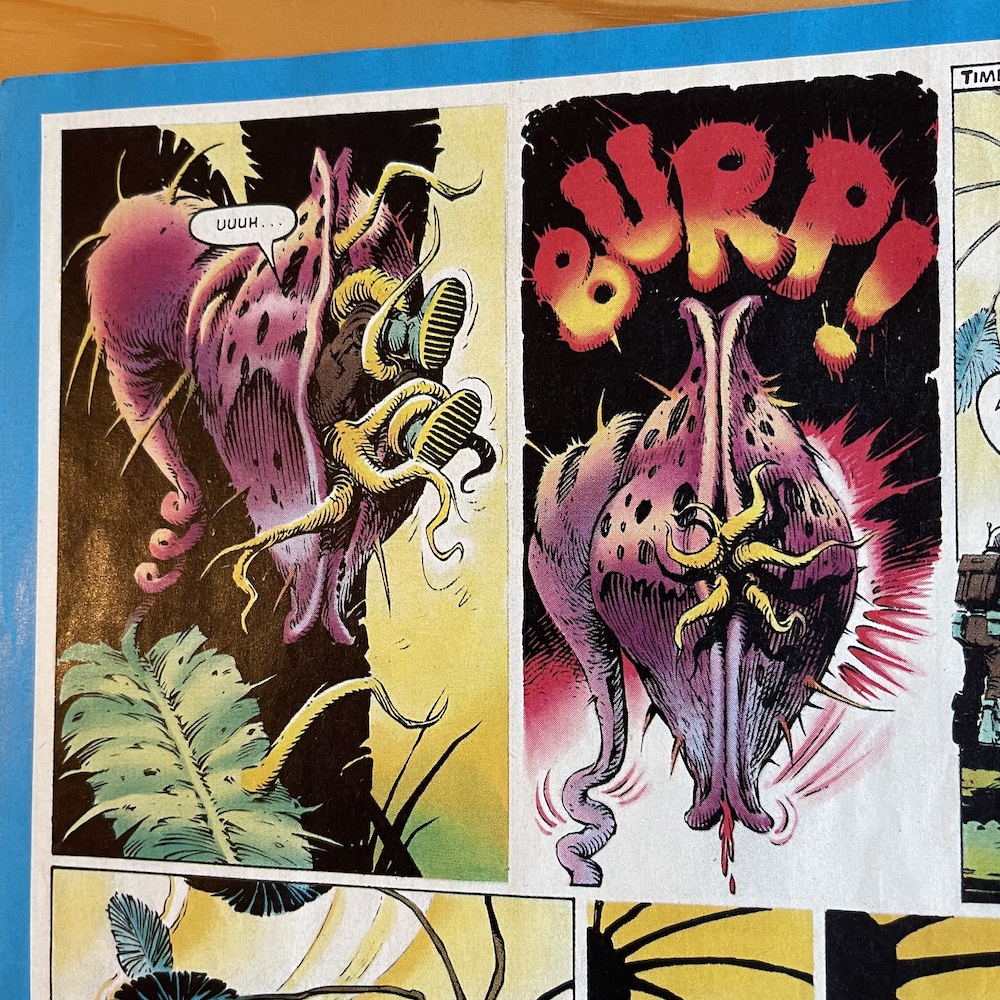
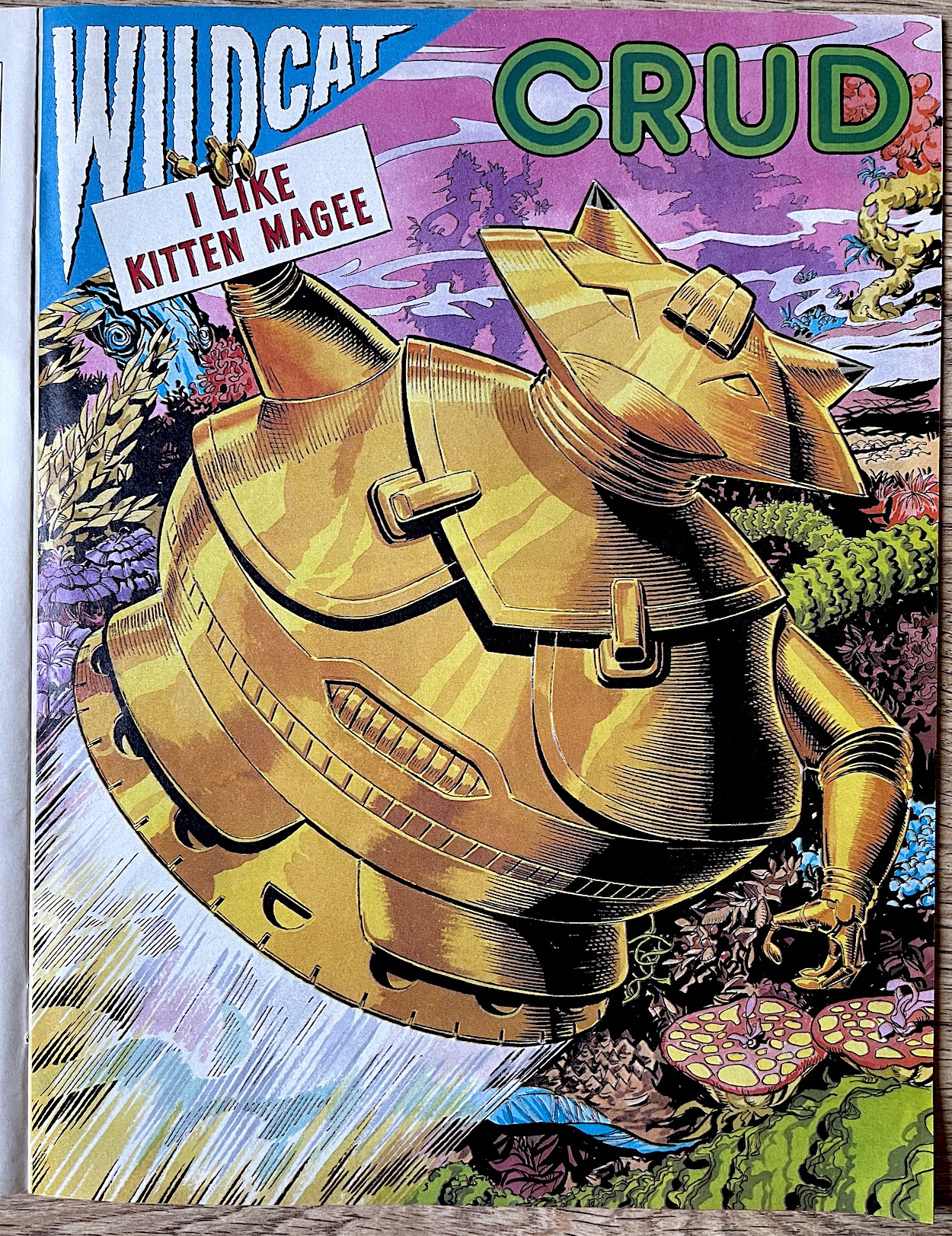
The resolution to this episode is even more creative. The smaller head is still alive and attempts to eat Doc as she’s trying to recover blood and tissue samples. Kitten kicks the head out of the way and it begins to bounce down the slope towards the swamp, where it appears to have summoned its body back (which had slipped away in defeat). Grabbing Casandra‘s trademark bazooka she blasts the ground underneath the bouncing head, flinging it into the air and straight into the open mouth of its body, which swallows it whole! Predictable this strip is not, and it’s followed up by the next mini-poster, of Kitten’s pet robot Crud, making up for his conspicuous absence in the story.
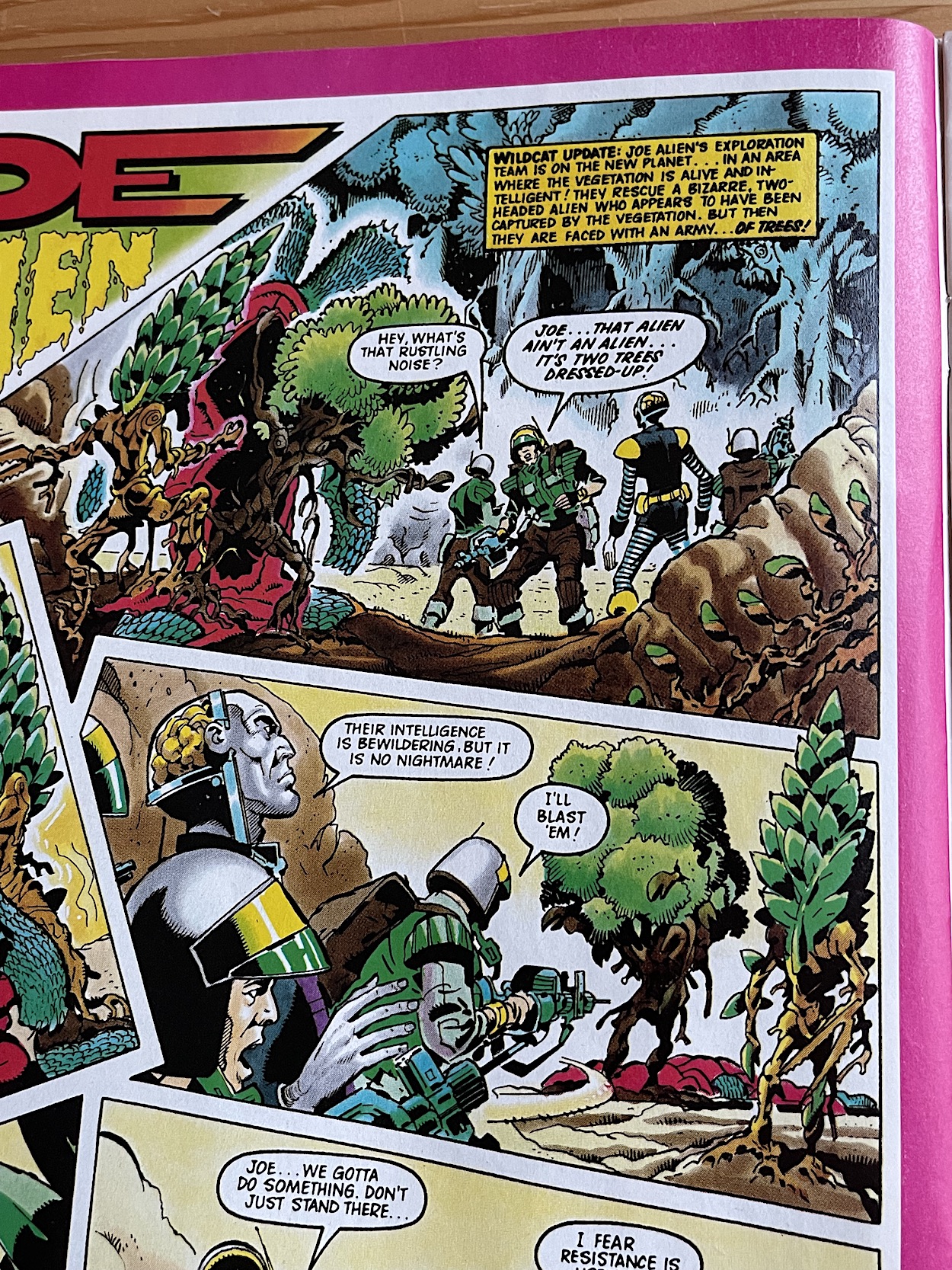
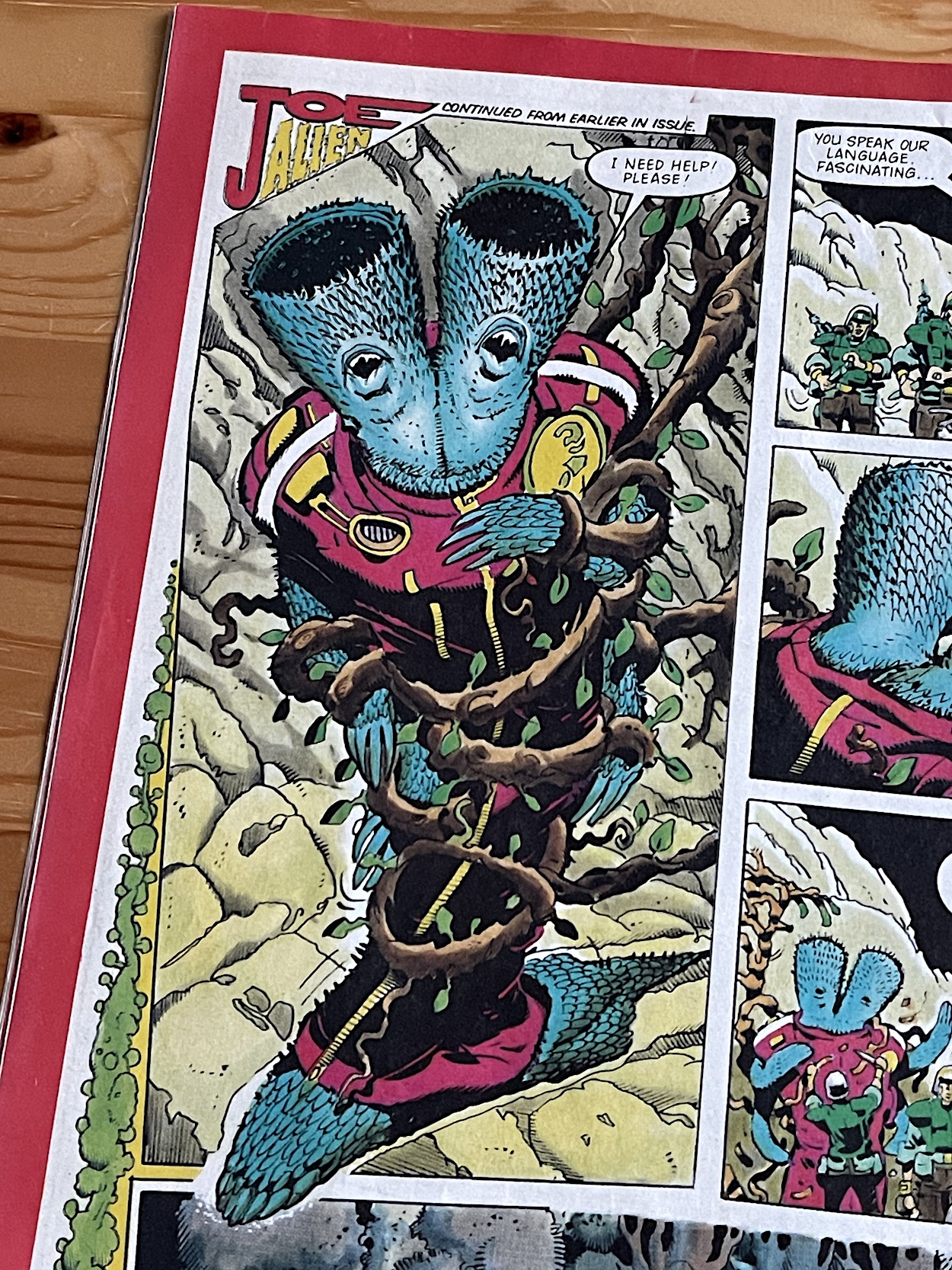
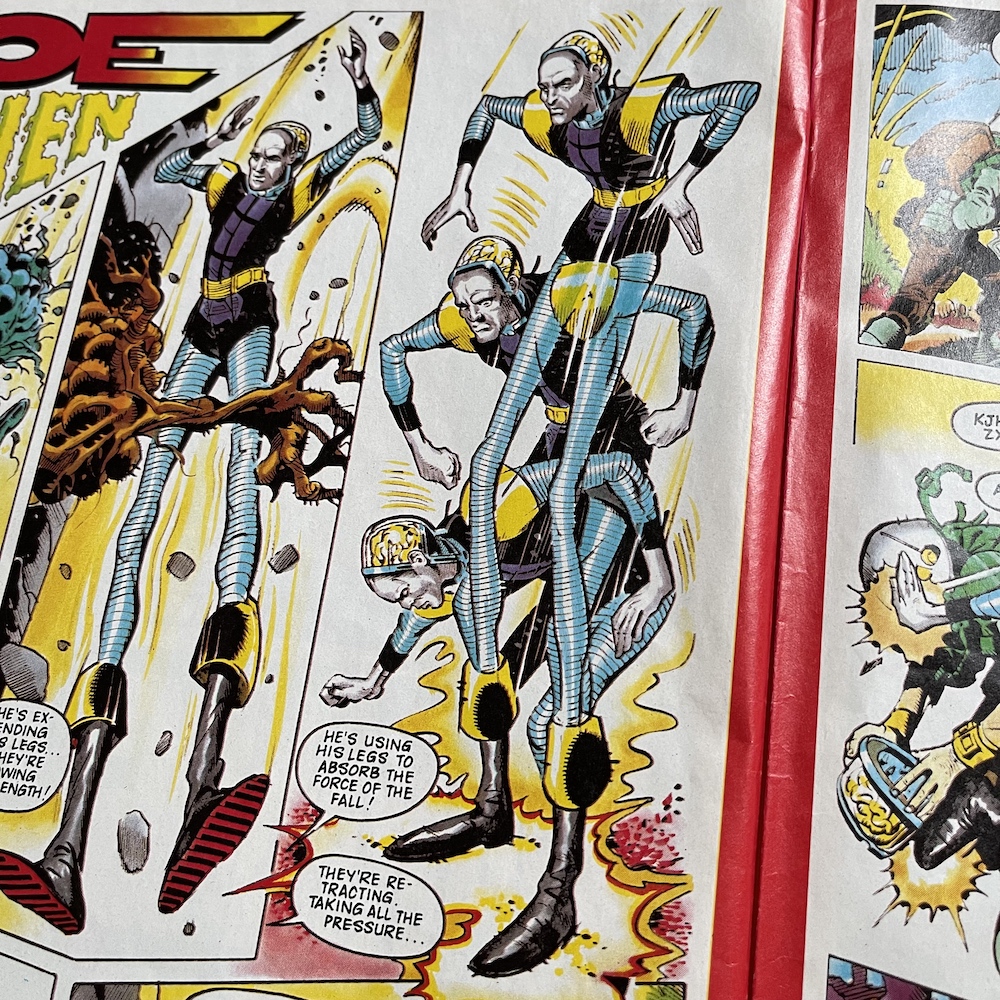
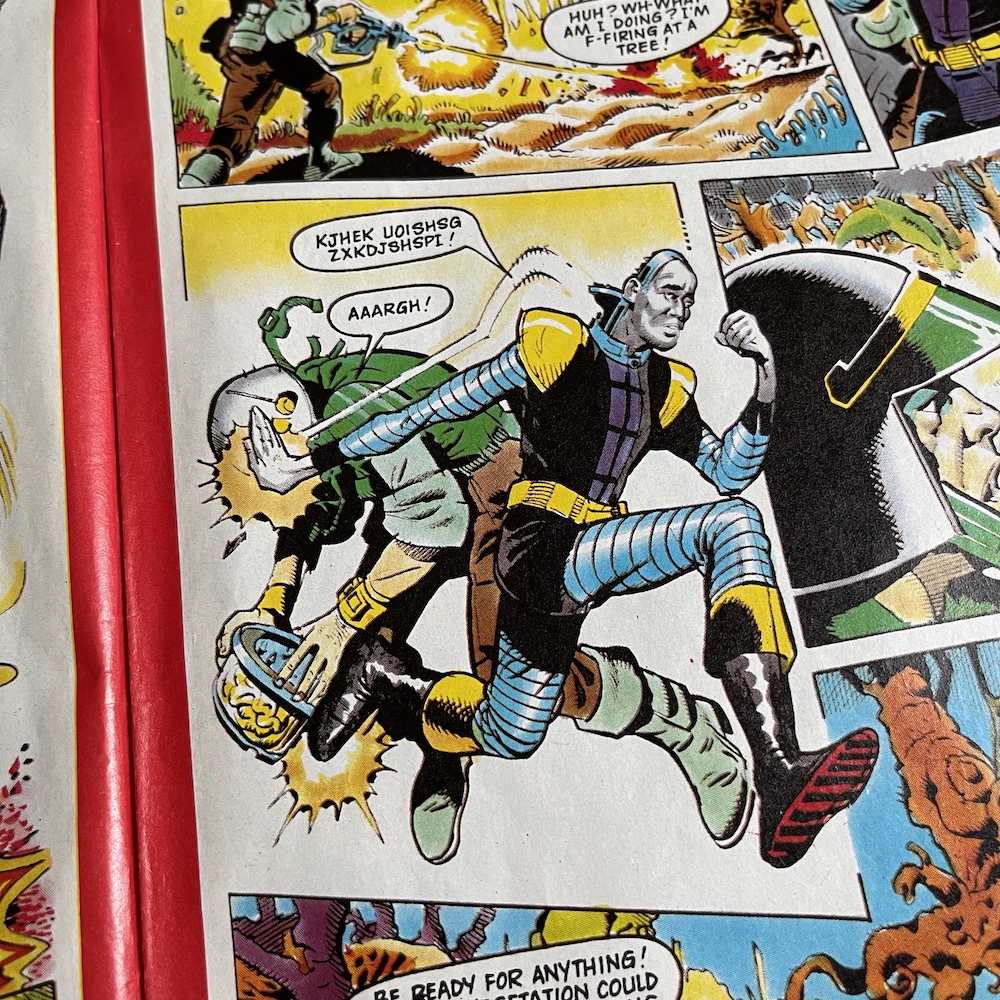
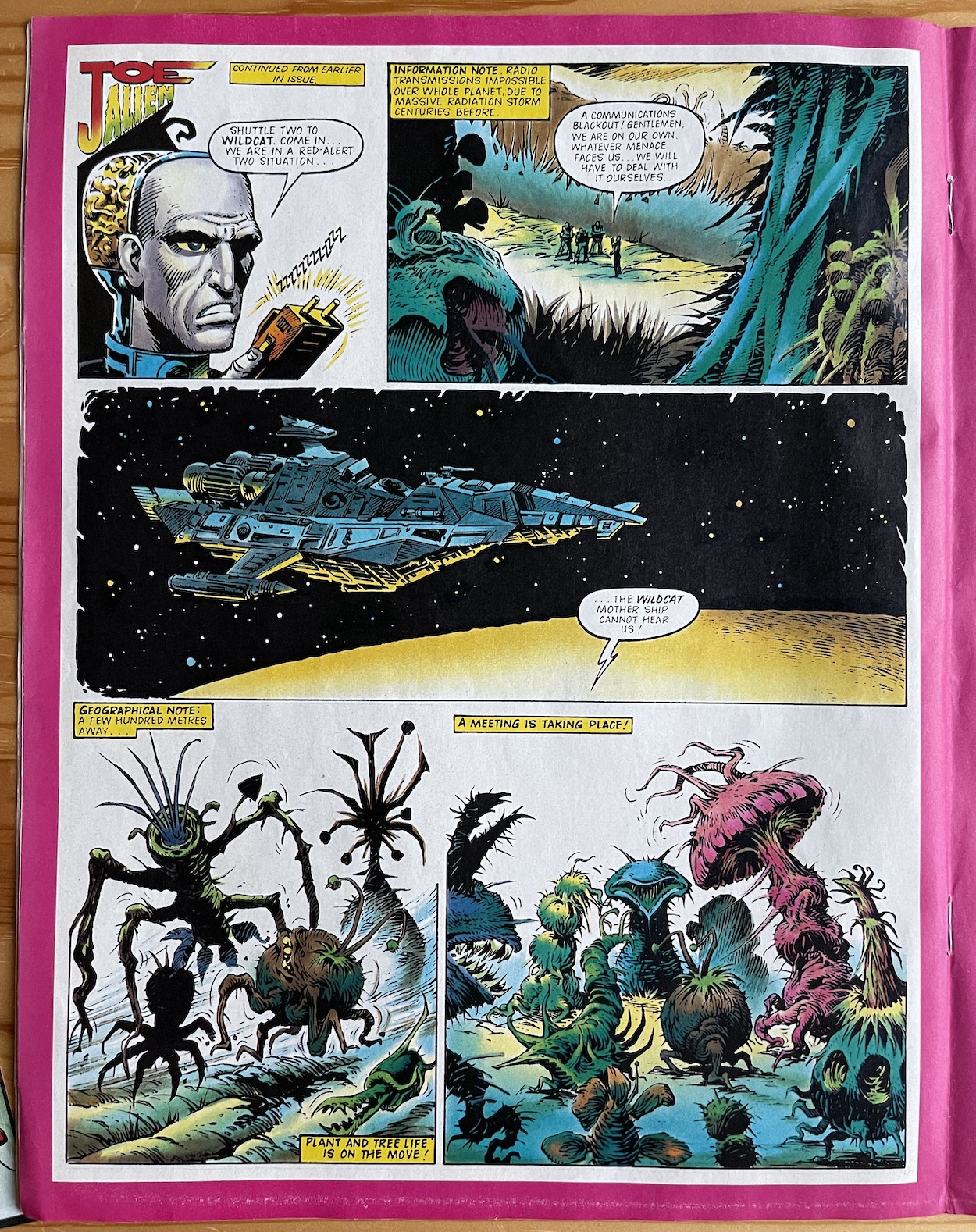
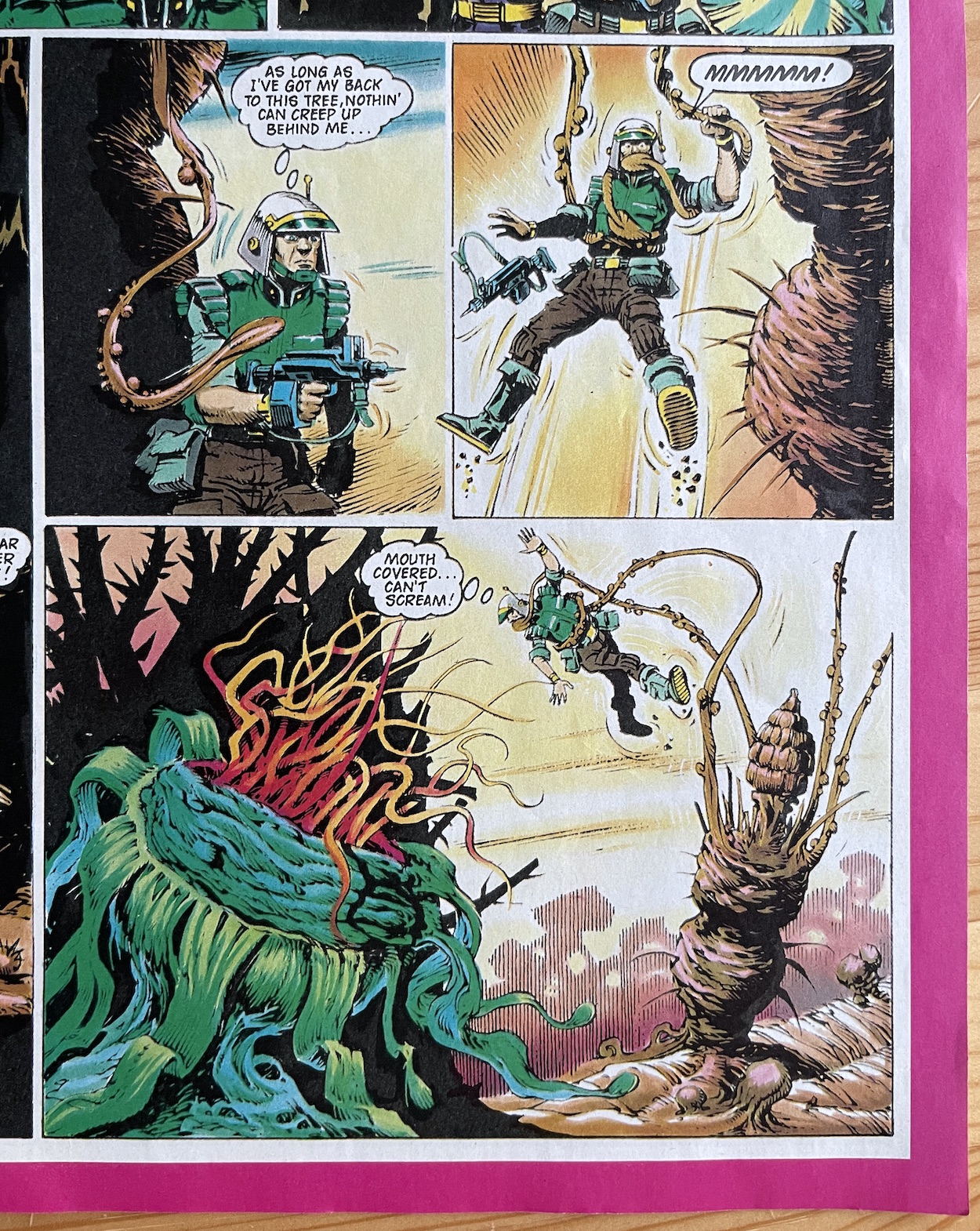
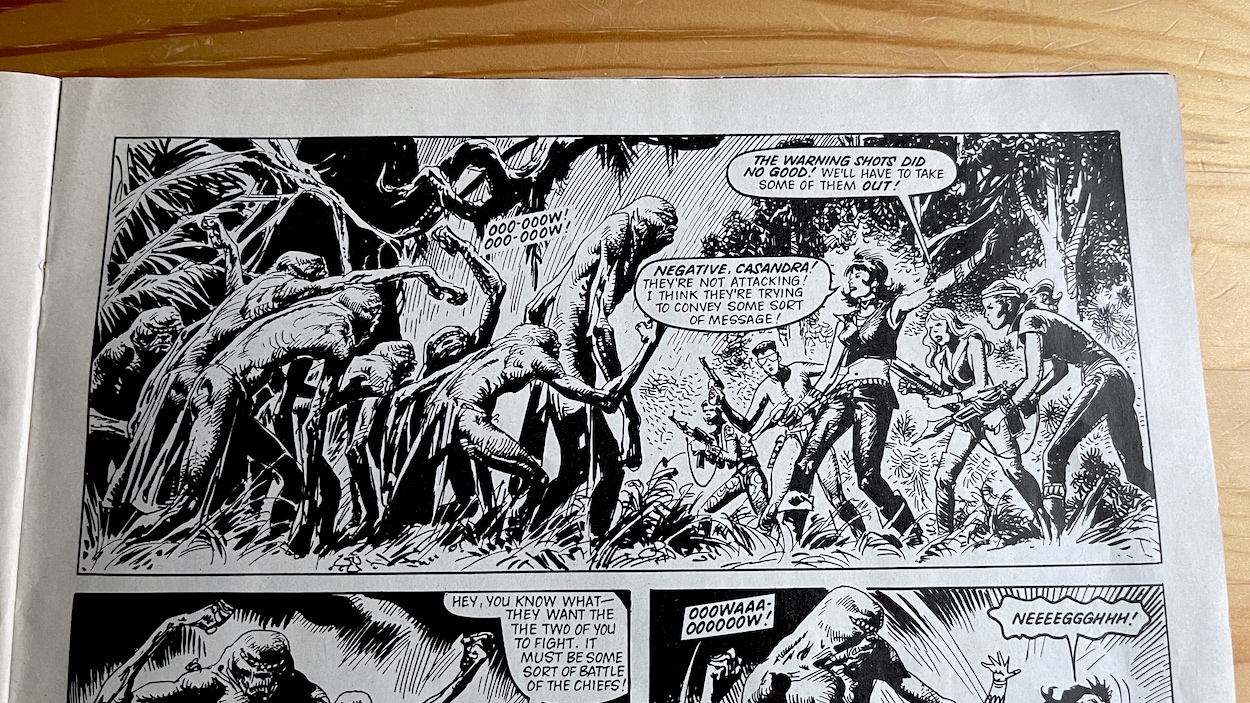
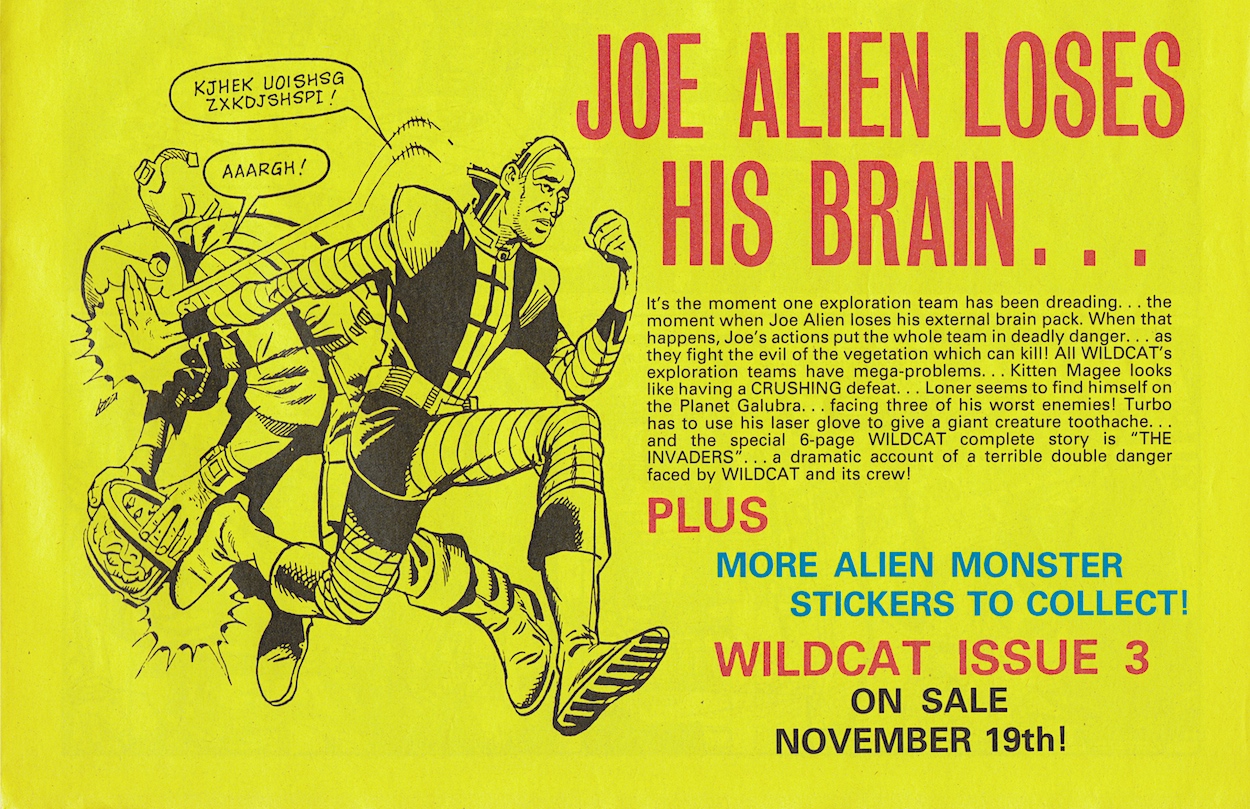
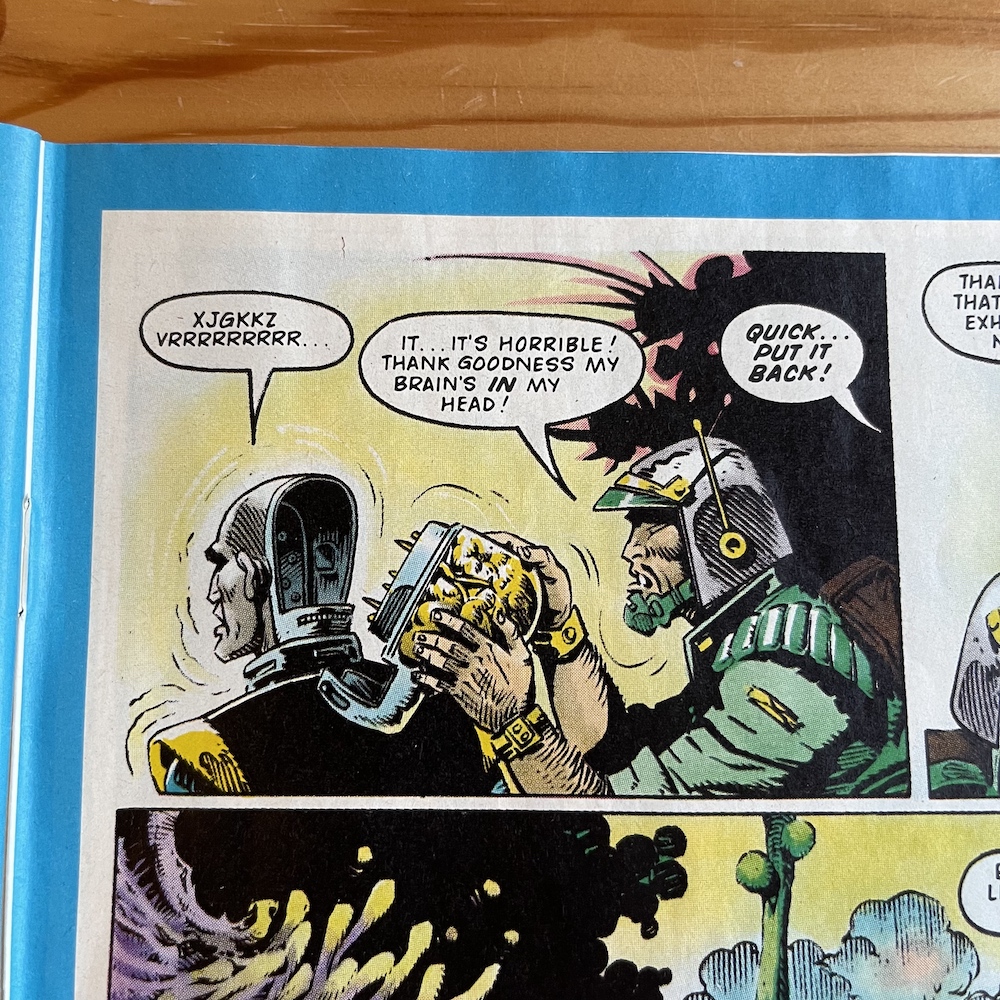
Still in his usual place is David Robinson‘s Joe Alien, his colour pages split as always into 3-page and 2-page chunks. He rescues his team member from a watery death by using his extendible arms but soon finds they’re all going to face trial by a court of trees! The crazy old human man who has assumed the role of god of the continent’s vegetation presides over the telepathic trial. Even’s Joe’s men can sense them talking and arguing but are unable to hear them or take part. The vote ends up split and the old man’s casting vote is to let them all leave in peace. It would seem the tale is at an end, until a tragic accident changes everything.

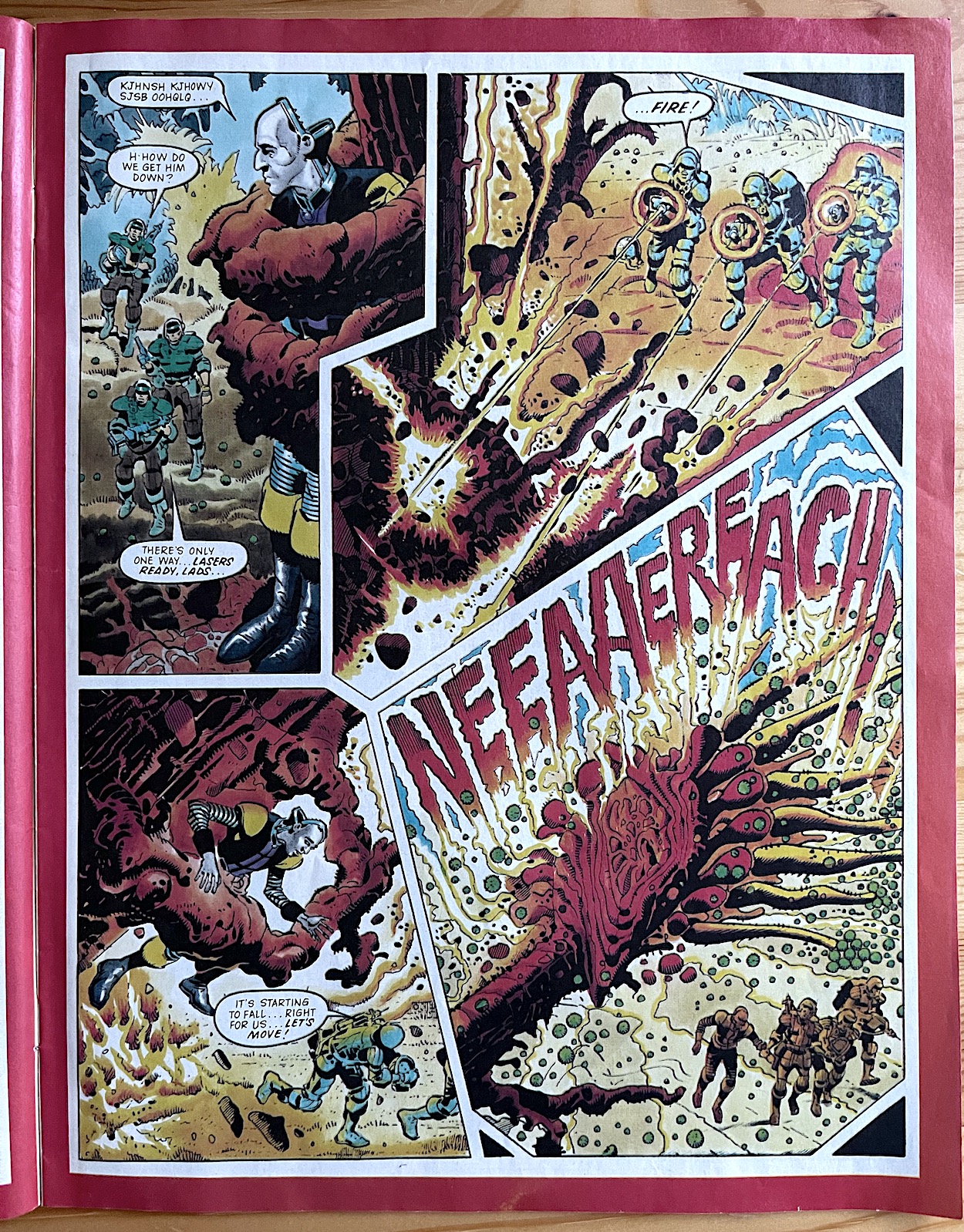
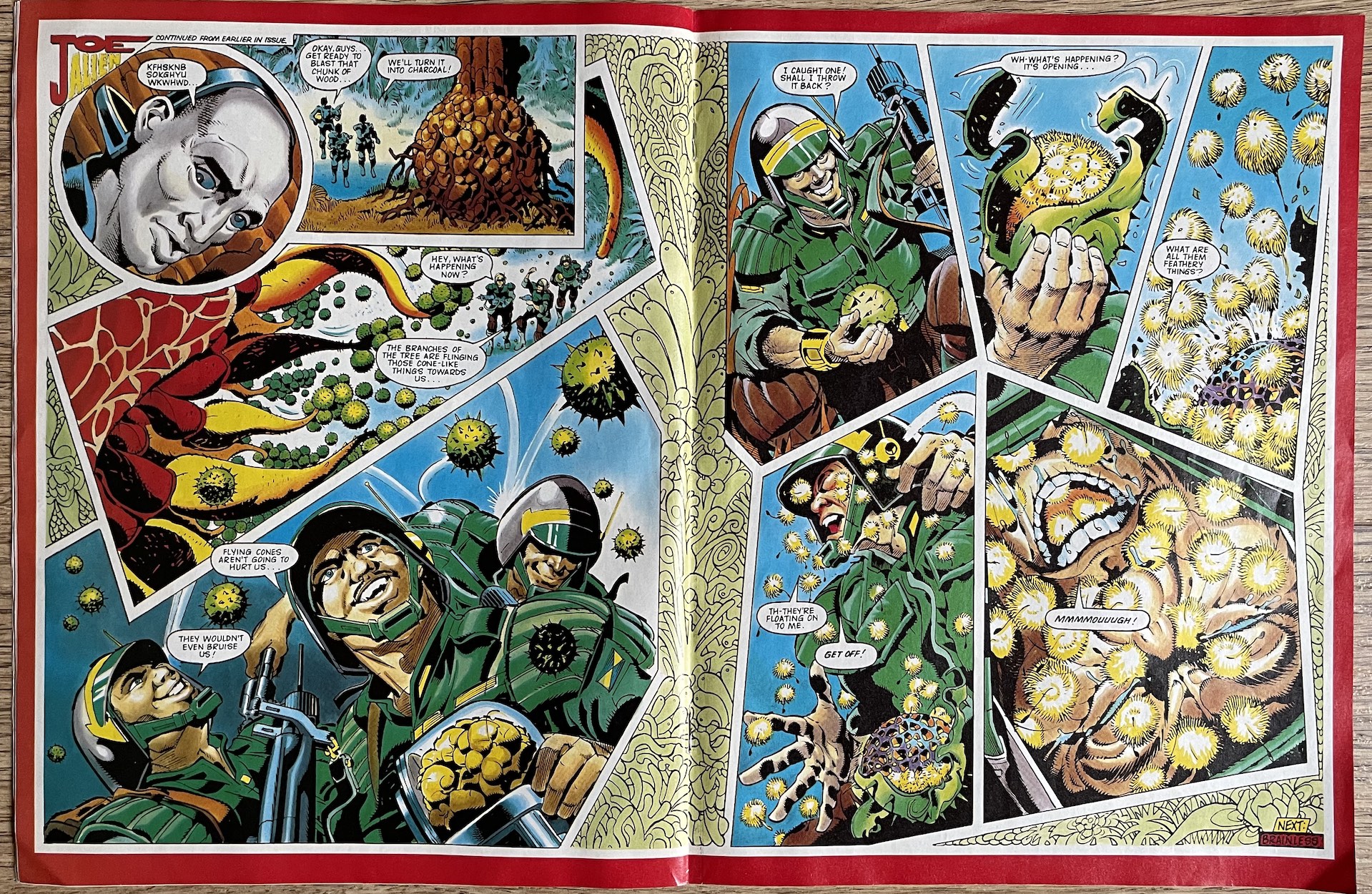
Fascinated by Joe’s external brain pack the man grabs it, snapping it off Joe’s head and turning him into the gibbering buffoon we last saw back in #3. He’s quickly saved by one of his troopers who snatches it back and replaces it onto Joe’s noggin. But in doing so he’s shoved the old man out of the way, who slips and falls down a hill, banging his head on a rock at the bottom. This is where the story stops while we catch up with Loner, but for the sake of the review we’ll jump ahead to the conclusion on the centre pages, which open up to reveal this spread.
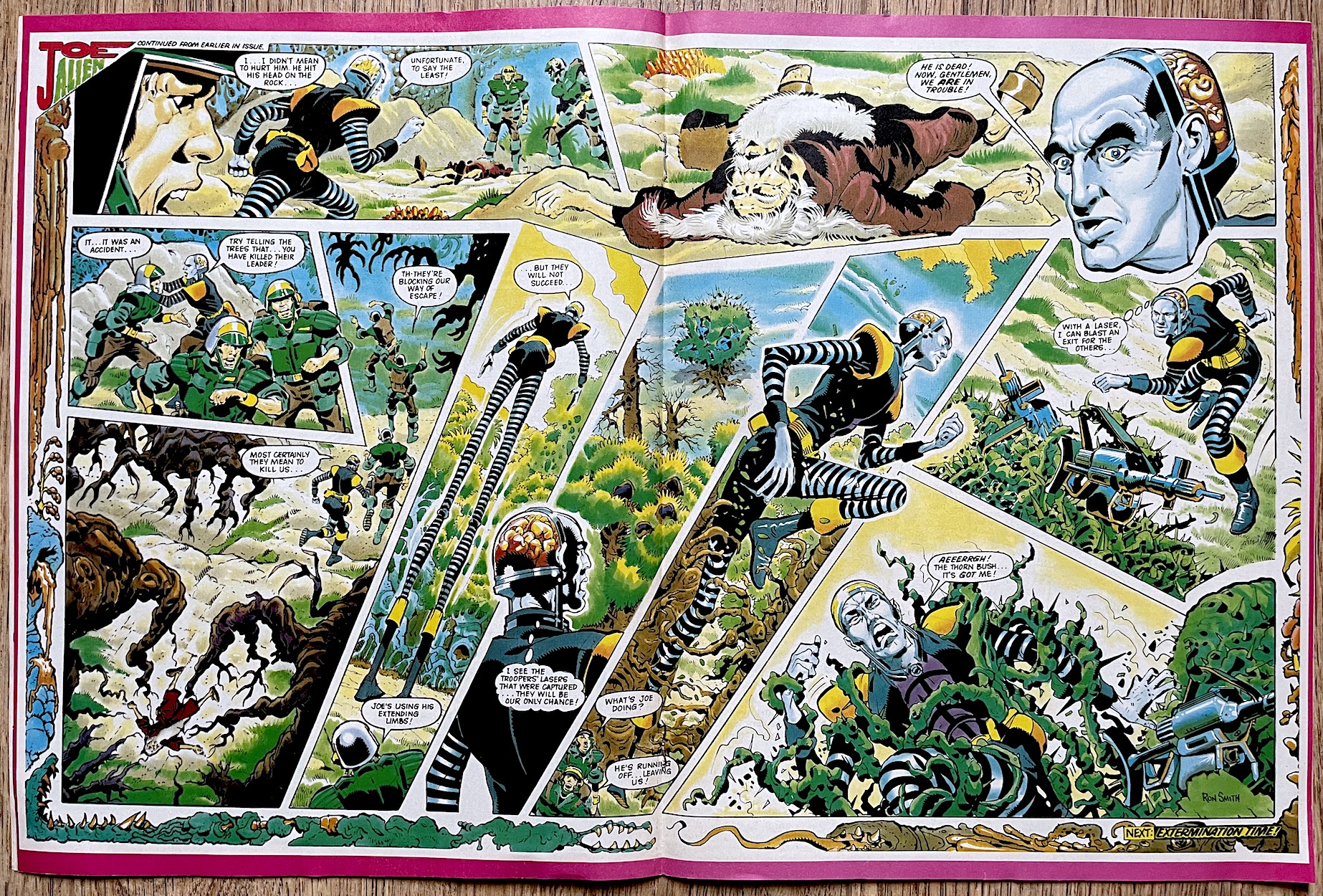
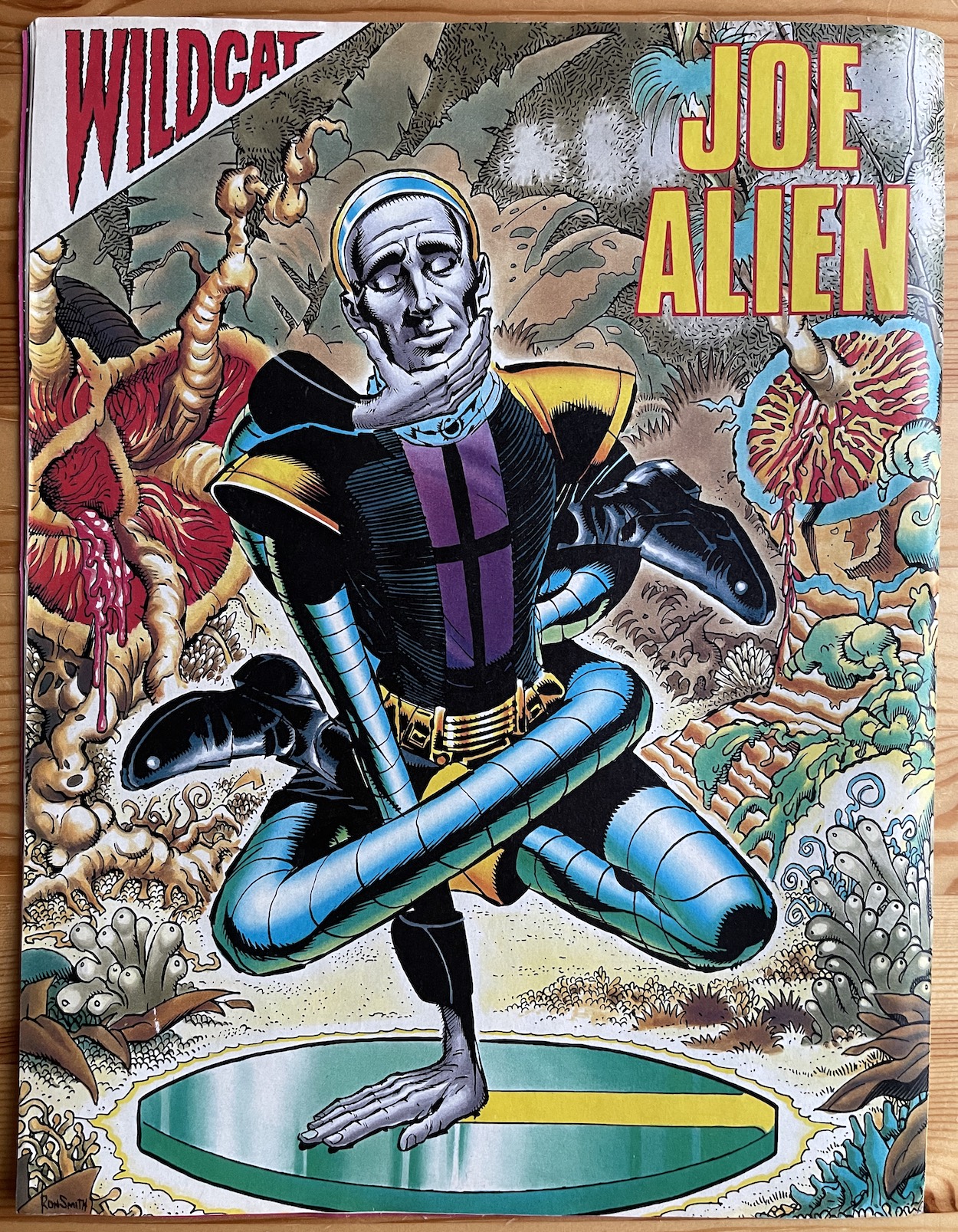
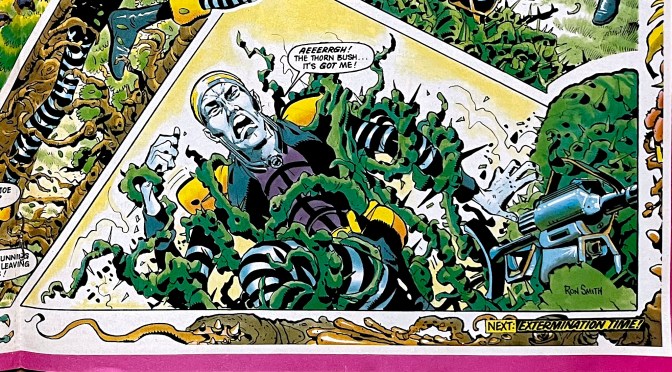
I know I bang on about Ron Smith‘s art every fortnight, but can you blame me? Joe’s pages were always surround by a bright colourful panel to make them stand out as the only colour ones in the comic, but Ron has added his own border here too. This, combined with the dynamic panels and the strip reading across the spread rather than as individual pages, makes this a stunning work of art in its own right worthy of a place on the wall!

The story rockets into top gear here. From Joe realising the trees are going to kill them all and using his extending legs to track down their only hope of escape, to that cliffhanger with a superbly drawn, truly painful expression on his face. I mentioned last time how I was interested in the story with the old man and I was looking forward to seeing where it would lead. I’m disappointed he’s died and the story appears to have refocussed again on the basic action plot we had previous to his introduction. But I’ve learned never to second guess this comic. Plus, even if it has reverted to a more action-based story again, Ron’s art makes it a thrill to read.

Over the last few issues the tension has been ramped up to such a degree that this is a genuinely exciting moment

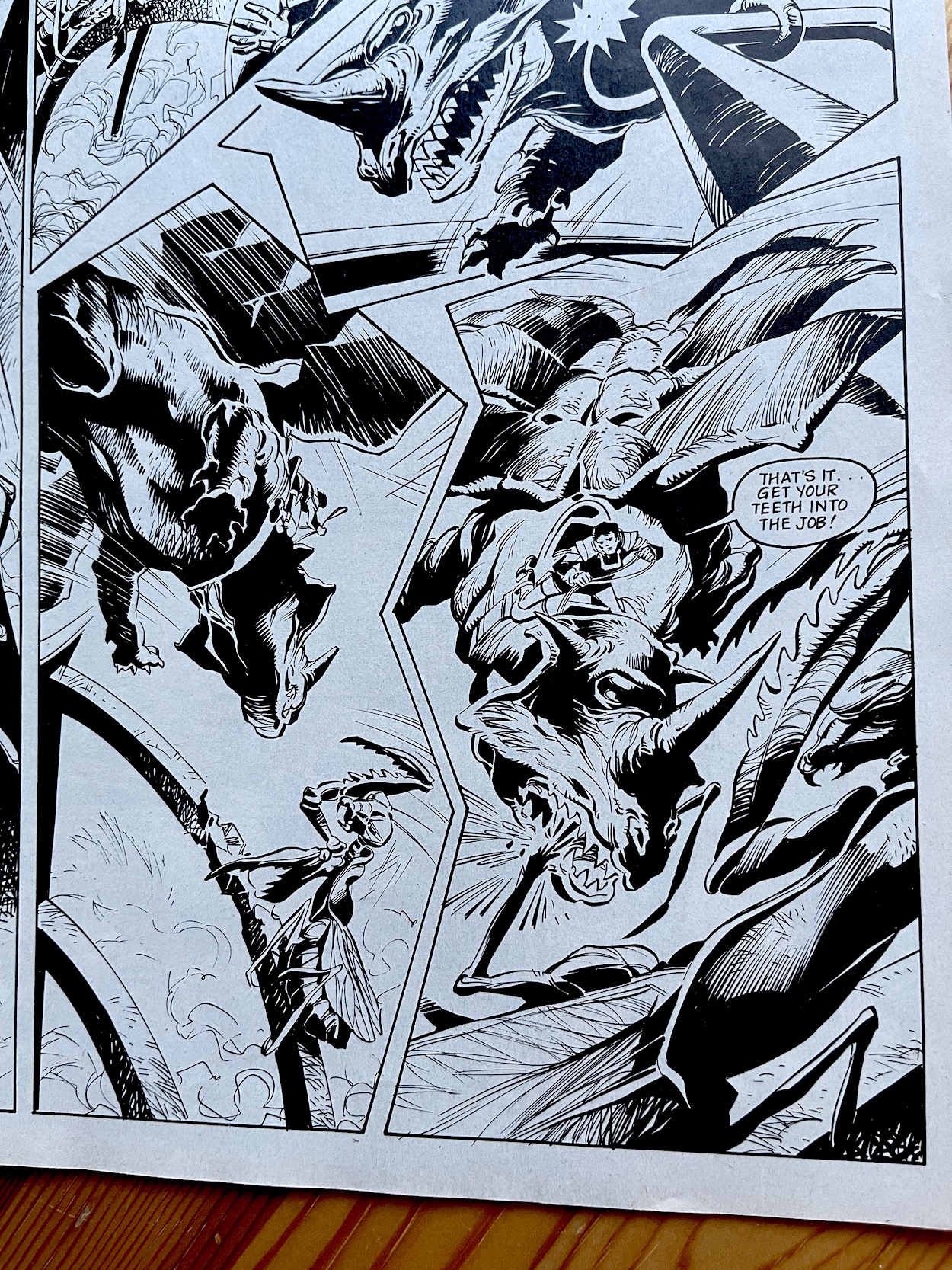
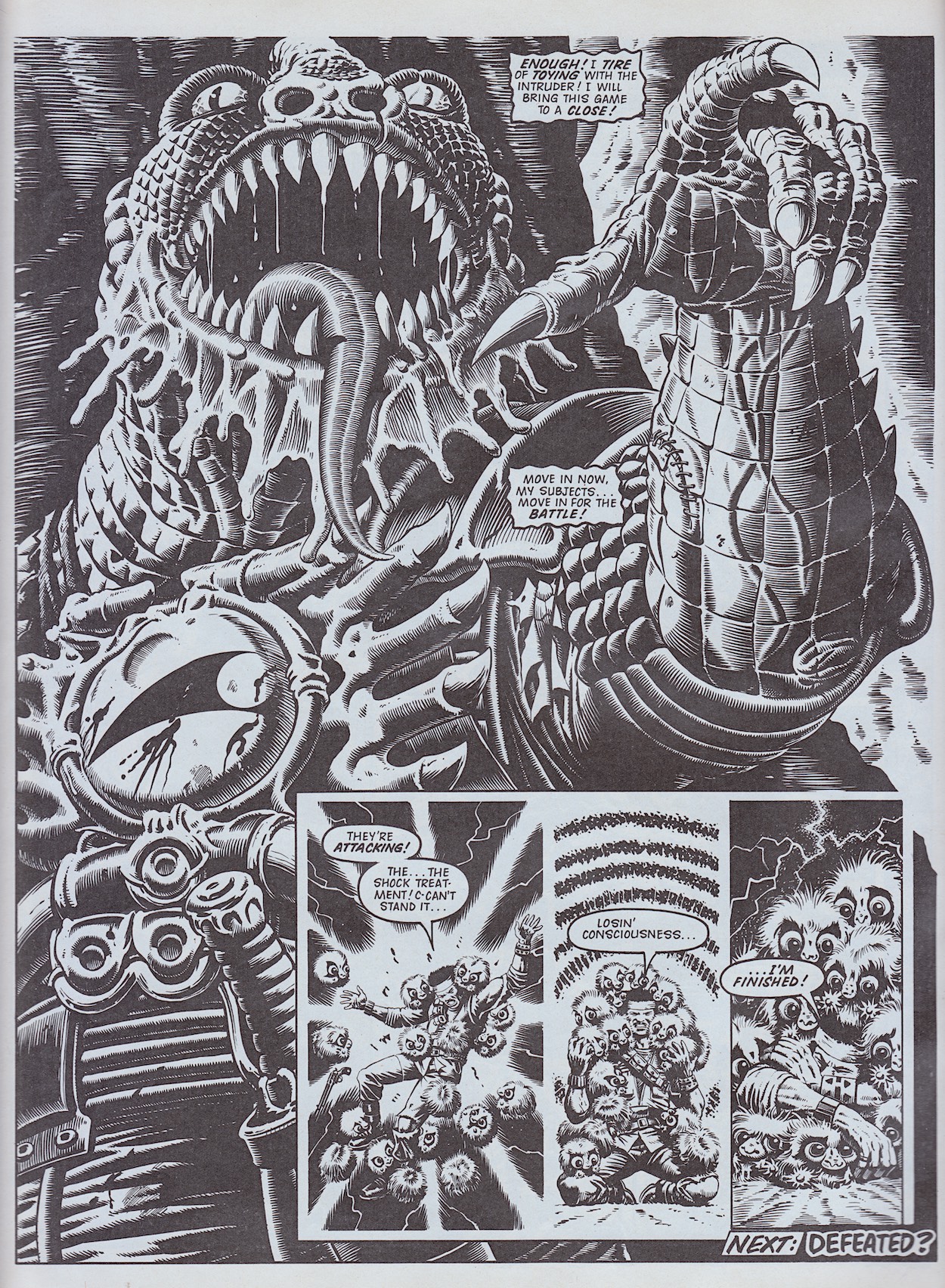
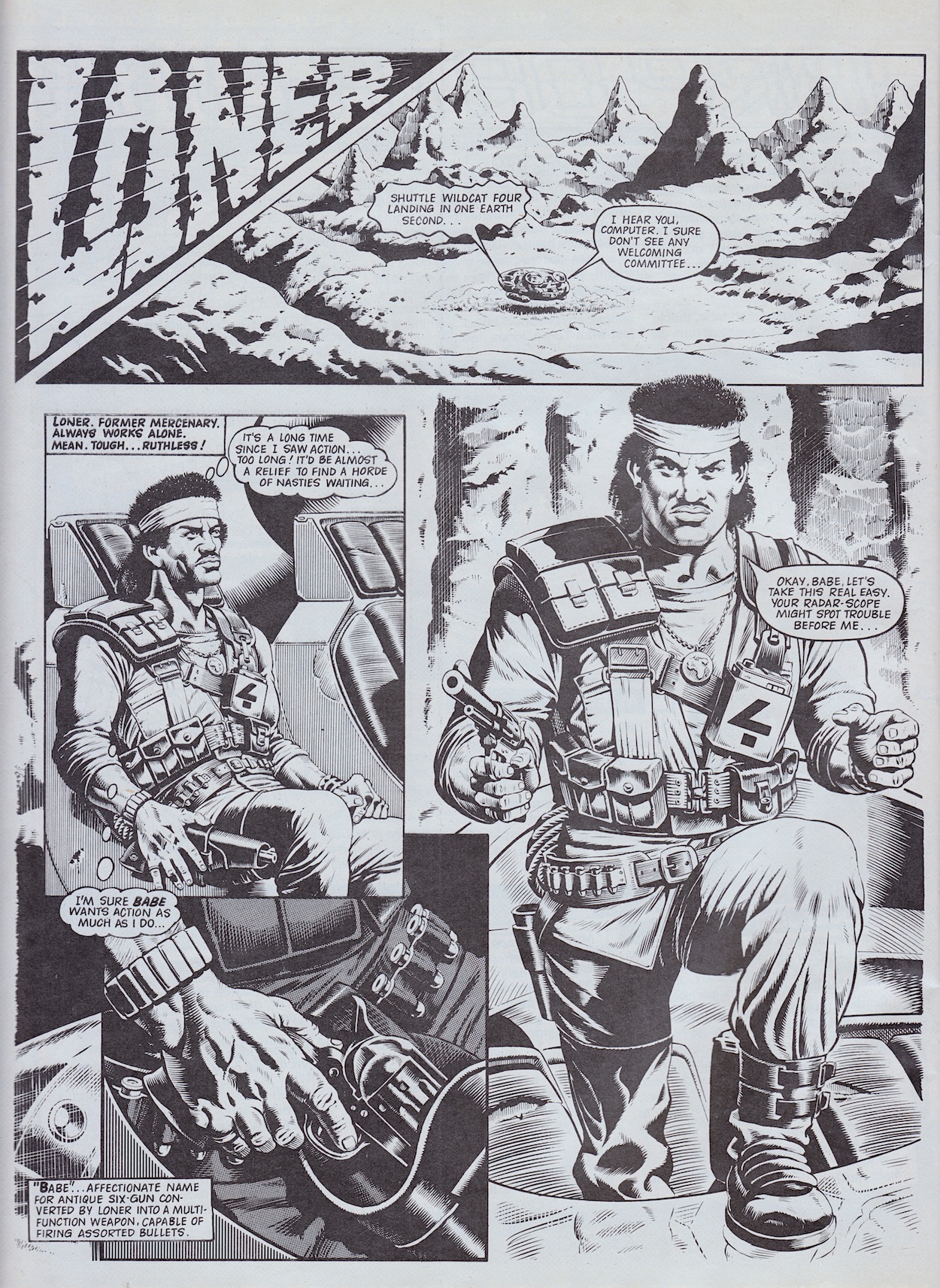
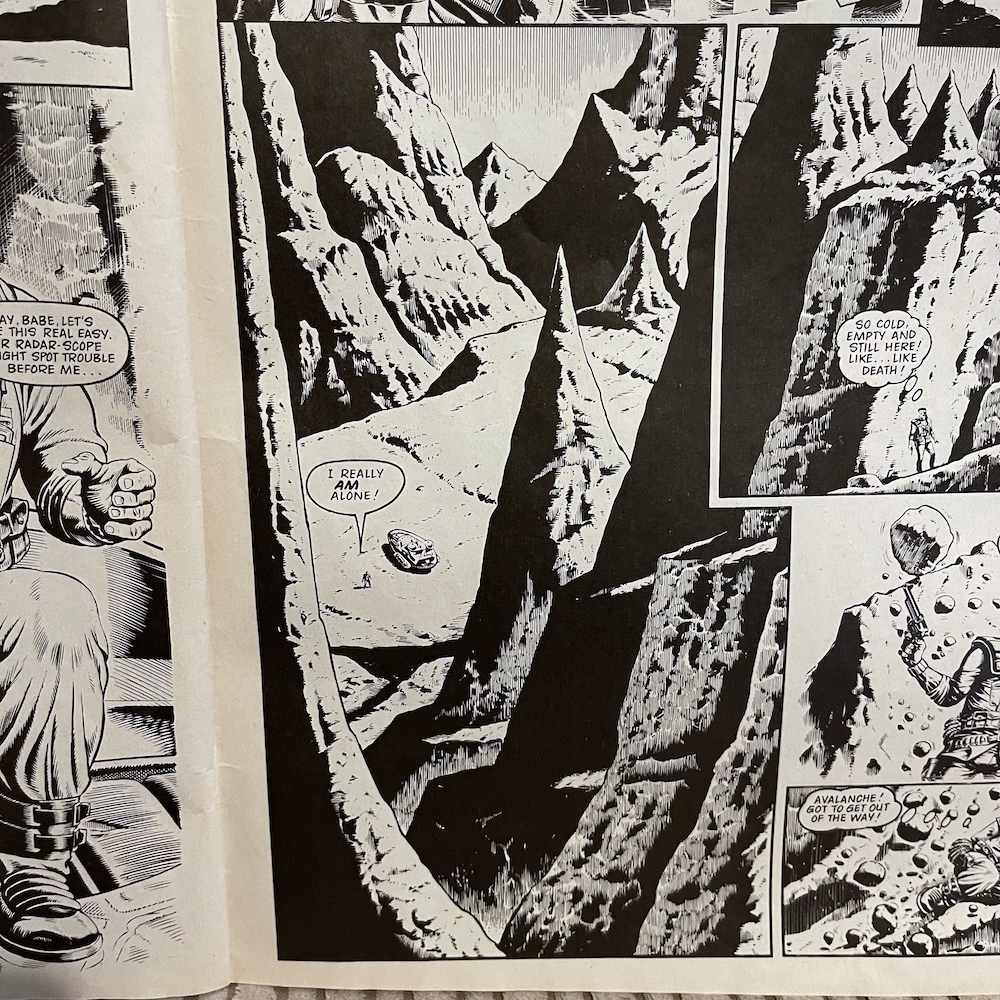
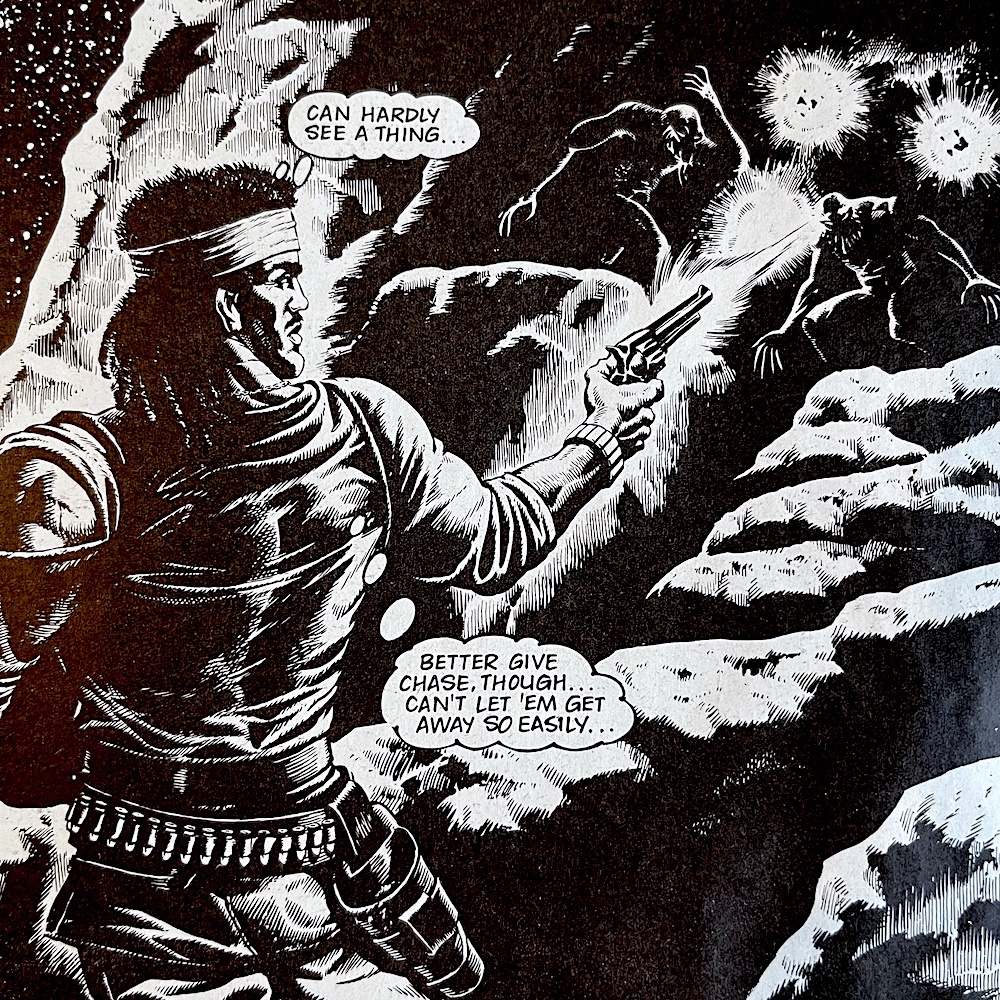
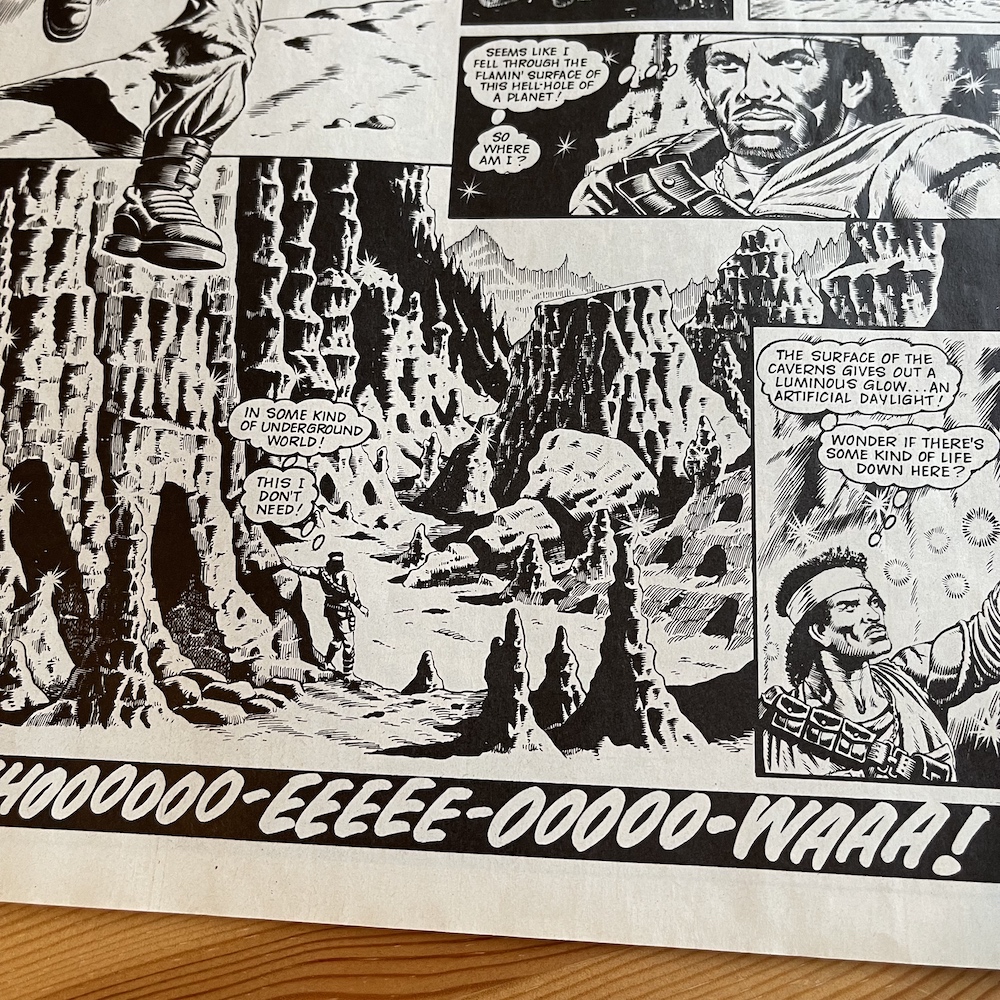
I made reference to Loner‘s placing in the comic. He’s been moved up the running order to Kitten’s previous position in the middle of the comic and it’s time for the climactic battle with the Beast. There are some lovely atmospheric panels here from artist David Pugh which may be small on the page but pack a big punch in Barrie Tomlinson‘s script. Using his telepathic weaponry on it seems to make it retreat at first, slinking into the shadows. But when it spits acid out of one of its tentacles (previewed on the cover) it’s clear that wasn’t the case at all.
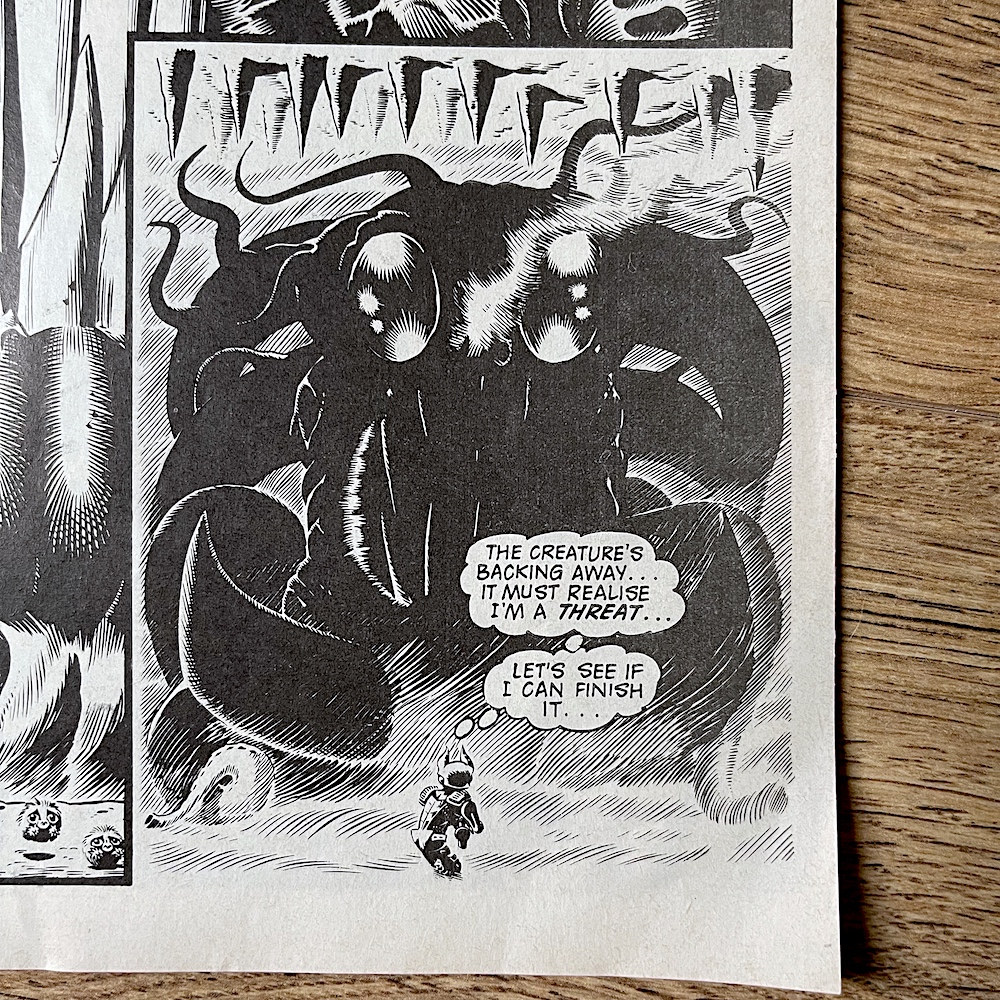
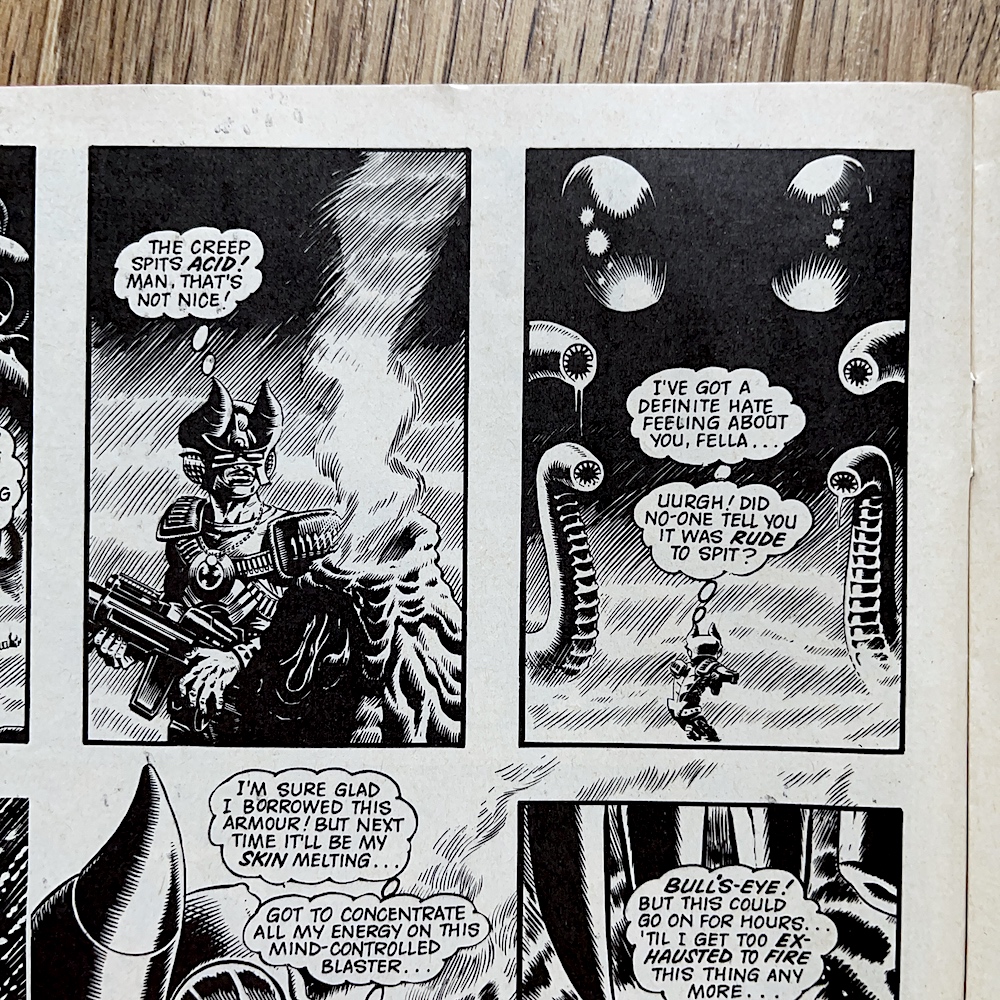
When he’s fired upon again the acid takes out Loner’s shoulder armour, leaving him vulnerable. One more blast and he’s dead. Over the last few issues the tension has been ramped up to such a degree that this is a genuinely exciting moment. We’ve had glimpses of the creature, we’ve seen the devastation left in its wake, the bodies in its lair and the minions sent out in advance. Now it’s all or nothing for Loner as he takes aim at its chest, small as it is, seeing it as the only potential weak spot when it’s basically all mouth.

He soon realises this could take hours if he was going to try to beat it down bit by bit and the telepathic nature of the weaponry just won’t allow for that. He’s already exhausted, his mental energy completely drained, his brain fried from the exertion of such a powerful weapon even though it’s only making small dents in his enemy. But he notices it’s slowly sliding itself backwards with every blast. The vast cavernous lair has already been established as having great drops, jagged rocks and huge spikes sticking out of the ground, so it’s time for some lateral thinking from our former mercenary.
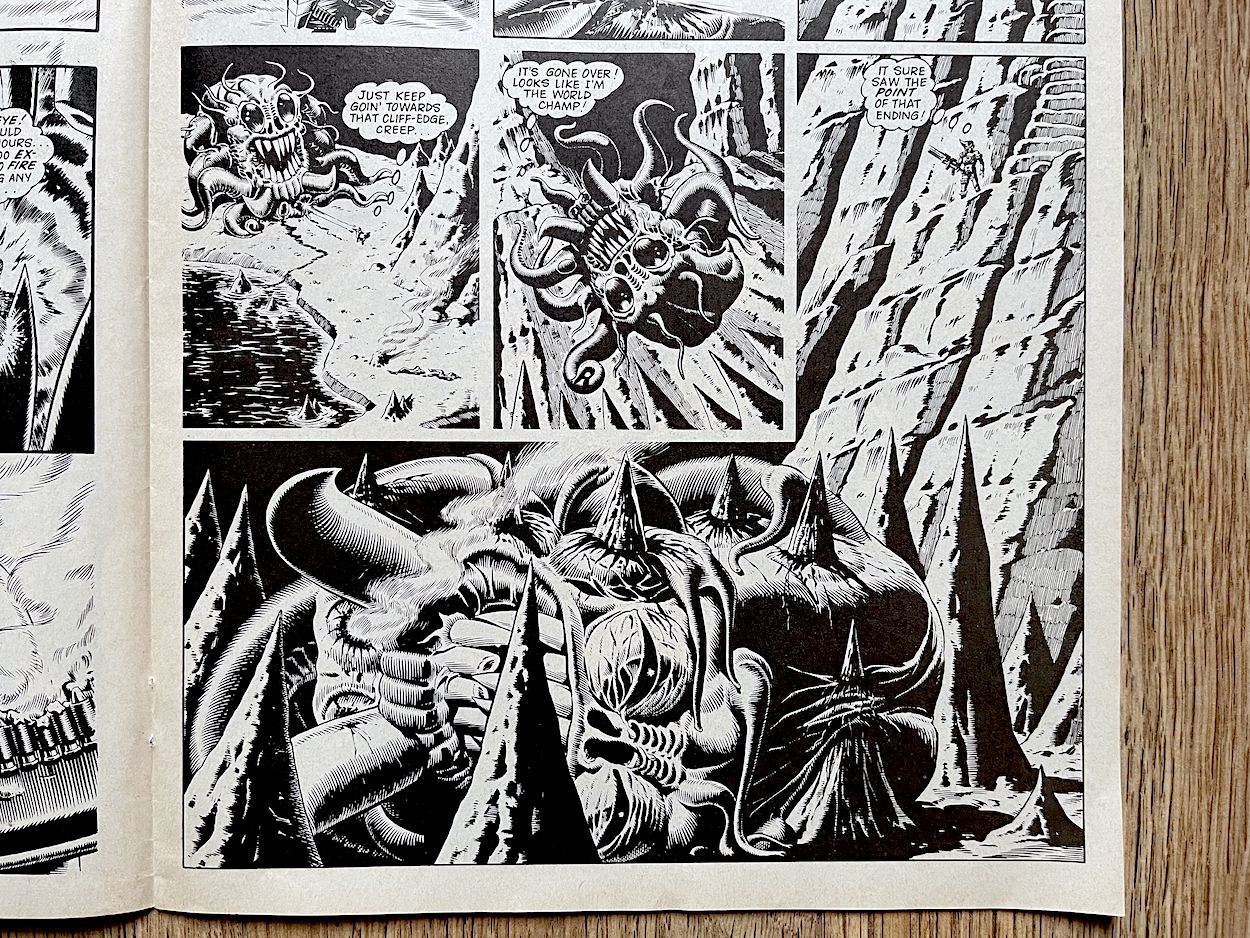
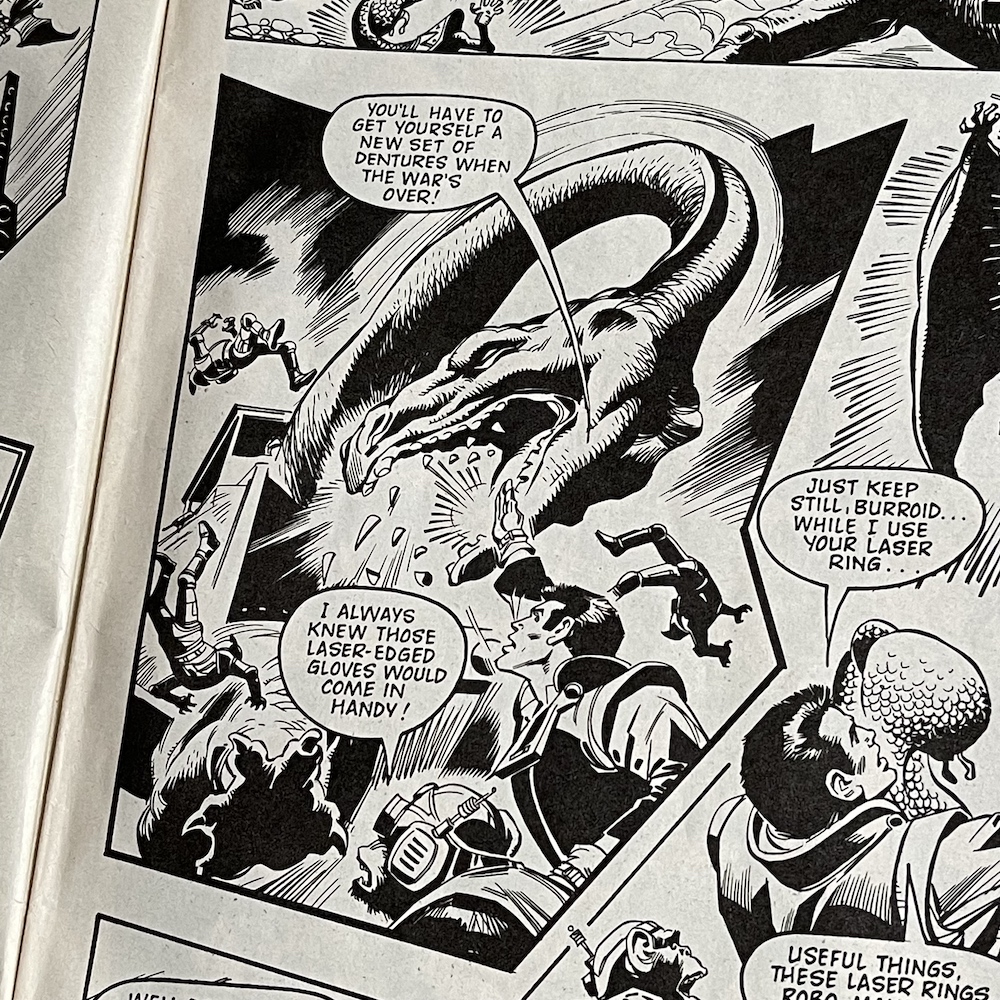
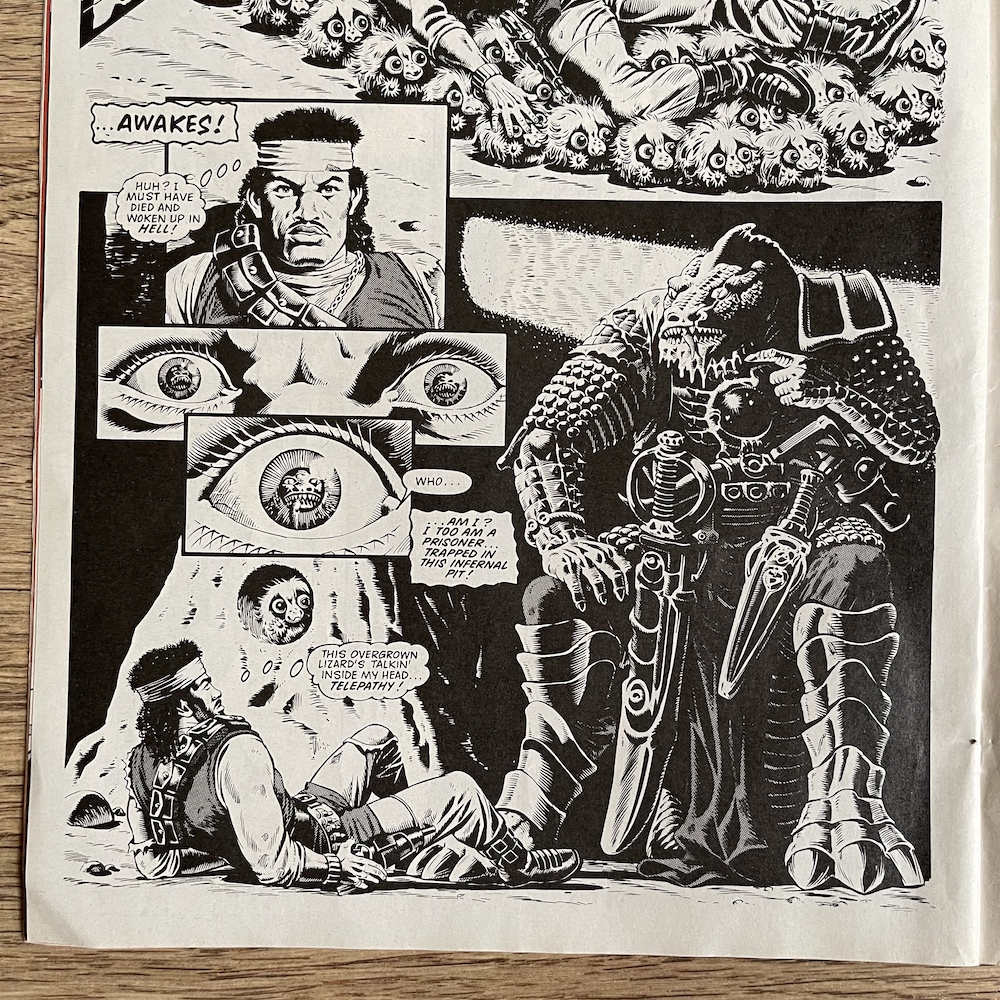
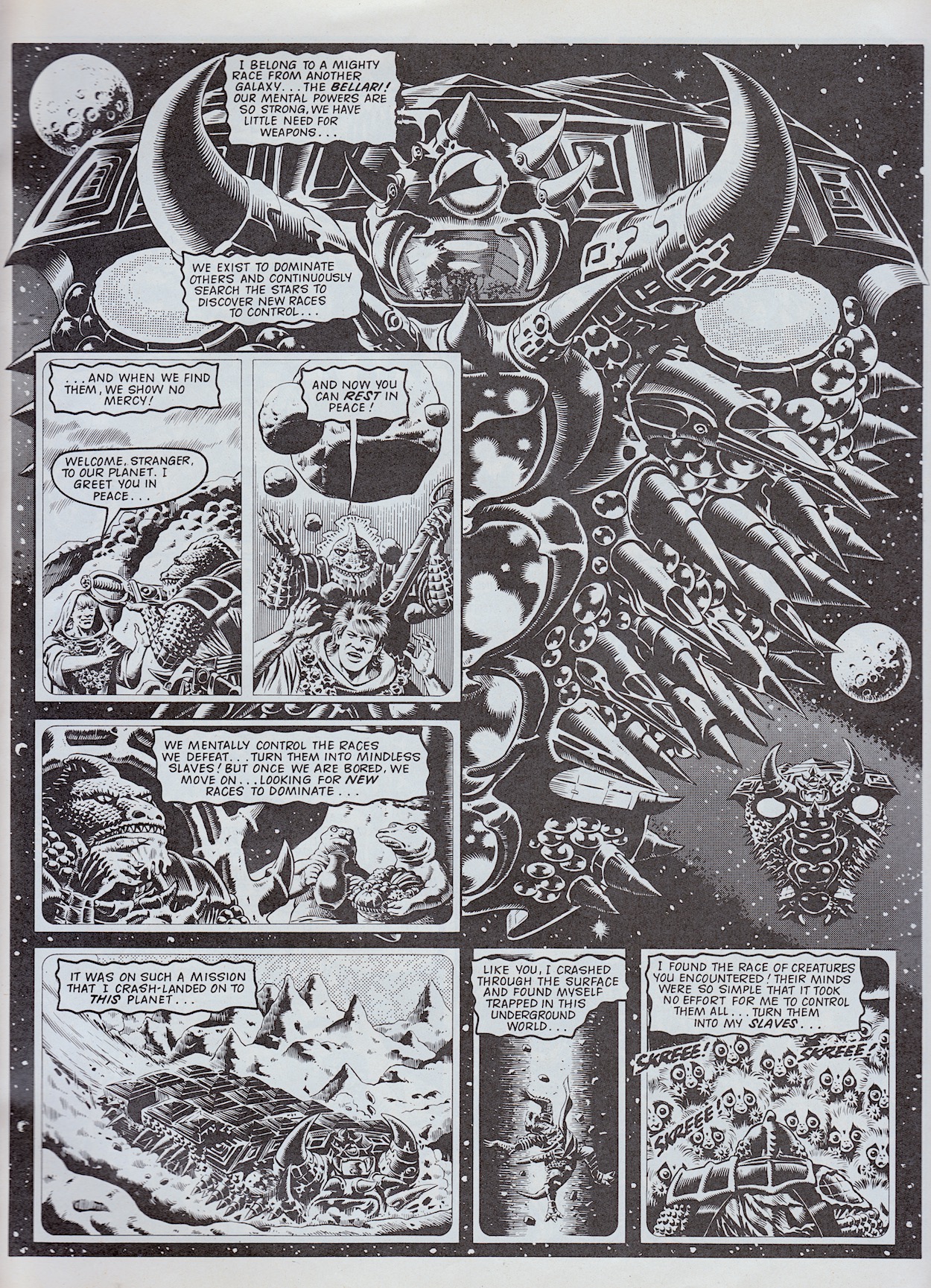
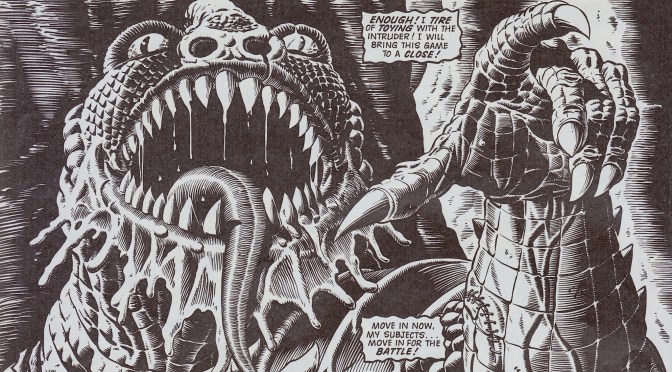
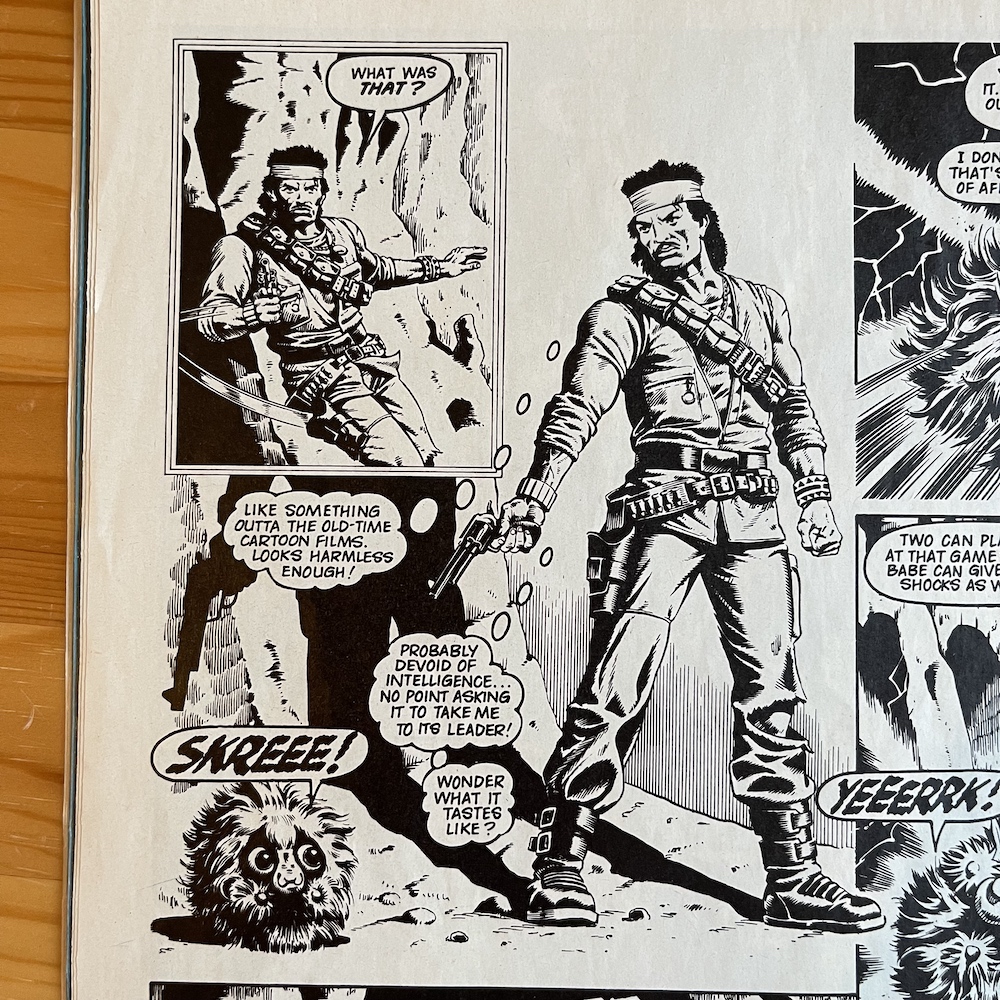
As excellent as this ending is, I do have a bit of a problem with it. In my head this beast was a ginormous snake-like being. I was sure a later pin-up showed this but maybe I was wrong? I checked back over previous issues (because I don’t want to skip ahead) and found a panel from #4 I didn’t share at the time. When the Bellari lizard who sent Loner on this quest was describing what must be done we were shown an image of the Beast and I was right, it had been depicted as a snake (below is a photo of a panel from #4), but for some reason in our current issue it’s more of a massive head.
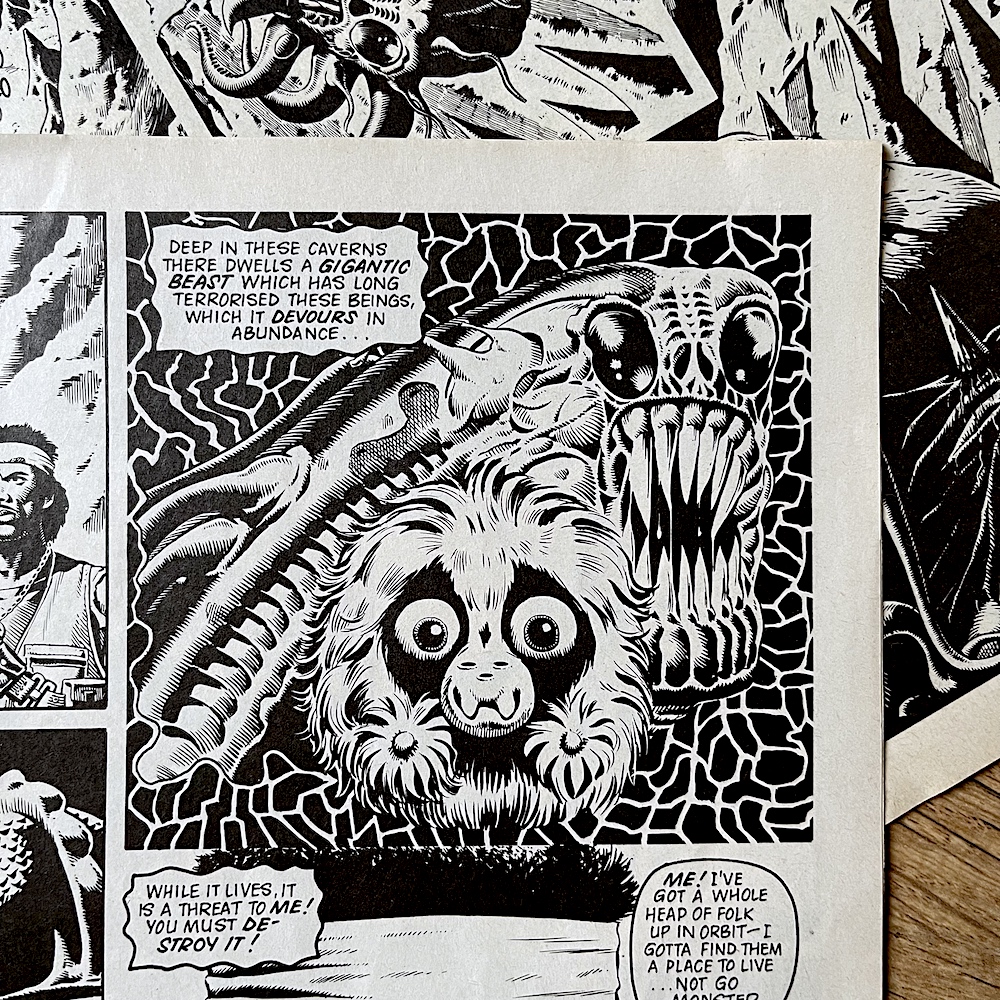
Maybe it was curled up? Perhaps its natural state is as shown in our current issue but it can extend its body out to form a snake-like shape for reasons we haven’t been privy too? Unfortunately it’s unlikely we’ll ever find out. After these scenes Loner is de-evolved back to his original form and given a headband to block telepathic signals from the lizard, who he dispatches in a couple of panels, thus ending the first chapter in his quest on the new planet.

I was a little disappointed the Bellari was dispatched so easily and surprised the story is wrapped already. The furballs wish him well, telling him the headband has attached itself to his brain and can’t be removed, but will translate all alien languages for him. It’s a very handy piece of equipment for the Wildcat crew to have at their disposal, so off he goes to explore more and hopefully make his way back to the ship. I’d thought this story lasted for at least the original 12 issues so I’m excited to see what completely new Loner tale will take its place. I have absolutely no recollection so I eagerly await the next issue in a fortnight’s time.
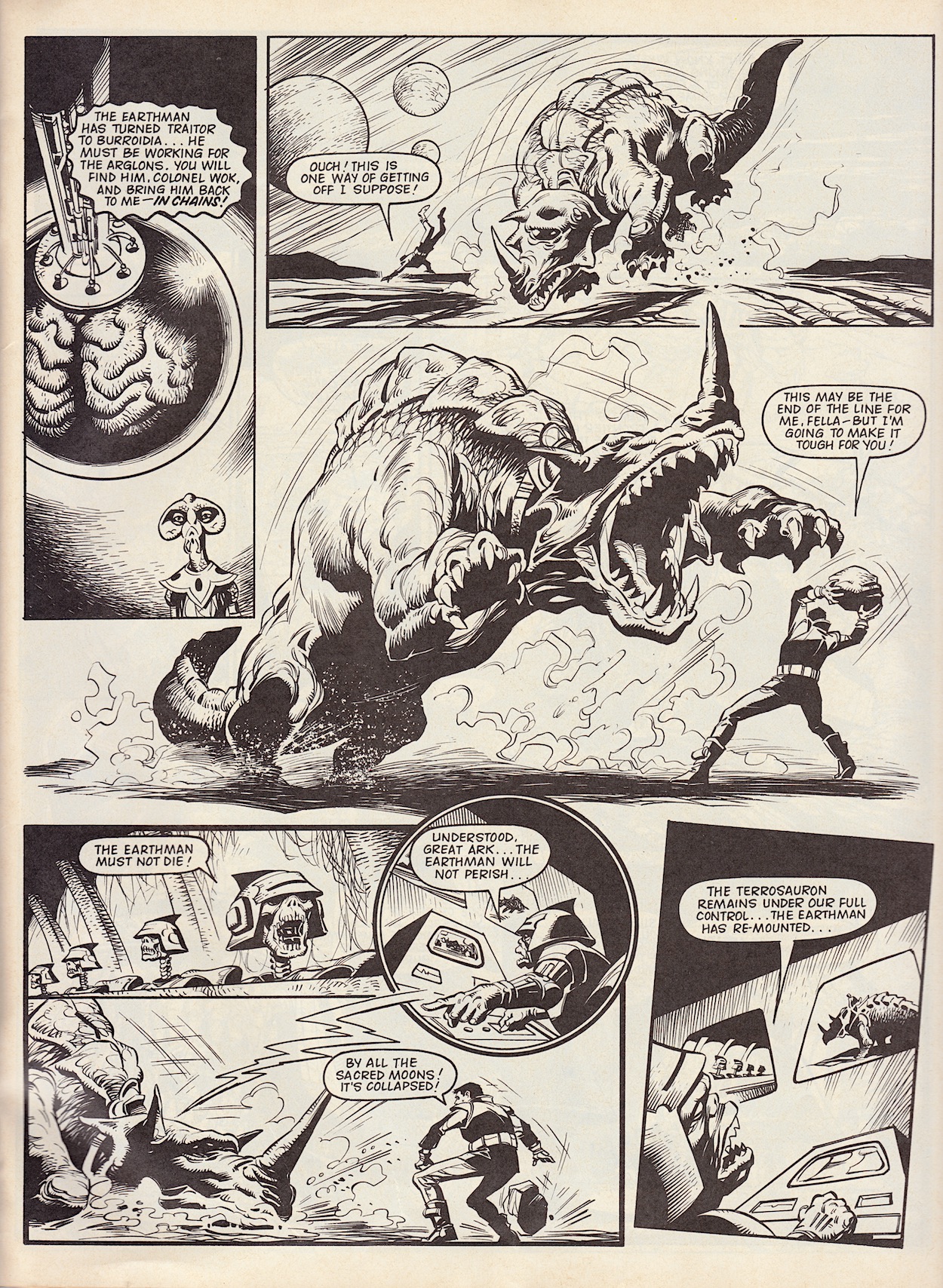
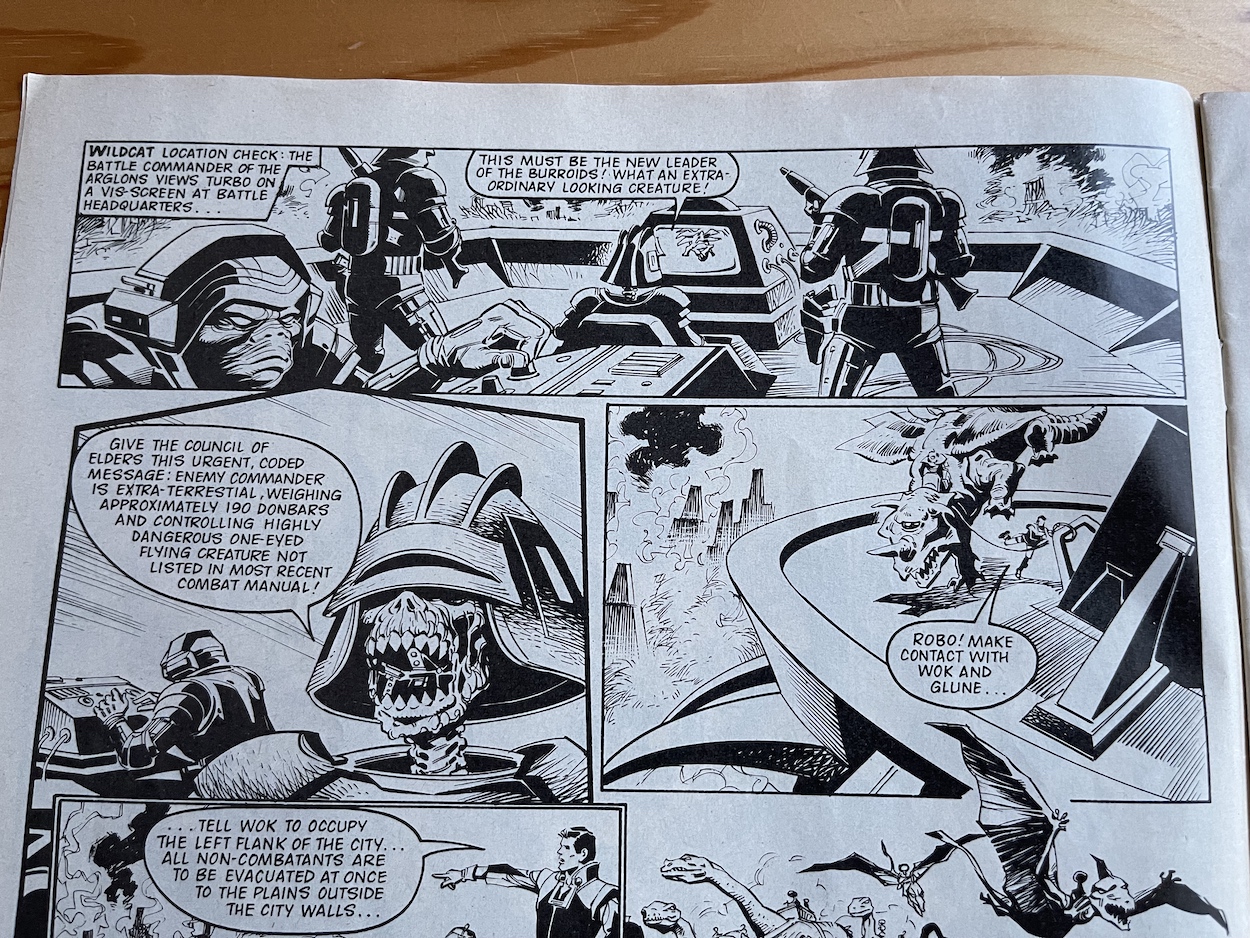
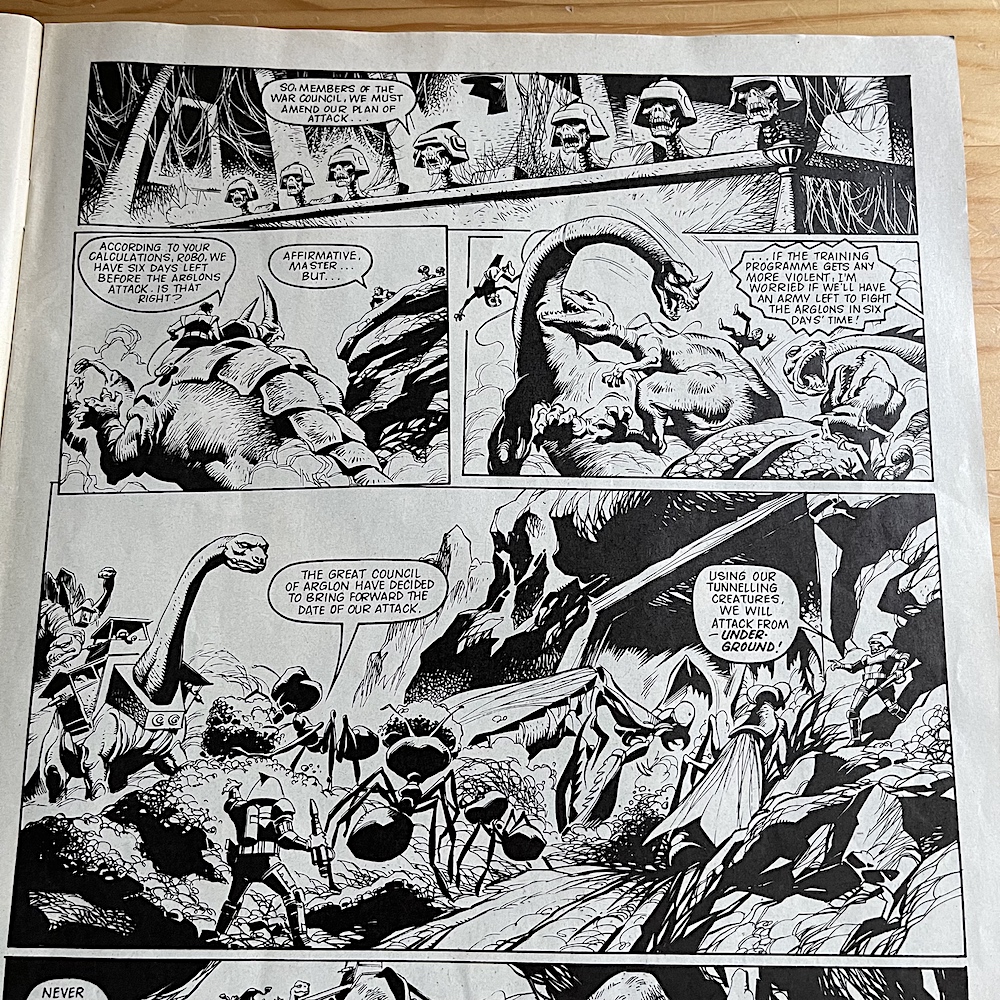
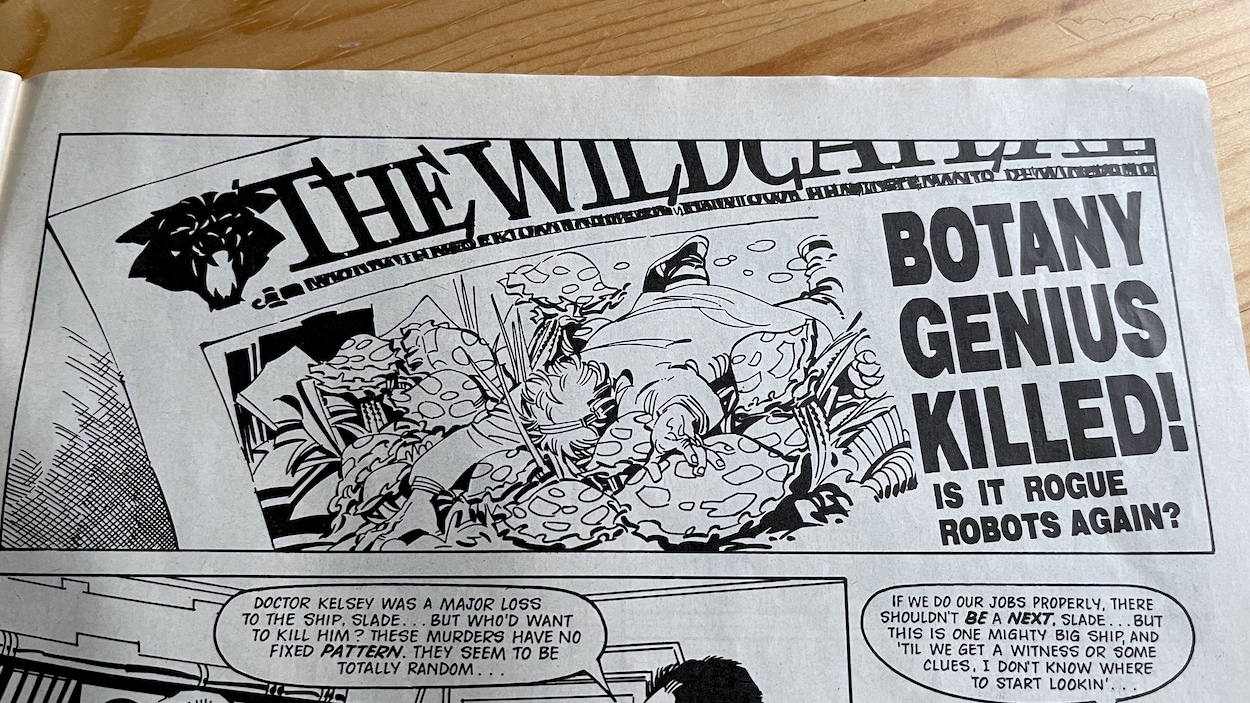
Turbo Jones is the last of our expedition team leaders we catch up with this issue and things are going from bad to worse, which is par for the course on this planet, let’s face it. The story takes an unexpected turn this time, ending with everything turned around and heading off in a different direction. The Arglons send in a team to place a receiver underneath the collar of Turbo’s giant Terrosauron so they can control it remotely. Normally Robo would detect such signals (as has happened previously) but he decides he’s had enough and stays behind as Turbo leads some of the army out to capture the remaining enemy soldiers trapped within the city.

But as they approach the signal is sent out and he loses control of his dinosaur which begins viciously attacking all of the other creatures. The Burroids‘ leader The Brain (that still hasn’t been explained) assumes Turbo has turned on them, that he’s been biding his time until they were at their weakest. Meanwhile, The Ark has commanded Turbo is not to be killed and so the signal is sent for the Terrosauron to stop its attack. Instead, as Turbo climbs back on, it begins to lead him elsewhere through the night.
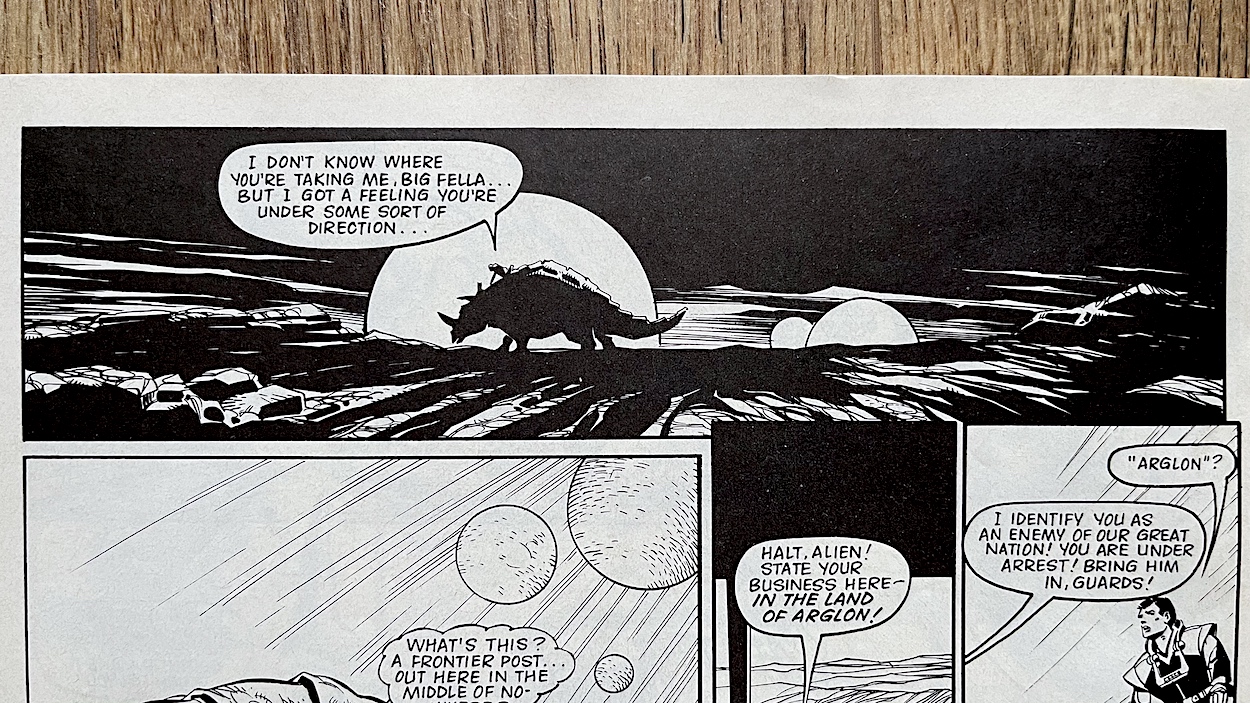
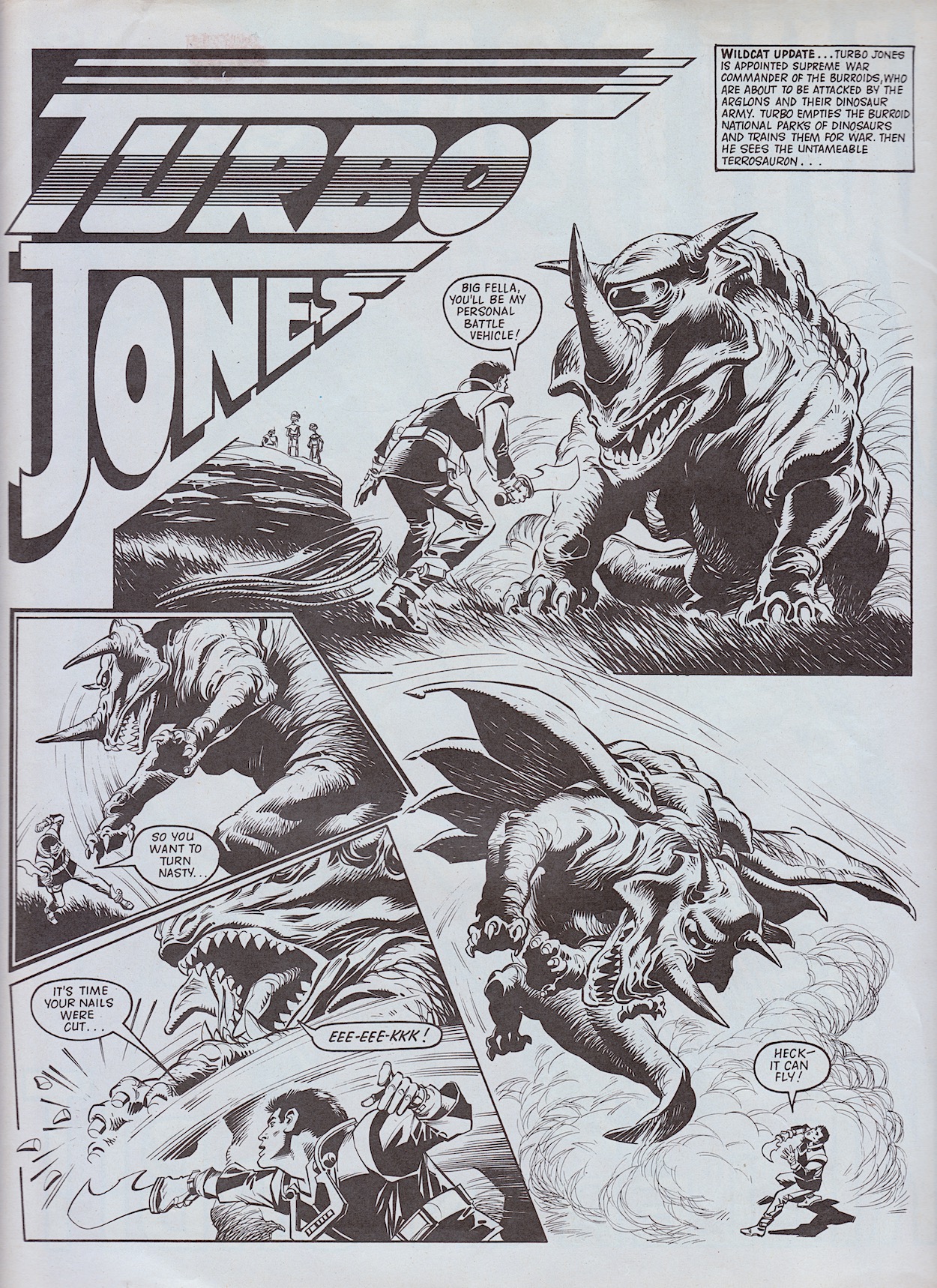
What I particularly like here is how, even after almost being killed, it’s clear Turbo has some kind of affection for his creature. While he’s not aware of the receiver or The Ark’s plans he somehow just knows that he’s safe again, that this was out of character for the animal and it’s now over. His affectionate “big fella” in the panel above says it all. He clings on, waiting to see where he’s being taken across the great plains. It’s not explained how they get out of the city after the defensive fences were raised last issue (which does appear to be something of an oversight) but they end up in enemy territory.
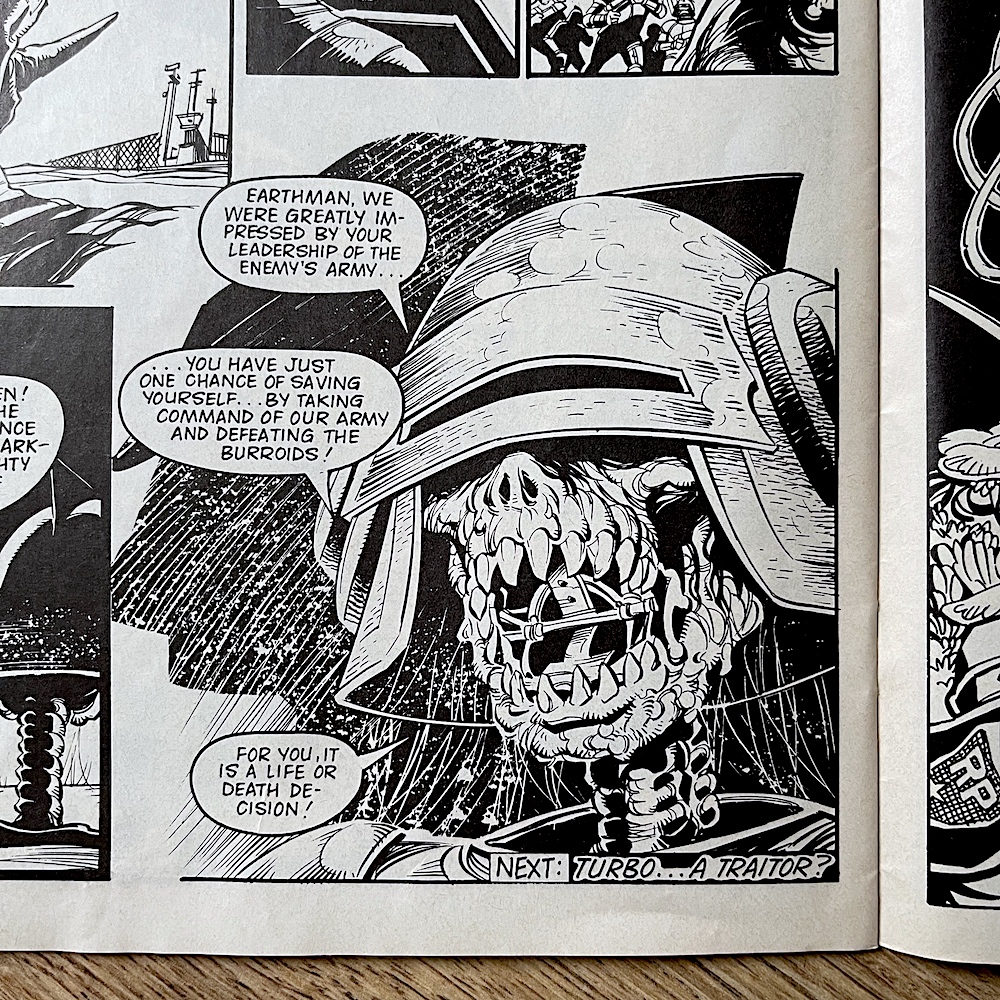
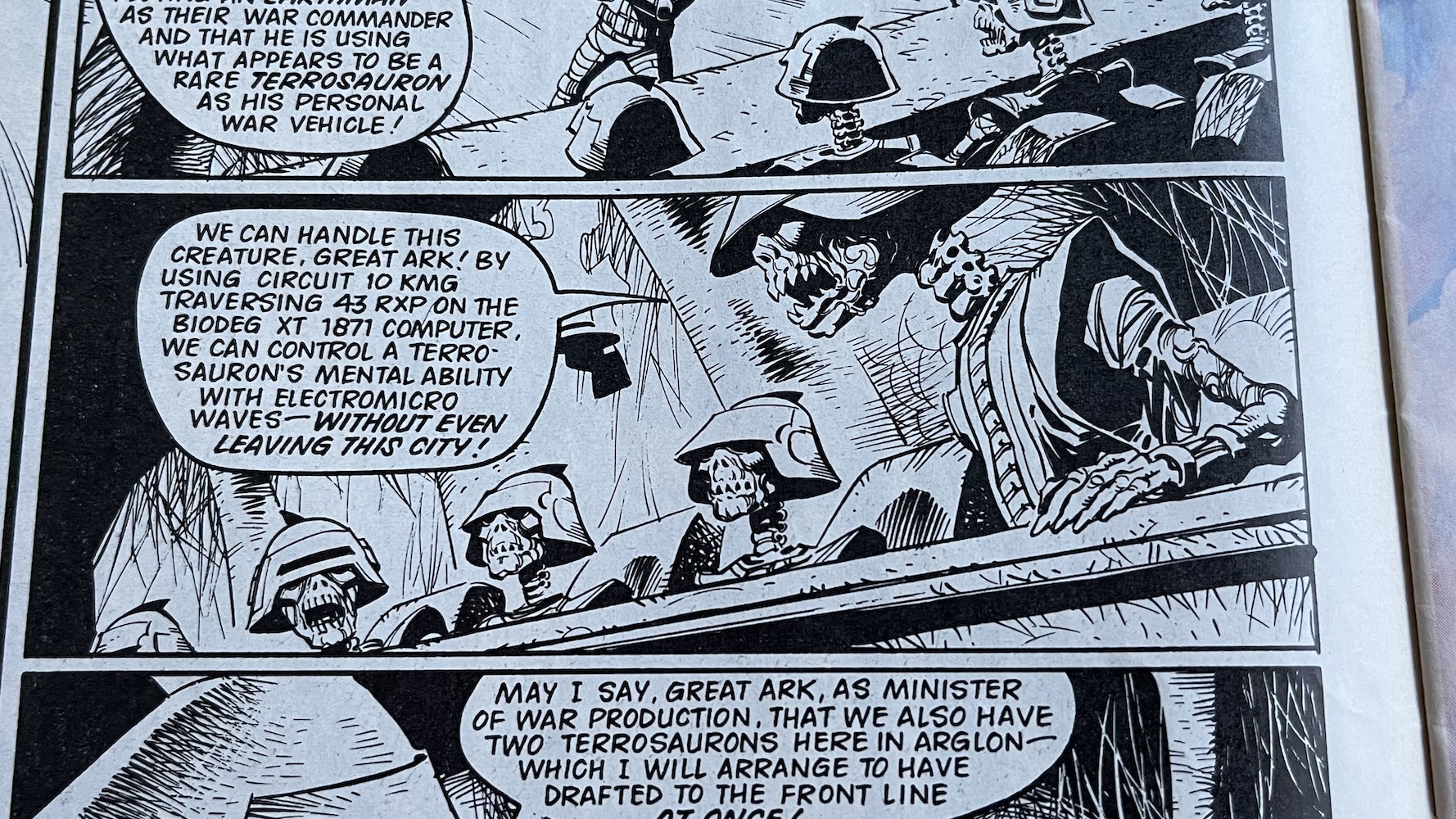
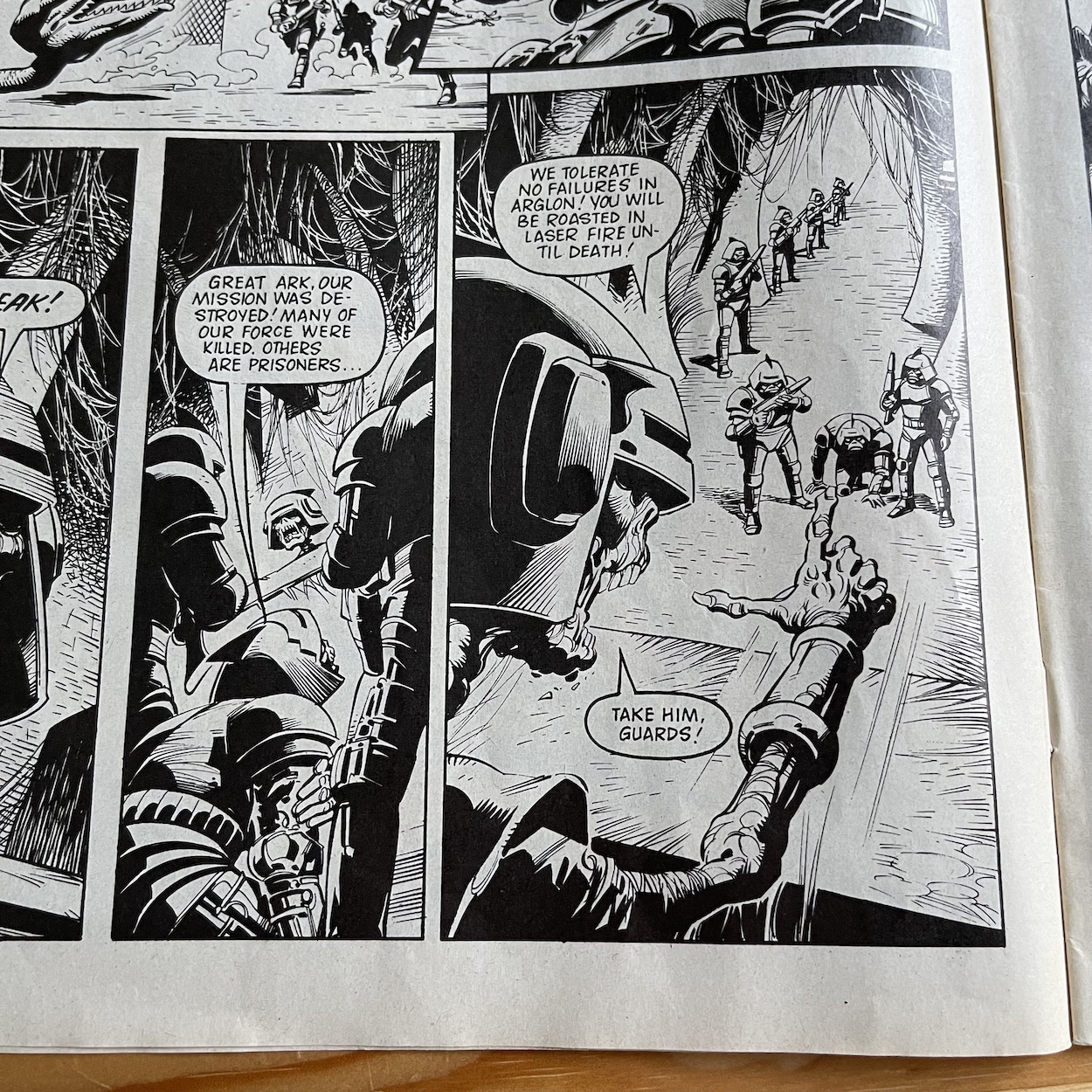
This creepy image by Vanyo is the last panel and shows The Ark in all of their skeletal glory, complete with a nice close-up of those mechanics inside the jaw we’ve only seen in smaller images before. While the cliffhanger itself is a good one in its own right, this image raises those questions again of whether The Ark and their council are truly alive or if they’re being controlled by someone or something behind the scenes, Wizard of Oz-style. With Turbo now their captive I’m hoping for some answers soon.

It’s a sudden change in direction for the story and I think it works a treat. There’s only so much we can get as an audience from a constant battle but I also like the fact it hasn’t been wrapped up. It’s still ongoing but with an ill-equipped army now on the defensive. An army that now sees Turbo as a deserter. A story that could’ve easily become repetitive and just an excuse for big battles has cleverly twisted itself and has piqued my interest again.
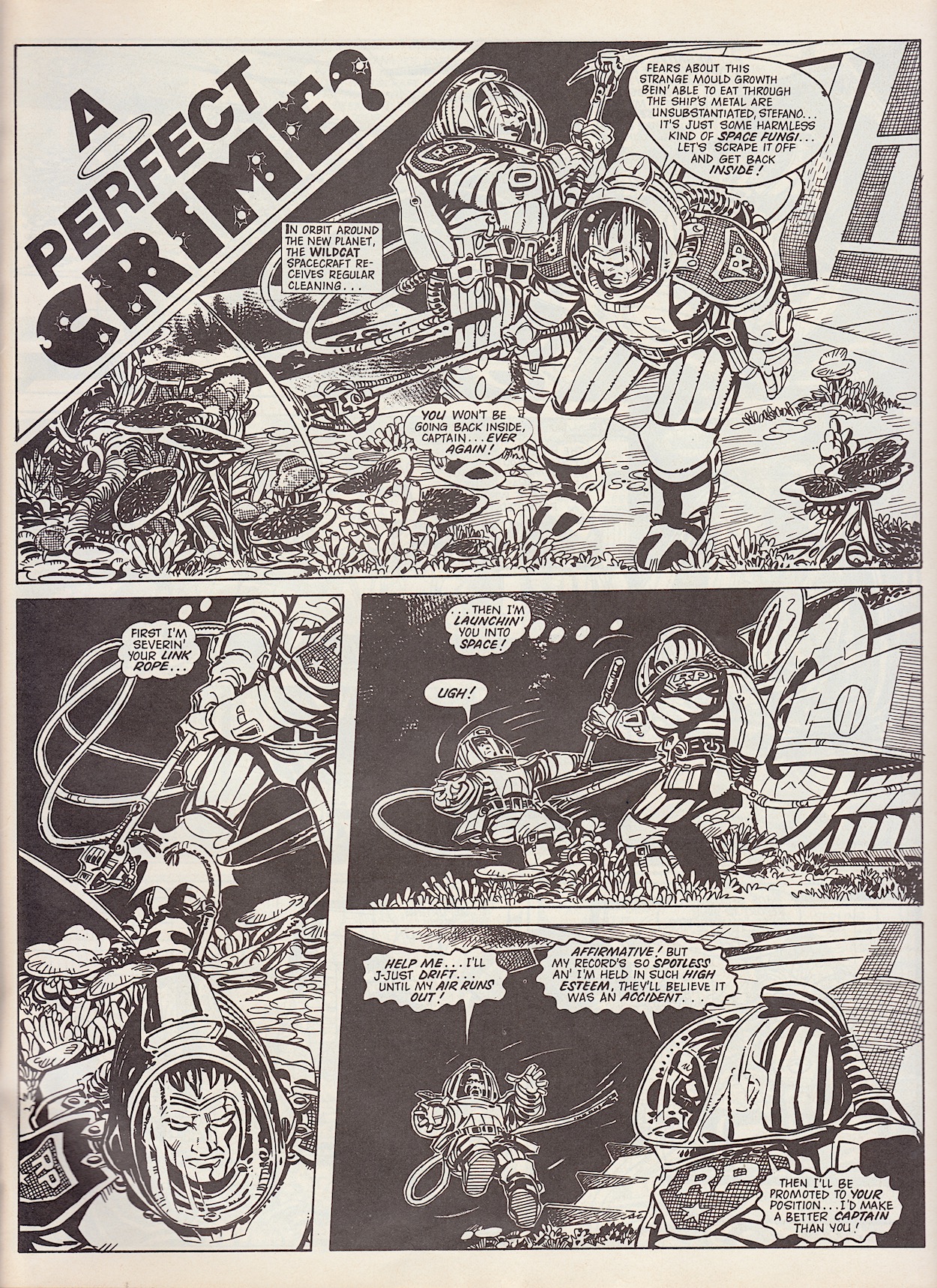
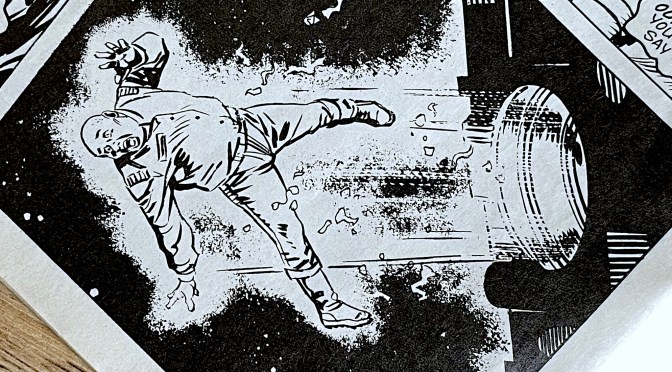
Jesús Redondo returns to illustrate The Wildcat Complete: A Perfect Crime?, the latest in our anthology thrillers featuring the Wildcat itself. A crew has been assigned to clean the outer hull of moulds and growths before they become a problem to the ship’s integrity. One member of the team, Stefano, has career ambitions that require rather unorthodox means of promotion; kill off his teammates and by default he’ll be the boss. Seeing off his captain on the first page he’s passed over for his colleague Roderick Serling, which is a particularly apt name here.

In previous reviews I’ve mentioned how these stories have often felt like an episode of The Twilight Zone and I can only assume that was Barrie’s intention all along, now that they’ve used a very similar name to that of the show’s creator, Rodman (Rod) Serling. Furious that he’s still not captain, Stefano relishes another opportunity when a deserted alien craft drifts into their area of space and both he and Serling are sent to investigate. Upon arrival they discover an oxygen-rich atmosphere but decayed alien bodies. Concluding it’s a relic from a distant alien war, Stefano sees his chance and kills Serling, reporting back to base that a disease killed the crew, not a battle, and that Serling is sick.


“When your body gases start expandin’ you’re bound to… explode!”

Stefano to the body of Serling

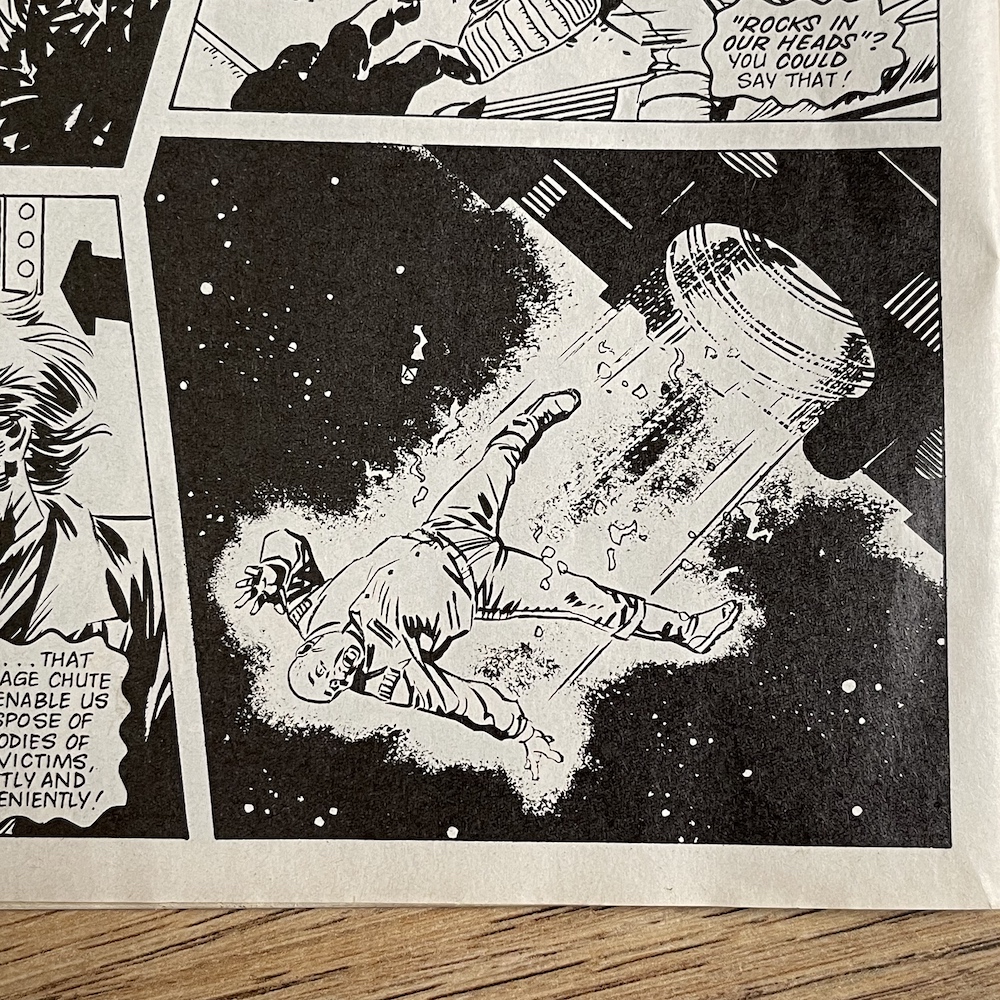
Contacting Wildcat every few hours and falsely reporting how Serling is getting worse until he apparently succumbs to the disease, he dumps the body out of the airlock, telling Wildcat Serling didn’t want his wife and children to see his mutated body. He knows exactly what will happen when the body’s gases start expanding in the vacuum of space, as you’ll see below in the first panel of the last page. But this is when everything backfires for Stefano and his so-called perfect crime in a somewhat timely ending when read today.
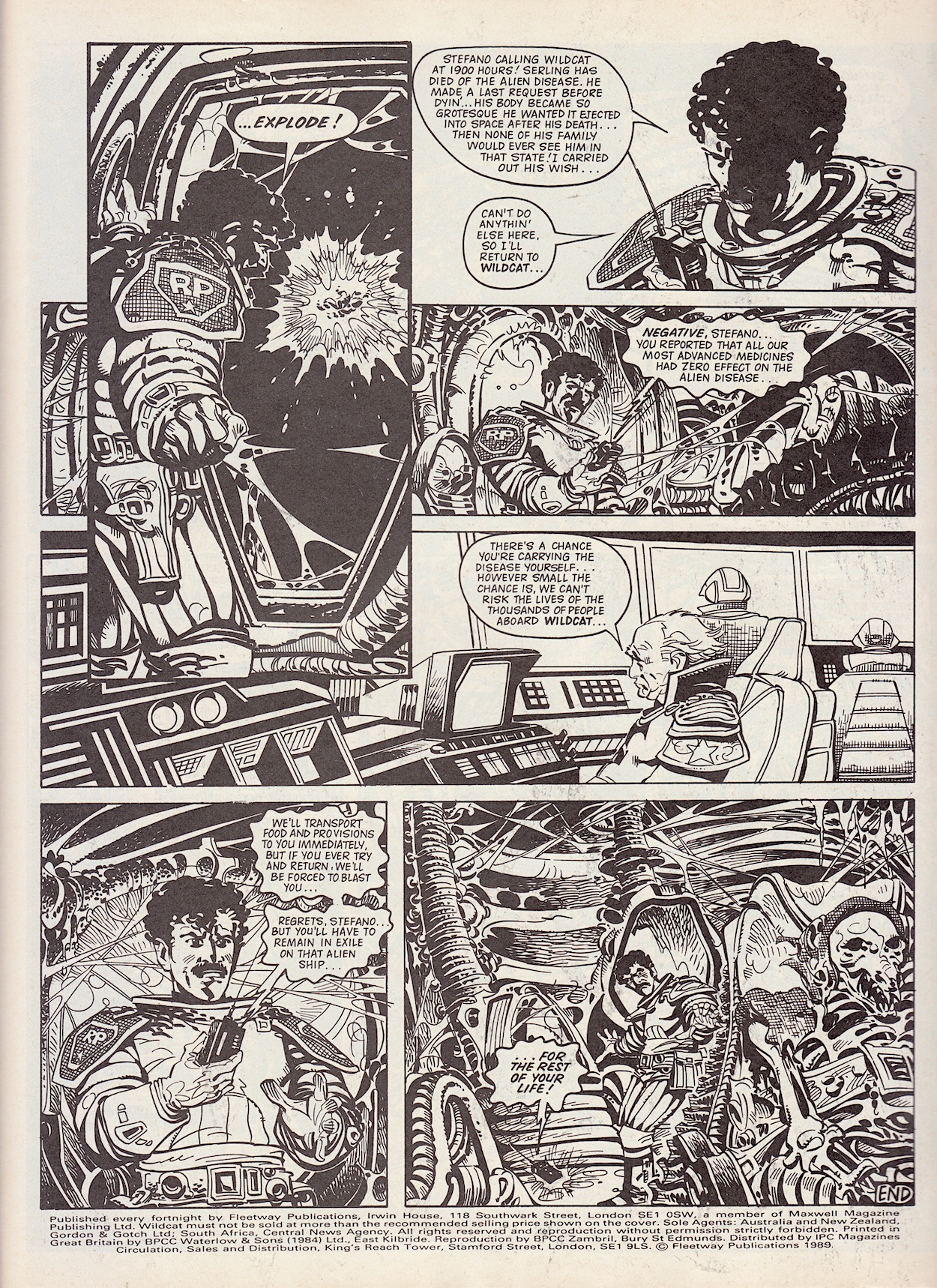
An eternal quarantine. Forced isolation for the rest of his life. It makes ten days seem somewhat trivial, doesn’t it? Trapped knowing he either has to serve his time out where he is, surrounded by alien corpses, or admit to what he’s done and possibly face execution, we’re left not knowing which option he’ll choose. I think it’s a very worthy strip for Rod’s name.

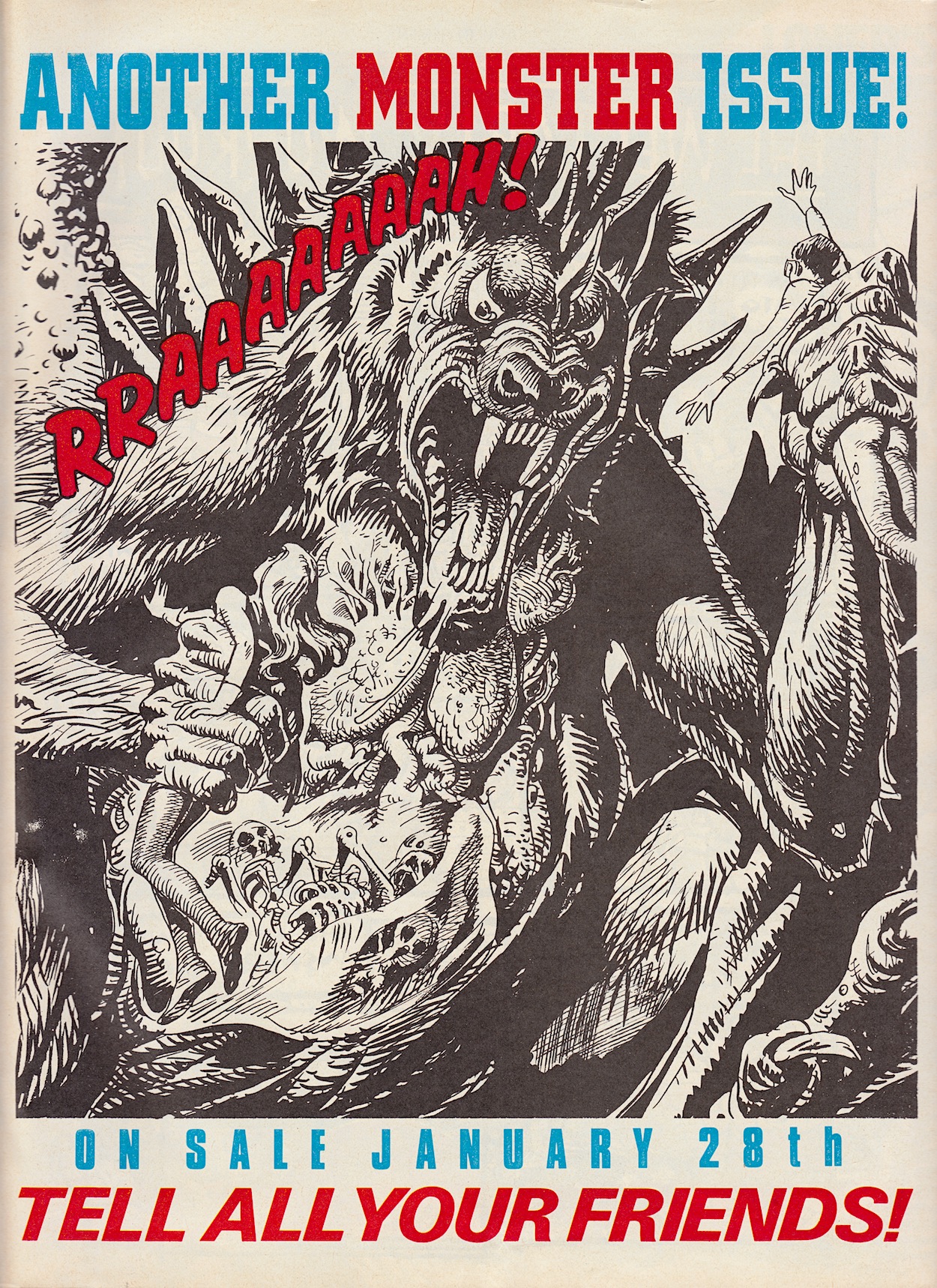
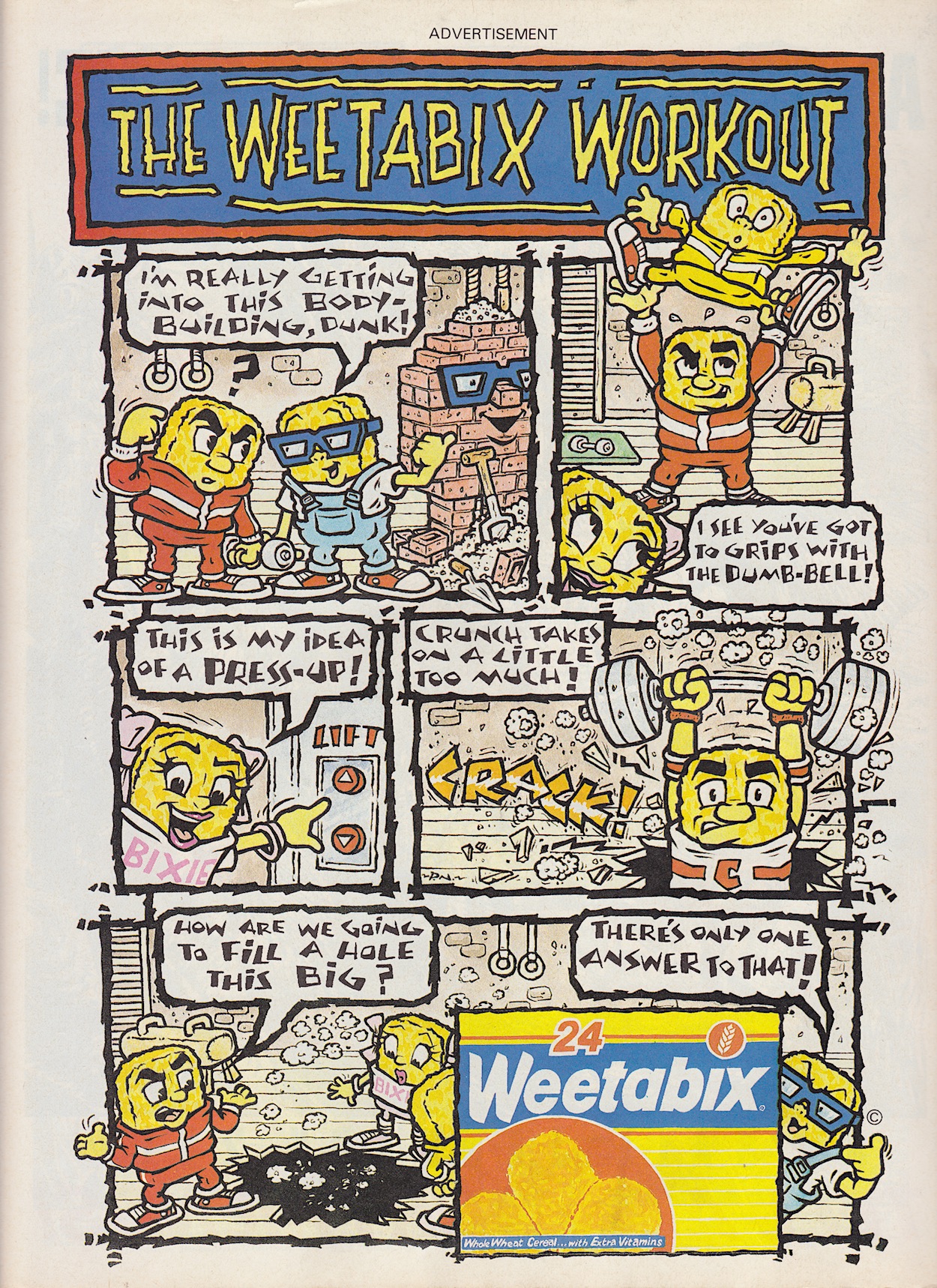
We finish the issue with a quick look at the next one featuring a dark, foreboding image from what looks like the Kitten Magee story and a bright and cheerful back page strip from one of those lovely retro Weetabix advertisements from the late 80s.
If there’s one word to sum up this issue it would be “surprising”. I mean this in the best possible way, of course. The shifting about of the contents freshened things up, the strips contained twists and turns and new beginnings and Loner’s in particular has me puzzled as to what’s next. I’ll wait, even though a fortnight can feel like a long time when the next issue is sitting on the shelf behind me. Needless to say, please join me back here in 14 days as I continue rediscovering this childhood favourite.

Issue eight of Wildcat will be reviewed on Friday 28th January 2022.

iSSUE SiX < > iSSUE EiGHT
WiLDCAT MENU
WiLDCAT #6: ROARiNG GOOD FUN
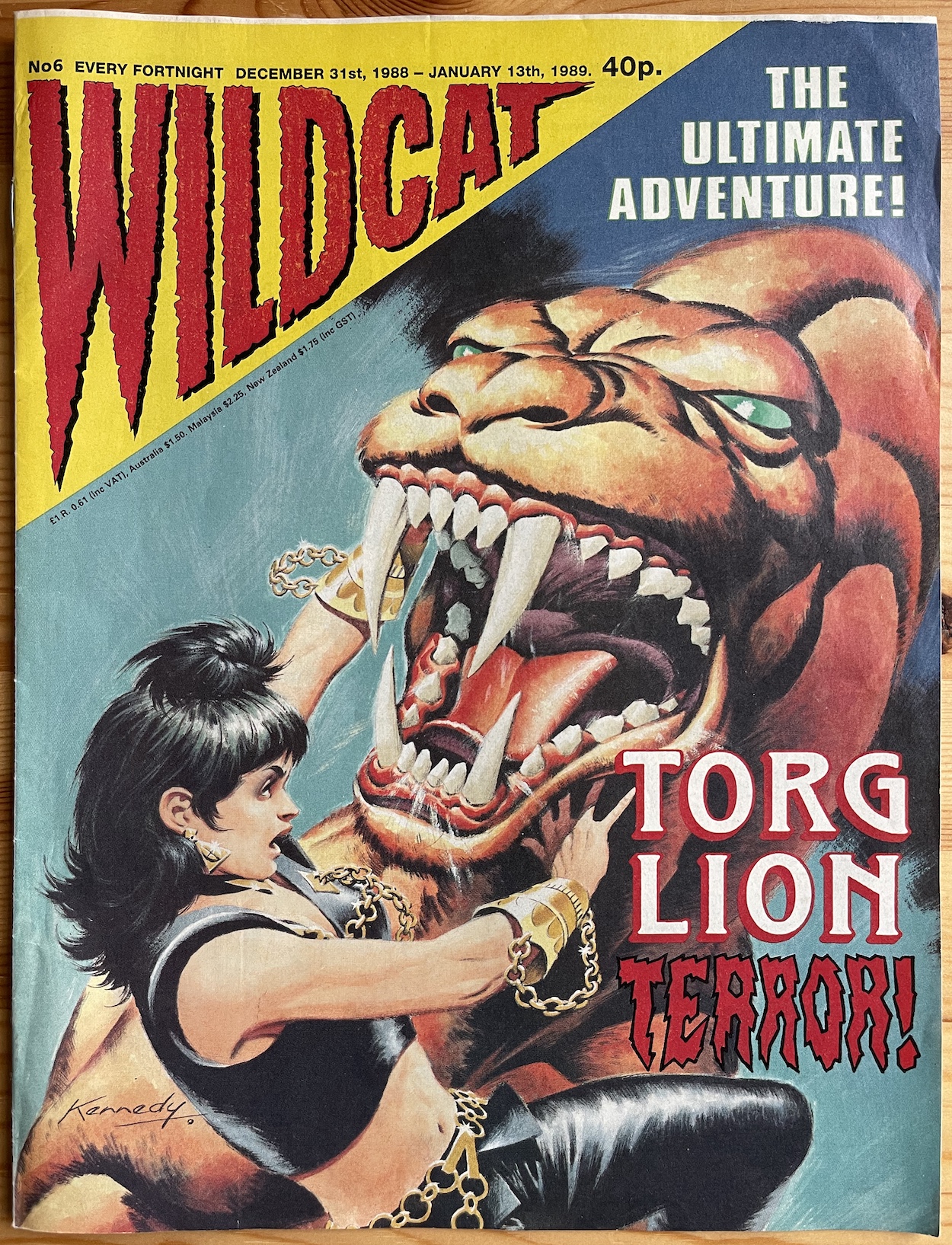
On the final day of 1988 there was just enough time to squeeze in one final issue of Barrie Tomlinson‘s Wildcat before the new year. Kicking off with Ian Kennedy‘s interpretation of José Ortiz‘s Kitten Magee strip, the cover includes the tagline ‘The Ultimate Adventure’. I remember associating this with the comic as a kid, so it’s strange to see it appear for the first time only now. Perhaps it’ll pop up again. For now though, let’s see if the inside matches the hype.

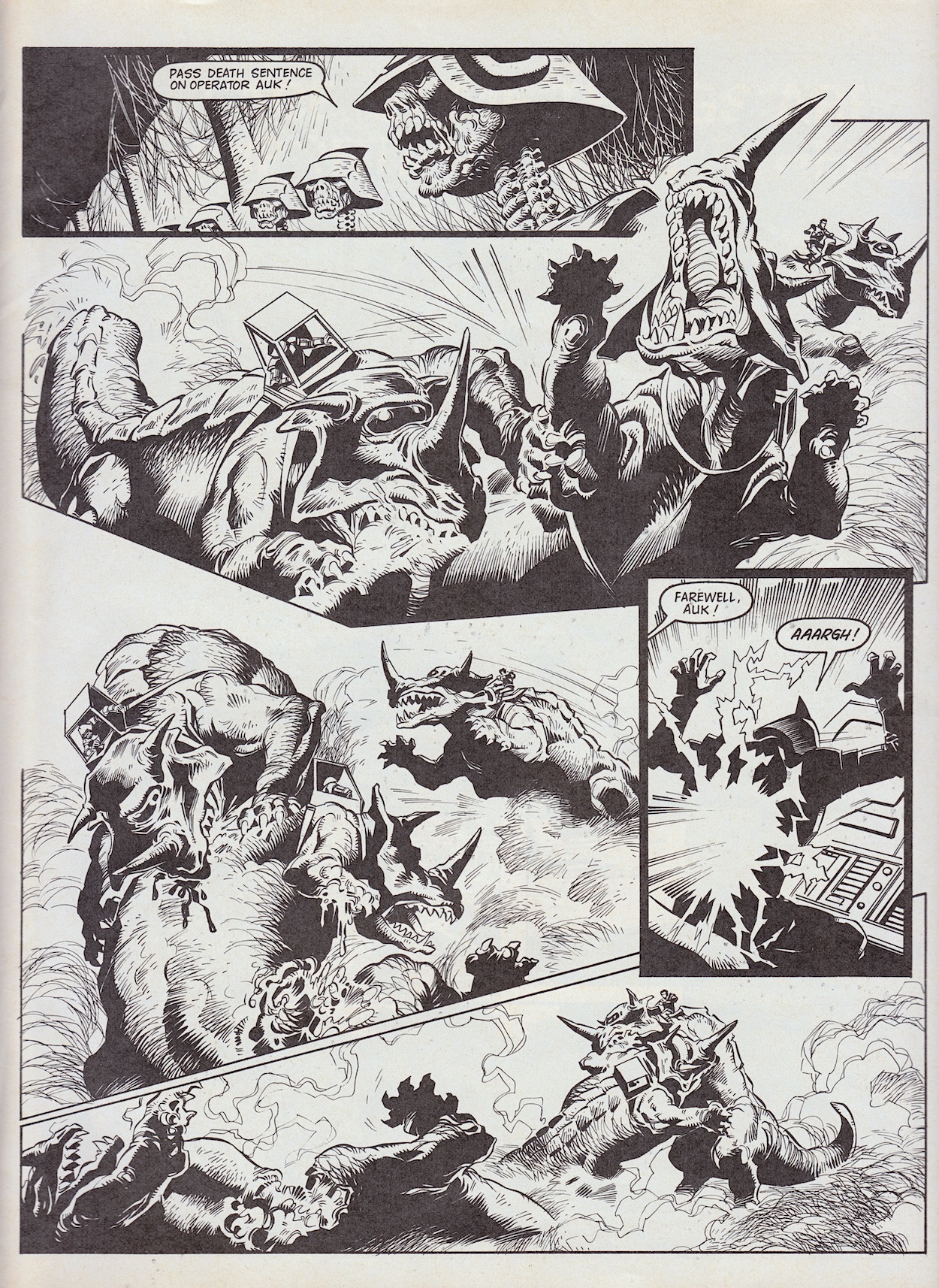
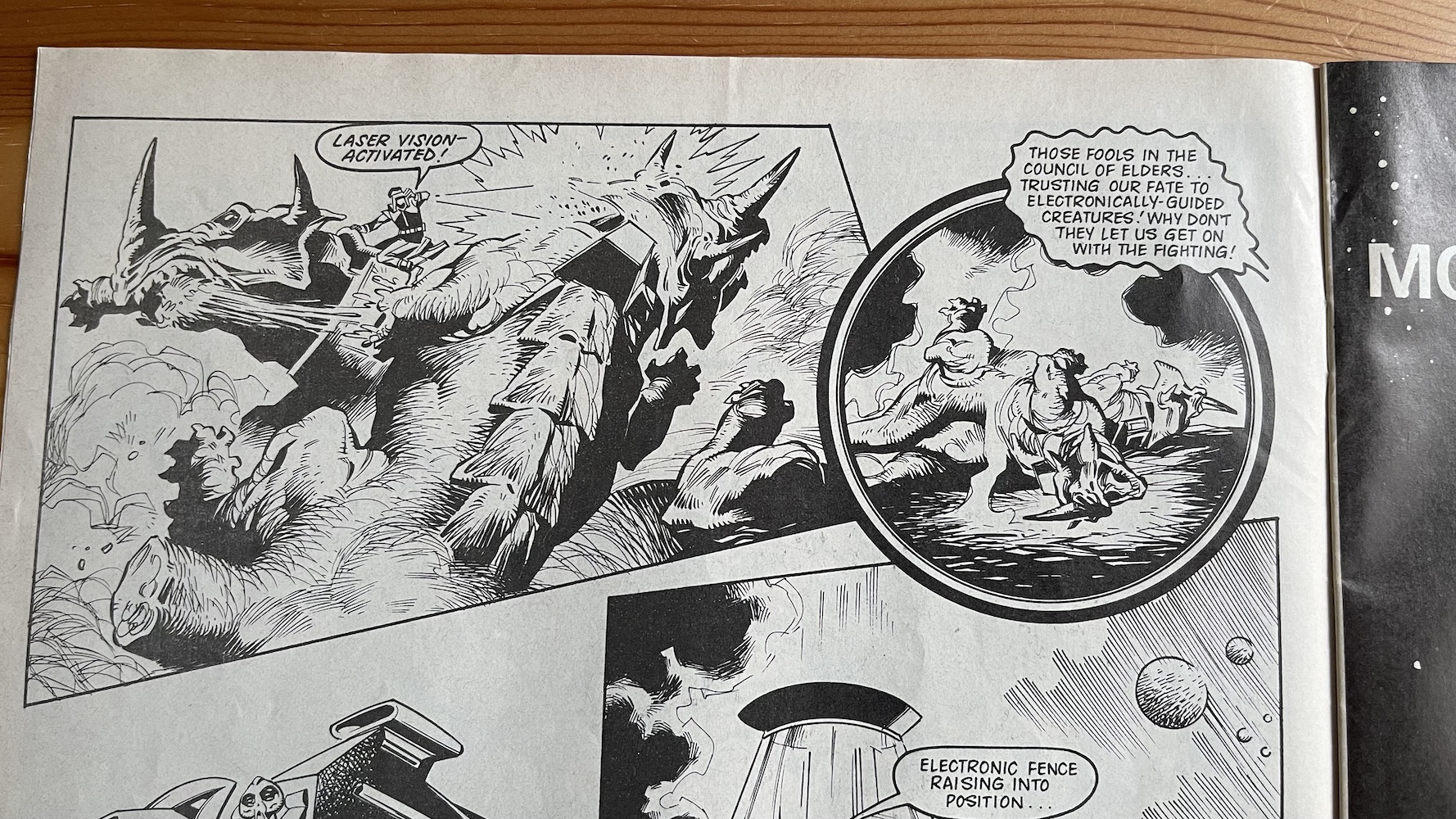
The Arglons have dispatched two of their own Terrosaurons to kill Turbo Jones atop his own dino in the opening strip. Controlled by computerised radio waves, these are detected by Robo before they even get close. Very quickly he’s jamming the signal and any hope of control over the creatures is lost. The Ark doesn’t take too kindly to their great plan being thwarted and soon the general in charge is on the chopping block. It appears these skeletal figures have zero tolerance for failures.

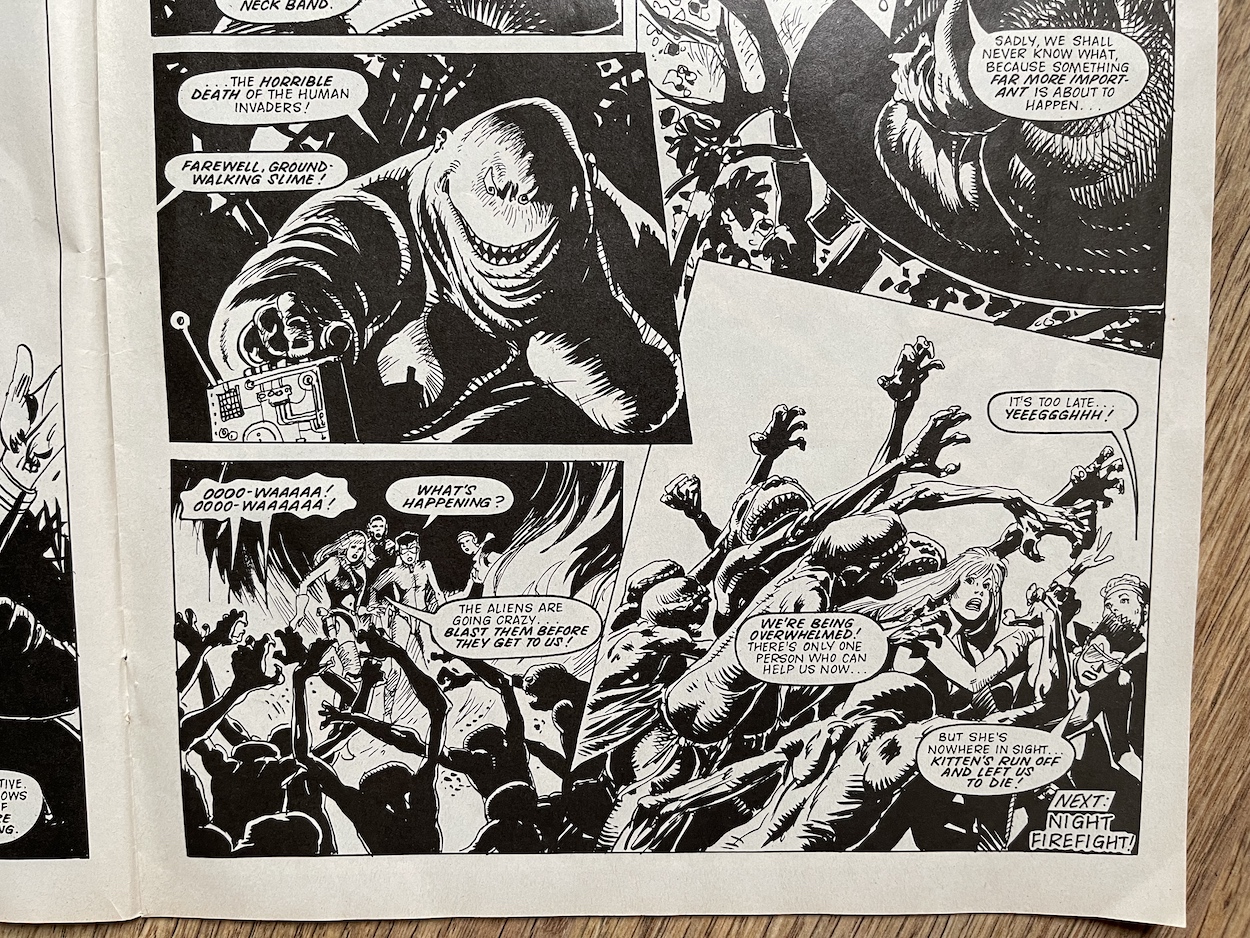
Having already attacked Turbo’s Terrosauron and getting a taste for blood, when the commands are interrupted the others attack the nearest target, which is each other. Limbs are torn off, gaping wounds in full view and we young readers loved it. It felt so gory to us.

Now easily able to pick off the enemy Turbo finishes the fight and returns to the main base of operations where he finds out about an underground defence system, a huge electronic fence which is activated and surrounds the city. That’s it as far as plot goes but this episode was all about the fight, the big battle between the three giant Terrosaurons. While I can’t remember reading it at the time, I’m sure I loved it as it would’ve been right up my street.

As an adult I do miss the plot developments, the intrigue around The Ark and Turbo’s growth as a character. But sometimes it’s just fun to have a completely ludicrous, over-sized battle! In the final panel Turbo says the enemy is trapped inside the city behind the fence, so they can pick them off more easily. Has he forgotten they got in via a tunnel? We’ll find out next time I’m sure. It’s throwaway stuff but fun, and I’m only a little disappointed because the comic has set such high standards for itself.

It’s clear power has gone to this man’s head. Does he truly believe he is a god?

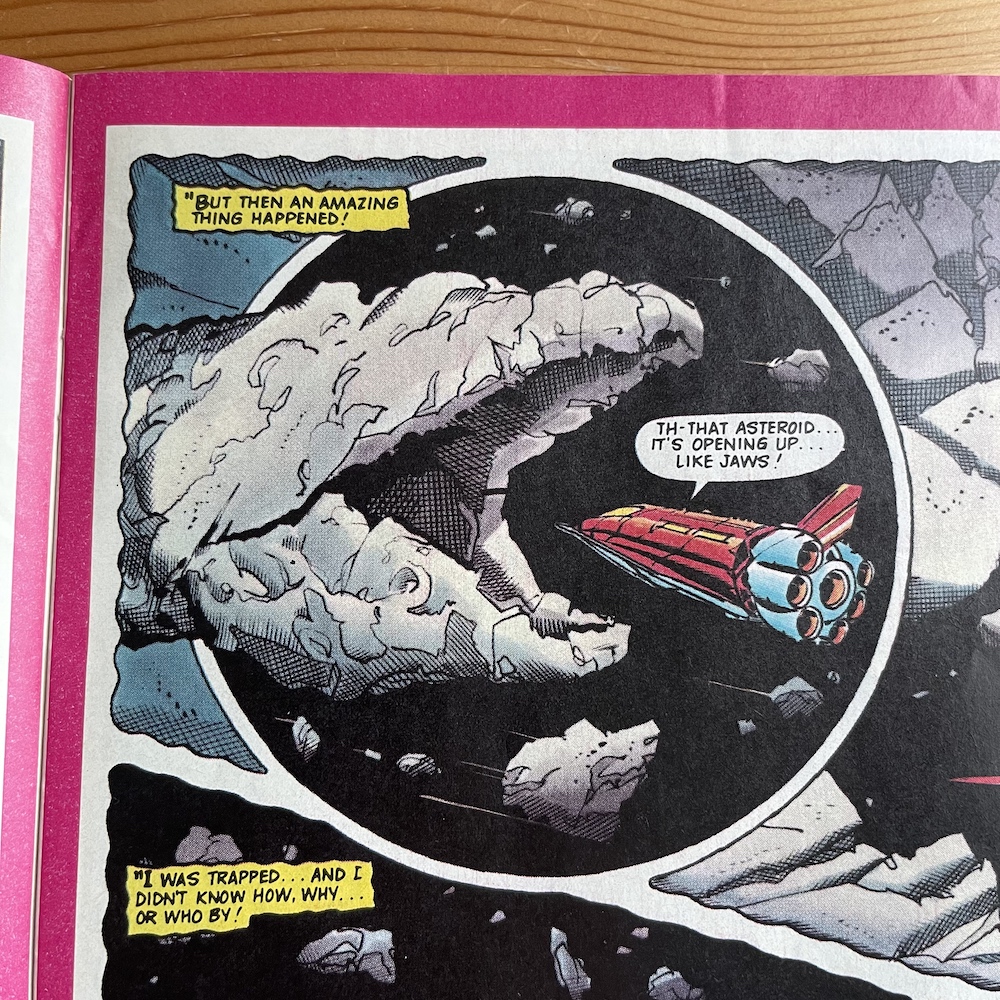
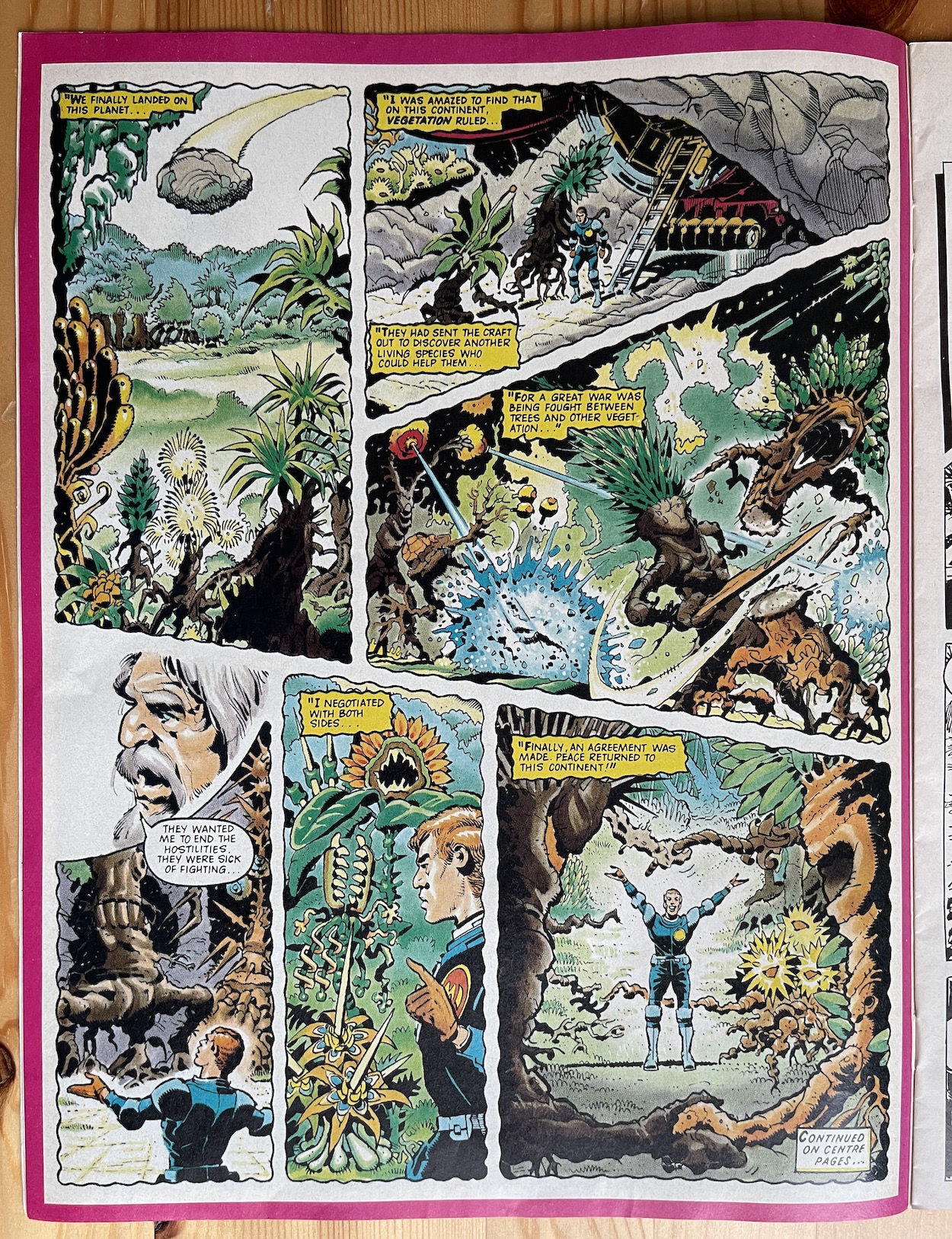
More interesting for this old man is another much older man in the Joe Alien story by David Robinson, as the human who seems to be the leader of the killer plant life tells his story. He was the sole astronaut on the first manned rocket heading for Mars. At the time of Wildcat’s publication we never thought it’d happen any time soon, so his tale takes place in 2079. Travelling through an asteroid belt one of the huge rocks begins to open up, drawing his craft inside like a scene from You Only Live Twice.

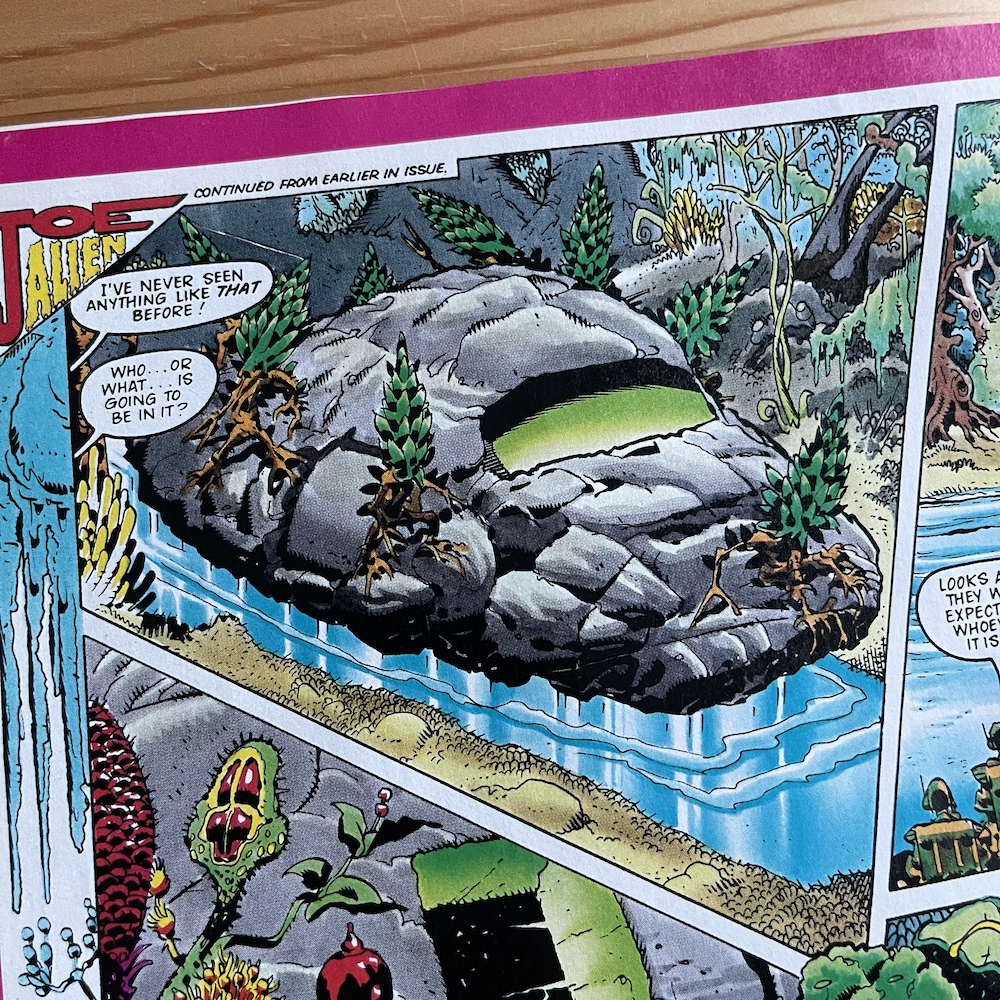
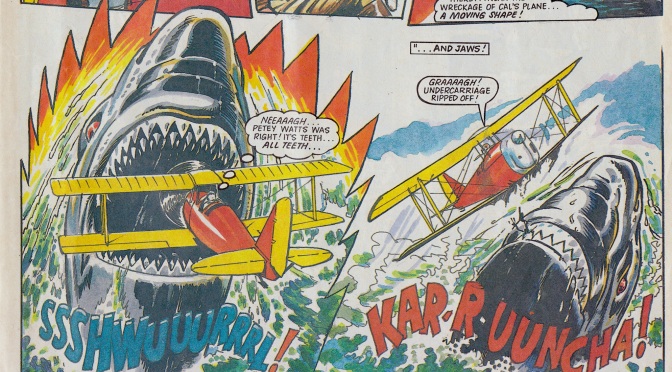
He makes reference to it looking like “jaws” and with that word choice I can’t help but make the comparison to the big fish from my favourite movie of all time. The asteroid itself, as drawn by Ron Smith, bares a striking resemblance to Steven Spielberg‘s classic movie monster, right down to the oversized jowls (needed on the mechanical shark in Jaws for its mouth to open and close without folding or breaking the rubber skin). I’m really rather thrilled to see this as a fan of the movie and this comic, I love seeing inspiration from one turning up in the other.

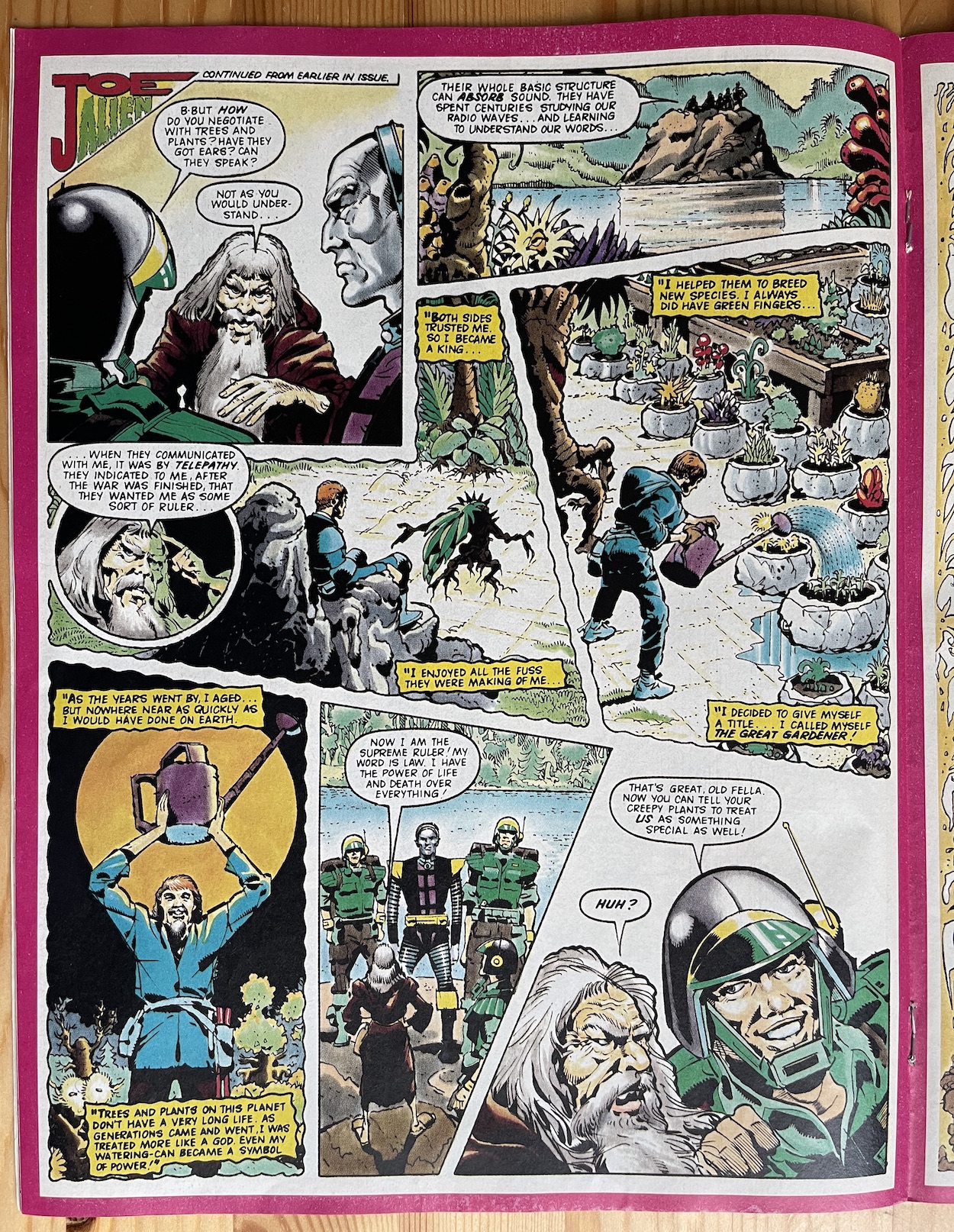
Upon arriving on the continent where our adventure is taking place a great war was being fought between the trees and the other vegetation. There’s always a great war behind these stories isn’t there? As you can see in this gloriously illustrated page below he negotiated a peace between the two sides. But how, when the participants in the war couldn’t speak? This question is asked by one of Joe’s men later in the issue. An explanation is given about how the plants can absorb sound as vibrations in the ground through their roots, and how they had spent hundreds of years studying our radio waves to learn our language.

As the years passed the man aged very slowly compared to back on Earth, so generations of plant life passed before his eyes and eventually they began seeing him as a kind of god. His word is now law and when one of Joe’s team makes a joke about the plants the old man punches him with the force of ten, sending him flying into the water where he’s attacked by vicious teeth-baring vegetation. It’s clear power has gone to this man’s head. Does he truly believe he is a god? It feels like a story from the Stargate SG-1 TV series, albeit several years before it.

The standout thing here is Ron’s art. His style perfectly compliments the story and setting, his characters really embody what they’re saying, Joe is the best he’s ever looked and the flashbacks are extraordinary and fascinating. Incredible artwork. Simply gorgeous. While Loner may still be my favourite, Joe’s strip is running a very close second which I didn’t expect when I started this read through. Saying that, all the strips are so good this changes on a regular basis.

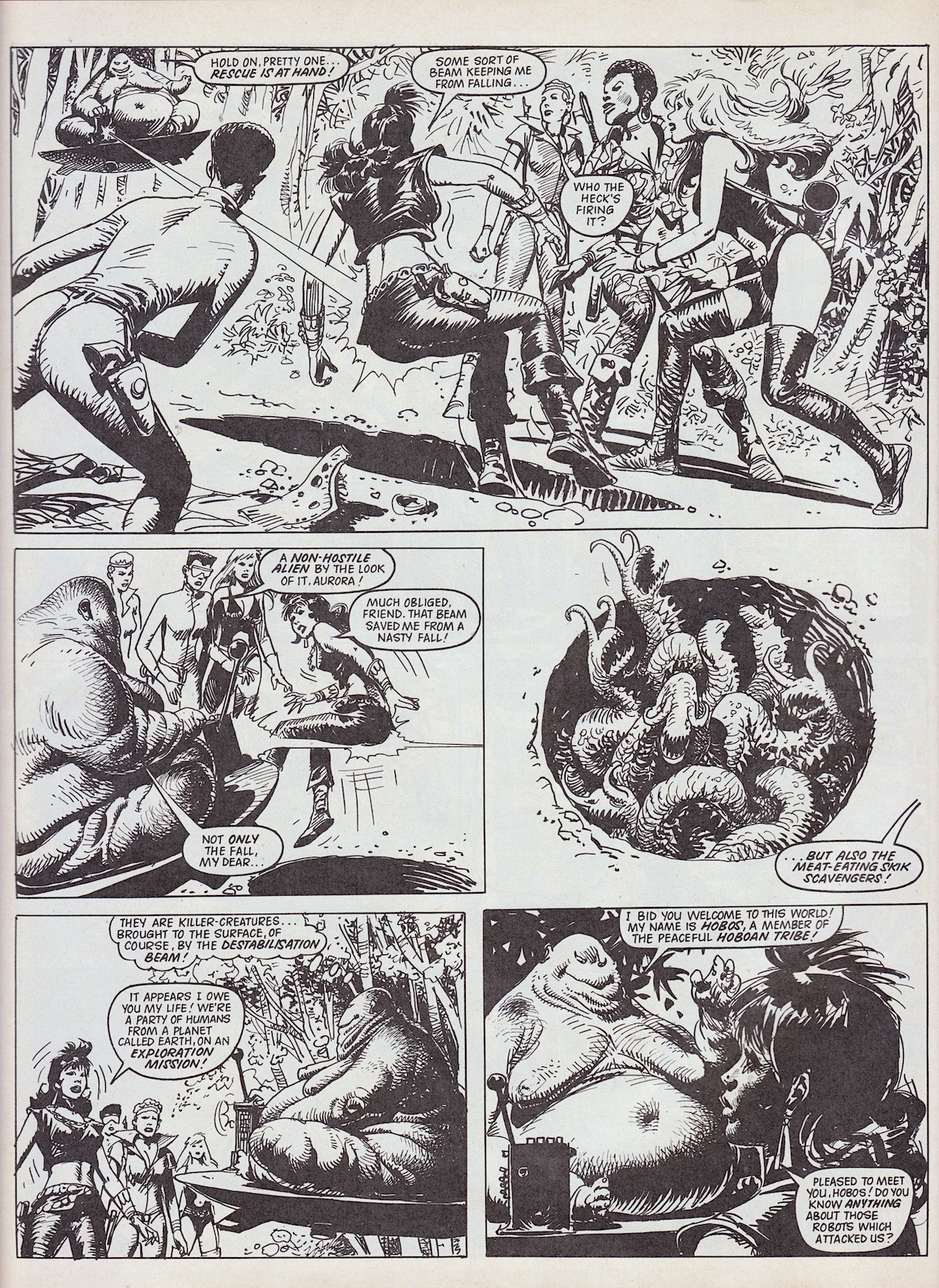
James Tomlinson‘s Kitten Magee takes a break from relentless fighting to advance her story a little. She saved herself from the bomb last time by grabbing her teammate and leaping into one of the holes bored by the tribal robots. So the fat alien Hobos decides it’s time to try a different tactic. Pretending to save her life from a threat of his own creation (a destabilising beam making Kitten lose balance just before this page below), he befriends the women and tells them he’ll lead them through the dangerous jungle to his village.

There’s one disappointing aspect of the story here, and that’s how easily the other four members of the team trust Hobos. Only Kitten herself is unsure, thinking he’s too friendly, too nice and appeared at too convenient a time for this all to be coincidence. The other members of the team have all been so capable and interesting in the previous issues it’s a shame to see them played for fools so easily.

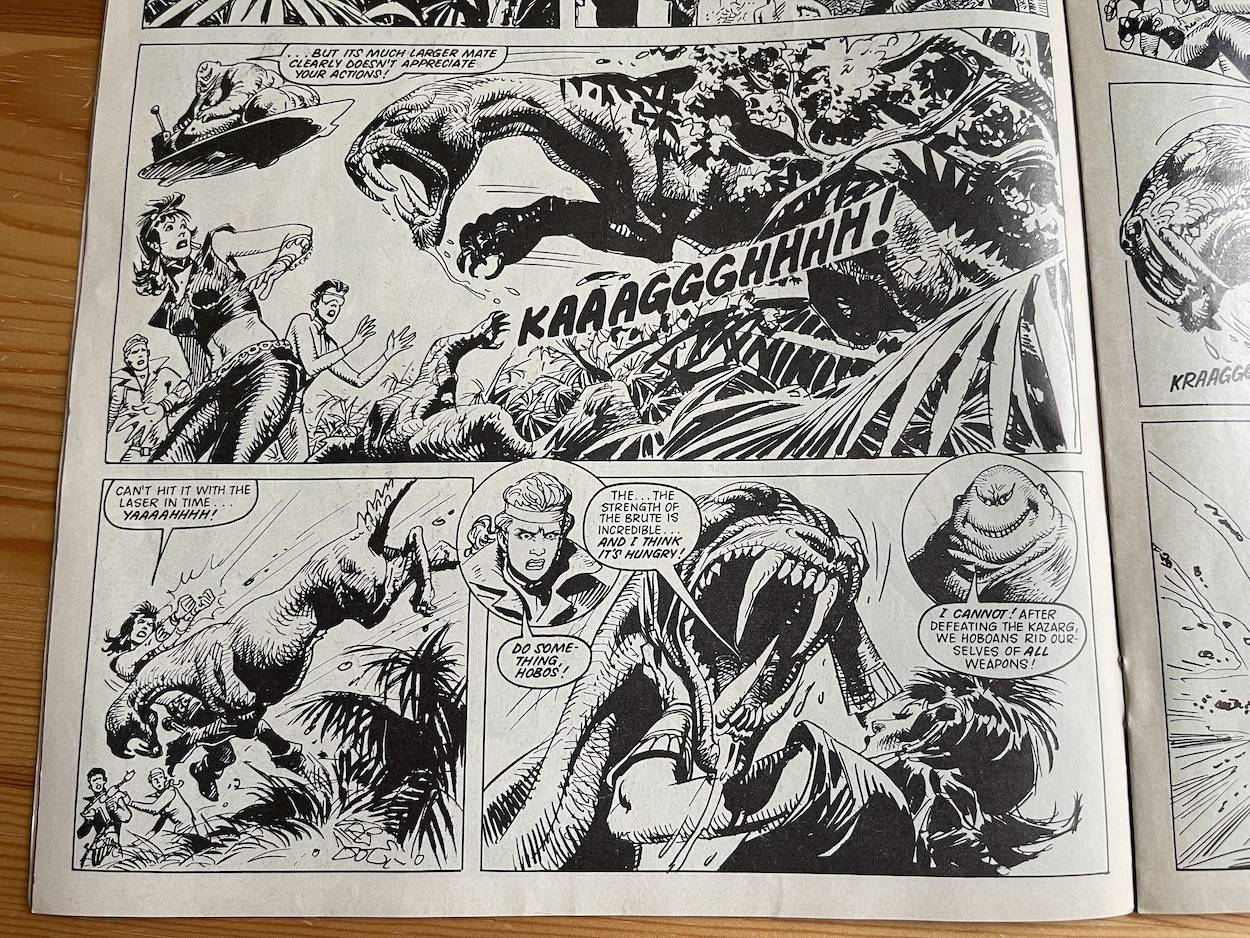
We do get a little bit of action as a torg-lion attacks the group, the one we saw on the cover. Hobos’ plan seems to be to lead them through the most dangers part of the continent, using a scent of raw meat to attract the biggest, most vicious predators out into the open. Of course Kitten wins this battle, pricking the animal with the pointed edge of her poison-filled ring. Just when I thought I’d seen all of her cool jewellery-based weaponry too.

There are still many questions needing answered here, not least of which is why Hobos was determined to kill the women in the first place. Is it a male thing? Are women a threat? Even alien women? I know we’ll get our answers eventually, so don’t for one moment think this is any kind of complaint because it isn’t. The story does feel like it could be heading towards some answers over the next few issues, which is exciting. Kitten remains an interesting character and the one most shrouded in mystery in the whole comic.

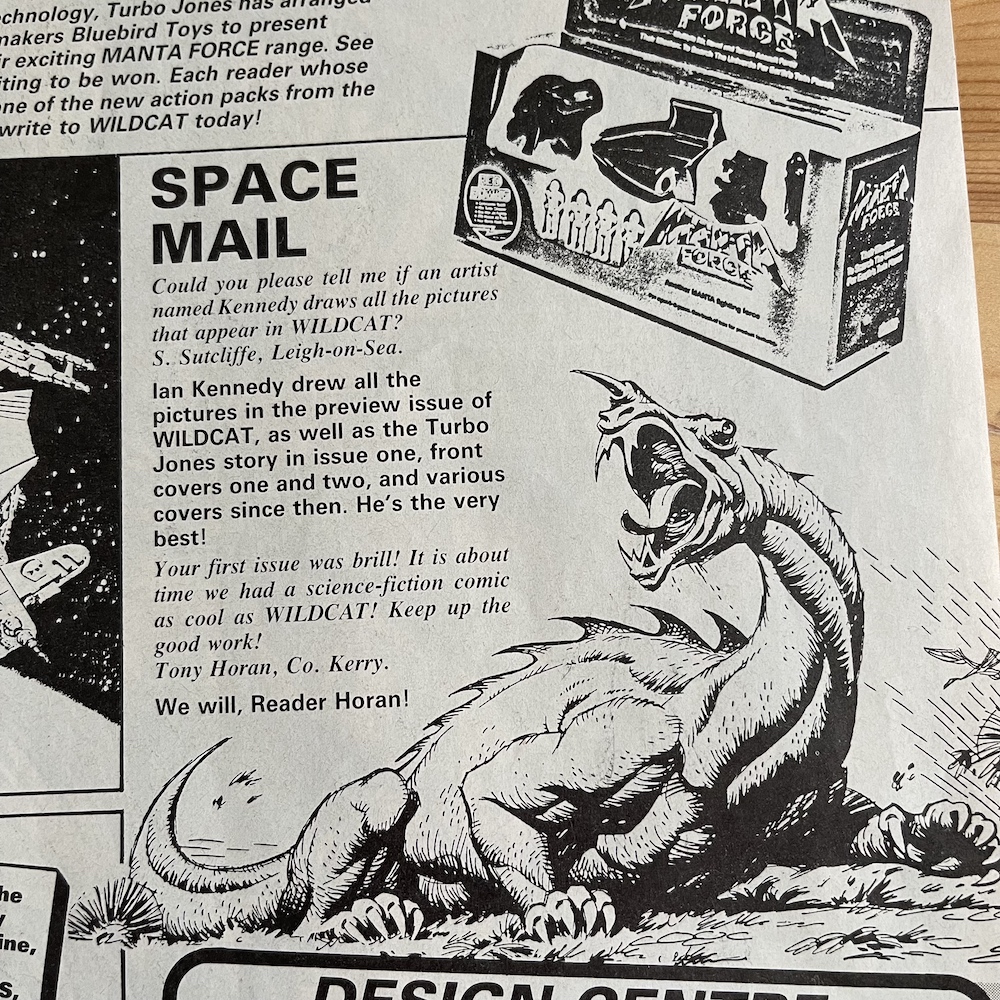
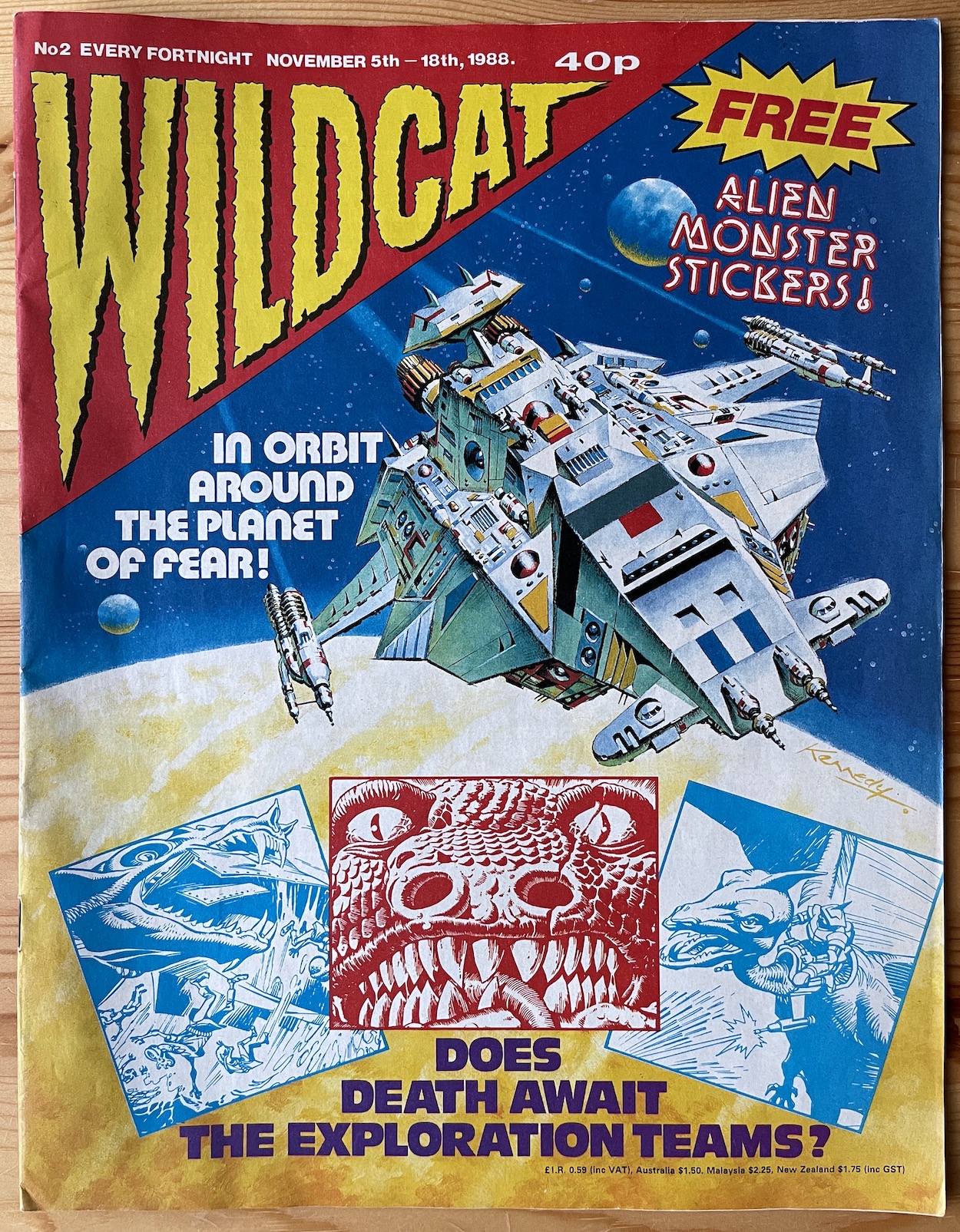
That cover by Ian Kennedy is a fantastic piece of art, as are all of his covers across the range of Barrie’s comics I’m reviewing (Ring Raiders and Super Naturals being the others). He gets a bit of further recognition on the letters page this issue and yes, that monster is one of his designs from the premiere issue.

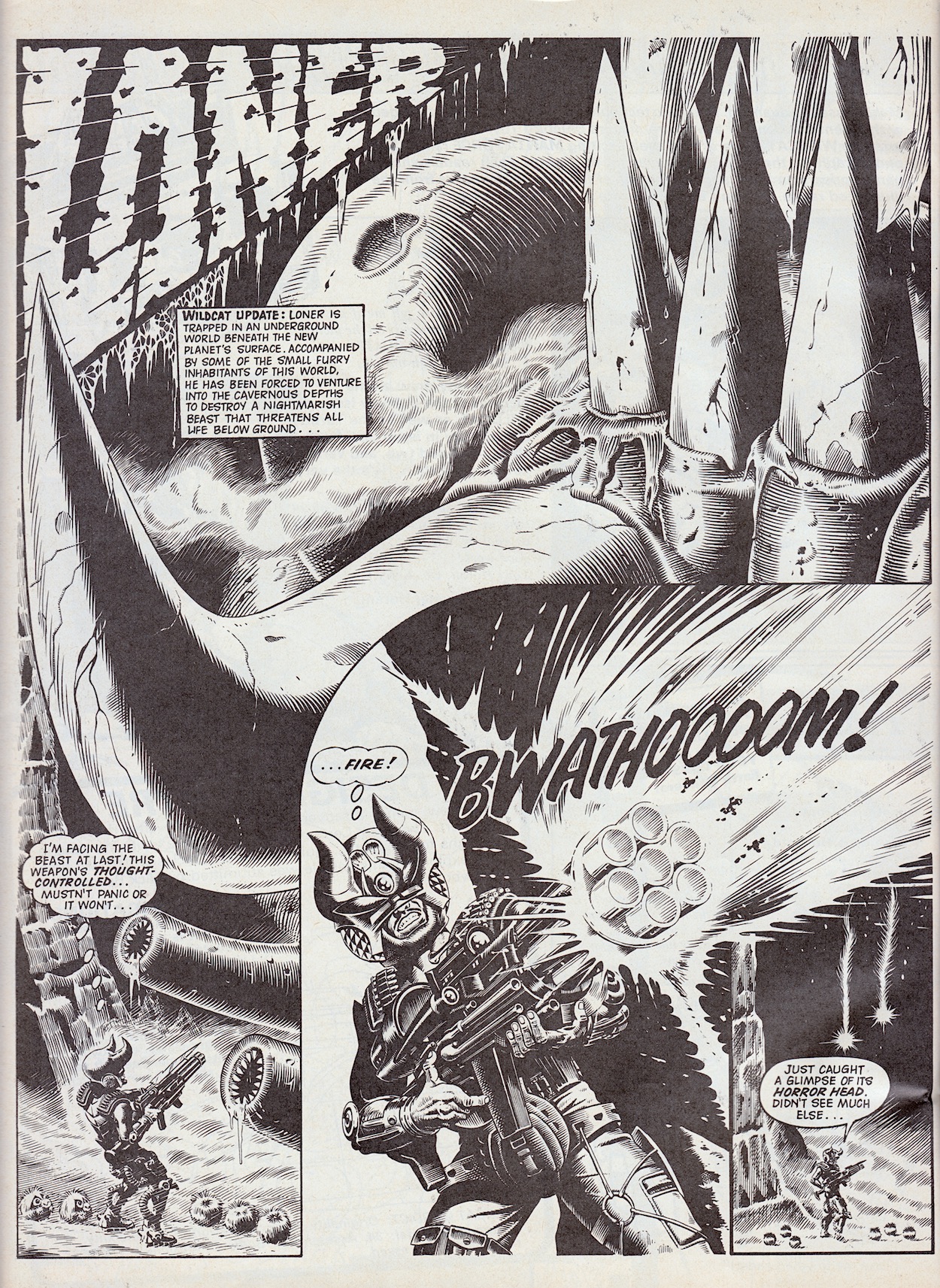
Loner, written by editor Barrie Tomlinson is up next and if you thought the scale of what he was up against was massive in that final image last issue, then you haven’t seen anything yet, to use a cliché. I can remember this snake-like monster but I had no idea of just how big it was. In fact, it’s so big that in the first panel of this chapter we only get to see a few teeth next to our hero and his now rather pathetic looking new gun.

My overall opinion of this instalment of my favourite Wildcat strip is, just when I thought David Pugh‘s art couldn’t possibly get any more spectacular he blows me away again, and a lot more successfully than Loner’s attempt to do so with the beast above. But seriously, just look at that first panel, those teeth and that tusk look so solid, so terrifying that I’m sure I was in awe of it back in 1988. This was playing to everything kids would want from a new sci-fi adventure. However, as always I review these comics as I read them now, without the rose-tinted glasses, as a man in his mid-40s.

And I bloody loved it!

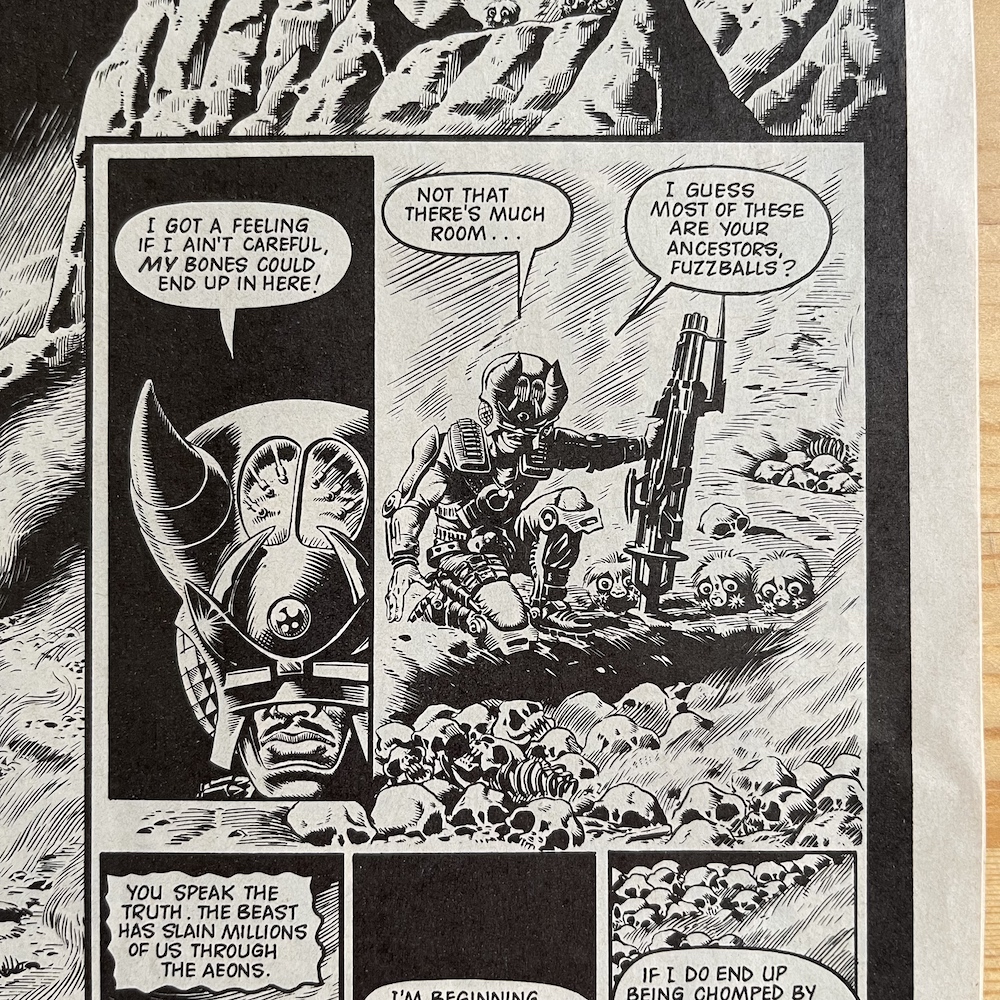
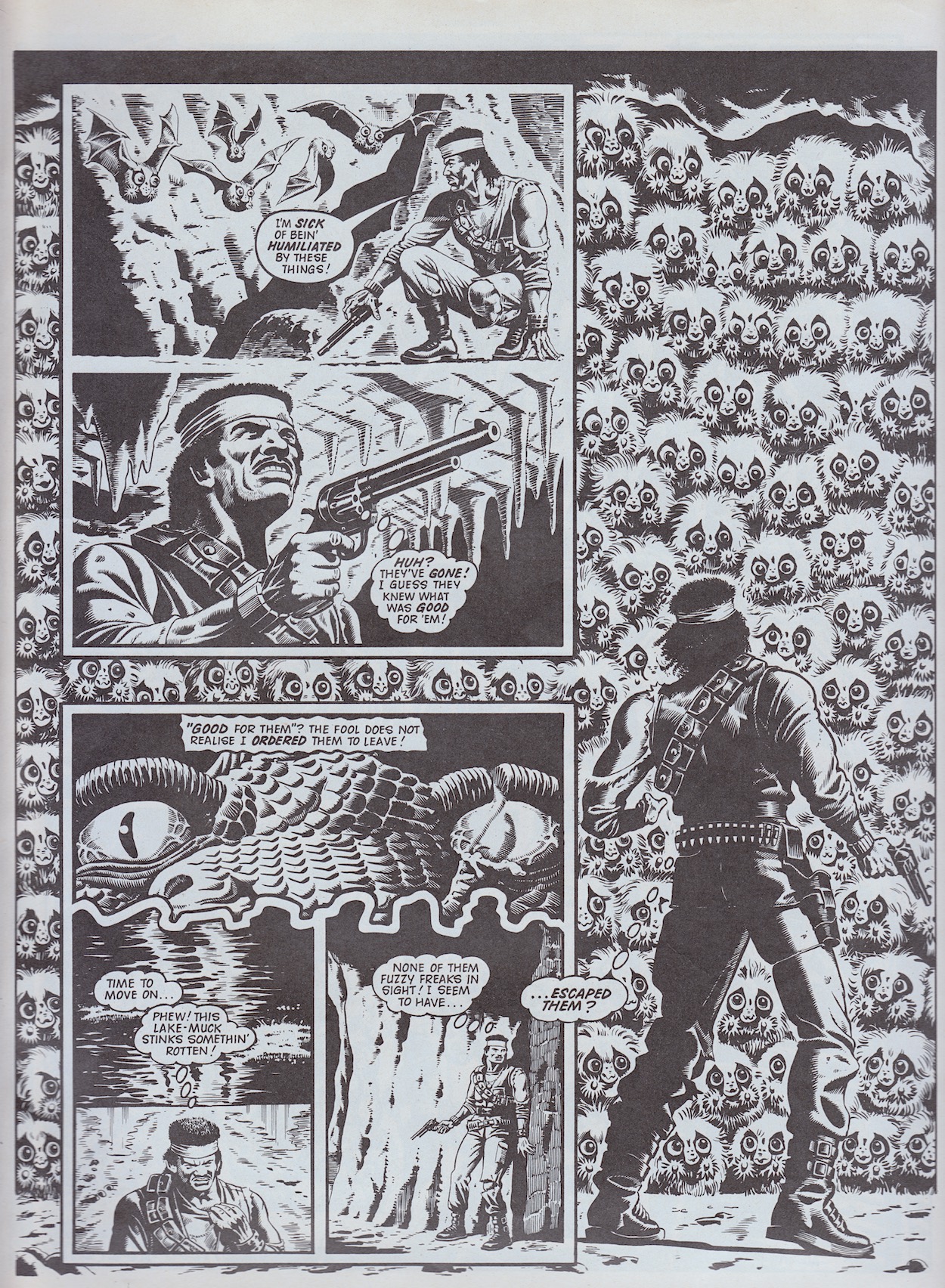
We even get to see the thing asleep at one stage, it’s head full of thick veins, it’s eyes popping open suddenly as the tiny Loner nears. It’s all incredibly atmospheric. I can’t show you it all obviously, that’s what the graphic novel collecting this entire story is for, but I can show you some of the other highlights of this issue’s chapter. Complete with ridiculously large brain hooked up to the equally ridiculous helmet, Loner discovers the ground of the beast’s layer is covered with thousands upon thousands of tiny little skulls.

I actually felt sorry for the little furballs with him, seeing generations of their kind dead all around them. It’s at this point the burgeoning relationship between Loner and these little critters, as unlikely as it seemed a few issues ago, solidifies. Anger fills his very being at seeing the skulls. Whether he likes it or not his cold, hard persona is warming to these little beings and he begins to track down the monster again, which has moved deeper into the caves. Bent on revenge, we’re left with no doubt that the odds against him aren’t relevant anymore.

This friendship and how it developed slowly over the course of a handful of issues is something I still remember all these years later, although I can’t remember any of the details so it’s a delight to be reading it again in real time. Instead of bingeing, I’m getting the developing friendship in fortnightly stages as intended and it doesn’t feel rushed or forced in any way, and that’s pretty incredible when you think about the scenario here and who these characters are. It’s so far-fetched and yet feels so natural, a testament to the writers behind it, namely Barrie and his son James Tomlinson.

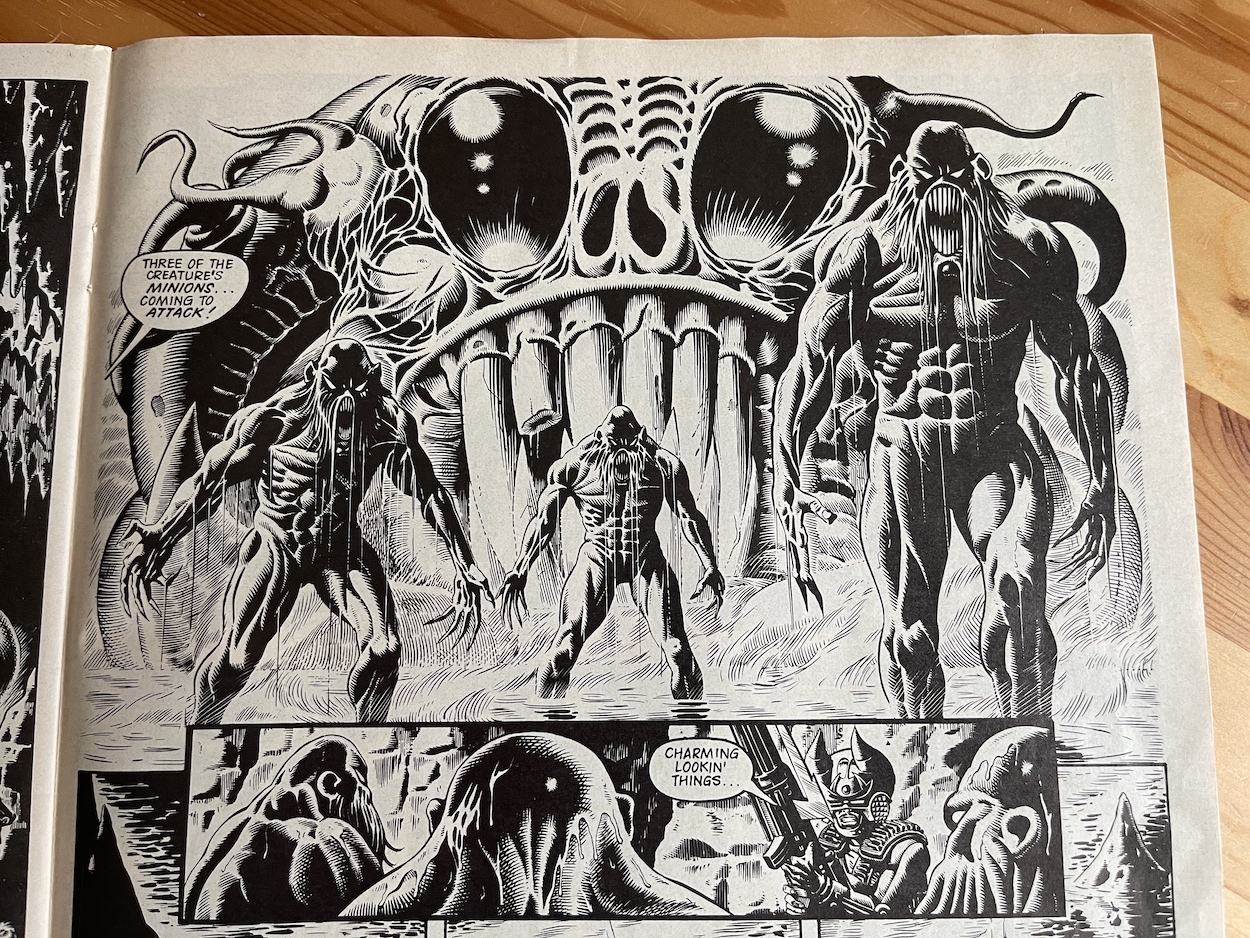
Just when the odds against Loner’s survival (never mind his success) seem stacked enough against him, the beast releases its minions and these aren’t the small, yellow, goggle-wearing kind. These minions of death wouldn’t look out of place in an adult comic today but here they were in the pages of our Wildcat, terrifying the youth. Although not directly referenced here, these are the beings from #1. Of course Loner is the cool hero when he wants to be and he skillfully dispatches them with his telepathic weaponry before the beast itself moves in for the kill, and the cliffhanger.

The little pieces of character development and banter between him and the furballs are nice touches and advance things a little in the overall story, but this is really all about the hunt and finally coming up against this monstrosity. But it doesn’t feel like the plot has been left to the side for the action, it’s all nicely balanced. David’s artwork is so incredible I’m completely absorbed in it every issue, and while it’s an exaggeration to say my breath is taken away each time, I’ll say it to get across just how much I’m enjoying this.

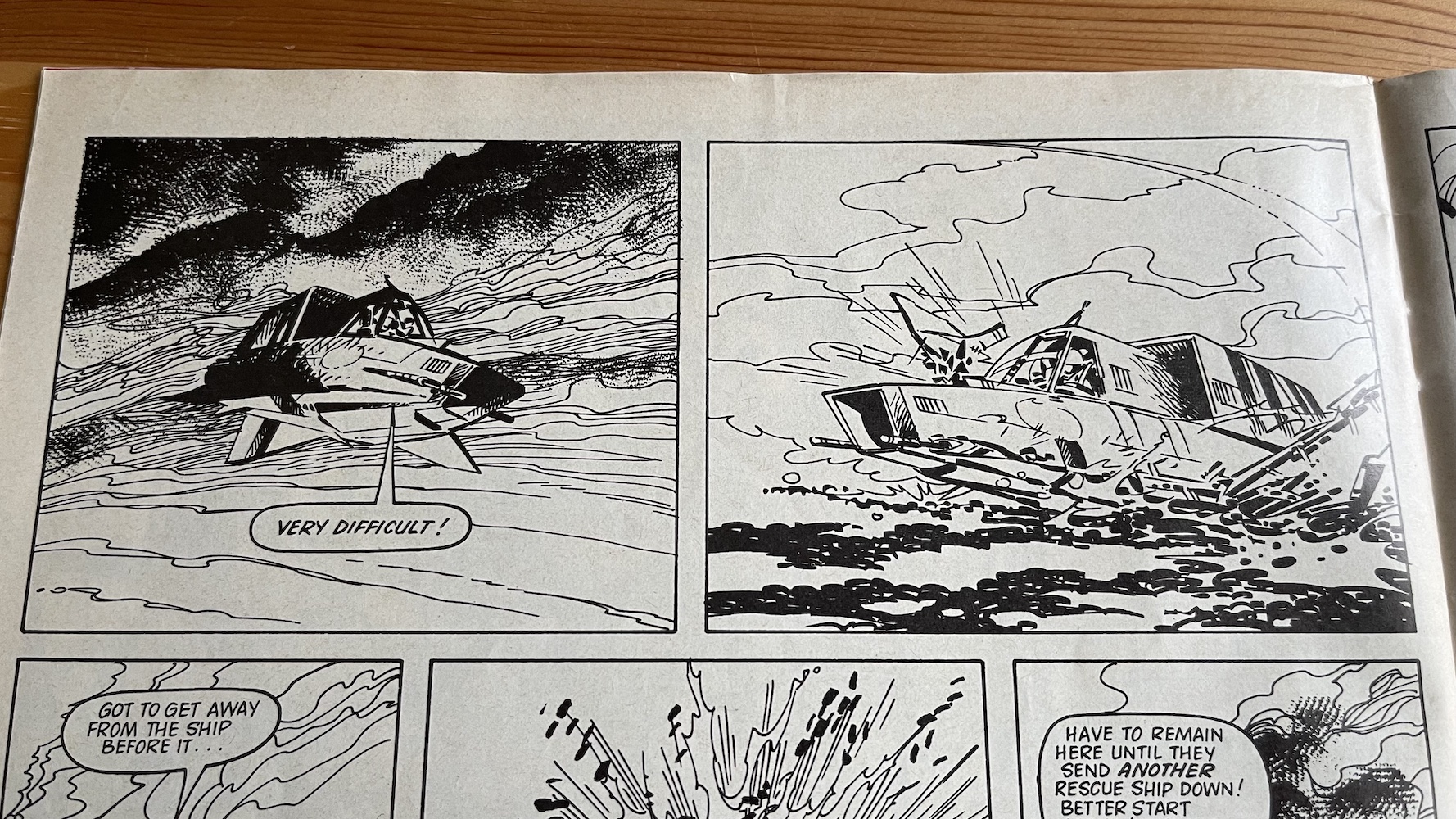
The Wildcat Complete is called Moon of Terror and concerns pilot Kurby being sent to one of the moons orbiting the planet after a previous crew went missing upon landing. Unable to spare more crew members they have to send Kurby alone. Barrie and his writing team really are stacking up the death count.

Artist Jesús Redondo returns (he supplied the art for #2‘s Wildcat Complete) and his shuttle craft bares a striking resemblance to a certain television show’s fighter craft. I mentioned before about the similarities between the Wildcat story and that of Battlestar Galactica even though that was more coincidence than anything else. Jesús’ shuttle could easily have been influenced by that show’s Vipers. Or it could simply be another coincidence and they were based upon real world jet aircraft. Either way, I like the design.

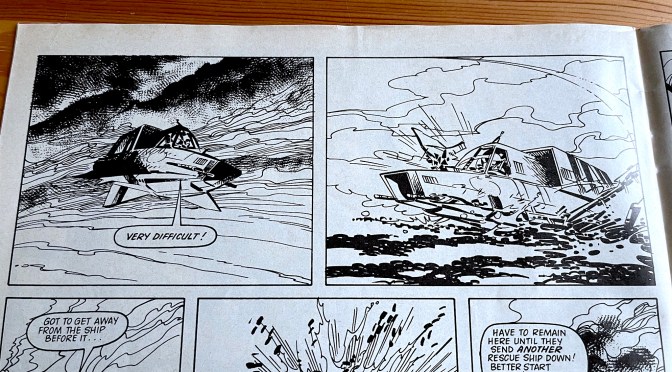
The cloud cover is so dense all of his computer equipment can’t track the ground and when he comes out of the blackness he’s already too close. After impact his shuttle explodes and so he goes to find the missing crew, hoping the Wildcat will send another rescue ship. At least it’s looking hopeful. After all, they may have just crashed and lost contact for the same reason he has. But as he explores he’s attacked by some form of mutant creature that tries to kill him.


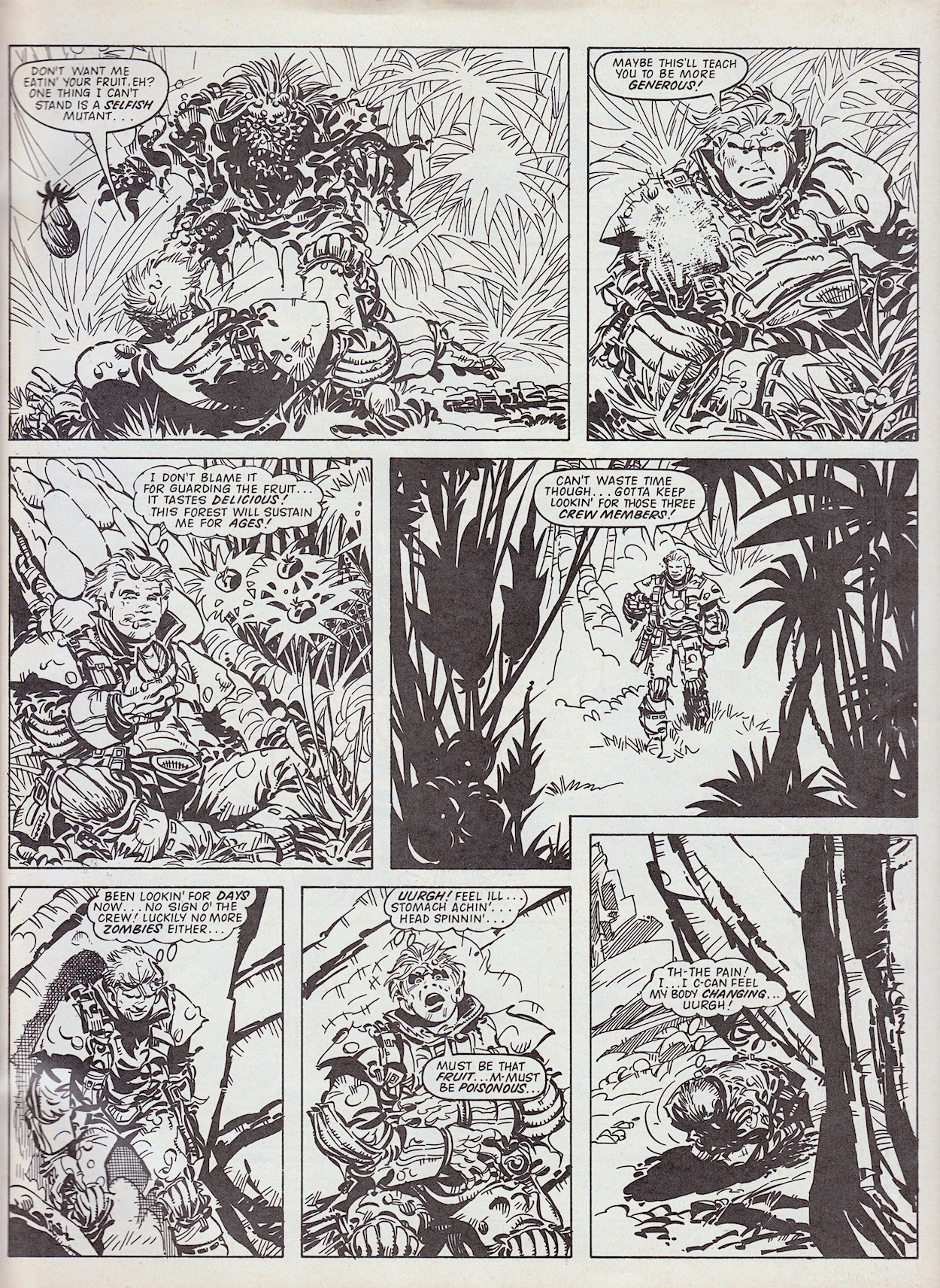
“Don’t want me eating your fruit, eh? One thing I can’t stand is a selfish mutant.”

Kurby

He’s able to break free and shoots it just before being set upon by another. At this stage I’d worked out what was going on. I’m not sure if I would have when I was just eleven-years-old, not having been exposed to many sci-fi stories at that point in my life. A third mutant appears just as Kurby is about to get stuck into some of the local fruit for sustenance. Thinking it’s just another attack and the creature is swatting away the fruit to get to him and kill him, he kills it too. Exhausted, he sits down and eats.

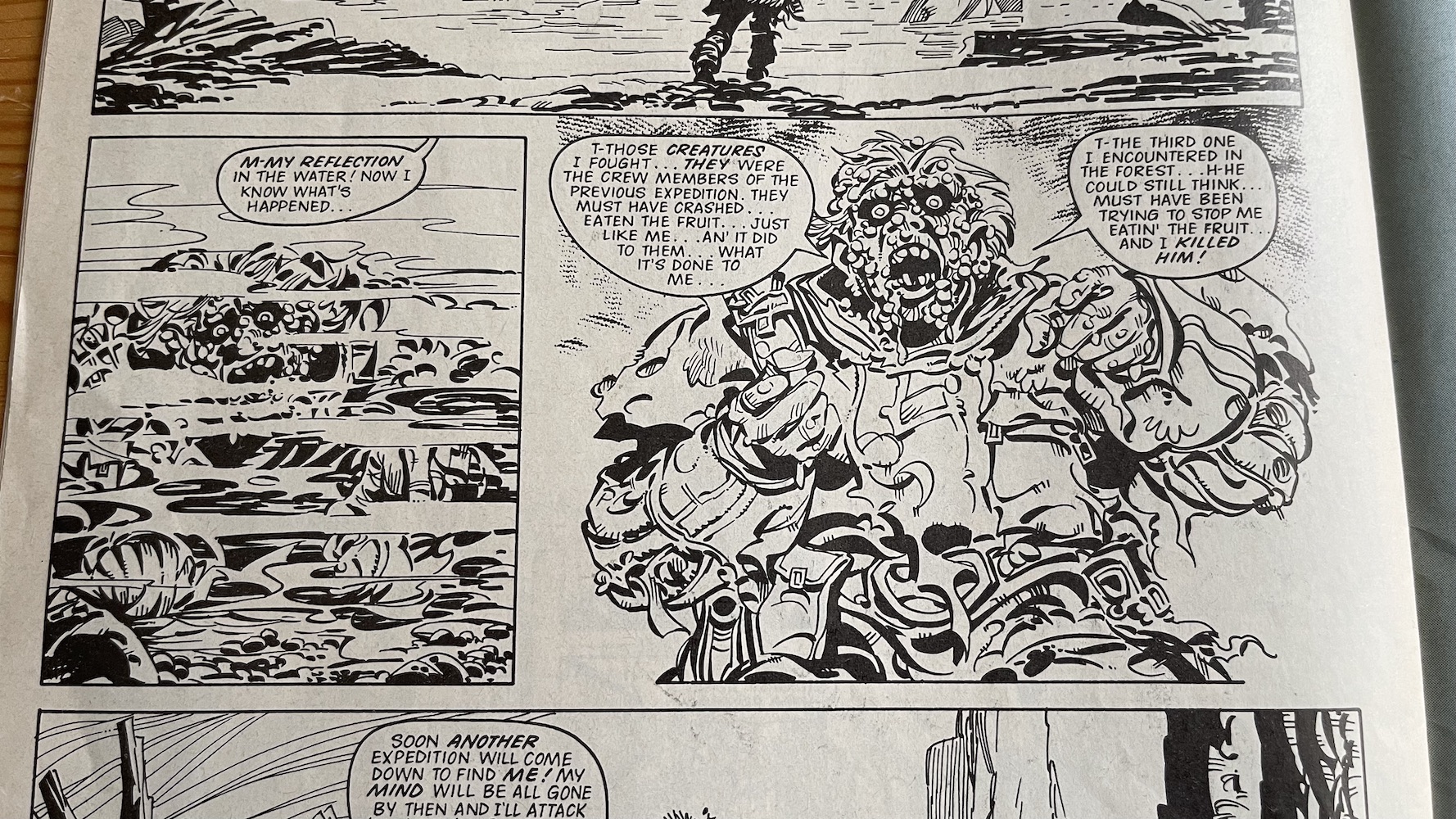
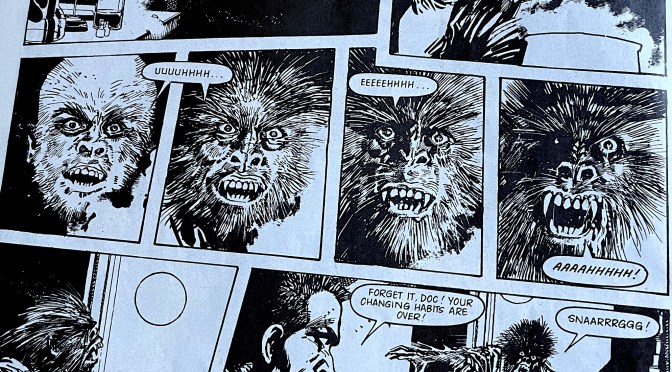
You can see the mutant creatures are humanoid in nature and have a distinct face so I’m sure you can also see where this is going. Unknowingly, Kurby has just picked off the three Wildcat crew members he was sent to save, who had been transformed by eating the same fruit. I do like Jesús’ action man panels of Kurby firing directly towards the reader as he’s attacked. Kurby comes across as quite arrogant in the story but that’s the point I think. We humans are out amongst the stars but still we think we know everything about the world around us, that we are lords of all that we survey.

As you can see the story ends with him slowly turning into one of the mutants himself, the horrible truth about what he’s done becoming apparent. The last mutant swiping the fruit away was doing so as a warning, not an attack. As he transforms he knows the Wildcat will send another team, that he’ll try to warn them, that they’ll kill him and the cycle will repeat. Human arrogance will see the small population dwindle by how many more before it stops?

For now, the death toll six issues in stands at 18 if we include Kurby himself. Maybe this is why the comic stopped at #12, there was no one else to write about!

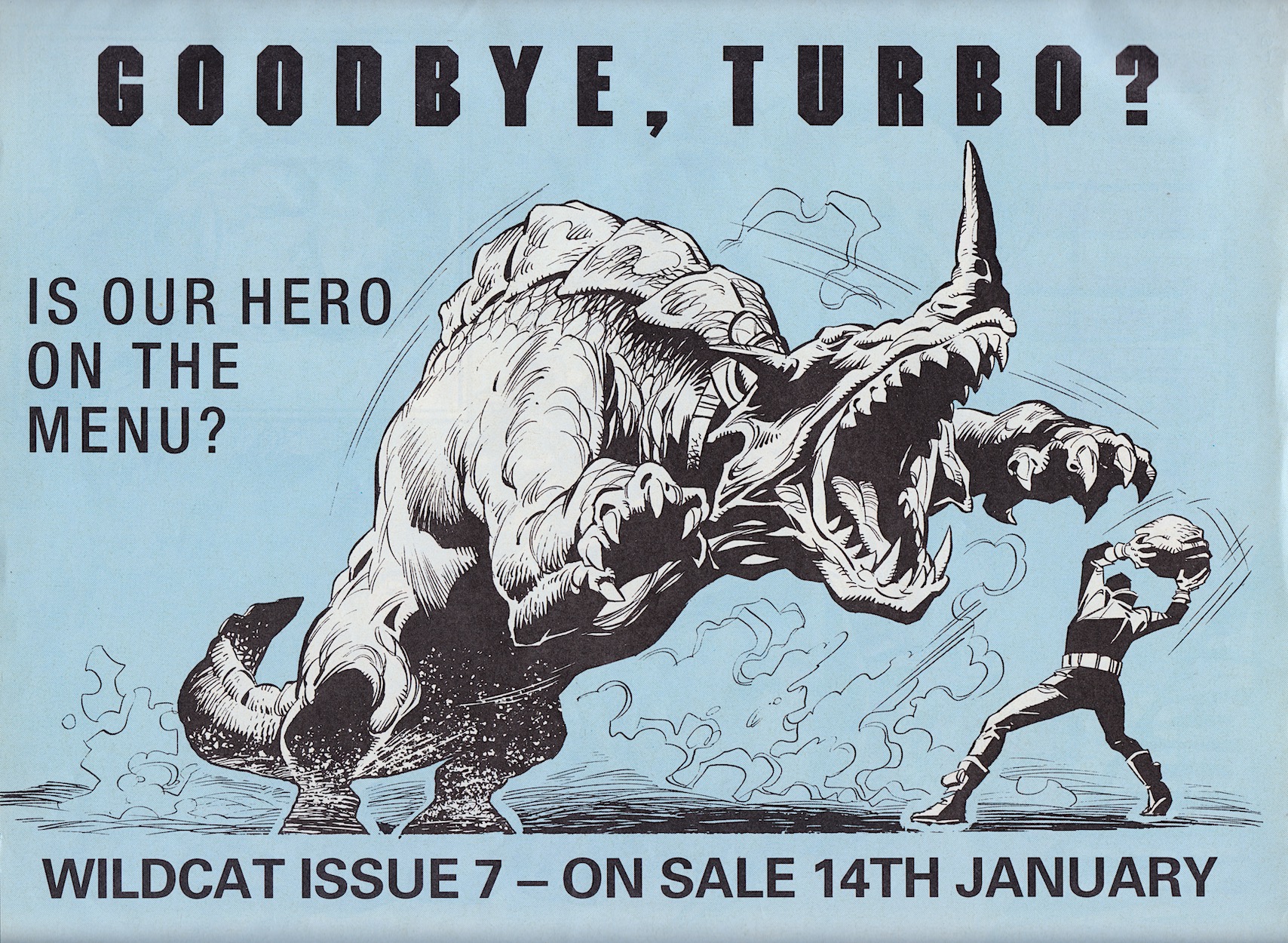
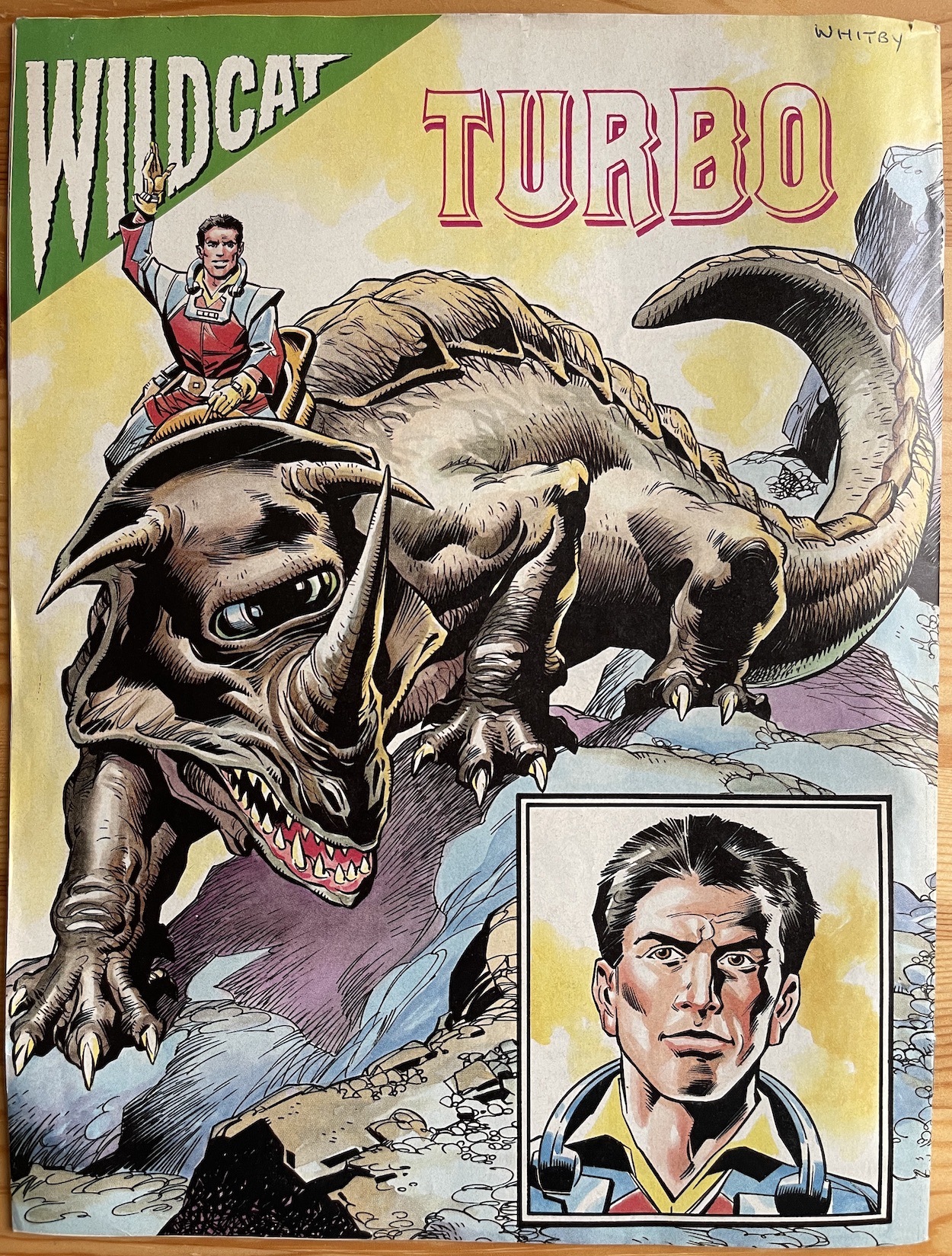
The Next Issue page is printed sideways and taken over by this picture of Turbo and a Terrosaurus. Is this his dinosaur? I wonder. But given the excitement of the Loner strip I’m surprised that isn’t the story to feature here. Finally on the back cover is this issue’s pin up and it appears these two are continuing their partnership for now anyway.

So that’s us officially at the halfway point of the comic’s regular run already. The next issue, the first of the new year, will be here on Friday 14th January 2022. This has been a blast and at six issues in it’s already far better than its already impressive start. The next six are going to be phenomenal. I hope.

iSSUE FiVE < > iSSUE SEVEN

WiLDCAT MENU

CHRiSTMAS 2021

WiLDCAT #5: CHRiSTMAS ‘CAT

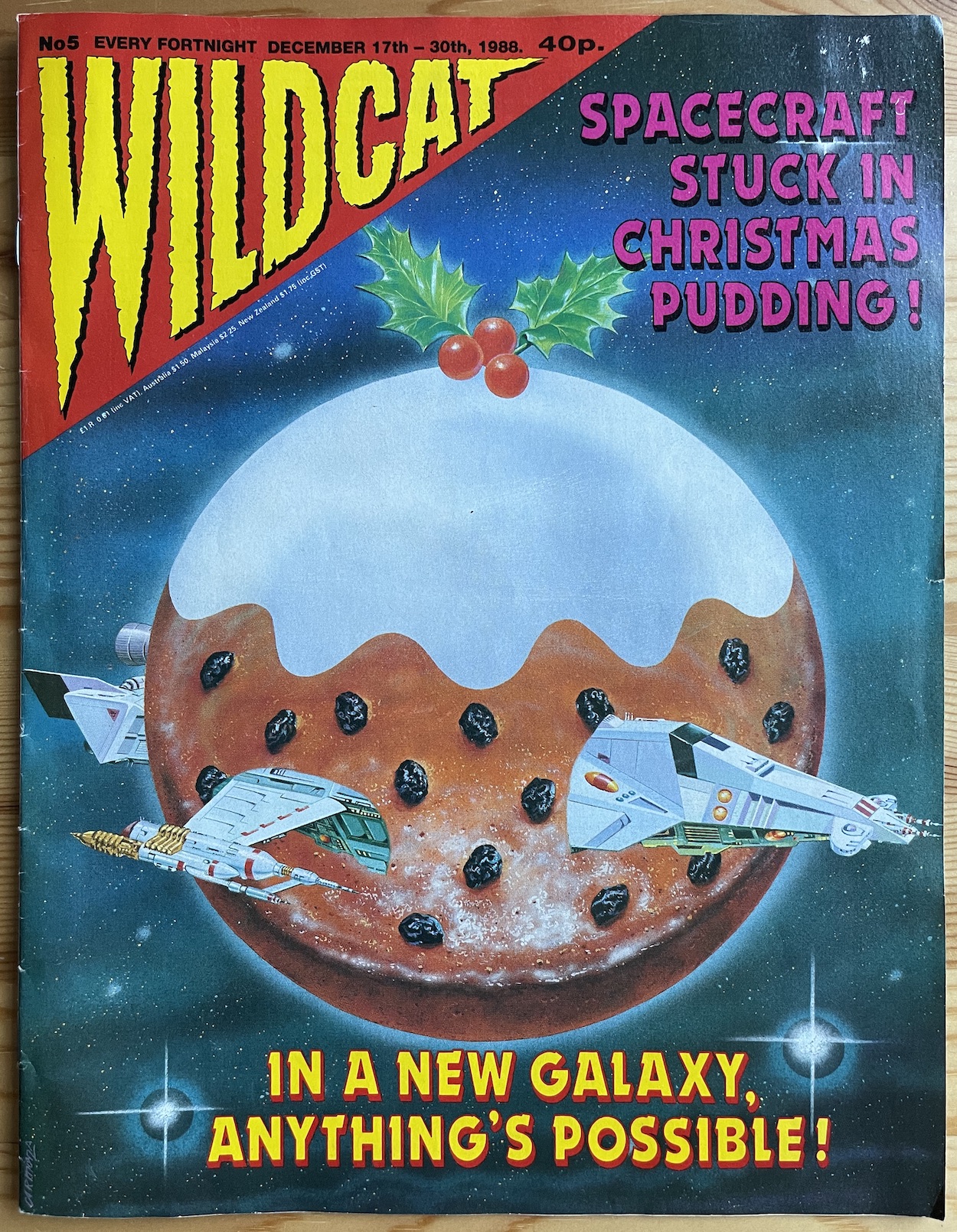
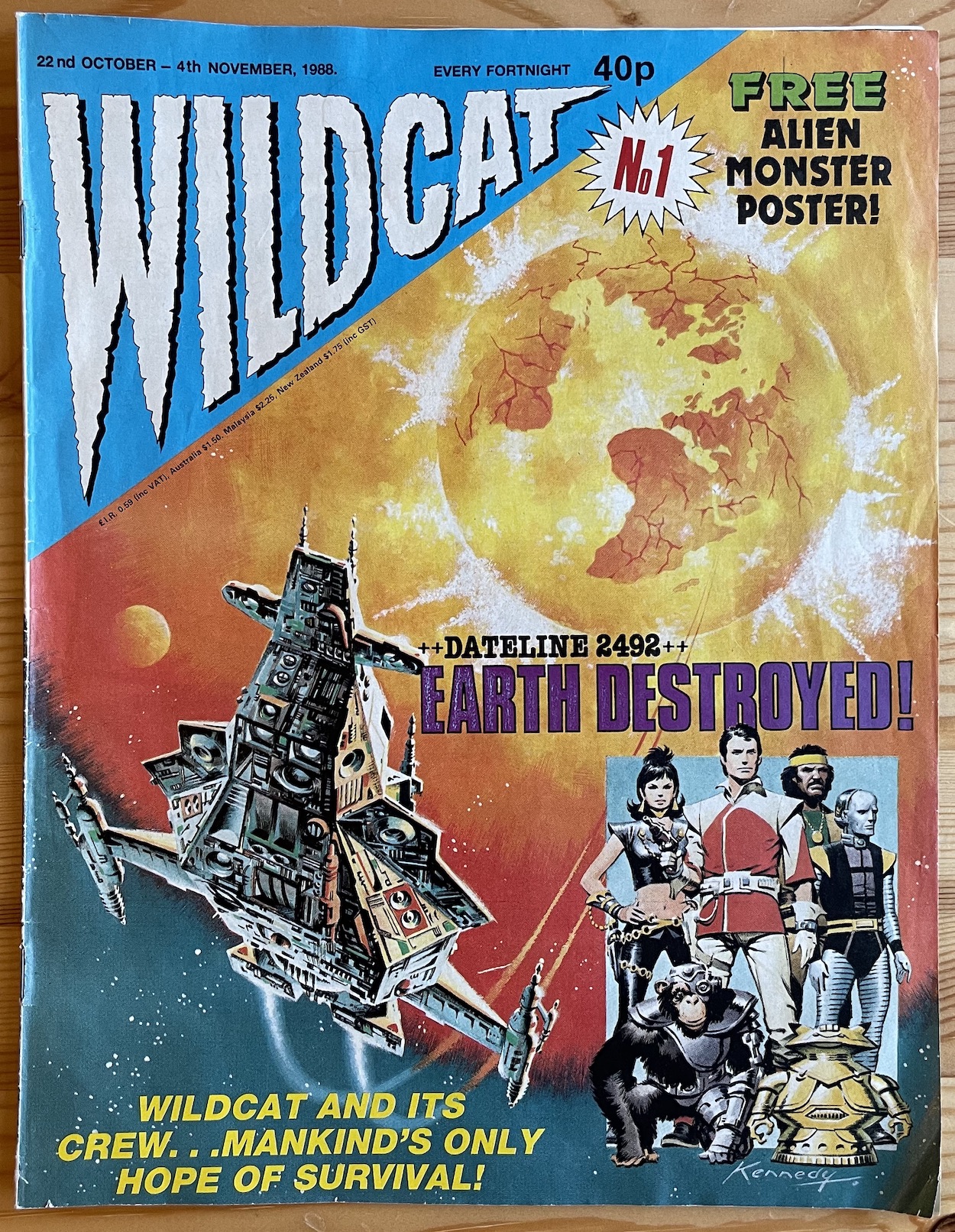
It’s probably the most unique cover you’re ever likely to see on this blog, that’s for sure! I originally thought it was by Ian Kennedy but he’s informed me it wasn’t, so at the moment I’m at a loss to who drew the giant pud. Even more unbelievably the cover represents an actual story inside this latest issue of creator/editor Barrie Tomlinson‘s Wildcat, and that story is one of the best so far. You’ll have to wait until further down the review before I show you that particular Christmas miracle. After this cover image the next thing that grabs the attention is the paper.

Specifically, the paper quality. Half of the comic is made up of the kind of paper Rebellion‘s modern day 2000AD is printed on (at the time of writing). This issue goes back and forth between this and the regular, thinner gloss paper but basically any sheet that has colour somewhere over its four pages will be of this thicker, heavier, higher grade. It feels wonderful in the hand and gives the comic a sense of high production values.

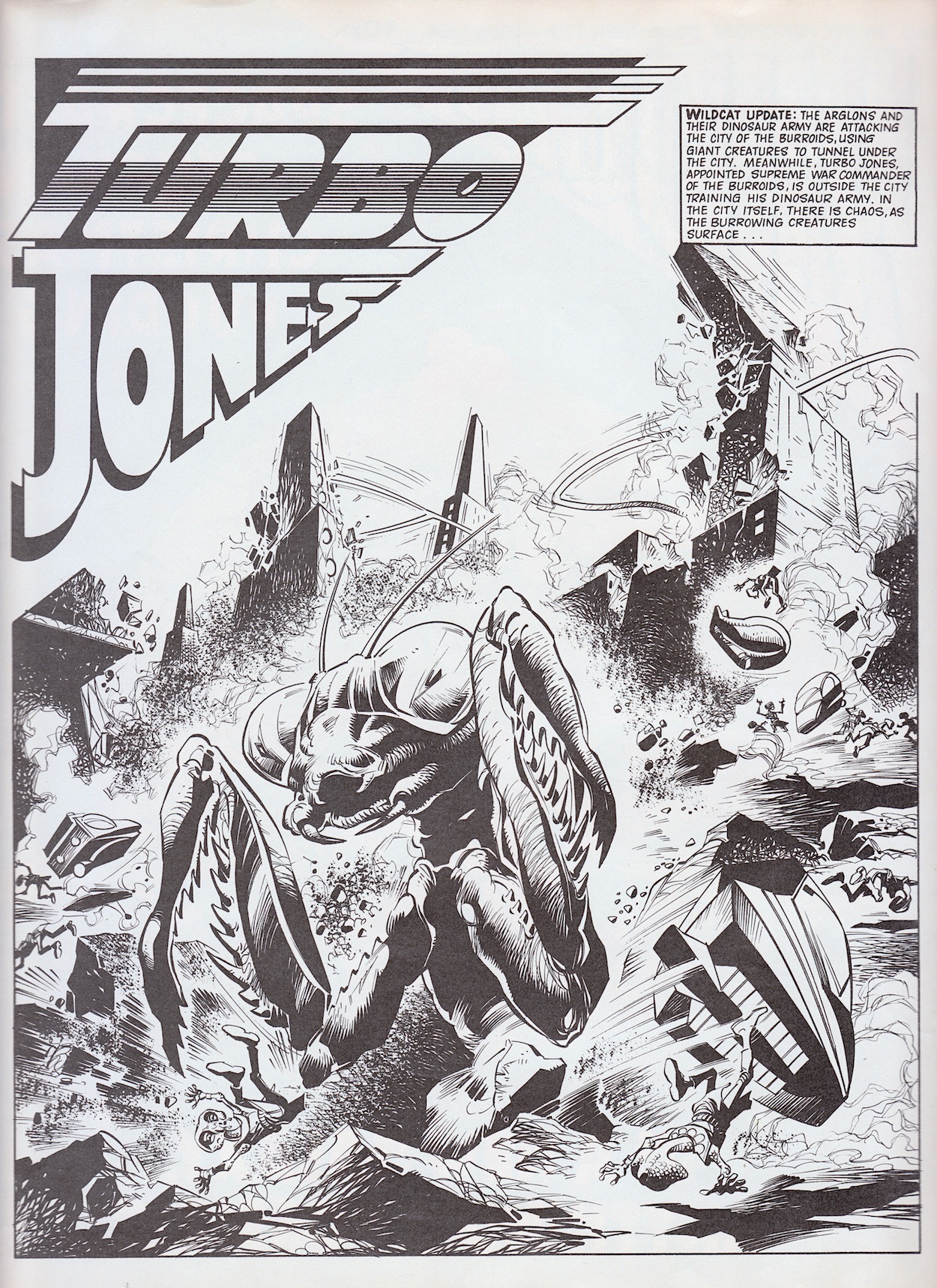
Moving on to the content and our four main strips obviously aren’t festive tales, what with being ongoing serials (although that didn’t stop Super Naturals, another of Barrie’s). Turbo Jones has a wonderful monster movie feel to it, like the Japanese kind I’d have watched late at night on TV back when I was a child. It’s not just dinosaurs anymore, there are giant mantises and other insects, as well as original creations such as Turbo’s Terrosauron. The imagination on show is wonderful.

The Arglons are attacking the Burroids‘ city from underground and by the time Turbo and his army make it back a lot of it has already been destroyed. The Ark and his cronies are in charge of the enemy army and here we can again see the mechanics within their skeletal mouths. The frequently used alien terms add a nice touch too. Normally a strip might contain one or two such made up words but Barrie hasn’t held back when writing this script and I love that. Where does he get all this terminology from? It adds to the absurdity of the situation, the alienness of this planet and the originality of the story.

There’s a nice little touch there with Turbo tying up his flying beast like a pet, but it’s not long before he’s taking to the skies for more thrilling battles. This particular episode really does have it all. The action is truly thrilling, Vanyo‘s artwork sizzles in the action scenes, conveying real scale in the destruction of the city, creepiness in the council and lots of little background details to pour over again and again. While the action builds so do the questions for this reader, with details about The Ark and the history of this war being drip fed to us. Wonderful stuff indeed.

Joe Alien has had enough in the next chapter of David Robinson‘s story. After falling for a trap set by the trees(!) he draws the logical conclusion this continent they’ve landed upon is not hospitable for human life. It’s simply too dangerous; the killer vegetation can’t be communicated or reasoned with, despite finding out they can understand our language. Resistance is futile, so he orders a hasty retreat for his team but the plant life won’t let them leave. However, they’re not trying to kill them anymore either.

This is where a surprising turn of events takes place. We knew the trees were intelligent, able to uproot themselves and walk, they could communicate with each other and they appeared to be attempting to do so with us. Their murderous instincts were always front and centre but as Joe points out, while he has lost some team members, if the plants wanted them all dead they would be.

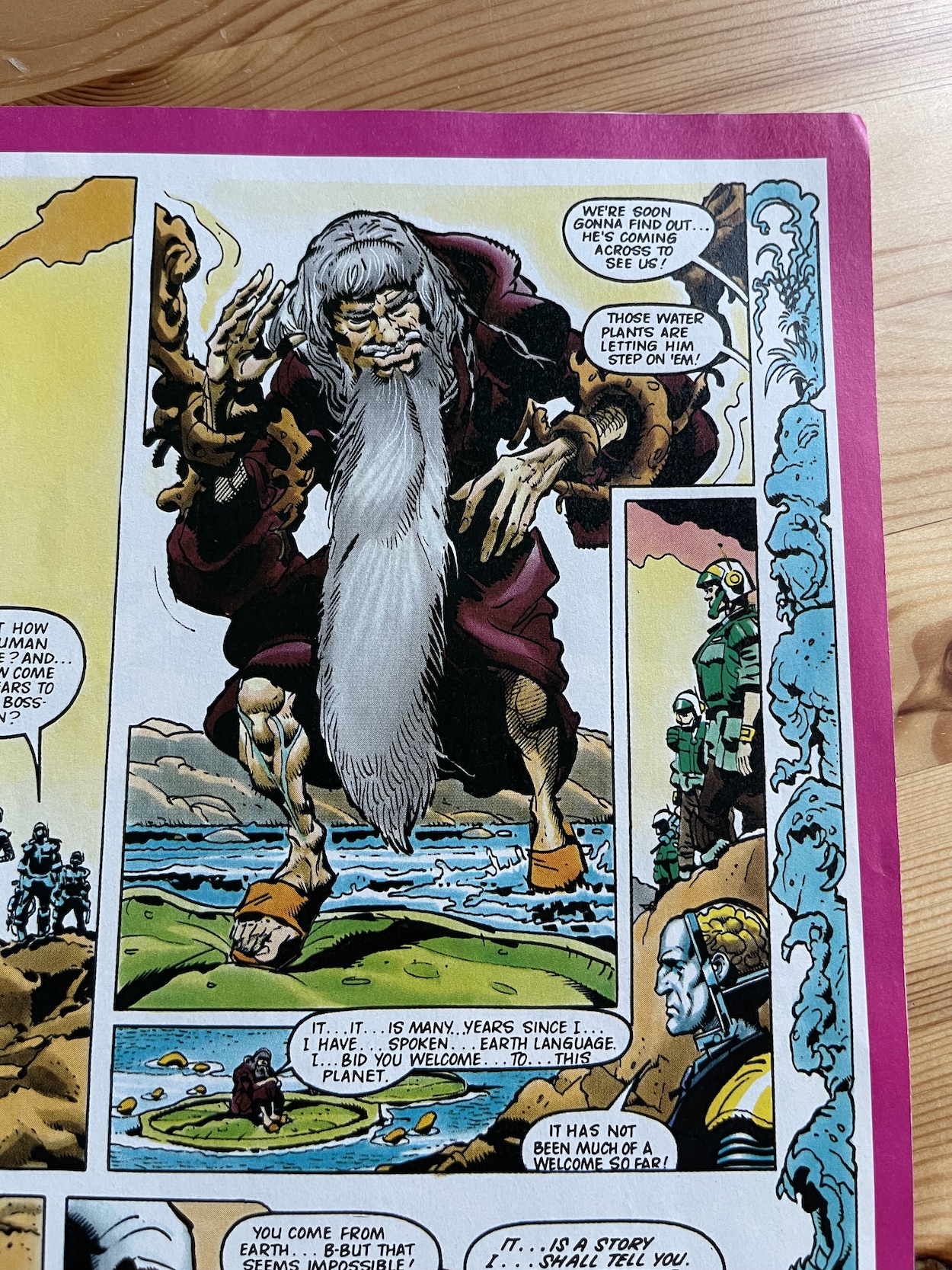
A vehicle made of rock glides in over a body of water and from within it steps out a man. A human man from Earth! Our heroes have been corralled, now trapped on an outcrop surrounded by this body of water full of man-eating plants ready to chomp the legs off anyone who attempts to escape. But for this man they spread out their lily pad-like leaves and let him cross to within talking distance of Joe and his men.

I didn’t expect this! I have no recollection of this twist at all. A nice touch is the fact his speech is broken and slow because it’s been so many years since he last needed to do so. The plants treat him reverently, he’s quite clearly in charge and yet very frail, at least upon first glance. It ends with him promising to tell a surprising story. I bet! I have so many questions. But that’s the whole point of the story. It’s layering mystery upon mystery, and just when you think you’ve got one or two bits sussed out it pulls the rug from under you.

Yes, that last sentence was a bit clichéd but there’s nothing unoriginal about this story. Ron Smith‘s artwork really comes into its own too, like he’s had a couple of issues to settle in and is now confidently in charge of the world originally created by Massimo Belardinelli. The rock vehicle feels suitably solid, the old man is an intriguing character even just to look at and the uprooted killers remind me of the tree that came in through the window in Poltergeist. Genuinely threatening. Two for two, the strips this issue have depth, character and intrigue. Shall it continue?

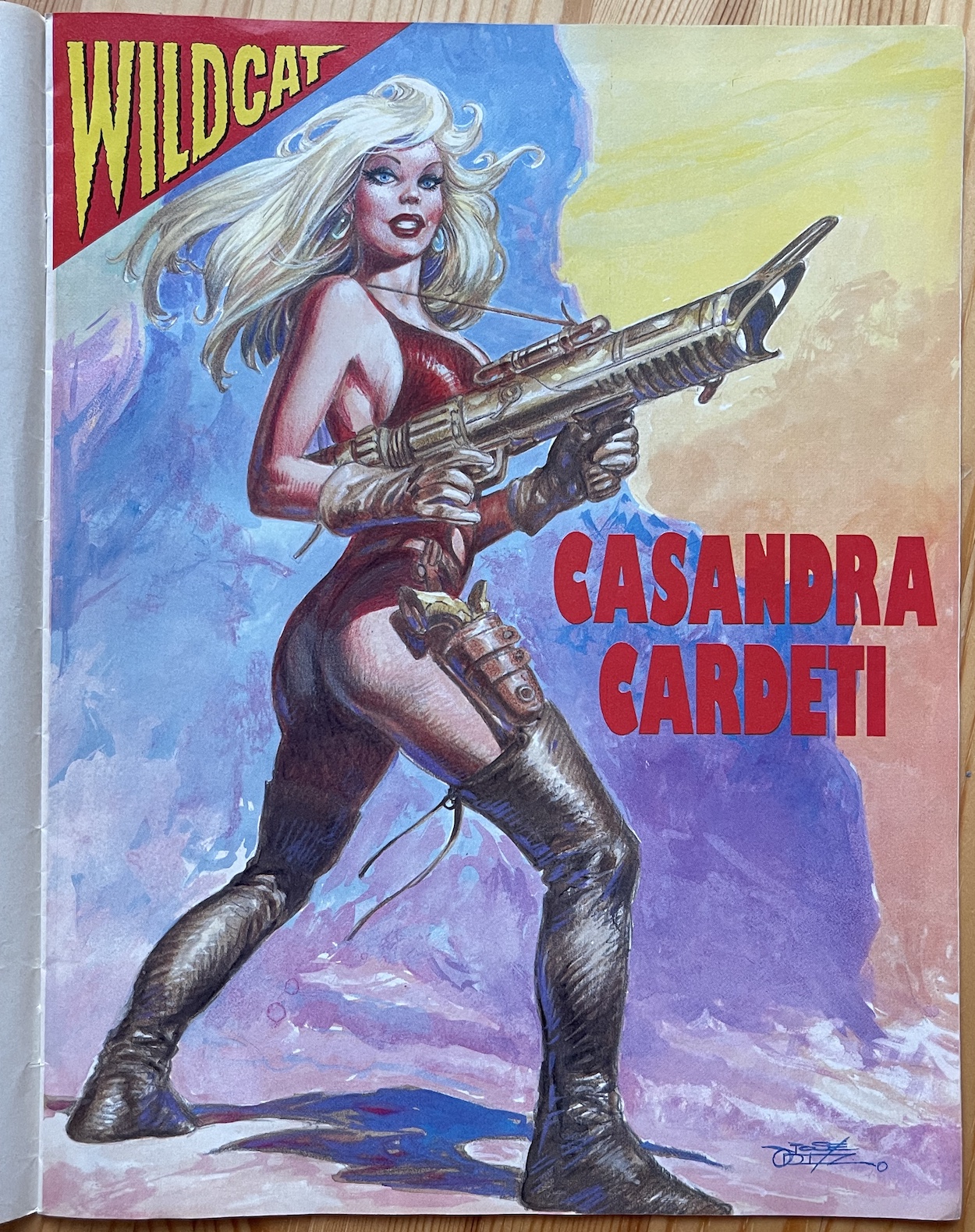
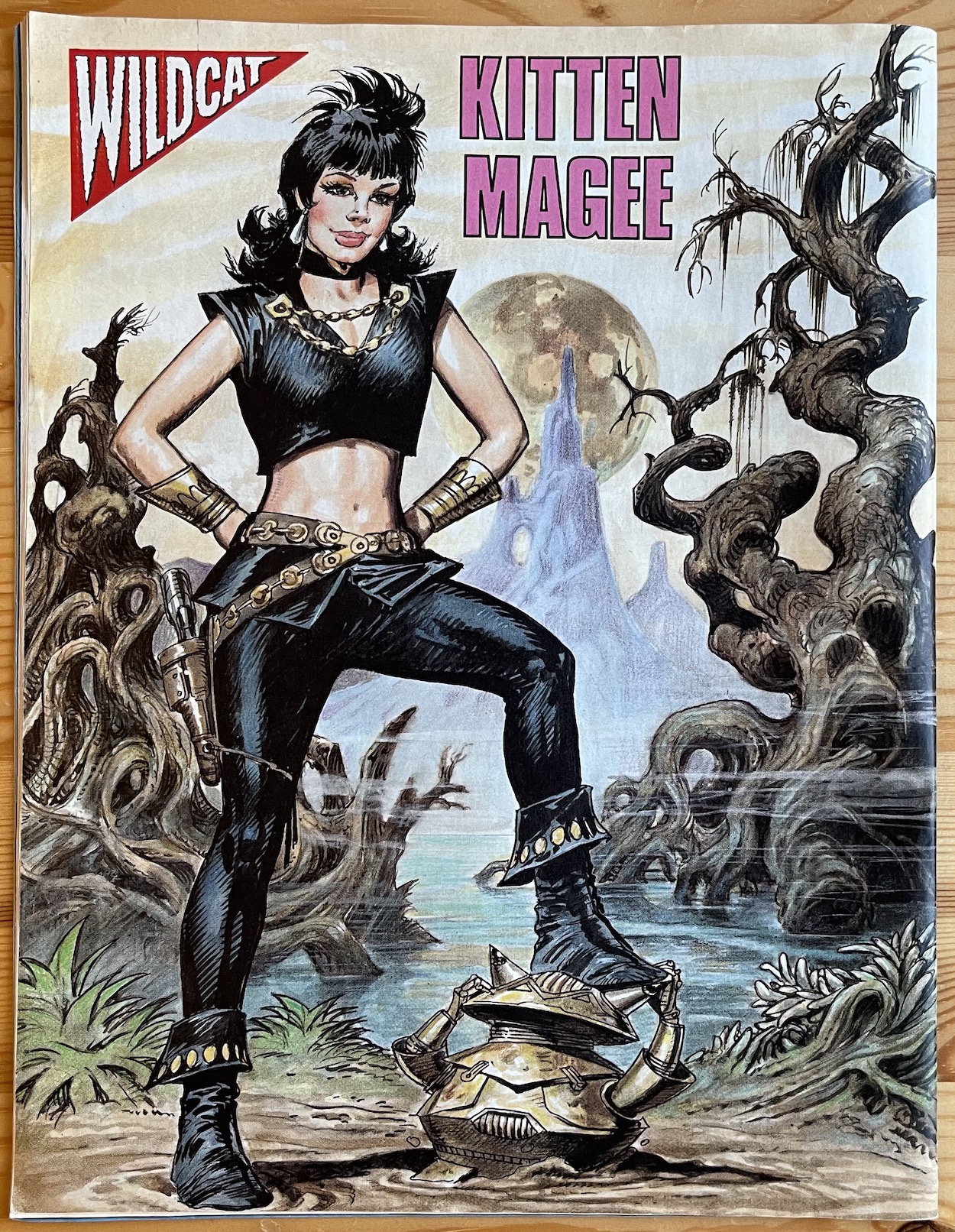
Just before the Kitten Magee strip here’s artist José Ortiz‘s pin up of one of her teammates Casandra Cardeti. While I do really enjoy José’s work and it’s nice to see some colour work from him, I always had an issue with how female characters would be dressed in our sci-fi comics. While Turbo, Joe and Loner are properly equipped for whatever is thrown at them, women always seemed to go up against the same dangers with a lot less clothing. It’s a sign of the times of course but it was always a niggle I had, not just with Wildcat so I’m not singling it (or José) out.

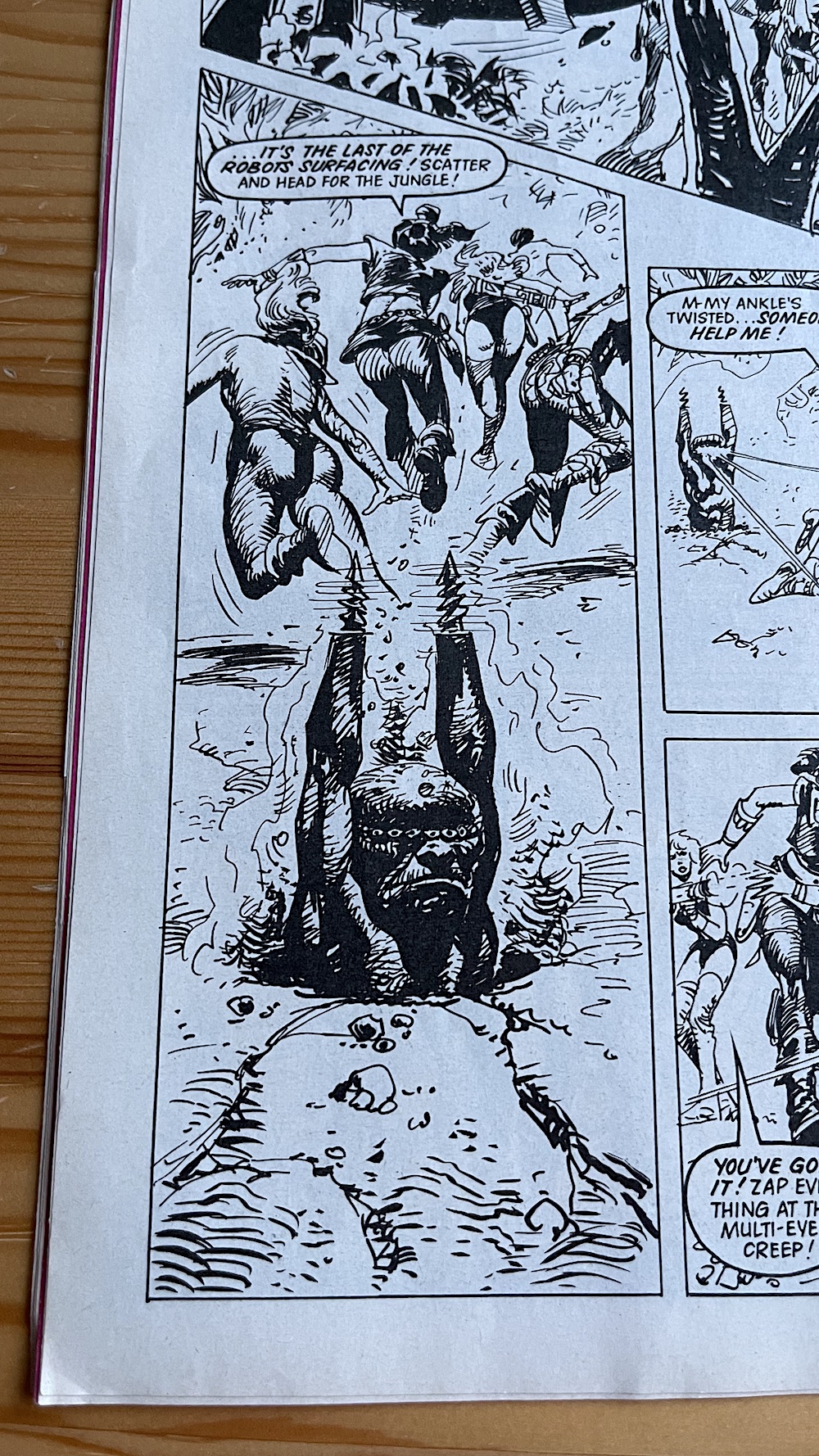
Unfortunately, out of all the strips in this issue Kitten Magee’s has the least development plot-wise. Basically a fight to the death between them and the robotic tribe, there’s plenty of action and a few close shaves until right at the end one of the robot heads pops off and explodes, leaving a crater where Kitten and Aurora were standing. But even within a basic plot this time around there are some really nice little nuggets by writer James Tomlinson to sink our teeth into. Have a look at these two panels by way of example.

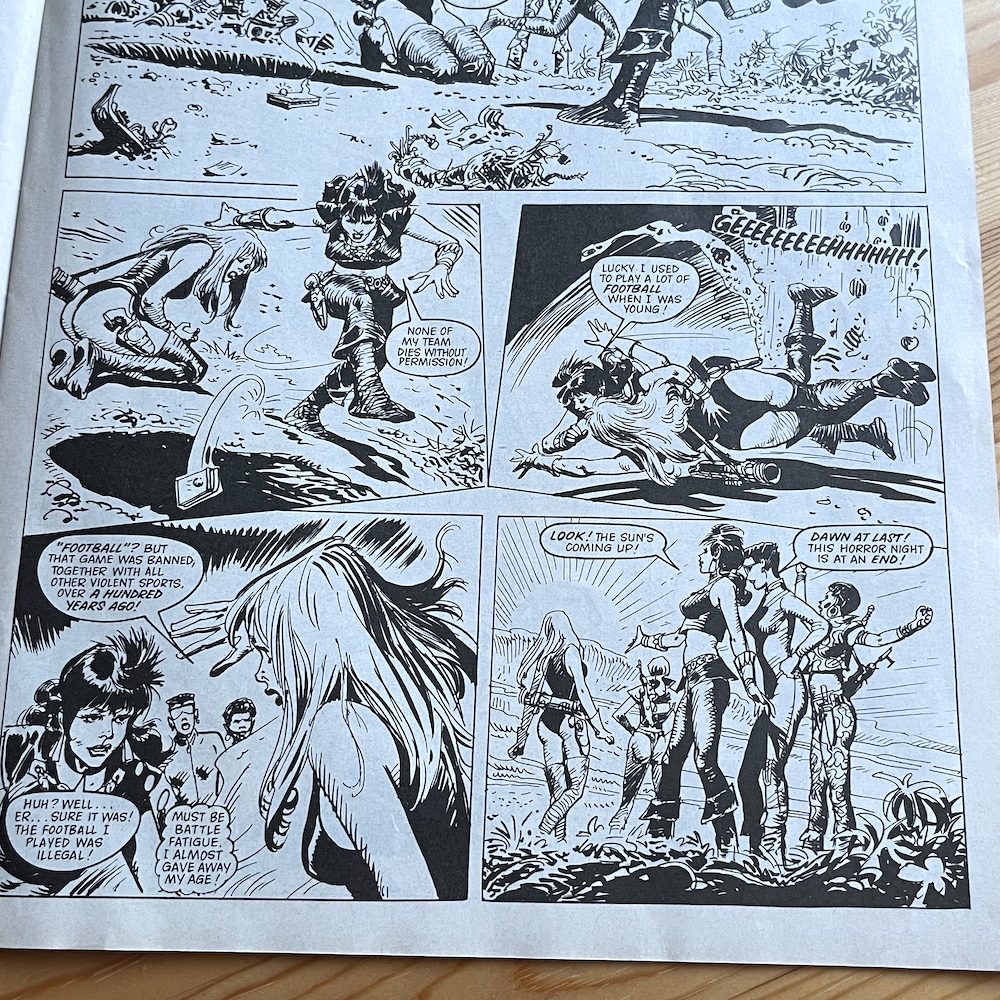
The robots have suddenly become rather interesting. Their techniques for dispatching foes get more and more creative, my particular favourite being this ground drilling monster that pops up just when the battle seems over. Then there’s a gaffe Kitten herself makes. In saving Casandra from a dropped explosive by expertly kicking it into the hole from the previous panel, she mentions how keenly she played football as a kid. The thing is, the sport was deemed too violent and banned more than one hundred years ago. Add this to how old she looked in #3 and we’re beginning to get a glimpse into just how much of a lie she’s living. An interesting plot point which I’ve a feeling will become the main thread in issues to come. I certainly hope so anyway.

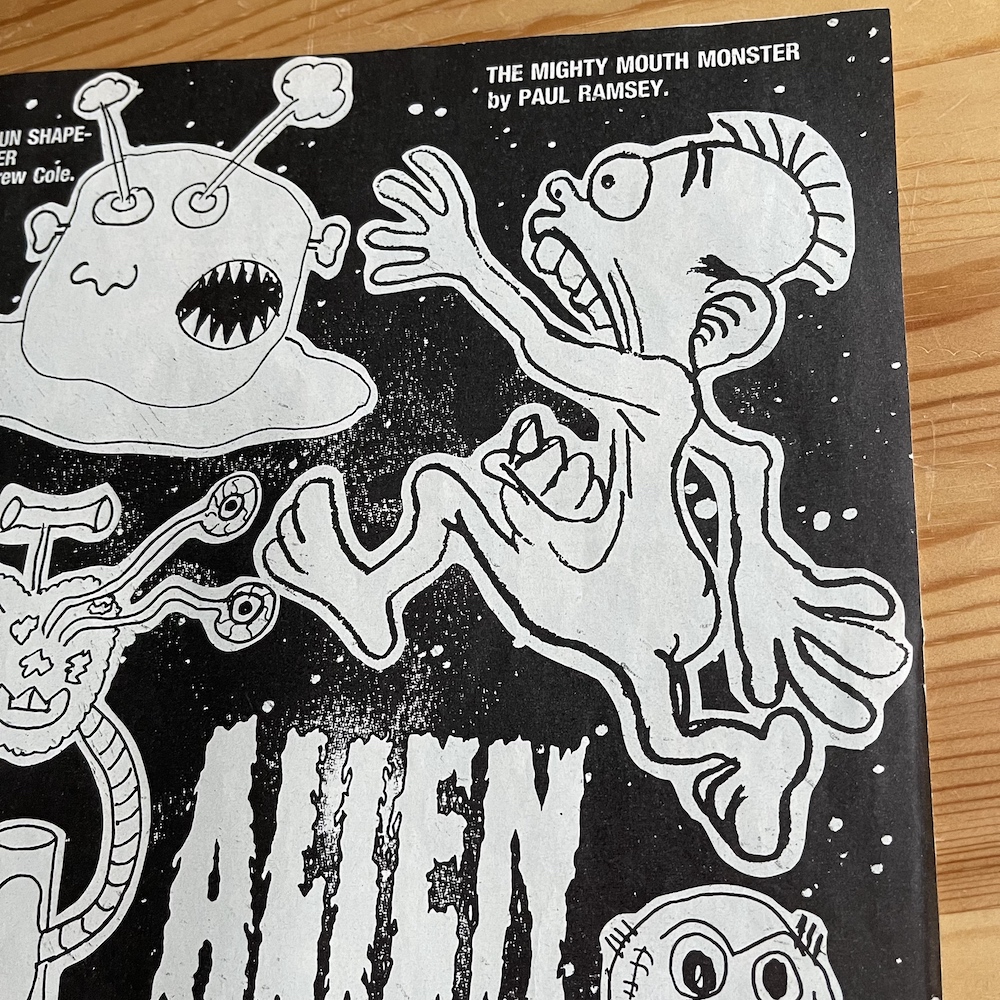
Just before Loner there’s another double-page spread of letters although none from the readers. Instead, every contribution has been signed off by an alien being from some distant world. The letters page had been hacked! I asked Barrie if this was due to a lack of letters but he assured me it was probably just for a bit of fun for the Christmas issue. He says he’s a big kid at this time of year (just like myself) so I can believe it.


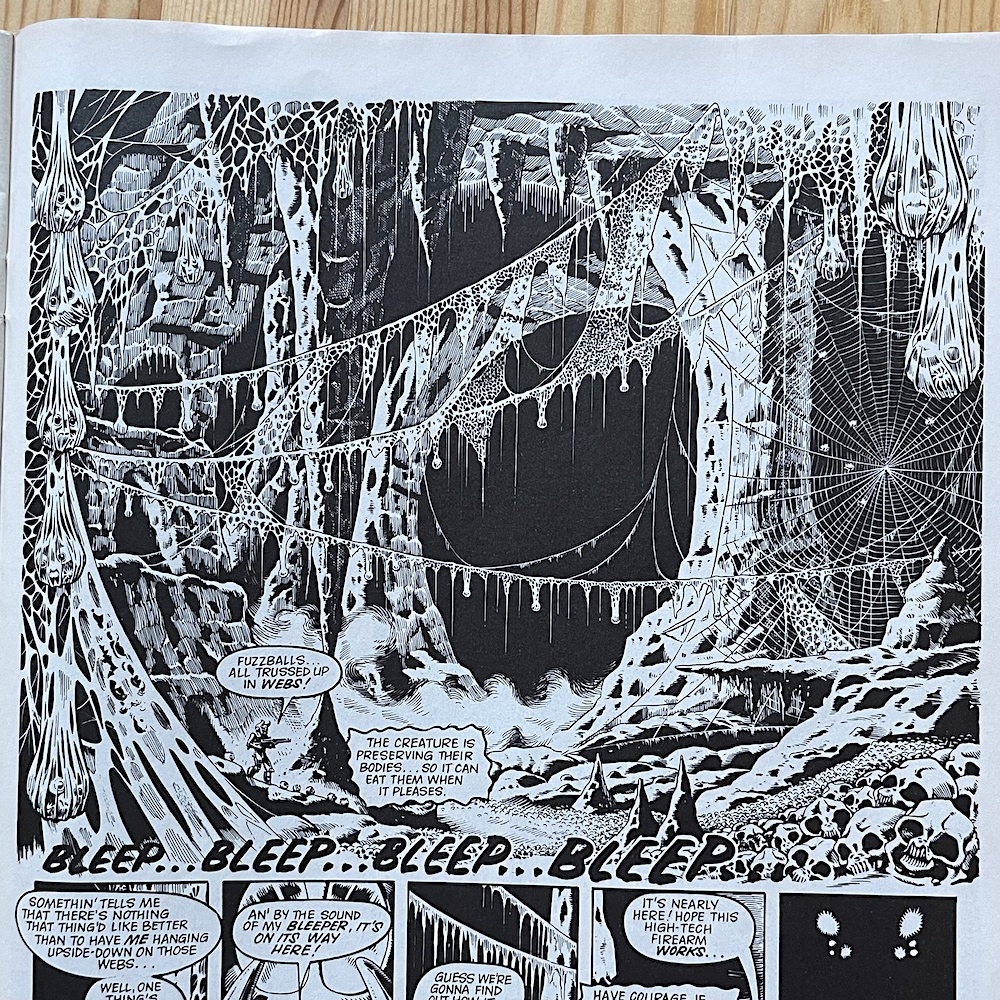
“The creature is preserving their bodies… so it can eat them when it pleases.”

One of the little furballs

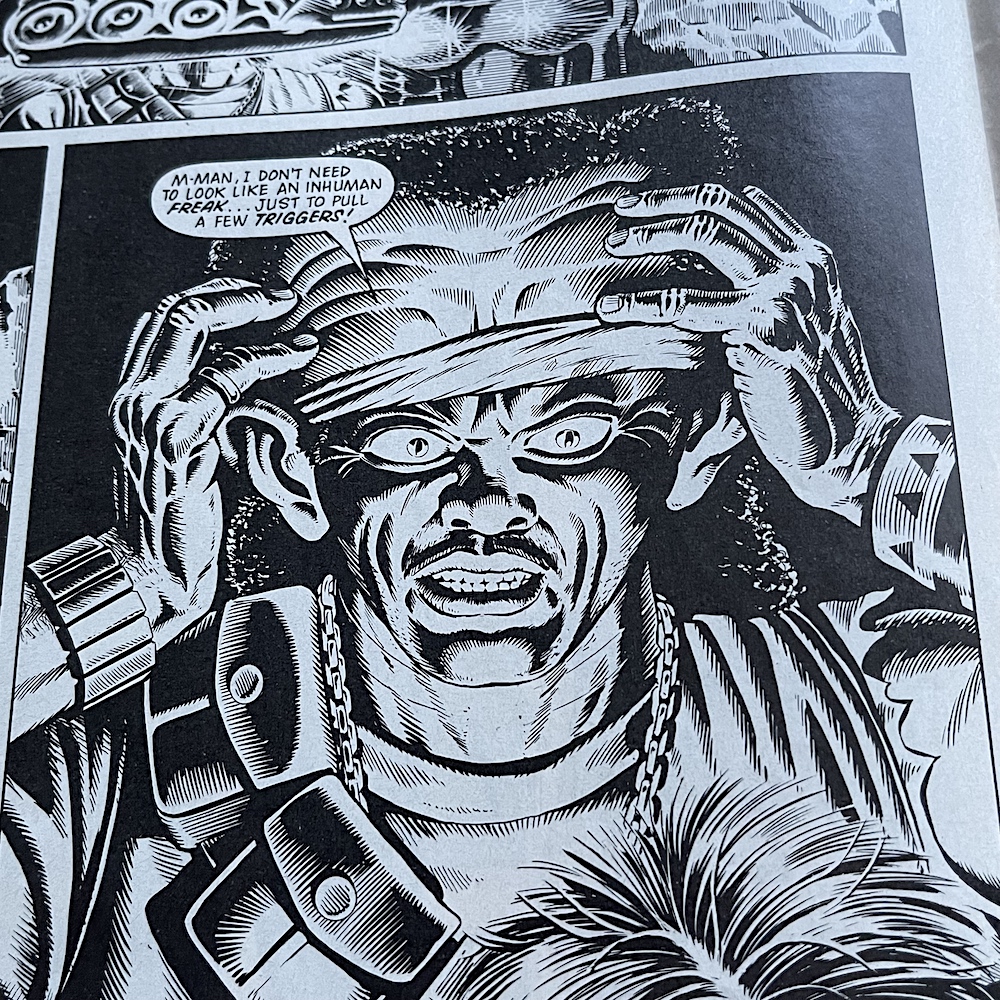
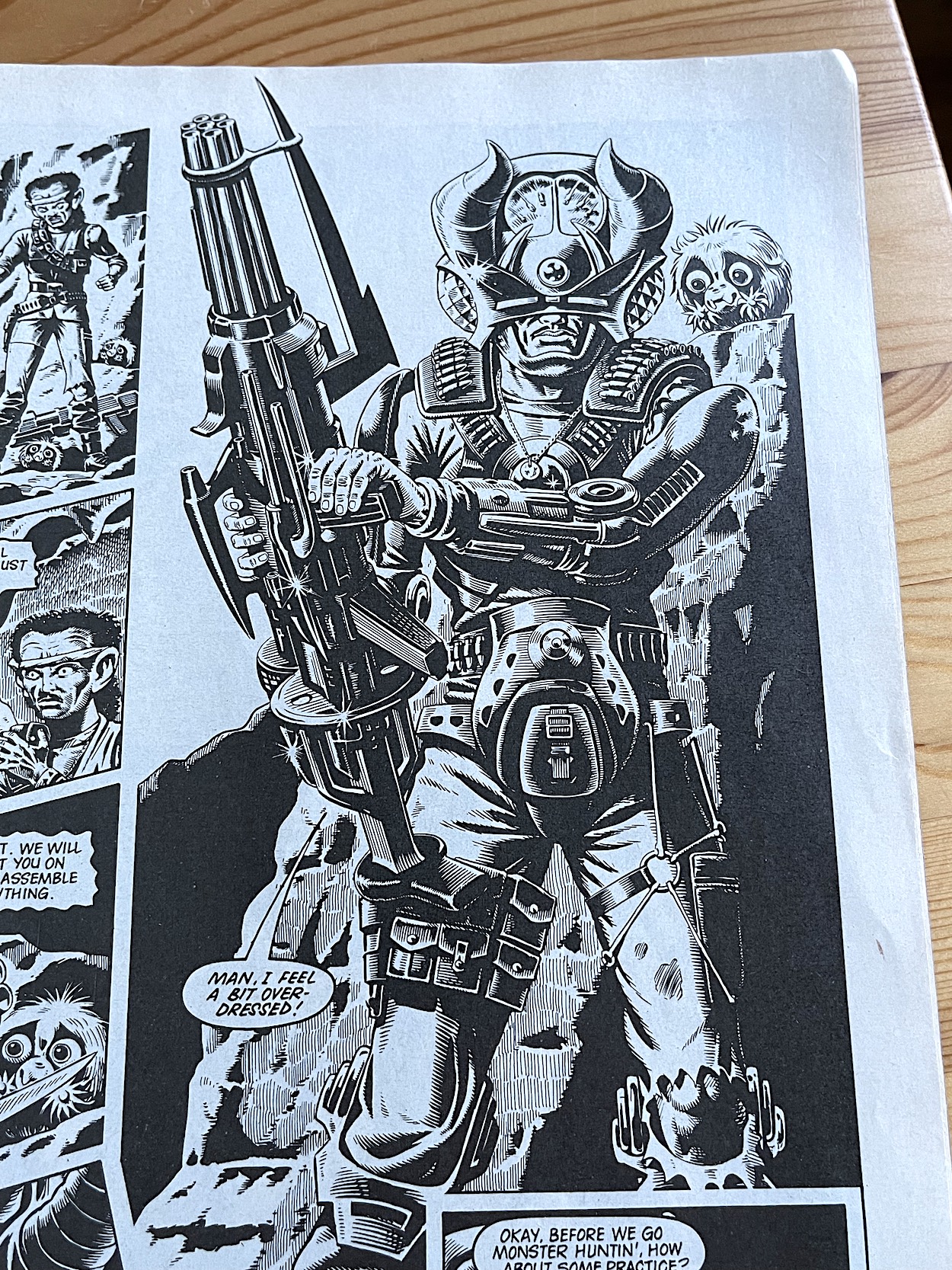
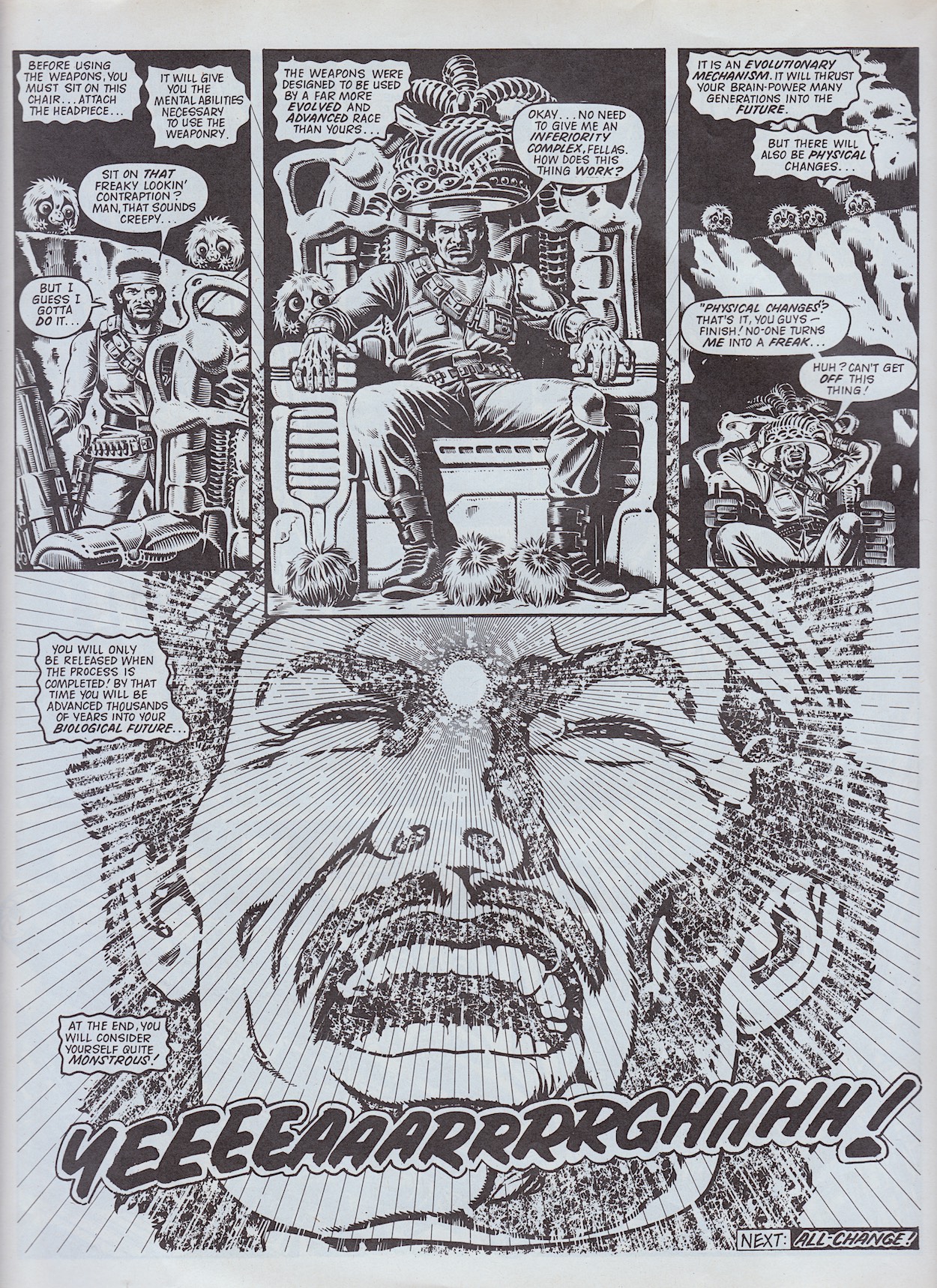
Barrie Tomlinson‘s Loner gets a bit of a new look but whether I’d call it an upgrade is something else. The furry little pets of the extinct alien race told him the weapons he’d found could only be controlled by his mind and thus he was made to sit in a chair to prepare himself for using them. The end result makes for a rather startling image and he’s not best pleased with the finished result.

It’s a bit of an anti-climax when one of the furballs casually says they can change him back afterwards, what with the transformation being part of the cliffhanger last time. But it does mean he’s all set to take to the caverns and hunt down the creature the lizard demanded he kill. There are also some nice humorous touches in the dialogue and you get a sense of the beginnings of a friendship between the former mercenary and these cute little beings.

This episode is all about stalking through the underworld and it contains some wonderful imagery from David Pugh, especially within the lair of the beast.

The detail here is stunning. I love the webs, the rock formations and the skeletal remains of the critters, which is a bit sad with rotting corpses and imprisoned furries strung up everywhere. It’s quite the panel!

As he tracks down the beast we’re treated to a suspenseful atmosphere. Take your time reading this, taking in all the fine details of the art and the fact the lettering of the homing beep gets slightly bigger and smaller as Loner attempts to find it, and it gives off a tense Aliens vibe. As for the beast itself, well I remembered it being a hideous snake-like creature with huge black eyes and long, pointed teeth. An image in a previous issue confirmed my grey cells hadn’t let me down, but I’d assumed it was about the size of a large Earth anaconda. How wrong was I.

In #2 I was under the impression the crazed lizard was a giant beast in itself, only to find out in the next issue he was about twice the size of our hero. With the predator Loner has been sent to dispatch, I’m very glad to say I was wrong in a completely different way. Just look at that final page! What an image to leave in the minds of young readers. This is the best cliffhanger in all of Wildcat’s run so far.

They’re tracking the huge dessert making its way towards them through the darkness outside

How on Earth (or wherever they are) can Loner hope to take on this thing, even with the advanced weaponry? We know it has no brain patterns to speak of, that it operates purely on survival instinct (this is why the telepathic lizard can’t kill it). Is that information in itself a clue? I can’t see how. But isn’t that the best kind of cliffhanger? One where you can’t think of any possible way beyond it, but you know the answer has probably already been hinted at, that it’ll be an organic and ultimately satisfying resolution. Wildcat has proven itself in this respect many times over already. A tense chapter with a stunning final scene.

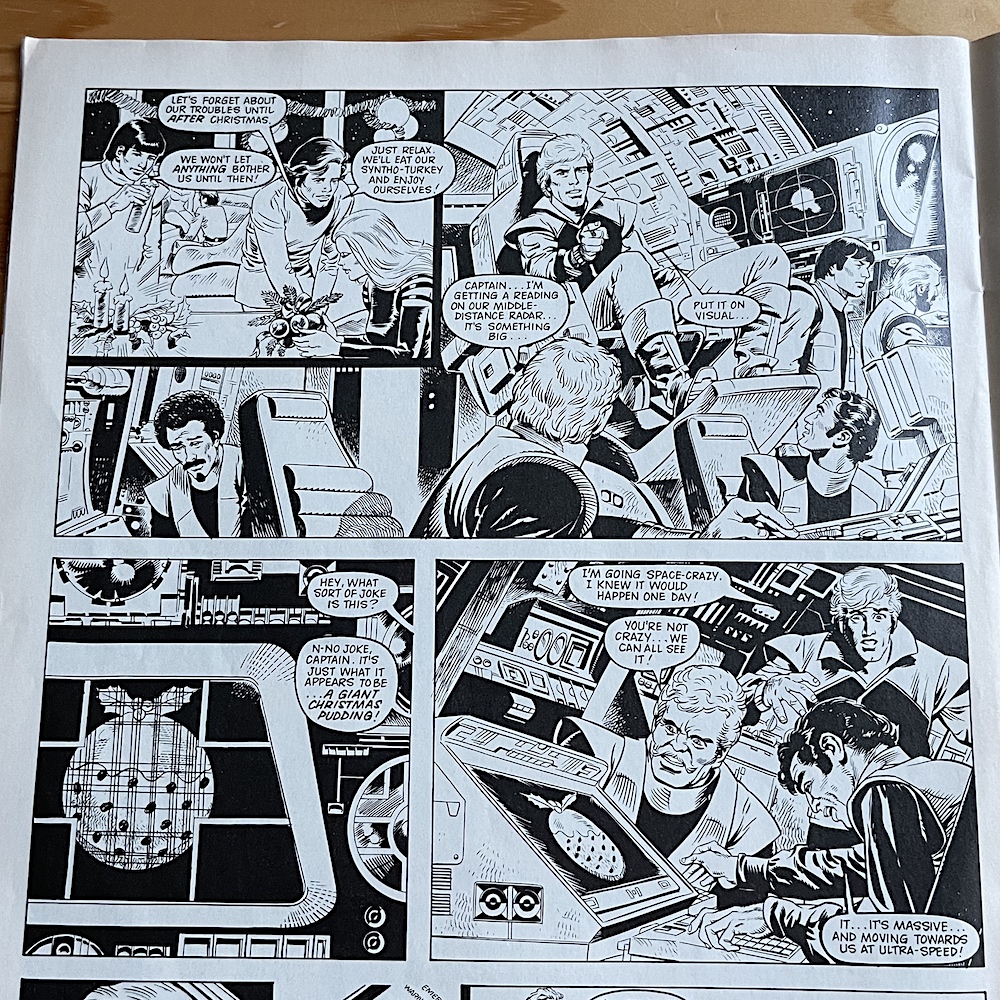
Our last strip takes us back to that giant Christmas pudding on the cover. It’s the festive season for the last human beings in existence and there’s some nice scene setting, including mention of the fact there’s been no communication with the landing parties, a running theme throughout all the stories and a nice reminder each one is part of a larger whole. We also get to see the bridge and the captain in charge of Turbo’s ship when he’s not around, while they track the huge dessert making its way towards them through the darkness outside.

For such a ludicrous thing to see they take it very seriously. Some crew members joke but they’re soon put in their place. It could’ve been so easy to reduce the whole story to a farce but I’m glad to say the characters treat it very seriously. Various attempts are made to communicate, they see it as an imminent threat, sounding the alarms and even opening fire, but their laser beams go straight through it. As does the Wildcat when the pudding surrounds them. “It’s like being wrapped in cotton wool”, one engineer scanning the impact (or lack thereof) states. Stranger and stranger.

It’s what the Wildcat crew don’t see that elevates the story into being the best Wildcat Complete yet

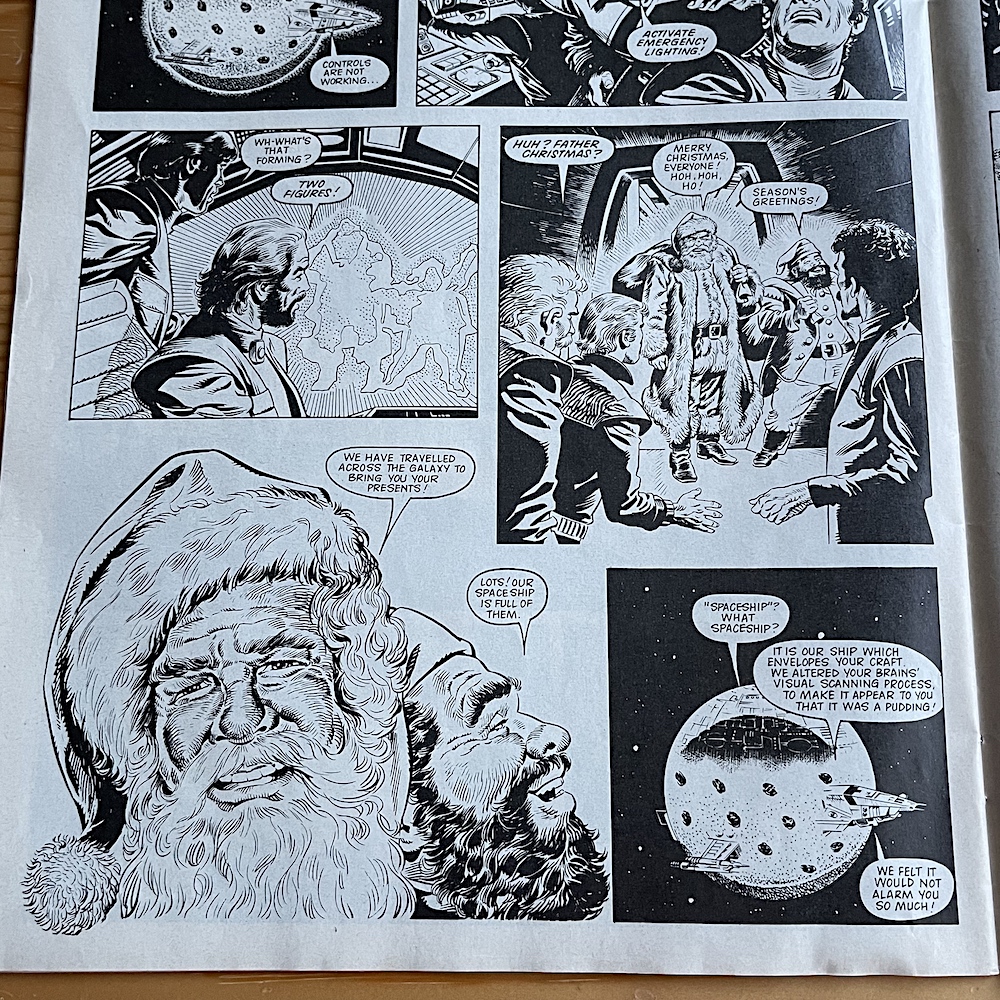
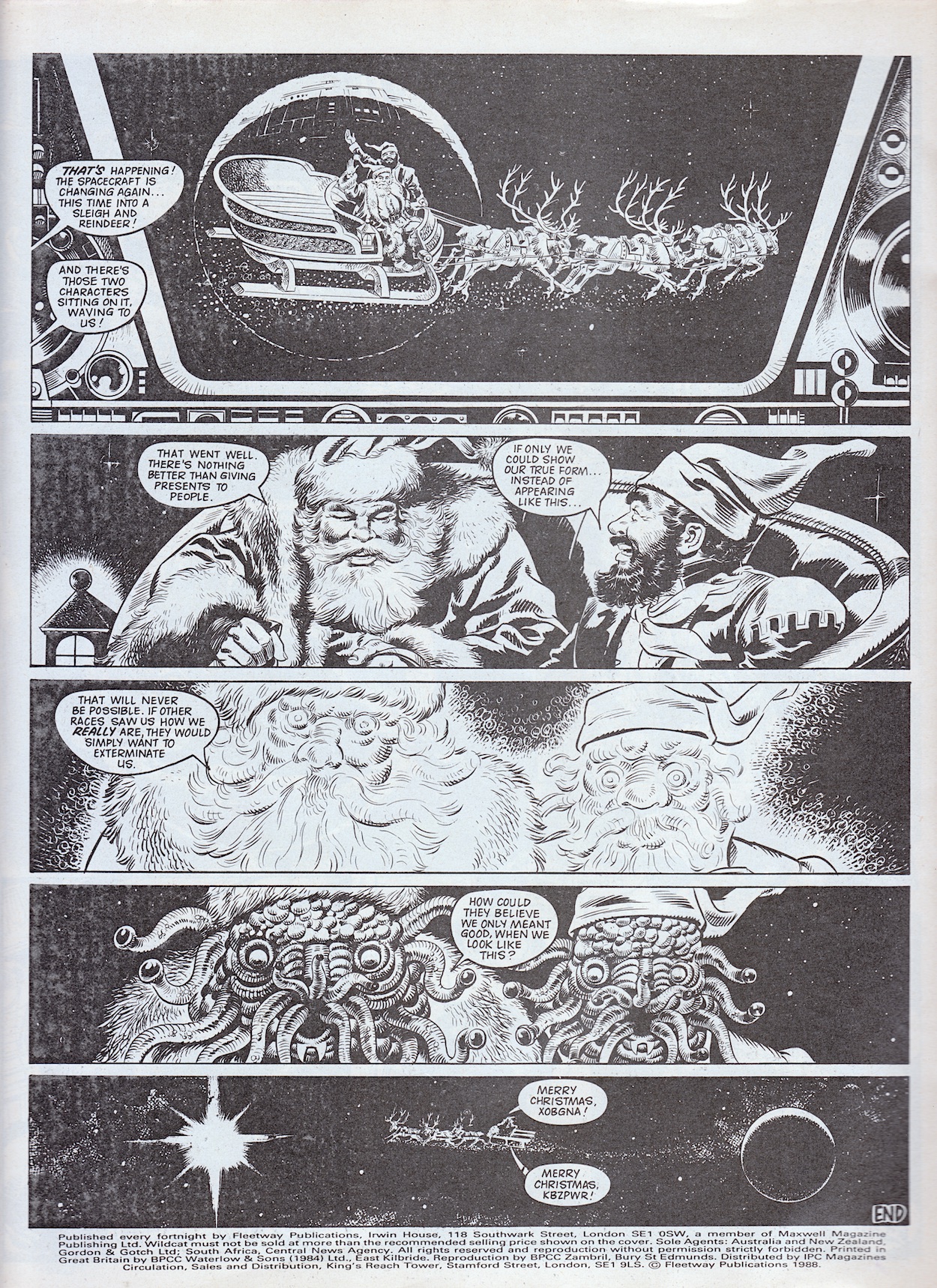
The lights go out and a mysterious glow signals someone or something beaming aboard. It’s Santa and an elf! With presents for everyone they explain they disguised their ship as something they thought couldn’t possibly be seen as a threat and they apologise. The image of the Wildcat within the actual ship itself is a striking one too and provides an “ahh” moment for the reader after that cover. The captain takes some convincing and they don’t immediately win everyone over. Even after they’ve gone no one is sure it wasn’t some form of mass hallucination.

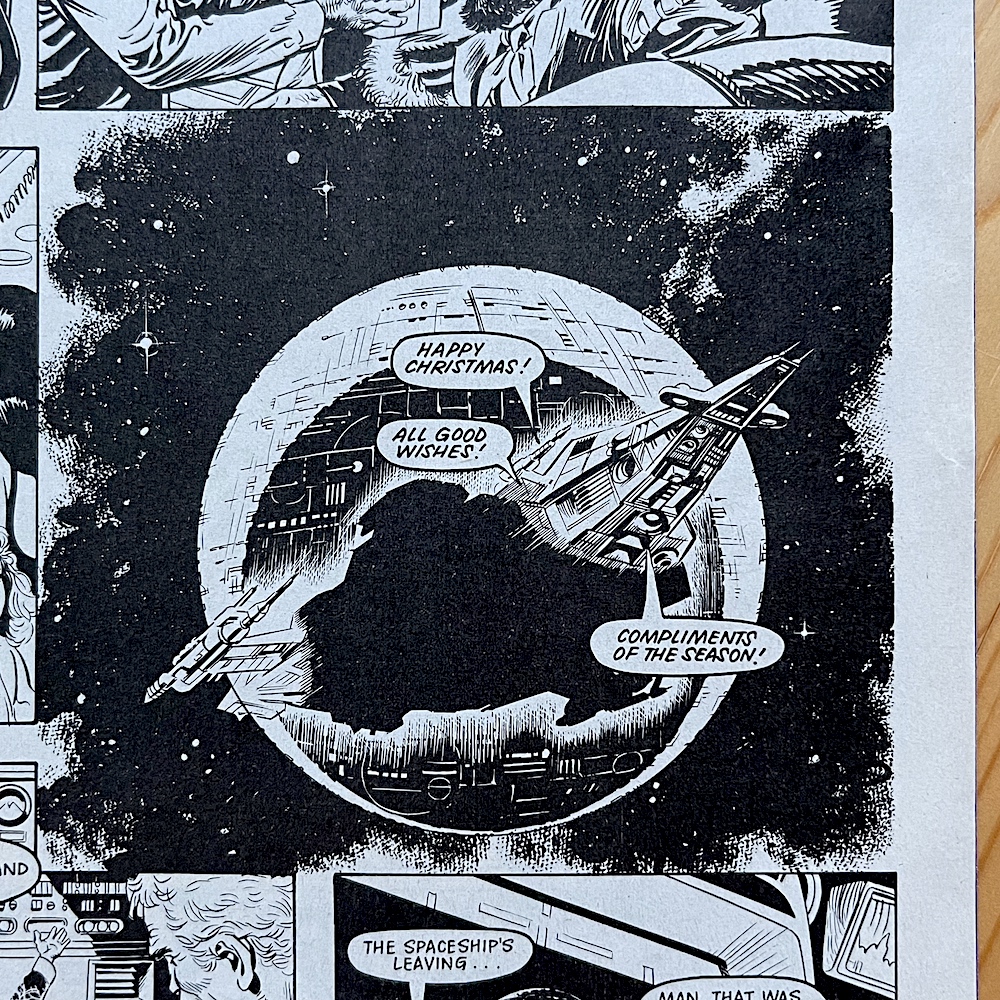
It’s a fun little story but then the final page makes everything click into place. The large Death Star-esque vehicle morphs into a sleigh and reindeer, another illusion. But it’s what the Wildcat crew don’t see that elevates the story into being the best Wildcat Complete yet. I’m left with just one question. Were they impersonating someone we humans associate with gift giving (apparently what they love to do as a species) or is this Santa’s true form?

It’s left without an answer of course, like all good Twilight Zone twists, leaving the readers much to discuss with their friends. I know I’ve mentioned that show before in reviewing these anthology stories, but to me that’s just the vibe I’m getting. I’m all for it, and even though the stories can be so different from the rest of the comic they manage to fit perfectly. While it can’t be officially confirmed at this time, we believe the artist is Manuel Carmona Ruiz (2000AD, James Bond). The way they so effortlessly blend the hard sci fi with a very traditional way of illustrating Santa Claus in his close up, in a completely different artistic style, is extraordinary.

A wonderful Christmas feast of a story to end another fantastic issue. The way the dates fell in December 1988 there was another issue in the festive period, in fact it’s dated New Year’s Eve. It was probably released early like most comics scheduled around that time but I’ll be reviewing it on the last day of the year. If it’s anything like this issue it’ll give 2021 one hell of a send off. Join me then.

iSSUE FOUR < > iSSUE SiX

WiLDCAT MENU

CHRiSTMAS 2021

WiLDCAT #4: TREE-RiFiC FUN

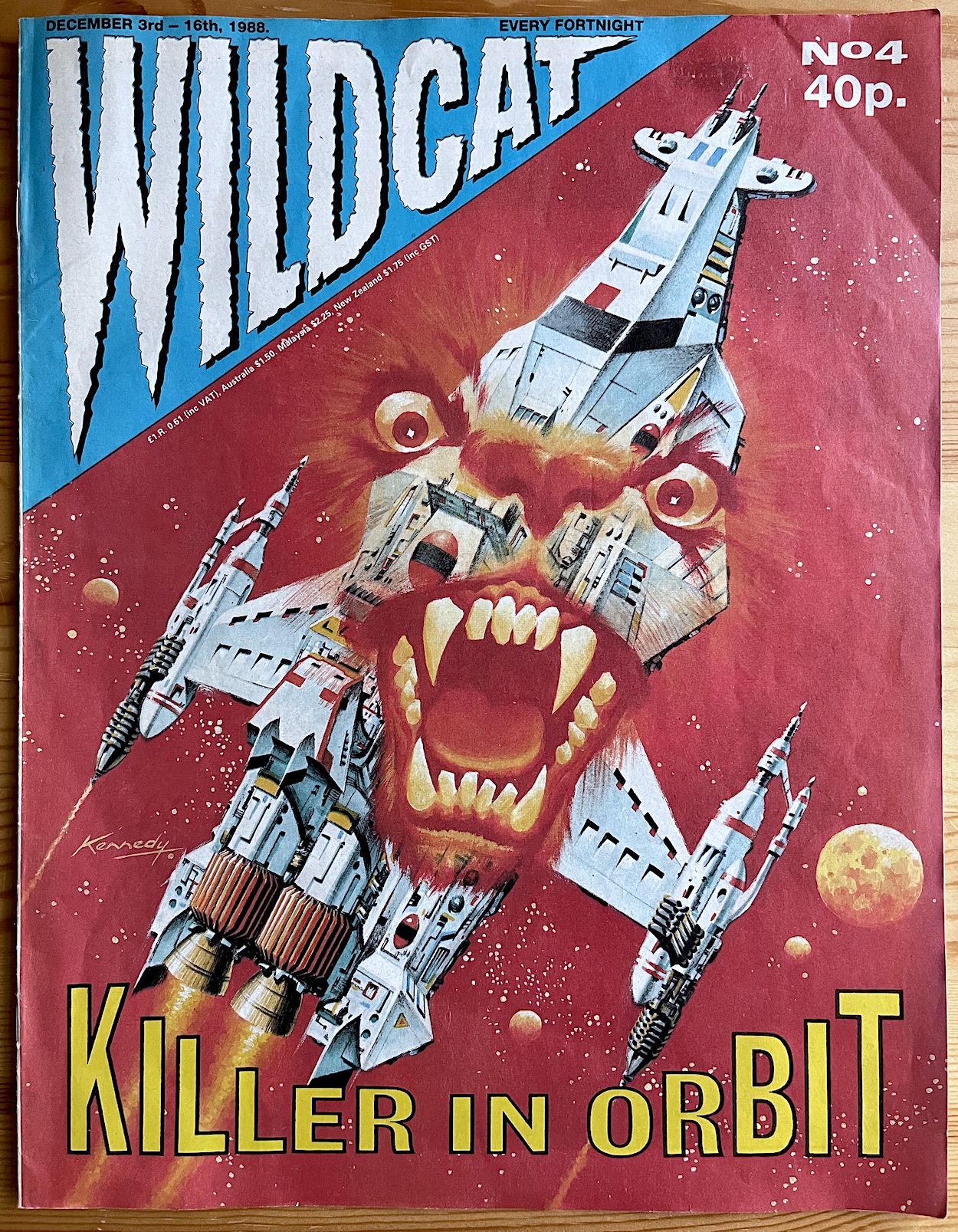
I love this Ian Kennedy cover based on the Wildcat Complete tale inside. We’ve had deaths in pretty much every part of the anthology series so far, but this shows us there’s a ferocious animal-like killer on board, running rampant amongst the last several hundred humans in existence. The claustrophobic horror of being in that situation is perfectly captured here.

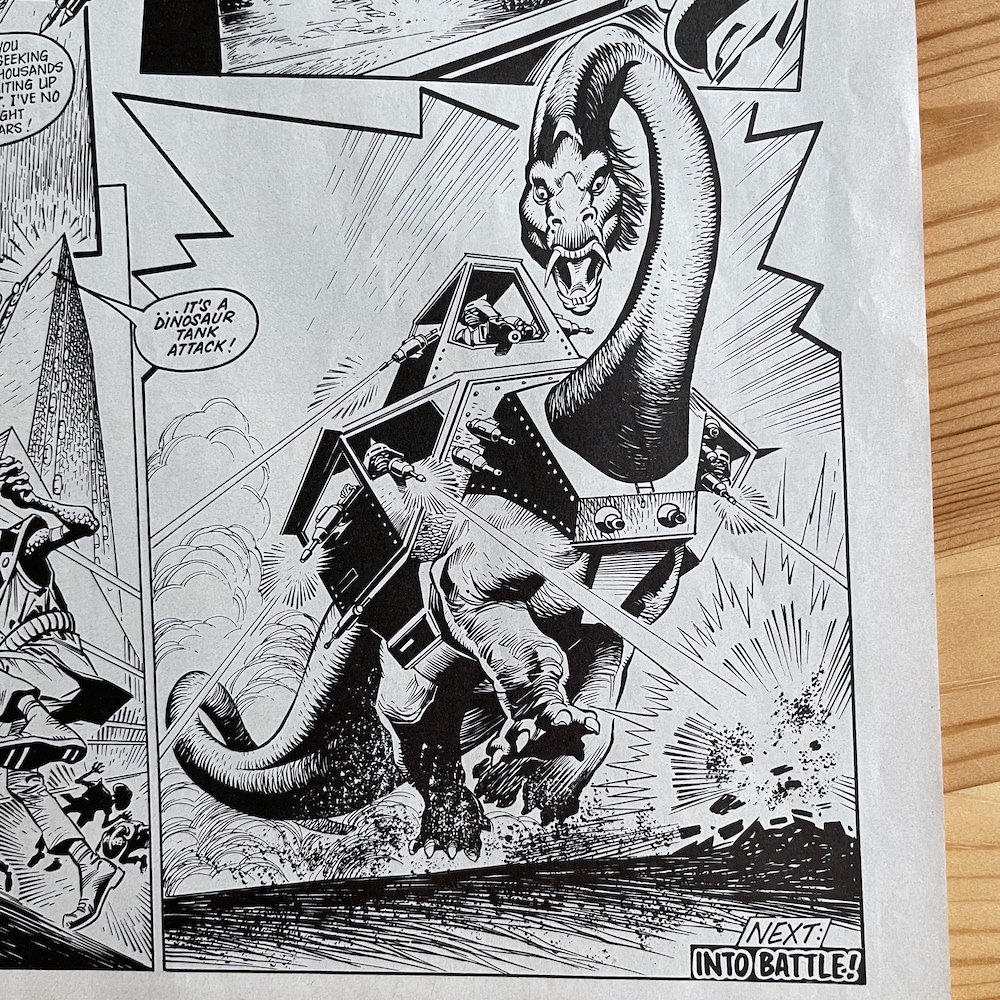
This issue we’ve got man vs dinosaur, alien vs murderous plants, woman vs robot men, man vs crazed newt and spacecraft vs Mr Hyde. So a busy issue of editor Barrie Tomlinson‘s creation then. We start off as always with Turbo Jones and the first page is no less thrilling than that cover. Turbo has decided he’s going to tame the untameable Terrosauron and over the course of the first couple of pages the huge beast underestimates the tiny opponent time and again. Using his small weapons in clever ways, Turbo manages to outsmart his opponent and soon he has his steed of choice.

The ‘Next Issue’ promo last time was just an image of The Great Ark, leader of the Arglons. It appears they were just one of a handful of animated corpses. A row of skeletal beings led by The Ark itself bark orders at their minions, killing one of their top military leaders for their apparent failure. Some close up angles of this council (like the one used for the promo a fortnight ago) show what look like mechanics behind their jaws. Could it be they’re all dead? Is this all going to lead to a Wizard of Oz moment later in the series? That’s my guess at the moment although I’ve no recollection of the story beyond this point.

From here the story cleverly flips back and forth between Turbo training the Burroid army and the Arglons using giant mantis-like creatures to dig a tunnel right underneath their enemy, straight to their capital city. There are no captions to explain the back and forth between the two scenes, which to be honest I’d have expected in any comic of mine from back then. But writer Barrie and artist Vanyo credit the kids reading with the intelligence to not need their hands held.

The cliffhanger sees giant cracks appear in the roads of the city and it feels like it’s all building up to an epic climax. It isn’t though. Each character’s story is one ongoing saga rather than being split up into smaller individual tales. So if they’d spent a year on this planet each character would’ve had a 26-part epic, which was an original way to go about things! The tension is building however and by the end of these five pages it’s palpable.

The tree is an alien being that plucked him off the ground and is now holding him hostage

Our pinup jumps from the back cover to page seven and this issue it’s my favourite character, Loner and his new found friends the little fuzzballs. Reading the black and white strip I (for some reason) made the assumption these little balls of fur were a sandy colour but here David Pugh has decided that’s not the case. More from Loner in a bit.

On to Joe Alien now, who we last saw stuck up a tree. Well, it’s a lot more dramatic than that. The tree is an alien being that plucked him off the ground and is now holding him hostage. Joe’s dislodged brain pack is in the hands of his teammates so he’s completely incapable of helping himself. But what about that rather horrific cliffhanger? It’s washed away with a quick douse in a nearby pool of water which luckily (as stated by one of the team) seems pretty normal for once. That is, until some form of seaweed starts to crawl out of the water and wrap itself around their limbs. It seems danger really is lurking everywhere.

Easily able to break free, they’re still at a loss over how to rescue Joe, precariously held high up in the air. To me, it looks like this tree could be planning on using Joe to communicate but maybe that’s the wrong assumption on my part, because his team obviously don’t agree. Their solution? Blow it up, of course.

As you can see it makes a piercing scream as it comes crashing down, so the silent killers from previous issues aren’t quite so silent after all. With his brain pack clicked back into place, Joe has had enough and orders them all to quickly retreat back to their shuttle and return to the Wildcat. This is no place for them to plant their feet (boom) and put down roots (boom, boom) but on their way back they hear another cry, this time a cry for help from deep within a hole in the ground.

What they see down the pit is a two-headed alien covered in bright blue feathers. Speaking our language (able to translate other tongues quickly explained as an ability of his race), Joe and his team set about freeing him from the roots that appear to have trapped him. I’ll admit alarm bells went off for me the second I saw this and it slowly dawns on the team all is not as it seems.

A line of huge trees marches up to surround them, seemingly to make a final stand but suddenly stop. Forming a wide circle around the landing party they just stand there, unmoving. The final panel shows our team looking out at the killer jungle, knowing something is wrong but they can’t quite put their fingers on it, while we the readers see the alien is but a suit and it’s being quietly ripped open. Inside, a few plants are playing the part! This is great fun.

This must mean they’re able to communicate properly (beyond painful screams) as they were able to impersonate this fictional alien creature and, maybe more importantly, decipher our language. Does this mean I was right when I guessed it looked like the tree earlier was attempting to use Joe to communicate? Out of all the strips so far this feels the most alien (suitably enough given its name) so kudos to writer David Robinson, although it’s in no small part thanks to the highly original artwork of Ron Smith.

I don’t quite know what to make of the Kitten Magee strip this issue. First up though, it begins with Kitten receiving the life dust from her robotic pet Crud via something beneath her collar. Whether it’s a device, an injection or an opening in her skin isn’t clear in the shadowy forest and I’m guessing it’s been left deliberately ambiguous by writer James Tomlinson and artist José Ortiz at this point, so hopefully a future issue will clarify.

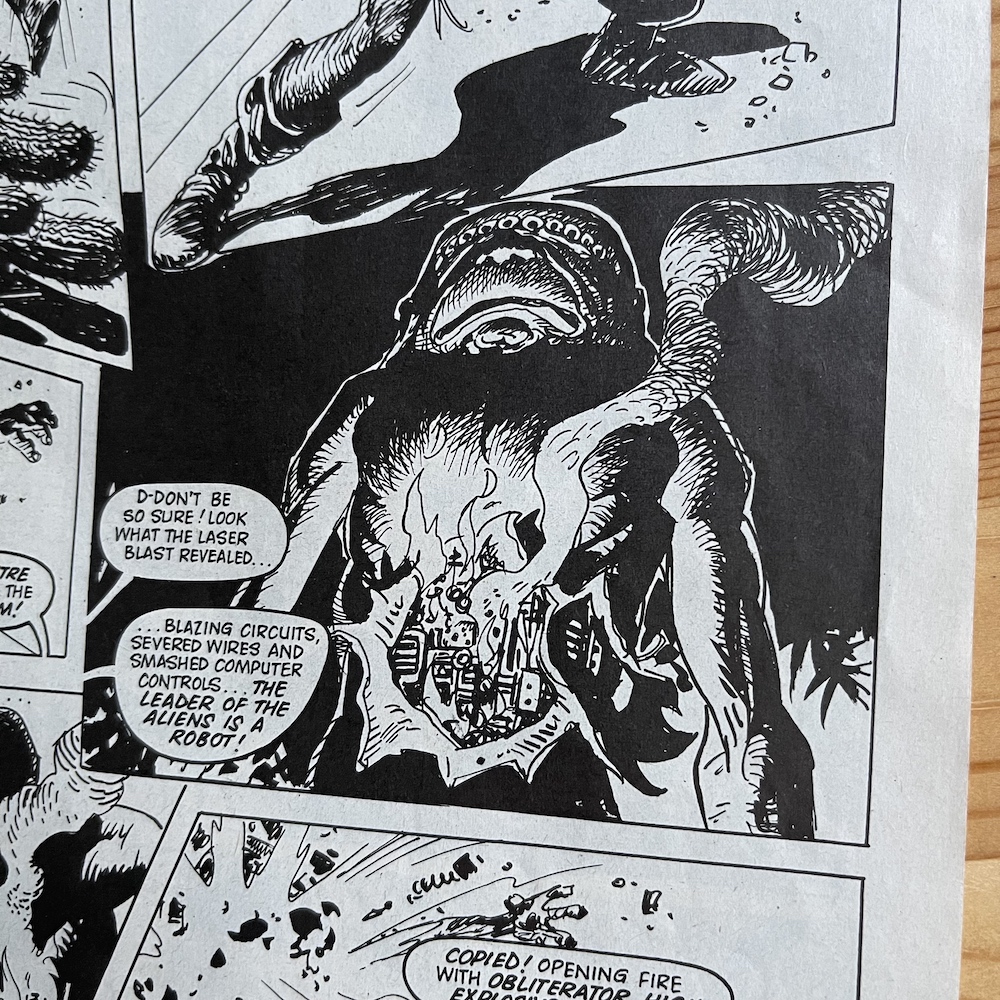
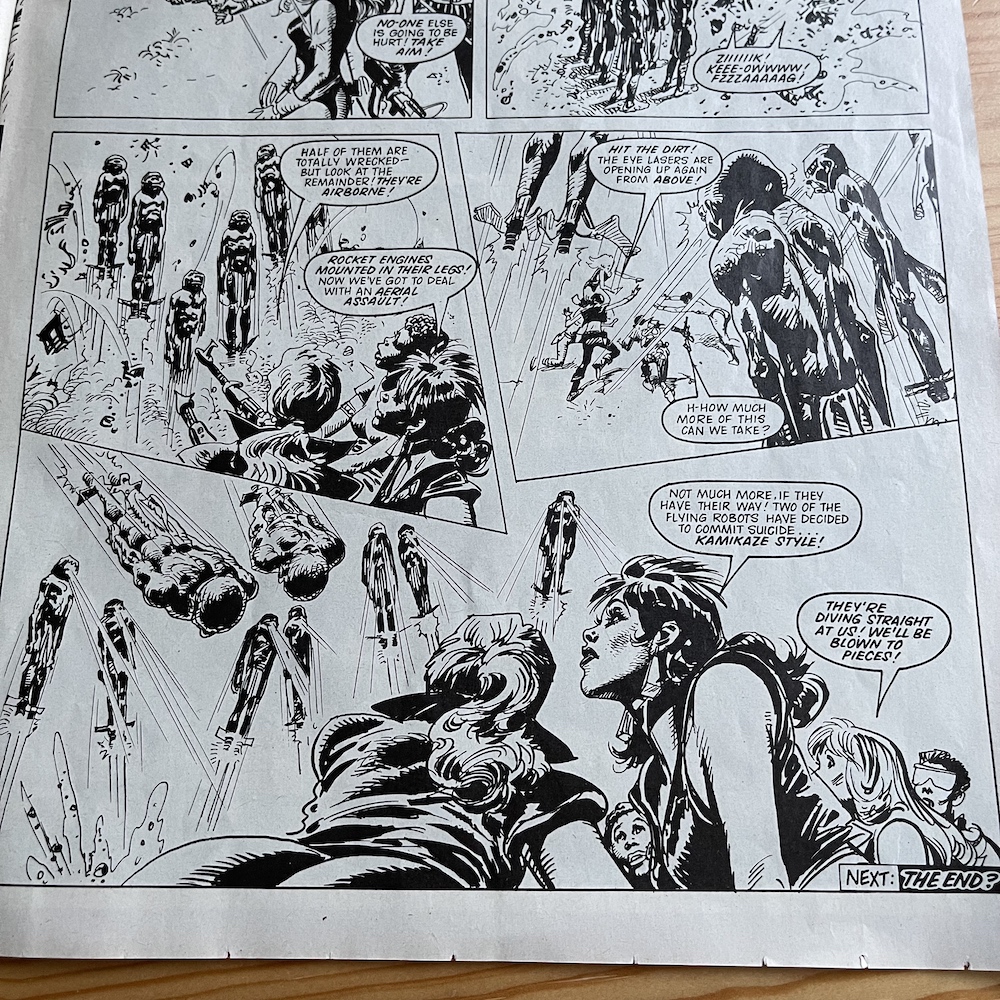
So the tribes from previous episodes to whom Kitten proved herself by fighting their leader are now attacking her team, and to begin with we think it’s some form of mind control by the fat men hovering above. But when Kitten returns to rescue her teammates one of the aliens is blasted open and it’s revealed they’re actually robots. This is where I don’t know how to feel about it. At this point I had to remind myself this was the 80s, because having fully organic beings revealed as being robots on the inside is a cliché I’ve grown very tired of over the years. But this was written a few decades ago so I have to remember that context. But why would the fat men (one of whom gets the name ‘Hobos‘ this issue) go to all the bother of creating them?

When the innards are revealed all of the other machines stop, as if awaiting instructions. At this point Hobos is spotted and Bonnie tries to take out his hovercraft device with her sniper rifle. Fleeing, he flicks a switch and the tribesmen take to the air, their laser eyes firing upon the women while others take suicidal bombing runs. Where on Earth (well, not-Earth) did all of this come from?

At the time I can imagine I would’ve been thrilled with this sudden change to the situation, but now I found it a bit clunky. But that’s more the fault of the passing of time rather than the comic itself. So who is Hobos? Did his race create these robots? Or maybe they are sentient machines that have been hacked, which would be more original. Perhaps there’ll be some answers next time, although I’ve a feeling I’ll be left waiting for a while longer.


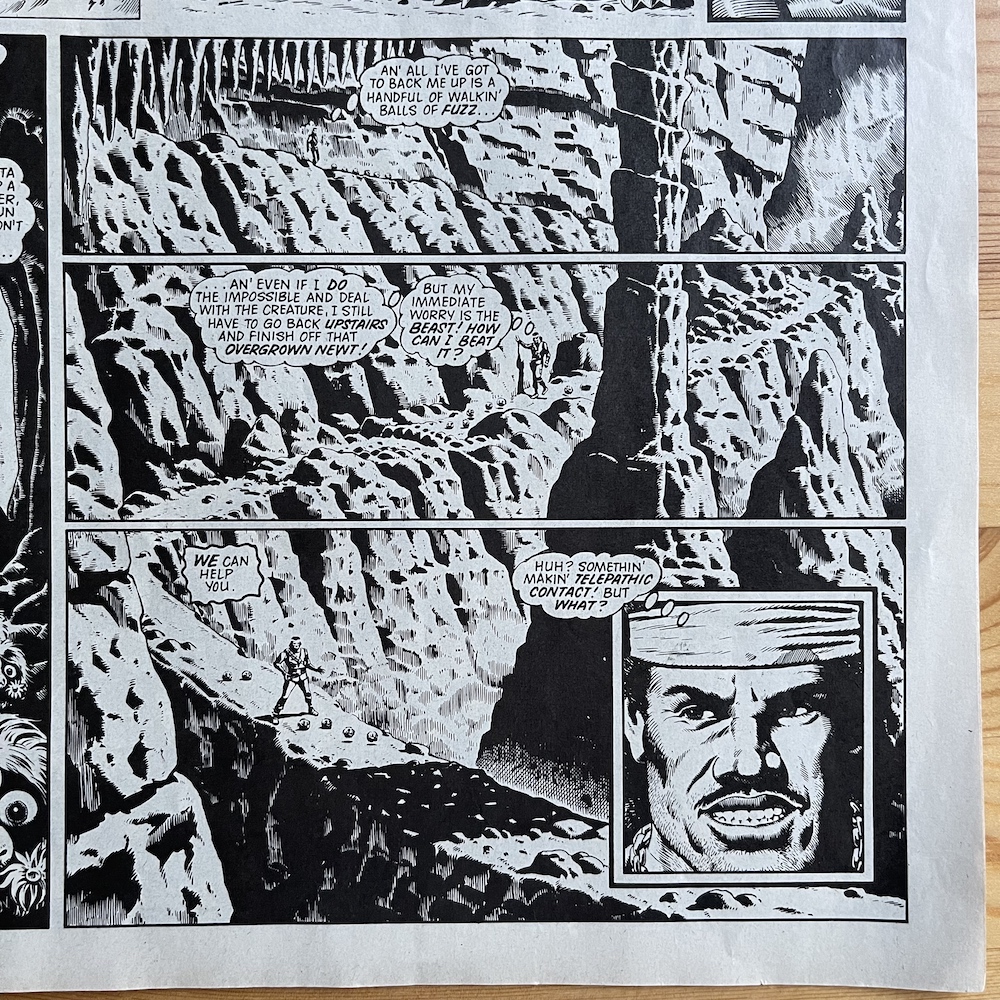
“I still have to go back upstairs and finish off that overgrown newt!”

Loner

There are a couple of interesting nuggets of story information in the Wildcat Time-Warp Data Link pages in response to readers’ letters. One asks how many people are on board since the terms “hundreds” and “over a thousand” have both been used by now and in reply we’re told that it was meant to be around 500 (in the preview it was over 700) but it became clear after leaving Earth an enormous amount of stowaways got on board. Was the number increased when they realised they’d want to kill off plenty of people in the stories (and had been doing so a lot already)? Interestingly, we’re told that, coupled with the animal and plant life, these stowaways have given Wildcat a total weight load far in excess of its original specifications. Will this be a plot point we’ll return to?

Begging for the hallucinations inside his mind to stop, Barrie Tomlinson‘s Loner agrees to the terms of the villainous lizard to track down the beast that poses a threat to him. Making his way into the depths of the caverns with the furry little ball creatures in tow, Loner wonders inwardly how he’s going to be successful when all he has is his six-shooter. A voice echoes in his mind, “We can help you” and he’s surprised to find that outside of the overgrown newt’s telepathic range these little critters can talk to him, and are intelligent.

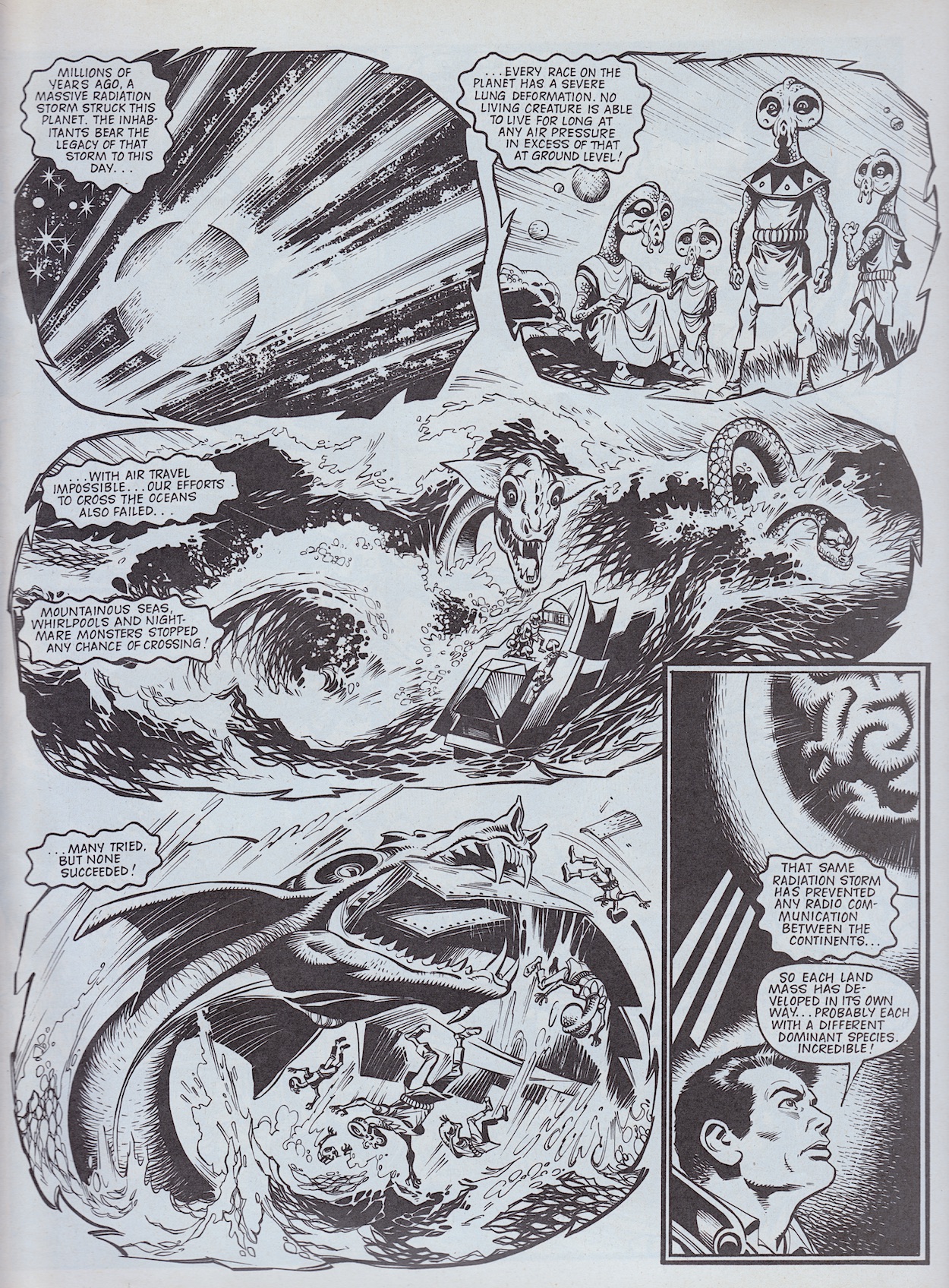
Their backstory is that they were the pets of the people who once lived on the continent, content and happy with their existence and loved by their owners. But the people soon became obsessed with creating bigger and more destructive weaponry, their wars became deadlier and soon they had wiped themselves off the face of the planet, their pets hiding out in this underground world. What’s more, underneath the fur their flesh is poisonous, sending anybody stupid enough to eat them completely crazy, hence our giant lizard friend’s state of mind. (This is a much better development than humanoid robots.)

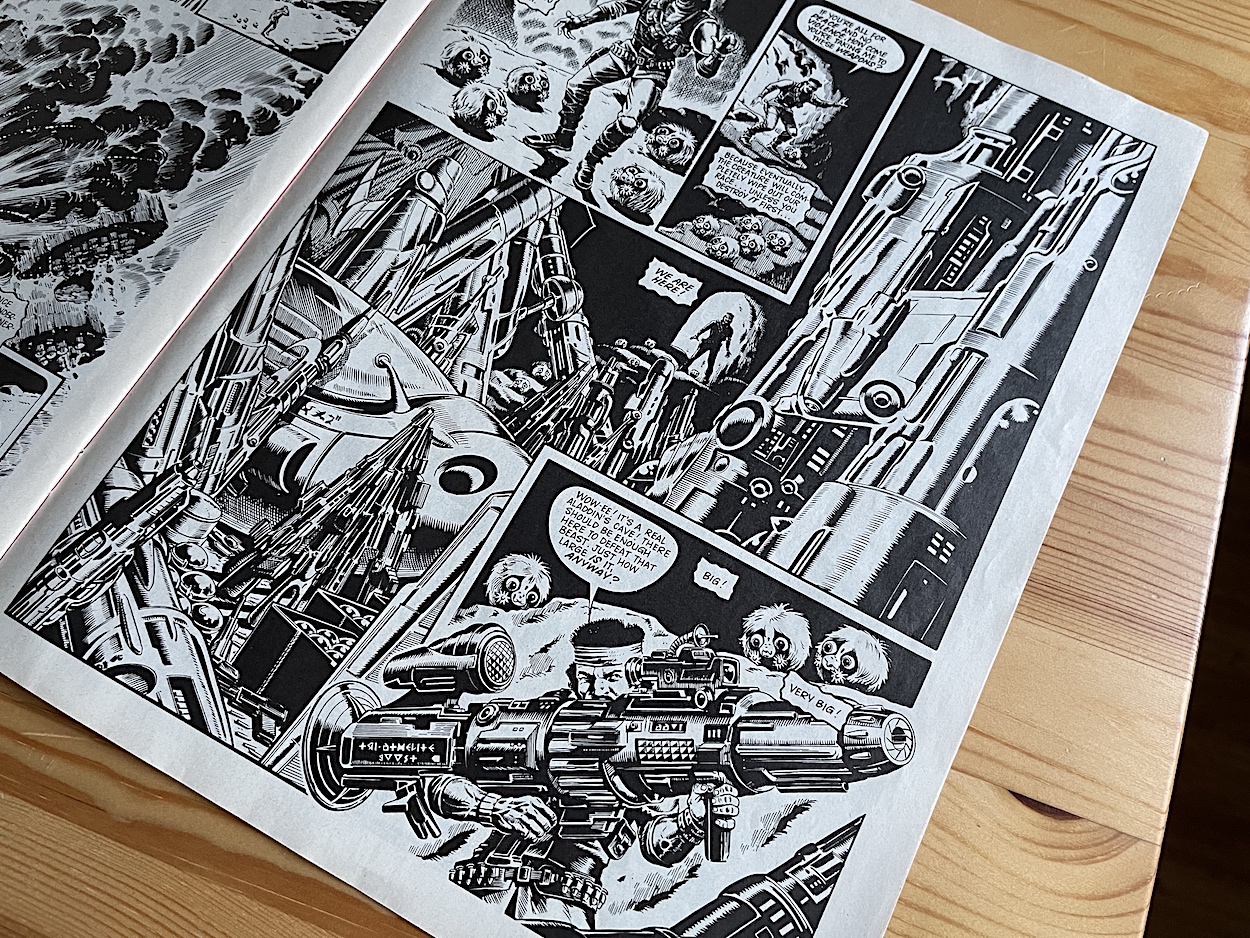
They lead Loner to a cave full of the weaponry they gathered and hid away from visitors after the last war. More than enough to see off the beast and free them all from the lizard toom but there’s a catch. The people of this continent had built weapons controlled by mental power alone, so in order to stand a chance Loner will have to undergo a transformation or the weapons will destroy his mind. As you can read above he isn’t keen but the furballs don’t give him any choice in the matter.

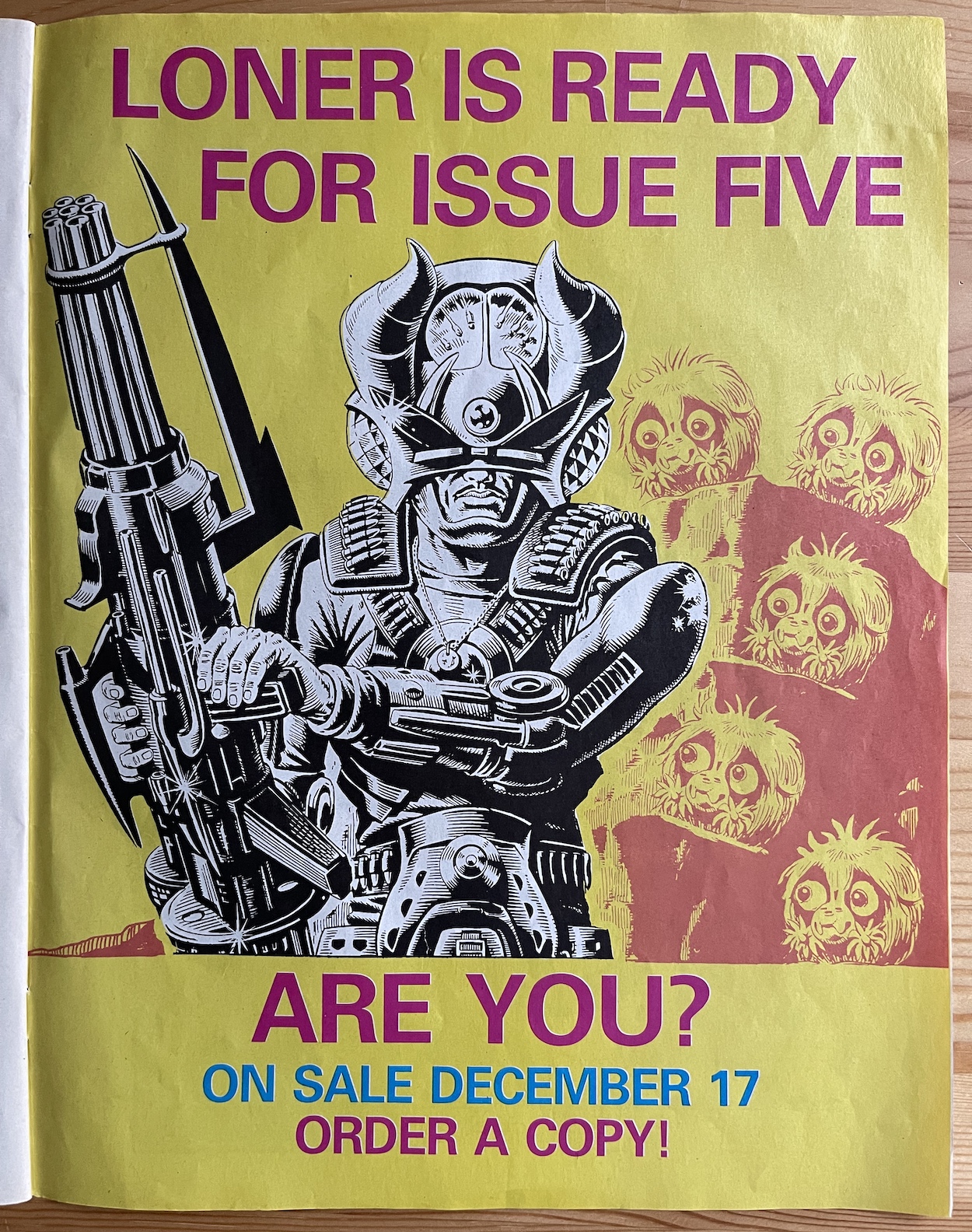
We’re left with this image of him screaming in agony as a warning rings out, “At the end, you will consider yourself quite monstrous!” I couldn’t remember anything about this but one look at the Next Issue promo at the back of this issue (further below) brought it all back. What I’ve particularly liked is seeing a slight softening of Loner as he begins to bond with the little creatures.

Boredom and the vast emptiness that surrounds them can, and will, have an effect on the human psyche

Every five-page chapter of this strip takes a big step forward in developing the story and when something this fun to read is all wrapped up in superlative David Pugh artwork it’s no wonder this was my favourite part of the comic. It’s hard to believe we’re only 20 pages in! I think of that thick trade paperback graphic novel collecting the entire Loner saga together and I can only imagine what will happen in all of those pages. I’ll be finding out the slow way.

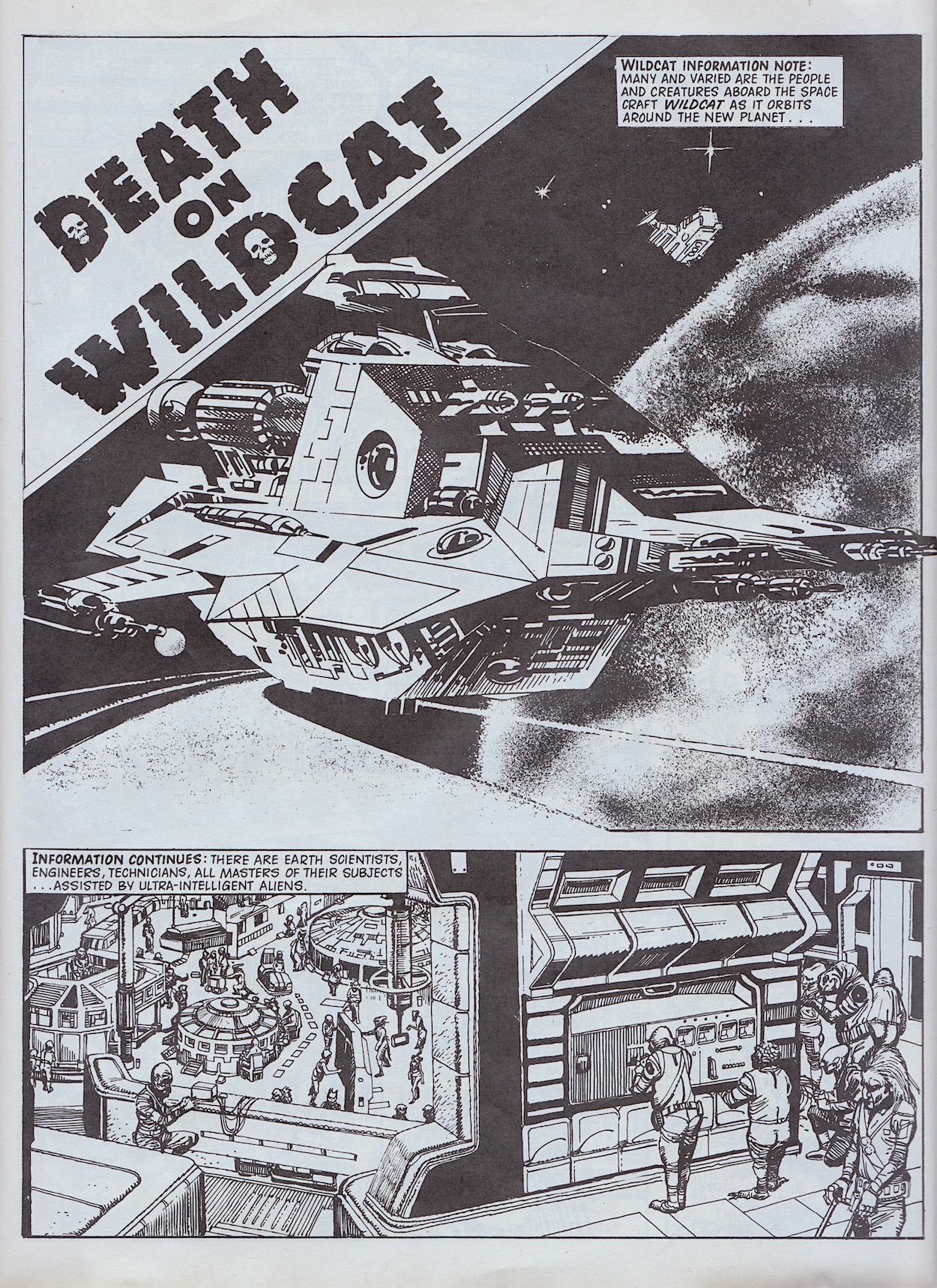
I mentioned a fortnight ago how 11 people had already died in the pages of the comic and, although we now know there are more on board than originally thought, the Wildcat Complete on which the cover is based is called Death on Wildcat so I’m assuming the trend is going to continue. But first things first, has that picture of the Wildcat craft been pasted on top of the scene? It certainly looks that way. It could be because it looks like a special technique was used to draw the planet and its rings. It’s a lovely effect and then the spacecraft could have been drawn separately and placed on top. Works for me!

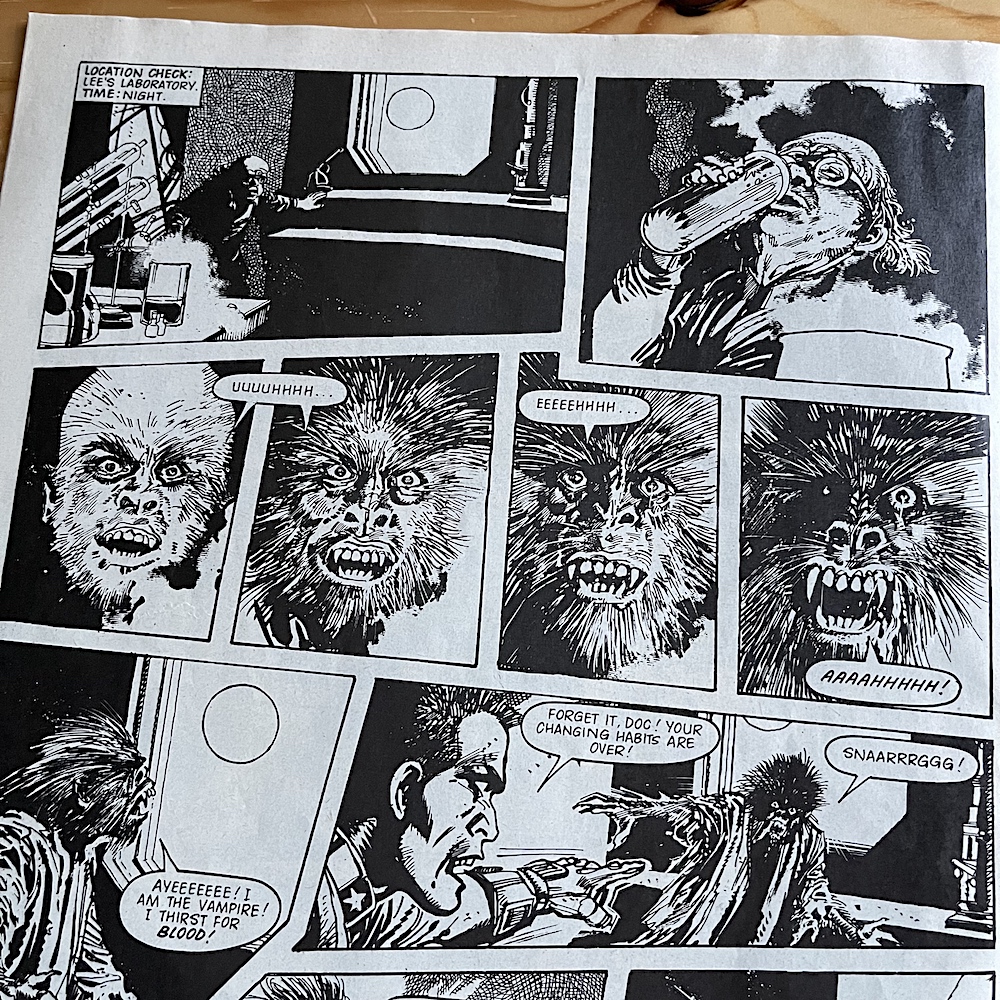
The artist hasn’t been confirmed but I believe it to be Enrique Alcatena‘s work, returning for the first time since the premiere issue’s ghosty story, this time with a Dr Jekyll and Mr Vampire Werewolf tale. The Duty Commander, John Anderson is getting a bit cocky with the fact no crime has been reported on board for weeks. (Obviously some time has passed since the last issue.) Now convinced Wildcat is a safe ship with a complete lack of lawlessness, his statement is predictably followed by an alarm.

The Chief of Security barely has a moment to explain how boredom and the vast emptiness that surrounds them can, and will, have an effect on the human psyche before they’re alerted to a murder on board. It’s a simple tale with obvious clues for the chief to follow and soon enough he’s tracked it down to Dr Timothy Lee who had been conducting experiments on animals back on Earth with the hope of creating an army of controllable killers. With Earth evacuated and all animals on board accounted for he had continued his experiments on himself.

The most interesting bits for me are the emphasis on just how fragile the peace is on the ship and the fact there are aliens already on board. They work alongside us, are part of the crew and are helping us navigate the galaxy in search of a new home. With the comic set in 2250 it’s not beyond the realm of believability that we’d have made contact with some races, although this is the first we’ve seen anything of them, when they’re the target of a crazed, bigoted killer.

Wildcat death toll: 14

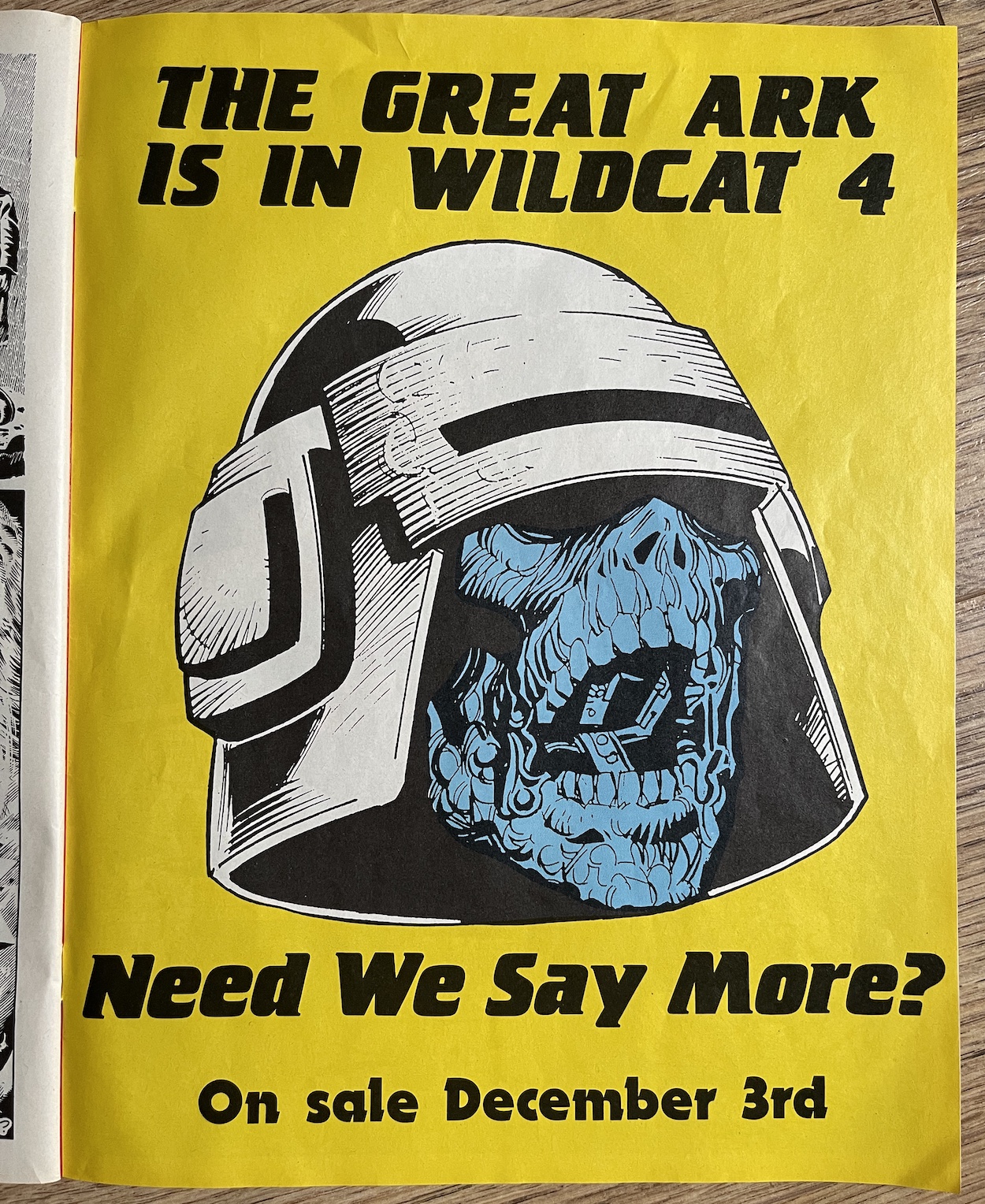
That’s us for the first of three issues this festive season. The next is the Christmas one itself with a strange cover I clearly remember picking up from the shop. When you see it you’ll understand why it’s so memorable. How about a Christmas pudding wrapped around a spaceship? Think I’m joking? You’ll see.

Just to finish off this issue is the advertisement on the back page. Sharing these contemporary adverts is part of the fun of this site. This is the first time Wildcat has included one in its pages and it’s for a favourite childhood cereal (which I’ll admit is still bought from time to time today).

The special Christmas edition of Wildcat will be reviewed right here on Friday 17th December 2021.

iSSUE THREE < > iSSUE FiVE

WiLDCAT MENU

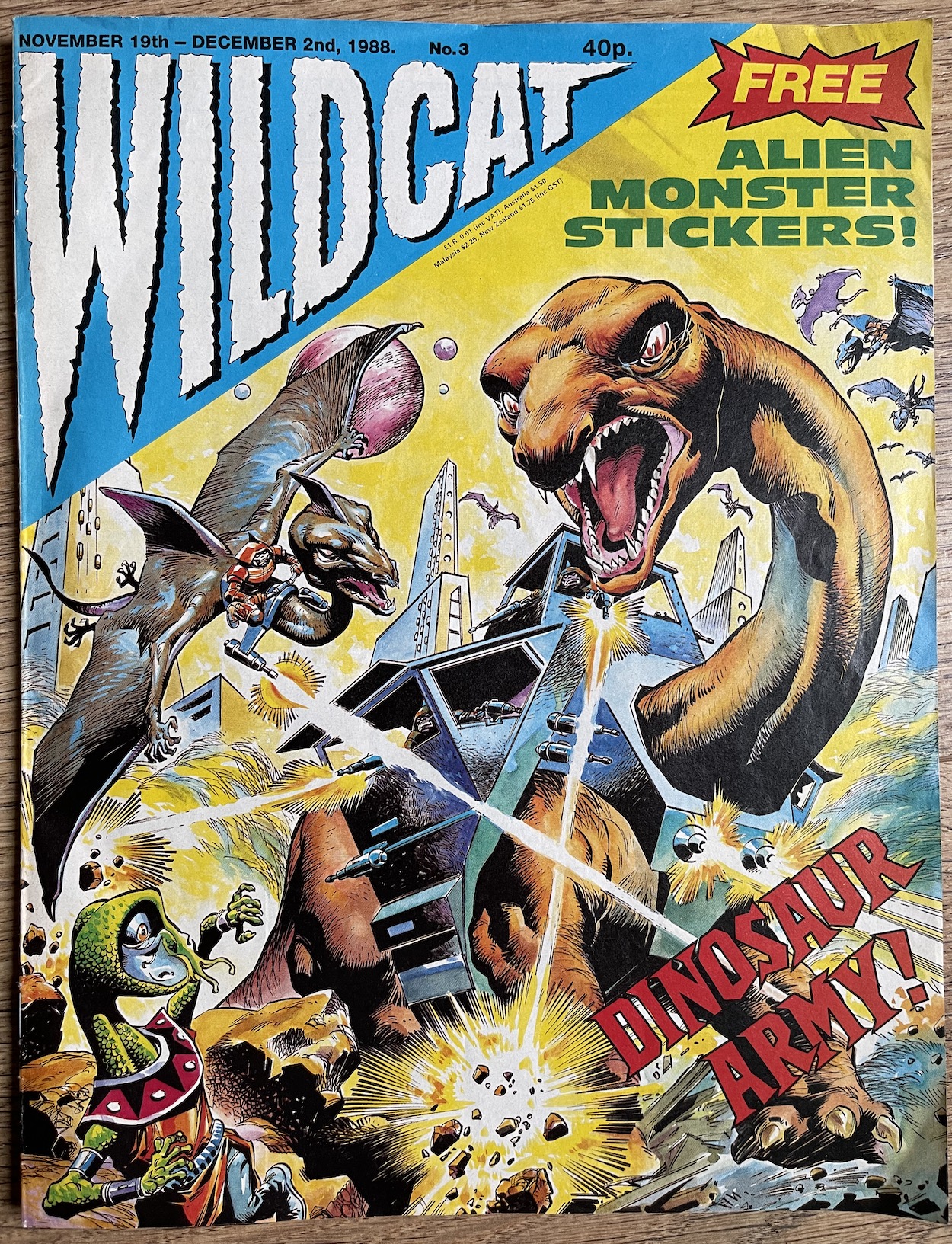
WiLDCAT #3: MiND GAMES

Who else remembers the short-lived toy line and cartoon Dino-Riders? You may think it wasn’t a coincidence that they launched the same year as Wildcat, but since they never came to the UK until the following year I’m going to go with coincidence. The cover certainly ticked all the boxes for me at that age and inside the action picked up a gear in many of the strips, the death toll continued to climb and there’s some art in here so good it’s stayed in the recesses of my memory all these decades since.

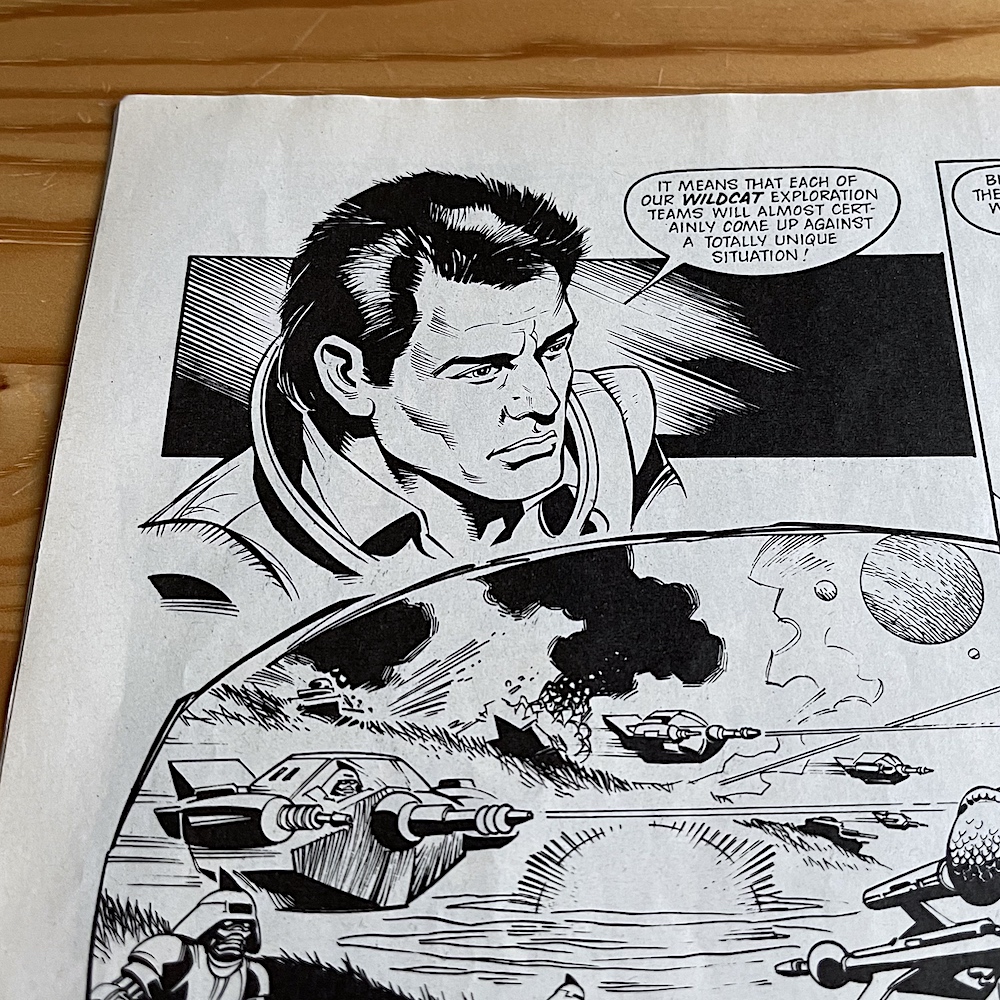
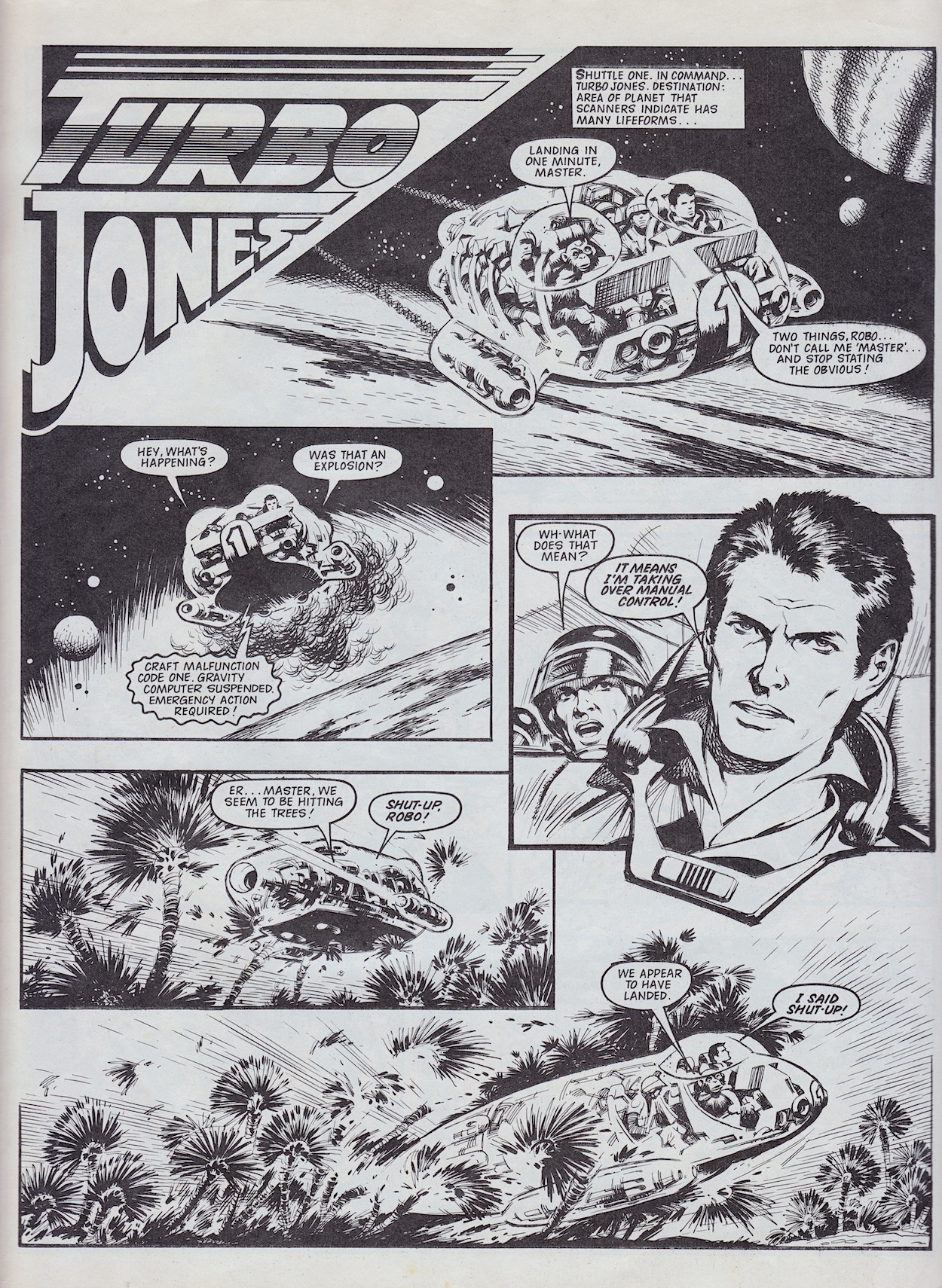
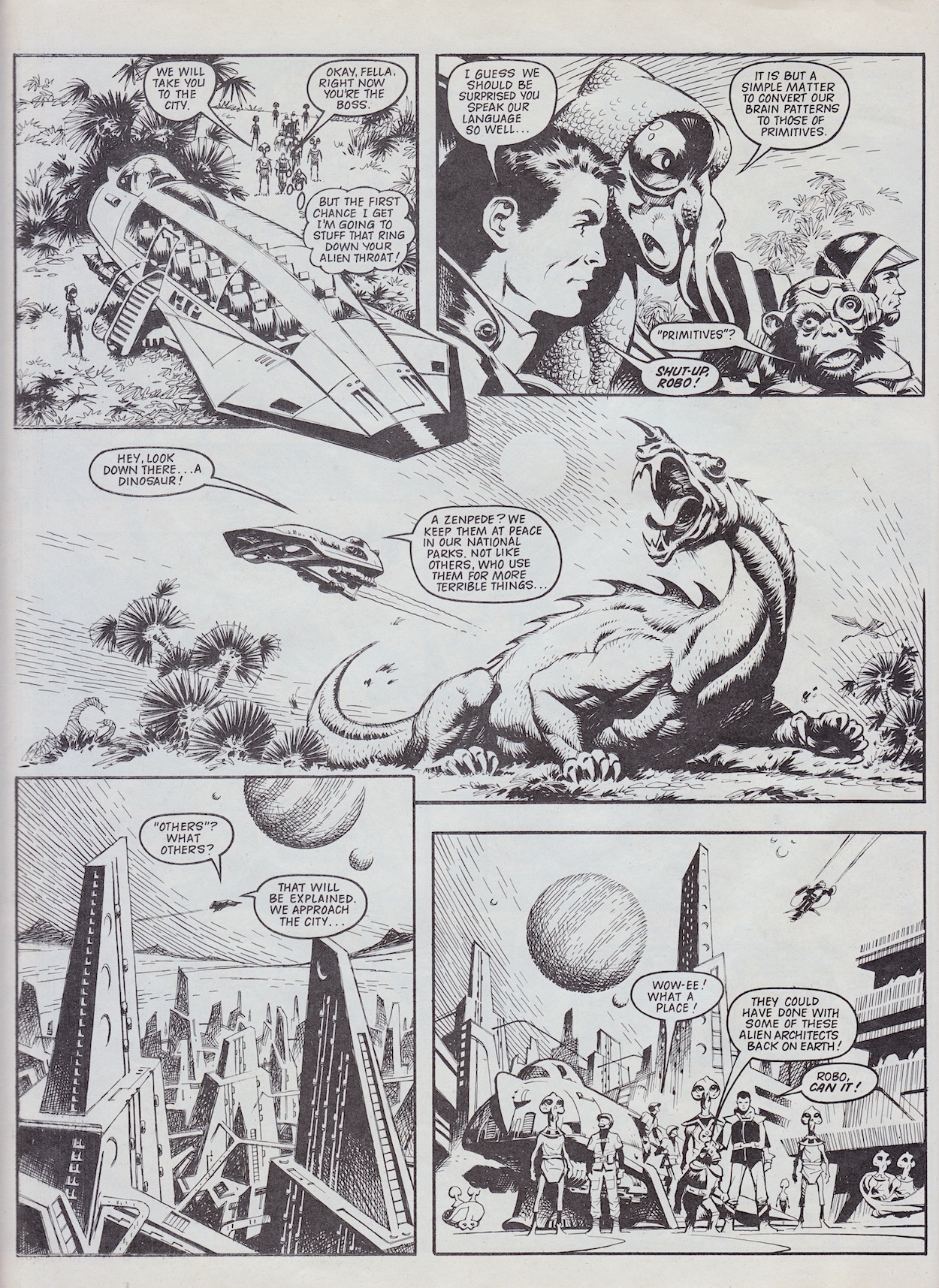
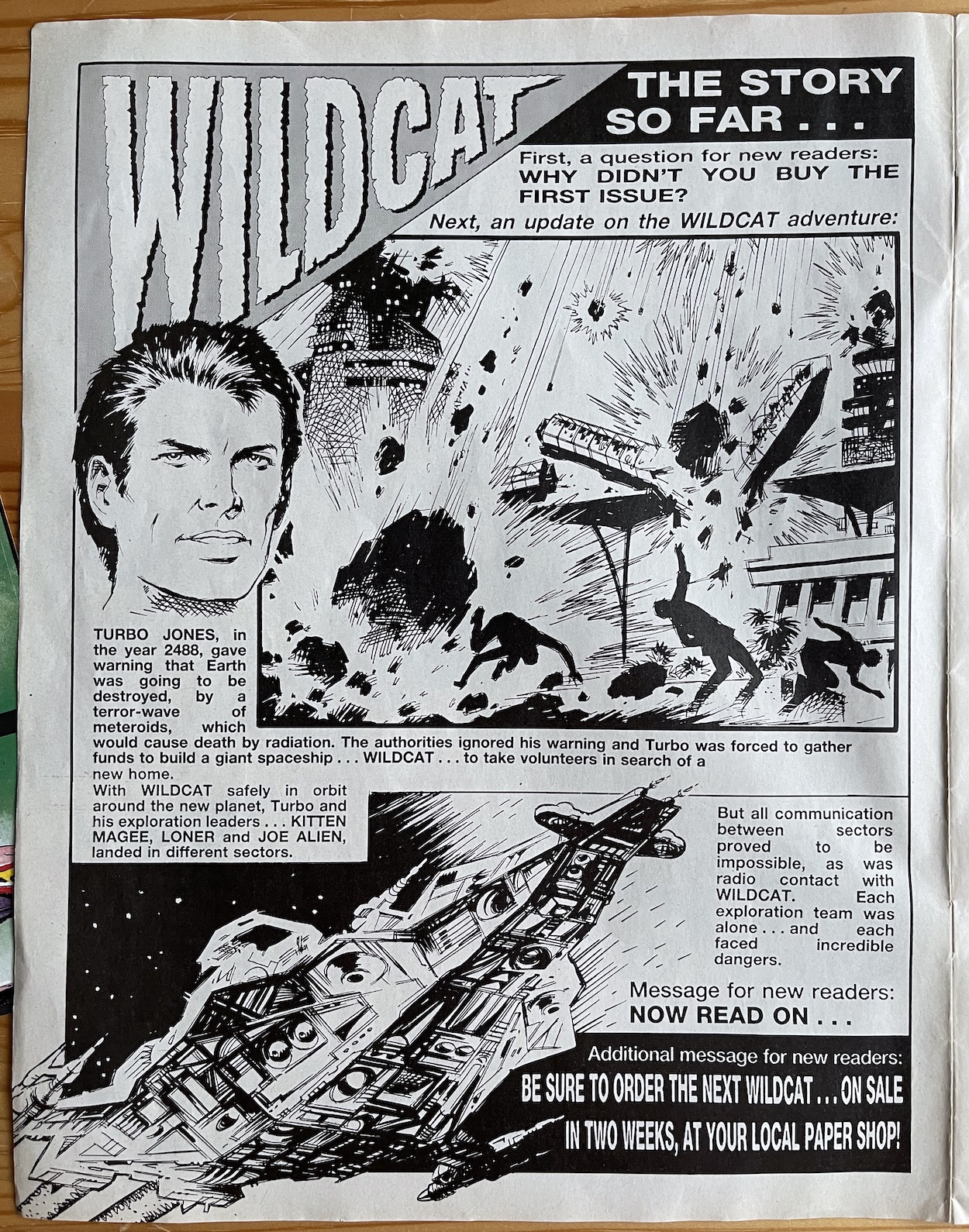
No recap page this time, instead we’re straight into the Turbo Jones strip, drawn by cover artist Vanyo. The Brain rather callously believes his people, the Burroids, are all cowards as he fills in Turbo on their situation. I’d say they’re more peace lovers than cowards. There’s a big disconnect between them and their leader, never mind the fact their leader is a giant brain! Why is that? Is there more to this relationship? I seem to recall there’s more to their enemy the Arglons too, that nothing is as simple as good versus evil here. In fact, I think that goes for all the serials in Wildcat.

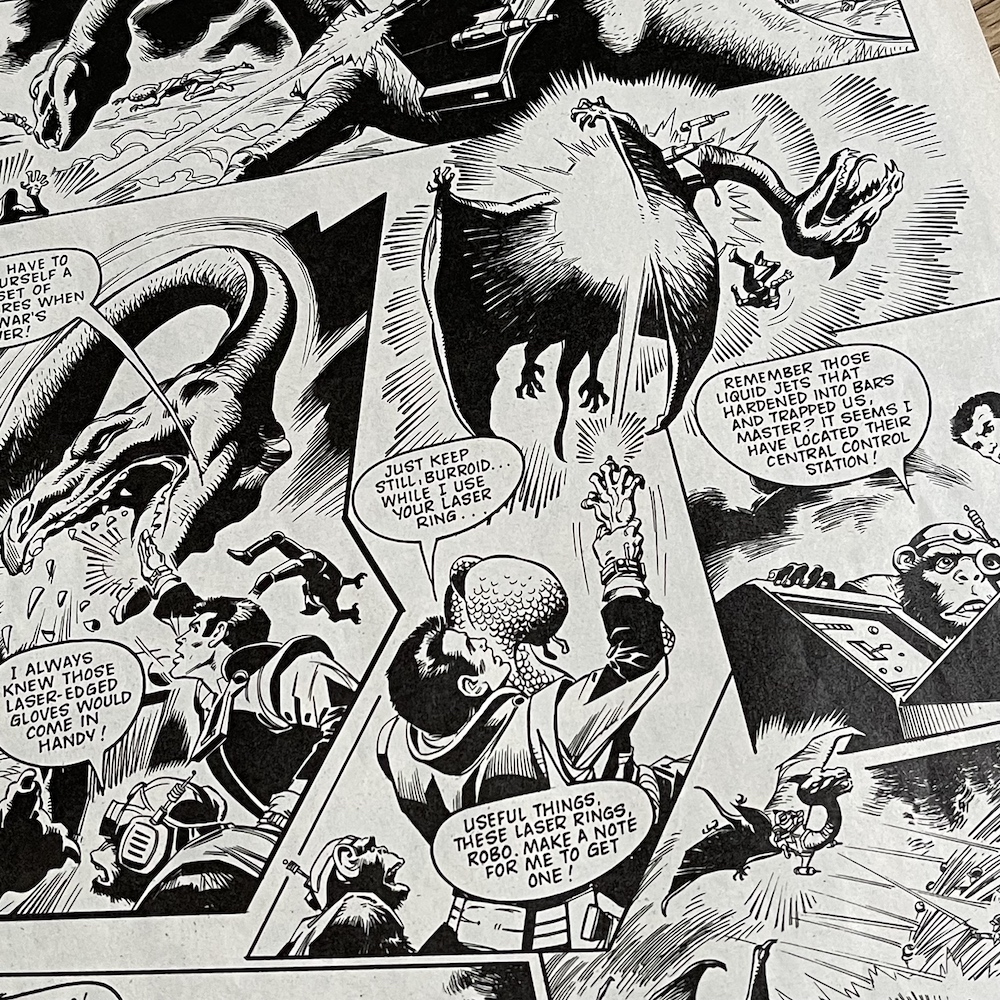
Turbo really becomes the action hero he’s promised to be since the preview issue, with everything from laser-edged gloves to laser binoculars at his disposal. His companion Robo is also quite the strategist when it counts and not the coward he makes himself out to be. He improvises and uses the alien tech that initially imprisoned them against his attackers. They make quite the team and their camaraderie and trust in each other is very naturally written, surprisingly. I’m glad to see their bickering in previous issues is just part of their relationship, a part of their banter.

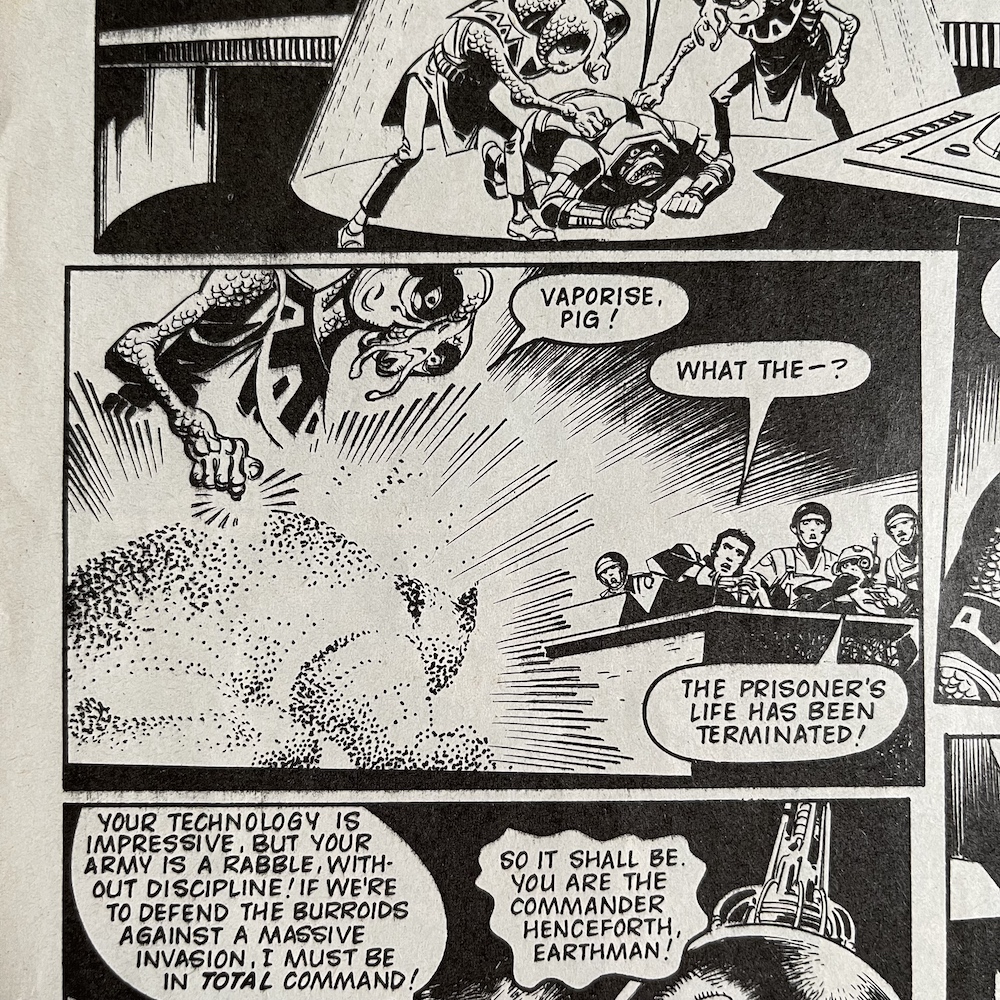
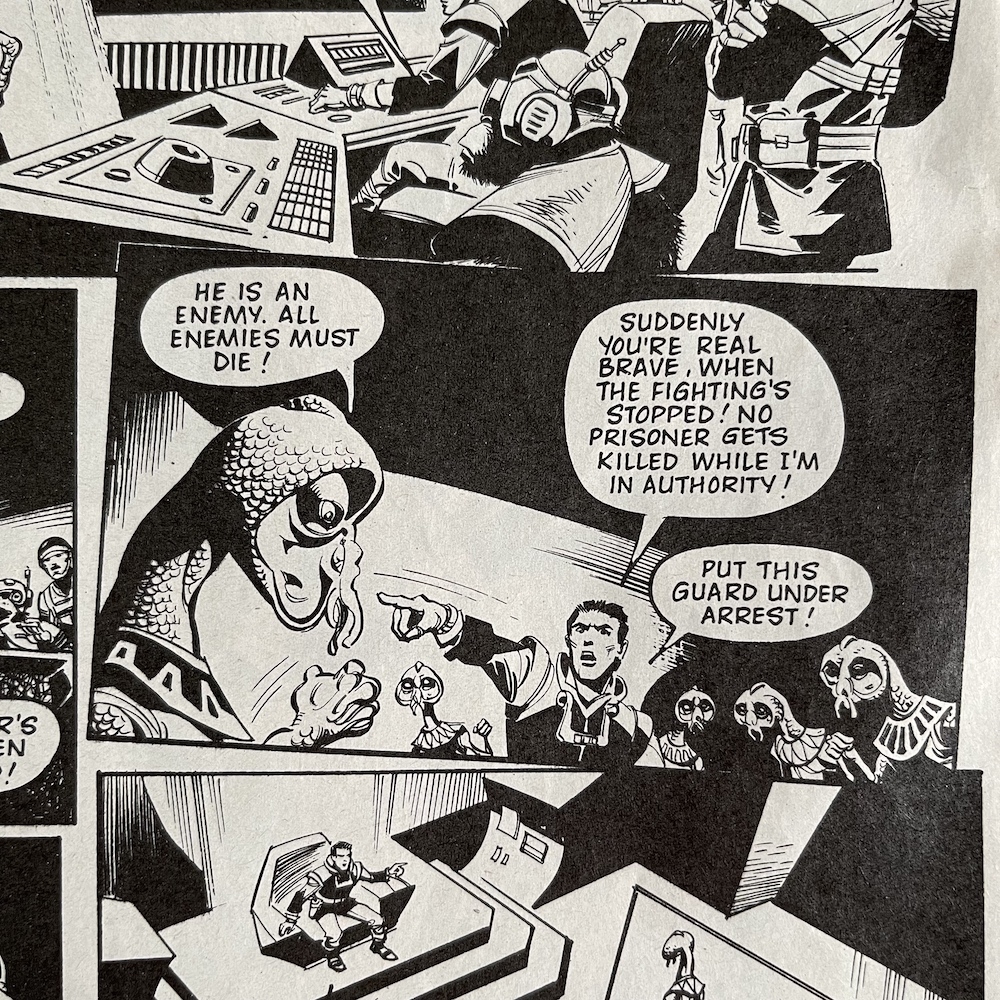
One of the Arglons is captured, but when he doesn’t give up any information during questioning a Burroid casually vaporises him, explaining it’s just what happens to enemies. Wait, aren’t they inherently peace loving? Is this The Brian’s influence? Either way, Turbo instantly has him arrested and begins to take command of their armies as requested by the mysterious leader. Choosing two seconds-in-command they set out to tame local dinosaurs to match those of their enemy.

I do like the way the character is developing beyond the single-minded Dredd-type he was to begin with, and this is only the third issue. The story is genuinely interesting, it feels like there’s a lot more than meets the eye with everything in this strip and that I shouldn’t assume anything about anyone. Brilliant stuff. When I think back to Wildcat I remembered the other strips more, so I’m pleasantly surprised at how great Turbo’s has been this issue.

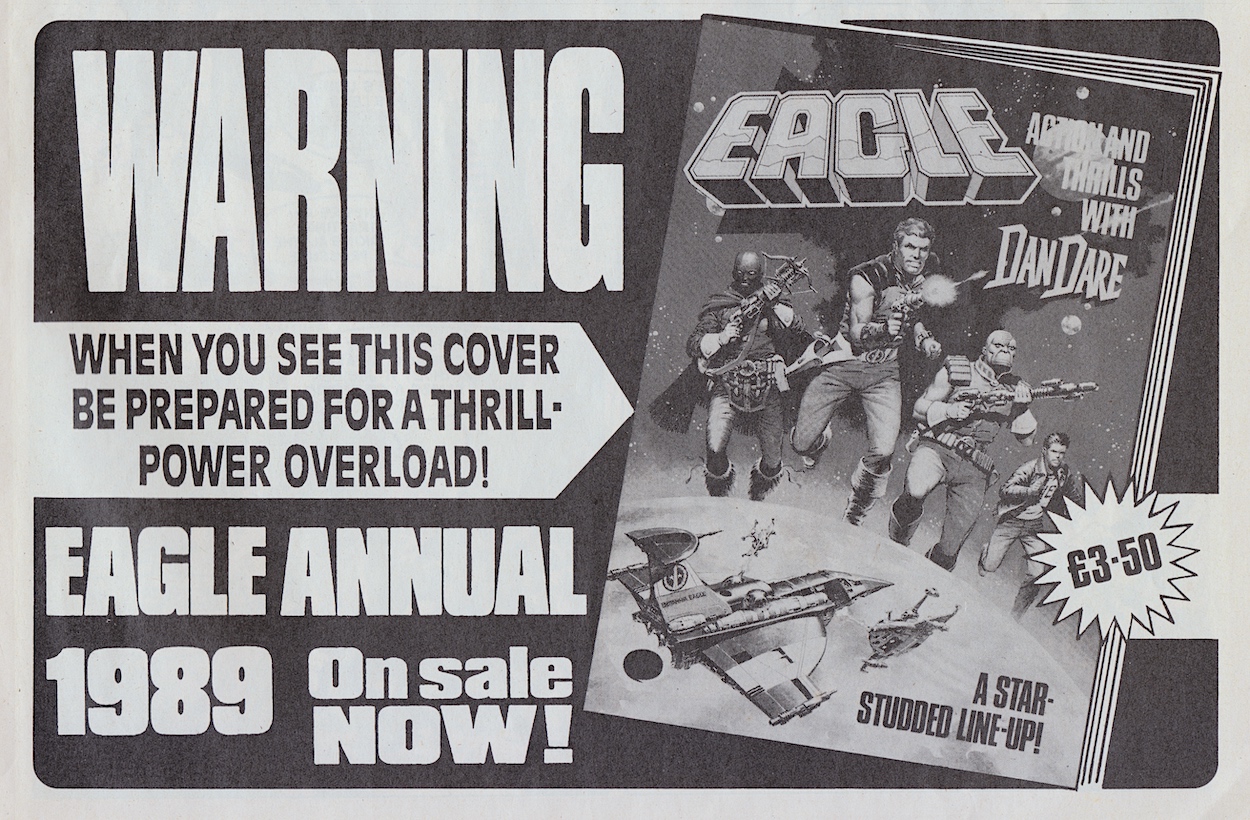
A quick commercial break before we move on and I wonder what 2000AD editor Tharg the Mighty would make of the tagline used by one of Wildcat creator/editor Barrie Tomlinson‘s other comics in the advert for its annual? Given how they were both published by Fleetway I’m guessing Tharg didn’t say very much.

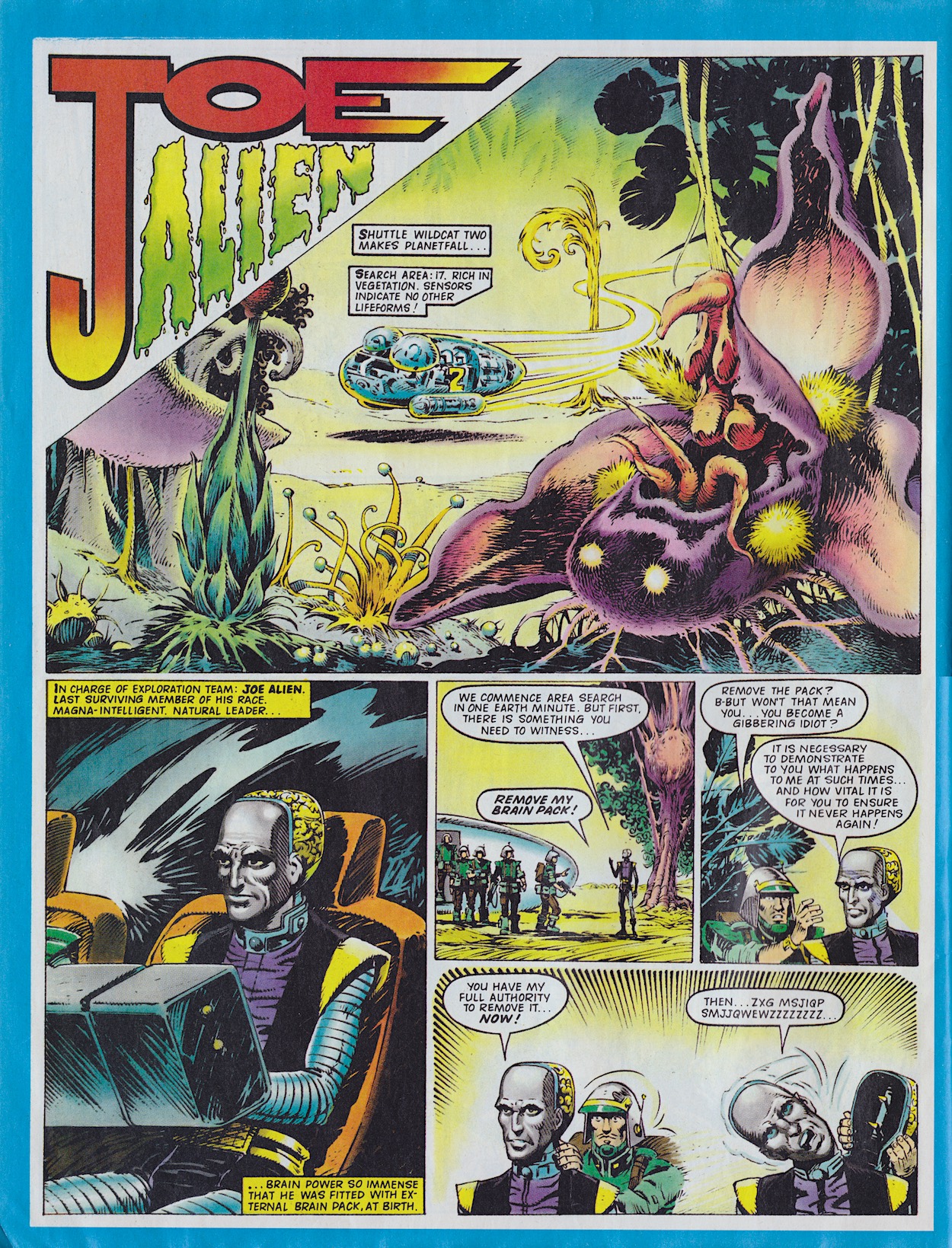
Our only colour strip, Joe Alien now finds himself in the very capable hands of a new artist, namely Ron Smith who drew the pin up in the previous issue. Taking over from Massimo Belardinelli is no small feat and Ron’s style is completely different. At first I approached this with trepidation. I had loved Massimo’s work in the first two issues, particularly his furry man-eating plants. But I needn’t have had any concern.

Ron brings a fresh new style to David Robinson‘s scripts, reminding me very much of early Geoff Senior from Marvel UK‘s Transformers. The clean, sharp visuals are a perfect match for this most alien of alien characters and the nightmarish jungle he and his team are trapped in. In fact I’d even go so far as to say the plants look even more menacing and the action more dramatic. This isn’t to take away from Massimo’s work of course, but after reading this chapter I think Ron is an even more suitable artist for this story.

The resolution to last issue’s literal cliffhanger sees Joe using his telescopic legs to cushion his fall, the plant which caused it falling down on top of him, knocking him to the ground where the impact on his head causes his external brain pack to disconnect. As explained in the first issue this turns him into a gibbering loony, to put it politely. His race were so obsessed with obtaining more knowledge they had to manufacture artificial brains for themselves, regardless of the risks. I love both these panels above, the exciting landing and the funny craziness.

Joe disappears into the jungle and his team are left to fend for themselves while trying to track him down. As well as having a new artist the writing seems to make a bit of a shift here too. No longer are his men simply unnamed team members used as fodder for the alien plant life. Here, some are finally given names and they’re written as individual characters, complimented by more distinctive looks. Instead of lining up to die they actually rescue each other and function and coordinate as a proper military team.

The chapter ends with Joe captured by a gigantic tree and his men come under attack by what they initially think are harmless little spiky orbs. But these soon open up to reveal little pollen balls which float on the air and begin attaching themselves to the men. Ron’s art is superb here. We can sense the tiny little barbs piercing the skin of these men and the sense of pain is palpable. The Joe Alien strip has certainly stepped up a gear.

Moving on to James Tomlinson‘s Kitten Magee and after she uses laser bracelets (our future selves really love their weaponised jewellery) to escape from death by boulder and defeating the tribe’s leader, she is welcomed with open arms by the rest. Having proven herself, she and her team take to eating and celebrating with the locals while the two fat men on their hovering platforms look on. But what they view as a “scientific experiment” between Kitten and her pet robot Crud is much more foreboding.

Kitten’s life dust was first mentioned right back in the preview issue, but this is the first we’ve seen the harrowing effects it’s meant to prevent. I was quite surprised at just how old she looks here (even Crud describes it as “severe ageing”) and artist José Ortiz brings a lovely atmosphere to this nighttime scene in the middle of the jungle. While she’s sneaked away to get her drug, the fat men flick a switch on some kind of mind control device and the tribe begins to attack the rest of her team. Overwhelmed, and with Kitten nowhere near, it doesn’t look well as the chapter ends.

But for me the plot point I’m most eagerly wanting to see picked up next time is the whole life dust situation. While the questions of what happens if Kitten doesn’t take it regularly is answered here, I find myself asking even more. Does this mean Kitten is actually a lot older than she appears? Or is it the result of an illness, or a previous encounter with an enemy? Does the dust only keep her looking younger or does it work on her physiology? What long-term effects does it have on her, and what effects has it already had? Colour me highly intrigued.

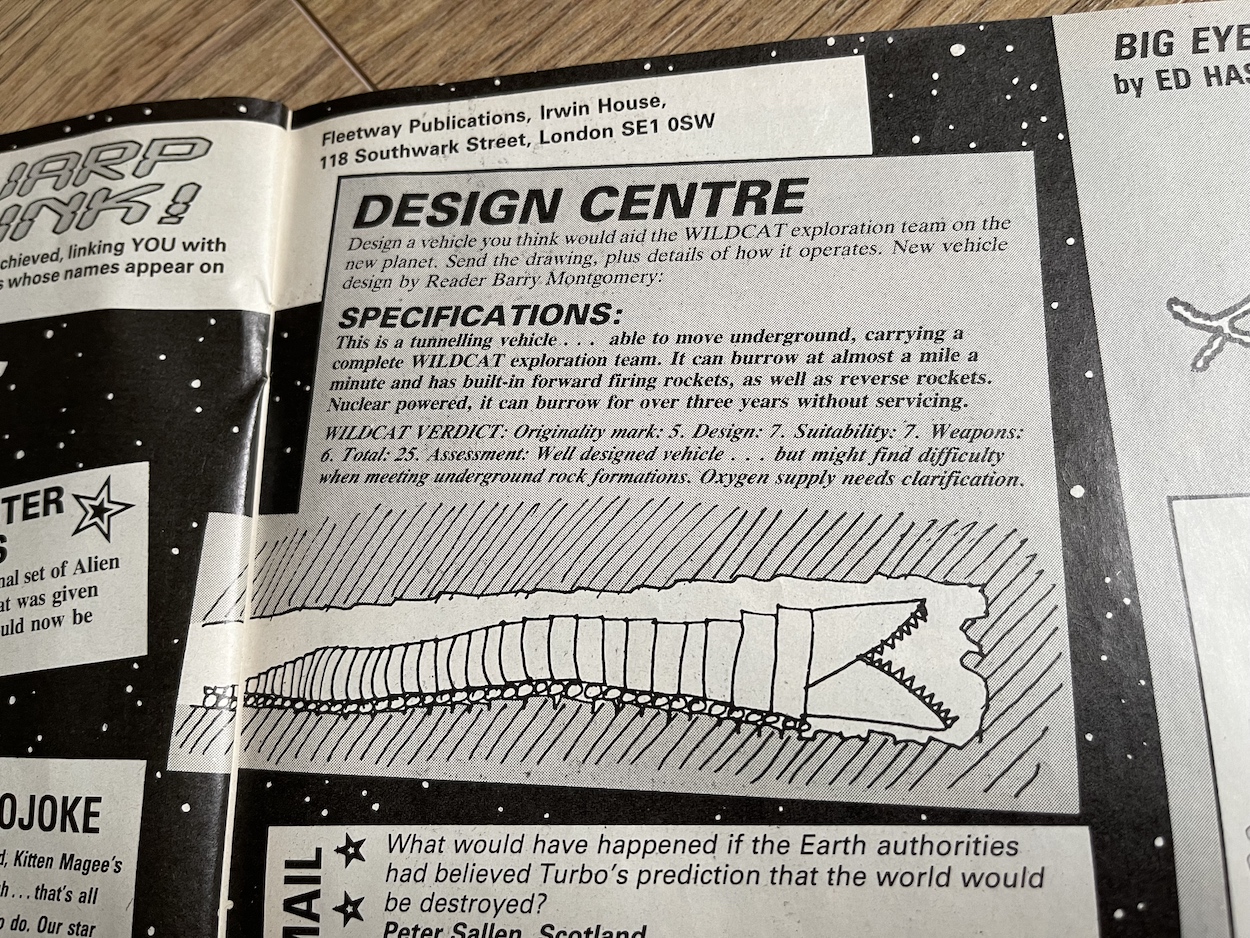
The letters pages have town names for the first time, so it looks like Barrie has started to receive contributions from readers. As with all of his titles it’s not a simple case of letters, instead there are drawings, ideas, jokes, questions and designs. One such design is for a digging machine to take the exploration teams from one area to another on the planet while avoiding the dangers on the surface. What I love about this is the honesty in the review of what the young reader has sent in. Marked down for originality and weapons, but with good scores for design and suitability, I like the way Barrie (I would assume) explains clarification is needed on oxygen supply.

It shows how his comics never talked down to their audiences. We never felt patronised by the answers, never treated as little kids. The same could be said of comics such as Transformers and The Real Ghostbusters which would often give sarcastic replies to honest queries. It wasn’t just a simple wish to see our letters or drawings in print, we wanted to see what our comics would say to us. In this case, maybe if Wildcat had lasted a long time we’d have seen more complex designs being sent in as the kids read the feedback from previous issues.

Next up is Barrie Tomlinson‘s Loner and given how good the previous three strips have been this issue I was really looking forward to seeing how he would step things up this issue. A quick look at the artwork below will answer that! Our former mercenary meets the lizard who has been tracking his every thought and first of all I was surprised he’s only about twice the size of a human, but this is simply because of that incredible final page artist David Pugh treated us to last time. Things begin here with Loner seeing him for the first time and we get this dramatic reveal through his eyes.

Take a closer look at that first photo and you’ll see the beast isn’t sitting on a chair but on his tail. A nice touch. He doesn’t get named yet but we do find out about his race the Bellari and their history of travelling from world to world to control the minds of whole species. Just for the craic they’d turn populations of whole planets into slaves until they got bored and moved on, leaving behind a galaxy of worlds having to rebuild from the destruction wrought by their entertainment.

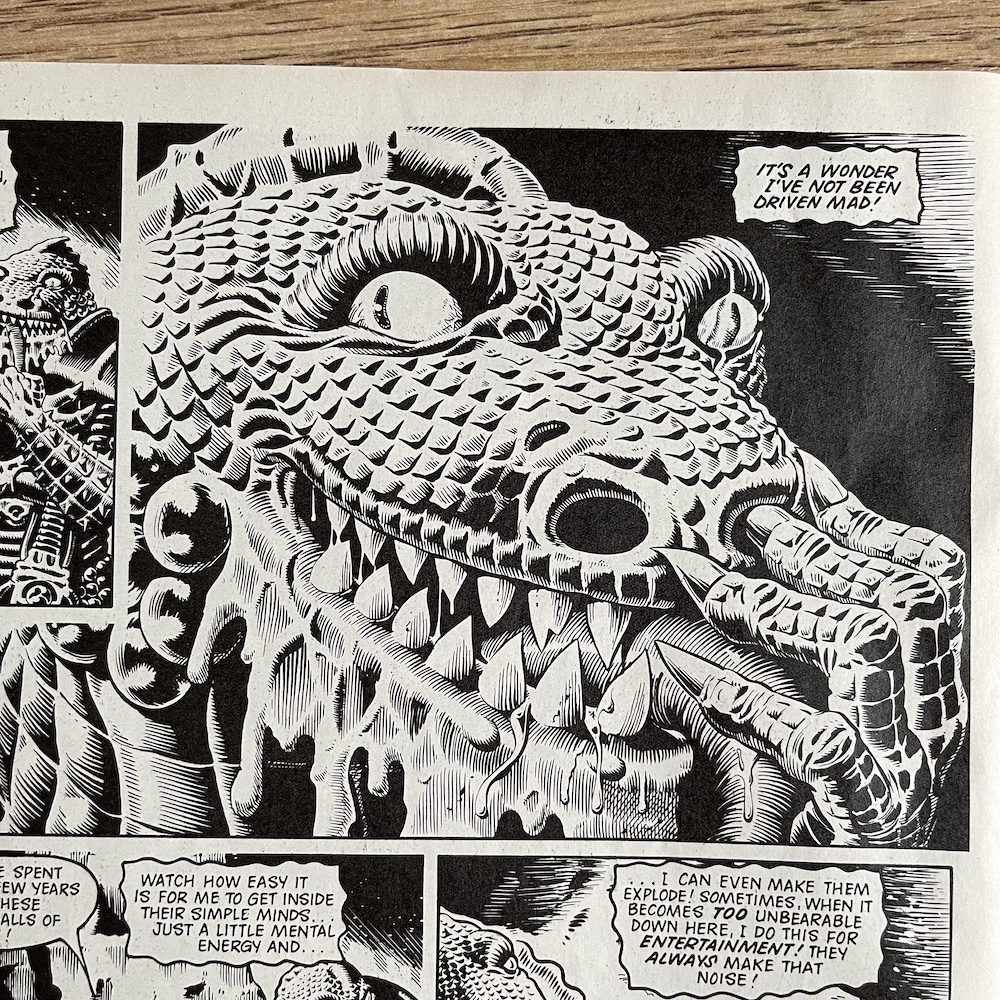
But this particular Bellari crash landed on the same planet the Wildcat found, falling through into the same underground labyrinth as Loner. With no way out he took control of the furballs, a task he found far too easy and which kept him entertained for about five minutes. I laughed at the panel above on the right, where he wonders at the miracle of him not going insane, with his wide eyes, drooling and his finger stuck up his nose. David is an incredible artist and this is a rare moment of humour in the Loner strip. The main highlight however, is another full page image which deserves to be studied.

Studied it was, both back in 1988 and today. Just look at that design. I was in awe of David’s work. At this point my comics reading had included the many styles within the pages of OiNK, the simplistic but sweet drawings in Thomas the Tank Engine and Friends and the fun, quirky art in The Real Ghostbusters. I’d never seen anything like this before.

All the serials have really upped their game this issue and it’s hard for me to pick a favourite anymore

The beast wants Loner to hunt down a ravenous snake-type monster that he can’t control because its brain is too simplistic. It functions on instinct and hunger alone, so it’s a big threat to this lizard. Loner knows he has no choice and agrees but makes the mistake of thinking otherwise. Since the Bellari is reading his mind he knows Loner plans to trick him and suddenly our hero finds himself in another place and time, three of his enemies firing upon him as the episode ends.

It’s clearly a trick of the mind but still, I remember that snake but can’t remember anything else about this story, and the developments this issue have been genuinely interesting. But then again, even if the story was plodding along David’s art would still have propelled it to another level. While Loner was always my favourite as a kid, the three other serials have really upped their game this issue and it would be hard for me to pick a favourite anymore.

After the wonderful art of Loner’s strip is a rather basic Next Issue promo page. Last issue there was a lot more information in half the space. While I’m sure the Great Ark in the Turbo Jones strip will be of great importance, with so much going on in all of the strips this feels too simplistic, almost like it was a last minute addition. It’s a bit of a wasted opportunity to really hype the next issue of what was still a new comic trying to build its regular readership. So yes, you should’ve said more, a lot more.


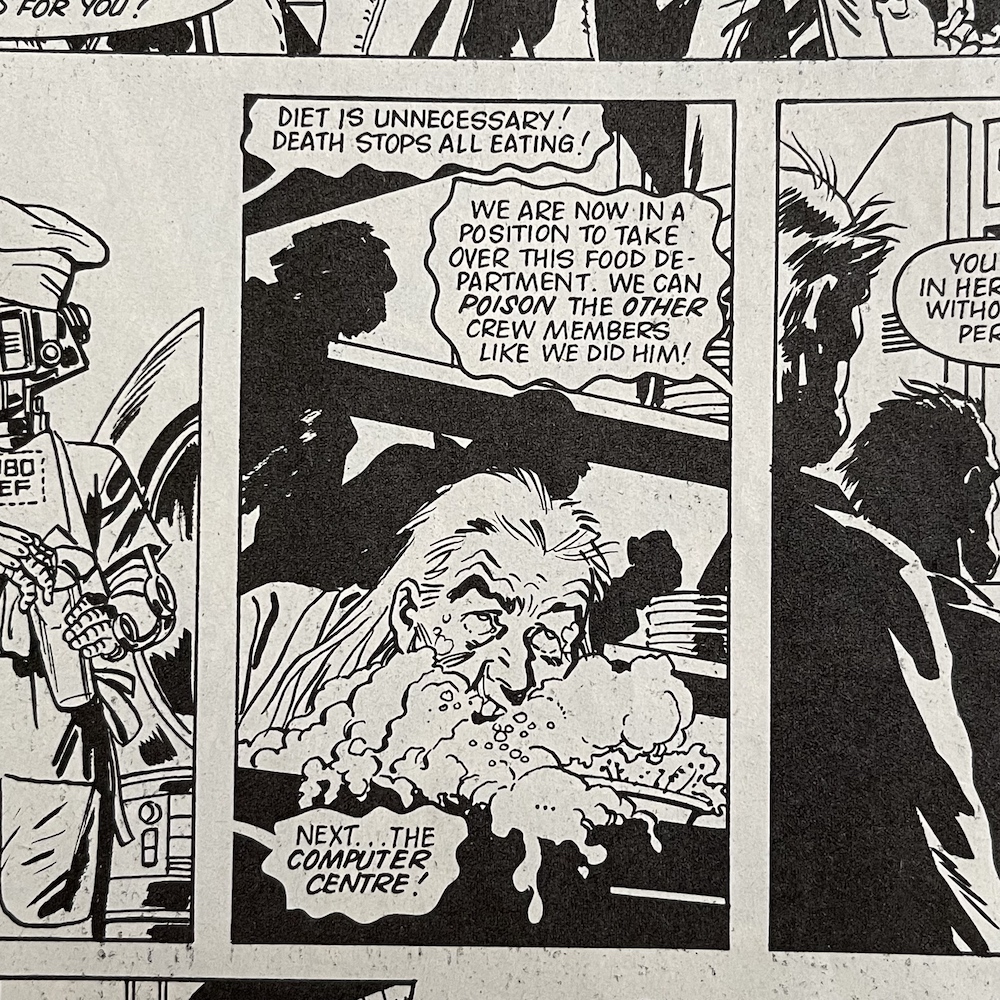
“Diet is unnecessary! Death stops all eating!

The Invaders

Our final strip is the next Wildcat Complete and it’s called The Invaders. It’s a particularly bleak one this time. An asteroid is making its way around the planet and the Wildcat is directly in its path. Strangely, instead of simply manoeuvring out of its way (we saw its pilots in control in #1) a team are sent to plant explosives on its surface, a whole decade before that became the plot of what seemed like an endless supply of disaster movies.

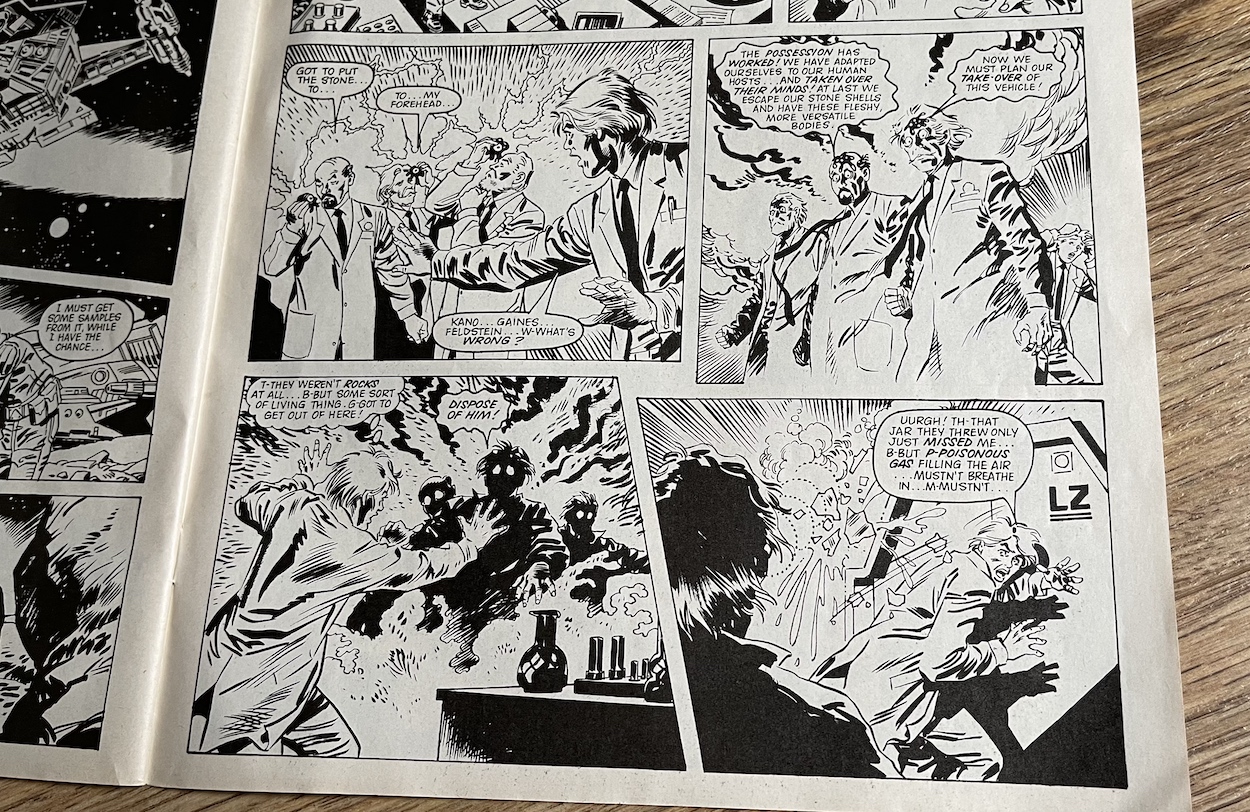
No reason is given as to why this was the solution, why the Wildcat couldn’t be moved, which is strange. Anyway, a group of scientists go with them to collect samples and upon their return some of the rocks appear to possess members of the team.

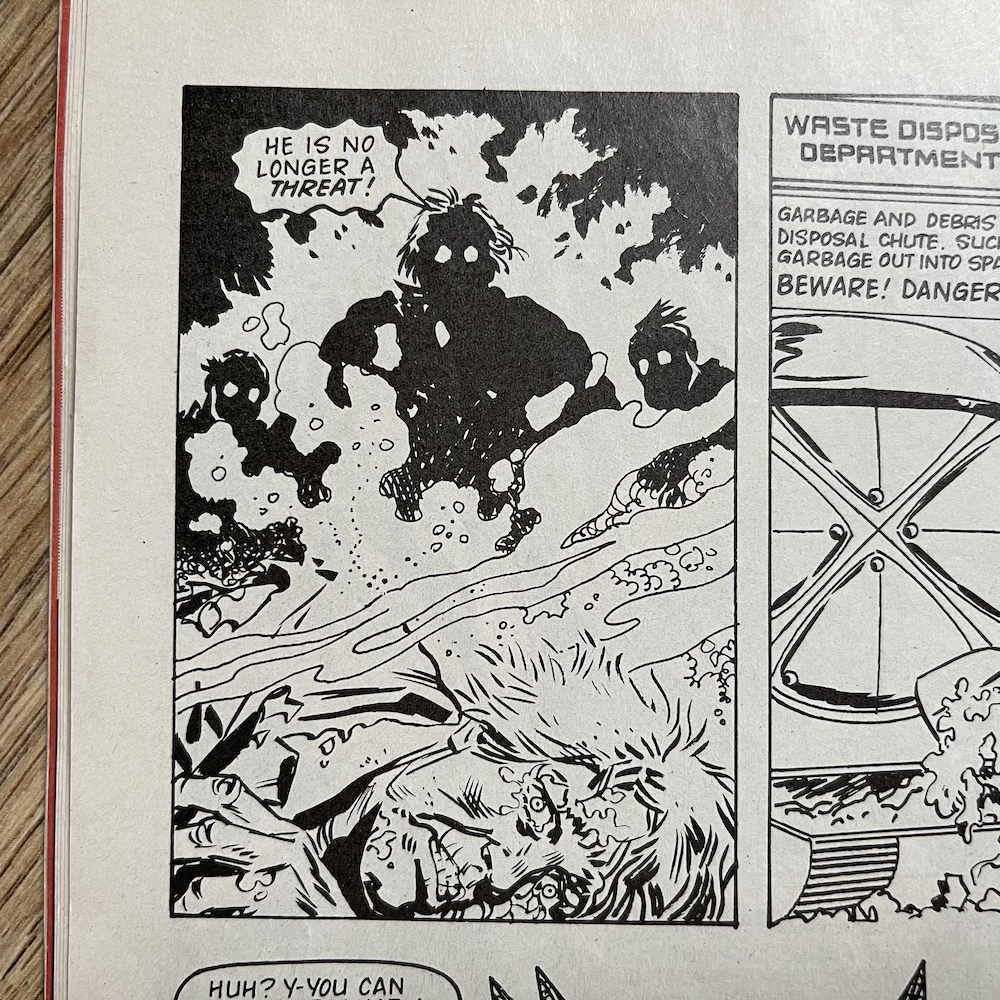
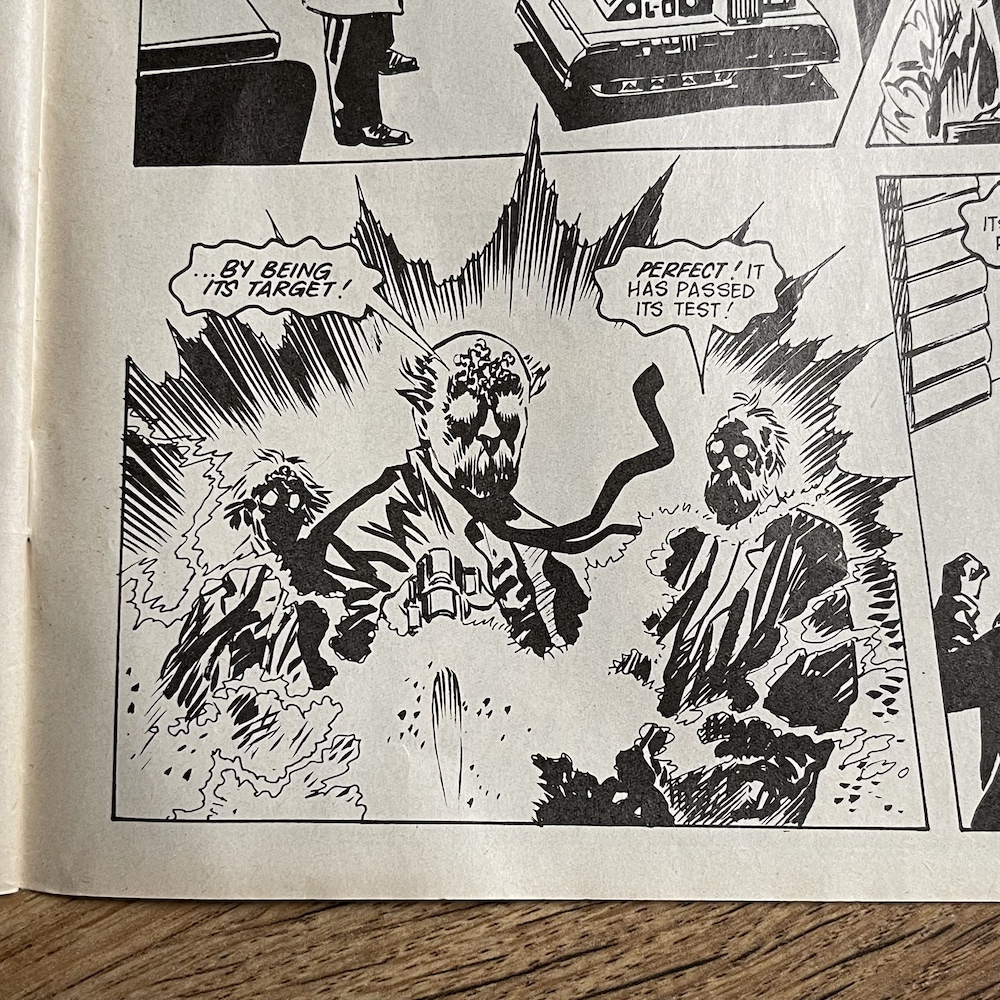
At the end of the story we find out this used to be a prison asteroid, with murderous alien beings trapped inside rocks on its surface. Now freed and with a powerful spaceship at their disposal they set about making plans to take control, casually killing off all who get in their way. Not that any of the people they kill are a threat. They even see off a garbage disposal man by unceremoniously dumping him out of the airlock. This does prompt a bit of morbid humour when someone on board sees it out of the corner of their eye, thinks the exploding body is a star and makes a wish!

The garbage disposal would be used to get rid of the bodies they’d accumulate, they kill a weapon designer to steal his prototypes, a chef by testing a mass poison out on him first and one of the other scientists who knows the truth behind the murders. All of this takes our death toll up to 11 in only three issues. I wonder what number we’ll get to by the time these stories are over?

Their mission is to ultimately make their way to the ship’s bridge and use it to get back home and take revenge on their planet. The Wildcat’s crew end up using robots to stun the human bodies instead of simply killing them, fully aware the possessed scientists are innocent in all of this. I liked this solution. It shows the comic won’t be taking the easy way out in its stories, even when it’s a one-off and needs to wrap everything up in only six pages.

Dark humour and plenty of shocking deaths are expertly combined into the script here. It reminds me a little of The Doll from Super Naturals, which is another of Barrie’s comics. The artist who brought all of this glorious death and destruction to our young eyes was Joan Boix (The Phantom, Warrior, Eagle), a name I’ll admit I wasn’t aware of until reading this and seeing his signature, something which was a very rare thing in action comics of the time. With this level of quality I’m glad he did.

The back page pin up rounds things off with some light relief as Robo takes centre stage. So another issue and another hugely enjoyable read. I don’t want to come across as fawning in these reviews, but there’s no other way to write these; this really is a wonderful, quality comic in every way. All of the stories are really opening up, our characters (both main and secondary) are developing nicely and if I didn’t know how long the comic would last I’d say things feel set for a long run.

Issue four will be here in just two weeks on Friday 3rd December 2021 and it really can’t come soon enough (and not just because that means my tree will be up).

iSSUE TWO < > iSSUE FOUR

WiLDCAT MENU

RiNG RAiDERS #5: ELECTRiFYiNG STAKES

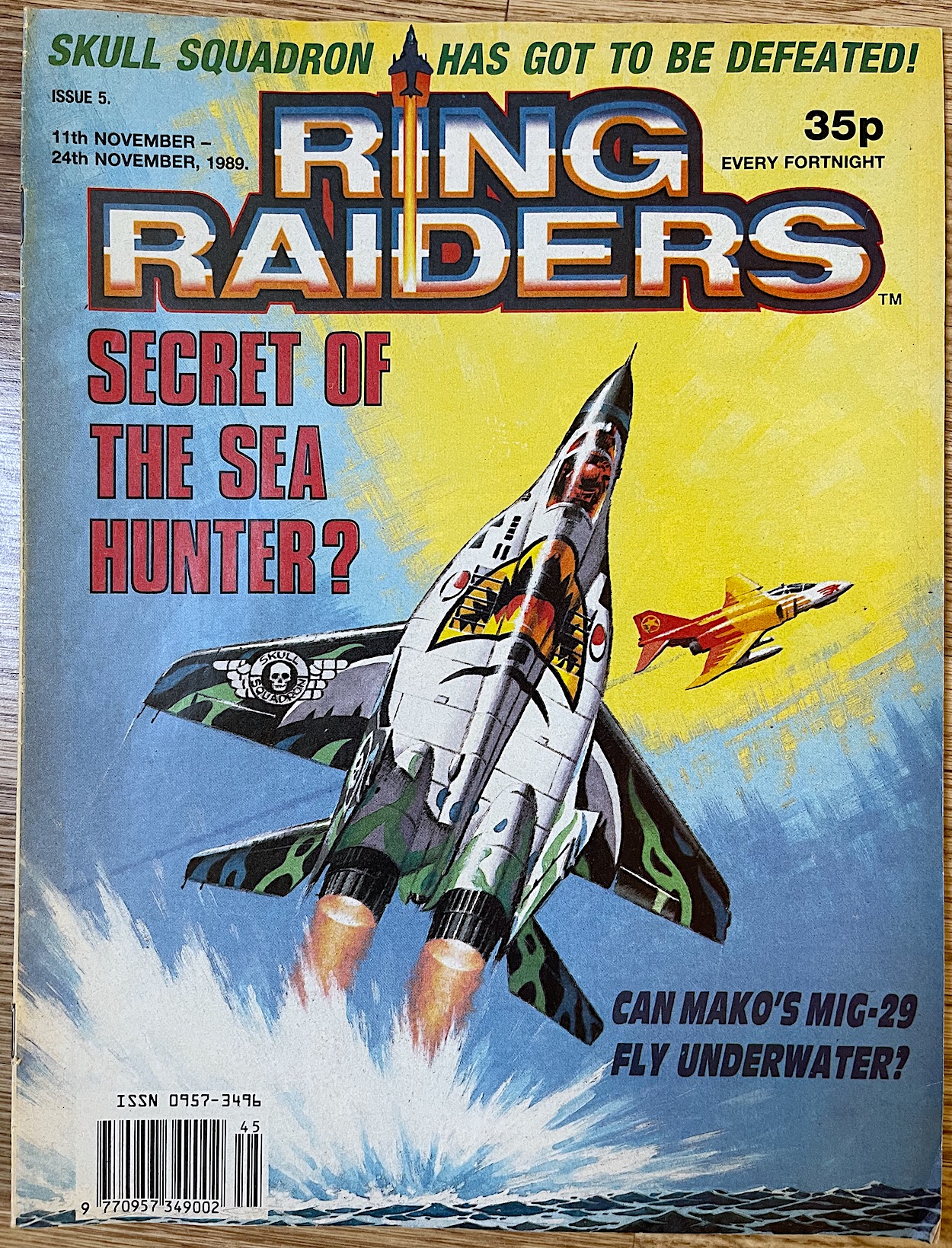
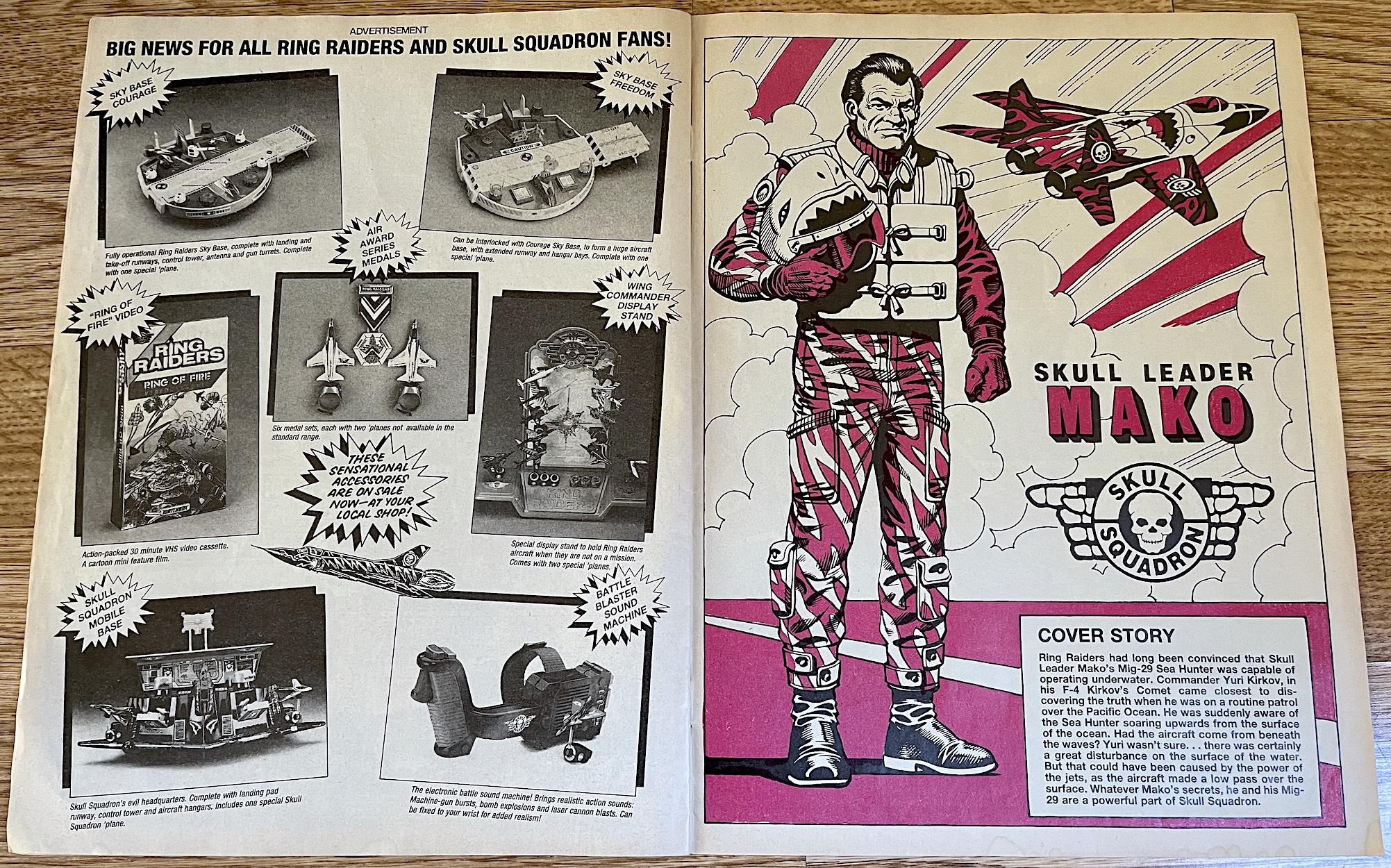
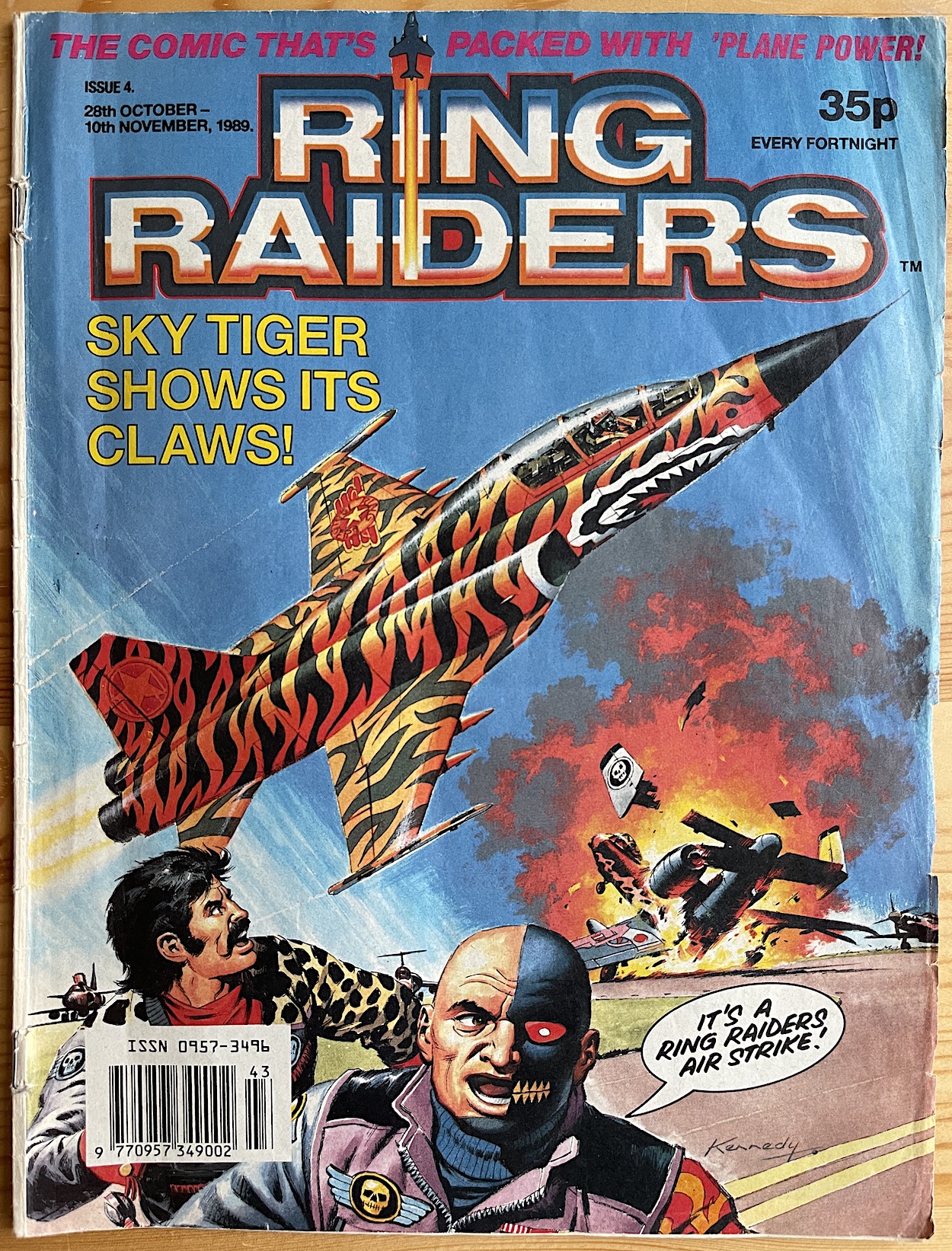
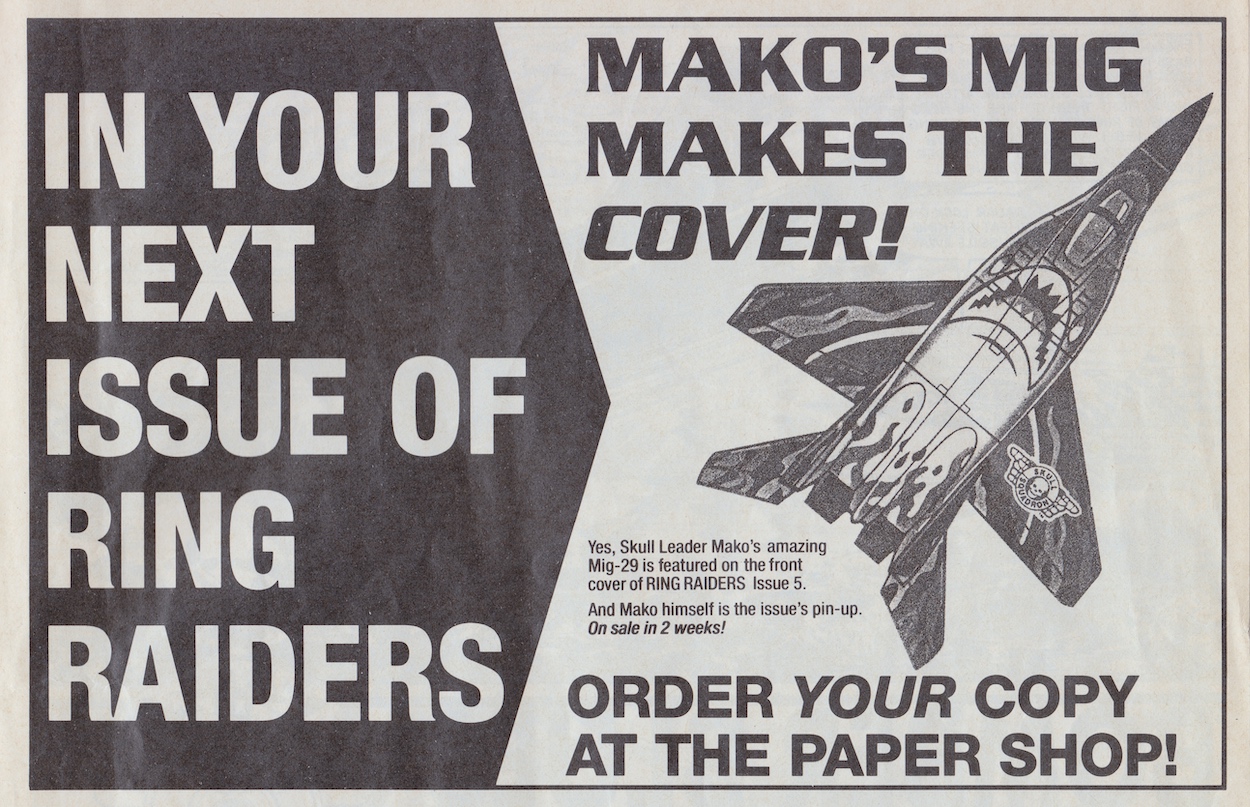
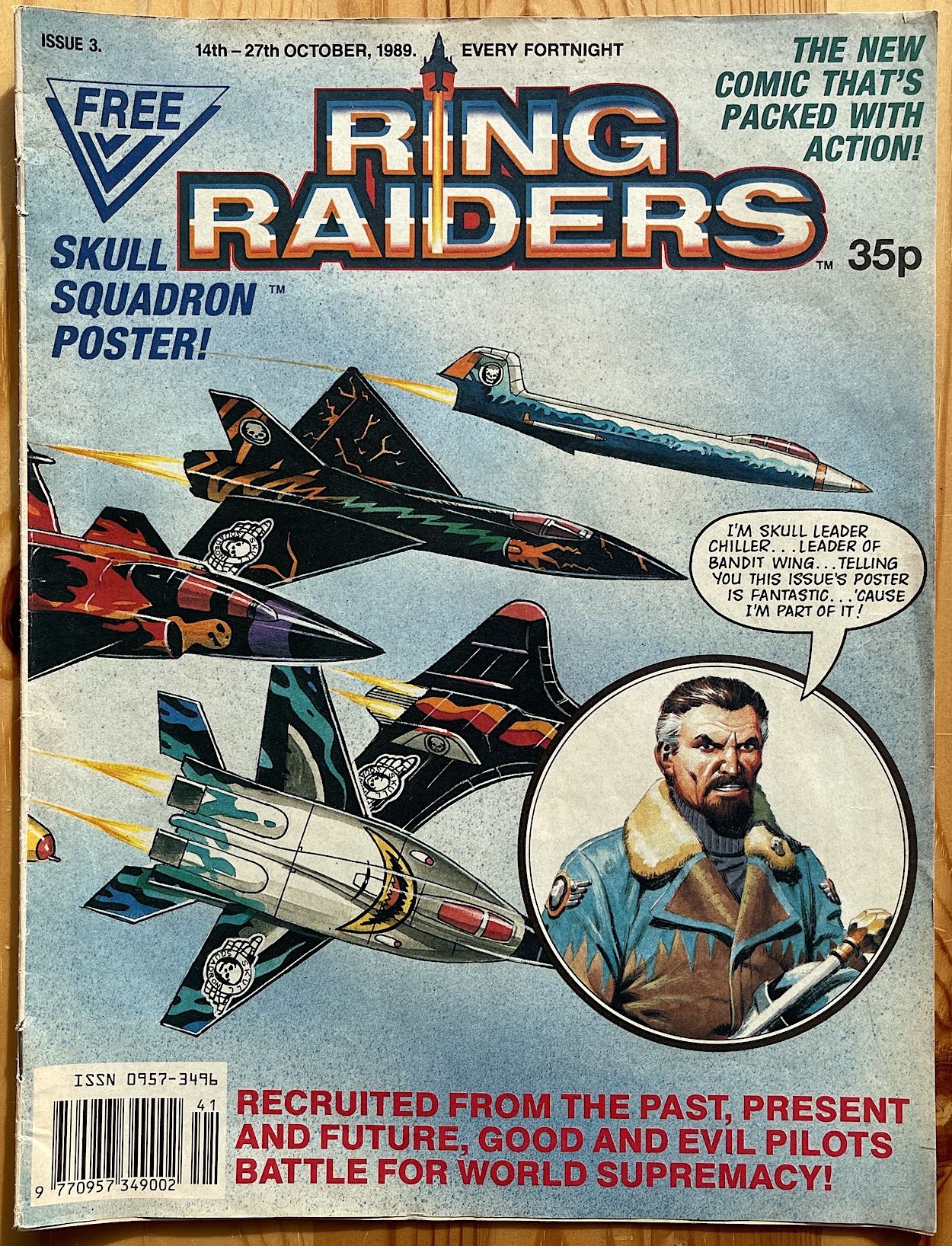
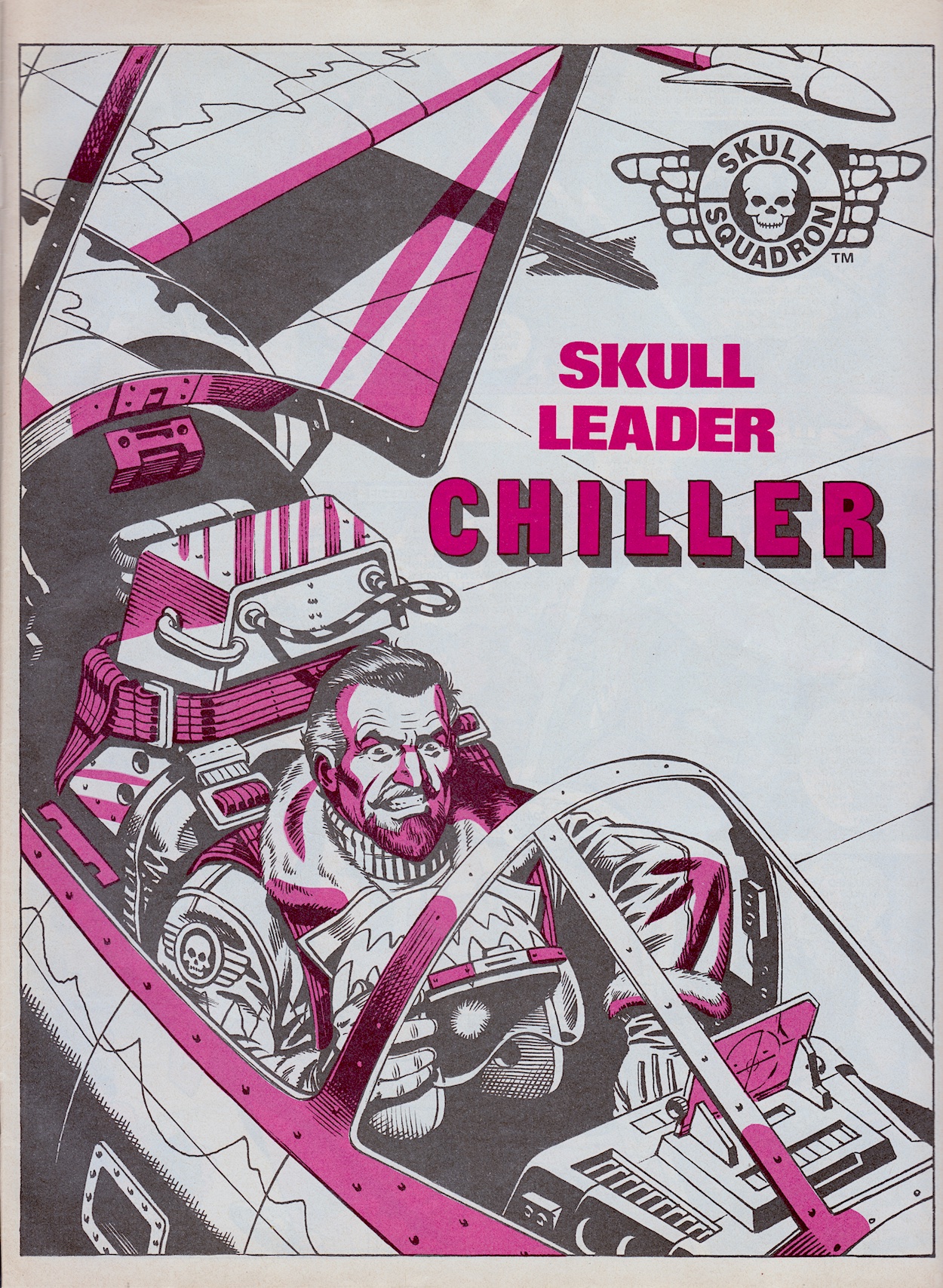
Being the only issue I somehow lost between childhood and bloghood this cost me a pretty penny a few years back but it was worth it to have the complete collection again. The superb Ian Kennedy cover featuring my favourite Skull Squadron aircraft, Skull Leader Mako‘s Mig-29 ‘Sea Hunter’ certainly softened the blow to the bank balance. Regular readers may wonder why the question on the cover is being posed when we’ve already seen the answer in #2, but that was a secret for the readers. As far as the Ring Raiders were concerned it was still unconfirmed and made Mako one to fear.

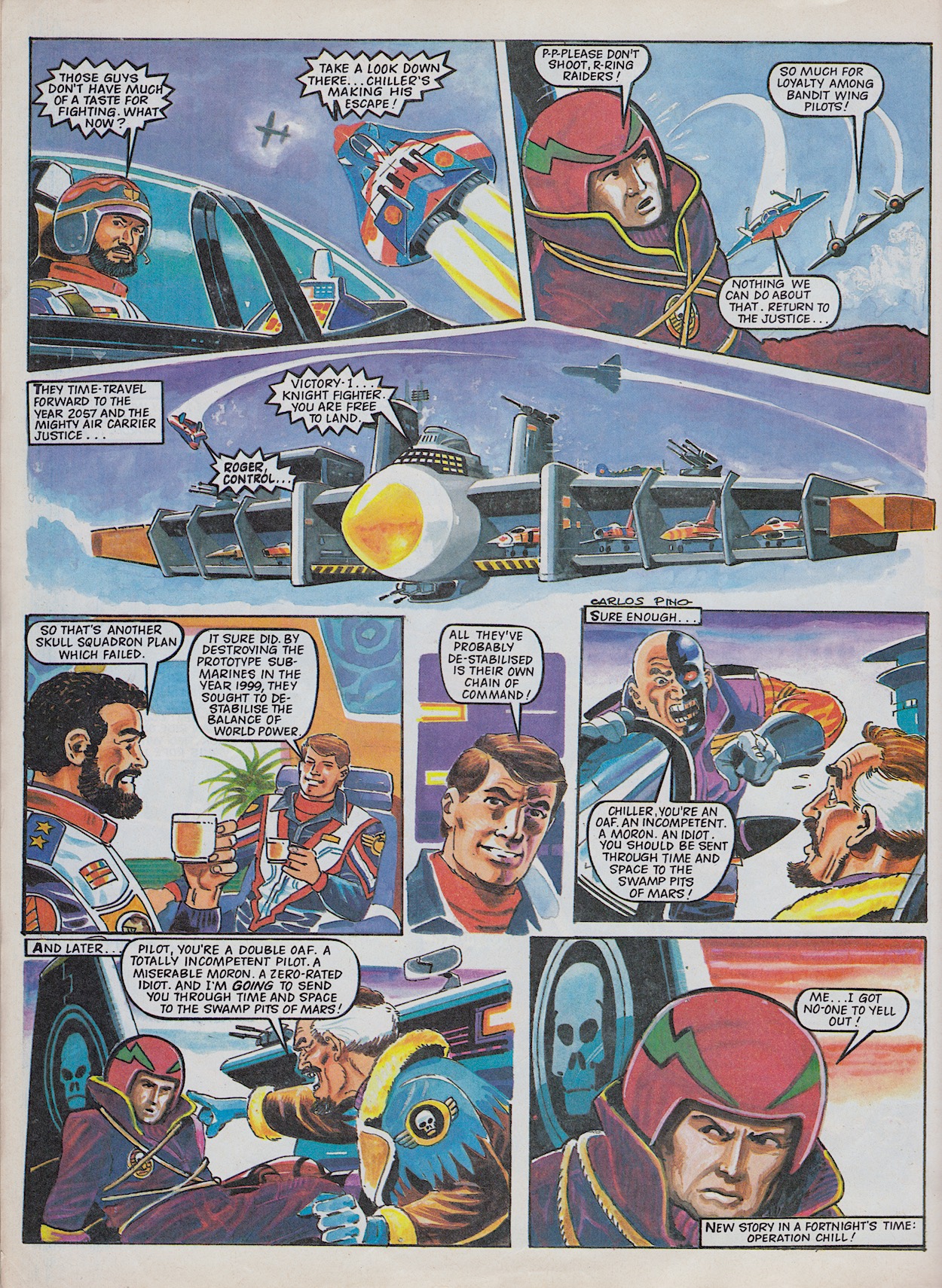
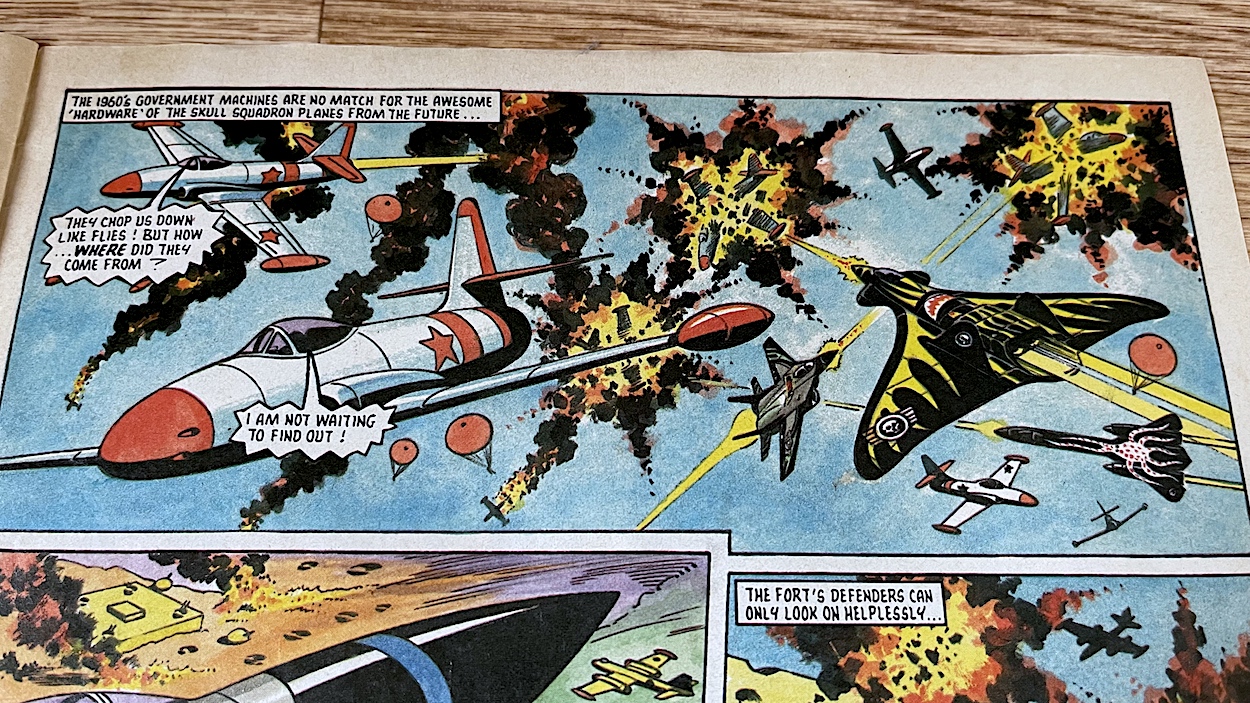
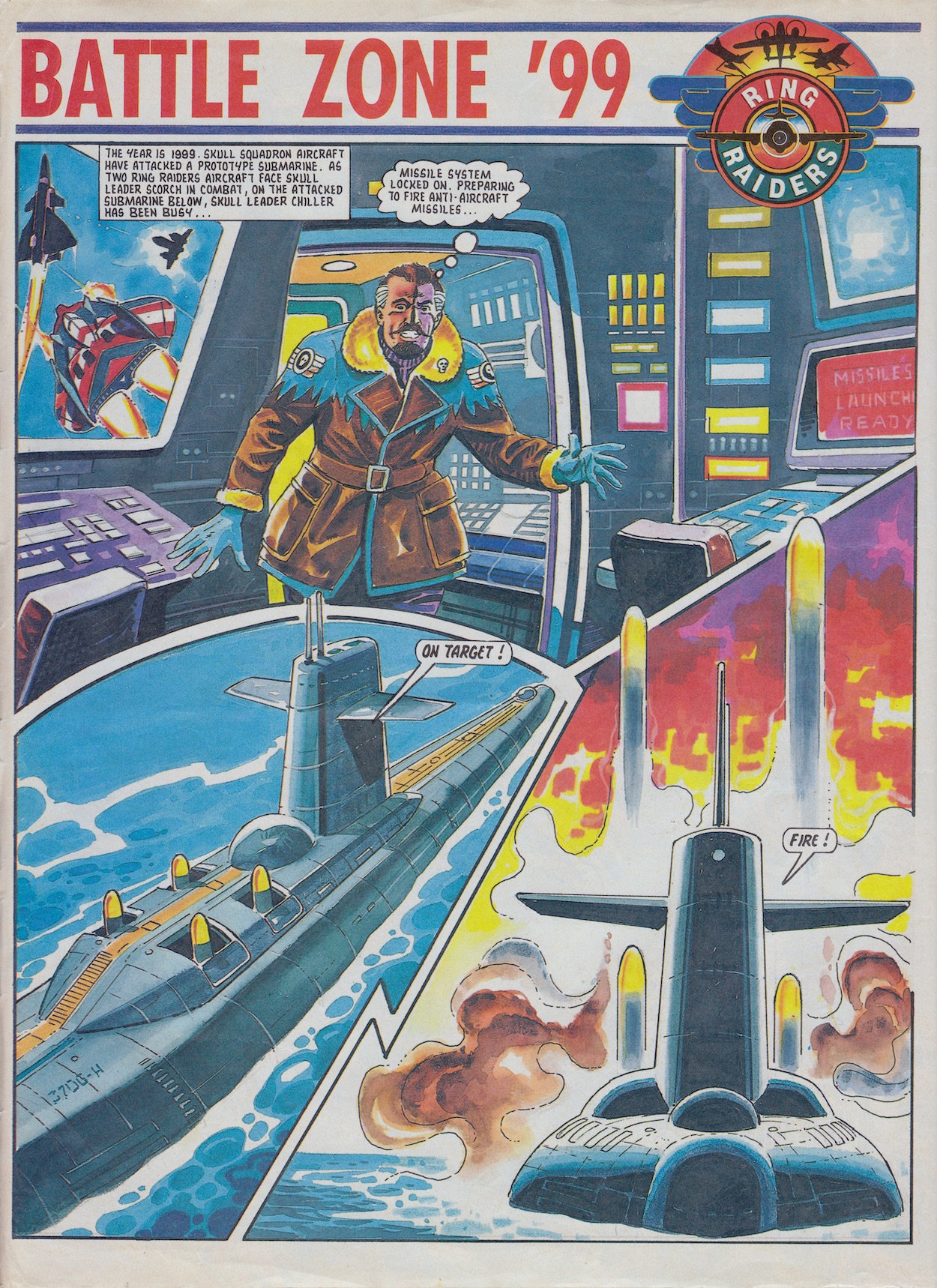
I love the details in the cockpit (something the toys simply couldn’t include due to their size) and the size and power Ian brings to his renderings of these planes. I also love that crosshatch effect for the sky which adds the illusion of texture to the glossy cover. Inside, editor Barrie Tomlinson‘s Battle Zone ’99 comes to its conclusion after beginning back in #2. A more lighthearted affair than the other strips, it’s acted as a great way to introduce the relationship between the calculating Skull Leader Chiller and his own leader Skull Commander Scorch, which comes to a funny conclusion on the final page.

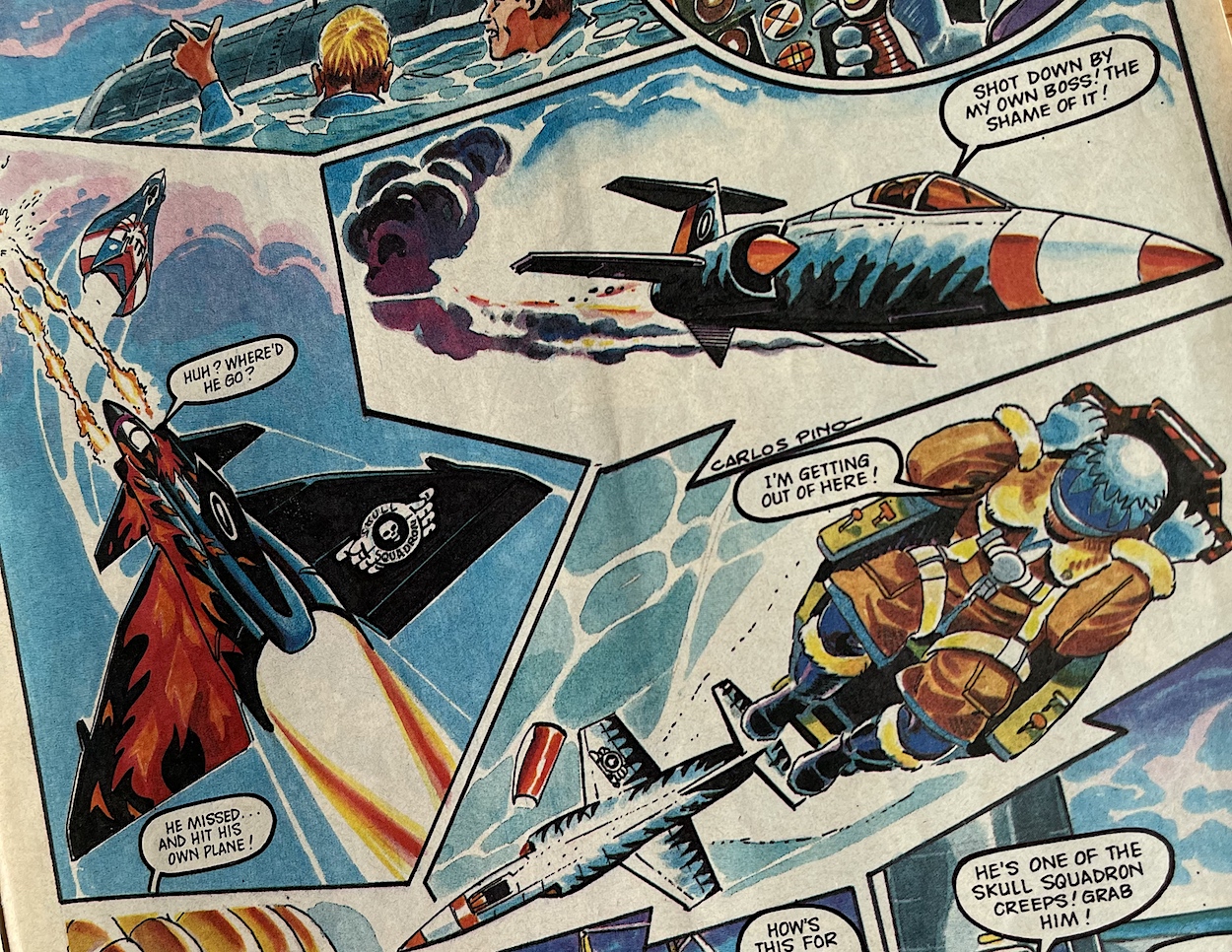
Carlos Pino‘s work has been colourful and fun throughout, perfectly suiting the fast action script and bringing the comedic moments in the air to life. But in this final part there’s something of an anomaly. Chiller’s wingman just doesn’t look right, does he? It’s a mystery, the answers lost in the mysts of time that were the late 80s, but it looks like he’s been altered after the fact. Perhaps the wrong character was drawn originally?

As for the story, which started off with the death of so many sailors on board a submarine, it ends more like an episode of the cartoon series. Chiller’s wingman lands to rescue him but his plane is a single seater so instead of joining the fight on the ground he’s unceremoniously strapped to the prop plane’s tail while Chiller commandeers it. It may have been light on plot but as an action-packed way to kick off every issue it’s been a short, to-the-point bit of fun. With the comic introduced, Barrie and Carlos will team up again next issue for its replacement in a serial which features more plot and the return of Chiller as the lead villain.

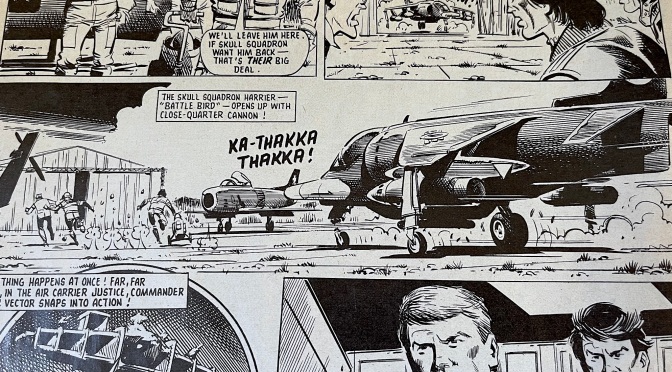
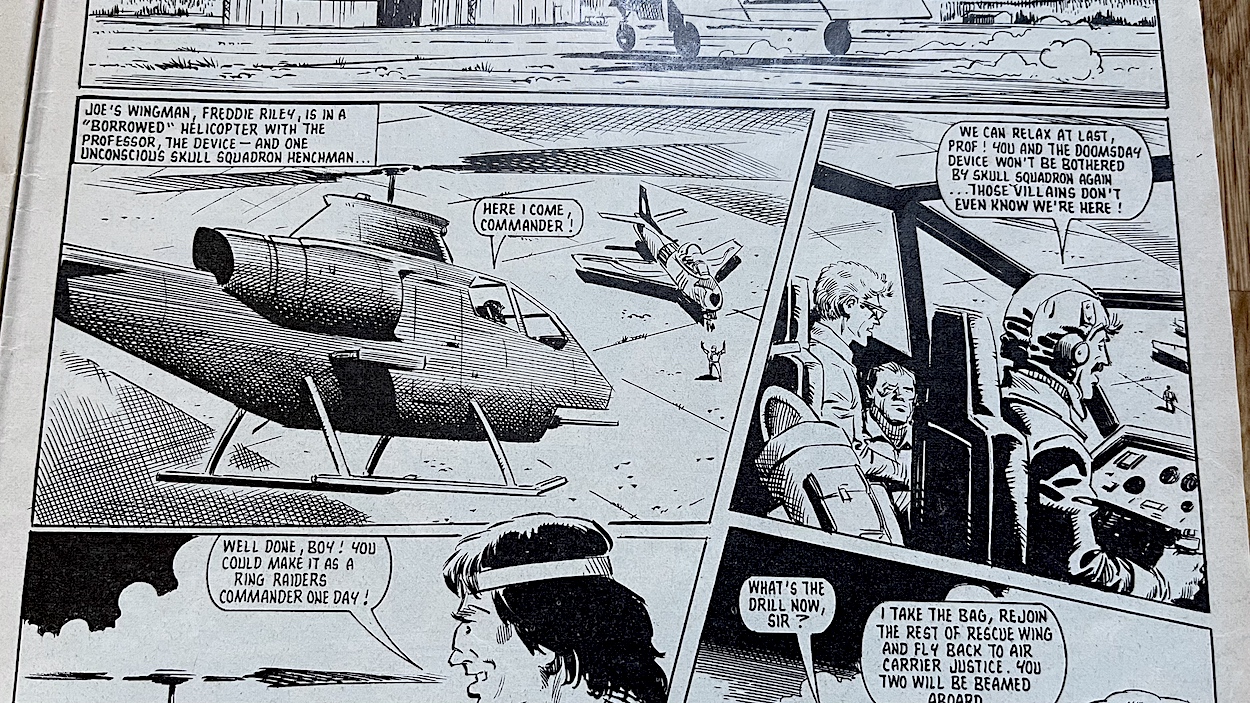
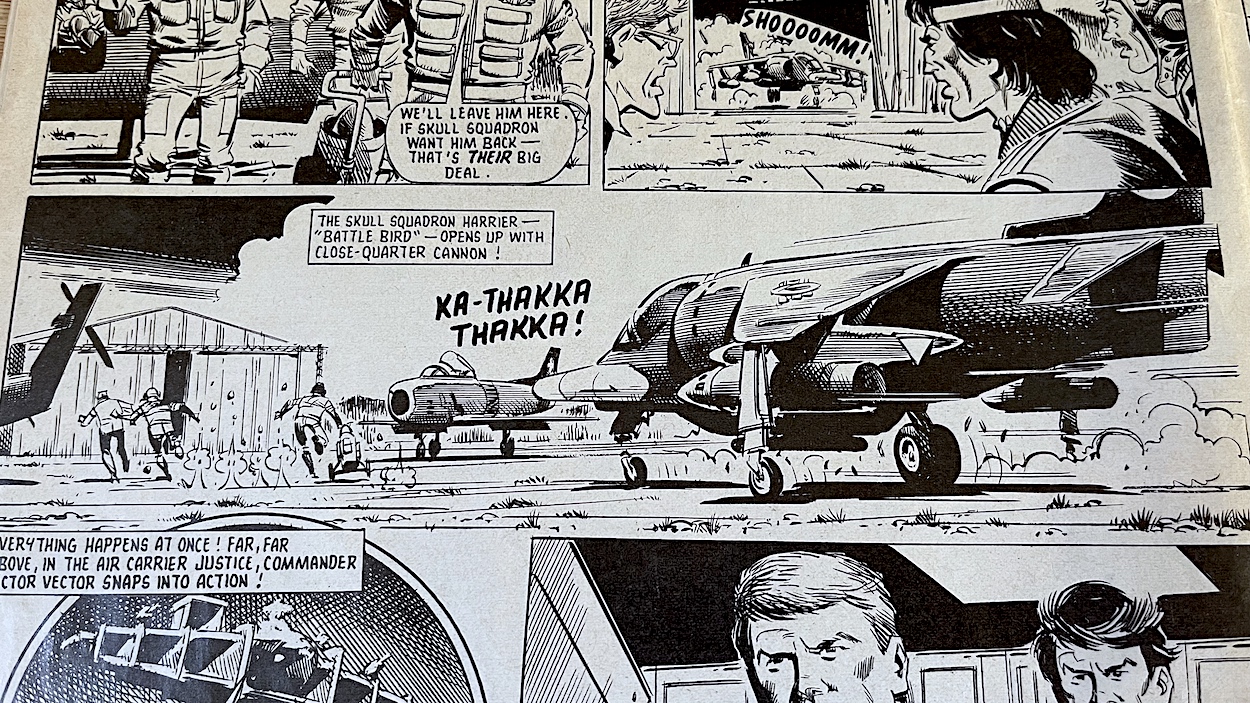
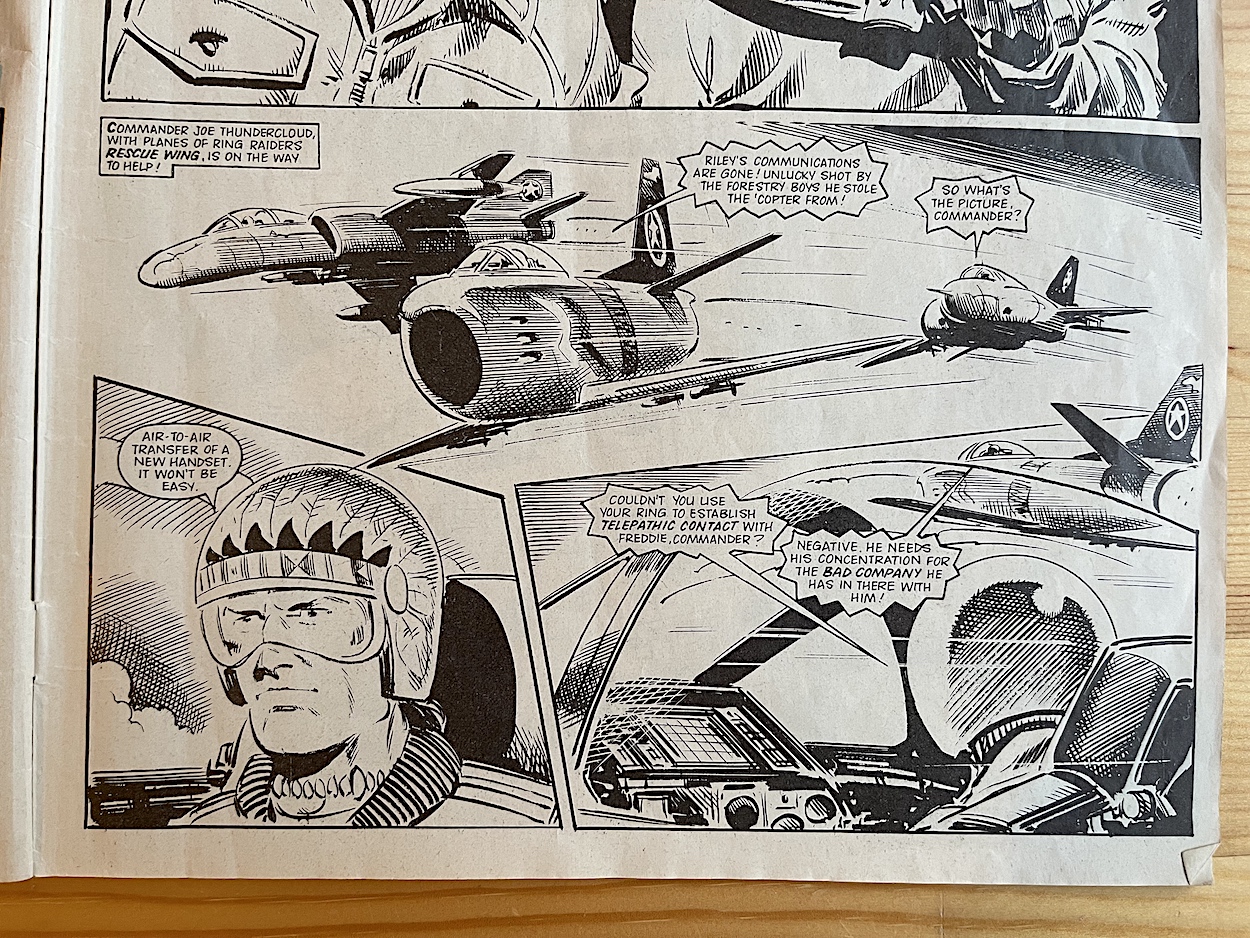
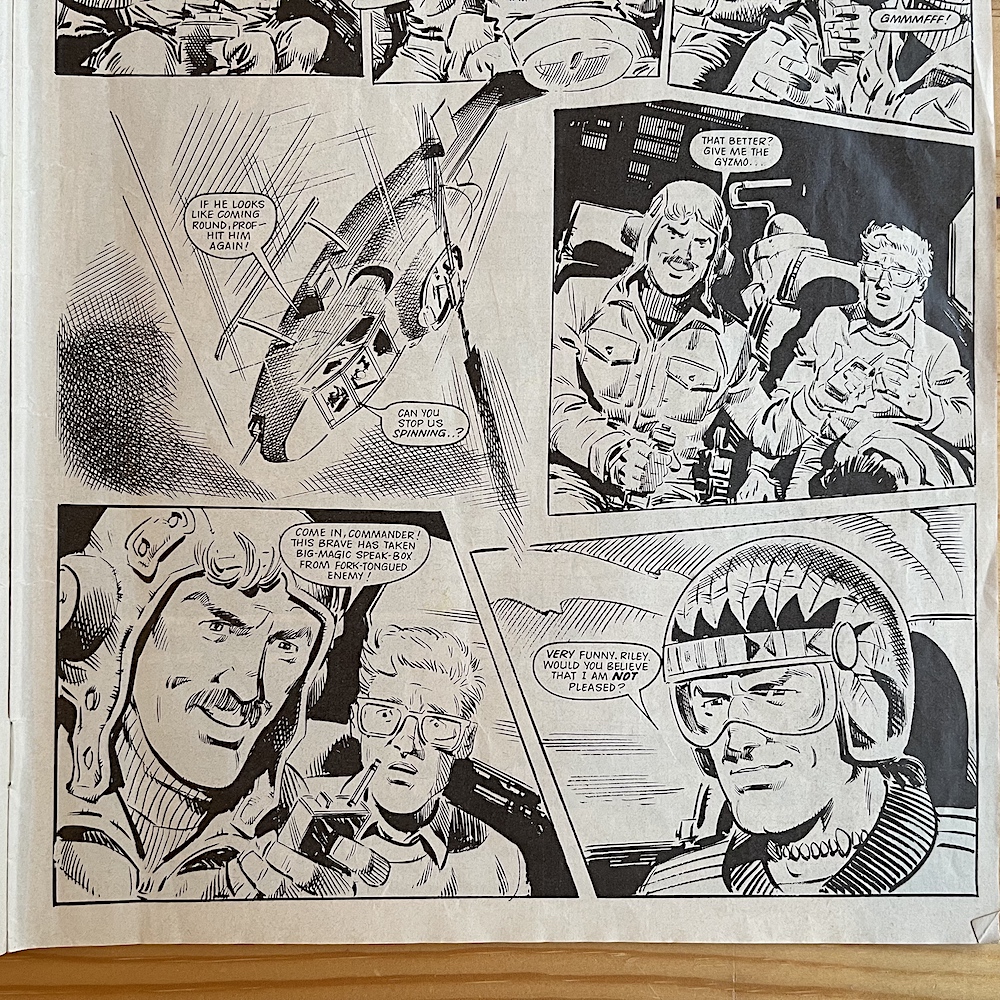
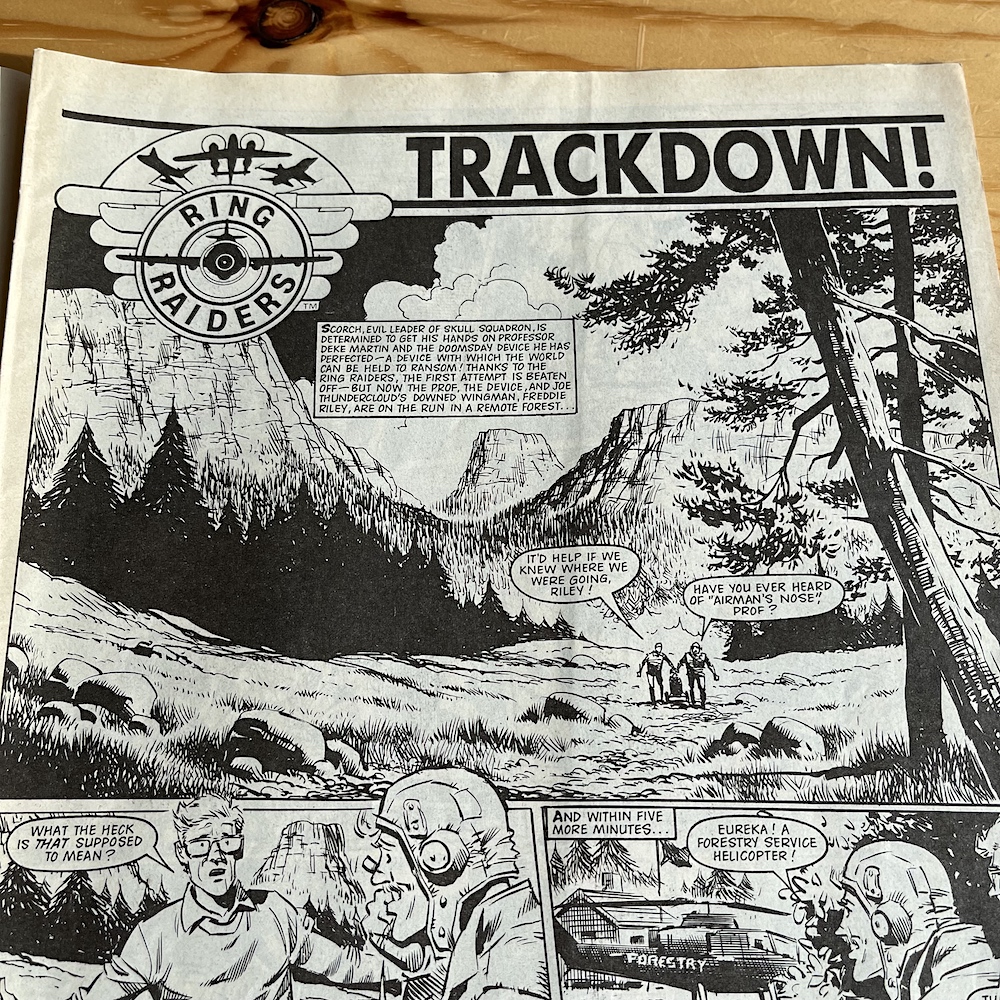
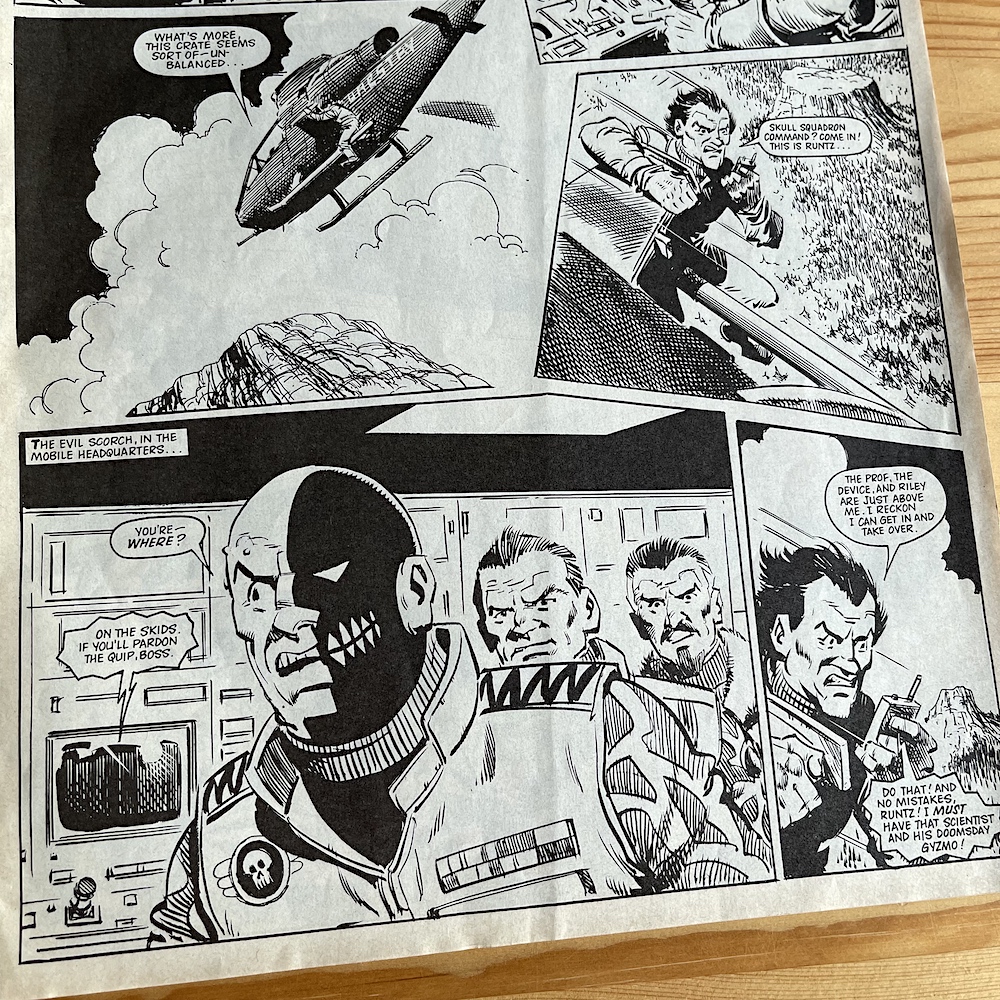
In the continuing Trackdown written by Angus Allan and illustrated by John Cooper it looks like Freddie Riley and the professor’s adventure is coming to an end as they approach Wing Commander Joe Thundercloud on a supposedly deserted airstrip, unaware Blackjack and his Harrier ‘Battle Bird’ lie in wait. The panels showing the Ranger helicopter and then Riley’s point of view feel like the camera (for want of a better word) has zoomed inside in one fluid movement. Just me? Well, that’s how it felt to me. John Cooper was certainly cinematic in his storytelling.

In this episode the story transitions back to the characters from the toy line as Riley and the professor are beamed aboard the Air Carrier Justice where they watch the unfolding drama alongside Ring Commander Vector. As much as I enjoyed the comic’s original creations Riley and Runtz I never felt disappointed with the way the story changed its focus here. It was just the natural way for it to go when Riley’s situation was resolved. It’s a fast-paced story but it’s full of character and each issue brings another layer to the plot. It feels masterfully planned out, so kudos to Angus for doing such an amazing job with his first story for a brand new franchise.

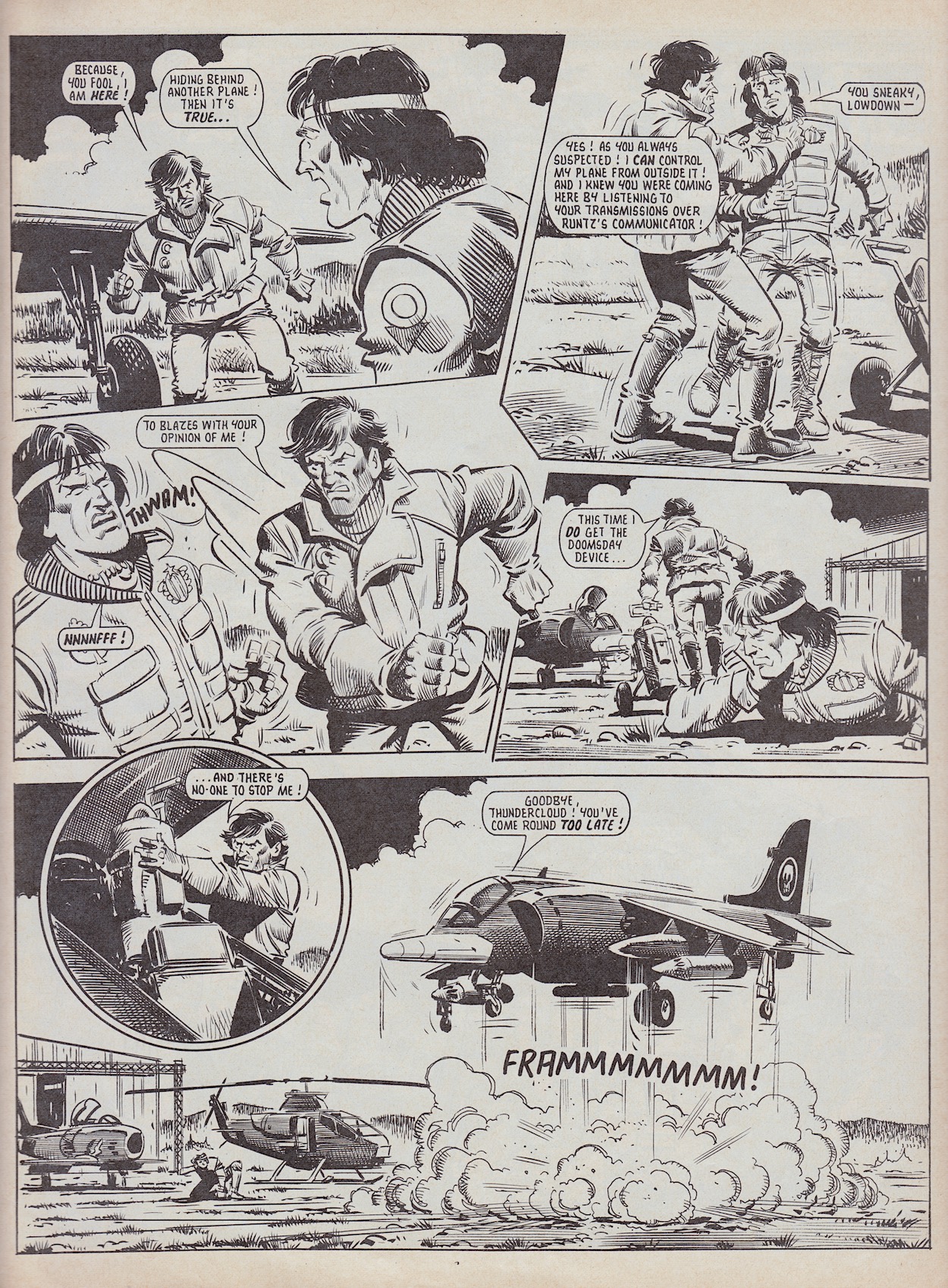
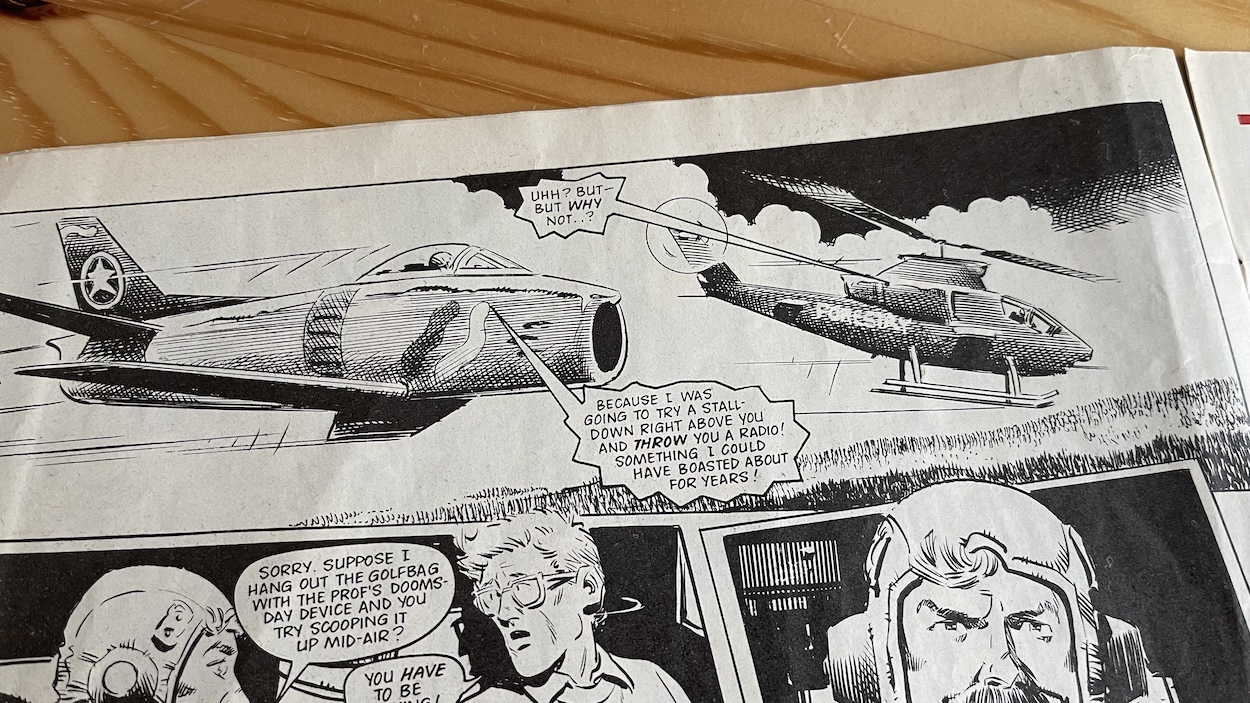
As a kid I loved the scenes on the ground just as much as the air combat that was at the heart of it all. While they could be shot down, which we’ve seen plenty of in fact, there’s a feeling of invulnerability in the air and a vulnerability when they’re on their feet. Here it adds suspense as Joe lies unconscious, helpless as Blackjack does his cool vertical takeoff with the doomsday device, after confirming the ambush worked perfectly because he can radio-control his bird. A nice little piece of information from the toys there.

(I have to admit I’ve always found the way Harrier jets take off and land just amazing to watch too.)

Skull Leader Hubbub is a Vietnam vet. Having fought for America he’s been left damaged by the ravages of war

In pursuit, Joe can’t shoot down or even cripple the Battle Bird, not with the Doomsday Device on board. Unable to stop it being taken back to Scorch the strip ends with a feeling of complete helplessness. I can’t remember what happens next, so just as I had to originally I’ll be waiting two weeks to find out. One thing to note here, there are a couple of references to Thundercloud’s heritage which read rather differently today and which I’m ashamed to say I glossed over at the time. But given how they’re used by the Skull pilots it adds to their viciousness in the panels in which they’re used.

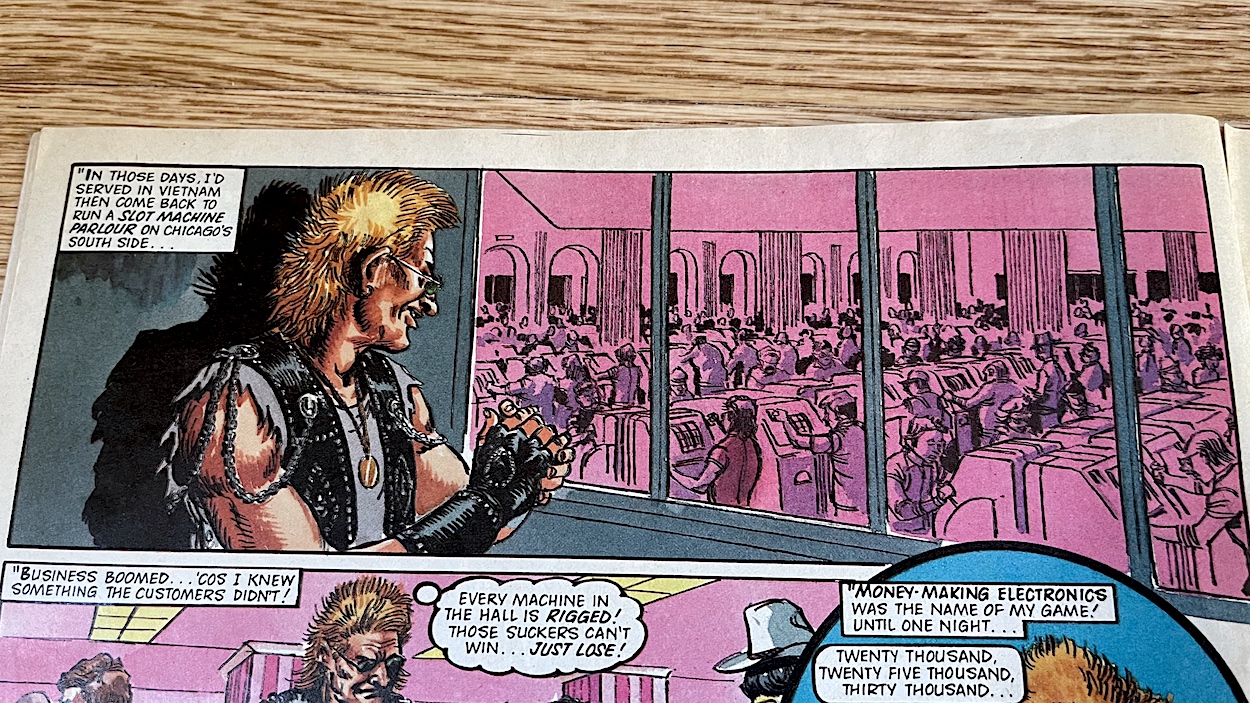
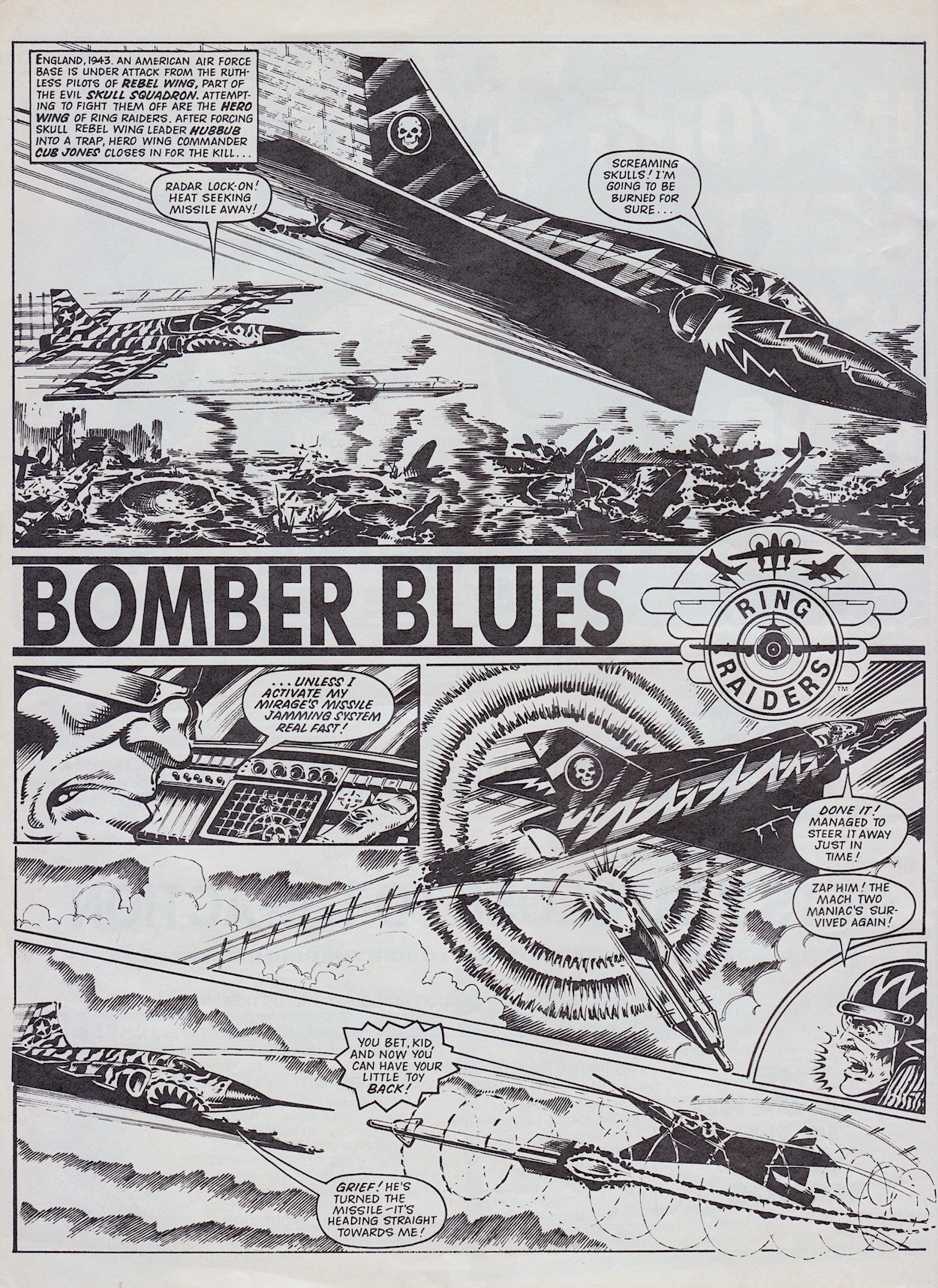
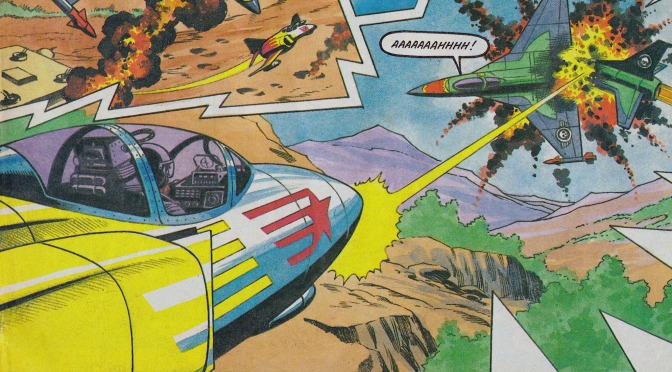
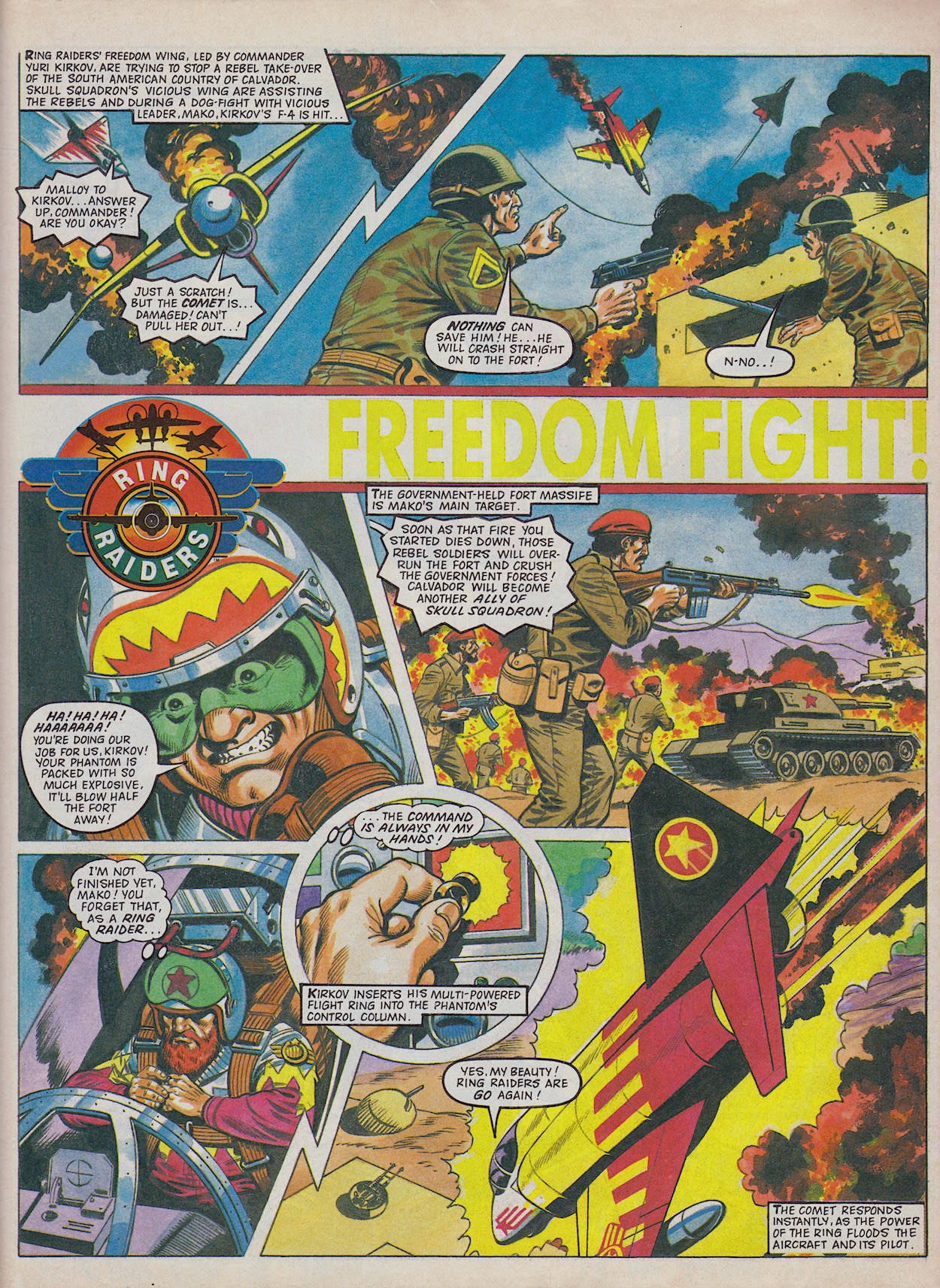
Scott Goodall‘s complete tale this issue focusses on the Skull star of the Bomber Blues serial, Hubbub the Skull Leader of Rebel Wing. We’ve seen him use his electronic weaponry in that story and here we learn of where his fascination with electricity’s power began. It all kicks off with this glorious splash page by Geoff Campion showing the kind of air battles only this comic could be capable of. The lightning, Vector’s stealth fighter powering into the scene, even another Harrier doing a daring manoeuvre with those vertical jets, it’s all there in one panel. Exciting stuff!

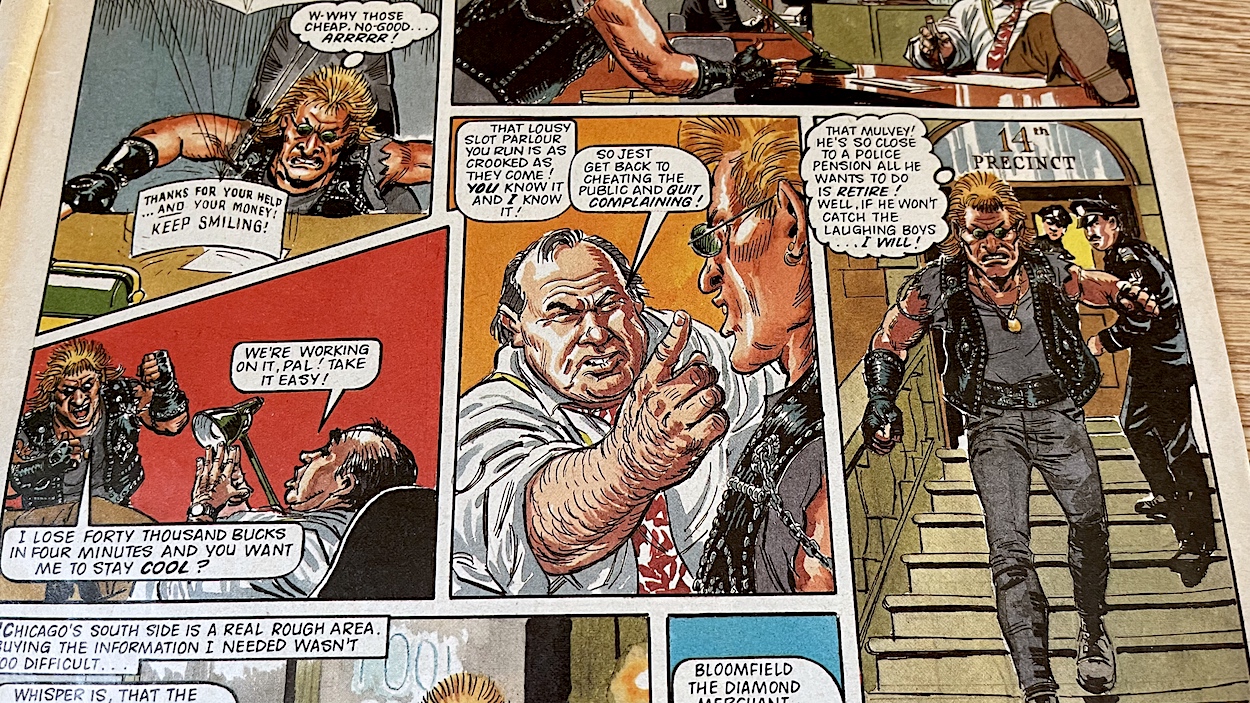
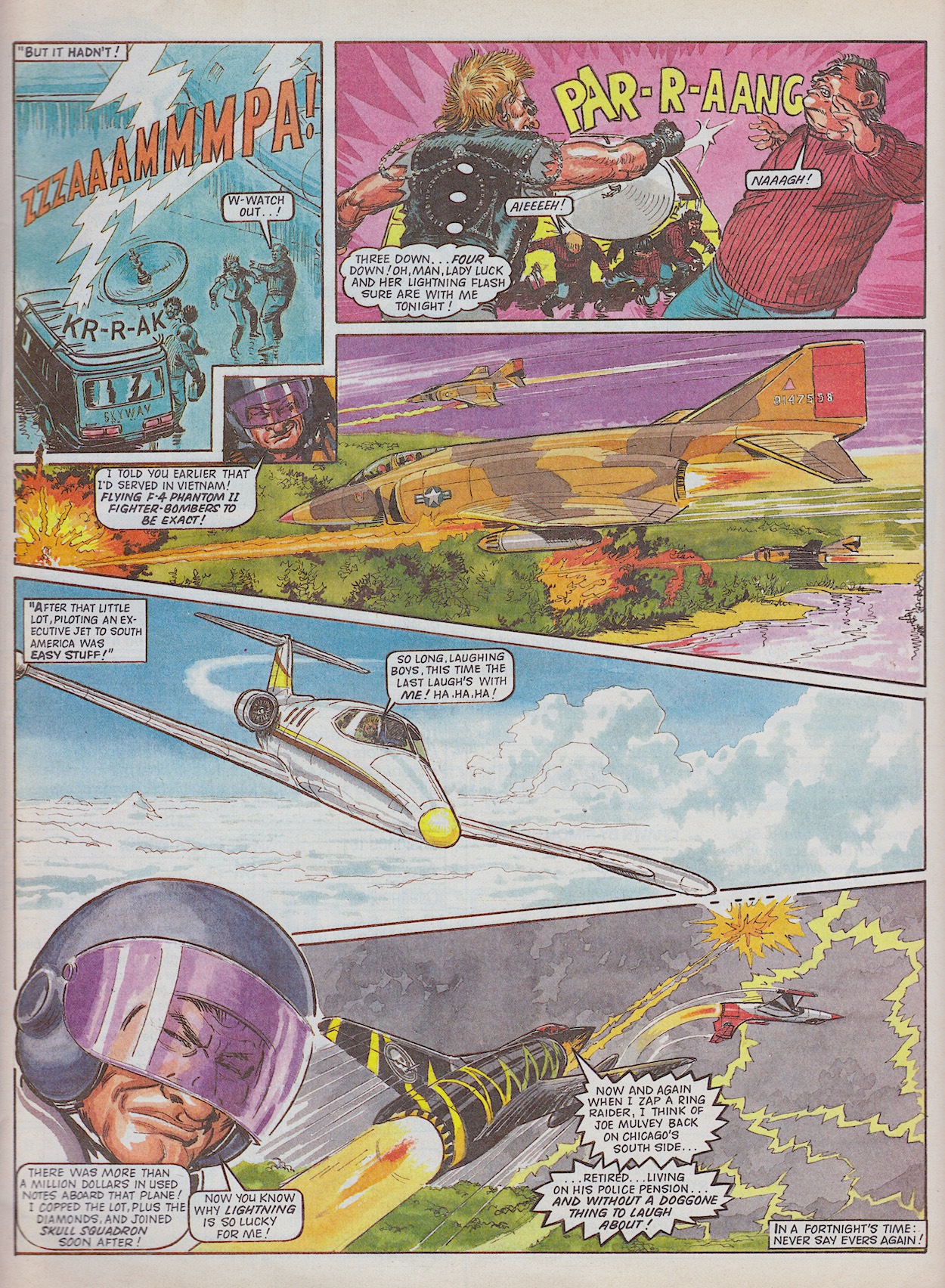
Originally the owner of a rigged slot machine parlour, Hubbub thought he was a tough guy, emperor of his own little domain. He’s also a Vietnam vet. Having fought for America he’s been left damaged by the ravages of war. This theme of the Skull Squadron was pointed out in an earlier issue. We were used to our heroes in everything from The A-Team and Knight Rider to Airwolf and Magnum P.I. being veterans of that war and we learned how it affected them. To see it played out in my toy licence comic was great, especially how it told of the horrors faced during that war turned the vets into the bad guys instead.

With all of these little details building up issue-by-issue, character-by-character, it’s all the more heartbreaking to know they didn’t get to flourish in a long-running comic where these aspects of their personalities could have been revisited in future serials. However, it wouldn’t be the last time the ghosts of Vietnam would be felt in Ring Raiders, although you’ll have to wait for the Ring Raiders Special in the early months of next year for that particular story.

Surprisingly, when he’s robbed at gunpoint in his office we see how much of a coward Hubbub actually was in the days before Skull Squadron, cowering while the thieves use harmless pop guns to escape. The police don’t care either because they know he’s a crook himself (and actually in the end this cop is the ringleader of the thieves). Through contacts in Chicago’s rough South Side he’s able to stake out the next target and hide on the roof of their van while they make their escape.

Falling off when the driver loses control on the wet runway of the airport from which they’re going to flee the country with their last score, Hubbub finds himself at their mercy, outnumbered and this time their guns are very real. It’s at this point his life is miraculously saved and thus begins the creation of the character we’d grow to love to hate; a sudden bolt of lightning strikes the metallic dish on top of the van the thieves had put there (to make it look like a repairman’s vehicle). The bolt blinds them long enough for Hubbub to make his move. We then finishes things off with a little more of his history and a gorgeous final few panels as he rounds off his tale.

After Ring Raiders was cancelled the new year brought a new partwork to my newsagents called simply Airplane and I collected the first handful of issues. My interest was in no small part thanks to how the comic would treat these fantastical airplanes in as real a way as possible, always referencing them by their proper code numbers and names, and then there were historical scenes like these and other real world conflicts. A new series of pin-ups next issue heightened my enthusiasm too. I’ll talk more about that next time, but for now just look at those final few panels, making the transition from Vietnam to the world of the Skull Squadron via the different aircraft Hubbub used. Beautiful imagery to end an engaging and fun little story with surprising depth.

After the letters page the Next Issue promo feels retro even for this 1989 comic. Featuring a biplane, a big banner to the left and a headline along the wings of the plane, it reminds me of what Barrie might have used to promote an issue of Battle for example and I love it! If the Ring Raiders toys had been more successful I honestly believe this comic could easily have been seen as a modern, high-tech version of those classic war comics. It certainly had the writing and artistic talent for it.

Moving on and another story comes to a rather sudden end in part five of James Tomlinson‘s Bomber Blues, drawn by Don Wazejewski. It also includes what I originally thought were contradicting actions from Raider ‘Cub’ Jones. He begins by blasting a crashing Skull plane out of existence to save Hubbub who had ejected from his own aircraft last time and was standing in the crash zone. I like this; the Raiders have a code and will always aim to capture rather than kill.

But then on the very next page he inadvertently places innocent lives in danger. One of Hubbub’s wingmen sees an opening but isn’t prepared for Cub dropping his flaps and undercarriage to drastically reduce his speed, letting the Skull pilot fly past before returning fire. It’s a neat move and the pilot ejects to safety but the plane crashes right into the airfield below, the very one Cub had been trying to protect this entire time.

The World War II pilots run for their lives and barely escape. I remember thinking this went against that code I mentioned, so why did he shoot the plane down there? The key moment here is the Skull pilot’s final radio communication. “Double engine flameout! All power lost… entering terminal dive!” In other words, he’s known he was going down and at the last moment forced the nose down early, aiming the flaming plane towards the hanger.

It’s certainly a dramatic twist, which makes the sudden ending all the more strange. Another wingman lands to pick up Hubbub who takes a leaf out of Chiller’s book from earlier in the issue and forces the pilot out, taking the airplane up alone to face off against Cub for the final fight (leaving the pilot in the middle of World War II I’d assume). There are some great acrobatics as his slow prop plane tries to angle itself into the path of the jet but ultimately he flies out of the time zone in retreat. We’re now down to the final few panels and Cub opens up a time jump too and simply signs off!

He disappears, leaving the wreck of the airfield behind him, telling the men he’s befriended that he’ll see them again when needed. He could at least have helped with the clean up. To be honest, Bomber Blues has been a blast from the start and Cub’s affinity for the people battling in the time zone he was originally plucked from was something I would’ve liked to see return in a later issue.

I do think this final chapter could’ve been split over two issues though, so that it could’ve included at least a page of some kind of epilogue. As it stands, it’s still a great action-packed story notable for taking place almost exclusively in the air, the ending is just a bit rushed.

This issue’s advert hasn’t got much in the way of original art this time that’s for sure, just a tiny F-9 ‘Sky Tiger’ taken from Bomber Blues. But what it does contain is a lot of memories. Looking back at this I’m thinking, “Oh I had that, and that, and that!” In fact, I had everything shown here! Well, except my Battle Blaster was a Ring Raiders model and not the Skull Squadron one.

I can remember opening the giant boxes for those three bases on Christmas Day, although unlike the photos here (or indeed the images on the box) my Sky Base Freedom was just the Sky Base Courage mould painted another colour with different guns. (I see in this photo some of its accessories are missing too.) Those are some very happy memories, only marred slightly with the knowledge the comic had already finished.


“Mako got Baker in that last scrap over the fort, Commander! Didn’t see him bail out!”

Tremlet, Freedom Wing

While Mako and Yuri Kirkov both made the cover it wasn’t in relation to their strip. Perhaps that’s a sign they were arch enemies, destined to face off time and again. For now, Tom Tully‘s Freedom Flight continues with part six and the fort is on its last legs with Mako leading the rebel planes in a spectacular assault as presented here by Sandy James. Mako and his men easily take out the government planes, leaving the ground forces at the mercy of the rebels.

Kirkov’s plane is nearly repaired, catastrophic damage from Mako’s previous attack being averted thanks to his use of the ring last time, and he’s frustrated as he helplessly watches the battle unfold. Interestingly, he uses his ring to power the monitors and surveillance cameras of the fort which had lost all electricity. Getting impatient he finds out that repairs have stopped because of a very simple reason: it’s 1966.

His incredible F-4 ‘Comet’ is from another time and the ground crew have never seen anything quite like it. They’ve been able to slap together repairs on the physical damage but when looking at the hydraulics they come across computer circuits and controls like something that might as well be from a sci-fi movie for them. I liked this small bit of technical information and it brings up a conundrum with the whole time travel thing. Little scenes like this show the writers are thinking the time travel aspect through properly. Yes, it’s all fun and far-fetched nonsense, but ground that nonsense with some moments like this and you can inject real jeopardy into the fantastical set up.

Kirkov takes a gamble, assuming that after the physical repairs all that’s needed is a little bit of power, something that normally would be out of the question but which the ring may be able to provide (as established with the fort’s equipment). There’s a rather corny caption to go with it, but apart from that it’s another enjoyable episode. It’s the only story so far to use the ring for its main purpose and we saw how it could have a detrimental effect on the pilot last issue. I’ll assume here it’s more like jumpstarting a car.

By this stage all of the members of Freedom Wing have been named and we find out Baker has been shot down, with no sign of a ‘chute. We’re left to presume one of the Ring Raiders has been successfully killed by Mako as they fly to a three-on-three battle next issue. High stakes indeed. In fact, Freedom Flight and Trackdown both have the highest stakes for our characters and a real feeling of peril, and it’s because of this that they’re my favourites. So far anyway.

From memory the next issue is the best of the run but of course it would also contain the very worst news imaginable. You can see how it manages to both thrill and sadden when the review lands on the blog on Thursday 25th November 2021.

iSSUE FOUR < > iSSUE SiX

RiNG RAiDERS MENU

WiLDCAT #2: STiCKiNG AROUND

We all know the risks of buying classic comics on eBay and that’s why I always check either in the description or with a message to the seller that all the pages are included and intact. This was listed as being in mint condition and it really is, but what the seller failed to mention was that it also came complete with its free gift. In fact two copies of the gift. To go along with that lovely depiction of the Wildcat spaceship by Ian Kennedy are stickers also drawn by the man himself.

These were to be attached to the free poster that came with the previous issue, which I haven’t been able to acquire yet, but even on their own they’re a cool gift. None of the aliens (at least in these stickers, there were more given away with the first few issues) relate to any of the stories inside, so this was simply a case of Ian’s imagination running wild. I think you’ll agree they’re great and very typical of his work. Brilliant stuff.

With this being only the second issue there’s another recap page to kick things off for new readers who missed out on the preview and issue one, although the comic does ask them why they missed it! The page itself feels a bit like an 80s tabloid layout which is a nice touch, giving the headline news of the story an immediacy I’m sure was appreciated at the time.

After this it’s on to the second part of Turbo Jones‘ story and unfortunately it looks like Ian is no longer the artist for the leader of the daring planetary expedition.

But you needn’t fear because in his place is Vanyo (Death Wish, Storm Force, Ghost Squad), which was actually the pseudonym used by two Spanish brothers, Vicente Vano Ibarra and Eduardo Vano Ibarra. I asked Barrie if he remembers which brother drew Turbo but because they worked through an agency he was never sure which one was contributing which art to his comics. However, on their work he did say, “I do know they kept up a very high standard of artwork and I am a great fan of their work.” I think we can all agree on that.

Their line work brings dramatic facial expressions to Turbo that really humanise him, and adds a real solid feel to the ground-shaking action throughout. In this part of the story we find out the aliens who captured Turbo last issue are called the Burroids and they aspire to be a peaceful race. However, their war with the savage Arglons has been raging for so long now they were instantly suspicious of these new human aliens. Their leader is a giant brain suspended in a large glass dome, who tells Turbo of the history of their races, the war and of the planet itself.

A radiation storm, not unlike that which Turbo predicted for Earth (coincidence?) struck the planet a millennia ago. The resultant conditions upon the world resulted in all species developing a lung deformation and the inability to survive for any length of time above ground level. This rules out air travel and with giant monsters and raging seas stopping travel across the oceans each continent was thus cut off from their neighbours. This also explains the interference in communications prevalent in all of the strips.

This is the perfect set up for the comic. Each continent evolved across a million years separate from all others, meaning each of our landing parties (and our strips) can discover completely different environments and inhabitants, and are all cut off from calling for help, meaning they must explore. It’s quite an ingenious idea by Wildcat‘s creator and editor Barrie Tomlinson. It’s like having lots of different planets to explore all at once.

The Brain explains the two races signed an anti-nuclear treaty to ensure their war wouldn’t destroy the planet or negatively impact those on other continents. But the Burroids are still losing and need a new military leader. Guess who they want? That’s the set up to Turbo’s initial story arc complete and it’s an original one. Let’s see how it develops.

The scenes of murder and mayhem feel like they’re drawn with real relish

David Robinson‘s Joe Alien is up next and his team aren’t really having the best of days. Confirming contact with the Wildcat is being disrupted, I like the fact this only happens after Turbo’s strip has given us readers the explanation why (Loner was cut off last time but we figured it was just the area he was in). It’s just one way in which each strip feels connected to the larger story, which was the whole point of the comic in the first place.

The bad luck continues as he loses another team member, all the while taking shelter from their stalker among the thick vegetation, unable to work out that this is actually the source of their woes. Joe himself keeps sensing danger all around them but continues to be just as confused as his men. When they see something move in the shadows they open fire and hear a scream but find no body. It was the tree that screamed, unbeknownst to them.

I know I’m making a bit of an assumption here but the scenes of murder and mayhem feel like they’re drawn with real relish, like artist Massimo Belardinelli is really enjoying drawing this strip with its weird and wacky antagonists. I do hope that was the case, as it’s such gruesome fun so far. A real classic gem.

We return to Kitten Magee next, written by James Tomlinson and drawn by José Ortiz, and she finally meets some of the locals. First they befriend a cute little furry eight-legged creature, only for it to be eaten on the very next page by flying blobs with big teeth. Her team fire back to scare them off, Kitten stopping her team from killing them, pointing out this is just nature’s way and their lives aren’t in danger. This is a nice moment because after the action of last issue it could’ve been easy to make these characters trigger-happy. Instead, the readers were given all-out action in issue one to draw them in but now things are settling a little more and proper exploration and research is beginning.

There’s quite a funny moment here when two of the team members are talking about when the next attack will come. They draw the conclusion it’ll be a while because their initial actions probably scared off the animals, when this happens.

The two-headed, three-mouthed tiger and its dinner disappear as quickly as they appeared, not even noticing the humans, making for nothing more than a fun piece of comic timing. The laughs soon stop when a tribe of multi-eyed men walk out of the shadows, not flinching when warning shots are fired in an attempt to halt their advance. Cassandra wants to fire directly upon them, based solely on how scary they look, but she’s told by Kitten she’s assumed incorrectly. The tribe are instead conveying a message through a form of sign language.

They wish for their leader to fight Kitten, who they’ve observed as the leader of this strange new tribe. Accepting the challenge, it doesn’t go her way but despite the cliffhanger of a giant rock held over her head, ready to crush her, she tells her team they can’t interfere if this is the custom of the local people. With what seems like an endless array of weaponised jewellery, we’ll have to wait 14 days to see which one she pulls out of the bag (figuratively speaking) to get herself out of this one.

The art here is suitably creepy or suitably action packed when it’s called for. José’s use of dark shadows and scratchy lines is a great contrast to the glorious full-colour assault on the eyes that is Joe’s strip. In fact, I think Kitten’s really benefits from being in this place in the line-up right after Massimo’s work. The sudden change almost forces us to read this differently. The contrast is striking and helps the story convey the darker tone it wants to get across.

There are then two pages of reader’s letters and drawings, although most likely not by actual readers of the comic yet (I explained where #1’s came from last time). One of the alien designs stands out, although not for the reason you might think. Take a look at ‘The Mighty Mouth Monster’ by Paul Ramsey. The second I saw it I recognised it from the myriad of marketing images for The Real Ghostbusters, a franchise which had only just launched in the UK (complete with its own comic) at the beginning of the same year. Here’s the image in Wildcat alongside one of the TV tie-in novels. Notice anything similar? (Novel photo taken from eBay.)

The question about the destruction of our home planet being different to that predicted by Turbo is raised on these pages too, answered with the hope that six pages will be devoted to explaining it in a future issue. Intriguing, although I do know from speaking with Barrie that this story was never developed. What a shame.

On to my favourite strip now and former mercenary Loner uses his modified six-shooter Babe to fire flares into the air, scaring off the cute-but-deadly little furballs from last issue’s cliffhanger. Loner was created by editor Barrie Tomlinson and written by both him and his son, James Tomlinson (Johnny Red, Storm Force, Ring Raiders) and I think you can tell they were having a blast with the scripts here. As he tries to run for his life, Loner jumps into the water but there are floating versions of the little balls of fluff. Then on higher ground he gets attacked by cuddly bat versions!

It doesn’t descend into farce but it’s still quite comical without ever losing its edge or drama. Quite the feat considering how they look. What I particularly like is how he recognises himself as the intruder. He laments having to use his gun to scare them and he refuses to open fire. Again, Wildcat lured its younger readers in with the action but is now showing them there’s more to being a hero than fighting. Constantly getting stung, becoming weaker and weaker he’s unaware of a pair of lizard eyes watching his every move and reading his every thought, or that this creature is controlling the furballs with his mind.

When Loner comes up against a wall of the little creatures the image makes the reader stop and take notice! It’s a great looking page; the wall of electrified death is the background, the panels leading up to that moment on top. I especially like the perfectly aligned little row of eyes between the two groups of panels. But nothing could’ve prepared the young version of me for what was on the next page.

Wow. This is the creature that’s been in control this whole time and would you just look at this image! The detail here is quite remarkable. I love the little details such as the scars, the veins, the shading giving real weight to the figure and that hand in particular. When you have an artist of the calibre of David Pugh drawing something like this it’s almost criminal to know the likes of 2000AD told its readers Wildcat was for their little brothers or sisters. Well, it was their loss and those of us who bought Wildcat were treated to the very best.

Across the page, under those adverts for stamp collecting that seemed to appear in every comic throughout the 80s is the Next Issue panel. At the end of Joe’s strip he used his telescopic limbs to grab hold of a small plant high up on a cliff, trying to look down and see who was attacking them. But the plant started to unravel its roots from the rocks and Joe realised they’re more alive than he bargained for. His realisation came too late though as it ended with him plummeting to the ground. Below you can see what happens next.

The second Wildcat Complete is called Space Madness and readers of classic 2000AD might feel right at home with this one. Although not 100% confirmed, my usual sources of help in identifying artists believe this issue’s story was drawn by Jesús Redondo (Dan Dare, M.A.C.H. 1, Nemesis the Warlock). It all kicks off with a DJ at the ship’s radio station being murdered by a robot while he’s still broadcasting to the last several hundred human beings in existence. As his death is played out live one of his listeners suffers the exact same fate in her room somewhere else on board.

Their untimely deaths make the front page of The Wildcat Express newspaper, which now feels somewhat quaint for being set in the far future (there are even horoscopes despite them being in deep space), but I always enjoy seeing how the future was predicted in stories from our youth. Anyway, I digress. Panic hits the Wildcat, which is understandable given the fact there appears to be a serial killer among them when there really aren’t that many people left, and they’re all trapped inside an orbiting tin can.

As the killings continue you begin to realise each one could be a major blow to the mission. For example a professor is carrying out experiments into the thoughts and feelings of plants in an attempt to understand them. I could see that being of particular use to Joe! Remember, as stated in the preview issue everybody was handpicked by Turbo and his team to be the best of the human race and here the story is just picking them off one by one.


“Mad Newspaper Boss Responsible For Wildcat Murders”

Newspaper headline

In the end, a witness to a fourth murder identifies the culprits as printing robots, leading security to the editor of the paper whose sales were failing because everything was so peaceful on board. It wasn’t exactly a hard case to solve but that’s not the point. The editor is diagnosed with Space Madness, “a kind of insanity triggered off by dwelling too long on the fact that Earth is destroyed and we’re in an unknown galaxy”. Apparently it’s happening across the ship.

It sounds similar to ‘Future Shock’ from the earliest 2000ADs, although here it makes a lot more sense. (It always confused me why people in the future would diagnose others as being unable to cope with living in the future; it’s not the future to them!) I instantly think this would’ve been interesting to expand upon, perhaps it spreading across the Wildcat could’ve been the basis for future stories. I’m not alone in this thinking, because that’s exactly what happens in #10. The fact the doc’s experiments could’ve related to Joe’s story is also interesting. Perhaps if the comic had lasted longer we’d have seen plot points from the strips develop, crossing over into others since they’re all part of one bigger story after all. We’ll never know.

The back page pin up is Joe Alien this time and it’s drawn by the hugely talented Ron Smith (Transformers, The Dandy, Harlem Heroes) and I’m happy to say there’ll be more of Ron in future issues. With all the danger inside, it’s nice to see Joe taking a moment to do some alien meditation surrounded by his new, erm, friends.

Just one thing I’d like to add before I sign off. During The Wildcat Complete I reiterated the point about how so few people were actually saved from the cataclysm. This hasn’t stopped Barrie and his writers from killing off plenty of them so far though! Between Joe Alien and the Wildcat Complete stories so far we’ve lost seven of our survivors already and we’re only two issues in. I think I’ll have to keep tabs on this, just for fun.

Already showing confidence in its scenario and where it wants to take us, this second issue has been a joy to read from beginning to end. If it were in the hands of anyone other than Barrie this is the kind of solid quality we wouldn’t expect until much later in the run, so we really are off to a flying start. Come on back on Friday 19th November 2021 to see where he takes us next.

iSSUE ONE < > iSSUE THREE

WiLDCAT MENU

RiNG RAiDERS #4: A COMiC WiTH TEETH

With a gorgeous hand-painted Ian Kennedy cover and a larger logo there’s an air of confidence about this issue, the fourth in Ring Raiders‘ short life. It really felt like it was settling in for the long run. But just look at that piece of art! The covers don’t actually relate to a particular strip inside, but this was never an issue for us readers. We just wanted glorious, attention grabbing art like this every issue and that’s exactly what we got, with every one by Ian from now on.

While the pin up inside would tell a short story explaining the cover image, the covers for the likes of Mask, Super Naturals and even Teenage Mutant Hero Turtles Adventures (all edited by Ring Raiders’ Barrie Tomlinson) would instead highlight some of the characters (or planes) featured inside that issue rather than a particular plot point. Known for his love of painting aircraft, Ian is the perfect cover artist for Ring Raiders and never fails to bring the little toys to spectacular life.

Inside, all of our stories continue apace beginning with part three of Barrie’s Battle Zone ’99, drawn by Carlos Pino. The comic has a great mix of scripts with some focussing more on the action, some on the plot and some on individual characters, with the best incorporating all three elements. The comic likes to kick off with pure action. Skull Leader Chiller has been able to get inside the gravity-powered sub after subduing the last of the crew and made his way to the weapons controls, firing off the anti-aircraft missiles. When the Ring Raiders fire their flares the missile is blinded and locks on to the first thing it detects, Skull Commander Scorch!

There’s some funny tit-for-tit between the two Skulls, their leader expertly evading the missile and setting it on a course for the sub, where it passes metres above Chiller’s head! Summoning his Bandit Wing through time the stage is set for a final confrontation, but is it going to be between the two sides of the conflict, or the two Skulls who, through one misunderstanding after another believe they’re firing upon each other? There were no lengthy plans for the comic’s overall story yet but throughout the run it does seem Chiller would like to assume control, and with some of his schemes he could be manoeuvring himself to make a play for Scorch’s position. An interesting dynamic, played for laughs in this story.

Eagerly I move on to part four of Trackdown from writer Angus Allan and artist John Cooper and the tension is building. Upon first reading we may have thought this was building to a climax but in reality it’s far from its conclusion. With Blackjack‘s Havoc Wing lying in wait to ambush the Ranger helicopter occupied by Riley, Runtz and the professor, Riley’s commanding officer Joe Thundercloud and his men swoop in to save the day. In the chaos Riley overpowers Runtz, knocking him unconscious and using his radio.


Housed in Sky Tiger’s forward underbelly, Tigerclaw is a retractable pod of 25 miniature missiles that can each be remote controlled by the plane’s on board computers.”

Those Characters From Cleveland/Matchbox

With no radio on board the original plan had been to pass one from one aircraft to the other so that the Air Carrier Justice could triangulate their position and beam them and the Doomsday Device safely to the landing bays. There’s also mention of using the telepathic circuits inside the rings, which is the first they’re officially mentioned. They’ve been hinted at, that somehow they can communicate with each other using them and how the rings can send warning signals through time, but this is the first we’ve discovered the pilots can speak to each other in a kind of Bluetooth fashion (before it existed) via the high-tech jewellery.

But, with communications back thanks to Runtz’s radio the Raiders no longer need to make such a dangerous play, much to the chagrin of their Wing Commander.

I really am enjoying the original character of Riley and the brilliant writing (only four issues in) has me believing these men really do have a solid friendship and history together, despite very obviously coming from completely different backgrounds. With the Ring Raiders assembled from various points throughout history and from all across the globe they were an extremely diverse bunch. It was one of the things I liked about the set up as a kid and, I have to say, still do.

The humour between them is very natural and I think it’s wonderful how the wing’s leader, such a noble warrior on the surface, just wanted to show off. Some comics could be painfully obvious in being licenced fare, their one purpose being to sell toys, the stories feeling little more than action figures moving about in long, elaborate adverts. But it’s a testament to Barrie as the driving force and his assembled creative team that Ring Raiders feels like it’s an action adventure comic first, a licenced title second.

When I see my second favourite comic ever paying homage to a favourite film of mine, it just brings a huge smile to my face

We have a change of artist for the complete character tale this issue. ‘Salty’ Salton: Super Stunt Pilot from 50 Years Ago gets brought to life by another member of Barrie’s regular team, Geoff Campion (TV Comic, Battle Picture Weekly, Action Force). Geoff brings a lovely classic comic feel to the strip (beyond the fact the comic is already 32 years old), which is just perfect for a tale about Salty as a young gung-ho stunt pilot in his prop plane, a mysterious cursed lake and hidden underground lairs.

After being freaked out by a set of clockwork toy teeth in the dining hall of the Air Carrier Justice, Salty relates a story of the death of one of his stunt partners. Due to perform low-level aerobatics over the idyllic Murchison Lake in Wyoming, a local tells Salty of missing people, dead bodies on the shore and giant teeth marks on the sides of sunken boats. Not believing any of it, Salty watches in disbelief as one of his best friends flies behind an island in the lake and, instead of pulling up to do his stunt, his plane explodes while he’s out of sight.

One of the other stunt flyers had been in the air and lands safely but is terrified of going back out over the water again. Salty takes to the air to investigate and over the wreckage he gets the shock of his life as a giant shark, bigger than anything he could imagine, leaps out of the water and damages his plane, only his unique skills saving him from certain death. His inner thoughts echo those of his terrified friend. “It’s teeth… all teeth… and jaws!” That final word is important.

Crashing on the island and noticing a manmade cave entrance, Salty soon discovers a secret Skull Squadron base under the lake and a control centre for a huge robotic shark, used to terrify locals into staying away. This is all revealed through this wonderful panel arrangement above, the lair taking up the middle of the page while the story plays out around it. What a wonderful design and a fun way to tell the story as Salty programmes the shark to home in on the base and crash through the observation window, flooding everything. Below is part of the final page of the story and this is where that important word above comes in.

Firstly, I should explain my favourite film of all time is Jaws and I have a soft spot for its second sequel, Jaws 3D. I even upgraded my TV and BluRay player about five years back so I could finally see it the way it was intended. Hands down the best 3D I’ve seen in film. Anyway, at the end the giant shark in the film spots our heroes through an underwater observation window and swims straight through it, the gushing water scattering bodies everywhere. It’s also set in a fictional Sea World where underwater caverns are manmade and stunts are performed above on the water (and of course in reality the shark was mechanical).

The end of this strip feels very familiar, right down to the little details like the shark coming head on at the glass in the background. If intended (and I can’t see how it wasn’t) I personally think it’s a great homage. I can’t remember making this connection as a kid but now when I see my second favourite comic ever paying homage to a favourite film of mine, it just brings a huge smile to my face. It’s fun, silly (in a good way) and completely far-fetched. I think fans of the movie would appreciate it. Writer Scott Goodall is either one of those fans or is having a great time poking fun at the film.

After a page of letters we have a brief look at the next issue. No story details, just the fact Skull Leader Mako‘s Mig-29 ‘Sea Hunter’ is on the cover and that he’s the pin up. Of course, we know Mako is one of the stars of the ongoing Freedom Flight strip so his being on the cover makes sense, as I mentioned above. I have to say I’m looking forward to seeing his shark motif aircraft (this image below) painted in full colour by Ian Jackson.

The fourth part of James Tomlinson‘s Bomber Blues once again takes place almost entirely in the air, as Skull Leader Hubbub narrowly avoids death at the hands of the youngest Raider, ‘Cub’ Jones during World War II. Using his jamming system at the last second he sets the missile on a return course back to its sender, the decor of Jones’ plane suddenly looking less fearsome and more terrified!

I joke, of course. The strip is packed full of action and plenty of twists and turns, the reader never quite sure who’s going to come out on top. If there’s one thing the comic had taught us already it was the good guys can get shot down just as often as the bad guys. Even last issue’s cliffhanger for this story was the missile homing in on Hubbub, for all those young Skull Squadron fans. So the outcomes of individual battles was never certain.

From here it turns into a battle of wits between the two air aces. The missile is bounced back and forth until it’s finally destroyed by Jones blasting it out of the sky with his 20mm cannons. It’s at this moment the personal nature of this mission takes a hold of him. Plucked out of the war to join the Ring Raiders it’s like he has unfinished business in this time period, so he’s taking the chance to save those the likes of whom he left behind first time around. It adds an air of determination to the character so when he unleashes his ultimate weapon you know he’s here to end this once and for all.

Well that missile pod is rather unique! I’ve looked up the licence information Barrie and James kindly sent me (which I’ll cover in-depth at a later date) and while the toys were obviously too dinky for detachable weapons and hidden compartments, in the information provided was the following:

“But of all the modifications done to his F-5, the most hazardous to Skull Squadron planes has been its Tigerclaw mini missile system. Housed in Sky Tiger’s forward underbelly, Tigerclaw is a retractable pod of 25 miniature missiles that can each be remote controlled by the plane’s on board computers and used against air, land and sea targets.”

The little mini-comics we received with our plane packs must’ve contained these details, to ignite our imaginations while playing. This particular weapons system certainly sparked James’ imagination and results in Hubbub ejecting as his craft explodes, although he does make quite the impact (figuratively and literally) as he lands, thanks to artist Don Wazejewski‘s expressive faces. Details like this and James’ obvious enthusiasm for the subject matter, both in airplanes and the actual licence, shines through in a real treat for die-hard fans of the toys.

It’s commercial break time and another advert created by the comic’s creative team with a Sandy James drawing of Ring Commander Victor Vector and some Wings photos. Recently Barrie told me he couldn’t remember if these photos were taken in-house or supplied, but he did say if it had been up to him they would’ve been more professional. I never thought anything of it at the time, but now I can see they could definitely have been better. I think they’re just black and white photocopies of the colour images on the packets, resulting in a rather muted end result.

Next to this is the pin up I mentioned earlier. It’s also drawn by Sandy and then it’s on to the fourth chapter of Freedom Flight where he adds his particular style of colouring to the tale of a government on the verge of being toppled by a rebellious uprising, written by Tom Tully. Last time we saw Wing Commander Yuri Kirkov use his ring to energise his failing F-4 Phantom ‘Comet’ just enough so he could touch down on solid ground, much to the annoyance of Mako.

Kirkov has unknowingly landed in rebel territory and quickly finds himself surrounded. As explained before, when a ring is used this way it also floods the pilot with energy in order for them to be able to control the aircraft, but all of this drains the pilot’s nervous system, so Kirkov isn’t in any condition to make a run for it and finds himself captured. His wingmen are soon on the attack though, strafing the advancing troops and again it’s nice to see a strip namecheck the pilots who were left unnamed in the toy line.

From speaking with Barrie it seems Matchbox and Those Characters From Cleveland told him he was pretty much free to expand on what the toys had set out. Apparently they were very happy with what was being produced in the comic and when you have strips like this, who can blame them? I just adore Sandy’s colouring, with the bright, bold livery of Freedom Wing replicated throughout the rest of the art. I think this is really rather neat, his colour scheme for the whole strip centred around those of the toys (backgrounds, strafing gunfire, clothing etc.).

Thus ends another issue of a simply fantastic comic series. When you take a look at the comic as a whole it’s great to see so much strip content here for the licence. Marvel UK comics would have had one or two strips, maybe a non-related one as well and in some cases a small text story, the rest of the pages filled out with extra features. Some were great, some were fillers. Fleetway‘s own Super Naturals was more like an anthology comic, with two of its five strips not related to the licence. However, for Ring Raiders we got five superb strips, each taking us on completely different adventures with this huge ensemble cast.

The next issue was the only one from my original collection I lost over the years and I had to track it down online. It’s a corker and well worth the inflated eBay price. We’ll actually see some of our current stories come to their conclusions too. So check back on Thursday 11th November 2021 for #5.

iSSUE THREE < > iSSUE FiVE

RiNG RAiDERS MENU

WiLDCAT #1: NEW ARRiVALS

So it begins! I can remember the excitement of buying this after the hype of the preview issue’s end of the world storyline. This may have been the same size of paper as OiNK but there was something about Wildcat that just made it feel bigger in my hands. It was such a complete package (the stories, the art, the characters, the scenario) the excitement kind of overwhelmed me, to be at the start of such an epic comic! Of course, with hindsight I know it only lasts 12 issues, but I didn’t at the time. I’m sure as hell going to enjoy the ride again.

Ian Kennedy draws the attention grabbing front cover. Ian was a mainstay of many of creator and editor Barrie Tomlinson‘s comics and you’ll see plenty of his work this winter in blog reviews for Ring Raiders and Super Naturals, my other favourite creations of Barrie’s. As for that brilliant logo, Barrie recalls it was created by him and group art editor Doug Church and its design would be carried throughout every strip. So a mere week after my first ever comic (OiNK, keep up!) was cancelled I was collecting the first issue of its replacement. Hey, we moved on quick at that age.

Editor Barrie said it was hugely important to have both a female lead and a black lead

We kick off with a brief, one-page recap of the preview and then we’re straight into the action. Wildcat is broken down into four five-page strips following the leaders’ expeditions and a six-page complete tale set aboard the spacecraft itself. Our first strip is Turbo Jones, the man who predicted the destruction of Earth (although it did explode instead of being hit by meteors, and a few years early) and as with all the main strips this issue we begin with his landing on the surface of our potential new home.

Barrie takes lead as writer (it’s his baby after all) and Ian stays around to bring the inaugural strip to life and Turbo down to solid ground. With a bump. The first thing I notice is how, after he mellowed when surrounded by his fellow crew towards the end of the preview, he’s reverted to being more hard edged again, particularly towards his poor android sidekick, Robo. In the preview he would snap at Robo when he called him “master”, but only because he believed friends shouldn’t do that, but here their strange relationship reminds me of that between early Judge Dredd and his home help, Walter the Robot.

If memory serves me correct (which is quite the ask these days) Turbo loosens up as the strip goes along, particularly thanks to Robo’s friendship. I have a recollection of warming to him and rooting for him with each cliffhanger. But when you think about it, it’s natural for him to be tense, he’s leading the first landing on an alien world with the survival of his species at stake after all and it isn’t exactly going well.

Upon arrival his team is instantly captured by a race of beings who call this region of the planet home and who are naturally suspicious of these strange alien creatures called humans. Turbo doesn’t take kindly to this and his inner thoughts are full of plans for fighting his way out. But there are a couple of little hints that there’s more than meets the eye here, a key theme in Wildcat throughout all of its stories. Our initial reaction as kids is meant to be of shock, to think the same as Turbo, that these wonderfully designed aliens are frightening monsters.

However, the comic would teach the characters (and thus us readers) the important lesson of not judging a book by its cover. For example, as they fly over what looks like a dinosaur one of the aliens laments how others treat these “magnificent beasts”. These lessons would play out over several issues, varying from one strip to the next. This was long-form storytelling and, while there was plenty of action and building to cliffhangers, nothing ever felt rushed. Twists and turns kept us guessing and we soon understood things weren’t always as they seemed. More on this below.

The next strip leaps off the page. Joe Alien, written by new comics writer David Robinson (Eagle, The Unbeatable Squirrel Girl, Army of Darkness/Xena) and drawn by Massimo Belardinelli (Ace Trucking Co., Sláine and a simply stunning Super Naturals strip) is the only colour strip and suits his style just perfectly. It’s also the right choice for the colour strip, being full of wonderfully grotesque plant life and that intriguing main character himself. Joe is the last of his race, who were all fitted with external brain packs at birth to absorb as much knowledge as possible throughout life to share with other species. Oh, and they had telescopic limbs.

In this first chapter Joe and his team get acquainted (Joe showing them what happens if his brain becomes disconnected) and notice the landing craft’s scanners indicate the area is rich in vegetation but no other lifeforms at all, so it’s safe to explore. Have they never seen a horror movie in the distant future? It’s not long before a trooper goes missing after encountering a hallucination plant, giving him a vision of his favourite night club, making him want to walk inside without realising the imaginary doors are actually its big, slobbering mouth.

The “burp” just makes this scene. This is a sort of mini-cliffhanger as the strip is split between a three-page chunk and another two pages in the centre of the comic. This was my first exposure to Massimo’s work as a kid and I loved it. The plants feel really textured and the humans themselves have unique chunky proportions to them, bringing a real cartoony feel to proceedings and giving us a false sense of security before the horrors begin.

Our next character is our female lead and by far the most intriguing going into this issue, Kitten Magee. Between mysteriously avoiding discussion about her father’s death whose money she inherited and telling her robotic pet Crud to make sure her “life dust” supply is packed, the preview certainly piqued my interest in this character more than any other. Refusing to have any men on her team, she and her colleagues land on the planet in a remote jungle swamp area ready for action.

Kitten’s team are the only ones named and given unique character traits rather than being unnamed troopers. We’re introduced to Casandra Cardeti and Doc Barnes in this first chapter, and to see the beginnings of a proper working team and their interactions as fleshed out characters set this strip apart from the others. It may be all-action from beginning to end, but it also manages to cram in enough drama and character to make for compelling reading.

Encountering a slug-type creature and a giant water-based monster that work together to catch prey, Kitten uses her cunning, physicality and some unique jewellery to cut, slice and burn her way out of trouble just in time. Written by James Tomlinson writing as ‘James Nicholas’ (EagleRing RaidersScream), the fantastic, almost scratchy artwork of the late, great José Ortiz (The House of Daemon, The Thirteenth Floor, Rogue Trooper) adds a great deal of atmosphere to the jungle and an immediacy to the action. It’s thrilling to look at.

As a child I was wondering if we humans were always going to assume anything different was to be feared but then Doc Barnes laments the creatures’ demise. This was another hint for me that this comic was really teaching us something. It was original and it was laying down the basics here before developing really rather quickly.

In the end Kitten and her team walk off, unaware of the fat male presence floating menacingly above them, hidden in the trees. I can remember the look of this guy and his race but nothing else, so I’m eager to get stuck into further chapters of this strip and see where it goes.


“I was delighted to be offered Loner as my character.”

David Pugh

After Kitten there’s a double-page spread of apparent reader contributions but how is that possible for a first issue? According to Barrie he has memories of visiting neighbouring families of his, knowing where children of the right age bracket were living and asking them to contribute to it after showing them a dummy issue. I know of only one other comic which did something similar and that was #1 of The Transformers which took a dummy issue to a local school to gather feedback on the comic for letters.

Back to the strip action and the moment I’ve been waiting for has arrived. A former mercenary who always worked on his own, with only his specially modified classic six-shooter ‘Babe‘ for company, a rare black hero in British children’s comics of the time takes centre stage at last. Meet my favourite Wildcat character, Loner.

Still arriving down in a multi-person pod, highlighting the sense of isolation with the very first panel, Loner finds himself in a desolate part of the planet and he isn’t happy about it. Seeking some action he finds a previous radiation storm causes him to lose contact with Wildcat so he takes to exploring the rocky desert landscape.

Below, a wide image really brings home the feeling of him being all alone. At least for now anyway. A falling rock is no accident and he spots some indistinct alien figures in the shadows. It surprised me to read this for this review and spot sort-of-humanoid beings were responsible because I can only remember the little fur balls and the giant, crazy lizard monster to come. More on him in a later review and believe me, if you think the art here is great it’s incredible in coming issues!

Loner was created and written by Barrie specifically with artist David Pugh in mind. To quote David from 2019’s Loner graphic novel, “I was delighted to be offered Loner as my character. I had perfected a black and white style which I felt had enough texture to not need colour. I enjoyed the challenge of creating a handsome, cool and tough black guy. I was listening to a lot of West African music so my Loner became a cross between Jimi Hendrix and Senegalese singer Baba Maal.” I can see it! Indeed, Barrie told me it was hugely important for him to have both a female lead and a black lead because they were woefully underrepresented in UK children’s comics.

Falling through the ground and discovering a whole hidden world lit by luminescent rocks he finds little furry creatures he thinks could be a source of food. But when one suddenly attacks him, electrifying him, he shoots it dead. Next thing a deafening chorus of chirps erupt from dozens of the creatures surrounding him. One shock may have been a slight annoyance, but this many could kill him. Remembering how these creatures would become his friends later, it’s so interesting to go back to their first encounter.

David says working on Loner was the happiest year in his comics career and you’ll see as we go along how this comes across on the page. For now he’s the main attraction (alongside the free gift) for the second issue in a fortnight’s time. Interesting to see the planet get named here first instead of in one of the strips. Loner was not only my favourite Wildcat character, he was one of my very favourite comics creations from all the titles I collected at the time. I’m looking forward to seeing if he matches up to the memories.

The final strip is The Wildcat Complete: Final Mission. Each issue would end with a slightly longer story set aboard the Wildcat itself. Just right, since the comic is named after it. This anthology series would often be of the horror genre with a Twilight Zone feel to the stories. For this first instalment the artist is Enrique Alcatena (Batman, Conan, Aliens) and his art brings a suitable spookiness to the Wildcat pilot Lancelot Knight‘s (subtle heroic name) discovery of a strange object outside.

It’s nice to see the inner workings of the Wildcat and get a chance to meet some of the crew. I’m also very happy to see a perfectly 80s sci-fi bridge to kick things off in. What he spots looks remarkably like one of NASA’s Explorer craft, which the young readers would’ve known about at the time. While they were current designs to us, they’re an ancient space craft here.

We find out the one now cruising past the Wildcat famously went missing in 1999, still 11 years in the future to readers but soon enough to make this fantastical tale feel closer to home. With a diverse crew from all over the world this Explorer was sent into space to explode our planet’s last nuclear weapon. We were so optimistic in the late 80s, weren’t we? It has now suddenly reappeared right next to the last remaining human beings in the universe. Naturally Lancelot has to go and explore.

I’ve distinct memories of seeing these ghostly figures and their rotten corpses and the impact it had on me. I knew right there and then this comic was going to continuously surprise me. The Wildcat Complete tales in particular, being an anthology, could be absolutely anything! What a rush that was.

After his own shuttle accidentally disconnects from the Explorer, Lancelot is trapped on board with the souls of the brave crew, who can’t rest until their mission is complete. His shuttle drifts away, as does any hope of ever returning to the Wildcat but Lancelot surprisingly makes peace with his predicament, seeing it as an honour to be able to help these personal heroes of his. It ends with the now deceased crew, content at last, with their new eternal companion.

Each issue would have a colour pin-up of one of the main characters or alien creatures and they kick off with Kitten Magee and Crud on the back cover, bringing to an end a very original premiere issue. A fortnight sounds like a long time to wait for the next instalments of all these great stories but I know it’ll be worth the wait.

I remember thinking the comic somehow kept outdoing itself each issue. Let’s hope it lives up to those expectations now. Remember, remember, Wildcat returns to the blog on Friday 5th November.

PREViEW iSSUE < > iSSUE TWO

WiLDCAT MENU

RiNG RAiDERS #3: CHiLL OUT & ENJOY

Skull Commander Chiller pops up on the cover to the latest Ring Raiders introducing the free Skull Squadron poster, which I’ll show you later in the review. He’s easily the star inside too; a main character of two strips and he’s also the star of the pin up. Chiller was a fan favourite, so much so that his Wing was hard to come by. By the end of my obsession over a year later I still hadn’t been able to add him to my collection.

With a sleek plane equipped with a freeze ray and an equally slick haircut equipped with a cool white stripe he was the epitome of 80s villainy, probably more so than their leader Scorch at this early stage. Although to be fair the comic is slowly moving its way through the large ensemble cast, taking its time with certain individuals. In the final issue we’ll start to see the second batch of stories begin and the focus moving slightly, so over time all of the characters would’ve received fair development.

In part two of Barrie Tomlinson‘s Battle Zone ’99 the remaining gravity-powered submarine is still under attack, as part of Skull’s aim to destabilise the governments of the world. This is a vital part of their overall goal of assuming control through a mix of all-out warfare and covert operations. Here, dozens are already dead but while trying to fire upon the sub Skull Leader Scorch accidentally damages Chiller’s F-104 ‘Ice Machine’ when Ring Commander Vector expertly dodges an attack, forcing his comrade to eject and abandon his craft to the waters below.

Adding insult to injury, Chiller is almost killed when his leader fires upon the sub again, not knowing he’s been pulled onboard and is assuming control. The episode is left with us unsure if Chiller is going to complete his mission or take revenge on Scorch. There’s a certain air of Starscream about this character. What I love the most is Carlos Pino‘s energetic, colourful art. In particular that panel of the F-104 being shot down. For my younger eyes his work was an action-packed start to each issue.

Apart from Thundercloud‘s Rescue Wing launching there are none of the toy range’s planes in the third part of Angus Allan‘s Trackdown. Instead the action takes part either on the ground or aboard (and hanging off of) a forestry service helicopter. A rather bold move for a tie-in based on those toys but it just goes to show the team wouldn’t confine their characters and stories to the cockpit.

The scale of these stories compared to what we might’ve expected was incredible to our young minds

It was exciting to see our Matchbox planes in action but look at that opening panel by John Cooper; the scale of these stories compared to what we might’ve expected (given the toy line) was incredible to our young minds. There’s a real feeling of confidence here, of being unrestricted and free to tell the story the writer wanted to. Trackdown is the best example of how they weren’t being expected to shoehorn the planes into the stories. Character, action and story came first, and the planes became an organic part of the stories.

Our two original characters are still the stars, with Ring Raider Freddie Riley and the professor commandeering a helicopter to get above the mountains and radio for help. Runtz, however, clings to the side and the chapter ends with him bursting in and holding the professor by the throat! There’s a great little bit of humour above too from the Skull when he contacts Scorch. It’s an exciting read and, even though at this point we had no idea how long Trackdown would last, something in the way it was being told made it stand out as the main strip.

Trackdown might be the most fondly remembered tale in the whole run but this is the best strip in this issue. The complete character story is all about the leader of Bandit Wing, Chiller and it’s his turn to reminisce about an important part of his past to his wingmen. But first can I just point out he’s killed a Ring Raider! Max Miles has only appeared briefly and his Bravery Wing haven’t made the pages yet, but he’s definitely a man down, one of his pilots frozen into place in his cockpit, no parachute visible and the plane shattered on the mountainside. It’s dealt with in a throwaway manner but again backs up how the comic depicted the Skull Squadron, as I mentioned last time.


“You’re gonna stay down here and freeze like the scum you are!”

Skull Commander Chiller

The story continues with its bleak theme and the bodies really do pile up. I know you’ll think I’m cracking a joke when I say it’s a chilling tale but there’s no other way to describe what is the best of these anthology stories. Writer Scott Goodall depicts Chiller as an average guy with a job as a freelance mail service pilot flying between the mountains and the sea. Bitter and angry it’s clear he has an issue with the wider world and (as well as beginning his obsession with the killing potential of cold and ice) this moment appears to push him over the edge and become the kind of person Skull Squadron would appeal to.

Remember that “twisted by war’s cruelties” line from last issue’s brief look at the history of the Squadron? That rings true here. We’re not told (yet) what made him into the character we see here but perhaps if the comic had continued we’d have had a look further into his past. The person hiring him ends up forcing him at gunpoint to land on the Devil’s Throne mountain where his diamond smuggling partner crashed his plane, within which he still sits.

John Gillat‘s art certainly sent a shiver down my spine when I first read this back in 1989. It was the most adult tale the comic would produce in its short life and cemented Chiller as the best villain and the most defined. It looks like the Devil’s Throne is going to encase him and the criminal who hired him until he sees a mountain climber, dead and perfectly preserved in the ice. Chipping away with his knife for a long time he lets the smuggler (whose leg broke in their fall into a newly opened crevasse) tell him what he needs to do to lift him out.


“Time’s running out, Kirkov! You can’t fly on Ring-Power forever or you’ll burn out your nervous system!”

Skull Commander Mako

Letting the man think he’s listening, he gets a sudden awakening as he watches Chiller climb out, leaving him to freeze to death. The takeaway from all this is how hardened it’s made a man who previously had a chip on his shoulder, but who wouldn’t necessarily have considered leaving someone to die. This was his tipping point and it’s expertly brought to the page as a tense little thriller.

Leaving with the diamonds, when he was approached to join Skull Squadron he helped fund their efforts and I’m sure they welcomed him, given how his appearances seem to be amassing the biggest death toll in the whole comic. In addition, though it isn’t confirmed, the way he berates the American makes me think he’s actually British. Given his dress sense I think this could very well be the case and I hear a British accent every time I read his stories. A brilliant character.

With this third issue some input from the readers has made its way in and it’s been decided the Skull Squadron will get first crack at choosing who gets to appear. The opposing sides would take it in turns each fortnight, with the prizes also changing between those featuring the good guys or the baddies. The toy package images have also been replaced by a Sandy James illustration of the guest editor and icing things off is the big bad himself, Scorch.

Just across from this is the first proper Next Issue promo and it looks like the plane stars will be back in full force in Trackdown. Just to answer the question posed here, yes my copy was on order at the paper shop, in fact it had been ever since I bought issue one, before I even took it home.

Just below this is a coupon for The Ring Raiders Club. This was just a preliminary coupon to show interest, a bit like when we sign up for updates on new websites or Kickstarters today. When the final issue of the comic arrived I was desperate for more Ring Raiders action and sent off my own coupon but I never heard anything back. With a different address to the comic this wasn’t a Fleetway club and in fact I’m unsure who was actually planning it, but unfortunately it looks like it never took off (ba-doom-tish).

Moving on to writer James Tomlinson and artist Don Wazejewski‘s Bomber Blues and after a last minute pull out of a crash dive, ‘Cub’ Jones crashes through the air traffic control tower and pancakes his F-5 ‘Sky Tiger’, destroying its undercarriage and rendering it unusable. The World War II airfield has been destroyed, the leader of Hero Wing is down and Hubbub‘s Rebel Wing are returning with replacement planes to attack at full strength and enact his revenge on the American pilots. He and his men could easily wipe them all out.

Don’s artwork is gorgeous here and oozes atmosphere, whether that’s on the eerie, flattened airfield or just a couple of panels later with the Air Carrier Justice cruising the night skies. Vector stops any rescue attempt, telling the other Raiders this is a personal mission for the new pilot Jones and it’s something he has to figure out for himself. Well, figure it out he does with a rather surprising moment you can see above.

It’s a fun solution to the problem although my adult mind can’t help but think how that possibly worked? The bomber wouldn’t have been able to hover over the F-5 while they attached it, so are they meant to have scooped it up on a flypast? Oh, who cares?! Given the set up for the whole comic I’m not going to get hung up on this! Plus, as a kid I loved it, it was genuinely surprising, I laughed and I do believe I reenacted it when the larger bomber toys were launched the next year. It’s fun! That’s the point and it certainly ticks all the boxes in that regard.

The Skull Squadron weren’t just the stars of the letters page, they also had a full page advert all to themselves. With illustrations by Sandy James and some rather lacklustre toy photographs, it was still enough to elicit excitement for the upcoming Christmas season in this young reader. With my birthday four days before Christmas Day it was a bumper Matchbox festive season so these adverts were all hype to me, tying these tiny planes into the characters from my new favourite comic.

I do wonder if the comic and toys had carried on for longer (as they both deserved to) would we have seen this relationship develop further and where would it have led? Would we have seen Sandy’s artwork on the toy packaging? Would Barrie and his team have taken responsibility for the little comics we got with our planes? Just wondering aloud as someone who really saw their potential and continues to do so to this day.

Chiller continues his comic takeover with this issue’s pin-up, also drawn by Sandy. In fact, the last several pages pretty much belong to Sandy as this leads on to the final strip, part three of Freedom Flight and his glorious, full-colour artwork bringing Tom Tully‘s script to life. It was a particularly exciting one for readers because this was the first time we saw a ring being used to connect pilot and plane.

As well as communicators or time-traversing warning signals the rings could be used to “receive improved flying skills in times of crisis”, to quote last month’s issue. By being inserted into a special part of the cockpit they flood the plane and its pilot with raw energy. At the end of last issue’s episode Commander Kirkov was plummeting towards the fort in his F-4 Phantom ‘Comet’, his death (and the destructive changing of history) seemingly imminent. Here’s how it’s picked up.

With the energy of the ring the plane gets a burst of power. However, in order to control it so does Kirkov. While the ring is inserted it’s obviously affecting his body too. (Each ring was programmed specifically for each pilot and their own aircraft.) The fact it could be incredibly damaging to the human behind it means this use is only brought into play in absolute emergencies, as a last resort and can’t be used for long for fear of the pilot passing out.

Mako makes reference to this while he tries to gun down Kirkov, but the two men are such incredible pilots they can’t get a lock on each other. But this doesn’t matter to Mako, he knows all he has to do is keep Kirkov in the air long enough for him to either disengage the ring and lose control of the failing aircraft, or pass out and crash anyway.

In desperation Kirkov banks into the smoke-filled sky above the battle and loses his pursuer. But he’s still in a predicament and upon spotting a landing strip behind friendly lines he lands so quickly he doesn’t spot it’s about to be overrun by the rebels. It’s an exhilarating ride and even all these years later a real thrill to see the ring power finally used in this way, bringing back many happy memories. There are so many fantastical elements to introduce in the world of the Ring Raiders it makes sense to do them a little at a time and this was well worth the wait.

On a side note, in the cartoon the ring power was used to kind of ‘supercharge’ the planes and a previously unseen silver armour would slide out from hidden panels and cover the entire aircraft, even the cockpit. How did they see out? I much prefer the comic’s version. Why would you want to cover these wonderfully designed decals?

There’s the free poster, up on the wall of my current home office. I’ve various free posters and the like plastered all over these walls, making it the perfect spot to write the blog. Now if only I could track down the Ring Raiders one to go with it! It’s been lost over the years but one day I will reunite them.

So that’s it. The third issue of Ring Raiders comes to an end and it’s been a rollicking good read. I can’t wait for the rest of the series simply because I know it just keeps getting better. You’ll see what I mean in a fortnight when #4 lands on the OiNK Blog on Thursday 28th October 2021.

iSSUE TWO < > iSSUE FOUR

RiNG RAiDERS MENU