OiNK!: iN REAL TiME

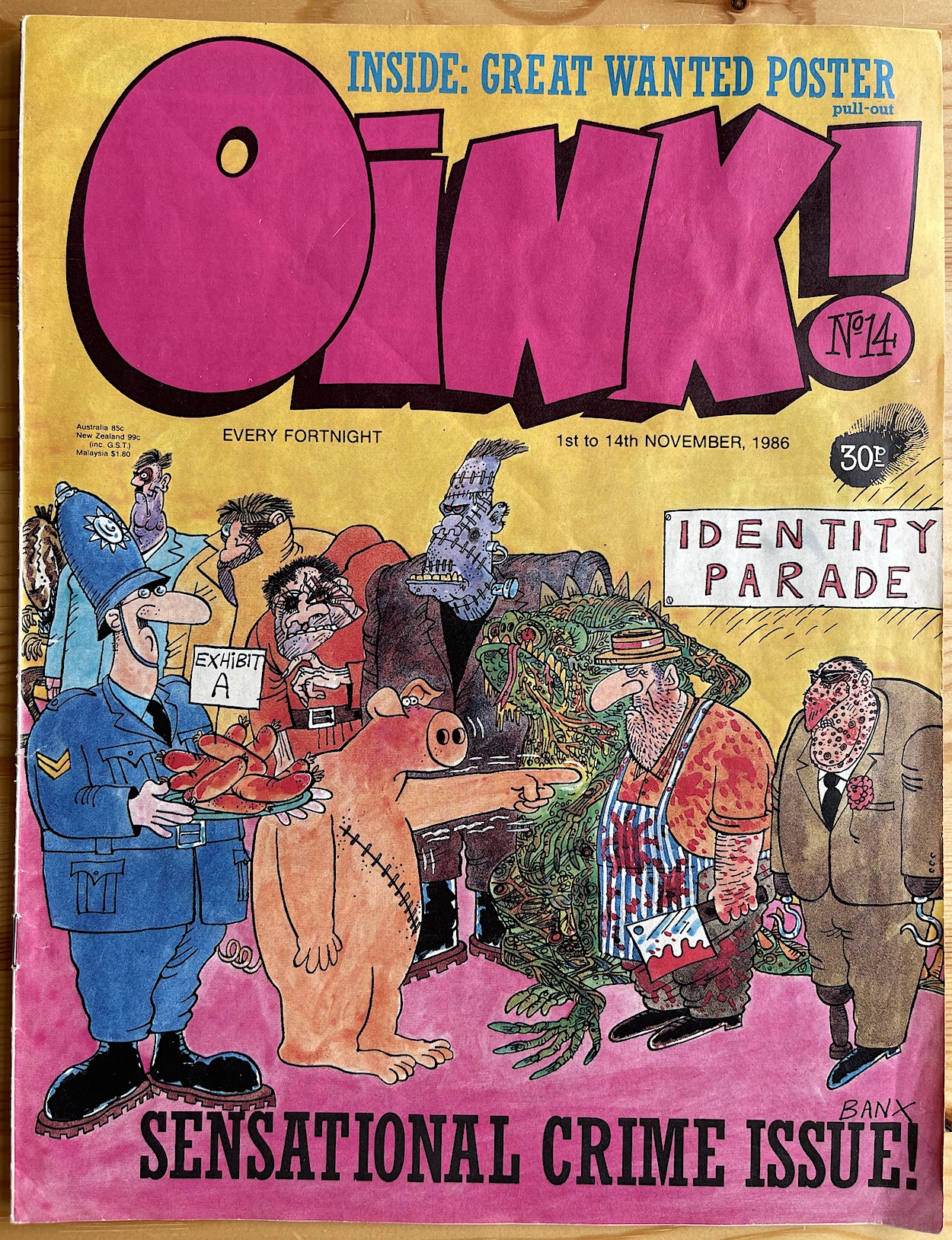
November 1986. The issue that started it all. A month-and-a-bit before my ninth birthday, while I shopped for sweets in my local newsagent’s I stumbled across a big, bold and very pink logo with a funny picture of a pig picking a butcher out of a police line-up. It was #14 of OiNK and it would end up becoming my first ever comic and a fundamental part of my youth. I was hooked the instant I read it and the next two years brought so much laughter it’s not an exaggeration to say the OiNK team helped form my sense of humour.

However, time moves on. After I moved out of home my parents decluttered and all but key editions of my comics collections were binned. Thankfully three OiNKs made their cut and The OiNK! Book 1988 would get revisited now and again, always making me (and friends) laugh no matter how much my age had advanced beyond the range of the comic’s target audience. Then in 2010 the sad news broke of the passing of Chris Sievey, better known as the papier-mâché-headed 80s megastar Frank Sidebottom, a staple of children’s Saturday morning TV and the pages of OiNK.
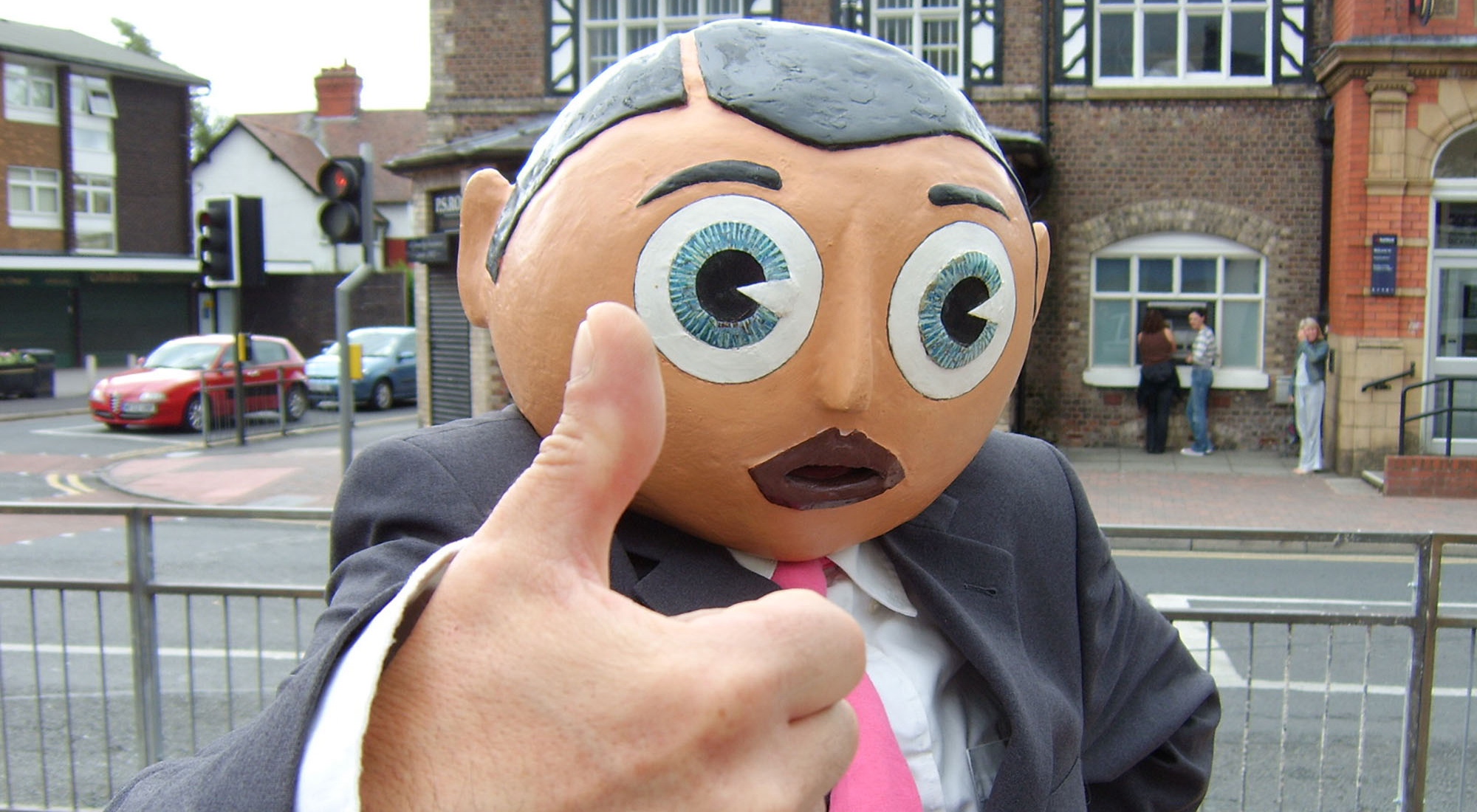
I dug out my three issues to relive some of his comedic moments and ended up buying a few more from eBay, and then began tracking down the full run. Surprised at how well they held up decades after they were written I joined the OiNK Comic Facebook group and was soon chatting with some of the incredible talent who had brought the comic to life. One of them was Lew Stringer, who reminded me that the anniversary of OiNK’s original release was fast approaching and he suggested I could read them on their original release dates and enjoy OiNK in real time.

You can see where this was headed. Looking for a project at that point in my life I began the original OiNK Blog and waffled away about each issue every fortnight. I eventually covered them all but when the host website I was using started to crash more frequently (and wishing to create more of a full website myself rather than a linear blog) I moved over here to WordPress and began the real time read through all over again from scratch. This version of the OiNK Blog is all brand new and much expanded over the previous version.
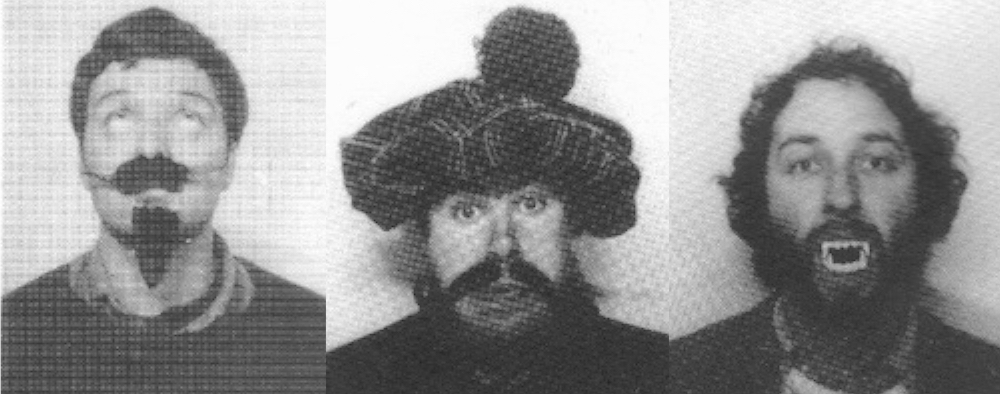
Back in the 80s the UK’s comics industry was slowly declining. In the days of fashion faux pas and sarcastic talking cars, television and computer games were suddenly direct competition for the attentions of the nation’s youth and OiNK was a bold move on the part of its creators and its publisher IPC Magazines to reverse that trend. OiNK would be a comic to deliberately break all the rules of traditional titles, with its three co-creators and editors (from left to right above) Mark Rodgers, Patrick Gallagher and Tony Husband bringing in an eclectic team to produce what they felt 80s kids would actually find funny.

Tony was working in a jeweller’s repair shop when Patrick met him, both of them cartooning part-time at that stage, and Tony introduced Patrick to the idea of working on children’s comics. About a year later in a Manchester library Mark saw Patrick writing comic scripts for the same titles he worked on (Buster, Whoopee etc.) and they went for a coffee and immediately hit it off. Patrick saw the potential in the three of them working together and it was in a railway pub in West Didsbury that they started to develop an idea for an alternative children’s comic. That idea would eventually become OiNK.

Its strips brought a fresh inventiveness to the comics scene, many of its cartoonists having never worked for the children’s market before. Jeremy Banx created Burp the Smelly Alien and Mr Big Nose, J.T. Dogg’s incredible artwork on Ham Dare and The Street-Hogs wowed readers, The Fall band member and future radio DJ Marc Riley dressed up as Snatcher Sam in photo stories and created his own strip characters, Lew Stringer got his big break with Tom Thug and Pete and his Pimple, the likes of David Leach and Kev F Sutherland were first published in the comic and a teenager by the name of Charlie Brooker landed his first paying job as a writer and cartoonist for OiNK. (Whatever happened to him?)

I’ve only mentioned a fraction of the talent involved, which also included the likes of Davy Francis, Simon Thorp, Davey Jones, David Haldane and so many more. Even veterans of the more traditional comics such as Tom Paterson and John Geering would pop up to spoof their own work and legends like Kevin O’Neill and Dave Gibbons would lend a hand (or a trotter) upon occasion! This was a children’s humour comic with a creative team and vision like no other and that’s a key reason why it hasn’t aged in the years since.
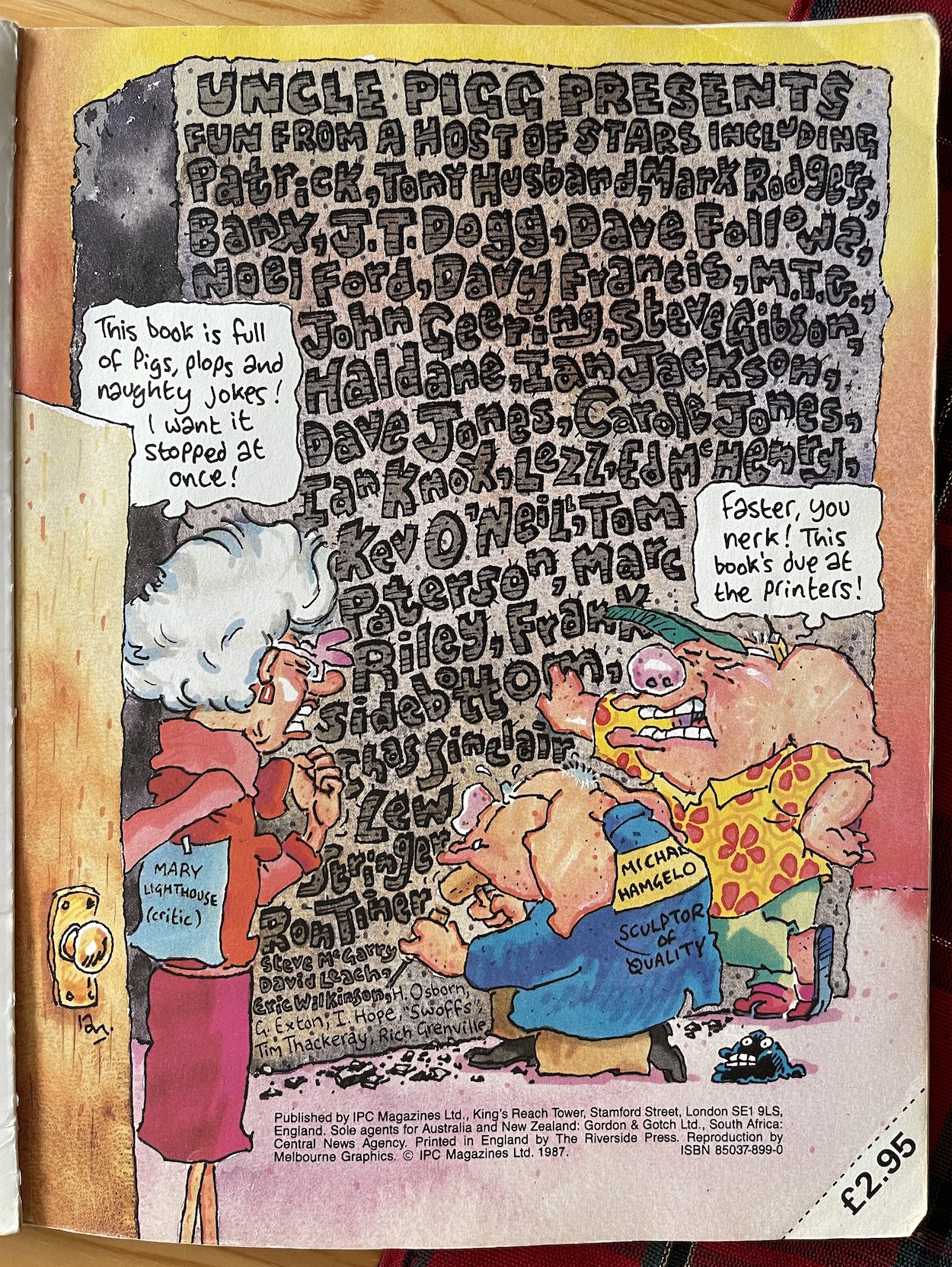
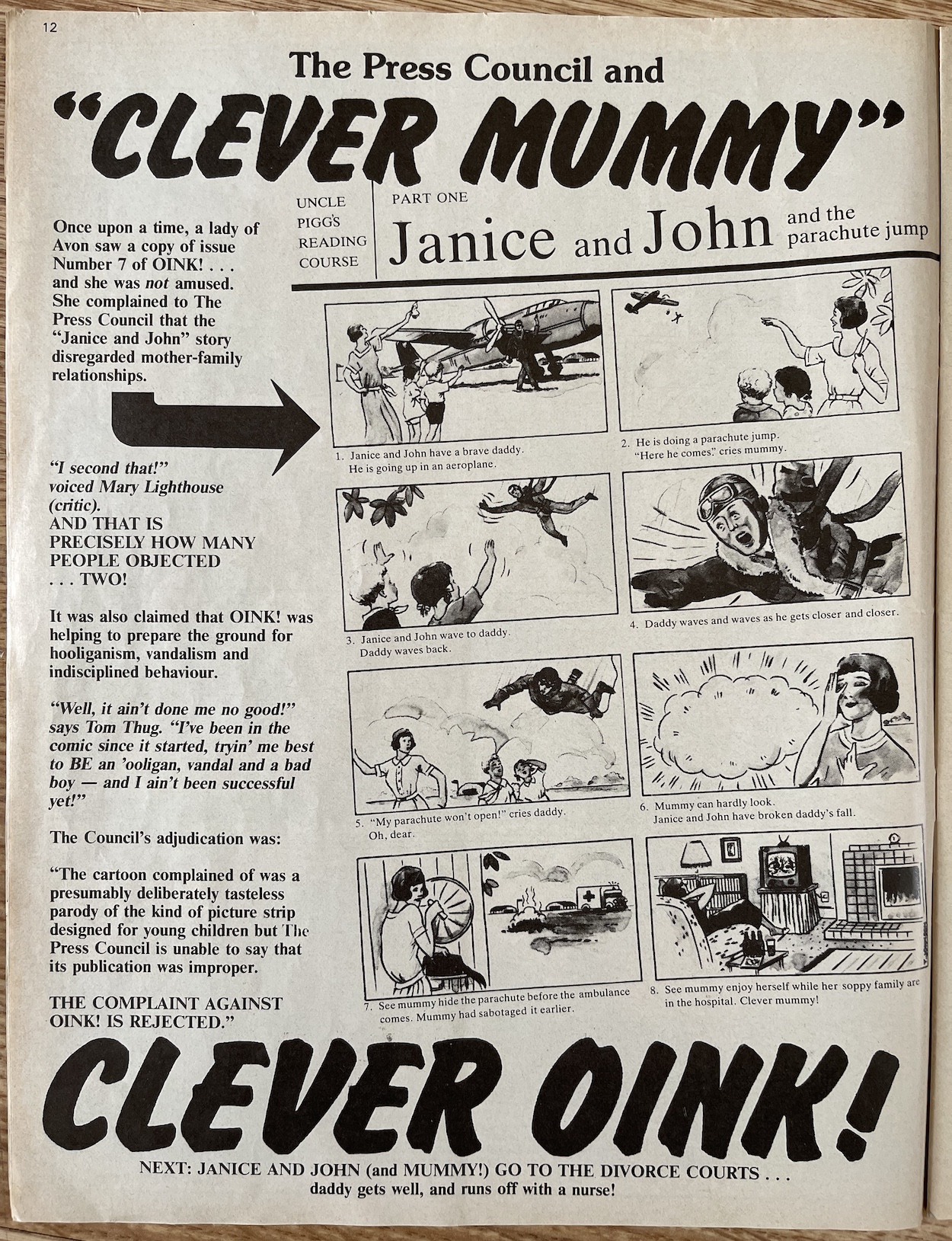
What always stood out for me were its parodies of those things we loved at that age, like the big toy and cartoon franchises of the day and even the other comics on the shelves. Famously a parody of classic children’s storybooks in a very early issue led to a couple of complaints to The Press Council. It was never upheld but it was enough for conservative retailers W.H. Smith to top-shelf OiNK away from the children. But the comic soldiered on and enjoyed a wonderful two-and-a-half-years in our little piggy hearts.

Very deliberately it was the punk rock of children’s humour comics and spawned a fan club, a vinyl record, clothing, a computer game and more. The story of OiNK is as fascinating as the comic was funny and this post is only the very tip of the plop, the tiniest little piglet of an introduction to what is still my very favourite, and as well as the funniest, comic of all time. The blog’s namesake rightly has the pig’s share of space on this site and you’ll find sections devoted to everything from its creation to its marketing, from its merchandise to its media coverage and everything in between.
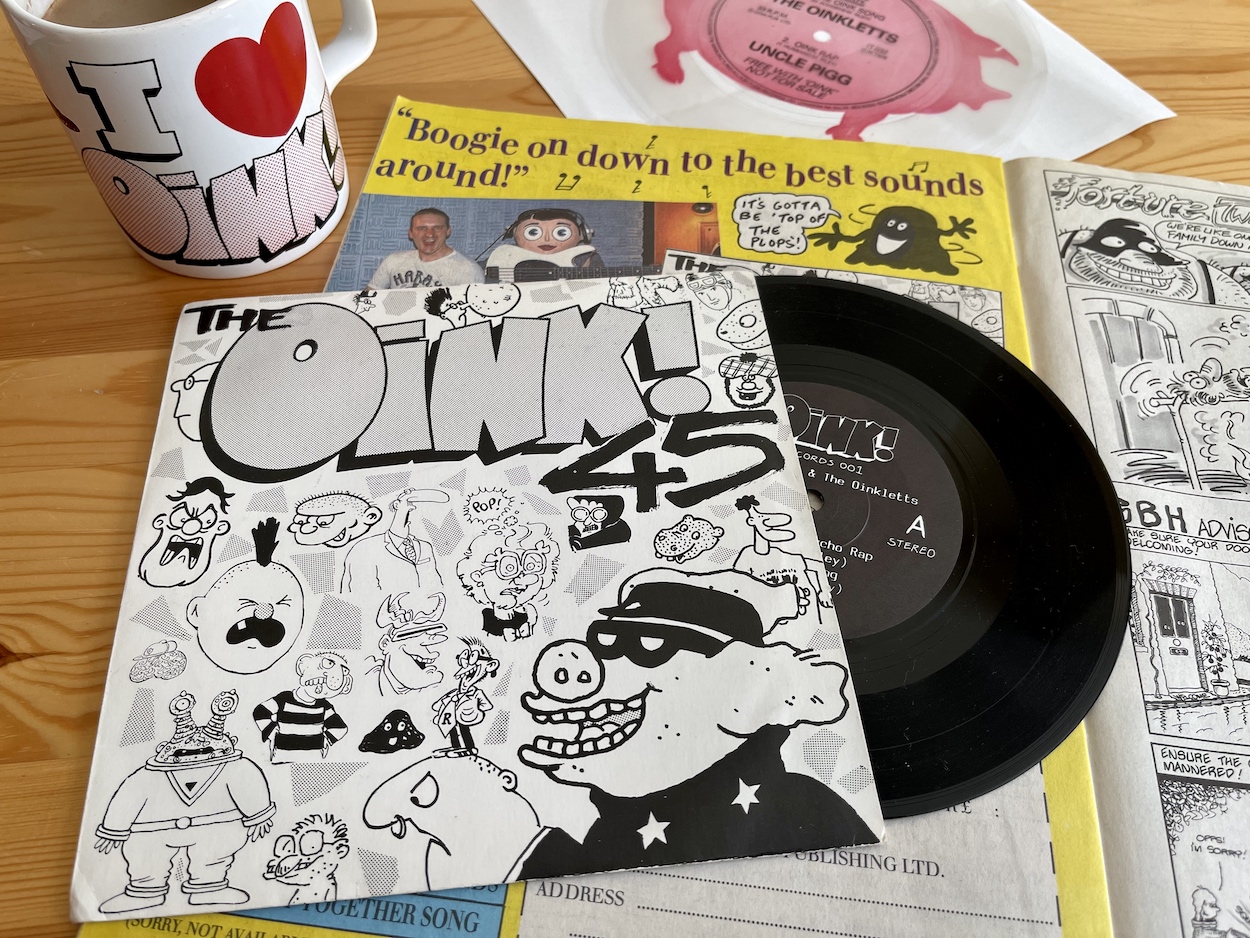
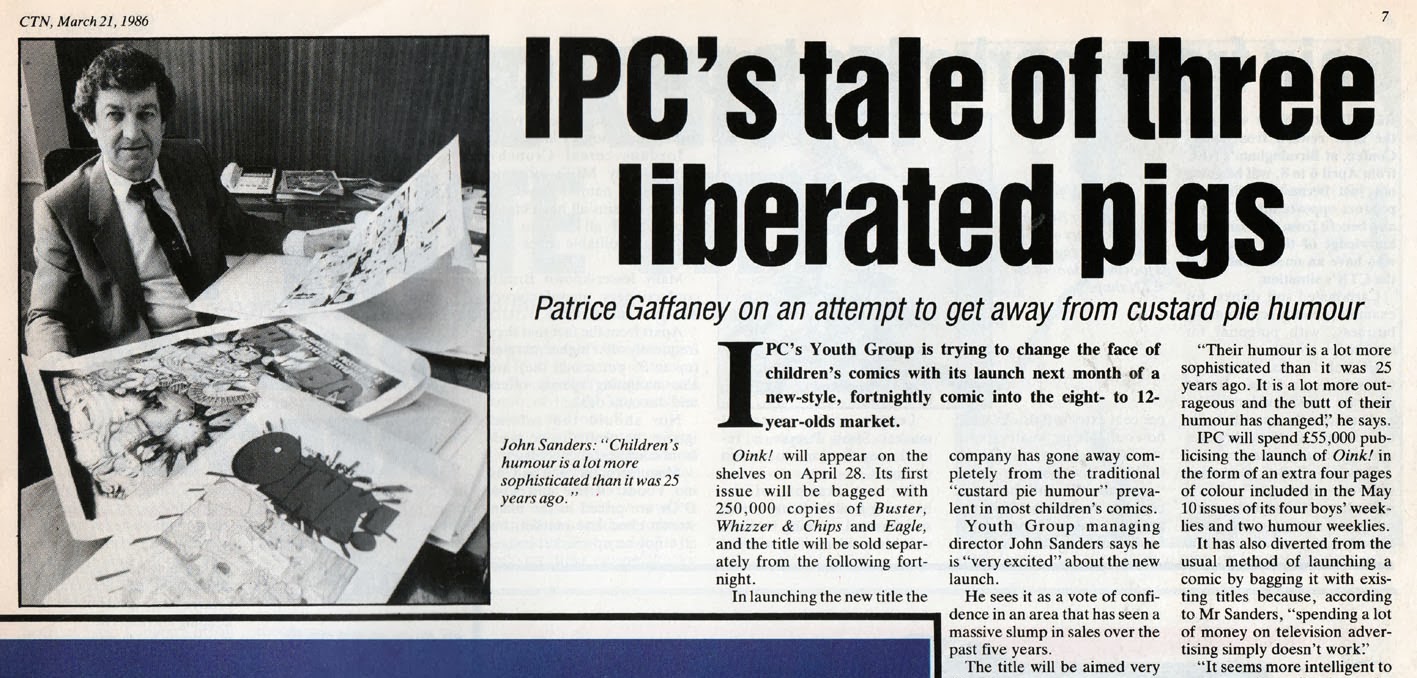
So, 35 years after its original release I decided to read through the whole run all over again and rebooted the entire blog as a full website devoted to reading not only this comic in real time, but also the others I collected in the 80s and 90s after OiNK introduced me to the medium. I hope you’ll enjoy all of the OiNK content so far and what’s to come in the future, and that you’ll have as much fun reliving the antics of its characters (and its creators and cartoonists) as I’m having. OiNK’s important place in UK comics history deserves to be remembered. More than that, its comedy deserves to be enjoyed for decades to come.
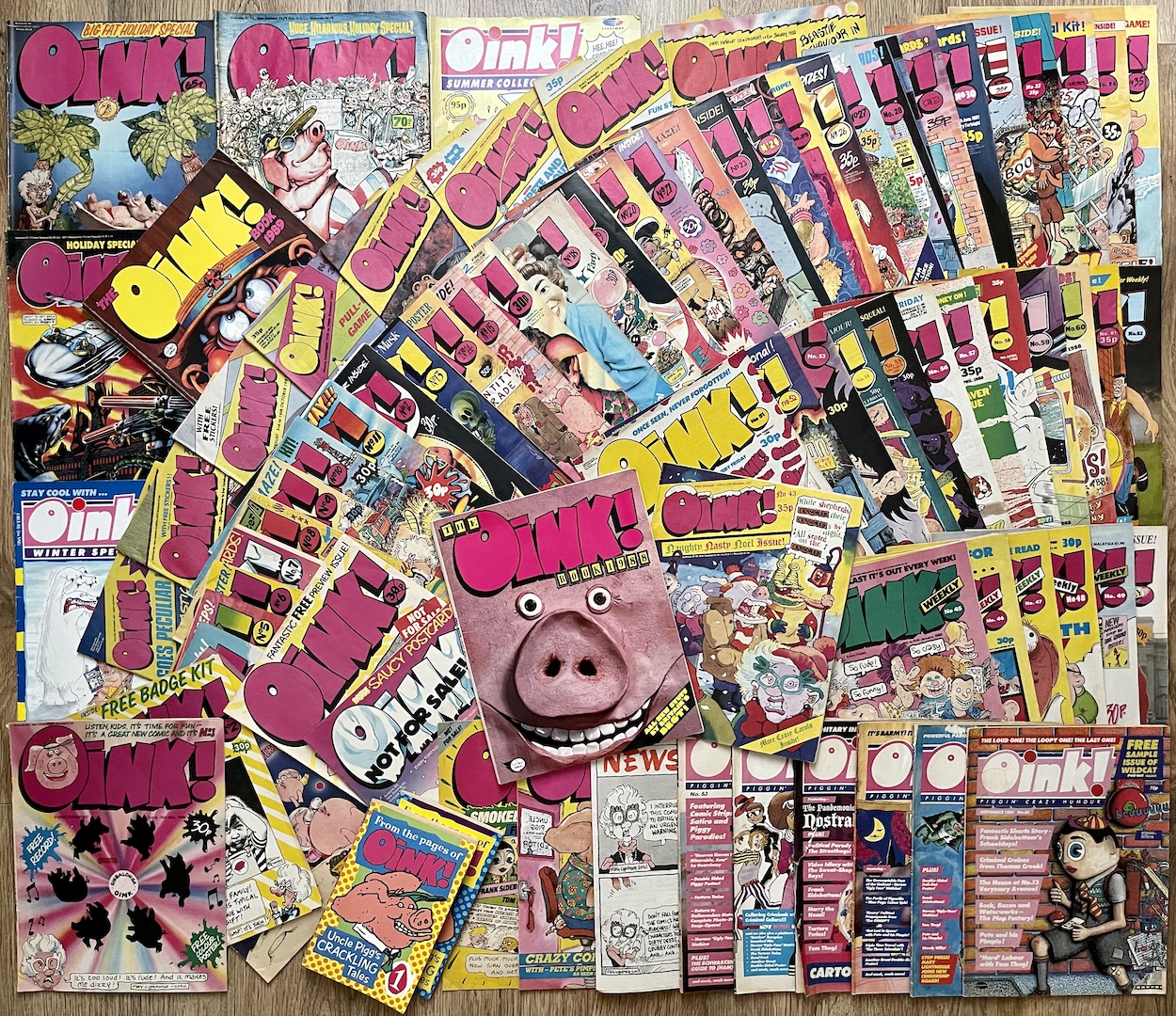
Let’s have some fun pig pals, as we make our way through this complete collection of complete and utter joy!
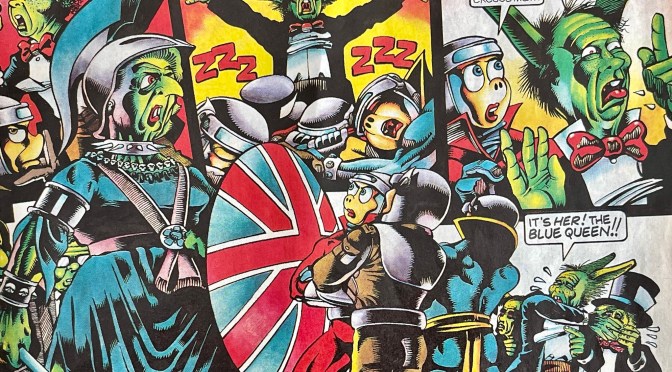
GO TO THE OiNK READ THROUGH

MAiN OiNK MENU

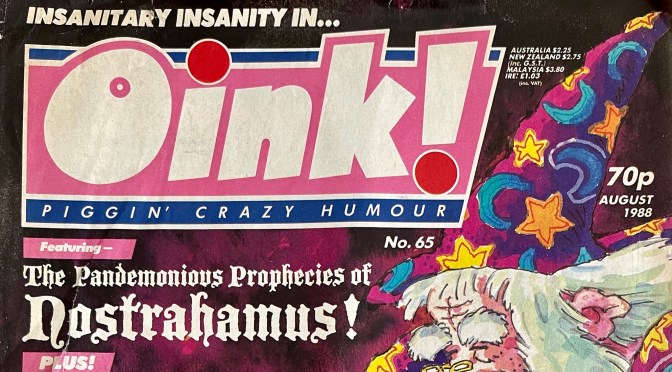
OiNK! #65: POLiTiCAL PORK
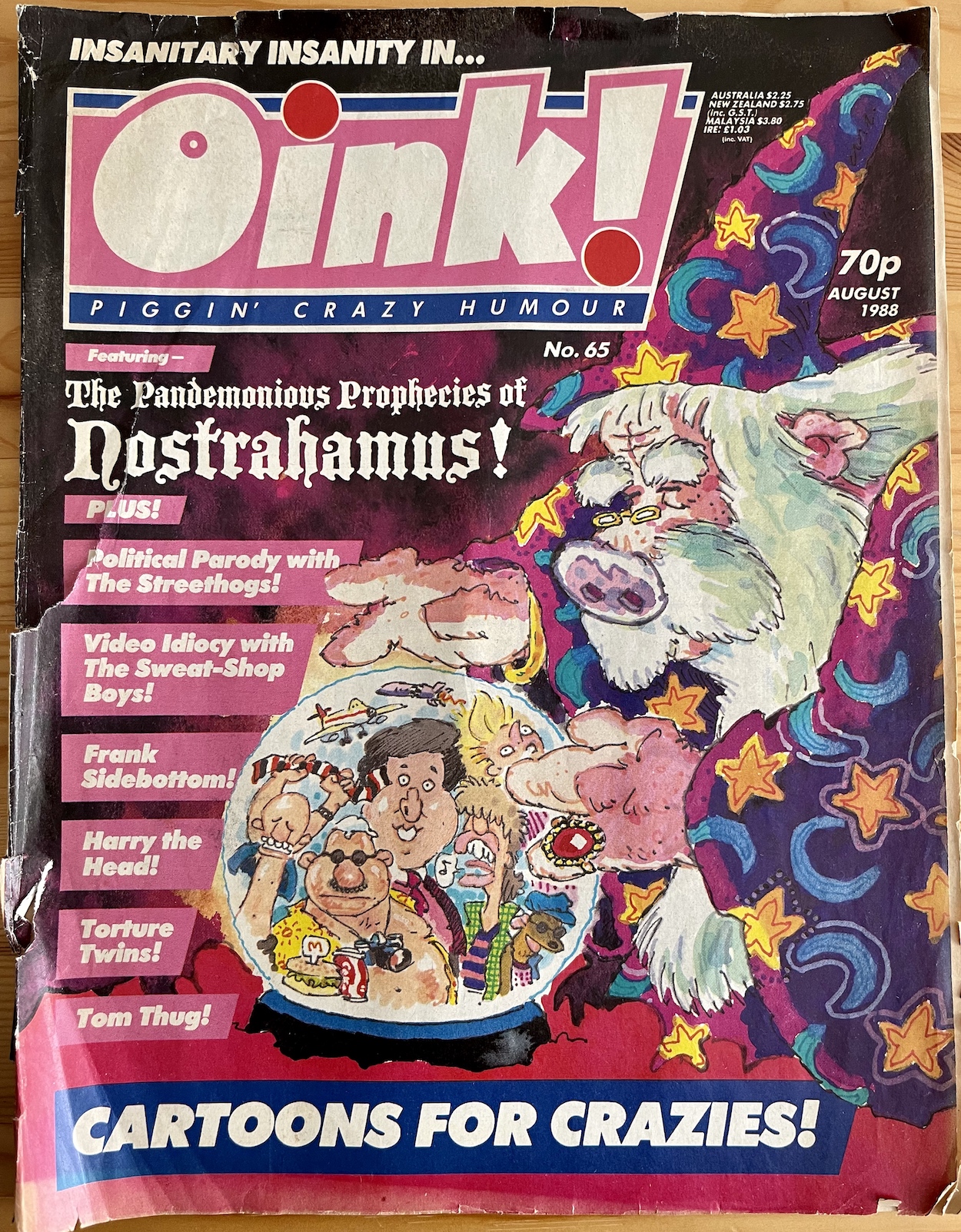
What we have here is the final Ian Jackson cover for OiNK, which is a sad moment. In fact by this stage Ian had finished his work for OiNK, with a page or two held back for publication in the issues to come. Not to take away from anyone else’s hard work of course but Ian was synonymous with the comic, as a child he was OiNK and his Uncle Pigg, Mary Lighthouse, Hadrian Vile, Golden Trough Awards and everything in between were highlights of every issue they were in.

Speaking of those characters, it’s also sad to see our editor Uncle Pigg permanently relegated to the letters page with no sign of Mary anywhere. On the cover of the first monthly there was a cheeky reference to two monthly humour magazines and it does feel like OiNK is trying to fit into that part of the market, instead of leading the way with something completely original for children’s humour comics like it had done for its first two years.

I remember thinking there was something different about OiNK now

Don’t get me wrong, it’s still got those regular characters and a unique line up of contributors who make me laugh like no other comic. As a kid it was still ‘OiNK’ to me, however I remember thinking there was something different about it now, other than the logo and frequency. Now I feel it was trying to be something different. I understand the change was well intentioned, but sometimes I wish IPC Magazines had never sold it to Fleetway Publications and that it had stayed as the themed 32-page fortnightly. But let’s concentrate on the fun!

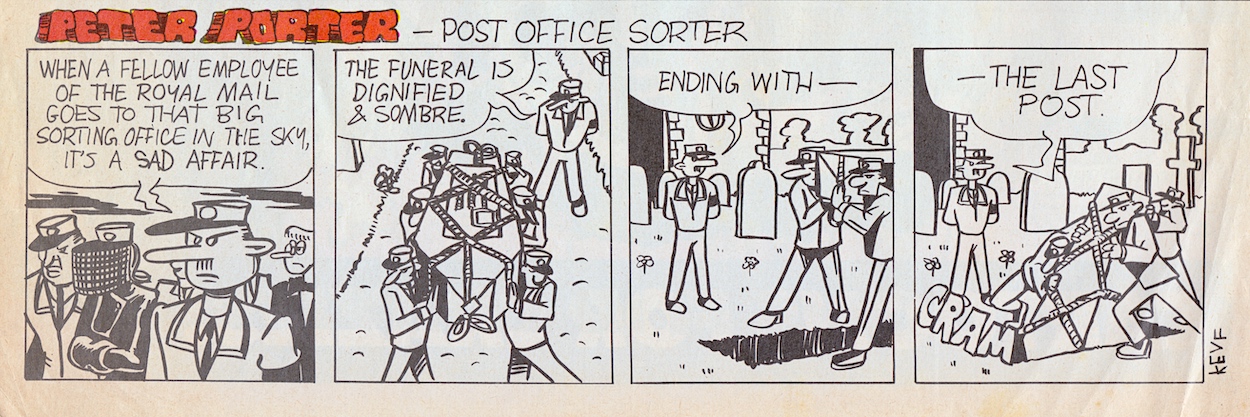
Peter Porter, Post Office Sorter by Kev F Sutherland only appeared in three issues (this being the middle of the trio) and that’s a shame, although with only three regular issues left I guess there just wasn’t a chance to make more. From the three we did get I always got the feeling he was a new regular character. After he hunted down a customer to threaten them over not including a postcode last issue, this month’s is somewhat different but no less funny, showing how Kev could get great mileage out of just about any concept he came up with.

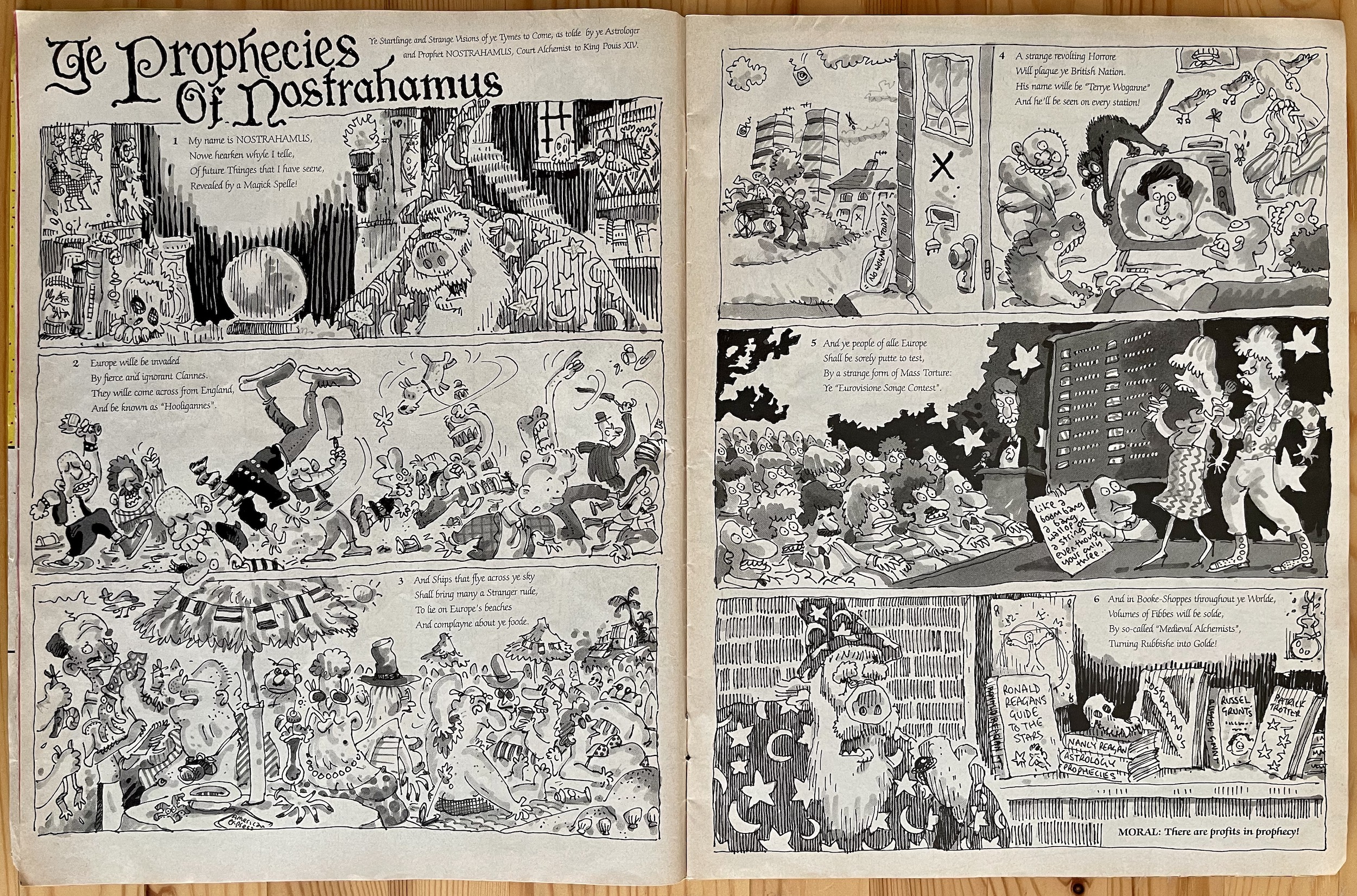
On to our cover star, although do I mean Nostrahamus or Ian Jackson? A little bit of both. For the cover character to only get two pages inside a 48-page comic feels a bit underwhelming but I think it may have originally been intended for the 24-page weekly OiNK where it would have been more of a headline act. Most likely written by co-editor Mark Rodgers it’s very funny and has lots of little moments you could easily miss, so take your time and you’ll find some real gems in here, such as the change to King Louie XIV’s name (sound it out).

That first page in particular feels very apt in this post-Brexit world we find ourselves, showing up the kind of people you just know voted for it without a hint of irony. I think this reads much funnier to me nowadays as a result. Nice little cameo from Tintin there too. Although, Ian’s art doesn’t feel as considered as normal, the people in the crowds not as detailed as they’d usually be for example. Perhaps it was one of his final pieces and had to be completed a little quicker than normal, but it’s still great to see his work regardless and of course there’s that wonderful cover.

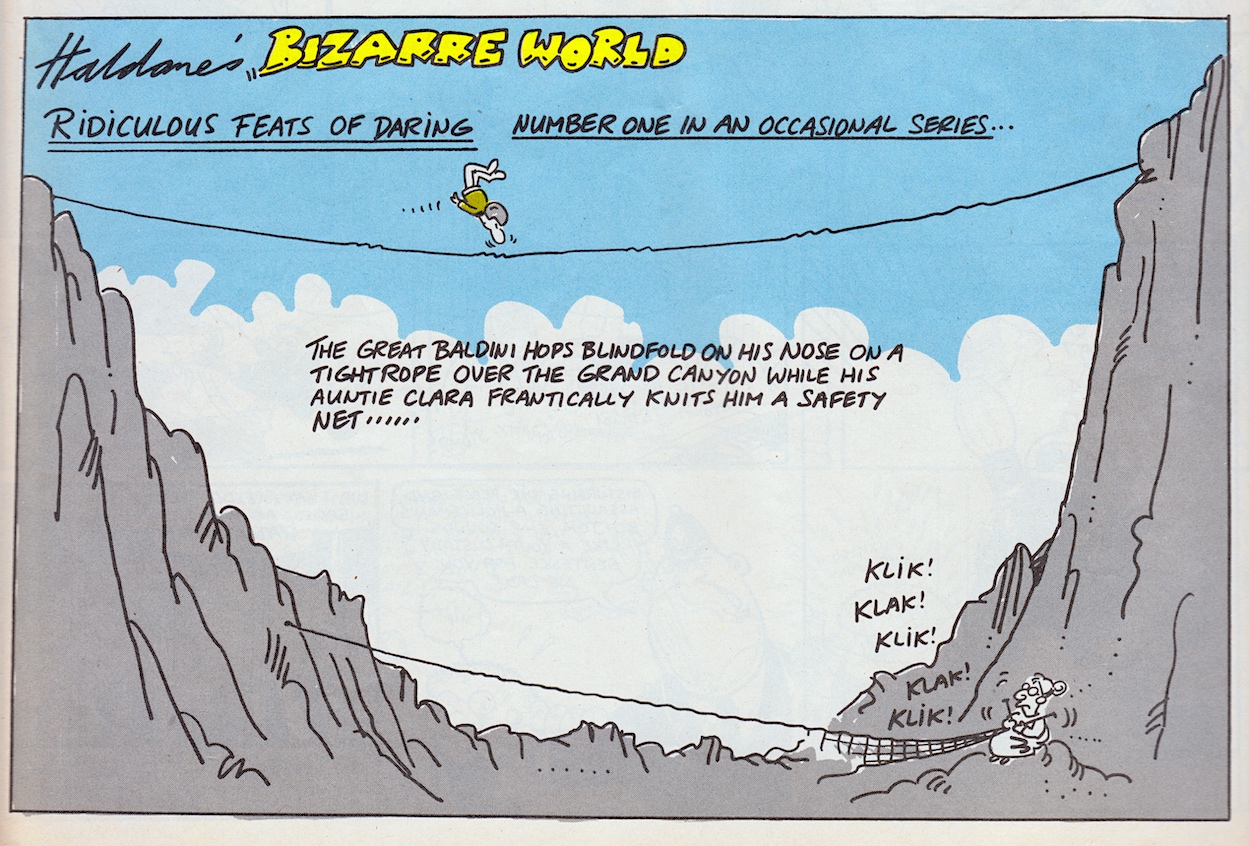
David Haldane’s Incredible Amazing Bizarre World was a new addition to OiNK when it became weekly and has been an increasingly bizarre (it’s in the name after all) and random part of the comic with a handful of usually unconnected examples of David’s wild imagination. This issue the title is shrunk and on this half-page there’s just the one example of the crazy nature of our world, it needs the space all to itself to really get across the gag.

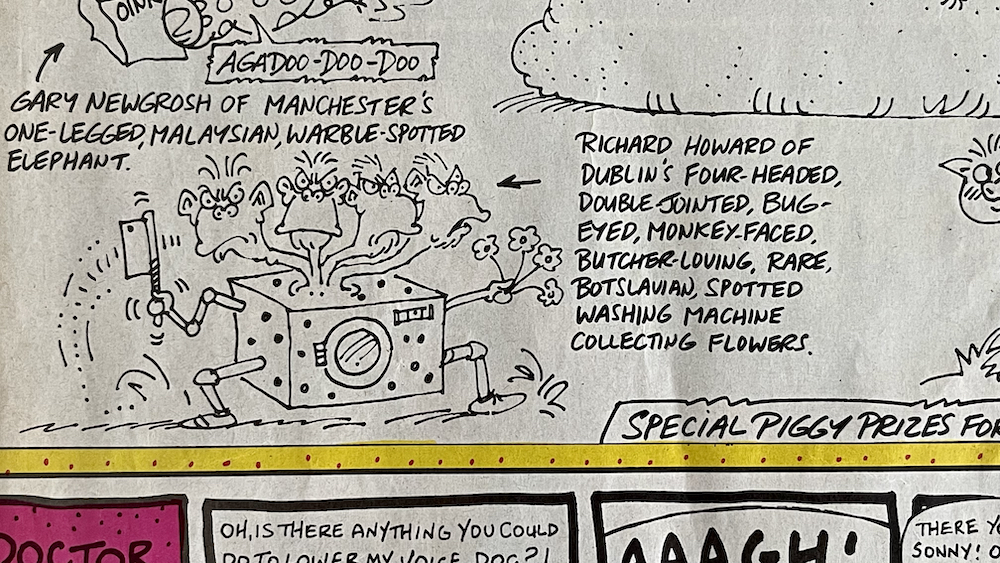
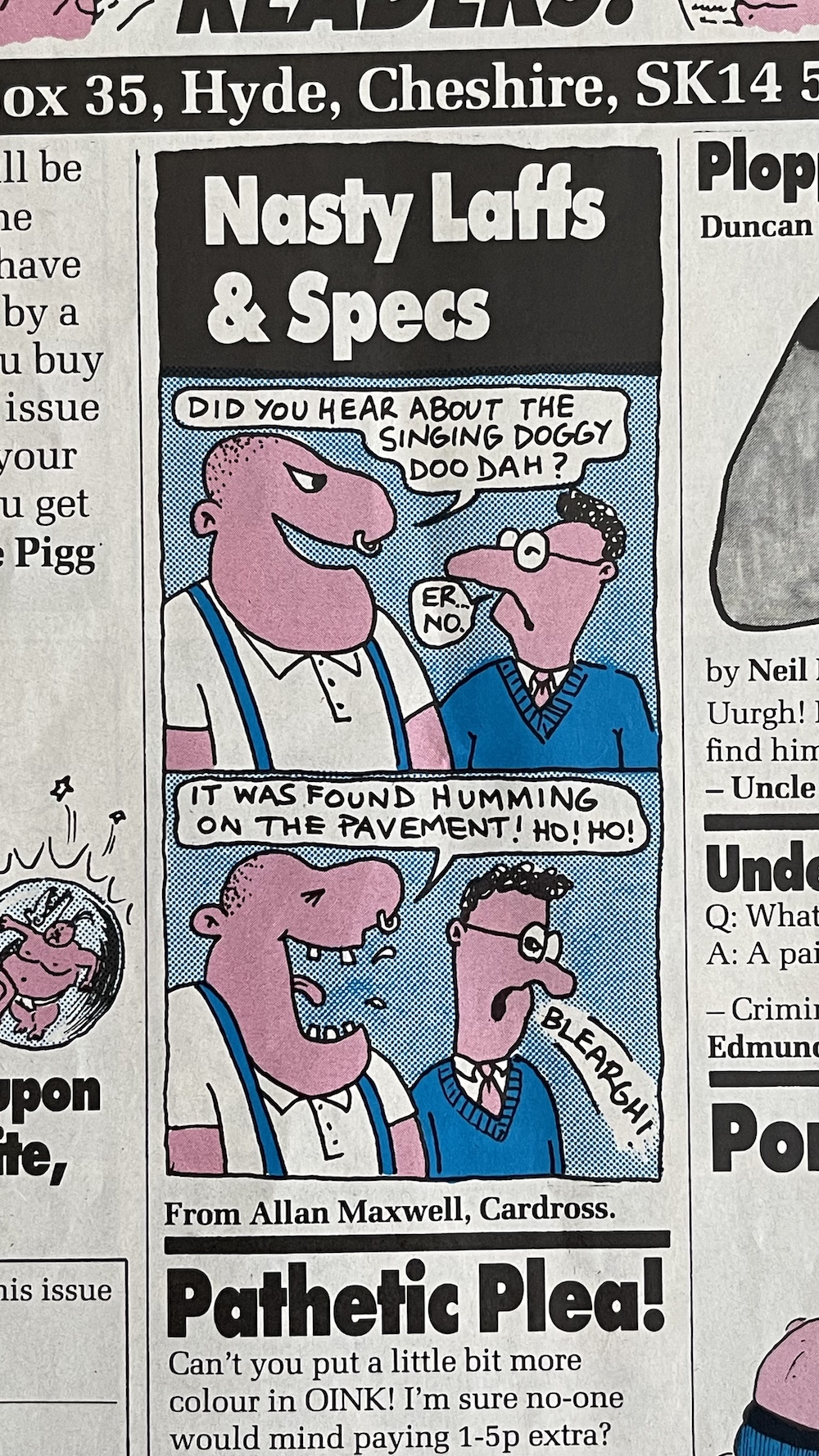
In fact there are three instalments this issue, although two of them are for competition winning entries from readers who wrote in and told David what they saw outside their window after he asked them to do so way back at the start of the year. Below, Richard Howard of Dublin’s entry was a particularly crazy entry, which David then had to draw of course! Another reader highlight can be found on the letters page with a particularly classic OiNK-like joke from Allan Maxwell of Cardross, perfect for Nasty Laffs and Specs.

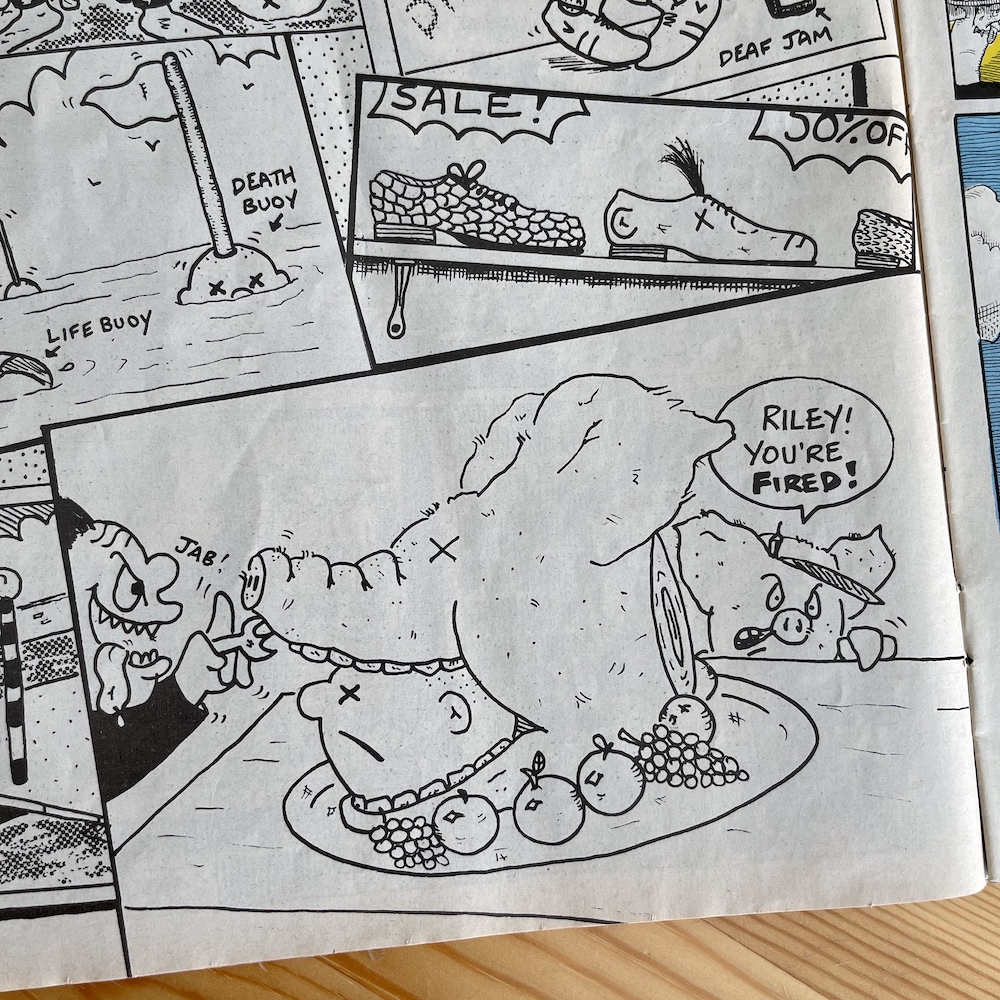
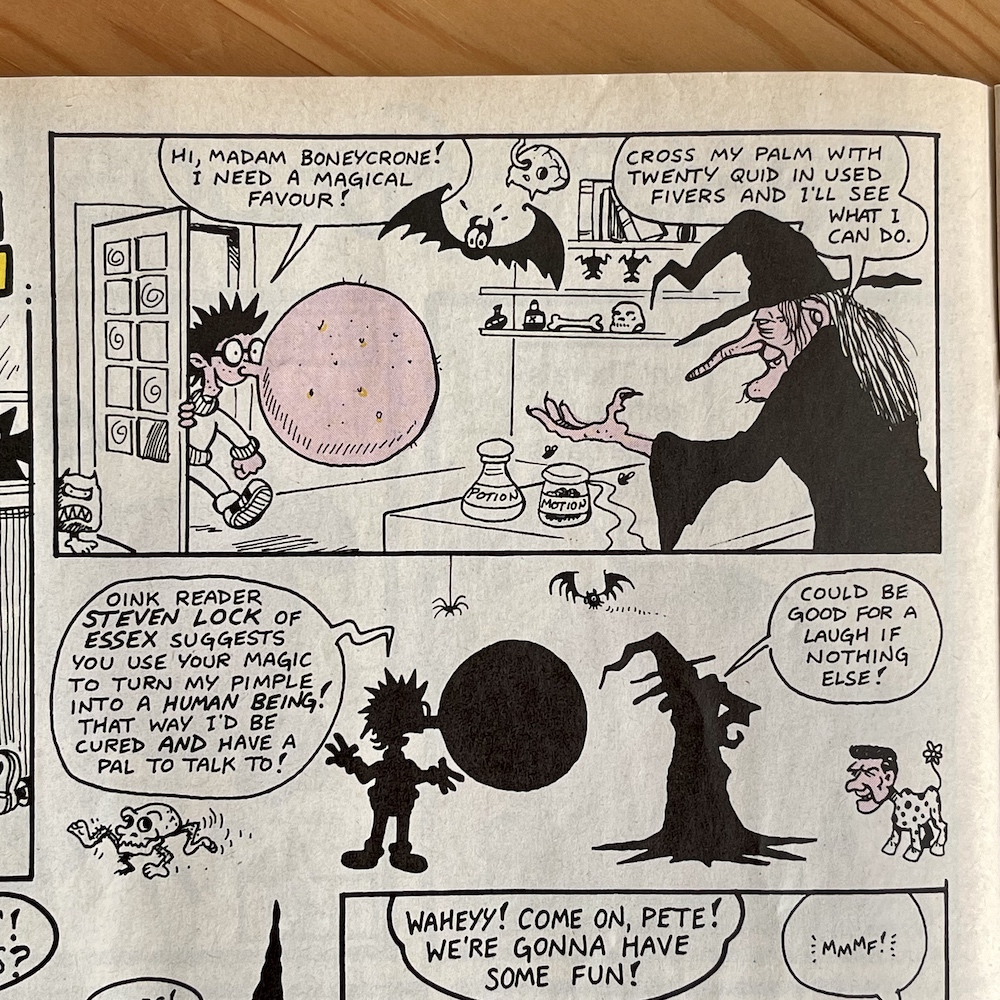
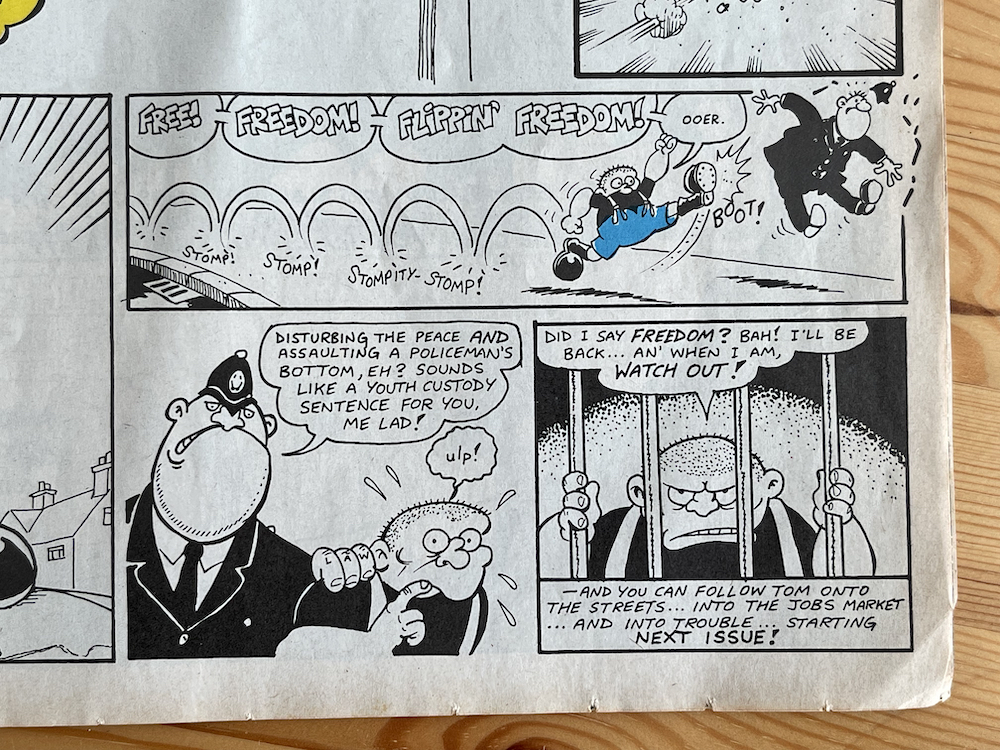
Marc Riley brings us a rather morbid instalment for one of his long-running characters called Less than 101 Uses for a Dead Harry the Head! No, really. I mean, just look at that shoe! Lew Stringer’s Pete and his Pimple and Tom Thug both enjoy double-page spreads and will be able to stretch out further in the months ahead. Pete’s strip has an amusing opening that plays against the expectations of readers when a magical cure is suggested by a pig pal and Tom does something a humour comics character never did before.

I remember those final panels and reciting Tom’s chant for years when school holidays rolled around, but little did I know how ground-breaking this strip was. Tom actually left school here, an idea Lew tells me was originally Mark Rodgers’. Humour comics characters are usually stuck in time, rarely developing beyond their original premise. OiNK had already played against type by having Hadrian Vile age along with the comic and seeing his mum’s pregnancy play out over months, but this was on another level. Next month Tom even signs on! I’ll definitely be including that as a highlight.


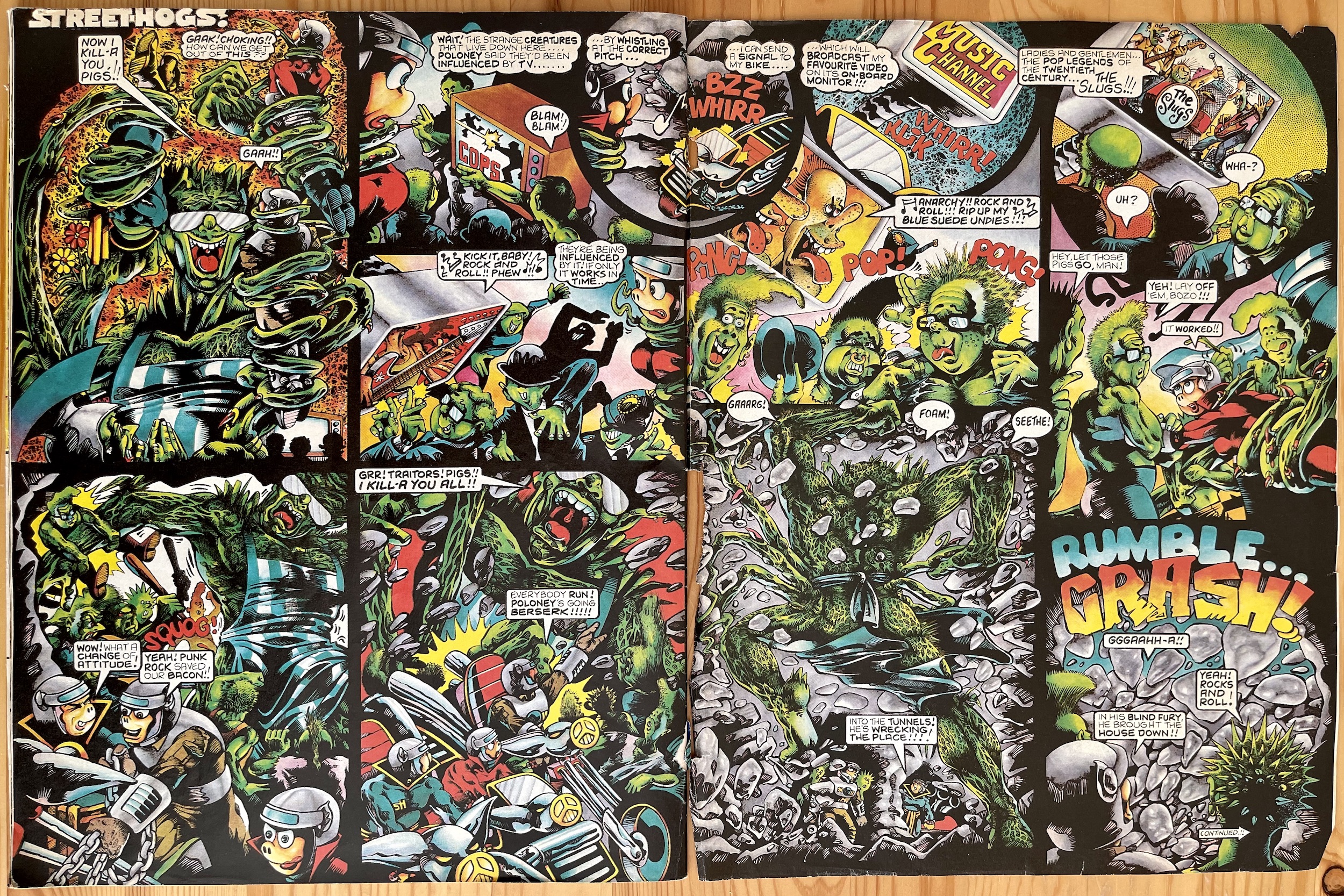
“Punk rock saved our bacon!”

Dirty Harry

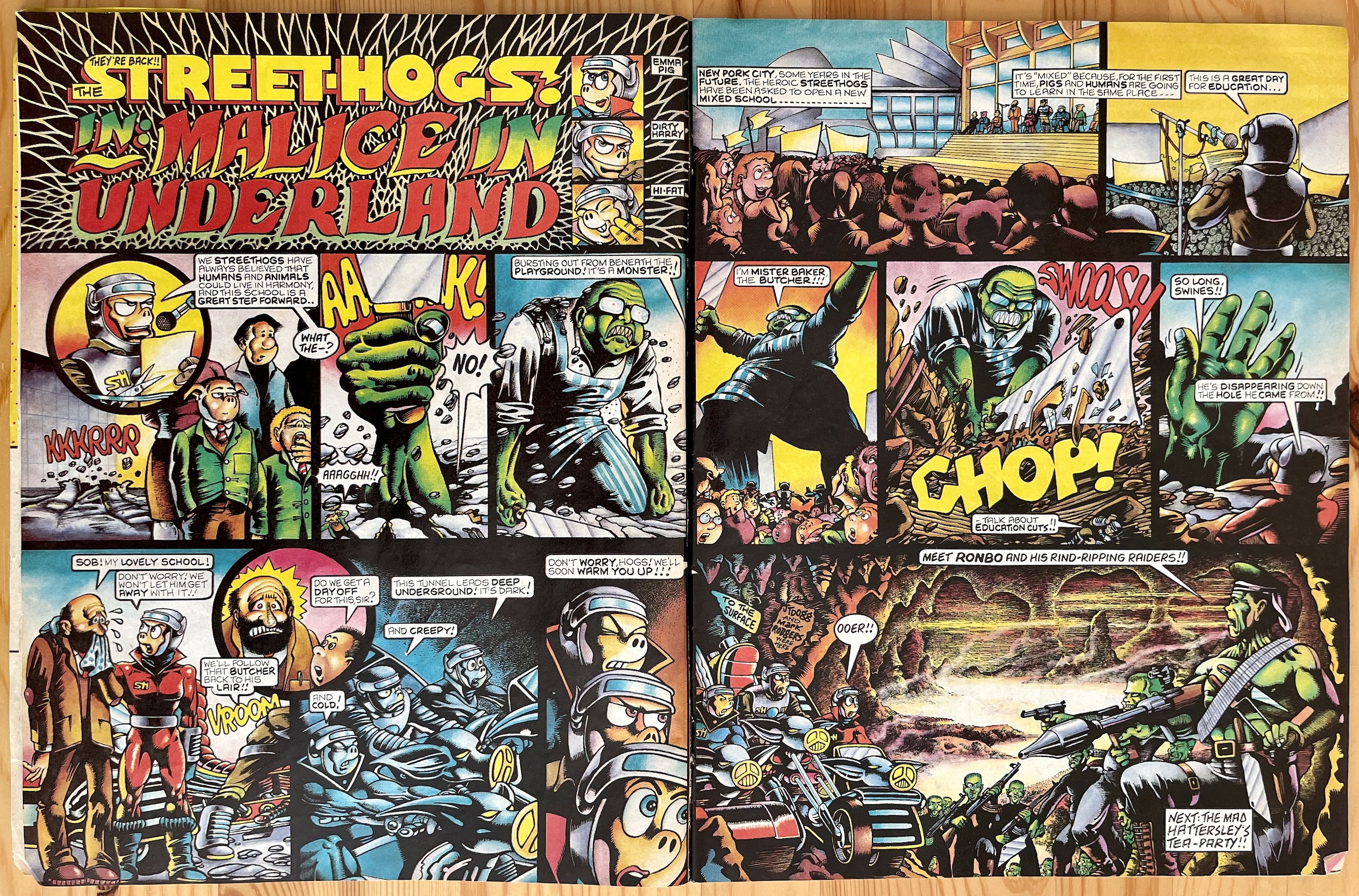
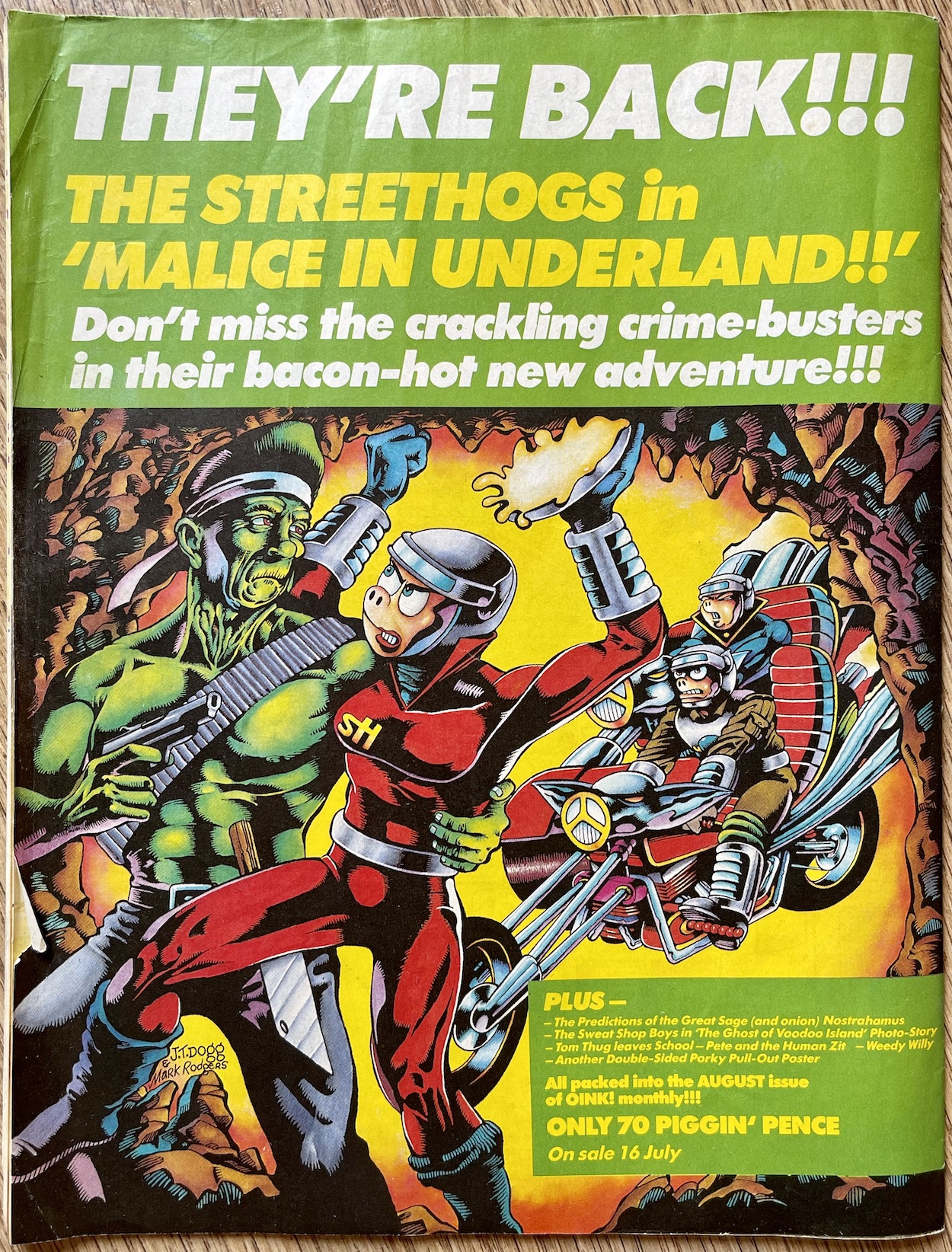
We’re on to our final strip for the issue already and the reason has nothing to do with a lack of quality content, it’s because this final strip takes up no less than 13 pages. Originally created as a six-part serial for the weekly, The Street-Hogs’ return is included in its entirety in this one issue, spread out throughout in its requisite parts. (They really should’ve been the cover stars.)

Their previous serial ended way back in #35 and told us Emma Pig, Dirty Harry and Hi-Fat would return in Malice in Underland and finally that story is here. While the title is the one mentioned almost a year ago I wonder how much the story was developed in that time because this is very much a political satire and seems more suited for the older teen audience the comic was now trying to attract. As an adult it’s much funnier than I found it at the time and makes this issue worth tracking down on eBay if you can. It kicks off with the first ‘mixed school’, something that would’ve been very topical for my fellow Northern Ireland readers back then.

The name of the giant butcher is a bit risqué for a comic I was buying at ten-years-of-age.

While not as long as their original 12-part story it’s longer than their first sequel but there’s a certain something missing. Or rather I should say someone. There’s no sign of Hoggy Bear who, given the fact he was a spoof of the pimp character from Starsky & Hutch I thought would’ve been perfect for OiNK’s new older target audience. The tone of the story certainly is. I can remember J.T. Dogg‘s beautiful, vivid artwork as a kid and loving certain aspects of it, even the renderings of politicians who I only knew from Spitting Image rather than the news.

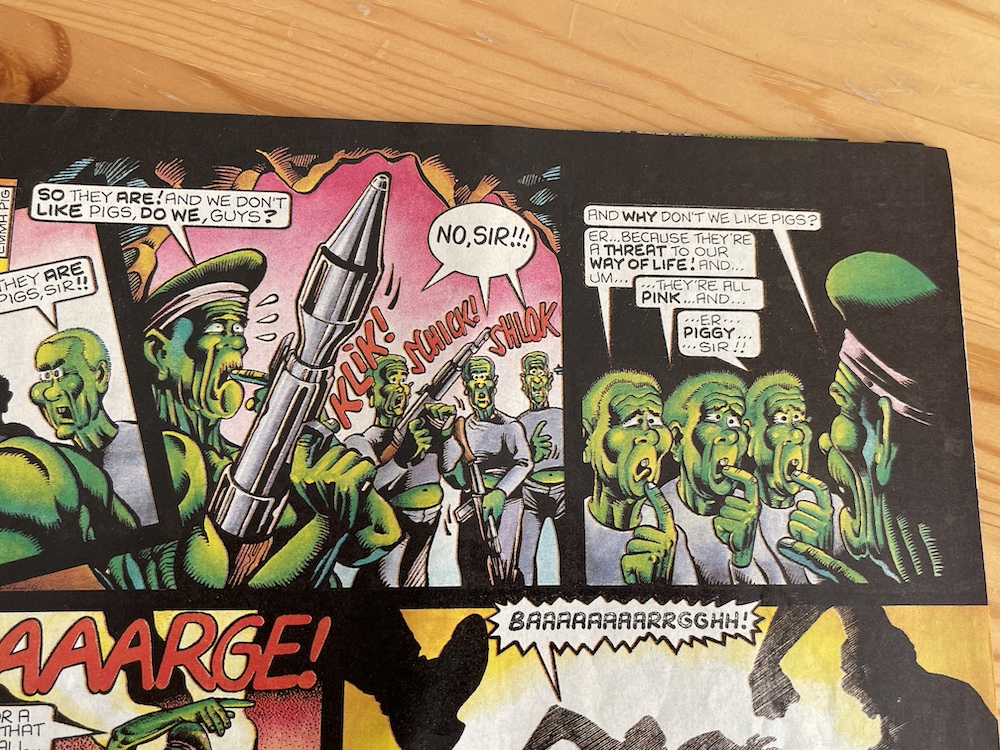
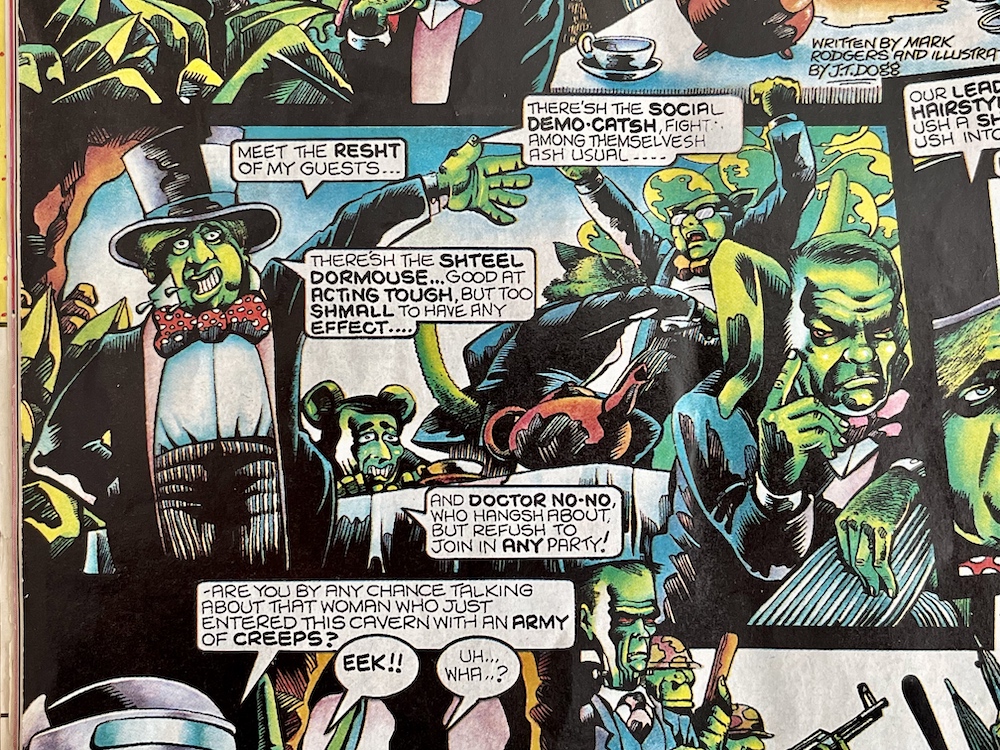
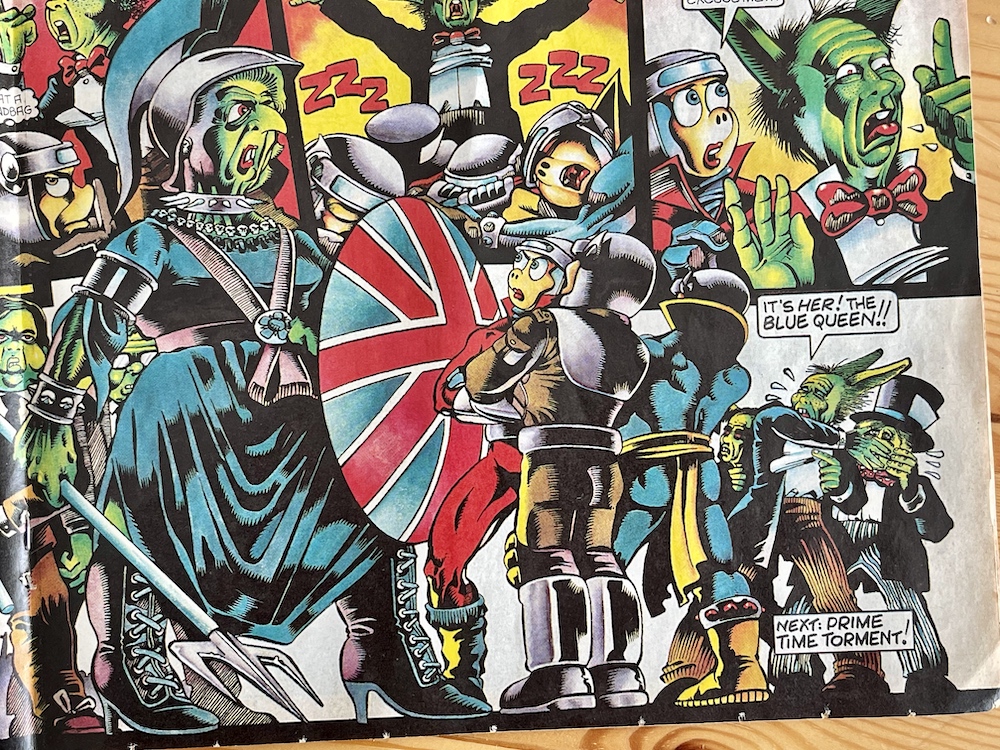
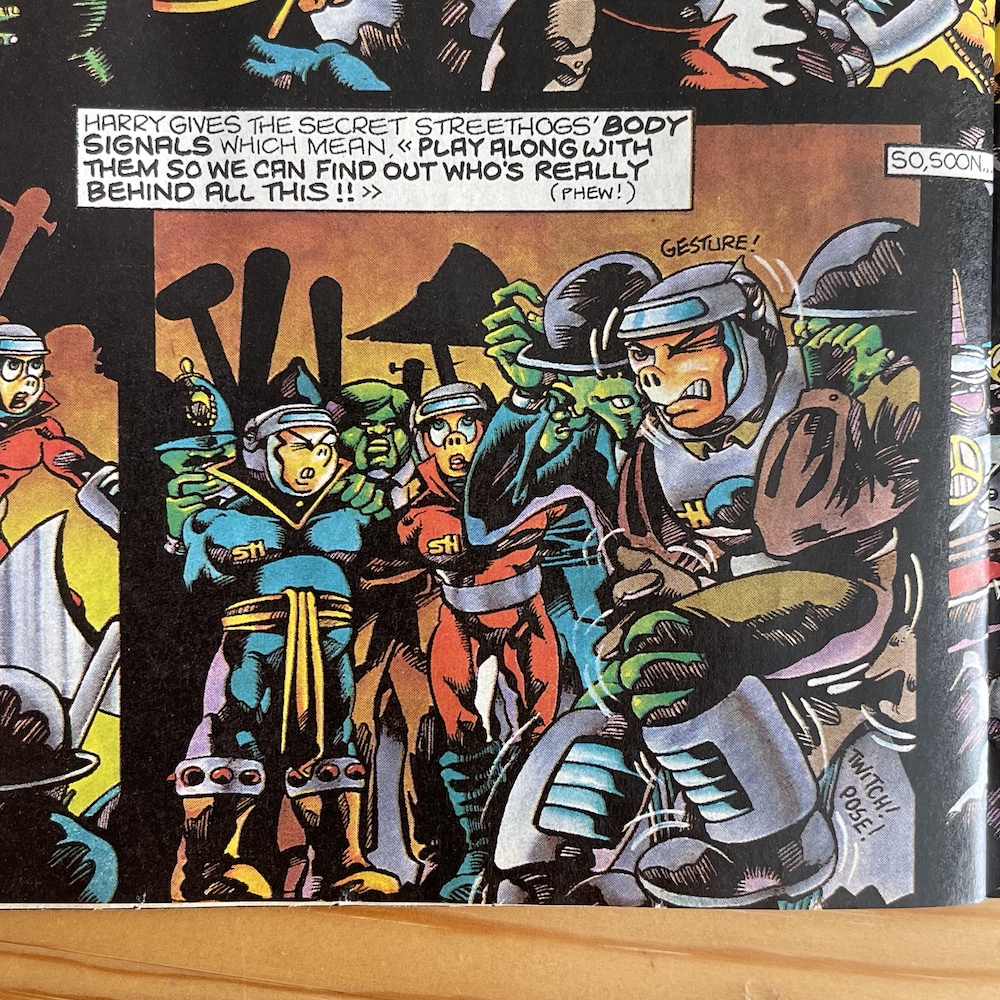
However, having read OiNK all the way through in real time to this point it seems a bit out of place, despite the reboot with #63. The comedic references to the names and characteristics of 80s politicians seem ill-suited to the comic we’ve come to know and love and I doubt they had much of an impact on my funny bone at the time. Thank goodness for our three heroes and their special brand of silliness (see Harry’s secret body language below) and the return of their arch-nemesis Don Poloney the mafia butcher!

Despite The Street-Hogs strips usually being just plain silly randomness I love the fact there’s actually a bit of continuation from the previous serial here, with Poloney’s appearance explained as being linked to one of the Triffics who ate him last year. The seeds of that particular plant were brushed down a drain and into the sewers, his brain living on in one of the seeds, from which he grew himself a new body. This could only have come from the mind of writer Mark Rodgers! Discovering underground caves with primitive creatures he brainwashed them with stolen videos from the surface of news and the aforementioned puppet show.

Moments like these remind us this is still very much an OiNK strip at its heart, even with the sometimes overbearing references to the politics of the day. As an adult reading this I find it all very amusing but I can’t help remembering my disappointment in it as a ten-year-old boy when so much of it flew over my head. Back to the story and the crazed god-like leader grabs the ‘Hogs with his vines and decides there’ll be no fancy schemes or death traps, just simple strangulation! That’s the cliffhanger leading into our three-page climax.

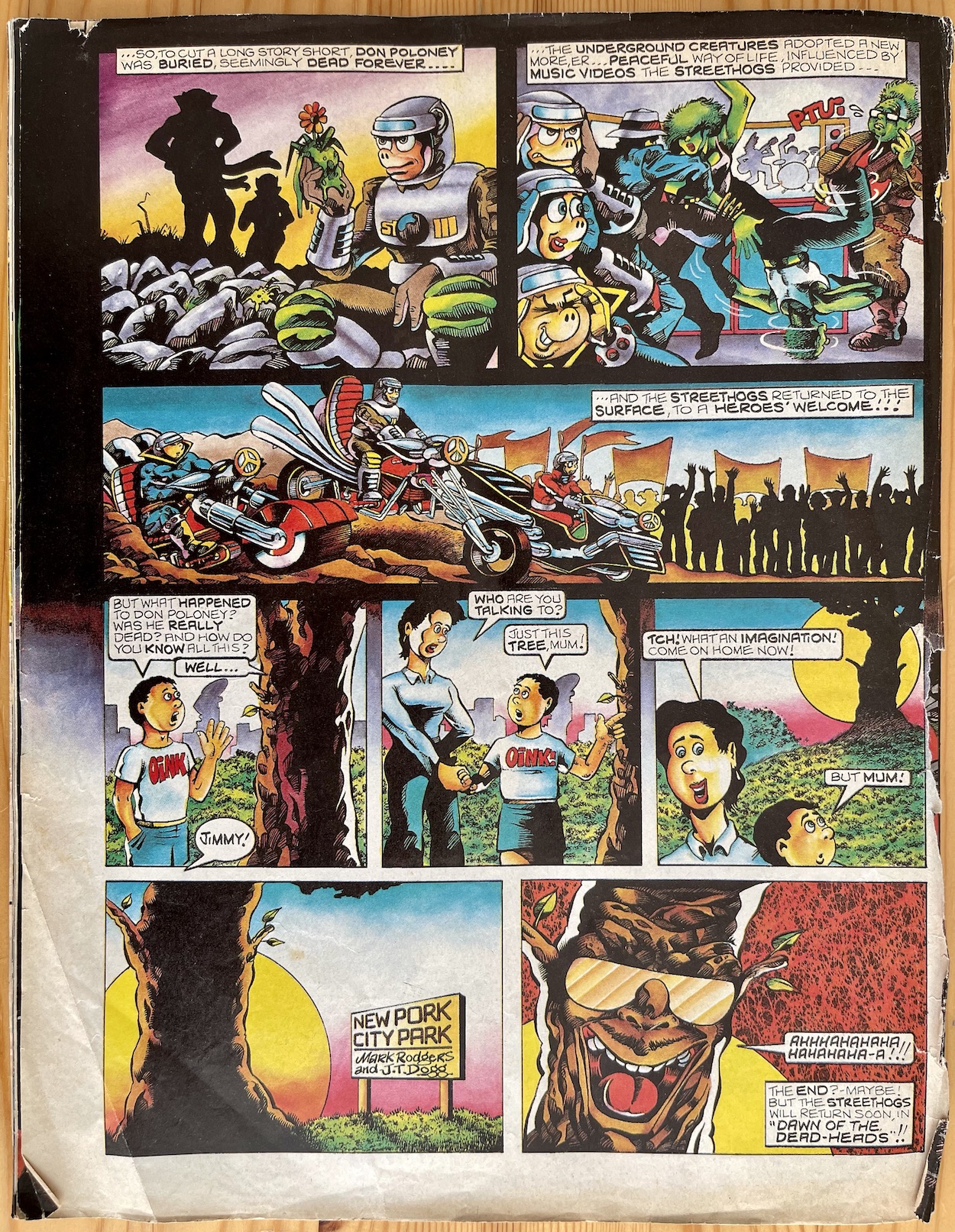
These final parts don’t have that big bold logo, just a photocopied name in the corner, but what the finale does have is a cameo from some former OiNK stars and it suits the comic perfectly that punk is the answer. It’s an enjoyable strip and funny today even if it doesn’t seem as wild as the Street-Hogs’ previous stories, lacking the wonderfully ridiculous cliffhanger solutions and basically having the one joke to play with (the political lookalikes) until Poloney shows up. But once he does it becomes classic Street-Hogs again. The back page of the whole comic was certainly memorable too. Such a shame that named fourth instalment never materialised.

There are no OiNK Superstar Poster reprints this month but there are half a dozen other repeated pages from earlier issues, albeit absolute classics. Seeing #6’s Fish Theatre with its page overloaded with puns always brings a smile to my face no matter how many times I read it. This issue was originally the first time I read these particular strips so they actually added a lot to the issue for the young version of me and even now, as a little selection of ‘Best of’ strips, their older (as in original, younger target audience) OiNK humour helps make this issue a great overall package.

The Next Month promo promises the return of a certain mechanical porker and from memory it’s a huge multipage strip, another originally meant as a serial but which actually ended up created specifically for the new format. That should be an exciting enough prospect to lure any pig pal, so make sure you come back on Sunday 20th August 2023. OiNK Monthly was released on the third Saturday of each month so we’ve five weeks to wait this time instead of four. Boo!

CRACKLiNG TALES BOOKS < > iSSUE 66

OiNK READ THROUGH MENU

MAiN OiNK MENU

COMiNG UP: OiNK! #65

Readers flicking to the back page of the latest OiNK back in 1988 may have let out a little piggy squeal of excitement when they saw the return of The Street-Hogs was almost here! Last appearing way back in #35, their return had been hinted at in the weeklies as one of a few new serials to come, but since then of course OiNK has gone through something of a facelift and so the entire story was printed in one issue! I can remember the excitement the moment ten-year-old me realised I could read it all at once when I flicked through the issue before reading it.

Surely there couldn’t be anything else in this issue that would be as memorable as that? Actually, there’s a first for a humour comics character which was kind of a big deal, at least for the remainder of the issues of OiNK. It’s right there in the caption on the bottom-right. I’m sure pig pals will remember which one I’m referring to. The next OiNK review will be right here this Sunday 16th July 2023. I can’t wait!

GO TO iSSUE 65

OiNK iSSUE PROMOS MENU

‘MORE OiNK’ MENU

MAiN OiNK MENU

THE LOST WORLD JURASSiC PARK #1: LiP SERViCE

Well isn’t this a pleasant surprise? We thought we’d seen everything the UK comics scene had to offer for Jurassic Park fans back when Dark Horse International’s excellent comic came to an end with #16 in November 1994. While it was a suitably open-ended finish to the first official sequel it had actually been cancelled with several more chapters of the American comic to go. Not that we knew this.

Three years later in the summer of 1997 Steven Spielberg’s The Lost World Jurassic Park appeared in cinemas and I have very fond memories of going to see it, at one point jumping out of my skin so much (when one of the Velociraptors poked its head beneath a door, if you’ve seen it you’ll know the moment I’m referring to) that I made my friend beside me jump, which in turn made me jump again! Cue nervous laughter while our hearts came back down to a normal rate. I loved that film. I didn’t know there was a comic to match though, something I’m making up for now. Here is #1, edited by Down the TubesJohn Freeman, no less.

Despite this being from a completely different UK publisher (Titan Magazines) the US strip is once again from Topps Comics. Their continuation had come to an end and now their adaptation of this movie would contradict everything they’d previously created. Obviously this couldn’t be avoided, Michael Crichton’s second novel and the sequel movie were never going to follow what the comics had done. That ‘What Has Gone Before’ is lifted straight from those Dark Horse issues which is a nice touch.

However, the opening editorial seemingly makes some early errors straight out of the gate. Already established is how John Hammond spent many, many years with his dinosaurs before inviting Dr. Alan Grant and Dr. Ellie Satler to the island, it wasn’t something he threw together in a few years. More glaring for us with hindsight is the suggestion the dinosaurs were destroyed. We know they weren’t but only from later films and to be fair the sequel novel also said they were all destroyed, so that’s lifted from the book rather than the film.


“All along we have held significant product assets that we have attempted to hide, when we could have safely harvested them for enormous profit!”

Peter Ludlow

I should mention I haven’t read Michael Crichton’s second Jurassic Park book, in fact I was surprised to find out recently Dr. Ian Malcolm was the main character in it after he died at the end of the first book. (That’s properly explained, apparently.) Of course in the movie he didn’t die so we don’t need to worry about that here. The opening scene is from The Lost World movie but was actually based upon a story point from the first novel that didn’t make it into the original film. The differences between the second book and movie is something this issue will touch upon later. For now, let’s see how that story translates to comic form.

After the opening comes the first of two deleted scenes which were filmed but never made it into the final cut, although they can be viewed as extras on DVD, Blu Ray and digital. It involves the loathsome, slimy character of Peter Ludlow, nephew to John Hammond, perfectly portrayed by Arliss Howard in the movie. Cut by Spielberg because he felt it slowed the pace of the film, I initially thought it should’ve been included. While it’s particularly pertinent today when certain politicians seem more determined than ever to rape the natural world (as Ian Malcolm put it) for profit, now I agree it was right to cut it, although for different reasons.

It mentions the destruction of all the animals and the park after the first film and buying media and political silence, as well as paying out millions of dollars in wrongful death settlements to the families of the characters who perished. Just as a side note, for the first time John Arnold’s death is mentioned in comic form after he just disappeared in the first adaptation. As such, this scene’s inclusion means the editorial was actually correct for this version, but it’s good it was deleted from the movie so that the animals survived.

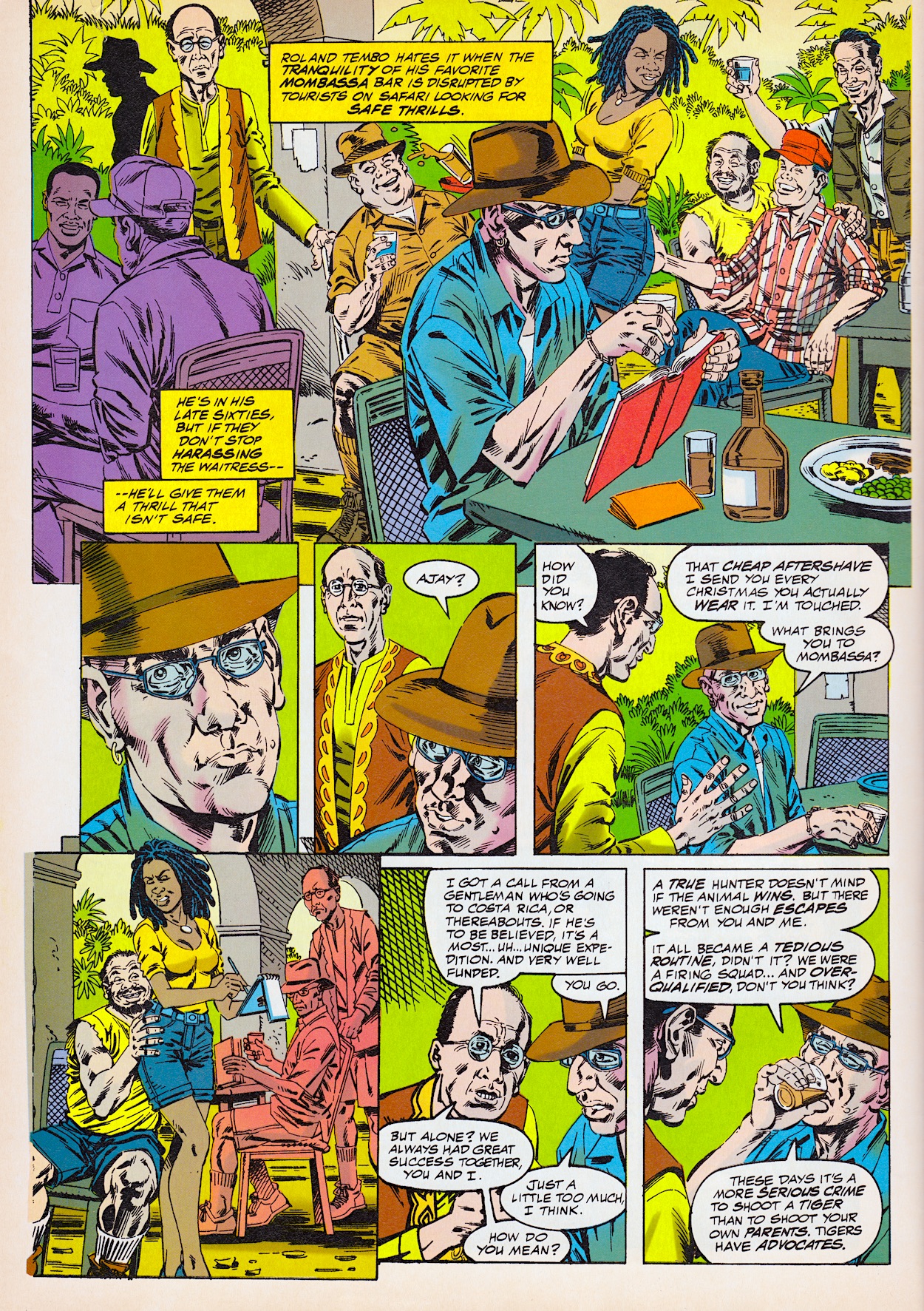
The other deleted scene involves Pete Postlethwaite’s animal hunter Roland Tempo. I’m still sad about this being cut from the film because it adds some more depth to his character. While a person who hunts animals for sport and money is always going to be loathsome, at the end of the film after he’s helped capture the Tyrannosaurus rex alive for InGen he’s mournful for what he’s done. Through his experience in the story he changes and realises the devastating consequences his actions have had.

A perfect balancing job of having a clear likeness without sacrificing what makes a good comic book character

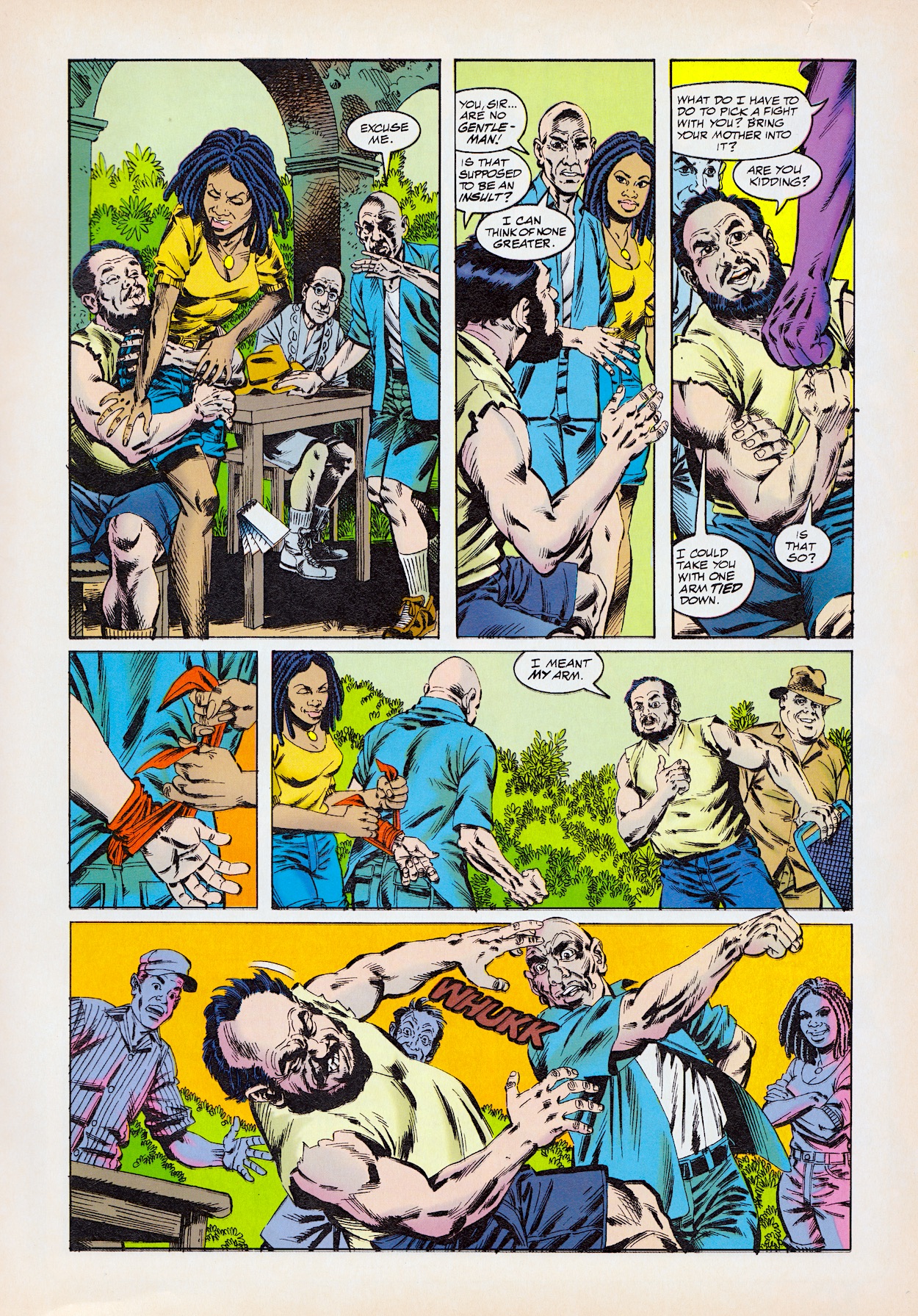
This scene sees him standing up for the honour of a lady some American tourists are hassling and he does it in a rather funny way, playing on the fact he knows they’ll assume he’s a fragile old man. He has no interest in further game hunting until his friend and assistant Ajay tells him what it is InGen want him to hunt! Again cut for pace, when viewed the scenery and setting do feel a bit too similar to the scene setting up the character of Denis Nedry in the original, even though it plays out very differently.

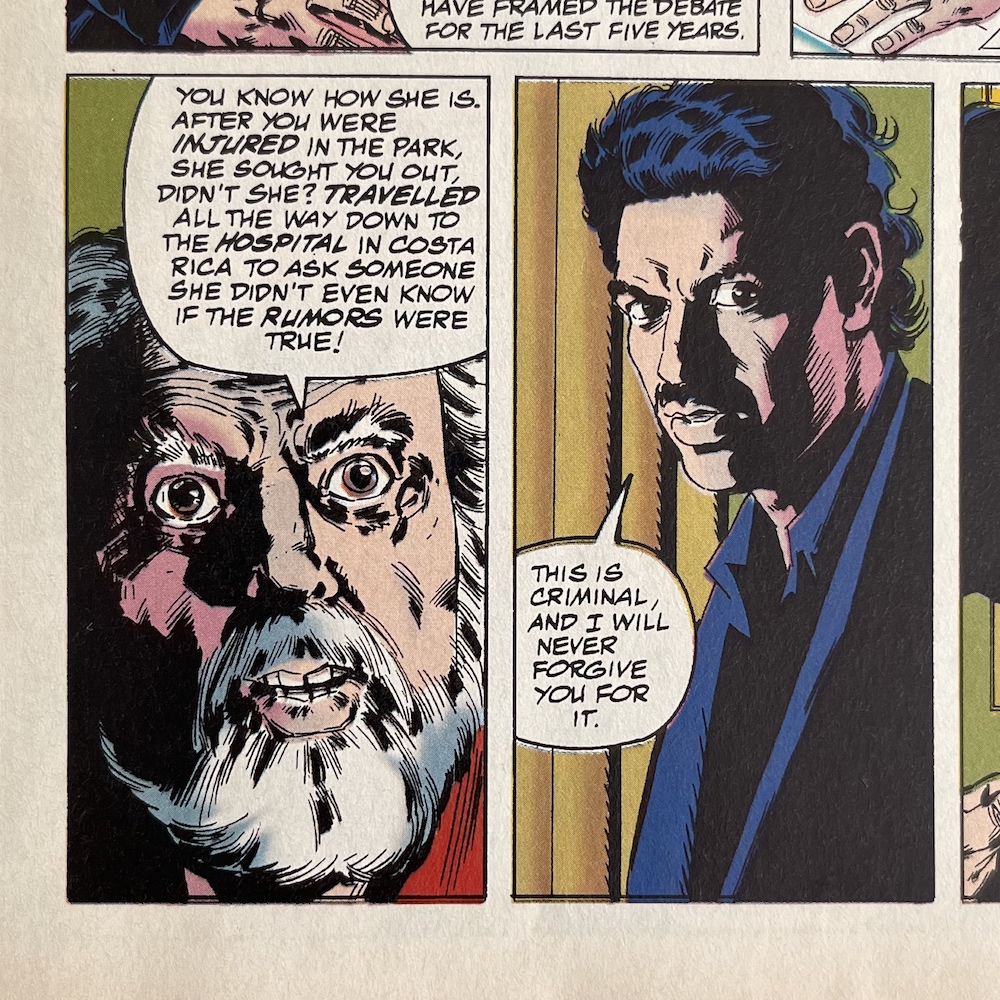
This is about as in-depth as I’ll go into the story of The Lost World during these reviews, after all it’s the movie’s story so I don’t really need to. Just as I did with the first five issues of the original Jurassic Park I’ll be assuming you know it already and I’ll be concentrating on the adaptation itself. The next big difference I notice is one I’m not sure I can come to terms with. Maybe it’ll grow on me as I read the series, but it’s an addition I just feel isn’t needed. I mean, just look at Jeff Goldblum’s moustache!

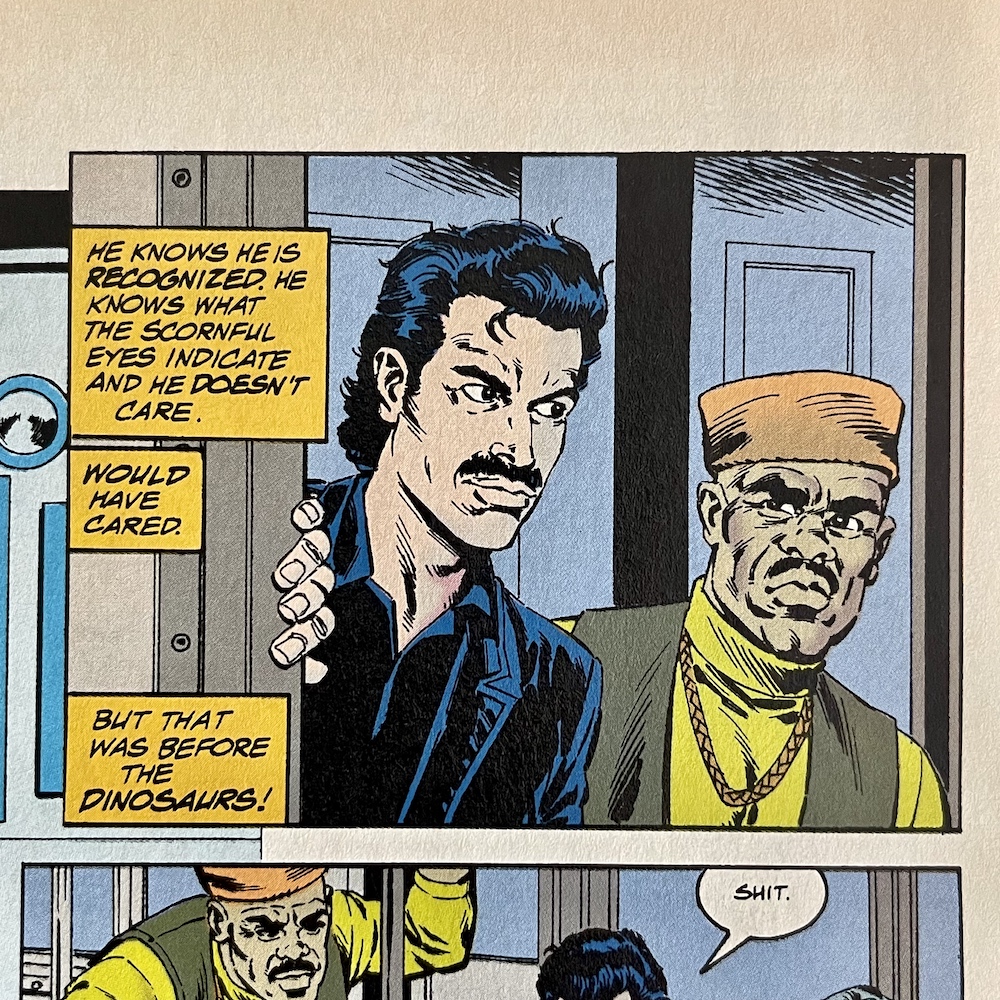
Maybe Dr. Ian Malcolm has one in the novel. Apart from that I am taken with the likenesses here. A lot of times in comics based on TV shows or movies the characters either look nothing like the actors or the artists concentrate so much on making them look identical that they lose all ability to emote. Here penciller Jeff Butler (Godzilla, The Green Hornet and TSR’s Dungeons & Dragons games) and inker Armando Gil (who brought a scratchy realism to the previous sequel strip) do a perfect balancing job of having a clear likeness without sacrificing what makes a good comic book character.

For most of this opening chapter it feels very much like your typical comics adaptation, writer Don McGregor (James Bond 007, Black Panther, Killraven) taking the main beats of the script and moving between them with as little fuss as possible, cutting and trimming a lot as he goes. Funny moments are pretty much eliminated too which is a shame because the movie was full of them. A particularly memorable scene when Ian, Eddie Carr (Richard Schiff) and Nick Van Owen (Vince Vaughn) are calling out for Sarah Harding (Julianne Moore) when they land on Isla Sorna is conspicuous by its absence.

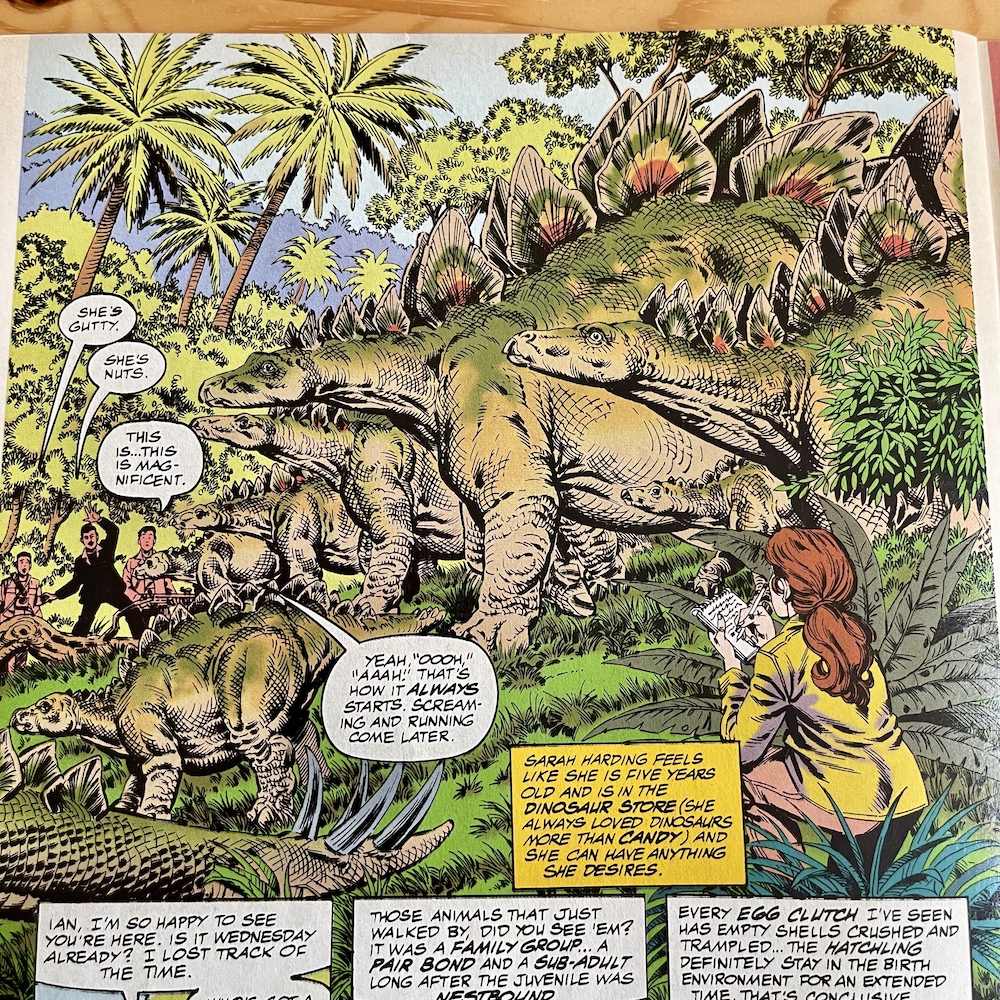
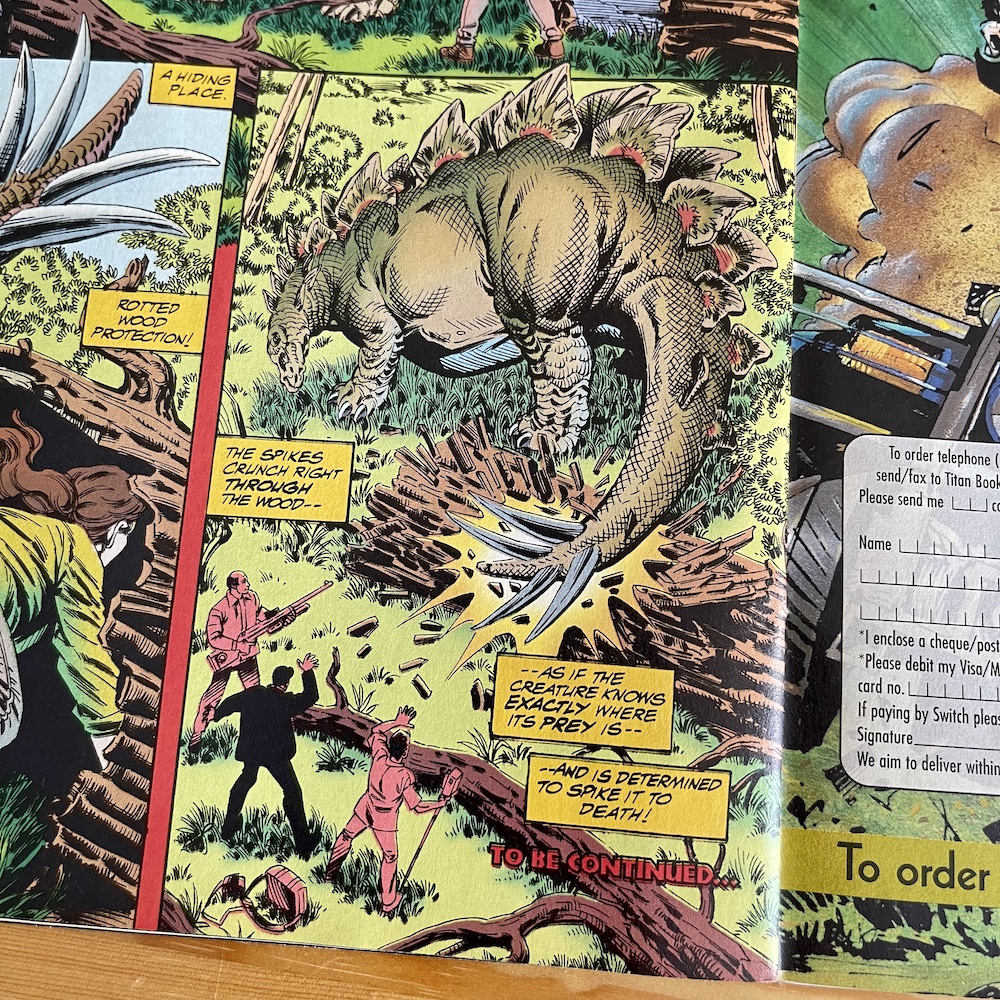
The scenes with Ian’s daughter Kelly (Vanessa Lee Chester) are there but again have been chopped down to their bare minimum which is a real shame as they felt really genuine on the screen. The chapter ends with the Stegosaurus scene although the grandeur of their entrance is lost when our characters are just miling about among them. Also the baby, key to what happened next, isn’t involved and it all feels rather rushed to get to some form of cliffhanger. But what is quite wonderful is the depiction of the Stegosauruses. It’s certainly more detailed than the previous adaptation and a lot more so than Armando’s sequel art.

Ken Lopez is our letterer for this story and returning story editor Renée Witterstaetter’s colours are a particular highlight, especially on these final pages in the jungle. In fact I’d say in the three short years between the comics there’s been a marked improvement across the board in terms of looks, even with a team made up of some very familiar names. Speaking of familiar names, that cover (taken from #3 of the American comic) is by original adaptation writer Walter Simonson and Richard Ory (Cloak and Dagger, Marvel Fanfare, Doctor Fate).

Regular blog readers will know I’m not usually a fan of movie adaptations but that the original Jurassic Park one had me thinking differently. At least for the first three chapters anyway, with their added information from an earlier script draft, passages from the book and interesting ways in which it shook up and changed key parts of the movie in order to make it work in a new medium. I enjoyed that. But the final two chapters became what I abhor about all other adaptations I’ve read.

Instead of being a considered reworking for the comic, the finale just jumped from one key scene to the next as quickly as it could to get to the end of the story, excising whole chunks of it in the process (including just suddenly forgetting about the only black character mid-story), eliminating anything that wasn’t basic plot, combined with what felt like rushed artwork to meet the deadline of the movie’s release. While the art is a big step up in my books, The Lost World Jurassic Park seems to be more along the lines of those final chapters, unfortunately. But it has time to improve and it’d be a shame if it didn’t, what with that lovely art.

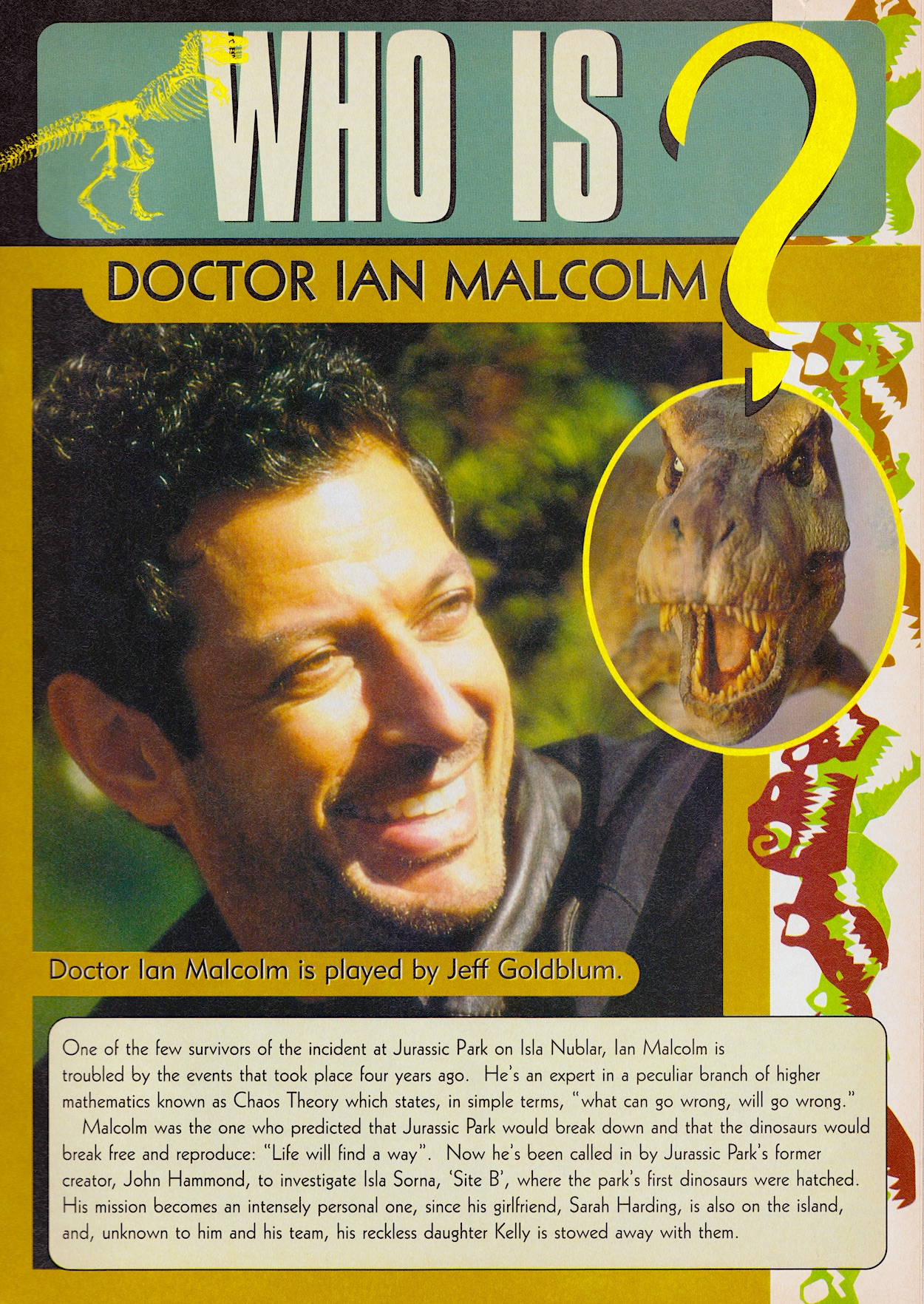
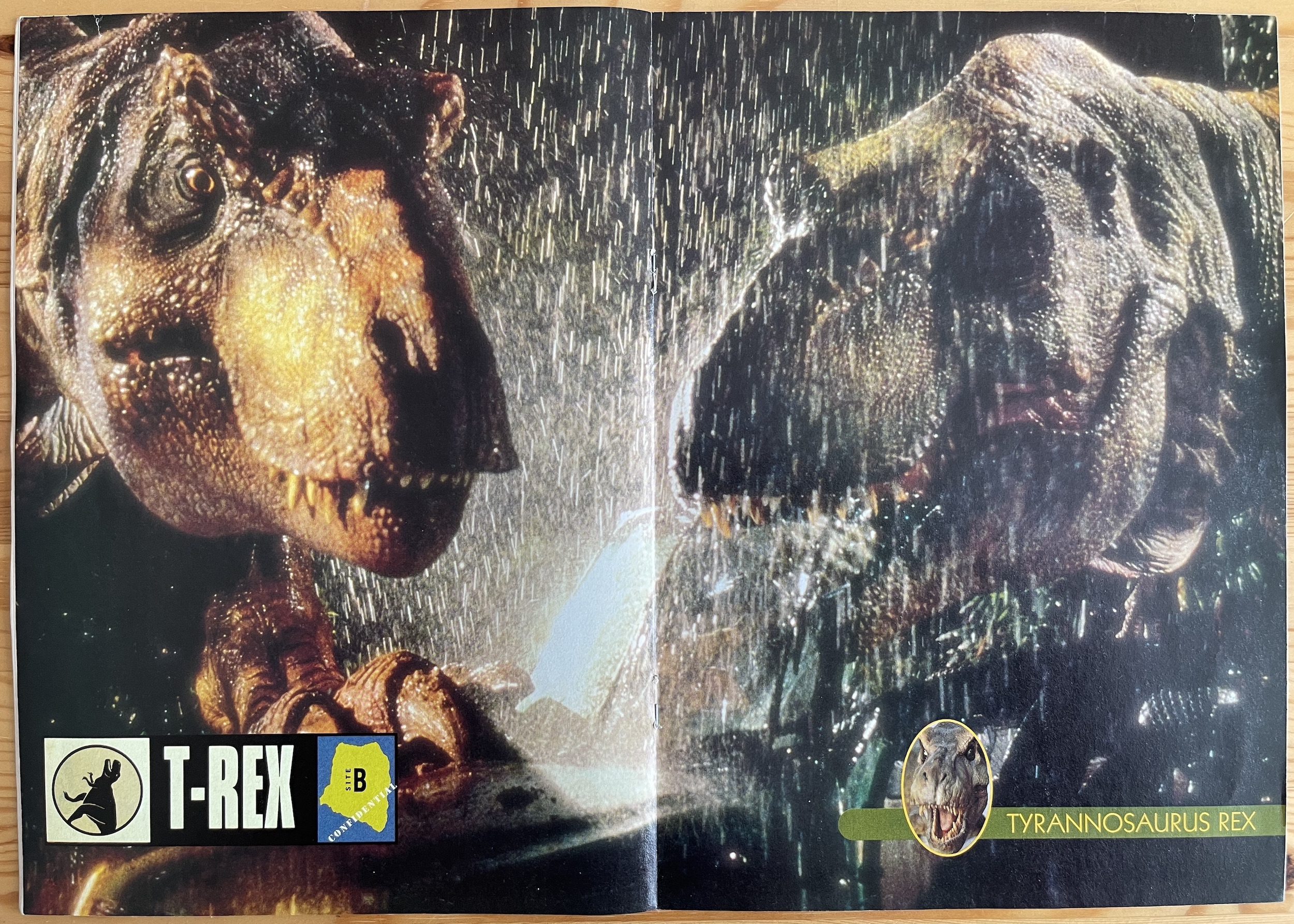
This being a UK comic there are of course extras. The four middle pages are made up of a poster of one of the film’s best scenes, a profile of the more rugged (but still sans moustache) Ian and a page about the T-rex written by Steve White. There’s a lot of information here but for some reason it doesn’t mention their visual acuity, the whole “it can’t see us if we don’t move” thing which was so important in these first two movies. The page actually looks messy and unfinished, with what seems to be a placeholder rectangle, a clip art frame and an image sitting waiting to be edited together, with text over the top that’s difficult to read as a result . Strange.

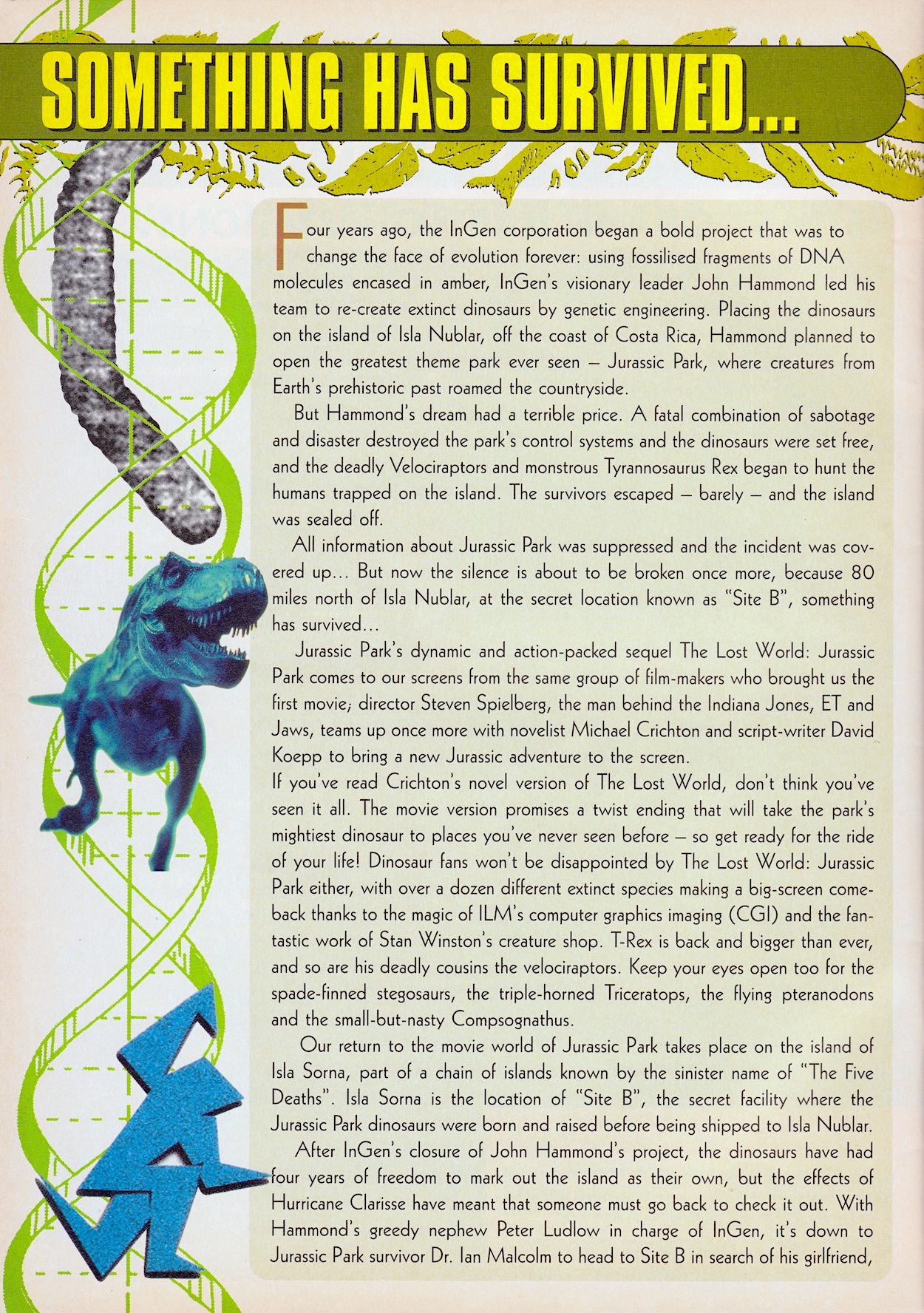
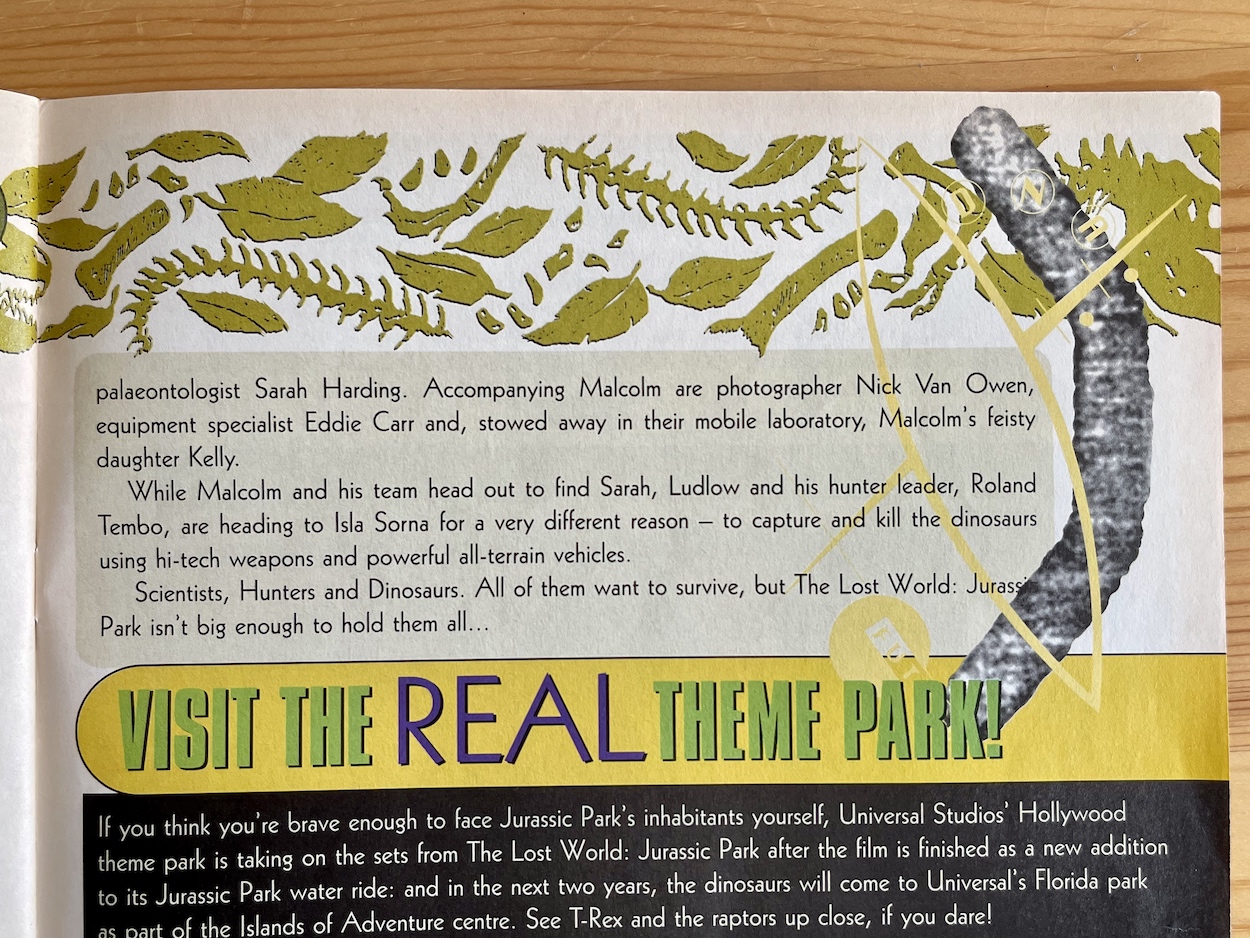
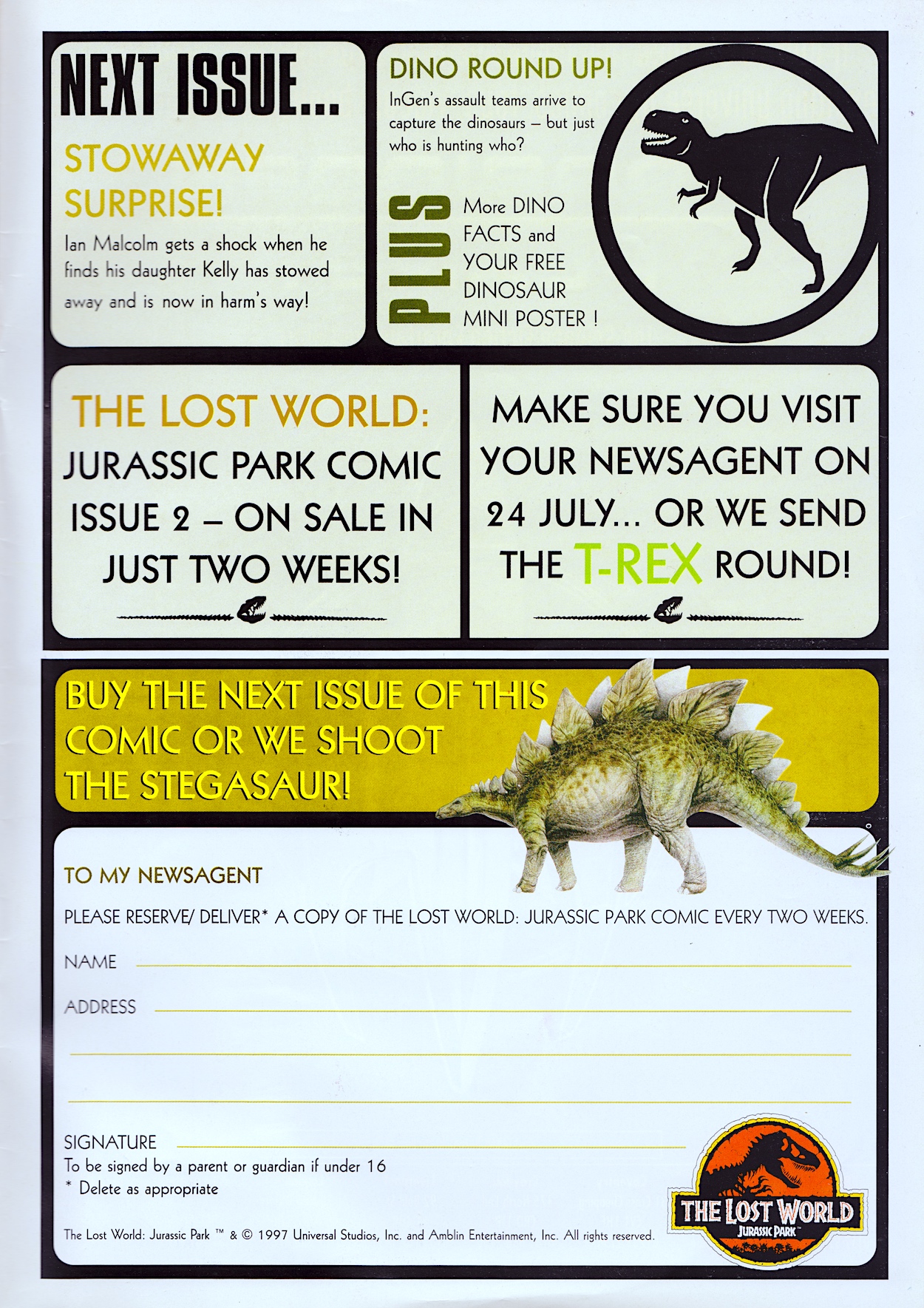
Towards the back is Something Has Survived by Jim Swallow (who’d go on to write Marc Dane, Sundowners and Warhammer 40,000 novels), a text article which basically reiterates what we know already from the strip, although it does give an interesting nugget of information about the film’s ending. There’s also an advert for the graphic novel of the comic which is a bit weird to include when you want people to buy it in individual chapters instead (although the original comic did run a competition for its graphic novel after it had printed the whole story already) and the Next Issue page is rather basic with two different versions of “buy it or else”, the second of which just feels wrong!

The most exciting extra for me is actually an advertisement for a completely different magazine.

I loved Babylon 5 from the moment I decided to tune in to the first episode broadcast on Channel Four. I was completely hooked and I remember the magazine fondly, placing a regular order before the first issue appeared if memory serves me right, so I must’ve seen an advert for it somewhere else. I remember being particularly fond of show creator J. Michael Straczynski’s column and his brutal honesty when discussing working in the television industry and how hard it is to make a living as a writer. I’d no idea John Freeman edited it until just recently. I’m beginning to think he and Steve White (colourist and editor at Marvel UK and who did exceptional colouring work for Xenozoic Tales in the original Jurassic Park comic) are a bit like Lew Stringer in that there seem to be very few publications from my youth they weren’t involved in!

Unlike most comics at the time The Lost World Jurassic Park was fortnightly rather than monthly. With no further strips coming from the States there was never any intention of continuing it beyond the adaptation so, just like over there, it was a mini-series of four. The artwork has saved this opening chapter, will the writing catch up? You can find out in two weeks on Monday 24th July 2023.

GO TO iSSUE TWO

JURASSiC PARK MENU

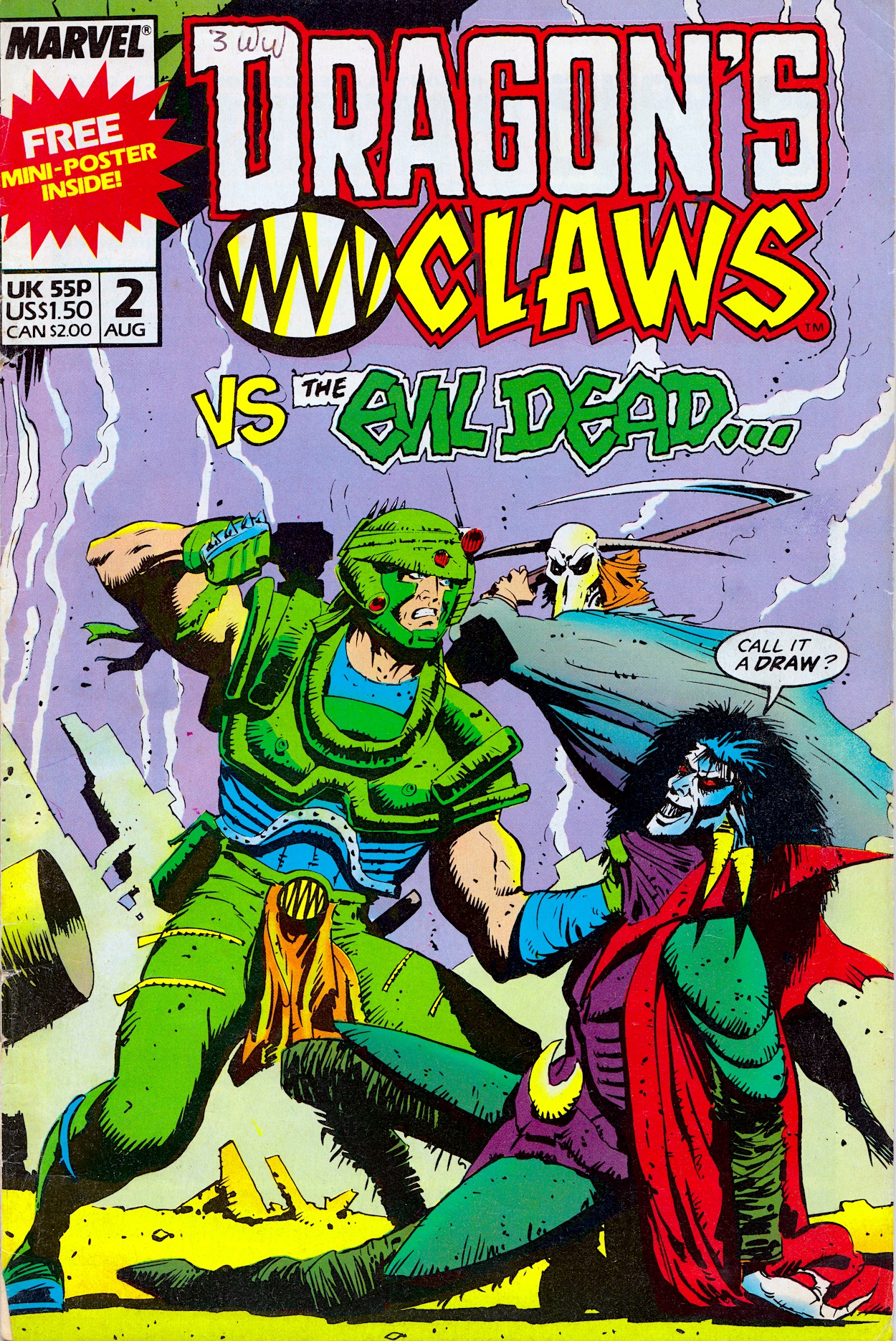
DRAGON’S CLAWS #2: COLOUR ME iMPRESSED

It’s been a long time coming but Dragon’s Claws’ sophomore issue is finally here. After spending the first couple of years on the blog covering fortnightly and weekly comics (the one exception being the short-lived Visionaries right at the beginning of the blog) it’s strange to find myself in a position where, at the time of writing this, both Dragon’s Claws and even the site’s namesake comic OiNK are monthly. I’ve gotten so used to what came before that the four-week wait between issues feels so long!

Could this have been an attributing factor to Marvel UK’s new range of US-sized comics not being the success they may have deserved to be? British comics were often more frequent, and if any did become monthly you always knew that meant they wouldn’t be lasting much longer. Things would change a lot in the 90s of course when most comics became monthly but sales figures also declined drastically across the board at that time. A month was a very long time to wait for us back then, especially when computer and videogames were now grabbing our attention.

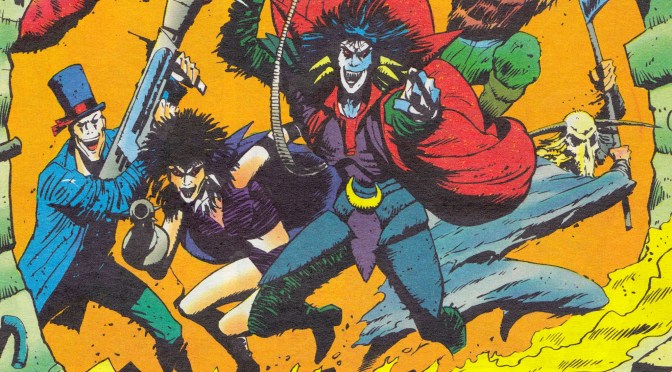
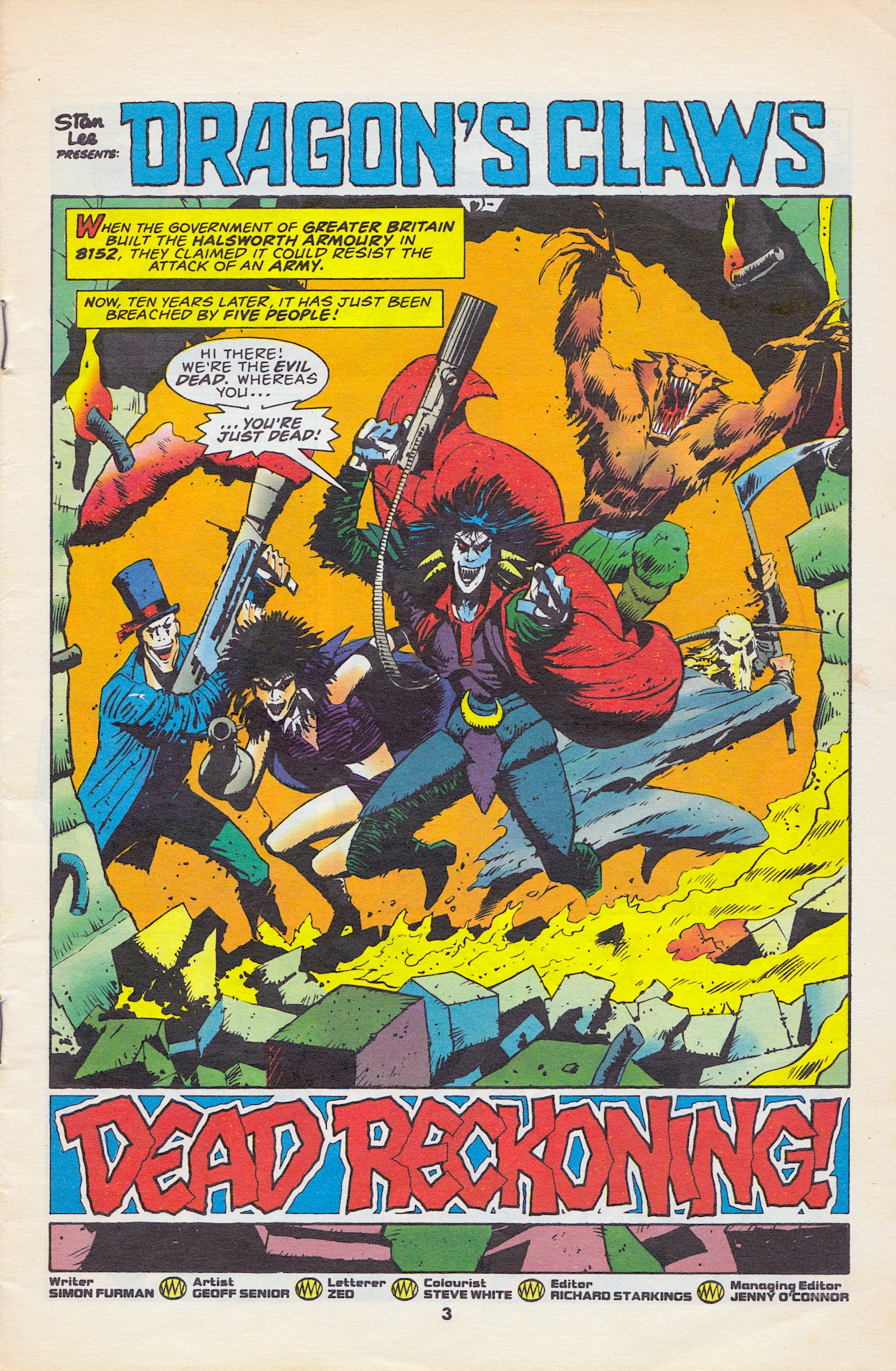
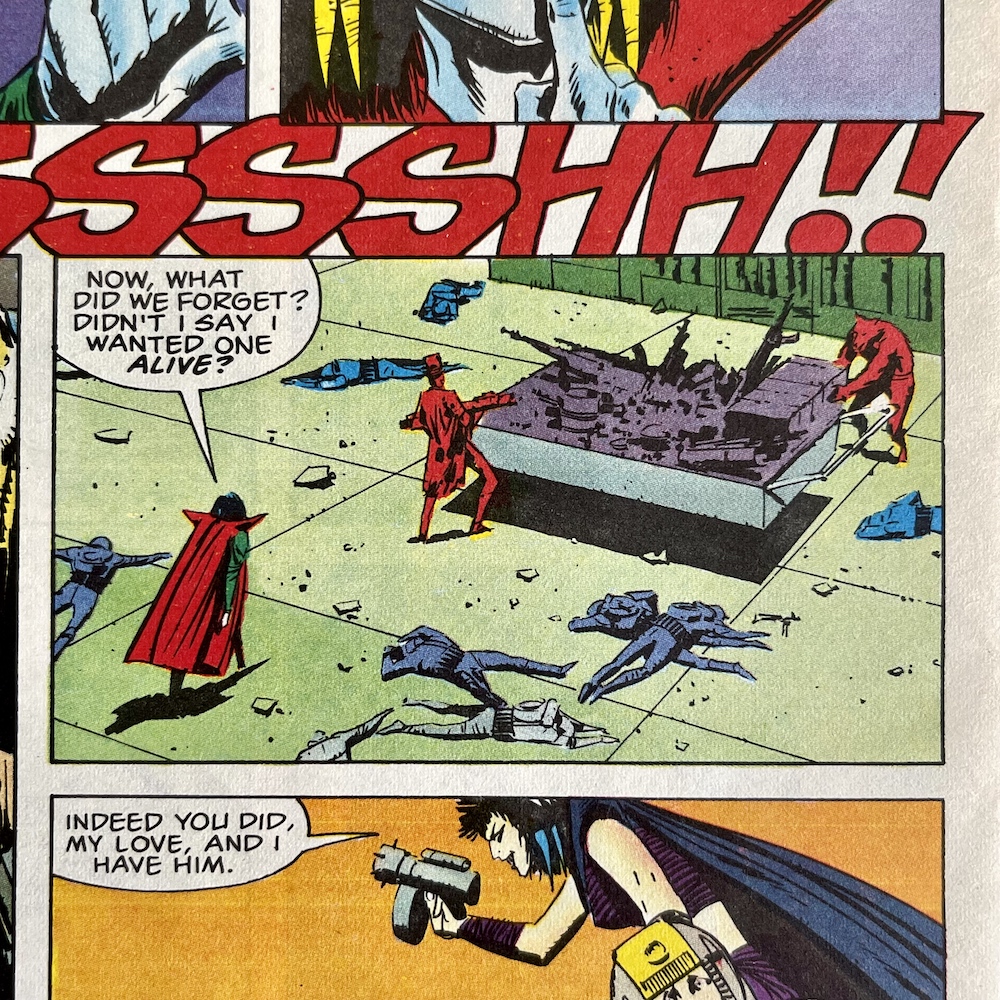
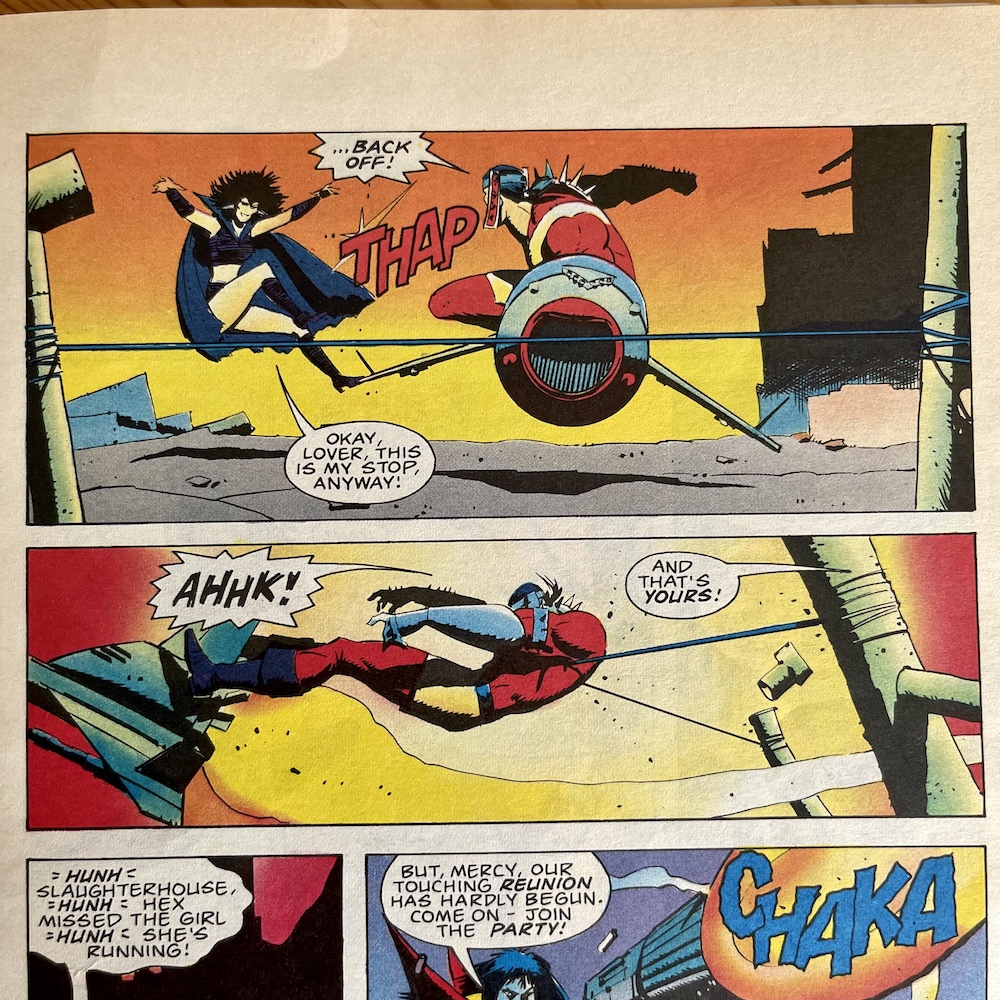
If last month’s debut felt like a typical yet very enjoyable 80s action flick, this feels like it could actually be the second half of that movie. The threat of The Evil Dead teased in the premiere issue’s opening pages comes full force this time around. The opening pages once again see that Game team take on a trained group of fighters, this time at a weapon’s depository that was apparently built to withstand an entire army. Over the course of these first seven pages they decimate the defence and make off with the weapons.

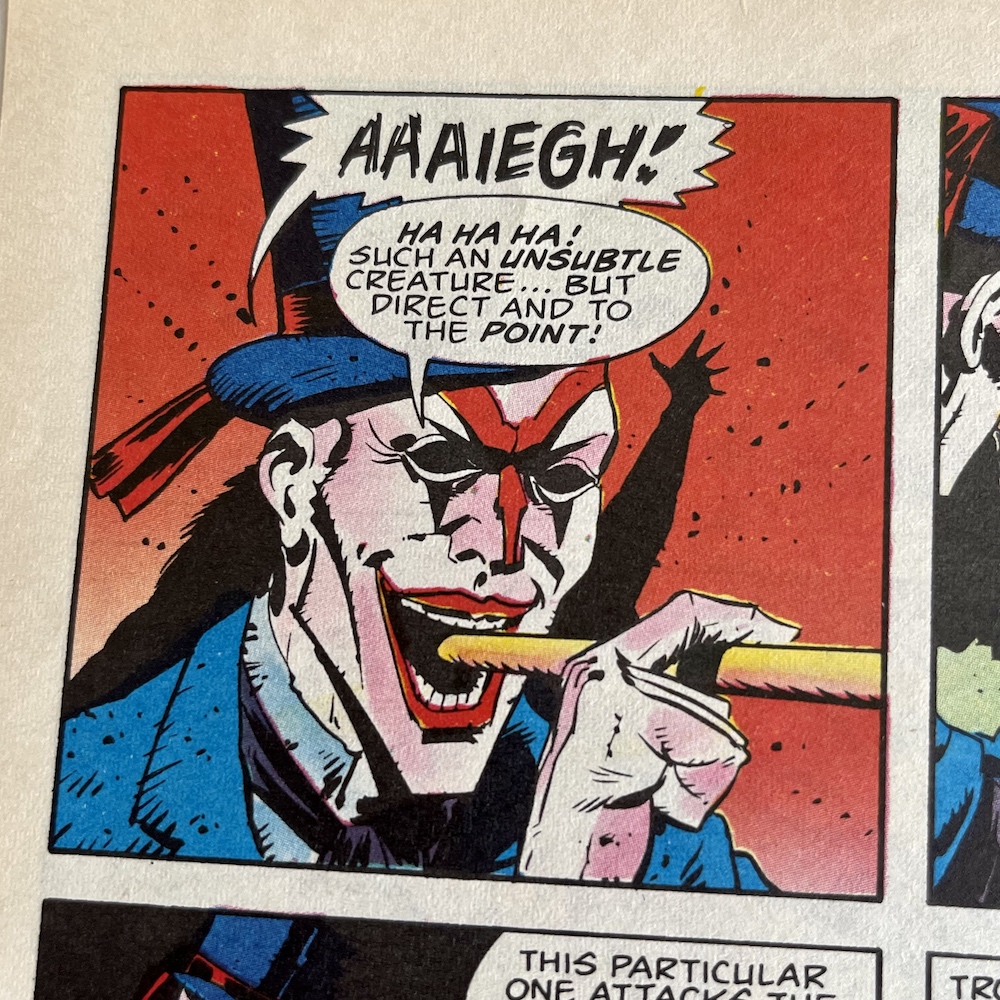
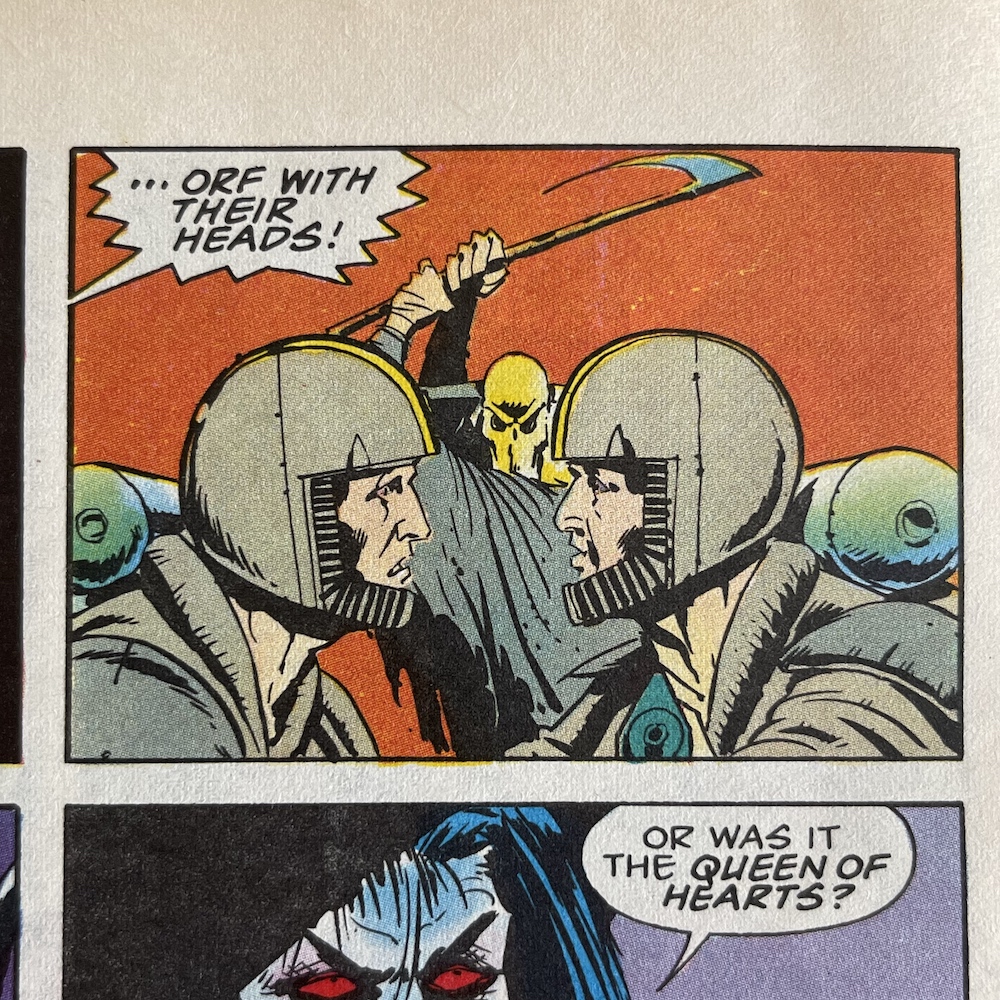
What I particularly like here is just how very ‘English’ The Evil Dead are, especially their leader Slaughterhouse. Shouting “Orf with their heads” before two soldiers get brutally decapitated, tutting when others put up a fight, using drawn out proper grammar and such words as “splendid” while all around is death and destruction. Believe it or not, there’s even a funny moment used to lighten the dark opening when they win their battle and dead bodies are strewn everywhere.

There’s something of note right off the bat with this issue’s story. The government is referred to as that of ‘Greater Britain’. Now for any readers of an international flavour who may not be aware, ‘Great Britain’ as we know it today is made up of England, Scotland and Wales. I live in Northern Ireland and that’s part of ‘The United Kingdom (UK) of Great Britain and Northern Ireland’. Northern Ireland is separate from ‘Great Britain’, a mistake many make. The fact the Dragon’s Claws comic refers to the government of Britain rather than the UK makes me think we’ve scarpered and rejoined Ireland away from the dystopia of the land within which The Game is set. Thank goodness! But anyway, I digress.

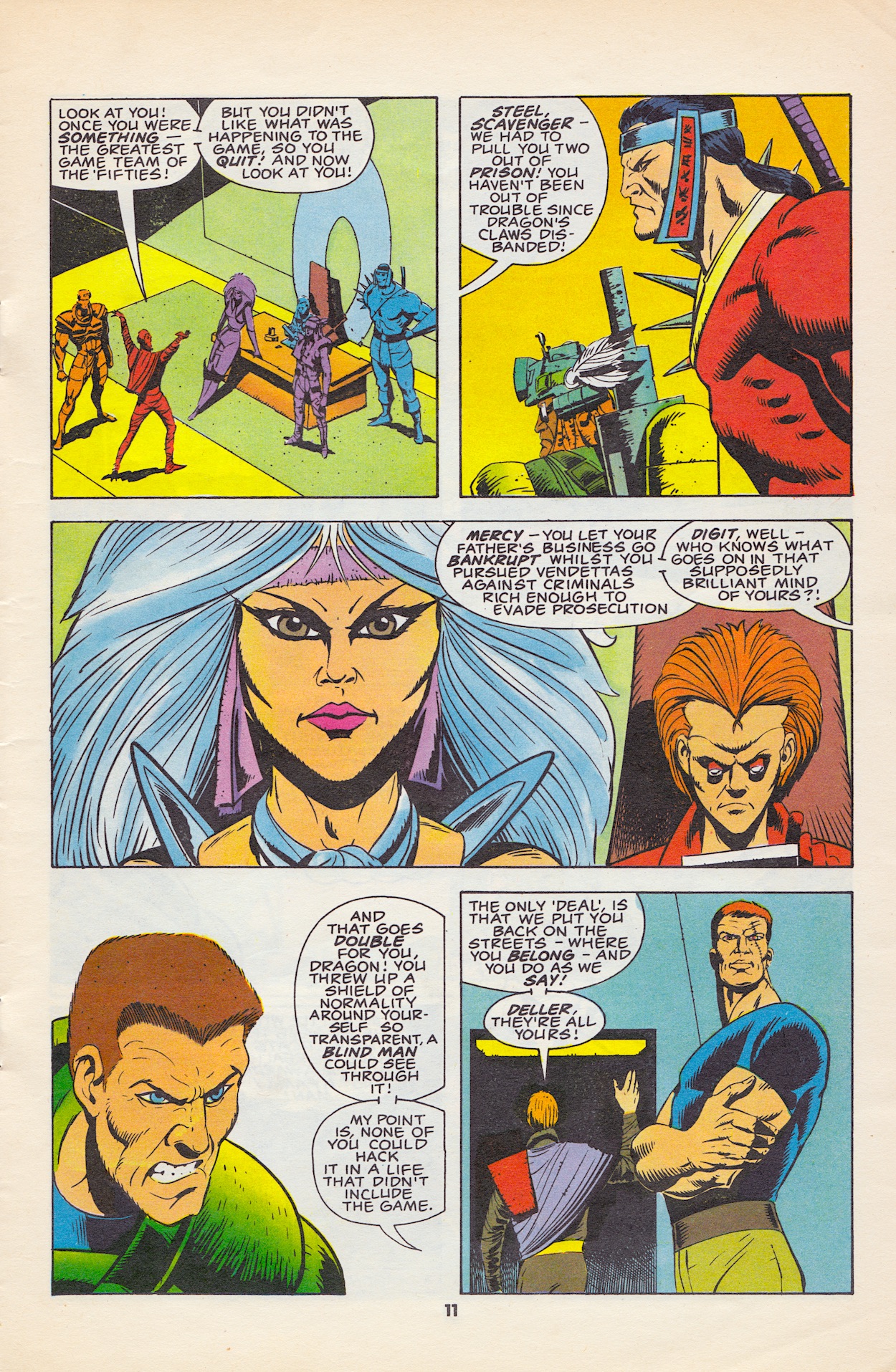
The one surviving soldier is taken to N.U.R.S.E. where Dragon, his team and the already irritating Deller (he’s meant to be irritating) are assigned their first mission by Stenson to kill The Evil Dead, as if they were nothing more than an irritant rather than murderers. The order is given in such a blasé way it’s clear N.U.R.S.E. care not for those they’ve hired. They give the orders and the foot soldiers must obey. This results in Dragon losing his temper because as far as his was concerned his team were independents, going out into Britain to clear up the mess of the government’s Game on their own. But Stenson has them over a barrel, he knows their lives felt meaningless without The Game and they back down.


“Mercy – you let your father’s business go bankrupt while you chased vendettas”

Stenson

We find out a little more about the various members of Dragon’s Claws here after last issue concentrated almost solely on Dragon. The most interesting one for me is Mercy, the sole woman of the team. Since they withdrew from The Game she’s used all the money from her father’s business to chase after those lawbreakers who had enough money to stop any potential repercussions from occurring. In the current climate we find ourselves in I do hope we find out more about her time doing that, it’s quite topical after all. (There’s also something very ‘Knight Rider‘ about that, a show where the hero chased after “criminals who operate above the law”.)

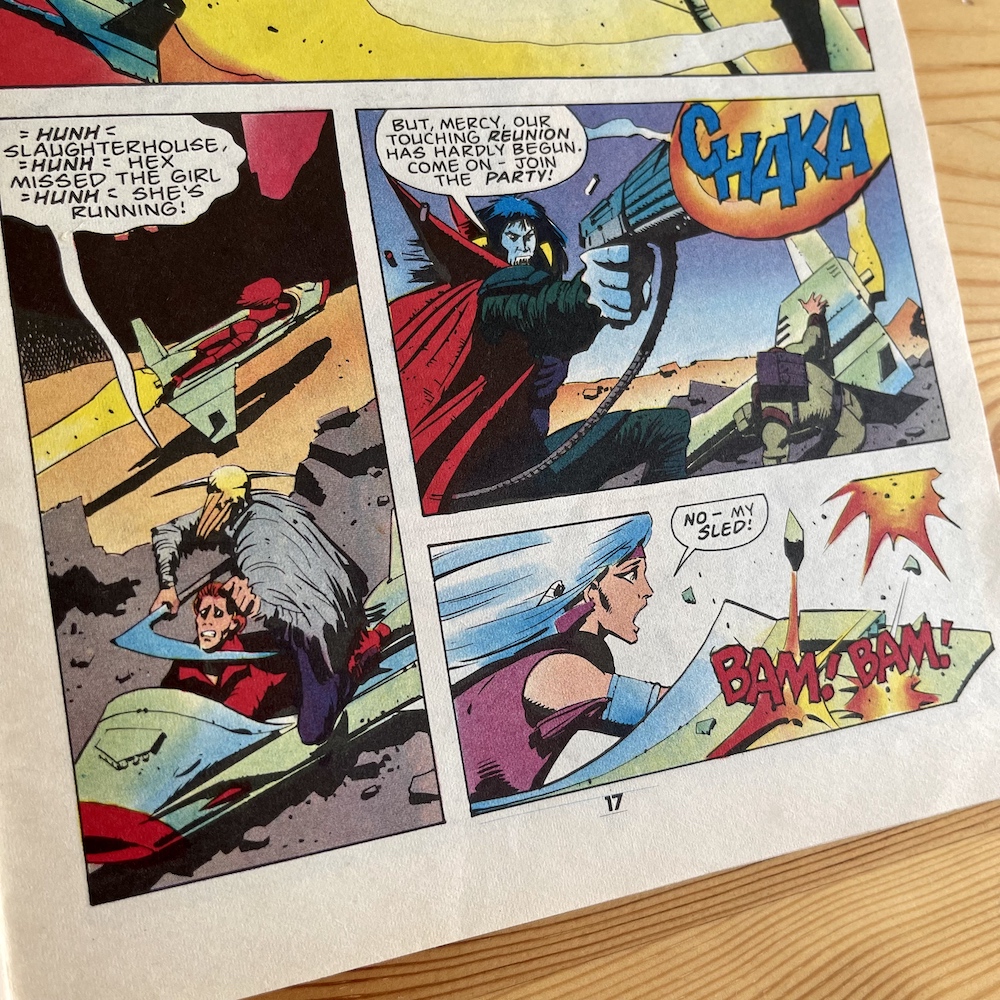
Dragon takes off and over the next couple of pages we see him back at his farm, now a desolate, abandoned wreck after the battle with the Wildcats last time. It’s these little quieter moments that have made these first two issues for me. It would’ve been very easy to have action from cover to cover but in such a fantastical set up these scenes ground our characters, the result being we believe in them, and care for them and the outcome of the story more. His family haven’t returned and then Scavenger turns up to warn him Deller has pulled rank and taken the team out in search of The Evil Dead.

Dragons Claws were opponents worthy of his skills, now he sees them as mere government lackeys

Deller is desperate to be the hero, the leader responsible for bringing them in or killing them, obsessed with personal glory. Of course, we can immediately see where this kind of character will end up leading the team, and that’s into immediate danger. The team’s protestations and attempts to quell his blood lust and self-importance fall on deaf ears. Seeing the lion-like Feral feasting on a dead body out in the open Deller immediately gives chase into an enclosed area, the Claws trying to stop him but it’s too late. Of course it’s a trap.

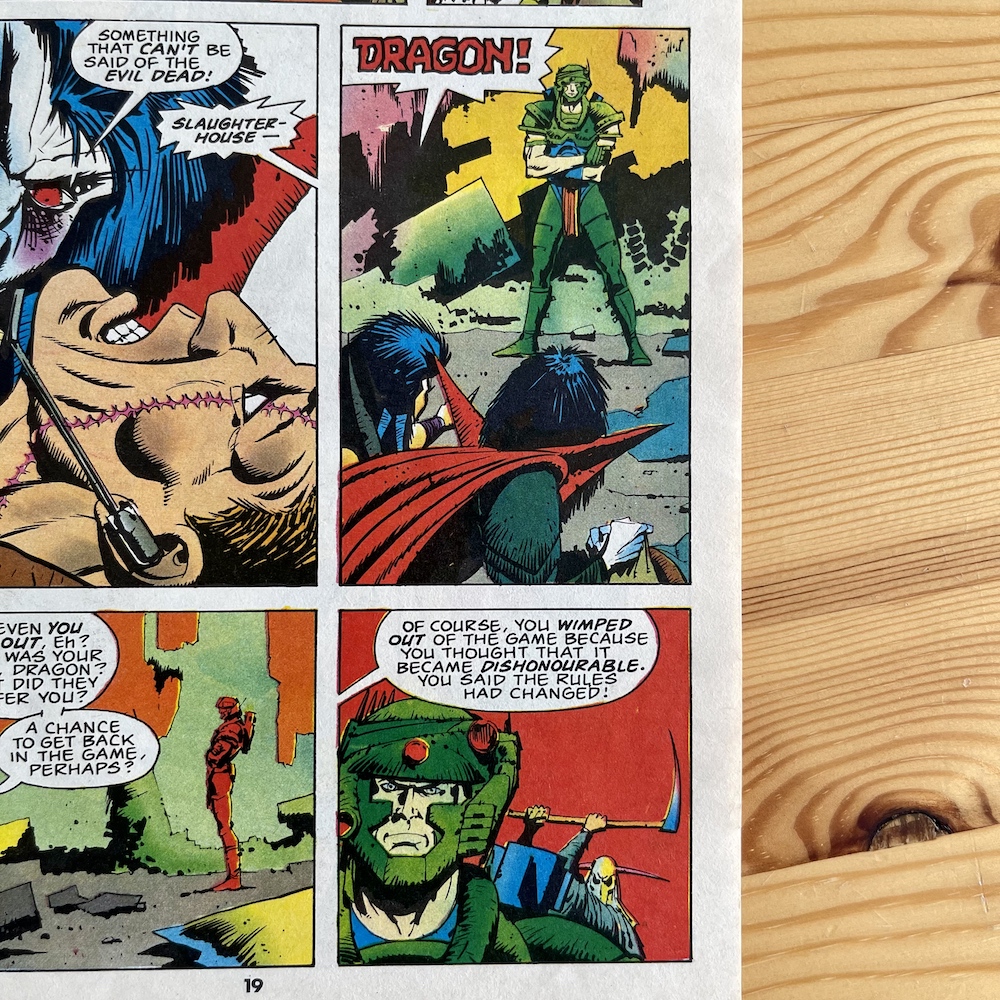
Another little moment here is the area this is taking place in is referred to as ‘The ‘Pool’. Clearly meaning Liverpool, it’s an area Steel stays away from because it’s known as The Evil Dead’s home, somewhere they know like the backs of their hands and would obviously have the advantage. One-by-one this advantage see the Claws fall. Captured, Slaughterhouse is more disappointed than angry. Dragons Claws were opponents worthy of his skills, now he sees them as mere government lackeys.

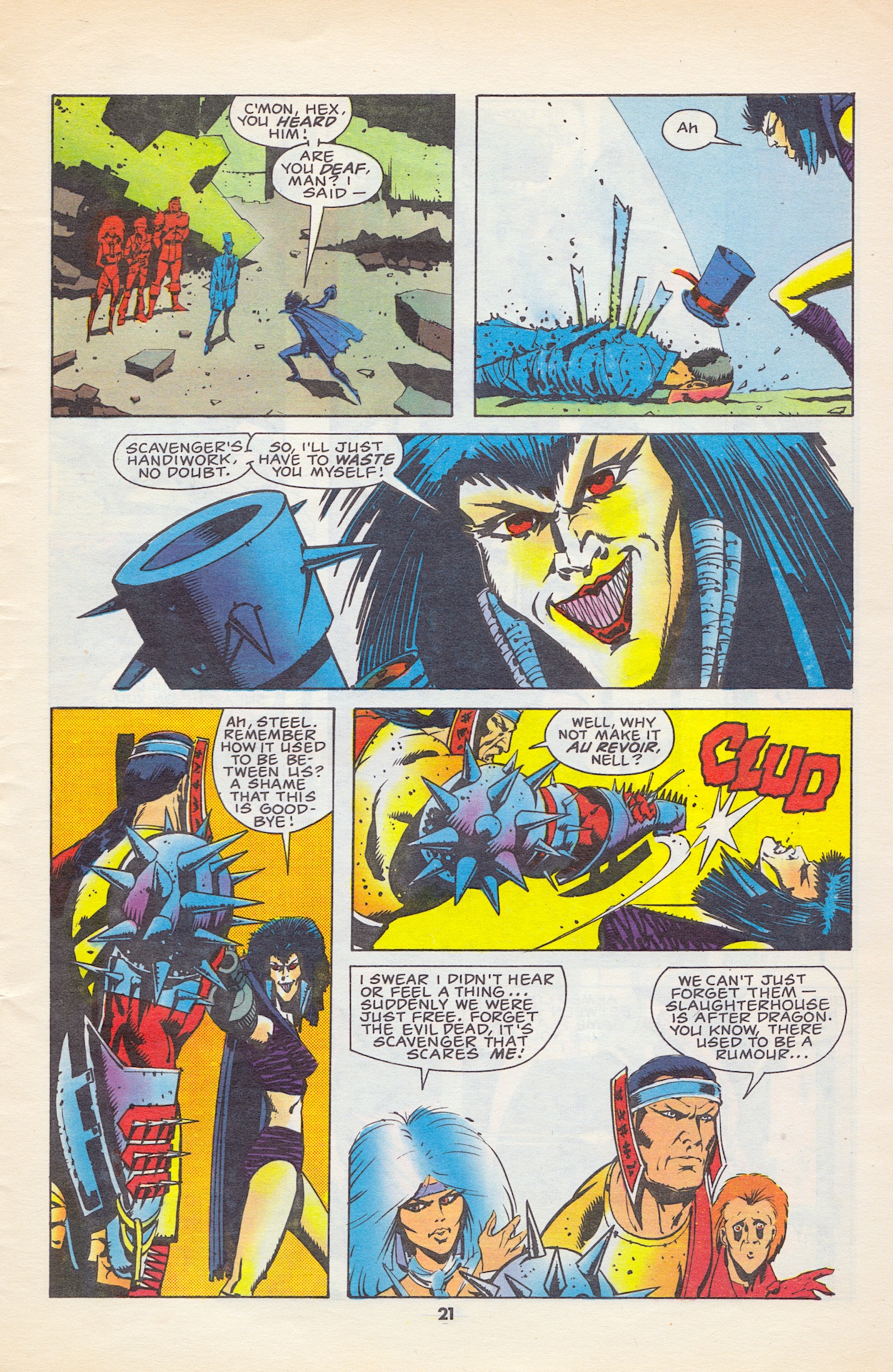
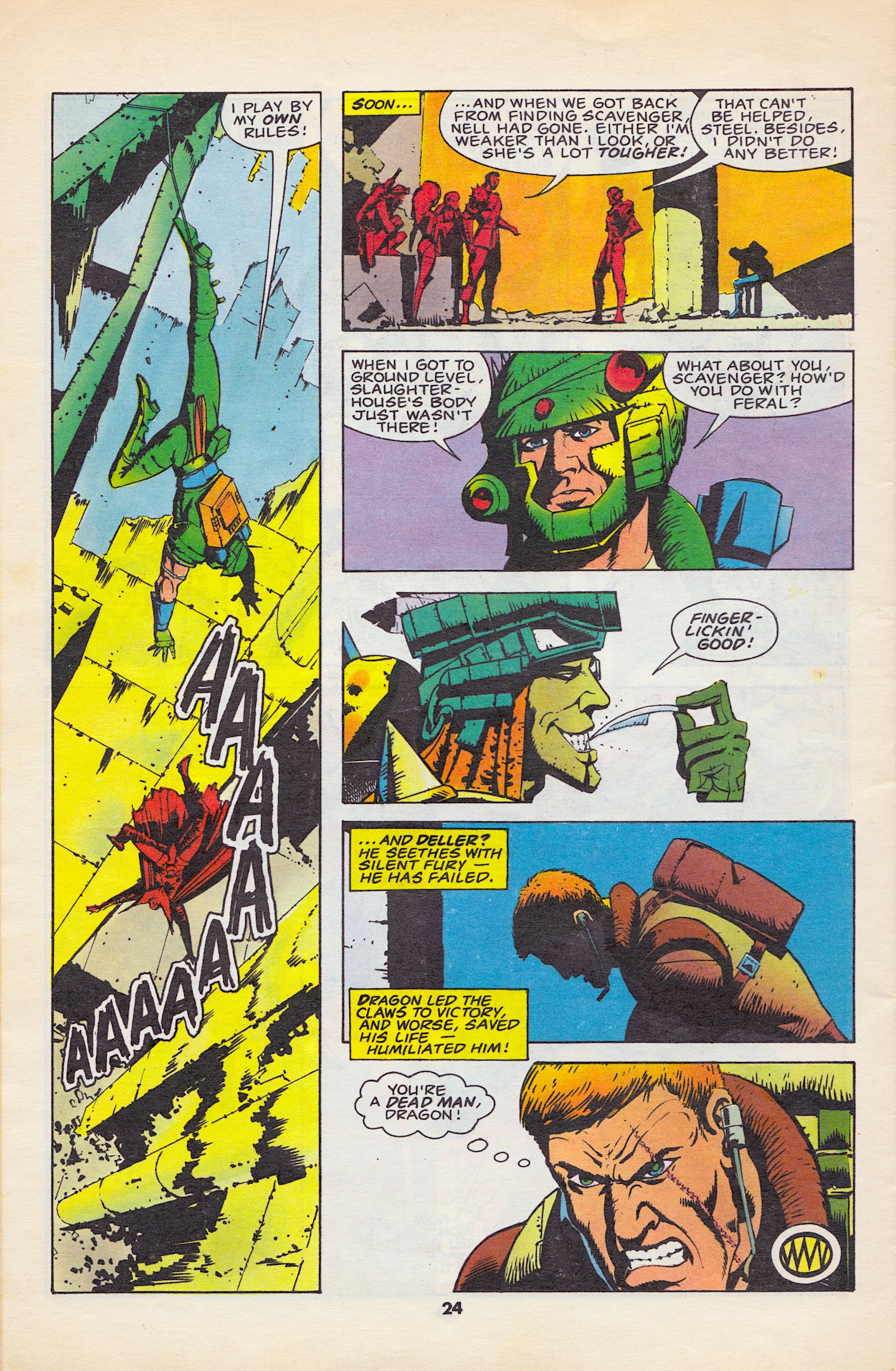
As you can see Dragon appears at the last moment, saving Deller’s life. He’s no stranger to having an advantage himself and as the Grim Reaper-esque Kronos sneaks up behind him Feral notices Dragon has no scent. He’s a hologram and there’s a pressure pad just behind it, which Kronos steps on, instantly exploding. The other members of The Evil Dead are Hex, a circus showman with poisonous darts and hypnotising eyes and Death Nell, Slaughterhouse’s other half who appears to have had some kind of romantic history with Steel!

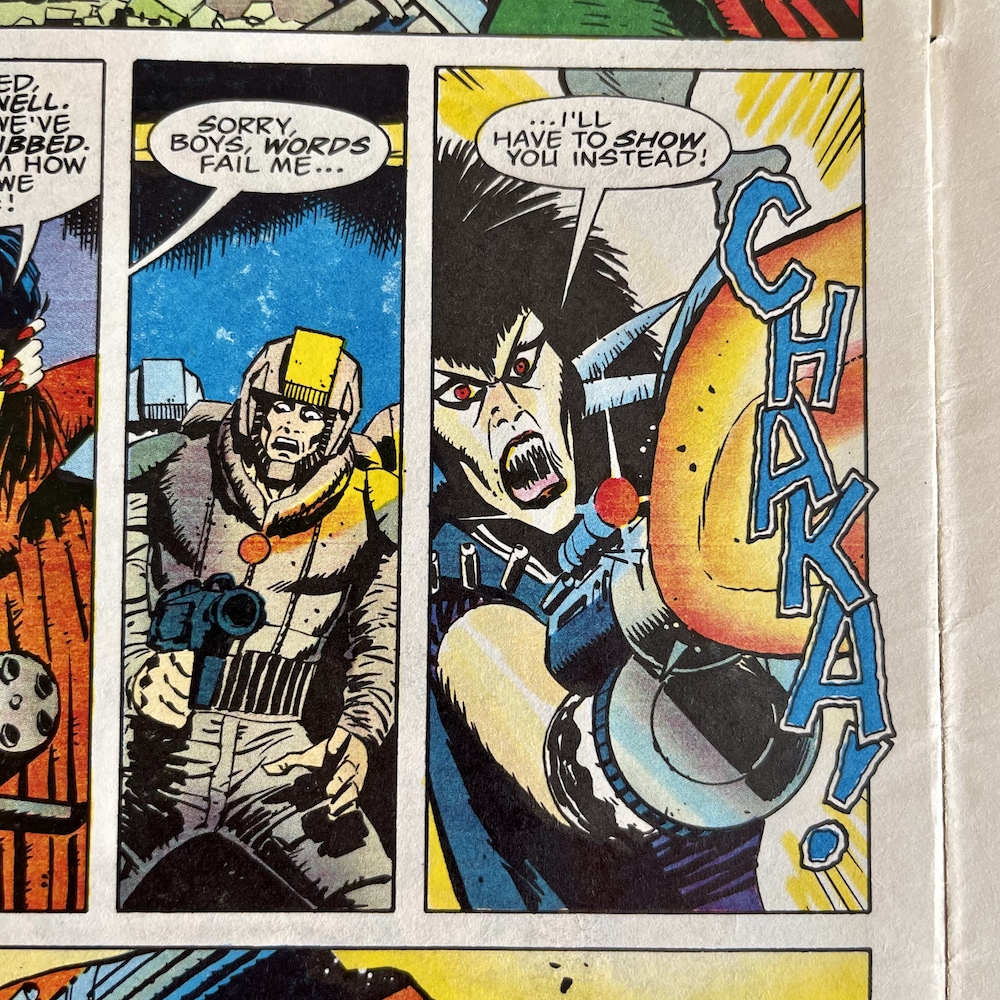
Anyway, the battle we’ve been building up to is rather short and sweet but no less entertaining and ultimately satisfying. On one page Slaughterhouse’s order to kill the Claws falls on deaf ears, or rather dead ears. Scavenger, a master of stealth if last issue’s cameo and the fact he was able to sneak up on Dragon on his farm are anything to go by, has quietly severed his team mates’ bindings (without even them knowing how), meaning Steel can surprise Nell in a moment that initially confused me. Initially, I questioned why he didn’t just hit her earlier? It hadn’t been clear from previous panels they’d had their hands tied behind their backs until Mercy’s explanation made me go back and check.

Dragon is sniping from scaffolding on top of a very tall building nearby and as Slaughterhouse lunges at him he’s apparently taken by surprise, getting scraped by huge nails and kicked in the head in the process. But like the hologram there’s a bit of clever misdirection here on Dragon’s part. Riling Slaughterhouse up until his anger takes over and he leaps through the air, Dragon doesn’t dodge out of the way or put up a fight, instead grabbing Slaughterhouse and letting his momentum push them both over the edge.

Special mention must be made of Steve White’s colouring. It’s glorious!

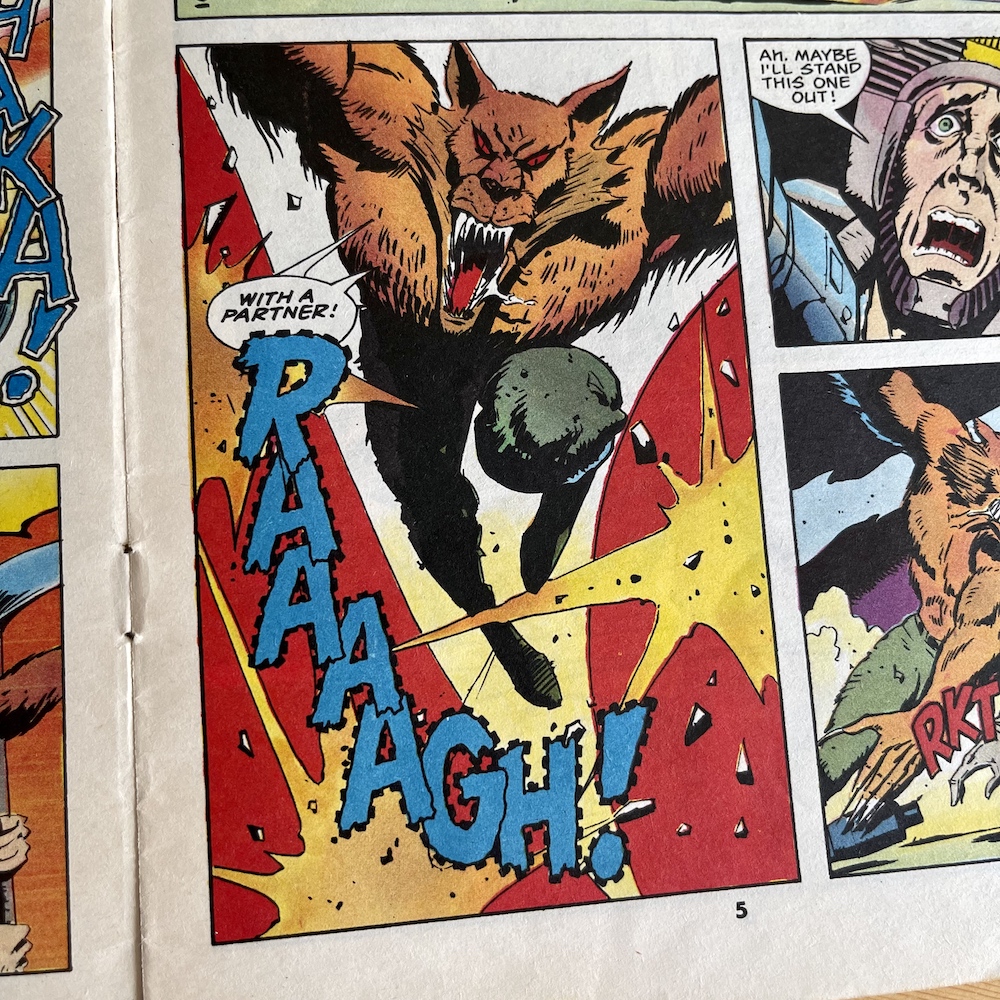
Then, as we turn to the final page we can see he’d actually tied his ankle to the building, stopping him as Slaughterhouse falls to his apparent doom.  Of course with a team made up of such characters as The Evil Dead, and with hints in the story that they may actually be dead already, there’s no sign of his body. As for Feral, it looks like Scavenger made a meal out of dealing with him! Their leader and his girlfriend may be the only ones to have survived now that Dragon’s Claws have been sanctioned to kill.

Written by Simon Furman and enthusiastically brought to the page by Geoff Senior, with editor Richard Starkings on lettering (under the pseudonym ‘Zed’), special mention must be made of Steve White‘s colouring. It’s glorious! His work on Transformers was always exemplary but this surpasses even that. His backgrounds are atmospheric, shading can be subtle in places like faces and in-your-face in others. It’s big, brash and bold in the very best possible way. (Check out his colour work for Xenozoic Tales in an issue of Jurassic Park too!) This is a collection of creative people that could give Dragon’s Claws a run for their money in the teamwork stakes.

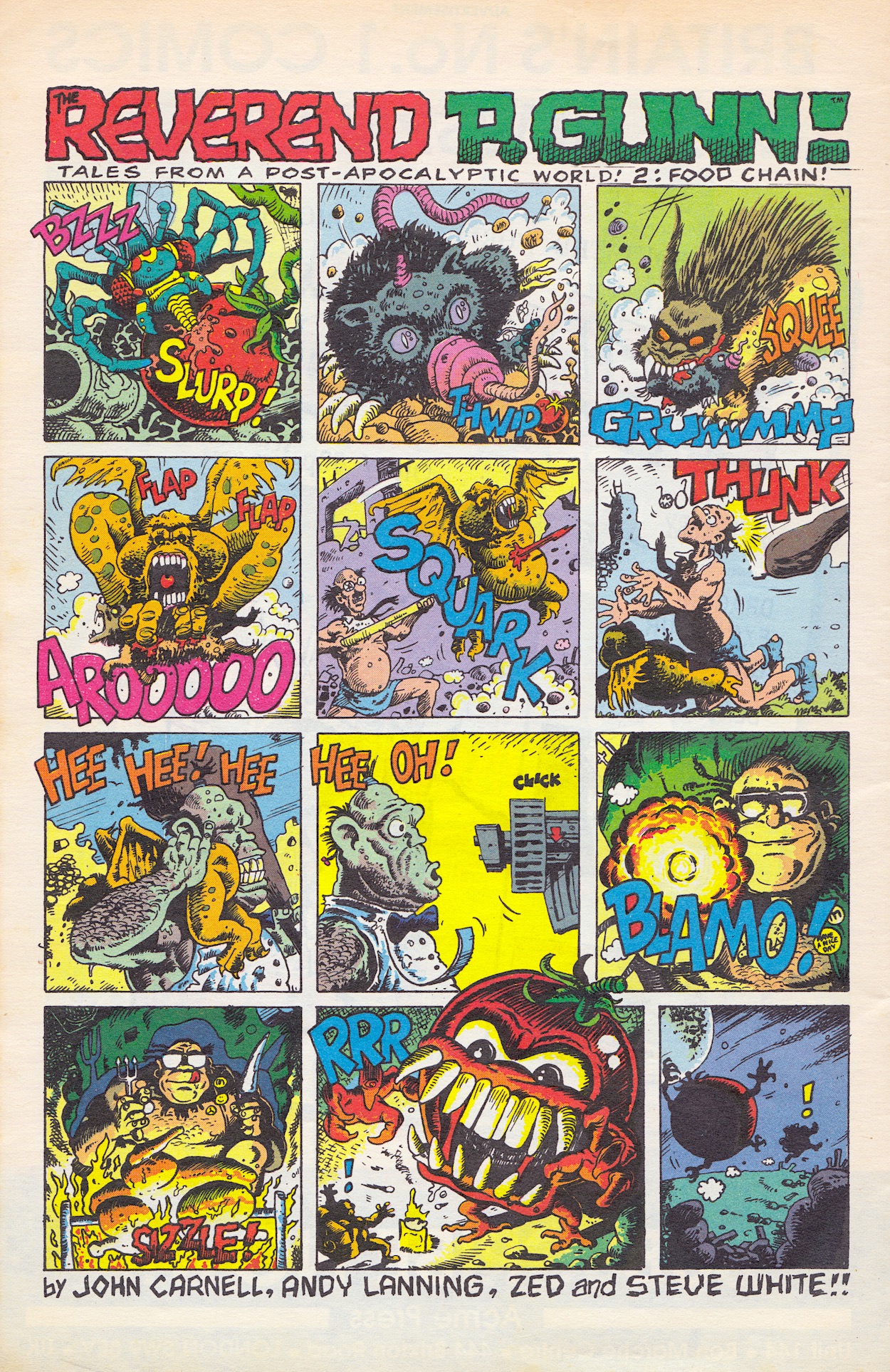
Strangely one of the Marvel UK adverts in this issue is for the comic the reader was actually holding. Weird. There’s also a humour strip, a constant in most of the publisher’s action titles. The Reverend P. Gunn’s debut last issue wasn’t great but this one is funny and the art is great fun. Along with Richard and Steve, writer John Carnell and artist Andy Lanning were well known to me at the time from The Real Ghostbusters and this is a perfect outlet for their bizarre sense of humour that I loved so much in the licenced comic. Would further strips have been funny or more like last month’s? Who knows? This was also Gunn’s final appearance!

So yes, Dragon’s Claws has produced another dynamite issue. It feels very much like the second part of last issue’s introduction and I am perfectly fine with that. I want to find out so much more about these characters already and I know there’s the real potential here for that to happen while not skimping on the action, thanks to Simon’s writing. If I’d known about the comic at the time these first two issues would’ve had me hooked and placing a regular order at my newsagent. Today I’m hooked and you can look forward to regular coverage, the next bit of which will be the review for #3 on Sunday 13th August 2023.

iSSUE ONE < > iSSUE THREE

DRAGON’S CLAWS MENU

Classic Comics in Real Time