

I’ll admit my eyes rolled a little when I saw this cover to the second issue of Titan Magazine’s The Lost World Jurassic Park comic for a couple of reasons. Not the photo of the glorious animatronic Tyrannosaurus rex of course, they’re always incredible to look at. No, the top-right and bottom-left made me sigh a little and to be honest it’s just me being pedantic, so apologies to all you blog readers for having to put up with me when you’re just trying to find out about some classic comics.
The Jurassic Park novels and films made a huge deal out of the fact that they were helping dispel the myth of dinosaurs being large, lumbering reptiles and who can forget the scene when Dr Alan Grant told people dinosaurs are more closely related to modern day birds. Hence why we saw fast, fluid movement from the animals in the films and yet here we’re asked “will the reptiles strike back”? Plus, it’s not a “free” poster when it’s part of the page count of the comic. To be fair many comics did this, OiNK included, but it niggles me. Or maybe it’s because I’m writing this at a very early hour and really should’ve got more sleep.
Anyway, eye rolling done, let’s move on to what is a much improved issue and one I enjoyed very much once inside!

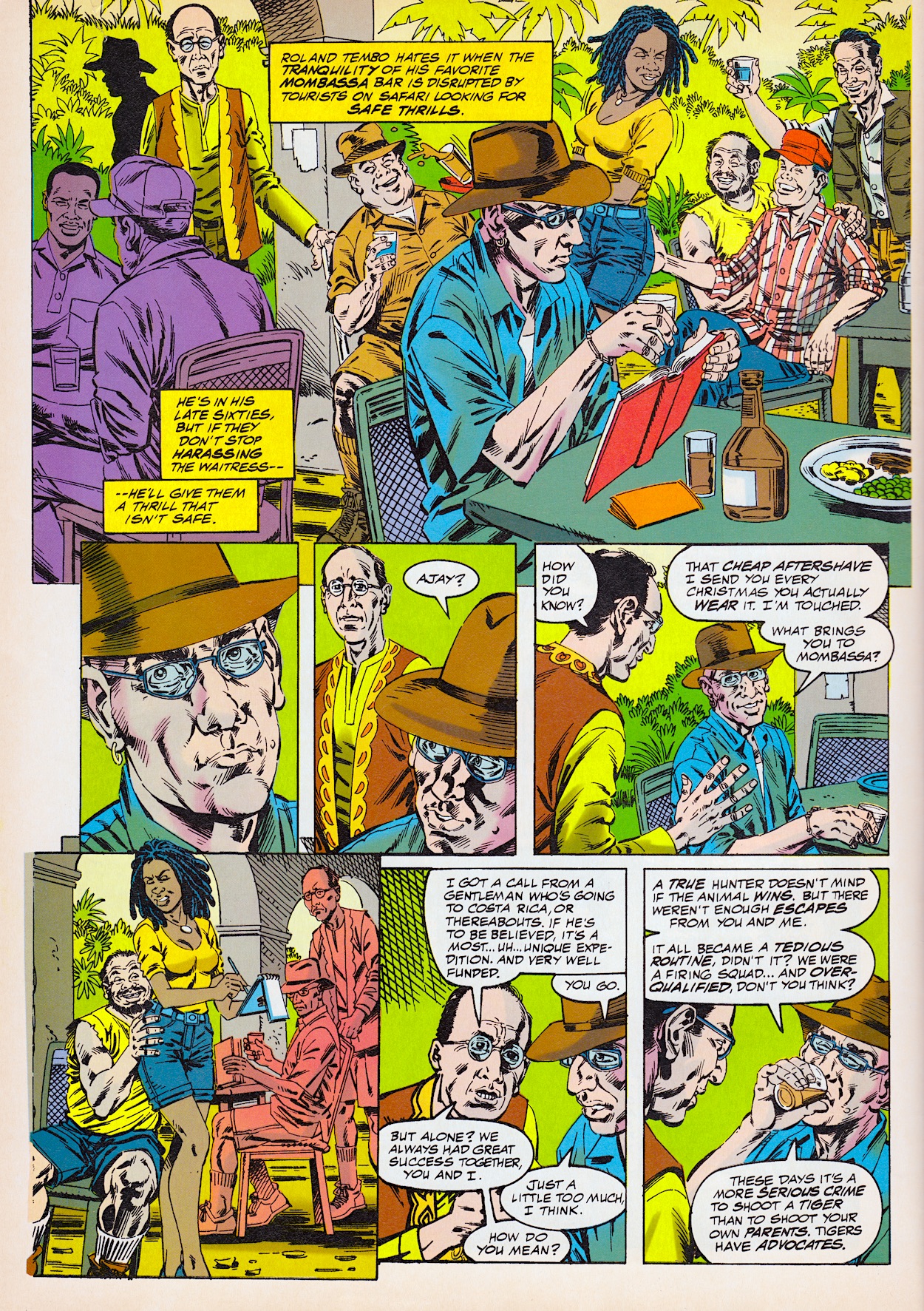
I’ll give the Jurassic Park movie adaptations something, they certainly know how to write some atmospheric narrative captions. Walter Simonson did a superb job of this throughout his comic version of the first movie and here Don McGregor is certainly following suit. Of course, these could be taken from the script he was working with or indeed the novel, but we’ll give him credit where it’s due in pulling us in to specific moments like this on the opening page of part two. The art team are once again penciller Jeff Butler, inker Armando Gil, letterer Ken Lopez and those are editor Renée Witterstaetter’s gorgeous colours.
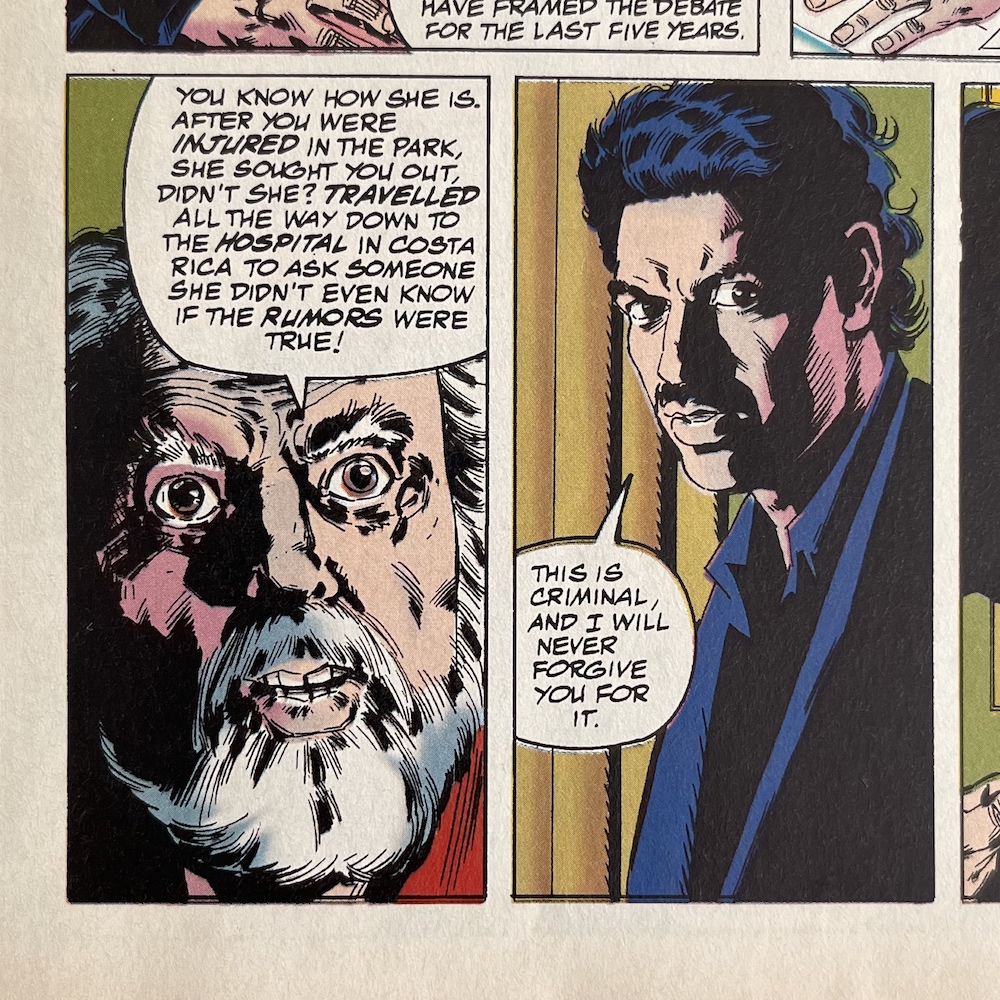
It’s just a shame these moments are rushed through for much of the comic strip. Don’t get me wrong, this is a much improved chapter over last issue’s. There are more character moments from the film left intact and even one or two which must’ve been part of that earlier draft of the script. We get the scenes of Dr Sarah Harding excitedly explaining her discoveries and Dr Ian Malcolm turning them around into accurately predictive doomsaying. But we also get a few moments here that weren’t in the film, such as this exchange between the two.


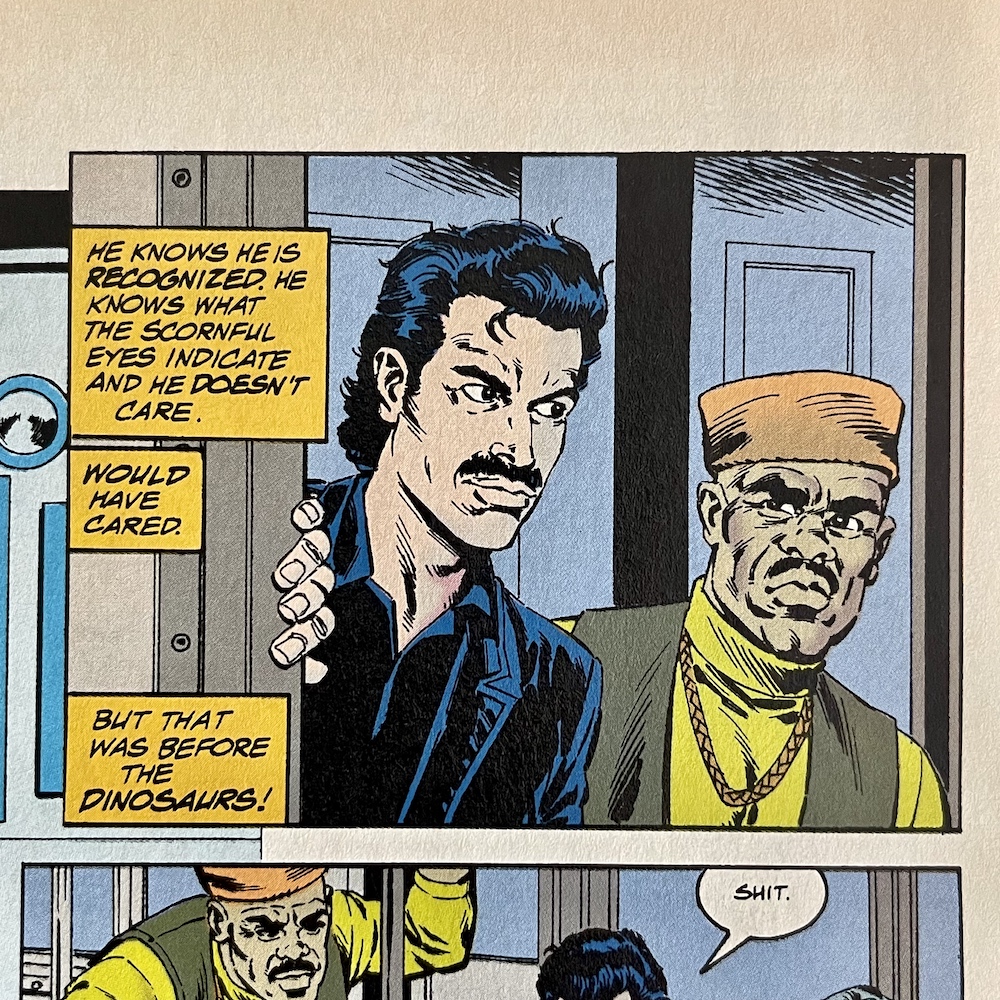
I’m not sure if this would’ve been in the script, I just can’t imagine Ian using the word “chick”. Then again, with so little room (88 pages in total) to convert the script to a comic I can’t see Don adding in extra dialogue either. When Roland Tempo’s team and the slimy Peter Ludlow turn up in their helicopters there are more examples of how the narrative captions can be used to eek out some characterisation that the brisk pace of the adaptation would normally struggle with. Nick Van Owen, as played by Vince Vaughn, was a good character and criminally unused in the climax of the film so I’m glad to see him getting some more exploration here.
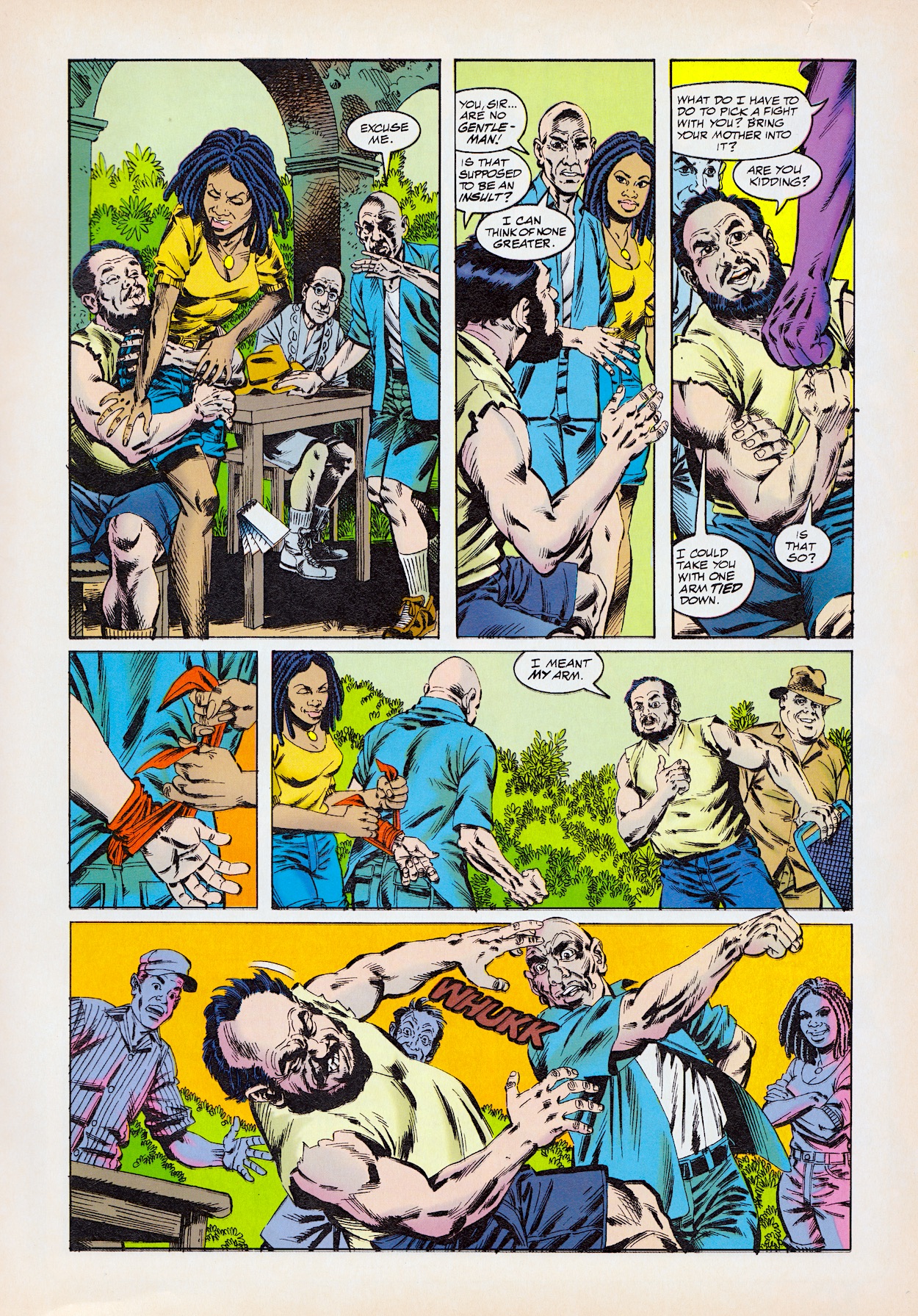
With the hunters now on the ground we get to that heartbreaking part of the film where they’re capturing as many dinosaurs as possible, caring not for the fact these are living, breathing animals, never mind a miracle of science. Roland made his debut in the film at this point but of course we’ve had the bonus of the entertaining deleted scene last issue so we feel like we already know him by this point. Here you can see the viciousness with which his second-in-command Dieter takes down the Parasaurolophus, or ‘Elvis’ as Roland called it.

It’s all over very quickly and it’s here that the unevenness of the adaptation comes to the fore. I’m finding it hard to figure out what Don’s rationale was for what he keeps in and what he jettisons. Later on in the issue there’s a fascinating article written by the man himself about the challenges of adapting a long movie script into a tight four-issue mini-series. He mentions keeping characterisation is very important and I can see that in some of the scenes he’s included but elsewhere that’s simply not the case.
I can’t help feeling I’d have preferred a more balanced approach
While the examples above are nice to see (Sarah and Ian’s exchange lasted for a few pages, for example), ones featuring Ian’s daughter are inexplicably missing or cut down to a few lines and other scene-setting moments have been taken out completely while some of the big dinosaur moments are rushed through, eliminating any spectacle or menace, which seems a strange choice in a Jurassic Park comic. Obviously I’m not a comic writer and Don lays out his reasoning in the article but as a reader I can’t help feeling I’d have preferred a more balanced approach.
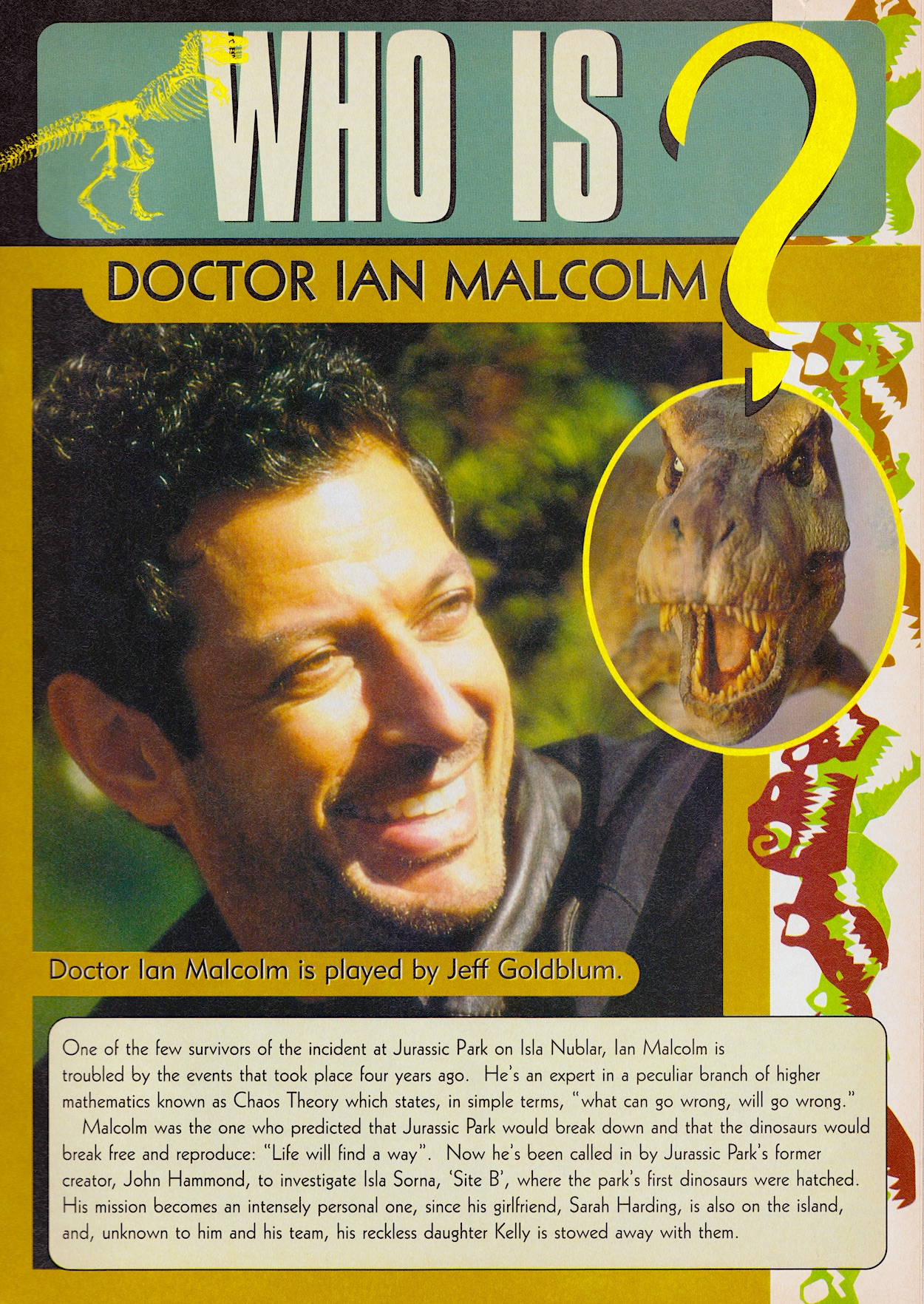
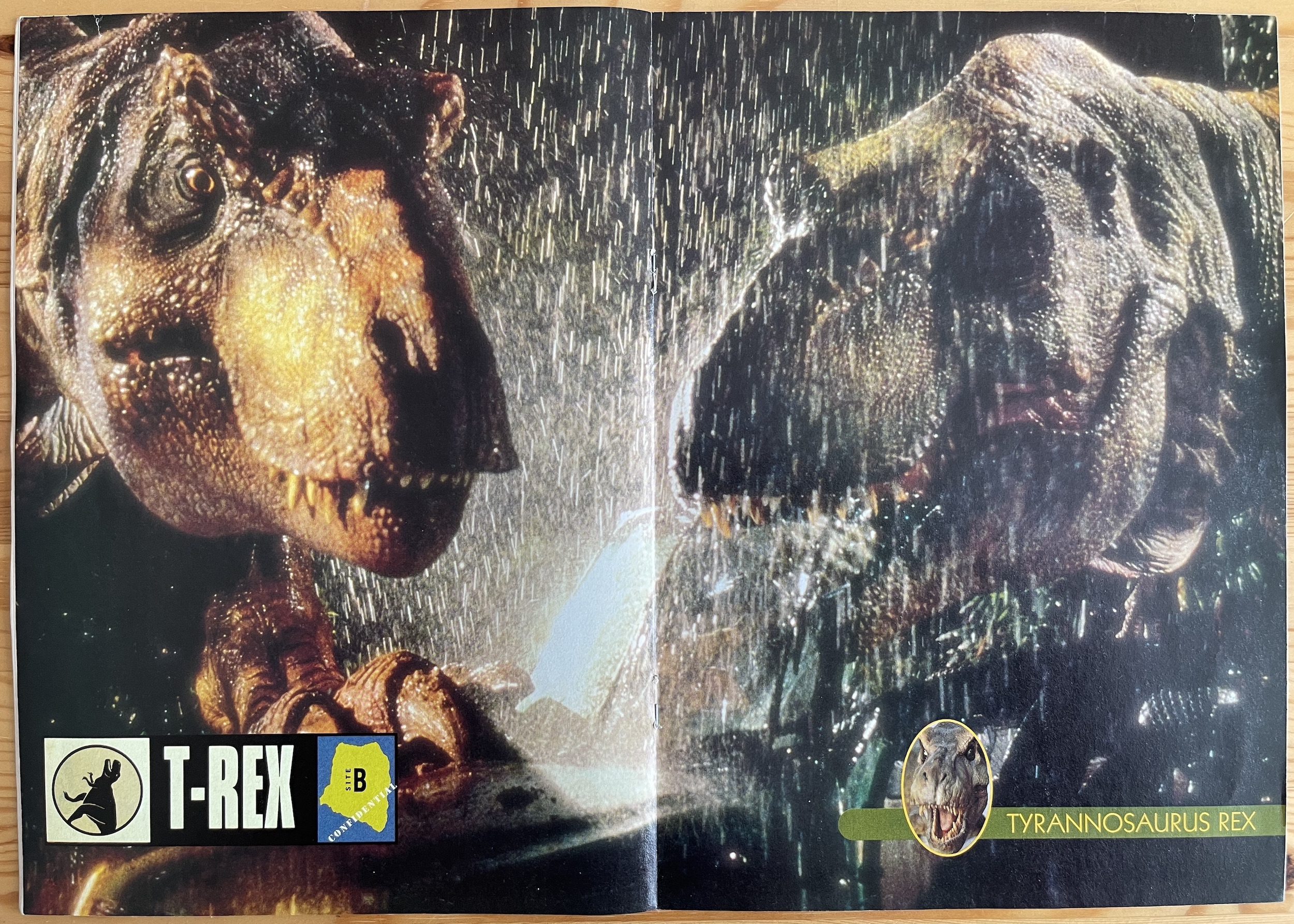
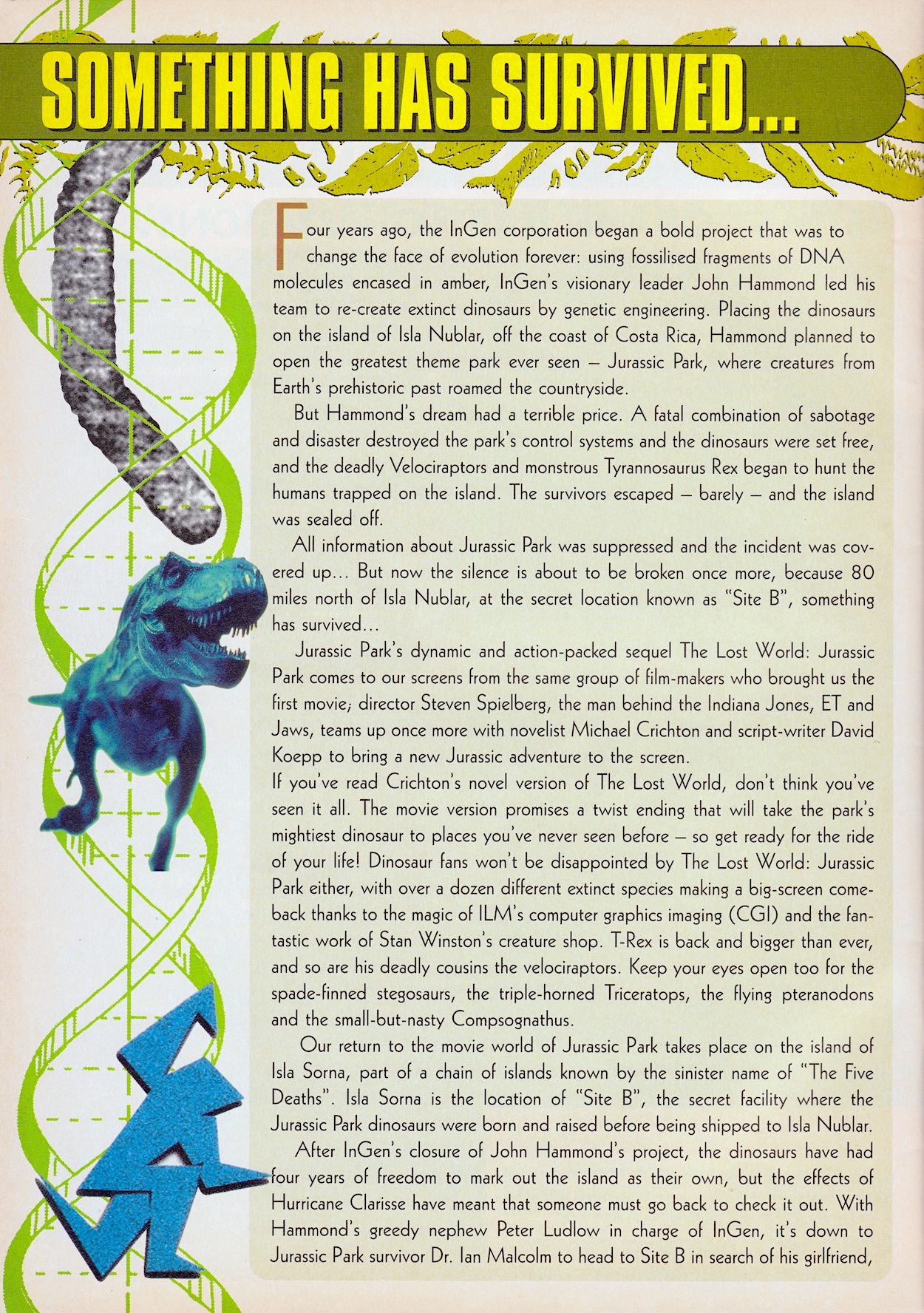
We’ll come back to that in a moment but first the story takes a four-page break with some adverts, another dinosaur fact-file page and a double-page spread. This is on pages 18 and 19 of the comic, it’s not a separate entity and so it’s not a free gift (can you tell that’s still niggling me?). It’s a shame these weren’t large separate glossy posters but at least editor John Freeman made sure there were no strip pages on the back of them.
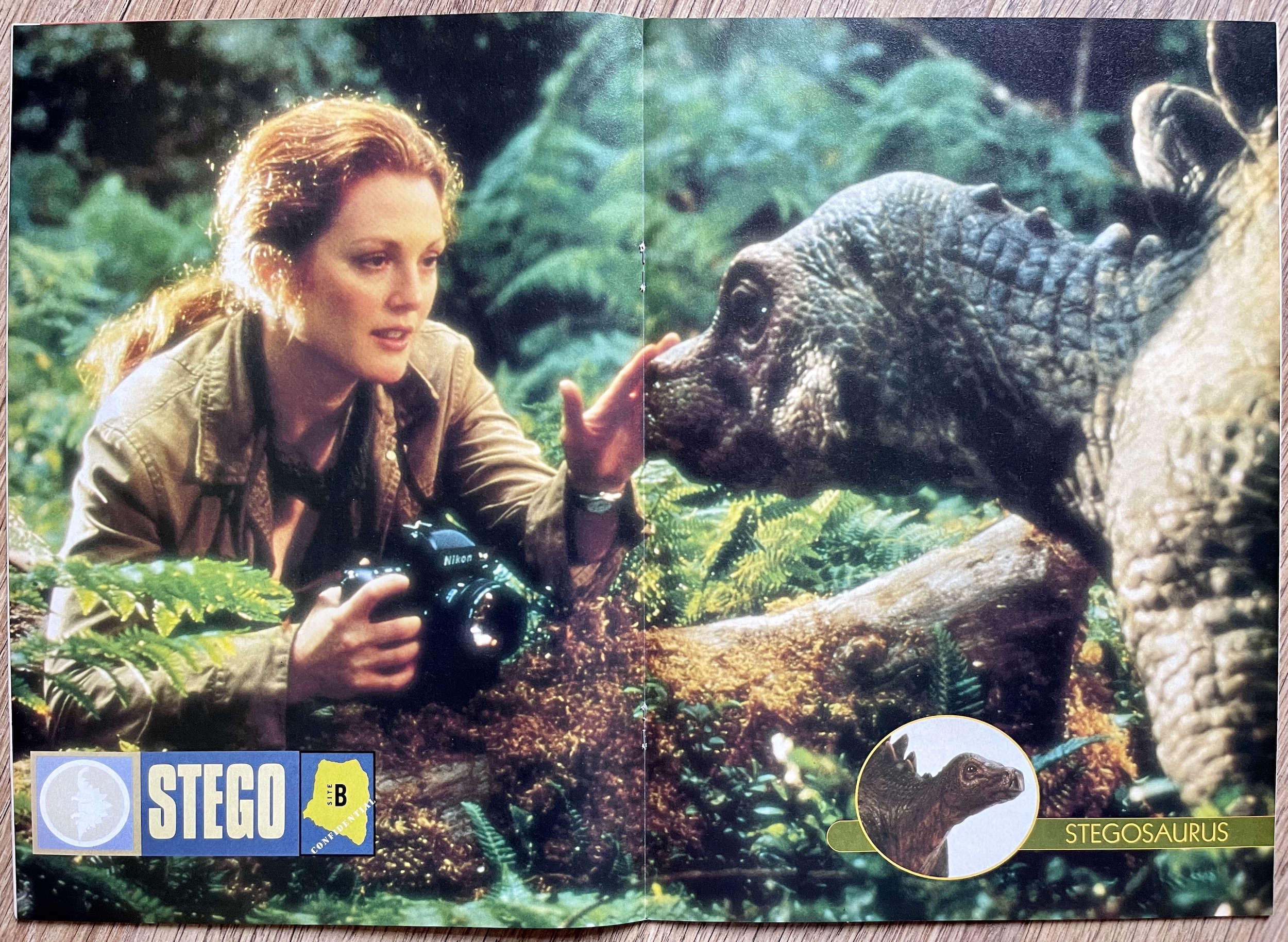
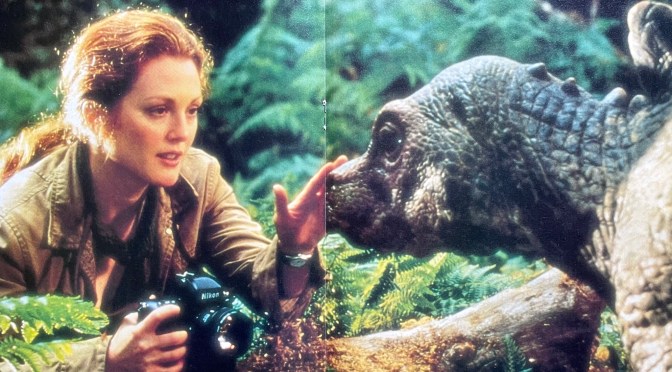
Julianne Moore as Sarah Harding reaches out and touches the snout of the baby Stegosaurus in a moment that was excised from the story last issue. Over the page is another fact-file dedicated to one species from the film and the Stegosaurus gets top billing this time. However, remember how I thought the design of the page wasn’t finished last time? It appears that is indeed the finished design. It looks awful and does no justice to the great piece written by Steve White.
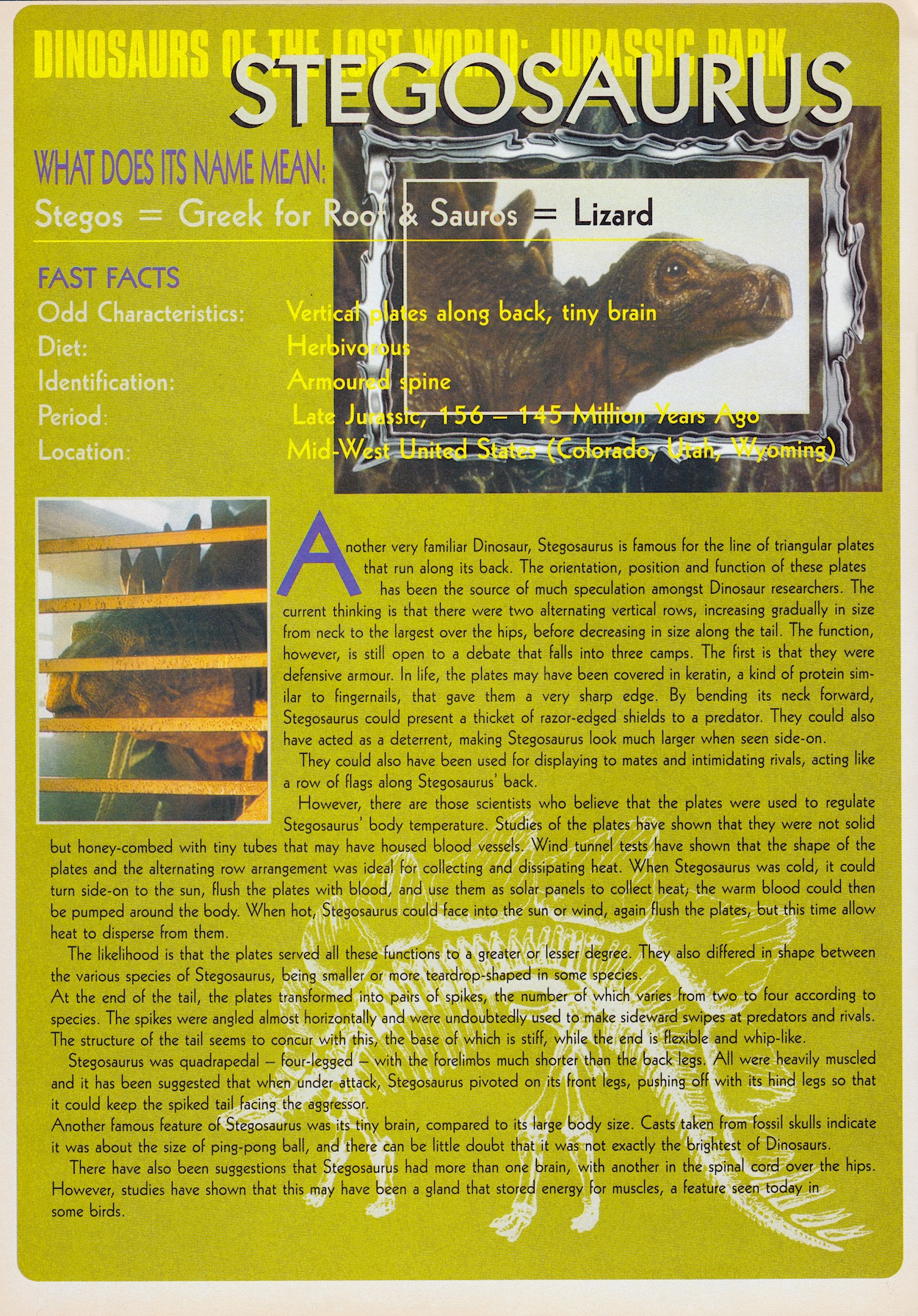
An ardent dinosaur aficionado, Steve has clearly done his research (or knew the subject matter extensively already) and this would’ve been a fascinating read to young fans of the films, adding depth to the scenes in the movie featuring these animals. It’s still fascinating for this much older fan too. We then head back into the story and the last eight pages of this 22-page chapter, beginning with two new scenes I hadn’t been aware of until now.
While overlooking the hunters’ camp it sinks into our team that the creatures are being taken off the island alive and exported to the mainland. After what happened in the park this is obviously a terrifying realisation and this is the part where we find out Nick was actually sent as back up by Hammond and he sets off with Sarah to free the dinosaurs. It’s during this we get the new element, one of Ian’s little speeches that we liked so much in the first film, this time about something called Gambler’s Ruin.
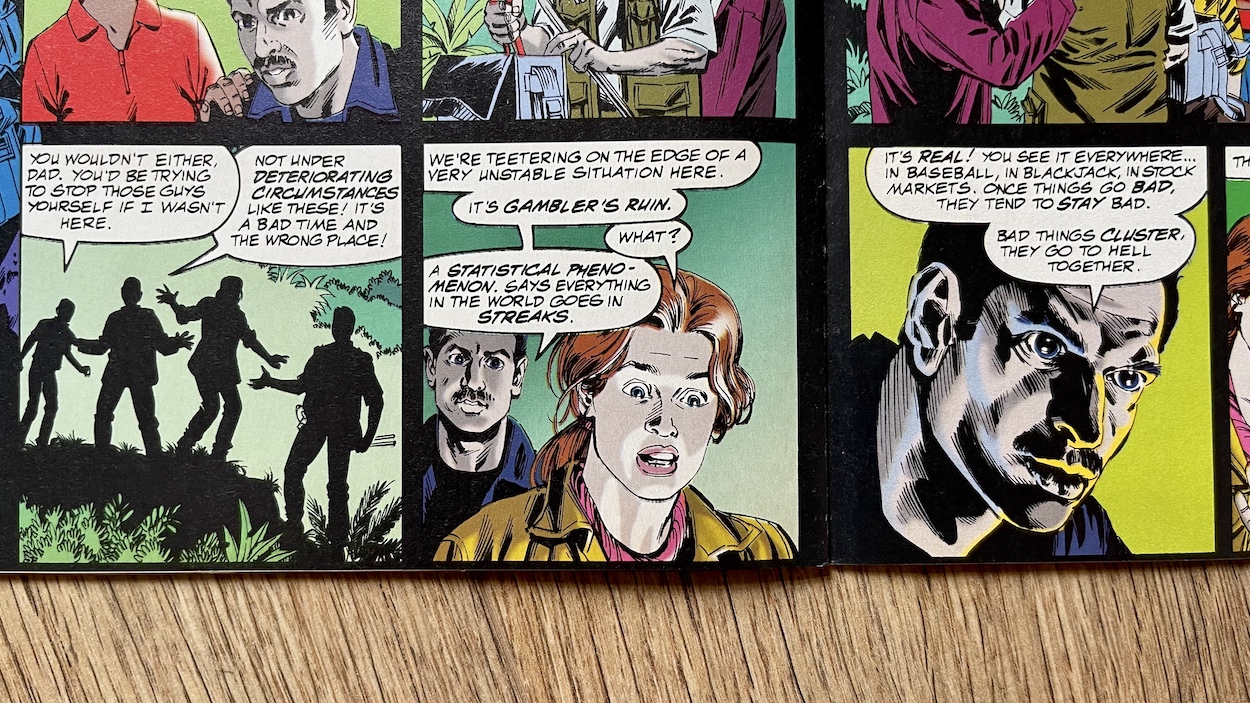
While it’s only for a couple of panels it’s something that’s referred to later in the strip and by Don in his article. Don states things like this are deemed important and must be kept in, which is ironic since it didn’t make it into the film. I reminds me of those little moments in the first movie that expertly summed up the pages and pages of fascinating monologue from Ian in the novel. It’s a shame it didn’t make it into the finished film, whereas I’m glad the next page didn’t.
This scene isn’t a deleted scene in the movie’s extras so I can only assume Steven Spielberg chose not to film it. On the screen we see Roland and Ajay watching the baby T-rex and coming up with a plan to use him to lure the male adult back to the nest. A few moments later the baby is seen tied up with one of its legs covered in blood. Later we find out it has a fracture and Sarah and Nick try to set it for him (or else he’ll become food for a predator). The implication of how it happened is clear but here the real reason is meant to be a pratfall.
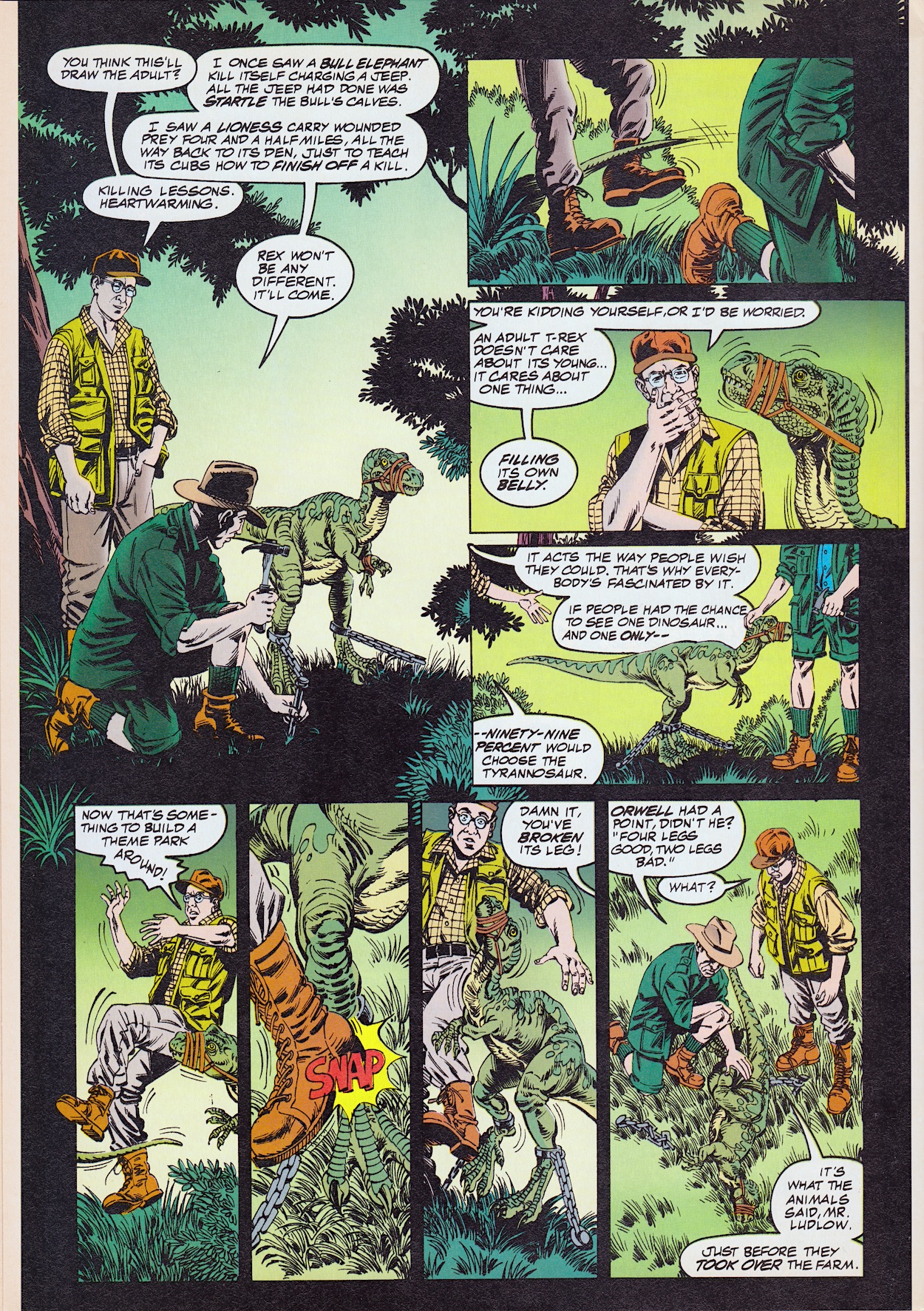
I really don’t like this and it’s not Don’s fault of course, it was in the script he worked from but I can’t blame Spielberg for not including it. Roland is meant to be a seasoned hunter, the very top of their game in the whole world, so bored with it now that only the promise of killing a T-rex buck could lure him back into picking up his gun again. When I watch the film I like the way the reason behind the baby’s leg injury is kept ambiguous.
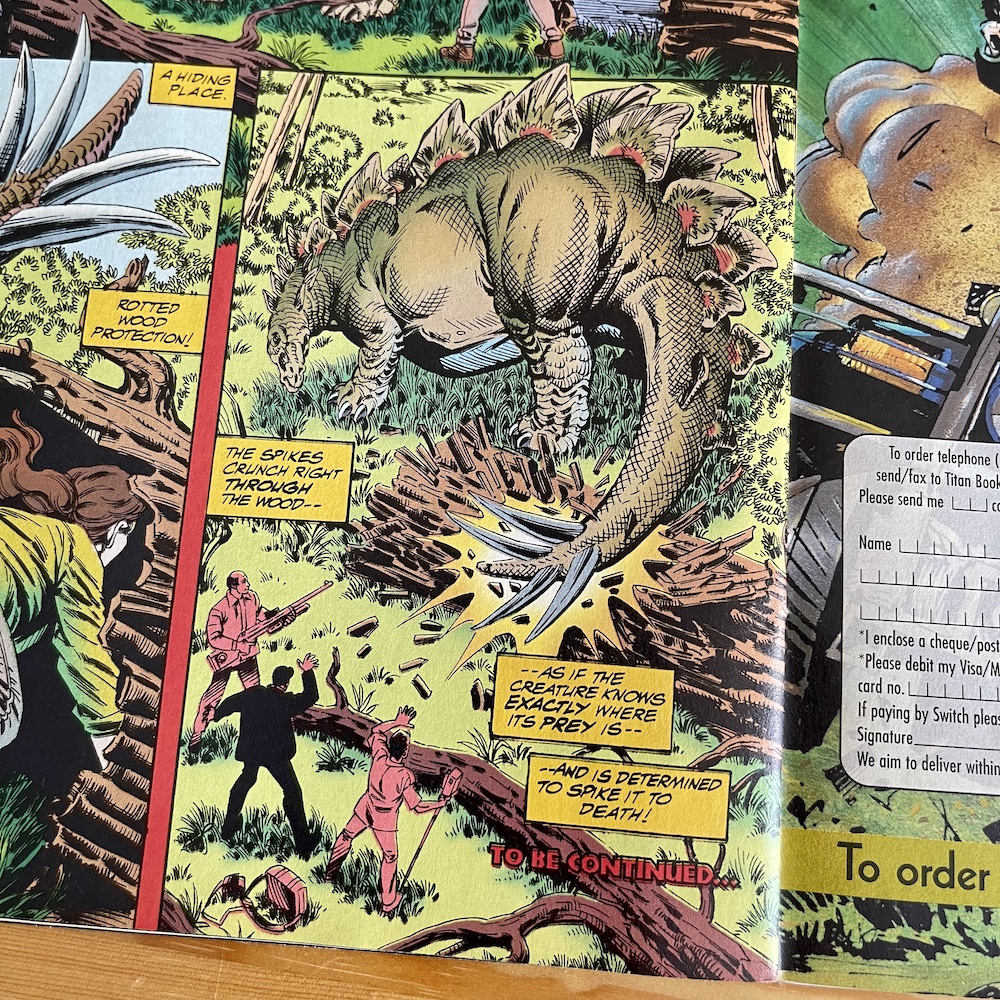
Spielberg left it up to the viewer to assume either the baby struggled and did this to itself as the two men struggled to tie it up or, more viciously, they deliberately broke it so the baby would cry out in pain for his parents and the scent of blood would bring the adult male quicker. But to have it as a result of Ludlow clumsily tripping just feels wrong. I prefer the film without this scene and clearly the director agreed. After this the chapter rounds itself off with the moment a Triceratops breaks out of the camp after being freed by Nick and that’s us for another fortnight.

If you’re thinking I’m being overly critical it’s only because the previous Jurassic Park comic showed how much potential there is in bringing this franchise to the medium. The last chapter of the first film’s adaptation may have rushed things too much but the first three instalments were fantastic and showed me it could be done. Then the vast majority of the sequel strips were great fun, full of action without sacrificing the characterisations. It even gave depth to a group of Velociraptors!
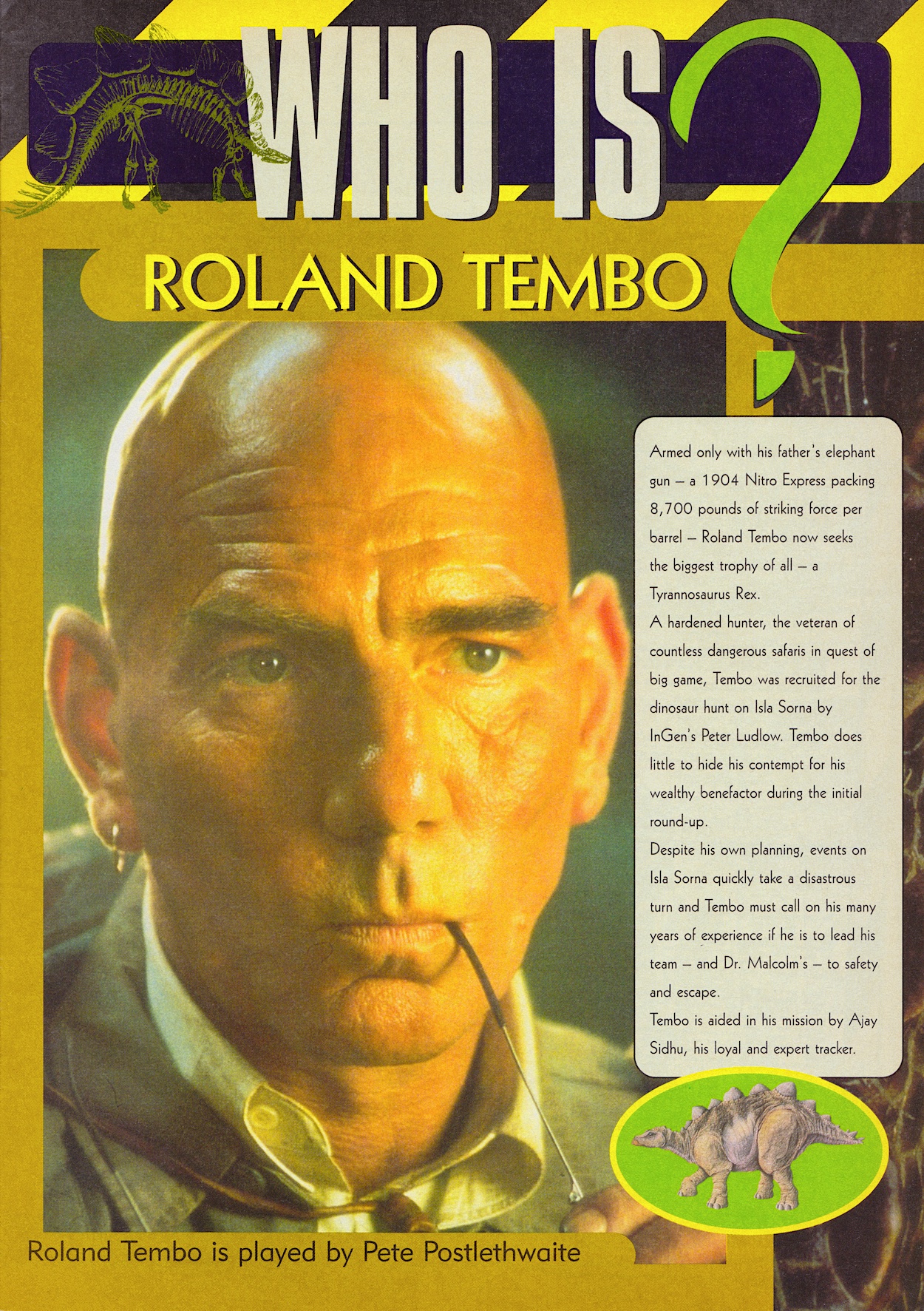
A pin-up of Pete Postlethwaite in character as Roland brings us to Don’s article, Script to Strip. I really do find this interesting. I like how he describes the difference in the comics medium, things we may not have considered as fans of the film. I found it shocking everything was written before he’d seen anything of the movie at all! Yes, the comic would be published to coincide with its release so deadlines would’ve been very early, but I expected him to have access to photos from set, pre-production art, maybe early footage but nope, he only had the written words to adapt into his own written words.
Part two really is a big improvement and after reading Don’s own words I can’t help but cheer him on
He makes several good points about the maths of adapting a film to a comic, namely the page count difference and when he lays this out for the reader you get a sense of the enormity of his task. I’m not sure I agree that each part of this mini-series should be able to work as a story in its own right though. Maybe if he was writing his own original comic but in adapting a movie it’s never going to come across like that to a reader, these are very much individual chapters of one story.
He makes good points about the risk of having no dinosaurs for too long, something a movie that’s building tension can do but a comic can’t. This was why Walter Simonson reworked the order of some scenes and added actual Velociraptors to Dr Alan Grant’s famous scene with the “That doesn’t look very scary” kid in his adaptation. I’ve mentioned Don’s characterisations and choice of scenes to include throughout the review, so without further ado here’s a fascinating look into how this insurmountable task was achieved.
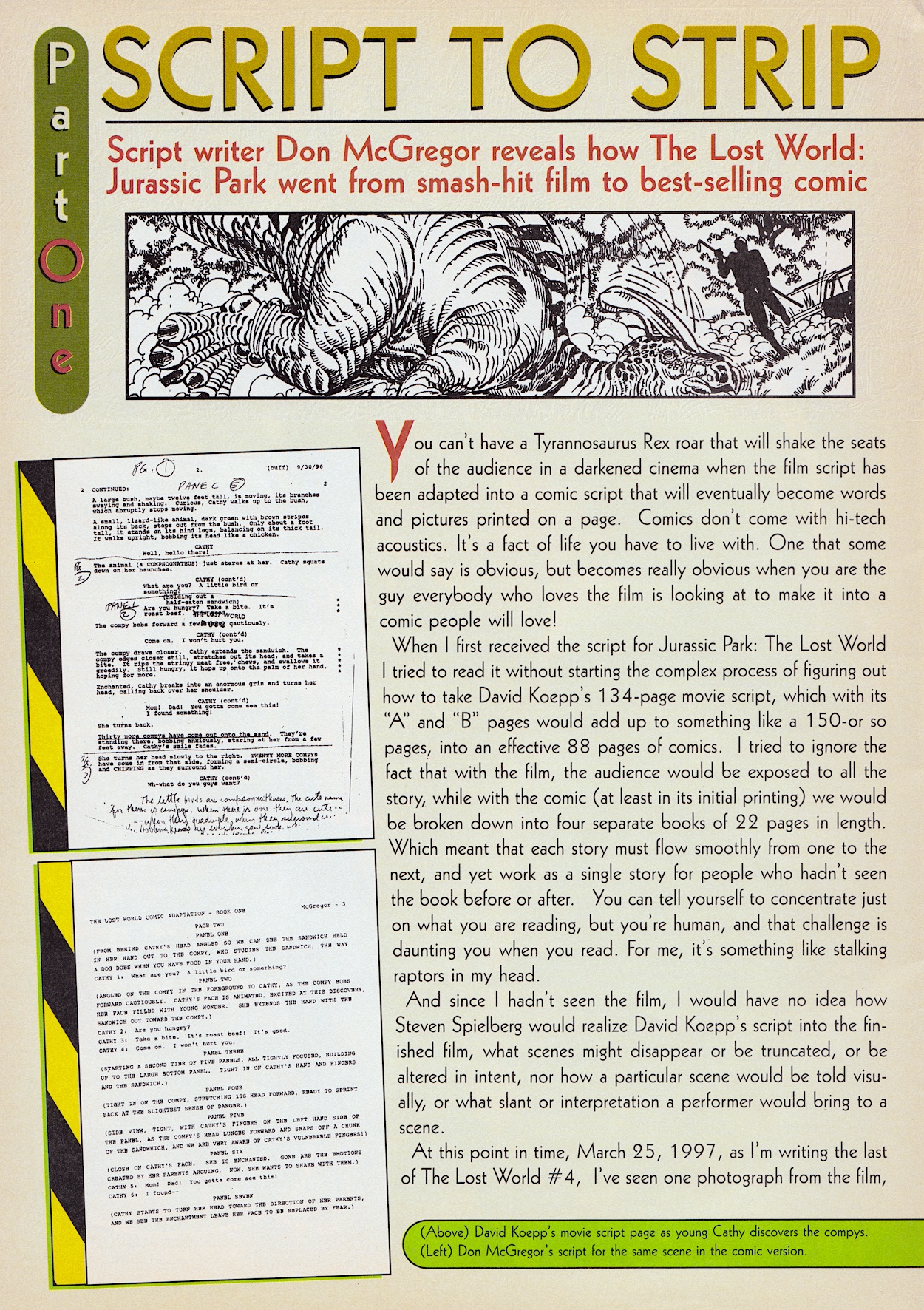
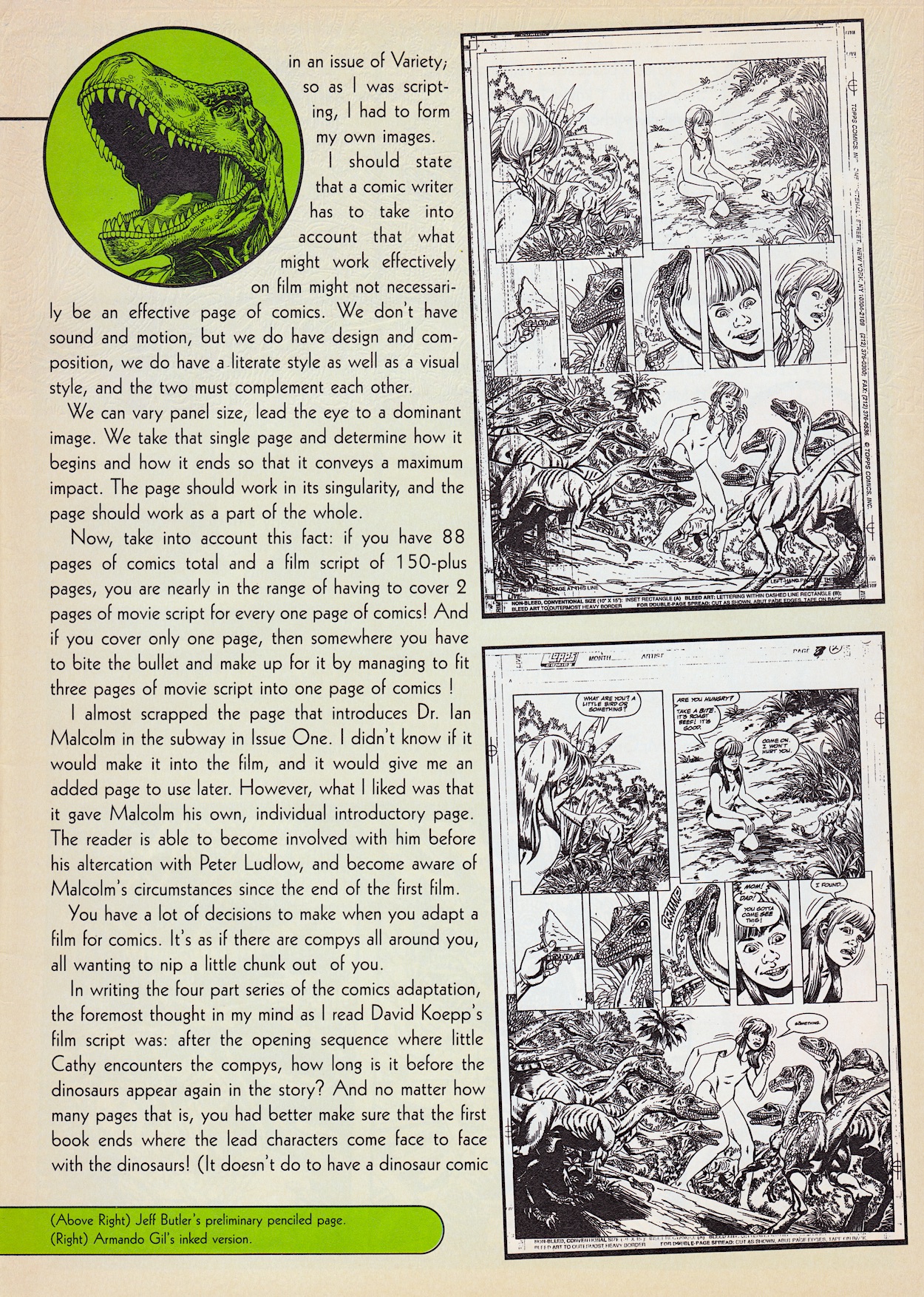

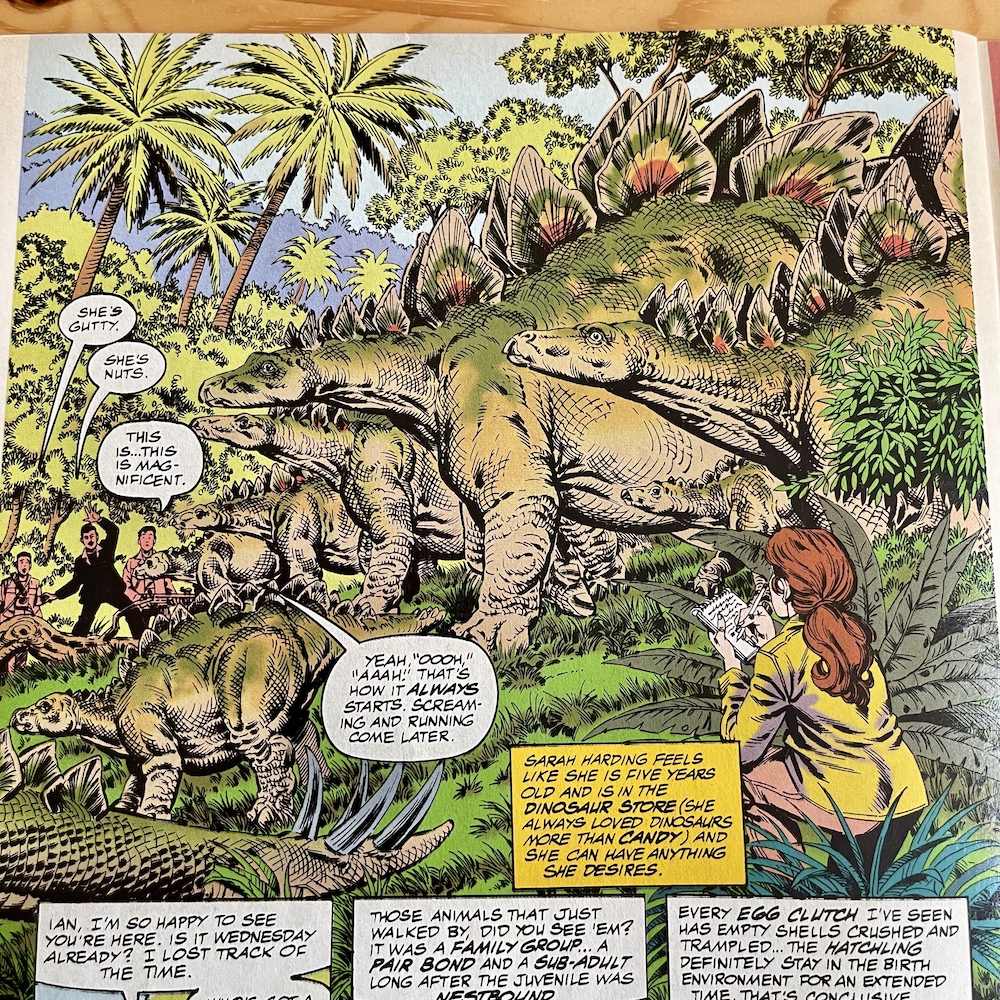
While I agree with his sentiments and he clearly had good intentions I feel the adaptation hasn’t quite got the balance right. For example, instead of including every single word of some scenes and none from others would it not have been better to trim all of them down so that the essence of them all is still intact? Jenny (Ian’s daughter) in particular is badly served. The same with the dinosaur scenes; there are some great spreads (we got two pages of the Stegosaurus family walking away from Sarah at the beginning) at the expense of scenes that would’ve been the most memorable to readers waiting to watch it again on home video.
Part two really is a big improvement and after reading Don’s own words I can’t help but cheer him on for the second half of the comic’s limited run. I hope he’s successful, especially when there’s potential in his style and the art is so enjoyable. We’ll find out over the next month. The third of these four issues will be reviewed on Monday 7th August 2023 and if you’re just discovering the blog via this comic there’s a whole bunch of Jurassic Park comics already reviewed over the past couple of years that you can check out, including the first official sequel long before The Lost World Jurassic Park.
iSSUE ONE < > iSSUE THREE






 OiNK Blog