
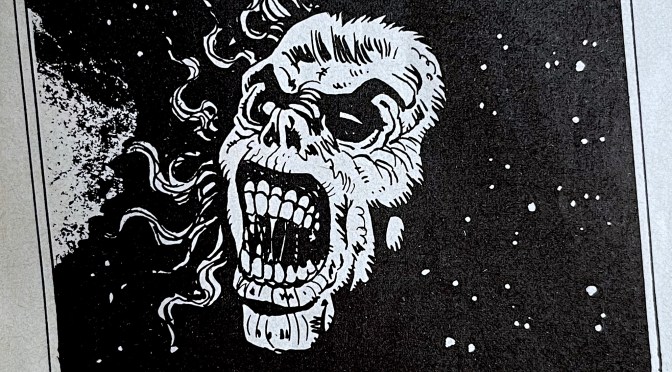
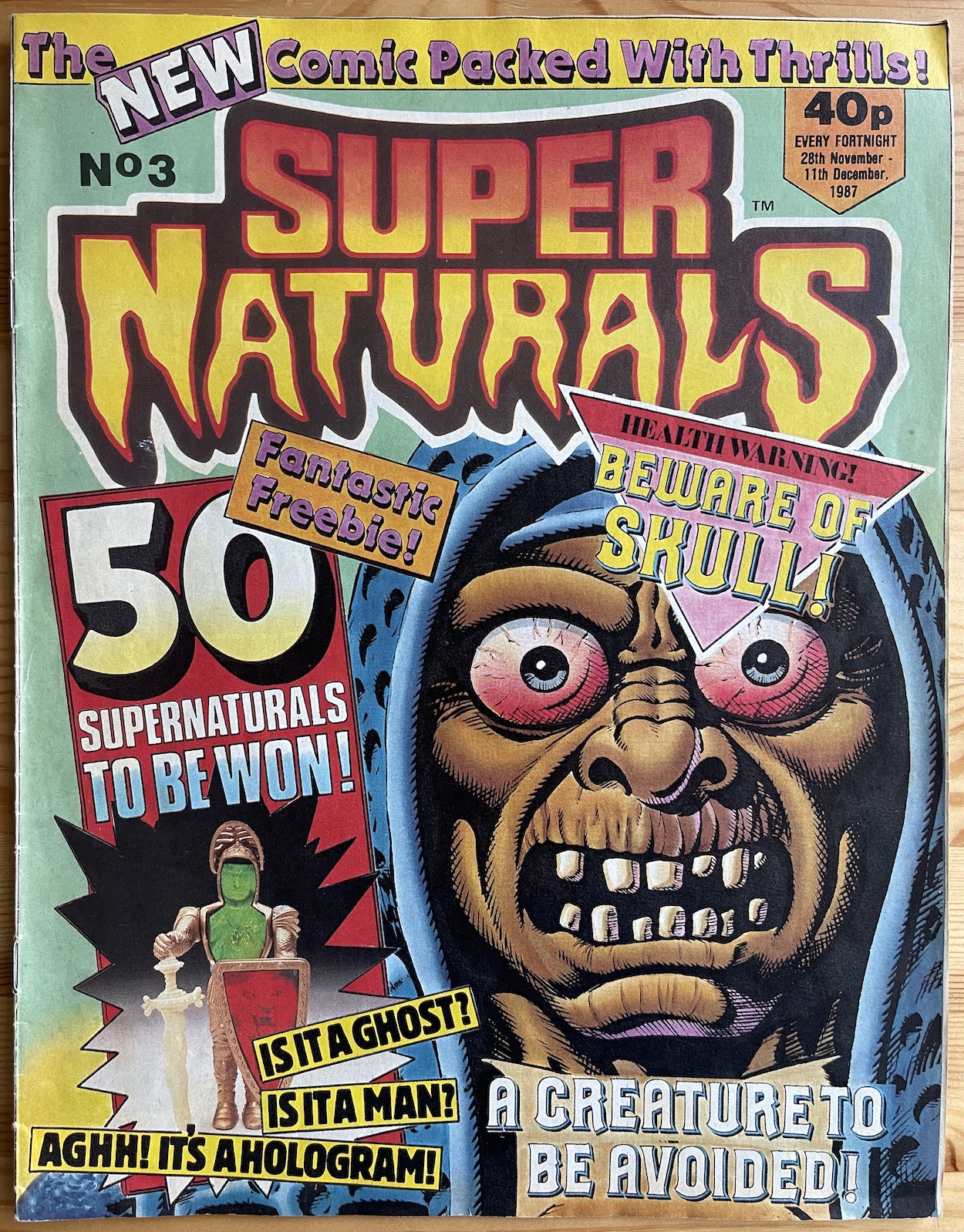
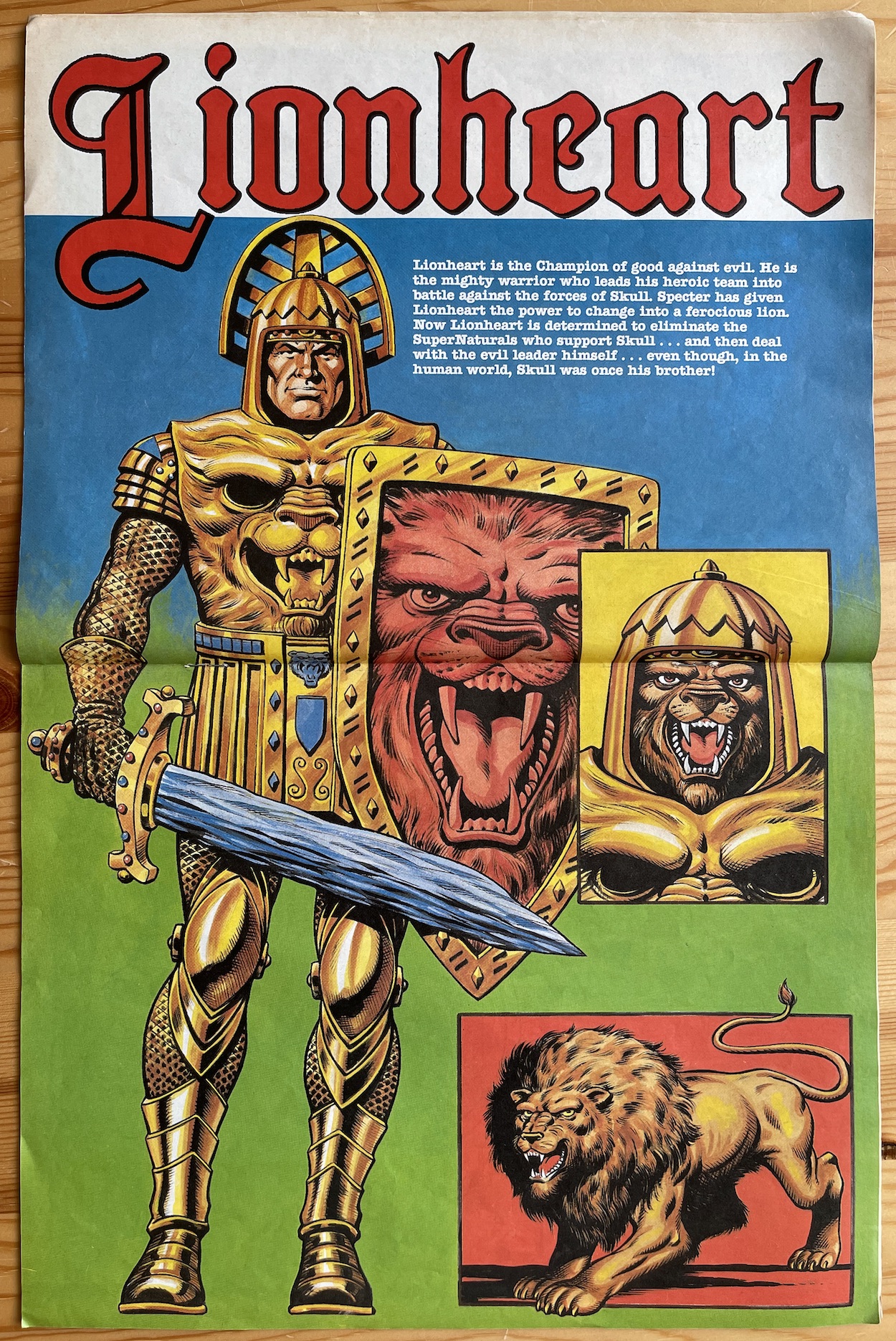
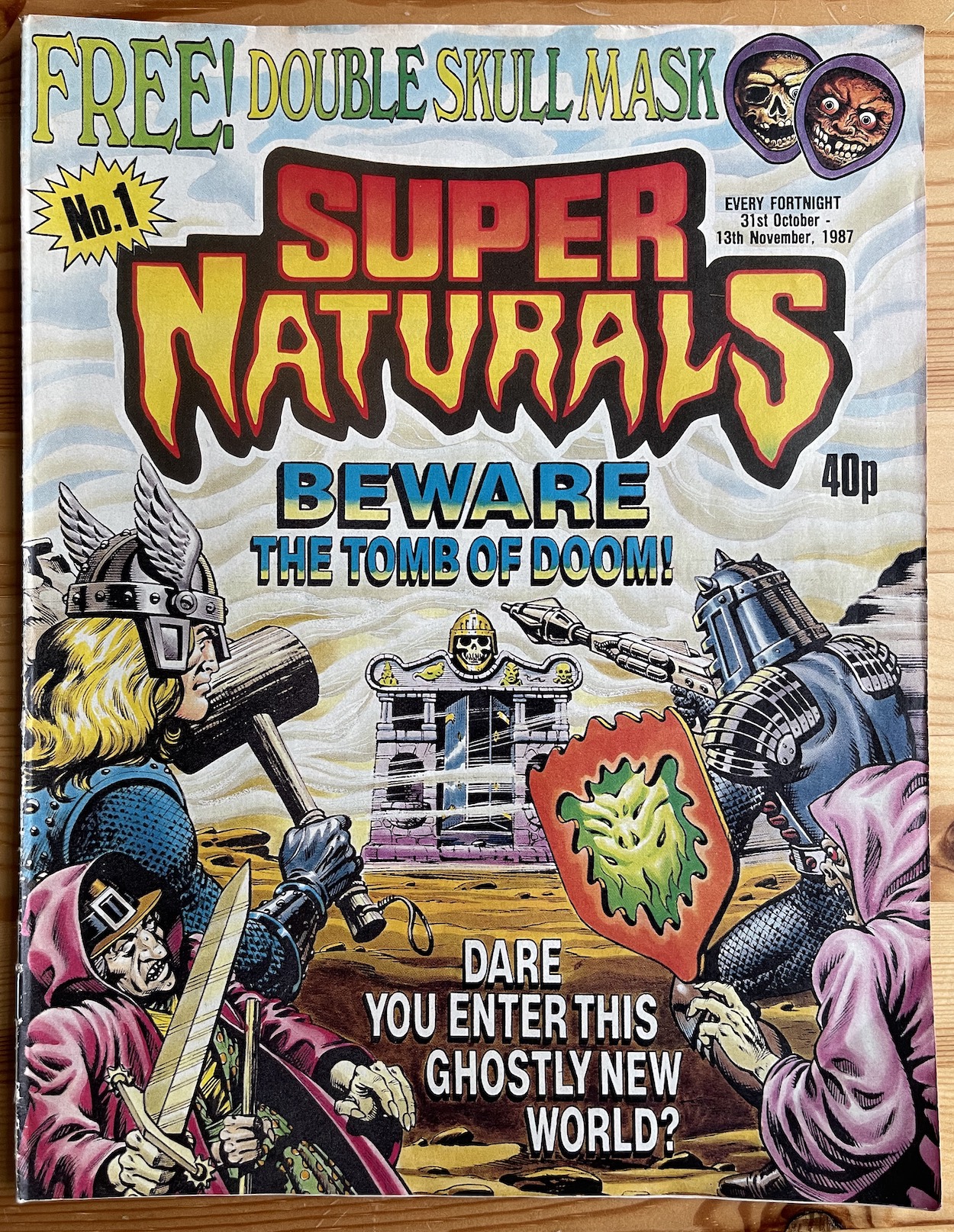
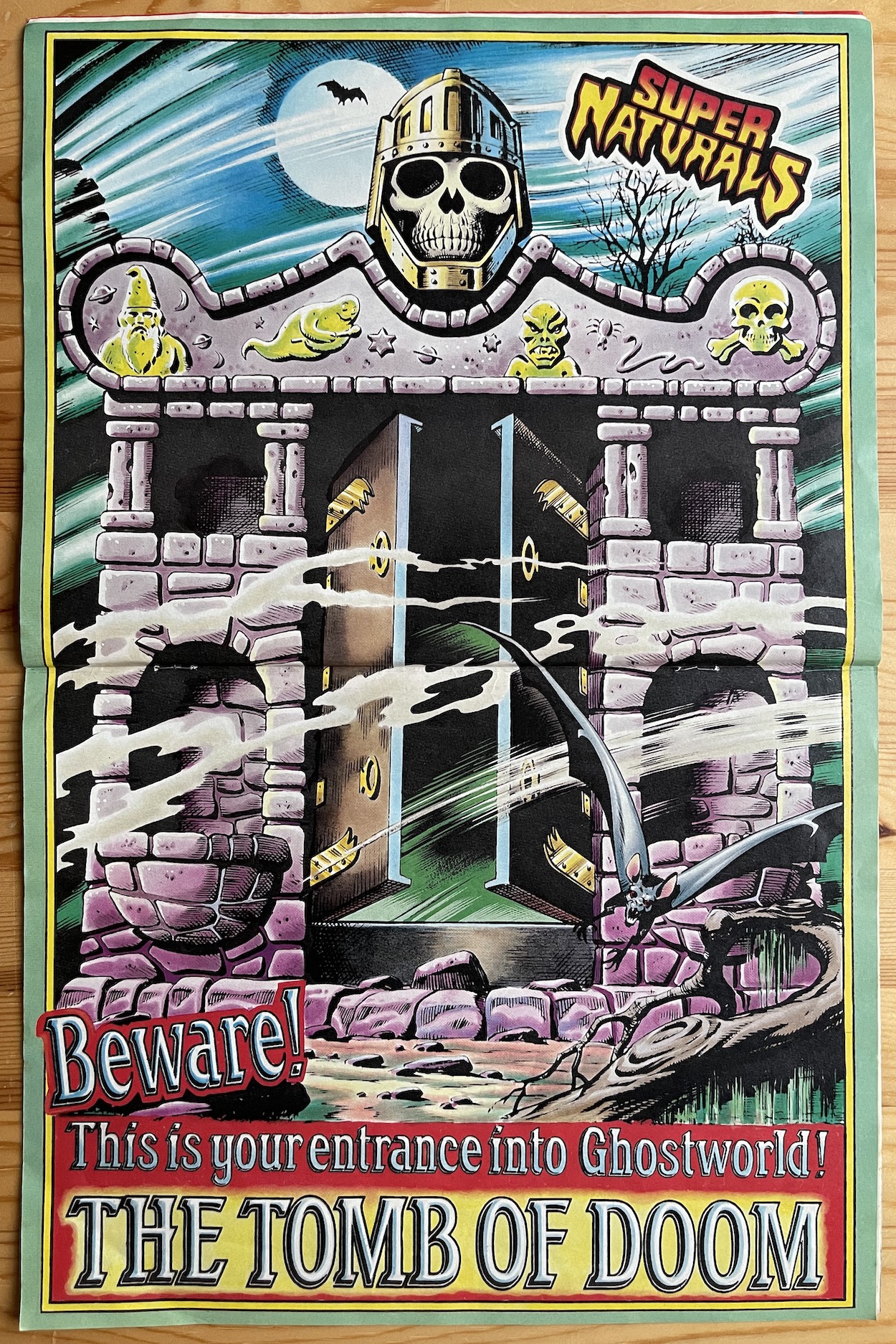
One thing that’s very apparent with this particular issue of Super Naturals is how each artist has a very different way of interpreting the characters. In fact, artist Sandy James even changes his Skull from the rotting flesh colour of the cover to a bright green for the poster (the same as the hologram on the toy). The cover itself is more simplistic this time with the main focus being the competition inside.
The logo is also bigger, making an even bolder statement on the newsagent shelves than before. First up inside is the next chapter of The Legend of the Super Naturals and time to introduce two new toys into the fray, the Tonka trucks Bat Bopper and Ghost Finder. These possessed vehicles were great looking additions to the range and I’m happy to say they make quite the entrance here, drawn by Dave D’Antiquis.
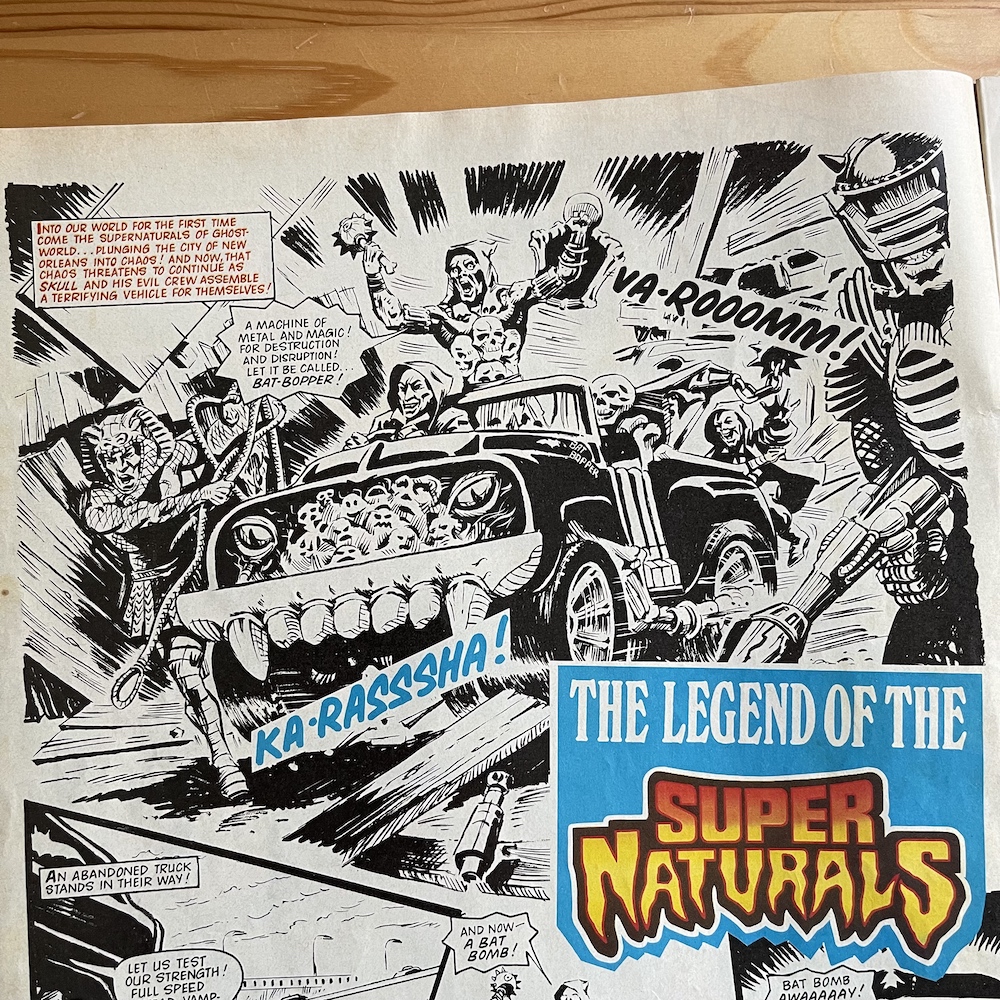
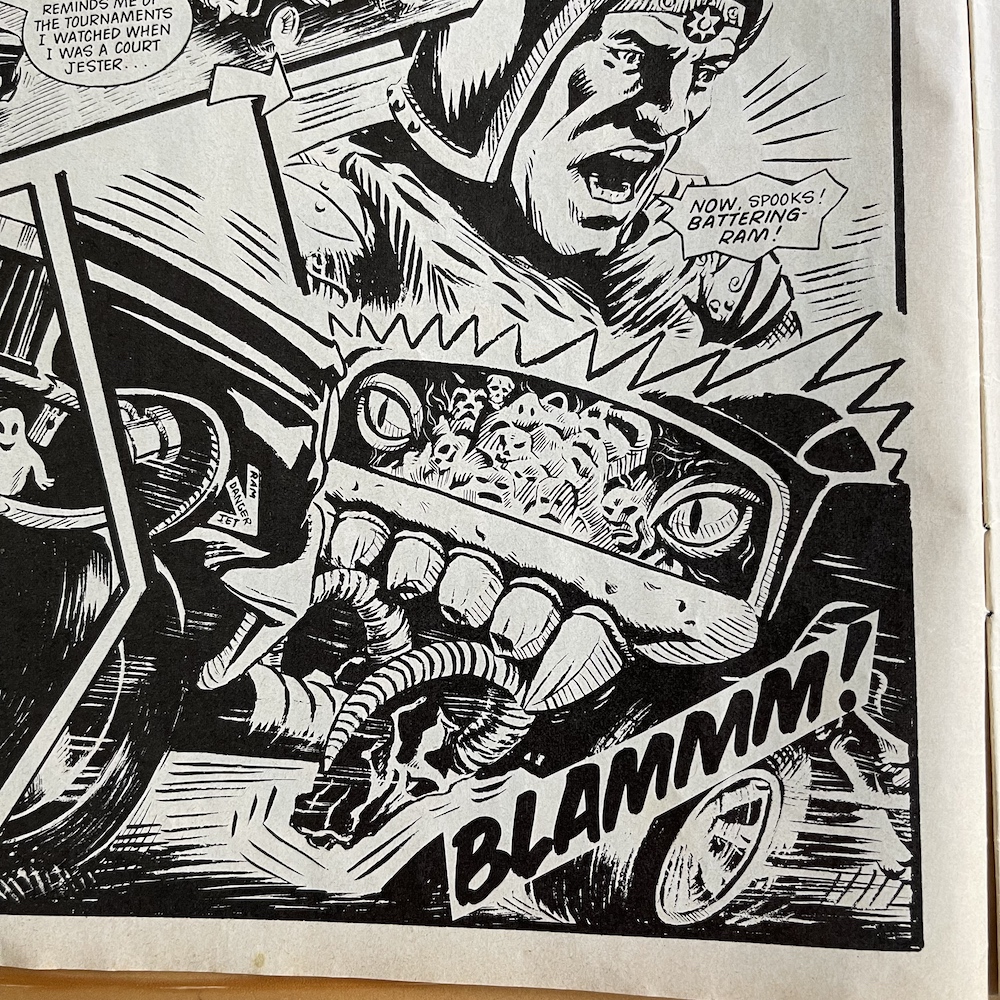
With facial features like these I imagine they’ve been bestowed with some form of spirit, although how this was achieved in the real world and without Ghostworld‘s overlord Specter isn’t explained. Controlled by Ghostlings Vamp-Pa and Spooks they battle it out and in the process destroy half a city block when they blow up a tanker truck.
I think it’s safe to say this strip has now fully committed to going down the action route rather than the creepy horror-tinged story we got as an opening chapter when it was drawn by John Gillatt. Perhaps the action genre better suited Dave’s style, and in no way am I disappointed, just to be clear. So surely all this destruction can’t go unnoticed in our world? As a matter of fact no, it doesn’t.
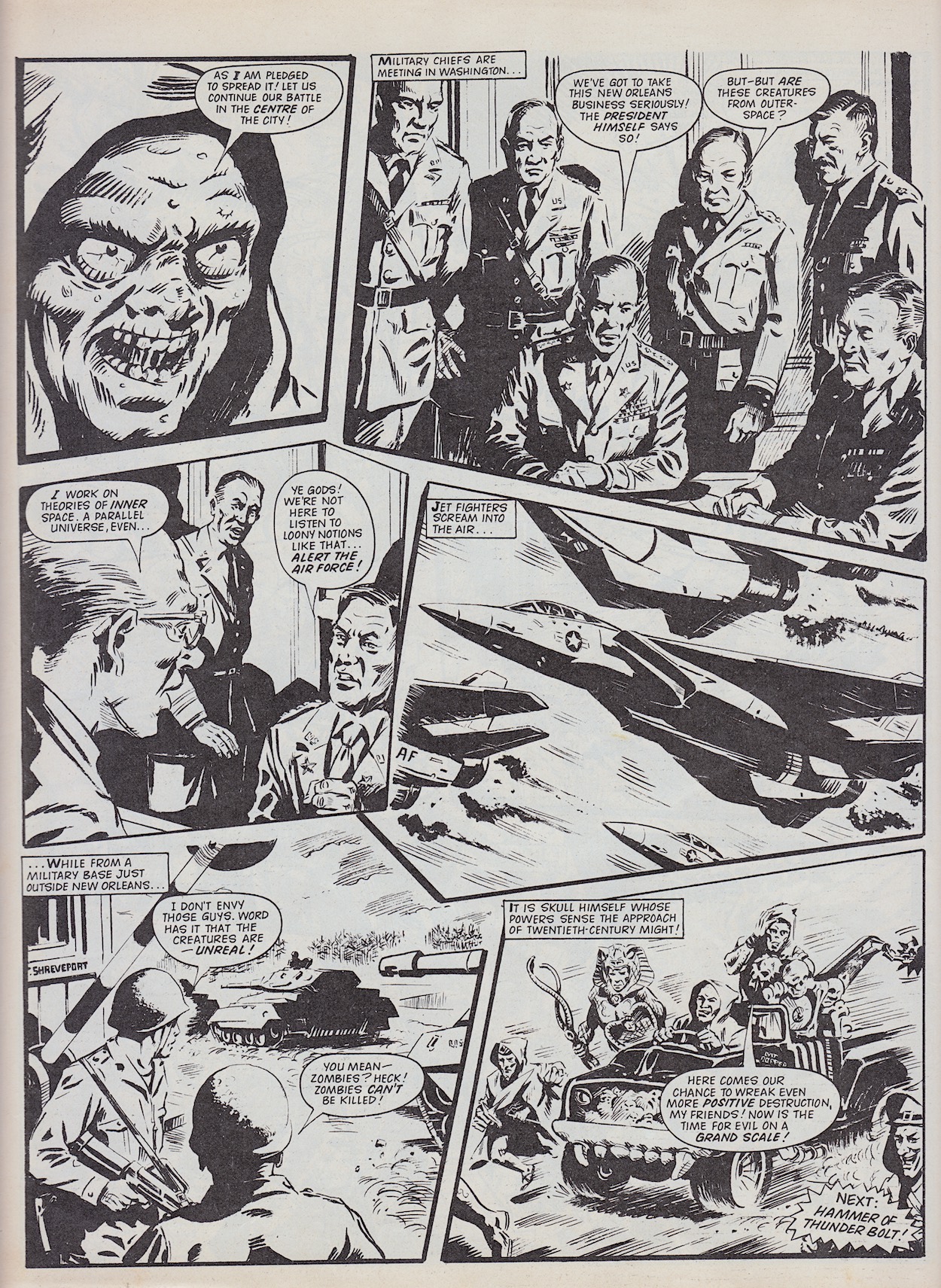
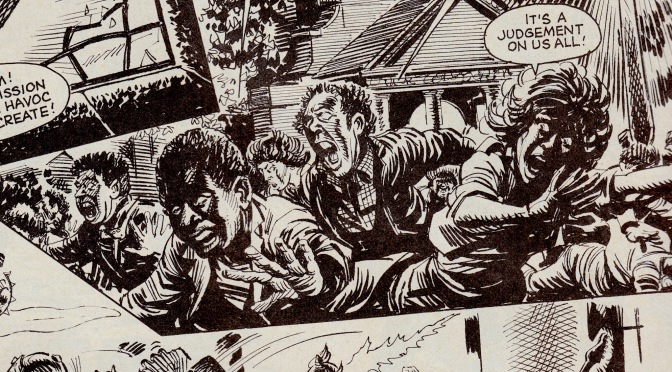
This final page brings a sudden maturity to the strip which was a surprise. Seeing real world (as it were) military people and their response makes this far-fetched tale suddenly feel grounded in some form of reality and in turn brings a whole other level of drama to the proceedings. The fact this small band of Super Naturals are about to face the full force of all this military might may seem like overkill, but as humans we really didn’t know what we were up against.
These generals, despite brushing aside as absurd the theory that’s actually closest to the truth, have concluded this is the appropriate, balanced response. If that’s the case then we’re in for one hell of a fight next issue. It may have moved away from horror but this has been a blast and the sudden change in tone has me very interested in the next instalment.
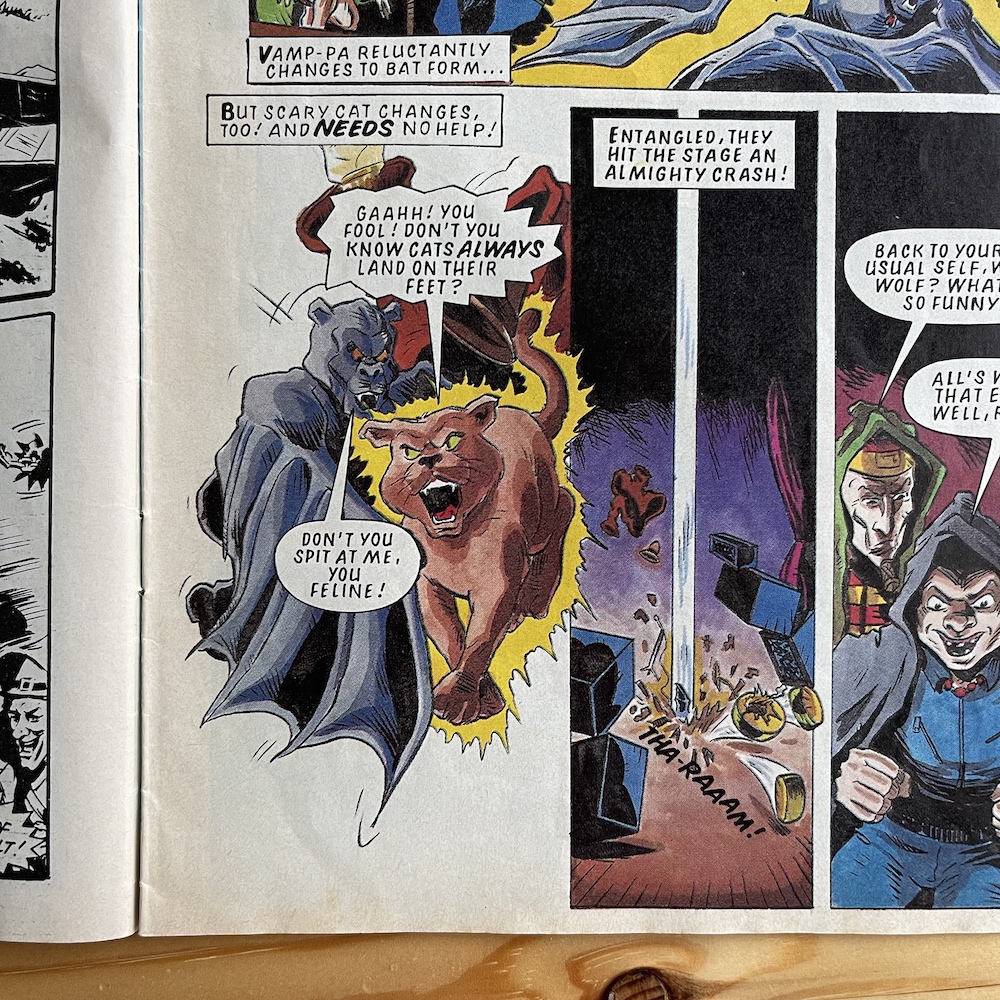
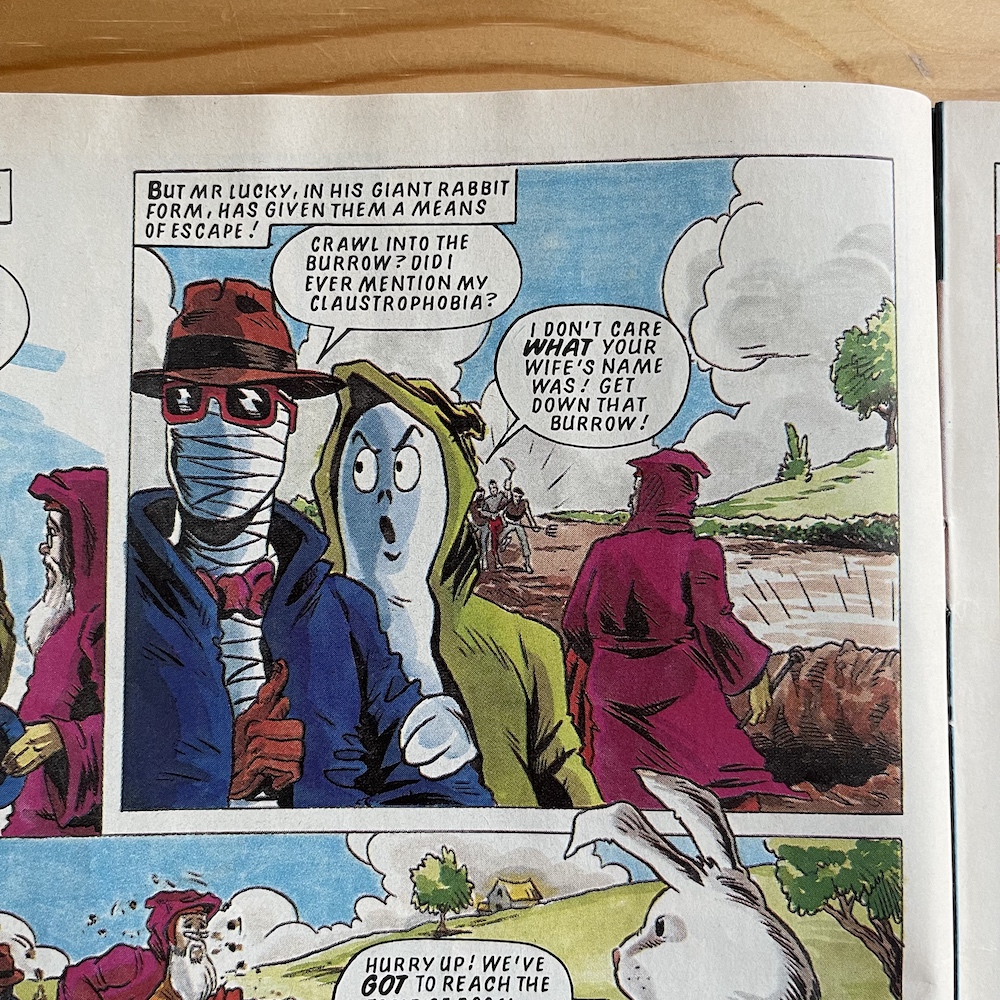
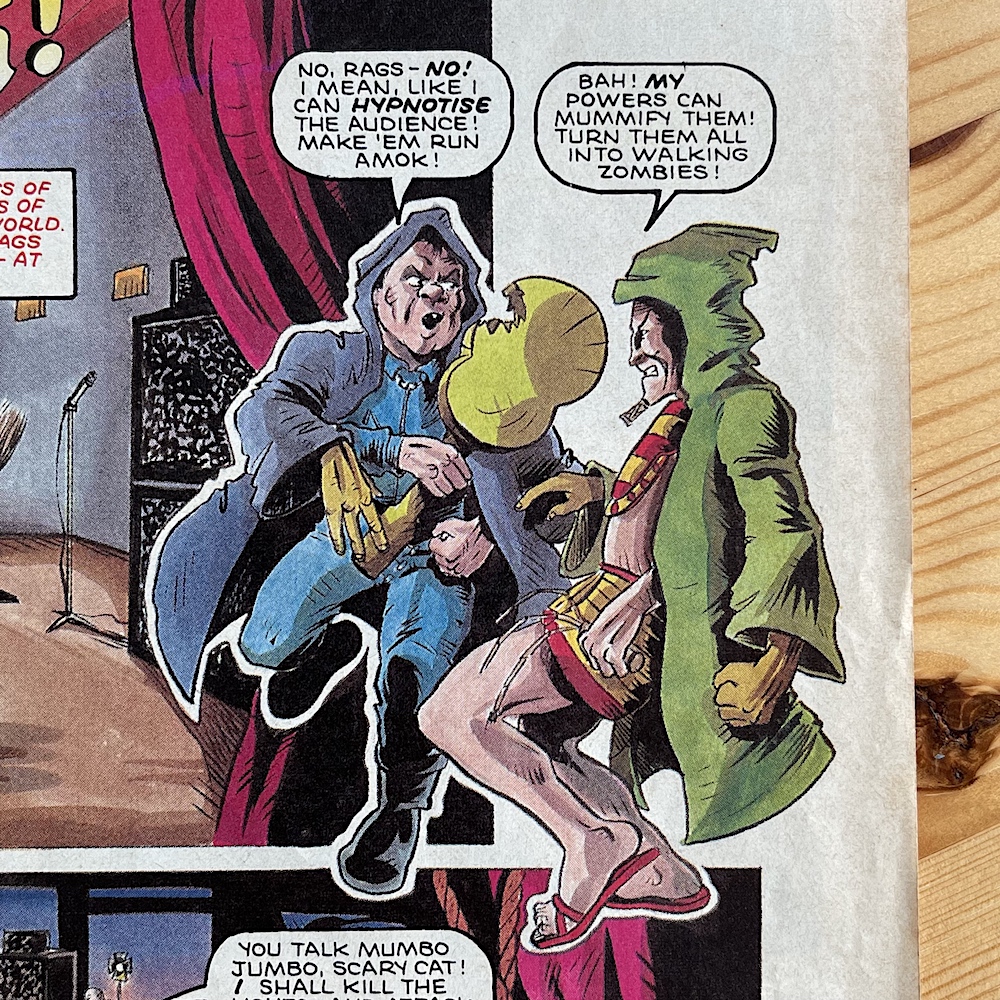
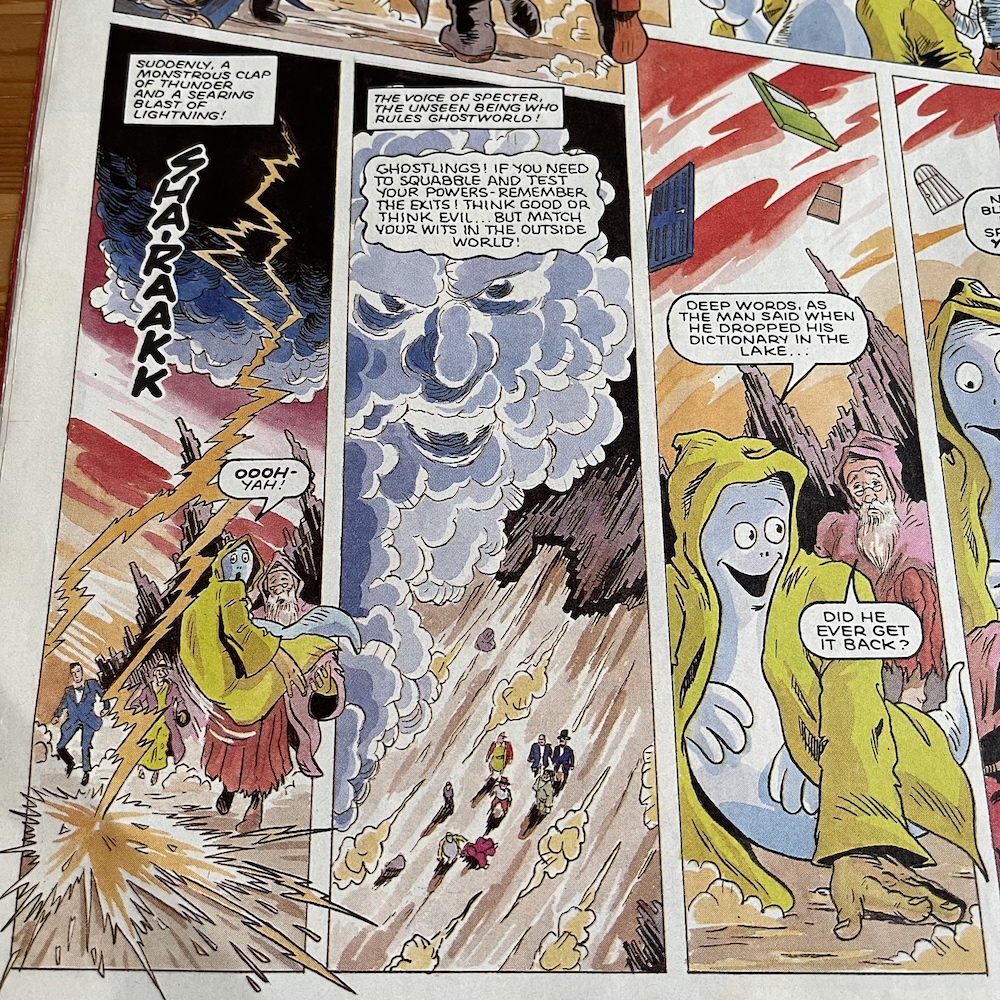
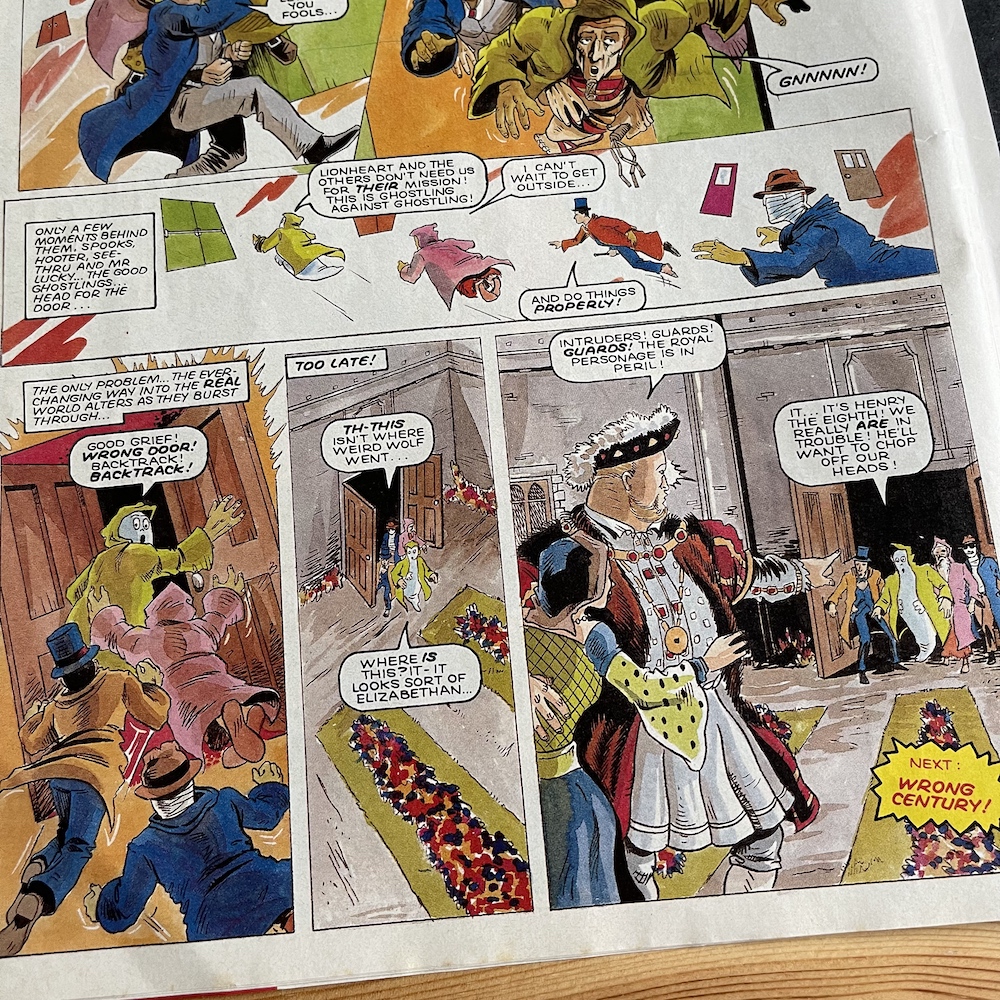
The Ghostlings strip drawn by Anthony Williams continues to bring the laughs like it did last time. There are a couple of genuine giggles here too, for example Scary Cat falls off a high beam above the stage and Vamp-Pa turns into his bat form to save her. But she doesn’t want nor need saved, as she can simply transform into her cat persona to land on her feet. As cats do. In the end the two of them are so busy bickering they plummet right through the stage below!
With some fun banter again, whoever wrote this strip seems to have been having a ball with the possibilities of these characters and I hope one day I can properly identify and credit them. It all comes to a satisfying end with both sets of Ghostlings returning to Ghostworld, eager to do battle but once again stuck in the one place they’re forbidden to do so. However, Spooks isn’t done yet and on the next page shows off the first contributions from readers.
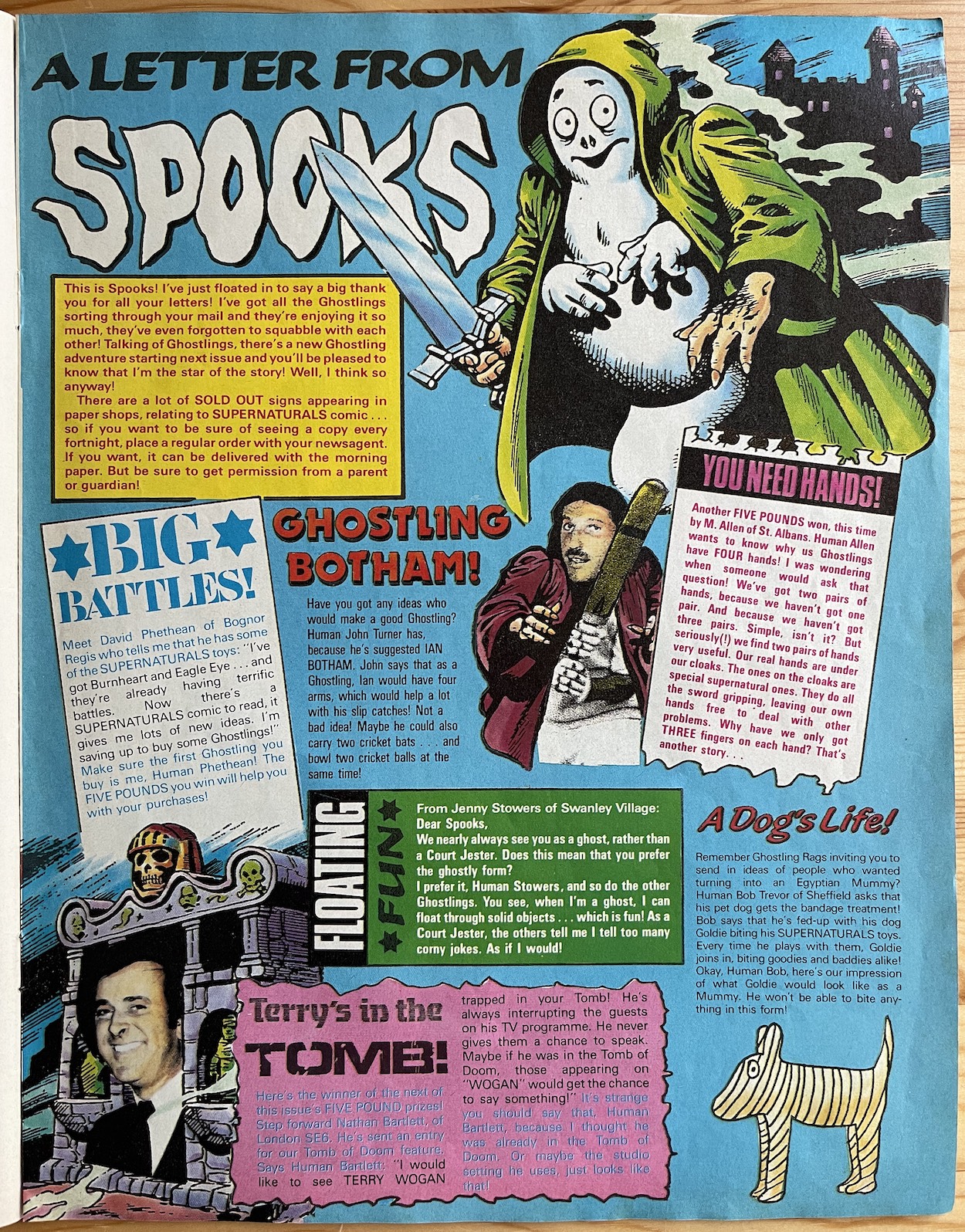
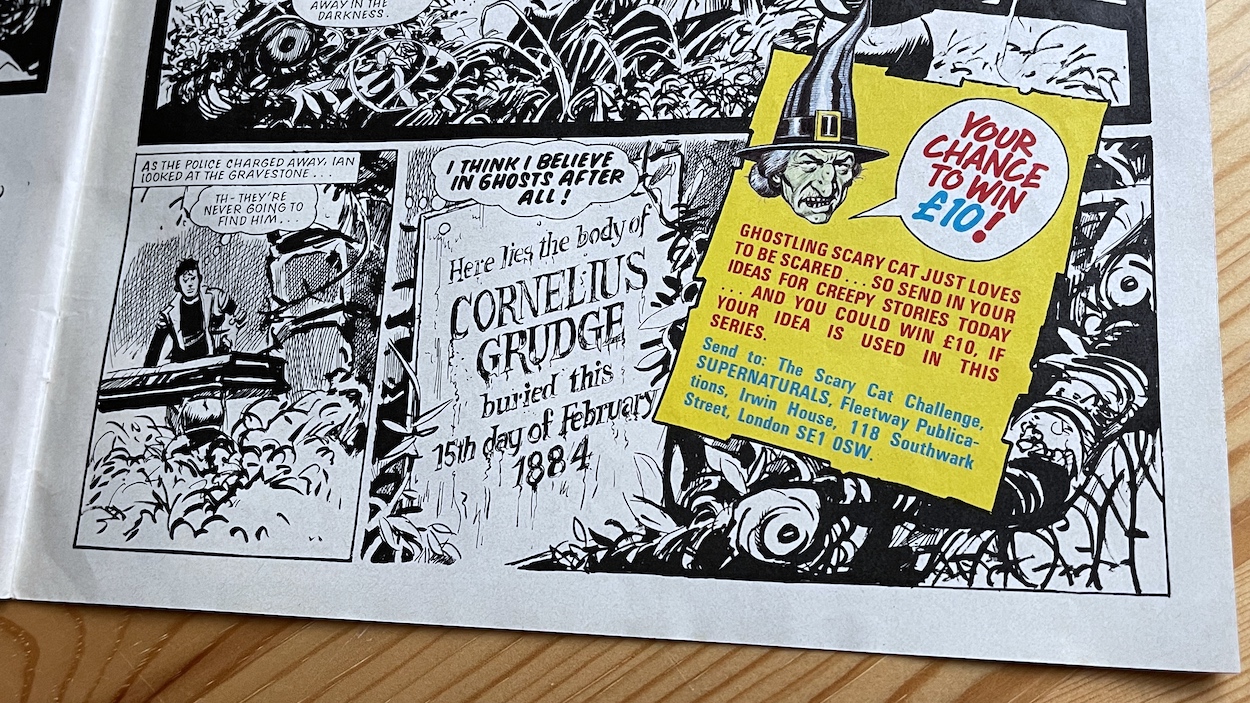
They don’t disappoint. My favourite is the one in the Big Battles box where David Phethean has just written in to tell Spooks what toys he has and that he’s trying to save up for some Ghostlings. The fact he’s going to receive five pounds from the comic that could buy him one of the toys is really rather heartwarming.
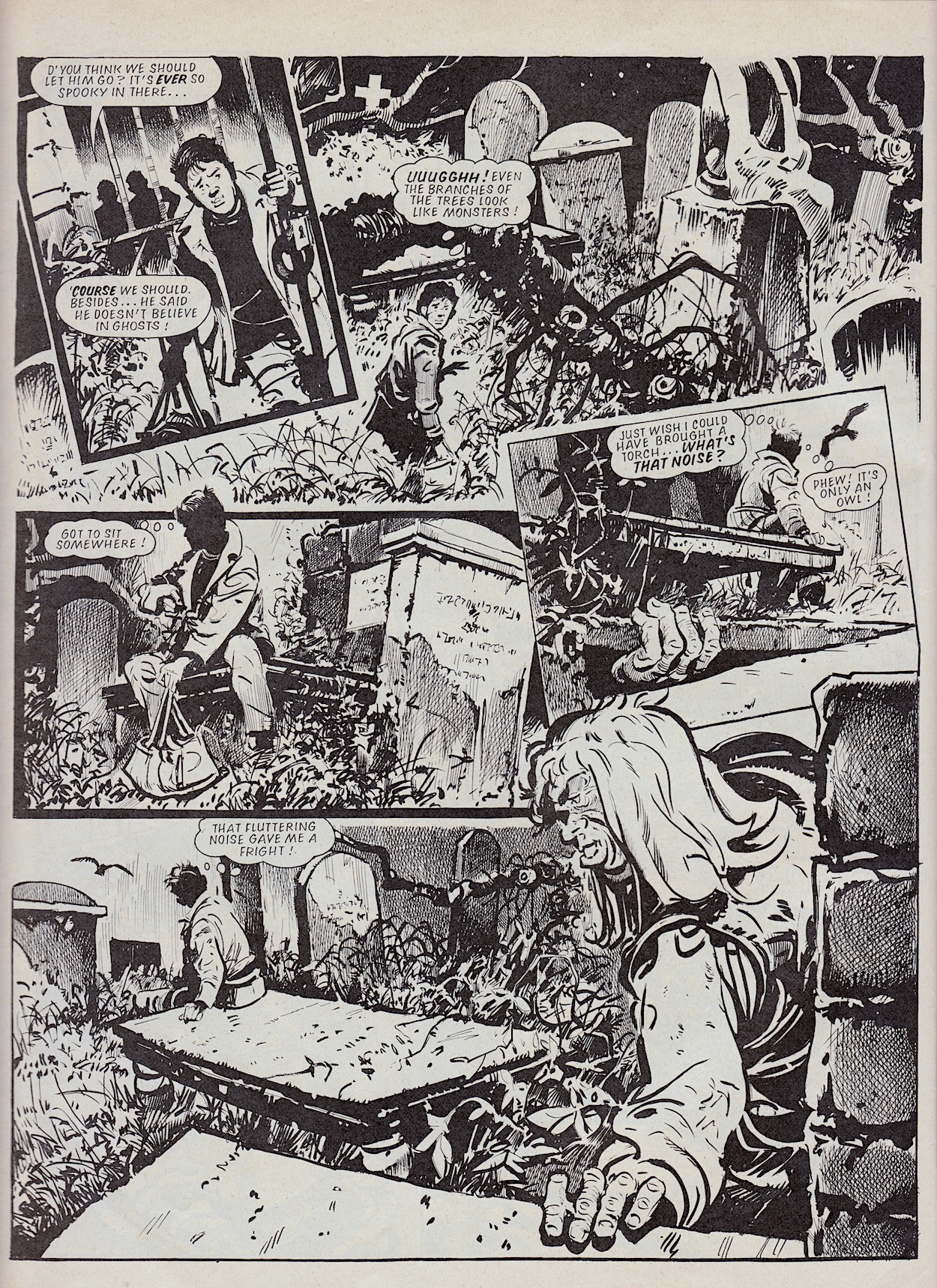
After the action and humour so far it’s time to get back to some classic children’s horror stories
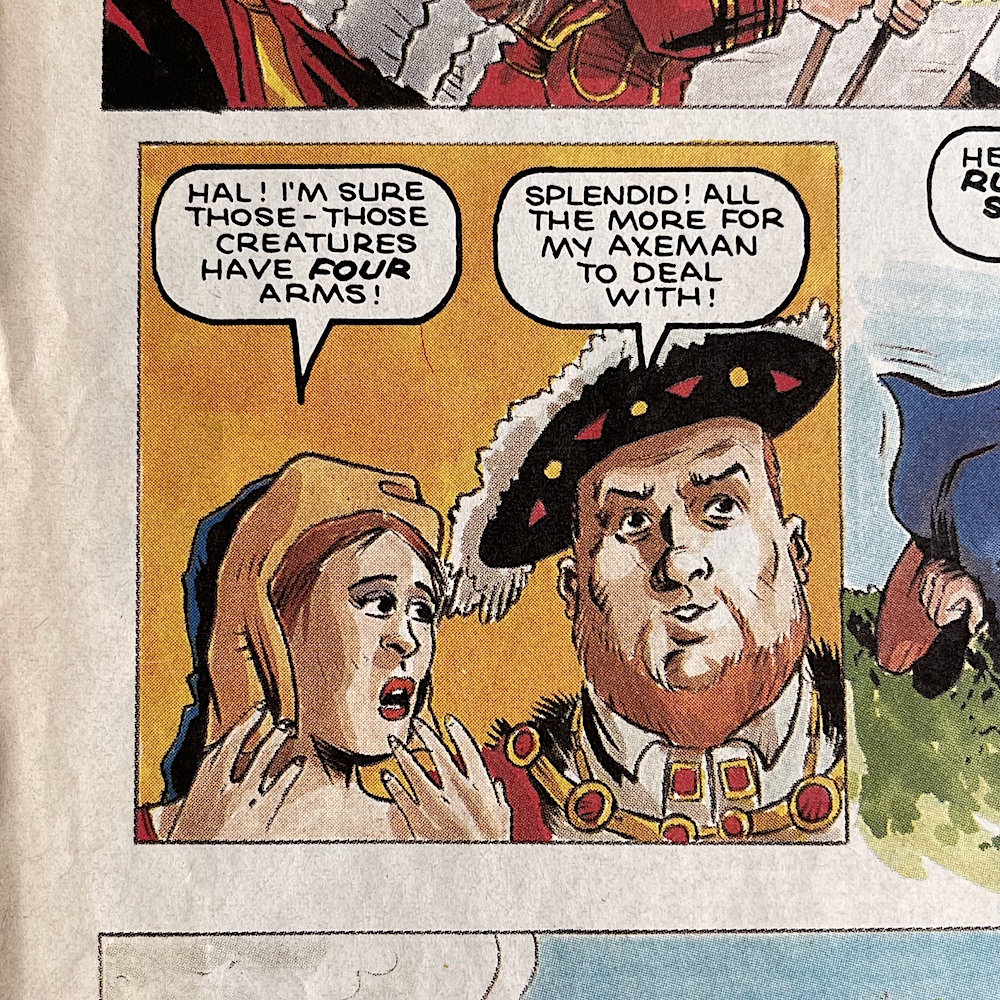
There’s a funny non-answer to the question of why the Ghostlings all have four arms, and with hindsight a comment in Spooks’ introduction about “sold out signs appearing in paper shops, referring to Super Naturals comic” almost reads like a jinx. It reminds me of the prediction in the Ring Raiders preview comic of readers needing to place an order because it was about to become the biggest selling comic in the shops. When both of these comics were starting out everything was pointing towards these franchises taking off as the Next Big Things.
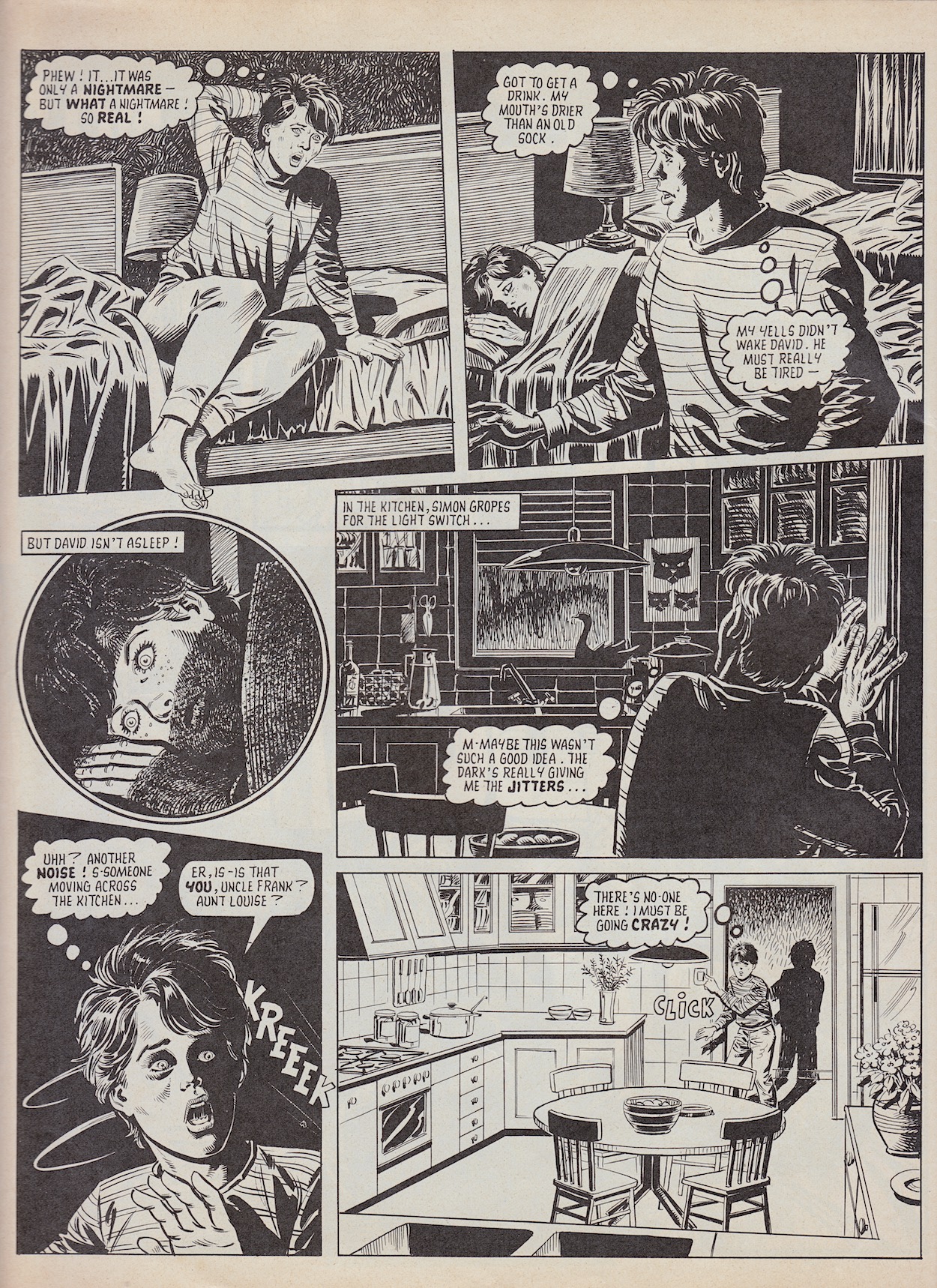
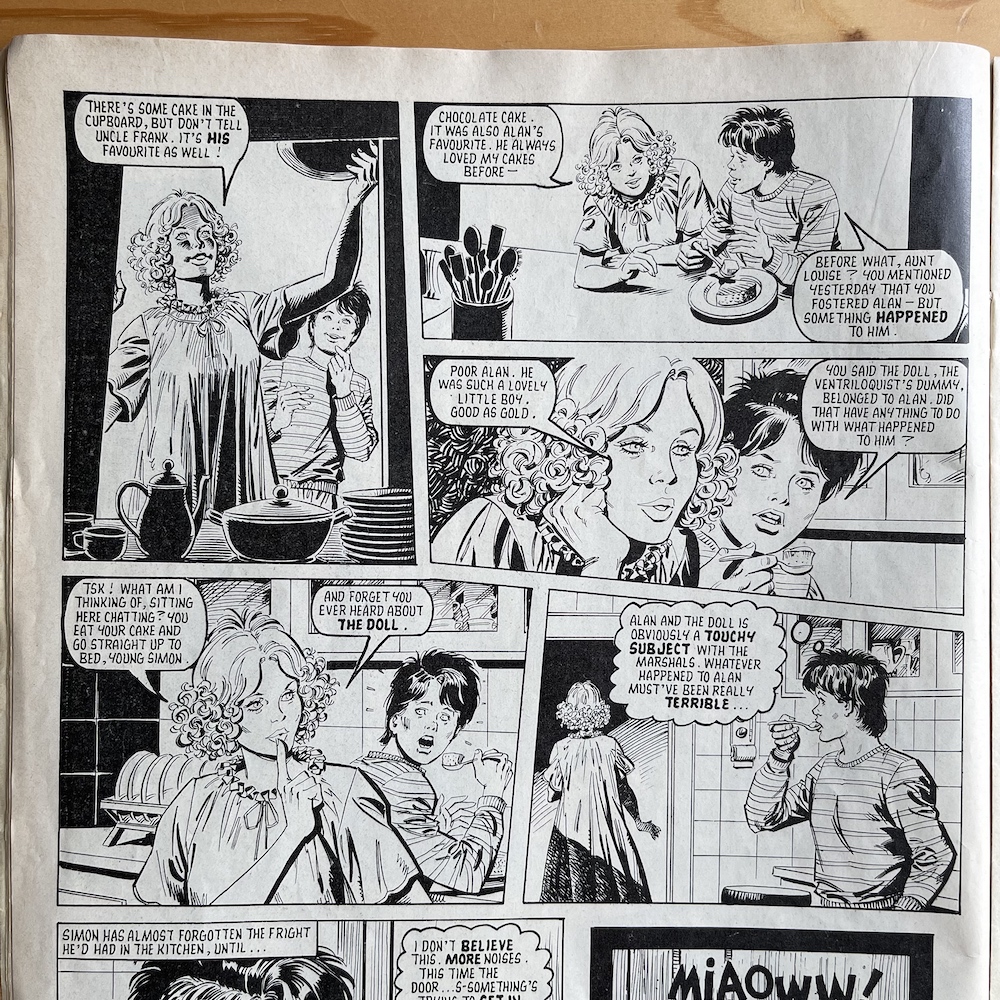
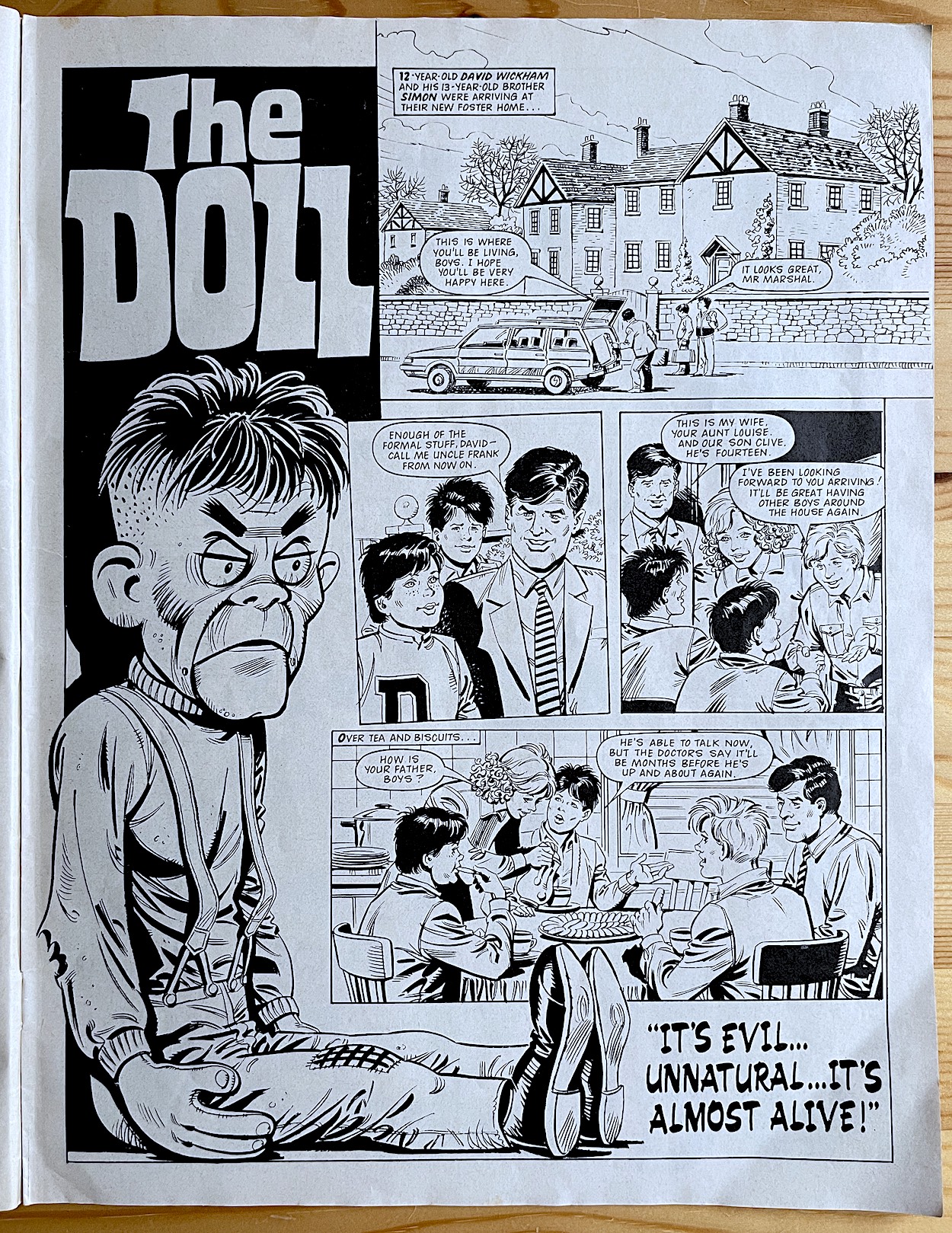
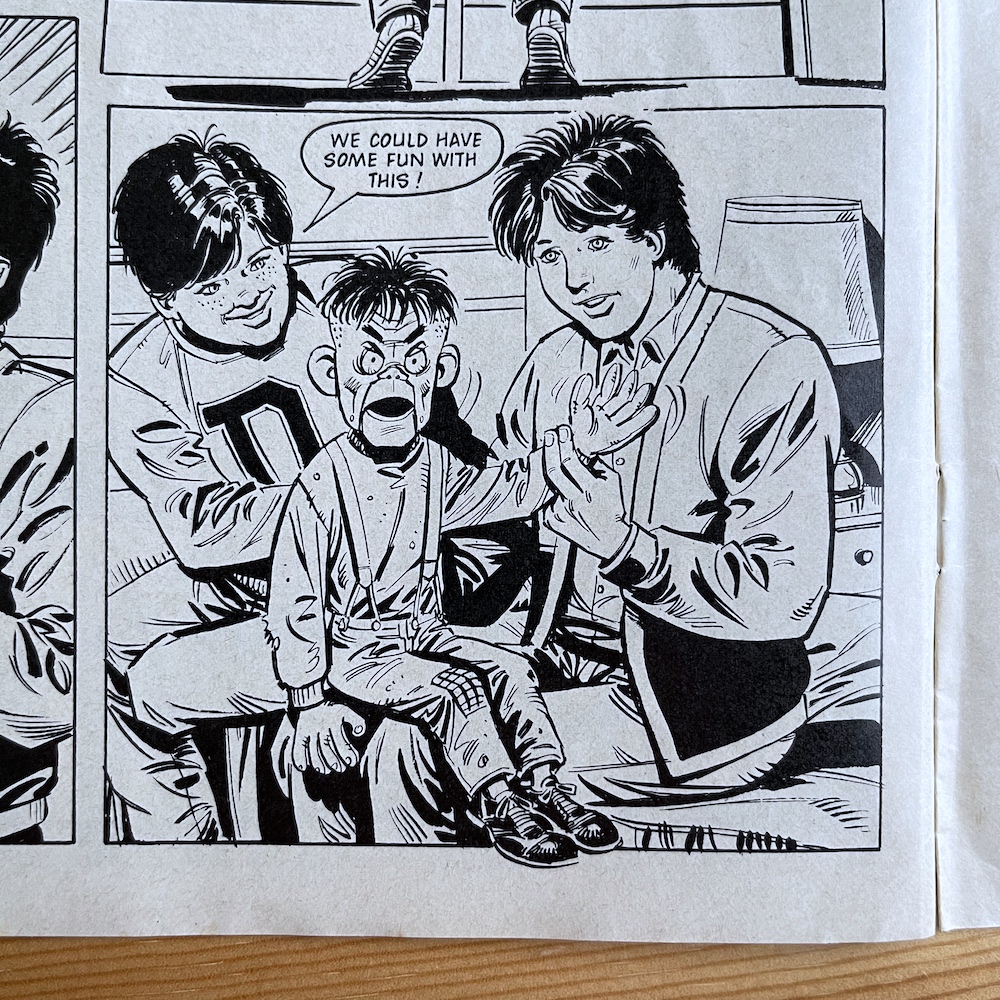
After the action and humour of the issue so far it’s time to get back to what we were promised and some classic children’s horror stories. First up is The Doll, another strip I wish I knew the writer of, to see who was responsible for this masterpiece. When the strip began we thought young David Wickham would be the star when he found the creepy ventriloquist’s doll in his new foster home, but interestingly it’s older brother Simon who appears to be the lead. The chapter begins with a visit to the hospital to visit their single father, the whole reason they’ve been placed into temporary foster care.
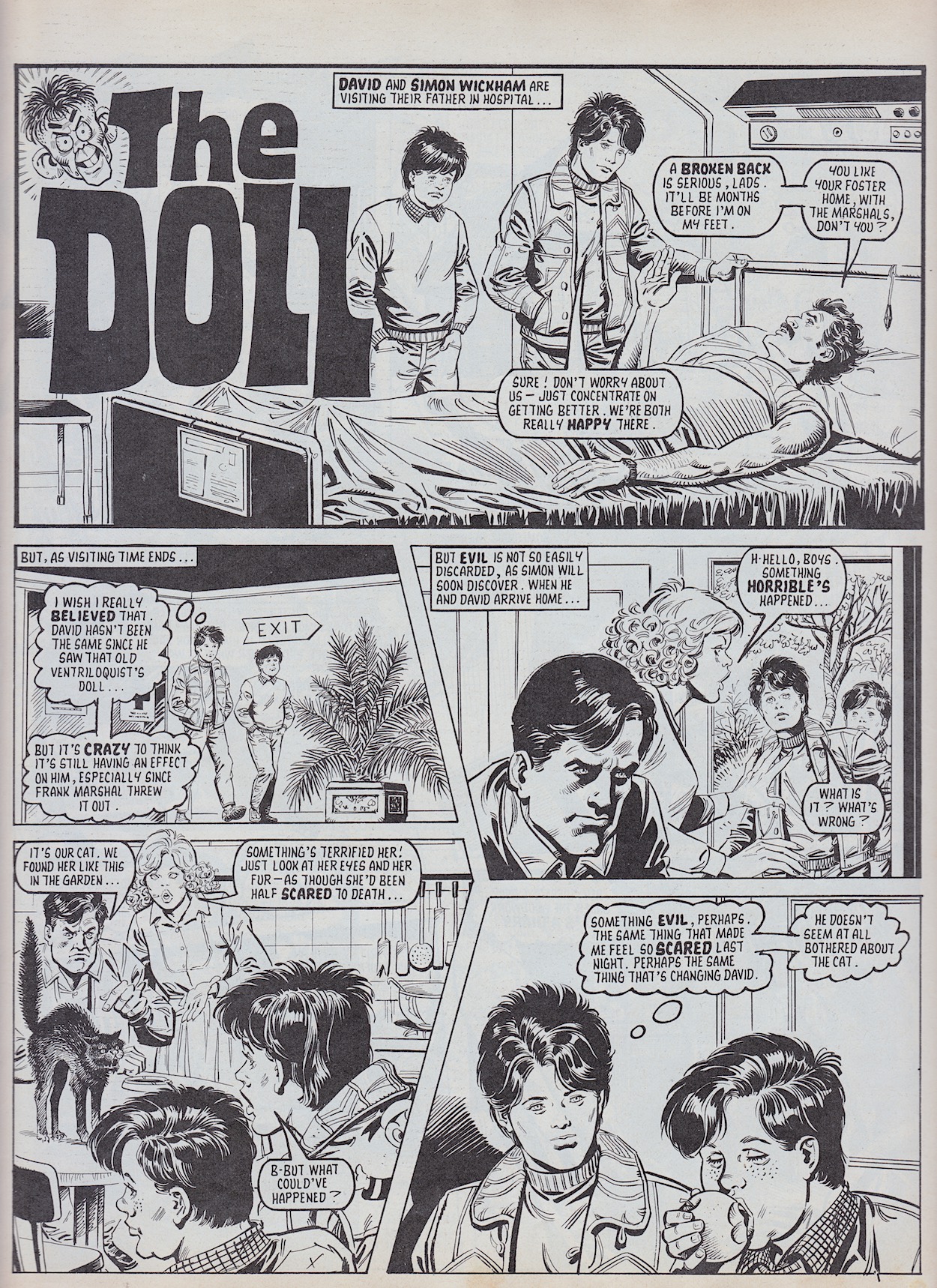
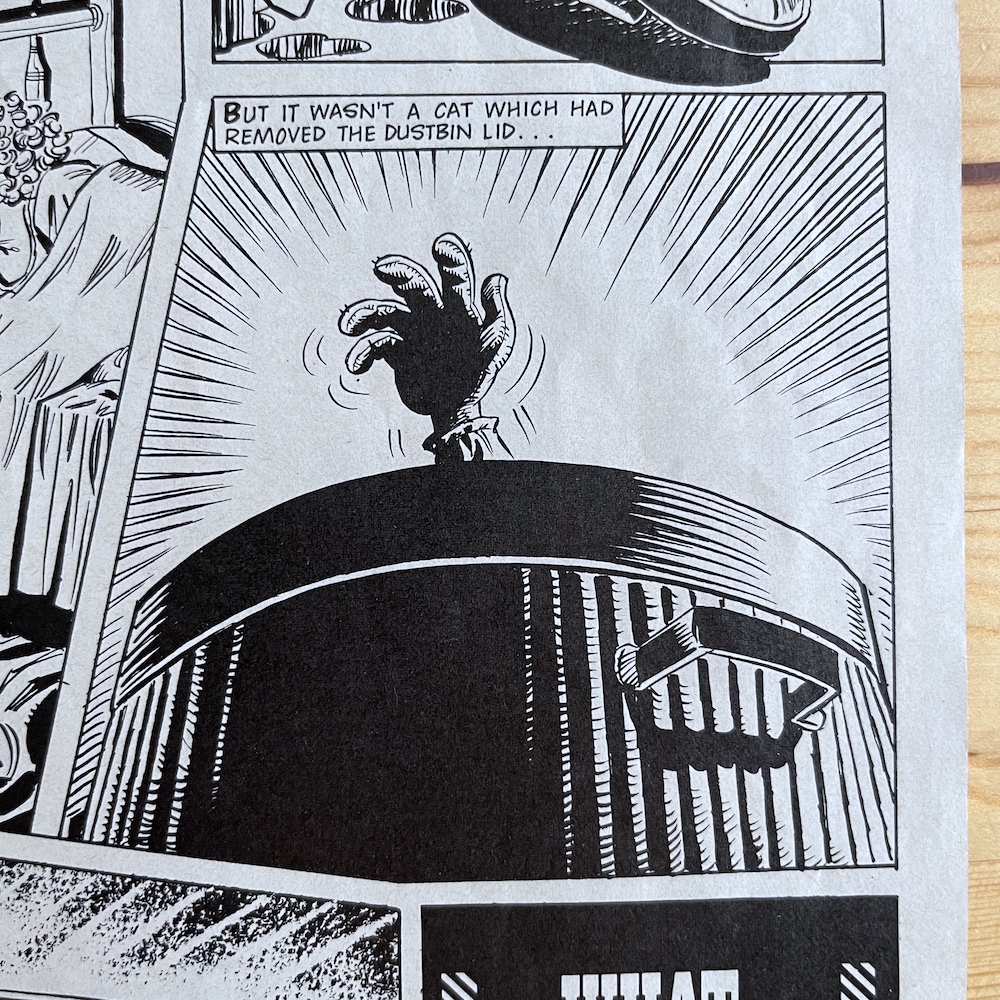
Poor cat! David’s blasé response to the shocking death of the family pet is completely out of character. Even though we only really saw his true self in a few pages of #1, he was written well enough for us to recognise something is clearly wrong here, even without the explanation from Simon. As the story progresses Simon keeps tabs on his younger brother and at one point in the day is searching for him in the garden when he notices the garden shed is open. Assuming David is inside he starts to poke about.
We may not know the writer but we certainly know the artist. Francesc Masi is once again quite the master of horror. His use of shadows, quick movements and silhouettes is fantastic, building a feeling of suspense as Simon catches little glimpses of things out of the corner of his eye, or outside his bedroom window late at night. At one point his uncle sneaks up behind him with a small toy action figure to scare him, but it’s drawn in such a way the reader thinks it’s the doll (who we’d seen in the shadows with a weapon ready to pounce).
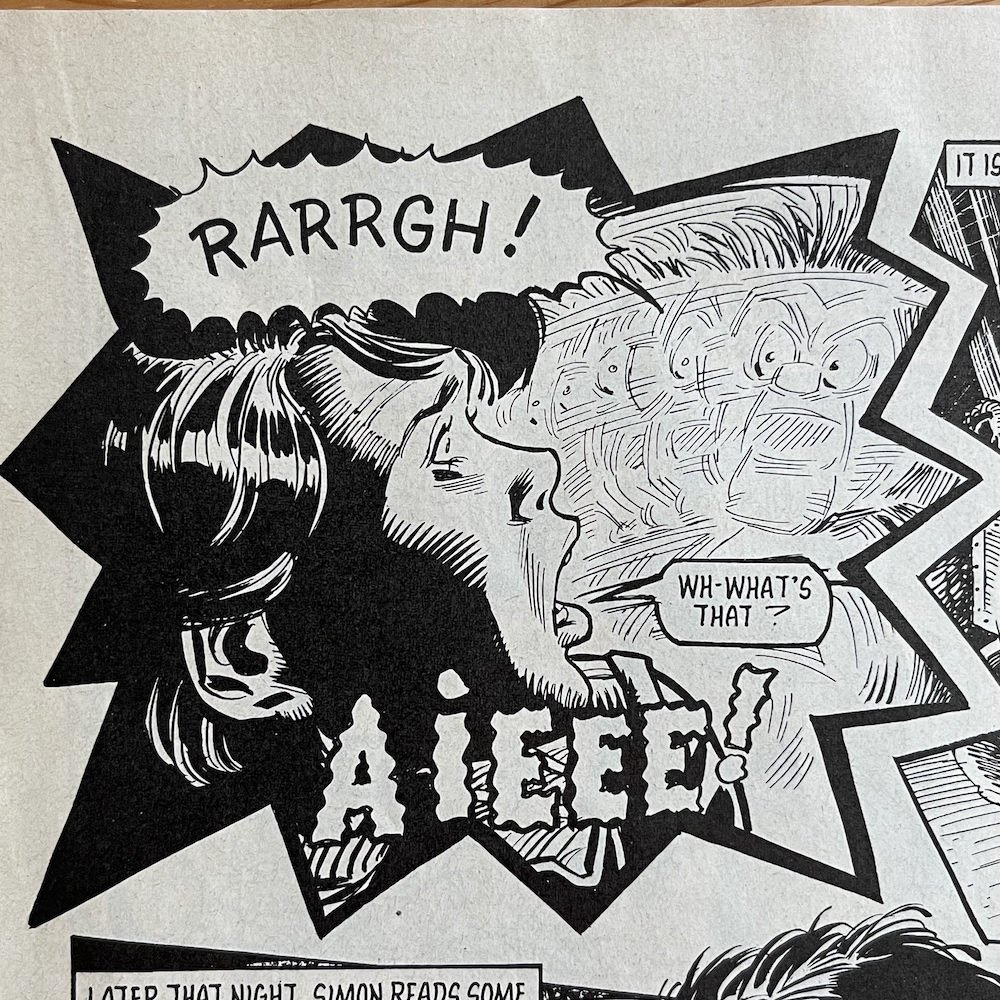
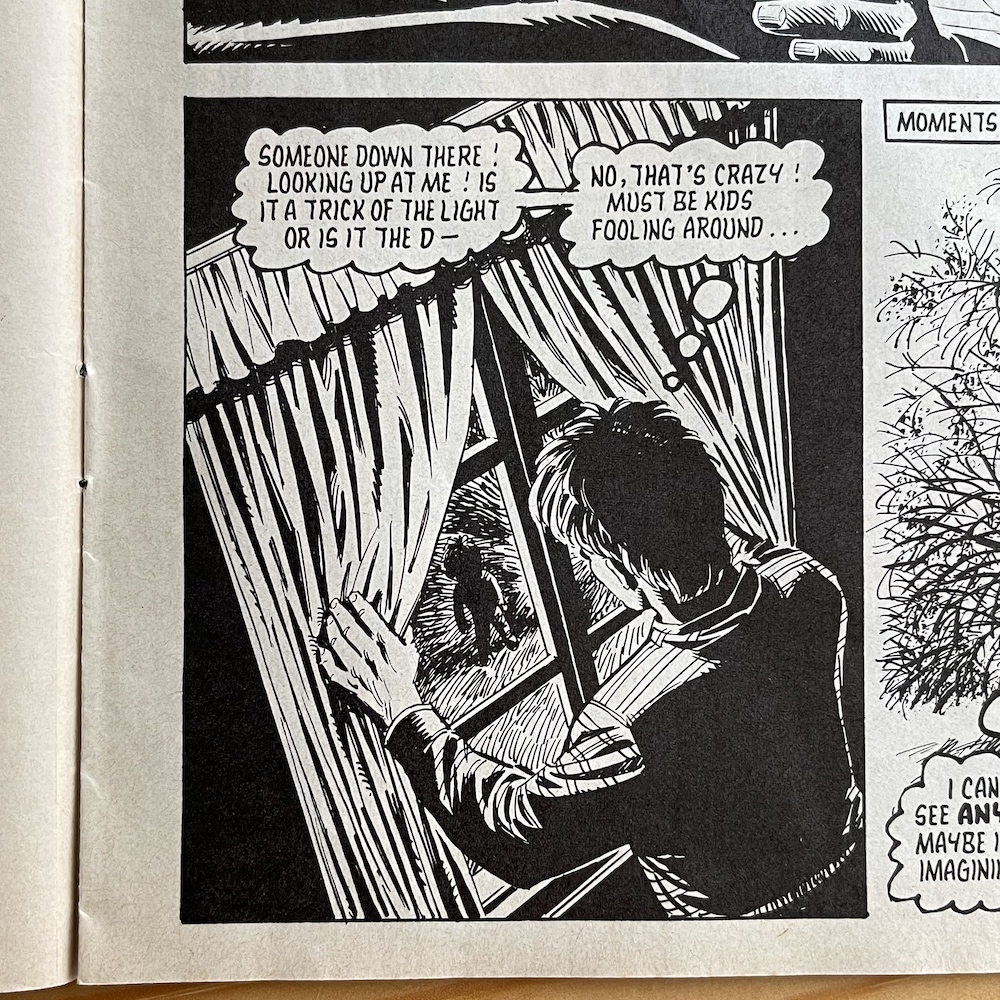
It’s perfectly clear here the doll is out to kill Simon, which for a kid’s comic based on a toy franchise was shocking. In a good way of course. It’s no wonder this strip was talked about in the school playground so much. Simon finds the diary of the previous foster child, Alan and it’s full of hatred towards his guardians, a world away from the kid described previously. Clearly something changed him.
Picture the scene of young children reading this comic in bed late at night by lamp light. That’s how I did it with my first two issues back in 1987. We wanted to be frightened by this comic and The Doll was a guaranteed scare. I may now be an adult but if a (much) younger comics fan was to read this now I doubt it would have lost any of its edge.
“The Death Mask of M’Tali! No-one must wear that! I promised!”
Dudley Carrington OBE
The next strip is a bit lighter by comparison but the Scary Cat Challenge anthology series is definitely beginning to step up a gear. Simon’s Mask is all about Simon Purcell, a lonely schoolboy with no real friends, a quiet lad largely ignored by his peers. Invited to a costume party he sees a chance to stand out from the crowd, to make an unforgettable impression and hopefully find some friends to boot. He visits his uncle Dudley Carrington OBE, a former world explorer and his collection of masks from every corner of the globe.
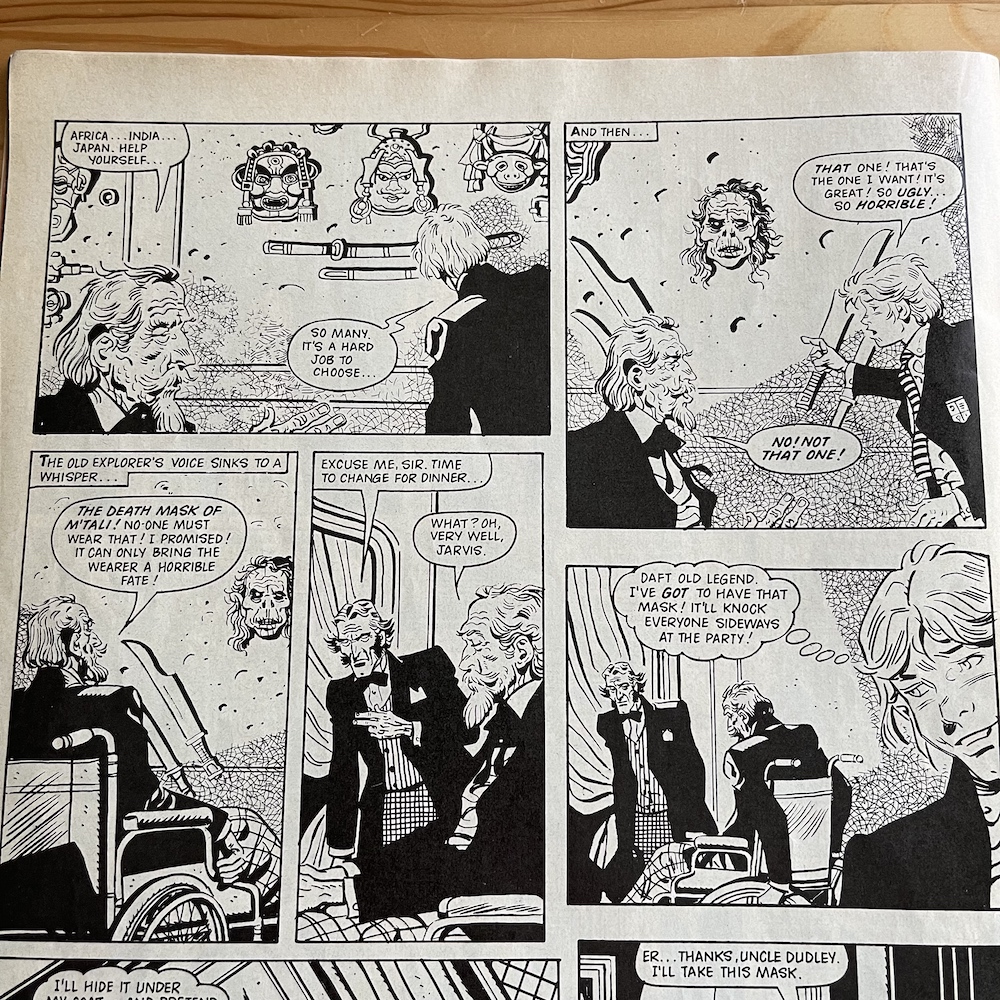
The one Simon wants to borrow, the Death Mask of M’Tali is grotesque and he is forbidden from taking it. No explanation is given other than his uncle promised someone, so he is adamant it’s not to be touched. Simon tricks him into believing he’s taking a different one but the Death Mask is hidden under his shirt. On the night of the party he frightens all those around him and he’s loving every minute of it.
The whole idea of the party was that no one was to reveal their identity until a certain point in the proceedings, after the prize giving for best costume. As he frightens people they congratulate him on giving them a scare and on his apparently homemade mask. He’s sure he’s going to surprise them even more when he reveals himself. Everything is going exactly as planned. That is, until the moment comes for him to unmask.
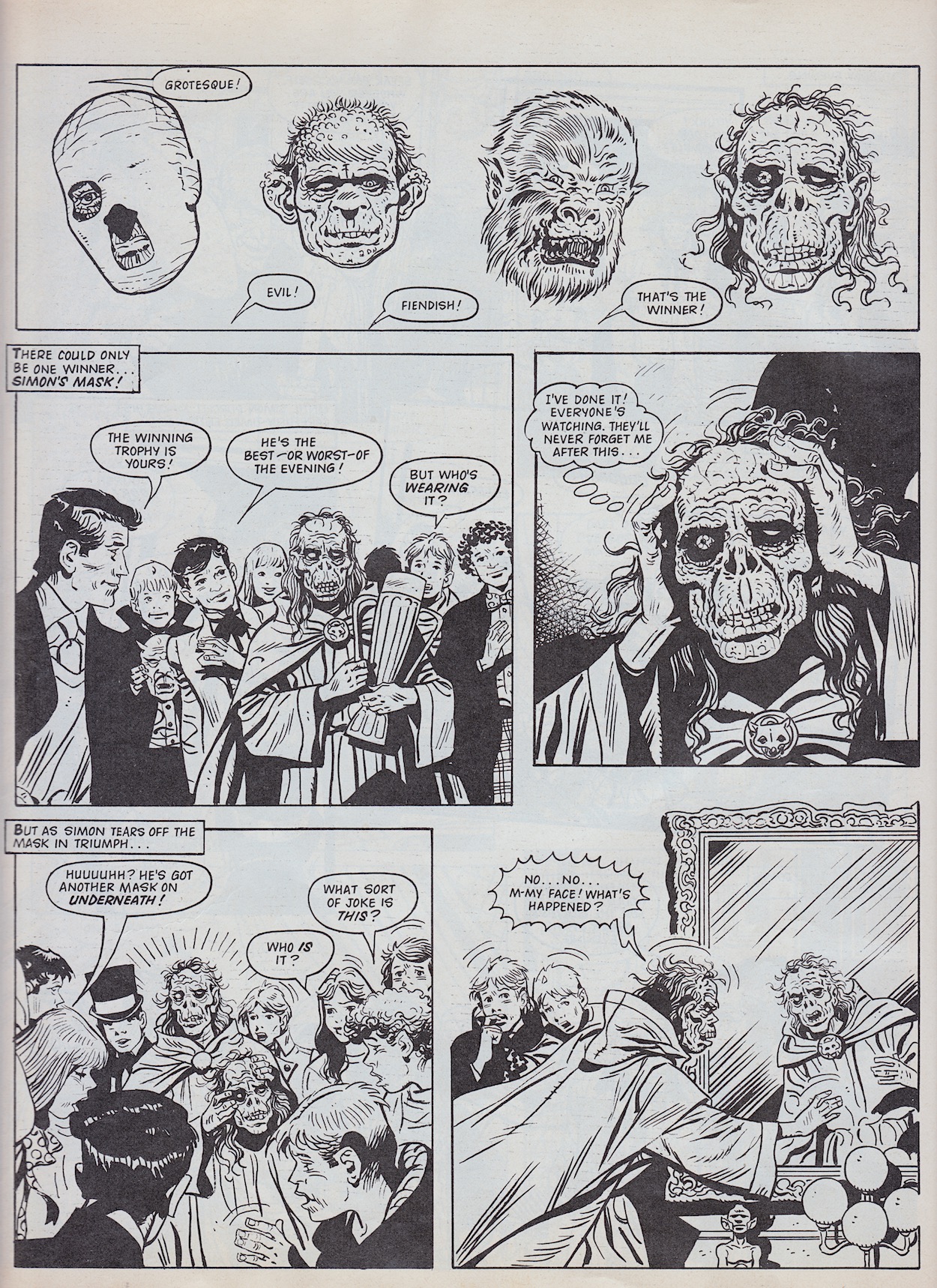
I had predicted by this stage the mask simply wouldn’t come off, however in a neat twist it does but underneath it Simon’s own face has been transformed. He rushes to the nearest telephone to contact his uncle for help, only to be told by the butler that he’s died. Seeing the Death Mask had been taken by Simon terrified him so much he had a sudden fatal heart attack. The realisation that he’s never going to return to his normal self hits Simon and we’re left with this final panel below.
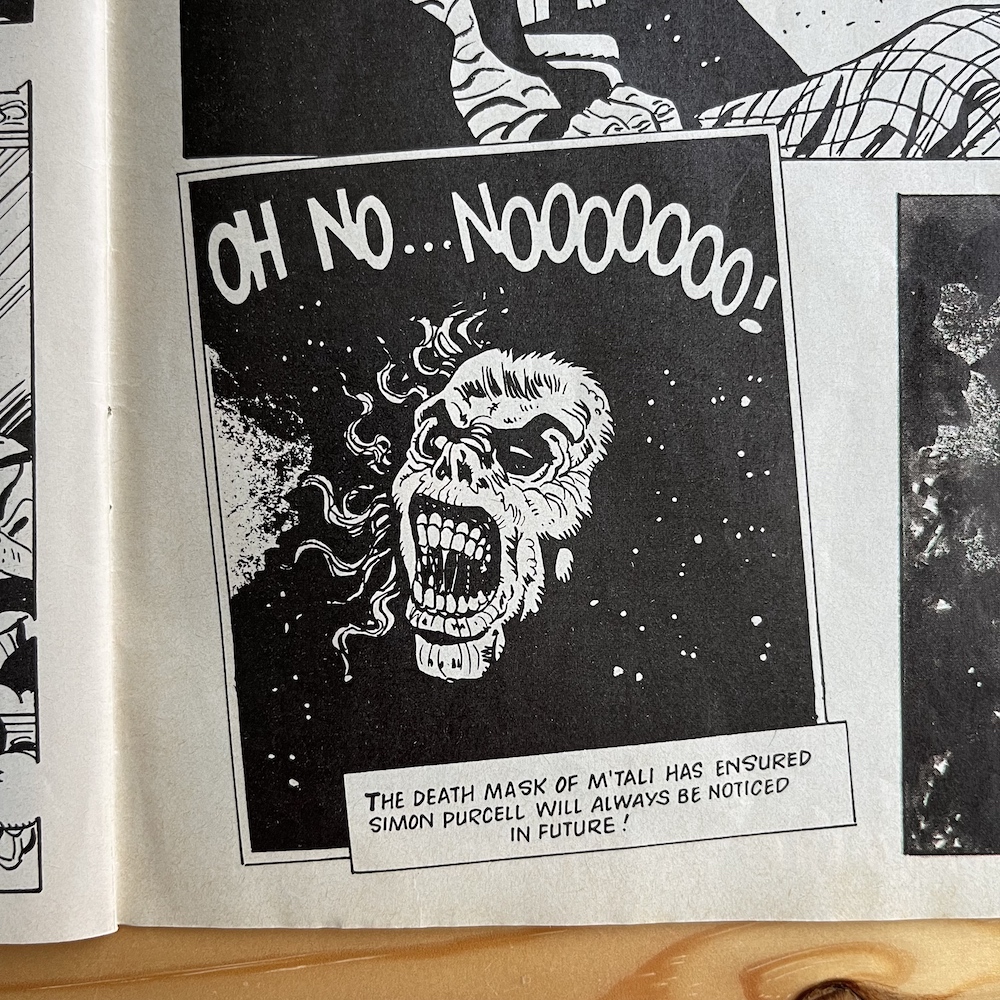
Simon screams and the story fades to black. It’s a great wee complete tale, a quick but interesting set up, a well-paced build and a twist at the end for the well-meaning kid who lied and stole from his uncle. It’s quite ‘Twilight Zone‘ and is the best of the series so far, but still tame compared to what the young readers themselves would send in (as I recall from reading these about seven years ago)! You’ll have to keep coming back for the rest of the reviews to see what I mean.
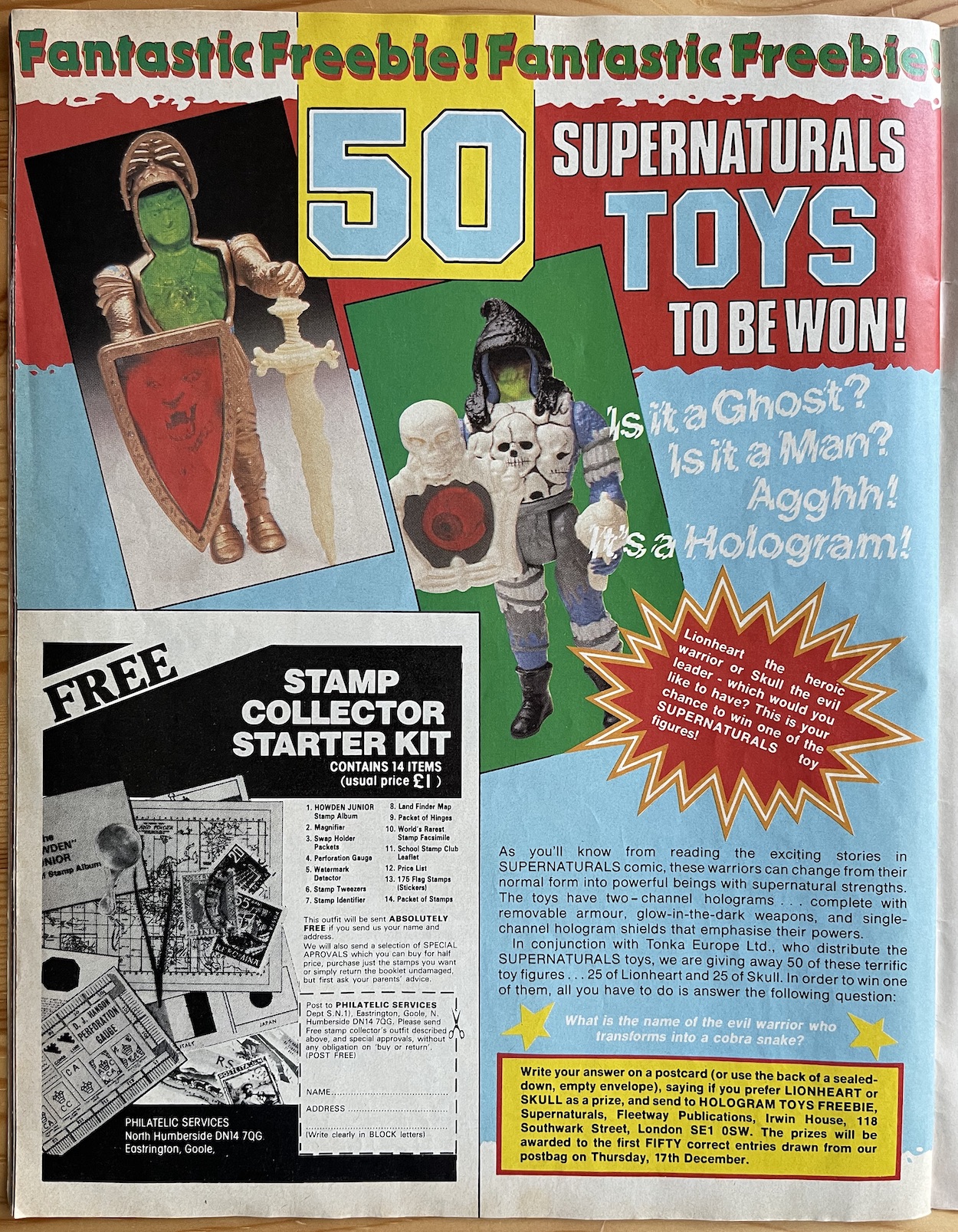
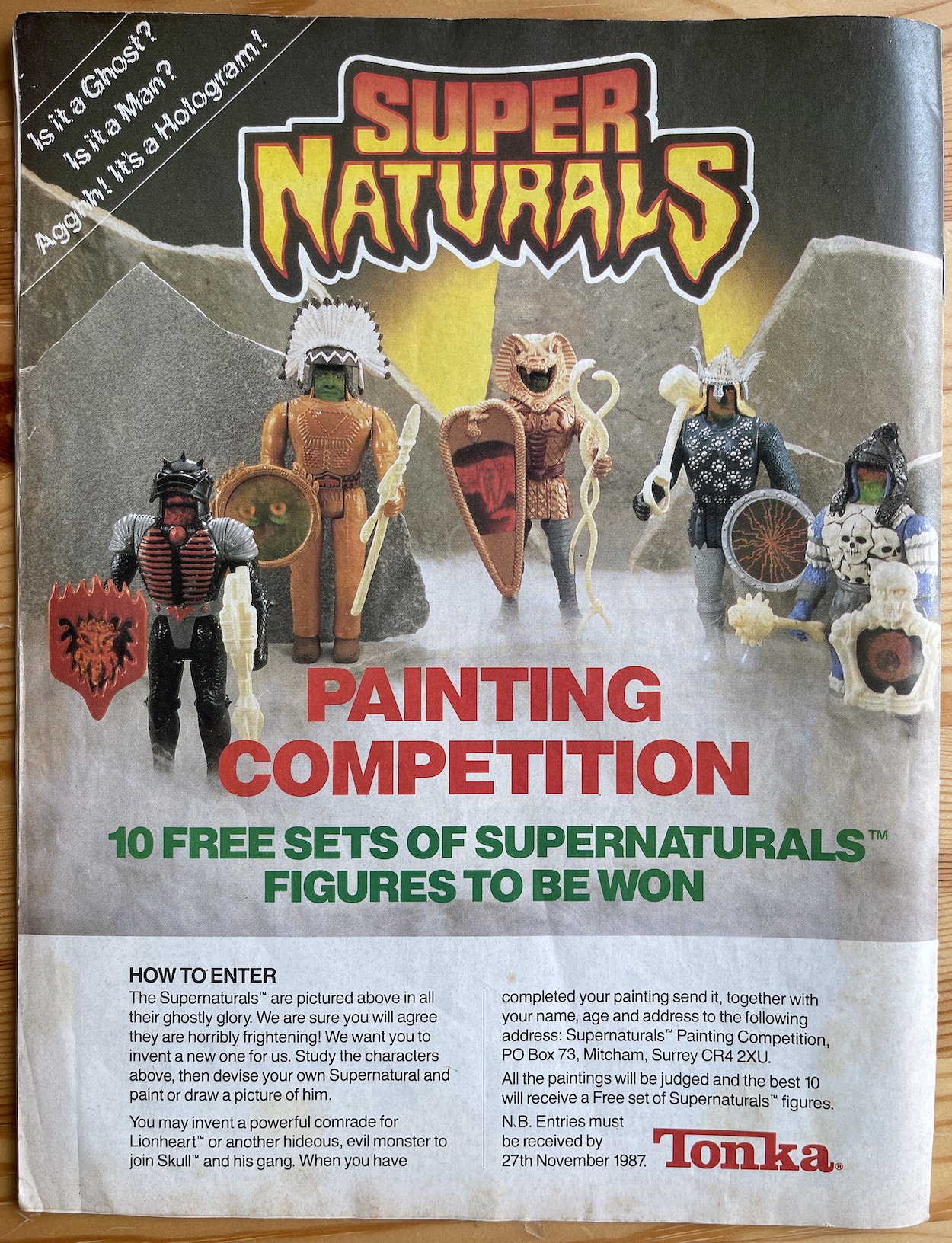
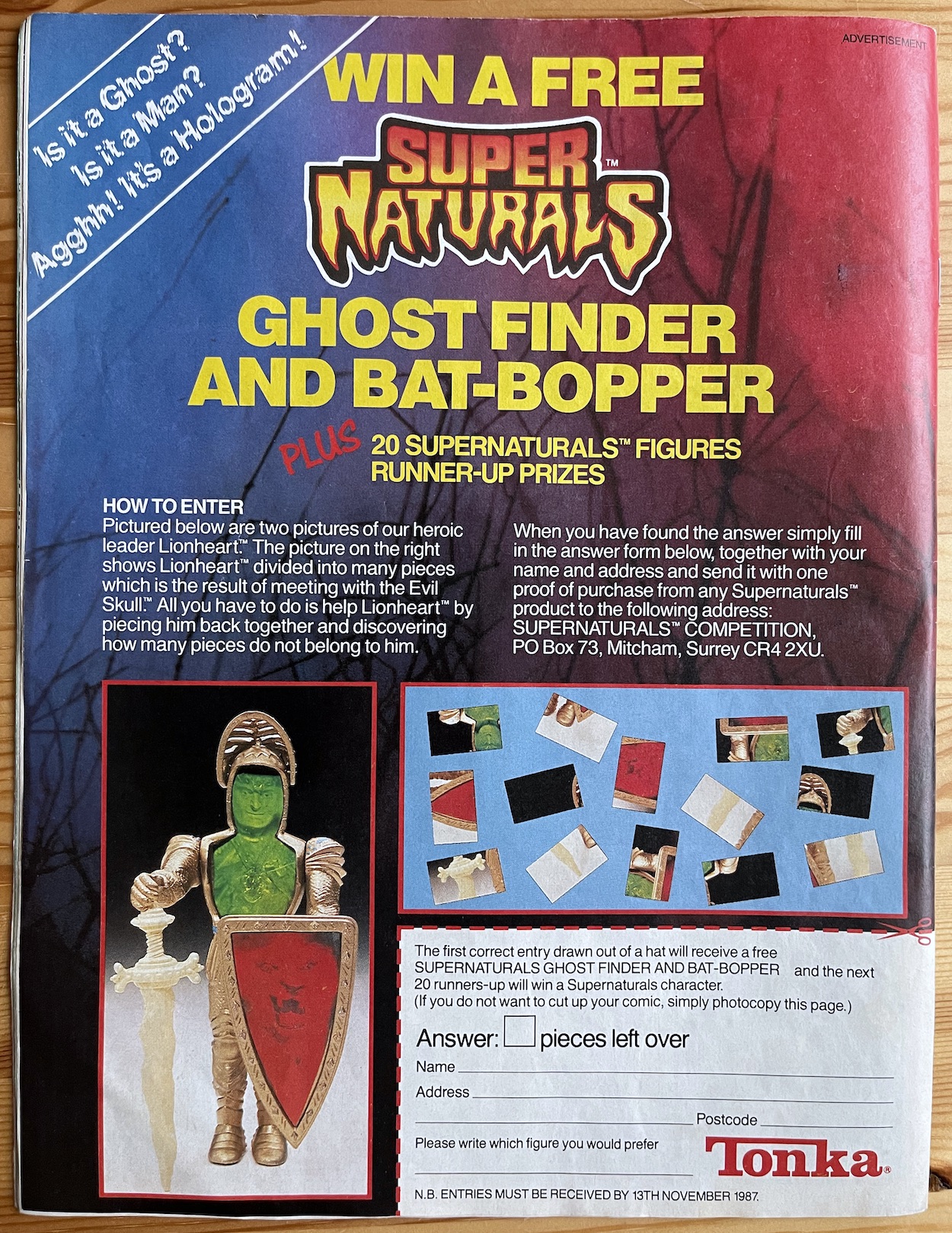
On to that competition that was hyped on the front cover, with 50 Super Naturals action figures of either Lionheart or Skull to give away. What’s a little strange is the fact the back page competition run by Tonka themselves is in every single issue, so we were already getting lots of chances to win these. In fact, the competition on the back page this time is for a Tomb of Doom playset with lots of action figures as runner-up prizes, which is an even bigger haul than here. But this one was organised by Fleetway themselves, so it got front page coverage.
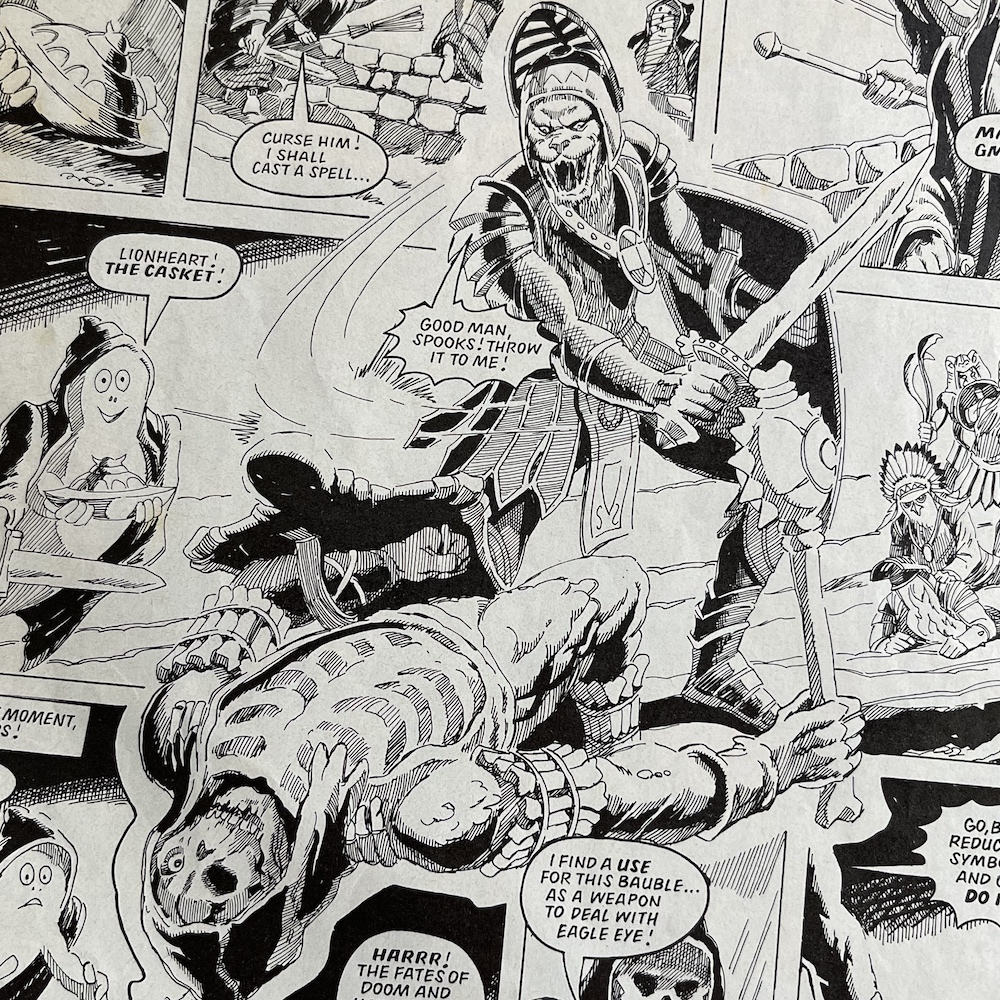
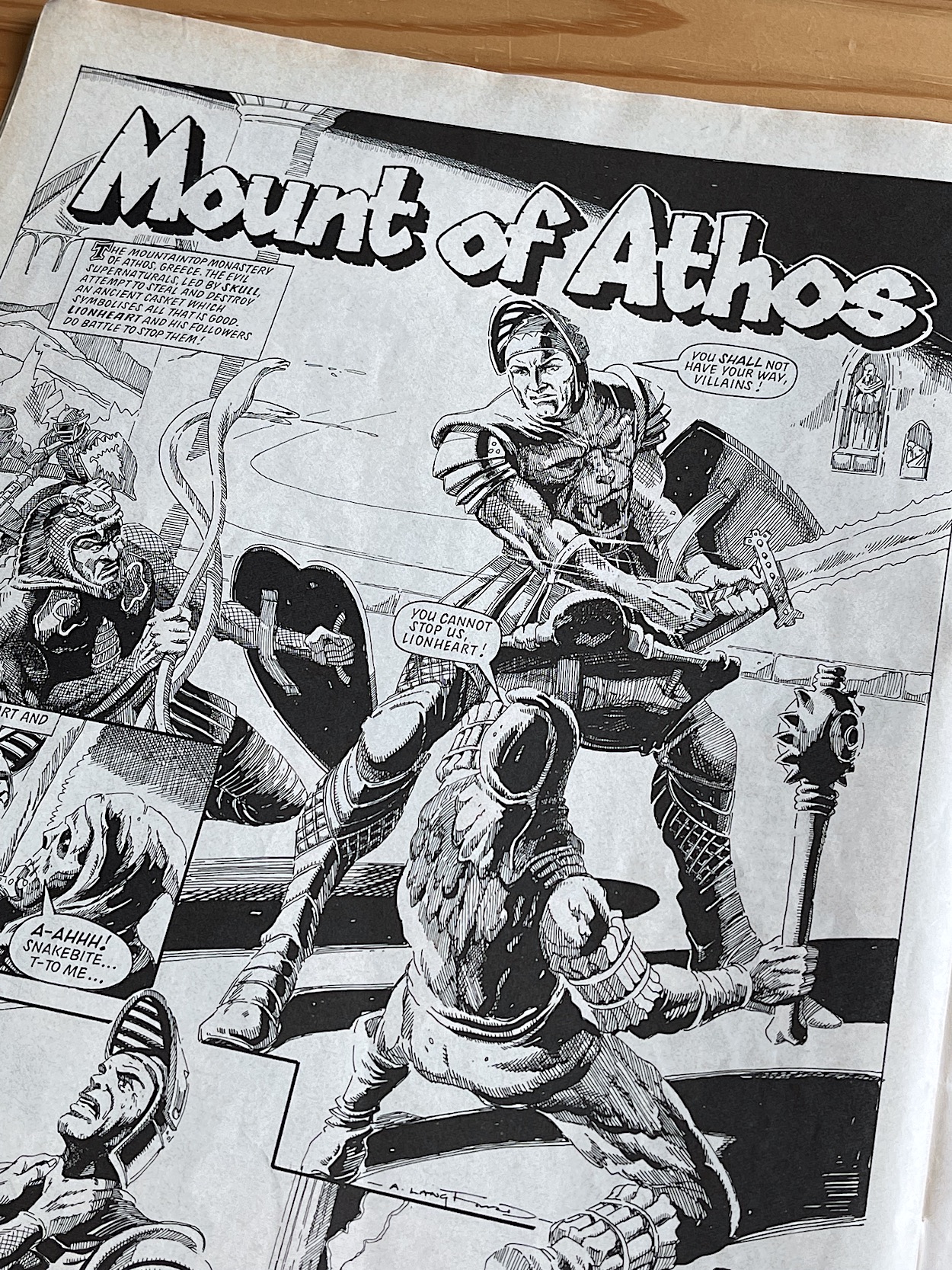
Alan Langford‘s Skull is a much more horror-inspired interpretation in the continuing saga of Mount of Athos. Having stolen the sacred casket it looks like his plan to spread a little chaos and evil is about to come to fruition, until Eagle Eye literally swoops in to save the day.
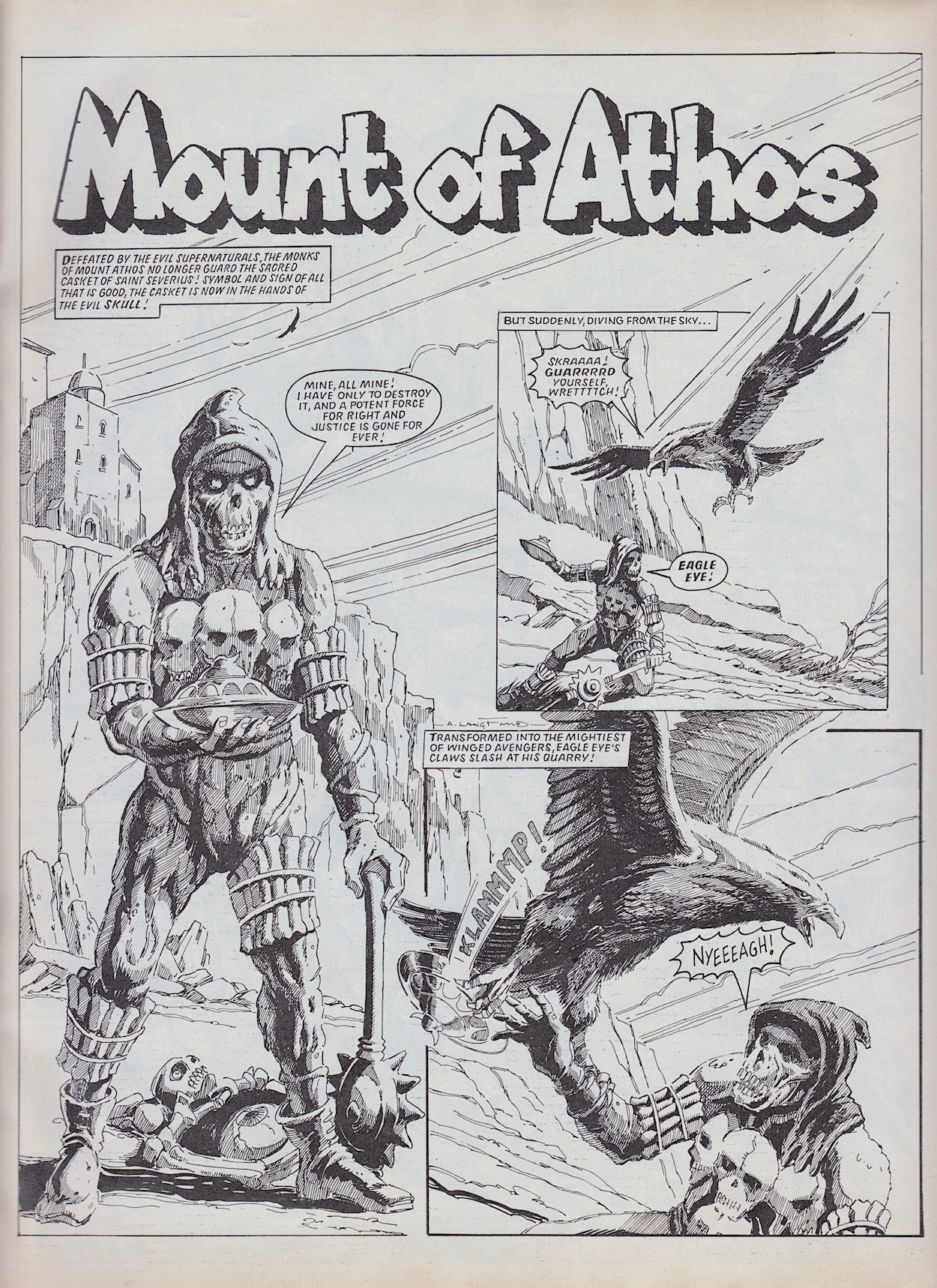
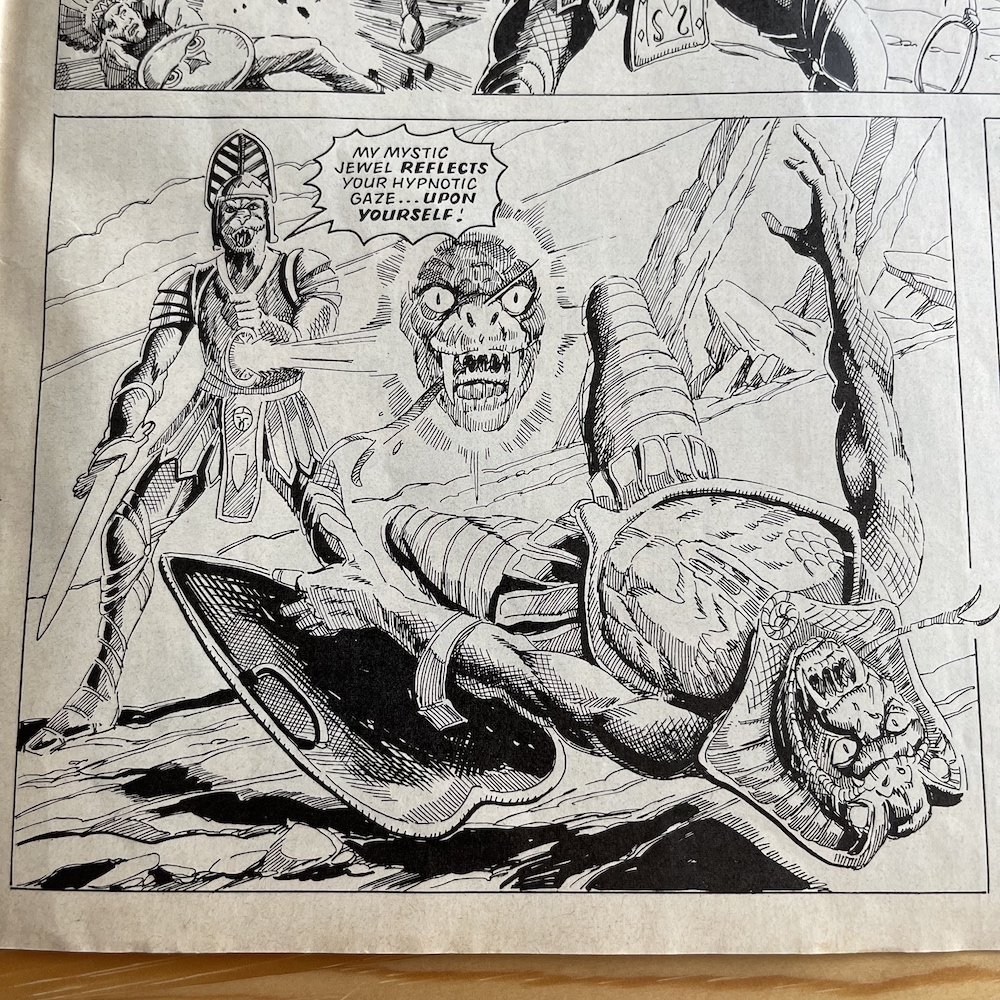
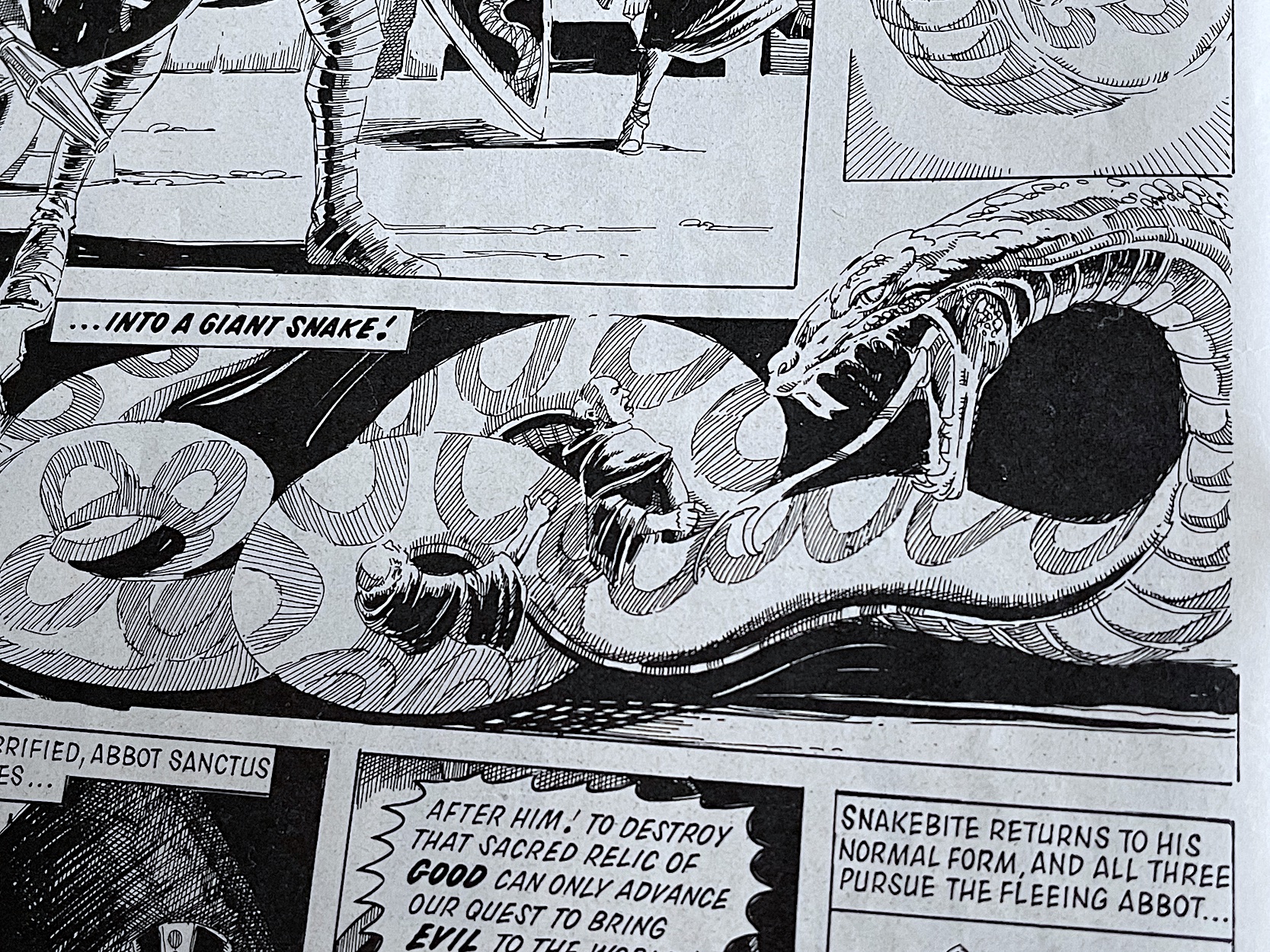
It all leads up to another battle between these giant forces of supernatural energy and the clashes feel suitably epic. We get to see many of their special powers in use, such as Burnheart‘s flames where his entire body inside his armour turns to fire which he projects all around him. There’s an air of Judge Fire from the Judge Dredd comic strips with him. Snakebite tries to use his hypnotising eyes but Lionheart is able to project this right back at him using the mystical jewel hanging from his neck.
There may be less in the way of frights this issue in the Super Naturals stories themselves but the large scale battles are perfectly presented in Mount of Athos, complementing the lighter but no less action-packed vehicular destruction in the first strip. Athos culminates in a one-on-one between the two brothers, and it’s no exaggeration (for me anyway) to say this feels like a clash of the titans on an early Optimus Prime/Megatron scale.
The comic may only be three issues in and this may have been the first I didn’t buy when I was a kid, but it’s my favourite so far. It’s perfectly balanced between the action, the horror and the comedy. Usually we’d be celebrating if a comic was able to achieve a good level of enjoyment in one of these genres, but for editor Barrie Tomlinson and his team to give us all three has been a delightful surprise. As I’ve been writing these reviews, blog readers have been commenting on social media about their memories of Super Naturals and how wonderful it was. It gladdens my heart to know I’m not alone in my high praise for the work put into this comic.
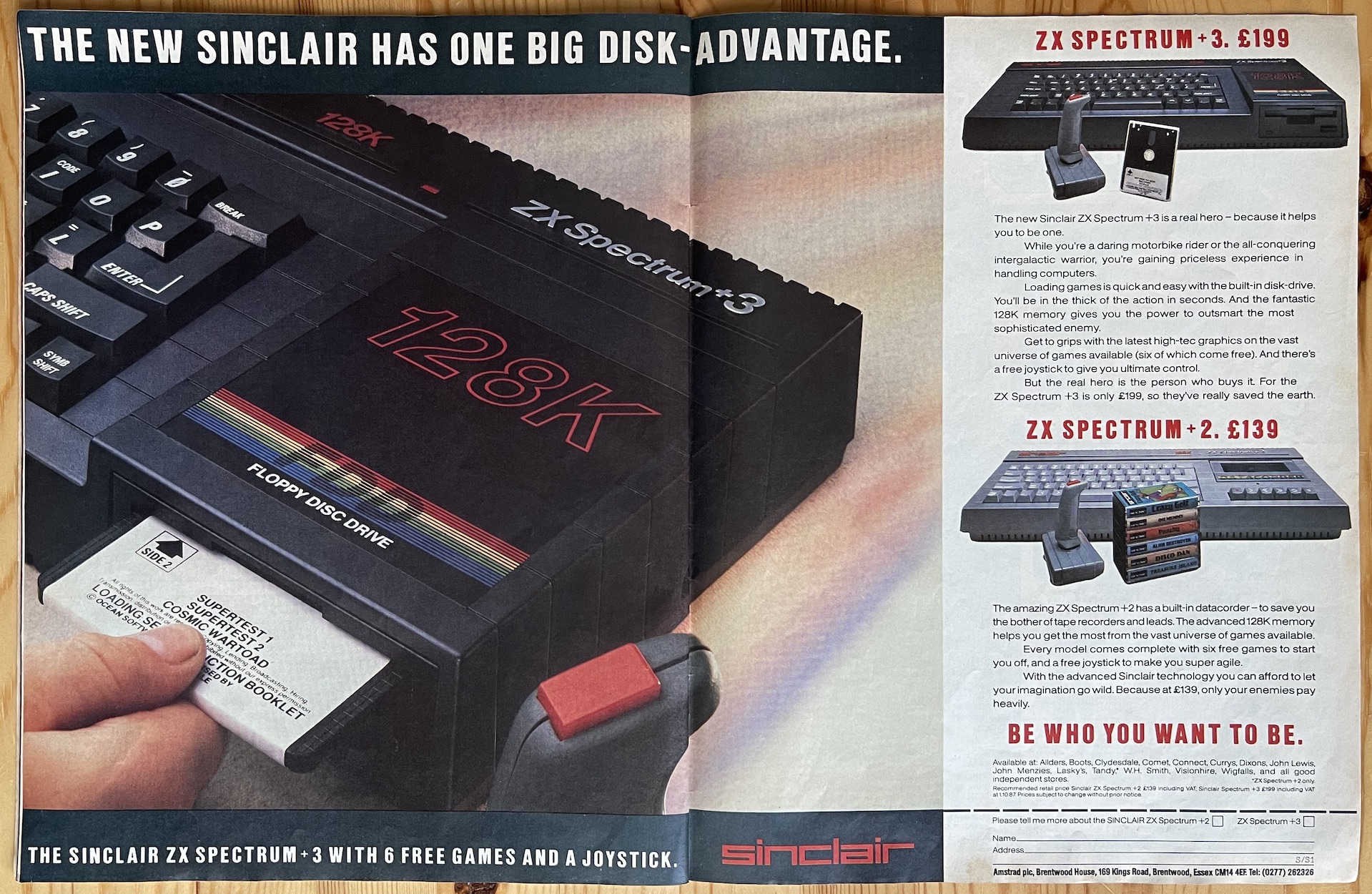
Just to finish off, here’s a look at a large advertisement that graced an eye-catching double-page spread inside this issue. I can remember my friend having the ZX Spectrum +2 with the cassette deck and going to his house to play it for hours at a time. It would be four years later when I’d finally replace my brother’s hand-me-down Atari computer with my own Commodore 64, but this advert takes me right back. For younger readers of the blog I’m sure this looks so quaint.
As I end this review I look around my living room and the Christmas tree is blinking away (my office upstairs where I usually write also has its own little desktop tree) as my very favourite thing in the world is getting closer. Getting to relive this classic comic again over Christmas is going to be so enjoyable; there’s just something wonderful about reading ghost stories around the festive season. Especially when they’re as good as these.
The next issue’s review will be up on the blog on Sunday 12th December.
iSSUE TWO < > iSSUE FOUR















 OiNK Blog