Back in 2018 in the days of the old blog I chatted to Dom Blanco, a classic toy collector who had begun sharing his collection on Instagram, particularly of more obscure 80s and 90s toys. He was enthusiastically researching and buying up the entire Ring Raiders collection, a toy range I was obsessed with as a kid and the comic of which I’ve covered on the blog already. In fact, that comic and toy range remain as favourites from my childhood to this day.
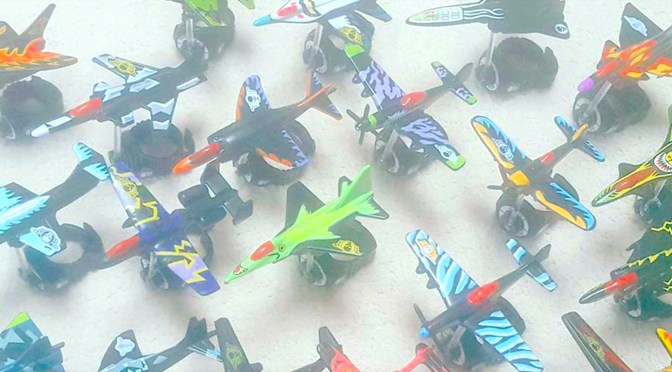
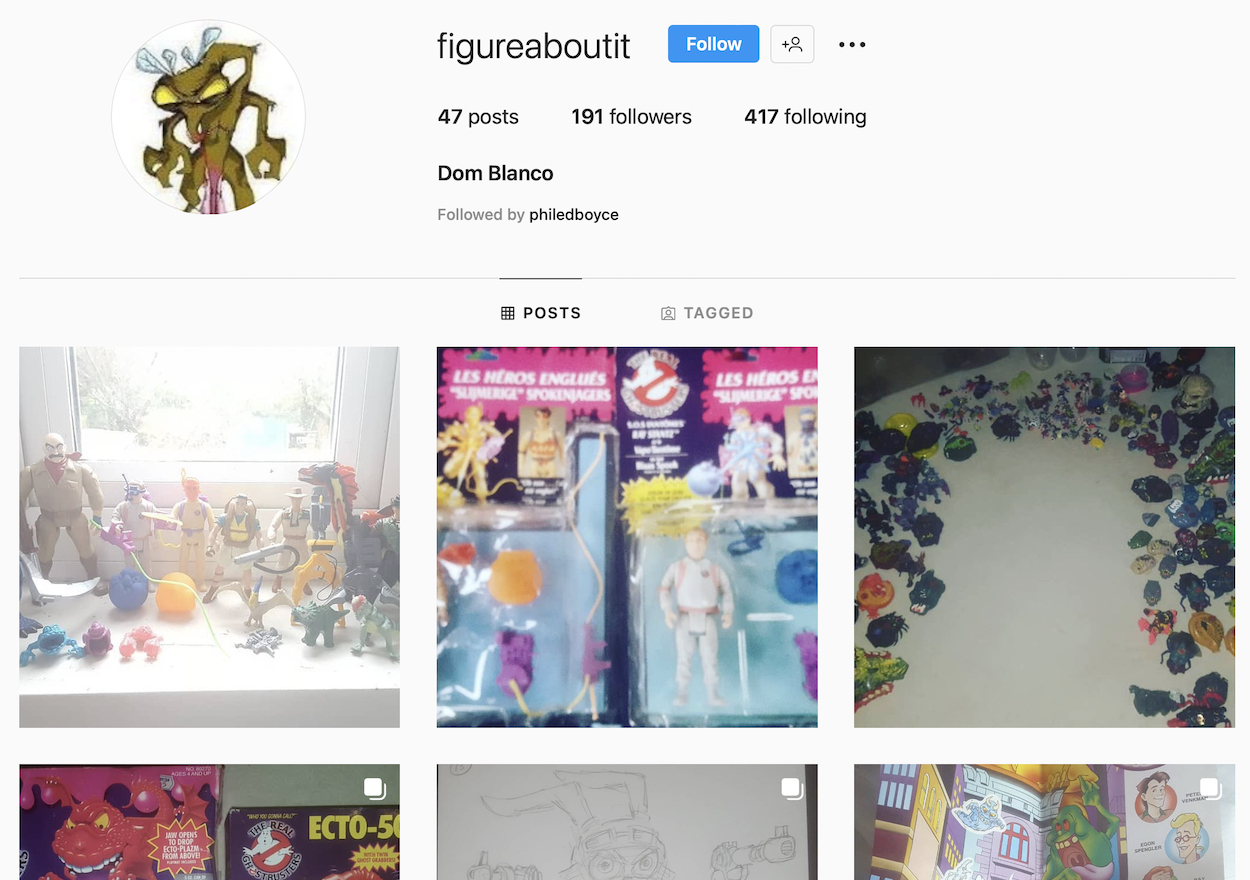
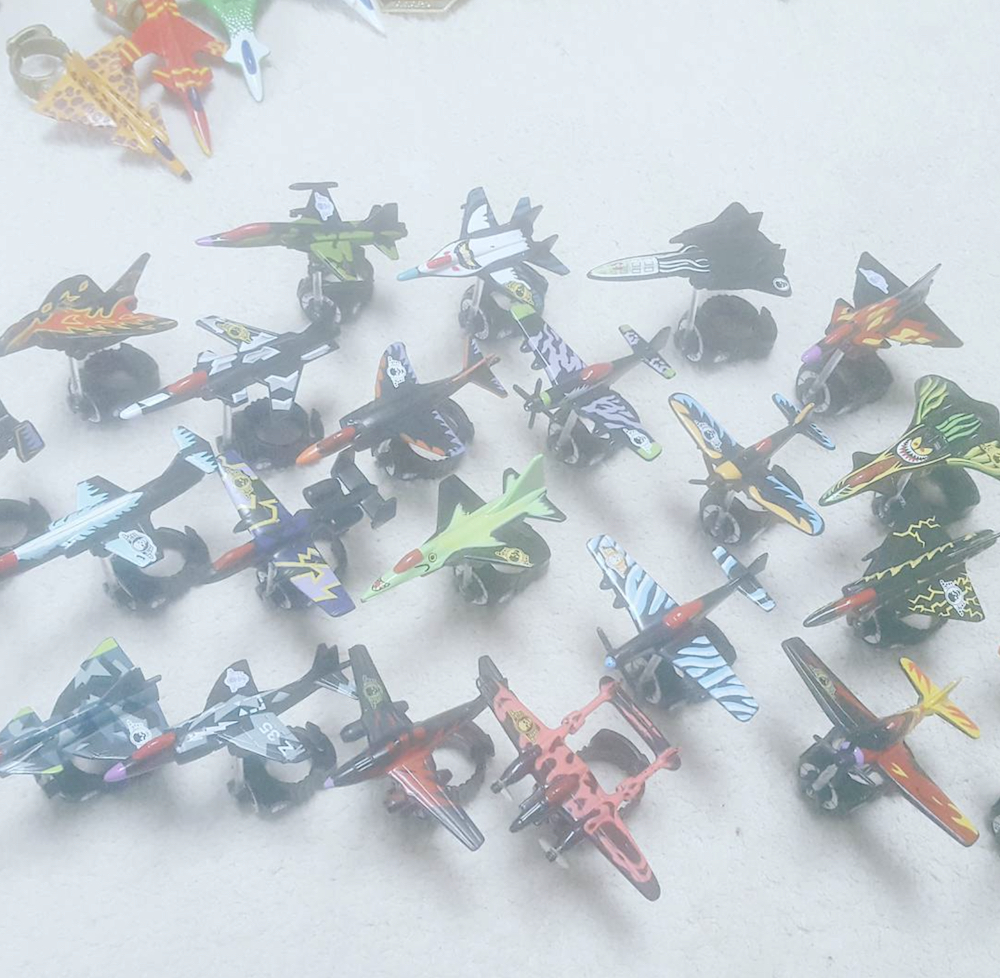
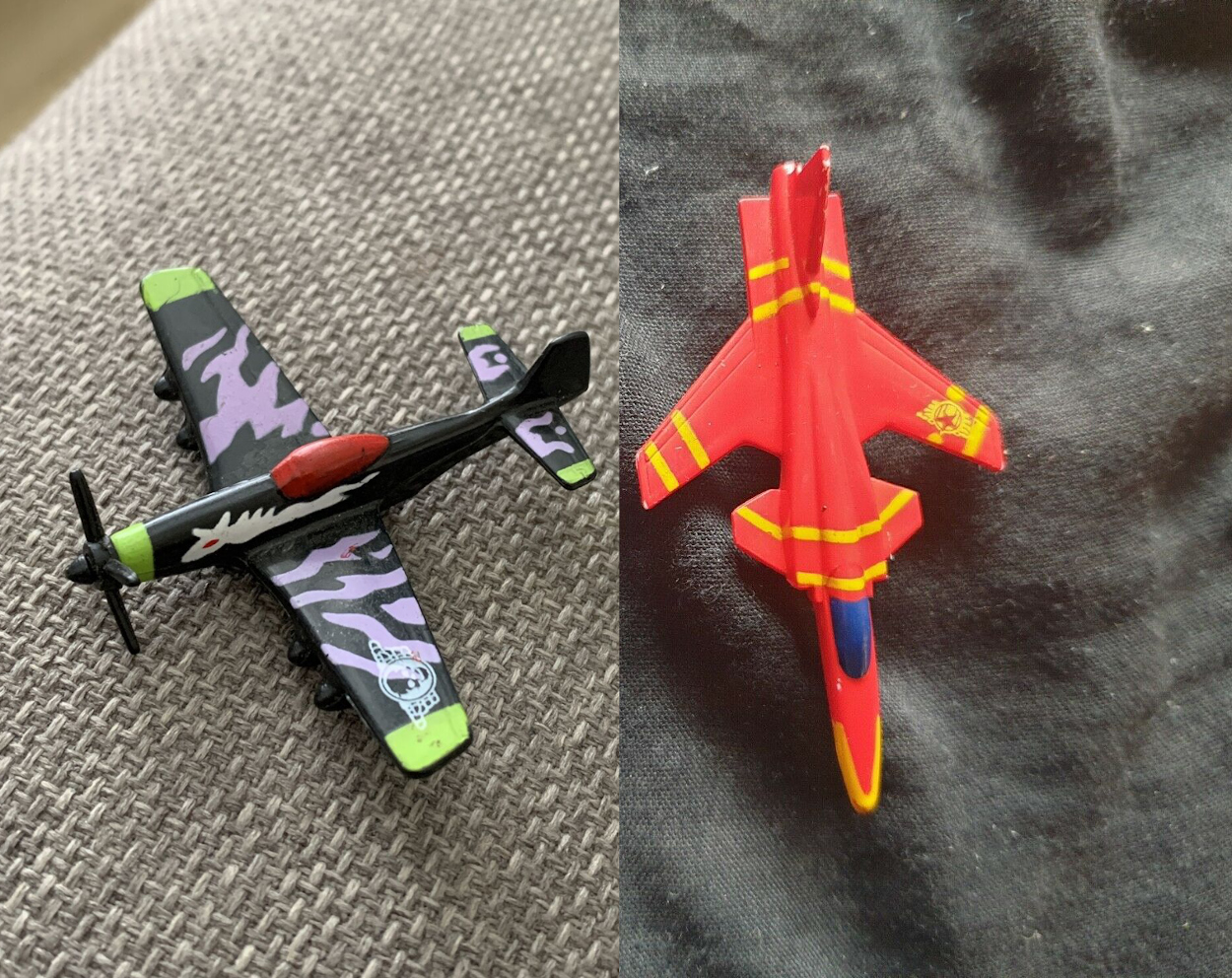
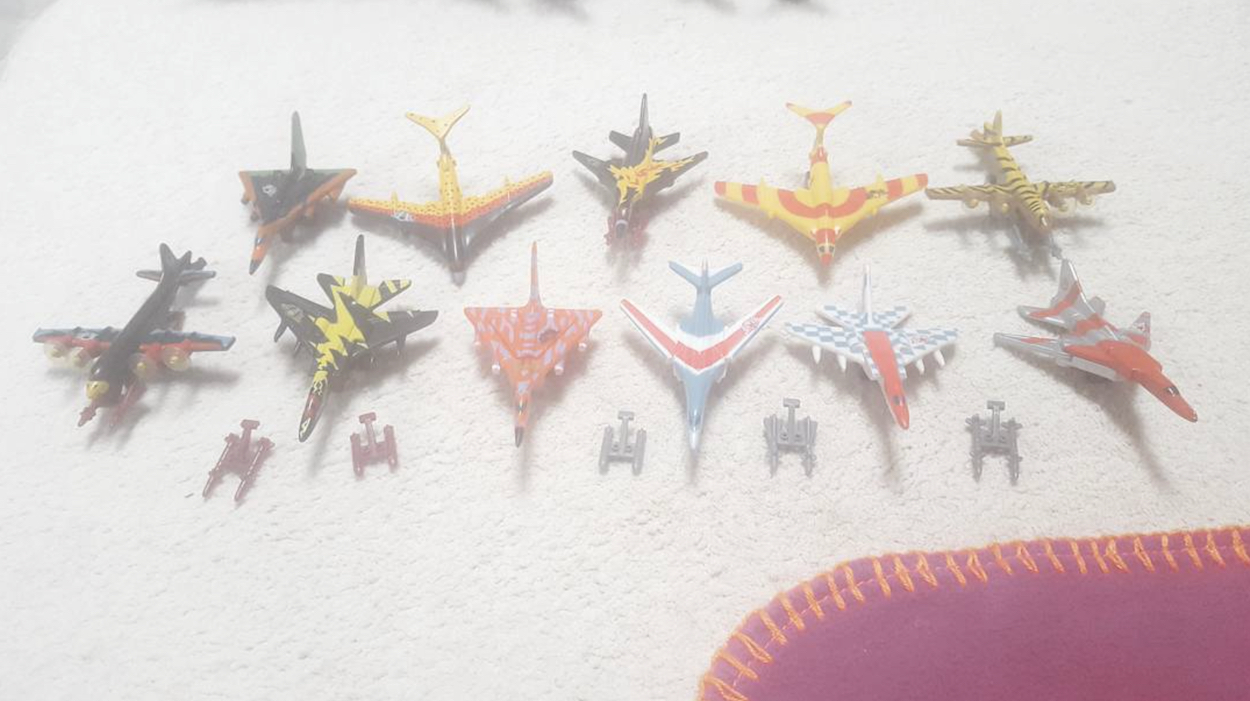
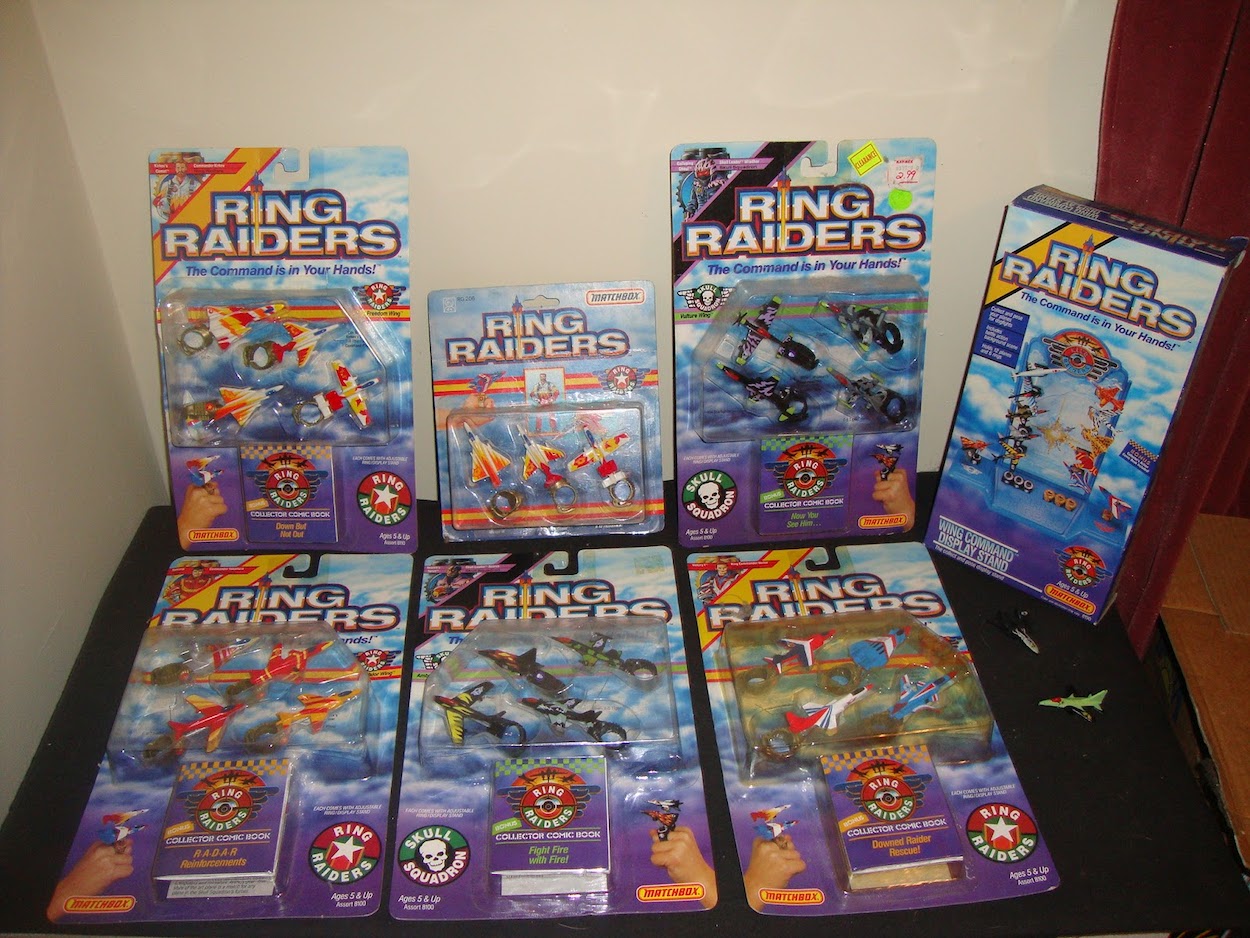
I was just waiting for Dom to send me photographs of his collection before publishing the interview, but he never did and he even stopped updating his social media. I’ve tried to reach out since (including just recently) but unfortunately it appears he’s moved on. Because of the lack of photos I didn’t publish the interview on the old site but I’ve decided to go ahead and do so now with the two Ring Raiders photos still on Dom’s (apparently abandoned) Instagram and others from this blog to illustrate what we talked about.
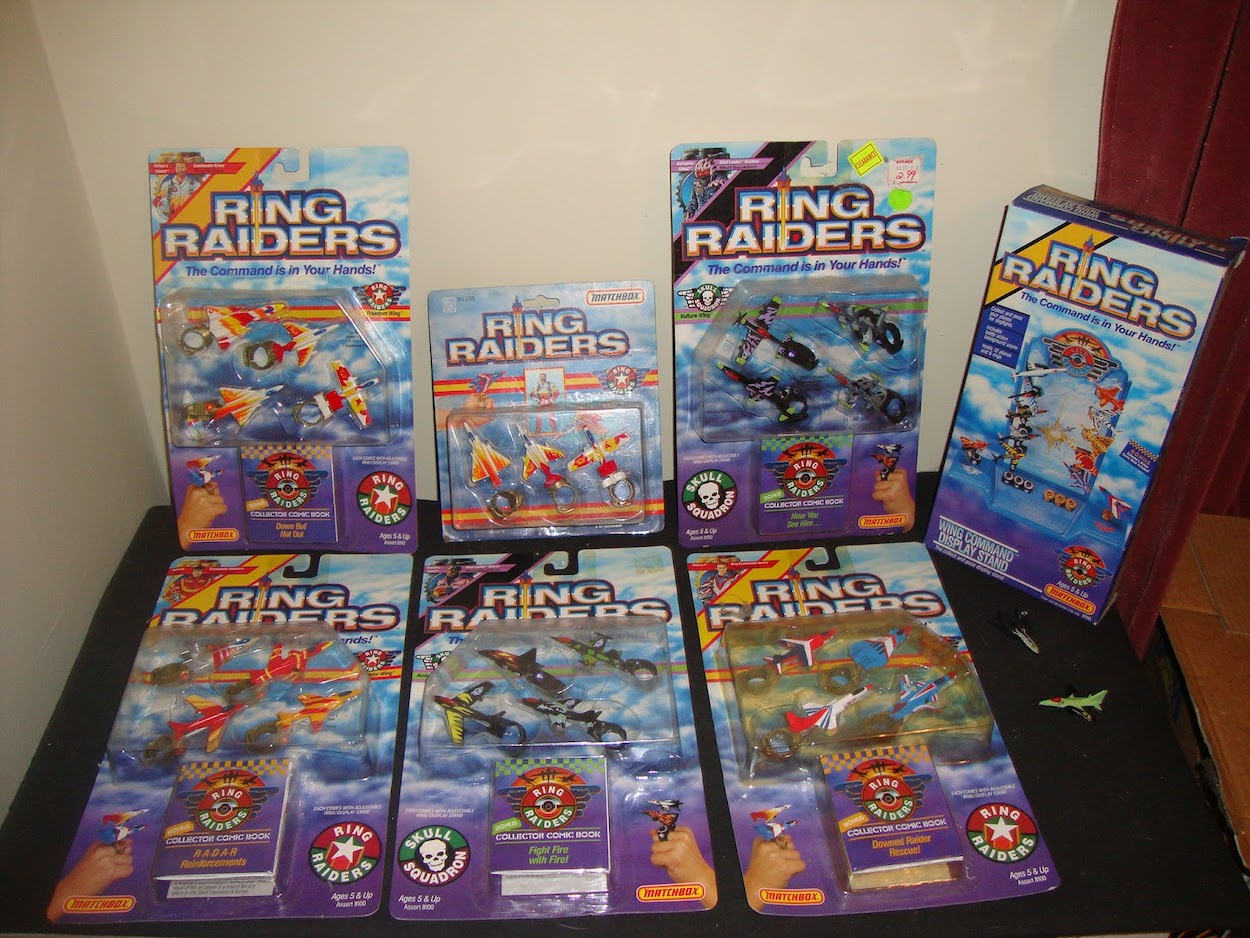
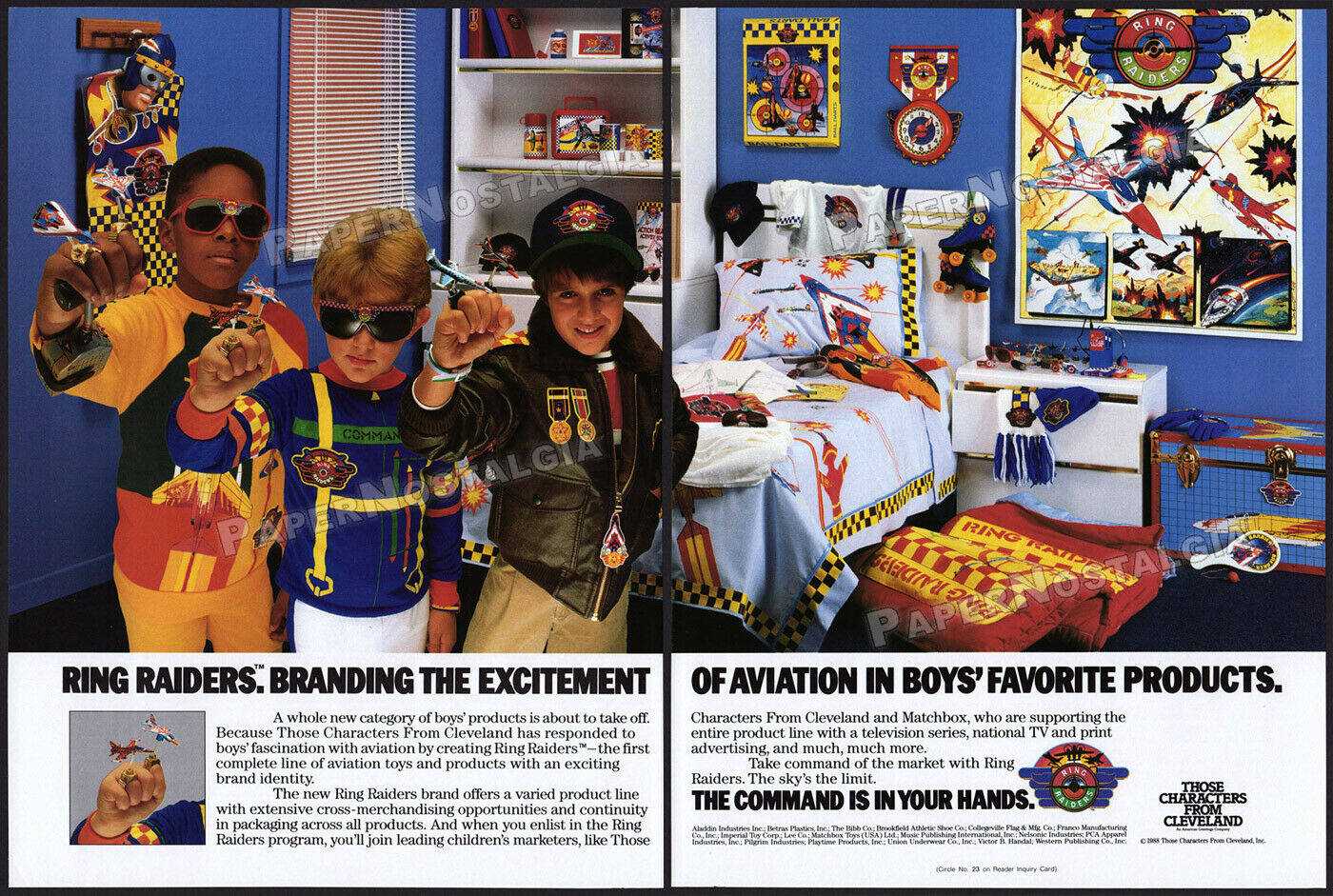
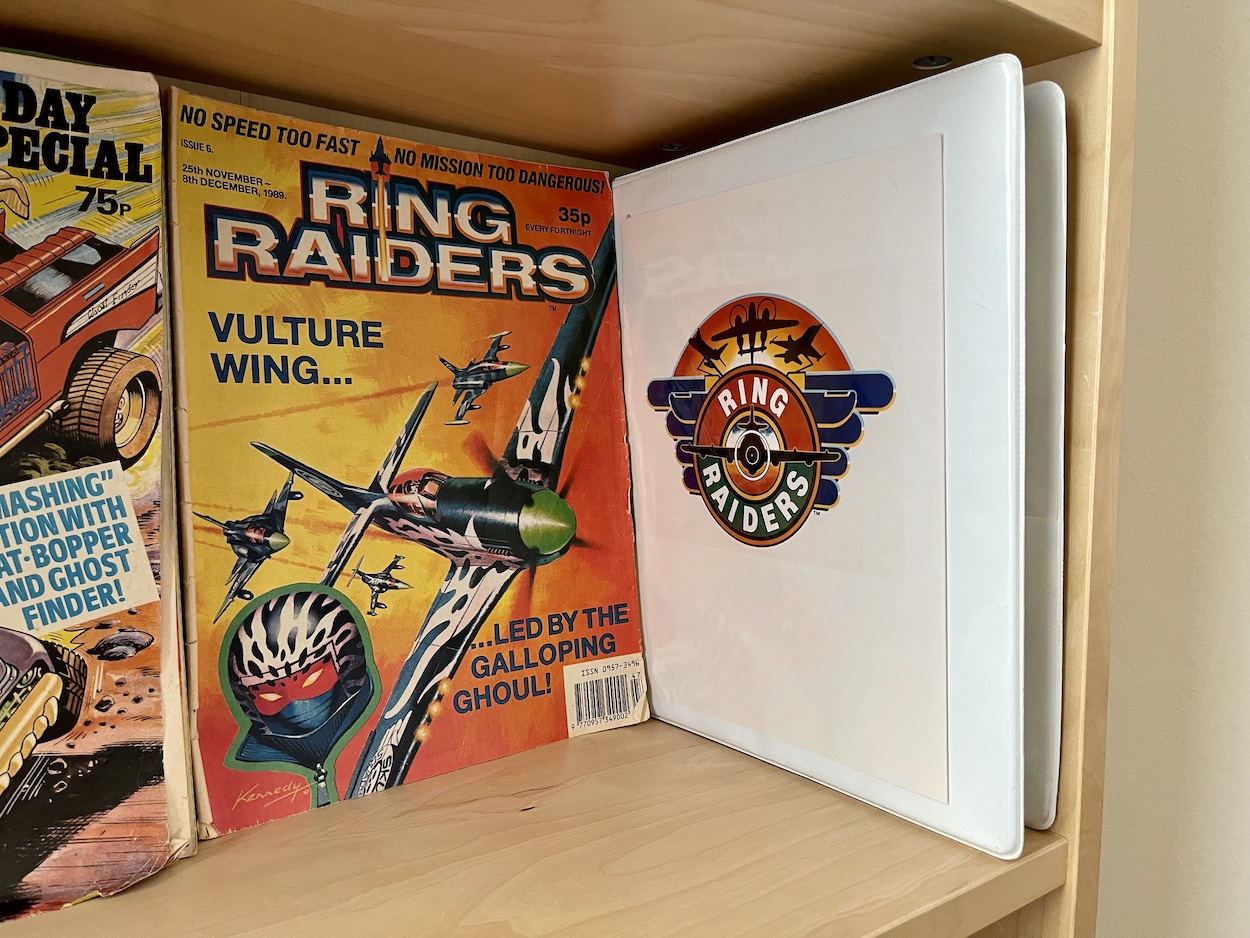
With the comic’s real time read through now complete and interviews with editor Barrie Tomlinson and writer James Tomlinson (who wrote under the name James Nicholas at the time) now up too, I thought Christmas was the perfect time to discuss the original toys. So if you’re interested in finding out more about the Matchbox range which inspired the comic here’s our chat from four years ago, published now for the first time. (The image below taken from c4petoys’ blog.)
OiNK Blog: Hi Dom, thanks for agreeing to do this interview about your Ring Raiders collection. You’re relatively new to Instagram (at least your domblano80 account is), I see it goes back to March of last year (2017 – Phil). Can you tell us a little about yourself by way of an introduction?
Dom Blanco: I was born in 1980 which was the golden age of action figures and associated media. I love toys, they have so many great memories for me. Collecting has always been a form of stress relief, my wife can actually measure my stress by the amount of boxes that arrive. I have a very good memory for action figures, more so than anything else. I can normally go through a box of accessories and pick stuff out (which is very handy). I’m not sure if or when my collection will ever end, but it really is my passion.
OB: As far as your collections go, how long have you been collecting retro toys and videogames?
DB: I’ve been collecting on and off for 25 years. I have sold up a few times, but always came back. Thankfully over the years I have had some great toys and met some amazing people that have become very dear friends all over the world.
OB: Is there anything in particular that draws you towards a certain toy line? Or are they all ones you remember from your youth?
DB: Everything from my early youth I have or have had. The 90s for me was when I became a teenager. I collected vintage Star Wars at that time, but the 90s toy lines I was just not interested in. Now as an adult I have learned to appreciate them and see them like a cornerstone of my collection as the action figures industry evolved in the face of the rise of video games. As far as being drawn to a line I have developed a love for the more obscure ones. There’s plenty of info out there for the major brands, but there’s a ton of very cool stuff most people don’t realise exists. I keep finding stuff that I never knew about and that is a big part of the appeal.
OB: On to the subject at hand then, the Ring Raiders. You’ve stated in a comment on Instagram that you’re trying to document all of the variations in the range so there’s a complete guide out there. What drew you to Ring Raiders originally, either as a child or an adult?
DB: I had one Ring Raider as a kid and that was the A10 (one of my favourite planes). As an adult an auction lot came up with the Air Carrier Justice which you don’t see very often. From that I just started looking into what else was out there and discovered there were a lot of unknowns. There are plenty of lines from the early 90s that have a lot of grey areas around what was actually released.
OB: So what do you have so far in the range? Any particular favourite purchases you’ve made or pieces you’ve hunted down?
DB: I currently have about 75% of the line. The new stuff from Series Two is definitely my favourite, as it’s all very new to me. The bombers are great and some of the Skull Squadron decos are very cool.
OB: The toys were moderately successful here in the UK but unfortunately not so much worldwide so only lasted about a year or so as far as I remember. However, there were still a few different series of aircraft and bases etc. Do you have any idea how large the collection will be once complete?
DB: After a lot of digging I believe the line has 72 basic planes, 13 chrome variants, six medals and 12 bombers. As far as play sets there are two small Ring Raiders play sets, one medium play set for Skull Squadron and the Air Carrier Justice. There are also two Battle Blasters and a display stand. I’ve just found a Series Two packaging card with a carry case, but I can’t confirm that it made it into production. There were also two mobile assault bases that I have parts from, but nobody has seen them before so how many made it out is an unknown. I would not be surprised if other stuff surfaces in the future.
OB: For anyone thinking about collecting them, how difficult is it to track them down these days in comparison to other toys you’re collecting?
DB: It depends how deep into a line you want to go. I’m a completist so I get it all. I’m not collecting everything packaged or the variations as most planes were packaged in multiple ways. The main issue is the fact most people don’t seem fussed by this line and there is virtually no information out there about what a complete collection looks like.
OB: I’ve covered the comic here on the OiNK Blog. It was my favourite (non-OiNK) comic as a child and holds up brilliantly today, but you didn’t know about it until you saw the blog, is that right?
DB: I didn’t know it went for as long as it did. Same with the TV show, I just saw the one on VHS, but there are still episodes I have not seen as they don’t exist on the net or DVD.
OB: It seems every time we think we’ve seen everything the range had to offer, something pops up we weren’t aware of before. The comic is a good example for you, for me I’ve found out about a lot more merchandise than I ever saw as a kid, as well as some of the toys you’ve obtained. Clearly Ring Raiders were designed to be the Next Big Thing, but unfortunately that wasn’t to be. Why do you think it is that we’re still finding brand new things after all these years? How can that be for a toy line which didn’t seem to last long?
DB: The development cycle on a lot of toy lines is currently 12-18 months, back then it was longer because pre-internet communication would have been harder between all the various components of bringing a brand together. Star Wars changed merchandising forever. There are also so many lines that were planned that never made it off the ground. By the time wave one is in the stores, wave two is normally at prototype stage and wave three is in concept, just in case they have a hit on their hands and need to keep it rolling. It’s strange they went to the level they did with additional merchandising for Ring Raiders, but like you say somebody had a lot of faith in it and Matchbox didn’t have many other properties at that point, so I guess they had more reason to be all-in.
OB: Can you give us a quick run down of what else you collect and the same question there about favourites or rare pieces you’ve tracked down?
DB: I collect anything 80s or 90s that’s action figures. I am not actively collecting major brands, but more the niche stuff. I’m about halfway through Street Sharks at the moment, which is a great line with awesome sculpts. There are a lot of lines from the 90s that had stuff released in Europe that never made it Stateside due to cancellation so we got some great stuff that is now very rare there. I just love the hunt and talking toys with people, being an adult on a full-time basis is just no fun.
Thanks to Dom (if he’s reading this) for sharing his thoughts and some interesting nuggets of information on Ring Raiders. It’d be great if he returned to Instagram to continue updating us on his searches, although sadly it looks like he may have sold up again.
On the subject of the toys, watch out for a future post in which I take a look at a very special piece of Ring Raiders history, one which I doubt fans will have seen before and which should interest anyone who collected franchised toys in the 80s or 90s. You’ll have to wait until then to see what I’m whittering on about, but don’t forget about the comic’s coverage on the blog in the meantime!
Firstly, I should say I do not like football. I sometimes go see our local ice hockey team here in Belfast and every four years I become obsessed with the Summer Olympics, but aside from those I’m not what anyone would call a fan of sport. (Unless it’s Nintendo’s.) It’s important to state this before writing about this book because you’ll see there are a lot of sporting references within it which might put you off if you don’t like sport. But trust me, it shouldn’t.
Lion, Tiger, Roy of the Rovers, Top Soccer, 2000AD, Battle, Speed, The New Eagle, Scream, Mask, Super Naturals, Wildcat, Hot-Shot, Ring Raiders, Teenage Mutant Hero Turtles Adventures, Toxic Crusaders, The Big Daddy Annuals, The Geoff Boycott Annual, The Suzie Dando Annual, Johnny Cougar’s Wrestling Monthly, Scorer, one-off specials, magazines, World Cup poster magazines, sports quiz books, greetings cards, Ladybird books… this is a career which could take up several volumes.
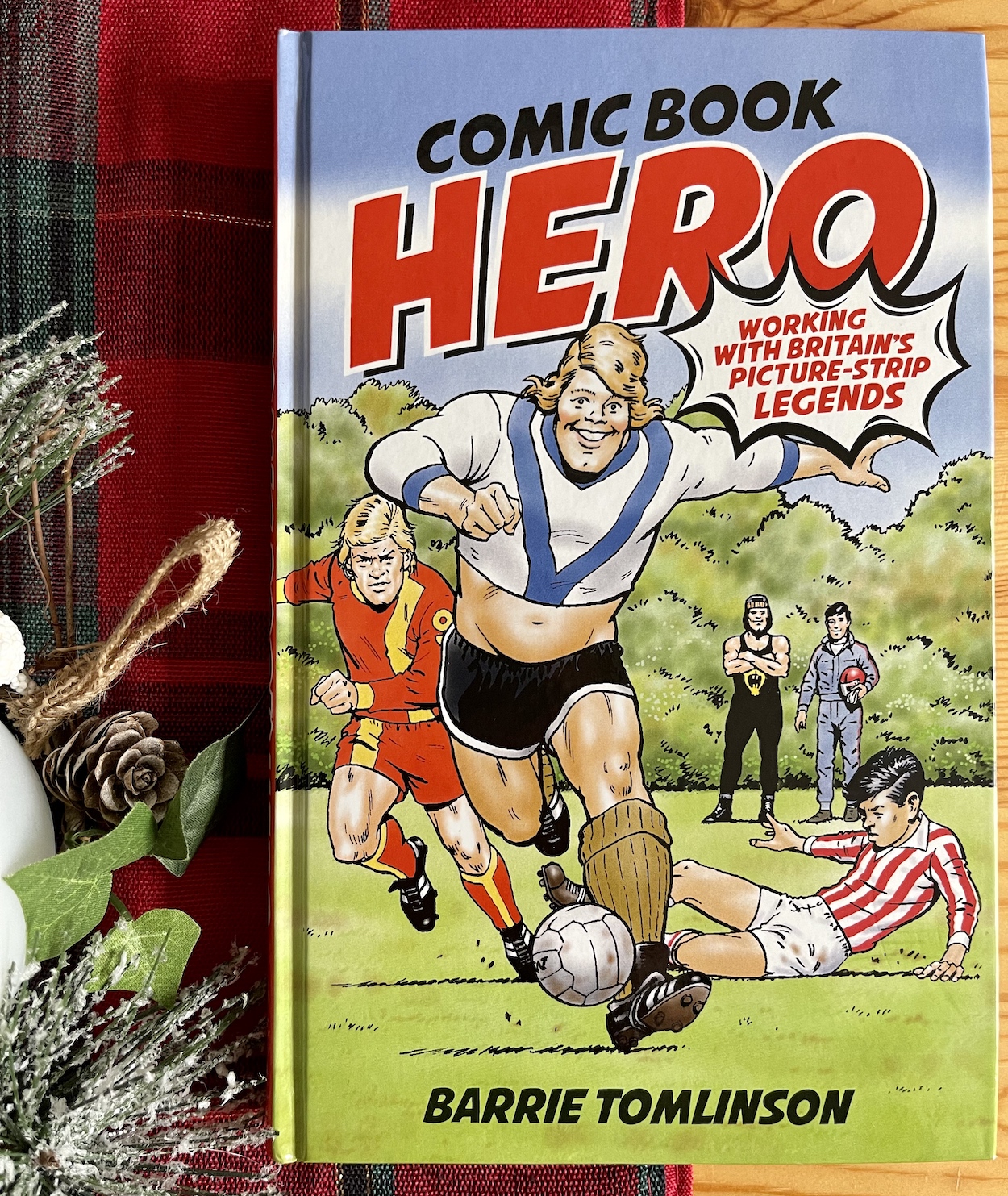
Barrie Tomlinson is a giant in the world of British comics. Readers of the blog will be familiar with the name already due to coverage of three of his titles, namely Ring Raiders, Wildcat and Super Naturals. I remember some friends being obsessed with his Mask comic and later we all collected the Turtles together. These were only the tip of the iceberg of comics Barrie created and edited, and this hardback book sees him take us on a very personal trip down memory lane.
For any UK comics fan Comic Book Hero is an essential read
Reading Comic Book Hero is like having Barrie sitting next to you, having a casual chat, reminiscing about his creations, his colleagues and friends, the personalities he met and all the fun he had along the way. The structure of the book adds to this cosiness, with no chapters as such, just the occasional comic name as a title here and there, which lends a personal diary feel to the proceedings. It’s a unique way of writing a book and it’s the perfect choice for Barrie’s particular style of storytelling.
And what a story he has to tell.
Barrie’s work with Fleetway Publications began in 1961 and this book covers everything he worked on right up to 2011 and his retirement. A large portion of the book is taken up with Tiger, the sports focussed action comic, but not before we’ve had some fascinating insights into how the comics of the day were edited thanks to Barrie learning from the likes of Bernard Smith. Even in times of high work volumes and obvious stress, Barrie is completely respectful and understanding of those he worked for and it’s refreshing to read a book which doesn’t relish in sordid tales or bitching in order to sell.
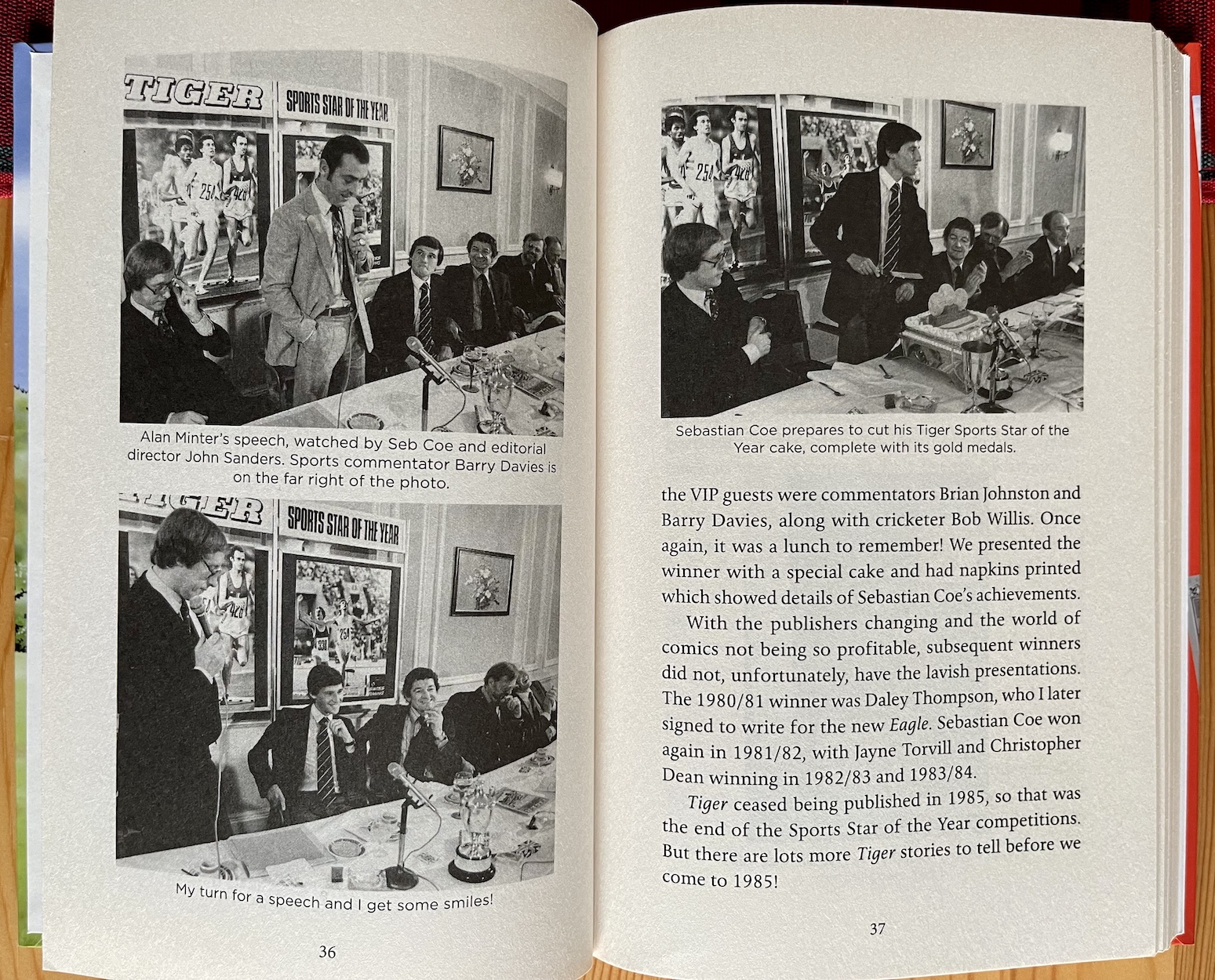
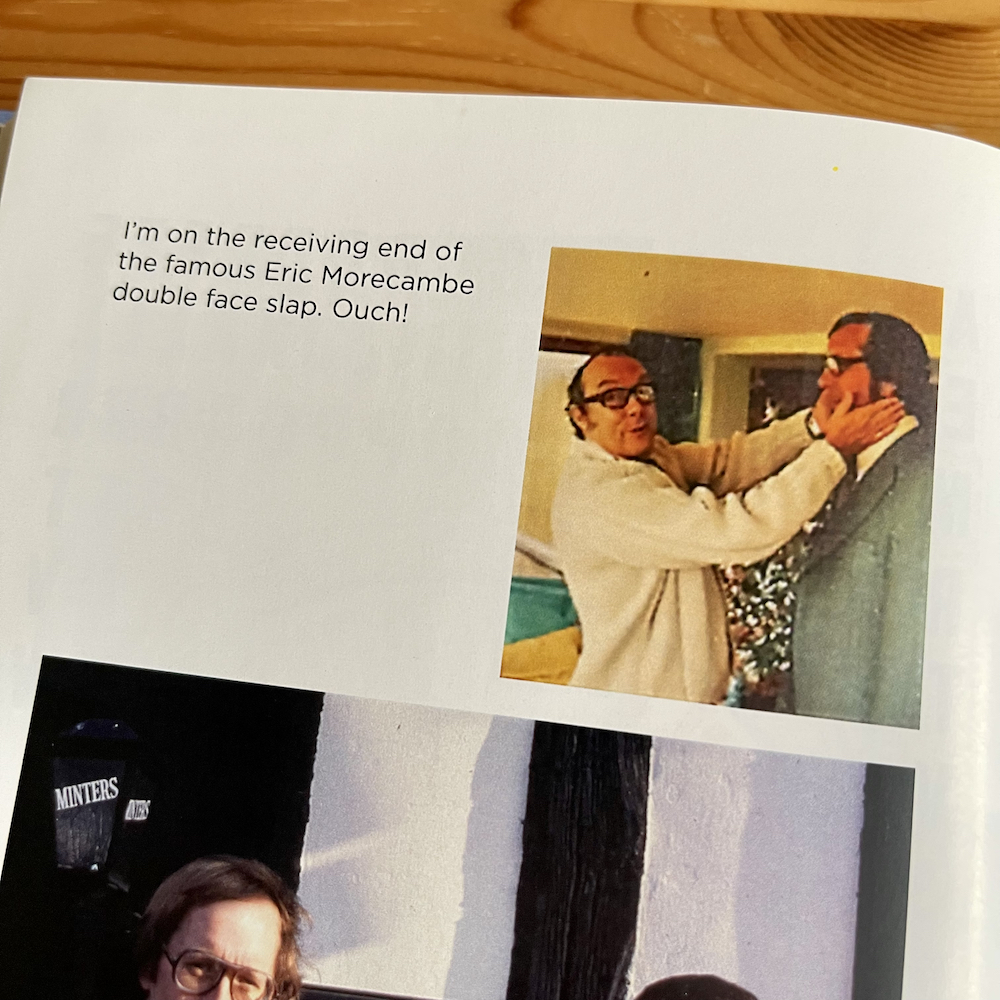
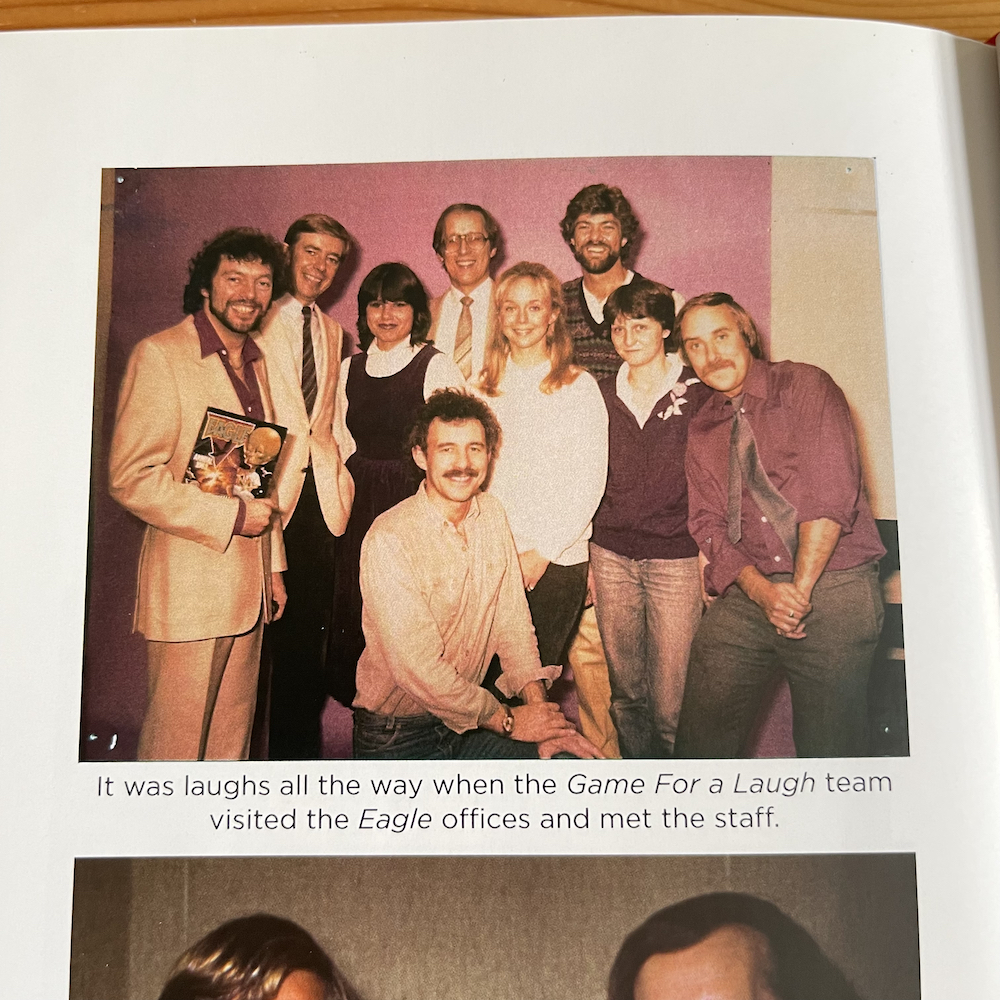
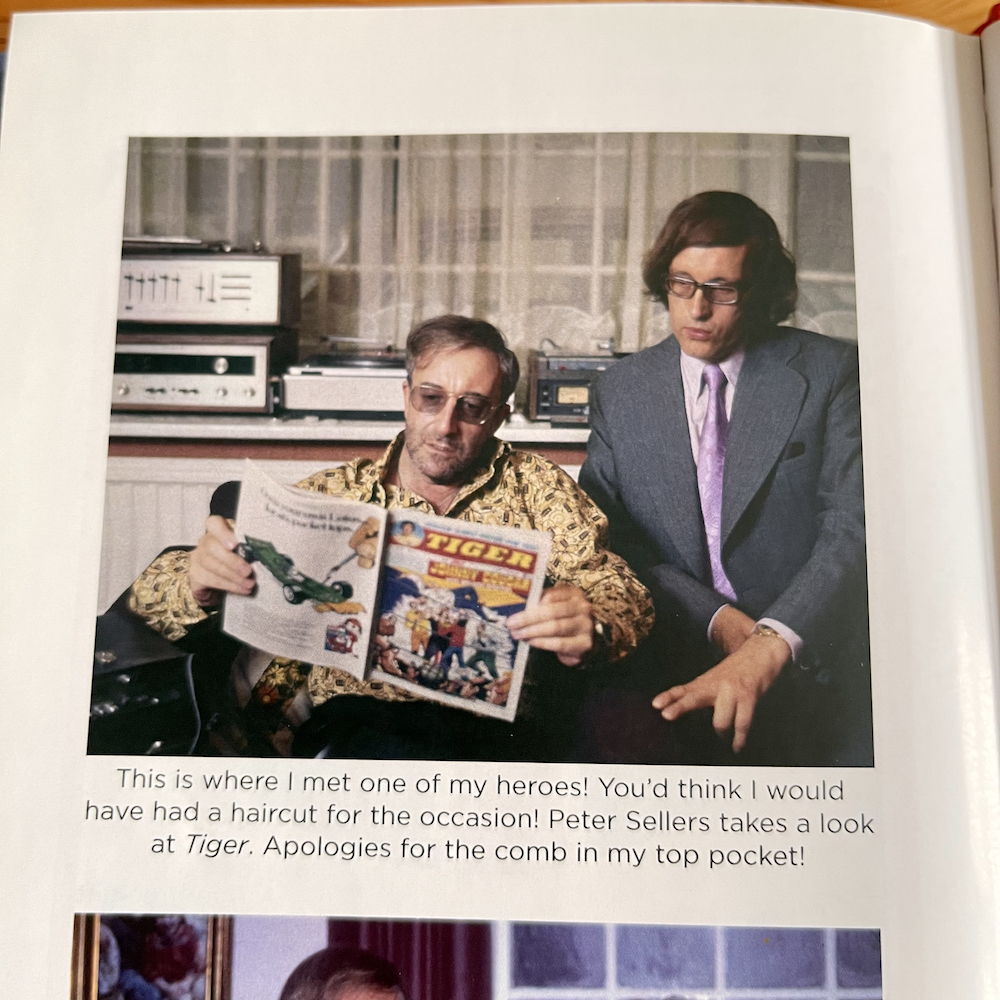
I found it fascinating to read how loved and respected Tiger was in the world of sport, with big stars contributing to Barrie’s comics as regular writers, in exclusive photos, meeting competition winners and appearing at the Tiger Awards events. The photos of these gatherings in particular are fantastic and it’s amazing to think of how all these celebrities, including personal favourites Morecambe and Wise came together in such a way for a children’s comic.
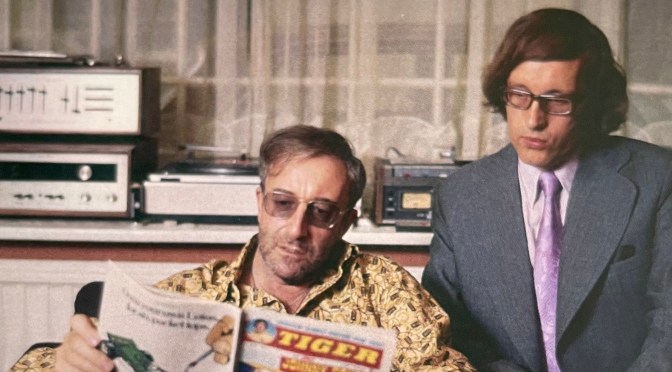
It’s sad to read how some of his contemporaries accused Barrie of only wanting to further himself by involving big stars, but as he explains it was all for the comics. It worked a treat too! Comics like Tiger and Roy of the Rovers enjoyed long lives and huge circulation figures and the exposure these guest stars brought certainly wasn’t to be sniffed at. But the book isn’t all about the glitz and the glamour (although a story about a naked radio interview has to be read to be believed), there’s plenty of insider comics information.
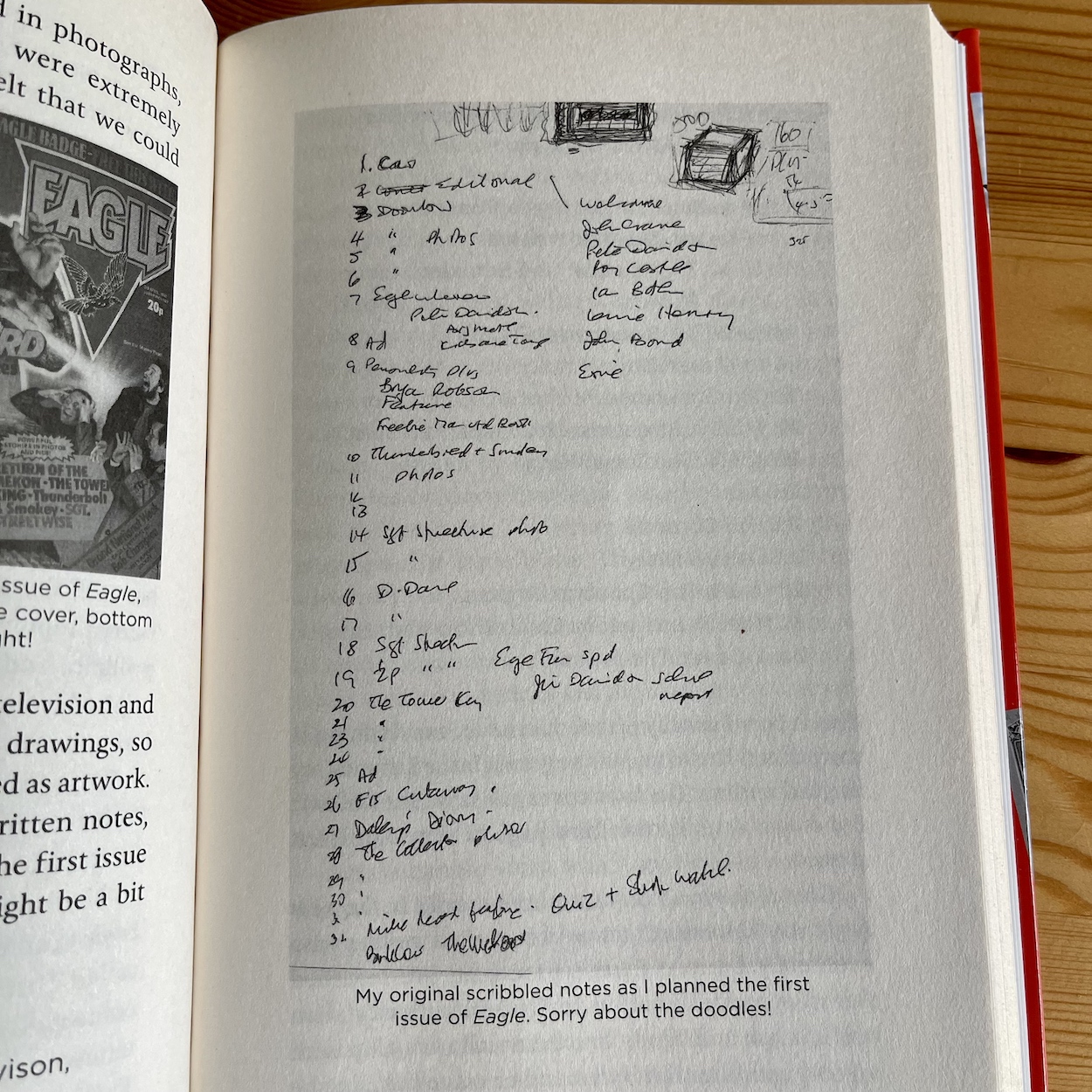
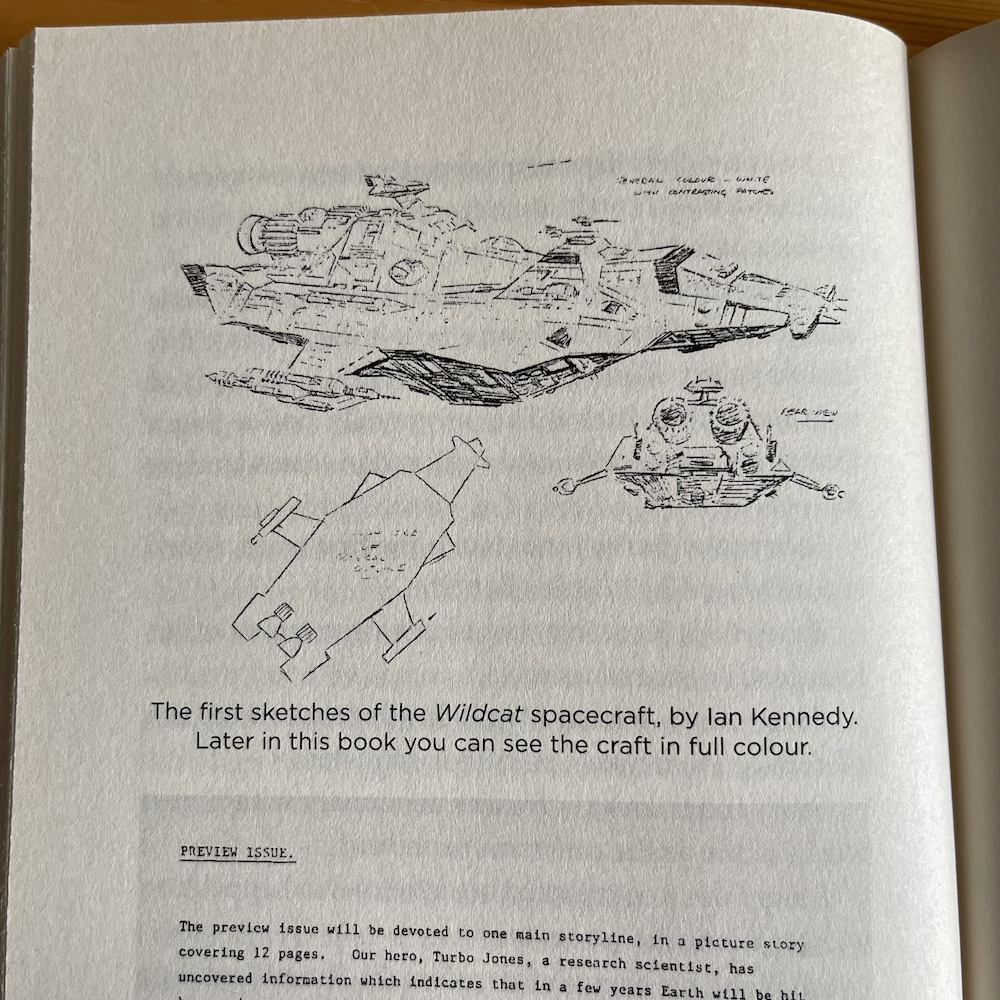
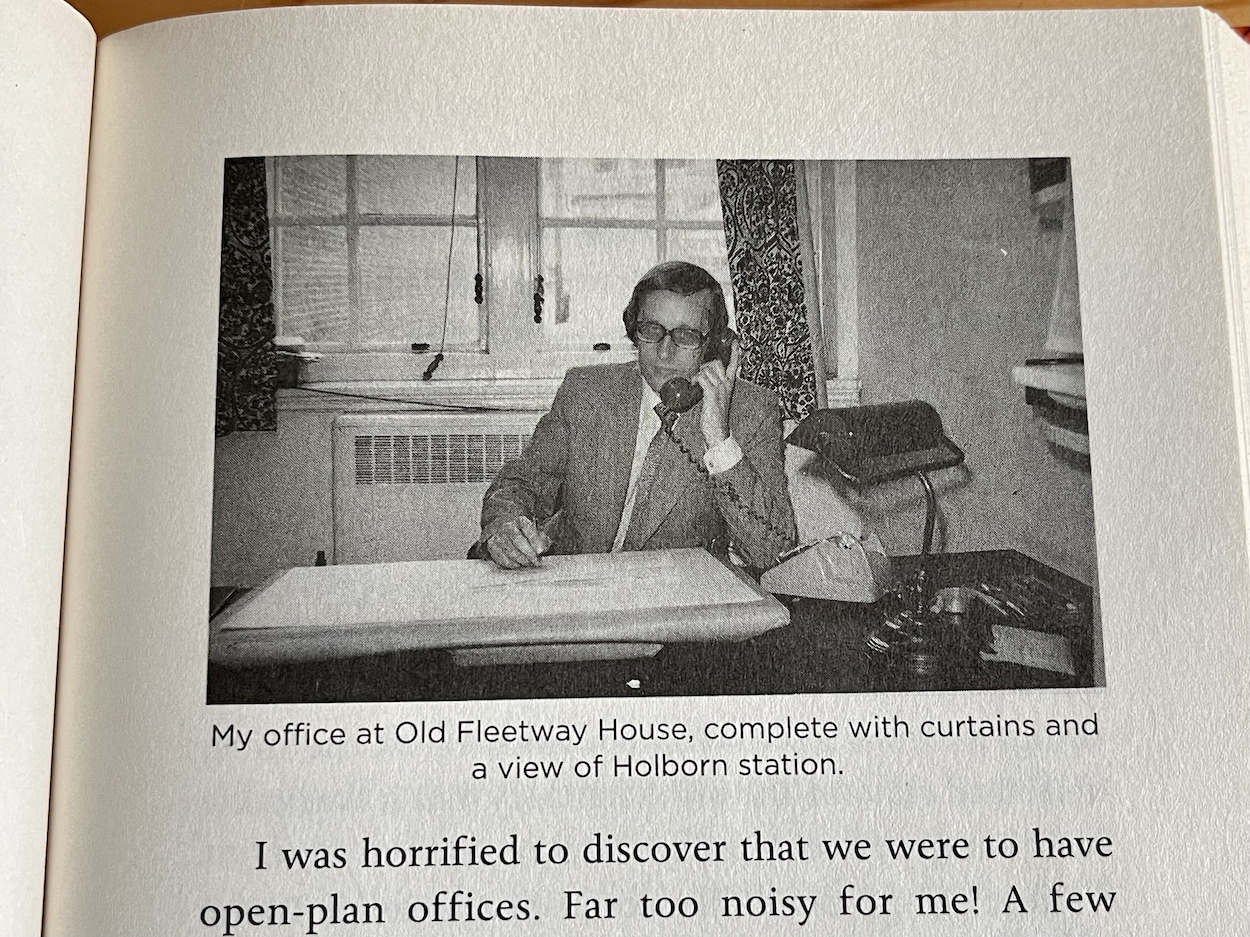
Of particular interest to me were Barrie’s personal thoughts about Ring Raiders‘ short lifespan, taking the helm of the Turtles juggernaut in the UK and some wonderful insider knowledge on the creation of Wildcat. This takes the form of some Ian Kennedy sketches and the original synopsis for the script of the preview comic. What really surprised me was how much the creation of the sports comics interested me and I found it particularly fascinating to learn about Storm Force.
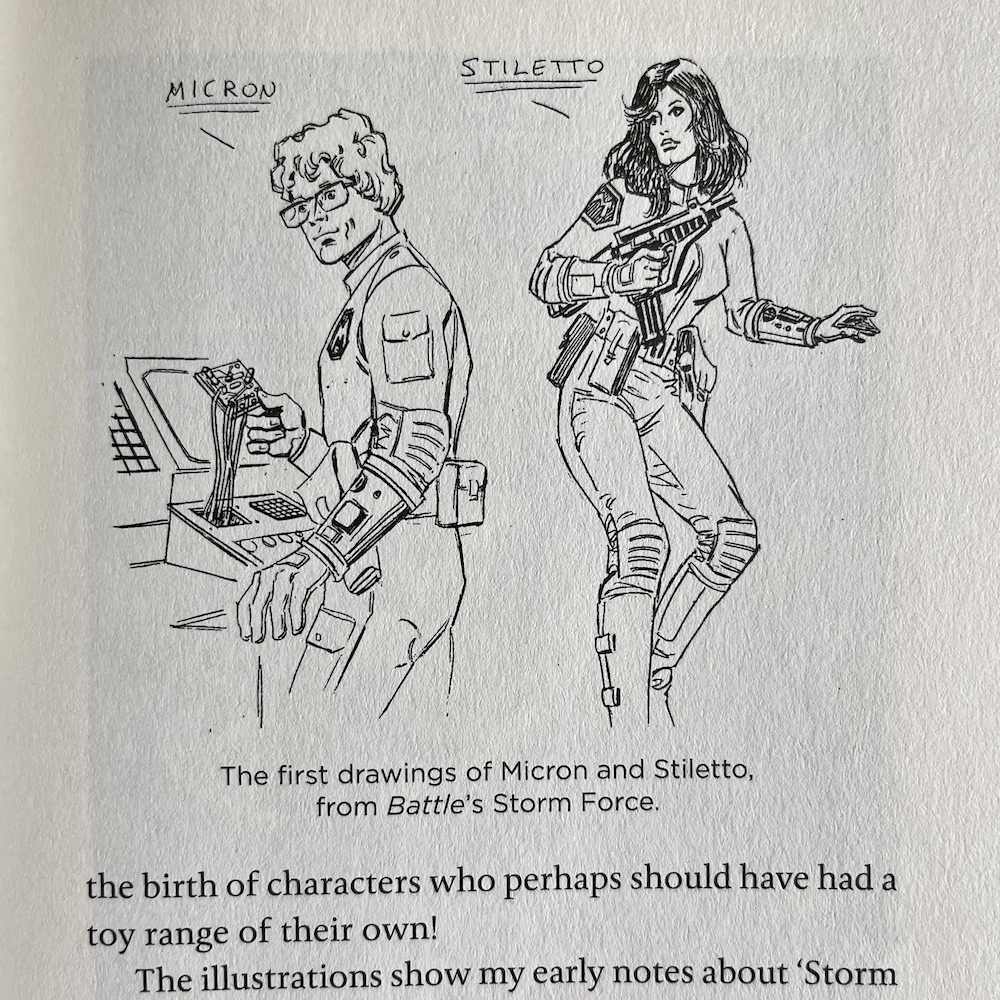
I’d seen adverts for the strip’s Battle comic debut in the pages of other Fleetway publications such as the piggy pink one this blog was named after. I knew it was a big deal to the publishers at the time but didn’t know why until reading this book. The contract to create Action Force comics had come to an end, with Hasbro taking over the toy line to relaunch it as the British version of G.I. Joe, the comics licence also moving to Marvel. In response, Storm Force was created to fill that void. In Comic Book Hero we see some lovely design sketches and get plenty of insights into how it came about. I also agree with Barrie when he states the characters would’ve made for good toys themselves.
This book covers a lot of comics from the 70s and early 80s, before the likes of OiNK came along, but even if you’re of the same vintage as me I can promise you’ll find this an interesting and hugely entertaining read. I didn’t discover the joy of reading comics for myself until #14 of OiNK towards the end of 1986 so I want to categorically state that if you collected any comics from IPC or Fleetway in your youth you’ll love this. For one, I can almost guarantee you Barrie had a hand in what you read and even if you didn’t collect many of his titles you’ll love the insights into one of the biggest UK comics publishers, including the creation of the new Eagle and Scream!
It doesn’t stop there. Comic Book Hero covers the formation of Creative Editorial Services when Barrie and his team worked freelance at home creating comics for Fleetway. To know favourites of mine such as Ring Raiders were created in the comfort of his own home makes me insanely jealous of Barrie’s job at that time! Also in here are the later publications Barrie created when he moved on from weekly and fortnightly comics, right up to the final episode of Scorer in the Daily Mirror in 2011 after it ran for an incredible 22 years. That in itself is a huge achievement. Indeed, the last section of the book is simply called ‘What A Life!’ and I couldn’t agree more.
From chatting with Barrie about the comics he worked on I can honestly say he’s an absolute gent. He’s always really open about his work and puts the fans first even to this day. This attitude and his friendly demeanour and devotion to the craft comes across on every page of this wonderful, personal book. For any UK comics fan Comic Book Hero is an essential read and since you’re reading this blog I’m going to assume it’s a safe bet you’ll love it too.
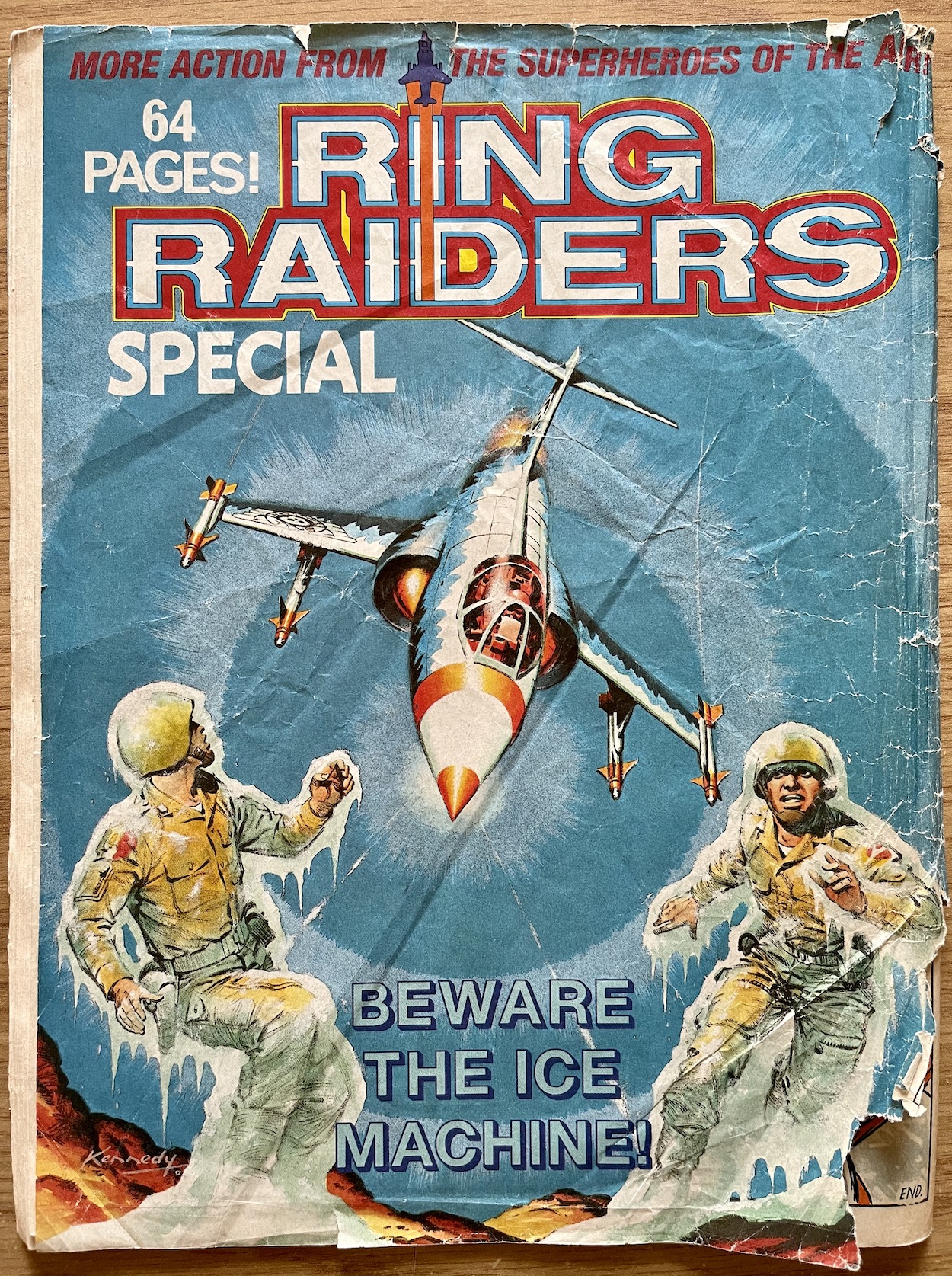
When editor Barrie Tomlinson gave us the bad news that #6 of Fleetway‘s Ring Raiders was to be the last, he told us they hoped to produce a special the following year to finish off all the stories frustratingly left on cliffhangers. Given how comic specials usually appeared in April or May, and the fact I didn’t know if it’d even be published, you can imagine my surprise when my parents came back from the shops with this some time in February of 1990. With its gorgeous Ian Kennedy cover and a hefty weight to it, I immediately ran to my room where all my planes and bases could be found.
Also in my room were my comics and after giving the special a quick flick through and seeing glimpses of exciting aerial action I decided to spend the whole day with these characters and read through all of the previous issues, every single story (including the ones that had already finished) before settling down for this mammoth 64-page feast of an issue. The regular comic was 24 pages so this felt like a real treat! Especially when we got not one, but two covers from Ian.
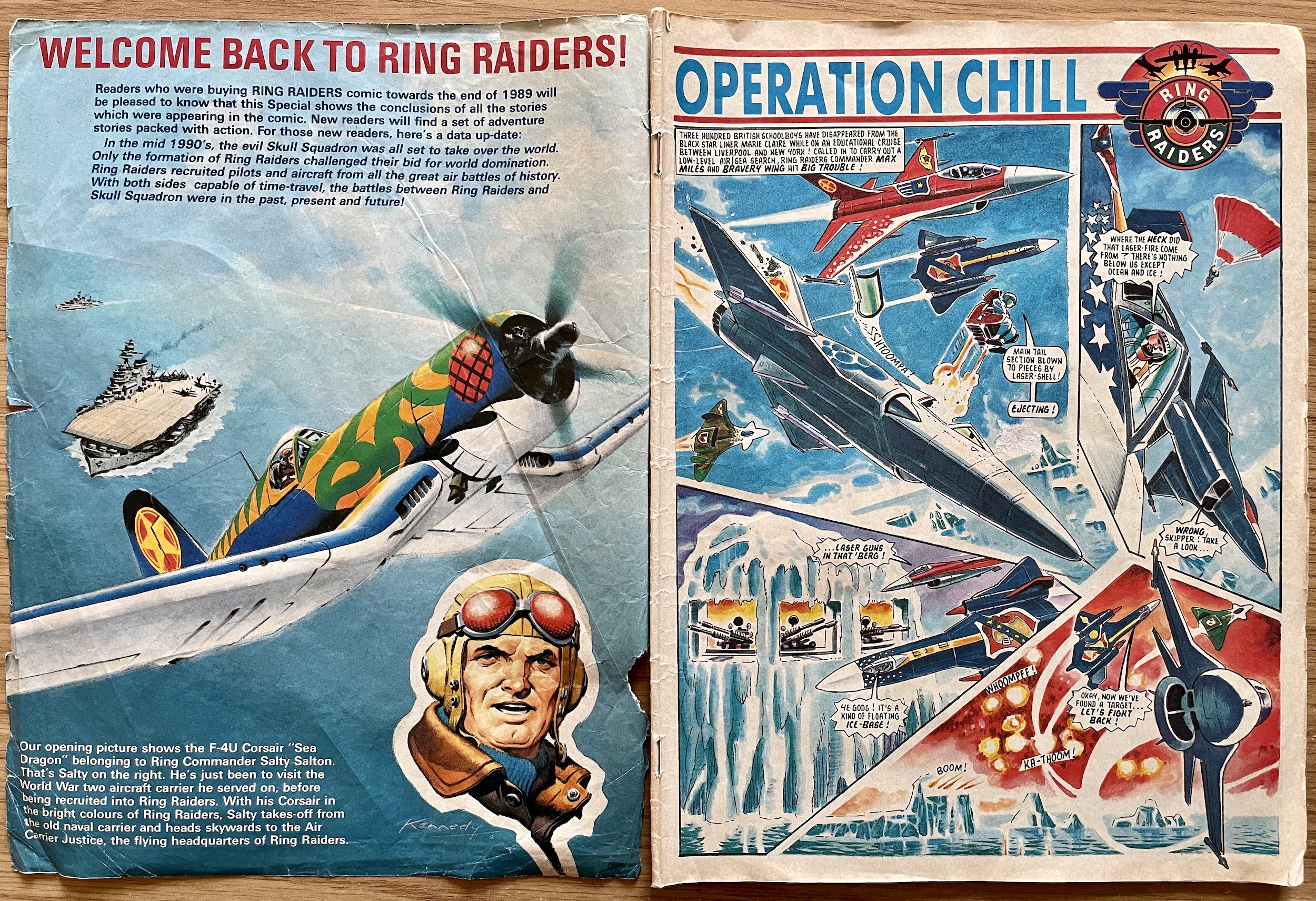
Was #7 meant to be the start of the comic recolouring the logo each issue? Or was it just for this special? Who knows? But clearly Ian had finished the next two covers and I think this inner page (likely #8’s cover) is just beautiful, evocative of the Commando covers he was so well known for but with a modern (for the time) splash of colour on the Corsair. Wonderful. You’ll have to excuse the state of the pages though. This is my original comic and it was read so many times back then, devoured over and over. The creases and tears tell a story though, of a much loved comic I couldn’t get enough of as a kid.
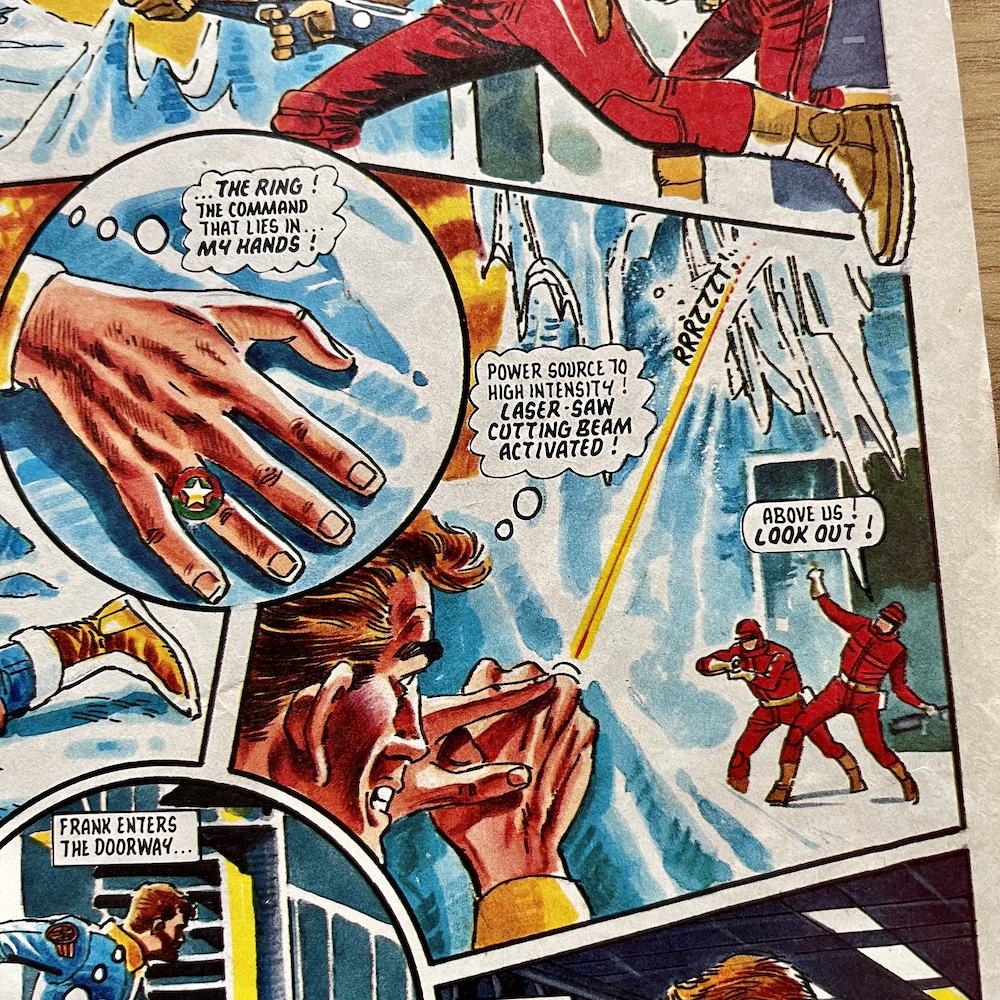
I really enjoyed reading through the fortnightly and was meant to cover this several months ago but had forgotten I’d let a friend borrow it (and the Super Naturals Adventure Book) and she’s not someone I see too often. But here we are at last. I’ve been looking forward to this. As you can see we kick things off with Operation Chill as colourfully brought to life by Carlos Pino, which only began in the final issue. When a cruise ship carrying a talented bunch of school kids crashed at its destination port with no one on board Wing Commander Max Miles and his Freedom Wing were dispatched to track them down.
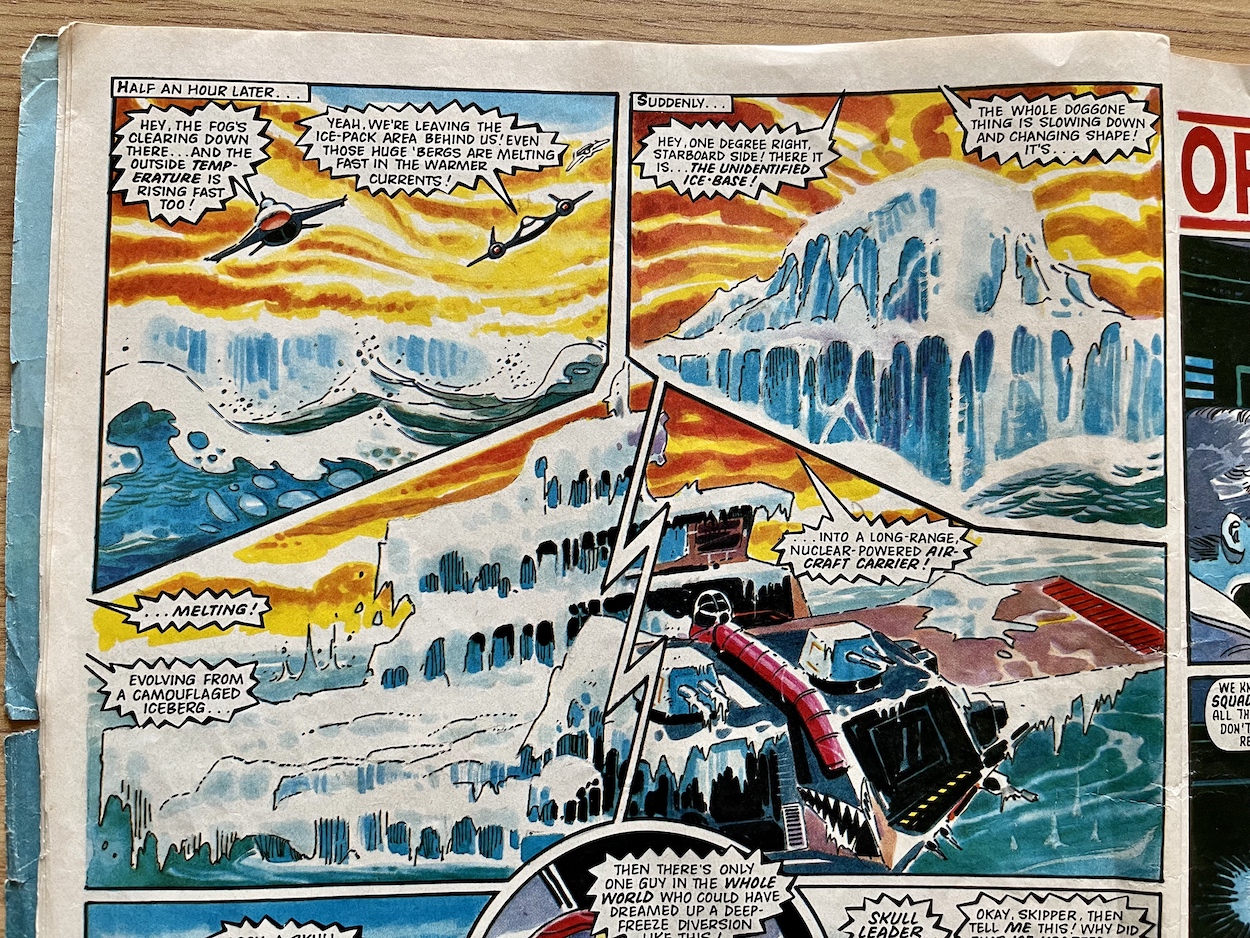
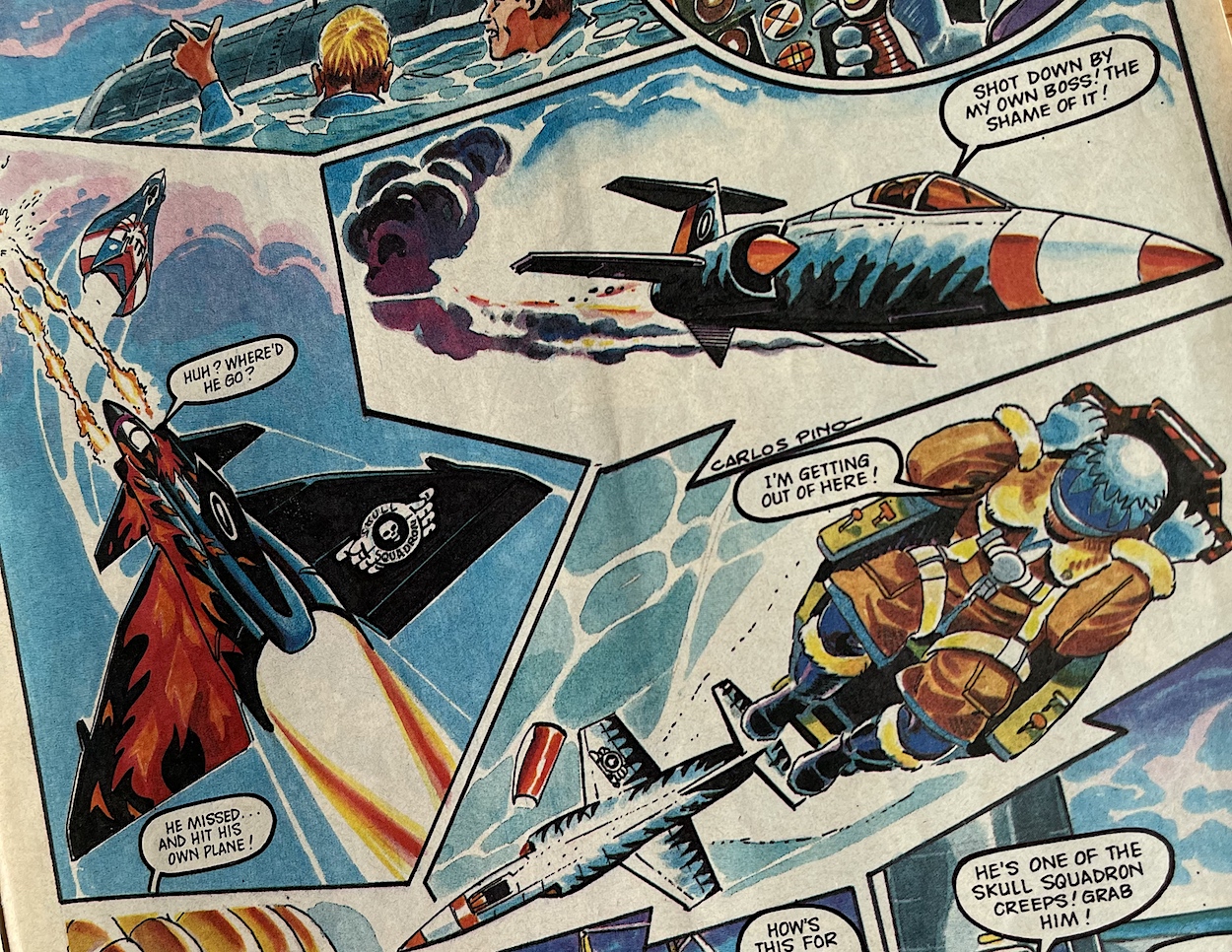
His wing ended up over chilly Arctic waters and fired upon from an unknown source, with only giant icebergs beneath them. On the first page of this issue’s strip you can see gun ports in one of them and it’s on this that our ejected pilot Frank Turner finds himself. Another character named by the comic, Frank is soon set upon by Skull Squadron goons but he’s not as unarmed as it would seem, using another of the miniature gadgets the comic invented for the rings.
The iceberg was also on the move! At this point as a kid I had an idea of what was really underneath the ice and the next part of the story confirmed my suspicions. This particular segment would’ve been in #8 with a release date of 23rd December, the Christmas issue. If all had gone according to plan eager kids awaiting Santa would’ve read this just a few days in advance, and no toy in the series was more sought after than the Skull Action Assault Base!
While readers had seen the base in the Trackdown strip we have to remember these are time travel stories and so, much like with Doctor Who for example, timelines can be presented out of order. Even though this takes place a few years after Trackdown in order of actual date, for the time travelling characters it occurred before it. This is when the Ring Raiders themselves first encountered Skull Squadron‘s new mobile HQ. Over time it would’ve been fun to piece together these events into a timeline.
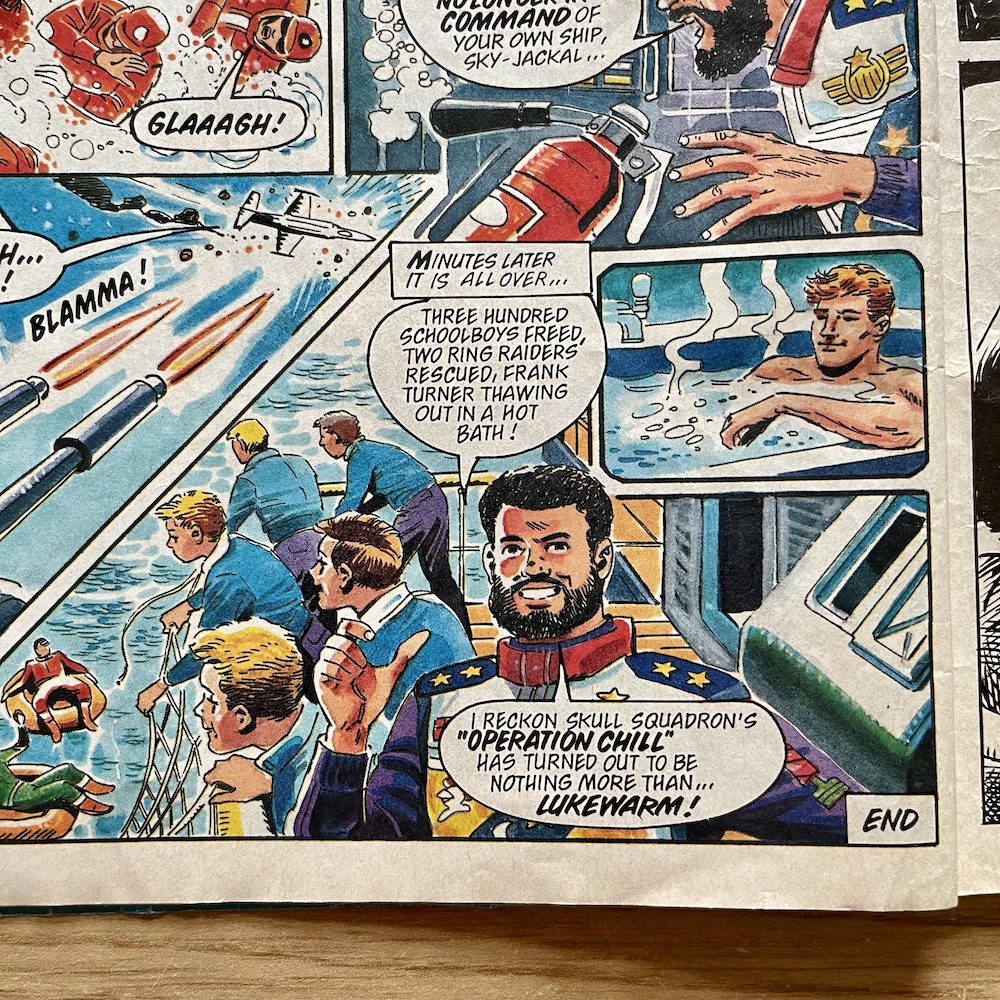
The villain is of course Chiller, the most used in the comic and simply the most sinister, not to mention the most fun for the reader. The plan is to re-educate the kids as mind slaves but, even after Chiller takes to the skies with his new ice weapon and takes out two of the Raider planes, Commander Miles doesn’t give in, making the most audacious of moves by landing on the base. Staying inside the cockpit and using the plane’s weaponry to disable the base he soon overpowers the enemy and commandeers it.
This final panel has Miles posing as he does on the toy packaging. Hmm, he’s called Max Miles and his plane is the Knight Fighter… and in Knight Rider we had Devon Miles… oh I’m just overthinking that, right? Anyway, with the funny image of Frank using the Skull base’s facilities Barrie’s story comes to an end with four parts here, making five altogether so originally it was due to conclude in #10. Who knows if the next story would’ve seen Skull Squadron coming for their base, but it would’ve made for an excellent battle if they had.
This would’ve sealed the deal for Ring Raiders as one of the very best action adventure comics in the UK
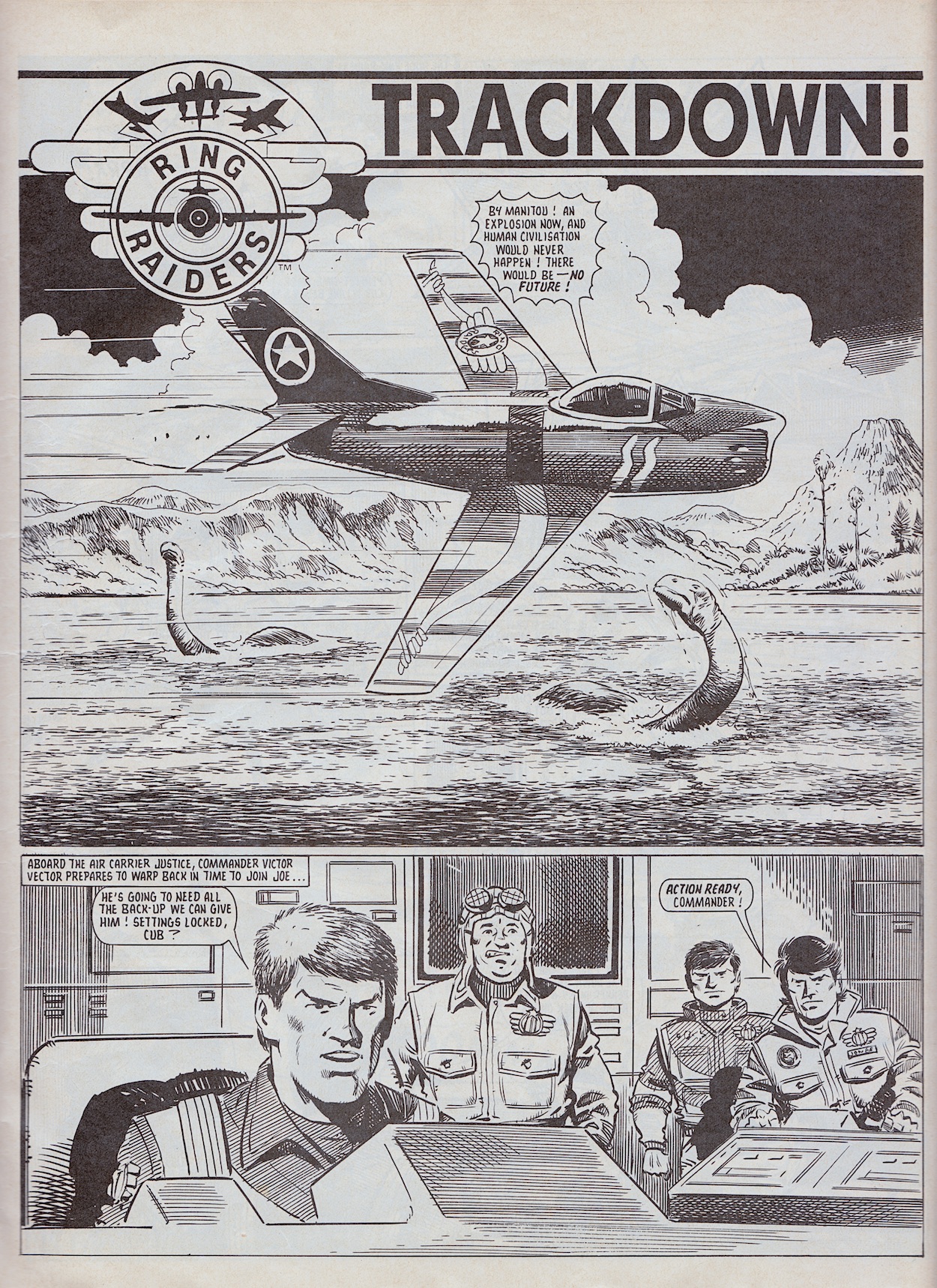
On to what was the main strip in the comic for me, the epic Trackdown written by Angus Allan and drawn by famous British artist John Cooper. It always felt epic in its scope, story, use of character and pace, and as it turned out it truly was as epic. With five four-page episodes in the special, altogether it was 11 parts and 48 pages in length. Beginning in #1 on 16th September 1989 it wouldn’t have come to its explosive finale until #11 on 3rd February 1990. Getting the final 20 pages here feels like a bit of a cheat, but these are the best pages in this special, and indeed the series.
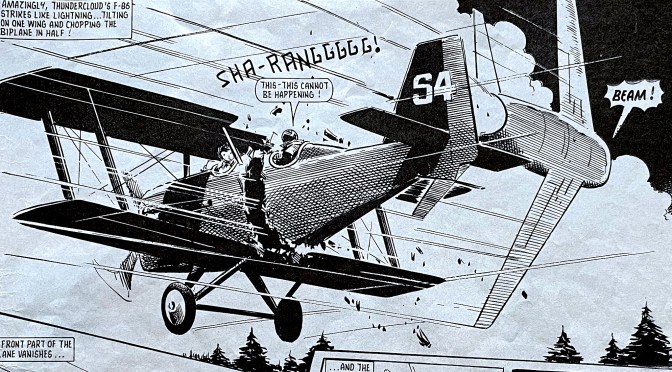
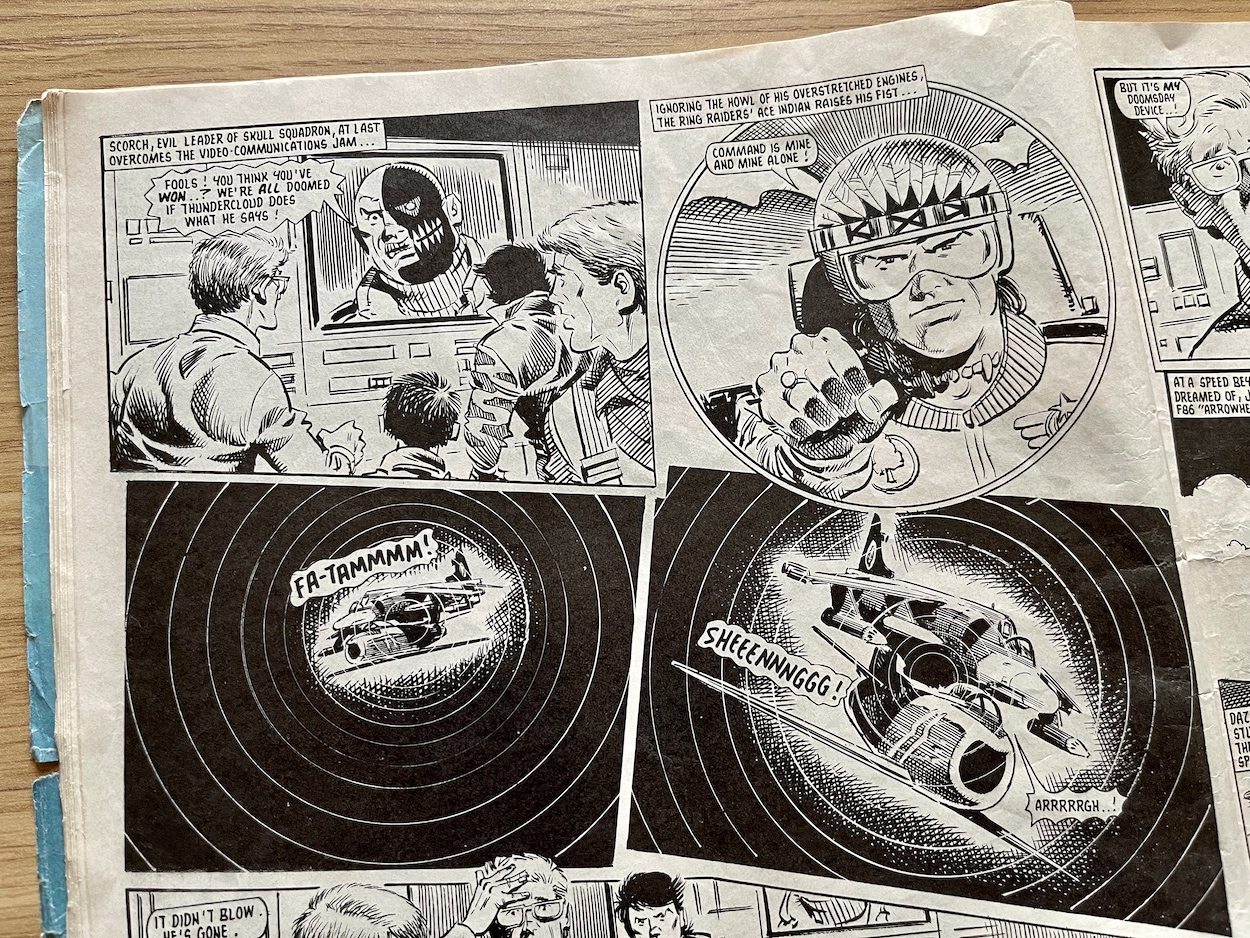
In fact, the very first part here (which we’d have enjoyed in #7) would’ve sealed the deal for Ring Raiders as one of the very best action adventure comics in the UK. The Doomsday Device is on its way back to Skull Squadron in Blackjack’s auto-piloted Harrier while he’s taken a young boy hostage in a biplane, threatening to throw him out. Wing Commander Joe Thundercloud of Rescue Wing can only chase one, but which one? Much to Blackjack’s surprise he takes off after the Harrier, or so it seems.
This sequence is thrilling today, so imagine reading this at 12-years-of-age surrounded by all the toy planes, including the one featured here! Scorch orders Blackjack to toss the boy out of the plane to his death, but Blackjack hesitates, just long enough for Joe to swing his plane round and come at the biplane at a 90 degree angle and slice it in half, giving the Air Carrier Justice the order with split second timing to beam up based on his location. The boy (and half the plane) materialise on the Ring Raiders’ flying base while the rest plummets to the ground.
Where could this story go from here? Clearly anything is possible and next Angus has the Wing Commander catch up with the Harrier. With Blackjack out of the picture, Joe disables its engines and then picks it up with his own F-16, using the power of the ring to convert his own body’s energy into extra power to try to get the pilotless plane to the Justice.
But as a caption reminds us, “Use of the rings means terrible physical exhaustion” and, tapped into his mind as well as his body, Joe’s wish to protect those he holds dear and the panic over the screaming engines accidentally sees him activate the time jump engines with his thoughts, ending up back in prehistoric times, now flying above dinosaurs! As you can see the Harrier is no longer balanced atop his plane. The strain was too much for his body to bare and he lost control, the Harrier tumbling into the lake below.
How amazing was this scenario for young comics fans? Ring Raiders deserved a much larger audience than it got in the end because this was top comic action with or without the licence. But as a fan of the toys this was the most amazing thing I’d ever read in my young life as far as I was concerned. (We love hyperbole as kids.) It was a story I’d replay with my Matchbox planes over and over. I think I even created a tiny biplane out of Lego so it could be cut in half, that’s how much I loved this.
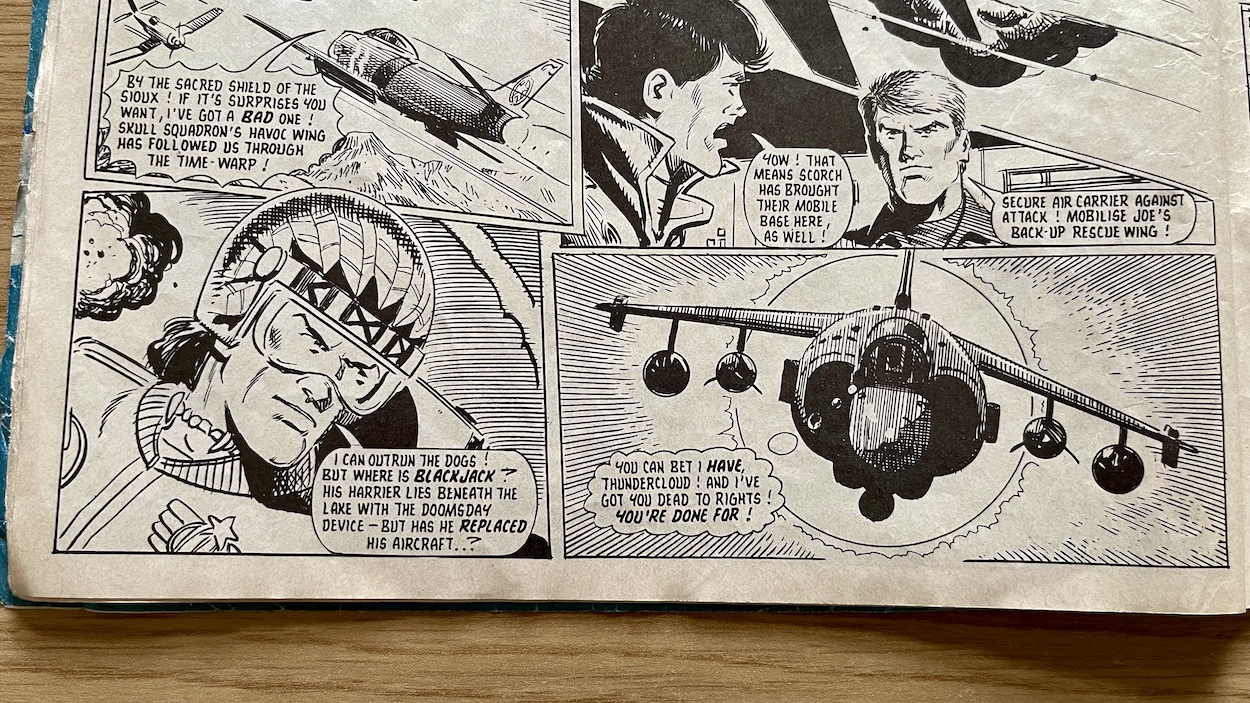
Contacting the Justice over millions of years via more use of the ring (and nearly passing out as a result) the rest of the force arrives, giving Joe time to get his energy back and load up the F-16 with Super Sidewinder missiles which he uses to destroy the side of the lake (it overlooks a cliff), draining its water and exposing the Harrier with the Doomsday Device in its cockpit. But the sky suddenly fills with more explosions. Blackjack in his replacement aircraft and his Havoc Wing were tracking his original plane all along.
It may be black and white but that last panel of part nine (third episode here) exudes atmosphere. The sun feels hot, the Harrier ominously coming out of silhouette as Joe looks desperately for his arch enemy. My memory had this as a cliffhanger in the fortnightly, such was the impact it had on me but nope, it’s right here with the next part on the very next page. Simply gorgeous imagery by John Cooper there.
Using the ring has consequences and must be used sparingly, unlike in the cartoon version
The characters having replacement back up planes may initially seem to ruin the drama and tension somewhat but it’s not uncommon. Later in Castle of Doom Yasuo needs his reserve machine in a hurry but the landing crew try to dissuade him as you’ll see. Clearly each character has their main craft and a reserve, which makes sense militarily and they’re never presented as a cheap way of continuing the action. It adds another layer of authenticity to something so fantastical.
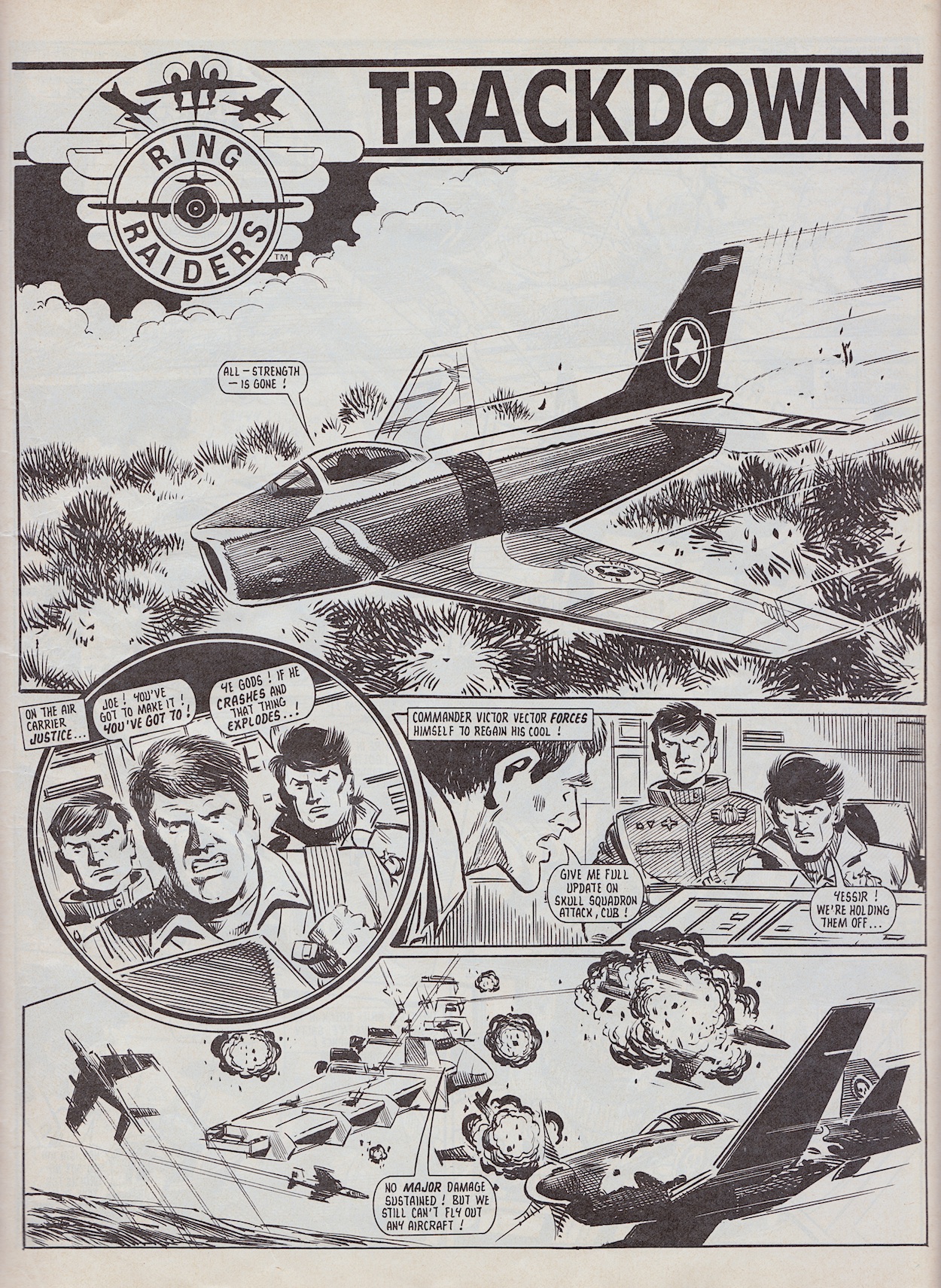
The story comes to its conclusion as Blackjack steals the device back while Skull Squadron keep anyone from launching from the Justice with an all-out assault. But, with the device dangling from a claw under Blackjack’s cockpit Joe blasts it, opens his own cockpit and uses the power of his ring like a form of tractor beam to pull it aboard. Thing is, the ring was never meant to be used that way and with too much toll on his body already he loses control. Scenes like this establish that the ring isn’t a get-out-of-jail-free-card, it has consequences and must be used sparingly, unlike in the cartoon version.
The story constantly flips back and forth between which side is winning, every time success is within grasp of someone it flips again. It makes for genuinely tense, exciting reading, even as an adult. It’s also nice to see other characters milling about in the background or helping out here and there, giving more of an ensemble feeling to the cast than normal. Joe just about touches down without crashing and taking the future of the planet with him. Then our inside cover star Salty Salton launches against orders, his slow but manoeuvrable F-4U Corsair making it to the ground just in time to punch a hole in Blackjack’s cockpit, making him scarper.
Salty uses the ring to reenergise Joe’s and in turn Joe himself, the story wrapping up with doomsday averted and the device launched into deep space. What a ride. Ever since those early episodes with Rescue Wing’s Freddie Riley and the professor it’s been non-stop, the tension always building, with high-flying, high-octane stuff fans of the toys longed to see with one-on-one dogfights, crash landings, huge battles and at the centre of it all two characters driving the story forward. The story was never forgotten for a single page, never sacrificed to show off the action. These final Touchdown chapters were a worthy climax to the comic as a whole, even though that was never the intention.
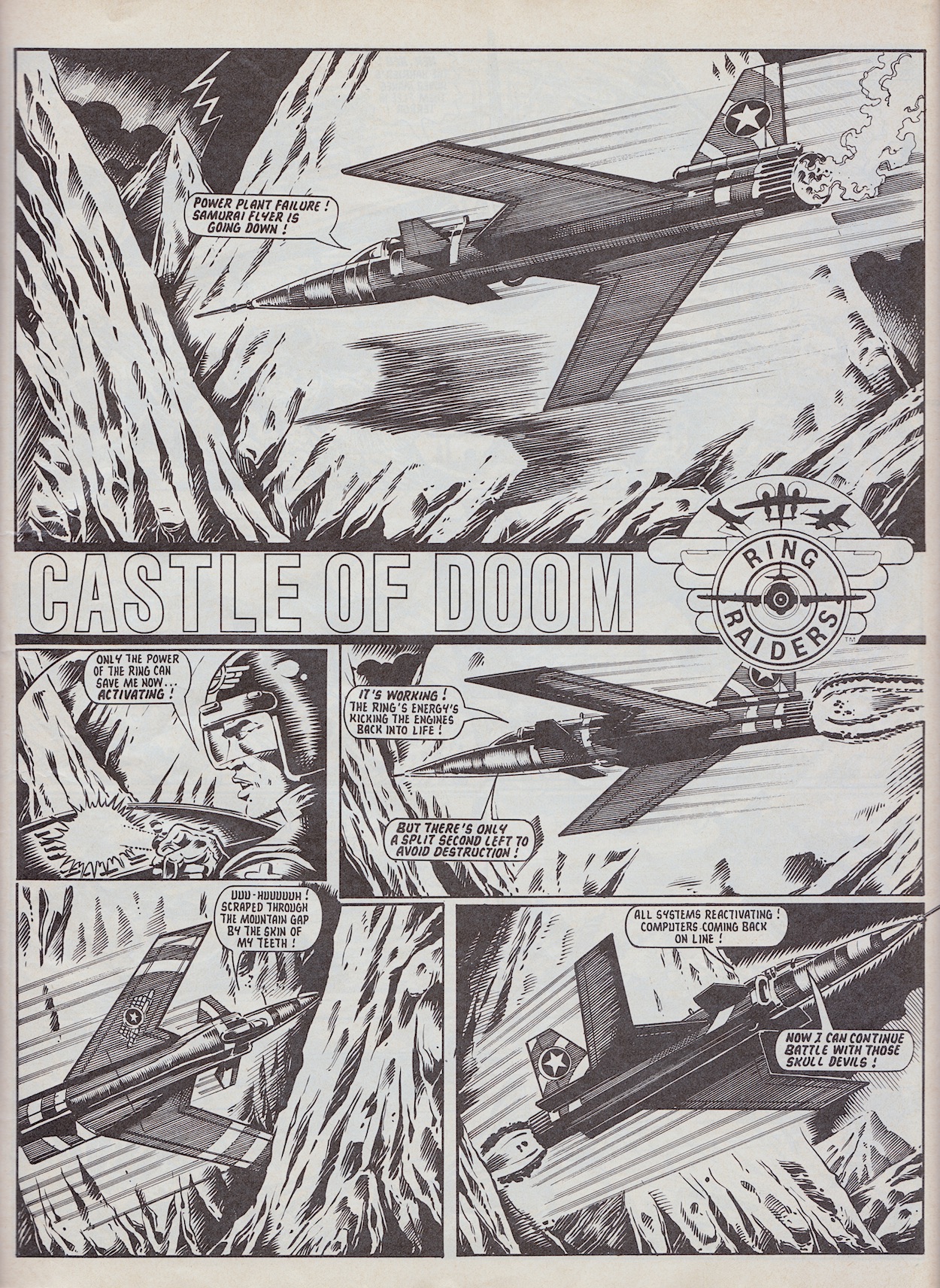
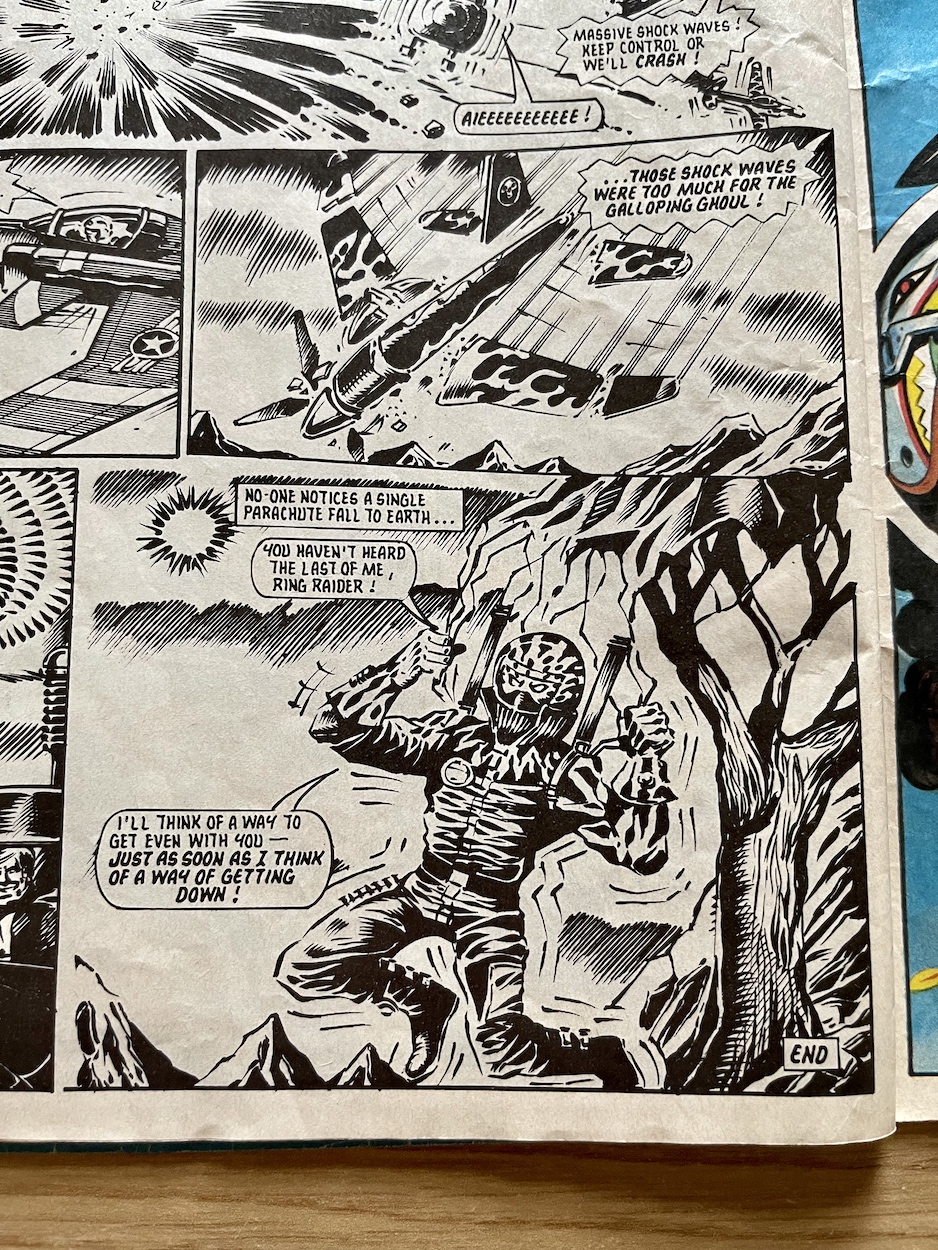
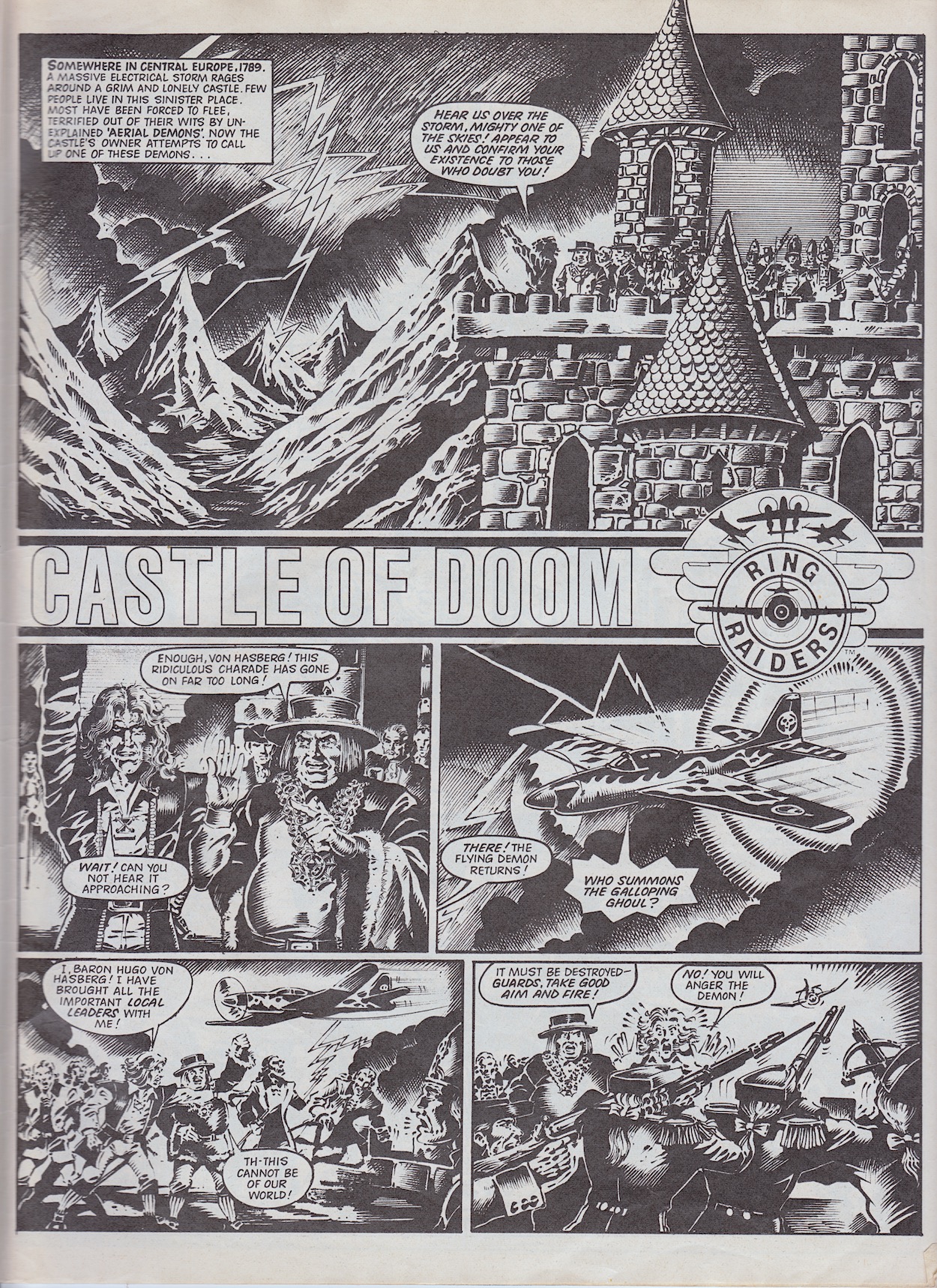
Castle of Doom began in #6 and was instantly a favourite because it starred my two favourite characters, Wing Commander Yasuo Yakamura and Skull Leader Wraither, their planes being the first I ever purchased, so naturally I had a soft spot for them. Following on from the cliffhanger last time, how does a jet pilot rescue a man hanging by a branch on a cliff face? With this rather ingenious Rescue Pod above, that’s how. I love that.
This story has six parts here which would’ve taken it up to #11 with seven parts in total, so as you can see there was no standard length to a Ring Raiders story. This would’ve made for a wonderfully unpredictable reading experience if the comic had continued. Castle of Doom’s plot was all about using time travel to the past in order to affect future events, something which had always intrigued writer James Tomlinson (who went by James Nicholas at the time), and it’s clear he had great fun crafting this tale as it jumps about time zones within the isolated castle setting, layering the plot slowly over the first few episodes.
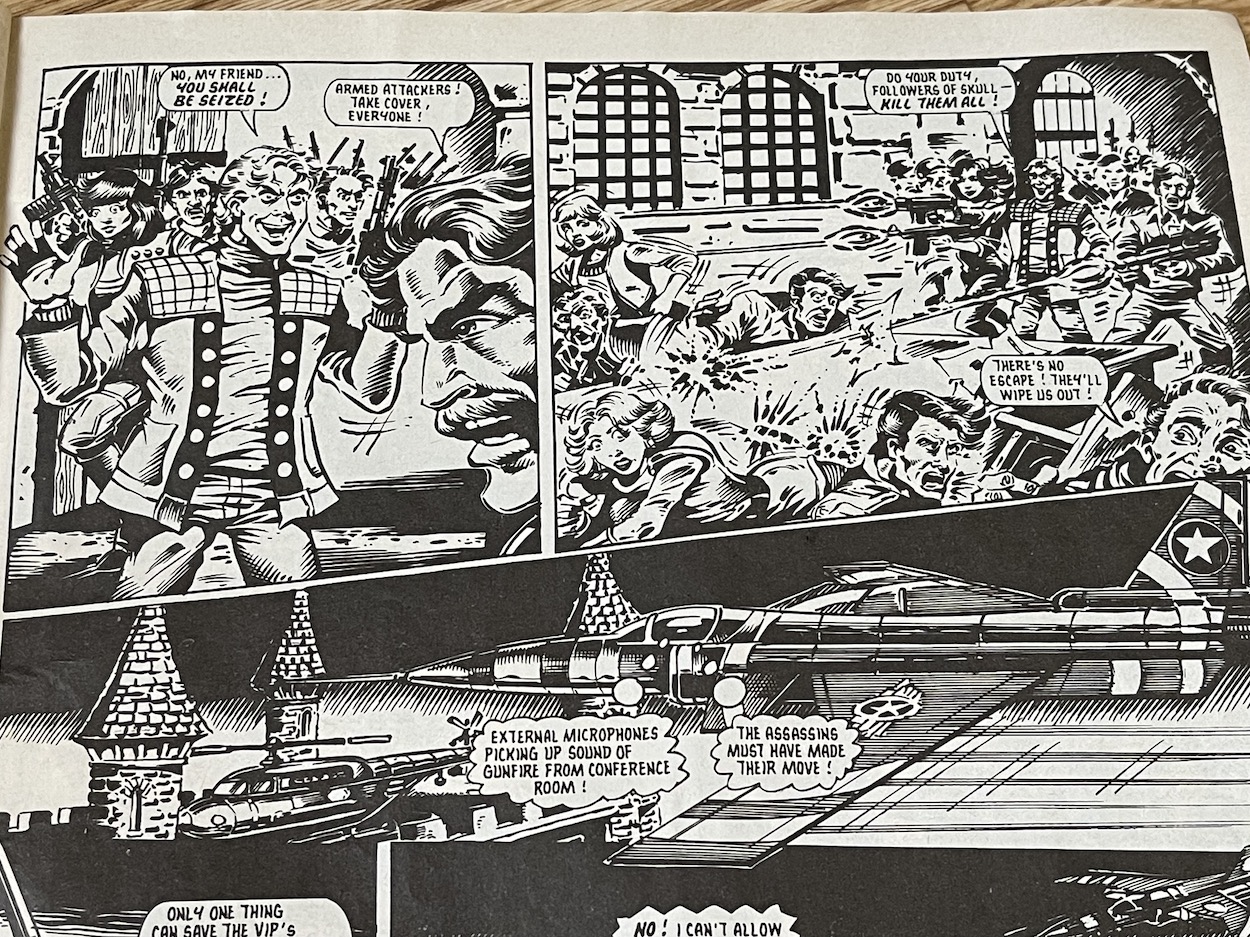
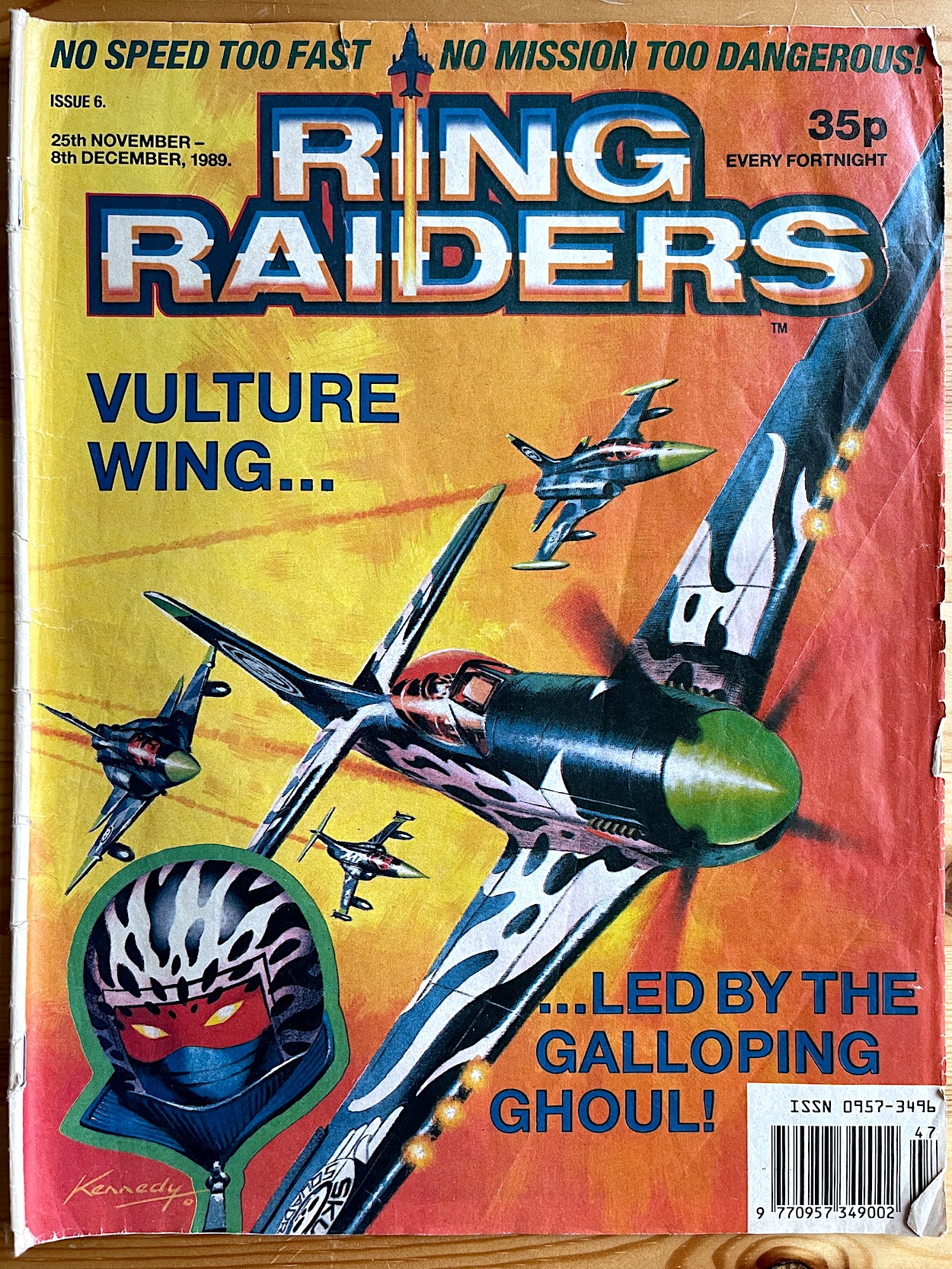
Basically, in 1989 (two hundred years hence) this castle would be seen as the ideal secure location for various governments of the world to gather and discuss the growing threat of Skull Squadron, a meeting which would be key to the formation of the Ring Raiders. So Wraither and Vulture Wing have ventured back centuries to hypnotise (using a nose mounted ray of some sort) the family living there, planting a seed that wouldn’t be activated until hundreds of years later in the minds of their descendants.
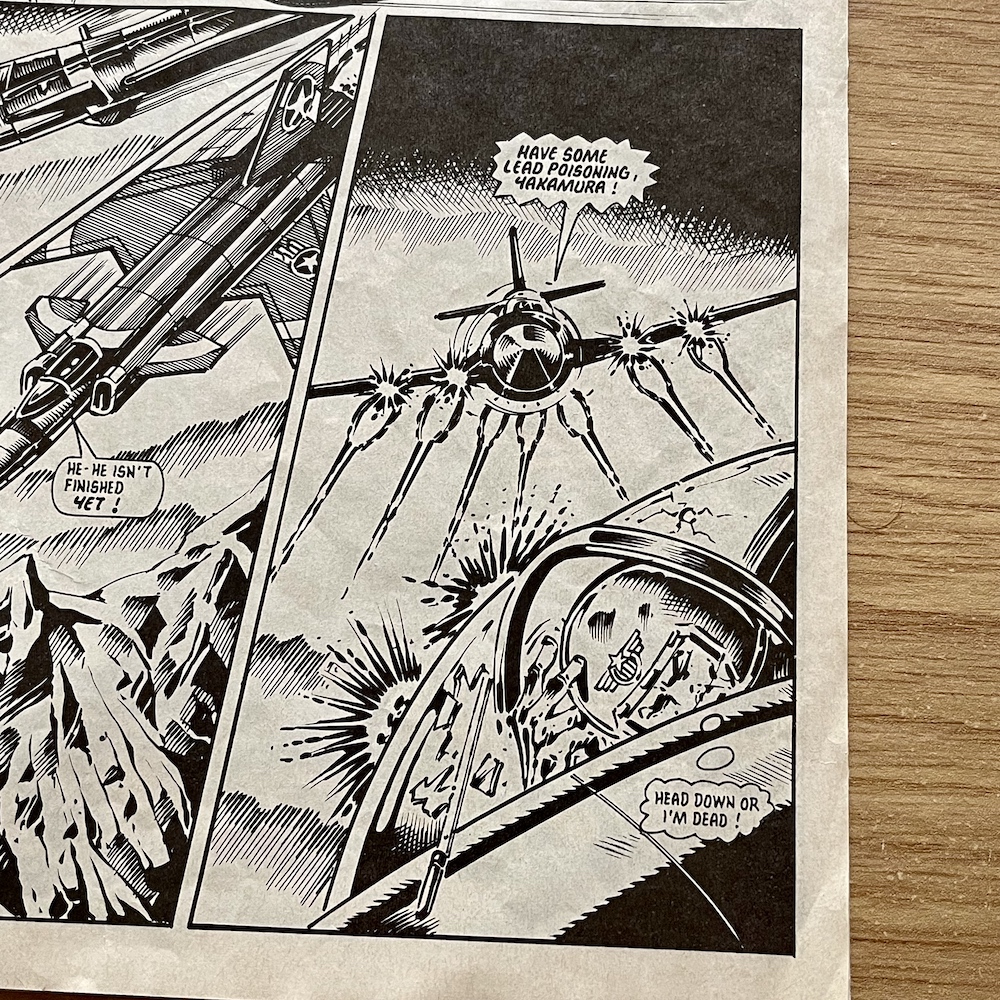
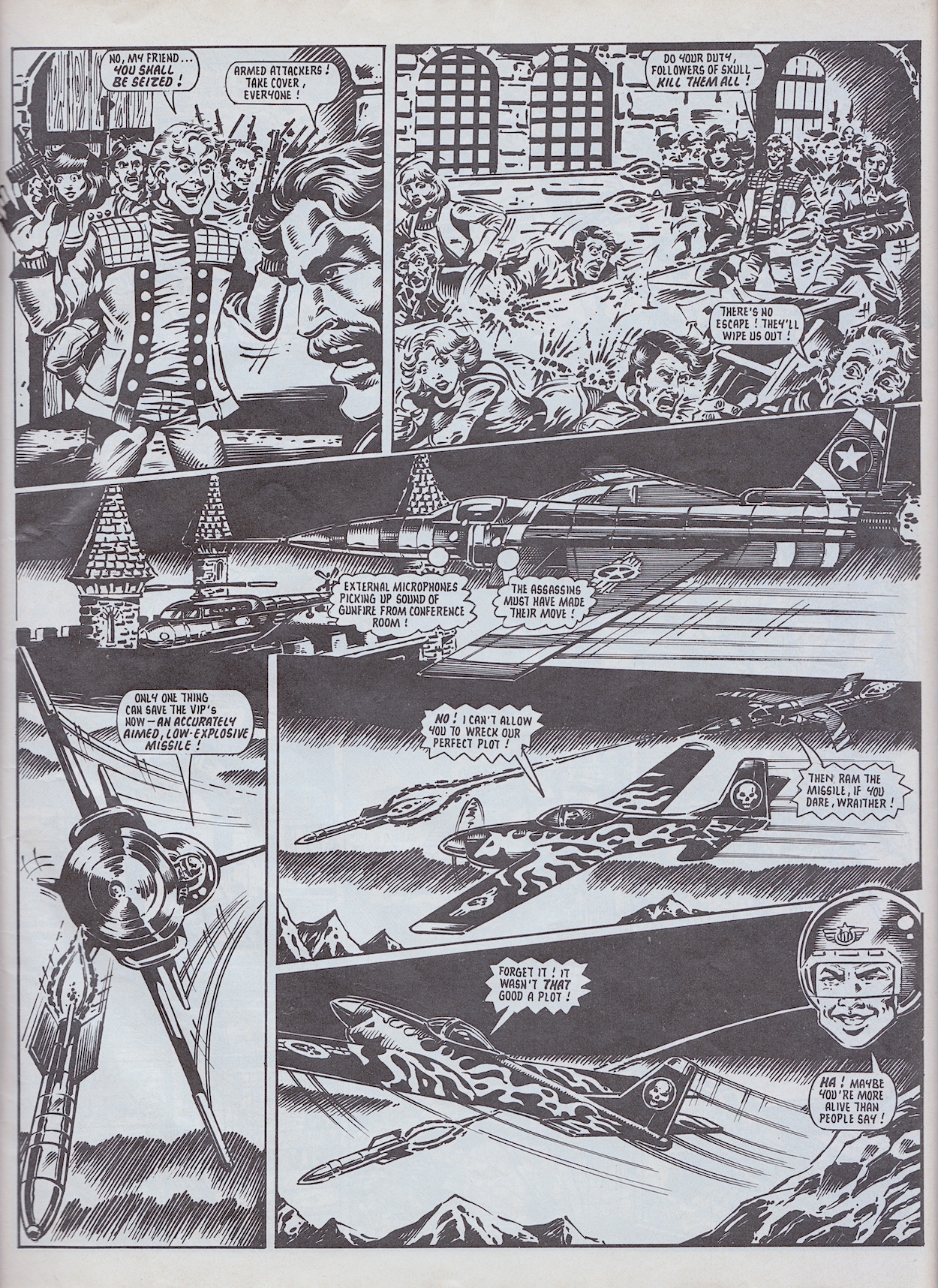
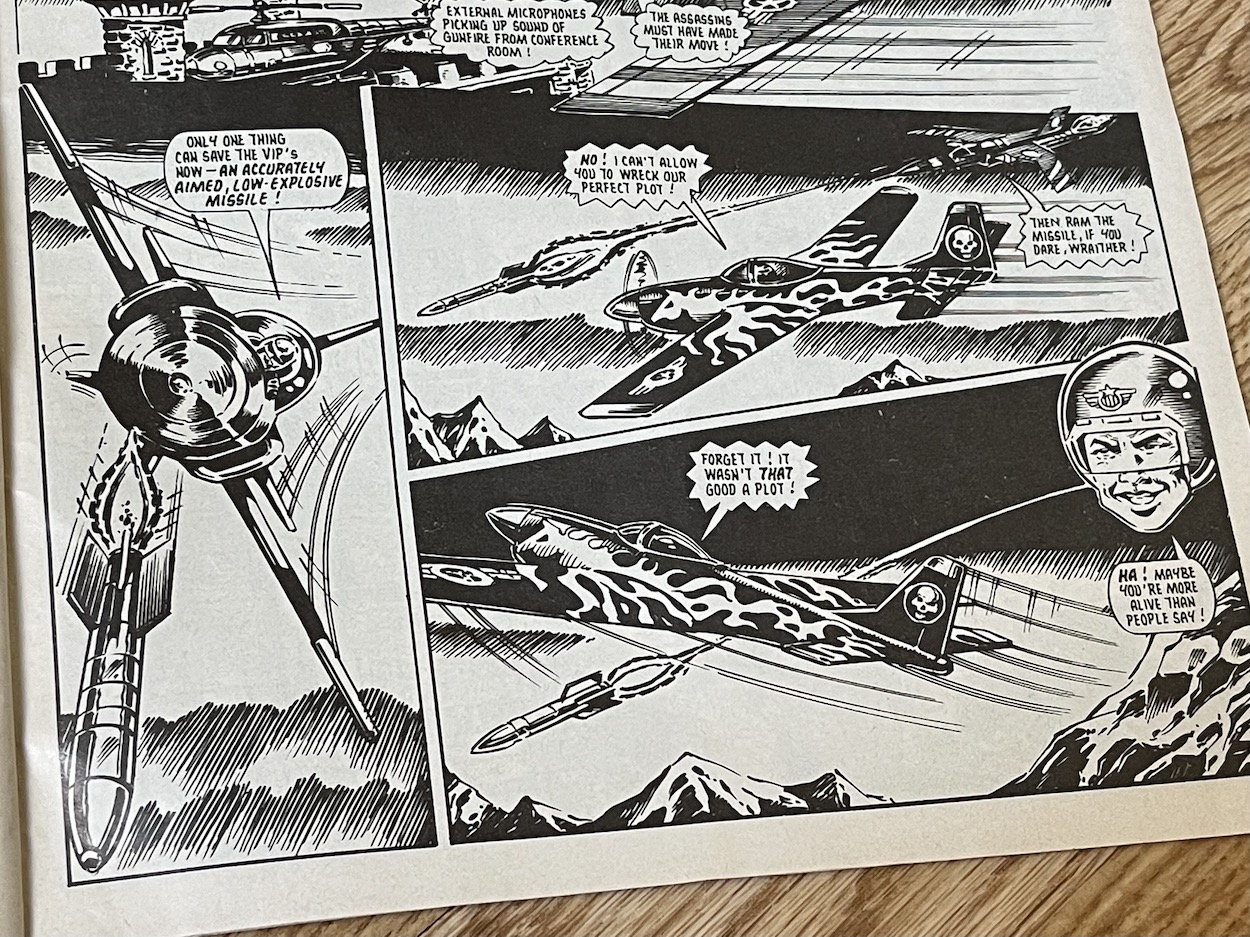
This manifests itself as a mass shooting in 1989, the owners of the castle suddenly falling into a trance and opening fire with automatic assault weapons on all of the representatives present! Yakamura wins the day by using a low-yield missile to knock out a wall of the castle and take out half of the assassins, but the head of the family escapes and throws a grenade into an ammunition store. In the end the survivors evacuate just in time. The rest of the assassins are captured (I’d assume to come round later and be exonerated) and Wraither’s P-51 Mustang Galloping Ghoul is shot out of the sky, the mysterious pilot left abandoned in that time zone until Skull Squadron come to rescue him.
That’s it pretty much summed up but there are two main reasons I love this strip so much: the fact it’s full of great action between my two favourite pilots and planes and how it was delving into some of the backstory, taking tentative steps at setting up some mythology. It reads as an important early chapter in what I’d hoped would be a long-running comic. Wraither and Yakamura were likely chosen because they formed a special two-plane Matchbox Starter Pack (my Starter Pack in fact) and because of this it seemed they were destined to duke it out forever.
To the uninitiated it might seem daft to have two such vastly different planes engage in battle but it’s actually believable. Yasuo’s jet has speed on his side but is unable to make the kinds of quick manoeuvres over short distances Wraither can, and the latter’s ability to fly so close to the ground and mountains and use cloud cover to disappear and reappear at will evens the odds somewhat. In fact, the Grumman X-29 is almost trashed at one stage and Yasuo has to time jump back to the Justice for his reserve machine.
Untested and with unfinished computer systems which were such an integral part of his plane (Yasuo usually relied heavily upon the computer), it made for a tense showdown with Yasuo outnumbered four-to-one against Vulture Wing, the castle under attack by assassins, his inability to land to help and the castle poised to explode, wiping out the Ring Raiders before they’re even formed. The last three chapters were clearly not finished by the time the comic was cancelled as they are combined into one, 12-page finale.
Artist Don Wazejewski again brought James’ script to life and there are some lovely atmospheric visuals here (my favourite being the panel of Yasuo “almost hearing” Wraither’s laughter) and aerial battles that feel genuinely fast and exciting. I also like his chunky depictions of humans, especially on board the gigantic, high-tech Air Carrier Justice; there’s a certain Thunderbirds-esque feel to these particular scenes. Over 24 pages it’s a real thrill ride and it’s such a shame this would be the last meaty read of the special and the last time I’d see these characters.
It hasn’t lost any of its ability to excite for this 44-year-old. But then again, all those happy childhood memories of favourite characters and those little toy planes all bubble to the surface when I read any issue of this comic.
In such a serious storyline, with the tension ratcheting up page after page, there’s a genuine laugh-out-loud moment during the fast-paced climax as Yasuo delivers his missile. The story had made a lot out of the supposed mystery of who, or even what, was behind the mask of Wraither and his sinister character is perfectly portrayed, making this moment towards the end of the story even funnier for the fan in me.
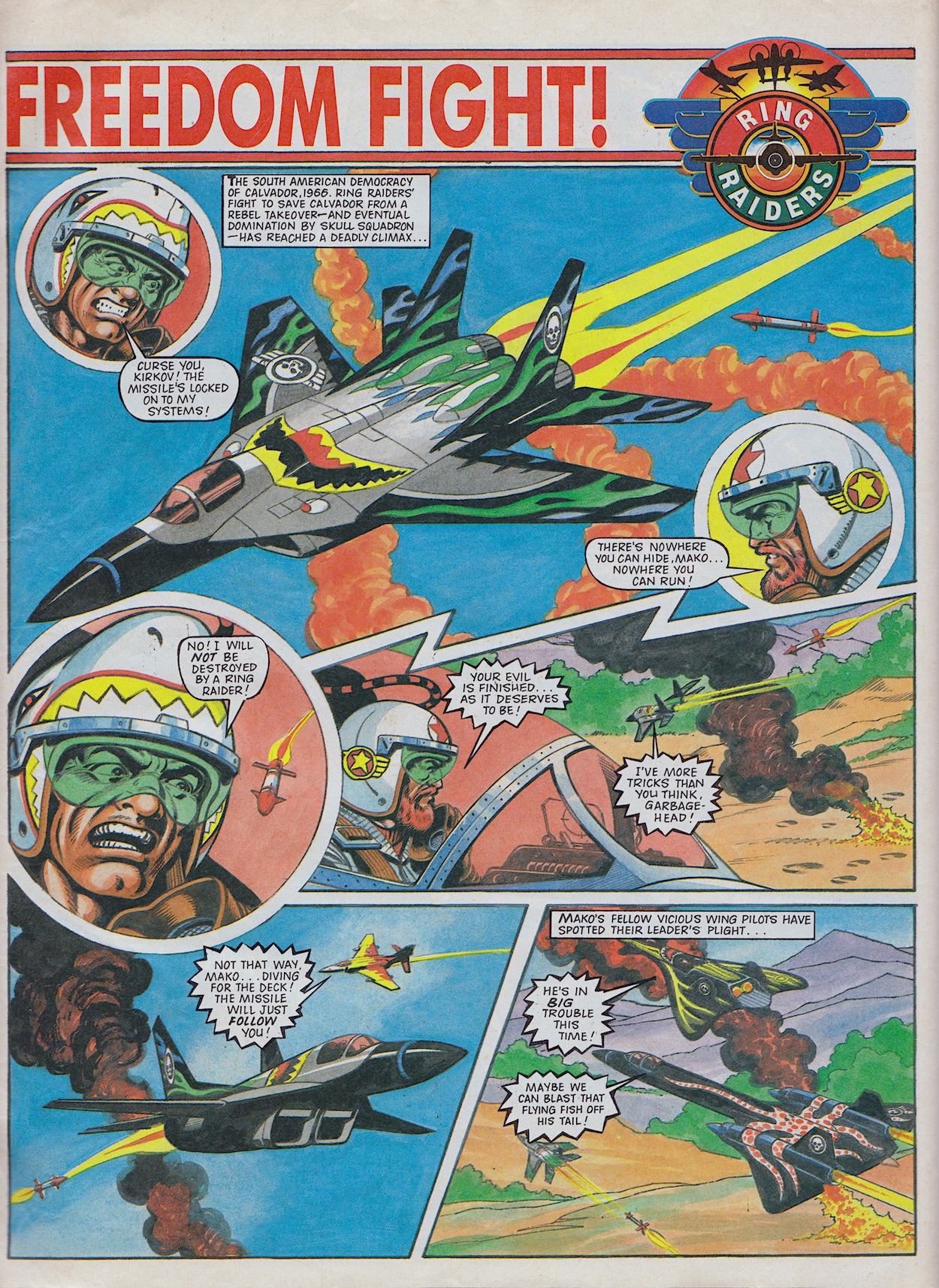
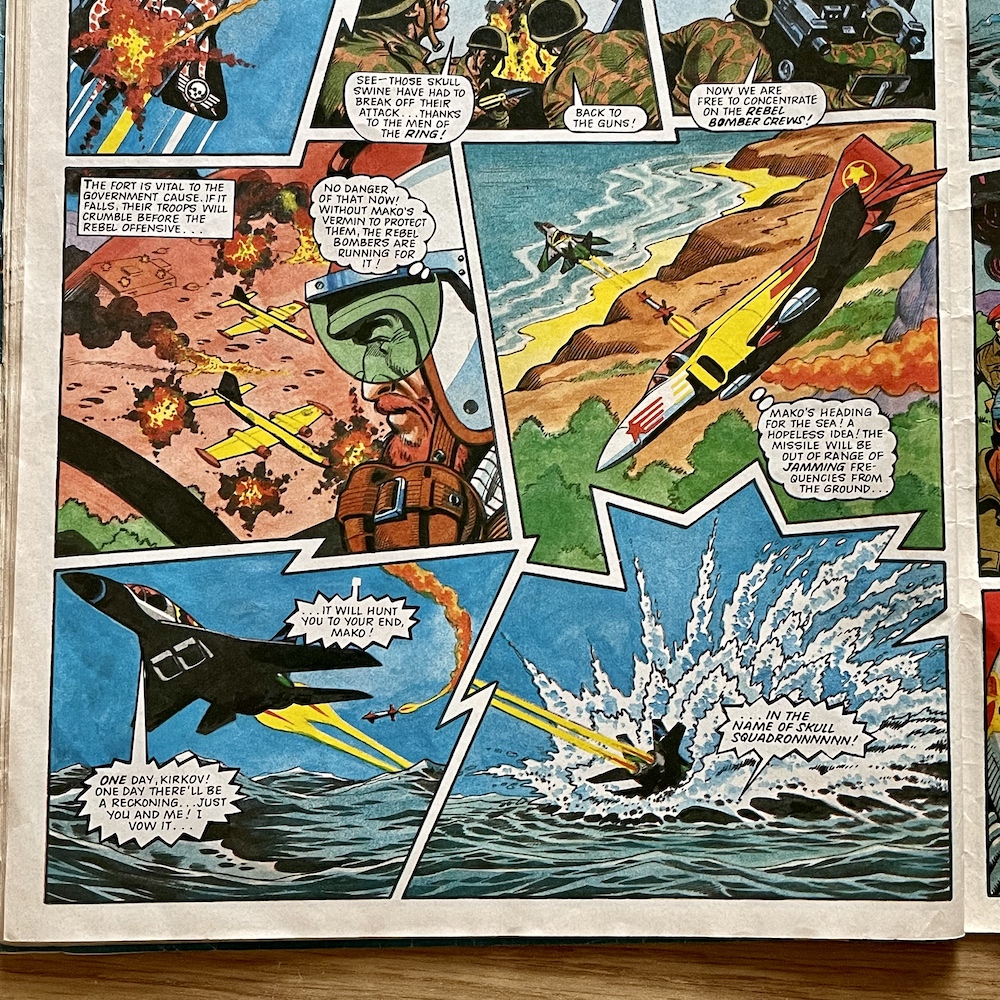
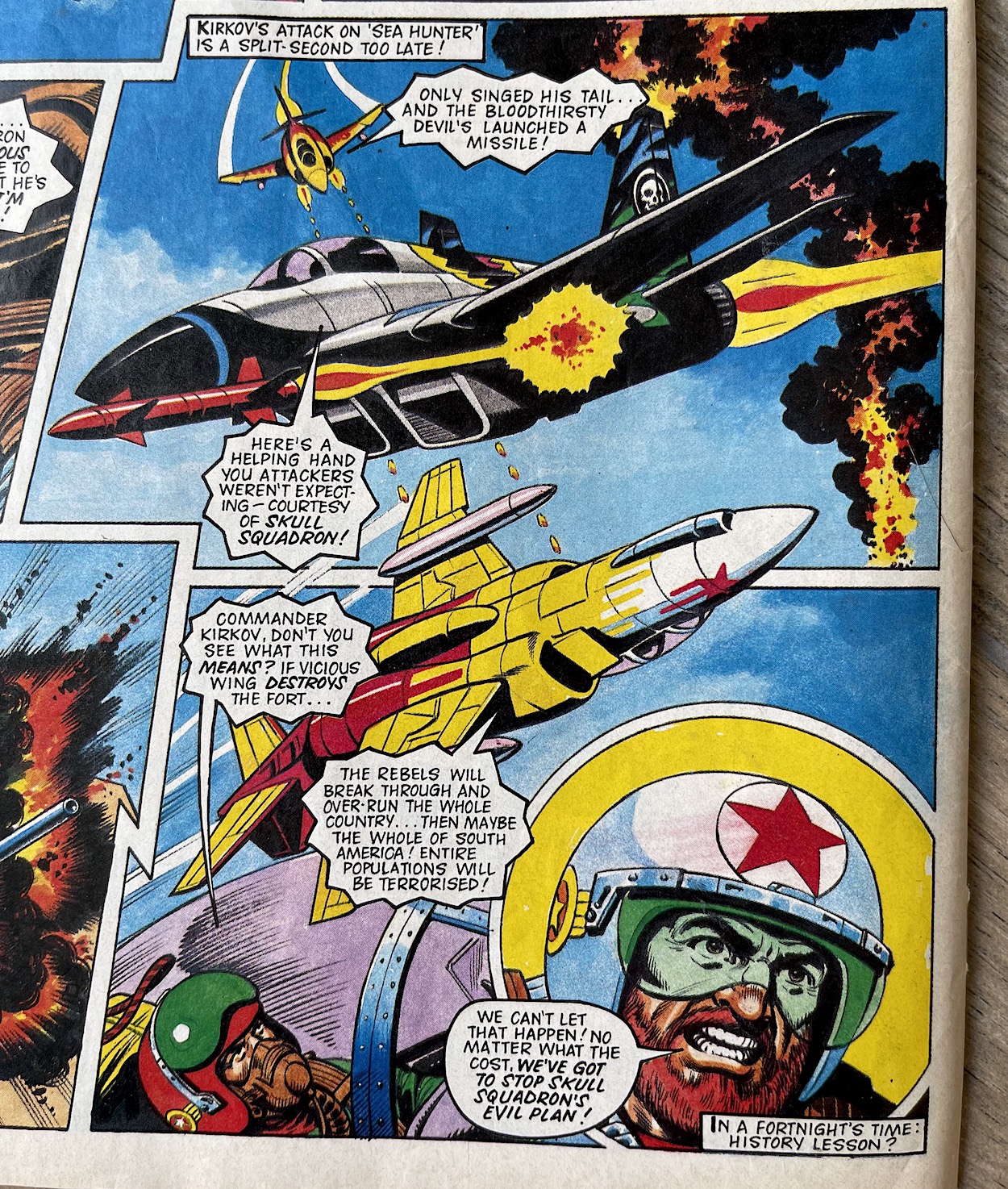
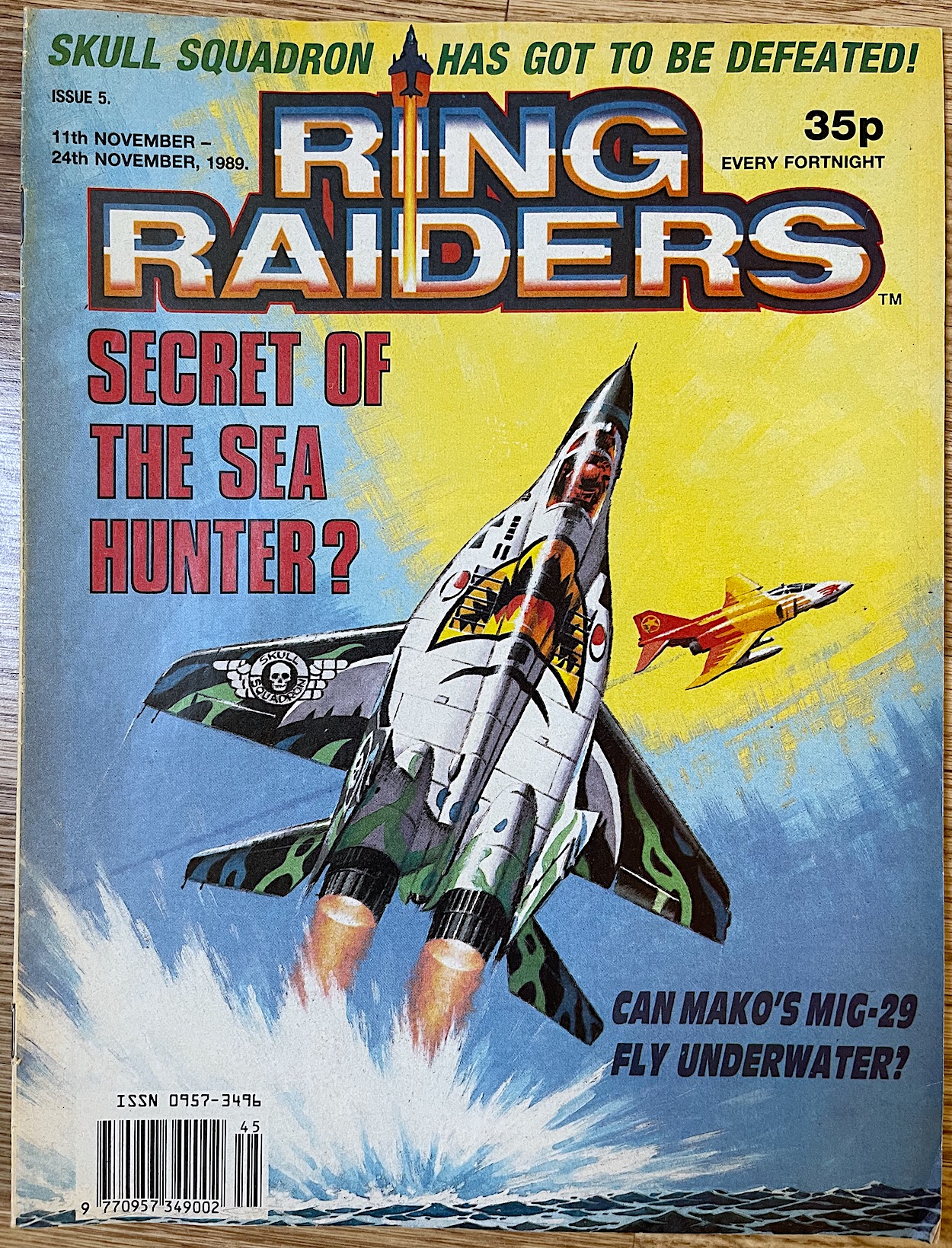
After that momentous blockbuster we’ve only got two individual chapters to go. Next up is the seventh and final part of Freedom Flight. Tom Tully’s story involved Skull Squadron using a band of rebels for their own ends, assisting them in their attempts to overthrow a democratically elected government in South America. The story ended on a cliffhanger in #6 which had Skull Leader Mako’s ‘Sea Hunter’ MiG-29 about to be blown out of the sky by Raider Yuri Kirkov’s missile, fired from his ‘Comet’ F-4 Phantom.
As the young readers could be fans of either side of the never-ending war we would sometimes see the cliffhangers sway towards Skull Squadron, although this was used sparingly in the issues published. Still, it made for a refreshing change. Speaking of which, after 40 pages of beautiful black and white art, turning the page to see Sandy James’ full colour pages is a shock to the system.In the best possible way of course.
This being just the one chapter it’s basically the end of the battle that was raging months ago in the comic, so alongside the juicier stories in the special it unfortunately feels rather slight. However, in actual fact, if read with the previous half dozen instalments it’s the perfect, exciting ending with Kirkov finally fighting his way to victory after the hardships of other issues. His missile closes in on Mako and he even sees off the wingmen who attempt to come to the rescue.
Usually this would mean the end of the plane and most certainly the character, what with him not bailing out before impact, but as we readers know and as Kirkov suspects, Mako’s craft can operate underwater so the Ring Raiders must content themselves with the fact he’s escaped. Without the futuristic back up the rebels are soon defeated and our heroes travel back to the Justice to await their next mission, their work in the air complete.
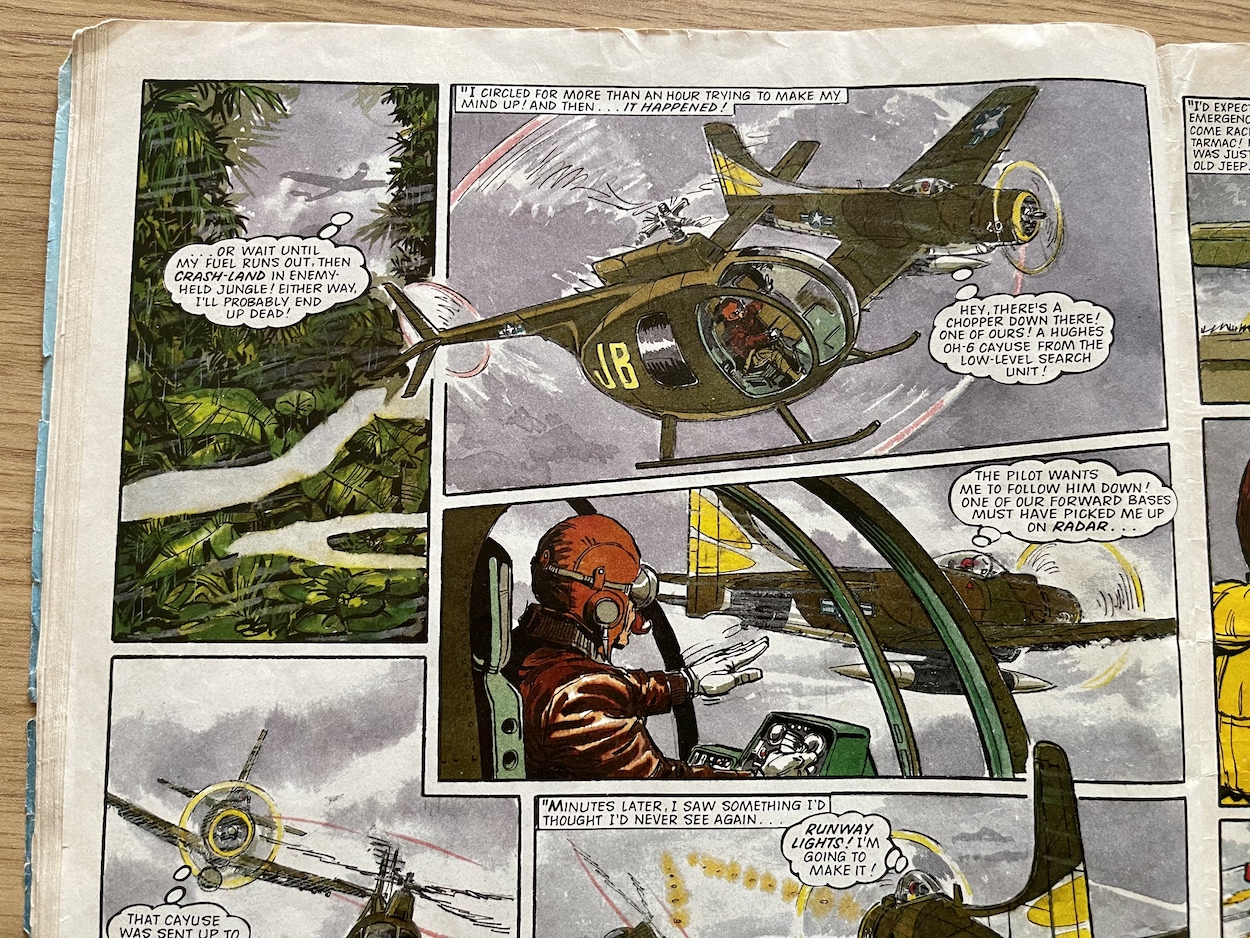
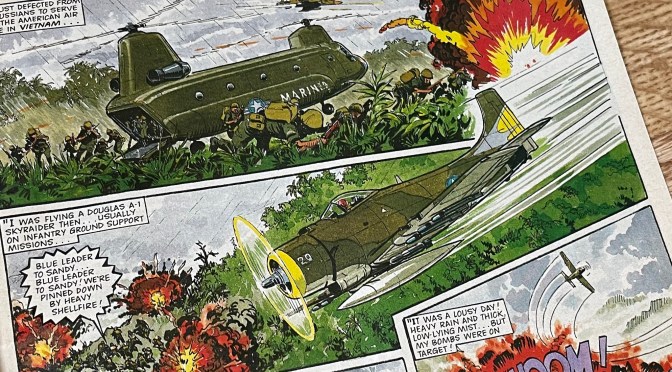
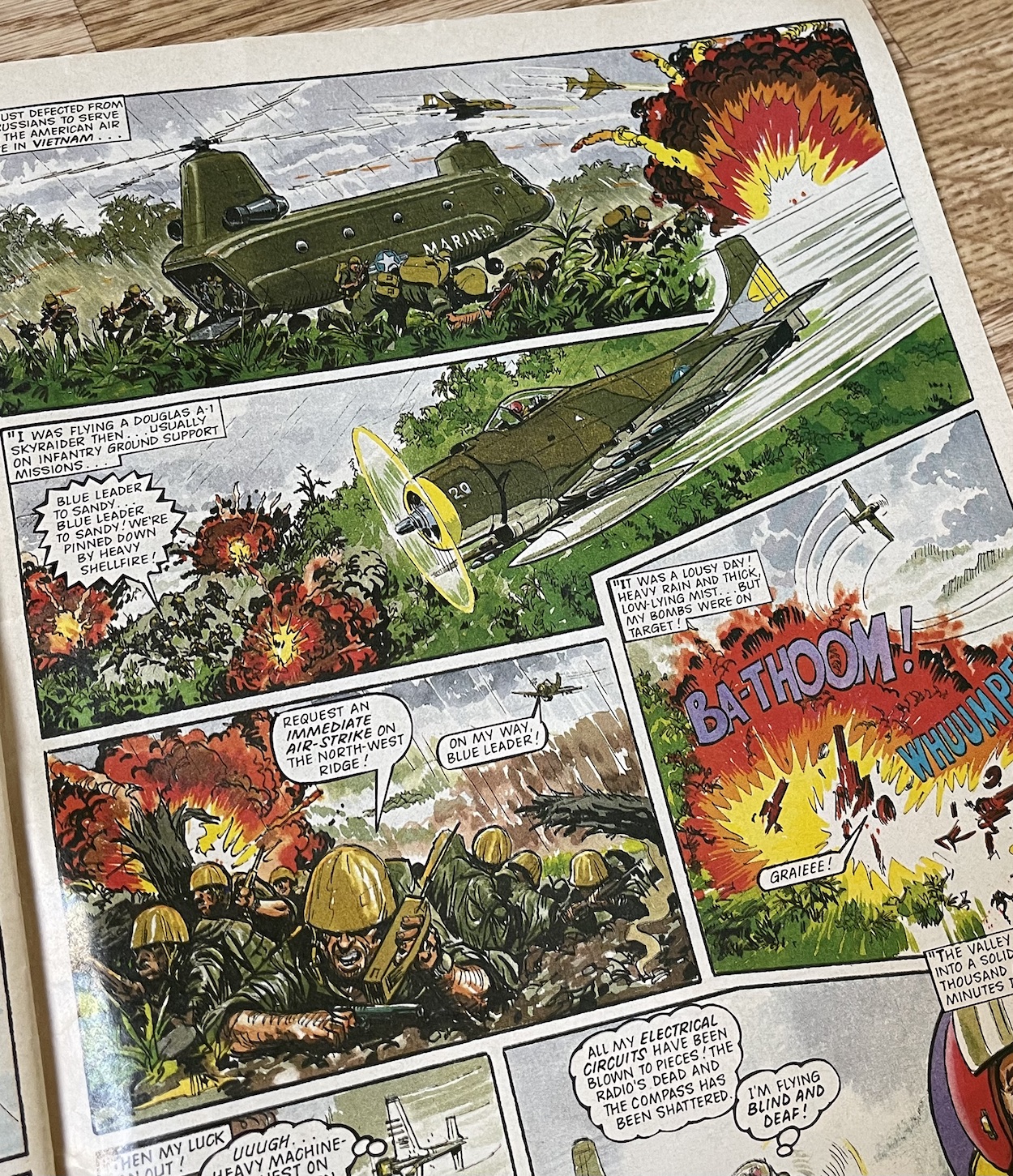
Just one page later Kirkov returns in the one-off character story we would’ve read in #7 and it’s quite possibly the best one of the series, or at the very least right up there with Chiller’s in #3. As usual it kicks off with an air battle against the Skulls. Wraither again actually. As he expertly uses clouds to vanish into thin air during battle, Kirkov is reminded of the mist covered skies of Vietnam through which he flew in his Douglas A-1 Skyraider after defecting from Russia to fight for the United States.
Those of us who grew up in the 1980s will remember most of our heroes in primetime television had fought in the war, each one suffering some degree of personal trauma (Thomas Magnum, Magnum PI), physical damage (Michael Knight, Knight Rider) or psychological issues (Stringfellow Hawke, Airwolf). So as a young teenager this lent a credibility to Ring Raiders, seeing a character caught up in a real world war, one that we were all too aware of at the time and of the devastation it caused.
I think it could’ve reached beyond those obsessed with the toys if given the chance
The story was a real treat and as the last strip the comic would ever publish it made an impact; its gritty, rain-and-mist-shrouded panels evoking the same atmosphere we were used to in flashbacks in those aforementioned television shows (and later in the 90s when Bravo showed Tour of Duty which I became completely hooked by). Reading it now, Scott Goodall’s well-paced script and John Gillat’s superb artwork take me right back to those times. In fact, it feels all the more mature reading it now through adult eyes when compared to the other strips in this issue.
The story is a bit well worn by now, with a mysterious character helping our hero in their desperate time of need, only for us to find out that person had actually died and it must have been an illusion of some sort (although implied to have been their spirit continuing to help people as they had done in life). It’s the fact this story is in Ring Raiders and is illustrated in the way that it is that makes it so very special.
The perfect way to wrap up Ring Raiders, not just this special but the comic as a whole. Not only is it a superb strip, it shows the real potential this comic had in the range of its storytelling and how I think it could’ve reached beyond those obsessed with the toys if given the chance. It’s heartbreaking to finish the final story but I think it just proves the point I’ve been making since the beginning. Rounding off the issue is the second Photo File by James, this time one of his favourites and cover star the F-104 Starfighter,.
Well, that’s it.
James and Barrie were able to tell me the names of some further adventures that we never got to see. Hill Kill was written by Scott Goodall so possibly another character piece, Viking Job was by Tom Tully and Sandy James (their follow up to Freedom Flight and most likely set in the distant past), Surprise Attack, Skull Surprise was by Barrie Tomlinson himself so most likely was to be drawn by Carlos Pino and there was an unnamed Christmas story by James Tomlinson and Don Wazejewski, plus another story by the same team called Blow Bubbles, whatever that was about. A Christmas issue of this comic would’ve been nothing short of awesome for me! Oh well.
Proof that licenced toy comics could be taken seriously and produce excellent results
Ring Raiders could effortlessly flip between the futuristic and the historical, the fantastical and the realistic, keeping its feet grounded with believable, likeable characters, exciting action, superb art and interesting stories. If it had continued goodness knows how much better it would’ve got as it developed. It’s anthology style worked a treat and for those few short months I didn’t just run, I sprinted to the newsagents every other week to get my next fix.
OiNK aside, the fact this comic remains my number one from childhood with only seven issues to show for itself should tell you something.
Ring Raiders was a superb comic and is well worth picking up, although be aware issues can go for a pretty penny on eBay and you’ll be very lucky indeed to find this special. (There were also two annuals but they were by Grandreams, had nothing to do with the comic and are really poor, with no strips, just bad text stories and basic art.) Ring Raiders was proof that licenced toy comics could be taken seriously and produce excellent results. Kudos to Barrie and the whole team, thank you for a superb comic and for some really enjoyable memories.
With its huge ensemble cast, near limitless storytelling possibilities and its ability to turn small plastic airplanes on rings into thrilling war machines piloted by dynamic, three-dimensional characters Ring Raiders was (and still is) my favourite non-OiNK childhood comic. Editor Barrie Tomlinson had assembled the very best talent to bring my latest obsession to life in 1989 and this included his son James, who went by the pen name James Nicholas at the time.
James was an acclaimed writer for Eagle, Battle and Scream! and would be the person responsible for one of my favourite stories in Ring Raiders. According to Barrie, James has always been an “aviation nut”, so surely this would seem like the perfect comic for James to write for.
“With the aviation connection, Ring Raiders really did stand out for me amongst so many ‘here today, gone tomorrow’ titles,” James told me. “This does bring back some great memories of marvellous times long ago. So good to hear that Ring Raiders was, and still is, appreciated so much by those that read, and continue to read, the title. It makes us writers (and artists I am sure) so nostalgic and proud. It was indeed so sad (I’d use the word tragedy, but that may be a bit too far!) Ring Raiders lasted only a handful of issues, it deserved a longer print run for sure. Many others clearly think the same!”
James very graciously (not to mention rather excitedly) agreed to answer some questions about this brilliant comic which unfortunately launched at a time when comic sales across the board were in decline, when it seemed no matter which one I started to collect it didn’t last long. The fact Ring Raiders remains a favourite all these years later is testament to its quality. So with an ace publication based on a childhood obsession and a fan of all things aviation at the helm of some of its top stories, I was really looking forward to this interview. James was not to disappoint.
OiNK Blog: It was great to hear you’re still an aviation nut and have fond memories of your time working on Ring Raiders. Were there any particular aspects of the idea that stood out for you?
James Tomlinson: Yes indeed, I’m still very much an aviation nut after all these years! Rather than just one story, I think it was the whole concept that really stood out for me. Pilots and aircraft from different eras locked in mortal combat in contrasting time zones all over the globe. It really had the makings of a long-running and thrilling sky-based adventure which seemed to be just what the kids back then would have loved. Well, that’s what I think anyway!
OB: What was the process like when a new licence came through, to get up to speed on everything you’d need to know about something like Ring Raiders? I imagine it wouldn’t have been a very long timeframe before you’d start producing stories?
JT: With these sorts of stories, based on toy products, there’s really no definite answer to this one. It varied so much. Sometimes we were given a lot of information about the characters and storylines, other times there was much less for us to go on. Of course, in the latter scenario, this could be a good thing as it allowed writers to use their own imagination more and pad out things with their own ideas. Again, the amount of time we got to read up and prepare for something new like Ring Raiders varied hugely. Often there had to be a very quick turnaround with the stories, on other occasions we had months to get things just right.
OB: You very kindly sent me a folder from the licence holders you used (look out for this at a later date) and it was very scant on details for each character, basically consisting of the information on the toy packaging and focusing more on the decals of the planes. Did you get anything more to go on, or was it up to you as a writer to embellish them as you saw fit?
JT: From what I recall there was indeed not a great deal to go on with the characters from Ring Raiders, so it was a case of each individual writer embellishing the characters. Obviously, if the licence holders didn’t like what the writer had done with the characters they could object and ask for changes, which did happen on a fairly regular basis (although not so much, thankfully, with Ring Raiders).
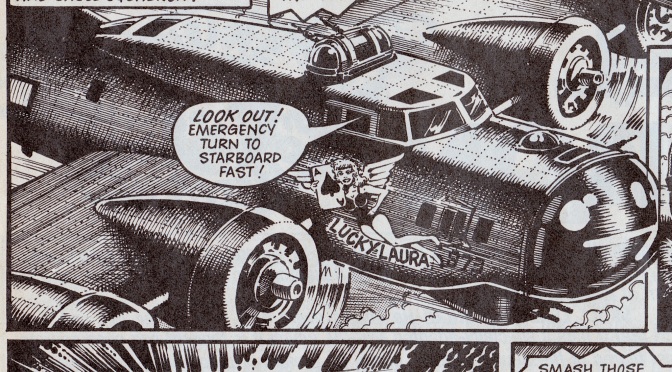
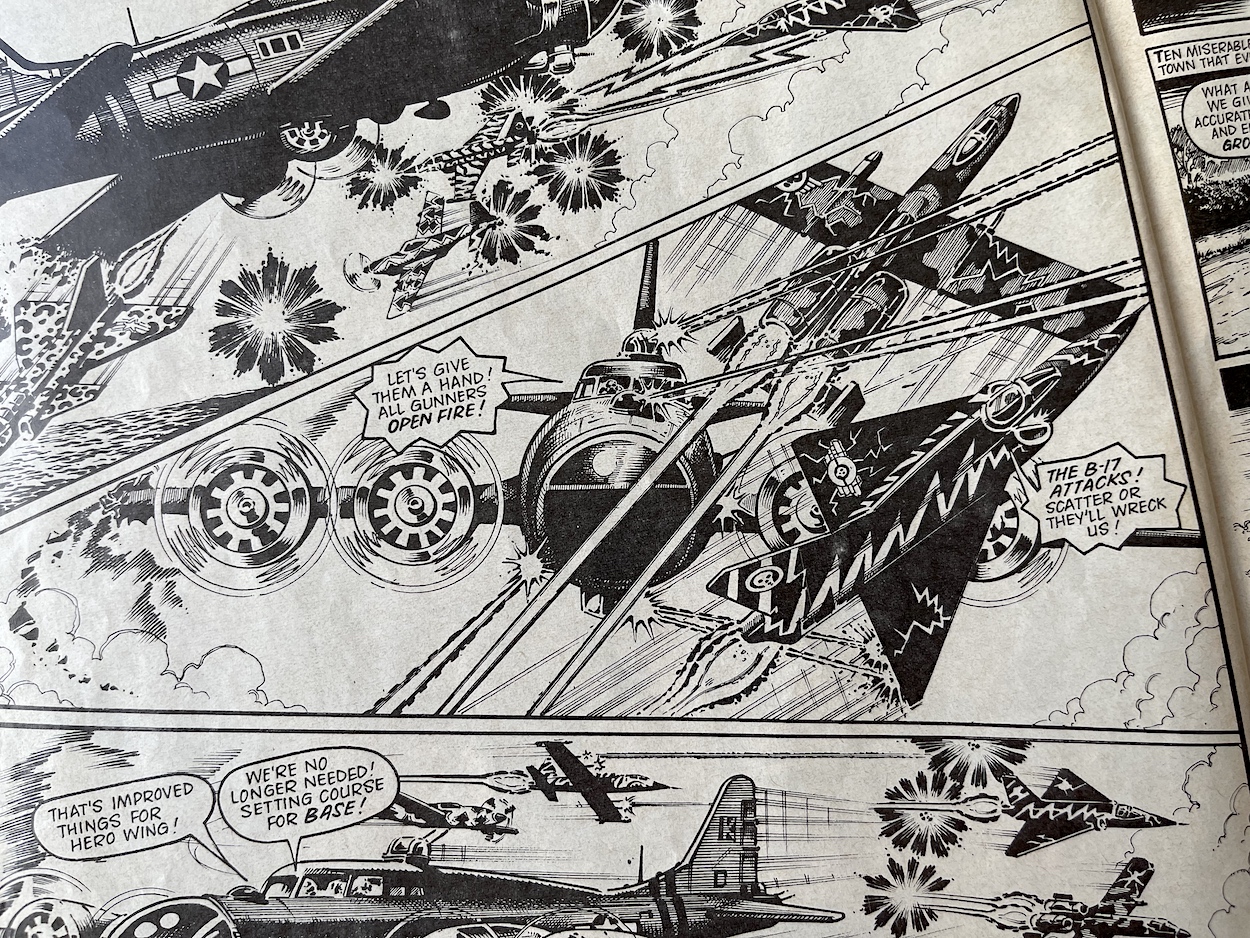
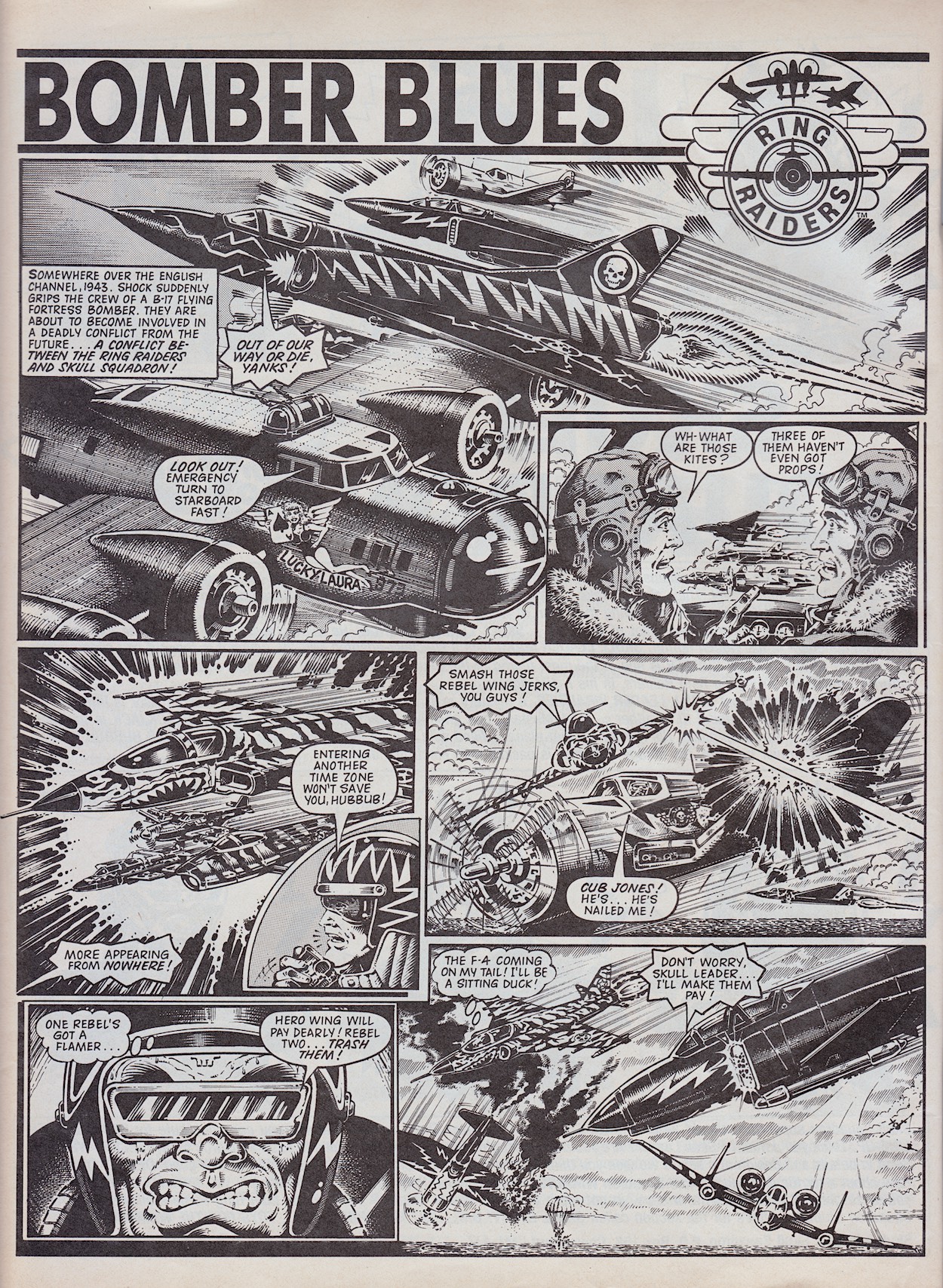
OB: It was like an anthology comic in many ways. Who came up with the story ideas and chose the characters you’d focus on? Your first story was set during World War II at a time linked to the origin story of the ‘Raider featured, Cub Jones. It’s also chock full of B-17 Fortress Bombers fighting modern day jets and classic prop planes. How very you.
JT: I think most of the basic story ideas came from the writers themselves, apart from those that, say, focussed on the early life stories of the individual heroes and villains. Those were probably more down to editorial decisions. Bomber Blues was very much my sort of story, with all my kind of ingredients. I’d always been a fan of stories about the Flying Fortress of WW2. This big plane with a big crew and a ton of guns really caught my imagination. Searching my dusty old memory banks, I seem to recall there was a serial story in Battle about an American Flying Fortress squadron flying out of wartime England which I always enjoyed. To have a Flying Fortress going up against jet fighters from the future was just perfect in my eyes. I’m sure I had a lot of input into this story choice!
OB: Both of your published stories were beautifully illustrated by Don Wazejewski, how did that come about? Did you write your stories and they were assigned to Don or did you work together more closely to produce the final product?
JT: It was just luck that a great artist like Don Wazejewski was chosen to illustrate Bomber Blues. Certainly, in my time writing I never worked closely with the artist who would eventually illustrate my work. We always worked very much apart. Many lucky artists lived abroad in the sun anyway and it wasn’t so easy to keep in touch as it is today; no internet, emails or social media back then! I always thought the many different artists who converted my (sometimes difficult!) ideas to a finished visual work did a superb job. I wish I could have produced work half as good as they did. Unfortunately I’ve never had any drawing talent at all (always a bit of a drawback if you want to become an artist). Artists like Joe Colquhoun, John Cooper and Sandy James were at the top of their game. (The latter two also produced some stunning work for Ring Raiders – Phil) I take my hat off to their much missed talents!
OB: Your second story ‘Castle of Doom’ involved more time travel into the past and a plot by Skull Squadron to undermine the formation of their arch enemies. It seemed to be setting up a larger scale story in the background. Was this the idea, something you could return to at a later date? Or am I reading too much into it?
JT: Once again, Castle of Doom was just my cup of tea when it comes to a story. Travelling back in time to change what will happen in the future has always intrigued and interested me. Maybe because I watched a lot of Doctor Who and The Time Tunnel when I was a youngster! I really don’t recall if there was any plan to make this story part of a long-running adventure (like my story Operation Deep Cover which I wrote for Battle Action Force) but it’s an interesting idea. Perhaps you should have been on the editorial team and suggested it, Phil!
OB: Oh if only! Once the ‘Raiders perfect time travel I’ll see you back then!
OB: In that story the main characters are the Ring Raiders’ Yakamura (X-29 fighter) and Skull Squadron’s Wraither (P-51 Mustang). These two characters’ craft were in a two-plane ‘Starter Pack’ which was how I started collecting the toys. Was this deliberate?
JT: I’m almost certain that the Yakamura X-29/Wraither P-51 Mustang were deliberately chosen to go up against each other in this story given they could be bought together in a Starter Pack. The idea was probably to encourage youngsters (such as yourself!) to go and buy the X-29/P-51 combo (then available in all good toy shops) and re-enact the dogfights from Castle of Doom. Whether this decision was down to Those Characters From Cleveland/Matchbox/someone in editorial or even the humble writer is lost long ago somewhere in the clouds!
OB: My inner fan just grinned from ear-to-ear! For UK fans your comic was responsible for developing the characters beyond the toys. Did the licence holders ever request alterations that affected your work? Barrie has told me they were more understanding than most.
JT: I’m glad the then young UK fans appreciated our efforts to flesh out the characters from what was perhaps a not-so-detailed starting point. Licence holders could often be very fussy about things and ask/demand/insist that changes were made. Usually this was at the script stage, although when deadlines were tight sometimes the artwork had already been completed. I’m thinking of Teenage Mutant Hero Turtles Adventures here rather than Ring Raiders. Last minute changes to the actual artwork were usually impossible, given that many artists lived on distant shores and there was just no scope to alter things late in the day. We’d usually say we’d take on board their comments and make sure we did things properly next time!
OB: You were responsible for the Photo File series, which we only got two parts of in #6 and the Special, unfortunately. The comic seemed to get a new found confidence with that sixth issue so I was gutted it was the last one. Can you remember any plans you or the team had for stories or the comic as a whole beyond these early issues?
JT: Yes, I was behind the Photo File series, I’d produced similar types of aircraft fact files for other titles in the past. Again, this was right up my street as I obviously had more than a little(!) interest in the subject matter. I was disappointed only a couple of these were completed, the P-51 Mustang and the F-104 Starfighter, the latter for the Special. The Starfighter was another of my all-time faves, a really special plane which had the nickname ‘The Rocket With A Man In It’! I do agree that Ring Raiders was getting better all the time and the sudden end of the title was a real shock to us all. What the long-term future held for the title is difficult to say with any certainty. I would have hoped it would have gone from strength to strength as we got more used to the characters and expected storylines. There was just so much scope with all that dogfighting action through the centuries!
OB: Finally, Barrie gave me some details of unpublished stories which were being worked on when the comic was cancelled. There was apparently a Christmas story and another called ‘Blow Bubbles’, both written by yourself. Can you remember anything about them?
JT: There were at least three of my stories for planned future issues which were sadly unpublished. Apart from Blow Bubbles and the untitled Christmas story, there was also a story called Hijacked. Unfortunately, I don’t recall anything about any of them! I’m not even sure what stage the stories had reached, whether I’d finished or even started writing one, two or all three. I’m afraid the three tales have disappeared into ‘The Bermuda Triangle’ of unpublished writing!
Thanks so much to James for this brilliant interview and his detailed, enthusiastic answers. It’s been great to bring this comic back to life through the blog and to give it the appreciation it so clearly deserves. If it had continued I’ve every faith it would’ve evolved into an epic title to rival any licenced fare in the UK, including even Marvel‘s Transformers. Sadly, it was not to be.
But we’re here to celebrate this comic, not mourn it and I’ll leave the last word for James:
“It’s been a pleasure spending time revisiting the history of Ring Raiders. Those were great days!”
Just last week I published an interview with Ring Raiders‘ editor Barrie Tomlinson and before the month is out the long-awaited review of the Ring Raiders Special, so stay tuned!
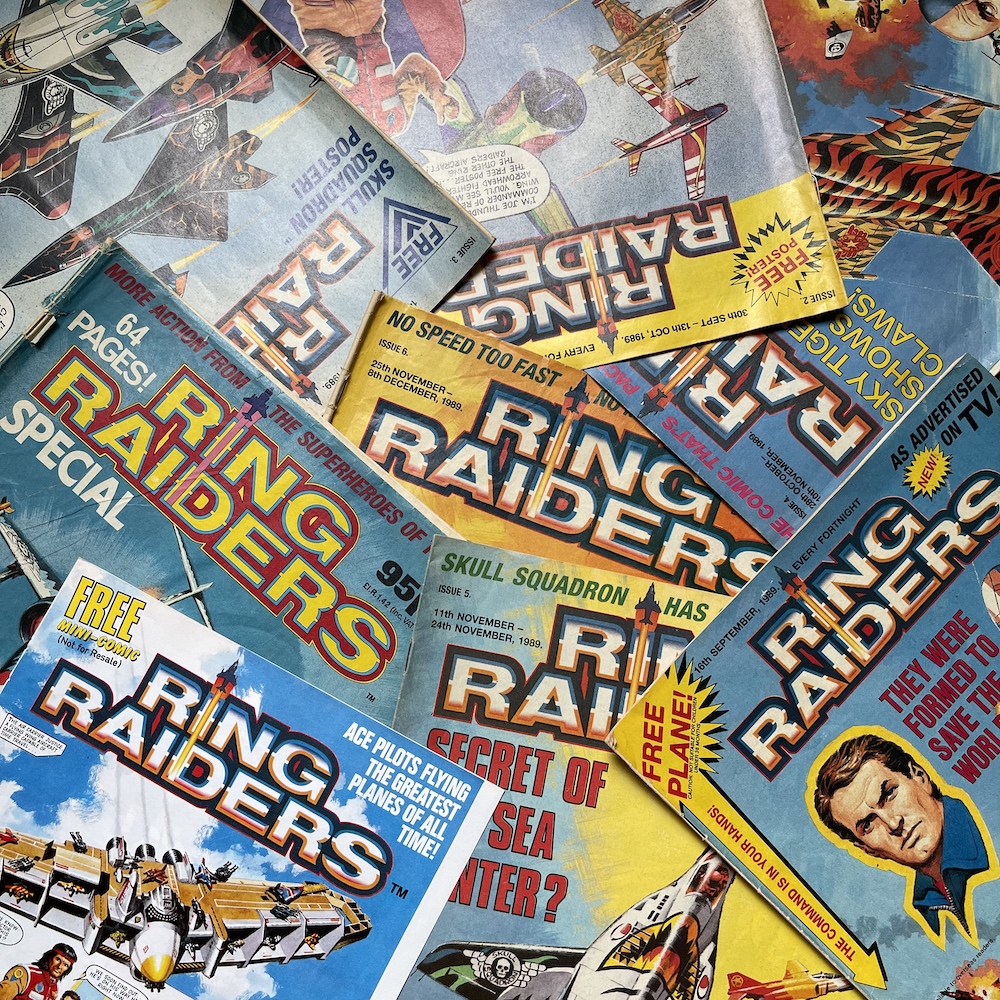
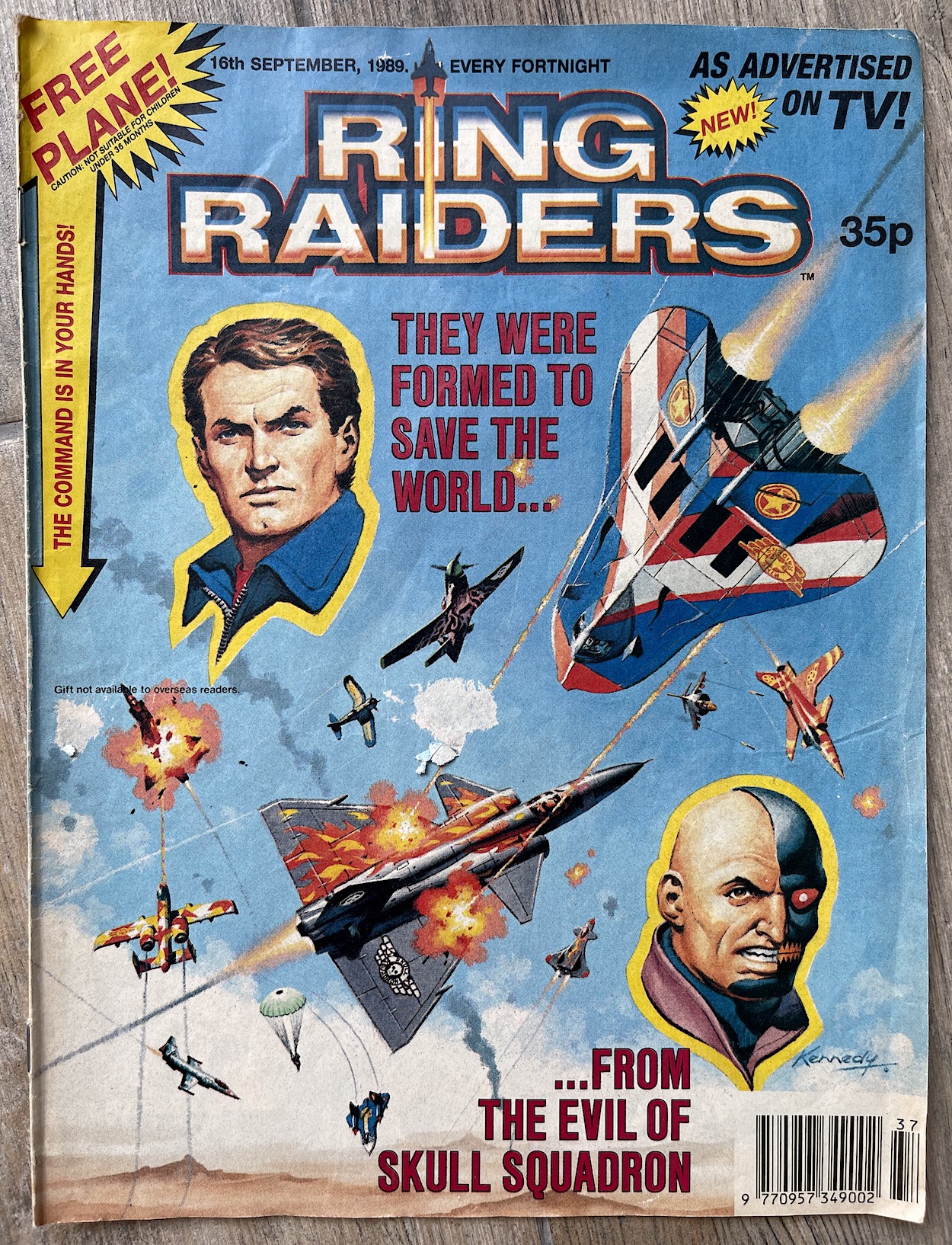
My very favourite non-OiNK comic from my youth may have only lasted six fantastic issues and one brilliant special in 1989/90, but that didn’t stop me from being hyped to read Ring Raiders again as an adult for the blog. They may have been based on obscure toys that weren’t the success they were expected to be, but the comics hold up incredibly well today, full of character, fun stories and high octane action.
In the then-near-future of the late 90s Skull Squadron were a terrorist organisation on the brink of world domination. Capable of time travel and made up of the most sinister of pilots plucked out of various eras they planned to use this ability to destabilise the world order, with them in control. In response, the governments of the world formed the Ring Raiders, an elite airforce formed in a similar way, each equipped with a special communication and energy ring.
The gotta-collect-’em-all toys came with small comic books featuring basic dogfights, but it was no small feat to transform those little plastic Matchbox planes into compelling strips with fully formed characters. While the toys may seem to limit what a comic could do, the opposite was true of that background storyline which was almost endless in scope. Fleetway Publications were going to need a top editor to craft their new fortnightly comic, so they naturally turned to Barrie Tomlinson (Eagle, Tiger, Wildcat).
Barrie formed a team of the very best in British talent; Ian Kennedy, Carlos Pino, Angus Allan, John Cooper, Scott Goodall, John Gillatt, James Nicholas (Tomlinson), Don Wazejewski, Tom Tully, Sandy James and Geoff Campion. I must’ve read each issue dozens of times and was gutted when it (and the toys) ended so prematurely.
The Ring Raiders comic genuinely surprised me with just how brilliantly it read for the blog reviews. It was exciting and had masses of potential to explore an epic storyline. Within its short lifespan it covered World War II, Vietnam, the threat of nuclear annihilation, futuristic sci-fi battles, murderous back stories, civil wars and even an homage to a certain 80s 3D movie I’m a big fan of. I loved the range and I think as an adult I appreciated the character development at the centre of such fanciful tales even more.
I was so excited when Barrie agreed to answer some questions for me and I came away from our chat delighted at how proud he was of this licenced comic fave.
OiNK Blog: Hi Barrie, can you remember what made Fleetway choose the Ring Raiders licence? Looking back they were just tiny Matchbox planes with only minimal character drawings on the packaging.
Barrie Tomlinson: Fleetway Publications was a massive organisation. The first I would hear of a new licence would be from the Editorial Director. It would have been negotiated by a non-editorial department and presented to us. I just had to grab all the info I could find about the storyline and characters and make myself an instant expert on the subject.
OB: There’s a similarity between Ring Raiders and Wildcat. Both have an anthology feel while wrapped up in an overall theme. Was this a conscious decision or was it just befitting the licence?
BT: It wasn’t a conscious decision. I would have just wanted to use the characters I had been presented with and turn the comic into something which was liked by British readers.
OB: Were you personally responsible for selecting the writers responsible for fleshing out these characters?
BT: Yes, I would have been responsible for selecting the writers. It’s really unfortunate that the detail books for Ring Raiders were not kept. They would provide a wealth of information. My son James, who wrote under the name ‘James Nicholas‘ was one of the writers. He was a natural, as he is an aviation fanatic! I’ll have to guess at the others. Probably Tom Tully was one. I can’t remember writing any of those scripts myself… but I probably did! (He did indeed as we later found out during the read through, as well as the names of the others – Phil)
OB: There were some mature themes in there, such as Vietnam. This strip in particular wouldn’t have looked out of place in a classic IPC war comic. The setup allowed stories set in the past, present or future, time travelling, fantasy of historic tales. It sounds like a writer’s dream title! Did you feel you had that freedom in a licenced comic?
BT: Everything we did had to be approved by agents of the copyright holder. Each script and piece of artwork had to be submitted and approved so we always had to stick closely to the original material we had been sent.
OB: There’s a feeling of a larger scale story developing in the background too. Was anything worked out in advance or were you winging it (pun not intended) and seeing how they developed over time? Can you remember any plans you had if the comic had continued?
BT: There were not any massive plans. It was always a rush producing titles like this as everything had to be approved. Once we had taken on board all the story/character details it was just a question of talking to writers, recruiting artists and getting on with it. I was pleased with the high quality artwork we achieved on this title, using artists who were greatly experienced in working for my department.
OB: A cartoon series was also in development which was very different to the comic in basically every way, going down a more sci-fi route with clichéd characters. I preferred the flawed characters in your comic by far.
BT: We didn’t have any contact with the cartoon series. We could develop the characters to a certain extent but everything would have to be approved.
(Below, Castle of Doom was written by Barrie’s son James and featured plenty of time travel and the beginnings of a larger overall story arc.)
OB: Speaking of those approvals, were there any requested changes or outright rejections? There was very little established in the toy line so for me the comic was really creating these characters.
BT: Occasionally, they would ask for alterations. Nothing too much. Some of the other toy comics were much more hands-on. I had to train people doing the approving that it was a comic. At first, they were looking at each individual frame as if it was a one-off poster. Eventually they got to realise these were small frames and the slick comic artwork was very different to that used in a giant poster or on a toy product. As I recall, we didn’t have that problem with Ring Raiders.
OB: It seemed at one stage almost every comic I began collecting got cancelled very quickly. Having read back over some of those titles it certainly wasn’t because of a lack of quality! Why do you think so many excellent comics were cancelled so early in the late 80s and 90s?
BT: I think it was just that the comic era was coming to an end. Television and computers were taking up children’s time. Once upon a time, the delivery of the weekly comic was a big event in a child’s life. It was delivered with the morning paper. Dad read it as well. Then children became more sophisticated and they wanted something more than a comic. They were growing up faster.
OB: Finally, the late Ian Kennedy always said his favourite subject to draw was airplanes, especially fighter planes. Ring Raiders seemed like a perfect fit for him. Was he contracted to work on covers for Fleetway or was he selected by you personally? Can you remember any comments from him on his time working on Ring Raiders?
BT: Yes, I would have selected Ian to work on the title, he wasn’t contracted for covers. I think I remember him being disappointed when Ring Raiders came to an early conclusion.
I was delighted that Ian worked on Ring Raiders and other titles in my group. His recent passing was a sad occasion for the world of comics. Greatly missed but his art will live on!
OB: Thanks so much for your time and insight Barrie, it’s been a pleasure to read this comic again, thank you for producing such a quality read for fans at that age.
BT: It’s great to know that the title is so well remembered. It’s a great tribute to the writers, artists and editorial staff who worked on Ring Raiders. It may not have lasted long but I think it looked good as a comic in its own right.
If you’d like to find out more about Ring Raiders and read the real time reviews just click here.
At the time of writing the final edition, the whopping 64-page special will be reviewed later this month and next week watch out for a wonderful, lengthy interview with Barrie’s son and Ring Raiders writer, James Tomlinson (or James Nicholas as he was known at the time).















 OiNK Blog