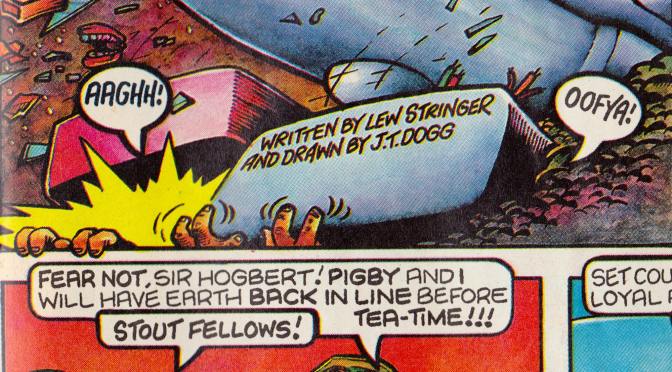
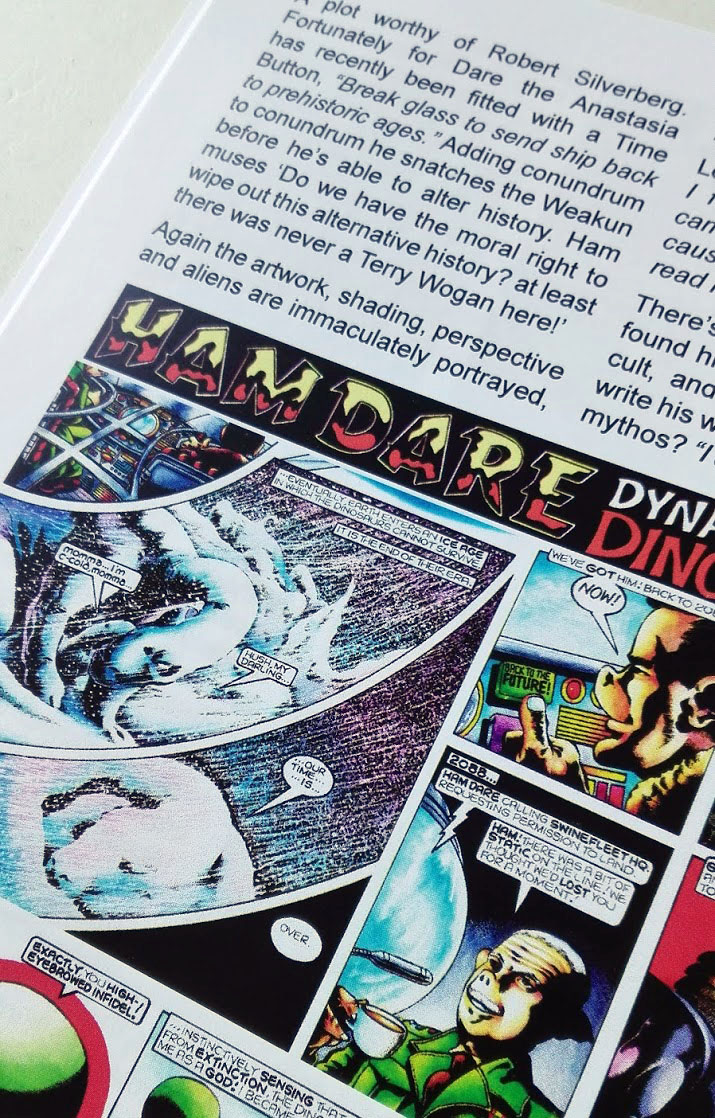
The latest issue of Spaceship Away includes a feature which will appeal to fans of a certain OiNK sci-fi spoof strip. Writer of Ham Dare: Pig of the Future, Lew Stringer talks about the creation of the strip and the stellar (pun intended) artwork of J.T. Dogg that brought his creation to life.
On his own blog, Lew states, “The interview is part of a six page feature called The Fake Dan Dare Syndrome by Andrew Darlington which also includes other Dan Dare spoofs and related strips such as Danny Dare from Wham!. The article mentions that my Ham Dare plot bears a passing resemblance to the 1957 novel Wolfbane by Frederik Pohl…. which came as a surprise to me because I’d never even heard of that book until now!”
Lew discusses his working relationship with Malcolm, how they only met once at the OiNK launch party and communicated mainly by phone. Full scripts were sent to Malcolm and it was co-editor Mark Rodgers‘ idea to have him as the artist, lending a more direct homage to Dan Dare to the strip than the cartoonish art Lew had envisioned. He also talks about that dinosaur extinction scene and the emotions he felt writing it, which many pig pals felt when reading the surprisingly touching moment.
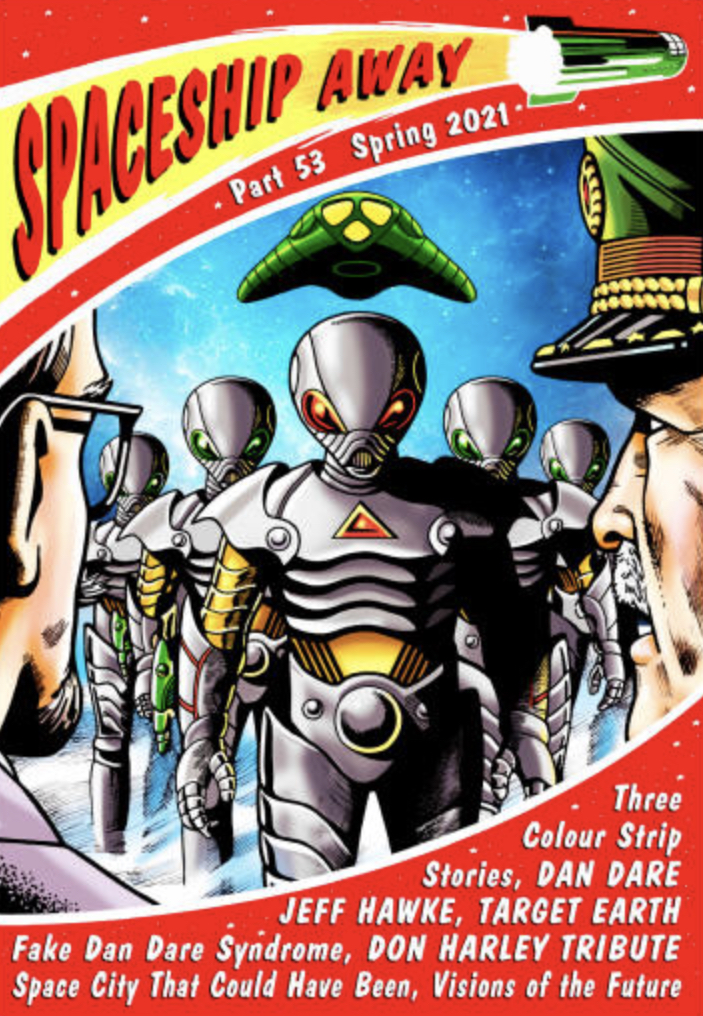
If you haven’t heard of Spaceship Away, it’s a fanzine concentrating on publishing brand new Dan Dare strips and new science fiction illustrated tales and prose stories, alongside factual articles on everything from the classic Eagle comic of the 1950s to modern day space exploration and science news.
This issue is #53 and is available for £8.95 or you can take out a year’s subscription for £25.50 (prices for Europe and worldwide readers are £11.50 and £31.00 respectively) and you can order it through their website now.
You can also read more information about the interview on Lew’s own personal blog, Lew Stringer Comics.
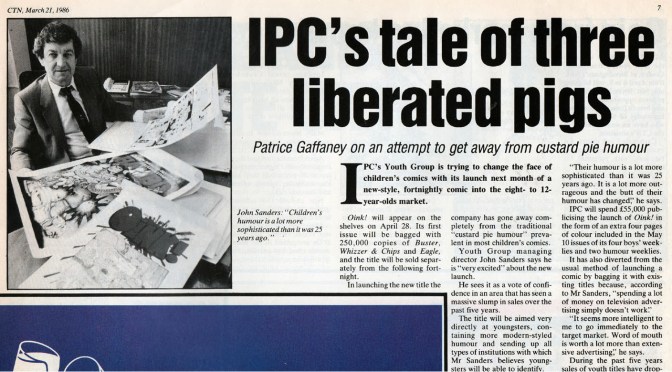
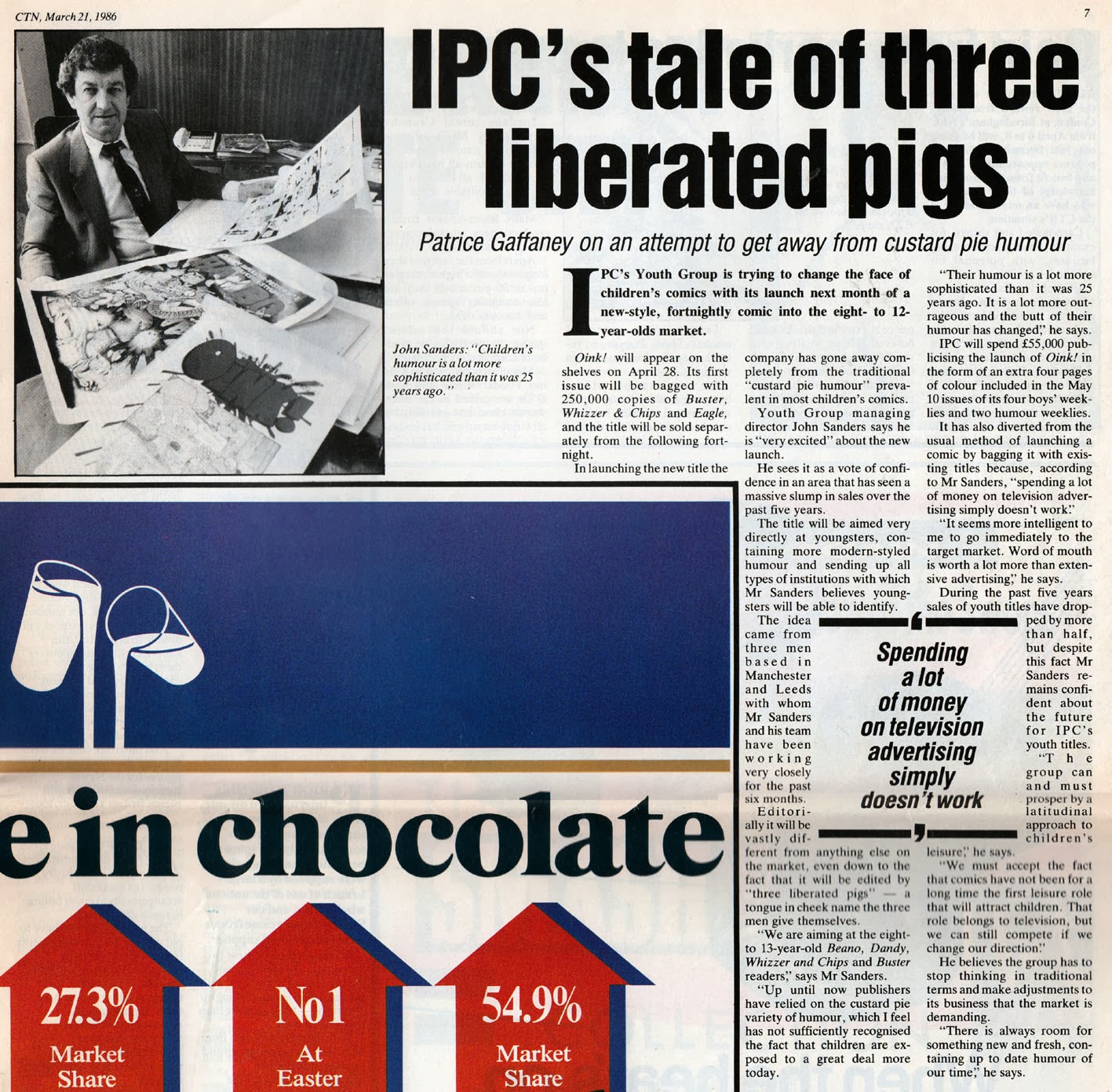
“IPC’s Youth Group is trying to change the face of children’s comics with its launch next month of a new-style, fortnightly comic into the eight-to-12-year-olds market.“
John Sanders
So began a piece in CTN, an industry magazine covering the world of magazines and comics on this day back in 1986, a month before OiNK‘s release from the sty. Comics sales had been in heavy decline for a few years with television seen as the cause, although perhaps so was the ever-growing presence of computer games. While other sources of children’s entertainment were evolving, comics hadn’t and they had to do something new and fresh in order to remain competitive.
You should know where this is going. That something was, of course, OiNK. Edited by the “three liberated pigs” of Mark Rodgers, Tony Husband and PatrickGallagher, IPC saw in them the chance to reinvigorate the marketplace.
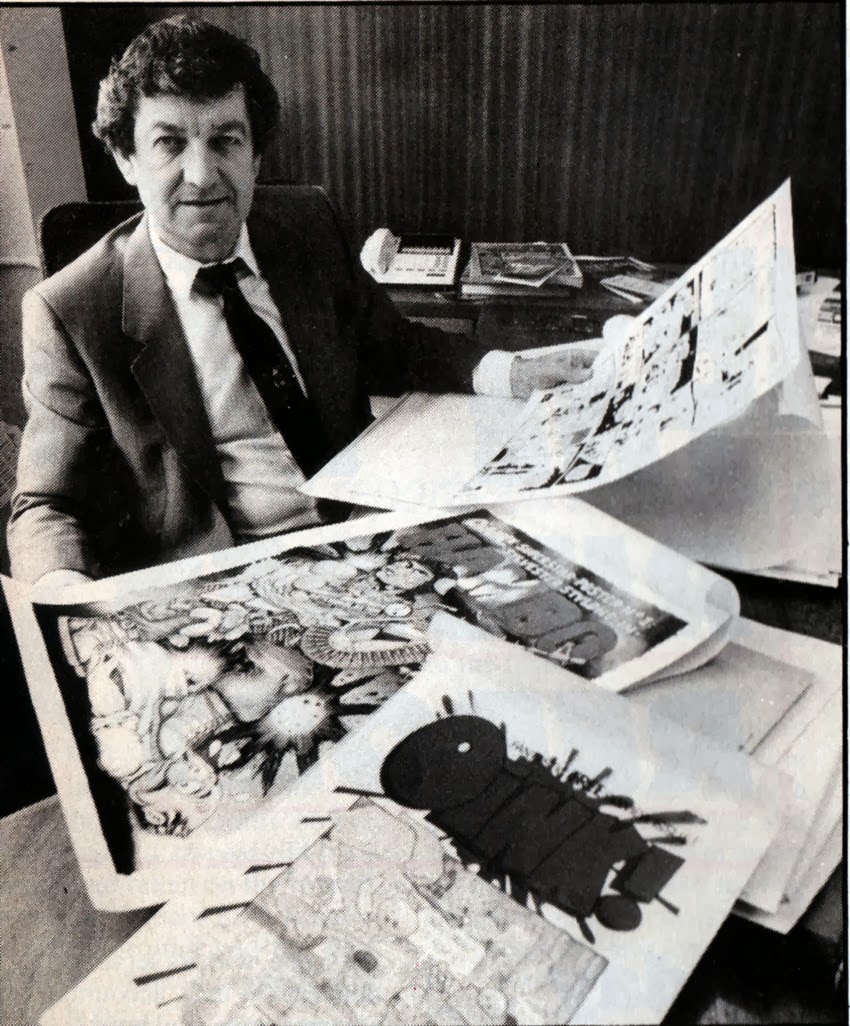
The article in CTN (which you can read in full at the bottom of this post) takes the form of an interview with IPC Magazine’s Youth Group Managing Director John Sanders, who you can see above surrounded by OiNK page layouts prior to launch. A wish to move away from the “custard pie humour” is cited and the publishers were certainly putting their weight behind this anarchic comic, independently put together for them in Manchester. Hundreds of thousands of copies of the preview issue would be bagged with some of their biggest titles and an eye-watering (for the time) £55,000 was being spent on “Blockbuster Adverts“.
“Their [children] humour is a lot more sophisticated than it was 25 years ago. It is a lot more outrageous, the butt of their humour has changed.”
John Sanders
It’s interesting to note having a preview issue wasn’t something generally used at the time, the usual strategy was television advertising such as with Marvel‘s The Transformers in 1984, the (very) brief advert for which you can see below. This was news to me when I found out because I remember several preview issues of my comics but nothing on TV, but then again those previews came after OiNK. However, even OiNK’s would be different from those that followed, it was a full-sized issue.
The article states the new comic is “aimed very directly at youngsters”. The whole point was to grab the attention of the eight to 13-year-old age group. But yet, here we are over three decades later with a website all about this classic comic and how well it holds up for both adults and their children reading it all these years later.
IPC’s target audience weren’t just readers of comics by the competition either, such as The Dandyand Beano, but also those of their own humour comics who they were worried were leaving.
Thanks to Lew Stringer for sharing this scan on his Blimey blog and for the kind permission to show it to you all here. That particular blog is no longer being updated but is chock full of interesting comics tidbits so give it a look. While you’re at it, make sure to bookmark Lew’s ongoing Lew Stringer Comics blog too, detailing all of his own work both past and present.
(John Sanders has now released his own book, King’s Reach: John Sanders’ Twenty-Five Years at the Top of Comics which chronicles the business side of the industry.)
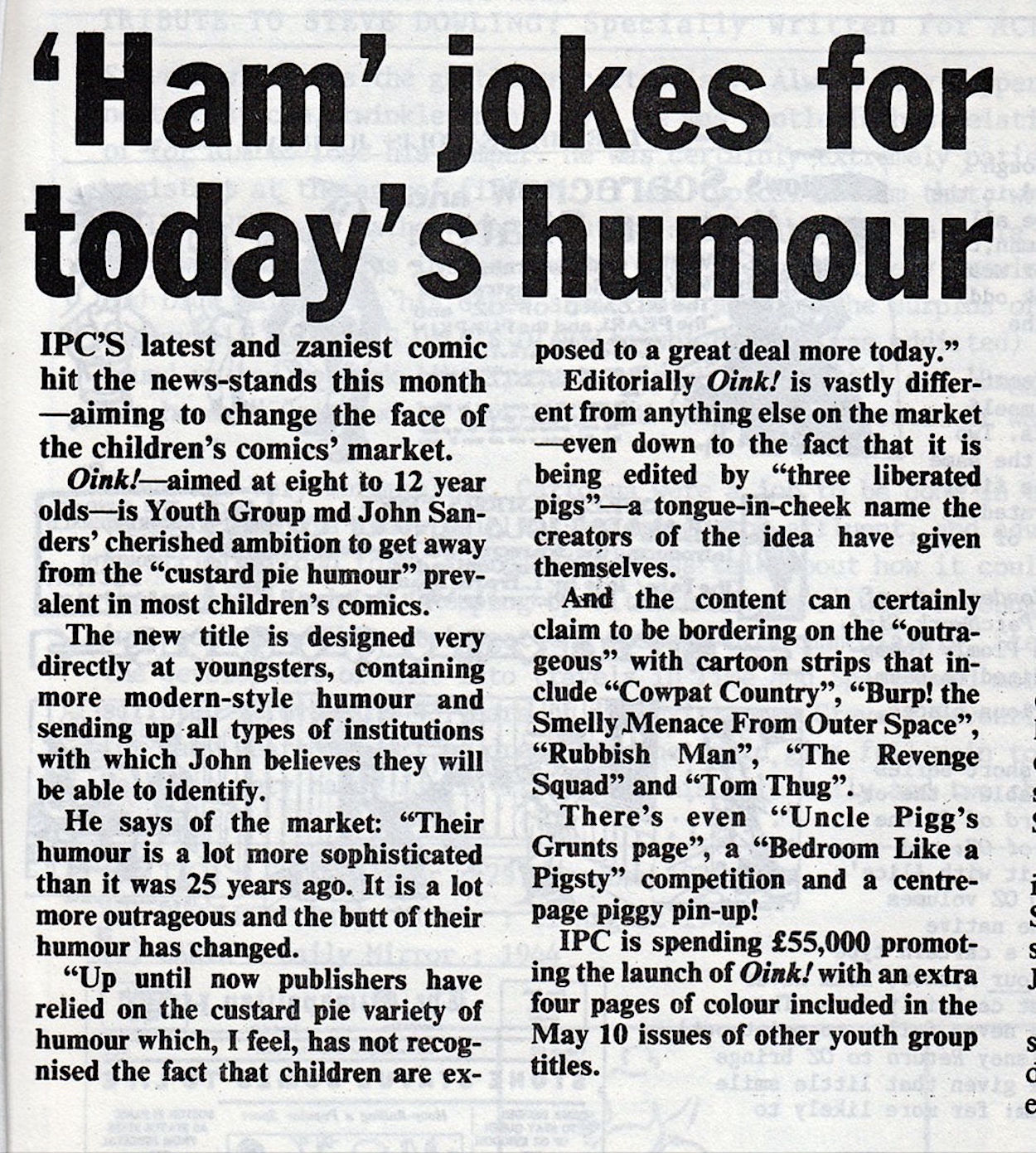
About a month later the April/May 1986 issue of IPC News, the in-house magazine for IPC Magazines staff, also ran a piece on OiNK’s imminent launch where it’s affectionately described as “John Sander’s cherished ambition”. It contains much of the same information as the CTN article, including some direct quotes by John, cementing the company’s support of the comic’s ethos and what it was attempting. This following scan also comes courtesy of Lew via the OiNK Facebook group.
There could be no part of IPC Magazines or the wider UK comics and magazine scene that was unaware of this bold new venture. At least that seemed to be what IPC was attempting to achieve with the size of OiNK’s marketing push and the feeling that the company was completely behind the team of Patrick, Tony and Mark. Of course, any company will want that to be the impression when they’re launching a new product but there can be no doubt they believed in OiNK.
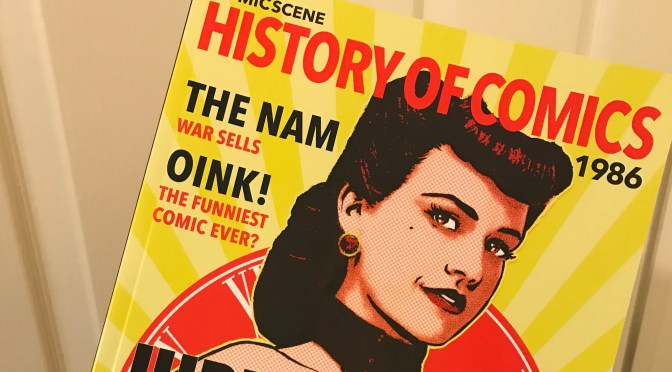
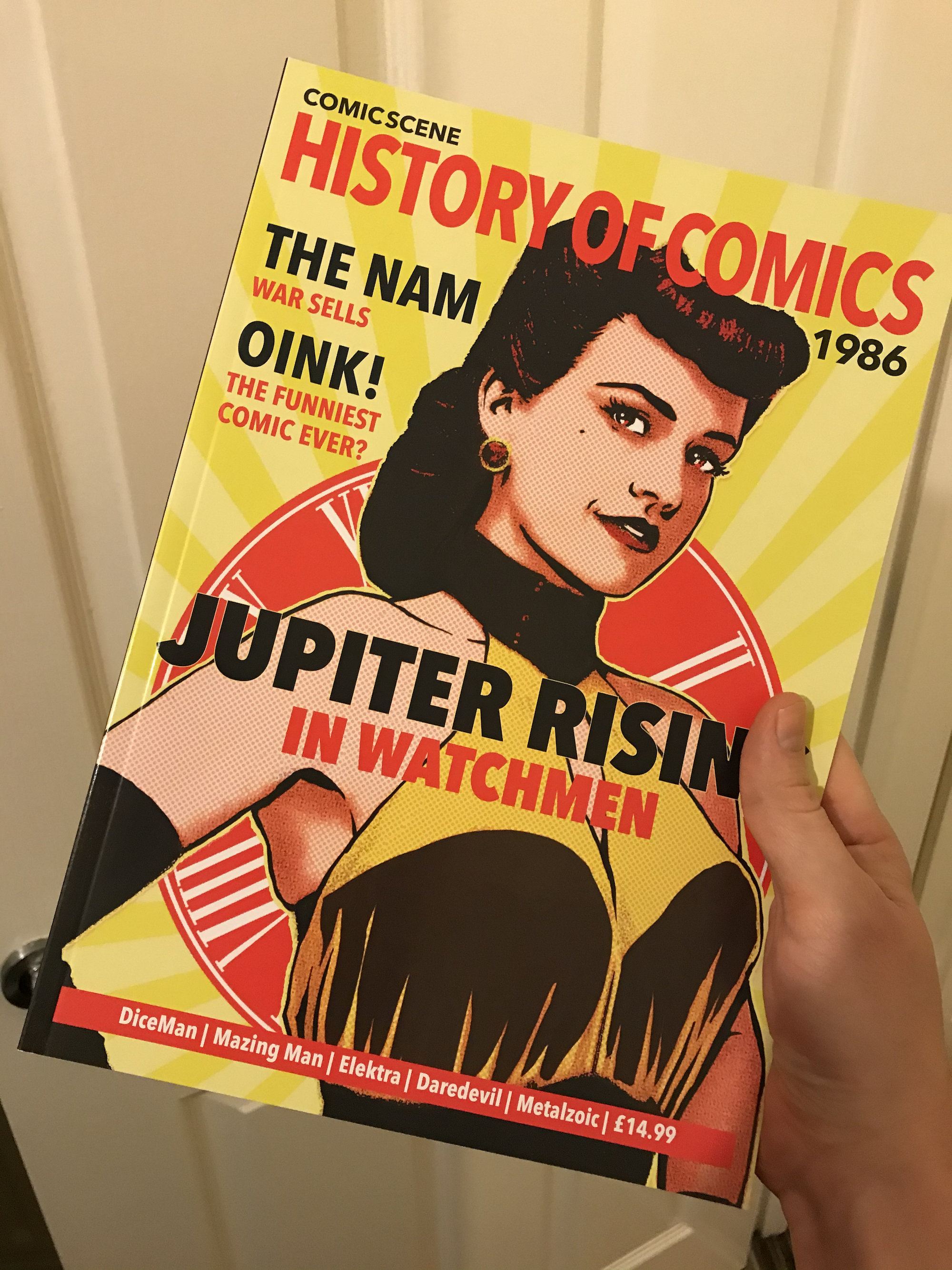
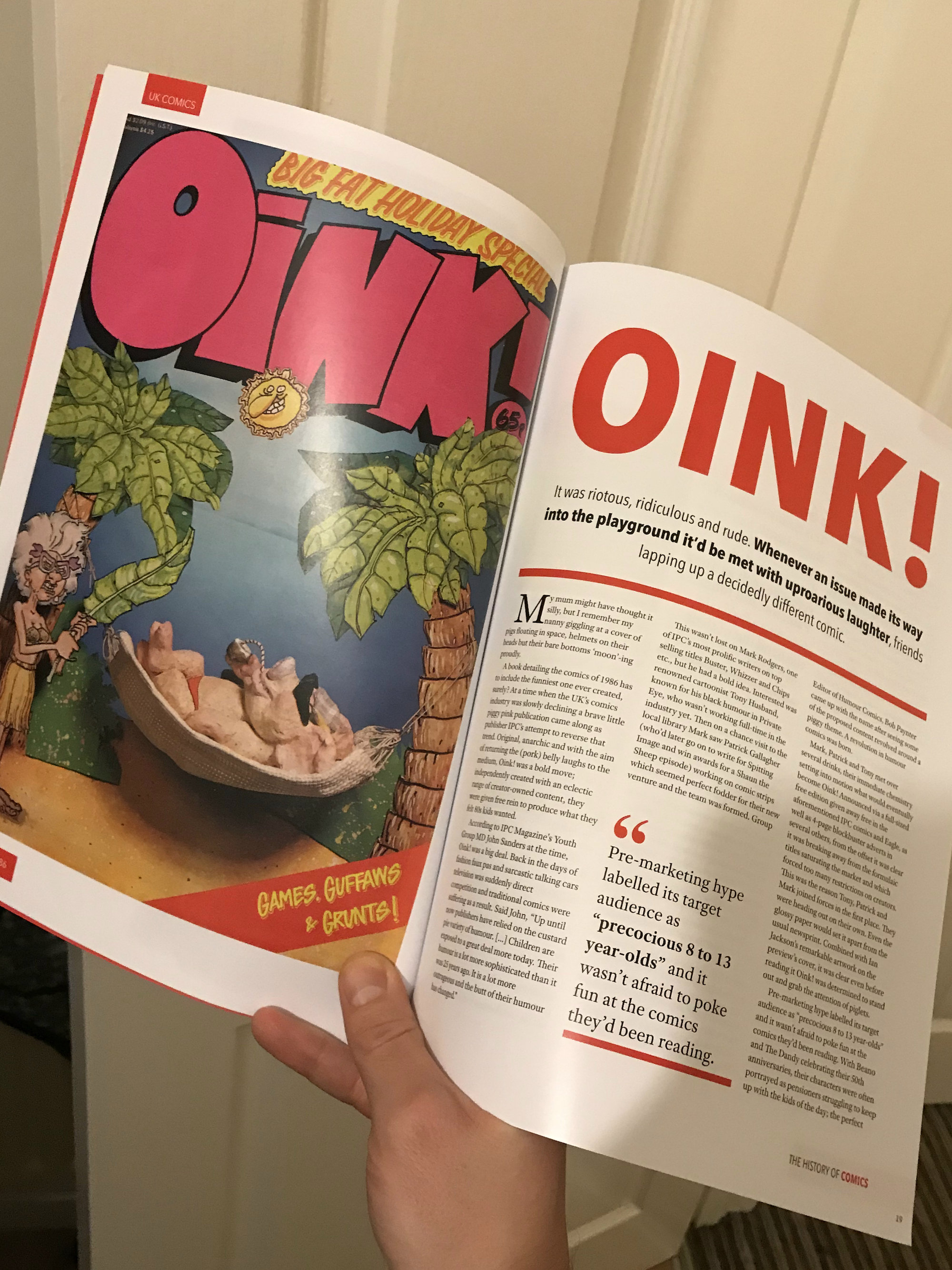
Last summer the editor of the previously cancelled Comic Scene magazine contacted me about contributing to a new project he was putting together. Comic Scene: History of Comics is a new, ambitious partwork magazine series which aims to eventually cover 100 years of worldwide comics history. Hence its name, really. Each 60-page magazine is dedicated to one particular year and the 1986 volume has a certain title mentioned right on its front cover.
I was thrilled to be given the chance to write about my favourite comic in an actual printed publication. But pretty much as soon as I agreed I realised the size of the task ahead. OiNK had a huge range of content over its two-and-a-half year run, from a vast selection of regular and semi-regular characters to one-offs and spoofs that changed from issue-to-issue. The behind-the-scenes shenanigans were just as fascinating too. How was I going to sum this all up within the tight word limit?
I hadn’t made an essay plan since my college days but that was the route I took and even then I went way, way over the word count. It was hard but ultimately highly satisfying to edit my own work to someone else’s specifications, while making sure it flowed properly and retained the casual chatty style I seem to have developed through years of writing for the previous blog. (Well, people seem to enjoy it so why break a habit?)
While I knew people who had enjoyed OiNK as a child (or even more recently) could be among the readers, the main aim of this magazine series is to introduce a vast array of classic and modern comics to the readers and so that was my goal. In doing so, I wanted to include lots of information about the comic’s creation, its life and evolution, as well as examples of the actual humour and cheeky wit.I wouldn’t be doing the comic justice by just reciting facts and figures after all.
So OiNK’s creation, it’s unique team of contributors, its characters, strips and its place in comics history are all covered in just a few pages and I’m really pleased with the final result. Past articles I’ve read always seemed to focus on it being top-shelved in WHSmith or the fact it had some rude jokes. But I wanted to write a proper overview of the whole shebang. I even made sure to put to rest a few myths about the comic too (only to have one resurface in the magazine’s editorial, unfortunately).
It was great fun writing this piece and it’s available now to buy. At the time of writing four volumes have been released (1950, 1977, 1984 and 1986) and I also contributed some images for another author’s article on Transformers from Marvel UK. To purchase any of these just head to the magazine’s online shop where print and digital versions are available individually and in bundles, or as part of a comics club with a monthly membership fee instead.
UPDATE: Well it appears History of Comics was too ambitious because after only a couple of sets this too was cancelled, replaced by a newsletter instead. Oh dear.

 OiNK Blog