Tag Archives: Richard Starkings

DOCTOR WHO MAGAZiNE #135: READYiNG DEATH’S HEAD

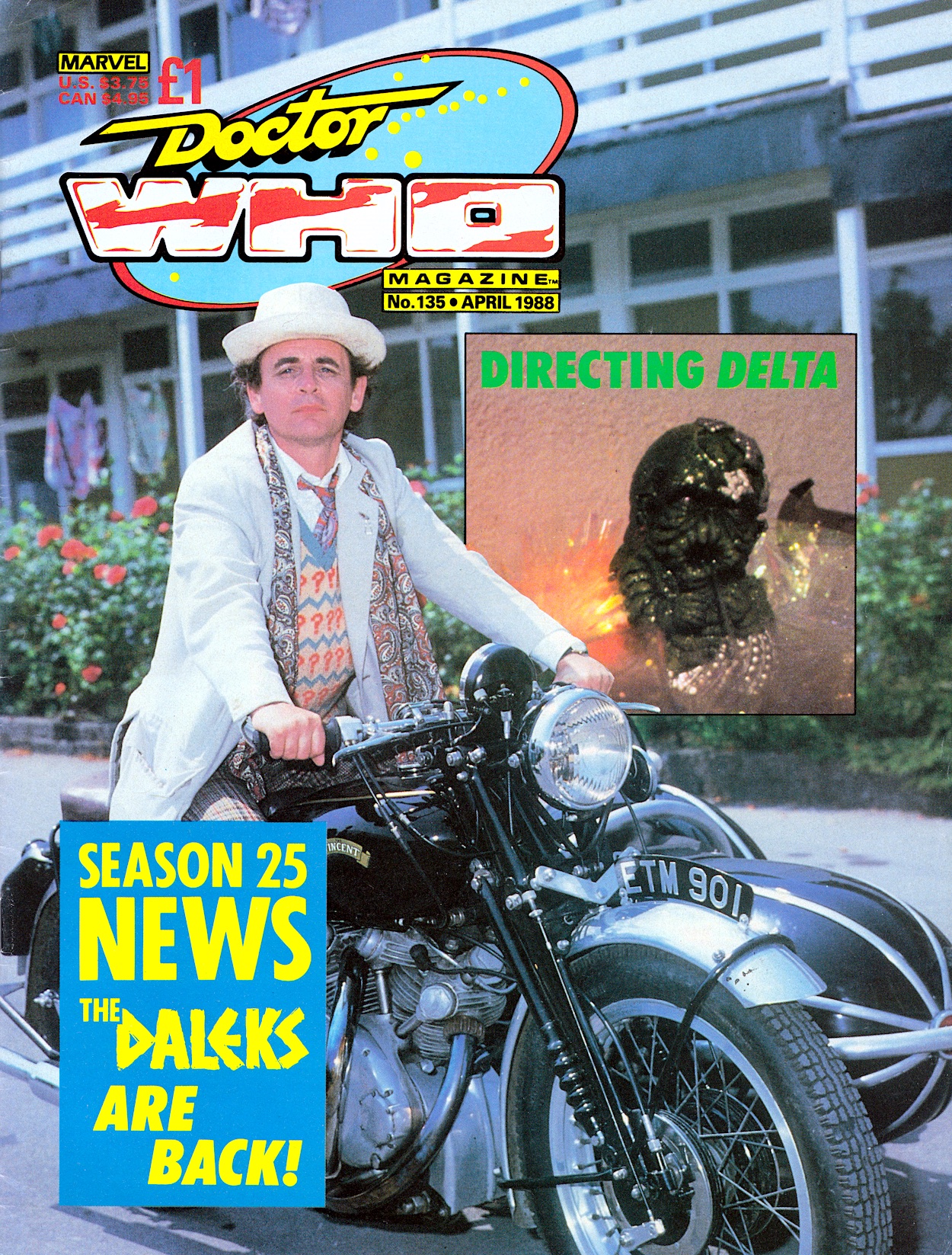
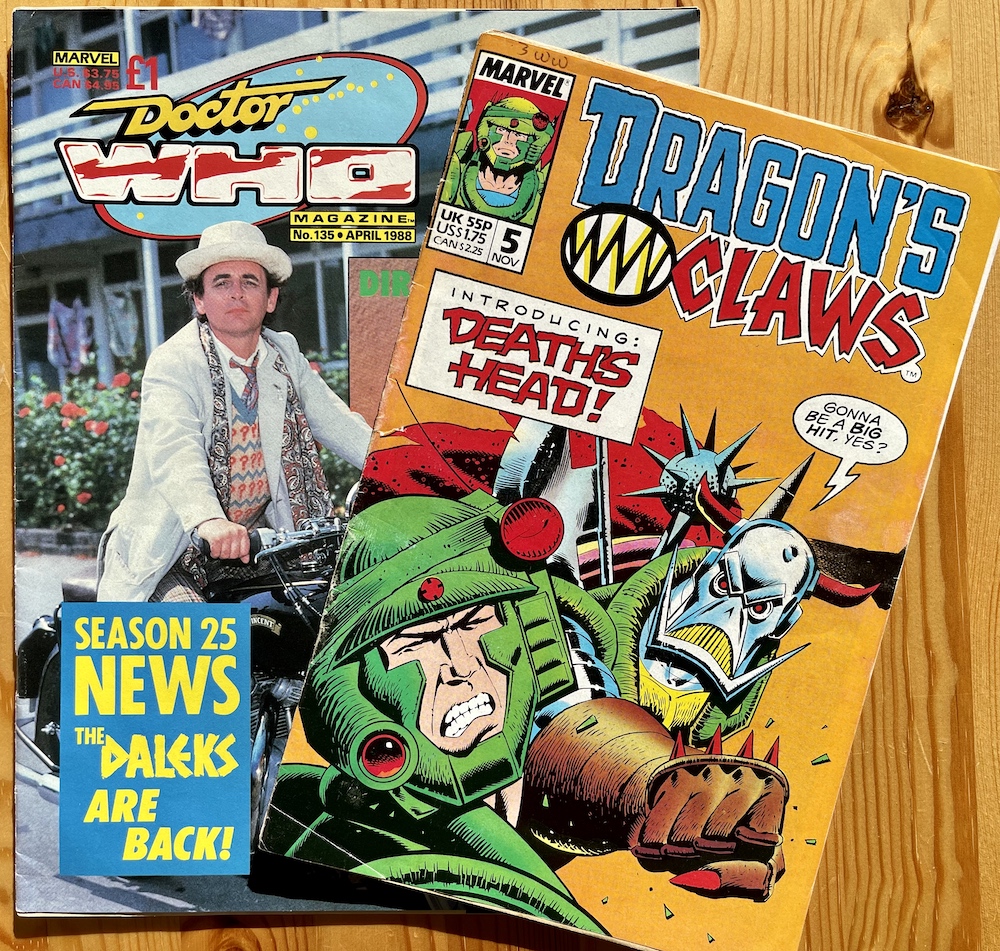
When this edition of Doctor Who Magazine hit newsstands I hadn’t even watched a single episode yet! It wouldn’t be long before I was a fan though and today I most certainly am, but I’ll get to that at the end of this post when I point something out in the news column of the issue. That’s not why we’re here though. We’re here for the comic strip starring a certain Freelance Peace-Keeping Agent, yes?

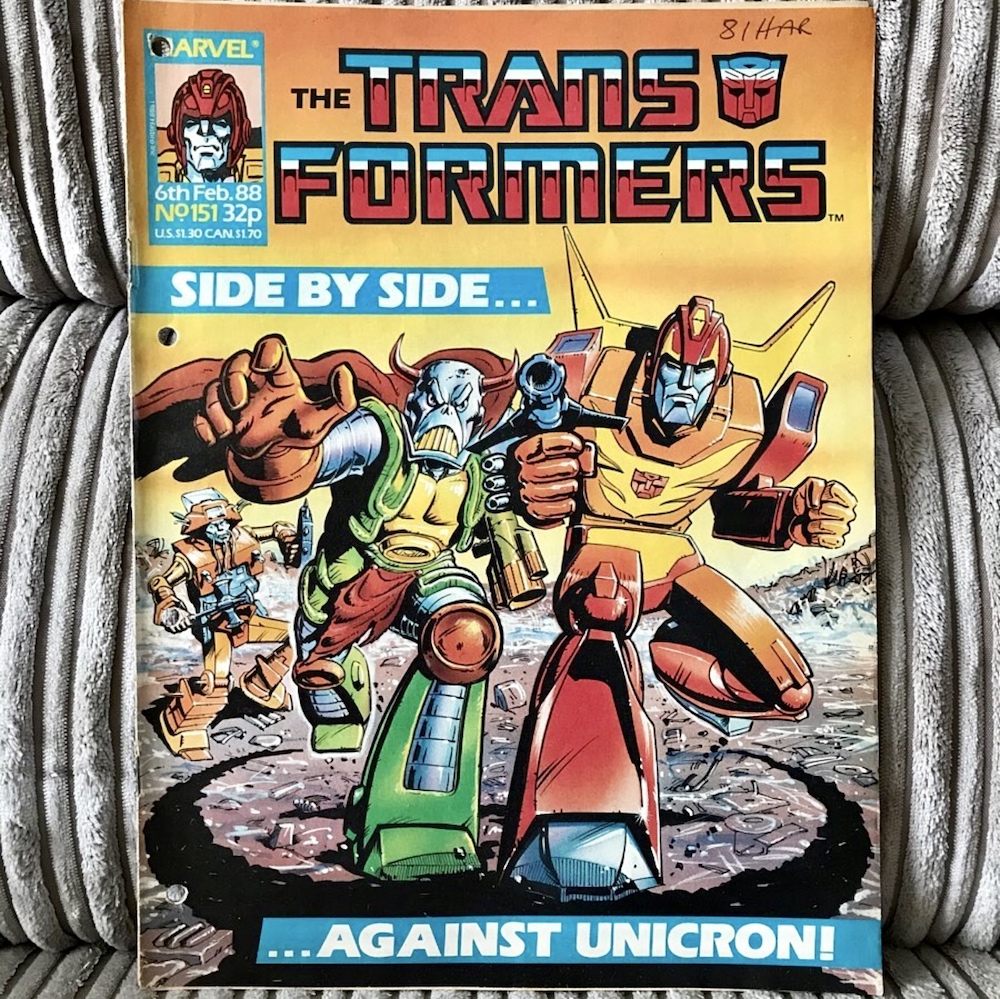
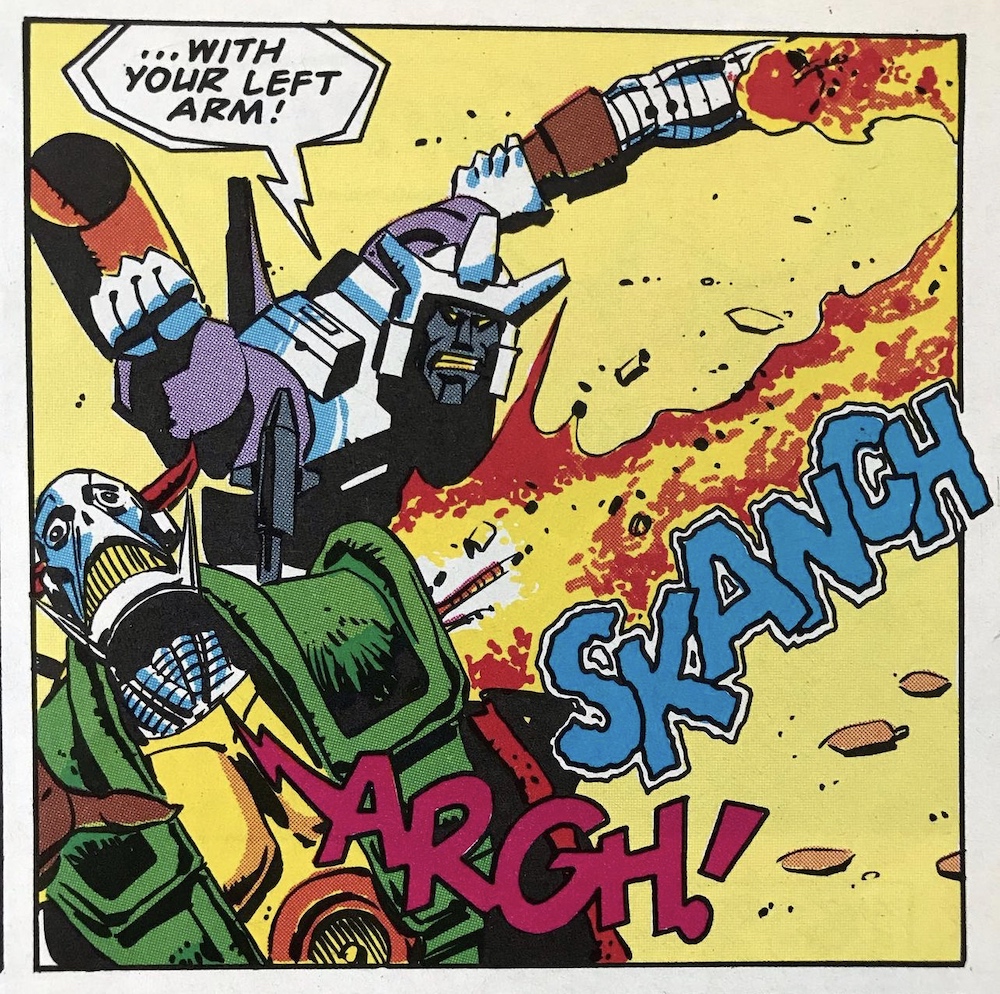
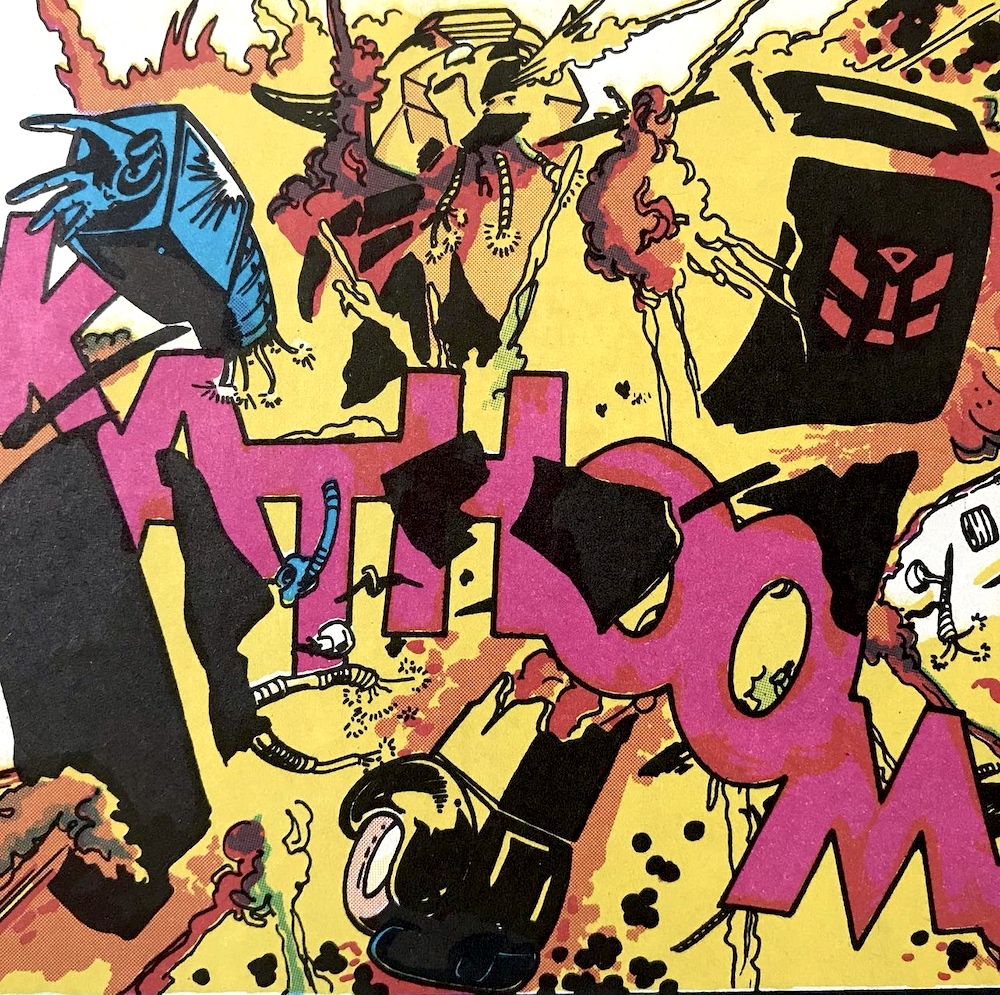
The last anyone saw of Death’s Head was when he disappeared through an exploding time portal in the pages of Transformers #151. While we saw the others he shoved through the portal survive the implication was clear he was missing rather than dead and readers eagerly awaited a surprise return at some point. That inevitable return was only two months later, but what was even more surprising was where it happened: in a different publication.

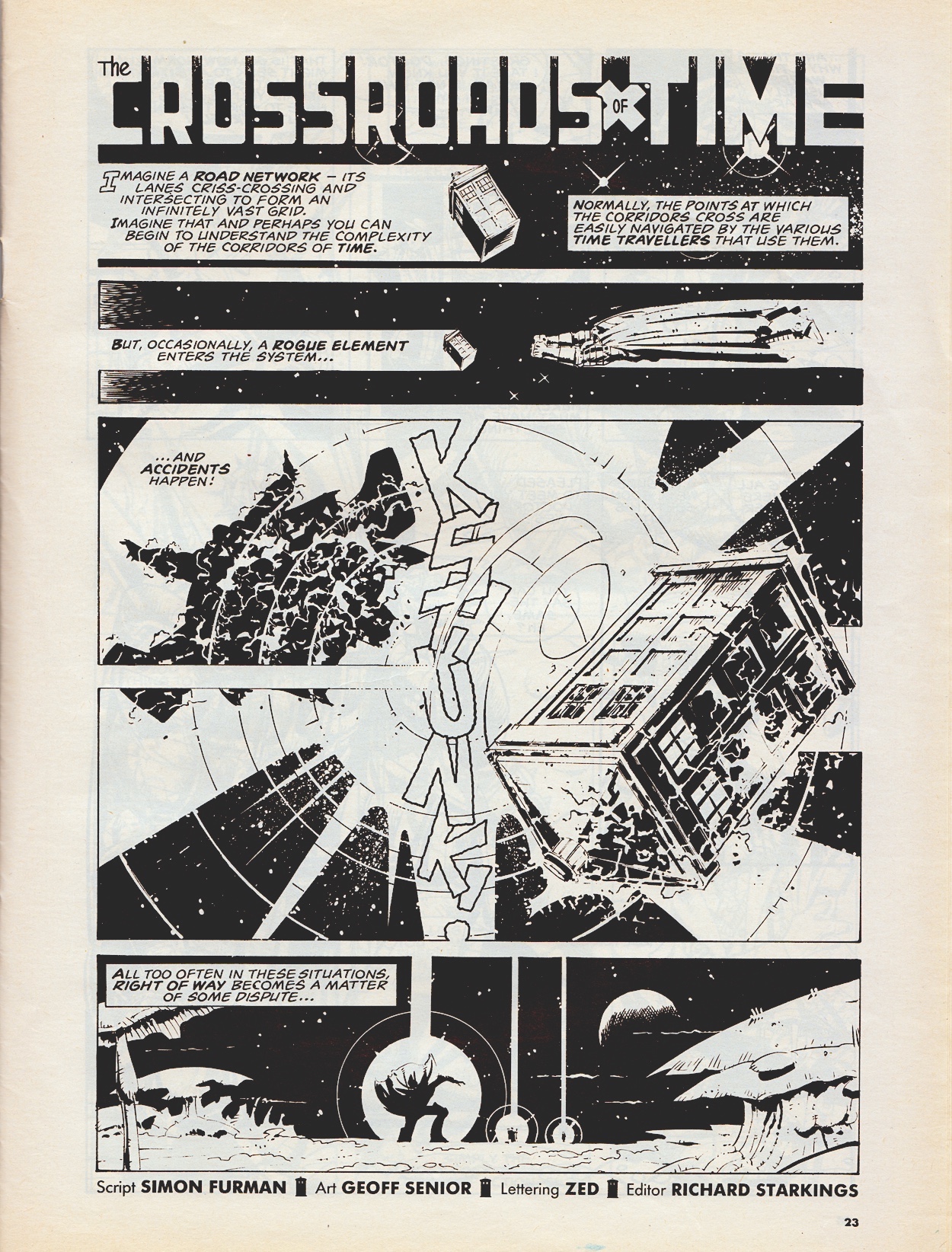
Written by Simon Furman and drawn by Geoff Senior with letters by Zed and edited by Richard Starkings (actually Zed is Richard), The Crossroads of Time was a one-off eight-page strip in #135 of DWM (which is at #588 at the time of writing). The magazine was a very different publication back then, with 36 pages and only the covers and middle four in colour (as opposed to the 84 full-colour pages it has today, complete with regular Lew Stringer Daft Dimension strip), but just like the best of the black and white stories in later issues of Transformers I think this really highlights Geoff’s inks and gorgeous details, some of which are very funny.

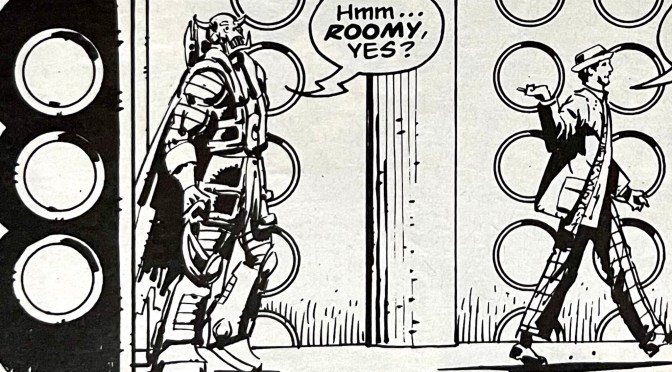
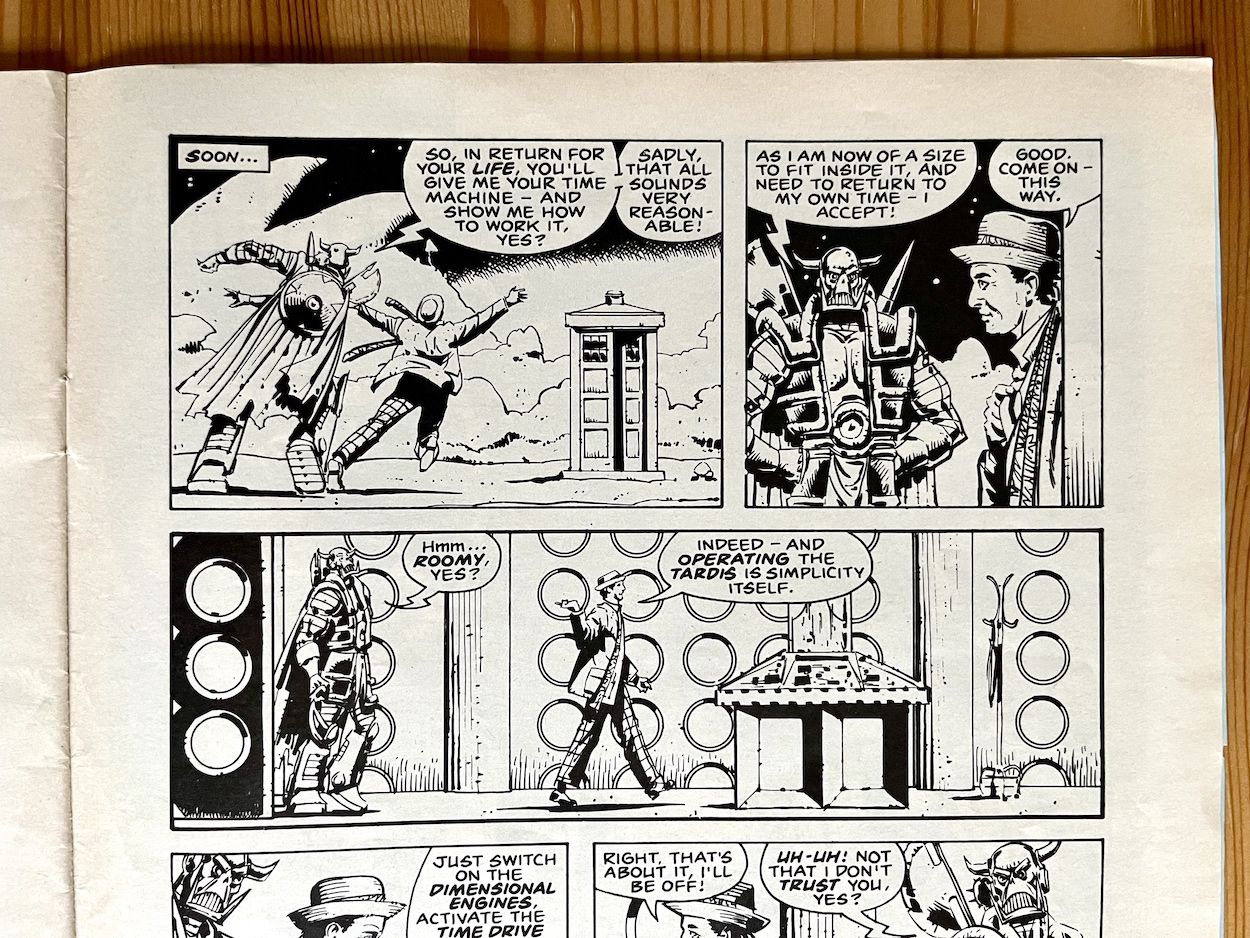
The opening page sets things up straight after The Legacy of Unicron with Death’s Head still travelling through space and time and crashing into the TARDIS. Soon both he and the Doctor (their seventh television incarnation, portrayed by Sylvester McCoy) find themselves on a random, barren planet along with a Time Warden, an impartial arbitrator. The warden weighs up the situation by taking one look at Death’s Head and decides they’ll have to come to an agreement without him.

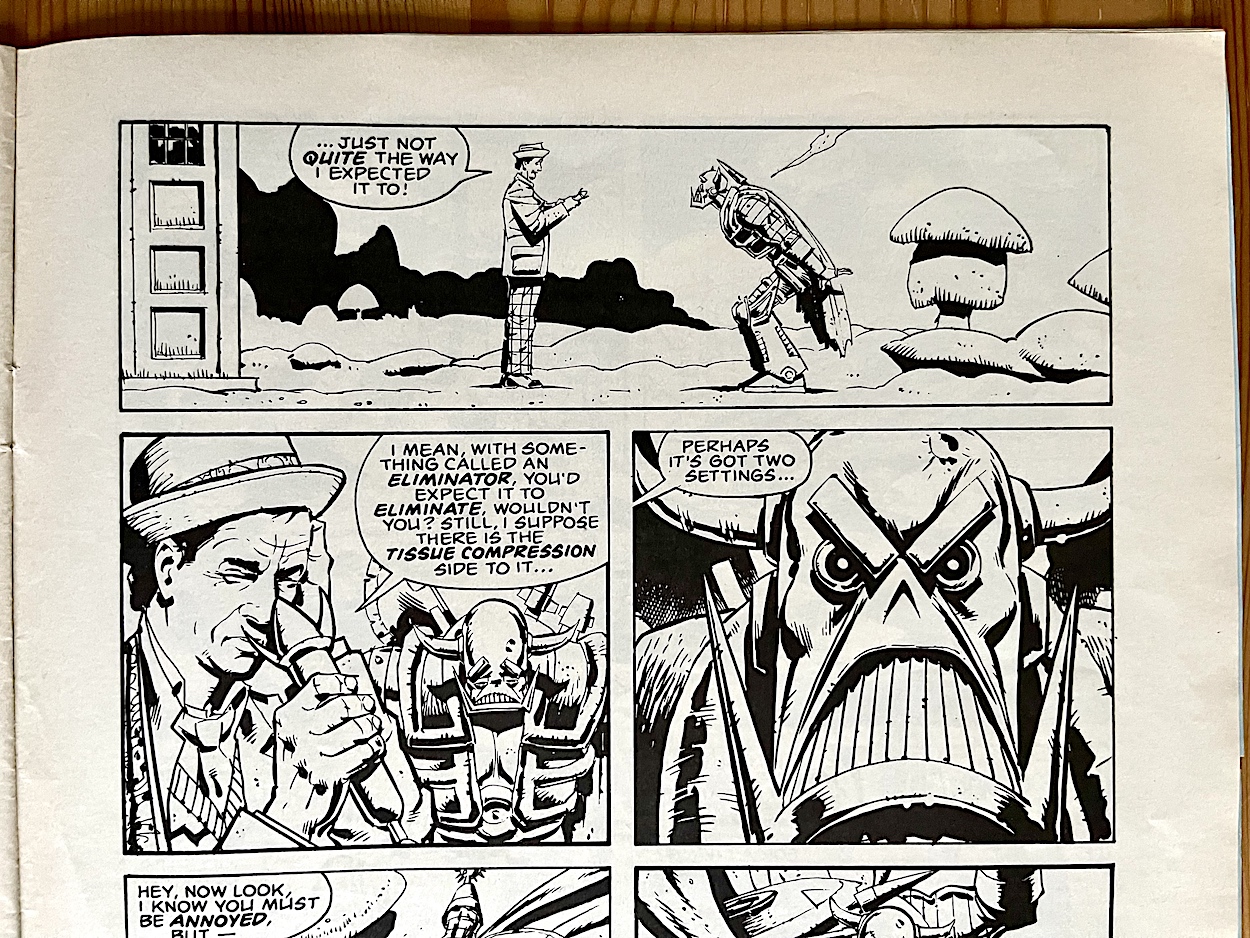
Ever the opportunist, Death’s Head gives the Doctor a choice between bargaining or dying, and asks if he has anything to trade. Realising jelly babies aren’t going to cut it the Doctor realises he has one of the Master’s Tissue Compression Eliminators. This is a device his evil counterpart would use to shrink people down into tiny little toy solder-esque versions of themselves, effectively killing them.

It was actually seen in one of the more recent series when my own personal favourite Doc, Jodie Whittaker’s take on the character, went up against Sacha Dhawan’s highly memorable Master. In it he used the compressor to kill quite a few people in a particularly nasty fashion. Indeed, back in our strip the Doctor acknowledges it’s a horrible device but that “desperate situations call for desperate measures”. But the fact Death’s Head is already so huge has an unexpected result.

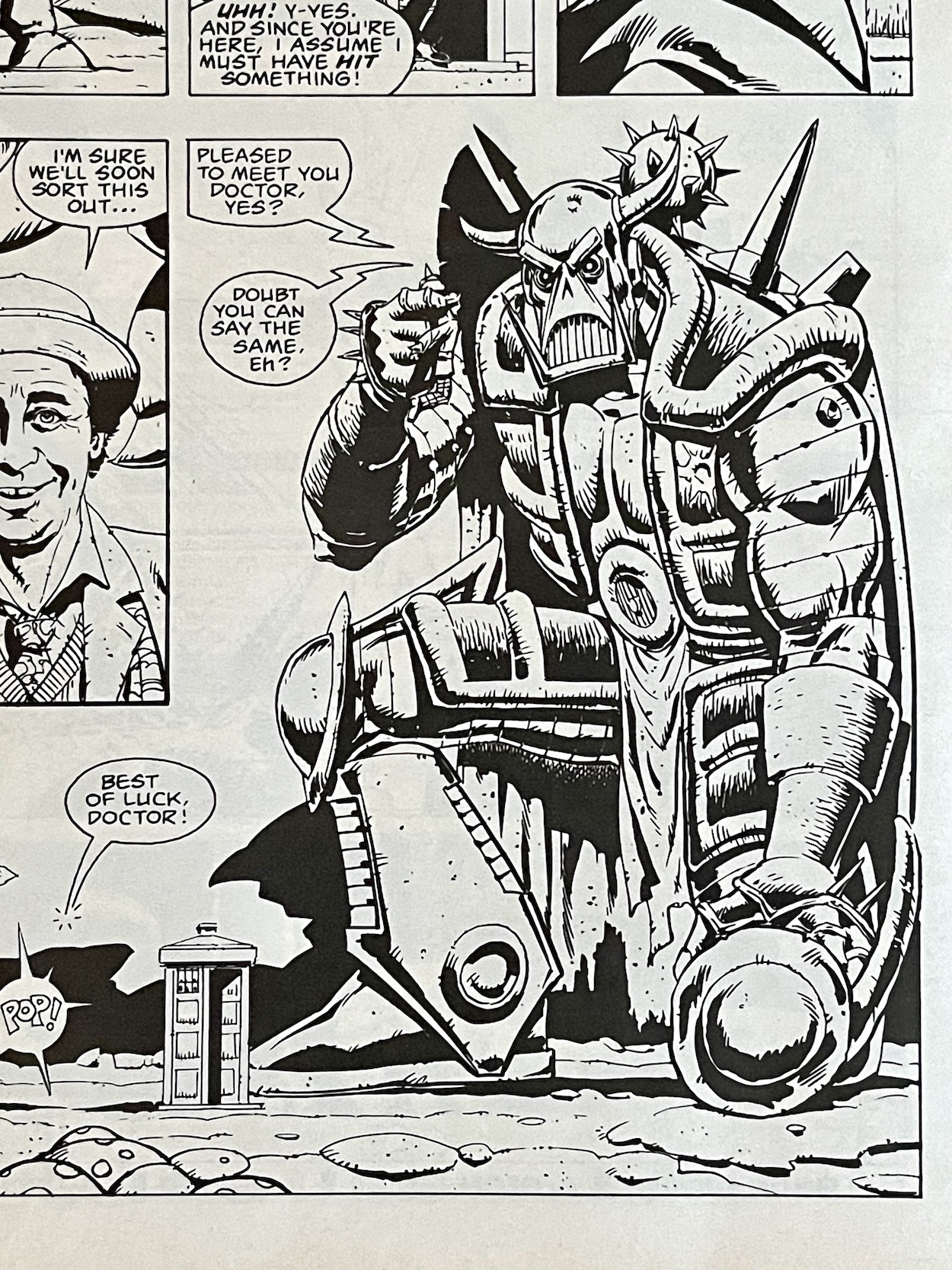
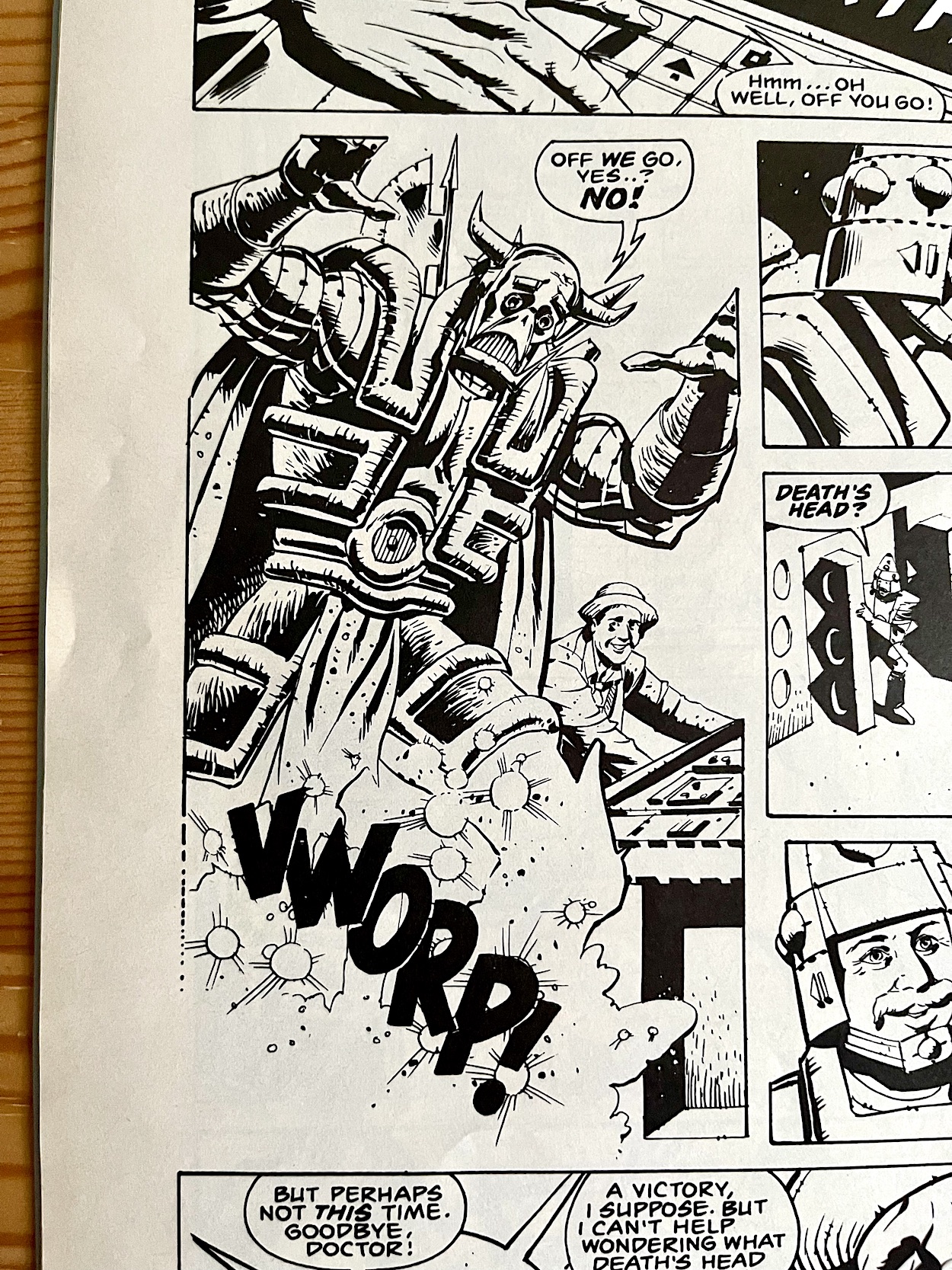
Despite wracking his body with pain, instead of shrinking him to minuscule size its power only brings him down to the same size as the Doctor. While it’s not a large image of Death’s Head’s face, you can clearly see his shock even from the side angle. After being a Transformer-sized mechanoid who could strike fear into his targets just by being there I find his face here so funny! The Doctor’s reaction is also meant to be funny, but I find it rather out of character.

Yes, he was obviously in danger but he hadn’t even really tried to talk himself out of the situation at hand before turning to a device he hoped would “eliminate” Death’s Head? That sounds more like something a Dalek would do. Even when I started watching Doctor Who with season 25 it was clear he didn’t go around simply killing the villains when he first bumped into them. This story was set during McCoy’s first year as the Doctor when he was still very much a slapstick, comedy version of the character with some elements of Colin Baker’s previous, darker incarnation thrown in, so I think this is just a joke comment rather than anything else.

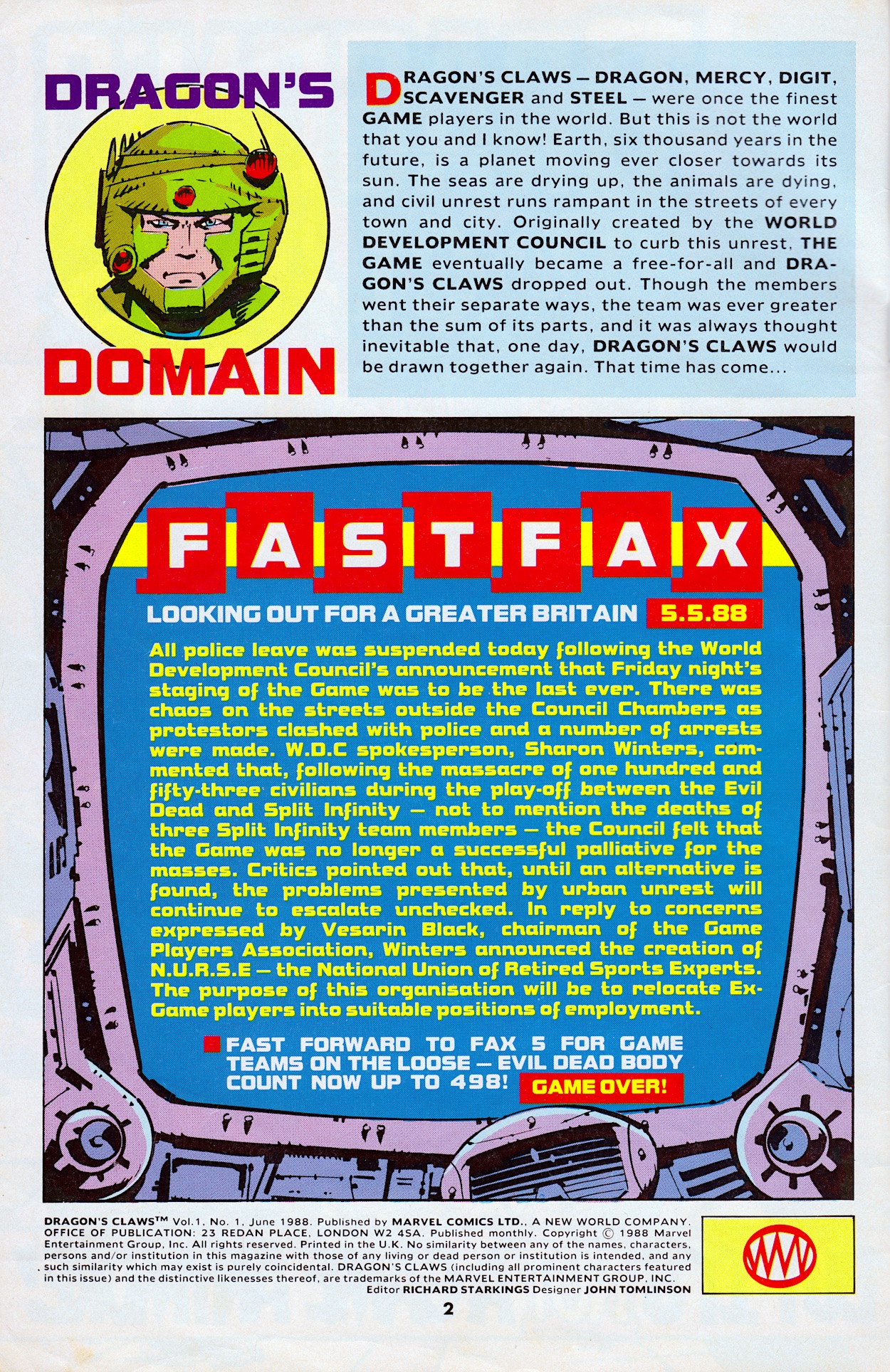
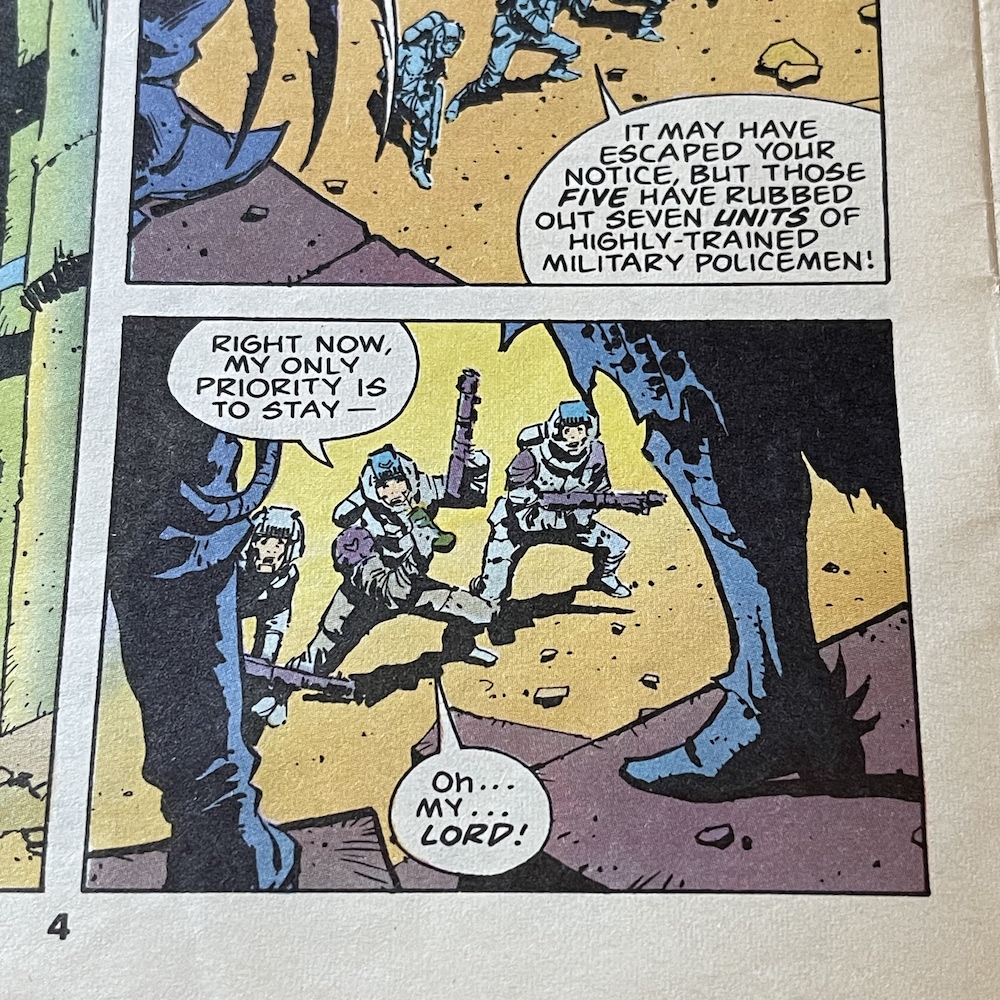
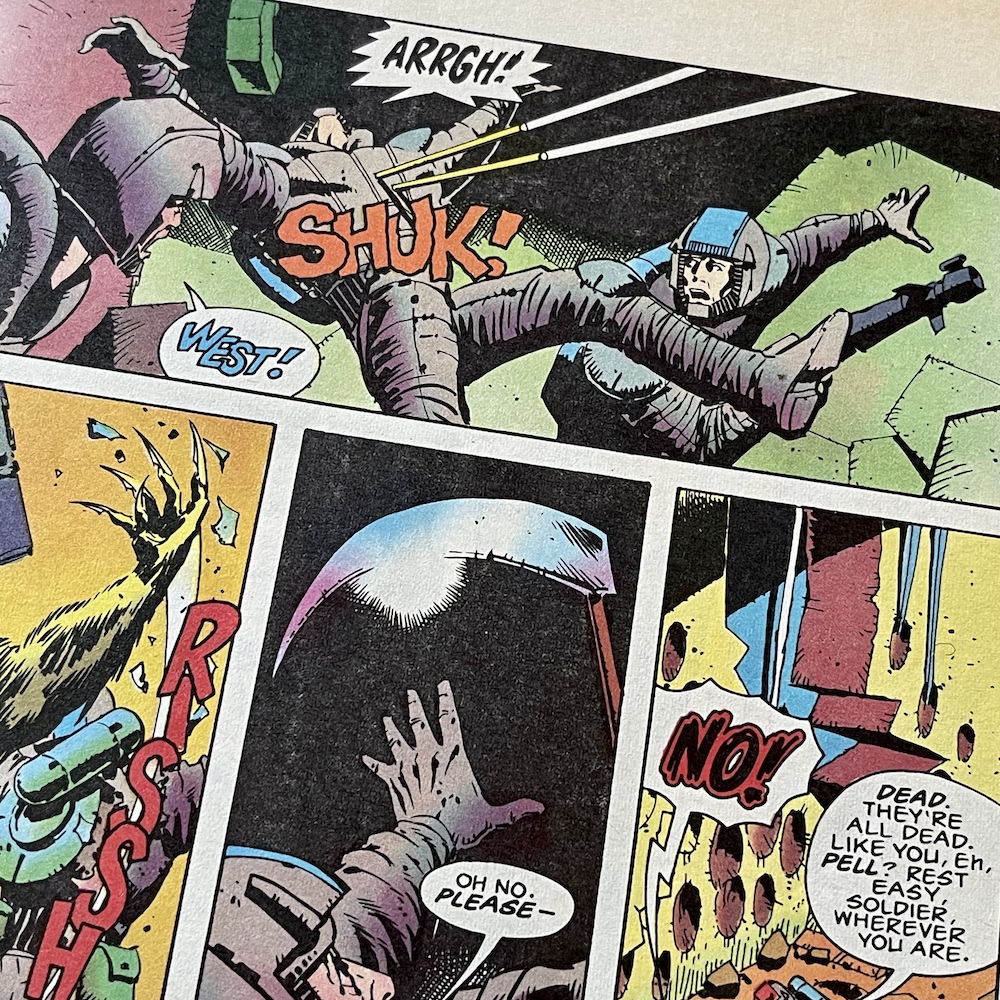
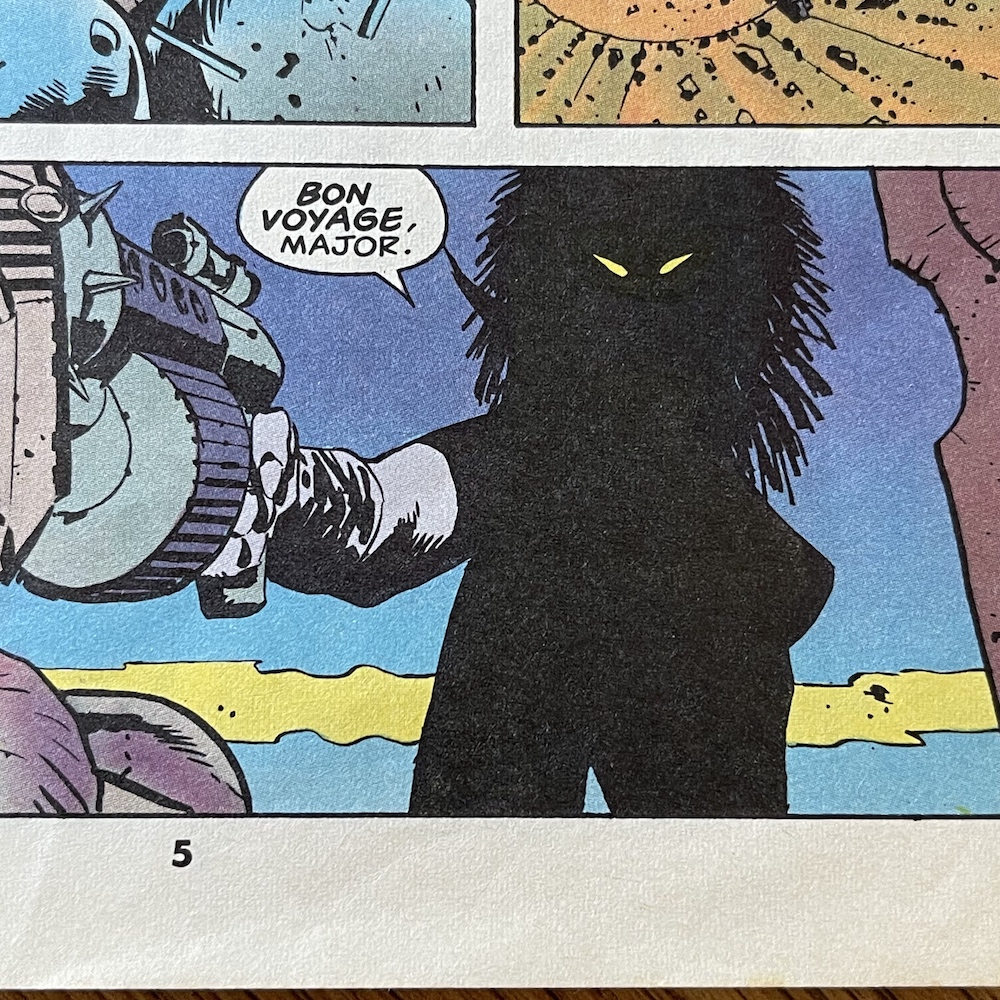
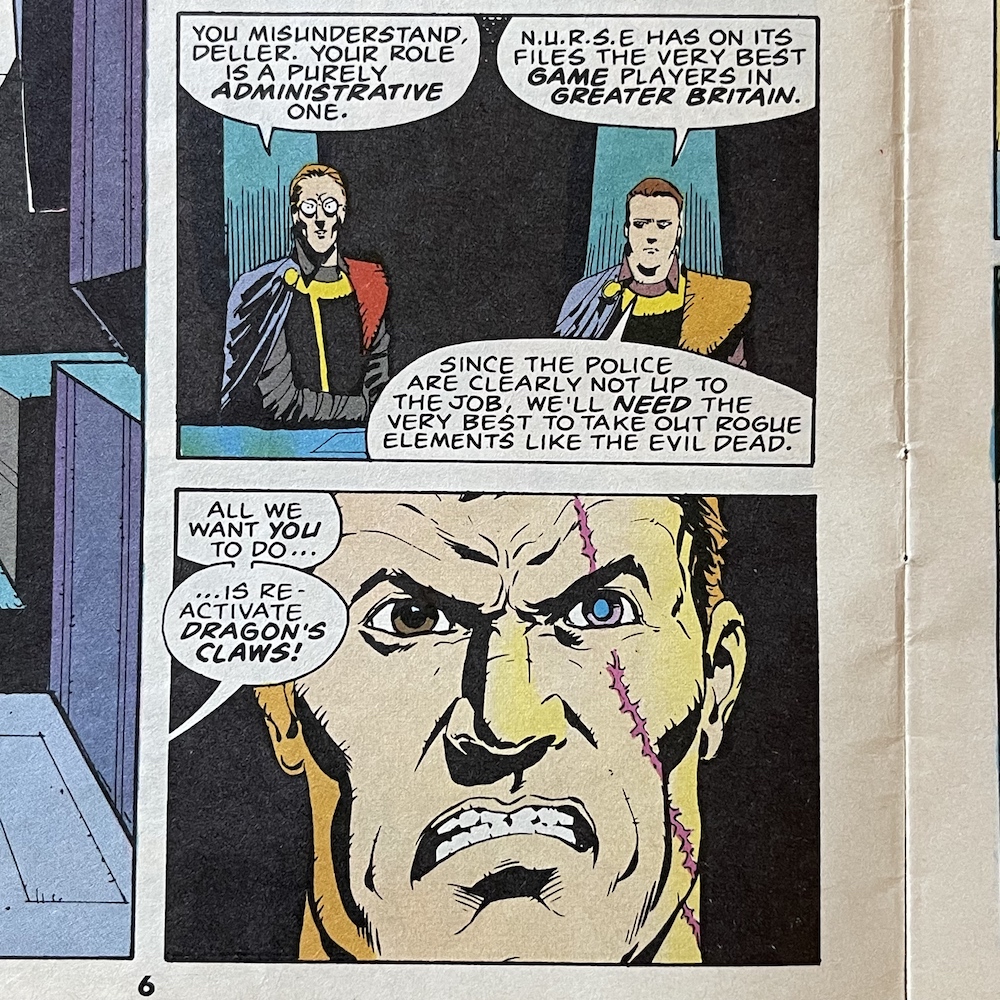
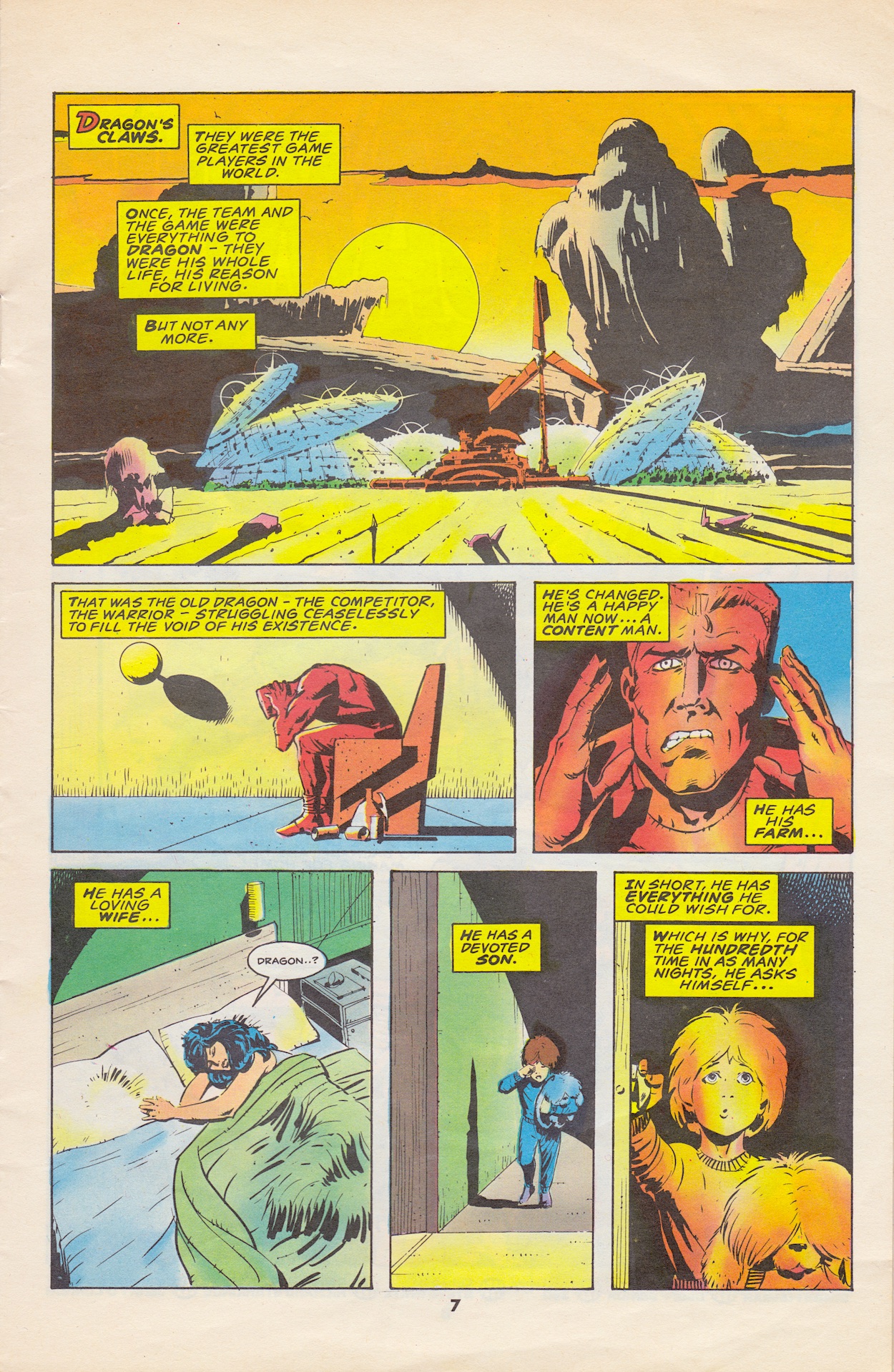
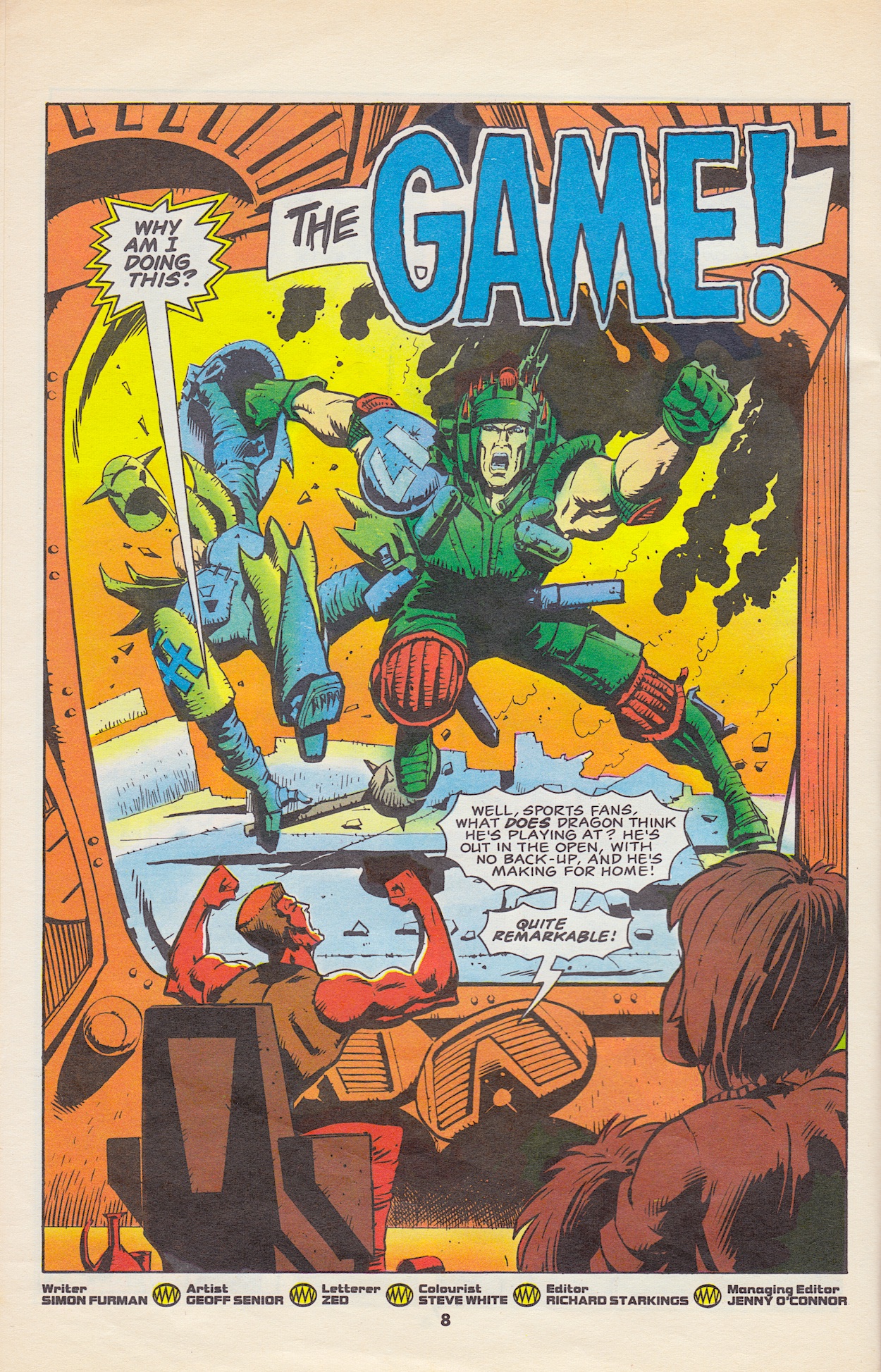
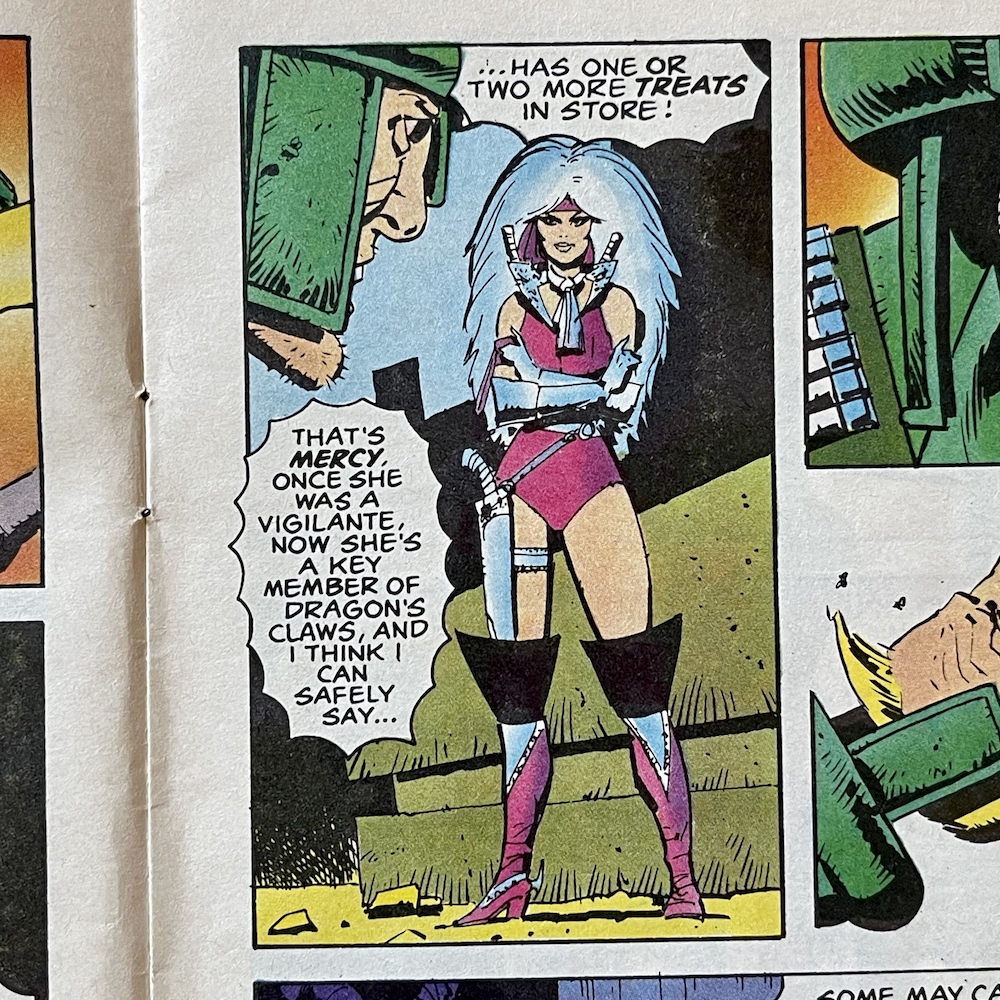
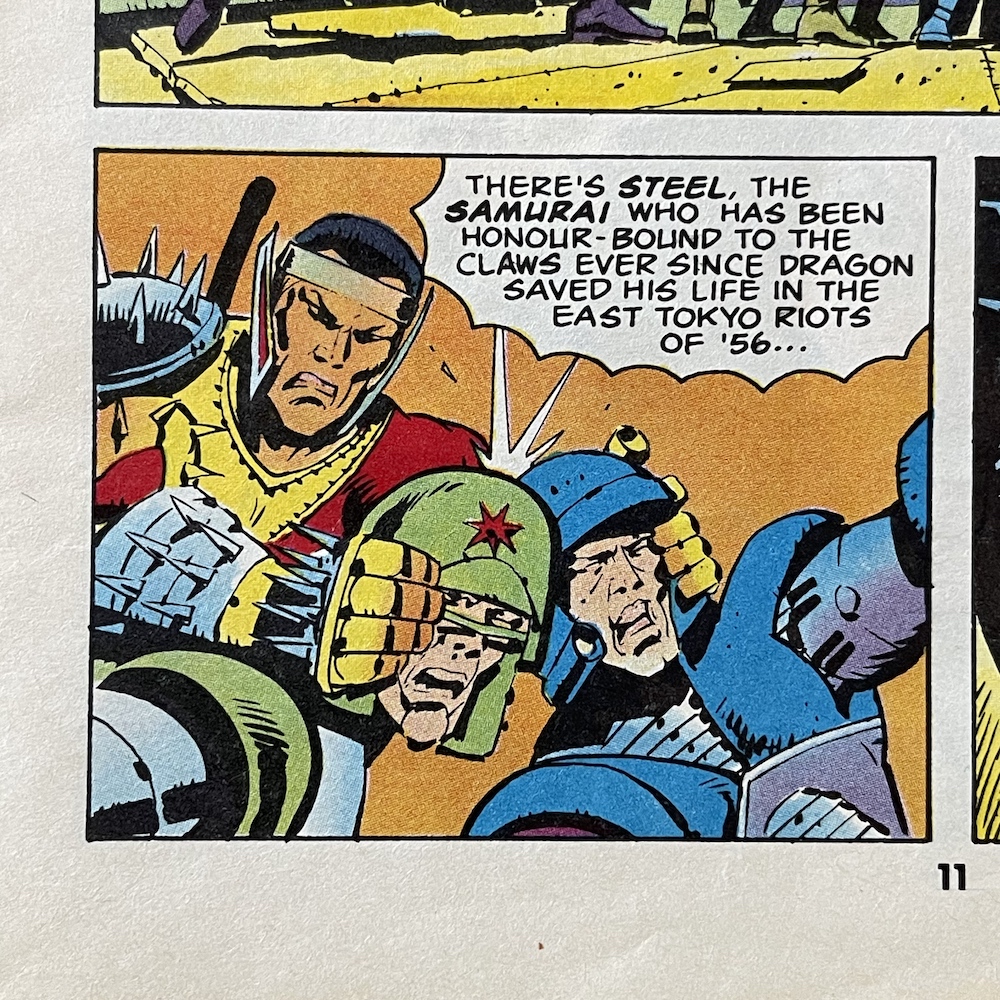
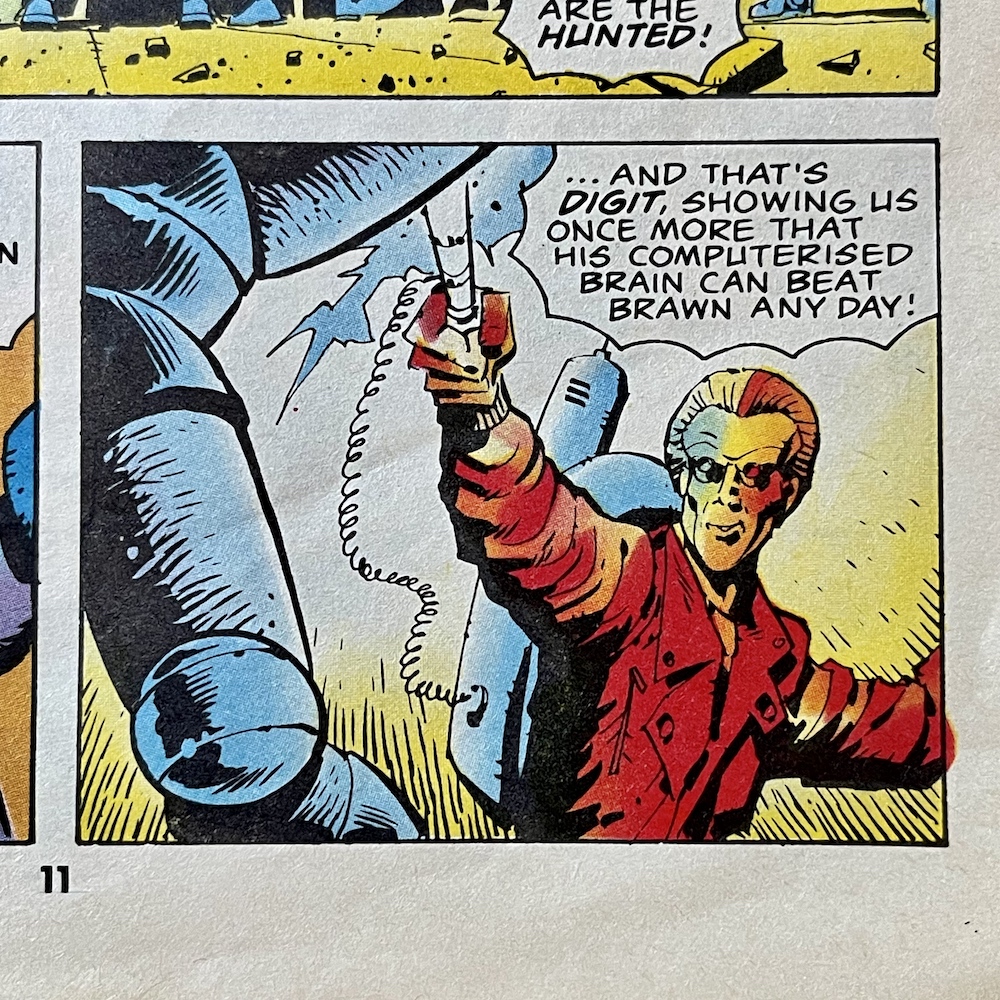
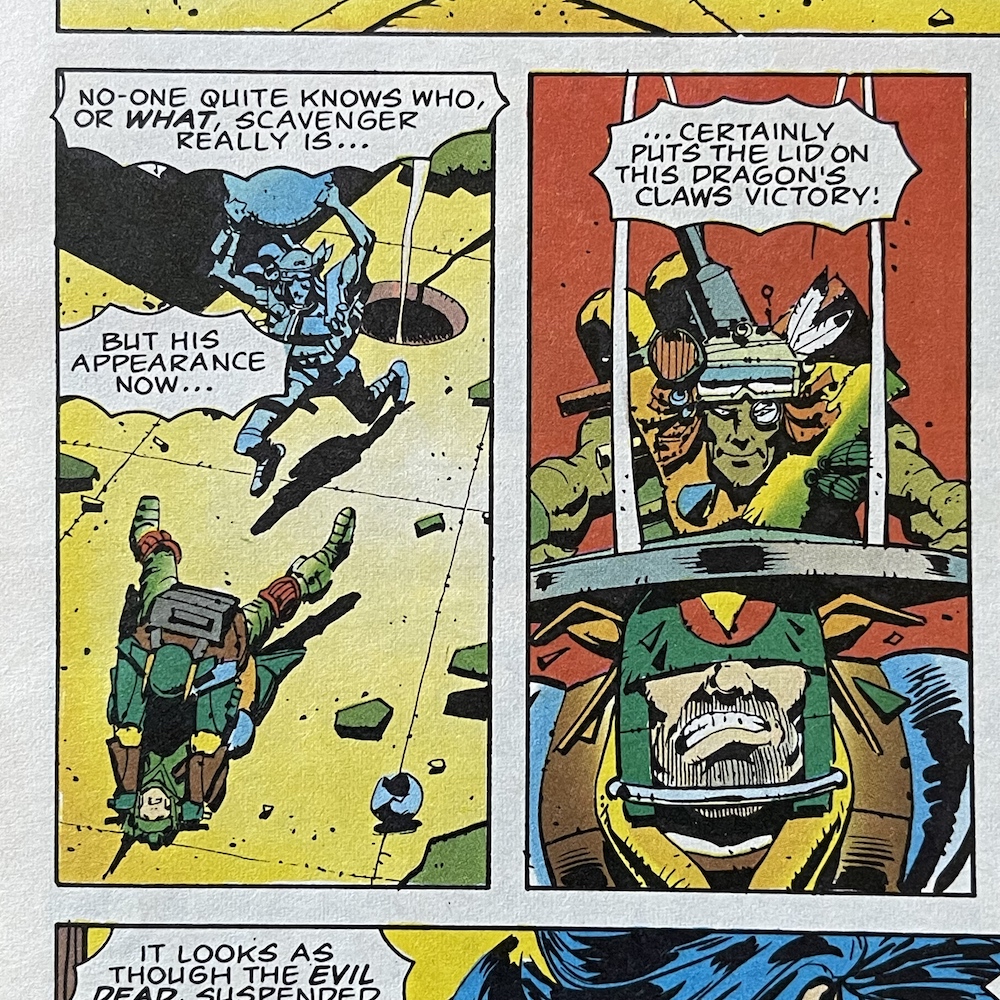
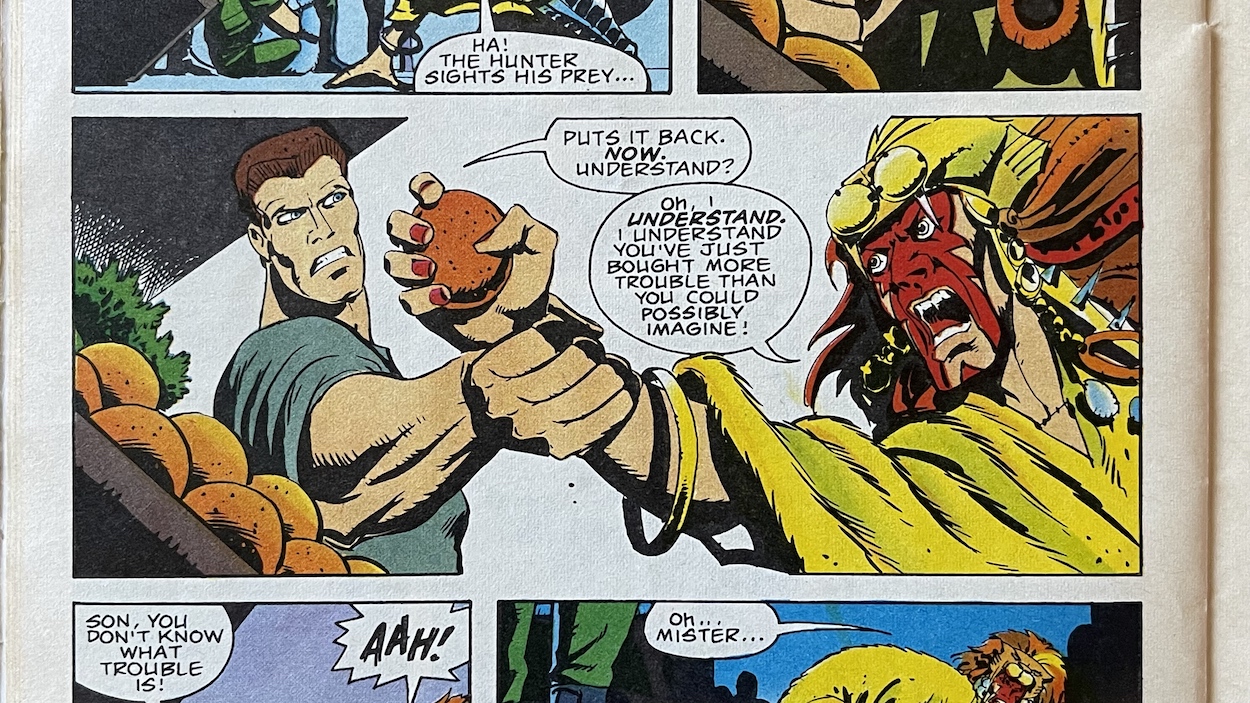
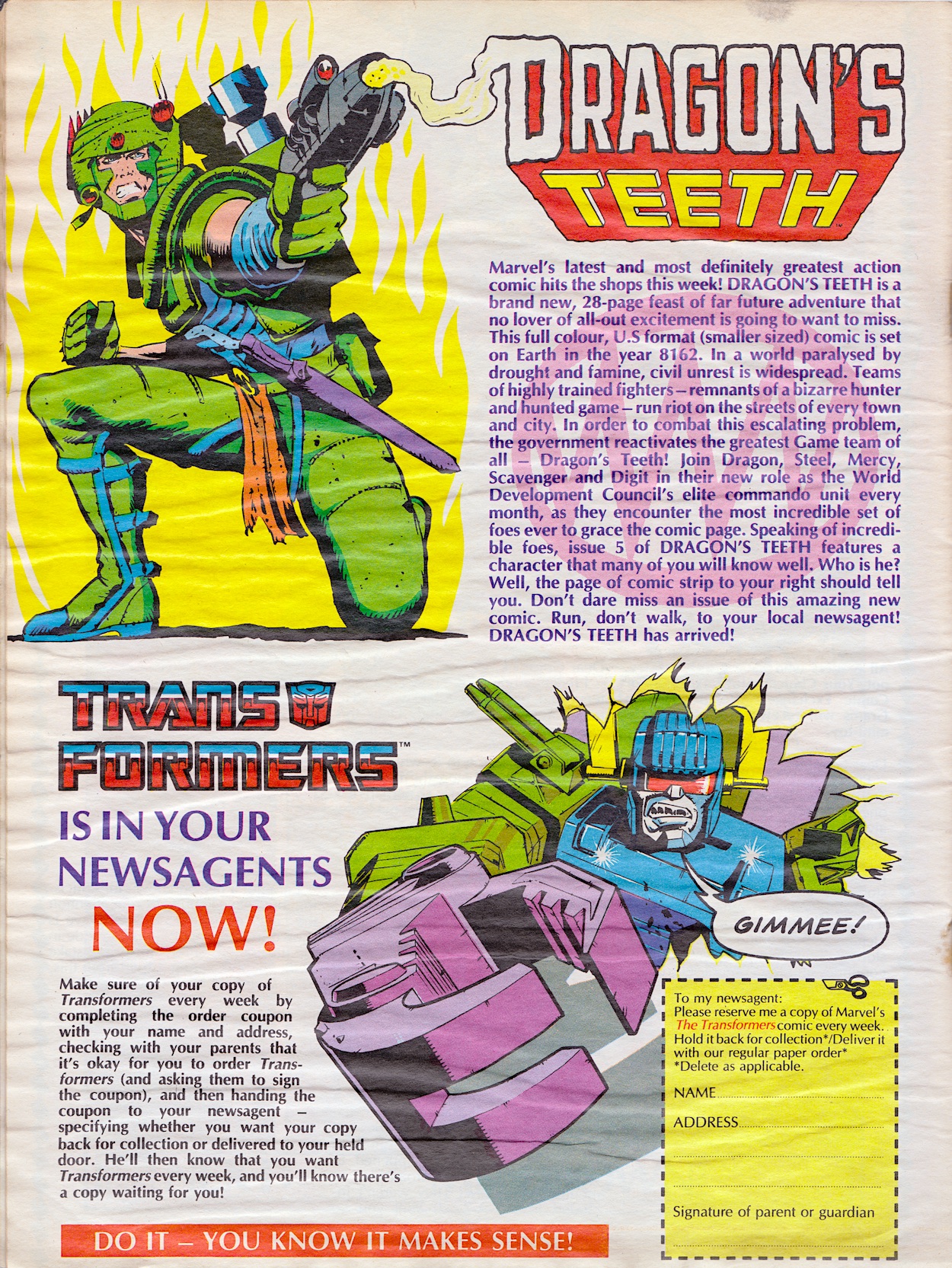
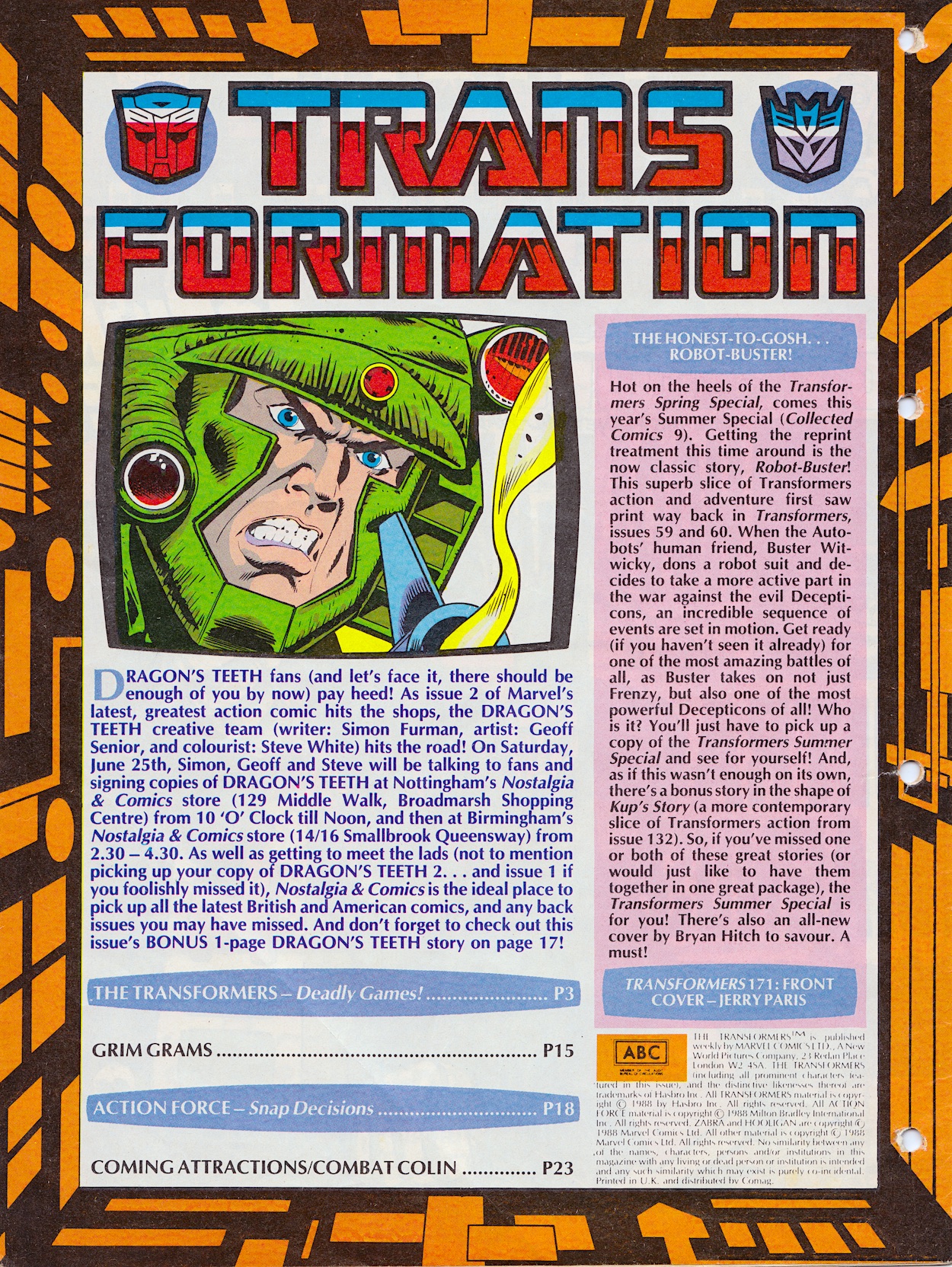
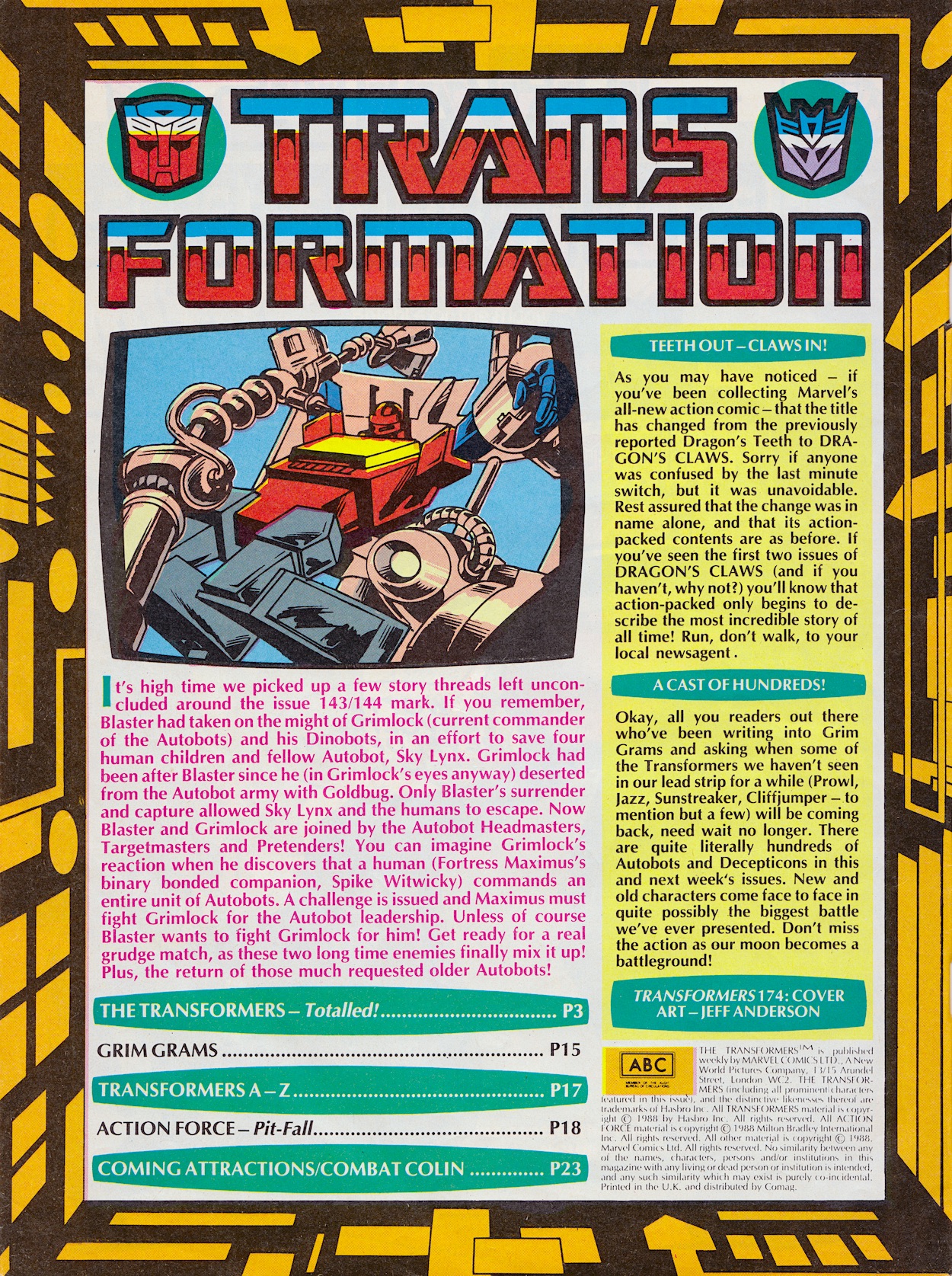
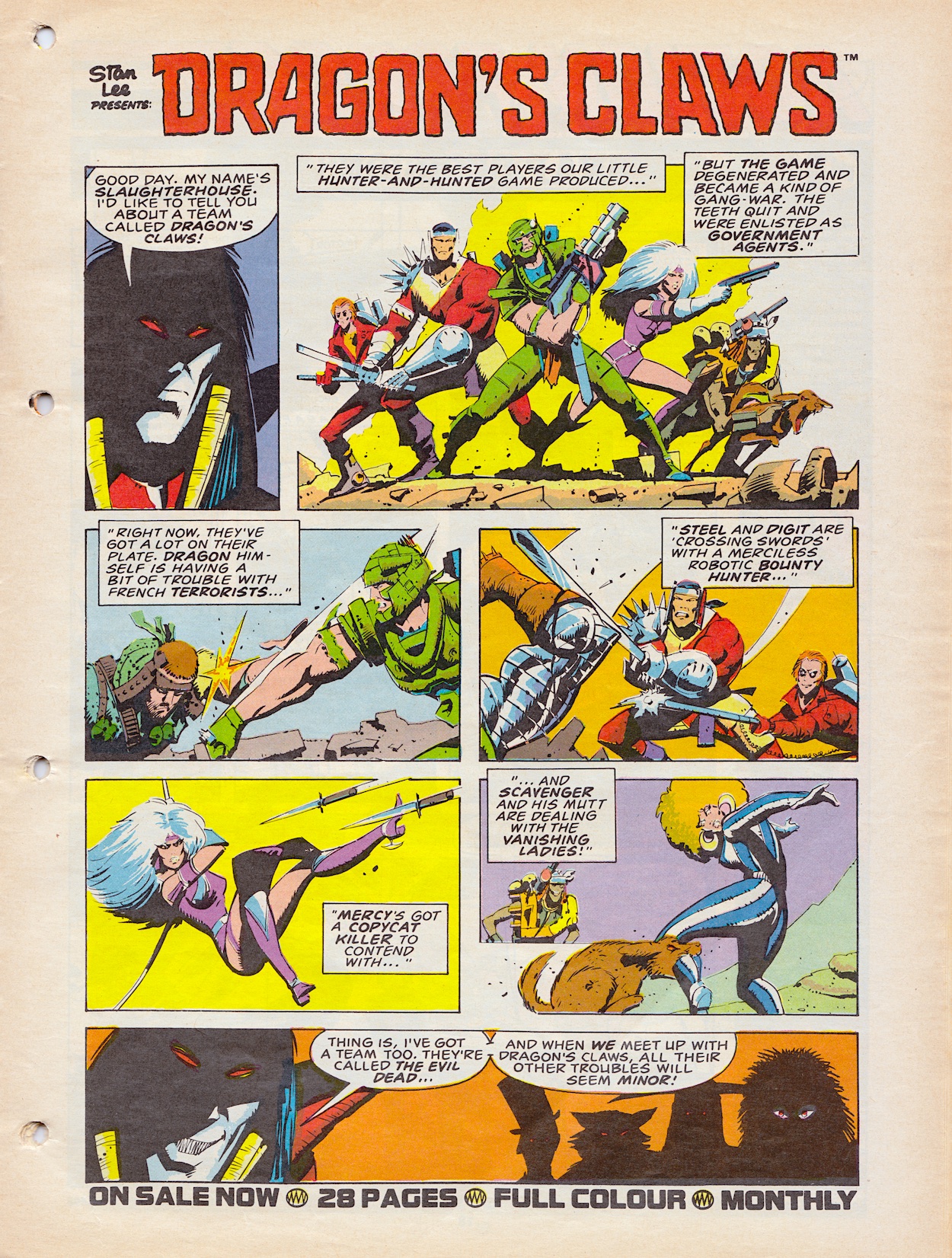
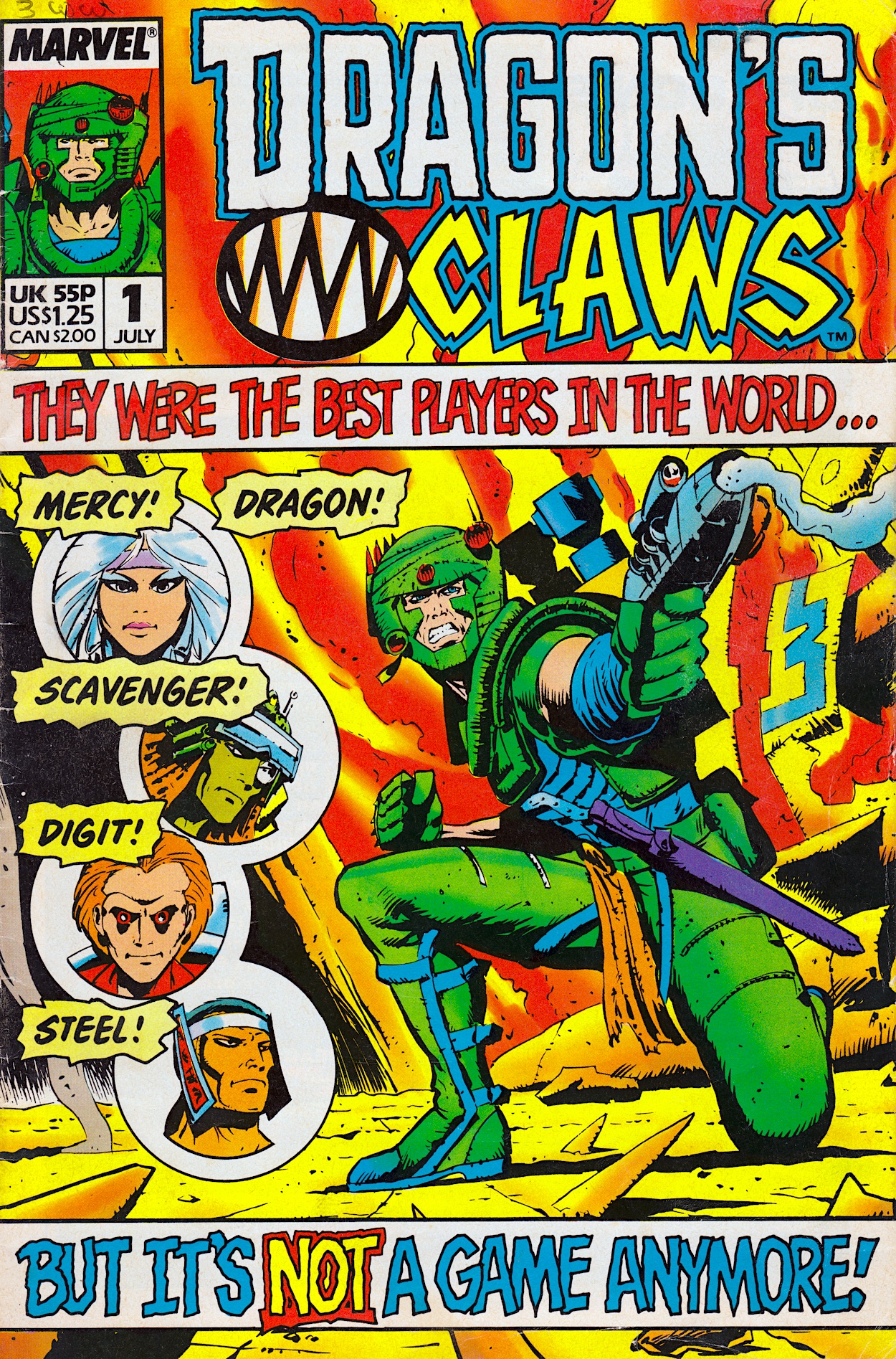
Death’s Head would pop up in one more Marvel UK comic before his starring role, namely Dragon’s Claws

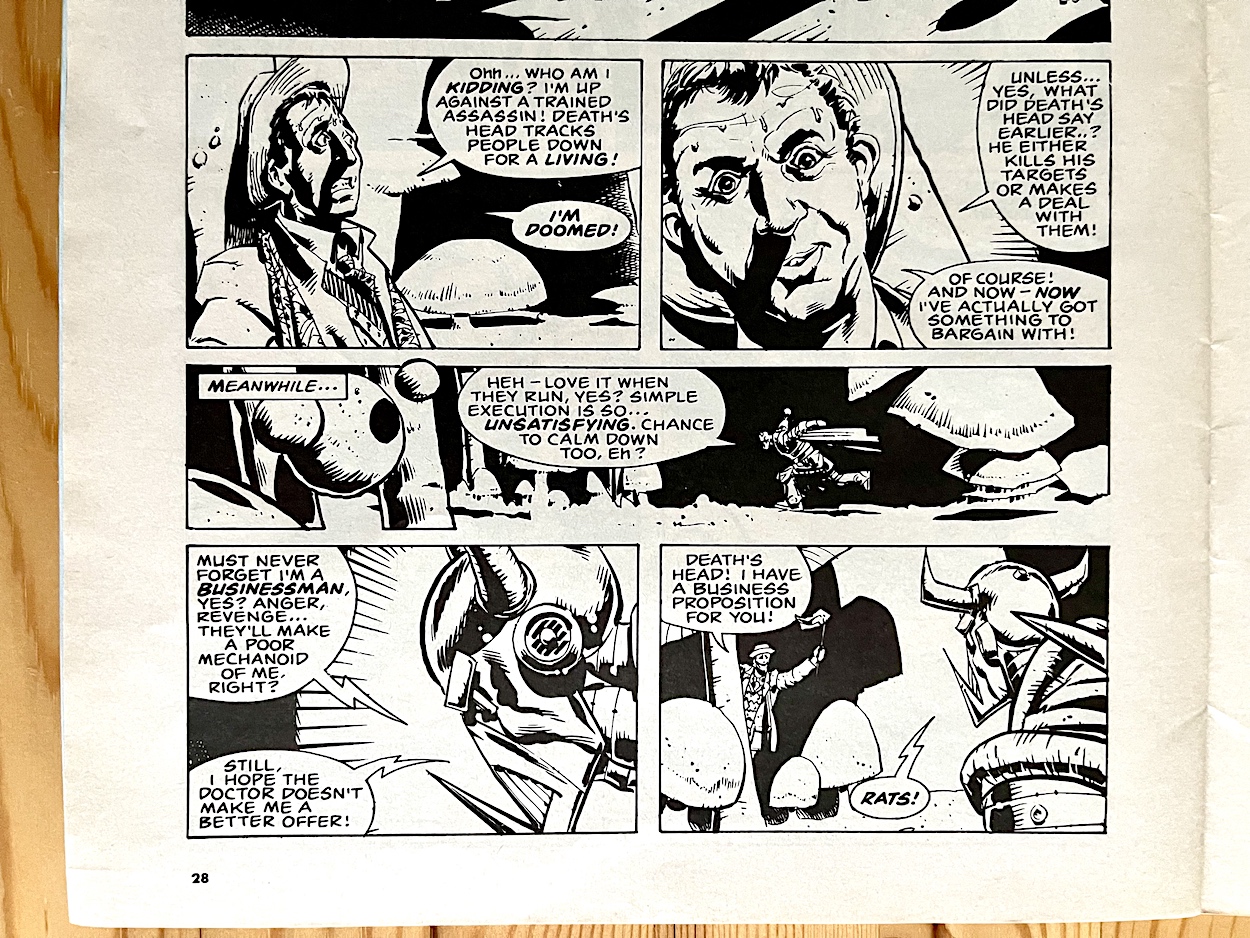
The following season (my first) he was a mysterious, thoughtful Doctor, often initialising the stories rather than reacting to some evil doer. I absolutely loved that portrayal, so reading this from the year before feels strange to me. But hey, I should’ve started watching it earlier! There’s a fast-paced chase to add some action, culminating in the Doctor finally getting an idea as to how he can turn the situation around and he calls out to Death’s Head that he has a trade to make.

I love that moment. It perfectly demonstrates the character of Death’s Head, his disappointment that he can no longer kill the Doctor because business always comes first. I’m sure I can look forward to a lot more of this humour in his own comic.

But what does the Doctor have that could possibly be of any use in a trade? Obviously, the TARDIS. We know he’ll have no intention of honouring this trade and anyone who has seen the show in recent years can probably predict what happens next. First of all though, it’s a bit of a thrill for this fan of both these characters to have Death’s Head get that enjoyable moment usually reserved for new companions, when they get to see the interior of the phone box for the first time.

The Doctor successfully bluffs his foe into his own fate by quickly running through some technobabble by means of instructions on how to time travel (remember, Death’s Head wasn’t a time traveller, he used others’ tech to do so in Transfomers), before pretending to leave it in the hands of its new owner. Death’s Head stops him, convinced if he did as instructed it would turn out to be a trap and tells him they’ll travel together for the first trip. Of course, this is what the Doctor planned all along and he sets the controls for Earth in the year 8162, concentrating the time circuits on the mechanoid who dematerialises accompanied by the text of that famous sound effect.

Why did the Doctor choose Earth to send a dangerous bounty hunter to? (…Ouch!! Sorry! Freelance Peace-Keeping Agent!…) He’s spent most of his life trying to save us daft humans and the strip even ends with him telling us our home is his favourite planet. Oh well, it’s still been a fun strip even if it’s left me a bit confused with The Doctor’s actions at times. But most importantly it’s set things up perfectly for Death’s Head’s monthly and that was its purpose in the end. (UPDATE: Actually, three months after writing this post, having now reviewed the first issue of another comic that date suddenly seems awfully familiar.)

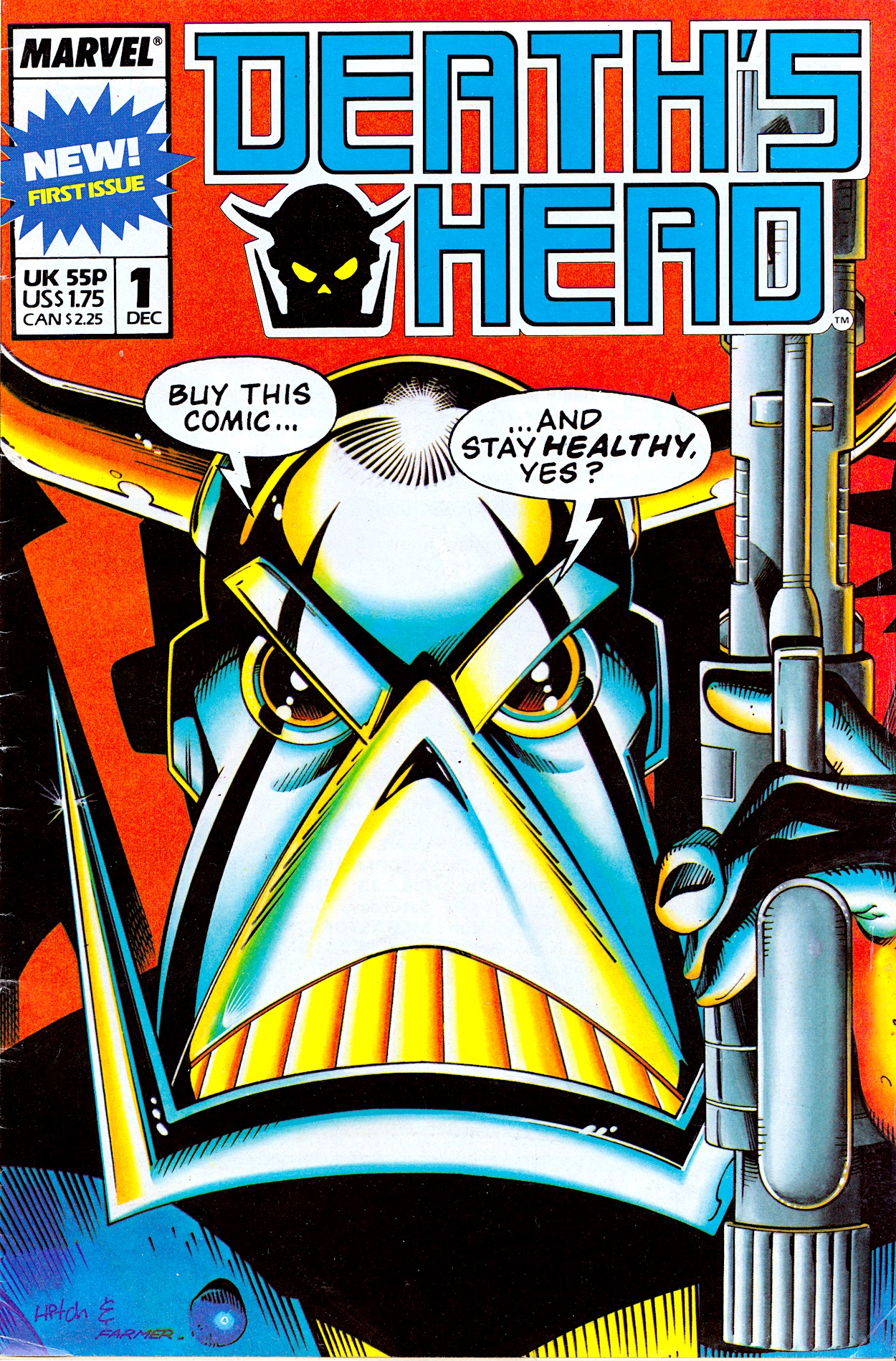
So he’s now ready to interact with all manner of human characters and by the looks of the advert in the introductory post he even gets a human sidekick. In fact, I think I can just about remember him. I’ll find out in November I guess. I do know from seeing images of the covers over the years that he meets a couple of Marvel’s superheroes along the way so it’ll be interesting to see those interactions, what with his single-mindedness and dark sense of humour. (Kind of makes me think of Deadpool actually.) The TARDIS is even on one cover so there must be a rematch to come!

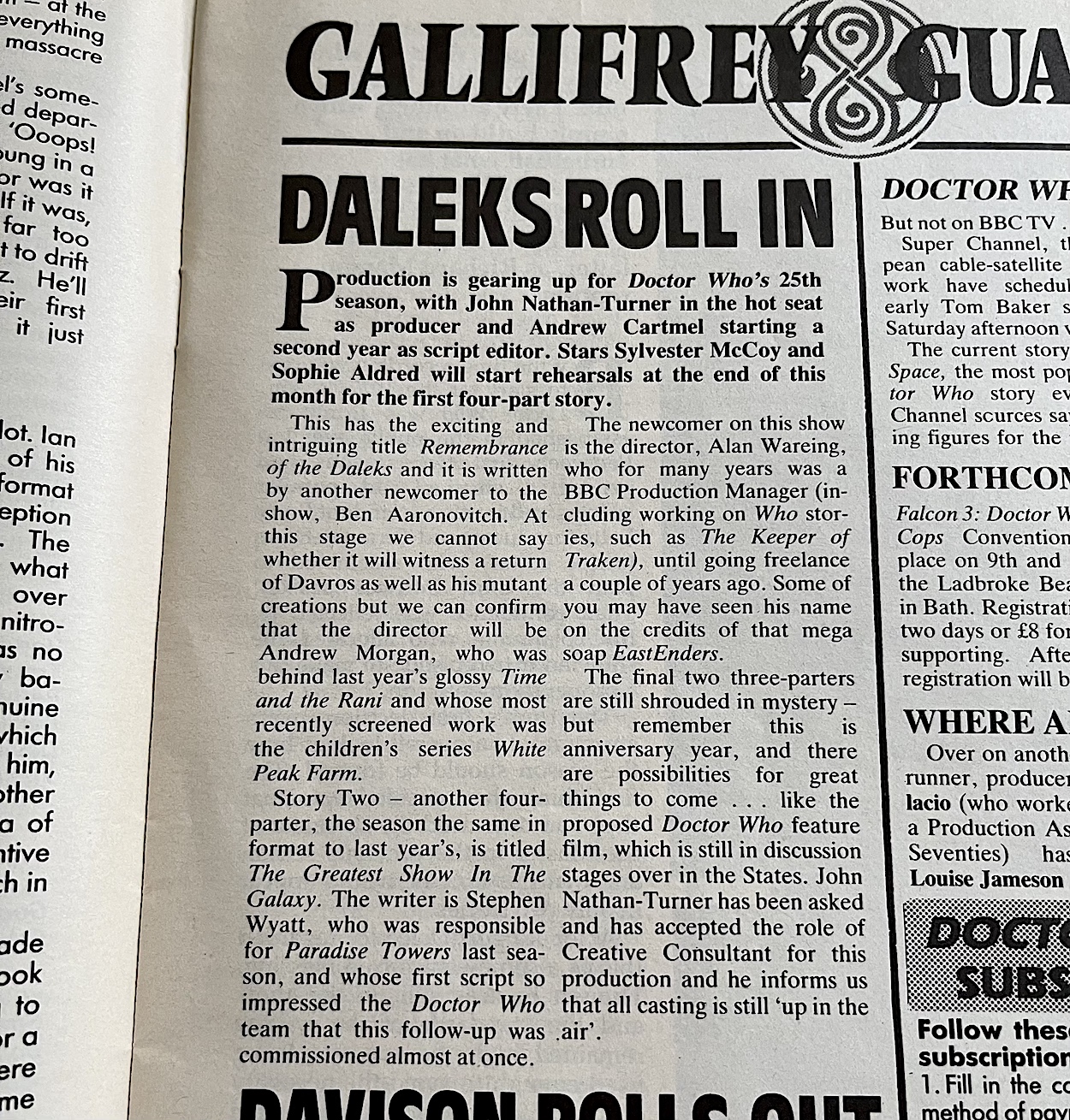
Before I round things up I wanted to show you the news story that stood out to me.

The story Remembrance of the Daleks was my first encounter with the series. It was a brilliant introduction! Made to mark the 25th anniversary of the Daleks I’d never seen anything like it and I was a fan straight away. This issue breaks the news of the new season’s opening story and it really took me back to that evening sitting in front of the portable TV in my bedroom when I decided on a whim to tune in. There are other points of interest in the magazine too.

It’s edited by Shiela Cranna who was the launch editor of Transformers and friend of the blog John Freeman is the designer and gets plenty of praise on the letters page. On those pages there’s also evidence nothing changes though, with some readers complaining others who like the new Doctor and the current show runner “aren’t true fans”. (Sigh.) It’s like Twitter before Twitter. There’s also a mention of a new Holywood movie which as we know would eventually become the 1996 TV movie pilot. I always find it interesting to read old magazines like this when I know how things turned out.

But anyway, back to the main subject at (detachable) hand.

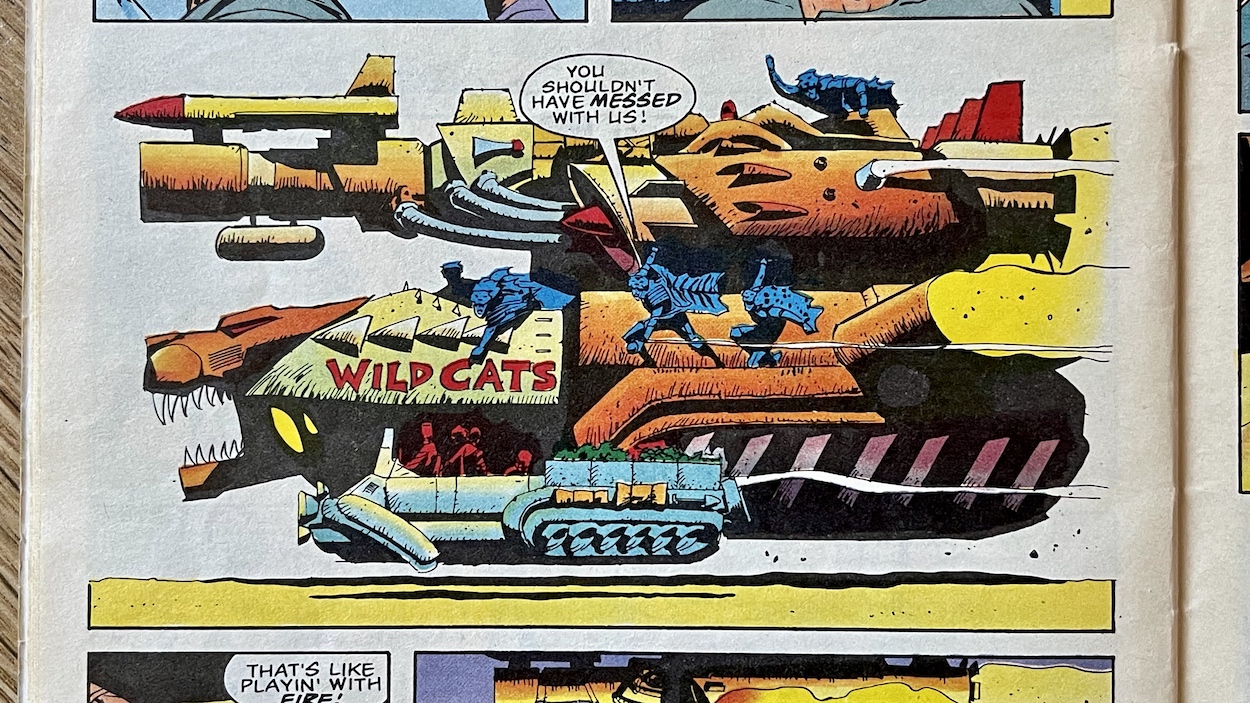
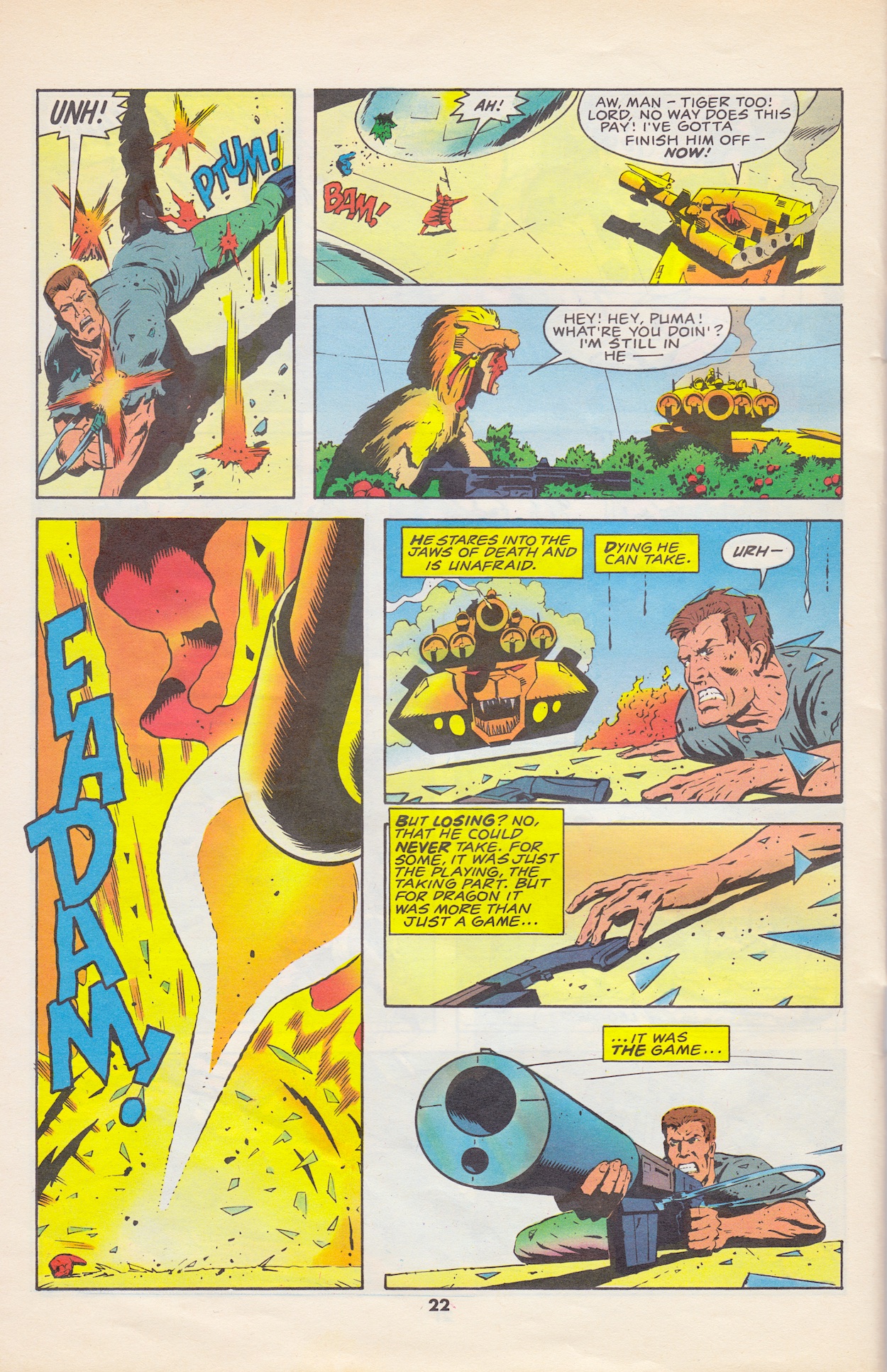
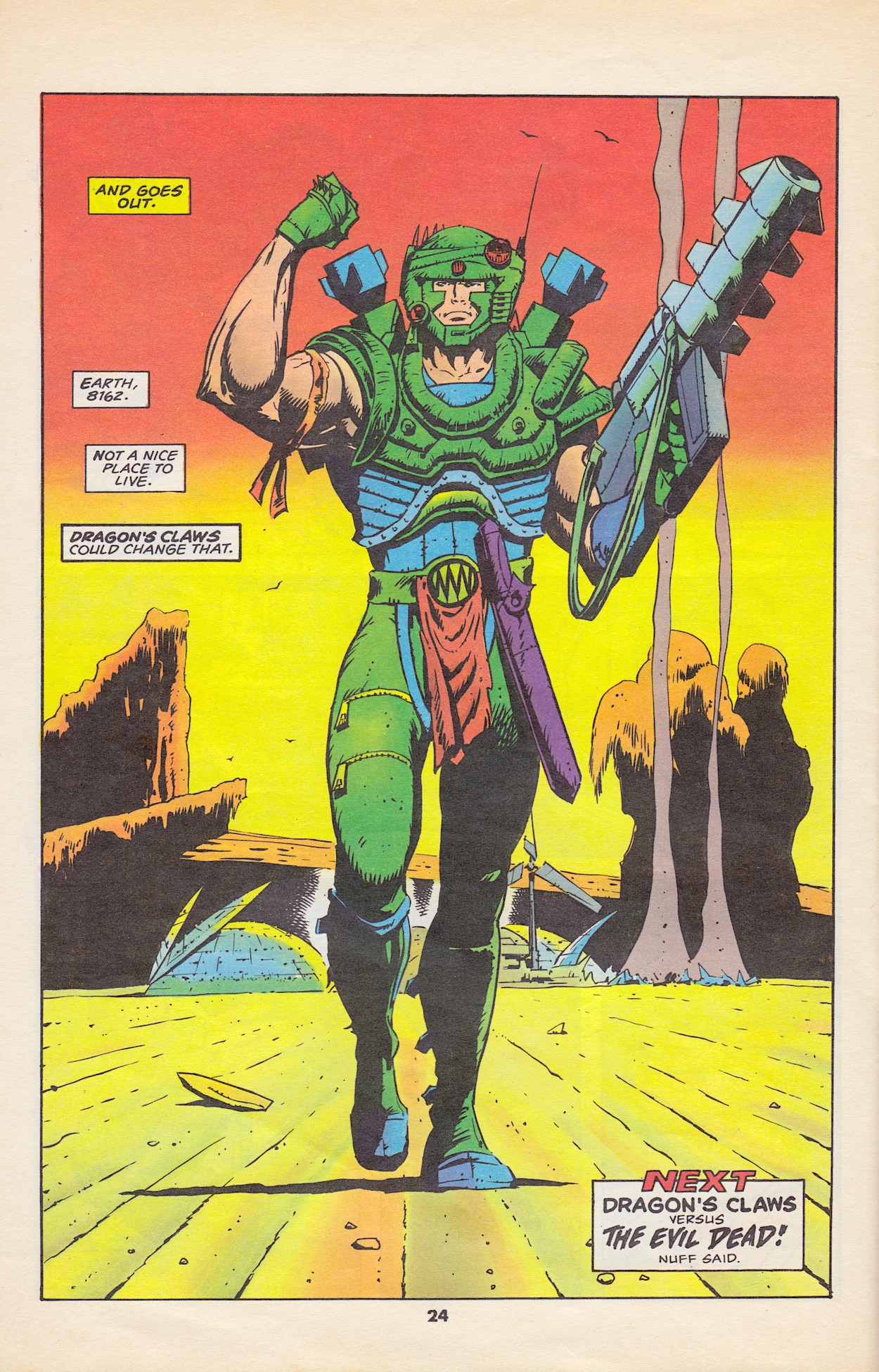
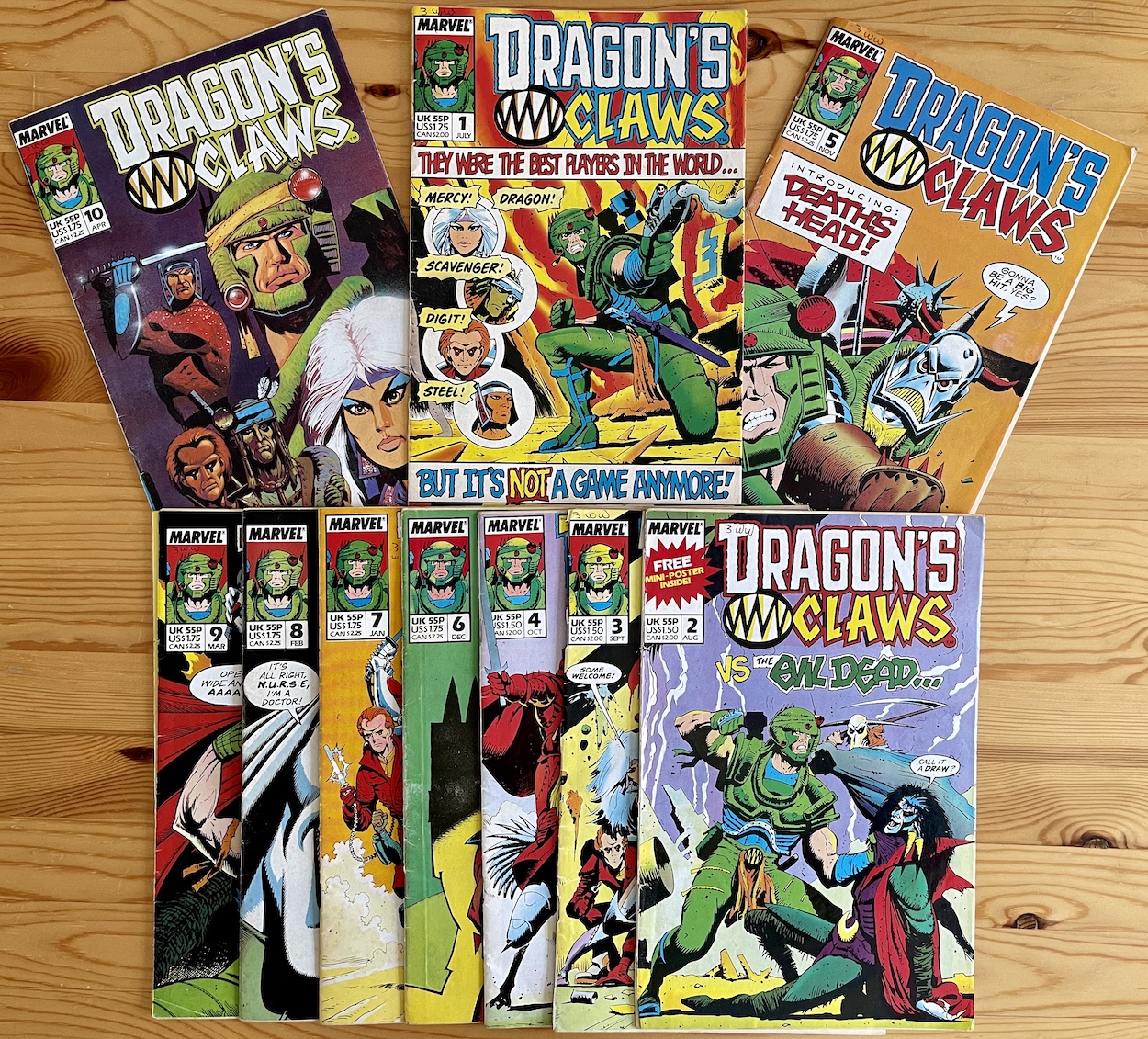
Things may be all set for a brand new monthly comic starring one of the greatest comics creations of all time (in my opinion) but we’ve a while to wait, what with the first issue’s release date being 5th November. That TARDIS would come in handy. But actually, we haven’t got quite that long to wait and this is where I break the news of the next real time read through to come to the OiNK Blog. Death’s Head would pop up in one more Marvel UK comic before his starring role, namely Dragon’s Claws also created by Simon and Geoff.

For now don’t forget there’s an introductory post showing highlights from Death’s Head’s stories in Transformers (and links to all of the Instagram posts from that multi-year read through too) along with more details about his creation and some insights from the comic’s editor Richard Starkings who very kindly contributed. The Dragon’s Claws will join the blog on Sunday 14th May 2023, #5 featuring Death’s Head will be reviewed on Sunday 17th September and then his own debut issue will be here on Sunday 5th November. I think it’s going to be a good year, yes?

GO TO DRAGON’S CLAWS 5

DEATH’S HEAD MENU

DEATH’S HEAD: iN REAL TiME, YES?

In the latter months of 1988 I began reading Marvel UK’s Transformers weekly and my second issue contained a very funny comic strip advert for a new monthly about a certain Freelance Peace-Keeping Agent (not a bounty hunter, never a bounty hunter). It also popped up in The Real Ghostbusters and so I found myself dipping my toes into the first issue of Death’s Head, not fully knowing what to expect and with no knowledge of his already extensive adventures with the Transformers (and even Doctor Who, which I’d just started watching that year too).

Over the next couple of years reprints in Transformers and my friend giving me his back issues meant I was able to read those stories. But I never did buy more than Death’s Head first issue, despite having very fond memories of reading it wrapped up in bed while ill one day and really enjoying the action and comedy. But I was only allowed a certain amount of comics on order at any one time and, while I did buy more with pocket money most weeks, a month was a long time for my attention span back then. Now I can finally make up for this, so let’s take a look at how this very famous Marvel UK character was introduced to the public.

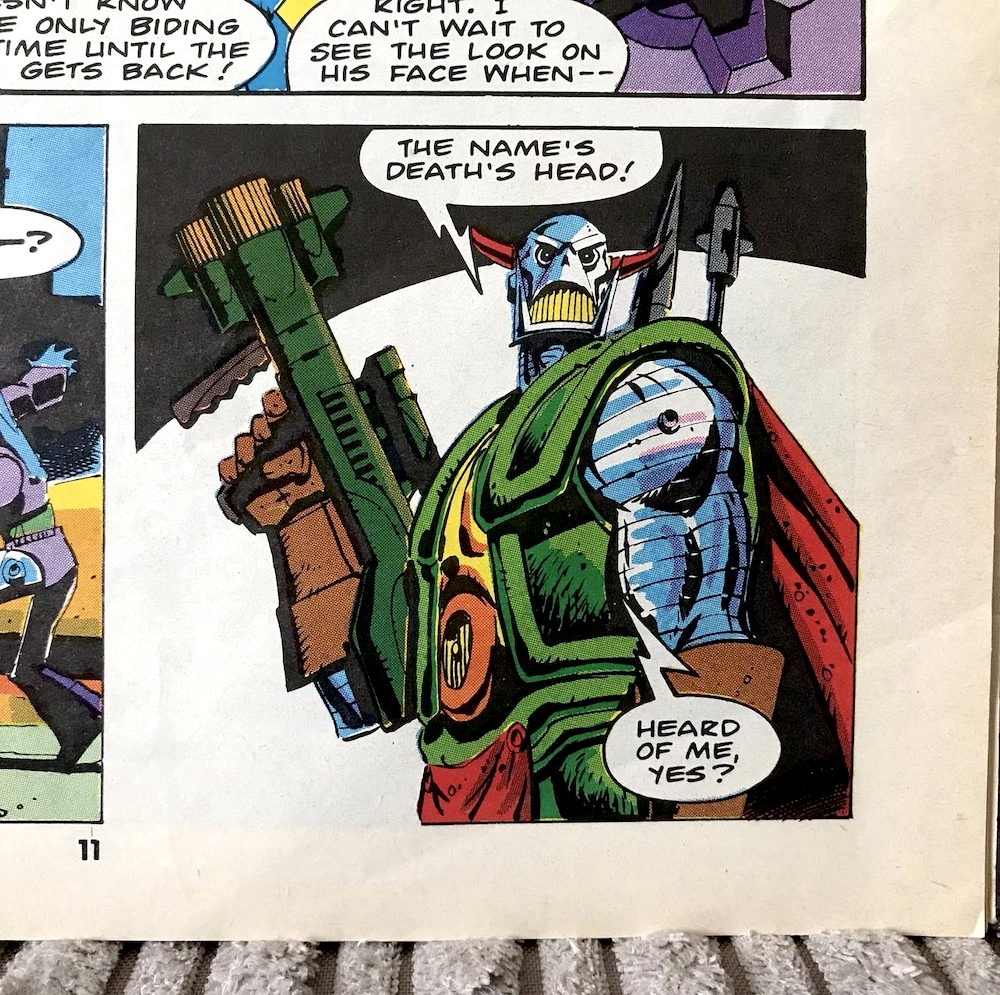
Writer Simon Furman originally created Death’s Head as a one-off character for a Transformers story (not knowing the name had also been that of a Nazi tank division). However, upon seeing legendary artist Geoff Senior’s interpretation Simon knew they had a recurring character on their hands, even rewriting his lines to better suit the image Geoff had created, inspiring the hilarious speech patterns and quirks we came to love, yes? He proved very popular with the readers and altogether appeared in 17 issues and three serials, including two highly regarded epics.


“I loved messing with legal”

Richard Starkings, Death’s Head editor

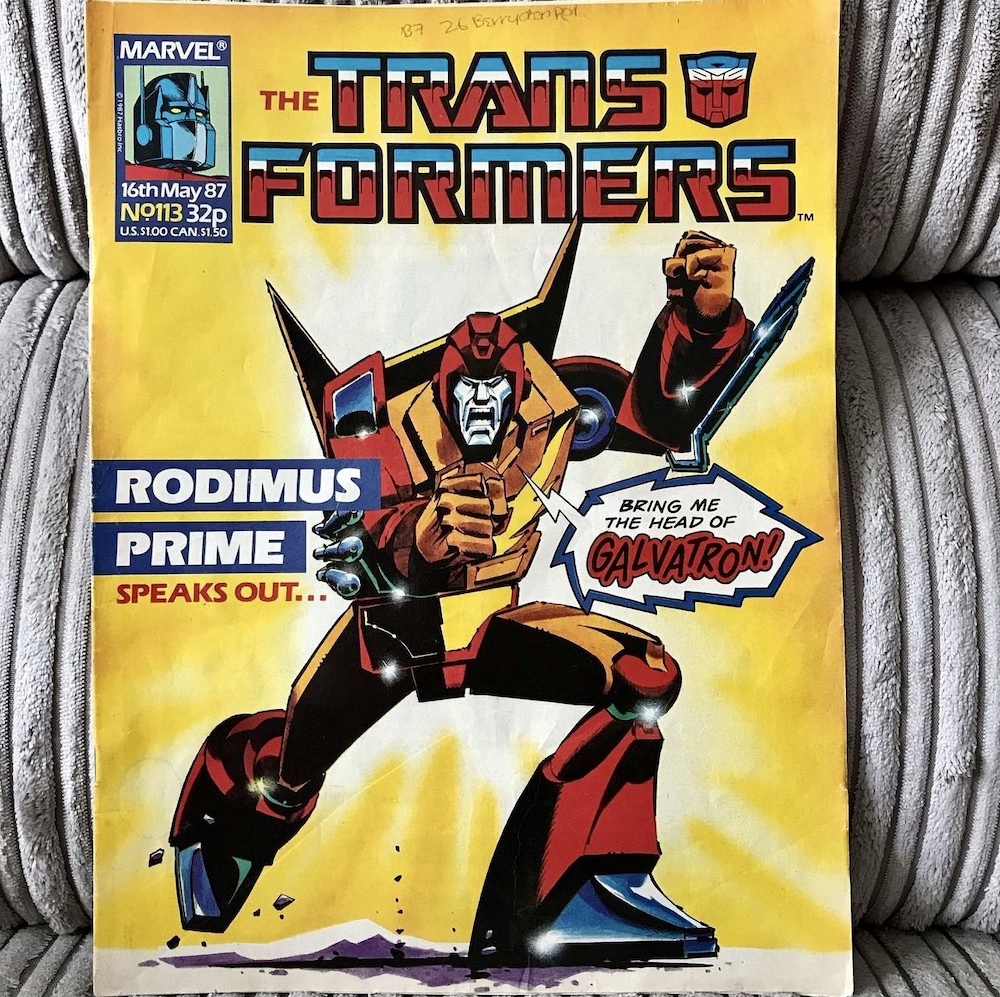
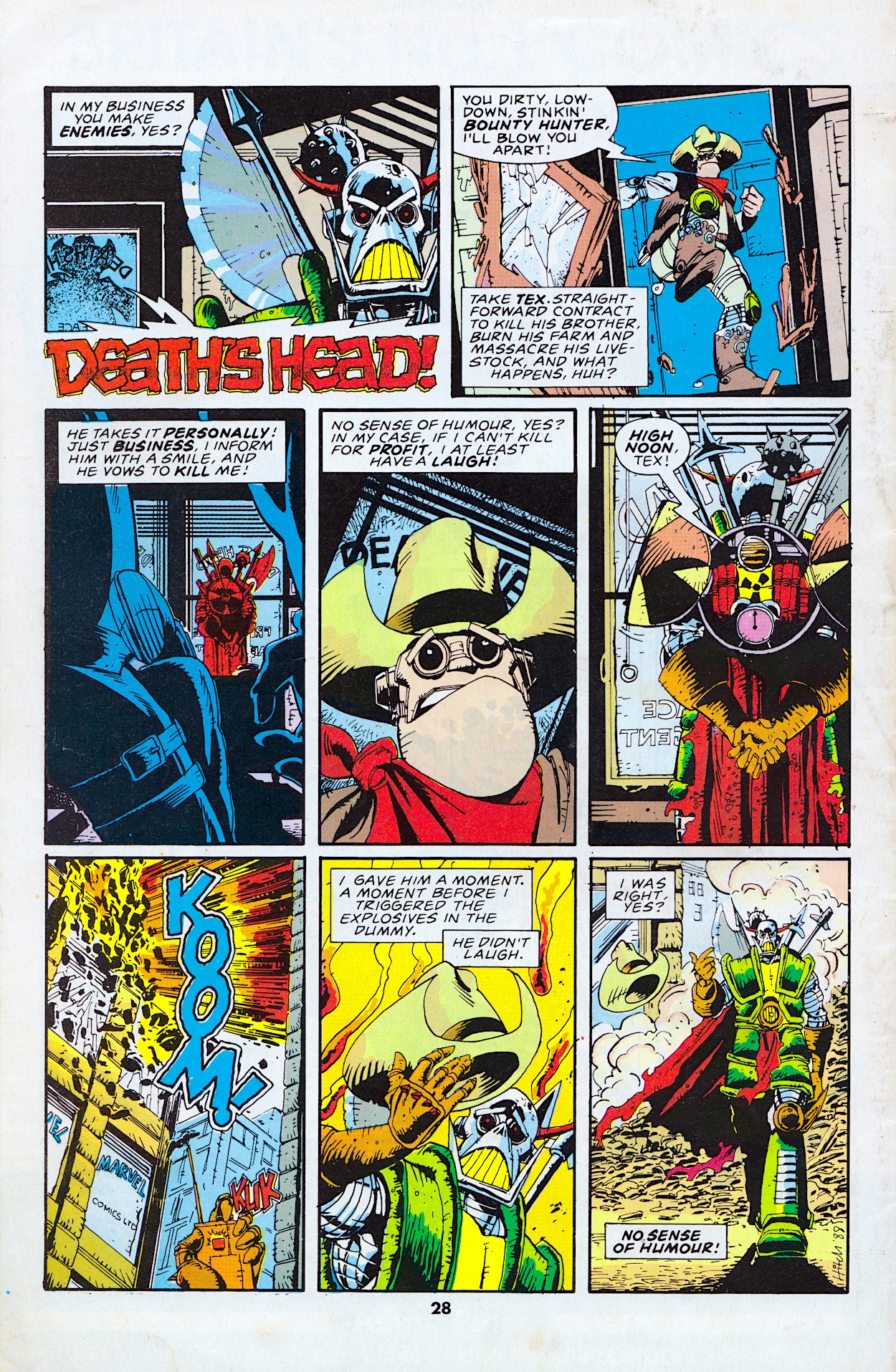
Despite online information to the contrary, Death’s Head did indeed first appear in Transformers #113 on 9th May 1987. There’s a one-page strip called High Noon Tex (further below) which Former Marvel UK editor Richard Starkings (The Real Ghostbusters, Doctor Who Magazine, Elephantmen) tells me was created to run in other titles first so the company could retain ownership of the character, otherwise Hasbro (owners of The Transformers) could claim the copyright. However it didn’t appear until a year after his first Transformers appearance.

“I dare say,” Richard told me, “that between commissioning the strip (it’s one page, so you know it was my idea) and legal establishing the trademark … his appearance in Transformers notwithstanding, we weren’t able to run High Noon Tex beforehand. There was also a Doctor Who crossover (I loved messing with legal) so the BBC couldn’t own him either!”

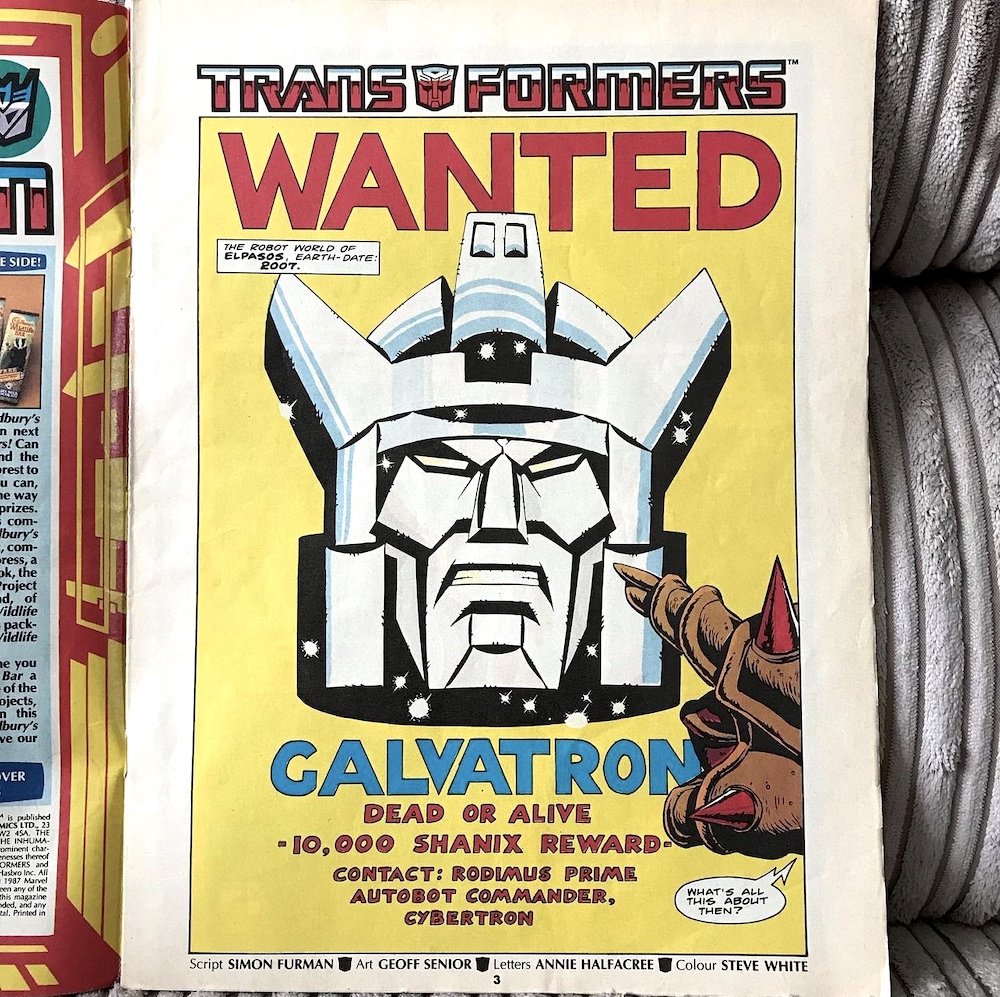
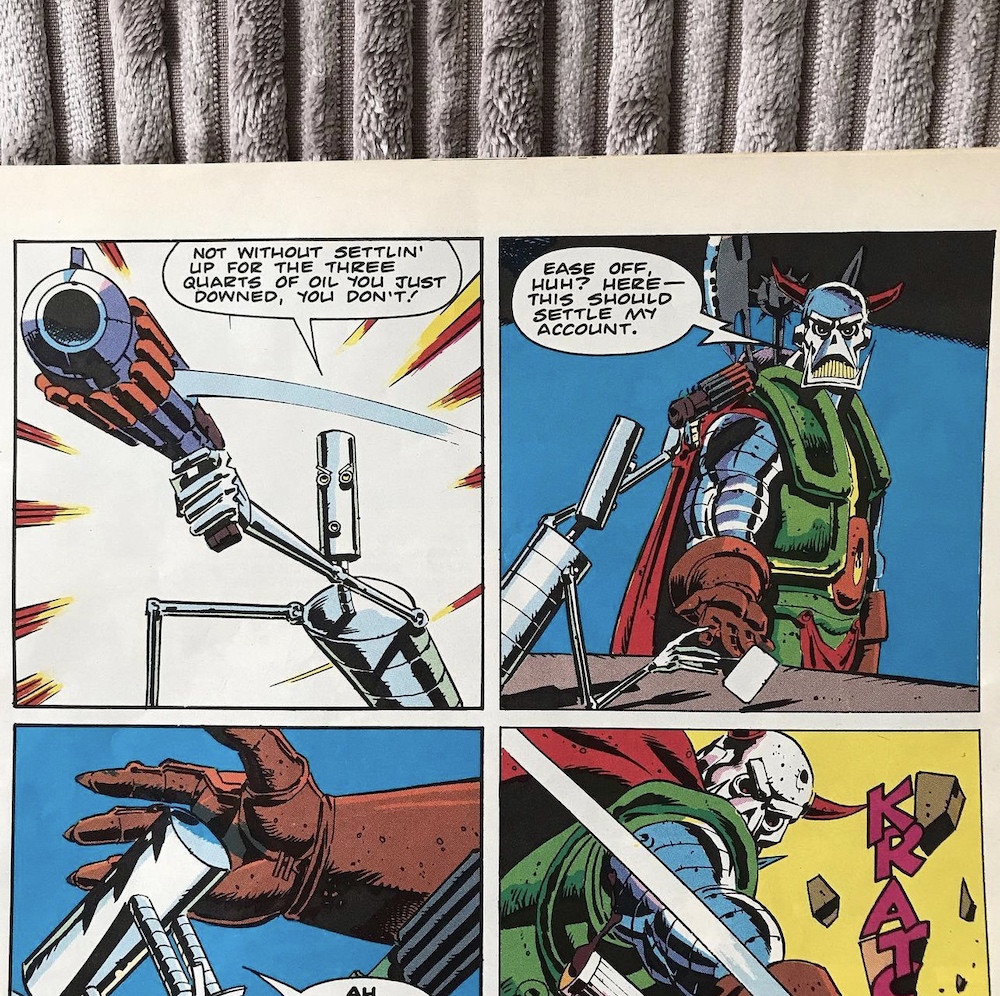
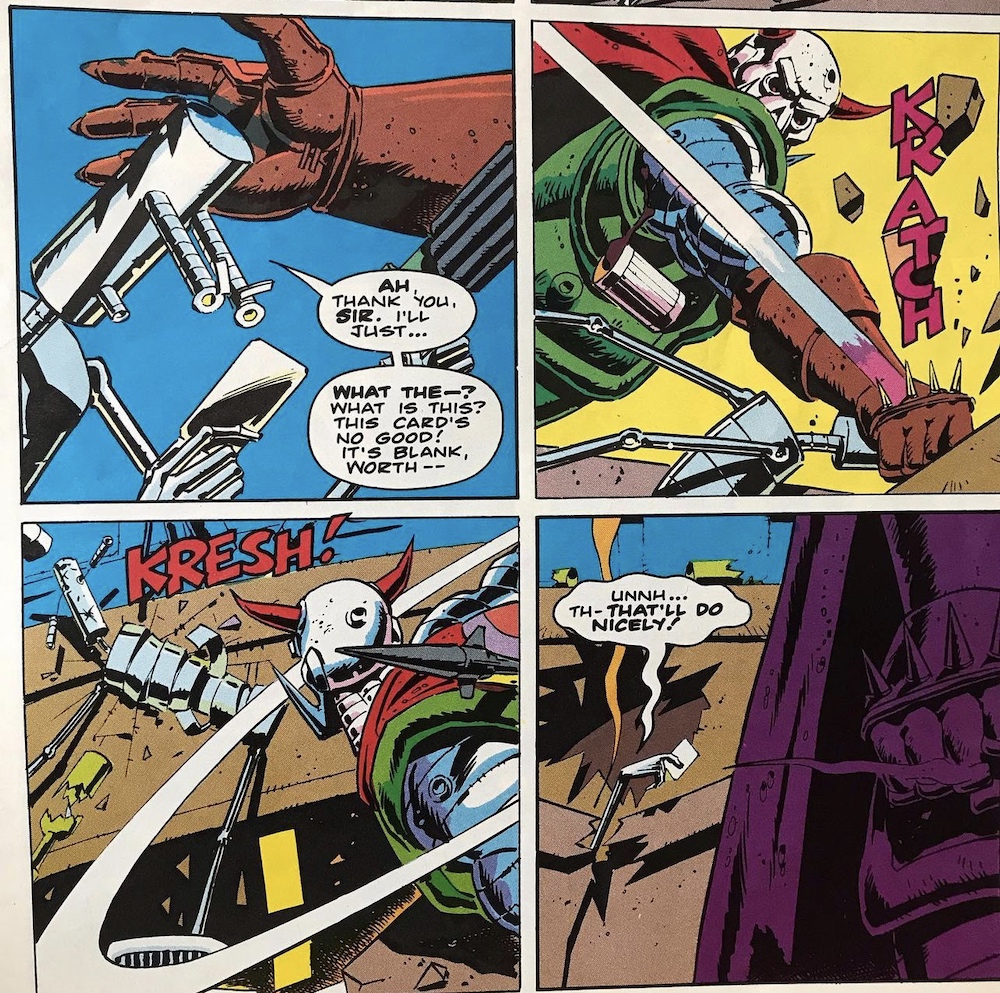
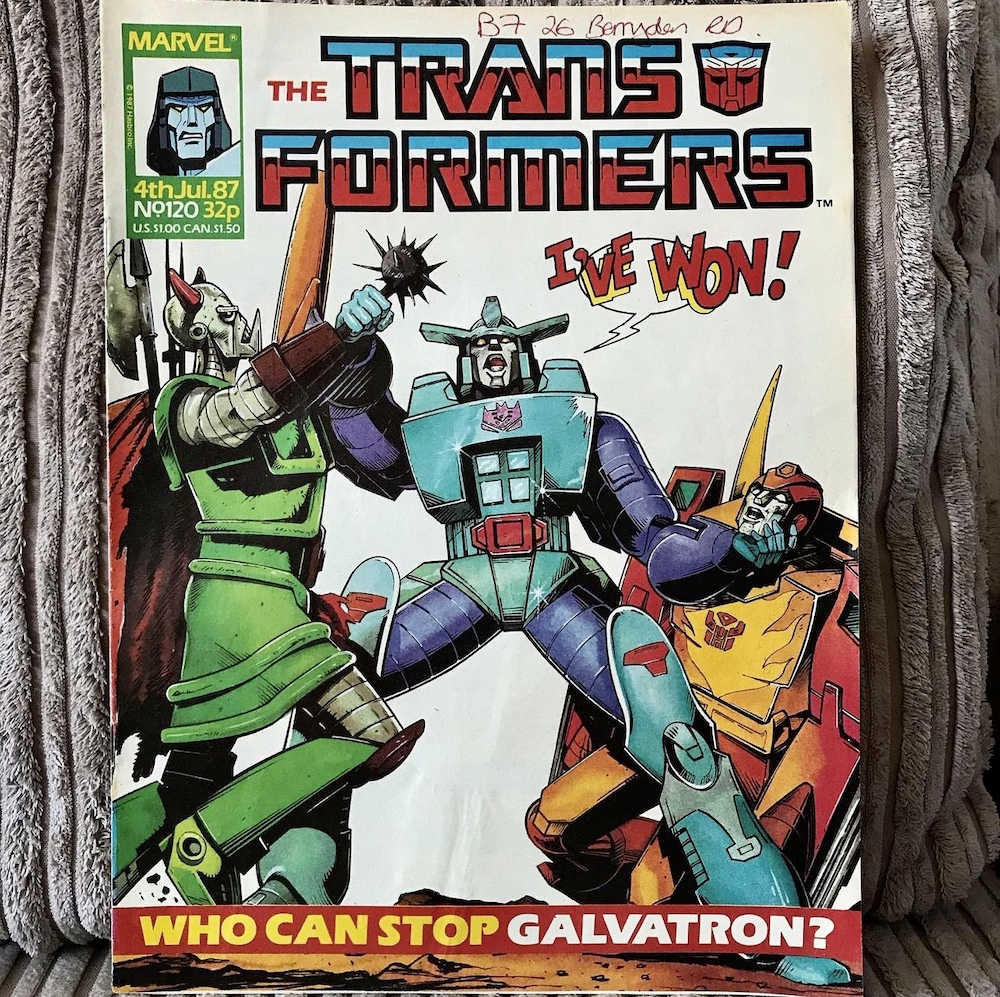
Wanted: Galvatron Dead or Alive was one of the early future-set (the then future of 2006) stories Marvel UK produced. With the release of Transformers: The Movie the UK team could focus on stories set after it, creating a new timeline of events and making it easier to write original stories not linked to the US strips. On the first page we see what would become a familiar detachable hand pointing at the wanted poster of the title. A bounty set by Autobot leader Rodimus Prime for Galvatron (the immensely powerful resurrected form of Megatron) after he disappeared at the end of the movie is too good for Death’s Head to pass up.

The story saw the beginning of the comic’s use of time travel and the building of a huge universe populated with both organic and mechanical races, for example the slight-looking barkeep in the tavern where our anti-hero finds himself between contracts. Intending to pay, Death’s Head soon changes his mind when the owner pulls a gun on him, wrongly suspecting his customer of leaving without clearing his tab. What happens next is the perfect introduction for this character.

Over the course of a year Death’s Head even made the cover of Transformers no less than six times. He’d become a big selling point for the comic, such was his popularity with the young readers and the fun Furman had in writing him. My favourite of these is the classic ‘The Good… the Mad… and the Ugly!’ cover by Geoff for #117. His return was always hyped in advance in Next Issue panels and editorial promotions. Really, it was inevitable he’d get his own comic eventually.

One of my favourite aspects of the character was his loyalty to the contract. Once he’d taken on a job he’d see it through to a successful conclusion no matter what he’d have to put himself through in the process. Yes it was all for money but it was clear he enjoyed what he did and he had a brilliantly dark sense of humour as a result. But even if someone else (usually his bounty) offered him twice the amount he was being paid he’d turn it down, his reputation was more important.

This was a compelling chapter in the character’s life, as he found himself going above and beyond to do the right thing as well as complete his contract

Death’s Head certainly left an impression, not only on the young readers but on the Transformers’ universe as a whole. Travelling back to 80s Earth he went head-to-head against Galvatron, aiding the Autobots and Decepticons in their battle to stop him from becoming an all-conquering god. In this story he also ends up killing beloved Autobot Bumblebee (in the US comic G.I.Joe mistakenly did this) who Hasbro was relaunching as Goldbug (thus this led to his resurrection).

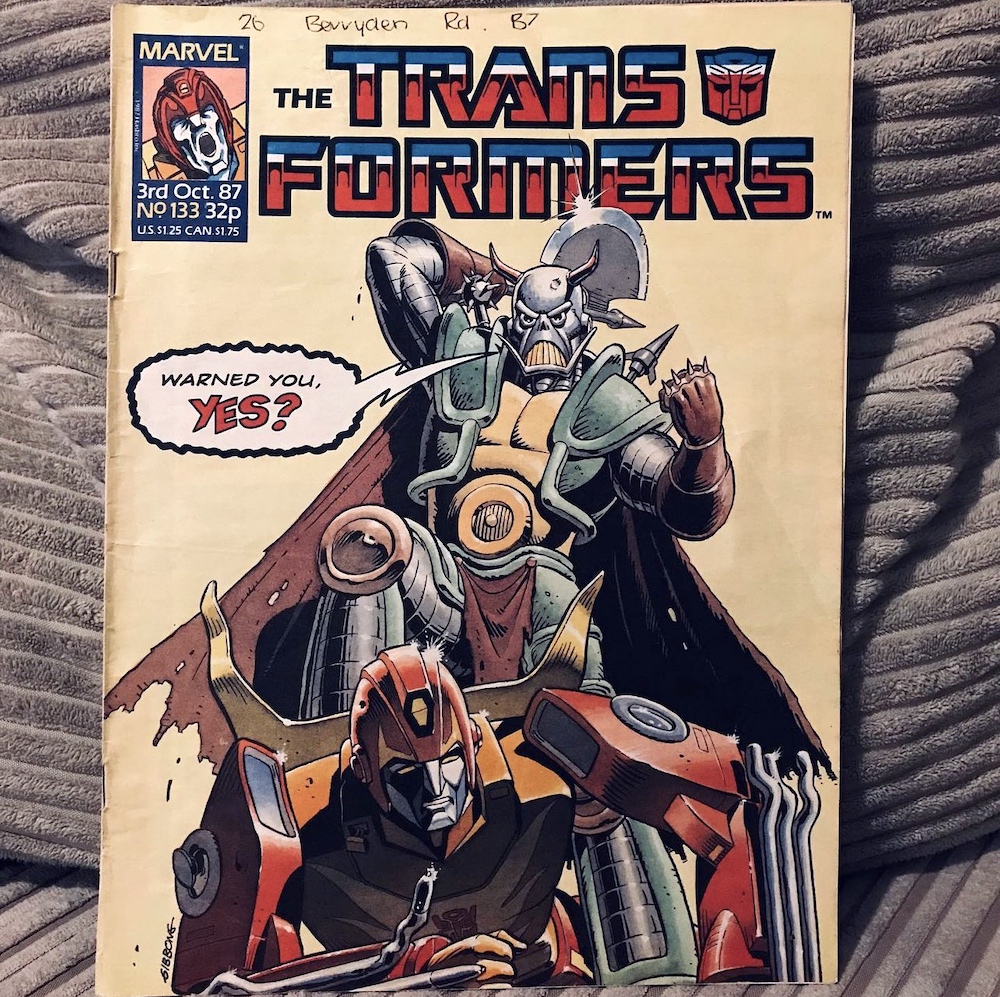
When Death’s Head returned next time he took a contract from Decepticon leader Shockwave to track down and capture or kill Cyclonus and Scourge who had travelled back in time too, and who Shockwave had discovered would kill him in the year 2006. It was great stuff! This made what Death’s Head did in The Legacy of Unicron all the more interesting and dramatic for me. He was actually instrumental in stopping Unicron’s return, aiding Rodimus Prime by linking with the giant god’s mind on the psychic plane, distracting him so that the Autobots and Junkions could get on with their plan free of being psychically tracked.

This was a compelling chapter in the characters’ life, as he found himself going above and beyond to do the right thing as well as complete his contract with Shockwave. The Legacy of Unicron was an important story in the history of Transformers, spread over several issues including the landmark 150th in which the origins of their race was told for the first time ever. This was created by Furman for the UK comic, the cartoon series would go on to create its own far less interesting version.

The tale, one as old as time itself, of myths and gods, of the birth of the universe and the eternal fight battle light and dark, was told by Unicron, the transforming planet eater from the movie reinterpreted by Furman as an all-conquering god of chaos. It’s still incredible to read today, especially when you remember this was a toy licence comic! Transformers really did break the mould. Even better, we the readers found all of this out as Unicron relayed his tale to none other than Death’s Head while the two were locked in their mental battle.

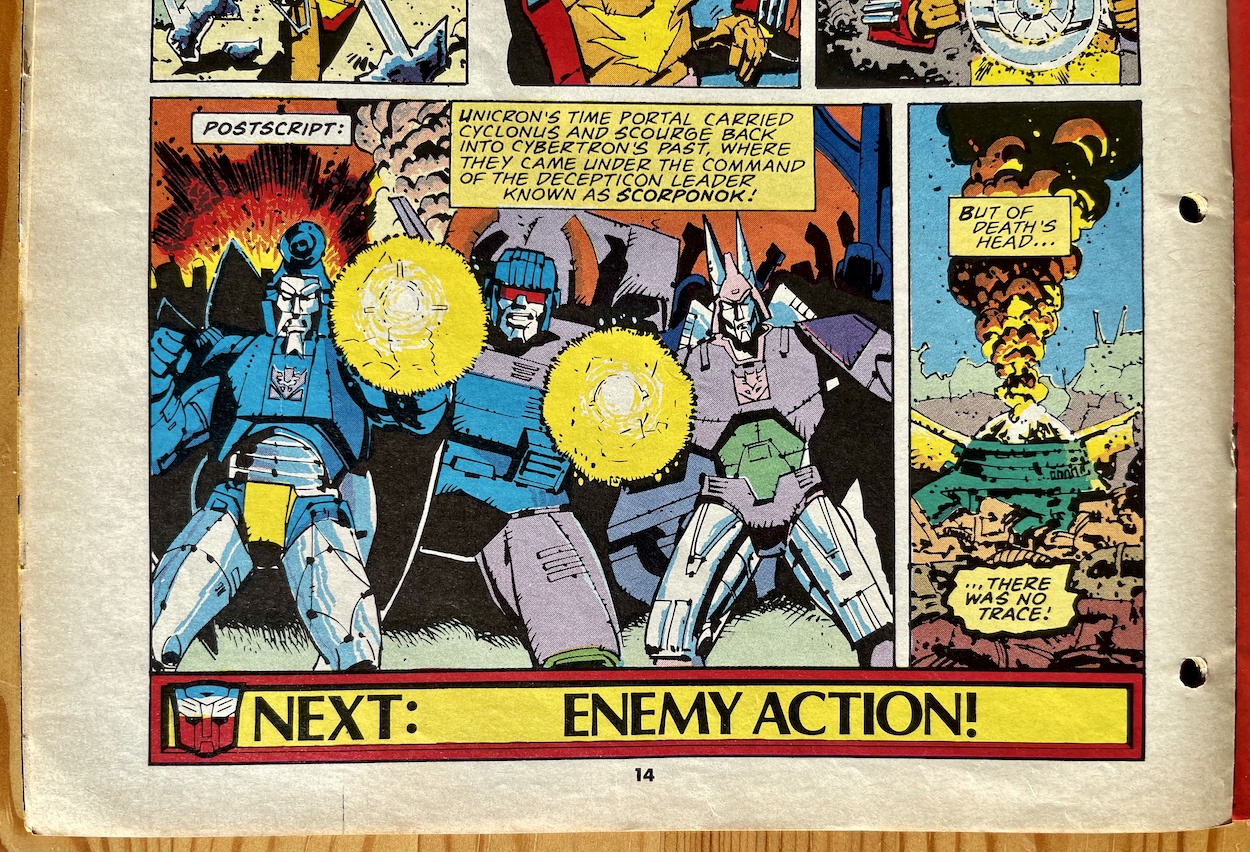
The Legacy of Unicron ends with Death’s Head shoving Cyclonus and Scourge through a time portal as the Junkion planet explodes beneath them. The Decepticons reappear on Earth in the present day but of him there was no trace. He wasn’t to be seen in the world of the Transformers again. Instead, as he flew through the corridors of time and space he bumped into a familiar blue police telephone box in another of Marvel UK’s titles. That’ll be the first chapter in Death’s Head’s real time read through in just a few days.

Apart from the last photo above, all of the preceding images were taken from the OiNK Blog’s Instagram feed from the last few years. Over there I’ve been reading Transformers in real time, week-in, week-out for about six years now, taking up to ten photographs of each issue and summing them up in mini reviews of sorts. You can check out all of the issues featuring Death’s Head via these links below.

WANTED GALVATRON: DEAD OR ALIVE

Transformers #113, #114, #115, #116, #117, #118, #119 and #120

HEADHUNT

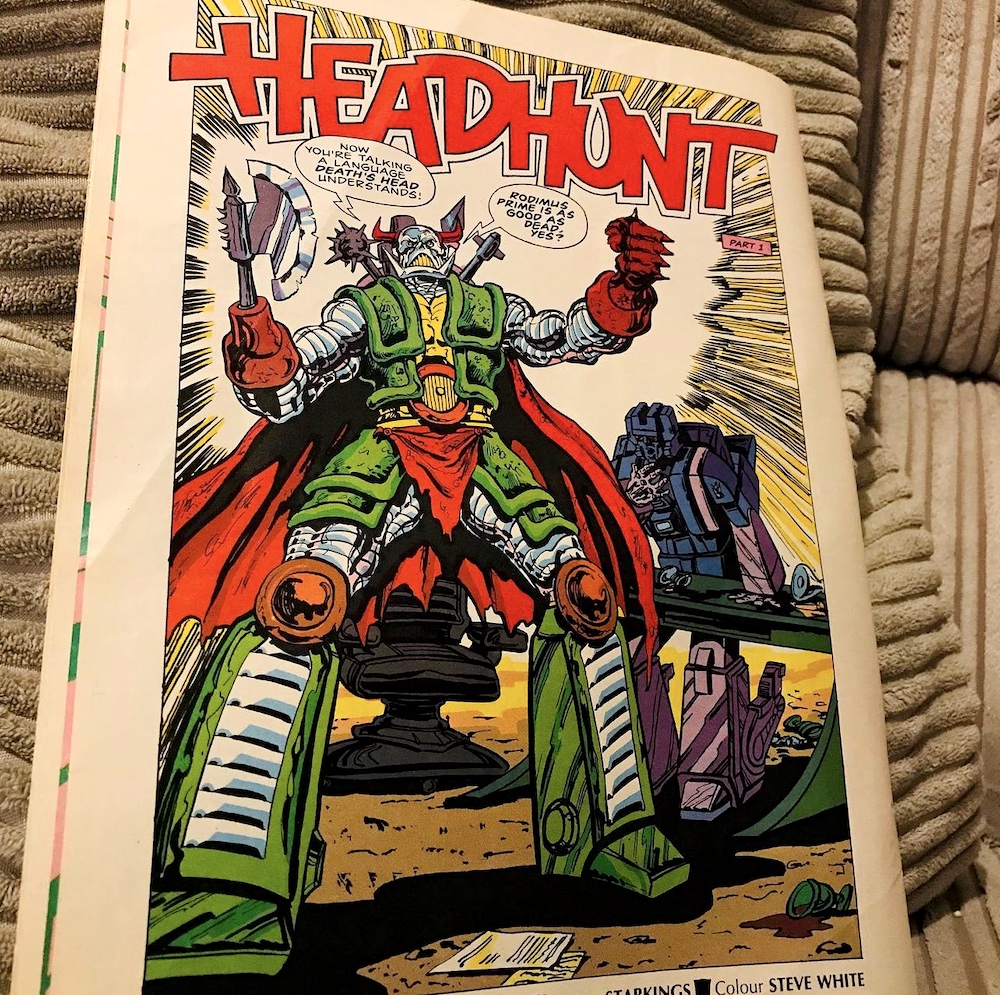
Transformers #133 and #134

THE LEGACY OF UNICRON

Transformers #146, #147, #148, #149, #150 and #151

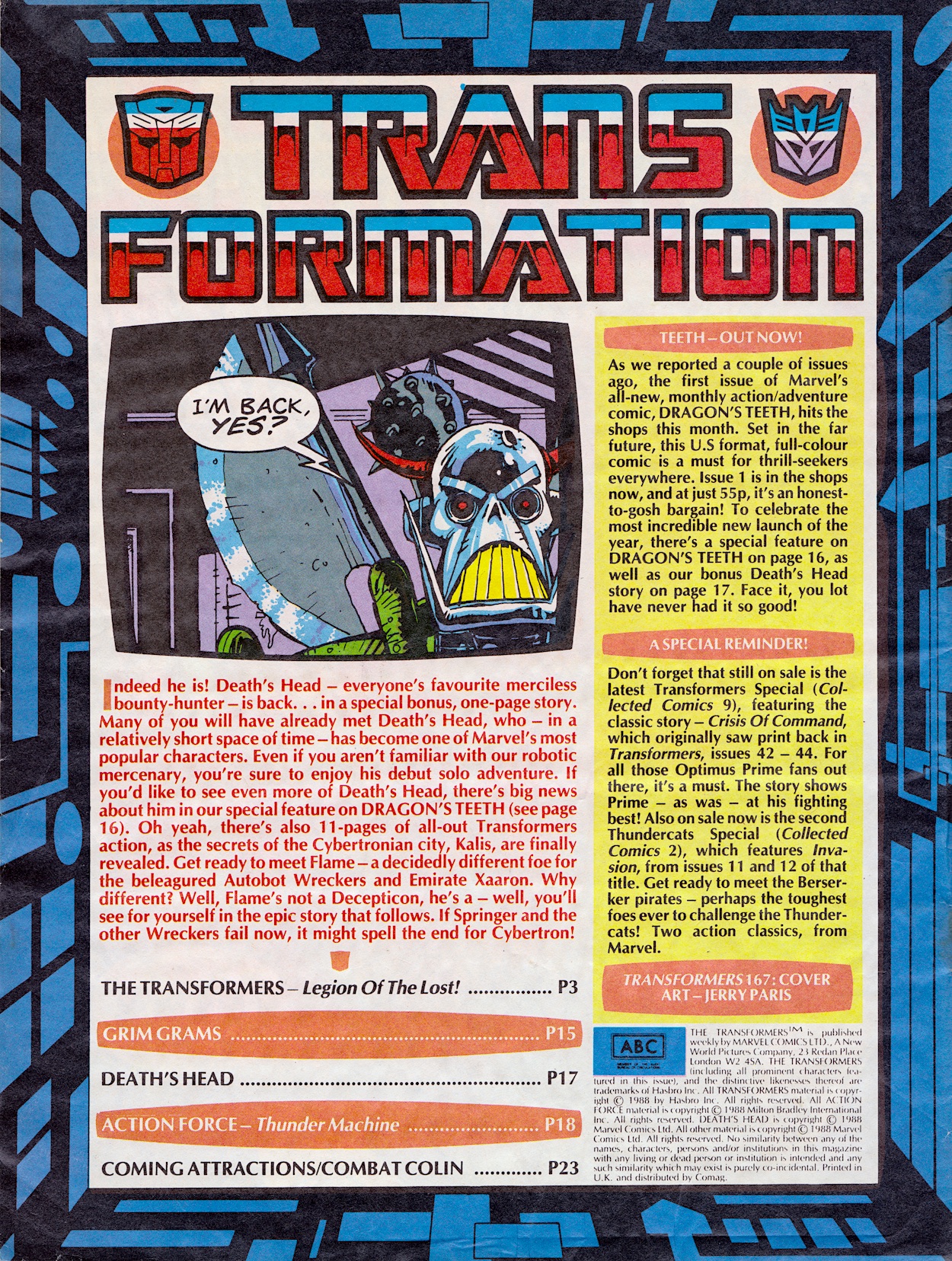
By 1988 plans were afoot. Commissioned by Richard (who also commissioned the one-page strips below, as well as Dragon’s Claws and The Sleeze Brothers comics) at last Death’s Head was going to get his own ongoing comic, but first of all a change had to happen to the character himself. As you’ll know from reading the comics or watching the movies, the Transformers are somewhat larger than us humans. Seeing as how Death’s Head would now be interacting with plenty of humans he had to be taken down a peg or two first.

This was achieved with a one-off strip in the pages of Doctor Who Magazine in which another alien time traveller, albeit of much smaller stature showed he was more than a match for the other. After this the stage was set for the new comic, the first issue of which was released in November of that year. To promote it he also popped up in an issue of Dragon’s Claws, another Furman/Senior original creation just before his own premiere issue.

During 1988 High Noon Tex finally appeared across Marvel UK’s range, promoted as a one-off strip for the character. For those who hadn’t been reading Transformers this must’ve felt like a very random addition to their comic, but a highly enjoyable surprise nonetheless, showcasing the action, his brutal personality and most of all his sense of humour. The example above is taken from the back page of an issue of Dragon’s Claws. It was written by Furman and drawn by Bryan Hitch (who would draw half of the monthly issues, co-creator Geoff Senior surprisingly only drawing one of the strips).

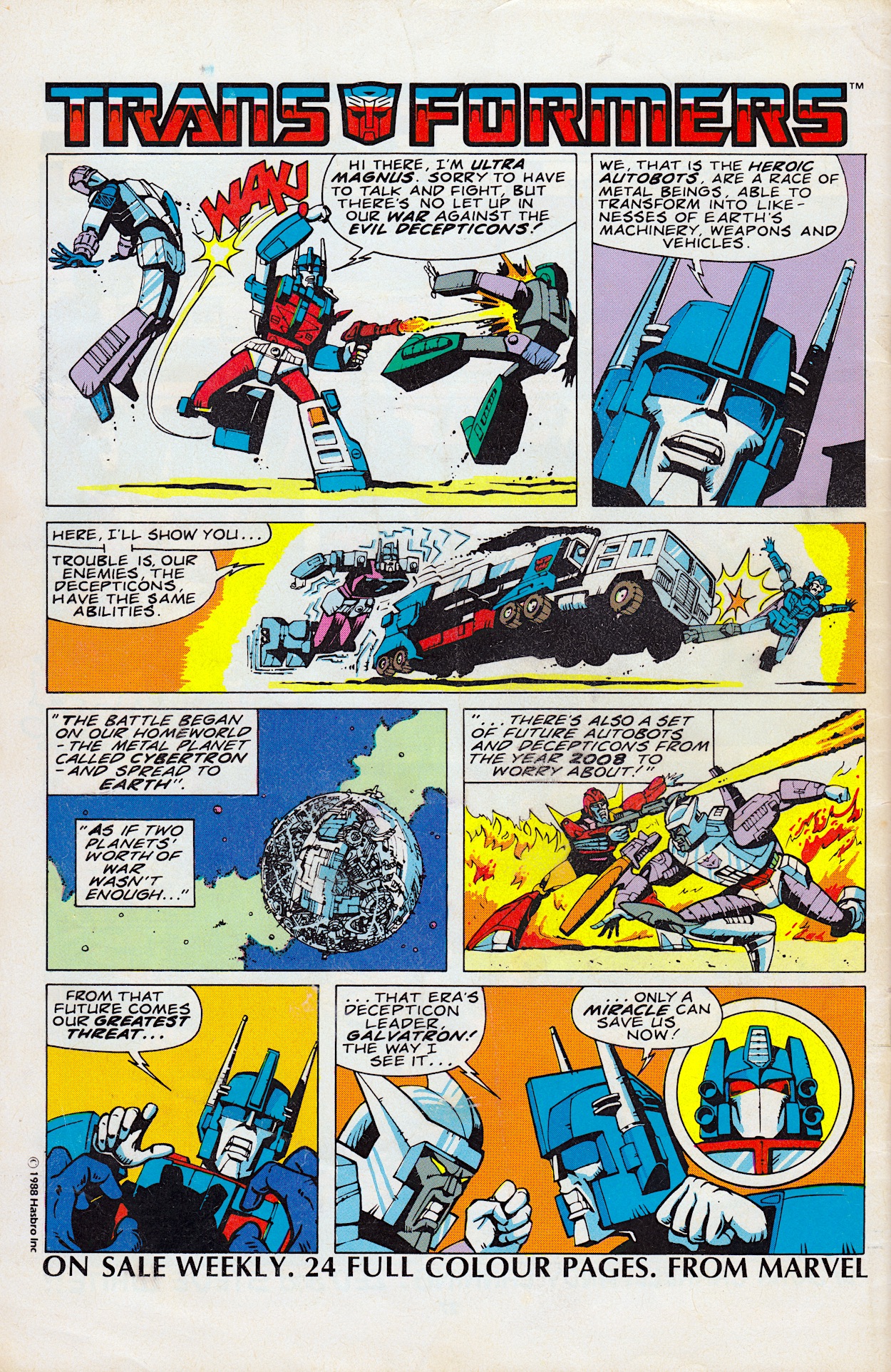
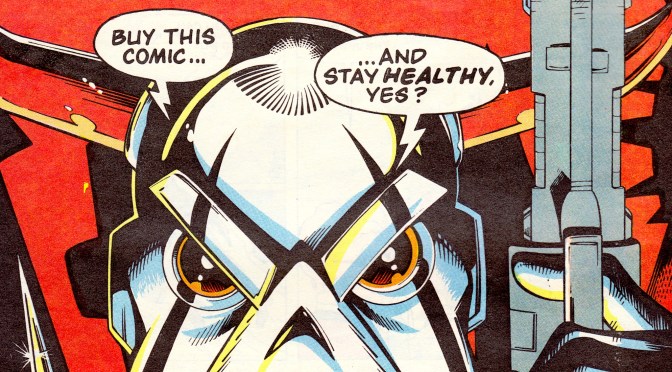
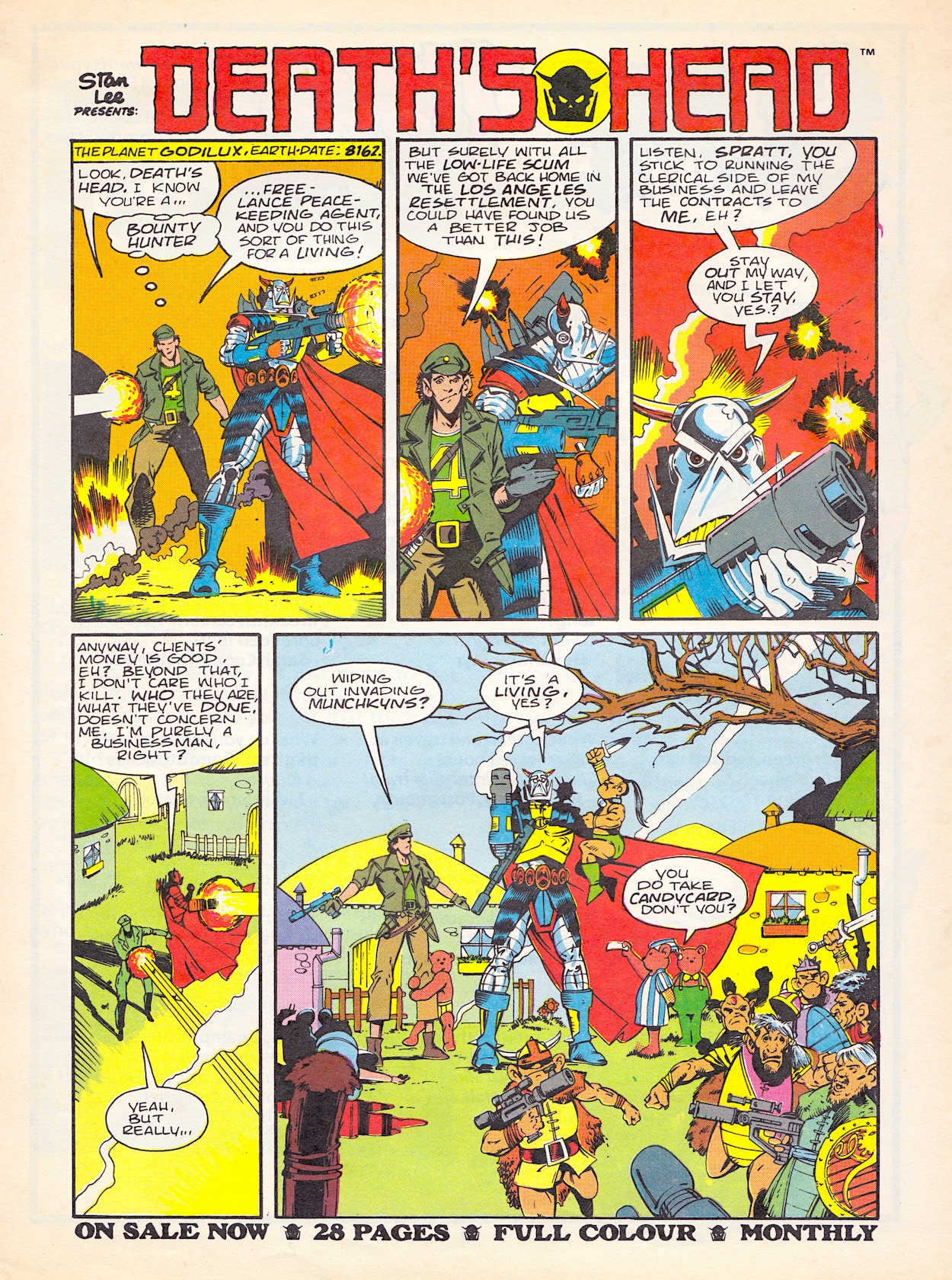
As the comic launched another one-page story appeared, this time as an actual advertisement for the monthly. I first saw it in Transformers #193. How could I not rush out to buy it after that? The scan above was taken from #29 of my Real Ghostbusters collection, which went on sale 17th December 1988 while #2 of Death’s Head was on sale. Richard was the launch editor of that comic and told me, “I’d edited The Real Ghostbusters for a year and I knew you could tell a story in one page.” (The Real Ghostbusters could have up to four stories in one issue, including the occasional 1-page strip.) You can read more about the creation of this series of adverts in the introductory post to Dragon’s Claws.
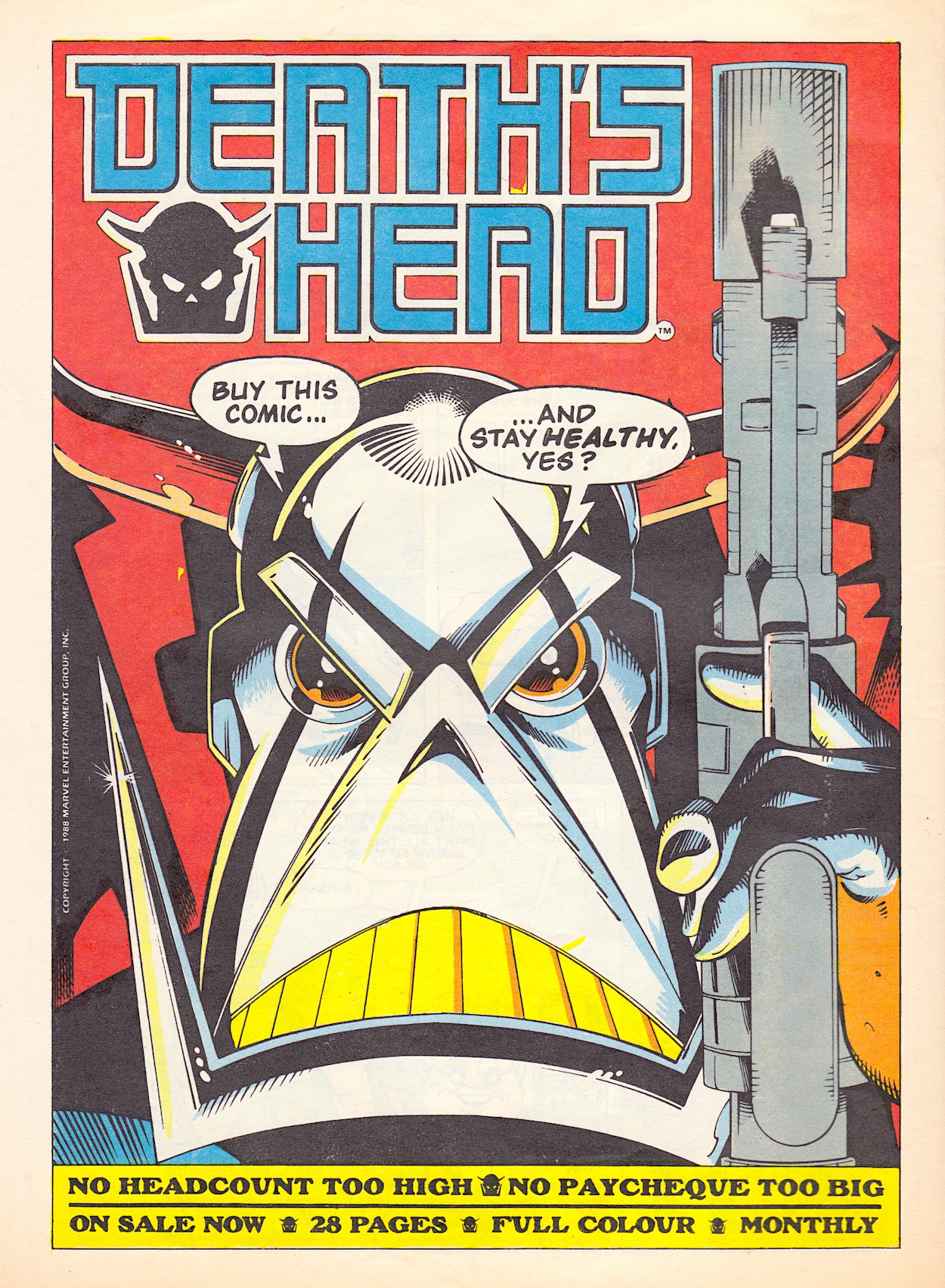
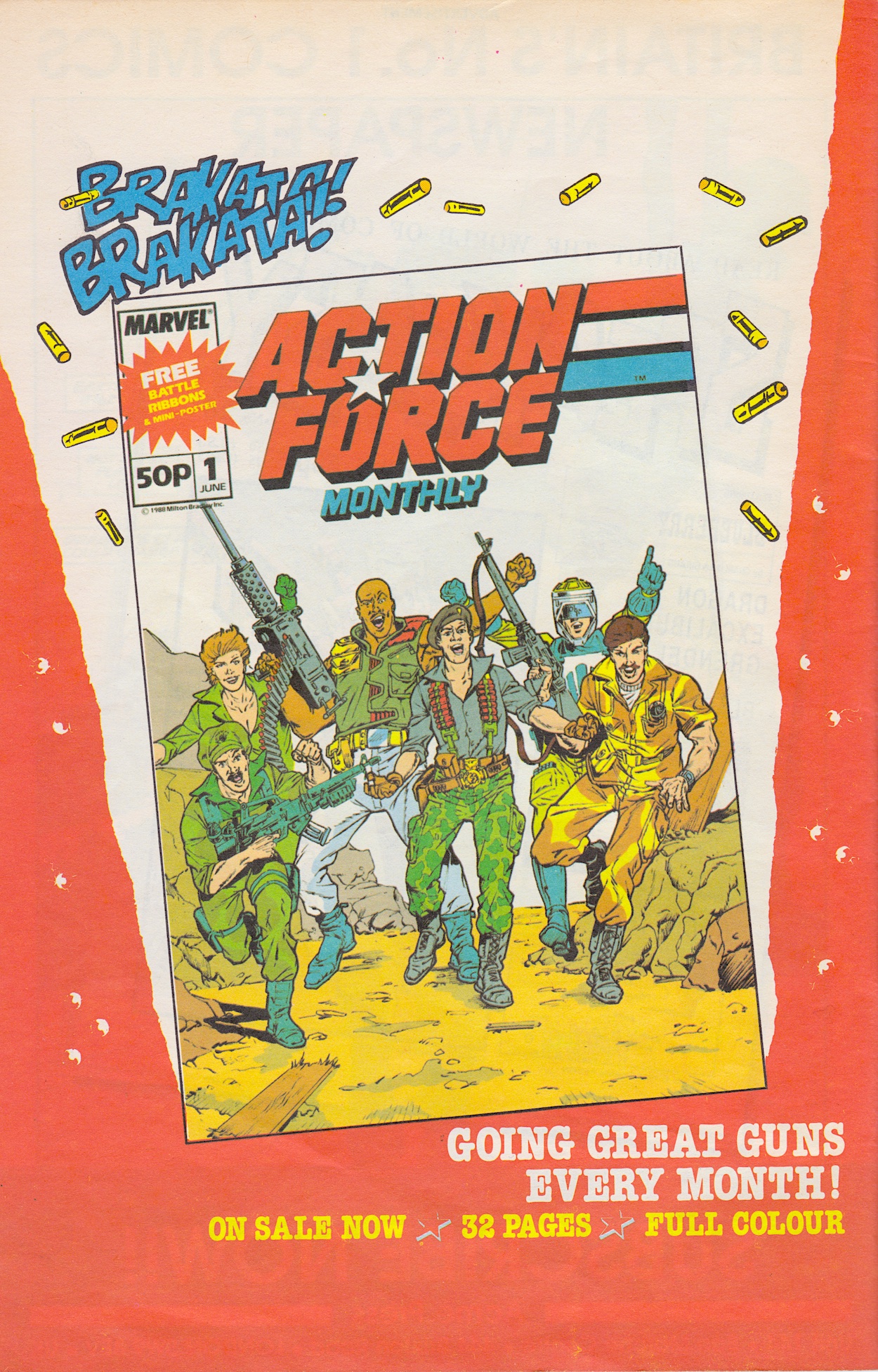
A much simpler yet no less eye-catching full-page advert was also found in the pages of my comics, using the cover image of the first issue. The issue of The Real Ghostbusters this first appeared in went on sale the same week as #1 of Death’s Head and he also popped up for the first time in the Mighty Marvel Checklist, which a lot of their comics ran at the time. As you can see it was the one not to miss that week and I obliged. At least for one month anyway.

Death’s Head’s comic lasted ten issues. It was printed on smaller than normal paper, the same size as US comics rather than the larger UK paper we were used to. Some fans say this contributed to less than stellar sales because it ended up hidden amongst all the larger comics. Richard tells me this just isn’t true; it was selling 60,000+ a month which would be a massive hit today. “The profit to the company versus cost of origination was too high for those days”, Richard says. “The Incomplete Death’s Head (collecting the whole series and his guest appearances in Doctor Who and others – Phil) #1 sold 400,000. So they got their money back.”

After his comic was cancelled he appeared in Strip in a multi-part adventure, collected in a graphic novel after Strip finished. He was relaunched as ‘Death’s Head II’ and ‘3.0’ later but I never bought into those versions. Furman wasn’t involved in the first and it lacked the humour, a key factor for me, and Simon has also said he doesn’t see either as Death’s Head so this put me off. They definitely have their fans though so I’m happy there’s a version for everyone. In the new century he’s popped up in cameos or guest roles in some more Marvel comics in his original form too, which I’ll detail at the end of the read through. You can’t keep a good Freelance Peace-Keeping Agent down.

So here’s my complete Death’s Head collection containing 30 comics altogether.

You can check out all of those Transformers issues at the links above and as you can see I’ve opted for the graphic novel version of the Strip story, The Body in Question. The premiere issue won’t be reviewed until 5th November later this year (this is in real time, remember) but in just three days on Friday 10th March 2023 you’ll be able to read the first Death’s Head review in a special post about his clash with the Seventh Doctor (Sylvester McCoy) in Doctor Who Magazine #135.

See you then, yes?

(Special thanks to Richard Starkings, Steve White, Lee Sullivan, Lew Stringer and John Freeman for all their help in putting this post together.)

GO TO DOCTOR WHO MAGAZiNE 135

DEATH’S HEAD MENU

ViSiONARiES ANNUAL 1988: REPEAT PERFORMANCE

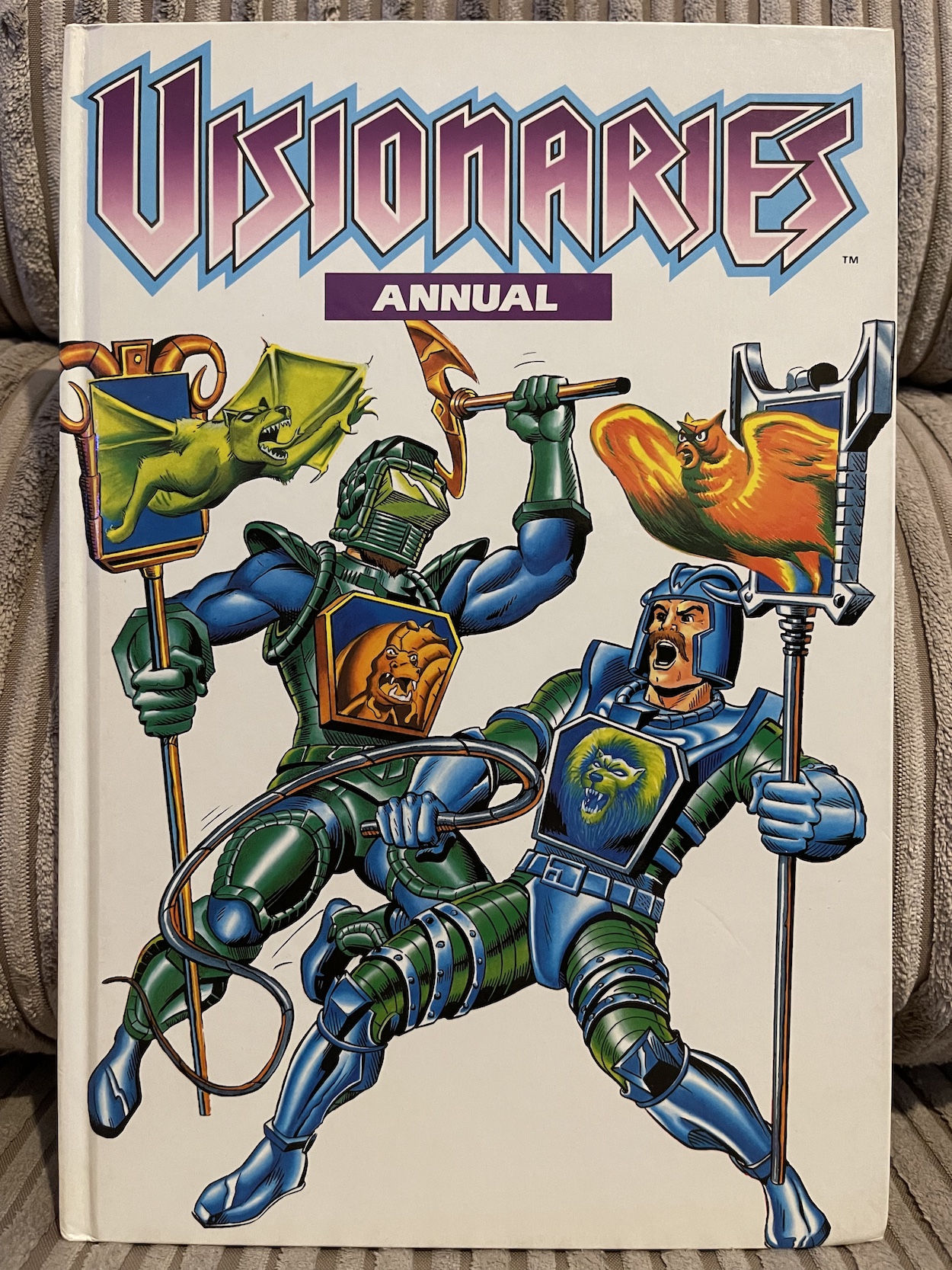
When I reviewed Marvel UK‘s monthly Visionaries comic earlier this year the general reaction on social media fell into two camps. There were those who’d forgotten all about the comic and those who never knew it existed. Even fewer knew about this annual. Exactly 33 years ago to the day, back in 1988 I received it on Christmas Day, not knowing about the existence of a regular comic until it was mentioned inside. I was gutted I’d missed out, being such a fan of the cartoon, so finally reading their origin story (which I’d missed on TV) was a thrill.

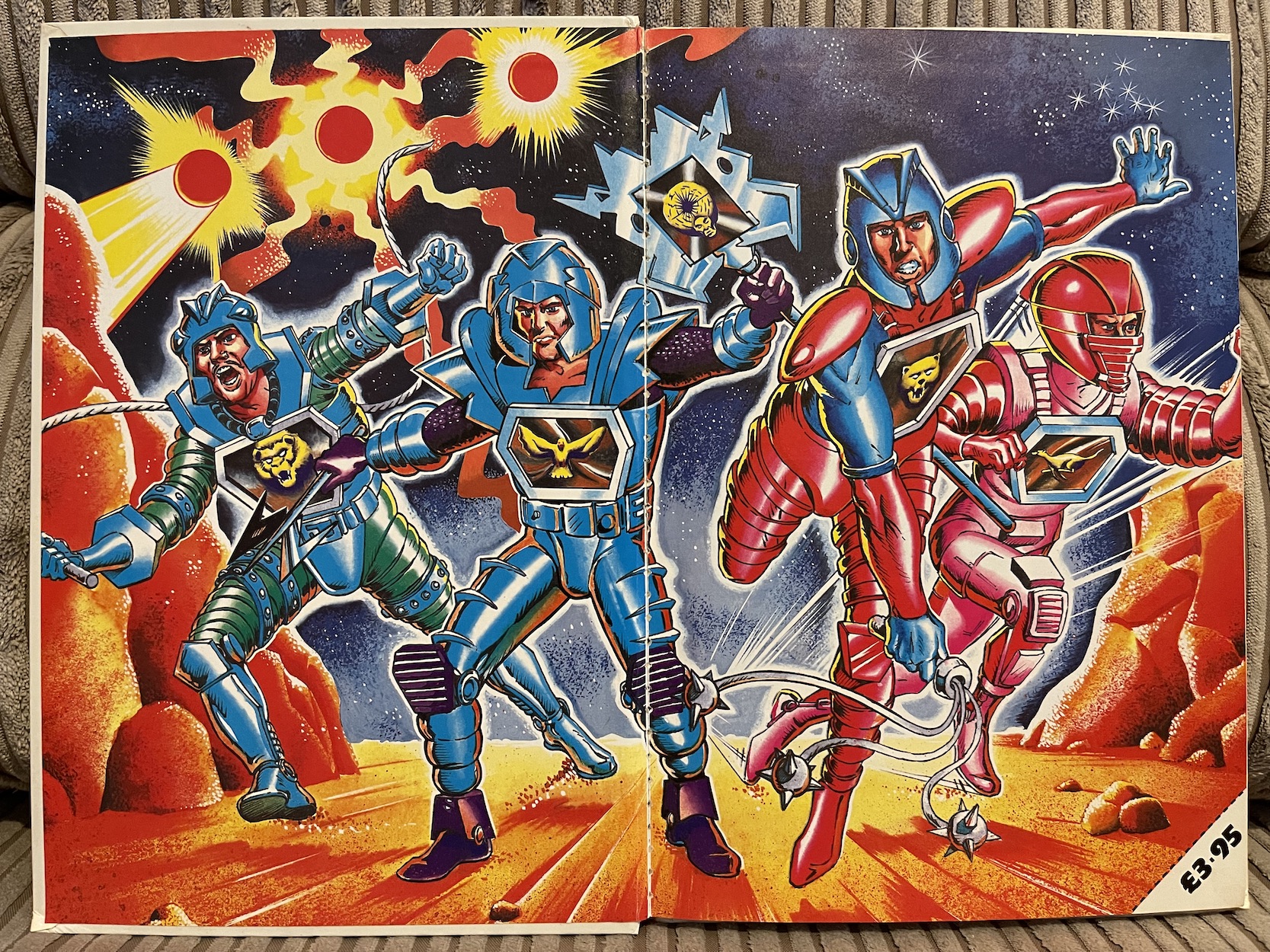
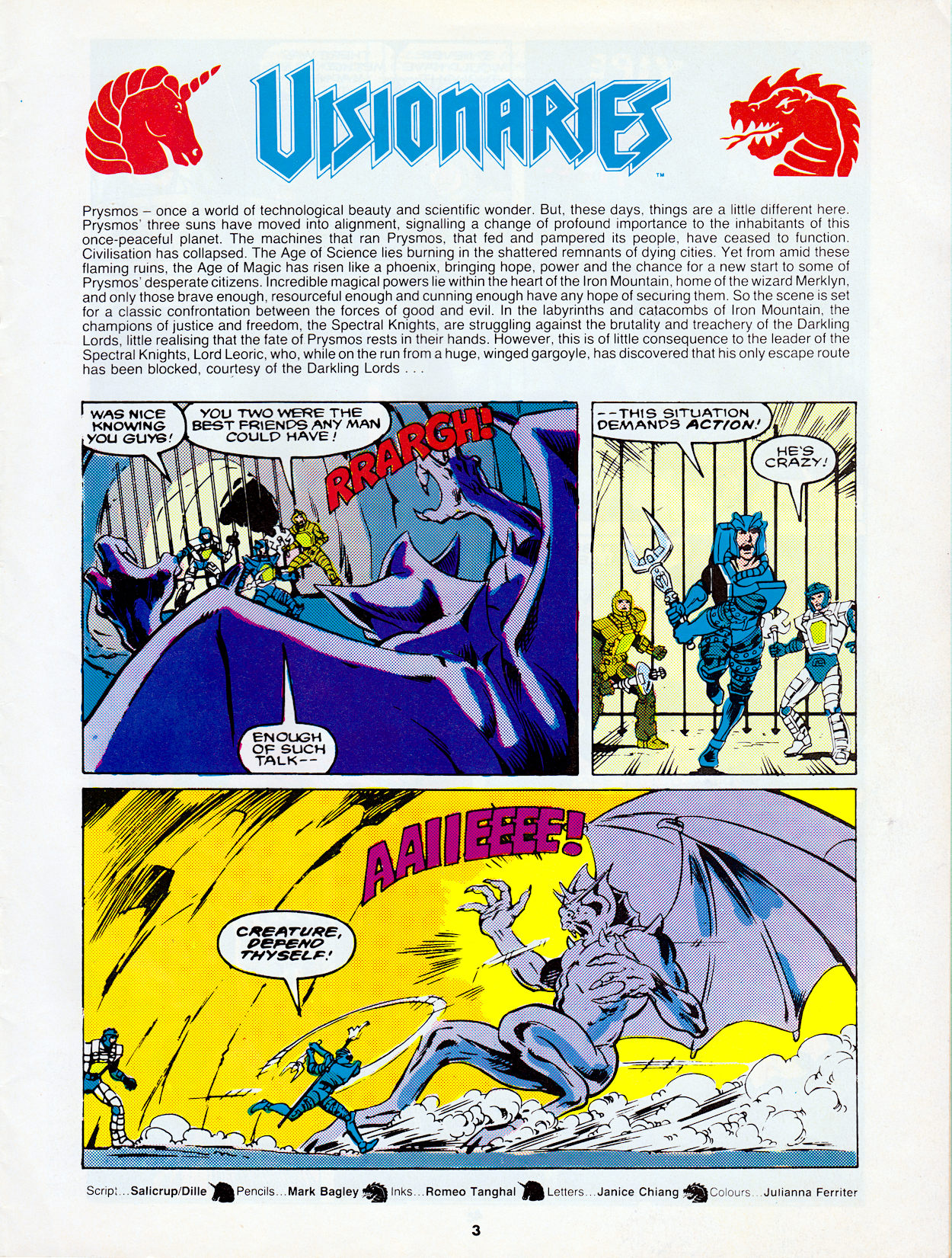
Of course, today that thrill is diminished somewhat after reading that story several months ago in the comic. I can imagine fans weren’t too pleased that over half the book was reprint material either. But let’s start at the beginning with that eye-catching cover by Martin Griffiths (Thundercats, The Real Ghostbusters, 2000AD) and John Burns (Transformers, Sable and Fortune, G.I. Joe). Only upon reading these for the blog did I realise this was the image produced for the premiere issue marketing. But still, original Marvel UK pieces like this are the envy of American Visionaries fans, just like this opening spread by Dougie Braithwaite (The Punisher, The Real Ghostbusters, Batman) and John.

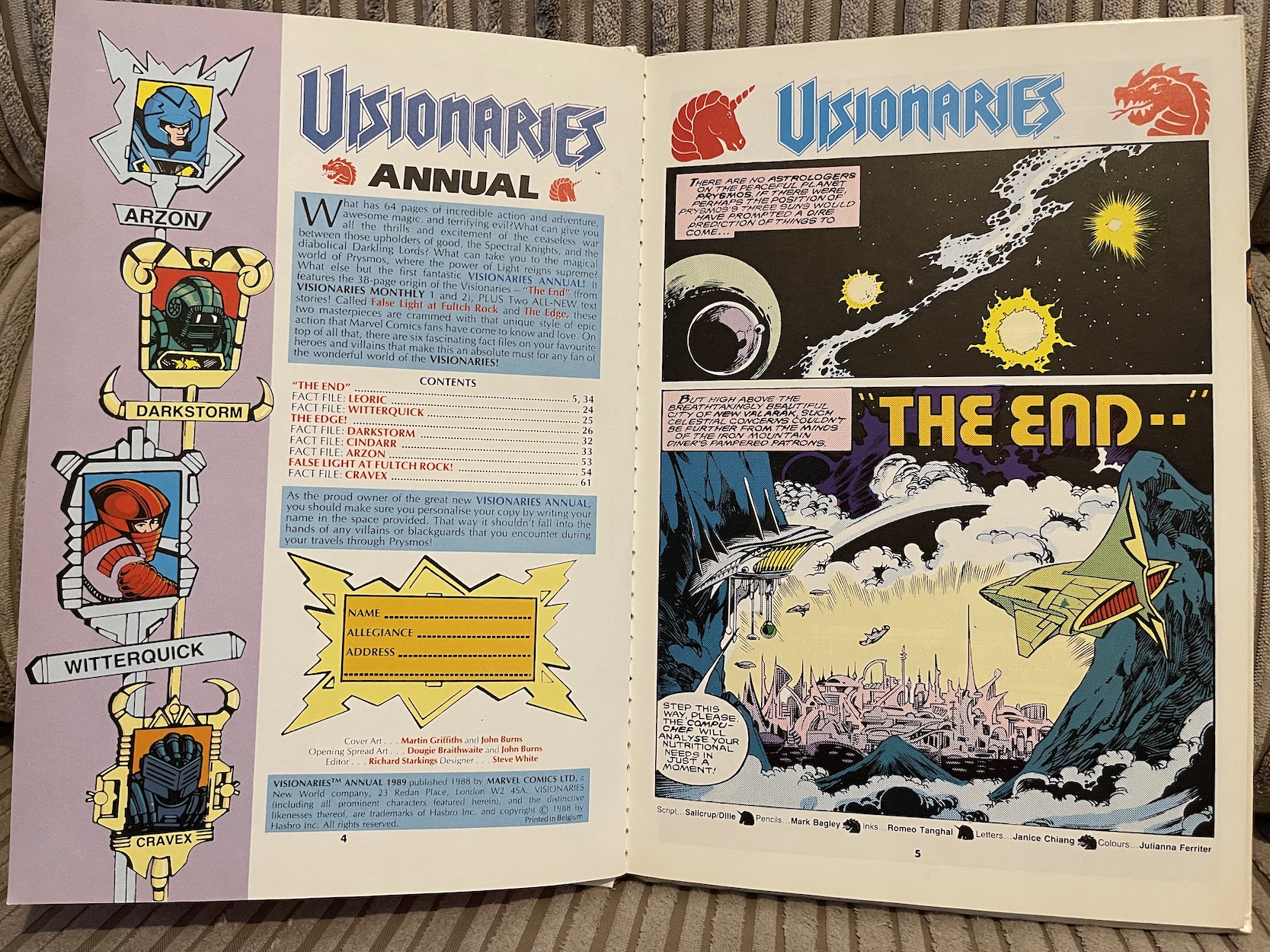
There’s an editorial matching the comic’s design, although at least here it’s all hype for the annual in the reader’s hands rather than advertising for other titles. Surprisingly it explains the strip is a reprint but it does make a big deal of the fact there are two brand new prose stories and a handful of fact-files. There’s also the obligatory space to fill in your name in case your friends decided to steal it away from you.

Monthly Visionaries editor Steve White is credited as designer here, most likely because most of the design is lifted straight from the comic with minimal changes. The editor is Marvel UK stalwart Richard Starkings (Transformers letterer, The Real Ghostbusters launch editor, Elephantmen writer and Comicraft founder) and with limited resources to produce an annual for a comic which had proven unsuccessful, meaning no UK originated strips, he’s done a fine job in pulling together a book I have very happy memories of.

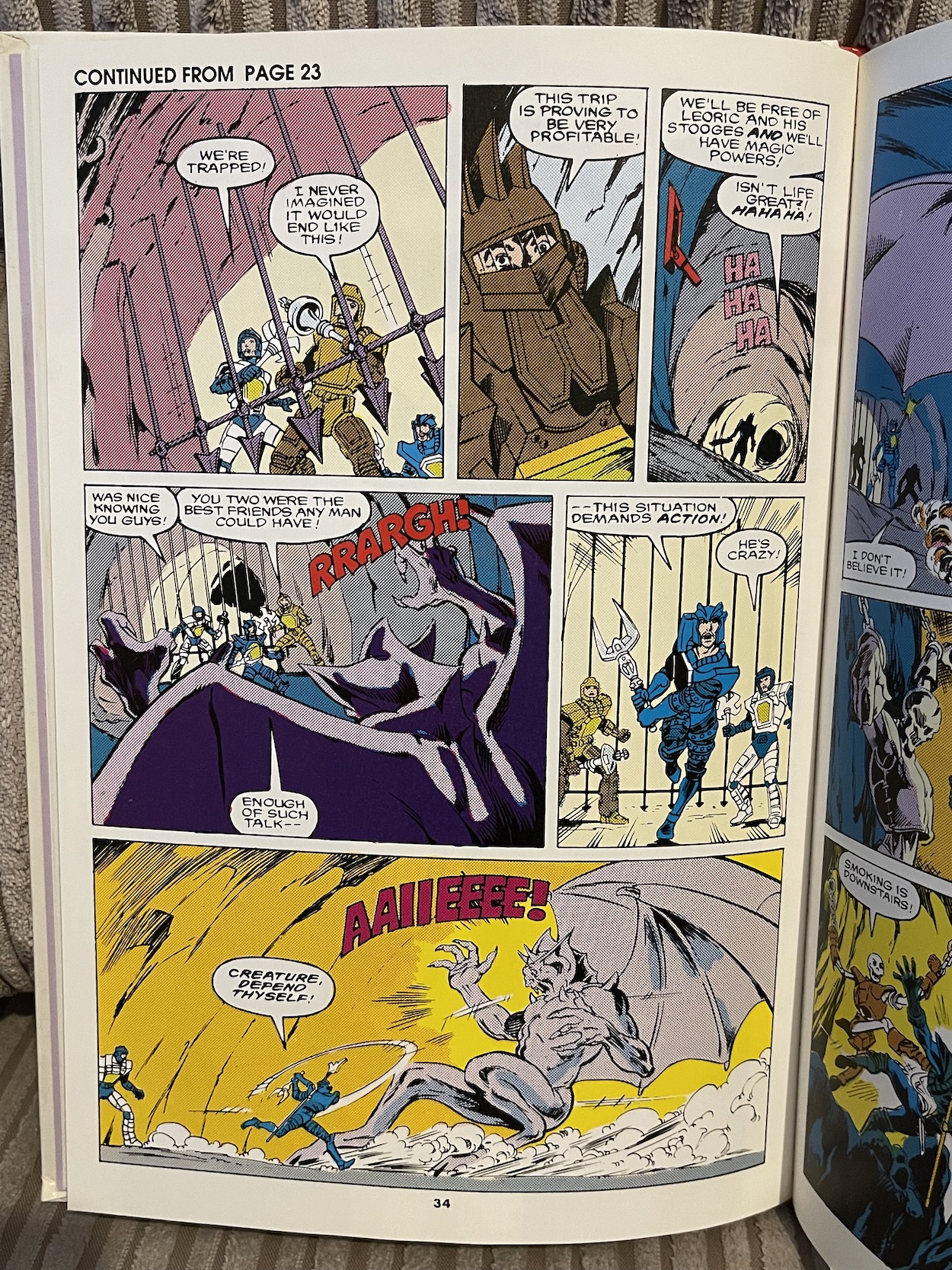
So yes, the most exciting thing in this annual for me originally was finally reading how it all began and it’s always a good read, no matter how many times I do so. The End… The Beginning takes up a whopping 38 of the 64 pages available here and is the original version of the strip, minus the great big lump of text that removed some important panels from the start of the second half when published in #2 (see below).

Based on the teleplay by Flint Dille, adapted by Jim Salicrup, pencilled by Mark Bagley, inked by Romeo Tanghai, lettered by Janice Chiang and coloured by Julianna Ferriter it’s still a masterpiece in origin storytelling today, however I’m not going to read it again for this review. It may have been brand new and exciting 33 years ago but I read it for the comic’s reviews last spring and again in the pages of Transformers this year on the blog’s Instagram! (I’ll explain that at the end of the review.) So for the full details of this story check out the reviews of #1 and #2 of the comic.

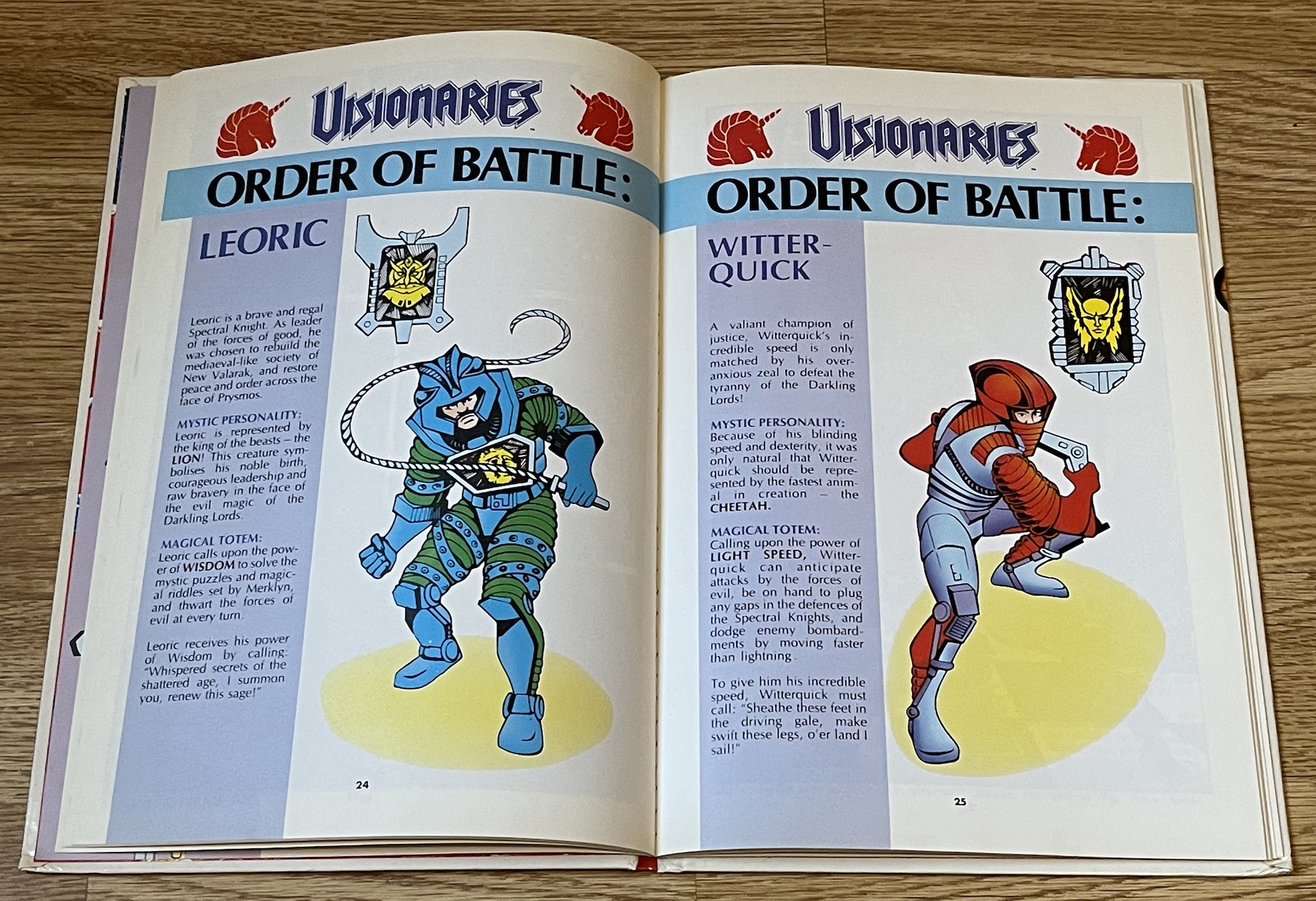
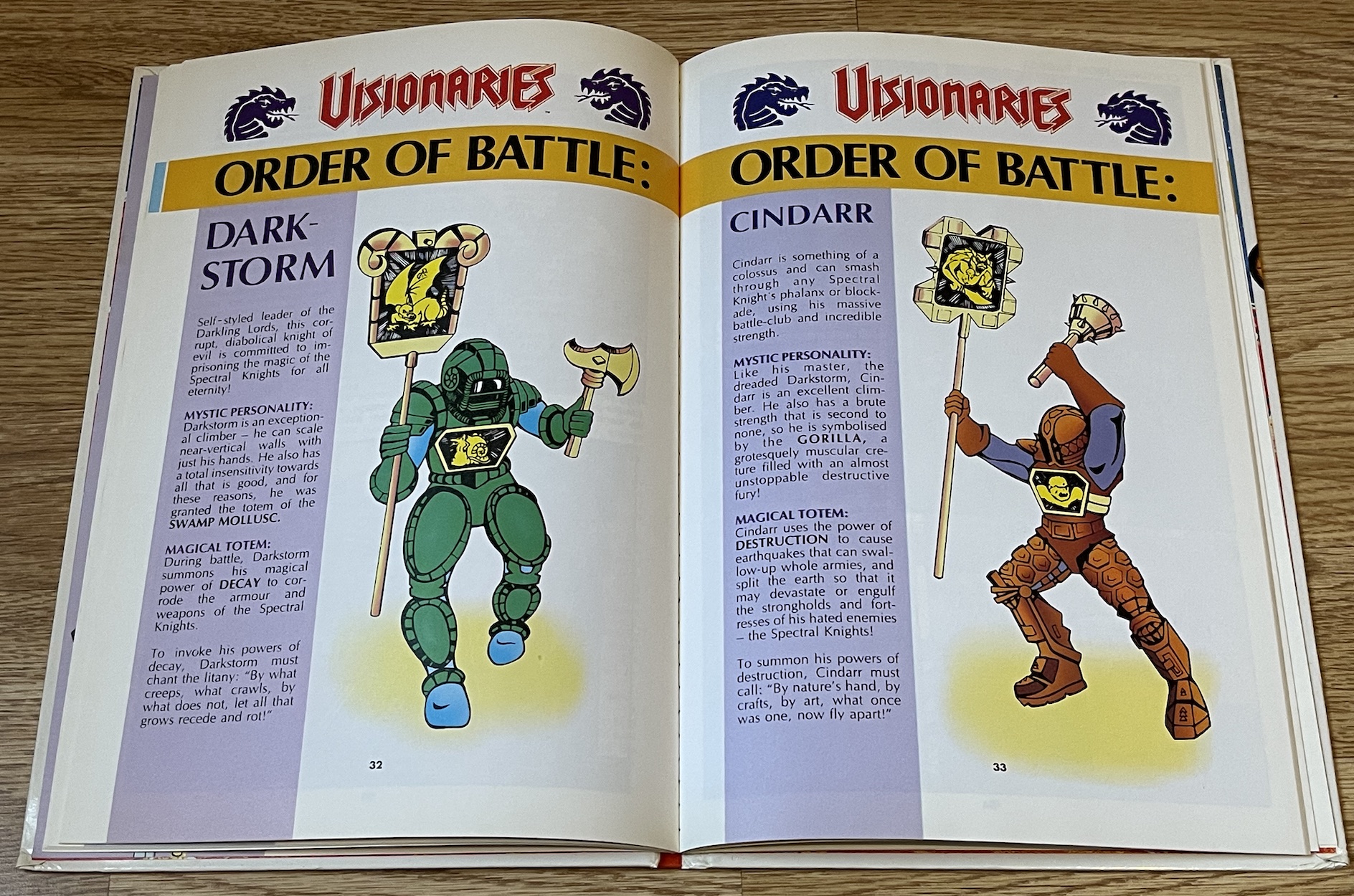
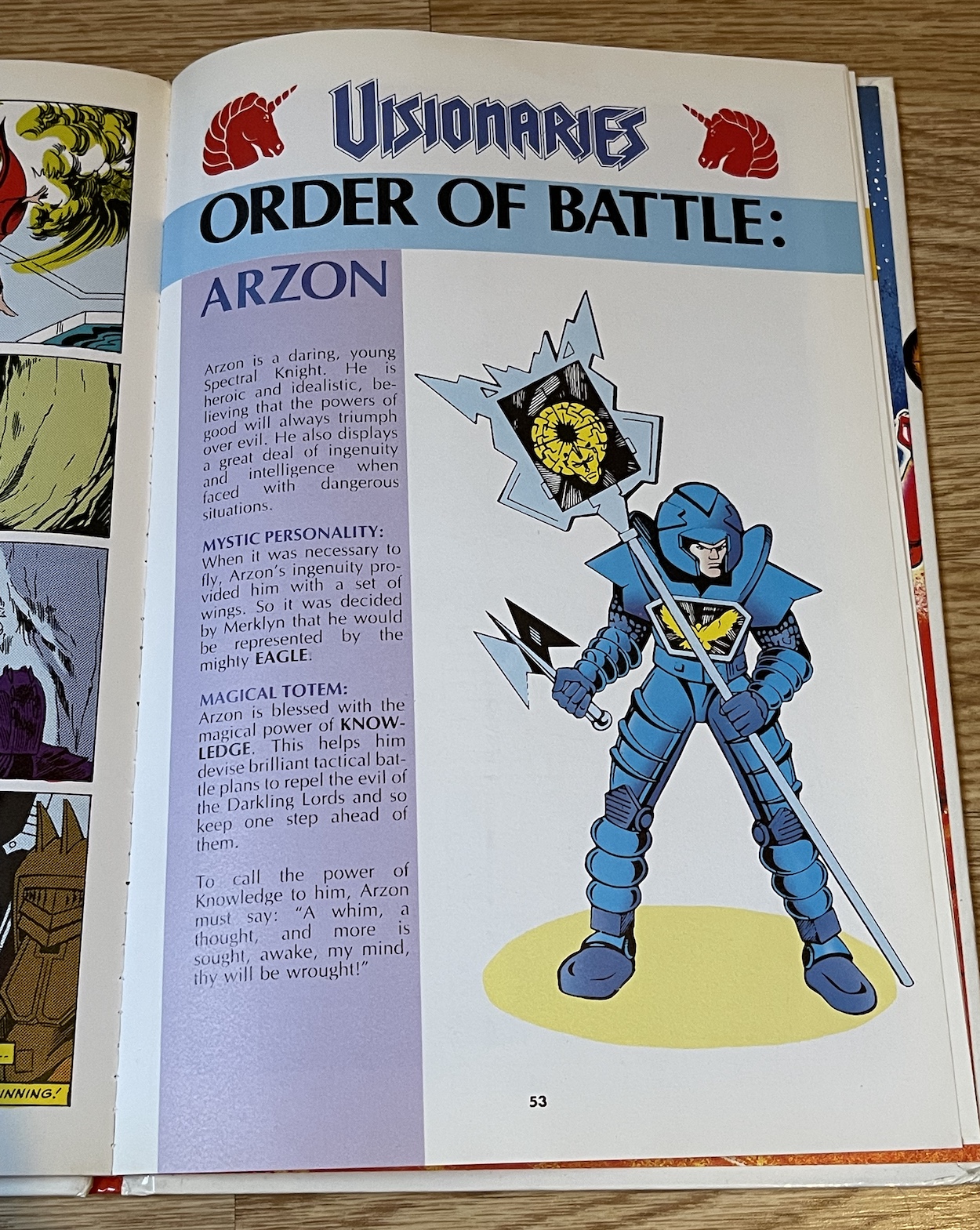
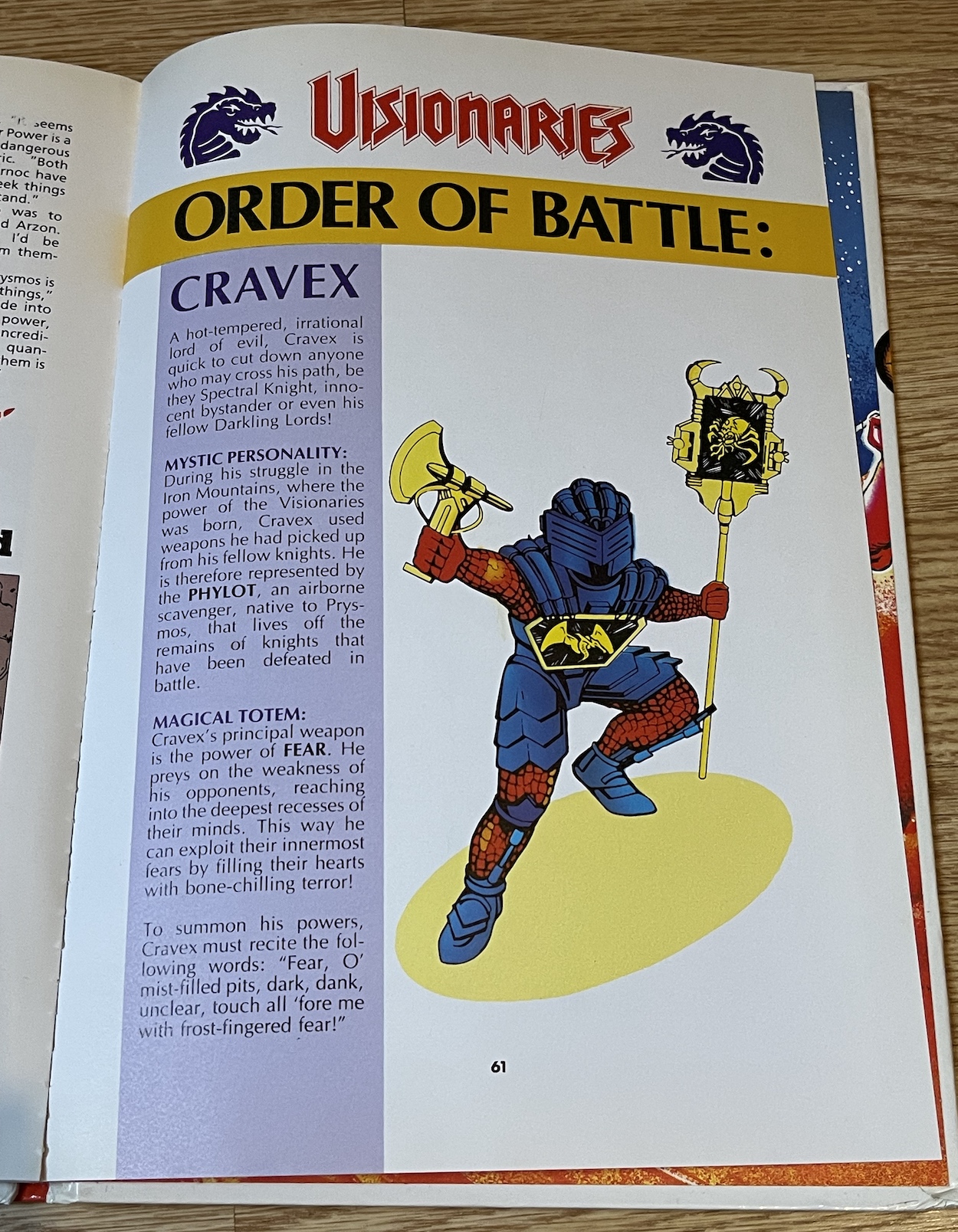
So I’m just reading the parts that are new and as such it’s a much different, much shorter experience this time around. We begin with the fact-files, of which there are six featuring Spectral Knights Leoric, Witterquick and Arzon, and Darkling Lords Darkstorm, Cindarr and Cravex. I’m not sure who drew the images for them but they are rather basic. Four of them were used for the editorial page, although just their faces. Given how far in advance annuals are created I think we can conclude these were drawn for these fact-files and then used in the monthly.

The descriptions have basically been lifted from the toy packets, reworded slightly to include the occasional reference to the origin strip. While the cartoon and comic had our heroes turn into the animals on their chest plates, the toys simply said these totems “represented” the characters’ personalities and you can see that’s used here too, which is a bit strange. Also, by this stage Darkstorm‘s goal had been established as more than simply wanting to conquer his foes (I’ve gone into that in depth in the monthly reviews) so it’s a shame to see that included.

I loved getting my Marvel annuals every year with their mix of strips and text stories. Unbelievably, some of my friends didn’t read the prose tales and wished their books were strips from cover to cover. They really missed out, these were some of the very best stories told by Marvel UK; it was one of the annual text stories that created Megatron‘s background of being a gladiator before the war, something that’s canon in basically every interpretation of Transformers today.

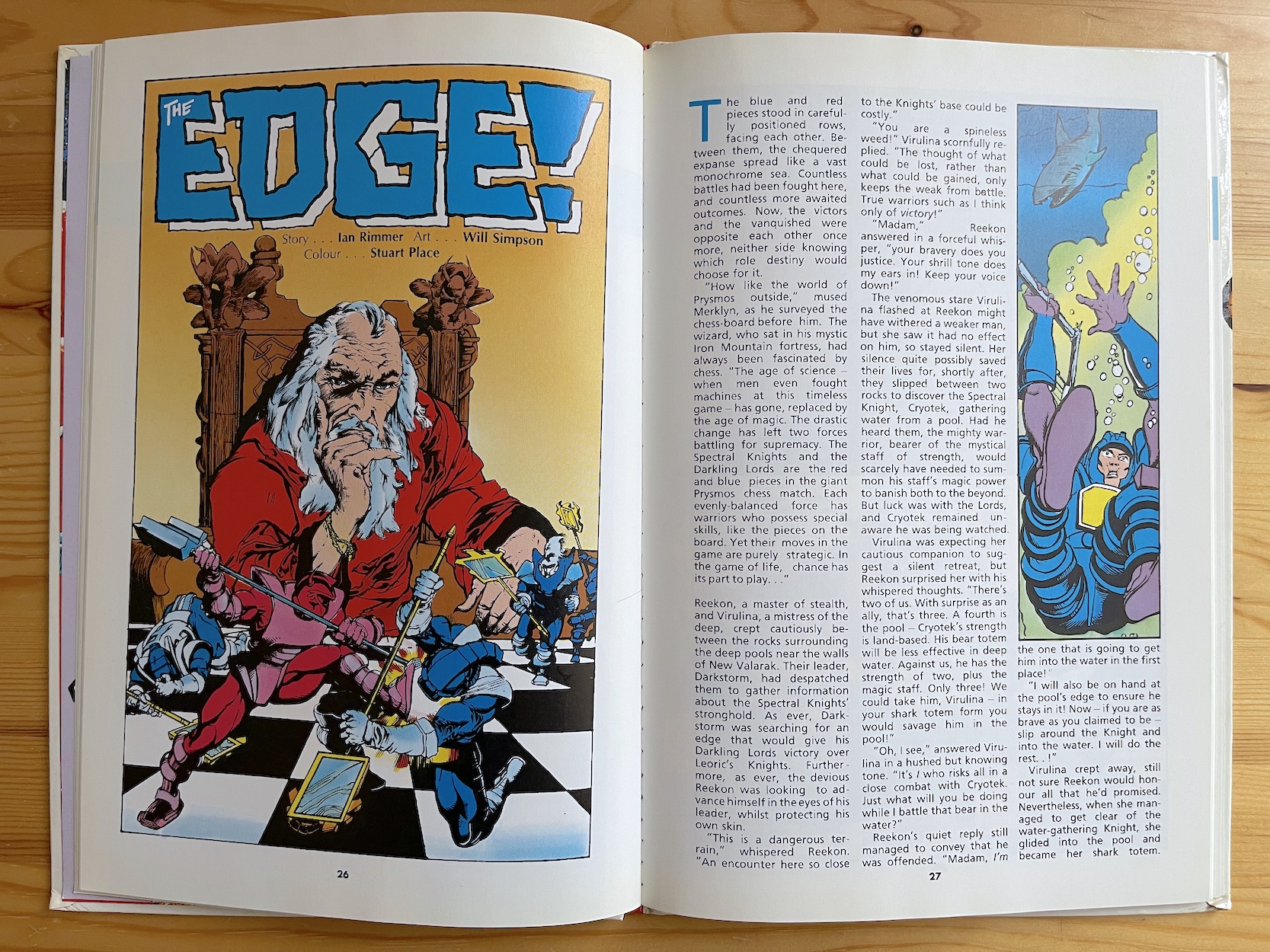
The writers would often concentrate on a couple of characters for the whole story, using the format to have some fun with them. While Transformers used it to develop them, for most of the other annuals it was a chance to take one small battle or incident and create a story full of personality and humour. That’s definitely the route the two new stories take here. First up is The Edge written by Ian Rimmer (Zoids, Action Force, Transformers) with art by Will Simpson (Transformers, Hellblazer, Rogue Trooper) and colour by Stuart Place (Captain Britain, Transformers (yes, again!)).

The story is bookended with Merklynn playing a game of chess, or whatever the Prysmos equivalent is, and equating his game to the ongoing battles between the two factions of warriors he’s created. The theme here is luck; no matter the strategy in the game chance will always play a part. The story itself is simple but fun and these bookends are an attempt to make it all feel more substantial than it actually is. It’s an interesting way of doing it and a good example of the more experimental writing techniques used in the text stories.

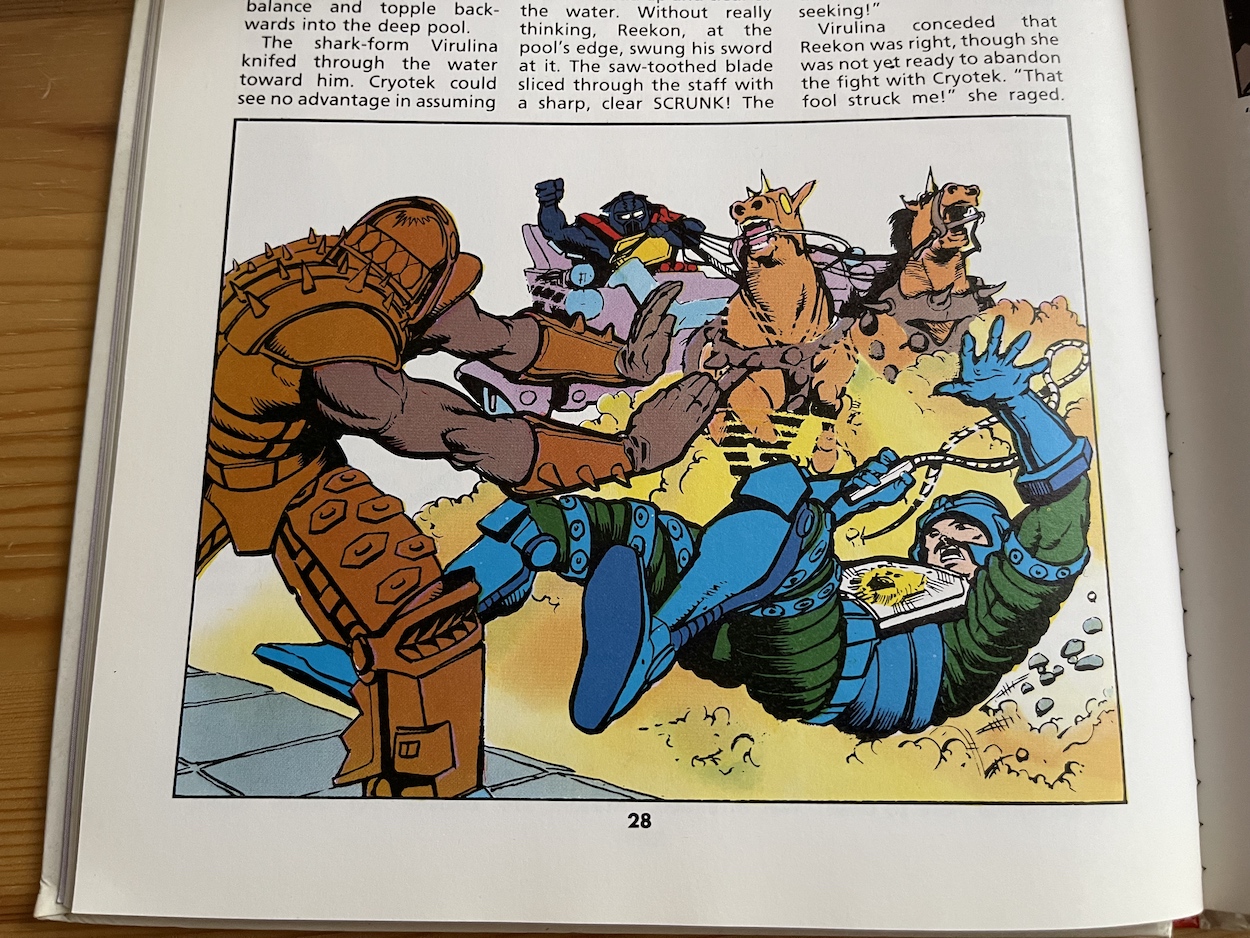
Reekon and Virulina are stalking about the lake near Leoric‘s compound when they happen upon Cryotek gathering drinking water and immediately hatch a plan to take him out involving both of their totems, a plan which is actually quite smart and very entertaining. In the midst of the fight the wooden shaft of the Spectral Knight’s staff gets snapped in two and the magic power itself disappears from within. This is a moment of revelation for the Darkling Lords but surely they’d have known this already? Has no damage come to their own wooden staffs in all this time?

The Lords launch a mass attack in which their targets aren’t the Knights themselves but their staffs, and they begin destroying them one by one. Surely a risky manoeuvre since their own staffs would be just as vulnerable, surely? Cryotek is holding the two pieces of his and needs a free hand to fight, so he holds them together in one hand at the point where they snapped apart. The magical energy returns, all it needed was to be held together and connected via the inner energy of the person whose persona is embodied within it. The battle ends in a draw and we read about Merkylnn resetting his chess game ready for the next battle and laughing.

It’s a strange little tale that doesn’t make an awful lot of sense if you think about it too much but there are some nice character moments, particularly for Reekon and Virulina. The dialogue between the two is snappy and funny as they whisper and bicker about their plan, and Reekon shows a masterful mathematical mind in working out the odds of success (and survival), an aspect of his character we never got to see in the comic before its premature cancellation. Definitely worth it for these moments alone.

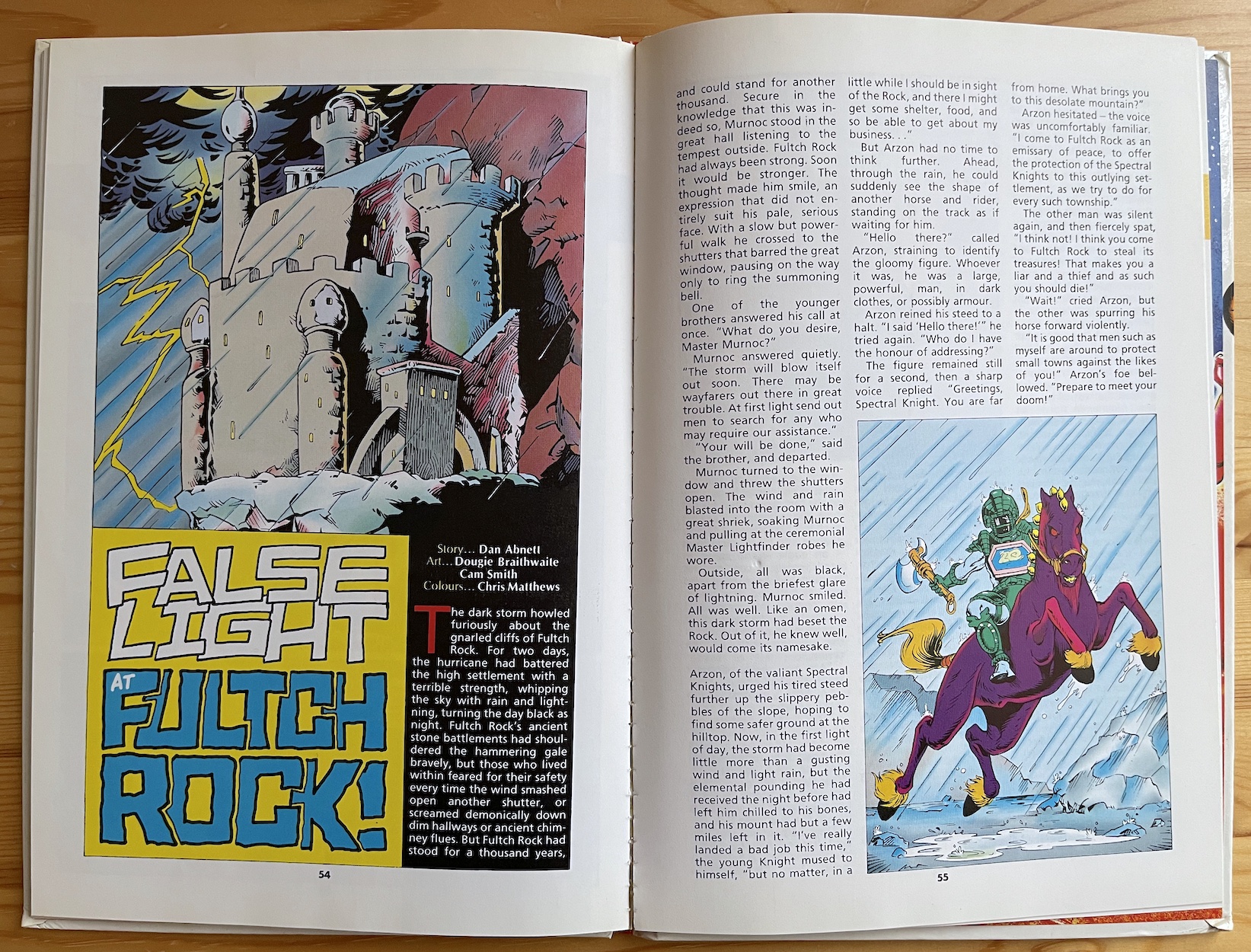
The second prose story is the final new Visionaries story of the whole run, so in hindsight it has an awful lot to live up to. I’m very happy to say it does so with aplomb. False Light at Fulch Rock stars Arzon, Darkstorm and Cravex and is written by Dan Abnett (Doctor Who, Knights of Pendragon and a legend on The Real Ghostbusters), with accompanying art by Dougie Braithwaite and Cam Smith (Supergirl, Sinister Dexter, New Mutants), and colours by Chris Mattews (Thundercats, Mighty Max).

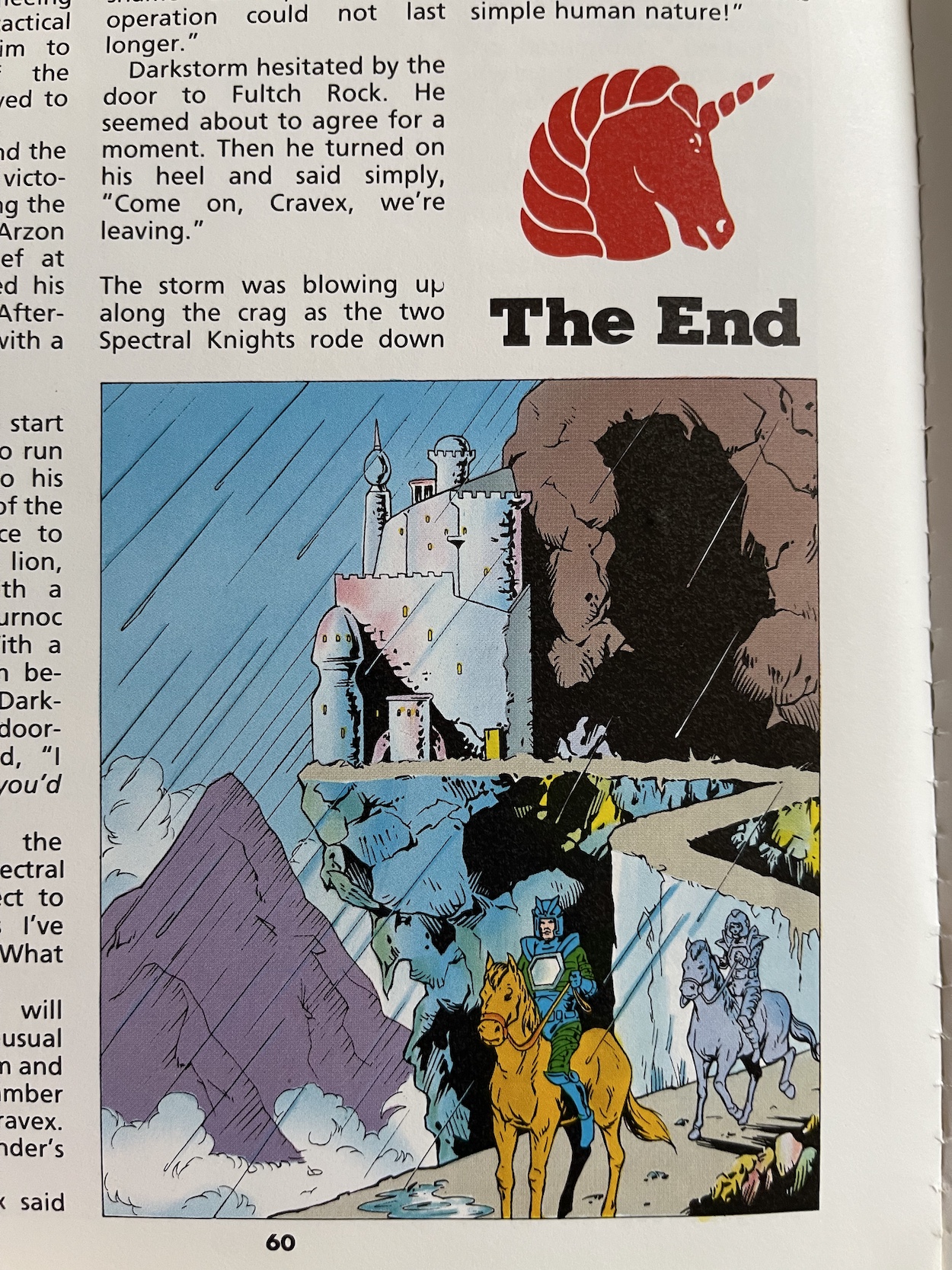
I was won over from the very first sentence, which paints the picture of a monastery on a cliff edge in the middle of a “dark storm”. With an image of the similarly named leader of the Darkling Lords on a purple horse across the page it immediately draws you in; we’re in for a treat with this one in atmosphere alone. However, everything else about the story is a winner too.


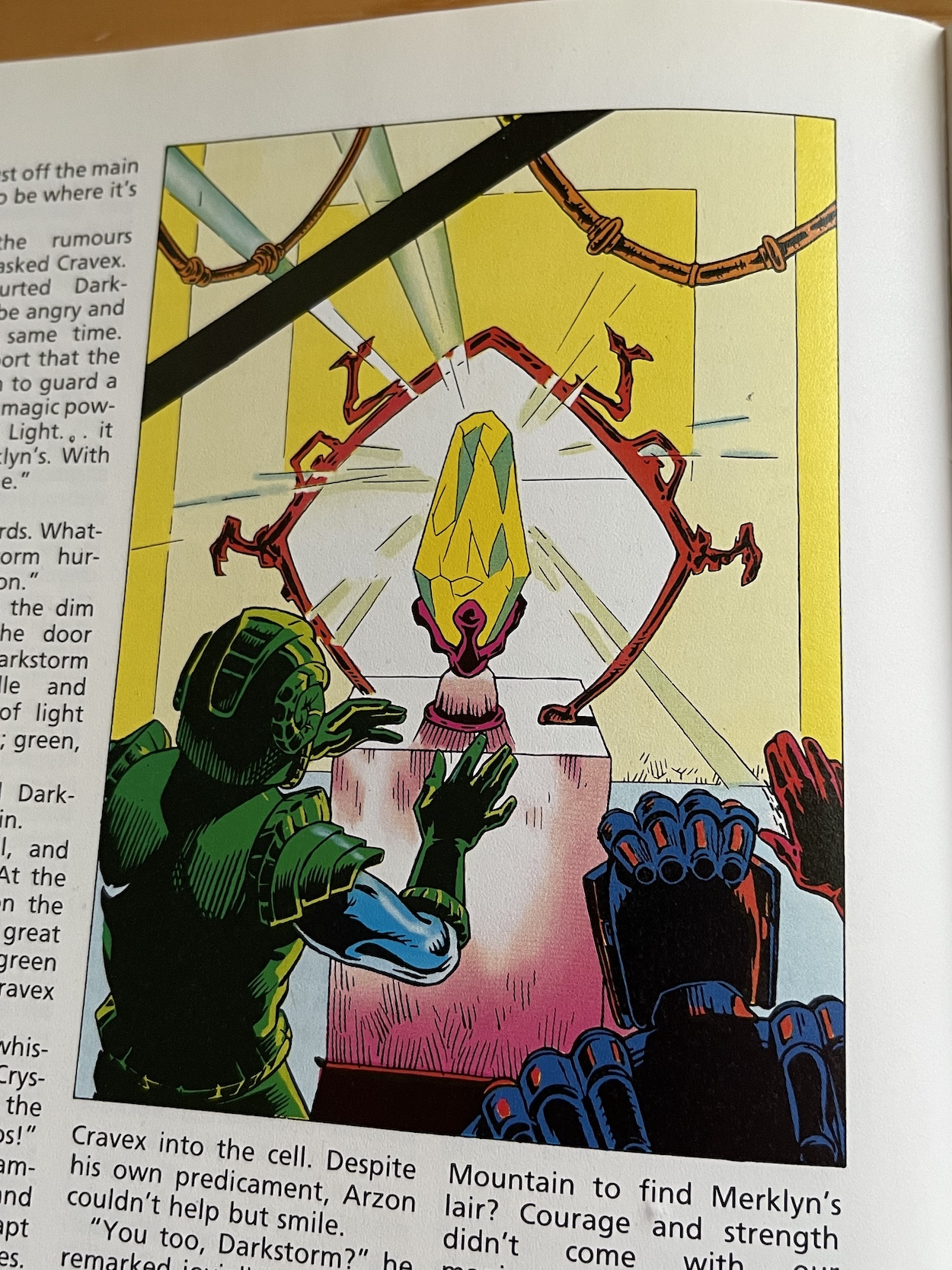
Darkstorm: “The Crystal of Light. With it, I will be supreme.”

Cravex: “You?”

Darkstorm: “The Darkling Lords. Whatever. Now come on!”


It tells the story of the Knights and Lords travelling to townships offering protection in this new dangerous age and Arzon’s next stop is Fulch Rock where the Order of the Lightfinders have taken refuge, led by Murnoc. Before he can get inside he’s set upon by Darkstorm and Cravex, barely escaping thanks to his Power of Knowledge spell poem, with which he’s able to predict the most likely next attack from his foes. However, he eventually falls over the cliff, transforming into his eagle form at the last second, slowing his decent enough to survive although he’s badly injured. He’s found by the Lightfinders and brought inside, where Darkstorm is ordered not to harm Murnoc’s guest while he works out which side to accept protection from.

It’s a great start. The rest of the story explains how the Lords are only offering protection because of the rumour of a Crystal of Light much like Merklynn’s hidden inside. There’s some cracking dialogue here which we’ve come to expect from Marvel UK text stories and in the end we find out it’s all been a ruse to lure the Lords there to steal their armour, what these religious nuts call “Aftertech” and view as their salvation, to power themselves and take over the land. The crystal is a fake and the three Visionaries must work together to escape due to the vast numbers of followers Murnoc has amassed.

Dan’s writing paints a picture in the mind and I think the story works so much better as prose than I think a strip would have. The Visionaries comic was always very good at building atmosphere with its descriptive panels, but having what is essentially seven pages of that kind of writing is something else. After the final battle Arzon tells Darkstorm the lesson to be learned is not judging others by appearance alone and that it’s a shame the two sides, so formidable together for the greater good, couldn’t work together to rebuild the planet. Darkstorm actually hesitates here. But in the end they leave as enemies. It’s a nicely written reference back to the monthly and the fact Darkstorm truly believed he was just doing what was best for his world.

See if you can track the whole series down, you’ll enjoy some of the very best 80s comics you’re ever likely to read

So if you’ve read the strip already is it worth your while picking this book up? Most definitely. The exclusive art and text stories are worth the entry fee and it’s essential for the completist. It’s also a bittersweet moment because as I finished Fulch Rock I realised that was the last story these wonderful characters had. There’d be a Spring Special a few months into 1989 which was a page-for-page reprint of #5 of the comic, released to plug the fact Visionaries were returning to the Transformers comic, which I’m reading in real time on the blog’s Instagram. But when they did reappear it was yet another reprint of The End… The Beginning, making it three times it was published in the UK in one year!

It’s been a blast reliving the feeling of receiving this annual all those years ago. It’s sad to know there are no more stories to come when the comic had some of the greatest potential of any licenced title. It started off in such strong shape and was developing so fast. I truly believe it’s a great loss we didn’t get to see what could’ve happened if the lifespan fellow Hasbro franchises like Transformers and G.I. Joe had, had been granted to the Visionaries.

After Christmas get yourself on to eBay and see if you can track the whole series down (it won’t take too long to complete), you’ll enjoy some of the very best 80s comics you’re ever likely to read.

TRANSFORMERS Pt.2 < > SPRiNG SPECiAL

ViSiONARiES MENU

ANNUALS MENU

CHRiSTMAS 2021

THE REAL GHOSTBUSTERS: PREMiERE iSSUE ANNiVERSARY

I admit that back in 1988 when I finally got to open my copy of The Real Ghostbusters‘ premiere issue I was a little confused. I’d been looking forward to something more along the lines of Marvel UK‘s Transformers comic, with a lengthy multi-part story and certainly no text stories which I associated with comics aimed at much younger kids. However, any confusion, or indeed initial disappointment, evaporated as soon as I started to read.

By the end of its 24 pages I was hooked and didn’t regret placing the order with my newsagent before even reading it. In fact, I stayed with the comic for the majority of its run. Now, 33 years later I’ve just finished reading issue one for the first time in decades. So how does it hold up to reading today?

That front cover is nothing short of iconic, often copied by my young self back in the day on several school exercise books. Andy Lanning (The Sleeze Brothers, Superman, Majestic) and Dave Harwood‘s (Action Force, Swift Sure, Conqueror) introduction to this new title perfectly captures the light-hearted tone of the comic. Unlike the aforementioned Transformers I’d enjoyed reading at my friend’s house, The Real Ghostbusters would focus on smaller, complete tales aimed at getting a chuckle out of its readers. A unique approach, brave even, but they pulled it off and created a comic like no other.

The first issue has no less than three strips and a text story, fact-file, activity page, ghost guide, request for readers’ letters and of course a Lew Stringer strip. (What Marvel comic was complete without Lew?) It’s all introduced on the HQ page which starts off the whole shebang by reciting the movie, setting the tone perfectly for this comedy comic (a term I’ll clarify later). The overall design wouldn’t change, there’d be no ‘new look’ every 50 or so issues, instead the cover and feature pages remained the same almost until the very end.

There’s certainly a confidence about it from the very start.

All of the strips here are written by John Freeman (of Down the Tubes). Editor of Doctor Who Magazine at the time, he was asked by the comic’s launch editor Richard Starkings to supply stories for the first issue. John told me this was literally his first regular writing gig, which is incredible since this was the launch of a brand new comic based on such a hot property. Needless to say, John knocks it out of the park.

As with the other stories, “There’s a Ghost in my House!” takes place with the team already on the job and gives us an idea of the pacing we can expect, as well as acting as an introduction to the Ghostbusters’ equipment, interactions and most importantly their humour. That’s all it really needs to do, but there’s still a twist. The ghost itself is a buggane, a house ghost and harmless if treated right. The homeowner ends up feeling sorry for it and in the end keeps it as a pet!

Dave’s inking added ample shadow work to gloomy, haunted scenes in the annuals

The strip is drawn by Anthony Williams (Judge Dredd, Fate, Sinister Dexter) with Dave Harwood on inking, lettering by future Slimer! artist Bambos Georgiou (Knights of Pendragon, Spectacular Spider-Man, James Bond Jr.) and coloured by Steve White (Transformers, Xenozoic Tales in Jurassic Park, editor of Visionaries). One of the other stories, The Ghost Under the Hood is also drawn by Williams but with Dave Hine (Detective Comics, X-Men, Night of the Living Dead) inking and there’s quite the difference. For the previous blog site I’d read a couple of the annuals and Dave’s inking added ample shadow work to gloomy, haunted scenes and made for some atmospheric illustrations. Finally, this strip is coloured by Paul Jacques (Adventures of the Galaxy Rangers).

Again, it’s full of action and humour and plays out like one scene has been plucked from an episode of the cartoon. This was Richard’s intention, he wanted each story to take place right in the midst of the action whenever possible. Here, Ecto-1 is out of control, Egon unable to steer or brake. You can see from the page above the plan isn’t to Peter‘s liking and in the end the car suddenly stops, sending him flying. Now parked outside a Chinese takeaway, their perpetually hungry pet ghost Slimer appears from under the hood.

To establish a scene and scenario, pack in some action, wit, character and a funny conclusion in just three pages is quite the achievement. Indeed, by the time I finished reading the comic I was a little breathless (metaphorically speaking) with the fast-paced nature of the stories and gags.

The humour in their interactions was always well developed and genuinely very funny

The covers were mainly used to illustrate the text stories, doubling up as their title pages. So yes, basically we’d be getting two identical pages in our comic but we didn’t care, some of the front covers would have us frantically flicking straight to that story. This was especially true later in the run with some simply stunning artwork on the covers.

I’ll admit it took me a handful of issues before I read one of the prose stories as a kid because of a false perception they were aimed at younger children than me. But I remember discovering just how good they were and reading all the ones I’d glossed over one very enjoyable afternoon. From then on they often became the first thing I would read.

Space constraints might have been a factor here, but they would often focus on just a couple of members of the team per story. This would give each individual character time to shine, and in doing so the humour in their interactions was always well developed and genuinely very funny.

None were funnier than the Winston’s Diary series which ran in alternate issues, with Brian Williamson‘s (Doctor Who, Totally Primeval, Batman) panels repeated each time. In this issue, my favourite character takes us through a typical day in the life of the team. In this issue’s story, over the course of a few busts Winston’s cool head provides a hilarious contrast to the others. Here’s just one example, where a rock star is hearing strange noises in his apartment:


“The apartment was newly decorated and equipped. Egon took PKE readings in all the rooms. Ray spectra-scoped the walls and balcony. Peter explained that he must carefully examine the rock star’s expensive Hi-Fi and video in case the ghost was lurking there. We all heard weird noises, groans and whines. I bled the air bubbles from the newly-installed radiators and the noises stopped.”

Winston Zeddmore (Dan Abnett)

This repeats throughout the day, Egon and Ray going to ever more extreme methods of ghost hunting, Peter finding something to distract himself and Winston solving the problem with common sense. It’s deadpan humour at its best.

Another text feature would also be a highlight every issue.

Spengler’s Spirit Guide appeared in every issue until just before the end. In the film and cartoon Egon would make reference to ‘Tobin’s Spirit Guide’ and this ongoing series was his own version of said tome. These were all written by Dan Abnett (Knights of Pendragon, Death’s Head II, Sinister Dexter), which is no small feat when you think about how the comic went weekly from issue 14 onwards and he created well over 150+ altogether! In an issue which featured The Four Horsemen of the Apocalypse the Guide detailed the other half dozen or so Horsemen that don’t get talked about. I can remember laughing hard at that one in particular.

I’ve found out recently that little illustration of Egon was drawn by none other than future Marvel US, DC Comics and 2000AD artist Cam Smith (Supergirl, The Incredible Hulk, Gen13). This means Cam’s work appeared in more issues than anyone else’s of course, technically speaking.

With Lew Stringer at the helm Slimer made his way to Britain for a slap up feed

This issue also contains the first fact-file. As a child I drew a combined figure of the Ghostbusters based on that final sentence. From what I remember Egon was the brain, Winston the heart, Slimer the stomach (obviously) etc. It was a real Frankenstein’s monster which I decided not to send in to the letters page because, well, some things just aren’t meant to be seen.

Once in a while the comic would include what it called Ectoplasmic Activity, such as this membership card and masks in a couple of future issues but it didn’t appear much, unlike Blimey! It’s Slimer. While it wouldn’t be too long until Bambos (letterer on our first strip) took over, at the beginning the little green blob was in the hands of OiNK‘s very own Lew Stringer. Of course, with Lew at the helm Slimer is going to make his way to Britain for a slap up feed.

Lew has written a blog post about his time on the comic, which you can read here.

A look at a classic comic wouldn’t be complete without a look at the advertisements within, especially when they’re connected to the subject matter. I welcomed these action figures into my toy collection during Christmas 1988, along with Ecto-1, Slimer, the Stay Puft Marshmallow Man and a few other ghoulish monstrosities, and I recall I ate far too many packets of these crisps that summer too. They were surprisingly nice for a tie-in.

So how did this 33-year-old comic hold up for this 43-year-old? One word: brilliantly. I was surprised at how many times I chuckled while reading it, even though I’m not exactly the original target audience anymore.

I called it a “comedy comic” earlier, a term I’ve never used before. The definition of “funny comics” conjures up images of OiNK, Beano, Buster etc. But while this is indeed a comic which sets out to be as funny as it can be (something it succeeds at very well) it’s more the sitcom to OiNK’s sketch show. I also think calling it some combination action/adventure/funny comic would sell it short. The Real Ghostbusters was a unique comic and remains so to this day.

WHEN YOU GONNA CALL?

Just as it happened 33 years ago today I have an urge to collect this comic all over again. This issue has been immense fun and it just kept getting better and better. In fact, as brilliantly as it began my favourite time with the comic wouldn’t be until around issue 80 onwards.

It’s just such a fun comic there’s only one thing for it.

Now of course this will take a while, it was Marvel UK’s most popular comic at one stage and lasted a whopping 193 issues, alongside four annuals, specials, poster magazines and more, even a puzzle spin-off. It’s going to be quite the task so don’t expect any more real time reviews for quite some time. The daunting thought of covering a series of its size on a weekly basis has put me off in the past, but after reading this issue again perhaps I could use my own model of how I covered the publisher’s Transformers.

Finally, just look at this little Easter egg I found while doing some research, from the pages of IDW‘s Ghostbusters Crossing Over comic from 2006!

THE REAL GHOSTBUSTERS RETROSPECTiVE

THE REAL GHOSTBUSTERS ANNUAL 1

RETROSPECTiVES MENU