Category Archives: Ring Raiders

RiNG RAiDERS LiCENSEE STYLE GUiDE: PART FiVE

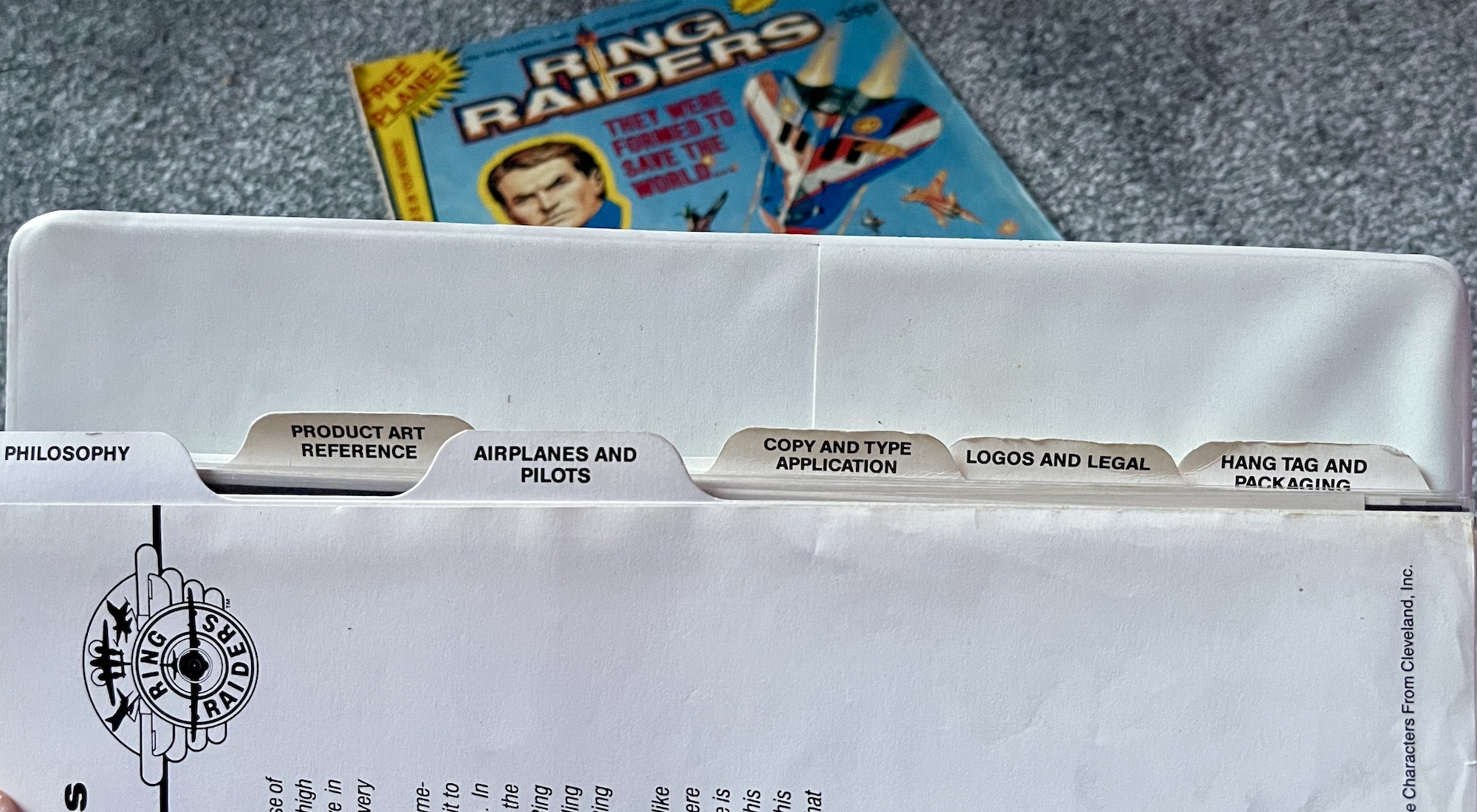
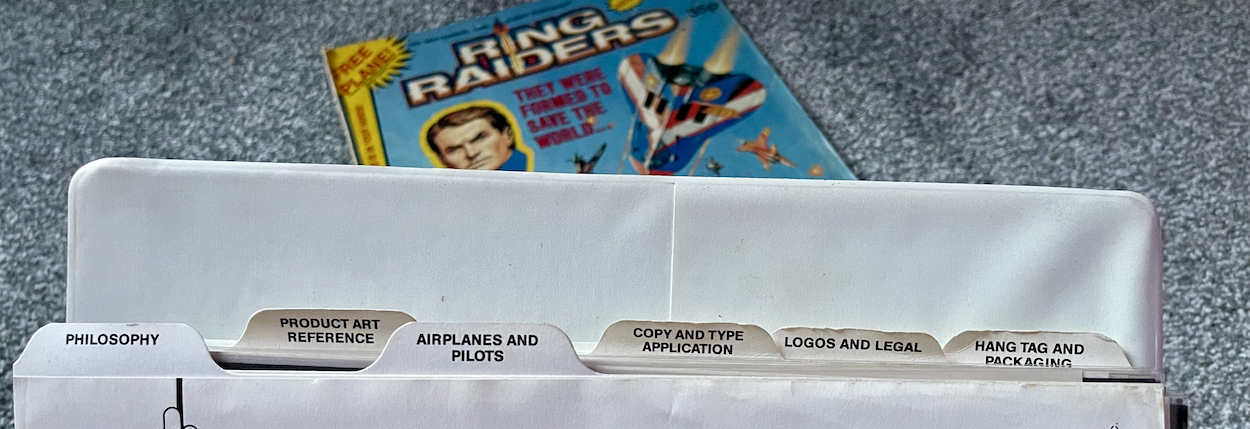
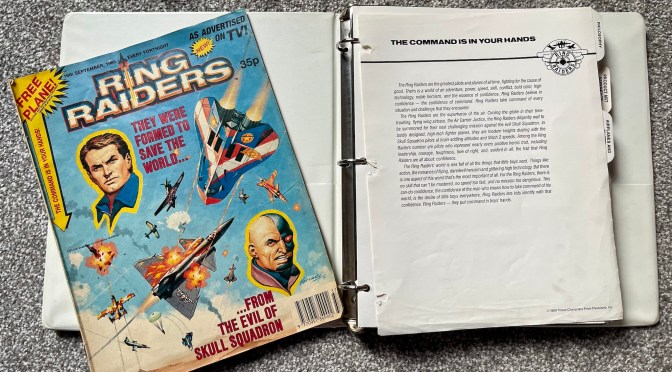
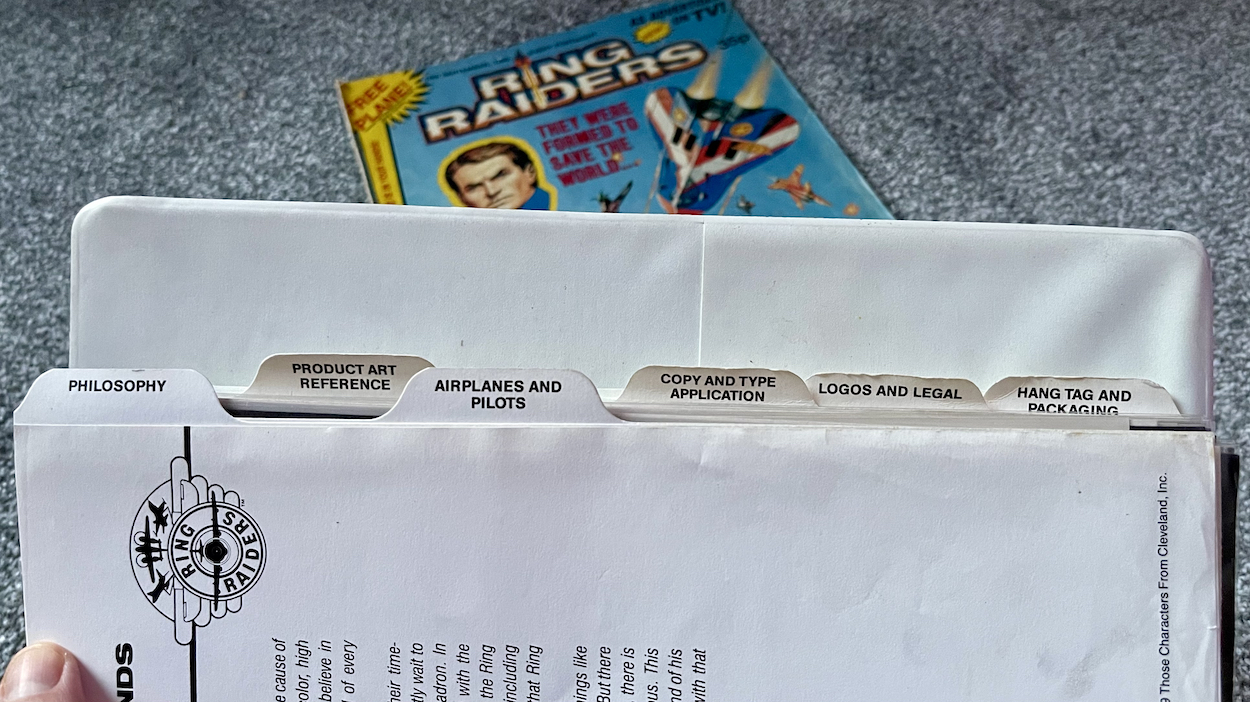
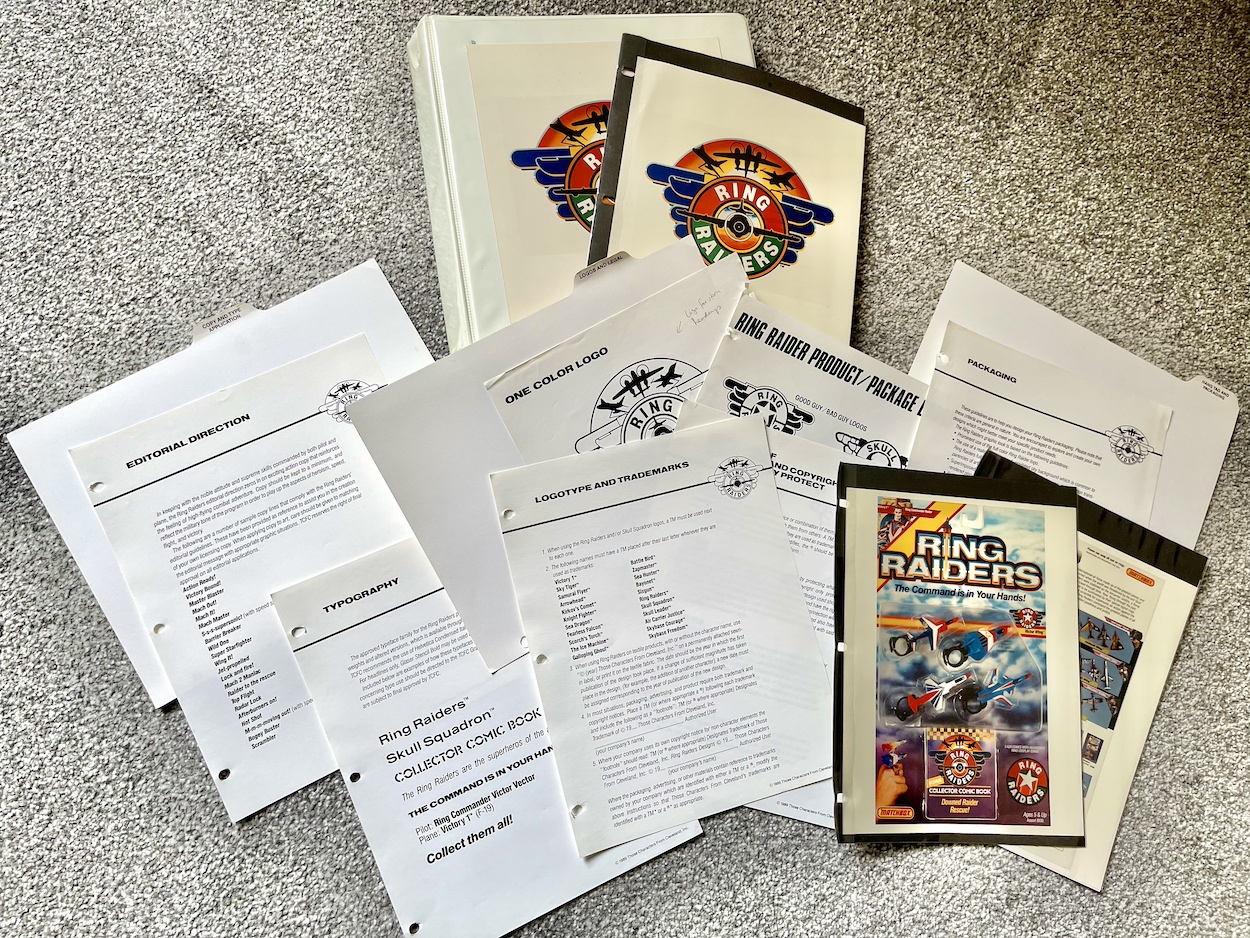
Here we are at the end of this monthly series already. It’s been really interesting looking at this Ring Raiders Style Guide sent out to all potential licensees by the copyright holders Those Characters From Cleveland (TCFC) back in 1989. Judging from the feedback I’ve been getting on socials it seems like you lot agree. The final 12 pages are all here and as you can see from the photo above they make for a meatier read this time around.

There are three sections to round off the folder and we start with ‘Copy and Type Application’, which amounts to two whole pages about fonts. Yes, really. It’s something I never really considered but now that I see all of these examples I can remember each and every one of them on the packaging (which you’ll see further below) and on the toy advertisements in the comic produced by the editorial team.
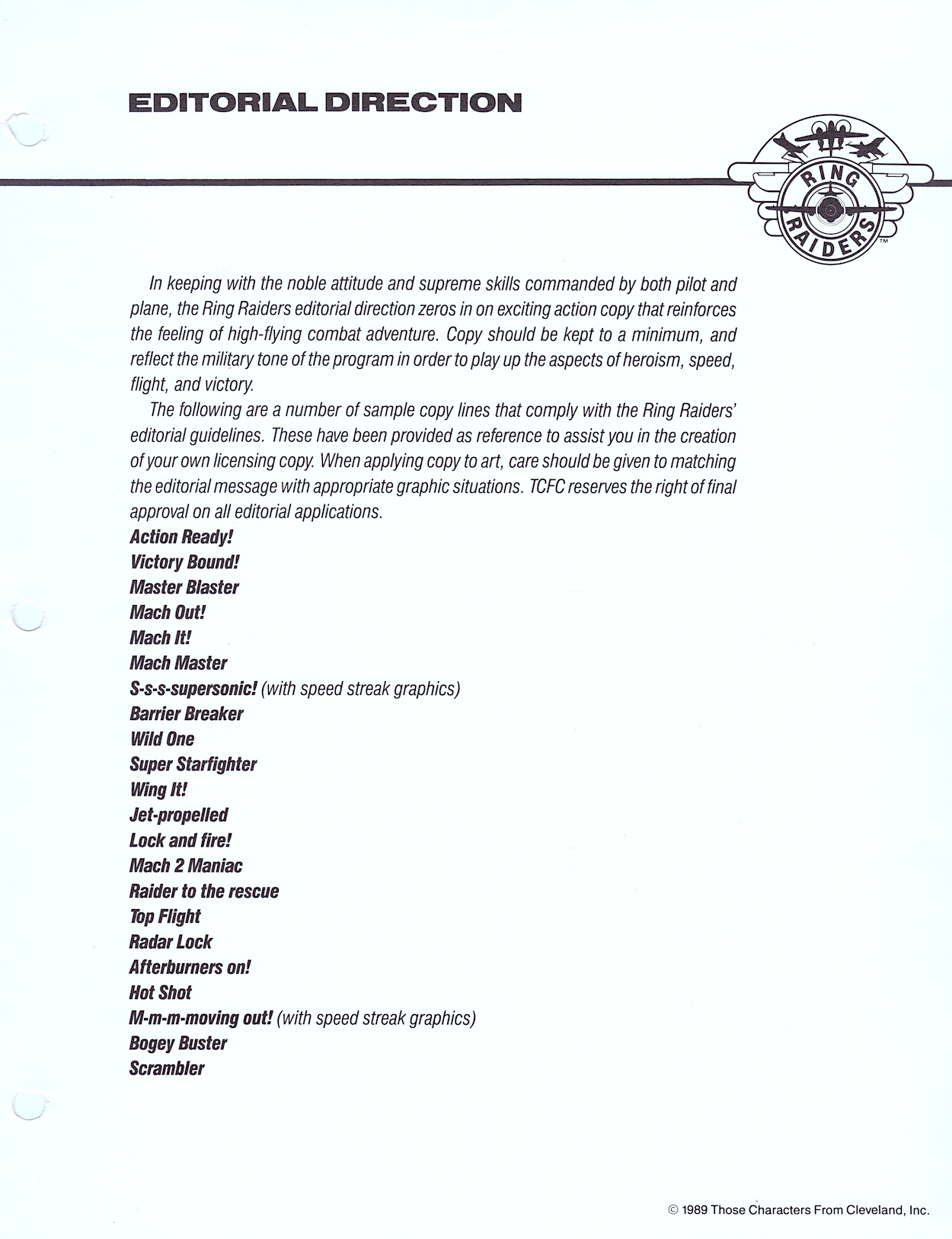
The page of suggested taglines sound like they’ve been written by committee. A committee who has no idea about aircraft. They’re cringe-worthy and thankfully weren’t used on the toys themselves or in the comic. You can also see all potential designs were subject to TCFC’s approval, however the comic’s editor Barrie Tomlinson said the people behind Ring Raiders were more open than most to what licensees could bring to the franchise, and they were very happy with what Barrie and his team were producing.

Logos and Legal’ is the next part of the binder and they’re a weird combination, like they’ve only been shoved into the same section because they start with the same letter. It kicks off with a lot of detail about how to use trademarked names and exactly how every piece of merchandise should be labelled appropriately. If you’ve ever wondered what the difference is between the ™ and the ® symbols you’ll find that answer here too.
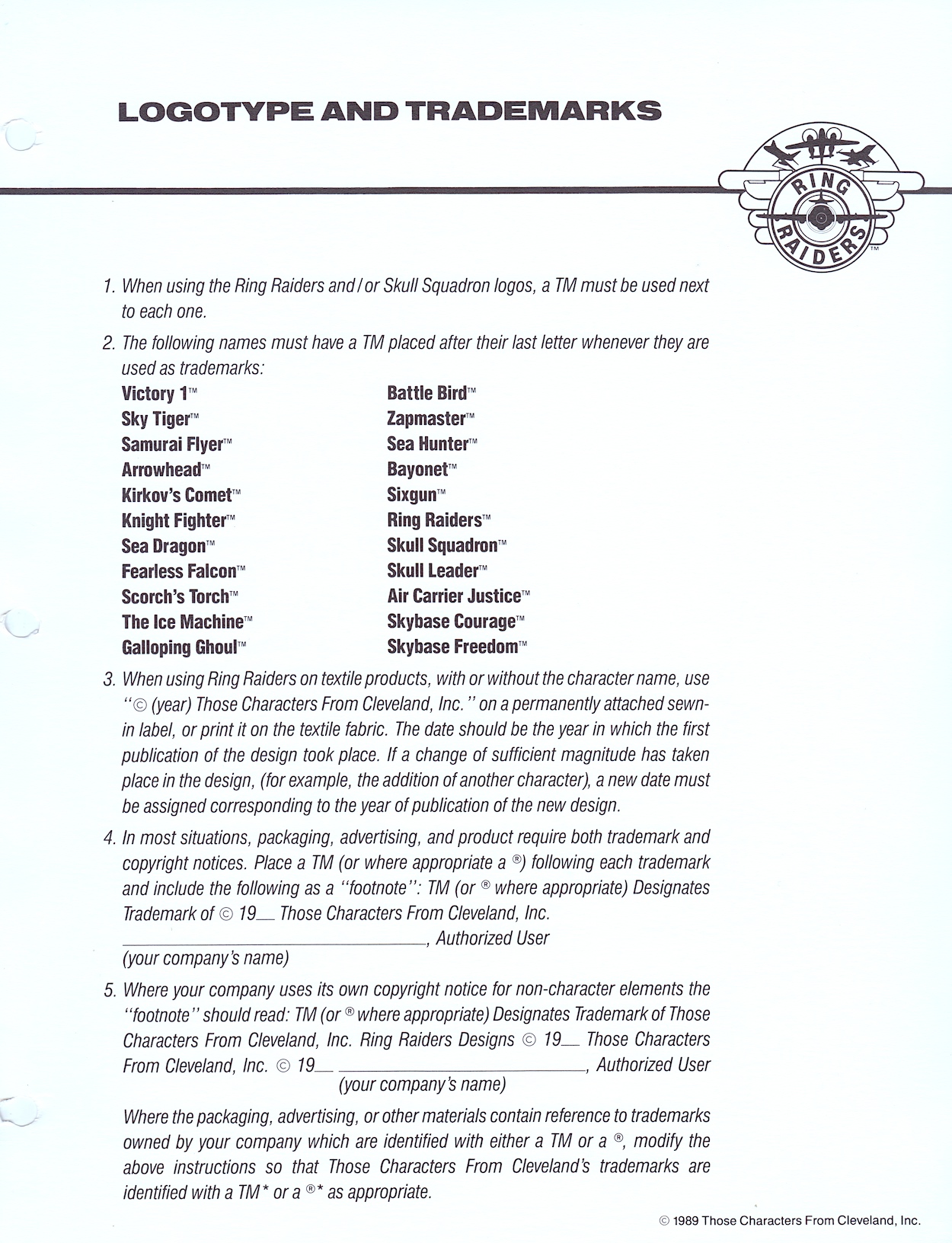
Even textile manufacturers get their own paragraph detailing how their products should be labelled. This was most likely the same information found in similar style guides for all of TCFC’s (and other’s) ranges but it’s still an interesting read. You’d see these little footnotes in all of our licenced comics too and I always thought it was up to the publisher how they were worded, especially for their own trademarks, but it looks like that wasn’t the case and it was the licence-holder’s wording. Although, to be fair, it’s a pretty standard format.

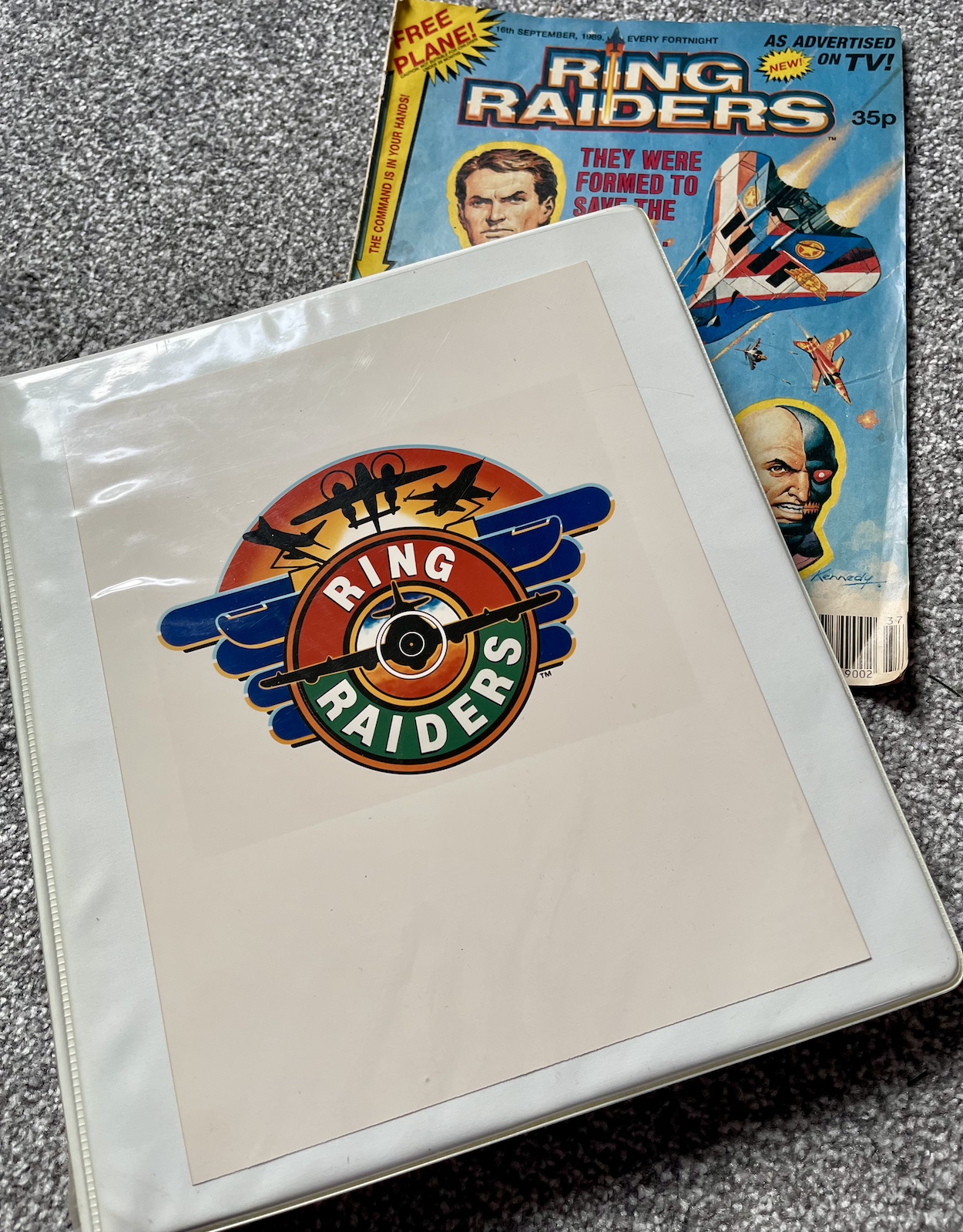
I simply loved the full colour Ring Raiders logo

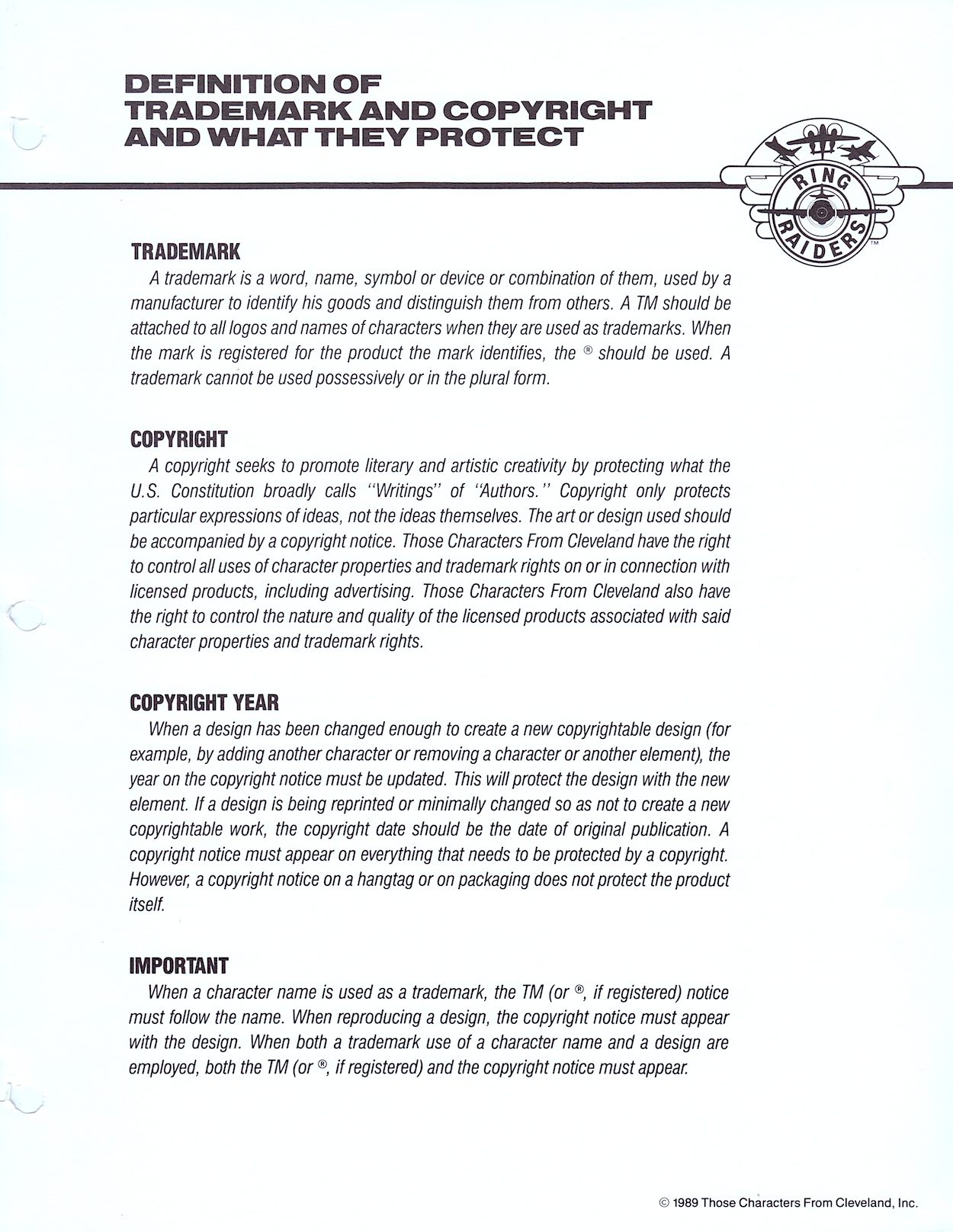
Want to know the difference between a trademark and a copyright? Or why the year mentioned can sometimes change and sometimes remain the same? It’s all there for you. As most of my comics reading post-OiNK as a kid was based around licenced titles the nerd in me found this of particular interest. Then we move on to the second part of this alliterative section and the variations on the franchise’s logo that were permissible to use.

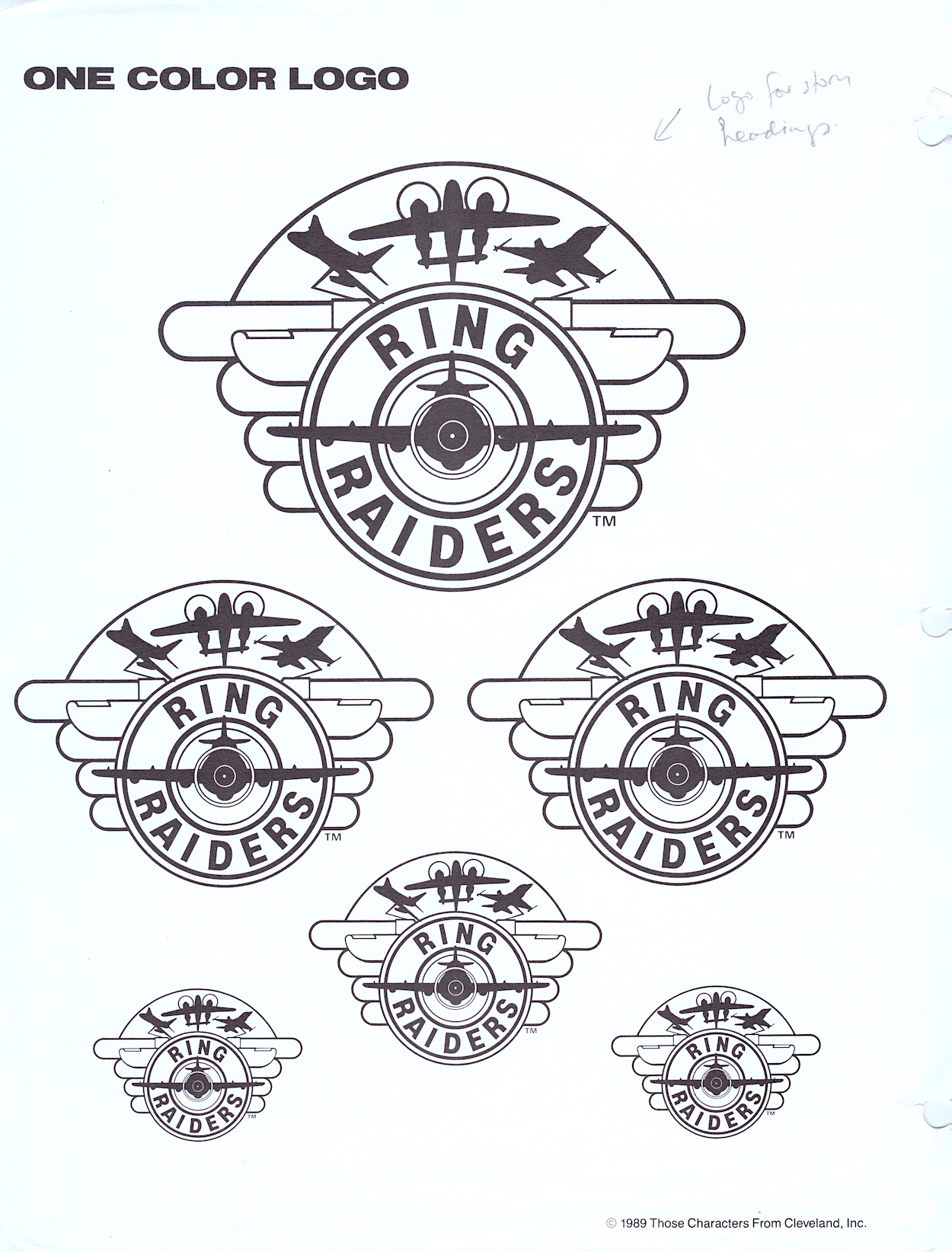
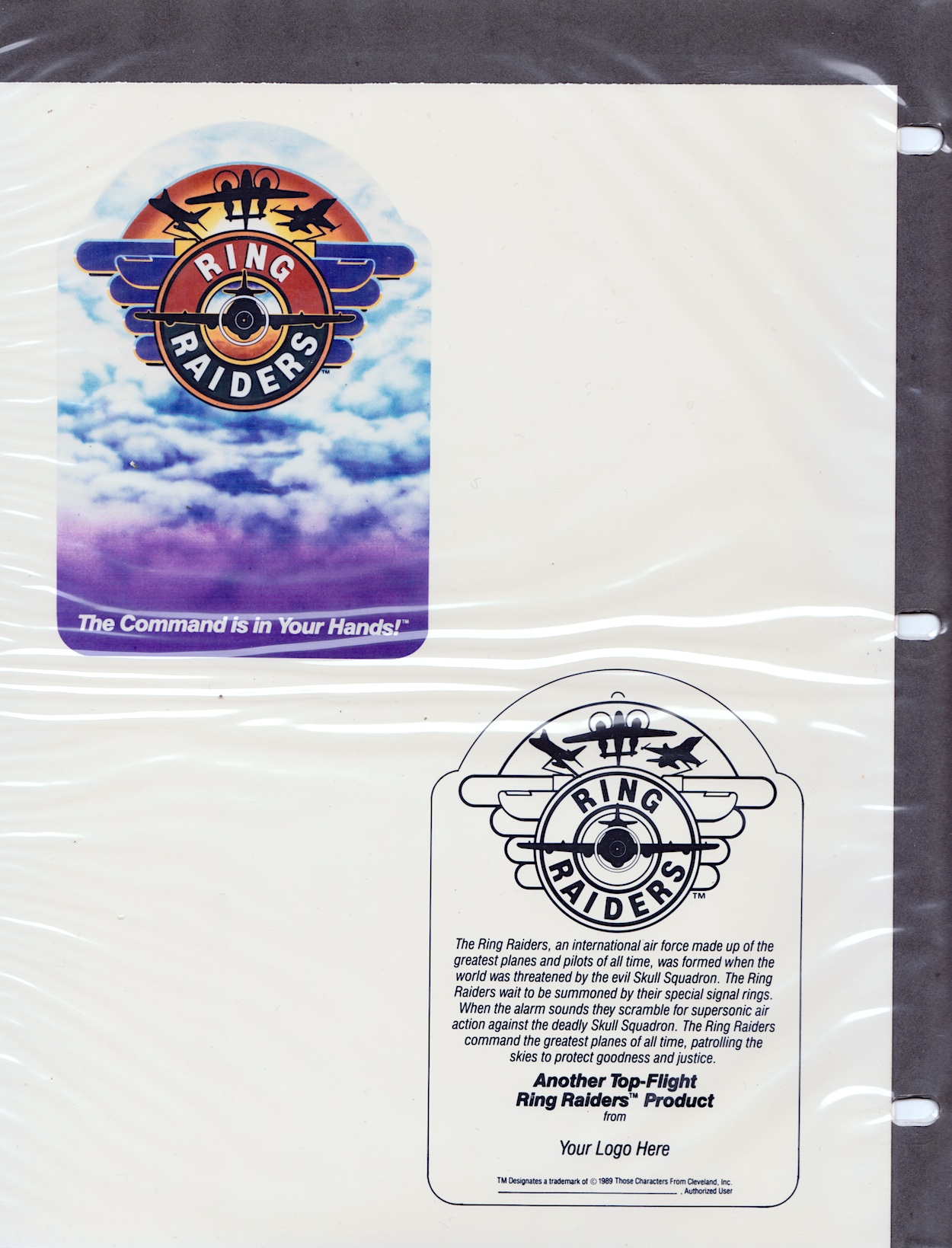
I thought the ‘Ring Raiders’ main title was a brilliant design and the accompanying logo the perfect embodiment of the toys. I simply loved the full colour Ring Raiders logo. I still feel the same, they’re just great designs! Below you’ll see the one-colour (that is, black and white) version of the logo, the same one in various sizes taking up a full page for some reason. You’ll see a handwritten note by Barrie too, highlighting how they’d use this particular version.
On the next page is a selection of variants for both the Ring Raiders and the Skull Squadron (quaintly described as “Good Guy / Bad Guy Logos”). The top two were used as the individual logos for each side on toy packaging and across any and all merchandise. The next row down are the in-universe logos used by the characters themselves on their planes, bases and uniforms.

The smaller, circular logos had specific uses in the toy range. The first two on each row were used on the tiny plastic rings we’d slip on our fingers, the planes attached via a thin, posable plastic rod. The star and skull circles were on the front of the rings while the ones with the lettering encircled the ball-shaped attachment on the top. The final one is exactly what it says, a miscellaneous combination of both to be used as they saw fit.

Anyone who collected these very collectible toys at the time should prepare to have their memory cells jolted as we move on to ‘Hang Tag and Packaging‘, namely the packaging used for the Matchbox toys themselves. First there’s more criteria, although these are more like suggestions and designers are encouraged to explore what might suit their product the best. These apply to all packaging, whether that’s by Matchbox or anyone else, right down to the sky background. There’s also mention of bold visuals such as colour bands trailing after the planes and you can see examples in the previous section’s merchandise concept drawings.

These card displays with the planes tucked away inside moulded clear plastic take me right back. From discovering my first two-plane starter set to excitedly collecting all the packs I could in every toy shop I visited, as well as receiving gifts during the festive season or from visiting family members from Scotland. I have a particularly fond memory of coming home from school to find my sister was visiting and I hadn’t been told, so it was a surprise. After a while she told me she’d brought me something and it was a huge eight-plane set featuring all the Wing Commanders.
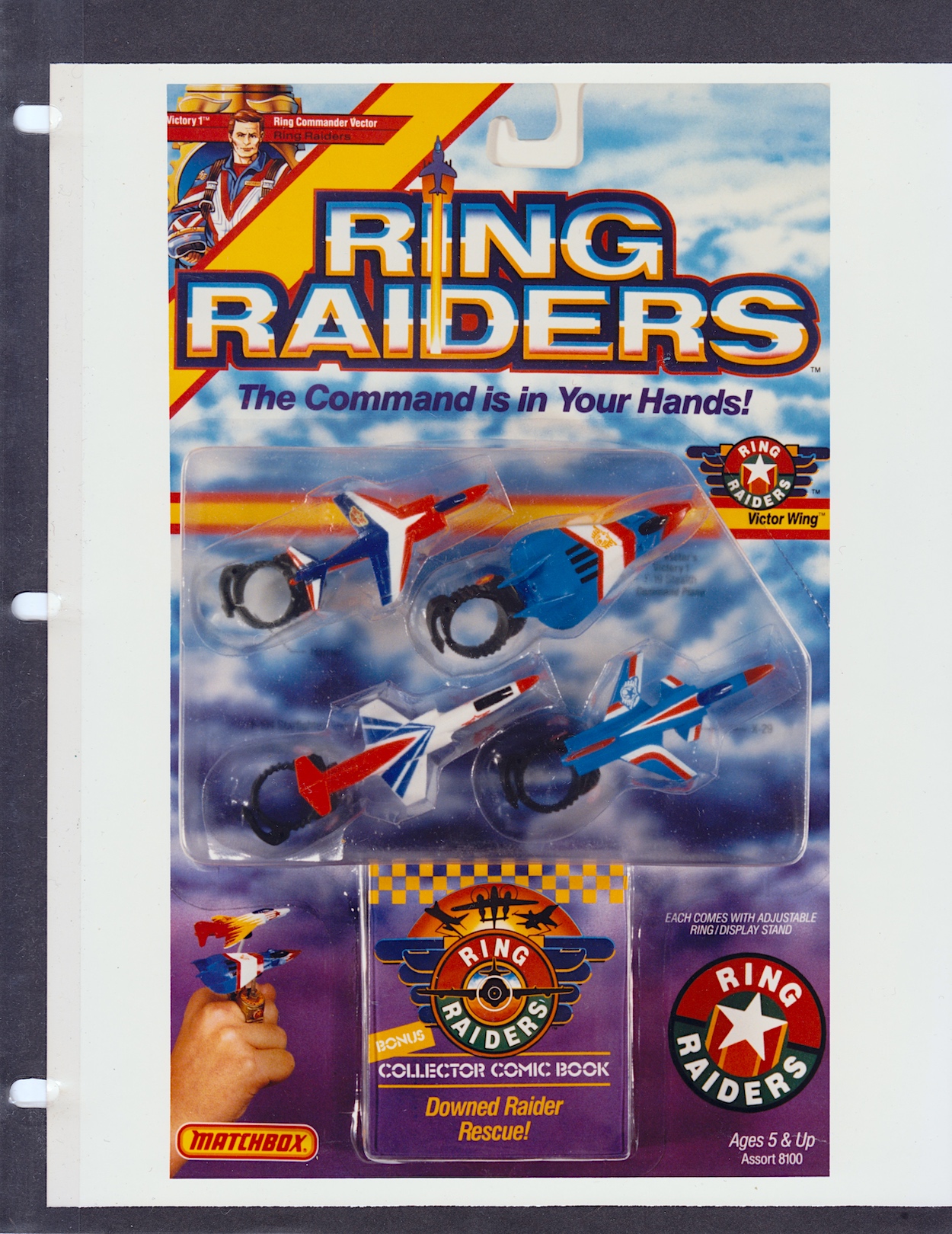
I think back and my parents must’ve had to coordinate with my siblings and family friends because I never received any sets I already had (although there was some overlap in the range like those Wing Commanders planes, each of which would also be in their Wing sets). I’ve no idea how they managed that without me knowing. Anyway, yes, these photos are bringing all the smiles right now.

The rear of the packaging reveals more sets and a huge array of extras. As you know the franchise never took off, but over the course of a year (actually, mainly over the course of one summer and Christmas) I was able to collect everything here (plus most of the additional plane sets not shown here) except the gigantic Air Carrier Justice and the black version of the Battle Blaster. Ah, good times.
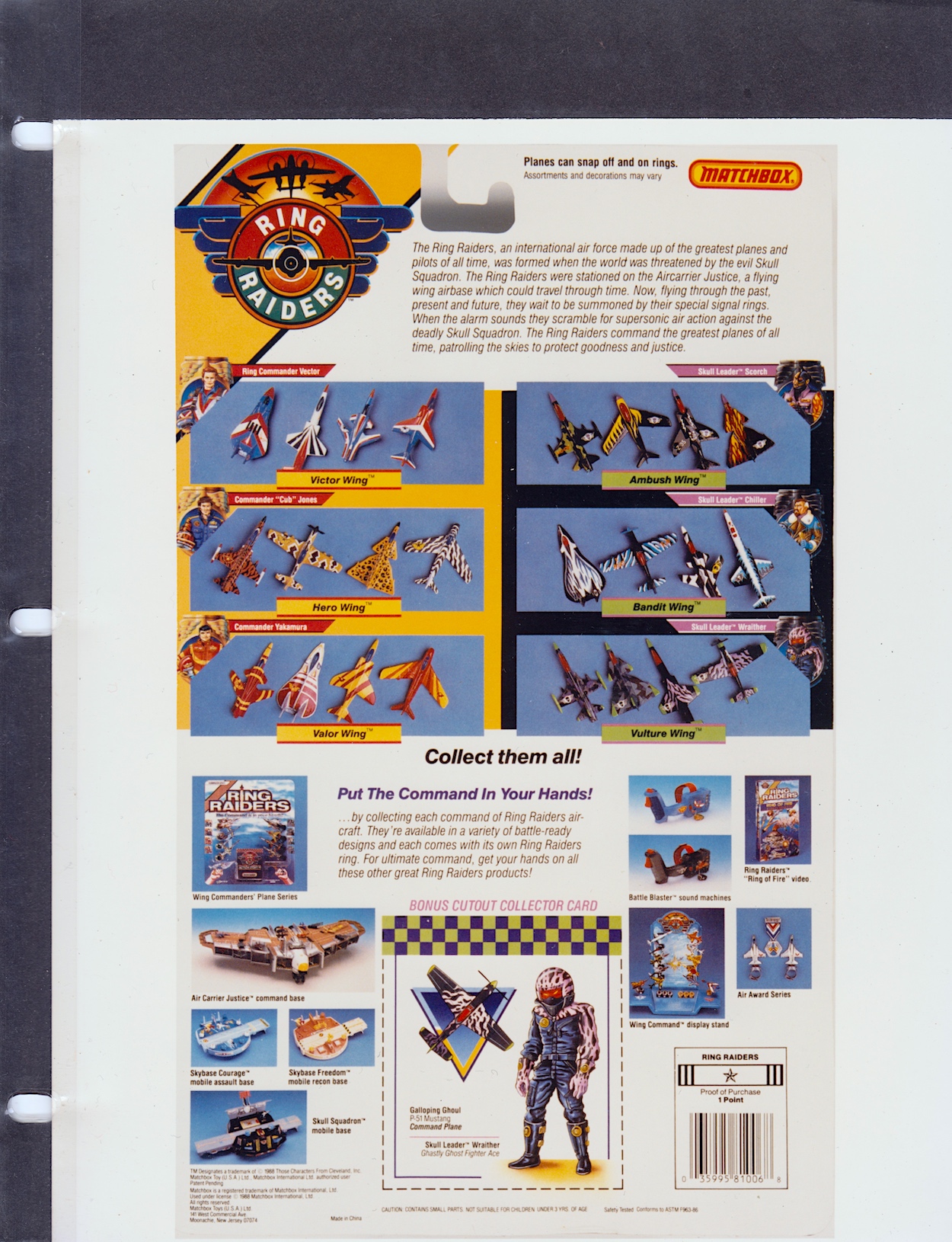
In case you’re wondering what we could redeem those barcode points for the answer is simple: nothing. It was possibly something for consideration at some future point but nothing ever came of them within the time the line lasted. According to online sources there were second and third series of planes, although I only ever remember seeing a second series the next summer which just made me more frustrated that the comic hadn’t lasted, because I thought the release of more toys meant they’d been a success.

Of course, with hindsight I know the second series would’ve already been in production before things fell apart. But I never did buy any more after that initial year and then in my later teens mine were handed down to a young nephew and subsequently destroyed through his playing. I kept the yellow and red X-29 as it was my first, and my favourite, but even this was given away to a girl in my late teens. (Hey, I was young and she’d taken a shine to it.)

Ring Raiders had that “gotta collect ‘em all” quality

After the hangtag (an example of what a product could hang from in a store) things are rounded off with a large scale image of that beautiful, full-colour logo. It’s the same page that’s been slipped inside the front of the folder which I’ve shown in a few photographs, but I’m including a proper scan of it to end on as requested by blog reader Terry in their comment under part three of this series. You’re right Terry, it is sweet!

With that the folder is finally closed and placed back on the shelf alongside what was, and still is, my favourite non-OiNK childhood comic. The toy line may have only lasted about a year and I was quick to move on to my next obsession, I’m sure, but what an obsession these were. I come away from this series of posts with one key takeaway; the Ring Raiders were robbed of being a hit franchise.

Before Pokémon, the Ring Raiders had that “gotta collect ‘em all” quality. They were great toys, the comic had great characters and action, there was variety and adventure and a ton of fun in all aspects of the franchise and it had more potential than most others in my opinion. They have a special place in my heart all these years later and, dare I say it, I don’t think I’m finished with them yet.

Once again, thanks to former IPC/Fleetway editor/writer Barrie Tomlinson and his writer son James for kindly sending me this folder in the first place.
BACK TO PART FOUR

LiCENSEE FOLDER MENU

RiNG RAiDERS MENU

RiNG RAiDERS LiCENSEE STYLE GUiDE: PART FOUR

Have you ever found out something about your childhood many years later and wondered how you never noticed even though it was so glaringly obvious? In the case of this blog it could be how I never clicked that the TV show Round the Bend was created by OiNK’s editors! As for the Ring Raiders it’s something small but even more obvious, the colour of the canopies on all of those planes I collected.

Welcome to the fourth part of my look at every single page of the Ring Raiders Style Guide sent out to licensees in 1989. We’ve covered the introductions and details of the range, the characters and their all-important aircraft and now we move on to the Product Art Reference section. Here, Those Characters From Cleveland (TCFC) described how they expected their creations to be shown and a concept artist drew up some fun merchandise ideas, making this my favourite part of the whole folder.

The introduction reminds licensees the planes are the focus, which is an obvious point since it’s all based around those superb Matchbox toys. Of course, Barrie Tomlinson’s comic understood the significance of focusing on and developing the characters in order to tell good stories with those planes. Coming to this as a fan of the comic I initially found it strange how they were trying to tell artists specific ways to draw their creations, but of course this wasn’t aimed at dynamic comic strips. Instead, this was for those making other merchandise based solely on static representations of the aircraft.

In fact, when I spoke to Barrie about the Ring Raiders comic he told me how some licence holders didn’t understand the medium and would analyse every single frame as if it were an individual image instead of a sequential piece of art. Thankfully TCFC were apparently much more knowledgeable about comics. This page mentions my point about the canopies, how the Ring Raiders all had blue canopies and the Skull Squadron‘s were all red. A quick glance on eBay proves this point and I’ve no idea how I didn’t notice that pattern as a kid!

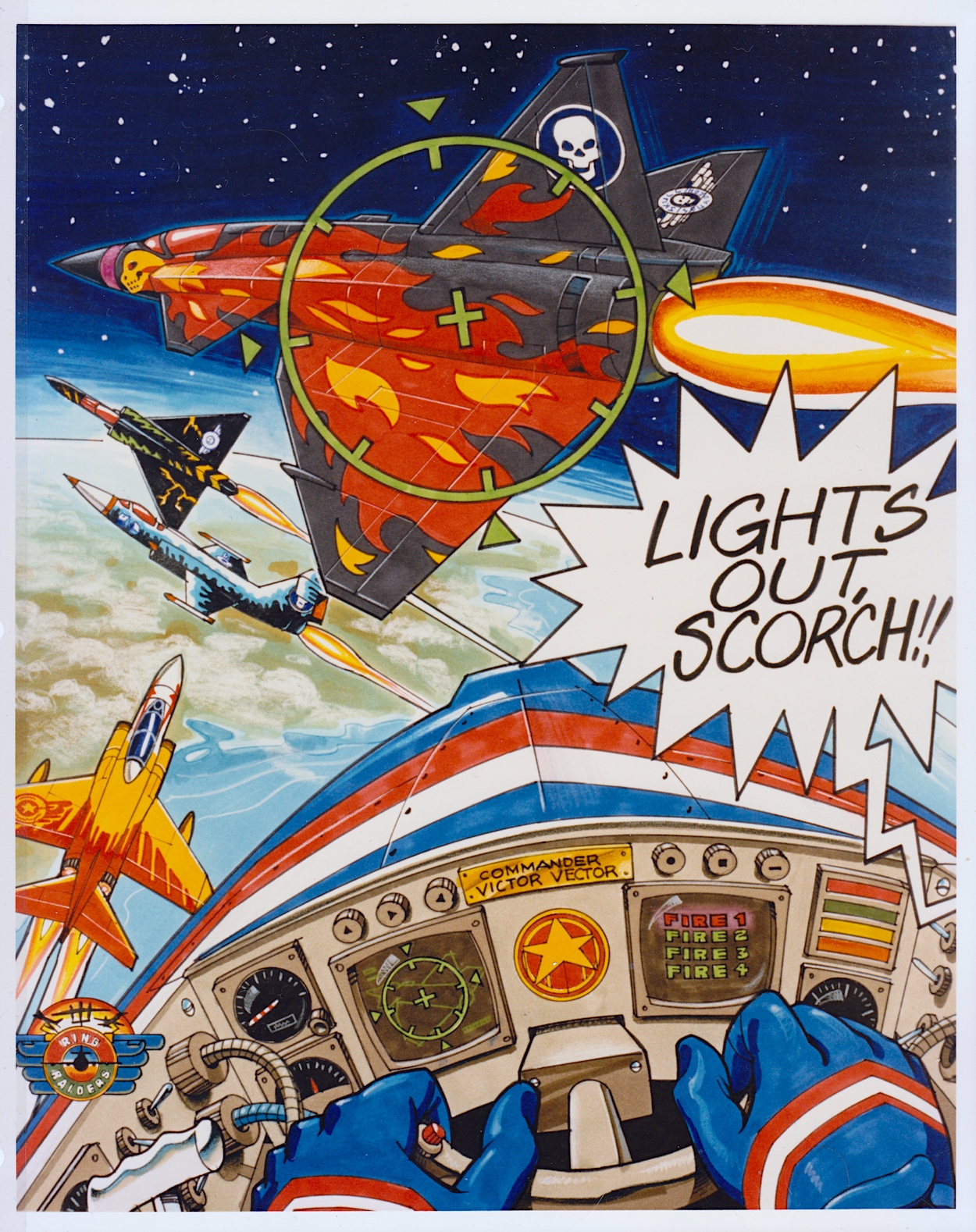
This full-page piece shows how some of the aerial action could be portrayed and I think it’s a great scene! It’d certainly make for an awesome poster if it was blown up a lot larger. I particularly like the lighting on Scorch’s Torch and seeing inside Vector’s cockpit. In fact, it’s only upon seeing this that I realised the airplane controls weren’t something we really saw in the comic, apart from the sci-fi element of the rings. Yes, I just love this and it’s a shame we don’t know who drew it.

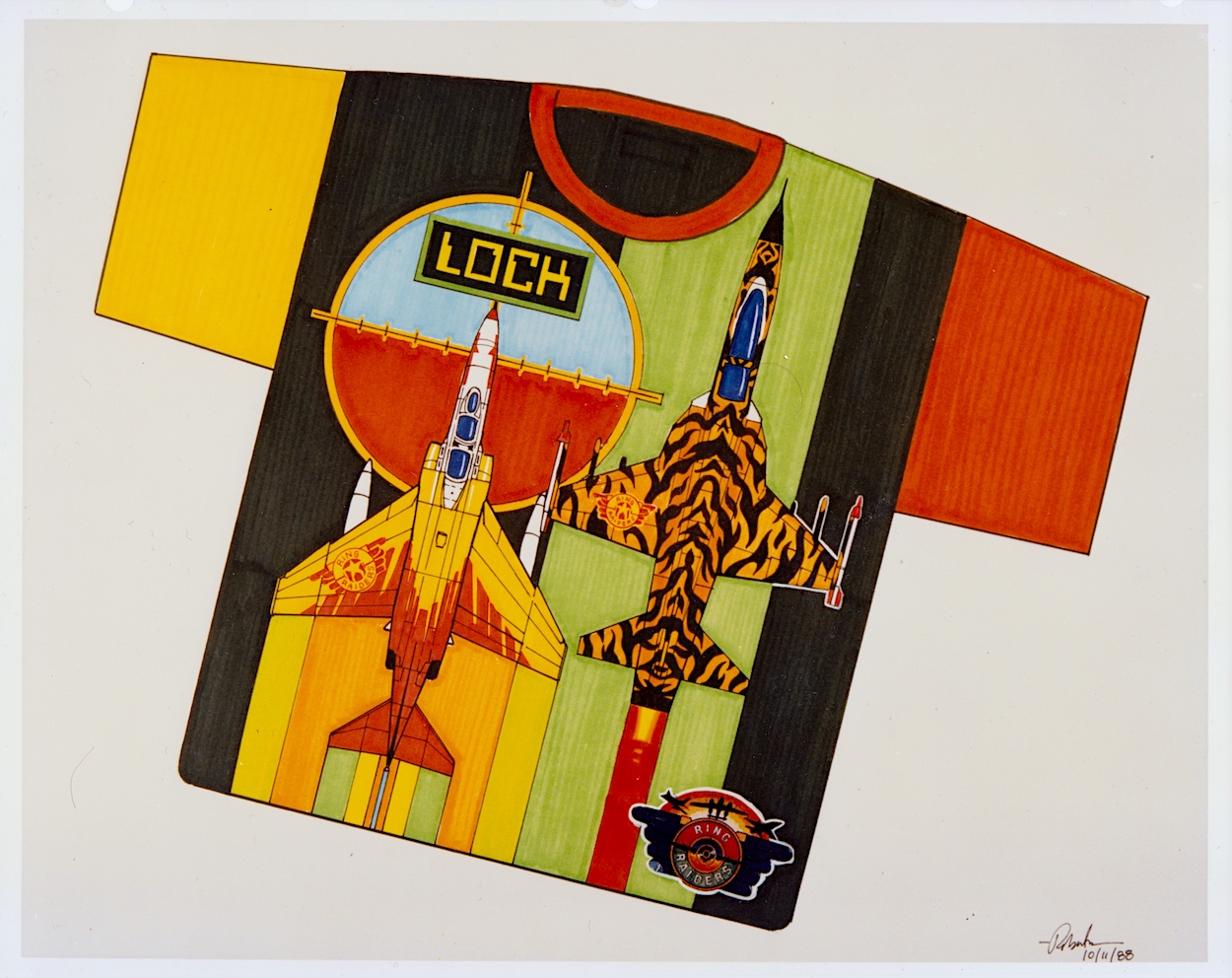
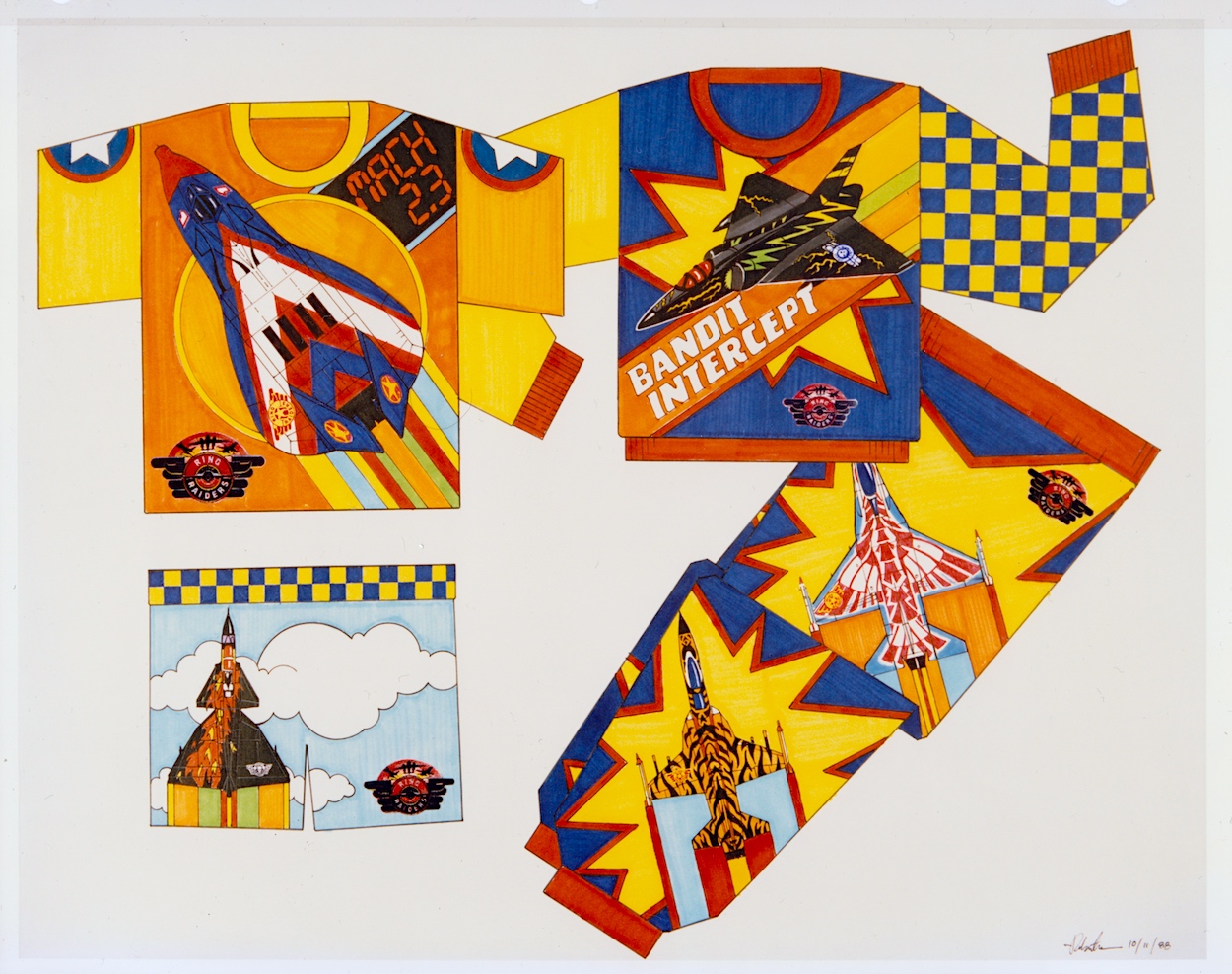
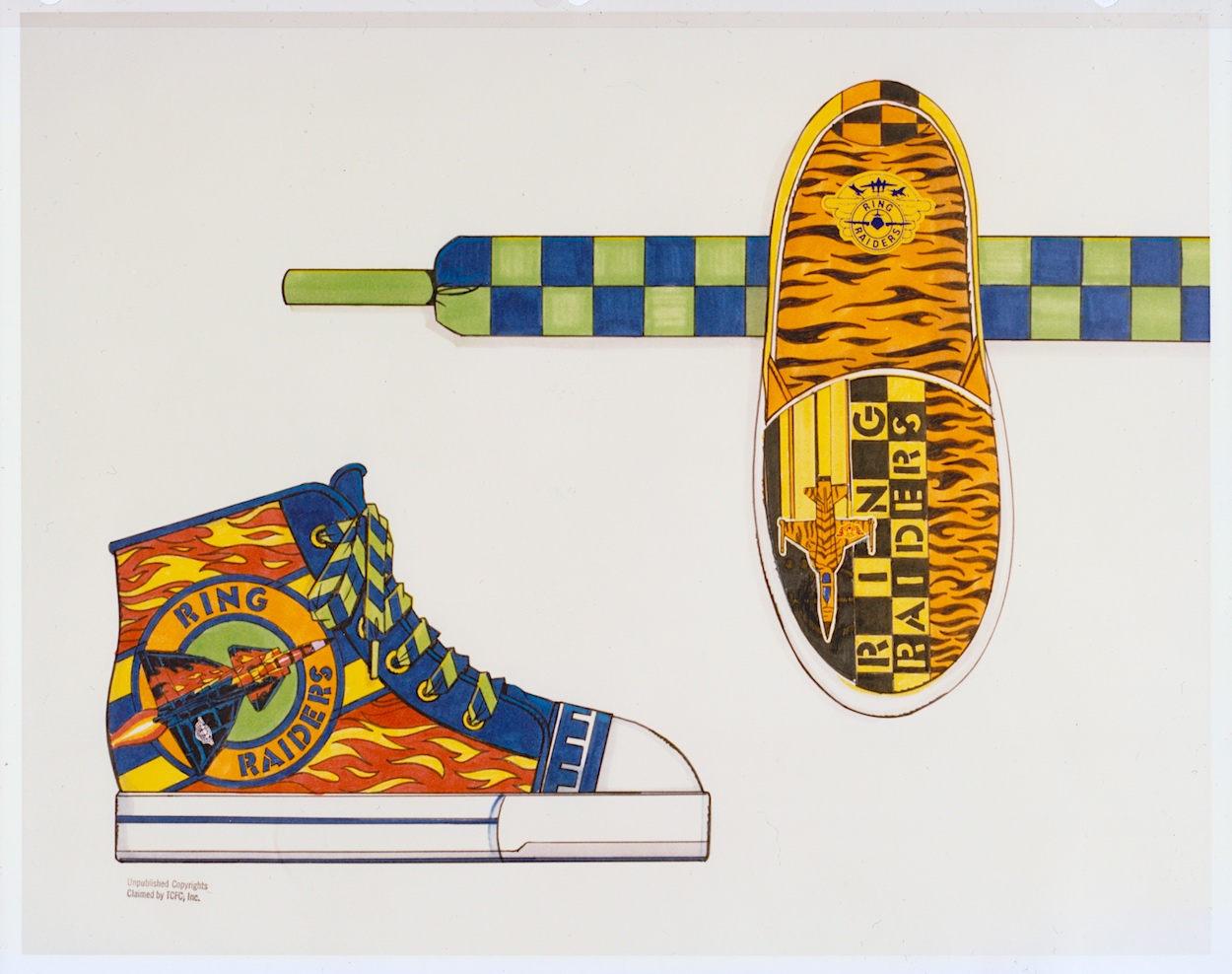
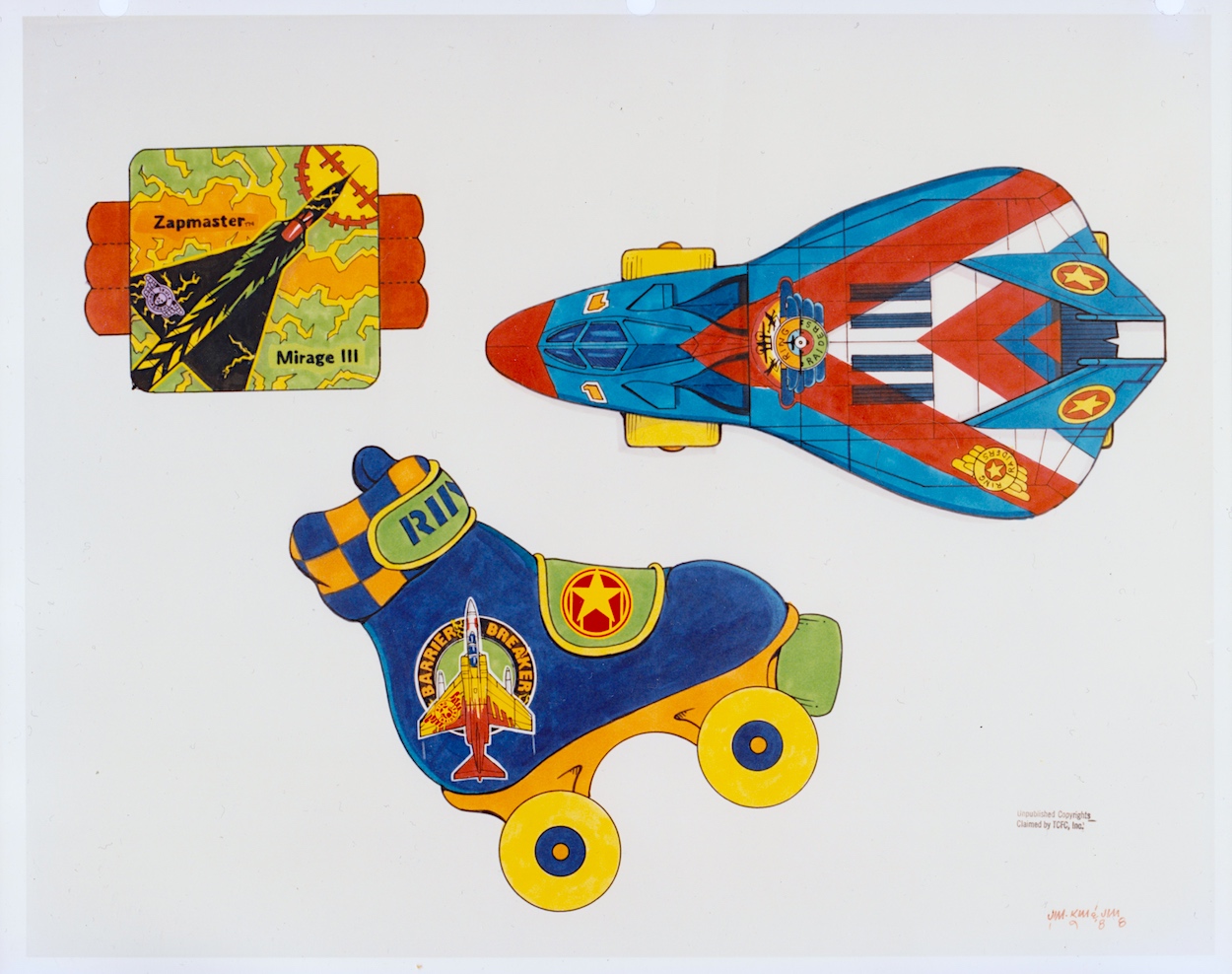
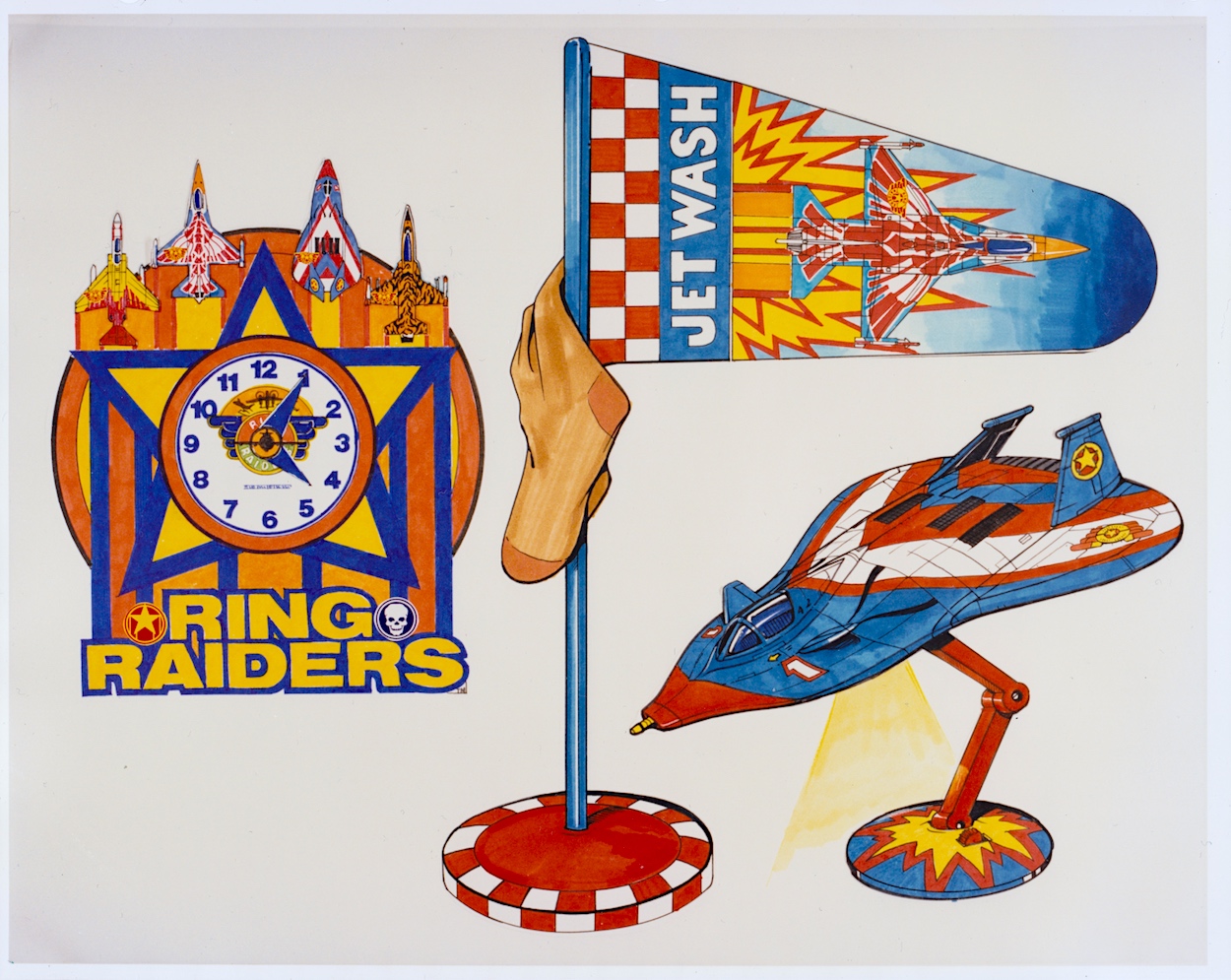
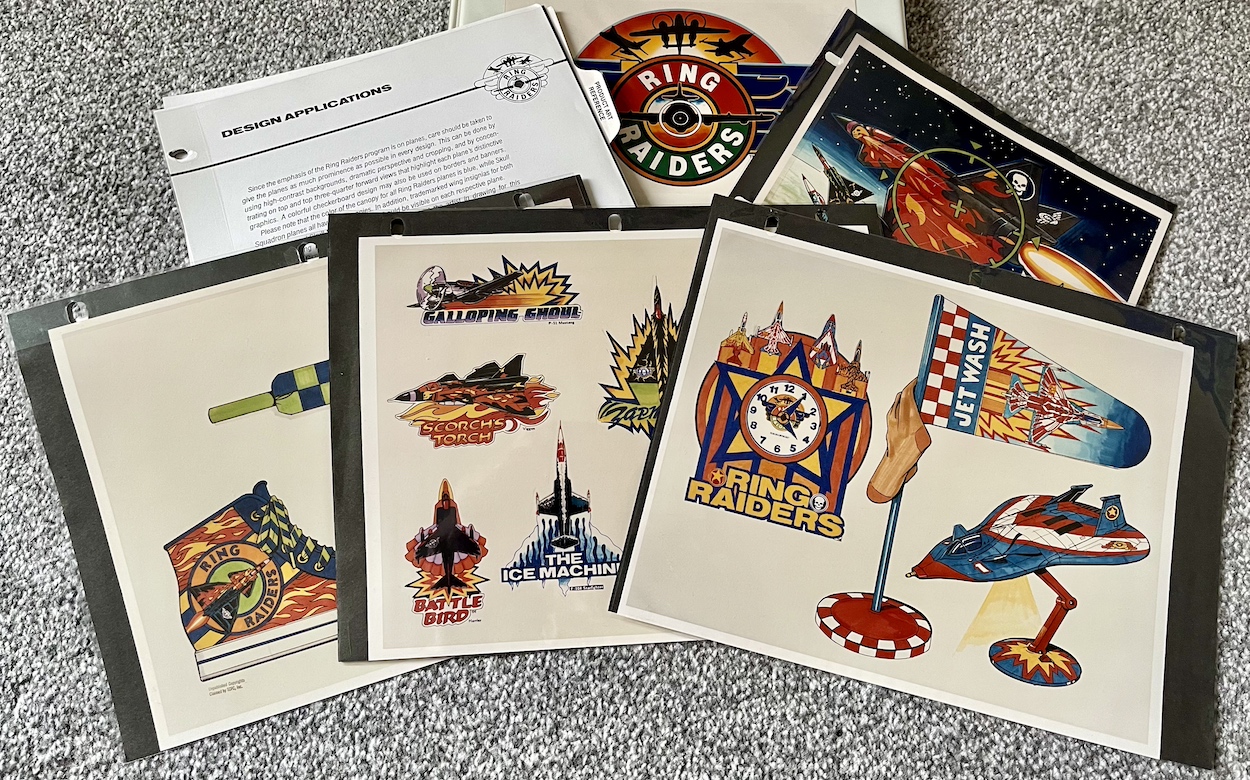
The next five pages are my favourites because they give me an insight into all of the cool (and not so cool) things I no doubt would’ve wanted to adorn my bedroom (and my body) with if the franchise had taken off. These weren’t officially released, TCFC used these to promote possible ideas to companies as a way of convincing them to work on the franchise. Unfortunately I don’t know the artist whose signature is on these pages. Hopefully I’ll be able to find out in the future.

In the introduction to this section colourful checkerboards were mentioned as a way to add borders and banners where needed and the artist shows how these could work on some particularly gaudy clothing. Hey, it was the late 80s and in their own way Ring Raiders may have been ahead of their time as we slid into the 1990s. I mean, have you seen the fashions of that latter decade? We even wore shell suits for goodness sake!

I started secondary school in the autumn of 1989, the year of the range’s launch, so I doubt any of these clothes would’ve been aimed at my age range. I also doubt any of my friends would’ve let me forget if I’d turned up wearing any of them. However, given how retro inspired clothes are all the rage today, and it seems the more colourful trainers are the better, I think one of the items below might still sell to a select audience.

Okay, so those who are still fans of the Ring Raiders may make for a rather niche market but when you look at some of the celebrity ranges or those based on other retro franchises they don’t look too out of place. The slippers and their tiger design (to match that of “Cub” JonesF-5) might also work without that green and blue strap; I certainly know a friend who loves animal print, although the plane might put her off!
On the final page of wearables, is there anything more 80s than roller-skates and sweat bands? Initially I thought the top-down view of the Victory 1 F-19 Stealth Fighter was a more custom skate, but when I couldn’t figure out where you’d put your foot in I clicked it’s actually one of those novelty skateboards that were so popular back then. As a kid I wasn’t really into sports so these wouldn’t have been on my Christmas list, but that’s certainly not the case with the items on the next page.

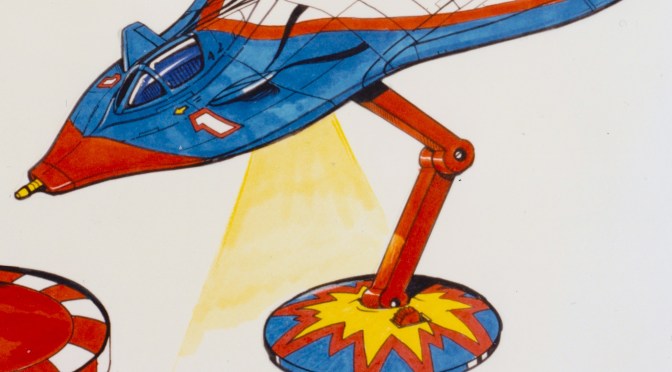
How much do I want that lamp even now as an adult? I remember cutting out the main title logos from my toy packaging and sticking them all over my room alongside the posters from the comic, I even had a large one on the door to my room instead of the usual name plate. I was crying out for more official merchandise to be released. As such, that clock would have looked good on my wall and I think modelling a laundry basket on an airfield’s windsock is ingenious. It may even have helped keep my room tidy!

While these are just a way of throwing out ideas for licensees to work from, I think they’re great fun. In the Ring Raiders: In Real Time introductory post you can see some of the official merchandise that was released at the time and you’ll see that checkerboard pattern plenty too. Also in that post is a photo of a mocked up child’s bedroom where everything seems to have the branding of the range. It’s a somewhat ambitious photo on the part of TCFC but you have to aim high, right? Plus (again) it was the 80s! This was the way of things.

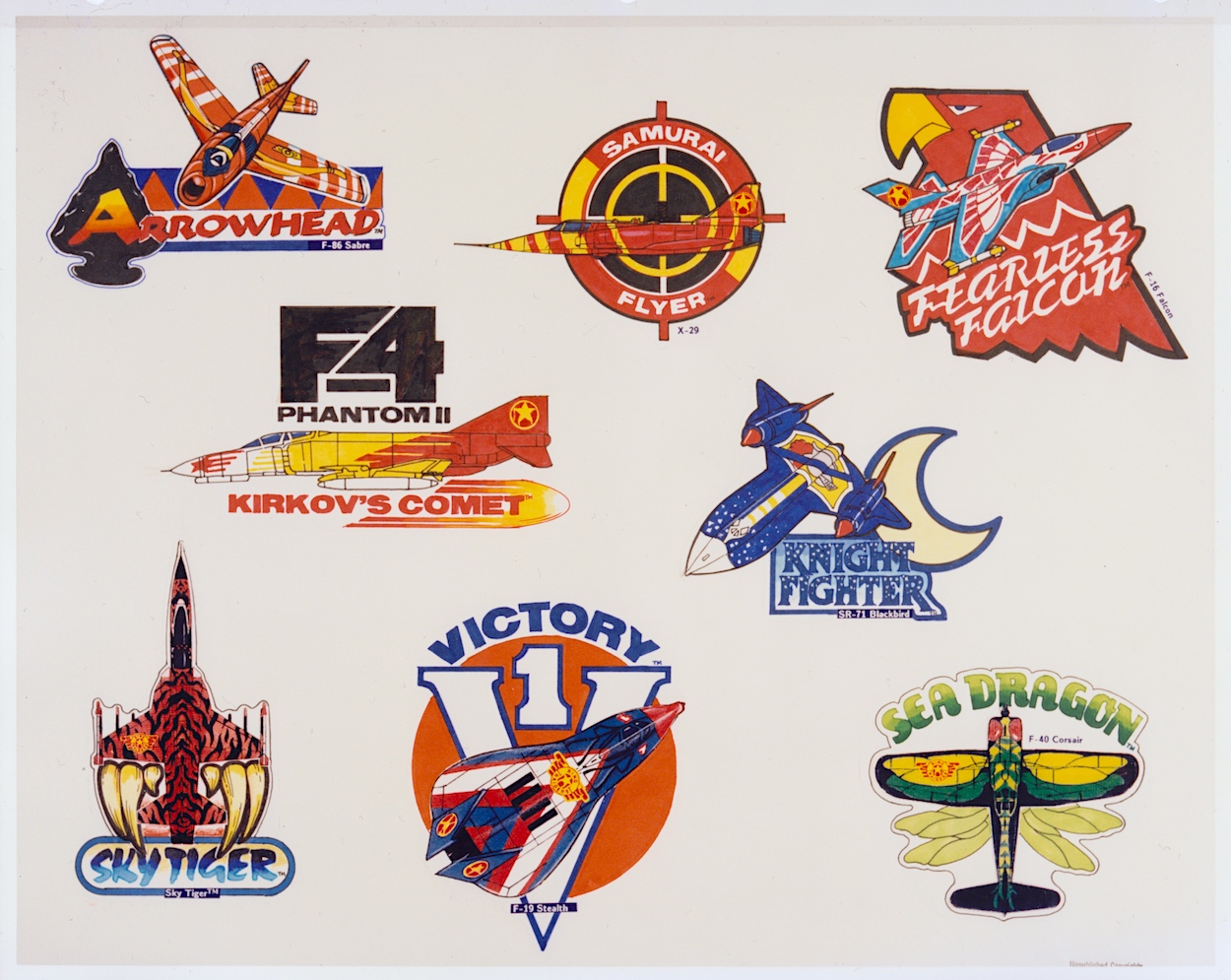
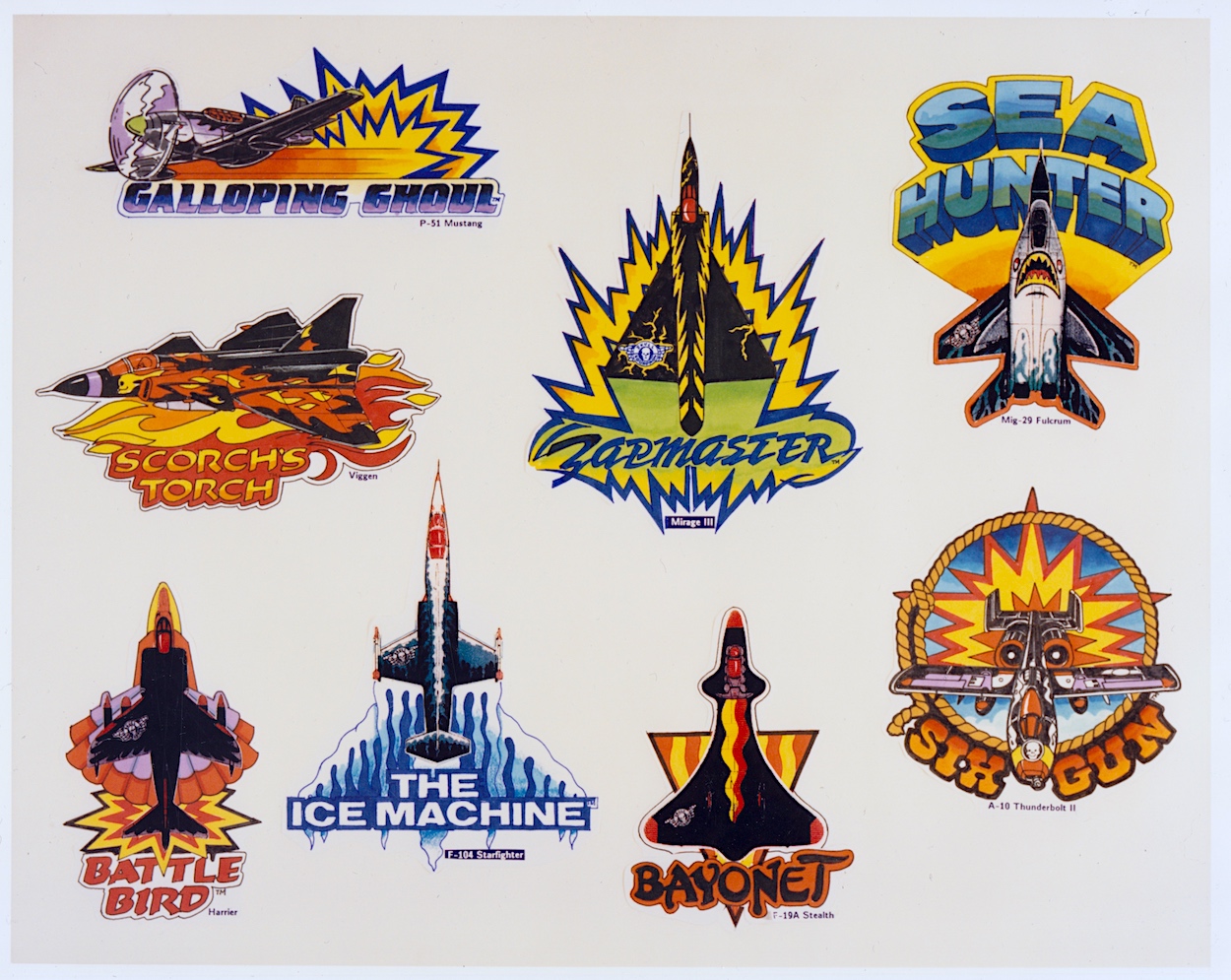
These two pages round off this section of the folder and show the great idea of having different emblems for each of the leader craft. I never saw these on any of the toy packaging or in the comic so I’m assuming they never ended up as an official part of the branding. While each Commander’s aircraft was accompanied by three other planes in a pack, I like the idea of the lead planes being promoted this way.

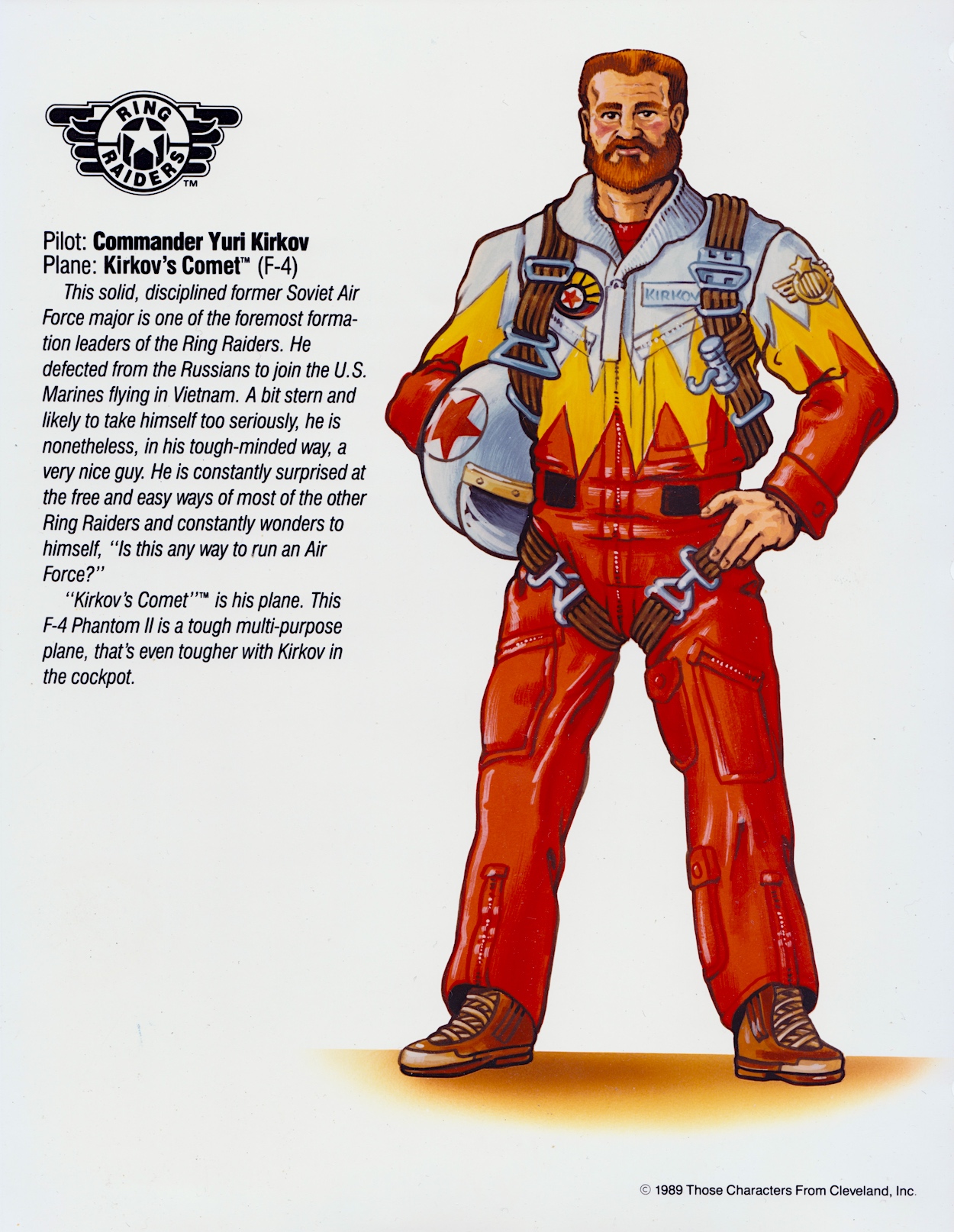
I can imagine some of these being turned into badges or, to be really 80s/90s they could’ve been material patches to be sown on to denim jeans and jackets. I particularly like the ones for the Galloping Ghoul P-51 Mustang (a favourite from the toy range), Kirkov’s Comet F4 Phantom II and the Sky Tiger. This whole section sums up the fun manufacturers and us kids could’ve had with the Ring Raiders as the next big craze of childhood.

Where has the time gone? We’ve only got one more part of this monthly series to go. The final few pages deal with more serious stuff like trademarks and the legal side of things, as well as approved logo variations, typography and some samples of the packaging that would be adorning toy stores around the country and the wider world. So make sure you fly back here on Monday 13th May 2024 for the final landing.

PART THREE < > PART FiVE

LiCENSEE FOLDER MENU

RiNG RAiDERS MENU

RiNG RAiDERS LiCENSEE STYLE GUiDE: PART THREE

We reach the halfway point of this five-part series of posts detailing every single page of the Ring Raiders licensee folder, a style guide for the whole franchise. The introductions are out of the way, you should all be up to speed with the intentions behind this new toy range and familiar with the background story and all of its far-reaching potential, and last month we saw the leaders of the eight Ring Raiders Wings and their respective high-tech airplanes.

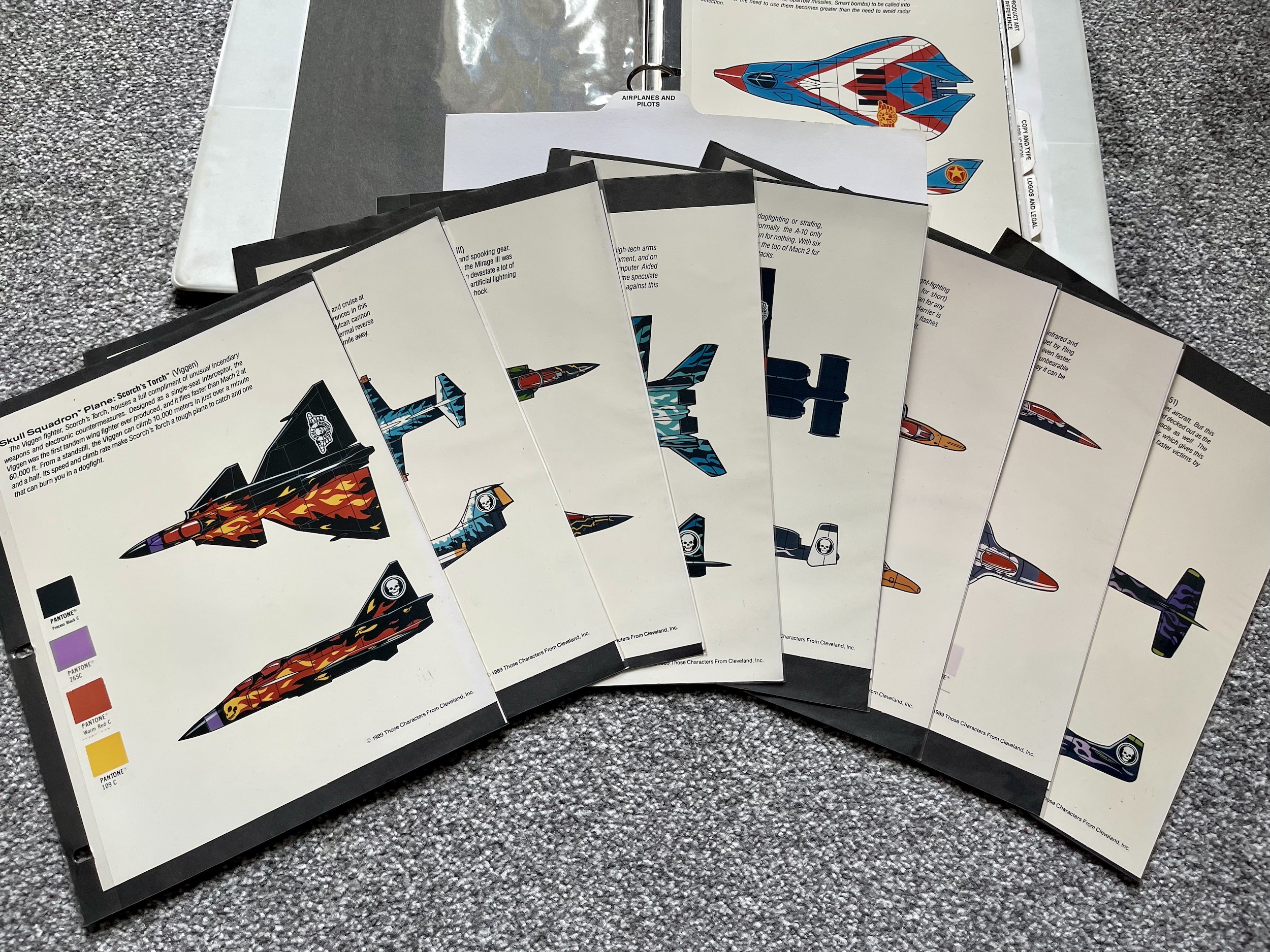
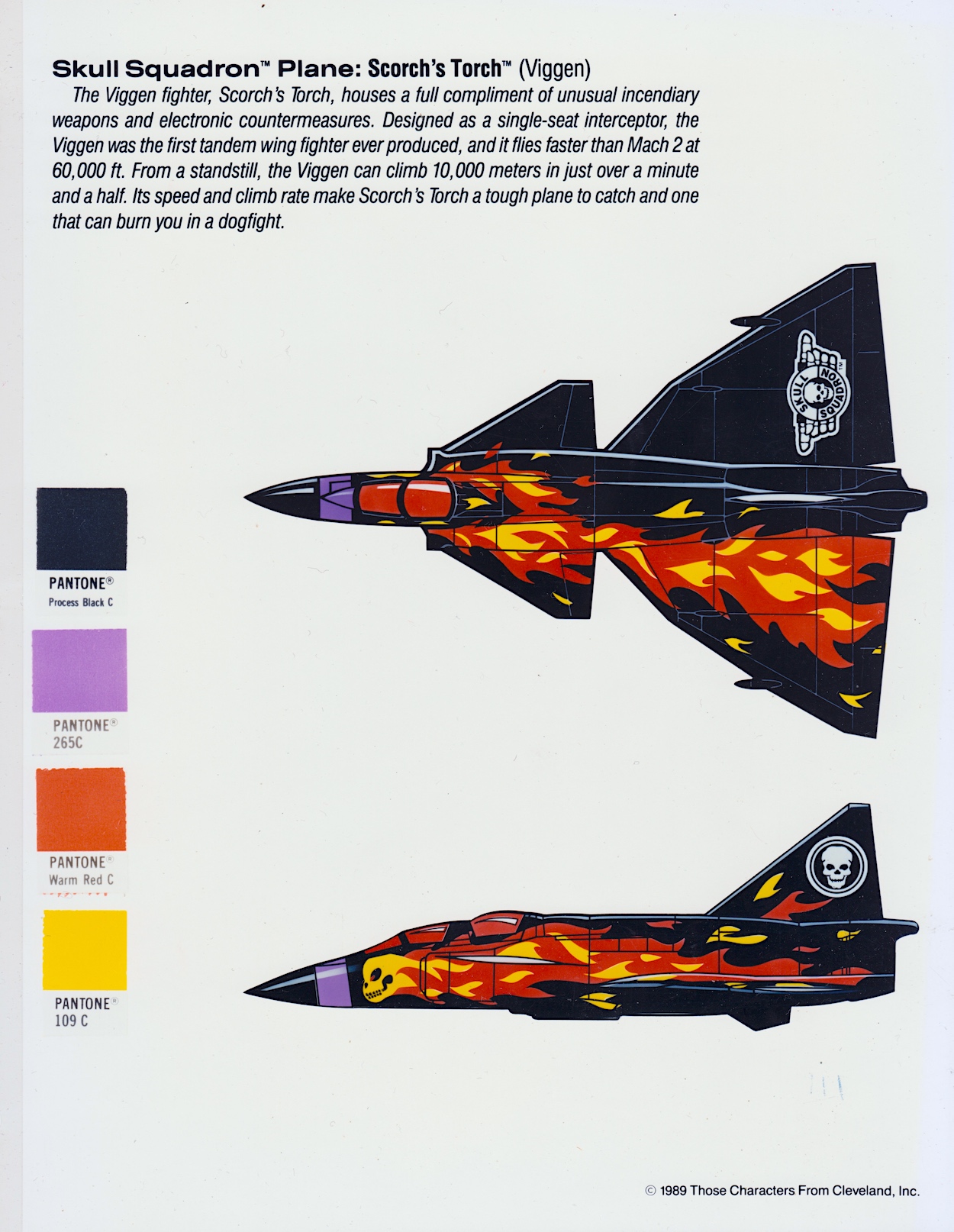
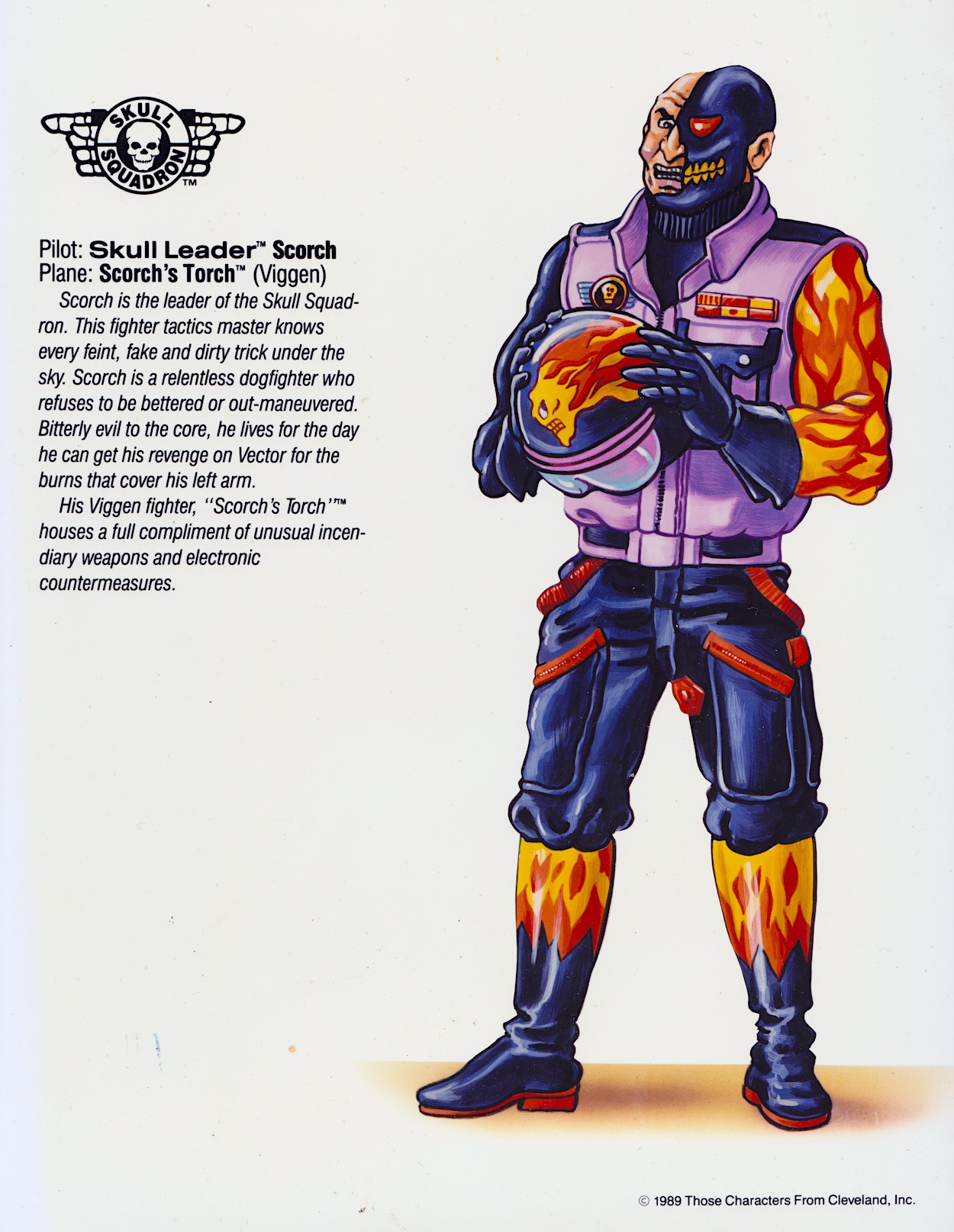
Now it’s time for the flip side of the coin, it’s time to meet the baddies. In the story the Skull Squadron formed first, the Raiders doing so in response to the threat posed throughout all of time by this army of evil. They were led by Scorch and interestingly we find out that severe burns cover his arm but I’m assuming what we see here is part of his flight suit. I assume they also cover at least part of the same side of his face under that mask, mirrored by the flame design being on one side of his aircraft.

So these injuries must’ve happened after the Raiders were formed, or perhaps he and Victor Vector were enemies (or even friends?) in their previous lives. Unfortunately the comic didn’t last long enough for us to get any more depth to this origin story, in fact this is the only time I’ve seen it mentioned. Some interesting details about his Viggen Scorch’s Torch too, such as the real plane being the first to ever include two sets of wings.

More consistently successful in his evil plans than the Decepticon, Chiller was everything Starscream wished he was

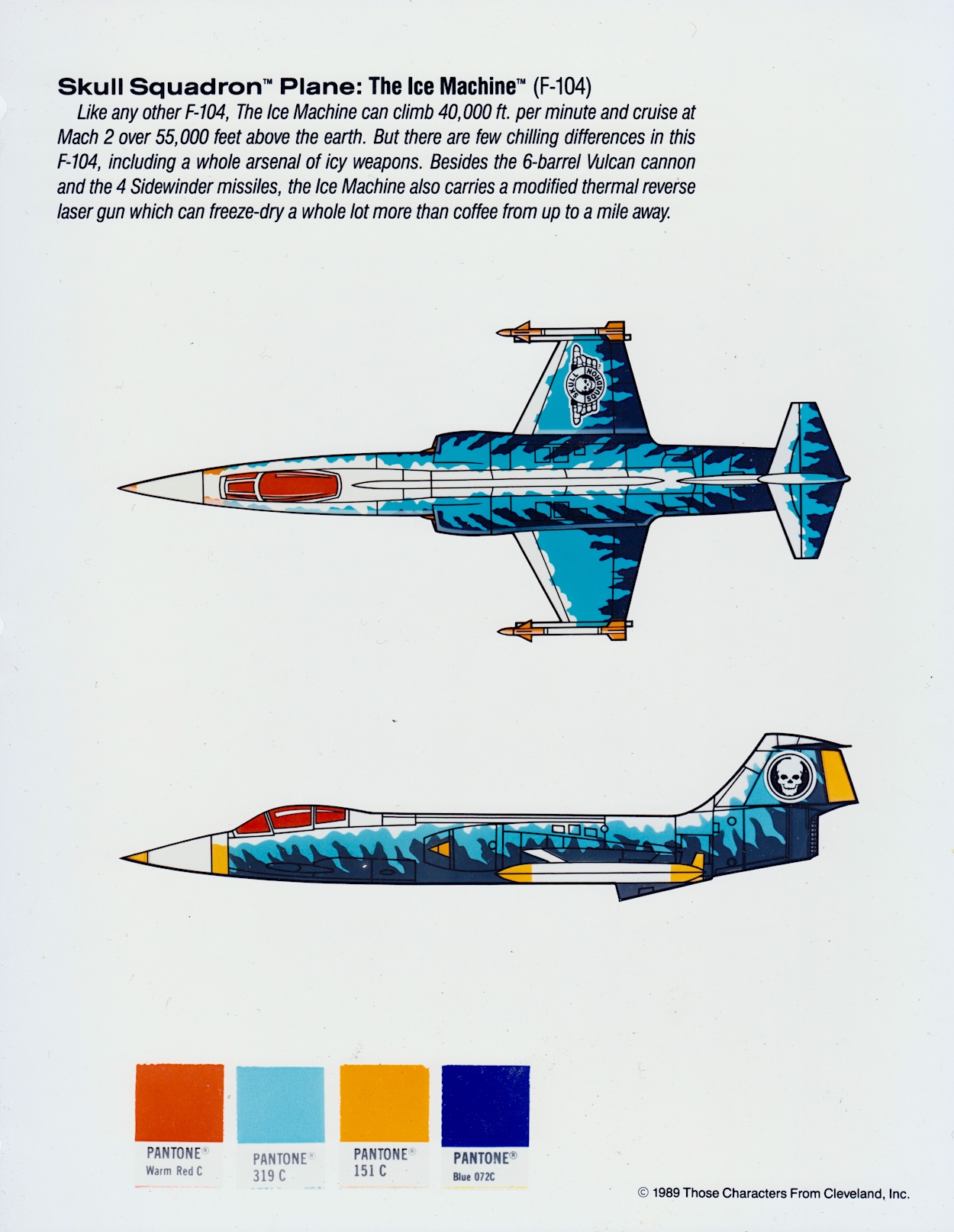
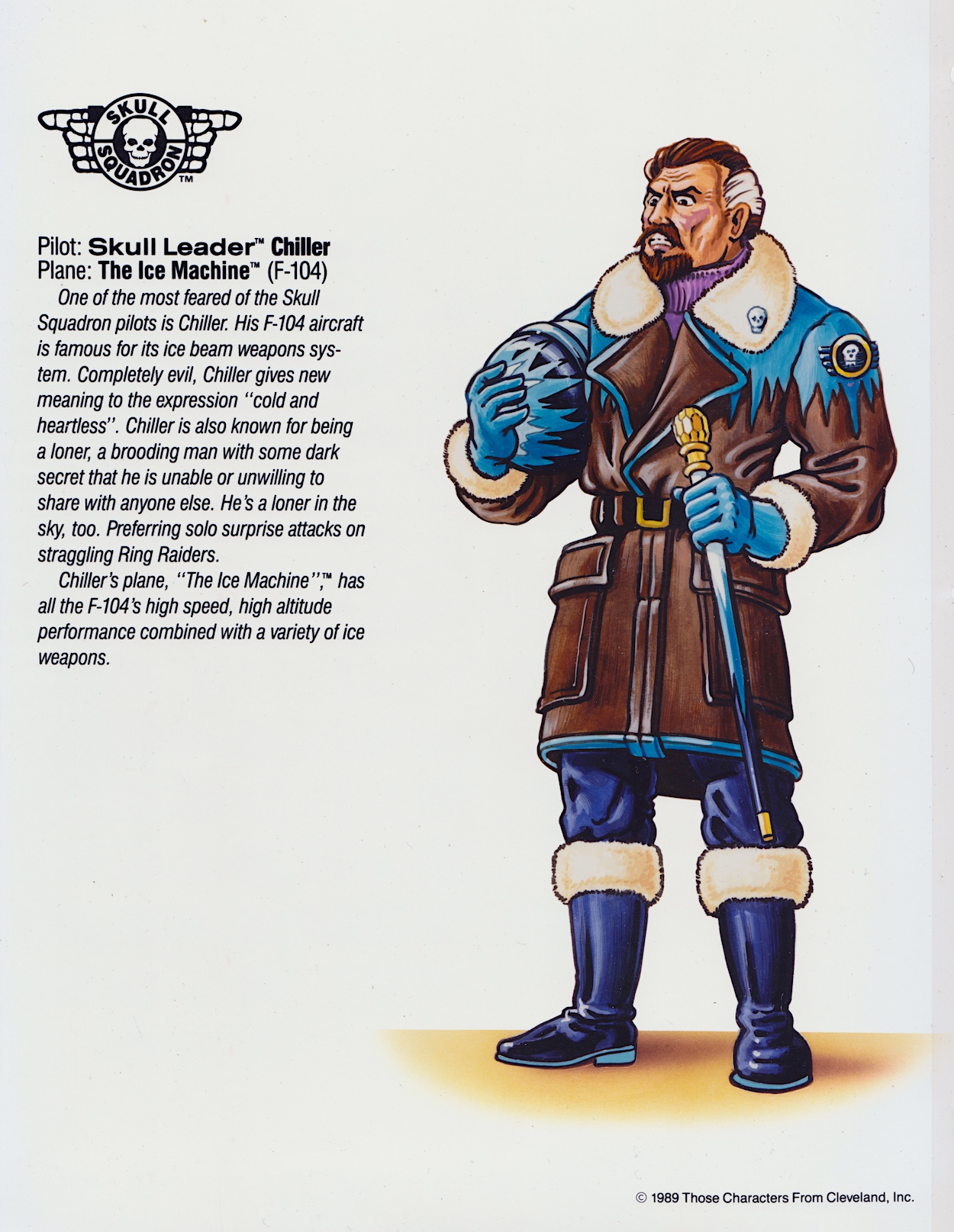
Alongside Scorch is his own version of Starscream, in a way. Although much more consistently successful in his evil plans than the Decepticon, Chiller was everything Starscream wished he was as a second-in-command. He also had some particularly brutal moments in the comic, particularly in his origin story. Was this the secret mentioned here? His plane was a favourite too, but I think that was probably because I loved the character in the comic so much. His F-104 Ice Machine also made for a fantastic Ian Kennedy cover to the Ring Raiders Special.

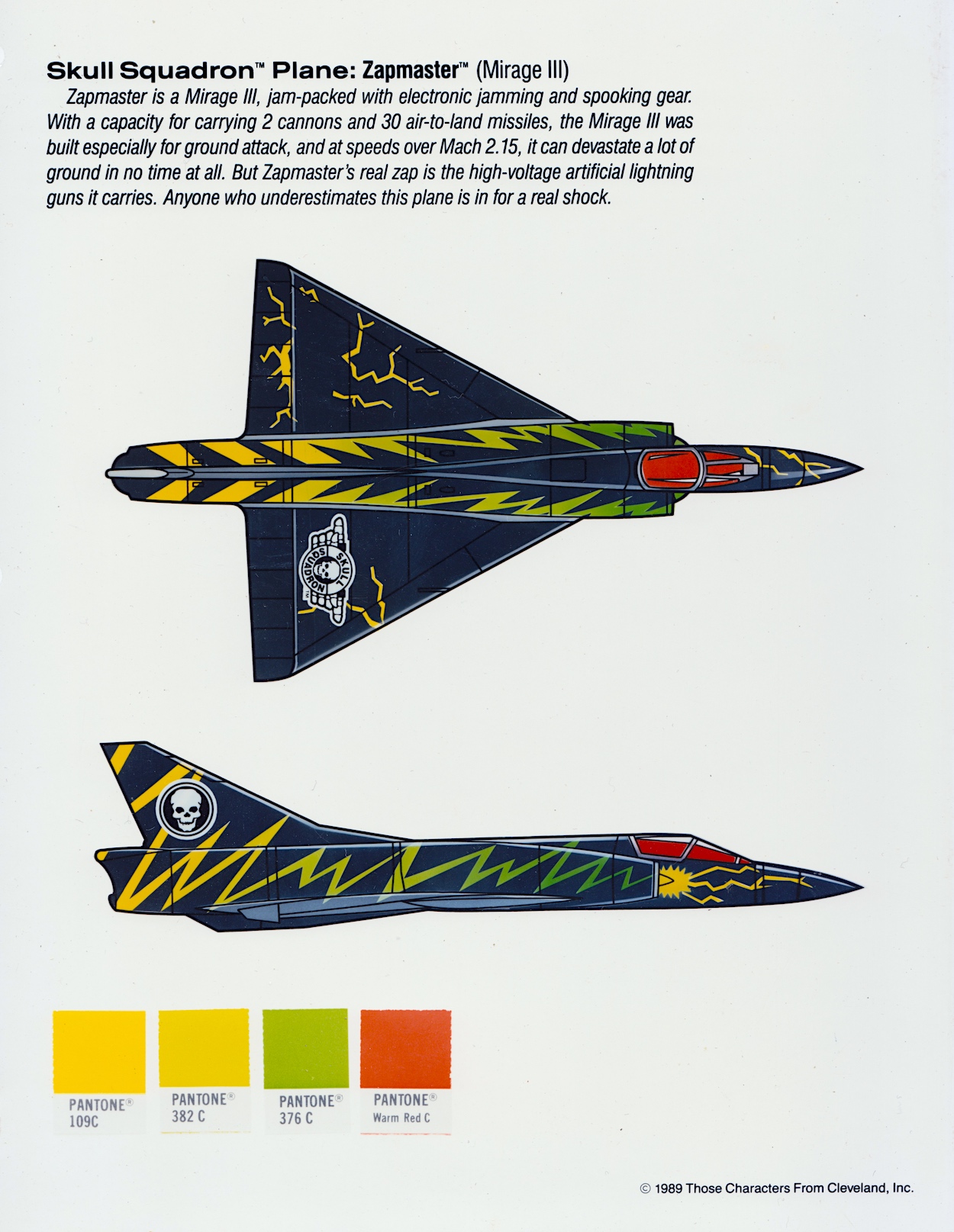
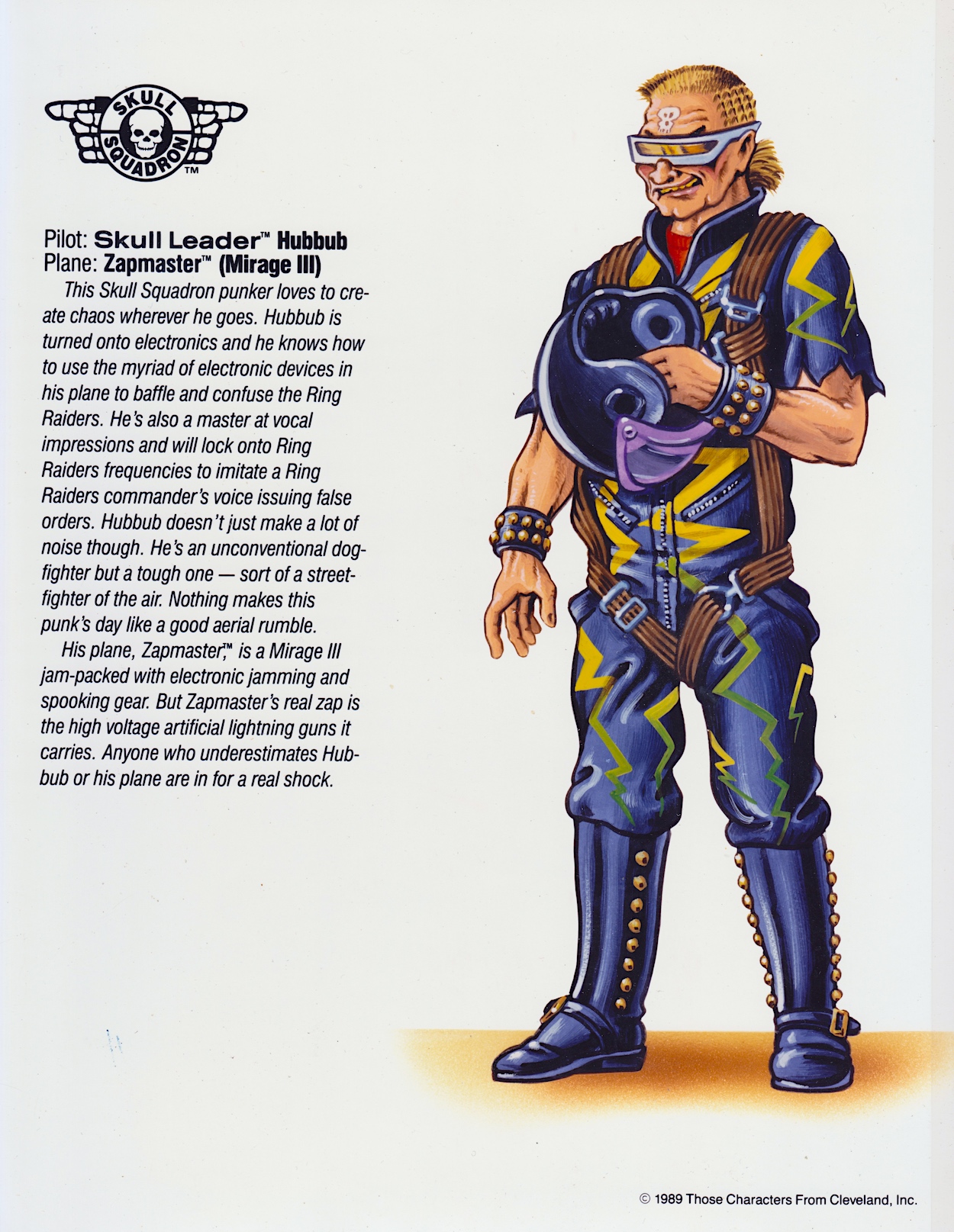
Hubbub and his Mirage III Zapmaster had starring roles in one of the first serials in the comic and while I wasn’t a fan of the handful of cartoon episodes released I do remember his character making me laugh upon occasion, his outspoken nature producing some awkward moments in the Skulls’ HQ. In the comic he’s just as chaotic as his profile makes him out to be.

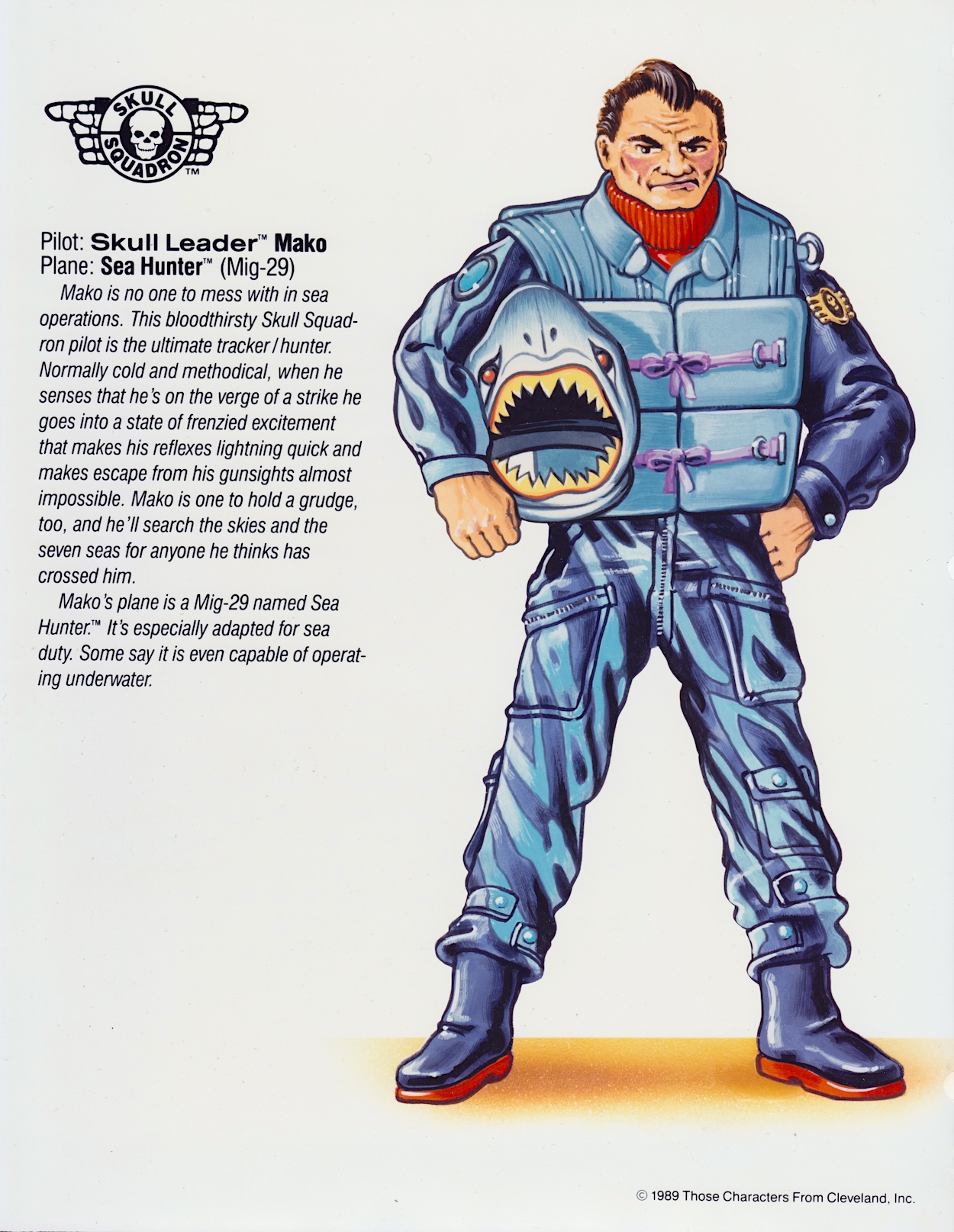
Both Hubbub and Mako are perfect examples of what the comic did so well. Unlike the cartoon which (arrogantly, in my opinion) made up their own versions of these characters, comic editor Barrie Tomlinson and his team never contradicted what was set up by the original creators. They embellished, they added more depth, they developed their personas, but they clearly began with what was already established in the toys.

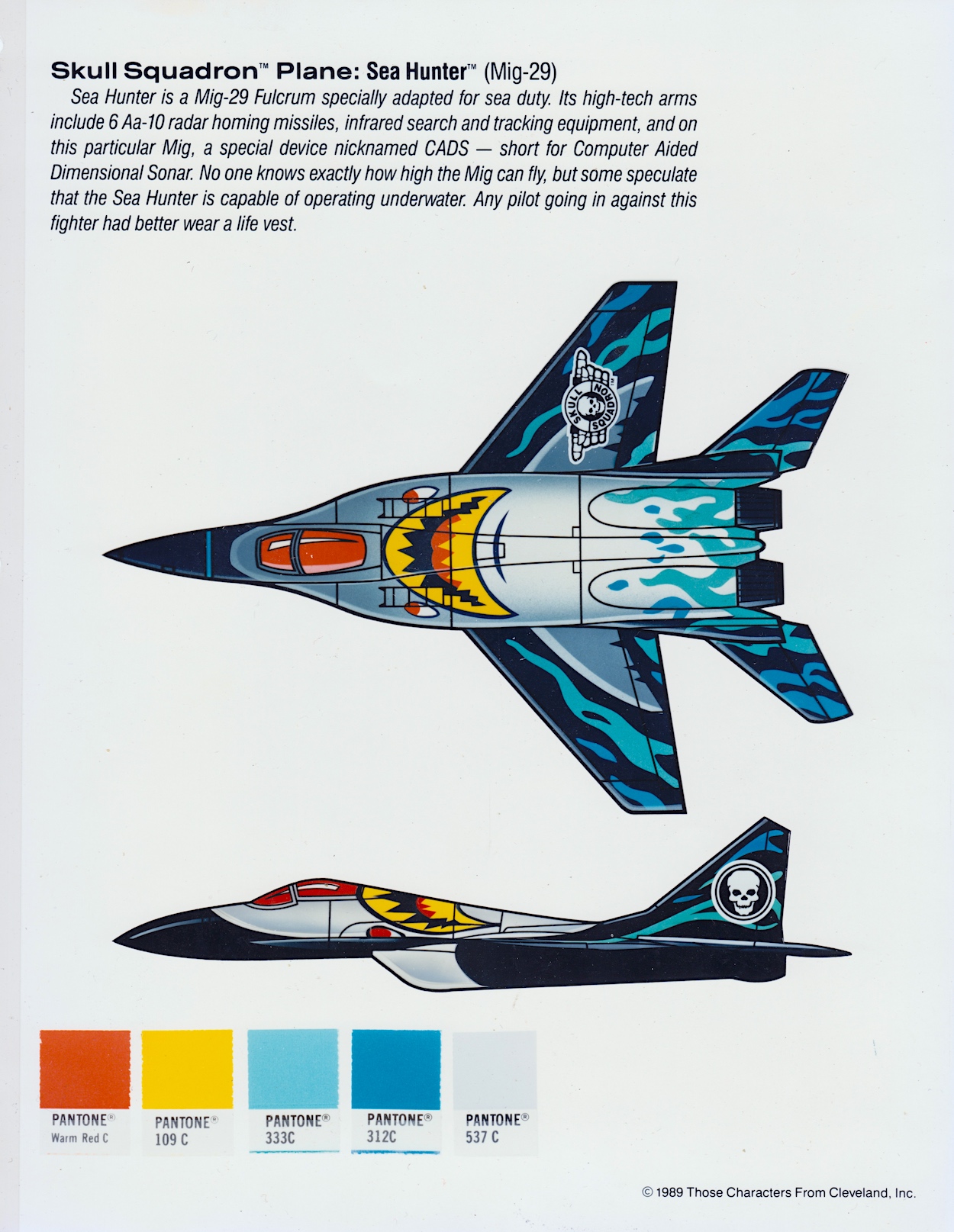
We never did get to see the chaos Hubbub’s impressions could’ve caused, but readers were treated to the Mig-29 Sea Hunter’s underwater capabilities, even if it was still a mystery to the Ring Raiders themselves. As a child a certain image of this was a particularly strong one, resulting in that poor toy being dunked in many a bath or bowl. The CADS system mentioned is also based on a real life radar system which was brand new and partially still in development at the time.

The first of two characters who never made it into the toy line is up next.

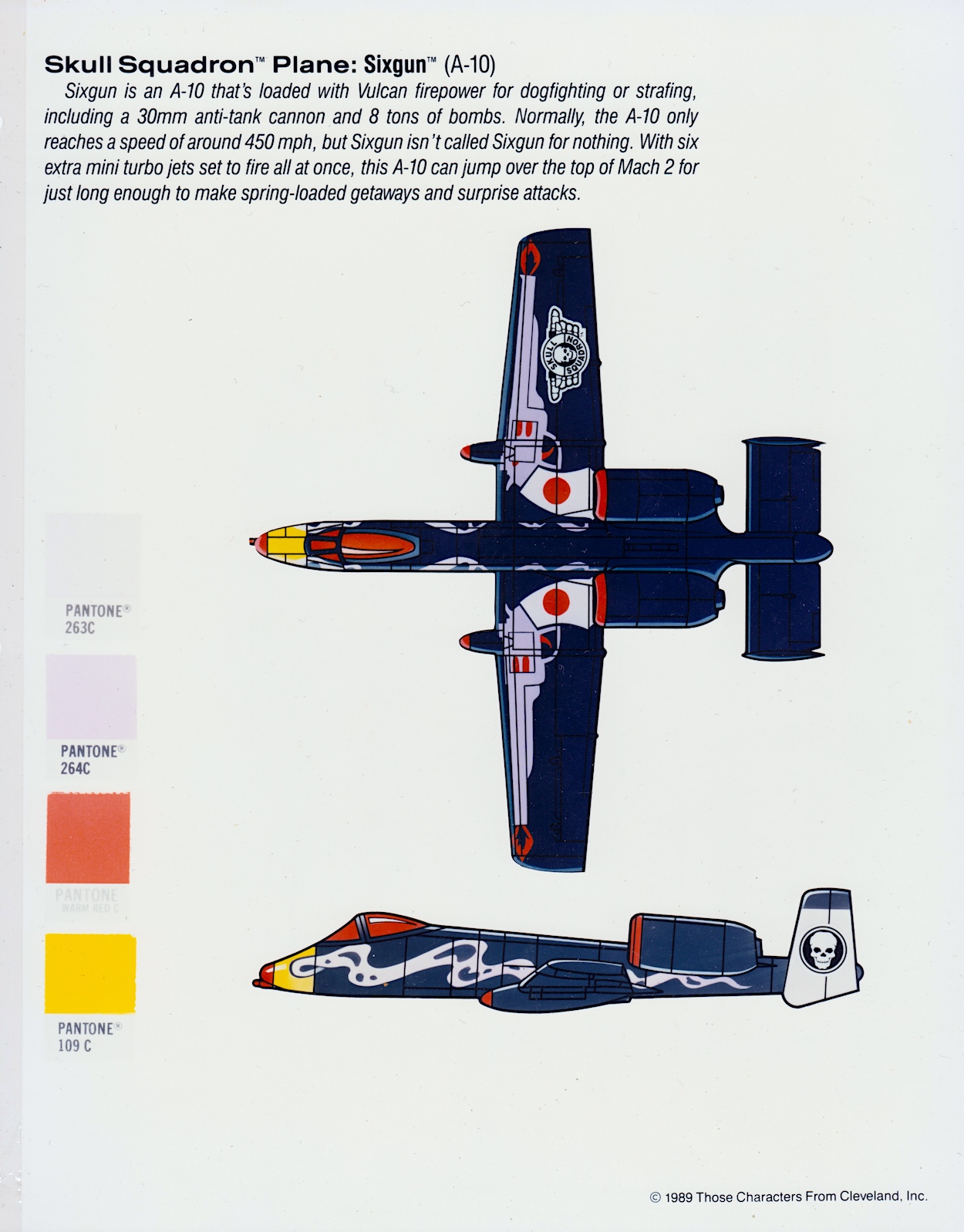
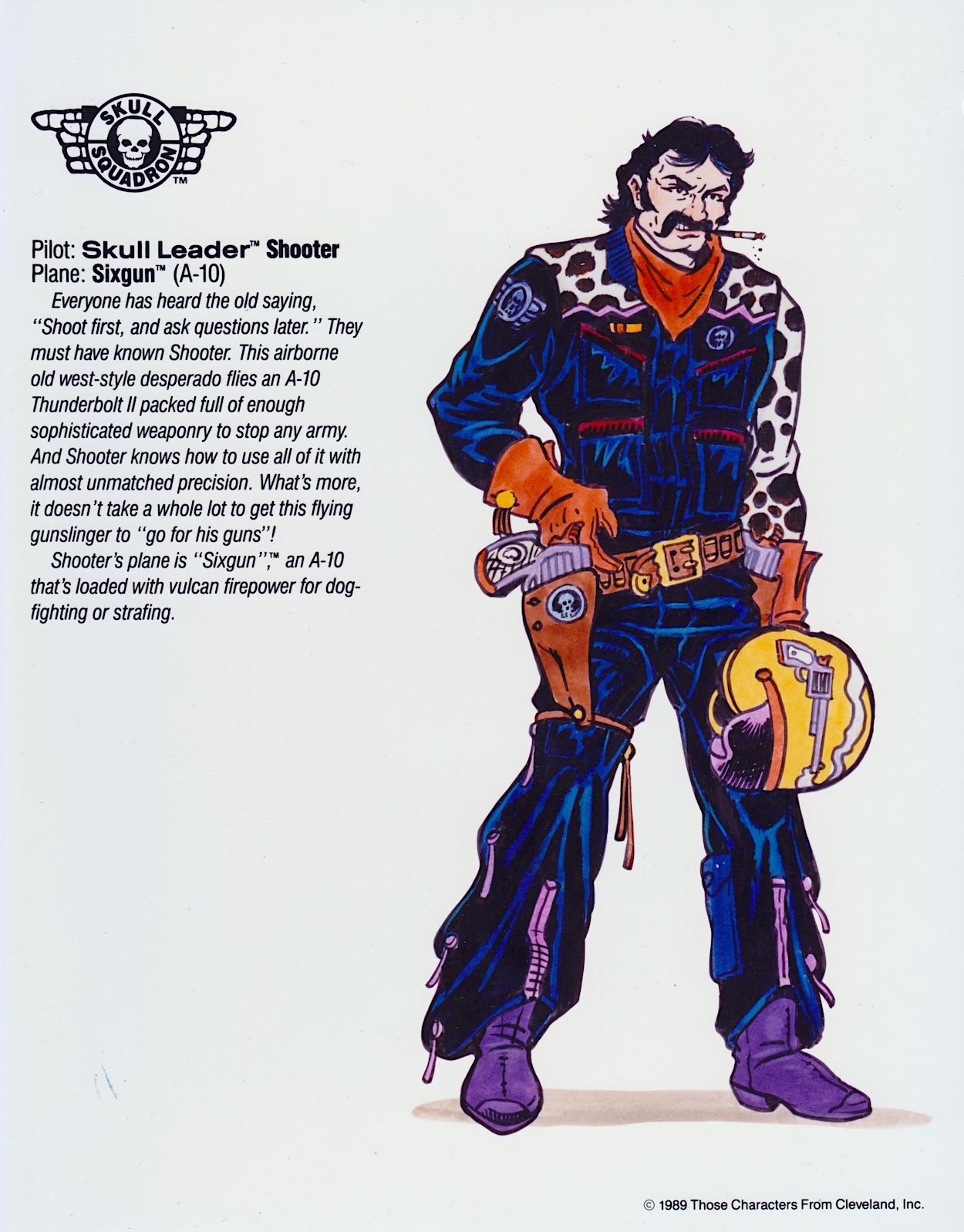
I know we’ve had some clichéd characters in this folder already but Shooter surely takes the medal. I doubt even the excellent comic team would’ve been able to save this one. The only saving grace for him is his plane. The A-10 featured in some of the other Wings throughout the toy range but this particular one, with its Airwolf-like boosters and fun gun design on the wings could’ve been a favourite if it’d actually been made by Matchbox.

Blackjack was a vicious character superbly written by Angus Allan in the comic

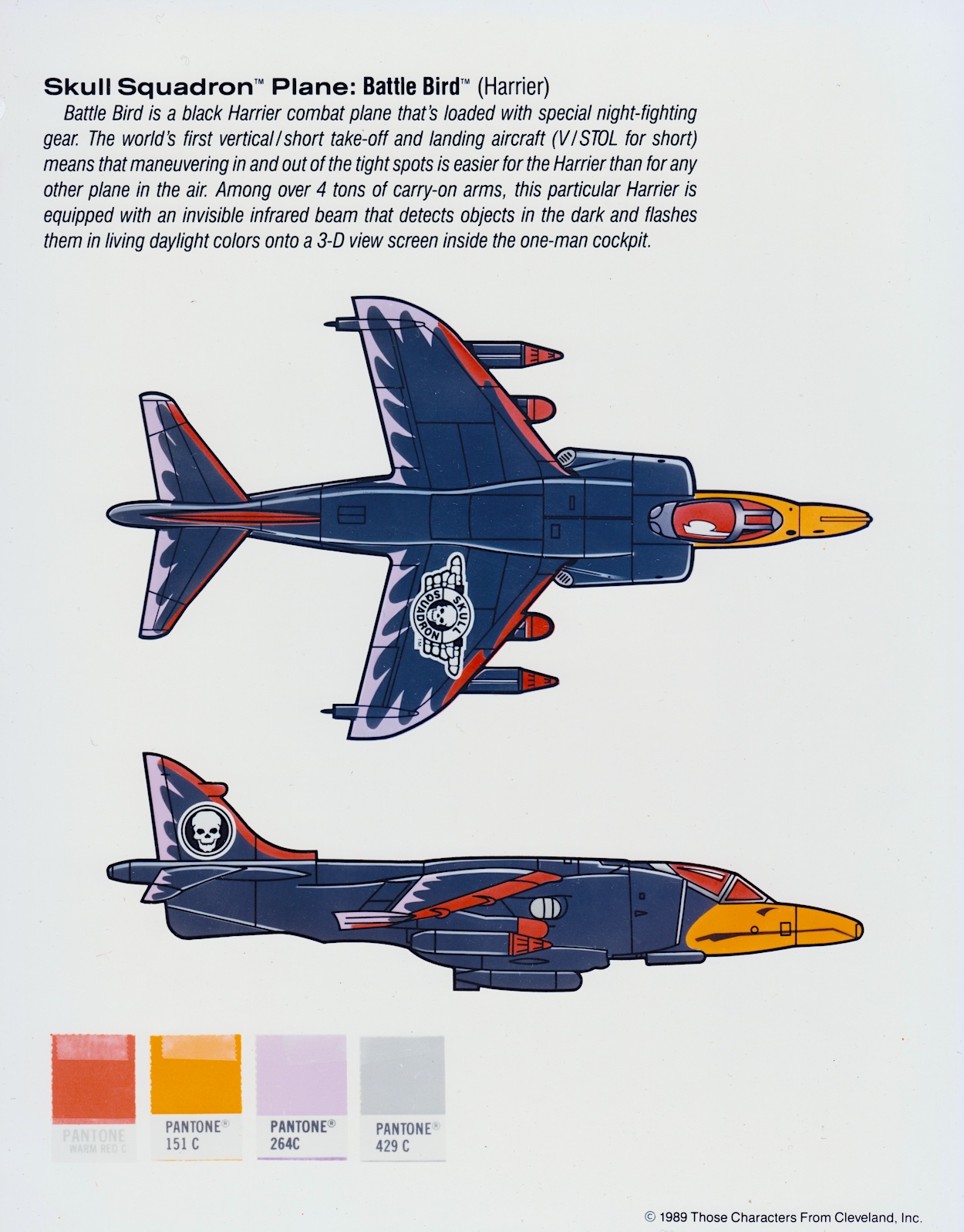
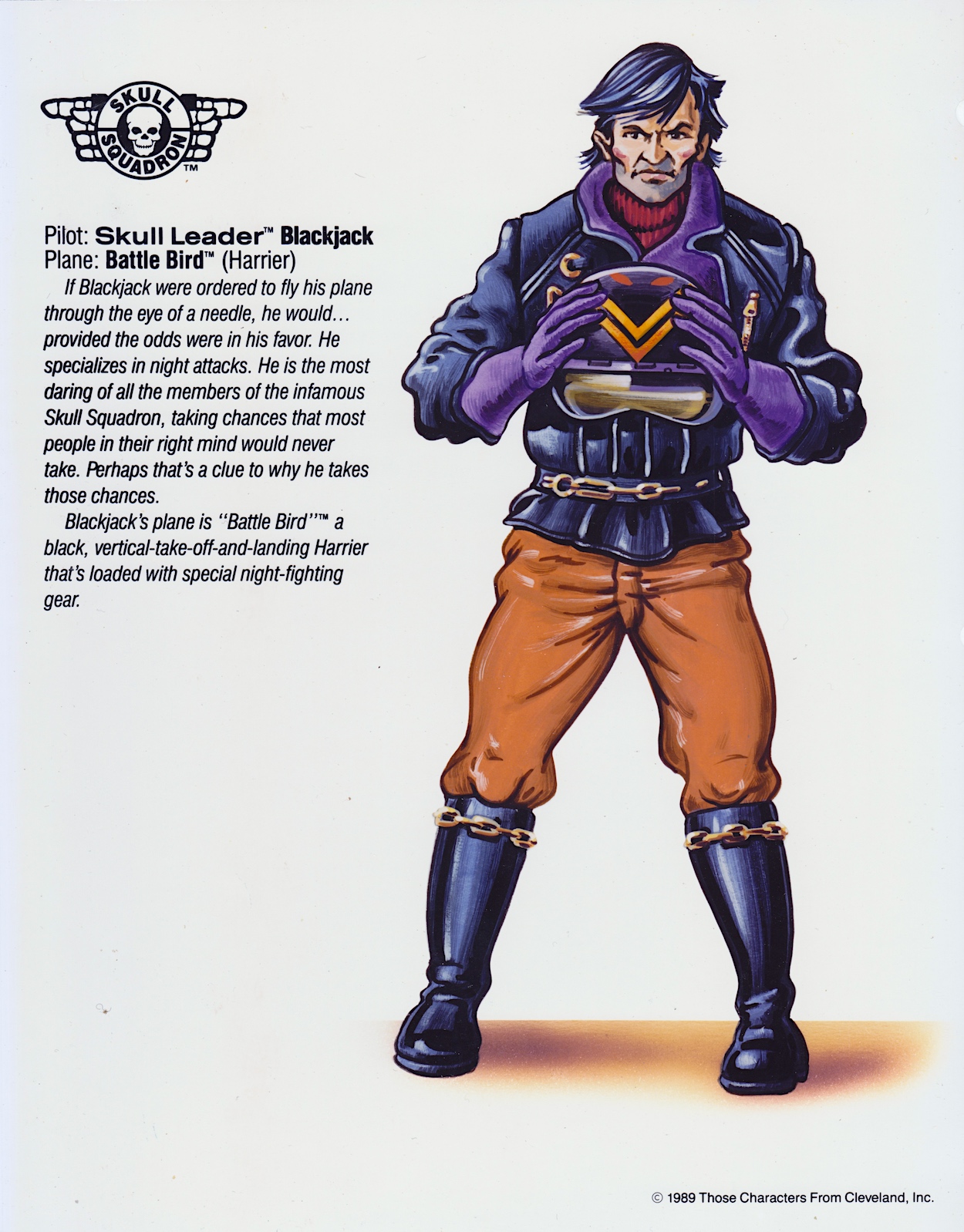
Someone who’s plane I definitely owned was Blackjack, his Harrier’s vertical take off and landing wowing me from the first moment I saw one in Bond movie The Living Daylights a year or so before Ring Raiders. After that I made sure to add his Wing quickly to my collection once I began buying them. Blackjack was a vicious character superbly written by Angus Allan in the comic’s epic 11-part Trackdown story, the character quickly becoming a favourite too.

Interestingly, the Battle Bird‘s fact-file is all about its nighttime capabilities but in the comic the main attribute that set it apart from other military Harriers was Blackjack’s ability to fly it remotely. There’s no mention of that here, not until we turn the page to the last of our characters who never appeared in the toy line (or the comic).

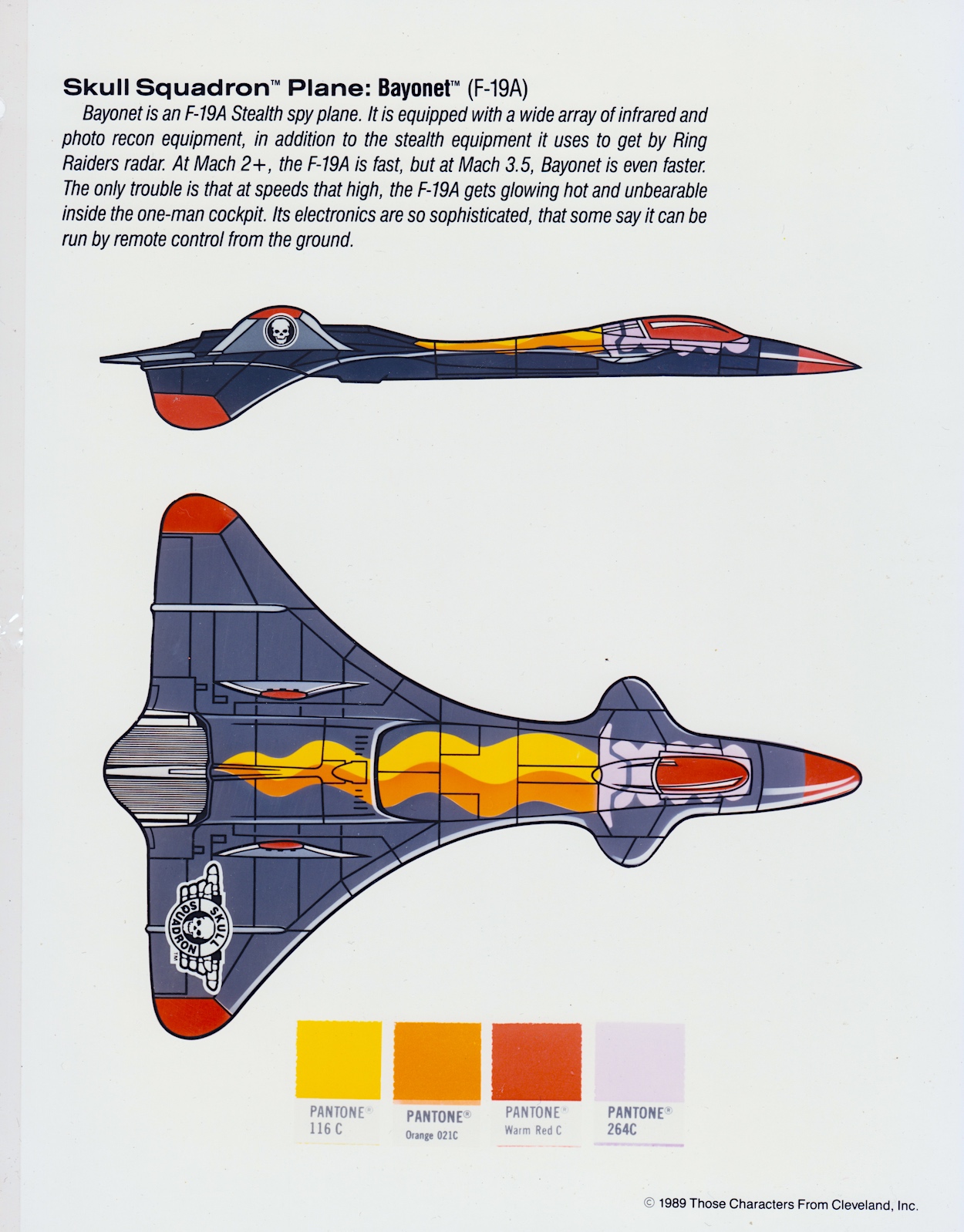
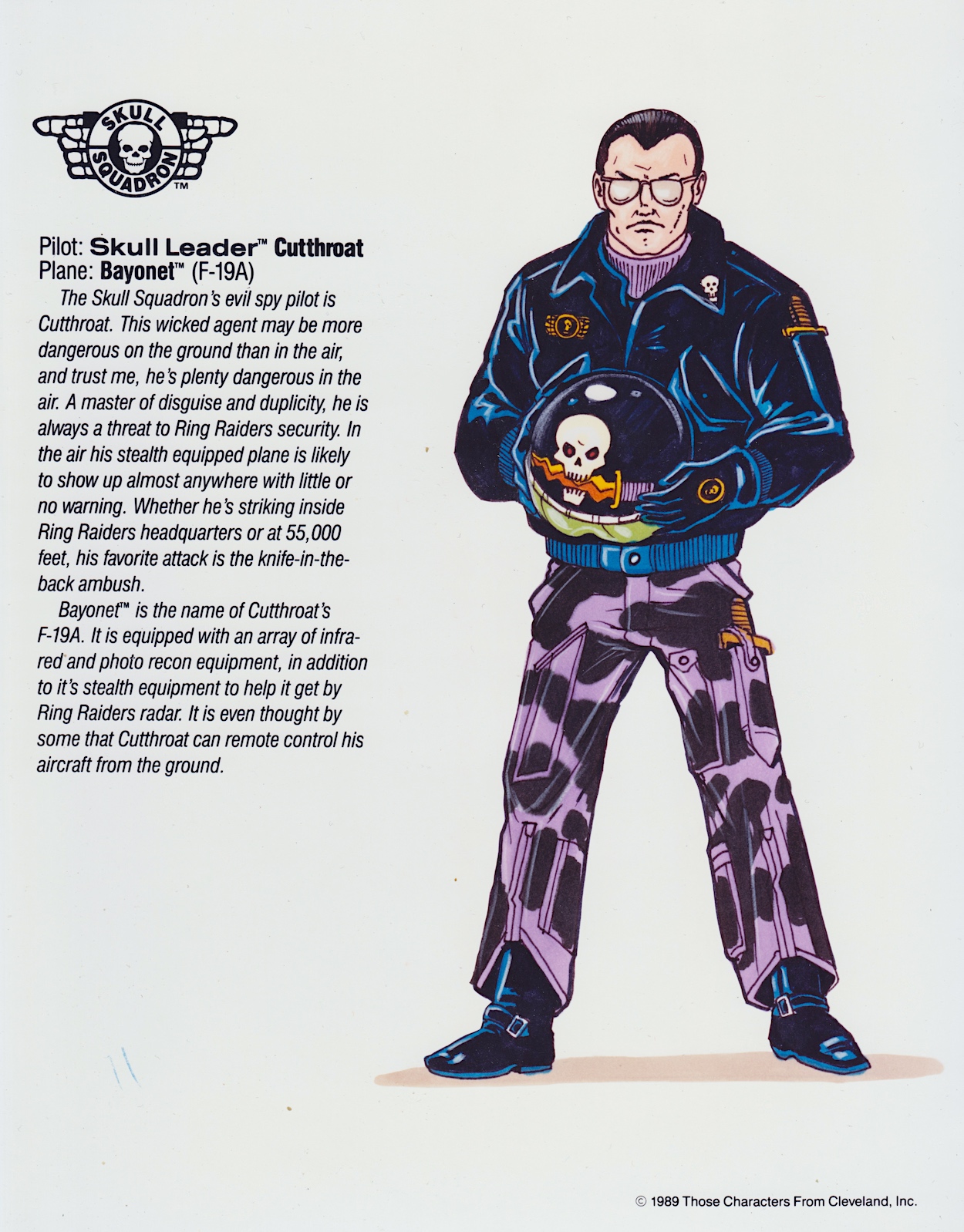
As you can see Cutthroat’s unbelievably fast F-19A Bayonet can be controlled remotely and actually has a reason as to why this was installed. Two reasons if you count the fact that the pilot is a spy and described as even more deadly on the ground. (Imagine an evil spy with that as their key gadget!) I made a point above that the comic kept to the details here and elaborated on them. Could this have been an error then, attributing an ability of one aircraft to another? It didn’t matter, as kids none of us knew anything about the Bayonet or Cutthroat.

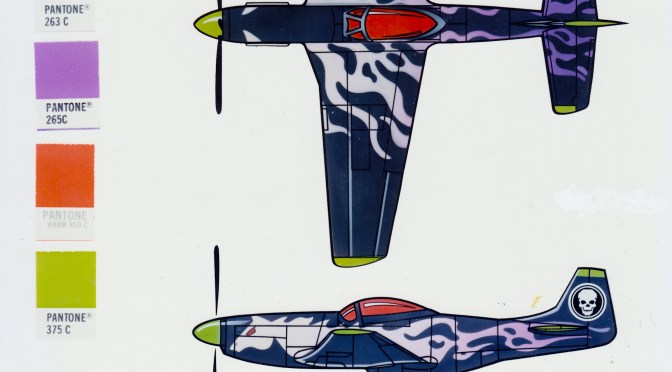
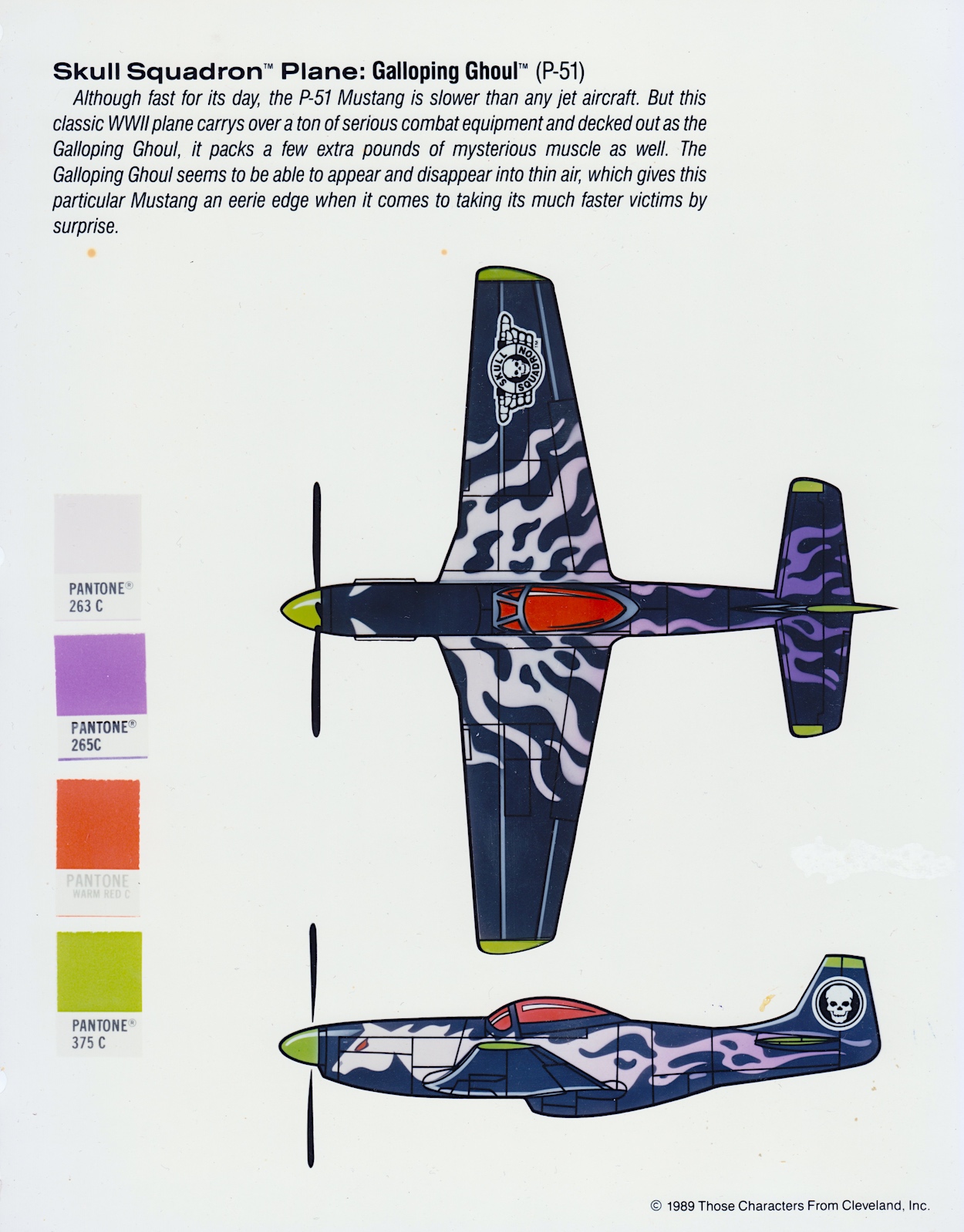
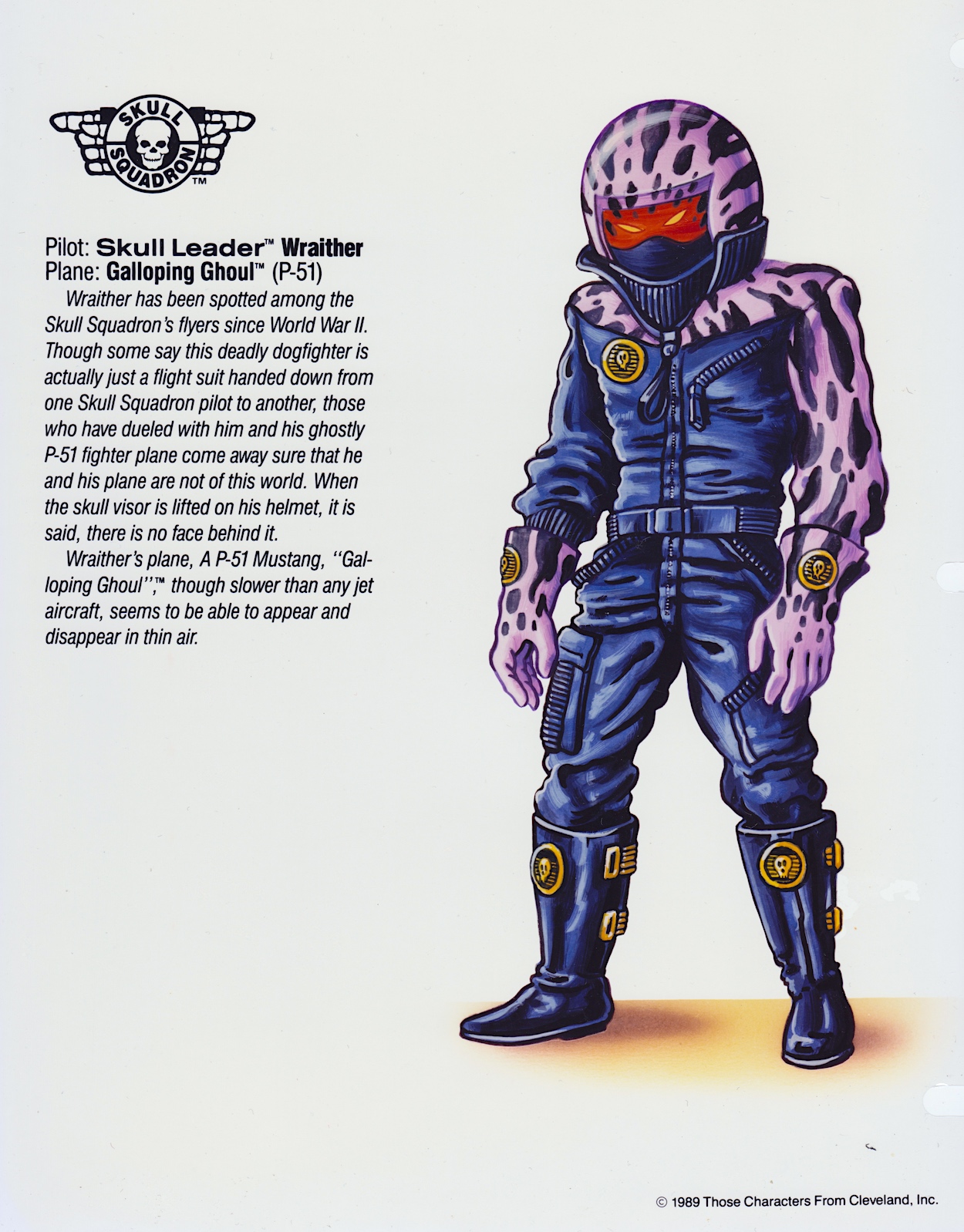
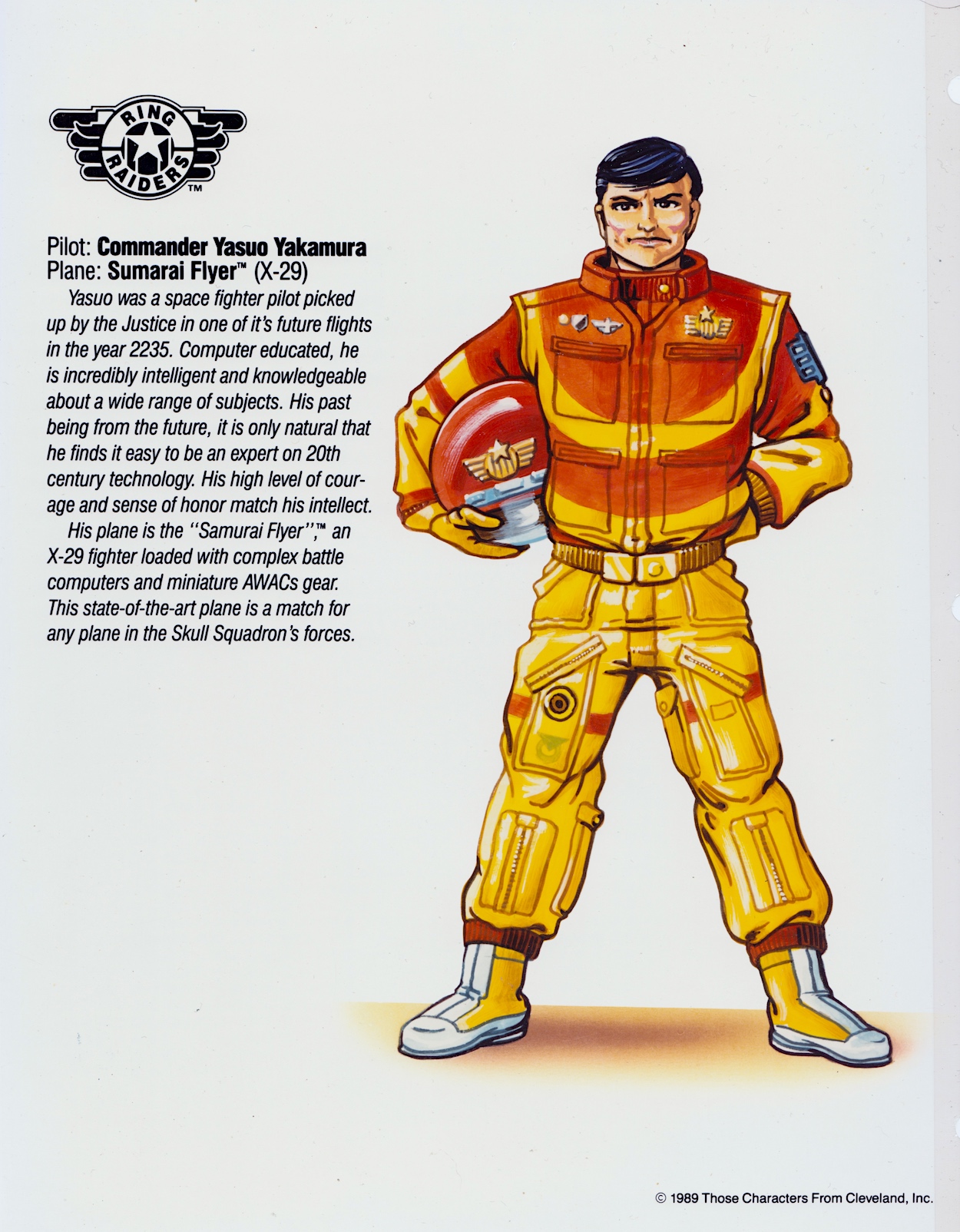
Finally there’s my favourite Skull Squadron pilot and plane, which I got alongside Yasuo Yakamura’s X-29 Samurai Flyer (see last time) in a special two-plane Starter Pack, beginning my obsession with all things Ring Raiders as a child. I love the possible theories of Wraither’s origin, something the comic never got to explore before it was prematurely cancelled, although we did get some hints about how the P-51 Galloping Ghoul was able to disappear and reappear the way it did. More than any of the others, Yasuo and Wraither bring back a warm, fuzzy feeling when thinking about how much I loved these toys, so it’s appropriate this part of the folder ends with one of them.

Don’t forget the Ring Raiders themselves, and their associated profiles and Pantone colours, have already been covered in part two. As much as I’ve enjoyed reliving these characters and planes though, I’m even more excited to show you what’s next in this folder. The Product Art Reference section will show us a really fun and imaginative array of designs for potential merchandise.

As a fan I fell in love with some of the designs in the next section, imagining how many of them I’d have owned as a child if the franchise had been a success. You’ll get to see all of them, from clothes to lamps, from laundry baskets to roller skates! Then there’s a selection of icon designs for each of the Wing Commanders and their aircraft too. I can’t wait to show the next pages to fellow fans on Saturday 13th April 2024.

PART TWO < > PART FOUR

LiCENSEE FOLDER MENU

RiNG RAiDERS MENU

RiNG RAiDERS LiCENSEE STYLE GUiDE: PART TWO

I’m back with the second part of the Ring Raiders Style Guide folder sent to licensees of the potential hit franchise in 1988, this particular copy very graciously given to me by Barrie and James Tomlinson, father and son editing and writing team behind Fleetway’s short-lived but awesome Ring Raiders comic. I previously covered the introduction to the toy range, the background story and a couple of examples of the mini-comics packaged in with the Matchbox planes. Now we move on to the meat of the folder.

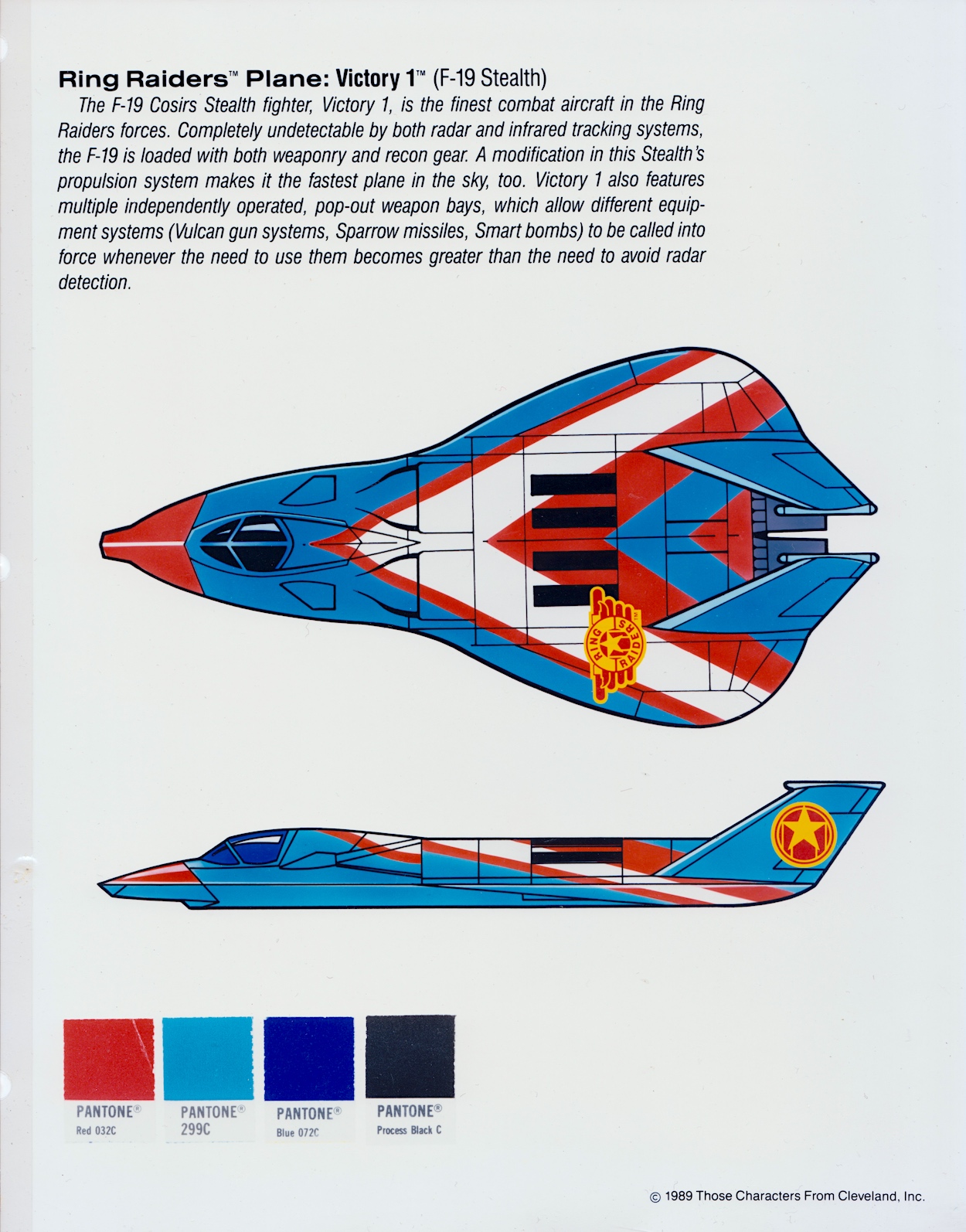
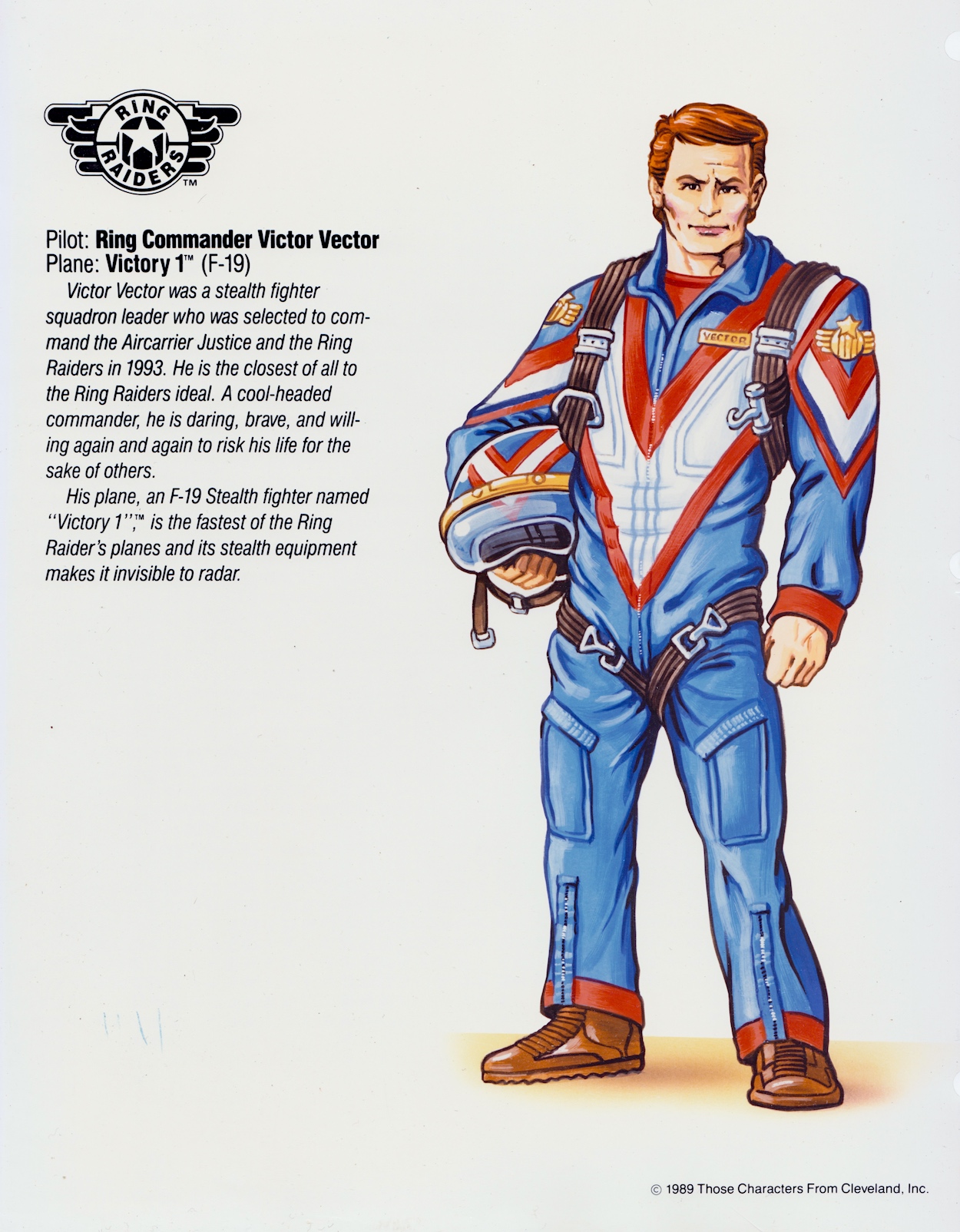
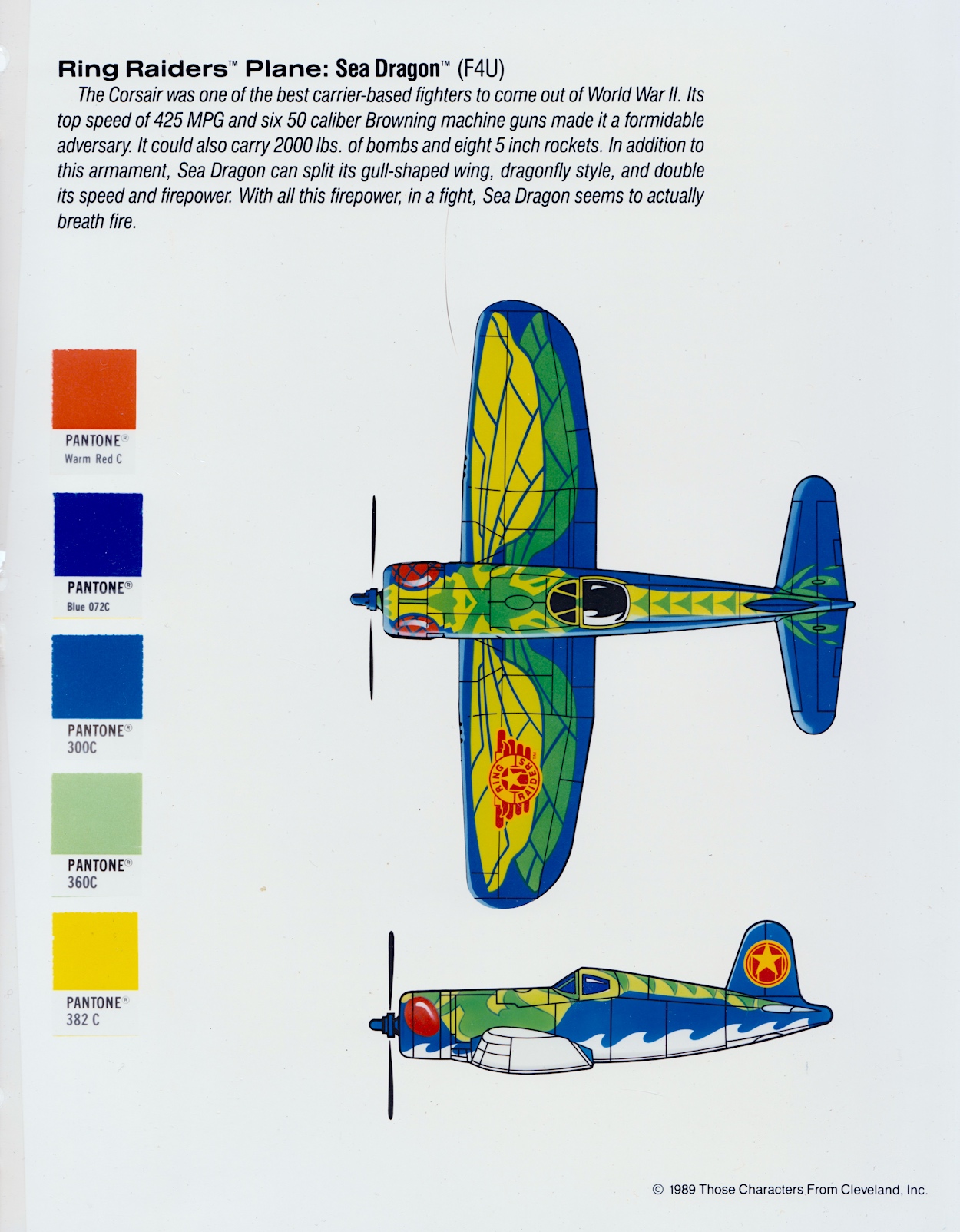
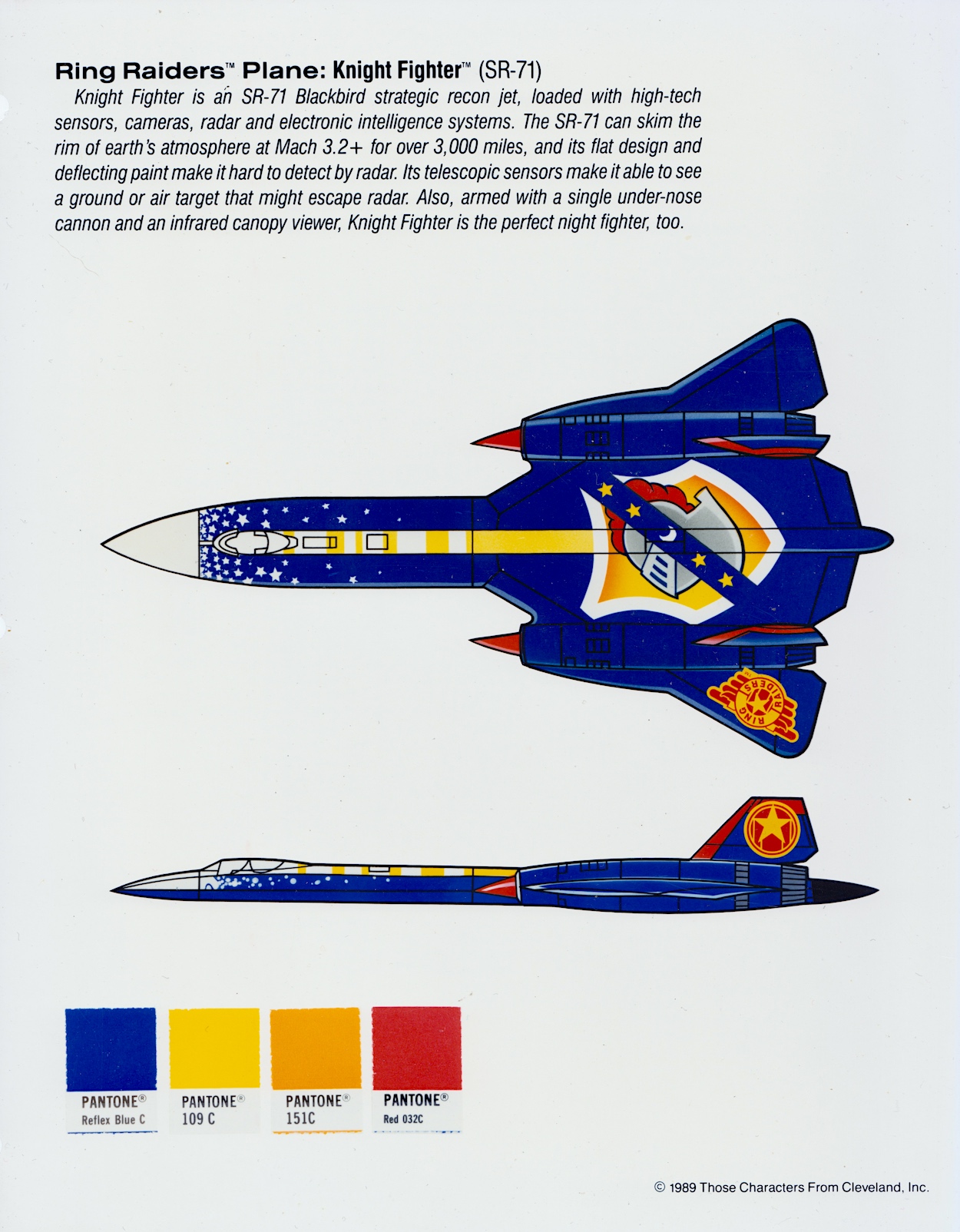
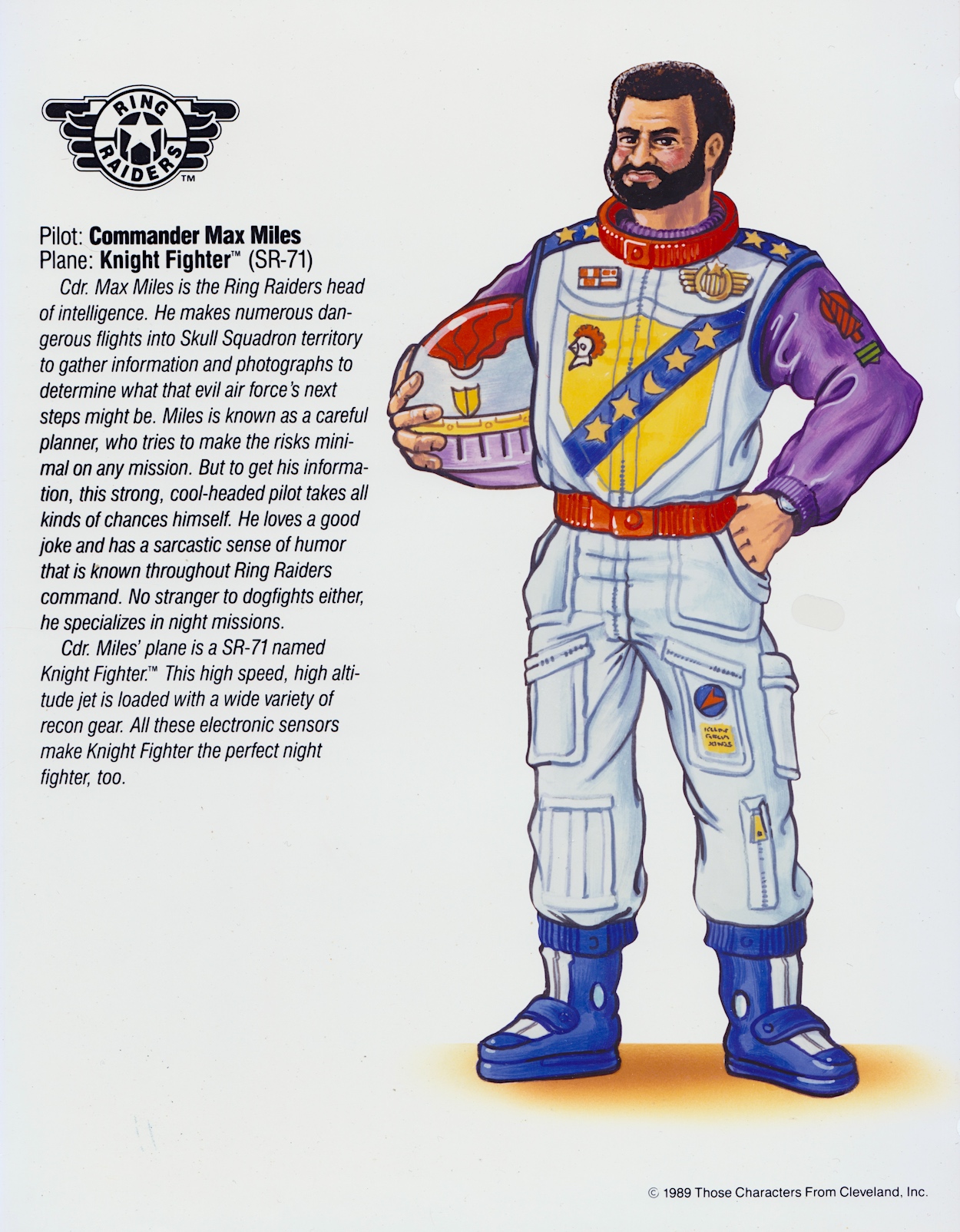
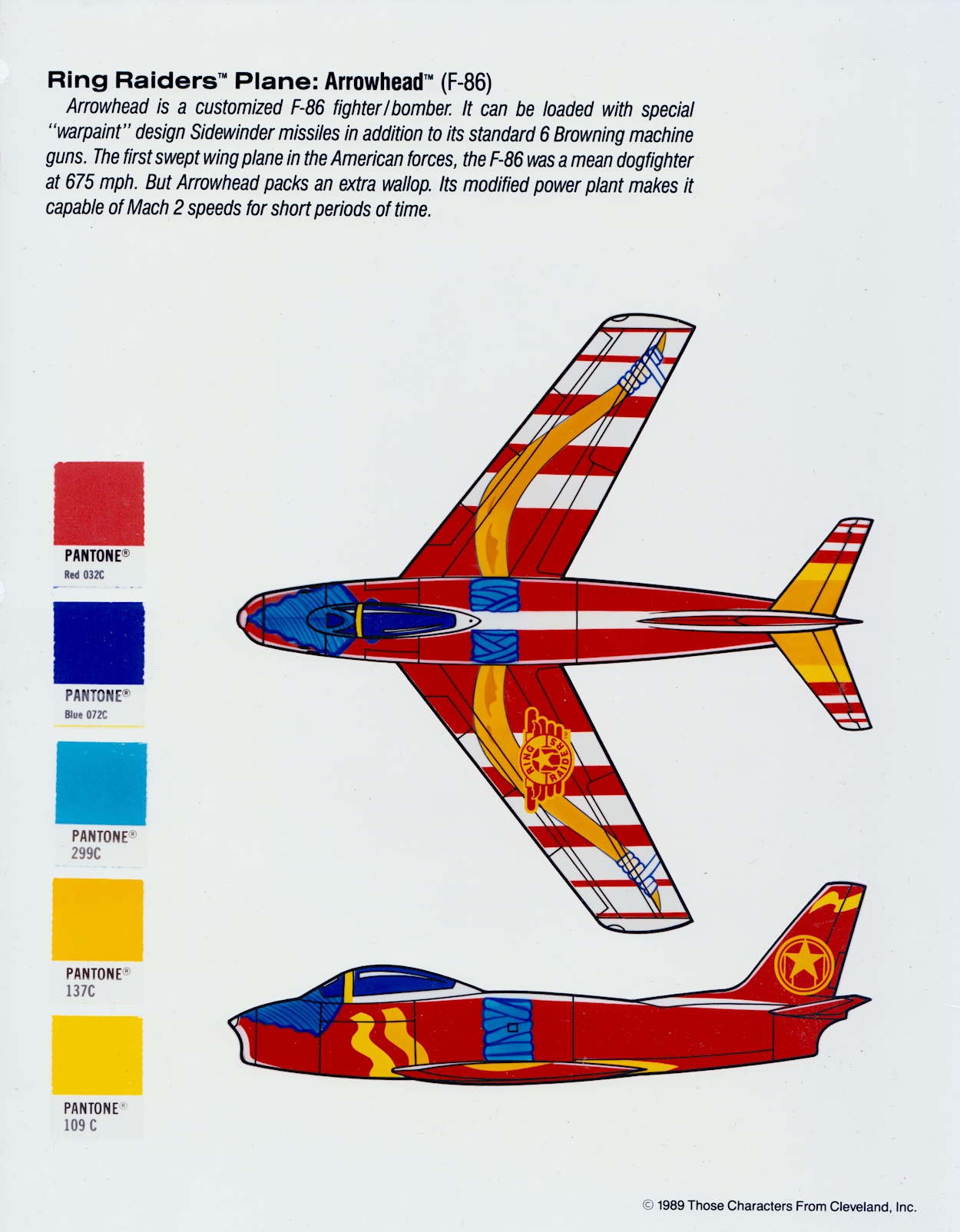
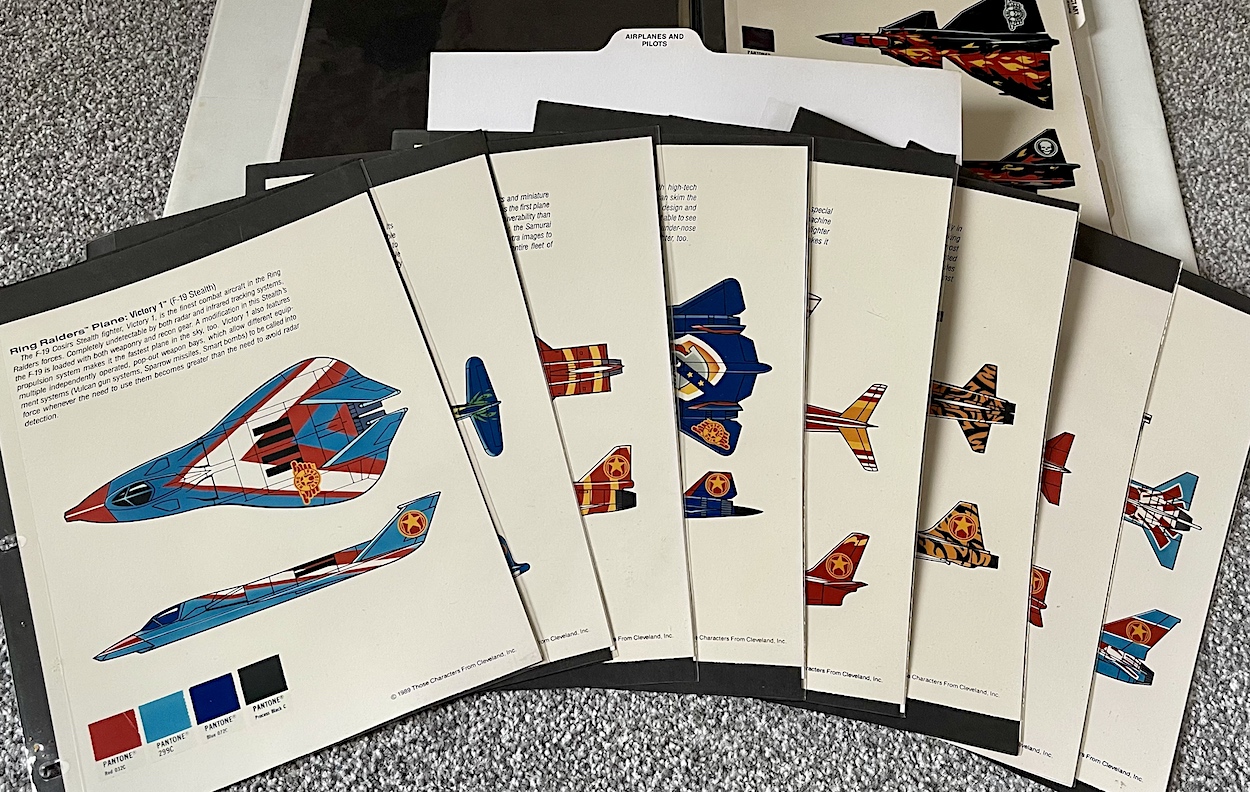
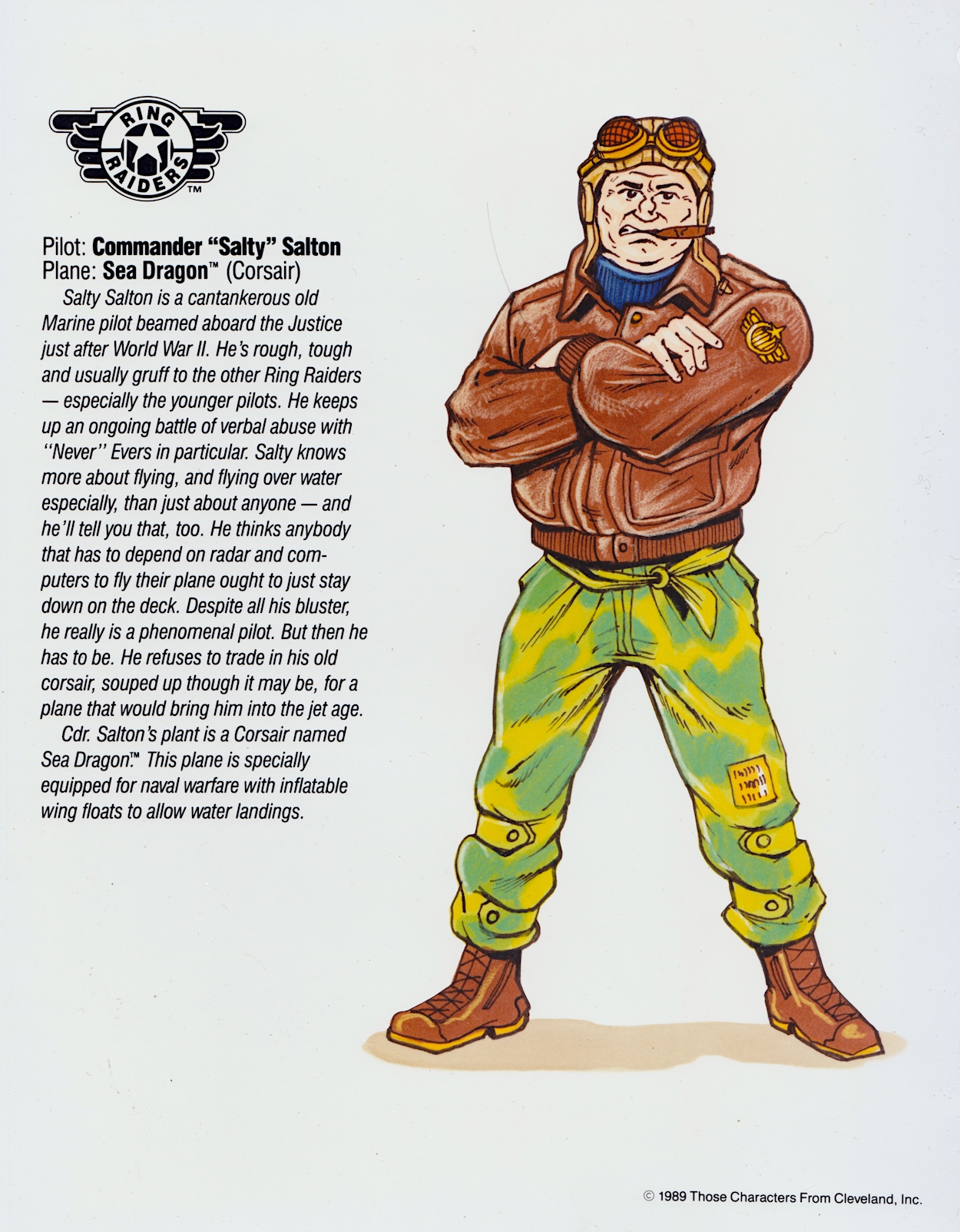
The next section is all about the planes and their pilots and there’s so much here I’ve decided to divide it into two parts, this month focussing on the heroic Raiders themselves. Included are eight of the Wing Commanders and their aircraft over sixteen pages, including top and side views of the planes and a full view of the pilot with a little bit of written information about each of them. We begin with their leader, Ring Commander Victor Vector and his F-19 Stealth fighter codenamed Victory 1, and “Salty” Salton with his Corsair Sea Dragon.

The basic details about the human element of each pairing would be elaborated on by the comic although the basics remained. It’s fun for me to remember all of those little details about the planes, such as weapons panels that were meant to slide open, wings that could split in two or underbellies that had inflatables built in. Of course the Matchbox toys were so dinky none of these were actually included but in our imaginations they were there and deployed often, not that it mattered with Salty because he was never a toy! More on that below.

For such small toys they had intricately moulded details. The panels may not have opened, but they were all there; the bodywork of the planes looked and felt authentic in our tiny hands. What else would you expect from Matchbox? The next couple includes my absolute favourite, the X-29 Samurai Flyer flown by Yasuo Yakamura, the first plane I owned (alongside a Skull Squadron plane I’ll show you next time). It was just the coolest toy ever!

I had most of the wings from the first series, although at the time I never thought about the coincidence that the Knight Fighter was flown by a pilot called Max Miles. The coincidence I’m thinking of? Knight Rider and one of its characters, Devon Miles. Maybe one day I’ll find out if there’s more to that than just coincidence. For now, what about those colour codes?
Even if these pages were sent in black and white it wouldn’t matter because the artist could use the Pantone code

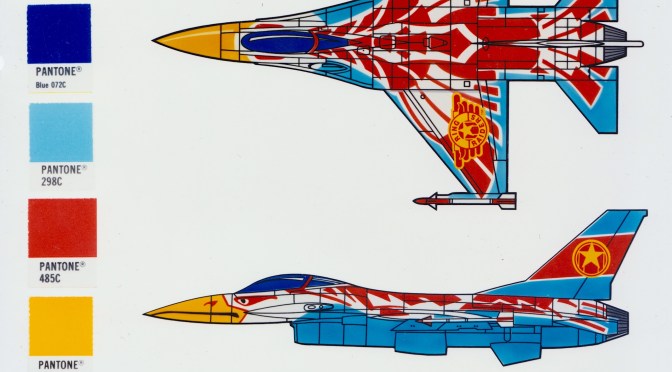
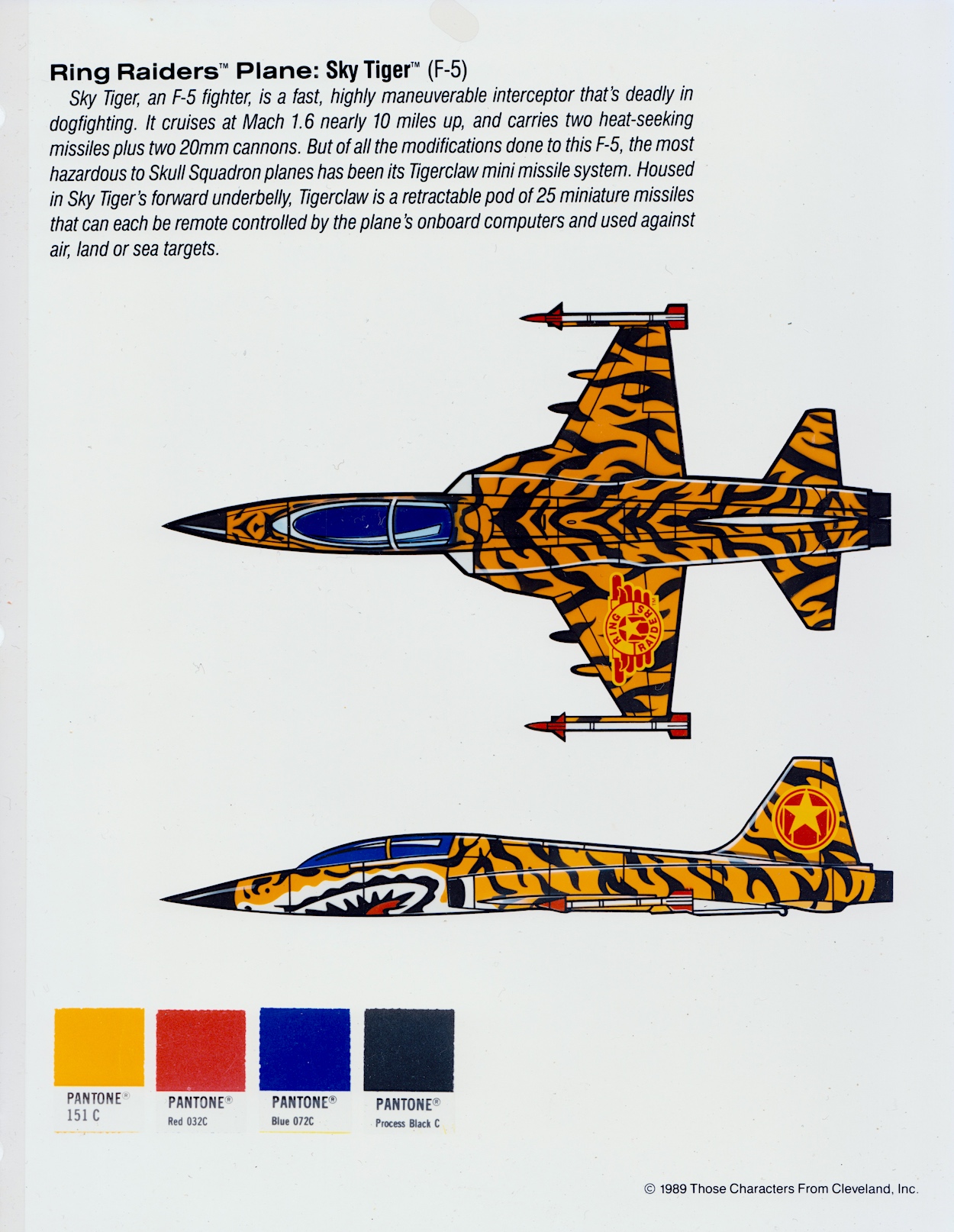
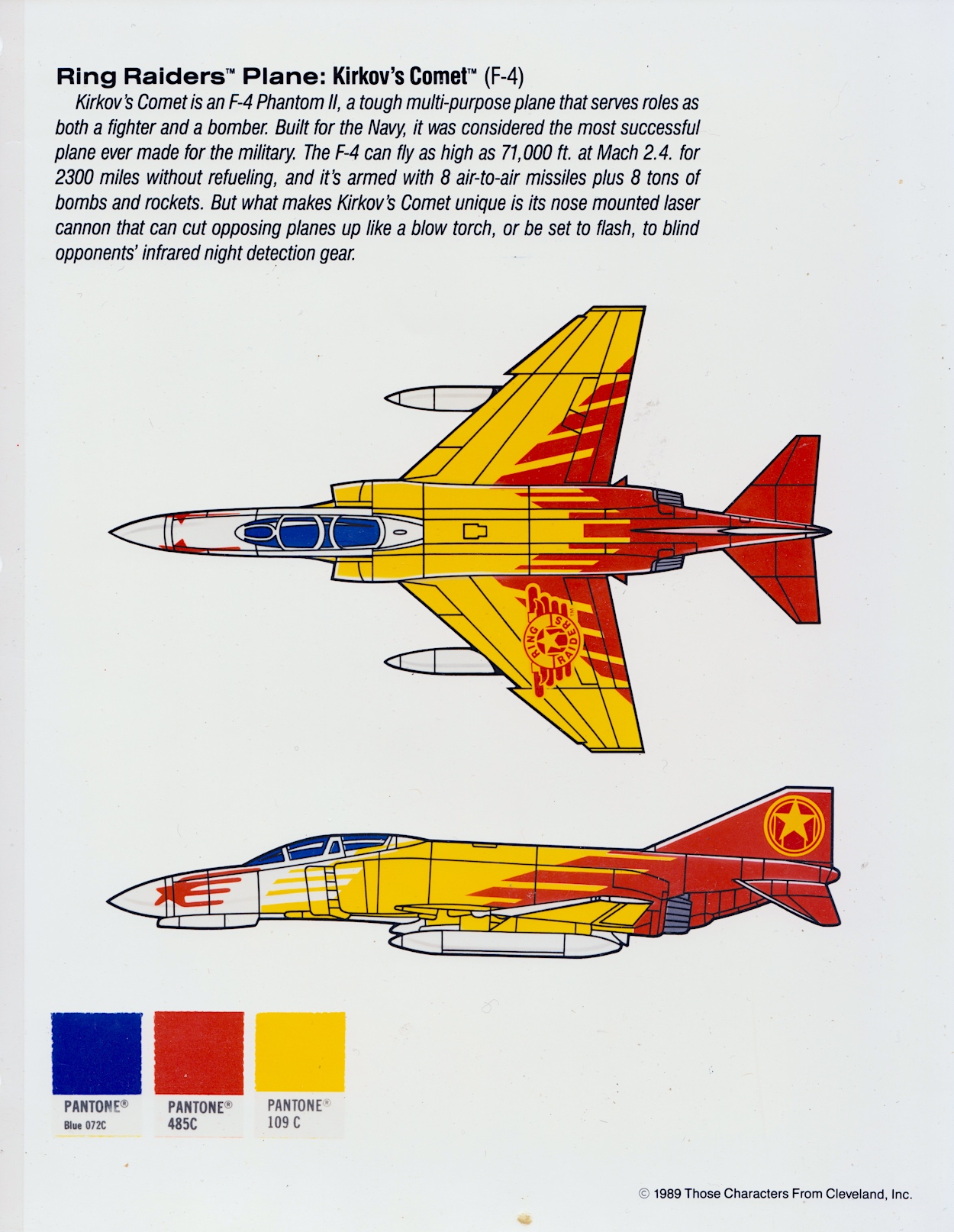
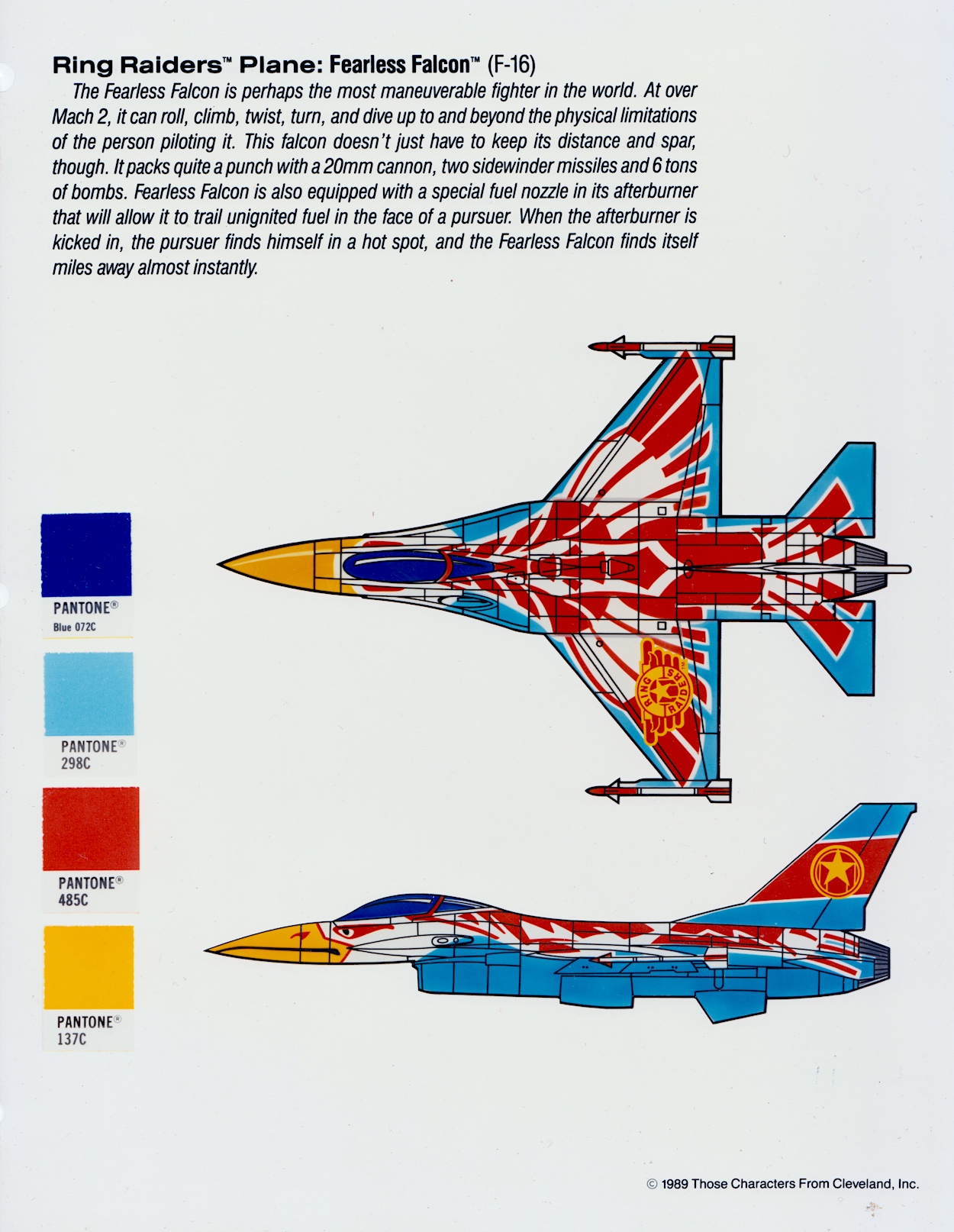
The Pantone company’s Pantone Matching System is a standard colour chart used across various industries. It ensures correct use of exacting colours and licence holders Those Characters From Cleveland have used it here. They understood how important it was that all those little Matchbox toys were exactly as designed and that every bit of merchandise, like our comic, didn’t deviate.
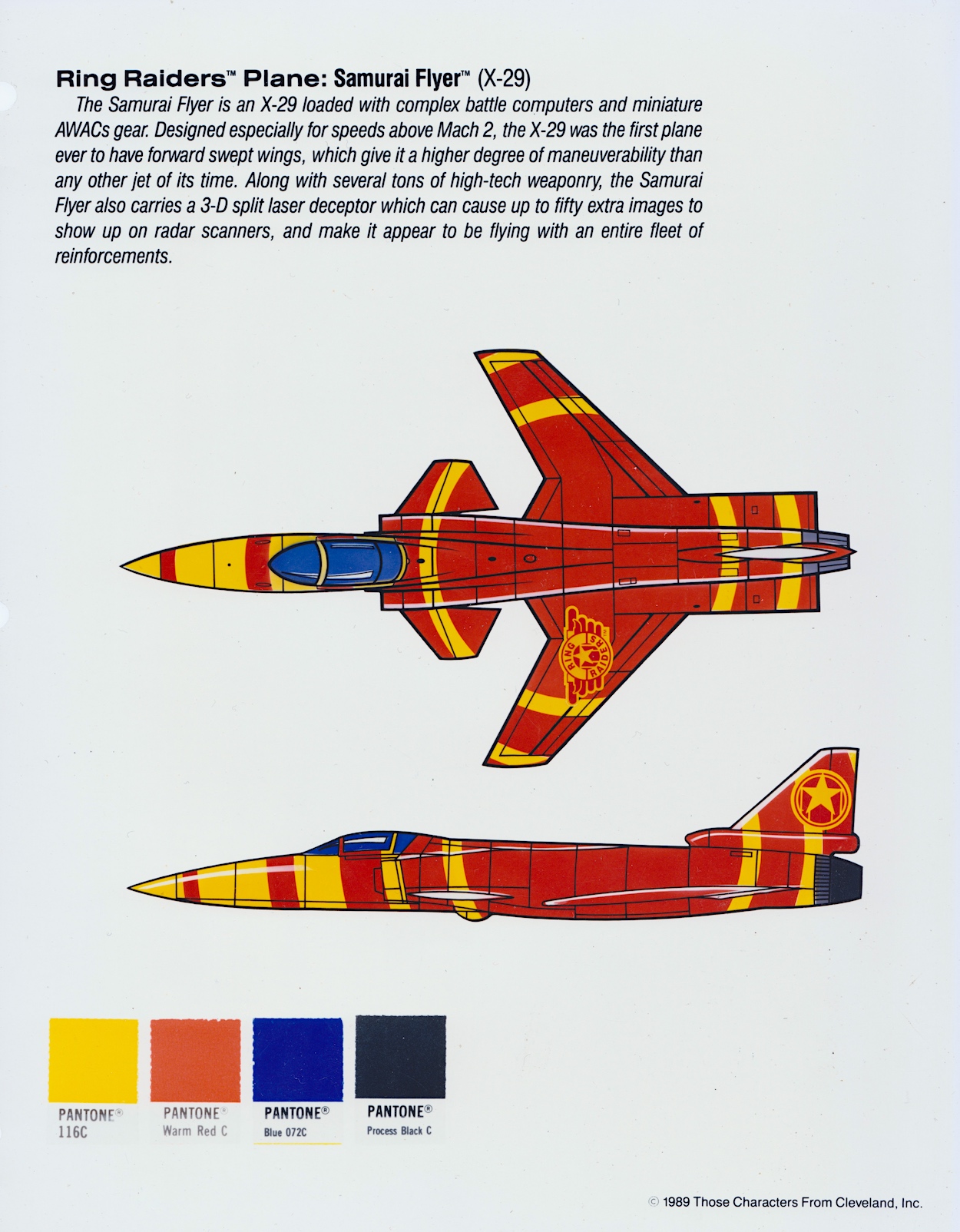
I’d never given a thought to how precise things like this would have to be but it makes perfect sense of course. It’s a level of detail in this folder I didn’t expect to see. By using this system and its naming of the tones it also stops any accidental colour changes, for example if these pages were photocopied or faxed to the artists. Even if they ended up being sent in black and white it wouldn’t matter because the artist could use the Pantone code.

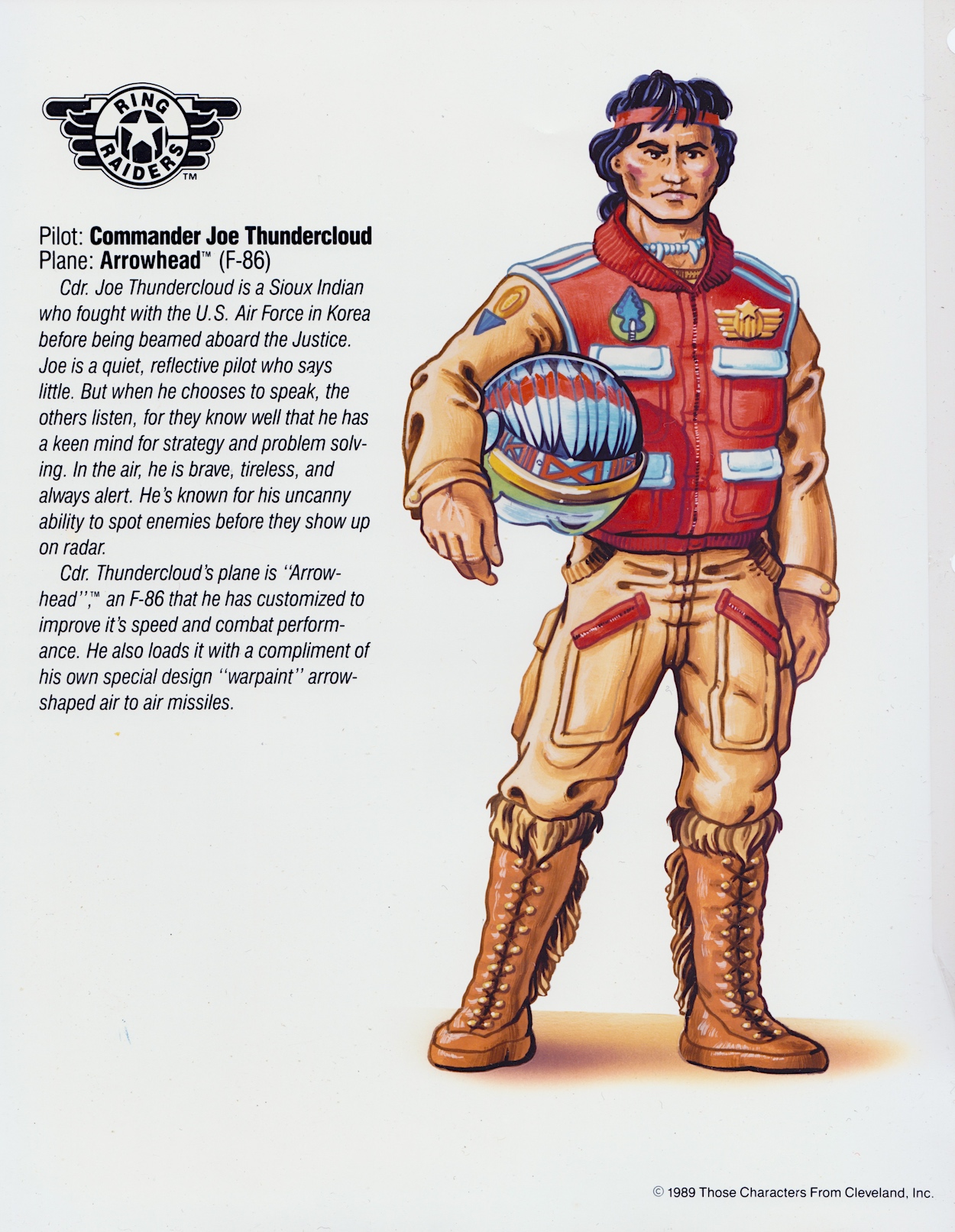
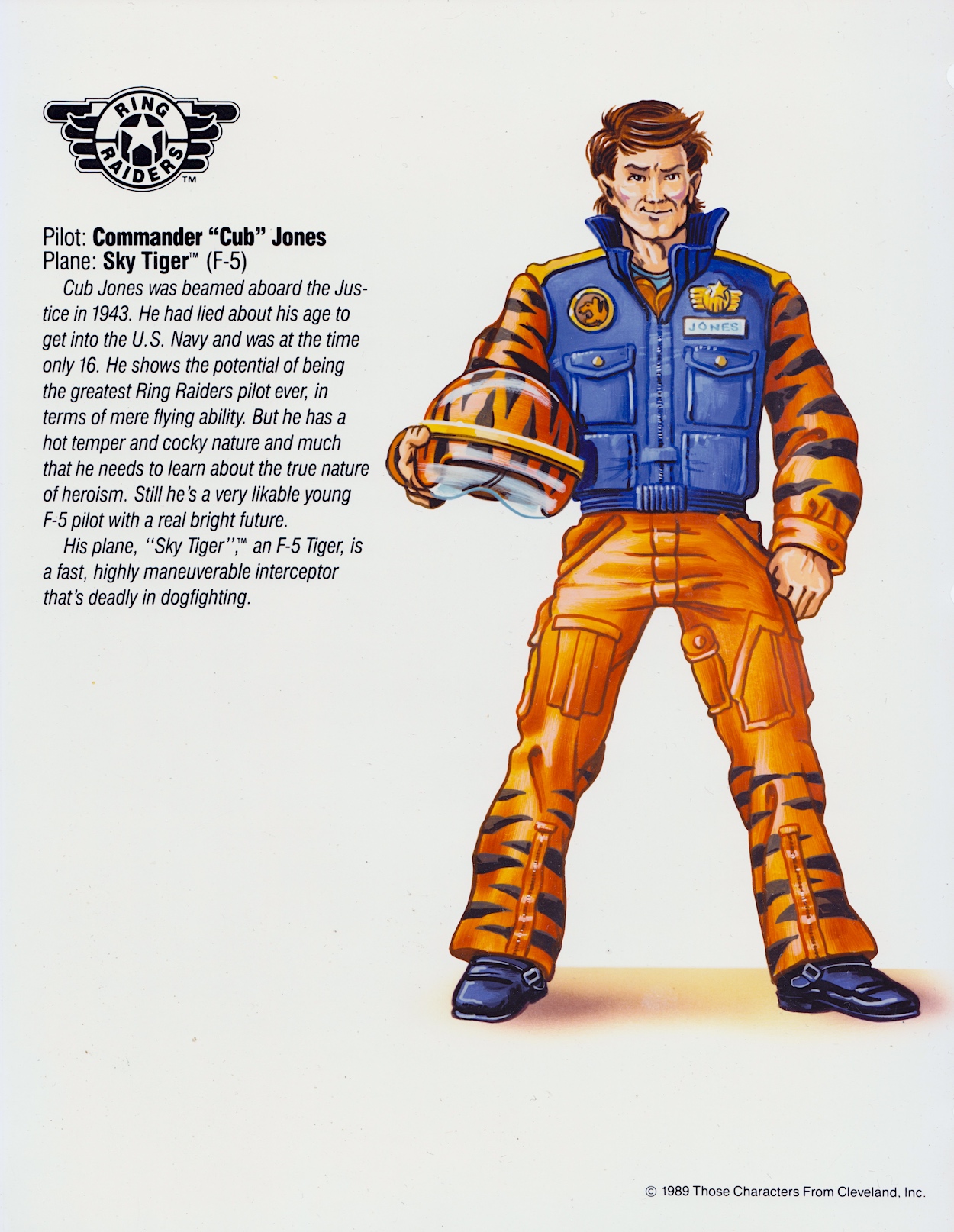
When you consider how small the planes were it’s pretty incredible to see precise colour codes for such teeny tiny details as the darker blue outlines of Joe Thundercloud’s F-86. “Cub” JonesF-5 Sky Tiger with its animal markings was a really cool plane to own at the time. Note that the page also mentions the mini missile system, something else our imaginations ran with. James actually wrote it into a script, brought to life by artist Don Wazejewski.

Cub’s background was also one I enjoyed and it brought a personal touch to the World War II story featured in the early issues of the comic. However, for whatever reason the cartoon did away with this completely and made him a modern day rookie Ring Raider pilot. I’m surprised they were allowed to change a key element of a character so drastically. The comic proved this original version could be so much more interesting.

Finally for this month are Yuri Kirkov’s F-4 Comet, a favourite toy of mine. In fact, his entire wing was a favourite, the colour scheme of the lead plane used across the three accompanying aircraft (like most of the wings), they really did look quite incredible to my young eyes. I was thrilled to see his Wing getting a starring role in a gorgeous Sandy James strip.

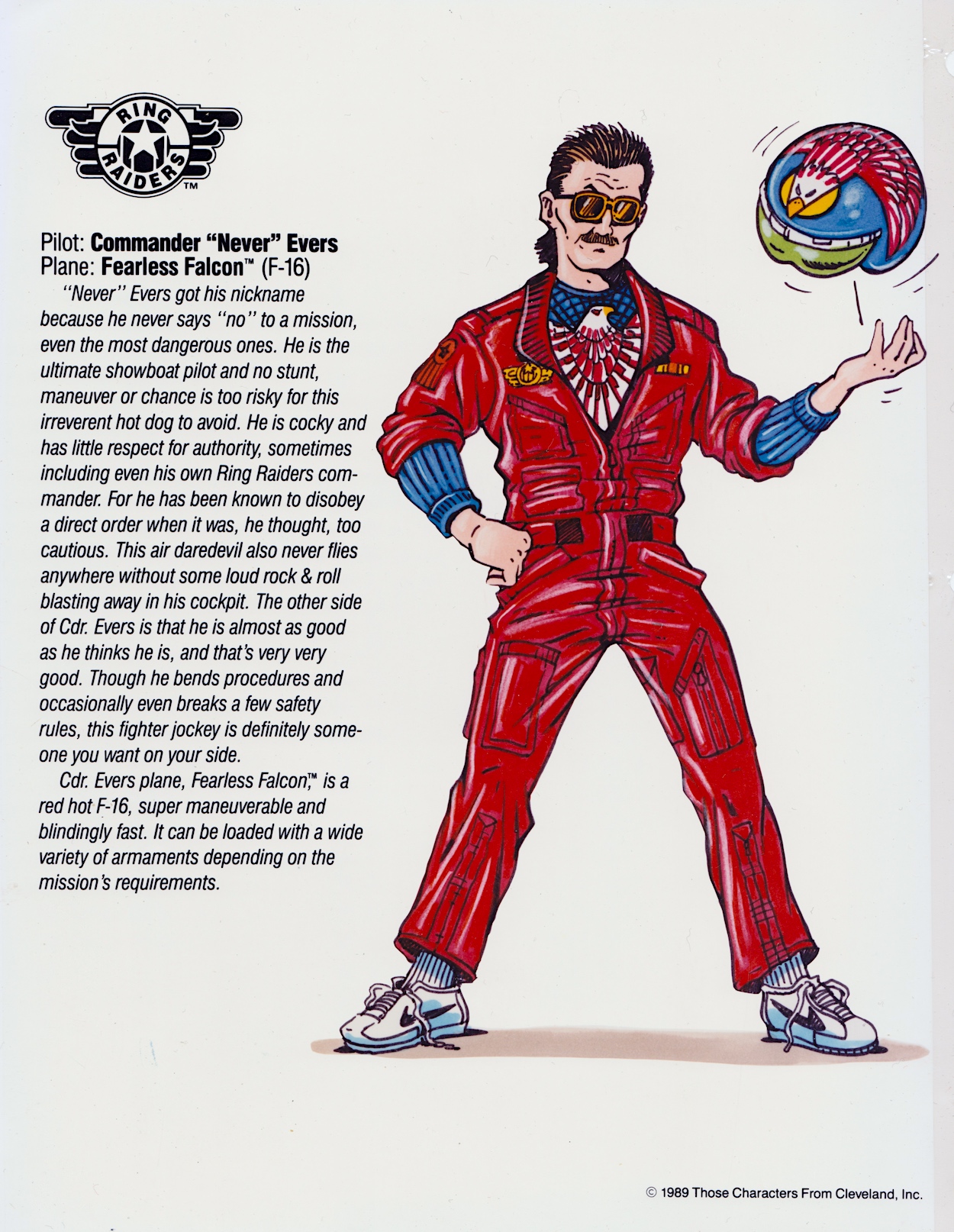
Go check that out to see just how brilliant Sandy was at bringing this toy to life. It’s the perfect example of what the comic could do. Before writing this post I thought Commander “Never” Evers and his F-16 Fearless Falcon was that rare thing, a Ring Raiders set I didn’t actually own. I thought, looking at its design, that I’d really missed out. But a fellow fan informed me that Evers and Salty were never actually released as toys, despite being official characters and planes, both featuring in the comic and the cartoon. How strange.

That’s the first half of the Airplanes and Pilots section covered, all the leader craft and characters in the toy range for the good guys done and dusted. I’m excited about doing the same for the Skull Squadron next month, even more excited to show fans what’s to follow after that. Whether you were as obsessed as I was with Ring Raiders or you’re interested in the production of licensed comics, I hope you’re enjoying this series so far.

The Skull Squadron takeover happens on Wednesday 13th March 2024.

PART ONE < > PART THREE

LiCENSEE FOLDER MENU

RiNG RAiDERS MENU

RiNG RAiDERS LiCENSEE STYLE GUiDE: PART ONE

A few years ago the wonderful former UK comics editor Barrie Tomlinson and his writer son James Tomlinson very graciously answered my questions about a favourite childhood comic of mine, the very short-lived Ring Raiders, based on the Matchbox toy planes of the same name. Created by Those Characters From Cleveland and with a range of merchandise, a UK comic and even an American cartoon, Ring Raiders was set to be the next big franchise.

It wasn’t to be but I still loved the toys and I collected a mountain of them including all of the extras I could get my hands on. I also owned whatever videos were made available over here but the comic was far superior. I’ve covered the series already and you can read all about it, as well as the interviews with Barrie and James, in the Ring Raiders section of the blog. However, chatting with me wasn’t the only thing these two gentlemen very kindly did. They also sent me this folder.

This is the official licensee folder sent to Fleetway Publications (and other companies wishing to produce anything related to the franchise) in 1989 with all of the information needed to create an accurate depiction of the characters, their aircraft and the world they inhabited. A ‘Style Guide’ if you will. It includes details on the backstory, the individual pilots and even the correct colour codes to be used on each plane to ensure the exact right tone of each was used.

It goes much further too, showing a selection of suggested merchandise 12-year-old me would’ve given his right arm for, images of how the packaging would look on shelves, and logos and the variations allowed. It even contains the legal side of things, guides to marketing whatever the companies were producing and fun promotional ideas for children’s favourite planes if it had all been successful. As a fan this is a bit of a holy grail, but I think a lot of blog readers may find it just as interesting.

A lot of the comics covered on the OiNK Blog are based on franchise properties such as toys and cartoons. These licenced titles made up a huge part of my childhood and were quality publications in their own right. Each would’ve had their own variation on a folder like this, so I thought it would prove to be a fascinating look into producing a licenced comic, not only for Ring Raiders fans but for those of licenced comics in general.

Over this and the next four months (on the 13th of each) I’ll break down the folder into its separate parts and show you all of the details within, from designs to copyrights and beyond. We begin this month with the introductory section, under the banner ‘Philosophy’. This contains the background information on the potential franchise and its storyline; a storyline that both the cartoon and the comic would pull from, despite producing two very different final products.

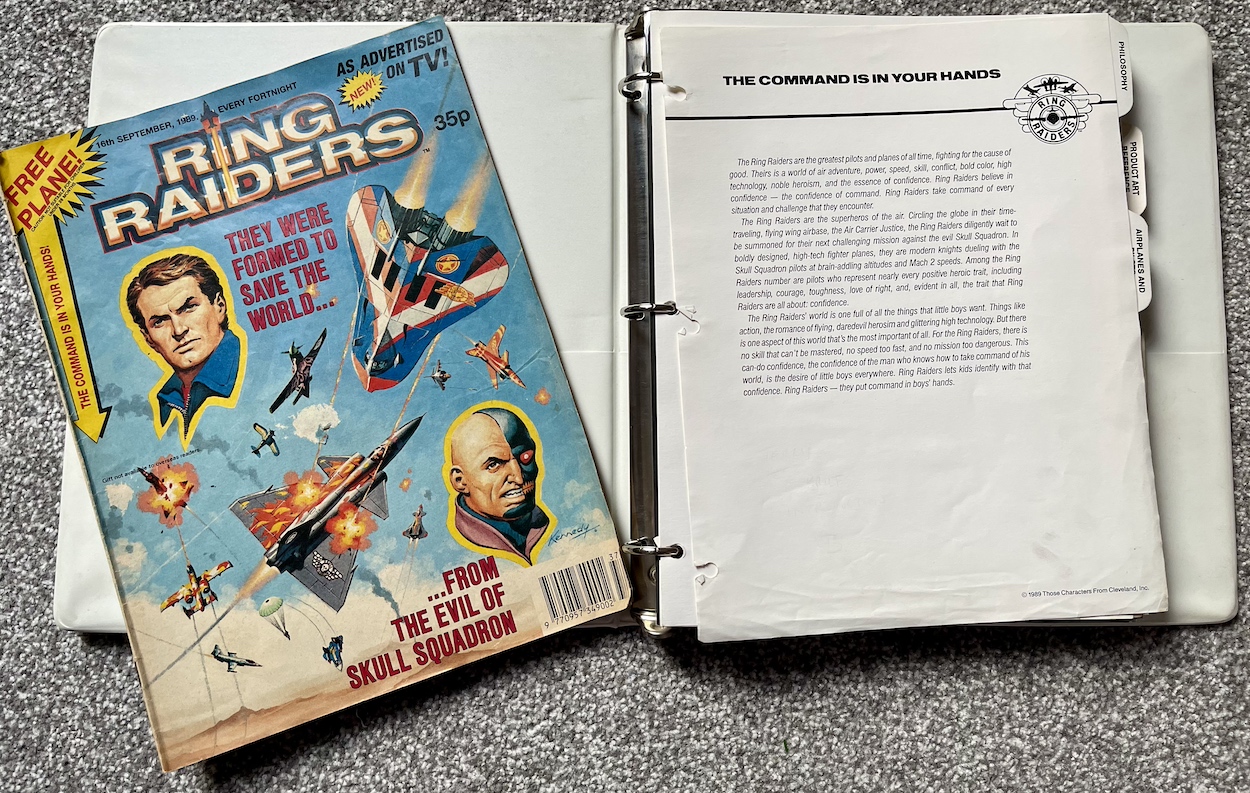
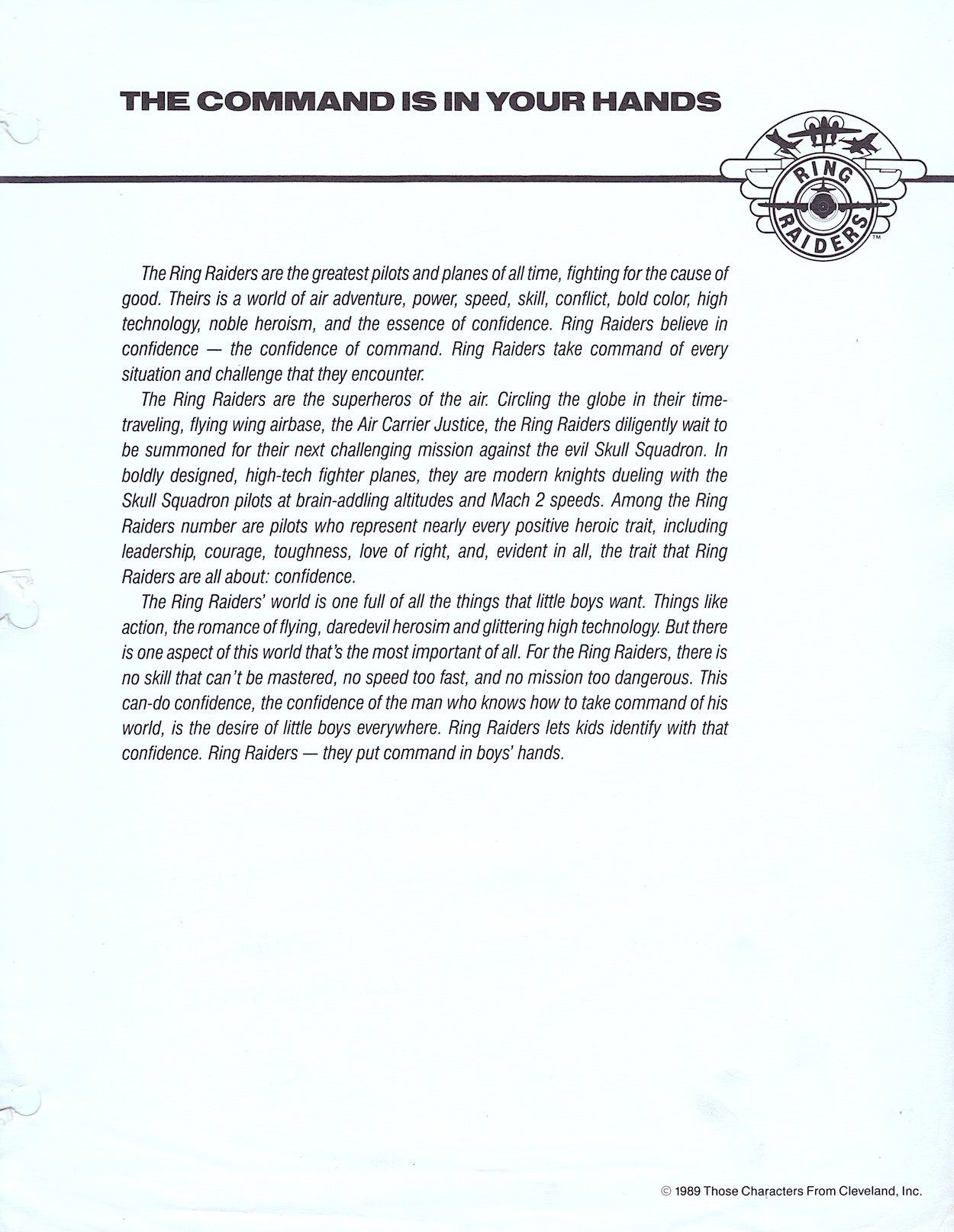
First up is this ‘The Command is in Your Hands’ page, which was the tagline for the toys. Now, remember this was the late 1980s, a time when toys were marketed strictly at one gender or the other. This continues today of course but thankfully to a much lesser extent and with much more crossover. There’s less stigma today with boys and girls just playing with whatever they want, which is much healthier in my opinion. This first page sums up not just the thoughts behind Ring Raiders but all so-called “boy’s toys” of the time.

That last paragraph in particular is a bit cringe-worthy 35 years after the fact, but you can just imagine how other toys such as Transformers and Masters of the Universe may have been similarly marketed, can’t you? The regular use of the word “confidence” is a rather strange one to focus on for a children’s toy, is it not? For me, they were about a pre-Pokémon kind of “gotta collect ‘em all” mentality as well as the time travelling storyline, which was used to explain the huge variety of aircraft in the collection.


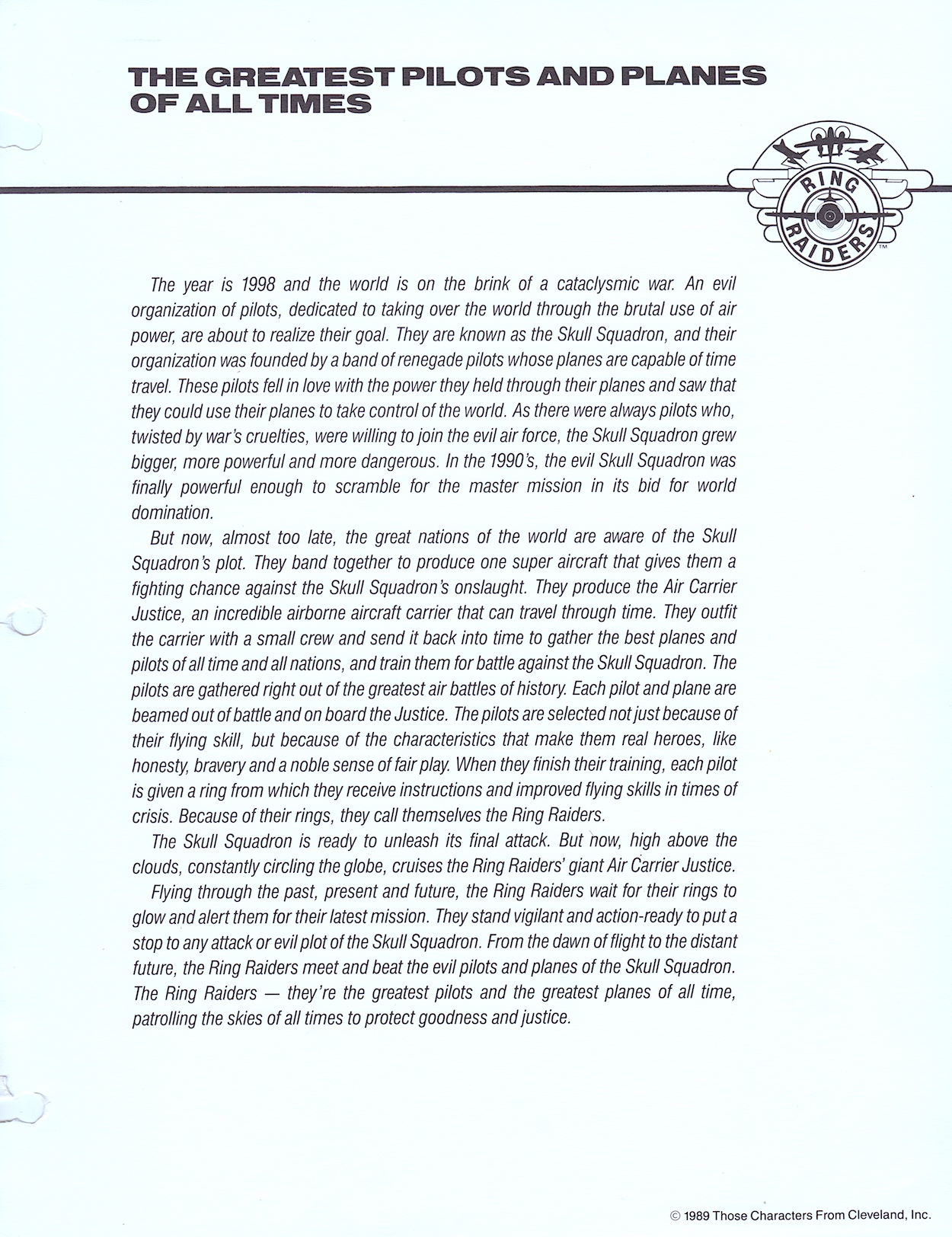
The year is 1998 and the world is on the brink of a cataclysmic war. There were always pilots who, twisted by war’s cruelties, were willing to join the evil air force.

The then-future storyline of Ring Raiders

Next up is the overall scenario, which I’ve covered before during the real time read through, detailing how the comic changed some elements, such as giving the individual Ring Raiders planes the ability to time travel. Originally it was meant to be this interesting set up including the major difference between how the two sides conducted their time travel. But it felt like a natural progression in Barrie’s comic and an obvious one for the stories included. The comic also introduced a range of gadgets tucked away inside the rings which as a kid really fired my imagination (I constantly wore one of them that winter).

Again there’s a focus on the noble elements of the characters involved, something the various licensees could pull from to appeal to parents I’m sure, while we kids focussed mainly on the action and the dogfighting in the palms of our hands. We’re only two pages into the folder and I can already see (even before any images or photos of the toys) how this could’ve stood out at the time amongst the vast array of other wannabe franchises vying for position.

They fired up the imaginations of kids just like me and gave us ideas for our own bedroom battles

Unfortunately, the late 80s and early 90s were awash with unsuccessful toys that at other times could very well have been hits. Even a lot of toys that had been enjoying success were floundering by then; a bit like the UK comic scene in those same years, when over saturation helped to dilute the success of individual titles. Ring Raiders would succumb, the comic and cartoon cancelled after only a few outings, although the toys would continue throughout 1990 with two more series of planes to collect.

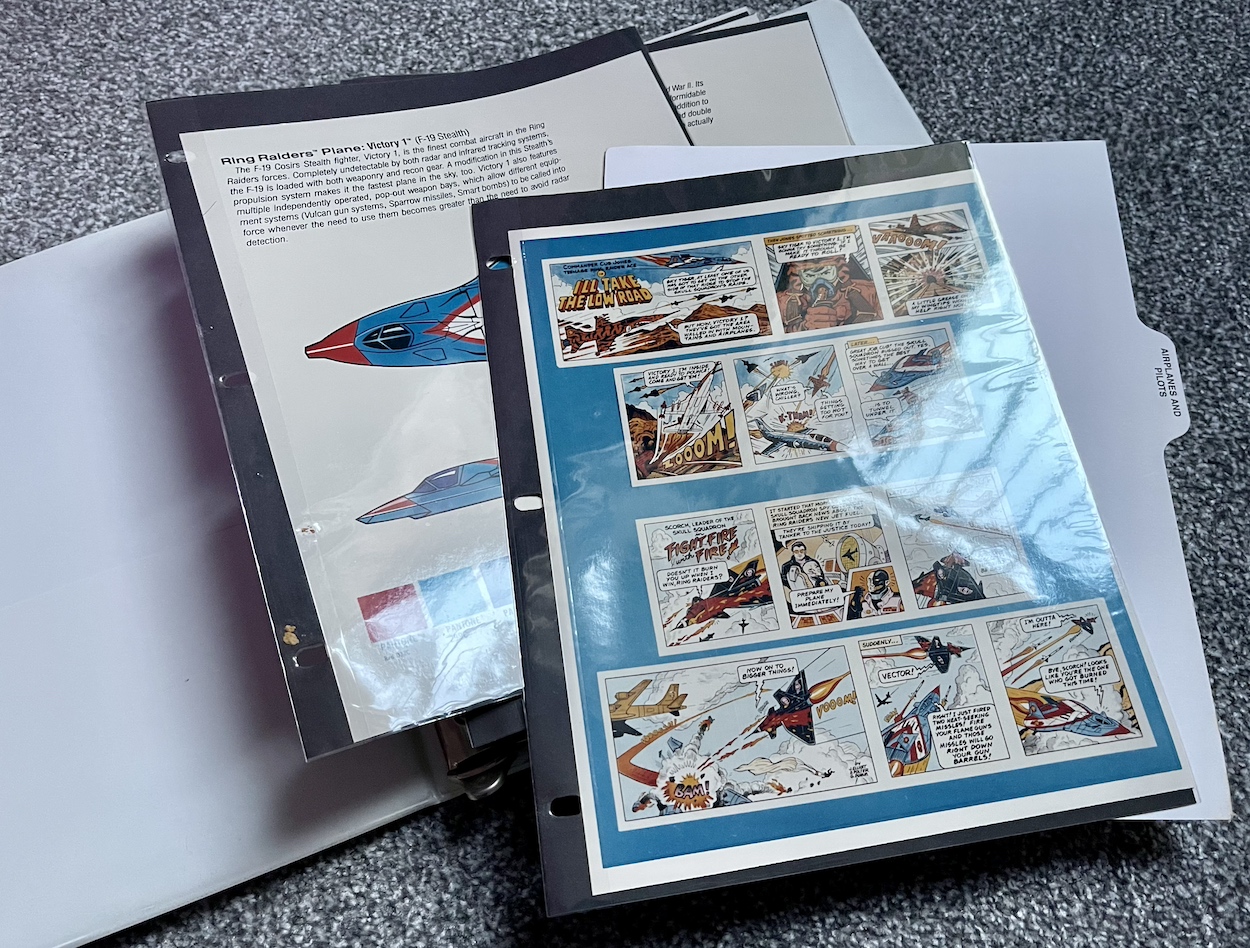
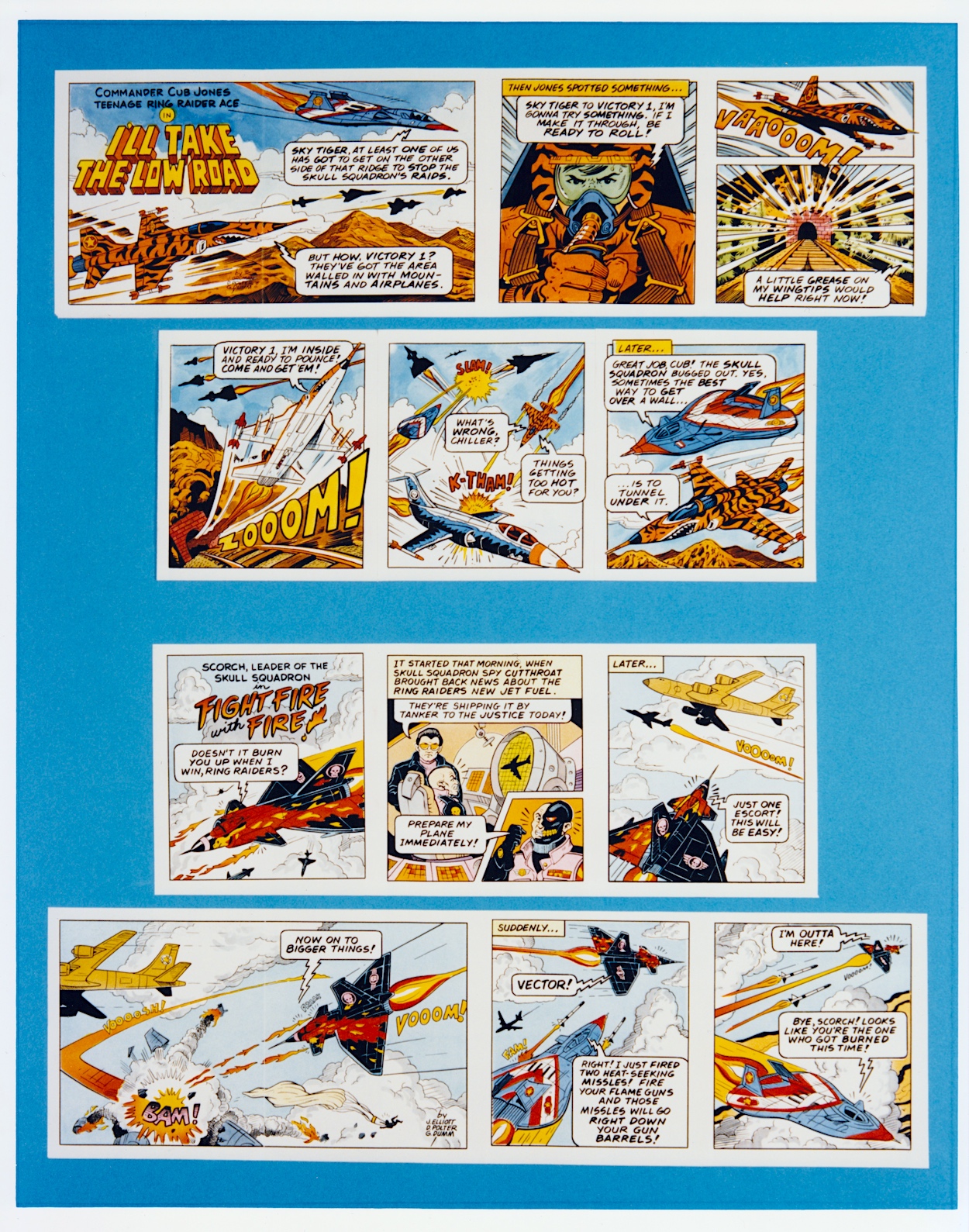
However, as you’ll see later in this series the Ring Raiders were meant to be on far more than just the toy shelves. For now, I’ll finish with these two examples of the fold-out mini-comics that came bundled with the plane sets. They fired up the imaginations of kids just like me and gave us ideas for our own bedroom battles.

Of course this was before Barrie’s comic came along and blew us away with its incredible battle scenes coupled with three-dimensional characters and epic twisty-turny storylines that only a full-sized 24-page comic could do justice to. Having Barrie, James and a plethora of top UK comics talent (Ian Kennedy, Angus Allan, Carlos Pino, Don Wazejewski, John Cooper, John Gillatt, Sandy James, Scott Goodall, Tom Tully, Geoff Campion and Terry Magee) didn’t hurt either!

That’s it for this month and that’s just the introduction out of the way. Next month I’ll show you all of the leaders’ planes in the Ring Raiders half of the range, each with character introductions the comic would develop further, as well as the colour codes and details that the artists would have to abide to. That’ll be here for your delectation on Tuesday 13th February 2024.

GO TO PART TWO

LiCENSEE FOLDER MENU

RiNG RAiDERS MENU