Category Archives: Retrospectives

CHRiSTMAS COVERS: FESTiVE FUN

When I was a kid most of my comics were fortnightly so their Christmas editions arrived very close to the Big Day itself, complete with snowy logos and cheery happenings on the cover. It always felt like extra effort went into the creation of these special editions, and reading them just days before the annuals arrived from Santa was guaranteed to raise already high levels of excitement even further.

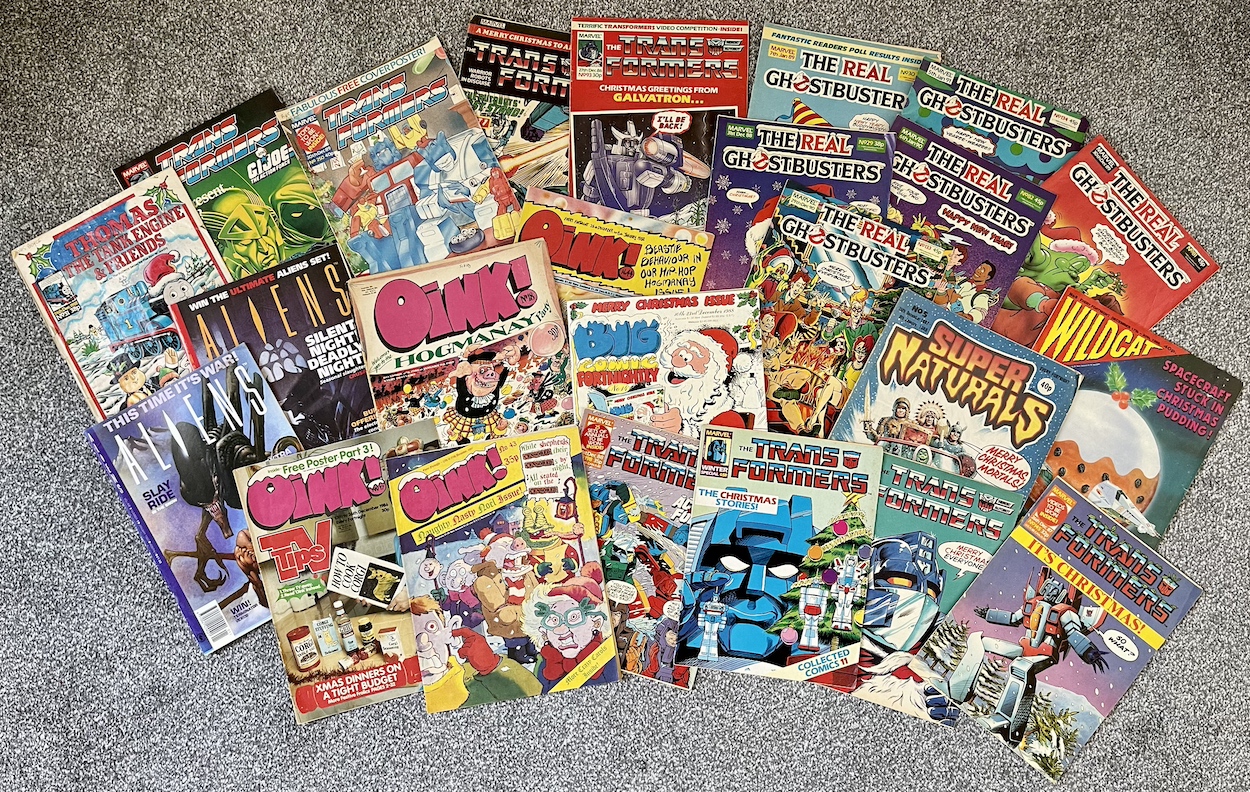
The classic Christmas comics covered so far had that same effect on me even as an adult. So I decided I wanted to do something a bit special this year with all of the seasonal covers in my collection, and to do it right at the beginning of December to kick off the excitement on the blog this year. Below you’ll find a smorgasbord of festive fun from four comics titles I’ve already covered, one I’ve been reading for the blog’s Instagram for seven years(!), another I’m reading annually, a popular title I’m still in the collecting stage of and, for the first time, I’ll reveal one of the new real time read throughs beginning in 2024 by showing you its two Christmas covers!

That’s 21 covers altogether. “Holidays Are Coming!”

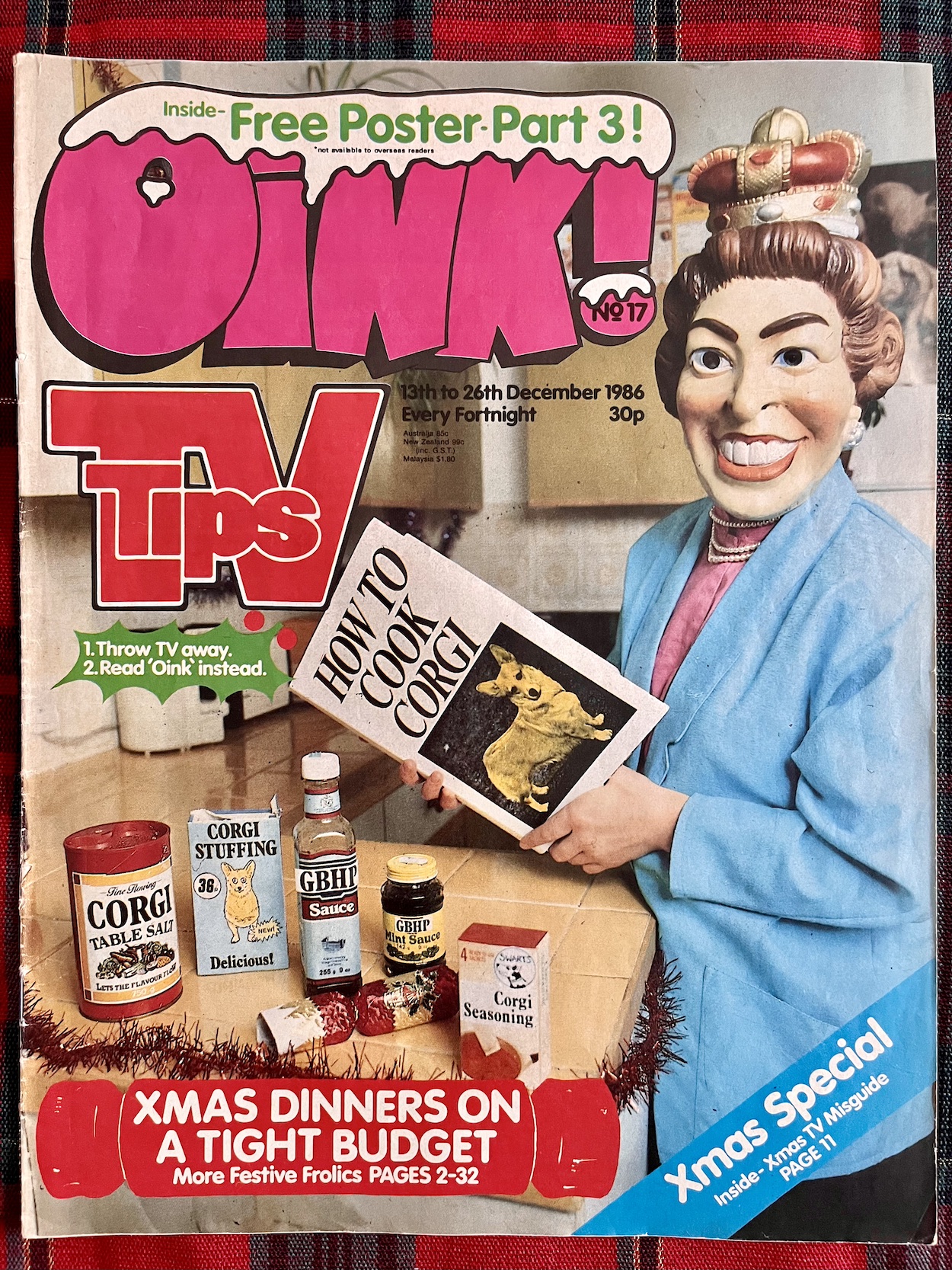
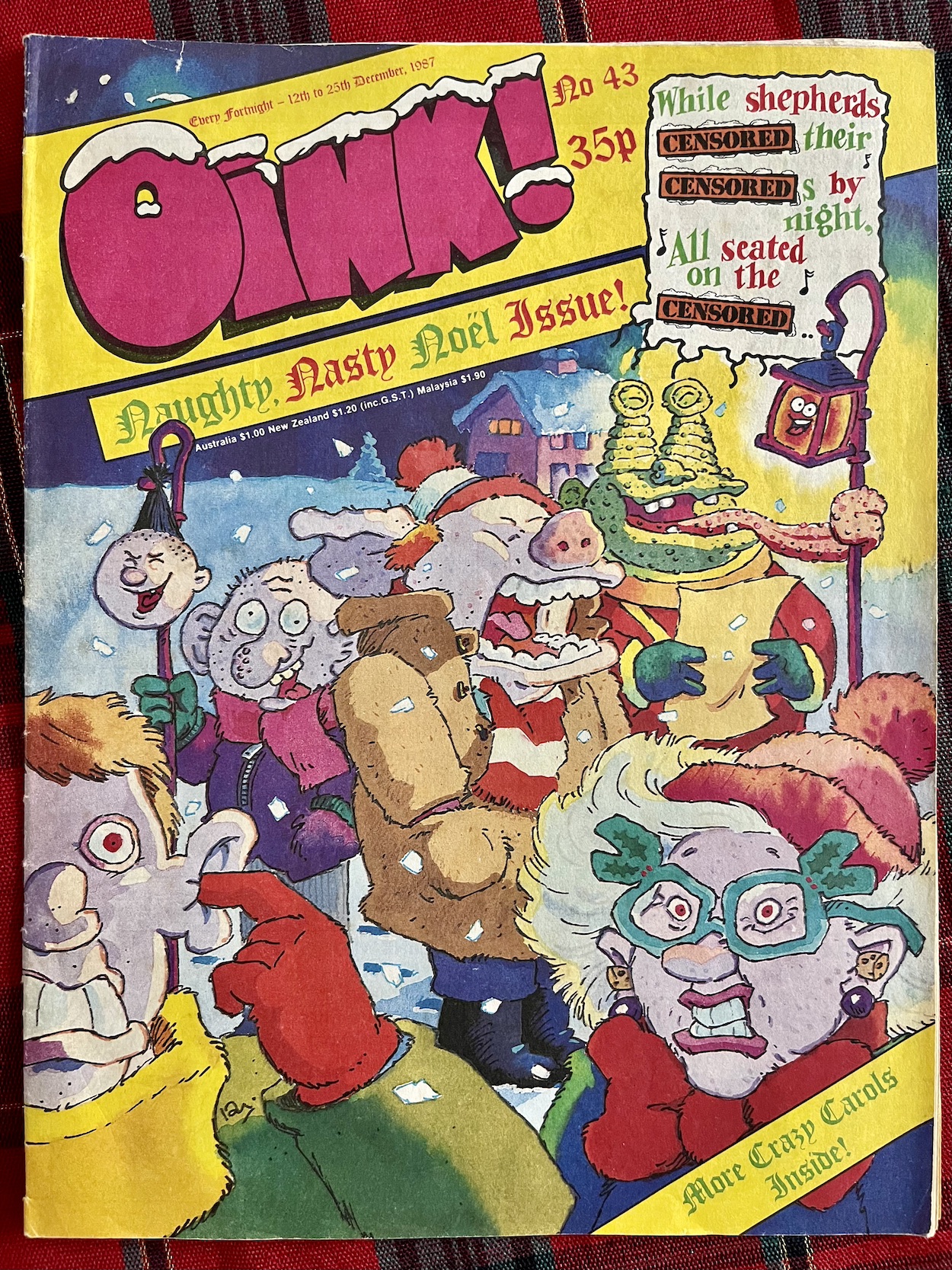
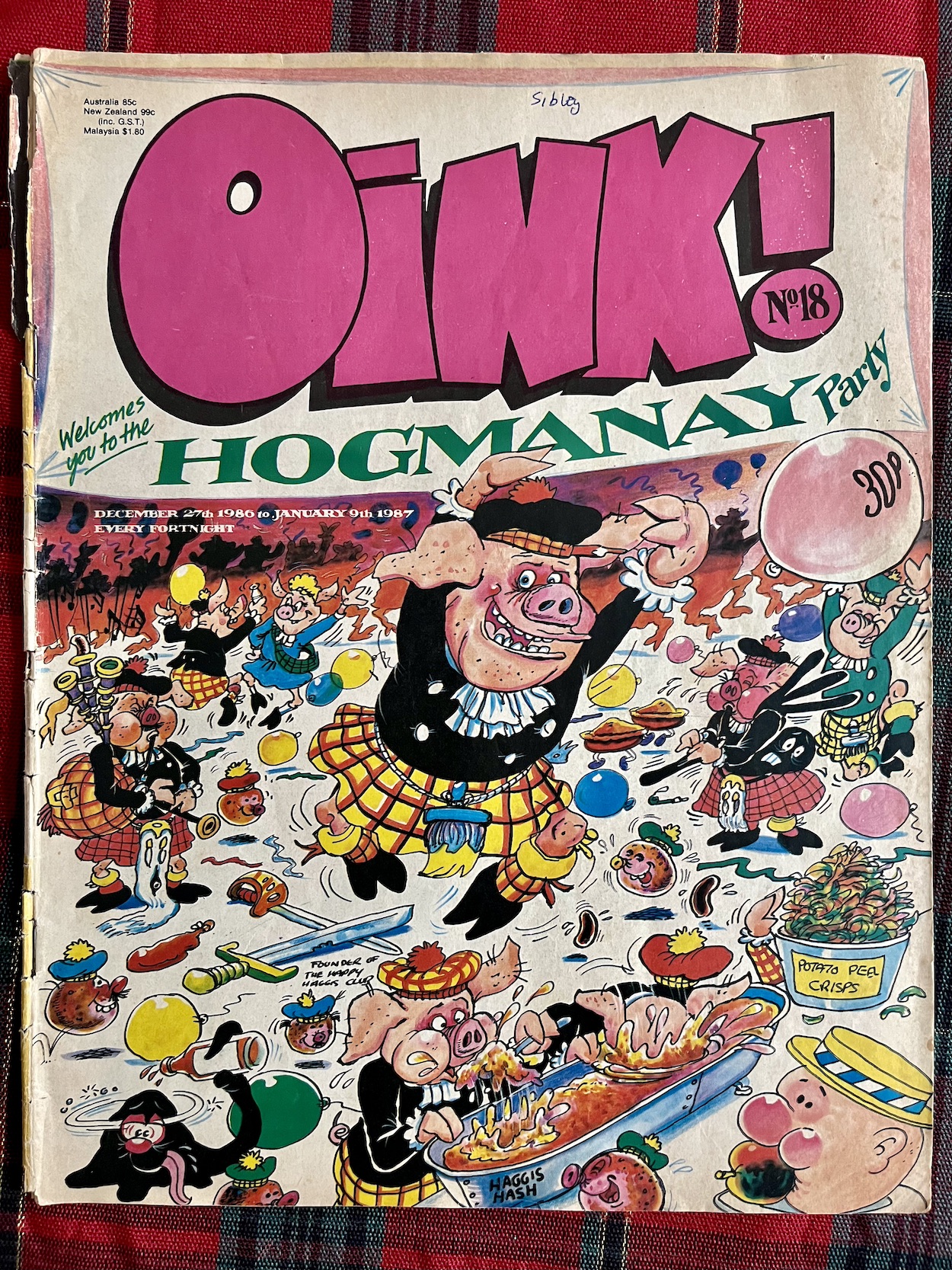
Of course we have to kick things off with the blog’s namesake, don’t we? My very favourite comic had two special issues for my very favourite time of the year. A great spoof of our family’s traditional Christmas TV magazine (which I still buy in December) or a hilarious Ian Jackson cover, which is the best? The second of these issues is my favourite regular issue of OiNK out of its whole 68-issue run, so that particular cover always makes me smile the most.
With the New Year holiday named HOGmanay in Scotland it’d be rude not to do a themed issue in a comic called OiNK for that part of the season. Both of these celebratory issues are also some of the best the team ever produced, with covers by the legendary John Geering and Les ‘Lezz’ Barton respectively. In fact, #43 and #44 form the final two issues of what I personally saw as OiNK’s Golden Age, a run of pretty perfect comics which also included The OiNK! Book 1988.

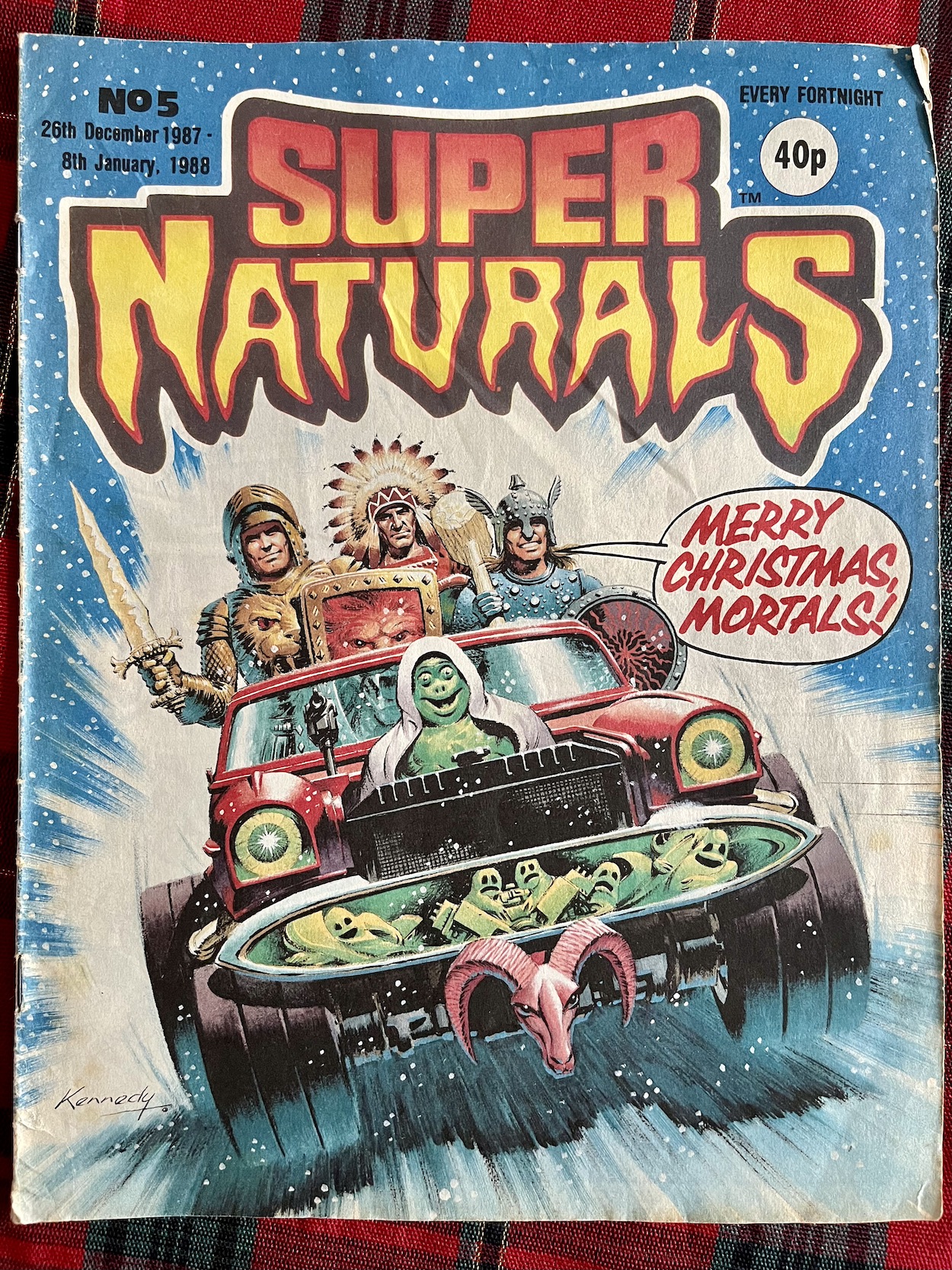
Super Naturals’ Christmas issue is one of my favourites from this whole blog experience

There’s nothing quite like a good Christmas ghost story. So, when I began collecting Fleetway’s Super Naturals comic for the blog (after only having owned the first and last issues as a kid) I was thrilled to not only see #5 was a special Christmas issue but that it also had a simply joyous, painted Ian Kennedy cover. Inside, the team really went for the spirit of the season, with even the ongoing serials containing themes and plots centred around Christmas. My favourite issue of the run and one of my favourite issues from this whole blog experience.

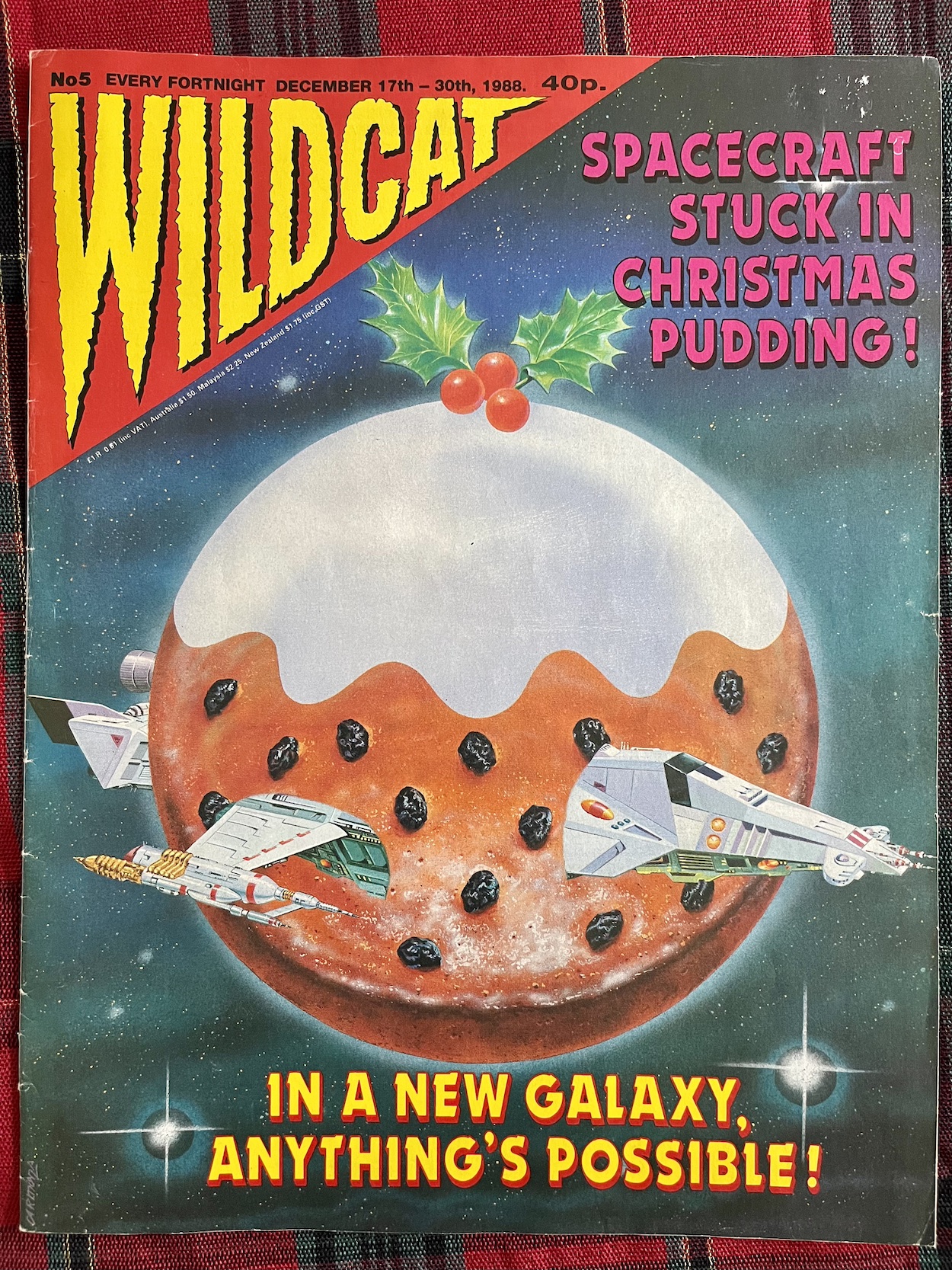
By coincidence, a year later it was also #5 of Super Naturals editor Barrie Tomlinson’s Wildcat that fell at the right time, with a somewhat memorable front page! With its ongoing serials set upon the surface of a distant world as we searched for a new home planet it was left up to the complete anthology story to tell a tale on board the Wildcat spacecraft itself which, yes, did include that image from the cover. Even more surprisingly it actually explained it!

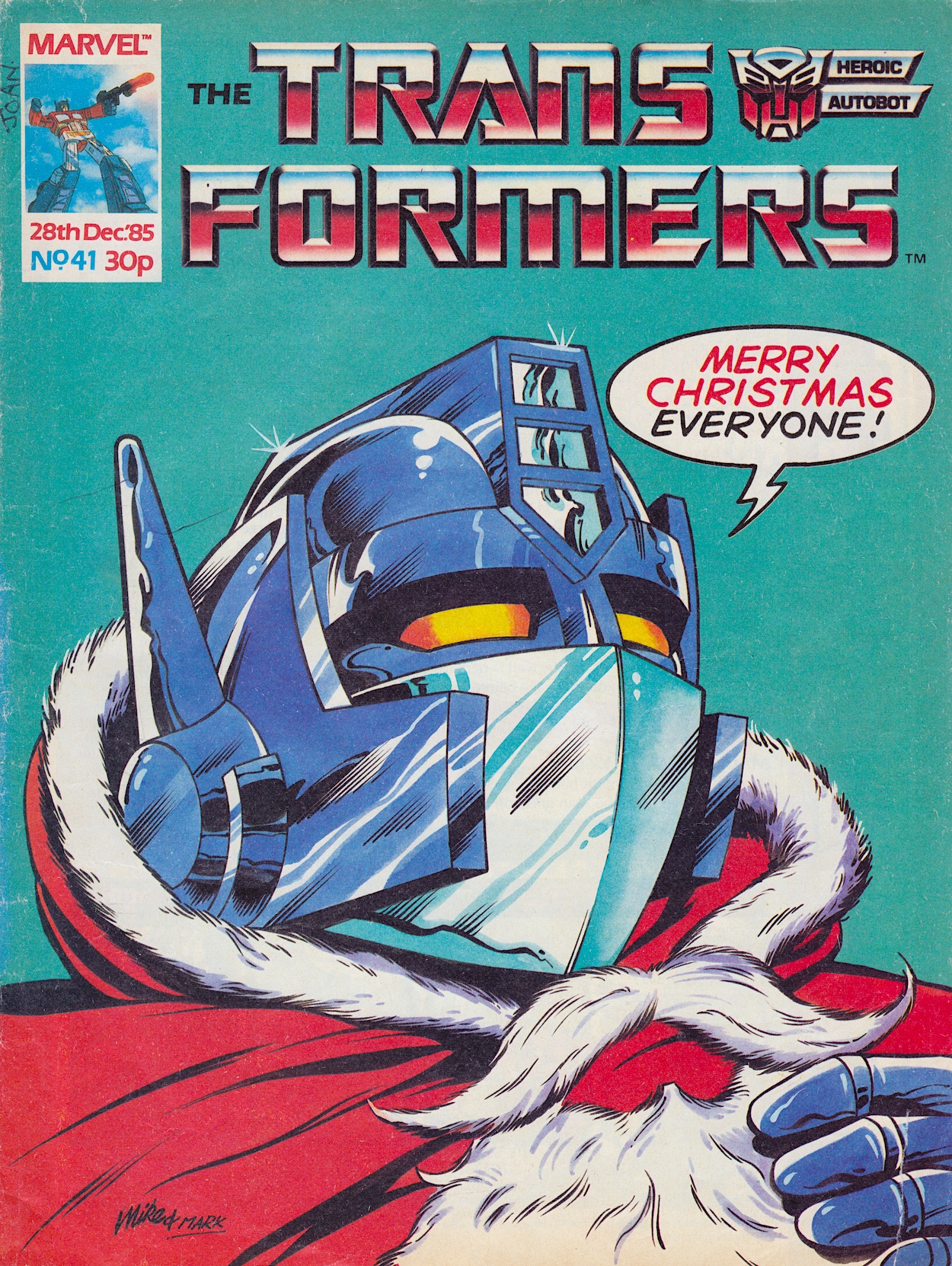
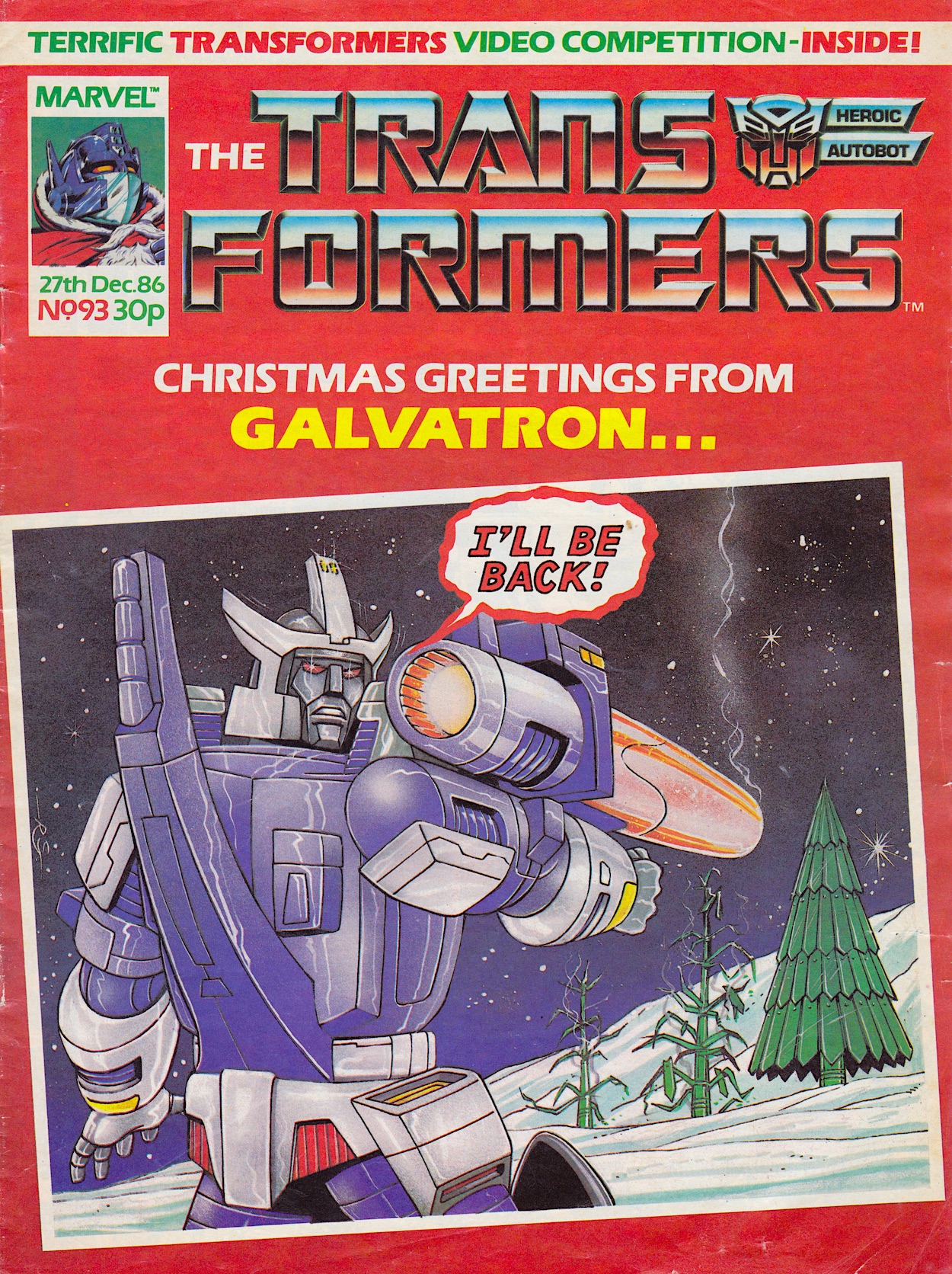
At the time of writing this post those are all of the Christmas comics I’ve covered as part of real time read throughs on the blog so far. However, over on the Instagram account for over seven years I’ve been patiently reading Marvel UK’s superlative Transformers comic. I’m actually reaching its conclusion very soon, in January 2024. In its last December the issue on sale over Christmas was the penultimate edition so it didn’t take a break from the ongoing story for a Christmas special, meaning I’ve read all of its seasonal issues.


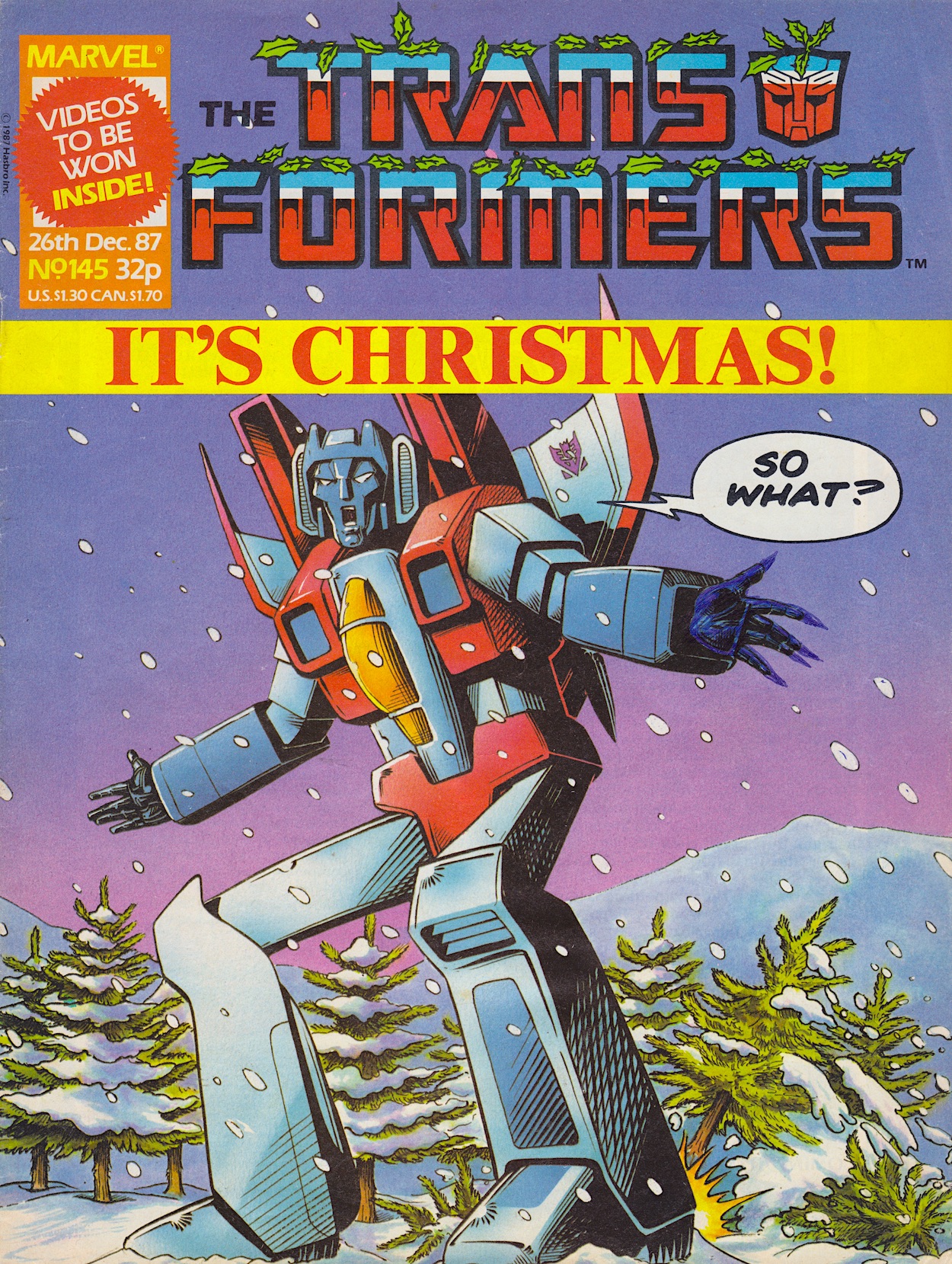
It’s Christmas!
“So what?”

Starscream

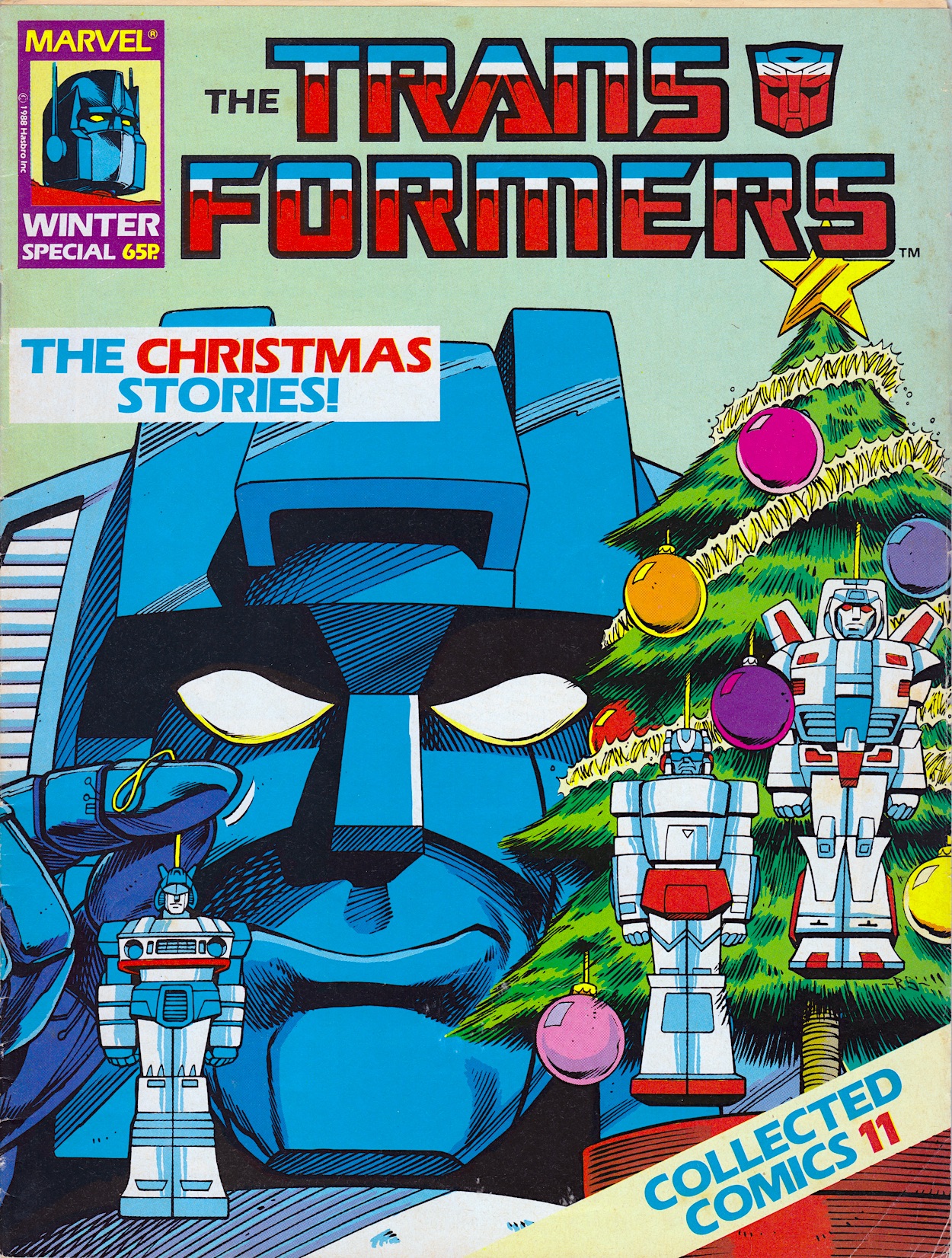
In fact, it was a particularly Christmassy Winter Special that began my lifelong love of the Cybertronians. By 1988 I’d enjoyed many episodes of the cartoon and owned a few of the videos so when I fell ill my mum bought me a comic to cheer me up. That comic was Transformers Collected Comics 11. It contained three reprinted Christmas stories and I loved every page! It was a revelation compared to the cartoon. Within a few days I had a regular order at the newsagent and 35 years later I’m first in line at the cinema every few years and have been enjoying Image Comic’s brand new series (which began just a few months ago).

That earliest issue from the comic’s first year may only pay lip service to the festivities on the cover but as you can see from then on they celebrated with some of the most fun issues they ever produced. There’s snow or holly on a couple of the logos and even Optimus Prime dressed as Santa which, much like Wildcat, is actually explained in the story and isn’t just a cover image. Although they play up to that with the next year’s Christmas card image of Galvatron, who wasn’t inside.

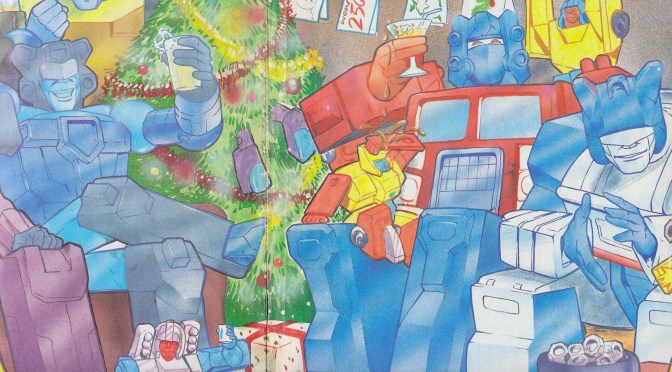
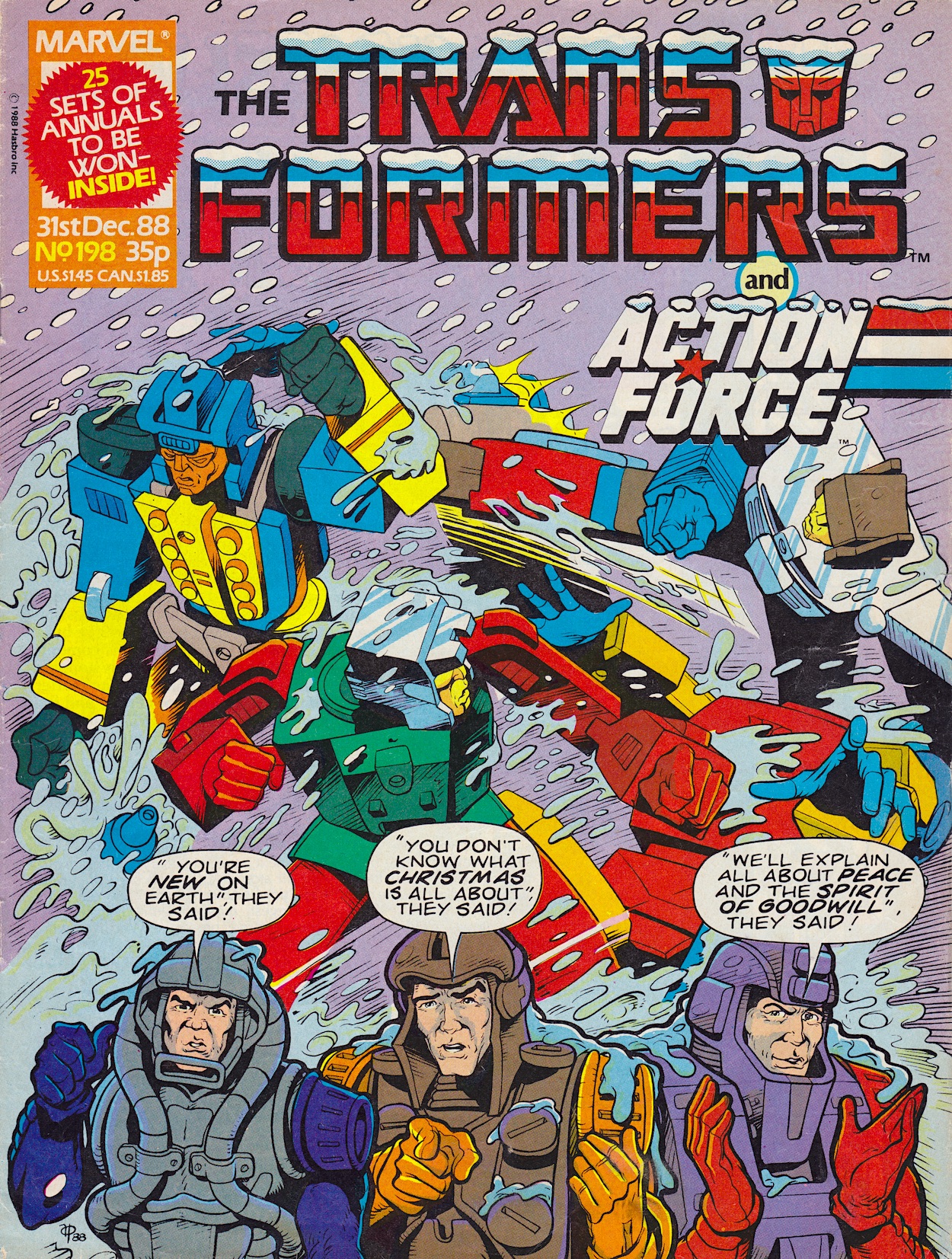
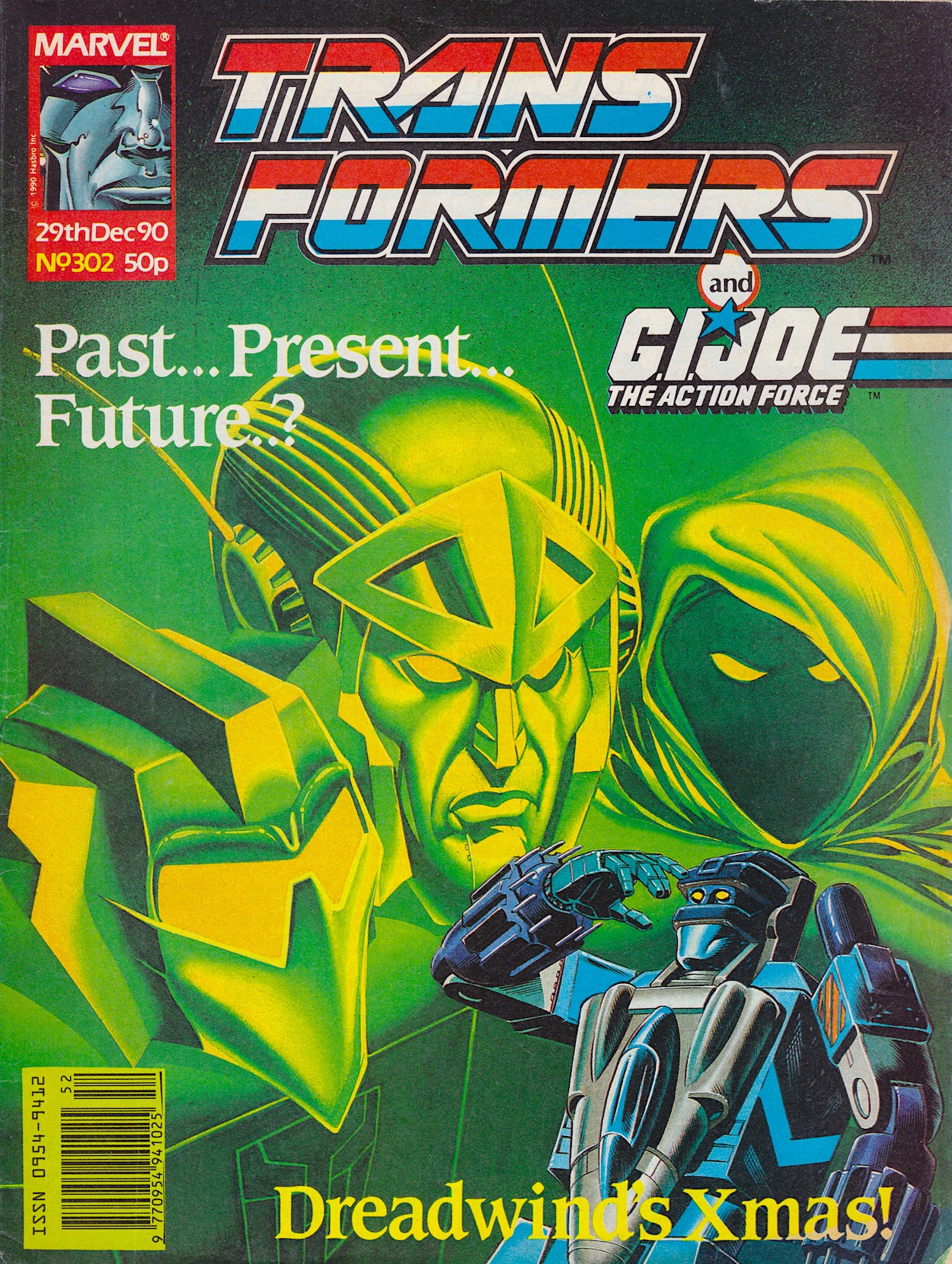
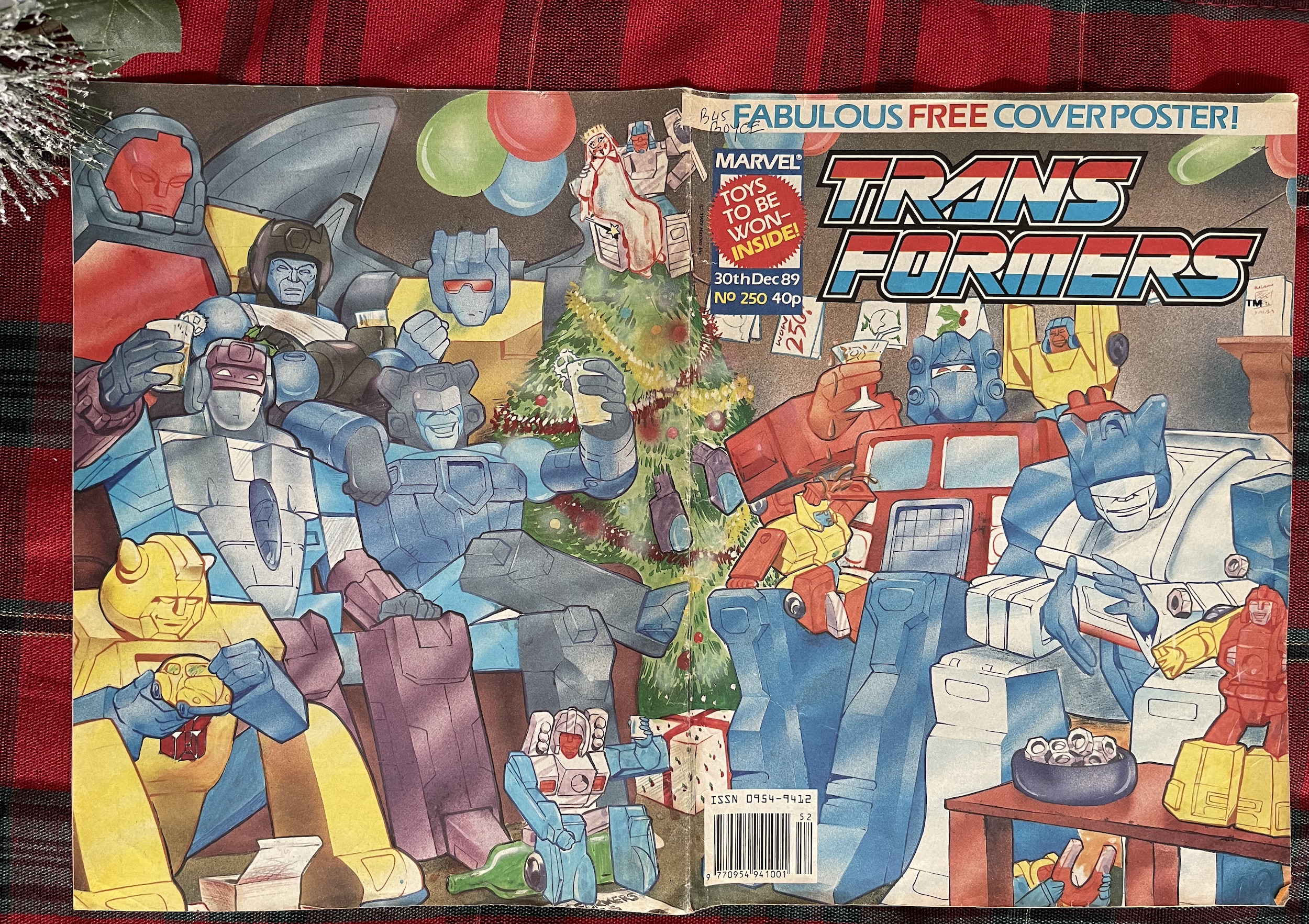
The issue with all the snow was actually one of my first issues back at the time. It was doubly exciting for me because it was a special issue for Christmas and had one of the toys I received that year on the cover (Slapdash, the one on the left). The celebratory 250th issue fell on just the right date and as the comic surpassed an incredible 300 editions former letter answerer Dreadwind hilariously had to answer to the ghosts of the past, present and future Transformers to hold that post.

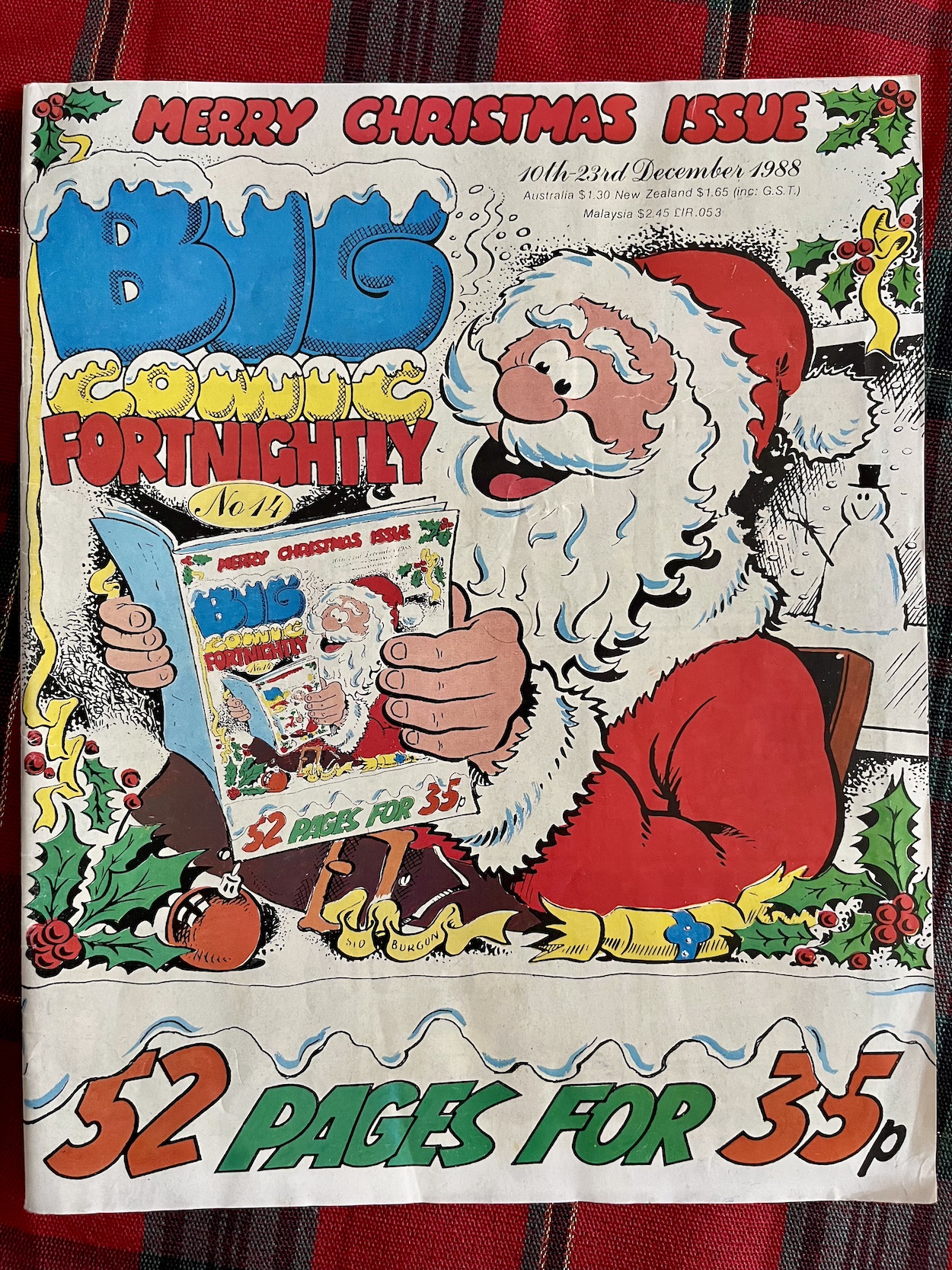
Thirty-five years ago I very gratefully received The Book Comic Book 1988 for Christmas (reviewed just three days ago) and was thrilled to suddenly see a new fortnightly baring the same ‘Big Comic’ brand during the following summer. I just had to track down this fondly remembered issue for this post. Of course, the cover was a reprint too, reworked from #35 of Jackpot. Big Comic never felt like a random selection of reprints but rather a properly curated collection that made each issue unique. It even had a special Leo Baxendale issue. Its Christmas specials were similarly packed with related material.

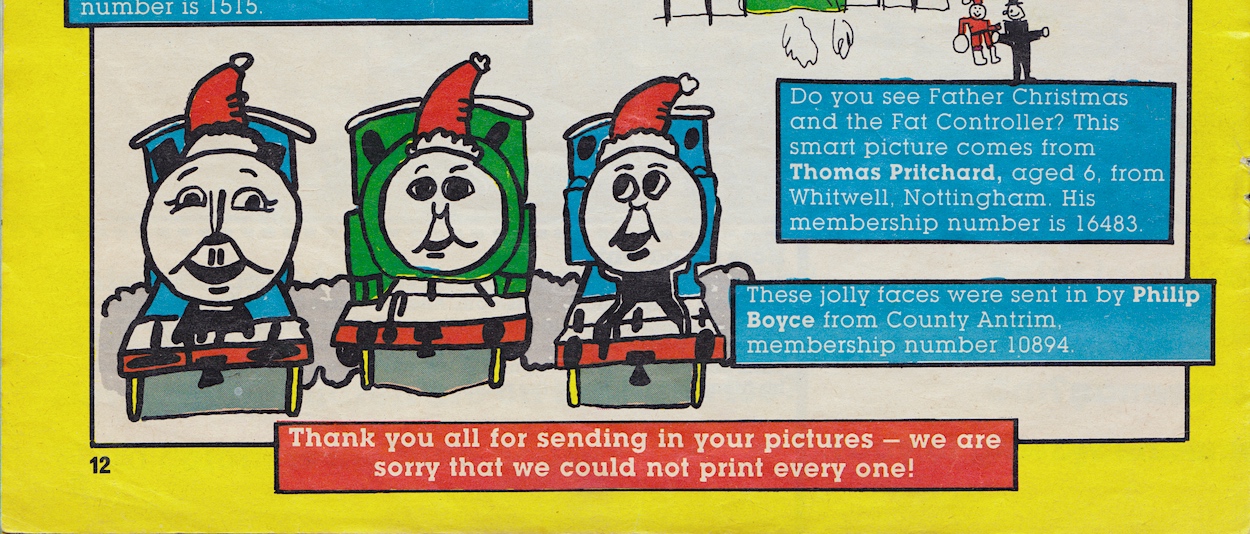
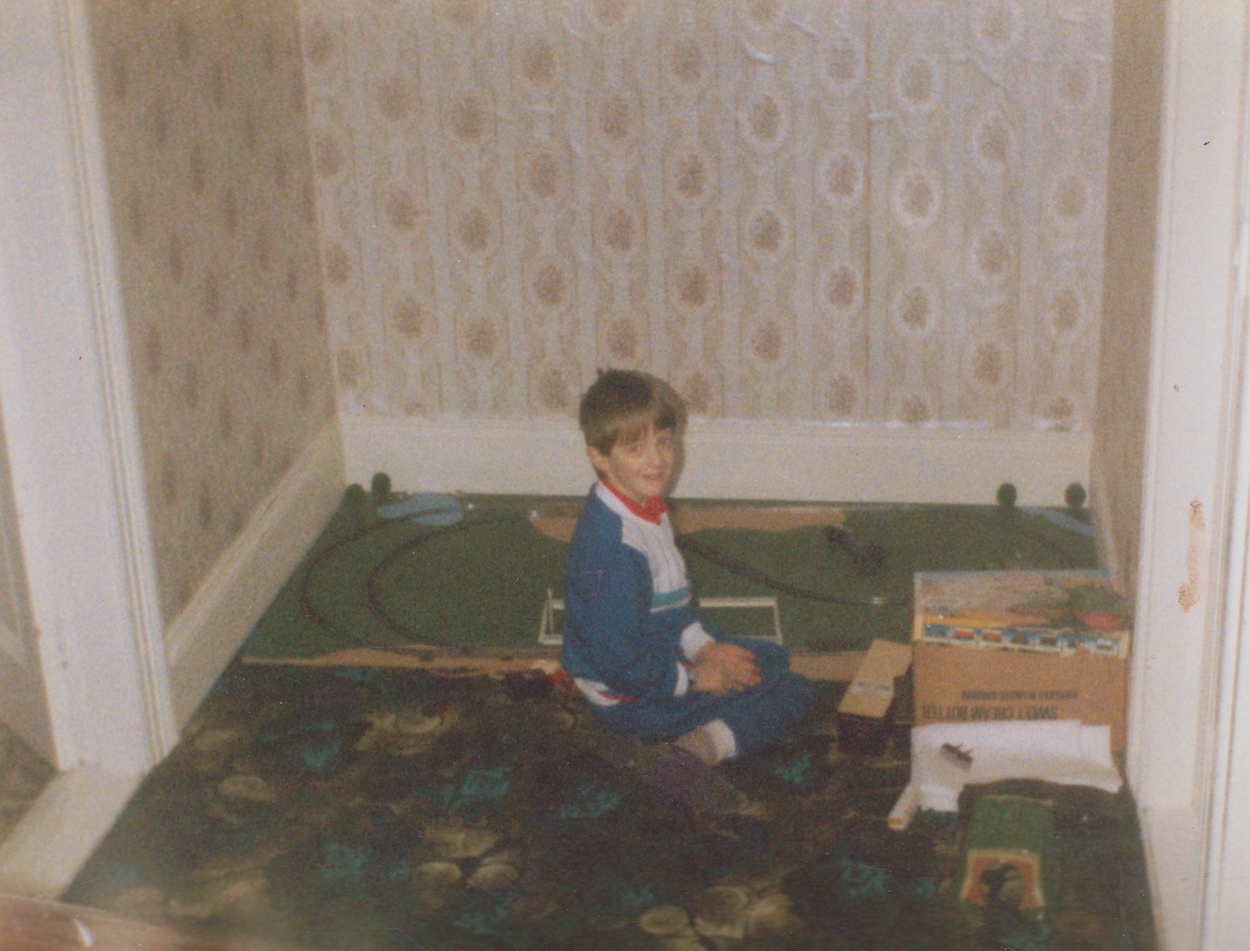
Next to it is the second Christmas edition of Marvel UK’s Thomas the Tank Engine & Friends, one of two issues I’ve kept all these years and for a very personal reason. Namely, it was the first time young me saw his name in print when my drawing of Thomas, Gordon and Percy with Santa hats was published inside. I can still remember that moment of excitement upon turning the page that year. If you want to see it, you can check out the Thomas retrospective (marking an incredible 800 issues), the link to it and all of the issues featured here can be found at the bottom of this post.
I’ve also written a five-part series about my top Christmas comics for former Marvel UK editor John Freeman’s Down the Tubes website

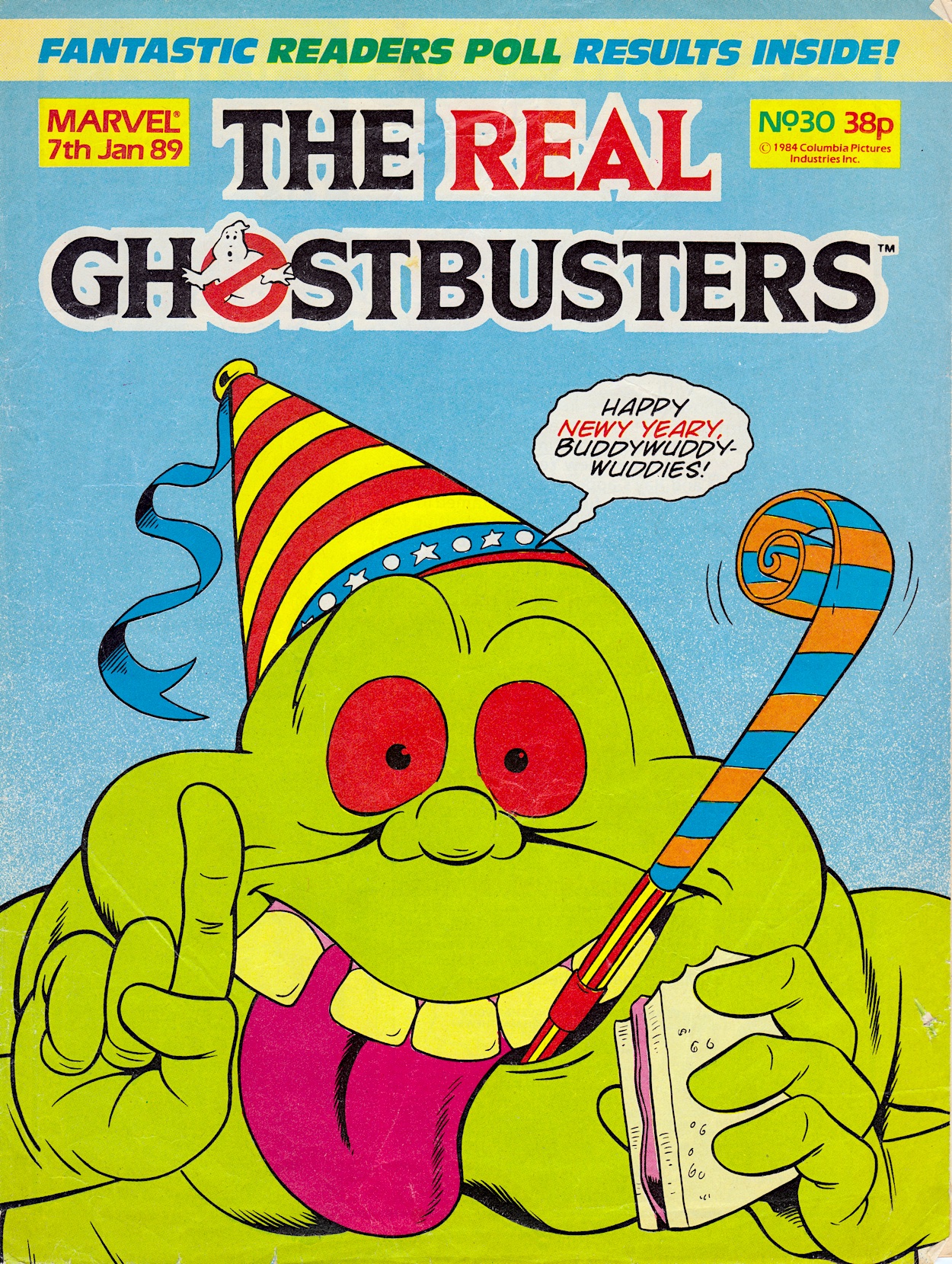
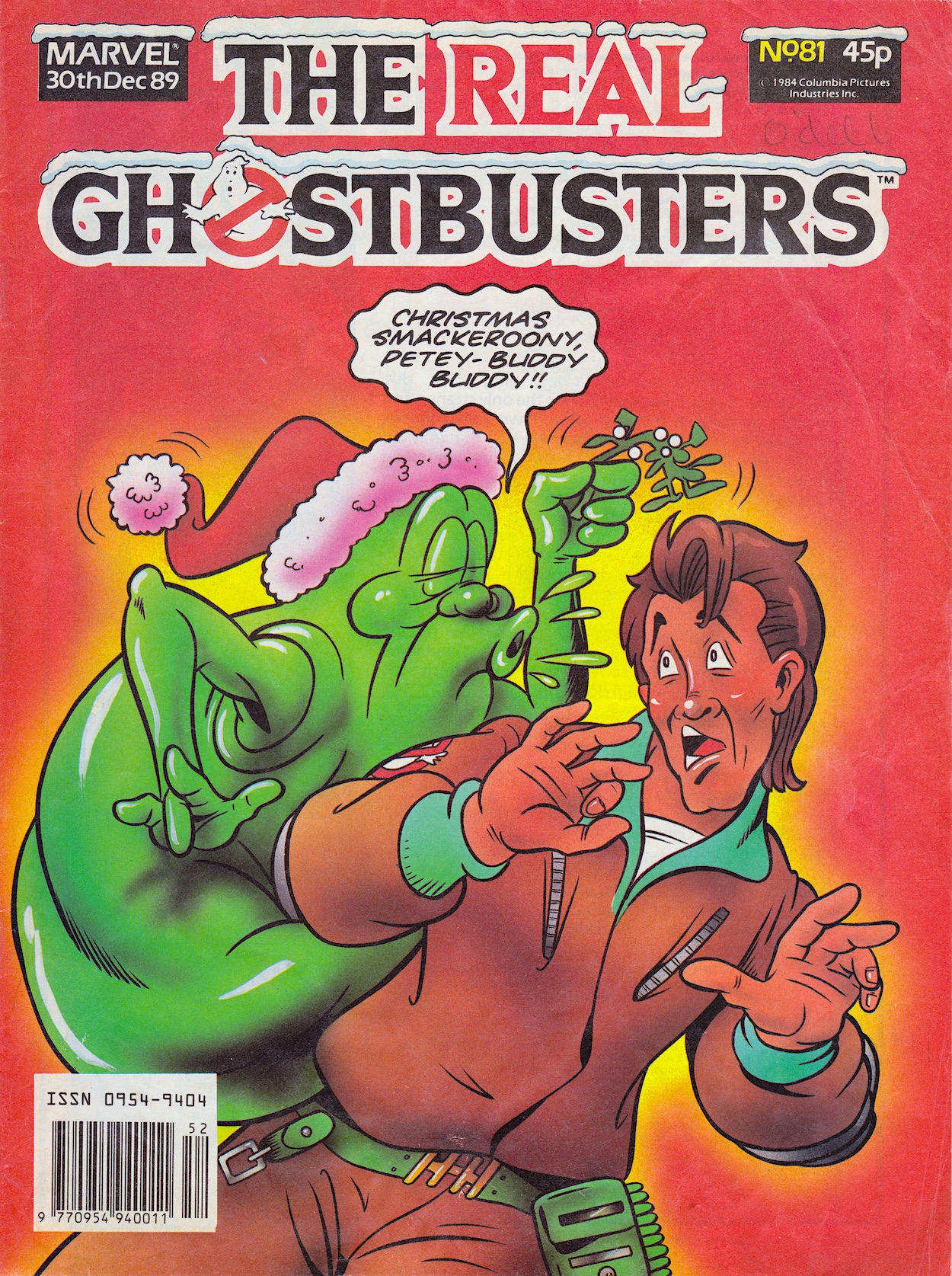
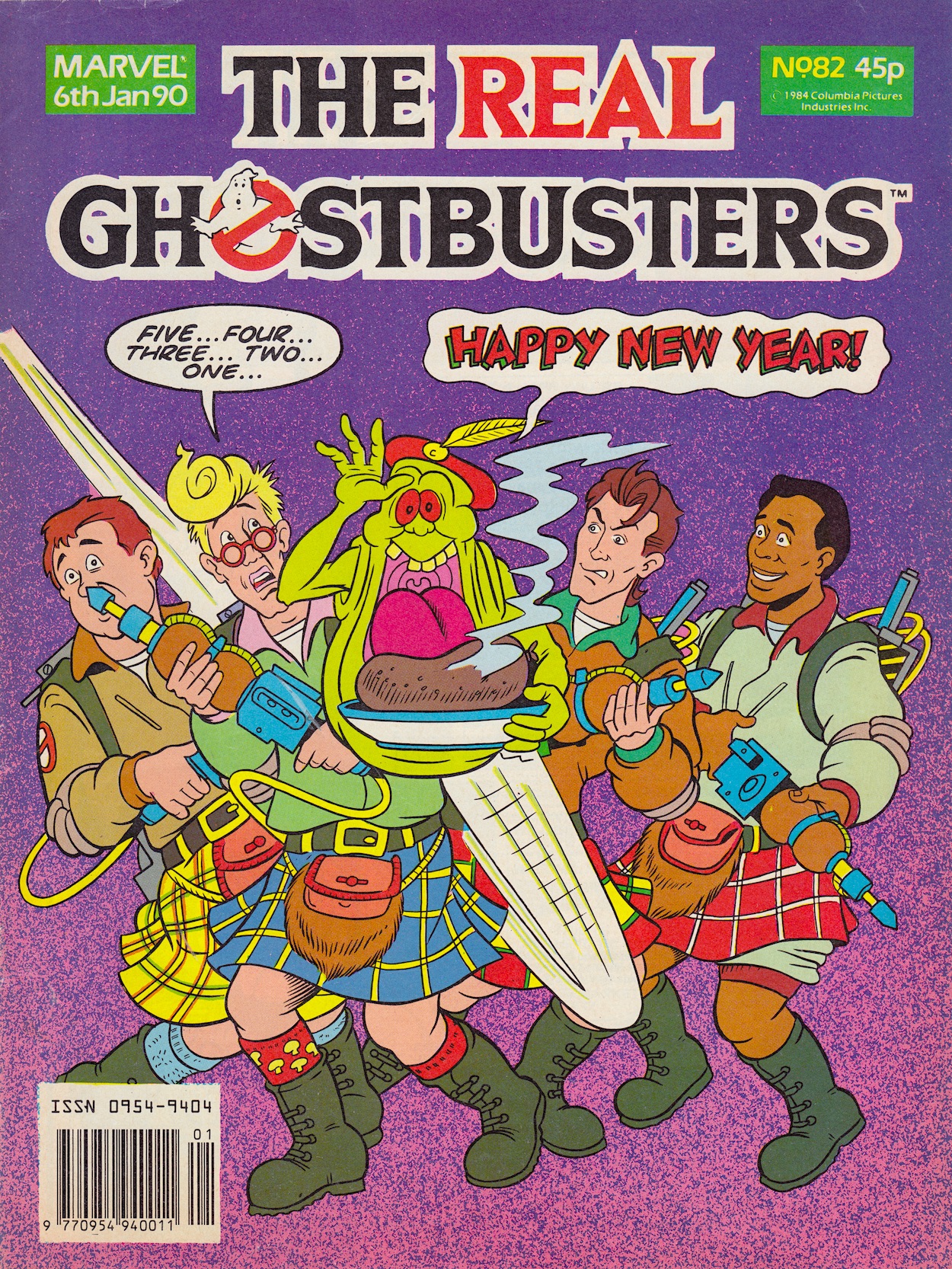
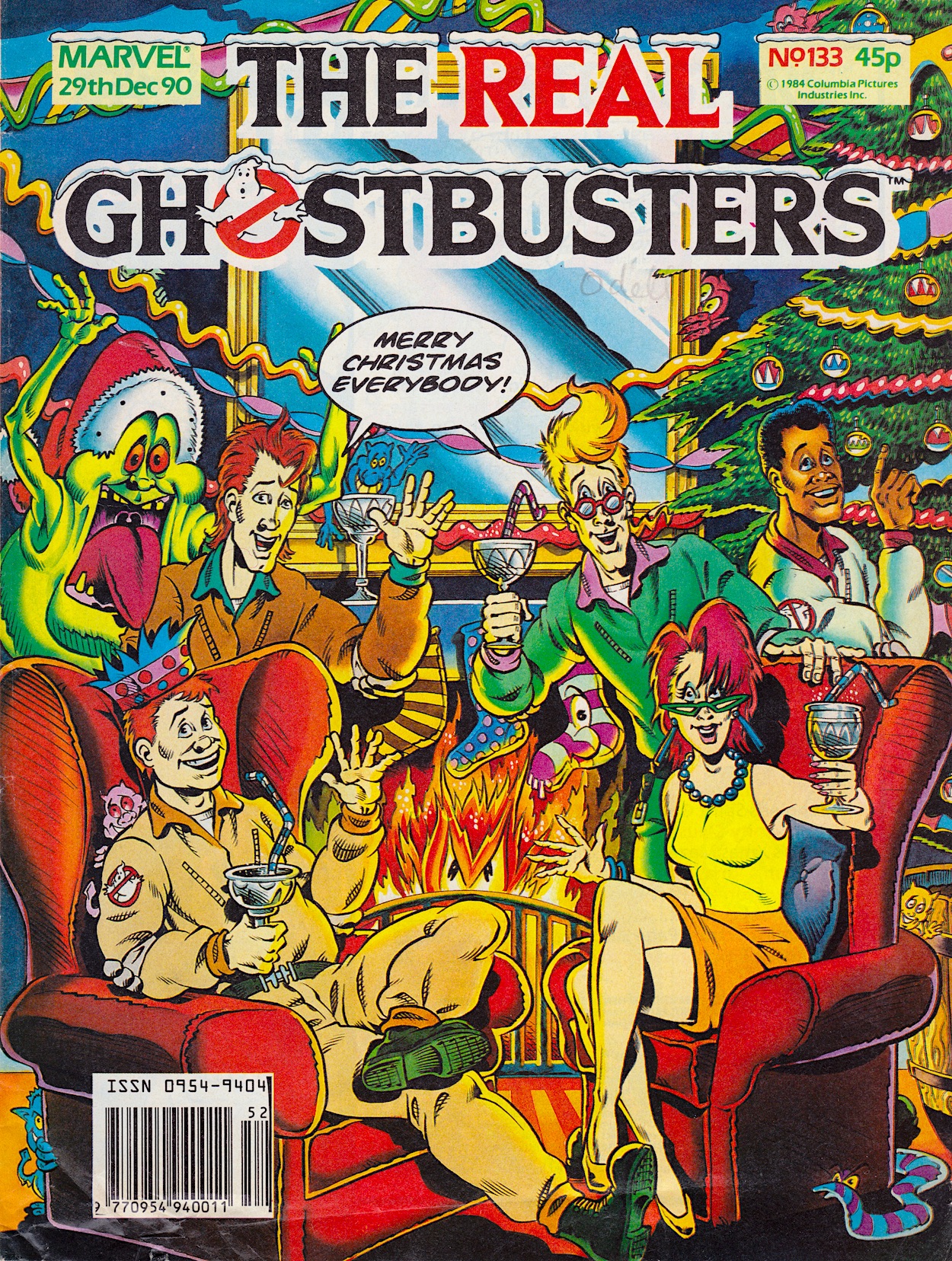
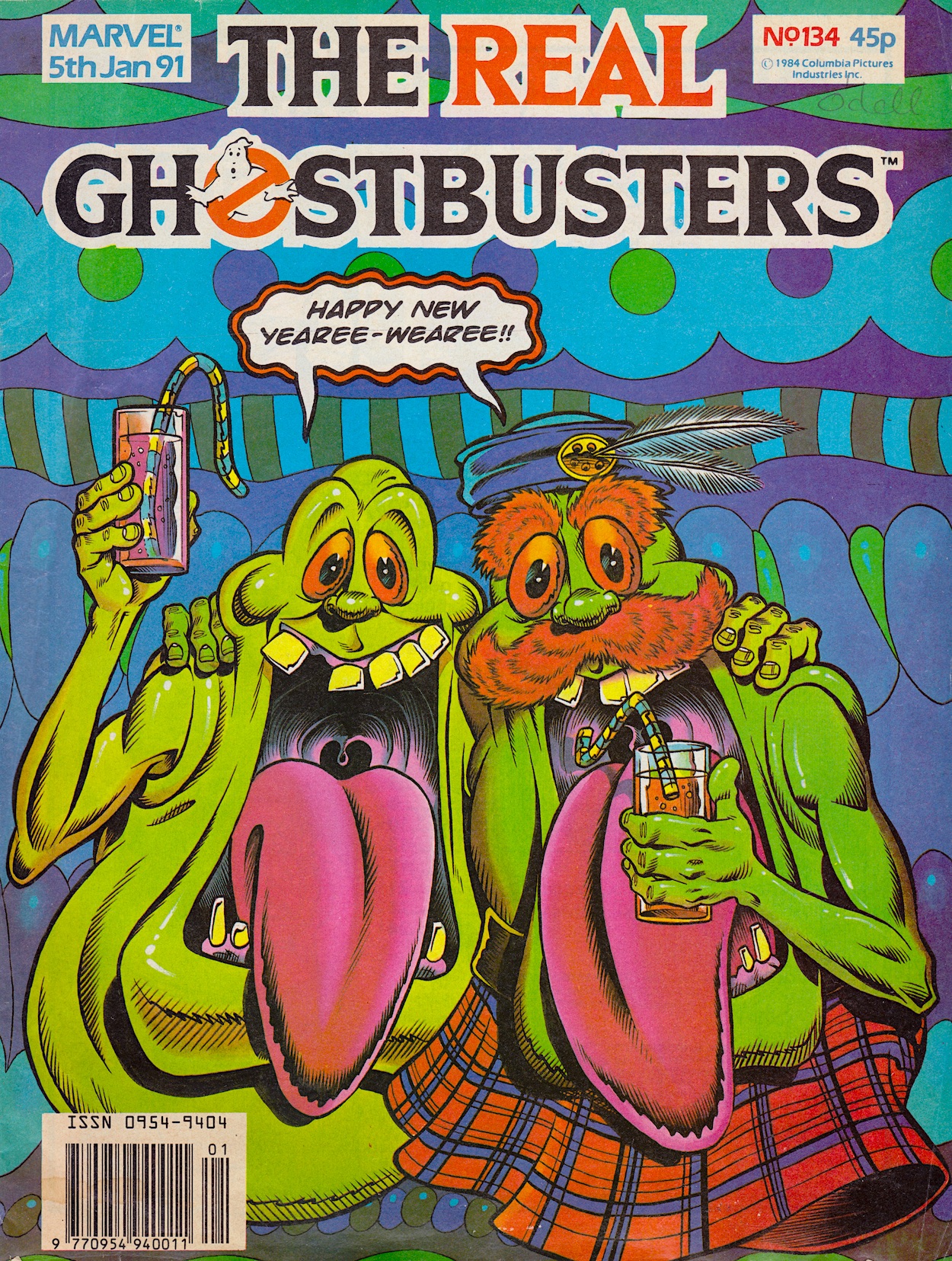
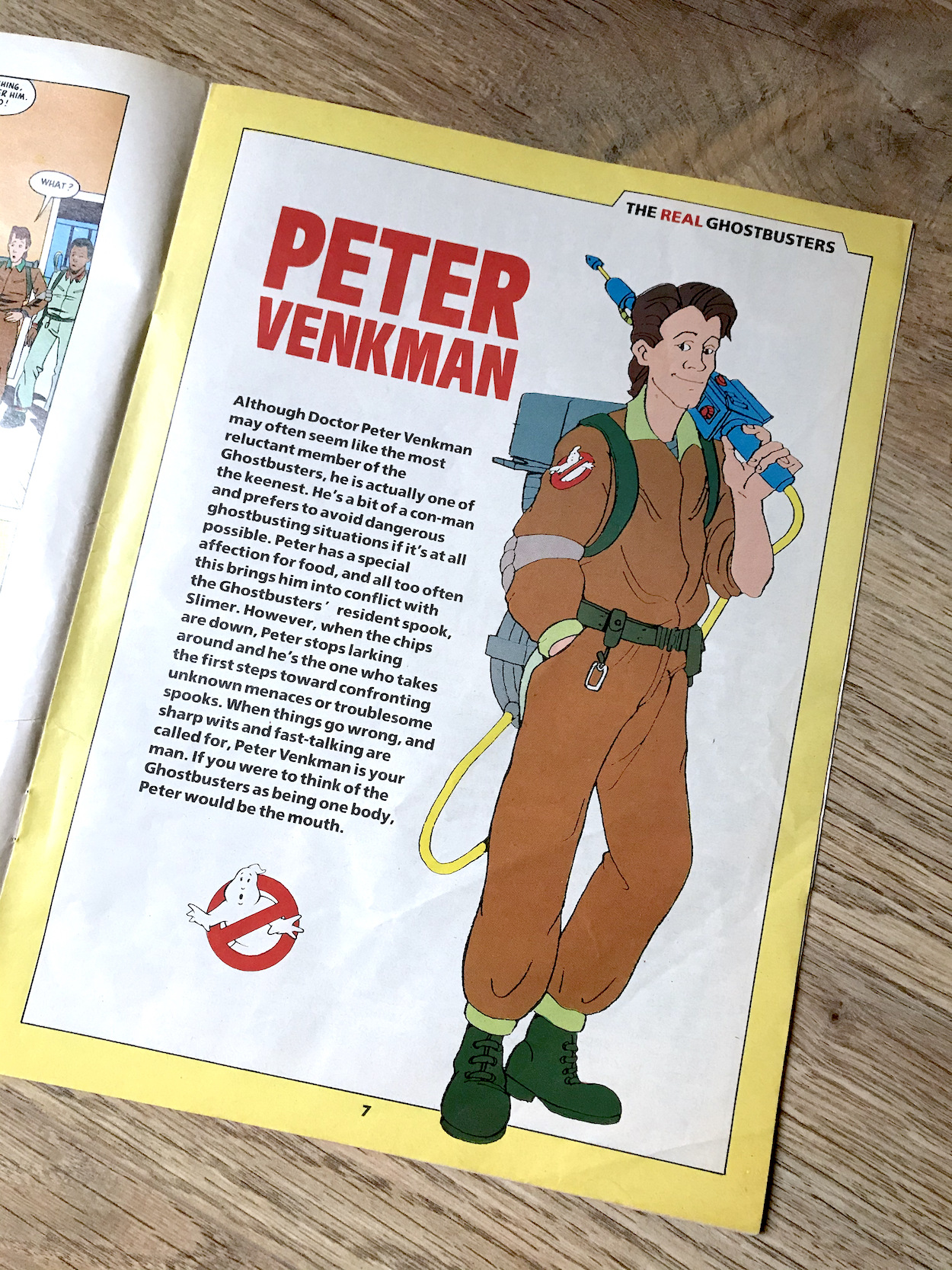
Moving on to a comic I wrote about for the 33rd anniversary of its first issue. I enjoyed that so much I committed to covering the comic in some fashion in the future. However, with over 190 issues to collect first it’s going to take a while. (Remember, these cost money!) What I can show you now are the first three years of festive fun. Taking advantage of its weekly schedule, The Real Ghostbusters had two celebratory issues every year, one for Christmas and one for the New Year, as you can see below.

With at least three stories (two strip and one prose) every issue we were treated to a couple of themed stories and of course Slimer’s humour strip would also join in. One of the New Year issues also contained the results of a reader survey told in comic strip form, complete with the winners at Marvel UK meeting the characters on stage!

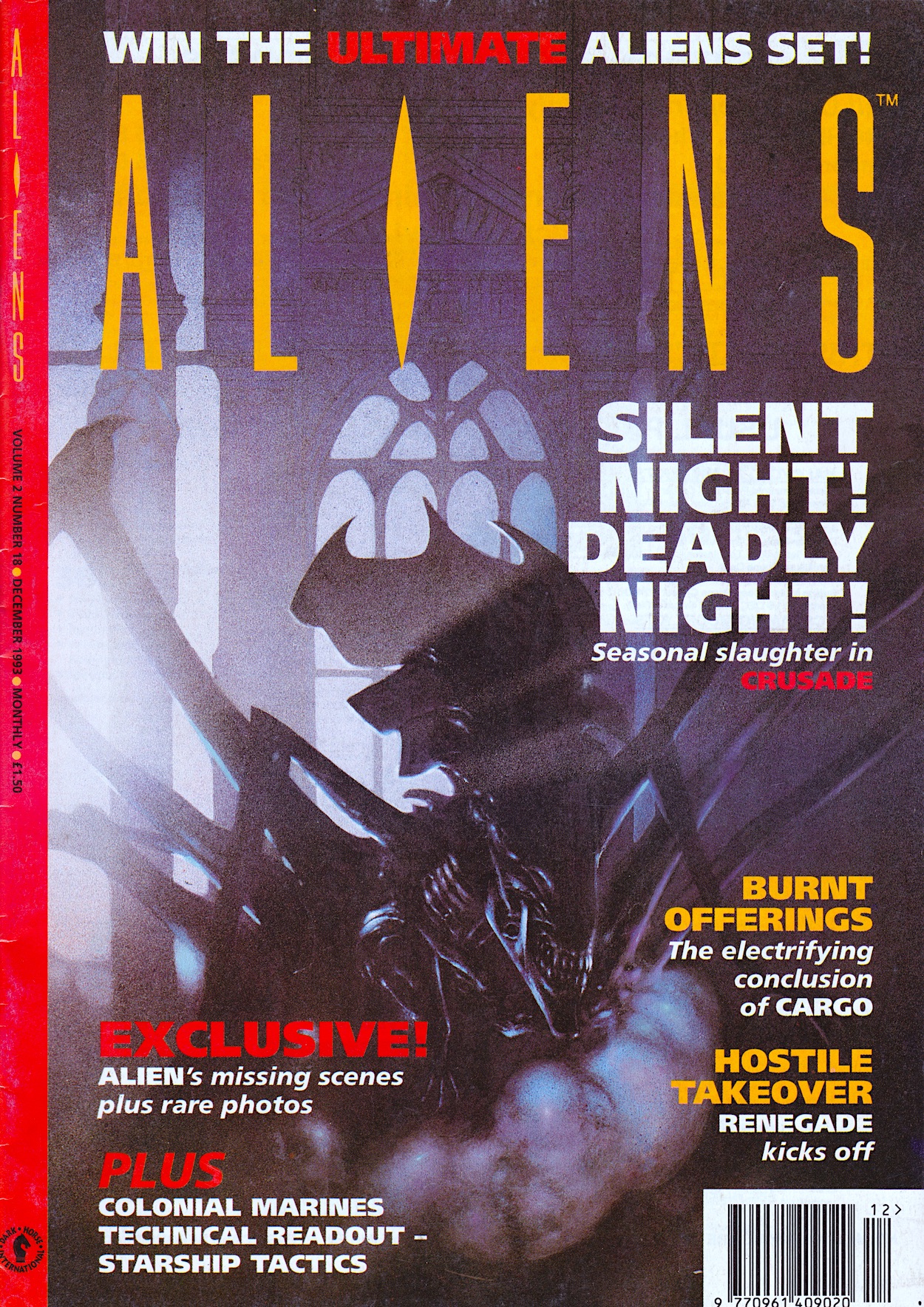
I promised at the top of this post I’d be introducing one of 2024’s brand new real time read throughs with a preview of its two Christmas covers. It’s time to reveal the title that will finally be keeping Jurassic Park company in the Dark Horse International drop-down menu. It’s not one you’d expect to have a nice, cheerful Christmassy cover… and you’d be right. They’re not exactly the usual fluffy fare.

With the strips all being imports from the US, split into ongoing serials, I doubt there are any stories inside to match the covers but this is one of those rare occasions when covers not correlating to the contents doesn’t annoy me. The fact Aliens of all things marked the season at all (and with funny headlines to boot) is brilliant as far as I’m concerned. All of the Aliens issues I’m covering have arrived and I’m eager to start reading them next year. Listen out for the motion tracker bleeps in May 2024.
There we go, my look at all of the Christmas covers currently residing in my classic comics collection. Writing this has me wanting to read them all over again. Well, the ones I’ve already featured anyway, the last two titles will have to wait until it’s their time, that’s the rule of the blog after all.

I’ve also written a five-part series about my top Christmas comics for former Marvel UK editor John Freeman’s Down the Tubes for this festive season. Below you can see the banner John created for the series (Smudge the cat is becoming very famous these days) and links to the five individual posts from fifth place to my top Christmas comic.

No.5 – No.4 – No.3 – No.2 – No.1

If you’d like to share any of your own favourite Christmas comic memories I’ll eagerly await your stories on Instagram, Threads and Facebook.

THE COMICS

ON THE BLOG:

OiNK 17

OiNK 18

OiNK 43

OiNK 44

SUPER NATURALS 5

WiLDCAT 5

TRANSFORMERS 7

ALiENS 7

ALiENS 18

BiG COMiC BOOKS

THE REAL GHOSTBUSTERS RETROSPECTiVE

THOMAS THE TANK ENGiNE & FRiENDS
RETROSPECTiVE

ON INSTAGRAM:

TRANSFORMERS 41

TRANSFORMERS 93

TRANSFORMERS 145

TRANSFORMERS COLLECTED COMiCS 11

TRANSFORMERS 198

TRANSFORMERS 250

TRANSFORMERS 302


RETROSPECTiVES

CHRiSTMAS 2023

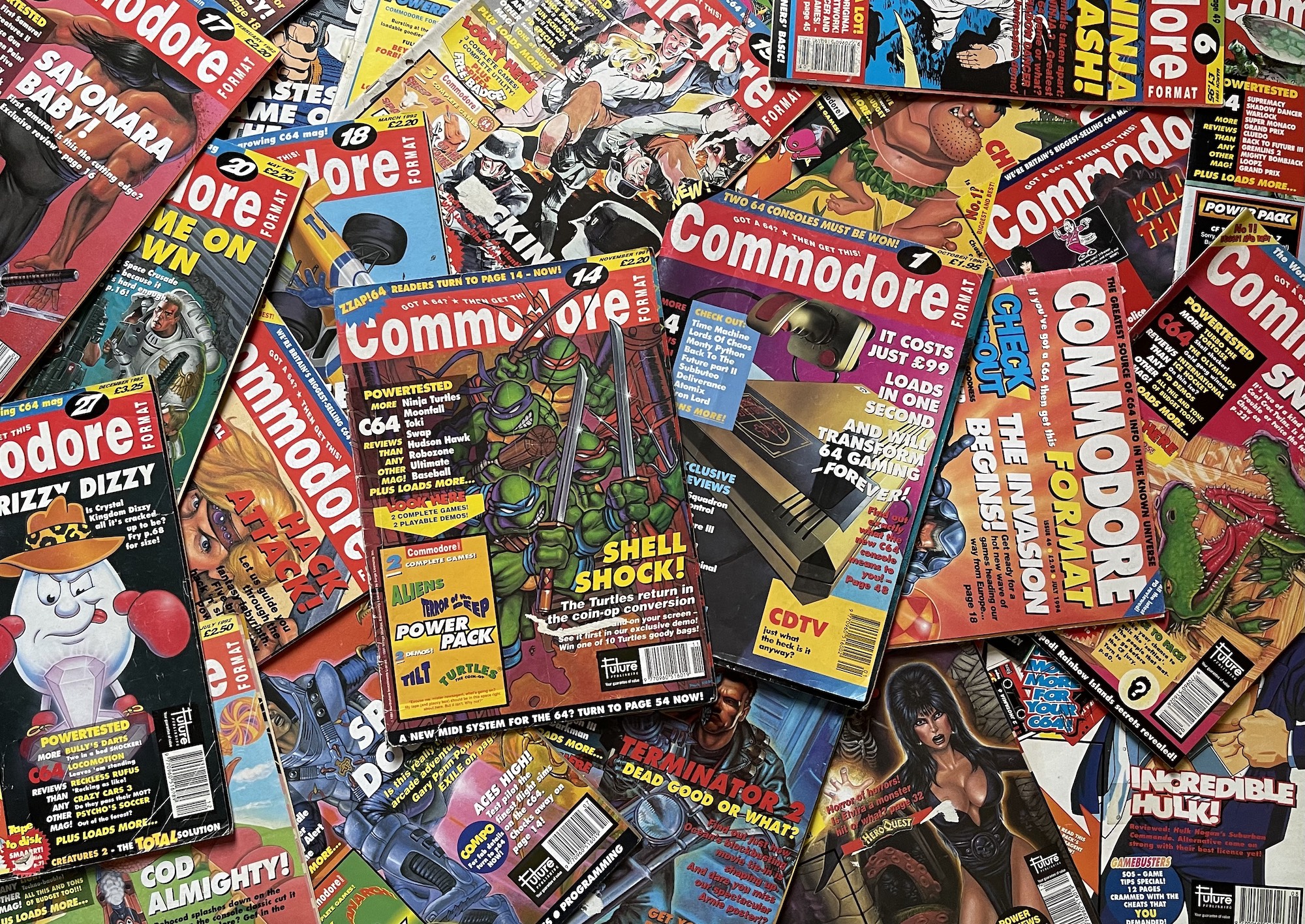
COMMODORE FORMAT #14: “iT’S A CORKER!”

Now here’s a publication, and indeed a specific issue of said publication, that I have a huge soft spot for. It’s my first ever magazine, on sale today 32 years ago. In the summer of 1991 when asked what I’d like for Christmas, and having spent a lot of time playing on my friends’ Spectrum and Amstrad computers, I really wanted something to play computer games on. My parents made me a deal: I could get a computer, not a console. I had to have something I could use for school too.

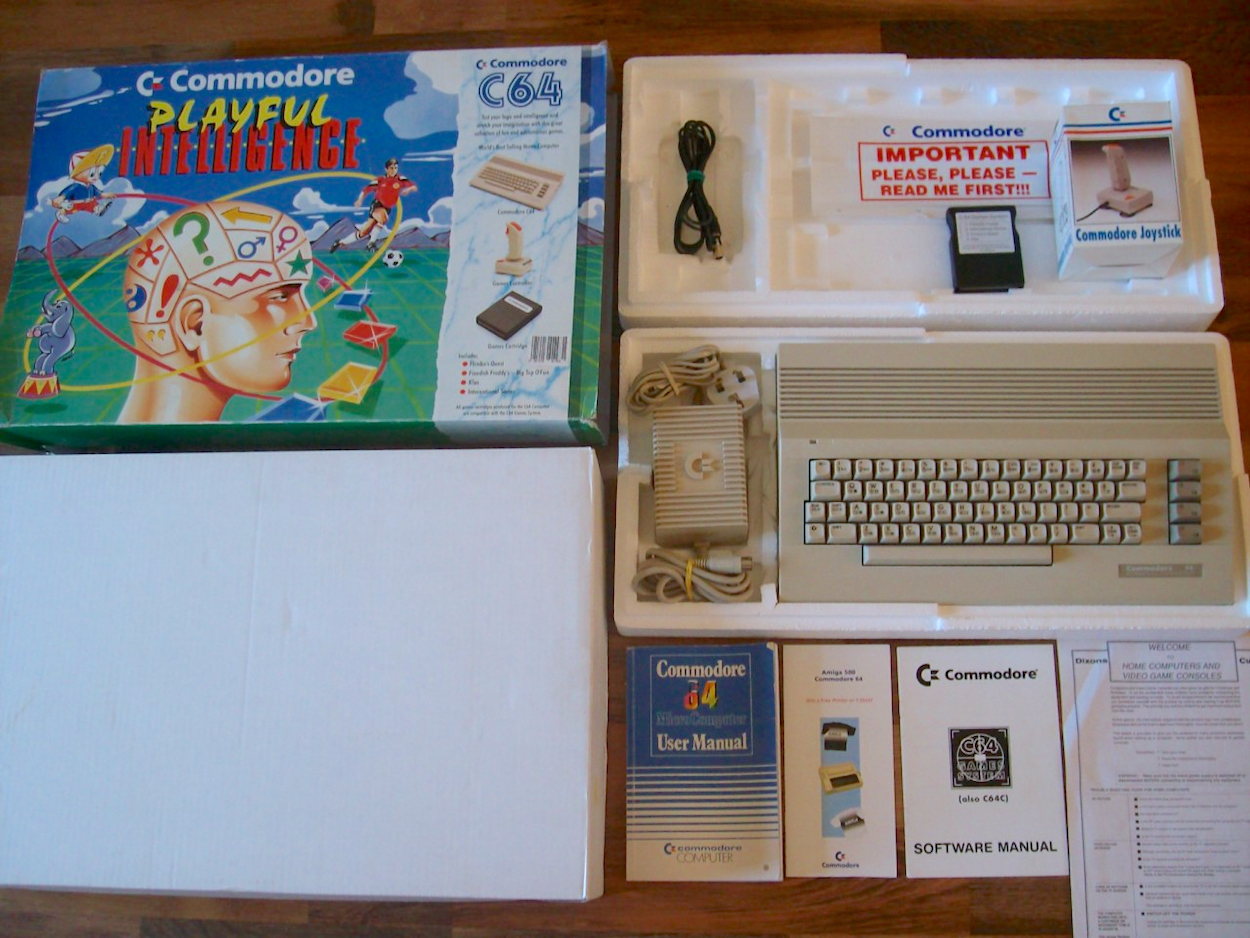
My mum handed me her Littlewoods catalogue and despite the new, more powerful Atari ST and Commodore Amiga computers on the page I was instantly drawn to the Commodore 64, mainly due to it having accessories I recognised such as cassette players and external disk drives. I’d heard of the machine and knew it was more powerful than the ones I’d been playing with friends so that’s the one I chose.

Top: autobot-leader-optimus-prime’s eBay shop
Main: the Retro Treasures blog

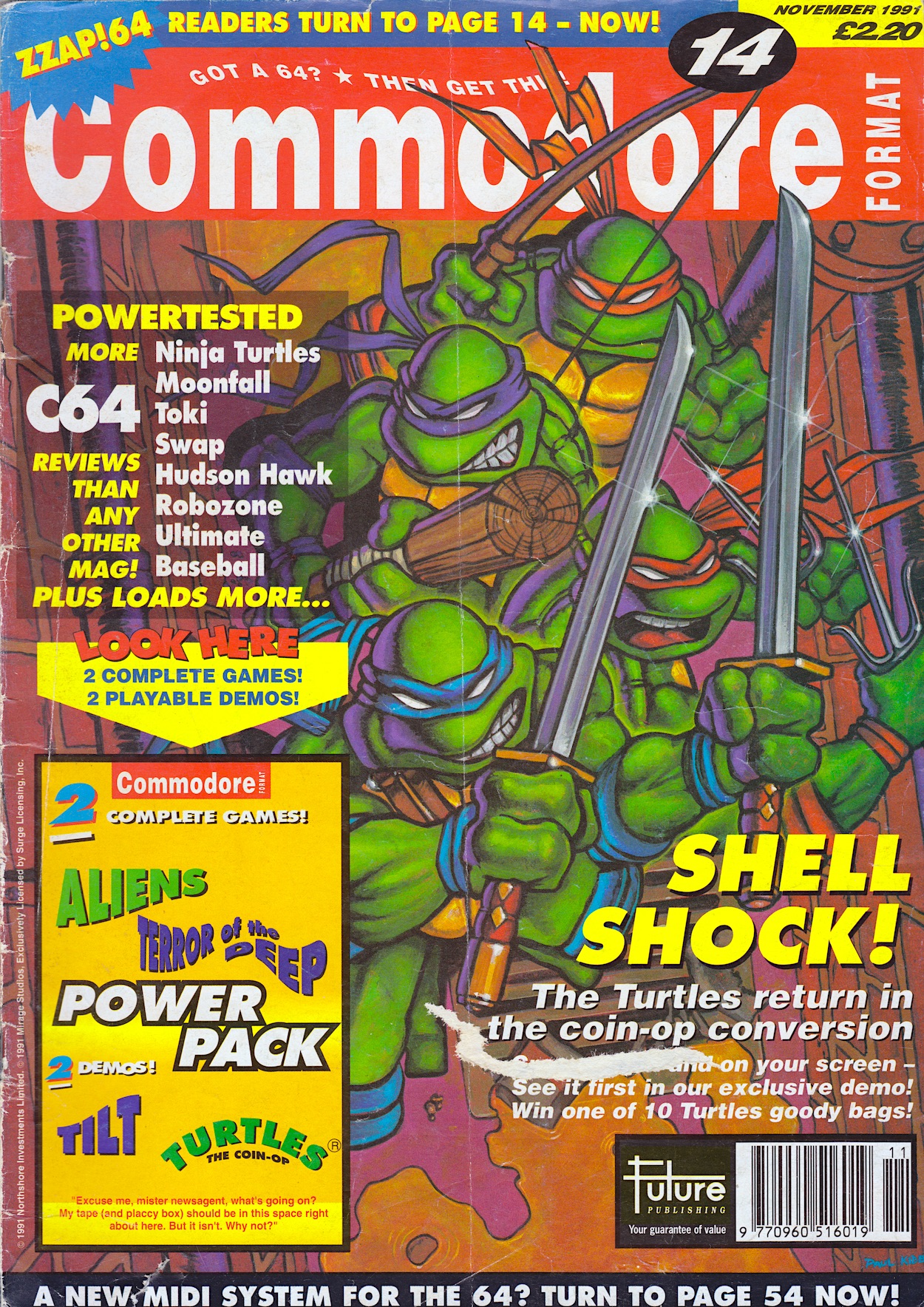
I knew of a magazine called Zzap!64 and decided I wanted to check it out but couldn’t find it at the newsagent. However, I did see Commodore Format and, even better, it had a cassette on the cover full of games, which reminded me of the Story Teller partwork I’d collected years before. I went back the next day to buy it once I’d got my pocket money and it was gone, but I knew from years of buying comics this could mean the new one was due. It was.

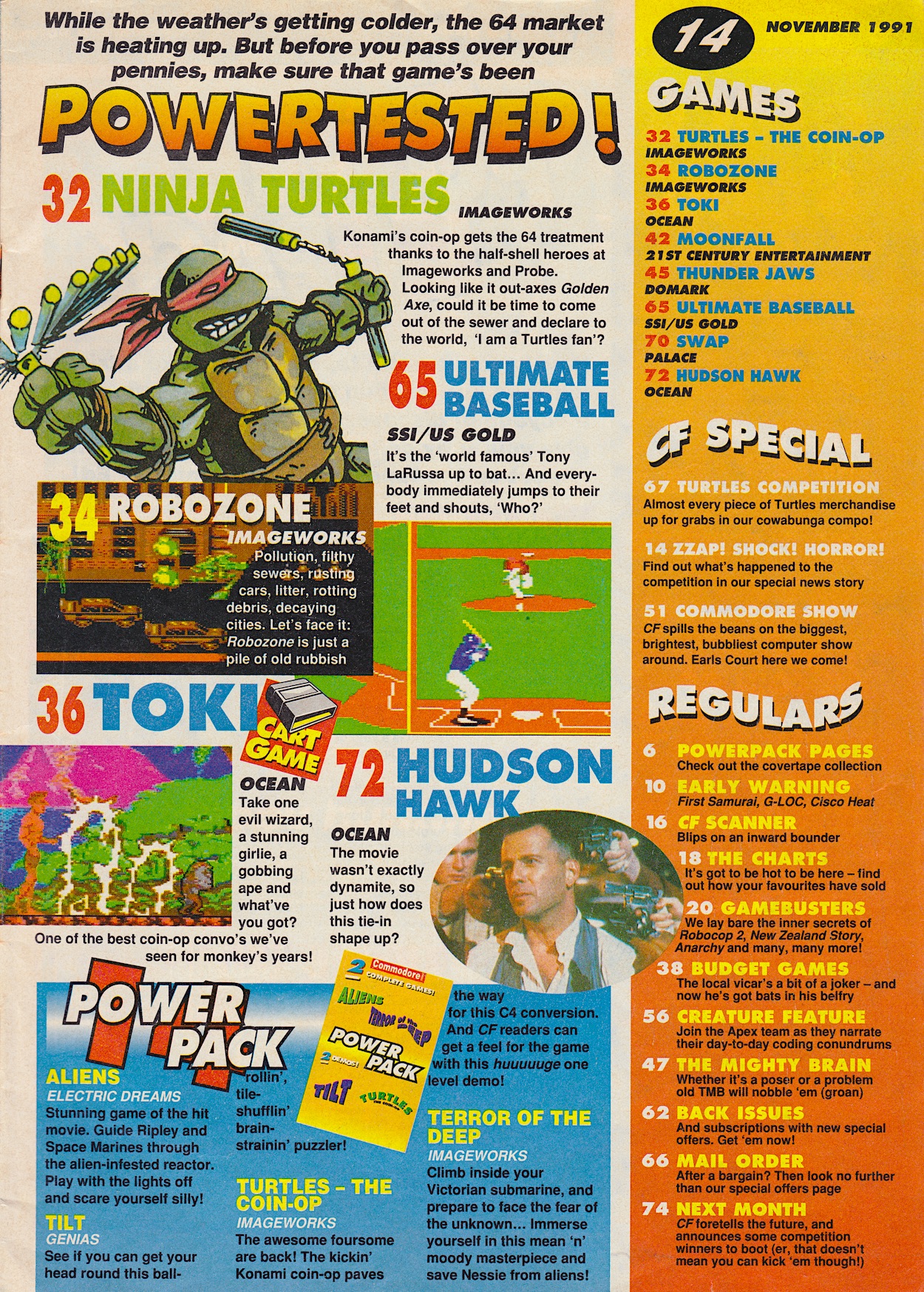
The next day #14 of CF (as readers called it) arrived and featured the Teenage Mutant Hero Turtles on the fantastic Paul Kidby cover, which just excited me further because I was a fan. I devoured the issue, reading it over and over, excitedly anticipating the machine which was still a couple of months away. I’d definitely made the right choice of present! So to mark this issue’s anniversary I wanted to write a special retrospective and explain why I loved it so much.

Edited at this stage by Steve Jarratt, in later years CF would go on to influence me in a key way. It was instrumental in my development in those important teen years, making as big and lasting an impact on me as OiNK had a few years previous, hence its inclusion here. I’ll get to that in a future post, but for now let’s go through what is personally a very special issue. This most superb of 90s magazines had 76 pages packed full of content. There was no filler in sight and every page was rammed full of great writing, information, loads of hype for me while I awaited my computer and a feeling of being part of a form of club, a sense of the magazine talking to me directly. Plus, it had a cracking sense of humour. (Check out the bottom of most pages below for example.)

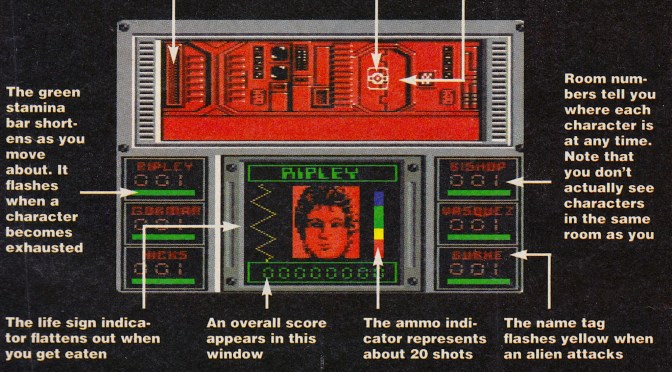
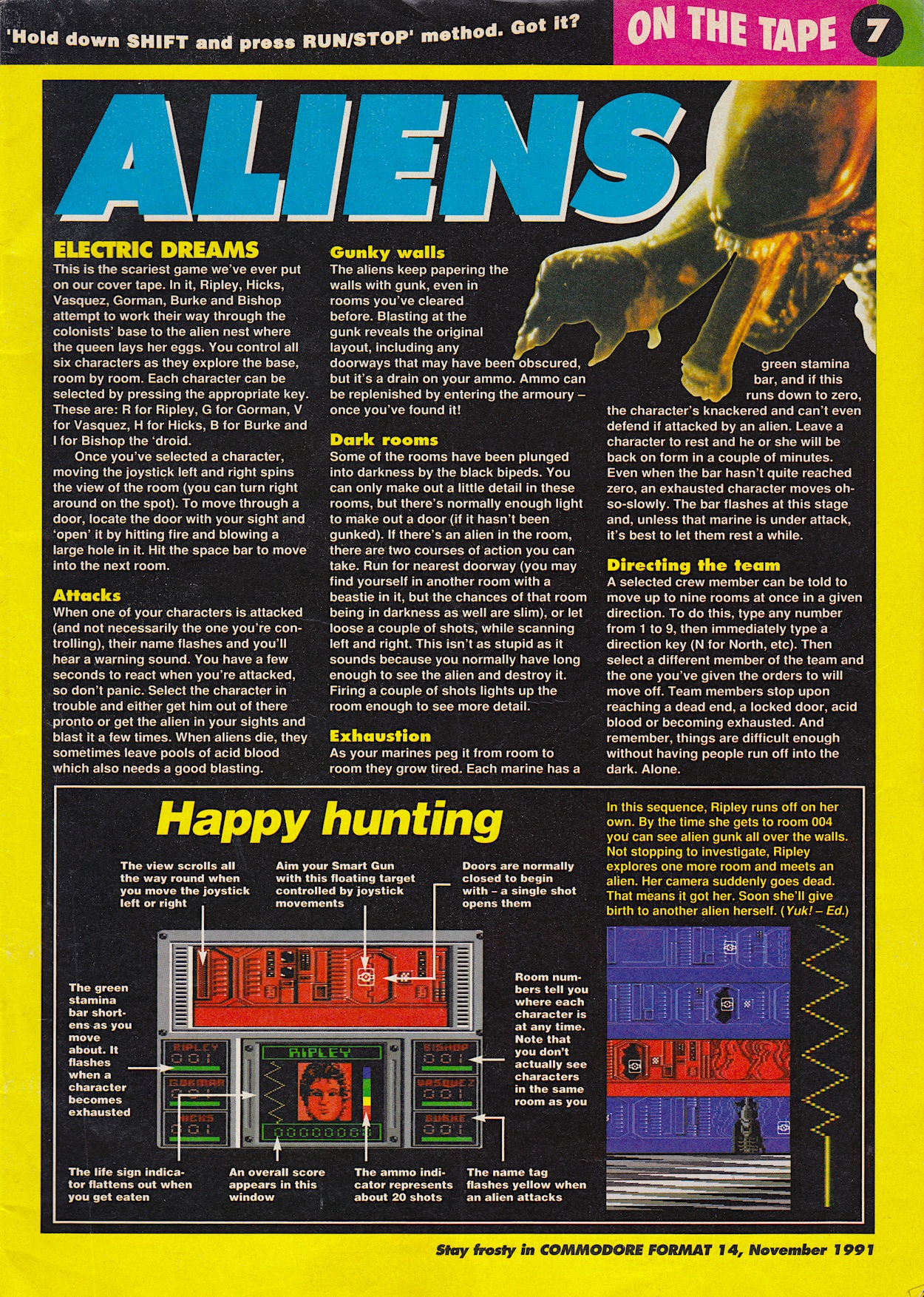
I also couldn’t believe what was on the tape stuck to the cover! I’d loved playing my brother-in-law’s Turtles game on his Nintendo NES, now it was coming to the C64 and this issue’s tape had a free level to play. But better than that was the full Aliens game that had terrified my friends and I so much when we played it late one night in the dark on a mate’s Amstrad. Here I was getting it free with this superb magazine. I was sold on CF within its first few pages.

I have distinct memories of playing this over the Christmas holidays that year; waiting until it was dark I’d turn the lights off and the sound up on my 12” Pye portable TV. I never lasted long before I had to stop! Fast forward 31 years and this year I’ve struggled to play Alien Isolation on the Nintendo Switch for any longer than an hour at a time for the exact same reasons.

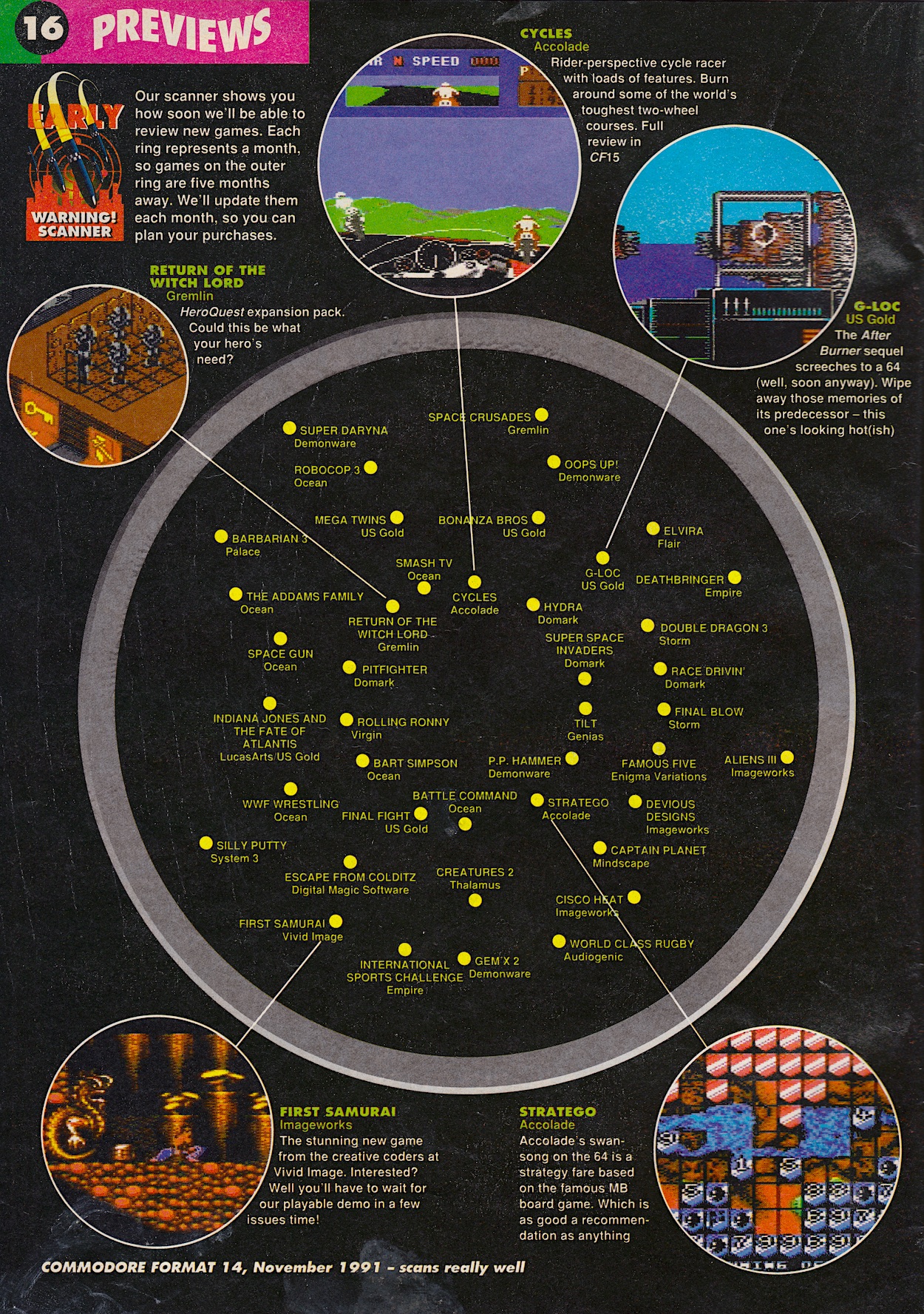
Among the impressive previews there was also a unique page called the Early Warning Scanner which summed up all of the forthcoming releases in a neat radar-type image; the closer to the centre each game was the sooner they were due to arrive. It was so much better than a boring list and kept readers up-to-date on their hotly anticipated games. As a new reader and (almost) owner, I looked at this page and was almost drooling at some of the games to come.

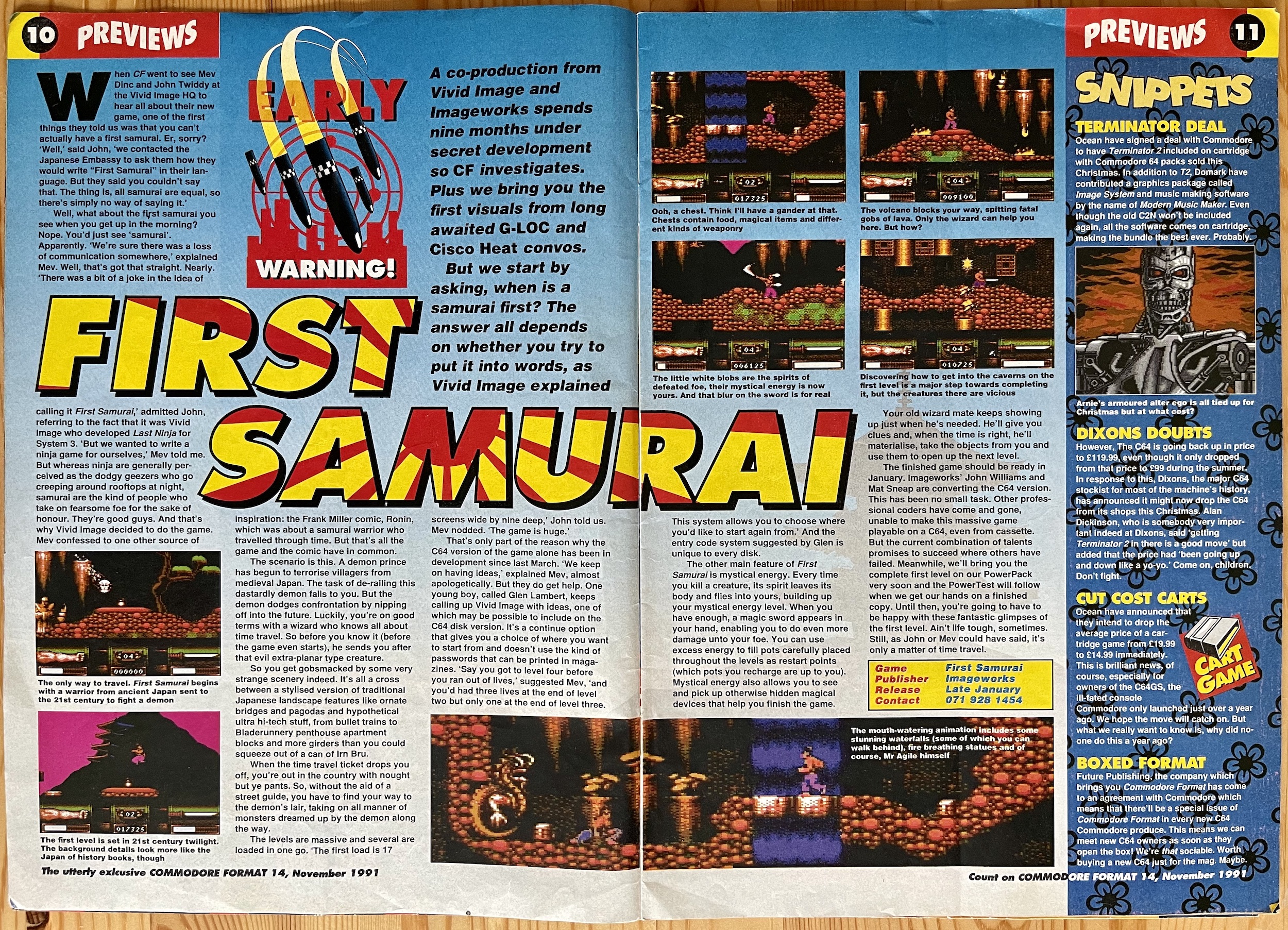
While some people in school mocked me for picking a C64 instead of a more powerful computer, within these pages I was in awe at the graphics this allegedly dated machine could produce. Also, to me the scanner dispelled any notion the format was in its final days. Most importantly, my choice also meant I met a fellow C64 owner in school who became a lifelong friend. (Hi Colin!) Back to the games, and even today something like First Samurai is still impressive when you know it’s running on an 8-bit machine. It played brilliantly too. (I also loved the programmers’ reason for the name, in the preview below.)

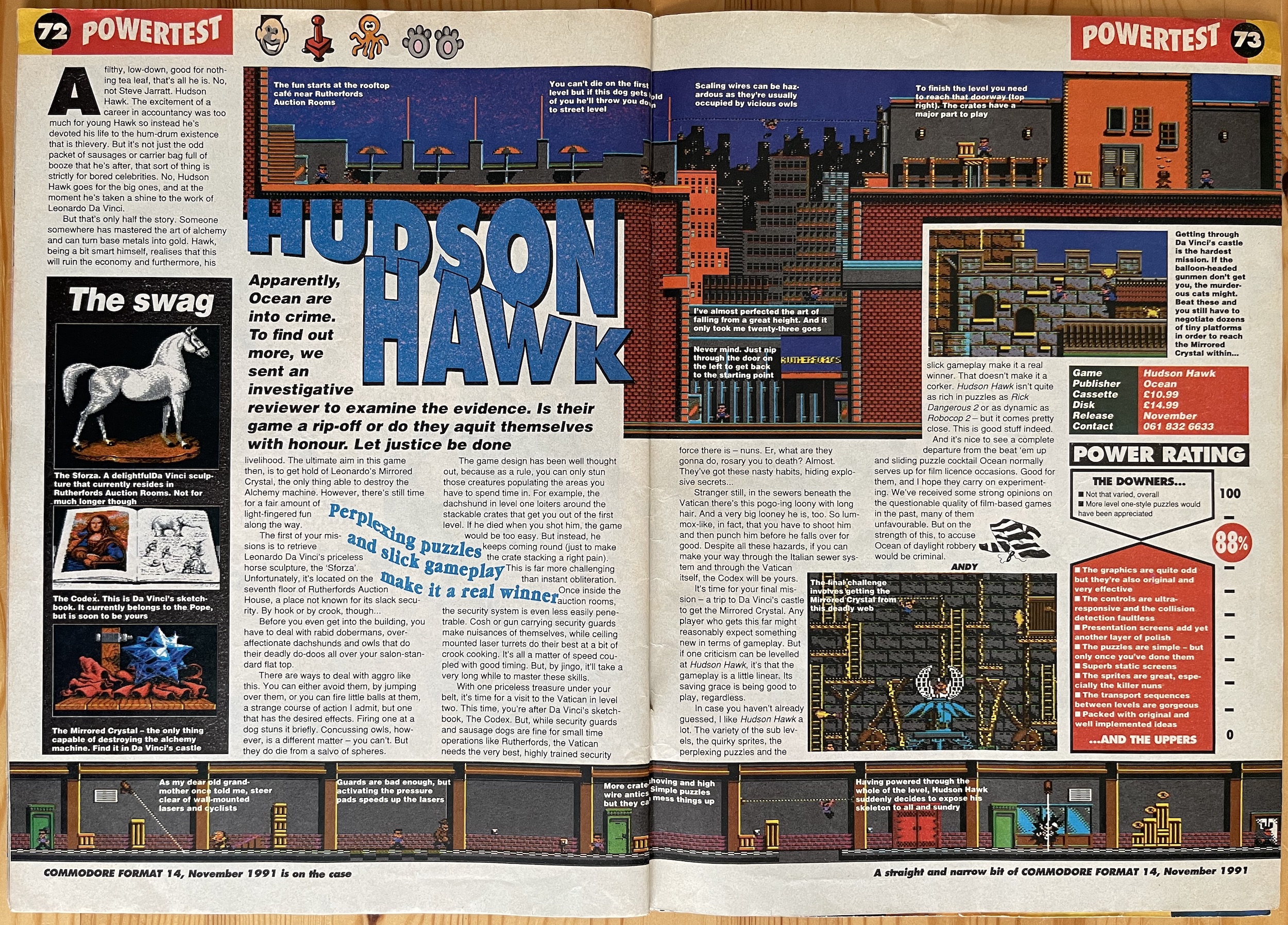
The Turtles arcade conversion may not have been the best example of what the Commodore could produce graphically but I did have fun with the demo although ultimately passed on paying for the full game. The same could not be said of Hudson Hawk. Based on the apparently terrible (I’ve never seen it) Bruce Willis film it looked a lot like the console games I’d played and proved to me this computer could have all the fun of those games at a fraction of the cost. Plus the 64 was so much more than just a games machine at the time, of course.

Commodore Format’s scoring system did away with the clichéd scores for graphics, gameplay, sound etc. and instead replaced them with a simple run down of the game’s main good and bad points at opposite ends of a scale, with the score being where they met. (Games with a score of 90% and higher were awarded the prestigious “It’s a Corker!” award.) It was a sleek design by art editor Ollie Alderton and made for some funny comments during the magazine’s lifespan. When racing game Cisco Heat was so atrocious it received 12% the ‘Uppers’ was just large enough for one comment: “Erm… it comes in a nice box.”

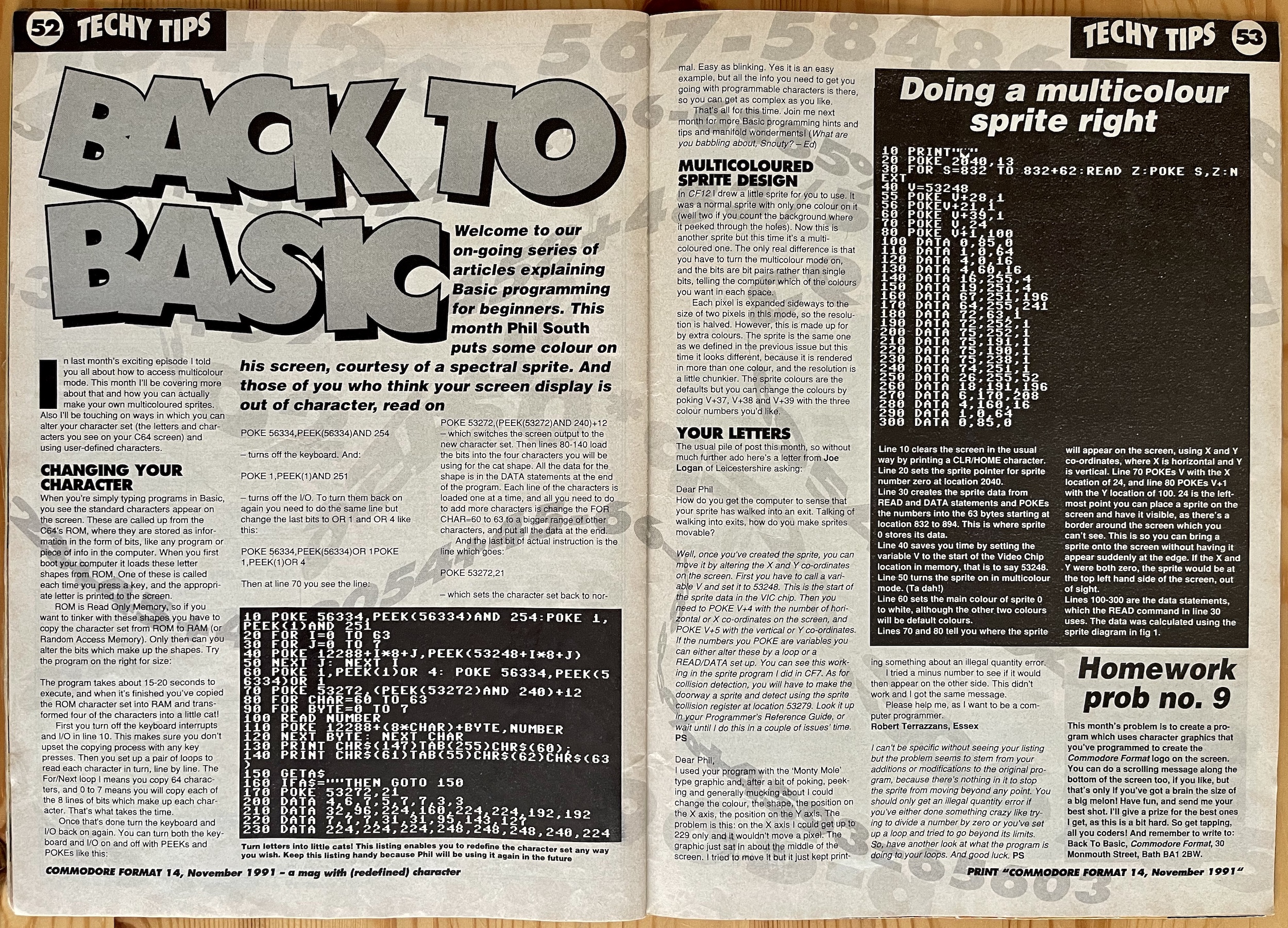
Commodore Format was different to Zzap in other ways too. While that magazine focussed almost exclusively on games, CF followed in the footsteps of its stablemates like Amiga Format, ST Format and PC Format and contained technical features such as an ongoing series of readers’ programming and hardware questions and loads of tips and tricks for the more established coders. For me, I was glad to see Phil South‘s tutorial series for complete newbies. With games on the cover and games all over the inside of the magazine, I made sure to show my parents these pages to prove I wasn’t just getting a games machine.

While naturally my focus was on the games to begin with, I was surprised how quickly I wanted to start digging a little deeper into the computing side of things. Commodore Format was a key part of this and the first three issues I owned before that Christmas were fascinating. I may not have fully understood these tutorials but I read them just as much as the rest, over and over. I was just as excited about that aspect of my new machine as any other.

Speaking of games being a fraction of the cost of their console counterparts, the Roger Frames Buys Budjit Games section collected together all the £2.99/£3.99 cassette games (originals and rereleases of former full-price games) in a handful of funny mini-reviews every month written by the fictional Roger Frames, a tight-fisted miser of a child who detested parting with his pocket money. Accompanied by brilliant comic-style misadventures you can check out this issue’s instalment in the review for OiNK #10. Why? Because Roger was drawn by that issue’s brilliant cover illustrator Mike Roberts, and I’d wanted to show off an example of his CF work I enjoyed so much. Off you pop and check that out before we go on.

Commodore Format led me to Edge and Cube magazines over the years via a detour to the equally fantastic 3DO Magazine

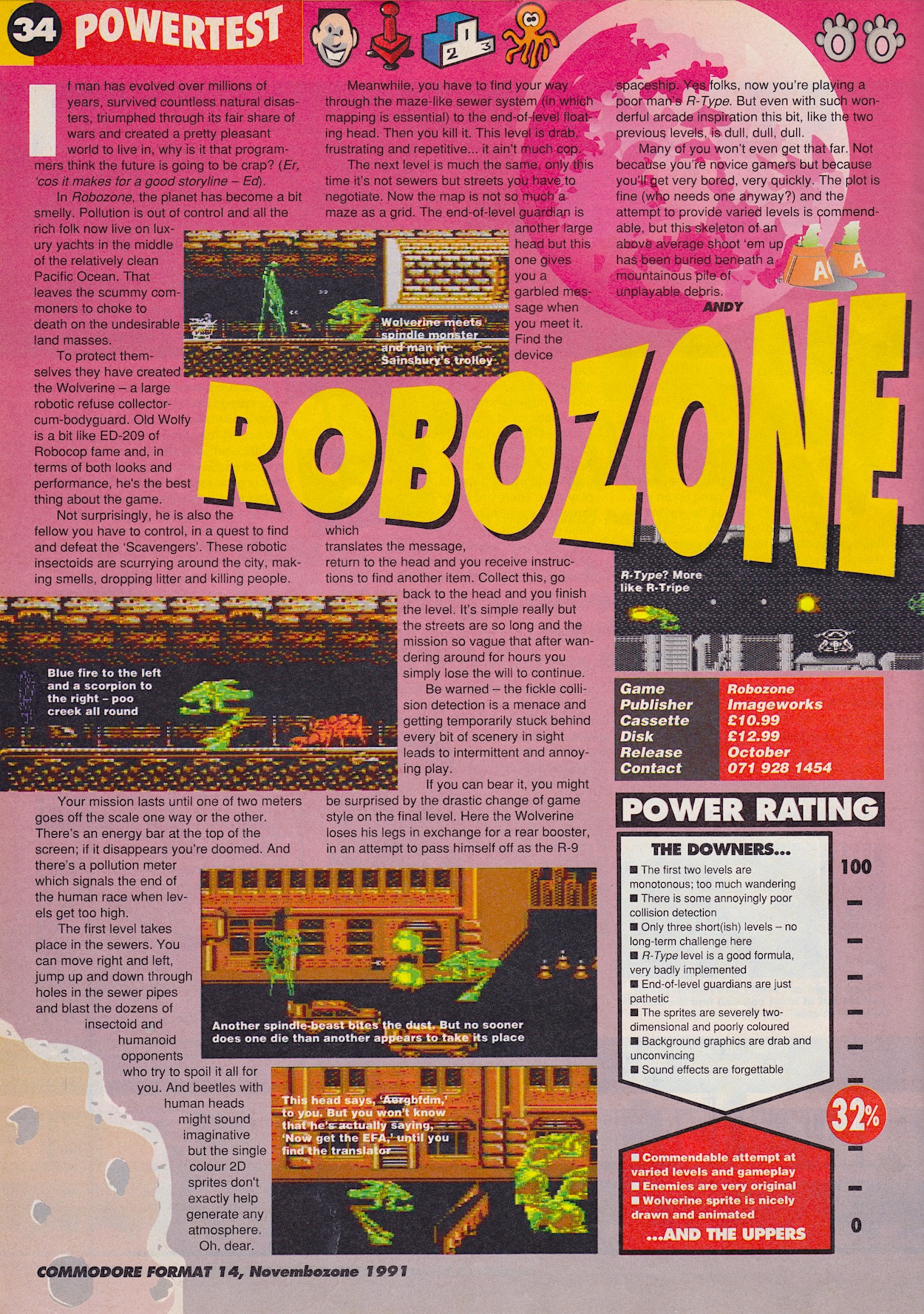
Welcome back. Anyway, Commodore Format also spoiled me for life when it came to review magazines of any kind, from games to movies and everything in-between. Below is a review from this issue for Robozone and by all measures it should be a terrible game that no one would want to spend their pocket money on. But the score is just the opinion of the writer, not a fact, and I always felt the way CF’s reviews were written was more important than the number at the end. Context was key.

In the case of Robozone it was clear why staff writer Andy Dyer personally didn’t enjoy the game but something from his review told me I might. So I bought it a few months later and yep, I did enjoy it. It wasn’t superb, and if I hadn’t got it from a bargain bin maybe I wouldn’t have purchased it, but it was fun for a few weeks. CF’s writers never tried to tell people that their opinions were facts. Throughout my gaming hobby I’ve come across magazines I felt were above their station, who thought what they opined was gospel (a bit like internet comments sections today). CF was never like this.

Commodore Format led me to Edge and Cube magazines over the years (also from Future Publishing) via a detour to the equally fantastic 3DO Magazine. Many others were tried but failed to talk to me on a level playing field like CF did. I’ve actually begun subscribing to Edge again last year for my Nintendo Switch. That’s the legacy of Commodore Format. It never spoke down to us. It never pretended to be anything other than a group of friendly people passing on advice. Well, perhaps one ‘person’ had a bit of an ego…

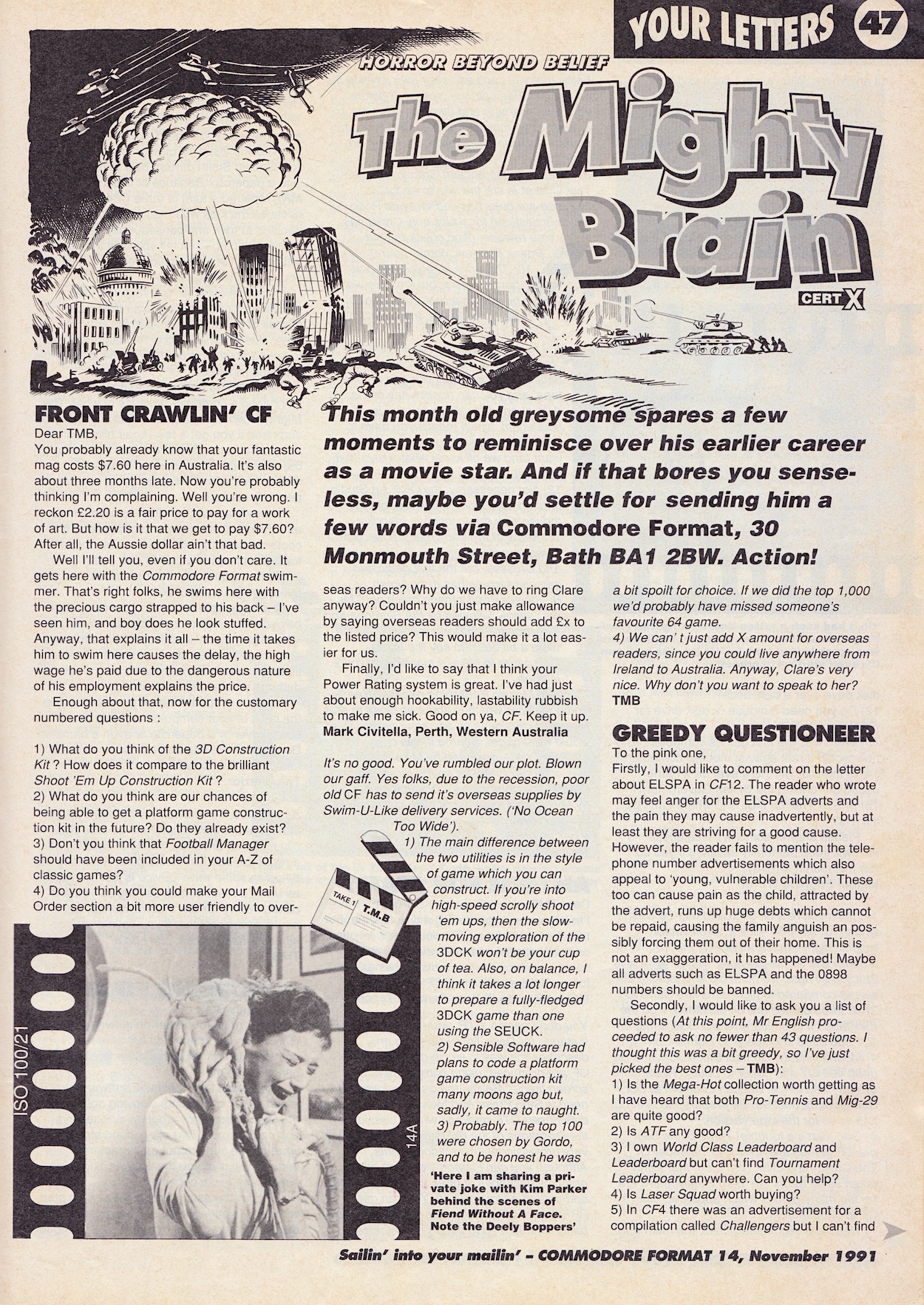
There were a whopping four pages of letters in each of these issues, hosted by The Mighty Brain, a ‘B’-movie star who knew everything in the knowable universe (and beyond). I mean, who better to answer readers’ questions, right? Even though these pages would be answered by different people as the magazine changed over time, his persona never changed and his cocky nature reminded me of the sassy letter answerers in childhood comics such as OiNK and Transformers. Great fun.

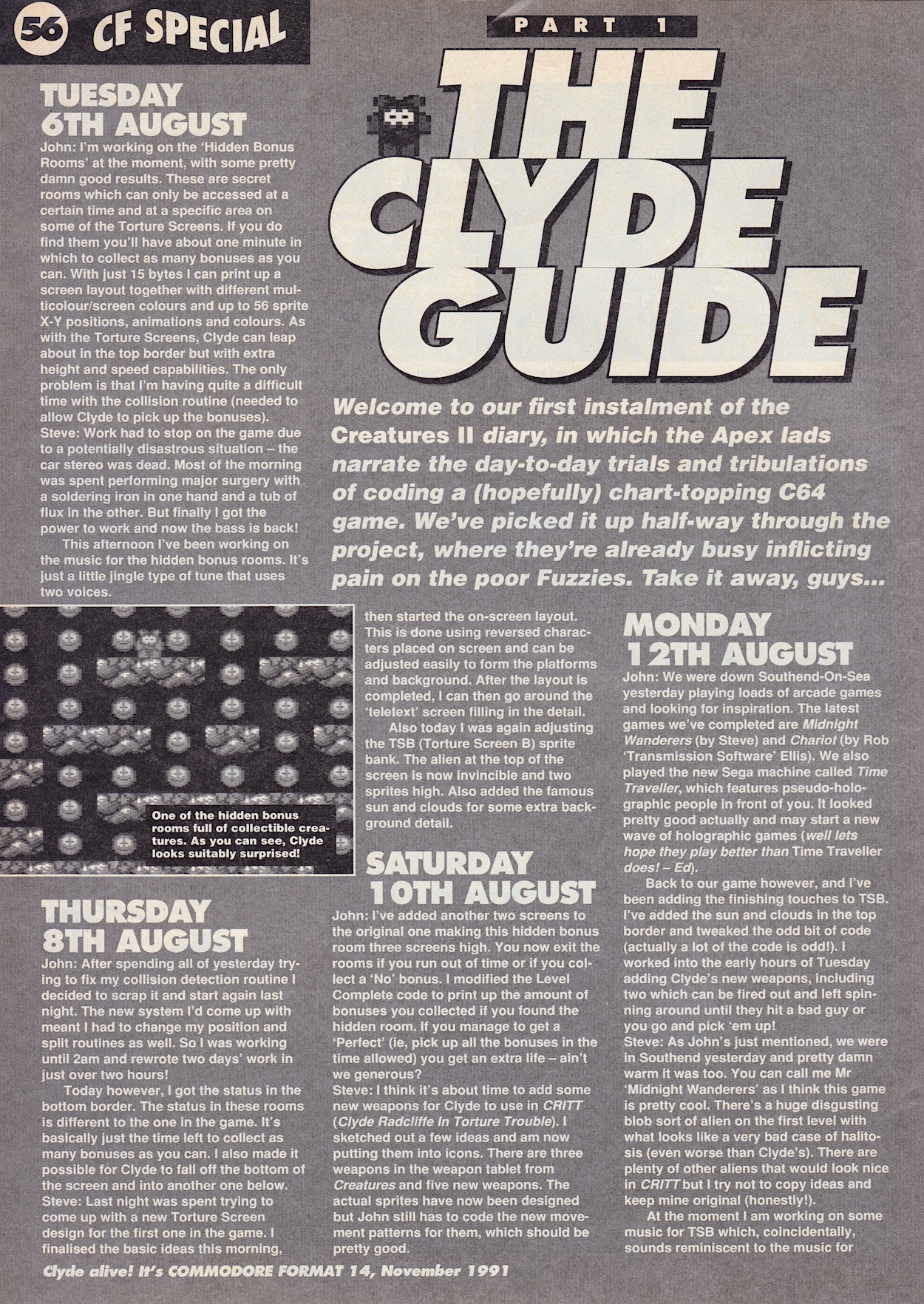
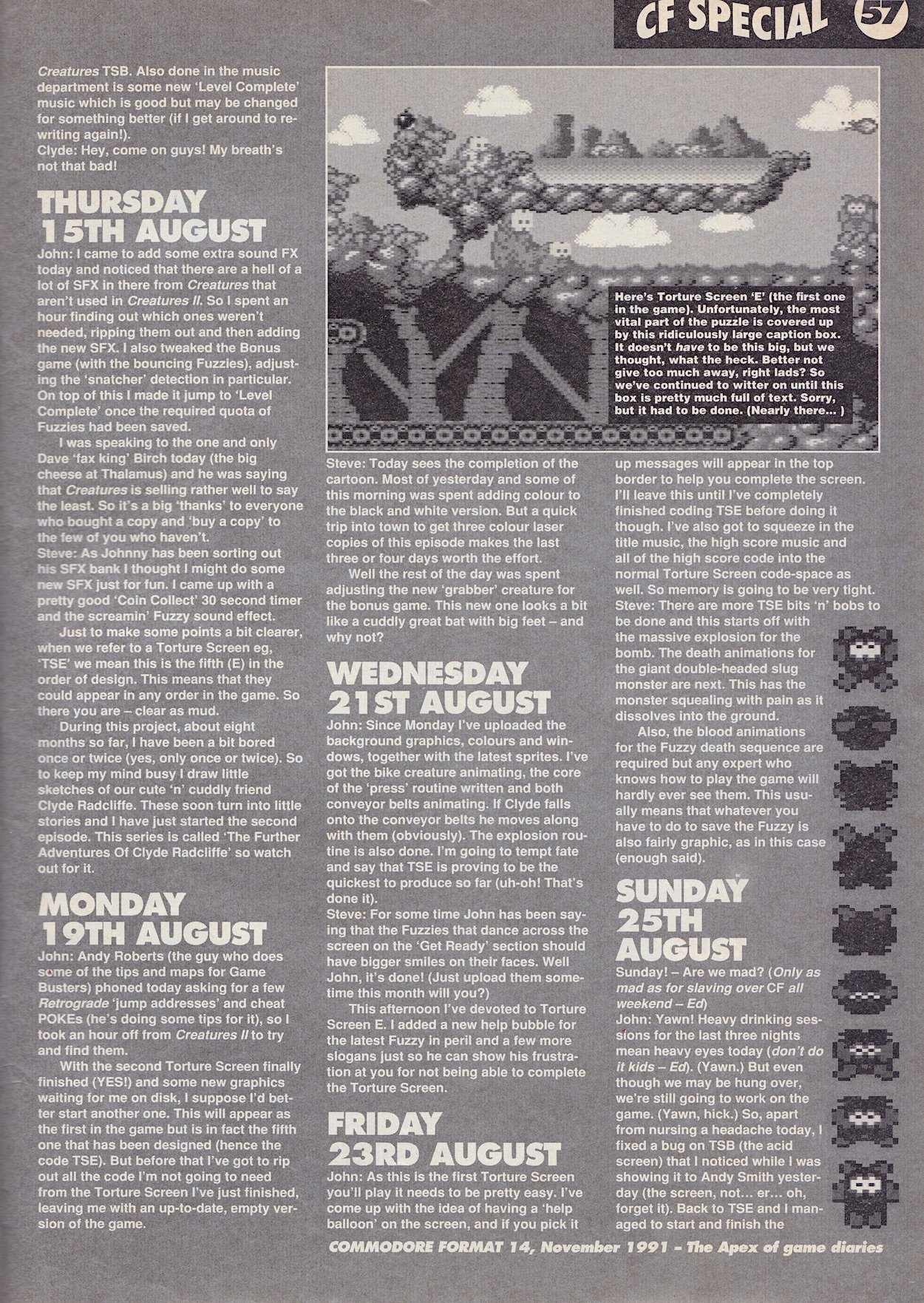
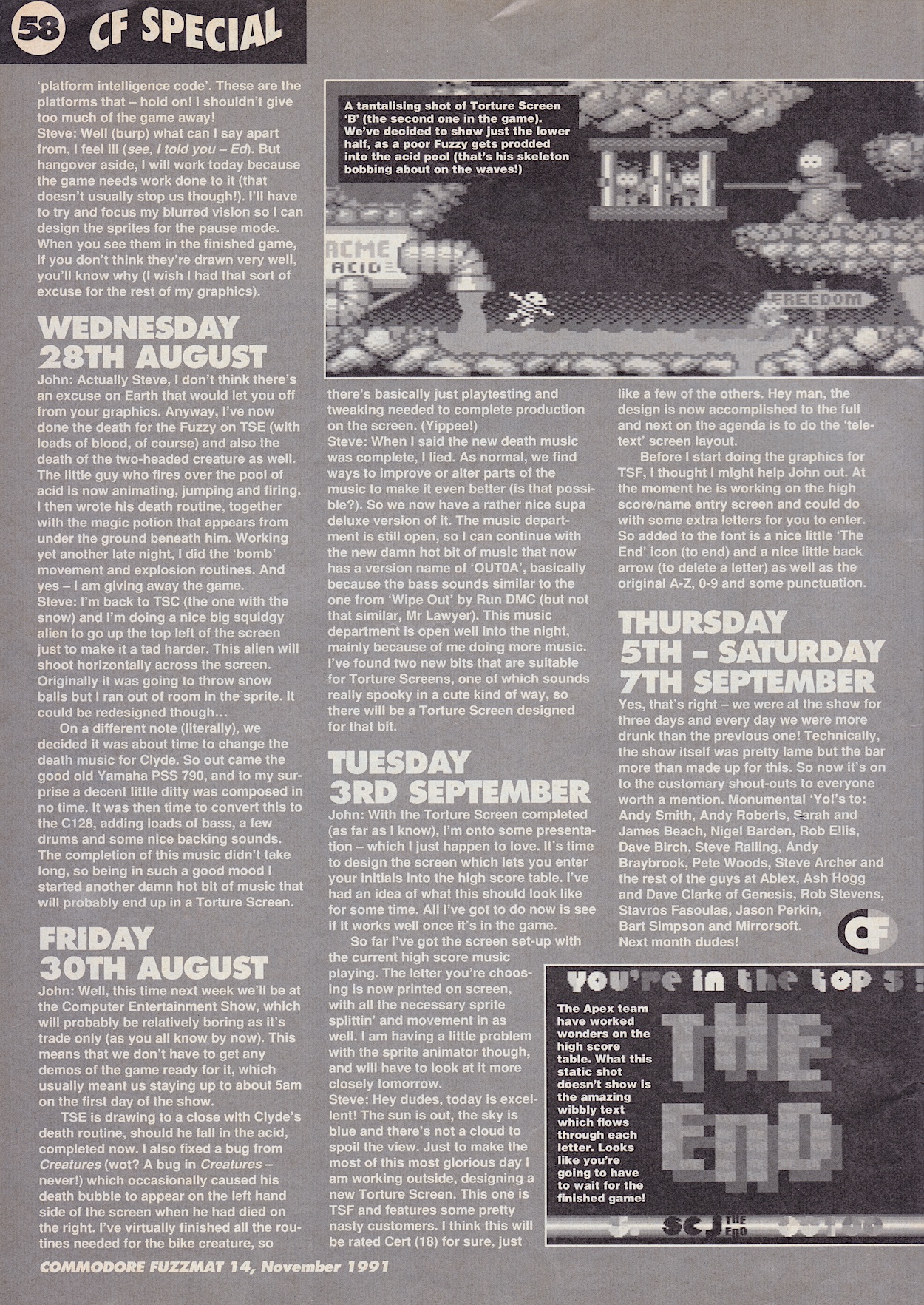
Zzap64’s publisher was going through administration at the time (hence the blurb at the top of the cover) and for a few months CF’s competitor didn’t appear. It worked out perfectly for me because I’d discovered this superior magazine instead and inside a regular feature from the abruptly (and temporarily) cancelled competition made its transition to CF. The Clyde Guide was a Making Of series about the upcoming Creatures II: Torture Trouble, a game that’s still in my top five games of all time on any platform to this day.
A cute and cuddly looking game with devious puzzles, huge boss fights and gorgeous animation, it had a hilarious sense of humour with over-the-top gore that would surprise players when things went wrong. All cartoony and ridiculous gore splashed all over the cute graphics of course, this was still a basic machine compared to today’s after all. The Rowlands brothers John and Steve gave a fascinating insight into the creation of a brand new game, month-by-month. This wasn’t a look back at how a game was made, this was happening in real time.

On a side note, I contributed to Bitmap Book’s Commodore 64: A Visual Compendium for their Creatures II spread

I was hooked from this first chapter (CF’s first chapter but obviously the game was a long way into development by this stage) and it would often be the first thing I’d read in subsequent months. Later in the magazine’s life the brothers would also create the incredible Mayhem in Monsterland game which they’d chronicle in the pages from the very beginning. I’d never read anything like these diary entries before and was amazed at the access the magazine had. On a side note, a few years back I contributed to Bitmap Book‘s Commodore 64: A Visual Compendium for their Creatures II spread.

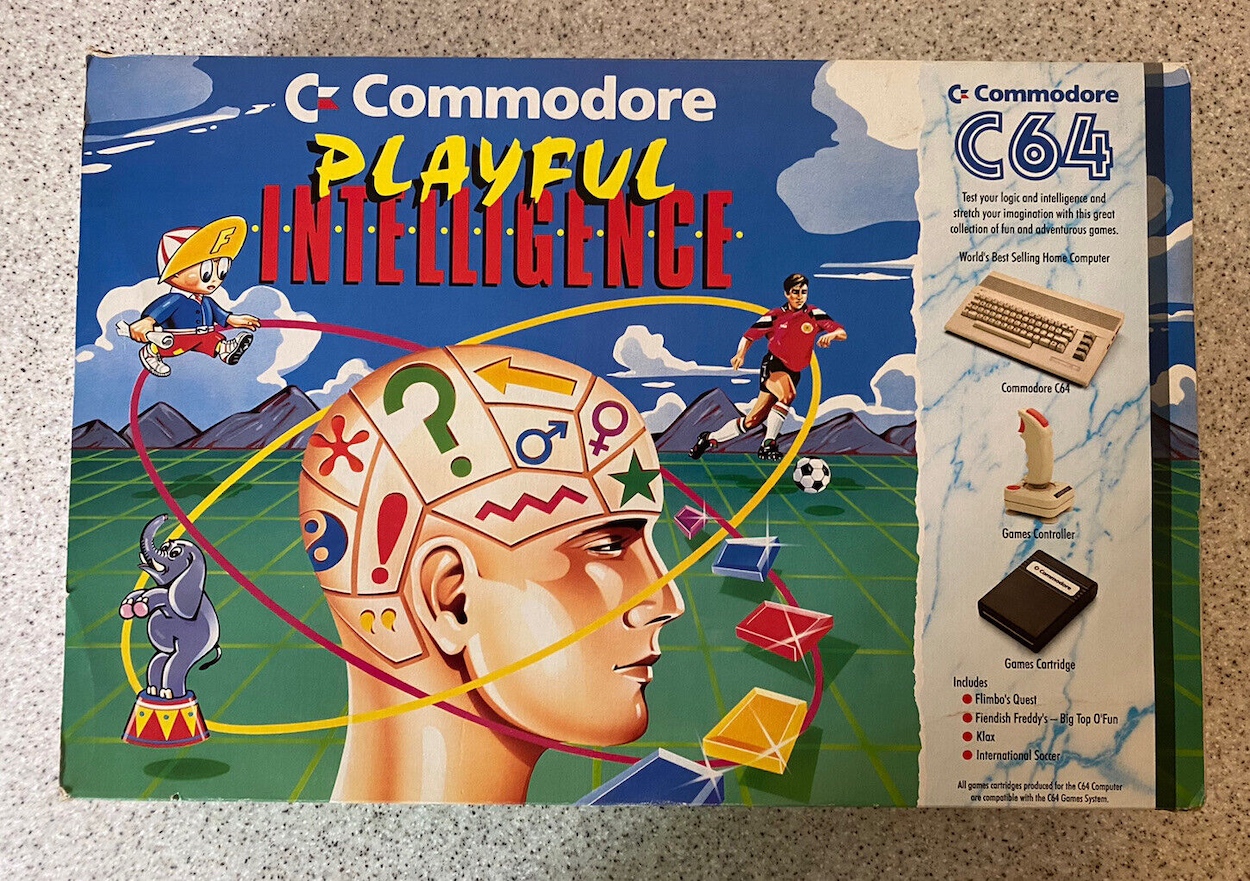
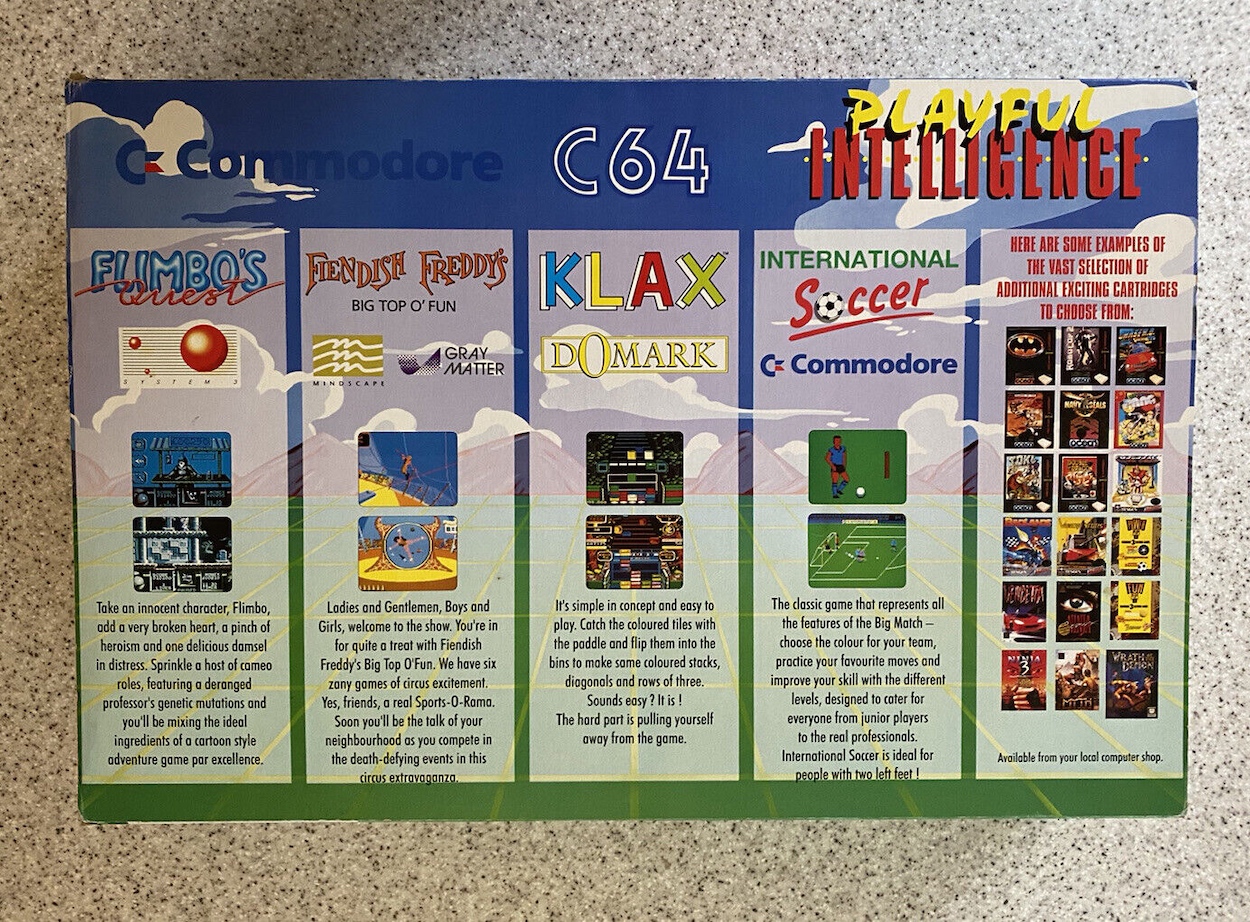
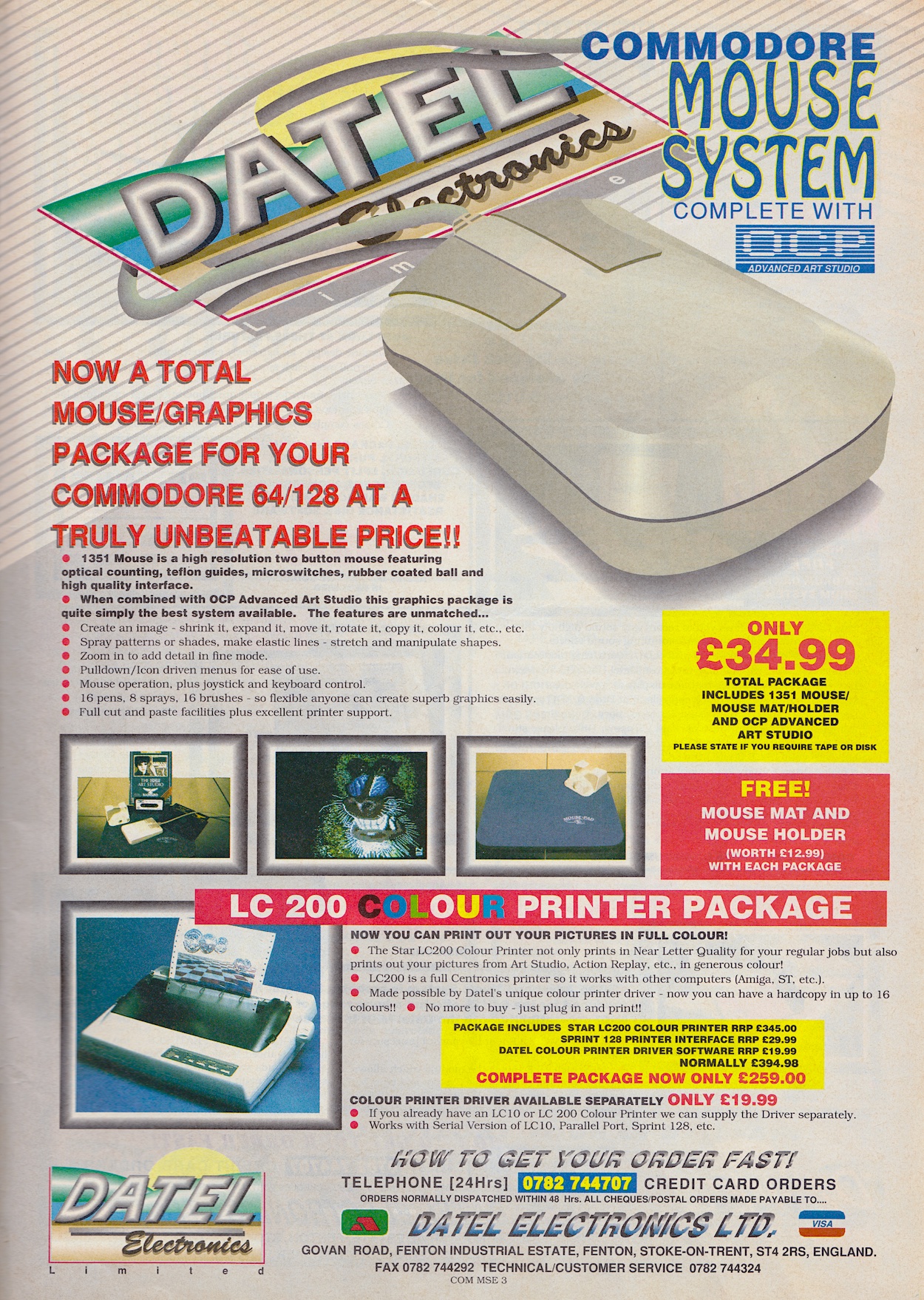
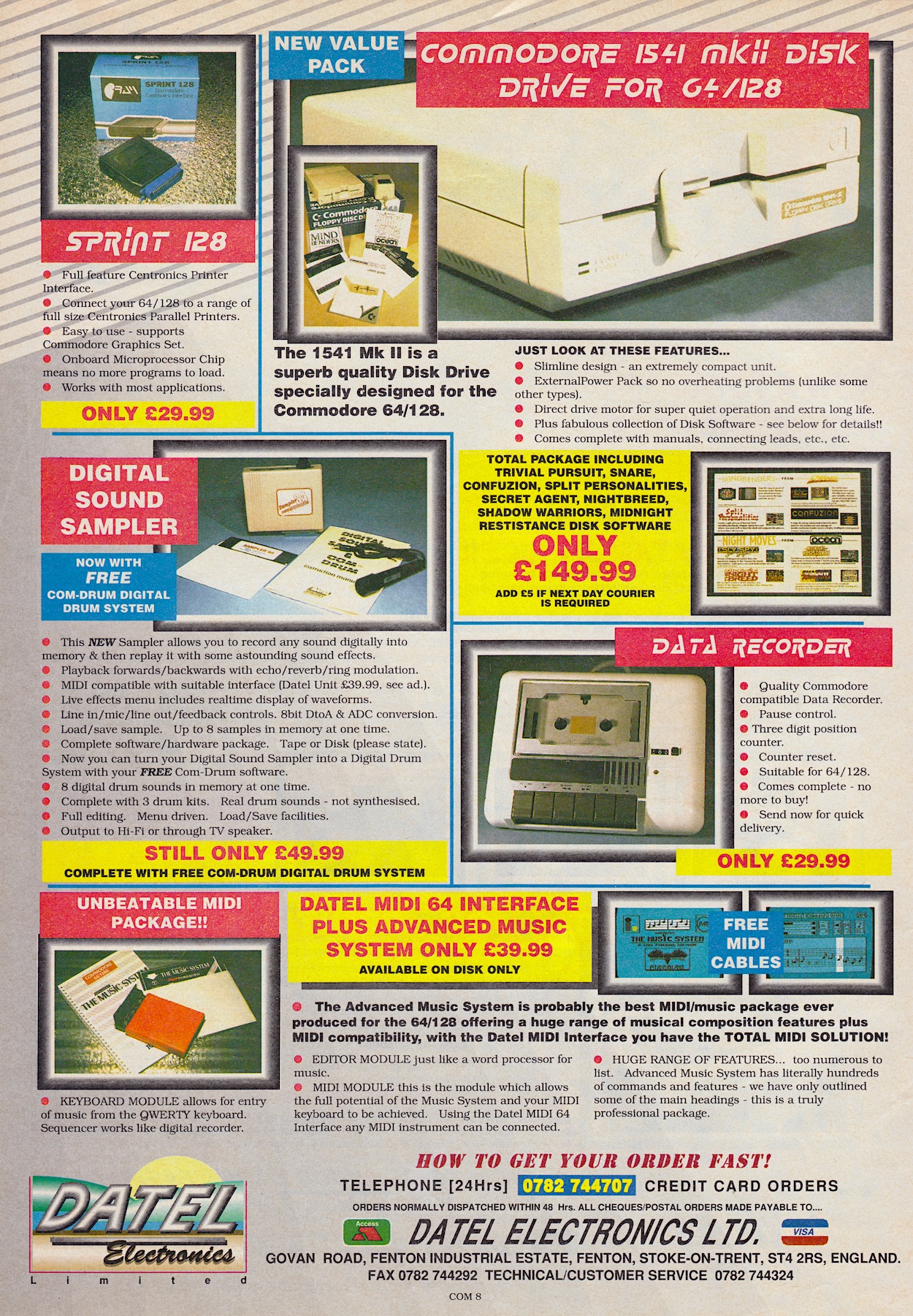
That Christmas I finally received my C64 with a cartridge full of games, a few joysticks and a cassette deck. The following Easter my dad was made redundant and with his payoff I was promised something for my computer. I chose a disk drive after seeing it advertised every month in these Datel Electronics adverts. The following Christmas I also added the printer shown here along with the mouse and art package, all set up on a desk made by my dad in the alcove in my bedroom.
Some friends may have thought the C64 was past it but I was using it for everything! Writing my own stories and magazines, a diskzine (more on that in the specific post I mentioned, coming next year), homework, running a Public Domain software library, making games… In fact, I was using it for a lot more than my friends were using their more powerful machines for. Oh man, the memories are flooding back as I read through this issue again. Those were such enjoyable years thanks to that machine and this magazine.

CF eventually succumbed to a loss of sales only six months before the release of the first Sony Playstation!

Commodore Format was created by Future Publishing when they saw an opening in the market. The C64 was still selling really well as an entry-level computer, while also being handed down to younger siblings. CF was an instant success and soon became the biggest selling C64 magazine in the world! Deservedly so. It would last right up to #61, eventually succumbing to a loss of sales only six months before the release of the first Sony PlayStation! That’s incredible for a machine which people told me was on its last legs before I even got mine.

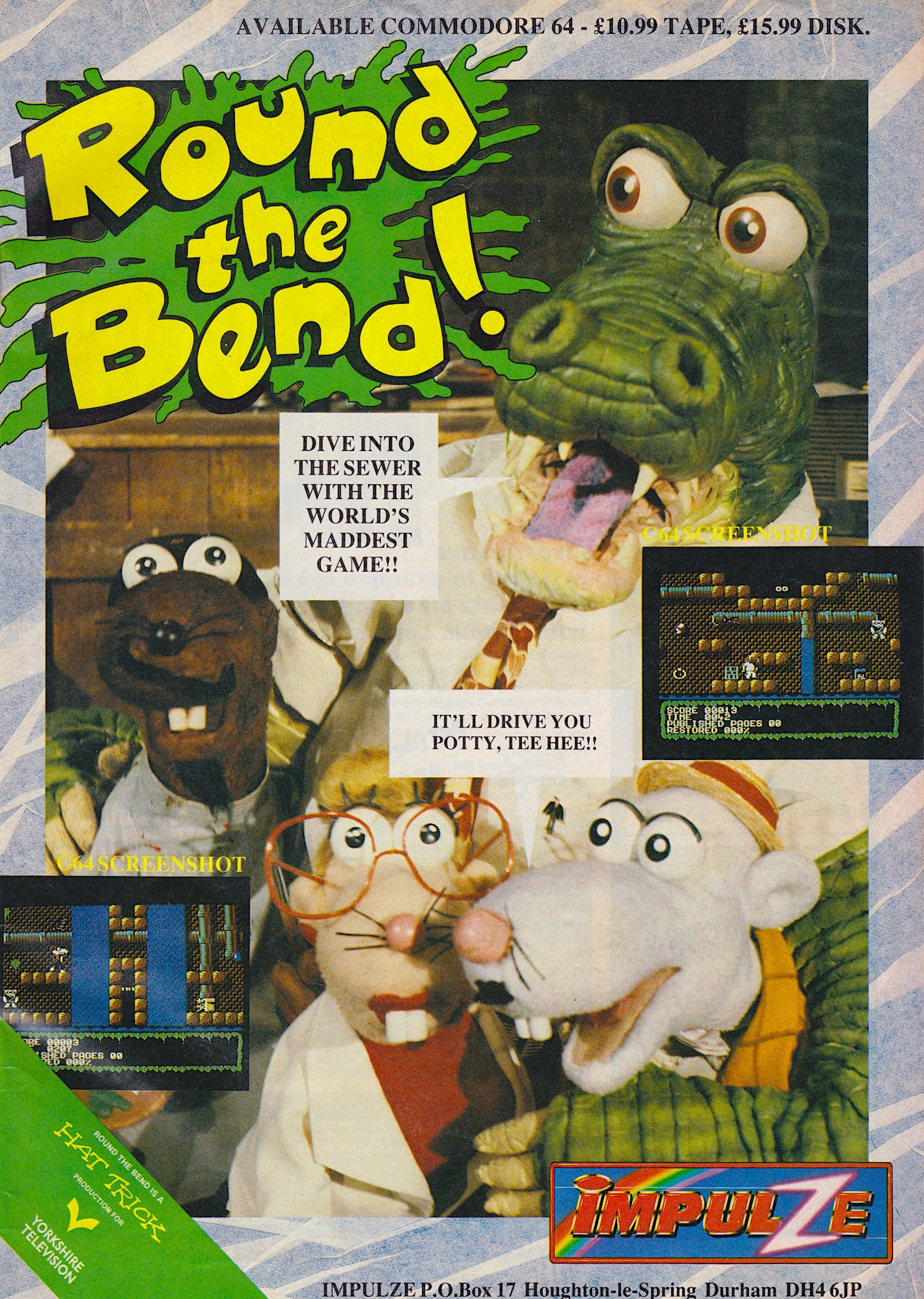
Regular blog readers may have noticed the issue number for my first ever magazine is the same as that for my first ever comic, #14 of OiNK. With that tenuous link I’ll wrap up this retrospective with an advert for an upcoming game pig pals may have been particularly interested in. After OiNK was cancelled the creative team of Tony Husband, Patrick Gallagher and Mark Rodgers went on to create a certain TV show that shared many familiar aspects with our piggy publication.

The game already looks like it’s closer to its inspiration than the OiNK game. Round the Bend would get reviewed in #17 of Commodore Format, so in keeping with the real-time aspect of this blog I’ll show you that very review and take a look at the game itself on Tuesday 16th January 2024.

I feel like I’d need to show you every single page of this issue over a series of posts in order to fully get across just what an impact it had on me and how formative it was. I hope I’ve been able to do it justice. I have an almost complete set of the magazines here at home, despite not owning a Commodore 64 anymore and I’ll never get rid of them; I love to dip in and out and I’ll forever treasure them and the memories they contain.

In the days of magazine contributors being named and photographed for the editorial pages, over time it felt like we’d grown to know these people and we trusted them as a result. This was a key component in that club feeling and later in its lifespan Commodore Format would be instrumental in my life and the person I became! Really. That’s a whole other story for another time, but for now I just wanted to concentrate on a retrospective look at this beloved issue of a beloved mag.

Commodore Format has featured elsewhere on the blog already. The cover cassette of its second edition contained the OiNK game in its entirety as you can see in a post from the game’s coverage. Then in their third issue the team produced maps to help people struggling with the game and I’ve included them on the blog as well. Both posts also take a look at some of the other articles and contemporary adverts featured in those early editions. Finally, the Roger Frames Buys Budjit Games section was a favourite feature of every issue for me and was illustrated by Mike Roberts, a brilliant illustrator who also produced the cover to OiNK #10, and in that OiNK review I’ve included Mike’s art of Roger’s misadventure from this issue of Commodore Format. Enjoy.

RETROSPECTiVES MENU

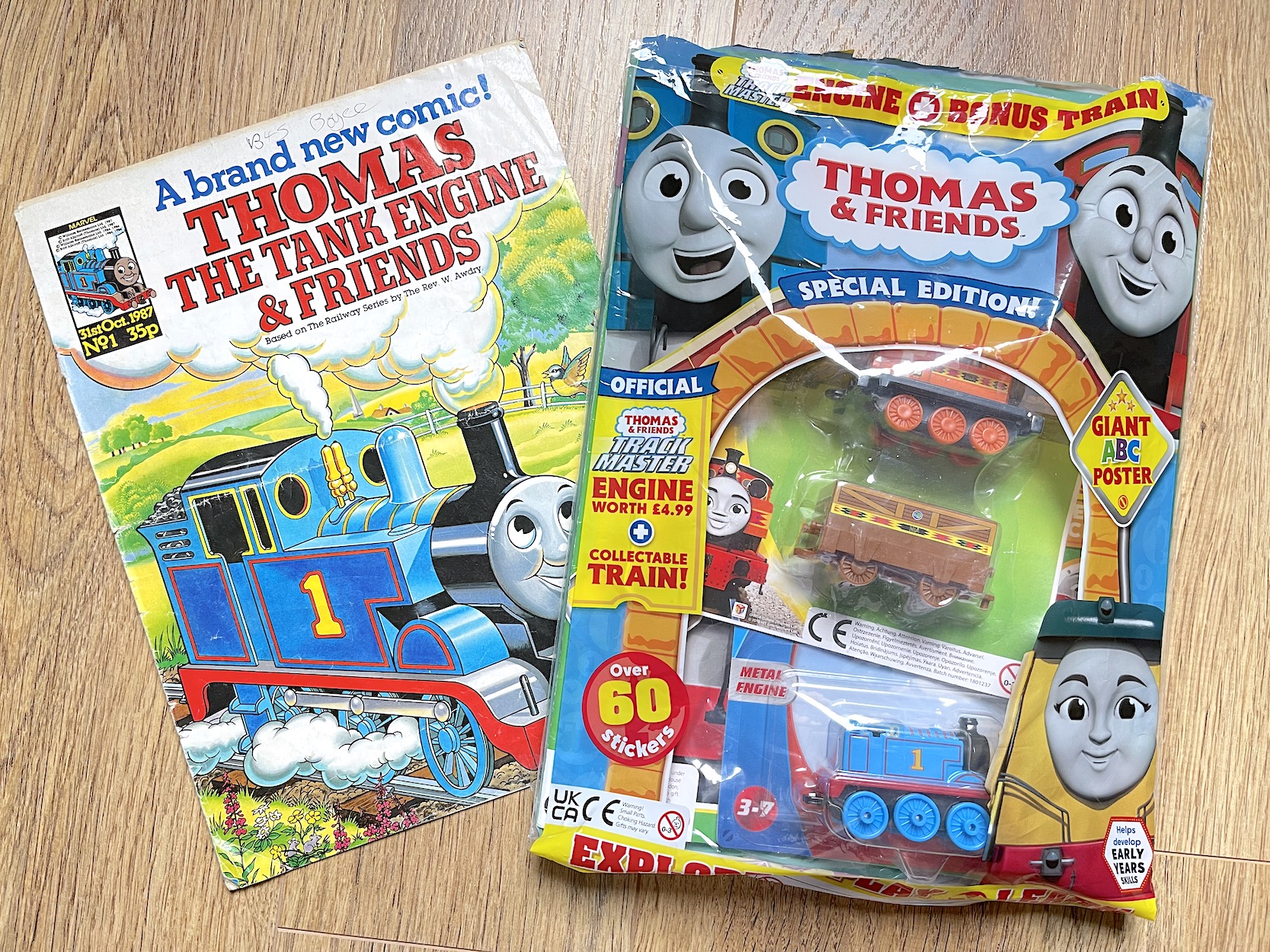
THOMAS & FRiENDS: 800th iSSUE!!

Back in 1987 I was nine-years-old and already a bit above the target audience for Thomas the Tank Engine & Friends, but growing up in a town with actual steam trains (the headquarters of the Railway Preservation Society of Ireland were just around the corner from my house) a lot of the kids in my town loved the original Railway Series books by the Rev. W. Awdry and the subsequent TV series with those stunning model layouts. In October ’87 I found myself in the newsagent to pick up the latest issue of OiNK, the only comic I was collecting at the time and I spotted “A brand new comic” on the shelves.

This was my first ever Marvel comic, believe it or not. I even got my drawing printed in a Christmas issue!

I collected it for about two years before finally moving on but over the years I’ve seen younger family members and friends’ kids become fans just as I had been. Working in newsagents over the years I was aware the comic was still ongoing, surprisingly keeping the original numbering even though it had gone through a couple of different publishers. Then a few months ago while browsing the children’s comics for a friend’s wee boy I discovered Thomas & Friends (as it’s now called) was at #797!

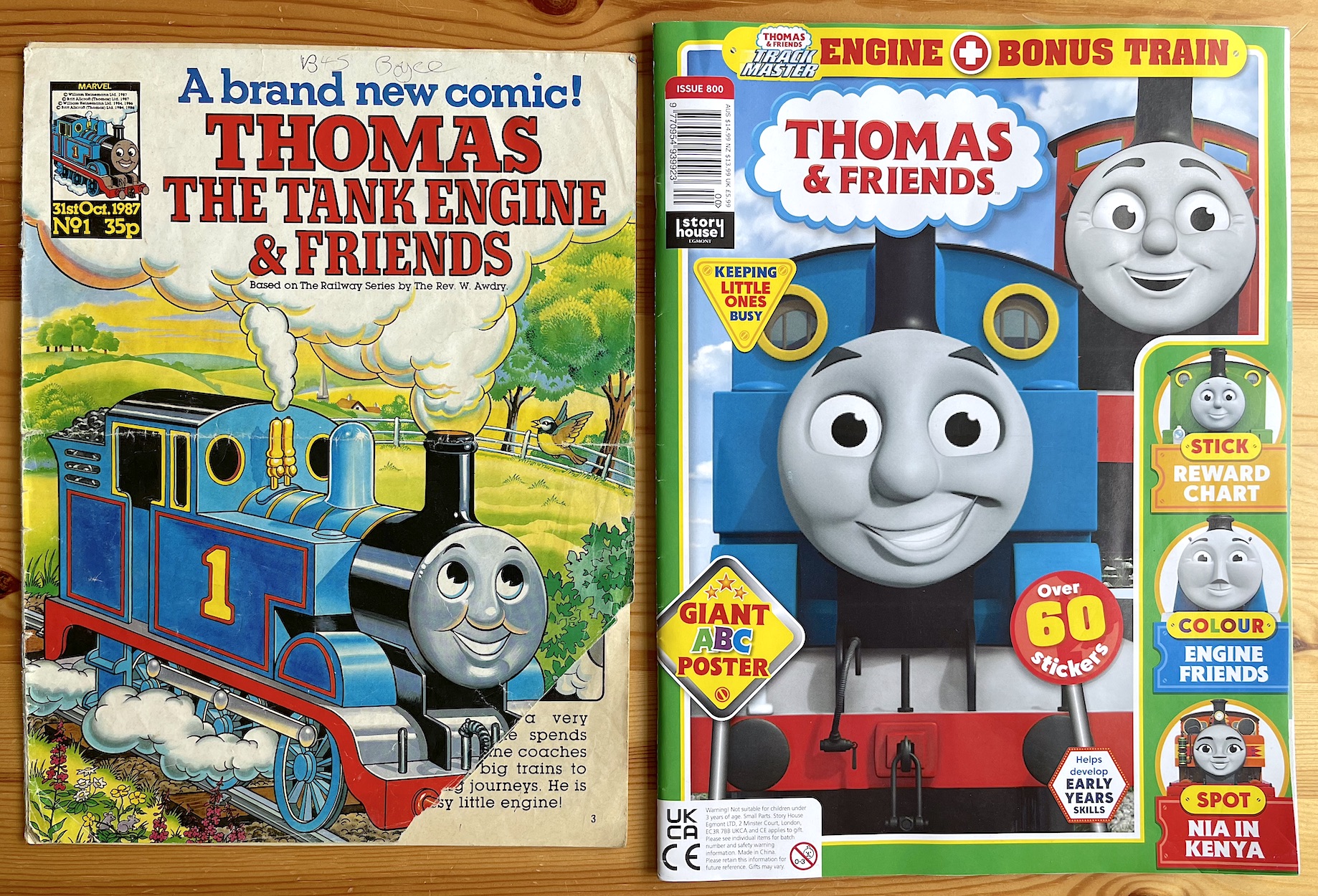
So fast forward to the present and I’ve bought #800 for him and thought I’d open it up to see what’s inside and compare it to the original. But first let’s just dwell on that issue number for a second. The 800th issue! This makes it the longest-running UK licenced comic ever. It’s an amazing achievement and I doubt it’s going to come to an end any time soon, the TV series is as popular as ever.

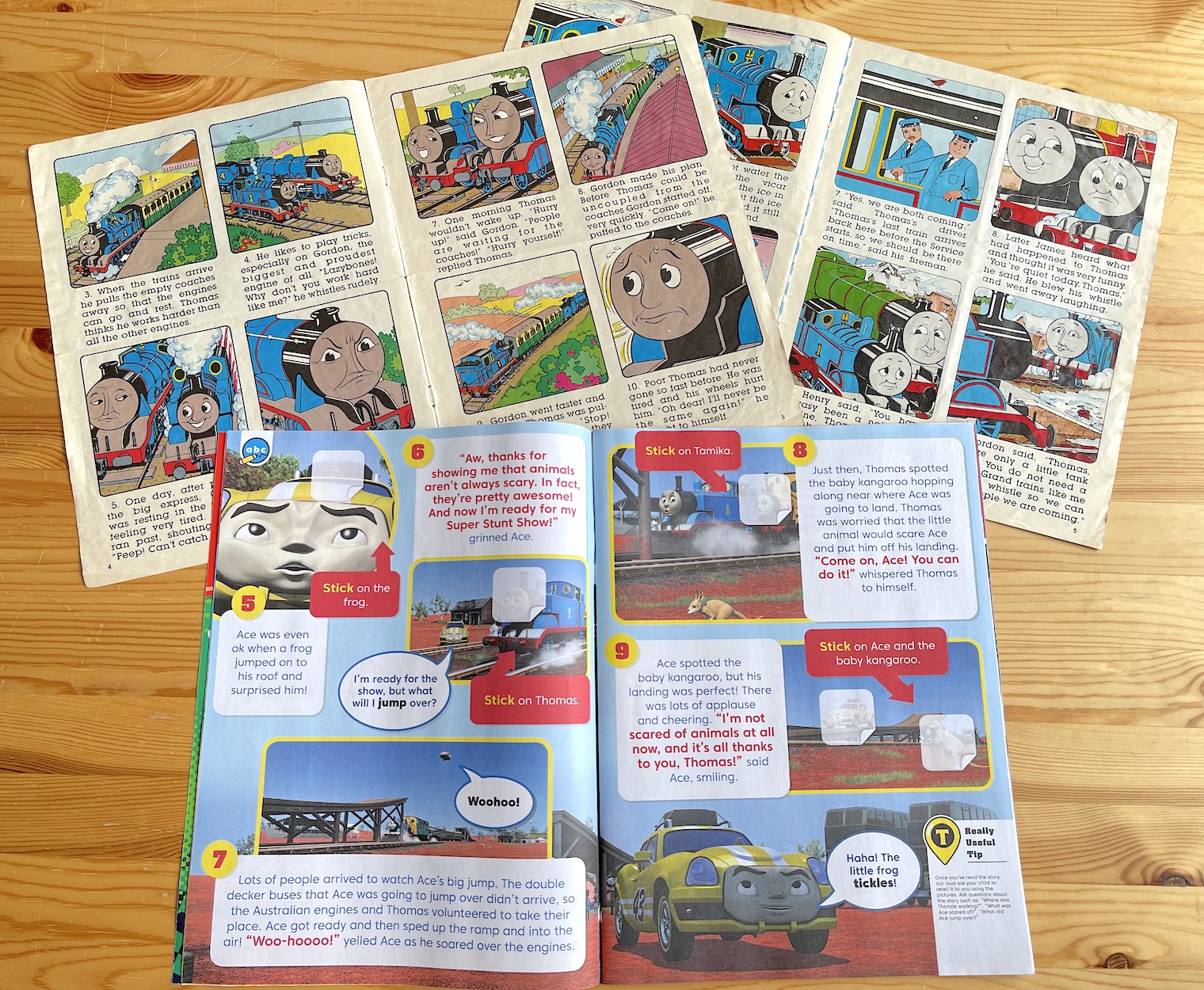
Now, when I mention modern children’s comics there’ll inevitably be a chorus of middle-aged men complaining that they’re “nothing more than flimsy leaflets” with “cheap tacky toys” in plastic bags “pushing the price up”. Well let’s just put this to rest once and for all, shall we? While the comic magazine itself doesn’t mention it’s celebrating the milestone it’s still packaged as a ‘Special Edition’ and contains a die-cast metal Track Master Thomas which on its own sells for £4.99 in the shops. Not a bad start!

For just £1 more than the cost of the toy, for £5.99 (usually it costs £4.99) you also get a 36-page issue printed on really great quality matt paper with a gloss cover and it’s chock full of content for younger fans. There’s also a second, plastic toy set produced specifically for it, a large double-sided wall chart, a poster and loads of stickers which are used throughout the pages as you’ll see below. I’d say that’s a bargain.

Interiors of the first and latest issues show it’s very much the same beast at its heart

So how does it compare to the original comic I bought for 35p back in 1987? I’m not mentioning the cover price for comparison reasons, it was 34 years ago, of course it’s going to be a lot more expensive, just as 35p was a lot more expensive than comics from 34 years before that. But I thought it’d be interesting to see how things have evolved after 800 issues, so below are some of the interiors of the first and latest issues and as you’ll see, it’s very much the same beast at its heart.

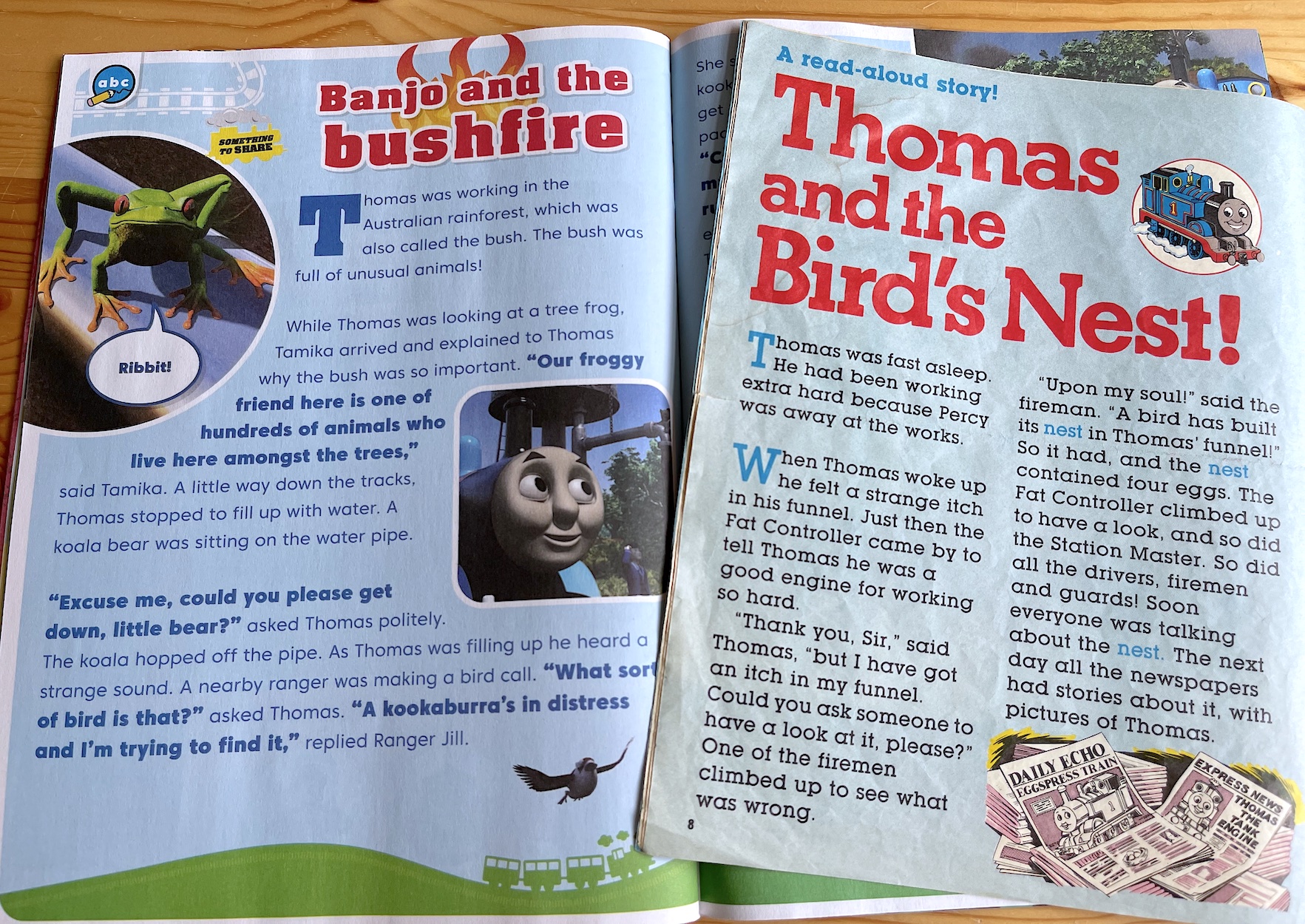
The main element of the original comic was the picture panel stories, which for the first year were adaptations of the TV stories (which in turn were adaptations from the books) then after that were all original, written specifically for the comic, some being adapted back on to the TV. There was also a short prose story every fortnight which readers were encouraged to “read aloud”.

These formats remain although with so many years of the show to pull from now they all seem to be adaptations and use stills from the current CGI series rather than original illustrations. What’s neat is how those stickers I mentioned are used throughout to fill the gaps in stories, features, puzzles and more. For the young readers it’s like a really fun old-school Panini sticker album on top of everything else is contains.

Obviously back when I was nine my attention span didn’t last long enough for me to finish colouring this image of Thomas and it’s remained as such all this time. The activity can be found a few times in the current publication, on two dedicated pages and even the editorial credits page.

As a nine-year-old I was already too old for the comic if I’m completely honest, evidenced by the ABC collection and some very simplistic puzzles such as Henry the Green Engine highlighting other green things the younger readers were meant to identify. I just ignored these and kept to the stories, editorials and letters page, as well as the middle-page spread below. But for the target audience they brought a level of interactivity to the comic and this is something the modern version continues.

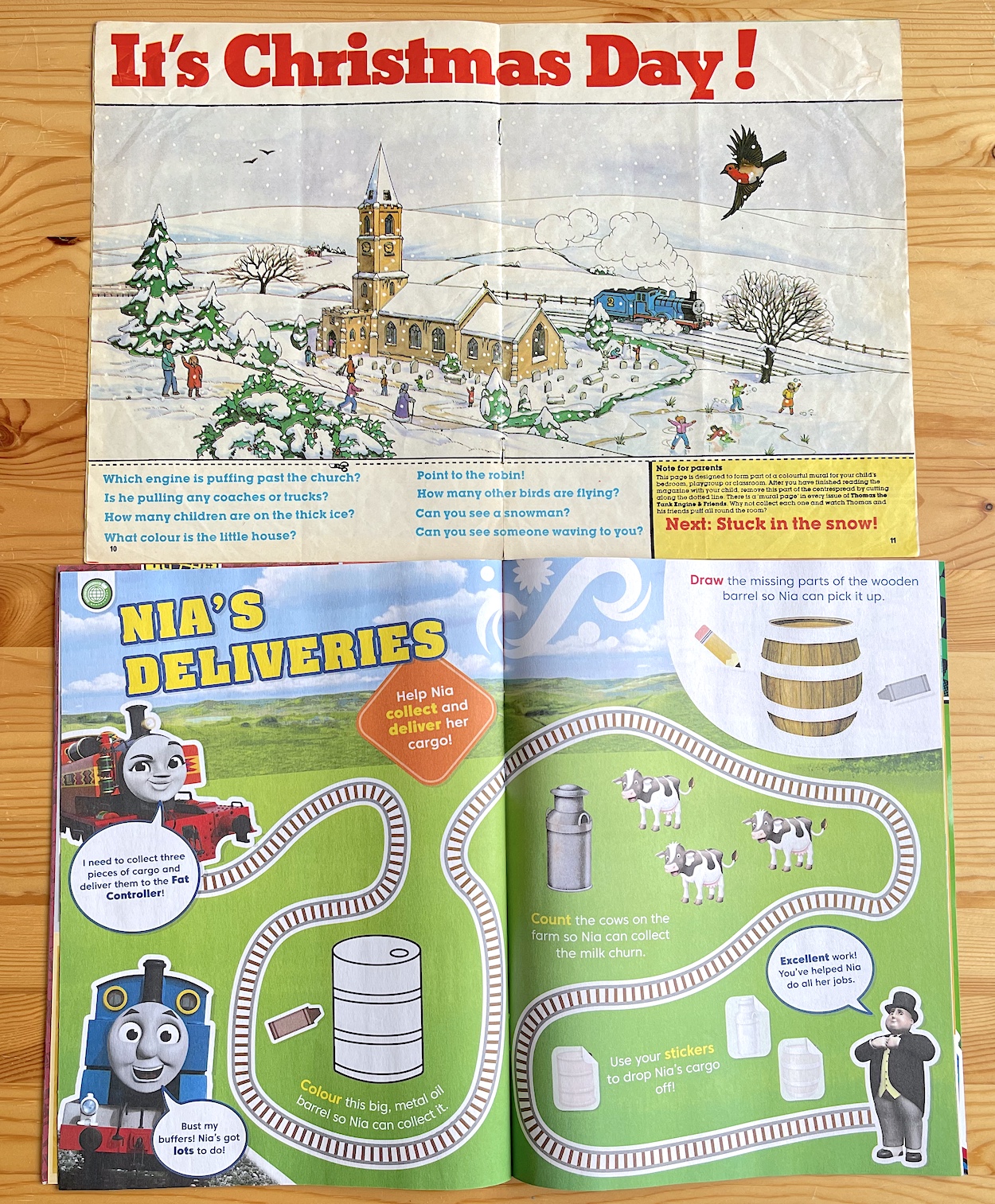
The middle pages of my #1 are missing so this is from the only other issue I kept (#31) which was the second Christmas issue and the one I had my drawing published in. The middle pages had very simplistic questions about what could be seen in the picture but the reason it’s missing from my first issue is because they could be cut out and hung on the wall, issue after issue creating one long drawing around the Island of Sodor, wrapping its way around our bedrooms.

I’m clearly not the target audience so the final word has to go to Ollie

There may not be murals but there are plenty of CGI shots from the show used for spot-the-difference pages, mazes, pin-ups, puzzles and so much more. Even the competition in #800 reminded me of the one we got in #1. Thomas & Friends may look very different from the Marvel comic on first glance but take a closer look and it’s a very natural progression. In fact, I’d go so far as to say I’m surprised just how much it’s kept to the original ideas.

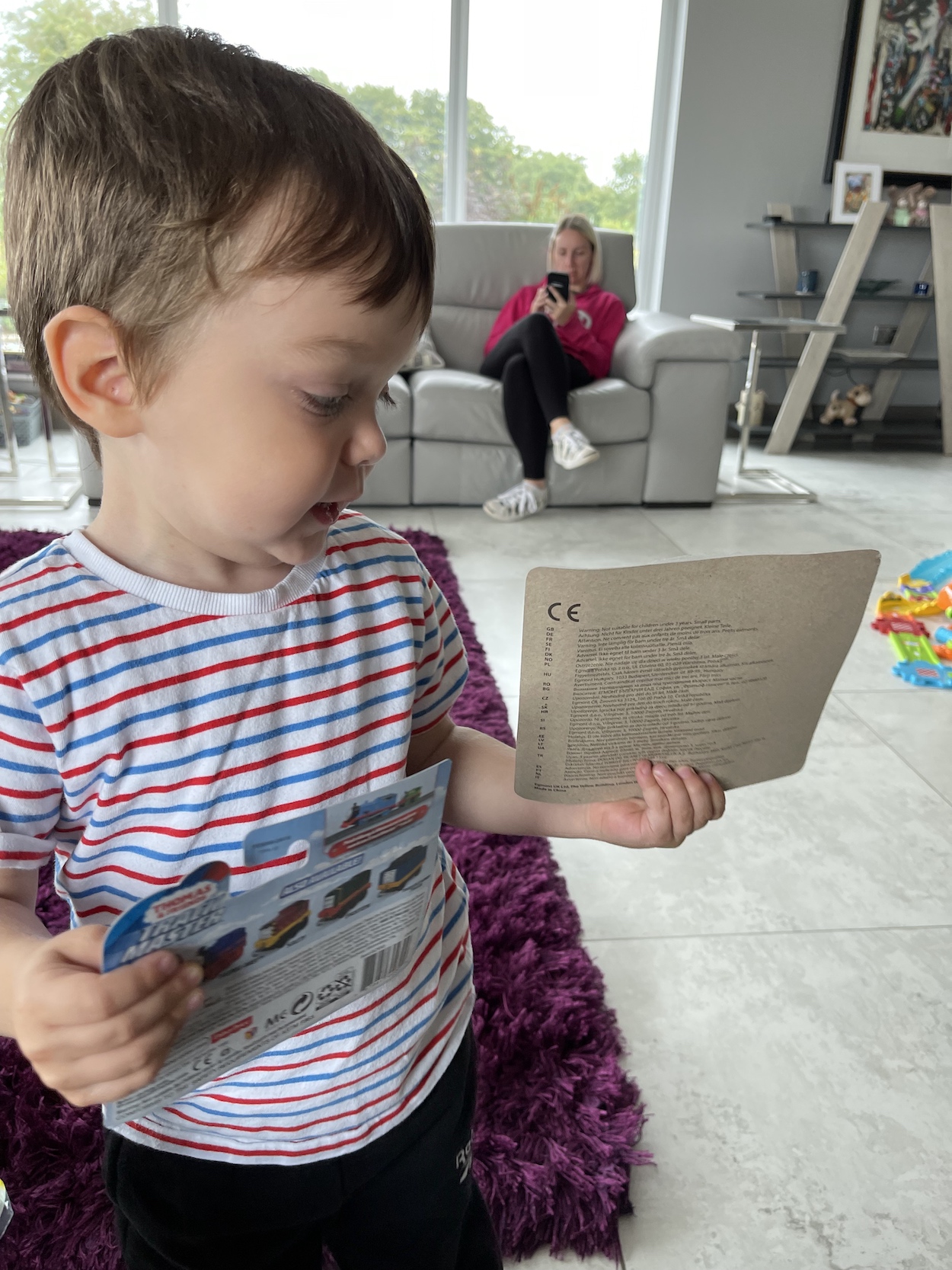
But I am clearly not the target audience so the final word has to go to the little person I bought it for, my friend’s baby boy, Ollie. As you can see, he’s clearly very happy with the gifts that came with it. In fact, three months before his third birthday he saw them and came out with, “Thomas the train”, which he’s never said before! A very cute moment.

His mum Vicki had a look through the comic itself, at the wall chart, stickers and the contents as a whole and remarked at how much was in it. Not expecting it to be much more than an excuse to package the toys in with something, she was pleasantly surprised at the value.

So there you go, if you have a young child in your life who watches Thomas & Friends on TV this is a top comic magazine for them. Usually £4.99 every four weeks, #800 is £5.99 but then again you are getting a toy which is normally a fiver on its own (and by the looks of it #801 has one too). It’s available online but everywhere I looked was charging around £10.00 for it because of bulky postage, but you’ll find it in most newsagents and supermarkets easily enough.

To finish with, here’s a look at the original audience and the current one.

RETROSPECTiVES MENU

THE REAL GHOSTBUSTERS: PREMiERE iSSUE ANNiVERSARY

I admit that back in 1988 when I finally got to open my copy of The Real Ghostbusters‘ premiere issue I was a little confused. I’d been looking forward to something more along the lines of Marvel UK‘s Transformers comic, with a lengthy multi-part story and certainly no text stories which I associated with comics aimed at much younger kids. However, any confusion, or indeed initial disappointment, evaporated as soon as I started to read.

By the end of its 24 pages I was hooked and didn’t regret placing the order with my newsagent before even reading it. In fact, I stayed with the comic for the majority of its run. Now, 33 years later I’ve just finished reading issue one for the first time in decades. So how does it hold up to reading today?

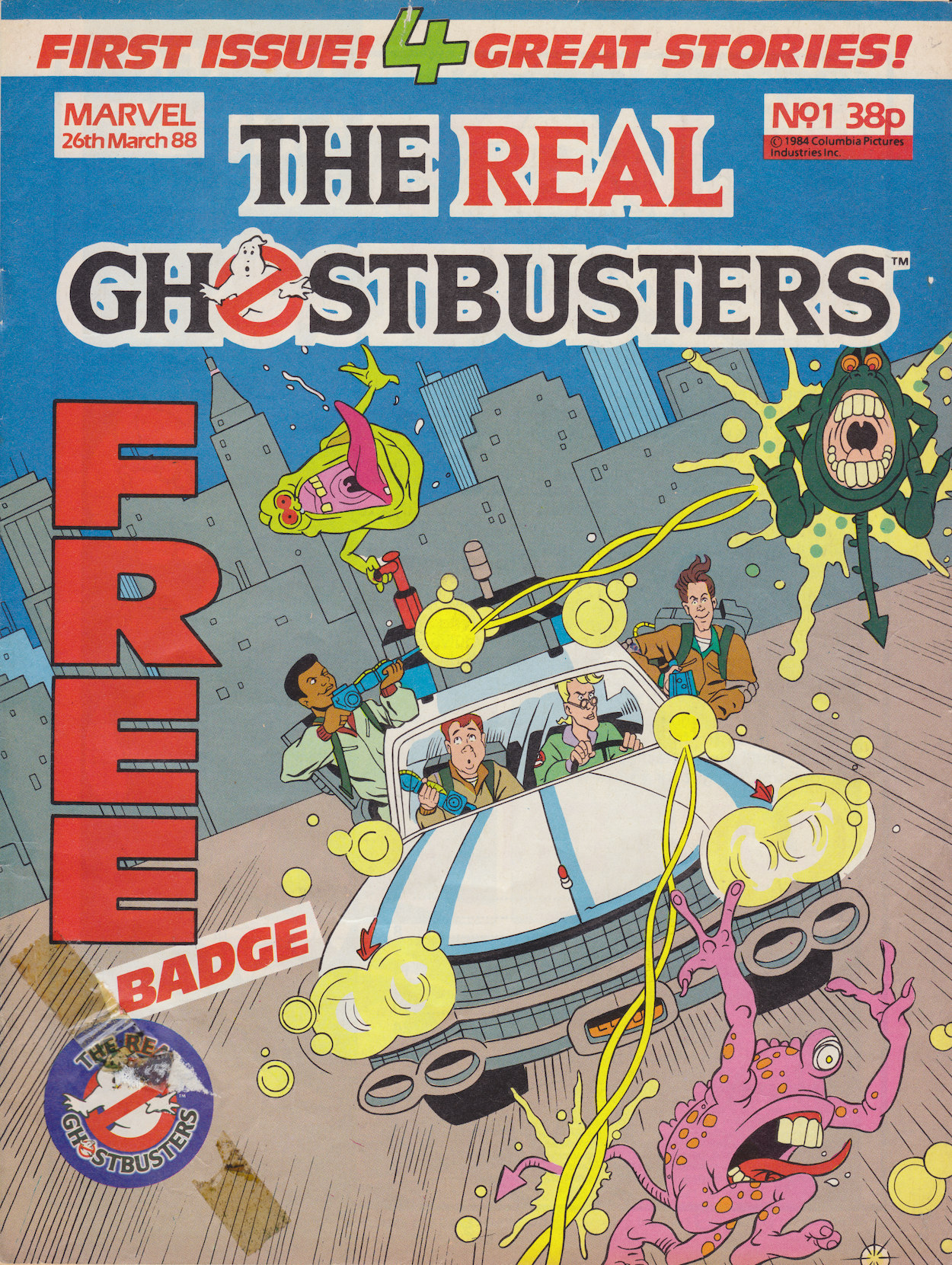
That front cover is nothing short of iconic, often copied by my young self back in the day on several school exercise books. Andy Lanning (The Sleeze Brothers, Superman, Majestic) and Dave Harwood‘s (Action Force, Swift Sure, Conqueror) introduction to this new title perfectly captures the light-hearted tone of the comic. Unlike the aforementioned Transformers I’d enjoyed reading at my friend’s house, The Real Ghostbusters would focus on smaller, complete tales aimed at getting a chuckle out of its readers. A unique approach, brave even, but they pulled it off and created a comic like no other.

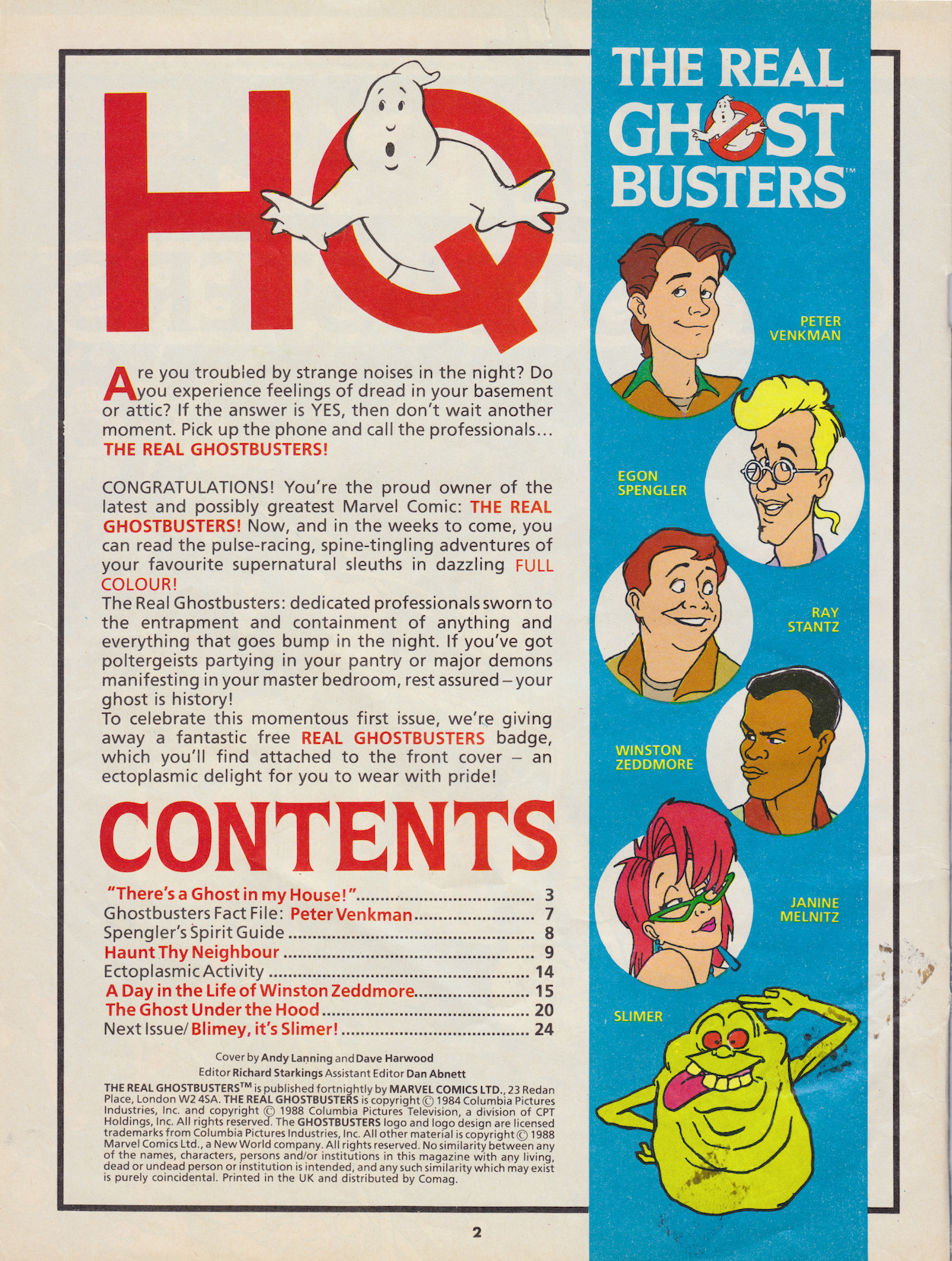
The first issue has no less than three strips and a text story, fact-file, activity page, ghost guide, request for readers’ letters and of course a Lew Stringer strip. (What Marvel comic was complete without Lew?) It’s all introduced on the HQ page which starts off the whole shebang by reciting the movie, setting the tone perfectly for this comedy comic (a term I’ll clarify later). The overall design wouldn’t change, there’d be no ‘new look’ every 50 or so issues, instead the cover and feature pages remained the same almost until the very end.

There’s certainly a confidence about it from the very start.

All of the strips here are written by John Freeman (of Down the Tubes). Editor of Doctor Who Magazine at the time, he was asked by the comic’s launch editor Richard Starkings to supply stories for the first issue. John told me this was literally his first regular writing gig, which is incredible since this was the launch of a brand new comic based on such a hot property. Needless to say, John knocks it out of the park.

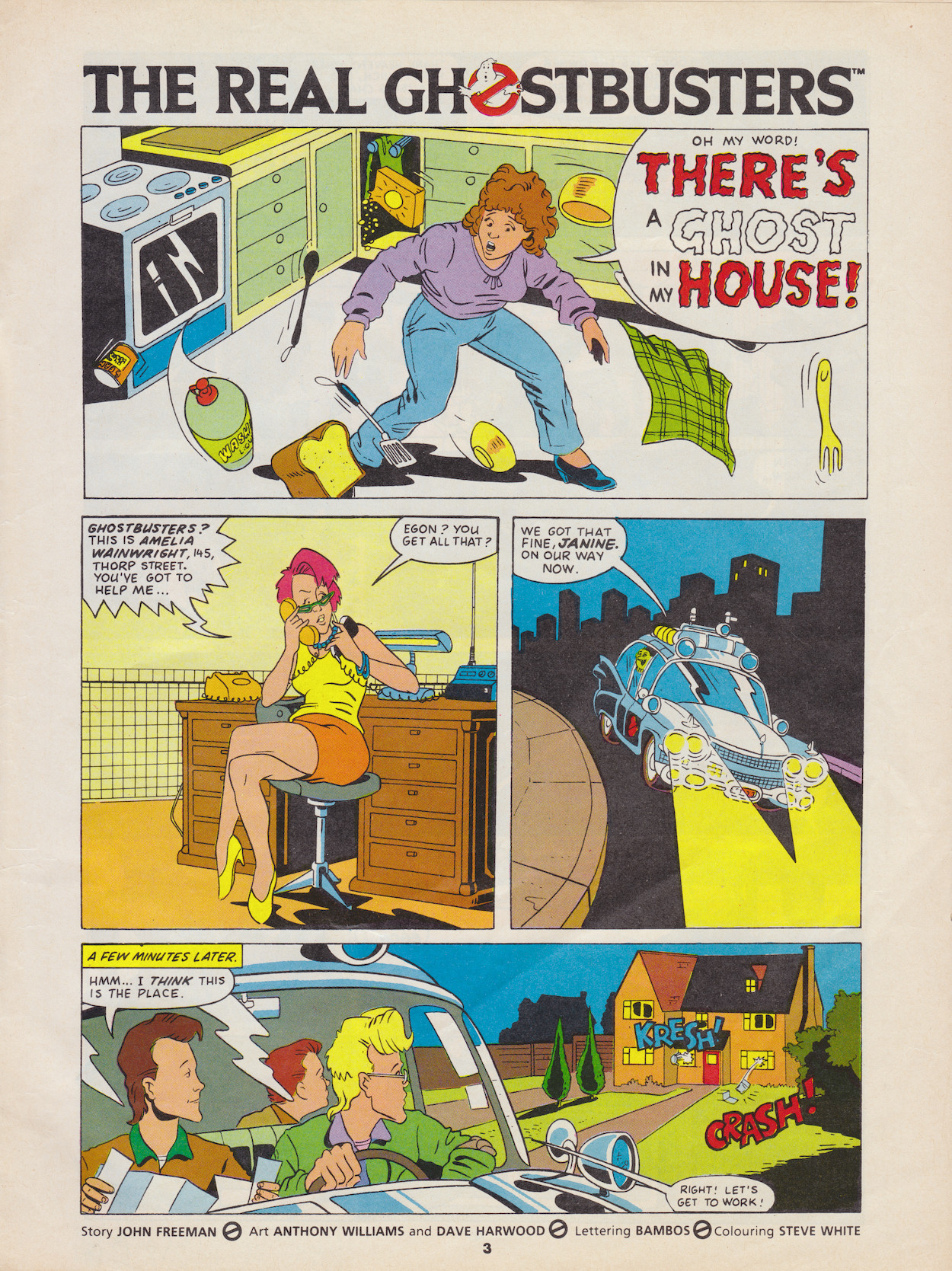
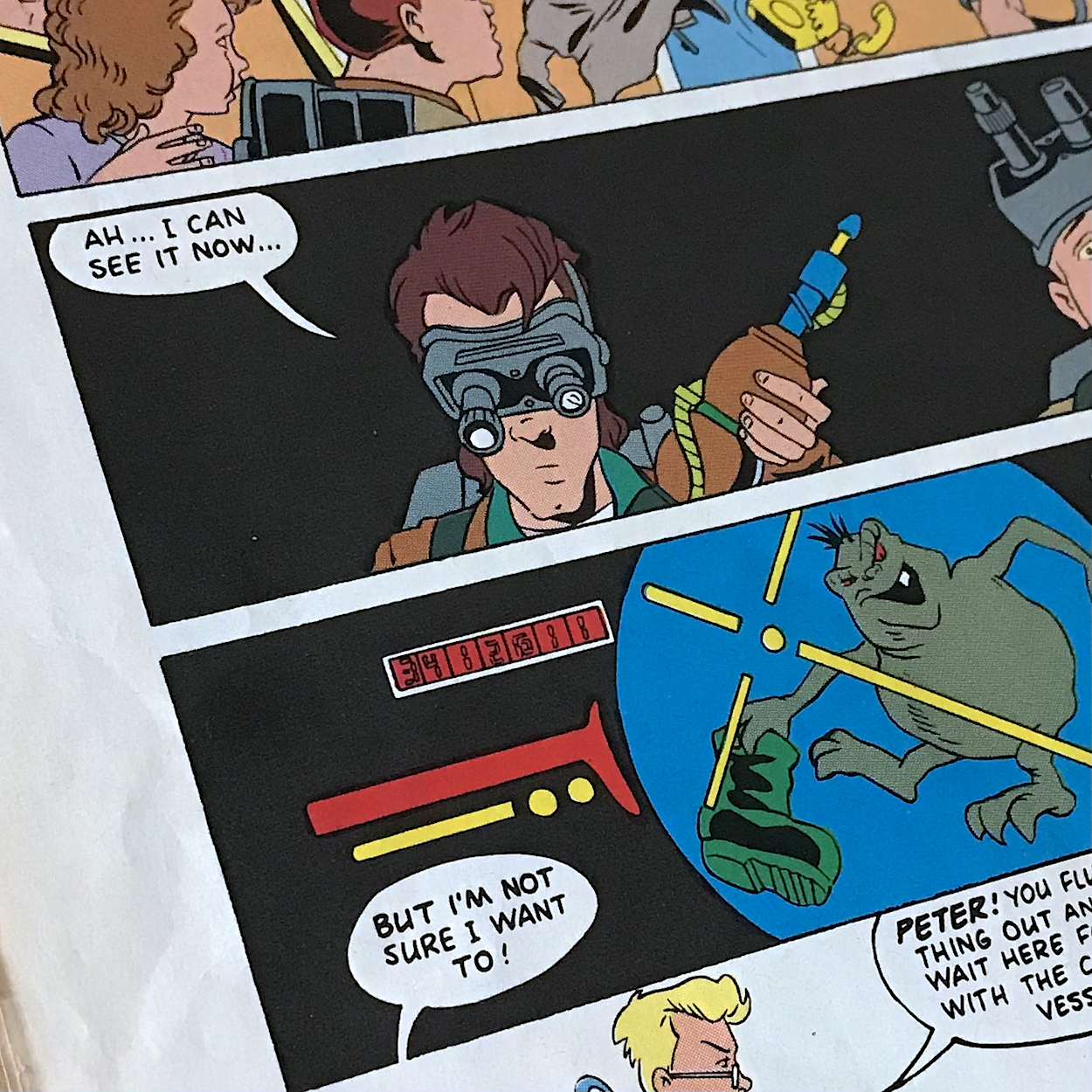
As with the other stories, “There’s a Ghost in my House!” takes place with the team already on the job and gives us an idea of the pacing we can expect, as well as acting as an introduction to the Ghostbusters’ equipment, interactions and most importantly their humour. That’s all it really needs to do, but there’s still a twist. The ghost itself is a buggane, a house ghost and harmless if treated right. The homeowner ends up feeling sorry for it and in the end keeps it as a pet!

Dave’s inking added ample shadow work to gloomy, haunted scenes in the annuals

The strip is drawn by Anthony Williams (Judge Dredd, Fate, Sinister Dexter) with Dave Harwood on inking, lettering by future Slimer! artist Bambos Georgiou (Knights of Pendragon, Spectacular Spider-Man, James Bond Jr.) and coloured by Steve White (Transformers, Xenozoic Tales in Jurassic Park, editor of Visionaries). One of the other stories, The Ghost Under the Hood is also drawn by Williams but with Dave Hine (Detective Comics, X-Men, Night of the Living Dead) inking and there’s quite the difference. For the previous blog site I’d read a couple of the annuals and Dave’s inking added ample shadow work to gloomy, haunted scenes and made for some atmospheric illustrations. Finally, this strip is coloured by Paul Jacques (Adventures of the Galaxy Rangers).

Again, it’s full of action and humour and plays out like one scene has been plucked from an episode of the cartoon. This was Richard’s intention, he wanted each story to take place right in the midst of the action whenever possible. Here, Ecto-1 is out of control, Egon unable to steer or brake. You can see from the page above the plan isn’t to Peter‘s liking and in the end the car suddenly stops, sending him flying. Now parked outside a Chinese takeaway, their perpetually hungry pet ghost Slimer appears from under the hood.

To establish a scene and scenario, pack in some action, wit, character and a funny conclusion in just three pages is quite the achievement. Indeed, by the time I finished reading the comic I was a little breathless (metaphorically speaking) with the fast-paced nature of the stories and gags.

The humour in their interactions was always well developed and genuinely very funny

The covers were mainly used to illustrate the text stories, doubling up as their title pages. So yes, basically we’d be getting two identical pages in our comic but we didn’t care, some of the front covers would have us frantically flicking straight to that story. This was especially true later in the run with some simply stunning artwork on the covers.

I’ll admit it took me a handful of issues before I read one of the prose stories as a kid because of a false perception they were aimed at younger children than me. But I remember discovering just how good they were and reading all the ones I’d glossed over one very enjoyable afternoon. From then on they often became the first thing I would read.

Space constraints might have been a factor here, but they would often focus on just a couple of members of the team per story. This would give each individual character time to shine, and in doing so the humour in their interactions was always well developed and genuinely very funny.

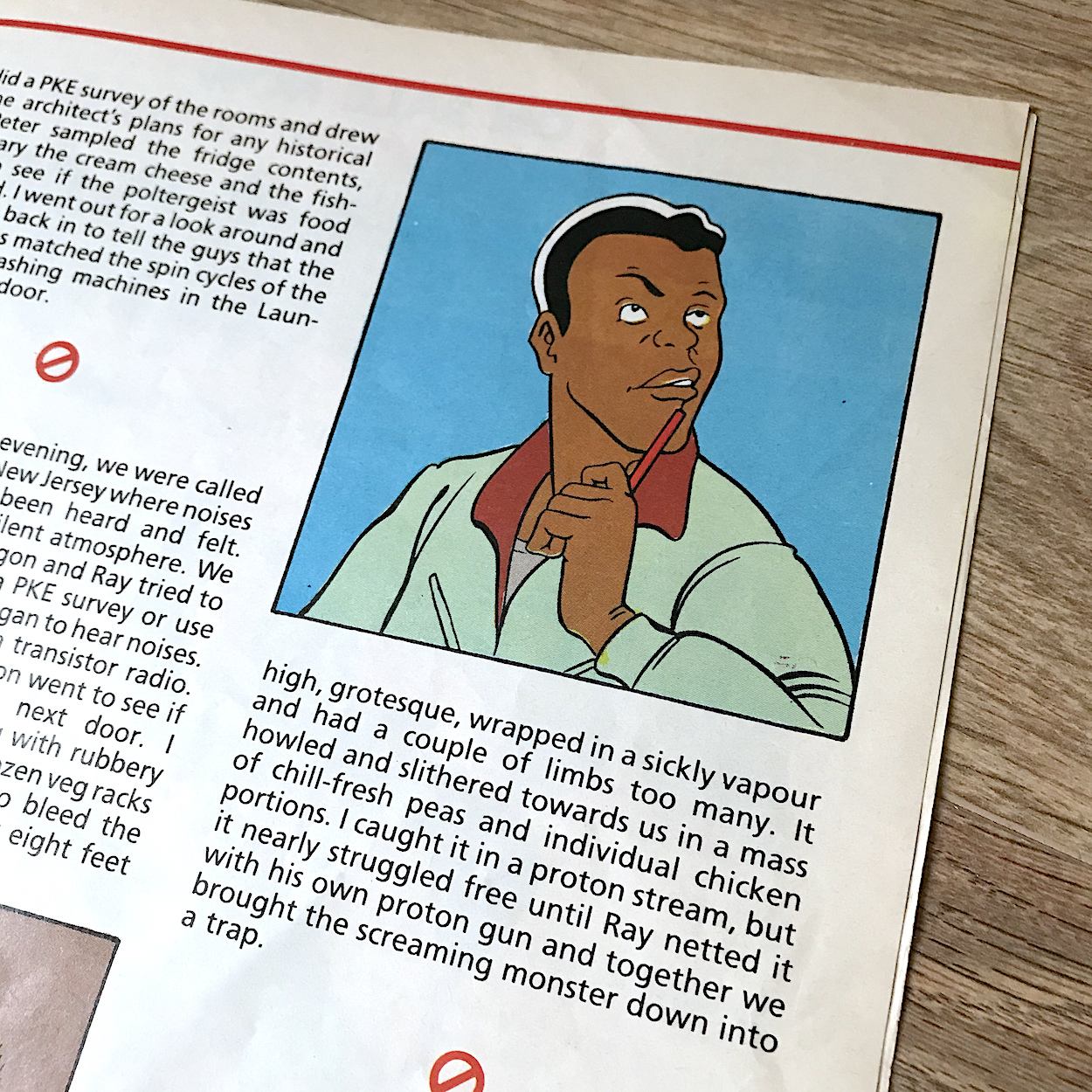
None were funnier than the Winston’s Diary series which ran in alternate issues, with Brian Williamson‘s (Doctor Who, Totally Primeval, Batman) panels repeated each time. In this issue, my favourite character takes us through a typical day in the life of the team. In this issue’s story, over the course of a few busts Winston’s cool head provides a hilarious contrast to the others. Here’s just one example, where a rock star is hearing strange noises in his apartment:


“The apartment was newly decorated and equipped. Egon took PKE readings in all the rooms. Ray spectra-scoped the walls and balcony. Peter explained that he must carefully examine the rock star’s expensive Hi-Fi and video in case the ghost was lurking there. We all heard weird noises, groans and whines. I bled the air bubbles from the newly-installed radiators and the noises stopped.”

Winston Zeddmore (Dan Abnett)

This repeats throughout the day, Egon and Ray going to ever more extreme methods of ghost hunting, Peter finding something to distract himself and Winston solving the problem with common sense. It’s deadpan humour at its best.

Another text feature would also be a highlight every issue.

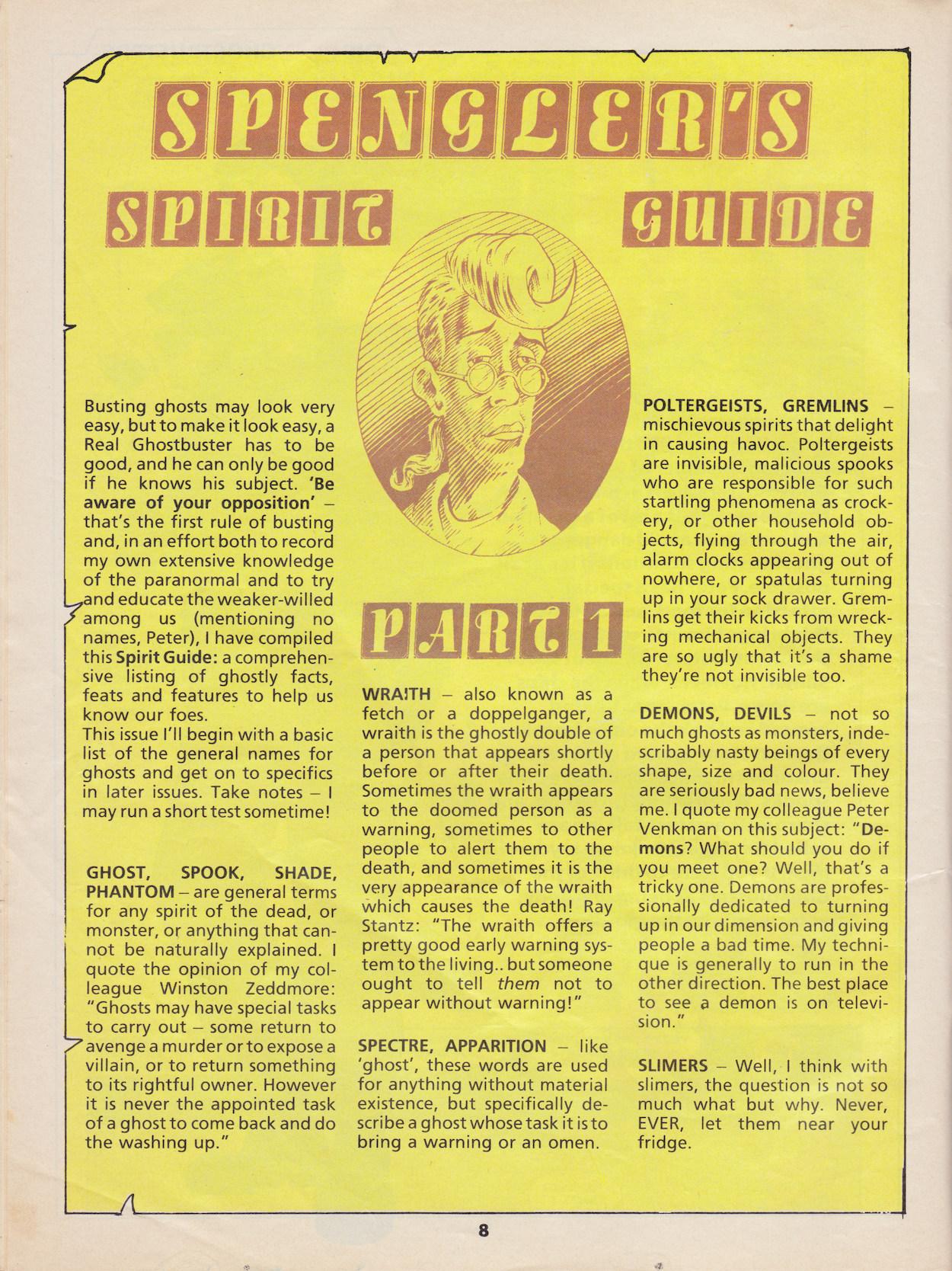
Spengler’s Spirit Guide appeared in every issue until just before the end. In the film and cartoon Egon would make reference to ‘Tobin’s Spirit Guide’ and this ongoing series was his own version of said tome. These were all written by Dan Abnett (Knights of Pendragon, Death’s Head II, Sinister Dexter), which is no small feat when you think about how the comic went weekly from issue 14 onwards and he created well over 150+ altogether! In an issue which featured The Four Horsemen of the Apocalypse the Guide detailed the other half dozen or so Horsemen that don’t get talked about. I can remember laughing hard at that one in particular.

I’ve found out recently that little illustration of Egon was drawn by none other than future Marvel US, DC Comics and 2000AD artist Cam Smith (Supergirl, The Incredible Hulk, Gen13). This means Cam’s work appeared in more issues than anyone else’s of course, technically speaking.

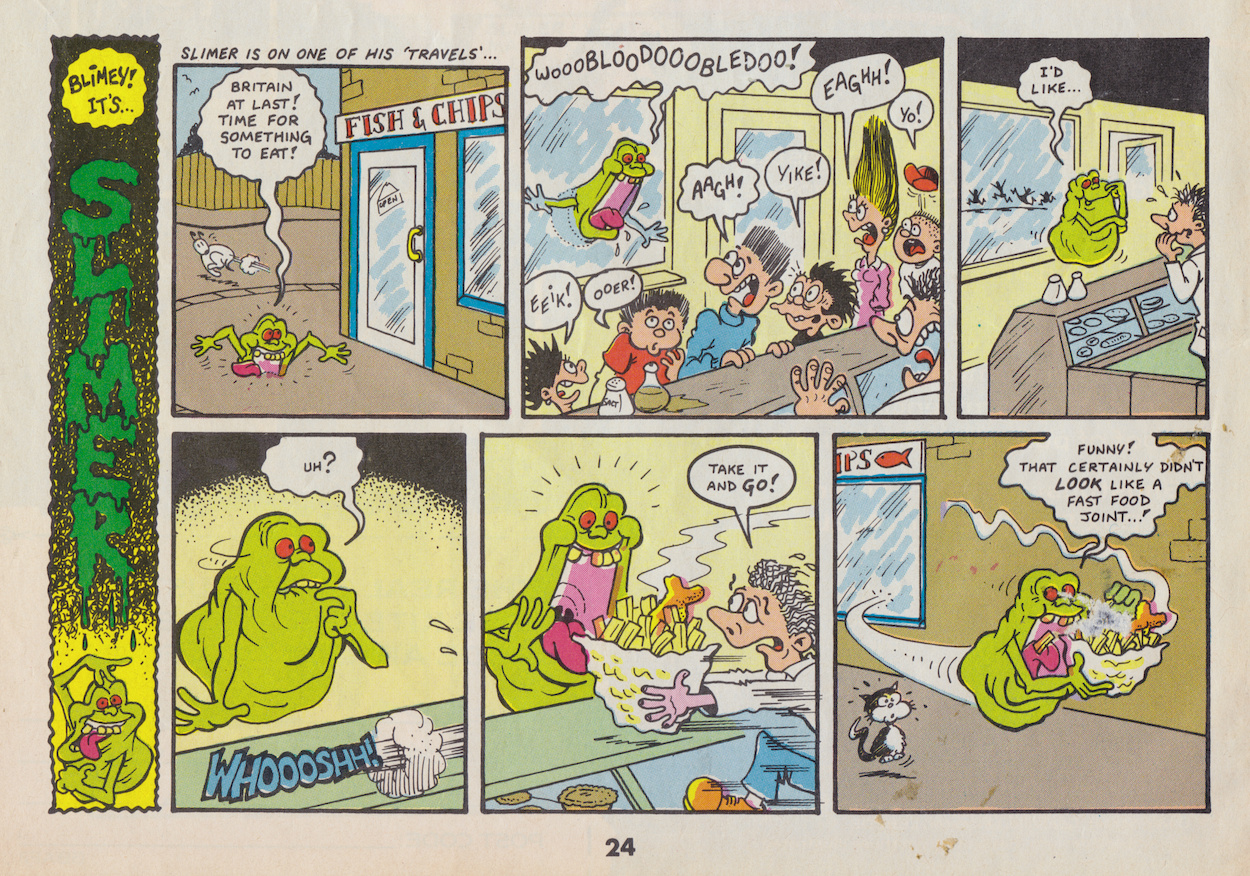
With Lew Stringer at the helm Slimer made his way to Britain for a slap up feed

This issue also contains the first fact-file. As a child I drew a combined figure of the Ghostbusters based on that final sentence. From what I remember Egon was the brain, Winston the heart, Slimer the stomach (obviously) etc. It was a real Frankenstein’s monster which I decided not to send in to the letters page because, well, some things just aren’t meant to be seen.

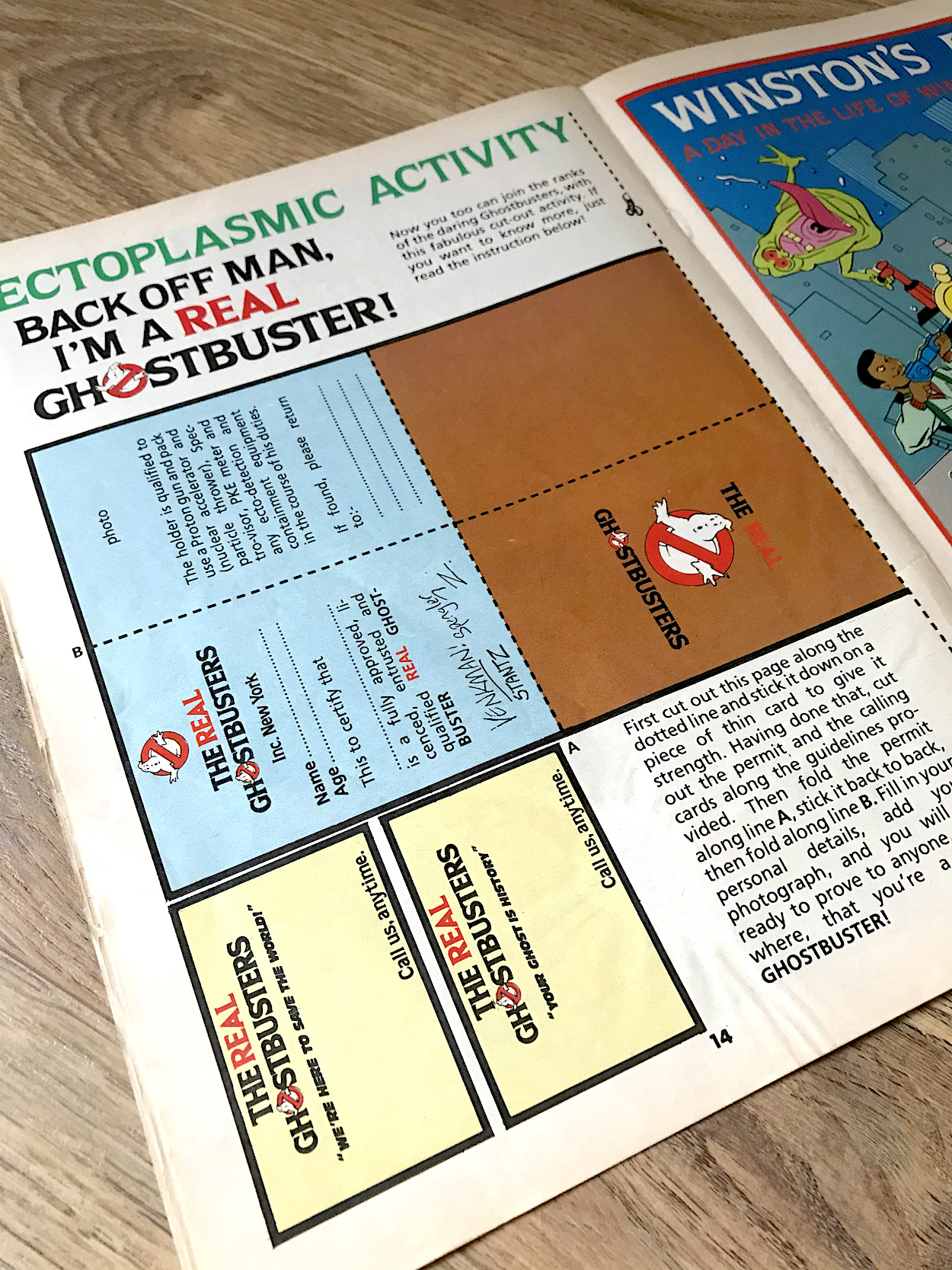
Once in a while the comic would include what it called Ectoplasmic Activity, such as this membership card and masks in a couple of future issues but it didn’t appear much, unlike Blimey! It’s Slimer. While it wouldn’t be too long until Bambos (letterer on our first strip) took over, at the beginning the little green blob was in the hands of OiNK‘s very own Lew Stringer. Of course, with Lew at the helm Slimer is going to make his way to Britain for a slap up feed.

Lew has written a blog post about his time on the comic, which you can read here.

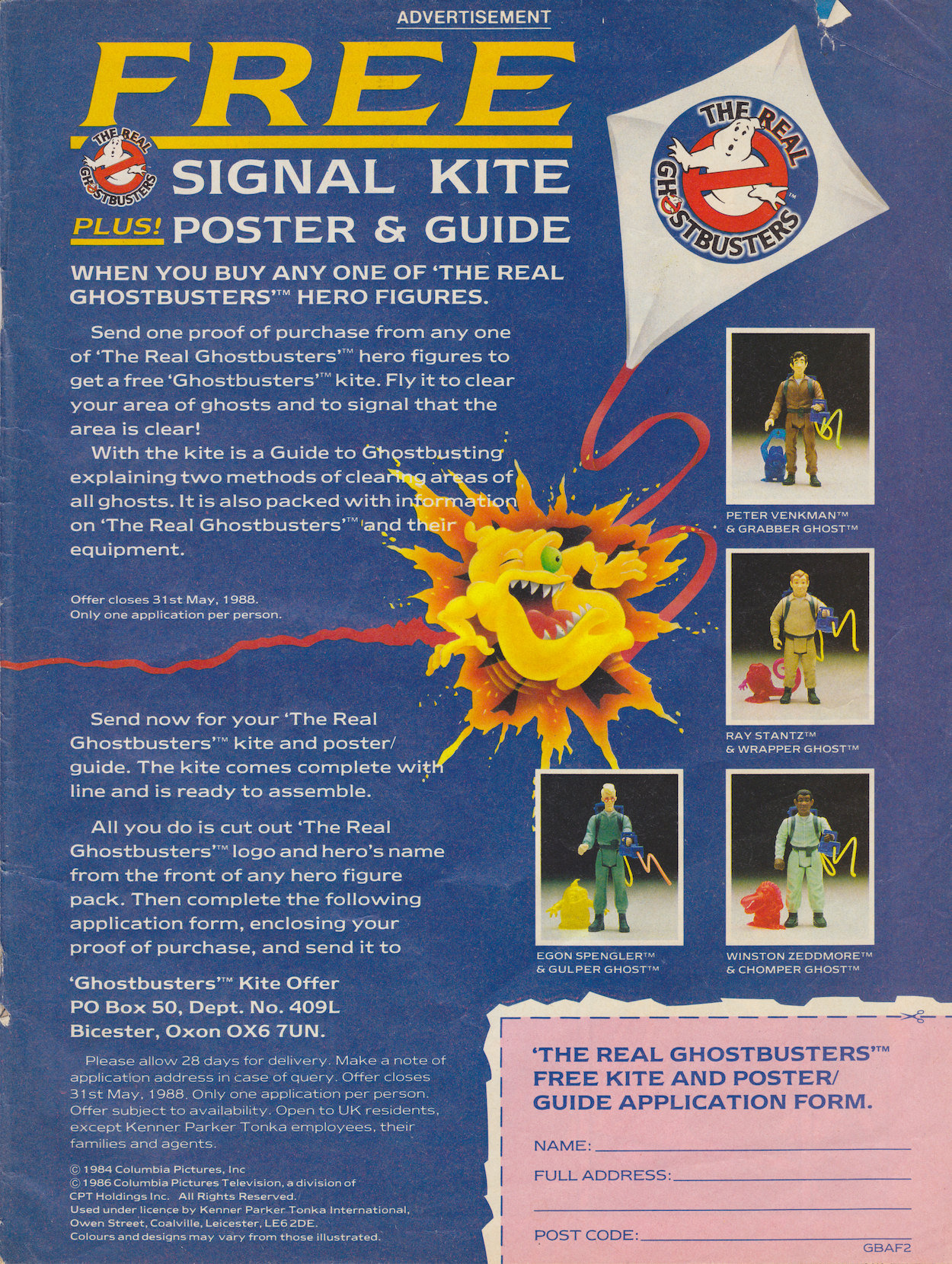
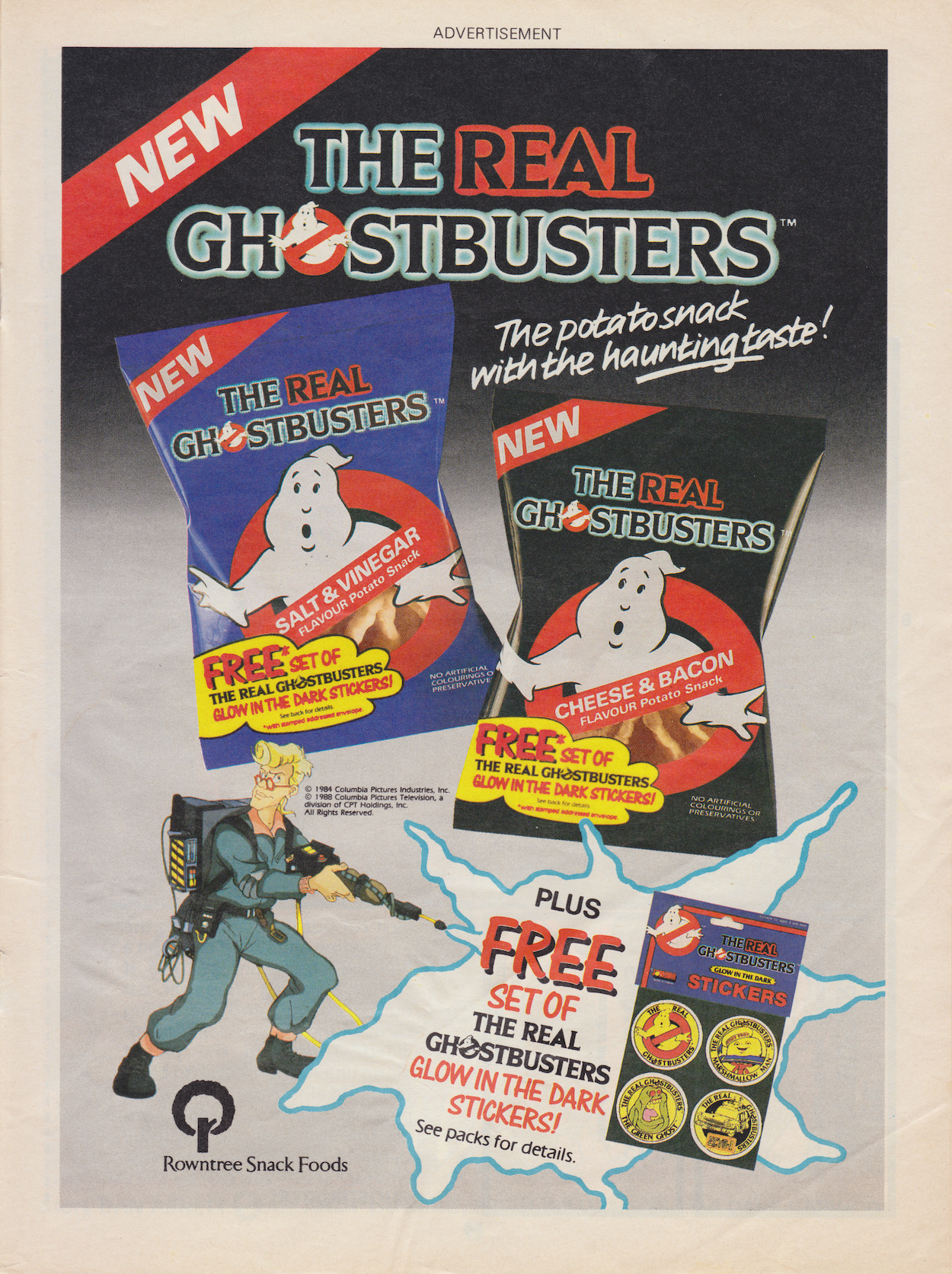
A look at a classic comic wouldn’t be complete without a look at the advertisements within, especially when they’re connected to the subject matter. I welcomed these action figures into my toy collection during Christmas 1988, along with Ecto-1, Slimer, the Stay Puft Marshmallow Man and a few other ghoulish monstrosities, and I recall I ate far too many packets of these crisps that summer too. They were surprisingly nice for a tie-in.

So how did this 33-year-old comic hold up for this 43-year-old? One word: brilliantly. I was surprised at how many times I chuckled while reading it, even though I’m not exactly the original target audience anymore.

I called it a “comedy comic” earlier, a term I’ve never used before. The definition of “funny comics” conjures up images of OiNK, Beano, Buster etc. But while this is indeed a comic which sets out to be as funny as it can be (something it succeeds at very well) it’s more the sitcom to OiNK’s sketch show. I also think calling it some combination action/adventure/funny comic would sell it short. The Real Ghostbusters was a unique comic and remains so to this day.

WHEN YOU GONNA CALL?

Just as it happened 33 years ago today I have an urge to collect this comic all over again. This issue has been immense fun and it just kept getting better and better. In fact, as brilliantly as it began my favourite time with the comic wouldn’t be until around issue 80 onwards.

It’s just such a fun comic there’s only one thing for it.

Now of course this will take a while, it was Marvel UK’s most popular comic at one stage and lasted a whopping 193 issues, alongside four annuals, specials, poster magazines and more, even a puzzle spin-off. It’s going to be quite the task so don’t expect any more real time reviews for quite some time. The daunting thought of covering a series of its size on a weekly basis has put me off in the past, but after reading this issue again perhaps I could use my own model of how I covered the publisher’s Transformers.

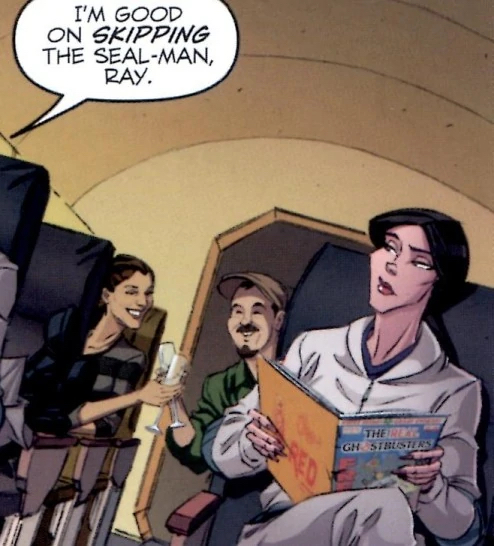
Finally, just look at this little Easter egg I found while doing some research, from the pages of IDW‘s Ghostbusters Crossing Over comic from 2006!

THE REAL GHOSTBUSTERS RETROSPECTiVE

THE REAL GHOSTBUSTERS ANNUAL 1

RETROSPECTiVES MENU

WHO YA GONNA CALL? MARVEL UK!

It was Boxing Day 1987 at 7:30pm and I was settled in my bedroom watching a movie premiere on my brand new Pye 12″ TV. A few months previous I’d rented a video of a cartoon series called Filmation’s Ghostbusters and had enjoyed it, but that was all the shop had. Then I found out a new ghost busting cartoon was to begin in January and the film that inspired it was being shown at Christmas. Some friends were big fans of the movie and were understandably confused when I asked them if it had the flying car and the gorilla in it.

Below is the original four-minute promotion short used to sell the concept of The Real Ghostbusters cartoon. Fans will notice some differences between this and what they’re used to, as changes would be made before it went into production.

So, back to 1987 and, knowing this movie had nothing to do with the Filmation show, I curiously began watching. Curiosity soon gave way to thrills and plenty of laughter. I quickly forgot all about the previous cartoon (based on a 70s live-action show) and on Tuesday 11th January at 4:20pm the first UK episode of The Real Ghostbusters (actually episode eight of season two) aired on CiTV and I was immediately hooked.

During Cilla Black’s Surprise, Surprise my enjoyment was taken a step further

Who could ever forget that famous intro and song to the show itself? It still sits up there as a quality cartoon with top writing thanks in no small part to co-creator/script editor J.Michael Straczynski (Babylon 5, Sense 8, The Resistance). However, during Cilla Black’s Surprise, Surprise a month later my enjoyment was taken a step further.

A young artist and comics fan by the name of Christopher McRoberts had been surprised by Bob Carolgees (and Spit the Dog) and taken to the headquarters of Marvel UK and put to work contributing a page to one of their comics. When it was announced this would be for an as-yet-unreleased comic based on my new favourite cartoon I immediately started recording the show. Well, once the VHS tape got up to speed anyway.

I have a distinct memory of playing that section back and pausing it at the exact moment Cilla or Bob held up the premiere issue of The Real Ghostbusters so I could try to see the date. All I could make out on the fuzzy pause screen was “March” and it had been mentioned it was going to be fortnightly. Knowing how Marvel UK dated their comics with that of the next issue (kind of like an expiry date) I patiently waited. When I say that I obvious mean very impatiently, running to the newsagents each Saturday to see if it was out yet.

The morning of 12th March 1988 lives rent free in my head to this day. It was the last Saturday the new comic could be released for its cover date to include the month of March. My dad left for the newsagent and I sat by the window in our upstairs living room waiting for him to return. When I saw him walking up the lane I was filled with excitement but he had returned with no comic. The newsagent had told him it wasn’t there and they had just the one box left to open so in all likelihood it was late.

Crestfallen, I put all my hopes into that final box. I mean, a first issue can’t be late! I was told to wait until the afternoon but instead after one hour I ran to the shop myself. I didn’t even stop to find it on the shelves and instead went straight to the counter to ask if it had arrived. It had, and they’d kindly put a copy aside for me. I immediately asked for a regular order before I even left and again I ran home as quickly as my feet could take me and jumped up onto the sofa to read it.

This Friday marks the 33rd anniversary of that very day and the premiere issue of one of Marvel UK’s most successful comics. I’ve read a few of the annuals in previous years for the old blog site but now I’ve been able to get hold of a copy of #1 and I’m going to give it the full OiNK Blog real time read through this Friday. I may not have any more issues yet (yet!) to follow up on but it’s still going to be fun to relive this one.

Oh, the memories this issue brings back! Back in 1988 I was really enjoying the cartoon every week, but it was the comic that cemented me as a super fan. Years of comics, books (I’d highly recommend those annuals above if you want to dip your toes in and try out the comic), toys, records, videos and more were to follow and, more importantly, some very happy memories.

THE REAL GHOSTBUSTERS iSSUE ONE

THE REAL GHOSTBUSTERS ANNUAL 1

RETROSPECTiVES MENU