
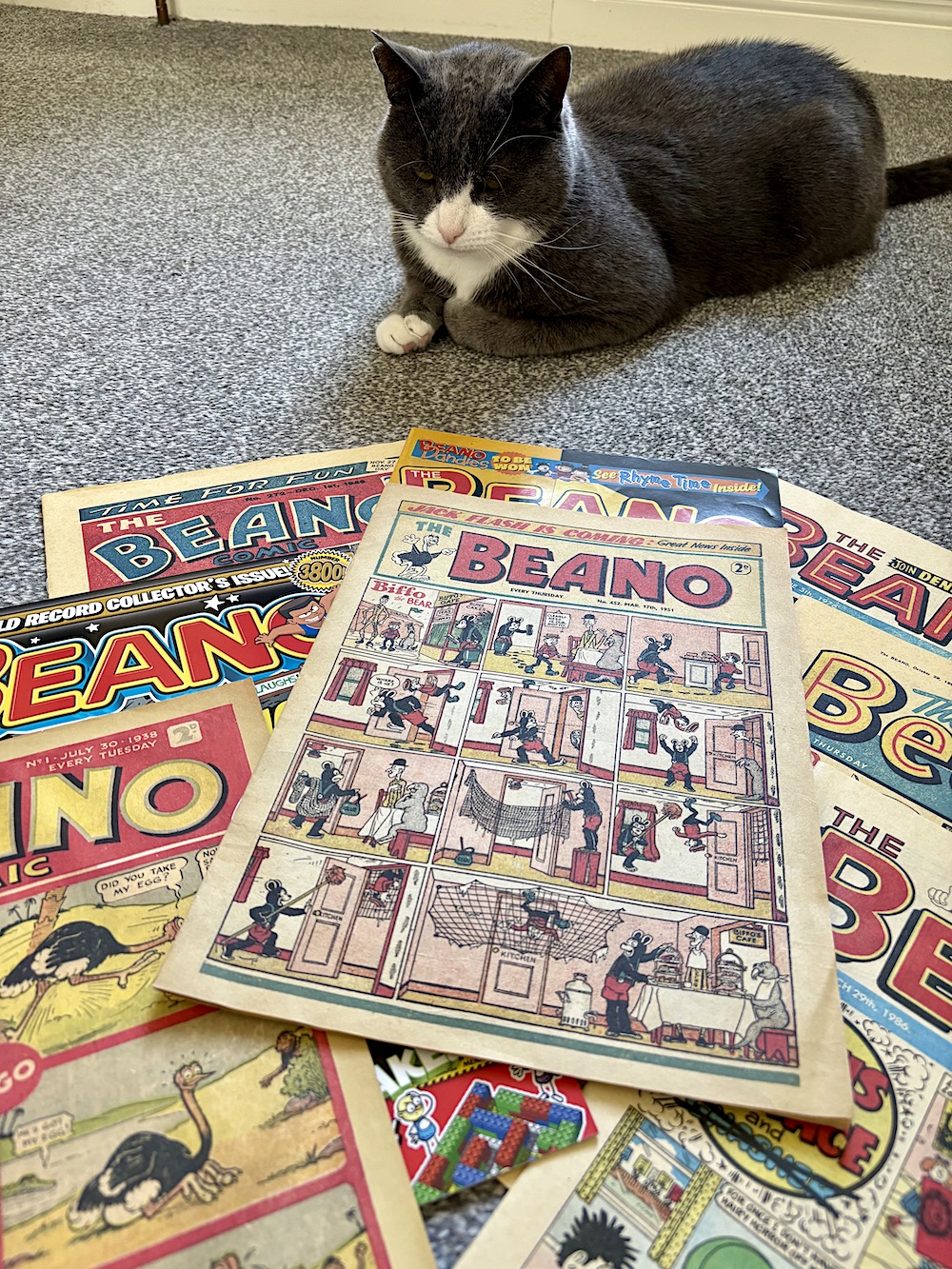
Three months and six years after our last entry comes our third edition of Beano (or, THE Beano as it was called) from DC Thomson’s 80th Anniversary Box Set. It’s another lovely reproduction, the paper feels authentic and the printing once again could easily fool us into thinking we’re reading an original. There was also a big improvement on the title banner by this stage in the comic’s life; there was no need to be disgusted by Big Eggo as the new mascot. He wasn’t inside though. So who was?
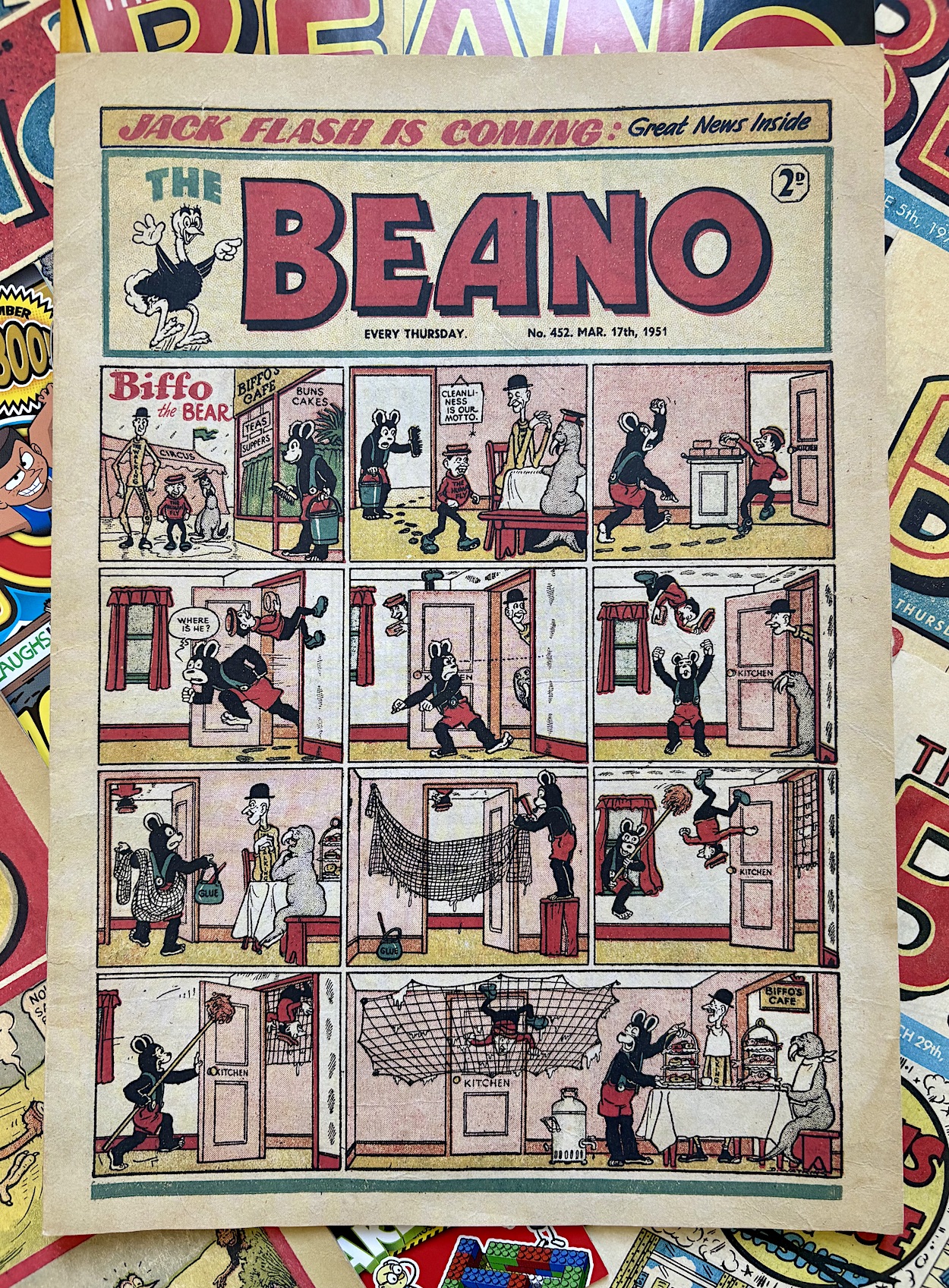
It’s another 12-page issue (the World War II paper shortages still in effect) and as a result the overall make up of the issue feels vey different, even compared to the classic issues we’ve seen so far. There are less than five pages of comic strip here, the rest are made up of picture-panel and prose stories. This meant the kids still had plenty to read inside such a small comic and it was back to a weekly schedule after alternating with The Dandy during the war.
Dudley D. Watkins’ Biffo the Bear kicks things off and I’ll admit I can take him or leave him. Reading friends’ Beano books or issues as a kid I was never that enamoured with him, so I don’t have any particular memories of his strips. They must’ve been a bit forgettable for young me despite being one of the comic’s mainstays. He was the cover star from his introduction in #327 in 1948 all the way until #1677 in 1974 when he was dethroned by a certain character who makes his debut in this very issue.
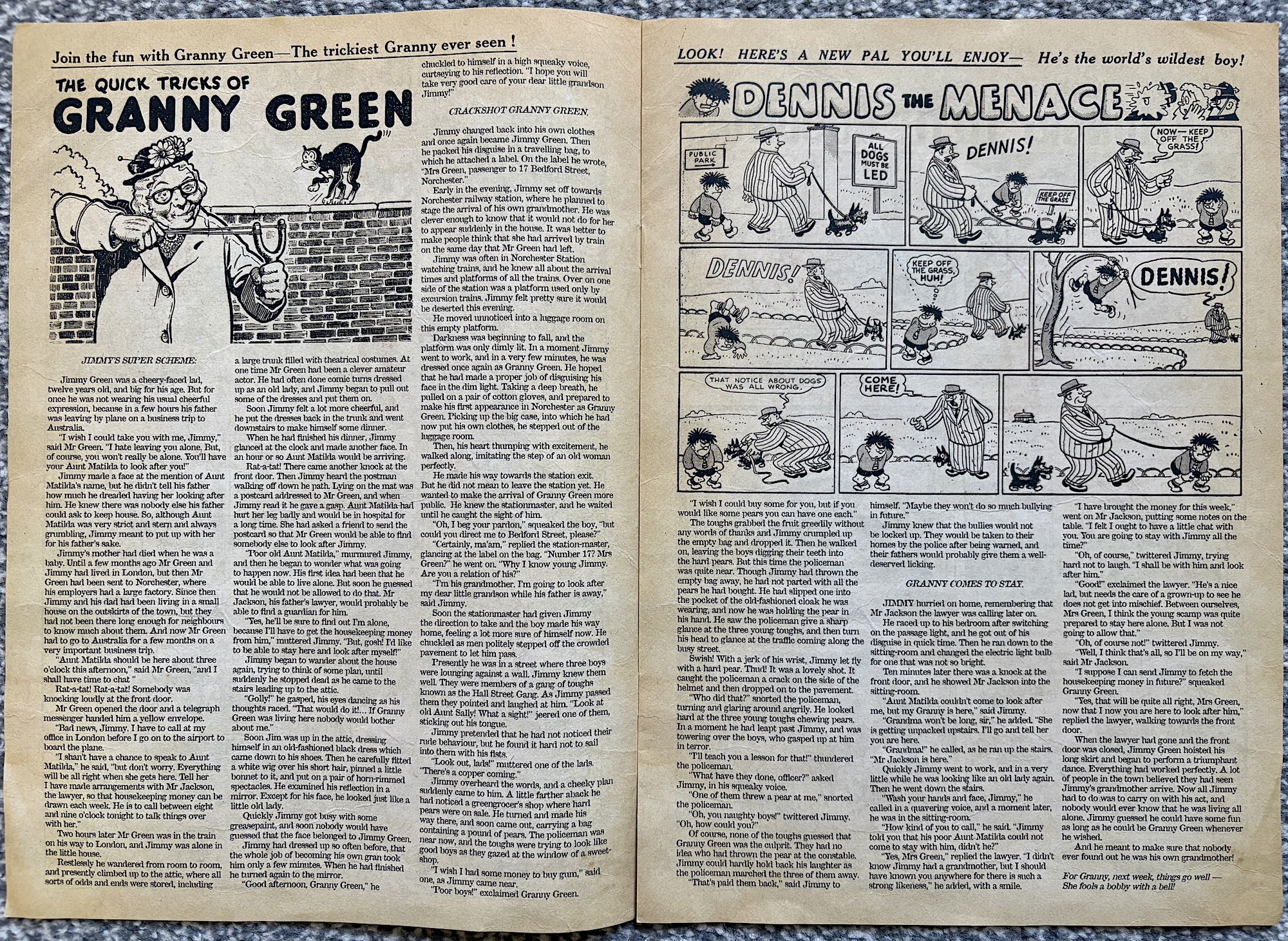
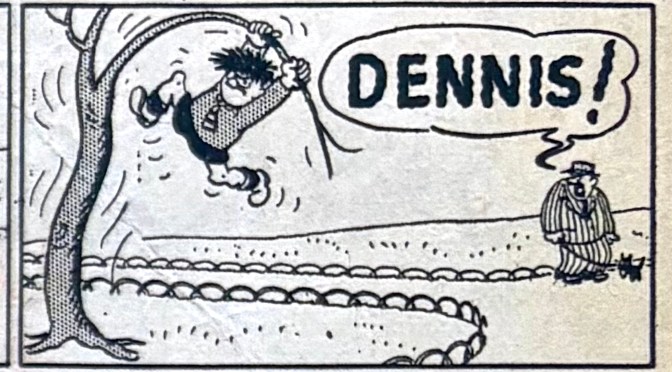
Yep, this was the week readers were introduced to Dennis the Menace, drawn by David Law and developed by him and the comic’s chief sub-editor Ian Chisholm, in this fun little strip I originally read in the 50th anniversary book. While I do prefer the modern Dennis and the more sophisticated humour (obviously such things change over time) I did laugh at the quick transition between the 4th and 5th panels above! Of course, we now know this Dennis is our modern day Dennis’ dad in the current Beano, which is a nice touch. A quaint start for a true comics megastar.
The Granny Green story (now drawn by Gordon Ramsbottom) yet again reintroduces the whole premise as if this was Jimmy’s first time dressing up as his fictional relative, while confusingly also acknowledging he’d done so loads. It’s probably meant to play out as a repetitive gag the children reading are in on, knowing full well what’s going to eventually happen. I can imagine the kids of the day cheering him on to dress up, but today it reads like the exact same story from #1 dragged out over a page-and-a-half.
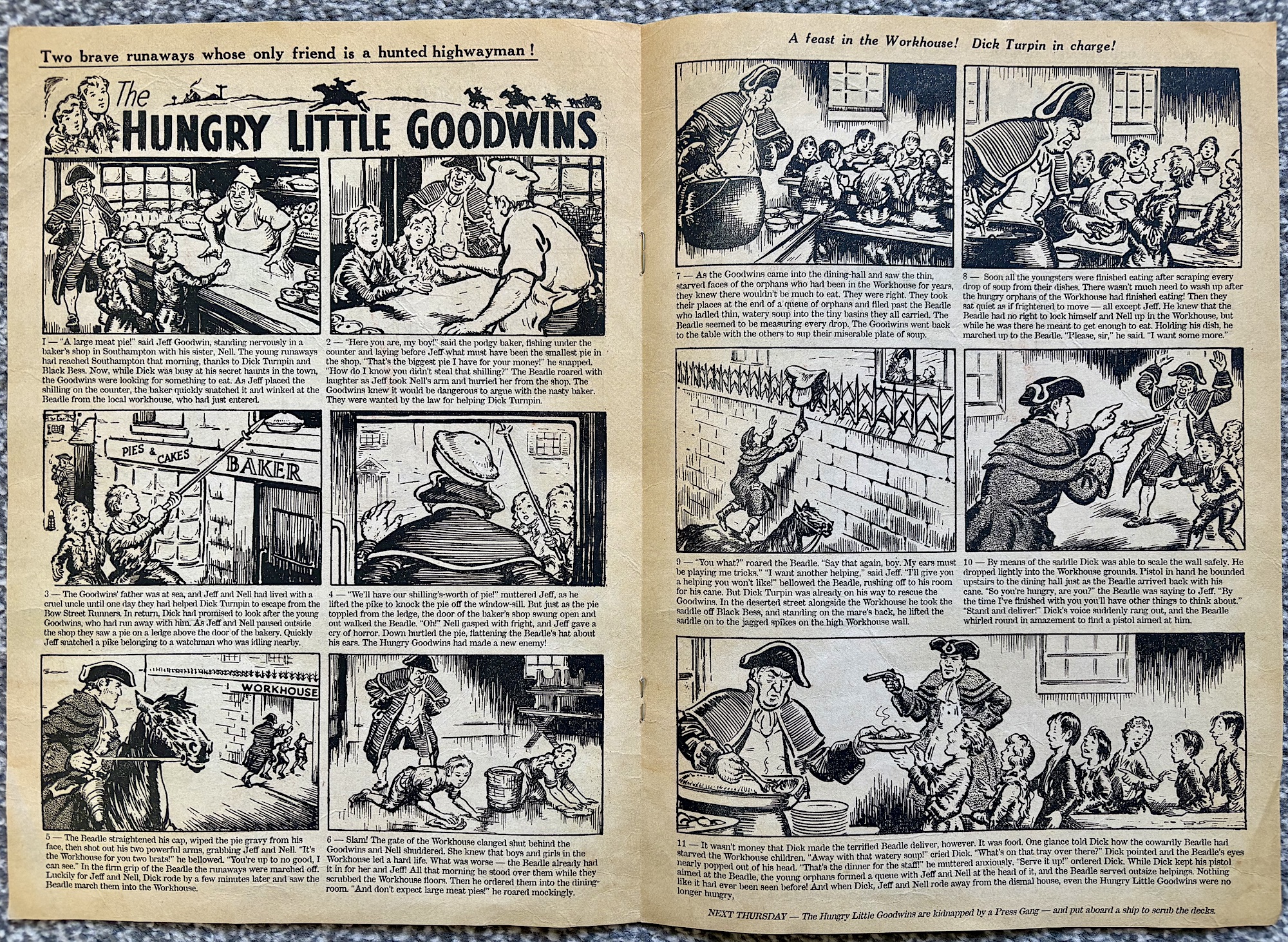
Noel Fielding’s hilarious TV series The Completely Made Up Adventures of Dick Turpin may have spoiled me somewhat for comical tales about that particular historical figure, but in 1951 I’m sure Fred Sturrock’s The Hungry Little Goodwins provided plenty of smiles. Strangely, the picture-panel stories of this series that ran throughout 1951 were adaptations of earlier prose stories from just a couple of years previous.
Always hungry, the kids’ appetites were insatiable and it was always up to Turpin to get them out of whatever situation their rumbly tummies got them into. It does go rather dark in this issue with its workhouse and all that but it’s still fun and as unique a serial as you’re ever likely to find. On the back cover is a character I remember from reading friends’ copies back at school, and from about three months ago in #272.
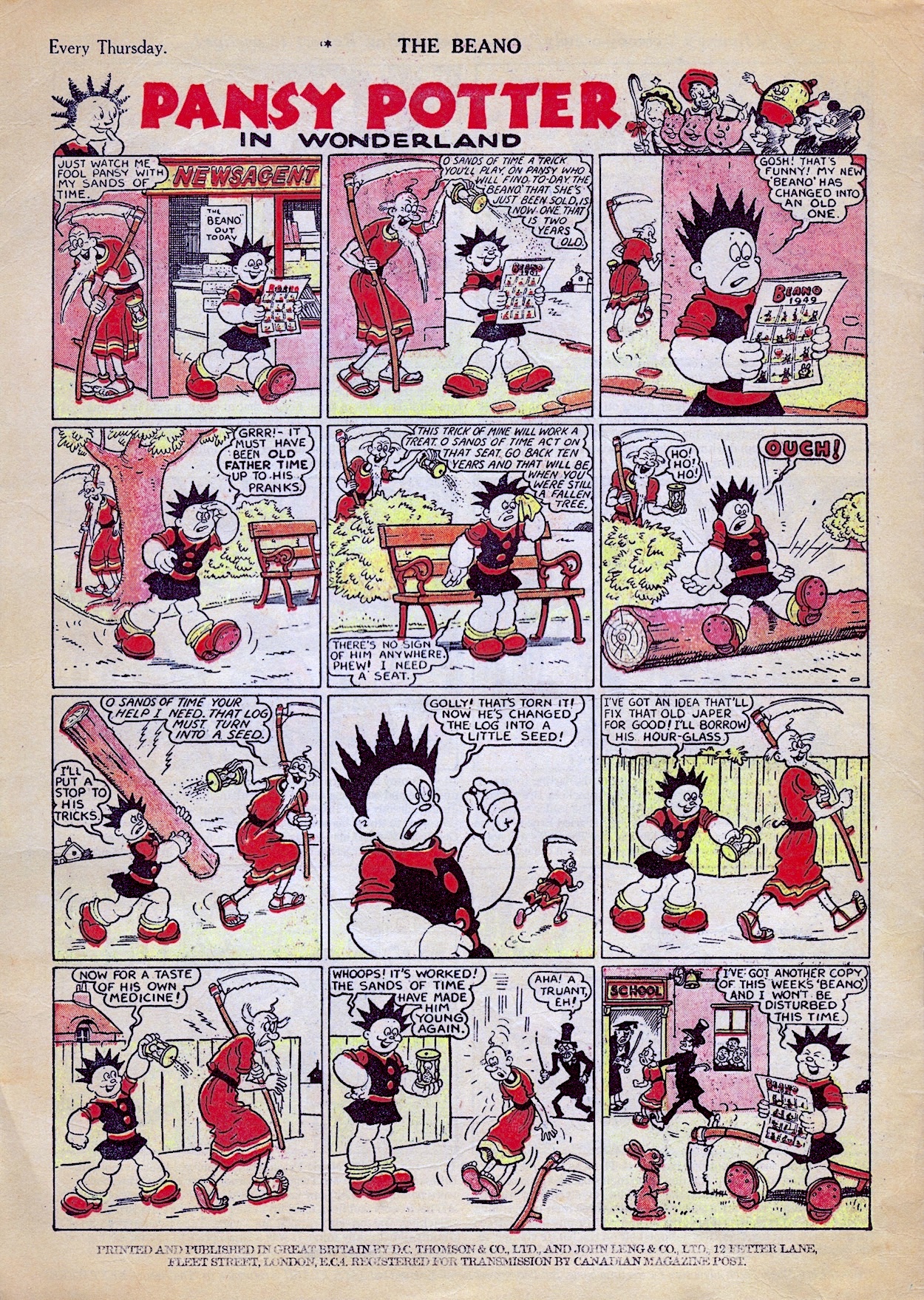
This was Pansy Potter’s second series in The Beano, running from 1949 to 1955, with “in Wonderland” replacing “the Strong-Man’s Daughter” as the sub-title. She was now taking up the whole rear cover on her own, such was her popularity. Somehow stepping into a wishing well into Wonderland, Pansy found herself surround by characters from nursery rhymes. Bit random.
Pansy Potter was the first series to be printed in full colour on the back page
Drawn by James Clark by this stage, it might sound like a rather random set up but it hit all the right notes for the readers. All the proof you need of how well received it was is the fact this was the series the comic decided would be the first strip to be printed in full colour on the back page, as mentioned when we last met Pansy.
Elsewhere, Lord Snooty and His Pals are still in the same format (and still on the same page) and Tommy’s Clockwork Town is the unbelievable prose serial of a boy with a full clockwork town and its residents flat-packed in a lorry ready to be deployed in minutes. Jimmy and his Magic Patch picture-panel stories came to an end and the details of that exciting news on the cover amounts to no more than two separate sentences accompanying two stories inside.
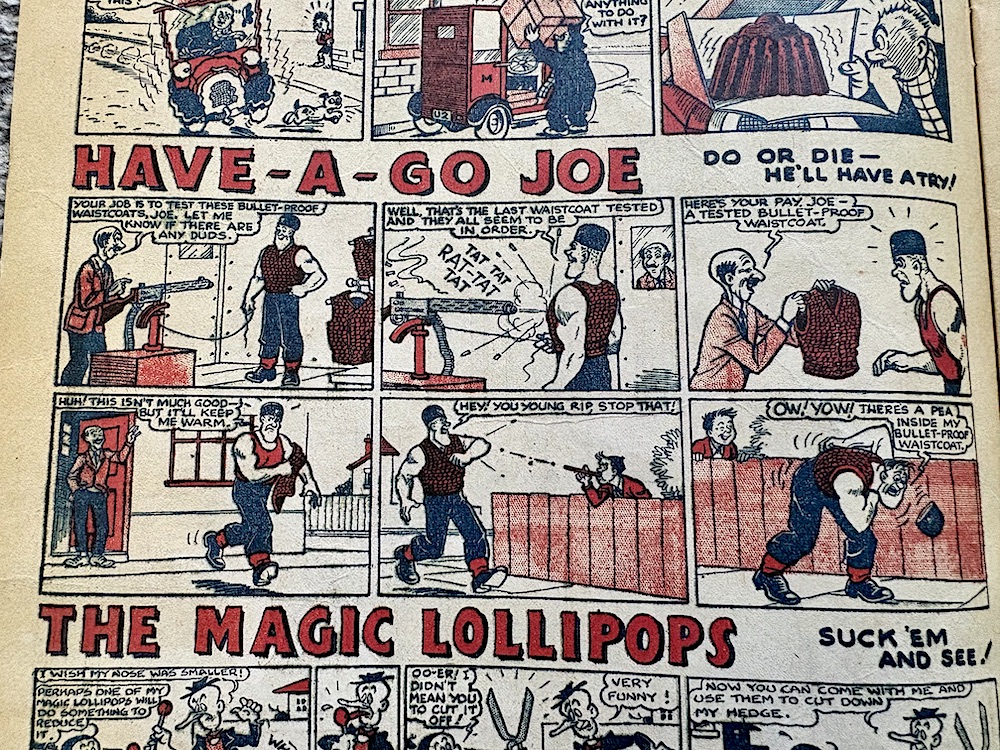
Pansy may have finished the issue but I want to finish the review by nipping back to page two and Bill Holroyd’s Have-A-Go Joe. Judging by this one strip alone, Joe seems like someone who was up for anything and the more ridiculous and dangerous the better. There’s got to be an easier why to make a living. That guy he’s working for could also do with some heath and safety in the workplace training if this is how he tests bullet-proof vests. Joe would last for just over 100 issues before disappearing, then appear briefly in The Beano Cinema before returning much later in 1997!
Next time, we’ll jump forward to the ‘Year of Africa’, 1960 and the time of the first laser, the 50th star on the American flag, Cassius Clay winning gold at the Olympics, the iconic photo of Che Guevara, the Civil Rights Act, the opening of the Bluebell Railway and the premiere of The Flintstones. The inclusion of the next issue in the box set celebrates free gifts and, finally, there’s an increase in page count. So, more to read, review and (hopefully) laugh at in The Beano #954 on Monday 26th October 2026.
 OiNK Blog