Tag Archives: Retro Gaming

ROUND THE BEND GAME: COMMODORE FORMAT #17

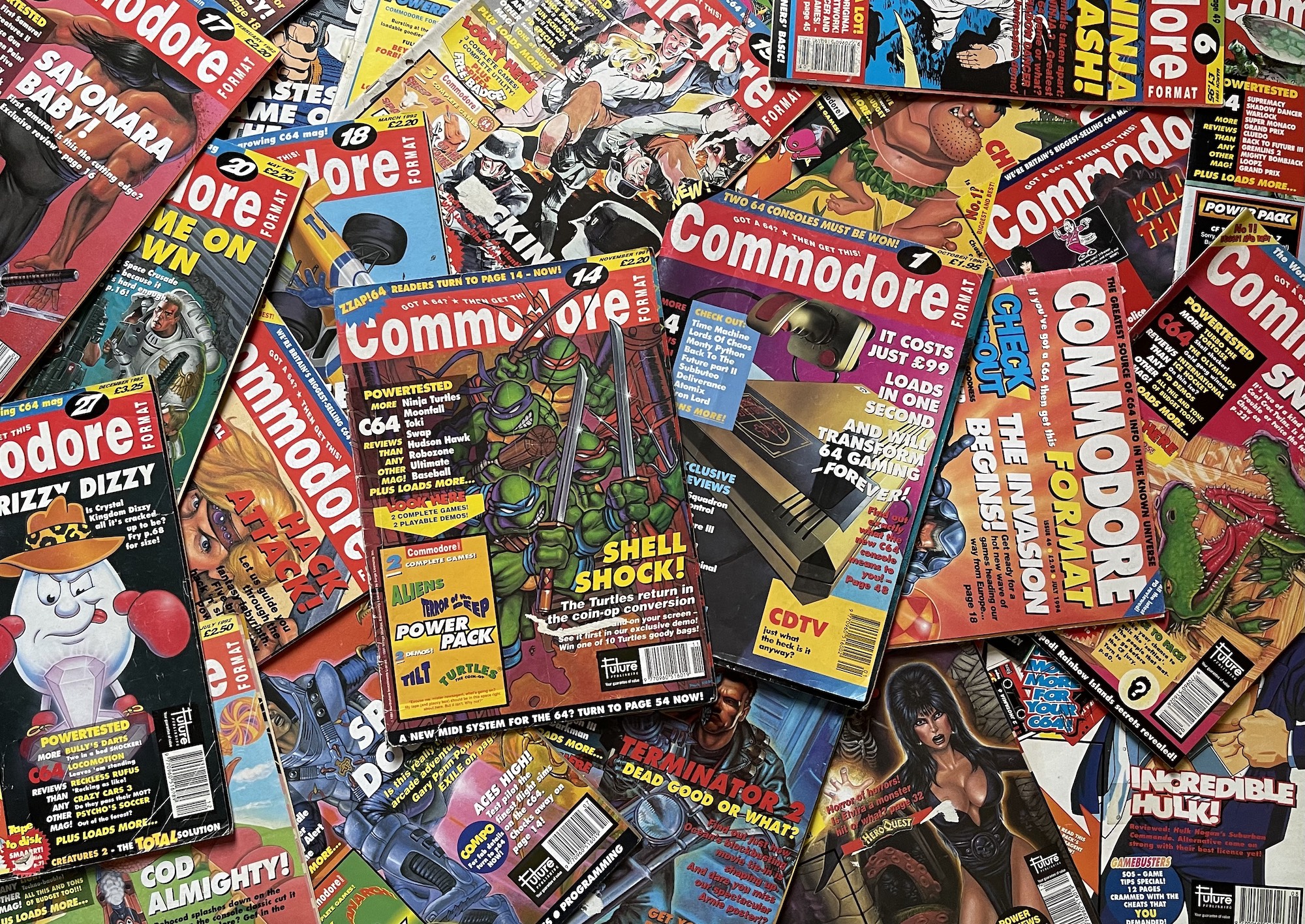
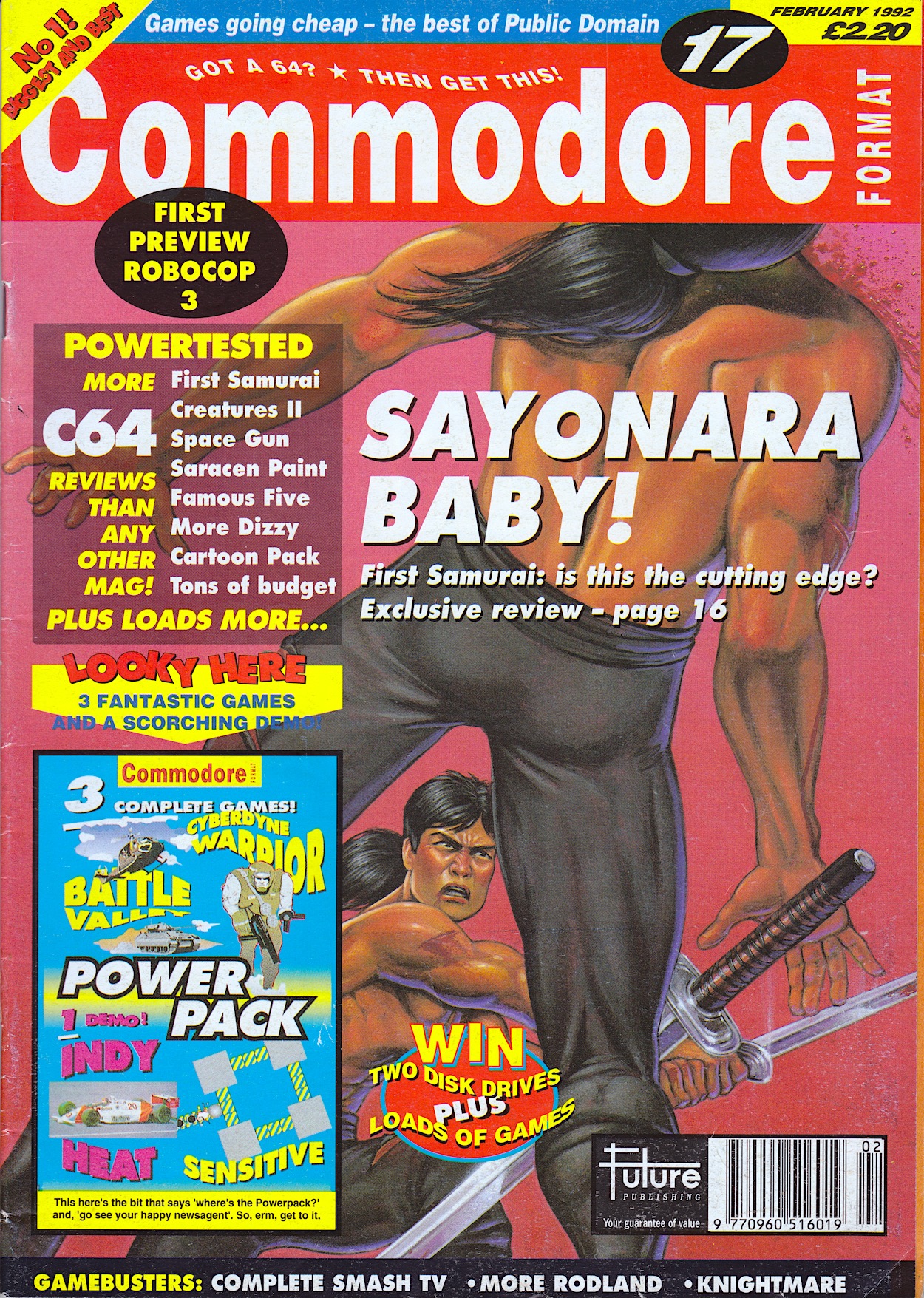
This issue of the simply superb Commodore Format, on sale this day 32 years ago, was my fourth at the time and the first I bought after finally receiving my Commodore 64 computer for Christmas. (You can check out a more personal look at CF in my retrospective on #14.) This was a memorable issue for sure, with certain game reviews leading me to some lifelong favourites which I’d countless hours of fun with, as well as having a super addictive covertape game. However, I’m including it on the blog for none of these reasons.

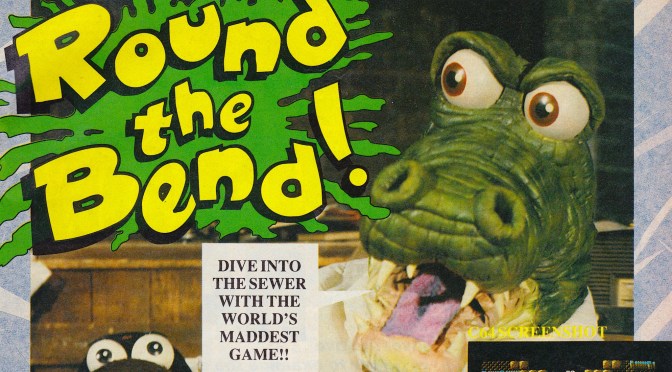
Instead, CF makes its fourth appearance on the OiNK Blog because of a review inside for a game I didn’t purchase. It may have been based on a favourite TV show but there was only so much pocket money I could splash out on my C64 and it had very stiff competition this month. Now, decades later it’s time to take a closer look at that review because the game is based on a series dear to the hearts of pig pals everywhere, namely Round the Bend.
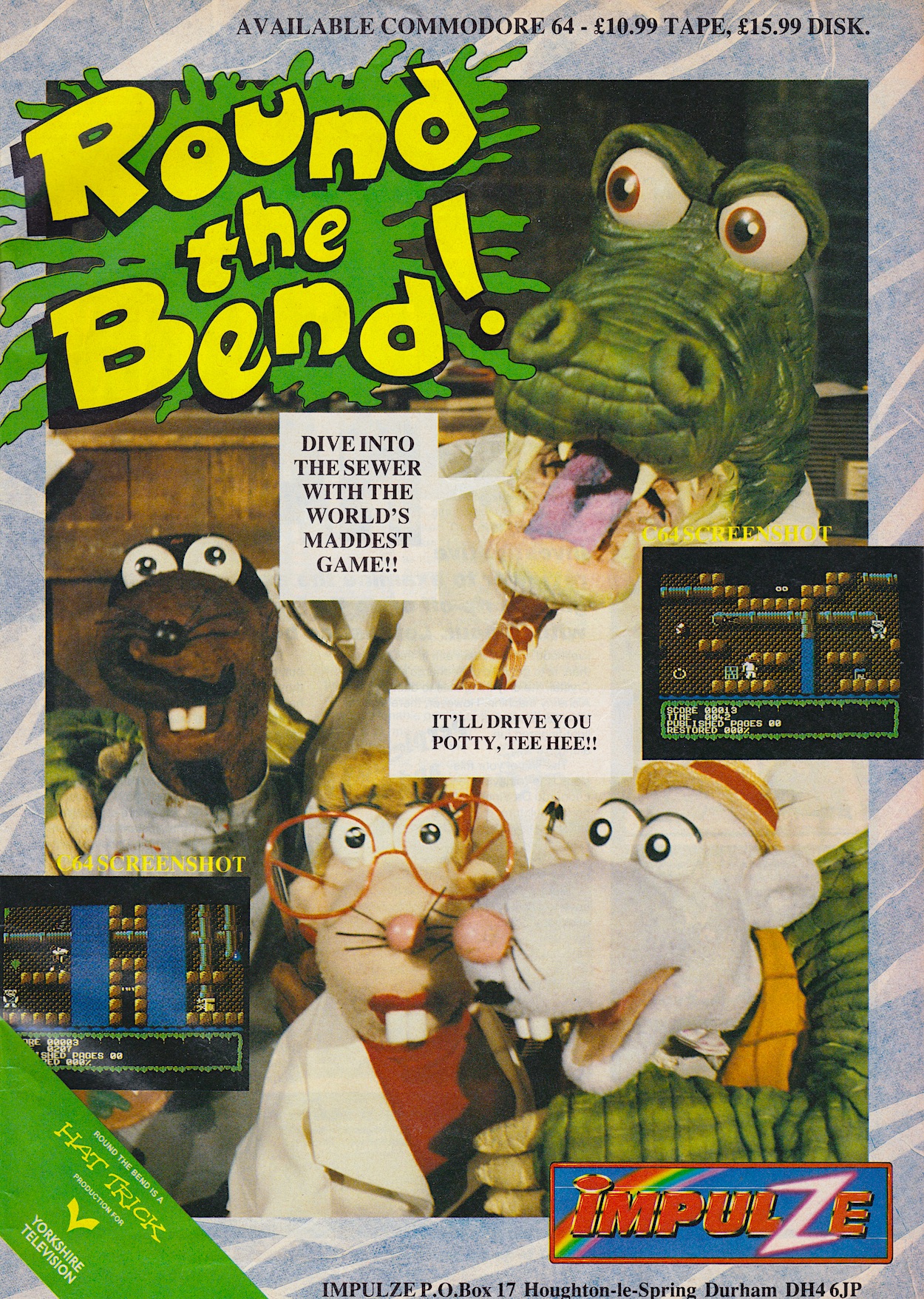
Originally intended to be an OiNK television show (much more on that at a later date) Round the Bend was an electronic comic show created by the same trio of Patrick Gallagher, Tony Husband and Mark Rodgers. With the huge Spitting Image Workshop puppet of Doc Croc as its editor and various animated comic strips with a certain sense of humour, it was OiNK in all but name. Running very successfully for three series, and winning awards as it did so, it was inevitable we’d see a computer game at some point.

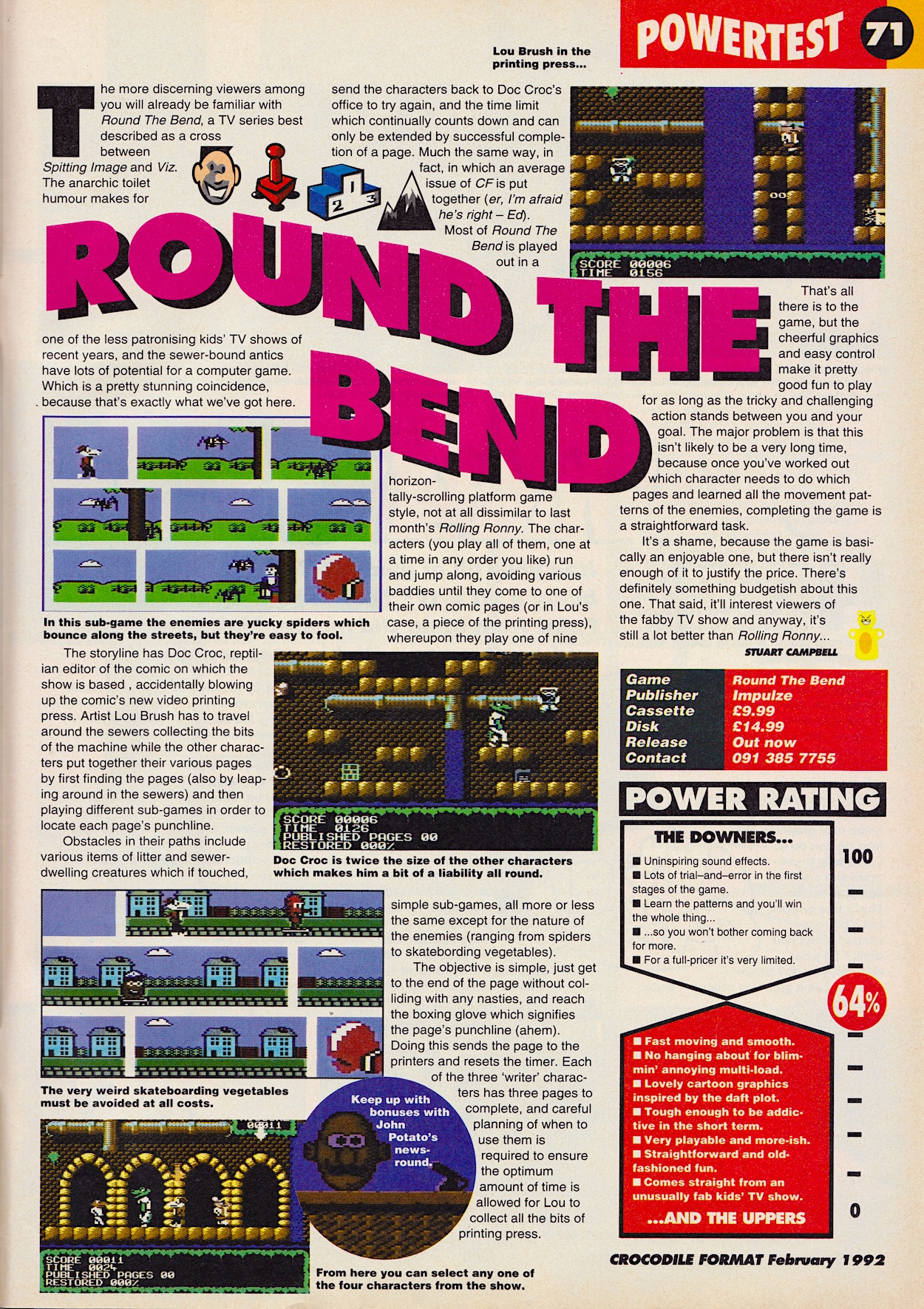
Taking the tired old formula of turning a licence into a platform game, the general consensus appears to be that it plays well but was far too easy. So it was fun but not for long enough to justify the full price. As was customary at the time this would be rereleased a year or so later as a budget game for a few quid, but at a tenner or more it got knocked down for its value for money. It seems to concentrate completely on Doc Croc and his ratty writers too, which seems a waste as the show was chock full of zany characters who could’ve brought many different forms of gameplay. At least John Potato Peel makes a cameo!
Like the OiNK game before it there was nothing too original then, but what was there was fun. A quick glance at a “64%” score and it’d be easy to dismiss it, but reading Stuart Campbell’s review has me thinking it may have got a higher score upon rerelease. I can find no evidence of a further CF review, however Zzap!64 scored it 52% initially but this jumped to 74% after its price drop. Nothing to write home about then, but an interesting look into a curious OiNK-adjacent piece of merchandise nonetheless.

As is customary when looking at these old magazines I can’t help but reminisce and have pulled out some other highlights that had me fondly remembering reading this for the first time. First up is one of the games on the covertape. According to some sources online this was a copyrighted piece of software hacked and distributed illegally through the public domain, CF unknowingly giving away commercial software. But as you can see here in the first paragraph of the instructions page that’s incorrect; a piece of misinformation that gained traction in C64 circles despite the explanation of a hacker’s name on it being front and centre here.

The idea is a simple one but it is oh so addictive. You control that little silver circle and must destroy all the tiles on the screen and make your way to the exit. Thing is, the tiles explode one second after you touch them, so forward planning is essential. You must plot out your route over increasingly complex layouts because once you’re moving you can’t stop or else you’ll explode too. It’s just as addictive today as it ever was and is best played on a real machine with a joystick. One of my top C64 games of all time and it was a freebie!

Speaking of favourites.
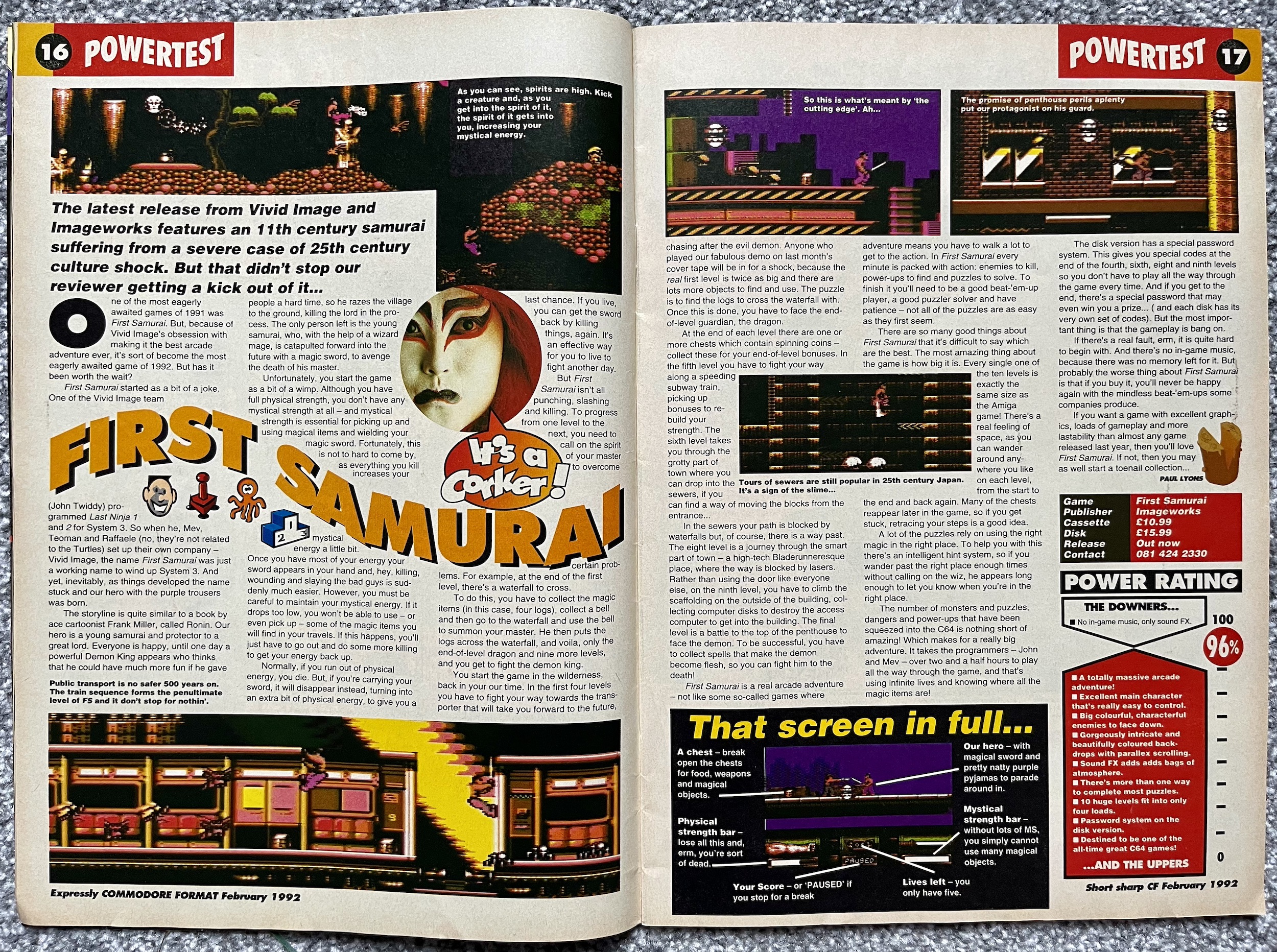
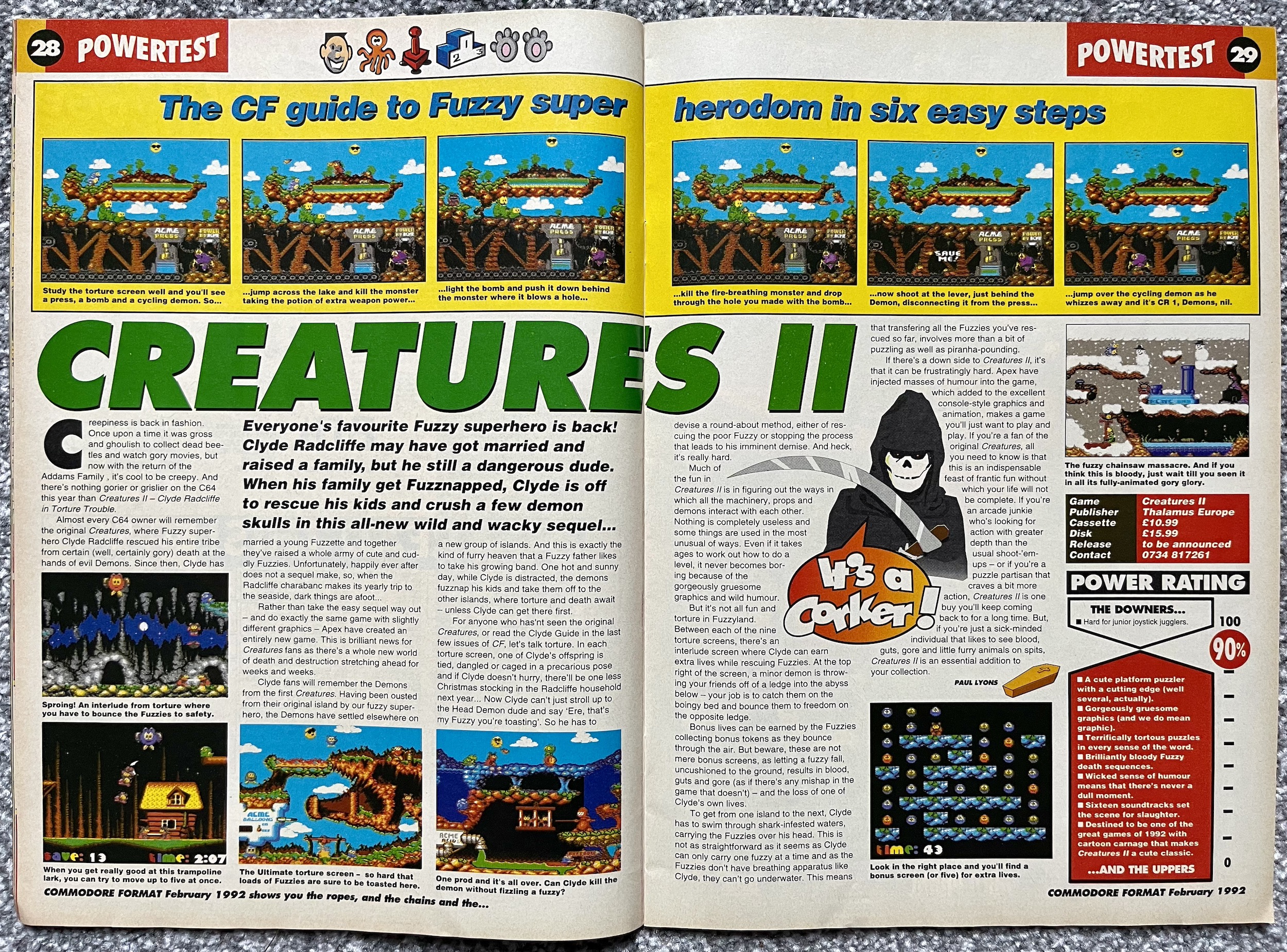
In the Commodore Format retrospective I showed you the preview for First Samurai and the Making Of feature for Creatures II: Torture Trouble (and I also embellished on the magazine’s scoring system), both games impressing me from my first issue. Now at last both were available to buy! They blew away anything I was playing on friends’ consoles at the time and each had me glued to the screen for hours. For a computer created long before Nintendo even released their first console, these were pretty incredible.

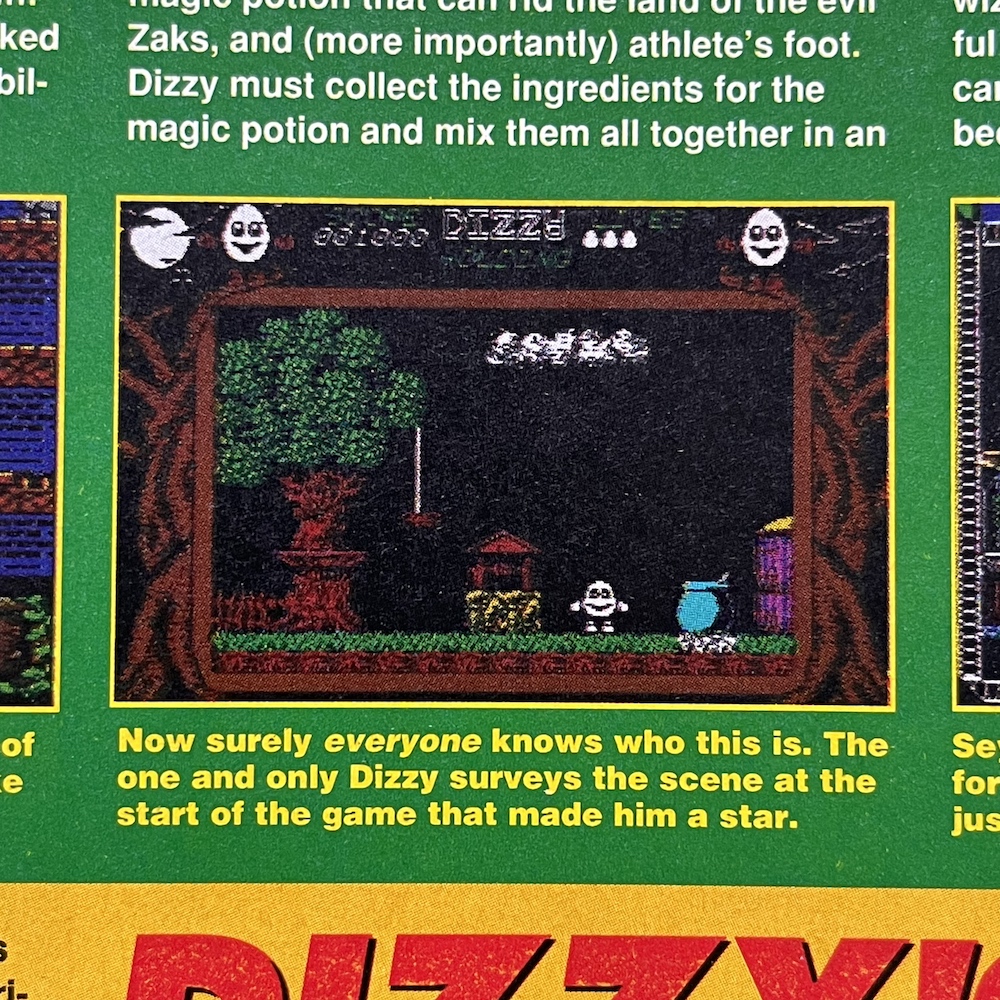
The little egg character was a megastar in the 8-bit computer days

They both played like a dream too. As I’ve said before, Creatures II remains in my top five computer and video games of all time to this day. I remember buying it on cassette to begin with, but the mutliload (where each level has to load individually for a few minutes) was destroying the flow, so when my parent’s bought me my disk drive a few months later I used my pocket money again to buy it on 5.25” floppy disk (loading was so much faster) and never looked back! Two glorious games. No wonder Round the Bend never got a look in.

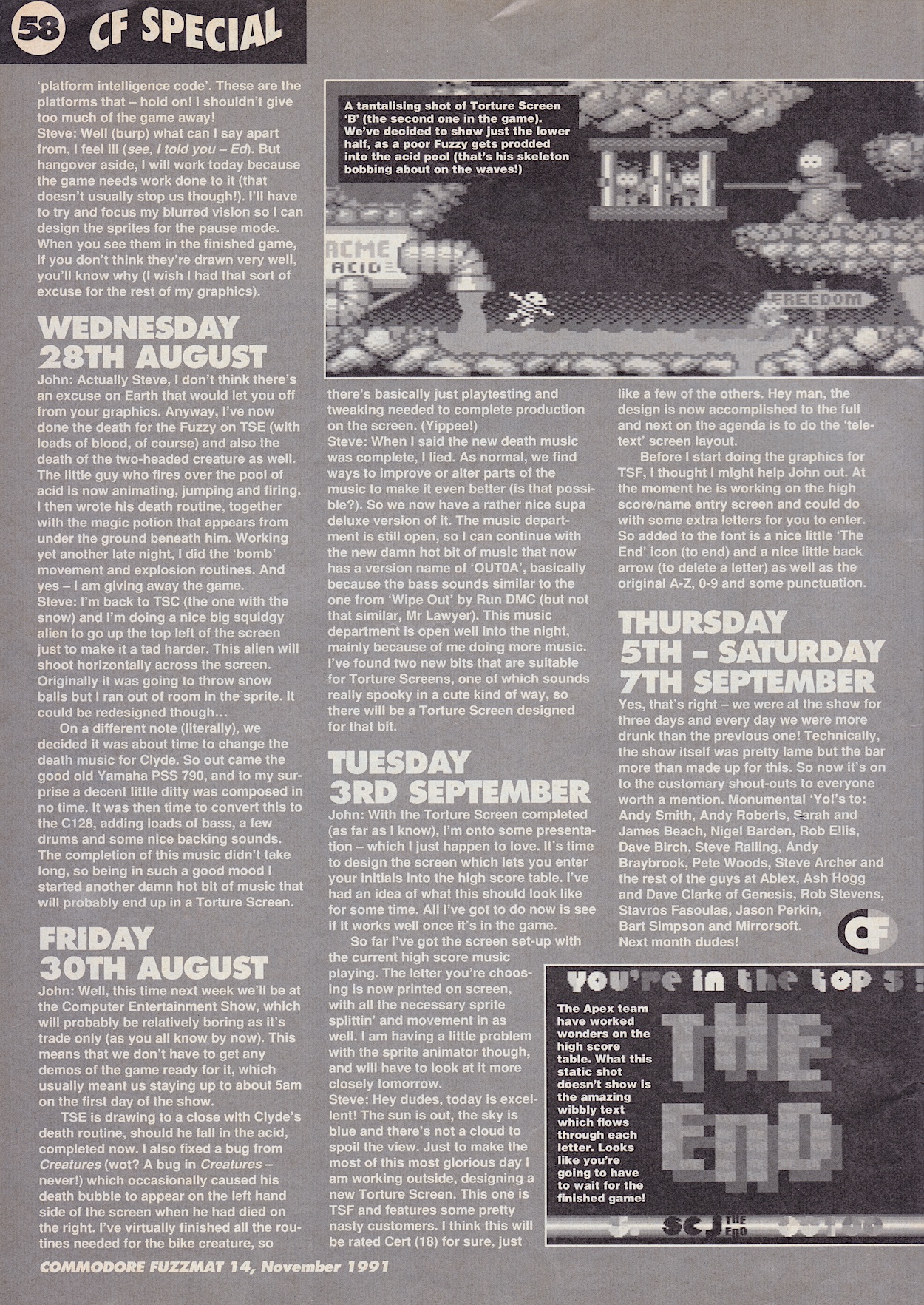
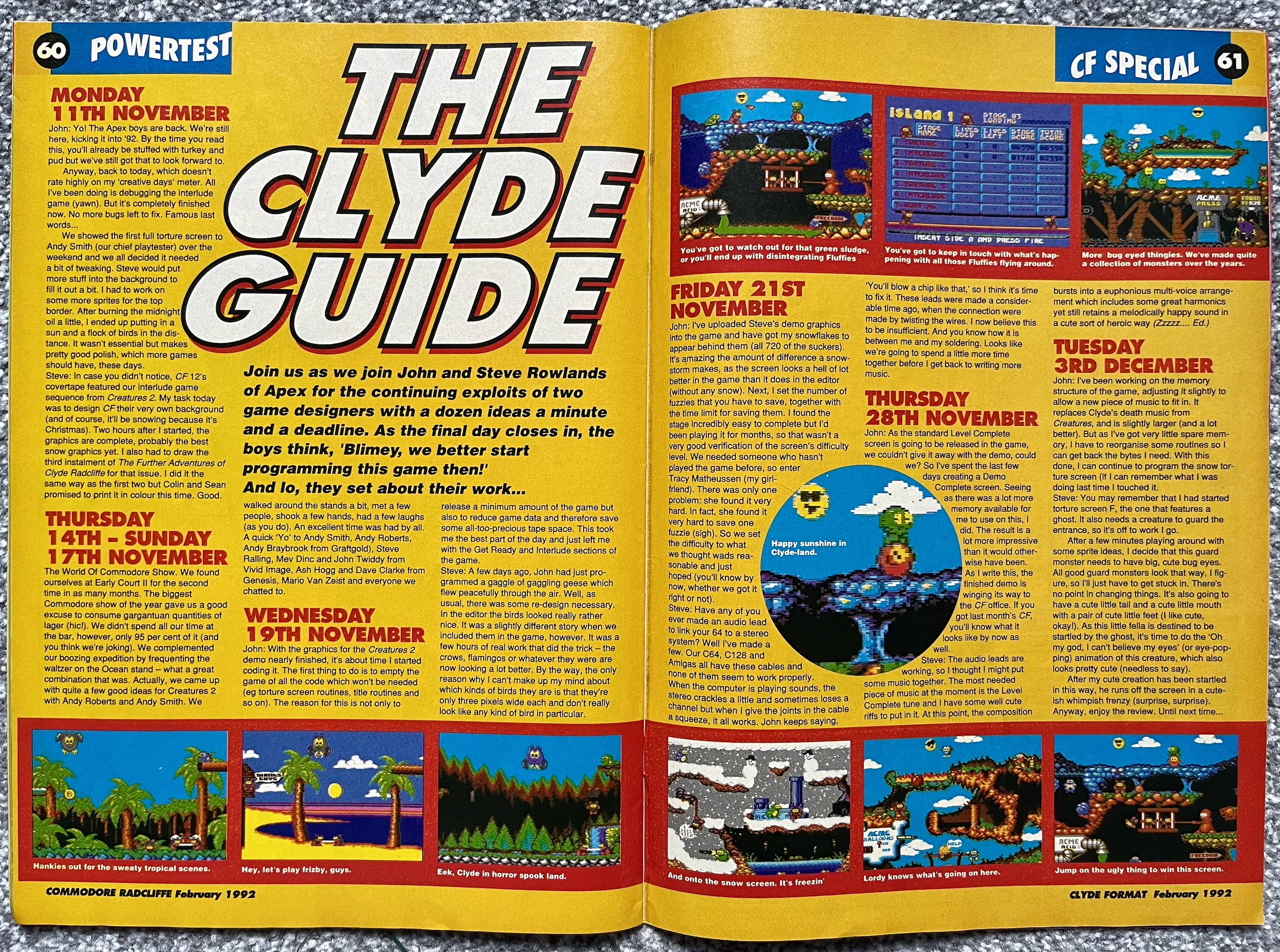
Also this month was the concluding part (obviously, the game was finished) of The Clyde Guide by the geniuses that were John and Steve Rowland, creators of Creatures, who provided a fascinating look into the creation of the game. I loved things like this and when they returned later in the magazine’s life it was for a game called Mayhem in Monsterland which they documented from the very earliest design stages.
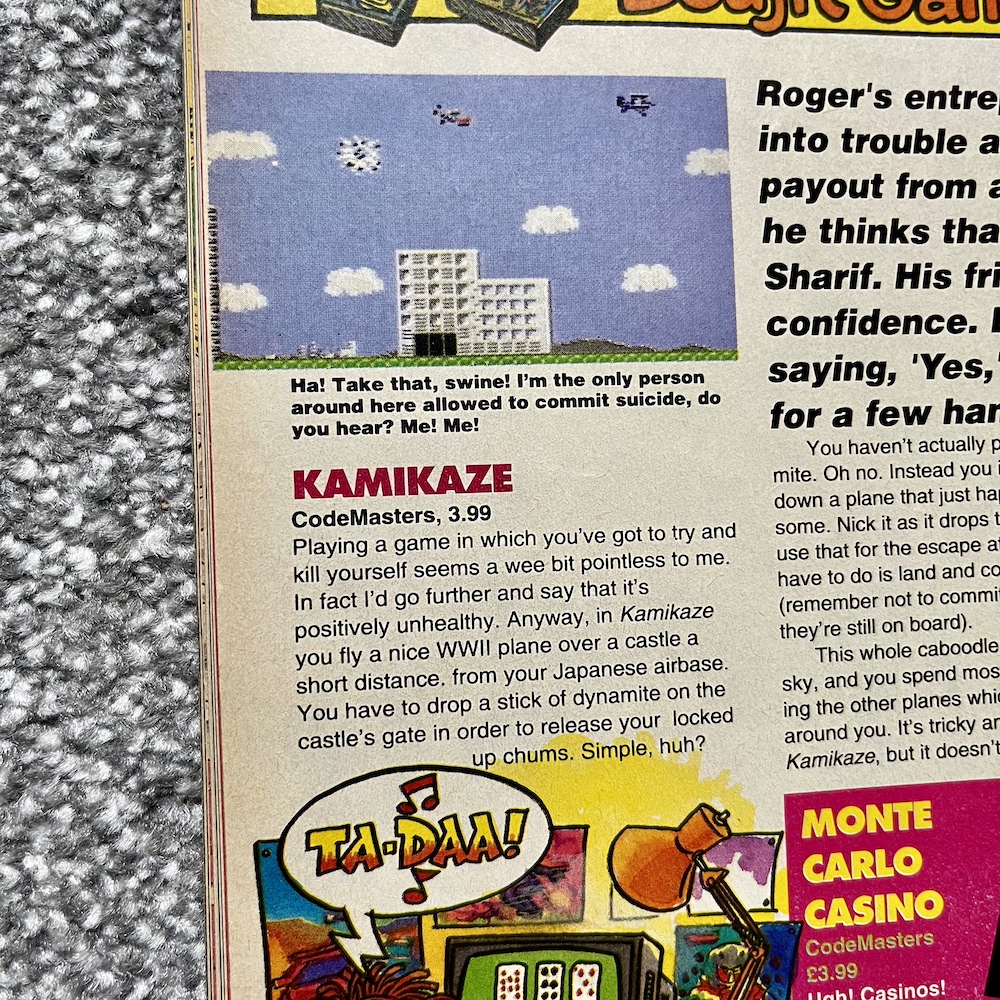
Elsewhere in the budget games section was a game with a title that rather stood out. It was a difficult one I remember. You had to avoid all the buildings and enemy craft (even UFOs) until you got a chance to crash into and destroy the enemy HQ and rescue the hostages! Dizzy also makes an appearance this issue. The little egg character was a megastar in the 8-bit computer days and despite simplistic graphics and controls his adventures proved extremely popular thanks to great gameplay and puzzles.
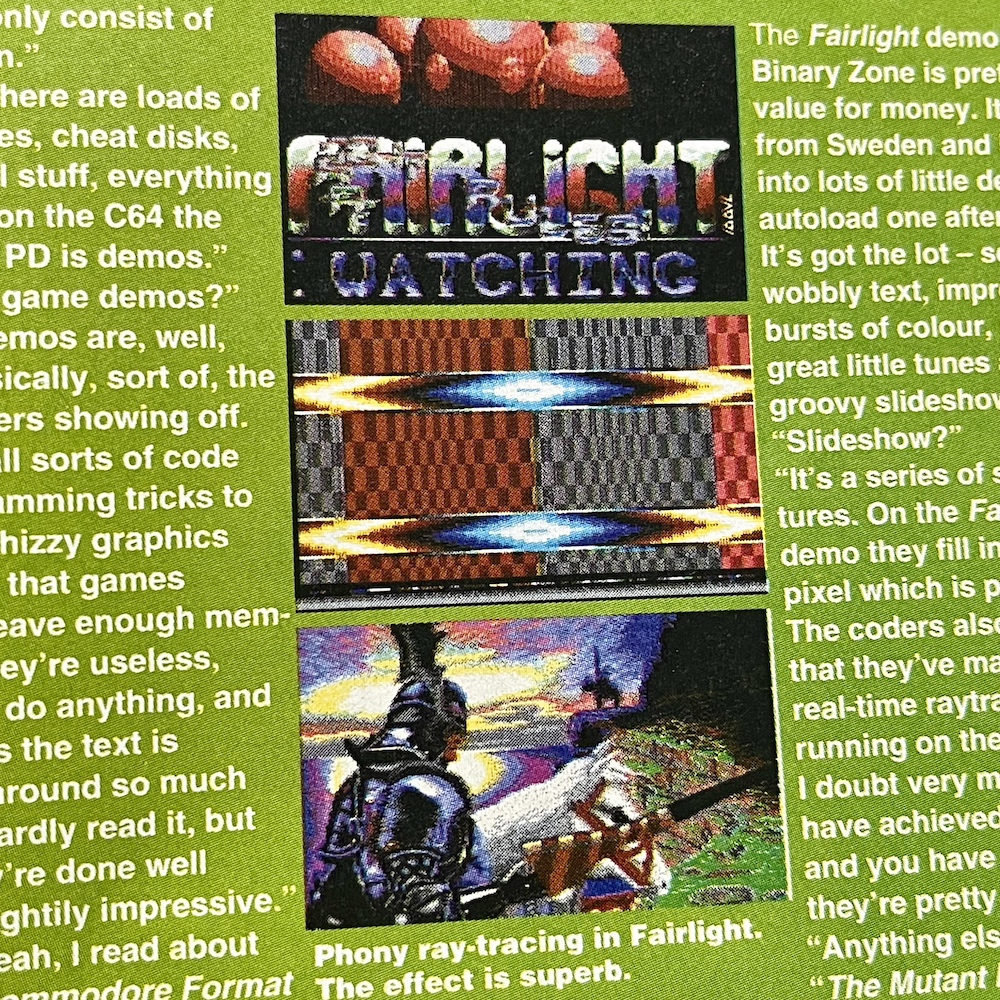
That feature about the user-created, free-to-distribute software that made up the public domain showed what this little machine could really do graphically. A few years later I even put together my own Public Domain Library (amongst others who did the same) to help distribute said software. Parallel Logic Public Domain (thanks to lifelong friend Colin McMaster for the name), or PLPD as it went by, was even listed in CF as the third best PD library in the whole of the UK! I was dead chuffed.

I’ve also pointed out before how the game adverts of the day often didn’t even show us what the thing looked like in action, instead relying on exciting artwork and descriptions. Given how the games would look completely different across the many formats they’d be released on I can understand why. No one wants to buy a game thinking it’s going to look one way and then realise those images were from a much more powerful computer. One such advert in this issue was for the conversion of the arcade hit, Smash TV (think ‘The Running Man: The Game’).
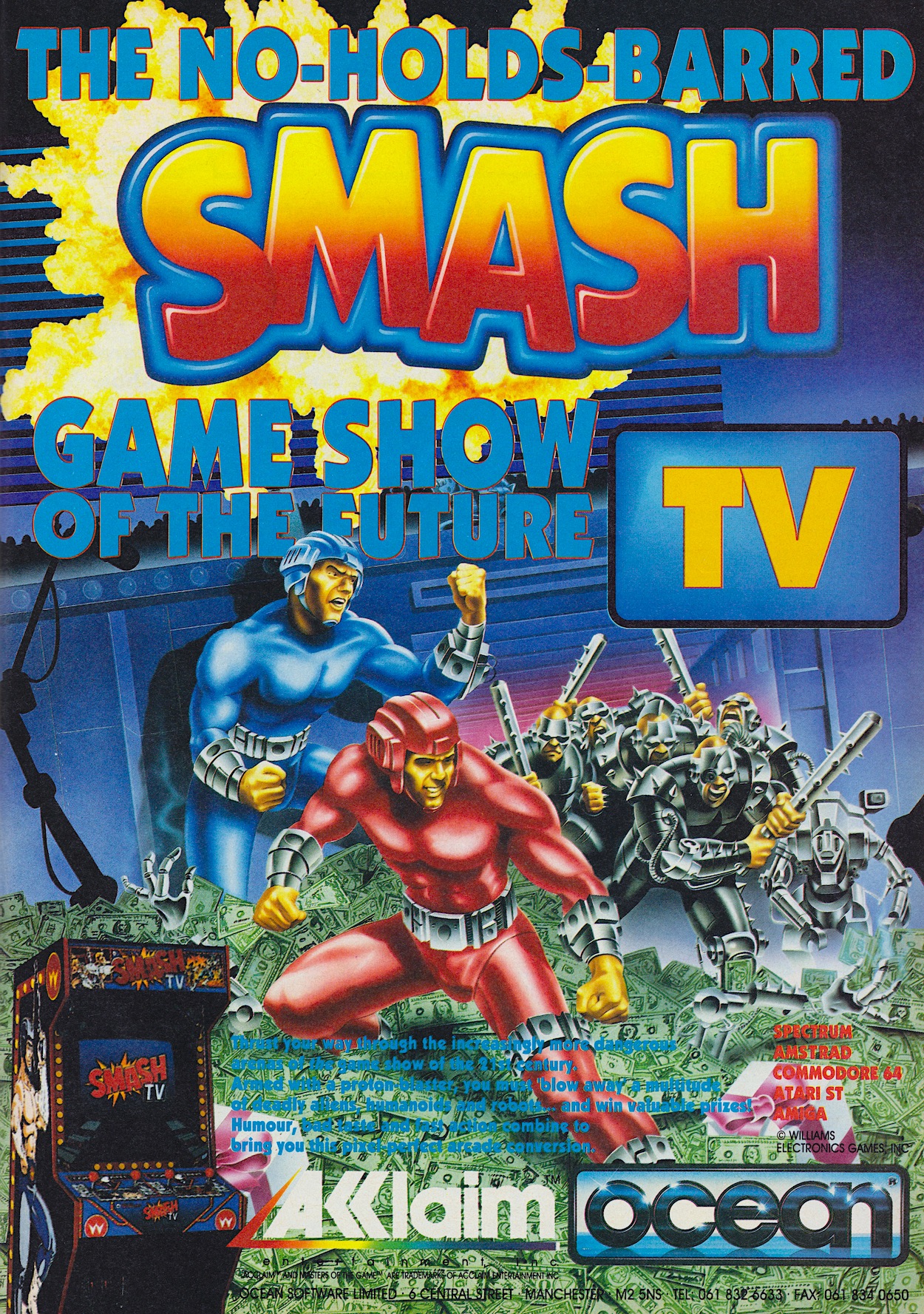
Smash TV was a corker of a game. Copying the controls of the arcade cabinet you could use two joysticks to control your character, one for their feet (their movement) and one for their gun (which direction they’re firing). Hand one joystick to a friend and the shouting and hollering as you try to work together, clearing rooms of enemies in this violent gameshow while trying to pick up brand new toasters etc. was hilarious. Even seeing this advert brings back all the feels.

Finally, a look to the future. Not the future of the 21st century though, instead let’s take a look at the future according to Commodore in 1992 and their CDTV. The 90s would be a hotbed for CD-ROM machines promising us a multimedia future. I personally invested in one of Panasonic’s 3DO machines (3DO was to be a new standard like VHS) and to this day I think it’s criminal it was never the success it deserved to be.

They were expected to revolutionise our world

Of course these days we’re used to our electronic devices doing pretty much everything, but at the beginning of the final decade of the last century it was the norm to have a dedicated machine for each piece of entertainment, like games, music, movies etc. While 3DO at least tried something new and the various machines looked cool, Commodore went with a rather boring rectangle, possibly thinking it wouldn’t alienate people too much if it looked like their current VCR or HiFi (I assume).
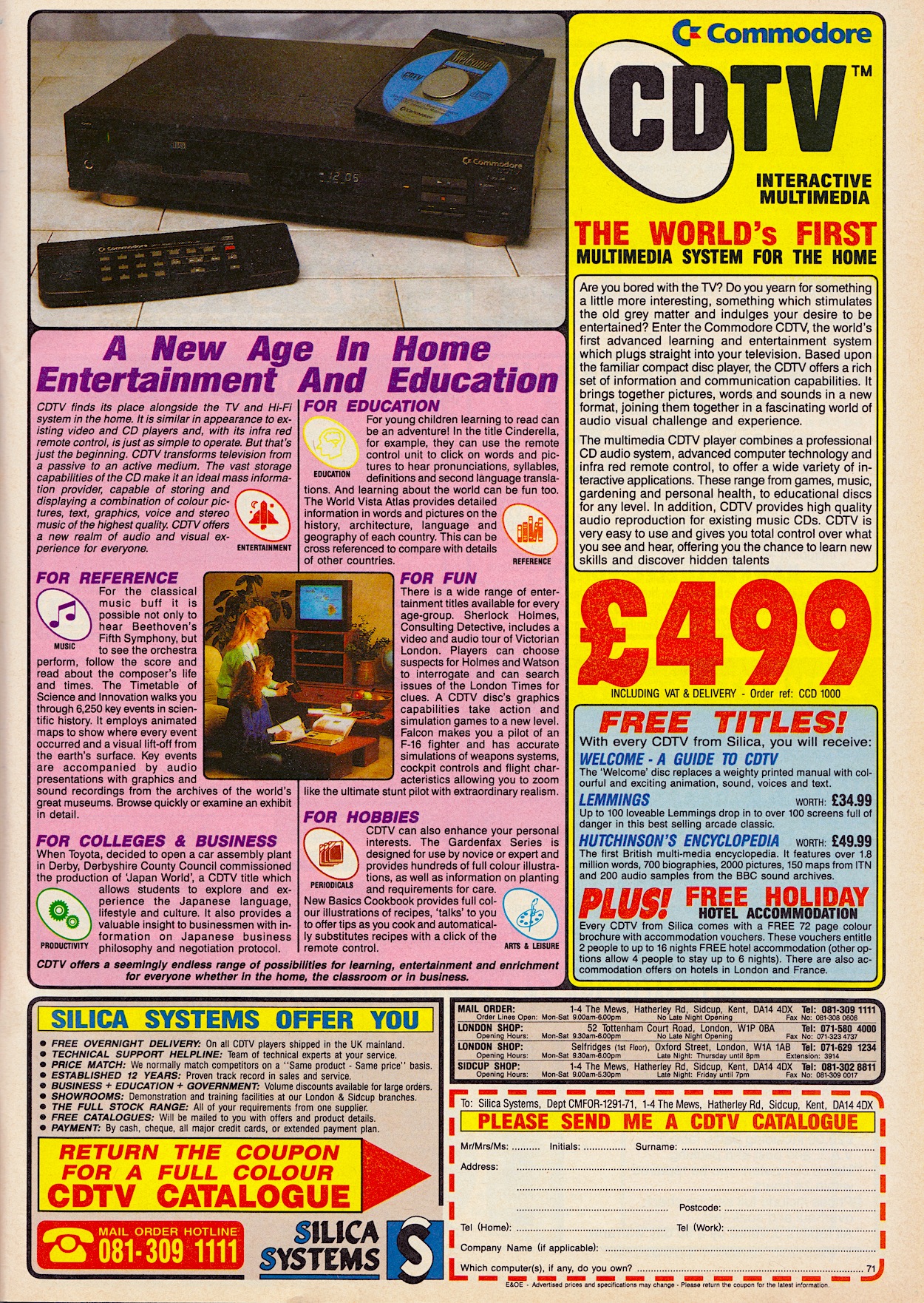
Needless to say it never took off. It was basically a Commodore Amiga with a CD drive and no keyboard; the fact you could buy a keyboard, mouse and even a floppy disk drive for the CDTV didn’t help distinguish it from the computer range either. For me it’s always fascinating to read contemporary magazines from around that time and the hype for The Next Big Thing, and how they were expected to revolutionise our world. It took a little longer but in the end we got there.

I’ve had great fun reading this magazine again and reliving the hype I felt at the time for the games inside it. Commodore Format remains my top mag even to this day and you can check out other issues on the blog if you like. Namely, the one that gave away the OiNK game on the cassette, another which printed maps for said game, and as mentioned above my first issue as well, which just so happened to be my first ever magazine too. It also contained that advertisement for Round the Bend. Great memories. Still a great read.

THE OiNK COMPUTER GAME MENU

OiNK MERCHANDiSE MENU

MAiN OiNK MENU

HANDHELD JURASSiC PARK: RETRO ‘RAPTORS

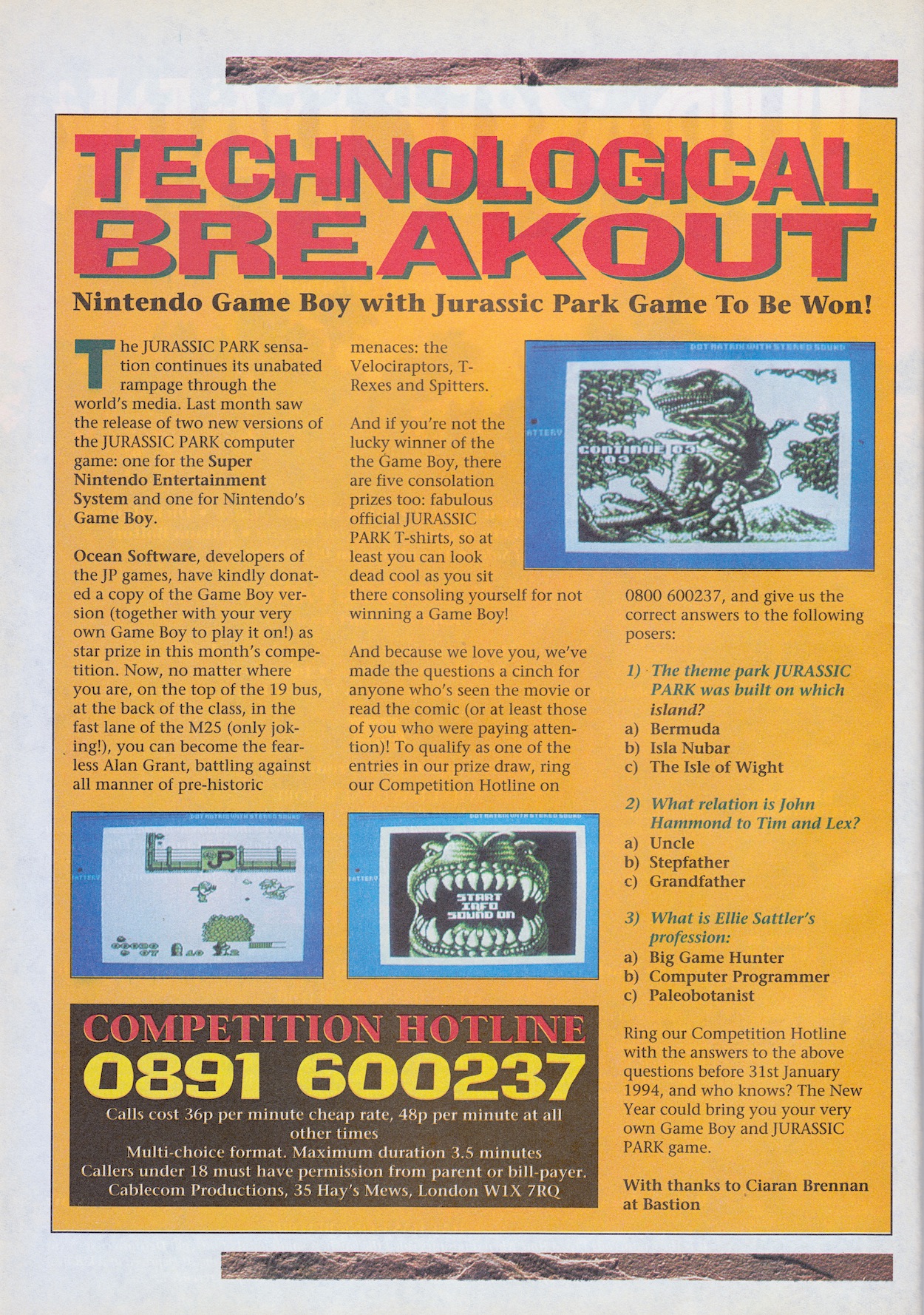
Upon first spotting this post you may be wondering why I’m talking about a videogame on a classic comics blog. Well, regular readers may remember back when I was reading Dark Horse International’s Jurassic Park comic that the advertisement for this game and the subsequent competition to win a copy of the Nintendo GameBoy version brought back many happy memories of playing it at the time. Those memories have now ended up costing me money.

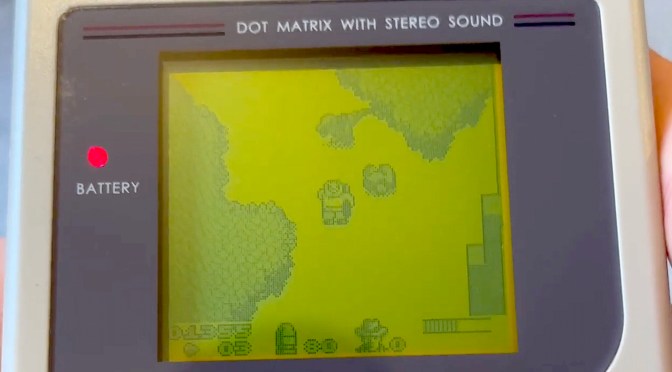
Then, earlier this year I bought a bookazine about the history of Nintendo and the chapters covering this little joyful plastic box had me grinning from ear-to-ear so much that I invested in a refurbished GameBoy and a few games. I’m delighted to say those rose-tinted glasses weren’t playing tricks on me and I’ve been having a blast with it. When I eventually teared myself away from Tetris (easier said than done) I replaced its cartridge with Jurassic Park’s and travelled even further down memory lane.

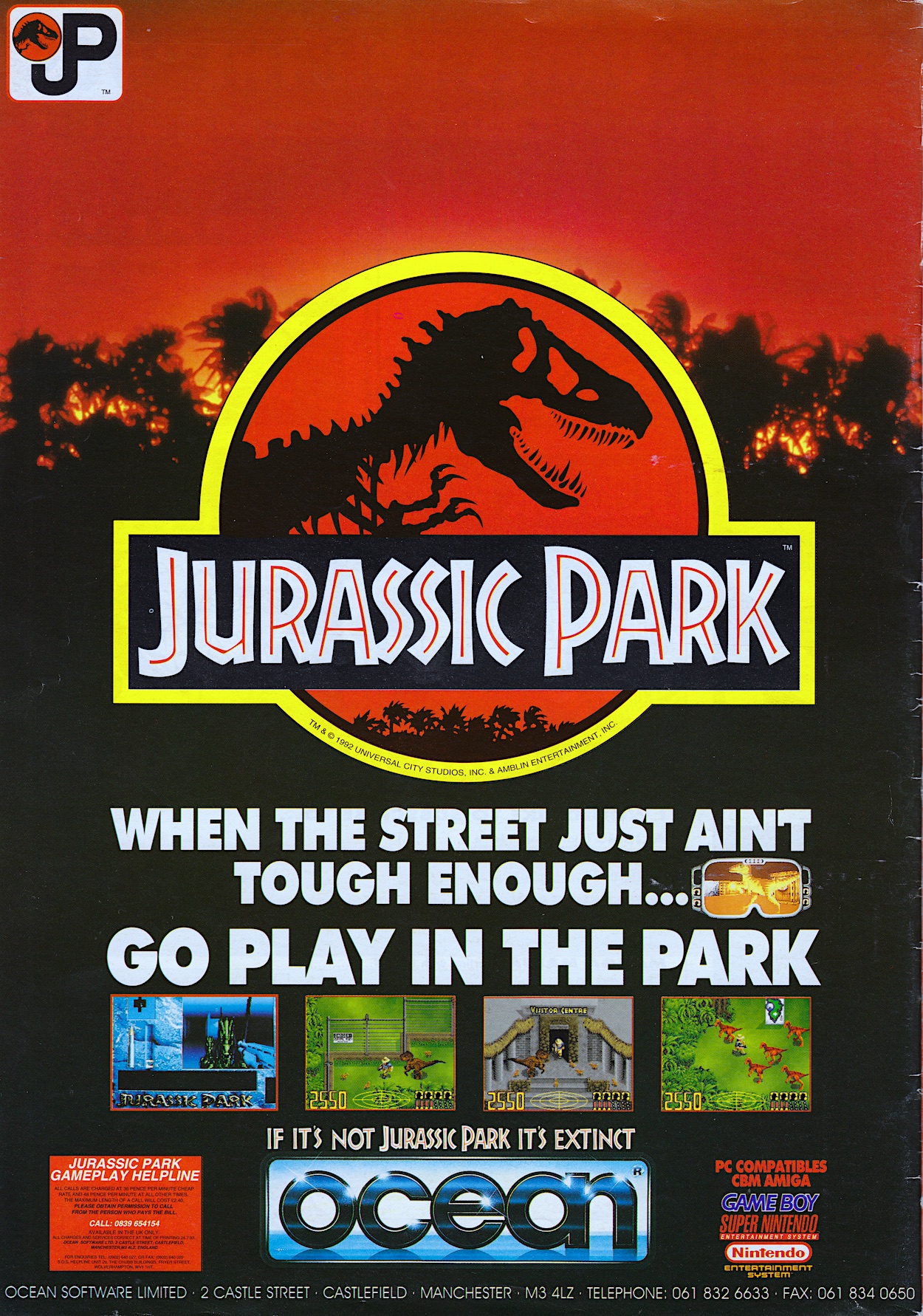
So, I’d decided to follow up on my wistful reminiscing about the game with actually getting my hands on it again all these years later. I thought you might like to take a closer look with me. Those adverts for the multi-format game were brilliant, playing off of the Street Fighter II craze at the time with a killer tagline. Despite no GameBoy screenshots (they’d always show the so-called ‘prettiest’ versions in the ads) I remember desperately wanting to get my hands on it for my handheld.

I think I got the game before the next issue, which actually contained images of the version I was playing as part of that month’s phone-in competition. I wouldn’t have been allowed to enter these anyway, they cost a fortune, so I was happy to have the game already. I remember it not having anything to do with the plot of the film, with Dr. Alan Grant instead walking about with a huge gun(!) but that never put me off because it was just so much fun.

I recall playing it late at night, long after I was meant to be asleep for school the next day, viewing it through one of those huge, cumbersome GameBoy magnifier accessories with a built-in light and having to take little breaks because it was so damn heavy! These restrictions obviously no longer apply and I’ve been playing this game (and others) quite a lot, getting plenty of jealous looks from people around my age on public transport, accompanied by looks of confusion from younger generations.

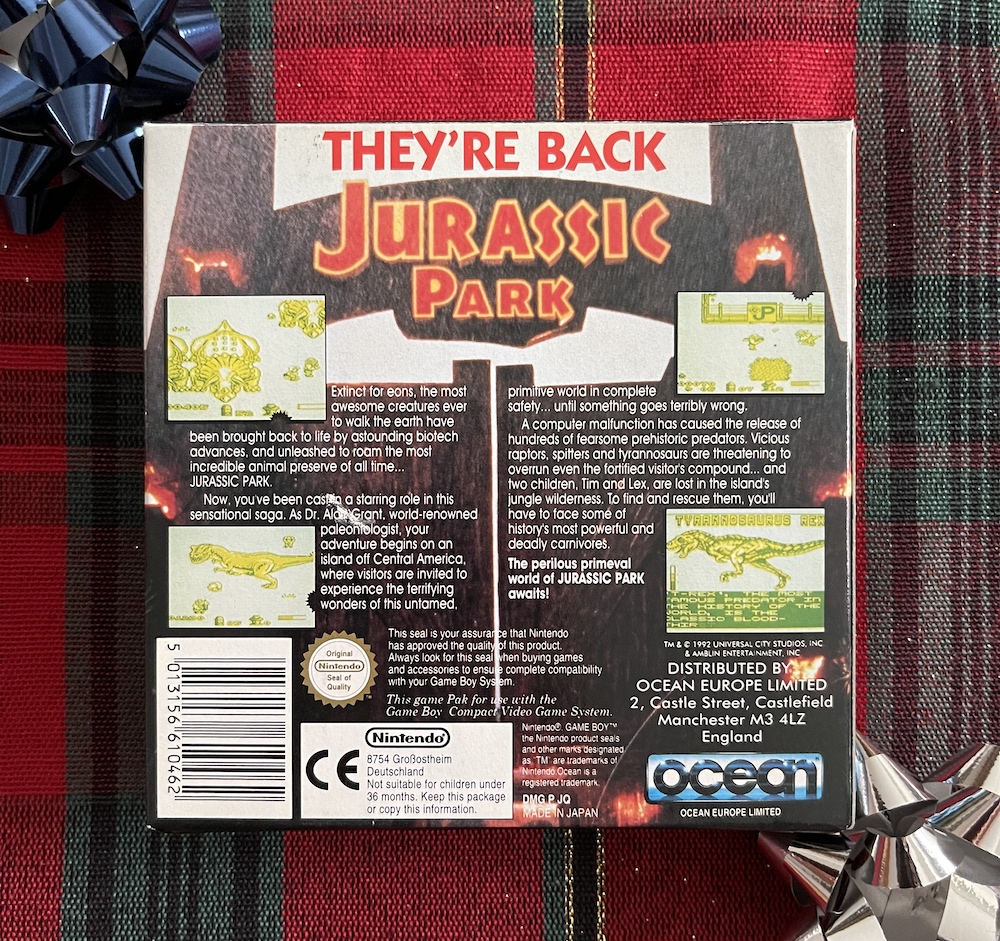
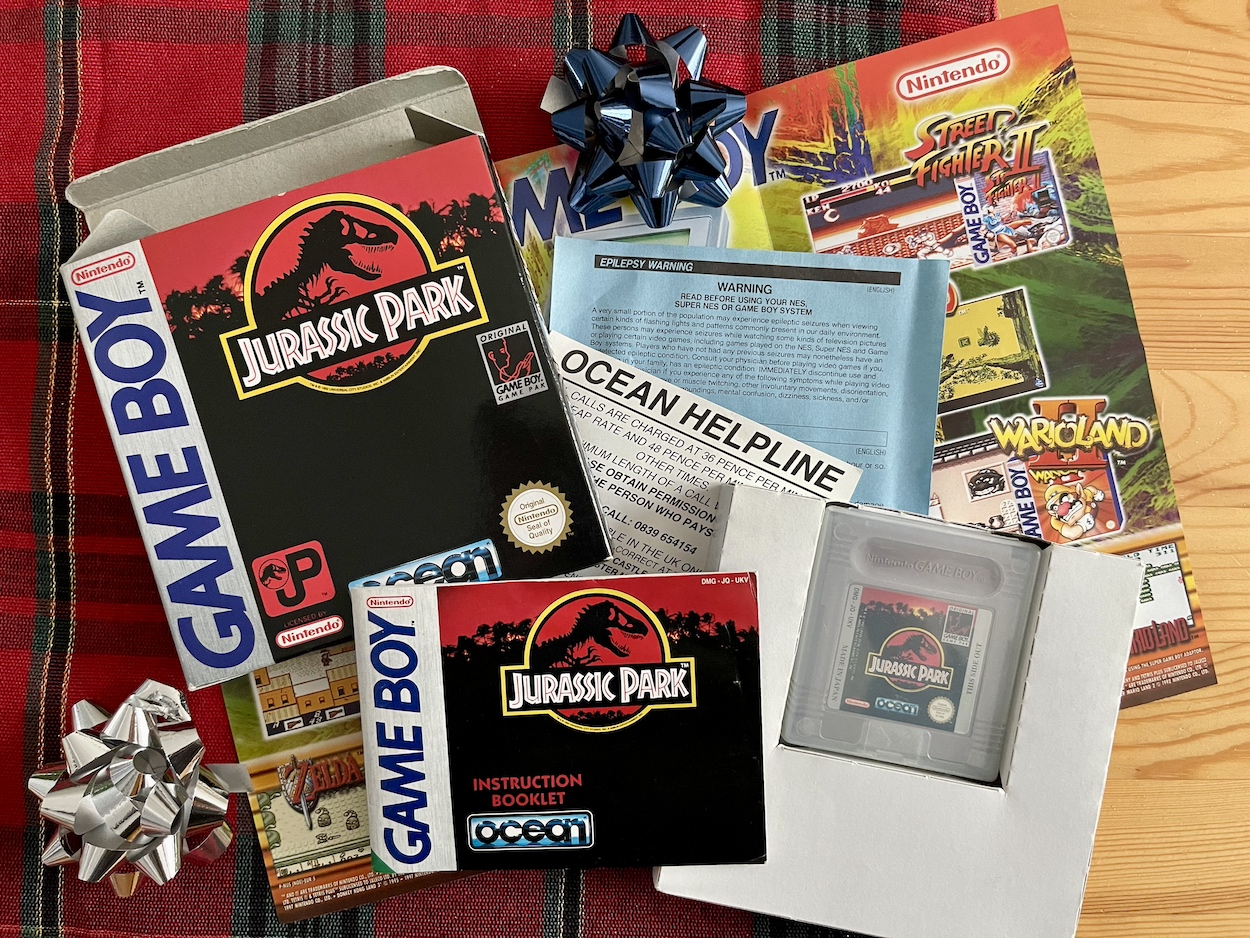
I decided to spend a little extra on the GameBoy and get a refurbished model and the same applies to the games, simply because I’d like to have them all in their original boxes and in great condition so my collection looks as good as possible on the shelf. The Jurassic Park game arrived in near mint condition and I couldn’t have been happier. It even included the manual and some advertising leaflets for other games. I’d forgotten all about these.

The manual also contains some basic details on the dinosaurs and from reading these it’s possible to glean how they could act in the game, although this hasn’t been particularly helpful with the T-rex. With my collection started I needed a way to figure out what other games (ones I didn’t own at the time) would be worth my money, especially if I was prepared to pay a little more for them. It’s not like I could easily shrug it off if a game was crap.

With writing a classic comics blog, one which has already included Commodore Format, it’s only natural I’d turn to some contemporary viewpoints. Instead of relying on people’s memories for recommendations or retro reviews which often unfavourably compare them to modern games, I wanted to read the opinions of those who were playing the GameBoy at the time, those who had been invested in it as a ‘modern’ gaming device.

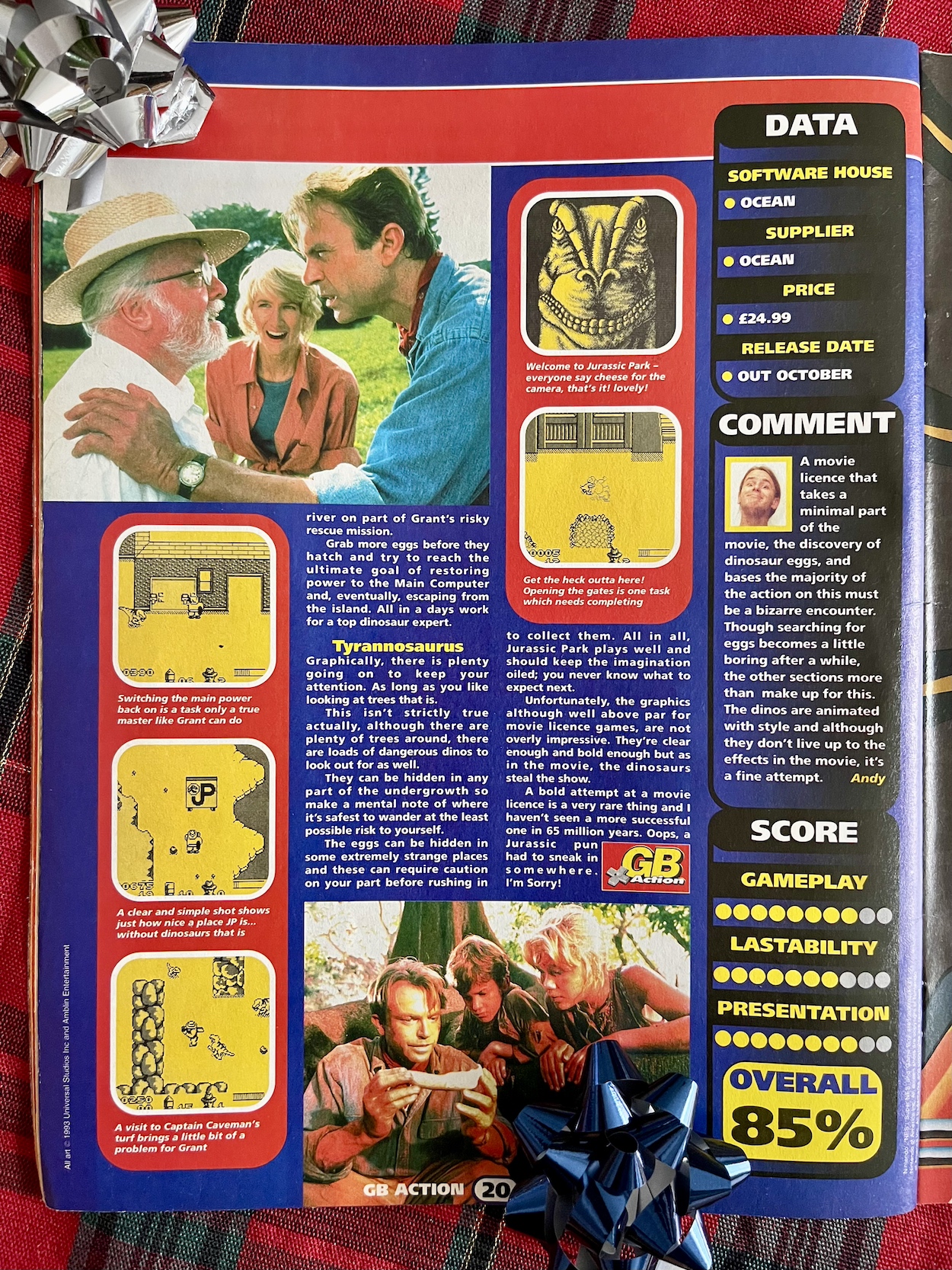
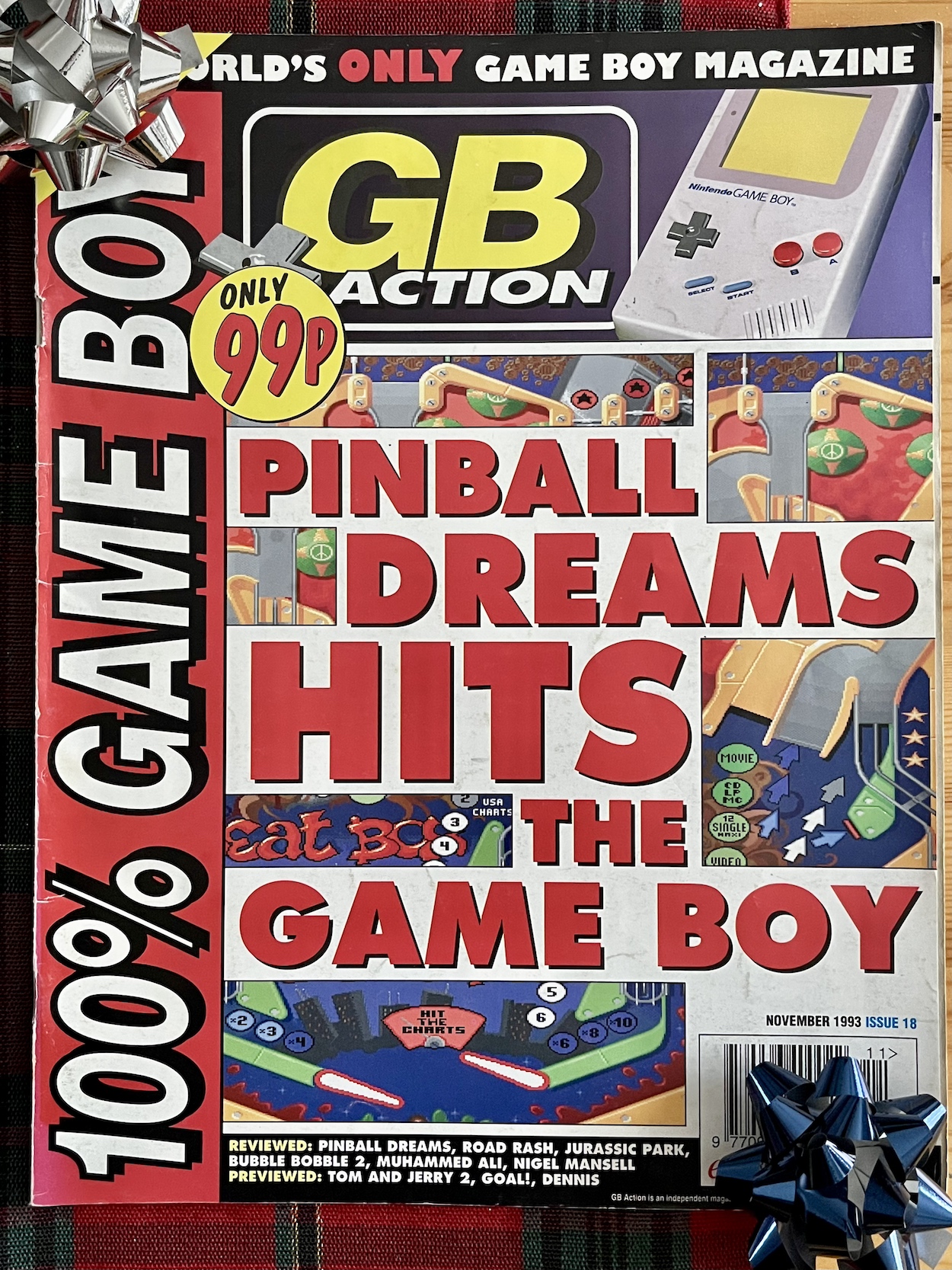
As it turns out options were limited. The only magazine I found on eBay dedicated solely to this machine was GB Action from Europress Interactive. This same company had published a truly awful Commodore 64 magazine in the early 90s called Commodore Power, but beggars can’t be choosers as the saying goes and so I’ve started buying issues which contain previews and reviews of games I’m interested in. As it turns out, it’s not a half bad way of doing my research.

You can see the game in action in these three short videos

The reviews aren’t exactly in-depth and each 68-page magazine can be read in very little time but it does what I need it to do. I bought my first few games for my new GameBoy before buying any of these issues so their review of Jurassic Park ended up being a kind of test in a way. As it turns out their review pretty much sums up exactly how I feel about the game as I play it now, decades after its release.

Finally we get to the game itself and you can see it in action in these three short videos of the initial levels, after which I become completely and utterly stuck and I’m not going to show you that out of embarrassment.

The first thing that struck me is that John Williams’ music is nowhere to be heard throughout the game, despite this being a fully licenced title, but after a while I just started playing it with the soundtrack playing on my HomePod so it made little difference. The Velociraptors and Dilophosauruses keep the player on their toes and a keen memory is needed to remember the layouts of the security buildings in which pass keys are needed to unlock the main gate and escape into the rest of the park.

In most levels of the game there are dinosaur eggs lying about the place and these must all be either destroyed or collected. Of course, collecting them means more points and rewards but in the levels in which pass keys are needed they’re essential, the keys only made available to you after all the eggs have been taken care of. This means venturing into all the nooks and crannies of the maps, including the undergrowth where anything could leap out at you.

Playing that first level made me feel like a child again but I have no recollection at all of this Triceratops stampede which popped up next. I definitely got a lot further in the game as a teenager but my ageing memory initially thought the levels were all pretty similar. This stampede is really tough, mainly thanks to the fact you have to guide Tim to safety which isn’t easy when he constantly stays a few feet behind you, often putting herself in harms way when you try to turn left or right and he’s jumping out in front of a dinosaur just to remain at the right distance from you!

Reading OiNK led me to Jurassic Park, which in turn led me back to this game and now I’ve a new hobby

I’ll admit it took a few goes to get through this and of course because it’s a retro game there are only so many lives to play with until it’s game over and we have to start all over again from scratch. Thankfully there are a handful of continues on top of the lives handed out, which gave me 12 chances altogether before turning off the GameBoy and plugging Tetris or Super Mario Land back in.

Moving on and the sparks of memory surged a little as I remembered the next level in which Grant is on a rowing boat making his way to the next area of the park. Each press of the button pulls Grant’s arms in once and moves him a tiny bit up the screen in whatever direction you have his boat facing. This technique takes a long time to master. Timing is key. Being on the water it’s not easy to turn in a different direction, you have to wait until he’s stopped rowing, plus you can’t speed ahead because you don’t know what’s about to come down the screen. Also, if you stop Grant will start coasting back downwards again towards any danger you’ve already passed!

The game is definitely a challenge and I remember it being so back in 1993. I just had a lot more patience back then, even after playing it for ages and having to start over, which I did without a thought at that age. I don’t care that it’s not close to the premise of the film or its characters. Look at the system it’s on, it was never going to be too complex but it’s still Jurassic Park to me and a hugely enjoyable slice of it too.

Reading OiNK in real time led me to doing the same with Jurassic Park, which in turn led me back to this game and now I’ve a new hobby. Playing Nintendo GameBoy games on an original machine is always going to be the best way to play these, and with Lemmings and Pinball Dreams gratefully received for Christmas it looks like I’m back in this world for a long time to come. So thanks Jurassic Park! Now, one more go to sneak past that Tyrannosaurus rex in level four. Young me would be so ashamed of me right now…

JURASSiC PARK MENU

CHRiSTMAS 2023

COMMODORE FORMAT #14: “iT’S A CORKER!”

Now here’s a publication, and indeed a specific issue of said publication, that I have a huge soft spot for. It’s my first ever magazine, on sale today 32 years ago. In the summer of 1991 when asked what I’d like for Christmas, and having spent a lot of time playing on my friends’ Spectrum and Amstrad computers, I really wanted something to play computer games on. My parents made me a deal: I could get a computer, not a console. I had to have something I could use for school too.

My mum handed me her Littlewoods catalogue and despite the new, more powerful Atari ST and Commodore Amiga computers on the page I was instantly drawn to the Commodore 64, mainly due to it having accessories I recognised such as cassette players and external disk drives. I’d heard of the machine and knew it was more powerful than the ones I’d been playing with friends so that’s the one I chose.

Top: autobot-leader-optimus-prime’s eBay shop
Main: the Retro Treasures blog

I knew of a magazine called Zzap!64 and decided I wanted to check it out but couldn’t find it at the newsagent. However, I did see Commodore Format and, even better, it had a cassette on the cover full of games, which reminded me of the Story Teller partwork I’d collected years before. I went back the next day to buy it once I’d got my pocket money and it was gone, but I knew from years of buying comics this could mean the new one was due. It was.

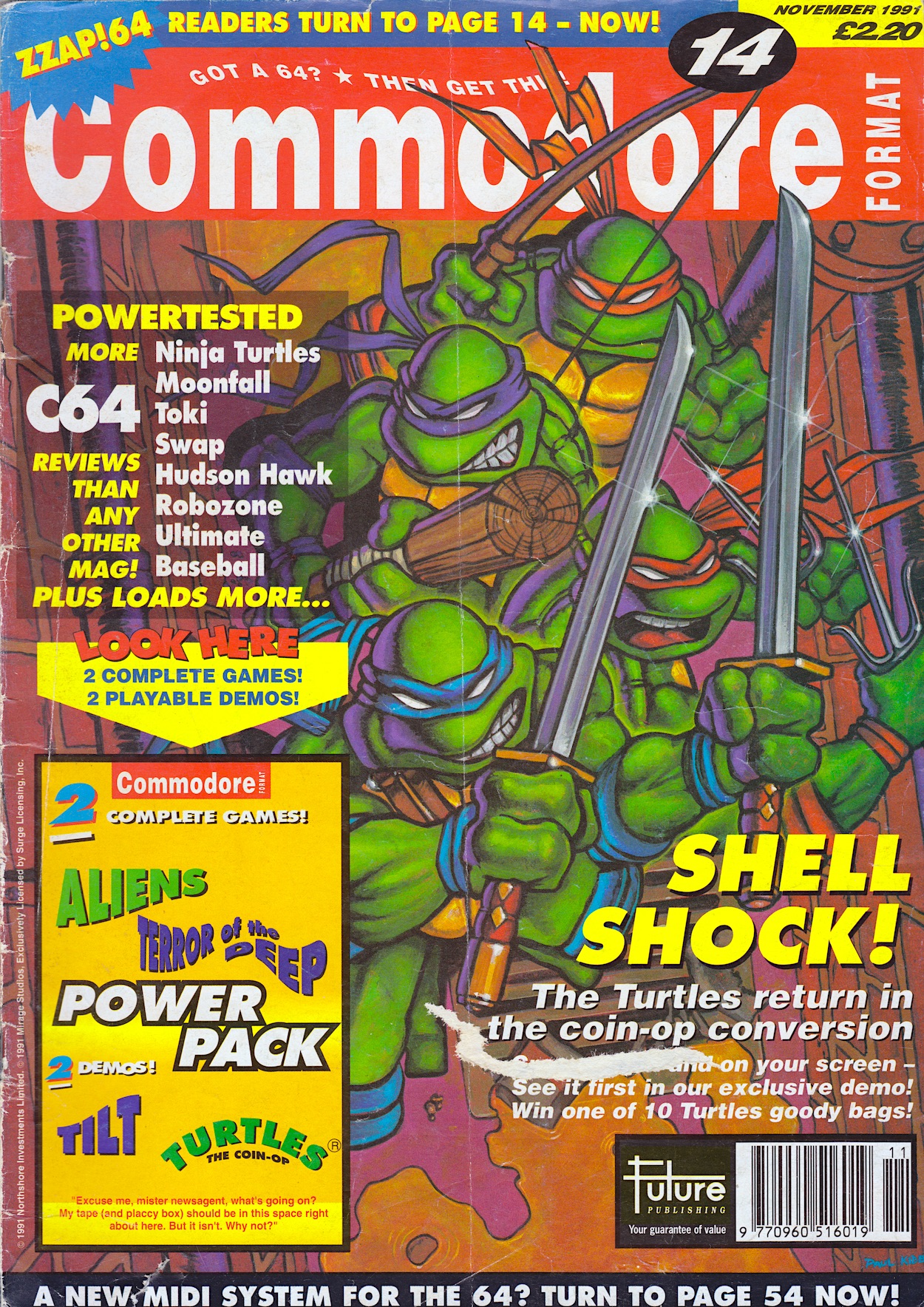
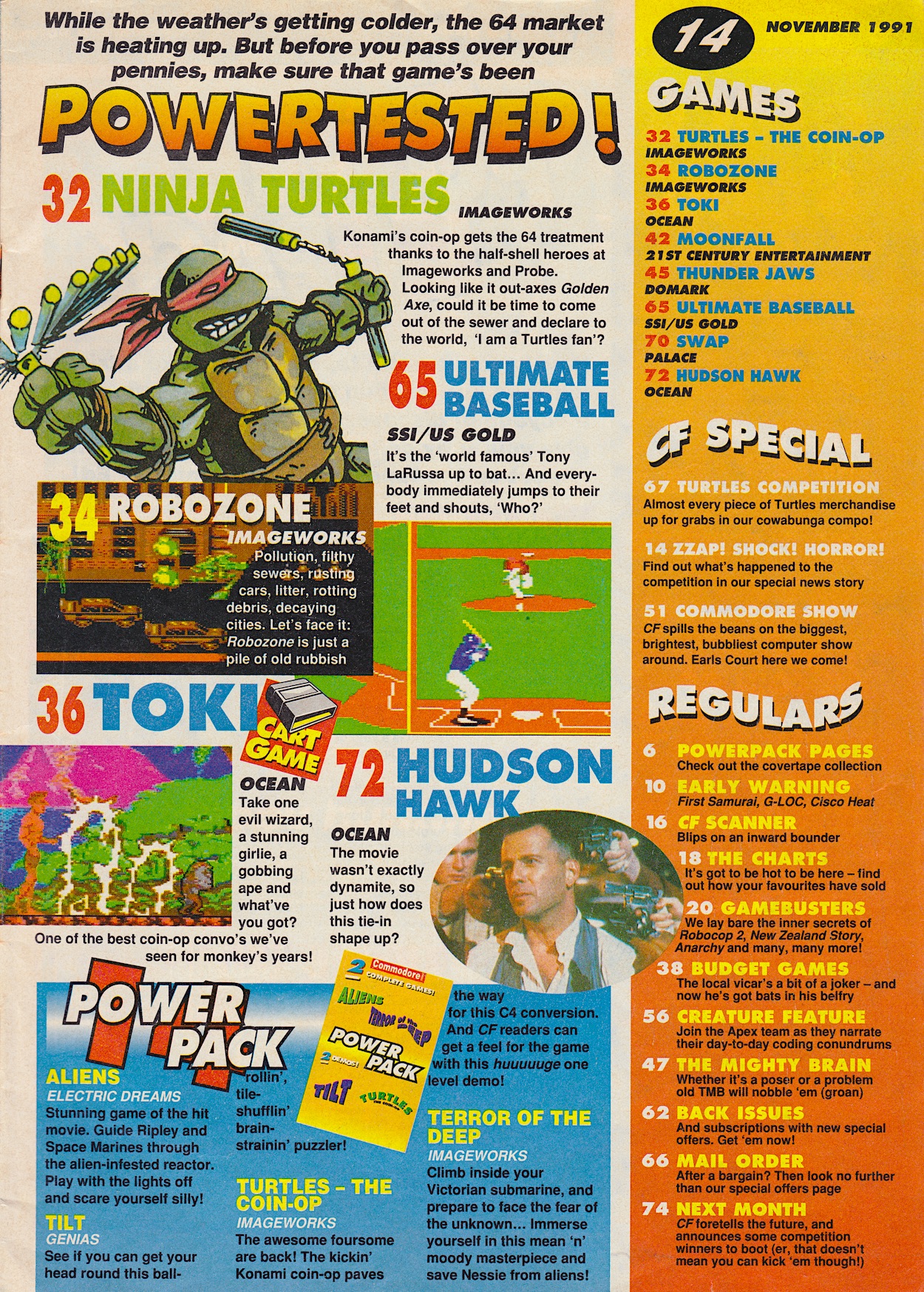
The next day #14 of CF (as readers called it) arrived and featured the Teenage Mutant Hero Turtles on the fantastic Paul Kidby cover, which just excited me further because I was a fan. I devoured the issue, reading it over and over, excitedly anticipating the machine which was still a couple of months away. I’d definitely made the right choice of present! So to mark this issue’s anniversary I wanted to write a special retrospective and explain why I loved it so much.

Edited at this stage by Steve Jarratt, in later years CF would go on to influence me in a key way. It was instrumental in my development in those important teen years, making as big and lasting an impact on me as OiNK had a few years previous, hence its inclusion here. I’ll get to that in a future post, but for now let’s go through what is personally a very special issue. This most superb of 90s magazines had 76 pages packed full of content. There was no filler in sight and every page was rammed full of great writing, information, loads of hype for me while I awaited my computer and a feeling of being part of a form of club, a sense of the magazine talking to me directly. Plus, it had a cracking sense of humour. (Check out the bottom of most pages below for example.)

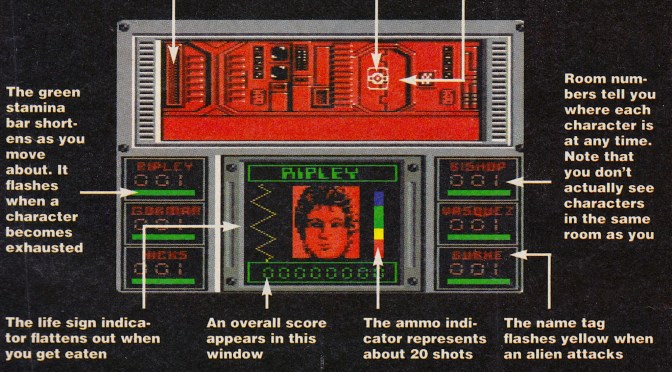
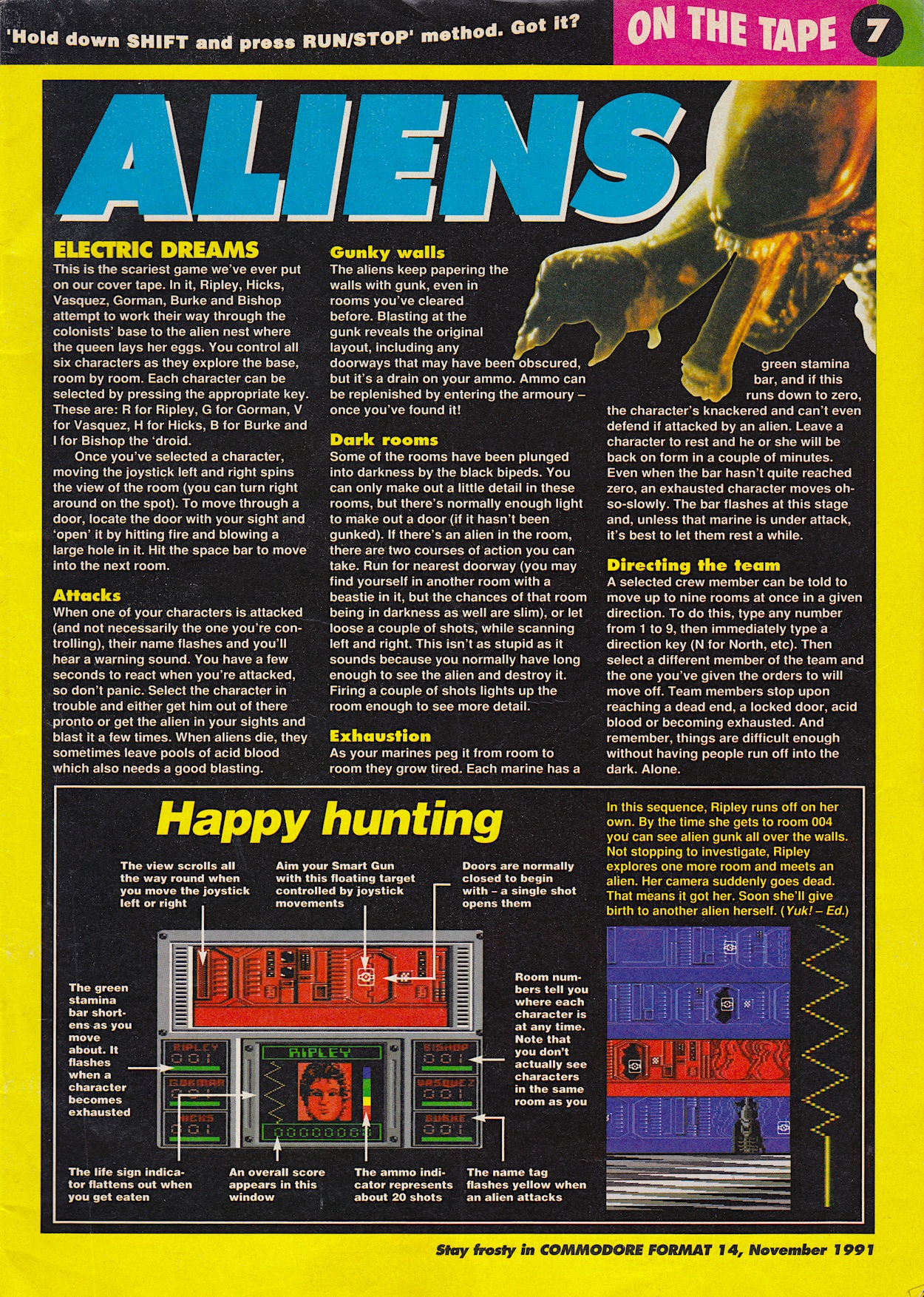
I also couldn’t believe what was on the tape stuck to the cover! I’d loved playing my brother-in-law’s Turtles game on his Nintendo NES, now it was coming to the C64 and this issue’s tape had a free level to play. But better than that was the full Aliens game that had terrified my friends and I so much when we played it late one night in the dark on a mate’s Amstrad. Here I was getting it free with this superb magazine. I was sold on CF within its first few pages.

I have distinct memories of playing this over the Christmas holidays that year; waiting until it was dark I’d turn the lights off and the sound up on my 12” Pye portable TV. I never lasted long before I had to stop! Fast forward 31 years and this year I’ve struggled to play Alien Isolation on the Nintendo Switch for any longer than an hour at a time for the exact same reasons.

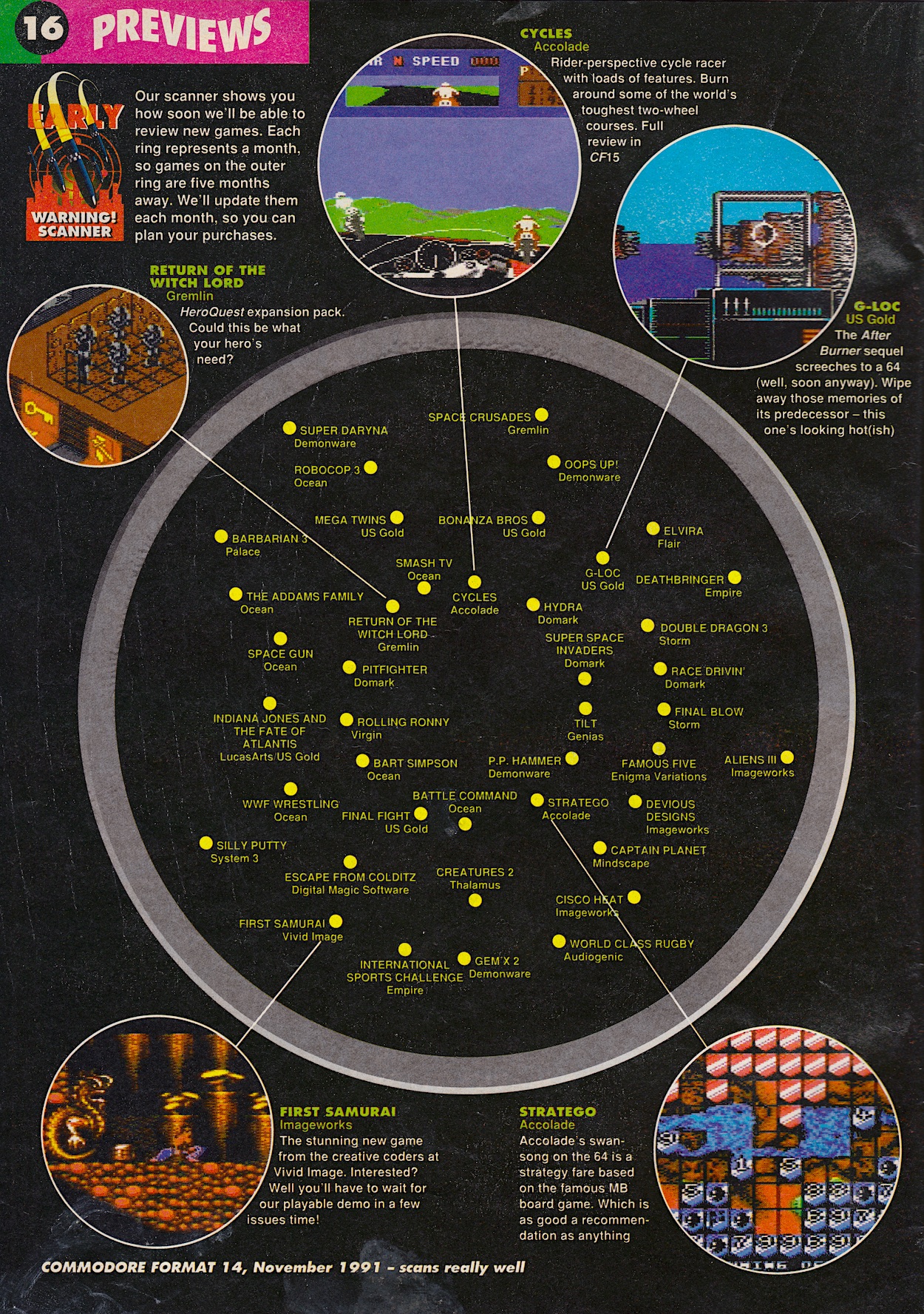
Among the impressive previews there was also a unique page called the Early Warning Scanner which summed up all of the forthcoming releases in a neat radar-type image; the closer to the centre each game was the sooner they were due to arrive. It was so much better than a boring list and kept readers up-to-date on their hotly anticipated games. As a new reader and (almost) owner, I looked at this page and was almost drooling at some of the games to come.

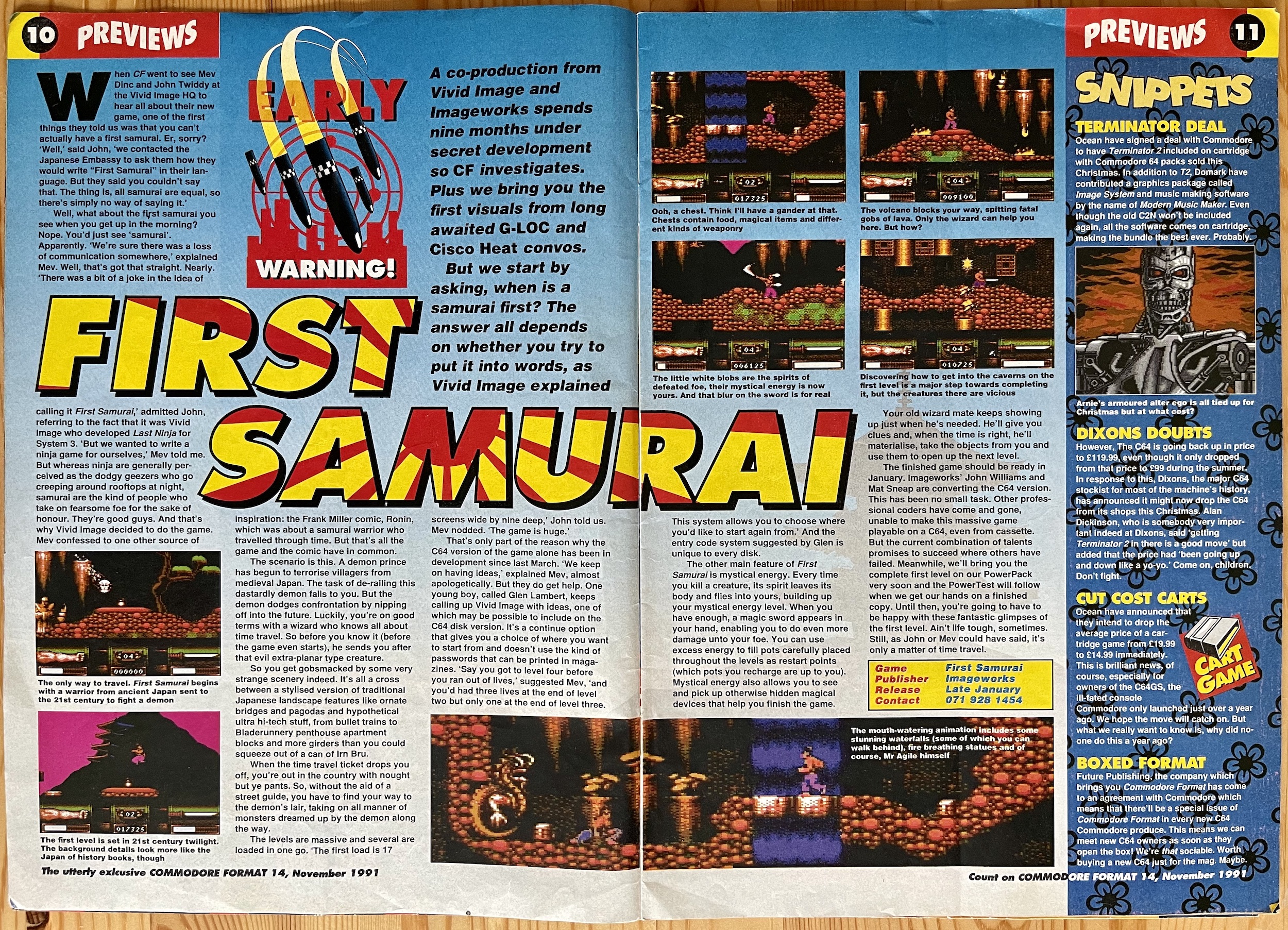
While some people in school mocked me for picking a C64 instead of a more powerful computer, within these pages I was in awe at the graphics this allegedly dated machine could produce. Also, to me the scanner dispelled any notion the format was in its final days. Most importantly, my choice also meant I met a fellow C64 owner in school who became a lifelong friend. (Hi Colin!) Back to the games, and even today something like First Samurai is still impressive when you know it’s running on an 8-bit machine. It played brilliantly too. (I also loved the programmers’ reason for the name, in the preview below.)

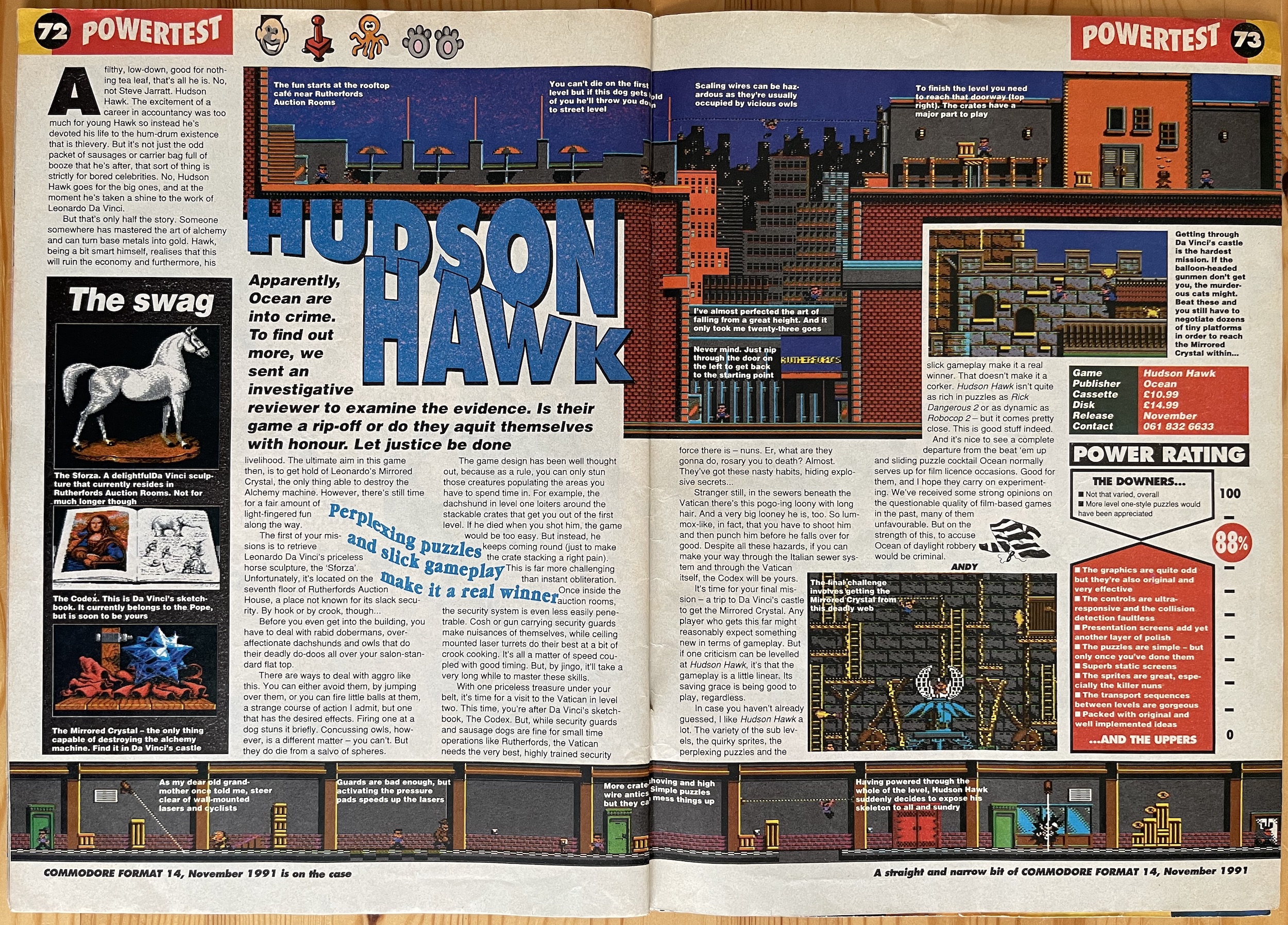
The Turtles arcade conversion may not have been the best example of what the Commodore could produce graphically but I did have fun with the demo although ultimately passed on paying for the full game. The same could not be said of Hudson Hawk. Based on the apparently terrible (I’ve never seen it) Bruce Willis film it looked a lot like the console games I’d played and proved to me this computer could have all the fun of those games at a fraction of the cost. Plus the 64 was so much more than just a games machine at the time, of course.

Commodore Format’s scoring system did away with the clichéd scores for graphics, gameplay, sound etc. and instead replaced them with a simple run down of the game’s main good and bad points at opposite ends of a scale, with the score being where they met. (Games with a score of 90% and higher were awarded the prestigious “It’s a Corker!” award.) It was a sleek design by art editor Ollie Alderton and made for some funny comments during the magazine’s lifespan. When racing game Cisco Heat was so atrocious it received 12% the ‘Uppers’ was just large enough for one comment: “Erm… it comes in a nice box.”

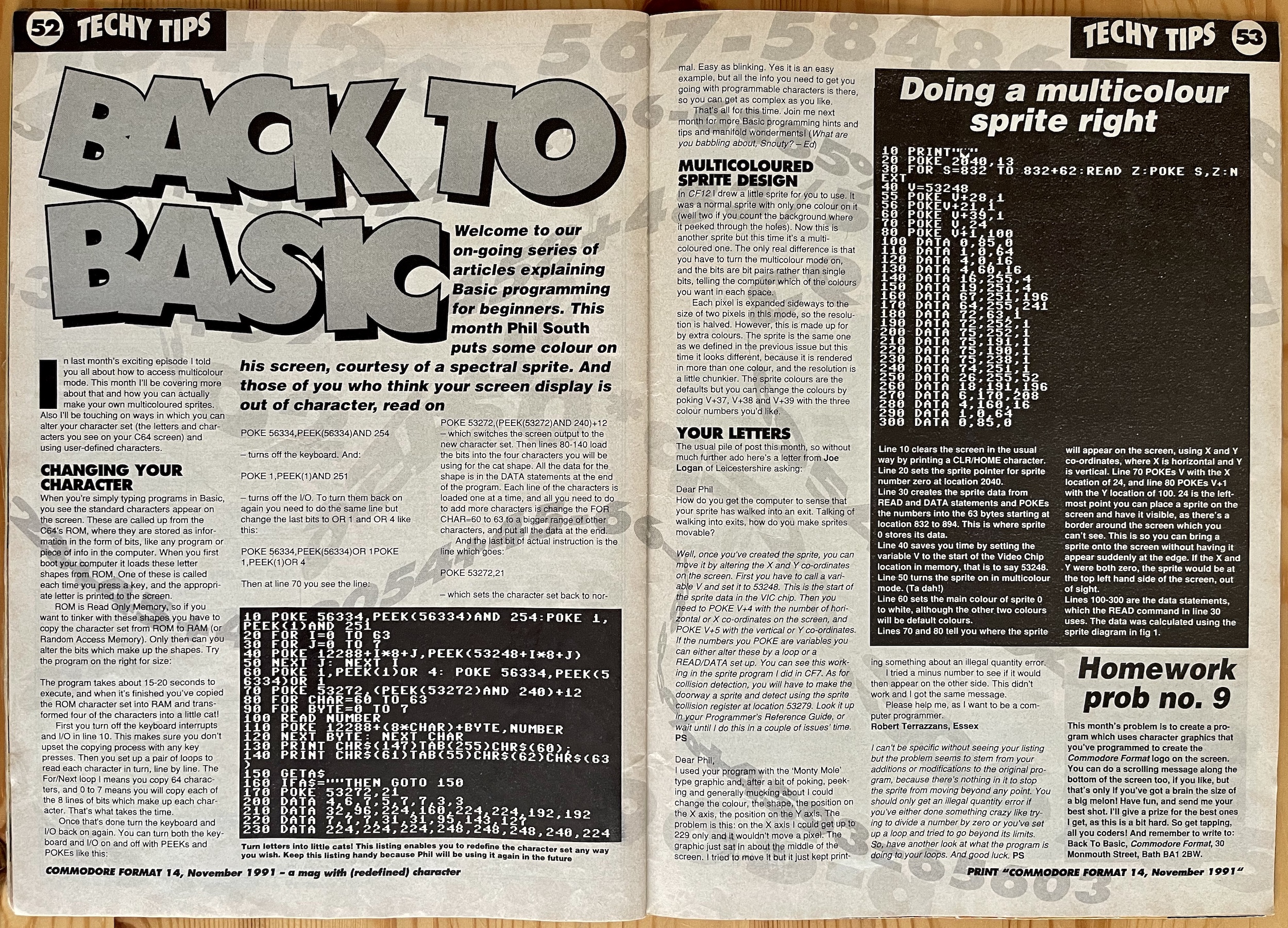
Commodore Format was different to Zzap in other ways too. While that magazine focussed almost exclusively on games, CF followed in the footsteps of its stablemates like Amiga Format, ST Format and PC Format and contained technical features such as an ongoing series of readers’ programming and hardware questions and loads of tips and tricks for the more established coders. For me, I was glad to see Phil South‘s tutorial series for complete newbies. With games on the cover and games all over the inside of the magazine, I made sure to show my parents these pages to prove I wasn’t just getting a games machine.

While naturally my focus was on the games to begin with, I was surprised how quickly I wanted to start digging a little deeper into the computing side of things. Commodore Format was a key part of this and the first three issues I owned before that Christmas were fascinating. I may not have fully understood these tutorials but I read them just as much as the rest, over and over. I was just as excited about that aspect of my new machine as any other.

Speaking of games being a fraction of the cost of their console counterparts, the Roger Frames Buys Budjit Games section collected together all the £2.99/£3.99 cassette games (originals and rereleases of former full-price games) in a handful of funny mini-reviews every month written by the fictional Roger Frames, a tight-fisted miser of a child who detested parting with his pocket money. Accompanied by brilliant comic-style misadventures you can check out this issue’s instalment in the review for OiNK #10. Why? Because Roger was drawn by that issue’s brilliant cover illustrator Mike Roberts, and I’d wanted to show off an example of his CF work I enjoyed so much. Off you pop and check that out before we go on.

Commodore Format led me to Edge and Cube magazines over the years via a detour to the equally fantastic 3DO Magazine

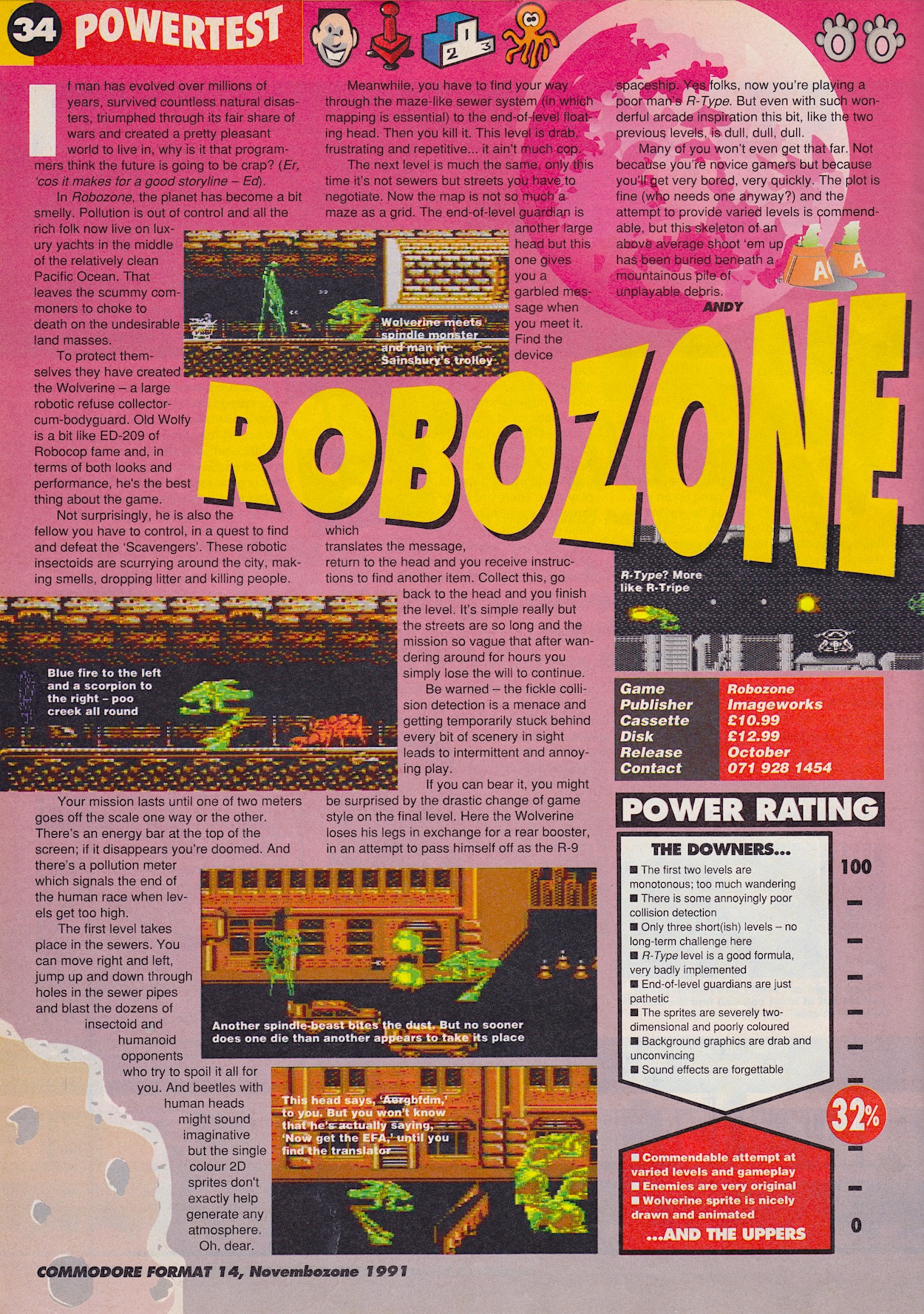
Welcome back. Anyway, Commodore Format also spoiled me for life when it came to review magazines of any kind, from games to movies and everything in-between. Below is a review from this issue for Robozone and by all measures it should be a terrible game that no one would want to spend their pocket money on. But the score is just the opinion of the writer, not a fact, and I always felt the way CF’s reviews were written was more important than the number at the end. Context was key.

In the case of Robozone it was clear why staff writer Andy Dyer personally didn’t enjoy the game but something from his review told me I might. So I bought it a few months later and yep, I did enjoy it. It wasn’t superb, and if I hadn’t got it from a bargain bin maybe I wouldn’t have purchased it, but it was fun for a few weeks. CF’s writers never tried to tell people that their opinions were facts. Throughout my gaming hobby I’ve come across magazines I felt were above their station, who thought what they opined was gospel (a bit like internet comments sections today). CF was never like this.

Commodore Format led me to Edge and Cube magazines over the years (also from Future Publishing) via a detour to the equally fantastic 3DO Magazine. Many others were tried but failed to talk to me on a level playing field like CF did. I’ve actually begun subscribing to Edge again last year for my Nintendo Switch. That’s the legacy of Commodore Format. It never spoke down to us. It never pretended to be anything other than a group of friendly people passing on advice. Well, perhaps one ‘person’ had a bit of an ego…

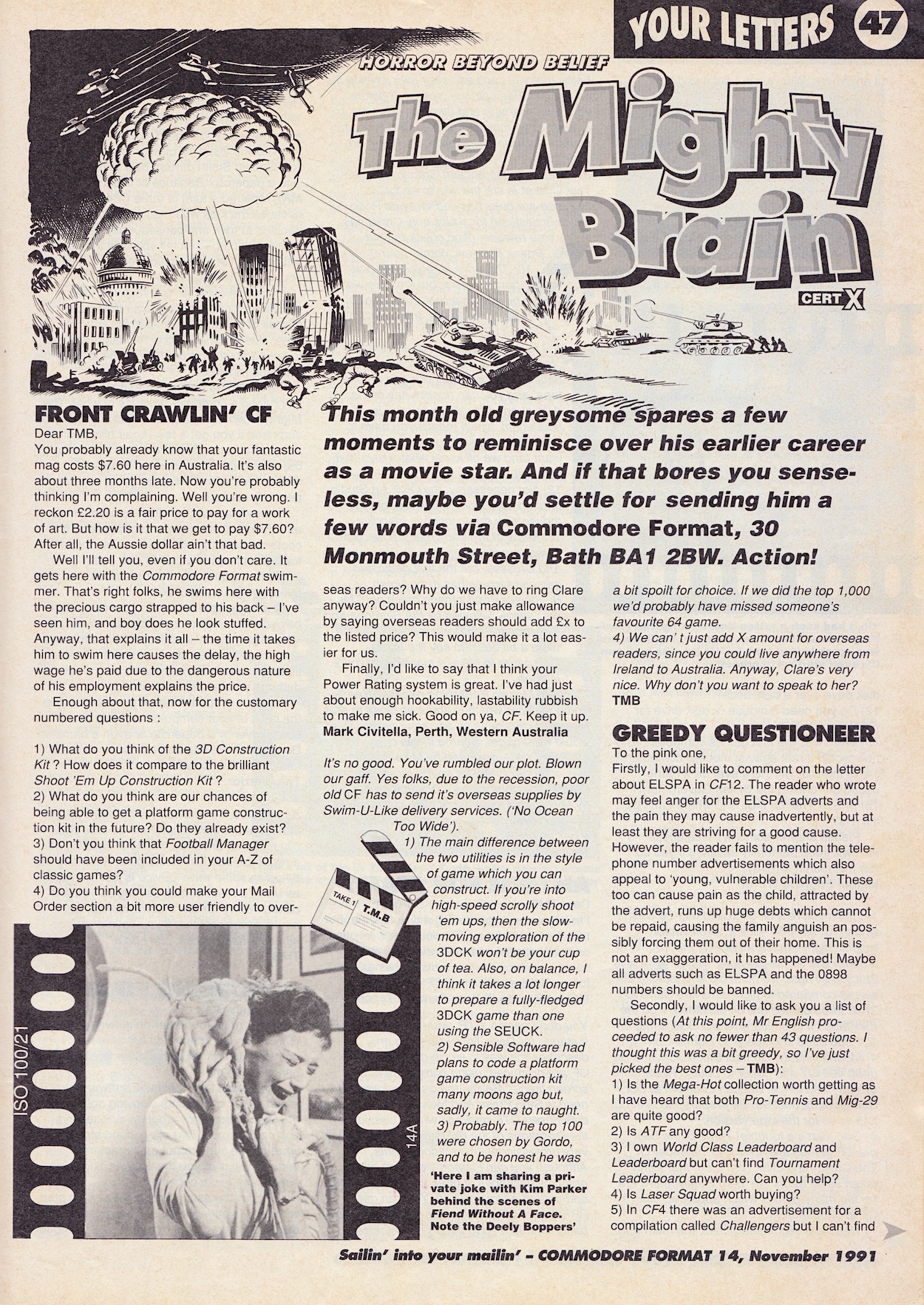
There were a whopping four pages of letters in each of these issues, hosted by The Mighty Brain, a ‘B’-movie star who knew everything in the knowable universe (and beyond). I mean, who better to answer readers’ questions, right? Even though these pages would be answered by different people as the magazine changed over time, his persona never changed and his cocky nature reminded me of the sassy letter answerers in childhood comics such as OiNK and Transformers. Great fun.

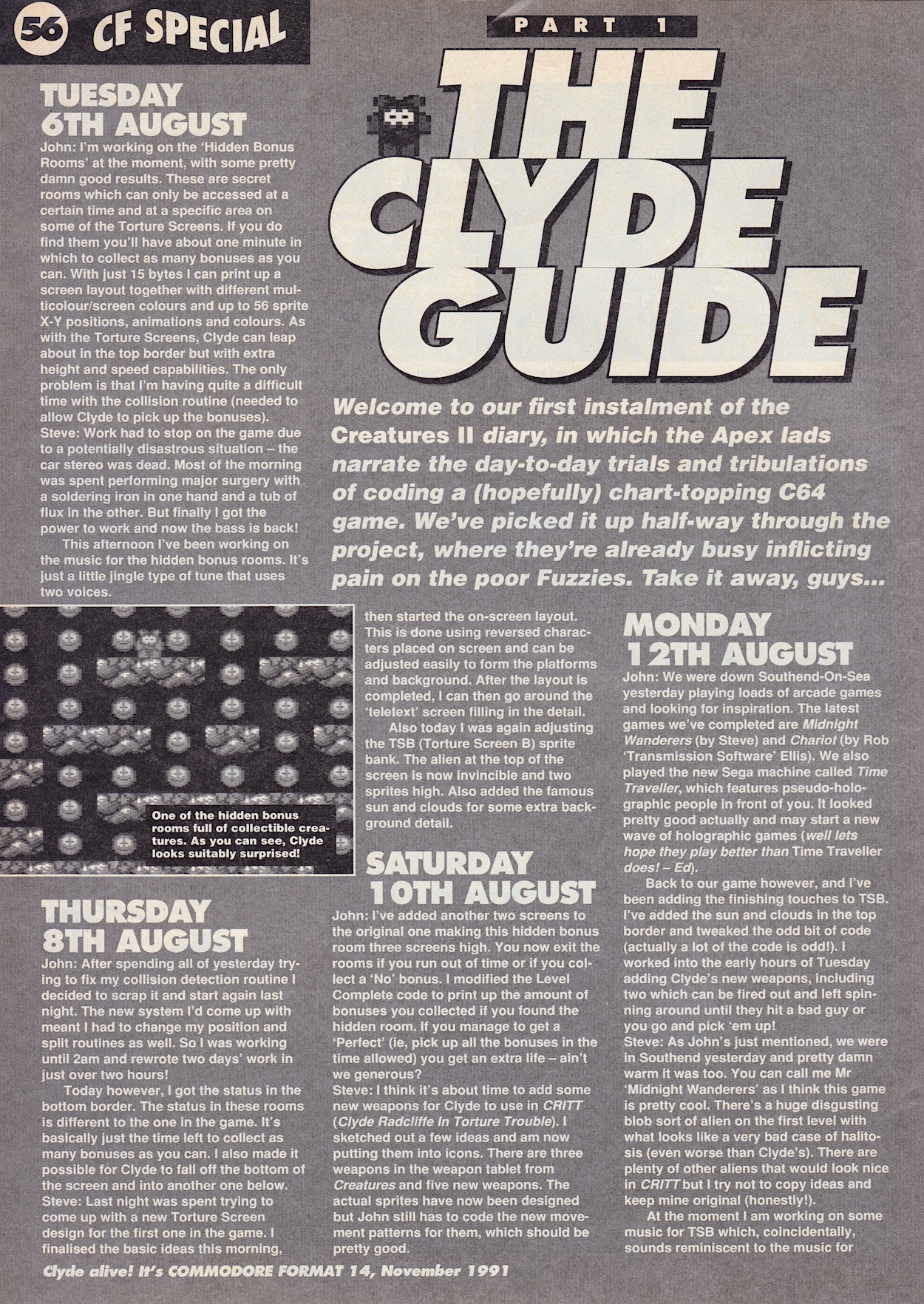
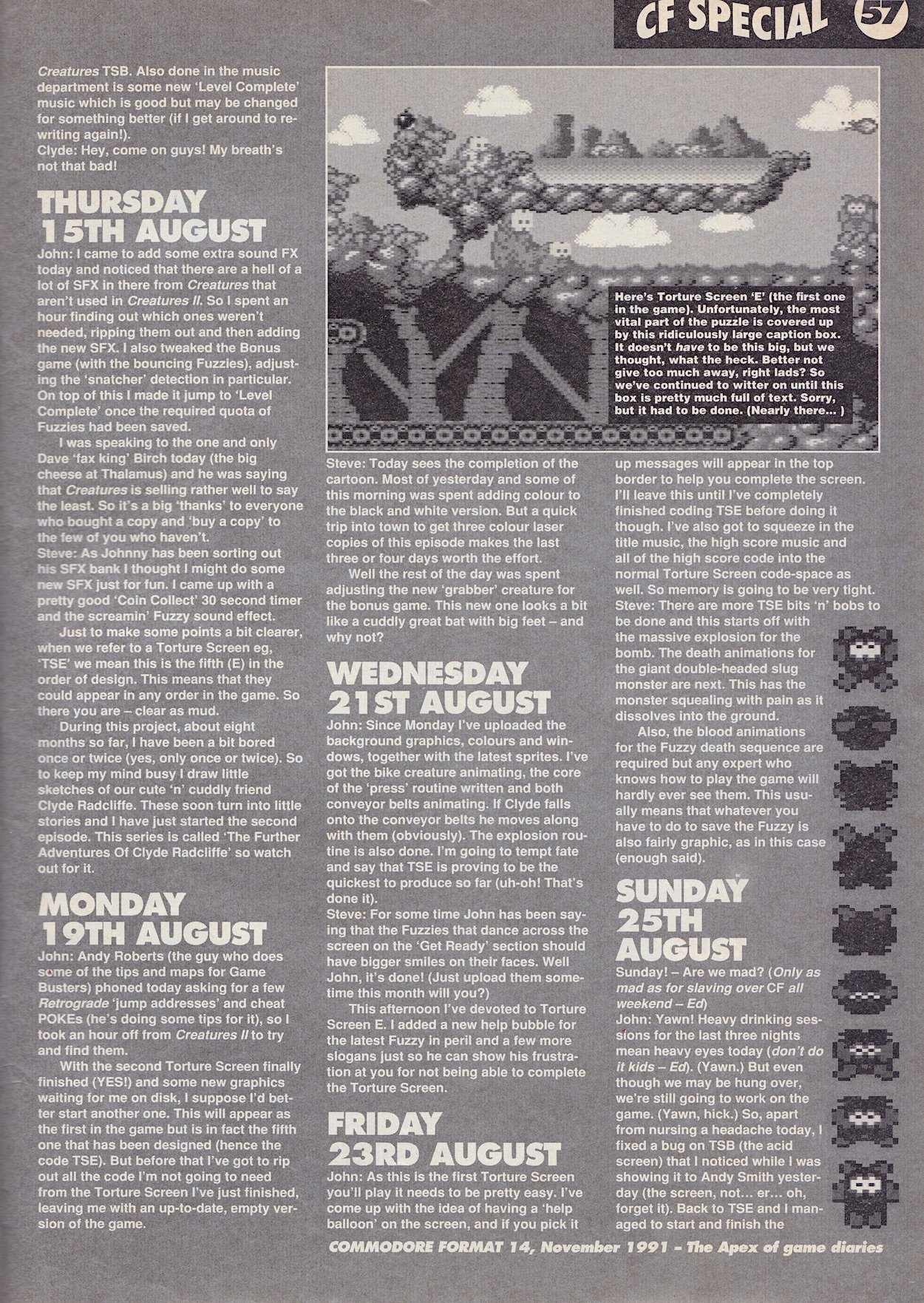
Zzap64’s publisher was going through administration at the time (hence the blurb at the top of the cover) and for a few months CF’s competitor didn’t appear. It worked out perfectly for me because I’d discovered this superior magazine instead and inside a regular feature from the abruptly (and temporarily) cancelled competition made its transition to CF. The Clyde Guide was a Making Of series about the upcoming Creatures II: Torture Trouble, a game that’s still in my top five games of all time on any platform to this day.

A cute and cuddly looking game with devious puzzles, huge boss fights and gorgeous animation, it had a hilarious sense of humour with over-the-top gore that would surprise players when things went wrong. All cartoony and ridiculous gore splashed all over the cute graphics of course, this was still a basic machine compared to today’s after all. The Rowlands brothers John and Steve gave a fascinating insight into the creation of a brand new game, month-by-month. This wasn’t a look back at how a game was made, this was happening in real time.

On a side note, I contributed to Bitmap Book’s Commodore 64: A Visual Compendium for their Creatures II spread

I was hooked from this first chapter (CF’s first chapter but obviously the game was a long way into development by this stage) and it would often be the first thing I’d read in subsequent months. Later in the magazine’s life the brothers would also create the incredible Mayhem in Monsterland game which they’d chronicle in the pages from the very beginning. I’d never read anything like these diary entries before and was amazed at the access the magazine had. On a side note, a few years back I contributed to Bitmap Book‘s Commodore 64: A Visual Compendium for their Creatures II spread.

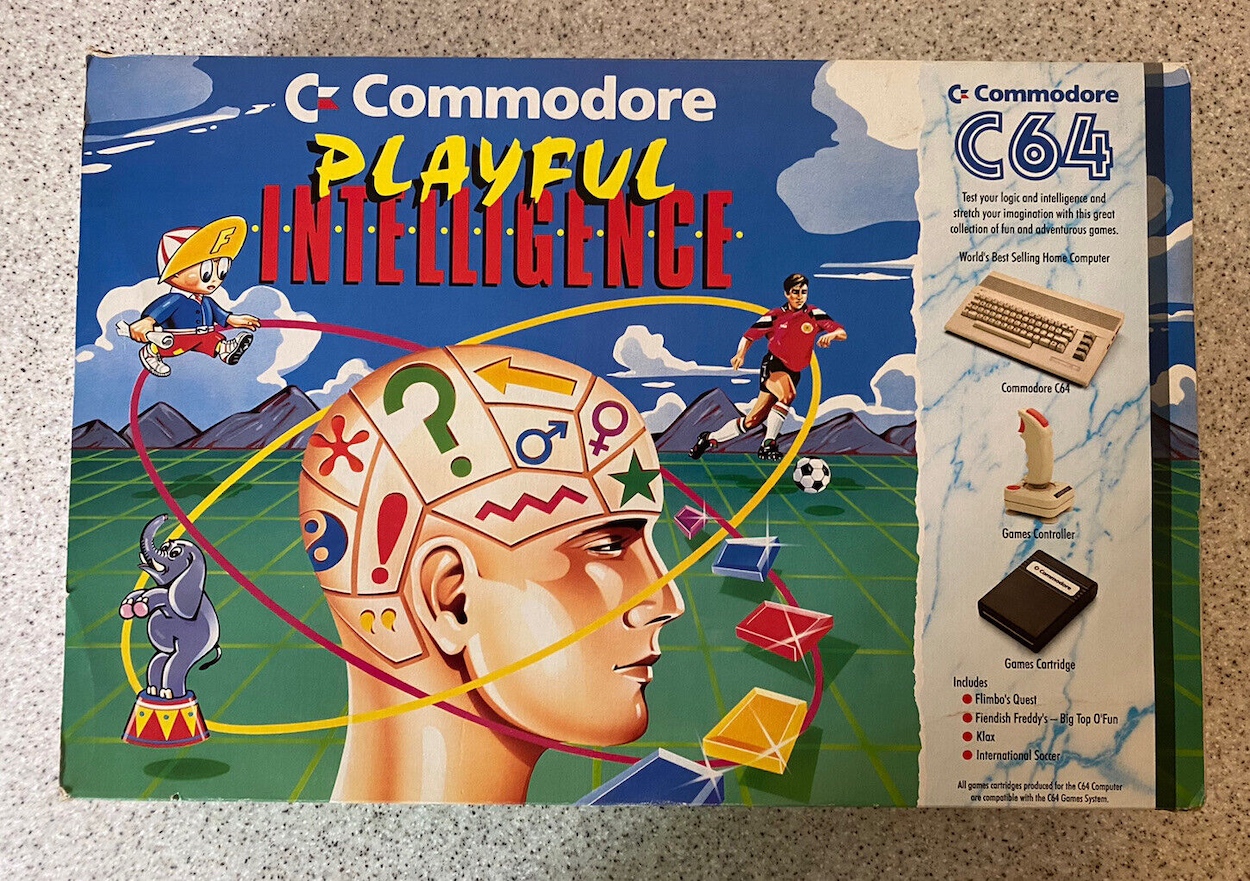
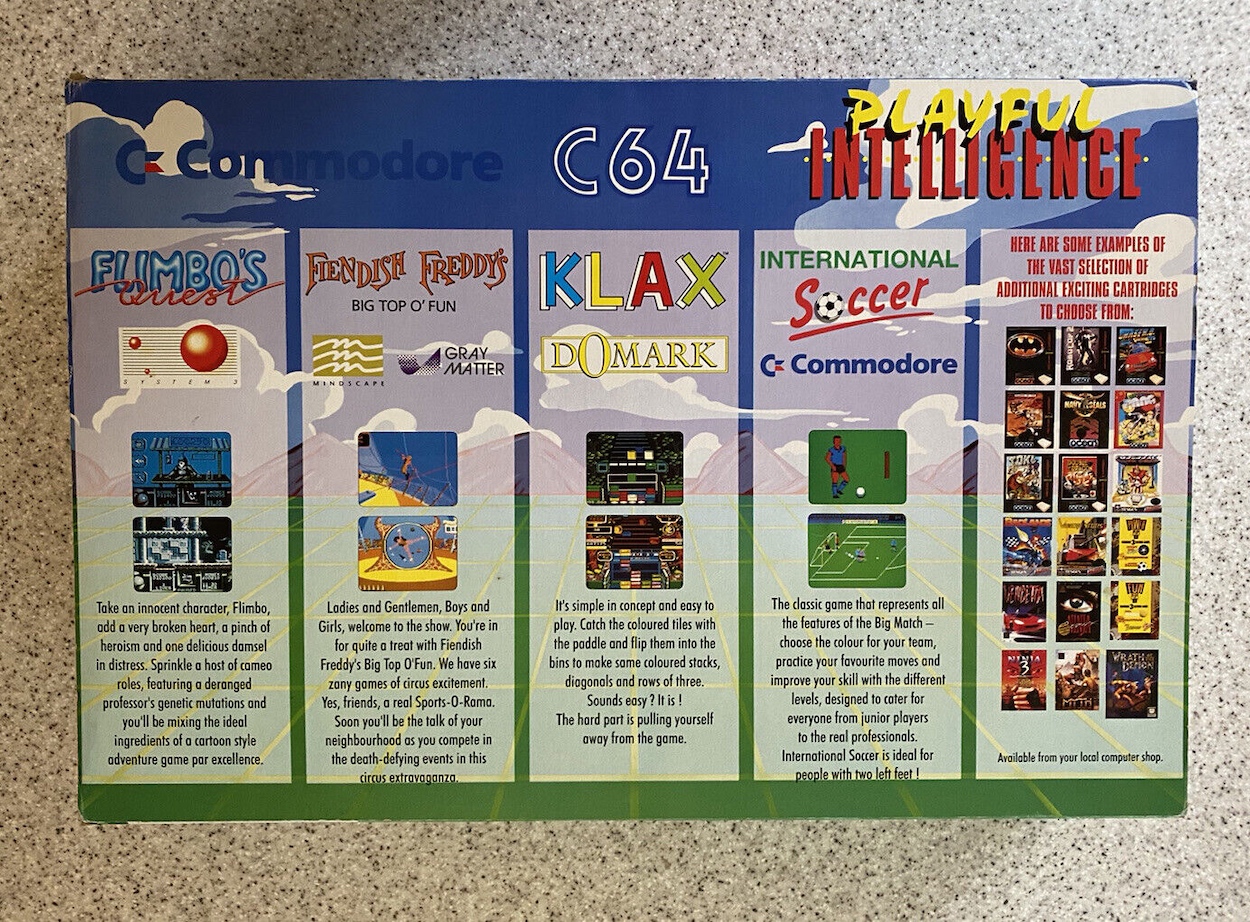
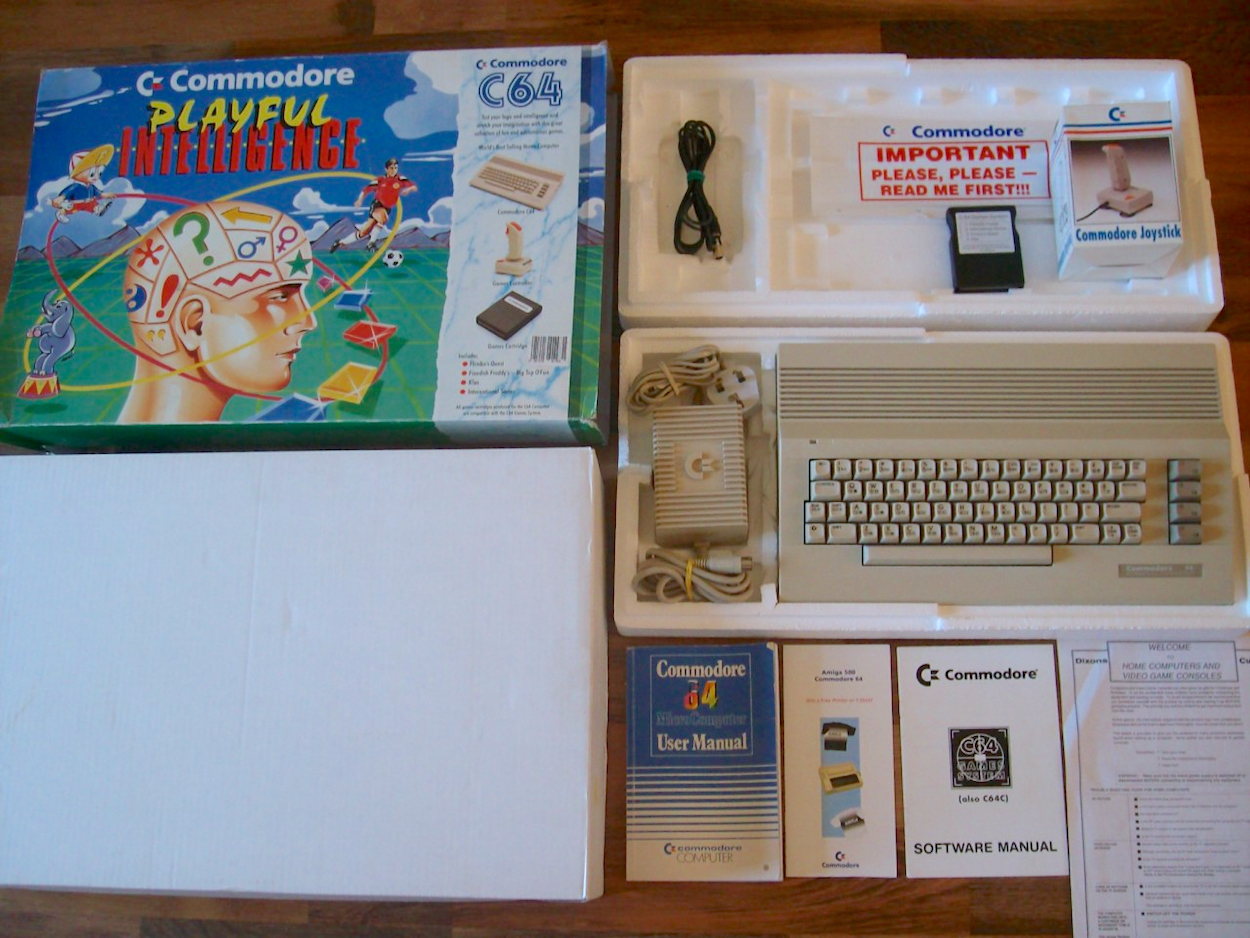
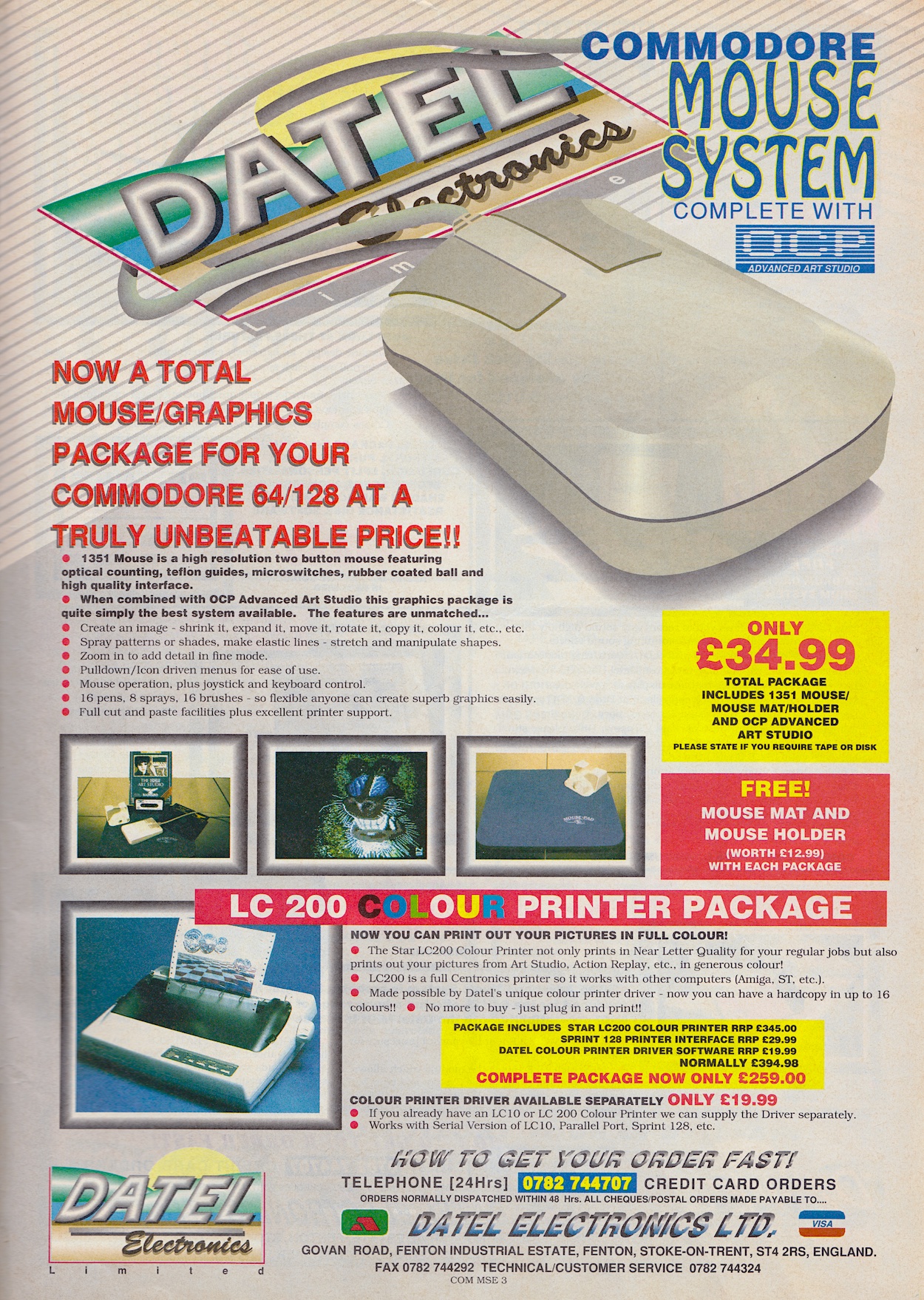
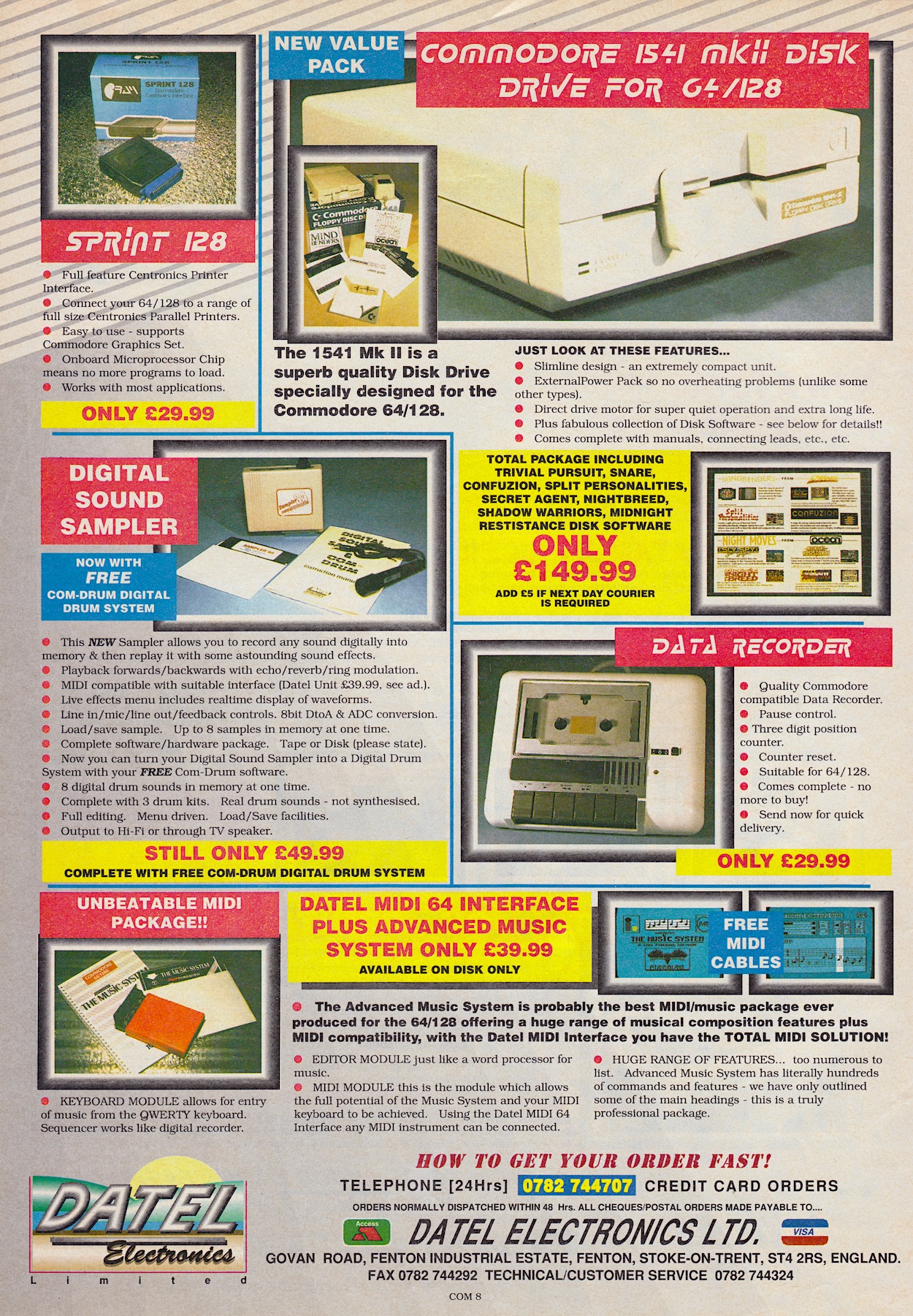
That Christmas I finally received my C64 with a cartridge full of games, a few joysticks and a cassette deck. The following Easter my dad was made redundant and with his payoff I was promised something for my computer. I chose a disk drive after seeing it advertised every month in these Datel Electronics adverts. The following Christmas I also added the printer shown here along with the mouse and art package, all set up on a desk made by my dad in the alcove in my bedroom.

Some friends may have thought the C64 was past it but I was using it for everything! Writing my own stories and magazines, a diskzine (more on that in the specific post I mentioned, coming next year), homework, running a Public Domain software library, making games… In fact, I was using it for a lot more than my friends were using their more powerful machines for. Oh man, the memories are flooding back as I read through this issue again. Those were such enjoyable years thanks to that machine and this magazine.

CF eventually succumbed to a loss of sales only six months before the release of the first Sony Playstation!

Commodore Format was created by Future Publishing when they saw an opening in the market. The C64 was still selling really well as an entry-level computer, while also being handed down to younger siblings. CF was an instant success and soon became the biggest selling C64 magazine in the world! Deservedly so. It would last right up to #61, eventually succumbing to a loss of sales only six months before the release of the first Sony PlayStation! That’s incredible for a machine which people told me was on its last legs before I even got mine.

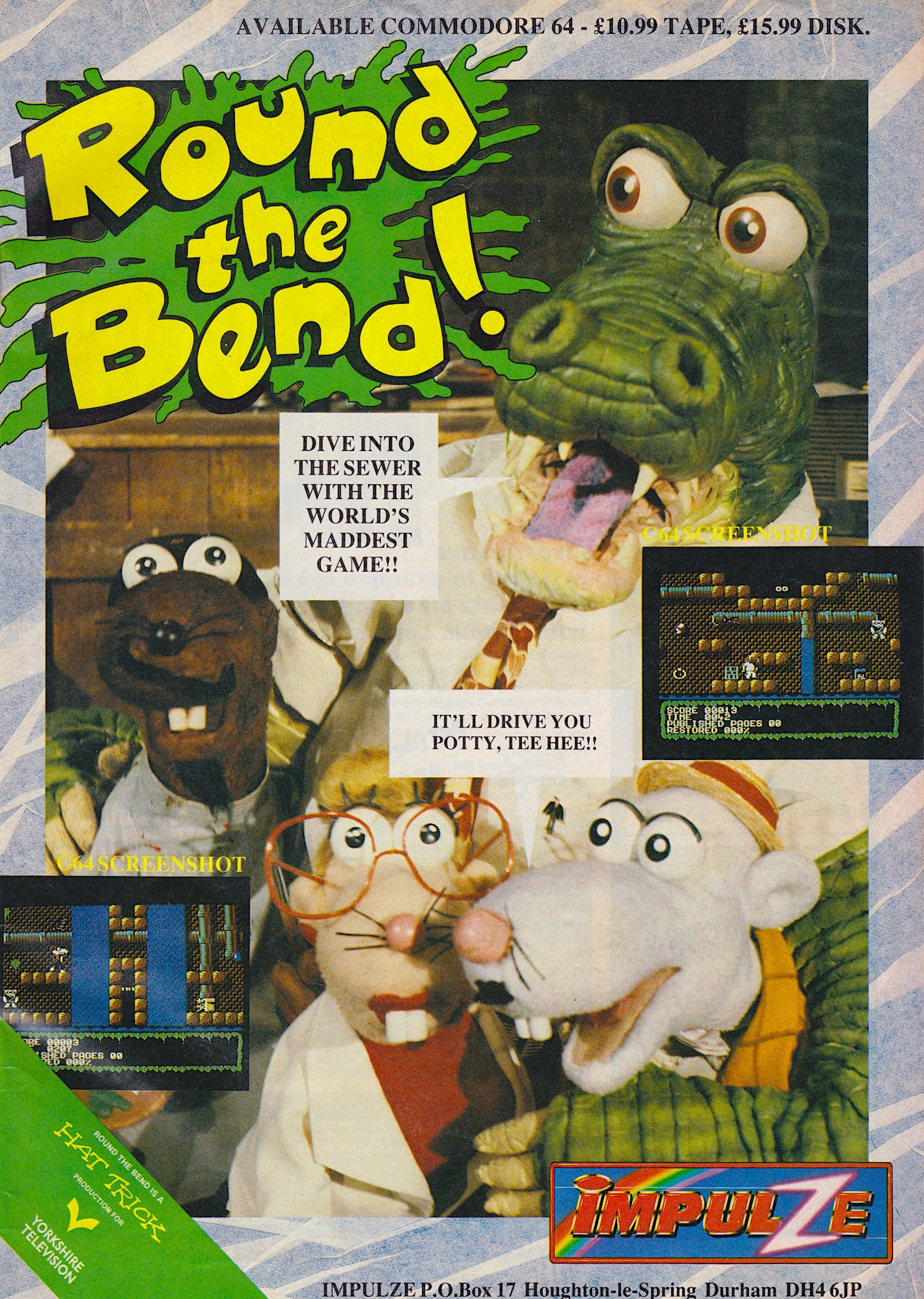
Regular blog readers may have noticed the issue number for my first ever magazine is the same as that for my first ever comic, #14 of OiNK. With that tenuous link I’ll wrap up this retrospective with an advert for an upcoming game pig pals may have been particularly interested in. After OiNK was cancelled the creative team of Tony Husband, Patrick Gallagher and Mark Rodgers went on to create a certain TV show that shared many familiar aspects with our piggy publication.

The game already looks like it’s closer to its inspiration than the OiNK game. Round the Bend would get reviewed in #17 of Commodore Format, so in keeping with the real-time aspect of this blog I’ll show you that very review and take a look at the game itself on Tuesday 16th January 2024.

I feel like I’d need to show you every single page of this issue over a series of posts in order to fully get across just what an impact it had on me and how formative it was. I hope I’ve been able to do it justice. I have an almost complete set of the magazines here at home, despite not owning a Commodore 64 anymore and I’ll never get rid of them; I love to dip in and out and I’ll forever treasure them and the memories they contain.

In the days of magazine contributors being named and photographed for the editorial pages, over time it felt like we’d grown to know these people and we trusted them as a result. This was a key component in that club feeling and later in its lifespan Commodore Format would be instrumental in my life and the person I became! Really. That’s a whole other story for another time, but for now I just wanted to concentrate on a retrospective look at this beloved issue of a beloved mag.

Commodore Format has featured elsewhere on the blog already. The cover cassette of its second edition contained the OiNK game in its entirety as you can see in a post from the game’s coverage. Then in their third issue the team produced maps to help people struggling with the game and I’ve included them on the blog as well. Both posts also take a look at some of the other articles and contemporary adverts featured in those early editions. Finally, the Roger Frames Buys Budjit Games section was a favourite feature of every issue for me and was illustrated by Mike Roberts, a brilliant illustrator who also produced the cover to OiNK #10, and in that OiNK review I’ve included Mike’s art of Roger’s misadventure from this issue of Commodore Format. Enjoy.

RETROSPECTiVES MENU

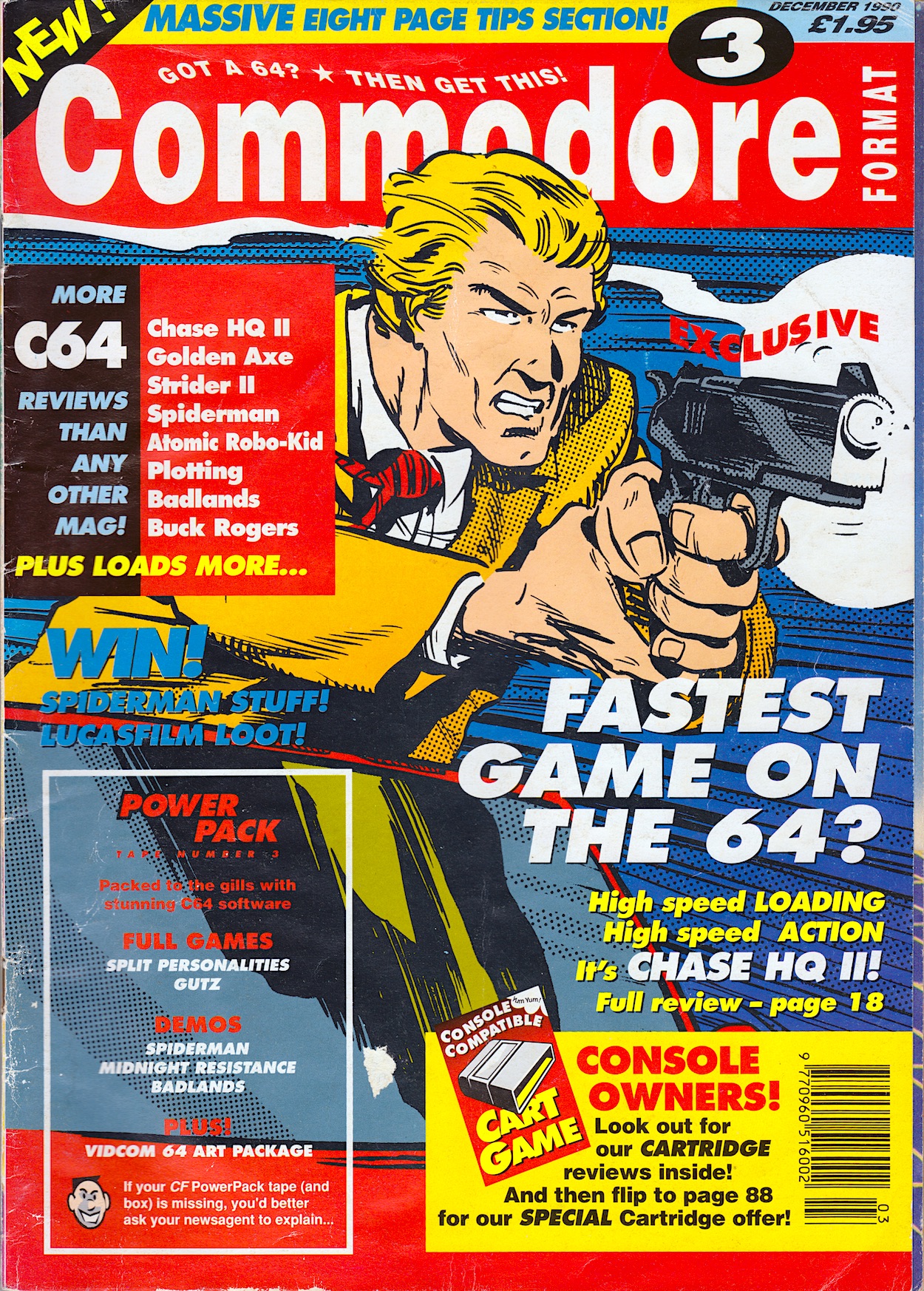
PiG TALES PART TWO: COMMODORE FORMAT #3

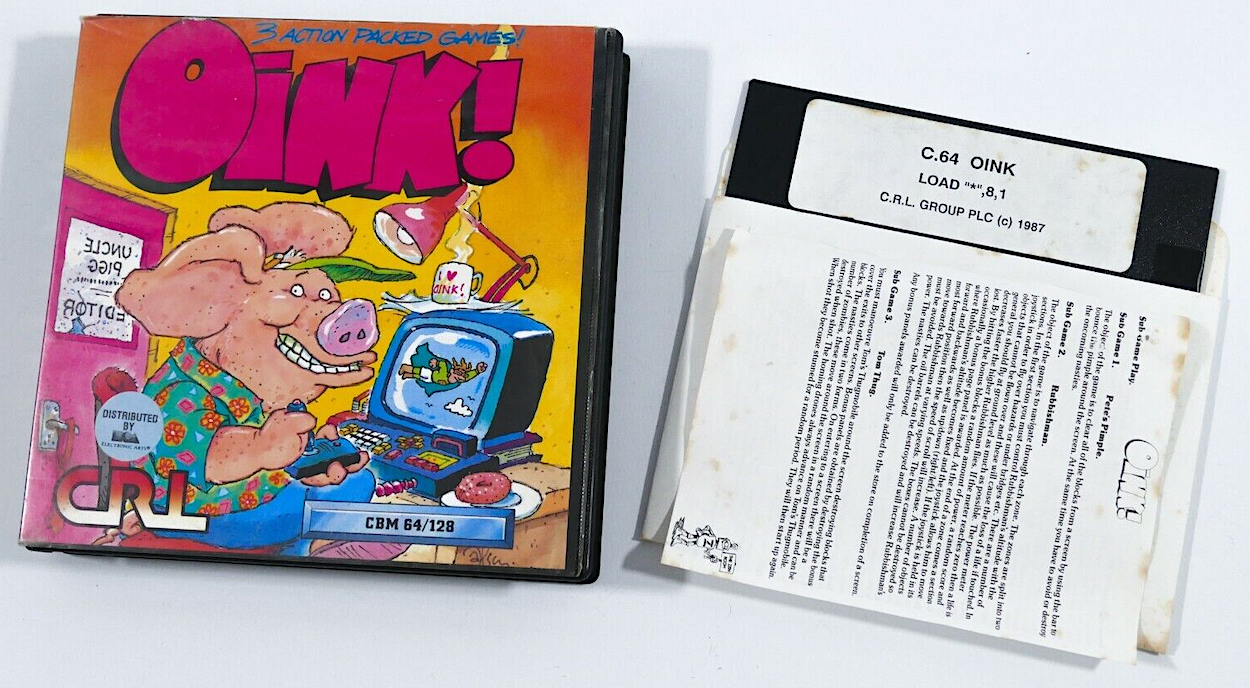
Last month I got to show you how Future Publishing’s superb Commodore 64 magazine, Commodore Format gave away a game on its covertape called Pig Tales, and how this game was actually the OiNK computer game, which had originally been released in 1987 across all 8-bit formats (image below from an eBay seller). Despite not having much to do with the comic, its playability and value for money was generally praised at the time but it just didn’t sell. So a short three years later it was a freebie on the cover of CF.

In case you haven’t seen the previous post, it contained the full instructions for the OiNK game and one month later Commodore Format was back with a guide for those stuck in the misadventures of some of the comic’s most popular characters. So that’s what this post is all about. Plus, just like last time I’m throwing in some contemporary features and adverts from the magazine to place it in its time, just for fun.

Every month our computing and videogames magazines would contain hints, tips and cheats for a huge variety of games. Without search engines, if you were stuck you just had to sit tight and hope your monthly read contained some help for you. Today I stay away from such websites that offer things like this, but the younger target audience of these magazines lapped these things up, as did I at the time. Some of the most popular forms of help were game maps.

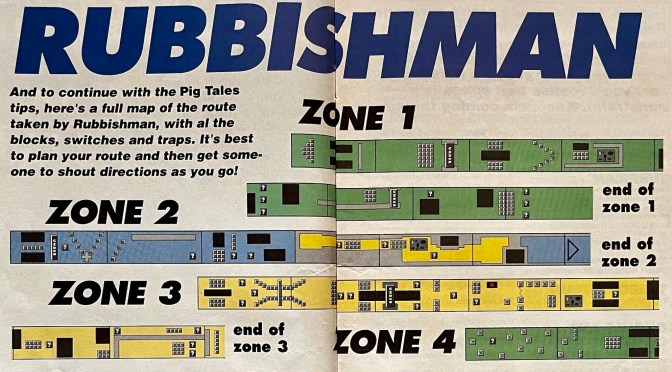
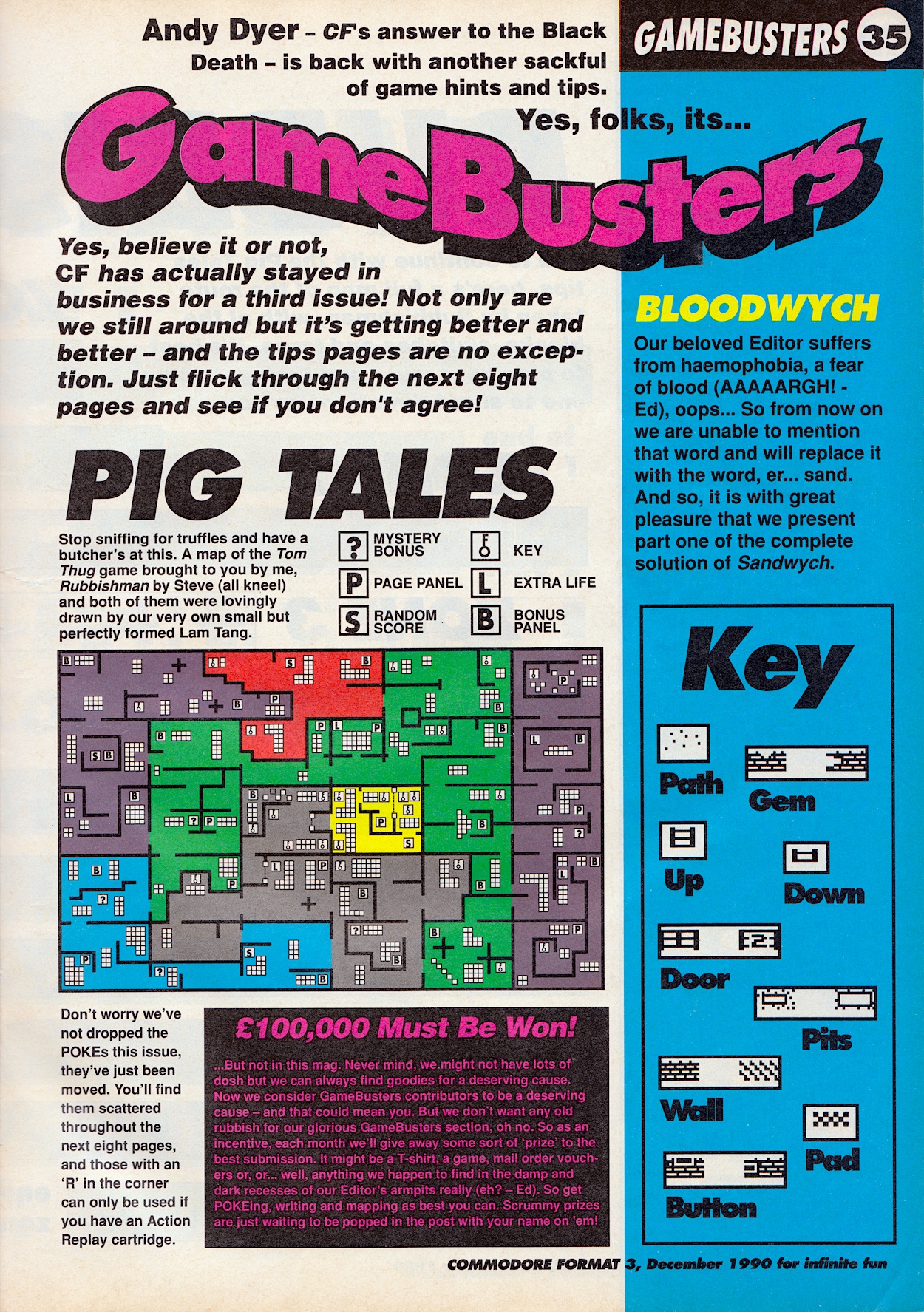
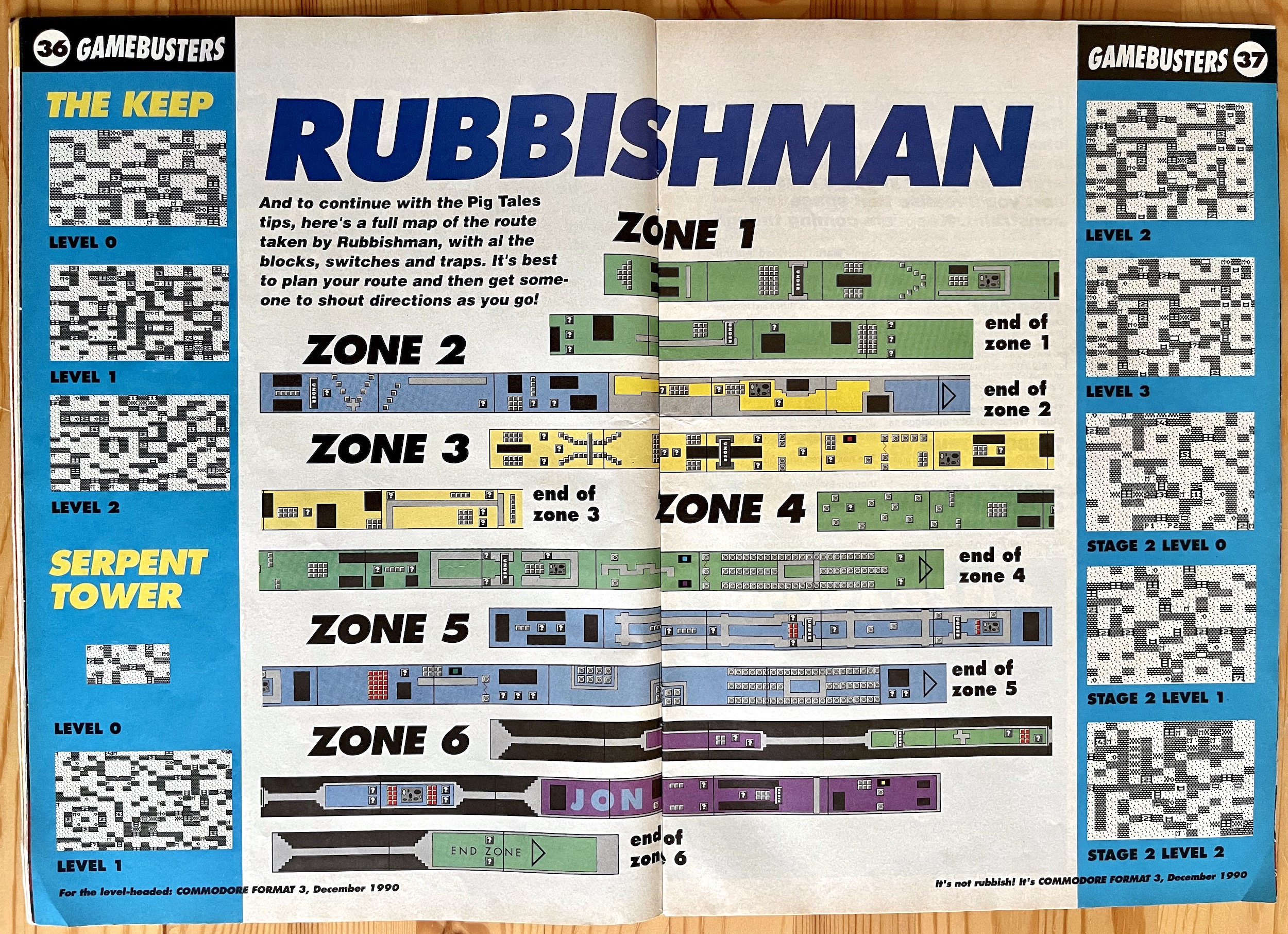
In the section of the mag called GameBusters, staff writer Andy Dyer and editor Steve Jarrett painstakingly compiled detailed maps for the Tom Thug and Rubbish Man sections of the OiNK game respectively, which in turn were drawn up by designer Lam Tang. There was no need for help with the Pete and his Pimple section, it was a bat and ball game. It just required practice. So if you’ve got a copy of the game and would like to get that bit further (and have no patience) here are the full guides from this issue.

Ignore those black and white maps down the side, those are for a different title altogether. As you can see Tom’s zombie crushing section is all one big area to traverse while Rubbish Man’s is divided into six increasingly difficult zones. (Also, see the rather self-congratulatory game programmer include his name in a level!) Throw in Pete’s game and it’s a bit of a miracle it was a single load, not taking up any more than the computer’s measly 64k of memory (actually less when system memory is taken into account). For contrast the images on this blog are 1Mb on average, roughly sixteen times that size.

I’d actually like to give that Rubbish Man section a go again!

You can’t fault the team’s work here. Every little detail is included and not one screenshot is used, it’s all been drawn from scratch from playing the game themselves. No, the team didn’t receive a copy of the maps from the game publisher, at the time writers of these kinds of magazines had to basically play these games for hours and hours and assemble the guides themselves. Given how this issue contains eight pages of such help for the young players it’s an insane amount of work every month.

I’d actually like to give that Rubbish Man section a go again! If you’ve missed any of the coverage of the game on the blog you can check out a retrospective from Retro Gamer, a preview from an issue of Zzap!64 containing a cameo by Snatcher Sam, a special interview with OiNK’s editors in Crash magazine which also came with a special free edition of OiNK, there’s a full review of the game from Zzap and of course the previous issue of Commodore Format. Now let’s have a quick retrospective look over some things that caught my eye on other pages of this December 1990 issue as I prepared the above scans.

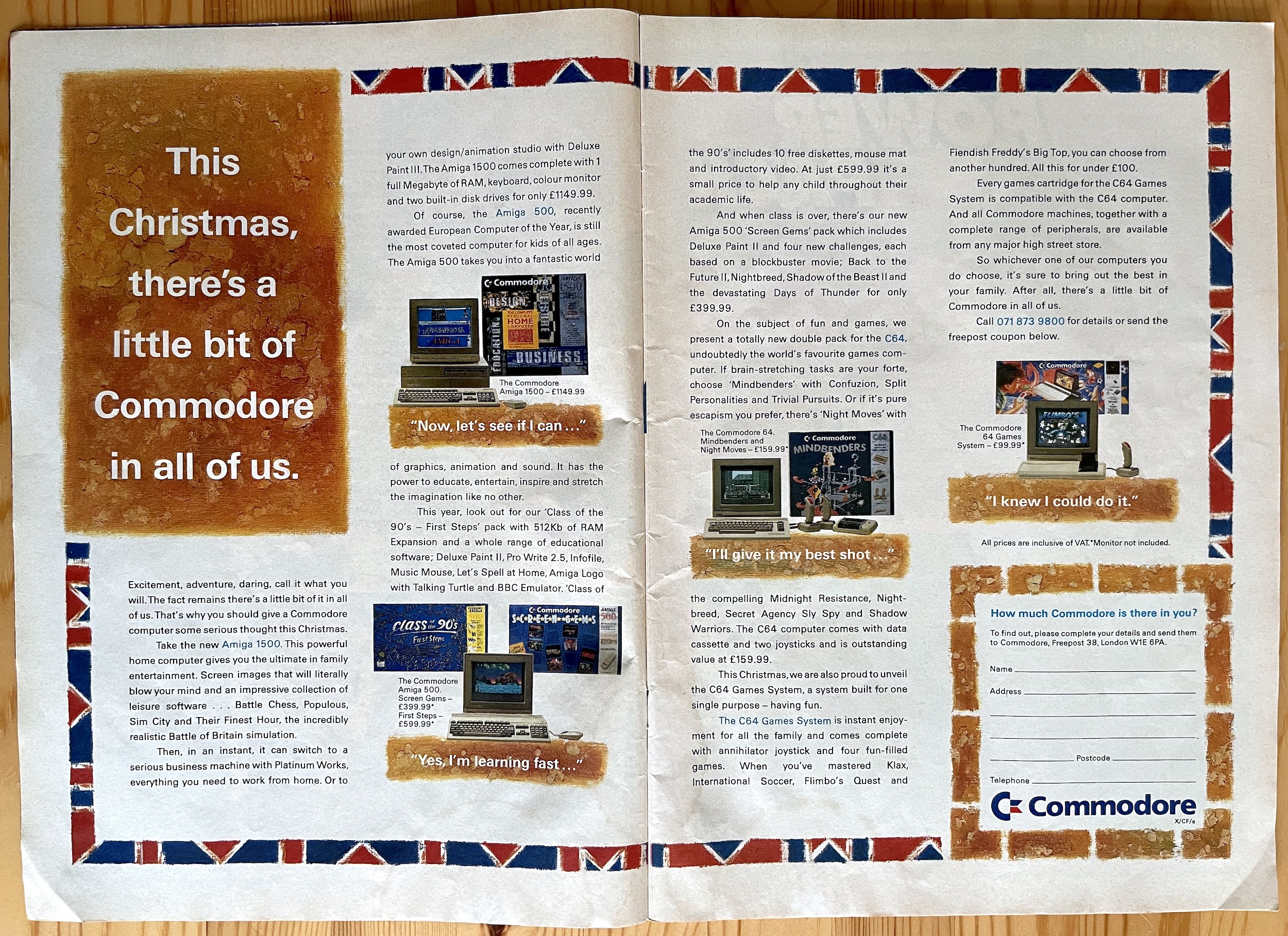
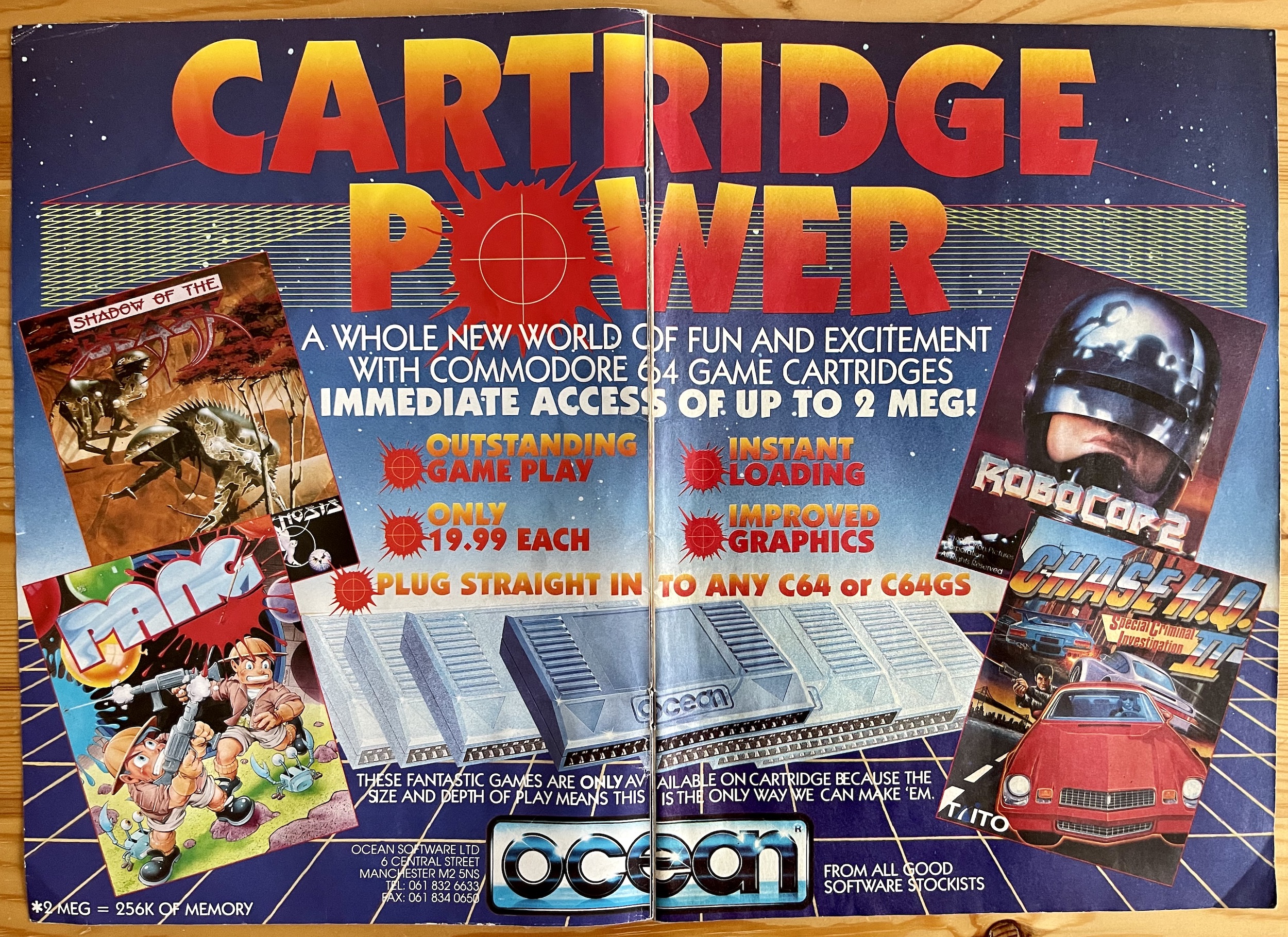
Back in the early 90s when other computer companies such as Sinclair and Amstrad found their 8-bit systems struggling the Commodore 64 was still selling well as an entry level computer. In the back of it was a cartridge port which had been underused throughout its already lengthy lifetime. New cart chip technology now enabled developers to use extra memory along with their ability to instantly load to produce advanced graphics, sound, more content and more complex gameplay. Commodore even released a console version of the 64.

With these the Commodore could easily contend with new kids on the block the Nintendo Entertainment System and Sega Master System. I often found (and still feel the same) that my favourite games on the 64 were miles better than the (admittedly great) console games. But Commodore, in their infinite wisdom, weren’t exactly marketing geniuses and the only places you’d see these advantages of cartridge technology detailed were in Commodore 64 magazines, read by people who already owned the machines. Without the manufacturer doing a good job the game publishers’ flash adverts above looked the part but had minimum impact.

Don’t get me wrong, gaming technology began changing very quickly in the 90s and incredibly the C64 still continued to sell very well for another couple of years. Commodore Format itself was eventually cancelled in 1995 only a few months before the first PlayStation magazine began! But with these advertising spreads above Commodore wasn’t exactly inspiring excitement, were they? In fact, they would go bust in 1994, taking the Amiga and its ever-developing range with it.


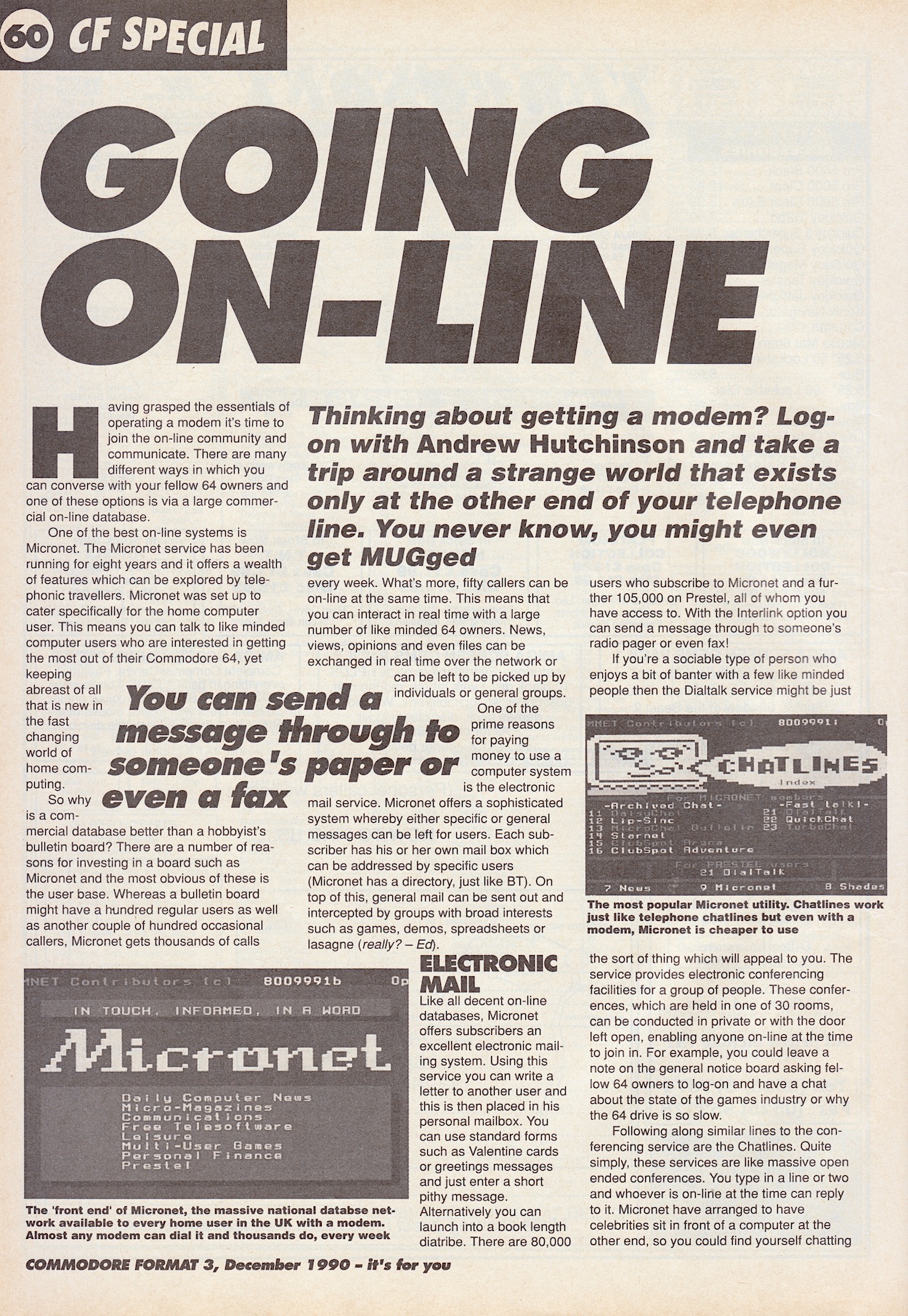
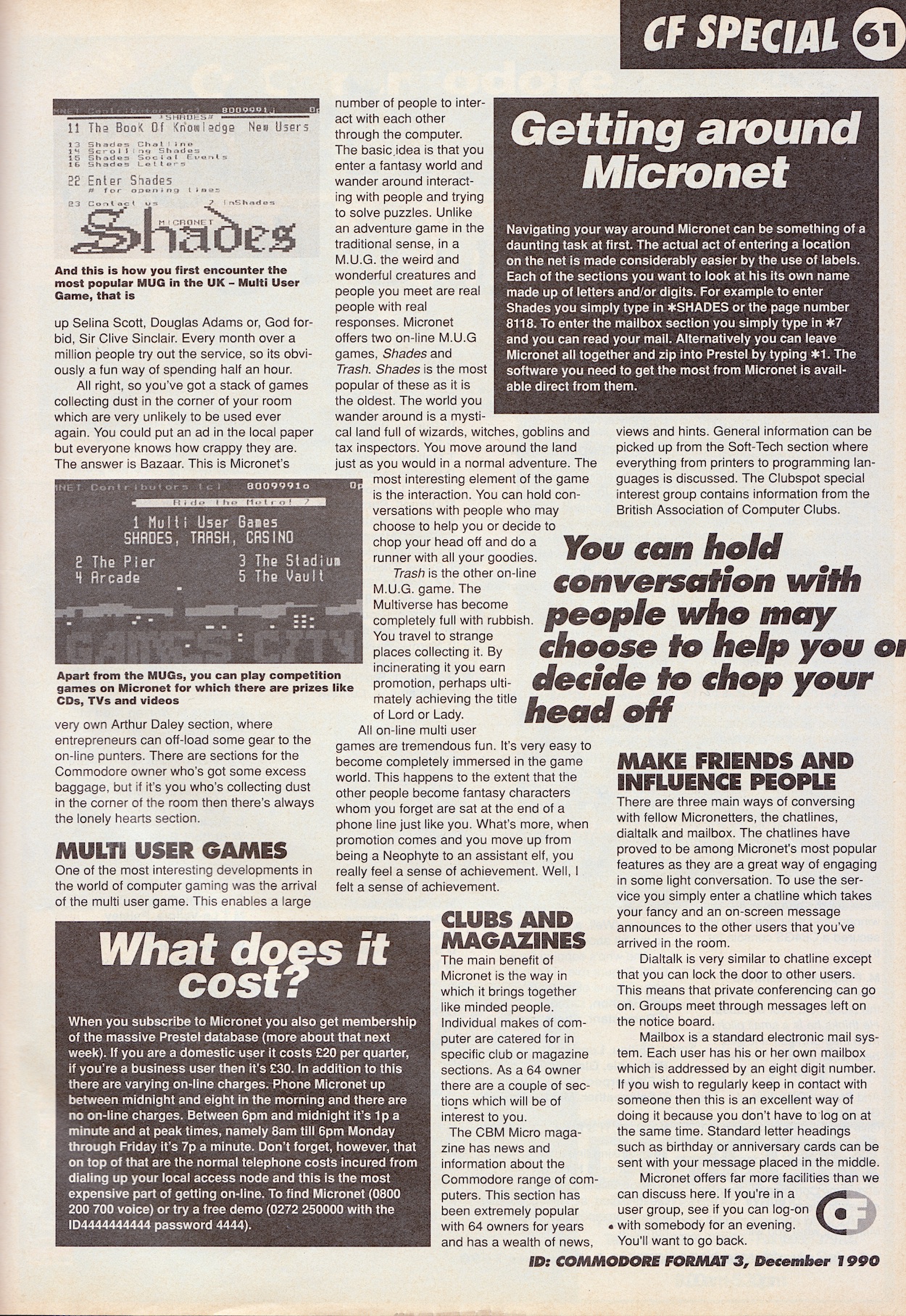
“You can hold conversation with people who may choose to help you or decide to chop your head off”

‘Going On-line’, Andrew Hutchinson

I always felt there was real potential to stave off the fate of the C64 if the company had really got behind the cartridge format on the proper computer instead of that silly console idea. Nintendo and Sega didn’t have to worry. The big push never came and when the console failed (as anyone could’ve predicted) publishers left the entire format in droves. Oh well, this short period of time still produced some of my very favourite computer games of all time and that’s not just the rose-tinted glasses talking.

Finally for this post there’s a feature I just had to show you all, written by future CF editor Andrew Hutchinson. Given this issue was published in 1990 and was for the Commodore 64 it might surprise you to see an article about going online! It would be the late 90s before our household had access to the Internet via AOL and a PC, but we were still in time for the extortionate monthly fees and even more extortionate per-minute charges mentioned below. Ah, the old days, eh? Yep, they very much were not better.

That pullquote on page 61 was about playing RPGs online, but could easily apply to Twitter today.

The excitement around the ‘Information Superhighway’ was intense in those years and looking back on it now it’s all very quaint of course, but every big revolution has to start somewhere. It’s strange to think how dependent our everyday lives have become on the technology that back then was seen as an expensive luxury only. Aside from the brilliant writing and the fact it was a damn fun magazine, the enthusiasm is another reason why reading actual retro magazines will always be superior to those from today that look back. It’s a lot cheaper too!

Anyway, that just about wraps up the OiNK Blog’s coverage of the OiNK computer game. I’ll take another look at Commodore Format next year when I reread the first magazine (of any title) I ever bought for myself, #14, which coincidentally enough is the same issue number of OiNK that had been my very first comic. Look out for more OiNK merchandise posts in the future.

BACK TO COMMODORE FORMAT #2

THE OiNK COMPUTER GAME MENU

OiNK MERCHANDiSE MENU

MAiN OiNK MENU

PiG TALES PART ONE: COMMODORE FORMAT #2

Commodore Format was a very special publication for me, although it wasn’t until #14 that I discovered it. I’m writing a few posts for the OiNK Blog about it because in one of its earliest issues there was a certain porcine program on the covertape, the cassette packaged every month with full games and demos of upcoming releases for readers’ Commodore 64 computers. On sale 32 years ago this month I’ve something special to show pig pals.

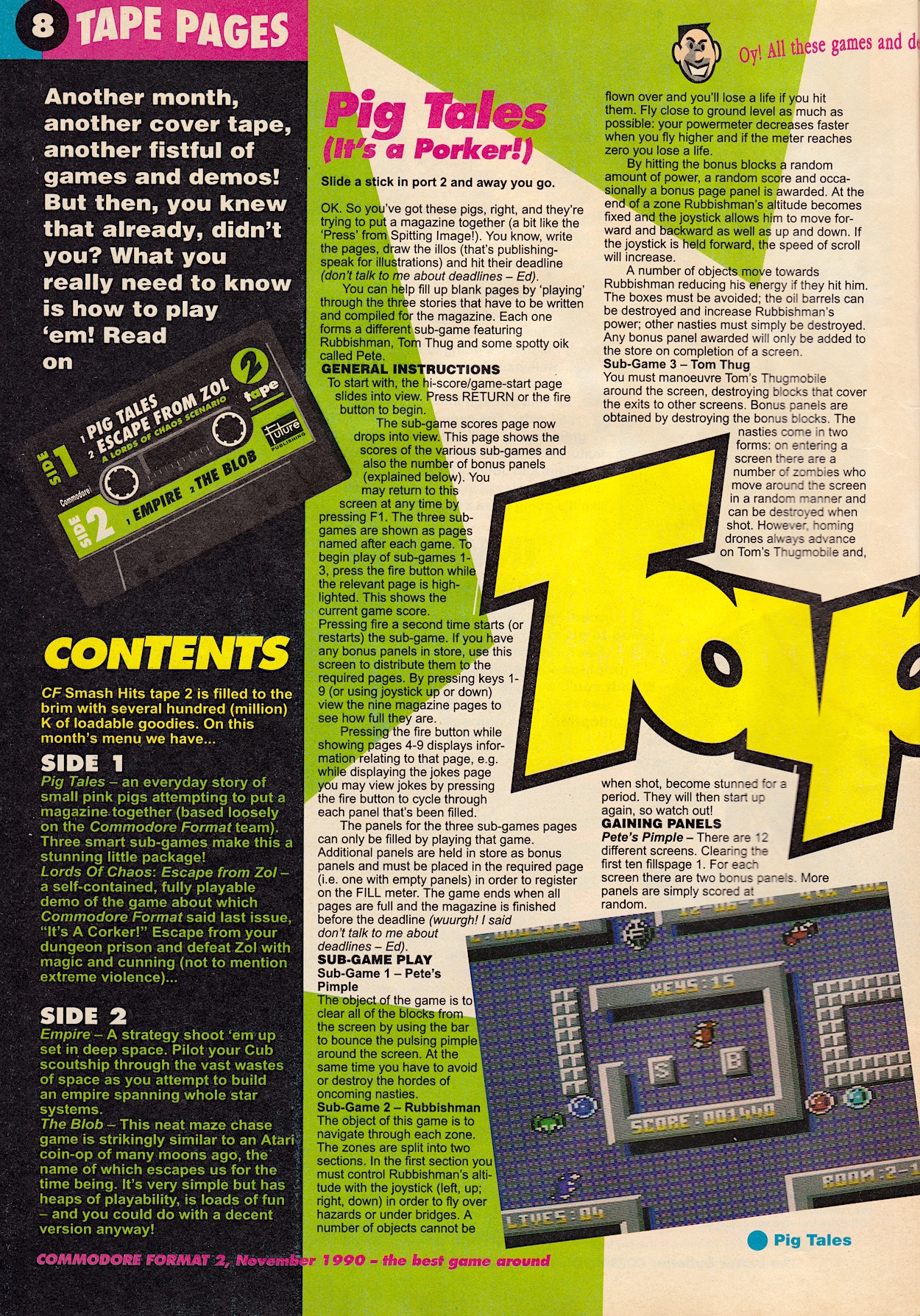
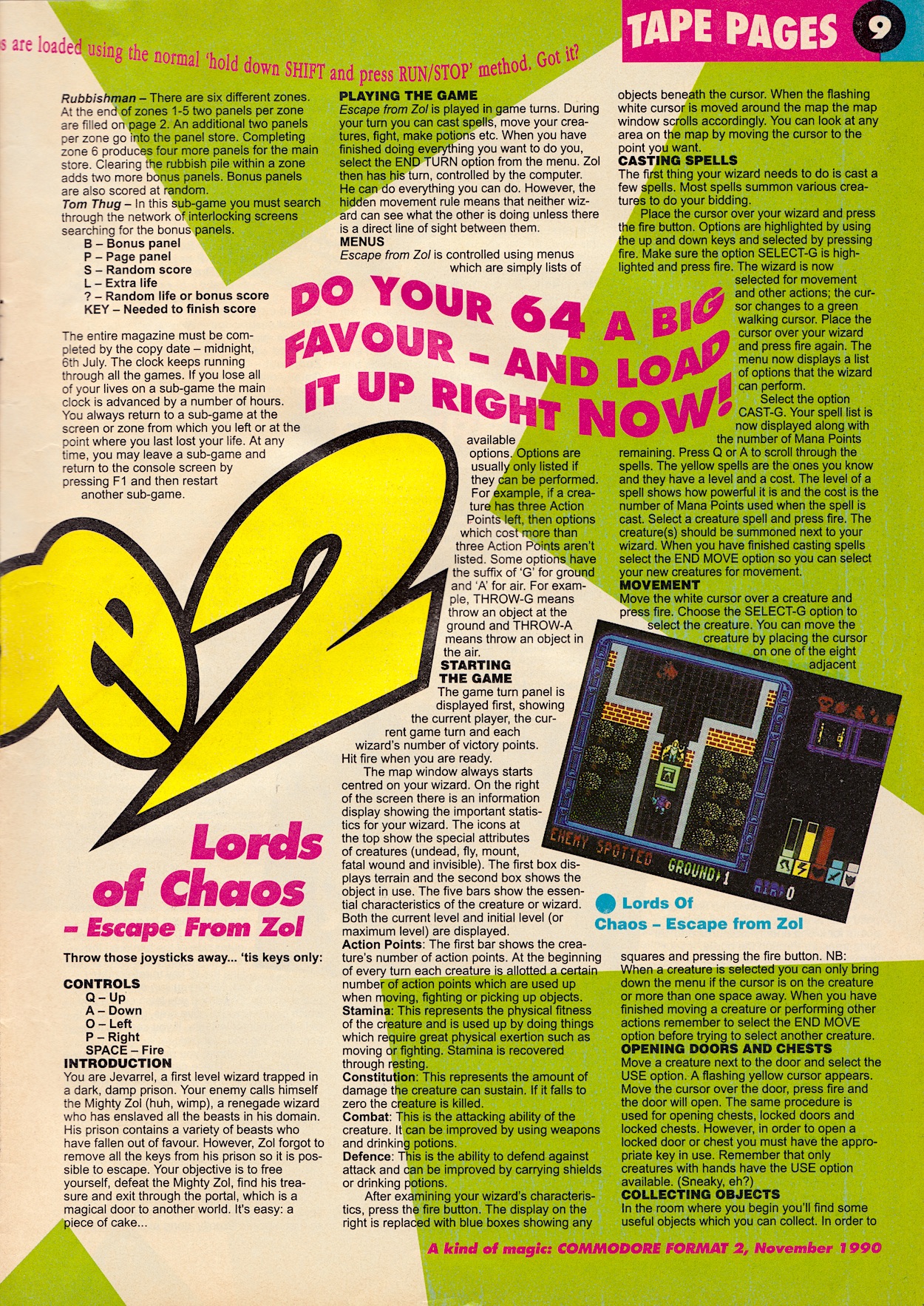
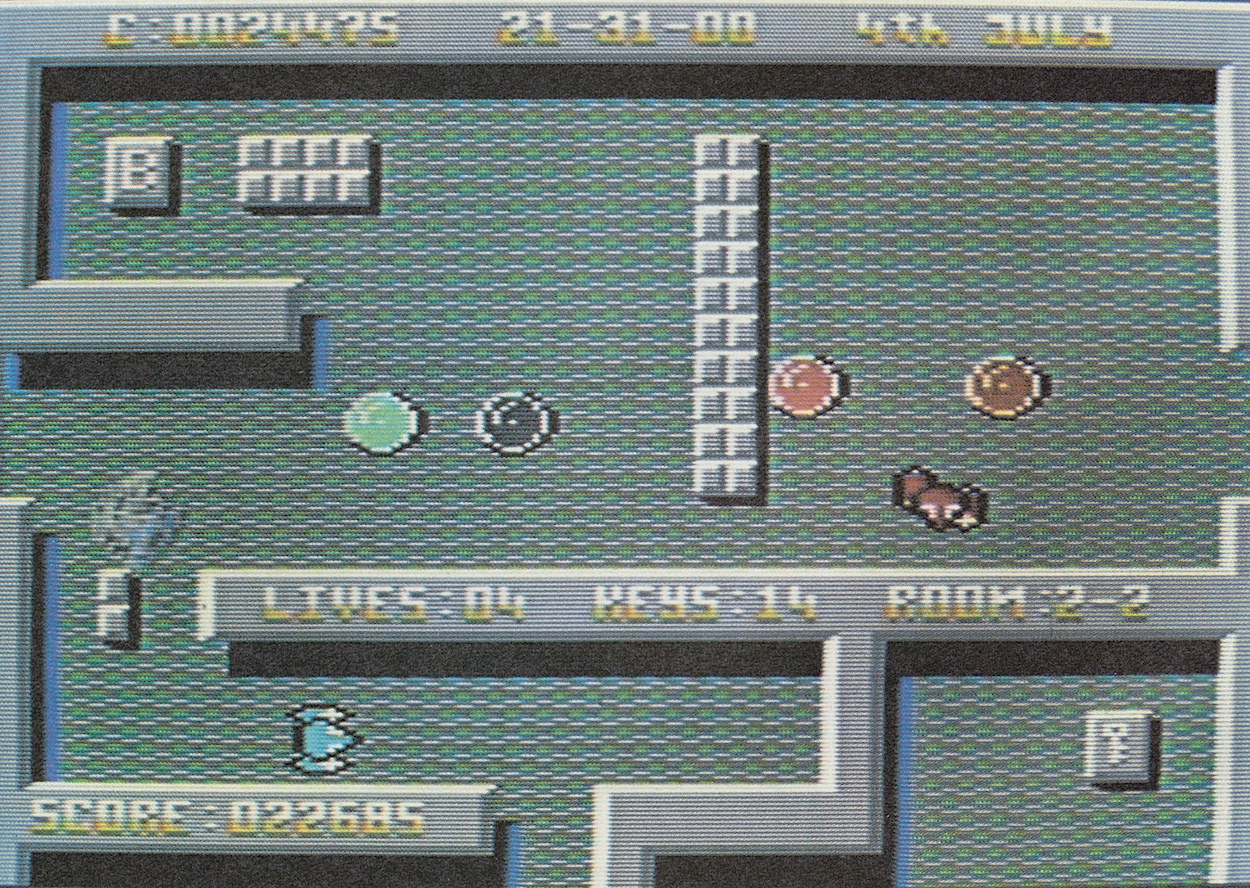
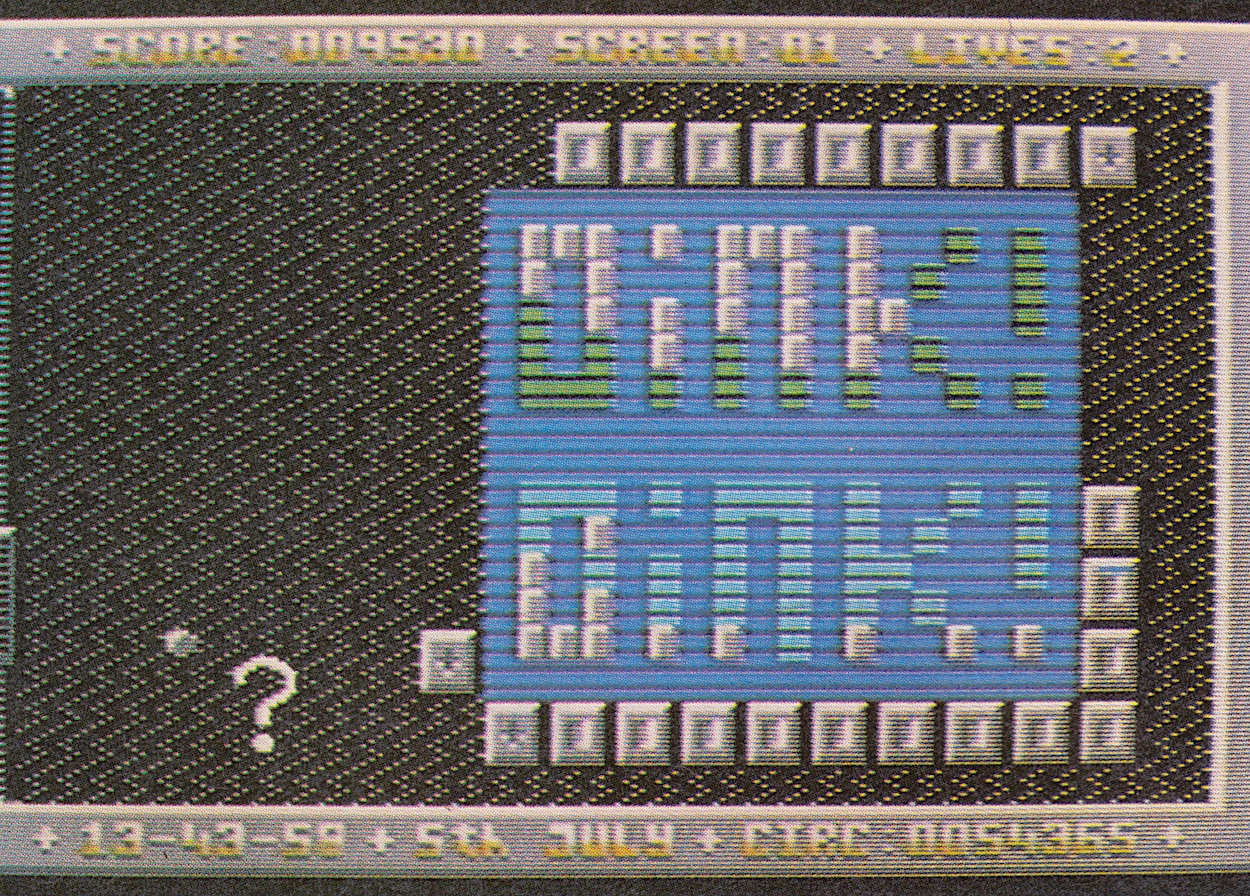
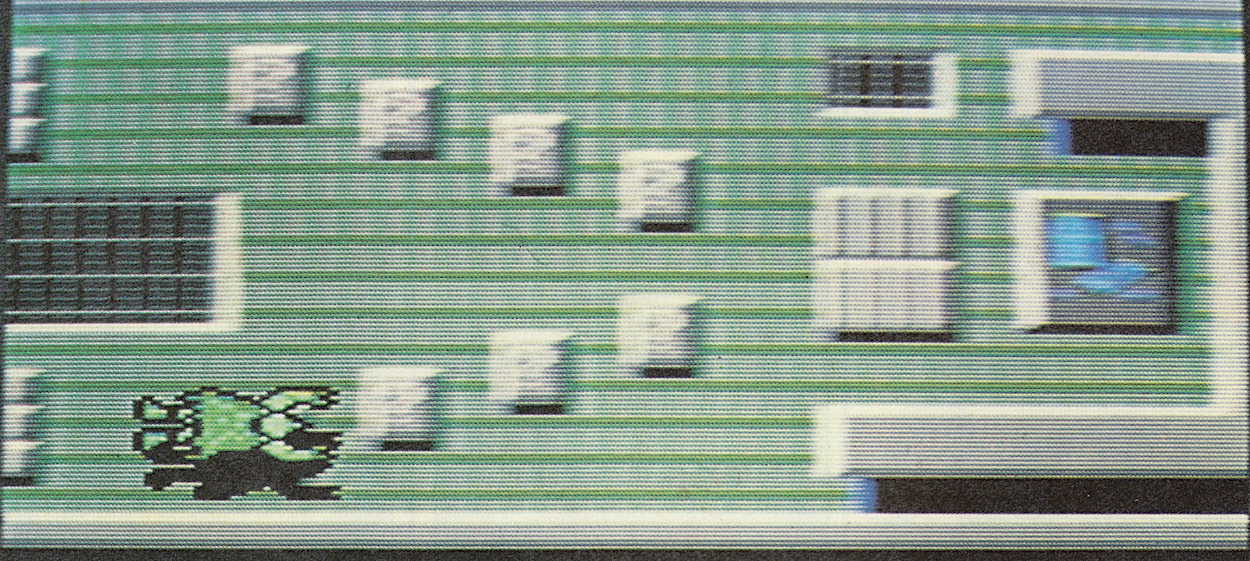
Attached to the cover of the second issue of CF (as we fans called it) from October 1990 was a cassette tape inside a little cardboard sleeve that included a highly playable Pac-Man clone called The Blob, a demo of forthcoming RPG Lords of Chaos, an intricate and complex space trading game called Empire and a game that according to the instructions pages went by the name ‘Pig Tales’. Described as “an everyday tale of small pink pigs attempting to put a magazine together”, the premise might sound familiar. As well it should.

I missed this back in 1990 when the magazine was originally launched but around 2010 I decided to purchase a C64 to relive those days and I began collecting Commodore Format all over again. As I started to read each issue I’d load up the cassette to see which games worked and which ones needed replacements. I did so before reading any of the instructions (that would come later once I knew which games I could actually play and which had succumbed to the ravages of time). Imagine my shock when Pig Tales stopped loading and a shoddily drawn OiNK logo appeared.

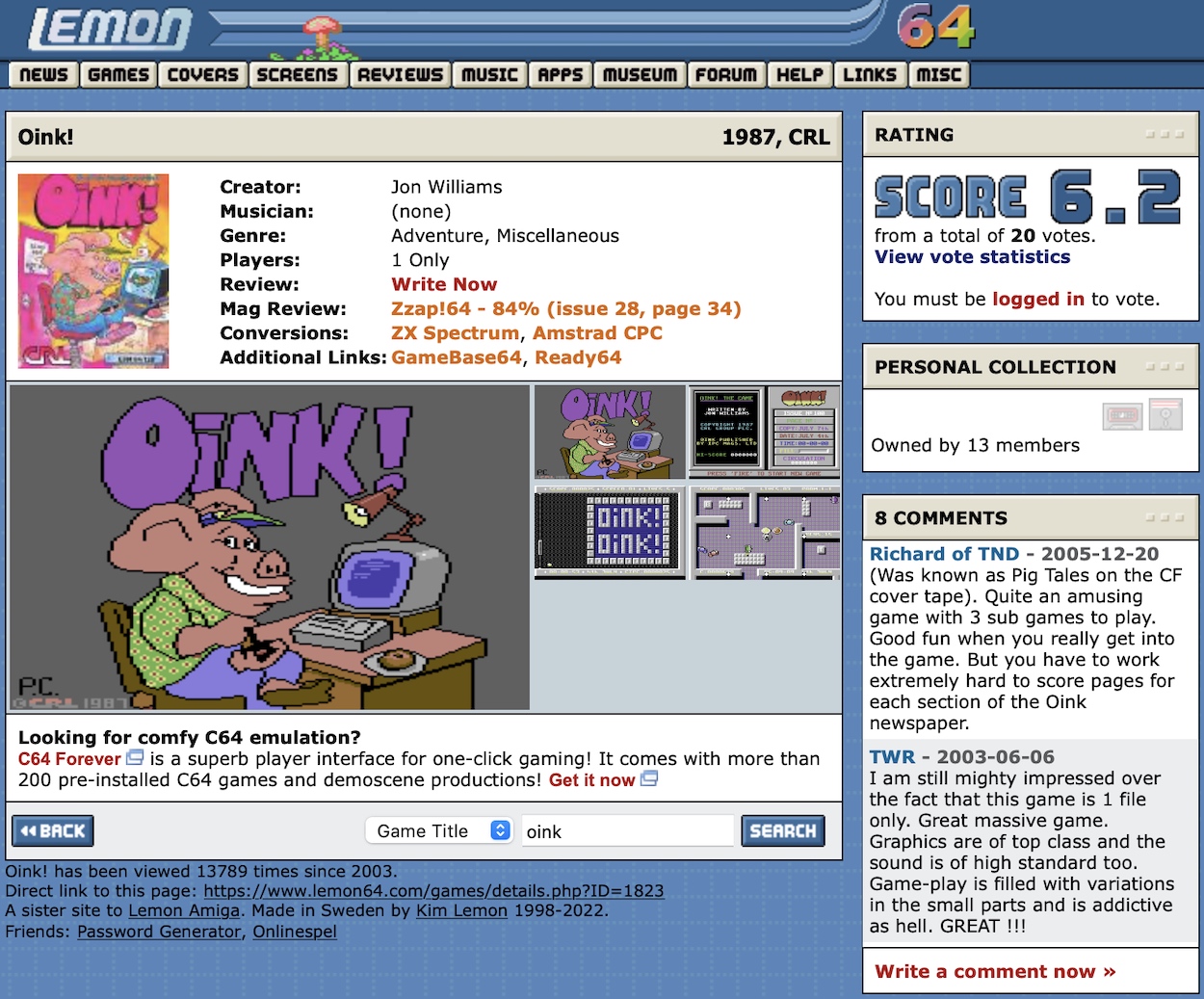
This was over a year before I even began the old blog site. I hadn’t read any OiNKs in many years, the final few remaining issues from my youth securely packed away in a box somewhere, so this was a very pleasant surprise that immediately took me down that particular memory lane for the very first time. I knew a little about the game via the Lemon 64 site (above), basically that it had very little to do with the comic and because of this had a bad reputation, although users were of the general impression it was still a good game in its own right. I gave it a go and was pleasantly surprised. It’s a great little game with a lot of playability packed in, with just a sprinkling of not-very-good OiNK-related images.

Previously on the blog I’ve included the Zzap!64 review of the game from 1987 which was generally positive and I backed this up with my own thoughts on the game, which you can read here. Unfortunately, with so many other amazing games and childhood favourites to play through I only loaded the OiNK game a few times so I’m in no position to write a detailed review. (The C64 was sold off again a few years later.) But it was fun and rather addictive, and you can’t really ask for any more from a free game.

It was surreal to see Uncle Pigg in digitised form suddenly pop up on the small portable CRT TV I’d acquired for the Commodore. Yes, the game itself was still called ‘OiNK’ when played, it was only inside the magazine (and the tape cover) that it was referred to as ‘Pig Tales’. A fan site has stated this was because Future Publishing had the rights to the game but not the name, which seems like a very strange set of circumstances given how they can’t be separated. It’s still called ‘OiNK’ on the screen and the character names are used in the magazine. (At the time of writing I’ve yet to confirm this rights issue.)

Within the instructions the game is likened to the creation of Commodore Format and the press puppets from Spitting Image, which were a series of pigs dressed in trench coats and trilbies but at no time is the comic itself mentioned. How quickly they forget, eh? This issue was published only six months after the final ever issue of OiNK, the Summer Collection.

In the next issue Commodore Format would include a guide to the OiNK game including maps and tips

Three years might seem like a quick turnaround for the game to go from full price, to budget rerelease, to being included on a covertape. While we know it didn’t sell that well, this speedy transition wasn’t uncommon and I remember amassing quite the collection of excellent games through the magazine, including ones which were top rated and had sold very well. OiNK could sit right alongside them as a fun, quirky little retro game.

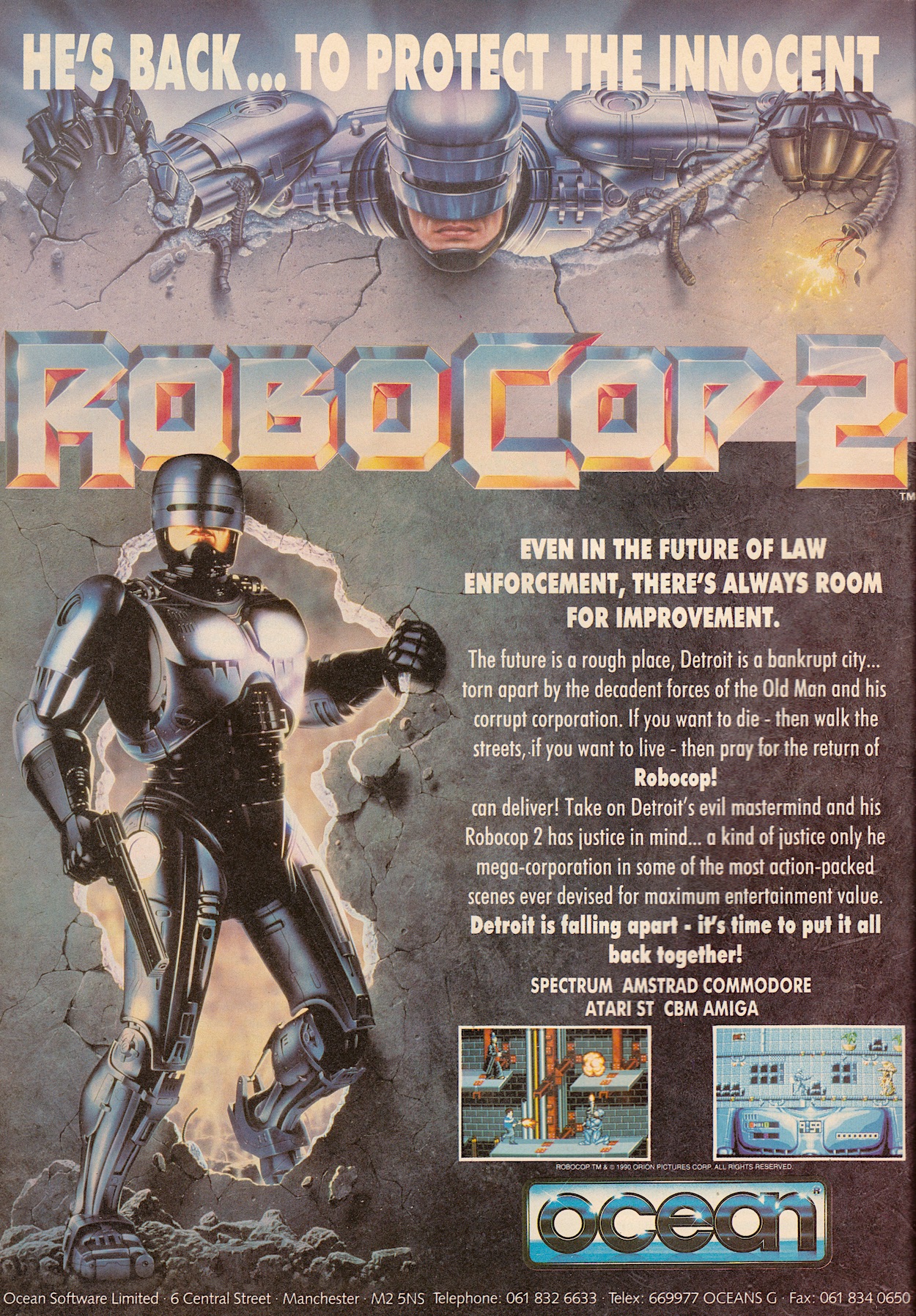
Commodore Format wasn’t finished with OiNK though. In the next issue they’d include a guide to the game including maps and tips to help readers finish Uncle Pigg’s “magazine”. I’ll show you them next month but I want to finish off this post with a few select images from this issue to place it in the context of the year it was released, beginning with an advertisement for a new game which readers of my Havoc reviews will know quite well.

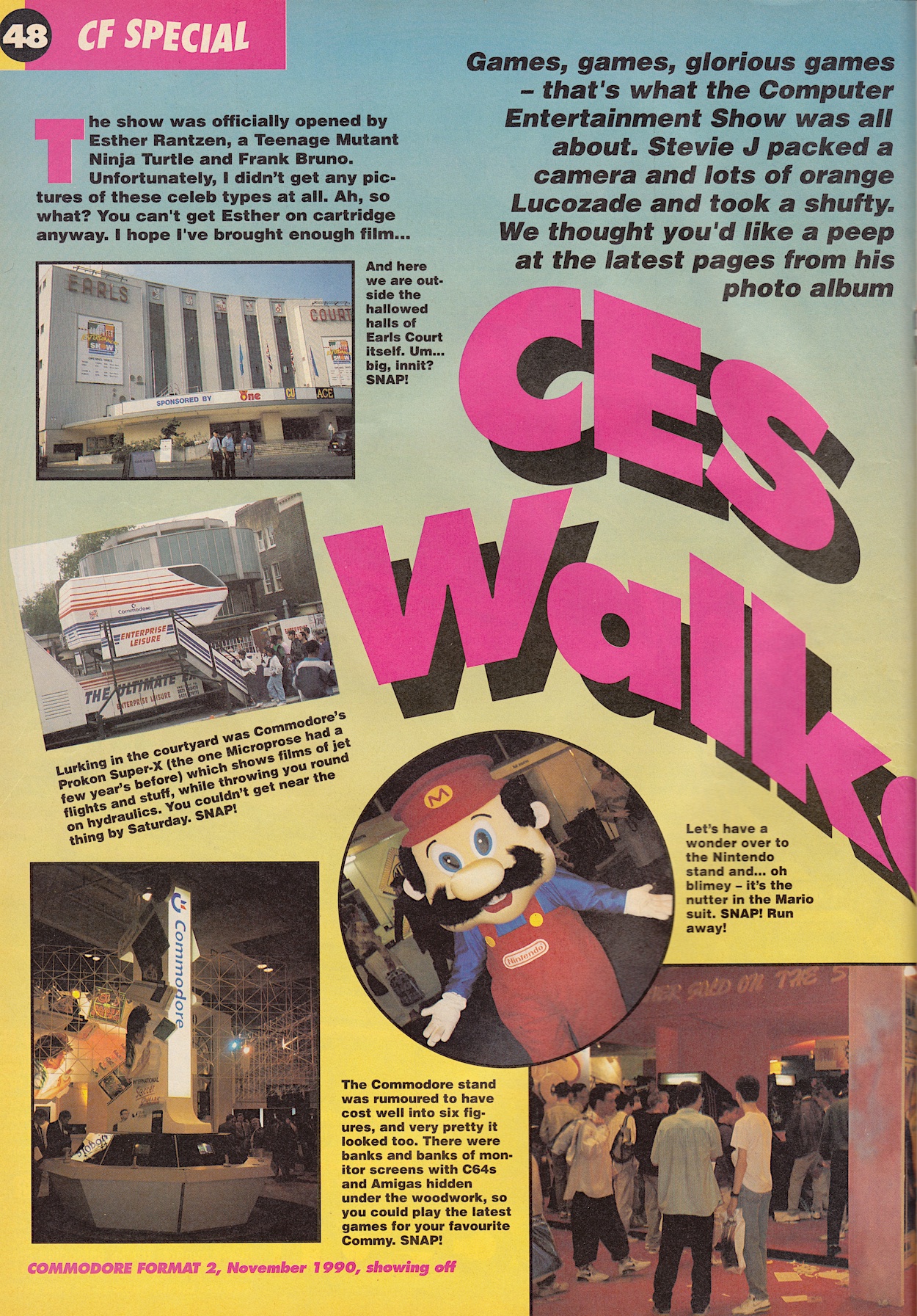
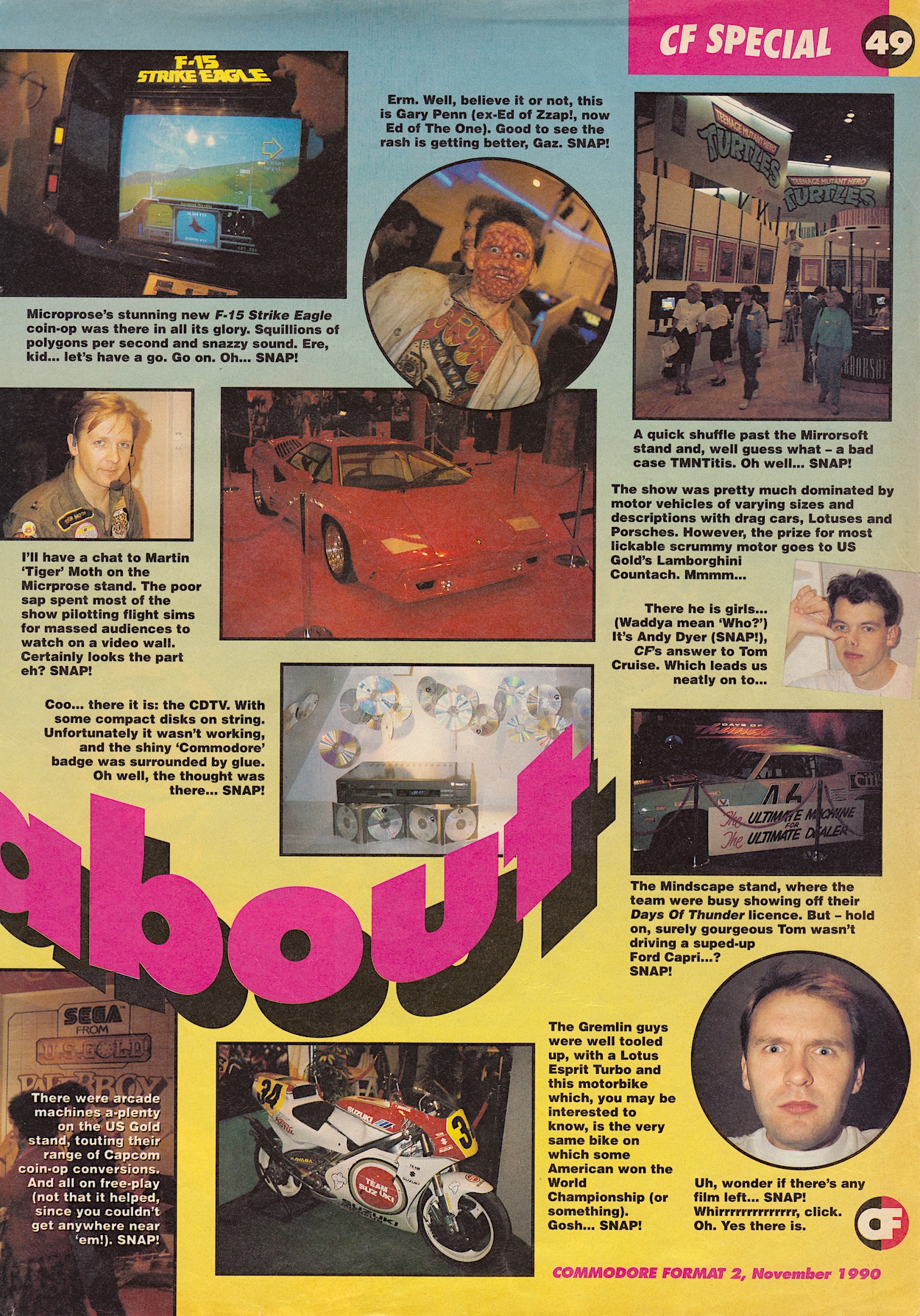
While the movie didn’t deserve the hype, the game certainly did (although clearly no one proof read their advert). RoboCop 2 was released on cartridge on the C64, meaning it loaded instantly and had more memory available for better gameplay, graphics and sound. It was a brilliant game and much more enjoyable than the lacklustre film it was based on. Elsewhere in the issue, modern day videogame players might be interested to see this next double-page spread when CF’s editor Steve Jarratt headed off to the Consumer Electronics Show to see what the world of interactive entertainment had in store for us over the coming year.

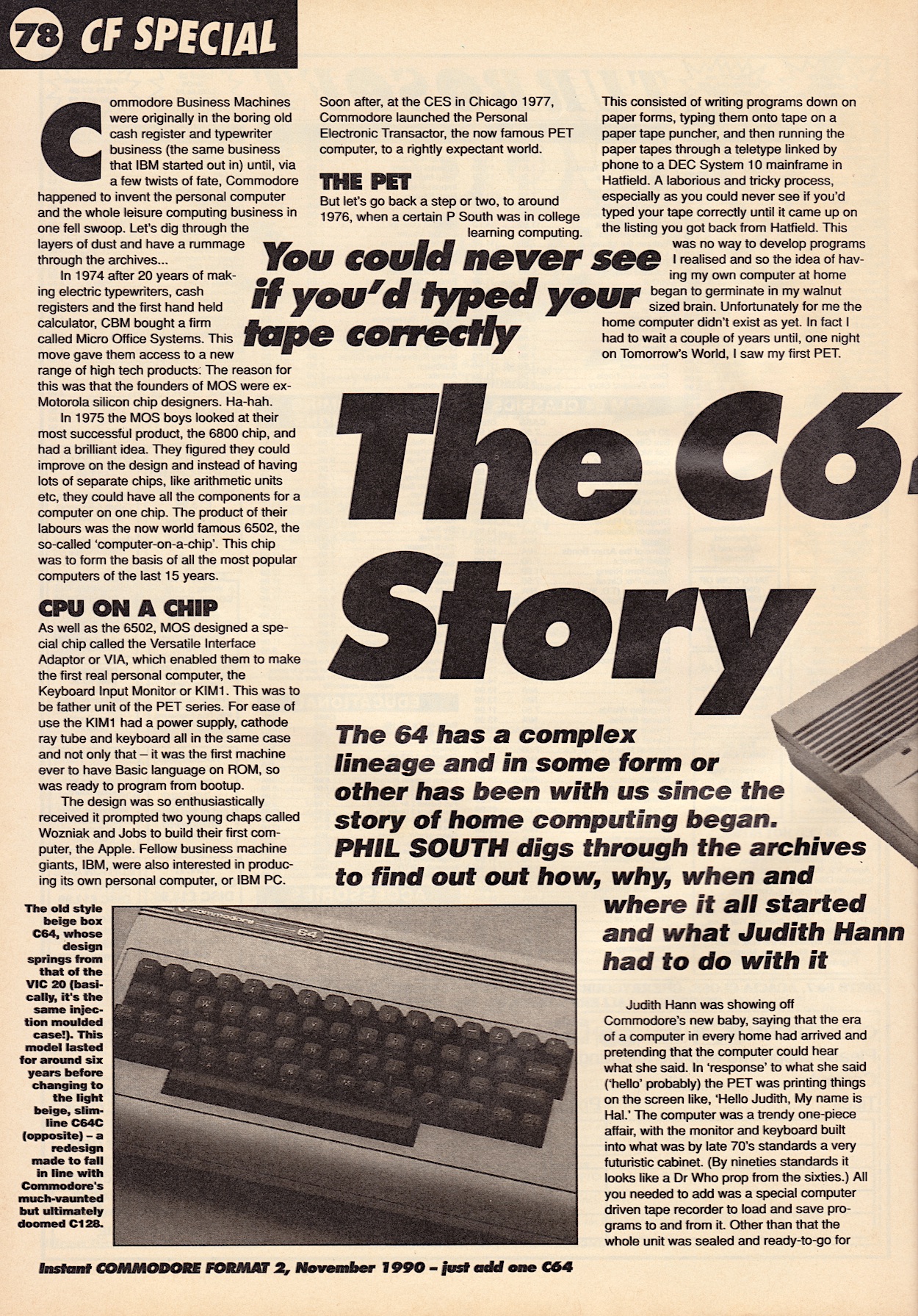
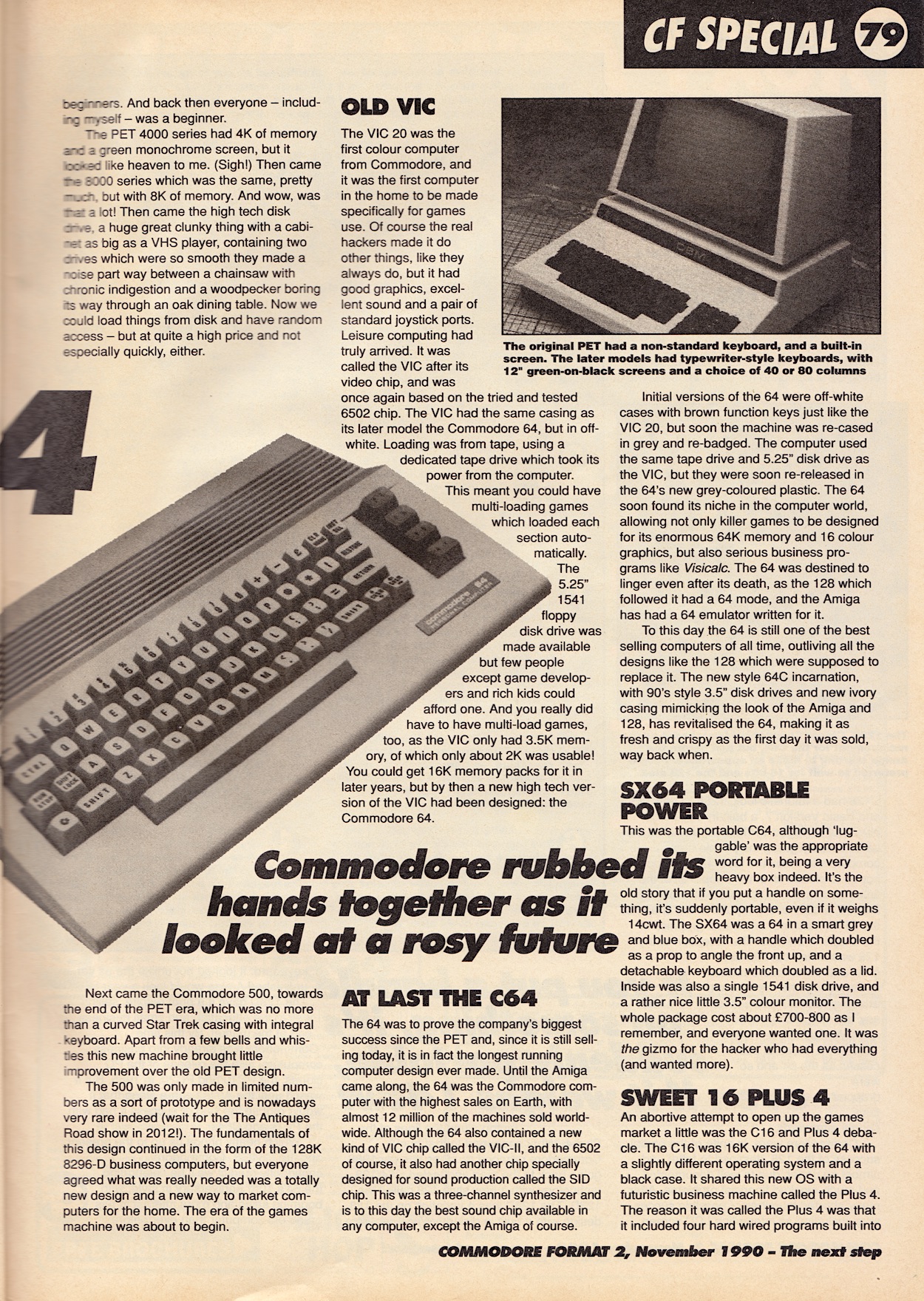
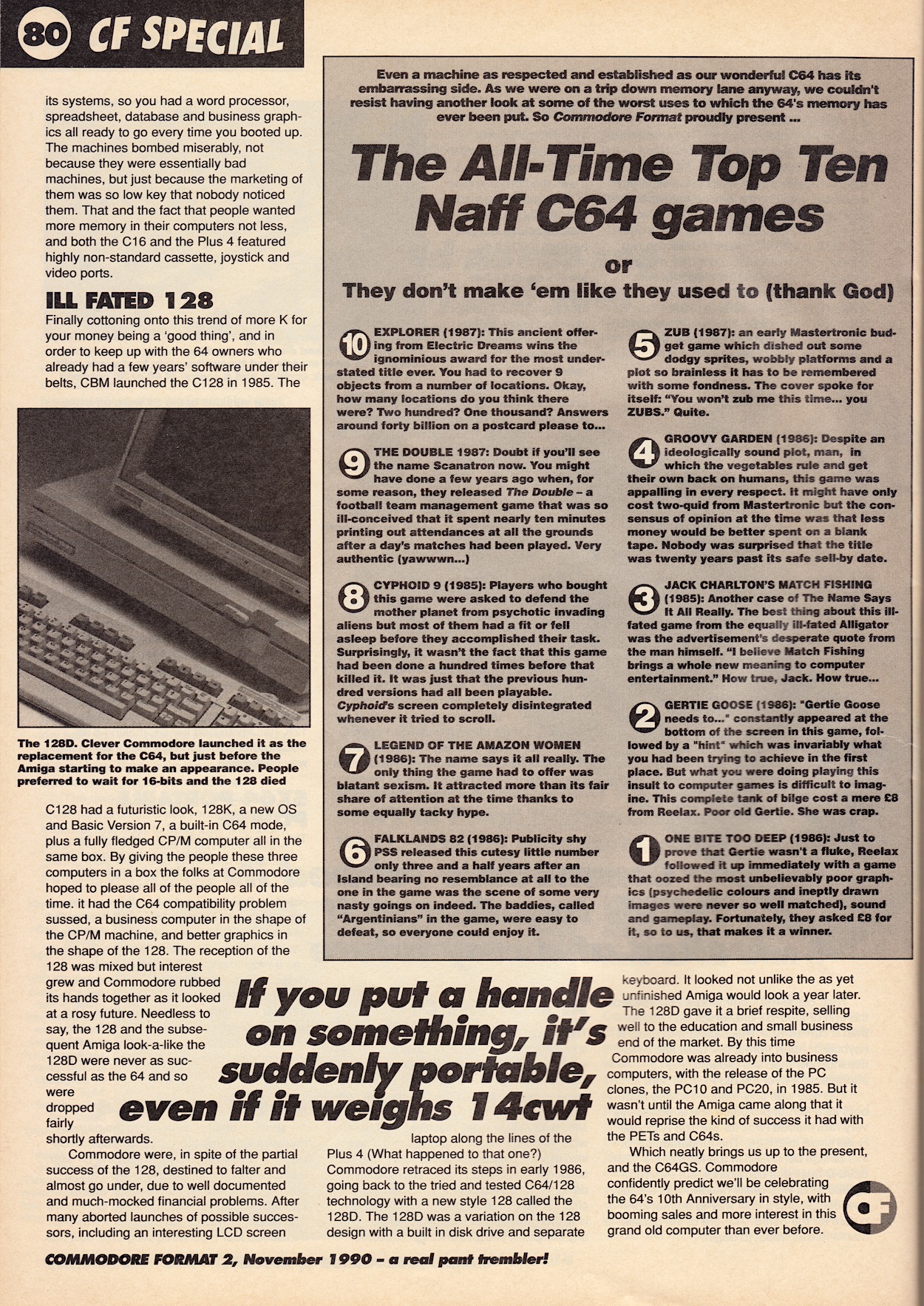
Finally, there’s an interesting three-page feature about the history of the Commodore 64 computer. Commodore Format was released at a time when more powerful machines were gaining traction but Future, which was already publishing Amiga Format and ST Format, saw an opening in the market. The C64 was still seen as the perfect starter computer (it certainly was for me in 1991 the following year) and there were also those younger siblings who were getting C64s handed down to them. All potential readers.

The only competition was Zzap!64 which focussed mainly on games. Commodore Format took less than a year to surpass that giant in sales, quickly becoming the world’s best-selling C64 mag. CF spread its net wider and included retrospective gaming features to get new owners up to speed, interviews, technology articles, as well as programming and graphics tutorials. It was a meaty read and an instant hit.

The C64 Story detailed the life of the 8-bit up to this point, including its predecessor, its development, spin-offs and its success story. Elsewhere in these early issues were several series of articles rounding up the very best games in different genres, but in this particular feature they decided to warn readers away from wasting their money on certain titles with ‘The All-Time Top Ten Naff C64 Games’. Oh I do miss the fun of Commodore Format!

I may have sold off my C64 collection but my Commodore Formats remain. I just can’t bring myself to get rid of them (not least because I’m in later editions, but more on that in a future post). They have such great memories attached to them and they’re still a brilliant read. If you’re into your retro gaming I’d highly recommend hunting any of them down on eBay. For now, that’s your look at OiNK in this issue, I’ll be back with the game guide in #3 of CF on Thursday 10th November 2022.

GO TO COMMODORE FORMAT #3

THE OiNK COMPUTER GAME MENU

OiNK MERCHANDiSE MENU

MAiN OiNK MENU