Tag Archives: Esteban Maroto

DRACULA #10: VLAD THE SAD

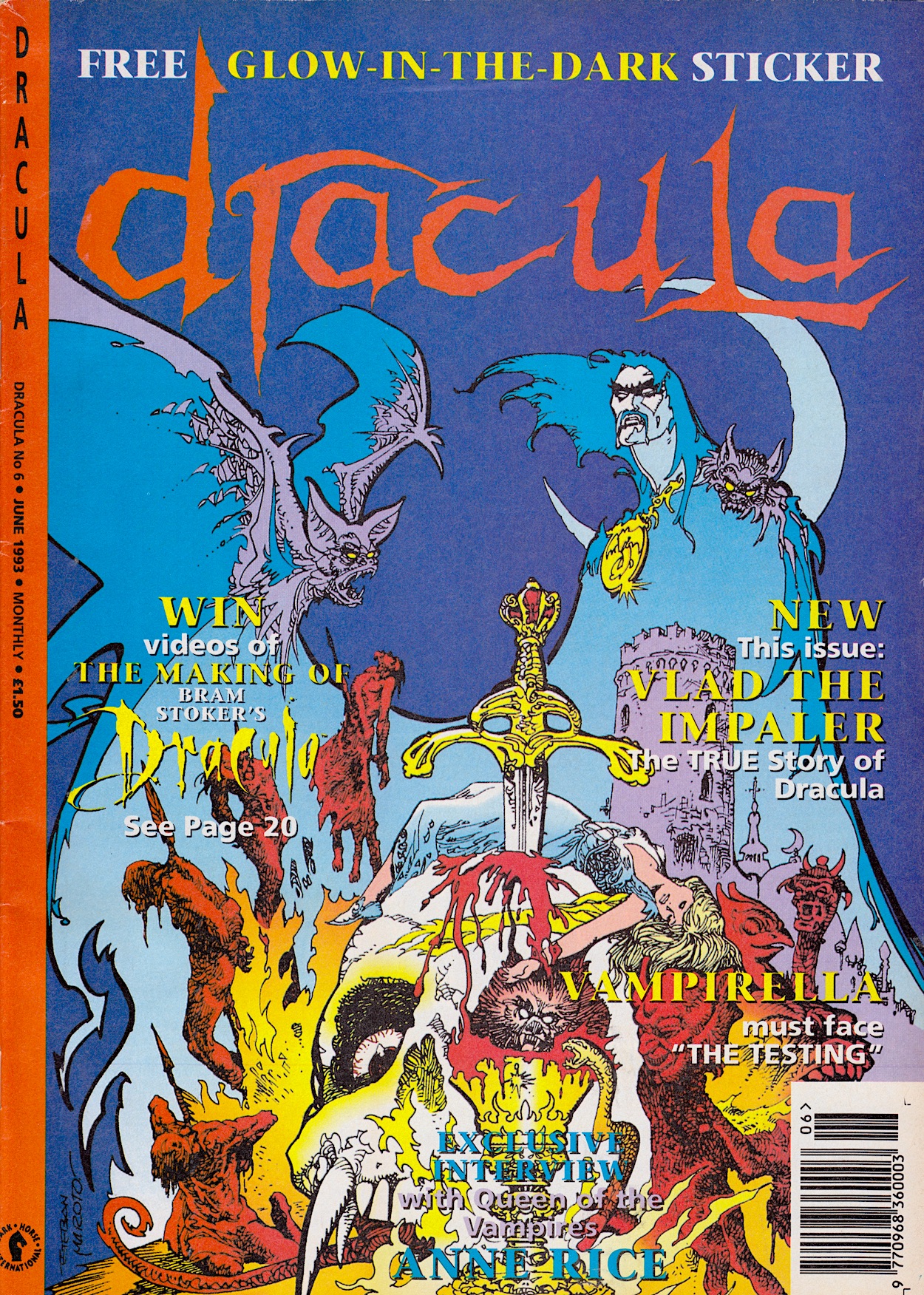
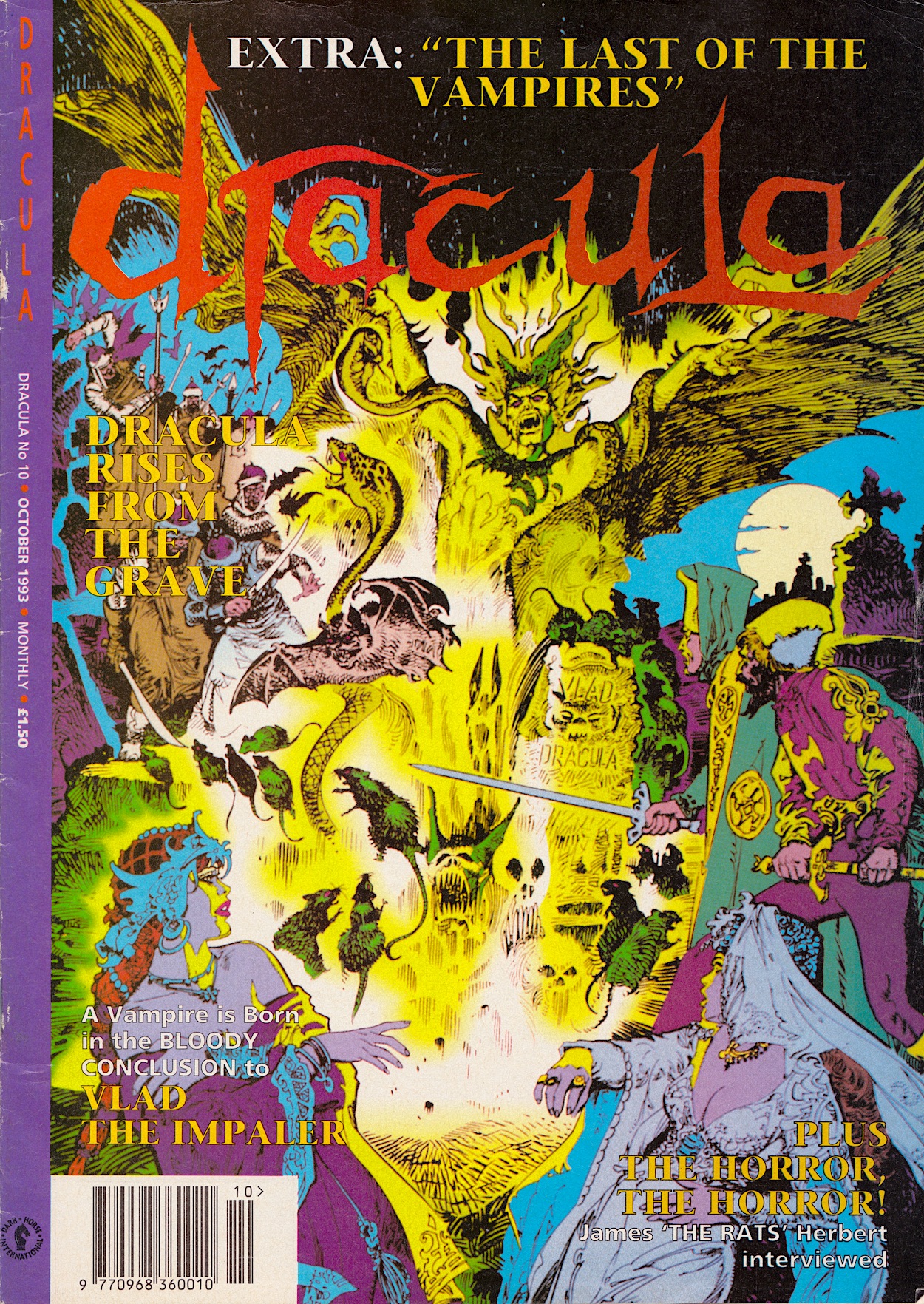
Esteban Maroto’s glorious cover gives the impression of a comic in rude health. Dark Horse International’s usual penchant for almost unreadable headlines hides what sounds like a particularly exciting issue for those that had stayed with Dracula this long after the association with the movie had ended. However, upon opening the issue we’re met with an editorial containing the round up of what’s happened in the main strip (instead of it being given its own page) and a “special message”.
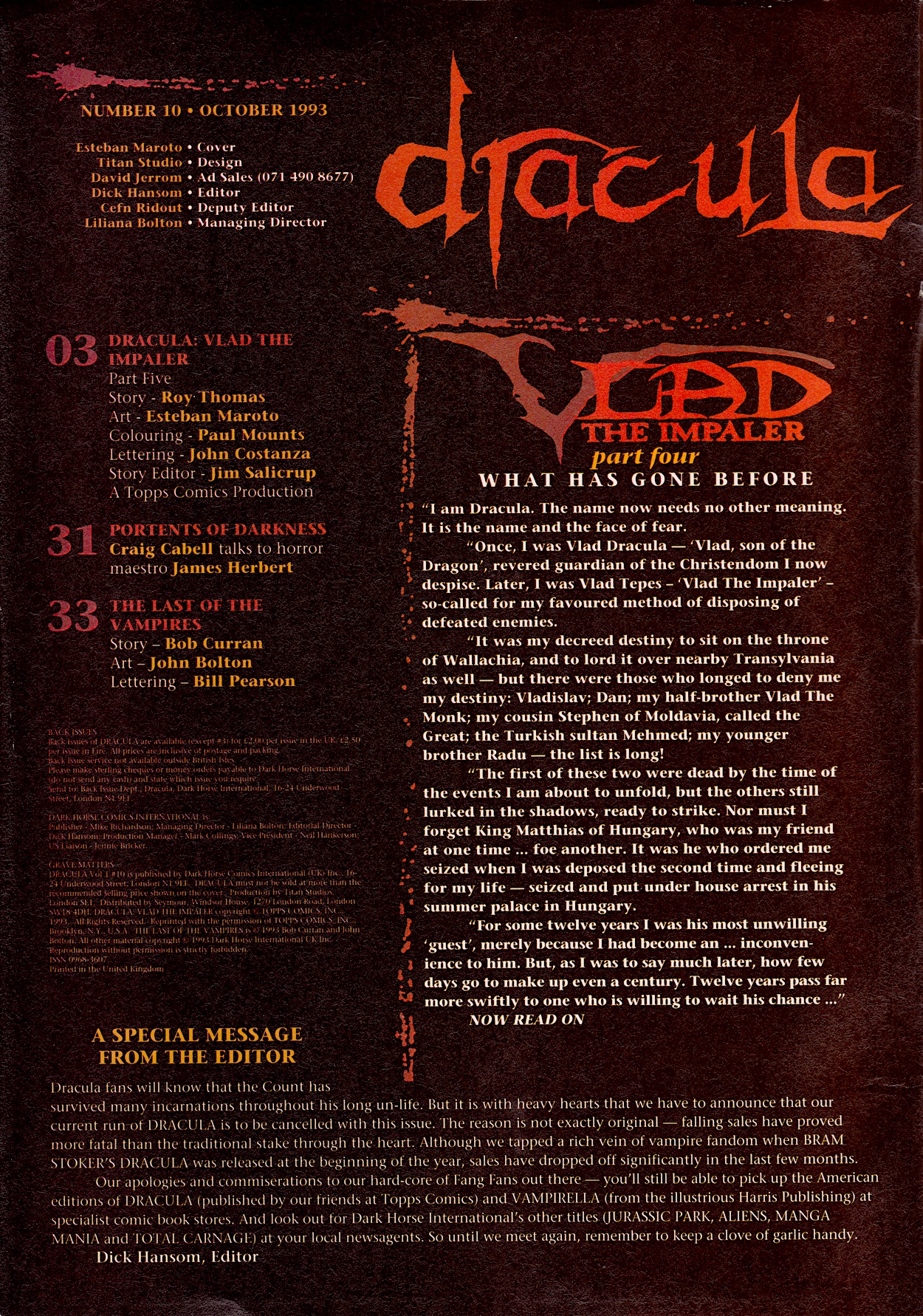
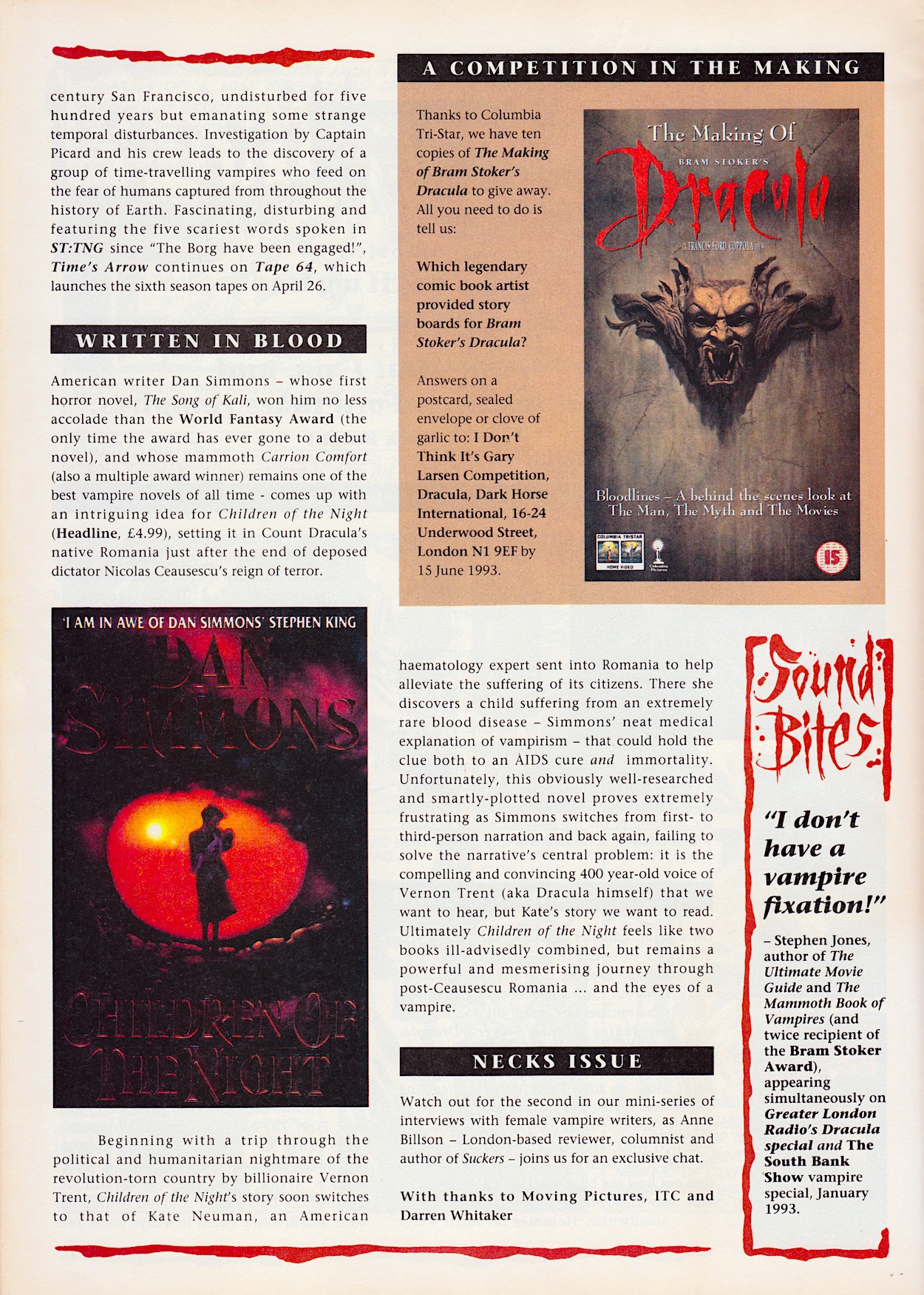
Respect to editor Dick Hansom for telling the readers the truth rather than the next issue not appearing, something many comics in the 90s did, including DHI’s own titles. Although, he says readers can continue to read imported Topps Comics Dracula comics. Having researched these, alongside Vlad the Impaler (which concludes here) I can only find a Dracula Versus Zorro mini-series from the same year. Perhaps cancellation was the preferred option after all.

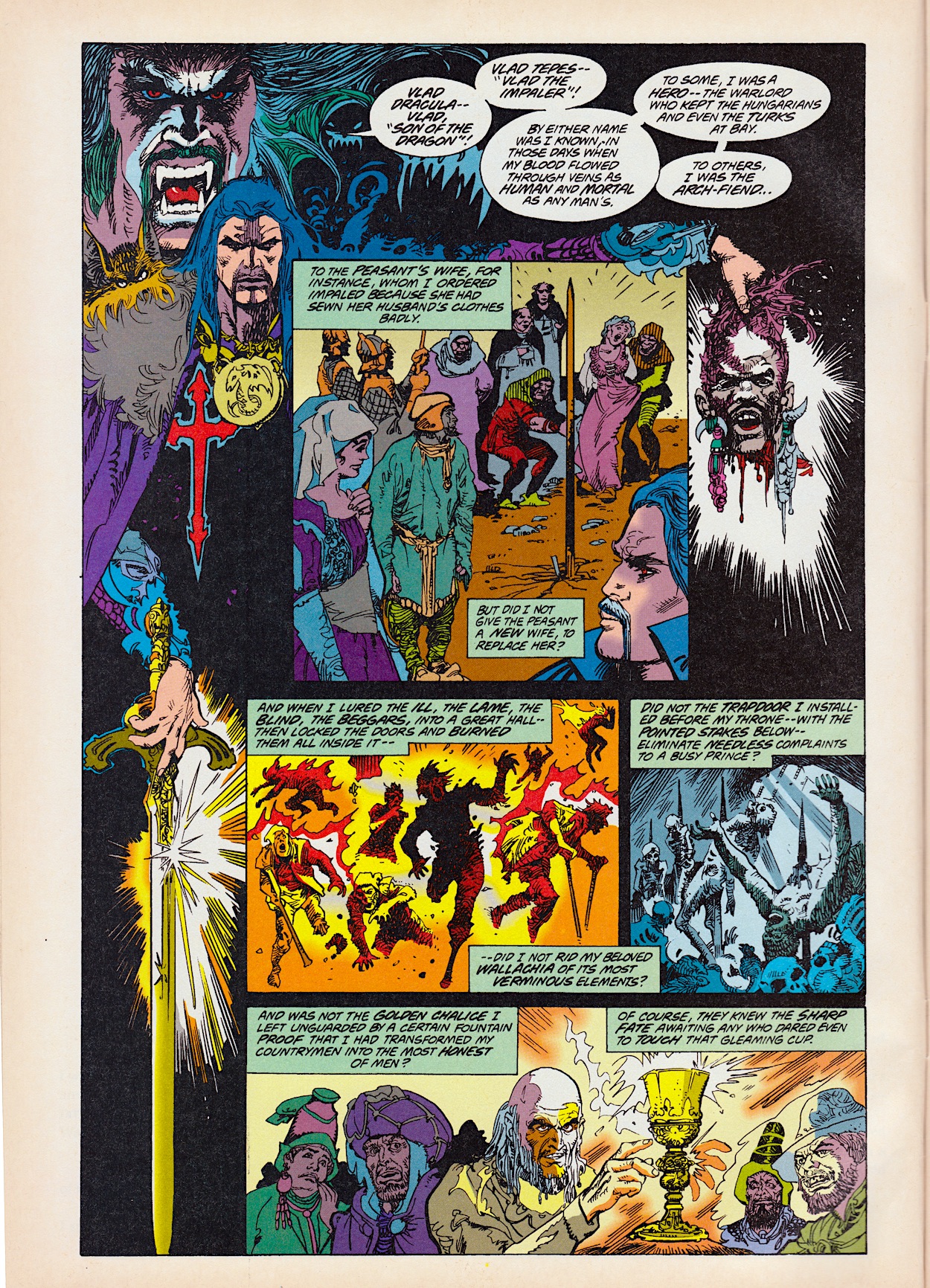
What Has Gone Before is part of the editorial to make room for the 28 pages of To Rise Again from the usual team of writer Roy Thomas, artist Esteban, colourist Paul Mounts and letterer John Costanza. It begins with Vlad beheading a King’s guard who tried to forcibly remove a thief from Castle Dracula who had begged for sanctuary. The guard insists the thief hadn’t asked permission. However, the guard also hadn’t before placing his foot across the threshold.
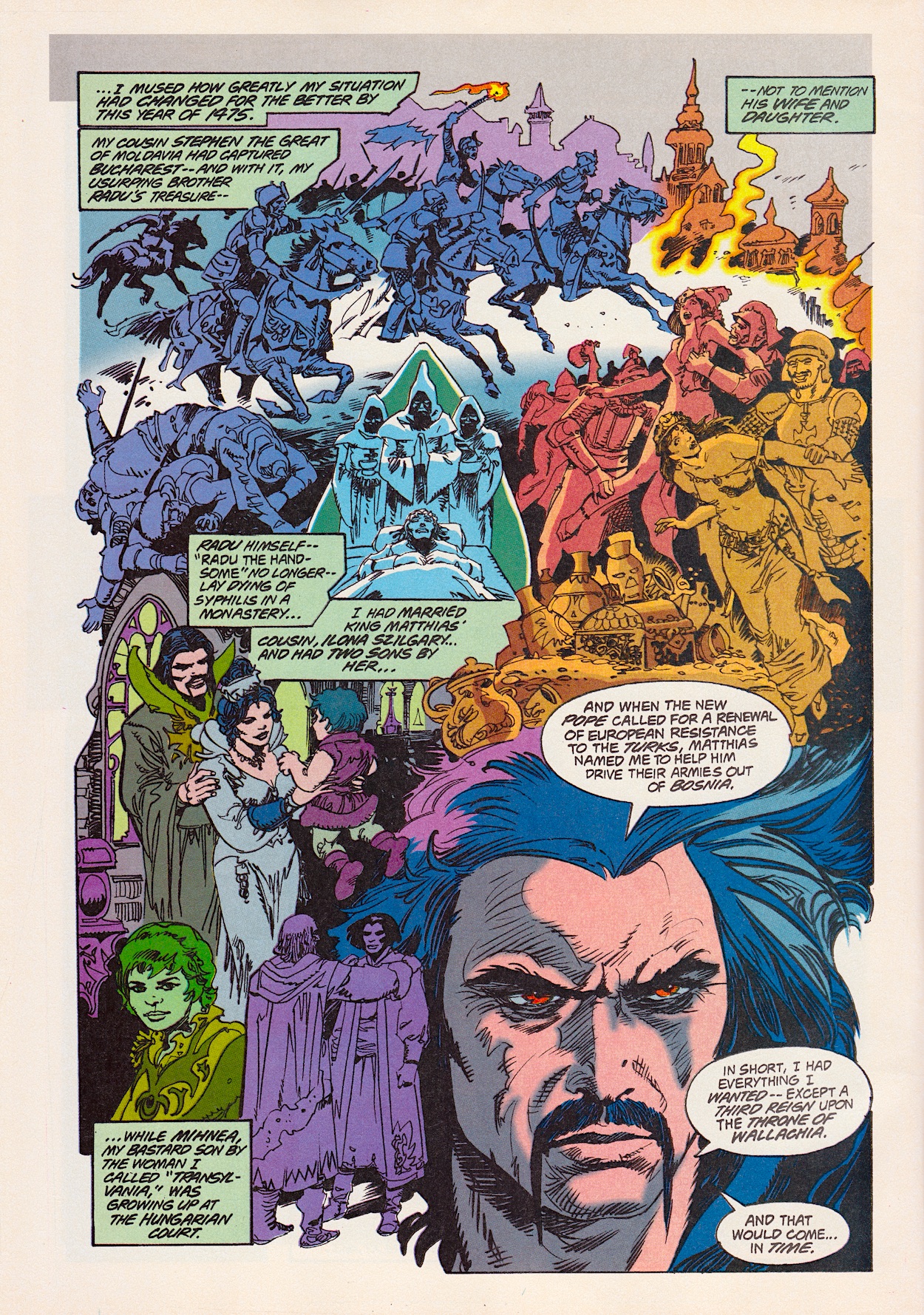
The King of Hungary, who had kept Vlad captive up until now, gives him an army to lead against the Turks, hoping Vlad’s viciousness will help him in his dire situation and lead to more impalements across the land. However,  another of the King’s allies, Stephen Bathory wants Transylvania as thanks for his own help and Vlad is left with Wallachia, which he becomes ruler of again after his younger brother, Prince Radu dies of syphilis. 

On a few occasions Vlad’s narration laments his own decisions, defending himself by reminding us he was only human at the time. For example, he didn’t know he had only two months left to live and wishes he’d made better choices, in particular with his family; he’s now married to the King’s cousin, they have two children and are in love as opposed to his previous wife who he’d forced into a relationship.
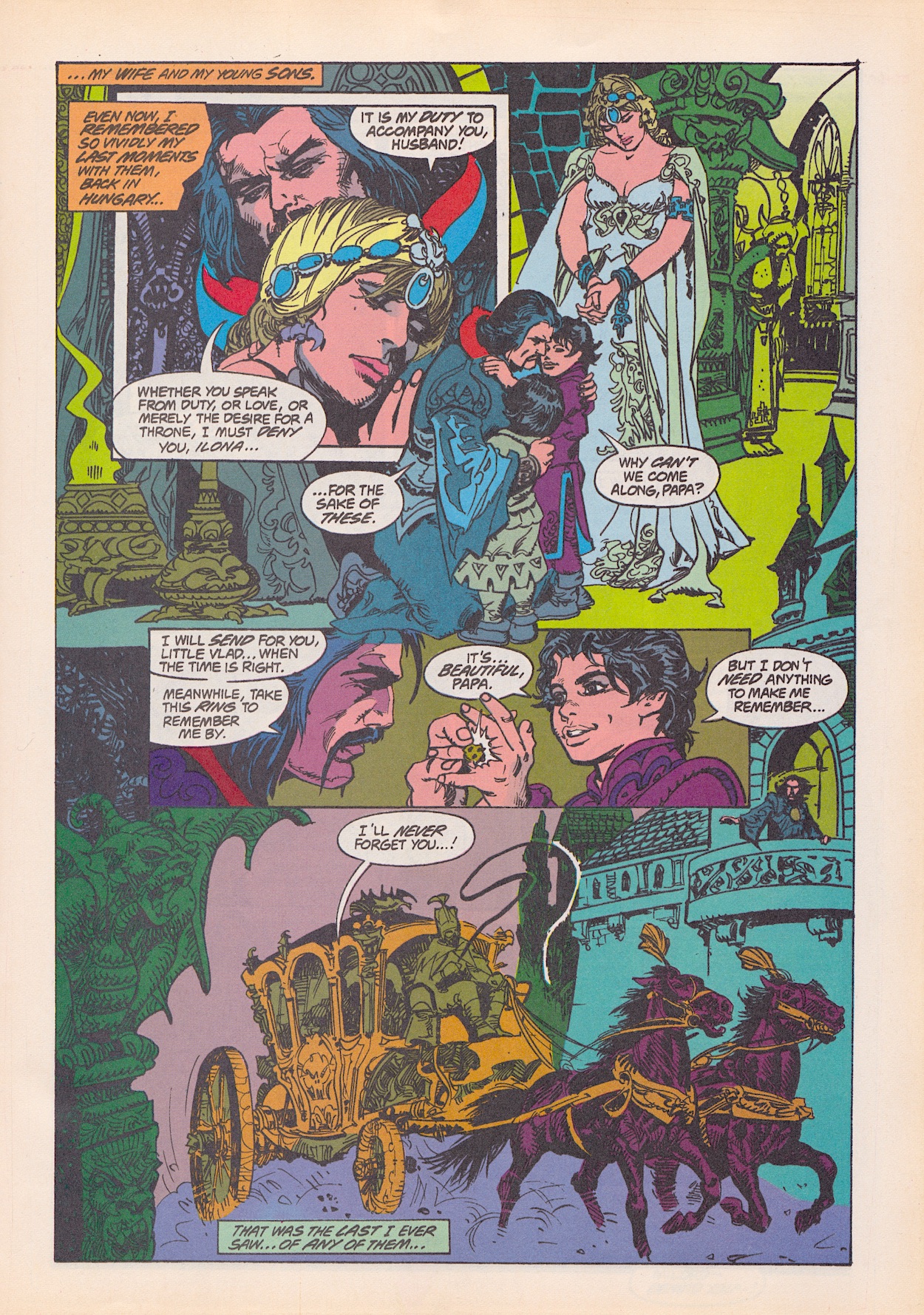
He realises his enemies (and allies) are amassing against his bloodlust and he takes drastic measures. He orders all of his wealth be amassed before leaving for a secret destination. Even his loyal assistant Cazan is left behind. Vlad shows a surprising amount of love for the man in these moments, telling the reader he was hurting because he’d left his friend with the wrong impression. You see, once all his worldly goods were buried (in an area where he’d dammed a river, then released the water again to hide the burial site) he impaled everyone involved. He didn’t want to have to kill his friend too.

But he would’ve.
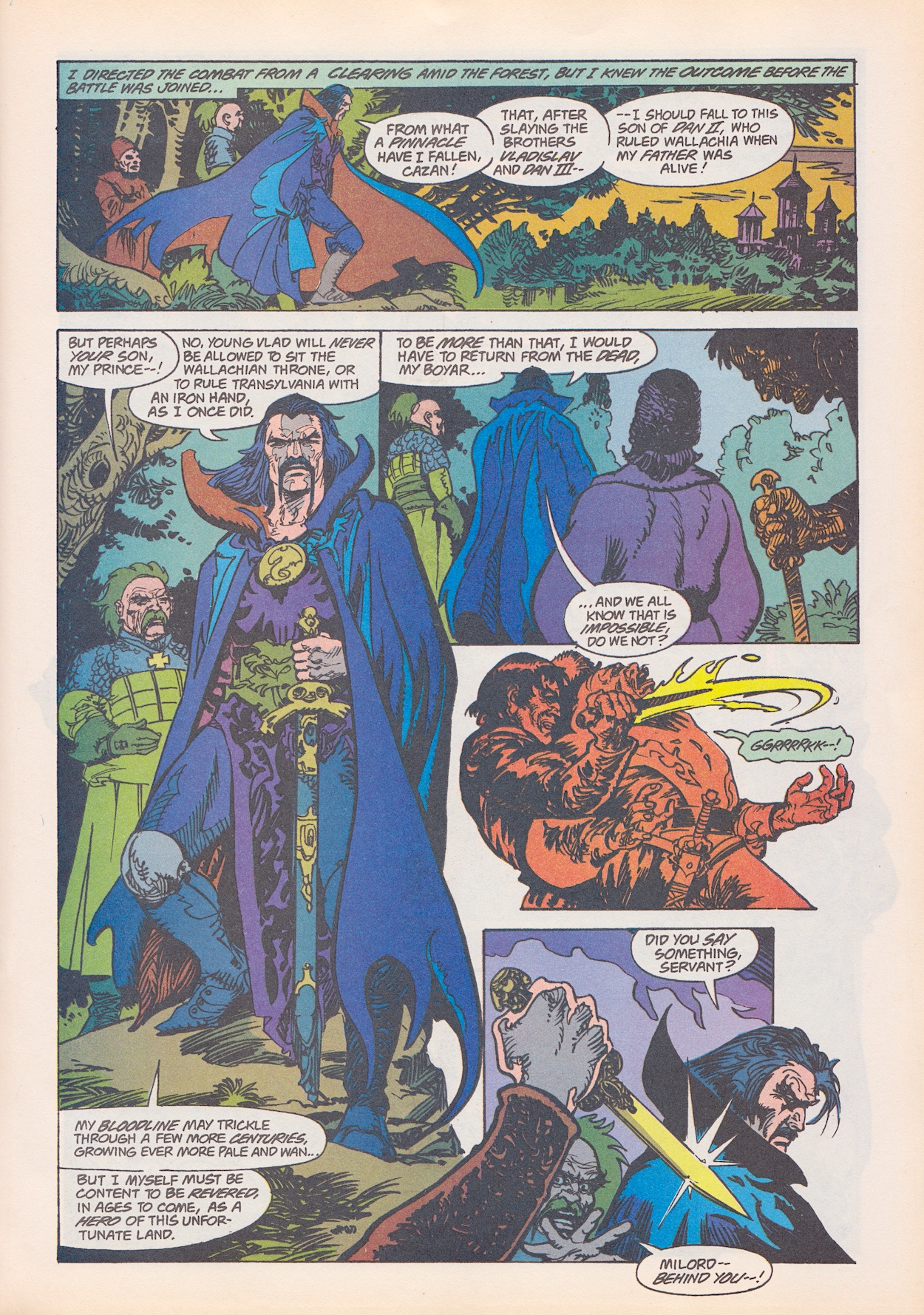
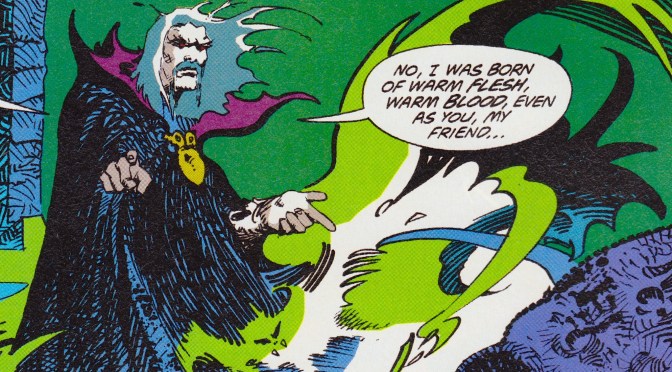
Someone claiming their village was destroyed by Vlad’s enemies comes to swear allegiance and, despite Cazan’s vocal suspicions, the man is allowed to join the army in a top advisory role. Vlad admits to the reader he had his own doubts but in a moment of “grim fatalism” he took in “a suspected viper to my bosom”. We’re reaching the end here. In the build up to the final battle against his hated foe, Danesti he’s unsurprisingly betrayed and Cazan takes a knife to the chest as he leaps to Vlad’s defence. Even though Vlad is also killed, his narration continues from beyond the grave and it’s here that the story goes on a tangent from known history. 
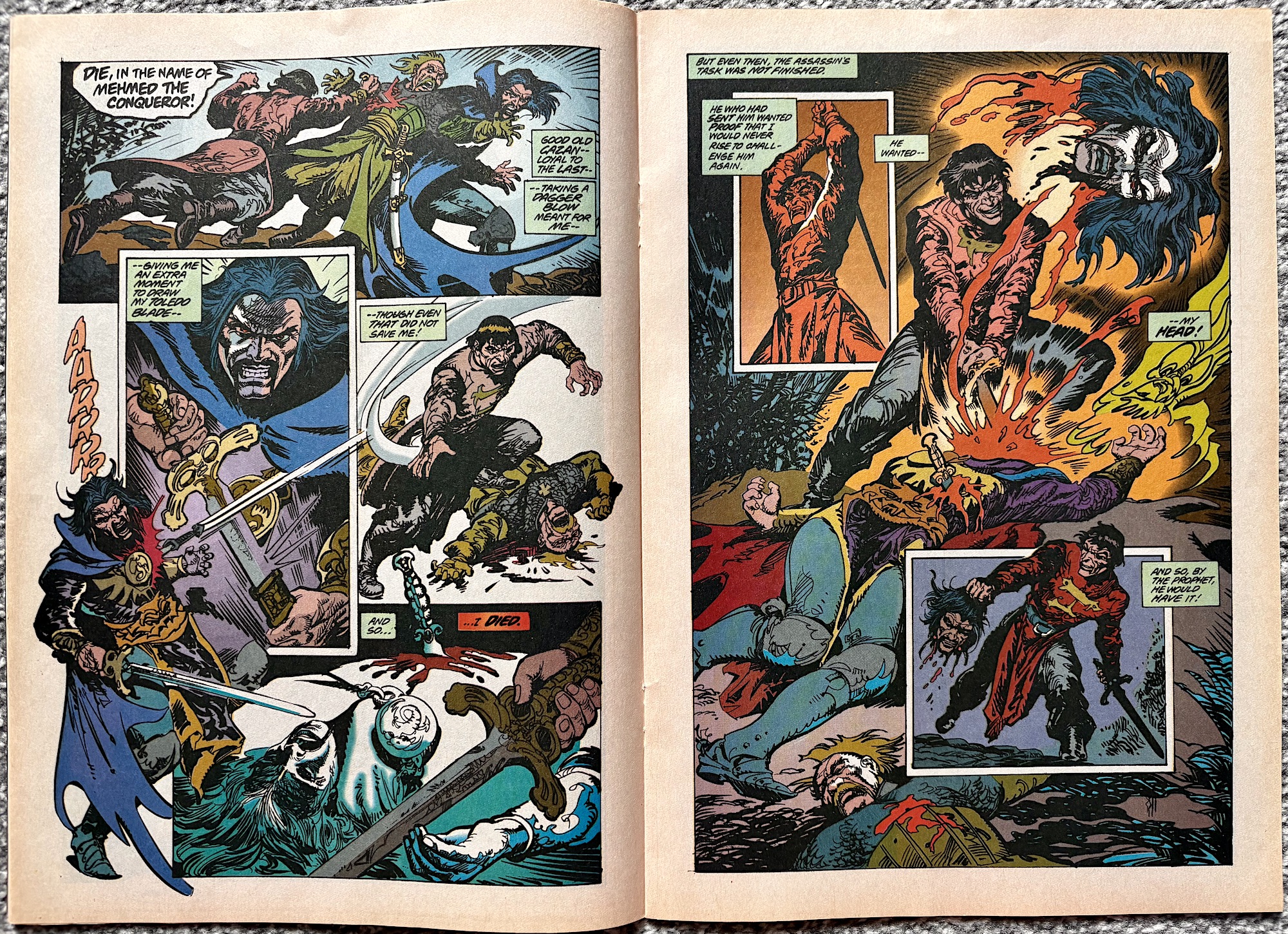
Beheaded by the assassin, after the battle is over pious monks take his body to be honoured by the Catholic church, which praises what this monster of a man achieved in the name of Christianity. However, that night the chapel is destroyed by a wild, unforeseen storm. This leads many of the faith to believe he’ll never be allowed to rest in peace because of what he did in life.

That was only his body, though. His head gets its own story. It was taken to Mehmed the Conqueror. However, over the course of just one night it becomes so badly decomposed it’s no longer recognisable to the people who come to see it impaled on a spike. We also find out that Vlad’s illegitimate son, Mihnea became known for terrorising the lands, cutting off the noses and lips of his enemies, with Vlad’s narration full of pride for the next Prince of Wallachia.
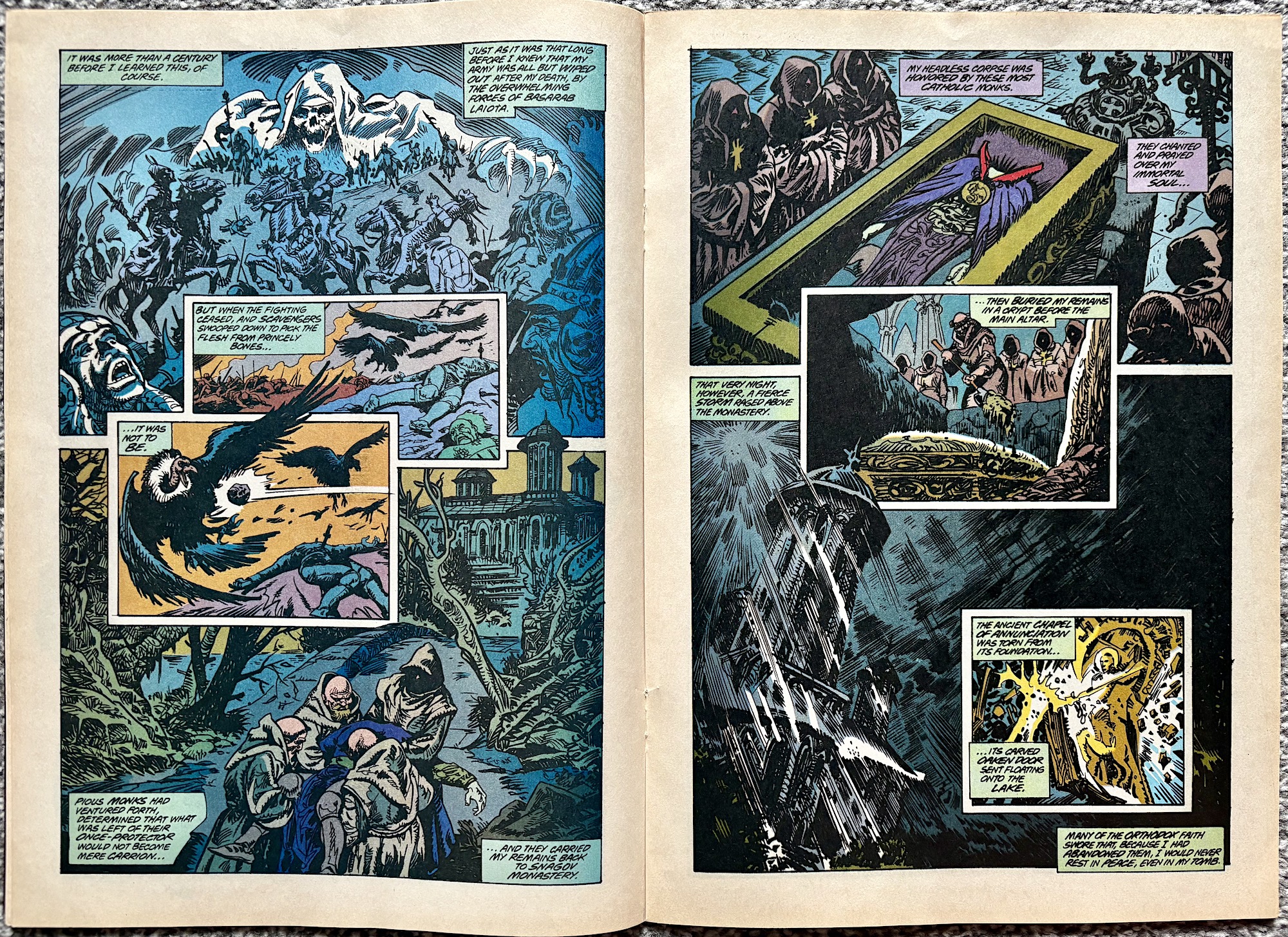
We then suddenly jump forward 150 years and a hooded stranger (actually a descendant) arrives at the church where Vlad’s decapitated body is buried; on orders from the Pope it is to be moved because it was buried too close to the altar. There’s a mention of Vlad’s wife’s suicide damning her for all eternity, which should be at least a bit familiar to fans of the film. However, unlike his supposed head a century-and-a-half earlier Vlad’s body hasn’t decayed.

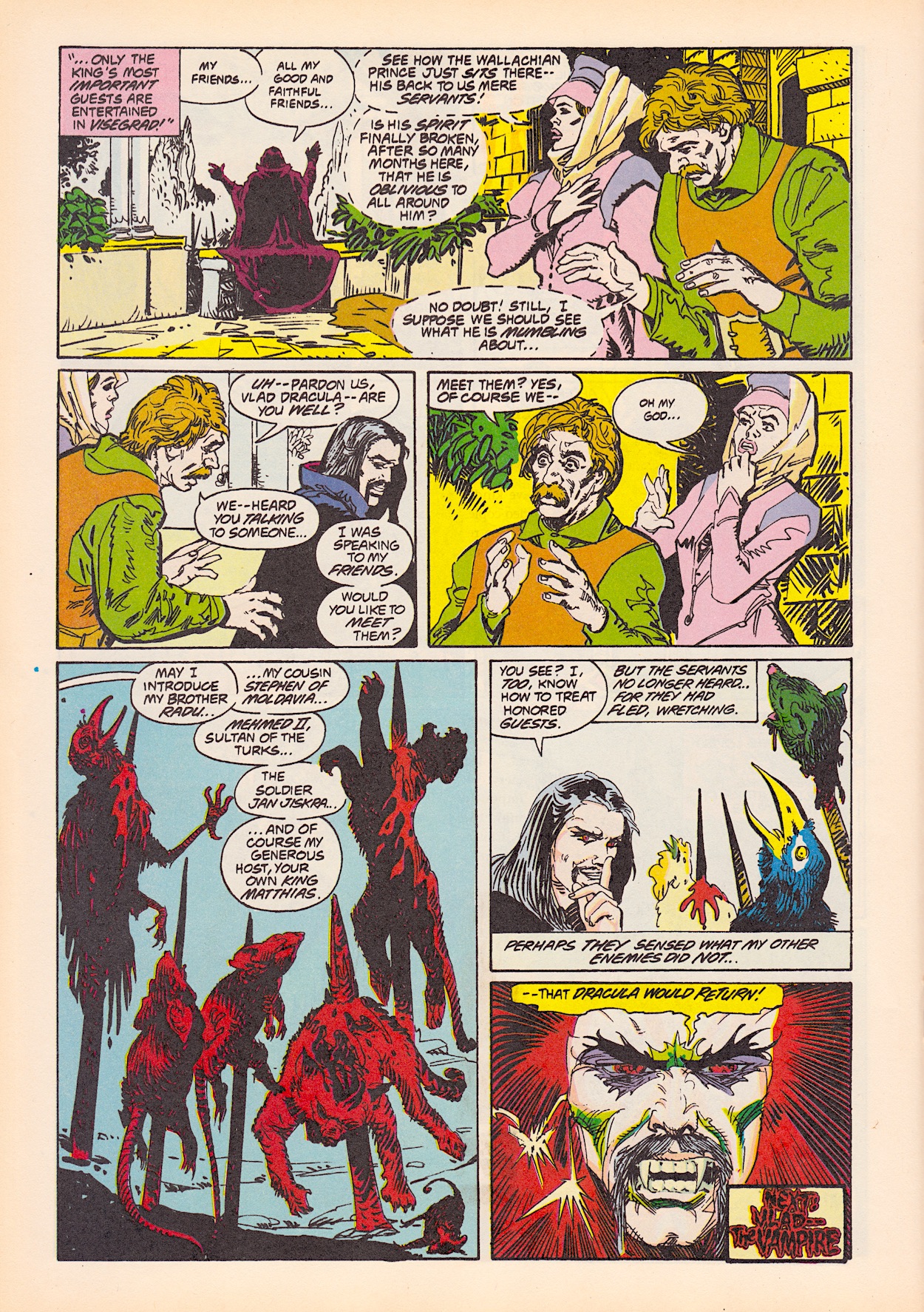
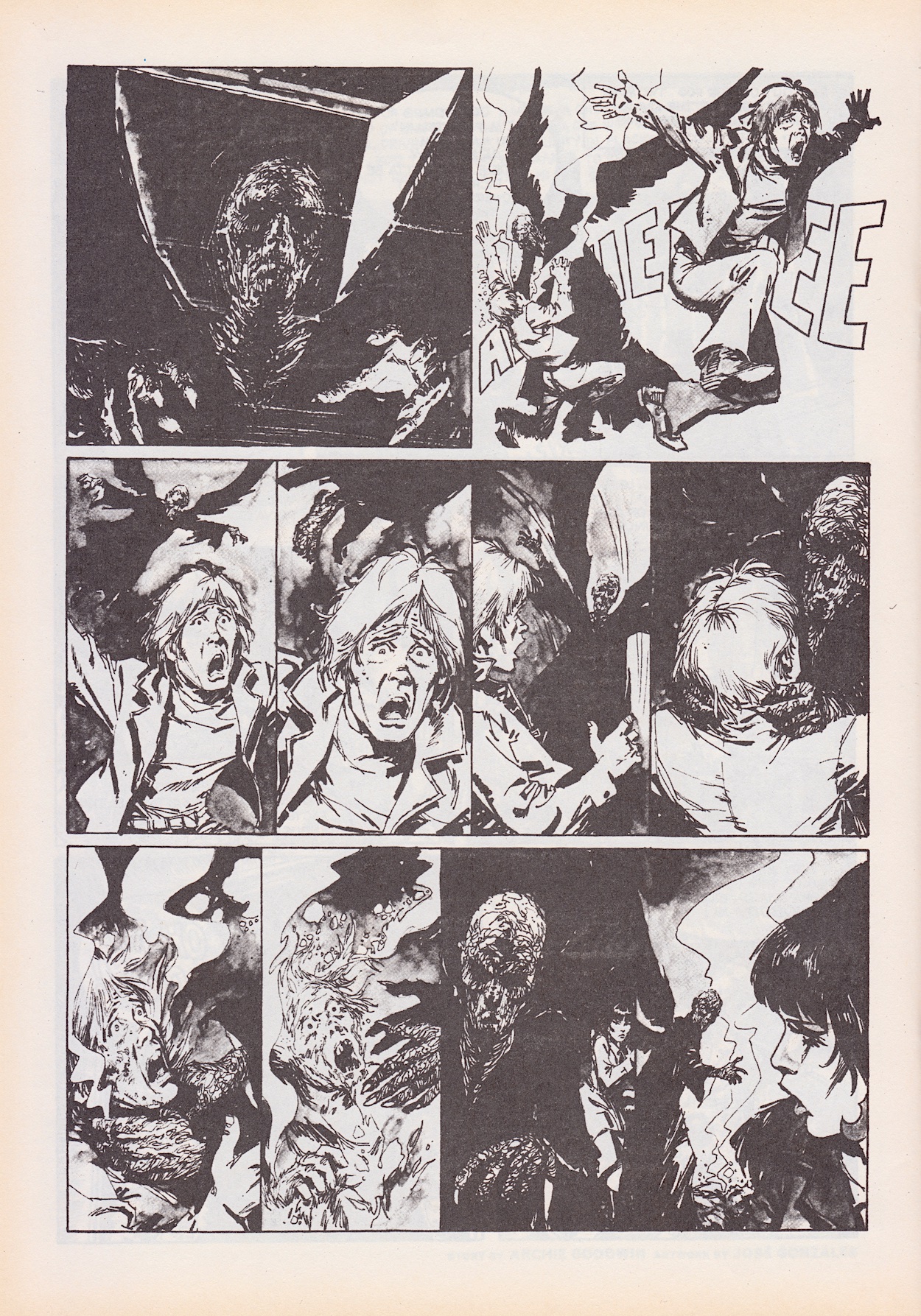
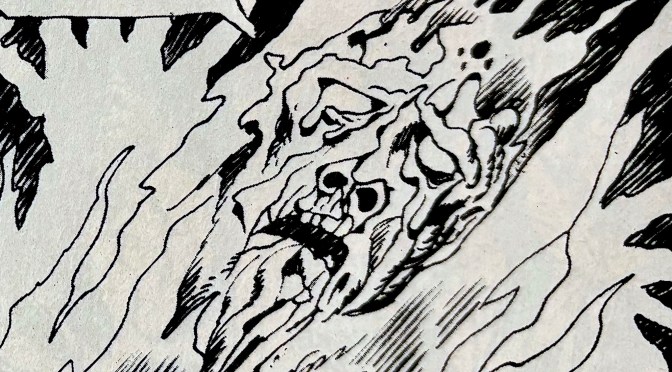
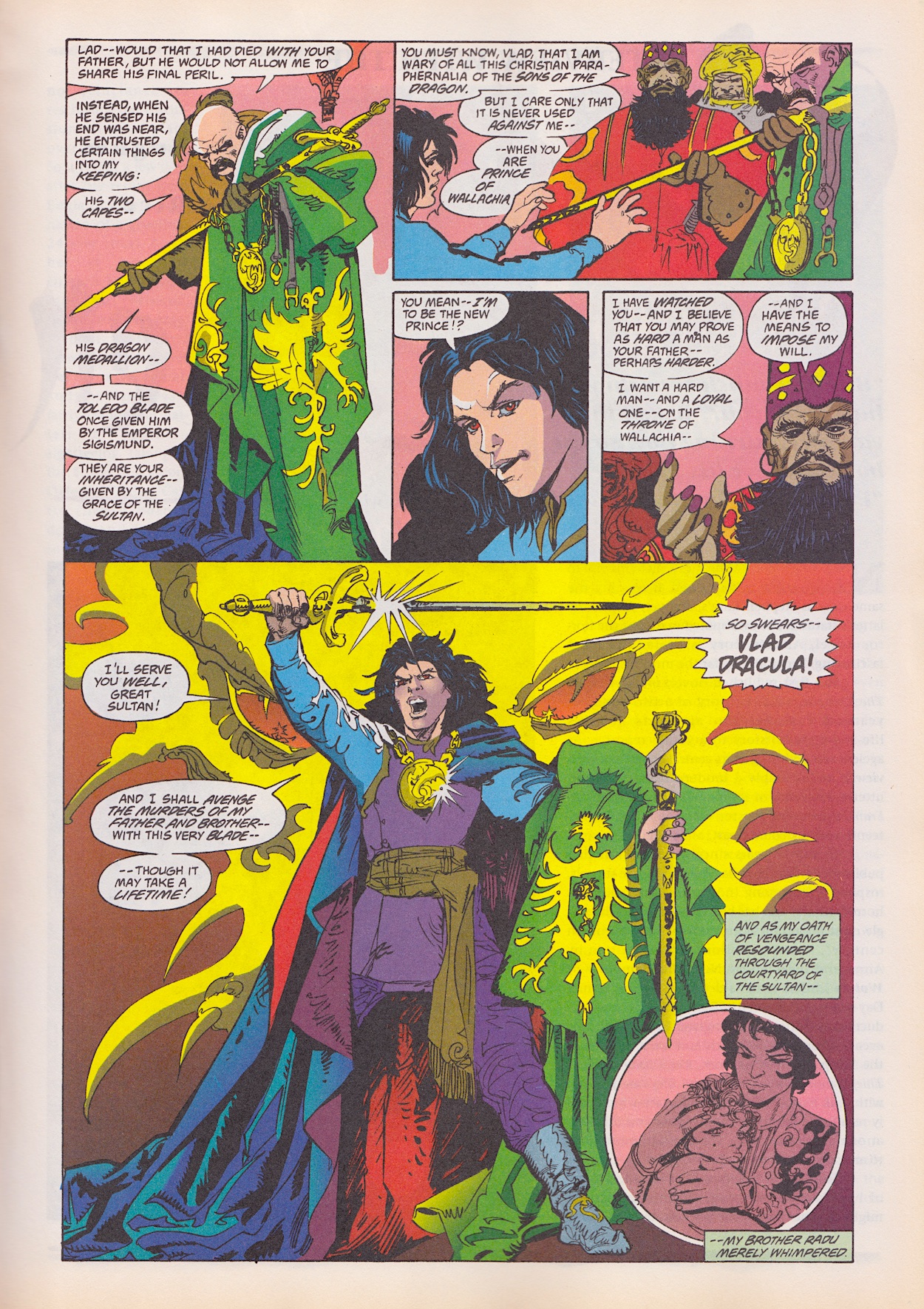
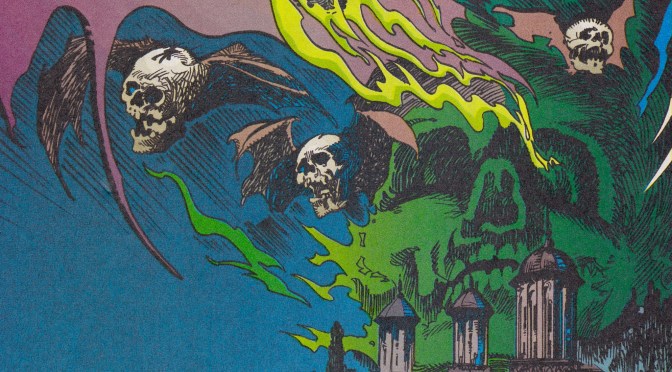
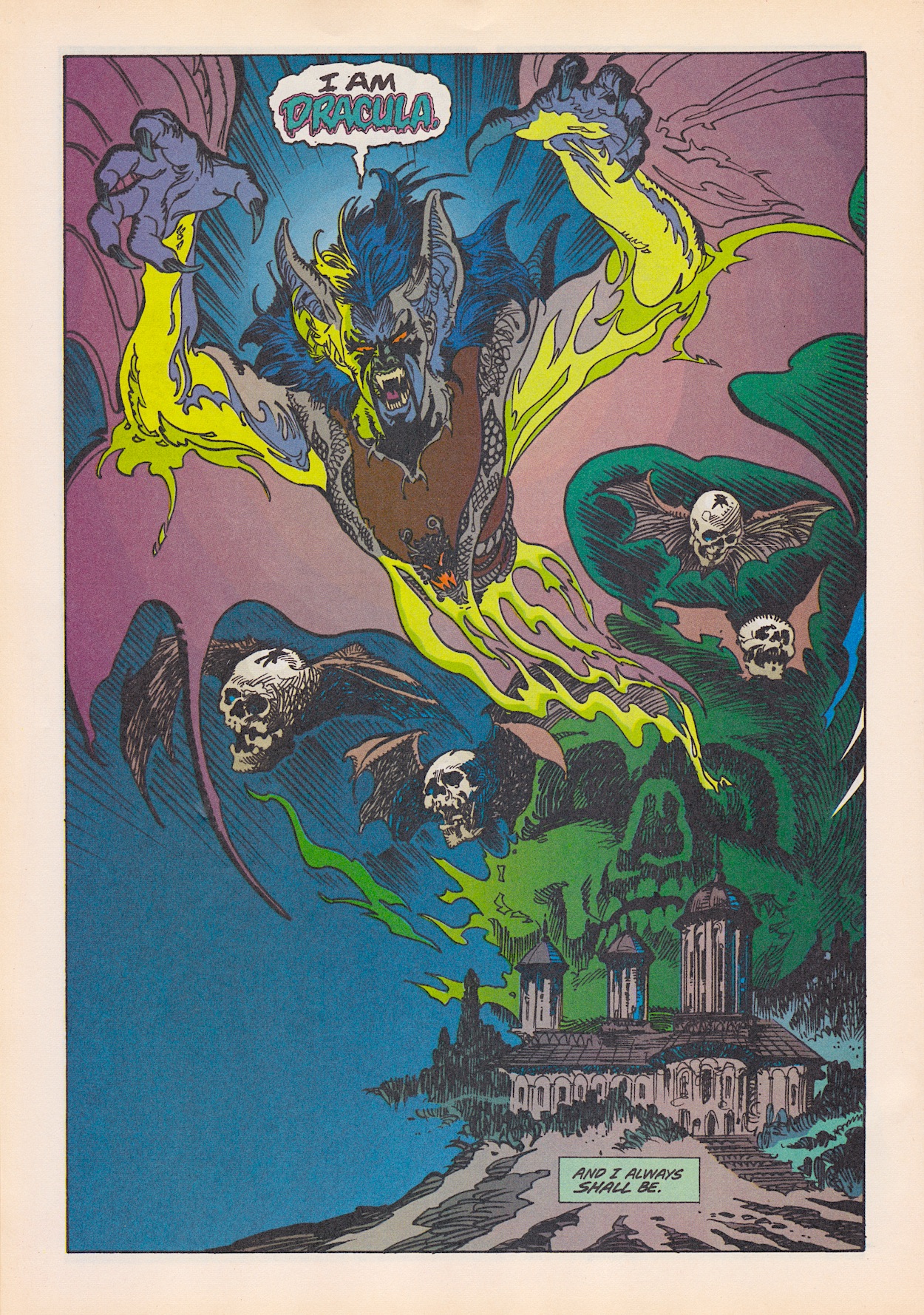
After the spread above, his actual head (which we learn is not decomposed either) is placed on to his body, the stranger recites some ancient texts in a foreign language and Vlad rises again, instantly biting the neck of his descendant, energising his body and beginning his life as a vampire. While the story ends with an image of him declaring himself as the Dracula of Bram Stoker’s creation this origin story, even the resurrection part, is very different from the novel. In fact, it’s only one of a few possible stories about Vlad’s body after he died.
This has been a curious strip. We know that Stoker had very limited knowledge of Vlad the Impaler, that particular part of the world or indeed that point in history and he simply picked at scraps of information to build his character. (Not forgetting his own supposed xenophobia which may have contributed to the story.) This strip seems to dangle somewhere between actual history and the novel. After accurately chronicling the historical character (as much as a comic can), this final chapter commits itself to neither the truth nor Stoker’s imagination.

There’s a lot of ambiguity surrounding the events of his burial so Roy has decided to fill in the gaps as he saw fit, and that’s fair. Personally though, I’d have preferred to have had the mystery remain. It could’ve still ended with how it began four months ago, with Dracula relaying the story to the reader and letting them fill in the blanks. The mystery could’ve added to the spookiness, the unknown adding to the fear instead of it being filled in for us.  Overall though, I’ve really enjoyed it and it’s peaked my interest in the real life man. I’ve found myself reading about him at length because of this comic.
It’s a shame the sales figures dropped so sharply after the adaptation finished, although I’m not sure what they could’ve printed anyway. This last issue also sees Vampirella unceremoniously dumped (she never did get her own cover as promised) and the small back up strip is rather unremarkable. But I wanted to concentrate on the main story anyway.

Overall this has been a quality comic and a pleasant surprise from start-to-finish. From a brilliantly realised movie adaptation to a fascinating look at the man behind the myth. From an initially clichéd Vampirella origin to a captivating story and character I’d never read before. From interesting news on the film’s release to a series of remarkable anthology back up strips. I didn’t expect too much from what was essentially a movie tie-in, but Dark Horse International’s Dracula has been a great read from start to finish, including when changing form like its titular character.

It may not be well remembered and doesn’t sell for very much on eBay, but that just means it’s easy for you to pick up and enjoy for yourselves. I highly recommend that you do.
BACK TO iSSUE NiNE

DRACULA MENU

DRACULA #9: VLAD THE MAD

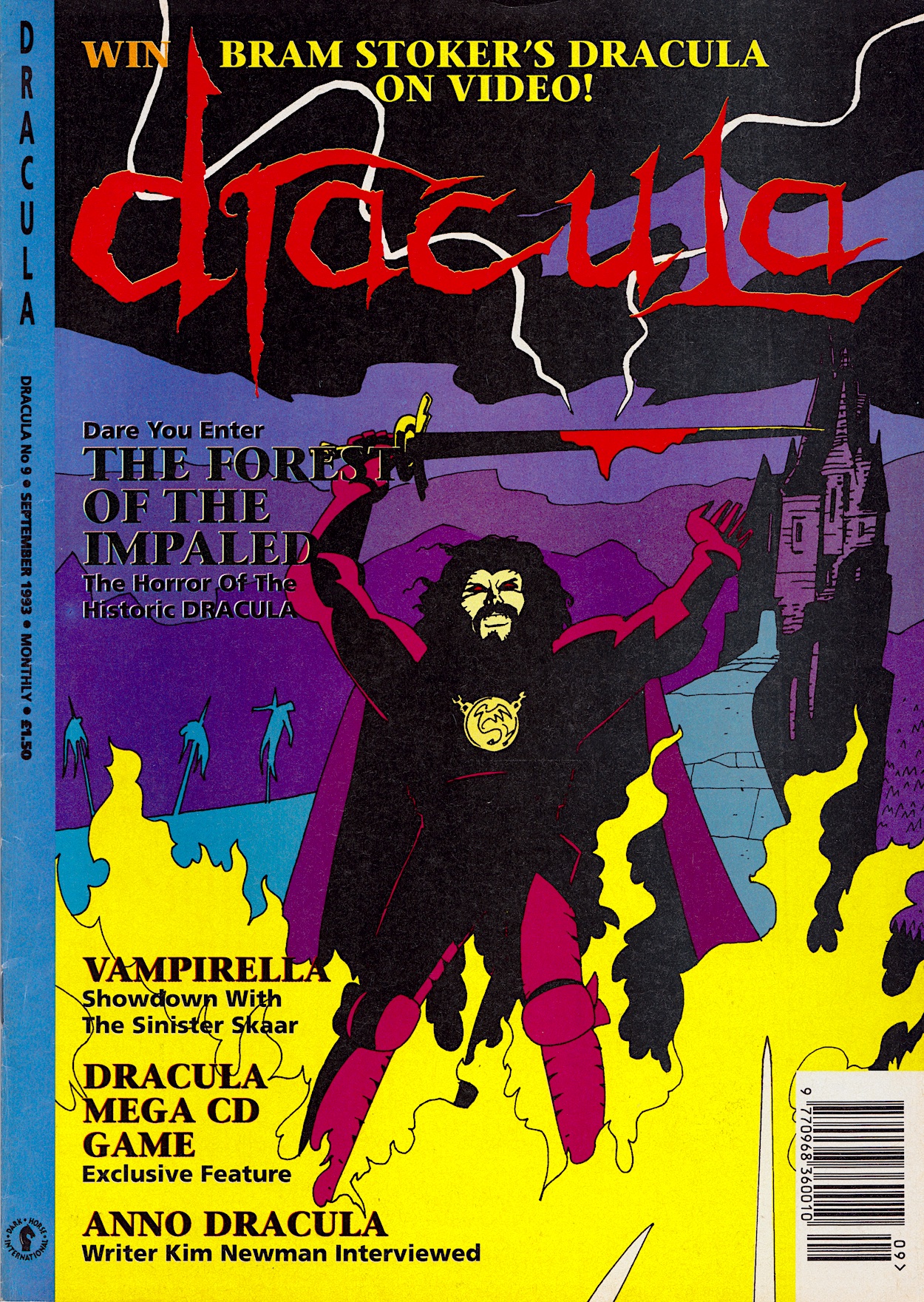
So much for the Vampirella cover. We were told last month there’d be one and I assumed it would be a classic reprint, what with the comic’s cancellation at #10 decided but there being a need for an extra cover this month, the second half of an American strip taking the lead position inside (and they probably didn’t want to pay out for a new cover for a cancelled comic). But instead, #9 of Dark Horse International’s Dracula has this very basic (it feels rushed) cover by Woodrow Pheonix, letterer on Crusade in Aliens.

Lying to people about “sovereignty” and “losing control” in order to gain power… that wouldn’t happen today, surely?

On the editorial page we’re told the next issue will include a “feature-length” chapter of Vlad the Impaler to finish off this real-life prequel strip. With hindsight we know this was because it would be the final issue. At least they knew ahead of time so they had the chance to properly finish off the imported Topps Comics strip. First up, this penultimate issue contains the next 16 pages of chapter two, as ever written by Roy Thomas, drawn by Esteban Maroto, coloured by Paul Mounts and lettered by John Costanza.

The mass murdering Vlad has allied himself with Christianity while his enemy Mehmed the Conqueror allies himself with none other than Radu, Vlad’s younger brother. The plan is to annex Wallachia and install Radu as the Prince. Radu promises the people sovereignty of their country but only if they back him. Lying to people about “sovereignty” and “losing control” in order to gain power… that wouldn’t happen today, surely?

After losing a series of battles, Vlad pleas with other countries to come to his aid but to no avail. However, this doesn’t stop his Religious Crusade as he slices across Europe killing thousands in the name of the Christian god, the people suffering as a result. “My poor peasants moaned at their loss,” a caption upon an image of the slaughtered poor says. “But commoners cannot appreciate the measures a besieged Prince must take on their behalf.” Those who ignore history are doomed to repeat it, as they say.

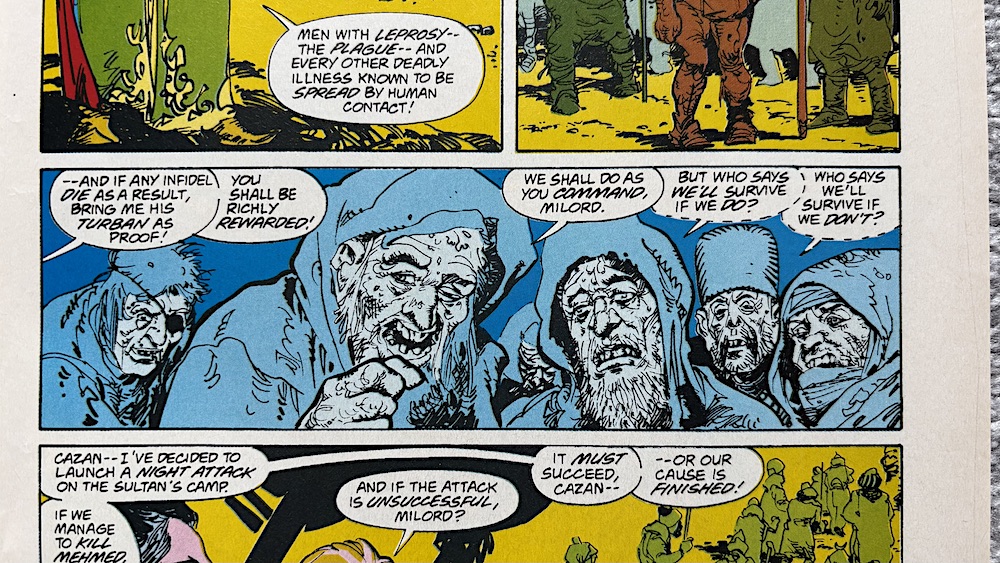
Instead of helping diseased peasants he uses them, sending them into other countries and military troop gatherings to infect and weaken them. His callousness and self-interest drive the story and I must say it’s compulsive reading, even if everything about him disgusts me. His tactics look like they could be working until a mis-timed attack fails and only serves to rouse Mehmed from his complacency, putting Vlad on the back foot and leading to a desperate, horrifying action.

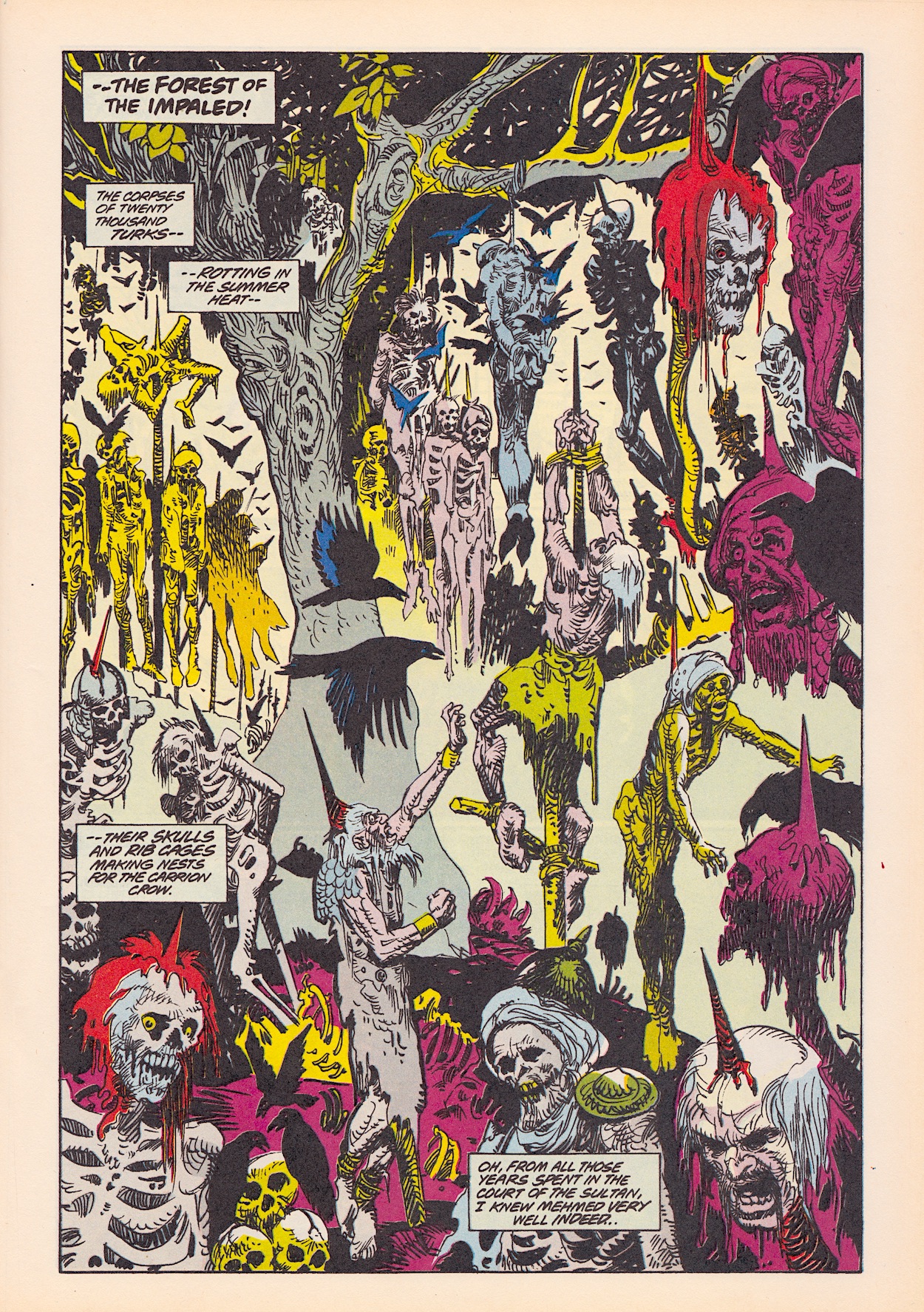
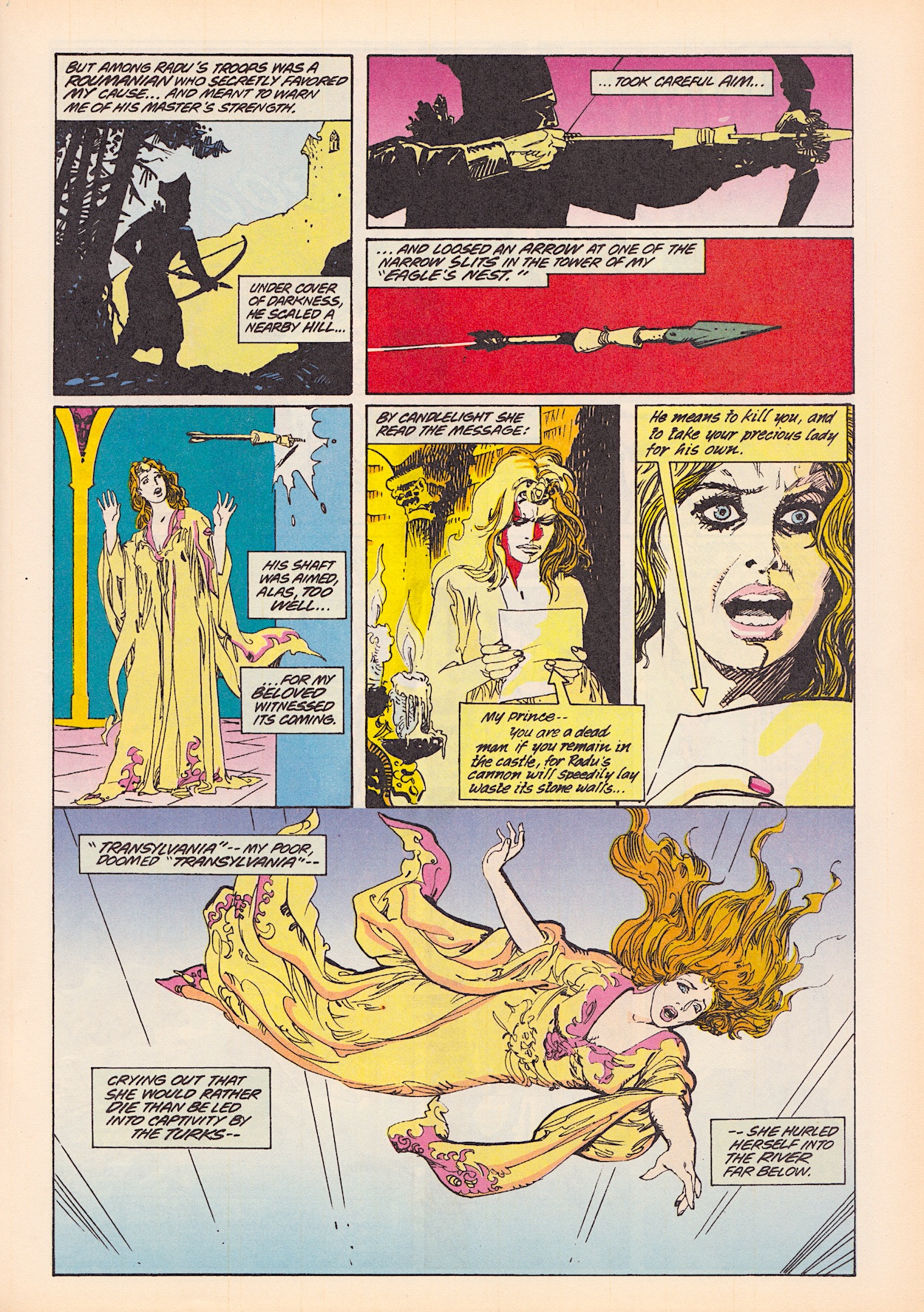
Originally intending to take Wallachia by force, The Forest of the Impaled shocks Mehmed into retreating for the first time, leaving Radu behind to become Prince on his own. Elsewhere, we find out the woman Vlad captured and forced to be his “love” is now named ‘Transylvania’. He describes her as being, “Near at hand, yet some part of her forever unattainable, uncontrollable”. This is very different to Mina. This woman is a slave, forced into a physical relationship with the Prince. An arrow does bring a message that ends with her suicide but as you can see it’s not a message from an enemy lying about the death of her one true love.

Instead, the thought of her horrible existence becoming even worse is the reason she takes her own life. This tears Vlad apart and he leads his pitiful army to Hungary and an ally, but the Hungarian leader has no stomach for war. Instead, through a convoluted pretence he separates Vlad from his troops and imprisons him, albeit in a palace! Forged letters are sent to all of his allies and enemies telling them he’s back on the side of the Sultan. With this news and his lonely existence he slowly goes crazy.

The cliffhanger is dreadfully forced. We know where this particular retelling of history will end up and I think it would’ve been more suspenseful to just finish it with him in his crazed state. The battles are also beginning to become much of a muchness but Vlad’s overall arc and the elements that (sadly) mirror politics in our modern world are fascinating. The final chapter should be interesting.

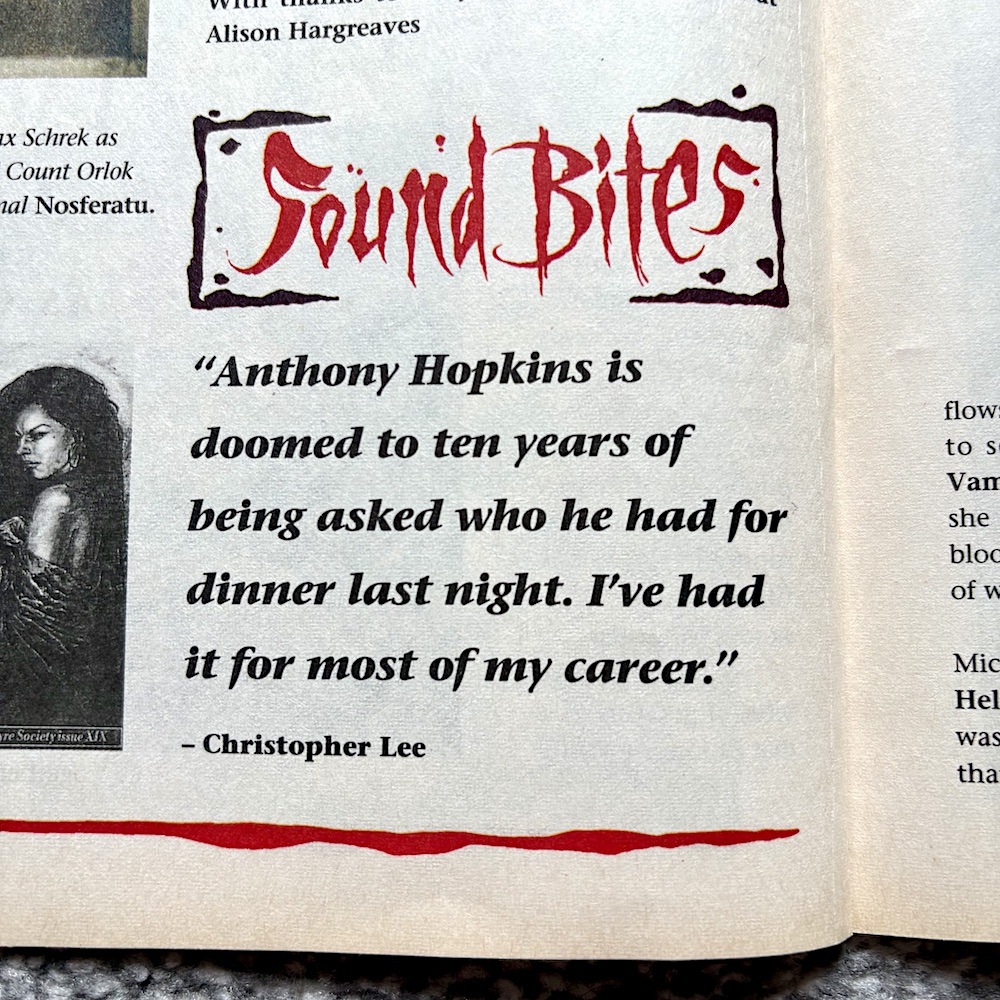
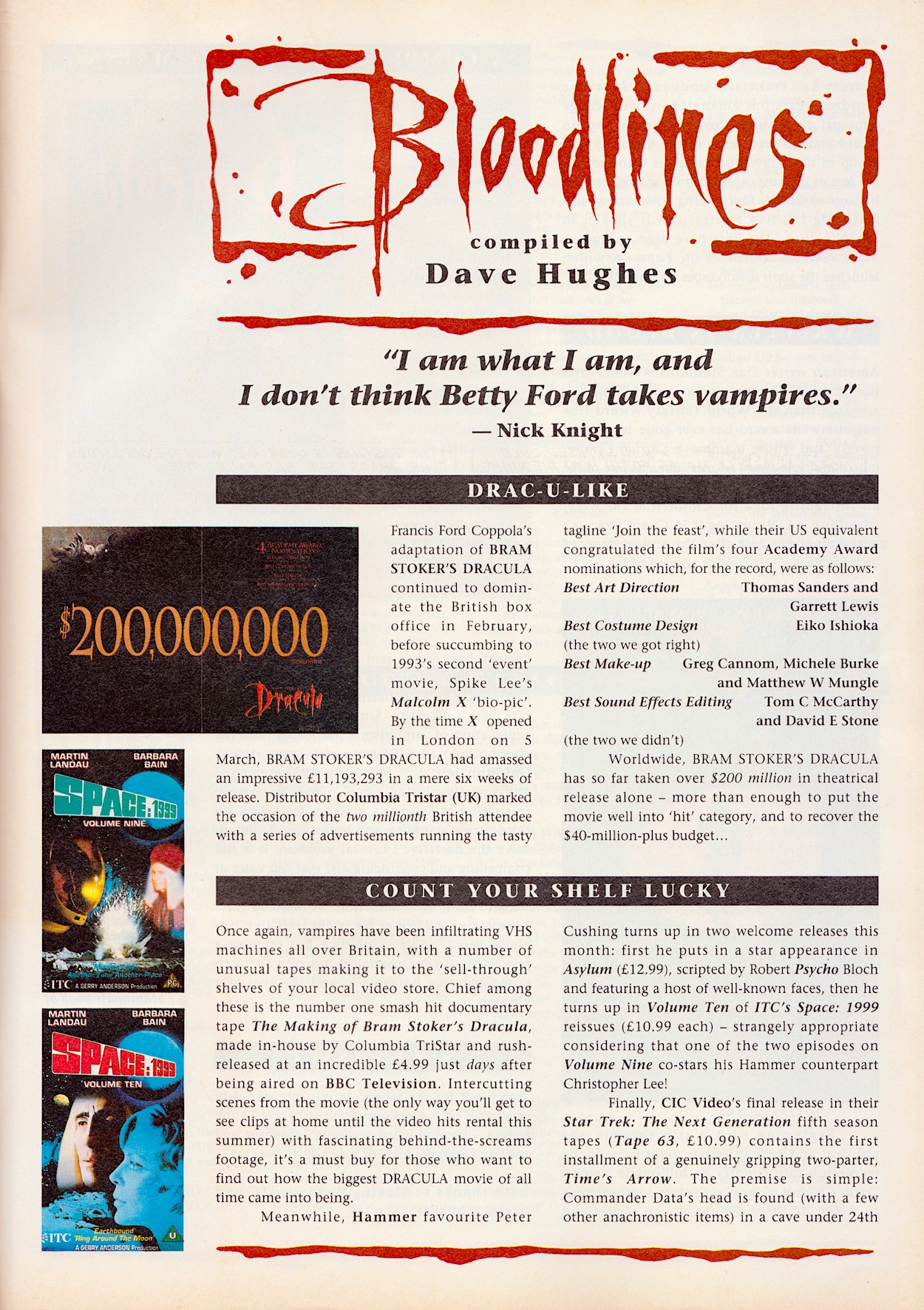
The Bloodlines news pages are light on much of interest, however Sound Bites does quote the legendary Christopher Lee who of course played Dracula earlier in his career (although to me he’ll always be Scaramanga). Such a shame his quote shows up the fact that he either hadn’t seen the film or wasn’t paying attention, as he attributes Anthony Hopkins to the title role. Whoops.

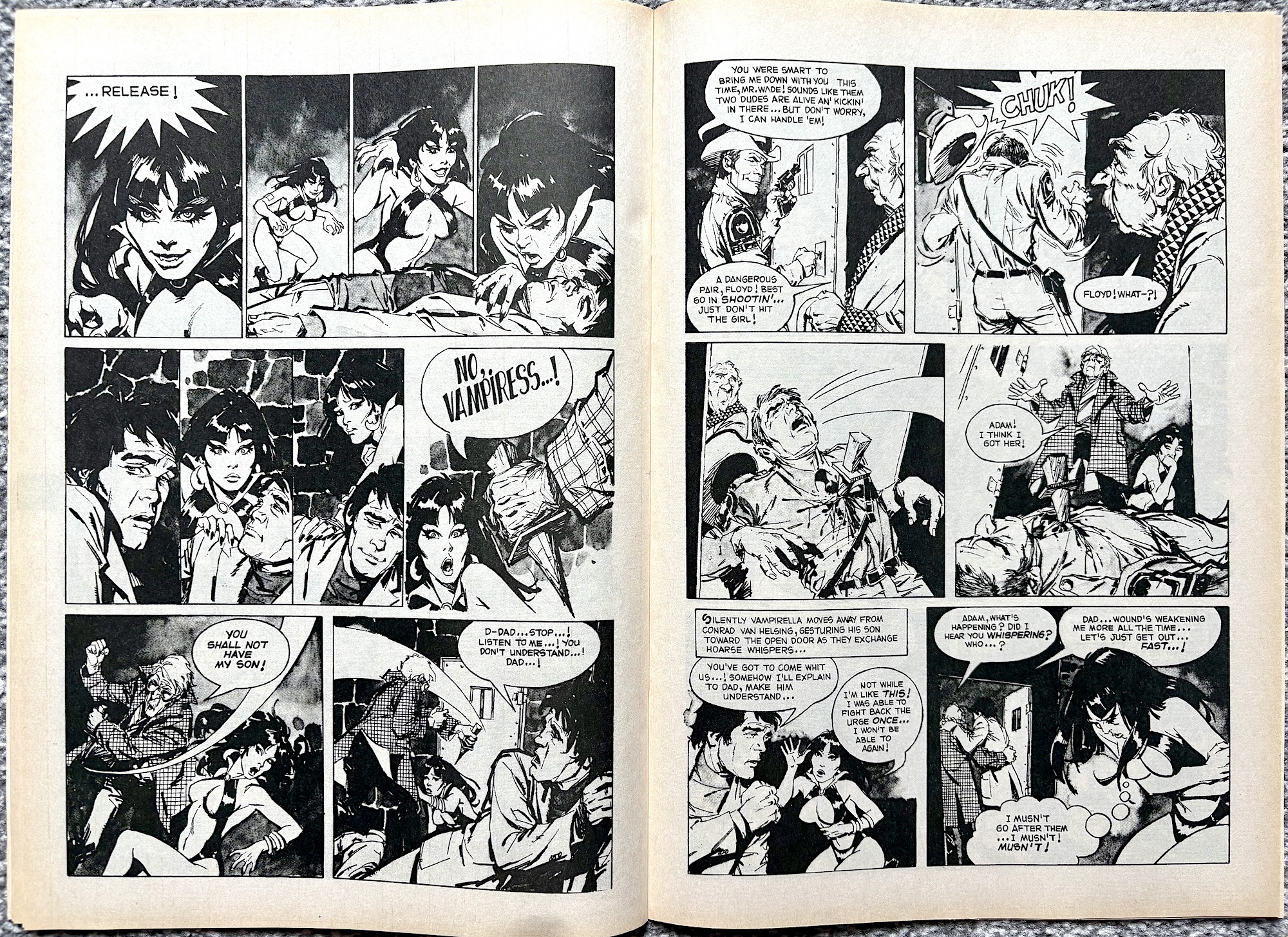
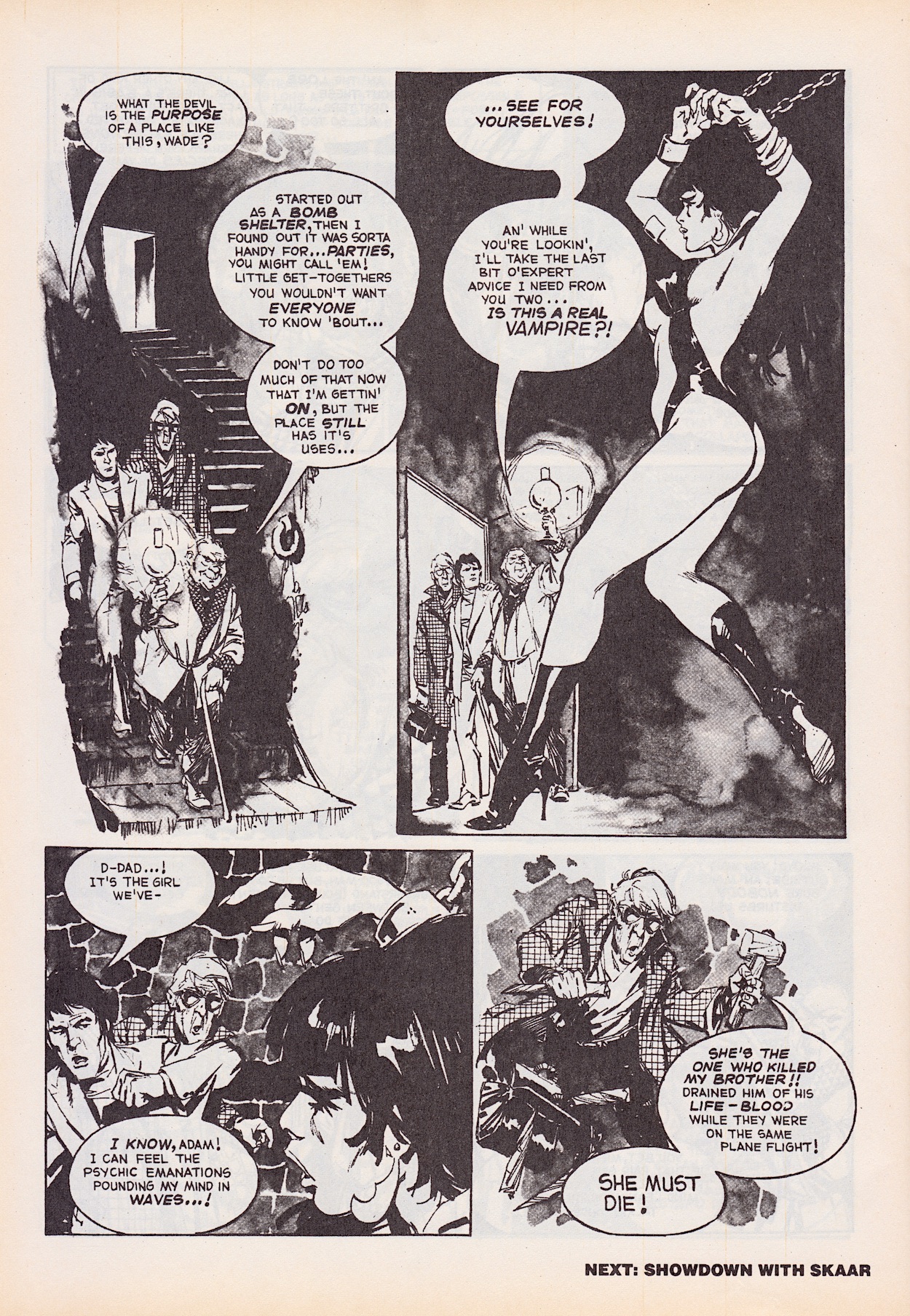
The second and final part of Vampirella: Death’s Dark Angel is shorter than last time but packs a lot in. With no blood substitute she knows she’ll not be able to control her urges and she’ll end up feeding on Wade. But this is just what he wants, so she continues to fight against it. Adam and Conrad Van Helsing are also in the cell and she finds herself opening up to the younger of the two (Conrad was knocked unconscious by Wade). However, having been shot, Adam collapses and the blood from his wound forces some primal instinct inside Vampirella. She breaks free of her chains but as she’s about to feast on her new ally she sees his face and with all her strength pushes back against the urge.

Of course this is when Conrad awakens and for the umpteenth time he gets the wrong idea and tries to kill her, but ends up killing the corrupt cop as he enters their cell and Adam and Vampirella let him believe he’s staked her instead. I like Adam and I understand part of his likability comes from the predicament he’s found himself in between his dad and a good vampire, but Conrad is just an annoying caricature by this point. Even Von Goosewing wasn’t this inept in Count Duckula! And why can he no longer sense her like he did before?

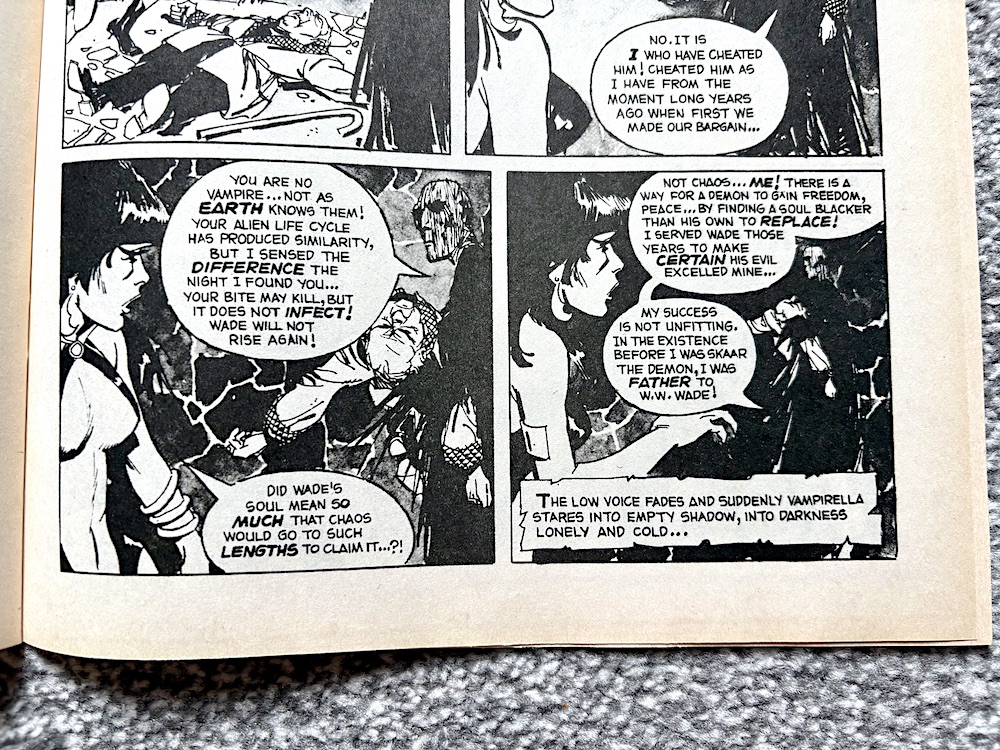
The demon, Skaar attacks the Helsings then suddenly just disappears. This is because Wade has finally forced the starving vampire to bite him! But as Skaar explains, Vampirella isn’t from Earth; she’s an alien, and her race can’t transform people, only kill them. It turns out Skaar was originally a human, namely Wade’s father! Having spent many years as a demon serving penance for his own life, he wasn’t serving Wade. Rather, he was merely waiting for his son’s death because only a soul blacker than his own could take his place and finally release him from his demonic prison.

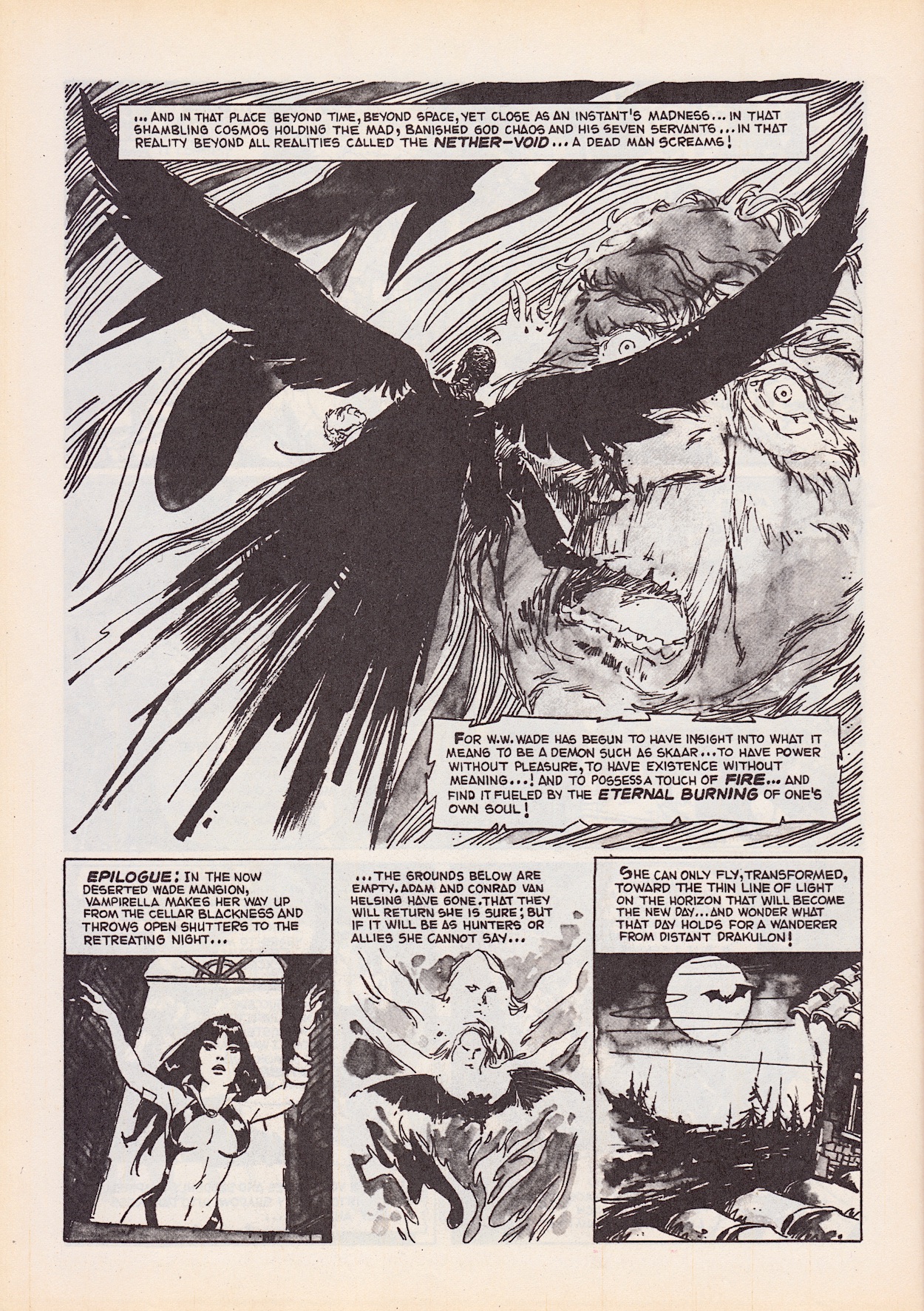
This was a surprise ending! It’s solemn and moving before becoming horrifying on the final page, although Wade deserves everything he gets. However, does this mean Vampirella did kill the man on the plane? I assumed before the serum she could take what she needed without killing. A question for another time. I hope we get one final outing for her in the final issue. (UPDATE: We do not.) Given how she’s dressed I’ve been surprised at how maturely written and interesting the stories have been, eradicating my initial misgivings.

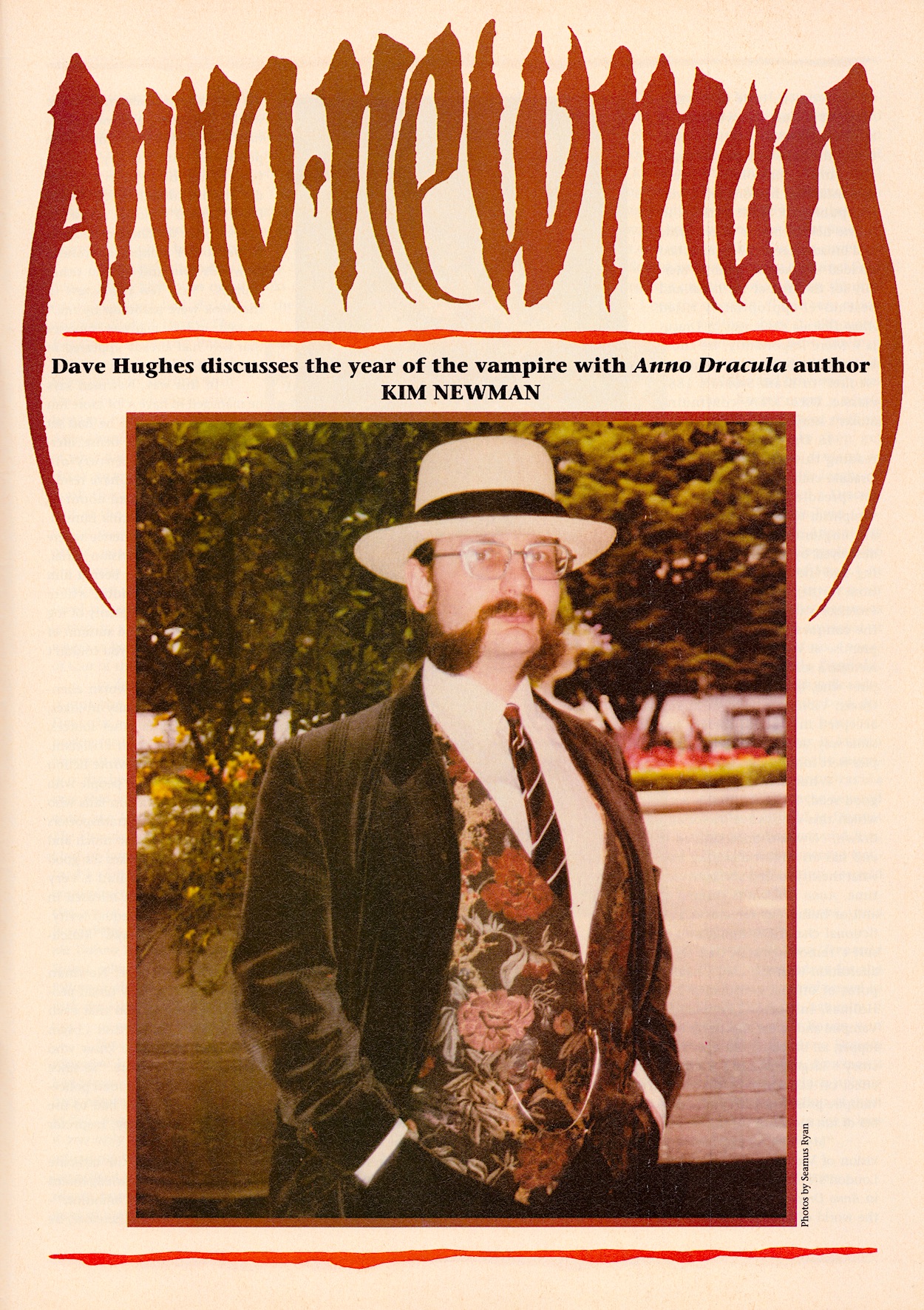
This month’s author interview is with Kim Newman so that promised series of female authors is disappointingly dead in the water. I remember Newman as a film reviewer on TV back in the 90s and I never liked him. To me, he was the kind of clichéd reviewer who thought they were right and everyone else was wrong and this plays out in this interview with the comic’s Dave Hughes.

Kim’s novel, Anno Dracula is a sequel to the original book set in an alternate world where Dracula wasn’t killed by Van Helsing, instead wooing Queen Victoria and carrying out his dastardly plan to turn England into a kingdom of vampires. He wooed Victoria? What about Mina? Kim admits he mainly used other authors’ fictional characters (Sherlock Holmes, Dr. Jekyll etc.) in the book, yet at the same time criticises other Dracula sequels for copying moments from the original book! That’s a bit rich. He also calls everyone who didn’t like his book “fat anoraks”. So yep, he’s definitely the person I remember.

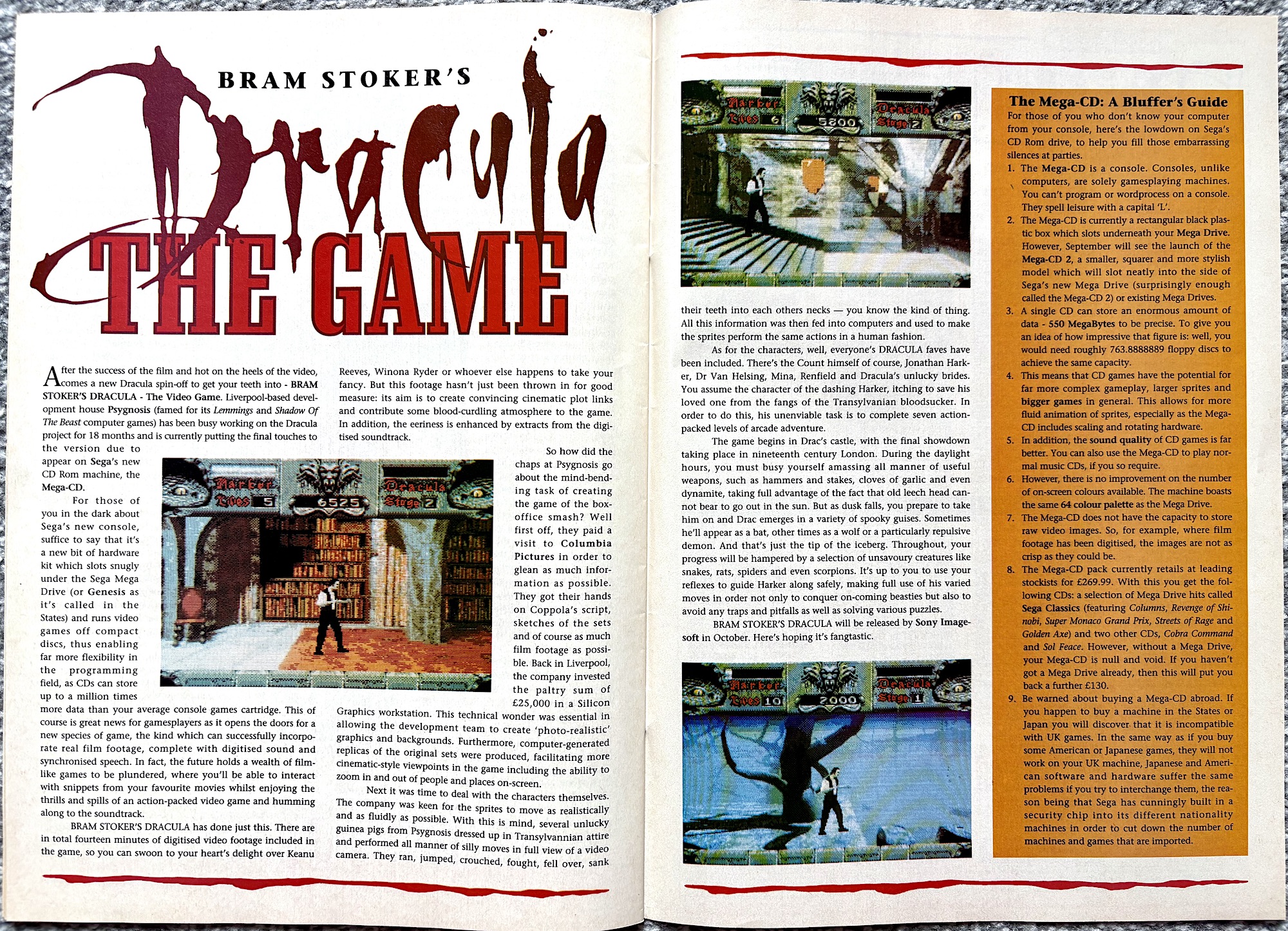
Much more interesting is a look at the Mega-CD game of the film. We were promised last month (and on the contents page of this issue) a review of the game but instead it’s very much a reworded press release compiled by Amiya Lopez, complete with a guide to what a Mega-CD actually was for the uninitiated. The last sentence of the main article kind of gives it away that they hadn’t actually played it.

I’ve very fond memories of that time, of reading those first years of Edge magazine and getting excited at the sudden leaps in videogame technology. While I personally invested in a Panasonic 3DO (and loved it), I have a fondness for most of the tech from that time and the constant add-ons for the Sega Mega Drive always fascinated me. They’re very much of their time and I enjoyed this little look at a game I’d never seen before, even if it was apparently terrible.

To round up, despite hindsight telling us the editorial writer knew cancellation was on the way, the letters page still asks readers to write in with suggests of how they’d like the comic to evolve over the coming months. They were in for a shock four weeks later, and not of the good kind. We’ll see how things are (hopefully) wrapped up on Sunday 14th September 2025.

iSSUE EiGHT < > iSSUE TEN

DRACULA MENU

DRACULA #8: VLAD THE CAD

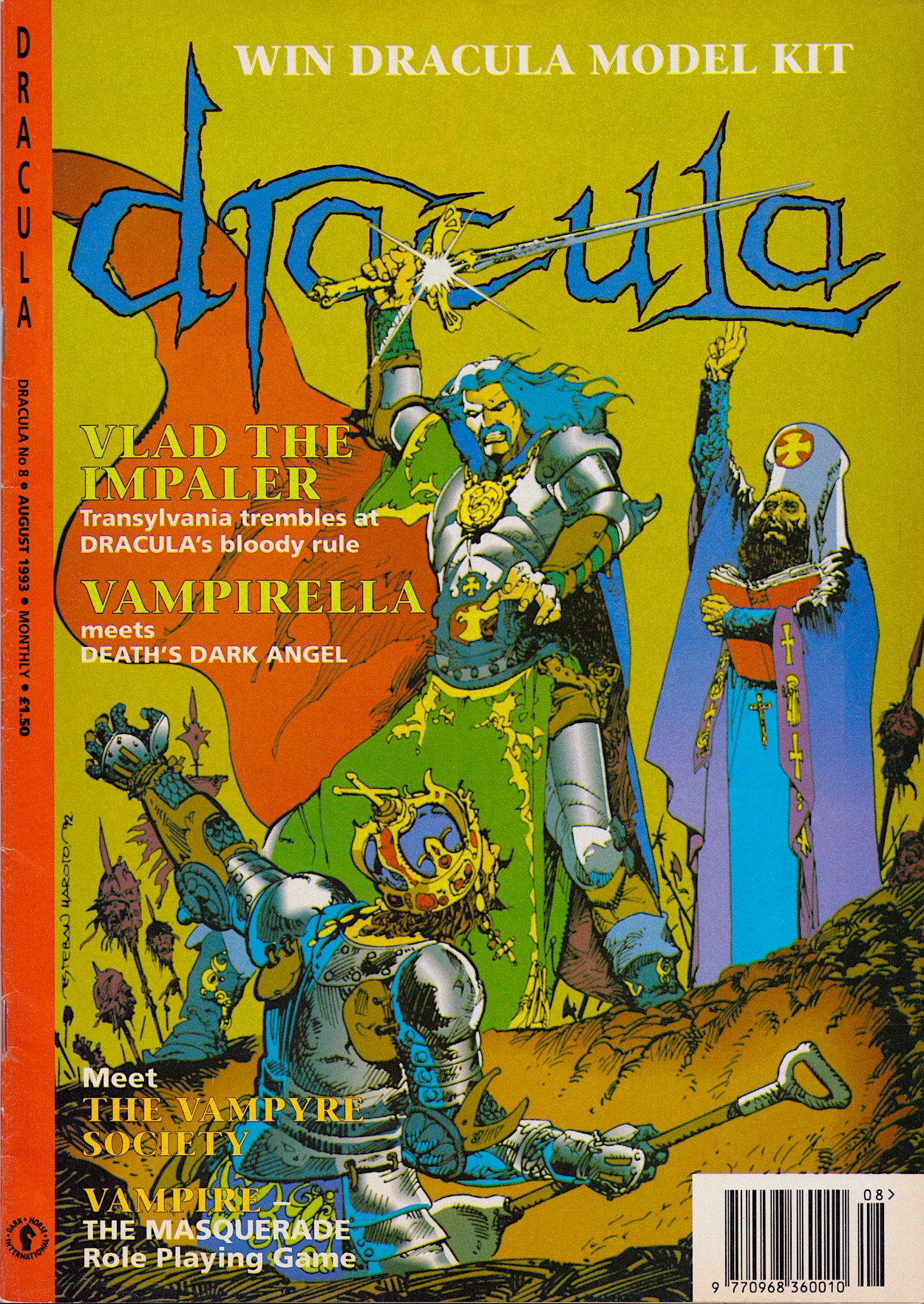
Another powerful image from Esteban Maroto welcomes us to the eighth edition of Dark Horse International’s Dracula monthly from 1993, the third issue since the comic lost its connection to the new film. It’s the strongest issue yet under its new guise, with no less than three enjoyable strips. The main 12-page Dark Legend A-Borning: Part One is again written by Roy Thomas, drawn by Esteban, coloured by Paul Mounts and lettered by John Costanza. Castle Dracula is complete. In a year? It does lead to showing a bit of Vlad’s dark wit, though. Many didn’t survive the build and those that did were impaled for their treachery. He explains, “Castle Dracula became, in essence, their… life’s work.”

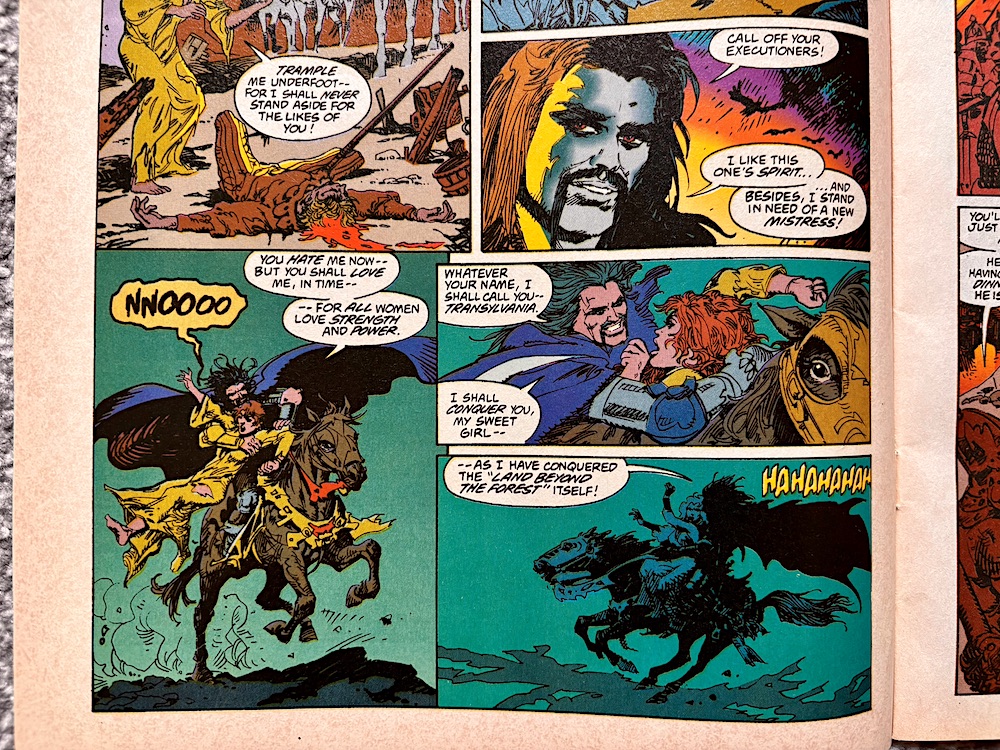
The man thought he was hilarious. He also seems to live in his own little world. Above you can see examples of how he saw himself. Perhaps an insight into how evil men somehow still see themselves as the hero of their story. Throughout Transylvania others don’t share his opinion and are rising up to challenge him. So Vlad sends an emissary to convince the people to swear loyalty to him. When they continue to rise up he says giving them a chance was the Christian thing to do but now he’ll kill them all. During one such slaughter he comes across a woman whose husband has been slain and this leads to the most horrific moment in the series thus far.

The comic glosses over some of the history, such as his hatred towards the Germanic communities: “The reasons are historically complicated and, in the end, unimportant”. Then again, the strip works best when it focusses on key moments rather than trying to squeeze everything in. A former Hungarian ally by the name of Benedict De Boither meets with Vlad in a particularly gruesome scene where he’s eating a feast in a field surrounded by his victims slowly dying on spikes. De Boither is terrified and grovels at his feet. In return for this undying loyalty (if he isn’t loyal, he’ll die) he’s made ambassador: “For you know how to speak to one ruler on behalf of another”.

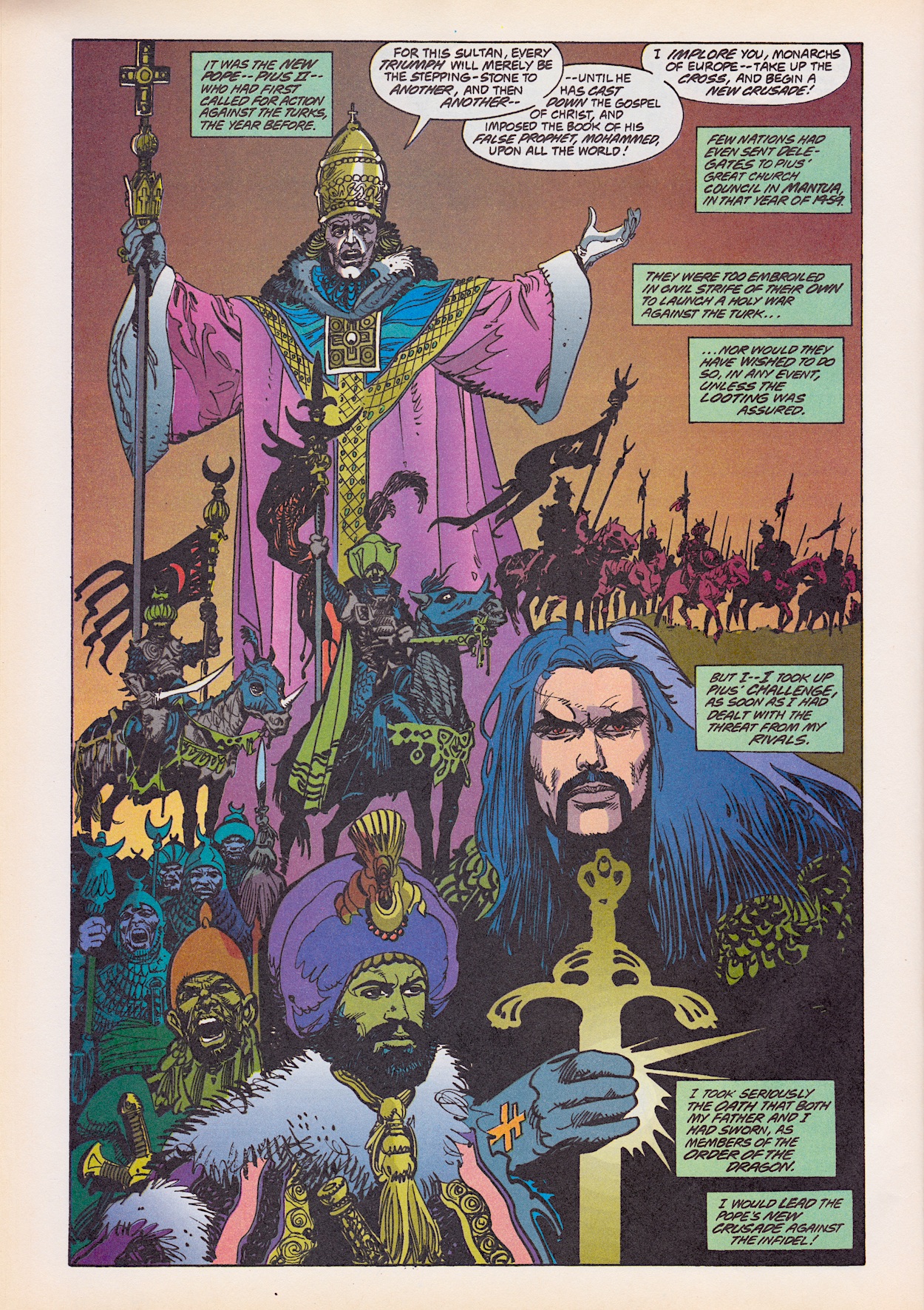
The war continues and we see montages of monasteries being burned, monks fleeing, and Vlad in shock that they’d then tell stories that made him out to be a monster. Only Mehmed the Conqueror remains on his long list of enemies and when he sends envoys to see Vlad what do you think happens? No prizes for guessing. Then, above, Pope Pius II isn’t exactly Leo XIV when he calls for death to unbelievers and Vlad is quick to step up. As you can see there are a few digs at the church, such as others not wanting to partake in this so-called “crusade” because of a lack of guaranteed riches.

I’m feeling more enthused about the Vlad the Impaler story as it develops. It’s moved on from a crammed, drab history book with fantastic art to a gripping retelling of history with fantastic art. I think that first chapter had a lot of ground to cover to get us to his adult life and his positions of power, which of course would be the time of most interest to fans of the film. Splitting it in two was necessary here but that ended up giving a bad impression of the strip in #6. That chapter’s second part (the following month) and now this month’s are quite the thrill ride. I just hope we get to the end before cancellation!

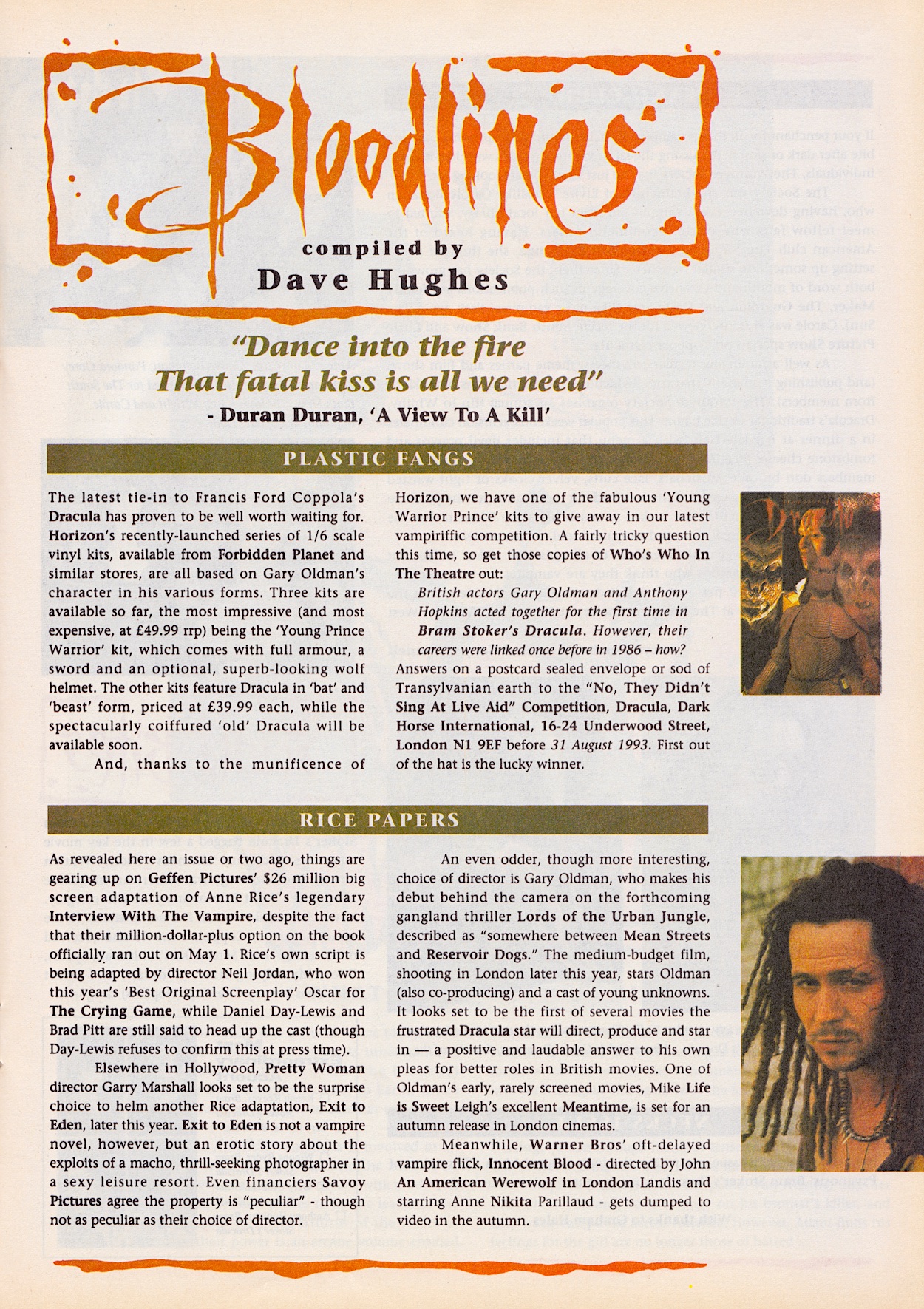
Dave Hughes’ Bloodlines news pages start off well with some James Bond song lyrics that are only there because they suit the subject at hand. Still, I’ve got the song in my head now. News is thin on the ground it seems and I take issue with the seeming indignation that the director of Pretty Woman can direct something completely different, or the shock that Gary Oldman is also directing.

Can you imagine what would be written here when (the excellent) Tom Cruise was announced as the lead for Interview with a Vampire? I’ve always been fascinated with how writers, actors and directors can turn their hands to different projects, but if Twitter over the years has shown us anything it’s that others are far too quick to judge. Even Anne Rice herself fell foul of this but would later recant when she saw Tom in the role during filming. Maybe we’ll get to the end of the comic’s run before the announcement?

José González takes over art duties on the 11-page classic Vampirella back up strip. Only credited online with this character he won awards for bringing her to the page over a long period of time. He’s credited with creating the style for her and her strip that’s been used ever since. There’s definitely a more mature, gothic horror vibe to it this month and for the first time it’s not a complete tale.

Part one of Death’s Dark Angel is written as always by Archie Goodwin. Beginning with the deaths of two grave robbers by a demon, we find out it’s a less powerful one than Vampirella has dealt with previously but it’s still bargaining with humans, including a vile rich man called Mr. Wade. Wade has less than a year to live yet still ignores his doctors, having lived far beyond his predicted lifespan thanks to a deal with this demon (another follower of Chaos) for his eternal soul after he passes.

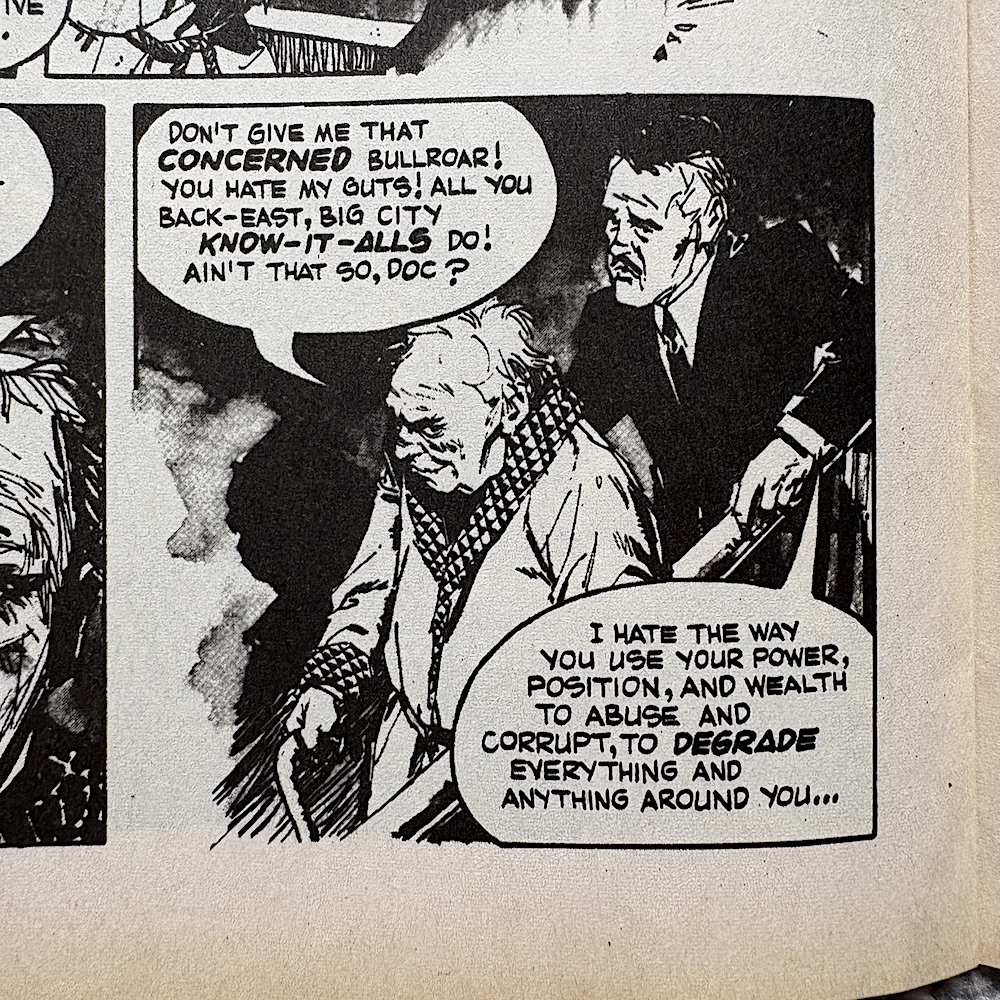
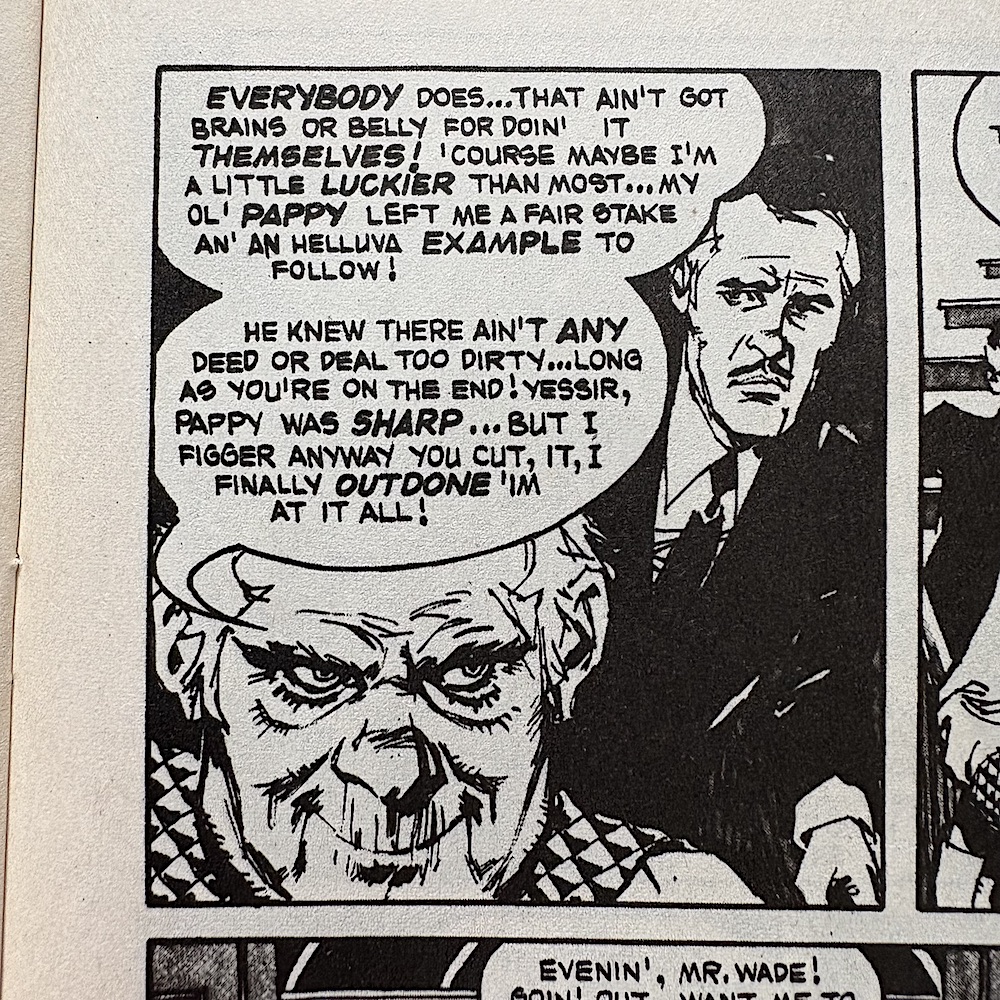
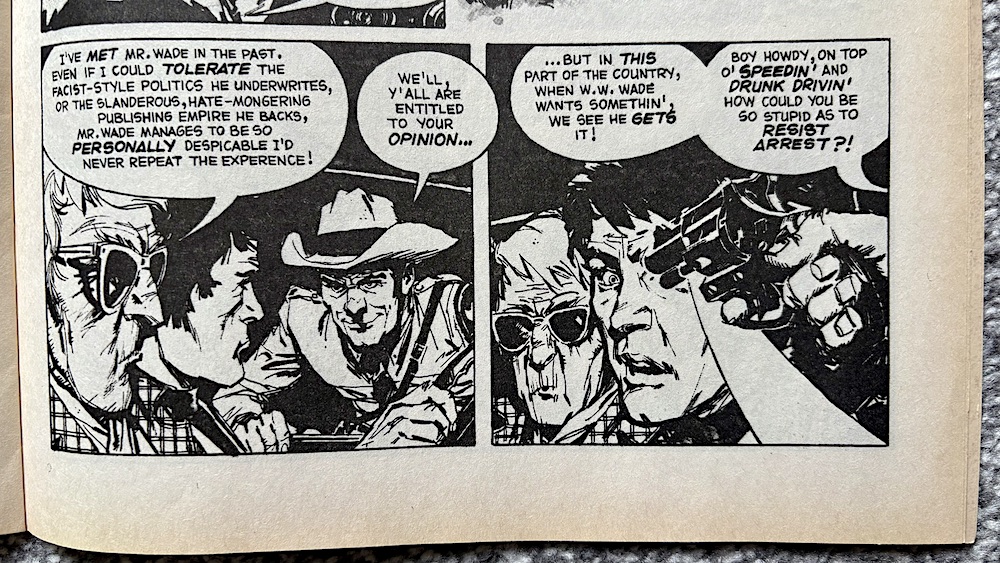
As you can see Wade could just as easily be the villain in a modern strip, so this issue’s story feels more contemporary. Especially when a local cop corrupted by Wade’s wealth and power fabricates crimes in order to bring in the Helsings. The demon captures Vampirella but, sensing something different about her, spares her and chains her up instead. The Helsings have been captured in order to confirm whether she could grant Wade eternal life as one of the undead. Of course, once they’re in the same room as her Conrad reacts accordingly! Surely it’s time for Adam to step up and save her after everything that’s happened so far?

This brings back the mystery at the heart of their story arc. Vampirella was indeed on the same plane as the brother of Conrad Van Helsing when it was struck by lightning and crashed, and when Conrad dug up the grave he discovered bite marks on his neck and drove a stake through his heart. (Just to be sure.) He blames Vampirella but, while she did have to feed off humans before the serum she now uses, we don’t know if she fed on his brother or whether her feeding killed.

The only downside to this chapter is Vampirella herself doesn’t have much to do other than be kidnapped. Saying that, her presence is always felt because she’s still what drives the story for all of the other characters. For the first time I’m actually feeling empathy for the lead and I’m hoping for some revelations and development next time. From not-so-great beginnings she’s now the best part of the comic.

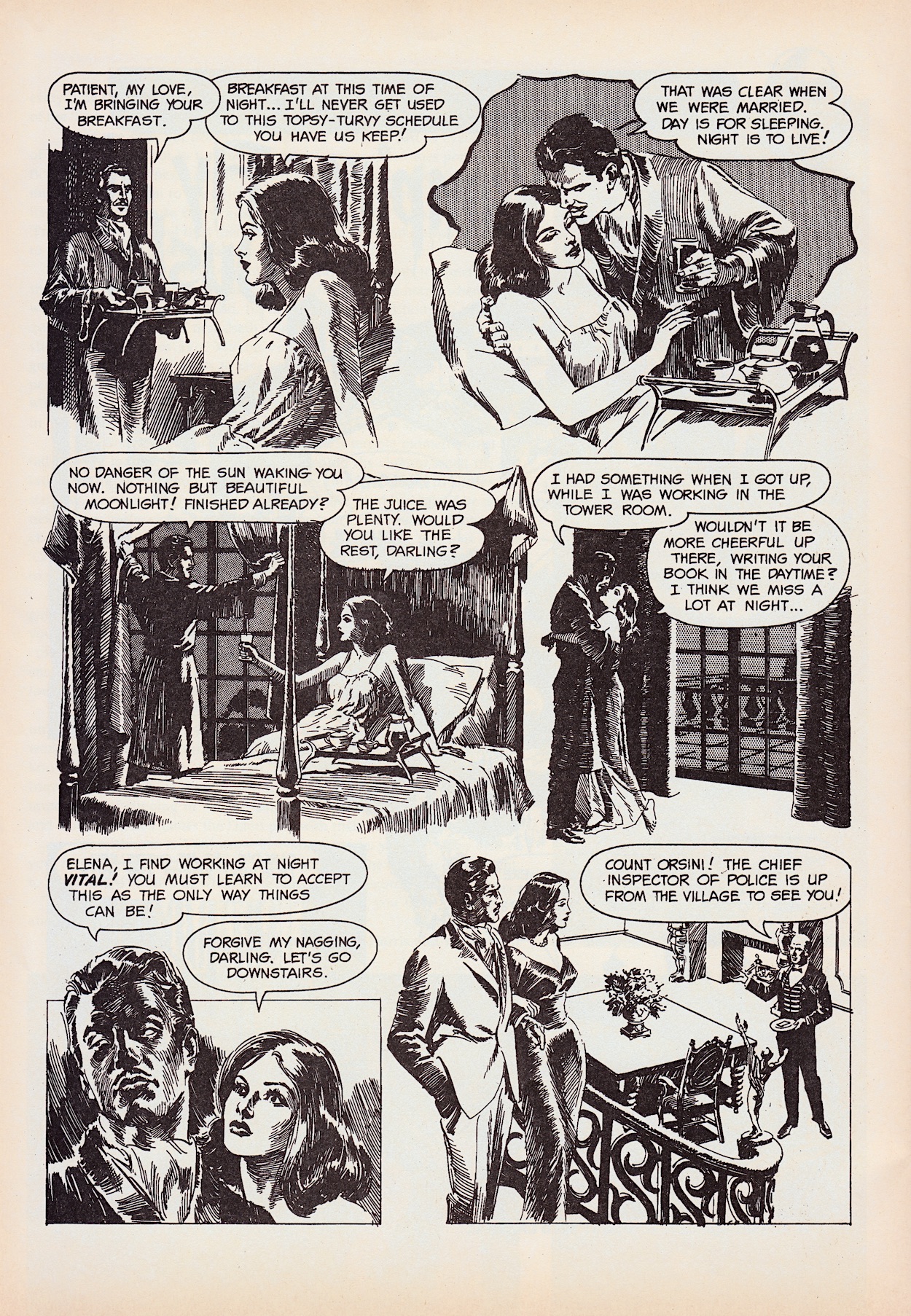
In #5 we had the pleasure of a short extra back up strip and I’m pleased to say another from the 60s US comic Creepy (where Vampirella’s strips are lifted from) is included here. Taken from the first issue it’s written by Archie and drawn by Reed Crandal (Tales From the Crypt, The Vault of Horror, Flash Gordon) and the inhabitants of a spooky town are being terrorised by a string of murders apparently committed by a vampire.

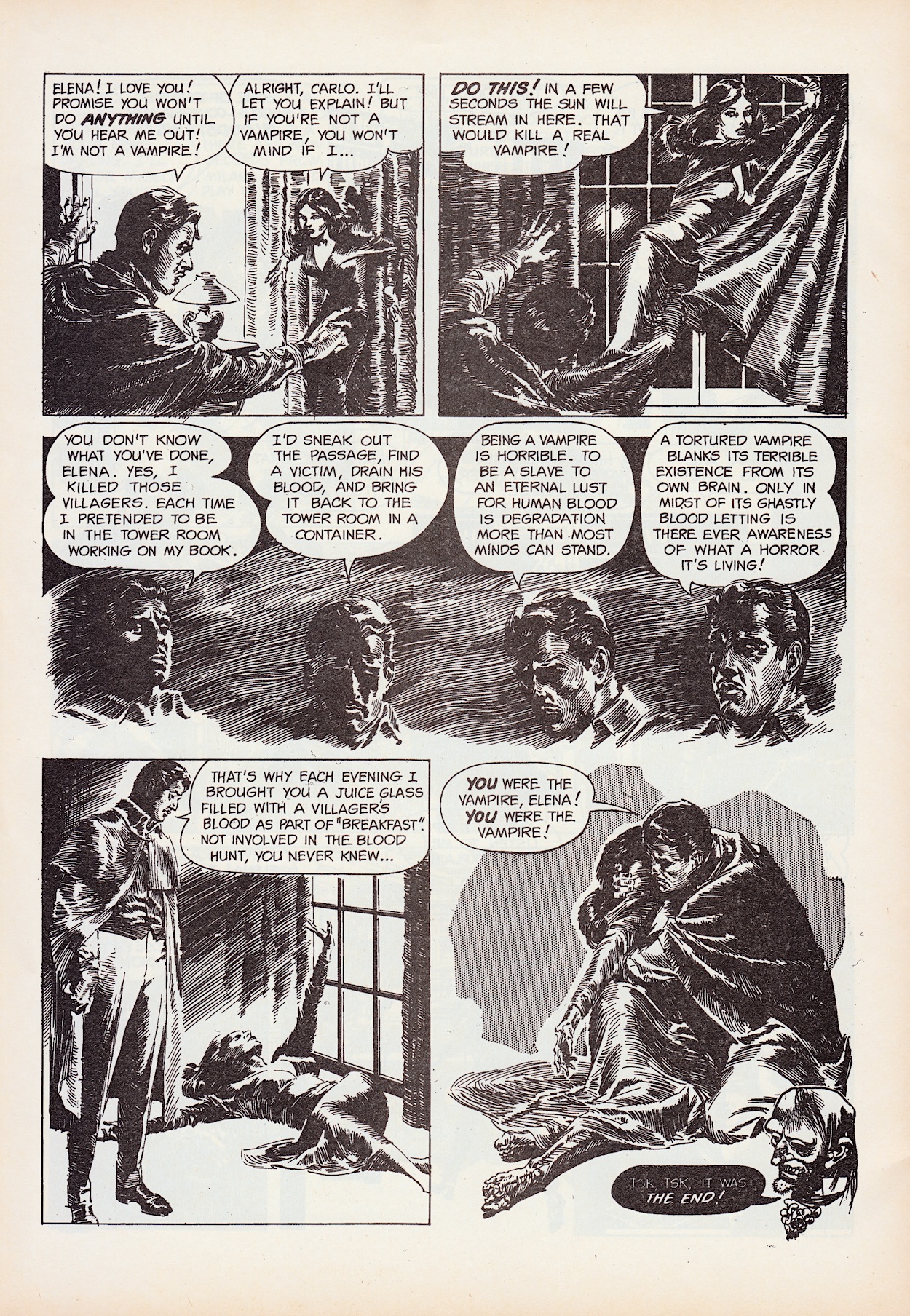
We meet a newly married couple, in which the wife is constantly trying to convince her husband they should go out more, that being in bed all day and awake all night isn’t natural. He argues that’s when he must work and when they can also enjoy the nightlife. To begin with it reads awfully old fashioned. Why didn’t she know about his way of life before getting married? The set up seems ridiculous but something struck me about that breakfast juice being all she needed on the page above.

Throughout its six pages are we really supposed to think she’s so stupid as to not realise he’s a vampire? The hints are so obvious we question why she can’t see what’s right in front of her. That is, until the final page. She finally susses it out and opens the curtain to let the sunlight in but she’s the one who dies! It’s a great little tale and just the sort of thing this comic should have more of. Both of these little one-off strips so far have had excellent twists that I didn’t fully see coming. In both I was convinced I knew what it was going to be and both times I’ve been happily proven wrong.

The feature about the role-playing game mentioned on the cover takes two pages to tell us absolutely nothing about it, then on the Fang Mail letters page the results of a competition produced a surprisingly funny moment. It’s also announced that Vampirella will be the cover star next month, showing how important she’s become to the comic. Alternatively, maybe editor Dick Hansom knew the end was near and didn’t want to commission a new cover and it’ll just be a classic Creepy one. We’ll find out in five weeks.

This has been a fantastic issue. While the features may be lacking compared to those in previous issues the three strips are some of the best of the whole run. The comic is really finding its feet after the transition from ‘Bram Stoker’s Dracula‘ to simply ‘Dracula‘. Unfortunately many jumped ship when the transition happened and missed out on this. We’ll find out if they missed more goodness when #9 comes to the blog on Sunday 17th August 2025.

iSSUE SEVEN < > iSSUE NiNE

DRACULA MENU

DRACULA #7: TALES FROM THE CRYPT

On this day back in 1993 came the seventh edition of Dark Horse International’s Dracula comic, now firmly in its post-movie adaptation stage. Irish artist Kilian Plunkett’s cover was unique to the UK comic, what with the issue containing part two of the same American issue of Topps Comics’ Vlad the Impaler from last month. Blog regulars should recognise the name too, as Kilian contributed the superb cover to #8 of Aliens in a completely different style.

The 13-page second part of Roy Thomas’ strip kicks off with defeat. Vlad’s time in his late father’s role of Prince of Wallachia was short-lived after the Sultan who raised him to be a brutal warrior died. The sultan’s son, Mehmed the Conqueror sought to invade and take over all of Europe, so Vlad allied himself with the Hungarians to defend his home of Transylvania against Mehmed’s ally and the man who killed his family, Danesti. After more history book-like retelling of battles he chases him down.

But Vlad’s actions weren’t to protect the people of the land. As a plague hit the country the poor were ignored and left to die so that he could march to defend Christendom and avenge his father’s death. That’s right, he was fighting for power in the name of god while ignoring those in need. Some things don’t change. At one point he sees a comet in the sky and in a rare bit of fun he tells readers how he wouldn’t know anything about it until he met someone called Halley hundreds of years later.

After this, a brief moment of what appears to be open-minded kindness takes over Vlad. He doesn’t hunt down Danesti’s supporters, instead explaining how he knows they simply believed in their leader and did as they were told. He invites the royal court and their families to an Easter feast and begins to describe the castle he wishes to have built in his name, Castle Dracula. Then the other shoe drops. He shall force them to build it.

The art is just as superb as it was last month. Esteban Maroto’s line work and Paul Mounts’ colours lend a seriousness to it all. The grotesque moments really are grotesque and the power behind the man is palpable when he launches into a tirade against those who sucked up to him the first chance they got, when they’d previously called for his death.

All of a sudden the rich and powerful, who were all too happy to stomp over those less fortunate than them to retain their positions, are pleading for leniency. The elderly ask to be left behind, to be spared the many years of hardship ahead. In response, Vlad beheads and impales them as an act of treachery and it’s this image that’s left to imprint itself on our minds as the final page of the strip this month.

While the script still feels like those strange little historicals found in year one of Marvel UK’s Transformers (Dracula’s script brought to the page with skill by letterer John Costanza) the art once again elevates it. The fact the story slows a bit to concentrate on one battle and its aftermath helps too. It no longer feels rushed and it’s beginning to develop a bit of depth to its main character. That in particular bodes well for future issues.

On to the Bloodlines news pages. The film was a “loose adaptation”? Oh dear, is Dave Hughes turning against the movie he hyped so much now that the comic is no longer a tie-in? Francis Ford Coppola’s movie updated the racist undertones of the original novel to modern sensibilities, but to describe it in this way is rather odd. I’d forgotten all about the fact the movie brought a brief resurgence in monster movies and I’d like to see Robert De Niro as Frankenstein’s monster, so that might be one for this Hallowe’en.

I wonder if The Mummy film mentioned here is what would eventually become the Brendan Frazer and Rachel Weisz movie released six years later? What would Dave have made of it not being a horror film? That section under ‘Neck Romancers’ really hasn’t aged well and it’s shocking to see this reported on as something normal, and yet again the writer’s obsession with Sadie Frost returns, despite the actor being English, not Eastern European.

The Mega-CD game is generously described as receiving “rave reviews”. In reality, UK magazine Mega Power described it as, “One of the best movie tie-ins to date, but still an appallingly bad game.” Given how the game would only work on a Mega-CD, which was a very expensive add-on to the Sega Mega Drive, it’s a rather niche prize. Sadly, it also looks like the promised series of interviews with female horror writers is already making way for men.

The Vampirella back up strip, still written by Archie Goodwin and drawn by Tom Sutton, sees Adam and Conrad Van Helsing (the latter of which is confirmed as blind) catch up with the alien vampire heroine but the younger Adam is incapable of killing her. We’ve seen hints that his newly developed psychic powers may be picking up clues as to her good nature but Conrad doesn’t want to hear it and fears she’s hypnotised him.

The Carnival of the Damned sees Vampirella head to a wonderfully atmospheric fun fair like something out of an episode of Tales of the Crypt. We meet Pendragon, a drunken mess of a magician who fears the Crimson Chronicles book when he sees it in the hands of Vampirella. She explains she made a promise to a dying man to hunt down all who follow it. The Van Helsings are also here, Conrad convinced Vampirella is evil because he can sense evil so strongly around him. Um, Adam? You maybe want to explain the carnival to him? 

It seems the carnival’s owner summoned one of the servants of chaos to save him from financial ruin but he soon discovered he was being tricked in order to bring forth demons, so Pendragon burned the book and it destroyed the carnival. With only half his power brought forth, the demon is the new owner and can hold back the flames to stop killing everyone but in doing so they’re trapped, unable to leave.

While searching for Vampirella, Adam enters the House of Mirrors and sees a vision of his mum being killed by a vampire! He tries to break the glass to get to her and gets sucked in. We find out Ashton (the human form of the demon) feeds off souls in this way to slowly gain enough power to break through into our world. Sensing Vampirella, he’d planted a mental vision in her head to entice her to find the carnival.

If he can get her to read from the book he can access all the power he needs. It’s a complete tale told in 14 pages and I’ll hand it to Archie, it contains enough story to fill a strip twice the length without feeling crammed in. It has that horror anthology feel and I think it works a treat. Her first strip may have been forgettable but since then she’s been the highlight of the comic. I also like the fact this doesn’t boil down to an action scene, instead it’s a battle between the minds of Ashton and Vampirella. 

On TV this would’ve needed impressive acting so it’s a brave move for a comic and Tom pulls it off brilliantly; it’s suitably tense and horrific. The Van Helsings also escape while the carnival burns and it’s here that I have my only gripe. Conrad is convinced Vampirella set the fire to kill them, yet when they thank Pendragon for saving them he doesn’t take the chance to clear her name, instead giving a cryptic “I was just following another” response.

After a brief interview with Anne Billson (which is nowhere near as in-depth and interesting as last month’s with Anne Rice) comes the letters column, Fang Mail. However, the highlight of the page is the first mention of Jurassic Park in the comics checklist. Like Dracula it’s three-weekly to begin with, the first two issues detailed here and on the back page is the full-page advert for the launch.

Dracula continues to be a unique comic, one that I’m enjoying a lot. A thoroughly interesting history lesson followed by a classic horror anthology strip (of sorts) is about as different to anything else I’m ever likely to include on the blog, so I’m going to enjoy it while it lasts. I hope you are too and that you’ll come back for #8 on Sunday 13th July 2025.

iSSUE SiX < > iSSUE EiGHT

DRACULA MENU

DRACULA #6: VLAD THE LAD

It’s quite different this month, isn’t it? Although John Bolton’s new logo is reminiscent enough of the movie’s for it to feel like a natural progression for the publication. Inside, the continuation of Vampirella’s story and the Bloodlines news pages help with the transition into something very different too. The movie adaptation was a Topps Comics production in the States and Dark Horse International sticks with them for the next main strip.

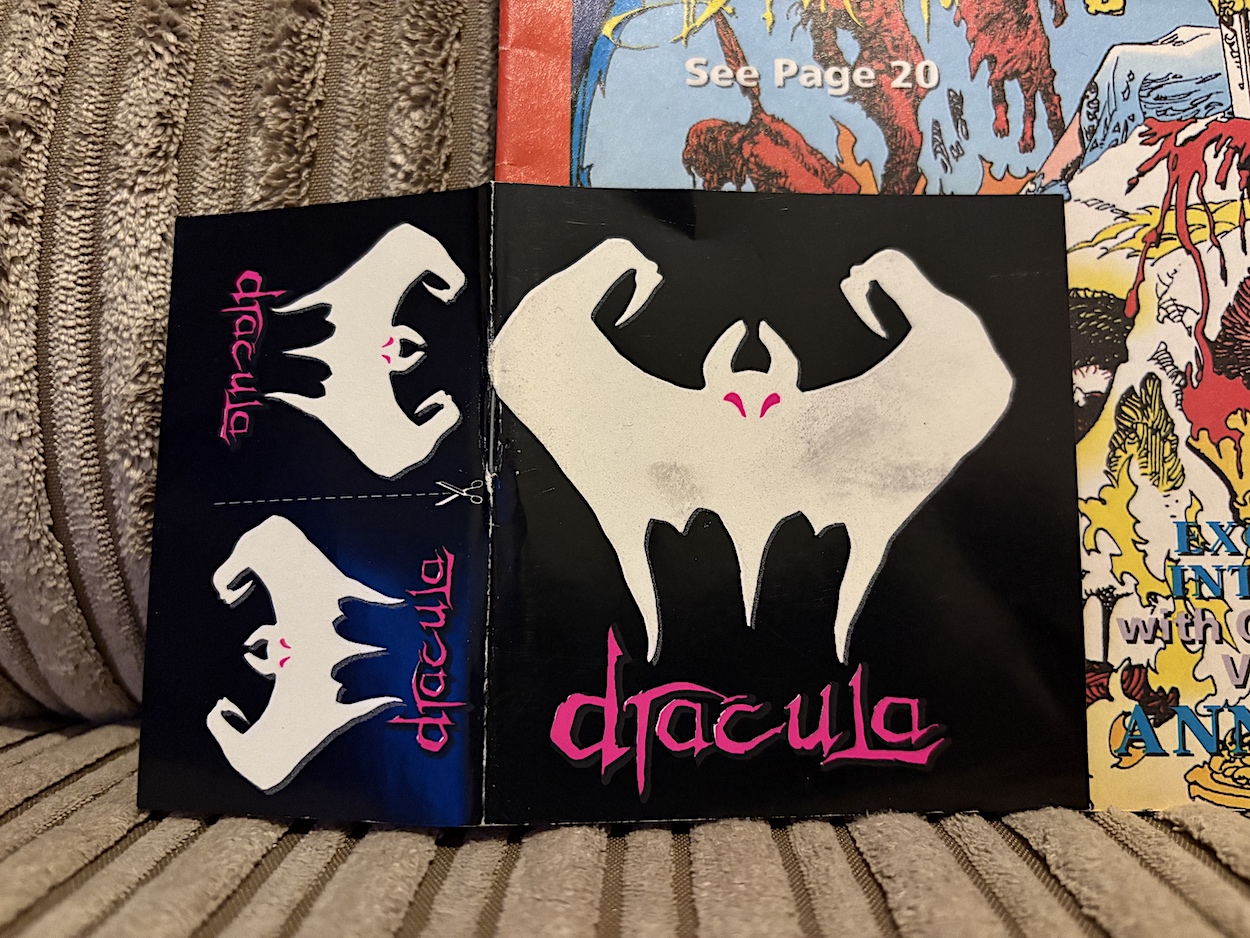
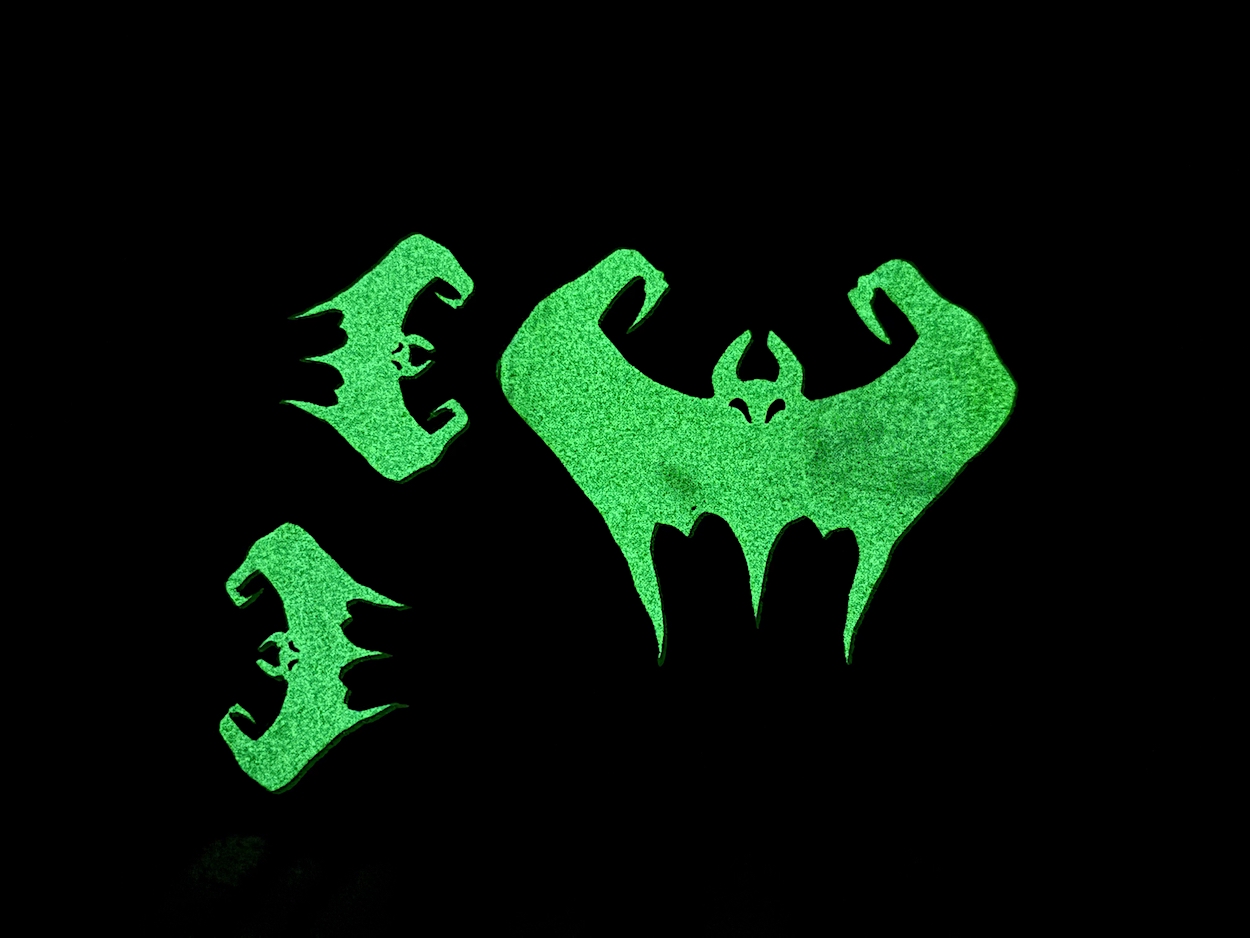
Speaking of sticking, there’s a free glow-in-the-dark sticker (which I admit looks a lot better through my iPhone’s lens than in person). It’s a somewhat child-friendly gift for a comic with a strip containing bloody beheadings. In fact, it’s rather strange the comic no longer comes with the “Not suitable for younger readers” warning. Although I doubt the sticker would’ve convinced many parents to buy this for their child!

Movie adaptation writer Roy Thomas is scriptwriter for what is basically another adaptation, this time of history books. A three-issue mini-series marketed in the States as “The True Story” of Dracula, in reality very little of the real Vlad the Impaler made it into the Count character in Bram Stoker’s book, such was Stoker’s limited knowledge of Vlad or the time in which he lived. This issue contains 15 pages of the first chapter but there’s so much crammed in I was surprised after reading it that it wasn’t more.

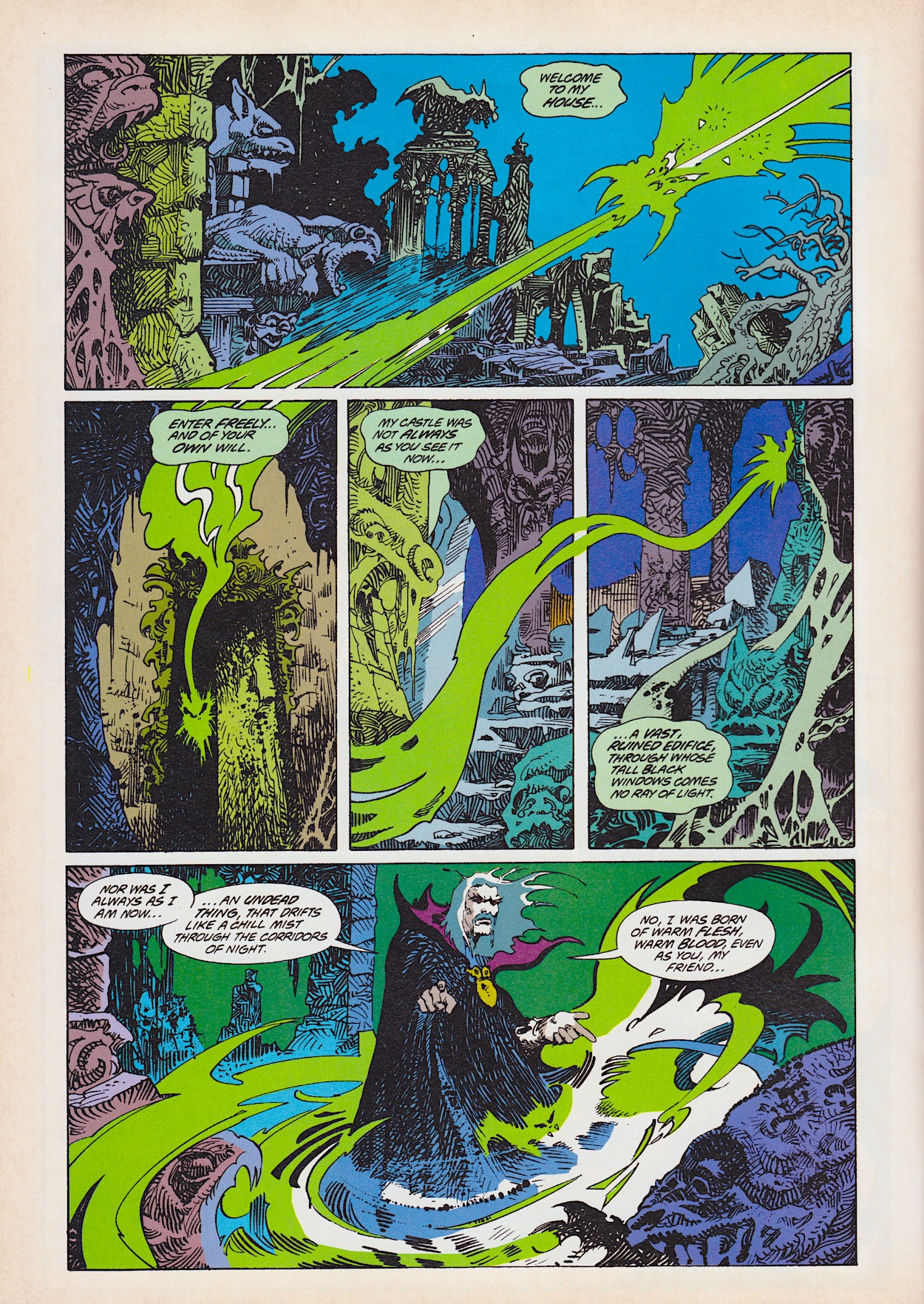
Introducing himself as Dracula complete with fangs, a crumbling castle and assorted monsters and supernatural entities, he welcomes us to his tale by gliding in on a green mist before presenting “the year the cross-wielders call 1431”. His father, Vlad Dracul is a protector of Christendom, was named after the Order of the Dragon and is the military governor of Transylvania and Prince of Wallachia. He’s actually just a strongman for sultan Muran, receiving fortune, land and protection in return for loyalty and the people’s taxes. We see a happy family life with young Vlad, Mircea (oldest brother) and Radu (the youngest). However, it’s not long until we see their true nature.

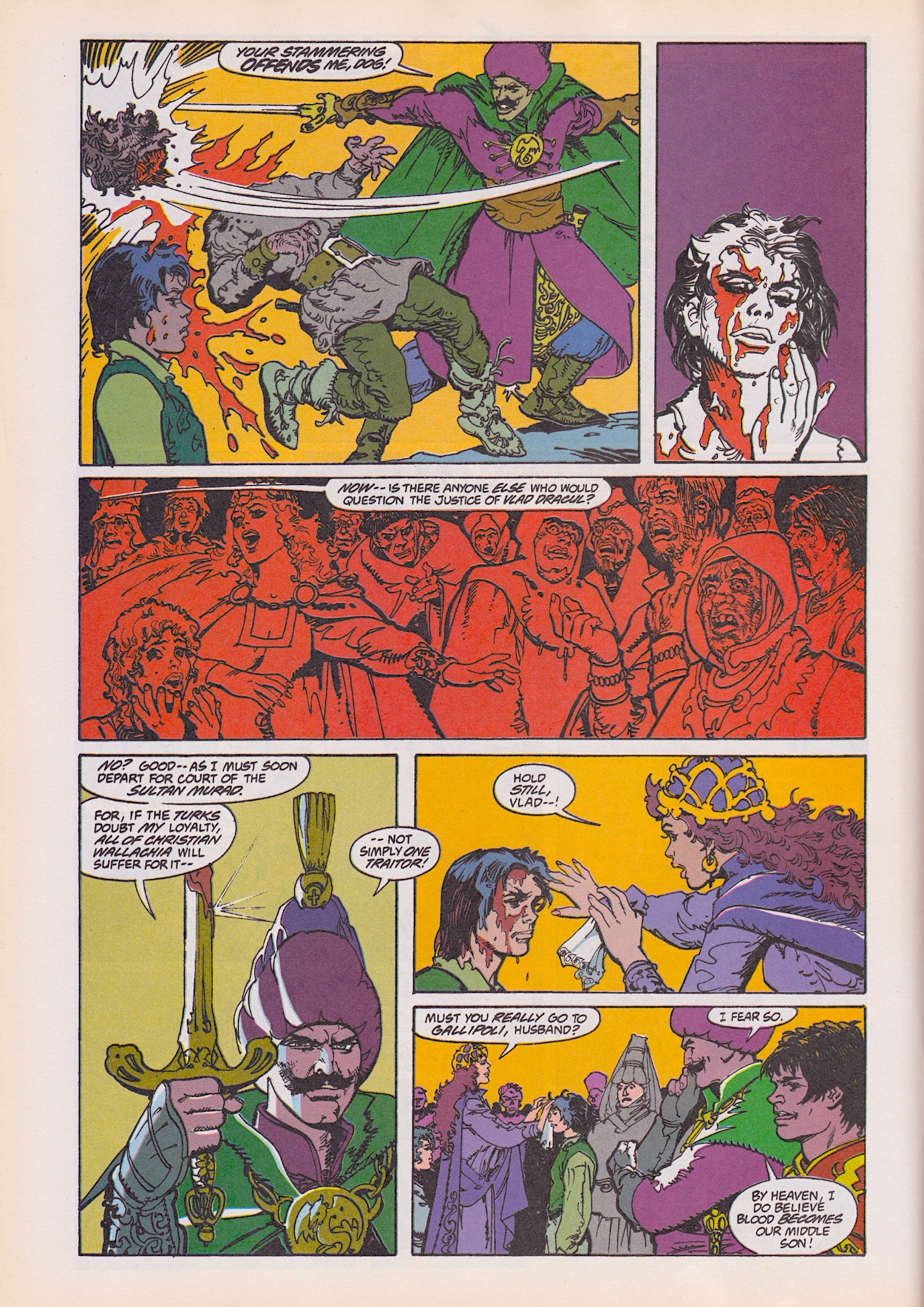
Young Vlad snitches on someone questioning why their family name means both “dragon” and “demon” in the country’s native tongue. Taking pride in showing his boys how vicious he can be to anyone who questions him, his father has learned from his overlords who impaled their enemies’ heads on spikes (something Vlad III would later become known for). His father takes them to Gallipoli to learn about how their nations relate to one another, but it’s upon this trip that a major event in Vlad’s life takes place.

Muran has discovered elder Vlad has been playing east and west against each other and reaping the benefits. The Turks had invaded the sultan’s lands of Transylvania and Wallachia and Vlad had stood back and let them, thinking he could befriend whoever the ultimate victors would be. In revenge for this disloyalty his two youngest sons are taken in as “guests”, but they’ll be treated as hostages if their father is ever disloyal again.

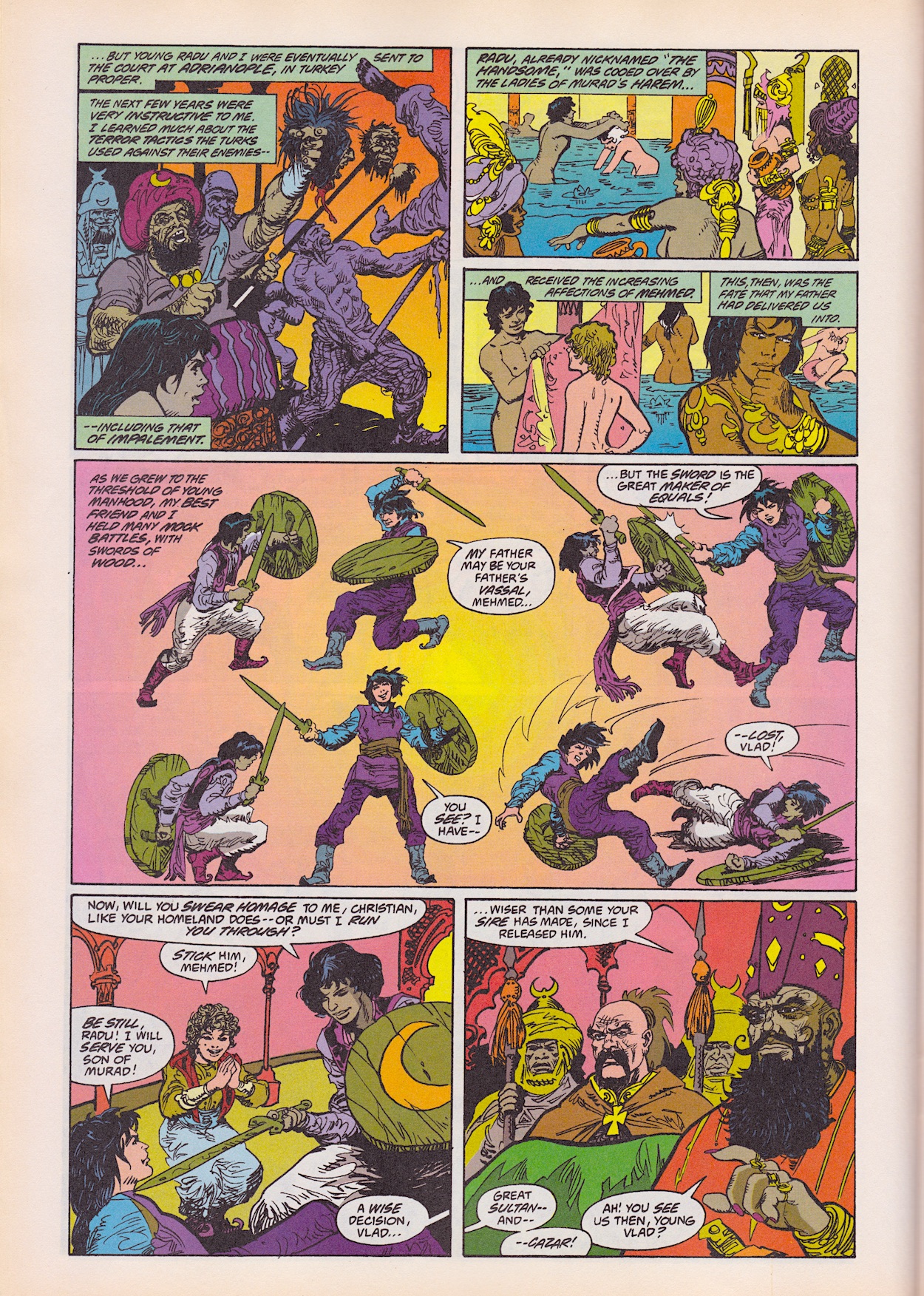
Young Vlad trains to be just as vicious a warrior and becomes good friends with the sultan’s son Mehmed, learning how to rule through fear while his younger brother becomes loved by the harem! During the next year their father proves his disloyalty yet again and in an uprising he’s killed, whilst his eldest son and heir to his throne Mircea is buried alive. Muran then passes down their belongings to young Vlad who he sees as a more loyal successor.

I’ll admit it’s difficult to review this. Esteban Moroto’s (Conan, Red Sonja, Cadillacs and Dinosaurs) art, Paul Mounts’ (Fantastic Four, Ultimates, Reborn) colours and returning letterer John Costanza evoke a lovely classical feel despite this being a new comic at the time, and I find it fascinating because I never knew any of the story of Vlad the Impaler beyond the few pieces in Dracula which were somewhat accurate. However, I’m not sure if it works as a comic strip.

As a history lesson it’s very entertaining and I was drawn in by the story of this man in his youth. But, as a comic strip it reads like an adaptation of a text book, with chunks of the text turned into speech for the players. So yes, it’s a strange one. The original story it’s based on is interesting, and I look forward to comparing it to Dracula, but it’s presented in such a stilted way in its script.

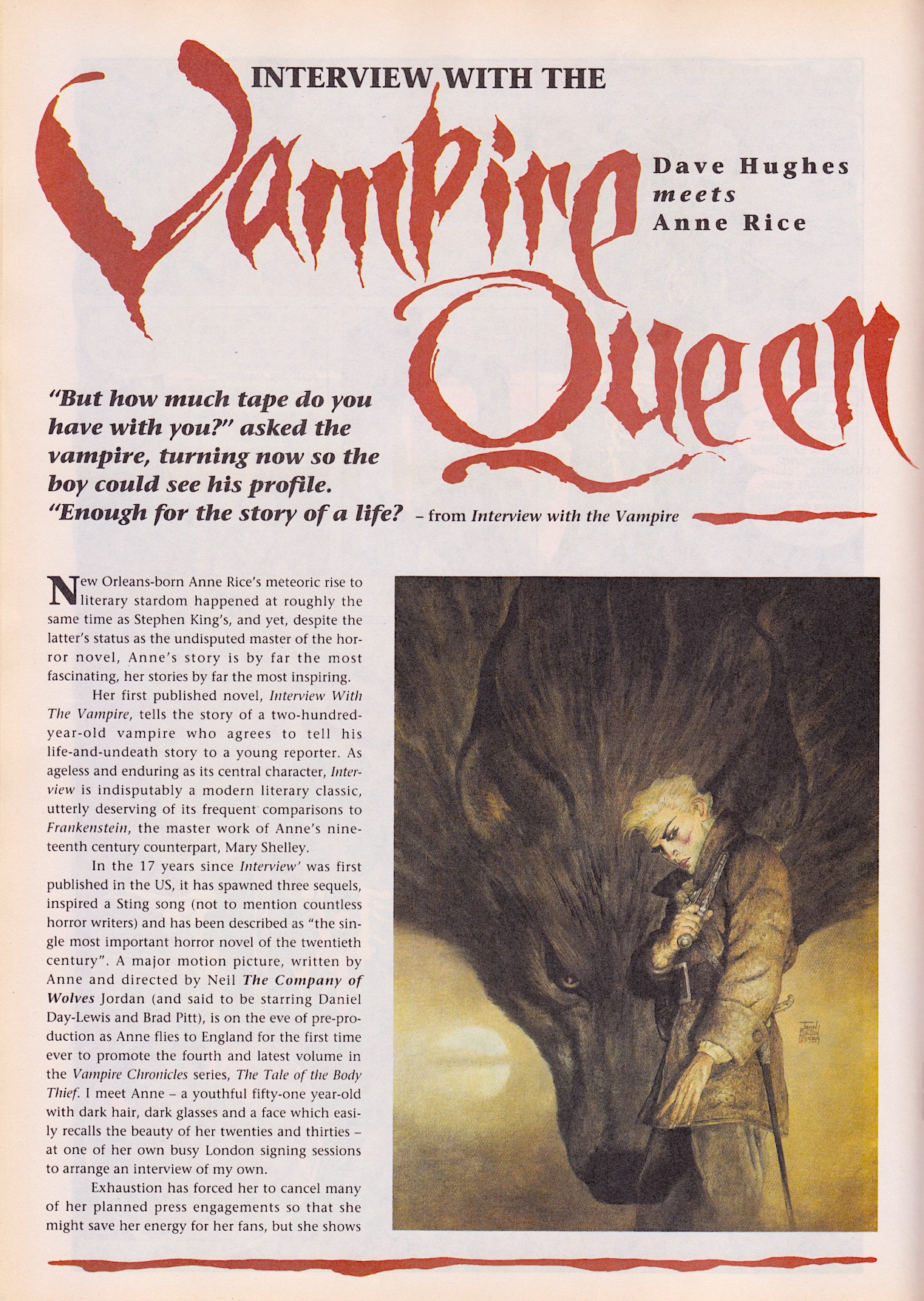
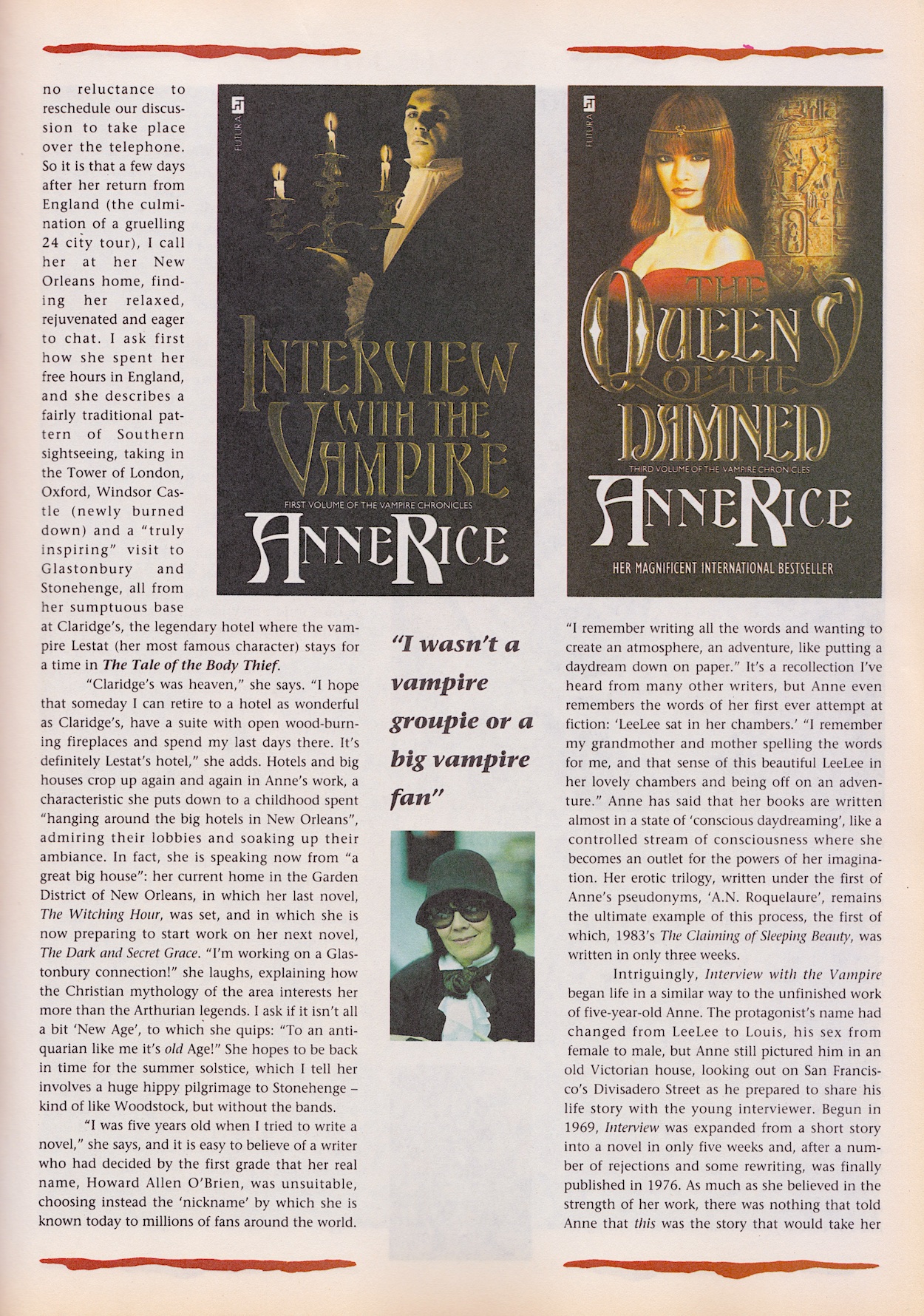
In the middle of the comic is a multi-page, in-depth interview with Anne Rice, writer of the Interview with the Vampire series amongst others. For once it’s not just quotes lifted from various other sources, Dave Hughes actually met the lady herself during what sounds like an exhausting promotional tour. I’ll admit it’s a novel and movie I know nothing about but from reading this and doing a bit of research I have to say I’m intrigued. After last month’s feature on the BBC’s Dracula mini-series this comic is filling up my Hallowe’en viewing rightly.

I’d no idea the novel was released the year before I was born. I’d always assumed it was relatively new when the film was produced. The movie was still in preproduction during this interview and there’s no mention of Tom Cruise. In fact, I was disappointed to read online of Anne’s negative reaction to his casting. However, once she saw the movie she said he “is Lestat” and admitted she was completely wrong (even calling him up to apologise) so now I’m even more eager to watch his performance.

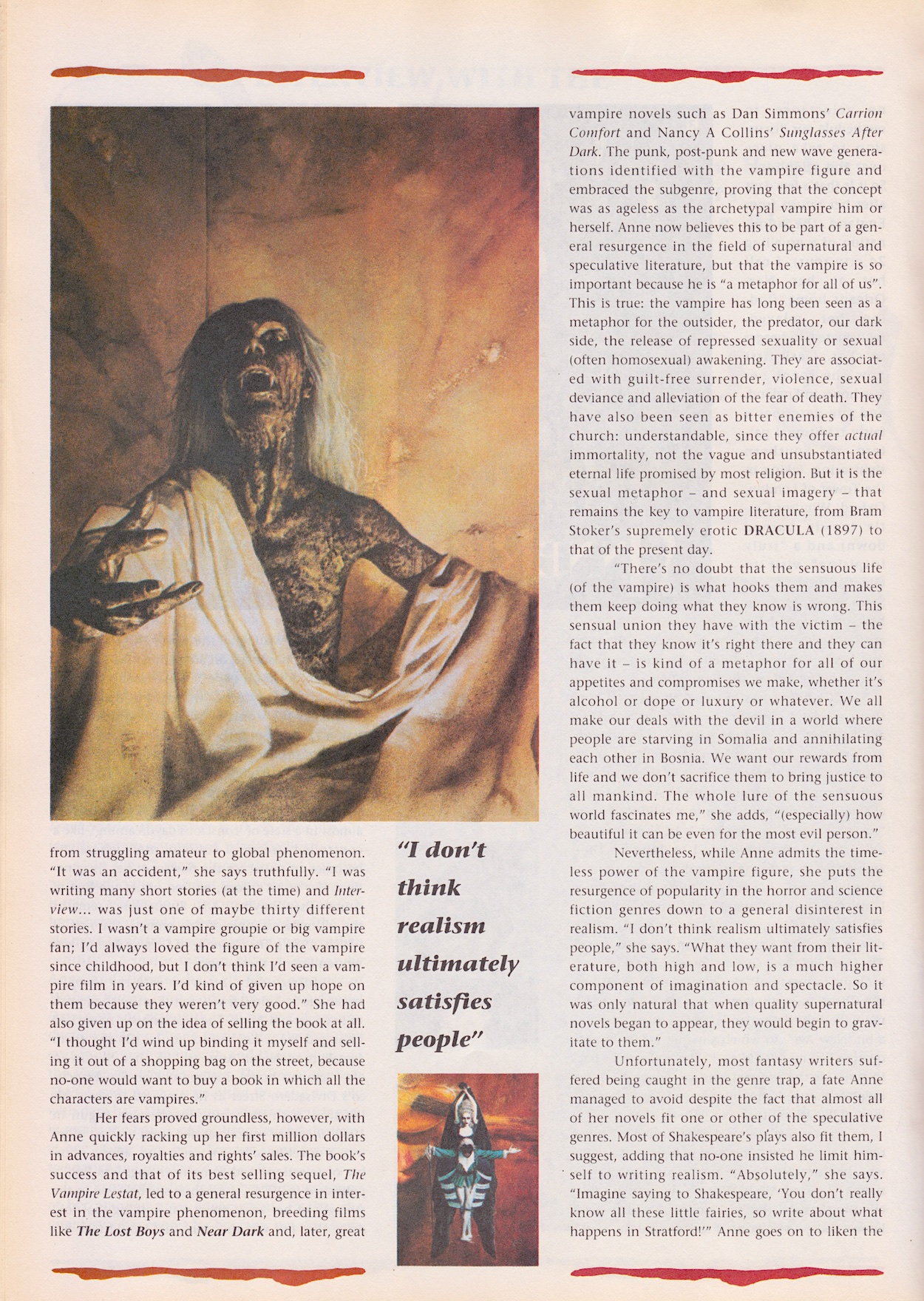
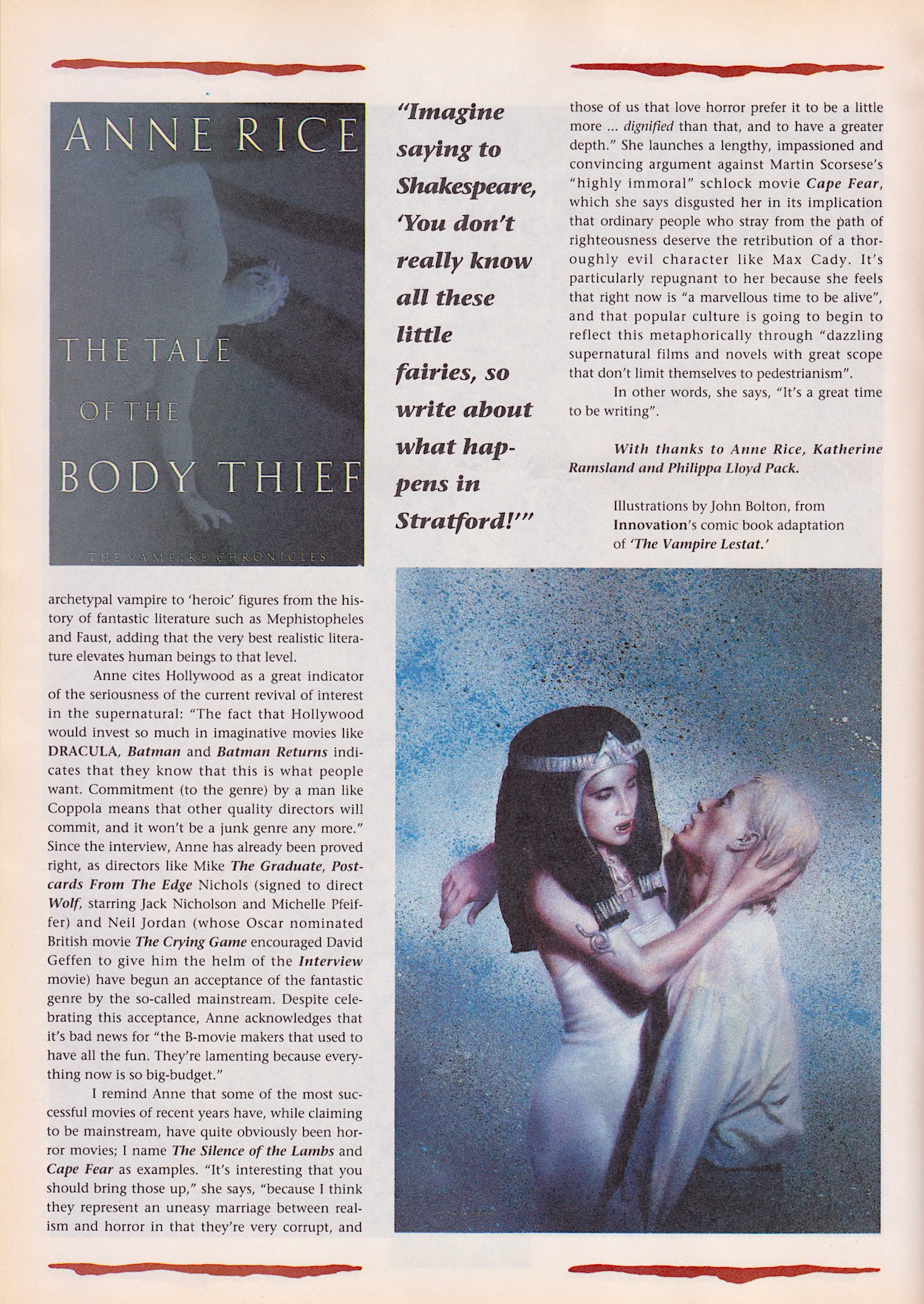
“We want our rewards from life and we don’t sacrifice them to bring justice to all mankind. The whole lure of the sensuous world fascinates me.”

Anne Rice

I’m always fascinated to learn of a writer’s process, whether I’ve read their work or not, and this feature does not disappoint. It covers the original novel’s creation and how long it took to go from initial idea to finished story. There’s also an interesting dissection of the appeal of vampire stories, although this would appear to be flipped on its head a few years later when Buffy became such a huge hit.

The Bram Stoker’s Dracula movie is cited as proof that tastes were changing, although I think Anne’s description of Silence of the Lambs seems a bit overwrought. It’s in the creation of her original novel, the changes made to the character, her belief it wouldn’t work but she kept going, as well as the ultimate reception that combine to be really interesting. It also doesn’t hurt seeing John Bolton’s gorgeous illustrations from the comic book adaptation of her second novel.

(I did ask Siri to play the Sting song mentioned here and I only made it halfway through it.)

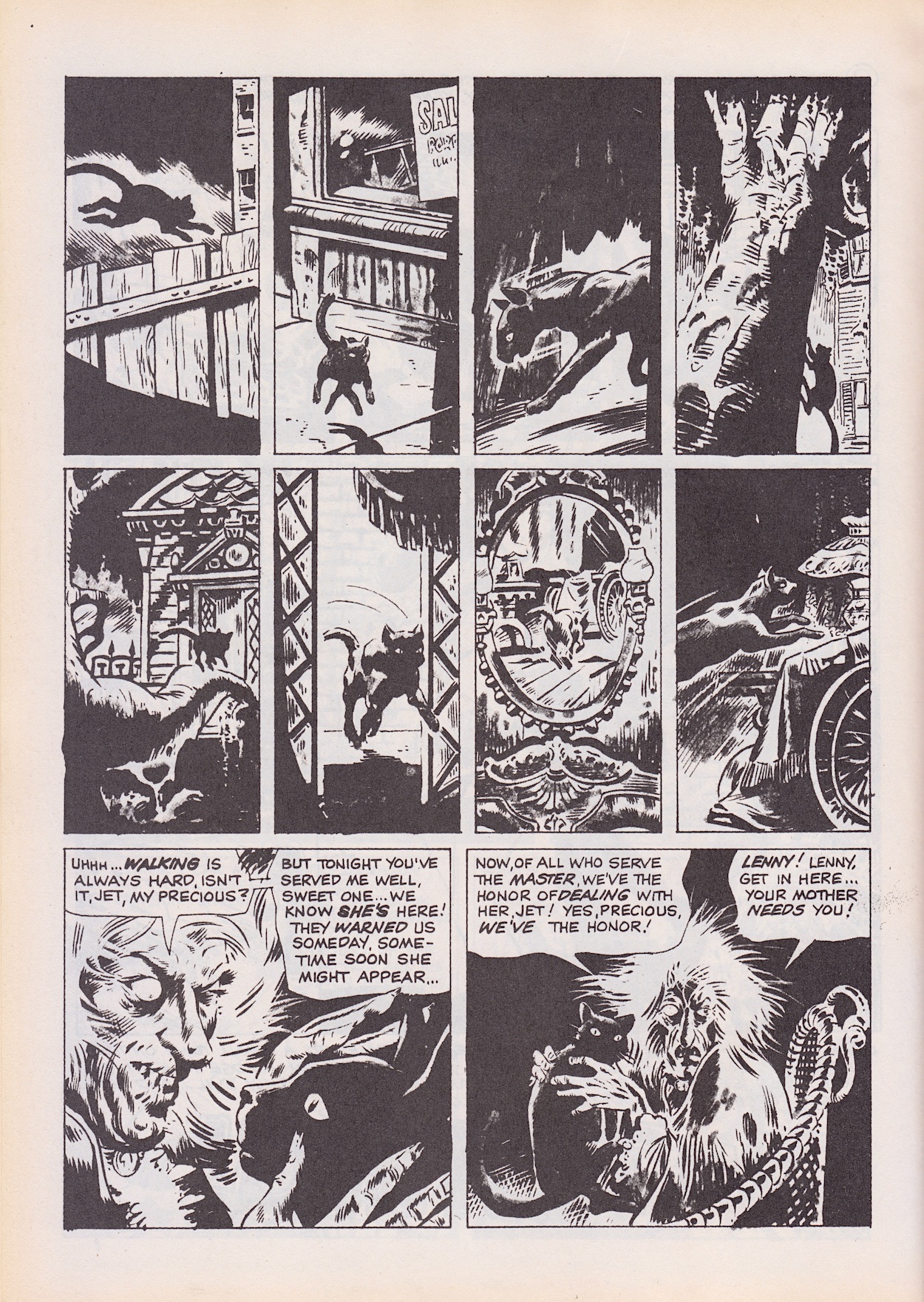
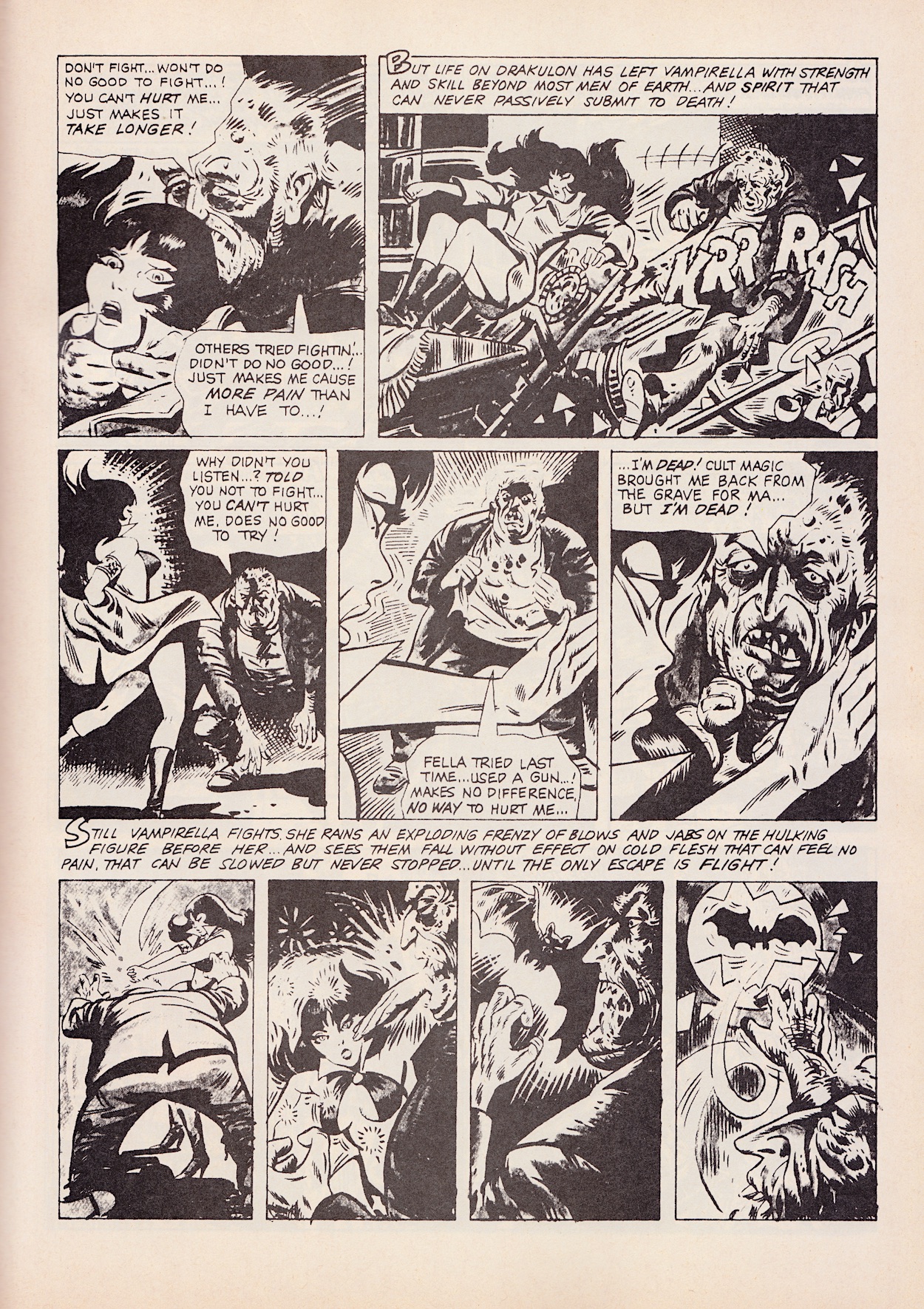
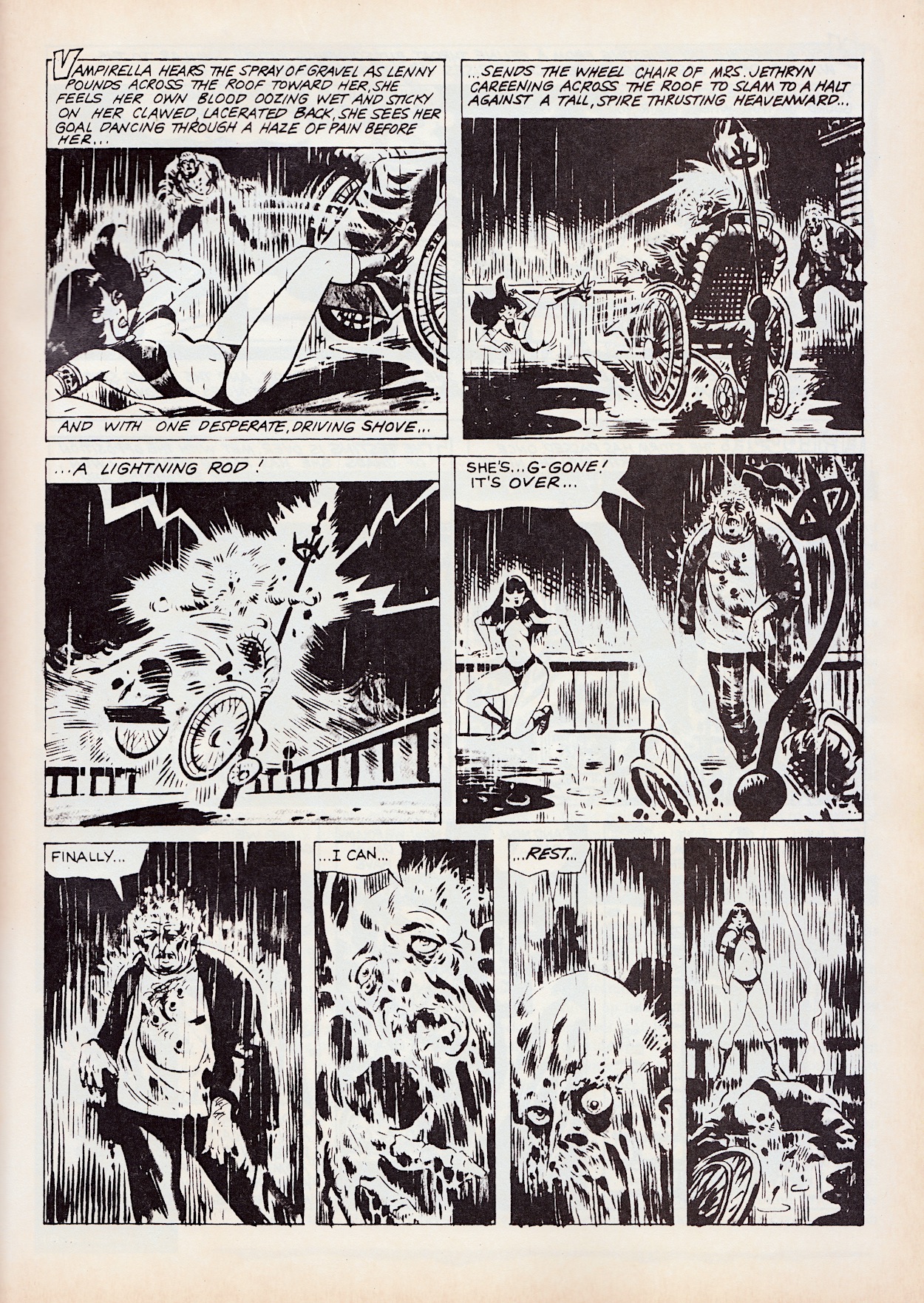
There’s no one-off strip like last issue’s Werewolf which I’d have preferred over Vampirella, but fortunately her tale is a vast improvement over her previous entry. It’s a complete 12-page story by Archie Goodwin and drawn by Tom Sutton, in which she is tracked down by a member of the chaos cult. This is done via a cat, so I was immediately enjoying this more than last time. The two villainous characters are a frail elderly lady and her unwilling but ultimately murderous son with echoes of Psycho, released nine years earlier. (Son Lenny even spies on Vampirella through a hole in a wall behind a painting.)

Their backstory boils down to the cat being mind-controlled by Mrs Jethryn because she’s bound to the library building by a curse that allowed her son to be resurrected. After a battle with Vampirella, Lenny’s happy to be killed and finally freed. I can happily report the cat gets a happy ending too. Released from her control it runs off home with the woman’s soul trapped inside, unable to influence the cat or even make her presence known. I’ve no problem with much older strips appearing (for example the classic Machine Man in early issues of Marvel UK’s The Transformers was a great fit) and this small story is fun to read. However, we see Vampirella stealing a raincoat to protect her from the weather… so why can’t she steal some actual clothes?!

Dave returns for his usual Bloodlines news pages and you may wonder why you see Space:1999 here. It’s because of the guest stars who might be of particular interest to readers. I’ll also admit the two-part episode of Star Trek: The Next Generation sounds intriguing, and that’s coming from someone who’s never seen a full episode. I do find it strange Children of the Night’s narration is criticised when you consider how Bram Stoker wrote Dracula.

On a more positive note I was thrilled to see the interview with Anne was just the first of a series with female authors, so that’s something I’m really looking forward to next month. The issue ends with the first letters page, Fang Mail, which is a great name and there’s an advert for Manga Mania which had a whopping 88 more pages yet only cost 45p more. You’ll see examples of these Dark Horse International adverts in a special collection at a later date on the blog.

The comic had proved to be a success while it was adapting the movie with good sales and a good reception from readers. However, now knowing it would be cancelled just a few issues later it’s clear not everyone was a fan of the new contents. Still, I look forward to finding out more about Transylvanian history when #7 hits the blog on Sunday 15th June 2025.

iSSUE FiVE < > iSSUE SEVEN

DRACULA MENU