Tag Archives: Dudley D. Watkins

BEANO #272: A BiRTHDAY BALL

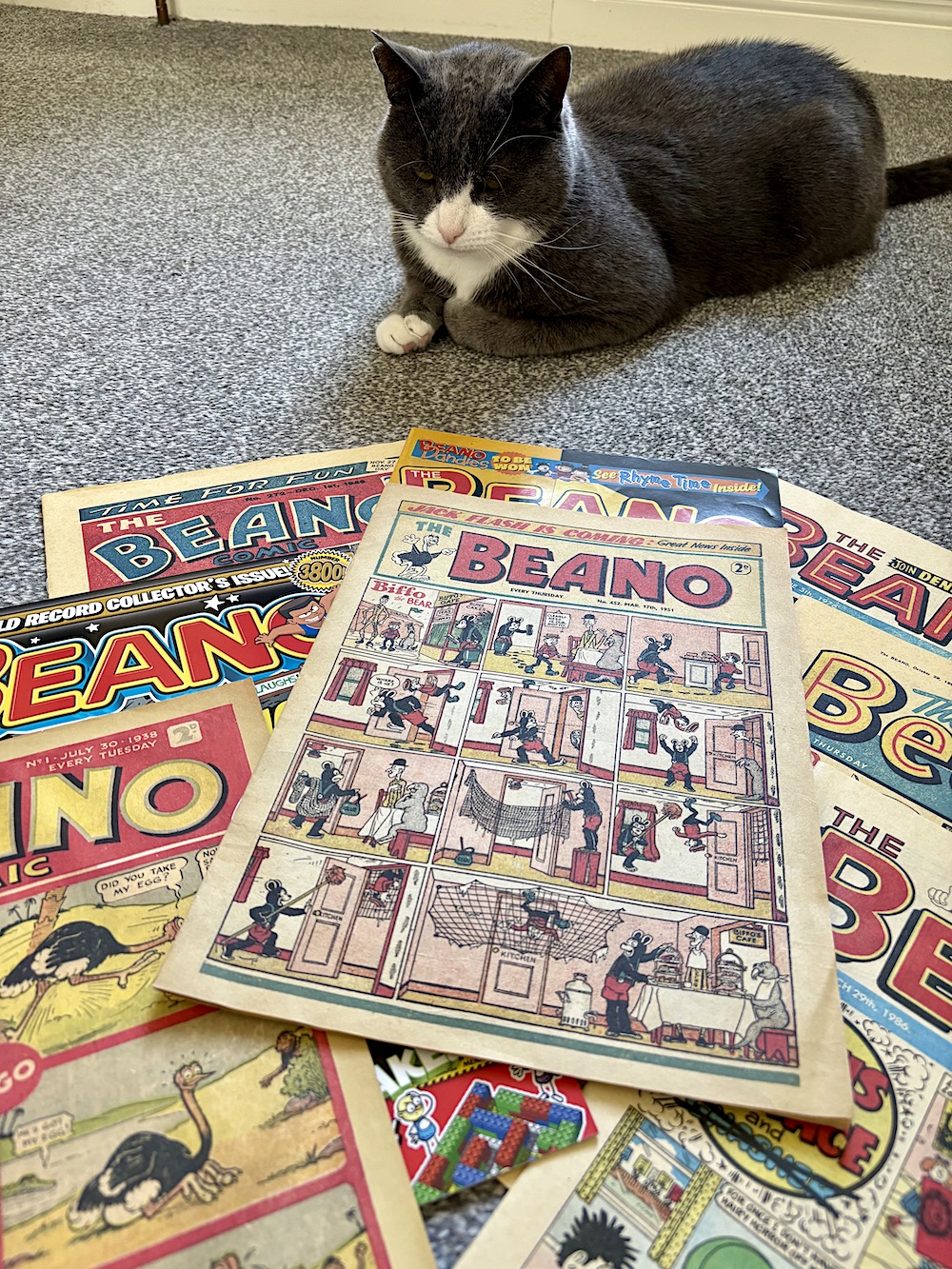
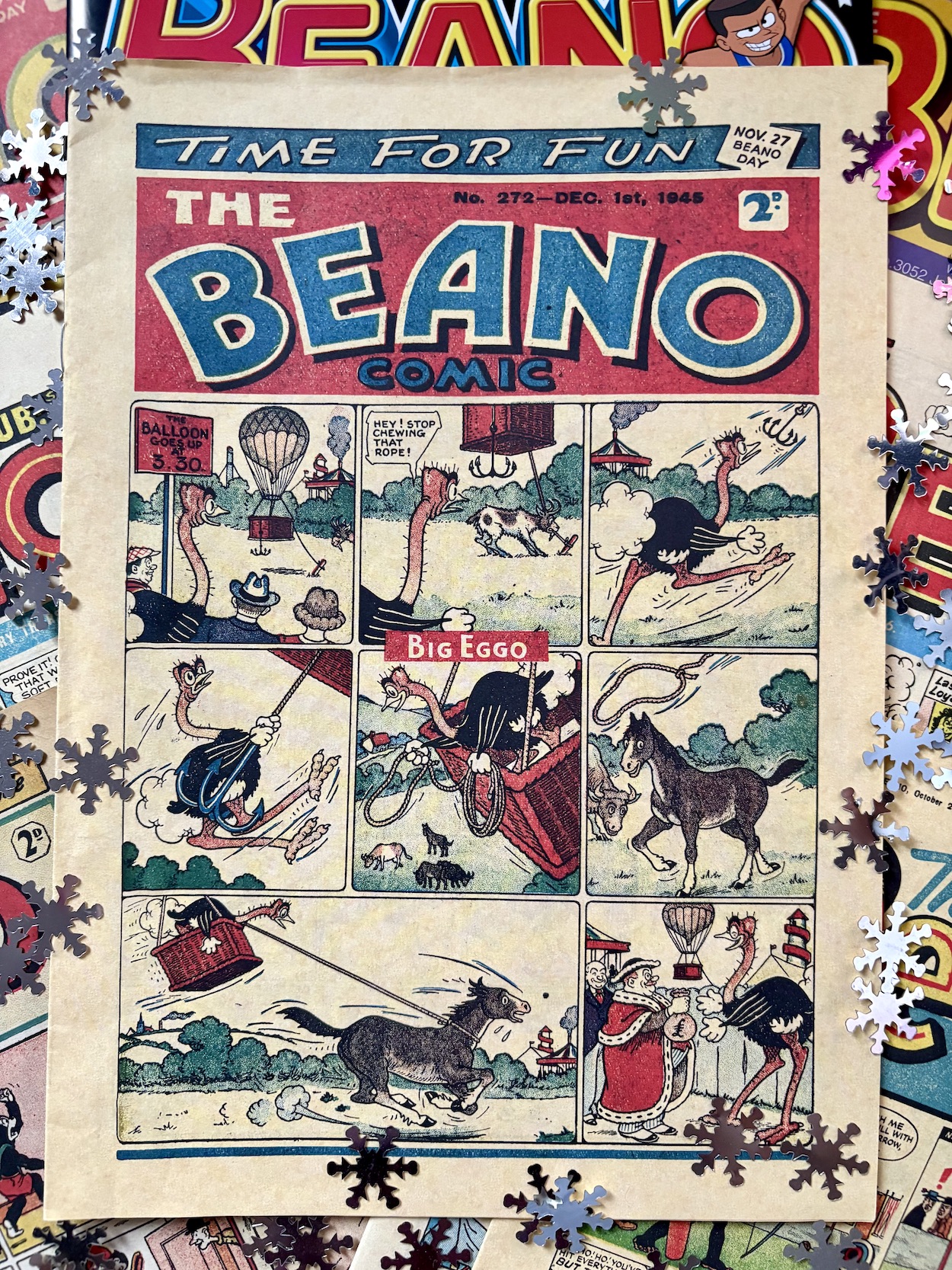
Welcome back to our irregular real time read through of the eight celebratory editions of Beano from DC Thomson’s 80th anniversary box set. Next up is the first issue to have sold one million copies! That’s an incredible achievement on its own, never mind the fact it was back in 1945, not long after World War II and at a time when paper shortages were still in effect. As such, Reg Carter’s Big Eggo fronted a comic of only 12 pages, the smallest it would ever be.

The Beano was also fortnightly at the time, released on alternative weeks to The Dandy so kids still had the opportunity to read some desperately needed funnies every week. I’ve always found this period in the comic’s history fascinating ever since I found out about it in the 50th anniversary Dandy/Beano Fifty Golden Years book I received for Christmas 1987, which you’ll see an overview of this year on Boxing Day on the blog. For now though, let’s open up #272 of The Beano, which celebrates its own 80th anniversary today.

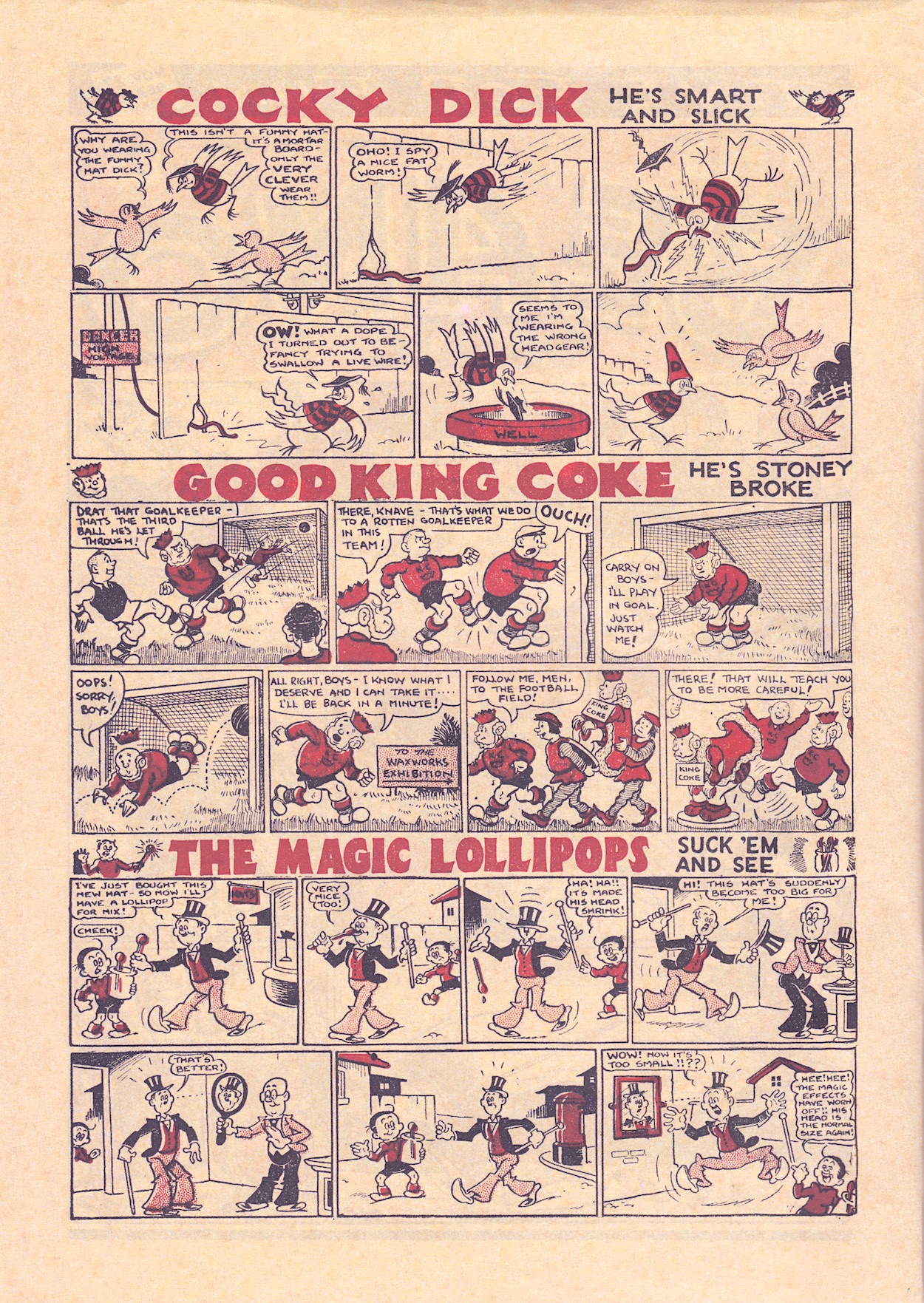
What a selection of names and taglines! Talk about being “of their time”. Researching Cocky Dick meant very careful internet searches but I did eventually find out it was originally drawn by Allan Morley and ran in the comic from 1939 to 1947. There’s an air of Dennis about the strip thanks to the cheeky nature of the main character and the colour scheme of his feathers. Nice of the local council to label their water wells too, otherwise how’d we know what it was.

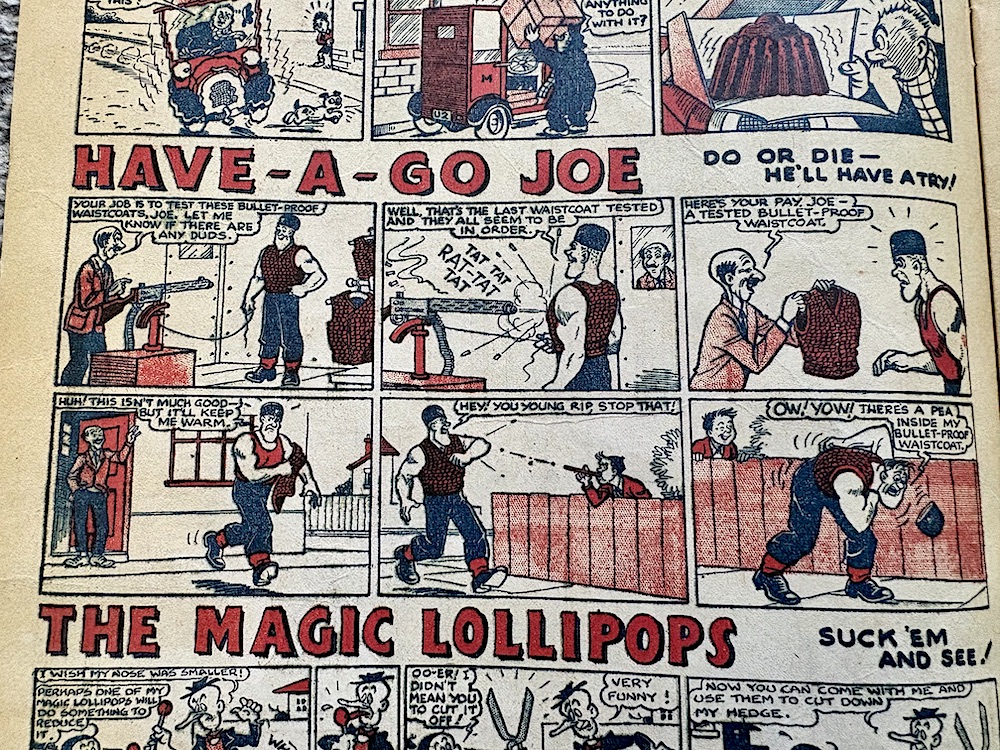
After an absence of three years Good King Coke (surely a 90s movie drug lord name) had returned for another year-long run, drawn by Eric Roberts, and The Magic Lollipops (“Suck ‘em and see”?!) was also drawn by Allen and ran for ten years between 1941 and 1951, with a one year gap in the middle. I don’t think any other page in either #1 or this edition has been such a clear window into a completely different time.

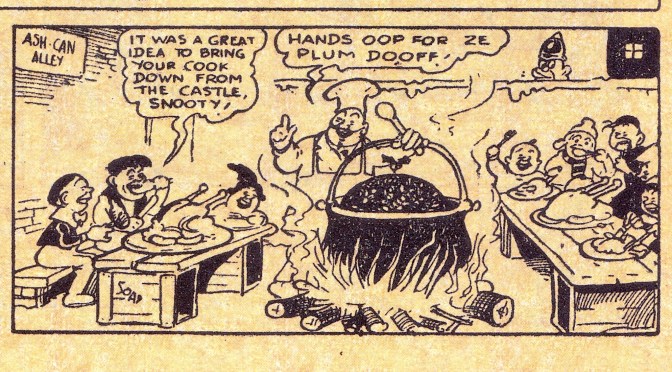
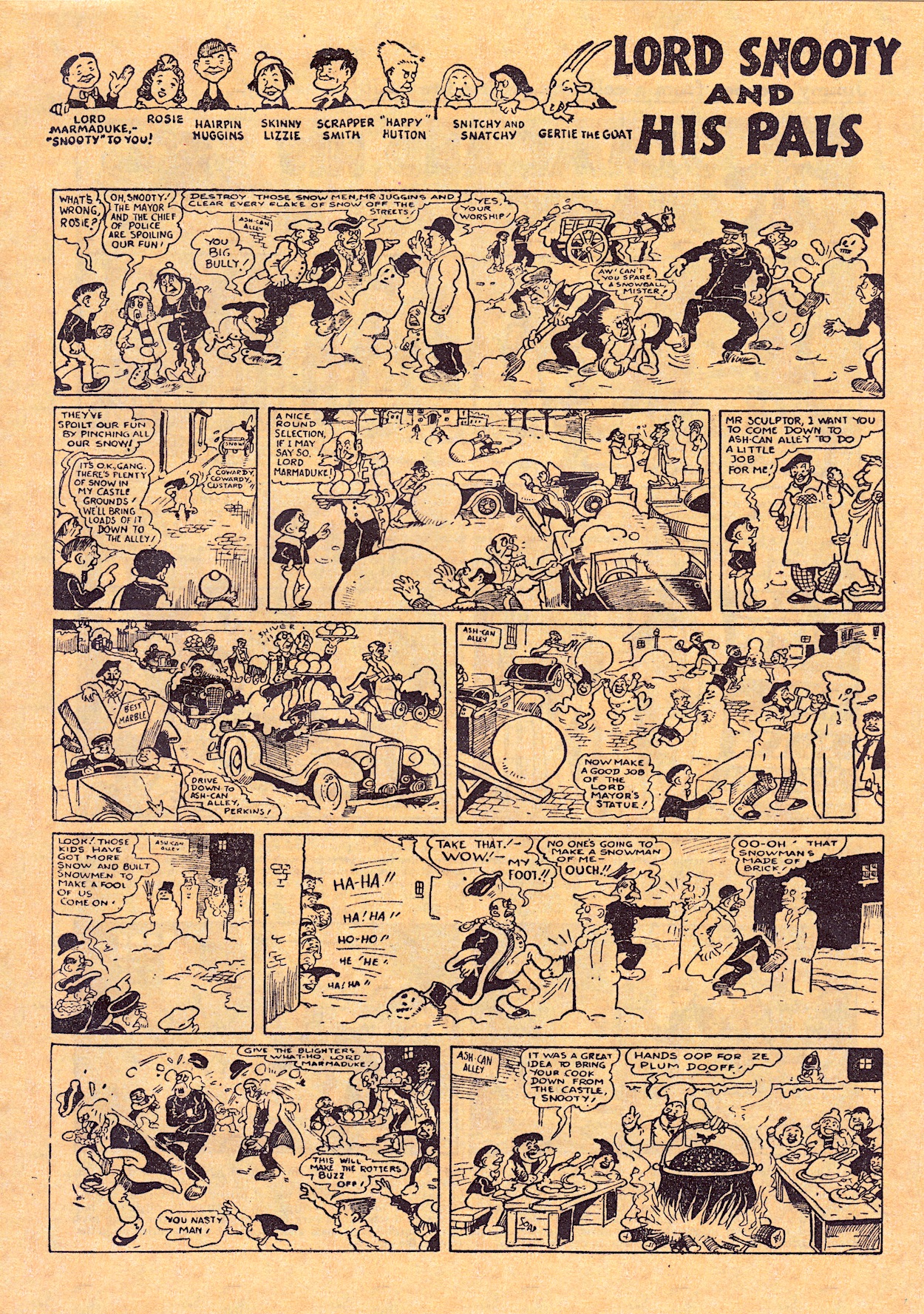
A Christmas strip! Perfect. With The Beano being fortnightly we were only one issue away from the big festive celebrations and Lord Snooty was getting in on the action already. As the season has already kicked off on the OiNK Blog this year I couldn’t have been happier when I saw this, drawn by Dudley D. Watkins. Snooty’s strip ran from 1938 all the way through to 1991, with a few breaks in the middle.

Upon his return after his first break a lot of his original friends above would be replaced with characters from other, discontinued Beano strips and over the course of his lengthy run he was drawn by a handful of other artists, most notably Leo Baxendale and Robert Nixon. Lord Snooty was the only character from #1 I knew as a child in the 80s (through sneaking a peek at my friends’ issues), by that time he was the last surviving character of that first issue.

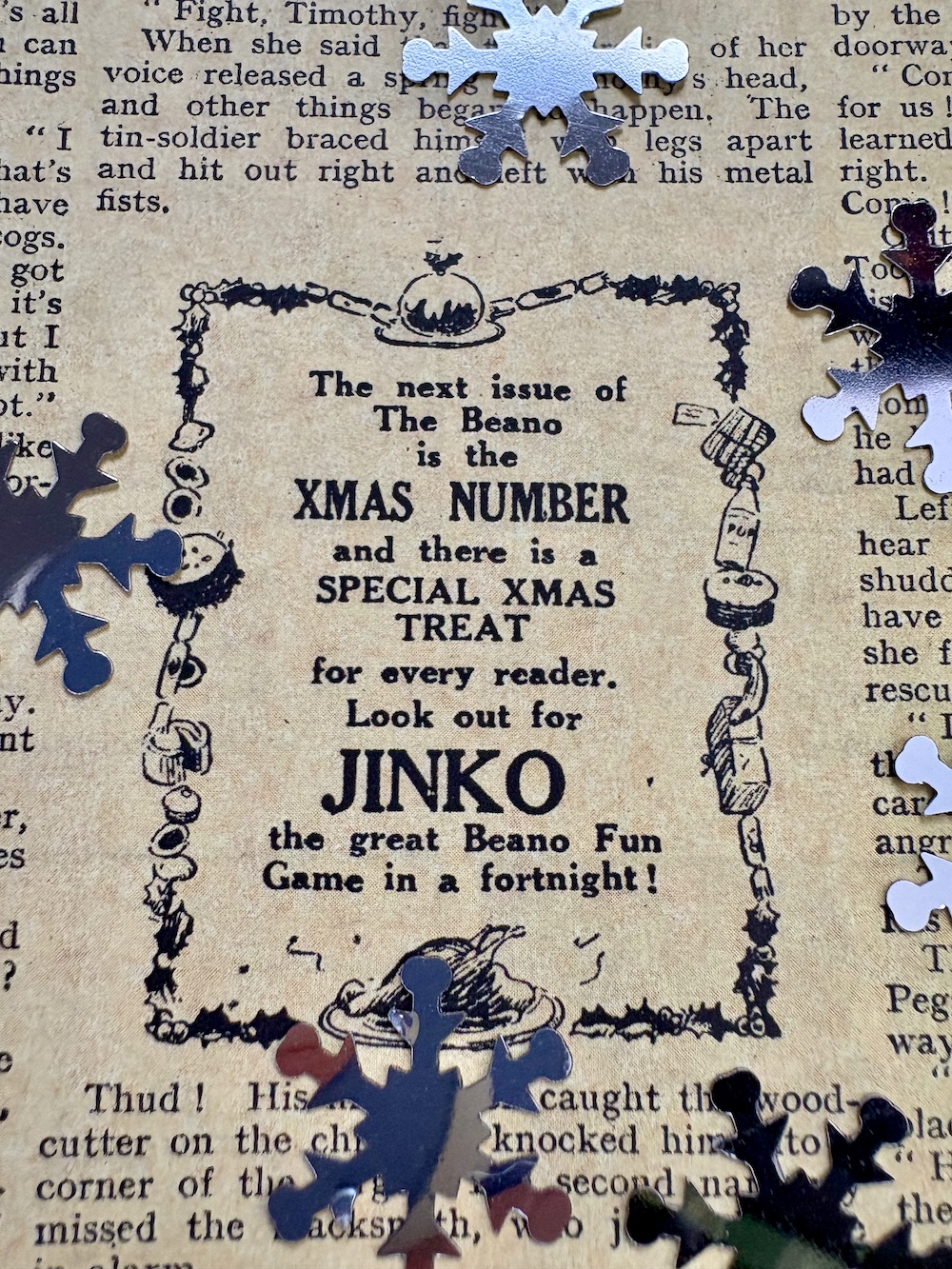
Along the top of a Jimmy and his Magic Patch story readers are told to turn to a certain page to find out all the details of the special Christmas issue, but it turns out it’s only this small promo in the middle of a Tick Tock Timothy prose story. The main selling point of the festive issue would be a game called ‘Jinko’, a basic dice board game printed on the back cover. Over the page from this promo we find Tom Thumb is still in the comic, albeit as a picture-panel story instead of the prose of #1.

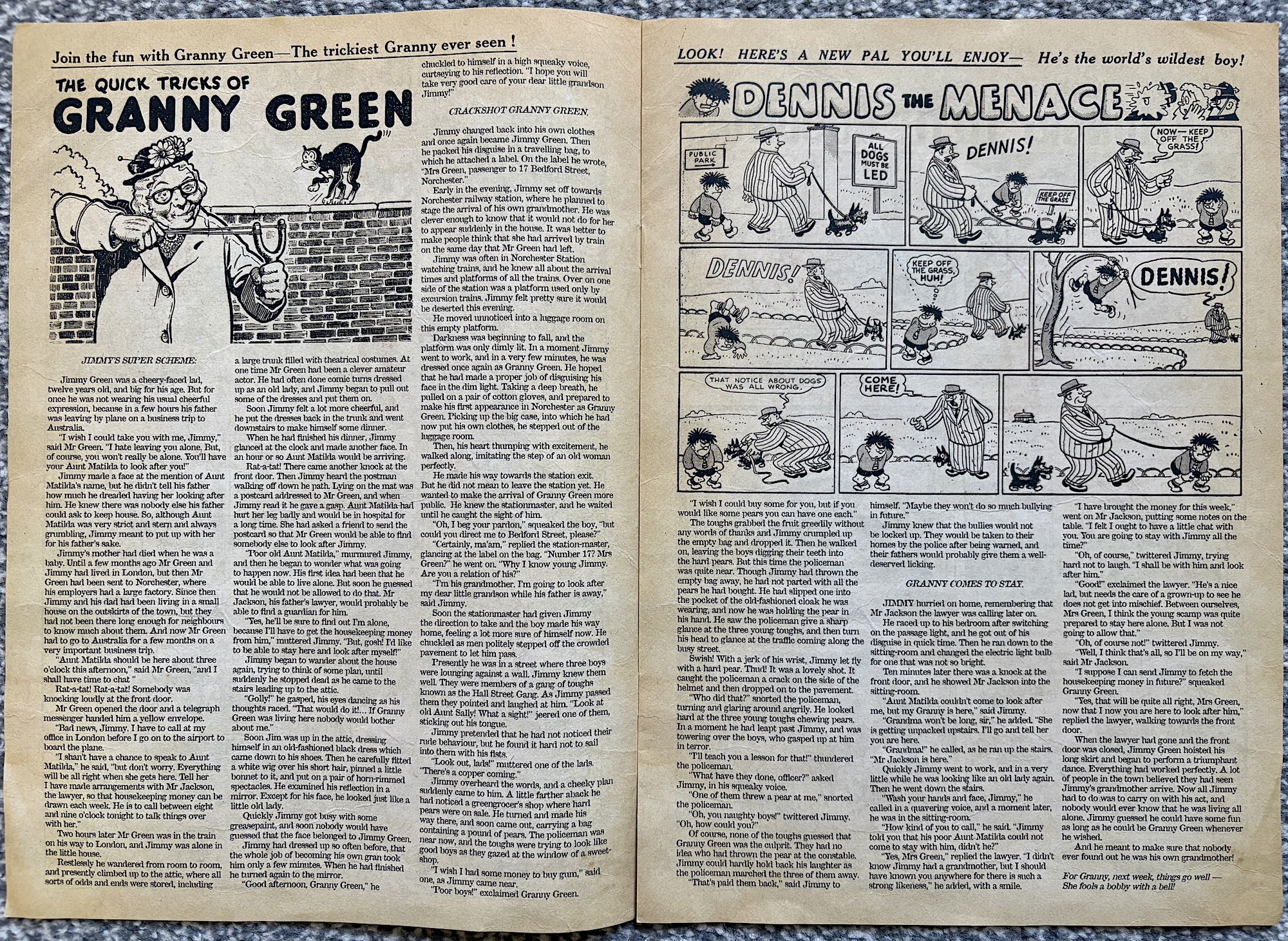
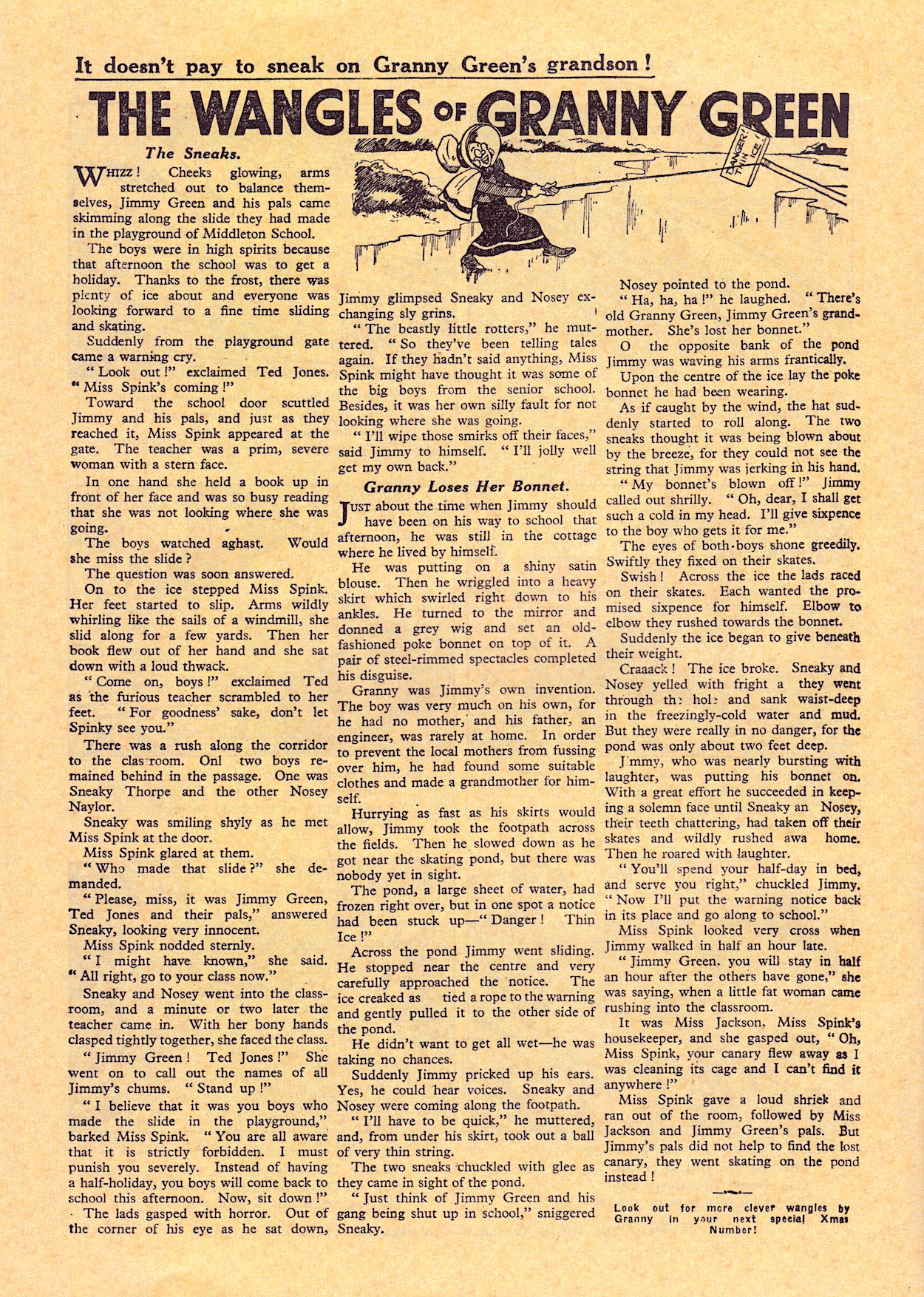
Another character who was still here but whose format hadn’t changed is one of my favourites from the premiere issue, Charles Gordon’s Granny Green. This was actually a reprint from the original run in the first year-and-a-bit of the comic but obviously I’ve never read it. Again, I really enjoyed it. It includes a quick recap of the premise for any new readers and I originally thought Jimmy’s plan in this particular story sounded awfully cruel… until we find out the water is only a couple of feet deep. Hilariously, the names of the friends mentioned still sound like the kind of creations Bob Mortimer comes up with on Would I Lie To You!

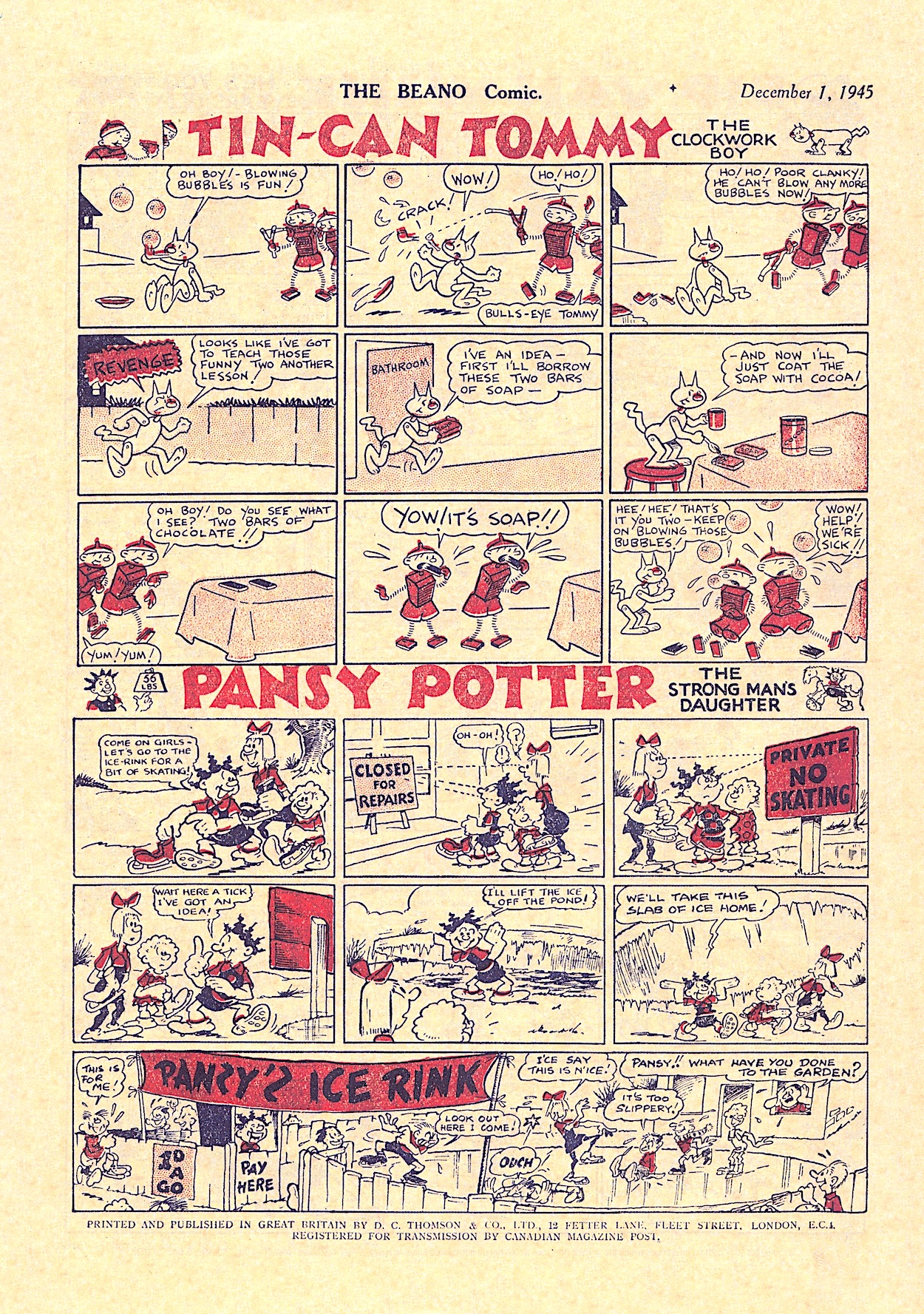
On to the back page and two well known names, beginning with Tin-Can Tommy, the clockwork ‘son’ of Professor Lee and Mrs Lee. He first appeared on the back page of the first issue when he was created after the death of their son because they were struggling with the loss. Originally drawn by the Italian Dinelli brothers who disappeared in France during the war, he was subsequently drawn by Sam Fair, Charles Gordon and George Drysdale but my usual expert resources aren’t aware of who drew this episode.

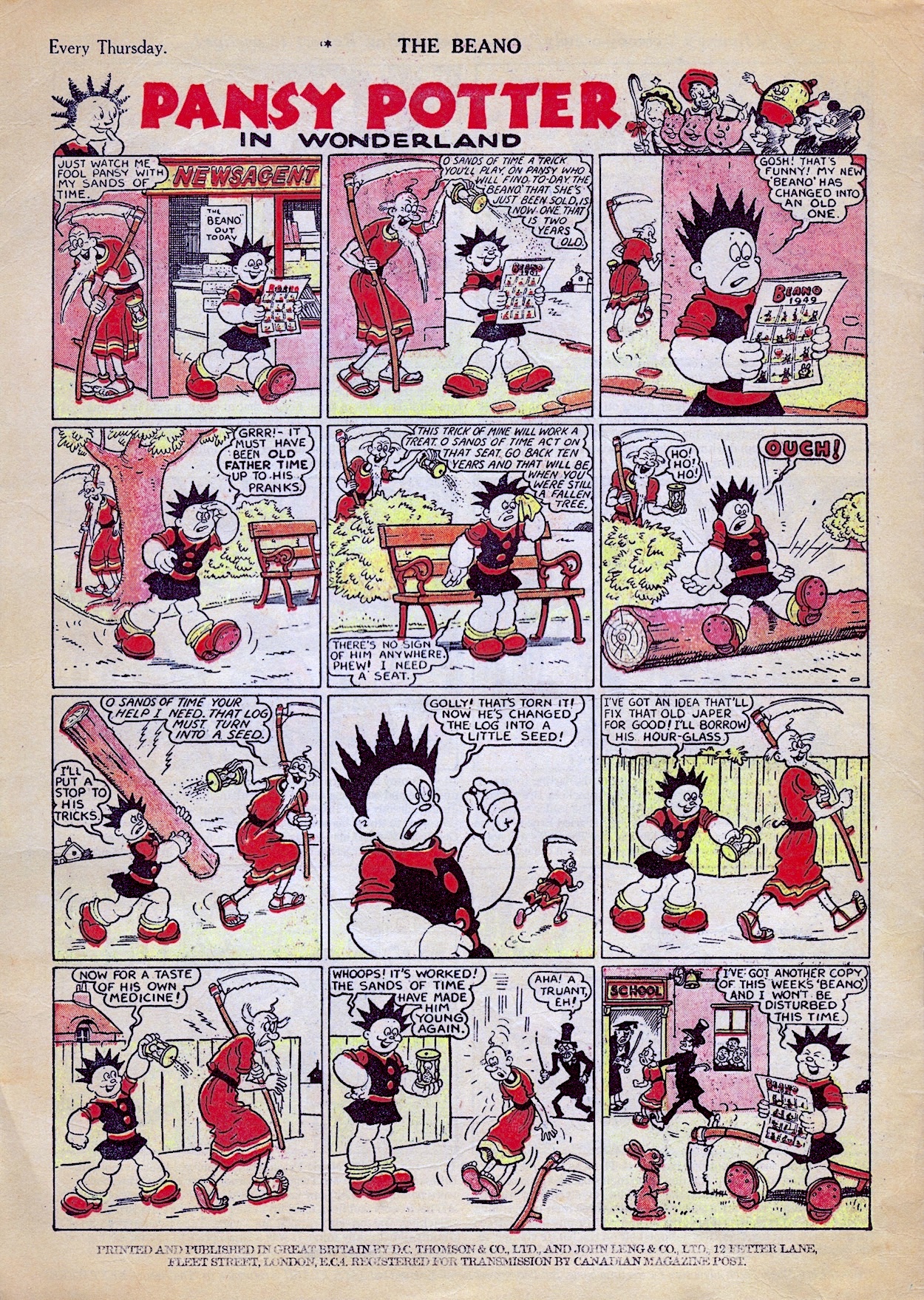
Tommy would reappear in #3185 in 2003 for the comic’s 60th anniversary. Another character who may also be known by later readers of Beano is Pansy Potter. Pansy was a Beano star between 1938 and 1958 (with breaks), then she moved to Sparky in the 60s and 70s before returning to her original home between 1989 and 1993. That’s the time period in which I remember her from, which she followed up with small runs now-and-again (her last appearance was in #3954) and a couple of annual cameos in 2012 and 2018.

Created by Hugh McNeill and drawn by this stage by Tommy’s Sam, Pansy was the character chosen to be the first strip printed in full colour on the back page a few years later. This strip above reminds me of skating at a temporary rink at Belfast City Hall this time of year many moons ago and the amount of people tripping over chunks of broken ice and toppling into each other. The council not wishing to splash out on a Zamboni never stopped us going back though.

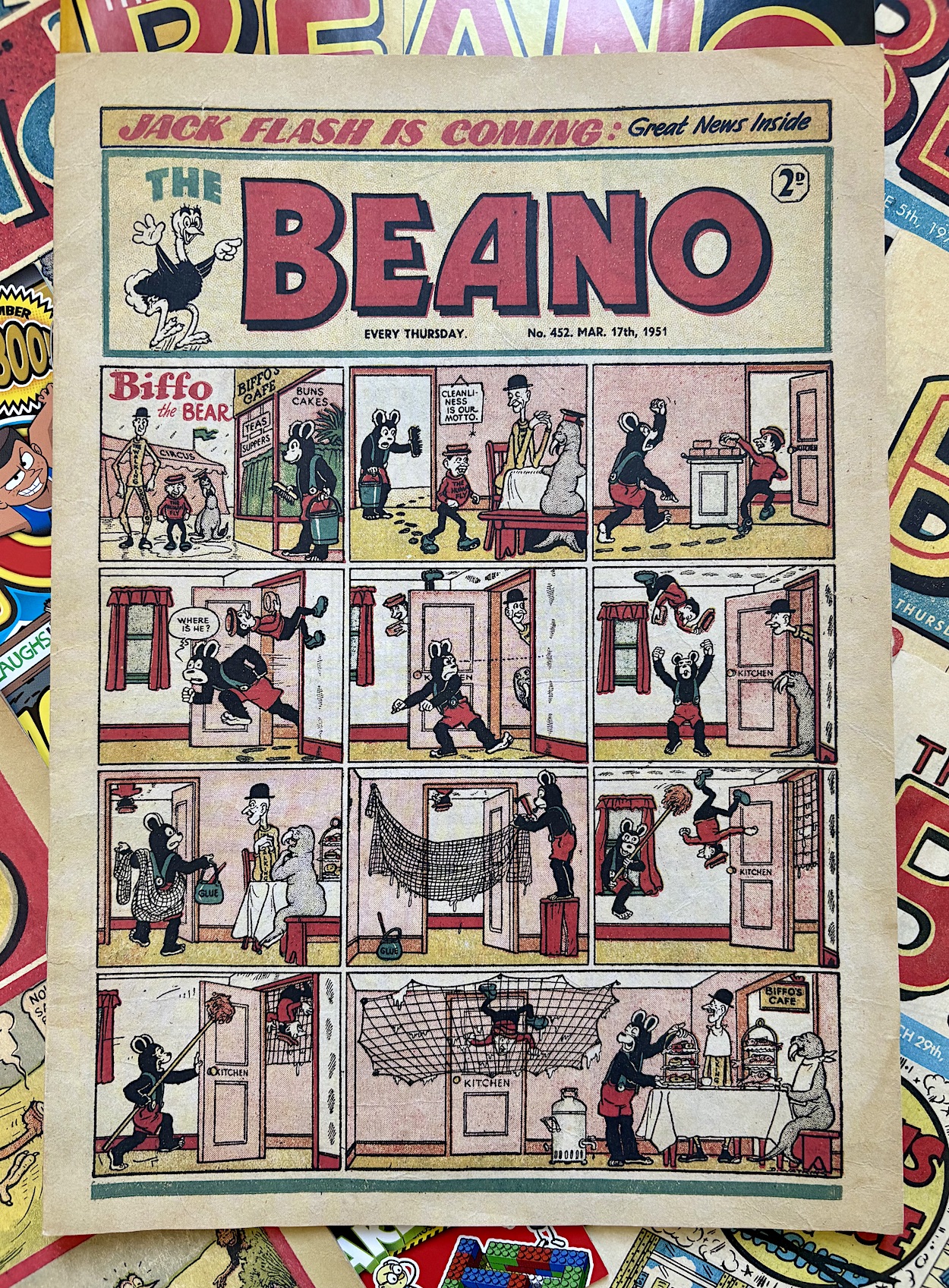
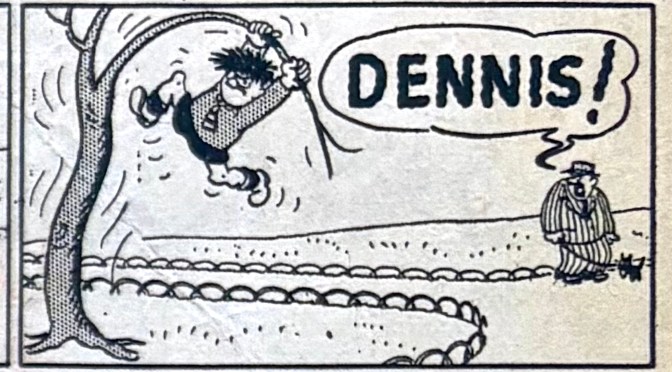
Next time, we’ll jump from 1945 to 1951. Our third issue saw the introduction of a certain boy with a black and red jumper so its inclusion in the box set is no surprise. When this series returns, join me as we travel in time again to the year of The King and I, the Stone of Scone returning to Scotland all on its own, a blue sun, the world’s first nuclear power plant and, in keeping with the theme of Dennis the Menace, the year when a young sailor was fined for the menacing behaviour of kissing his girlfriend in public in Sweden. The Beano #452 will be right here on the OiNK Blog on Saturday 14th March 2026.

BACK TO iSSUE ONE

BEANO BOX SET MENU

RETROSPECTiVES MENU

CHRiSTMAS 2025

BEANO #1: THE FiRST ONE

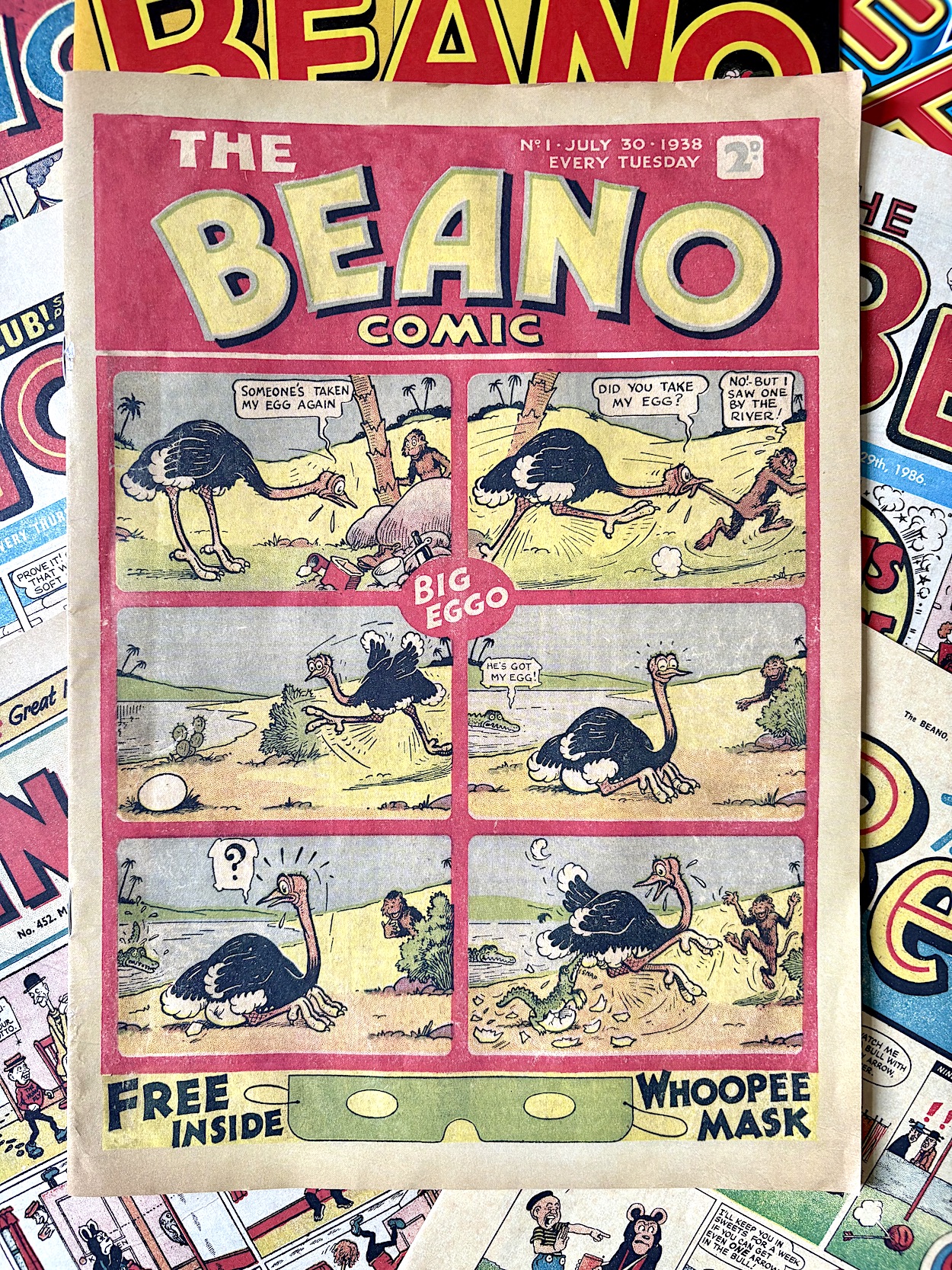
Off we go then with our gradual real time read through of the eight issues of Beano inside the special 80th anniversary box set, put together by DC Thomson in 2018 for their young readers. It’s important to emphasise the target audience here. The bookazine was a light-hearted look back at the comic’s history and its characters and that’s the whole point here too, for the modern audience of children to celebrate their comic’s birthday with an interesting and gigglesome look back at where it came from.

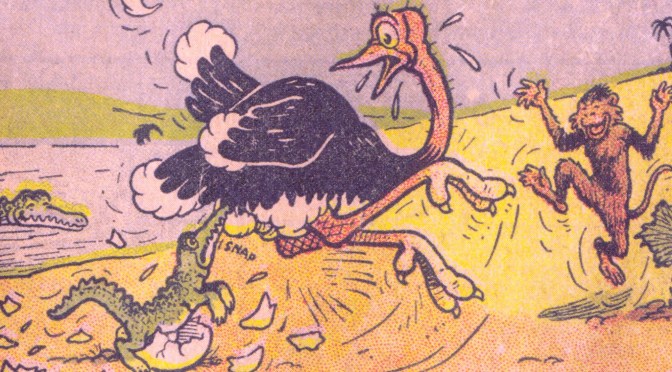
Hence why a certain mascot is missing from the title banner of this, the quality reproduction of the very first edition that was originally edited by Robert D. Low. This set wasn’t the place for a serious discussion about racist stereotypes and why they were deemed acceptable in 1938. Thankfully, DCT has since realised it should never have been on the cover of a children’s publication in the first place. I think it looks miles better without it and I welcome this change. Reg Carter’s Big Eggo can now shine in his well known first appearance.

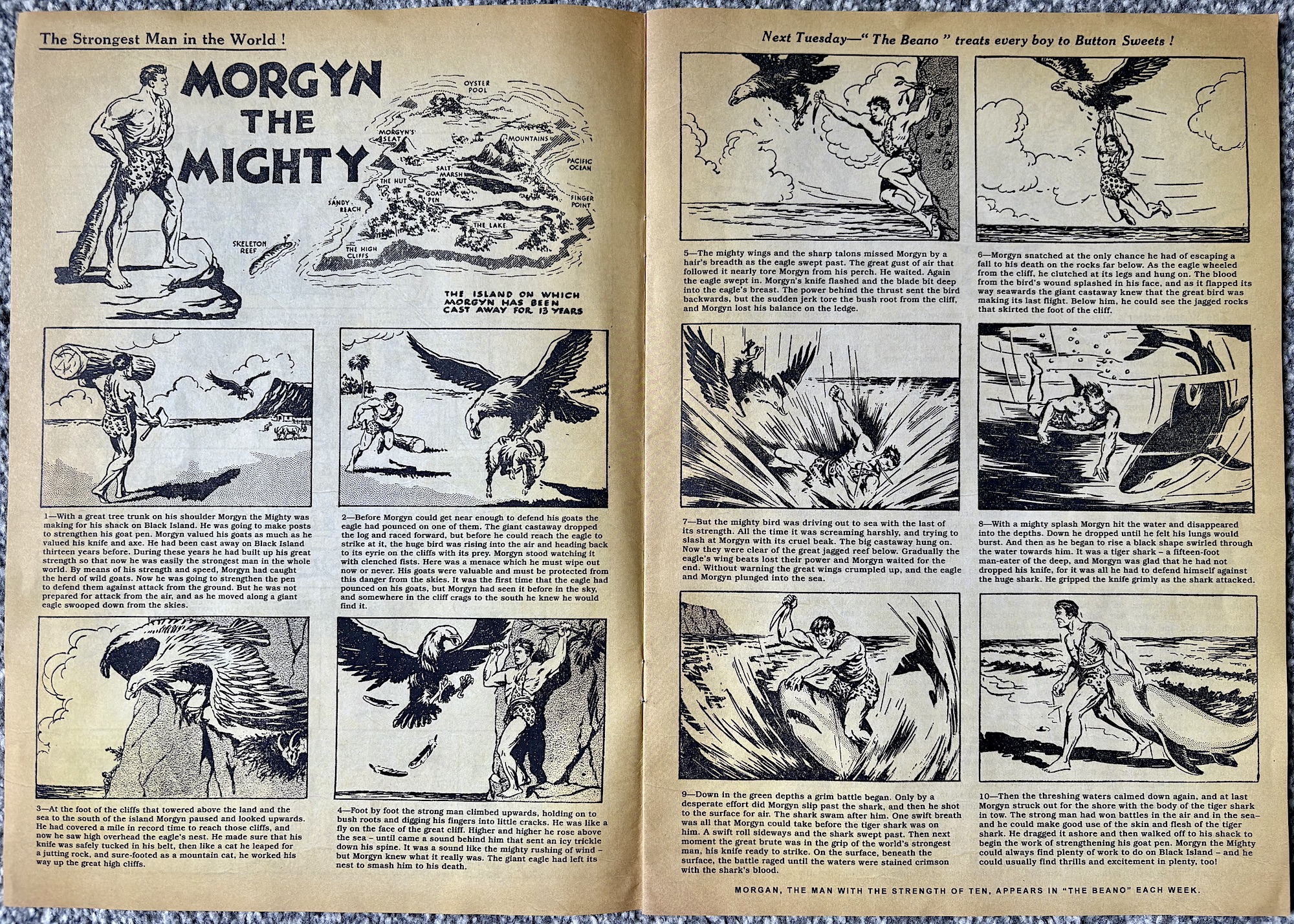
The biggest surprise I had upon reading this was just how much of it is text heavy. Only 50% of the 24 pages is made up of comic strips, the rest are prose stories or picture-panel tales such as Morgyn the Mighty. Created by Dudley D. Watkins, it’s just one example of the comic describing regular animals as monsters for the sake of some excitement. Of course children can be better informed today about our world thanks to easier access to a myriad of sources across different media.

It’s all very quaint and we must remember it was released in 1938, 87 years before this review. While I always review comics from my own modern perspective, some latitude can be given to such a classic, one that really is from a different era. Morgyn would disappear from The Beano before the end of its first year, before going on to star in various other DCT comics.

There’s only one character I recognised in the whole issue. Lord Snooty made his debut right back at the very beginning and looks pretty much the same as I remember him from friends’ Beano annuals in the 80s. Overall, as you’d expect the humour strips feel dated but that’s not a criticism. I found it fascinating to see what the children of the day would’ve found funny and how much children’s humour comics have evolved, especially since this particular one is still going strong and I occasionally buy it.

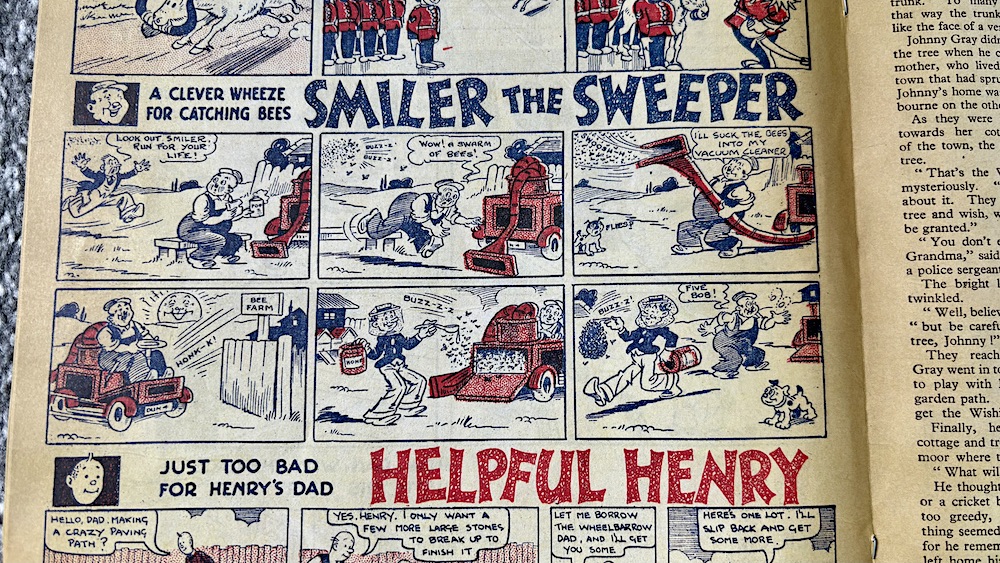
Smiler the Sweeper by Steve Perkins would also disappear within the first year but it’s a good example of the few mini-strip pages. Back when I was a kid it was OiNK that introduced me to comics and the strips would all be of various lengths, but all the other humour comics on the shelves (including The Beano when I was growing up) were pretty much full-page or double-page strips throughout, each character appearing on the exact same page from week to week.

Brave Captain Kipper kills the harmless whale and is portrayed as the hero by a bunch of random strangers. What a git

Of course, today’s Beano is much more varied and it’s interesting to see it started out that way too. Originally #1 contained 28 pages of variety entertainment for kids, four more than this reproduction. There’s a small warning on the bottom of a page stating, “Some pages may contain references which are of their time, but would not be considered suitable today”, although one inclusion was too much, namely the mascot edited off the front cover. Called Peanut, he featured on a page inside and, given how any stapled publication is put together in sets of four pages, once one page is taken out DCT would’ve had to trim further for it to physically work. (Thanks to Lew Stinger for the information on what was on one of those pages.)

Some of the contents which could fall under that warning banner includes child character Wee Peem seen smoking a cigar, a genie in a bottle describing himself as a slave happy to serve, Tom Thumb being captured and treated as a slave for entertainment but we’re meant to think it’s okay because Tom plays pranks on his captors, and one strip is simply called Big Fat Joe! Then there’s Brave Captain Kipper, who’s stupid enough to think he’s on an island when it’s actually a giant, peaceful whale. When it harmlessly blows water over him he kills it and is portrayed as the hero by a bunch of random strangers. What a git.

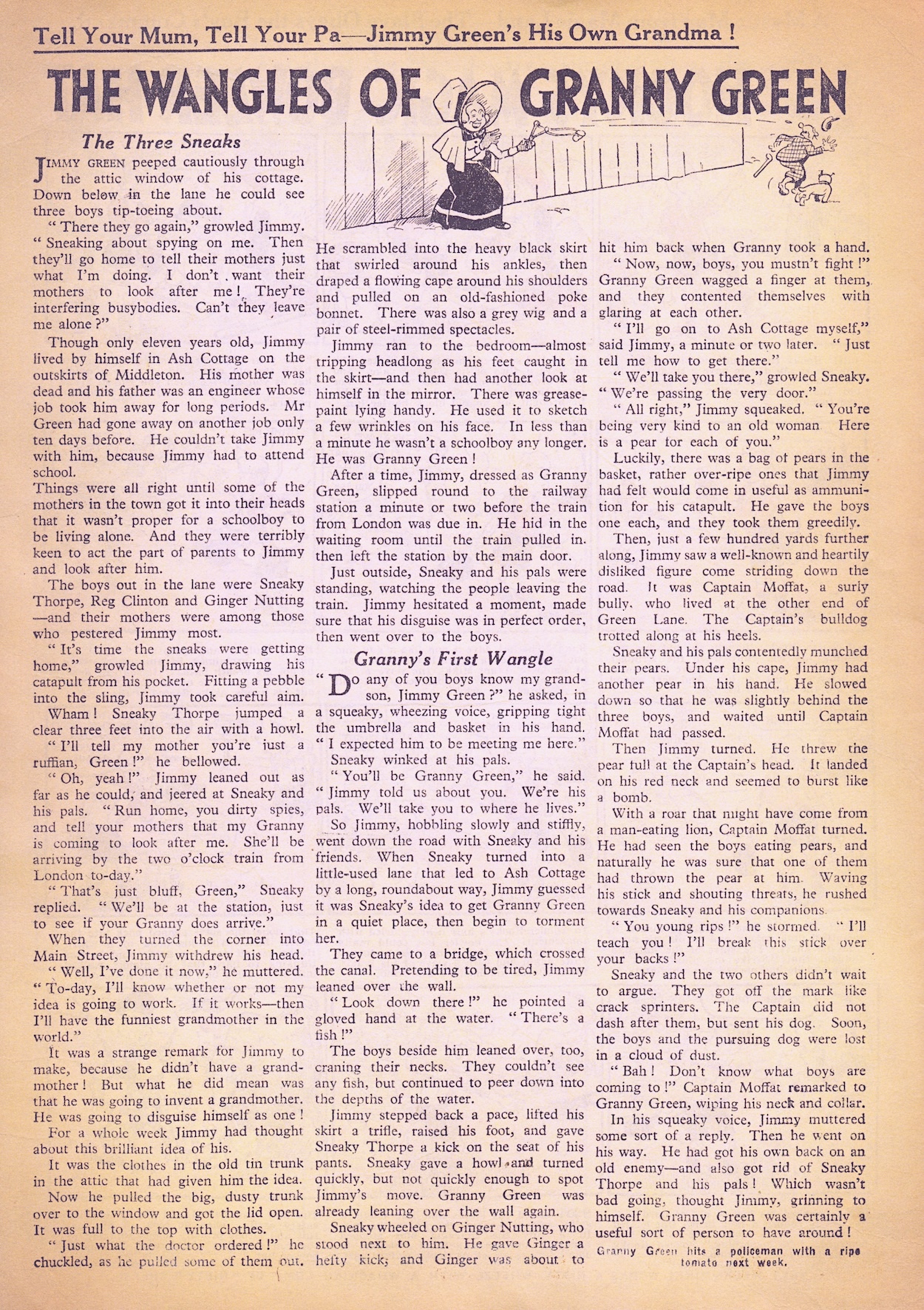
The Wangles of Granny Green by Charles Gordon is the only humour prose story and startlingly tells the tale of a very young boy whose mother has died and whose father goes on long business trips, leaving him behind to fend for himself. Fed up of the local children thinking he’s weird and of adults trying to look after him, he pretends to be his own grandma (the rhyme along the top reminding me of a particularly funny Muppets song) so that people will just leave him alone.

It’s a fun story and reminds me of the kind of comic strips we’d get years later in the likes of Whizzer and Chips etc. I wish I had access to more of these. The story is imaginative and has the potential to have a lot of heart given the set up, and it has such a quaint bit of hype at the end for the next issue that it’s endearing. It’d run for just over a year, returning for a reprint run in the mid-40s before coming back briefly in 1951. Ironically, the same people who’d complain loudly about what’s not on the cover would most likely also complain if Granny Green appeared today in strip form.

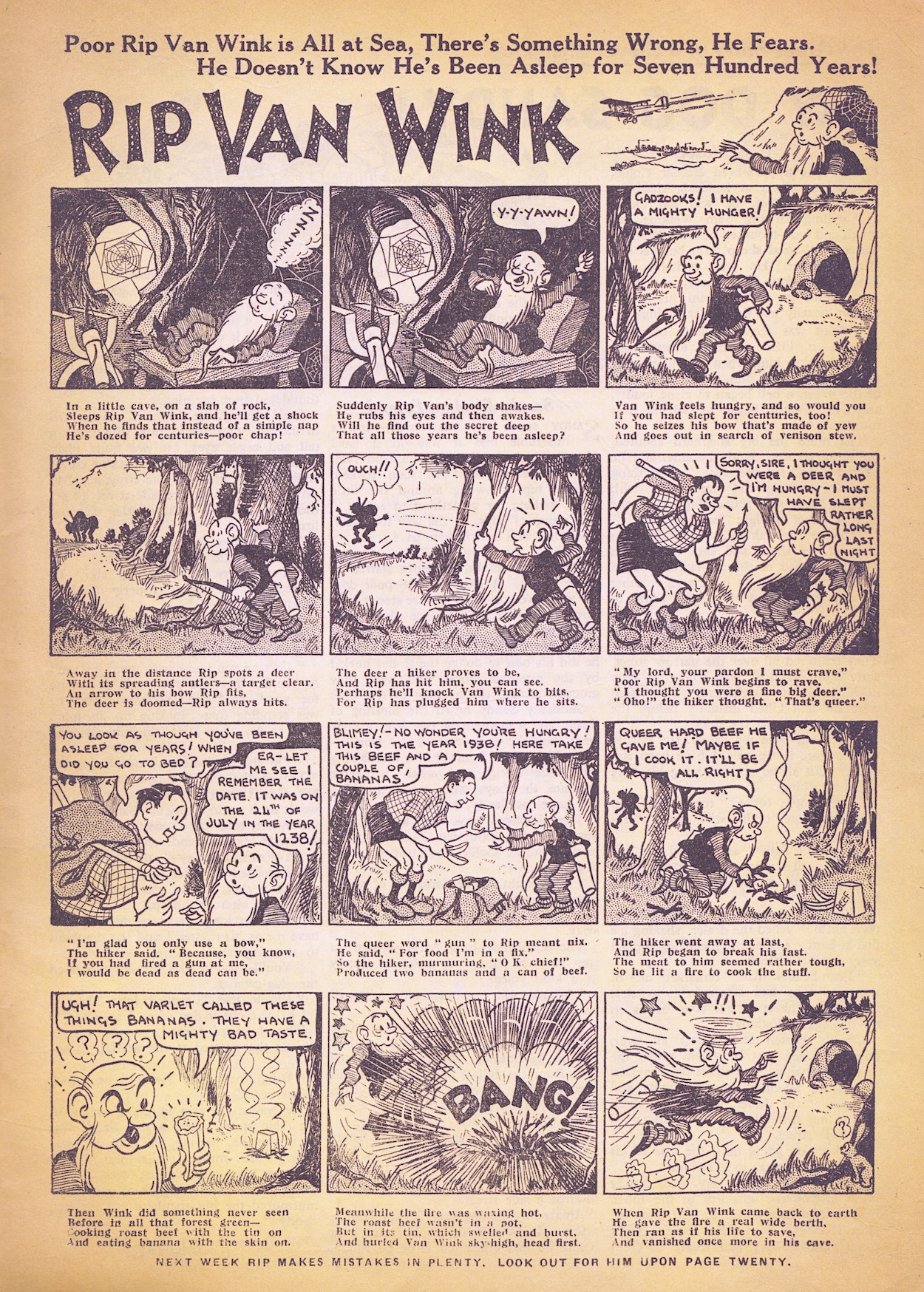
Eric Roberts’ Rip Van Wink wears its influence on its sleeve. A little old man falls asleep in his cave only to wake up 700 years later, the humour coming from his reaction to the modern world and the things kids would’ve taken for granted. It’s a bit of a hybrid with regular comic strip-style speech balloons and captions written in a charming rhyming style, even if some of those rhymes are rather forced. Hey, it just adds to that classic comic feel.

I’m sure this must’ve plucked at the heartstrings of the children reading

Elsewhere, Whoopee Hank the Slap-Dash Sheriff doesn’t provide any clues as to the naming of the original free gift (see the cover), the Shipwrecked Kidds is another lost island tale similar to Morgyn with two spoilt brats and two of their staff, and in a far cry from the modern Beano the only character from any minority is a Tarzan-like child who, even though he has an actual name (Derek) is referred to solely as ‘The Wild Boy’.

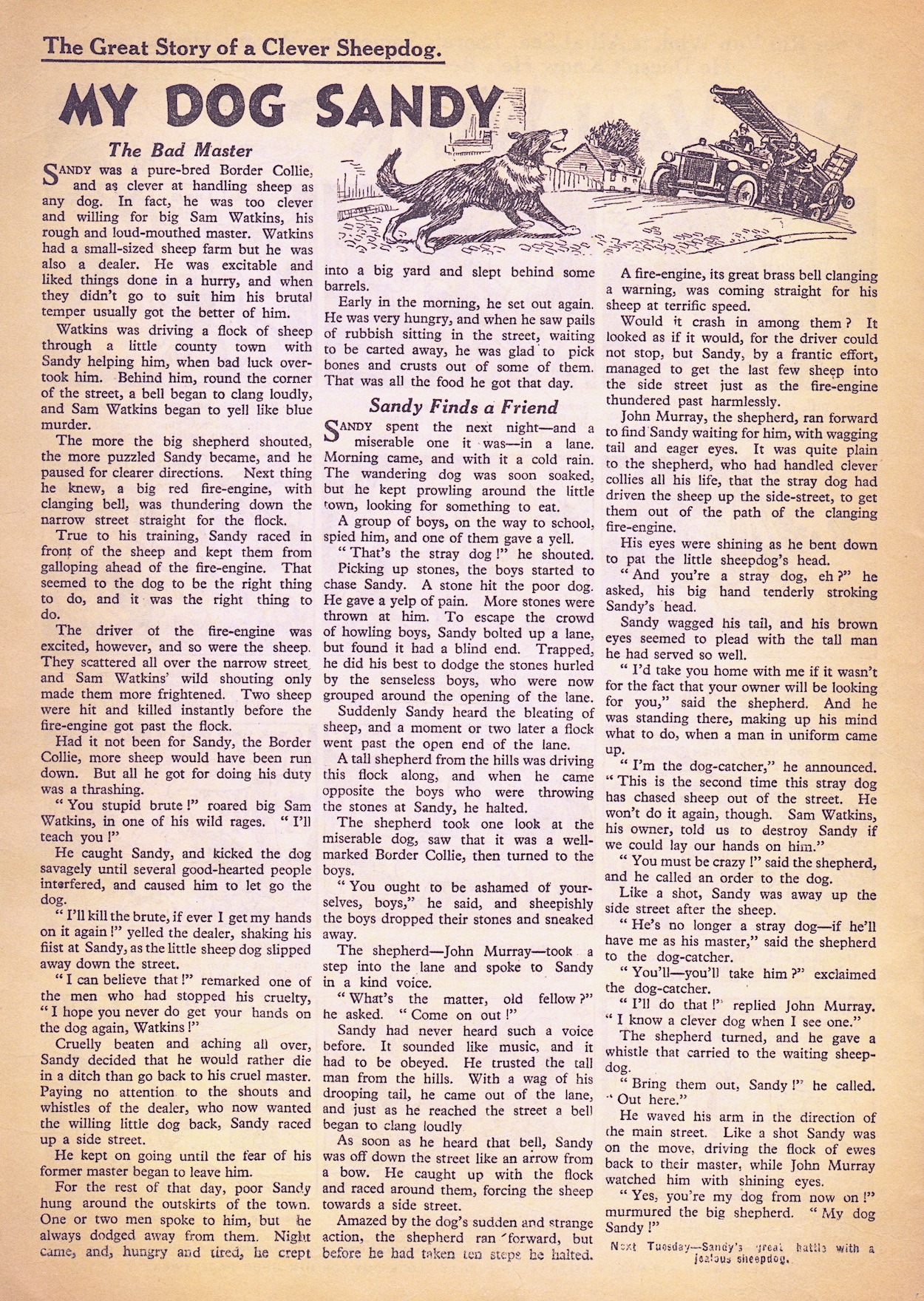
My last highlight is My Dog Sandy by Jack Glass, another short-lived series that’s rather brutal at times in its description of what the poor pup goes through with his cruel owner. He may be starting a better life by the end of the page but I’m sure this must’ve plucked at the heartstrings of the children reading. It certain did with me. 

I thought this read through would be fascinating and it’s proved to be right from the off. I’d read about the first issue in the Dandy/Beano The First Fifty Years Book back in 1987 but to read the full issue has been fun and really insightful. To experience it in its almost complete state is something I’d recommend to any humour comics fan as a really entertaining retrospective, an origin story in this case. So what’s next?

Join me next time as we skip forward seven years to the end of World War II, the reduction in food rations, the launch of BBC Light Programme radio which would eventually become Radio 1 and Radio 2, the publication of Animal Farm, the movie Brief Encounter, the Nobel Prize for the discovery of penicillin, the birth of Helen Mirren and the first time we’d meet three steam engines by the names of Edward, Henry and Gordon! Join me on Wednesday 26th November 2025 for The Beano #272, the first issue to sell over one million copies!

GO TO iSSUE 272

BEANO BOX SET MENU

RETROSPECTiVES MENU