Tag Archives: Dave Hughes

DRACULA #7: TALES FROM THE CRYPT

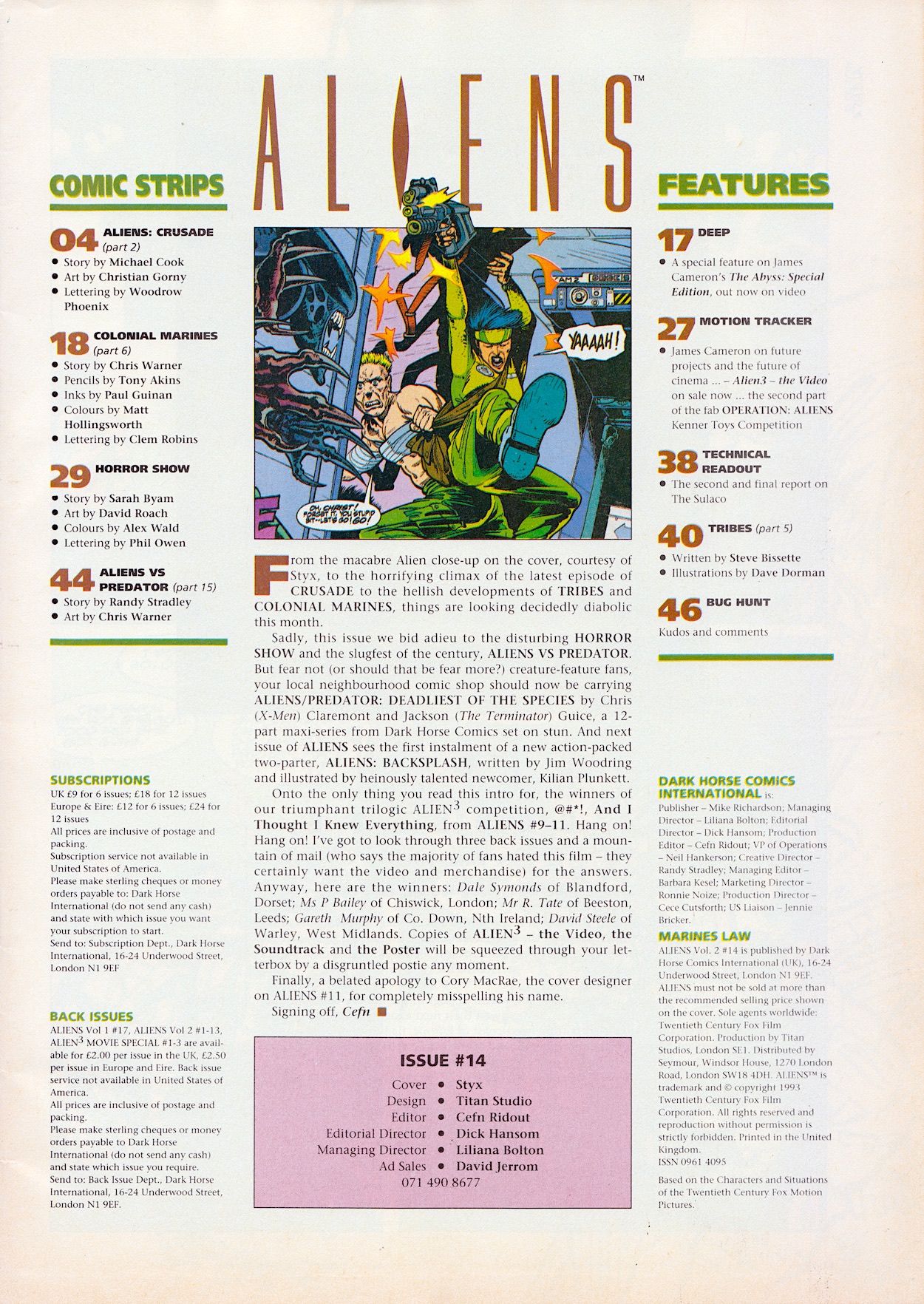
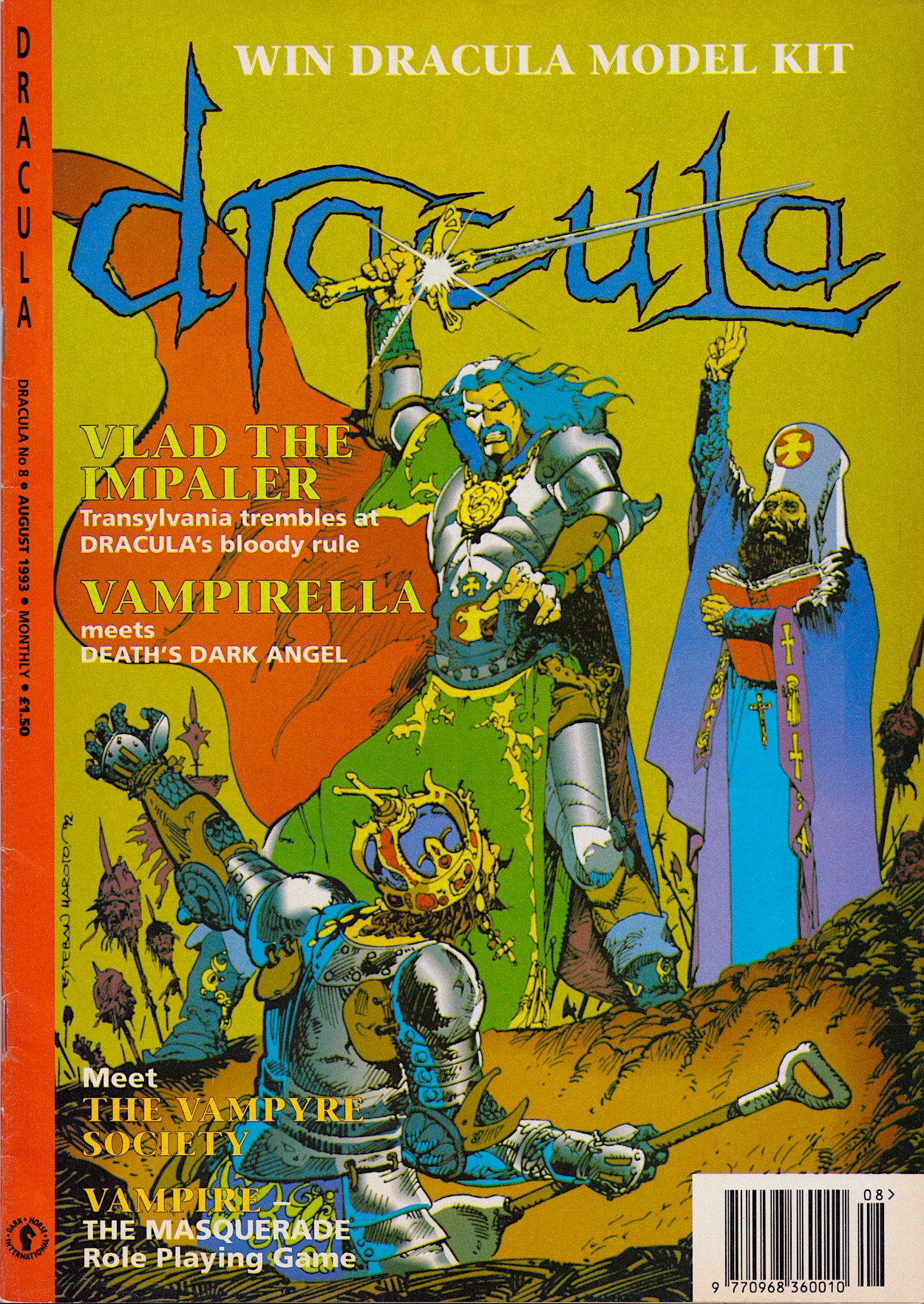
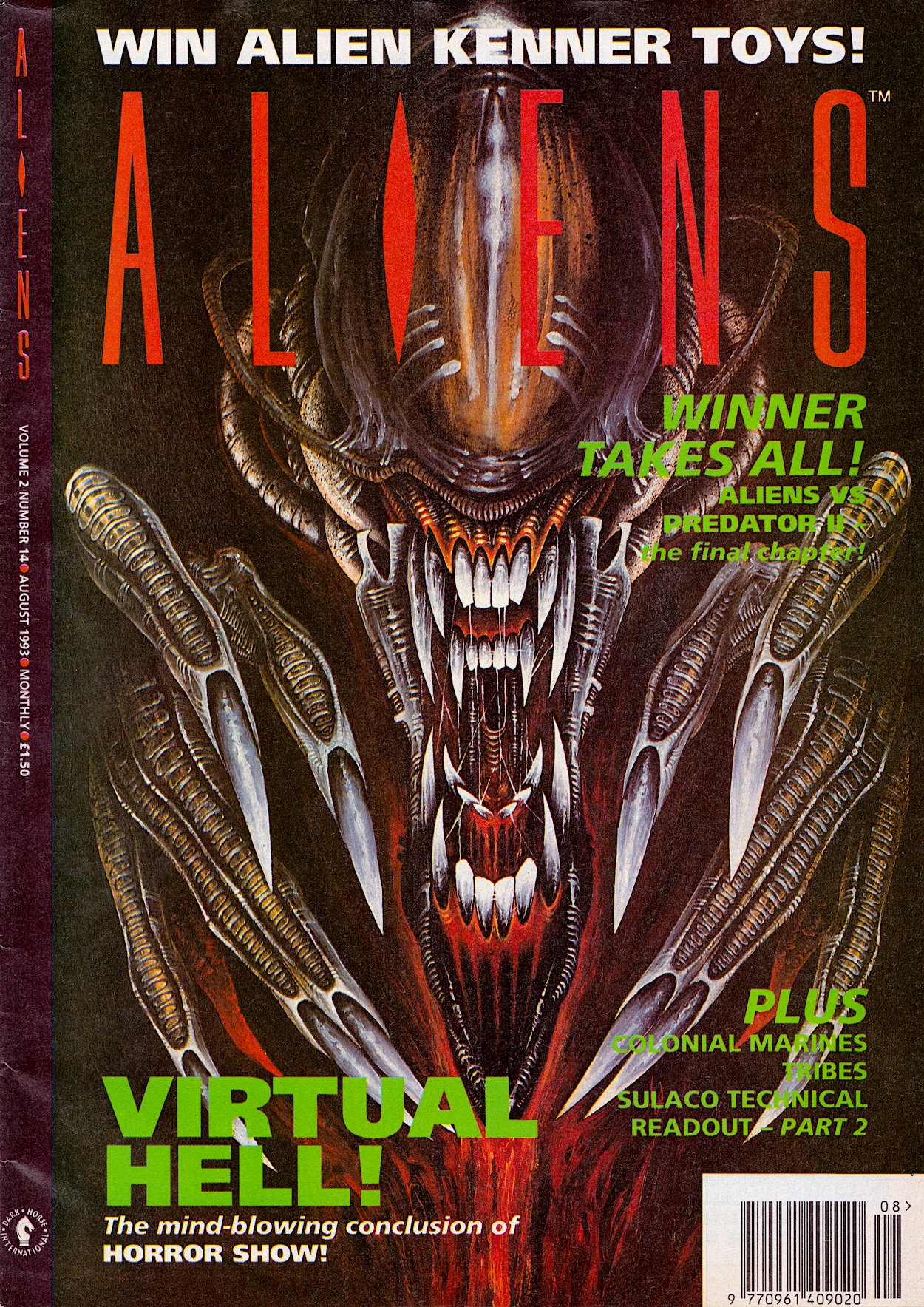
On this day back in 1993 came the seventh edition of Dark Horse International’s Dracula comic, now firmly in its post-movie adaptation stage. Irish artist Kilian Plunkett’s cover was unique to the UK comic, what with the issue containing part two of the same American issue of Topps Comics’ Vlad the Impaler from last month. Blog regulars should recognise the name too, as Kilian contributed the superb cover to #8 of Aliens in a completely different style.

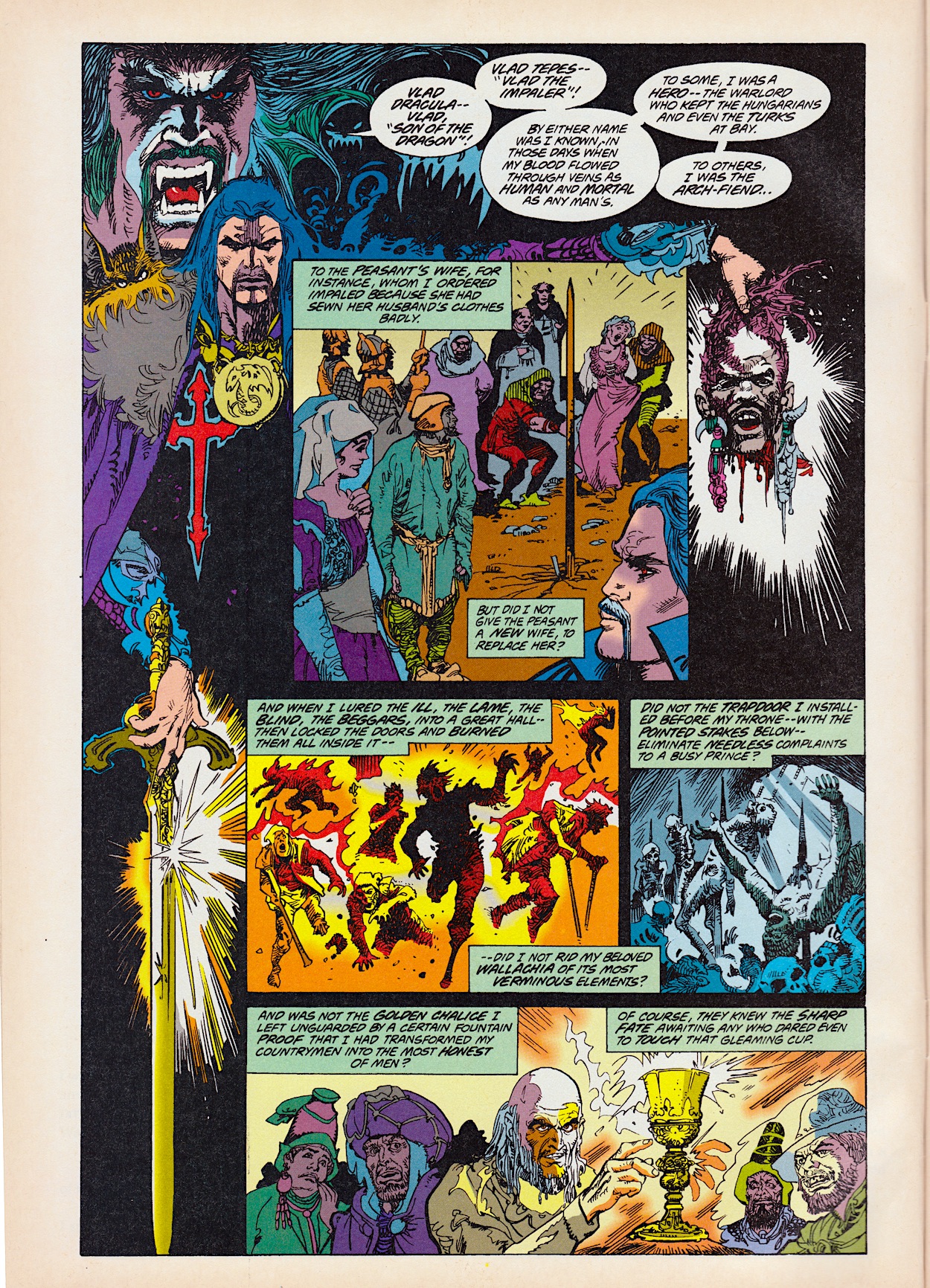
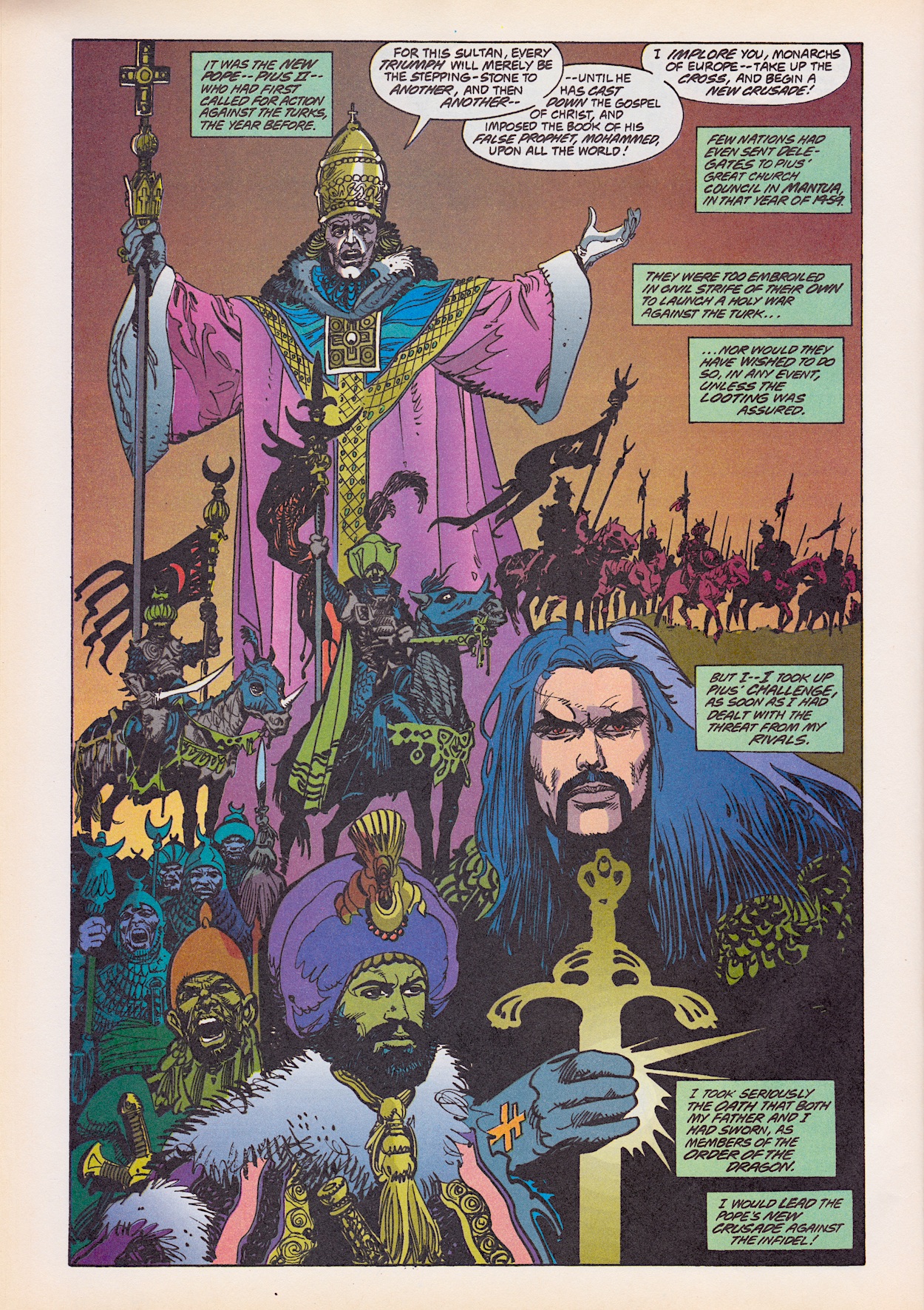
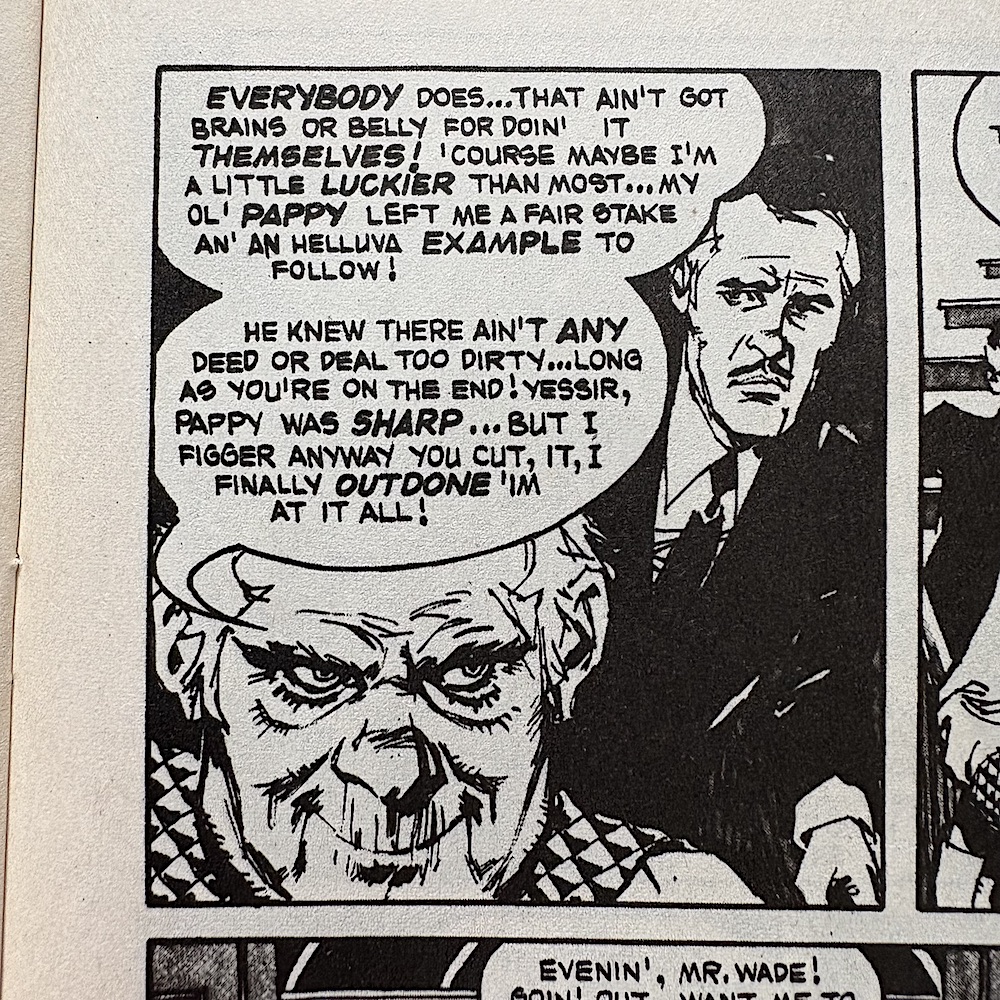
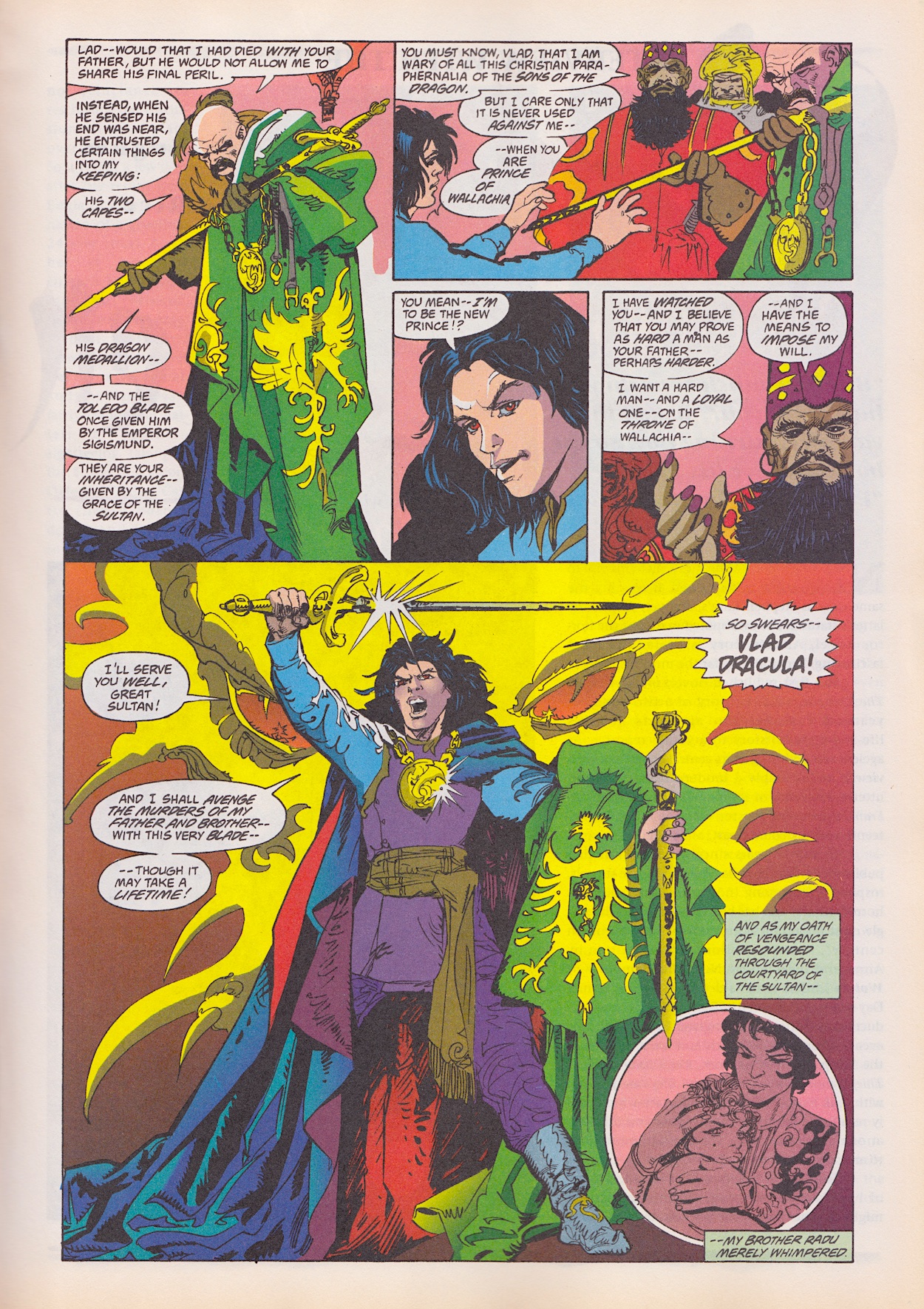
The 13-page second part of Roy Thomas’ strip kicks off with defeat. Vlad’s time in his late father’s role of Prince of Wallachia was short-lived after the Sultan who raised him to be a brutal warrior died. The sultan’s son, Mehmed the Conqueror sought to invade and take over all of Europe, so Vlad allied himself with the Hungarians to defend his home of Transylvania against Mehmed’s ally and the man who killed his family, Danesti. After more history book-like retelling of battles he chases him down.

But Vlad’s actions weren’t to protect the people of the land. As a plague hit the country the poor were ignored and left to die so that he could march to defend Christendom and avenge his father’s death. That’s right, he was fighting for power in the name of god while ignoring those in need. Some things don’t change. At one point he sees a comet in the sky and in a rare bit of fun he tells readers how he wouldn’t know anything about it until he met someone called Halley hundreds of years later.

After this, a brief moment of what appears to be open-minded kindness takes over Vlad. He doesn’t hunt down Danesti’s supporters, instead explaining how he knows they simply believed in their leader and did as they were told. He invites the royal court and their families to an Easter feast and begins to describe the castle he wishes to have built in his name, Castle Dracula. Then the other shoe drops. He shall force them to build it.

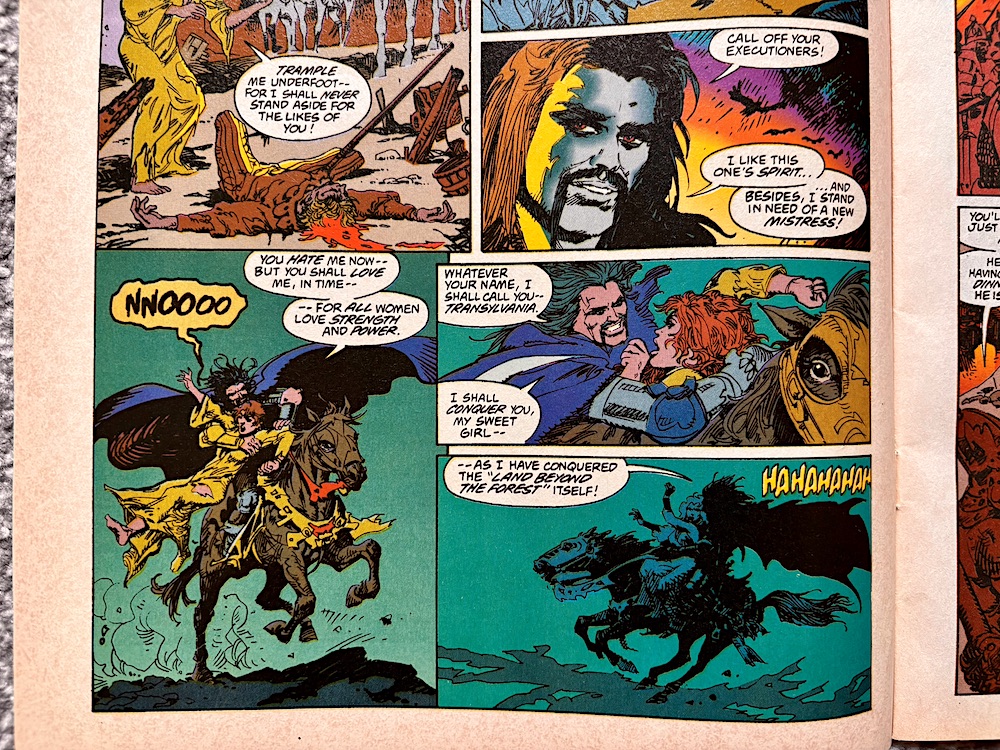
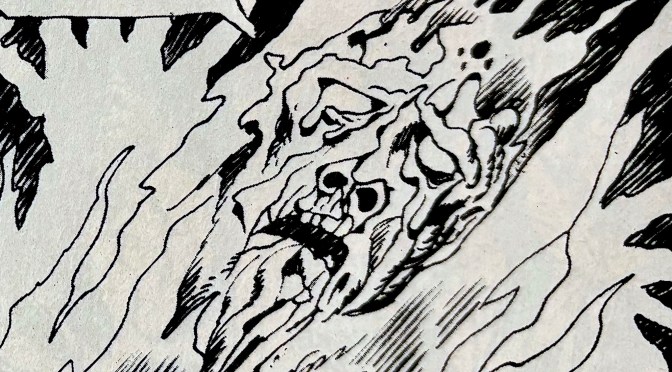
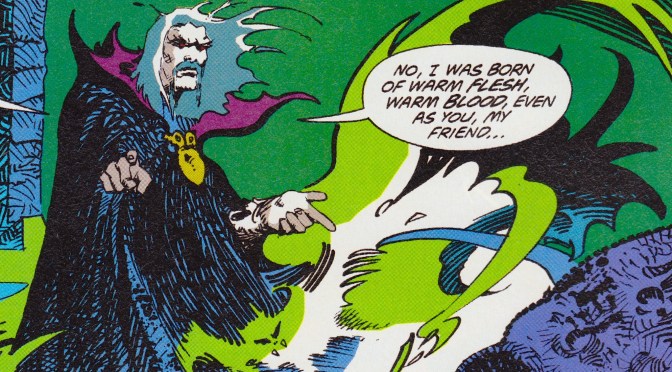
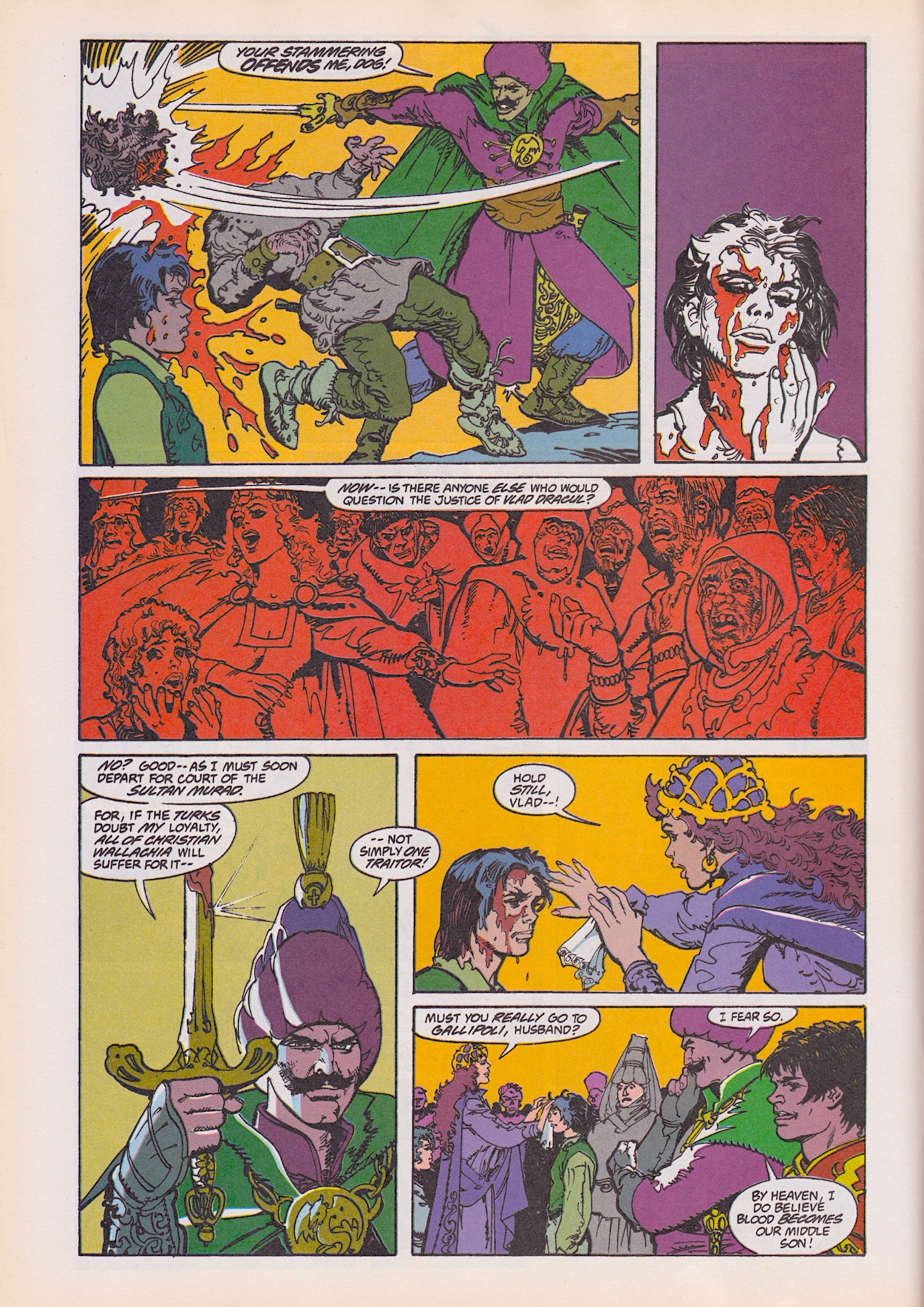
The art is just as superb as it was last month. Esteban Maroto’s line work and Paul Mounts’ colours lend a seriousness to it all. The grotesque moments really are grotesque and the power behind the man is palpable when he launches into a tirade against those who sucked up to him the first chance they got, when they’d previously called for his death.

All of a sudden the rich and powerful, who were all too happy to stomp over those less fortunate than them to retain their positions, are pleading for leniency. The elderly ask to be left behind, to be spared the many years of hardship ahead. In response, Vlad beheads and impales them as an act of treachery and it’s this image that’s left to imprint itself on our minds as the final page of the strip this month.

While the script still feels like those strange little historicals found in year one of Marvel UK’s Transformers (Dracula’s script brought to the page with skill by letterer John Costanza) the art once again elevates it. The fact the story slows a bit to concentrate on one battle and its aftermath helps too. It no longer feels rushed and it’s beginning to develop a bit of depth to its main character. That in particular bodes well for future issues.

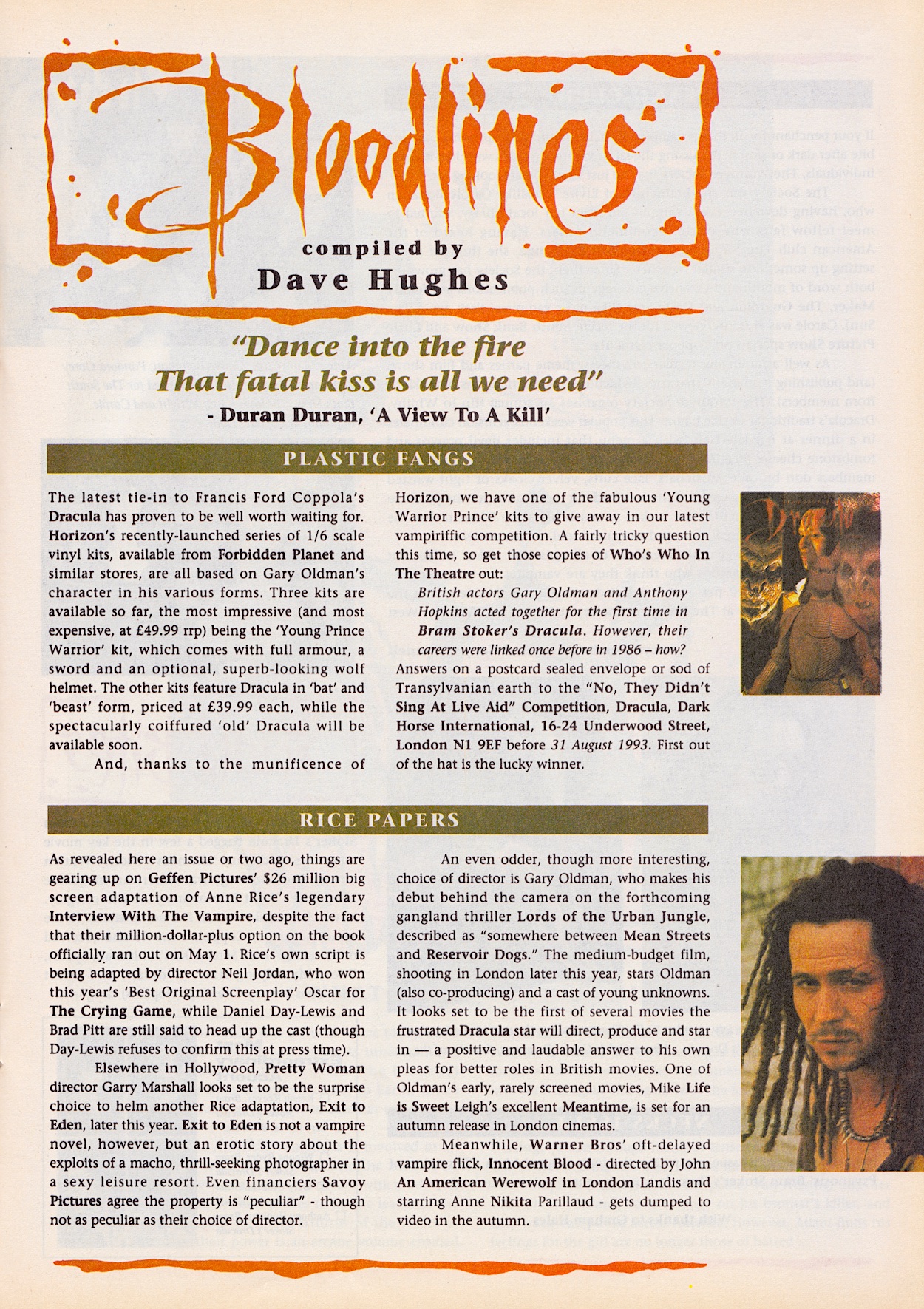
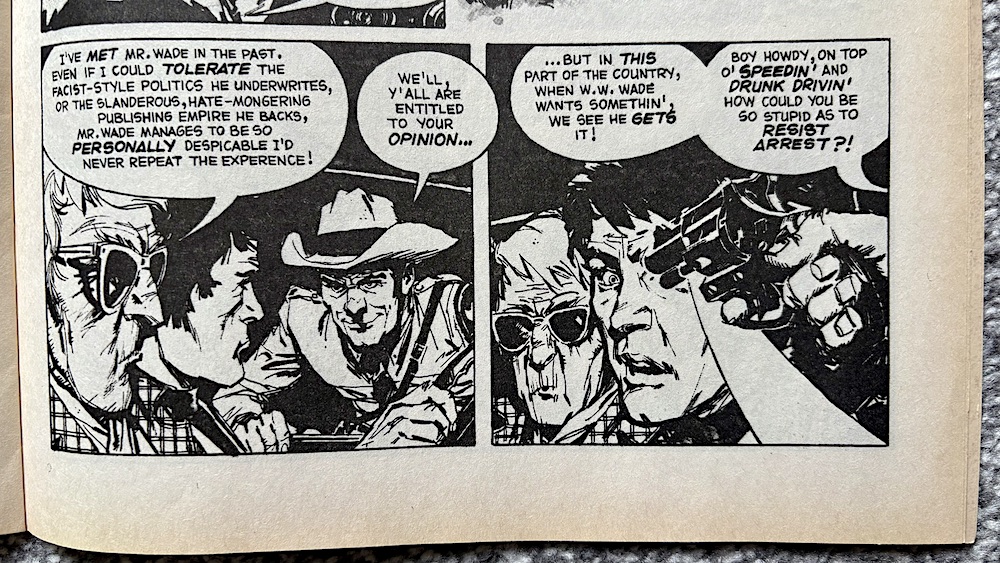
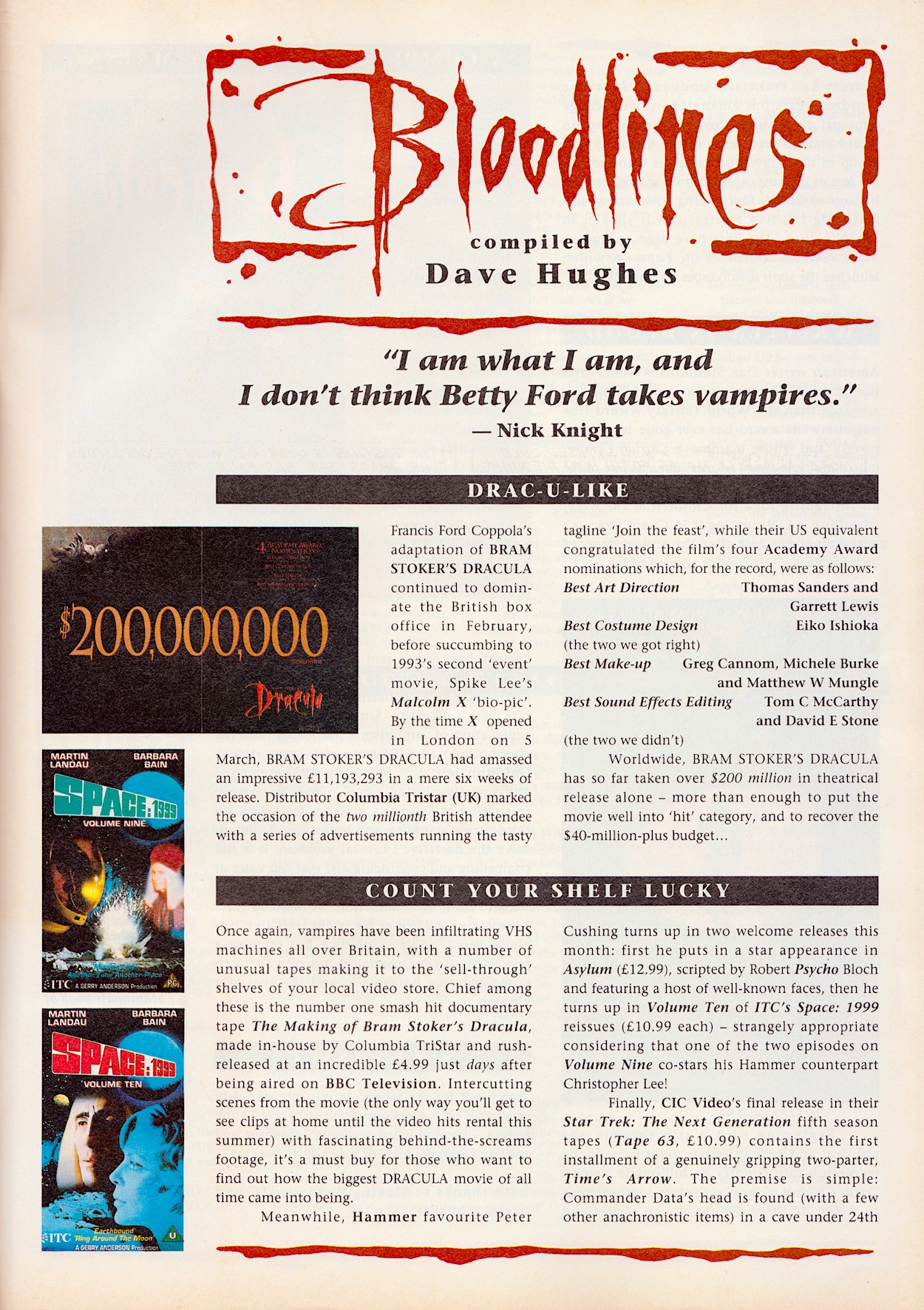
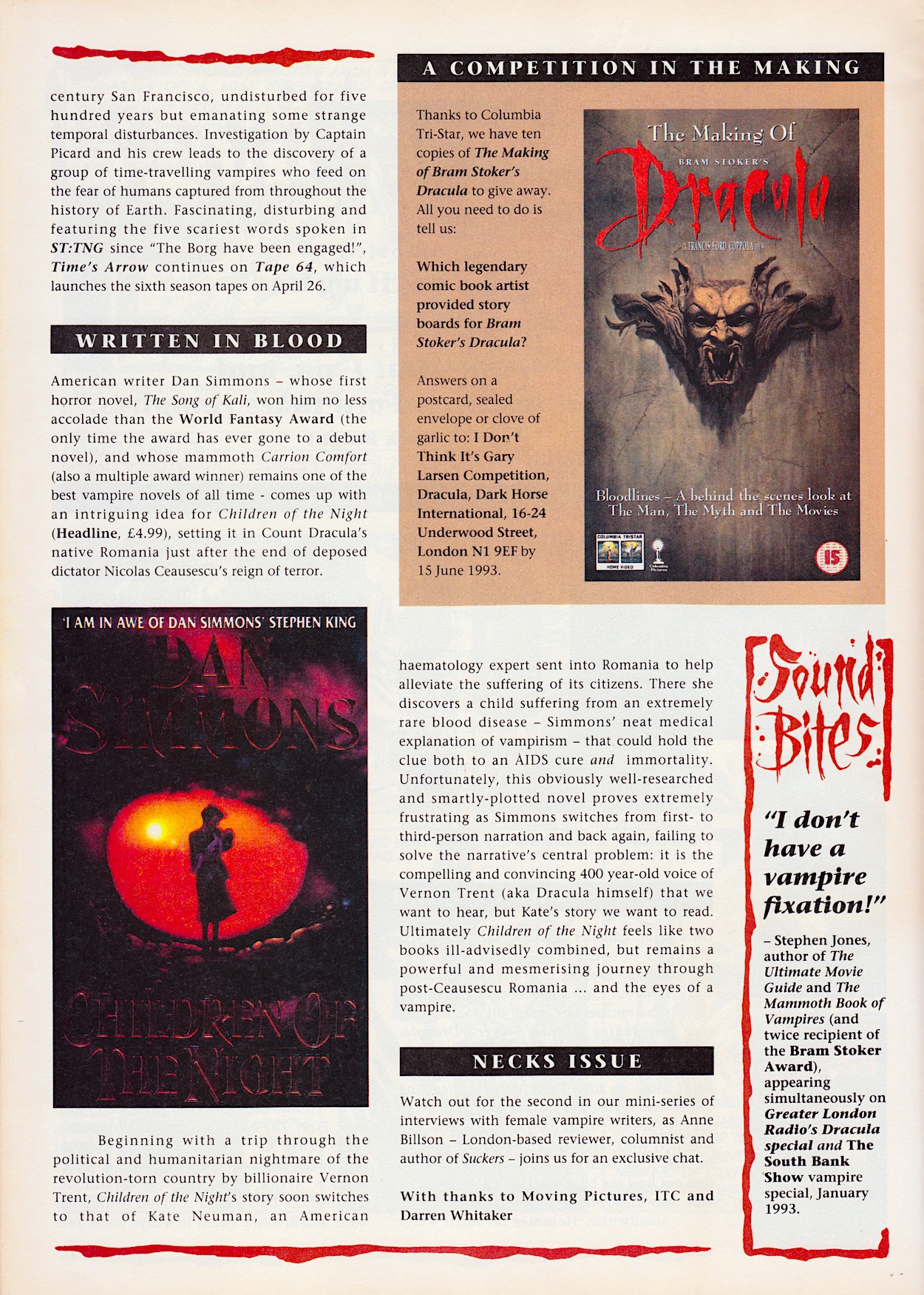
On to the Bloodlines news pages. The film was a “loose adaptation”? Oh dear, is Dave Hughes turning against the movie he hyped so much now that the comic is no longer a tie-in? Francis Ford Coppola’s movie updated the racist undertones of the original novel to modern sensibilities, but to describe it in this way is rather odd. I’d forgotten all about the fact the movie brought a brief resurgence in monster movies and I’d like to see Robert De Niro as Frankenstein’s monster, so that might be one for this Hallowe’en.

I wonder if The Mummy film mentioned here is what would eventually become the Brendan Frazer and Rachel Weisz movie released six years later? What would Dave have made of it not being a horror film? That section under ‘Neck Romancers’ really hasn’t aged well and it’s shocking to see this reported on as something normal, and yet again the writer’s obsession with Sadie Frost returns, despite the actor being English, not Eastern European.

The Mega-CD game is generously described as receiving “rave reviews”. In reality, UK magazine Mega Power described it as, “One of the best movie tie-ins to date, but still an appallingly bad game.” Given how the game would only work on a Mega-CD, which was a very expensive add-on to the Sega Mega Drive, it’s a rather niche prize. Sadly, it also looks like the promised series of interviews with female horror writers is already making way for men.

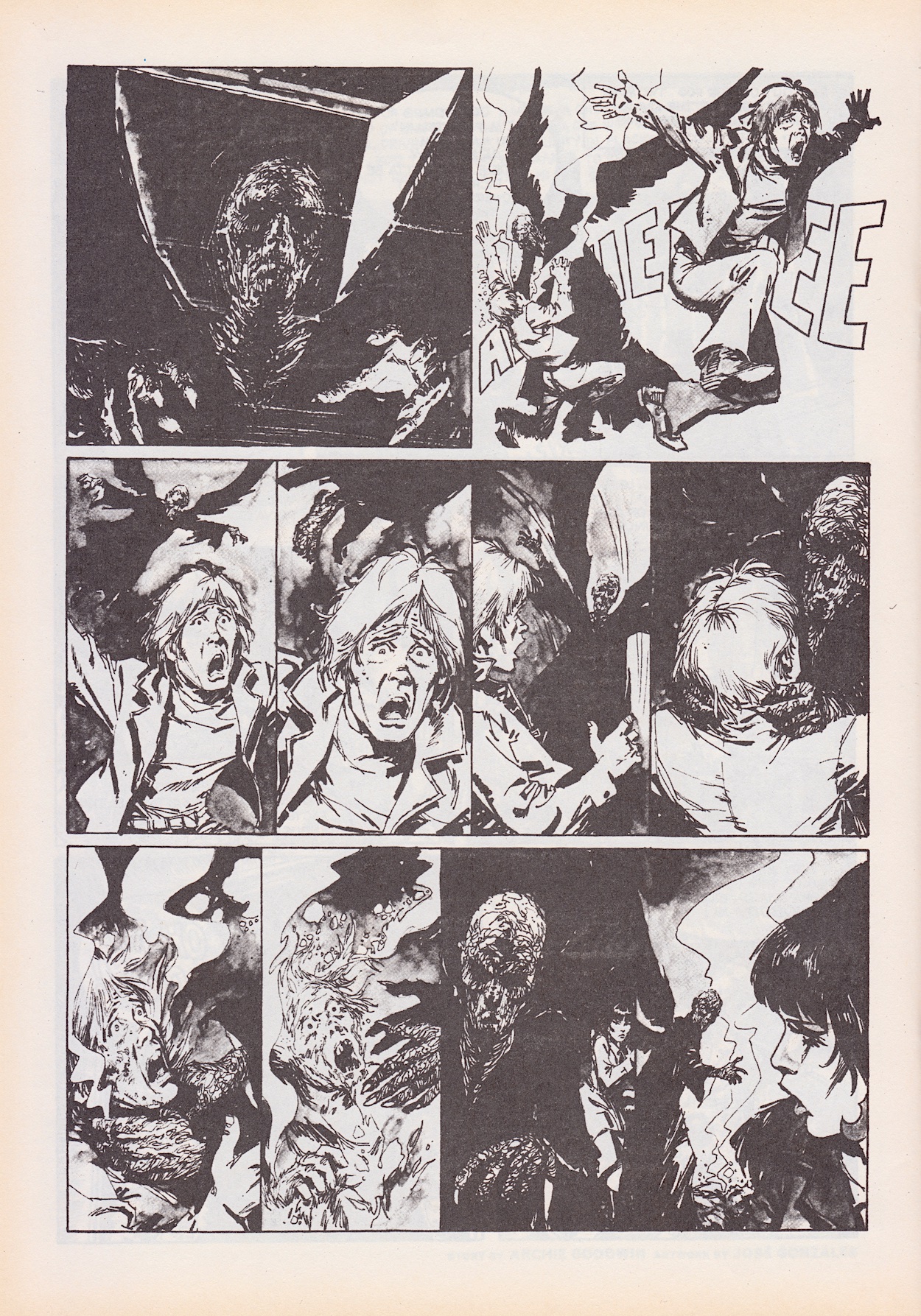
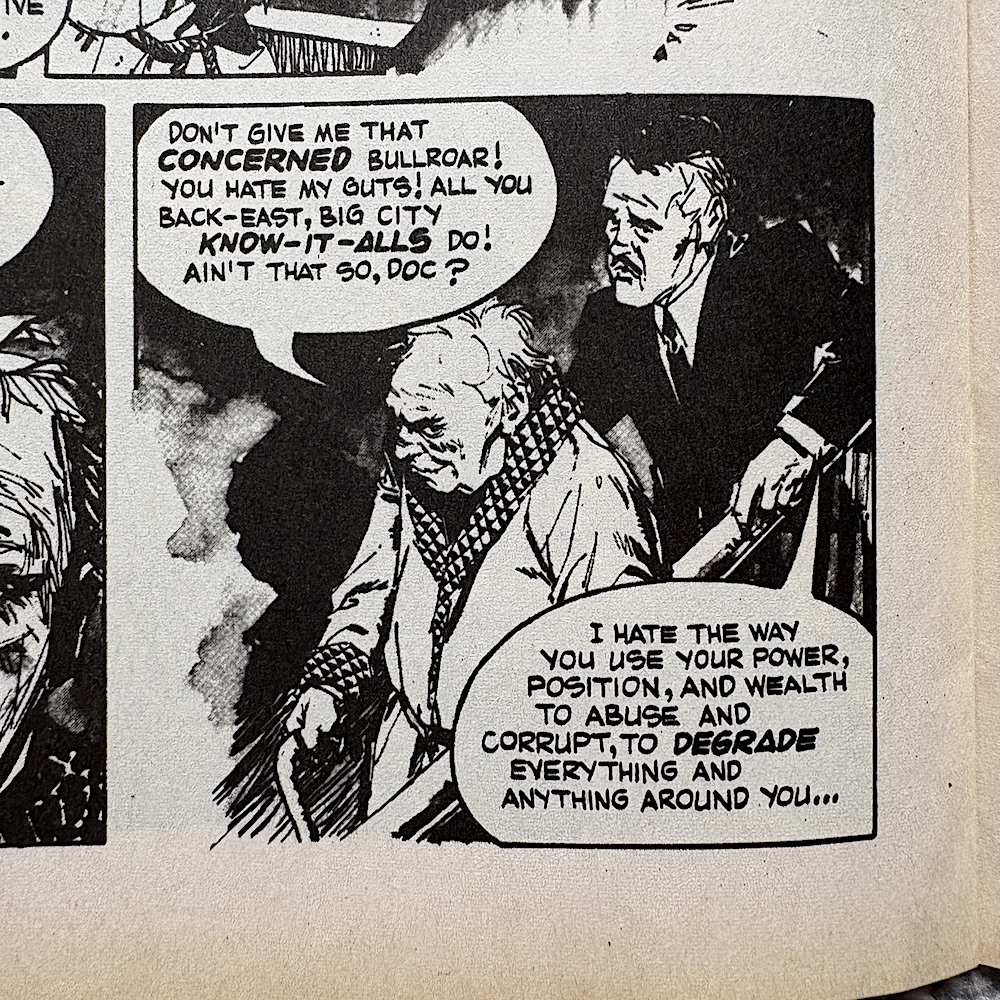
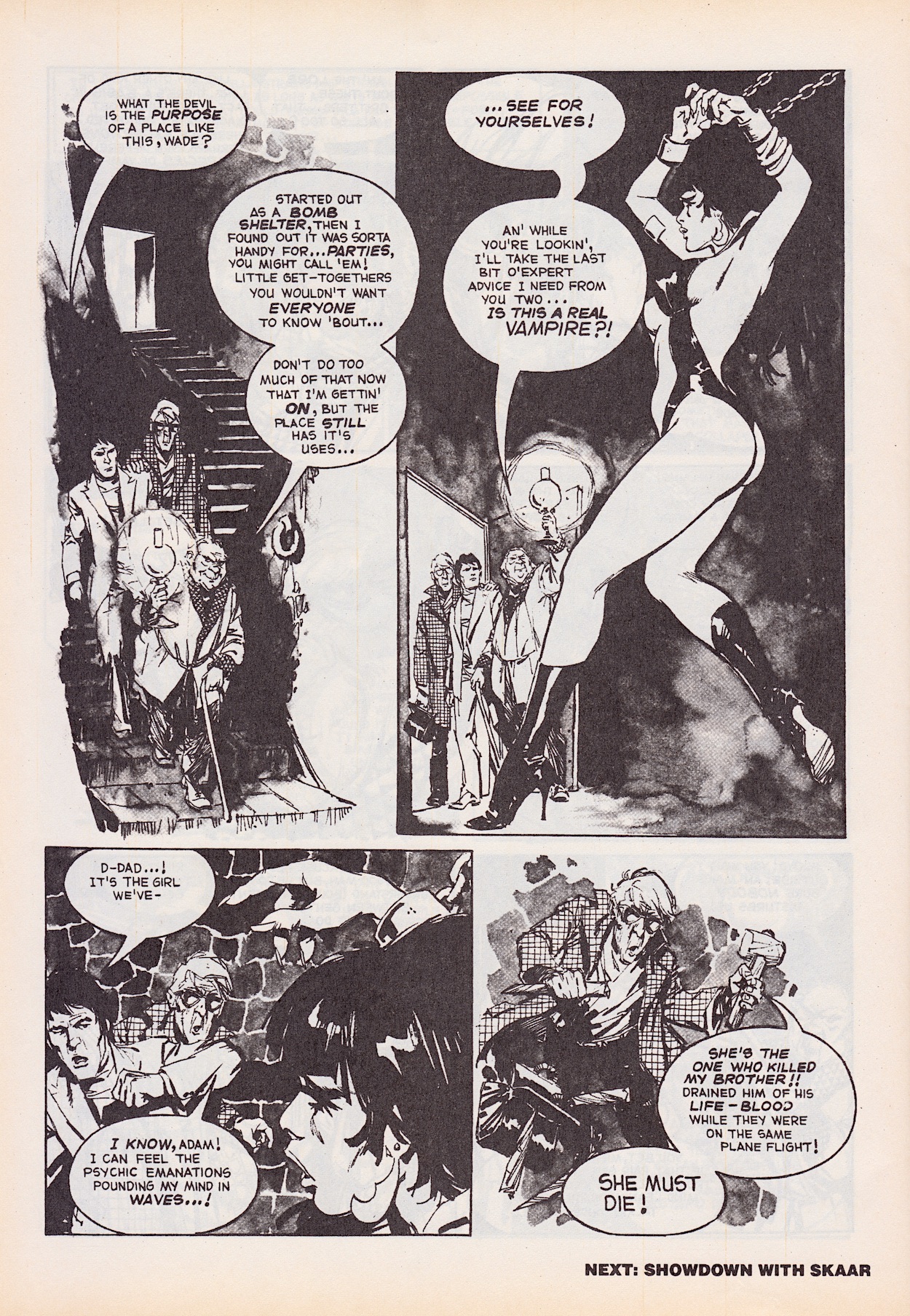
The Vampirella back up strip, still written by Archie Goodwin and drawn by Tom Sutton, sees Adam and Conrad Van Helsing (the latter of which is confirmed as blind) catch up with the alien vampire heroine but the younger Adam is incapable of killing her. We’ve seen hints that his newly developed psychic powers may be picking up clues as to her good nature but Conrad doesn’t want to hear it and fears she’s hypnotised him.

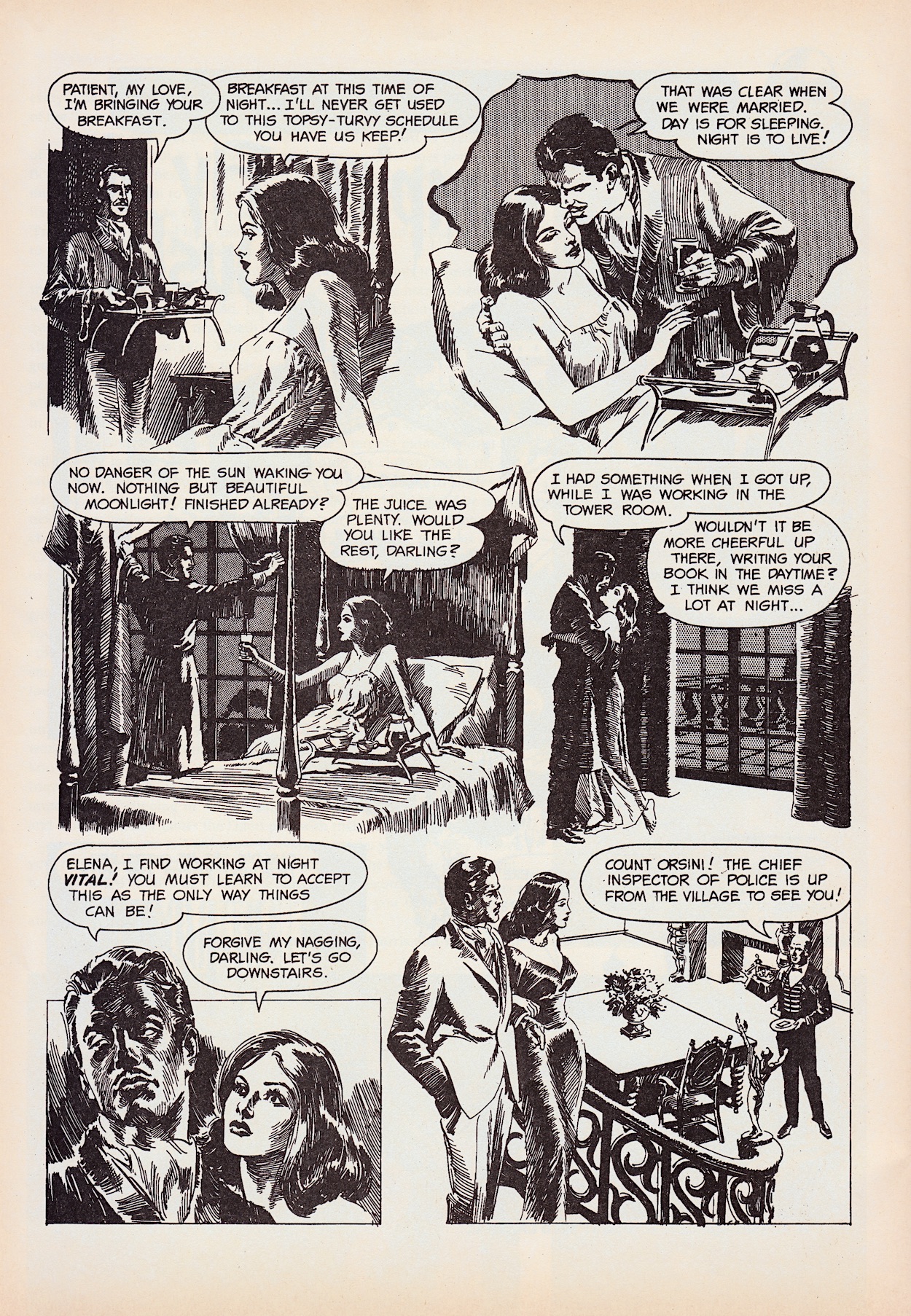
The Carnival of the Damned sees Vampirella head to a wonderfully atmospheric fun fair like something out of an episode of Tales of the Crypt. We meet Pendragon, a drunken mess of a magician who fears the Crimson Chronicles book when he sees it in the hands of Vampirella. She explains she made a promise to a dying man to hunt down all who follow it. The Van Helsings are also here, Conrad convinced Vampirella is evil because he can sense evil so strongly around him. Um, Adam? You maybe want to explain the carnival to him? 

It seems the carnival’s owner summoned one of the servants of chaos to save him from financial ruin but he soon discovered he was being tricked in order to bring forth demons, so Pendragon burned the book and it destroyed the carnival. With only half his power brought forth, the demon is the new owner and can hold back the flames to stop killing everyone but in doing so they’re trapped, unable to leave.

While searching for Vampirella, Adam enters the House of Mirrors and sees a vision of his mum being killed by a vampire! He tries to break the glass to get to her and gets sucked in. We find out Ashton (the human form of the demon) feeds off souls in this way to slowly gain enough power to break through into our world. Sensing Vampirella, he’d planted a mental vision in her head to entice her to find the carnival.

If he can get her to read from the book he can access all the power he needs. It’s a complete tale told in 14 pages and I’ll hand it to Archie, it contains enough story to fill a strip twice the length without feeling crammed in. It has that horror anthology feel and I think it works a treat. Her first strip may have been forgettable but since then she’s been the highlight of the comic. I also like the fact this doesn’t boil down to an action scene, instead it’s a battle between the minds of Ashton and Vampirella. 

On TV this would’ve needed impressive acting so it’s a brave move for a comic and Tom pulls it off brilliantly; it’s suitably tense and horrific. The Van Helsings also escape while the carnival burns and it’s here that I have my only gripe. Conrad is convinced Vampirella set the fire to kill them, yet when they thank Pendragon for saving them he doesn’t take the chance to clear her name, instead giving a cryptic “I was just following another” response.

After a brief interview with Anne Billson (which is nowhere near as in-depth and interesting as last month’s with Anne Rice) comes the letters column, Fang Mail. However, the highlight of the page is the first mention of Jurassic Park in the comics checklist. Like Dracula it’s three-weekly to begin with, the first two issues detailed here and on the back page is the full-page advert for the launch.

Dracula continues to be a unique comic, one that I’m enjoying a lot. A thoroughly interesting history lesson followed by a classic horror anthology strip (of sorts) is about as different to anything else I’m ever likely to include on the blog, so I’m going to enjoy it while it lasts. I hope you are too and that you’ll come back for #8 on Sunday 13th July 2025.

iSSUE SiX < > iSSUE EiGHT

DRACULA MENU

DRACULA #6: VLAD THE LAD

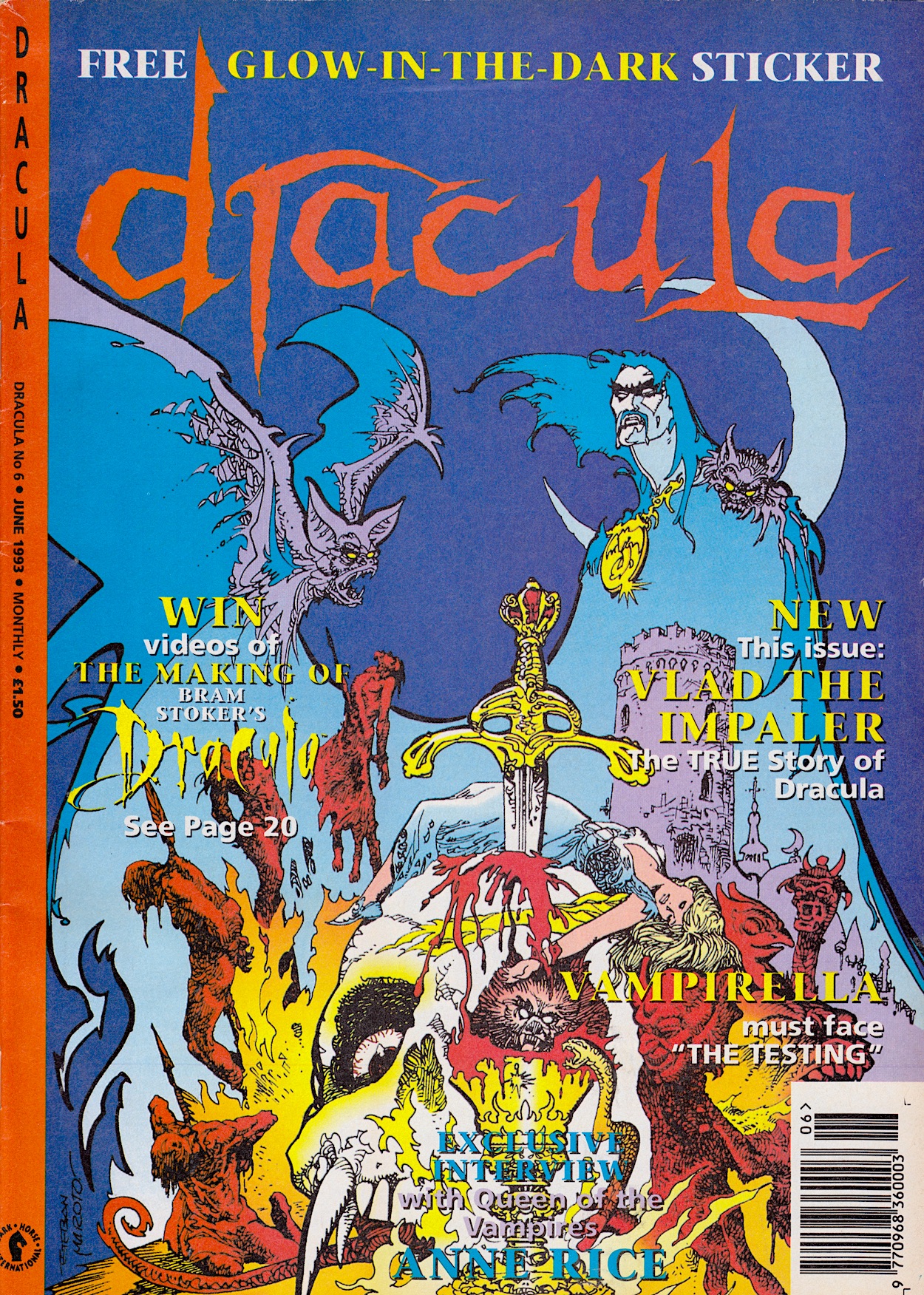
It’s quite different this month, isn’t it? Although John Bolton’s new logo is reminiscent enough of the movie’s for it to feel like a natural progression for the publication. Inside, the continuation of Vampirella’s story and the Bloodlines news pages help with the transition into something very different too. The movie adaptation was a Topps Comics production in the States and Dark Horse International sticks with them for the next main strip.

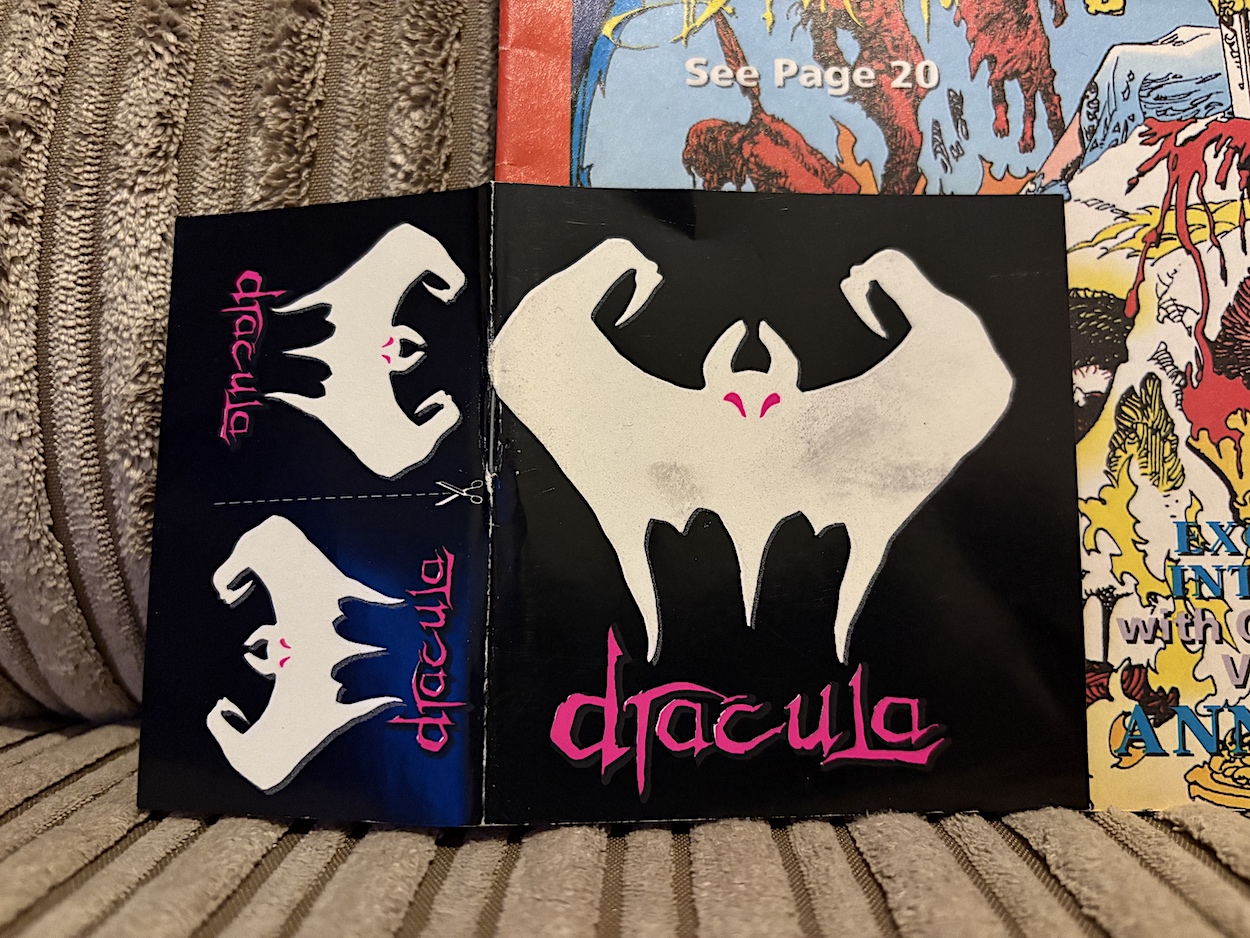
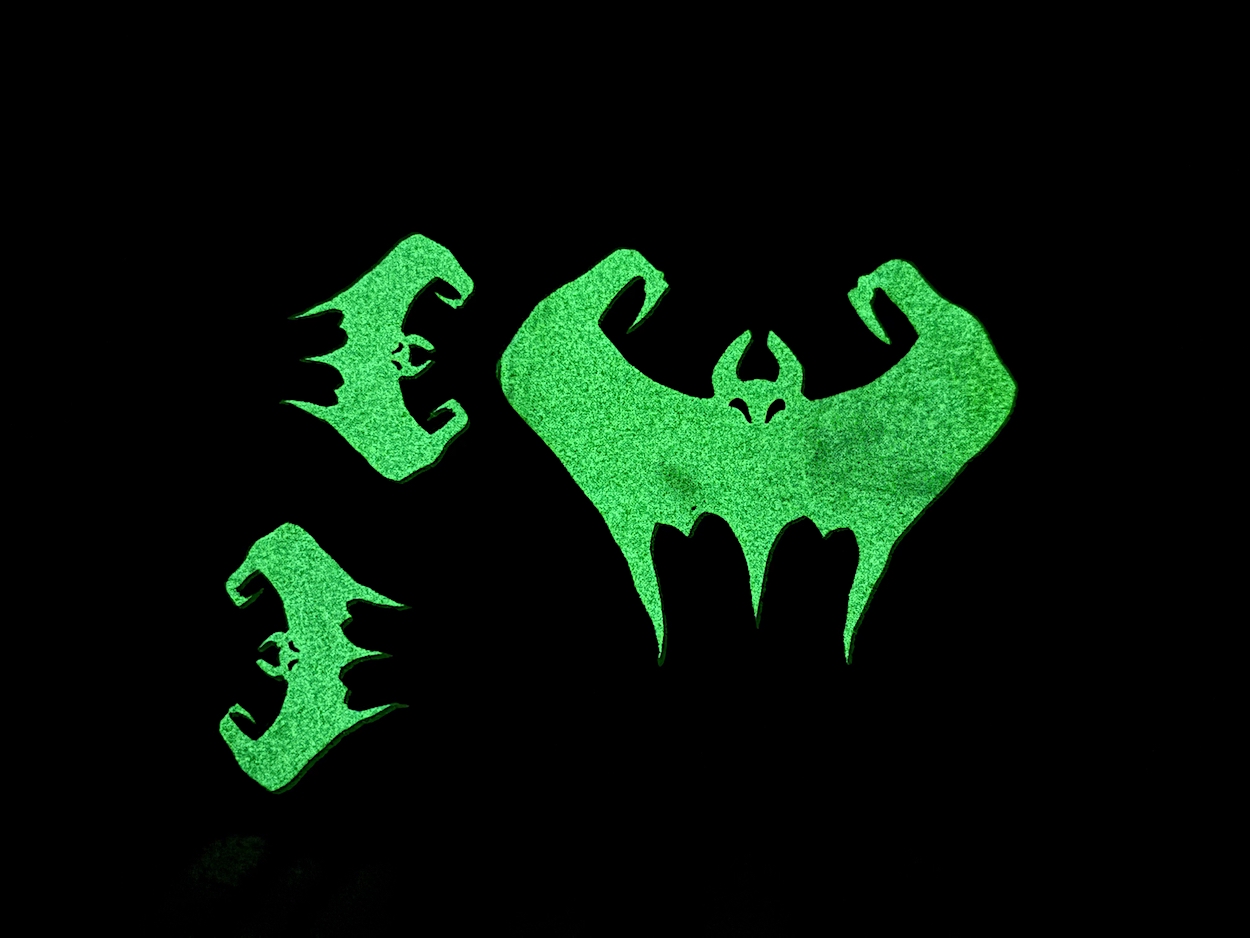
Speaking of sticking, there’s a free glow-in-the-dark sticker (which I admit looks a lot better through my iPhone’s lens than in person). It’s a somewhat child-friendly gift for a comic with a strip containing bloody beheadings. In fact, it’s rather strange the comic no longer comes with the “Not suitable for younger readers” warning. Although I doubt the sticker would’ve convinced many parents to buy this for their child!

Movie adaptation writer Roy Thomas is scriptwriter for what is basically another adaptation, this time of history books. A three-issue mini-series marketed in the States as “The True Story” of Dracula, in reality very little of the real Vlad the Impaler made it into the Count character in Bram Stoker’s book, such was Stoker’s limited knowledge of Vlad or the time in which he lived. This issue contains 15 pages of the first chapter but there’s so much crammed in I was surprised after reading it that it wasn’t more.

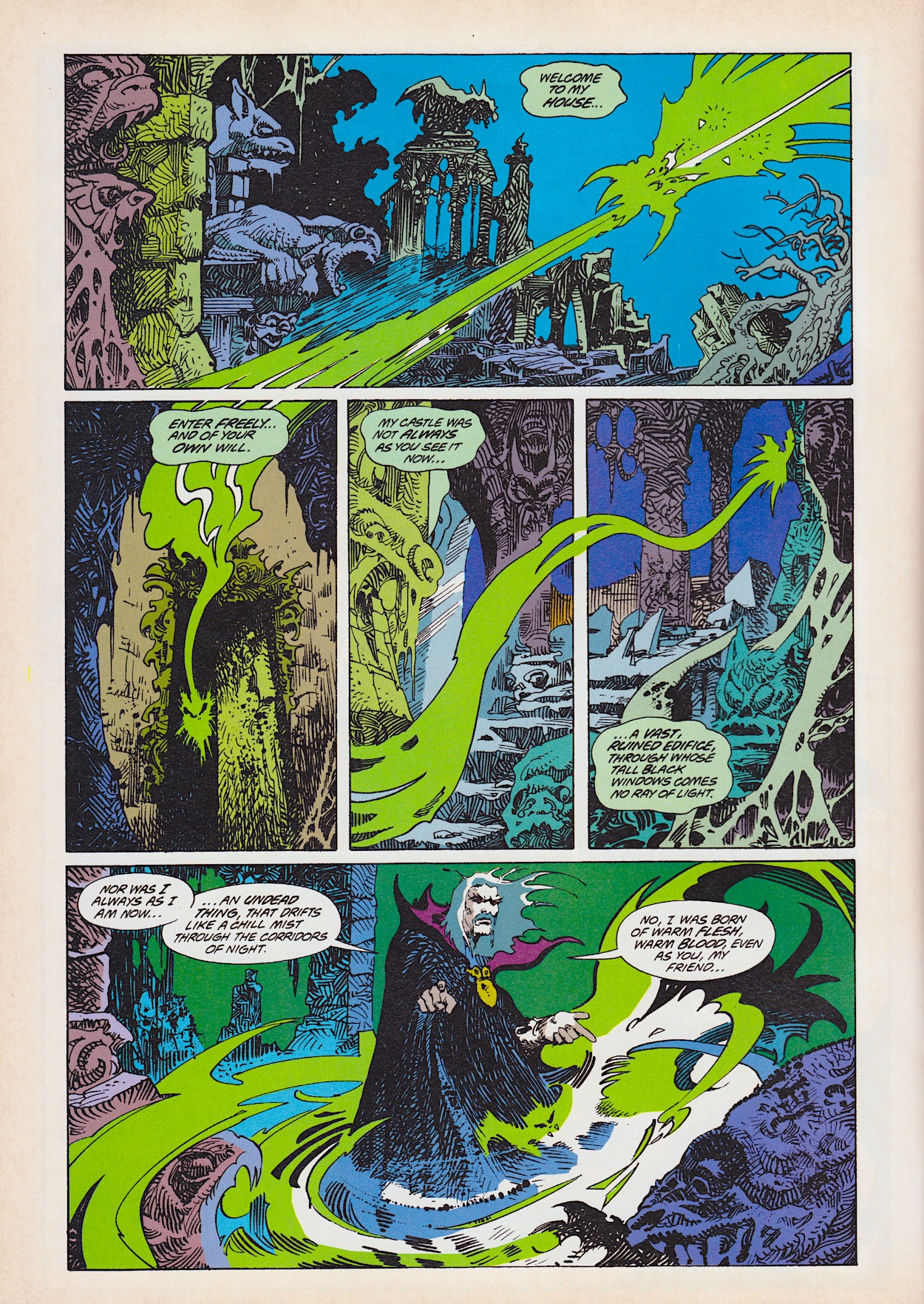
Introducing himself as Dracula complete with fangs, a crumbling castle and assorted monsters and supernatural entities, he welcomes us to his tale by gliding in on a green mist before presenting “the year the cross-wielders call 1431”. His father, Vlad Dracul is a protector of Christendom, was named after the Order of the Dragon and is the military governor of Transylvania and Prince of Wallachia. He’s actually just a strongman for sultan Muran, receiving fortune, land and protection in return for loyalty and the people’s taxes. We see a happy family life with young Vlad, Mircea (oldest brother) and Radu (the youngest). However, it’s not long until we see their true nature.

Young Vlad snitches on someone questioning why their family name means both “dragon” and “demon” in the country’s native tongue. Taking pride in showing his boys how vicious he can be to anyone who questions him, his father has learned from his overlords who impaled their enemies’ heads on spikes (something Vlad III would later become known for). His father takes them to Gallipoli to learn about how their nations relate to one another, but it’s upon this trip that a major event in Vlad’s life takes place.

Muran has discovered elder Vlad has been playing east and west against each other and reaping the benefits. The Turks had invaded the sultan’s lands of Transylvania and Wallachia and Vlad had stood back and let them, thinking he could befriend whoever the ultimate victors would be. In revenge for this disloyalty his two youngest sons are taken in as “guests”, but they’ll be treated as hostages if their father is ever disloyal again.

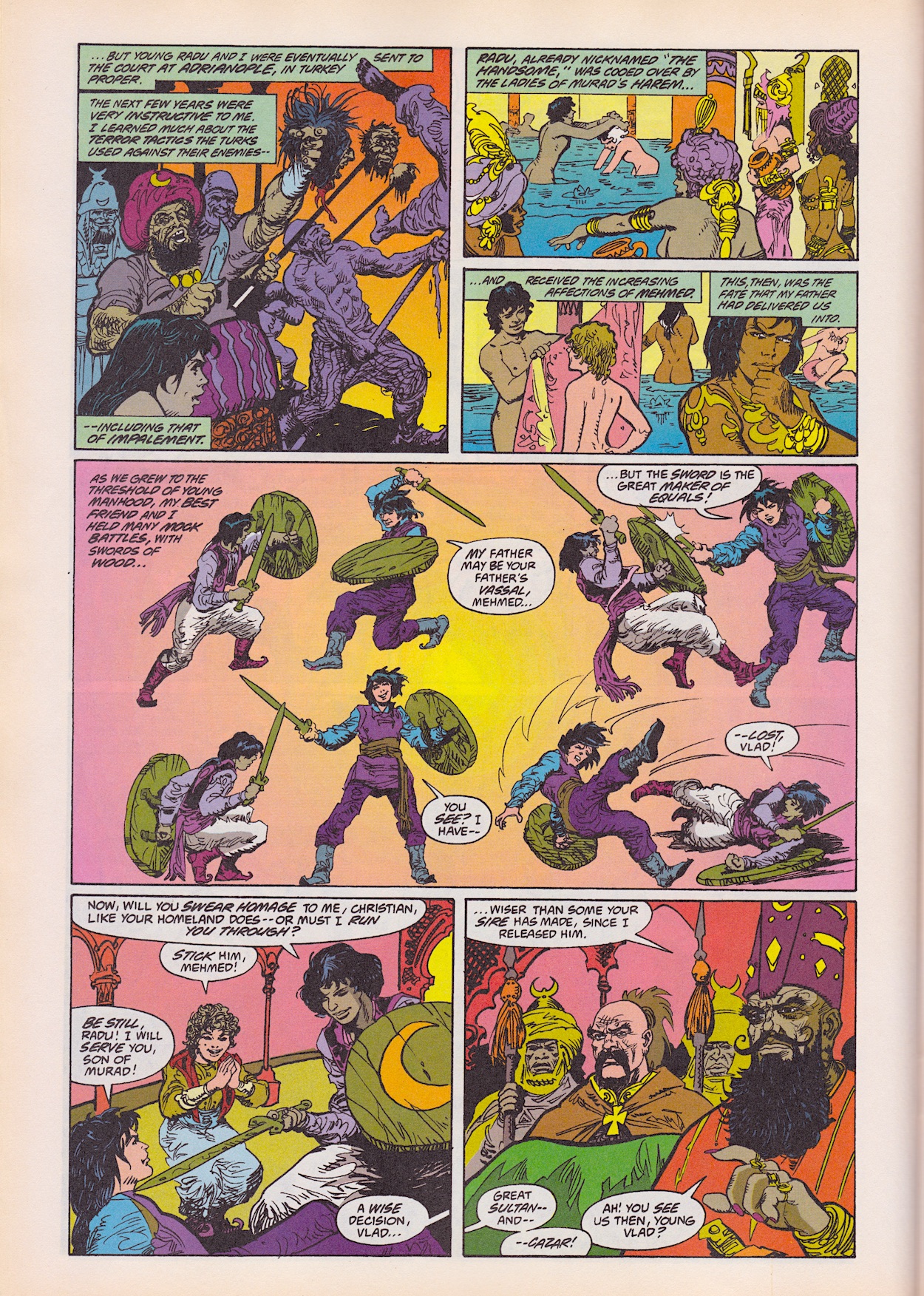
Young Vlad trains to be just as vicious a warrior and becomes good friends with the sultan’s son Mehmed, learning how to rule through fear while his younger brother becomes loved by the harem! During the next year their father proves his disloyalty yet again and in an uprising he’s killed, whilst his eldest son and heir to his throne Mircea is buried alive. Muran then passes down their belongings to young Vlad who he sees as a more loyal successor.

I’ll admit it’s difficult to review this. Esteban Moroto’s (Conan, Red Sonja, Cadillacs and Dinosaurs) art, Paul Mounts’ (Fantastic Four, Ultimates, Reborn) colours and returning letterer John Costanza evoke a lovely classical feel despite this being a new comic at the time, and I find it fascinating because I never knew any of the story of Vlad the Impaler beyond the few pieces in Dracula which were somewhat accurate. However, I’m not sure if it works as a comic strip.

As a history lesson it’s very entertaining and I was drawn in by the story of this man in his youth. But, as a comic strip it reads like an adaptation of a text book, with chunks of the text turned into speech for the players. So yes, it’s a strange one. The original story it’s based on is interesting, and I look forward to comparing it to Dracula, but it’s presented in such a stilted way in its script.

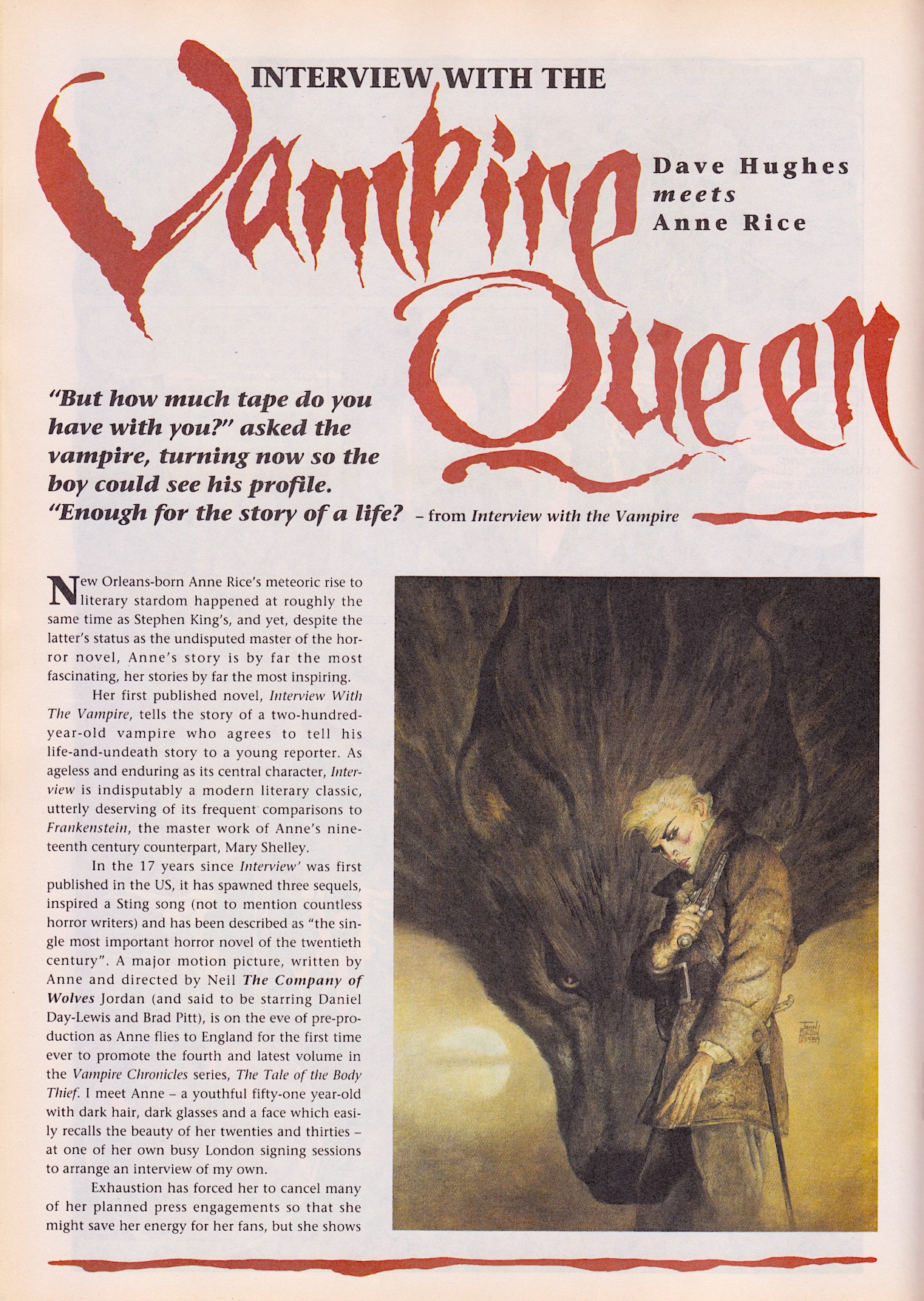
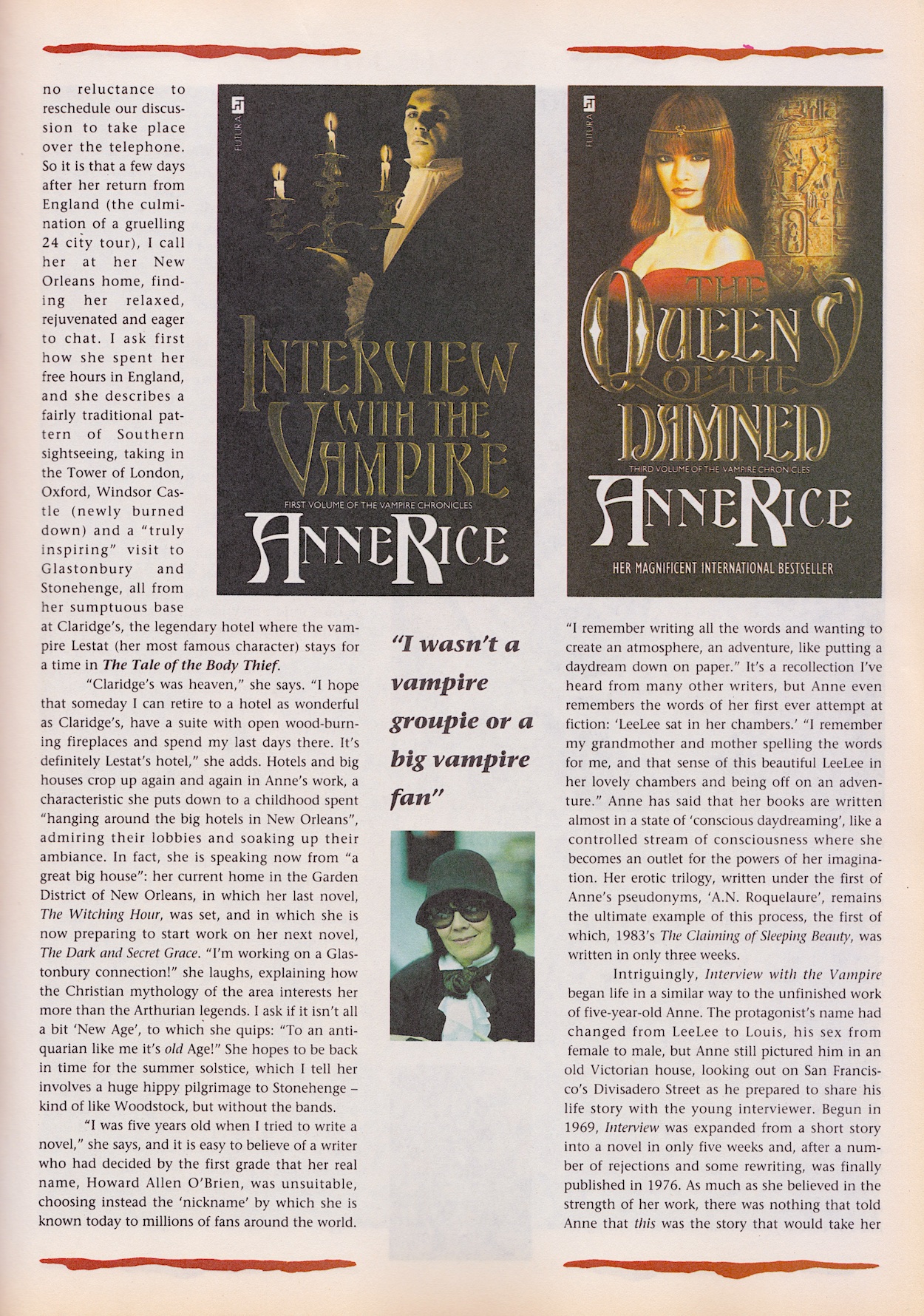
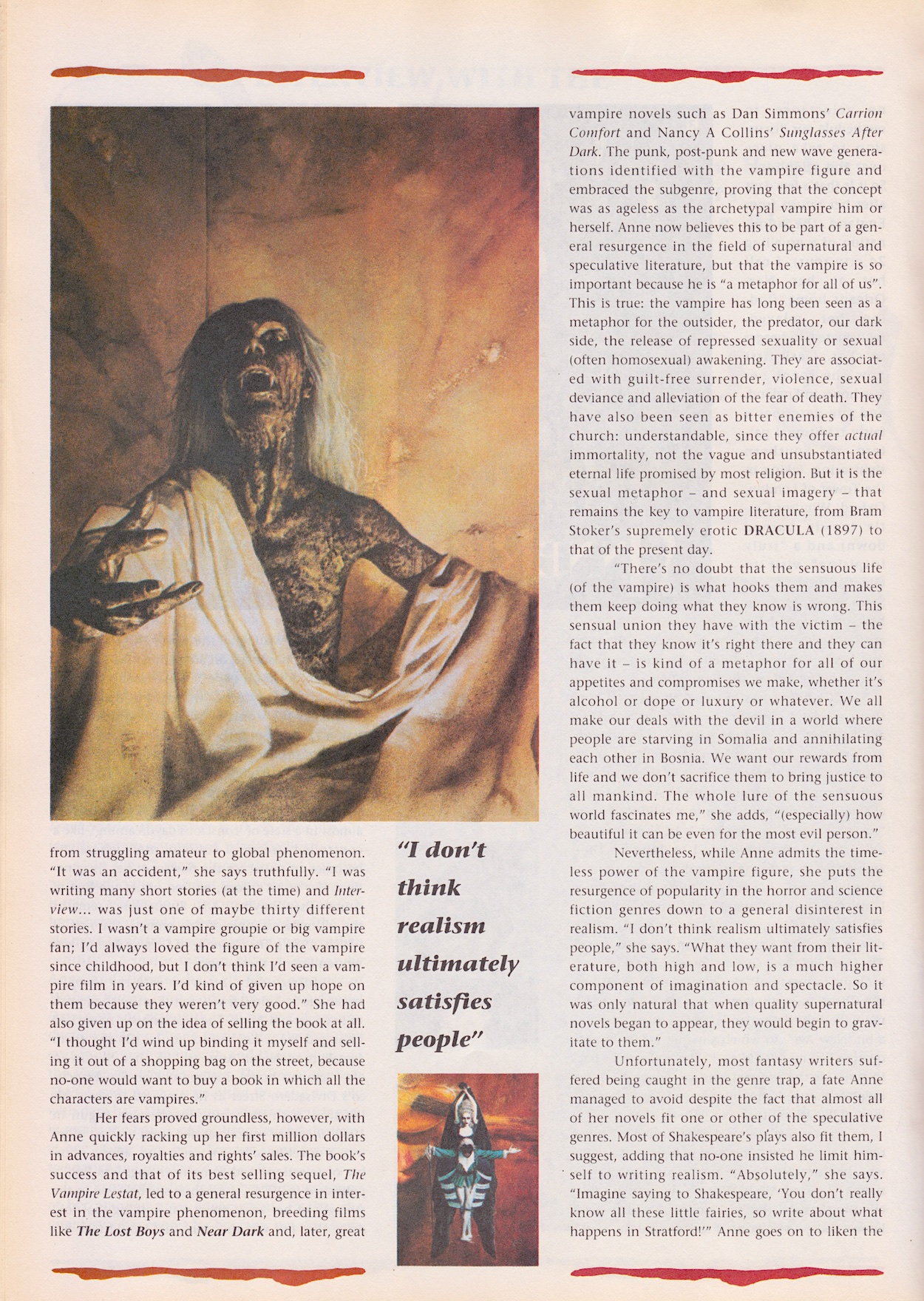
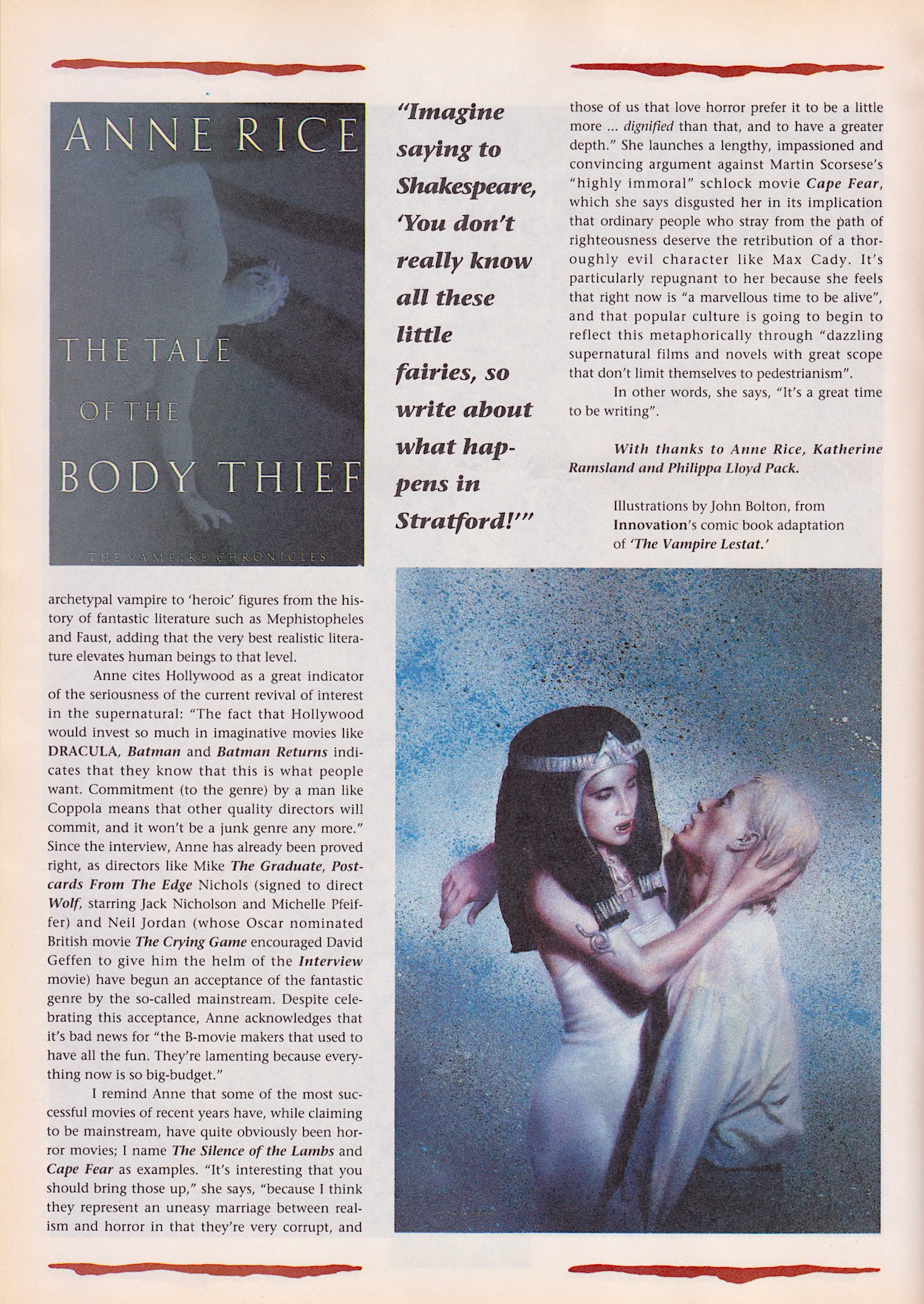
In the middle of the comic is a multi-page, in-depth interview with Anne Rice, writer of the Interview with the Vampire series amongst others. For once it’s not just quotes lifted from various other sources, Dave Hughes actually met the lady herself during what sounds like an exhausting promotional tour. I’ll admit it’s a novel and movie I know nothing about but from reading this and doing a bit of research I have to say I’m intrigued. After last month’s feature on the BBC’s Dracula mini-series this comic is filling up my Hallowe’en viewing rightly.

I’d no idea the novel was released the year before I was born. I’d always assumed it was relatively new when the film was produced. The movie was still in preproduction during this interview and there’s no mention of Tom Cruise. In fact, I was disappointed to read online of Anne’s negative reaction to his casting. However, once she saw the movie she said he “is Lestat” and admitted she was completely wrong (even calling him up to apologise) so now I’m even more eager to watch his performance.

“We want our rewards from life and we don’t sacrifice them to bring justice to all mankind. The whole lure of the sensuous world fascinates me.”

Anne Rice

I’m always fascinated to learn of a writer’s process, whether I’ve read their work or not, and this feature does not disappoint. It covers the original novel’s creation and how long it took to go from initial idea to finished story. There’s also an interesting dissection of the appeal of vampire stories, although this would appear to be flipped on its head a few years later when Buffy became such a huge hit.

The Bram Stoker’s Dracula movie is cited as proof that tastes were changing, although I think Anne’s description of Silence of the Lambs seems a bit overwrought. It’s in the creation of her original novel, the changes made to the character, her belief it wouldn’t work but she kept going, as well as the ultimate reception that combine to be really interesting. It also doesn’t hurt seeing John Bolton’s gorgeous illustrations from the comic book adaptation of her second novel.

(I did ask Siri to play the Sting song mentioned here and I only made it halfway through it.)

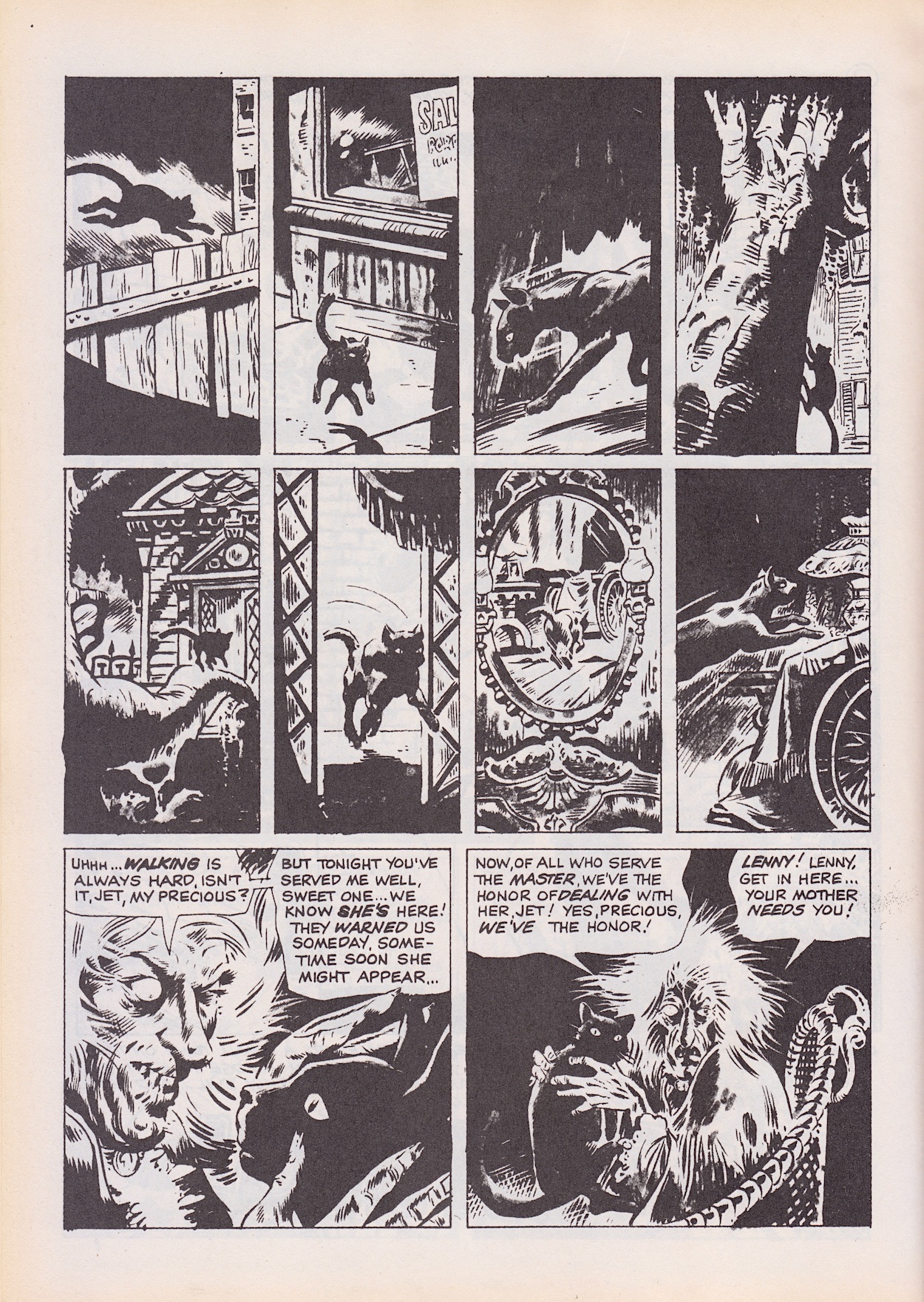
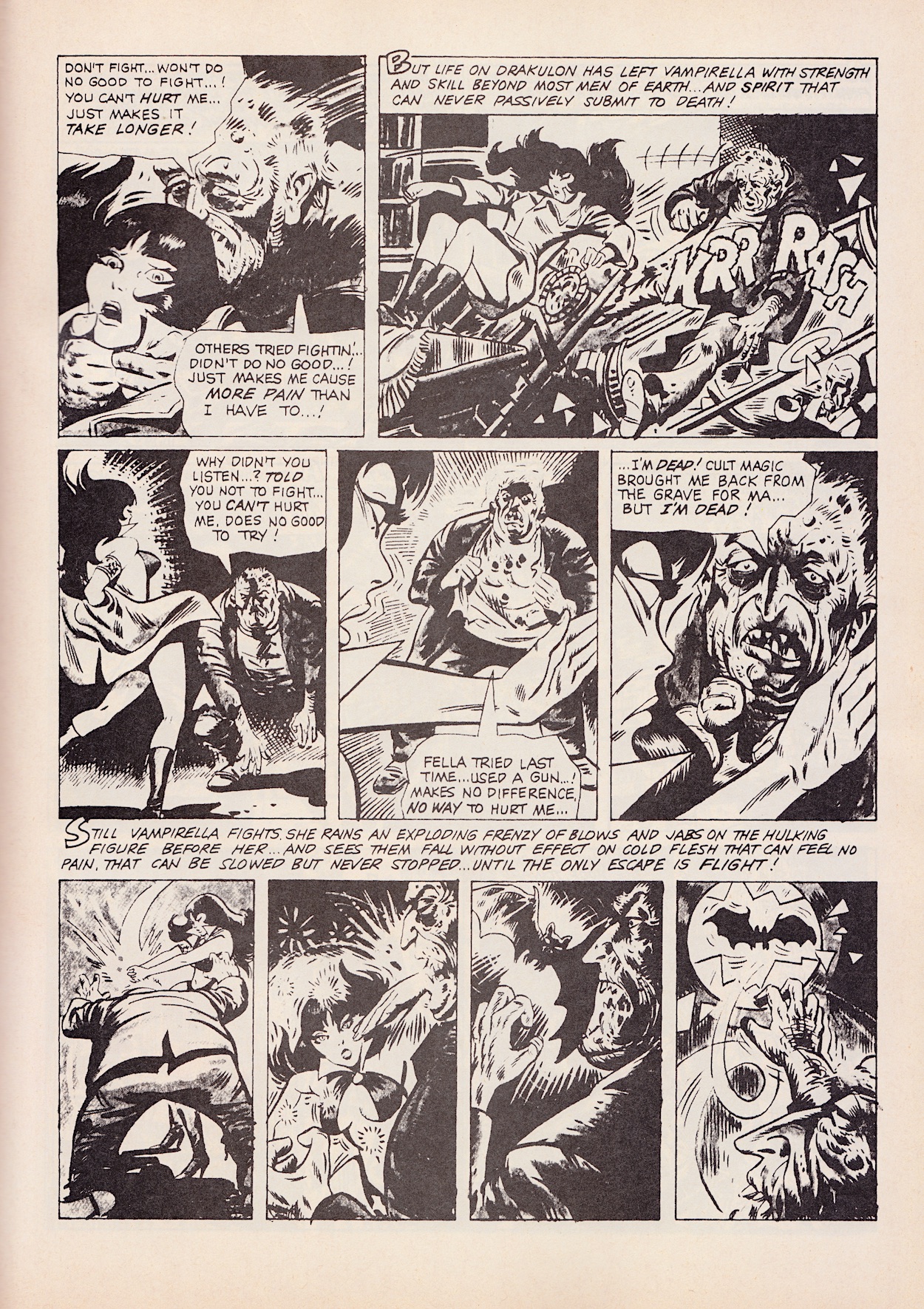
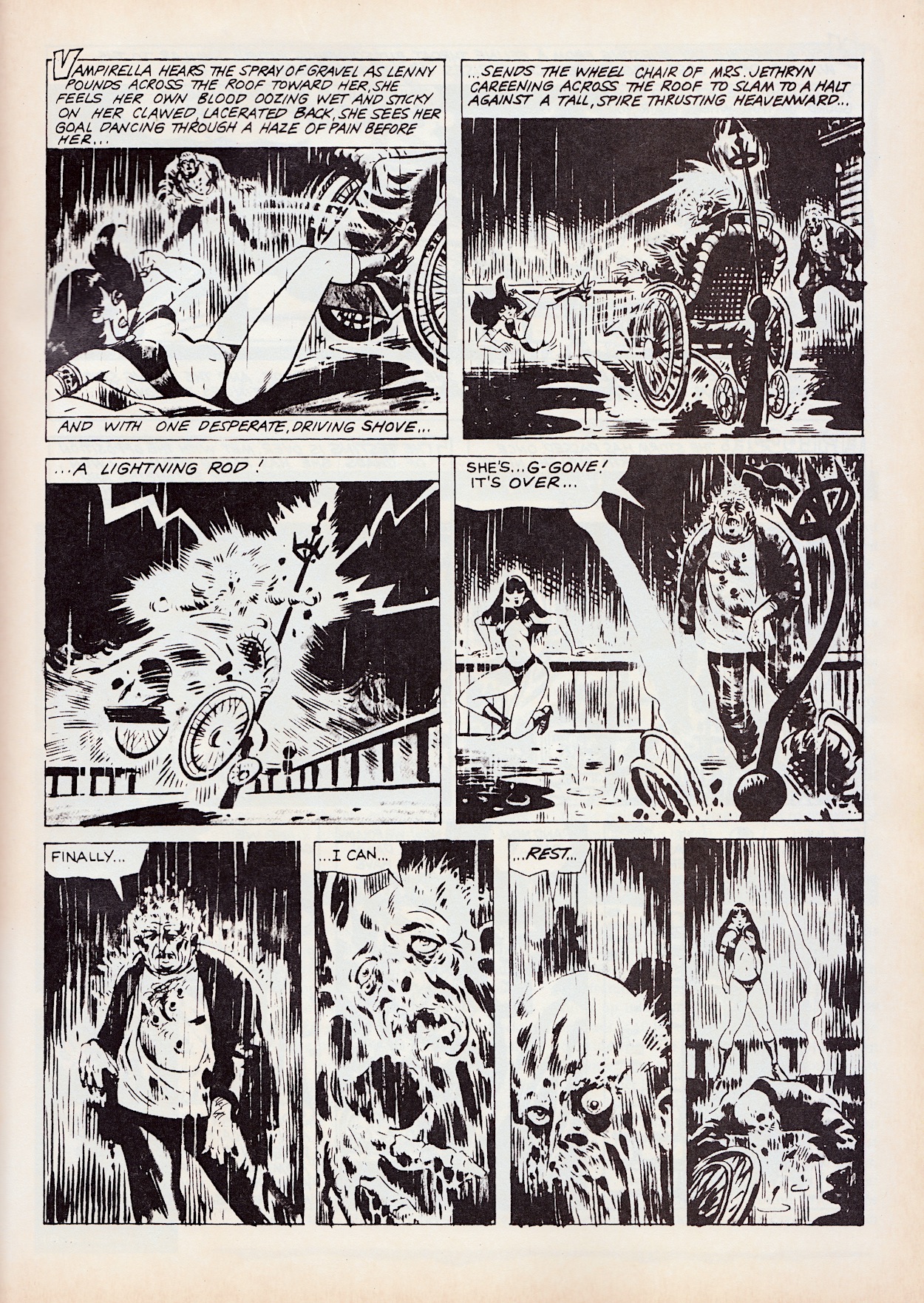
There’s no one-off strip like last issue’s Werewolf which I’d have preferred over Vampirella, but fortunately her tale is a vast improvement over her previous entry. It’s a complete 12-page story by Archie Goodwin and drawn by Tom Sutton, in which she is tracked down by a member of the chaos cult. This is done via a cat, so I was immediately enjoying this more than last time. The two villainous characters are a frail elderly lady and her unwilling but ultimately murderous son with echoes of Psycho, released nine years earlier. (Son Lenny even spies on Vampirella through a hole in a wall behind a painting.)

Their backstory boils down to the cat being mind-controlled by Mrs Jethryn because she’s bound to the library building by a curse that allowed her son to be resurrected. After a battle with Vampirella, Lenny’s happy to be killed and finally freed. I can happily report the cat gets a happy ending too. Released from her control it runs off home with the woman’s soul trapped inside, unable to influence the cat or even make her presence known. I’ve no problem with much older strips appearing (for example the classic Machine Man in early issues of Marvel UK’s The Transformers was a great fit) and this small story is fun to read. However, we see Vampirella stealing a raincoat to protect her from the weather… so why can’t she steal some actual clothes?!

Dave returns for his usual Bloodlines news pages and you may wonder why you see Space:1999 here. It’s because of the guest stars who might be of particular interest to readers. I’ll also admit the two-part episode of Star Trek: The Next Generation sounds intriguing, and that’s coming from someone who’s never seen a full episode. I do find it strange Children of the Night’s narration is criticised when you consider how Bram Stoker wrote Dracula.

On a more positive note I was thrilled to see the interview with Anne was just the first of a series with female authors, so that’s something I’m really looking forward to next month. The issue ends with the first letters page, Fang Mail, which is a great name and there’s an advert for Manga Mania which had a whopping 88 more pages yet only cost 45p more. You’ll see examples of these Dark Horse International adverts in a special collection at a later date on the blog.

The comic had proved to be a success while it was adapting the movie with good sales and a good reception from readers. However, now knowing it would be cancelled just a few issues later it’s clear not everyone was a fan of the new contents. Still, I look forward to finding out more about Transylvanian history when #7 hits the blog on Sunday 15th June 2025.

iSSUE FiVE < > iSSUE SEVEN

DRACULA MENU

BRAM STOKER’S DRACULA #5: FiNAL(E) BITE

More and more headlines adorn the front cover of Dark Horse International‘s Bram Stoker’s Dracula as  strips and features are added, the comic morphing like the Prince himself on this great Mike Mignola image. Gone is the glossy cover, replaced with a good quality matte paper throughout that seems to suck up the ink magnificently, and you’ll notice a lack of specific dates on the spine. That’s right, the comic is now an ongoing monthly title instead of a limited series of three-weekly issues. Not that anything is made of this in the editorial. More on this below.

Our main strip runs to 17 pages, concluding the adaptation and again it’s the art that really stands out. The spectacular moments during the final 20 minutes of the film must’ve been daunting for penciller Mike, inker John Nyberg and colourist Mark Chiarello. The minimalist style flies in the face of the film’s production design but it works perfectly, such as with this opening scene above. The carriages aren’t even drawn but it works. (Accompanied by John Costanza‘s lettering of Jonathan’s diary.)

In fact there are some small, incidental panels of individual characters which, if combined in a grid, could make for a lovely minimalist poster for fans of the film. Look at these images below of Jonathan (Keanu Reeves), Arthur (Cary Elwes), Mina (Winona Ryder) and Quincy (Billy Campbell) and imagine that large poster made up of these and likewise panels for all of the others.

The first half of the strip concentrates on the journey to Dracula‘s castle and the inner fight of Mina’s as she struggles between her love for Jonathan, the enforced lust for the Prince and Helsing‘s attempts to save her. As with previous chapters the only negative here is the memory of these scenes from the film making for an unfair comparison. The horseback gunfight was an absolutely thrilling moment as our heroes fought the setting sun, accompanied by Wojciech Kilar‘s booming score. Reading it instead of watching it accentuates just how much their music brought to the scene! Also, the key factor of the setting sun is completely missing apart from one mention in text.

Meanwhile, further ahead at the castle Helsing battles with Mina’s soul. The powerhouse performances by the actors is replaced by some dramatic poses, which are highlighted wonderfully by the lack of detail, the silhouette of Mina over Helsing with the three vampire women scrawled in the background being my favoured panel here. A couple of pages later (after Helsing is seen entering a crypt post-sunrise) we see the ultimate fate of the three watching horrors. It’s surprisingly gore-free given what we’re actually looking at. In fact, gore is something that’s largely been missing throughout the adaptation.

Not that the film relied on gore for its scares, but the comic really dials it down to little more than the odd splash of bold red, such as in Dracula’s final moments after Jonathan slits his throat. From here on it pretty much follows the film shot-for-shot, word-for-word. Well, why would you want to change such a perfect ending? Throughout these months there have been other changes made to the overall film, and there was no way it could match the atmosphere or looks, but what this series did differently to other adaptations was make bold artistic choices.

What we’ve been treated to over these first five issues is nothing short of a work of art. An adaptation of a work of art into another, in fact. For fans of the film it’s just such a unique take, a love letter to the movie. It feels like the team has created a tapestry of the film in comic art and as such it transcends a mere “comics adaptation of the current blockbuster movie”. It’s best enjoyed as a piece of art in this way and when it is it’s the best movie adaptation I’ve ever seen.

Dave HughesBloodlines news pages are chock full of goodies this month (although we’ll try to ignore the creepy description of actor Sadie Frost as “delectable”), beginning with the box office takings of the film so far. Until beginning this series I’d no idea it was this big at the time! Saying “set is the operative word” when describing where it was made is a reference to the fact the whole thing was filmed on huge soundstages. Even the outdoor scenes were elaborate sets, something I wish the comic had delved into in more depth.

There isn’t exactly glowing praise for something they then immediately give away in a competition, I wonder if Coca-Cola had anything to say about the ‘Cult Classic’ logo used on the Evil Force video cover, and after reading the Sound Bites it’s no wonder Gary Oldman loves playing Jackson Lamb so much these days. One last thing of note, I have no idea how that “natural conclusion” was made in the ‘Scarlett Woman’ news item! (Oh, and I’ve given up on the promised Sadie interview ever appearing now.)

Vampirella‘s strip (written by Archie Goodwin, drawn by Tom Sutton) is reduced to seven pages to make way for a second back up, although personally I’m quite glad there’s less this time. The place she found herself in happens to be where a cult is trying to bring forth a demon of chaos and the scantily-clad alien vampire is to be sacrificed in order to do so. The man she fell in love with after five minutes turns out to be the soul of a warlock in a dead man’s body. He saves Vampirella and decides the evil nurse woman will be used as a vessel instead. How romantic. However, when she says no to him he turns on her (which sadly sounds rather familiar these days) and soon he’s trying to sacrifice her again.

She’s saved by the monster from her visions, who is actually the soul of the deceased man inside the withered old body of the warlock. You keeping up? The summoned beast has come for their souls but instead devours all of the cult and the place crumbles under its power. It’s left up in the air whether it made its way through the portal and the strip ends with the revelation that Van Helsing is making his way around the graves of the crashed airplane’s passenger list, staking them all until he finds the vampire he knows was on board. (Such a shame the comic’s ‘Previously’ round up describes this despite it not being mentioned in the previous issue, ruining the twist.)

As my first delve into the world of Vampirella I’m not particularly underwhelmed because I had low expectations (see last issue’s review to find out why). I know it’s an old strip and it’s very much of its time, however I’ll admit there’s intrigue with Helsing’s mission and the chaos demons, so we’ll see if the characterisation of the lead develops more next time.

There’s a fascinating two-page article by Adrian Rigelsford about a forgotten BBC Count Dracula production from the year of my birth, 1977. (The article begins with a play on words based on the pop rock band Transvision Vamp so I was sold immediately!) I didn’t think I’d be interested in some older Dracula adaptation but as soon as I found out Octopussy‘s Kamal Khan himself, Louis Jourdan played the Count I was, ahem, sucked in.

It all sounds fang-tastic (sorry). Originally shown as a three-hour movie and then split into episodes for repeats, at the time of this comic’s publication it was thought to be one of those “lost” BBC shows, which as a Doctor Fan I know all about. However, in a spooky coincidence, in the same month this issue was released the BBC repeated Count Dracula as a two-parter, possibly spurred on by the success of Francis Ford Coppola‘s movie. It hasn’t been broadcast since but was released on DVD in the early 2000s, so there may be a little second-hand purchase for Hallowe’en this year.

Finally, there’s a second six-page back up strip simply called Werewolf. I sighed when I saw a credit for Vampirella’s writer but this is an error, it was actually written by Larry Ivie (Eerie, T.H.U.N.D.E.R. Agents, artist on Castle of Frankenstein) for #1 of Creepy back in 1964 by Vampirella’s Warren Publishing. This story follows a complete asshole of a big game hunter (aren’t they all?) but he’s by no means the hero of the story. Treating local tribespeople like simpletons and beating his assistant, the ultimate outcome of the strip is satisfying as a result.

He’s been hired to track down a fabled immortal beast that’s said to transform into a human during the day. It has never killed but its evil apparently infects those around it. In the end he does indeed track it down and empties bullet after bullet into it to no avail. Not until he hits the one tiny white spot on its body does it fall to the ground. It then turns into a previous animal hunter, who had been cursed to live as the beast until someone else skilled in killing innocent animals could take it down.

The hunter of the story then transforms into the werewolf, doomed to live this way for hundreds of years just like his predecessor. The moral of the story is clear and it’s always fun to see someone who hunts animals for fun get their commence in my book. Or in my comics, I should say. A simple, straight-to-the-point story with some gorgeous art by Frank Frazetta (Famous Funnies, Conan the Barbarian novel covers, album covers and movie posters), this bodes well for the comic’s choice of any additional back up strips from here on. Speaking of which, time to check out that back cover.

There’s a full-page Next Issue back cover just like Aliens had in its #8 and this too was used as advertising across the range. With four more pages (is this where Aliens’ four pages wandered off to?), the origin story of our main character, more Vampirella and an interview (fingers crossed) with Anne Rice, the comic is about to continue morphing into something quite different, heralded by the change in logo away from that of the movie’s. All for the same price though. Which of course is free for you lot, just tune into the OiNK Blog from Sunday 11th May (four weeks from now instead of three).

iSSUE FOUR < > iSSUE SiX

DRACULA MENU

BRAM STOKER’S DRACULA #4: THE CHANGiNG FACE OF EViL

While it’s not the easiest to read (and so wouldn’t have stood out from the cover on newsagent shelves), look closely at Mika Mignola’s cover to this latest edition of Dark Horse International’s Bram Stoker’s Dracula and you’ll spot a new addition to this fourth issue. Vampirella has joined the comic as a back up strip, just as Xenozoic Tales would join the fourth issue of the publisher’s Jurassic Park later in the year.

For both series, sales figures had proved themselves enough that the three-weekly movie adaptations were turned into monthly ongoings, the final chapter split in order to get ahead of the new schedule and introduce readers to new content. Inside this comic, both strips run to 14 pages, Dracula himself getting exactly half the amount as normal. However, Vampirella gets no introduction anywhere and the editorial is still in the hands of Van Helsing.

I’m going to assume once the main strip concludes we’ll no longer have these characterful introductions so I’m enjoying them while they last. The final chapter begins with a scene that simply can’t be conveyed properly through still images, that of Anthony Hopkins devouring his food in the English pub like a savage. The result is a much more restrained version of the character, which is unfortunate.

In fact, I realise this has been the main problem for writer Roy Thomas all this time. It’s just impossible to convey in a comic the wonderful acting choices the talented cast made throughout the movie. However, when we turn the page and Mina questions him on how her best friend Lucy died, we do get one of the film’s rare comedic moments still intact. Darkly comedic of course. Very darkly comedic. 

This chapter includes the burning of the boxes containing Transylvanian soil Dracula had moved to his newly purchased, abandoned Abbey. It includes all of the ancient text, the Latin words spoken by Van Helsing to cleanse the place of evil. But more interestingly for me is the beginning of this scene with the rules of the vampire set out. They were a world apart from the clichéd rules we’d become used to from decades of other movies and TV shows.

Alongside the death of Renfield the main bulk here is dedicated to Mina deciding to join her beloved Count in eternal life. While it’d be impossible to convey how surprisingly touching this scene was (especially given what it was about!) thanks to the excellent performances of Gary Oldman and Winona Ryder, penciller Mike, inker John Nyberg and colourist Mark Chiarello (alongside letterer John Costanza) do an excellent job of portraying their intimacy in what’s actually a shocking moment. For an adaptation of this movie it’s perfect.

The iconic moment of Dracula using one of his nails to slice across his chest, drawing blood for Mina to drink, is presented in a similar fashion. Then the colours are shifted for one panel to highlight the key moment. After two pages of blue this really stands out. Then, interrupted by Jonathan and Van Helsing, Dracula changes into his man bat form and reiterates his anger from the beginning of the film. I always found this the most fascinating and surprising part of the character; a devoted Christian who had sacrificed so much in the name of their God, the religion’s archaic beliefs and the selfish nature of its men betraying him.

I never knew this side of the character from the Dracula films we saw growing up; he and Christianity are essentially two sides of the same coin. While the cross and Van Helsing’s devotion to the faith fight evil, Coppola’s film never let us forget whose fault this was in the first place, why Vlad became what he did. On the flip side, he’s obviously a monster and a mass murderer but we never forget why this happened to him. The film perfectly balances this to such a degree that we’re both horrified and emotionally moved by him.

In the middle of the issue is Bloodlines by Dave Hughes, the usual two-page news section about all things vampiric in the world of 90s entertainment. Dracula’s Oscar nominations are mentioned and, while I could easily look up who did and did not win, I’m going to wait and let the comic tell me, just as readers at the time had to. I’m looking forward to finding out, though.

The competition informs us of the insane lead time needed when working on the comic, the Sound Bites are actually interesting this month with their comparison between 1977 (the year I was born, funnily enough) and 1993 in respect to thoughts about vampire films, and there’s mention of all-night events at the cinema. Personally, I found watching Terminator 1, 2 and Genisys back-to-back in a cinema long enough, never mind a whole night! (Especially given how that place smelled by the end.)

I have to say the choice of image for the award nominations as presented by Columbia Pictures is a strange one. To anyone not familiar with the film they could easy assume Tom Waits was playing the lead character. Then opposite this always-fun news feature is the first page of our black-and-white back up and I breathed a sigh when I saw it. Not of relief, but of disappointment and pessimism.

Over the years I’ve seen Vampirella comics advertised here and there and even as an impressionable teenage boy I always felt her clothing (or lack of) was shamelessly gratuitous. Not that I would’ve used those words as a teenager! As an adult I think she always looked like she was there to appeal to a certain type of male reader, of which I am not. So while researching for this review it was a shock to find out she was co-created by a woman.

Trina Robbins did so much fantastic work to raise the profile of women in comics that I’m rethinking my assumptions about this character

Vampirella was created by Forrest J. Ackerman (literary agent, actor, editor) and Trina Robbins (Wonder Woman, Strip AIDS, GoGirl!) in 1969. Trina did so much fantastic work to raise the profile of women in comics throughout her life I’m rethinking my assumptions about this character. In fact, it was Trina who designed her look. Editor Archie Goodwin then continued to write and develop her.

While the issue gives no official introduction other than the cover headline, there’s a brief history of the character in the strip. So, Earth’s vampires originate from Dracula, a forgotten member of the Vampiri race who left his homeworld (Drakulon) centuries ago only to be corrupted by the demonic entity known as Chaos. Vampirella is the last of her race who came to our planet after her own died out. With no other choice, she has to feed on human blood. However, underneath she’s good so I’m assuming she attacks and drinks but does not kill. Even Dracula was originally peaceful in his story. I also assume the ridiculously revealing costume is how her race dress.

It’d be polite to say this story is “of its time”. While Trina co-created her, this particular story (of which she was not involved in) feels very much like a strip written by men for men. Rescued from the cold by a doctor running a remote retreat for the rich, he’s amputated her apparently rotting wings and is clearly lusting after her, despite an angry nurse claiming he must keep his distance from Vampirella while dangling a satanic-looking necklace.

The best part is a graveyard scene depicting a descendent of Van Helsing‘s digging up bodies to ram stakes through their hearts. This might explain why this story has been chosen as a back up and it’s an interesting segue, but in the main I’m disappointed with our main character. She’s scared of the doctor, terrified even, and for most of the strip is portrayed as having a strong will to resist whatever drugs she’s on. She’s piecing together the mystery of what’s going on but then suddenly she’s snogging the man after a simple slug of his blood.

The strip is from 1970 so it’s very much from a time when a strong female lead character was rare. In fact, that was still a rare thing when Barrie Tomlinson created Kitten Magee in Wildcat comic in the late 1980s! But this was the 70s, so apparently a strong female character still had to be dressed to appeal to men’s baser instincts and fall for the man full of red flags at the drop of a hat. This doesn’t read well today.

Back to the comic’s title character and the Inside Dracula making-of series by Gary Gerani and Dave Hughes is only one page this month, possibly to spread the final part over two issues just like the strip. A piece about Salem’s Lot by Seamus Ryan is the random substitute for one page, in which he discusses its vastly different cuts. Disappointingly, there’s still no sign of the promised Sadie Frost interview and by this point I’m just going to assume it’s not going to appear.

The mention of deleted scenes reminded me I still hadn’t checked them out so I got my Apple TV on and watched them today. I like making-of features but usually skip deleted scenes (they’ve been deleted for a reason). After watching them for Dracula I can still say the only exception are the ones from The Lost World: Jurassic Park, which I’d love to see added back in to that movie. Oh, and Dracula’s final box office? On a budget of $40,000,000 it raked in a superb $215,862,692 according to Box Office Mojo. Superb! And well deserved!

The final paragraph of director Francis Ford Coppola’s view on why he makes movies reminds me of why I write. So it feels like a fitting note to end the review on. I’m intrigued to find out what direction the comic is headed in and look forward to the art depicting the movie’s climax in just three weeks, on Sunday 13th April 2025.

iSSUE THREE < > iSSUE FiVE

DRACULA MENU

BRAM STOKER’S DRACULA #1: DARK ARTS

The first new real time read through for 2025 adds a third title to the Dark Horse International menu on the blog with Bram Stoker’s Dracula from 1993. This was released in the same year as their Jurassic Park comic and follows a similar formula, the movie adaptation taking up all of the comic strip space inside and followed by some extra features. This is similar to the Alien³ Movie Special mini-series from the previous year and has the same description down the left-hand border.

However, much like Jurassic Park, this comic would continue beyond the end of the movie and become an ongoing monthly, albeit with a rather big caveat (which we’ll get to when the time comes). The atmospheric cover by Mike Mignola (Hellboy, Rocket Raccoon, Baltimore) cements the dark, gothic feel of the strip  and upon opening we’re met with a suitably black interior design.

I defy anyone who has seen the film not to read the introduction in Anthony Hopkins’ voice. I note that subscriptions are offered so clearly DHI were hoping the adaptation issues would be enough of a success for them to carry on. However, while it was advertised as a fortnightly in other comics it’s actually triweekly like the aforementioned adaptations.

Edited by Dick Hansom (Jurassic Park, Aliens, Speakeasy), the 36-page comic has a lovely glossy cover with matte interior pages, a 28-page first chapter and two two-page features at the rear. So far, so DHI. The real stand out here is the strip’s art. Regular readers will know how I feel about movie adaptations but to see an original art style filled me with confidence for this one.

The art goes the opposite way of the elaborate, ornate movie. It may have quite simply drawn scenes and characters, but it’s the use of shadow that ties it in so neatly to the film. There’s simply no way of capturing the intricacy of the design and the style of Francis Ford Coppola’s direction so instead it feels like penciller Mike, inker John Nyberg (Action Comics, Doom Patrol, Nexus) and colourist Mark Chiarello (Batman/Houdini, Hellboy, Hush) have gone for atmosphere over detail.

It works. It looks old-fashioned but I don’t mean in an ‘out-of-date comic’ kind of way. I mean the individual panels feel like they could’ve been drawn around the time the story is set and cleaned up for the 90s. Simple, sometimes scratchy line work with a mixture of bold colours for the more horrific scenes and subdued, almost washed out colours for the spookier moments, with the swathes of black in all the panels capturing that claustrophobic, haunted feel of the film, it’s just perfect.

John Costanza (Jurassic Park, The Tomb of Dracula, Red) does an incredible job on lettering Roy Thomas‘ (Conan, Secret Origins, Stoker’s Dracula) script too. Whether it’s historical prose, different handwriting (or typed text) for each character’s diary or his regular style, it’s all very clever and captures the narrative aspects of the film, as you can see above. The original US comic edited by story by Jim Salicrup (writer on Transformers, Sledge Hammer and The A-Team), credited here as story editor.

Sometimes, however, the use of shadow can make it difficult to work out sequences of events and once or twice I found myself perusing panels a few times to work out what was happening, and that’s with me having seen the film recently. Like most comics adaptations the main audience would’ve been those who’d seen the movie already rather than new readers. Even more so with this one, I feel.

I’ve criticised previous movie adaptations for rushing through their screenplays or for being poor copies of their big screen originals, but I’ve also praised those that took the time to properly adapt the story to a different medium. Bram Stoker’s Dracula falls into the latter category. While what’s written on the page is basically verbatim from the script, the art does a perfect job of taking the movie fan back into that world to enjoy it in a different way.

A perfect example of this is the moment when the carriage comes to pick up Jonathan Harker. In the film a massive set was built for this scene and it was full of highly detailed, creepy imagery. Here, all of that is stripped back. Instead, the sparse nature of the art and the use of shadow captures how that moment felt for the viewer. This brings the chill of the scene to the reader much better than any attempt to just copy it ever could have.

The shadow work brings another benefit too. Previous attempts at adapting a movie have had mixed results in portraying the actors. Most times there’s no attempt at all (and that may have been due to rights), other times they’ve tried so hard to capture their likeness they become stilted and expressionless. This team does something different. Through clever use of dark shadows the characters look enough like the actors without having too much detail, meaning they retain their expressiveness and, most importantly (and something Alien³ failed to do) their faces remain distinct from each other’s.

Not all of the film’s iconic visuals translate well to the page though, the best/worst example being Jonathan’s train journey. While that marvellous model shot couldn’t hope to be replicated on the page, the zooming in on the peacock’s feathers makes no sense here and Dracula’s eyes in the sky just look weird. These moments were great examples of the film’s iconic style but I can’t help thinking they’d have been best left out here, or at least have the Count’s eyes elaborated on to make more sense in this medium than the seemingly random panel below.

The first chapter of the story ends on that horrible/terrifying scene with the baby. Anyone who has seen the film will know exactly which moment I’m talking about! Then it’s quite jarring to come to white pages. I kind of wish they’d kept them black, but that may have made them hard on the eyes. As with the first five issues of Jurassic Park, Gary Gerani’s behind-the-scenes feature is in parts and begins with the original source material. I remember at the time some people complaining about what they thought were “changes” to the character (e.g. Dracula walking about outside), so thankfully that’s all put to rest here, confirming this film is the one that follows the book and portrays the character most accurately.

I’m usually one who likes to read opening credits and link the names listed to other films I’ve watched, but I was surprised to find out which family-friendly Steven Spielberg movie James V. Hart had written! Although, I do disagree with him on the best way to read Bram Stoker’s novel. If it’s your first time reading any novel it shouldn’t be the annotated version, or at the very least ignore the annotations until your second reading. They can be fascinating on second reads, but they interrupt the flow of the work and can also contain spoilers for later in the book.

Dave HughesBloodlines is the news feature of the comic, similar to his Motion Tracker pages in Aliens. With Bram Stoker’s Dracula still in the cinemas at the time of publication the comic was keeping us up to date with its takings so far. It would go on to rake in over four times that amount. Also truly placing the comic in the past is the description of Anthony LaPaglia (Without a Trace) as a new actor on the scene! But it’s surely another film release that will catch blog readers’ attentions.

Who knew that silly film would go on to be reincarnated as a hit TV show? A show I really enjoyed until (coincidentally) Dracula turned up. Treating him like an easily-slayed villain-of-the-week was annoying and I remember that season becoming too sombre and lacked the humour of previous years, so I stopped watching. But anyway, it’s another example of placing this comic in our own timelines.

The news pages also mention Malcolm X, another film of the same era that I must revisit sometime, and Anno Dracula, an alternate history novel by Kim Newman which sounds fascinating, although I admit even all these years later I’ve never heard of it. Upon doing a bit of research I found out that in Anno Dracula, the Count’s first wife is called ‘Elisabeta’, a name taken from this film. Also above, you’ll see the usual fun competition and address our comics and magazines like to do at the time.

Rounding off the issue on the inside back cover is this advert for a very 90s jacket tie-in The Master from Doctor Who would’ve liked, and on the back page is an advert for #9 of Aliens. Even though #8 was still to be released two days later, the next one had some exciting new additions and this was also used as a Next Issue page in the Aliens comic itself.

It’s never going to tell the story as well as the film for newbies but this comic was clearly aimed at those who had just enjoyed Bram Stoker’s Dracula at the cinema. In that regard this is the best movie adaptation I’ve come across so far on the blog. That art, that brave decision to create its own unusual style that somehow feels just right, is wonderful. There’ll hopefully be for wonderfulness in just three weeks with #2 on Sunday 9th February 2025.

GO TO iSSUE TWO

DRACULA MENU