
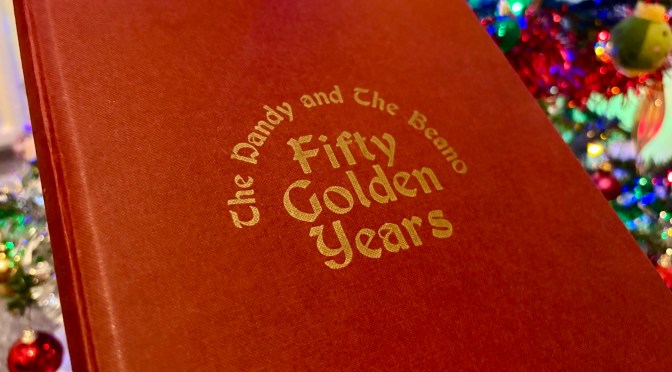
Back in 1987 two things happened in the build up to Christmas. Firstly, my older brother grew out of comics and his weekly Beano. However, The Dandy and The Beano Fifty Golden Years had already been obtained by Santa. As luck would have it, the second thing that happened was me discovering OiNK and immediately falling in love with comics. So this special book was redirected into my stocking in the very early hours of Christmas Day and still sits on my shelves decades later.
While my brother’s comic didn’t really appeal at the time, and the strips in here were even more old fashioned, I found the book’s story about the creation and evolution of the comics fascinating. As an adult I feel I’ve also developed a better appreciation for the classic strips inside. This is mainly thanks to reading a couple of the earliest editions inside the Beano’s 80th Anniversary Box Set and my yearly dips into the world of the Big Comic Books. So it felt like a good time for me to revisit this very special celebration for the first time in nearly forty years.
As seems the case with all comics celebrations the release dates mentioned throughout are actually the cover dates. The cover dates usually referred to the Saturday after publication, the comics released one working day before whatever day was mentioned on the cover. For example, #1 of The Dandy had a date of 4th December 1937, which was the Saturday of that week and it states “Every Friday” on the cover, so it would’ve been released on Thursday 2nd. It’s a small thing but it does annoy me when this constantly happens, especially in a book created by the publisher of said comics.
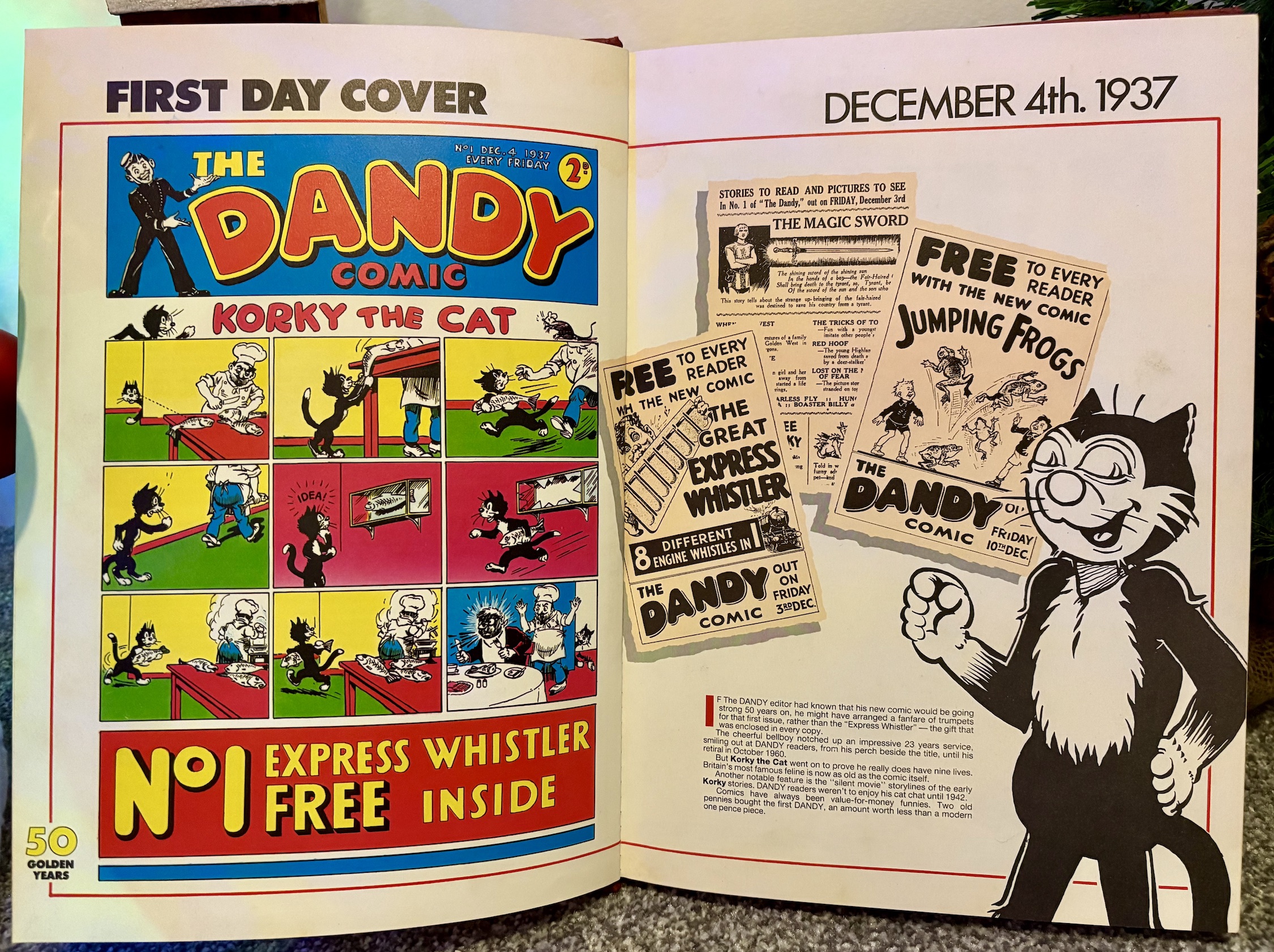
Things kick off with this bright recreation of the first ever Dandy comic, complete with the original version of Korky the Cat. It’s followed by #1 of The Beano and Big Eggo which launched in July of 1938. It then launches headlong into a large selection of examples of strips from the early days of both comics, from those familiar with 80s readers such as Lord Snooty to plenty I’d never heard of, with names like Freddy the Fearless Fly and Deep-Down Daddy Neptune.
It’s not long before the book is showing off its celebrity fans too, beginning with radio DJ Mike Read who guest-starred in an issue of The Beano alongside Dennis. Other notables include Cilla Black, Geoff Capes, The Krankies (suitably enough in the Dennis the Menace section), Ken Dodd, John Craven, Little and Large, Geoffrey Palmer and Joan Armatrading, among many more. It’s a who’s-who of British 80s celebs. Mark Hamill also pops up of course, and he’d pop up again in the bookazine that came with that Beano 80th set. Clearly, he never grew out of it.

Of course, there are also a few celebrities you wouldn’t want to see included today, but unfortunately we have to remember this is very much a product of its time. So if you can ignore a couple of certain children’s TV presenters and a certain politician you’ll find a lot to love here. As you can see Mike shares a spread with a new strip created for the book with Grandpa introducing Poison Ivy to the classic strips and then it’s on to the meat of the book
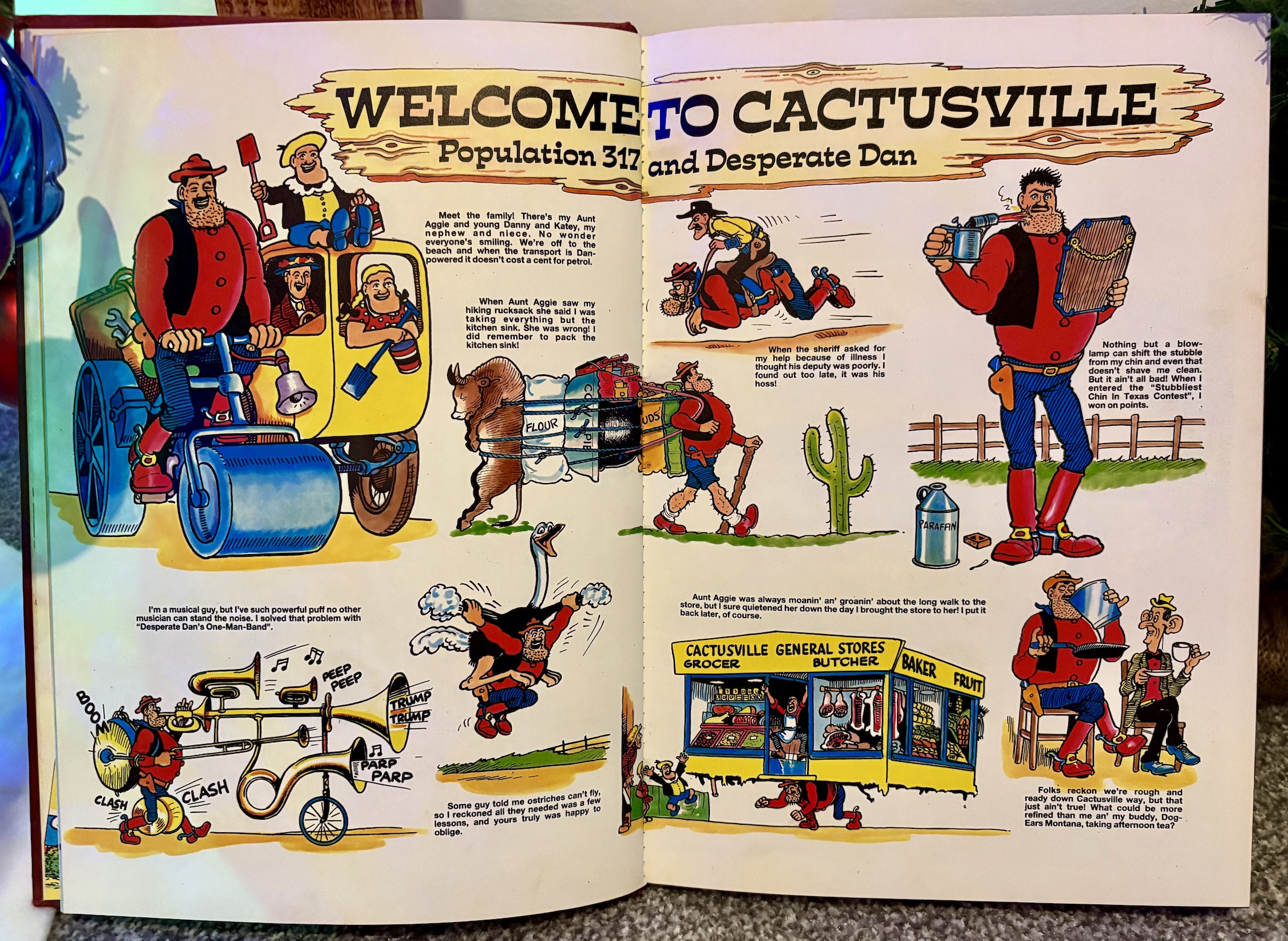
Desperate Dan makes up the first themed section, of which there are several for the more popular characters. His first appearance and some of his earlier misadventures are included, as well as one from 1983 to show how he’d evolved. This Welcome to Cactusville spread is great too, perfectly summing up the classic version of the character.
Others who get this treatment include Lord Snooty, Black Bob, Korky the Cat and Dennis the Menace among others. Sadly, none of the girl characters do. Instead, they’re all lumped together into a few pages called ‘Have a Giggle With the Girls’. Not even Minnie the Minx is well catered for! An indictment on the times, yes, and it also shows how far we’ve come. One glance at the review for this year’s Beano Christmas Special will prove how the comic has set this straight in the years since.

This was the part of the book that fascinated me the most as a child. I’d never considered anything other than both comics temporarily ceasing during wartime and paper shortages weren’t part of my reasoning! As it turns out, they didn’t. They kept calm and carried on, you might say. Both reduced their page counts and went fortnightly, alternating each week so kids still had the option of weekly laughs.
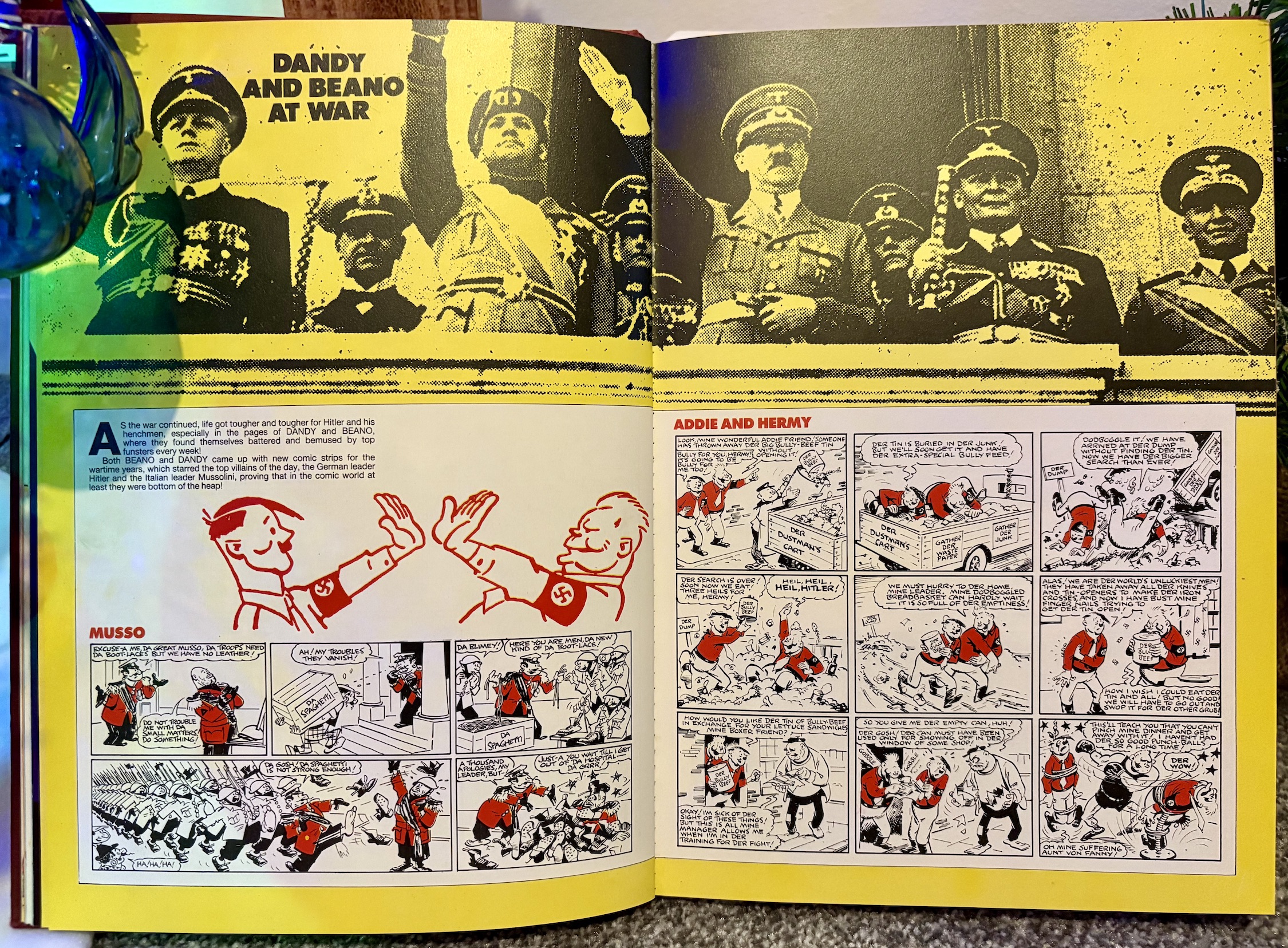
I remember as a child thinking this was incredible. In fact, I was only annoyed there wasn’t more information about how they were produced during this time, what’s mentioned here having whetted my appetite. (The aforementioned bookazine did a better job of this 30 years later.) We get some examples of the humour that helped the children through those tough years with the likes of Lord Snooty (again), Pansy Potter and these two surprise entries. Try to ignore the accents, they’re another sign of the times, written at a time of war and it was important to keep the children unafraid, and having a laugh at the enemy of the time surely helped.
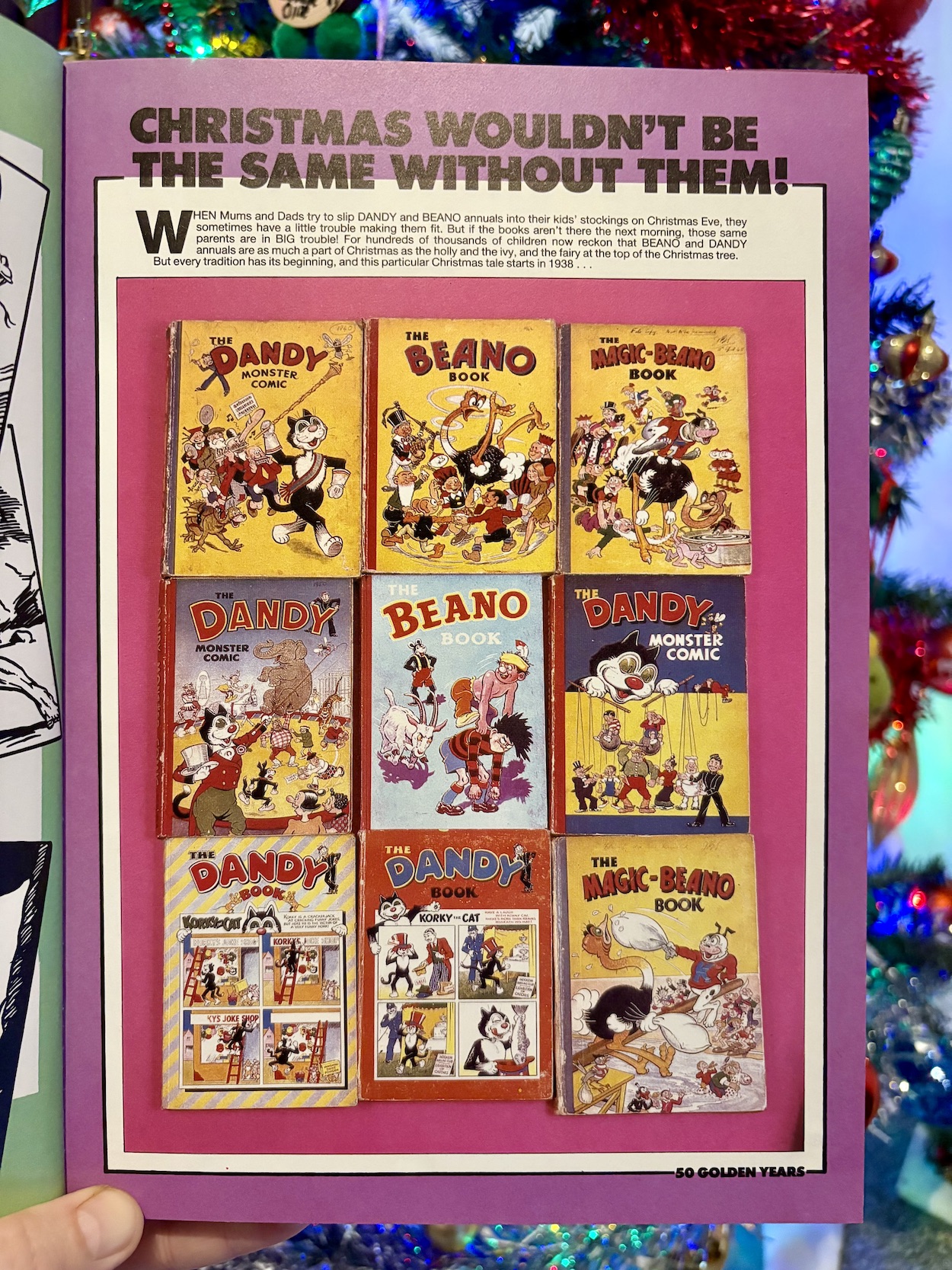
Over the past few years I’ve really been enjoying writing the Annuals section of the blog. It may contain the slowest possible real time read throughs but every year the new inclusions are worth the wait. Even though they’ve always gone on sale months beforehand, they’ve always been a huge part of Christmas (that’s why that section gets updated during the festive season) and the writers of this book knew it too.
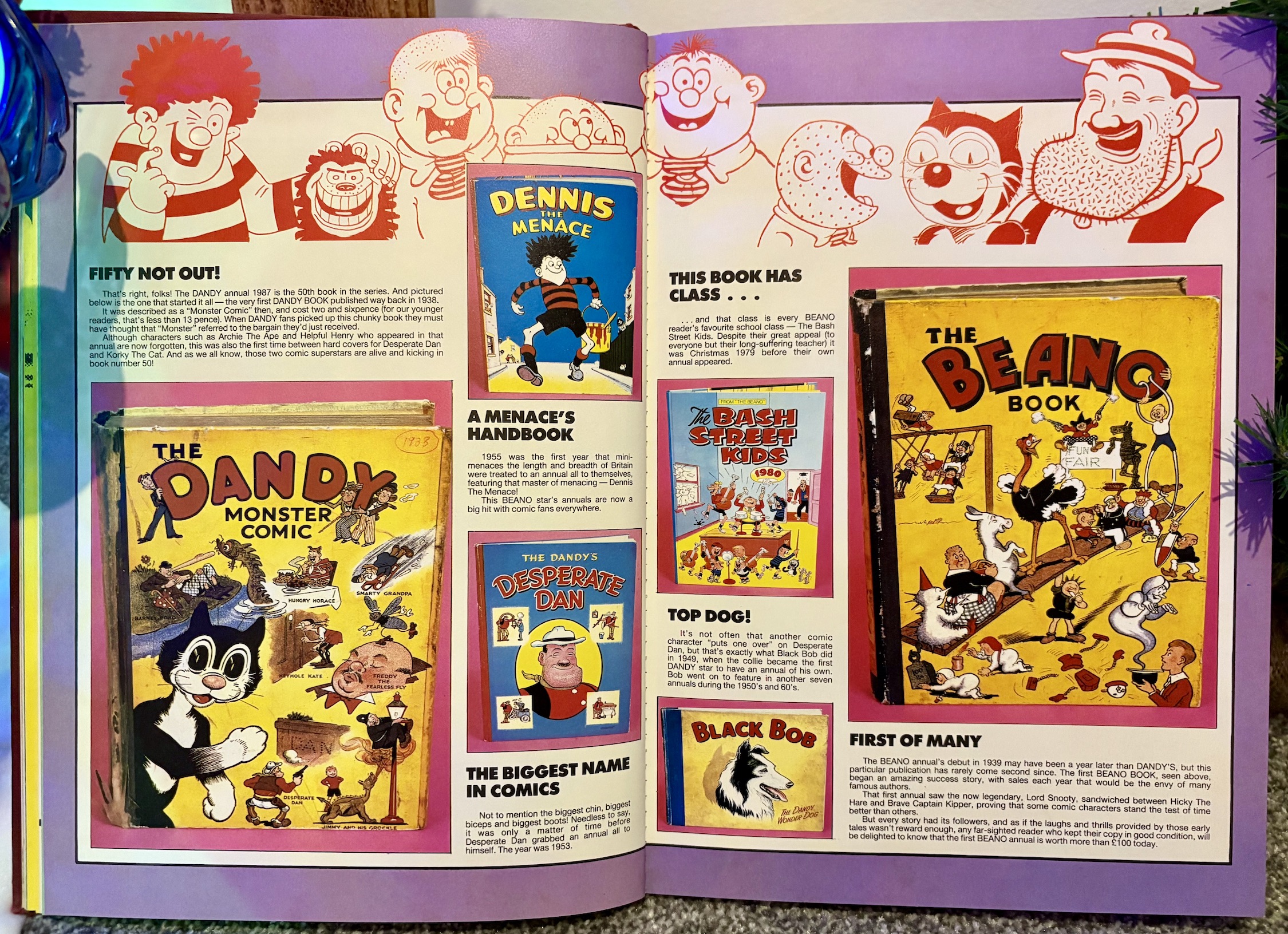
Wow! £100? Even in 1987 I remember thinking, “Is that all?” Oh, and in case you’re wondering (much like ten-year-old me did) what that ‘Magic-Beano’ title is all about, Magic was a short-lived comic that ceased during the wartime paper rationing and never returned, so it was merged into The Beano and the books bore its name for a few years. I like looking back on old covers like this, particularly annuals as they seem to encapsulate the time they were published and provide a year-by-year look at how a comic evolved. Also included are similar pages for the summer specials, those tiny Dandy and Beano Comics Library collections and the 1000th and 2000th editions of both comics.
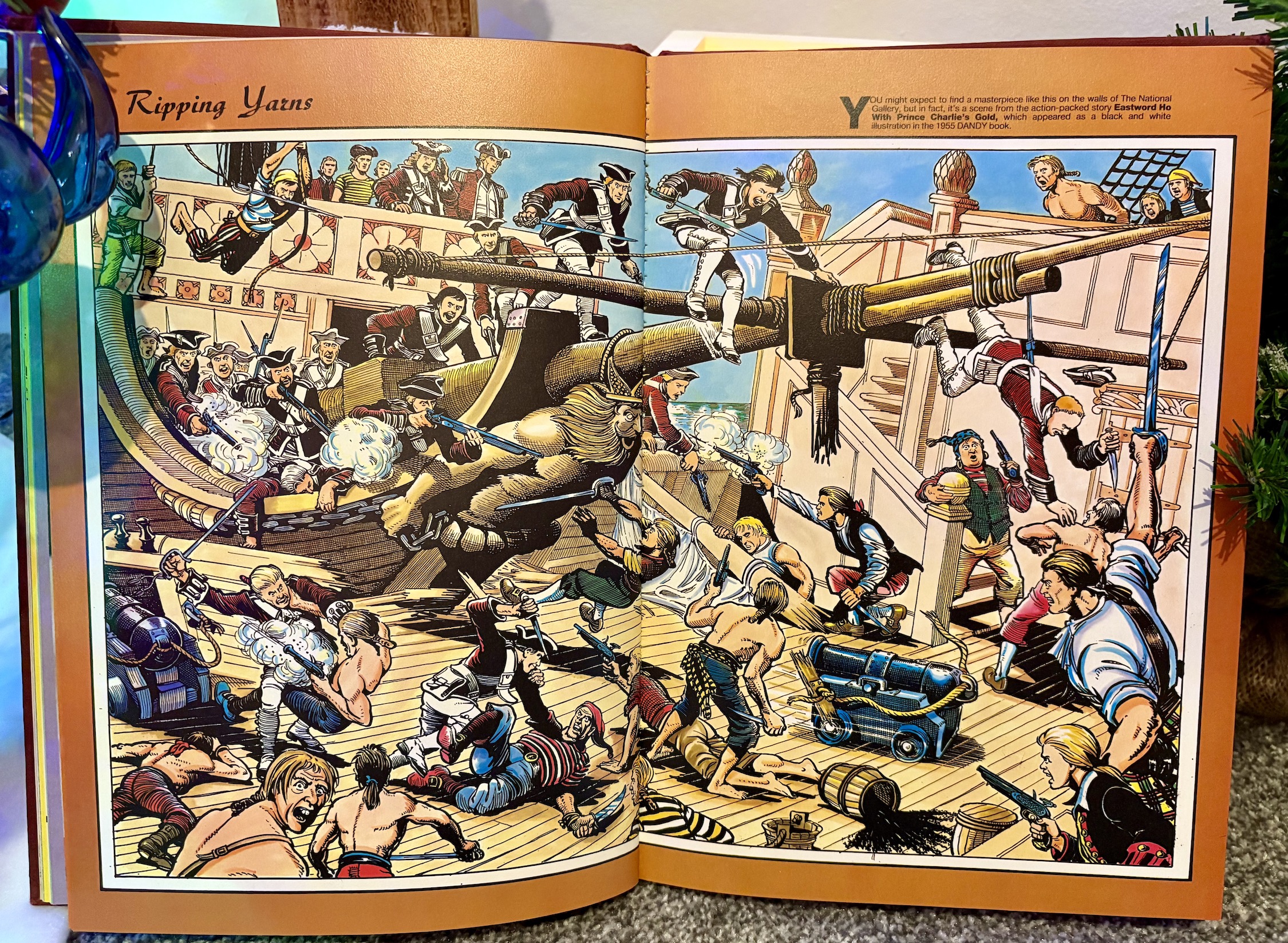
Originally The Dandy and The Beano contained adventure stories and prose funnies and I’ve already shown some of these off on the blog. The thrills and spills of classic adventures take pride of place here too. While the book explains these were mainly before TV became mainstream and so could be printed with few illustrations, they’ve included this wonderful spread from a Dandy annual in the 1950s, newly colourised for the 80s.
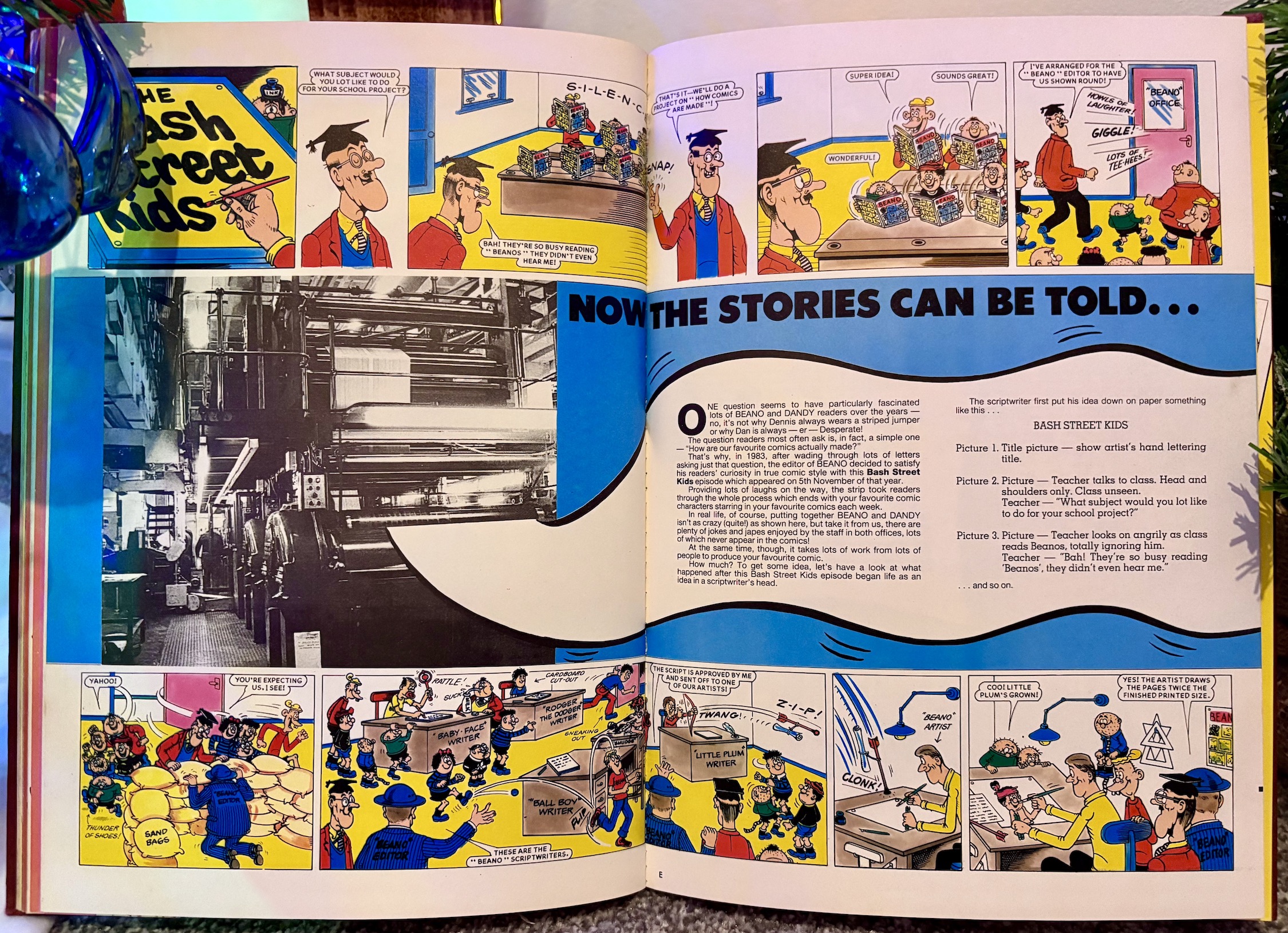
I may have been growing up in a world of TV and computer games but I still recall delving deep into these particular pages of the book, probably because they were such an unexpected surprise. I also spent a long time with any part of the book that gave an insight into how it was made. Any disappointment I felt with the lack of such information in the World War II chapter was soon put to rest with a great four-page feature starring The Bash Street Kids.
Taking a strip from 1983 that had answered readers’ queries of how The Beano was produced, the double-page strip is split across four pages with a factual article of the process across the middle of each. I find these middle sections the most interesting now as an adult but for kids it was a brilliant idea to have the characters being taught the same things in a lighter, funnier way, with further details right there too if they wanted.

There’s just too much in this book to cover in one blog post. If there’s a character you can think of from The Dandy or The Beano’s first 50 years, they’ll be in here. If there’s a moment, a piece of merchandise, a memory you have… anything you can think of that might have been part of their first 50 years, it’ll be in here. What I’ve been able to squeeze into one blog post is just the tip of the iceberg.
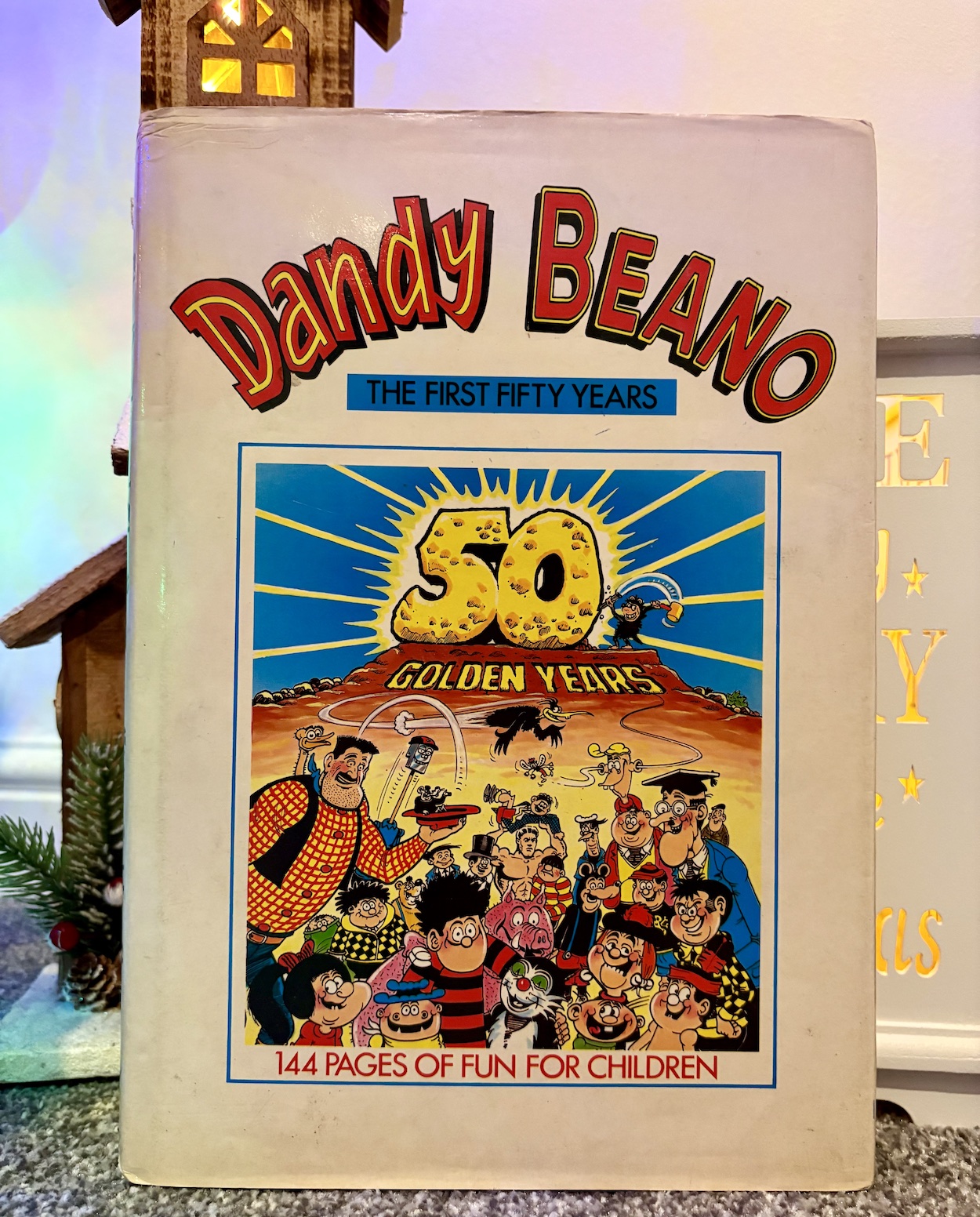
Wrapped up in a gorgeous hardback you can see what’s beneath that dust cover at the very top of this post. It looks lovely on a shelf like that. Inside are 144 pages of high quality paper, all full-colour and there’s an absolute tonne to read! I can remember being engrossed by this for days throughout the holidays that year. I’ll wrap things up today with another celebrity cameo and a quick example of the variety of topics the book covers: fashion!

Great, now I’ve got Drop the Pilot stuck in my head! I must say I sympathise with Joan here, her quote rings an all-too-familiar bell. (You thought all these comics on the blog were my copies from childhood?) This fantastic book originally sold for £4.95, a princely sum for something sitting among the annuals that year, but you’ll get it for cheaper than that nowadays on eBay.
This has brought back a lot of happy memories of reading it the first time around. I feel like a kid at Christmas all over again. (Well, I still am!) For any fans that missed out on this at the time, or perhaps for younger blog readers that hadn’t started reading Beano (or been born) yet, this is a must purchase for a few quid. Also, for anyone interested in the history and evolution of comics this is still truly fascinating and has the cherry on top of including so many laughs along the way!
 OiNK Blog
I was much more a Beano & Dandy reader TBH (and Hotspur, Hornet and Victor). Oink was rather too late for me, as I’d grown up a bit more by then. But then Viz came on the scene 😊 It was only when I saw Lew Stringer’s artwork at a comic show that I discovered Oink – and, thanks to the wonder that is the internet, picked up the back issues.
Cheers,
Geoff
LikeLiked by 1 person
My brother collected Beano but I rarely found it funny so wasn’t enthused about comics until I discovered OiNK, which I felt didn’t talk down to kids. As an adult I have a better appreciation for Beano and today’s comic is simply superb!
LikeLike
Read the book in hospital..asked for my birthday present early…so has special memories for me…was 12 at the time…really got me into lod comics…with best of beezer…topper..big comic..funny fortnightly..Classics from the comics later..
LikeLiked by 1 person
I’d just turned 10 when I got this, although as I say it wasn’t originally intended for me. It was also the year I got my first Big Comic Book so after enjoying OiNK for a year already I was discovering more of the same comics as yourself.
LikeLike