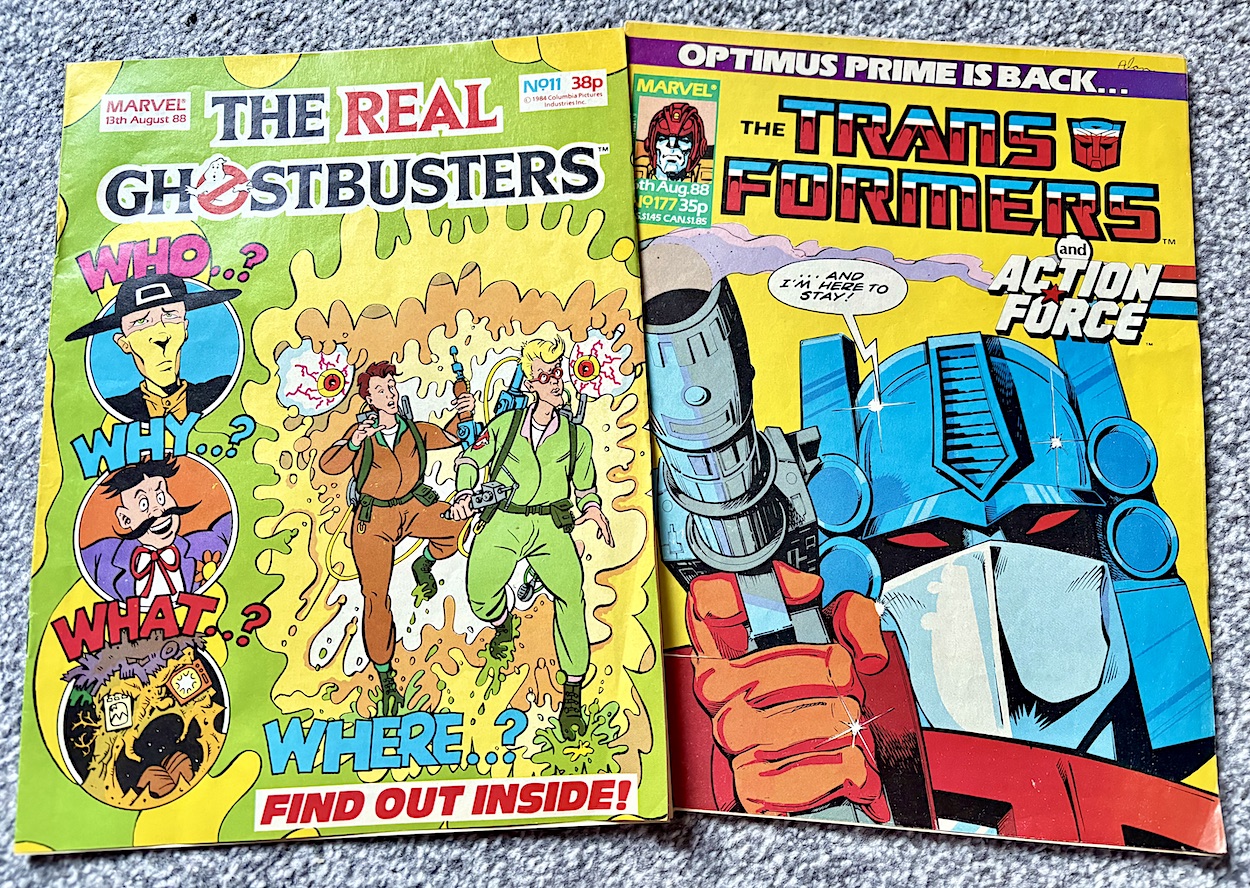
Welcome to this new weekly series! Off we go! The very first Mighty Marvel Checklist appeared in one of the earliest editions of The Real Ghostbusters when it was still a fortnightly comic, a week which also saw some fella return to The Transformers and Action Force that was kind of a big deal.
Yes, Optimus Prime had been resurrected as a Headmaster (cover by Jeff Anderson). The Autobot leader now had a humanoid companion who could transform into his head(!), combining to form an insanely powerful version of the character. I wasn’t yet collecting the comic at the time (that would come later in the same year), however when I read them all for the blog’s real time read through on Instagram this issue was a real thrill because this was the version of the toy I had as a kid.
Unlike Transformers, The Real Ghostbusters (cover by Phil Elliott) was made up of a handful of shorter stories, all much more comedy focussed (re: bad puns), the best often being the prose series Winston’s Diary which was told from the perspective of my favourite character. Also unmissable was the text-based Spengler’s Spirit Guide, the hilarious manual on all things supernatural which appeared in every issue, expertly crafted by Dan Abnett. And of course there was also the Lew Stringer-drawn humour strip Blimey It’s Slimer, however this issue was the last time Lew would be responsible before it was permanently taken over by Bambos Georgiou.
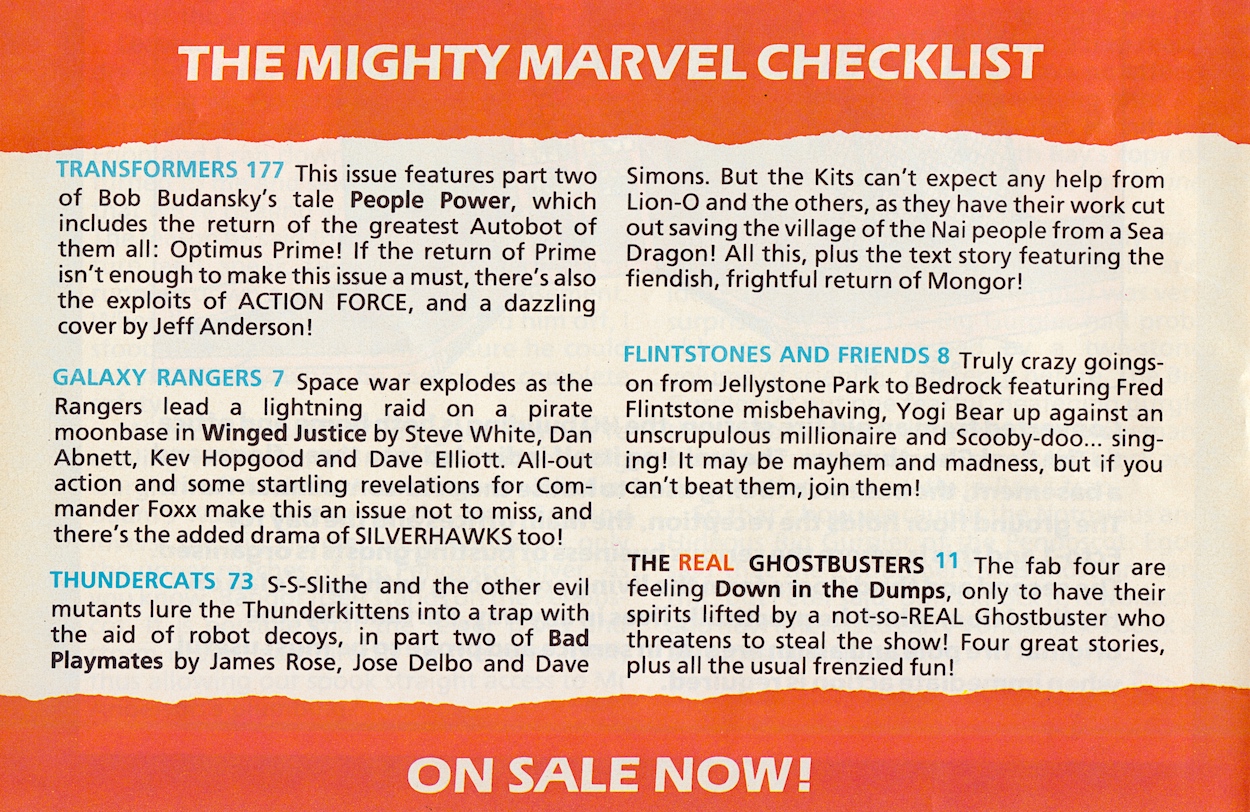
That’s the quick introduction of the comics I’m using out of the way, so what else was on sale that very same week in the summer of ’88? The first Mighty Marvel Checklist takes me back to watching The Adventures of The Galaxy Rangers on the telly every morning. I don’t remember much about them other than I enjoyed the cartoon but apparently not enough to buy their comic, a title that would only make it to #9 before being cancelled.
I never got on with Thundercats but its comic was a huge success, amassing over 100 issues in total, although I remember from the checklists that it seemed to go through a lot of changes and different frequencies towards the end. Fred Flintstone et all round things up at a time when comics such as Dragon’s Claws and Death’s Head weren’t on the list yet. I also liked the way The Real Ghostbusters is coloured differently just so they could show off the “Real” part in read. Imagine doing that every time it’s mentioned, eh?
As this series continues I’d love to find out if you remember any of the specific issues mentioned in any of the checklists, so mosey on over to the socials on Bluesky, Instagram or Facebook and let’s get the conversation started, shall we? Next week we’ll see our first classic comic advert.
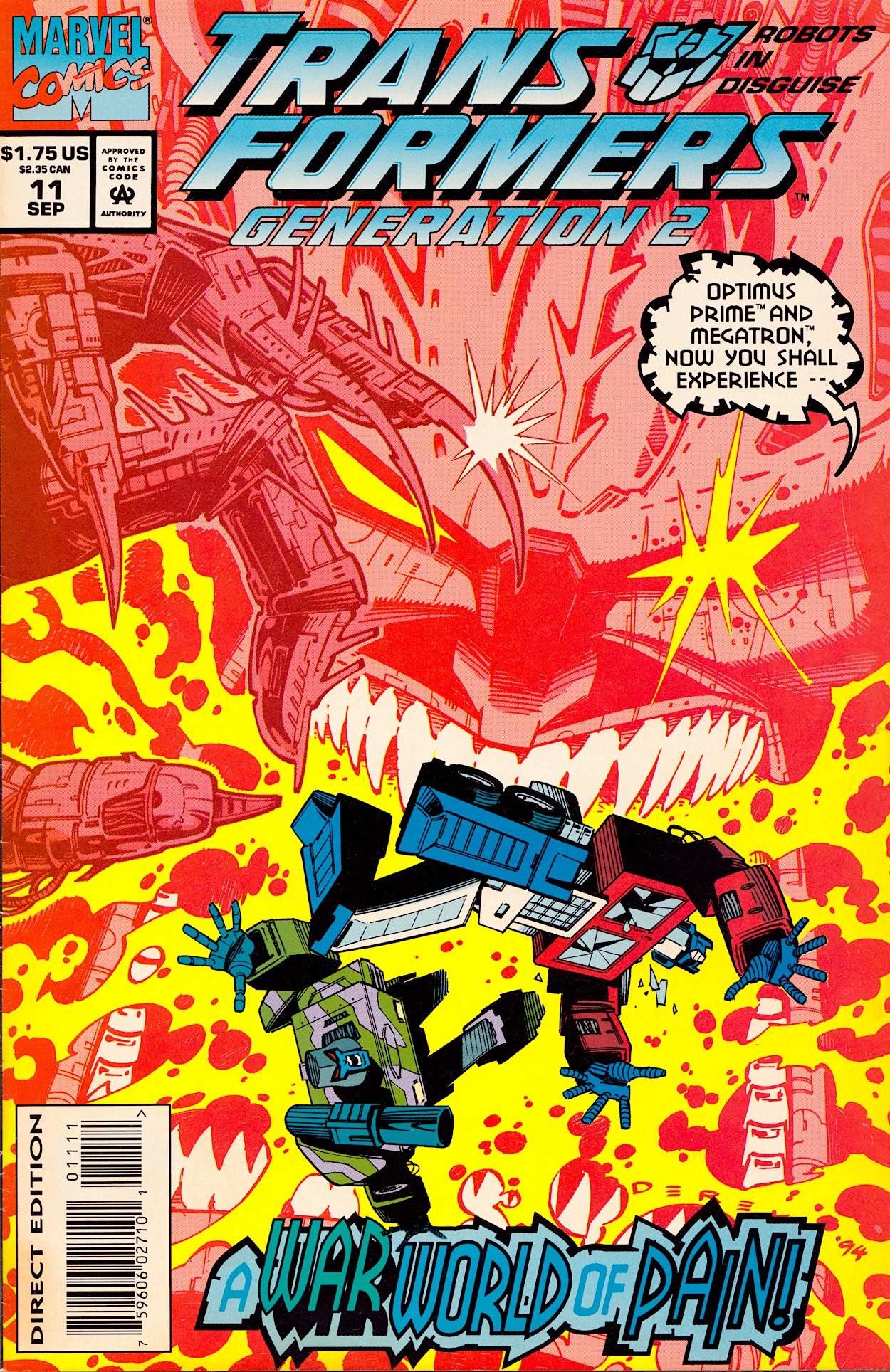
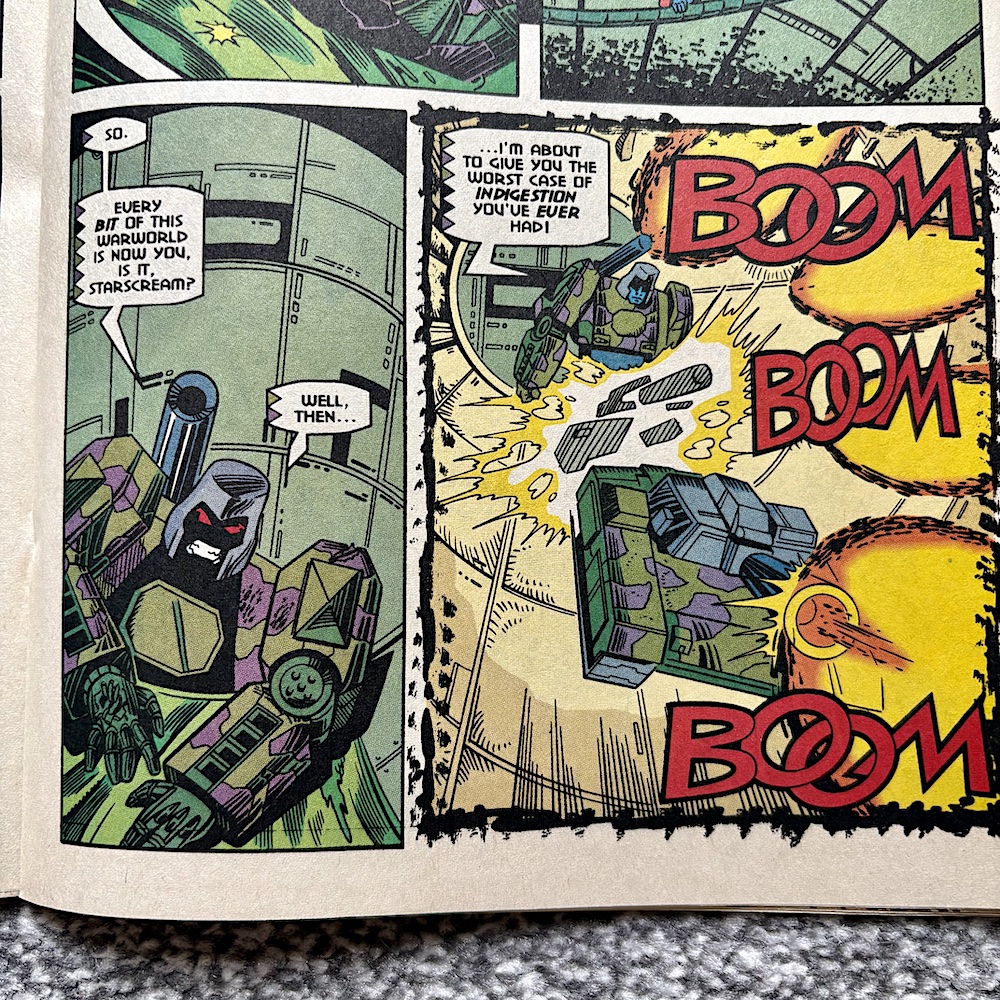
Well, this bold Derek Yaniger cover for #11 of Marvel US’ Transformers: Generation 2 would certainly have stood out on the shelves. And at least Starscream’s teeth are suitably horrifying instead of comically human-like for once. Simon Furman’sDark Shadows (pencilled by Manny Galan, inked by Jim Amash, coloured by Sarra Mossoff, lettered by Richard Starkings) begins with the traitorous Decepticon in a seemingly unstoppable position on the Warworld ship.
In fact, as the story develops we (and he) find out that he’s no longer simply on the ship, he is the ship! The Matrix has afforded him the power to meld with it, morphing corridors and walls and trapping the newly aligned Optimus Prime and Megatron is his grasp. Does he instantly kill them? Of course not, he has to boast and gloat first.
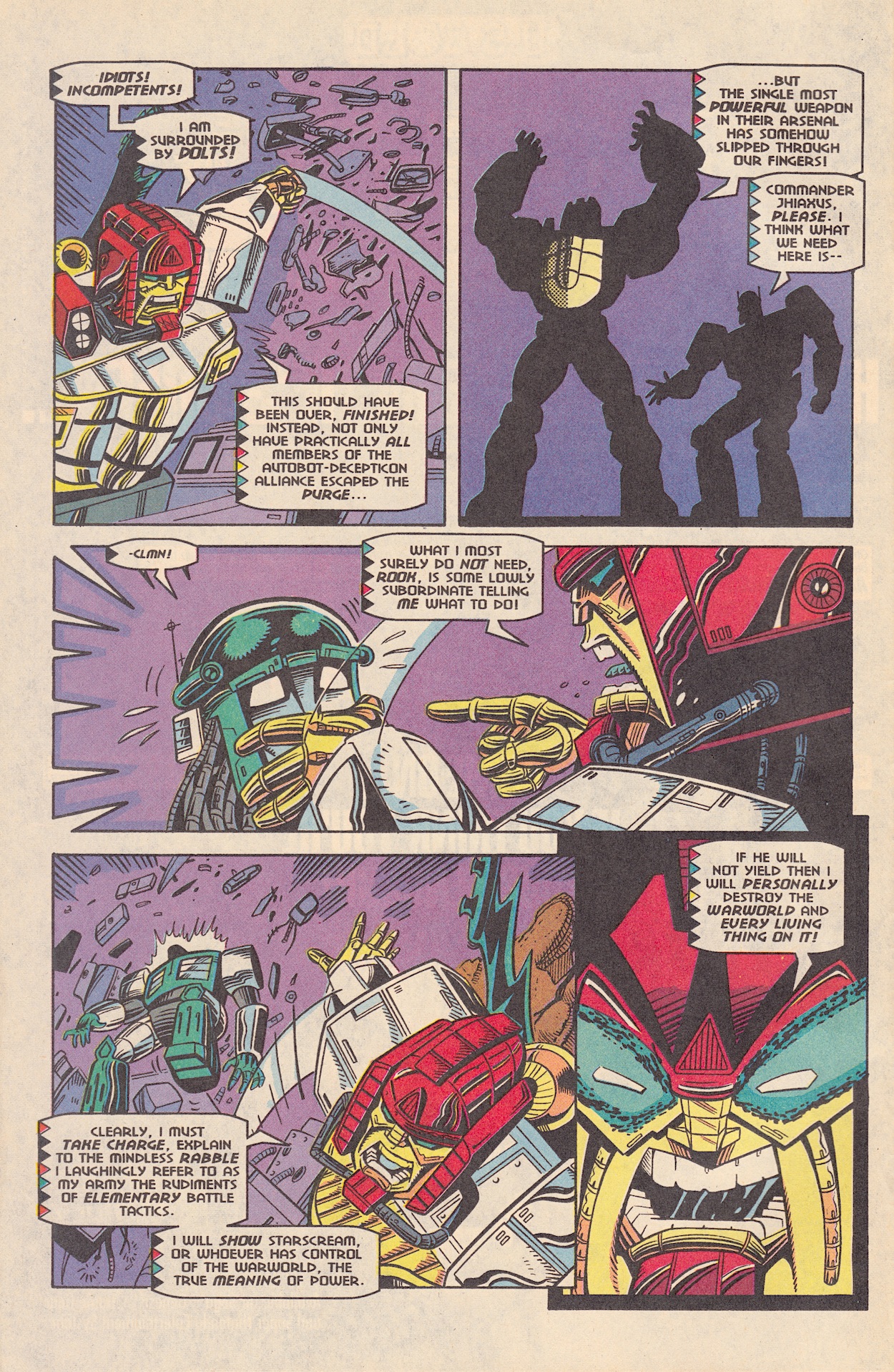
One of Jhiaxus’ troops by the name of Rook is concerned about his commander’s obsession with tracking down the Autobots and Decepticons. He’s seen this side of him before, back when he was the tyrant that Jhiaxus himself lamented ever being back in #3. Rook worries that Jhiaxus is somehow regressing evolutionarily and so decides he must speak with Leige Maximo. Finally! Well, next month it’ll be “finally”, as this is the only mention of the unknown character this issue.
Prime explains to Megatron how the Matrix has become corrupted by evil once more, much like it did with Thunderwing back in the Matrix Quest epic in the G1 comic. Between this and the ongoing similarity between the Starscreem here and the Starscream during writer Bob Budiansky’sUnderbase Saga several years prior, this usually highly original comic feels like it’s slipping back into familiar territory. But then this happened…
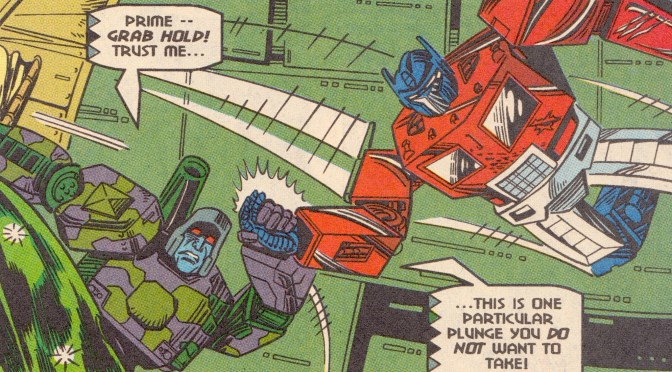
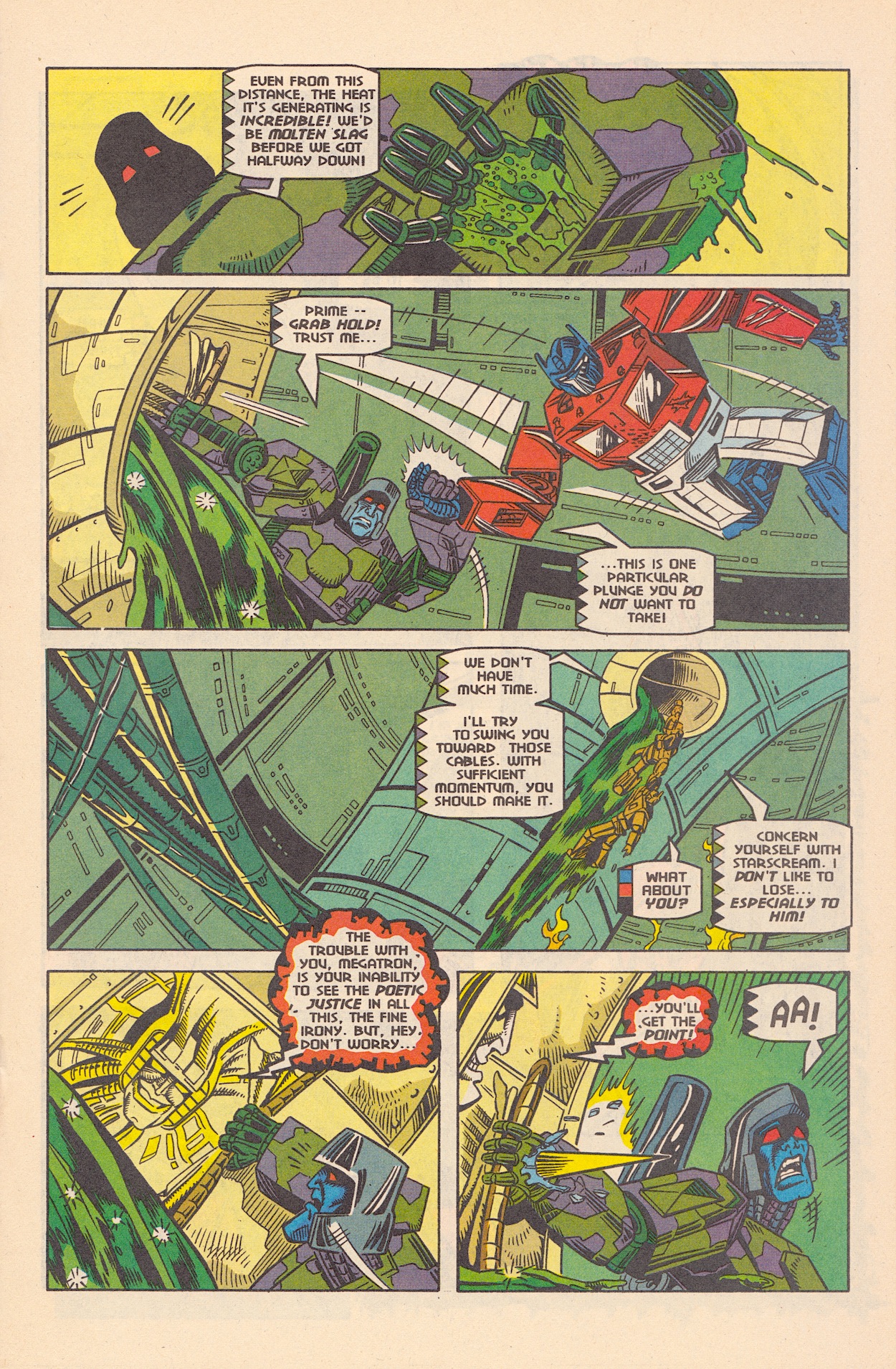
I’ll readily admit that if I hadn’t been holding this comic with both hands as I read it I’d have punched the air triumphantly upon seeing Megatron save Optimus Prime! Both were being flooded down a large vent, at the end of which is a huge fall into the plasma core of the ship. Megatron is able to stop himself and I fully expected him to let Prime fall, not out of hatred but because he’d be too busy saving himself. The fact he puts his own life at risk to save him and calls out to Prime to trust him reminds me very much of Transformers One.
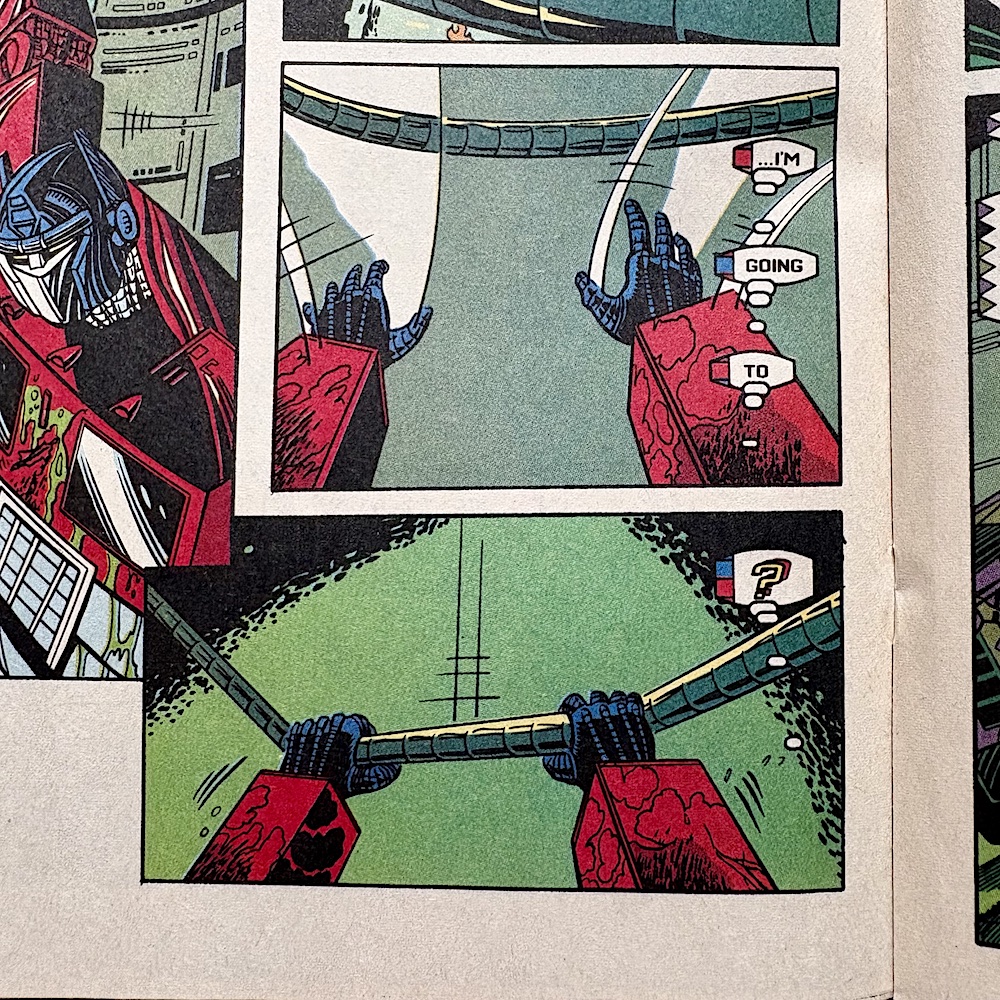
The fact this comic was decades before that film just adds to the excitement and this must’ve been a huge moment for readers at the time. He can’t hold him for long though, so they agree he’ll swing him off to the side where Prime can grab hold of some dangling cables. But their plan doesn’t work. At least not as they intended. Prime misses the cables but then they move by themselves into a new position! The comic tries to play this out as a mystery, I guessed it was the Matrix. Was I right?
Ol’ Megs continues to get some of the best lines, like when he transforms into his tank mode to get himself free of the previous predicament and comes out with a perfect 90s action movie line, below. Optimus’ inner thoughts show an admiration for what he sees as Megatron’s instinctive and unselfish tactics, and he wishes this could be more than a mere alliance of convenience. This is a real revelation, to see these two characters in such a fresh way even all these decades later.
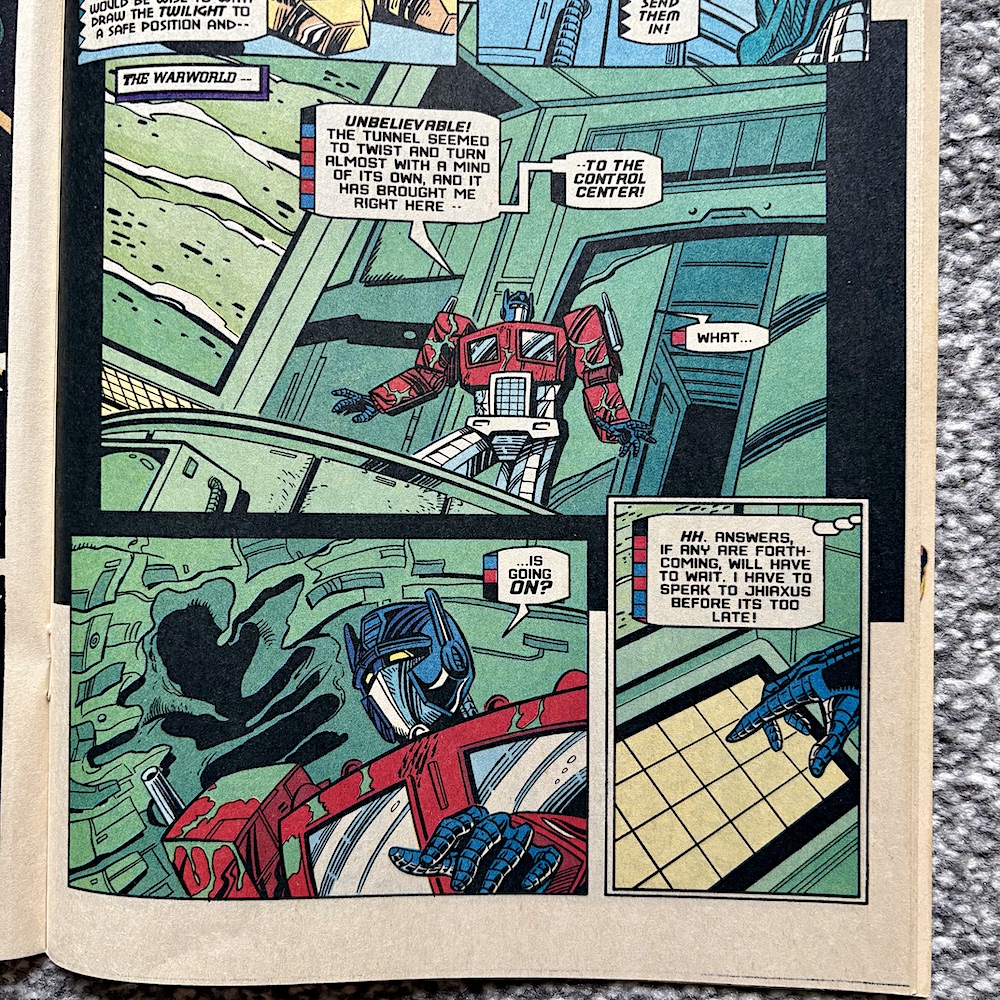
Prime then discovers the ship’s walls, corridors and doors are morphing as if to lead him somewhere, with his sneaking about possible because Starscream isn’t really the god-like creator he believes himself to be. Unable to concentrate on more than one thing at once and with Jhiaxus’ army attacking, Starscream must leave these two to their own devices. The ship itself appears to lead Prime right to where he needs to be.
The final page of the main strip ends with Prime trying his best to reason with Jhiaxus and explain what they’ve discovered about the Swarm, but it takes place over a communications signal that frustratingly keeps breaking up. Not that this really matters. Jhiaxus is too far gone and the cliffhanger (before the back up strip) sees him giving the order to pick out random targets on Earth’s surface and blow the planet apart.
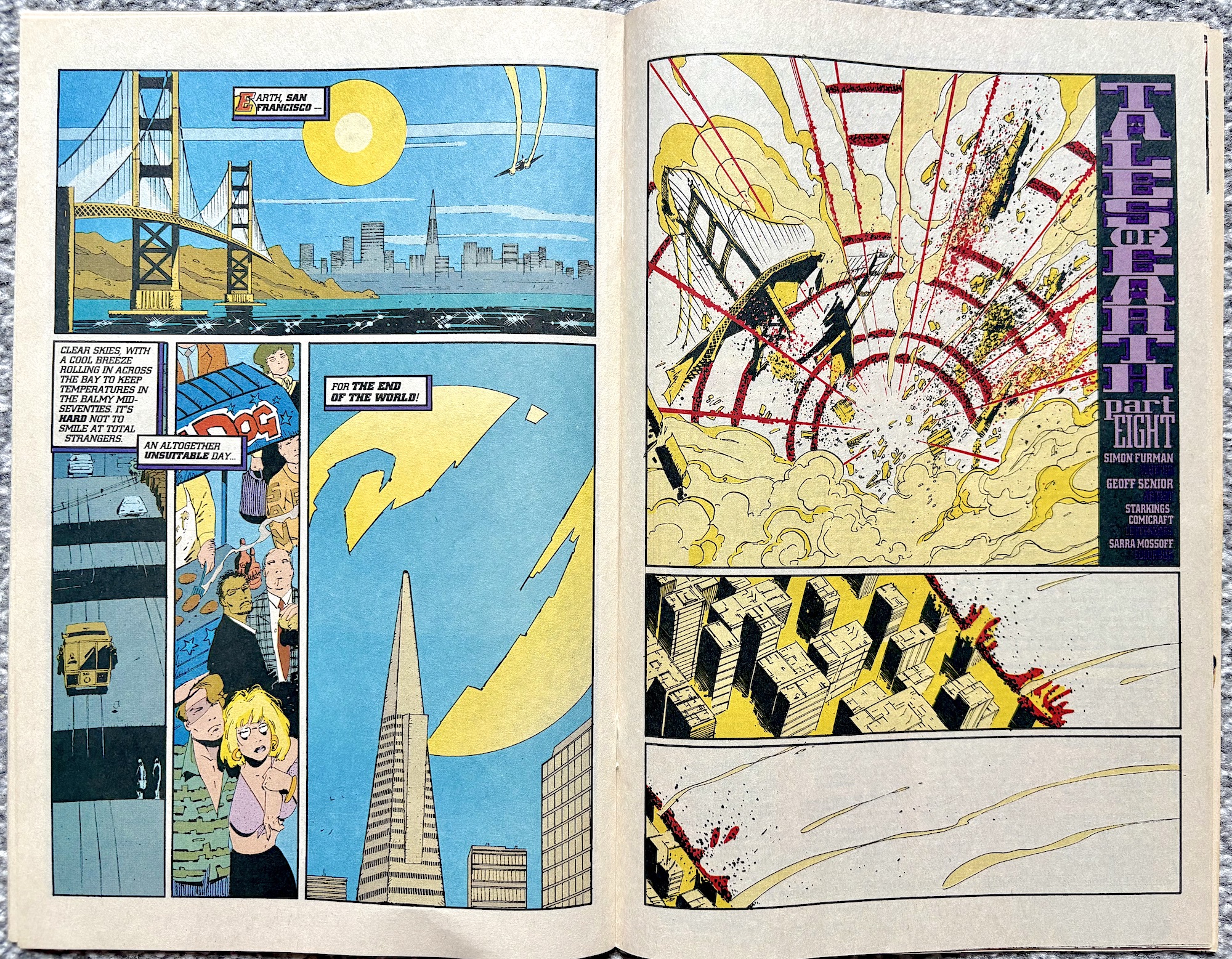
This feels like the perfect time to shift to legendary Transformers artist Geoff Senior for part eight of Tales of Earth.
Wait a minute. Wasn’t it previously established that all of Earth’s cities were devastated by Skullgrin’s Decepticons and the Warworld? Even if San Francisco escaped, this paints a picture of a city without a care in the world. Oh well, discrepancy aside this raises the bar in terms of the threat Earth faces! This opening spread is very reminiscent of Judgement Day from Terminator 2, which had been released in the UK less than two years previous and was very much still in the public consciousness after its home release.
Being familiar with the film doesn’t detract from this opening scene. In fact, it adds to the feeling of the end of everything! Even Grimlock and Predacon leader Razorclaw concur, stating, “It over now. For us all. They did it… they dropped The Big One”. On board the Warworld Prime is devastated, heartbroken. He screams into the void but Jhiaxus orders another attack on another highly populated city, despite the fact his troops are all over the planet. But then, Earth’s salvation comes from an unlikely source: Starscream!
As the Warworld attacks Jhiaxus’ ship with all of its Matrix-powered might, it appears the Autobot trinket is tainting the Deception rather than the other way around, which means those scenes reminiscent of the Matrix/Thunderwing G1 story were a nice bit of misdirection. Starscream doesn’t care about us of course but he has an uncontrollable urge to save us. Doing so is even more important to him than the very thing he previously thought was the most important thing in the universe: himself!
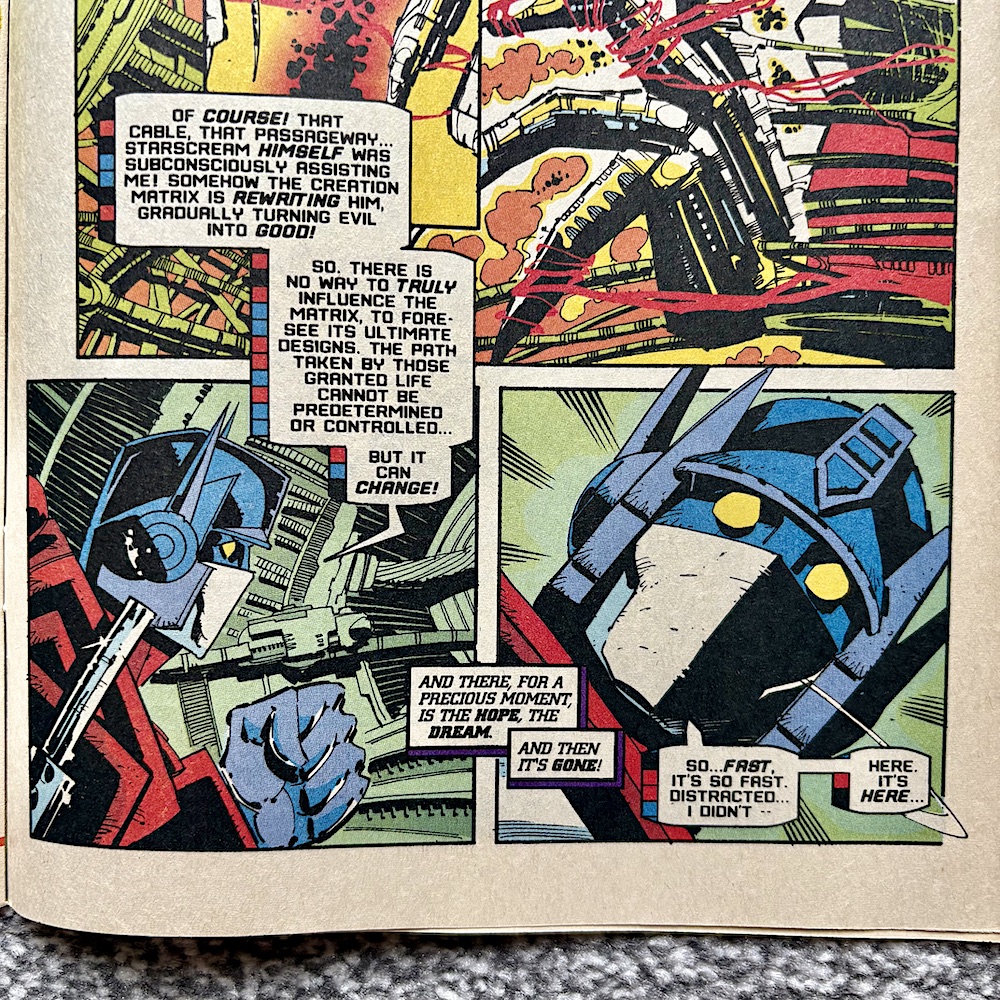
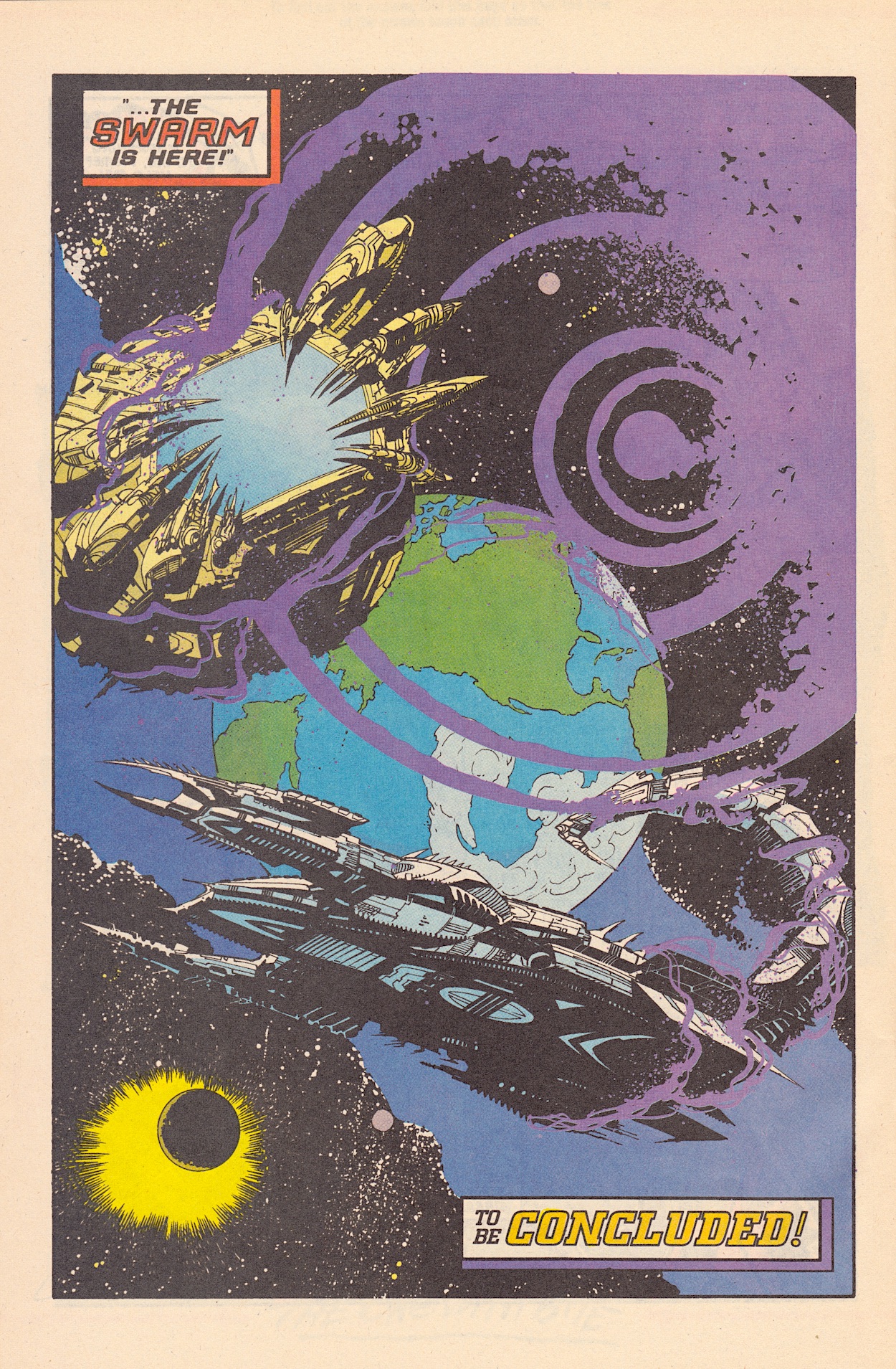
I did laugh as Starscream yells out how he doesn’t want to be good. Prime realises it was him that was subconsciously helping all along within the ship, and he sees hope in the very essence of the thing he’s carried in his chest for millennia. However, suddenly, with only one page to go, the Swarm is here. The previous scene just suddenly stops to give us this cliffhanger.
This felt like a very sudden, very unnatural jump in the story, like the pages were running out and we needed a cliffhanger and, more importably, the Swarm needed to be in place for the final issue. I’m not saying that’s the case, after all we’ve learned how terrifyingly quick it is and how it’s impossible to see it coming. That’s the whole point of it after all. But I can’t help feeling a bit unsatisfied with how this absolutely superb chapter ended.
A necessary evil perhaps with only one issue left. It’s a bumper-sized one next month, with the promise of 36 pages of strip action. Given how things have escalated in the last couple of months, and how amazing this issue was, I have every faith Simon will pull off a satisfying conclusion for a comic cancelled way too early in its run. How he’ll do that I have no idea! We’ll find out together in five weeks on Sunday 31st August 2025.
Off we go then with our gradual real time read through of the eight issues of Beano inside the special 80th anniversary box set, put together by DC Thomson in 2018 for their young readers. It’s important to emphasise the target audience here. The bookazine was a light-hearted look back at the comic’s history and its characters and that’s the whole point here too, for the modern audience of children to celebrate their comic’s birthday with an interesting and gigglesome look back at where it came from.
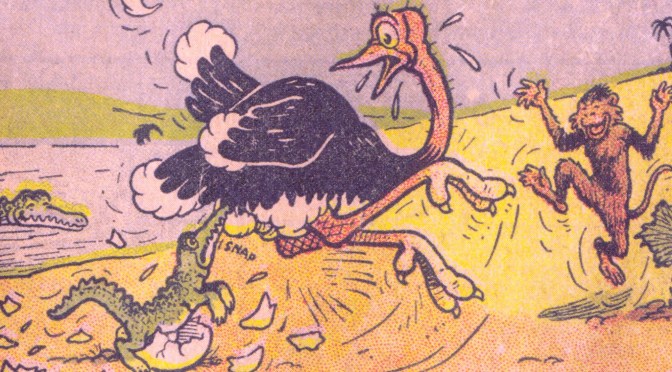
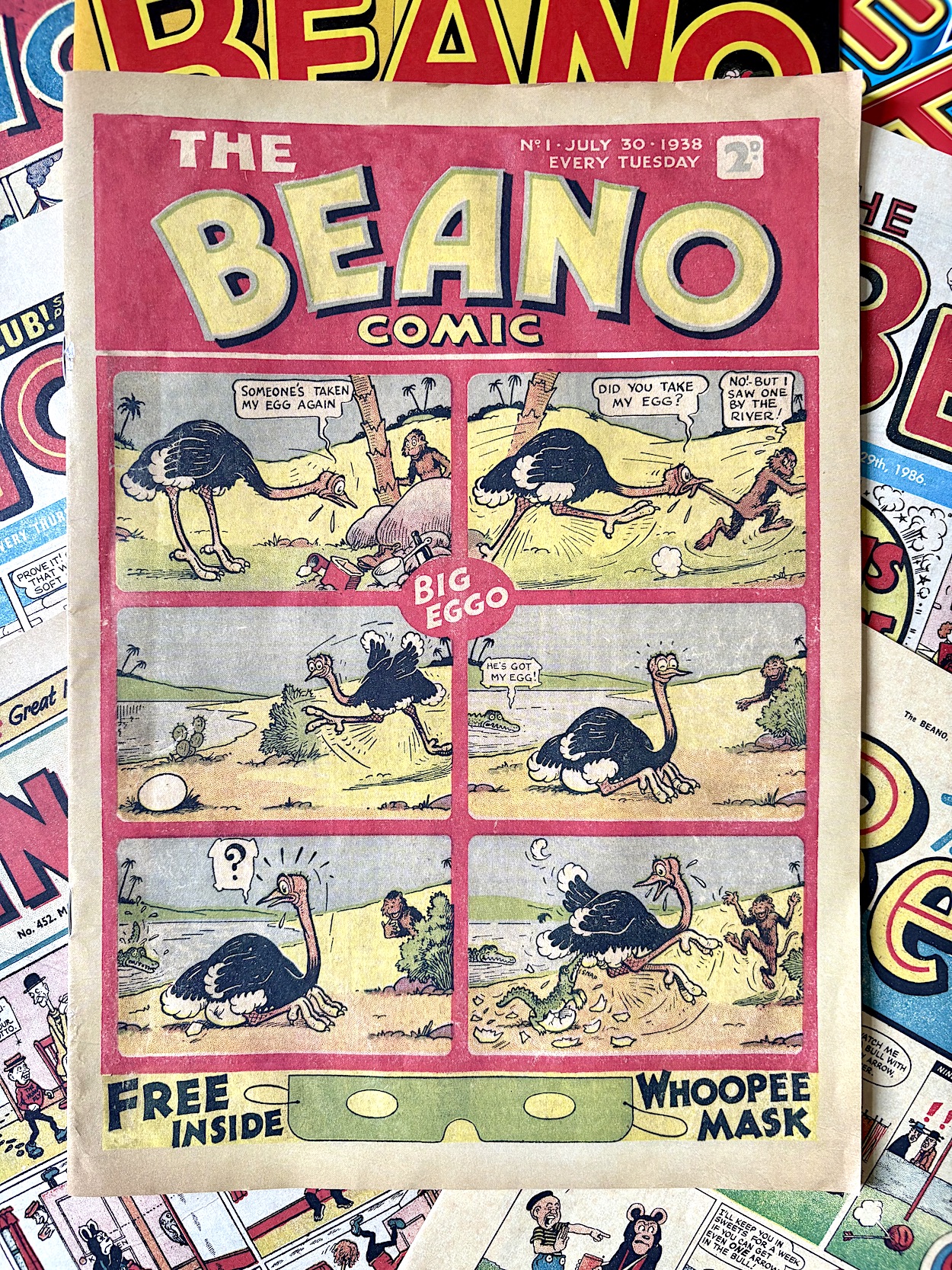
Hence why a certain mascot is missing from the title banner of this, the quality reproduction of the very first edition that was originally edited by Robert D. Low. This set wasn’t the place for a serious discussion about racist stereotypes and why they were deemed acceptable in 1938. Thankfully, DCT has since realised it should never have been on the cover of a children’s publication in the first place. I think it looks miles better without it and I welcome this change. Reg Carter’sBig Eggo can now shine in his well known first appearance.
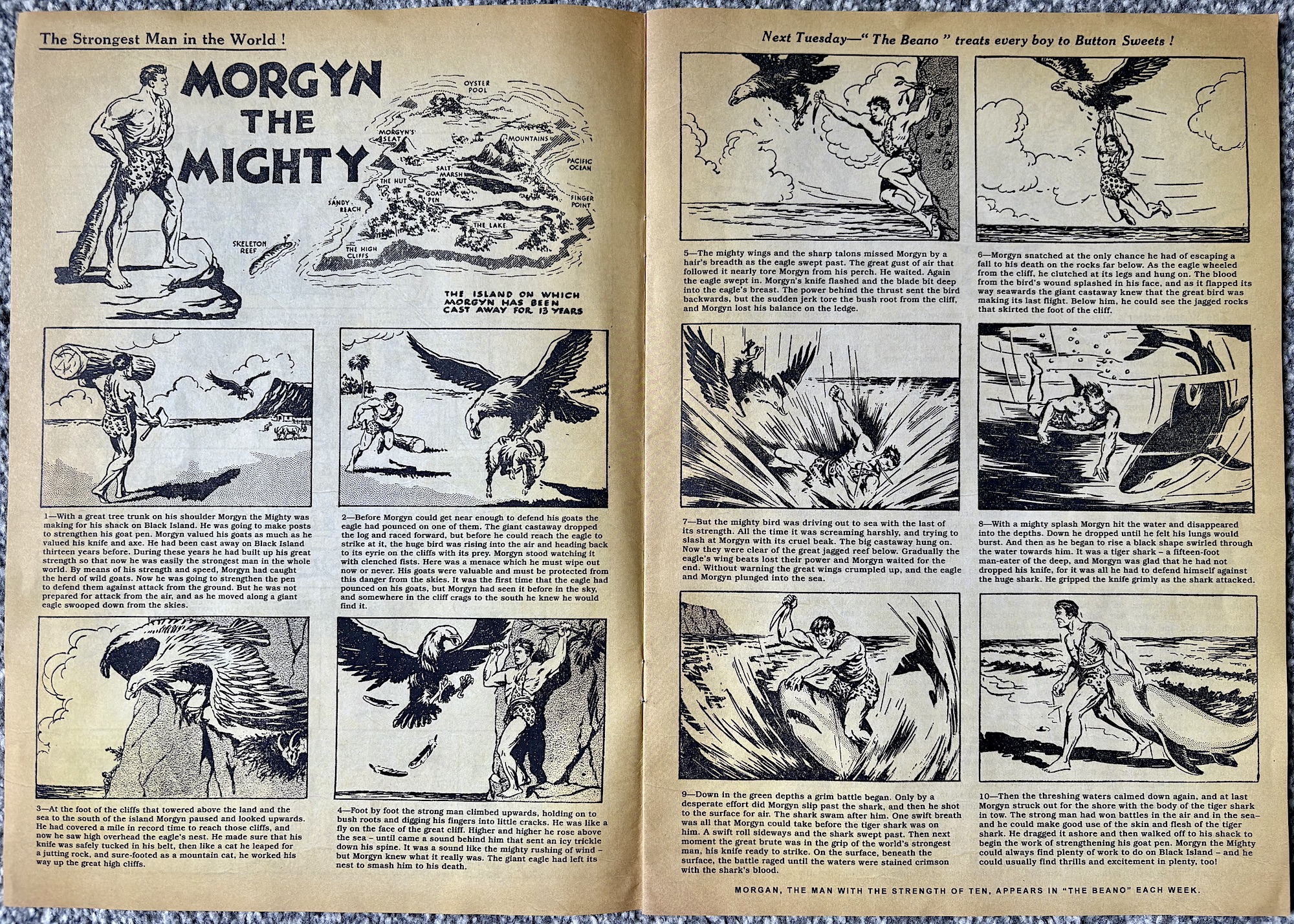
The biggest surprise I had upon reading this was just how much of it is text heavy. Only 50% of the 24 pages is made up of comic strips, the rest are prose stories or picture-panel tales such as Morgyn the Mighty. Created by Dudley D. Watkins, it’s just one example of the comic describing regular animals as monsters for the sake of some excitement. Of course children can be better informed today about our world thanks to easier access to a myriad of sources across different media.
It’s all very quaint and we must remember it was released in 1938, 87 years before this review. While I always review comics from my own modern perspective, some latitude can be given to such a classic, one that really is from a different era. Morgyn would disappear from The Beano before the end of its first year, before going on to star in various other DCT comics.
There’s only one character I recognised in the whole issue. Lord Snooty made his debut right back at the very beginning and looks pretty much the same as I remember him from friends’ Beano annuals in the 80s. Overall, as you’d expect the humour strips feel dated but that’s not a criticism. I found it fascinating to see what the children of the day would’ve found funny and how much children’s humour comics have evolved, especially since this particular one is still going strong and I occasionally buy it.
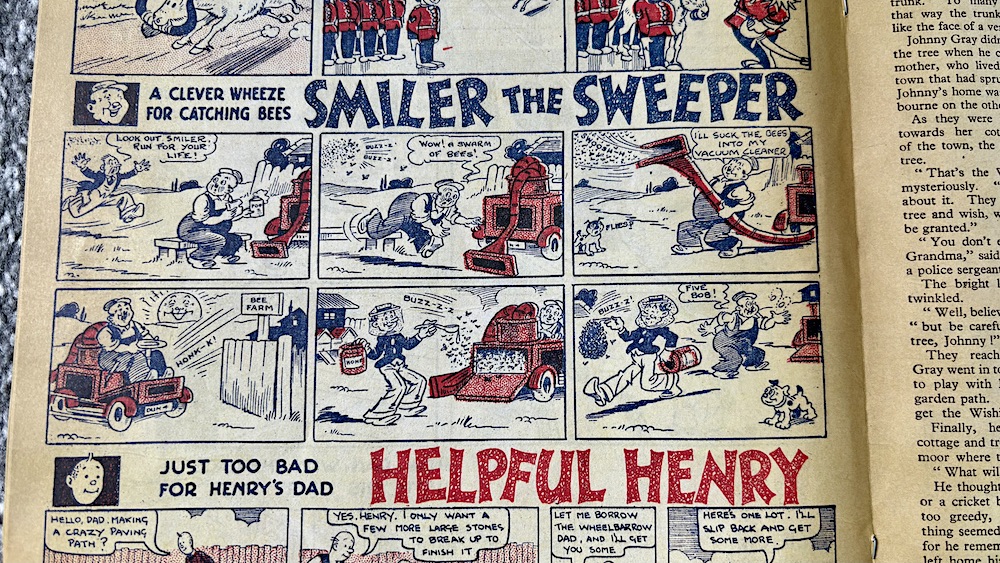
Smiler the Sweeper by Steve Perkins would also disappear within the first year but it’s a good example of the few mini-strip pages. Back when I was a kid it was OiNK that introduced me to comics and the strips would all be of various lengths, but all the other humour comics on the shelves (including The Beano when I was growing up) were pretty much full-page or double-page strips throughout, each character appearing on the exact same page from week to week.
Brave Captain Kipper kills the harmless whale and is portrayed as the hero by a bunch of random strangers. What a git
Of course, today’s Beano is much more varied and it’s interesting to see it started out that way too. Originally #1 contained 28 pages of variety entertainment for kids, four more than this reproduction. There’s a small warning on the bottom of a page stating, “Some pages may contain references which are of their time, but would not be considered suitable today”, although one inclusion was too much, namely the mascot edited off the front cover. Called Peanut, he featured on a page inside and, given how any stapled publication is put together in sets of four pages, once one page is taken out DCT would’ve had to trim further for it to physically work. (Thanks to Lew Stinger for the information on what was on one of those pages.)
Some of the contents which could fall under that warning banner includes child character Wee Peem seen smoking a cigar, a genie in a bottle describing himself as a slave happy to serve, Tom Thumb being captured and treated as a slave for entertainment but we’re meant to think it’s okay because Tom plays pranks on his captors, and one strip is simply called Big Fat Joe! Then there’s Brave Captain Kipper, who’s stupid enough to think he’s on an island when it’s actually a giant, peaceful whale. When it harmlessly blows water over him he kills it and is portrayed as the hero by a bunch of random strangers. What a git.
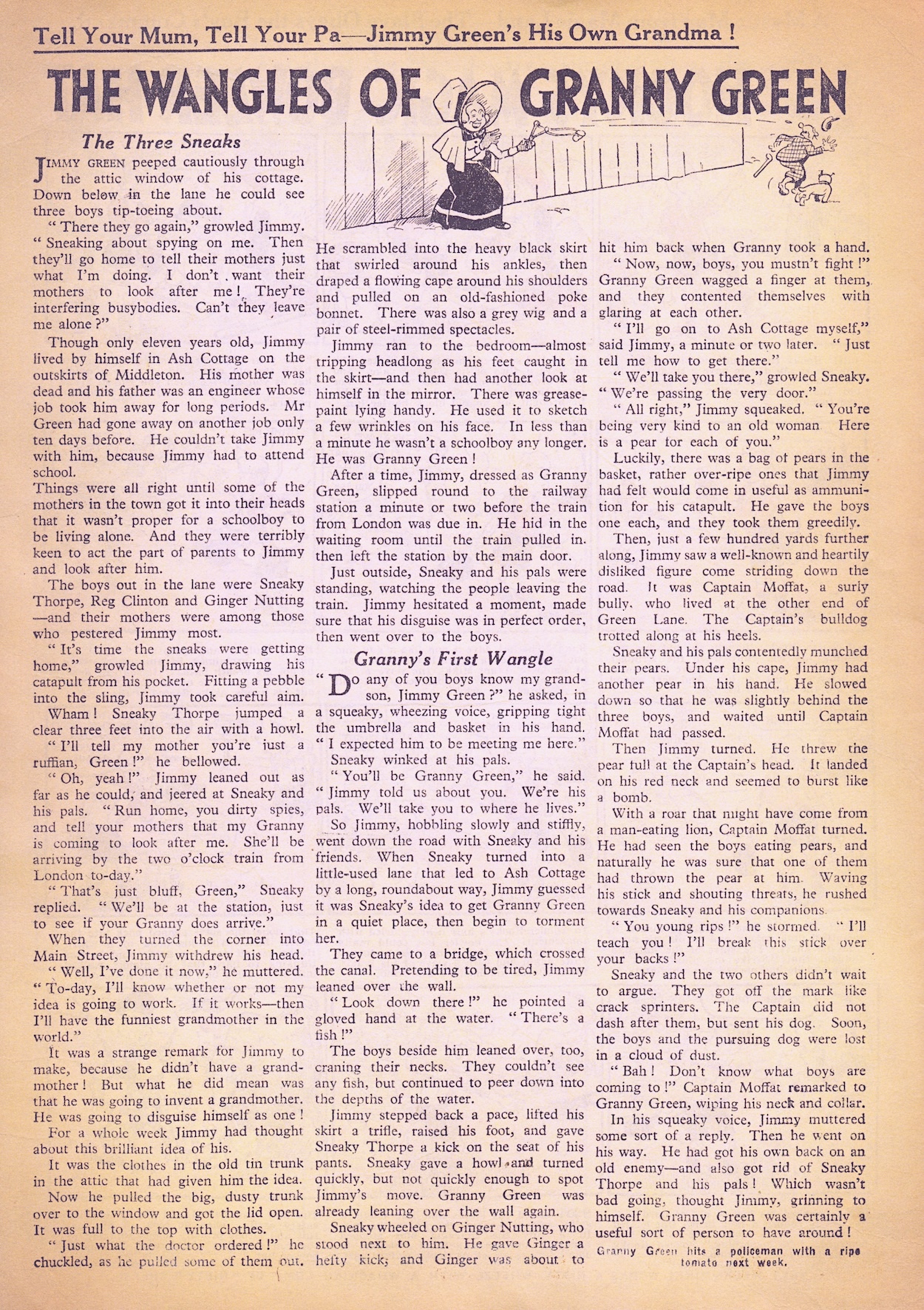
The Wangles of Granny Green by Charles Gordon is the only humour prose story and startlingly tells the tale of a very young boy whose mother has died and whose father goes on long business trips, leaving him behind to fend for himself. Fed up of the local children thinking he’s weird and of adults trying to look after him, he pretends to be his own grandma (the rhyme along the top reminding me of a particularly funny Muppets song) so that people will just leave him alone.
It’s a fun story and reminds me of the kind of comic strips we’d get years later in the likes of Whizzer and Chips etc. I wish I had access to more of these. The story is imaginative and has the potential to have a lot of heart given the set up, and it has such a quaint bit of hype at the end for the next issue that it’s endearing. It’d run for just over a year, returning for a reprint run in the mid-40s before coming back briefly in 1951. Ironically, the same people who’d complain loudly about what’s not on the cover would most likely also complain if Granny Green appeared today in strip form.
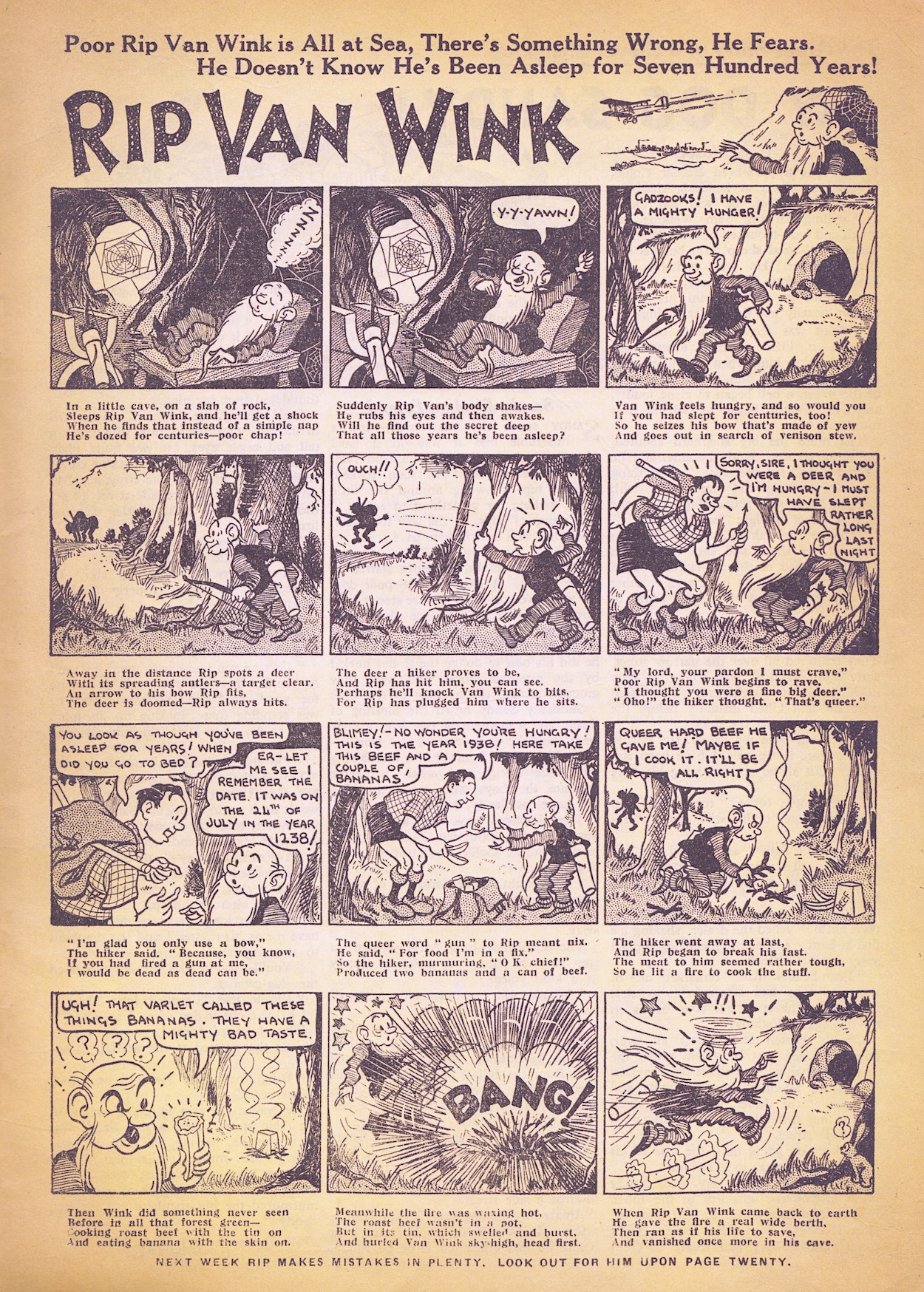
Eric Roberts’Rip Van Wink wears its influence on its sleeve. A little old man falls asleep in his cave only to wake up 700 years later, the humour coming from his reaction to the modern world and the things kids would’ve taken for granted. It’s a bit of a hybrid with regular comic strip-style speech balloons and captions written in a charming rhyming style, even if some of those rhymes are rather forced. Hey, it just adds to that classic comic feel.
I’m sure this must’ve plucked at the heartstrings of the children reading
Elsewhere, Whoopee Hank the Slap-Dash Sheriff doesn’t provide any clues as to the naming of the original free gift (see the cover), the Shipwrecked Kidds is another lost island tale similar to Morgyn with two spoilt brats and two of their staff, and in a far cry from the modern Beano the only character from any minority is a Tarzan-like child who, even though he has an actual name (Derek) is referred to solely as ‘The Wild Boy’.
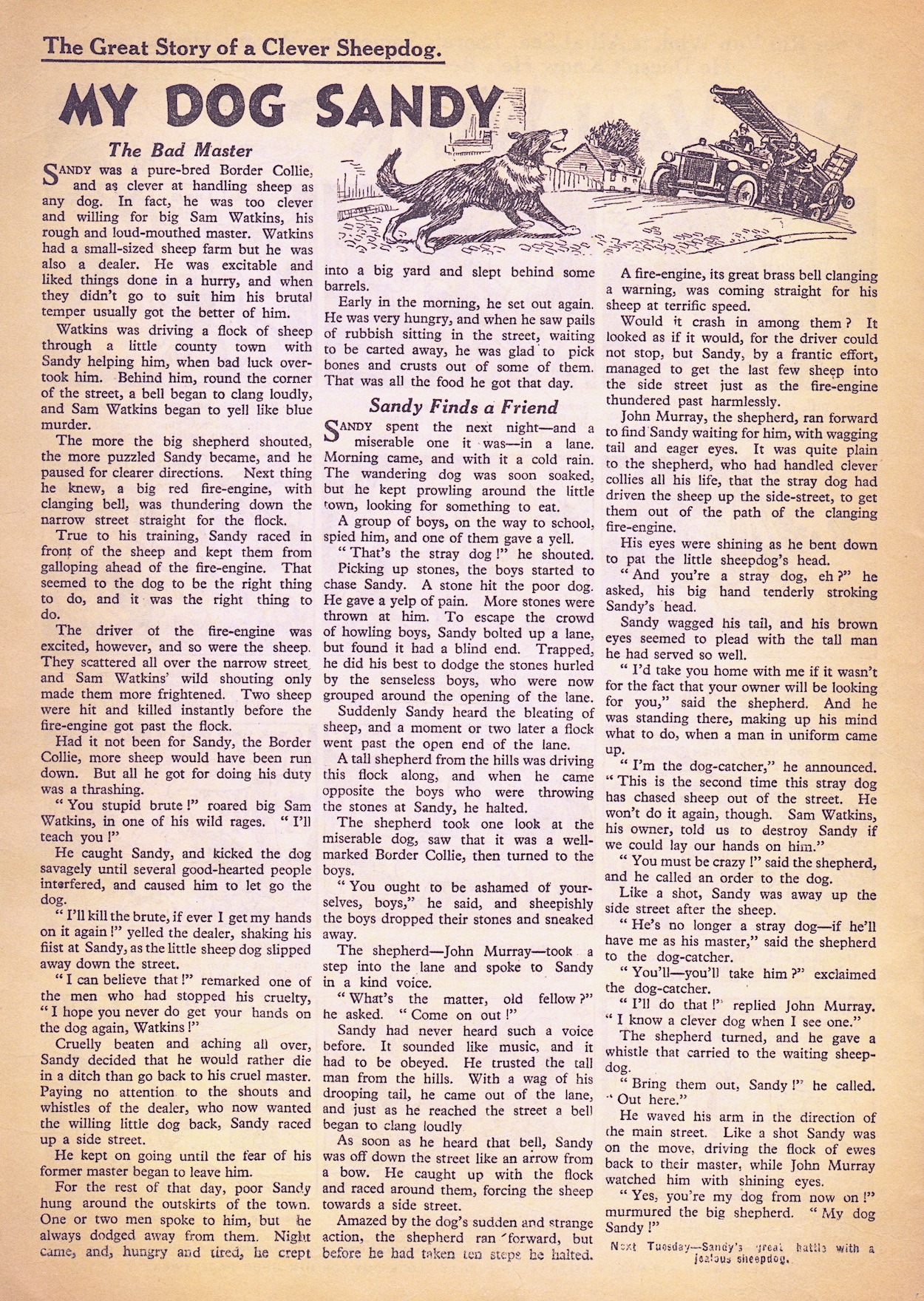
My last highlight is My Dog Sandy by Jack Glass, another short-lived series that’s rather brutal at times in its description of what the poor pup goes through with his cruel owner. He may be starting a better life by the end of the page but I’m sure this must’ve plucked at the heartstrings of the children reading. It certain did with me.
I thought this read through would be fascinating and it’s proved to be right from the off. I’d read about the first issue in the Dandy/Beano Fifty Golden Years Book back in 1987 but to read the full issue has been fun and really insightful. To experience it in its almost complete state is something I’d recommend to any humour comics fan as a really entertaining retrospective, an origin story in this case. So what’s next?
Join me next time as we skip forward seven years to the end of World War II, the reduction in food rations, the launch of BBC Light Programme radio which would eventually become Radio 1 and Radio 2, the publication of Animal Farm, the movie Brief Encounter, the Nobel Prize for the discovery of penicillin, the birth of Helen Mirren and the first time we’d meet three steam engines by the names of Edward, Henry and Gordon! Join me on Wednesday 26th November 2025 for The Beano #272, the first issue to sell over one million copies!
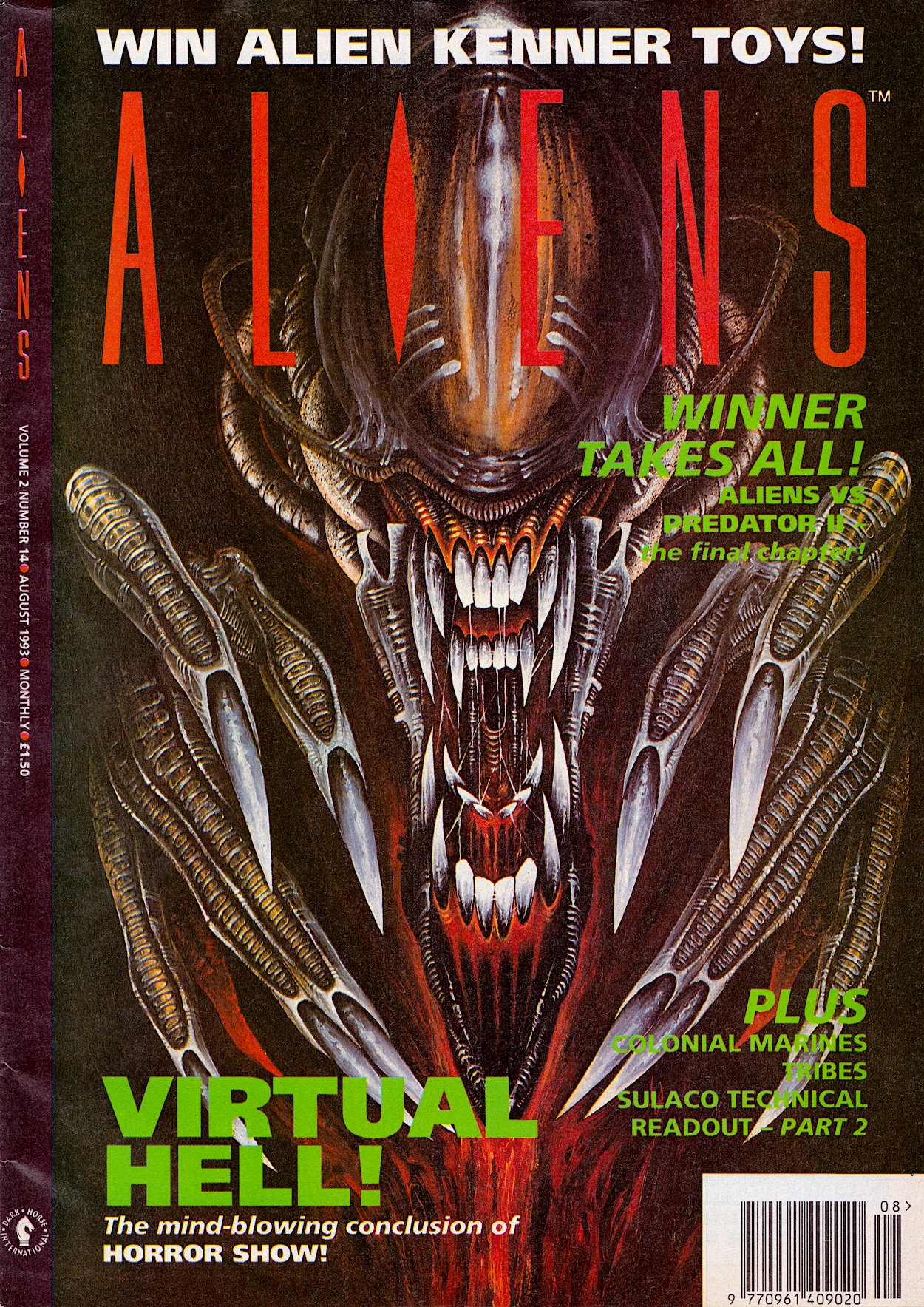
This fantastic cover by Styx (real name Steve Kane and not to be confused with classic cartoonist Leslie Harding who also went by that moniker) welcomes us to the 14th edition of Dark Horse International’s Aliens monthly, the matte paper lending itself perfectly to this dark image. Inside, we’ve another 48 pages of a somewhat mixed bag but the highs have kept me going again this month.
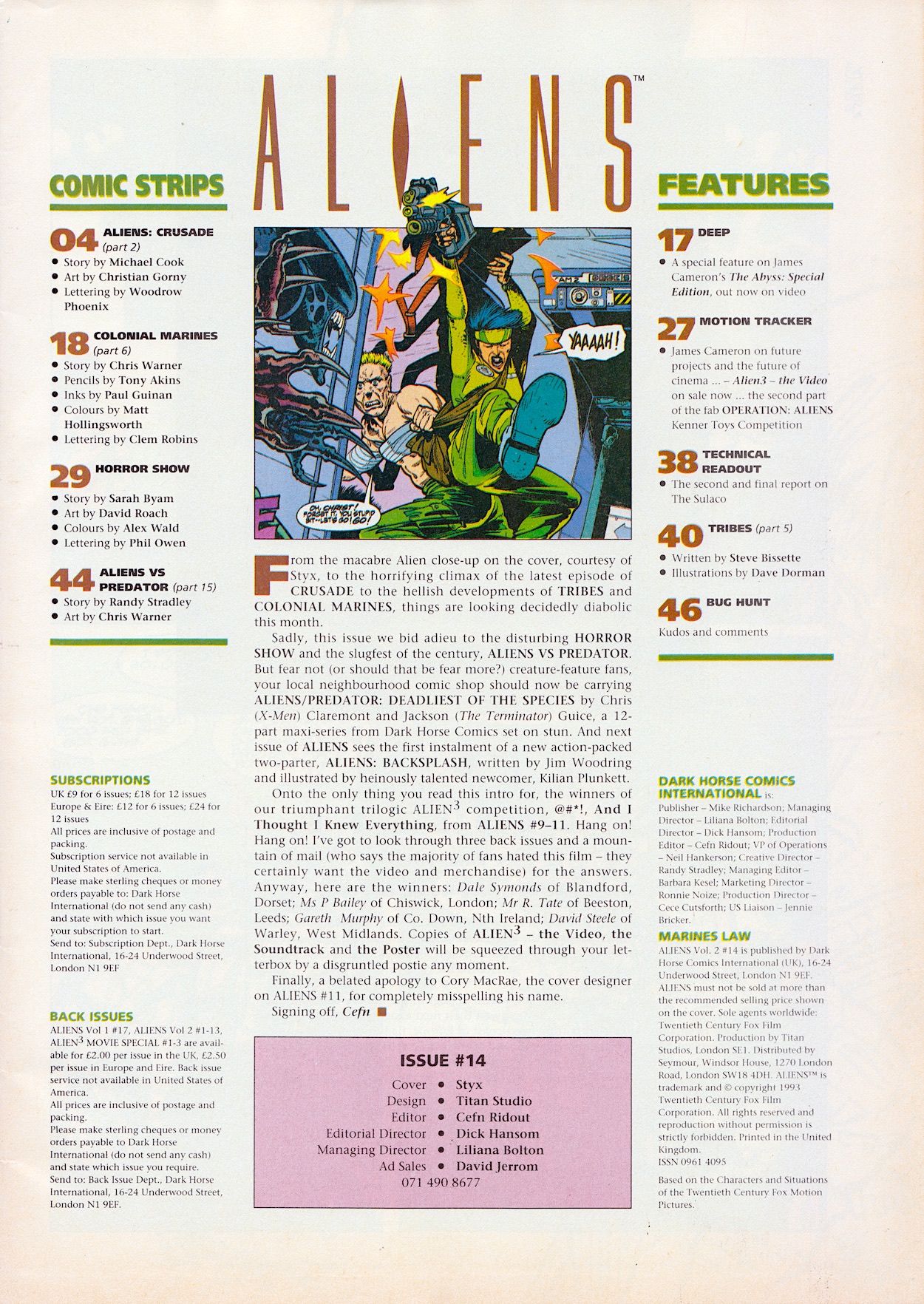
Editor Cefn Ridout’s editorial hypes an import comic as a suitable replacement for the lack of Predator material in the comic despite the fact specialist shops weren’t as prolific in the UK at the time, especially over here in Northern Ireland. As always, I’ve included this page so you’ve access to all the credits for the issue and turning over we come face-to-facehugger with the 12-page second part of Michael Cook’sCrusade.
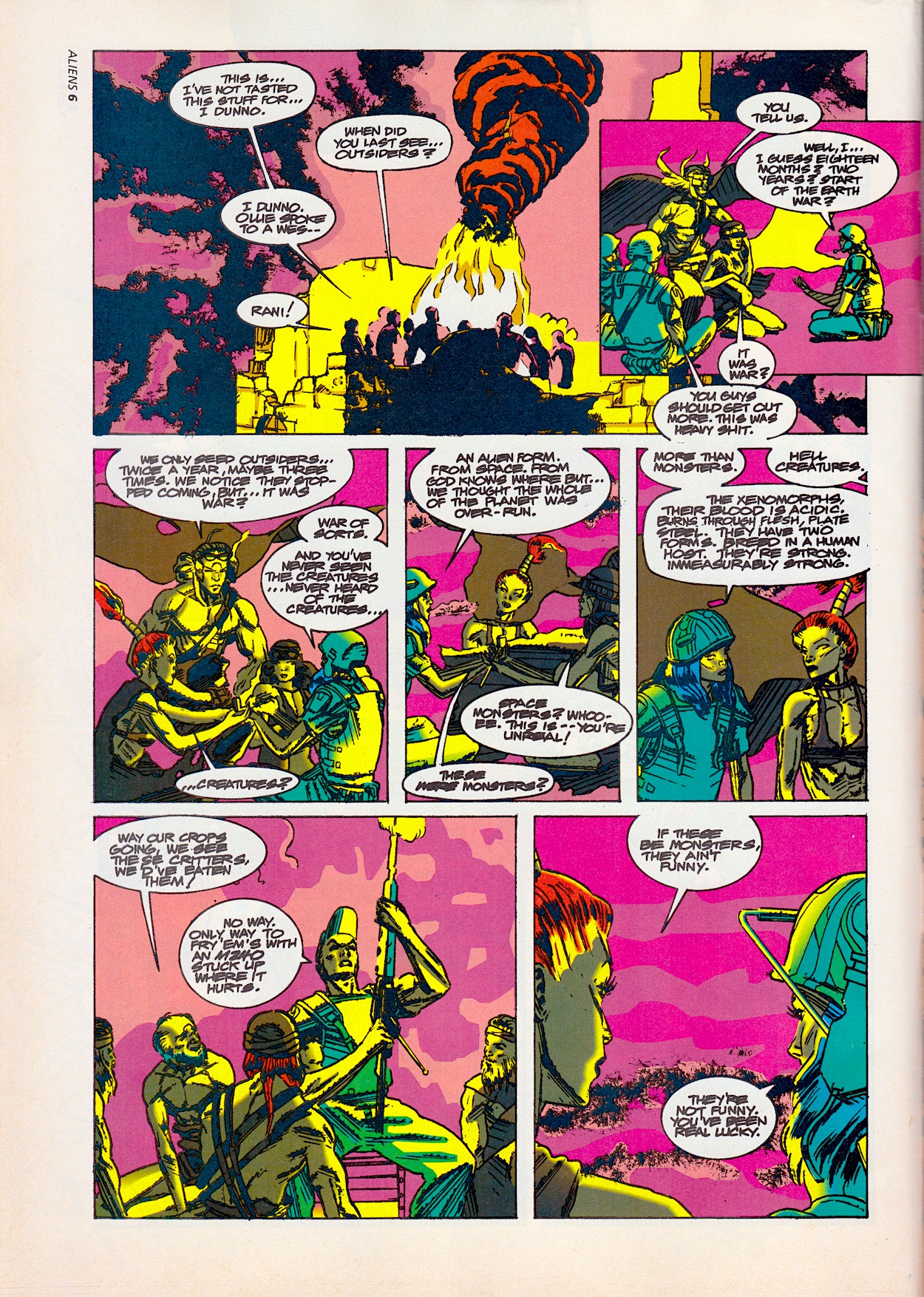
In the recap of part one we’re told those weren’t Colonial Marines but employees of a corporation called Minecorp. This wasn’t clear at all last time. Anyway, the company thinks there are profits to be made if they can suss out why London remains clear of aliens after the Earth War, but the people they’ve sent actually seem less concerned about that than they are about helping the tribe they’ve met. Not that the dialogue helps work this out.
The speech is still awful, the overuse of ellipses an attempt to make it feel like they’re in natural conversations, to give the illusion of speech patterns, but instead it’s just broken. The fact there are no captions means the story relies completely on that dialogue too. So from what I can gather London had broken into tribal warfare long before the aliens arrived, even though the comic’s editorials these past two months gave me the impression this happened because of the alien war.
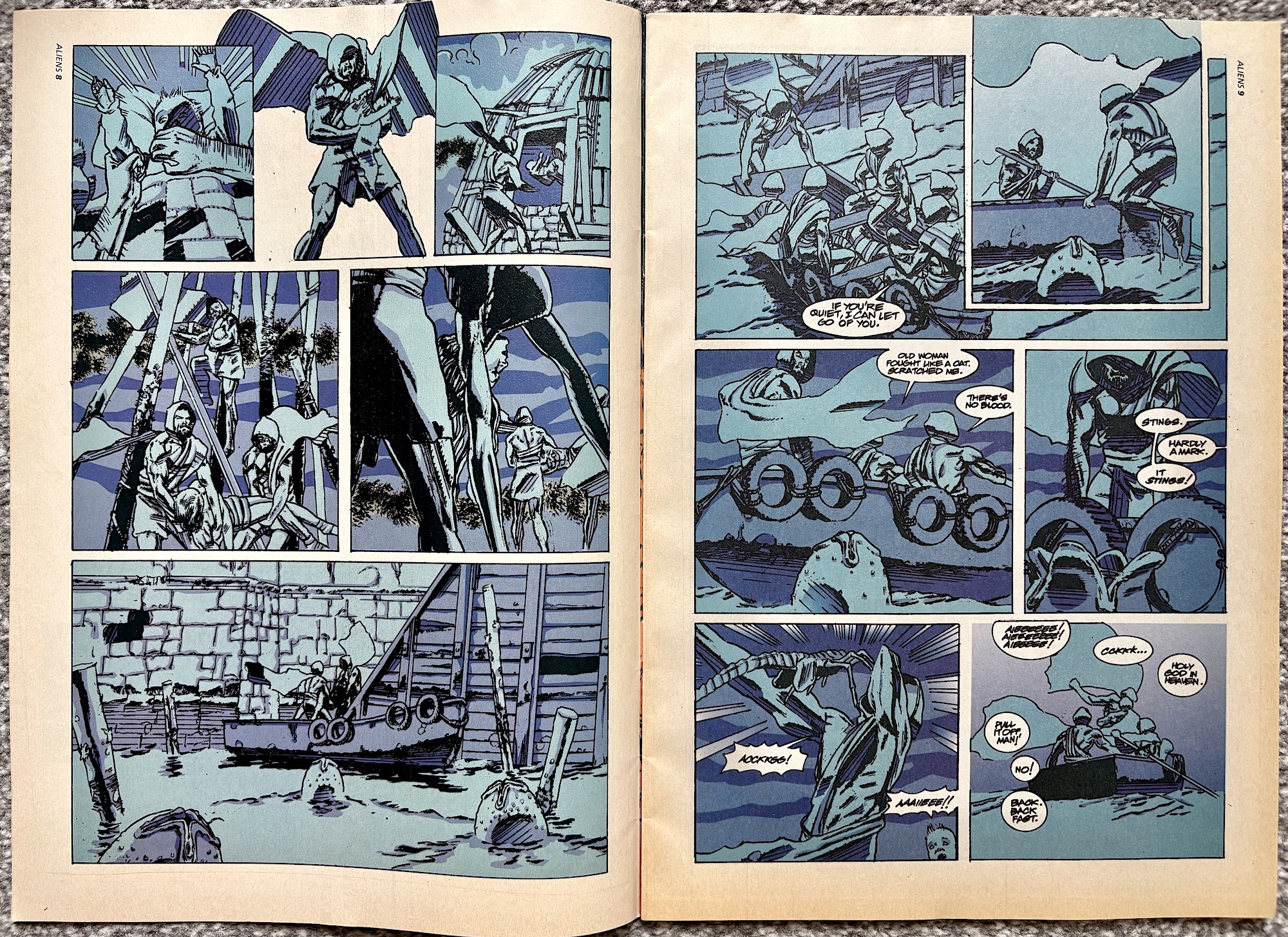
The Minecorp troops need guides and in return they’ve brought food and weapons for the tribe they’ve met. However, one night another tribe infiltrates their camp and kidnaps some of them, including a small child. They take them across the Thames to a large church but floating in the water, almost dealt with incidentally by the story are loads of alien eggs.
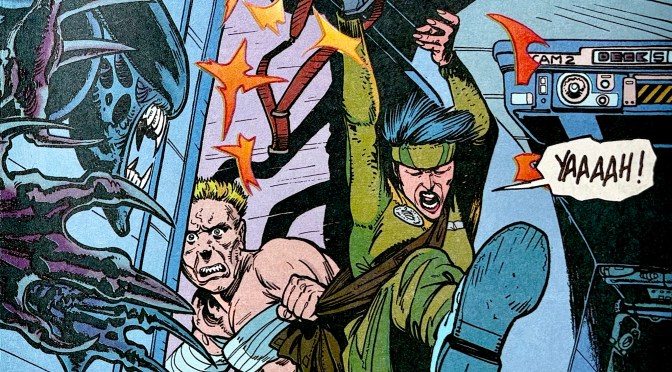
Of course when one of these pops up in an Alien story someone has to be stupid enough to look in and that’s exactly what happens here. Then back at the camp we finally get a little bit of character development. Foston’s wife was on the missing recon team, Channon says she’ll go with him even if they don’t have a guide and upon hearing this one of the unnamed tribeswomen agrees to help as she can read the stars and mythical stones to predict the future.
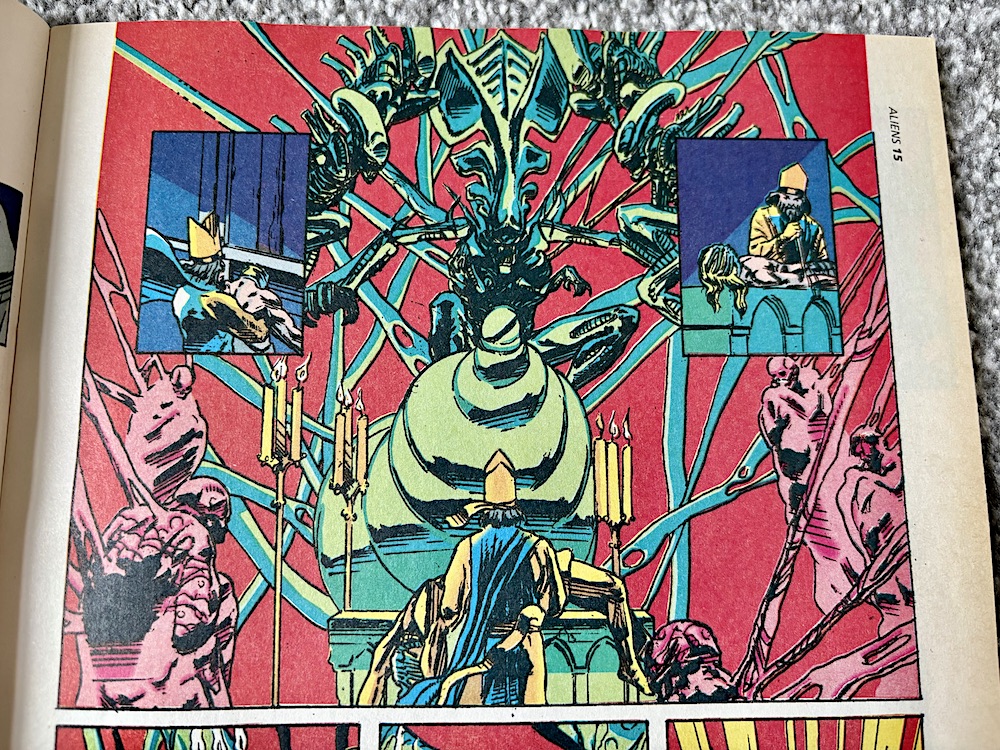
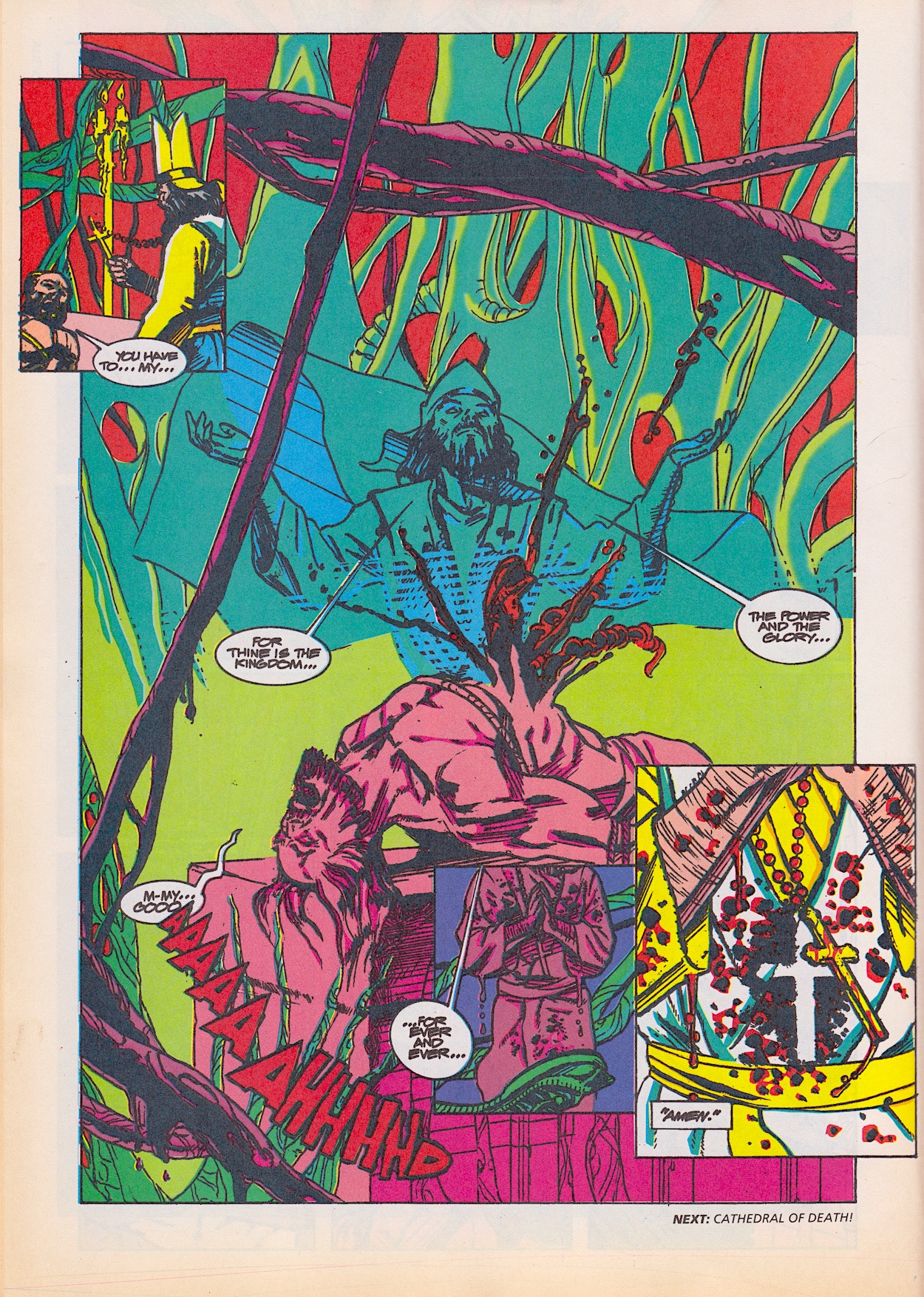
Meanwhile, the archbishop of the church appears to be the leader of a group of Christian fanatics. Seeing Beresford with a facehugger attached he simply tells the rest he’ll attend to it. Instead, he sneaks the body away and inside the tower presents him to an Alien Queen, albeit a very badly drawn one. While reciting the Lord’s Prayer the newborn alien bursts out of Bereford’s chest on a page the editorial described as “horrific”. If I didn’t know better I’d say Cefn was describing the apparently psychedelic art.
In the ongoing prose story Tribes the marines are up against a fanatical religious group who see the aliens as gods, and Crusade follows on from previous lead strip Sacrifice, which saw a priest go up against an alien on her own to test her Christian faith. Then, to add to all of this our Colonial Marines strip this month begins with Vasquez frozen to the spot in fear as an alien approaches and inside her head she’s reciting the Lord’s Prayer!
Perhaps there was a theme being explored across various Dark Horse US Aliens comic strips at the time, some form of larger arc the UK writers wanted to explore too? If that’s the case then I can understand, but if not this is all beginning to get very repetitive and unimaginative. Just as Crusade was beginning to get interesting too. I’ll wait to see how it develops next month. Next up, a one-page reprieve with a look at The Abyss Special Edition.
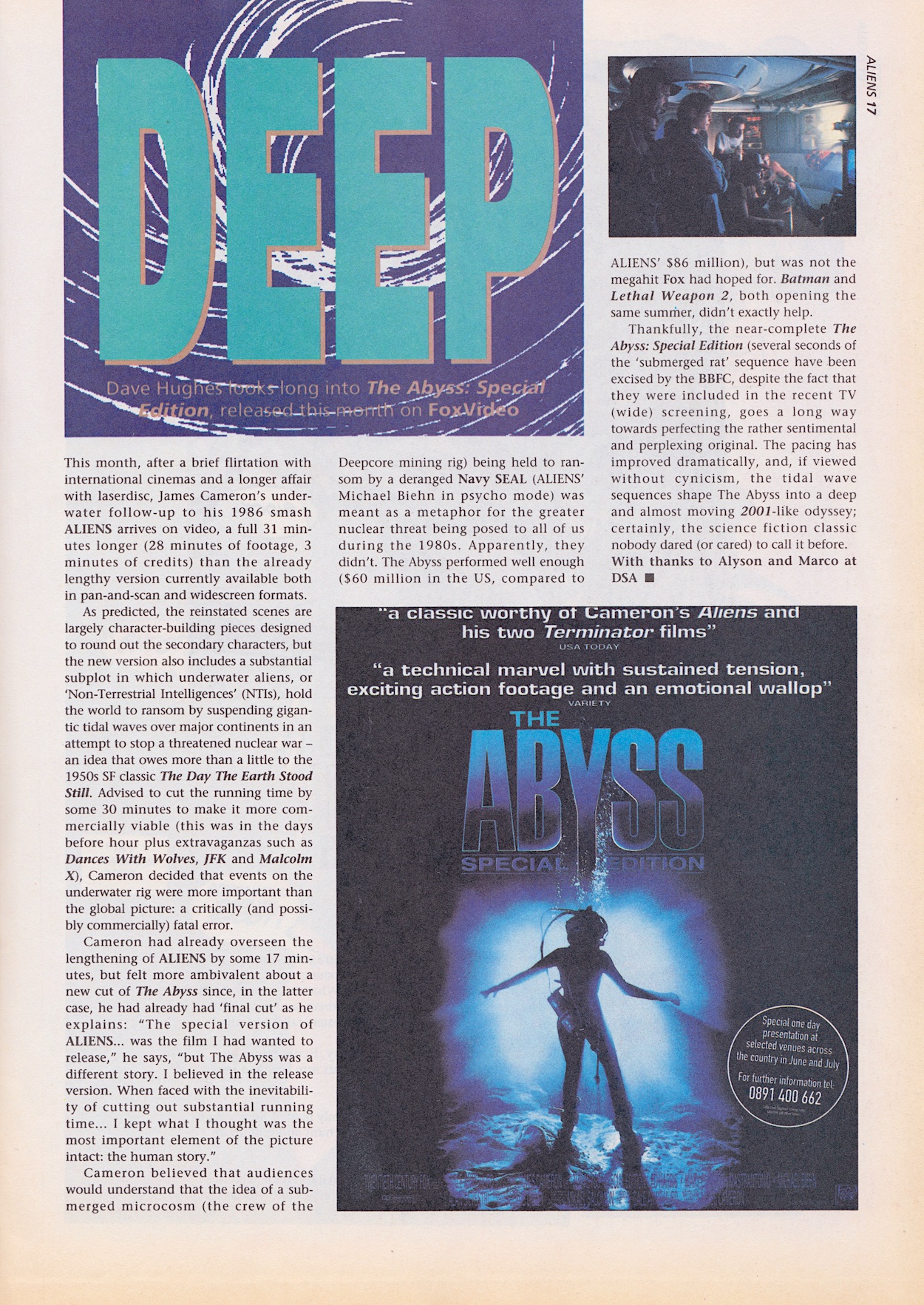
Dave Hughes has a much more positive view of directors’ cuts than Jim Campbell had previously. The Abyss’ new cut contained almost double the amount of new material as the Aliens Special Edition. This is also how I found out about the rat scene, when one was pushed into breathable liquid. Shockingly it was filmed for real with actual breathable liquid that was in development! Given how the rat reacted I can completely understand why it’s been cut in the UK where we have stricter animal cruelty laws in entertainment.
Despite some online rumour mills, the rats did all survive and received plenty of loving aftercare. But still, imagine if someone suddenly held you underwater without you knowing you could breathe! Even with that particular liquid I still think it was unnecessarily cruel. It could’ve been achieved with special effects and well-timed edits. Cameron has since made a name for himself in his endeavours to protect the planet and all life on it so I’ll assume he never meant to be cruel. I’ll hold on to that belief.
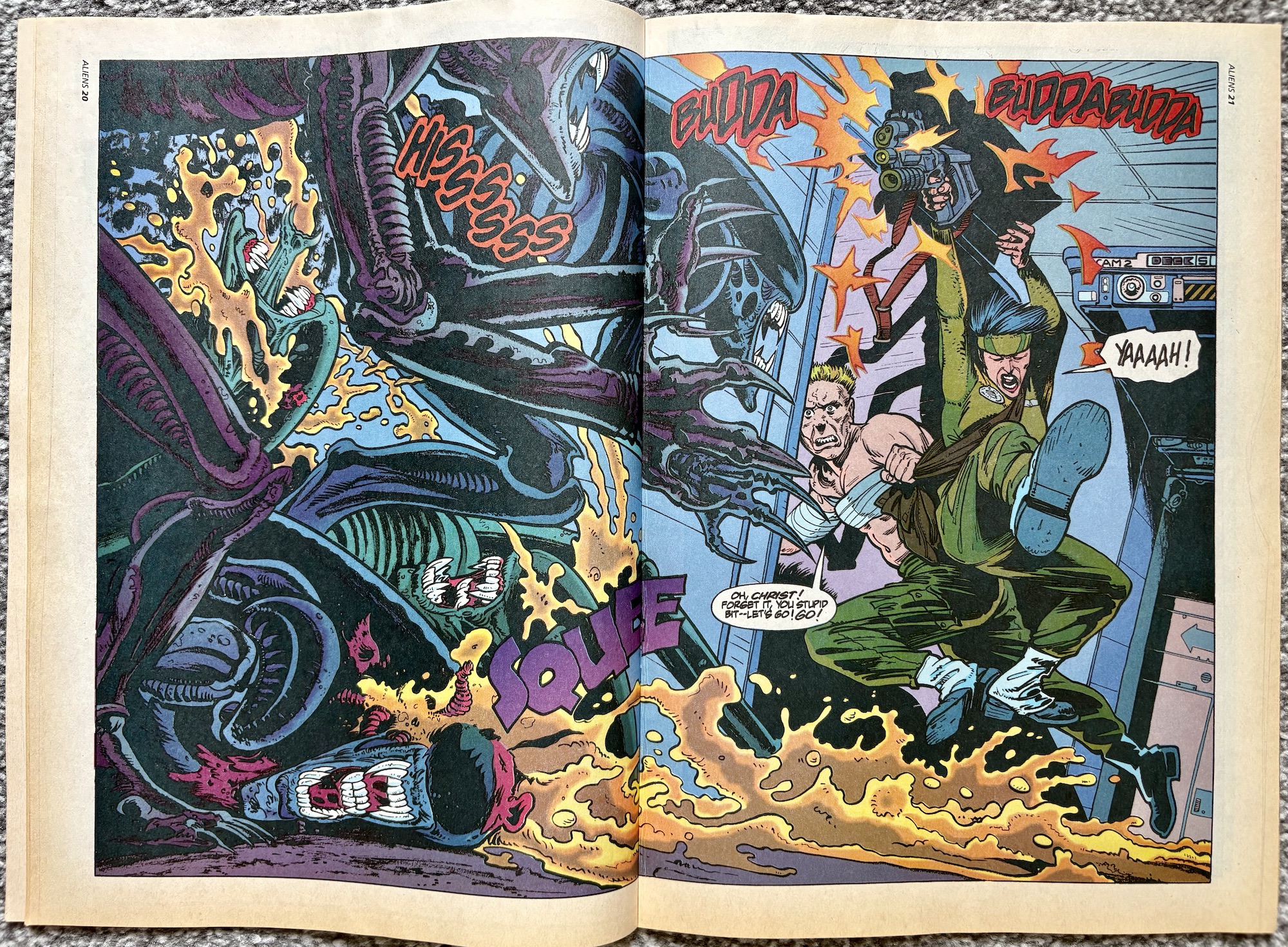
Our 8-page sixth chapter of Chris Warner’sColonial Marines is next and after Vasquez’s prayer comes this double-page spread showing the potential of Tony Akins’, Paul Guinan’s and Matt Hollingsworth’s art. It’s the same team but it feels more solid than before, especially in its depictions of the new alien race apparently controlling the xenomorphs, the latter thankfully looking more horrific and less cartoon-like as you can.
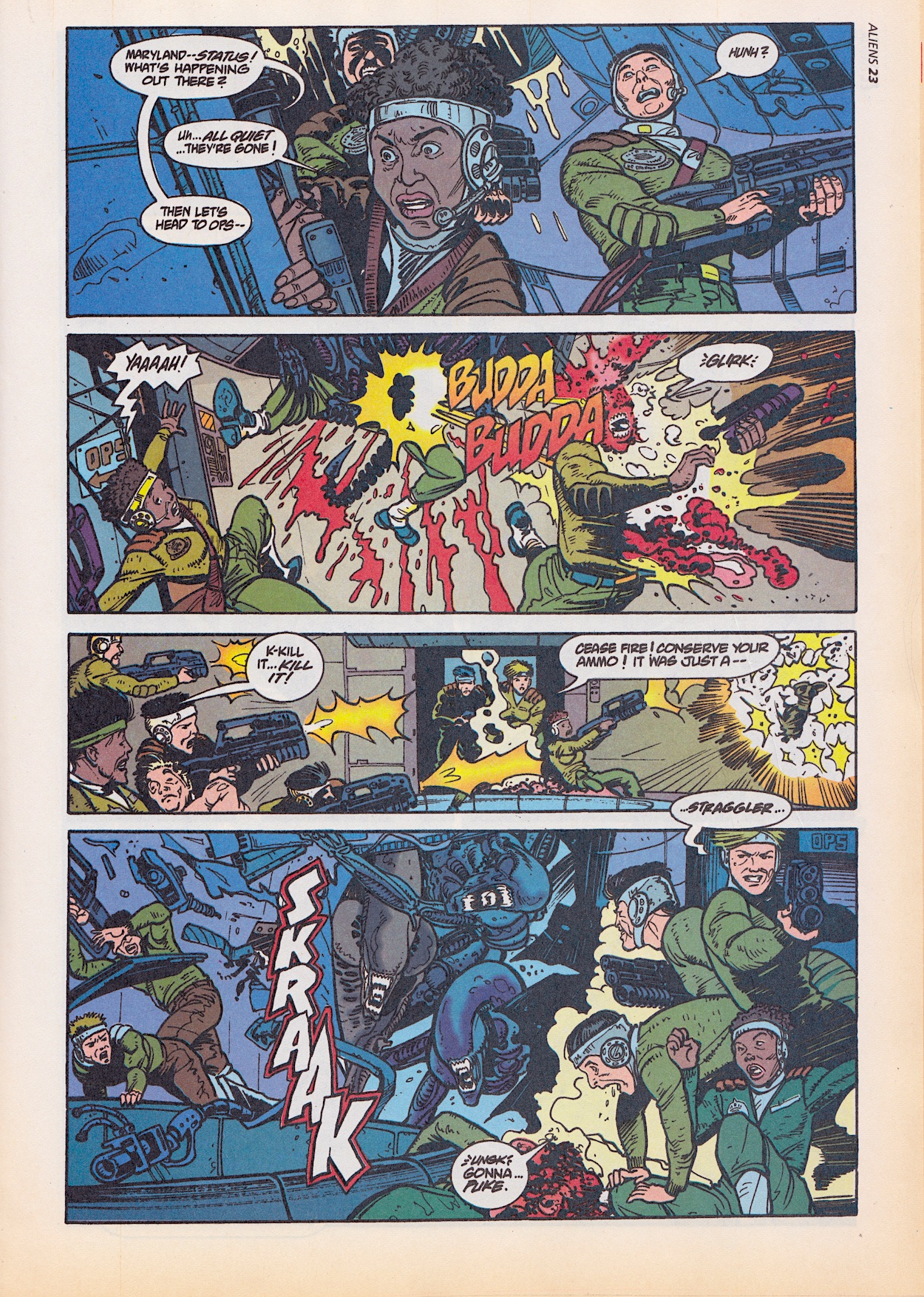
Unaware they’re being watched on camera by one of the humanoid aliens, this page shows the chaos of the suddenly escalating situation for the marines. It’s an all-action chapter that doesn’t move the plot forward but does see off quite a few of the peripheral characters in more and more horrific ways, not least of which is this accidental death when one marine is grabbed from above and fires their weapon in desperation. These small chunks are great fun every month.
On the Motion Tracker news page we find out the toy competition from last month which required people to buy a handful of Dark Horse International comics is now going to be printed in full in Aliens. No reason is given but Star Wars had been cancelled after surprisingly poor sales. Then it’s on to eight pages of the “mind-blowing conclusion to Horror Show”, according to the cover. So, is it?
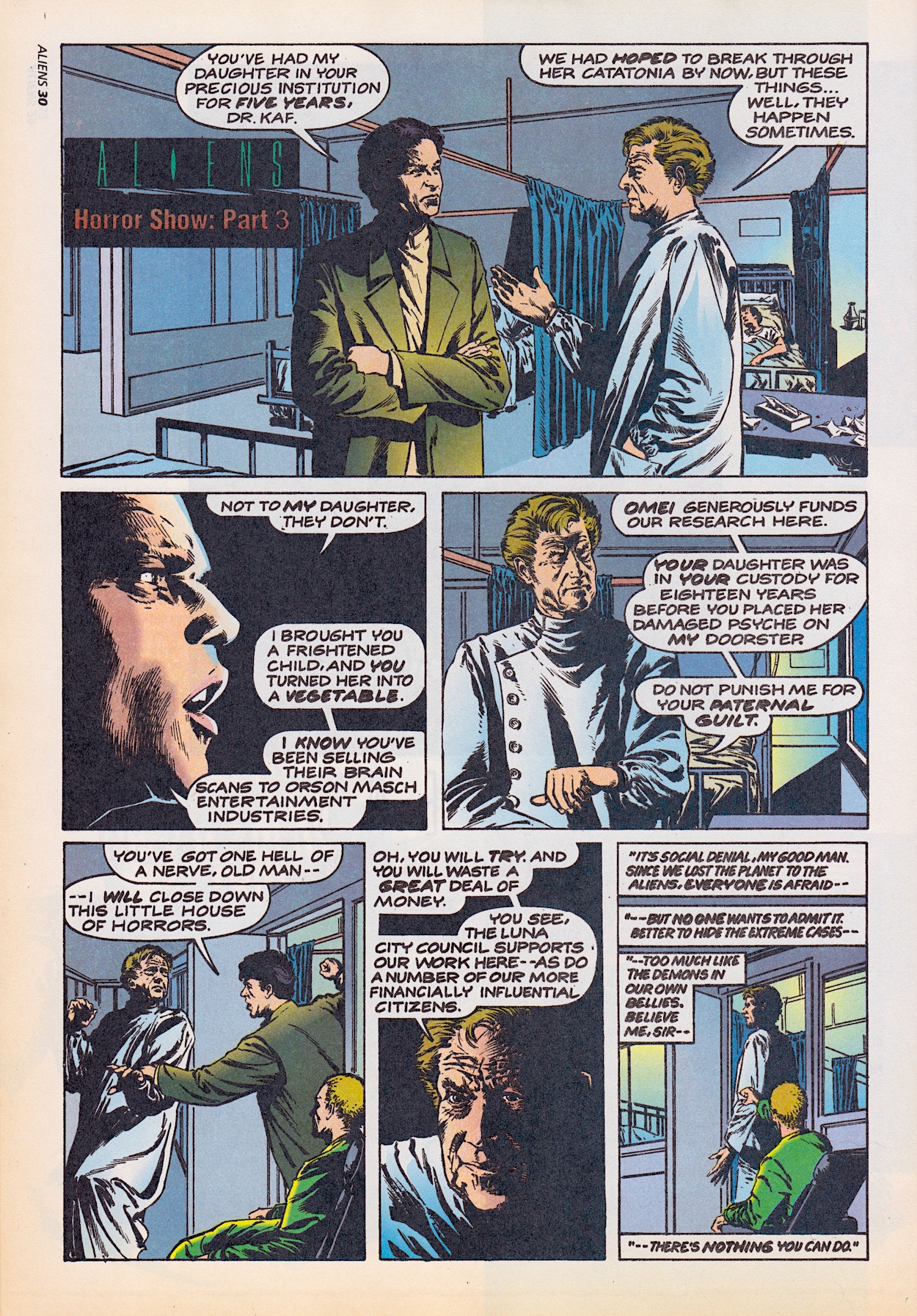
On the moon the inhabitants of Luna City live with daily guilt over the loss of their loved ones down on Earth during the recent Earth War, hence why the creatures are infiltrating everyone’s nightmares in the sleep clinic/entertainment company we’ve been introduced to. It’s an intriguing set up that’s produced quite the boring strip so far, but here on page one I find myself feeling for the father of one of their ‘patients’. Is something interesting finally happening?
His daughter is the same person who had the shark/alien dream previously. After a dream involving an alien infiltrating the apparent hospital and chasing her (in which she finds herself outside and back in deep water with the alien in place of the shark), she awakens to find the whole lab has been seized in a rebellion and all the patients are awake. Somehow, her father helped them but it all happens off-camera (as it were). As a reader I immediately felt cheated. The only thing that actually happens and we’re just told about it?
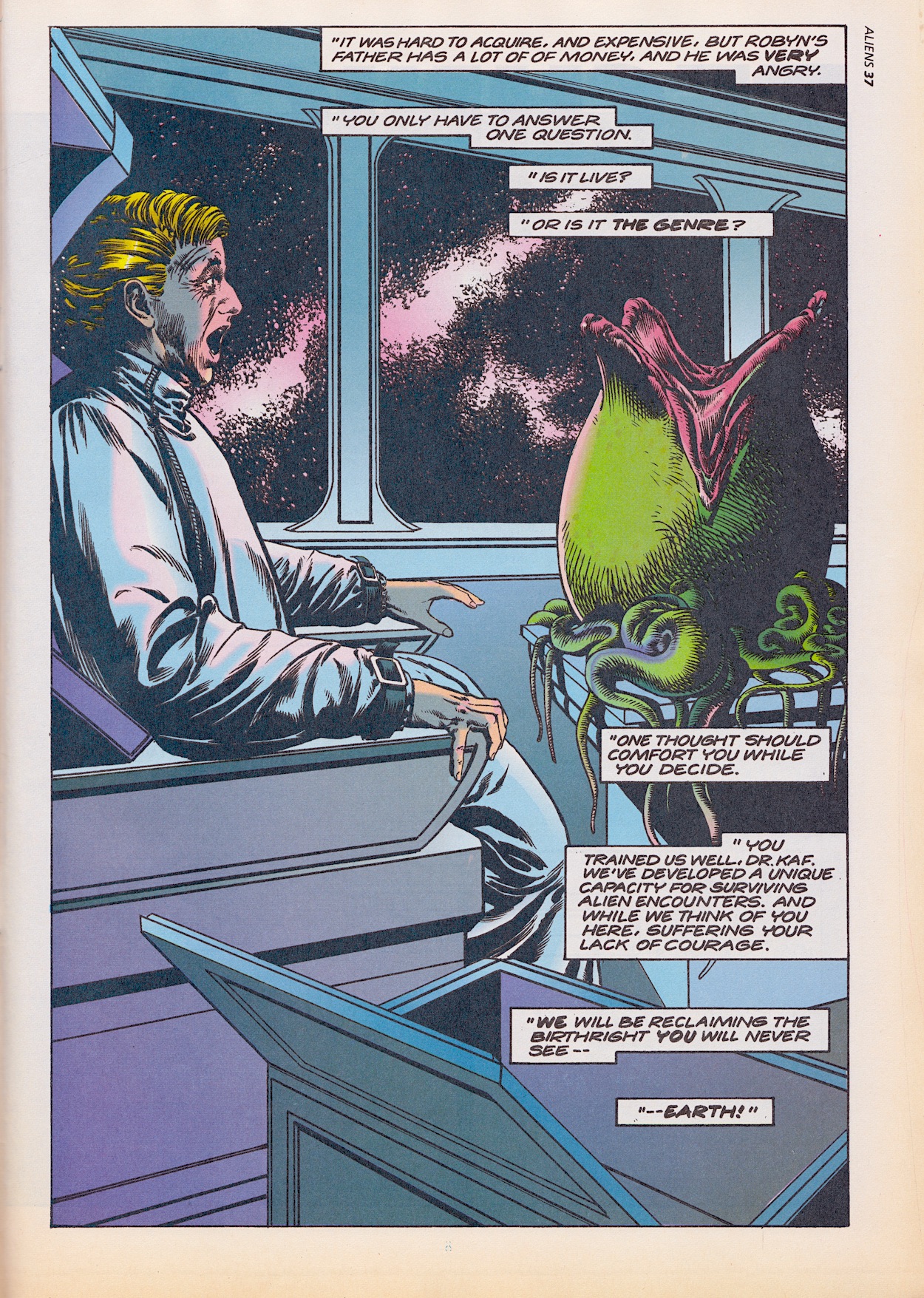
That hyped conclusion sees revenge taken out on the doctor who was not only lying to these people about their treatment but also sexually abusing them. We (and he) are left not knowing if the above is real or part of the virtual reality. It doesn’t make up for the rest of the story but it’s a good idea, despite looking more like Audrey II from Little Shop of Horrors than an alien egg. Personally, I’m glad to see the back of Horror Show.
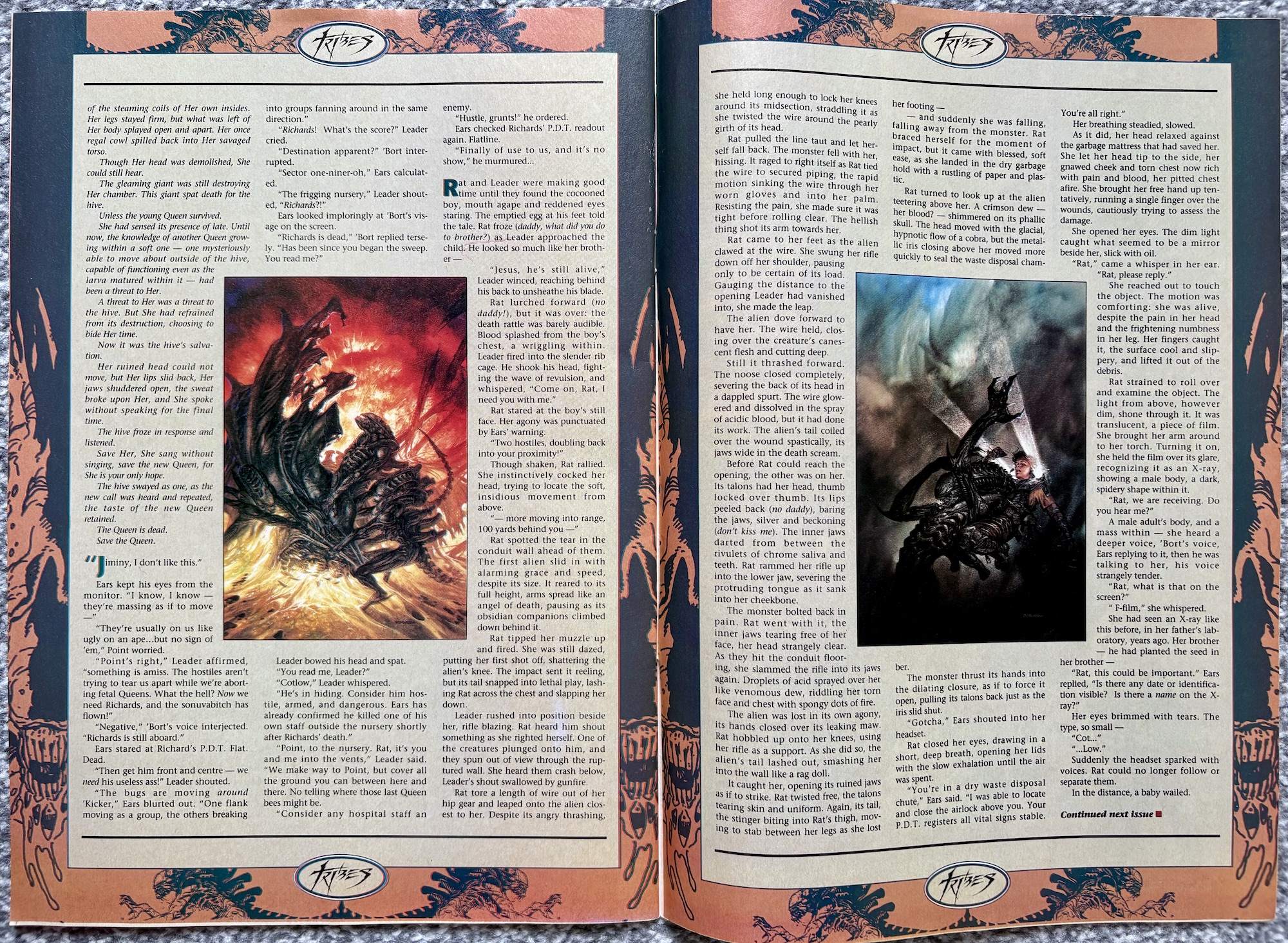
Much, much (much!) better is the latest part of Tribes, the comic’s serialisation of the novella released in the States. It’s really interesting when it’s written from the Alien Queen’s perspective and Rat’s near fatal escape is real edge-of-the-seat stuff, no exaggeration. I honestly thought she was a goner and she’s my favourite character so it was an exciting read! Again, the italics in her part of the story are intended as flashbacks to the horrors her father forced upon her as a young child and they add to the scares.
One of the aliens dies in a suitably horrifying way, its elongated head slowly sliced in half by a cutting wire as it pushes itself through, trying to get at Rat just beyond. Then, when she sees an x-ray of one of the religious fanatics she recognises the image of the alien inside from an x-ray of her own brother her dad proudly showed her as a child. This is very much Rat’s story and it’s terrific. Writer Steve Bissette’s tale should be on the silver screen!
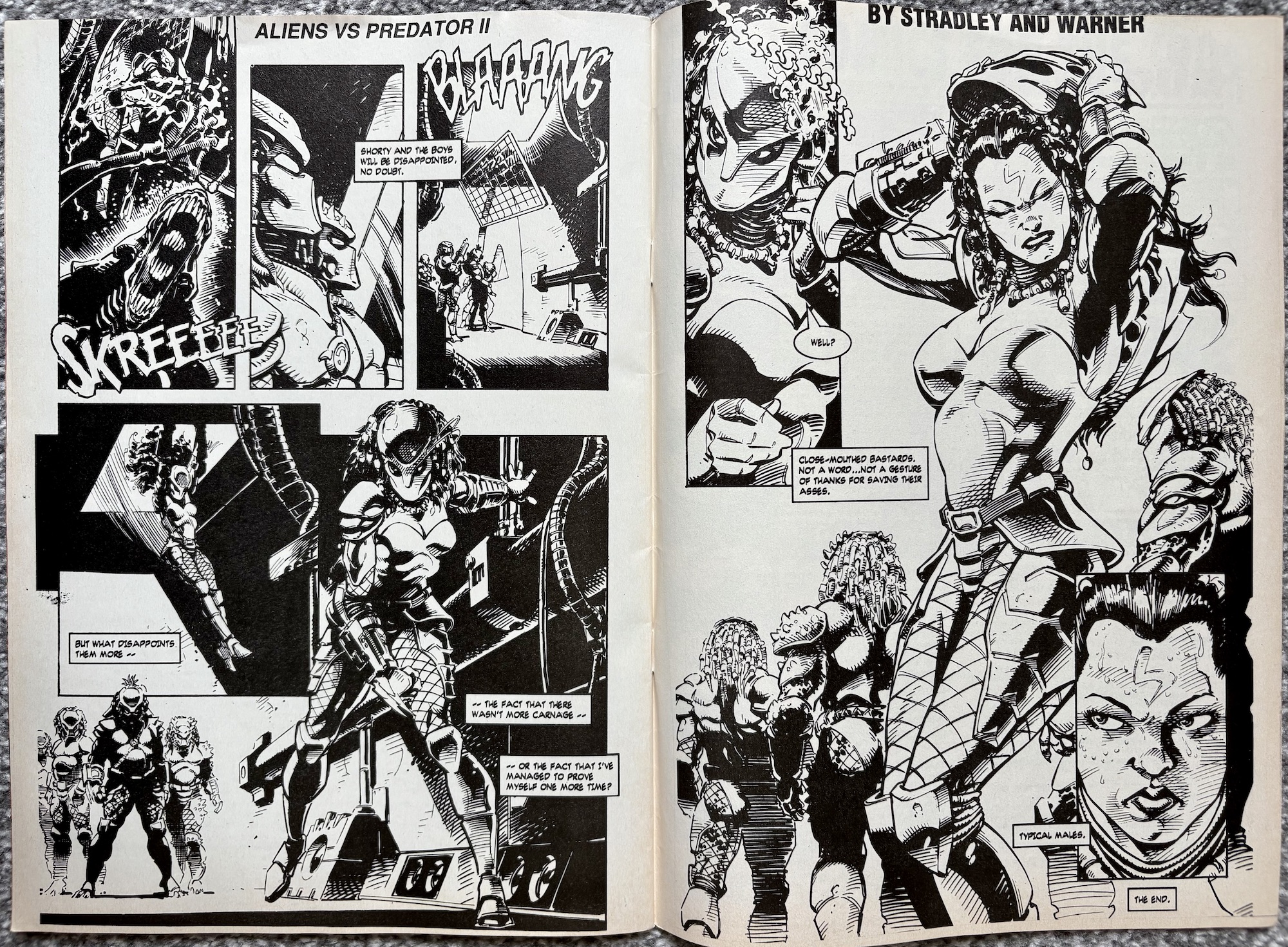
Alien Vs Predator II isn’t the all-action conclusion you’d think from the cover headline. The Alien Queen was already captured and these final two pages are more about the apparently shocking reveal that one of the Predators is actually a human woman working alongside them. But wasn’t this already obvious from chapters right back at the beginning? I thought that was the whole point of the story and the reveal would be why she was doing this.
So it’s a disappointing ending and makes me miss the separate Predator strip even more. Good news comes on the letters page though. It’s revealed to a reader who has the same opinion as me of the Colonial Marines strip that, with AVP II over and Tribes concluding in two months, more pages will be given to that strip soon. We also find out there’s a comics adaptation of the original Alien film to purchase, written by Vampirella’sArchie Goodwin (whose work I’m enjoying in the publisher’s Dracula) and drawn by Walt Simonson who adapted Jurassic Park.
Colonial Marines and Tribes really carried this issue and boy, did they do a good job of it! Worth the price of admittance, those two. But Crusade could be opening up into something more than I’d previously thought, at least storywise, and we’ve a new two-part Aliens strip called Backsplash beginning in #15 too. Things could be on the up again. We’ll find out if that’s the case on Tuesday 26th August 2025.
This isn’t going to be the usual introductory post for a comic (it hardly needs it), nor is this read through going to be usual. But then again, any modern day readers of Beano (and whose children also read it) will know this should suit the anarchic comic that’s on sale today, nearly 90 years after it first appeared. It’s been a long journey from breaking new ground, to being seen as a traditional comic, to being the crazy weekly it’s become today. This read through will take us all on that transformative journey together.
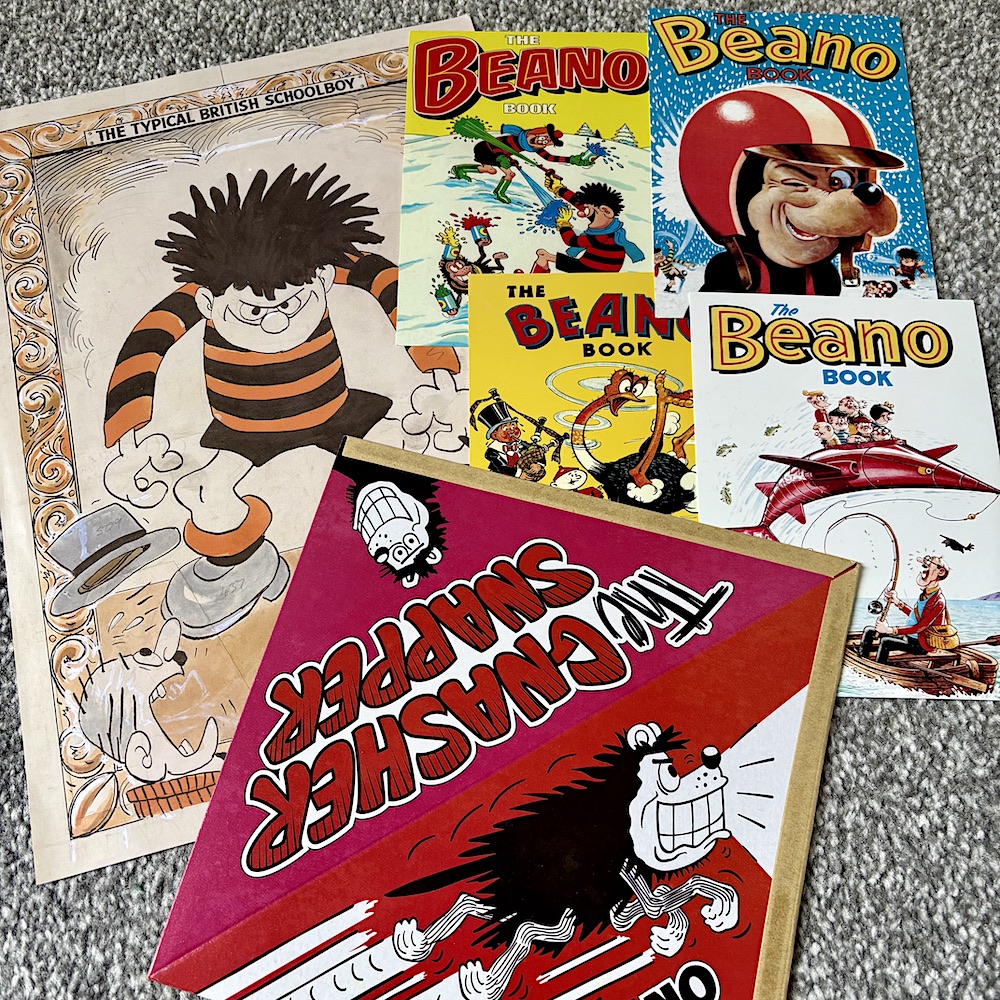
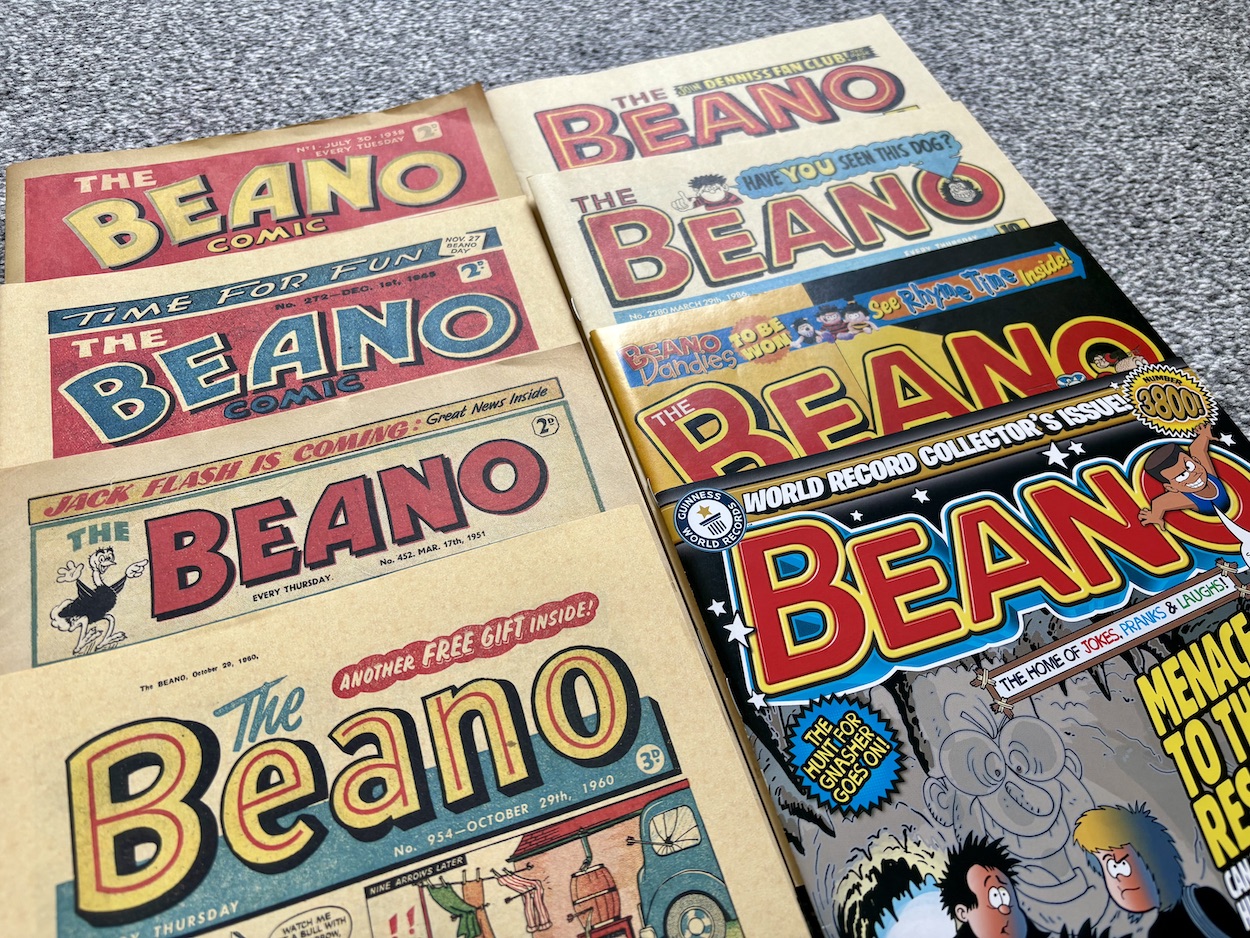
In 2018 Beano’s publishers DC Thomson released a lovely box set to mark its 80th anniversary. Aimed very much at the comic’s young readers it was a way of letting them have a peek at the long history of their favourite comic and its style of humour over the years. The main highlight of this set had to be the eight editions of Beano included, one from each decade of its life and gorgeously reproduced as a collective set.
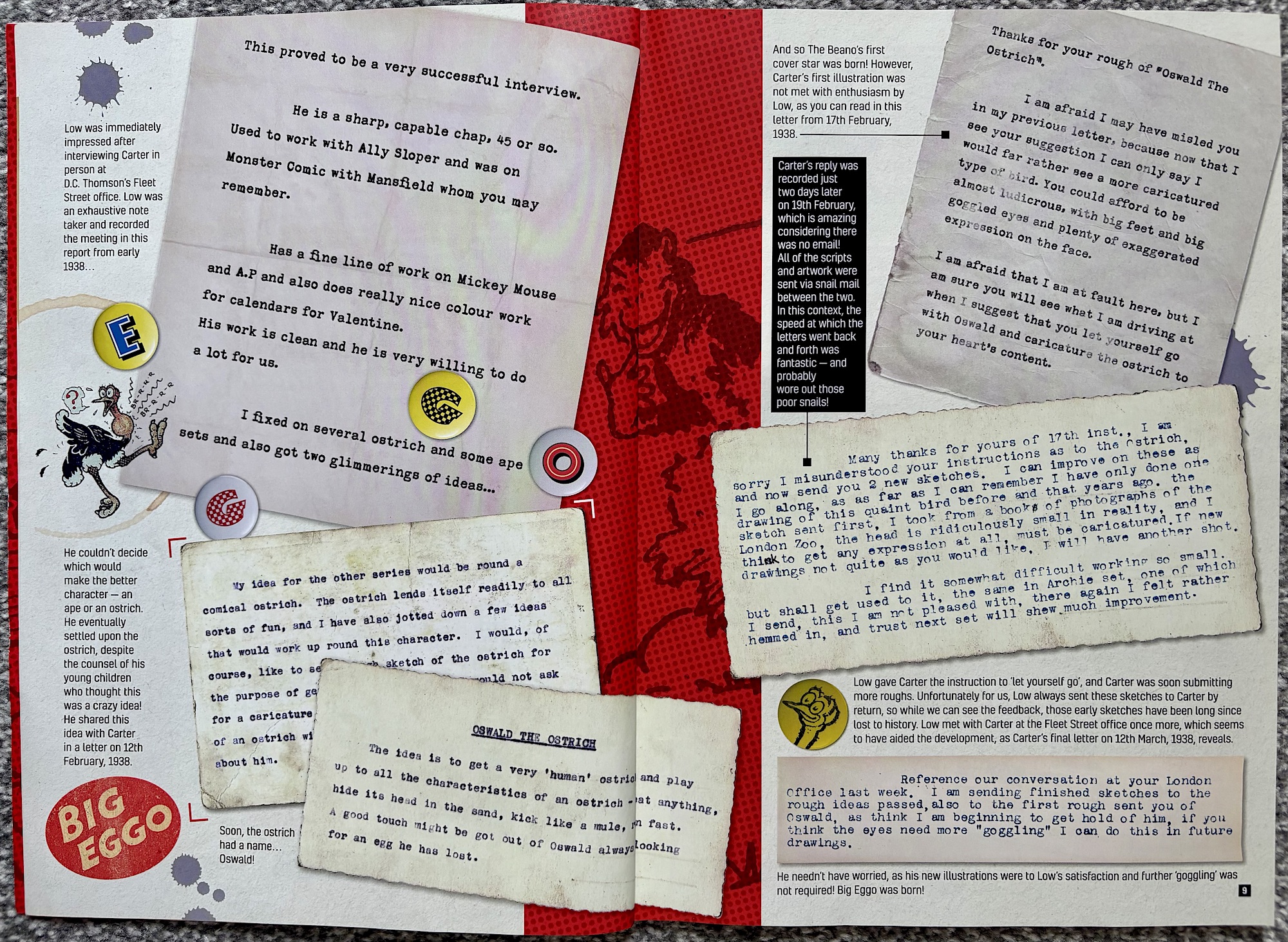
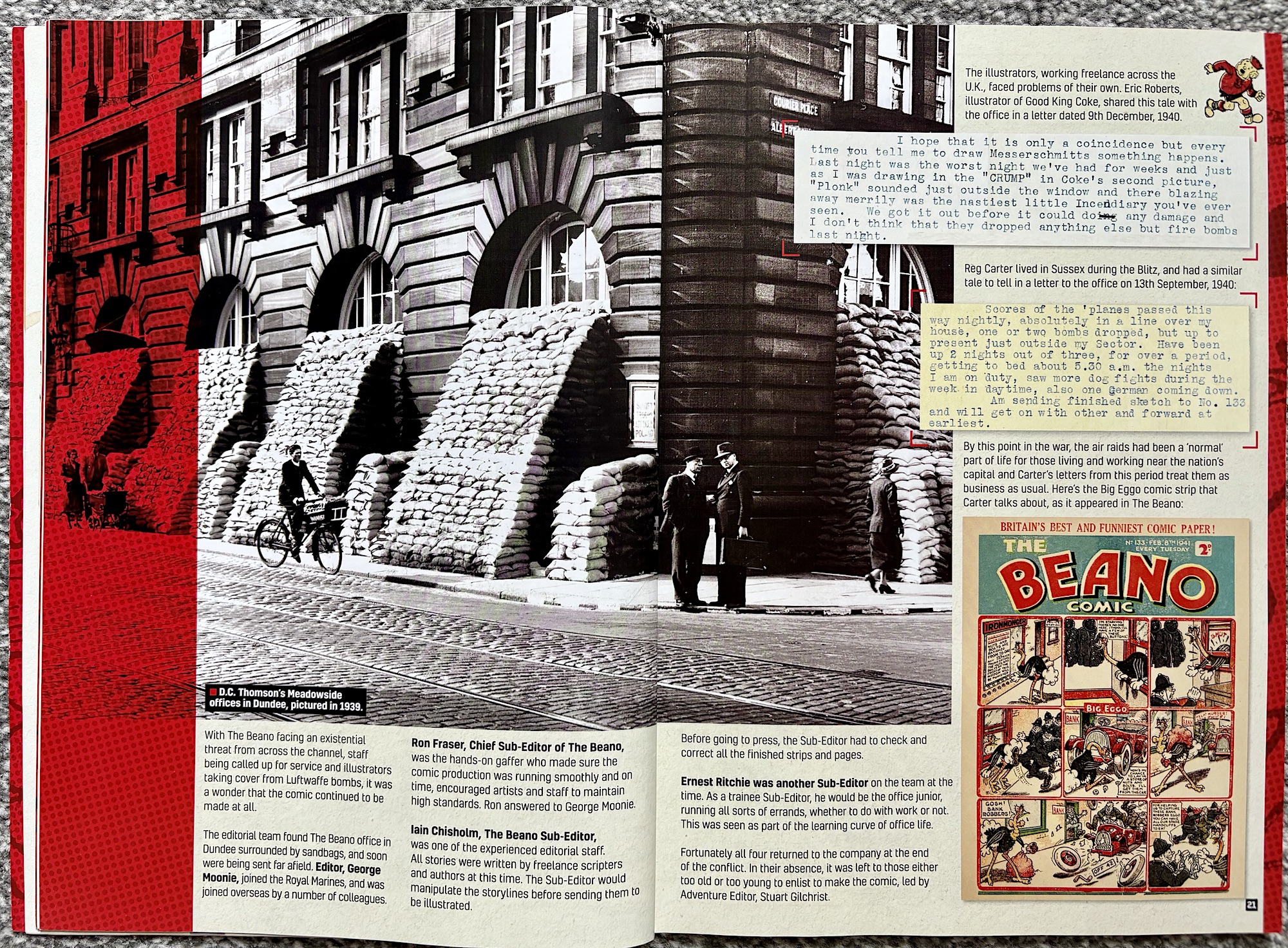
Also in the box was a fascinating 100-page bookazine designed specifically for the current target audience. As an adult it’s a quicker read than I anticipated but that doesn’t make it any less fun. In fact, that’s the point. Instead of a dry history lesson it’s a fun ride through 80 years of the comic and includes a fascinating look into its creation, for example showing letters between its first editor Robert D. Low and the cartoonist responsible for Big Eggo, Reg Carter.
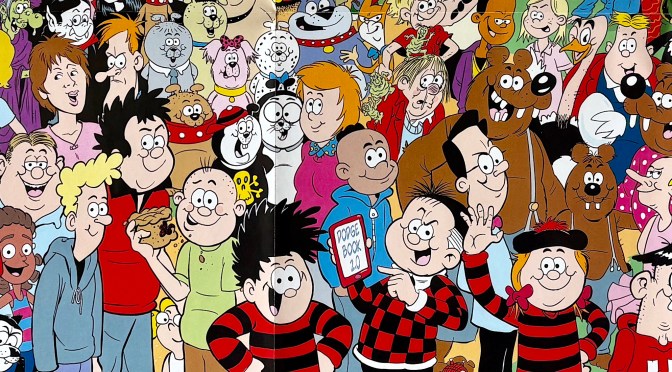
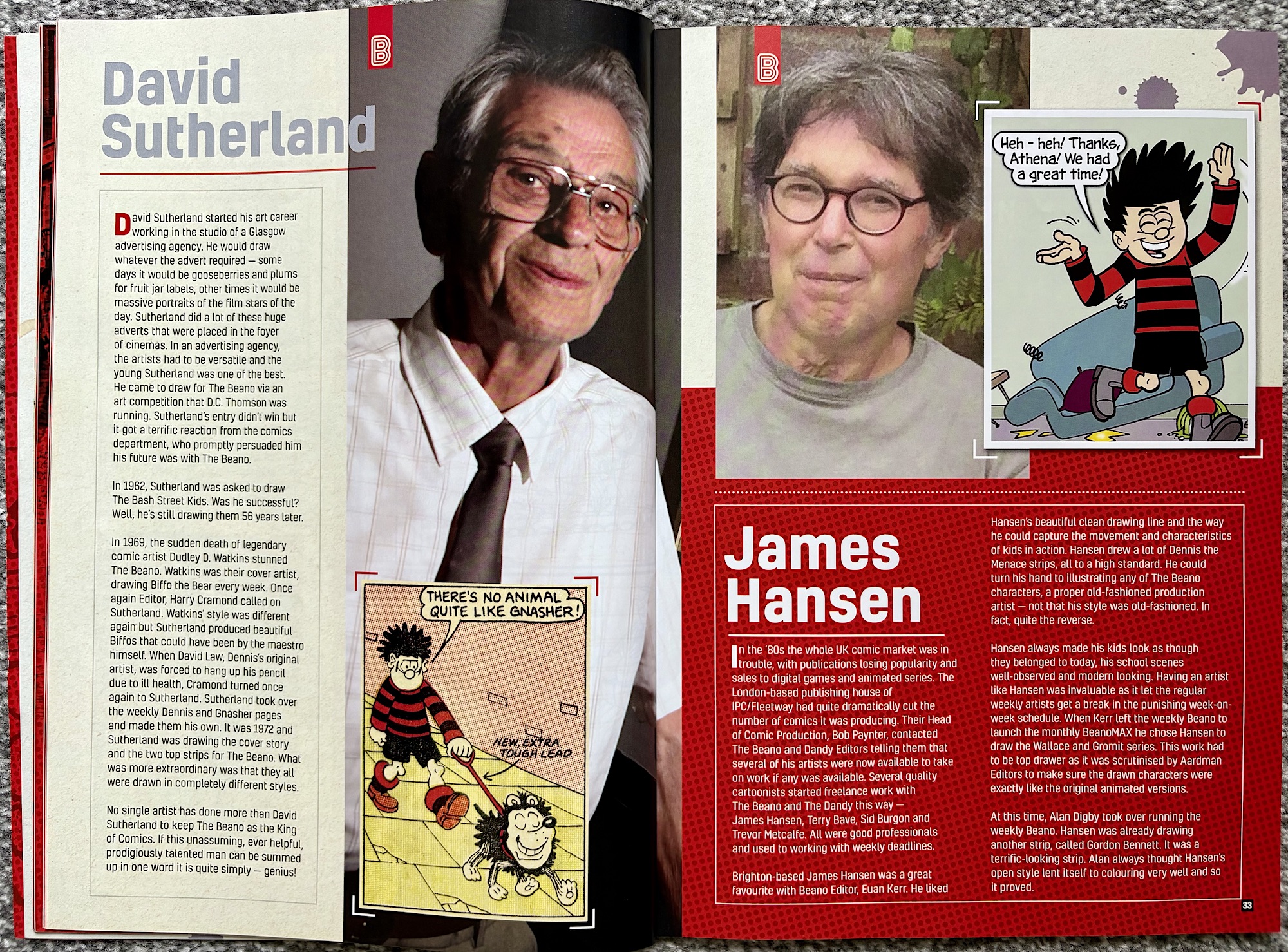
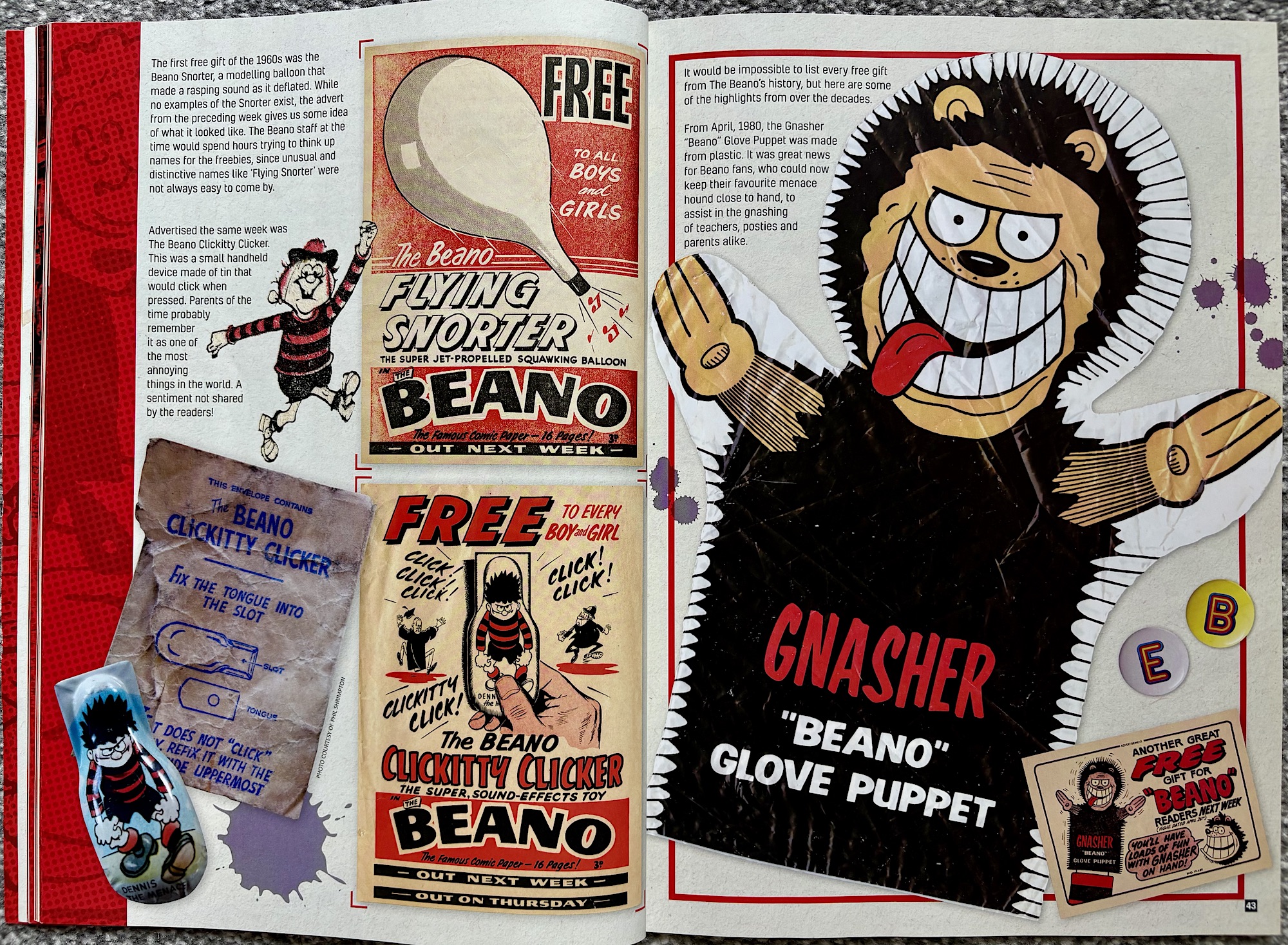
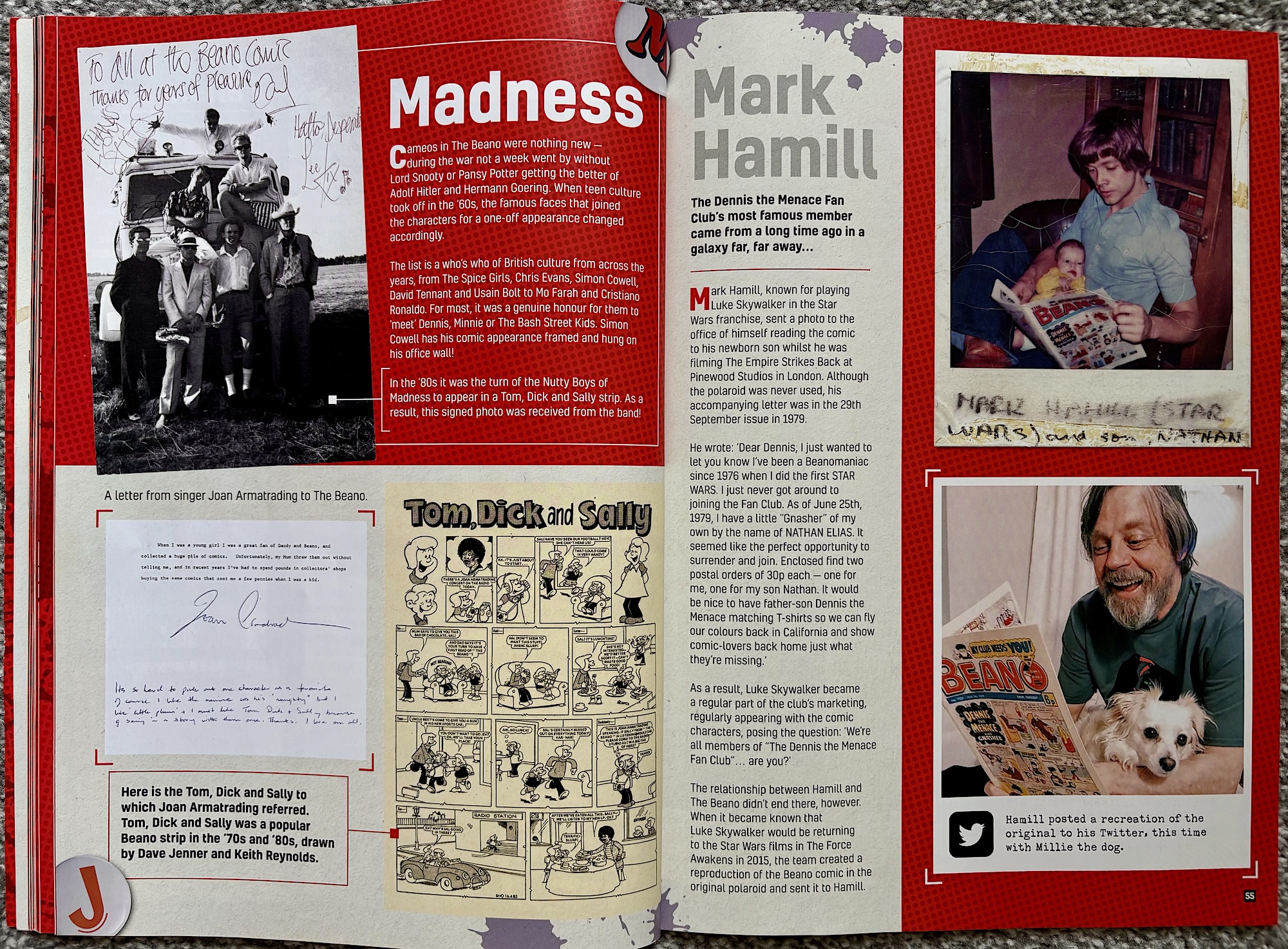
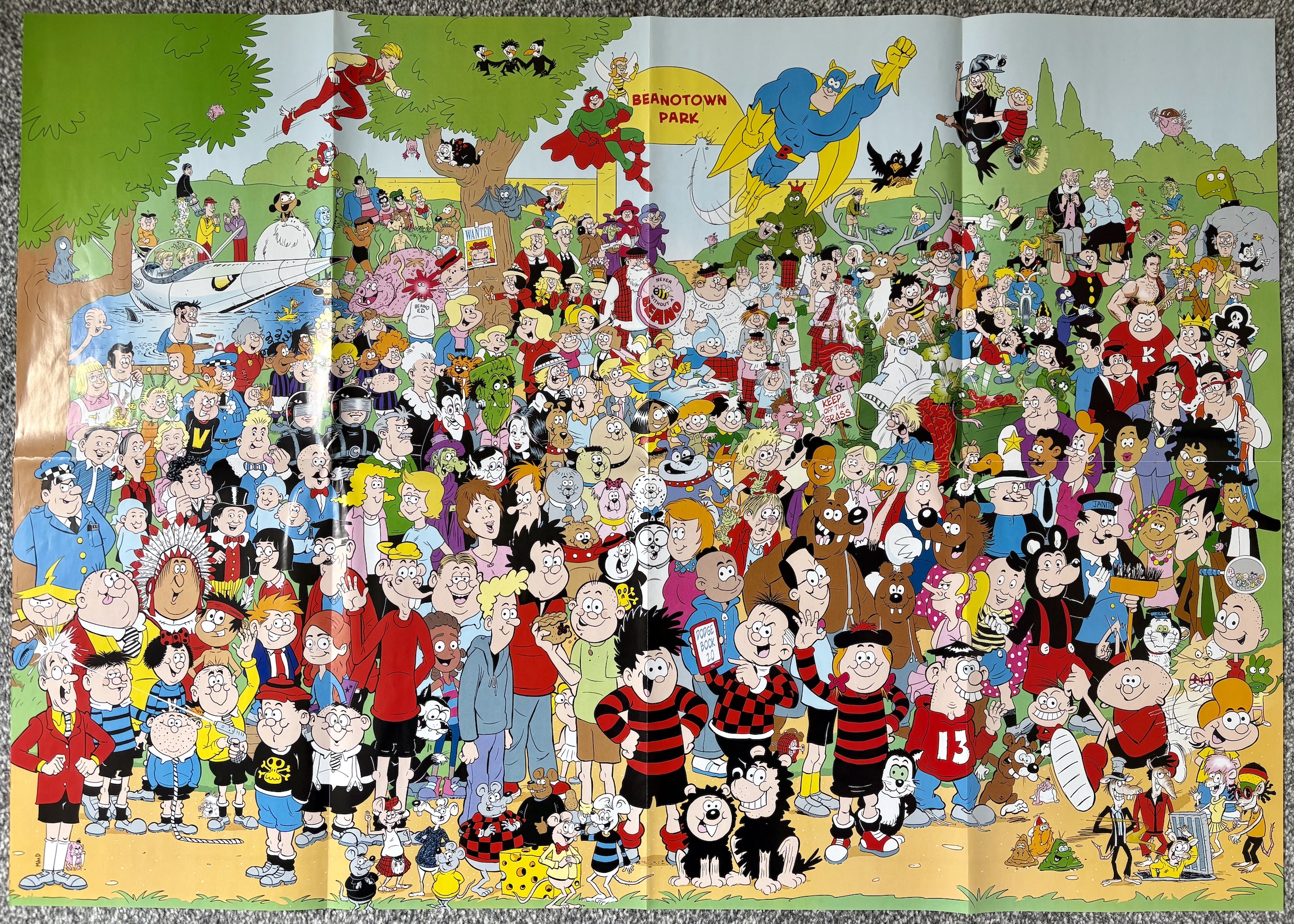
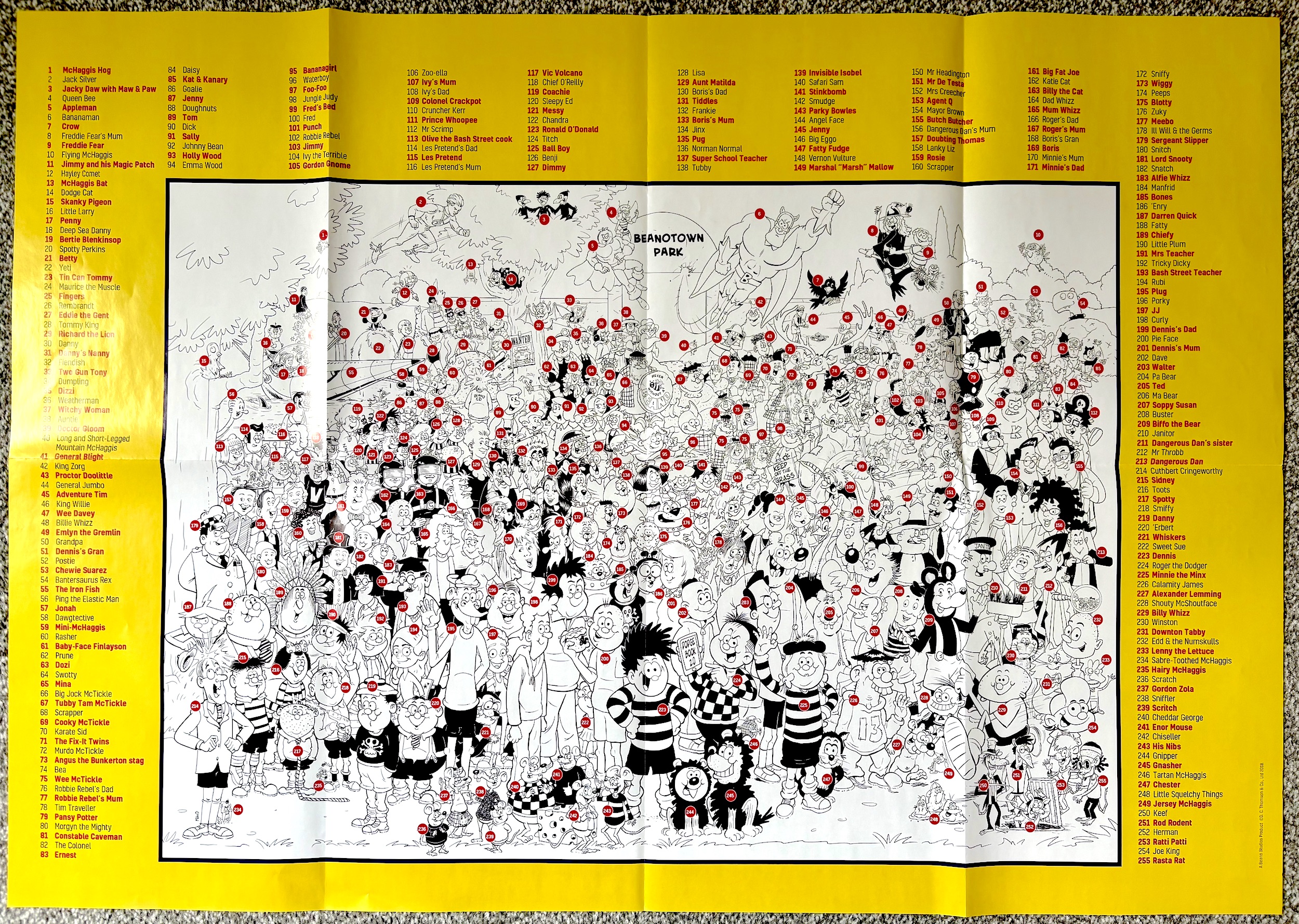
A selection of contributors are profiled so children can see those who have been making readers laugh for decades and those who have shaped the comic into what they’re familiar with today. There’s also a look at the free gifts, celebrity readers, the comic’s current location and even how it survived World War II. The extras that come with it are brilliant too, beginning with a huge poster of past and present characters which flips over to reveal a key to every single one of them.
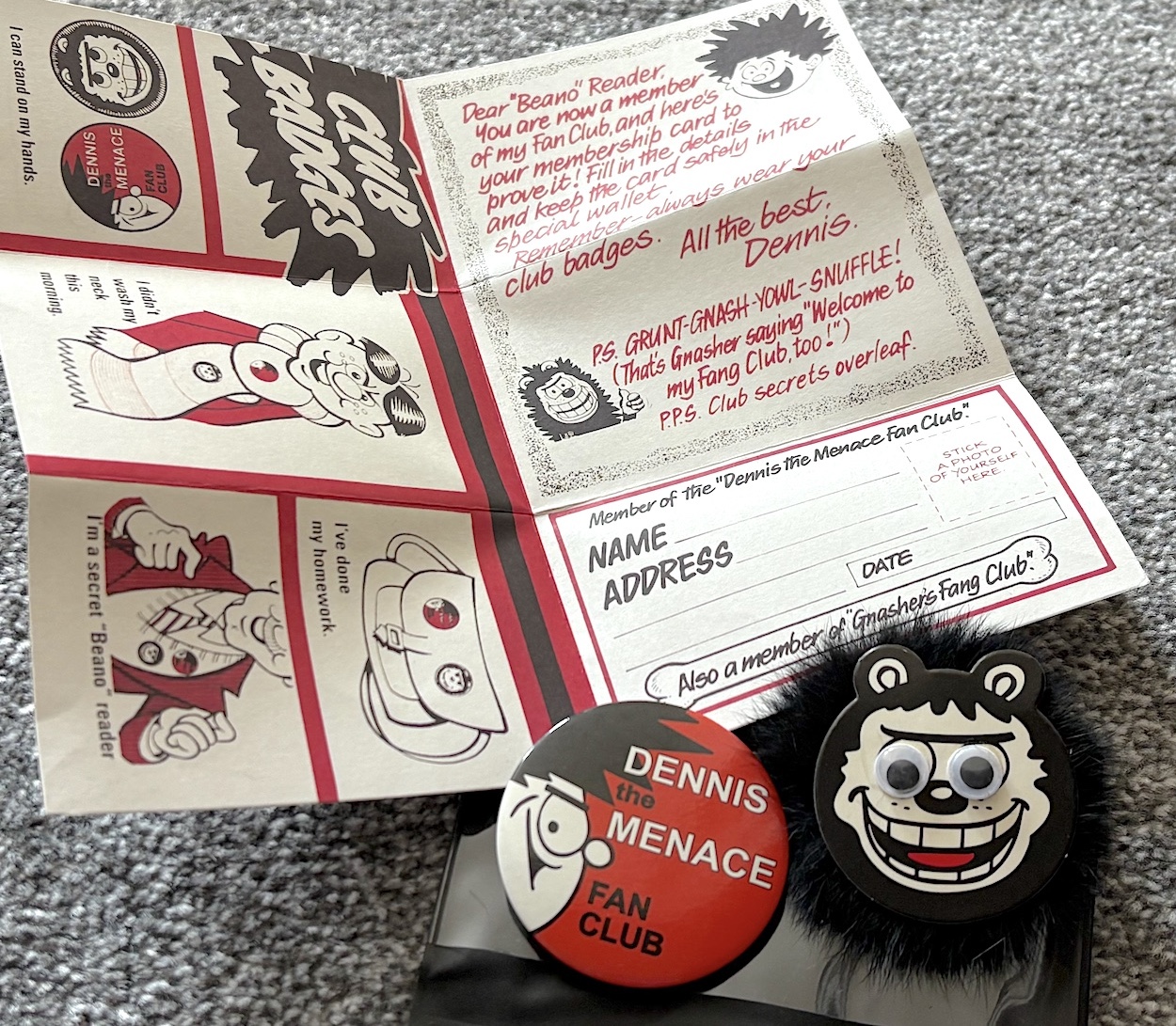
There are postcards of some annual covers (strangely missing their years) and a reproduction of a famous, rather noisy free gift. Best of all is the fan club wallet containing the welcome letter and that furry googly-eyed Gnasher badge, which at the time of this box set’s release wasn’t available to readers. A lot of my friends were members of the club in the 80s and now I can finally say I am too, albeit 30 years too late.
But the main reason we’re here are those comics. Each issue marks not only the decade it was published but also a special occasion in the life of Beano, such as the first issue, the first that sold a million, the introduction of Dennis and when it officially received the Guinness World Record for longest-running weekly comic. The plan for the blog is to cover each of these on the dates of their original release.
No, it’ll not be in real time (I don’t have another 80 years in me) but I will be reviewing each issue on the anniversary of its original publication day. Yes, this will be a rather slow read through somewhat, kind of like how I review series of annuals once a year every Christmas. For example, this year #1 will be reviewed on Friday 25th July and the second issue, #272 on Wednesday 26th November.
These won’t be quick recaps, these will be full comic reviews just like every other comic series receives on the OiNK Blog and I can’t wait to get stuck in. If the bookazine is anything to go by this should be a fascinating trip through time. Knowing just how great the comic is today and how popular it is with children when digital distractions are so prevalent, this set looks like it could be the perfect gift for your young Beano reader if you can get a hold of it.
If you can’t, then that’s what I’m here for. So prepare to travel back 87 years to the time of George VI, the first televised test cricket, the first paid holiday leave, the birth of Diana Rigg, Agatha Christie’s Appointment with Death, the Mallard’s record breaking speed run and something happening in Austria that would have no repercussions whatsoever. Join me on Friday 25th July 2025 for The Beano #1!



 OiNK Blog