

There I was, thinking I’d pretty much covered the OiNK computer game as much as I could have when I spotted the name of our favourite comic on the cover of this issue of Your Sinclair from 1988. One quick eBay purchase later and here we are, exactly 36 years to the day of its release and ready to check out another contemporary review of the game.
Previously we’ve seen how Commodore 64 magazine Zzap!64 and multiformat magazine Computer + Video Games thought it was a fun game and represented good value for money, with three very playable mini-games for the price of one full game. The problem was that it basically had nothing to do with OiNK. However, reviews were still generally very positive and so was I when I eventually played it decades after its release. So how did the Sinclair Spectrum conversion released six months later stack up?
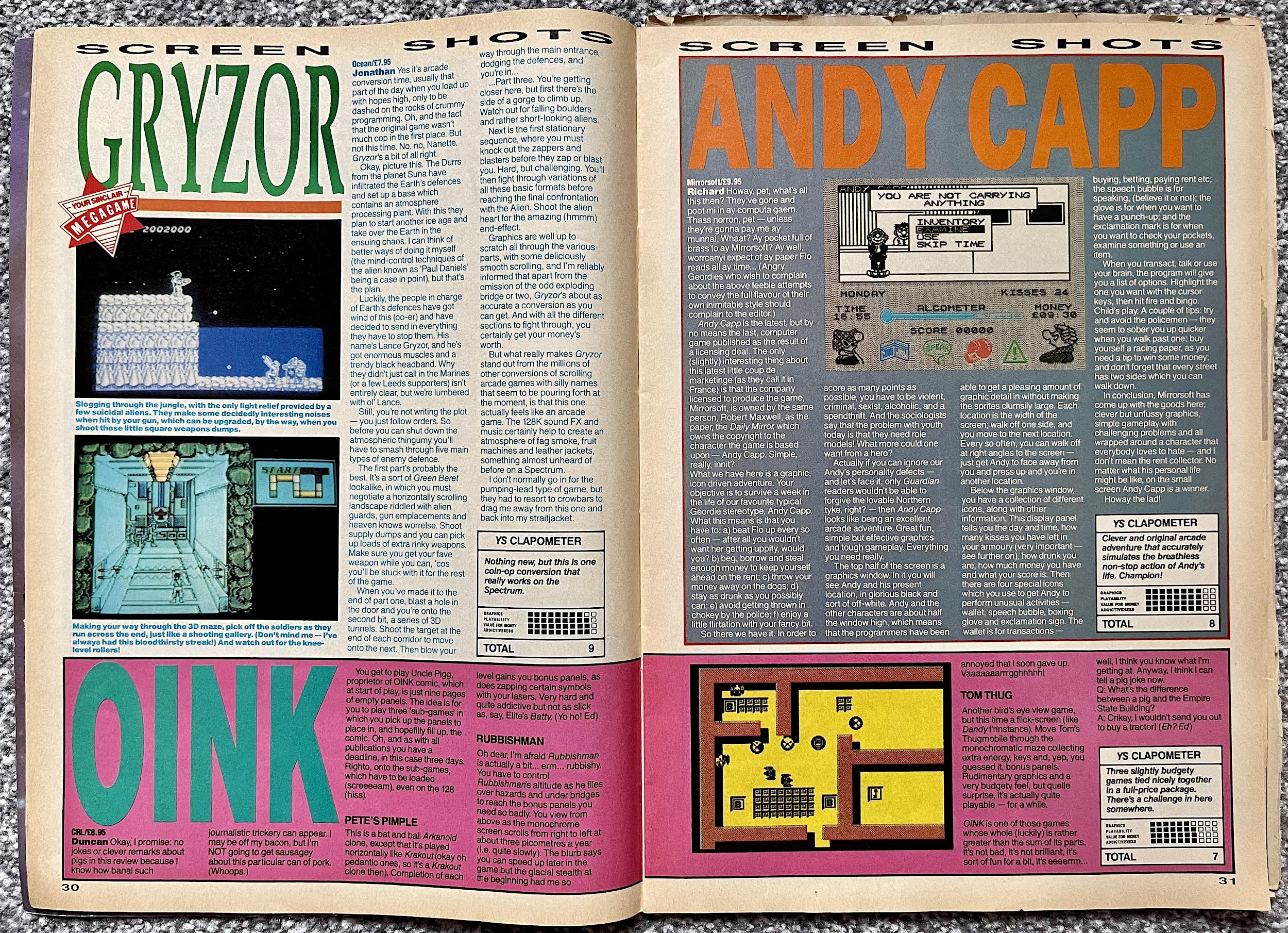
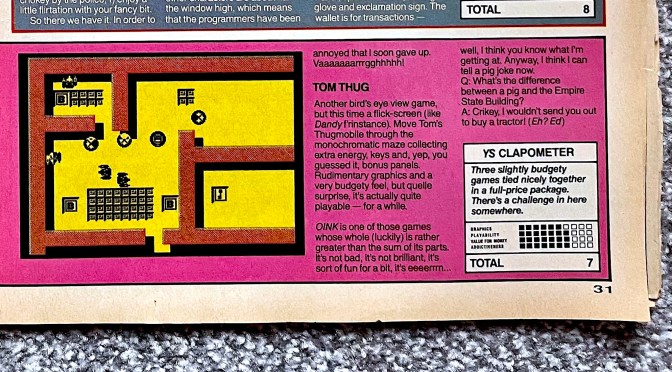
As you can see, YS’s design was a bit basic to say the least and it’s rather sparse in the screenshot department (even for games it rewards big scores to like Gryzor), but from this one uninspiring picture of Tom Thug’s game we can see it’s a million miles away from the original C64 version. It’s not just the graphics that suffer either, it runs very slowly by comparison and while the C64 version loaded everything in at once, here each of the mini-games needs a few minutes to load individually.
This continues the general feeling that it had very little to do with the comic but as a game in its own right it was fun to play
Duncan McDonald’s review was written when the game was first released at full price (usually a tenner on cassette, around five pounds more for disk). Like most games of the time on these machines it would be rereleased in a smaller cassette box as a budget game for a few quid about a year later. The main complaint here is that each of the games already feels like a budget game rather than part of a full price release, but bundled together it’s not bad and is quite fun, hence the decent score overall.
This continues the general feeling about the game, that it really had very little to do with the comic but as a game in its own right it was fun to play and good value for money. You’ll also see here that Andy Capp’s game was reviewed on the same page, which is quite fitting since he’s very loosely linked to OiNK. When Buster comic was first released the character of Buster was billed as Andy Capp’s son, and as we know OiNK merged with Buster when it was cancelled. Nice little coincidence there.
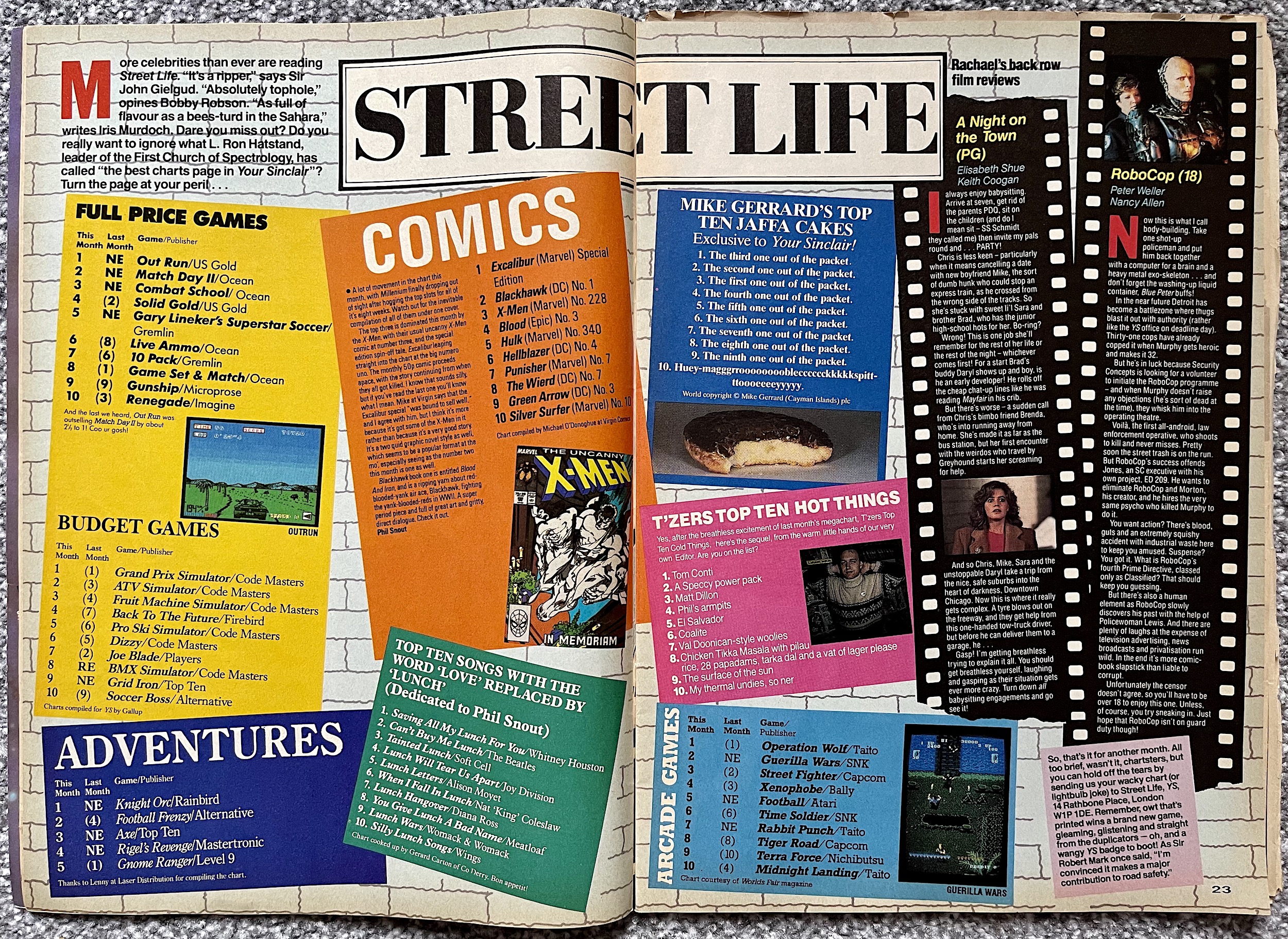
As normal when checking out these magazines I decided to take a look at the rest of the contents and this Street Life double-page was right up my alley. As well as the obligatory sales charts it also takes a look at the 80s culture readers may have been interested in. Yes, there are a lot of daft space filler things here too but there’s some interesting contemporary snippets.
There’s a comics chart, although it’s focussed on specialist stores importing American titles rather than UK comics. Alongside this is a chart of the most popular arcade games back when such venues were everywhere and a review of two new movie releases, one of which would go on to spawn two awful sequels, a television series I loved and a comic series which was printed in Havoc in the UK and reviewed right here on the blog.
“[The graphics] are simply amongst some of the best I have ever seen on the ol’ pregnant calculator.”
Tony Worrall
Two other pages which may interest comics fans are an advert and review for a Dan Dare computer game, Dan Dare II: Mekon’s Revenge. To say the screenshots on the advert are small is an understatement. Maybe they’d have been fine for me at the time but to these 46-year-old eyeballs they’re so tiny they tell me nothing about the game whatsoever, the details lost to me. I do like how the advert has a 1955 date and price as if it’s a Dan Dare comic cover.

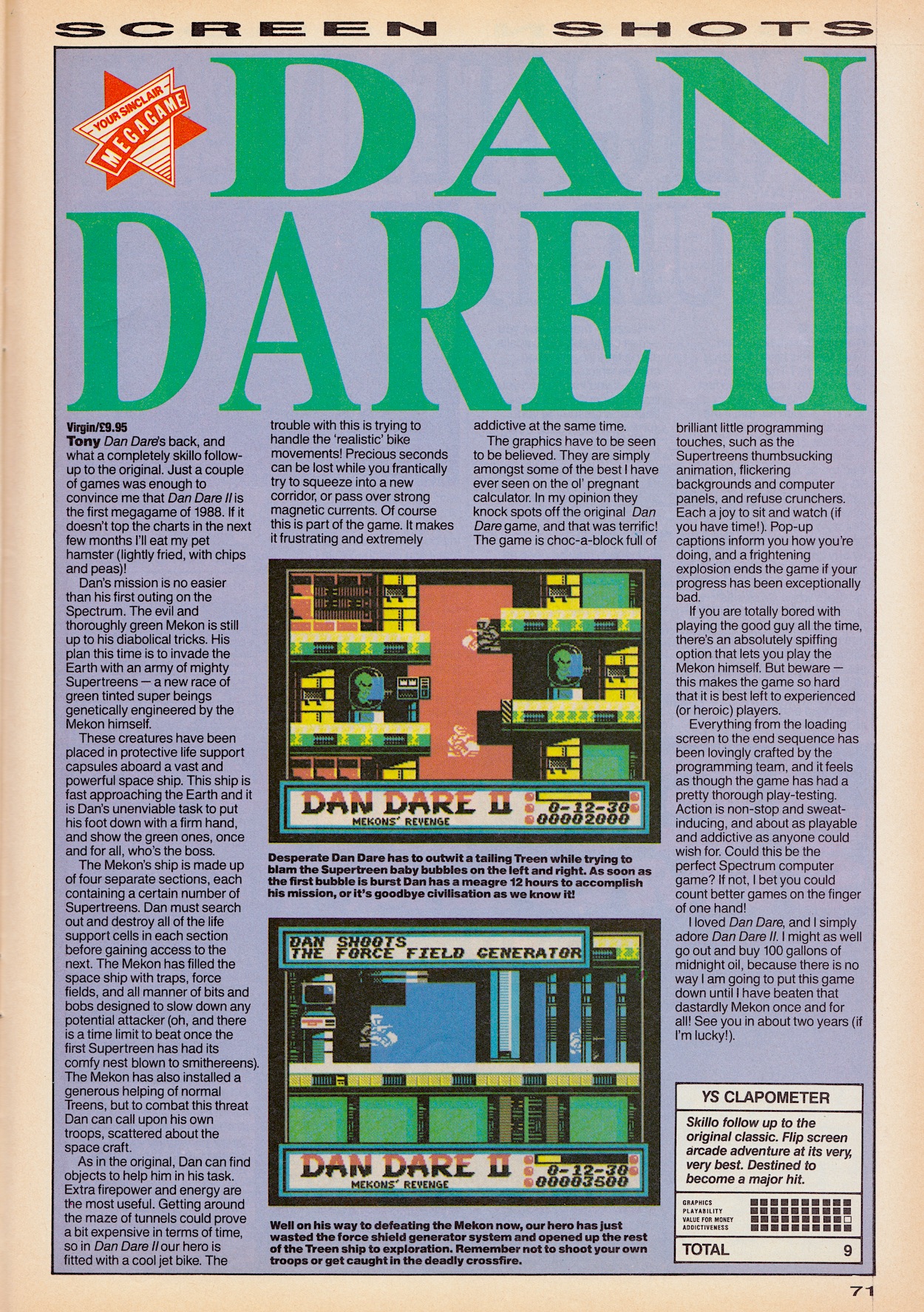
It appears Tony Worrall is a bit of a fan of the game. It may not look like much compared to today’s graphics, or even those found on my beloved C64, but for the Spectrum (which a friend of mine owned at the time) it does look ace and sounds like it would’ve been quite fun to play. If you read the review and find the sight of thumb-sucking mini-Mekons a funny idea check out the first screen shot closely and look at the two cryogenic chambers, you should be able to make out the animation. Fun stuff.
When I looked back at my first ever magazine, namely Commodore Format #14, I showed you a large double-page advertisement from Datel Electronics, a company renowned for quality hardware accessories for the home computers of the 80s and 90s. The CF adverts were slick, the accessories wowed teenage me and I ended up collecting much of what they offered in just the first couple of years of my Commodore ownership. But a few years previous, the same couldn’t be said of their Spectrum ads.

That’s not really fair of me to compare the two, over the next four years new developments in Desktop Publishing saw leaps forward in magazine design and the advertisements changed with the times. For this fan of retro gaming and computing it’s interesting to see what the Spectrum range offered in terms of add-ons, although it does appear to be somewhat limited to devices which would give these British computers access to things their competitors already had built-in.
As the end of the 80s approached a new breed of 16-bit machines was beginning to make its mark, the Atari ST being the first. The Commodore Amiga would soon be advertised all over the magazines aimed at the 8-bit owners and many would be enticed away, so it was quite the feat that Future Publishing’s Your Sinclair (they bought the title in 1990 from Dennis) continued until 1993, Amstrad Action until June 1995 and Commodore Format until October 1995, just six months before the release of the 32-bit Sony Playstation!
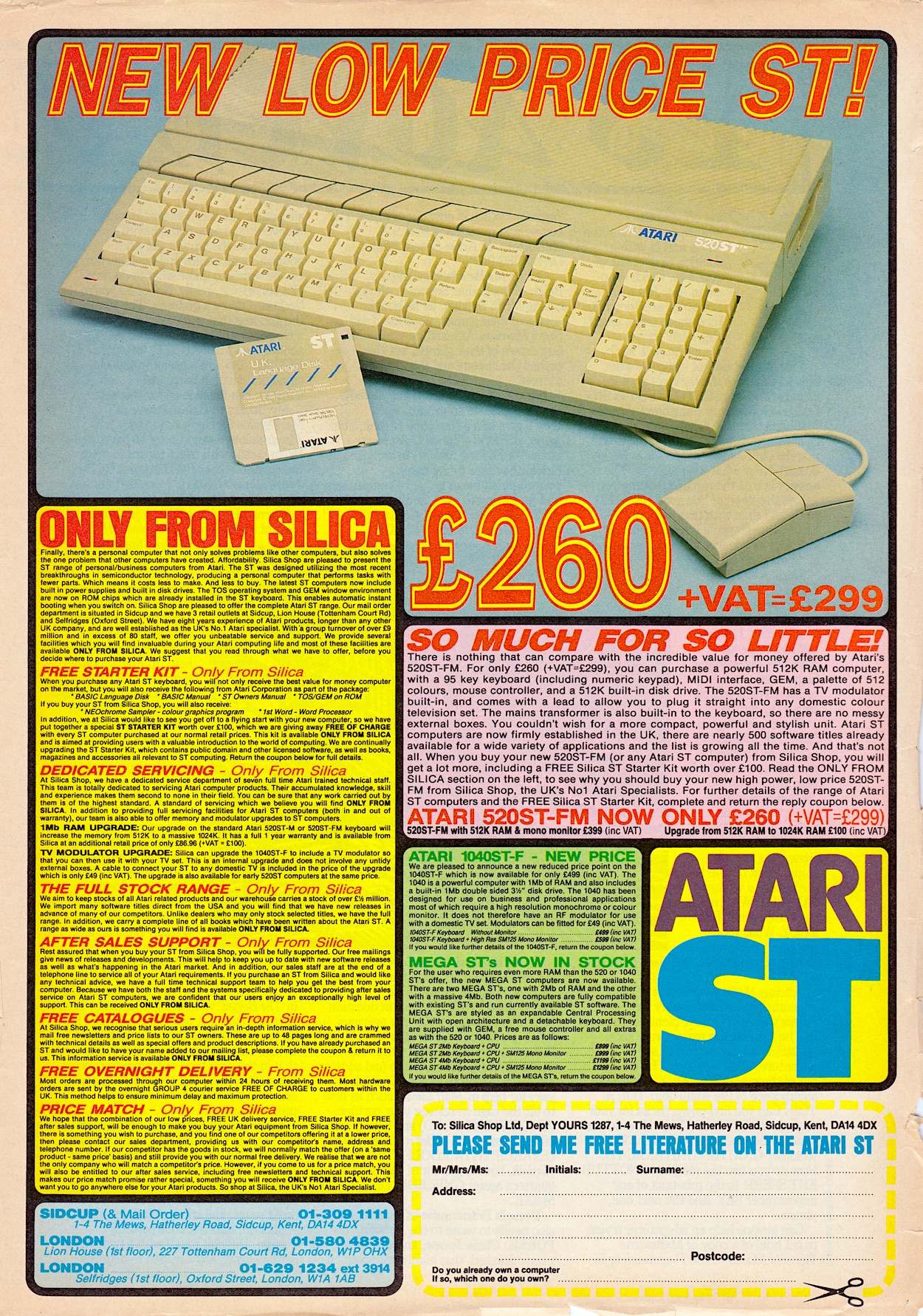
I simply adored my Commodore 64. I also had great fun playing a friend’s Amiga, but it was always Atari’s machine which fascinated me the most out of the 16-bits. I think it’s a lovely machine and nicer aesthetically than the Amiga, but I think it was mainly due to a friend’s music set up that I rightly or wrongly thought the ST was the better computer.
He had a guitar, a keyboard and some massive speakers all hooked up to his ST and what he could do with it was phenomenal. This friend was a particularly adept musical genius as far as I was concerned, but the ST was known for its music creating abilities and what he produced in the 90s in front of us in no time at all thanks to that computer wowed us. Plus we played Worms and Lemmings afterwards. Some great memories thanks to the Atari ST.
John is being sarcastic, using the language of what we’d call ‘incels’ and ‘trolls’ today to take very deliberate aim at toxic male views of the world
Page 98 is the last before the back cover and it’s an article called Backstabbin’ by freelance writer John Minson about the subject of girl gamers. Firstly, remember this is in a magazine from 1988, a time when everything for children was very explicitly split between what was for boys and what was for girls, with no overlap. Thankfully that’s changed a lot but at the time computer games were seen (incorrectly) as the exclusive domain of boys.
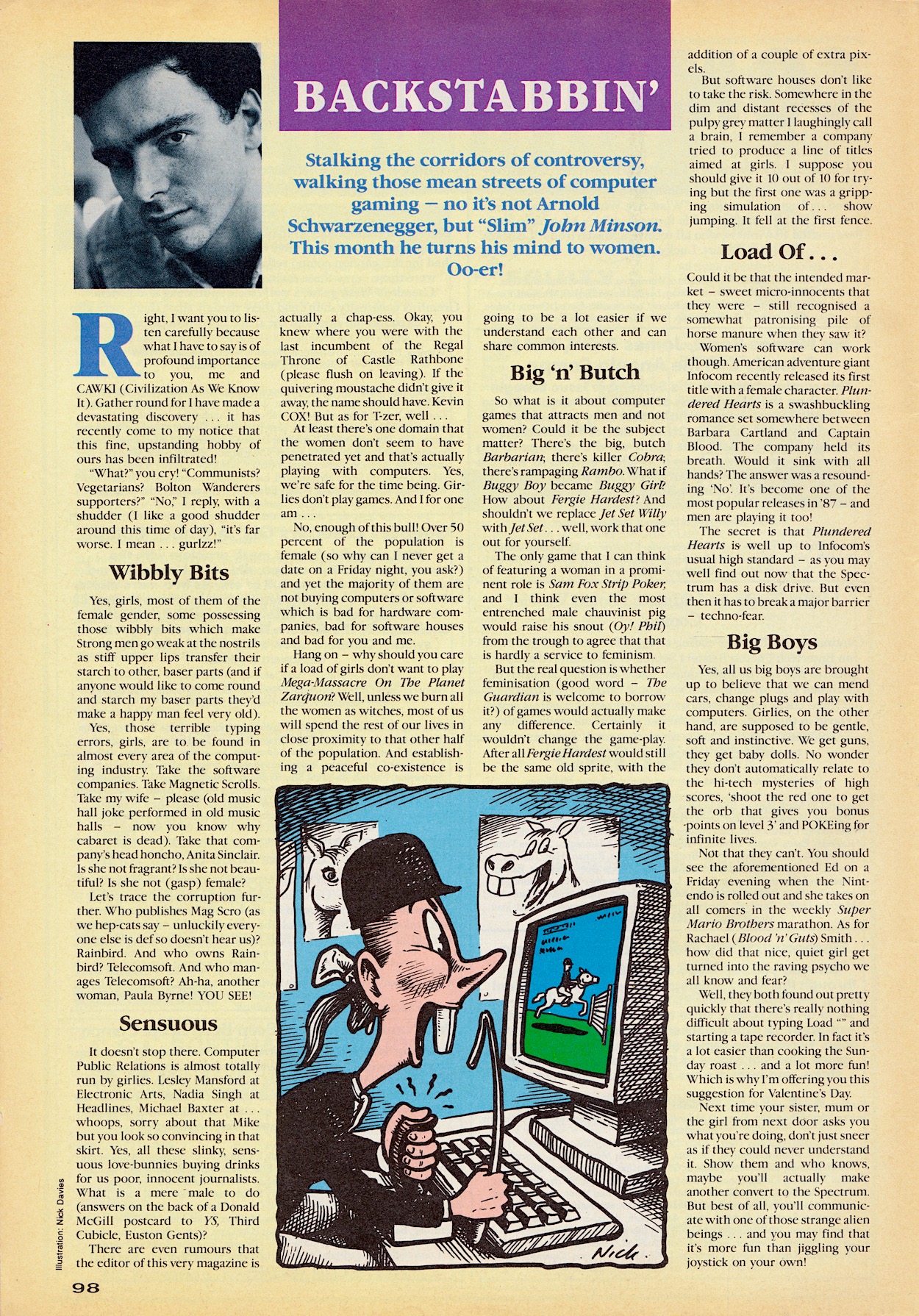
When you start reading this article you’d be forgiven for thinking it’s a patronising piece aimed at placating any female readers. However, keep reading and you’ll see John is being sarcastic, using the language of what we’d call ‘incels’ and ‘trolls’ today to take very deliberate aim at toxic male views of the world (in this case the world of home computing). The fact Your Sinclair was edited by a woman (Teresa Maughan) should tell you there’s more to this than you initially think.
It’s disappointing that something like this would ever have needed written in the first place, but at the same time it’s quite a delightful surprise to see it in Your Sinclair of all places, and way back in 1988. It rounds off a fun look at another retro computing magazine, a genre I never thought I’d be covering when I started this blog, but one I’m enjoying immensely. Don’t forget there’s a lot more coverage of the OiNK computer game on the blog already, just click on the link below to go to the full menu.
 OiNK Blog